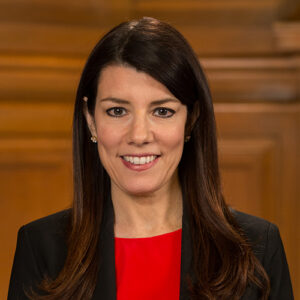
ACR 222: Alzheimer’s Disease and Brain Awareness Month.
- Session Year: 2025-2026
- House: Assembly
- Latest Version Date: 2026-08-12
Current Status:
Passed
(2026-08-12: Chaptered by Secretary of State - Res. Chapter 175, Statutes of 2026.)
Introduced
In Committee
Awaiting First Chamber Vote
Passed First Chamber
In Committee
Awaiting Second Chamber Vote
Passed Second Chamber
Enacted
This measure would declare the month of June 2026 as Alzheimers Disease and Brain Awareness Month, and would urge all Californians to commemorate the month of June 2026 as Alzheimers Disease and Brain Awareness Month.
This measure would declare the month of June 2026 as Alzheimers Disease and Brain Awareness Month, and would urge all Californians to commemorate the month of June 2026 as Alzheimers Disease and Brain Awareness Month.
This measure would declare the month of June 2026 as Alzheimers Disease and Brain Awareness Month, and would urge all Californians to commemorate the month of June 2026 as Alzheimers Disease and Brain Awareness Month.
WHEREAS, The month of June 2026 has been declared Alzheimers Disease and Brain Awareness Month to help educate the public on this debilitating disease, increase efforts to combat its human and economic costs, and encourage all Californians to take charge of their brain health; and
WHEREAS, Brain health is a lifelong priority, not an issue limited to older age; and
WHEREAS, This month is designed to raise awareness to understand how to reduce the risk of cognitive decline as a public health priority. There are meaningful actions that can protect brain health, and this month brings attention to ensure that science reaches people and systems in ways that make a real difference. By building momentum to connect efforts across individuals, communities, workplaces, and health care, we can build a more equitable framework to support cognitive health and help reduce dementia risk for everyone; and
WHEREAS, California has 720,000 residents living with Alzheimers disease, more than any other state in the nation; and
WHEREAS, Alzheimers disease was the leading cause of death in adults 85 years of age and older, and the second leading cause of death overall, in California in 2024, as stated in the 2026 California State of Public Health Report; and
WHEREAS, Recent research published by the State Department of Public Health in 2021 indicates that, over the next 20 years, the impact of Alzheimers disease and related dementia will increase dramatically. While the population of California will expand by 16 percent, the population of people living with Alzheimers disease will expand by 127 percent; and
WHEREAS, Research on the expansion of people living with Alzheimers disease showed communities of color will shoulder a disproportionate share of the increase in the prevalence of Alzheimers disease. The number of Latinx or Hispanic Californians living with Alzheimers disease will nearly triple by 2040. Additionally, the number of Asian Americans and Pacific Islanders living with Alzheimers disease will more than double; and
WHEREAS, Californians with dementia will visit emergency departments nearly 1,000,000 times per year and are readmitted to the hospital one out of five times after discharge; and
WHEREAS, Alzheimers disease is a family disease, impacting 1,403,000 California spouses, partners, children, siblings, grandchildren, and other relatives who provide unpaid assistance to a loved one; and
WHEREAS, California caregivers devote approximately 1,900,000,000 hours of unpaid assistance to family members, valued at over $53,200,000,000 in nongovernmental financial support; and
WHEREAS, Disparities in detection and diagnosis persist, resulting in less than 50 percent of individuals affected by the disease receiving a formal diagnosis that is disclosed to them by a clinician and documented in their medical record; and
WHEREAS, On average, a person 65 years of age and older lives 4 to 8 years after a diagnosis of Alzheimers disease, but may live as long as 20 years, depending on other factors; and
WHEREAS, Age is the greatest known risk factor for Alzheimers disease, which has no proven way to prevent it and currently has no cure; and
WHEREAS, Californians invest in Alzheimers disease research through the voluntary contribution funds and have raised more than $25,000,000 since its inception for research into treatments to slow the progression of, and develop a cure for, the disease; and
WHEREAS, Individuals living with Alzheimers disease and their caregivers need acknowledgment, support, and services to meet their needs over the lengthy progression of Alzheimers disease and related dementias; now, therefore, be it
Resolved by the Assembly of the State of California, the Senate thereof concurring, That the Legislature declares June 2026 as Alzheimers Disease and Brain Awareness Month, and urges all Californians to commemorate the month of June 2026 as Alzheimers Disease and Brain Awareness Month; and be it further
Resolved, That the Chief Clerk of the Assembly transmit copies of this resolution to the author for appropriate distribution.
|
Date
|
Status
|
|---|---|
| Aug 12, 2026 | Chaptered by Secretary of State - Res. Chapter 175, Statutes of 2026. |
| Aug 12, 2026 | Enrolled and filed with the Secretary of State at 3 p.m. |
| Aug 6, 2026 | In Assembly. Ordered to Engrossing and Enrolling. |
| Aug 6, 2026 | Adopted and to Assembly. (Ayes 35. Noes 0. Page 5298.) |
| Aug 6, 2026 | Adopted and to Assembly. (Ayes 35. Noes 0.) |
| Aug 4, 2026 | Ordered to special consent calendar. |
| Jul 1, 2026 | From committee: Ordered to third reading. |
| Jun 23, 2026 | In Senate. To Com. on RLS. |
| Jun 22, 2026 | Adopted and to Senate. |
| Jun 22, 2026 | Adopted and to Senate. (Page 5793.) |
| Jun 22, 2026 | Coauthors revised. |
| Jun 15, 2026 | From committee: Be adopted. Ordered to Third Reading. (Ayes 10. Noes 0.) (June 15). |
| Jun 8, 2026 | Referred to Com. on RLS. |
| Jun 4, 2026 | Introduced. To print. |
|
Date
|
Description
|
Location
|
Votes
|
|
|---|---|---|---|---|
| Aug 6, 2026 | Special Consent ACR222 Michelle Rodriguez | Senate Floor |
Passed |
|
| Jun 15, 2026 | Be adopted. To third reading. | Assembly Standing Committee on Rules |
Passed |
This list shows positions taken on this bill by organizations on the date displayed, which is linked to the original source.
Positions by individuals are not included.
SENATE RULES COMMITTEE Office of Senate Floor Analyses (916) 651-4171 | ACR 222 |
THIRD READING
Bill No: ACR 222
Author: Michelle Rodriguez (D), et al.
Introduced: 6/4/26
Vote: 21
SUBJECT: Alzheimer’s Disease and Brain Awareness Month
SOURCE: Author
DIGEST:
This resolution declares the month of June 2026 as Alzheimer’s Disease and Brain Awareness Month, and urges all Californians to commemorate the month of June 2026 as Alzheimer’s Disease and Brain Awareness Month.
ANALYSIS: This resolution makes the following legislative findings:
- The month of June 2026 has been declared Alzheimer’s Disease and Brain Awareness Month to help educate the public on this debilitating disease, increase efforts to combat its human and economic costs, and encourage all Californians to take charge of their brain health.
- California has 720,000 residents living with Alzheimer’s disease, more than any other state in the nation. Californians with dementia will visit emergency departments nearly 1 million times per year and are readmitted to the hospital one out of five times after discharge.
- Alzheimer’s disease was the leading cause of death in adults 85 years of age and older, and the second leading cause of death overall, in California in 2024, as stated in the 2026 California State of Public Health Report.
- Recent research published by the State Department of Public Health in 2021 indicates that, over the next 20 years, the impact of Alzheimer’s disease and related dementia will increase dramatically. While the population of California will expand by 16 percent, the population of people living with Alzheimer’s disease will expand by 127 percent.
- Age is the greatest known risk factor for Alzheimer’s disease, which has no proven way to prevent it and currently has no cure.
- Californians invest in Alzheimer’s disease research through the voluntary contribution funds and have raised more than $25 million since its inception for research into treatments to slow the progression of, and develop a cure for, the disease.
This resolution declares June 2026 as Alzheimer’s Disease and Brain Awareness Month, and urges all Californians to commemorate the month of June 2026 as Alzheimer’s Disease and Brain Awareness Month.
Related/Prior Legislation
SCR 75 (Weber Pierson, Resolution Chapter 135, Statutes of 2025)
ACR 204 (Soria, Resolution Chapter 142, Statutes of 2024)
ACR 64 (Bains, Resolution Chapter 119, Statutes of 2023)
FISCAL EFFECT: Appropriation: No Fiscal Com.: No Local: No
SUPPORT: (Verified 7/1/26)
None received
OPPOSITION: (Verified 7/1/26)
None received
Prepared by: Hunter Flynn / SFA / (916) 651-4171
7/1/26 16:55:28
**** END ****
ASSEMBLY THIRD READING
ATR Bill Id:ACR 222
Author:(Michelle Rodriguez)
As Introduced Ver:June 4, 2026
Majority vote
SUMMARY
Declares June 2026 as Alzheimer's Disease and Brain Awareness Month; and, urges all Californians to commemorate the month of June 2026 as Alzheimer's Disease and Brain Awareness Month.
Major Provisions
- Brain health is a lifelong priority, not an issue limited to older age.
- The month of June 2026 has been declared Alzheimer's Disease and Brain Awareness Month to help educate the public on this debilitating disease, increase efforts to combat its human and economic costs, and encourage all Californians to take charge of their brain health.
- This month is designed to raise awareness to understand how to reduce the risk of cognitive decline as a public health priority. There are meaningful actions that can protect brain health, and this month brings attention to ensure that science reaches people and systems in ways that make a real difference. By building momentum to connect efforts across individuals, communities, workplaces, and health care, we can build a more equitable framework to support cognitive health and help reduce dementia risk for everyone.
- California has 720,000 residents living with Alzheimer's disease, more than any other state in the nation. Alzheimer's disease was the leading cause of death in adults 85 years of age and older, and the second leading cause of death overall, in California in 2024, as stated in the 2026 California State of Public Health Report.
- Recent research published by the State Department of Public Health in 2021 indicates that, over the next 20 years, the impact of Alzheimer's disease and related dementia will increase dramatically. While the population of California will expand by 16%, the population of people living with Alzheimer's disease will expand by 127%.
- Research on the expansion of people living with Alzheimer's disease showed communities of color will shoulder a disproportionate share of the increase in the prevalence of Alzheimer's disease. The number of Latinx or Hispanic Californians living with Alzheimer's disease will nearly triple by 2040. Additionally, the number of Asian Americans and Pacific Islanders living with Alzheimer's disease will more than double.
- Disparities in detection and diagnosis persist, resulting in less than 50% of individuals affected by the disease receiving a formal diagnosis that is disclosed to them by a clinician and documented in their medical record.
- Californians invest in Alzheimer's disease research through the voluntary contribution funds and have raised more than $25 million since its inception for research into treatments to slow the progression of, and develop a cure for, the disease.
- Individuals living with Alzheimer's disease and their caregivers need acknowledgment, support, and services to meet their needs over the lengthy progression of Alzheimer's disease and related dementias.
COMMENTS
According to the Author
An estimated 720,000 Californians have Alzheimer's disease or a related dementia, more than any other state. Alzheimer's disease also disproportionately affects women, Latinos, Black Americans, and individuals with Down Syndrome. The State Department of Health indicated in 2021 that the population living with Alzheimer's will expand by 127% by 2041. It is essential that these individuals have their needs for support and services acknowledged.
Arguments in Support
None on file
Arguments in Opposition
None on file
FISCAL COMMENTS
No fiscal impact. This resolution is keyed non-fiscal by Legislative Counsel.
VOTES
ASM RULES: 10-0-0
YES: Pacheco, Lackey, Ahrens, Dixon, Garcia, Mark González, Irwin, Michelle Rodriguez, Ta, Zbur
UPDATED
VERSION: June 4, 2026
CONSULTANT: Michael Erke / RLS. / (916) 319-2800 FN: 0003176
Date of Hearing: June 15, 2026
ASSEMBLY COMMITTEE ON RULES
Blanca Pacheco, Chair
ABPCA Bill Id:ACR 222 (
Author:Michelle Rodriguez) – As Introduced Ver:June 4, 2026
SUBJECT: Alzheimer’s Disease and Brain Awareness Month.
SUMMARY: Declares June 2026 as Alzheimer’s Disease and Brain Awareness Month; and, urges all Californians to commemorate the month of June 2026 as Alzheimer’s Disease and Brain Awareness Month. Specifically, this resolution makes the following legislative findings:
- Brain health is a lifelong priority, not an issue limited to older age.
- The month of June 2026 has been declared Alzheimer’s Disease and Brain Awareness Month to help educate the public on this debilitating disease, increase efforts to combat its human and economic costs, and encourage all Californians to take charge of their brain health.
- This month is designed to raise awareness to understand how to reduce the risk of cognitive decline as a public health priority. There are meaningful actions that can protect brain health, and this month brings attention to ensure that science reaches people and systems in ways that make a real difference. By building momentum to connect efforts across individuals, communities, workplaces, and health care, we can build a more equitable framework to support cognitive health and help reduce dementia risk for everyone.
- California has 720,000 residents living with Alzheimer’s disease, more than any other state in the nation. Alzheimer’s disease was the leading cause of death in adults 85 years of age and older, and the second leading cause of death overall, in California in 2024, as stated in the 2026 California State of Public Health Report.
- Recent research published by the State Department of Public Health in 2021 indicates that, over the next 20 years, the impact of Alzheimer’s disease and related dementia will increase dramatically. While the population of California will expand by 16 percent, the population of people living with Alzheimer’s disease will expand by 127 percent.
- Research on the expansion of people living with Alzheimer’s disease showed communities of color will shoulder a disproportionate share of the increase in the prevalence of Alzheimer’s disease. The number of Latinx or Hispanic Californians living with Alzheimer’s disease will nearly triple by 2040. Additionally, the number of Asian Americans and Pacific Islanders living with Alzheimer’s disease will more than double.
- Disparities in detection and diagnosis persist, resulting in less than 50 percent of individuals affected by the disease receiving a formal diagnosis that is disclosed to them by a clinician and documented in their medical record.
- Californians invest in Alzheimer’s disease research through the voluntary contribution funds and have raised more than $25 million since its inception for research into treatments to slow the progression of, and develop a cure for, the disease.
- Individuals living with Alzheimer’s disease and their caregivers need acknowledgment, support, and services to meet their needs over the lengthy progression of Alzheimer’s disease and related dementias.
FISCAL EFFECT: This resolution is keyed non-fiscal by Legislative Counsel.
REGISTERED SUPPORT / OPPOSITION:
Support
None on file
Opposition
None on file
Analysis Prepared by: Michael Erke / RLS. / (916) 319-2800

Bill Author

Bill Co-Author(s):