SCR 152: Dolores Huerta Day.
- Session Year: 2025-2026
- House: Senate
- Latest Version Date: 2026-08-18
Current Status:
Passed
(2026-08-18: Chaptered by Secretary of State. Res. Chapter 180, Statutes of 2026.)
Introduced
In Committee
Awaiting First Chamber Vote
Passed First Chamber
In Committee
Awaiting Second Chamber Vote
Passed Second Chamber
Enacted
This measure would proclaim April 10, 2026, as Dolores Huerta Day in California and would encourage all public schools and educational institutions to conduct exercises remembering her, recognizing her accomplishments, and familiarizing pupils with her contributions to California.
This measure would proclaim April 10, 2026, as Dolores Huerta Day in California and would encourage all public schools and educational institutions to conduct exercises remembering her, recognizing her accomplishments, and familiarizing pupils with her contributions to California.
This measure would proclaim April 10, 2026, as Dolores Huerta Day in California and would encourage all public schools and educational institutions to conduct exercises remembering her, recognizing her accomplishments, and familiarizing pupils with her contributions to California.
WHEREAS, Activist and labor leader Dolores Huerta has worked her entire life to improve social and economic conditions for farmworkers, is a leader in the fight against discrimination, and is a defender of civil rights, equal rights, and dignity for all; and
WHEREAS, Dolores Huerta was born Dolores Clara Fernandez on April 10, 1930, in Dawson, New Mexico; and
WHEREAS, Dolores Huertas father, Juan Fernandez, a farmworker and miner by trade, was a union activist who ran for political office and won a seat in the New Mexico State Legislature in 1938. Dolores Huertas mother, Alicia Fernandez, had an independent and entrepreneurial spirit and was active in numerous civic organizations and the church. She used her 70-room hotel to provide housing to low-wage workers; and
WHEREAS, Dolores Huerta spent most of her childhood and early adult life in the City of Stockton with her two brothers and their mother, following her parents divorce; and
WHEREAS, While Dolores Huerta was a student at Stockton High School, she was active in numerous school clubs and the Girl Scouts. Upon graduating, she earned a provisional teaching credential. She taught until she could no longer bear to see her students come to school with empty stomachs and bare feet, and thus began her lifelong journey of working to correct economic injustice; and
WHEREAS, Dolores Huerta found her calling as an organizer while serving in the leadership of the Stockton chapter of the Community Service Organization (CSO), and founded the Agricultural Workers Association. She set up voter registration drives and pressed local governments for barrio improvements; and
WHEREAS, In 1962, Dolores Huerta lobbied to have the CSO expand its efforts to help farmworkers, but the organization was only focused on urban issues; and
WHEREAS, Dolores Huerta and others resigned from the CSO and helped found the National Farm Workers Association. Dolores Huertas organizing skills were essential to the growth of the association; and
WHEREAS, Dolores Huerta overcame the many challenges she faced as a woman. She remained the most talented negotiator, securing services for farmworkers in California in 1963 in the form of Aid to Families with Dependent Children and disability insurance, an unparalleled feat of the times; and
WHEREAS, The Agricultural Workers Organizing Committee was an integral part of the farmworkers original organizing, and was formed by Filipino workers. The Agricultural Workers Organizing Committee was led by Larry Itliong, Philip Vera Cruz, Pete Velasco, and Andy Imutan, all of whom were instrumental to the farm labor movement; and
WHEREAS, In 1965, the Agricultural Workers Organizing Committee and the National Farm Workers Association combined to become the United Farm Workers Organizing Committee, later known as the United Farm Workers (UFW). That year, the union took on the Coachella Valley grape growers; and
WHEREAS, Dolores Huerta was also instrumental in the enactment of the Agricultural Labor Relations Act of 1975. This was the first law of its kind in the United States, granting farmworkers in California the right to collectively organize and bargain for better wages and working conditions; and
WHEREAS, While the farmworkers lacked financial capital, they were able to wield significant economic power through hugely successful boycotts and at the ballot box with grassroots campaigning. As the principal legislative advocate, Dolores Huerta became one of the UFWs most visible spokespersons. Robert F. Kennedy acknowledged her help in winning the 1968 California Democratic Presidential primary, moments before he was shot in the City of Los Angeles; and
WHEREAS, Dolores Huerta advocated for the entire familys participation in the movement because of the involvement of men, women, and children together in the fields picking, thinning, and hoeing. Thus, the practice of nonviolence was not only a philosophy, but a very necessary approach in providing for the safety of all. Nonetheless, her life and the safety of those around her were in jeopardy on countless occasions; and
WHEREAS, During the 1980s, Dolores Huerta served as vice president of the UFW and cofounded the UFWs radio station. She continued to speak for a variety of causes, advocating for a comprehensive immigration policy and better health conditions for farmworkers; and
WHEREAS, The most widely known phrase Si se puede was a phrase first used by Dolores Huerta in the farmworker movement; and
WHEREAS, In 1988, at 58 years of age, she nearly lost her life when she was beaten by San Francisco police at a rally protesting the policies of then-presidential candidate George H. W. Bush. She suffered four broken ribs and a ruptured spleen; and
WHEREAS, Public outrage resulted in the San Francisco Police Department changing its policies regarding crowd control and police discipline; and
WHEREAS, Following a lengthy recovery, Dolores Huerta took a leave of absence from the union to focus on womens rights, traveling the country for two years on behalf of the Feminist Majority, encouraging Latinas to run for office. The campaign resulted in a significant increase in the number of women representatives at the local, state, and federal levels; and
WHEREAS, At 95 years of age, Dolores Huerta continues to work tirelessly, developing leaders and advocating for the working poor, women, and children. As founder and president of the Dolores Huerta Foundation, she travels across the country advocating in campaigns and legislation that support equality and defend civil rights. She continues to be a voice for social justice and public policy; and
WHEREAS, Dolores Huerta continues to lecture and speak out on a variety of social issues involving immigration, income inequality, and the rights of women and Latinos; and
WHEREAS, Dolores Huerta teaches the concept of personal power that needs to be coupled with responsibility and cooperation to create the changes needed to improve the lives of the working poor; and
WHEREAS, Dolores Huerta has been honored for her work as a fierce advocate for farmworkers, immigrants, the working poor, and women; and
WHEREAS, There are several elementary schools in California named after Dolores Huerta, the most recent being the Dolores Huerta International Academy in the City of Fontana; and
WHEREAS, Dolores Huerta was inducted into the California Hall of Fame in March of 2013. She has received numerous awards, among them: the Eleanor Roosevelt Human Rights Award from President Bill Clinton in l998, Ms. Magazines One of the Three Most Important Women of l997, Ladies Home Journals 100 Most Important Women of the 20th Century, the Puffin Foundations Award for Creative Citizenship: Labor Leader Award 1984, the Kern County Woman of The Year Award from the California State Legislature, the Ohtli Award from the Mexican Government, the James Smithson Award of the Smithsonian Institution, and nine honorary doctorates from universities throughout the United States; and
WHEREAS, Dolores Huerta received the Ellis Island Medal of Freedom Award and was inducted into the National Womens Hall of Fame in 1993; and
WHEREAS, In 2012, President Barack Obama bestowed Dolores Huerta with her most prestigious award, the Presidential Medal of Freedom, the highest civilian award in the United States. Upon receiving this award, she said, The freedom of association means that people can come together in organization to fight for solutions to the problems they confront in their communities. The great social justice changes in our country have happened when people came together, organized, and took direct action. It is this right that sustains and nurtures our democracy today. The civil rights movement, the labor movement, the womens movement, and the equality movement for our LGBT brothers and sisters are all manifestations of these rights. I thank President Obama for raising the importance of organizing to the highest level of merit and honor; and
WHEREAS, The accomplishments and contributions of Dolores Huerta should be properly memorialized within the history and culture of the United States. Dolores Huerta deserves proper recognition for her numerous sacrifices in the name of justice and the amelioration of severely inadequate working conditions; now, therefore, be it
Resolved by the Senate of the State of California, the Assembly thereof concurring, That the Legislature hereby proclaims April 10, 2026, as Dolores Huerta Day in California and encourages all public schools and educational institutions to conduct exercises remembering the life of Dolores Huerta, recognizing her accomplishments, and familiarizing pupils with the contributions she made to California; and be it further
Resolved, That the Secretary of the Senate transmit copies of this resolution to the author for appropriate distribution.
|
Date
|
Status
|
|---|---|
| Aug 18, 2026 | Chaptered by Secretary of State. Res. Chapter 180, Statutes of 2026. |
| Aug 18, 2026 | Enrolled and filed with the Secretary of State at 1 p.m. |
| Aug 10, 2026 | In Senate. Ordered to engrossing and enrolling. |
| Aug 6, 2026 | Coauthors revised. |
| Aug 6, 2026 | Read. Adopted. Ordered to the Senate. |
| Aug 6, 2026 | Read. Adopted. (Page 6077.) Ordered to the Senate. |
| Apr 27, 2026 | From committee: Be adopted. Ordered to third reading. (Ayes 8. Noes 0.) (April 27). |
| Apr 20, 2026 | Referred to Com. on RLS. |
| Apr 16, 2026 | In Assembly. Held at Desk. |
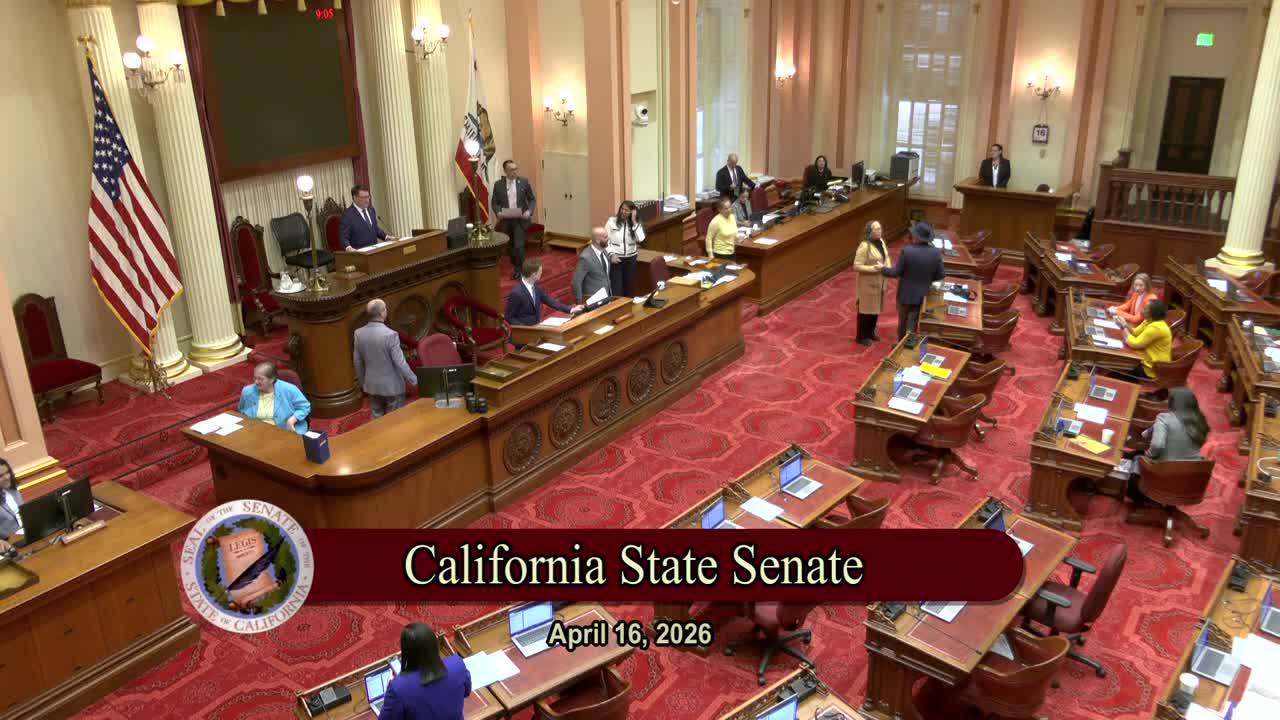
| Apr 16, 2026 | Read. Adopted. (Ayes 27. Noes 0. Page 3914.) Ordered to the Assembly. |
| Apr 16, 2026 | Read. Adopted. (Ayes 27. Noes 0.) Ordered to the Assembly. |
| Apr 8, 2026 | From committee: Ordered to third reading. |
| Mar 25, 2026 | Introduced. Referred to Com. on RLS. |
|
Date
|
Description
|
Location
|
Votes
|
|
|---|---|---|---|---|
| Apr 27, 2026 | Be adopted. To third reading. | Assembly Standing Committee on Rules |
Passed |
|
| Apr 16, 2026 | Senate 3rd Reading SCR152 Reyes et al. | Senate Floor |
Passed |
This list shows positions taken on this bill by organizations on the date displayed, which is linked to the original source.
Positions by individuals are not included.
SENATE THIRD READING
STR Bill Id:SCR 152
Author:(Reyes)
As Introduced Ver:March 25, 2026
Majority vote
SUMMARY
Proclaims April 10, 2026, as Dolores Huerta Day in California; and, encourages all public schools and educational institutions to conduct exercises remembering the life of Dolores Huerta, recognizing her accomplishments, and familiarizing pupils with the contributions she made to California.
Major Provisions
- Activist and labor leader Dolores Huerta has worked her entire life to improve social and economic conditions for farmworkers, is a leader in the fight against discrimination, and is a defender of civil rights, equal rights, and dignity for all.
- Dolores Huerta spent most of her childhood and early adult life in the City of Stockton with her two brothers and their mother, following her parents' divorce.
- While Dolores Huerta was a student at Stockton High School, she was active in numerous school clubs and the Girl Scouts. Upon graduating, she earned a provisional teaching credential. She taught until she could no longer bear to see her students come to school with empty stomachs and bare feet, and thus began her lifelong journey of working to correct economic injustice.
- Dolores Huerta found her calling as an organizer while serving in the leadership of the Stockton chapter of the Community Service Organization (CSO), and founded the Agricultural Workers Association. She set up voter registration drives and pressed local governments for barrio improvements.
- In 1962, Dolores Huerta lobbied to have the CSO expand its efforts to help farmworkers, but the organization was only focused on urban issues. Dolores Huerta and others resigned from the CSO and helped found the National Farm Workers Association. Dolores Huerta's organizing skills were essential to the growth of the association.
- Dolores Huerta overcame the many challenges she faced as a woman. She remained the most talented negotiator, securing services for farmworkers in California in 1963 in the form of Aid to Families with Dependent Children and disability insurance, an unparalleled feat of the times.
- The Agricultural Workers Organizing Committee was an integral part of the farmworkers original organizing, and was formed by Filipino workers. The Agricultural Workers Organizing Committee was led by Larry Itliong, Philip Vera Cruz, Pete Velasco, and Andy Imutan, all of whom were instrumental to the farm labor movement.
- In 1965, the Agricultural Workers Organizing Committee and the National Farm Workers Association combined to become the United Farm Workers Organizing Committee, later known as the United Farm Workers (UFW). That year, the union took on the Coachella Valley grape growers.
- During the 1980s, Dolores Huerta served as vice president of the UFW and cofounded the UFW's radio station. She continued to speak for a variety of causes, advocating for a comprehensive immigration policy and better health conditions for farmworkers.
- The most widely known phrase, "Sí se puede," was a phrase first used by Dolores Huerta in the farmworker movement.
- At 95 years of age, Dolores Huerta continues to work tirelessly, developing leaders and advocating for the working poor, women, and children. As founder and president of the Dolores Huerta Foundation, she travels across the country advocating in campaigns and legislation that support equality and defend civil rights. She continues to be a voice for social justice and public policy.
- The accomplishments and contributions of Dolores Huerta should be properly memorialized within the history and culture of the United States. Dolores Huerta deserves proper recognition for her numerous sacrifices in the name of justice and the amelioration of severely inadequate working conditions.
COMMENTS
According to the Author
"Dolores Huerta has dedicated her life to advancing justice, dignity, and opportunity for working people. Her legacy is not only defined by her leadership, but by the collective power of the communities she helped organize, farmworkers, families, and advocates who came together to demand fair treatment and lasting change."
"In the face of injustice, particularly her perseverance after experiencing violence while peacefully protesting, Dolores Huerta stands as a powerful example of resilience and commitment to a greater cause. SCR 152 honors her extraordinary contributions, but it also calls on all of us to reflect on our own responsibility to engage, to advocate, and to work toward stronger, more equitable communities."
"Since 2018, other states have recognized Dolores Huerta Day following California's lead, including Washington State, and several cities have issued local proclamations. This resolution provides an opportunity for the Legislature to honor her contributions and ensure that her story and impact are recognized across our state."
Arguments in Support
None on file
Arguments in Opposition
None on file
FISCAL COMMENTS
No fiscal impact. This resolution is keyed non-fiscal by Legislative Counsel.
VOTES
SENATE FLOOR: 27-0-13
YES: Allen, Archuleta, Arreguín, Ashby, Becker, Blakespear, Cabaldon, Caballero, Cervantes, Cortese, Durazo, Gonzalez, Grayson, Laird, Limón, McGuire, McNerney, Padilla, Pérez, Reyes, Richardson, Rubio, Smallwood-Cuevas, Umberg, Wahab, Weber Pierson, Wiener
ABS, ABST OR NV: Alvarado-Gil, Choi, Dahle, Grove, Hurtado, Jones, Menjivar, Niello, Ochoa Bogh, Seyarto, Stern, Strickland, Valladares
ASM RULES: 8-0-2
YES: Pacheco, Lackey, Dixon, Garcia, Mark González, Irwin, Michelle Rodriguez, Zbur
ABS, ABST OR NV: Ahrens, Sanchez
UPDATED
VERSION: March 25, 2026
CONSULTANT: Michael Erke / RLS. / (916) 319-2800 FN: 0002429
Date of Hearing: April 27, 2026
ASSEMBLY COMMITTEE ON
, Chair
SBPCA Bill Id:
Author:() – As Ver:
SENATE VOTE:
SUBJECT:
SUMMARY: Proclaims April 10, 2026, as Dolores Huerta Day in California; and, encourages all public schools and educational institutions to conduct exercises remembering the life of Dolores Huerta, recognizing her accomplishments, and familiarizing pupils with the contributions she made to California. Specifically, this resolution makes the following legislative findings:
- Activist and labor leader Dolores Huerta has worked her entire life to improve social and economic conditions for farmworkers, is a leader in the fight against discrimination, and is a defender of civil rights, equal rights, and dignity for all.
- Dolores Huerta spent most of her childhood and early adult life in the City of Stockton with her two brothers and their mother, following her parents’ divorce.
- While Dolores Huerta was a student at Stockton High School, she was active in numerous school clubs and the Girl Scouts. Upon graduating, she earned a provisional teaching credential. She taught until she could no longer bear to see her students come to school with empty stomachs and bare feet, and thus began her lifelong journey of working to correct economic injustice.
- Dolores Huerta found her calling as an organizer while serving in the leadership of the Stockton chapter of the Community Service Organization (CSO), and founded the Agricultural Workers Association. She set up voter registration drives and pressed local governments for barrio improvements.
- In 1962, Dolores Huerta lobbied to have the CSO expand its efforts to help farmworkers, but the organization was only focused on urban issues. Dolores Huerta and others resigned from the CSO and helped found the National Farm Workers Association. Dolores Huerta’s organizing skills were essential to the growth of the association.
- Dolores Huerta overcame the many challenges she faced as a woman. She remained the most talented negotiator, securing services for farmworkers in California in 1963 in the form of Aid to Families with Dependent Children and disability insurance, an unparalleled feat of the times.
- The Agricultural Workers Organizing Committee was an integral part of the farmworkers original organizing, and was formed by Filipino workers. The Agricultural Workers Organizing Committee was led by Larry Itliong, Philip Vera Cruz, Pete Velasco, and Andy Imutan, all of whom were instrumental to the farm labor movement.
- In 1965, the Agricultural Workers Organizing Committee and the National Farm Workers Association combined to become the United Farm Workers Organizing Committee, later known as the United Farm Workers (UFW). That year, the union took on the Coachella Valley grape growers.
- During the 1980s, Dolores Huerta served as vice president of the UFW and cofounded the UFW’s radio station. She continued to speak for a variety of causes, advocating for a comprehensive immigration policy and better health conditions for farmworkers.
- The most widely known phrase, “Sí se puede,” was a phrase first used by Dolores Huerta in the farmworker movement.
- At 95 years of age, Dolores Huerta continues to work tirelessly, developing leaders and advocating for the working poor, women, and children. As founder and president of the Dolores Huerta Foundation, she travels across the country advocating in campaigns and legislation that support equality and defend civil rights. She continues to be a voice for social justice and public policy.
- The accomplishments and contributions of Dolores Huerta should be properly memorialized within the history and culture of the United States. Dolores Huerta deserves proper recognition for her numerous sacrifices in the name of justice and the amelioration of severely inadequate working conditions.
FISCAL EFFECT: This resolution is keyed non-fiscal by Legislative Counsel.
REGISTERED SUPPORT / OPPOSITION:
Support
None on file
Opposition
None on file
Analysis Prepared by:
SENATE RULES COMMITTEE Office of Senate Floor Analyses (916) 651-4171 | SCR 152 |
THIRD READING
Bill No: SCR 152
Author: Reyes (D), et al.
Introduced: 3/25/26
Vote: 21
SUBJECT: Dolores Huerta Day
SOURCE: Author
DIGEST:
This resolution proclaims April 10, 2026, as Dolores Huerta Day in California and encourages all public schools and educational institutions to conduct exercises remembering her, recognizing her accomplishments, and familiarizing pupils with her contributions to California.
ANALYSIS: This resolution makes the following legislative findings:
- Activist and labor leader Dolores Huerta has worked her entire life to improve social and economic conditions for farmworkers, is a leader in the fight against discrimination, and is a defender of civil rights, equal rights, and dignity for all.
- Dolores Huerta found her calling as an organizer while serving in the leadership of the Stockton chapter of the Community Service Organization (CSO), and founded the Agricultural Workers Association. She set up voter registration drives and pressed local governments for barrio improvements.
- Dolores Huerta and others resigned from the CSO and helped found the National Farm Workers Association. Dolores Huerta’s organizing skills were essential to the growth of the association.
- Dolores Huerta was also instrumental in the enactment of the Agricultural Labor Relations Act of 1975. This was the first law of its kind in the United States, granting farmworkers in California the right to collectively organize and bargain for better wages and working conditions.
- At 95 years of age, Dolores Huerta continues to work tirelessly, developing leaders and advocating for the working poor, women, and children. As founder and president of the Dolores Huerta Foundation, she travels across the country advocating in campaigns and legislation that support equality and defend civil rights. She continues to be a voice for social justice and public policy.
- The accomplishments and contributions of Dolores Huerta should be properly memorialized within the history and culture of the United States. Dolores Huerta deserves proper recognition for her numerous sacrifices in the name of justice and the amelioration of severely inadequate working conditions.
This resolution proclaims April 10, 2026, as Dolores Huerta Day in California and encourages all public schools and educational institutions to conduct exercises remembering the life of Dolores Huerta, recognizing her accomplishments, and familiarizing pupils with the contributions she made to California.
Related/Prior Legislation
SCR 57 (Reyes, Resolution Chapter 51, Statutes of 2025)
FISCAL EFFECT: Appropriation: No Fiscal Com.: No Local: No
SUPPORT: (Verified 4/1/26)
None received
OPPOSITION: (Verified 4/1/26)
None received
Prepared by: Hunter Flynn / SFA / (916) 651-4171
4/8/26 14:53:11
**** END ****
Discussed in Hearing
View Older Hearings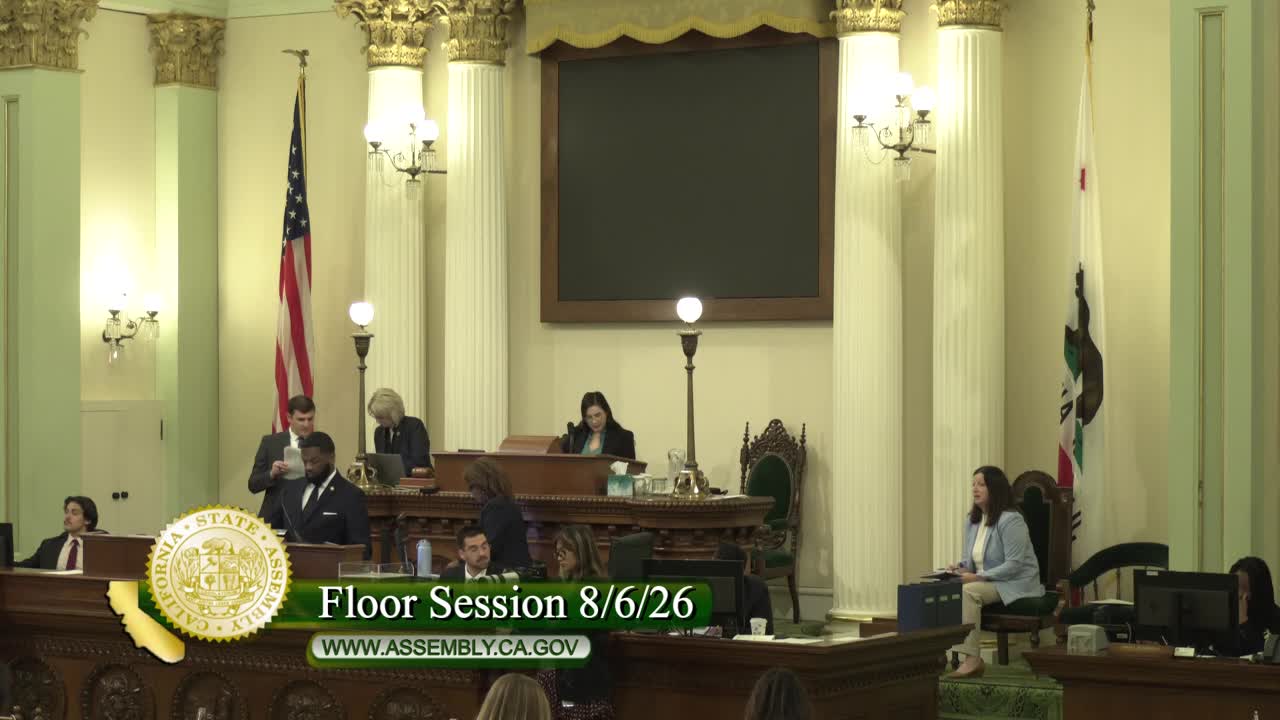
Bill Author

Bill Co-Author(s):