ACR 143: California Cities Week.
- Session Year: 2025-2026
- House: Assembly
- Latest Version Date: 2026-06-18
Current Status:
Passed
(2026-06-18: Chaptered by Secretary of State - Res. Chapter 107, Statutes of 2026.)
Introduced
In Committee
Awaiting First Chamber Vote
Passed First Chamber
In Committee
Awaiting Second Chamber Vote
Passed Second Chamber
Enacted
What does this bill do?
This resolution proclaims April 19–25, 2026, to be California Cities Week and highlights the role of cities in providing local services. It encourages Californians to take part in their communities and be civically engaged with their local government.
The summary is provided by generative AI which can make mistakes. For original language, please view the details in the table below.
This measure would proclaim the week of April 19, 2026, to April 25, 2026, inclusive, to be California Cities Week, and would encourage all Californians to be involved in their communities and be civically engaged with their local government.
This measure would proclaim the week of April 19, 2026, to April 25, 2026, inclusive, to be California Cities Week, and would encourage all Californians to be involved in their communities and be civically engaged with their local government.
This measure would proclaim the week of April 19, 2026, to April 25, 2026, inclusive, to be California Cities Week, and would encourage all Californians to be involved in their communities and be civically engaged with their local government.
WHEREAS, Cities first arose when eight California municipalities incorporated in 1850 to provide essential safety and health services to the rapidly growing population of the territory of California, due to the periods of economic prosperity and immigration that followed the Gold Rush and both world wars; and
WHEREAS, Today, Californias 483 cities and towns vary in size and scope and serve diverse communities throughout the state, from small rural neighborhoods to large urban regions; and
WHEREAS, More than 80 percent of Californias population resides within municipalities and receives city services; and
WHEREAS, the California Constitution grants several powers to cities, including the authority to promote and regulate public safety, the authority to raise revenue for public purposes, and the power to operate public works to furnish residents with light, water, power, heat, transportation, and communication; and
WHEREAS, Cities provide millions of Californians with essential services, including public libraries, fire departments, police departments, emergency medical and disaster response, parks and recreation, childcare, community and human services programs, solid waste and recycling management, water, sewer, utilities, land use planning, housing, economic development, transportation planning, maintenance of streets and roads, telecommunications, and more; and
WHEREAS, While cities differ in matters of population, geography, and economy, they share essential beliefs and values; and
WHEREAS, Cities remain transparent and accountable to the communities they serve, and have earned the trust placed in them by local residents; now, therefore, be it
Resolved by the Assembly of the State of California, the Senate thereof concurring, That the Legislature hereby proclaims the week of April 19, 2026, to April 25, 2026, inclusive, to be California Cities Week and encourages all Californians to be involved in their communities and to be civically engaged with their local government, and be it further;
Resolved, That the Chief Clerk of the Assembly transmit copies of this resolution to the author for appropriate distribution.
|
Date
|
Status
|
|---|---|
| Jun 18, 2026 | Chaptered by Secretary of State - Res. Chapter 107, Statutes of 2026. |
| Jun 18, 2026 | Enrolled and filed with the Secretary of State at 3 p.m. |
| Jun 11, 2026 | In Assembly. Ordered to Engrossing and Enrolling. |
| Jun 11, 2026 | Adopted and to Assembly. (Ayes 36. Noes 0. Page 4699.) |
| Jun 11, 2026 | Adopted and to Assembly. (Ayes 36. Noes 0.) |
| Jun 9, 2026 | Ordered to special consent calendar. |
| May 6, 2026 | From committee: Ordered to third reading. |
| Apr 27, 2026 | In Senate. To Com. on RLS. |
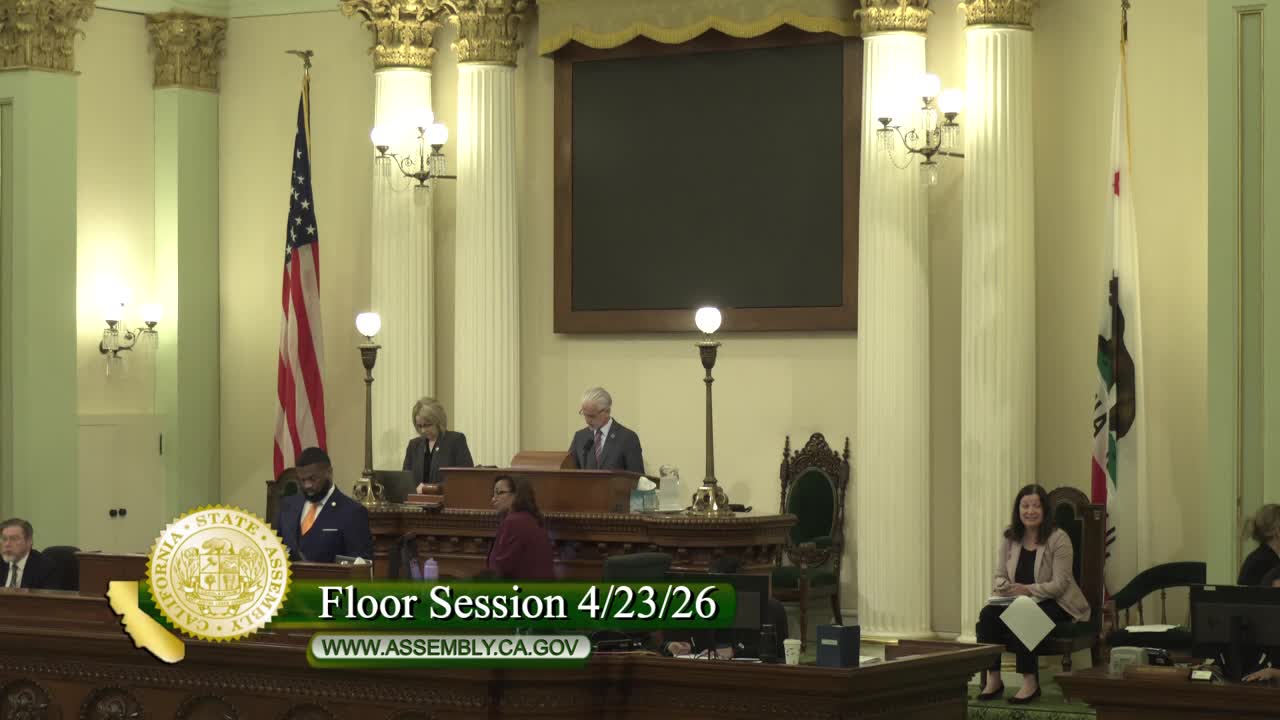
| Apr 23, 2026 | Adopted and to Senate. |
| Apr 23, 2026 | Adopted and to Senate. (Page 4790.) |
| Apr 23, 2026 | Coauthors revised. |
| Apr 13, 2026 | From committee: Be adopted. Ordered to Third Reading. (Ayes 10. Noes 0.) (April 13). |
| Feb 23, 2026 | Referred to Com. on RLS. |
| Feb 19, 2026 | Introduced. To print. |
|
Date
|
Description
|
Location
|
Votes
|
|
|---|---|---|---|---|
| Jun 11, 2026 | Special Consent ACR143 Pacheco et al. | Senate Floor |
Passed |
|
| Apr 13, 2026 | Be adopted. To third reading. | Assembly Standing Committee on Rules |
Passed |
This list shows positions taken on this bill by organizations on the date displayed, which is linked to the original source.
Positions by individuals are not included.
|
Organization
|
Position
|
Date
|
|---|---|---|
| California Municipal Utilities Association | ** Support |
SENATE RULES COMMITTEE Office of Senate Floor Analyses (916) 651-4171 | ACR 143 |
THIRD READING
Bill No: ACR 143
Author: Pacheco (D), et al.
Introduced: 2/19/26
SUBJECT: California Cities Week
SOURCE: Author
DIGEST:
This resolution proclaims the week of April 19, 2026, to April 25, 2026, inclusive, to be California Cities Week, and encourages all Californians to be involved in their communities and be civically engaged with their local government.
ANALYSIS: This resolution makes the following legislative findings:
- Cities first arose when eight California municipalities incorporated in 1850 to provide essential safety and health services to the rapidly growing population of the territory of California, due to the periods of economic prosperity and immigration that followed the Gold Rush and both world wars.
- Cities provide millions of Californians with essential services, including public libraries, fire departments, police departments, emergency medical and disaster response, parks and recreation, childcare, community and human services programs, solid waste and recycling management, water, sewer, utilities, land use planning, housing, economic development, transportation planning, maintenance of streets and roads, telecommunications, and more.
- Today, California’s 483 cities and towns vary in size and scope and serve diverse communities throughout the state, from small rural neighborhoods to large urban regions.
This resolution proclaims the week of April 19, 2026, to April 25, 2026, inclusive, to be California Cities Week, and encourages all Californians to be involved in their communities and be civically engaged with their local government.
Related/Prior Legislation
ACR 44 (Pacheco, Resolution Chapter 66, Statutes of 2025)
ACR 137 (Pacheco, Resolution Chapter 65, Statutes of 2024)
ACR 54 (Pacheco, Resolution Chapter 61, Statutes of 2023)
FISCAL EFFECT: Appropriation: No Fiscal Com.: No Local: No
SUPPORT: (Verified 5/5/26)
California Municipal Utilities Association
OPPOSITION: (Verified 5/5/26)
None received
Prepared by: Aizenia Randhawa / SFA / (916) 651-4171
5/6/26 13:50:30
**** END ****
ASSEMBLY THIRD READING
ATR Bill Id:ACR 143
Author:(Pacheco)
As Introduced Ver:February 19, 2026
Majority vote
SUMMARY
Proclaims the week of April 19, 2026, to April 25, 2026, to be California Cities Week; and, encourages all Californians to be involved in their communities and be civically engaged with their local government.
Major Provisions
- Cities first arose when eight California municipalities incorporated in 1850 to provide essential safety and health services to the rapidly growing population of the territory of California, due to the periods of economic prosperity and immigration that followed the Gold Rush and both world wars.
- Today, California's 483 cities and towns vary in size and scope and serve diverse communities throughout the state, from small rural neighborhoods to large urban regions.
- The California Constitution grants several powers to cities, including the authority to promote and regulate public safety, the authority to raise revenue for public purposes, and the power to operate public works to furnish residents with light, water, power, heat, transportation, and communication.
- Cities provide millions of Californians with essential services, including public libraries, fire departments, police departments, emergency medical and disaster response, parks and recreation, childcare, community and human services programs, solid waste and recycling management, water, sewer, utilities, land use planning, housing, economic development, transportation planning, maintenance of streets and roads, telecommunications, and more.
- While cities differ in matters of population, geography, and economy, they share essential beliefs and values. Cities remain transparent and accountable to the communities they serve, and have earned the trust placed in them by local residents.
COMMENTS
According to the Author
ACR 143 would proclaim the week of April 19, 2026, to April 25, 2026, to be Cities Week, and would encourage all Californians to be involved in their communities and be civically engaged with their local government.
Arguments in Support
The California Municipal Utilities Association (CMUA) writes in support: "CMUA's city members help keep the lights on and the water flowing for customers across the state. The tireless work of our members ensures that our customers know they have safe, affordable, and reliable utility services."
Arguments in Opposition
None on file
FISCAL COMMENTS
No fiscal impact. This resolution is keyed non-fiscal by Legislative Counsel.
VOTES
ASM RULES: 10-0-0
YES: Pacheco, Lackey, Ahrens, Dixon, Garcia, Mark González, Irwin, Michelle Rodriguez, Sanchez, Zbur
UPDATED
VERSION: February 19, 2026
CONSULTANT: Michael Erke / RLS. / (916) 319-2800 FN: 0002359
Date of Hearing: April 13, 2026
ASSEMBLY COMMITTEE ON RULES
Blanca Pacheco, Chair
ABPCA Bill Id:ACR 143 (
Author:Pacheco) – As Introduced Ver:February 19, 2026
SUBJECT: California Cities Week.
SUMMARY: Proclaims the week of April 19, 2026, to April 25, 2026, to be California Cities Week; and, encourages all Californians to be involved in their communities and be civically engaged with their local government. Specifically, this resolution makes the following legislative findings:
- Cities first arose when eight California municipalities incorporated in 1850 to provide essential safety and health services to the rapidly growing population of the territory of California, due to the periods of economic prosperity and immigration that followed the Gold Rush and both world wars.
- Today, California’s 483 cities and towns vary in size and scope and serve diverse communities throughout the state, from small rural neighborhoods to large urban regions.
- The California Constitution grants several powers to cities, including the authority to promote and regulate public safety, the authority to raise revenue for public purposes, and the power to operate public works to furnish residents with light, water, power, heat, transportation, and communication.
- Cities provide millions of Californians with essential services, including public libraries, fire departments, police departments, emergency medical and disaster response, parks and recreation, childcare, community and human services programs, solid waste and recycling management, water, sewer, utilities, land use planning, housing, economic development, transportation planning, maintenance of streets and roads, telecommunications, and more.
- While cities differ in matters of population, geography, and economy, they share essential beliefs and values. Cities remain transparent and accountable to the communities they serve, and have earned the trust placed in them by local residents.
FISCAL EFFECT: This resolution is keyed non-fiscal by Legislative Counsel.
REGISTERED SUPPORT / OPPOSITION:
Support
California Municipal Utilities Association (CMUA)
Opposition
None on file
Analysis Prepared by: Michael Erke / RLS. / (916) 319-2800
Bill Author

Bill Co-Author(s):