AB 1061: Housing developments: urban lot splits: historical resources.
- Session Year: 2025-2026
- House: Assembly
- Latest Version Date: 2025-10-10
Current Status:
Passed
(2025-10-10: Chaptered by Secretary of State - Chapter 505, Statutes of 2025.)
Introduced
In Committee
Awaiting First Chamber Vote
Passed First Chamber
In Committee
Awaiting Second Chamber Vote
Passed Second Chamber
Enacted
Under the Planning and Zoning Law, the legislative body of a county or city may adopt ordinances that, among other things, regulate the use of buildings, structures, and land, as provided. The Subdivision Map Act vests the authority to regulate and control the design and improvement of subdivisions in the legislative body of a local agency and sets forth procedures governing the local agencys processing, approval, conditional approval or disapproval, and filing of tentative, final, and parcel maps. Existing law requires a local agency to consider ministerially a specified proposed housing development or to ministerially approve a parcel map for an urban lot split if the development or parcel meets specified requirements, including, that the development or parcel is not located within a historic district or property included on the State Historic Resources Inventory or within a site that is designated or listed as a city or county landmark or historic property or district pursuant to city or county ordinance, as specified. Existing law authorizes a local agency to impose specified objective standards on the development or parcel created by an urban lot split, except as specified.
With respect to ministerial review of a proposed housing development under the above-described provisions, this bill would, if the other specified requirements are met, instead require a local agency to consider ministerially the development that is not located in either a contributing structure within a historic district included on the State Historical Resources Inventory or within a historic property or district pursuant to city or county ordinance or in a parcel individually listed as a historical resource included in the State Historical Resources Inventory or within a property individually designated or listed as a city or county landmark under a city or county ordinance. The bill would also authorize a local agency to adopt objective standards for the purposes of maintaining the historical value of a historic district listed in the California Register of Historical Resources, as specified.
With respect to an urban lot split under the above-described provisions, this bill would, if the other specified requirements are met, instead require a local agency to ministerially approve the urban lot split if the parcel is not located within a historic landmark property included on the State Historical Resources Inventory or within a site that is designated or listed as a city or county landmark pursuant to a city or county ordinance. The bill would additionally require that the proposed urban lot split not require demolition or alteration of specified structures.
By imposing additional duties on local agencies, this bill would impose a state-mandated local program.
The California Constitution requires the state to reimburse local agencies and school districts for certain costs mandated by the state. Statutory provisions establish procedures for making that reimbursement.
This bill would provide that no reimbursement is required by this act for a specified reason.
Under the Planning and Zoning Law, the legislative body of a county or city may adopt ordinances that, among other things, regulate the use of buildings, structures, and land, as provided. The Subdivision Map Act vests the authority to regulate and control the design and improvement of subdivisions in the legislative body of a local agency and sets forth procedures governing the local agencys processing, approval, conditional approval or disapproval, and filing of tentative, final, and parcel maps. Existing law requires a local agency to consider ministerially a specified proposed housing development or to ministerially approve a parcel map for an urban lot split if the development or parcel meets specified requirements, including, that the development or parcel is not located within a historic district or property included on the State Historic Resources Inventory or within a site that is designated or listed as a city or county landmark or historic property or district pursuant to city or county ordinance, as specified. Existing law authorizes a local agency to impose specified objective standards on the development or parcel created by an urban lot split, except as specified.
With respect to ministerial review of a proposed housing development under the above-described provisions, this bill would, if the other specified requirements are met, instead require a local agency to consider ministerially the development that is not located on in either a contributing structure within a historic district included on the State Historical Resources Inventory or within a historic property or district pursuant to city or county ordinance or in a parcel individually listed as a historical resource included in the State Historical Resources Inventory, as specified, Inventory or within a property individually designated or listed as a city or county landmark under a city or county ordinance. The bill would additionally prohibit the development from demolishing more than 25% of the exterior wall area or affecting the character-defining exterior features of a contributing structure, as specified. The bill would also authorize a local agency to adopt objective standards on the development that prevents adverse impact on a property that is included on the State Historic Resources Inventory or for the purposes of maintaining the historical value of a historic district listed in the California Register of Historical Resources, as specified.
With respect to an urban lot split under the above-described provisions, this bill would, if the other specified requirements are met, instead require a local agency to ministerially approve the urban lot split if the parcel is not located within a historic landmark property included on the State Historical Resources Inventory or within a site that is designated or listed as a city or county landmark pursuant to a city or county ordinance. The bill would additionally require that the proposed urban lot split not require demolition or alteration of specified structures. The bill would additionally authorize a local agency to adopt objective standards on the parcel created by an urban lot split that prevents adverse impact on a property that is included on the State Historic Resources Inventory.
By imposing additional duties on local agencies, this bill would impose a state-mandated local program.
The California Constitution requires the state to reimburse local agencies and school districts for certain costs mandated by the state. Statutory provisions establish procedures for making that reimbursement.
This bill would provide that no reimbursement is required by this act for a specified reason.
Under the Planning and Zoning Law, the legislative body of a county or city may adopt ordinances that, among other things, regulate the use of buildings, structures, and land, as provided. The Subdivision Map Act vests the authority to regulate and control the design and improvement of subdivisions in the legislative body of a local agency and sets forth procedures governing the local agencys processing, approval, conditional approval or disapproval, and filing of tentative, final, and parcel maps. Existing law requires a local agency to consider ministerially a specified proposed housing development or to ministerially approve a parcel map for an urban lot split if the development or parcel meets specified requirements, including, that the development or parcel is not located within a historic district or property included on the State Historic Resources Inventory or within a site that is designated or listed as a city or county landmark or historic property or district pursuant to city or county ordinance, as specified. Existing law authorizes a local agency to impose specified objective standards on the development or parcel created by an urban lot split, but prohibits a local agency from, among other things, requiring setback for an existing structure or structure constructed in the same location and to the same dimensions of an existing structure. split, except as specified.
With respect to ministerial review of a proposed housing development under the above-described provisions, this bill would, if the other specified requirements are met, instead require a local agency to consider ministerially a proposed housing the development that is not located on a parcel individually listed as a historical resource included in the State Historical Resources Inventory, as specified, or within a property individually designated or listed as a city or county landmark under a city or county ordinance. The bill would additionally prohibit the development from demolishing more than 25% of the exterior wall area or affecting the character-defining exterior features of a contributing structure, as specified. The bill, with respect to the requirement to ministerially approve a housing development under the above-described provisions, would remove the setback prohibition. The bill would also authorize a local government agency to adopt objective standards on the development that prevents adverse impact on a property that is included on the State Historic Resources Inventory or for the purposes of maintaining the historical value of a historic district listed in the California Register of Historical Resources, as specified.
With respect to an urban lot split under the above-described provisions, this bill would, if the other specified requirements are met, instead require a local agency to ministerially approve an the urban lot split if the parcel is not located within a historic landmark property included on the State Historical Resources Inventory or within a site that is designated or listed as a city or county landmark pursuant to a city or county ordinance. The bill would additionally require that the proposed urban lot split not require demolition of specified structures. The bill would additionally authorize a local agency to adopt objective standards on the parcel created by an urban lot split that prevents adverse impact on a property that is included on the State Historic Resources Inventory.
By imposing additional duties on local agencies, this bill would impose a state-mandated local program.
The California Constitution requires the state to reimburse local agencies and school districts for certain costs mandated by the state. Statutory provisions establish procedures for making that reimbursement.
This bill would provide that no reimbursement is required by this act for a specified reason.
Under the Planning and Zoning Law, the legislative body of a county or city may adopt ordinances that, among other things, regulate the use of buildings, structures, and land, as provided. The Subdivision Map Act vests the authority to regulate and control the design and improvement of subdivisions in the legislative body of a local agency and sets forth procedures governing the local agencys processing, approval, conditional approval or disapproval, and filing of tentative, final, and parcel maps. Existing law requires a local agency to consider ministerially a specified proposed housing development or to ministerially approve a parcel map for an urban lot split if the development or parcel meets specified requirements, including, that the development or parcel is not located within a historic district or property included on the State Historic Resources Inventory or within a site that is designated or listed as a city or county landmark or historic property or district pursuant to city or county ordinance, as specified. The Existing law authorizes a local agency to impose specified objective standards on the development or parcel created by an urban lot spit. split, but prohibits a local agency from, among other things, requiring setback for an existing structure or structure constructed in the same location and to the same dimensions of an existing structure.
This With respect to ministerial review of a housing development under the above-described provisions, this bill would, if the other specified requirements are met, instead require a local agency to consider ministerially a proposed housing development or that is not located on a parcel individually listed as a historical resource included in the State Historical Resources Inventory, as specified, or within a property individually designated or listed as a city or county landmark under a city or county ordinance. The bill would additionally prohibit the development from demolishing more than 25% of the exterior wall area or affecting the character-defining exterior features of a contributing structure, as specified. The bill, with respect to the requirement to ministerially approve a housing development under the above-described provisions, would remove the setback prohibition. The bill would also authorize a local government to adopt objective standards on the development that prevents adverse impact on a property that is included on the State Historic Resources Inventory or for the purposes of maintaining the historical value of a historic district listed in the California Register of Historical Resources, as specified.
With respect to an urban lot split under the above-described provisions, this bill would, if the other specified requirements are met, instead require a local agency to ministerially approve an urban lot split if the development or proposed urban lot split parcel is not located within a historic landmark property included on the State Historical Resources Inventory or within a site that is designated or listed as a city or county landmark pursuant to a city or county ordinance. The bill would additionally require that the development or proposed urban lot split not require demolition of specified structures that are included on the State Historic Resources Inventory or designated or listed as a historic resource pursuant to city or county ordinance. structures. The bill would additionally authorize a local agency to adopt objective standards on the development or parcel created by an urban lot split that prevents adverse impact on a property that is included on the State Historic Resources Inventory and would apply the federal Secretary of Interiors Standards for Rehabilitation in the absence of objective standards. By Inventory.
By imposing additional duties on local agencies, this bill would impose a state-mandated local program.
The California Constitution requires the state to reimburse local agencies and school districts for certain costs mandated by the state. Statutory provisions establish procedures for making that reimbursement.
This bill would provide that no reimbursement is required by this act for a specified reason.
Under the Planning and Zoning Law, the legislative body of a county or city may adopt ordinances that, among other things, regulate the use of buildings, structures, and land, as provided. The Subdivision Map Act vests the authority to regulate and control the design and improvement of subdivisions in the legislative body of a local agency and sets forth procedures governing the local agencys processing, approval, conditional approval or disapproval, and filing of tentative, final, and parcel maps. Existing law requires a local agency to consider ministerially a specified proposed housing development or to ministerially approve a parcel map for an urban lot split if the development or parcel meets specified requirements, including, that the development or parcel is not located within a historic district or property included on the State Historic Resources Inventory or within a site that is designated or listed as a city or county landmark or historic property pursuant to city or county ordinance, as specified. The law authorizes a local agency to impose specified objective standards on the development or parcel created by an urban lot spit.
This bill would, if the other specified requirements are met, instead require a local agency to consider ministerially a proposed housing development or ministerially approve an urban lot split if the development or proposed urban lot split is not located within a historic landmark property included on the State Historical Resources Inventory or within a site that is designated or listed as a city or county landmark pursuant to a city or county ordinance. The bill would additionally require that the development or proposed urban lot split not require demolition of specified structures that are included on the State Historic Resources Inventory or designated or listed as a historic resource pursuant to city or county ordinance. The bill would additionally authorize a local agency to adopt objective standards on the development or parcel that prevents adverse impact on a property that is included on the State Historic Resources Inventory and would apply the federal Secretary of Interiors Standards for Rehabilitation in the absence of objective standards. By imposing additional duties on local agencies, this bill would impose a state-mandated local program.
The California Constitution requires the state to reimburse local agencies and school districts for certain costs mandated by the state. Statutory provisions establish procedures for making that reimbursement.
This bill would provide that no reimbursement is required by this act for a specified reason.
(a)A proposed housing development containing no more than two residential units within a single-family residential zone shall be considered ministerially, without discretionary review or a hearing, if the proposed housing development meets all of the following requirements:
(1)The parcel subject to the proposed housing development is located within a city, the boundaries of which include some portion of either an urbanized area or urban cluster, as designated by the United States Census Bureau, or, for unincorporated areas, a legal parcel wholly within the boundaries of an urbanized area or urban cluster, as designated by the United States Census Bureau.
(2)The parcel satisfies the requirements specified in subparagraphs (B) to (K), inclusive, of paragraph (6) of subdivision (a) of Section 65913.4, as that section read on September 16, 2021.
(3)Notwithstanding any provision of this section or any local law, the proposed housing development would not require demolition or alteration of any of the following types of housing:
(A)Housing that is subject to a recorded covenant, ordinance, or law that restricts rents to levels affordable to persons and families of moderate, low, or very low income.
(B)Housing that is subject to any form of rent or price control through a public entitys valid exercise of its police power.
(C)Housing that has been occupied by a tenant in the last three years.
(4)The parcel subject to the proposed housing development is not a parcel on which an owner of residential real property has exercised the owners rights under Chapter 12.75 (commencing with Section 7060) of Division 7 of Title 1 to withdraw accommodations from rent or lease within 15 years before the date that the development proponent submits an application.
(5)The development is not located in either the following:
(A)A contributing structure within a historic district included on the State Historic Resources Inventory, as defined in Section 5020.1 of the Public Resources Code, or historic property or district pursuant to a city or county ordinance.
(B)A parcel individually listed as a historical resource included in the State Historic Resources Inventory, as defined in Section 5020.1 of the Public Resources Code, or within a property individually designated or listed as a city or county landmark under a city or county ordinance.
(b)(1)Notwithstanding any local law and except as provided in paragraphs (2) and (3), a local agency may impose objective zoning standards, objective subdivision standards, and objective design review standards that do not conflict with this section.
(2)(A)The local agency shall not impose objective zoning standards, objective subdivision standards, and objective design standards that would have the effect of physically precluding the construction of up to two units or that would physically preclude either of the two units from being at least 800 square feet in floor area.
(B)(i)Notwithstanding subparagraph (A), no setback shall be required for an existing structure or a structure constructed in the same location and to the same dimensions as an existing structure.
(ii)Notwithstanding subparagraph (A), in all other circumstances not described in clause (i), a local agency may require a setback of up to four feet from the side and rear lot lines.
(3)A local agency shall not impose objective zoning standards, objective subdivision standards, and objective design standards that do not apply uniformly to development within the underlying zone. This subdivision shall not prevent a local agency from adopting or imposing objective zoning standards, objective subdivision standards, and objective design standards on development authorized by this section if those standards are more permissive than applicable standards within the underlying zone.
(4)A local agency may adopt objective standards for the purposes of maintaining the historical value of a historic district listed in the California Register of Historical Resources.
(c)In addition to any conditions established in accordance with subdivision (b), a local agency may require any of the following conditions when considering an application for two residential units as provided for in this section:
(1)Offstreet parking of up to one space per unit, except that a local agency shall not impose parking requirements in either of the following instances:
(A)The parcel is located within one-half mile walking distance of either a high-quality transit corridor, as defined in subdivision (b) of Section 21155 of the Public Resources Code, or a major transit stop, as defined in Section 21064.3 of the Public Resources Code.
(B)There is a car share vehicle located within one block of the parcel.
(2)For residential units connected to an onsite wastewater treatment system, a percolation test completed within the last 5 years, or, if the percolation test has been recertified, within the last 10 years.
(d)Notwithstanding subdivision (a), a local agency may deny a proposed housing development project if the building official makes a written finding, based upon a preponderance of the evidence, that the proposed housing development project would have a specific, adverse impact, as defined and determined in paragraph (2) of subdivision (d) of Section 65589.5, upon public health and safety for which there is no feasible method to satisfactorily mitigate or avoid the specific, adverse impact.
(e)A local agency shall require that a rental of any unit created pursuant to this section be for a term longer than 30 days.
(f)Notwithstanding Article 2 (commencing with Section 66314) or Article 3 (commencing with Section 66333) of Chapter 13, a local agency shall not be required to permit an accessory dwelling unit or a junior accessory dwelling unit on parcels that use both the authority contained within this section and the authority contained in Section 66411.7.
(g)Notwithstanding subparagraph (B) of paragraph (2) of subdivision (b), an application shall not be rejected solely because it proposes adjacent or connected structures provided that the structures meet building code safety standards and are sufficient to allow separate conveyance.
(h)(1)An application for a proposed housing development pursuant to this section shall be considered and approved or denied within 60 days from the date the local agency receives a completed application. If the local agency has not approved or denied the completed application within 60 days, the application shall be deemed approved.
(2)If a permitting agency denies an application for a proposed housing development pursuant to paragraph (1), the permitting agency shall, within the time period described in paragraph (1), return in writing a full set of comments to the applicant with a list of items that are defective or deficient and a description of how the application can be remedied by the applicant.
(i)Local agencies shall include units constructed pursuant to this section in the annual housing element report as required by subparagraph (I) of paragraph (2) of subdivision (a) of Section 65400.
(j)For purposes of this section, all of the following apply:
(1)A housing development contains two residential units if the development proposes no more than two new units or if it proposes to add one new unit to one existing unit.
(2)The terms objective zoning standards, objective subdivision standards, and objective design review standards mean standards that involve no personal or subjective judgment by a public official and are uniformly verifiable by reference to an external and uniform benchmark or criterion available and knowable by both the development applicant or proponent and the public official prior to submittal. These standards may be embodied in alternative objective land use specifications adopted by a local agency, and may include, but are not limited to, housing overlay zones, specific plans, inclusionary zoning ordinances, and density bonus ordinances.
(3)Local agency means a city, county, or city and county, whether general law or chartered.
(k)A local agency may adopt an ordinance to implement the provisions of this section. An ordinance adopted to implement this section shall not be considered a project under Division 13 (commencing with Section 21000) of the Public Resources Code.
(l)Nothing in this section shall be construed to supersede or in any way alter or lessen the effect or application of the California Coastal Act of 1976 (Division 20 (commencing with Section 30000) of the Public Resources Code), except that the local agency shall not be required to hold public hearings for coastal development permit applications for a housing development pursuant to this section.
SEC. 2.Section 66411.7 of the Government Code is amended to read:66411.7.(a)Notwithstanding any other provision of this division and any local law, a local agency shall ministerially approve, as set forth in this section, a parcel map for an urban lot split only if the local agency determines that the parcel map for the urban lot split meets all the following requirements:
(1)The parcel map subdivides an existing parcel to create no more than two new parcels of approximately equal lot area provided that one parcel shall not be smaller than 40 percent of the lot area of the original parcel proposed for subdivision.
(2)(A)Except as provided in subparagraph (B), both newly created parcels are no smaller than 1,200 square feet.
(B)A local agency may by ordinance adopt a smaller minimum lot size subject to ministerial approval under this subdivision.
(3)The parcel being subdivided meets all the following requirements:
(A)The parcel is located within a single-family residential zone.
(B)The parcel subject to the proposed urban lot split is located within a city, the boundaries of which include some portion of either an urbanized area or urban cluster, as designated by the United States Census Bureau, or, for unincorporated areas, a legal parcel wholly within the boundaries of an urbanized area or urban cluster, as designated by the United States Census Bureau.
(C)The parcel satisfies the requirements specified in subparagraphs (B) to (K), inclusive, of paragraph (6) of subdivision (a) of Section 65913.4, as that section read on September 16, 2021.
(D)The proposed urban lot split would not require demolition or alteration of any of the following types of housing:
(i)Housing that is subject to a recorded covenant, ordinance, or law that restricts rents to levels affordable to persons and families of moderate, low, or very low income.
(ii)Housing that is subject to any form of rent or price control through a public entitys valid exercise of its police power.
(iii)A parcel or parcels on which an owner of residential real property has exercised the owners rights under Chapter 12.75 (commencing with Section 7060) of Division 7 of Title 1 to withdraw accommodations from rent or lease within 15 years before the date that the development proponent submits an application.
(iv)Housing that has been occupied by a tenant in the last three years.
(E)The parcel is not located within a historical landmark property included on the State Historic Resources Inventory, as defined in Section 5020.1 of the Public Resources Code, or within a site that is designated or listed as a city or county landmark pursuant to a city or county ordinance.
(F)The proposed urban lot split does not require demolition or alteration of either of the following:
(i)A contributing structure located within either a historic district that is included on the California Register of Historical Resources or within a historic district listed or designated pursuant to a city or county ordinance.
(ii)An existing exterior structural wall of a structure located within either a historic district that is included on the California Register of Historical Resources or within a historic district listed or designated pursuant to a city or county ordinance.
(G)The parcel has not been established through prior exercise of an urban lot split as provided for in this section.
(H)Neither the owner of the parcel being subdivided nor any person acting in concert with the owner has previously subdivided an adjacent parcel using an urban lot split as provided for in this section.
(b)An application for a parcel map for an urban lot split shall be approved in accordance with the following requirements:
(1)(A)A local agency shall approve or deny an application for a parcel map for an urban lot split ministerially without discretionary review.
(B)An application for an urban lot split shall be considered and approved or denied within 60 days from the date the local agency receives a completed application. If the local agency has not approved or denied the completed application within 60 days, the application shall be deemed approved.
(C)If a permitting agency denies an application for an urban lot split pursuant to subparagraph (B), the permitting agency shall, within the time period described in subparagraph (B), return in writing a full set of comments to the applicant with a list of items that are defective or deficient and a description of how the application can be remedied by the applicant.
(2)A local agency shall approve an urban lot split only if it conforms to all applicable objective requirements of the Subdivision Map Act (Division 2 (commencing with Section 66410)), except as otherwise expressly provided in this section.
(3)Notwithstanding Section 66411.1, a local agency shall not impose regulations that require dedications of rights-of-way or the construction of offsite improvements for the parcels being created as a condition of issuing a parcel map for an urban lot split pursuant to this section.
(c)(1)Except as provided in paragraph (2), notwithstanding any local law, a local agency may impose objective zoning standards, objective subdivision standards, and objective design review standards that are related to the design or to improvements of a parcel, consistent with paragraph (3) of subdivision (b) and with subdivision (e), and are applicable to a parcel created by an urban lot split that do not conflict with this section.
(2)A local agency shall not impose objective zoning standards, objective subdivision standards, and objective design review standards that would have the effect of physically precluding the construction of two units on either of the resulting parcels or that would result in a unit size of less than 800 square feet.
(3)(A)Notwithstanding paragraph (2), no setback shall be required for an existing structure or a structure constructed in the same location and to the same dimensions as an existing structure.
(B)Notwithstanding paragraph (2), in all other circumstances not described in subparagraph (A), a local agency may require a setback of up to four feet from the side and rear lot lines.
(d)Notwithstanding subdivision (a), a local agency may deny an urban lot split if the building official makes a written finding, based upon a preponderance of the evidence, that the proposed housing development project would have a specific, adverse impact, as defined and determined in paragraph (2) of subdivision (d) of Section 65589.5, upon public health and safety for which there is no feasible method to satisfactorily mitigate or avoid the specific, adverse impact.
(e)In addition to any conditions established in accordance with this section, a local agency may require any of the following conditions when considering an application for a parcel map for an urban lot split:
(1)Easements required for the provision of public services and facilities.
(2)A requirement that the parcels have access to, provide access to, or adjoin the public right-of-way.
(3)Offstreet parking of up to one space per unit, except that a local agency shall not impose parking requirements in either of the following instances:
(A)The parcel is located within one-half mile walking distance of either a high-quality transit corridor as defined in subdivision (b) of Section 21155 of the Public Resources Code, or a major transit stop as defined in Section 21064.3 of the Public Resources Code.
(B)There is a car share vehicle located within one block of the parcel.
(f)A local agency shall require that the uses allowed on a lot created by this section be limited to residential uses.
(g)(1)A local agency shall require an applicant for an urban lot split to sign an affidavit stating that the applicant intends to occupy one of the housing units as their principal residence for a minimum of three years from the date of the approval of the urban lot split.
(2)This subdivision shall not apply to an applicant that is a community land trust, as defined in clause (ii) of subparagraph (C) of paragraph (11) of subdivision (a) of Section 402.1 of the Revenue and Taxation Code, or is a qualified nonprofit corporation as described in Section 214.15 of the Revenue and Taxation Code.
(3)A local agency shall not impose additional owner occupancy standards, other than provided for in this subdivision, on an urban lot split pursuant to this section.
(h)A local agency shall require that a rental of any unit created pursuant to this section be for a term longer than 30 days.
(i)A local agency shall not require, as a condition for ministerial approval of a parcel map application for the creation of an urban lot split, the correction of nonconforming zoning conditions.
(j)(1)Notwithstanding any provision of Section 65852.21, 65915, Article 2 (commencing with Section 66314) or Article 3 (commencing with Section 66333) of Chapter 13 of Division 1, or this section, a local agency shall not be required to permit more than two units on a parcel created through the exercise of the authority contained within this section.
(2)For the purposes of this section, unit means any dwelling unit, including, but not limited to, a unit or units created pursuant to Section 65852.21, a primary dwelling, an accessory dwelling unit as defined in subdivision (a) of Section 66313, or a junior accessory dwelling unit as defined in subdivision (d) of Section 66313.
(k)Notwithstanding paragraph (3) of subdivision (c), an application shall not be rejected solely because it proposes adjacent or connected structures provided that the structures meet building code safety standards and are sufficient to allow separate conveyance.
(l)Local agencies shall include the number of applications for parcel maps for urban lot splits pursuant to this section in the annual housing element report as required by subparagraph (I) of paragraph (2) of subdivision (a) of Section 65400.
(m)For purposes of this section, both of the following shall apply:
(1)Objective zoning standards, objective subdivision standards, and objective design review standards mean standards that involve no personal or subjective judgment by a public official and are uniformly verifiable by reference to an external and uniform benchmark or criterion available and knowable by both the development applicant or proponent and the public official prior to submittal. These standards may be embodied in alternative objective land use specifications adopted by a local agency, and may include, but are not limited to, housing overlay zones, specific plans, inclusionary zoning ordinances, and density bonus ordinances.
(2)Local agency means a city, county, or city and county, whether general law or chartered.
(n)A local agency may adopt an ordinance to implement the provisions of this section. An ordinance adopted to implement this section shall not be considered a project under Division 13 (commencing with Section 21000) of the Public Resources Code.
(o)Nothing in this section shall be construed to supersede or in any way alter or lessen the effect or application of the California Coastal Act of 1976 (Division 20 (commencing with Section 30000) of the Public Resources Code), except that the local agency shall not be required to hold public hearings for coastal development permit applications for urban lot splits pursuant to this section.
SEC. 3.No reimbursement is required by this act pursuant to Section 6 of Article XIIIB of the California Constitution because a local agency or school district has the authority to levy service charges, fees, or assessments sufficient to pay for the program or level of service mandated by this act, within the meaning of Section 17556 of the Government Code.
(a)A proposed housing development containing no more than two residential units within a single-family residential zone shall be considered ministerially, without discretionary review or a hearing, if the proposed housing development meets all of the following requirements:
(1)The parcel subject to the proposed housing development is located within a city, the boundaries of which include some portion of either an urbanized area or urban cluster, as designated by the United States Census Bureau, or, for unincorporated areas, a legal parcel wholly within the boundaries of an urbanized area or urban cluster, as designated by the United States Census Bureau.
(2)The parcel satisfies the requirements specified in subparagraphs (B) to (K), inclusive, of paragraph (6) of subdivision (a) of Section 65913.4, as that section read on September 16, 2021.
(3)Notwithstanding any provision of this section or any local law, the proposed housing development would not require demolition or alteration of any of the following types of housing:
(A)Housing that is subject to a recorded covenant, ordinance, or law that restricts rents to levels affordable to persons and families of moderate, low, or very low income.
(B)Housing that is subject to any form of rent or price control through a public entitys valid exercise of its police power.
(C)Housing that has been occupied by a tenant in the last three years.
(4)The parcel subject to the proposed housing development is not a parcel on which an owner of residential real property has exercised the owners rights under Chapter 12.75 (commencing with Section 7060) of Division 7 of Title 1 to withdraw accommodations from rent or lease within 15 years before the date that the development proponent submits an application.
(5)The development is not located on a in either the following:
(A)A contributing structure within a historic district included on the State Historic Resources Inventory, as defined in Section 5020.1 of the Public Resources Code, or historic property or district pursuant to a city or county ordinance.
(B)A parcel individually listed as a historical resource included in the State Historic Resources Inventory, as defined in Section 5020.1 of the Public Resources Code, or within a property individually designated or listed as a city or county landmark under a city or county ordinance.
(6)Any development shall not demolish more than 25 percent of the exterior wall area nor affect the character-defining exterior features of the principal elevation of a contributing structure of a historic district.(b)(1)Notwithstanding any local law and except as provided in paragraphs (2) and (3), a local agency may impose objective zoning standards, objective subdivision standards, and objective design review standards that do not conflict with this section.
(2)(A)The local agency shall not impose objective zoning standards, objective subdivision standards, and objective design standards that would have the effect of physically precluding the construction of up to two units or that would physically preclude either of the two units from being at least 800 square feet in floor area.
(B)(i)Notwithstanding subparagraph (A), no setback shall be required for an existing structure or a structure constructed in the same location and to the same dimensions as an existing structure.
(ii)Notwithstanding subparagraph (A), in all other circumstances not described in clause (i), a local agency may require a setback of up to four feet from the side and rear lot lines.
(3)A local agency shall not impose objective zoning standards, objective subdivision standards, and objective design standards that do not apply uniformly to development within the underlying zone. This subdivision shall not prevent a local agency from adopting or imposing objective zoning standards, objective subdivision standards, and objective design standards on development authorized by this section if those standards are more permissive than applicable standards within the underlying zone.
(4)A local agency may adopt objective standards that prevent adverse impacts on a property that is included on the State Historic Resources Inventory, as defined in Section 5020.1 of the Public Resources Code.(5)(4)A local agency may adopt objective standards for the purposes of maintaining the historical value of a historic district listed in the California Register of Historical Resources.
(c)In addition to any conditions established in accordance with subdivision (b), a local agency may require any of the following conditions when considering an application for two residential units as provided for in this section:
(1)Offstreet parking of up to one space per unit, except that a local agency shall not impose parking requirements in either of the following instances:
(A)The parcel is located within one-half mile walking distance of either a high-quality transit corridor, as defined in subdivision (b) of Section 21155 of the Public Resources Code, or a major transit stop, as defined in Section 21064.3 of the Public Resources Code.
(B)There is a car share vehicle located within one block of the parcel.
(2)For residential units connected to an onsite wastewater treatment system, a percolation test completed within the last 5 years, or, if the percolation test has been recertified, within the last 10 years.
(d)Notwithstanding subdivision (a), a local agency may deny a proposed housing development project if the building official makes a written finding, based upon a preponderance of the evidence, that the proposed housing development project would have a specific, adverse impact, as defined and determined in paragraph (2) of subdivision (d) of Section 65589.5, upon public health and safety for which there is no feasible method to satisfactorily mitigate or avoid the specific, adverse impact.
(e)A local agency shall require that a rental of any unit created pursuant to this section be for a term longer than 30 days.
(f)Notwithstanding Article 2 (commencing with Section 66314) or Article 3 (commencing with Section 66333) of Chapter 13, a local agency shall not be required to permit an accessory dwelling unit or a junior accessory dwelling unit on parcels that use both the authority contained within this section and the authority contained in Section 66411.7.
(g)Notwithstanding subparagraph (B) of paragraph (2) of subdivision (b), an application shall not be rejected solely because it proposes adjacent or connected structures provided that the structures meet building code safety standards and are sufficient to allow separate conveyance.
(h)(1)An application for a proposed housing development pursuant to this section shall be considered and approved or denied within 60 days from the date the local agency receives a completed application. If the local agency has not approved or denied the completed application within 60 days, the application shall be deemed approved.
(2)If a permitting agency denies an application for a proposed housing development pursuant to paragraph (1), the permitting agency shall, within the time period described in paragraph (1), return in writing a full set of comments to the applicant with a list of items that are defective or deficient and a description of how the application can be remedied by the applicant.
(i)Local agencies shall include units constructed pursuant to this section in the annual housing element report as required by subparagraph (I) of paragraph (2) of subdivision (a) of Section 65400.
(j)For purposes of this section, all of the following apply:
(1)A housing development contains two residential units if the development proposes no more than two new units or if it proposes to add one new unit to one existing unit.
(2)The terms objective zoning standards, objective subdivision standards, and objective design review standards mean standards that involve no personal or subjective judgment by a public official and are uniformly verifiable by reference to an external and uniform benchmark or criterion available and knowable by both the development applicant or proponent and the public official prior to submittal. These standards may be embodied in alternative objective land use specifications adopted by a local agency, and may include, but are not limited to, housing overlay zones, specific plans, inclusionary zoning ordinances, and density bonus ordinances.
(3)Local agency means a city, county, or city and county, whether general law or chartered.
(k)A local agency may adopt an ordinance to implement the provisions of this section. An ordinance adopted to implement this section shall not be considered a project under Division 13 (commencing with Section 21000) of the Public Resources Code.
(l)Nothing in this section shall be construed to supersede or in any way alter or lessen the effect or application of the California Coastal Act of 1976 (Division 20 (commencing with Section 30000) of the Public Resources Code), except that the local agency shall not be required to hold public hearings for coastal development permit applications for a housing development pursuant to this section.
SEC. 2.Section 66411.7 of the Government Code is amended to read:66411.7.(a)Notwithstanding any other provision of this division and any local law, a local agency shall ministerially approve, as set forth in this section, a parcel map for an urban lot split only if the local agency determines that the parcel map for the urban lot split meets all the following requirements:
(1)The parcel map subdivides an existing parcel to create no more than two new parcels of approximately equal lot area provided that one parcel shall not be smaller than 40 percent of the lot area of the original parcel proposed for subdivision.
(2)(A)Except as provided in subparagraph (B), both newly created parcels are no smaller than 1,200 square feet.
(B)A local agency may by ordinance adopt a smaller minimum lot size subject to ministerial approval under this subdivision.
(3)The parcel being subdivided meets all the following requirements:
(A)The parcel is located within a single-family residential zone.
(B)The parcel subject to the proposed urban lot split is located within a city, the boundaries of which include some portion of either an urbanized area or urban cluster, as designated by the United States Census Bureau, or, for unincorporated areas, a legal parcel wholly within the boundaries of an urbanized area or urban cluster, as designated by the United States Census Bureau.
(C)The parcel satisfies the requirements specified in subparagraphs (B) to (K), inclusive, of paragraph (6) of subdivision (a) of Section 65913.4, as that section read on September 16, 2021.
(D)The proposed urban lot split would not require demolition or alteration of any of the following types of housing:
(i)Housing that is subject to a recorded covenant, ordinance, or law that restricts rents to levels affordable to persons and families of moderate, low, or very low income.
(ii)Housing that is subject to any form of rent or price control through a public entitys valid exercise of its police power.
(iii)A parcel or parcels on which an owner of residential real property has exercised the owners rights under Chapter 12.75 (commencing with Section 7060) of Division 7 of Title 1 to withdraw accommodations from rent or lease within 15 years before the date that the development proponent submits an application.
(iv)Housing that has been occupied by a tenant in the last three years.
(E)The parcel is not located within a historical landmark property included on the State Historic Resources Inventory, as defined in Section 5020.1 of the Public Resources Code, or within a site that is designated or listed as a city or county landmark pursuant to a city or county ordinance.
(F)The proposed urban lot split does not require demolition or alteration of either of the following:
(i)A contributing structure located within either a historic district that is included on the California Register of Historical Resources or within a historic district listed or designated pursuant to a city or county ordinance.
(ii)An existing exterior structural wall of a property. structure located within either a historic district that is included on the California Register of Historical Resources or within a historic district listed or designated pursuant to a city or county ordinance.
(G)The parcel has not been established through prior exercise of an urban lot split as provided for in this section.
(H)Neither the owner of the parcel being subdivided nor any person acting in concert with the owner has previously subdivided an adjacent parcel using an urban lot split as provided for in this section.
(b)An application for a parcel map for an urban lot split shall be approved in accordance with the following requirements:
(1)(A)A local agency shall approve or deny an application for a parcel map for an urban lot split ministerially without discretionary review.
(B)An application for an urban lot split shall be considered and approved or denied within 60 days from the date the local agency receives a completed application. If the local agency has not approved or denied the completed application within 60 days, the application shall be deemed approved.
(C)If a permitting agency denies an application for an urban lot split pursuant to subparagraph (B), the permitting agency shall, within the time period described in subparagraph (B), return in writing a full set of comments to the applicant with a list of items that are defective or deficient and a description of how the application can be remedied by the applicant.
(2)A local agency shall approve an urban lot split only if it conforms to all applicable objective requirements of the Subdivision Map Act (Division 2 (commencing with Section 66410)), except as otherwise expressly provided in this section.
(3)Notwithstanding Section 66411.1, a local agency shall not impose regulations that require dedications of rights-of-way or the construction of offsite improvements for the parcels being created as a condition of issuing a parcel map for an urban lot split pursuant to this section.
(c)(1)Except as provided in paragraph (2), notwithstanding any local law, a local agency may impose objective zoning standards, objective subdivision standards, and objective design review standards that are related to the design or to improvements of a parcel, consistent with paragraph (3) of subdivision (b) and with subdivision (e), and are applicable to a parcel created by an urban lot split that do not conflict with this section.
(2)A local agency shall not impose objective zoning standards, objective subdivision standards, and objective design review standards that would have the effect of physically precluding the construction of two units on either of the resulting parcels or that would result in a unit size of less than 800 square feet.
(3)(A)Notwithstanding paragraph (2), no setback shall be required for an existing structure or a structure constructed in the same location and to the same dimensions as an existing structure.
(B)Notwithstanding paragraph (2), in all other circumstances not described in subparagraph (A), a local agency may require a setback of up to four feet from the side and rear lot lines.
(4)A local agency may adopt objective standards that prevent adverse impacts on a property that is included on the State Historic Resources Inventory, as defined in Section 5020.1 of the Public Resources Code.(d)Notwithstanding subdivision (a), a local agency may deny an urban lot split if the building official makes a written finding, based upon a preponderance of the evidence, that the proposed housing development project would have a specific, adverse impact, as defined and determined in paragraph (2) of subdivision (d) of Section 65589.5, upon public health and safety for which there is no feasible method to satisfactorily mitigate or avoid the specific, adverse impact.
(e)In addition to any conditions established in accordance with this section, a local agency may require any of the following conditions when considering an application for a parcel map for an urban lot split:
(1)Easements required for the provision of public services and facilities.
(2)A requirement that the parcels have access to, provide access to, or adjoin the public right-of-way.
(3)Offstreet parking of up to one space per unit, except that a local agency shall not impose parking requirements in either of the following instances:
(A)The parcel is located within one-half mile walking distance of either a high-quality transit corridor as defined in subdivision (b) of Section 21155 of the Public Resources Code, or a major transit stop as defined in Section 21064.3 of the Public Resources Code.
(B)There is a car share vehicle located within one block of the parcel.
(f)A local agency shall require that the uses allowed on a lot created by this section be limited to residential uses.
(g)(1)A local agency shall require an applicant for an urban lot split to sign an affidavit stating that the applicant intends to occupy one of the housing units as their principal residence for a minimum of three years from the date of the approval of the urban lot split.
(2)This subdivision shall not apply to an applicant that is a community land trust, as defined in clause (ii) of subparagraph (C) of paragraph (11) of subdivision (a) of Section 402.1 of the Revenue and Taxation Code, or is a qualified nonprofit corporation as described in Section 214.15 of the Revenue and Taxation Code.
(3)A local agency shall not impose additional owner occupancy standards, other than provided for in this subdivision, on an urban lot split pursuant to this section.
(h)A local agency shall require that a rental of any unit created pursuant to this section be for a term longer than 30 days.
(i)A local agency shall not require, as a condition for ministerial approval of a parcel map application for the creation of an urban lot split, the correction of nonconforming zoning conditions.
(j)(1)Notwithstanding any provision of Section 65852.21, 65915, Article 2 (commencing with Section 66314) or Article 3 (commencing with Section 66333) of Chapter 13 of Division 1, or this section, a local agency shall not be required to permit more than two units on a parcel created through the exercise of the authority contained within this section.
(2)For the purposes of this section, unit means any dwelling unit, including, but not limited to, a unit or units created pursuant to Section 65852.21, a primary dwelling, an accessory dwelling unit as defined in subdivision (a) of Section 66313, or a junior accessory dwelling unit as defined in subdivision (d) of Section 66313.
(k)Notwithstanding paragraph (3) of subdivision (c), an application shall not be rejected solely because it proposes adjacent or connected structures provided that the structures meet building code safety standards and are sufficient to allow separate conveyance.
(l)Local agencies shall include the number of applications for parcel maps for urban lot splits pursuant to this section in the annual housing element report as required by subparagraph (I) of paragraph (2) of subdivision (a) of Section 65400.
(m)For purposes of this section, both of the following shall apply:
(1)Objective zoning standards, objective subdivision standards, and objective design review standards mean standards that involve no personal or subjective judgment by a public official and are uniformly verifiable by reference to an external and uniform benchmark or criterion available and knowable by both the development applicant or proponent and the public official prior to submittal. These standards may be embodied in alternative objective land use specifications adopted by a local agency, and may include, but are not limited to, housing overlay zones, specific plans, inclusionary zoning ordinances, and density bonus ordinances.
(2)Local agency means a city, county, or city and county, whether general law or chartered.
(n)A local agency may adopt an ordinance to implement the provisions of this section. An ordinance adopted to implement this section shall not be considered a project under Division 13 (commencing with Section 21000) of the Public Resources Code.
(o)Nothing in this section shall be construed to supersede or in any way alter or lessen the effect or application of the California Coastal Act of 1976 (Division 20 (commencing with Section 30000) of the Public Resources Code), except that the local agency shall not be required to hold public hearings for coastal development permit applications for urban lot splits pursuant to this section.
SEC. 3.No reimbursement is required by this act pursuant to Section 6 of Article XIIIB of the California Constitution because a local agency or school district has the authority to levy service charges, fees, or assessments sufficient to pay for the program or level of service mandated by this act, within the meaning of Section 17556 of the Government Code.
(a)A proposed housing development containing no more than two residential units within a single-family residential zone shall be considered ministerially, without discretionary review or a hearing, if the proposed housing development meets all of the following requirements:
(1)The parcel subject to the proposed housing development is located within a city, the boundaries of which include some portion of either an urbanized area or urban cluster, as designated by the United States Census Bureau, or, for unincorporated areas, a legal parcel wholly within the boundaries of an urbanized area or urban cluster, as designated by the United States Census Bureau.
(2)The parcel satisfies the requirements specified in subparagraphs (B) to (K), inclusive, of paragraph (6) of subdivision (a) of Section 65913.4, as that section read on September 16, 2021.
(3)Notwithstanding any provision of this section or any local law, the proposed housing development would not require demolition or alteration of any of the following types of housing:
(A)Housing that is subject to a recorded covenant, ordinance, or law that restricts rents to levels affordable to persons and families of moderate, low, or very low income.
(B)Housing that is subject to any form of rent or price control through a public entitys valid exercise of its police power.
(C)Housing that has been occupied by a tenant in the last three years.
(4)The parcel subject to the proposed housing development is not a parcel on which an owner of residential real property has exercised the owners rights under Chapter 12.75 (commencing with Section 7060) of Division 7 of Title 1 to withdraw accommodations from rent or lease within 15 years before the date that the development proponent submits an application.
(5)The development is not located on a parcel individually listed as a historical resource included in the State Historic Resources Inventory, as defined in Section 5020.1 of the Public Resources Code, or within a property individually designated or listed as a city or county landmark under a city or county ordinance.
(6)Any development shall not demolish more than 25 percent of the exterior wall area nor affect the character-defining exterior features of the principal elevation of a contributing structure of a historic district.
(b)(1)Notwithstanding any local law and except as provided in paragraphs (2) and (3), a local agency may impose objective zoning standards, objective subdivision standards, and objective design review standards that do not conflict with this section.
(2)(A)The local agency shall not impose objective zoning standards, objective subdivision standards, and objective design standards that would have the effect of physically precluding the construction of up to two units or that would physically preclude either of the two units from being at least 800 square feet in floor area.
(B)(i)Notwithstanding subparagraph (A), no setback shall be required for an existing structure or a structure constructed in the same location and to the same dimensions as an existing structure.
(B)(ii)Notwithstanding subparagraph (A), in all other circumstances not described in clause (i), a local agency may require a setback of up to four feet from the side and rear lot lines.
(3)A local agency shall not impose objective zoning standards, objective subdivision standards, and objective design standards that do not apply uniformly to development within the underlying zone. This subdivision shall not prevent a local agency from adopting or imposing objective zoning standards, objective subdivision standards, and objective design standards on development authorized by this section if those standards are more permissive than applicable standards within the underlying zone.
(4)A local agency may adopt objective standards that prevent adverse impacts on a property that is included on the State Historic Resources Inventory, as defined in Section 5020.1 of the Public Resources Code.
(5)A local government agency may adopt objective standards for the purposes of maintaining the historical value of a historic district listed in the California Register of Historical Resources.
(c)In addition to any conditions established in accordance with subdivision (b), a local agency may require any of the following conditions when considering an application for two residential units as provided for in this section:
(1)Offstreet parking of up to one space per unit, except that a local agency shall not impose parking requirements in either of the following instances:
(A)The parcel is located within one-half mile walking distance of either a high-quality transit corridor, as defined in subdivision (b) of Section 21155 of the Public Resources Code, or a major transit stop, as defined in Section 21064.3 of the Public Resources Code.
(B)There is a car share vehicle located within one block of the parcel.
(2)For residential units connected to an onsite wastewater treatment system, a percolation test completed within the last 5 years, or, if the percolation test has been recertified, within the last 10 years.
(d)Notwithstanding subdivision (a), a local agency may deny a proposed housing development project if the building official makes a written finding, based upon a preponderance of the evidence, that the proposed housing development project would have a specific, adverse impact, as defined and determined in paragraph (2) of subdivision (d) of Section 65589.5, upon public health and safety for which there is no feasible method to satisfactorily mitigate or avoid the specific, adverse impact.
(e)A local agency shall require that a rental of any unit created pursuant to this section be for a term longer than 30 days.
(f)Notwithstanding Article 2 (commencing with Section 66314) or Article 3 (commencing with Section 66333) of Chapter 13, a local agency shall not be required to permit an accessory dwelling unit or a junior accessory dwelling unit on parcels that use both the authority contained within this section and the authority contained in Section 66411.7.
(g)Notwithstanding subparagraph (B) of paragraph (2) of subdivision (b), an application shall not be rejected solely because it proposes adjacent or connected structures provided that the structures meet building code safety standards and are sufficient to allow separate conveyance.
(h)(1)An application for a proposed housing development pursuant to this section shall be considered and approved or denied within 60 days from the date the local agency receives a completed application. If the local agency has not approved or denied the completed application within 60 days, the application shall be deemed approved.
(2)If a permitting agency denies an application for a proposed housing development pursuant to paragraph (1), the permitting agency shall, within the time period described in paragraph (1), return in writing a full set of comments to the applicant with a list of items that are defective or deficient and a description of how the application can be remedied by the applicant.
(i)Local agencies shall include units constructed pursuant to this section in the annual housing element report as required by subparagraph (I) of paragraph (2) of subdivision (a) of Section 65400.
(j)For purposes of this section, all of the following apply:
(1)A housing development contains two residential units if the development proposes no more than two new units or if it proposes to add one new unit to one existing unit.
(2)The terms objective zoning standards, objective subdivision standards, and objective design review standards mean standards that involve no personal or subjective judgment by a public official and are uniformly verifiable by reference to an external and uniform benchmark or criterion available and knowable by both the development applicant or proponent and the public official prior to submittal. These standards may be embodied in alternative objective land use specifications adopted by a local agency, and may include, but are not limited to, housing overlay zones, specific plans, inclusionary zoning ordinances, and density bonus ordinances.
(3)Local agency means a city, county, or city and county, whether general law or chartered.
(k)A local agency may adopt an ordinance to implement the provisions of this section. An ordinance adopted to implement this section shall not be considered a project under Division 13 (commencing with Section 21000) of the Public Resources Code.
(l)Nothing in this section shall be construed to supersede or in any way alter or lessen the effect or application of the California Coastal Act of 1976 (Division 20 (commencing with Section 30000) of the Public Resources Code), except that the local agency shall not be required to hold public hearings for coastal development permit applications for a housing development pursuant to this section.
SEC. 2.Section 66411.7 of the Government Code is amended to read:66411.7.(a)Notwithstanding any other provision of this division and any local law, a local agency shall ministerially approve, as set forth in this section, a parcel map for an urban lot split only if the local agency determines that the parcel map for the urban lot split meets all the following requirements:
(1)The parcel map subdivides an existing parcel to create no more than two new parcels of approximately equal lot area provided that one parcel shall not be smaller than 40 percent of the lot area of the original parcel proposed for subdivision.
(2)(A)Except as provided in subparagraph (B), both newly created parcels are no smaller than 1,200 square feet.
(B)A local agency may by ordinance adopt a smaller minimum lot size subject to ministerial approval under this subdivision.
(3)The parcel being subdivided meets all the following requirements:
(A)The parcel is located within a single-family residential zone.
(B)The parcel subject to the proposed urban lot split is located within a city, the boundaries of which include some portion of either an urbanized area or urban cluster, as designated by the United States Census Bureau, or, for unincorporated areas, a legal parcel wholly within the boundaries of an urbanized area or urban cluster, as designated by the United States Census Bureau.
(C)The parcel satisfies the requirements specified in subparagraphs (B) to (K), inclusive, of paragraph (6) of subdivision (a) of Section 65913.4, as that section read on September 16, 2021.
(D)The proposed urban lot split would not require demolition or alteration of any of the following types of housing:
(i)Housing that is subject to a recorded covenant, ordinance, or law that restricts rents to levels affordable to persons and families of moderate, low, or very low income.
(ii)Housing that is subject to any form of rent or price control through a public entitys valid exercise of its police power.
(iii)A parcel or parcels on which an owner of residential real property has exercised the owners rights under Chapter 12.75 (commencing with Section 7060) of Division 7 of Title 1 to withdraw accommodations from rent or lease within 15 years before the date that the development proponent submits an application.
(iv)Housing that has been occupied by a tenant in the last three years.
(E)The parcel is not located within a historical landmark property included on the State Historic Resources Inventory, as defined in Section 5020.1 of the Public Resources Code, or within a site that is designated or listed as a city or county landmark pursuant to a city or county ordinance.
(F)The proposed urban lot split does not require demolition of either of the following:
(i)A contributing structure located within either a historic district that is included on the California Register of Historical Resources or within a historic district listed or designated pursuant to a city or county ordinance.
(ii)An existing exterior structural wall of a property.
(G)The parcel has not been established through prior exercise of an urban lot split as provided for in this section.
(H)Neither the owner of the parcel being subdivided nor any person acting in concert with the owner has previously subdivided an adjacent parcel using an urban lot split as provided for in this section.
(b)An application for a parcel map for an urban lot split shall be approved in accordance with the following requirements:
(1)(A)A local agency shall approve or deny an application for a parcel map for an urban lot split ministerially without discretionary review.
(B)An application for an urban lot split shall be considered and approved or denied within 60 days from the date the local agency receives a completed application. If the local agency has not approved or denied the completed application within 60 days, the application shall be deemed approved.
(C)If a permitting agency denies an application for an urban lot split pursuant to subparagraph (B), the permitting agency shall, within the time period described in subparagraph (B), return in writing a full set of comments to the applicant with a list of items that are defective or deficient and a description of how the application can be remedied by the applicant.
(2)A local agency shall approve an urban lot split only if it conforms to all applicable objective requirements of the Subdivision Map Act (Division 2 (commencing with Section 66410)), except as otherwise expressly provided in this section.
(3)Notwithstanding Section 66411.1, a local agency shall not impose regulations that require dedications of rights-of-way or the construction of offsite improvements for the parcels being created as a condition of issuing a parcel map for an urban lot split pursuant to this section.
(c)(1)Except as provided in paragraph (2), notwithstanding any local law, a local agency may impose objective zoning standards, objective subdivision standards, and objective design review standards that are related to the design or to improvements of a parcel, consistent with paragraph (3) of subdivision (b) and with subdivision (e), and are applicable to a parcel created by an urban lot split that do not conflict with this section.
(2)A local agency shall not impose objective zoning standards, objective subdivision standards, and objective design review standards that would have the effect of physically precluding the construction of two units on either of the resulting parcels or that would result in a unit size of less than 800 square feet.
(3)(A)Notwithstanding paragraph (2), no setback shall be required for an existing structure or a structure constructed in the same location and to the same dimensions as an existing structure.
(B)Notwithstanding paragraph (2), in all other circumstances not described in subparagraph (A), a local agency may require a setback of up to four feet from the side and rear lot lines.
(4)A local agency may adopt objective standards that prevent adverse impacts on a property that is included on the State Historic Resources Inventory, as defined in Section 5020.1 of the Public Resources Code.
(d)Notwithstanding subdivision (a), a local agency may deny an urban lot split if the building official makes a written finding, based upon a preponderance of the evidence, that the proposed housing development project would have a specific, adverse impact, as defined and determined in paragraph (2) of subdivision (d) of Section 65589.5, upon public health and safety for which there is no feasible method to satisfactorily mitigate or avoid the specific, adverse impact.
(e)In addition to any conditions established in accordance with this section, a local agency may require any of the following conditions when considering an application for a parcel map for an urban lot split:
(1)Easements required for the provision of public services and facilities.
(2)A requirement that the parcels have access to, provide access to, or adjoin the public right-of-way.
(3)Offstreet parking of up to one space per unit, except that a local agency shall not impose parking requirements in either of the following instances:
(A)The parcel is located within one-half mile walking distance of either a high-quality transit corridor as defined in subdivision (b) of Section 21155 of the Public Resources Code, or a major transit stop as defined in Section 21064.3 of the Public Resources Code.
(B)There is a car share vehicle located within one block of the parcel.
(f)A local agency shall require that the uses allowed on a lot created by this section be limited to residential uses.
(g)(1)A local agency shall require an applicant for an urban lot split to sign an affidavit stating that the applicant intends to occupy one of the housing units as their principal residence for a minimum of three years from the date of the approval of the urban lot split.
(2)This subdivision shall not apply to an applicant that is a community land trust, as defined in clause (ii) of subparagraph (C) of paragraph (11) of subdivision (a) of Section 402.1 of the Revenue and Taxation Code, or is a qualified nonprofit corporation as described in Section 214.15 of the Revenue and Taxation Code.
(3)A local agency shall not impose additional owner occupancy standards, other than provided for in this subdivision, on an urban lot split pursuant to this section.
(h)A local agency shall require that a rental of any unit created pursuant to this section be for a term longer than 30 days.
(i)A local agency shall not require, as a condition for ministerial approval of a parcel map application for the creation of an urban lot split, the correction of nonconforming zoning conditions.
(j)(1)Notwithstanding any provision of Section 65852.21, 65915, Article 2 (commencing with Section 66314) or Article 3 (commencing with Section 66333) of Chapter 13 of Division 1, or this section, a local agency shall not be required to permit more than two units on a parcel created through the exercise of the authority contained within this section.
(2)For the purposes of this section, unit means any dwelling unit, including, but not limited to, a unit or units created pursuant to Section 65852.21, a primary dwelling, an accessory dwelling unit as defined in subdivision (a) of Section 66313, or a junior accessory dwelling unit as defined in subdivision (d) of Section 66313.
(k)Notwithstanding paragraph (3) of subdivision (c), an application shall not be rejected solely because it proposes adjacent or connected structures provided that the structures meet building code safety standards and are sufficient to allow separate conveyance.
(l)Local agencies shall include the number of applications for parcel maps for urban lot splits pursuant to this section in the annual housing element report as required by subparagraph (I) of paragraph (2) of subdivision (a) of Section 65400.
(m)For purposes of this section, both of the following shall apply:
(1)Objective zoning standards, objective subdivision standards, and objective design review standards mean standards that involve no personal or subjective judgment by a public official and are uniformly verifiable by reference to an external and uniform benchmark or criterion available and knowable by both the development applicant or proponent and the public official prior to submittal. These standards may be embodied in alternative objective land use specifications adopted by a local agency, and may include, but are not limited to, housing overlay zones, specific plans, inclusionary zoning ordinances, and density bonus ordinances.
(2)Local agency means a city, county, or city and county, whether general law or chartered.
(n)A local agency may adopt an ordinance to implement the provisions of this section. An ordinance adopted to implement this section shall not be considered a project under Division 13 (commencing with Section 21000) of the Public Resources Code.
(o)Nothing in this section shall be construed to supersede or in any way alter or lessen the effect or application of the California Coastal Act of 1976 (Division 20 (commencing with Section 30000) of the Public Resources Code), except that the local agency shall not be required to hold public hearings for coastal development permit applications for urban lot splits pursuant to this section.
SEC. 3.No reimbursement is required by this act pursuant to Section 6 of Article XIIIB of the California Constitution because a local agency or school district has the authority to levy service charges, fees, or assessments sufficient to pay for the program or level of service mandated by this act, within the meaning of Section 17556 of the Government Code.
(a)A proposed housing development containing no more than two residential units within a single-family residential zone shall be considered ministerially, without discretionary review or a hearing, if the proposed housing development meets all of the following requirements:
(1)The parcel subject to the proposed housing development is located within a city, the boundaries of which include some portion of either an urbanized area or urban cluster, as designated by the United States Census Bureau, or, for unincorporated areas, a legal parcel wholly within the boundaries of an urbanized area or urban cluster, as designated by the United States Census Bureau.
(2)The parcel satisfies the requirements specified in subparagraphs (B) to (K), inclusive, of paragraph (6) of subdivision (a) of Section 65913.4, as that section read on September 16, 2021.
(3)Notwithstanding any provision of this section or any local law, the proposed housing development would not require demolition or alteration of any of the following types of housing:
(A)Housing that is subject to a recorded covenant, ordinance, or law that restricts rents to levels affordable to persons and families of moderate, low, or very low income.
(B)Housing that is subject to any form of rent or price control through a public entitys valid exercise of its police power.
(C)Housing that has been occupied by a tenant in the last three years.
(4)The parcel subject to the proposed housing development is not a parcel on which an owner of residential real property has exercised the owners rights under Chapter 12.75 (commencing with Section 7060) of Division 7 of Title 1 to withdraw accommodations from rent or lease within 15 years before the date that the development proponent submits an application.
(5)The development is not located within on a parcel individually listed as a historical landmark property included on the resource included in the State Historic Resources Inventory, as defined in Section 5020.1 of the Public Resources Code, or within a site that is property individually designated or listed as a city or county landmark pursuant to under a city or county ordinance.
(6)The Any development does not require demolition of shall not demolish more than 25 percent of either of the following that is included on the State Historic Resources Inventory, as defined in Section 5020.1 of the Public Resources Code, or designated or listed as a city or county historic resource pursuant to city or county ordinance: exterior wall area nor affect the character-defining exterior features of the principal elevation of a contributing structure of a historic district.
(A)An existing exterior structural wall of a property.(B)A contributing structure located within a historical district.(b)(1)Notwithstanding any local law and except as provided in paragraphs (2) and (3), a local agency may impose objective zoning standards, objective subdivision standards, and objective design review standards that do not conflict with this section.
(2)(A)The local agency shall not impose objective zoning standards, objective subdivision standards, and objective design standards that would have the effect of physically precluding the construction of up to two units or that would physically preclude either of the two units from being at least 800 square feet in floor area.
(B)(i)Notwithstanding subparagraph (A), no setback shall be required for an existing structure or a structure constructed in the same location and to the same dimensions as an existing structure.(ii)(B)Notwithstanding subparagraph (A), in all other circumstances not described in clause (i), a local agency may require a setback of up to four feet from the side and rear lot lines.
(3)A local agency shall not impose objective zoning standards, objective subdivision standards, and objective design standards that do not apply uniformly to development within the underlying zone. This subdivision shall not prevent a local agency from adopting or imposing objective zoning standards, objective subdivision standards, and objective design standards on development authorized by this section if those standards are more permissive than applicable standards within the underlying zone.
(4)A local agency may adopt objective standards that prevent adverse impacts on a property that is included on the State Historic Resources Inventory, as defined in Section 5020.1 of the Public Resources Code. In the absence of objective standards, the federal Secretary of the Interiors Standards for Rehabilitation, as found in Part 67 of Title 36 of the Code of Federal Regulations, shall apply.
(5)A local government may adopt objective standards for the purposes of maintaining the historical value of a historic district listed in the California Register of Historical Resources.
(c)In addition to any conditions established in accordance with subdivision (b), a local agency may require any of the following conditions when considering an application for two residential units as provided for in this section:
(1)Offstreet parking of up to one space per unit, except that a local agency shall not impose parking requirements in either of the following instances:
(A)The parcel is located within one-half mile walking distance of either a high-quality transit corridor, as defined in subdivision (b) of Section 21155 of the Public Resources Code, or a major transit stop, as defined in Section 21064.3 of the Public Resources Code.
(B)There is a car share vehicle located within one block of the parcel.
(2)For residential units connected to an onsite wastewater treatment system, a percolation test completed within the last 5 years, or, if the percolation test has been recertified, within the last 10 years.
(d)Notwithstanding subdivision (a), a local agency may deny a proposed housing development project if the building official makes a written finding, based upon a preponderance of the evidence, that the proposed housing development project would have a specific, adverse impact, as defined and determined in paragraph (2) of subdivision (d) of Section 65589.5, upon public health and safety for which there is no feasible method to satisfactorily mitigate or avoid the specific, adverse impact.
(e)A local agency shall require that a rental of any unit created pursuant to this section be for a term longer than 30 days.
(f)Notwithstanding Article 2 (commencing with Section 66314) or Article 3 (commencing with Section 66333) of Chapter 13, a local agency shall not be required to permit an accessory dwelling unit or a junior accessory dwelling unit on parcels that use both the authority contained within this section and the authority contained in Section 66411.7.
(g)Notwithstanding subparagraph (B) of paragraph (2) of subdivision (b), an application shall not be rejected solely because it proposes adjacent or connected structures provided that the structures meet building code safety standards and are sufficient to allow separate conveyance.
(h)(1)An application for a proposed housing development pursuant to this section shall be considered and approved or denied within 60 days from the date the local agency receives a completed application. If the local agency has not approved or denied the completed application within 60 days, the application shall be deemed approved.
(2)If a permitting agency denies an application for a proposed housing development pursuant to paragraph (1), the permitting agency shall, within the time period described in paragraph (1), return in writing a full set of comments to the applicant with a list of items that are defective or deficient and a description of how the application can be remedied by the applicant.
(i)Local agencies shall include units constructed pursuant to this section in the annual housing element report as required by subparagraph (I) of paragraph (2) of subdivision (a) of Section 65400.
(j)For purposes of this section, all of the following apply:
(1)A housing development contains two residential units if the development proposes no more than two new units or if it proposes to add one new unit to one existing unit.
(2)The terms objective zoning standards, objective subdivision standards, and objective design review standards mean standards that involve no personal or subjective judgment by a public official and are uniformly verifiable by reference to an external and uniform benchmark or criterion available and knowable by both the development applicant or proponent and the public official prior to submittal. These standards may be embodied in alternative objective land use specifications adopted by a local agency, and may include, but are not limited to, housing overlay zones, specific plans, inclusionary zoning ordinances, and density bonus ordinances.
(3)Local agency means a city, county, or city and county, whether general law or chartered.
(k)A local agency may adopt an ordinance to implement the provisions of this section. An ordinance adopted to implement this section shall not be considered a project under Division 13 (commencing with Section 21000) of the Public Resources Code.
(l)Nothing in this section shall be construed to supersede or in any way alter or lessen the effect or application of the California Coastal Act of 1976 (Division 20 (commencing with Section 30000) of the Public Resources Code), except that the local agency shall not be required to hold public hearings for coastal development permit applications for a housing development pursuant to this section.
SEC. 2.Section 66411.7 of the Government Code is amended to read:66411.7.(a)Notwithstanding any other provision of this division and any local law, a local agency shall ministerially approve, as set forth in this section, a parcel map for an urban lot split only if the local agency determines that the parcel map for the urban lot split meets all the following requirements:
(1)The parcel map subdivides an existing parcel to create no more than two new parcels of approximately equal lot area provided that one parcel shall not be smaller than 40 percent of the lot area of the original parcel proposed for subdivision.
(2)(A)Except as provided in subparagraph (B), both newly created parcels are no smaller than 1,200 square feet.
(B)A local agency may by ordinance adopt a smaller minimum lot size subject to ministerial approval under this subdivision.
(3)The parcel being subdivided meets all the following requirements:
(A)The parcel is located within a single-family residential zone.
(B)The parcel subject to the proposed urban lot split is located within a city, the boundaries of which include some portion of either an urbanized area or urban cluster, as designated by the United States Census Bureau, or, for unincorporated areas, a legal parcel wholly within the boundaries of an urbanized area or urban cluster, as designated by the United States Census Bureau.
(C)The parcel satisfies the requirements specified in subparagraphs (B) to (K), inclusive, of paragraph (6) of subdivision (a) of Section 65913.4, as that section read on September 16, 2021.
(D)The proposed urban lot split would not require demolition or alteration of any of the following types of housing:
(i)Housing that is subject to a recorded covenant, ordinance, or law that restricts rents to levels affordable to persons and families of moderate, low, or very low income.
(ii)Housing that is subject to any form of rent or price control through a public entitys valid exercise of its police power.
(iii)A parcel or parcels on which an owner of residential real property has exercised the owners rights under Chapter 12.75 (commencing with Section 7060) of Division 7 of Title 1 to withdraw accommodations from rent or lease within 15 years before the date that the development proponent submits an application.
(iv)Housing that has been occupied by a tenant in the last three years.
(E)The parcel is not located within a historical landmark property included on the State Historic Resources Inventory, as defined in Section 5020.1 of the Public Resources Code, or within a site that is designated or listed as a city or county landmark pursuant to a city or county ordinance.
(F)The proposed urban lot split does not require demolition of either of the following that is included on the State Historic Resources Inventory, as defined in Section 5020.1 of the Public Resources Code, or designated or listed as a city or county historic resource pursuant to city or county ordinance: following:
(i)A contributing structure located within either a historic district that is included on the California Register of Historical Resources or within a historic district listed or designated pursuant to a city or county ordinance.
(i)(ii)An existing exterior structural wall of a property.
(ii)A contributing structure located within a historical district.(G)The parcel has not been established through prior exercise of an urban lot split as provided for in this section.
(H)Neither the owner of the parcel being subdivided nor any person acting in concert with the owner has previously subdivided an adjacent parcel using an urban lot split as provided for in this section.
(b)An application for a parcel map for an urban lot split shall be approved in accordance with the following requirements:
(1)(A)A local agency shall approve or deny an application for a parcel map for an urban lot split ministerially without discretionary review.
(B)An application for an urban lot split shall be considered and approved or denied within 60 days from the date the local agency receives a completed application. If the local agency has not approved or denied the completed application within 60 days, the application shall be deemed approved.
(C)If a permitting agency denies an application for an urban lot split pursuant to subparagraph (B), the permitting agency shall, within the time period described in subparagraph (B), return in writing a full set of comments to the applicant with a list of items that are defective or deficient and a description of how the application can be remedied by the applicant.
(2)A local agency shall approve an urban lot split only if it conforms to all applicable objective requirements of the Subdivision Map Act (Division 2 (commencing with Section 66410)), except as otherwise expressly provided in this section.
(3)Notwithstanding Section 66411.1, a local agency shall not impose regulations that require dedications of rights-of-way or the construction of offsite improvements for the parcels being created as a condition of issuing a parcel map for an urban lot split pursuant to this section.
(c)(1)Except as provided in paragraph (2), notwithstanding any local law, a local agency may impose objective zoning standards, objective subdivision standards, and objective design review standards that are related to the design or to improvements of a parcel, consistent with paragraph (3) of subdivision (b) and with subdivision (e), and are applicable to a parcel created by an urban lot split that do not conflict with this section.
(2)A local agency shall not impose objective zoning standards, objective subdivision standards, and objective design review standards that would have the effect of physically precluding the construction of two units on either of the resulting parcels or that would result in a unit size of less than 800 square feet.
(3)(A)Notwithstanding paragraph (2), no setback shall be required for an existing structure or a structure constructed in the same location and to the same dimensions as an existing structure.
(B)Notwithstanding paragraph (2), in all other circumstances not described in subparagraph (A), a local agency may require a setback of up to four feet from the side and rear lot lines.
(4)A local agency may adopt objective standards that prevent adverse impacts on a property that is included on the State Historic Resources Inventory, as defined in Section 5020.1 of the Public Resources Code. In the absence of objective standards, the federal Secretary of the Interiors Standards for Rehabilitation, as found in Part 67 of Title 36 of the Code of Federal Regulations, shall apply.
(d)Notwithstanding subdivision (a), a local agency may deny an urban lot split if the building official makes a written finding, based upon a preponderance of the evidence, that the proposed housing development project would have a specific, adverse impact, as defined and determined in paragraph (2) of subdivision (d) of Section 65589.5, upon public health and safety for which there is no feasible method to satisfactorily mitigate or avoid the specific, adverse impact.
(e)In addition to any conditions established in accordance with this section, a local agency may require any of the following conditions when considering an application for a parcel map for an urban lot split:
(1)Easements required for the provision of public services and facilities.
(2)A requirement that the parcels have access to, provide access to, or adjoin the public right-of-way.
(3)Offstreet parking of up to one space per unit, except that a local agency shall not impose parking requirements in either of the following instances:
(A)The parcel is located within one-half mile walking distance of either a high-quality transit corridor as defined in subdivision (b) of Section 21155 of the Public Resources Code, or a major transit stop as defined in Section 21064.3 of the Public Resources Code.
(B)There is a car share vehicle located within one block of the parcel.
(f)A local agency shall require that the uses allowed on a lot created by this section be limited to residential uses.
(g)(1)A local agency shall require an applicant for an urban lot split to sign an affidavit stating that the applicant intends to occupy one of the housing units as their principal residence for a minimum of three years from the date of the approval of the urban lot split.
(2)This subdivision shall not apply to an applicant that is a community land trust, as defined in clause (ii) of subparagraph (C) of paragraph (11) of subdivision (a) of Section 402.1 of the Revenue and Taxation Code, or is a qualified nonprofit corporation as described in Section 214.15 of the Revenue and Taxation Code.
(3)A local agency shall not impose additional owner occupancy standards, other than provided for in this subdivision, on an urban lot split pursuant to this section.
(h)A local agency shall require that a rental of any unit created pursuant to this section be for a term longer than 30 days.
(i)A local agency shall not require, as a condition for ministerial approval of a parcel map application for the creation of an urban lot split, the correction of nonconforming zoning conditions.
(j)(1)Notwithstanding any provision of Section 65852.21, 65915, Article 2 (commencing with Section 66314) or Article 3 (commencing with Section 66333) of Chapter 13 of Division 1, or this section, a local agency shall not be required to permit more than two units on a parcel created through the exercise of the authority contained within this section.
(2)For the purposes of this section, unit means any dwelling unit, including, but not limited to, a unit or units created pursuant to Section 65852.21, a primary dwelling, an accessory dwelling unit as defined in subdivision (a) of Section 66313, or a junior accessory dwelling unit as defined in subdivision (d) of Section 66313.
(k)Notwithstanding paragraph (3) of subdivision (c), an application shall not be rejected solely because it proposes adjacent or connected structures provided that the structures meet building code safety standards and are sufficient to allow separate conveyance.
(l)Local agencies shall include the number of applications for parcel maps for urban lot splits pursuant to this section in the annual housing element report as required by subparagraph (I) of paragraph (2) of subdivision (a) of Section 65400.
(m)For purposes of this section, both of the following shall apply:
(1)Objective zoning standards, objective subdivision standards, and objective design review standards mean standards that involve no personal or subjective judgment by a public official and are uniformly verifiable by reference to an external and uniform benchmark or criterion available and knowable by both the development applicant or proponent and the public official prior to submittal. These standards may be embodied in alternative objective land use specifications adopted by a local agency, and may include, but are not limited to, housing overlay zones, specific plans, inclusionary zoning ordinances, and density bonus ordinances.
(2)Local agency means a city, county, or city and county, whether general law or chartered.
(n)A local agency may adopt an ordinance to implement the provisions of this section. An ordinance adopted to implement this section shall not be considered a project under Division 13 (commencing with Section 21000) of the Public Resources Code.
(o)Nothing in this section shall be construed to supersede or in any way alter or lessen the effect or application of the California Coastal Act of 1976 (Division 20 (commencing with Section 30000) of the Public Resources Code), except that the local agency shall not be required to hold public hearings for coastal development permit applications for urban lot splits pursuant to this section.
SEC. 3.No reimbursement is required by this act pursuant to Section 6 of Article XIIIB of the California Constitution because a local agency or school district has the authority to levy service charges, fees, or assessments sufficient to pay for the program or level of service mandated by this act, within the meaning of Section 17556 of the Government Code.
(a)A proposed housing development containing no more than two residential units within a single-family residential zone shall be considered ministerially, without discretionary review or a hearing, if the proposed housing development meets all of the following requirements:
(1)The parcel subject to the proposed housing development is located within a city, the boundaries of which include some portion of either an urbanized area or urban cluster, as designated by the United States Census Bureau, or, for unincorporated areas, a legal parcel wholly within the boundaries of an urbanized area or urban cluster, as designated by the United States Census Bureau.
(2)The parcel satisfies the requirements specified in subparagraphs (B) to (K), inclusive, of paragraph (6) of subdivision (a) of Section 65913.4, as that section read on September 16, 2021.
(3)Notwithstanding any provision of this section or any local law, the proposed housing development would not require demolition or alteration of any of the following types of housing:
(A)Housing that is subject to a recorded covenant, ordinance, or law that restricts rents to levels affordable to persons and families of moderate, low, or very low income.
(B)Housing that is subject to any form of rent or price control through a public entitys valid exercise of its police power.
(C)Housing that has been occupied by a tenant in the last three years.
(4)The parcel subject to the proposed housing development is not a parcel on which an owner of residential real property has exercised the owners rights under Chapter 12.75 (commencing with Section 7060) of Division 7 of Title 1 to withdraw accommodations from rent or lease within 15 years before the date that the development proponent submits an application.
(5)The development is not located within a historic district or historical landmark property included on the State Historic Resources Inventory, as defined in Section 5020.1 of the Public Resources Code, or within a site that is designated or listed as a city or county landmark or historic property or district pursuant to a city or county ordinance.
(6)The development does not require demolition of more than 25 percent of either of the following that is included on the State Historic Resources Inventory, as defined in Section 5020.1 of the Public Resources Code, or designated or listed as a city or county historic resource pursuant to city or county ordinance:
(A)An existing exterior structural wall of a property.
(B)A contributing structure located within a historical district.
(b)(1)Notwithstanding any local law and except as provided in paragraphs (2) and (3), a local agency may impose objective zoning standards, objective subdivision standards, and objective design review standards that do not conflict with this section.
(2)(A)The local agency shall not impose objective zoning standards, objective subdivision standards, and objective design standards that would have the effect of physically precluding the construction of up to two units or that would physically preclude either of the two units from being at least 800 square feet in floor area.
(B)(i)Notwithstanding subparagraph (A), no setback shall be required for an existing structure or a structure constructed in the same location and to the same dimensions as an existing structure.
(ii)Notwithstanding subparagraph (A), in all other circumstances not described in clause (i), a local agency may require a setback of up to four feet from the side and rear lot lines.
(3)A local agency shall not impose objective zoning standards, objective subdivision standards, and objective design standards that do not apply uniformly to development within the underlying zone. This subdivision shall not prevent a local agency from adopting or imposing objective zoning standards, objective subdivision standards, and objective design standards on development authorized by this section if those standards are more permissive than applicable standards within the underlying zone.
(4)A local agency may adopt objective standards that prevent adverse impacts on a property that is included on the State Historic Resources Inventory, as defined in Section 5020.1 of the Public Resources Code. In the absence of objective standards, the federal Secretary of the Interiors Standards for Rehabilitation, as found in Part 67 of Title 36 of the Code of Federal Regulations, shall apply.
(c)In addition to any conditions established in accordance with subdivision (b), a local agency may require any of the following conditions when considering an application for two residential units as provided for in this section:
(1)Offstreet parking of up to one space per unit, except that a local agency shall not impose parking requirements in either of the following instances:
(A)The parcel is located within one-half mile walking distance of either a high-quality transit corridor, as defined in subdivision (b) of Section 21155 of the Public Resources Code, or a major transit stop, as defined in Section 21064.3 of the Public Resources Code.
(B)There is a car share vehicle located within one block of the parcel.
(2)For residential units connected to an onsite wastewater treatment system, a percolation test completed within the last 5 years, or, if the percolation test has been recertified, within the last 10 years.
(d)Notwithstanding subdivision (a), a local agency may deny a proposed housing development project if the building official makes a written finding, based upon a preponderance of the evidence, that the proposed housing development project would have a specific, adverse impact, as defined and determined in paragraph (2) of subdivision (d) of Section 65589.5, upon public health and safety for which there is no feasible method to satisfactorily mitigate or avoid the specific, adverse impact.
(e)A local agency shall require that a rental of any unit created pursuant to this section be for a term longer than 30 days.
(f)Notwithstanding Article 2 (commencing with Section 66314) or Article 3 (commencing with Section 66333) of Chapter 13, a local agency shall not be required to permit an accessory dwelling unit or a junior accessory dwelling unit on parcels that use both the authority contained within this section and the authority contained in Section 66411.7.
(g)Notwithstanding subparagraph (B) of paragraph (2) of subdivision (b), an application shall not be rejected solely because it proposes adjacent or connected structures provided that the structures meet building code safety standards and are sufficient to allow separate conveyance.
(h)(1)An application for a proposed housing development pursuant to this section shall be considered and approved or denied within 60 days from the date the local agency receives a completed application. If the local agency has not approved or denied the completed application within 60 days, the application shall be deemed approved.
(2)If a permitting agency denies an application for a proposed housing development pursuant to paragraph (1), the permitting agency shall, within the time period described in paragraph (1), return in writing a full set of comments to the applicant with a list of items that are defective or deficient and a description of how the application can be remedied by the applicant.
(i)Local agencies shall include units constructed pursuant to this section in the annual housing element report as required by subparagraph (I) of paragraph (2) of subdivision (a) of Section 65400.
(j)For purposes of this section, all of the following apply:
(1)A housing development contains two residential units if the development proposes no more than two new units or if it proposes to add one new unit to one existing unit.
(2)The terms objective zoning standards, objective subdivision standards, and objective design review standards mean standards that involve no personal or subjective judgment by a public official and are uniformly verifiable by reference to an external and uniform benchmark or criterion available and knowable by both the development applicant or proponent and the public official prior to submittal. These standards may be embodied in alternative objective land use specifications adopted by a local agency, and may include, but are not limited to, housing overlay zones, specific plans, inclusionary zoning ordinances, and density bonus ordinances.
(3)Local agency means a city, county, or city and county, whether general law or chartered.
(k)A local agency may adopt an ordinance to implement the provisions of this section. An ordinance adopted to implement this section shall not be considered a project under Division 13 (commencing with Section 21000) of the Public Resources Code.
(l)Nothing in this section shall be construed to supersede or in any way alter or lessen the effect or application of the California Coastal Act of 1976 (Division 20 (commencing with Section 30000) of the Public Resources Code), except that the local agency shall not be required to hold public hearings for coastal development permit applications for a housing development pursuant to this section.
SEC. 2.Section 66411.7 of the Government Code is amended to read:66411.7.(a)Notwithstanding any other provision of this division and any local law, a local agency shall ministerially approve, as set forth in this section, a parcel map for an urban lot split only if the local agency determines that the parcel map for the urban lot split meets all the following requirements:
(1)The parcel map subdivides an existing parcel to create no more than two new parcels of approximately equal lot area provided that one parcel shall not be smaller than 40 percent of the lot area of the original parcel proposed for subdivision.
(2)(A)Except as provided in subparagraph (B), both newly created parcels are no smaller than 1,200 square feet.
(B)A local agency may by ordinance adopt a smaller minimum lot size subject to ministerial approval under this subdivision.
(3)The parcel being subdivided meets all the following requirements:
(A)The parcel is located within a single-family residential zone.
(B)The parcel subject to the proposed urban lot split is located within a city, the boundaries of which include some portion of either an urbanized area or urban cluster, as designated by the United States Census Bureau, or, for unincorporated areas, a legal parcel wholly within the boundaries of an urbanized area or urban cluster, as designated by the United States Census Bureau.
(C)The parcel satisfies the requirements specified in subparagraphs (B) to (K), inclusive, of paragraph (6) of subdivision (a) of Section 65913.4, as that section read on September 16, 2021.
(D)The proposed urban lot split would not require demolition or alteration of any of the following types of housing:
(i)Housing that is subject to a recorded covenant, ordinance, or law that restricts rents to levels affordable to persons and families of moderate, low, or very low income.
(ii)Housing that is subject to any form of rent or price control through a public entitys valid exercise of its police power.
(iii)A parcel or parcels on which an owner of residential real property has exercised the owners rights under Chapter 12.75 (commencing with Section 7060) of Division 7 of Title 1 to withdraw accommodations from rent or lease within 15 years before the date that the development proponent submits an application.
(iv)Housing that has been occupied by a tenant in the last three years.
(E)The parcel is not located within a historic district or historical landmark property included on the State Historic Resources Inventory, as defined in Section 5020.1 of the Public Resources Code, or within a site that is designated or listed as a city or county landmark or historic property or district pursuant to a city or county ordinance.
(F)The proposed urban lot split does not require demolition of either of the following that is included on the State Historic Resources Inventory, as defined in Section 5020.1 of the Public Resources Code, or designated or listed as a city or county historic resource pursuant to city or county ordinance:
(i)An existing exterior structural wall of a property.
(ii)A contributing structure located within a historical district.
(F)(G)The parcel has not been established through prior exercise of an urban lot split as provided for in this section.
(G)(H)Neither the owner of the parcel being subdivided nor any person acting in concert with the owner has previously subdivided an adjacent parcel using an urban lot split as provided for in this section.
(b)An application for a parcel map for an urban lot split shall be approved in accordance with the following requirements:
(1)(A)A local agency shall approve or deny an application for a parcel map for an urban lot split ministerially without discretionary review.
(B)An application for an urban lot split shall be considered and approved or denied within 60 days from the date the local agency receives a completed application. If the local agency has not approved or denied the completed application within 60 days, the application shall be deemed approved.
(C)If a permitting agency denies an application for an urban lot split pursuant to subparagraph (B), the permitting agency shall, within the time period described in subparagraph (B), return in writing a full set of comments to the applicant with a list of items that are defective or deficient and a description of how the application can be remedied by the applicant.
(2)A local agency shall approve an urban lot split only if it conforms to all applicable objective requirements of the Subdivision Map Act (Division 2 (commencing with Section 66410)), except as otherwise expressly provided in this section.
(3)Notwithstanding Section 66411.1, a local agency shall not impose regulations that require dedications of rights-of-way or the construction of offsite improvements for the parcels being created as a condition of issuing a parcel map for an urban lot split pursuant to this section.
(c)(1)Except as provided in paragraph (2), notwithstanding any local law, a local agency may impose objective zoning standards, objective subdivision standards, and objective design review standards that are related to the design or to improvements of a parcel, consistent with paragraph (3) of subdivision (b) and with subdivision (e), and are applicable to a parcel created by an urban lot split that do not conflict with this section.
(2)A local agency shall not impose objective zoning standards, objective subdivision standards, and objective design review standards that would have the effect of physically precluding the construction of two units on either of the resulting parcels or that would result in a unit size of less than 800 square feet.
(3)(A)Notwithstanding paragraph (2), no setback shall be required for an existing structure or a structure constructed in the same location and to the same dimensions as an existing structure.
(B)Notwithstanding paragraph (2), in all other circumstances not described in subparagraph (A), a local agency may require a setback of up to four feet from the side and rear lot lines.
(4)A local agency may adopt objective standards that prevent adverse impacts on a property that is included on the State Historic Resources Inventory, as defined in Section 5020.1 of the Public Resources Code. In the absence of objective standards, the federal Secretary of the Interiors Standards for Rehabilitation, as found in Part 67 of Title 36 of the Code of Federal Regulations, shall apply.
(d)Notwithstanding subdivision (a), a local agency may deny an urban lot split if the building official makes a written finding, based upon a preponderance of the evidence, that the proposed housing development project would have a specific, adverse impact, as defined and determined in paragraph (2) of subdivision (d) of Section 65589.5, upon public health and safety for which there is no feasible method to satisfactorily mitigate or avoid the specific, adverse impact.
(e)In addition to any conditions established in accordance with this section, a local agency may require any of the following conditions when considering an application for a parcel map for an urban lot split:
(1)Easements required for the provision of public services and facilities.
(2)A requirement that the parcels have access to, provide access to, or adjoin the public right-of-way.
(3)Offstreet parking of up to one space per unit, except that a local agency shall not impose parking requirements in either of the following instances:
(A)The parcel is located within one-half mile walking distance of either a high-quality transit corridor as defined in subdivision (b) of Section 21155 of the Public Resources Code, or a major transit stop as defined in Section 21064.3 of the Public Resources Code.
(B)There is a car share vehicle located within one block of the parcel.
(f)A local agency shall require that the uses allowed on a lot created by this section be limited to residential uses.
(g)(1)A local agency shall require an applicant for an urban lot split to sign an affidavit stating that the applicant intends to occupy one of the housing units as their principal residence for a minimum of three years from the date of the approval of the urban lot split.
(2)This subdivision shall not apply to an applicant that is a community land trust, as defined in clause (ii) of subparagraph (C) of paragraph (11) of subdivision (a) of Section 402.1 of the Revenue and Taxation Code, or is a qualified nonprofit corporation as described in Section 214.15 of the Revenue and Taxation Code.
(3)A local agency shall not impose additional owner occupancy standards, other than provided for in this subdivision, on an urban lot split pursuant to this section.
(h)A local agency shall require that a rental of any unit created pursuant to this section be for a term longer than 30 days.
(i)A local agency shall not require, as a condition for ministerial approval of a parcel map application for the creation of an urban lot split, the correction of nonconforming zoning conditions.
(j)(1)Notwithstanding any provision of Section 65852.21, 65915, Article 2 (commencing with Section 66314) or Article 3 (commencing with Section 66333) of Chapter 13 of Division 1, or this section, a local agency shall not be required to permit more than two units on a parcel created through the exercise of the authority contained within this section.
(2)For the purposes of this section, unit means any dwelling unit, including, but not limited to, a unit or units created pursuant to Section 65852.21, a primary dwelling, an accessory dwelling unit as defined in subdivision (a) of Section 66313, or a junior accessory dwelling unit as defined in subdivision (d) of Section 66313.
(k)Notwithstanding paragraph (3) of subdivision (c), an application shall not be rejected solely because it proposes adjacent or connected structures provided that the structures meet building code safety standards and are sufficient to allow separate conveyance.
(l)Local agencies shall include the number of applications for parcel maps for urban lot splits pursuant to this section in the annual housing element report as required by subparagraph (I) of paragraph (2) of subdivision (a) of Section 65400.
(m)For purposes of this section, both of the following shall apply:
(1)Objective zoning standards, objective subdivision standards, and objective design review standards mean standards that involve no personal or subjective judgment by a public official and are uniformly verifiable by reference to an external and uniform benchmark or criterion available and knowable by both the development applicant or proponent and the public official prior to submittal. These standards may be embodied in alternative objective land use specifications adopted by a local agency, and may include, but are not limited to, housing overlay zones, specific plans, inclusionary zoning ordinances, and density bonus ordinances.
(2)Local agency means a city, county, or city and county, whether general law or chartered.
(n)A local agency may adopt an ordinance to implement the provisions of this section. An ordinance adopted to implement this section shall not be considered a project under Division 13 (commencing with Section 21000) of the Public Resources Code.
(o)Nothing in this section shall be construed to supersede or in any way alter or lessen the effect or application of the California Coastal Act of 1976 (Division 20 (commencing with Section 30000) of the Public Resources Code), except that the local agency shall not be required to hold public hearings for coastal development permit applications for urban lot splits pursuant to this section.
SEC. 3.No reimbursement is required by this act pursuant to Section 6 of Article XIIIB of the California Constitution because a local agency or school district has the authority to levy service charges, fees, or assessments sufficient to pay for the program or level of service mandated by this act, within the meaning of Section 17556 of the Government Code.
|
Date
|
Status
|
|---|---|
| Oct 10, 2025 | Chaptered by Secretary of State - Chapter 505, Statutes of 2025. |
| Oct 10, 2025 | Approved by the Governor. |
| Sep 15, 2025 | Enrolled and presented to the Governor at 4:30 p.m. |
| Sep 8, 2025 | Senate amendments concurred in. To Engrossing and Enrolling. (Ayes 46. Noes 18. Page 3021.). |
| Sep 4, 2025 | In Assembly. Concurrence in Senate amendments pending. |
| Sep 3, 2025 | Read third time. Passed. Ordered to the Assembly. (Ayes 24. Noes 10. Page 2435.). |
| Aug 20, 2025 | Read second time. Ordered to third reading. |
| Aug 19, 2025 | From committee: Be ordered to second reading pursuant to Senate Rule 28.8. |
| Jul 10, 2025 | Read second time and amended. Re-referred to Com. on APPR. |
| Jul 9, 2025 | From committee: Amend, and do pass as amended and re-refer to Com. on APPR. (Ayes 5. Noes 2.) (July 9). |
| Jun 23, 2025 | From committee chair, with author's amendments: Amend, and re-refer to committee. Read second time, amended, and re-referred to Com. on L. GOV. |
| Jun 18, 2025 | From committee: Do pass and re-refer to Com. on L. GOV. (Ayes 7. Noes 2.) (June 17). Re-referred to Com. on L. GOV. |
| May 28, 2025 | Referred to Coms. on HOUSING and L. GOV. |
| May 20, 2025 | In Senate. Read first time. To Com. on RLS. for assignment. |
| May 19, 2025 | Read third time. Passed. Ordered to the Senate. (Ayes 45. Noes 14. Page 1591.) |
| May 1, 2025 | Read second time. Ordered to third reading. |
| Apr 30, 2025 | From committee: Do pass. (Ayes 10. Noes 3.) (April 30). |
| Apr 23, 2025 | From committee: Do pass and re-refer to Com. on APPR. (Ayes 9. Noes 1.) (April 23). Re-referred to Com. on APPR. |
| Apr 1, 2025 | Re-referred to Com. on L. GOV. |
| Mar 28, 2025 | Read second time and amended. |
| Mar 27, 2025 | From committee: Amend, and do pass as amended and re-refer to Com. on L. GOV. (Ayes 8. Noes 2.) (March 26). |
| Mar 10, 2025 | Referred to Coms. on H. & C.D. and L. GOV. |
| Feb 21, 2025 | From printer. May be heard in committee March 23. |
| Feb 20, 2025 | Read first time. To print. |
|
Date
|
Description
|
Location
|
Votes
|
|
|---|---|---|---|---|
| Sep 8, 2025 | AB 1061 Quirk-Silva Concurrence in Senate Amendments | Assembly Floor |
Passed |
|
| Sep 3, 2025 | Assembly 3rd Reading AB1061 Quirk-Silva et al. By Wiener | Senate Floor |
Passed |
|
| Jul 9, 2025 | Do pass as amended, but first amend, and re-refer to the Committee on [Appropriations] | Senate Standing Committee on Local Government |
Passed |
|
| Jun 17, 2025 | Do pass, but first be re-referred to the Committee on [Local Government] | Senate Standing Committee on Housing |
Passed |
|
| May 19, 2025 | AB 1061 Quirk-Silva Assembly Third Reading | Assembly Floor |
Passed |
|
| Apr 30, 2025 | Do pass. | Assembly Standing Committee on Appropriations |
Passed |
|
| Apr 23, 2025 | Do pass and be re-referred to the Committee on [Appropriations] | Assembly Standing Committee on Local Government |
Passed |
|
| Mar 26, 2025 | Do pass as amended and be re-referred to the Committee on [Local Government] | Assembly Standing Committee on Housing and Community Development |
Passed |
This list shows positions taken on this bill by organizations on the date displayed, which is linked to the original source.
Positions by individuals are not included.
|
Organization
|
Position
|
Date
|
|---|---|---|
| Abundant Housing LA | ** Support | |
| Buildcasa | ** Support | |
| California Apartment Association | ** Support | |
| California community builders | ** Support | |
| California Contract Cities Association (CCCA) | ** Against | |
| California Council For Affordable Housing | ** Support | |
| California Home Building Alliance | ** Support | |
| California YIMBY | ** Support | |
| California Yimby (Sponsor) | ** Support | |
| Circulate San Diego | ** Support | |
| City Of Beverly Hills | ** Against | |
| City of Hawthorne | ** Against | |
| City Of Lake Forest | ** Against | |
| City of Los Alamitos | ** Against | |
| City of Norwalk | ** Against | |
| City of Simi Valley | ** Against | |
| East Bay YIMBY | ** Support | |
| Fremont for Everyone | ** Support | |
| Grow the Richmond | ** Support | |
| House Sacramento | ** Support | |
| Housing Action Coalition | ** Support | |
| Housing Trust Silicon Valley | ** Support | |
| LeadingAge California | ** Support | |
| League Of California Cities | ** Against | |
| MidPen Housing | ** Support | |
| Mountain View YIMBY | ** Support | |
| Napa-Solano for Everyone | ** Support | |
| Northern Neighbors | ** Support | |
| Orange County Council of Governments | ** Against | |
| Peninsula for Everyone | ** Support | |
| People for Housing OC | ** Support | |
| People For Housing Orange County | ** Support | |
| Redlands YIMBY | ** Support | |
| San Francisco Yimby | ** Support | |
| Santa Cruz Yimby | ** Support | |
| Santa Rosa Yimby | ** Support | |
| Sf Yimby | ** Support | |
| SLOCo YIMBY | ** Support | |
| South Bay Cities Council of Governments | ** Against | |
| South Bay Yimby | ** Support | |
| Student Homes Coalition | ** Support | |
| The Two Hundred | ** Support | |
| Ventura County YIMBY | ** Support | |
| Westside for Everyone | ** Support | |
| Yimby Action | ** Support | |
| YIMBY Los Angeles | ** Support |
CONCURRENCE IN SENATE AMENDMENTS
CSA1 Bill Id:AB 1061
Author:(Quirk-Silva)
As Amended Ver:July 10, 2025
Majority vote
SUMMARY
This bill modifies historic resource designations that limit the single-family parcels eligible for ministerial approval of an urban-lot split or a duplex development under SB 9 (Atkins, Chapter 162, Statutes of 2021) by deleting the absolute exemption for historic districts in SB 9 and instead excluding SB 9 duplex developments and urban lot splits on parcels or properties individually listed as historic resources or landmarks, as specified.
Senate Amendments
Amendments taken in the senate:
- For SB 9 duplex developments:
- Prohibit a setback from being required for an existing structure or a structure constructed in the same location and to the same dimensions as an existing structure.
- Prohibit SB 9 duplex developments on a contributing structure within a historic district included on the State Historic Resources Inventory, as defined in Section 5020.1 of the Public Resources Code, or historic property or district pursuant to a city or county ordinance.
- Delete a provision of the bill specifying that any SB 9 development shall not demolish more than 25% of the exterior wall area nor affect the character-defining exterior features of the principal elevation of a contributing structure of a historic district.
- For SB 9 urban lot splits:
- Prohibits urban lot splits that would require the demolition or alteration of contributing structures or existing exterior structural walls in a historic district.
- Delete a provision allowing a local agency to adopt objective standards that prevent adverse impacts on historic properties for both SB 9 duplexes and urban lot splits.
COMMENTS
SB 9 (Atkins): In 2021, the Governor signed SB 9 (Atkins), Chapter 162, Statutes of 2021, which allowed up to four homes on lots where currently only one exists. It did so by allowing existing single-family homes to be converted into duplexes. It also allowed single-family parcels to be subdivided into two lots, while allowing for a new two-unit building to be constructed on the newly formed lot. The changes to land use law created by SB 9′s passage have the potential to help address the state′s multi-million unit housing deficit. According to a 2021 study from the UC Berkeley Terner Center for Housing Innovation, the passage of SB 9 increased the amount of market-feasible homes statewide by 700,000.[1] However, a 2023 analysis from the Terner Center determined that, in its first year, the effect of the law has been relatively limited.[2] Los Angeles had the most activity, with 211 applications for new units under SB 9 in 2022. The state′s other large cities all reported very few applications for lot splits or new units. For example, the City of San Diego reported receiving just seven applications for new SB 9 units in 2022.
There are multiple reasons for this slow uptake. It can takes a few years for the construction process to catch up with changes to land use policy. Higher interest rates greatly increased the cost to finance a second unit, causing a chilling effect to the housing market. SB 450 (Atkins), Chapter 286, Statutes of 2024, made a number of changes attempting to address some of the implementation issues with SB 9. The provisions of SB 450 became effective on January 1 of this year, so it is too early to judge the impact of those changes on SB 9 uptake. Despite these changes made to SB 9, some barriers to utilization still remain. One of which is the provision that prohibits both the duplex and urban lot split portions of SB 9 from being used in historic districts. This bill would directly address that by removing the prohibition of using SB 9 in historic districts, while still prohibiting the use of SB 9 on individual historic landmarks.
SB 9 (Atkins): In 2021, the Governor signed SB 9 (Atkins), Chapter 162, Statutes of 2021, which allowed up to four homes on lots where currently only one exists. It did so by allowing existing single-family homes to be converted into duplexes. It also allowed single-family parcels to be subdivided into two lots, while allowing for a new two-unit building to be constructed on the newly formed lot. The changes to land use law created by SB 9′s passage have the potential to help address the state′s multi-million unit housing deficit. According to a 2021 study from the UC Berkeley Terner Center for Housing Innovation, the passage of SB 9 increased the amount of market-feasible homes statewide by 700,000.[3] However, a 2023 analysis from the Terner Center determined that, in its first year, the effect of the law has been relatively limited.[4] Los Angeles had the most activity, with 211 applications for new units under SB 9 in 2022. The state′s other large cities all reported very few applications for lot splits or new units. For example, the City of San Diego reported receiving just seven applications for new SB 9 units in 2022.
There are multiple reasons for this slow uptake. It can takes a few years for the construction process to catch up with changes to land use policy. Higher interest rates greatly increased the cost to finance a second unit, causing a chilling effect to the housing market. SB 450 (Atkins), Chapter 286, Statutes of 2024, made a number of changes attempting to address some of the implementation issues with SB 9. The provisions of SB 450 became effective on January 1 of this year, so it is too early to judge the impact of those changes on SB 9 uptake. Despite these changes made to SB 9, some barriers to utilization still remain. One of which is the provision that prohibits both the duplex and urban lot split portions of SB 9 from being used in historic districts. This bill would directly address that by removing the prohibition of using SB 9 in historic districts, while still prohibiting the use of SB 9 on individual historic landmarks.
Historic Preservation, Districts, and Landmarks in California: According to the US National Park Service, historic preservation is ″a conversation with our past about our future,″ meaning it allows us to convey our understanding of the past to future generations.[5] At the federal level, historic preservation efforts are guided by the National Historic Preservation Act (NHPA) of 1966, which was enacted in response to the widespread destruction of historic and cultural sites during postwar infrastructure expansion and urban renewal projects. [6] The NHPA established the National Register of Historic Places, the nation′s official inventory of historic sites, and created procedural protections requiring federal agencies to assess the impact of federal activities on historic resources. It also established a framework for state and local governments, tribal nations, and preservation organizations to participate in historic preservation efforts.
In California, the Office of Historic Preservation (OHP), under the California State Parks, ″administers federally and state mandated historic preservation programs to further the identification, evaluation, registration, and protection of California′s irreplaceable resources.″ [7] There are many historic districts in California, with the stated purpose of preserving the state′s architectural, cultural, and historical heritage. These districts are designated at the local, state, and federal levels, each with distinct regulatory frameworks, benefits, and potential development challenges. Local historic districts are formed through city or county ordinances, often requiring historic surveys, community support, and approval by local historic preservation commissions or city councils. Local designation may regulate the scope of alterations or demolitions that can be conducted within a given district. State historic districts are included in the California Register of Historical Resources, and are established through a state nomination process. Development in state historic districts are typically subject to the requirements of the California Environmental Quality Act (CEQA), which requires analysis of potential adverse impacts from future development. The criteria for designation on the California Register of Historical Resources include first establishing whether a property is ″significant,″ and then if it is significant, identifying:
- Association with events that have made a significant contribution to the broad patterns of California′s history and cultural heritage;
- Association with the lives of persons important in our past;
- Embodiment of the distinctive characteristics of a type, period, region, or method of construction, or represents the work of an important creative individual, or possesses high artistic values; or
- Yield of information important in prehistory or history.[8]
Lastly, federal historic districts are listed on the National Register of Historic Places and must meet national criteria for historic significance and integrity. Notably, federal designation does not automatically prevent development in most of the country. In other states, federal designation simply triggers NHPA reviews if federal funding, permits, or projects are involved. However, in California, development on federally designated properties typically involves CEQA review, and properties that are listed on the National Registry of Historic Places are automatically added to our State Historic Resources Inventory, affording them the same protections as state resources.
Within historic districts, not all buildings or structures carry the same level of significance. ″Contributing properties″ are those built during the district′s period of significance, retain their historic integrity, and contribute to the overall historical, architectural, or cultural character of the district. Non-contributing properties may exist within a district, meaning that despite their geographic location they lack historic significance due to alterations or later construction. Preservation efforts also focus on character-defining features, which are the architectural and physical elements that give a historic district or landmark its distinctive identity. These may include architectural elements, materials, and spatial relationships. Historical landmarks are also included on the California Register. Landmarks are individual sites, buildings, or structures recognized for their exceptional historical, architectural, or cultural significance. These landmarks are associated with key historical events, individuals, or architectural styles and are officially designated by the California Office of Historic Preservation. Once designated, they typically receive regulatory protections under CEQA.
Under current law, you cannot use SB 9 in a state or local historic district. This bill would change that. This bill would allow the provisions of SB 9 to be used in historic districts, with some caveats, but not on state or local individual landmark properties. Under this bill, the duplex provisions of SB 9 would be permissible in historic districts so long as they are not located on a contributing structure or an individually listed parcel in the historic district. The urban lot split provision of SB 9 would be allowed in historic districts as long as there is no demolition or alteration proposed to the existing exterior structural walls or a contributing structure of a site listed on a state or local historic registry. In doing so, this bill seeks to balance the goals of maintaining historic integrity and allowing for additional missing-middle housing development. Individual landmark properties would remain ineligible for SB 9.
According to the Author
″SB 9 has been a critical tool in addressing California′s housing crisis by allowing homeowners to build additional units on their property. For too long, outdated rules have kept families from building the housing they need, even when it can be done responsibly. We can expand housing access without erasing our history. AB 1061 protects the integrity of our historic neighborhoods while allowing homeowners to build more housing for the next generation.″
Arguments in Support
The California Home Building Alliance writes in support: ″SB 9 has been significantly underutilized due to loopholes that cities and individuals exploit to block housing. A key obstacle is its exclusion of historic districts, which prohibits new housing on any property within these areas at both the state and local levels. This restriction has led to a surge in historic designations, particularly in exclusionary neighborhoods, as a tactic to prevent new development. AB 1061 will close this loophole by allowing SB 9 to streamline lot splits and duplexes in historic districts, provided no existing historic structures are demolished.″
Arguments in Opposition
The California Contract Cities Association (CCCA) writes in opposition: ″CCCA believes municipalities ought to be empowered to participate in the review and planning processes for housing and commercial land-use projects in their jurisdictions. This is especially important when it comes to historic districts, which often play key roles in local economies and are sources of joy for communities. Unfortunately, AB 1061 fails to consider this, as well as the significant work local jurisdictions already put into their housing elements to assess historic preservation and its impacts on development goals.″
FISCAL COMMENTS
According to the Assembly Committee on Appropriations:
- HCD estimates minor and absorbable costs.
- Local costs to cities and counties of an unknown amount to revise streamlined project review processes for proposed duplex housing developments and tentative maps for urban lot splits within historic districts or on historic properties, and to conduct expedited design reviews of these proposals. These costs are not reimbursable by the state because local agencies have general authority to charge and adjust planning and permitting fees to cover their administrative expenses associated with new planning mandates.
VOTES:
ASM HOUSING AND COMMUNITY DEVELOPMENT: 8-2-1
YES: Haney, Ávila Farías, Caloza, Kalra, Lee, Quirk-Silva, Wicks, Wilson
NO: Patterson, Ta
ABS, ABST OR NV: Gallagher
ASM LOCAL GOVERNMENT: 9-1-0
YES: Carrillo, Hoover, Pacheco, Ramos, Ransom, Blanca Rubio, Stefani, Ward, Wilson
NO: Ta
ASM APPROPRIATIONS: 10-3-2
YES: Wicks, Arambula, Calderon, Caloza, Elhawary, Fong, Mark González, Pacheco, Solache, Alanis
NO: Sanchez, Dixon, Ta
ABS, ABST OR NV: Hart, Pellerin
ASSEMBLY FLOOR: 45-14-20
YES: Addis, Aguiar-Curry, Ahrens, Alvarez, Ávila Farías, Bains, Berman, Bonta, Bryan, Caloza, Carrillo, Elhawary, Fong, Gabriel, Garcia, Gipson, Mark González, Haney, Harabedian, Jackson, Kalra, Krell, Lee, Lowenthal, McKinnor, Nguyen, Ortega, Patel, Quirk-Silva, Ramos, Ransom, Celeste Rodriguez, Michelle Rodriguez, Rogers, Blanca Rubio, Schiavo, Schultz, Sharp-Collins, Solache, Soria, Stefani, Ward, Wicks, Wilson, Rivas
NO: Boerner, Castillo, Chen, Davies, DeMaio, Ellis, Gallagher, Hadwick, Macedo, Patterson, Sanchez, Ta, Tangipa, Wallis
ABS, ABST OR NV: Alanis, Arambula, Bauer-Kahan, Bennett, Calderon, Connolly, Dixon, Flora, Jeff Gonzalez, Hart, Hoover, Irwin, Lackey, Muratsuchi, Pacheco, Papan, Pellerin, Petrie-Norris, Valencia, Zbur
SENATE FLOOR: 24-10-6
YES: Arreguín, Ashby, Cabaldon, Caballero, Cervantes, Cortese, Durazo, Gonzalez, Grayson, Hurtado, Laird, McGuire, McNerney, Menjivar, Padilla, Pérez, Reyes, Richardson, Rubio, Smallwood-Cuevas, Stern, Umberg, Wahab, Wiener
NO: Alvarado-Gil, Choi, Dahle, Grove, Jones, Niello, Ochoa Bogh, Seyarto, Strickland, Valladares
ABS, ABST OR NV: Allen, Archuleta, Becker, Blakespear, Limón, Weber Pierson
UPDATED
VERSION: July 10, 2025
CONSULTANT: Dori Ganetsos / H. & C.D. / (916) 319-2085 FN: 0001578
https://ternercenter.berkeley.edu/wp-content/uploads/2021/07/SB-9-Brief-July-2021-Final.pdf ↑
https://ternercenter.berkeley.edu/research-and-policy/sb-9-turns-one-applications/ ↑
https://ternercenter.berkeley.edu/wp-content/uploads/2021/07/SB-9-Brief-July-2021-Final.pdf ↑
https://ternercenter.berkeley.edu/research-and-policy/sb-9-turns-one-applications/ ↑
https://www.nps.gov/subjects/historicpreservation/index.htm ↑
https://www.nps.gov/subjects/archeology/national-historic-preservation-act.htm ↑
https://ohp.parks.ca.gov/ ↑
https://ohp.parks.ca.gov/?page_id=21238 ↑
SENATE RULES COMMITTEE Office of Senate Floor Analyses (916) 651-1520 Fax: (916) 327-4478 | AB 1061 |
THIRD READING
Bill No: AB 1061
Author: Quirk-Silva (D), et al.
Amended: 7/10/25 in Senate
Vote: 21
SENATE HOUSING COMMITTEE: 7-2, 6/17/25
AYES: Wahab, Arreguín, Cabaldon, Caballero, Cortese, Durazo, Grayson
NOES: Seyarto, Ochoa Bogh
NO VOTE RECORDED: Gonzalez, Padilla
SENATE LOCAL GOVERNMENT COMMITTEE: 5-2, 7/9/25
AYES: Durazo, Arreguín, Cabaldon, Laird, Wiener
NOES: Choi, Seyarto
SENATE APPROPRIATIONS COMMITTEE: Senate Rule 28.8
ASSEMBLY FLOOR: 45-14, 5/19/25 - See last page for vote
SUBJECT: Housing developments: urban lot splits: historical resources
SOURCE: California Yimby
DIGEST:
This bill modifies historic resource designations that limit the single-family parcels eligible for ministerial approval of an urban-lot split or a duplex development under SB 9 (Atkins, Chapter 162, Statutes of 2021).
ANALYSIS:
Existing law:
- Requires, relative to duplexes and urban-lot splits under SB 9 (Atkins) a city or county to ministerially approve either or both of the following, as specified:
- A housing development of no more than two units (duplex) in a single-family zone; or,
- The subdivision of a parcel zoned for residential use, into two approximately equal parcels (urban-lot split), as specified.
- Provides that a duplex development that is located within a historic area, as specified is not eligible for the ministerial approval described in 1).
- Authorizes a city or county to impose objective zoning, subdivision, and design review standards that do not conflict with state standards, as specified.
- Establishes, relative to historic resources, the State Historical Resources Commission (SHRC), a nine-member state review board, appointed by the Governor, with responsibilities for the identification, registration, and preservation of California's cultural heritage.
- Defines a “historic district” as a definable unified geographic entity that possesses a significant concentration, linkage, or continuity of sites, buildings, structures, or objects united historically or aesthetically by plan or physical development
- Defines a “historic landmark” as any historical resource which is registered as a state historical landmark through a process involving the Commission and the Department of Parks and Recreation
- Requires the SHRC to evaluate and recommend historical resource designations by reviewing applications for the National Register, California Register, and state historical landmarks, while maintaining comprehensive records and criteria for preservation.
This bill:
- Deletes the absolute exemption for historic districts in SB 9 and instead excludes SB 9 duplex developments and urban lot splits on parcels or properties individually listed as historic resources or landmarks, as specified.
- Allows a local agency to adopt objective standards that prevent adverse impacts on a property that is included on the State Historic Resources Inventory, as specified.
Background
SB 9 (Atkins). SB 9 (Atkins, Chapter 162, Statutes of 2021) allowed up to four homes on lots where currently only one exists. It did so by allowing existing single-family homes to be converted into duplexes; it also allowed single-family parcels to be subdivided into two lots, while allowing up to two units to be constructed on each newly formed lot. According to the Terner Center, that bill had the potential to allow for the development of nearly 6 million new housing units. Assuming only five percent of the parcels impacted by this bill created new two-unit structures; this bill could result in nearly 600,000 new homes.[1]
Historic Preservation. At the federal level, historic preservation efforts are guided by the National Historic Preservation Act (NHPA) of 1966, which was enacted in response to the widespread destruction of historic and cultural sites during postwar infrastructure expansion and urban renewal projects. The NHPA established the National Register of Historic Places, the nation’s official inventory of historic sites, and created procedural protections requiring federal agencies to assess the impact of federal activities on historic resources. It also established a framework for state and local governments, tribal nations, and preservation organizations to participate in historic preservation efforts.
Comments
Author’s Statement. “The California Home Act has been a critical tool in addressing California’s housing crisis by allowing homeowners to build additional units on their property. For too long, outdated rules have kept families from building the housing they need, even when it can be done responsibly. We can expand housing access without erasing our history. AB 1061 protects the integrity of our historic neighborhoods while allowing homeowners to build more housing for the next generation.”
Creating History. Historic sites and districts are currently excluded from the provisions of SB 9 entirely. Additionally, under normal housing development approval processes, a site as that is identified as historic is subject to more extensive environmental review before a local agency can approve the project. A property that is “eligible for listing” is typically treated the same as a property that is officially designated a historic resource for purposes of the California Environmental Quality Act (CEQA) when it comes to development proposals. It is not uncommon for nominations for historic districts to go directly to the SHRC rather than first trying to obtain local designation.
CEQA requires lead agencies approving a project to determine if the project may have a significant effect on the environment, and specifies that substantial adverse changes to historical resources constitute a significant effect on the environment. If a project has a significant impact on a historical resource, the lead agency must prepare an Environmental Impact Report (EIR) and impose feasible mitigation measures on project to avoid impacts. Under CEQA, a project that is listed, or “eligible” to be listed on the National Register, must be considered a historic resource, thus triggering a full EIR under CEQA, and requiring the lead agency responsible for approving the project to impose mitigation requirements. Mitigation could include requiring the project proponent to preserve the existing building, or to adopt design modifications to avoid impacts.
SB 9 and Historic Districts. As part of their general police powers, local governments have the authority to designate historic districts, which set specific regulations and conditions to protect property and areas of historical and aesthetic significance. Landmarks, historic properties, and historic districts are currently exempt from SB 9.
Within three months of SB 9 becoming law, the City of Pasadena adopted an urgency ordinance to exempt Pasadena from the provisions of SB 9. The urgency ordinance prohibited the development of SB 9 duplexes in Pasadena’s “landmark districts.” In a letter to Pasadena dated March 15, 2022, Attorney General Rob Bonta notified the City of Pasadena that the urgency ordinance identifying landmark districts was inconsistent with any exemption under SB 9. The letter also identifies a staff report accompanying Pasadena’s ordinance that noted that the Pasadena Planning Commission would explore creating a citywide historic overlay district. The Attorney General stated that “adopting a citywide historic overlay for the purpose of evading SB 9 would be an abuse of discretion.”
Through collaboration between the City of Pasadena and the Attorney General, the City adopted a local ordinance, which replaced the earlier urgency ordinance, which brought the city into compliance with state law.
FISCAL EFFECT: Appropriation: No Fiscal Com.: Yes Local: Yes
SUPPORT: (Verified 8/19/25)
California Yimby (Sponsor)
Abundant Housing LA
California Apartment Association
California Community Builders
California Council for Affordable Housing
Circulate San Diego
East Bay Yimby
Fremont for Everyone
Grow the Richmond
House Sacramento
Housing Action Coalition
Housing Trust Silicon Valley
Midpen Housing
Mountain View Yimby
Napa-solano for Everyone
Northern Neighbors
Peninsula for Everyone
People for Housing - Orange County
People for Housing Oc
Redlands Yimby
San Francisco Yimby
Santa Cruz Yimby
Santa Rosa Yimby
Sf Yimby
Sloco Yimby
South Bay Yimby
Student Homes Coalition
The Two Hundred
Ventura County Yimby
Westside for Everyone
Yimby Action
Yimby Los Angeles
OPPOSITION: (Verified 8/19/25)
California Contract Cities Association
City of Beverly Hills
City of Lake Forest
City of Los Alamitos
City of Norwalk
City of Simi Valley
Orange County Council of Governments
South Bay Cities Council of Governments
ARGUMENTS IN SUPPORT: California YIMBY writes in support, “SB 9 has been significantly underutilized due to loopholes that cities and individuals exploit to block housing. A key obstacle is its exclusion of historic districts, which prohibits new housing on any property within these areas at both the state and local levels. This restriction has led to a surge in historic designations, particularly in exclusionary neighborhoods, as a tactic to prevent new development. AB 1061 will close this loophole by allowing SB 9 to streamline lot splits and duplexes in historic districts, provided no existing historic structures are demolished.”
ARGUMENTS IN OPPOSITION: The City of Beverly Hills writes in opposition, “Our local planning process-guided by a state-certified housing element-requires cities to identify and assess the impact of development on historic resources, both formally designated and contextually significant. AB 1061 would limit that ability by defaulting to ministerial approvals unless a site has been formally designated a landmark, which fails to account for properties located in historic districts or those eligible for designation, and it disregards community efforts to maintain architectural integrity and neighborhood continuity. Moreover, many neighborhoods in Beverly Hills are already built out and carefully zoned based on a combination of infrastructure capacity, safety considerations, and community input. By requiring ministerial approval of duplexes on virtually any parcel in a single-family zone, this bill bypasses the public and environmental review processes that help ensure responsible development.”
ASSEMBLY FLOOR: 45-14, 5/19/25
AYES: Addis, Aguiar-Curry, Ahrens, Alvarez, Ávila Farías, Bains, Berman, Bonta, Bryan, Caloza, Carrillo, Elhawary, Fong, Gabriel, Garcia, Gipson, Mark González, Haney, Harabedian, Jackson, Kalra, Krell, Lee, Lowenthal, McKinnor, Nguyen, Ortega, Patel, Quirk-Silva, Ramos, Ransom, Celeste Rodriguez, Michelle Rodriguez, Rogers, Blanca Rubio, Schiavo, Schultz, Sharp-Collins, Solache, Soria, Stefani, Ward, Wicks, Wilson, Rivas
NOES: Boerner, Castillo, Chen, Davies, DeMaio, Ellis, Gallagher, Hadwick, Macedo, Patterson, Sanchez, Ta, Tangipa, Wallis
NO VOTE RECORDED: Alanis, Arambula, Bauer-Kahan, Bennett, Calderon, Connolly, Dixon, Flora, Jeff Gonzalez, Hart, Hoover, Irwin, Lackey, Muratsuchi, Pacheco, Papan, Pellerin, Petrie-Norris, Valencia, Zbur
Prepared by: Hank Brady / HOUSING / (916) 651-4124
8/20/25 23:28:46
David Garcia, Single-Family Zoning Reform: An Analysis of SB 1120. (Terner Center for Housing Innovation, University of California, Berkeley, July 30, 2020) https://ternercenter.berkeley.edu/blog/sb-1120/ ↑
SENATE COMMITTEE ON HOUSING
Senator Aisha Wahab, Chair
2025 - 2026 Regular
Bill No: AB 1061 Hearing Date: 6/17/2025
Author: | Quirk-Silva | ||
Version: | 3/28/2025 Amended | ||
Urgency: | No | Fiscal: | Yes |
Consultant: | Hank Brady | ||
SUBJECT: Housing developments: urban lot splits: historical resources.
DIGEST: This bill modifies historic resource designations that limit the single-family parcels eligible for ministerial approval of a urban-lot split or a duplex development under SB 9 (Atkins, Chapter 162, Statutes of 2021).
ANALYSIS:
Existing law, relative to duplexes and urban-lot splits under SB 9 (Atkins, 2021):
- Requires a city or county to ministerially approve either or both of the following, as specified:
- A housing development of no more than two units (duplex) in a single-family zone; or,
- The subdivision of a parcel zoned for residential use, into two approximately equal parcels (urban-lot split), as specified.
- Authorizes a city or county to impose objective zoning, subdivision, and design review standards that do not conflict with state standards, except:
- A city or county shall not impose objective standards that would physically preclude the construction of up to two units or that would physically preclude either of the two units from being at least 800 square feet in floor area. A city or county may, however, require a setback of up to four feet from the side and rear lot lines; and,
- A city or county shall not require a setback for an existing structure or a structure constructed in the same location and to the same dimensions as the existing structure.
- Prohibits a city or county from requiring more than one parking space per unit for either a proposed duplex or a proposed lot split. Prohibits a city or county from imposing any parking requirements if the parcel is located within one-half mile walking distance of either a high-quality transit corridor or a major transit stop, or if there is a car share vehicle located within one block of the parcel.
- Authorizes a local agency to deny a housing project otherwise authorized by SB 9 if the building official makes a written finding based upon the preponderance of the evidence that the housing development project would have a specific, adverse impact upon health and safety or the physical environment and there is no feasible method to satisfactorily mitigate or avoid the specific adverse impact
- Requires a city or county to include the number of units constructed and the number of applications for lot splits under this bill, in its Annual Progress Report (APR) to the Department of Housing and Community Development (HCD).
- Requires a city or county to ministerially approve a parcel map for an urban-lot split only if the local agency determines that the parcel map for the urban-lot split meets specified requirements.
- Authorizes a city or county to impose objective zoning standards, objective subdivision standards, and objective design review standards that do not conflict with the provisions of SB 9. A city or county may, however, require easements or that the parcel have access to, provide access to, or adjoin the public right-of-way.
- Provides that a local government shall not be required to permit more than two units on a parcel.
Existing law relative to historic resources
- Establishes the State Historical Resources Commission (SHRC), a nine-member state review board, appointed by the Governor, with responsibilities for the identification, registration, and preservation of California's cultural heritage.
- Defines a “historic district” as a definable unified geographic entity that possesses a significant concentration, linkage, or continuity of sites, buildings, structures, or objects united historically or aesthetically by plan or physical development
- Defines a “historic landmark” as any historical resource which is registered as a state historical landmark through a process involving the Commission and the Department of Parks and Recreation
- Requires the SHRC to evaluate and recommend historical resource designations by reviewing applications for the National Register, California Register, and state historical landmarks, while maintaining comprehensive records and criteria for preservation.
- States that the Legislature intends that public agencies, including the Commission, shall endeavor to elicit the cooperation of the owners of both identified and unidentified resources, to encourage the owners to perceive these resources as assets rather than liabilities, and to encourage the support of the general public for the preservation and enhancement of historical resources.
- Establishes the California Register of Historical Resources as an authoritative guide for identifying and protecting significant historical resources in the state.
- Sets criteria and procedures for listing historical resources based on significance in California’s history, architecture, and archaeology, including alignment with National Register standards.
- Allows for the listing of eligible resources, even if an owner objects.
- Provides for the delisting of resources that no longer meet eligibility criteria due to changes or destruction.
This bill:
- For a proposed SB 9 (Atkins) duplex within a single-family residential zone:
- Replaces the existing language excluding SB 9 duplex developments from occurring in historic districts with a provision excluding SB 9 duplex developments on parcels or properties individually listed as historic resources or landmarks, as specified;
- Prohibits the ministerial consideration of any housing development project under SB 9 if the housing development project proposes to demolish more than 25% of the exterior wall area or affects the character-defining exterior features of the principal elevation of a contributing structure of a historic district;
- Deletes the prohibition on a local agency establishing setbacks on an existing structure or a structure constructed in the same location and to the same dimensions as an existing structure;
- Allows a local agency to adopt objective standards that prevent adverse impacts on a property that is included on the State Historic Resources Inventory, as specified; and,
- Allows a local government to adopt objective standards for the purposes of maintaining the historical value of a historic district listed in the California Register of Historical Resources.
- For a proposed urban lot split, this bill:
- Replaces the existing language excluding SB 9 urban-lot splits from occurring in historic districts with a provision excluding SB 9 urban-lot splits on properties individually listed as historic resources or landmarks, as specified;
- Prohibits the ministerial consideration of an urban lot split under SB 9 if the proposed urban lot split demolishes a contributing structure located within either a historic district included on the California Register of Historical Resources or within a historic district listed or designated pursuant to city or county ordinance, or an existing exterior structural wall of a property; and,
- Allows a local agency to adopt objective standards that prevent adverse impacts on a property that is included in the State Historic Resources Inventory, as specified
Background
SB 9 (Atkins). SB 9 (Atkins, Chapter 162, Statutes of 2021) allowed up to four homes on lots where currently only one exists. It did so by allowing existing single-family homes to be converted into duplexes; it also allowed single-family parcels to be subdivided into two lots, while allowing up to two units to be constructed on each newly formed lot. According to the Terner Center, that bill had the potential to allow for the development of nearly 6 million new housing units. Assuming only five percent of the parcels impacted by this bill created new two-unit structures; this bill could result in nearly 600,000 new homes.[1]
Historic Preservation. At the federal level, historic preservation efforts are guided by the National Historic Preservation Act (NHPA) of 1966, which was enacted in response to the widespread destruction of historic and cultural sites during postwar infrastructure expansion and urban renewal projects. The NHPA established the National Register of Historic Places, the nation’s official inventory of historic sites, and created procedural protections requiring federal agencies to assess the impact of federal activities on historic resources. It also established a framework for state and local governments, tribal nations, and preservation organizations to participate in historic preservation efforts.
In California, the Office of Historic Preservation (OHP), under the California State Parks, “administers federally and state mandated historic preservation programs to further the identification, evaluation, registration, and protection of California's irreplaceable resources.” According to the latest version of California’s Statewide Historic Preservation Plan, historic preservation efforts have evolved over the past two decades beyond merely identifying and documenting historic resources. Preservation is now integrated into land use planning, economic development, affordable housing policy, disaster preparedness, and environmental quality initiatives.
Comments
- Author’s Statement. “The California Home Act has been a critical tool in addressing California’s housing crisis by allowing homeowners to build additional units on their property. For too long, outdated rules have kept families from building the housing they need, even when it can be done responsibly. We can expand housing access without erasing our history. AB 1061 protects the integrity of our historic neighborhoods while allowing homeowners to build more housing for the next generation.”
- Nomination to the California Register of Historical Resources. Generally, all nominations for historic properties or districts must be submitted to the OHP, and reviewed and approved by the SHRC. Properties already listed on the National Register of Historic Places or designated as California Historical Landmarks (#770 or higher) are automatically added to the California Register. The SHRC contains nine members appointed by the Governor. All nominations for inclusion on the California Register must provide detailed documentation of the resource’s historical, architectural, or cultural significance, including historical research, photographs, maps, and a justification for eligibility under California Register criteria. Any person or group, including historical societies, advocacy organizations, or members of the public, may prepare and submit a nomination to the SHRC.
Even if a property owner, or local government, objects, the SHRC can still review a nomination for inclusion on the California Register. While a property owner objection prevents the property from being formally listed in the California Register, it may still be determined “eligible for listing” by the SHRC. - Creating History. Historic sites and districts are currently excluded from the provisions of SB 9 entirely. Additionally, under normal housing development approval processes, a site as that is identified as historic is subject to more extensive environmental review before a local agency can approve the project. A property that is “eligible for listing” is typically treated the same as a property that is officially designated a historic resource for purposes of the California Environmental Quality Act (CEQA) when it comes to development proposals. It is not uncommon for nominations for historic districts to go directly to the SHRC rather than first trying to obtain local designation.
CEQA requires lead agencies approving a project to determine if the project may have a significant effect on the environment, and specifies that substantial adverse changes to historical resources constitute a significant effect on the environment. If a project has a significant impact on a historical resource, the lead agency must prepare an Environmental Impact Report (EIR) and impose feasible mitigation measures on project to avoid impacts. Under CEQA, a project that is listed, or “eligible” to be listed on the National Register, must be considered a historic resource, thus triggering a full EIR under CEQA, and requiring the lead agency responsible for approving the project to impose mitigation requirements. Mitigation could include requiring the project proponent to preserve the existing building, or to adopt design modifications to avoid impacts.
- SB 9 and Historic Districts. As part of their general police powers, local governments have the authority to designate historic districts, which set specific regulations and conditions to protect property and areas of historical and aesthetic significance. Landmarks, historic properties, and historic districts are currently exempt from SB 9.
Within three months of SB 9 becoming law, the City of Pasadena adopted an urgency ordinance to exempt Pasadena from the provisions of SB 9. The urgency ordinance prohibited the development of SB 9 duplexes in Pasadena’s “landmark districts.” In a letter to Pasadena dated March 15, 2022, Attorney General Rob Bonta notified the City of Pasadena that the urgency ordinance identifying landmark districts was inconsistent with any exemption under SB 9. The letter also identifies a staff report accompanying Pasadena’s ordinance that noted that the Pasadena Planning Commission would explore creating a citywide historic overlay district. The Attorney General stated that “adopting a citywide historic overlay for the purpose of evading SB 9 would be an abuse of discretion.”
Through collaboration between the City of Pasadena and the Attorney General, the City adopted a local ordinance, which replaced the earlier urgency ordinance, which brought the city into compliance with state law.
More recently, in November 2023, the San Mateo Heritage Alliance, initiated a proposal to designate the over 400 homes in the Baywood neighborhood of San Mateo as a state historic district by submitting a nomination to the OHP. The San Mateo Heritage Alliance maintains that these efforts seek to preserve the neighborhood’s architectural heritage. - Double-referral. This bill was also referred to the Local Government Committee.
Related/Prior Legislation
SB 9 (Atkins, Chapter 162, Statutes of 2021) — required ministerial approval of a duplex in a single-family zone, the subdivision of a parcel zoned for residential use into two parcels, or both.
SB 1120 (Atkins, 2020) — would have required ministerial approval of duplexes and specified subdivision maps. This bill died on the Senate Floor (Unfinished Business).
FISCAL EFFECT: Appropriation: Fiscal Com.: Local:
POSITIONS: (Communicated to the committee before 9:00AM Thursday, 6/12/2025).
SUPPORT:
California Yimby (Sponsor)
Abundant Housing LA
California Apartment Association
California Community Builders
Circulate San Diego
East Bay Yimby
Fremont for Everyone
Grow the Richmond
House Sacramento
Housing Trust Silicon Valley
Midpen Housing
Mountain View Yimby
Napa-solano for Everyone
Northern Neighbors
Peninsula for Everyone
People for Housing Oc
Redlands Yimby
Santa Cruz Yimby
Santa Rosa Yimby
Sf Yimby
Sloco Yimby
South Bay Yimby
Student Homes Coalition
The Two Hundred
Ventura County Yimby
Westside for Everyone
Yimby Action
Yimby LA
OPPOSITION:
California Contract Cities Association
City of Lake Forest
City of Norwalk
Orange County Council of Governments
-- END --
David Garcia, Single-Family Zoning Reform: An Analysis of SB 1120. (Terner Center for Housing Innovation, University of California, Berkeley, July 30, 2020) https://ternercenter.berkeley.edu/blog/sb-1120/ ↑
ASSEMBLY THIRD READING
ATR Bill Id:AB 1061
Author:(Quirk-Silva)
As Amended Ver:March 28, 2025
Majority vote
SUMMARY
Allows for the provisions of SB 9 (Atkins), Chapter 162, Statutes of 2021 (SB 9), which established a streamlined and ministerial process for single family properties to be subdivided (urban lot split provision) with two units built on each resulting lot (duplex provisions), to properties in located in state or local historic districts.
Major Provisions
- For a proposed housing development containing no more than two residential units (duplex) within a single-family residential zone, this bill:
- Requires a local agency to consider ministerially, without discretionary review or a hearing, a proposed housing development in a historic district, if the development is consistent with the requirements of SB 9 and is not located on a parcel individually included the State Historic Resources Inventory or within a property individually designated or listed as a city or county landmark under a city or county ordinance. This is instead of the current law requirement that the development not be located within a historic district or be a property included in the State Historic Resources Inventory or designated as a city or county landmark under a local ordinance;
- Prohibits the ministerial consideration of any housing development project under SB 9 if the housing development project proposes to demolish more than 25% of the exterior wall area or affects the character-defining exterior features of the principal elevation of a contributing structure of a historic district;
- Deletes the prohibition on a local agency establishing setbacks on an existing structure or a structure constructed in the same location and to the same dimensions as an existing structure;
- Allows a local agency to adopt objective standards that prevent adverse impacts on a property that is included on the State Historic Resources Inventory, as specified; and
- Allows a local government to adopt objective standards for the purposes of maintaining the historical value of a historic district listed in the California Register.
- For a proposed urban lot split, this bill:
- Requires a local agency to ministerially approve an urban lot split under SB 9 if the development is consistent with the requirements of SB 9 and the parcel is not located within a historical landmark property, instead of within a historic district or historical landmark included on the State Historic Resources Inventory, as specified;
- Prohibits the ministerial consideration of an urban lot split under SB 9 if the proposed urban lot split demolishes a contributing structure located within either a historic district included on the California Register of Historical Resources or within a historic district listed or designated pursuant to city or county ordinance, or an existing exterior structural wall of a property; and
- Allows a local agency to adopt objective standards that prevent adverse impacts on a property that is included in the State Historic Resources Inventory, as specified.
COMMENTS
SB 9 (Atkins): In 2021, the Governor signed SB 9 (Atkins), Chapter 162, Statutes of 2021, which allowed up to four homes on lots where currently only one exists. It did so by allowing existing single-family homes to be converted into duplexes. It also allowed single-family parcels to be subdivided into two lots, while allowing for a new two-unit building to be constructed on the newly formed lot. The changes to land use law created by SB 9's passage have the potential to help address the state's multi-million unit housing deficit. According to a 2021 study from the UC Berkeley Terner Center for Housing Innovation, the passage of SB 9 increased the amount of market-feasible homes statewide by 700,000.[1] However, a 2023 analysis from the Terner Center determined that, in its first year, the effect of the law has been relatively limited.[2] Los Angeles had the most activity, with 211 applications for new units under SB 9 in 2022. The state's other large cities all reported very few applications for lot splits or new units. For example, the City of San Diego reported receiving just seven applications for new SB 9 units in 2022.
There are multiple reasons for this slow uptake. It can takes a few years for the construction process to catch up with changes to land use policy. Higher interest rates greatly increased the cost to finance a second unit, causing a chilling effect to the housing market. SB 450 (Atkins), Chapter 286, Statutes of 2024, made a number of changes attempting to address some of the implementation issues with SB 9. The provisions of SB 450 became effective on January 1 of this year, so it is too early to judge the impact of those changes on SB 9 uptake. Despite these changes made to SB 9, some barriers to utilization still remain. One of which is the provision that prohibits both the duplex and urban lot split portions of SB 9 from being used in historic districts. This bill would directly address that by removing the prohibition of using SB 9 in historic districts, while still prohibiting the use of SB 9 on individual historic landmarks.
Historic Preservation, Districts, and Landmarks in California: According to the US National Park Service, historic preservation is "a conversation with our past about our future," meaning it allows us to convey our understanding of the past to future generations.[3] At the federal level, historic preservation efforts are guided by the National Historic Preservation Act (NHPA) of 1966, which was enacted in response to the widespread destruction of historic and cultural sites during postwar infrastructure expansion and urban renewal projects. [4] The NHPA established the National Register of Historic Places, the nation's official inventory of historic sites, and created procedural protections requiring federal agencies to assess the impact of federal activities on historic resources. It also established a framework for state and local governments, tribal nations, and preservation organizations to participate in historic preservation efforts.
In California, the Office of Historic Preservation (OHP), under the California State Parks, "administers federally and state mandated historic preservation programs to further the identification, evaluation, registration, and protection of California's irreplaceable resources." [5] There are many historic districts in California, with the stated purpose of preserving the state's architectural, cultural, and historical heritage. These districts are designated at the local, state, and federal levels, each with distinct regulatory frameworks, benefits, and potential development challenges. Local historic districts are formed through city or county ordinances, often requiring historic surveys, community support, and approval by local historic preservation commissions or city councils. Local designation may regulate the scope of alterations or demolitions that can be conducted within a given district. State historic districts are included in the California Register of Historical Resources, and are established through a state nomination process. Development in state historic districts are typically subject to the requirements of the California Environmental Quality Act (CEQA), which requires analysis of potential adverse impacts from future development. The criteria for designation on the California Register of Historical Resources include first establishing whether a property is "significant," and then:
- Association with events that have made a significant contribution to the broad patterns of California's history and cultural heritage;
- Association with the lives of persons important in our past;
- Embodiment of the distinctive characteristics of a type, period, region, or method of construction, or represents the work of an important creative individual, or possesses high artistic values; or
- Yield of information important in prehistory or history.[6]
Lastly, federal historic districts are listed on the National Register of Historic Places and must meet national criteria for historic significance and integrity. Notably, federal designation does not automatically prevent development in most of the country. In other states, federal designation simply triggers NHPA reviews if federal funding, permits, or projects are involved. However, in California, development on federally designated properties typically involves CEQA review, and properties that are listed on the National Registry of Historic Places are automatically added to our State Historic Resources Inventory, affording them the same protections as state resources.
Within historic districts, not all buildings or structures carry the same level of significance. "Contributing properties" are those built during the district's period of significance, retain their historic integrity, and contribute to the overall historical, architectural, or cultural character of the district. Non-contributing properties may exist within a district, meaning that despite their geographic location they lack historic significance due to alterations or later construction. Preservation efforts also focus on character-defining features, which are the architectural and physical elements that give a historic district or landmark its distinctive identity. These may include architectural elements, materials, and spatial relationships. Historical landmarks are also included on the California Register. Landmarks are individual sites, buildings, or structures recognized for their exceptional historical, architectural, or cultural significance. These landmarks are associated with key historical events, individuals, or architectural styles and are officially designated by the California Office of Historic Preservation. Once designated, they typically receive regulatory protections under CEQA.
Under current law, you cannot use SB 9 in a state or local historic district. This bill would change that. This bill would allow the provisions of SB 9 to be used in historic districts, with some caveats, but not on state or local individual landmark properties. Under this bill, the duplex provisions of SB 9 would be permissible in historic districts so long as they don't result in the demolition of more than 25% of an existing exterior wall of a historic resource or a contributing structure for a property included on a state or local historic registry. The urban lot split provision of SB 9 would be allowed in historic districts as long as there is no demolition proposed to the exterior walls or a contributing structure of a site listed on a state or local historic registry. In doing so, this bill seeks to balance the goals of maintaining historic integrity and allowing for additional missing-middle housing development. Individual landmark properties would remain ineligible for SB 9.
According to the Author
"SB 9 has been a critical tool in addressing California's housing crisis by allowing homeowners to build additional units on their property. For too long, outdated rules have kept families from building the housing they need, even when it can be done responsibly. We can expand housing access without erasing our history. AB 1061 protects the integrity of our historic neighborhoods while allowing homeowners to build more housing for the next generation."
Arguments in Support
California Yes In My Back Yard (YIMBY), the bill sponsor, writes in support: "SB 9 has been significantly underutilized due to loopholes that cities and individuals exploit to block housing. A key obstacle is its exclusion of historic districts, which prohibits new housing on any property within these areas at both the state and local levels. This restriction has led to a surge in historic designations, particularly in exclusionary neighborhoods, as a tactic to prevent new development."
Arguments in Opposition
The League of California Cities writes in opposition: "Historic districts in many communities across California are critical for promoting tourism, local history, and economic development. Most historic districts are hubs for social and commercial activity, providing residents and visitors with options for retail, restaurants, mixed-use housing, and walkable communities. Historical districts are vital for downtown revitalization in many situations. By limiting local review and planning in these districts, local governments will struggle to promote smart economic growth and development in historic districts."
FISCAL COMMENTS
- HCD estimates minor and absorbable costs.
- Local costs to cities and counties of an unknown amount to revise streamlined project review processes for proposed duplex housing developments and tentative maps for urban lot splits within historic districts or on historic properties, and to conduct expedited design reviews of these proposals. These costs are not reimbursable by the state because local agencies have general authority to charge and adjust planning and permitting fees to cover their administrative expenses associated with new planning mandates.
VOTES
ASM HOUSING AND COMMUNITY DEVELOPMENT: 8-2-1
YES: Haney, Ávila Farías, Caloza, Kalra, Lee, Quirk-Silva, Wicks, Wilson
NO: Patterson, Ta
ABS, ABST OR NV: Gallagher
ASM LOCAL GOVERNMENT: 9-1-0
YES: Carrillo, Hoover, Pacheco, Ramos, Ransom, Blanca Rubio, Stefani, Ward, Wilson
NO: Ta
ASM APPROPRIATIONS: 10-3-2
YES: Wicks, Arambula, Calderon, Caloza, Elhawary, Fong, Mark González, Pacheco, Solache, Alanis
NO: Sanchez, Dixon, Ta
ABS, ABST OR NV: Hart, Pellerin
UPDATED
VERSION: March 28, 2025
CONSULTANT: Dori Ganetsos / H. & C.D. / (916) 319-2085 FN: 0000312
https://ternercenter.berkeley.edu/wp-content/uploads/2021/07/SB-9-Brief-July-2021-Final.pdf ↑
https://ternercenter.berkeley.edu/research-and-policy/sb-9-turns-one-applications/ ↑
https://www.nps.gov/subjects/historicpreservation/index.htm ↑
https://www.nps.gov/subjects/archeology/national-historic-preservation-act.htm ↑
https://ohp.parks.ca.gov/ ↑
https://ohp.parks.ca.gov/?page_id=21238 ↑
Date of Hearing: April 30, 2025
ASSEMBLY COMMITTEE ON APPROPRIATIONS
Buffy Wicks, Chair
ABPCA Bill Id:AB 1061
Author:(Quirk-Silva) – As Amended Ver:March 28, 2025
Policy Committee: | Housing and Community Development | Vote: | 8 - 2 |
Local Government | 9 - 1 | ||
|
|
Urgency: No State Mandated Local Program: Yes Reimbursable: No
SUMMARY:
This bill allows for the ministerial approval process established for urban lot splits and duplexes under the provisions of SB 9 (Atkins), Chapter 162, Statutes of 2021, to apply to a single-family property within a state or local historic district, with certain restrictions.
- For a proposed housing development containing no more than two residential units (duplex) within a single-family residential zone, this bill:
- Requires a local agency to consider ministerially, without discretionary review or a hearing, a proposed housing development in a historic district, if the development is consistent with the requirements of SB 9 and is not located on a parcel individually included the State Historic Resources Inventory or within a property individually designated or listed as a city or county landmark under a city or county ordinance. This is instead of the current law requirement that the development not be located within a historic district or be a property included in the State Historic Resources Inventory or designated as a city or county landmark under a local ordinance.
- Prohibits the ministerial consideration of any housing development project under SB 9 if the housing development project proposes to demolish more than 25% of the exterior wall area or affects the character-defining exterior features of the principal elevation of a contributing structure of a historic district.
- Deletes the prohibition on a local agency establishing setbacks on an existing structure or a structure constructed in the same location and to the same dimensions as an existing structure.
- Allows a local agency to adopt objective standards that prevent adverse impacts on a property that is included on the State Historic Resources Inventory, as specified.
- Allows a local government to adopt objective standards for the purposes of maintaining the historical value of a historic district listed in the California Register of Historical Resources.
- For a proposed urban lot split, this bill:
- Requires a local agency to ministerially approve an urban lot split under SB 9 if the development is consistent with the requirements of SB 9 and the parcel is not located within a historical landmark property, instead of within a historic district or historical landmark included on the State Historic Resources Inventory, as specified.
- Prohibits the ministerial consideration of an urban lot split under SB 9 if the proposed urban lot split demolishes a contributing structure located within either a historic district included on the California Register of Historical Resources or within a historic district listed or designated pursuant to city or county ordinance, or an existing exterior structural wall of a property.
- Allows a local agency to adopt objective standards that prevent adverse impacts on a property that is included in the State Historic Resources Inventory, as specified.
FISCAL EFFECT:
- HCD estimates minor and absorbable costs.
- Local costs to cities and counties of an unknown amount to revise streamlined project review processes for proposed duplex housing developments and tentative maps for urban lot splits within historic districts or on historic properties, and to conduct expedited design reviews of these proposals. These costs are not reimbursable by the state because local agencies have general authority to charge and adjust planning and permitting fees to cover their administrative expenses associated with new planning mandates.
COMMENTS:
- Purpose. According to the author:
SB 9 has been a critical tool in addressing California’s housing crisis by allowing homeowners to build additional units on their property. For too long, outdated rules have kept families from building the housing they need, even when it can be done responsibly. We can expand housing access without erasing our history. [This bill] protects the integrity of our historic neighborhoods while allowing homeowners to build more housing for the next generation.
- Background. SB 9 (Atkins): In 2021, the Governor signed SB 9, which allowed up to four homes on lots where currently only one exists. It did so by allowing existing single-family homes to be converted into duplexes. It also allowed single-family parcels to be subdivided into two lots, while allowing for a new two-unit building to be constructed on the newly formed lot. SB 450 (Atkins), Chapter 286, Statutes of 2024, amended SB 9 to address some of the early barriers to low utilization of SB 9. The provisions of SB 450 became effective on January 1 of this year.
Historic Districts. Historic districts in California are designated at the local, state, and federal levels, each with distinct regulatory frameworks, benefits, and potential development challenges. Local historic districts are formed through city or county ordinances, often requiring historic surveys, community support, and approval by local historic preservation commissions or city councils. Local designation may regulate the scope of alterations or demolitions that can be conducted within a given district.
State historic districts are included in the California Register of Historical Resources, and are established through a state nomination process. Development in state historic districts is typically subject to the requirements of the California Environmental Quality Act (CEQA), which requires analysis of potential adverse impacts from future development.
Historical landmarks are individual sites, buildings, or structures recognized for their exceptional historical, architectural, or cultural significance. These landmarks are officially designated by the California Office of Historic Preservation, under California State Parks, and are included on the California Register of Historical Resources. Once designated, these properties typically receive regulatory protections under CEQA.
Existing law prohibits the provisions of SB 9 from being used on a parcel located within a historic district or a property included on the State Historic Resources Inventory, or within a site designated as a city or county landmark or historic property or district pursuant to city or county ordinance.
This bill amends these provisions to allow the streamlining provisions of SB 9 to be used for properties located in state or local historic districts under specified conditions. This bill maintains the exclusion for individual landmark properties.
- Arguments in Support. California YIMBY writes in support:
SB 9 has been significantly underutilized due to loopholes that cities and individuals exploit to block housing. A key obstacle is its exclusion of historic districts, which prohibits new housing on any property within these areas at both the state and local levels. This restriction has led to a surge in historic designations, particularly in exclusionary neighborhoods, as a tactic to prevent new development.
[This bill] will close this loophole by allowing SB 9 to streamline lot splits and duplexes in historic districts, provided no existing historic structures are demolished.
- Arguments in Opposition. The City of Simi Valley writes in opposition:
Housing elements require local jurisdictions to analyze how historic preservation impacts development and require cities to balance the jurisdiction's housing demands while maintaining community history and feel. This measure would overrule local planning departments' diligent work, balancing these equally essential issues.
Analysis Prepared by: Jennifer Swenson / APPR. / (916) 319-2081
Date of Hearing: April 23, 2025
ASSEMBLY COMMITTEE ON LOCAL GOVERNMENT
Juan Carrillo, Chair
ABPCA Bill Id:AB 1061 (
Author:Quirk-Silva) – As Amended Ver:March 28, 2025
SUBJECT: Housing developments: urban lot splits: historical resources
SUMMARY: Changes the provisions of SB 9 (Atkins), Chapter 162, Statutes of 2021 (SB 9), to include properties located in state or local historic districts under certain conditions. Specifically, this bill:
- Applies SB 9, which established a streamlined and ministerial process for single family properties to be subdivided (urban lot split provision) with two units built on each resulting lot (duplex provisions), to properties located in state or local historic districts.
- Prohibits the consideration of housing development project under SB 9 if the housing development project proposes the demolition of more 25% of the exterior wall area or affects the character-defining exterior features of the principal elevation of a contributing structure of a historic district.
- Removes the prohibition on local agencies from establishing setbacks on an existing structure or a structure constructed in the same location and to the same dimensions as an existing structure.
- Allows a local agency to adopt objective standards that prevent adverse impacts on a property that is included on the State Historic Resources Inventory, as specified.
- Allows a local government to adopt objective standards for the purposes of maintaining the historical value of historic district listed in the California Register of Historical Resources.
- Requires a local agency to ministerially approve an urban lot split under SB 9 if the parcel is not located within a historical landmark property, instead of a historic district or historical landmark, included on the State Historic Resources Inventory, as specified.
- Requires a local agency to ministerially approve an urban lot split under SB 9 if the urban lot split does not require the demolition of either of the following:
- A contributing structure located in a historic district that is on the California Register of Historical Resources or within a historic district listed or designated pursuant to city or county ordinance.
- An existing exterior structural wall of a property.
- Allows a local agency to adopt objective standards that prevent adverse impacts on a property that is included in the State Historic Resources Inventory, as specified.
- Provides that no reimbursement is required by this bill pursuant to Section 6 of Article XIII B of the California Constitution because a local agency or school district has the authority to levy service charges, fees, or assessments sufficient to pay for the program or level of service mandated by this bill.
EXISTING LAW:
- Requires, pursuant to SB 9, the streamlined and ministerial approval by a local agency of a duplex in a single-family zone [Government Code (GOV) Section 65852.21], and the urban lot split of a parcel zoned for residential use into two parcels (GOV § 66411.7). Specifically:
- Requires a city or county to ministerially approve either or both of the following, as specified:
- A housing development of no more than two units (duplex) in a single-family zone (GOV § 65852.21); and
- The subdivision of a parcel zoned for residential use into two parcels, each at least 40% of the original lot’s size (urban lot split), as specified. (GOV § 66411.7)
- Prohibits an urban lot split if the lot was previously split under SB 9 and prohibits an owner or related party from splitting adjacent lots to prevent circumvention of the two-lot limit. (GOV § 66411.7)
- Provides that an application for a duplex or a lot split must be considered and approved or denied by the local agency within 60 days from the date the local agency receives a completed application. Further provides that:
- If a local agency denies an application for a duplex or lot split, the permitting agency must provide, in writing, a full set of comments to the applicant, with a list of items that are defective or deficient, and a description of how the application can be remedied by the applicant; and
- If the local agency has not approved or denied the application within 60 days and the application meets all qualifying criteria, the application is deemed approved. (GOV § 66411.7, GOV § 65852.21)
- Prohibits a local agency from imposing objective standards on a proposed duplex that do not apply uniformly to developments within the underlying zoning district. Otherwise, allows a local agency to adopt or impose objective zoning standards, objective subdivision standards, and objective design standards on development authorized by SB 9 as follows:
- If those standards are more permissive than applicable standards in the underlying zone;
- If the standards would not physically preclude the construction of up to two units or physically preclude either of the two units from being at least 800 square feet in floor area;
- A city or county may require a setback of up to four feet from the side and rear lot lines; and
- A city or county may not require setbacks for an existing structure or a structure constructed in the same location and to the same dimensions as an existing structure. (GOV § 66411.7, GOV § 65852.21)
- Prohibits a city or county from requiring more than one parking space per unit for either a proposed duplex or a proposed lot split. Prohibits a city or county from imposing any parking requirements if the parcel is located within one-half mile walking distance of either a high-quality transit corridor or a major transit stop, or if there is a car share vehicle located within one block of the parcel. (GOV § 66411.7, GOV § 65852.21)
- Allows a local agency to impose objective standards for a proposed lot split so long as they are related to the design or to the improvements of a parcel. (GOV § 66411.7)
- Requires an applicant for an urban lot split to sign an affidavit stating they intend to occupy one of the housing units as their primary residence for at least three years following the lot split. (GOV § 66411.7)
- Prohibits units created from being used as short-term rentals (i.e., they must be rented for terms longer than 30 days). (GOV § 66411.7, GOV § 65852.21)
- Requires the Department of Housing and Community Development (HCD) to notify a local government if it has taken an action in violation of SB 9, and authorizes HCD to notify the Attorney General (AG) if the local government is in violation of SB 9, at HCD’s discretion. (GOV § 65585, GOV § 65585.1)
- Requires a city or county to ministerially approve either or both of the following, as specified:
- Establishes the State Historical Resources Commission (SHRC), a nine-member state review board, appointed by the Governor, with responsibilities for the identification, registration, and preservation of California's cultural heritage. [Public Resources Code (PRC) 5020, PRC § 5020.2]
- Defines a “historic district” as a definable unified geographic entity that possesses a significant concentration, linkage, or continuity of sites, buildings, structures, or objects united historically or aesthetically by plan or physical development. (PRC § 5020.1)
- Defines a “historic landmark” as any historical resource which is registered as a state historical landmark through a process involving the Commission and the Department of Parks and Recreation. (PRC § 5020.1, PRC § 5021)
- Requires the Commission to evaluate and recommend historical resource designations by reviewing applications for the National Register, California Register, and state historical landmarks, while maintaining comprehensive records and criteria for preservation. (PRC § 5020.4)
- Recognizes that the long-term preservation and enhancement of historical resources is dependent on the good will and cooperation of the general public and of the public and private owners of those resources, and states that the Legislature intends that public agencies, including the Commission, shall endeavor to elicit the cooperation of the owners of both identified and unidentified resources, to encourage the owners to perceive these resources as assets rather than liabilities, and to encourage the support of the general public for the preservation and enhancement of historical resources. (PRC § 5020.7)
- Establishes the California Register of Historical Resources as an authoritative guide for identifying and protecting significant historical resources in the state. (PRC § 5024.1)
- Sets criteria and procedures for listing historical resources based on significance in California’s history, architecture, and archaeology, including alignment with National Register standards. (PRC § 5024.1)
- Allows for the listing of eligible resources even if an owner objects. (PRC § 5024.1)
- Provides for the delisting of resources that no longer meet eligibility criteria due to changes or destruction. (PRC § 5024.1)
FISCAL EFFECT: This bill is keyed fiscal and contains a state mandated local program.
COMMENTS:
- Bill Summary. This bill allows the provisions of SB 9 to be used in historic districts, with some caveats, but not on state or local individual landmark properties.
Under this bill, the duplex provisions of SB 9 would be permissible in historic districts so long as they don’t result in the demolition of more than 25% of an existing exterior wall of a historic resource or a contributing structure for a property included on a state or local historic registry. The urban lot split provision of SB 9 would be allowed in historic districts as long as there is no demolition proposed to the exterior walls or a contributing structure of a site listed on a state or local historic registry.
This bill is authored by California YIMBY.
- Author’s Statement. According to the author, “SB 9 has been a critical tool in addressing California’s housing crisis by allowing homeowners to build additional units on their property. For too long, outdated rules have kept families from building the housing they need, even when it can be done responsibly. We can expand housing access without erasing our history. AB 1061 protects the integrity of our historic neighborhoods while allowing homeowners to build more housing for the next generation.”
- Subdivision Map Act. The Subdivision Map Act (Map Act) governs how local officials regulate the division of real property into smaller parcels for sale, lease, or financing. Cities and counties adopt local subdivision ordinances to carry out the Map Act and local requirements. City councils and county boards of supervisors use the Map Act to control a subdivision's design and improvements. Local subdivision approvals must be consistent with city and county general plans.
Under the Map Act, cities and counties can attach scores of conditions. The Map Act allows local officials to require, as a condition of approving a proposed subdivision, the dedication of property within a subdivision for streets, alleys, drainage, utility easements, and other public easements and improvements. Once subdividers comply with those conditions, local officials must issue final maps. For smaller subdivisions that create four or fewer parcels, local officials usually use parcel maps, but they can require tentative parcel maps followed by final parcel maps. The Map Act also constrains the dedications and improvements that local cities and counties can require as a condition of a subdivision of four or fewer lots to only the dedication of rights-of-way, easements, and the construction of reasonable offsite and onsite improvements for the parcels being created. - Duplexes and Subdivisions. In 2021, the Governor signed SB 9, which allowed up to four homes on lots where currently only one exists. It did so by allowing existing single-family homes to be converted into duplexes. It also allowed single-family parcels to be subdivided into two lots, while allowing for a new two-unit building to be constructed on the newly formed lot.
The changes to land use law created by SB 9’s passage have the potential to help address the state’s multi-million unit housing deficit. According to a 2021 study from the UC Berkeley Terner Center for Housing Innovation, the passage of SB 9 increased the amount of market-feasible homes statewide by 700,000. However, a 2023 analysis from the Terner Center determined that, in its first year, the effect of the law had been relatively limited. Los Angeles had the most activity, with 211 applications for new units under SB 9 in 2022. The state’s other large cities all reported very few applications for lot splits or new units. For example, the City of San Diego reported receiving just seven applications for new SB 9 units in 2022.
- Historic Preservation. At the federal level, historic preservation efforts are guided by the National Historic Preservation Act (NHPA) of 1966, which was enacted in response to the widespread destruction of historic and cultural sites during postwar infrastructure expansion and urban renewal projects. The NHPA established the National Register of Historic Places, the nation’s official inventory of historic sites, and created procedural protections requiring federal agencies to assess the impact of federal activities on historic resources. It also established a framework for state and local governments, tribal nations, and preservation organizations to participate in historic preservation efforts.
In California, the Office of Historic Preservation (OHP), under the California State Parks, “administers federally and state mandated historic preservation programs to further the identification, evaluation, registration, and protection of California's irreplaceable resources.” According to the latest version of California’s Statewide Historic Preservation Plan, historic preservation efforts have evolved over the past two decades beyond merely identifying and documenting historic resources. Preservation is now integrated into land use planning, economic development, affordable housing policy, disaster preparedness, and environmental quality initiatives.
There are many historic districts in California, with the stated purpose of preserving the state’s architectural, cultural, and historical heritage. These districts are designated at the local, state, and federal levels, each with distinct regulatory frameworks, benefits, and potential development challenges. Local historic districts are formed through city or county ordinances, often requiring historic surveys, community support, and approval by local historic preservation commissions or city councils. Local designation may regulate the scope of alterations or demolitions that can be conducted within a given district. State historic districts are included in the California Register of Historical Resources, and are established through a state nomination process. Development in state historic districts are typically subject to the requirements of the California Environmental Quality Act (CEQA), which requires analysis of potential adverse impacts from future development. The criteria for designation on the California Register of Historical Resources include:
- Association with events that have made a significant contribution to the broad patterns of California's history and cultural heritage.
- Association with the lives of persons important in our past.
- Embodiment of the distinctive characteristics of a type, period, region, or method of construction, or represents the work of an important creative individual, or possesses high artistic values.
- Yield of information important in prehistory or history.
Lastly, federal historic districts are listed on the National Registry of Historic Places and must meet national criteria for historic significance and integrity. Notably, federal designation does not automatically prevent development in most of the country. In other states, federal designation simply triggers NHPA reviews if federal funding, permits, or projects are involved. However, in California, development on federally designated properties typically involves CEQA review, and properties that are listed on the National Registry of Historic Places are automatically added to California’s State Historic Resources Inventory, affording them the same protections as state resources.
Within historic districts, not all buildings or structures carry the same level of significance. “Contributing properties” are those built during the district’s period of significance, retain their historic integrity, and contribute to the overall historical, architectural, or cultural character of the district. Non-contributing properties may exist within a district, meaning that despite their geographic location they lack historic significance due to alterations or later construction. Preservation efforts also focus on character-defining features, which are the architectural and physical elements that give a historic district or landmark its distinctive identity. These may include architectural elements, materials, and spatial relationships.
Historical landmarks are also included on the California Register. Landmarks are individual sites, buildings, or structures recognized for their exceptional historical, architectural, or cultural significance. These landmarks are associated with key historical events, individuals, or architectural styles and are officially designated by the California Office of Historic Preservation. Once designated, they typically receive regulatory protections under CEQA.
- Nomination to the California Register of Historical Resources. Generally, all nominations for historic properties or districts must be submitted to the OHP, and reviewed and approved by the State Historical Resources Commission (SHRC). Properties already listed on the National Register of Historic Places or designated as California Historical Landmarks (#770 or higher) are automatically added to the California Register. The SHRC is established by PRC and contains nine members appointed by the Governor. All nominations for inclusion on the California Register must provide detailed documentation of the resource’s historical, architectural, or cultural significance, including historical research, photographs, maps, and a justification for eligibility under California Register criteria. Any person or group, including historical societies, advocacy organizations, or members of the public, may prepare and submit a nomination to the SHRC.
Even if a property owner, or local government, objects, the SHRC can still review a nomination for inclusion on the California Register. While a property owner objection prevents the property from being formally listed in the California Register, it may still be determined “eligible for listing” by the SHRC. A property that is “eligible for listing” is typically treated the same as a property that is officially designated a historic resource for purposes of CEQA when it comes to development proposals. It is not uncommon for nominations for historic districts to go directly to the SHRC rather than first trying to obtain local designation. - SB 9 and Historic Districts. As part of their general police powers, local governments have the authority to designate historic districts, which set specific regulations and conditions to protect property and areas of historical and aesthetic significance. Landmarks, historic properties, and historic districts are currently exempt from SB 9.
Within three months of becoming law, the city of Pasadena adopted an urgency ordinance to exempt Pasadena from the provisions of SB 9. The urgency ordinance prohibited the development of SB 9 duplexes in Pasadena’s “landmark districts.” In a letter to Pasadena dated March 15, 2022, Attorney General Rob Bonta notified the City of Pasadena that the urgency ordinance identifying landmark districts was inconsistent with any exemption under SB 9.The letter also identifies a staff report accompanying Pasadena’s ordinance that noted that the Pasadena Planning Commission would explore creating a citywide historic overlay district. The Attorney General stated that “adopting a citywide historic overlay for the purpose of evading SB 9 would be an abuse of discretion.”
Through collaboration between the City of Pasadena and the Attorney General, the City adopted a local ordinance, which replaced the earlier urgency ordinance, which brought the city into compliance with state law.
More recently, in November 2023, the San Mateo Heritage Alliance, initiated a proposal to designate the over 400 homes in the Baywood neighborhood of San Mateo as a state historic district by submitting a nomination to the OHP. The San Mateo Heritage Alliance maintains that these efforts seek to preserve the neighborhood’s architectural heritage.
On February 27, 2025, the San Mateo County Board of Supervisors (County) adopted a resolution opposing the establishment of a historic district in Baywood. While the County does not control zoning decisions within the city of San Mateo, the board’s resolution urged the San Mateo Heritage Alliance to withdraw its application and called on the State Historical Resources Commission to reject it.
In the resolution, the County stated that this designation “could potentially lead to new requirements for obtaining permits for homeowner improvements, restrict the autonomy and freedom of homeowners to make changes to their homes, and limit the development of new housing.” The County further argued in its resolution that the Heritage Alliance “circumvented the City of San Mateo’s historic designation process and is attempting to bypass State housing laws that support equitable and affordable housing production.” The County raised numerous affirmatively furthering fair housing (AFFH) issues with the proposed historic designation of San Mateo’s only “Segregated Area of White Wealth”, as is specified in the resolution. The local debate continued at a March 17, 2025 Special Meeting of the San Mateo City Council, where the Council voted 4-0 to send a letter to OHP asking the state to delay the historic district nomination process.
While not a direct effort to specifically undermine SB 9, this example spotlights the tension between historic preservation, single-family neighborhoods, housing production, and compliance with state housing law.
- Previous Legislation. SB 450 (Atkins), Chapter 286, Statutes of 2024, amended the process established by SB 9 (Atkins), Chapter 162, Statutes of 2021 for the ministerial approval of a duplex in a single-family zone and the lot split of a parcel zoned for residential use into two parcels.
SB 9 (Atkins), Chapter 162, Statutes of 2021, required the ministerial approval by a local agency of a duplex in a single-family zone and the lot split of a parcel zoned for residential use into two parcels.
- Arguments in Support. California YIMBY writes in support, “California has a severe shortage of middle-income housing and small multi-family developments near jobs, transit, and high-opportunity areas. The problem: restrictive single-family zoning covers over 70% of residential land, limiting the construction of diverse housing options. To address this, the California HOME Act (SB 9) was enacted in 2021, allowing homeowners to split lots and build up to four homes, promoting small-scale infill development.
“However, SB 9 has been significantly underutilized due to loopholes that cities and individuals exploit to block housing. A key obstacle is its exclusion of historic districts, which prohibits new housing on any property within these areas at both the state and local levels. This restriction has led to a surge in historic designations, particularly in exclusionary neighborhoods, as a tactic to prevent new development.
“AB 1061 will close this loophole by allowing SB 9 to streamline lot splits and duplexes in historic districts, provided no existing historic structures are demolished.”
- Arguments in Opposition. The League of California Cities writes in opposition to a previous version of the bill, “State-driven ministerial or by-right housing approval processes fail to recognize the extensive public engagement associated with developing and adopting zoning ordinances and housing elements certified by the California Department of Housing and Community Development. Housing elements require local jurisdictions to analyze how historic preservation impacts development and requires cities to contend with balancing the jurisdiction's housing demands while maintaining community history and feel. This measure would overrule local planning departments' diligent work balancing these equally essential issues.
“Historic districts in many communities across California are critical for promoting tourism, local history, and economic development. Most historic districts are hubs for social and commercial activity, providing residents and visitors with options for retail, restaurants, mixed-use housing, and walkable communities. Historical districts are vital for downtown revitalization in many situations. By limiting local review and planning in these districts, local governments will struggle to promote smart economic growth and development in historic districts.”
- Double Referral. This bill is double-referred to the Assembly Housing and Community Development Committee, where it passed on an 8-2 vote on March 26, 2025.
REGISTERED SUPPORT / OPPOSITION:
Support
California Yimby (Sponsor)
Buildcasa
California Community Builders
East Bay Yimby
Fremont for Everyone
Grow the Richmond
House Sacramento
Leadingage California
Mountain View Yimby
Napa-solano for Everyone
Northern Neighbors
Peninsula for Everyone
People for Housing - Orange County
Redlands Yimby
Santa Cruz Yimby
Santa Rosa Yimby
Sf Yimby
South Bay Yimby
Student Homes Coalition
Ventura County Yimby
Westside for Everyone
Yimby Action
Yimby LA
Yimby Slo
Opposition
City of Hawthorne
League of California Cities
Analysis Prepared by: Linda Rios / L. GOV. / (916) 319-3958
Date of Hearing: March 26, 2025
ASSEMBLY COMMITTEE ON HOUSING AND COMMUNITY DEVELOPMENT
Matt Haney, Chair
ABPCA Bill Id:AB 1061 (
Author:Quirk-Silva) – As Introduced Ver:February 20, 2025
SUBJECT: Housing developments: urban lot splits: historical resources
SUMMARY: Allows for the provisions of SB 9 (Atkins), Chapter 162, Statutes of 2021 (SB 9) to be used on single-family properties in historic districts. Specifically, this bill:
- Applies SB 9, which established a streamlined and ministerial process for single family properties to be subdivided (urban lot split provision) with two units built on each resulting lot (duplex provisions), to properties in located in state or local historic districts.
- Prohibits a property included on the State Historic Resources Inventory, or local historical property, from utilizing the ministerial duplex provisions of SB 9 if it would require the demolition of more than 25% of either of the following:
- An existing structural wall of a property; or
- A contributing structure located within a state or local historical district.
- Prohibits a property included on the State Historic Resources Inventory, or local historical property, from utilizing the urban lot split subdivision provision of SB 9 if it would require the demolition of:
- An existing structural wall of a property; or
- A contributing structure located within a state or local historical district.
EXISTING LAW:
- Requires the streamlined and ministerial approval by a local agency of a duplex in a single-family zone (Government Code (GOV) Section 65852.21), and the urban lot split of a parcel zoned for residential use into two parcels (GOV 66411.7). Specifically:
- Requires a city or county to ministerially approve either or both of the following, as specified:
- A housing development of no more than two units (duplex) in a single-family zone (GOV 65852.21); and
- The subdivision of a parcel zoned for residential use into two parcels, each at least 40% of the original lot’s size (urban lot split), as specified. (GOV 66411.7)
- Prohibits an urban lot split if the lot was previously split under this section GOV, and prohibits an owner or related party from splitting adjacent lots to prevent circumvention of the two-lot limit. (GOV 66411.7)
- Provides that an application for a duplex or a lot split must be considered and approved or denied by the local agency within 60 days from the date the local agency receives a completed application. Further provides that:
- If a local agency denies an application for a duplex or lot split, the permitting agency must provide, in writing, a full set of comments to the applicant, with a list of items that are defective or deficient, and a description of how the application can be remedied by the applicant; and
- If the local agency has not approved or denied the application within 60 days and the application meets all qualifying criteria, the application is deemed approved. (GOV 66411.7 & 65852.21)
- Prohibits a local agency from imposing objective standards on a proposed duplex that do not apply uniformly to developments within the underlying zoning district. Otherwise, allows a local agency to adopt or impose objective zoning standards, objective subdivision standards, and objective design standards on development authorized by this section as follows:
- If those standards are more permissive than applicable standards in the underlying zone;
- If the standards would not physically preclude the construction of up to two units or physically preclude either of the two units from being at least 800 square feet in floor area;
- A city or county may require a setback of up to four feet from the side and rear lot lines; and
- A city or county may not require setbacks for an existing structure or a structure constructed in the same location and to the same dimensions as an existing structure. (GOV 66411.7 & 65852.21)
- Prohibits a city or county from requiring more than one parking space per unit for either a proposed duplex or a proposed lot split. Prohibits a city or county from imposing any parking requirements if the parcel is located within one-half mile walking distance of either a high-quality transit corridor or a major transit stop, or if there is a car share vehicle located within one block of the parcel. (GOV 66411.7 & 65852.21)
- Allows a local agency to impose objective standards for a proposed lot split so long as they are related to the design or to the improvements of a parcel. (GOV 66411.7)
- Requires an applicant for an urban lot split to sign an affidavit stating they intend to occupy one of the housing units as their primary residence for at least three years following the lot split. (GOV 66411.7)
- Prohibits units created from being used as short-term rentals (i.e., they must be rented for terms longer than 30 days). (GOV 66411.7 & 65852.21)
- Requires the Department of Housing and Community Development (HCD) to notify a local government if it has taken an action in violation of SB 9, and authorizes HCD to notify the Attorney General (AG) if the local government is in violation of SB 9, at HCD’s discretion. (GOV 65585 & 65585.1)
- Requires a city or county to ministerially approve either or both of the following, as specified:
- Establishes the State Historical Resources Commission (SHRC), a nine-member state review board, appointed by the Governor, with responsibilities for the identification, registration, and preservation of California's cultural heritage. (Public Resources Code (PRC) 5020 & 5020.2)
- Defines a “historic district” as a definable unified geographic entity that possesses a significant concentration, linkage, or continuity of sites, buildings, structures, or objects united historically or aesthetically by plan or physical development. (PRC 5020.1)
- Defines a “historic landmark” as any historical resource which is registered as a state historical landmark through a process involving the Commission and the Department of Parks and Recreation. (PRC 5020.1 & 5021)
- Requires the Commission to evaluate and recommend historical resource designations by reviewing applications for the National Register, California Register, and state historical landmarks, while maintaining comprehensive records and criteria for preservation. (PRC 5020.4)
- Recognizes that the long-term preservation and enhancement of historical resources is dependent on the good will and cooperation of the general public and of the public and private owners of those resources, and states that the Legislature intends that public agencies, including the Commission, shall endeavor to elicit the cooperation of the owners of both identified and unidentified resources, to encourage the owners to perceive these resources as assets rather than liabilities, and to encourage the support of the general public for the preservation and enhancement of historical resources. (PRC 5020.7)
- Establishes the California Register of Historical Resources as an authoritative guide for identifying and protecting significant historical resources in the state. (PRC 5024.1)
- Sets criteria and procedures for listing historical resources based on significance in California’s history, architecture, and archaeology, including alignment with National Register standards. (PRC 5024.1)
- Allows for the listing of eligible resources even if an owner objects. (PRC 5024.1)
- Provides for the delisting of resources that no longer meet eligibility criteria due to changes or destruction. (PRC 5024.1)
FISCAL EFFECT: Unknown.
COMMENTS:
Author’s Statement: According to the Author, “SB 9 has been a critical tool in addressing California’s housing crisis by allowing homeowners to build additional units on their property. For too long, outdated rules have kept families from building the housing they need, even when it can be done responsibly. We can expand housing access without erasing our history. AB 1061 protects the integrity of our historic neighborhoods while allowing homeowners to build more housing for the next generation.”
SB 9 (Atkins): In 2021, the Governor signed SB 9 (Atkins), Chapter 162, Statutes of 2021, which allowed up to four homes on lots where currently only one exists. It did so by allowing existing single-family homes to be converted into duplexes. It also allowed single-family parcels to be subdivided into two lots, while allowing for a new two-unit building to be constructed on the newly formed lot.
The changes to land use law created by SB 9’s passage have the potential to help address the state’s multi-million unit housing deficit. According to a 2021 study from the UC Berkeley Terner Center for Housing Innovation, the passage of SB 9 increased the amount of market-feasible homes statewide by 700,000.[1] However, a 2023 analysis from the Terner Center determined that, in its first year, the effect of the law has been relatively limited.[2] Los Angeles had the most activity, with 211 applications for new units under SB 9 in 2022. The state’s other large cities all reported very few applications for lot splits or new units. For example, the City of San Diego reported receiving just seven applications for new SB 9 units in 2022.
There are multiple reasons for this slow uptake. It often takes a few years for the construction process to catch up with changes to land use policy. Also, higher interest rates greatly increased the cost to finance a second unit, adding a chilling effect to the housing market. The City of San Diego has a generous local ADU program, providing a local pathway to increasing missing-middle housing which is less restrictive than the provisions of SB 9. SB 450 (Atkins), Chapter 286, Statutes of 2024, amended SB 9 to address some of the early barriers to low utilization of SB 9. SB 450 (Atkins) added a 60-day review period for SB 9 applications, removed the ability of local agencies to deny certain SB 9 projects, prohibited a local agency from imposing standards on SB 9 projects that do not apply to the underlying zoning district, gave HCD explicit enforcement authority over SB 9, and strengthened the statewide concern findings that applied SB 9 to charter cities. The provisions of SB 450 became effective on January 1 of this year, so it is too early to judge the impact of those changes on SB 9 uptake.
Despite the changes made to SB 9 with SB 450 (Atkins), some barriers to utilization still remain. One of which is the provision that prohibits both the duplex and urban lot split portions of SB 9 from being used in historic districts. This bill would directly address that by removing the prohibition of using SB 9 in historic districts, while still prohibiting the use of SB 9 on individual historic landmarks.
Historic Preservation, Districts, and Landmarks in California: According to the US National Park Service, historic preservation is “a conversation with our past about our future,” meaning it allows us to convey our understanding of the past to future generations.[3] At the federal level, historic preservation efforts are guided by the National Historic Preservation Act (NHPA) of 1966, which was enacted in response to the widespread destruction of historic and cultural sites during postwar infrastructure expansion and urban renewal projects. [4] The NHPA established the National Register of Historic Places, the nation’s official inventory of historic sites, and created procedural protections requiring federal agencies to assess the impact of federal activities on historic resources. It also established a framework for state and local governments, tribal nations, and preservation organizations to participate in historic preservation efforts.
In California, the Office of Historic Preservation (OHP), under the California State Parks, “administers federally and state mandated historic preservation programs to further the identification, evaluation, registration, and protection of California's irreplaceable resources.” [5] According to the latest version of California’s Statewide Historic Preservation Plan, historic preservation efforts have evolved over the past two decades beyond merely identifying and documenting historic resources. [6] Preservation is now integrated into land use planning, economic development, affordable housing policy, disaster preparedness, and environmental quality initiatives.[7]
There are many historic districts in California, with the stated purpose of preserving the state’s architectural, cultural, and historical heritage. These districts are designated at the local, state, and federal levels, each with distinct regulatory frameworks, benefits, and potential development challenges. Local historic districts are formed through city or county ordinances, often requiring historic surveys, community support, and approval by local historic preservation commissions or city councils. Local designation may regulate the scope of alterations or demolitions that can be conducted within a given district. State historic districts are included in the California Register of Historical Resources, and are established through a state nomination process. Development in state historic districts are typically subject to the requirements of the California Environmental Quality Act (CEQA), which requires analysis of potential adverse impacts from future development. The criteria for designation on the California Register of Historical Resources include:
- Association with events that have made a significant contribution to the broad patterns of California's history and cultural heritage;
- Association with the lives of persons important in our past;
- Embodiment of the distinctive characteristics of a type, period, region, or method of construction, or represents the work of an important creative individual, or possesses high artistic values; or
- Yield of information important in prehistory or history.[8]
Lastly, federal historic districts are listed on the National Register of Historic Places and must meet national criteria for historic significance and integrity. Notably, federal designation does not automatically prevent development in most of the country. In other states, federal designation simply triggers NHPA reviews if federal funding, permits, or projects are involved. However, in California, development on federally designated properties typically involves CEQA review, and properties that are listed on the National Registry of Historic Places are automatically added to our State Historic Resources Inventory, affording them the same protections as state resources.
Within historic districts, not all buildings or structures carry the same level of significance. “Contributing properties” are those built during the district’s period of significance, retain their historic integrity, and contribute to the overall historical, architectural, or cultural character of the district. Non-contributing properties may exist within a district, meaning that despite their geographic location they lack historic significance due to alterations or later construction. Preservation efforts also focus on character-defining features, which are the architectural and physical elements that give a historic district or landmark its distinctive identity. These may include architectural elements, materials, and spatial relationships.
Historical landmarks are also included on the California Register. Landmarks are individual sites, buildings, or structures recognized for their exceptional historical, architectural, or cultural significance. These landmarks are associated with key historical events, individuals, or architectural styles and are officially designated by the California Office of Historic Preservation. Once designated, they typically receive regulatory protections under CEQA.
Under current law, you cannot use SB 9 in a state or local historic district. This bill would change that. This bill would allow the provisions of SB 9 to be used in historic districts, with some caveats, but not on state or local individual landmark properties. Under this bill, the duplex provisions of SB 9 would be permissible in historic districts so long as they don’t result in the demolition of more than 25% of an existing exterior wall of a historic resource or a contributing structure for a property included on a state or local historic registry. The urban lot split provision of SB 9 would be allowed in historic districts as long as there is no demolition proposed to the exterior walls or a contributing structure of a site listed on a state or local historic registry. In doing so, this bill seeks to balance the goals of maintaining historic integrity and allowing for additional missing-middle housing development. Individual landmark properties would remain ineligible for SB 9.
Nomination to the California Register of Historical Resources: Generally, all nominations for historic properties or districts must be submitted to the OHP, and reviewed and approved by the State Historical Resources Commission (SHRC). Properties already listed on the National Register of Historic Places or designated as California Historical Landmarks (#770 or higher) are automatically added to the California Register. The SHRC is established by PRC and contains nine members appointed by the Governor. All nominations for inclusion on the California Register must provide detailed documentation of the resource’s historical, architectural, or cultural significance, including historical research, photographs, maps, and a justification for eligibility under California Register criteria. Any person or group, including historical societies, advocacy organizations, or members of the public, may prepare and submit a nomination to the SHRC.
Even if a property owner, or local government, objects, the SHRC can still review a nomination for inclusion on the California Register. While a property owner objection prevents the property from being formally listed in the California Register, it may still be determined “eligible for listing” by the SHRC. A property that is “eligible for listing” is typically treated the same as a property that is officially designated a historic resource for purposes of CEQA when it comes to development proposals. It is not uncommon for nominations for historic districts to go directly to the State Historical Resources Commission rather than first trying to obtain local designation.
Case Study: Tension Between Historic District Designation and SB 9: Following the enactment of SB 9, housing advocates have alleged that historic district formation at the state level is being used to circumvent the applicability of the bill in many high-opportunity and exclusionary neighborhoods. One example of this can be found in the City of San Mateo. In November 2023, the San Mateo Heritage Alliance initiated a proposal to designate the over 400 homes in the Baywood neighborhood of San Mateo as a state historic district by submitting a nomination to the OHP.[9] The San Mateo Heritage Alliance maintains that these efforts seek to preserve the neighborhood’s architectural heritage.
The proposal sparked significant debate. Proponents of the designation argue that it would protect Baywood’s unique character, while opponents, including many residents and local officials, worry it could restrict housing development and infringe upon property rights. Local officials also expressed concerns that the Heritage Alliance was moving forward with a request for state designation while the local government was exploring a local ordinance to potentially establish a district.
On February 27, 2025, the San Mateo County Board of Supervisors adopted a resolution opposing the establishment of a historic district in Baywood.[10] While the county does not control zoning decisions within the city of San Mateo, the board’s resolution urged the San Mateo Heritage Alliance to withdraw its application and called on the State Historical Resources Commission to reject it. In the resolution, the County stated that this designation “could potentially lead to new requirements for obtaining permits for homeowner improvements, restrict the autonomy and freedom of homeowners to make changes to their homes, and limit the development of new housing.”[11] The County further argued that the Heritage Alliance “circumvented the City of San Mateo’s historic designation process and is attempting to bypass State housing laws that support equitable and affordable housing production,”[12] and raised numerous affirmatively furthering fair housing (AFFH) issues with the proposed designation of San Mateo’s only “Segregated Area of White Wealth.”[13] The local debate continued at a March 17, 2025 Special Meeting of the San Mateo City Council, where the Council voted 4-0 to send a letter to OHP asking the state to delay the historic district nomination process.
This situation highlights the broader tension between historic preservation, housing production goals, and state and local governance in California. Especially in the context of single-family zoning districts, many of which have origins in exclusionary zoning policies, it is important to consider the tradeoffs between preserving communities exactly as they were, and allowing for more residents to live in all of our neighborhoods across the state, opening up access to opportunity. While SB 9 is designed to address the state’s housing shortage by allowing increased density, initiatives like the Baywood Historic District proposal reflect concerns about preserving neighborhood character and maintaining local control over land use decisions. The pathway to designation at the state level, despite local and property owner opposition, further highlights this conflict.
This bill would directly address this by allowing SB 9 to occur in the state’s historic districts. It would maintain the restriction against SB 9 being used on individual landmark properties, and includes parameters around how much demolition can occur when using SB 9 in these historic districts.
Committee Amendments: The author is requesting that the following author’s amendments be taken as Committee amendments for timing purposes:
65852.21.
(5) The development is not located within a historical landmark property included on the State Historic Resources Inventory, as defined in Section 5020.1 of the Public Resources Code, or within a site that is designated or listed as a city or county landmark or historic property or district pursuant to a city or county ordinance.
(6) The development does not require demolition of more than 25 percent of either of the following that is included on the State Historic Resources Inventory, as defined in Section 5020.1 of the Public Resources Code, or designated or listed as a city or county historic resource pursuant to city or county ordinance:
(A) The development is not located on a parcel individually listed as a historical resource included in the State Historic Resources Inventory as defined in Section 5024.1 of the Public Resources Code, or within a property individually designated or listed as a city or county landmark, under a city or county ordinance.
(B) Any development within a historic district must not demolish more than 25% of the exterior wall area, nor affect the character-defining exterior features of the principal elevation of a contributing structure of a historic district,
(A) An existing exterior structural wall of a property.
(B) A contributing structure located within a historical district.
…
(B) (i) Notwithstanding subparagraph (A), no setback shall be required for an existing structure or a structure constructed in the same location and to the same dimensions as an existing structure. A local government may adopt objective standards for the purposes of maintaining the historical value of a historic district listed in the California Register of Historical Resources, provided those standards comply with the requirements of 65852.21(b).
…
(4) A local agency may adopt objective standards that prevent adverse impacts on a property that is included on the State Historic Resources Inventory, as defined in Section 5020.1 of the Public Resources Code. In the absence of objective standards, the federal Secretary of the Interior’s Standards for Rehabilitation, as found in Part 67 of Title 36 of the Code of Federal Regulations, shall apply.
66411.7.
(F) The proposed urban lot split does not require demolition of either of the following that is included on the State Historic Resources Inventory, as defined in Section 5020.1 of the Public Resources Code, or designated or listed as a city or county historic resource pursuant to city or county ordinance: following:
(i) A contributing structure located within either a historic district that is included on the State Historic Resources Inventory, as defined in Section 5020.1 of the Public Resources Code or within a historic district listed or designated pursuant to a city or county ordinance.
(ii) An existing exterior structural wall of a property
…
(4) A local agency may adopt objective standards that prevent adverse impacts on a property that is included on the State Historic Resources Inventory, as defined in Section 5020.1 of the Public Resources Code. In the absence of objective standards, the federal Secretary of the Interior’s Standards for Rehabilitation, as found in Part 67 of Title 36 of the Code of Federal Regulations, shall apply.
Arguments in Support: California YIMBY, the bill sponsor, writes in support: “California has a severe shortage of middle-income housing and small multi-family developments near jobs, transit, and high-opportunity areas. The problem: restrictive single-family zoning covers over 70% of residential land, limiting the construction of diverse housing options. To address this, the California HOME Act (SB 9) was enacted in 2021, allowing homeowners to split lots and build up to four homes, promoting small-scale infill development.
However, SB 9 has been significantly underutilized due to loopholes that cities and individuals exploit to block housing. A key obstacle is its exclusion of historic districts, which prohibits new housing on any property within these areas at both the state and local levels. This restriction has led to a surge in historic designations, particularly in exclusionary neighborhoods, as a tactic to prevent new development.”
Arguments in Opposition: The League of California Cities writes in opposition: “AB 1061, as currently drafted, will not spur much-needed housing construction in a manner that supports local flexibility, decision-making, and community input. State-driven ministerial or by-right housing approval processes fail to recognize the extensive public engagement associated with developing and adopting zoning ordinances and housing elements certified by the California Department of Housing and Community Development.
…
Historic districts in many communities across California are critical for promoting tourism, local history, and economic development. Most historic districts are hubs for social and commercial activity, providing residents and visitors with options for retail, restaurants, mixed-use housing, and walkable communities. Historical districts are vital for downtown revitalization in many situations. By limiting local review and planning in these districts, local governments will struggle to promote smart economic growth and development in historic districts.”
Related Legislation
SB 450 (Atkins), Chapter 286, Statutes of 2024. Amended the process established by SB 9 (Atkins), Chapter 162, Statutes of 2021 for the ministerial approval of a duplex in a single-family zone and the lot split of a parcel zoned for residential use into two parcels.
SB 9 (Atkins), Chapter 162, Statutes of 2021. Required the ministerial approval by a local agency of a duplex in a single-family zone and the lot split of a parcel zoned for residential use into two parcels. Double Referred: This bill was also referred to the Committee on Local Government, where it will be heard should it pass out of this Committee.
REGISTERED SUPPORT / OPPOSITION:
Support
California YIMBY (Sponsor)
California Community Builders
Fremont for Everyone
LeadingAge California
Opposition
League of California Cities
Analysis Prepared by: Dori Ganetsos / H. & C.D. / (916) 319-2085
https://ternercenter.berkeley.edu/wp-content/uploads/2021/07/SB-9-Brief-July-2021-Final.pdf ↑
https://ternercenter.berkeley.edu/research-and-policy/sb-9-turns-one-applications/ ↑
https://www.nps.gov/subjects/historicpreservation/index.htm ↑
https://www.nps.gov/subjects/archeology/national-historic-preservation-act.htm ↑
https://ohp.parks.ca.gov/ ↑
California’s Statewide Historic Preservation Plan 2019-2023 Update, https://ohp.parks.ca.gov/pages/1069/files/CAStatePlan_2019-2023_FINAL.pdf ↑
California’s Statewide Historic Preservation Plan 2019-2023 Update, https://ohp.parks.ca.gov/pages/1069/files/CAStatePlan_2019-2023_FINAL.pdf ↑
https://ohp.parks.ca.gov/?page_id=21238 ↑
https://www.sfchronicle.com/bayarea/article/housing-nimby-historic-baywood-18450990.php ↑
https://sanmateocounty.legistar.com/LegislationDetail.aspx?G=1088EC25-A43A-408F-A57C-73C0A70269AB&GUID=70E52BBE-45A1-4F6F-98E4-2DFED7AE8DD3&ID=6549760&Options=&Search=&utm_source=chatgpt.com ↑
IBID. ↑
IBID. ↑
IBID. ↑
Discussed in Hearing
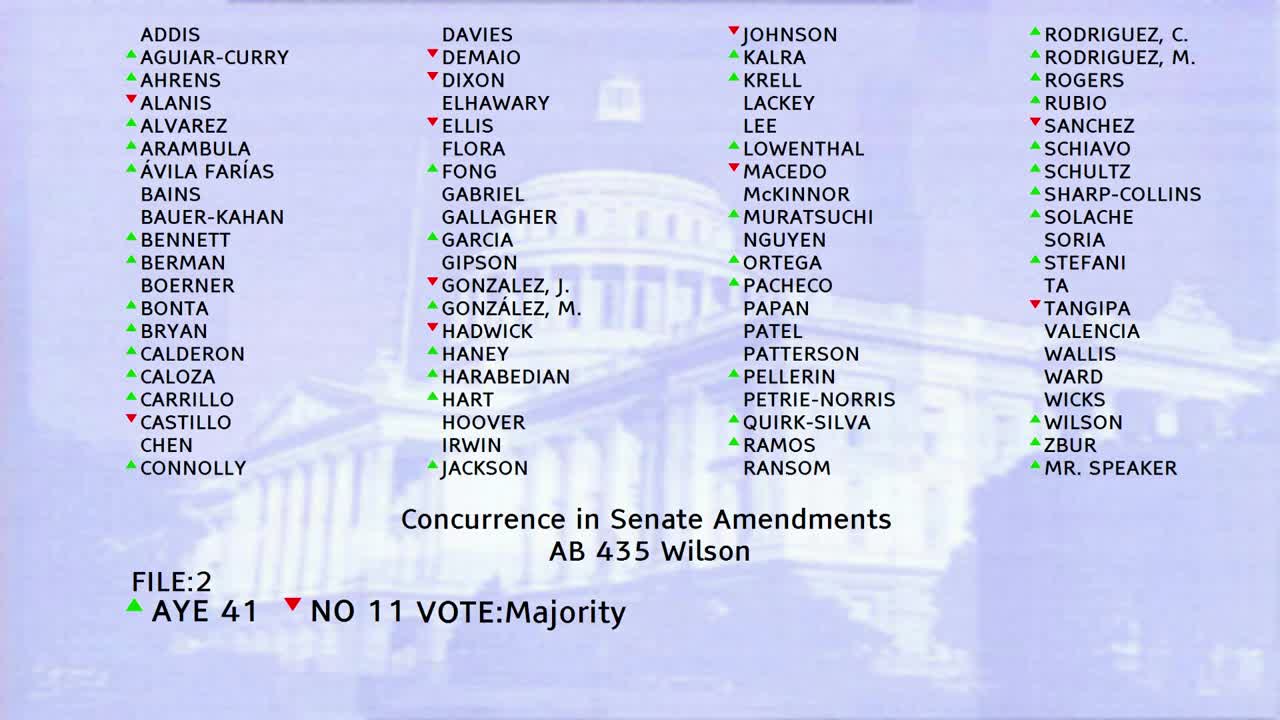 1MIN
Assembly Floor
 8MIN
Assembly Floor
 2MIN
Senate Floor
 15MIN
Senate Standing Committee on Local Government
 7MIN
Senate Standing Committee on Housing
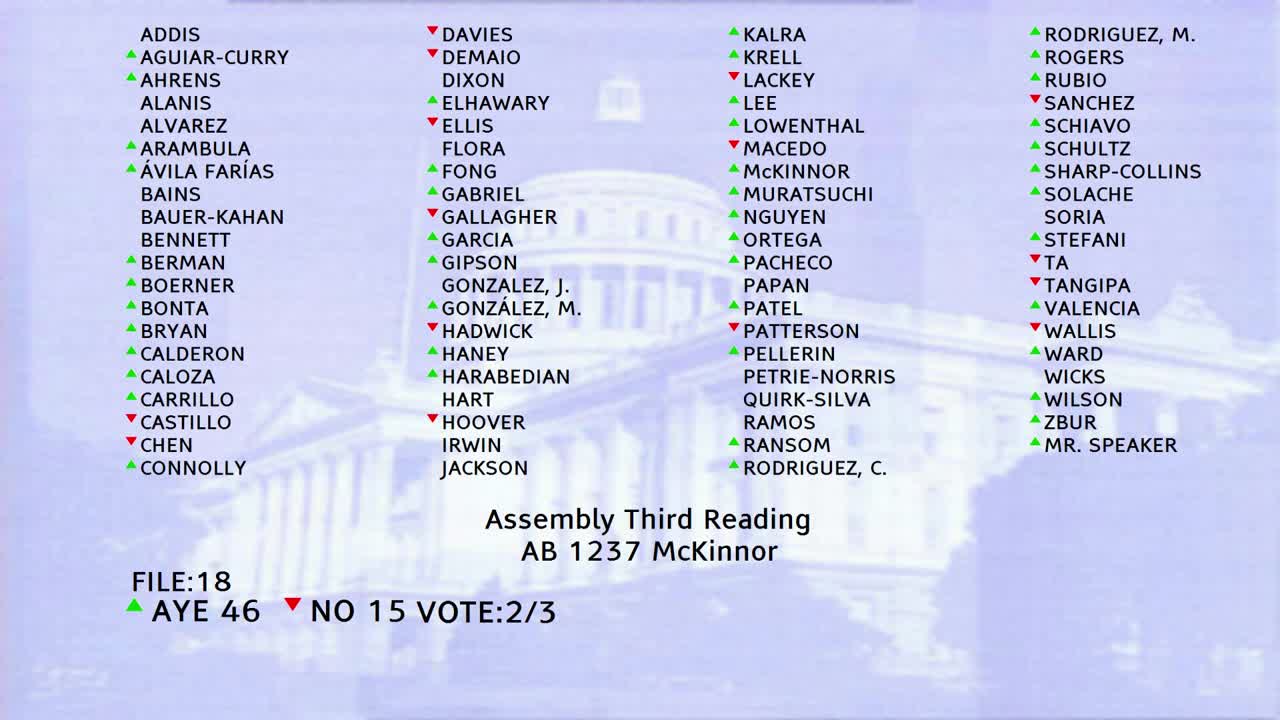 4MIN
Assembly Floor
 2MIN
Assembly Standing Committee on Appropriations
 9MIN
Assembly Standing Committee on Local Government
Bill Author


