AB 1067: Public employees’ retirement: felony convictions.
- Session Year: 2025-2026
- House: Assembly
- Latest Version Date: 2025-10-06
Current Status:
Passed
(2025-10-06: Chaptered by Secretary of State - Chapter 388, Statutes of 2025.)
Introduced
In Committee
Awaiting First Chamber Vote
Passed First Chamber
In Committee
Awaiting Second Chamber Vote
Passed Second Chamber
Enacted
Existing law, the California Public Employees Pension Reform Act of 2013, requires a public employee who is convicted of any state or federal felony for conduct arising out of, or in the performance of, the public employees official duties in pursuit of the office or appointment, or in connection with obtaining salary, disability retirement, service retirement, or other benefits, to forfeit all accrued rights and benefits in any public retirement system from the earliest date of the commission of the felony to the date of conviction, and prohibits the public employee from accruing further benefits in that public retirement system. Existing law defines public employee for purposes of these provisions to mean an officer, including one who is elected or appointed, or an employee of a public employer.
Existing law also requires an elected public officer, who takes public office, or is reelected to public office, on or after January 1, 2006, and who is convicted during or after holding office of any felony involving accepting or giving, or offering to give, any bribe, the embezzlement of public money, extortion or theft of public money, perjury, or conspiracy to commit any of those crimes arising directly out of their official duties as an elected public officer, to forfeit all rights and benefits under, and membership in, any public retirement system in which they are a member, effective on the date of final conviction, as provided.
This bill would require a public employer that is investigating a public employee for misconduct arising out of or in the performance of, the public employees official duties in pursuit of the office or appointment, or in connection with obtaining salary, disability retirement, service retirement, or other benefits, to continue the investigation even if the public employee retires while under investigation, if the investigation indicates that the public employee may have committed a crime. The bill would require a public employer, if the investigation indicates that the public employee may have committed a crime, to refer the matter to the appropriate law enforcement agency, and would then authorize the public employer to close the investigation. Under the bill, if the public employee is convicted of a felony for any conduct described above, the public employee would forfeit all accrued rights and benefits in any public retirement system pursuant to the provisions governing forfeiture described above.
By imposing new duties on public employers who are local governmental entities, the bill would impose a state-mandated local program.
The California Constitution requires the state to reimburse local agencies and school districts for certain costs mandated by the state. Statutory provisions establish procedures for making that reimbursement.
This bill would provide that, if the Commission on State Mandates determines that the bill contains costs mandated by the state, reimbursement for those costs shall be made pursuant to the statutory provisions noted above.
Existing law, the California Public Employees Pension Reform Act of 2013, requires a public employee who is convicted of any state or federal felony for conduct arising out of, or in the performance of, the public employees official duties in pursuit of the office or appointment, or in connection with obtaining salary, disability retirement, service retirement, or other benefits, to forfeit all accrued rights and benefits in any public retirement system from the earliest date of the commission of the felony to the date of conviction, and prohibits the public employee from accruing further benefits in that public retirement system. Existing law defines public employee for purposes of these provisions to mean an officer, including one who is elected or appointed, or an employee of a public employer.
Existing law also requires an elected public officer, who takes public office, or is reelected to public office, on or after January 1, 2006, and who is convicted during or after holding office of any felony involving accepting or giving, or offering to give, any bribe, the embezzlement of public money, extortion or theft of public money, perjury, or conspiracy to commit any of those crimes arising directly out of their official duties as an elected public officer, to forfeit all rights and benefits under, and membership in, any public retirement system in which they are a member, effective on the date of final conviction, as provided.
This bill would require a public employer that is investigating a public employee for misconduct arising out of or in the performance of, the public employees official duties in pursuit of the office or appointment, or in connection with obtaining salary, disability retirement, service retirement, or other benefits, to continue the investigation even if the public employee retires while under investigation, if the investigation indicates that the public employee may have committed a crime. The bill would require a public employer, if the investigation indicates that the public employee may have committed a crime, to refer the matter to the appropriate law enforcement agency, and would then authorize the public employer to close the investigation. Under the bill, if a felony conviction results arising out of the public employee is convicted of a felony for any conduct described above, the public employee would forfeit all accrued rights and benefits in any public retirement system pursuant to the provisions governing forfeiture described above.
By imposing new duties on public employers who are local governmental entities, the bill would impose a state-mandated local program.
The California Constitution requires the state to reimburse local agencies and school districts for certain costs mandated by the state. Statutory provisions establish procedures for making that reimbursement.
This bill would provide that, if the Commission on State Mandates determines that the bill contains costs mandated by the state, reimbursement for those costs shall be made pursuant to the statutory provisions noted above.
Existing law, the California Public Employees Pension Reform Act of 2013, requires a public employee who is convicted of any state or federal felony for conduct arising out of, or in the performance of, the public employees official duties in pursuit of the office or appointment, or in connection with obtaining salary, disability retirement, service retirement, or other benefits, to forfeit all accrued rights and benefits in any public retirement system from the earliest date of the commission of the felony to the date of conviction, and prohibits the public employee from accruing further benefits in that public retirement system. Existing law defines public employee for purposes of these provisions to mean an officer, including one who is elected or appointed, or an employee of a public employer.
Existing law also requires an elected public officer, who takes public office, or is reelected to public office, on or after January 1, 2006, and who is convicted during or after holding office of any felony involving accepting or giving, or offering to give, any bribe, the embezzlement of public money, extortion or theft of public money, perjury, or conspiracy to commit any of those crimes arising directly out of their official duties as an elected public officer, to forfeit all rights and benefits under, and membership in, any public retirement system in which they are a member, effective on the date of final conviction, as provided.
This bill would require a public employer that is investigating a public employee for misconduct arising out of or in the performance of, the public employees official duties in pursuit of the office or appointment, or in connection with obtaining salary, disability retirement, service retirement, or other benefits, to continue the investigation even if the public employee retires while under investigation. investigation, if the investigation indicates that the public employee may have committed a crime. The bill would require a public employer, if the investigation indicates that the public employee may have committed a crime, to refer the matter to the appropriate law enforcement agency. agency, and would then authorize the public employer to close the investigation. Under the bill, if a felony conviction results arising out of any conduct described above, the public employee would forfeit all accrued rights and benefits in any public retirement system pursuant to the provisions governing forfeiture described above.
By imposing new duties on public employers who are local governmental entities, the bill would impose a state-mandated local program.
The California Constitution requires the state to reimburse local agencies and school districts for certain costs mandated by the state. Statutory provisions establish procedures for making that reimbursement.
This bill would provide that, if the Commission on State Mandates determines that the bill contains costs mandated by the state, reimbursement for those costs shall be made pursuant to the statutory provisions noted above.
Existing law, the California Public Employees Pension Reform Act of 2013, requires a public employee who is convicted of any state or federal felony for conduct arising out of, or in the performance of, the public employees official duties in pursuit of the office or appointment, or in connection with obtaining salary, disability retirement, service retirement, or other benefits, to forfeit all accrued rights and benefits in any public retirement system from the earliest date of the commission of the felony to the date of conviction, and prohibits the public employee from accruing further benefits in that public retirement system. Existing law defines public employee for purposes of these provisions to mean an officer, including one who is elected or appointed, or an employee of a public employer.
Existing law also requires an elected public officer, who takes public office, or is reelected to public office, on or after January 1, 2006, and who is convicted during or after holding office of any felony involving accepting or giving, or offering to give, any bribe, the embezzlement of public money, extortion or theft of public money, perjury, or conspiracy to commit any of those crimes arising directly out of their official duties as an elected public officer, to forfeit all rights and benefits under, and membership in, any public retirement system in which they are a member, effective on the date of final conviction, as provided.
This bill would require a public employer that is investigating a public employee for misconduct arising out of the actions described above, or in the performance of, the public employees official duties in pursuit of the office or appointment, or in connection with obtaining salary, disability retirement, service retirement, or other benefits, to continue the investigation even if the public employee retires while under investigation. The bill would require a public employer, if the investigation indicates that the public employee may have committed a crime, to refer the matter to the appropriate law enforcement agency. Under the bill, if a felony conviction results arising out of any conduct described above, the public employee would forfeit all accrued rights and benefits in any public retirement system pursuant to the provisions governing forfeiture described above.
By imposing new duties on public employers who are local governmental entities, the bill would impose a state-mandated local program.
The California Constitution requires the state to reimburse local agencies and school districts for certain costs mandated by the state. Statutory provisions establish procedures for making that reimbursement.
This bill would provide that, if the Commission on State Mandates determines that the bill contains costs mandated by the state, reimbursement for those costs shall be made pursuant to the statutory provisions noted above.
Existing law, the California Public Employees Pension Reform Act of 2013, requires a public employee who is convicted of any state or federal felony for conduct arising out of, or in the performance of, the public employees official duties in pursuit of the office or appointment, or in connection with obtaining salary, disability retirement, service retirement, or other benefits, to forfeit all accrued rights and benefits in any public retirement system from the earliest date of the commission of the felony to the date of conviction, and prohibits the public employee from accruing further benefits in that public retirement system.
This bill would require a public employer that is investigating a public employee for misconduct arising out of the actions described above, to continue the investigation even if the public employee retires while under investigation. The bill would require a public employer, if the investigation indicates that the public employee may have committed a crime, to refer the matter to the appropriate law enforcement agency. Under the bill, if a felony conviction results arising out of any conduct described above, the public employee would forfeit all accrued rights and benefits in any public retirement system pursuant to the provisions described above.
By imposing new duties on public employers who are local governmental entities, the bill would impose a state-mandated local program.
The California Constitution requires the state to reimburse local agencies and school districts for certain costs mandated by the state. Statutory provisions establish procedures for making that reimbursement.
This bill would provide that, if the Commission on State Mandates determines that the bill contains costs mandated by the state, reimbursement for those costs shall be made pursuant to the statutory provisions noted above.
(a)If a public employee, as defined in subdivision (h) of Section 7522.04, retires while under investigation by a public employer for misconduct arising out of or in the performance of the public employees official duties, in pursuit of the office or appointment, or in connection with obtaining salary, disability retirement, service retirement, or other benefits, the public employer shall continue the investigation even after the employee retires if the public employers investigation indicates that the public employee may have committed a crime.
(b)If the public employers investigation indicates that a public employee may have committed a crime, the public employer shall refer the matter to the appropriate law enforcement agency and the public employer may then close the investigation. If the public employee is convicted of a felony for any conduct described in subdivision (a), the public employee shall forfeit all accrued rights and benefits in any public retirement system in which the employee is a member in accordance with Section 7522.70, 7522.72, or 7522.74, as applicable, effective on the date of the conviction.
SEC. 2.If the Commission on State Mandates determines that this act contains costs mandated by the state, reimbursement to local agencies and school districts for those costs shall be made pursuant to Part 7 (commencing with Section 17500) of Division 4 of Title 2 of the Government Code.
(a)If a public employee, as defined in subdivision (h) of Section 7522.04, retires while under investigation by a public employer for misconduct arising out of or in the performance of the public employees official duties, in pursuit of the office or appointment, or in connection with obtaining salary, disability retirement, service retirement, or other benefits, the public employer shall continue the investigation even after the employee retires if the public employers investigation indicates that the public employee may have committed a crime.
(b)If the public employers investigation indicates that a public employee may have committed a crime, the public employer shall refer the matter to the appropriate law enforcement agency and the public employer may then close the investigation. If a felony conviction results arising out of the public employee is convicted of a felony for any conduct described in subdivision (a), the public employee shall forfeit all accrued rights and benefits in any public retirement system in which the employee is a member in accordance with Section 7522.70, 7522.72, or 7522.74, as applicable, effective on the date of the conviction.
SEC. 2.If the Commission on State Mandates determines that this act contains costs mandated by the state, reimbursement to local agencies and school districts for those costs shall be made pursuant to Part 7 (commencing with Section 17500) of Division 4 of Title 2 of the Government Code.
(a)If a public employee, as defined in subdivision (h) of Section 7522.04, retires while under investigation by a public employer for misconduct arising out of or in the performance of the public employees official duties, in pursuit of the office or appointment, or in connection with obtaining salary, disability retirement, service retirement, or other benefits, the public employer shall continue the investigation even after the employee retires. retires if the public employers investigation indicates that the public employee may have committed a crime.
(b)If the public employers investigation indicates that a public employee may have committed a crime, the public employer shall refer the matter to the appropriate law enforcement agency. agency and the public employer may then close the investigation. If a felony conviction results arising out of any conduct described in subdivision (a), the public employee shall forfeit all accrued rights and benefits in any public retirement system in which the employee is a member in accordance with Section 7522.70, 7522.72, or 7522.74, as applicable, effective on the date of the conviction.
SEC. 2.If the Commission on State Mandates determines that this act contains costs mandated by the state, reimbursement to local agencies and school districts for those costs shall be made pursuant to Part 7 (commencing with Section 17500) of Division 4 of Title 2 of the Government Code.
(a)If a public employee employee, as defined in subdivision (h) of Section 7522.04, retires while under investigation by a public employer for misconduct arising out of or in the performance of the public employees official duties, in pursuit of the office or appointment, or in connection with obtaining salary, disability retirement, service retirement, or other benefits, the public employer shall continue the investigation even after the employee retires.
(b)If the public employers investigation indicates that a public employee may have committed a crime, the public employer shall refer the matter to the appropriate law enforcement agency. If a felony conviction results arising out of any conduct described in subdivision (a), the public employee shall forfeit all accrued rights and benefits in any public retirement system in which the employee is a member in accordance with Section 7522.72 or 7522.43, 7522.70, 7522.72, or 7522.74, as applicable, effective on the date of the conviction.
SEC. 2.If the Commission on State Mandates determines that this act contains costs mandated by the state, reimbursement to local agencies and school districts for those costs shall be made pursuant to Part 7 (commencing with Section 17500) of Division 4 of Title 2 of the Government Code.
(a)If a public employee retires while under investigation by a public employer for misconduct arising out of or in the performance of the public employees official duties, in pursuit of the office or appointment, or in connection with obtaining salary, disability retirement, service retirement, or other benefits, the public employer shall continue the investigation even after the employee retires.
(b)If the public employers investigation indicates that a public employee may have committed a crime, the public employer shall refer the matter to the appropriate law enforcement agency. If a felony conviction results arising out of any conduct described in subdivision (a), the public employee shall forfeit all accrued rights and benefits in any public retirement system in which the employee is a member in accordance with Section 7522.72 or 7522.43, as applicable, effective on the date of the conviction.
SEC. 2.If the Commission on State Mandates determines that this act contains costs mandated by the state, reimbursement to local agencies and school districts for those costs shall be made pursuant to Part 7 (commencing with Section 17500) of Division 4 of Title 2 of the Government Code.
|
Date
|
Status
|
|---|---|
| Oct 6, 2025 | Chaptered by Secretary of State - Chapter 388, Statutes of 2025. |
| Oct 6, 2025 | Approved by the Governor. |
| Sep 15, 2025 | Enrolled and presented to the Governor at 4:30 p.m. |
| Sep 8, 2025 | Senate amendments concurred in. To Engrossing and Enrolling. (Ayes 79. Noes 0. Page 3035.). |
| Sep 4, 2025 | In Assembly. Concurrence in Senate amendments pending. |
| Sep 4, 2025 | Read third time. Passed. Ordered to the Assembly. (Ayes 39. Noes 0. Page 2523.). |
| Sep 2, 2025 | Ordered to special consent calendar. |
| Aug 29, 2025 | Read second time. Ordered to third reading. |
| Aug 29, 2025 | From committee: Do pass. (Ayes 7. Noes 0.) (August 29). |
| Aug 18, 2025 | In committee: Referred to suspense file. |
| Jul 15, 2025 | Read second time and amended. Re-referred to Com. on APPR. |
| Jul 14, 2025 | From committee: Amend, and do pass as amended and re-refer to Com. on APPR. with recommendation: To Consent Calendar. (Ayes 5. Noes 0.) (July 9). |
| Jun 18, 2025 | Referred to Com. on L., P.E. & R. |
| Jun 4, 2025 | In Senate. Read first time. To Com. on RLS. for assignment. |
| Jun 3, 2025 | Read third time. Passed. Ordered to the Senate. (Ayes 79. Noes 0. Page 2031.) |
| May 27, 2025 | Read second time. Ordered to third reading. |
| May 23, 2025 | Read second time and amended. Ordered returned to second reading. |
| May 23, 2025 | From committee: Amend, and do pass as amended. (Ayes 11. Noes 0.) (May 23). |
| May 23, 2025 | Assembly Rule 63 suspended. (Ayes 51. Noes 16. Page 1644.) |
| May 7, 2025 | In committee: Set, first hearing. Referred to APPR. suspense file. |
| Apr 28, 2025 | Re-referred to Com. on APPR. |
| Apr 24, 2025 | Read second time and amended. |
| Apr 23, 2025 | From committee: Amend, and do pass as amended and re-refer to Com. on APPR. (Ayes 7. Noes 0.) (April 23). |
| Apr 7, 2025 | Referred to Com. on P. E. & R. |
| Feb 21, 2025 | From printer. May be heard in committee March 23. |
| Feb 20, 2025 | Read first time. To print. |
|
Date
|
Description
|
Location
|
Votes
|
|
|---|---|---|---|---|
| Sep 8, 2025 | AB 1067 Quirk-Silva Concurrence in Senate Amendments | Assembly Floor |
Passed |
|
| Sep 4, 2025 | Special Consent AB1067 Quirk-Silva | Senate Floor |
Passed |
|
| Aug 29, 2025 | Do pass | Senate Standing Committee on Appropriations |
Passed |
|
| Aug 18, 2025 | Placed on suspense file | Senate Standing Committee on Appropriations |
Passed |
|
| Jul 9, 2025 | Do pass as amended, but first amend, and re-refer to the Committee on [Appropriations] with the recommendation: To Consent Calendar | Senate Standing Committee on Labor, Public Employment and Retirement |
Passed |
|
| Jun 3, 2025 | AB 1067 Quirk-Silva Assembly Third Reading | Assembly Floor |
Passed |
|
| May 23, 2025 | Do pass as amended. | Assembly Standing Committee on Appropriations |
Passed |
|
| Apr 23, 2025 | Do pass as amended and be re-referred to the Committee on [Appropriations] | Assembly Standing Committee on Public Employment and Retirement |
Passed |
This list shows positions taken on this bill by organizations on the date displayed, which is linked to the original source.
Positions by individuals are not included.
|
Organization
|
Position
|
Date
|
|---|---|---|
| Association of California Water Agencies Joint Powers Insurance Agency | ** Support | |
| Oakland Privacy | ** Support | |
| Water Replenishment District | ** Support |
CONCURRENCE IN SENATE AMENDMENTS
CSA1 Bill Id:AB 1067
Author:(Quirk-Silva)
As Amended Ver:July 15, 2025
Majority vote
SUMMARY
Amends the California Public Employees' Pension Reform Act (PEPRA) of 2013 by adding a new provision relating to public employee misconduct and retirement benefits forfeiture due to a felony conviction.
Senate Amendments
Make a technical and clarifying change.
COMMENTS
The PEPRA's Felony Conviction Retirement Forfeiture Provisions and How They Work
Among the PEPRA's provisions, public employees, including elected and appointed public officers, must forfeit all accrued rights and benefits in any public retirement system they are a member of if convicted of a felony, as provided, for conduct arising out of, or in the course of, the performance of their official duties.
The following hypothetical describes how the PEPRA's existing felony conviction forfeiture provisions work: Now infamously knows as "Eddie the Embezzler," Eddie was employed by the state starting at age 50, worked for 10 years, and participated in a public employee retirement system during that entire time. Eddie was a dedicated public servant who worked on a state computer system that processed payments to the state, and at some point, Eddie owed a large sum of money to dangerous individuals. Eddie devised a computer software program and scheme where, while Eddie was at work, the program siphoned $.02 cents from each dollar among millions of dollars processed daily and that rerouted those sums to an offshore bank account solely controlled by Eddie. Following an investigation and irrefutable evidence submitted to the court that demonstrated Eddie's felonious plan and actions in committing the crime exactly dating to five years ago, Eddie was found guilty beyond a reasonable doubt and convicted of embezzlement.
In the hypothetical above, Eddie must forfeit their retirement benefits from the date the crime started to be committed, i.e., exactly five years ago to the date of conviction. Provided that Eddie has achieved a combination of minimum years of service and age required to be eligible to retire, Eddie could receive a pension based on the earlier five years of service before Eddie began taking steps necessary to commit the crime, which is consistent with Eddie's vested rights pursuant to long-standing and well-established jurisprudence commonly referred to as the "vested rights doctrine."
The earliest date of the commission of the crime is the date that is used in the court proceeding, and in most cases, this date is provided to the courts through evidence. The conviction date is the date in which a plea of guilty is entered, or when the judge or jury makes a decision on the case. Generally, a public employee retirement system member may retire and receive retirement benefits for service prior to the earliest date of committing the felonious act and subsequent conviction, provided that they have at least achieved a combination of the minimum number of years of service (service credit accrued) and age to do so. In the instance of a felony forfeiture, a member may receive a refund of employee contributions made during the forfeiture period, but employer contributions are returned to the credit of the employer.
This Bill
This bill proposes to amend the PEPRA by adding provisions relating to a public employer's investigation of suspect activities of a public employee and the involvement of law enforcement, and accomplishes this by referencing the existing PEPRA felony conviction retirement benefit forfeiture provisions without affecting other PEPRA public policy guardrails.
Based on the hypothetical example, above, rather than Eddie being able to retire; attempting to evade (including, evade the conclusion of) an investigation by the public employer; and, enjoying the fruits of their criminality, the public employer must continue with the investigation – even after Eddie has retired. If the employer suspects that an act of moral turpitude, consistent with existing law, may have been committed, it must turn the matter over to the appropriate law enforcement agency and may then close its investigation. If a felony conviction results for conduct arising out of, or in the course of, Eddie performing their official duties, the existing applicable PEPRA felony conviction retirement benefit forfeiture provision would be triggered.
In the public's interest, this addition to the existing PEPRA felony conviction retirement benefit forfeiture provisions will help to ensure that Eddie doesn't escape from being held accountable.
Please see the various policy committee analyses for a full discussion of this bill.
According to the Author
"As public employees, individuals must be held accountable throughout their entire time of service. This bill closes a dangerous loophole that allows individuals to retire mid-investigation to avoid consequences…," and "…ensures misconduct is fully investigated and, when appropriate, referred to law enforcement so that justice is served."
Arguments in Support
Generally, supporters of this bill contend that it will close a loophole in existing law that could allow individuals to evade accountability for misconduct or criminal activity and the risk of pension forfeiture would serve as a deterrent to engaging illegal activity.
Arguments in Opposition
None.
FISCAL COMMENTS
According to the Senate Committee on Appropriations, this bill could result in costs to the State as a direct employer across nearly 200 entities to continue investigations that under current law may otherwise have ended. The magnitude of these costs is unknown, but potentially in excess of $50,000 annually (General Fund and/ or special fund). By imposing similar new duties on local officials, this bill creates a state-mandated local program. To the extent the Commission on State Mandates determines that the provisions of this bill create a new program or impose a higher level of service on local agencies, local agencies could claim reimbursement of those costs. The magnitude is unknown, but potentially in excess of $50,000 annually (General Fund).
In addition, the California Public Employees' Retirement System (CalPERS) indicates that it would incur minor and absorbable costs as a result of the bill. CalPERS notes that this bill would not change any of its existing internal processes with regard to felony forfeiture; in such an instance, a member receives a refund of employee contributions made during the forfeiture period, but employer contributions are returned to the employer pool as a credit.
VOTES:
ASM PUBLIC EMPLOYMENT AND RETIREMENT: 7-0-0
YES: McKinnor, Lackey, Alanis, Boerner, Elhawary, Garcia, Nguyen
ASM APPROPRIATIONS: 11-0-4
YES: Wicks, Arambula, Calderon, Caloza, Elhawary, Fong, Mark González, Hart, Pacheco, Pellerin, Solache
ABS, ABST OR NV: Sanchez, Dixon, Ta, Tangipa
ASSEMBLY FLOOR: 79-0-0
YES: Addis, Aguiar-Curry, Ahrens, Alanis, Alvarez, Arambula, Ávila Farías, Bains, Bauer-Kahan, Bennett, Berman, Boerner, Bonta, Bryan, Calderon, Caloza, Carrillo, Castillo, Chen, Connolly, Davies, DeMaio, Dixon, Elhawary, Ellis, Flora, Fong, Gabriel, Gallagher, Garcia, Gipson, Jeff Gonzalez, Mark González, Hadwick, Haney, Harabedian, Hart, Hoover, Irwin, Jackson, Kalra, Krell, Lackey, Lee, Lowenthal, Macedo, McKinnor, Muratsuchi, Nguyen, Ortega, Pacheco, Papan, Patel, Patterson, Pellerin, Petrie-Norris, Quirk-Silva, Ramos, Ransom, Celeste Rodriguez, Michelle Rodriguez, Rogers, Blanca Rubio, Sanchez, Schiavo, Schultz, Sharp-Collins, Solache, Soria, Stefani, Ta, Tangipa, Valencia, Wallis, Ward, Wicks, Wilson, Zbur, Rivas
UPDATED
VERSION: July 15, 2025
CONSULTANT: Michael Bolden / P. E. & R. / (916) 319-3957 FN: 0001641
SENATE RULES COMMITTEE Office of Senate Floor Analyses (916) 651-1520 Fax: (916) 327-4478 | AB 1067 |
THIRD READING
Bill No: AB 1067
Author: Quirk-Silva (D)
Amended: 7/15/25 in Senate
Vote: 21
SENATE LABOR, PUB. EMP. & RET. COMMITTEE: 5-0, 7/9/25
AYES: Smallwood-Cuevas, Strickland, Cortese, Durazo, Laird
SENATE APPROPRIATIONS COMMITTEE: 7-0, 8/29/25
AYES: Caballero, Seyarto, Cabaldon, Dahle, Grayson, Richardson, Wahab
ASSEMBLY FLOOR: 79-0, 6/3/25 - See last page for vote
SUBJECT: Public employees’ retirement: felony convictions
SOURCE: Author
DIGEST:
This bill (1) mandates public employers to continue investigations of public employees for misconduct, as specified, after the investigated employee retirees and to refer the matter to law enforcement before closing the investigation. The bill also (2) requires the employee forfeit any accrued pension rights and benefits if the public employee receives a felony conviction, as specified.
ANALYSIS:
Existing law:
- Establishes comprehensive public employee pension reform through enactment of the Public Employees’ Pension Reform Act (PEPRA) (and related statutory changes) that apply to all public employers and public pension plans on and after January 1, 2013, excluding the University of California and charter cities and counties that do not participate in a retirement system governed by state statute. (Government Code §7522 et seq.)
- Applies PEPRA to “all state and local public retirement systems and to their participating employers”, as specified. (Government Code §7522.02 et seq.)
- Defines “Public employee” in PEPRA to mean an officer, including one who is elected or appointed, or an employee of a public employer. (Government Code §7522.04 (h))
- Defines “Public employer” in PEPRA to mean:
- The state and every state entity, including, but not limited to, the Legislature, the judicial branch, including judicial officers, and the California State University.
- Any political subdivision of the state, or agency or instrumentality of the state or subdivision of the state, including, but not limited to, a city, county, city and county, a charter city, a charter county, school district, community college district, joint powers authority, joint powers agency, and any public agency, authority, board, commission, or district.
- Any charter school that elects or is required to participate in a public retirement system. (Government Code §7522.04 (i))
- Requires an elected public officer to forfeit all rights and benefits under, and membership in, any public retirement system in which he or she is a member, effective on the date of final conviction if convicted during or after holding office of any felony involving accepting or giving, or offering to give, any bribe, the embezzlement of public money, extortion or theft of public money, perjury, or conspiracy to commit any of those crimes arising directly out of his or her official duties as an elected public officer. (Government Code §7522.70))
- Requires a public retirement system member to forfeit all the rights and benefits earned or accrued from the earliest date of the commission of any felony, as specified, to the forfeiture date, inclusive, but not rights and benefits attributable to service performed prior to the date of the first commission of the felony. (Government Code §7522.72))
- Requires a public employee to forfeit all accrued rights and benefits in any public retirement system, as specified, if convicted by a state or federal trial court of any felony under state or federal law for conduct arising out of or in the performance of his or her official duties, in pursuit of the office or appointment, or in connection with obtaining salary, disability retirement, service retirement, or other benefits. (Government Code §7522.74))
This bill:
- Amends the Public Employee’s Pension Reform Act (PEPRA) to require a PEPRA-covered employer to continue an investigation of a PEPRA-covered employee under investigation for misconduct arising out of or in the performance of the employee’s official duties, in pursuit of the office or appointment, or in connection with obtaining salary, disability retirement, service retirement, or other benefits, even after the employee retires if the investigation indicates that the employee may have committed a crime.
- Requires the employer to refer the matter to the appropriate law enforcement agency if the investigation indicates that a public employee may have committed a crime.
- Allows the employer to close the investigation upon referring the matter to law enforcement.
- Provides that the employee shall forfeit all accrued rights and benefits in any public retirement system effective on the date of the conviction if the public employee receives a felony conviction arising out of the investigation, as specified.
- Provides that reimbursement to local agencies and school districts for related costs shall be made pursuant to Part 7 (commencing with Section 17500) of Division 4 of Title 2 of the Government Code if the Commission on State Mandates determines that this act contains costs mandated by the state.
Background
According to the author:
“Under existing law, the California Public Employees’ Pension Reform Act of 2013 (PEPRA) mandates that a public employee convicted of a felony related to official duties forfeits all accrued retirement benefits.
However, the California Public Employees’ Retirement System can only take action to reduce or revoke benefits once a felony conviction is secured.
If an employee retires before an investigation is completed, there may be no official record of wrongdoing, making it difficult to hold individuals accountable.
This gap in oversight allows serious misconduct to go unpunished and prevents findings from being referred to law enforcement or appropriate authorities.”
Related/Prior Legislation
SB 521 (Gonzalez, Chapter 92, Statutes of 2025) adds any felony involving “conflict of interest” to the list of specified crimes for which a conviction disqualifies a public employee for five years from any public employment, including, but not limited to, employment with a city, county, district, or any other public agency of the state and would disqualify a city manager or city attorney permanently.
SB 850 (Ashby, 2025) would have imposed pension forfeiture conditions on current members of public employee retirement systems to eliminate retroactively all accrued vested pension rights and confiscate accumulated employee contributions of any California Department of Corrections and Rehabilitation employee convicted of sexually assaulting an inmate within the state prison system. The Senate Appropriations Committee held this bill under submission in committee.
SB 39 (DeLeon, Chapter 775, Statutes of 2013) required an elected or appointed local public officer, as defined, to forfeit any contract or similar claim for retirement or pension benefits, other than those accrued benefits which he/she may be entitled to under the applicable public retirement system, if he/she has been convicted of specified felonies under state or federal law.
FISCAL EFFECT: Appropriation: No Fiscal Com.: Yes Local: Yes
According to the Senate Appropriations Committee:
- This bill could result in costs to the State as a direct employer across nearly 200 entities to continue investigations that under current law may otherwise have ended. The magnitude of these costs is unknown, but potentially in excess of $50,000 annually (General Fund and/ or special fund).
- By imposing similar new duties on local officials, this bill creates a state-mandated local program. To the extent the Commission on State Mandates determines that the provisions of this bill create a new program or impose a higher level of service on local agencies, local agencies could claim reimbursement of those costs. The magnitude is unknown, but potentially in excess of $50,000 annually (General Fund).
- The California Public Employees’ Retirement System (CalPERS) indicates that it would incur minor and absorbable costs as a result of the bill. CalPERS notes that this bill would not change any of its existing internal processes with regard to felony forfeiture; in such an instance, a member receives a refund of employee contributions made during the forfeiture period, but employer contributions are returned to the employer pool as a credit.
SUPPORT: (Verified 8/29/25)
Association of California Water Agencies Joint Powers Insurance Agency
Oakland Privacy
Water Replenishment District
OPPOSITION: (Verified 8/29/25)
None received
According to Oakland Privacy:
“One of the biggest beneficiaries of this pension system is law enforcement, and their ability to retire early with full benefits. Unfortunately, they are also a population that has a high propensity for misconduct, and an even higher incentive to retire mid-investigation to avoid jeopardizing their handsome pensions in the process.
Disgraced Los Angeles ex-Sheriff Lee Baca was reported to receive over $200,000 a year in benefits. Although police unions have fought back pension reform, even some law enforcement have stated that reform is necessary and beneficial. Cleveland police officer Edwin Millan who was convicted of various crimes stated that knowing his actions could lead to losing his pension would have influenced his decision to defraud the public. In addition, former Miami Police Chief Art Acevedo supports pension forfeiture as a way of deterring officers from disgracing their own departments and damaging the reputation of law enforcement and motivating a shift in department culture. While we focused on examples of law enforcement abuse, no public employee should rest assured of having a soft landing funded by taxpayers if convicted of illegal activities.
This bill will close the loophole to circumvent pension forfeiture when a public employee who is at risk of being convicted of a crime takes an early retirement to deter an investigation that might derail their pensions. The risk of pension forfeiture serves as a strong deterrent against engaging in illegal activity and AB 1067 will strengthen the integrity of California’s public employee pension program. Taxpayers should not be forced to look the other way when felonious government employees are unjustly burdening an already precarious pension system.”
ASSEMBLY FLOOR: 79-0, 6/3/25
AYES: Addis, Aguiar-Curry, Ahrens, Alanis, Alvarez, Arambula, Ávila Farías, Bains, Bauer-Kahan, Bennett, Berman, Boerner, Bonta, Bryan, Calderon, Caloza, Carrillo, Castillo, Chen, Connolly, Davies, DeMaio, Dixon, Elhawary, Ellis, Flora, Fong, Gabriel, Gallagher, Garcia, Gipson, Jeff Gonzalez, Mark González, Hadwick, Haney, Harabedian, Hart, Hoover, Irwin, Jackson, Kalra, Krell, Lackey, Lee, Lowenthal, Macedo, McKinnor, Muratsuchi, Nguyen, Ortega, Pacheco, Papan, Patel, Patterson, Pellerin, Petrie-Norris, Quirk-Silva, Ramos, Ransom, Celeste Rodriguez, Michelle Rodriguez, Rogers, Blanca Rubio, Sanchez, Schiavo, Schultz, Sharp-Collins, Solache, Soria, Stefani, Ta, Tangipa, Valencia, Wallis, Ward, Wicks, Wilson, Zbur, Rivas
Prepared by: Glenn Miles / L., P.E. & R. / (916) 651-1556
8/30/25 13:14:39
**** END ****
SENATE COMMITTEE ON APPROPRIATIONS
Senator Anna Caballero, Chair
2025 - 2026 Regular Session
AB 1067 (Quirk-Silva) - Public employees’ retirement: felony convictions
Version: July 15, 2025 | Policy Vote: L., P.E. & R. 5 - 0 |
Urgency: No | Mandate: Yes |
Hearing Date: August 18, 2025 | Consultant: Robert Ingenito |
Bill Summary:
AB 1067 would (1) mandate public employers to continue investigations of public employees for misconduct, as specified, after the investigated employee retirees, and to refer the matter to law enforcement before closing the investigation, and (2) require the employee forfeit any accrued pension rights and benefits if a felony conviction arises out of any specified conduct.
Fiscal Impact:
- This bill could result in costs to the State as a direct employer across nearly 200 entities to continue investigations that under current law may otherwise have ended. The magnitude of these costs is unknown, but potentially in excess of $50,000 annually (General Fund and/ or special fund).
- By imposing similar new duties on local officials, this bill creates a state-mandated local program. To the extent the Commission on State Mandates determines that the provisions of this bill create a new program or impose a higher level of service on local agencies, local agencies could claim reimbursement of those costs. The magnitude is unknown, but potentially in excess of $50,000 annually (General Fund).
- The California Public Employees’ Retirement System (CalPERS) indicates that it would incur minor and absorbable costs as a result of the bill. CalPERS notes that this bill would not change any of its existing internal processes with regard to felony forfeiture; in such an instance, a member receives a refund of employee contributions made during the forfeiture period, but employer contributions are returned to the employer pool as a credit.
Background:
Current law requires an elected public officer convicted of a felony arising from official duties involving a bribe; embezzlement, extortion, or theft of public money; or perjury to forfeit all rights and benefits under the public retirement system in which the official is a member. Similarly, current law requires an elected or appointed official or a public employee convicted of a felony arising from official duties or in connection with obtaining salary or other benefits, to forfeit retirement rights
Proposed Law:
This bill would, among other things, do the following:
- Require a Public Employee’s Pension Reform Act (PEPRA)-covered employer to continue an investigation of a PEPRA-covered employee under investigation for misconduct arising out of or in the performance of the employee’s official duties, in pursuit of the office or appointment, or in connection with obtaining salary, disability retirement, service retirement, or other benefits, even after the employee retires if the investigation indicates that the employee may have committed a crime.
- Require the employer to refer the matter to the appropriate law enforcement agency if the investigation indicates that a public employee may have committed a crime.
- Allow the employer to close the investigation upon referring the matter to law enforcement.
- Provide that the employee shall forfeit all accrued rights and benefits in any public retirement system effective on the date of the conviction “if the public employee is convicted of a felony for conduct described” in the bill’s provisions.
Related Legislation:
- SB 521 (Gonzalez) would add any felony involving “conflict of interest” to the list of specified crimes for which a conviction disqualifies a public employee for five years from any public employment, including, but not limited to, employment with a city, county, district, or any other public agency of the state and would disqualify a city manager or city attorney permanently. This bill is currently awaiting action on the Governor’s desk.
- SB 850 (Ashby) would have imposed pension forfeiture conditions on current members of public employee retirement systems to eliminate retroactively all accrued vested pension rights and confiscate accumulated employee contributions of any California Department of Corrections and Rehabilitation employee convicted of sexually assaulting an inmate within the state prison system. This bill was held under submission on the Suspense File of this Committee.
- SB 39 (DeLeon, Chapter 775, Statutes of 2013) required an elected or appointed local public officer, as defined, to forfeit any contract or similar claim for retirement or pension benefits, other than those accrued benefits which he/she may be entitled to under the applicable public retirement system, if he/she has been convicted of specified felonies under state or federal law.
Staff Comments:
This bill would modify current-law felony forfeiture statutes to require an investigating public employer to continue doing so, even upon retirement of the employee, and refer the matter to the appropriate law enforcement agency if the investigation indicates the employee may have committed a crime.
-- END --
SENATE COMMITTEE ON LABOR, PUBLIC EMPLOYMENT AND RETIREMENT
Senator Lola Smallwood-Cuevas, Chair
2025 - 2026 Regular
Bill No: AB 1067 Hearing Date: July 9, 2025
Author: | Quirk-Silva | ||
Version: | May 23, 2025 | ||
Urgency: | No | Fiscal: | Yes |
Consultant: | Glenn Miles | ||
SUBJECT: Public employees’ retirement: felony convictions
KEY ISSUE
This bill mandates public employers to continue investigations of public employees for misconduct, as specified, after the investigated employee retirees and to refer the matter to law enforcement before closing the investigation. The bill also requires the employee forfeit any accrued pension rights and benefits if a felony conviction arises out of any conduct as described.
ANALYSIS
Existing law:
- Establishes comprehensive public employee pension reform through enactment of the Public Employees’ Pension Reform Act (PEPRA) (and related statutory changes) that apply to all public employers and public pension plans on and after January 1, 2013, excluding the University of California and charter cities and counties that do not participate in a retirement system governed by state statute. (Government Code §7522 et seq.)
- Applies PEPRA to “all state and local public retirement systems and to their participating employers”, as specified. (Government Code §7522.02 et seq.)
- Defines “Public employee” in PEPRA to mean an officer, including one who is elected or appointed, or an employee of a public employer. (Government Code §7522.04 (h))
- Defines “Public employer” in PEPRA to mean:
- The state and every state entity, including, but not limited to, the Legislature, the judicial branch, including judicial officers, and the California State University.
- Any political subdivision of the state, or agency or instrumentality of the state or subdivision of the state, including, but not limited to, a city, county, city and county, a charter city, a charter county, school district, community college district, joint powers authority, joint powers agency, and any public agency, authority, board, commission, or district.
- Any charter school that elects or is required to participate in a public retirement system. (Government Code §7522.04 (i))
- Requires an elected public officer to forfeit all rights and benefits under, and membership in, any public retirement system in which he or she is a member, effective on the date of final conviction if convicted during or after holding office of any felony involving accepting or giving, or offering to give, any bribe, the embezzlement of public money, extortion or theft of public money, perjury, or conspiracy to commit any of those crimes arising directly out of his or her official duties as an elected public officer. (Government Code §7522.70))
- Requires a public retirement system member to forfeit all the rights and benefits earned or accrued from the earliest date of the commission of any felony, as specified, to the forfeiture date, inclusive, but not rights and benefits attributable to service performed prior to the date of the first commission of the felony. (Government Code §7522.72))
- Requires a public employee to forfeit all accrued rights and benefits in any public retirement system, as specified, if convicted by a state or federal trial court of any felony under state or federal law for conduct arising out of or in the performance of his or her official duties, in pursuit of the office or appointment, or in connection with obtaining salary, disability retirement, service retirement, or other benefits. (Government Code §7522.74))
This bill:
- Amends the Public Employee’s Pension Reform Act (PEPRA) to require a PEPRA-covered employer to continue an investigation of a PEPRA-covered employee under investigation for misconduct arising out of or in the performance of the employee’s official duties, in pursuit of the office or appointment, or in connection with obtaining salary, disability retirement, service retirement, or other benefits, even after the employee retires if the investigation indicates that the employee may have committed a crime.
- Requires the employer to refer the matter to the appropriate law enforcement agency if the investigation indicates that a public employee may have committed a crime.
- Allows the employer to close the investigation upon referring the matter to law enforcement.
- Provides that the employee shall forfeit all accrued rights and benefits in any public retirement system effective on the date of the conviction “if a felony conviction results arising out of any conduct described” in the bill’s provisions.
- Provides that reimbursement to local agencies and school districts for related costs shall be made pursuant to Part 7 (commencing with Section 17500) of Division 4 of Title 2 of the Government Code if the Commission on State Mandates determines that this act contains costs mandated by the state.
COMMENTS
1. Author Amendments
The author is adding the following amendments to be taken in committee to clarify that the felony conviction must be against the public employee, and not against some third party, for this bill’s forfeiture provisions to apply.
Government Code §7522.76. (b)
If the public employer’s investigation indicates that a public employee may have committed a crime, the public employer shall refer the matter to the appropriate law enforcement agency and the public employer may then close the investigation. If a felony conviction results arising out of If the public employee receives a felony conviction for any conduct described in subdivision (a), the public employee shall forfeit all accrued rights and benefits in any public retirement system in which the employee is a member in accordance with Section 7522.70, 7522.72, or 7522.74, as applicable, effective on the date of the conviction.
2. Need for this bill?
According to the author:
“Under existing law, the California Public Employees’ Pension Reform Act of 2013 (PEPRA) mandates that a public employee convicted of a felony related to official duties forfeits all accrued retirement benefits.
However, the California Public Employees’ Retirement System can only take action to reduce or revoke benefits once a felony conviction is secured.
If an employee retires before an investigation is completed, there may be no official record of wrongdoing, making it difficult to hold individuals accountable.
This gap in oversight allows serious misconduct to go unpunished and prevents findings from being referred to law enforcement or appropriate authorities.”
3. Proponent Arguments
According to Oakland Privacy:
“One of the biggest beneficiaries of this pension system is law enforcement, and their ability to retire early with full benefits. Unfortunately, they are also a population that has a high propensity for misconduct, and an even higher incentive to retire mid-investigation to avoid jeopardizing their handsome pensions in the process.
Disgraced Los Angeles ex-Sheriff Lee Baca was reported to receive over $200,000 a year in benefits. Although police unions have fought back pension reform, even some law enforcement have stated that reform is necessary and beneficial. Cleveland police officer Edwin Millan who was convicted of various crimes stated that knowing his actions could lead to losing his pension would have influenced his decision to defraud the public. In addition, former Miami Police Chief Art Acevedo supports pension forfeiture as a way of deterring officers from disgracing their own departments and damaging the reputation of law enforcement and motivating a shift in department culture. While we focused on examples of law enforcement abuse, no public employee should rest assured of having a soft landing funded by taxpayers if convicted of illegal activities.
This bill will close the loophole to circumvent pension forfeiture when a public employee who is at risk of being convicted of a crime takes an early retirement to deter an investigation that might derail their pensions. The risk of pension forfeiture serves as a strong deterrent against engaging in illegal activity and AB 1067 will strengthen the integrity of California’s public employee pension program. Taxpayers should not be forced to look the other way when felonious government employees are unjustly burdening an already precarious pension system.”
4. Opponent Arguments:
None received.
5. Prior/Related Legislation:
SB 521 (Gonzalez, 2025) would add any felony involving “conflict of interest” to the list of specified crimes for which a conviction disqualifies a public employee for five years from any public employment, including, but not limited to, employment with a city, county, district, or any other public agency of the state and would disqualify a city manager or city attorney permanently. This bill is under consideration in the Assembly Appropriations Committee.
SB 850 (Ashby, 2025) would have imposed pension forfeiture conditions on current members of public employee retirement systems to eliminate retroactively all accrued vested pension rights and confiscate accumulated employee contributions of any California Department of Corrections and Rehabilitation employee convicted of sexually assaulting an inmate within the state prison system. This bill was held under submission in the Senate Appropriations Committee.
SB 39 (DeLeon, Chapter 775, Statutes of 2013) required an elected or appointed local public officer, as defined, to forfeit any contract or similar claim for retirement or pension benefits, other than those accrued benefits which he/she may be entitled to under the applicable public retirement system, if he/she has been convicted of specified felonies under state or federal law.
SUPPORT
Oakland Privacy
OPPOSITION
None received.
-- END --
ASSEMBLY THIRD READING
ATR Bill Id:AB 1067
Author:(Quirk-Silva)
As Amended Ver:May 23, 2025
Majority vote
SUMMARY
Amends the California Public Employees' Pension Reform Act (PEPRA) of 2013 by adding a new provision relating to public employee misconduct and retirement benefits forfeiture due to a felony conviction.
Major Provisions
- Require a public employer to continue an investigation of a public employee for misconduct, even after a public employee retires, if the public employer's investigation indicates that the public employee may have committed a crime.
- Require if the public employer's investigation indicates that a public employee may have committed a crime, the employer must refer the matter to the appropriate law enforcement agency, as provided. Thereafter, the employer may close its investigation. If a felony conviction results that arose out of the prescribed misconduct, the employee must forfeit all accrued rights and benefits in any public retirement system in which they are a member, in accordance with existing law.
COMMENTS
The PEPRA's Felony Conviction Retirement Forfeiture Provisions and How They Work
Among the PEPRA's provisions, public employees, including elected and appointed public officers, must forfeit all accrued rights and benefits in any public retirement system they are a member of if convicted of a felony, as provided, for conduct arising out of, or in the course of, the performance of their official duties.
The earliest date of the commission of the crime is the date that is used in the court proceeding, and in most cases, this date is provided to the courts through evidence. The conviction date is the date in which a plea of guilty is entered, or when the judge or jury makes a decision on the case. Generally, a public employee retirement system member may retire and receive retirement benefits for service prior to the earliest date of committing the felonious act and subsequent conviction, provided that they have at least achieved a combination of the minimum number of years of service (service credit accrued) and age to do so.
The following hypothetical describes how the PEPRA's existing felony conviction forfeiture provisions work: Now infamously knows as "Eddie the Embezzler," Eddie was employed by the state starting at age 50, worked for 10 years, and participated in a public employee retirement system during that entire time. Eddie was a dedicated public servant who worked on a state computer system that processed payments to the state, and at some point, Eddie owed a large sum of money to dangerous individuals. Eddie devised a computer software program and scheme where, while Eddie was at work, the program siphoned $.02 cents from each dollar among millions of dollars processed daily and that rerouted those sums to an offshore bank account solely controlled by Eddie. Following an investigation and irrefutable evidence submitted to the court that demonstrated Eddie’s felonious plan and actions in committing the crime exactly dating to 5 years ago, Eddie was found guilty beyond a reasonable doubt and convicted of embezzlement.
In the hypothetical above, Eddie must forfeit their retirement benefits from the date the crime started to be committed, i.e., exactly 5 years ago to the date of conviction. Provided that Eddie has achieved a combination of minimum years of service and age required to be eligible to retire, Eddie could receive a pension based on the earlier 5 years of service before Eddie began taking steps necessary to commit the crime, which is consistent with Eddie's vested rights pursuant to long-standing and well-established jurisprudence commonly referred to as the "vested rights doctrine."
This Bill
This bill proposes to amend the PEPRA by adding provisions relating to a public employer's investigation of suspect activities of a public employee and the involvement of law enforcement, and accomplishes this by referencing the existing PEPRA felony conviction retirement benefit forfeiture provisions without affecting other PEPRA public policy guardrails.
Based on the hypothetical example, rather than Eddie being able to retire; attempting to avoid (including, avoid the conclusion of) an investigation by the public employer; and, enjoying the fruits of their criminality, the public employer must continue with the investigation – even after Eddie has retired. If the employer suspects that an act of moral turpitude, consistent with existing law, may have been committed, it must turn the matter over to the appropriate law enforcement agency and may then close its investigation. If a felony conviction results for conduct arising out of, or in the course of, Eddie performing their official duties, the existing applicable PEPRA felony conviction retirement benefit forfeiture provision would be triggered.
In the public's interest, this addition to the existing PEPRA felony conviction retirement benefit forfeiture provisions will help to ensure that Eddie doesn't escape from being held accountable.
Please see the policy committee analysis for a full discussion of this bill.
According to the Author
"As public employees, individuals must be held accountable throughout their entire time of service. This bill closes a dangerous loophole that allows individuals to retire mid-investigation to avoid consequences…," and "…ensures misconduct is fully investigated and, when appropriate, referred to law enforcement so that justice is served."
Arguments in Support
Among other things, Oakland Privacy states that, "[this bill] will close the loophole to circumvent pension forfeiture when a public employee who is at risk of being convicted of a crime takes an early retirement to deter an investigation that might derail their pensions. The risk of pension forfeiture serves as a strong deterrent against engaging in illegal activity and [this bill] will strengthen the integrity of California's public employee pension program."
Arguments in Opposition
None.
FISCAL COMMENTS
According to the Assembly Committee on Appropriations, this bill would result in the following:
- Ongoing costs of an unknown, but potentially absorbable amount, across state employers and local employers to continue certain investigations (General Fund or special fund). The magnitude of costs depends on the number and complexity of specified investigations. For local public employers, if the Commission on State Mandates determines this bill's requirements to be a reimbursable state mandate, the state would need to reimburse these costs to local agencies.
- Ongoing costs of an unknown, but likely absorbable, amount to the California Public Employees' Retirement System (CalPERS) to the extent this bill results in an increase in retirement forfeiture cases due to more vigorous employer investigations. CalPERS notes that this bill would not change any existing internal processes with regard to felony forfeiture, whereby a member receives a refund of employee contributions made during the forfeiture period and employer contributions are returned to the employer pool as a credit.
VOTES
ASM PUBLIC EMPLOYMENT AND RETIREMENT: 7-0-0
YES: McKinnor, Lackey, Alanis, Boerner, Elhawary, Garcia, Nguyen
ASM APPROPRIATIONS: 11-0-4
YES: Wicks, Arambula, Calderon, Caloza, Elhawary, Fong, Mark González, Hart, Pacheco, Pellerin, Solache
ABS, ABST OR NV: Sanchez, Dixon, Ta, Tangipa
UPDATED
VERSION: May 23, 2025
CONSULTANT: Michael Bolden / P. E. & R. / (916) 319-3957 FN: 0000848
Date of Hearing: May 7, 2025
ASSEMBLY COMMITTEE ON APPROPRIATIONS
Buffy Wicks, Chair
ABPCA Bill Id:AB 1067
Author:(Quirk-Silva) – As Amended Ver:April 24, 2025
Policy Committee: | Public Employment and Retirement | Vote: | 7 - 0 |
|
| ||
|
|
Urgency: No State Mandated Local Program: Yes Reimbursable: Yes
SUMMARY:
This bill requires a public employer investigating a public employee for misconduct to continue the investigation, even if the employee retires while under investigation, and provides that an employee convicted of a felony arising from the misconduct forfeits their pension benefits.
Specifically, this bill:
- Requires a public employer investigating a public employee for misconduct arising from the performance of the employee’s official duties, or in connection with obtaining salary or other benefits, to continue the investigation even upon the employee’s retirement.
- Requires a public employer to refer the matter to the appropriate law enforcement agency if the investigation indicates the public employee may have committed a crime.
- Restates that the employee forfeits all accrued rights and benefits under the public retirement system in which the employee is a member if a felony conviction results from the investigated misconduct.
FISCAL EFFECT:
- Costs of an unknown, but potentially significant amount, in excess of $150,000, across state employers and local employers (nearly 5,000 cities, counties, special districts, and school districts) to continue an investigation that such an employer may have otherwise ceased (General Fund or special fund). The magnitude of costs depends on the number and complexity of specified investigations. For local public employers, if the Commission on State Mandates determines this bill’s requirements to be a reimbursable state mandate, the state would need to reimburse these costs to local agencies.
- Costs of an unknown, but likely absorbable, amount to the California Public Employees’ Retirement System (CalPERS) to the extent this bill results in an increase in retirement forfeiture cases due to more vigorous employer investigations. CalPERS notes that this bill would not change any existing internal processes with regard to felony forfeiture, whereby a member receives a refund of employee contributions made during the forfeiture period and employer contributions are returned to the employer pool as a credit.
COMMENTS:
- Purpose. According to the author, “As public employees, individuals must be held accountable throughout their entire time of service. This bill closes a dangerous loophole that allows individuals to retire mid-investigation to avoid consequences.” This bill is supported by Oakland Privacy.
- Public Retirement Felony Forfeiture. Existing law requires an elected public officer convicted of a felony arising from official duties involving a bribe; embezzlement, extortion, or theft of public money; or perjury to forfeit all rights and benefits under the public retirement system in which the official is a member. Existing law similarly requires an elected or appointed official or a public employee convicted of a felony arising from official duties or in connection with obtaining salary or other benefits, to forfeit retirement rights. This bill modifies those felony forfeiture statutes to require a public employer investigating such misconduct to continue the investigation, even upon retirement of the employee, and refer the matter to the appropriate law enforcement agency if the investigation indicates the employee may have committed a crime.
Analysis Prepared by: Irene Ho / APPR. / (916) 319-2081
Date of Hearing: April 23, 2025
ASSEMBLY COMMITTEE ON PUBLIC EMPLOYMENT AND RETIREMENT
Tina S. McKinnor, Chair
ABPCA Bill Id:AB 1067 (
Author:Quirk-Silva) – As Introduced Ver:February 20, 2025
SUBJECT: Public employees’ retirement: felony convictions
SUMMARY: Amends the California Public Employees’ Pension Reform Act (PEPRA) of 2013 by adding a new provision relating to employment misconduct investigations and retirement benefits forfeiture due to a felony conviction. Specifically, this bill:
- Requires a public employer to continue an investigation of a public employee for misconduct, as specified, if a public employee retires.
- Requires if the public employer’s investigation indicates that a public employee may have committed a crime, the employer must refer the matter to the appropriate law enforcement agency, and if a felony conviction results that arose out of the prescribed misconduct, the employee must forfeit all accrued rights and benefits in any public retirement system in which they are a member, in accordance with existing law, as specified.
- Includes pro forma provisions relating to the reimbursement of costs mandated by the state based on a determination by the Commission on State Mandates.
EXISTING LAW:
- Establishes the PEPRA – a comprehensive reform of public employee retirement that, among other things, increased contribution rates towards retirement, decreased retirement benefit formulas, and increased the age of retirement that apply to new members of the system first hired on or after January 1, 2013, and made changes that apply to all members towards resolving unfunded liabilities, manipulation of compensation for purposes of calculating a retirement allowance (e.g., pensions spiking and double-dipping), and includes other prescribed best practice measures as a matter of prudent public policy. (Sections 7522.02 et seq., Government (Gov.) Code.)
- Establishes, among other things, that, if a public employee, including an elected or appointive public officer, is convicted of a felony, as prescribed and as applicable, that arose out the performance of their official duties, they must forfeit all rights and benefits under, and membership in, any public retirement system in which they are a member, effective on the date of final conviction. (Sections 7522.70, 7522.72, and 7522.74, Gov. Code, as respectively applicable, and among other provisions).
- Defines the following terms within the PEPRA:
- “Public employee” to mean an officer, including one who is elected or appointed, or an employee of a public employer. (Section 7522.04 (h), Gov. Code.)
- “Public employer” to mean the state and every state entity, as specified, political subdivisions of the state, as specified, and any charter school that elects or is required to participate in a public retirement system. (Section 7522.04 (i), Gov. Code.)
FISCAL EFFECT: Unknown. This bill is flagged as fiscal by Legislative Counsel.
COMMENTS:
- Background
Information provided by the author states that, “[under the PEPRA], a public employee convicted of a felony related to official duties forfeits their accrued retirement benefits. However, there is no legal requirement for public employers to continue investigations into misconduct once an employee retires. This creates a loophole that allows employees to avoid accountability by retiring mid-investigation, thereby halting any findings that could lead to felony charges and forfeiture of benefits. This deficiency undermines the integrity of public service and accountability within the pension system.
“[This bill] is needed to prevent public employees from evading accountability through retirement, [by mandating public employers] continue misconduct investigations even if an employee retires during the process. This ensures that evidence of wrongdoing is documented and, if criminal activity is found, referred to law enforcement.”
- What is the PEPRA and Why Does it Exist?
While the totality of specific details need not be fully discussed in this writing, to address negative legislative experience dating to 1999-2000 and public outcry amplified by the media as to suspect activities regarding public employee retirement (e.g., “pension-spiking,” “double-dipping,” and other forms of pension manipulation), coupled with increased costs and unfunded/underfunded liabilities shouldered by taxpayers, the Legislature enacted the PEPRA as a means to address concerns and restore public confidence in public employee retirement through a prudent- and best-practice public policy.
Effective since January 1, 2013, and largely unmodified since that time, the PEPRA continues to exist and serve as a means of providing ongoing public assurance and a substantive control policy relating to public employee retirement.
- The PEPRA’s Felony Conviction Retirement Forfeiture Statutes and Their Operation
Among the PEPRA’s provisions, and as enumerated under “Existing Law,” public employees, including elected and appointed public officers, must forfeit all accrued rights and benefits in any public retirement system they are a member of if convicted of a felony, as provided, for conduct arising out of, or in the course of, the performance of their official duties.
The earliest date of the commission of the crime is the date that is used in the court proceeding, and in most cases, this date is provided to the courts through evidence. The conviction date is the date in which a plea of guilty is entered, or when the judge or jury makes a decision on the case. Generally, a public employee retirement system member may retire and receive retirement benefits for service prior to the earliest date of committing the felonious act and subsequent conviction, provided that they have at least achieved the minimum number of years of service (service credit accrued) and age to do so.
The following is a basic example of how the statutes work: Now infamously knows as “Eddie the Embezzler,” Eddie started working for the state at age 50, worked for 10 years, and participated in a public employee retirement system during that entire time. Eddie was a dedicated public servant who worked on a state computer system that processed payments to the state, and at some point, Eddie owed a large sum of money to dangerous individuals. Eddie devised an information technology program and scheme where, while Eddie was at work, the program siphoned $.02 cents from each dollar among millions of dollars processed daily and that rerouted those sums to an offshore bank account solely controlled by Eddie. Following an investigation and irrefutable evidence submitted to the court that demonstrated Eddie’s felonious plan and actions in committing the crime exactly dating to 5 years ago, Eddie was found guilty beyond a reasonable doubt and convicted of embezzlement. Eddie now teaches personal finance, accounting, and software development in prison.
In the hypothetical above, Eddie must forfeit their retirement benefits from the date the crime started to be committed, i.e., exactly 5 years ago to the date of conviction. Eddie would be eligible to receive a pension based on the earlier 5 years of service before Eddie began taking steps necessary to commit the crime,[1] which is consistent with Eddie’s vested rights pursuant to long-standing and well-established jurisprudence commonly referred to as the “vested rights doctrine.”
- This Bill
To address additional concerns described in “Background,” above, this bill proposes to amend the PEPRA by adding provisions relating to public employer investigation of suspect activities of a public employee and the involvement of law enforcement, as provided. This bill accomplishes this by referencing an existing PEPRA provision relating to felony conviction and retirement forfeiture without affecting other PEPRA public policy guardrails.
Based on the hypothetical example in the prior discussion, rather than Eddie being able to retire; receiving a pension based on 10 years of employment; enjoying the fruits of his criminality, and, attempting to avoid an investigation by the public employer, the public employer must continue with the investigation (even if/after Eddie departs their employ), and if it finds that an act of moral turpitude (consistent with existing law) may have, or has, been committed it must turn the matter over to the appropriate law enforcement agency, as provided. This additional measure will help to ensure that Eddie doesn’t escape being held accountable.
However, there are key deficiencies with respect to the current version of this bill that necessitate amendments, as discussed below.
- Committee’s Proposed Amendments
- Incorrect and Non-relevant Statutory Reference
Although this bill is specific to felony conviction forfeiture of public employee retirement, it includes a reference to Section 7522.43 relating to the PEPRA’s prohibition on replacement benefit plans – not retirement forfeiture. As such, this reference is incorrect, non-relevant, and must be corrected.
- Several PEPRA Statutes Relating to Felony Conviction Retirement Forfeiture Exist, as Well as Variations Among Them, That are Not Captured by the Current Version of this Bill.
As enumerated under “Existing Law,” there are three separate and distinct public employee retirement felony conviction forfeiture statutes within the PEPRA and each have variations among them – two of which, are not included in the current version of this bill. As such, the current version of this bill is only partially applicable to the entirety of the author’s intent and does not fully address the loophole that the author seeks to address.
Because of the separate and distinct public employee retirement felony conviction forfeiture statutes within the PEPRA, i.e., Sections 7522.70 (applicable to elected/appointive public officers), 7522.72 (applicable to pre-PEPRA public employees), and 7522.74 (applicable to post-PEPRA public employees), each must be included, along with a reference to the PEPRA’s definition of “public employee” (Section 7522.04 (h), Gov. Code) to capture the variations of prescribed and respective crimes based on type of “public employee,” and whether they are a pre-/post-PEPRA member of a retirement system.
- Conclusion
To ensure maintaining original legislative intent of the PEPRA and its operative effect; statutory consistency; and, provide explicit clarity that is aligned with the author’s intent, the committee proposes the following amendments to effectively address concerns expressed by the author (RN 2514553):
- In Section 7522.76 (a), amend to read: “(a) If a public employee, as defined in subdivision (h) of Section 7522.04, retires while under investigation….”
- In Section 7522.76 (b), amend to strike out the reference to Sections “7522.72 or 7522.43,” and instead, insert “Section 7522.70, 7522.72, and 7522.74, as applicable, effective on the date of the conviction.”
- Statement by the Author
“As public employees, individuals must be held accountable throughout their entire time of service. This bill closes a dangerous loophole that allows individuals to retire mid-investigation to avoid consequences…,” and “…ensures misconduct is fully investigated and, when appropriate, referred to law enforcement so that justice is served.”
- Comments by Supporters
Among other things, Oakland Privacy states that, “[this bill] will close the loophole to circumvent pension forfeiture when a public employee who is at risk of being convicted of a crime takes an early retirement to deter an investigation that might derail their pensions. The risk of pension forfeiture serves as a strong deterrent against engaging in illegal activity and [this bill] will strengthen the integrity of California’s public employee pension program.”
- Comments by Opponents
None on file.
- Prior or Related Legislation
Assembly Bill 1383 (McKinnor, 2025) proposes to amend the PEPRA specifically relating to certain retirement formulas, compensation capitation, and normal sharing of costs. This bill is currently pending in the Assembly Committee on Public Employment and Retirement.
Assembly Bill 569 (Stefani, 2025) proposes to amend the PEPRA specifically relating to supplemental defined benefit (DB) plan exceptions by authorizing a public employer to bargain over contributions for supplemental retirement benefits administered by, or on behalf of, an exclusive bargaining representative of one or more of the public employer’s bargaining units. This bill is currently pending in the Assembly Committee on Public Employment and Retirement.
Senate Bill 521 (Gonzalez, 2025) expands existing law relating to a bar from public employment if the employee is convicted of a felony, among other specified acts of moral turpitude, by disqualifying a city manager or legal counsel from a city from any future public employment in an equivalent role, as specified. This bill is currently pending in the Senate Committee on Labor, Public Employment and Retirement.
Chapter 296, Statutes of 2012 (Assembly Bill 340, Furutani) established the PEPRA public policy.
REGISTERED SUPPORT / OPPOSITION:
Support
Oakland Privacy
Opposition
None on file.
Analysis Prepared by: Michael Bolden / P. E. & R. / (916) 319-3957
Generally, the combination of minimum number of years of service and age to be eligible to retire is 5 years of service at 50 years of age. ↑
Discussed in Hearing
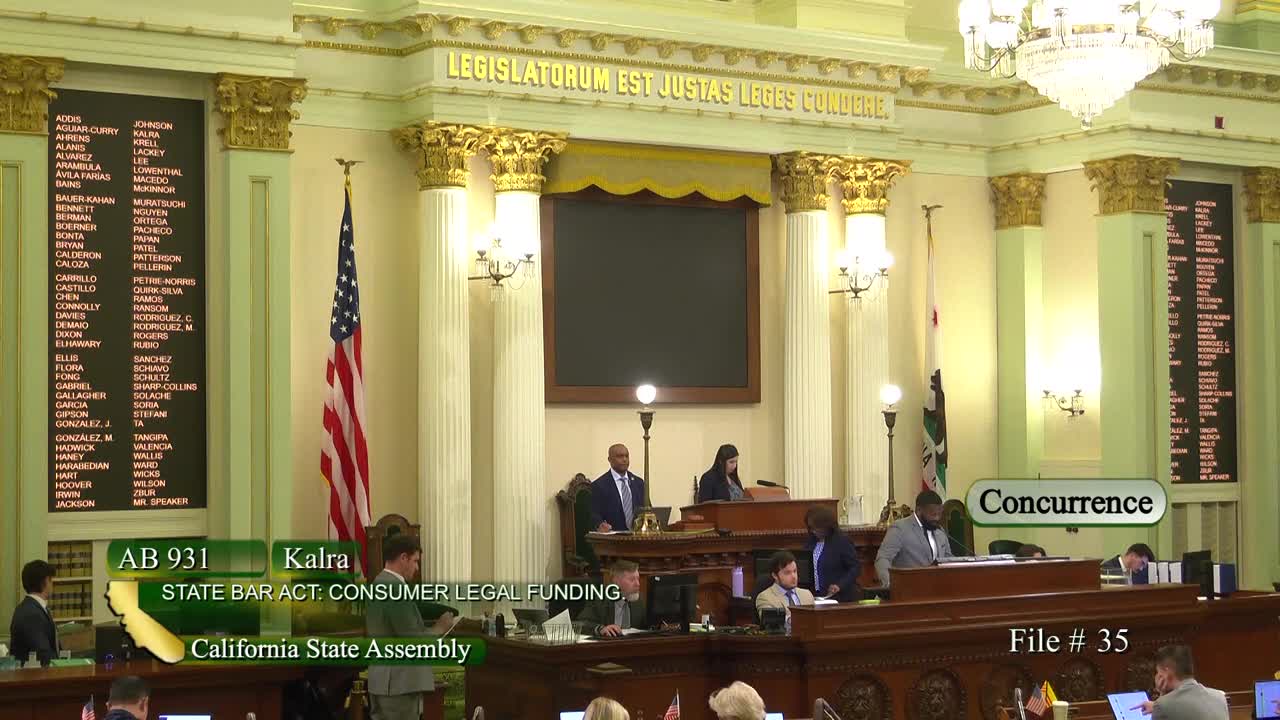 59SEC
Assembly Floor
 1MIN
Assembly Floor
 10MIN
Assembly Standing Committee on Public Employment and Retirement
Bill Author

Bill Co-Author(s):