AB 1114: Emergency vehicles: fee and toll exemptions.
- Session Year: 2025-2026
- House: Assembly
- Latest Version Date: 2025-07-30
Current Status:
Passed
(2025-07-30: Chaptered by Secretary of State - Chapter 87, Statutes of 2025.)
Introduced
In Committee
Awaiting First Chamber Vote
Passed First Chamber
In Committee
Awaiting Second Chamber Vote
Passed Second Chamber
Enacted
Existing law provides for the exemption of authorized emergency vehicles from the payment of a toll or charge on a vehicular crossing, toll highway, or high-occupancy toll (HOT) lane and any related fines, when the authorized emergency vehicle is being driven under specified conditions, including, among others, the vehicle is displaying an exempt license plate and a public agency identification, such as Police.
This bill would include in the exemption of an authorized emergency vehicle exempt from the payment of a toll or charge a vehicle displaying an exempt license plate and Ambulance.
Existing law exempts from the fees imposed under the Vehicle Code, except as specified, any vehicle owned by a public fire department organized as a nonprofit corporation or a voluntary fire department and used exclusively for firefighting or rescue purposes or exclusively as an ambulance. Existing law also provides for the exemption of authorized emergency vehicles from the payment of a toll or charge on a vehicular crossing, toll highway, or high-occupancy toll (HOT) lane and any related fines, when the authorized emergency vehicle is being driven under specified conditions, including, among others, the vehicle is displaying an exempt license plate and a public agency identification, such as Police.
This bill would extend the exemption from fees imposed under the Vehicle Code to a vehicle owned by a public or private entity used as an authorized emergency vehicle, as defined. The bill would include in the exemption of an authorized emergency vehicle exempt from the payment of a toll or charge a vehicle displaying an exempt license plate and Ambulance.
Existing law exempts from the fees imposed under the Vehicle Code, except as specified, any vehicle owned by a public fire department organized as a nonprofit corporation or a voluntary fire department and used exclusively for firefighting or rescue purposes or exclusively as an ambulance. Existing law also provides for the exemption of authorized emergency vehicles from the payment of a toll or charge on a vehicular crossing, toll highway, or high-occupancy toll (HOT) lane and any related fines, when the authorized emergency vehicle is being driven under specified conditions, including, among others, the vehicle is displaying an exempt license plate and a public agency identification, such as Police.
This bill would extend the exemption from fees imposed under the Vehicle Code to a vehicle owned by a public or private entity used as an authorized emergency vehicle, as defined. The bill would include in the exemption of an authorized emergency vehicle exempt from the payment of a toll or charge a vehicle displaying an exempt license plate and emergency identification, including, but not limited to, Ambulance.
(a)An authorized emergency vehicle is exempt from any requirement to pay a toll or other charge on a vehicular crossing, toll highway, or high-occupancy toll (HOT) lane, including the requirements of Section 23301, if all of the following conditions are satisfied:
(1)The authorized emergency vehicle is properly displaying an exempt California license plate, and is properly identified or marked as an authorized emergency vehicle, including, but not limited to, displaying an external surface-mounted red warning light, blue warning light, or both, and displaying either of the following:
(A)Public agency identification, including, but not limited to, Fire Department, Sheriff, or Police.
(B)Ambulance.
(2)(A)The vehicle is being driven while responding to or returning from an urgent or emergency call, engaged in an urgent or emergency response, or engaging in a fire station coverage assignment directly related to an emergency response.
(B)For purposes of this paragraph, an urgent response or call means an incident or circumstance that requires an immediate response to a public safety-related incident, but does not warrant the use of emergency warning lights. Urgent does not include any personal use, commuting, training, or administrative uses.
(C)Notwithstanding subparagraph (A), an authorized emergency vehicle, when returning from an urgent or emergency call, or from being engaged in an urgent or emergency response, or from engaging in a fire station coverage assignment directly related to an emergency response, shall not be exempt from any requirement to pay a toll or other charge imposed while traveling on a HOT lane.
(3)The driver of the vehicle determines that the use of the toll facility shall likely improve the availability or response and arrival time of the authorized emergency vehicle and its delivery of essential public safety services.
(b)If the operator of a toll facility elects to send a bill or invoice to the public agency for the use of the toll facility by an authorized emergency vehicle, exempt pursuant to subdivision (a), the fire chief, police chief, county sheriff, head of the public agency, ambulance corporation chief executive, or their designee, is authorized to certify in writing that the authorized emergency vehicle was responding to or returning from an emergency call or response and is exempt from the payment of the toll or other charge in accordance with this section. The letter shall be accepted by the toll operator in lieu of payment and is a public document.
(c)An authorized emergency vehicle that does not comply with this section is not exempt from the requirement to pay a toll or other charge on a toll highway, vehicular crossing, or HOT lane. Upon information and belief of the toll operator that an authorized emergency vehicle is not in compliance with this section, the fire chief, police chief, county sheriff, head of the public agency, ambulance corporation chief executive, or their designee, upon the written request of the owner or operator of the toll facility, shall provide or otherwise make accessible to the toll operator the dispatch records or log books relevant to the time period when the vehicle was in use on the toll highway, vehicular crossing, or HOT lane.
(d)Upon the request of a private or public local emergency service provider, an owner or operator of a toll facility shall enter into an agreement to establish mutually agreed upon terms for the use of the toll facility by the emergency service provider, including, but not limited to, being exempt from toll payment. This section shall not prohibit the owner or operator of a toll facility from having a policy that meets or exceeds this section. If at any time an emergency service provider or the owner or operator of a toll facility opts to terminate an agreement regarding the payment and processing of tolls or other charges, this section shall apply to the emergency service provider and the toll facility. An agreement between an emergency service provider and the owner or operator of a toll facility does not exempt other emergency service providers not named in the original agreement and the toll facility from the requirements of this section when those other emergency service providers use a toll facility in the jurisdiction of the owner or operator of the toll facility.
(e)Sections 23302 and 23302.5 do not apply to authorized emergency vehicles exempt pursuant to this section.
(f)As used in this section, toll facility includes a toll road, HOT lane, toll bridge, toll highway, a vehicular crossing for which payment of a toll or charge is required, or any other toll facility.
The fees specified in this code, except fees for duplicate plates, certificates, or cards, are not required to be paid for any vehicle of a type subject to registration under this code owned by a public or private entity used as an authorized emergency vehicle as defined in Section 165.
SEC. 2.Section 23301.5 of the Vehicle Code is amended to read:23301.5.(a)An authorized emergency vehicle is exempt from any requirement to pay a toll or other charge on a vehicular crossing, toll highway, or high-occupancy toll (HOT) lane, including the requirements of Section 23301, if all of the following conditions are satisfied:
(1)The authorized emergency vehicle is properly displaying an exempt California license plate, and is properly identified or marked as an authorized emergency vehicle, including, but not limited to, displaying an external surface-mounted red warning light, blue warning light, or both, and displaying either of the following:
(A)Public agency identification, including, but not limited to, Fire Department, Sheriff, or Police.
(B)Emergency identification, including, but not limited to, Ambulance.
(2)(A)The vehicle is being driven while responding to or returning from an urgent or emergency call, engaged in an urgent or emergency response, or engaging in a fire station coverage assignment directly related to an emergency response.
(B)For purposes of this paragraph, an urgent response or call means an incident or circumstance that requires an immediate response to a public safety-related incident, but does not warrant the use of emergency warning lights. Urgent does not include any personal use, commuting, training, or administrative uses.
(C)Notwithstanding subparagraph (A), an authorized emergency vehicle, when returning from an urgent or emergency call, or from being engaged in an urgent or emergency response, or from engaging in a fire station coverage assignment directly related to an emergency response, shall not be exempt from any requirement to pay a toll or other charge imposed while traveling on a HOT lane.
(3)The driver of the vehicle determines that the use of the toll facility shall likely improve the availability or response and arrival time of the authorized emergency vehicle and its delivery of essential public safety services.
(b)If the operator of a toll facility elects to send a bill or invoice to the public agency for the use of the toll facility by an authorized emergency vehicle, exempt pursuant to subdivision (a), the fire chief, police chief, county sheriff, head of the public agency, ambulance corporation chief executive, or their designee, is authorized to certify in writing that the authorized emergency vehicle was responding to or returning from an emergency call or response and is exempt from the payment of the toll or other charge in accordance with this section. The letter shall be accepted by the toll operator in lieu of payment and is a public document.
(c)An authorized emergency vehicle that does not comply with this section is not exempt from the requirement to pay a toll or other charge on a toll highway, vehicular crossing, or HOT lane. Upon information and belief of the toll operator that an authorized emergency vehicle is not in compliance with this section, the fire chief, police chief, county sheriff, head of the public agency, ambulance corporation chief executive, or their designee, upon the written request of the owner or operator of the toll facility, shall provide or otherwise make accessible to the toll operator the dispatch records or log books relevant to the time period when the vehicle was in use on the toll highway, vehicular crossing, or HOT lane.
(d)Upon the request of a private or public local emergency service provider, an owner or operator of a toll facility shall enter into an agreement to establish mutually agreed upon terms for the use of the toll facility by the emergency service provider, including, but not limited to, being exempt from toll payment. This section shall not prohibit the owner or operator of a toll facility from having a policy that meets or exceeds this section. If at any time an emergency service provider or the owner or operator of a toll facility opts to terminate an agreement regarding the payment and processing of tolls or other charges, this section shall apply to the emergency service provider and the toll facility. An agreement between an emergency service provider and the owner or operator of a toll facility does not exempt other emergency service providers not named in the original agreement and the toll facility from the requirements of this section when those other emergency service providers use a toll facility in the jurisdiction of the owner or operator of the toll facility.
(e)Sections 23302 and 23302.5 do not apply to authorized emergency vehicles exempt pursuant to this section.
(f)As used in this section, toll facility includes a toll road, HOT lane, toll bridge, toll highway, a vehicular crossing for which payment of a toll or charge is required, or any other toll facility.
The fees specified in this code, except fees for duplicate plates, certificates, or cards, are not required to be paid for any vehicle of a type subject to registration under this code owned by a public or private entity used as an authorized emergency vehicle as defined in Section 165.
SEC. 2.Section 23301.5 of the Vehicle Code is amended to read:23301.5.(a)An authorized emergency vehicle is exempt from any requirement to pay a toll or other charge on a vehicular crossing, toll highway, or high-occupancy toll (HOT) lane, including the requirements of Section 23301, if all of the following conditions are satisfied:
(1)The authorized emergency vehicle is properly displaying an exempt California license plate, and is properly identified or marked as an authorized emergency vehicle, including, but not limited to, displaying an external surface-mounted red warning light, blue warning light, or both, and displaying public agency identification, including, but not limited to, Fire Department, Sheriff, or Police. displaying either of the following:
(A)Public agency identification, including, but not limited to, Fire Department, Sheriff, or Police.
(B)Emergency identification, including, but not limited to, Ambulance.
(2)(A)The vehicle is being driven while responding to or returning from an urgent or emergency call, engaged in an urgent or emergency response, or engaging in a fire station coverage assignment directly related to an emergency response.
(B)For purposes of this paragraph, an urgent response or call means an incident or circumstance that requires an immediate response to a public safety-related incident, but does not warrant the use of emergency warning lights. Urgent does not include any personal use, commuting, training, or administrative uses.
(C)Notwithstanding subparagraph (A), an authorized emergency vehicle, when returning from an urgent or emergency call, or from being engaged in an urgent or emergency response, or from engaging in a fire station coverage assignment directly related to an emergency response, shall not be exempt from any requirement to pay a toll or other charge imposed while traveling on a HOT lane.
(3)The driver of the vehicle determines that the use of the toll facility shall likely improve the availability or response and arrival time of the authorized emergency vehicle and its delivery of essential public safety services.
(b)If the operator of a toll facility elects to send a bill or invoice to the public agency for the use of the toll facility by an authorized emergency vehicle, exempt pursuant to subdivision (a), the fire chief, police chief, county sheriff, head of the public agency, ambulance corporation chief executive, or their designee, is authorized to certify in writing that the authorized emergency vehicle was responding to or returning from an emergency call or response and is exempt from the payment of the toll or other charge in accordance with this section. The letter shall be accepted by the toll operator in lieu of payment and is a public document.
(c)An authorized emergency vehicle that does not comply with this section is not exempt from the requirement to pay a toll or other charge on a toll highway, vehicular crossing, or HOT lane. Upon information and belief of the toll operator that an authorized emergency vehicle is not in compliance with this section, the fire chief, police chief, county sheriff, head of the public agency, ambulance corporation chief executive, or their designee, upon the written request of the owner or operator of the toll facility, shall provide or otherwise make accessible to the toll operator the dispatch records or log books relevant to the time period when the vehicle was in use on the toll highway, vehicular crossing, or HOT lane.
(d)Upon the request of a private or public local emergency service provider, an owner or operator of a toll facility shall enter into an agreement to establish mutually agreed upon terms for the use of the toll facility by the emergency service provider, including, but not limited to, being exempt from toll payment. This section shall not prohibit the owner or operator of a toll facility from having a policy that meets or exceeds this section. If at any time an emergency service provider or the owner or operator of a toll facility opts to terminate an agreement regarding the payment and processing of tolls or other charges, this section shall apply to the emergency service provider and the toll facility. An agreement between an emergency service provider and the owner or operator of a toll facility does not exempt other emergency service providers not named in the original agreement and the toll facility from the requirements of this section when those other emergency service providers use a toll facility in the jurisdiction of the owner or operator of the toll facility.
(e)Sections 23302 and 23302.5 do not apply to authorized emergency vehicles exempt pursuant to this section.
(f)As used in this section, toll facility includes a toll road, HOT lane, toll bridge, toll highway, a vehicular crossing for which payment of a toll or charge is required, or any other toll facility.
|
Date
|
Status
|
|---|---|
| Jul 30, 2025 | Chaptered by Secretary of State - Chapter 87, Statutes of 2025. |
| Jul 30, 2025 | Approved by the Governor. |
| Jul 25, 2025 | Enrolled and presented to the Governor at 11:30 a.m. |
| Jul 17, 2025 | Senate amendments concurred in. To Engrossing and Enrolling. (Ayes 75. Noes 0. Page 2589.). |
| Jul 3, 2025 | In Assembly. Concurrence in Senate amendments pending. |
| Jul 3, 2025 | Read third time. Passed. Ordered to the Assembly. (Ayes 35. Noes 0. Page 1931.). |
| Jun 26, 2025 | Read second time. Ordered to Consent Calendar. |
| Jun 25, 2025 | From committee: Do pass. To Consent Calendar. (Ayes 14. Noes 0.) (June 24). |
| Jun 12, 2025 | From committee chair, with author's amendments: Amend, and re-refer to committee. Read second time, amended, and re-referred to Com. on TRANS. |
| Jun 4, 2025 | Referred to Com. on TRANS. |
| May 23, 2025 | In Senate. Read first time. To Com. on RLS. for assignment. |
| May 23, 2025 | Read third time. Passed. Ordered to the Senate. (Ayes 71. Noes 0. Page 1664.) |
| May 15, 2025 | Read second time. Ordered to Consent Calendar. |
| May 14, 2025 | From committee: Do pass. To Consent Calendar. (Ayes 15. Noes 0.) (May 14). |
| Apr 29, 2025 | From committee: Do pass and re-refer to Com. on APPR. with recommendation: To Consent Calendar. (Ayes 16. Noes 0.) (April 28). Re-referred to Com. on APPR. |
| Apr 22, 2025 | Re-referred to Com. on TRANS. |
| Apr 21, 2025 | From committee chair, with author's amendments: Amend, and re-refer to Com. on TRANS. Read second time and amended. |
| Apr 2, 2025 | In committee: Hearing postponed by committee. |
| Mar 10, 2025 | Referred to Com. on TRANS. |
| Feb 21, 2025 | From printer. May be heard in committee March 23. |
| Feb 20, 2025 | Read first time. To print. |
|
Date
|
Description
|
Location
|
Votes
|
|
|---|---|---|---|---|
| Jul 17, 2025 | AB 1114 Ávila Farías Concurrence in Senate Amendments | Assembly Floor |
Passed |
|
| Jul 3, 2025 | Consent Calendar 2nd AB1114 Ávila Farías | Senate Floor |
Passed |
|
| Jun 24, 2025 | Do pass and be ordered to the Consent Calendar | Senate Standing Committee on Transportation |
Passed |
|
| May 23, 2025 | AB 1114 Ávila Farías Consent Calendar Second Day Regular Session | Assembly Floor |
Passed |
|
| May 14, 2025 | Do pass. To Consent Calendar. | Assembly Standing Committee on Appropriations |
Passed |
|
| Apr 28, 2025 | Do pass and be re-referred to the Committee on [Appropriations] with recommendation: To Consent Calendar | Assembly Standing Committee on Transportation |
Passed |
This list shows positions taken on this bill by organizations on the date displayed, which is linked to the original source.
Positions by individuals are not included.
|
Organization
|
Position
|
Date
|
|---|---|---|
| AmbuServe | ** Support | |
| AMWEST Ambulance | ** Support | |
| California Ambulance Association | ** Support | |
| California State Sheriffs' Association | ** Support | |
| LifeWest Ambulance | ** Support | |
| Norcal Ambulance | ** Support | |
| Sierra Emergency Medical Services Alliance | ** Support |
SENATE RULES COMMITTEE Office of Senate Floor Analyses (916) 651-1520 Fax: (916) 327-4478 | AB 1114 |
CONSENT
Bill No: AB 1114
Author: Ávila Farías (D)
Amended: 6/12/25 in Senate
Vote: 21
SENATE TRANSPORTATION COMMITTEE: 14-0, 6/24/25
AYES: Cortese, Strickland, Archuleta, Arreguín, Blakespear, Cervantes, Dahle, Gonzalez, Grayson, Limón, Menjivar, Richardson, Seyarto, Umberg
NO VOTE RECORDED: Valladares
ASSEMBLY FLOOR: 71-0, 5/23/25 (Consent) - See last page for vote
SUBJECT: Emergency vehicles: fee and toll exemptions
SOURCE: California Ambulance Association
DIGEST:
This bill (1) adds “Ambulance” to the authorized emergency vehicle agency identification required to be displayed with an exempt license plate, to be exempt from a toll or other charge. Also (2) clarifies that an ambulance corporation chief executive can certify a vehicle was responding to an emergency when billed for a toll.
ANALYSIS:
Existing law:
- Defines “authorized emergency vehicle” to mean:
- Any publicly owned and operated ambulance, lifeguard, or lifesaving equipment or any privately owned or operated ambulance licensed by the Commissioner of the California Highway Patrol (CHP) to operate in response to emergency calls.
- Any publicly owned vehicle operated by any federal, state, or local agency, department, or district employing peace officers, as specified.
- Any forestry or fire department of any public agency or fire department organized as provided in the Health and Safety Code.
- Any vehicle owned by the state, or any bridge and highway district, and equipped and used either for fighting fires, or towing or servicing other vehicles, caring for injured persons, or repairing damaged lighting or electrical equipment.
- Any state-owned vehicle used in responding to emergency fire, rescue, or communications calls and operated either by the Office of Emergency Services or by any public agency or industrial fire department to which the Office of Emergency Services has assigned the vehicle.
- Any vehicle owned or operated by a federally recognized Indian tribe used in responding to emergency, fire, ambulance, or lifesaving calls, as specified.
- Any vehicle owned or operated by any department or agency of the United States government when the vehicle is used in responding to emergency fire, ambulance, or lifesaving calls or is actively engaged in law enforcement work.
- Any vehicle for which an authorized emergency vehicle permit has been issued by the Commissioner of the California Highway Patrol
- Defines “toll facility” to include a toll road, high-occupancy vehicle lane, toll bridge, or a vehicular crossing for which payment of a toll or other charge is required.
- Defines “urgent response or call” to mean an incident or circumstance that requires an immediate response to a public safety-related incident, but does not warrant the use of emergency warning lights. Stipulates that “urgent” does not include any personal use, commuting, training, or administrative uses.
- Exempts an authorized emergency vehicle from any requirement to pay a toll or other charge on a vehicular crossing, toll highway, or high-occupancy toll (HOT) lane, if all of the following conditions are satisfied:
- The authorized emergency vehicle is properly displaying an exempt California license plate, and is properly identified or marked as an authorized emergency vehicle, including, but not limited to, displaying an external surface-mounted red warning light, blue warning light, or both, and displaying public agency identification, including, but not limited to, “Fire Department,” “Sheriff,” or “Police.”
- The vehicle is being driven while responding to or returning from an urgent or emergency call, engaged in an urgent or emergency response, or engaging in a fire station coverage assignment directly related to an emergency response.
- The driver of the vehicle determines that the use of the toll facility shall likely improve the availability or response and arrival time of the authorized emergency vehicle and its delivery of essential public safety services.
- Clarifies that an authorized emergency vehicle is not exempt from any requirement to pay a toll while traveling in a HOT lane when returning from an urgent or emergency call, or from being engaged in an urgent or emergency response, or from engaging in a fire station coverage assignment directly related to an emergency response.
- Requires that if the operator of a toll facility elects to send a bill or invoice to the public agency for the use of the toll facility by an authorized emergency vehicle, the fire chief, police chief, county sheriff, head of the public agency, or designee, is authorized to certify in writing that the authorized emergency vehicle was responding to or returning from an emergency call or response and is exempt from the payment of the toll or other charge in accordance with this section. The letter shall be accepted by the toll operator in lieu of payment and is a public document.
- Requires that, upon information or belief that an authorized emergency vehicle did not meet the conditions to be exempted from liability to pay the toll, the public agency shall make accessible, upon written request, to the toll operator the dispatch records or log books relevant to the time period when the vehicle was in use on the toll facility.
- Stipulates that upon request of a private or public local emergency provider, an owner or operator of a toll facility shall enter into an agreement to establish mutually agreed upon terms for the use of the toll facility by the emergency service provider, including, but not limited to, being exempt from toll payment. Provides that the provisions do not preclude a toll operator from establishing a policy that meets or exceeds the requirements.
- Stipulates that the terms of an agreement between a toll operator and emergency service provider do not extend to other emergency service providers that may use a toll facility in the jurisdiction of the toll operator subject to the agreement.
This bill:
- Adds “Ambulance,” in addition to “Fire Department”, “Sherriff” or “Police” to the authorized emergency vehicle agency identification required to be displayed with an exempt license plate, to be exempt from a toll or other charge.
- Authorizes an ambulance corporation executive chief to certify in writing that a vehicle was exempt from a toll charge, if an operator of a toll facility elects to bill an agency or department for use of the facility.
Comments
- Purpose of this bill. According to the author, “The use of toll roads is a crucial component of emergency response operations as it allows first responders to reach critical situations more efficiently, reducing travel time and improving patient outcomes. While current law exempts authorized emergency vehicles from paying toll fees when responding to and returning from emergency calls, this exemption does not explicitly extend to private ambulance providers. As a result, private ambulance companies face significant financial burdens due to toll costs, despite performing the same life-saving services as public ambulance providers.
“AB 1114 clarifies the process for private ambulance service providers seeking agreements with toll agencies in order to waive toll fees while responding to an emergency.”
- Emergency vehicles use of toll facilities. The use of toll roads has become a necessity for first responders traveling to emergency situations. As a result of increased wildfires across the state, the COVID-19 pandemic, and staffing shortages, first responders of all kinds are traveling farther distances in order to respond to life threatening emergencies.
AB 254 (Jeffries, Chapter 425, Statutes of 2009), created an exemption that allows authorized emergency vehicles to utilize all toll facilities, including HOT lanes, while responding to an incident, in order to decrease travel time. Specifically, authorized emergency vehicles are exempt from tolls on a toll road, HOT lane, toll bridge, toll highway, or vehicular crossing while traveling to an urgent or emergency call, under certain circumstances. The emergency vehicles must have an exempt California license plate, and be properly identified or marked as an emergency vehicle, including warning lights and public agency identification.
- How do tolls work in California? Toll systems in California rely on a few methods for registering a person’s use of a toll facility and payment of the tolls. First, is via a vehicle-mounted toll tag or sticker transponder that is read by antennae and associated electronically to a person’s FasTrak account. Second, license plate readers are cameras that are positioned in various entrances and/or exits to the toll lane or bridge to record images of the license plate as a vehicle passes and tolls are assessed electronically to a person’s account or to a one-time payment transaction. Additionally, if a person has no transponder, the license plate information can be used to send a toll invoice to the registered owner of the vehicle.
- How do toll operators implement the emergency vehicle exemption? Although authorized emergency vehicles are exempt from tolls in some circumstances, current law authorizes the toll operator to charge the authorized emergency vehicle public agency for any vehicles that have entered and used the toll facility. The charge can then be annulled with the written certification from a fire chief, police chief, county sheriff, head of the public agency, or designee, that the authorized emergency vehicle was responding to or returning from an emergency call, and the public agency is exempt from the payment of the toll. This back and forth review can be an administrative burden for both the toll operator and the public agencies.
Current law also allows for agencies to enter into agreements, with mutually agreed upon terms, with toll operator; however, contracts can vary across the state. For example, the CHP has successfully implemented an ongoing agreement with toll agencies. Essentially, the agreement allows the public agency that owns and operates the authorized emergency vehicles to identify the eligible vehicles via license plates. The toll agencies set up a so-called “non-revenue” account with the public agency, free of charge, and register the license plates for plate readers and may issue transponders for use. This way the public agency is not issued a toll invoice for use of the facilities. The public agency can access its account at any time and update authorized vehicles. This type of agreement could be replicated by public agencies and private ambulance companies across the state.
- Private ambulances are not automatically exempt. According to the California Ambulance Association, the sponsors of AB 1114, there are approximately 715 public and private ambulance services statewide, of which 170 are private, representing 74% of the ambulances. Additionally, California has 3,600 licensed ambulances covering 337 emergency ambulance service areas, of which more than 220 are served by private ambulance companies.
Current law exempts authorized emergency vehicles from paying any vehicular tolls when driving to and returning from an emergency call. Although, private ambulance providers are not explicitly covered under this exemption, there is no prohibition for toll operators to enter into an agreement with them. In fact, in his veto message of AB 697 (Fong, 2017), which would have exempted privately owned emergency ambulances from requirements to pay tolls, Governor Brown stated, “Under existing law, the exemption sought by this bill can be granted by toll facility authorities and no evidence has been presented to show why the state should now step in.”
- AB 1114 builds on previous agreements with toll operators. As noted above, AB 2270 (Seyarto, Chapter 497, Statutes of 2022), required toll operators to develop and enter into agreements with authorized emergency services providers upon request of the agency to further streamline the toll exemption process. Additionally, the law stipulates the agreements must be mutually agreed upon terms.
AB 902 (Rodriguez, Chapter 124, Statutes of 2023), built upon this process by adding “private or public” to the emergency service providers who can request the development of an agreement with toll operators. It also clarified that the agreements may include being exempted from toll payments. Again, AB 902 retained the requirements that the agreements must be mutually agreed upon terms.
There has not been much progress on agreements for private ambulances since the passage of AB 902. According to the Transportation Corridor Agencies (TCA), which operates toll roads in Orange County, they have only been approached by one ambulance company to pursue an agreement and those talks are proceeding.
However, it appears that tolling authorities differ in how they interpret existing law when entering into these agreements. To try to ensure that exiting law is implemented uniformly, the California Toll Operators Committee (CTOC), recently developed a process for exempting private ambulances from tolls. CTOC is made up of the state’s 13 toll agencies and serves as the statewide oversight and standards committee for tolling interoperability. Specifically, CTOC states that “An agreement will need to be entered into with each agency from which the ambulance company is seeking toll exemption. Some toll agencies have voluntarily agreed to waive some conditions specified in Cal. Vehicle Code.”
AB 1114 intends to ensure that private ambulance companies can enter into agreements with tolling agencies for use of the toll facility, which may include being exempt from tolls. Specifically, this bill adds “Ambulance,” in addition to “Fire Department”, “Sherriff” or “Police,” to the authorized emergency vehicle agency identification required to be displayed to be exempt from tolls or other charges. This bill also clarifies that an ambulance corporation chief executive can certify a vehicle was responding to an emergency when billed for a toll.
FISCAL EFFECT: Appropriation: No Fiscal Com.: No Local: No
SUPPORT: (Verified 6/25/25)
Ambuserve
Amwest Ambulance
California Ambulance Association
California State Sheriffs' Association
Lifewest Ambulance
Norcal Ambulance
Sierra Emergency Medical Services Alliance
OPPOSITION: (Verified 6/25/25)
None received
ASSEMBLY FLOOR: 71-0, 5/23/25
AYES: Addis, Aguiar-Curry, Ahrens, Alanis, Alvarez, Arambula, Ávila Farías, Bains, Bauer-Kahan, Bennett, Berman, Boerner, Bonta, Calderon, Caloza, Carrillo, Castillo, Connolly, Davies, DeMaio, Dixon, Elhawary, Flora, Fong, Gabriel, Gallagher, Garcia, Gipson, Jeff Gonzalez, Mark González, Hadwick, Haney, Harabedian, Hart, Hoover, Irwin, Jackson, Kalra, Krell, Lackey, Lee, Lowenthal, Macedo, McKinnor, Muratsuchi, Ortega, Pacheco, Papan, Patel, Patterson, Pellerin, Petrie-Norris, Quirk-Silva, Ramos, Ransom, Celeste Rodriguez, Michelle Rodriguez, Rogers, Blanca Rubio, Schiavo, Solache, Soria, Stefani, Ta, Tangipa, Valencia, Wallis, Ward, Wilson, Zbur, Rivas
NO VOTE RECORDED: Bryan, Chen, Ellis, Nguyen, Sanchez, Schultz, Sharp-Collins, Wicks
Prepared by: Melissa White / TRANS. / (916) 651-4121
6/27/25 15:57:31
**** END ****
SENATE COMMITTEE ON TRANSPORTATION
Senator Dave Cortese, Chair
2025 - 2026 Regular
Bill No: Hearing Date: 6/24/2025
Author: | Ávila Farías | ||
Version: | 6/12/2025 Amended | ||
Urgency: | No | Fiscal: | No |
Consultant: | Melissa White | ||
SUBJECT:
DIGEST: This bill adds “Ambulance” to the authorized emergency vehicle agency identification required to be displayed with an exempt license plate, to be exempt from a toll or other charge. Also clarifies that an ambulance corporation chief executive can certify a vehicle was responding to an emergency when billed for a toll.
ANALYSIS:
Existing law:
- Defines “authorized emergency vehicle” to mean:
- Any publicly owned and operated ambulance, lifeguard, or lifesaving equipment or any privately owned or operated ambulance licensed by the Commissioner of the California Highway Patrol (CHP) to operate in response to emergency calls.
- Any publicly owned vehicle operated by any federal, state, or local agency, department, or district employing peace officers, as specified.
- Any forestry or fire department of any public agency or fire department organized as provided in the Health and Safety Code.
- Any vehicle owned by the state, or any bridge and highway district, and equipped and used either for fighting fires, or towing or servicing other vehicles, caring for injured persons, or repairing damaged lighting or electrical equipment.
- Any state-owned vehicle used in responding to emergency fire, rescue, or communications calls and operated either by the Office of Emergency Services or by any public agency or industrial fire department to which the Office of Emergency Services has assigned the vehicle.
- Any vehicle owned or operated by a federally recognized Indian tribe used in responding to emergency, fire, ambulance, or lifesaving calls, as specified.
- Any vehicle owned or operated by any department or agency of the United States government when the vehicle is used in responding to emergency fire, ambulance, or lifesaving calls or is actively engaged in law enforcement work.
- Any vehicle for which an authorized emergency vehicle permit has been issued by the Commissioner of the California Highway Patrol
- Defines “toll facility” to include a toll road, high-occupancy vehicle lane, toll bridge, or a vehicular crossing for which payment of a toll or other charge is required.
- Defines “urgent response or call” to mean an incident or circumstance that requires an immediate response to a public safety-related incident, but does not warrant the use of emergency warning lights. Stipulates that “urgent” does not include any personal use, commuting, training, or administrative uses.
- Exempts an authorized emergency vehicle from any requirement to pay a toll or other charge on a vehicular crossing, toll highway, or high-occupancy toll (HOT) lane, if all of the following conditions are satisfied:
- The authorized emergency vehicle is properly displaying an exempt California license plate, and is properly identified or marked as an authorized emergency vehicle, including, but not limited to, displaying an external surface-mounted red warning light, blue warning light, or both, and displaying public agency identification, including, but not limited to, “Fire Department,” “Sheriff,” or “Police.”
- The vehicle is being driven while responding to or returning from an urgent or emergency call, engaged in an urgent or emergency response, or engaging in a fire station coverage assignment directly related to an emergency response.
- The driver of the vehicle determines that the use of the toll facility shall likely improve the availability or response and arrival time of the authorized emergency vehicle and its delivery of essential public safety services.
- Clarifies that an authorized emergency vehicle is not exempt from any requirement to pay a toll while traveling in a HOT lane when returning from an urgent or emergency call, or from being engaged in an urgent or emergency response, or from engaging in a fire station coverage assignment directly related to an emergency response.
- Requires that if the operator of a toll facility elects to send a bill or invoice to the public agency for the use of the toll facility by an authorized emergency vehicle, the fire chief, police chief, county sheriff, head of the public agency, or designee, is authorized to certify in writing that the authorized emergency vehicle was responding to or returning from an emergency call or response and is exempt from the payment of the toll or other charge in accordance with this section. The letter shall be accepted by the toll operator in lieu of payment and is a public document.
- Requires that, upon information or belief that an authorized emergency vehicle did not meet the conditions to be exempted from liability to pay the toll, the public agency shall make accessible, upon written request, to the toll operator the dispatch records or log books relevant to the time period when the vehicle was in use on the toll facility.
- Stipulates that upon request of a private or public local emergency provider, an owner or operator of a toll facility shall enter into an agreement to establish mutually agreed upon terms for the use of the toll facility by the emergency service provider, including, but not limited to, being exempt from toll payment. Provides that the provisions do not preclude a toll operator from establishing a policy that meets or exceeds the requirements.
- Stipulates that the terms of an agreement between a toll operator and emergency service provider do not extend to other emergency service providers that may use a toll facility in the jurisdiction of the toll operator subject to the agreement.
This bill:
- Adds “Ambulance,” in addition to “Fire Department”, “Sherriff” or “Police” to the authorized emergency vehicle agency identification required to be displayed with an exempt license plate, to be exempt from a toll or other charge.
- Authorizes an ambulance corporation executive chief to certify in writing that a vehicle was exempt from a toll charge, if an operator of a toll facility elects to bill an agency or department for use of the facility.
COMMENTS:
- Purpose of the bill. According to the author, “The use of toll roads is a crucial component of emergency response operations as it allows first responders to reach critical situations more efficiently, reducing travel time and improving patient outcomes. While current law exempts authorized emergency vehicles from paying toll fees when responding to and returning from emergency calls, this exemption does not explicitly extend to private ambulance providers. As a result, private ambulance companies face significant financial burdens due to toll costs, despite performing the same life-saving services as public ambulance providers.
“AB 1114 clarifies the process for private ambulance service providers seeking agreements with toll agencies in order to waive toll fees while responding to an emergency.”
- Emergency vehicles use of toll facilities. The use of toll roads has become a necessity for first responders traveling to emergency situations. As a result of increased wildfires across the state, the COVID-19 pandemic, and staffing shortages, first responders of all kinds are traveling farther distances in order to respond to life threatening emergencies.
AB 254 (Jeffries, Chapter 425, Statutes of 2009), created an exemption that allows authorized emergency vehicles to utilize all toll facilities, including HOT lanes, while responding to an incident, in order to decrease travel time. Specifically, authorized emergency vehicles are exempt from tolls on a toll road, HOT lane, toll bridge, toll highway, or vehicular crossing while traveling to an urgent or emergency call, under certain circumstances. The emergency vehicles must have an exempt California license plate, and be properly identified or marked as an emergency vehicle, including warning lights and public agency identification.
- How do tolls work in California? Toll systems in California rely on a few methods for registering a person’s use of a toll facility and payment of the tolls. First, is via a vehicle-mounted toll tag or sticker transponder that is read by antennae and associated electronically to a person’s FasTrak account. Second, license plate readers are cameras that are positioned in various entrances and/or exits to the toll lane or bridge to record images of the license plate as a vehicle passes and tolls are assessed electronically to a person’s account or to a one-time payment transaction. Additionally, if a person has no transponder, the license plate information can be used to send a toll invoice to the registered owner of the vehicle.
- How do toll operators implement the emergency vehicle exemption? Although authorized emergency vehicles are exempt from tolls in some circumstances, current law authorizes the toll operator to charge the authorized emergency vehicle public agency for any vehicles that have entered and used the toll facility. The charge can then be annulled with the written certification from a fire chief, police chief, county sheriff, head of the public agency, or designee, that the authorized emergency vehicle was responding to or returning from an emergency call, and the public agency is exempt from the payment of the toll. This back and forth review can be an administrative burden for both the toll operator and the public agencies.
Current law also allows for agencies to enter into agreements, with mutually agreed upon terms, with toll operator; however, contracts can vary across the state. For example, the CHP has successfully implemented an ongoing agreement with toll agencies. Essentially, the agreement allows the public agency that owns and operates the authorized emergency vehicles to identify the eligible vehicles via license plates. The toll agencies set up a so-called “non-revenue” account with the public agency, free of charge, and register the license plates for plate readers and may issue transponders for use. This way the public agency is not issued a toll invoice for use of the facilities. The public agency can access its account at any time and update authorized vehicles. This type of agreement could be replicated by public agencies and private ambulance companies across the state.
- Private ambulances are not automatically exempt. According to the California Ambulance Association, the sponsors of AB 1114, there are approximately 715 public and private ambulance services statewide, of which 170 are private, representing 74% of the ambulances. Additionally, California has 3,600 licensed ambulances covering 337 emergency ambulance service areas, of which more than 220 are served by private ambulance companies.
Current law exempts authorized emergency vehicles from paying any vehicular tolls when driving to and returning from an emergency call. Although, private ambulance providers are not explicitly covered under this exemption, there is no prohibition for toll operators to enter into an agreement with them. In fact, in his veto message of AB 697 (Fong, 2017), which would have exempted privately owned emergency ambulances from requirements to pay tolls, Governor Brown stated, “Under existing law, the exemption sought by this bill can be granted by toll facility authorities and no evidence has been presented to show why the state should now step in.”
- AB 1114 builds on previous agreements with toll operators. As noted above, AB 2270 (Seyarto, Chapter 497, Statutes of 2022), required toll operators to develop and enter into agreements with authorized emergency services providers upon request of the agency to further streamline the toll exemption process. Additionally, the law stipulates the agreements must be mutually agreed upon terms.
AB 902 (Rodriguez, Chapter 124, Statutes of 2023), built upon this process by adding “private or public” to the emergency service providers who can request the development of an agreement with toll operators. It also clarified that the agreements may include being exempted from toll payments. Again, AB 902 retained the requirements that the agreements must be mutually agreed upon terms.
There has not been much progress on agreements for private ambulances since the passage of AB 902. According to the Transportation Corridor Agencies (TCA), which operates toll roads in Orange County, they have only been approached by one ambulance company to pursue an agreement and those talks are proceeding.
However, it appears that tolling authorities differ in how they interpret existing law when entering into these agreements. To try to ensure that exiting law is implemented uniformly, the California Toll Operators Committee (CTOC), recently developed a process for exempting private ambulances from tolls. CTOC is made up of the state’s 13 toll agencies and serves as the statewide oversight and standards committee for tolling interoperability. Specifically, CTOC states that “An agreement will need to be entered into with each agency from which the ambulance company is seeking toll exemption. Some toll agencies have voluntarily agreed to waive some conditions specified in Cal. Vehicle Code.”
AB 1114 intends to ensure that private ambulance companies can enter into agreements with tolling agencies for use of the toll facility, which may include being exempt from tolls. Specifically, the bill adds “Ambulance,” in addition to “Fire Department”, “Sherriff” or “Police,” to the authorized emergency vehicle agency identification required to be displayed to be exempt from tolls or other charges. The bill also clarifies that an ambulance corporation chief executive can certify a vehicle was responding to an emergency when billed for a toll.
Related/PREVIOUS Legislation:
AB 902 (Rodriguez, Chapter 124, Statutes of 2023) – Required the owner or operator of a toll facility, upon the request of a public or private local emergency service provider, to enter into an agreement for the use of a toll facility, including, but not limited to, being exempt from toll payment.
AB 2270 (Seyarto, Chapter 497, Statutes of 2022) – Required the owner or operator of a toll facility, upon the request of a local emergency service provider, to enter into an agreement to establish mutually agreed upon terms for use of the toll facility.
AB 2542 (Rubio, 2022) – Would have exempted privately owned emergency ambulances, as defined, from requirements to pay tolls, under conditions similar to exemptions already granted for authorized emergency vehicles; defines "private ambulance" to mean a privately owned emergency ambulance licensed by the CHP. This bill was held in the Assembly Transportation Committee.
AB 261 (Seyarto, 2021) – Would have exempted an authorized emergency vehicles from payment of an HOT toll when returning from an urgent emergency call. This bill was held in the Assembly Transportation Committee.
AB 697 (Fong, 2017) – Would have exempted privately owned emergency ambulances, as defined, from requirements to pay tolls, under conditions similar to exemptions already granted for authorized emergency vehicles; defines "private ambulance" to mean a privately owned emergency ambulance licensed by the CHP. AB 697 was vetoed by Governor Brown.
AB 254 (Jeffries, Chapter 425, Statutes of 2009) – Established the circumstances under which an authorized emergency vehicle is exempt from paying a toll on a tolled facility.
FISCAL EFFECT: Appropriation: No Fiscal Com.: No Local: No
POSITIONS: (Communicated to the committee before noon on Wednesday,
June 18, 2025.)
SUPPORT:
Ambuserve
Amwest Ambulance
California Ambulance Association
California State Sheriffs' Association
Lifewest Ambulance
Norcal Ambulance
Sierra Emergency Medical Services Alliance
OPPOSITION:
None received
-- END --
Date of Hearing: May 14, 2025
ASSEMBLY COMMITTEE ON APPROPRIATIONS
Buffy Wicks, Chair
ABPCA Bill Id:AB 1114
Author:(Ávila Farías) – As Amended Ver:April 21, 2025
Policy Committee: | Transportation | Vote: | 16 - 0 |
|
| ||
|
|
Urgency: No State Mandated Local Program: No Reimbursable: No
SUMMARY:
This bill explicitly states that an ambulance, whether publicly or privately owned, is exempt from paying tolls or other road charges.
FISCAL EFFECT:
No state costs.
COMMENTS:
Existing law exempts authorized emergency vehicles from paying any vehicular tolls when driving to and returning from an emergency call. In 2023, the Legislature approved AB 902 (Rodriguez), Chapter 124, Statutes of 2023, which clarified that both public and private local emergency service providers may request the owner or operator of a toll facility to enter into an agreement to establish mutually agreed upon terms for use of the toll facility, including, but not limited to, being exempt from toll payment. The author, and the bill’s sponsor—the California Ambulance Association—assert current law that “exempts authorized emergency vehicles from paying toll fees when responding to and returning from emergency calls…does not explicitly extend to private ambulance providers.” This bill would make such an exemption explicit.
Analysis Prepared by: Jay Dickenson / APPR. / (916) 319-2081
Date of Hearing: April 28, 2025
ASSEMBLY COMMITTEE ON TRANSPORTATION
Lori D. Wilson, Chair
ABPCA Bill Id:AB 1114 (
Author:Ávila Farías) – As Amended Ver:April 21, 2025
SUBJECT: Emergency vehicles: fee and toll exemptions
SUMMARY: Clarifies existing law to exempt publicly and privately-owned ambulances from paying a toll or charge on a vehicular crossing or toll highway when responding to or returning from an emergency call. Specifically, this bill:
- Clarifies that emergency authorized vehicles owned by a public or private entity are not required to pay certain fees, except fees for duplicate plates, certificates, or cards.
- Clarifies the exemption of public and private ambulance service providers from tolls or other charges on a vehicular crossing, toll crossing, toll highway, or high-occupancy lane under certain circumstances.
- Authorizes an ambulance corporation executive chief to certify in writing that a vehicle was exempt from a toll charge, if an operator of a toll facility elects to bill an agency or department for use of the facility.
EXISTING LAW:
- Exempts an authorized emergency vehicle from any requirement to pay a toll or other charge on a vehicular crossing, toll highway, or high-occupancy toll (HOT) lane, if all of the following conditions are satisfied. (Vehicle Code Section (VEH) 23301.5):
- The authorized emergency vehicle is properly displaying an exempt California license plate, and is properly identified or marked as an authorized emergency vehicle, including, but not limited to, displaying an external surface-mounted red warning light, blue warning light, or both, and displaying public agency identification, including, but not limited to, “Fire Department,” “Sheriff,” or “Police; ”
- The vehicle is being driven while responding to or returning from an urgent or emergency call, engaged in an urgent or emergency response, or engaging in a fire station coverage assignment directly related to an emergency response:
- An “urgent” response or call means an incident or circumstance that requires an immediate response to a public safety-related incident, but does not warrant the use of emergency warning lights. “Urgent” does not include any personal use, commuting, training, or administrative uses.
- An authorized emergency vehicle is not exempt from any requirement to pay a toll while traveling in a HOT lane when returning from an urgent or emergency call, or from being engaged in an urgent or emergency response, or from engaging in a fire station coverage assignment directly related to an emergency response; and,
- The driver of the vehicle determines that the use of the toll facility shall likely improve the availability or response and arrival time of the authorized emergency vehicle and its delivery of essential public safety services.
- If the operator of a toll facility elects to send a bill or invoice to the public agency for the use of the toll facility by an authorized emergency vehicle, the fire chief, police chief, county sheriff, head of the public agency, or designee, is authorized to certify in writing that the authorized emergency vehicle was responding to or returning from an emergency call or response and is exempt from the payment of the toll or other charge in accordance with this section. The letter shall be accepted by the toll operator in lieu of payment and is a public document.
- Provides that the provisions of this bill do not prohibit or amend an agreement into entered between a public agency and a toll operator that establishes mutually-agreed upon terms for the use of the facility, and further provides that they do not preclude a toll operator from establishing a policy that meet or exceeds them.
- Defines “toll facility” to include a toll road, high-occupancy vehicle lane, toll bridge, or a vehicular crossing for which payment of a toll or other charge is required.
- Requires the owner or operator of a toll facility, upon the request of a public or private local emergency service provider, to enter into an agreement for the use of a toll facility, including, but not limited to, being exempt from toll payment.
- Defines an authorized emergency vehicle as any publicly owned and operated ambulance, lifeguard, or lifesaving equipment or any privately owned or operated ambulance licensed by the Commissioner of the California Highway Patrol to operate in response to emergency calls. (VEH 165)
FISCAL EFFECT: Unknown
COMMENTS: According to the author, “The use of toll roads is a crucial component of emergency response operations as it allows first responders to reach critical situations more efficiently, reducing travel time and improving patient outcomes. While current law exempts authorized emergency vehicles from paying toll fees when responding to and returning from emergency calls, this exemption does not explicitly extend to private ambulance providers. As a result, private ambulance companies face significant financial burdens due to toll costs, despite performing the same life-saving services as public ambulance providers.”
First responders sometimes use toll roads when responding to or returning from emergencies, especially in congested urban areas. Current law exempts authorized emergency vehicles from tolls, under certain circumstances. Toll operators may still charge the authorized emergency vehicle's public agency or private company for use of the facility. Tolling processes are largely automated and each tolling agency requires a process be established with them to allow the toll facility to recognize emergency authorized vehicles and process the transaction in accordance with the agreement. The public agency is exempt from the payment of the toll if a fire chief, police chief, county sheriff, head of the public agency, or designee, certifies that the authorized emergency vehicle was responding to or returning from an emergency call.
Current law requires that upon request of a private or public local emergency provider toll operators enter into agreements to establish mutually agreed upon terms, including exempting them from tolls. Generally, these agreements do not apply to companies outside the area. Furthermore, who toll agencies enter into agreements with varies across toll agencies. For example, the Transportation Corridor Agencies, which operates in Orange County, has an exemption for privately owned ambulances and the Riverside County Transportation Commission has granted exemptions to the CHP and local fire departments.
Statewide, there are approximately 3,600 licensed ambulances covering 337 emergency ambulance service areas statewide, of which, more than 220 are served by private ambulance companies. At this time, few private ambulance companies have sought agreements from tolling agencies to exempt them from tolls.
This bill intends to ensure that all private ambulance companies can enter into agreements with tolling agencies to exempt them from tolls. Under current law, private ambulance companies and tolling authorities in Los Angeles have entered into agreements. However, it appears that tolling authorities differ in how they interpret existing law when entering into these agreements. This bill aims to clarify that toll operators are required to enter into these agreements with private ambulance companies.
In an effort to ensure that exiting law is implemented uniformly, the California Toll Operators Committee (CTOC) recently developed a process for exempting private ambulances from tolls. This process may resolve the concerns of private ambulance companies that this bill attempts to address. CTOC is the statewide oversight and standards committee for tolling interoperability. It will be important for the author’s office to follow up and see if CTOC’s development of a process has resolved this issue.
The California Ambulance Association, sponsors of this bill, writes, “Toll roads are a crucial component of emergency response operations, as they allow first responders to reach critical situations more efficiently, reducing travel time, and improving patient outcomes. While current law exempts public emergency vehicles from toll fees when responding to and returning from emergency calls, this exemption does not extend to private providers.
As a result, private providers face additional burdens due to toll costs, despite performing the same life-saving services as public ambulances. Although toll operators have the authority to negotiate agreements with private providers, these agreements are often limited in scope and do not extend beyond specific jurisdictions.
This inconsistency creates disparities in emergency response operations, particularly in regions where private ambulances play a critical role in supplementing public emergency medical services. Without a uniform policy ensuring toll exemptions for all emergency responders, private ambulance providers may face delays or financial strain that could impact their ability to provide timely care.”
Previous legislation. AB 902 (Rodriguez), Chapter 124, Statutes of 2023 requires the owner or operator of a toll facility, upon the request of a public or private local emergency service provider, to enter into an agreement for the use of a toll facility, including, but not limited to, being exempt from toll payment.
AB 2270 (Seyarto), Chapter 497, Statutes of 2022 requires the owner or operator of a toll facility, upon the request of a local emergency service provider, to enter into an
agreement to establish mutually agreed upon terms for use of the toll facility.
AB 254 (Jeffries), Chapter 425, Statutes of 2009 establishes the circumstances under which an
authorized emergency vehicle is exempt from paying a toll on a tolled facility.
AB 261 (Seyarto of 2021) would have exempted an authored emergency vehicle from payment
of an HOT toll when returning from an urgent emergency call.
AB 697 (Fong of 2017) would have exempted privately owned emergency ambulances, as
defined, from requirements to pay tolls, under conditions similar to exemptions already granted
for authorized emergency vehicles; defines "private ambulance" to mean a privately owned
emergency ambulance licensed by the California Highway Patrol (CHP).
REGISTERED SUPPORT / OPPOSITION:
Support
California Ambulance Association, sponsor
AmbuServe
Amwest Ambulance
California State Sheriffs' Association
LIFEwest Ambulance
Nor-Cal Ambulance
Sierra Emergency Medical Services Alliance
Opposition
None on file
Analysis Prepared by: AJ Mendiola / TRANS. / (916) 319-2093
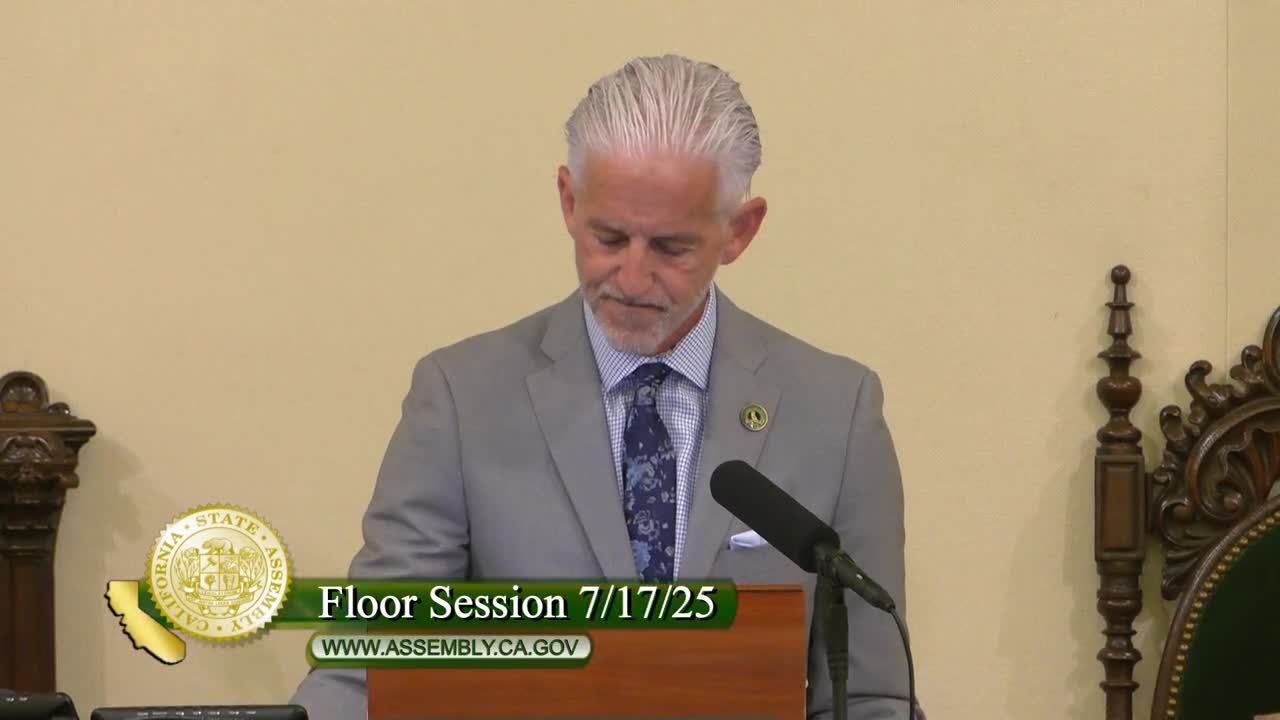
Bill Author

Bill Co-Author(s):