AB 1200: Emergency services: disaster preparedness.
- Session Year: 2025-2026
- House: Assembly
- Latest Version Date: 2025-09-08
Current Status:
Failed
(2026-01-22: Consideration of Governor's veto stricken from file.)
Introduced
In Committee
Awaiting First Chamber Vote
Passed First Chamber
In Committee
Awaiting Second Chamber Vote
Passed Second Chamber
Enacted
What does this bill do?
The bill requires the Office of Emergency Services to hold biennial tabletop disaster exercises that bring together key agencies, businesses, schools, military sites, and nonprofits to test and improve emergency plans for catastrophic events that could cause mass casualties and disrupt vital services like water, power, fuel, food, communications, and transportation. It also requires annual community preparedness training with California Volunteers and local CERT teams in high‑risk, vulnerable areas, including drills that use public open spaces, outreach to people with disabilities and non‑English speakers, and testing of local emergency alert systems with priority for places that have had alert or evacuation problems.
The summary is provided by generative AI which can make mistakes. For original language, please view the details in the table below.
Existing law, the California Emergency Services Act, authorizes the Governor to proclaim a state of emergency, and local officials and local governments to proclaim a local emergency, when specified conditions of disaster or extreme peril to the safety of persons and property exist. Existing law establishes the Office of Emergency Services (OES) within the office of the Governor and sets forth its powers and duties relating to responsibility over the states emergency and disaster response services for natural, technological, or man-made disasters and emergencies, including responsibility for activities necessary to prevent, respond to, recover from, and mitigate the effects of emergencies and disasters to people and property.
This bill would require OES to biennially convene key personnel and agencies that have emergency management roles and responsibilities to participate in tabletop exercises in which the participants emergency preparedness plans are discussed and evaluated under various simulated catastrophic disaster situations, as specified.
This bill would require the tabletop exercises to be designed by OES to enhance the capabilities of the participants to do various things, including to engage the communities that they each serve, as appropriate, in the development of executable strategic, operational, or tactical-level approaches to meet defined disaster response objectives.
This bill would require OES to report on each tabletop exercise it conducts to the committees on budget, the Assembly Committee on Emergency Management, and the Senate Committee on Governmental Organization by February 1, 2028, and biennially thereafter of the calendar year following each biennial simulation and evaluation. The bill would require OES to use federal preparedness grant funding to offset the state, local, and tribal government costs associated with participation in the tabletop exercises to the greatest extent possible.
The bill would require OES to, in cooperation with California Volunteers, coordinate with local Community Emergency Response Team programs to conduct community disaster preparedness training in vulnerable regions of the state, as specified, to, among other things, increase community resilience to disaster. The bill would require those regions to be identified based on data from specified sources. The bill would require a training event to include testing of community notification systems in the area and would require OES to prioritize that testing in specified communities.
Existing law establishes the Alfred E. Alquist Seismic Safety Commission in OES and requires the commission to, among other things, work with specified agencies to identify key activities and responsibilities related to seismic safety. This bill would require the Seismic Safety Commission to enter into a partnership with the Strategic Growth Council and the Department of Forestry and Fire Protection to identify investments the State of California should make to ensure a rapid recovery from a major disaster, and would require the council to complement the work of local and regional lifelines councils and bring lifeline providers together to develop postevent performance standards for public and private utility providers. The bill would state related findings and declarations of the Legislature.Existing law, the California Emergency Services Act, authorizes the Governor to proclaim a state of emergency, and local officials and local governments to proclaim a local emergency, when specified conditions of disaster or extreme peril to the safety of persons and property exist. Existing law establishes the Office of Emergency Services (OES) within the office of the Governor and sets forth its powers and duties relating to responsibility over the states emergency and disaster response services for natural, technological, or man-made disasters and emergencies, including responsibility for activities necessary to prevent, respond to, recover from, and mitigate the effects of emergencies and disasters to people and property.
This bill would require OES to biennially convene key personnel and agencies that have emergency management roles and responsibilities to participate in tabletop exercises in which the participants emergency preparedness plans are discussed and evaluated under various simulated catastrophic disaster situations, as specified.
This bill would require the tabletop exercises to be designed by OES to enhance the capabilities of the participants to do various things, including to engage the communities that they each serve, as appropriate, in the development of executable strategic, operational, or tactical-level approaches to meet defined disaster response objectives.
This bill would require OES to report on each tabletop exercise it conducts to the committees on budget, the Assembly Committee on Emergency Management, and the Senate Committee on Governmental Organization by February 1, 2028, and biennially thereafter of the calendar year following each biennial simulation and evaluation. The bill would require OES to use federal preparedness grant funding to offset the state, local, and tribal government costs associated with participation in the tabletop exercises to the greatest extent possible.
The bill would require OES to, in cooperation with California Volunteers, coordinate with local Community Emergency Response Team programs to conduct community disaster preparedness training in vulnerable regions of the state, as specified, to, among other things, increase community resilience to disaster. The bill would require those regions to be identified based on data from specified sources. The bill would require a training event to include testing of community notification systems in the area and would require OES to prioritize that testing in specified communities.
Existing law establishes the Alfred E. Alquist Seismic Safety Commission in the Office of Emergency Services OES and requires the commission to, among other things, work with specified agencies to identify key activities and responsibilities related to seismic safety.
This bill would require the Seismic Safety Commission to enter into a partnership with the Strategic Growth Council and the Department of Forestry and Fire Protection to identify investments the State of California should make to ensure a rapid recovery from a major disaster, and would require the council to compliment complement the work of local and regional lifelines councils and bring lifeline providers together to develop postevent performance standards for public and private utility providers. The bill would state related findings and declarations of the Legislature.
Existing law establishes the Alfred E. Alquist Seismic Safety Commission in the Office of Emergency Services and requires the commission to, among other things, work with specified agencies to identify key activities and responsibilities related to seismic safety.
This bill would require the Seismic Safety Commission to enter into a partnership with the Strategic Growth Council and the Department of Forestry and Fire Protection to identify investments the State of California should make to ensure a rapid recovery from a major disaster, and would require the council to compliment the work of local and regional lifelines councils and bring lifeline providers together to develop postevent performance standards for public and private utility providers. The bill would state related findings and declarations of the Legislature.
(a)Biennially, the Office of Emergency Services shall convene key personnel and agencies that have emergency management roles and responsibilities to participate in tabletop exercises in which the participants emergency preparedness plans are discussed and evaluated under various simulated catastrophic disaster situations.
(b)The office shall invite governmental agencies, educational entities, military installations, private businesses, and nonprofit organizations that operate or own concerns in various sectors that provide fundamental services in the community that, when stabilized, enable all other aspects of society to function to participate in the tabletop exercises. Those sectors include, but need not be limited to, all of the following:
(1)Law enforcement, private security, fire suppression services, search and rescue, government services, and community safety.
(2)Food, water, shelter, and agriculture.
(3)Medical care, public health, patient transportation, medical supply providers, and fatality management.
(4)Utilities and fuel.
(5)Infrastructure, emergency responder communications, alerts, warnings and safety messages, finance, 911 emergency response systems, and dispatch.
(6)Hazardous materials management, facilities, pollutants, and contaminants.
(7)Transportation infrastructure, motor vehicles, mass transit, and railway, aviation, and maritime transportation.
(c)The simulated catastrophic disaster situations shall be based upon the following disaster response plans for incidents that could result in thousands of casualties, tens of thousands of evacuees, overwhelm state and local response capabilities, and severely disrupt lifeline infrastructure such as water, electricity, fuel, food, cellular communications, and transportation developed by the office and the Federal Emergency Management Agency:
(1)The Northern California Catastrophic Flood Response Plan published in 2018.
(2)The Bay Area Earthquake Plan published in 2016.
(3)The California Cascadia Subduction Zone Earthquake and Tsunami Response Plan published in 2013.
(4)The Southern California Catastrophic Earthquake Response Plan published in 2010.
(d)The tabletop exercises shall be designed by the office to enhance the capabilities of the participants to do, at a minimum, four of the following:
(1)Plan to engage the communities that they each serve, as appropriate, in the development of executable strategic, operational, or tactical-level approaches to meet defined disaster response objectives.
(2)Provide coordinated, prompt, reliable, and actionable information through the use of clear, consistent, accessible, and culturally and linguistically appropriate methods to effectively relay information regarding any threat or hazard, as well as the actions being taken and the assistance being made available, as appropriate.
(3)Establish and maintain a unified and coordinated operational structure and process that appropriately integrates all critical stakeholders and supports the execution of core capabilities.
(4)Manage the security and resilience of supply chains that deliver essential commodities, equipment, and services in support of impacted communities and survivors, including emergency power and fuel support, as well as the coordination of access to community staples. Synchronize logistics capabilities and enable the restoration of impacted supply chains.
(5)Conduct appropriate measures to ensure the protection of the health and safety of the public and workers, as well as the environment, from all hazards in support of responder operations and the affected communities.
(6)Provide transportation, including infrastructure access and accessible transportation services, for response priority objectives, including the evacuation of people and animals, and the delivery of vital response personnel, equipment, and services into the affected areas.
(7)Provide decisionmakers with relevant information regarding the nature and extent of the hazard, cascading effects, and the status of the response.
(8)Provide fatality management services, including decedent remains recovery and victim identification, working with local, state, tribal, territorial, insular area, and federal authorities to provide mortuary processes, temporary storage, or permanent internment solutions, sharing information with mass care services for the purpose of reunifying family members and caregivers with missing persons or their remains, and providing counseling to the bereaved.
(9)Provide structural, wildland, and specialized firefighting capabilities to manage and suppress fires of all types, kinds, and complexities while protecting the lives, property, and environment in the affected area.
(10)Stabilize critical infrastructure functions, minimize health and safety threats, and efficiently restore and revitalize systems and services to support a viable, resilient community.
(11)Provide life-sustaining and human services to the affected population, including hydration, feeding, sheltering, temporary housing, evacuee support, reunification, and distribution of emergency supplies.
(12)Deliver traditional and atypical search and rescue capabilities, including personnel, services, animals, and assets, to survivors in need, with the goal of saving the greatest number of endangered lives in the shortest time possible.
(13)Ensure a safe and secure environment through law enforcement and related security and protection operations for people and communities located within affected areas and also for response personnel engaged in lifesaving and life-sustaining operations.
(14)Ensure the capacity for timely communications in support of security, situational awareness, and operations, by any and all means available, among and between affected communities in the impact area and all response forces.
(15)Provide lifesaving medical treatment via emergency medical services and related operations and avoid additional disease and injury by providing targeted public health, medical, and behavioral health support and products to all affected populations.
(16)Restore and improve health and social services capabilities and networks to promote the resilience, independence, health, including behavioral health, and well-being of the whole community.
(17)Return economic and business activities, including food and agriculture, to a healthy state and develop new business and employment opportunities that result in an economically viable community.
(18)Protect natural and cultural resources and historic properties through appropriate planning, mitigation, response, and recovery actions to preserve, conserve, rehabilitate, and restore them consistent with postdisaster community priorities and best practices and in compliance with applicable environmental and historic preservation laws.
(e)(1)The office shall report on each tabletop exercise it conducts pursuant to this section to the committees on budget, the Assembly Committee on Emergency Management, and the Senate Committee on Governmental Organization by February 1, 2028, and biennially thereafter of the calendar year following each biennial simulation and evaluation.
(2)A report to be submitted pursuant to paragraph (1) shall be submitted in compliance with Section 9795.
(f)The office shall, to the greatest extent possible, use federal preparedness grant funding to offset the state, local, and tribal government costs associated with participation in the tabletop exercises described in this section.
SEC. 2.Section 8608.6 is added to the Government Code, to read:8608.6.(a)Annually, the Office of Emergency Services, in cooperation with California Volunteers, shall coordinate with local Community Emergency Response Team (CERT) programs to conduct community disaster preparedness training in vulnerable regions of the state.
(b)The vulnerable regions for training pursuant to this section shall be identified based on data from the Federal Emergency Management Agencys National Risk Index and a community vulnerability index, or similar risk assessment tools.
(c)The office and California Volunteers shall ensure that the annual training conducted pursuant to this section is coordinated with any established CERT program serving the region in which the training takes place.
(d)A training event shall emphasize actions to increase community resilience to disasters, utilize community green or open space for drills and preparedness activities whenever feasible, and promote inclusive engagement of community members, including individuals with disabilities and those from diverse linguistic and cultural backgrounds.
(e)A training event shall include testing of community emergency notification systems in the area. The Office of Emergency Services shall prioritize testing in communities that have experienced past challenges with emergency alerts or evacuation warnings, including those observed during recent wildfires in the state.
(a)Biennially, the Office of Emergency Services shall convene key personnel and agencies that have emergency management roles and responsibilities to participate in tabletop exercises in which the participants emergency preparedness plans are discussed and evaluated under various simulated catastrophic disaster situations.
(b)The office shall invite governmental agencies, educational entities, military installations, private businesses, and nonprofit organizations that operate or own concerns in various sectors that provide fundamental services in the community that, when stabilized, enable all other aspects of society to function to participate in the tabletop exercises. Those sectors include, but need not be limited to, all of the following:
(1)Law enforcement, private security, fire suppression services, search and rescue, government services, and community safety.
(2)Food, water, shelter, and agriculture.
(3)Medical care, public health, patient transportation, medical supply providers, and fatality management.
(4)Utilities and fuel.
(5)Infrastructure, emergency responder communications, alerts, warnings and safety messages, finance, 911 emergency response systems, and dispatch.
(6)Hazardous materials management, facilities, pollutants, and contaminants.
(7)Transportation infrastructure, motor vehicles, mass transit, and railway, aviation, and maritime transportation.
(c)The simulated catastrophic disaster situations shall be based upon the following disaster response plans for incidents that could result in thousands of casualties, tens of thousands of evacuees, overwhelm state and local response capabilities, and severely disrupt lifeline infrastructure such as water, electricity, fuel, food, cellular communications, and transportation developed by the office and the Federal Emergency Management Agency:
(1)The Northern California Catastrophic Flood Response Plan published in 2018.
(2)The Bay Area Earthquake Plan published in 2016.
(3)The California Cascadia Subduction Zone Earthquake and Tsunami Response Plan published in 2013.
(4)The Southern California Catastrophic Earthquake Response Plan published in 2010.
(d)The tabletop exercises shall be designed by the office to enhance the capabilities of the participants to do, at a minimum, four of the following:
(1)Plan to engage the communities that they each serve, as appropriate, in the development of executable strategic, operational, or tactical-level approaches to meet defined disaster response objectives.
(2)Provide coordinated, prompt, reliable, and actionable information through the use of clear, consistent, accessible, and culturally and linguistically appropriate methods to effectively relay information regarding any threat or hazard, as well as the actions being taken and the assistance being made available, as appropriate.
(3)Establish and maintain a unified and coordinated operational structure and process that appropriately integrates all critical stakeholders and supports the execution of core capabilities.
(4)Manage the security and resilience of supply chains that deliver essential commodities, equipment, and services in support of impacted communities and survivors, including emergency power and fuel support, as well as the coordination of access to community staples. Synchronize logistics capabilities and enable the restoration of impacted supply chains.
(5)Conduct appropriate measures to ensure the protection of the health and safety of the public and workers, as well as the environment, from all hazards in support of responder operations and the affected communities.
(6)Provide transportation, including infrastructure access and accessible transportation services, for response priority objectives, including the evacuation of people and animals, and the delivery of vital response personnel, equipment, and services into the affected areas.
(7)Provide decisionmakers with relevant information regarding the nature and extent of the hazard, cascading effects, and the status of the response.
(8)Provide fatality management services, including decedent remains recovery and victim identification, working with local, state, tribal, territorial, insular area, and federal authorities to provide mortuary processes, temporary storage, or permanent internment solutions, sharing information with mass care services for the purpose of reunifying family members and caregivers with missing persons or their remains, and providing counseling to the bereaved.
(9)Provide structural, wildland, and specialized firefighting capabilities to manage and suppress fires of all types, kinds, and complexities while protecting the lives, property, and environment in the affected area.
(10)Stabilize critical infrastructure functions, minimize health and safety threats, and efficiently restore and revitalize systems and services to support a viable, resilient community.
(11)Provide life-sustaining and human services to the affected population, including hydration, feeding, sheltering, temporary housing, evacuee support, reunification, and distribution of emergency supplies.
(12)Deliver traditional and atypical search and rescue capabilities, including personnel, services, animals, and assets, to survivors in need, with the goal of saving the greatest number of endangered lives in the shortest time possible.
(13)Ensure a safe and secure environment through law enforcement and related security and protection operations for people and communities located within affected areas and also for response personnel engaged in lifesaving and life-sustaining operations.
(14)Ensure the capacity for timely communications in support of security, situational awareness, and operations, by any and all means available, among and between affected communities in the impact area and all response forces.
(15)Provide lifesaving medical treatment via emergency medical services and related operations and avoid additional disease and injury by providing targeted public health, medical, and behavioral health support and products to all affected populations.
(16)Restore and improve health and social services capabilities and networks to promote the resilience, independence, health, including behavioral health, and well-being of the whole community.
(17)Return economic and business activities, including food and agriculture, to a healthy state and develop new business and employment opportunities that result in an economically viable community.
(18)Protect natural and cultural resources and historic properties through appropriate planning, mitigation, response, and recovery actions to preserve, conserve, rehabilitate, and restore them consistent with postdisaster community priorities and best practices and in compliance with applicable environmental and historic preservation laws.
(e)(1)The office shall report on each tabletop exercise it conducts pursuant to this section to the committees on budget, the Assembly Committee on Emergency Management, and the Senate Committee on Governmental Organization by February 1, 2028, and biennially thereafter of the calendar year following each biennial simulation and evaluation.
(2)A report to be submitted pursuant to paragraph (1) shall be submitted in compliance with Section 9795.
(f)The office shall, to the greatest extent possible, use federal preparedness grant funding to offset the state, local, and tribal government costs associated with participation in the tabletop exercises described in this section.
SEC. 4.SEC. 2.Section 8608.6 is added to the Government Code, to read:8608.6.(a)Annually, the Office of Emergency Services, in cooperation with California Volunteers, shall coordinate with local Community Emergency Response Team (CERT) programs to conduct community disaster preparedness training in vulnerable regions of the state.
(b)The vulnerable regions for training pursuant to this section shall be identified based on data from the Federal Emergency Management Agencys National Risk Index and a community vulnerability index, or similar risk assessment tools.
(c)The office and California Volunteers shall ensure that the annual training conducted pursuant to this section is coordinated with any established CERT program serving the region in which the training takes place.
(d)A training event shall emphasize actions to increase community resilience to disasters, utilize community green or open space for drills and preparedness activities whenever feasible, and promote inclusive engagement of community members, including individuals with disabilities and those from diverse linguistic and cultural backgrounds.
(e)A training event shall include testing of community emergency notification systems in the area. The Office of Emergency Services shall prioritize testing in communities that have experienced past challenges with emergency alerts or evacuation warnings, including those observed during recent wildfires in the state.
(a)The Legislature finds and declares the following:
(1)The Federal Emergency Management Agency created Community Lifelines to reframe incident information, understand and communicate incident impacts using plain language, and promote unity of effort across the whole community to prioritize efforts to stabilize the lifelines during incident response. While lifelines were developed to support response planning and operations, the concept can be applied across the entire preparedness cycle.
(2)Efforts to protect lifelines, prevent and mitigate potential impacts to them, and build back stronger and smarter during recovery will drive overall resilience of the nation. Applying the lifelines construct allows decision-makers decisionmakers to (A) prioritize, sequence, and focus response efforts towards maintaining or restoring the most critical services and infrastructure, (B) utilize a common lexicon to facilitate unity of purpose among all stakeholders, (C) promote a response that facilitates unity of purpose and better communication among the whole community, including federal, state, tribal, territorial, and local governments, and private sector and non-governmental nongovernmental entities, and (D) clarify which components of the disaster are complex or complicated, requiring cross-sector coordination.
(3)Lifelines are used to enhance the ability to gain, maintain, and communicate situational awareness for the whole community in responding to disasters; analyze impacts to the various lifelines and develop priority focus areas for each operational period during response; and identify and communicate complex interdependencies to identify major limiting factors hindering stabilization.
(b)It is the intent of the Legislature to establish the State Lifelines Council, to be cochaired by the Seismic Safety Commission, the Strategic Growth Council, and the Department of Forestry and Fire Protection, to identify what investments the State of California should make to ensure a rapid recovery from a major disaster to compliment complement the work of similar local and regional lifelines councils and bring lifeline providers together to develop a unified set of postevent performance standards, both individually and collectively, for public and private utility providers.
SEC. 2.Article 4.2 (commencing with Section 8580) is added to Chapter 7 of Division 1 of Title 2 of the Government Code, to read:4.2.State Lifelines Council8580.(a)The Seismic Safety Commission shall enter into a partnership with the Strategic Growth Council and the Department of Forestry and Fire Protection to establish the State Lifelines Council to identify the investments the State of California should make to ensure a rapid recovery from a major disaster.
(b)The council shall compliment complement the work of local and regional lifelines councils and bring lifeline providers together to develop a unified set of postevent performance standards, both individually and collectively, for public and private utility providers.
SEC. 3.Section 8608.5 is added to the Government Code, to read:8608.5.(a)Biennially, the Office of Emergency Services shall convene key personnel and agencies that have emergency management roles and responsibilities to participate in tabletop exercises in which the participants emergency preparedness plans are discussed and evaluated under various simulated catastrophic disaster situations.
(b)The office shall invite governmental agencies, educational entities, military installations, private businesses, and nonprofit organizations that operate or own concerns in various sectors that provide fundamental services in the community that, when stabilized, enable all other aspects of society to function to participate in the tabletop exercises. Those sectors include, but need not be limited to, all of the following:
(1)Law enforcement, private security, fire suppression services, search and rescue, government services, and community safety.
(2)Food, water, shelter, and agriculture.
(3)Medical care, public health, patient transportation, medical supply providers, and fatality management.
(4)Utilities and fuel.
(5)Infrastructure, emergency responder communications, alerts, warnings and safety messages, finance, 911 emergency response systems, and dispatch.
(6)Hazardous materials management, facilities, pollutants, and contaminants.
(7)Transportation infrastructure, motor vehicles, mass transit, and railway, aviation, and maritime transportation.
(c)The simulated catastrophic disaster situations shall be based upon the following disaster response plans for incidents that could result in thousands of casualties, tens of thousands of evacuees, overwhelm state and local response capabilities, and severely disrupt lifeline infrastructure such as water, electricity, fuel, food, cellular communications, and transportation developed by the office and the Federal Emergency Management Agency:
(1)The Northern California Catastrophic Flood Response Plan published in 2018.
(2)The Bay Area Earthquake Plan published in 2016.
(3)The California Cascadia Subduction Zone Earthquake and Tsunami Response Plan published in 2013.
(4)The Southern California Catastrophic Earthquake Response Plan published in 2010.
(d)The tabletop exercises shall be designed by the office to enhance the capabilities of the participants to do, at a minimum, four of the following:
(1)Plan to engage the communities that they each serve, as appropriate, in the development of executable strategic, operational, or tactical-level approaches to meet defined disaster response objectives.
(2)Provide coordinated, prompt, reliable, and actionable information through the use of clear, consistent, accessible, and culturally and linguistically appropriate methods to effectively relay information regarding any threat or hazard, as well as the actions being taken and the assistance being made available, as appropriate.
(3)Establish and maintain a unified and coordinated operational structure and process that appropriately integrates all critical stakeholders and supports the execution of core capabilities.
(4)Manage the security and resilience of supply chains that deliver essential commodities, equipment, and services in support of impacted communities and survivors, including emergency power and fuel support, as well as the coordination of access to community staples. Synchronize logistics capabilities and enable the restoration of impacted supply chains.
(5)Conduct appropriate measures to ensure the protection of the health and safety of the public and workers, as well as the environment, from all hazards in support of responder operations and the affected communities.
(6)Provide transportation, including infrastructure access and accessible transportation services, for response priority objectives, including the evacuation of people and animals, and the delivery of vital response personnel, equipment, and services into the affected areas.
(7)Provide decisionmakers with relevant information regarding the nature and extent of the hazard, cascading effects, and the status of the response.
(8)Provide fatality management services, including decedent remains recovery and victim identification, working with local, state, tribal, territorial, insular area, and federal authorities to provide mortuary processes, temporary storage, or permanent internment solutions, sharing information with mass care services for the purpose of reunifying family members and caregivers with missing persons or their remains, and providing counseling to the bereaved.
(9)Provide structural, wildland, and specialized firefighting capabilities to manage and suppress fires of all types, kinds, and complexities while protecting the lives, property, and environment in the affected area.
(10)Stabilize critical infrastructure functions, minimize health and safety threats, and efficiently restore and revitalize systems and services to support a viable, resilient community.
(11)Provide life-sustaining and human services to the affected population, including hydration, feeding, sheltering, temporary housing, evacuee support, reunification, and distribution of emergency supplies.
(12)Deliver traditional and atypical search and rescue capabilities, including personnel, services, animals, and assets, to survivors in need, with the goal of saving the greatest number of endangered lives in the shortest time possible.
(13)Ensure a safe and secure environment through law enforcement and related security and protection operations for people and communities located within affected areas and also for response personnel engaged in lifesaving and life-sustaining operations.
(14)Ensure the capacity for timely communications in support of security, situational awareness, and operations, by any and all means available, among and between affected communities in the impact area and all response forces.
(15)Provide lifesaving medical treatment via emergency medical services and related operations and avoid additional disease and injury by providing targeted public health, medical, and behavioral health support and products to all affected populations.
(16)Restore and improve health and social services capabilities and networks to promote the resilience, independence, health, including behavioral health, and well-being of the whole community.
(17)Return economic and business activities, including food and agriculture, to a healthy state and develop new business and employment opportunities that result in an economically viable community.
(18)Protect natural and cultural resources and historic properties through appropriate planning, mitigation, response, and recovery actions to preserve, conserve, rehabilitate, and restore them consistent with postdisaster community priorities and best practices and in compliance with applicable environmental and historic preservation laws.
(e)(1)The office shall report on each tabletop exercise it conducts pursuant to this section to the committees on budget, the Assembly Committee on Emergency Management, and the Senate Committee on Governmental Organization by February 1, 2028, and biennially thereafter of the calendar year following each biennial simulation and evaluation.
(2)A report to be submitted pursuant to paragraph (1) shall be submitted in compliance with Section 9795.
(f)The office shall, to the greatest extent possible, use federal preparedness grant funding to offset the state, local, and tribal government costs associated with participation in the tabletop exercises described in this section.
SEC. 4.Section 8608.6 is added to the Government Code, to read:8608.6.(a)Annually, the Office of Emergency Services, in cooperation with California Volunteers, shall coordinate with local Community Emergency Response Team (CERT) programs to conduct community disaster preparedness training in vulnerable regions of the state.
(b)The vulnerable regions for training pursuant to this section shall be identified based on data from the Federal Emergency Management Agencys National Risk Index and a community vulnerability index, or similar risk assessment tools.
(c)The office and California Volunteers shall ensure that the annual training conducted pursuant to this section is coordinated with any established CERT program serving the region in which the training takes place.
(d)A training event shall emphasize actions to increase community resilience to disasters, utilize community green or open space for drills and preparedness activities whenever feasible, and promote inclusive engagement of community members, including individuals with disabilities and those from diverse linguistic and cultural backgrounds.
(e)A training event shall include testing of community emergency notification systems in the area. The Office of Emergency Services shall prioritize testing in communities that have experienced past challenges with emergency alerts or evacuation warnings, including those observed during recent wildfires in the state.
(a)The Legislature finds and declares the following:
(1)The Federal Emergency Management Agency created Community Lifelines to reframe incident information, understand and communicate incident impacts using plain language, and promote unity of effort across the whole community to prioritize efforts to stabilize the lifelines during incident response. While lifelines were developed to support response planning and operations, the concept can be applied across the entire preparedness cycle.
(2)Efforts to protect lifelines, prevent and mitigate potential impacts to them, and build back stronger and smarter during recovery will drive overall resilience of the nation. Applying the lifelines construct allows decision-makers to (A) prioritize, sequence, and focus response efforts towards maintaining or restoring the most critical services and infrastructure, (B) utilize a common lexicon to facilitate unity of purpose among all stakeholders, (C) promote a response that facilitates unity of purpose and better communication among the whole community, including federal, state, tribal, territorial, and local governments, and private sector and non-governmental entities, and (D) clarify which components of the disaster are complex or complicated, requiring cross-sector coordination.
(3)Lifelines are used to enhance the ability to gain, maintain, and communicate situational awareness for the whole community in responding to disasters; analyze impacts to the various lifelines and develop priority focus areas for each operational period during response; and identify and communicate complex interdependencies to identify major limiting factors hindering stabilization.
(b)It is the intent of the Legislature to establish the State Lifelines Council, to be cochaired by the Seismic Safety Commission, the Strategic Growth Council, and the Department of Forestry and Fire Protection, to identify what investments the State of California should make to ensure a rapid recovery from a major disaster to compliment the work of similar local and regional lifelines councils and bring lifeline providers together to develop a unified set of postevent performance standards, both individually and collectively, for public and private utility providers.
SEC. 2.Article 4.2 (commencing with Section 8580) is added to Chapter 7 of Division 1 of Title 2 of the Government Code, to read:4.2.State Lifelines Council8580.(a)The Seismic Safety Commission shall enter into a partnership with the Strategic Growth Council and the Department of Forestry and Fire Protection to establish the State Lifelines Council to identify the investments the State of California should make to ensure a rapid recovery from a major disaster.
(b)The council shall compliment the work of local and regional lifelines councils and bring lifeline providers together to develop a unified set of postevent performance standards, both individually and collectively, for public and private utility providers.
|
Date
|
Status
|
|---|---|
| Jan 22, 2026 | Consideration of Governor's veto stricken from file. |
| Oct 11, 2025 | Consideration of Governor's veto pending. |
| Oct 11, 2025 | Vetoed by Governor. |
| Sep 15, 2025 | Enrolled and presented to the Governor at 4:30 p.m. |
| Sep 11, 2025 | Enrolled measure version corrected. |
| Sep 4, 2025 | In Assembly. Ordered to Engrossing and Enrolling. |
| Sep 4, 2025 | Read third time. Passed. Ordered to the Assembly. (Ayes 39. Noes 0. Page 2523.). |
| Sep 2, 2025 | Ordered to special consent calendar. |
| Aug 29, 2025 | Read second time. Ordered to third reading. |
| Aug 29, 2025 | From committee: Do pass. (Ayes 7. Noes 0.) (August 29). |
| Aug 18, 2025 | In committee: Referred to suspense file. |
| Jul 8, 2025 | From committee: Do pass and re-refer to Com. on APPR. with recommendation: To Consent Calendar. (Ayes 15. Noes 0.) (July 8). Re-referred to Com. on APPR. |
| Jun 11, 2025 | Referred to Com. on G.O. |
| Jun 3, 2025 | In Senate. Read first time. To Com. on RLS. for assignment. |
| Jun 2, 2025 | Read third time. Passed. Ordered to the Senate. (Ayes 79. Noes 0. Page 1918.) |
| May 27, 2025 | Read second time. Ordered to third reading. |
| May 23, 2025 | Read second time and amended. Ordered returned to second reading. |
| May 23, 2025 | From committee: Amend, and do pass as amended. (Ayes 11. Noes 0.) (May 23). |
| May 23, 2025 | Assembly Rule 63 suspended. (Ayes 51. Noes 16. Page 1644.) |
| May 21, 2025 | Joint Rule 62(a), file notice suspended. (Page 1627.) |
| May 21, 2025 | In committee: Set, first hearing. Referred to APPR. suspense file. |
| May 14, 2025 | In committee: Hearing postponed by committee. |
| Apr 29, 2025 | From committee: Do pass and re-refer to Com. on APPR. (Ayes 7. Noes 0.) (April 28). Re-referred to Com. on APPR. |
| Apr 24, 2025 | Re-referred to Com. on E.M. |
| Apr 23, 2025 | From committee chair, with author's amendments: Amend, and re-refer to Com. on E.M. Read second time and amended. |
| Mar 10, 2025 | Referred to Com. on E.M. |
| Feb 24, 2025 | Read first time. |
| Feb 22, 2025 | From printer. May be heard in committee March 24. |
| Feb 21, 2025 | Introduced. To print. |
|
Date
|
Description
|
Location
|
Votes
|
|
|---|---|---|---|---|
| Sep 4, 2025 | Special Consent AB1200 Caloza | Senate Floor |
Passed |
|
| Aug 29, 2025 | Do pass | Senate Standing Committee on Appropriations |
Passed |
|
| Aug 18, 2025 | Placed on suspense file | Senate Standing Committee on Appropriations |
Passed |
|
| Jul 8, 2025 | Do pass, but first be re-referred to the Committee on [Appropriations] with the recommendation: To Consent Calendar | Senate Standing Committee on Governmental Organization |
Passed |
|
| Jun 2, 2025 | AB 1200 Caloza Assembly Third Reading | Assembly Floor |
Passed |
|
| May 23, 2025 | Do pass as amended. | Assembly Standing Committee on Appropriations |
Passed |
|
| Apr 28, 2025 | Do pass and be re-referred to the Committee on [Appropriations] | Assembly Standing Committee on Emergency Management |
Passed |
This list shows positions taken on this bill by organizations on the date displayed, which is linked to the original source.
Positions by individuals are not included.
GOVERNOR'S VETO
GV Bill Id:AB 1200
Author:(Caloza)
As Enrolled Ver:September 8, 2025
2/3 vote
SUMMARY
Major Provisions
- Requires Cal OES, biennially, to convene key personnel and agencies that have emergency management roles and responsibilities to participate in tabletop exercises in which the participant's emergency preparedness plans are discussed and evaluated under various simulated catastrophic disaster situations.
- Requires Cal OES to invite governmental agencies, educational entities, military installations, private businesses, and nonprofit organizations that operate or own concerns in various sectors that provide fundamental services in the community that, when stabilized, enable all other aspects of society to function to participate in the tabletop exercises as specified.
3) Requires the disaster situations be based on the catastrophic plans for major earthquakes and floods, as specified.
4) Requires tabletop exercises designed by Cal OES enhance the capabilities of the participants to do, among other things, plan to engage the communities that they each serve, provide coordinated, prompt, reliable, and actionable information through the use of clear, consistent, accessible, and culturally and linguistically appropriate methods, establish and maintain a unified and coordinated operational structure, and manage the security and resilience of supply chains, as specified.
- Requires Cal OES to report on each tabletop exercise it conducts pursuant to this section to the committees on budget, the Assembly Committee on Emergency Management, and the Senate Committee on Governmental Organization by February 1, 2028, and biennially thereafter of the calendar year following each biennial simulation and evaluation.
- Directs Cal OES, to the greatest extent possible, use federal preparedness grant funding to offset the state, local, and tribal government costs associated with participation in the tabletop exercises described in this section.
- Requires Cal OES, in cooperation with California Volunteers, to coordinate annually with local Community Emergency Response Team (CERT) programs to conduct community disaster preparedness training in vulnerable regions of the state, based on data from the Federal Emergency Management Agency's National Risk Index and a community vulnerability index, or similar risk assessment tools, as specified.
- Requires Cal OES and California Volunteers to ensure that the annual training conducted pursuant to this section is coordinated with any established CERT program serving the region in which the training takes place and do the following:
(a) Emphasize actions to increase community resilience to disasters, utilize community green or open space for drills and preparedness activities whenever feasible, and promote inclusive engagement of community members, including individuals with disabilities and those from diverse linguistic and cultural backgrounds.
(b) Include testing of community emergency notification systems in the area. The Office of Emergency Services shall prioritize testing in communities that have experienced past challenges with emergency alerts or evacuation warnings, including those observed during recent wildfires in the state.
Governor's Veto Message
This bill would require the California Office of Emergency Services (Cal OES) to biennially convene key personnel and agencies to participate in a tabletop exercise and require Cal OES, in cooperation with California Volunteers, to annually conduct community disaster preparedness training in vulnerable regions of the state.
I appreciate the author's commitment to disaster readiness. However, this bill is duplicative of existing preparedness measures already in place to enhance disaster readiness. Cal OES already conducts targeted, multi-jurisdictional, and tabletop exercises that are strategically aligned with existing plans and capabilities. The exercises envisioned in this bill are overly broad and lack clarity. As a result, requiring these exercises would unintentionally undermine the effectiveness of California's current emergency preparedness efforts. Additionally, this bill would result in new ongoing costs in the millions of dollars to implement.
In partnership with the Legislature this year, my Administration has enacted a balanced budget that recognizes the challenging fiscal landscape our state faces while maintaining our commitment to working families and our most vulnerable communities. With significant fiscal pressures and the federal government's hostile economic policies, it is vital we remain disciplined when considering bills with significant fiscal implications that are not included in the budget, such as this measure.
COMMENTS
While the Administration and Cal OES claim that his bill is duplicative of existing preparedness measures, the Committee is unaware of any strategic and specific effort by Cal OES, in coordination with California Volunteers, to annually conduct community disaster preparedness training in vulnerable regions of the state.
Background: California continues to face increasingly complex and destructive disasters including fires, floods, earthquakes, and atmospheric storms. In 2024 alone, wildfires in the Palisades and Eaton Canyon areas overwhelmed emergency systems and revealed gaps in response coordination. While California has developed strong response plans in collaboration with FEMA, there is no formal requirement to regularly test these plans through joint, interagency exercises.
Without recurring drills, key agencies, sectors, and responders may not be fully prepared when disaster strikes. Issues like miscommunication, logistical delays, or overlooked vulnerable populations have emerged repeatedly in after-action reports. The California State Auditor has also identified shortcomings in preparedness for vulnerable communities.
2025 Los Angeles Fires: In January 2025, Los Angeles County experienced the second and third most destructive fires in California history: the Palisades Fire and Eaton Fire. AccuWeather estimates these fires' total damage and economic loss to be between $250 billion and $275 billion. At its height, the fires placed an estimated 331,335 people on an evacuation advisory, with nearly 192,000 residents facing mandatory evacuation and roughly 140,000 subject to warnings. The blazes burned a combined 37,469 acres and leveled entire communities in the Pacific Palisades and Altadena neighborhoods of LA County.
The Eaton Fire became the second most destructive fire in California history after destroying 9,418 buildings, 1,074 structures damaged, and 17 confirmed civilian fatalities. The Palisades Fire is the third most destructive fire in state history, with 6,837 structures destroyed, 973 structures damaged, and 12 confirmed civilian fatalities. As firefighters were battling the largest conflagrations, additional fires broke out in the Los Angeles area. Crews were able to stop the forward spread and contain the blazes. These fires included the Lidia, Archer, Woodley, Sunset, Kenneth, Hurst, and Auto fires, which burned close to 2,400 acres between them. Two weeks after the initial fires, the Hughes Fire began near Castaic Lake in northern Los Angeles County on January 22 and grew to over 10,000 acres. Firefighters fully contained the fire on January 30 after covering 10,425 acres.
Emergency Preparedness and Response: Cal OES is responsible for addressing natural, technological, or manmade disasters and emergencies, and preparing the State to prevent, respond to, quickly recover from, and mitigate the effects of both intentional and natural disasters. As part of their overall preparedness mission, Cal OES is required to develop a State Emergency Plan (SEP) and State Hazard Mitigation Plan (SHMP); maintain the Standardized Emergency Management System (SEMS) and the Emergency Management Mutual Aid System (EMMA); and assist counties with their local Emergency Operation Plans (EOP). Cal OES, in coordination with FEMA and local partners, has developed four Catastrophic Plans to augment the State Emergency Plan.
According to the Author
As disasters grow more frequent and severe, California must regularly go beyond written plans and into practiced preparedness. AB 1200 requires the state to convene realistic, multi-agency tabletop disaster drills every two years. These exercises will simulate catastrophic emergencies and identify weaknesses in coordination, communication, and outreach- especially for our most vulnerable residents. When emergencies hit, every minute counts and all responders play a critical role. Practicing our response in advance will save time, resources, and lives. AB 1200 is about making sure that when the next big emergency strikes, Californians are ready."
Arguments in Support
None on file.
Arguments in Opposition
None on file.
FISCAL COMMENTS
According to the Senate Appropriations Committee, OES reports total costs of approximately $3.57 million in the first year and $2.82 million annually ongoing for 11 new positions in OES's California Specialized Training Institute and Community Emergency Response Team (General Fund). Other costs include ongoing travel expenses, technology licenses, and training materials, as well as for workload associated with curriculum development.
VOTES
ASM EMERGENCY MANAGEMENT: 7-0-0
YES: Ransom, Hadwick, Arambula, Bains, Bennett, Calderon, DeMaio
ASM APPROPRIATIONS: 11-0-4
YES: Wicks, Arambula, Calderon, Caloza, Elhawary, Fong, Mark González, Hart, Pacheco, Pellerin, Solache
ABS, ABST OR NV: Sanchez, Dixon, Ta, Tangipa
ASSEMBLY FLOOR: 79-0-0
YES: Addis, Aguiar-Curry, Ahrens, Alanis, Alvarez, Arambula, Ávila Farías, Bains, Bauer-Kahan, Bennett, Berman, Boerner, Bonta, Bryan, Calderon, Caloza, Carrillo, Castillo, Chen, Connolly, Davies, DeMaio, Dixon, Elhawary, Ellis, Flora, Fong, Gabriel, Gallagher, Garcia, Gipson, Jeff Gonzalez, Mark González, Hadwick, Haney, Harabedian, Hart, Hoover, Irwin, Jackson, Kalra, Krell, Lackey, Lee, Lowenthal, Macedo, McKinnor, Muratsuchi, Nguyen, Ortega, Pacheco, Papan, Patel, Patterson, Pellerin, Petrie-Norris, Quirk-Silva, Ramos, Ransom, Celeste Rodriguez, Michelle Rodriguez, Rogers, Blanca Rubio, Sanchez, Schiavo, Schultz, Sharp-Collins, Solache, Soria, Stefani, Ta, Tangipa, Valencia, Wallis, Ward, Wicks, Wilson, Zbur, Rivas
SENATE FLOOR: 39-0-1
YES: Allen, Alvarado-Gil, Archuleta, Arreguín, Ashby, Becker, Blakespear, Cabaldon, Caballero, Cervantes, Choi, Cortese, Dahle, Durazo, Gonzalez, Grayson, Grove, Hurtado, Jones, Laird, Limón, McGuire, McNerney, Menjivar, Niello, Ochoa Bogh, Padilla, Pérez, Richardson, Rubio, Seyarto, Smallwood-Cuevas, Stern, Strickland, Umberg, Valladares, Wahab, Weber Pierson, Wiener
ABS, ABST OR NV: Reyes
UPDATED
VERSION: September 8, 2025
CONSULTANT: Mike Dayton / E.M. / (916) 319-3802 FN: 0002205
SENATE RULES COMMITTEE Office of Senate Floor Analyses (916) 651-1520 Fax: (916) 327-4478 | AB 1200 |
THIRD READING
Bill No: AB 1200
Author: Caloza (D)
Amended: 5/23/25 in Assembly
Vote: 21
SENATE GOVERNMENTAL ORG. COMMITTEE: 15-0, 7/8/25
AYES: Padilla, Valladares, Archuleta, Ashby, Blakespear, Cervantes, Dahle, Hurtado, Jones, Ochoa Bogh, Richardson, Rubio, Smallwood-Cuevas, Wahab, Weber Pierson
SENATE APPROPRIATIONS COMMITTEE: 7-0, 8/29/25
AYES: Caballero, Seyarto, Cabaldon, Dahle, Grayson, Richardson, Wahab
ASSEMBLY FLOOR: 79-0, 6/2/25 - See last page for vote
SUBJECT: Emergency services: disaster preparedness
SOURCE: Author
DIGEST:
This bill requires the Office of Emergency Services (OES) to biennially convene key personnel and agencies to participate in tabletop exercise, as specified, and requires OES, in cooperation with California Volunteers, to annually conduct community disaster preparedness training in vulnerable regions of the state, as specified.
ANALYSIS:
Existing law authorizes, pursuant to the California Emergency Services Act (ESA), the Governor to proclaim a state of emergency, and local officials and governments to proclaim a local emergency, when specified conditions of disaster or extreme peril to the safety of persons and property exist.
This bill:
- Requires OES to biennially convene key personnel and agencies that have emergency management roles and responsibilities to participate in tabletop exercise in which the participant’s emergency preparedness plans are discussed and evaluated under various simulated catastrophic disaster situations.
- Requires OES to invite governmental agencies, educational entities, military installations, private businesses, and nonprofit organizations that operate or own concerns in various sectors that provide fundamental services in the community that, when stabilized, enable all other aspects of society to function to participate in the tabletop exercises, as specified.
- Requires the simulated catastrophic disaster situations to be based upon specified disaster response plans for incidents that could result in thousands of casualties, tens of thousands of evacuees, overwhelm state and local response capabilities, and severely disrupt lifeline infrastructure such as water, electricity, fuel, food, cellular communications, and transportation developed by OES and the Federal Emergency Management Agency (FEMA).
- Requires OES to design the exercise to enhance the capabilities of the participants, as specified.
- Requires OES to report on each tabletop exercise it conducts pursuant to this bill to the committees on budget, the Assembly Committee on Emergency Management, and the Senate Committee on Governmental Organization by February 1, 2028, and biennially thereafter of the calendar year following each biennial simulation and evaluation, as specified.
- Requires OES, to the greatest extent possible, to use federal preparedness grant funding to offset the state, local, and tribal government costs associated with participation in the tabletop exercises required by this bill.
- Requires OES to annually, and in cooperation with California Volunteers, coordinate with local Community Emergency Response Team programs to conduct community disaster preparedness training in vulnerable regions of the state.
- Requires the vulnerable regions for training pursuant to this bill to be identified based on data from FEMA’s National Risk Index and a community vulnerability index, or similar risk assessment tools.
- Requires OES and California Volunteers to ensure that the annual training conducted pursuant to this bill is coordinated with any established Community Emergency Response Team program serving the region in which the training takes place.
- Requires a training event to emphasize actions to increase community resilience to disasters, utilize community green or open space for drills and preparedness activities whenever feasible, and promote inclusive engagement of community members, including individuals with disabilities and those from diverse linguistic and cultural backgrounds.
- Requires a training event to include testing of community emergency notification systems in the area and requires OES to prioritize testing in communities that have experienced past challenges with emergency alerts or evacuation warnings, including those observed during recent wildfires in the state.
Background
Author Statement. According to the author’s office, “as disasters grow more frequent and severe, California must regularly go beyond written plans and into practiced preparedness. AB 1200 requires the state to convene realistic, multi-agency tabletop disaster drills every two years. These exercises will simulate catastrophic emergencies and identify weaknesses in coordination, communication, and outreach- especially for our most vulnerable residents.”
Further, “when emergencies hit, every minute counts and all responders play a critical role. Practicing our response in advance will save time, resources, and lives. AB 1200 is about making sure that when the next big emergency strikes, Californians are ready."
California’s Complex Catastrophes. In written testimony provided to the House of Representatives Committee on Appropriations in 2021, California’s then-OES Director stated “the State of California arguably faces the most complex and severe disaster conditions in the nation and these challenges and complexities grow in magnitude each year. In the past decade, California has experienced every conceivable type of natural and manmade disaster including drought, earthquake, flood, catastrophic wildfire, mudslides, dam failure, cyber security attacks, oil spills, natural gas leak, civil unrest, terrorism, and tsunami. However, the COVID-19 pandemic has put our emergency management system to the test.”
A series of 14 destructive wildfire’s tore through the Los Angeles area of Southern California in January, 2025, placing an estimated 330,000 people on an evacuation advisory, with approximately 190,000 individuals facing mandatory evacuation. The fires damaged or destroyed over 18,000 structures and claimed the lives of 30 Californians. The Palisades fire and Eaton fire now rank among the deadliest and most destructive fires in California history. These fires ignited amid an extreme weather event, fueled by unusually severe fire weather conditions including Santa Ana winds of nearly 100 miles per hour across the State’s southern region, and following an extended period of drought in the area. These fires were, at least in part, a product of what UCLA and University of California Agriculture and Natural Resources scientist Daniel Swain calls a sort of “hydroclimate whiplash.”
When flames erupted from Eaton Canyon on January 7, neighborhoods on Altadena’s east side got evacuation orders at 7:26 p.m., but residents on the west side did not receive orders until 3:25 a.m. – hours after fires began to blaze through their neighborhoods. All of the 17 individuals confirmed dead in the Eaton fire were on the town’s west side.
On January 9, residents across the Los Angeles metropolitan region of 10 million people received a wireless emergency alert urging them to prepare to evacuate. A correction was issued approximately 20 minutes later, stating the alert was sent “in ERROR.” However, a stream of faulty alerts continued to sound out the following day. Residents as far away as Long Beach, more than 35 miles from any active fire, reported receiving pings on their phones.
In 2018, the Camp fire engulfed the town of Paradise and killed 85 people, becoming the state’s deadliest wildfire. During the conflagration, fewer than a quarter of Paradise’s 27,000 residents received official evacuation order via phone. A 2020 after-action report found just one trained staffer was managing alerts during the first 16 hours of the fire (not uncommon in smaller and rural counties), the county struggled with its latest wireless emergency alert technology at the time, and did not sufficiently test its new system for a worst-case scenario.
The 2025 Los Angeles County Fires and Windstorm event came just two years after multiple atmospheric rivers during the 2022-23 winter resulted in floods that affected parts of Southern California, the California Central Coast, and Northern California. The flooding resulted in property damage and at least 22 fatalities. At least 200,000 homes and businesses lost power during the December-January storms and 6,000 individuals were ordered to evacuate. The floods were widely reported by media as an example of how climate change is increasing extreme changes in weather, especially cycles of precipitation and drought. There are currently 59 open state of emergency proclamations in the state.
Emergency Preparedness and Response. OES is responsible for addressing natural, technological, or manmade disasters and emergencies, and preparing the State to prevent, respond to, quickly recover from, and mitigate the effects of both intentional and natural disasters. As part of their overall preparedness mission, OES is required to develop a State Emergency Plan (SEP), State Hazard Mitigation Plan (SHMP), and maintains Standardized Emergency Management System (SEMS) and the Emergency Management Mutual Aid System (EMMA). OES, in coordination with FEMA and local partners, has developed four Catastrophic Plans to augment the State Emergency Plan.
State Emergency Plan. The SEP describes how response to natural or human- caused emergencies occurs in California. The plan is a requirement of the ESA, and describes methods for conducting emergency operations, the process for rendering mutual aid, emergency services of government agencies, how resources are mobilized, how the public is informed, and how continuity of government is maintained during emergency. The SEP further describes hazard mitigation, as well as preparedness and recovery from disasters. The SEP defines Emergency Support Functions (ESF), which are discipline- specific groups that develop functional annexes to set goals, objectives, operational concepts, capabilities, organization structures, and related policies and procedures. Under the SEP, there are 18 ESFs led by a state agency and represent an alliance of state government and other stakeholders with similar functional responsibilities.
FEMA Exercises. FEMA supports the nation’s exercise activities through two programs administered by the National Exercise Division (NED). Exercises help build preparedness for threats and hazards by providing a low-risk, cost-effective environment to: test and validate plans, policies, procedures, and capabilities; and identify resource requirements, capability gaps, strengths, areas for improvement, and potential best practices. NED has collected and compiled lessons learned and best practices from across the whole community of exercise practitioners. The resulting guidance provides insights on successfully planning and conducting an exercise.
The National Exercise Program (NEP) consists of a four-year cycle of exercises across the nation that examine and validate capabilities in all preparedness mission areas, guided by strategic priorities set by the National Security Council’s Principals Committee. NEP exercise partners and organizations complete a variety of activities throughout a NEP cycle. They lead exercise programs in accordance with their organization’s statutory, regulatory, or policy authorities and at the direction of their senior leaders. They also design, deliver, and evaluate exercises at all levels of government and with the whole community as part of organizational day-to-day business.
The Homeland Security Exercise and Evaluation Program (HSEEP) provides a set of guidance that any organization can use to structure and effective exercise and evaluation program with a common approach to program management, design and development, conduct, evaluation, and improvement planning.
FEMA’s internet website provides exercise and preparedness tools through the Preparedness Toolkit (PrepToolkit). The PrepToolkit is an online collaborative environment in which individuals from all levels of government and the private and nonprofit sectors can prepare for risks in their communities and provides an avenue to execute preparedness activities efficiently and easily and to share this work with others. PrepToolkit provides emergency management professionals the tools to implement the National Preparedness System and embodies FEMA’s mission: Helping People Before, During and After Disasters.
Biennial OES Tabletop Exercises. This bill requires OES to biennially convene key personnel and agencies that have emergency management roles and responsibilities to participate in tabletop exercises in which the participant’s emergency preparedness plans are discussed and evaluated under various simulated catastrophic disaster situations. Tabletop exercises involve key personnel discussing simulated scenarios in an informal setting, and can be used to assess plans, policies, and procedures.
The purpose of a tabletop exercise is to facilitate a learning environment where response departments and agencies can come together, face-to-face, to understand and talk through an integrated response to a specific emergency situation. Tabletop exercises provide an environment for learning, discussing, and identifying issues that may not be as obvious when participants or players are physically separated as they are during drills and other exercises. Additionally, tabletop exercises provide an opportunity to compare what participants or players actually expect to do and they plan to do it with what is written in an emergency plan, highlighting changes that may need to be made.
This bill requires OES to design the tabletop exercises to enhance the capabilities of the participants to do various things, including engage the communities that they each serve in the development of executable strategic, operational, or tactical-level approaches to meet defined disaster response objectives. Additionally, this bill requires OES to report on each tabletop exercise it conducts to the committees on budget, the Assembly Committee on Emergency Management, and the Senate Committee on Governmental Organization by February 1, 2028, and biennially thereafter. This bill requires OES to use federal preparedness grant funding to offset the state, local, and tribal government costs associated with participation in the tabletop exercises to the greatest extent possible.
Reports to the Legislature. State or local agencies required to file reports with the Legislature must submit a printed copy to the Secretary of the Senate, an electronic copy to the Chief Clerk of the Assembly, and an electronic or printed copy to the Office of Legislative Counsel. The Assembly and Senate each compile a list of reports received. The public may access and search agency reports by keywords, agency, authority type, recipient, or due date online at www.agencyreports.ca.gov.
An article in CalMatters from December of last year titled “most reports ordered by California’s Legislature this year are shown as missing,” noted that at the time, of the 867 reports due between January 1 and December 9 of 2024, “84% have not been filed to the Office of Legislative Counsel.” Further, of the “16% that were submitted – 138 reports – 68 were filed late. Another 344 reports are due by Dec. 31.” The article notes that the “data is in line with previous CalMatters reporting that found 70% of about 1,1000 reports due between February 2023 and February 2024 had not been filed to the Office of Legislative Counsel. About half of those that were filed were late.”
California Volunteers, Office of the Governor. Led by the state’s Chief Service Office, California Volunteers, Office of the Governor engages Californians in service, volunteering and civic action to tackle our State’s most pressing challenges while mobilizing all Californians to volunteer and serve in the communities. #CaliforniansForAll was launched in response to the COVID-19 pandemic to build on the efforts of California Volunteers to establish a statewide volunteer corps to help with the state’s response to emergencies and disasters. California Volunteers also administers the AmeriCorps programs in California with over 80 programs providing critical services to more than 160,000 annually.
The Community Emergency Response Team (CERT) program educates volunteers about disaster preparedness for the hazards that may impact their area and trains them in basic disaster response skills, such as fire safety, light search and rescue, team organization, and disaster medical operations. CERT offers a consistent, nationwide approach to volunteer training and organization that professional responders can rely on during disaster situations, allowing them to focus on more complex tasks.
This bill requires OES, in cooperation with California Volunteers, to coordinate with local CERT programs to conduct community disaster preparedness training in vulnerable regions of the state to, among other things, increase community resilience to disaster. Additionally this bill requires those regions to be identified based on data from specified sources and requires a training event to include testing of community notification systems in the area and requires OES to prioritize testing in communities that have experienced past challenges with emergency alerts or evacuation warnings, including those observed during recent wildfires in the state.
Related/Prior Legislation
AB 1071 (Rodriguez) of 2021 would have required OES to biennially convene key personnel and agencies that have emergency management roles and responsibilities to participate in tabletop exercises to evaluate responses to various simulated disaster situations. (Held on the Senate Appropriations Committee Suspense File)
FISCAL EFFECT: Appropriation: No Fiscal Com.: Yes Local: No
According to the Senate Appropriations Committee, OES reports total costs of approximately $3.57 million in the first year and $2.82 million annually ongoing for 11 new positions in OES’s California Specialized Training Institute and Community Emergency Response Team (General Fund). Other costs include ongoing travel expenses, technology licenses, and training materials, as well as for workload associated with curriculum development.
SUPPORT: (Verified 8/29/25)
None received
OPPOSITION: (Verified 8/29/25)
None received
ASSEMBLY FLOOR: 79-0, 6/2/25
AYES: Addis, Aguiar-Curry, Ahrens, Alanis, Alvarez, Arambula, Ávila Farías, Bains, Bauer-Kahan, Bennett, Berman, Boerner, Bonta, Bryan, Calderon, Caloza, Carrillo, Castillo, Chen, Connolly, Davies, DeMaio, Dixon, Elhawary, Ellis, Flora, Fong, Gabriel, Gallagher, Garcia, Gipson, Jeff Gonzalez, Mark González, Hadwick, Haney, Harabedian, Hart, Hoover, Irwin, Jackson, Kalra, Krell, Lackey, Lee, Lowenthal, Macedo, McKinnor, Muratsuchi, Nguyen, Ortega, Pacheco, Papan, Patel, Patterson, Pellerin, Petrie-Norris, Quirk-Silva, Ramos, Ransom, Celeste Rodriguez, Michelle Rodriguez, Rogers, Blanca Rubio, Sanchez, Schiavo, Schultz, Sharp-Collins, Solache, Soria, Stefani, Ta, Tangipa, Valencia, Wallis, Ward, Wicks, Wilson, Zbur, Rivas
Prepared by: Brian Duke / G.O. / (916) 651-1530
8/30/25 15:43:46
**** END ****
SENATE COMMITTEE ON APPROPRIATIONS
Senator Anna Caballero, Chair
2025 - 2026 Regular Session
AB 1200 (Caloza) - Emergency services: disaster preparedness
Version: May 23, 2025 | Policy Vote: G.O. 15 - 0 |
Urgency: No | Mandate: No |
Hearing Date: August 18, 2025 | Consultant: Janelle Miyashiro |
Bill Summary:
AB 1200 requires the Office of Emergency Services (OES) to biennially convene key personnel and agencies that have emergency management roles and responsibilities to participate in tabletop exercises to discus and evaluate participants’ emergency preparedness plans under various simulated catastrophic disaster situations, as specified.
Fiscal Impact:
OES reports total costs of approximately $3.57 million in the first year and $2.82 million annually ongoing for 11 new positions in OES’s California Specialized Training Institute and Community Emergency Response Team (General Fund). Other costs include ongoing travel expenses, technology licenses, and training materials, as well as for workload associated with curriculum development.
Background:
OES is responsible for addressing natural, technological, or manmade disasters and emergencies, and preparing the State to prevent, respond to, quickly recover from, and mitigate the effects of both intentional and natural disasters. As part of their overall preparedness mission, OES is required to develop a State Emergency Plan (SEP) and State Hazard Mitigation Plan (SHMP), and maintain the Standardized Emergency Management System (SEMS) and the Emergency Management Mutual Aid System (EMMA). OES, in coordination with the Federal Emergency Management Agency (FEMA) and local partners, has developed four Catastrophic Plans to augment the SEP.
The SEP describes how response to natural or human-caused emergencies occurs in California. The plan is a requirement of the Emergency Services Act, and describes methods for conducting emergency operations, the process for rendering mutual aid, emergency services of government agencies, how resources are mobilized, how the public is informed, and how continuity of government is maintained during emergency. The SEP further describes hazard mitigation, as well as preparedness and recovery from disasters. The SEP defines Emergency Support Functions (ESF), which are discipline-specific groups that develop functional annexes to set goals, objectives, operational concepts, capabilities, organization structures, and related policies and procedures. Under the SEP, there are 18 ESFs led by a state agency and represent an alliance of state government and other stakeholders with similar functional responsibilities.
There are different types of exercises that can be used to evaluate program plans, procedures and capabilities. There are walkthroughs, workshops, and orientation seminars for basic training of team members, which are designed to familiarize individuals with emergency response, business continuity, and crisis communication plans. Tabletop exercises focus on discussion-based sessions where team members meet in an informal, classroom setting to discuss their roles during an emergency and their responses to a particular emergency situation. Functional exercises allow personnel to validate plans and readiness by performing their duties in a simulated operational environment during specific scenarios. Full-scale exercises simulate real emergency situations, and are often lengthy and take place on location using the equipment and personnel that would be called upon in a real event.
Proposed Law:
- Requires OES to biennially convene key personnel and agencies that have emergency management roles and responsibilities to participate in tabletop exercises to discuss and evaluate participants’ emergency preparedness plans under the following simulated catastrophic disaster situations:
- The Northern California Catastrophic Flood Response Plan published in 2018; the Bay Area Earthquake Plan published in 2016; the California Cascadia Subduction Zone Earthquake and Tsunami Response Plan published in 2013; and the Southern California Catastrophic Earthquake Response Plan published in 2010.
- Requires OES to invite governmental agencies, educational entities, military installations, private businesses, and nonprofit organizations that operate or own concerns in various sectors that provide fundamental services in the community that, when stabilized, enable all other aspects of society to function to participate in the tabletop exercises.
- Requires the tabletop exercises to be designed by OES to enhance the capabilities of the participants to do, at a minimum, four of the following:
- Plan to engage the communities that they each serve, as appropriate, in the development of executable strategic, operational, or tactical-level approaches to meet defined disaster response objectives.
- Provide coordinated, prompt, reliable, and actionable information through the use of clear, consistent, accessible, and culturally and linguistically appropriate methods to effectively relay information regarding any threat or hazard, as well as the actions being taken and the assistance being made available, as appropriate.
- Establish and maintain a unified and coordinated operational structure and process that appropriately integrates all critical stakeholders and supports the execution of core capabilities.
- Manage the security and resilience of supply chains that deliver essential commodities, equipment, and services in support of impacted communities and survivors, including emergency power and fuel support, as well as the coordination of access to community staples. Synchronize logistics capabilities and enable the restoration of impacted supply chains.
- Conduct appropriate measures to ensure the protection of the health and safety of the public and workers, as well as the environment, from all hazards in support of responder operations and the affected communities.
- Provide transportation, including infrastructure access and accessible transportation services, for response priority objectives, including the evacuation of people and animals, and the delivery of vital response personnel, equipment, and services into the affected areas.
- Provide decision makers with relevant information regarding the nature and extent of the hazard, cascading effects, and the status of the response.
- Provide fatality management services, including decedent remains recovery and victim identification, working with local, state, tribal, territorial, insular area, and federal authorities to provide mortuary processes, temporary storage, or permanent internment solutions, sharing information with mass care services for the purpose of reunifying family members and caregivers with missing persons or their remains, and providing counseling to the bereaved.
- Provide structural, wildland, and specialized firefighting capabilities to manage and suppress fires of all types, kinds, and complexities while protecting the lives, property, and environment in the affected area.
- Stabilize critical infrastructure functions, minimize health and safety threats, and efficiently restore and revitalize systems and services to support a viable, resilient community.
- Provide life-sustaining and human services to the affected population, including hydration, feeding, sheltering, temporary housing, evacuee support, reunification, and distribution of emergency supplies.
- Deliver traditional and atypical search and rescue capabilities, including personnel, services, animals, and assets, to survivors in need, with the goal of saving the greatest number of endangered lives in the shortest time possible.
- Ensure a safe and secure environment through law enforcement and related security and protection operations for people and communities located within affected areas and also for response personnel engaged in lifesaving and life-sustaining operations.
- Ensure the capacity for timely communications in support of security, situational awareness, and operations, by any and all means available, among and between affected communities in the impact area and all response forces.
- Provide lifesaving medical treatment via emergency medical services and related operations and avoid additional disease and injury by providing targeted public health, medical, and behavioral health support and products to all affected populations.
- Restore and improve health and social services capabilities and networks to promote the resilience, independence, health, including behavioral health, and well-being of the whole community.
- Return economic and business activities, including food and agriculture, to a healthy state and develop new business and employment opportunities that result in an economically viable community.
- Protect natural and cultural resources and historic properties through appropriate planning, mitigation, response, and recovery actions to preserve, conserve, rehabilitate, and restore them consistent with post disaster community priorities and best practices and in compliance with applicable environmental and historic preservation laws.
- Requires OES to report on each tabletop exercise it conducts to the committee on budget, the Assembly Committee on Emergency Management, and the Senate Committee on Governmental Organization by February 1, 2028 and biennially thereafter of the calendar year following each biennial simulation and evaluation.
- Requires OES, to the extent possible, to use federal preparedness grant funding to offset the state, local, and tribal government costs associated with conducting the tabletop exercises.
- Requires OES, in cooperation with California Volunteers, to annually coordinate with local Community Emergency Response Team (CERT) programs to conduct community disaster preparedness training in vulnerable regions in California.
- Requires vulnerable regions to be identified based on FEMA’s National Risk Index and a community vulnerability index, or similar risk assessment tools.
- Requires each training event to coordinate with any established CERT program serving the region in which the training takes place.
- Requires each training event to emphasize actions to increase community resilience to disasters, utilize community green or open space for drills and preparedness activities whenever feasible, and promote inclusive engagement of community members, including individuals with disabilities and those from diverse linguistic and cultural backgrounds.
- Requires each training event to include testing of community emergency notification systems in the area.
Related Legislation:
AB 1071 (Rodriguez, 2021) was substantially similar to this bill and would have likewise required OES to biennially convene key personnel and agencies that have emergency management roles and responsibilities to participate in tabletop exercises to discus and evaluate participants’ emergency preparedness plans under various simulated catastrophic disaster situations. AB 1071 was held on the Suspense File in this committee.
-- END --
ASSEMBLY THIRD READING
ATR Bill Id:AB 1200
Author:(Caloza)
As Amended Ver:May23, 2025
Majority vote
SUMMARY
Requires the California Office of Emergency Services (Cal OES) to conduct biennial, statewide tabletop exercises that simulate large-scale disasters and evaluate California’s disaster response capabilities. These scenario-based drills will involve participation from government agencies, nonprofit organizations, local community groups, critical infrastructure operators, and private partners. The exercises must be grounded in existing state and FEMA catastrophic disaster plans and aim to test and improve coordination, communication, logistics, and support for vulnerable populations during emergencies.
Major Provisions
- Requires Cal OES, biennially, to convene key personnel and agencies that have emergency management roles and responsibilities to participate in tabletop exercises in which the participant’s emergency preparedness plans are discussed and evaluated under various simulated catastrophic disaster situations.
- Requires Cal OES to invite governmental agencies, educational entities, military installations, private businesses, and nonprofit organizations that operate or own concerns in various sectors that provide fundamental services in the community that, when stabilized, enable all other aspects of society to function to participate in the tabletop exercises as specified
3) Requires the disaster situations be based on the catastrophic plans for major earthquakes and floods, as specified.
4) Requires tabletop exercises designed by Cal OES enhance the capabilities of the participants to do, among other things, plan to engage the communities that they each serve, provide coordinated, prompt, reliable, and actionable information through the use of clear, consistent, accessible, and culturally and linguistically appropriate methods, establish and maintain a unified and coordinated operational structure, and manage the security and resilience of supply chains, as specified.
- Requires Cal OES to report on each tabletop exercise it conducts pursuant to this section to the committees on budget, the Assembly Committee on Emergency Management, and the Senate Committee on Governmental Organization by February 1, 2028, and biennially thereafter of the calendar year following each biennial simulation and evaluation.
- Directs Cal OES, to the greatest extent possible, use federal preparedness grant funding to offset the state, local, and tribal government costs associated with participation in the tabletop exercises described in this section.
- Requires Cal OES, in cooperation with California Volunteers, to coordinate annually with local Community Emergency Response Team (CERT) programs to conduct community disaster preparedness training in vulnerable regions of the state, based on data from the Federal Emergency Management Agency’s National Risk Index and a community vulnerability index, or similar risk assessment tools, as specified.
- Requires Cal OES and California Volunteers to ensure that the annual training conducted pursuant to this section is coordinated with any established CERT program serving the region in which the training takes place and do the following:
- (a) Emphasize actions to increase community resilience to disasters, utilize community green or open space for drills and preparedness activities whenever feasible, and promote inclusive engagement of community members, including individuals with disabilities and those from diverse linguistic and cultural backgrounds.
(b) Include testing of community emergency notification systems in the area. The Office of Emergency Services shall prioritize testing in communities that have experienced past challenges with emergency alerts or evacuation warnings, including those observed during recent wildfires in the state.
COMMENTS
Background: California continues to face increasingly complex and destructive disasters including fires, floods, earthquakes, and atmospheric storms. In 2024 alone, wildfires in the Palisades and Eaton Canyon areas overwhelmed emergency systems and revealed gaps in response coordination. While California has developed strong response plans in collaboration with FEMA, there is no formal requirement to regularly test these plans through joint, interagency exercises.
Without recurring drills, key agencies, sectors, and responders may not be fully prepared when disaster strikes. Issues like miscommunication, logistical delays, or overlooked vulnerable populations have emerged repeatedly in after-action reports. The California State Auditor has also identified shortcomings in preparedness for vulnerable communities.
2025 Los Angeles Fires: In January 2025, Los Angeles County experienced the second and third most destructive fires in California history: the Palisades Fire and Eaton Fire. AccuWeather estimates these fires' total damage and economic loss to be between $250 billion and $275 billion. At its height, the fires placed an estimated 331,335 people on an evacuation advisory, with nearly 192,000 residents facing mandatory evacuation and roughly 140,000 subject to warnings. The blazes burned a combined 37,469 acres and leveled entire communities in the Pacific Palisades and Altadena neighborhoods of LA County.
The Eaton Fire became the second most destructive fire in California history after destroying 9,418 buildings, 1,074 structures damaged, and 17 confirmed civilian fatalities. The Palisades Fire is the third most destructive fire in state history, with 6,837 structures destroyed, 973 structures damaged, and 12 confirmed civilian fatalities. As firefighters were battling the largest conflagrations, additional fires broke out in the Los Angeles area. Crews were able to stop the forward spread and contain the blazes. These fires included the Lidia, Archer, Woodley, Sunset, Kenneth, Hurst, and Auto fires, which burned close to 2,400 acres between them. Two weeks after the initial fires, the Hughes Fire began near Castaic Lake in northern Los Angeles County on January 22 and grew to over 10,000 acres. Firefighters fully contained the fire on January 30 after covering 10,425 acres.
Emergency Preparedness and Response: Cal OES is responsible for addressing natural, technological, or manmade disasters and emergencies, and preparing the State to prevent, respond to, quickly recover from, and mitigate the effects of both intentional and natural disasters. As part of their overall preparedness mission, Cal OES is required to develop a State Emergency Plan (SEP) and State Hazard Mitigation Plan (SHMP); maintain the Standardized Emergency Management System (SEMS) and the Emergency Management Mutual Aid System (EMMA); and assist counties with their local Emergency Operation Plans (EOP). Cal OES, in coordination with FEMA and local partners, has developed four Catastrophic Plans to augment the State Emergency Plan.
According to the Author
“As disasters grow more frequent and severe, California must regularly go beyond written plans and into practiced preparedness. AB 1200 requires the state to convene realistic, multi-agency tabletop disaster drills every two years. These exercises will simulate catastrophic emergencies and identify weaknesses in coordination, communication, and outreach- especially for our most vulnerable residents. When emergencies hit, every minute counts and all responders play a critical role. Practicing our response in advance will save time, resources, and lives. AB 1200 is about making sure that when the next big emergency strikes, Californians are ready."
Arguments in Support
None on file.
Arguments in Opposition
None of file.
FISCAL COMMENTS
According to the Assembly Committee on Appropriations, “1) Annual costs of approximately $3.5 million to OES for 11 new positions and operating expenses and equipment (General Fund (GF)), as follows: (a) Tabletop exercises – OES estimates needing $1 million annually for seven positions at OES’s California Specialized Training Institute and Disaster Planning Unit to design, conduct, and support biennial tabletop exercises, necessitating technology, travel, learning management systems, and printing. OES also anticipates needing $942,000 annually for operating expenses and equipment and $400,000 every five years for printing equipment.
(b) CERT training – OES estimates needing $476,000 annually for four positions to develop and deliver new CERT training in vulnerable communities, expand learning management system capacity, and support training logistics. OES also anticipates needing $318,000 annually for operating expenses and equipment. 2) Costs of an unknown amount to CA Volunteers to coordinate with OES on CERT training (GF).”
VOTES
ASM EMERGENCY MANAGEMENT: 7-0-0
YES: Ransom, Hadwick, Arambula, Bains, Bennett, Calderon, DeMaio
ASM APPROPRIATIONS: 11-0-4
YES: Wicks, Arambula, Calderon, Caloza, Elhawary, Fong, Mark González, Hart, Pacheco, Pellerin, Solache
ABS, ABST OR NV: Sanchez, Dixon, Ta, Tangipa
UPDATED
VERSION: April 23, 2025
CONSULTANT: Mike Dayton / E.M. / (916) 319-3802 FN: 0000906
Date of Hearing: May 21, 2025
ASSEMBLY COMMITTEE ON APPROPRIATIONS
Buffy Wicks, Chair
ABPCA Bill Id:AB 1200
Author:(Caloza) – As Amended Ver:April 23, 2025
Policy Committee: | Emergency Management | Vote: | 7 - 0 |
|
| ||
|
|
Urgency: No State Mandated Local Program: No Reimbursable: No
SUMMARY:
This bill requires the Alfred E. Alquist Seismic Safety Commission (SSC) to establish the State Lifelines Council (SLC) and requires the Office of Emergency Services (OES) to conduct tabletop exercises every two years.
Specifically, this bill:
- Requires the SSC within OES to enter into a partnership with the Strategic Growth Council (SGC) and Department of Forestry and Fire Protection (CAL FIRE) to establish the SLC to identify investments the state should make to ensure a rapid recovery from a major disaster. The SLC must complement the work of local and regional lifelines councils and bring lifeline providers together to develop post-event performance standards for public and private utility providers.
- Requires, every two years, OES to convene governmental and non-governmental entities with emergency management roles and responsibilities across various sectors to participate in tabletop exercises, in which the participant’s emergency preparedness plans are discussed and evaluated under various simulated catastrophic disaster situations. The simulated disaster situations must be based upon four specified disaster response plans developed by OES and the Federal Emergency Management Agency (FEMA), and enhance participants’ capabilities to satisfy certain goals. OES must report on each tabletop exercise it conducts to the Legislature by February 1, 2028, and every two years thereafter, and use federal preparedness grant funding to offset, to the greatest extent feasible, state, local, and tribal government costs associated with participation in tabletop exercises.
- Requires OES, in cooperation with California Volunteers (CA Volunteers), to coordinate with the local Community Emergency Response Team (CERT) programs to conduct an annual community disaster preparedness training in vulnerable regions of the state. The training must promote inclusive engagement of community members and include testing of community notification systems. OES must prioritize such testing in communities that have experienced past challenges with emergency evacuation warning alerts.
FISCAL EFFECT:
- Costs of approximately $5 million in the first year and approximately $4.3 million annually thereafter to OES for 15 new positions across SSC and OES and operating expenses and equipment (General Fund (GF)), as follows:
- SLC – OES estimates needing $780,000 annually for five positions to support SLC operations, including staffing, travel, and the development and maintenance of public-facing dashboards, if SSC bears the sole responsibility for providing administrative and logistical support to the SLC (see SGC estimated costs below). OES also anticipates needing $680,000 annually for operating expenses and equipment.
- Tabletop exercises – OES estimates needing $1 million annually for seven positions at OES’s California Specialized Training Institute and Disaster Planning Unit to design, conduct, and support biennial tabletop exercises, necessitating technology, travel, learning management systems, and printing. OES also anticipates needing $942,000 annually for operating expenses and equipment and $400,000 every five years for printing equipment.
- CERT training – OES estimates needing $476,000 annually for four positions to develop and deliver new CERT training in vulnerable communities, expand learning management system capacity, and support training logistics. OES also anticipates needing $318,000 annually for operating expenses and equipment.
- Costs of approximately $271,000 annually to the SGC for its role in the SLC, including one staff position to facilitate collaboration with partner entities and support programmatic efforts and a contract to provide community engagement, meeting, and logistical support (GF). CAL FIRE does not anticipate significant costs from its role on the SLC. Total costs related to the SLC provision may be less than the combined individual estimates by OES and SGC, depending on the how the agencies ultimately divide SLC duties.
- Costs of an unknown amount to CA Volunteers to coordinate with OES on CERT training (GF).
COMMENTS:
- Purpose. According to the author:
As disasters grow more frequent and severe, California must regularly go beyond written plans and into practiced preparedness. AB 1200 requires the state to convene realistic, multi-agency tabletop disaster drills every two years. These exercises will simulate catastrophic emergencies and identify weaknesses in coordination, communication, and outreach – especially for our most vulnerable residents. When emergencies hit, every minute counts and all responders play a critical role. Practicing our response in advance will save time, resources, and lives.
- Community Lifelines. FEMA created the Community Lifelines program to reframe incident information, understand and communicate incident impacts using plain language, and promote unity of efforts across the community during incident response. This bill establishes the SLC. Additionally, while California has developed strong response plans in collaboration with FEMA, there is no formal requirement to regularly test these plans through joint interagency exercises. This bill requires OES to conduct interagency tabletop exercises every two years and cooperate with CA Volunteers to conduct an annual community disaster preparedness training in vulnerable regions of the state.
- Related Legislation. AB 1284 (Committee on Emergency Management) requires OES and local agencies to develop state and regional recovery frameworks for California’s catastrophic plans. AB 1284 is pending on this committee’s suspense file.
- Prior Legislation. AB 1071 (Rodriguez), of the 2021-22 Legislative Session, would have enacted the portion of this bill regarding tabletop exercises. AB 1071 was held on the Senate Appropriations Committee’s suspense file.
Analysis Prepared by: Irene Ho / APPR. / (916) 319-2081
Date of Hearing: April 28, 2025
ASSEMBLY COMMITTEE ON EMERGENCY MANAGEMENT
Rhodesia Ransom, Chair
ABPCA Bill Id:AB 1200 (
Author:Caloza) – As Amended Ver:April 23, 2025
SUBJECT: Emergency services: disaster preparedness
SUMMARY: Requires the Seismic Safety Commission to establish the State Lifeines Council and the California Office of Emergency Services (Cal OES) to conduct biennial, statewide tabletop exercises that simulate large-scale disasters and evaluate California’s disaster response capabilities. These scenario-based drills will involve participation from government agencies, nonprofit organizations, local community groups, critical infrastructure operators, and private partners. The exercises must be grounded in existing state and FEMA catastrophic disaster plans and aim to test and improve coordination, communication, logistics, and support for vulnerable populations during emergencies. Specifically, this bill:
- Requires the Seismic Safety Commission to enter into a partnership with the Strategic Growth Council and the Department of Forestry and Fire Protection to establish the State Lifelines Council to identify the investments the State of California should make to ensure a rapid recovery from a major disaster.
- Requires the State Lifelines Council to complement the work of local and regional lifelines councils and bring lifeline providers together to develop a unified set of post-event performance standards, both individually and collectively, for public and private utility providers.
- Requires Cal OES, biennially, to convene key personnel and agencies that have emergency management roles and responsibilities to participate in tabletop exercises in which the participant’s emergency preparedness plans are discussed and evaluated under various simulated catastrophic disaster situations.
- Requires Cal OES to invite governmental agencies, educational entities, military installations, private businesses, and nonprofit organizations that operate or own concerns in various sectors that provide fundamental services in the community that, when stabilized, enable all other aspects of society to function to participate in the tabletop exercises. At a minimum, these sectors include:
(a) Law enforcement, private security, fire suppression services, search and rescue, government services, and community safety.
(b) Food, water, shelter, and agriculture.
(c) Medical care, public health, patient transportation, medical supply providers, and fatality management.
(d) Utilities and fuel.
(e) Infrastructure, emergency responder communications, alerts, warnings and safety messages, finance, 911 emergency response systems, and dispatch.
(f) Hazardous materials management, facilities, pollutants, and contaminants.
(g) Transportation infrastructure, motor vehicles, mass transit, and railway, aviation, and maritime transportation.
3) Requires the disaster situations be based on the catastrophic plans for major earthquakes and floods, as specified.
4) Requires tabletop exercises designed by Cal OES enhance the capabilities of the participants to do, at a minimum, four of the following:
(a) Plan to engage the communities that they each serve, as appropriate, in the development of executable strategic, operational, or tactical-level approaches to meet defined disaster response objectives.
(b) Provide coordinated, prompt, reliable, and actionable information through the use of clear, consistent, accessible, and culturally and linguistically appropriate methods to effectively relay information regarding any threat or hazard, as well as the actions being taken and the assistance being made available, as appropriate.
(c) Establish and maintain a unified and coordinated operational structure and process that appropriately integrates all critical stakeholders and supports the execution of core capabilities.
(d) Manage the security and resilience of supply chains that deliver essential commodities, equipment, and services in support of impacted communities and survivors, including emergency power and fuel support, as well as the coordination of access to community staples. Synchronize logistics capabilities and enable the restoration of impacted supply chains.
(e) Conduct appropriate measures to ensure the protection of the health and safety of the public and workers, as well as the environment, from all hazards in support of responder operations and the affected communities.
(f) Provide transportation, including infrastructure access and accessible transportation services, for response priority objectives, including the evacuation of people and animals, and the delivery of vital response personnel, equipment, and services into the affected areas.
(g) Provide decision-makers with relevant information regarding the nature and extent of the hazard, cascading effects, and the status of the response.
(h) Provide fatality management services, including decedent remains recovery and victim identification, working with local, state, tribal, territorial, insular area, and federal authorities to provide mortuary processes, temporary storage, or permanent internment solutions, sharing information with mass care services for the purpose of reunifying family members and caregivers with missing persons or their remains, and providing counseling to the bereaved.
(i) Provide structural, wildland, and specialized firefighting capabilities to manage and suppress fires of all types, kinds, and complexities while protecting the lives, property, and environment in the affected area.
(j) Stabilize critical infrastructure functions, minimize health and safety threats, and efficiently restore and revitalize systems and services to support a viable, resilient community.
(k) Provide life-sustaining and human services to the affected population, including hydration, feeding, sheltering, temporary housing, evacuee support, reunification, and distribution of emergency supplies.
(l) Deliver traditional and atypical search and rescue capabilities, including personnel, services, animals, and assets, to survivors in need, with the goal of saving the greatest number of endangered lives in the shortest time possible.
(m) Ensure a safe and secure environment through law enforcement and related security and protection operations for people and communities located within affected areas and also for response personnel engaged in lifesaving and life-sustaining operations.
(n) Ensure the capacity for timely communications in support of security, situational awareness, and operations, by any and all means available, among and between affected communities in the impact area and all response forces.
(o) Provide lifesaving medical treatment via emergency medical services and related operations and avoid additional disease and injury by providing targeted public health, medical, and behavioral health support and products to all affected populations.
(p) Restore and improve health and social services capabilities and networks to promote the resilience, independence, health, including behavioral health, and well-being of the whole community.
(q) Return economic and business activities, including food and agriculture, to a healthy state and develop new business and employment opportunities that result in an economically viable community.
(r) Protect natural and cultural resources and historic properties through appropriate planning, mitigation, response, and recovery actions to preserve, conserve, rehabilitate, and restore them consistent with post-disaster community priorities and best practices and in compliance with applicable environmental and historic preservation laws.
- Requires Cal OES to report on each tabletop exercise it conducts pursuant to this section to the committees on budget, the Assembly Committee on Emergency Management, and the Senate Committee on Governmental Organization by February 1, 2028, and biennially thereafter of the calendar year following each biennial simulation and evaluation.
- Directs Cal OES, to the greatest extent possible, use federal preparedness grant funding to offset the state, local, and tribal government costs associated with participation in the tabletop exercises described in this section.
- Requires Cal OES, in cooperation with California Volunteers, to coordinate annually with local Community Emergency Response Team (CERT) programs to conduct community disaster preparedness training in vulnerable regions of the state, based on data from the Federal Emergency Management Agency’s National Risk Index and a community vulnerability index, or similar risk assessment tools, as specified.
- Requires Cal OES and California Volunteers to ensure that the annual training conducted pursuant to this section is coordinated with any established CERT program serving the region in which the training takes place and do the following:
(a) Emphasize actions to increase community resilience to disasters, utilize community green or open space for drills and preparedness activities whenever feasible, and promote inclusive engagement of community members, including individuals with disabilities and those from diverse linguistic and cultural backgrounds.
(b) Include testing of community emergency notification systems in the area. The Office of Emergency Services shall prioritize testing in communities that have experienced past challenges with emergency alerts or evacuation warnings, including those observed during recent wildfires in the state.
EXISTING LAW:
- Establishes the Seismic Safety Commission as a separate unit within Cal OES, and may recommend policies, hold meetings, hold hearings, set dates of the meetings or hearings, and positions on proposed state and federal legislation. The commission shall retain authority to issue reports, publications, and literature.
- Requires the Seismic Safety Commission to, at a minimum, to report annually to the Governor and the Legislature on its findings, progress, and recommendations related to activities of the commission and the state toward higher levels of seismic safety and any other seismic safety issues. (Government Code Section 8589.75)
- Establishes the California Office of Emergency Services (Cal OES) within the office of the Governor and makes Cal OES responsible for the state’s emergency and disaster response services for natural, technological, or manmade disasters and emergencies. (Gov. Code Section 8550)
- Authorizes the Governor to proclaim a state of emergency and local officials and local governments to proclaim a local emergency, when specified conditions of disaster or extreme peril to the safety of persons and property exist, and authorizes the Governor or the appropriate local government to exercise certain powers in response to that emergency. (Gov. Code Section 8558)
- Defines “state of emergency” and “local emergency” to mean a duly proclaimed existence of conditions of disaster or of extreme peril to the safety of persons and property within the state or territorial limits of a local government caused by, among other things, a sudden and severe energy shortage. (Gov. Code Section 8558)
- Requires the Standardized Emergency Management System (SEMS) for managing multiagency and multijurisdictional responses to emergencies in California. State agencies are required to use SEMS and local government entities must use SEMS in order to be eligible for any reimbursement of response-related costs under the state’s disaster assistance programs. (Gov. Code Section 8607)
- Requires Cal OES to complete and after-action report within 180 days after each declared disaster. (Gov. Code Section 8607)
- Establishes the FIRESCOPE Program, under Cal OES, to maintain and enhance the efficiency and effectiveness of managing multiagency firefighting resources in responding to an incident, as specified. (Health and Safety Code Section 13071)
FISCAL EFFECT: Unknown. This bill has not been analyzed by a fiscal committee.
COMMENTS:
Purpose of the bill: According to the author, “As disasters grow more frequent and severe, California must regularly go beyond written plans and into practiced preparedness. AB 1200 requires the state to convene realistic, multi-agency tabletop disaster drills every two years. These exercises will simulate catastrophic emergencies and identify weaknesses in coordination, communication, and outreach- especially for our most vulnerable residents. When emergencies hit, every minute counts and all responders play a critical role. Practicing our response in advance will save time, resources, and lives. AB 1200 is about making sure that when the next big emergency strikes, Californians are ready."
Equity impact: According to the author’s staff, “As we have seen in many recent emergencies, disasters disproportionately affect vulnerable populations such as older adults, individuals with disabilities, low-income households, limited English proficiency communities, and people experiencing homelessness. These communities often face barriers to timely information, evacuations, aid, and recovery. AB 1200 includes a deliberate focus on equity. The tabletop exercises must include objectives centered on vulnerable populations, ensuring emergency response plans account for their specific needs. The bill also requires annual CERT training in high-risk, high-vulnerability regions, identified through risk indices. This ensures at-risk communities are not only considered in planning but are actively engaged and better prepared.”
Background: California continues to face increasingly complex and destructive disasters including fires, floods, earthquakes, and atmospheric storms. In 2024 alone, wildfires in the Palisades and Eaton Canyon areas overwhelmed emergency systems and revealed gaps in response coordination. While California has developed strong response plans in collaboration with FEMA, there is no formal requirement to regularly test these plans through joint, interagency exercises.
Without recurring drills, key agencies, sectors, and responders may not be fully prepared when disaster strikes. Issues like miscommunication, logistical delays, or overlooked vulnerable populations have emerged repeatedly in after-action reports. The California State Auditor has also identified shortcomings in preparedness for vulnerable communities.
2025 Los Angeles Fires: In January 2025, Los Angeles County experienced the second and third most destructive fires in California history: the Palisades Fire and Eaton Fire. AccuWeather estimates these fires' total damage and economic loss to be between $250 billion and $275 billion. At its height, the fires placed an estimated 331,335 people on an evacuation advisory, with nearly 192,000 residents facing mandatory evacuation and roughly 140,000 subject to warnings. The blazes burned a combined 37,469 acres and leveled entire communities in the Pacific Palisades and Altadena neighborhoods of LA County.
The Eaton Fire became the second most destructive fire in California history after destroying 9,418 buildings, 1,074 structures damaged, and 17 confirmed civilian fatalities. The Palisades Fire is the third most destructive fire in state history, with 6,837 structures destroyed, 973 structures damaged, and 12 confirmed civilian fatalities. As firefighters were battling the largest conflagrations, additional fires broke out in the Los Angeles area. Crews were able to stop the forward spread and contain the blazes. These fires included the Lidia, Archer, Woodley, Sunset, Kenneth, Hurst, and Auto fires, which burned close to 2,400 acres between them. Two weeks after the initial fires, the Hughes Fire began near Castaic Lake in northern Los Angeles County on January 22 and grew to over 10,000 acres. Firefighters fully contained the fire on January 30 after covering 10,425 acres.
Emergency Preparedness and Response: Cal OES is responsible for addressing natural, technological, or manmade disasters and emergencies, and preparing the State to prevent, respond to, quickly recover from, and mitigate the effects of both intentional and natural disasters. As part of their overall preparedness mission, Cal OES is required to develop a State Emergency Plan (SEP) and State Hazard Mitigation Plan (SHMP); maintain the Standardized Emergency Management System (SEMS) and the Emergency Management Mutual Aid System (EMMA); and assist counties with their local Emergency Operation Plans (EOP). Cal OES, in coordination with FEMA and local partners, has developed four Catastrophic Plans to augment the State Emergency Plan.
State Emergency Plan: The SEP describes how response to natural or human- caused emergencies occurs in California. The plan is a requirement of the California Emergency Services Act (ESA), and describes methods for conducting emergency operations, the process for rendering mutual aid, emergency services of government agencies, how resources are mobilized, how the public is informed, and how continuity of government is maintained during emergency. The SEP further describes hazard mitigation, as well as preparedness and recovery from disasters. The SEP defines Emergency Support Functions (ESF) which are discipline- specific groups that develop functional annexes to set goals, objectives, operational concepts, capabilities, organization structures, and related policies and procedures. Under the SEP, there are 18 ESFs led by a state agency and represent an alliance of state government and other stakeholders with similar functional responsibilities:
CA EMERGENCY SUPPORT FUNCTIONS LEAD STATE AGENCY
CA-ESF 1 Transportation CA Transportation Agency
CA-ESF 2 Communication Governor’s Office of Emergency Services
CA-ESF 3 Construction and Engineering Government Operations Agency
CA-ESF 4 Fire and Rescue Governor’s Office of Emergency Services
CA-ESF 5 Management Governor’s Office of Emergency Services
CA-ESF 6 Care and Shelter CA Health and Human Services Agency
CA-ESF 7 Resources Government Operations Agency
CA-ESF 8 Public Health and Medical CA Health and Human Services Agency
CA-ESF 9 Search and Rescue Merged with ESF 13 Law and ESF 4 Fire.
CA-ESF 10 Hazardous Materials CA Environmental Protection Agency
CA-ESF 11 Food and Agriculture CA Department of Food and Agriculture
CA-ESF 12 Utilities CA Natural Resources Agency
CA-ESF 13 Law Enforcement Governor’s Office of Emergency Services
CA-ESF 14 Recovery Governor’s Office of Emergency Services
CA-ESF 15 Public Information Governor’s Office of Emergency Services
CA-ESF 16 Evacuation Merged with CA-ESF 13/Law Enforcement
CA-ESF 17 Volunteer/Donations Mgmt. California Volunteers
CA-ESF 18 Cybersecurity Governor’s Office of Emergency Services
Catastrophic Plans: California’s catastrophic plans establish the joint federal and state response to and recovery from catastrophic events. Four Catastrophic Plans exist: the Northern California Catastrophic Flood Response Plan, the Bay Area Earthquake Plan, the Cascadia Subduction Zone Earthquake and Tsunami Response Plan, and the Southern California Catastrophic Earthquake Response Plan. Cal OES trains and exercises for the scenarios outlined in these plans and works with FEMA to update them every five years, ensuring that state and federal agencies are aligned when disaster strikes.
Master Mutual Aid Agreement (MMAA): The Master Mutual Aid Agreement is an agreement
made and entered into by and between the State of California, its various departments and agencies, and the various political subdivisions, municipal corporations, and other public agencies of the State of California to facilitate implementation of Chapter 7 of Division 1 of Title 2 of the Government Code entitled "California Emergency Services Act." Mutual aid agreements and the operational plans that support them, guide the sending and receiving parties in managing and providing effective aid to other operational areas in need. These plans are essential to identify specific resources, tasks, personnel, asset allocations, roles, responsibilities, integration, and actions that mutual aid participants execute respective to their assignments.
Community Lifelines: FEMA created Community Lifelines to reframe incident information, understand and communicate incident impacts using plain language, and promote unity of effort across the whole community to prioritize efforts to stabilize the lifelines during incident response. While lifelines were developed to support response planning and operations, the concept can be applied across the entire preparedness cycle.
Efforts to protect lifelines, prevent and mitigate potential impacts to them, and build back stronger and smarter during recovery will drive overall resilience of the nation. Applying the lifelines construct allows decision-makers to: (1) prioritize, sequence, and focus response efforts towards maintaining or restoring the most critical services and infrastructure; (2) utilize a common lexicon to facilitate unity of purpose among all stakeholders; (3) promote a response that facilitates unity of purpose and better communication among the whole community (federal, state, tribal, territorial, and local governments, and private sector and non-governmental entities); and (4) clarify which components of the disaster are complex or complicated, requiring cross-sector coordination.
Lifelines are used to: enhance the ability to gain, maintain, and communicate situational awareness for the whole community in responding to disasters; analyze impacts to the various lifelines and develop priority focus areas for each operational period during response; and identify and communicate complex interdependencies to identify major limiting factors hindering stabilization.
Related Legislation: AB 239 (Harabedian, 2025) of this session. Would establish the State-Led County of Los Angeles Disaster Housing Task Force. (Pending in the Assembly Committee on Appropriations)
AB 591 (Caloza) of this Session. Requires the California Office of Emergency Services (Cal OES), in consultation with relevant local and state public works agencies, to develop and adopt a Public Works Emergency Mutual Aid Plan to ensure the systematic and efficient mobilization of public works resources during emergencies. (Set to be heard in the Assembly Committee on Emergency Management on April 28, 2025)
AB 1284 (Committee on Emergency Management) of this Session. Requires the Cal OES to develop a state recovery framework and assist local governments in the development of regional recovery frameworks for California’s existing catastrophic plans and plans for Catastrophic Wildfires in the Wildland Urban Interface. (Pending in the Assembly Committee on Appropriations)
REGISTERED SUPPORT / OPPOSITION:
Support
None on file.
Opposition
None on file.
Analysis Prepared by: Mike Dayton / E.M. / (916) 319-3802
Discussed in Hearing
 55SEC
Senate Standing Committee on Appropriations
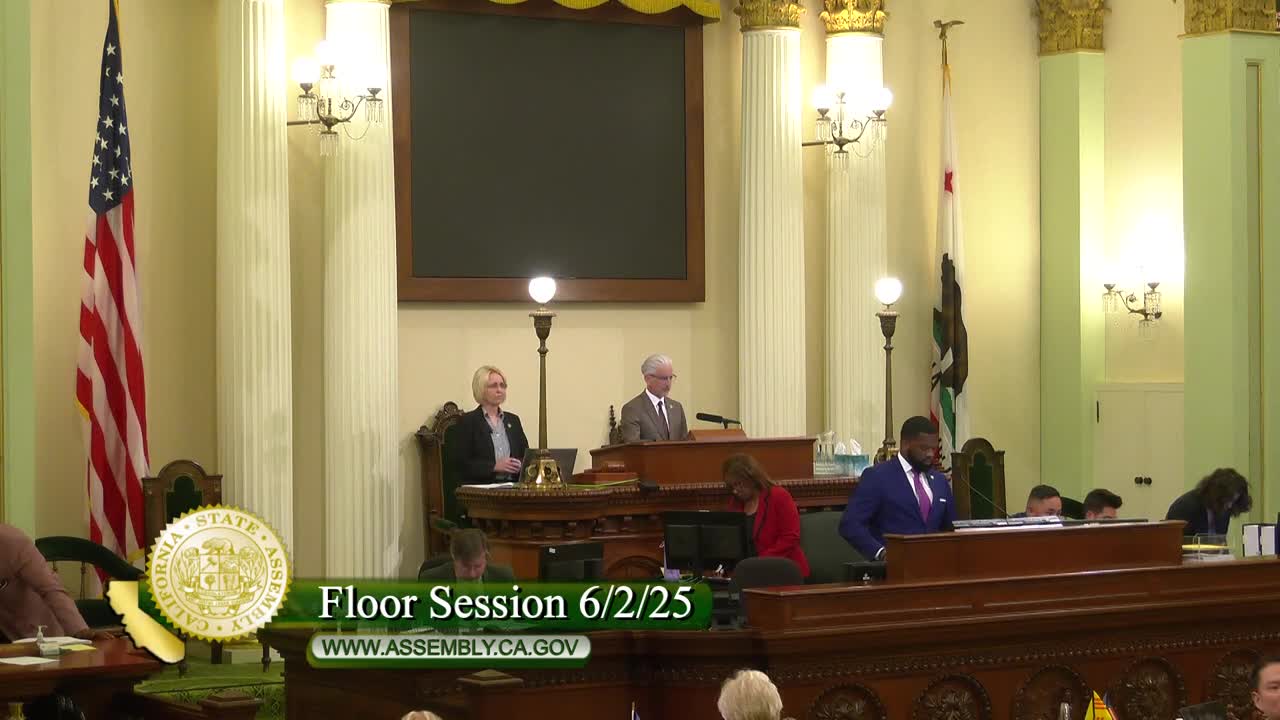 1MIN
Assembly Floor
 6MIN
Assembly Standing Committee on Emergency Management
Bill Author

Bill Co-Author(s):