AB 1285: State Fire Marshal: lithium-ion battery facilities: guidance.
- Session Year: 2025-2026
- House: Assembly
- Latest Version Date: 2025-10-11
Current Status:
Passed
(2025-10-11: Chaptered by Secretary of State - Chapter 637, Statutes of 2025.)
Introduced
In Committee
Awaiting First Chamber Vote
Passed First Chamber
In Committee
Awaiting Second Chamber Vote
Passed Second Chamber
Enacted
Existing law requires the State Fire Marshal to encourage the adoption of fire prevention measures by means of education, engineering, and enforcement and to prepare or cause to be prepared for dissemination information relating to the subject of fire prevention and extinguishment.
This bill would require the State Fire Marshal, in consultation with the Office of Emergency Services, to develop fire prevention, response, and recovery measures for utility grade lithium-ion battery storage facilities, as specified.
The State Fire Marshal, in consultation with the Office of Emergency Services, shall develop fire prevention, response, and recovery measures for utility grade lithium-ion battery storage facilities.
(a)The measures shall include best practices for the health and safety of emergency services personnel.
(b)The measures shall include best practices for owners and operators to share timely and accurate information with local emergency managers and public safety agencies regarding incidents.
CORRECTIONS: HeadingLine 2.|
Date
|
Status
|
|---|---|
| Oct 11, 2025 | Chaptered by Secretary of State - Chapter 637, Statutes of 2025. |
| Oct 11, 2025 | Approved by the Governor. |
| Sep 15, 2025 | Enrolled and presented to the Governor at 4:30 p.m. |
| Sep 4, 2025 | In Assembly. Ordered to Engrossing and Enrolling. |
| Sep 4, 2025 | Read third time. Passed. Ordered to the Assembly. (Ayes 39. Noes 0. Page 2524.). |
| Sep 2, 2025 | Ordered to special consent calendar. |
| Aug 29, 2025 | Read second time. Ordered to third reading. |
| Aug 29, 2025 | From committee: Do pass. (Ayes 7. Noes 0.) (August 29). |
| Aug 18, 2025 | In committee: Referred to suspense file. |
| Jul 8, 2025 | From committee: Do pass and re-refer to Com. on APPR. with recommendation: To Consent Calendar. (Ayes 15. Noes 0.) (July 8). Re-referred to Com. on APPR. |
| Jun 18, 2025 | Referred to Com. on G.O. |
| Jun 5, 2025 | In Senate. Read first time. To Com. on RLS. for assignment. |
| Jun 4, 2025 | Read third time. Passed. Ordered to the Senate. (Ayes 79. Noes 0. Page 2062.) |
| May 27, 2025 | Read second time. Ordered to third reading. |
| May 23, 2025 | From committee: Do pass. (Ayes 14. Noes 0.) (May 23). |
| Apr 30, 2025 | In committee: Set, first hearing. Referred to suspense file. |
| Apr 23, 2025 | In committee: Hearing postponed by committee. |
| Apr 8, 2025 | From committee: Do pass and re-refer to Com. on APPR. (Ayes 7. Noes 0.) (April 7). Re-referred to Com. on APPR. |
| Mar 17, 2025 | Referred to Com. on E.M. |
| Mar 3, 2025 | Introduced measure version corrected. |
| Feb 24, 2025 | Read first time. |
| Feb 22, 2025 | From printer. May be heard in committee March 24. |
| Feb 21, 2025 | Introduced. To print. |
|
Date
|
Description
|
Location
|
Votes
|
|
|---|---|---|---|---|
| Sep 4, 2025 | Special Consent AB1285 E.M. (Ransom) | Senate Floor |
Passed |
|
| Aug 29, 2025 | Do pass | Senate Standing Committee on Appropriations |
Passed |
|
| Aug 18, 2025 | Placed on suspense file | Senate Standing Committee on Appropriations |
Passed |
|
| Jul 8, 2025 | Do pass, but first be re-referred to the Committee on [Appropriations] with the recommendation: To Consent Calendar | Senate Standing Committee on Governmental Organization |
Passed |
|
| Jun 4, 2025 | AB 1285 Emergency Management Assembly Third Reading By RANSOM | Assembly Floor |
Passed |
|
| May 23, 2025 | Do pass. | Assembly Standing Committee on Appropriations |
Passed |
|
| Apr 7, 2025 | Do pass and be re-referred to the Committee on [Appropriations] | Assembly Standing Committee on Emergency Management |
Passed |
This list shows positions taken on this bill by organizations on the date displayed, which is linked to the original source.
Positions by individuals are not included.
|
Organization
|
Position
|
Date
|
|---|---|---|
| California Professional Firefighters | ** Support | |
| California State Association Of Counties | ** Support | |
| California State Association Of Electrical Workers | ** Support | |
| City Of Laguna Nigel | ** Support | |
| City of Thousand Oaks | ** Support | |
| Coalition of California Utility Employees | ** Support | |
| County of Fresno | ** Support | |
| County of Santa Barbara | ** Support | |
| League Of California Cities | ** Support | |
| Rural County Representatives of California | ** Support | |
| Santa Barbara County Board of Supervisors | ** Support |
SENATE RULES COMMITTEE Office of Senate Floor Analyses (916) 651-1520 Fax: (916) 327-4478 | AB 1285 |
THIRD READING
Bill No: AB 1285
Author: Committee on Emergency Management
Introduced: 2/21/25
Vote: 21
SENATE GOVERNMENTAL ORG. COMMITTEE: 15-0, 7/8/25
AYES: Padilla, Valladares, Archuleta, Ashby, Blakespear, Cervantes, Dahle, Hurtado, Jones, Ochoa Bogh, Richardson, Rubio, Smallwood-Cuevas, Wahab, Weber Pierson
SENATE APPROPRIATIONS COMMITTEE: 7-0, 8/29/25
AYES: Caballero, Seyarto, Cabaldon, Dahle, Grayson, Richardson, Wahab
ASSEMBLY FLOOR: 79-0, 6/4/25 - See last page for vote
SUBJECT: State Fire Marshal: lithium-ion battery facilities: guidance
SOURCE: Author
DIGEST:
This bill requires the State Fire Marshal (SFM) to develop fire prevention, response, and recovery measures for utility grade lithium-ion battery storage facilities, as specified.
ANALYSIS:
Existing law:
- Creates the Office of the SFM, within the Department of Forestry and Fire Protection (CAL FIRE), to foster, promote, and develop ways and means of protecting life and property against fire and panic.
- Establishes the Governor’s Office of Emergency Services (OES) pursuant to the Governor’s Reorganization Plan No. 2, operative July 1, 2013, and requires OES to perform a variety of duties with respect to specified emergency preparedness, mitigation, and response activities in the state, as specified.
This bill:
- Requires the SFM, in consultation with OES, to develop fire prevention, response, and recovery measures for utility grade lithium-ion battery storage facilities.
- Requires the measures to include best practices for the health and safety of emergency services personnel.
- Requires the measures to include best practices for owners and operators to share timely and accurate information with local emergency managers and public safety agencies regarding incidents.
Background
Author Statement. According to the author’s office, “AB 1285 is a timely and critical piece of legislation which addresses concerns surrounding California’s the safety of lithium-ion battery storage facilities. The recent Vistra Fire at the Moss Landing Power Plant was the fourth safety incident at the location and a reminder of how quickly lithium-ion battery fires can spread and how dangerous they are for firefighters and nearby residents. This bill enhances firefighter safety, emergency preparedness and will protect first responders and communities that live near lithium-ion battery storage facilities.”
Office of the State Fire Marshal. The SFM supports the mission of CAL FIRE by focusing on fire prevention. The SFM provides support through a wide variety of fire safety responsibilities including: regulating buildings in which people live, congregate, or are confined; by controlling substances and products which may, in and of themselves, or by their misuse, cause injuries, death, and destruction by fire; by providing statewide direction for fire prevention within wildland areas; by regulating hazardous liquid pipelines; by developing and reviewing regulations and building standards; and by providing training and education in fire protection methods and responsibilities. These achievements are accomplished through several major program elements including engineering, education, enforcement, and support from the State Board of Fire Services.
Governor’s Office of Emergency Services. OES serves as the state’s central hub for all-hazards emergency management, overseeing preparedness, response, recovery, and mitigation across California’s diverse regions. As a cabinet-level agency, OES coordinates deployment of state and federal resources, including mutual aid, to support local jurisdictions during crises ranging from wildfires and earthquakes to floods, public health emergencies, and cybersecurity threats. Beyond immediate disaster response, OES leads proactive planning efforts, facilitates training and exercise for first responders, manages emergency communications systems and various wireless alerts, and administers billions of dollars in preparedness and recovery grants. Through its Recovery Division, it also supports long-term community building (including housing, infrastructure, and economic recovery) by helping to secure FEMA resources and guiding local efforts.
Dangers of Firefighting. As noted in the Assembly Emergency Management Committee analysis of this bill, and according the Administrator of the United States Fire Administration, “Fire is a public health and safety problem of great proportions, and firefighting remains one of the Nation’s most hazardous professions. On average, there are more than 1.2 million structure fires, nearly 3,000 deaths, thousands of injuries, and scores of individuals displaced annually from fires. Although disasters such as fires can affect everyone, fires can also exacerbate pre-existing challenges in underserved communities across the country.
These impacts are further compounded by poor implementation and enforcement of national building codes and fire risks associated with technology that make fires more common, more intense, and more destructive. These challenges pose heightened risks to the public and to first responders who safeguard our communities, and the challenge continues to evolve. For example, emerging technologies like Lithium-ion (Li-ion) powered devices and harmful chemicals including polyfluoroalkyl substances (PFAS) introduce new and continued risks to our communities and firefighters.”
Lithium-ion Batteries. Lithium-ion batteries are comprised of an anode, cathode, separator, electrolyte, and two current collectors (positive and negative). The anode and the cathode store the lithium. The electrolyte carries positively charged lithium ions from the anode to the cathode and vice versa through the separator. The movement of the lithium ions creates free electrons in the anode, which creates a charge at the positive current collector. The electrical current then flows from the current collector through a device being powered (cellphone, computer, etc.) to the negative current collector. The separator blocks the flow of electrons inside the battery.
Compared to other high-quality rechargeable battery technologies (nickel-cadmium, nickel-metal-hydride, or lead-acid), lithium batteries have a number of advantages. They have one of the highest energy densities of any commercial battery technology, approaching 300 watt-hours per kilogram (Wh/kg) compared to roughly 75 Wh/kg for alternative technologies. High energy densities and long lifespans have made lithium-ion batteries the market leader in portable electronic devices and electrified transportation, including electric vehicles and jets.
Risk of Thermal Runaway. One of the primary risks related to lithium-ion batteries is thermal runaway. Thermal runaway is a phenomenon in which the lithium-ion cell enters an uncontrollable, self-heating state. Thermal runaway can result in extremely high temperatures, violent cell venting, smoke, and fire. Faults in a lithium-ion cell can result in a thermal runaway, and these faults can be caused by internal failure or external conditions. Lithium-ion battery fires and explosions are triggered by the thermal runaway reactions inside the cell and, when stored near or next to another battery or batteries, can set off a chain reaction, making an already tough fire to fight even worse. When they reach thermal runaway, lithium-ion battery fires can burn for hours or even days, until all the flammable chemicals in the battery have been consumed by the combustion reaction.
One such example occurred in Rancho Cordova in June of 2022, when a Tesla Model S, which had been badly damaged in a collision was sitting in a wrecking yard and suddenly erupted in flames. When firefighters arrived the car was engulfed, according to the Sacramento Metropolitan Fire District, “[e]very time the blaze was momentarily extinguished, the car’s battery compartment reignited.” Eventually, the firefighters used a tractor to create a pit in the dirt, were able to get the car inside, and then filled the hole with water. That allowed the firefighters to suffocate the battery pack and ultimately extinguish the fire, which burned hotter than 3,000 degrees and took more than an hour and 4,500 gallons of water to extinguish.
Fire Prevention, Response, and Recovery Measures. This bill requires the SFM, in consultation with OES, to develop fire prevention, response, and recovery measures for utility grade lithium-ion battery storage facilities. This bill requires the measures to include best practices for the health and safety of emergency services personnel and best practices for owners and operators to share timely and accurate information with local emergency managers and public safety agencies regarding incidents.
Related/Prior Legislation
AB 841 (Patel, 2025) requires the SFM, in consultation with the Division of Occupational Safety and Health, to develop a working group to make recommendations regarding personal protective equipment used in responding to lithium-ion battery fires, as specified. (Pending on the Senate Floor)
AB 696 (Ransom, 2025) requires the Director of the OES to convene the Lithium-Ion Car Battery Advisory Group to review, and advise the Legislature on policies pertaining to the safety and management of lithium-ion vehicle batteries involved in an emergency situation, as specified. (Pending on the Senate Floor)
FISCAL EFFECT: Appropriation: No Fiscal Com.: Yes Local: No
According to the Senate Appropriations Committee, CAL FIRE reports costs of approximately $389,000 in year one, $451,000 in year two, and $430,000 annually ongoing (California Fire and Arson Training Fund). Costs include two additional staff to develop and conduct trainings and to consult with local fire officials, architects, engineers, and contractors on problems of fire and public safety in the design of Battery Energy Storage Systems, construction, and operation of buildings and facilities subject to regulation by the SFM.
OES anticipates costs to consult with the SFM on the development of the measures to be minor and absorbable.
SUPPORT: (Verified 8/29/2025)
California Professional Firefighters
California State Association of Counties
California State Association of Electrical Workers
Coalition of California Utility Employees
City of Laguna Nigel
City of Thousand Oaks
Coalition of California Utility Employees
County of Fresno
County of Santa Barbara
League of California Cities
Rural County Representatives of California
Santa Barbara County Board of Supervisors
OPPOSITION: (Verified 8/29/2025)
None received
ARGUMENTS IN SUPPORT: In support of this bill, the California Professional Firefighters write that, “[t]here has been a recent spate of incidents involving lithium-ion batteries and energy storage systems (ESS). These incidents have been increasing in frequency and severity and have resulted in widespread community impacts, severe toxic exposures, and the injuries of our members as they respond to try and mitigate the damage. It is necessary to take a critical look at the standards surrounding firefighter health and safety issues when responding to these fires.”
Further, the “dangers of lithium-ion battery fires cannot be understated, both to the safety personnel responding to them as well as to the surrounding communities. In 2021, a firefighter sustained irreversible injuries while responding to a fire at a battery storage facility in Orange County. Tragically, they were forced to retire due to the extent of their injuries, underscoring the dangers these fires present to our members. On May 15, 2024, a fire at an ESS facility in Otay Mesa burned for 11 days, releasing lethal levels of hydrogen cyanide and prompting a ‘shelter in place’ order for nearby residents. On January 16, 2025, a fire at one of the world’s largest ESS facilities in Moss Landing triggered evacuations and forced the closure of Highway 1.”
And, while “firefighters stand ready to respond to and attempt to contain fires involving lithium-ion batteries, more can be done to ensure that we are collectively working to mitigate risks to firefighter health and safety. AB 1285 will direct the experts at the Office of the State Fire Marshal to develop fire prevention and response measures for these facilities, and to encourage their adoption across facilities. This measure takes important steps toward protecting the safety of both firefighters and their communities, and for this reason we are pleased to support this important measure.”
ASSEMBLY FLOOR: 79-0, 6/4/25
AYES: Addis, Aguiar-Curry, Ahrens, Alanis, Alvarez, Arambula, Ávila Farías, Bains, Bauer-Kahan, Bennett, Berman, Boerner, Bonta, Bryan, Calderon, Caloza, Carrillo, Castillo, Chen, Connolly, Davies, DeMaio, Dixon, Elhawary, Ellis, Flora, Fong, Gabriel, Gallagher, Garcia, Gipson, Jeff Gonzalez, Mark González, Hadwick, Haney, Harabedian, Hart, Hoover, Irwin, Jackson, Kalra, Krell, Lackey, Lee, Lowenthal, Macedo, McKinnor, Muratsuchi, Nguyen, Ortega, Pacheco, Papan, Patel, Patterson, Pellerin, Petrie-Norris, Quirk-Silva, Ramos, Ransom, Celeste Rodriguez, Michelle Rodriguez, Rogers, Blanca Rubio, Sanchez, Schiavo, Schultz, Sharp-Collins, Solache, Soria, Stefani, Ta, Tangipa, Valencia, Wallis, Ward, Wicks, Wilson, Zbur, Rivas
Prepared by: Brian Duke / G.O. / (916) 651-1530
8/30/25 16:37:58
**** END ****
SENATE COMMITTEE ON
Senator Anna Caballero, Chair
2025 - 2026 Regular Session
AB 1285 (Committee on Emergency Management) - State Fire Marshal: lithium-ion battery facilities: guidance
Version: | Policy Vote: |
Urgency: | Mandate: |
Hearing Date: | Consultant: |
Bill Summary:
AB 1285 requires the State Fire Marshal (SFM) to develop fire prevention, response, and recovery measures for utility grade lithium-ion battery storage facilities that include best practices for the health and safety of emergency services personnel and timely and accurate information sharing with local emergency managers and public safety agencies regarding incidents.
Fiscal Impact:
- The Department of Forestry and Fire Protection (CAL FIRE) reports costs of approximately $389,000 in year one, $451,000 in year two, and $430,000 annually ongoing (California Fire and Arson Training Fund). Costs include two additional staff to develop and conduct trainings and to consult with local fire officials, architects, engineers, and contractors on problems of fire and public safety in the design of Battery Energy Storage Systems, construction, and operation of buildings and facilities subject to regulation by the SFM.
- The Office of Emergency Services (OES) anticipates costs to consult with the SFM on the development of the measures to be minor and absorbable.
Background:
One of the primary risks related to lithium-ion batteries is thermal runaway. Thermal runaway is a phenomenon in which the lithium-ion cell enters an uncontrollable, self-heating state. Thermal runaway can result in extremely high temperatures, violent cell venting, smoke, and fire. Faults in a lithium-ion cell can result in a thermal runaway, and these faults can be caused by internal failure or external conditions. Lithium-ion battery fires and explosions are triggered by the thermal runaway reactions inside the cell and, when stored near or next to another battery or batteries, can set off a chain reaction, making an already tough fire to fight even worse. When they reach thermal runaway, lithium-ion battery fires can burn for hours or even days, until all the flammable chemicals in the battery have been consumed by the combustion reaction.
Proposed Law:
- Requires the SFM, in consultation with OES, to develop fire prevention, response, and recovery measures for utility grade lithium-ion battery storage facilities. Requires the measures to include:
- Best practices for the health and safety of emergency services personnel.
- Best practices for owners and operators to share timely and accurate information with local emergency managers and public safety agencies regarding incidents.
Related Legislation:
AB 841 (Patel, 2025) requires the SFM, in consultation with the Division of Occupational Safety and Health, to develop a working group to make recommendations regarding personal protective equipment used in responding to lithium-ion battery fires, as specified. AB 841 is pending in this committee.
-- END --
ASSEMBLY THIRD READING
ATR Bill Id:AB 1285
Author:(Committee on Emergency Management)
As Introduced Ver:February 21, 2025
Majority vote
SUMMARY
Requires the State Fire Marshal, in consultation with the Office of Emergency Services, to develop fire prevention, response, and recovery measures for utility grade lithium-ion battery storage facilities, as specified.
Major Provisions
- Requires the State Fire Marshal (OSFM), in consultation with the Office of Emergency Services (Cal OES), to develop fire prevention, response, and recovery measures for utility grade lithium-ion battery storage facilities.
2) Requires the measures to include best practices for the health and safety of emergency services personnel.
3) Requires the measures to include best practices for owners and operators to share timely and accurate information with local emergency managers and public safety agencies regarding incidents.
COMMENTS
Firefighting remains one of the Nation's most hazardous professions: According the Administrator of the United States Fire Administration, 'Fire is a public health and safety problem of great proportions, and firefighting remains one of the Nation's most hazardous professions. On average there are more than 1.2 million structure fires, nearly 3,000 deaths, thousands of injuries, and scores of individuals displaced annually from fires. Although disasters such as fires can affect everyone, fires can also exacerbate pre-existing challenges in underserved communities across the country. These impacts are further compounded by poor implementation and enforcement of national building codes and fire risks associated with technology that make fires more common, more intense, and more destructive. These challenges pose heightened risks to the public and to first responders who safeguard our communities, and the challenge continues to evolve. For example, emerging technologies like Lithium-ion (Li-ion) powered devices and harmful chemicals including polyfluoroalkyl substances (PFAS) introduce new and continued risks to our communities and firefighters."
Lithium-ion Batteries: Lithium-ion batteries are comprised of an anode, cathode, separator, electrolyte, and two current collectors (positive and negative). The anode and the cathode store the lithium. The electrolyte carries positively charged lithium ions from the anode to the cathode and vice versa through the separator. The movement of the lithium ions creates free electrons in the anode, which creates a charge at the positive current collector. The electrical current then flows from the current collector through a device being powered (cellphone, computer, etc.) to the negative current collector. The separator blocks the flow of electrons inside the battery.
Compared to other high-quality rechargeable battery technologies (nickel-cadmium, nickel-metal-hydride, or lead-acid), lithium batteries have a number of advantages. They have one of the highest energy densities of any commercial battery technology, approaching 300 watt-hours per kilogram (Wh/kg) compared to roughly 75 Wh/kg for alternative technologies. High energy densities and long lifespans have made lithium-ion batteries the market leader in portable electronic devices and electrified transportation, including electric vehicles and jets.
Risk of Thermal Runaway: One of the primary risks related to lithium-ion batteries is thermal runaway. Thermal runaway is a phenomenon in which the lithium-ion cell enters an uncontrollable, self-heating state. Thermal runaway can result in extremely high temperatures, violent cell venting, smoke, and fire. Faults in a lithium-ion cell can result in a thermal runaway, and these faults can be caused by internal failure or external conditions. Lithium-ion battery fires and explosions are triggered by the thermal runaway reactions inside the cell and, when stored near or next to another battery or batteries, can set off a chain reaction, making an already tough fire to fight even worse. When they reach thermal runaway, lithium-ion battery fires can burn for hours or even days, until all the flammable chemicals in the battery have been consumed by the combustion reaction.
One such example occurred in Rancho Cordova in June of 2022, when a Tesla Model S, which had been badly damaged in a collision was sitting in a wrecking yard and suddenly erupted in flames. When firefighters arrived the car was engulfed, according to the Sacramento Metropolitan Fire District, "[e]very time the blaze was momentarily extinguished, the car's battery compartment reignited." Eventually, the firefighters used a tractor to create a pit in the dirt, were able to get the car inside, and then filled the hole with water. That allowed the firefighters to suffocate the battery pack and ultimately extinguish the fire, which burned hotter than 3,000 degrees and took more than an hour and 4,500 gallons of water to extinguish.
Lithium-ion batteries and PFAS: Lithium-ion batteries are used globally as a key component of clean and sustainable energy infrastructure, and emerging Lithoum-ion battery technologies have incorporated a class of per- and polyfluoroalkyl substances (PFAS) known as bis-perfluoroalkyl sulfonimides (bis-FASIs). PFAS are recognized internationally as recalcitrant contaminants, a subset of which are known to be mobile and toxic, but little is known about environmental impacts of bis-FASIs released during Lithium-ion battery manufacture, use, and disposal.
Protecting Firefighters from Adverse Substances Act (PFAS Act): The PFAS Act directs the United States Fire Administrator to develop guidance for firefighters and other emergency response personnel on best practices to protect them from exposure to PFAS and to limit and prevent the release of PFAS into the environment. The PFAS Act also requires the Department of Homeland Security, in consultation with the U.S. Environmental Protection Agency, the Centers for Disease Control and Prevention/National Institute for Occupational Safety & Health (NIOSH), and the heads of other relevant agencies, to:
- Develop and publish guidance for firefighters on training, education programs and best practices;
- Make available a curriculum designed to reduce and eliminate exposure, prevent the release of PFAS into the environment, and educate firefighters and emergency response personnel on PFAS alternatives; and
- Create a public repository on tools and best practices to reduce, limit, and prevent the release of and exposure to PFAS.
Growth of Battery Storage in California and Projected Need: Over the past several years, the deployment of battery storage systems has grown significantly in California, growing from 500 megawatts (MW) in 2019 to over 13,300 MW statewide in 2024. According to the CPUC, "Battery storage systems are one of the key technologies California relies on to enhance reliability and reduce dependency on polluting fossil fuel plants. Battery storage systems soak up clean energy in the daytime when the sun is shining, store that electricity, and then export it to the grid in the evening hours when the sun is down. In 2024, California made historic progress in clean energy deployment. The state brought more than 7,000 MW online—the largest amount in a single year in California's history. This includes over 4,000 MW of new battery storage. California's current installed battery storage capacity is over 20 percent of California's peak demand. The state's projected need for battery storage capacity is estimated at 52,000 MW by 2045."
The Vistra Fire Incident at Moss Landing Power Plant: On January 16, 2025, a fire started at the Vistra Battery Energy Storage Facility and soon engulfed the Phase 1 battery energy storage building on the grounds of the Moss Landing Power Plant. The massive fire and thermal runaway event burned for days, destroyed tens of thousands of lithium-ion batteries, and resulted in shelter-in place and evacuation orders. Prior to the Vistra Fire, there had been three other safety incidents at separately owned battery energy storage facilities located at the Moss Landing Power Plant, which occupies one of the largest battery energy storage systems.
According to the Author
"AB 1285 is a timely and critical piece of legislation which addresses concerns surrounding California's the safety of lithium-ion battery storage facilities. The recent Vistra Fire at the Moss Landing Power Plant was the fourth safety incident at the location and a reminder of how quickly lithium-ion battery fires can spread and how dangerous they are for firefighters and nearby residents. This bill enhances firefighter safety, emergency preparedness and will protect first responders and communities that live near lithium-ion battery storage facilities."
Arguments in Support
The California Professional Firefighters write, "There has been a recent spate of incidents involving lithium-ion batteries and energy storage systems (ESS). These incidents have been increasing in frequency and severity and have resulted in widespread community impacts, severe toxic exposures, and the injuries of our members as they respond to try and mitigate the damage. It is necessary to take a critical look at the standards surrounding firefighter health and safety issues when responding to these fires. The dangers of lithium-ion battery fires cannot be understated, both to the safety personnel responding to them as well as to the surrounding communities."
The Rural County Representatives of California write, "Local governments appreciate the need to increase the pace and scale of battery energy storage system (BESS) deployment to increase grid resilience and reliability. Many of those BESS systems use different types of lithium chemistries. As the state rapidly increases the pace and scale of renewable energy development, it is imperative that the state pair those generation resources with BESS or other storage technologies to enable the state to use electricity when it is most needed, rather than only when it is generated."
The League of California Cities add, "BESS present a complicated permitting issue, as they are newer technologies that are less familiar to permitting agencies. Additionally, the protocols for responding to system failures and thermal runaways are very different than traditional firefighting and emergency response. These issues, combined with the fact that several systems have experienced high-visibility failures in the last few years have made local governments more cautious in siting and permitting projects to appropriately safeguard nearby residents and property owners. As these are newer systems with unique safety risks and response protocols, few local jurisdictions have developed permitting processes. Even the California Fire Code is silent on design standards."
Arguments in Opposition
None on file.
FISCAL COMMENTS
According to the Assembly Committee on Appropriations, "1) Costs of approximately $411,000 in the first year and $341,000 ongoing thereafter to OES for an additional assistant chief position to consult with the SFM on lithium-ion fire measures and help meet the challenges resulting from the proliferation of lithium-ion power and related fire events (General Fund). 2) Costs to the SFM of an unknown amount, but likely similar to the amount of costs ascribed to OES, to develop the specified measures (General Fund)."
VOTES
ASM EMERGENCY MANAGEMENT: 7-0-0
YES: Ransom, Hadwick, Arambula, Bains, Bennett, Calderon, DeMaio
ASM APPROPRIATIONS: 14-0-1
YES: Wicks, Arambula, Calderon, Caloza, Dixon, Elhawary, Fong, Mark González, Hart, Pacheco, Pellerin, Solache, Ta, Tangipa
ABS, ABST OR NV: Sanchez
UPDATED
VERSION: February 21, 2025
CONSULTANT: Mike Dayton / E.M. / (916) 319-3802 FN: 0000629
Date of Hearing: April 30, 2025
ASSEMBLY COMMITTEE ON APPROPRIATIONS
Buffy Wicks, Chair
ABPCA Bill Id:AB 1285
Author:(Committee on Emergency Management) – As Introduced Ver:February 21, 2025
Policy Committee: | Emergency Management | Vote: | 7 - 0 |
|
| ||
|
|
Urgency: No State Mandated Local Program: No Reimbursable: No
SUMMARY:
This bill requires the State Fire Marshal (SFM) to consult with the Office of Emergency Services (OES) to develop fire prevention, response, and recovery measures for utility-grade lithium-ion battery storage facilities.
This bill requires the measures to include best practices for the health and safety of emergency services personnel and for facility owners and operators to share timely and accurate incident information with local emergency managers and public safety agencies.
FISCAL EFFECT:
- Costs of approximately $411,000 in the first year and $341,000 ongoing thereafter to OES for an additional assistant chief position to consult with the SFM on lithium-ion fire measures and help meet the challenges resulting from the proliferation of lithium-ion power and related fire events (General Fund).
- Costs to the SFM of an unknown amount, but likely similar to the amount of costs ascribed to OES, to develop the specified measures (General Fund).
COMMENTS:
- Purpose. According to the author:
The recent Vistra Fire at the Moss Landing Power Plant was the fourth safety incident at the location and a reminder of how quickly lithium-ion battery fires can spread and how dangerous they are for firefighters and nearby residents. This bill enhances firefighter safety, emergency preparedness and will protect first responders and communities that live near lithium-ion battery storage facilities.
This bill is supported by local government associations and groups representing firefighters and utility employees.
- Background.
Lithium-ion Battery Fires. One of the primary risks related to lithium-ion batteries, which are increasingly common in portable electronic devices and electrified transportation, is thermal runaway. Thermal runaway is a phenomenon where the lithium-ion cell enters an uncontrollable, self-heating state, which can result in extremely high temperatures, violent cell venting, smoke, and fire. A lithium-ion battery fire can burn for hours, or even days, until all the flammable chemicals in the batter are consumed by the combustion reaction.
Battery Storage Facilities. Over the past several years, the deployment of battery storage systems has grown significantly in California, from 500 megawatts (MW) in 2019 to over 13,300 MW in 2024. SB 1383 (Hueso), Chapter 725, Statutes of 2022, expanded the California Public Utilities Commission’s (CPUC’s) electric generation facility standards to include oversight of energy storage facilities. SB 38 (Laird), Chapter 377, Statutes of 2023, required each battery energy storage facility subject to CPUC regulation to have an emergency response and action plan covering the facility’s premises. The CPUC and California Energy Commission (CEC) are currently updating the inventory of battery storage facilities and determining how to identify facilities that do not meet current safety standards.
On January 16, 2025, a fire started at the Vistra Battery Energy Storage Facility and engulfed the battery energy storage building at the Moss Landing Power Plant. The thermal runaway event and fire burned for days, destroying tens of thousands of lithium-ion batteries and resulting in shelter-in-place and evacuation orders for the neighboring community. This bill requires the SFM and OES to develop fire prevention, response, and recovery measures for utility-grade lithium-ion battery storage facilities, including best practices to protect and share incident information with emergency services personnel.
- Related Legislation. AB 588 (Patel) requires the SFM to convene a lithium battery working group to identify safety issues associated with lithium batteries and related charging infrastructure. AB 588 is pending hearing by this committee.
AB 841 (Patel) requires the SFM to consult with the Division of Occupational Safety and Health to develop a working group to make recommendations regarding personal protective equipment used when responding to lithium-ion battery fires. AB 841 is pending hearing by this committee.
Analysis Prepared by: Irene Ho / APPR. / (916) 319-2081
Date of Hearing: April 7, 2025
ASSEMBLY COMMITTEE ON EMERGENCY MANAGEMENT
Rhodesia Ransom, Chair
ABPCA Bill Id:AB 1285 (
Author:Committee on Emergency Management) – As Introduced Ver:February 21, 2025
SUBJECT: State Fire Marshal: lithium-ion battery facilities: guidance
SUMMARY: Requires the State Fire Marshal, in consultation with the Office of Emergency Services, to develop fire prevention, response, and recovery measures for utility grade lithium-ion battery storage facilities, as specified. Specifically, this bill:
- Requires the State Fire Marshal (OSFM), in consultation with the Office of Emergency Services (Cal OES), to develop fire prevention, response, and recovery measures for utility grade lithium-ion battery storage facilities.
- Requires the measures to include best practices for the health and safety of emergency services personnel.
- Requires the measures to include best practices for owners and operators to share timely and accurate information with local emergency managers and public safety agencies regarding incidents.
EXISTING LAW:
- Establishes the State Fire Marshal (SFM), within the Department of Forestry and Fire Protection (Cal FIRE), to foster, promote and develop ways and means of protecting life and property against fire and panic. (Health and Safety Code Sections 13100-13100.1)
- Grants the CPUC with regulatory authority over public utilities, including electrical corporations. (Public Utilities Code Section 701)
- Authorizes the CPUC, after a hearing, to require every public utility to construct, maintain, and operate its line, plant, system, equipment, apparatus, tracks, and premises in a manner so as to promote and safeguard the health and safety of its employees, passengers, customers, and the public. (Public Utilities Code Section 768)
- Requires the CPUC, as part of the Public Utilities Act, to implement and enforce standards for the maintenance and operation of facilities for the generation and storage of electricity owned by an electrical corporation or located in the state to ensure their reliable operation. (Public Utilities Code Section 761.3)
- Requires an application to the California Energy Commission for the operation of an energy facility to include, amongst other things, safety & reliability information about the facility for emergency operations. (Public Resources Code 25520)
- Under the Protecting Firefighters from Adverse Substances Act (PFAS Act), directs the United States Fire Administrator, to develop guidance for firefighters and other emergency response personnel on best practices to protect them from exposure to PFAS (Public Law 117-248)
FISCAL EFFECT: Unknown. This bill has not been analyzed by a fiscal committee.
COMMENTS:
Purpose of the bill: According to the author, “AB 1285 is a timely and critical piece of legislation which addresses concerns surrounding California’s the safety of lithium-ion battery storage facilities. The recent Vistra Fire at the Moss Landing Power Plant was the fourth safety incident at the location and a reminder of how quickly lithium-ion battery fires can spread and how dangerous they are for firefighters and nearby residents. This bill enhances firefighter safety, emergency preparedness and will protect first responders and communities that live near lithium-ion battery storage facilities.”
Equity impact: According to the author’s staff, “disasters have a disproportionate impact on vulnerable communities. This bill seeks to ensure residents near lithium-ion battery storage facilities are better prepared and more quickly alerted to potentially hazardous incidents.”
Firefighting remains one of the Nation’s most hazardous professions: According the Administrator of the United States Fire Administration, ‘Fire is a public health and safety problem of great proportions, and firefighting remains one of the Nation’s most hazardous professions. On average there are more than 1.2 million structure fires, nearly 3,000 deaths, thousands of injuries, and scores of individuals displaced annually from fires. Although disasters such as fires can affect everyone, fires can also exacerbate pre-existing challenges in underserved communities across the country. These impacts are further compounded by poor implementation and enforcement of national building codes and fire risks associated with technology that make fires more common, more intense, and more destructive. These challenges pose heightened risks to the public and to first responders who safeguard our communities, and the challenge continues to evolve. For example, emerging technologies like Lithium-ion (Li-ion) powered devices and harmful chemicals including polyfluoroalkyl substances (PFAS) introduce new and continued risks to our communities and firefighters.”
Lithium-ion Batteries: Lithium-ion batteries are comprised of an anode, cathode, separator, electrolyte, and two current collectors (positive and negative). The anode and the cathode store the lithium. The electrolyte carries positively charged lithium ions from the anode to the cathode and vice versa through the separator. The movement of the lithium ions creates free electrons in the anode, which creates a charge at the positive current collector. The electrical current then flows from the current collector through a device being powered (cellphone, computer, etc.) to the negative current collector. The separator blocks the flow of electrons inside the battery.
Compared to other high-quality rechargeable battery technologies (nickel-cadmium, nickel-metal-hydride, or lead-acid), lithium batteries have a number of advantages. They have one of the highest energy densities of any commercial battery technology, approaching 300 watt-hours per kilogram (Wh/kg) compared to roughly 75 Wh/kg for alternative technologies. High energy densities and long lifespans have made lithium-ion batteries the market leader in portable electronic devices and electrified transportation, including electric vehicles and jets.
Risk of Thermal Runaway: One of the primary risks related to lithium-ion batteries is thermal runaway. Thermal runaway is a phenomenon in which the lithium-ion cell enters an uncontrollable, self-heating state. Thermal runaway can result in extremely high temperatures, violent cell venting, smoke, and fire. Faults in a lithium-ion cell can result in a thermal runaway, and these faults can be caused by internal failure or external conditions. Lithium-ion battery fires and explosions are triggered by the thermal runaway reactions inside the cell and, when stored near or next to another battery or batteries, can set off a chain reaction, making an already tough fire to fight even worse. When they reach thermal runaway, lithium-ion battery fires can burn for hours or even days, until all the flammable chemicals in the battery have been consumed by the combustion reaction.
One such example occurred in Rancho Cordova in June of 2022, when a Tesla Model S, which had been badly damaged in a collision was sitting in a wrecking yard and suddenly erupted in flames. When firefighters arrived the car was engulfed, according to the Sacramento Metropolitan Fire District, “[e]very time the blaze was momentarily extinguished, the car’s battery compartment reignited.” Eventually, the firefighters used a tractor to create a pit in the dirt, were able to get the car inside, and then filled the hole with water. That allowed the firefighters to suffocate the battery pack and ultimately extinguish the fire, which burned hotter than 3,000 degrees and took more than an hour and 4,500 gallons of water to extinguish.
Lithium-ion batteries and PFAS: Lithium-ion batteries are used globally as a key component of clean and sustainable energy infrastructure, and emerging Lithoum-ion battery technologies have incorporated a class of per- and polyfluoroalkyl substances (PFAS) known as bis-perfluoroalkyl sulfonimides (bis-FASIs). PFAS are recognized internationally as recalcitrant contaminants, a subset of which are known to be mobile and toxic, but little is known about environmental impacts of bis-FASIs released during Lithium-ion battery manufacture, use, and disposal.
Protecting Firefighters from Adverse Substances Act (PFAS Act): The PFAS Act directs the United States Fire Administrator to develop guidance for firefighters and other emergency response personnel on best practices to protect them from exposure to PFAS and to limit and prevent the release of PFAS into the environment. The PFAS Act also requires the Department of Homeland Security, in consultation with the U.S. Environmental Protection Agency, the Centers for Disease Control and Prevention/National Institute for Occupational Safety & Health (NIOSH), and the heads of other relevant agencies, to:
- Develop and publish guidance for firefighters on training, education programs and best practices;
- Make available a curriculum designed to reduce and eliminate exposure, prevent the release of PFAS into the environment, and educate firefighters and emergency response personnel on PFAS alternatives; and
- Create a public repository on tools and best practices to reduce, limit, and prevent the release of and exposure to PFAS.
Growth of Battery Storage in California and Projected Need: Over the past several years, the deployment of battery storage systems has grown significantly in California, growing from 500 megawatts (MW) in 2019 to over 13,300 MW statewide in 2024. According to the CPUC, “Battery storage systems are one of the key technologies California relies on to enhance reliability and reduce dependency on polluting fossil fuel plants. Battery storage systems soak up clean energy in the daytime when the sun is shining, store that electricity, and then export it to the grid in the evening hours when the sun is down. In 2024, California made historic progress in clean energy deployment. The state brought more than 7,000 MW online—the largest amount in a single year in California’s history. This includes over 4,000 MW of new battery storage. California’s current installed battery storage capacity is over 20 percent of California’s peak demand. The state’s projected need for battery storage capacity is estimated at 52,000 MW by 2045.”
The Vistra Fire Incident at Moss Landing Power Plant: On January 16, 2025, a fire started at the Vistra Battery Energy Storage Facility and soon engulfed the Phase 1 battery energy storage building on the grounds of the Moss Landing Power Plant. The massive fire and thermal runaway event burned for days, destroyed tens of thousands of lithium-ion batteries, and resulted in shelter-in place and evacuation orders. Prior to the Vistra Fire, there had been three other safety incidents at separately owned battery energy storage facilities located at the Moss Landing Power Plant, which occupies one of the largest battery energy storage systems.
SB 1383 (Huseo) and CPUC’s General Order 167: Given California’s growing reliance on lithium-ion battery storage systems and recent safety issues at one of the state’s largest lithium-ion battery storage facilities, SB 1383 (Hueso, Chapter 725, Statutes of 2022) expanded the CPUC Generating Asset Owner (GAO) operation and maintenance standards, contained in General Order (GO) 167-B to oversight of energy storage systems, not just electric generation facilities, including systems owned by third-parties.
On March 15, 2025, the California Public Utilities Commission modified General Order 167, which provides a method to implement and enforce maintenance and operation standards for electric generating facilities, in order to add new safety standards for the maintenance and operation of battery energy storage systems, as required by SB 1383. The CPUC also made explicit that battery storage facility owners must develop emergency response and emergency action plans, as required by SB 38. In addition, the CPUC made other technical updates to the standards to improve safety, reliability, and effectiveness of operation and maintenance activities, such as establishing technical logbook standards for battery storage systems, and expanding requirements for emergency plans that relate to all electric generating facilities.
Utility grade lithium-ion battery storage facilities: It is the Committee staff’s understanding that the California Energy Commission (CEC) and the California Public Utility Commission (CPUC) are in the process of updating their statewide inventory battery storage facilities and determining how best to differentiate between state of the art facilities and those that may not meet current safety standards based on the age of the facility, orientation of the batteries being stored, and whether or not the batteries are housed in an indoor or outdoor facility.
Arguments in support: The California Professional Firefighters write, “There has been a recent spate of incidents involving lithium-ion batteries and energy storage systems (ESS). These incidents have been increasing in frequency and severity and have resulted in widespread community impacts, severe toxic exposures, and the injuries of our members as they respond to try and mitigate the damage. It is necessary to take a critical look at the standards surrounding firefighter health and safety issues when responding to these fires. The dangers of lithium-ion battery fires cannot be understated, both to the safety personnel responding to them as well as to the surrounding communities.”
The Rural County Representatives of California write, “Local governments appreciate the need to increase the pace and scale of battery energy storage system (BESS) deployment to increase grid resilience and reliability. Many of those BESS systems use different types of lithium chemistries. As the state rapidly increases the pace and scale of renewable energy development, it is imperative that the state pair those generation resources with BESS or other storage technologies to enable the state to use electricity when it is most needed, rather than only when it is generated.”
The League of California Cities add, “BESS present a complicated permitting issue, as they are newer technologies that are less familiar to permitting agencies. Additionally, the protocols for responding to system failures and thermal runaways are very different than traditional firefighting and emergency response. These issues, combined with the fact that several systems have experienced high-visibility failures in the last few years have made local governments more cautious in siting and permitting projects to appropriately safeguard nearby residents and property owners. As these are newer systems with unique safety risks and response protocols, few local jurisdictions have developed permitting processes. Even the California Fire Code is silent on design standards.”
The California State Association of Counties conclude, “To improve local permitting, our organizations have partnered together to hold online workshops and webinars with local governments, developers, and state agencies to share best practices for permitting and risk mitigation; however, additional formal guidance from the State Fire Marshal would be extremely helpful for local governments charged with permitting BESS. AB 1285 appropriately charges the State Fire Marshal with developing fire prevention, response, and recovery measures for lithium-ion BESS. We hope these recommendations will be integrated into an updated California Fire Code, which will serve as a foundational planning tool that local governments can rely upon and build upon to ensure that BESS facility risks on neighboring communities and properties will be mitigated. We hope that this will also provide greater guidance to local first responders on how to respond in the event of a system failure.”
Related legislation: AB 303 (Addis) Prohibit the authorization of a development project that includes a battery energy storage system capable of storing 200 megawatthours or more of energy if the development project is located within 3,200 feet of a sensitive receptor or is located on an environmentally sensitive site, as specified. (Pending in the Assembly Committee on Utilities and Energy)
AB 434 (DeMaio) Prohibits, until January 1, 2028, a public agency from authorizing the construction of a battery energy storage facility, as defined and requires the State Fire Marshal to adopt guidelines and minimum standards for the construction of a battery energy storage facility to prevent fires and protect nearby communities from any fire hazard posed by the facility, as specified. (Pending in the Assembly Committee on Utilities and Energy)
AB 588 (Patel) Requires the State Fire Marshal to convene a lithium battery working group to identify those safety issues associated with lithium batteries and associated charging infrastructure, as specified. (Pending in the Assembly Committee on Emergency Management)
AB 615 (Davies) Requires applications filed with the State Energy Resources Conservation and Development Commission for certification of a site and related facility which includes an electric transmission line or thermal power plant, or both, to contain an emergency response and action plan that incorporates impacts to the surrounding areas, as specified. (Set to be heard in the Assembly Committee on Emergency Management on April 7, 2025)
AB 696 (Ransom) Requires the California Environmental Protection Agency to convene a Lithium-Ion Car battery Advisory Group to review and advice the Legislature on policies on handling and disposing of lithium-ion vehicle batteries. (Pending in the Assembly Committee on Appropriations)
AB 841 (Patel) Requires the State Fire Marshal to develop, in consultation with the Division of Occupational Safety and Health, a working group to make recommendations regarding personal protective equipment used in responding to lithium-ion battery fires, as specified. (Set to be heard by the Assembly Committee on Emergency Management)
SB 283 (Laird) Require the CPUC and the Office of the State Fire Marshal to review and consider the most recently published edition of the National Fire Protection Association (NFPA) 855, Standard for the Installation of Stationary Energy Storage Systems, for incorporation into the next update of the California Building Standards Code adopted after July 1, 2026. (Pending in Senate Energy, Utilities and Communications Committee)
Prior legislation: SB 38 (Laird, Chapter 377, Statutes of 2023) required each battery energy storage facility in the state and subject to regulation by the California Public Utilities Commission to have an emergency response and emergency action plan that covers the premise of the battery energy storage facility.
SB 1383 (Hueso, Chapter 725, Statutes of 2022) expanded the CPUC’s safety oversight of electric generating facilities to encompass energy storage facilities.
AB 2514 (Skinner, Chapter 469, Statutes of 2010) required the CPUC to determine appropriate targets for load serving entities to procure energy storage systems.
REGISTERED SUPPORT / OPPOSITION:
Support
California Professional Firefighters
California State Association of Counties (CSAC)
California State Association of Electrical Workers
Coalition of California Utility Employees
League of California Cities
Rural County Representatives of California (RCRC)
Opposition
None on file.
Analysis Prepared by: Mike Dayton / E.M. / (916) 319-3802
Date of Hearing: April 7, 2025
ASSEMBLY COMMITTEE ON EMERGENCY MANAGEMENT
Rhodesia Ransom, Chair
ABPCA Bill Id:AB 1285 (
Author:Committee on Emergency Management) – As Introduced Ver:February 21, 2025
SUBJECT: State Fire Marshal: lithium-ion battery facilities: guidance
SUMMARY: Requires the State Fire Marshal, in consultation with the Office of Emergency Services, to develop fire prevention, response, and recovery measures for utility grade lithium-ion battery storage facilities, as specified. Specifically, this bill:
- Requires the State Fire Marshal (OSFM), in consultation with the Office of Emergency Services (Cal OES), to develop fire prevention, response, and recovery measures for utility grade lithium-ion battery storage facilities.
- Requires the measures to include best practices for the health and safety of emergency services personnel.
- Requires the measures to include best practices for owners and operators to share timely and accurate information with local emergency managers and public safety agencies regarding incidents.
EXISTING LAW:
- Establishes the State Fire Marshal (SFM), within the Department of Forestry and Fire Protection (Cal FIRE), to foster, promote and develop ways and means of protecting life and property against fire and panic. (Health and Safety Code Sections 13100-13100.1)
- Grants the CPUC with regulatory authority over public utilities, including electrical corporations. (Public Utilities Code Section 701)
- Authorizes the CPUC, after a hearing, to require every public utility to construct, maintain, and operate its line, plant, system, equipment, apparatus, tracks, and premises in a manner so as to promote and safeguard the health and safety of its employees, passengers, customers, and the public. (Public Utilities Code Section 768)
- Requires the CPUC, as part of the Public Utilities Act, to implement and enforce standards for the maintenance and operation of facilities for the generation and storage of electricity owned by an electrical corporation or located in the state to ensure their reliable operation. (Public Utilities Code Section 761.3)
- Requires an application to the California Energy Commission for the operation of an energy facility to include, amongst other things, safety & reliability information about the facility for emergency operations. (Public Resources Code 25520)
- Under the Protecting Firefighters from Adverse Substances Act (PFAS Act), directs the United States Fire Administrator, to develop guidance for firefighters and other emergency response personnel on best practices to protect them from exposure to PFAS (Public Law 117-248)
FISCAL EFFECT: Unknown. This bill has not been analyzed by a fiscal committee.
COMMENTS:
Purpose of the bill: According to the author, “AB 1285 is a timely and critical piece of legislation which addresses concerns surrounding California’s the safety of lithium-ion battery storage facilities. The recent Vistra Fire at the Moss Landing Power Plant was the fourth safety incident at the location and a reminder of how quickly lithium-ion battery fires can spread and how dangerous they are for firefighters and nearby residents. This bill enhances firefighter safety, emergency preparedness and will protect first responders and communities that live near lithium-ion battery storage facilities.”
Equity impact: According to the author’s staff, “disasters have a disproportionate impact on vulnerable communities. This bill seeks to ensure residents near lithium-ion battery storage facilities are better prepared and more quickly alerted to potentially hazardous incidents.”
Firefighting remains one of the Nation’s most hazardous professions: According the Administrator of the United States Fire Administration, ‘Fire is a public health and safety problem of great proportions, and firefighting remains one of the Nation’s most hazardous professions. On average there are more than 1.2 million structure fires, nearly 3,000 deaths, thousands of injuries, and scores of individuals displaced annually from fires. Although disasters such as fires can affect everyone, fires can also exacerbate pre-existing challenges in underserved communities across the country. These impacts are further compounded by poor implementation and enforcement of national building codes and fire risks associated with technology that make fires more common, more intense, and more destructive. These challenges pose heightened risks to the public and to first responders who safeguard our communities, and the challenge continues to evolve. For example, emerging technologies like Lithium-ion (Li-ion) powered devices and harmful chemicals including polyfluoroalkyl substances (PFAS) introduce new and continued risks to our communities and firefighters.”
Lithium-ion Batteries: Lithium-ion batteries are comprised of an anode, cathode, separator, electrolyte, and two current collectors (positive and negative). The anode and the cathode store the lithium. The electrolyte carries positively charged lithium ions from the anode to the cathode and vice versa through the separator. The movement of the lithium ions creates free electrons in the anode, which creates a charge at the positive current collector. The electrical current then flows from the current collector through a device being powered (cellphone, computer, etc.) to the negative current collector. The separator blocks the flow of electrons inside the battery.
Compared to other high-quality rechargeable battery technologies (nickel-cadmium, nickel-metal-hydride, or lead-acid), lithium batteries have a number of advantages. They have one of the highest energy densities of any commercial battery technology, approaching 300 watt-hours per kilogram (Wh/kg) compared to roughly 75 Wh/kg for alternative technologies. High energy densities and long lifespans have made lithium-ion batteries the market leader in portable electronic devices and electrified transportation, including electric vehicles and jets.
Risk of Thermal Runaway: One of the primary risks related to lithium-ion batteries is thermal runaway. Thermal runaway is a phenomenon in which the lithium-ion cell enters an uncontrollable, self-heating state. Thermal runaway can result in extremely high temperatures, violent cell venting, smoke, and fire. Faults in a lithium-ion cell can result in a thermal runaway, and these faults can be caused by internal failure or external conditions. Lithium-ion battery fires and explosions are triggered by the thermal runaway reactions inside the cell and, when stored near or next to another battery or batteries, can set off a chain reaction, making an already tough fire to fight even worse. When they reach thermal runaway, lithium-ion battery fires can burn for hours or even days, until all the flammable chemicals in the battery have been consumed by the combustion reaction.
One such example occurred in Rancho Cordova in June of 2022, when a Tesla Model S, which had been badly damaged in a collision was sitting in a wrecking yard and suddenly erupted in flames. When firefighters arrived the car was engulfed, according to the Sacramento Metropolitan Fire District, “[e]very time the blaze was momentarily extinguished, the car’s battery compartment reignited.” Eventually, the firefighters used a tractor to create a pit in the dirt, were able to get the car inside, and then filled the hole with water. That allowed the firefighters to suffocate the battery pack and ultimately extinguish the fire, which burned hotter than 3,000 degrees and took more than an hour and 4,500 gallons of water to extinguish.
Lithium-ion batteries and PFAS: Lithium-ion batteries are used globally as a key component of clean and sustainable energy infrastructure, and emerging Lithoum-ion battery technologies have incorporated a class of per- and polyfluoroalkyl substances (PFAS) known as bis-perfluoroalkyl sulfonimides (bis-FASIs). PFAS are recognized internationally as recalcitrant contaminants, a subset of which are known to be mobile and toxic, but little is known about environmental impacts of bis-FASIs released during Lithium-ion battery manufacture, use, and disposal.
Protecting Firefighters from Adverse Substances Act (PFAS Act): The PFAS Act directs the United States Fire Administrator to develop guidance for firefighters and other emergency response personnel on best practices to protect them from exposure to PFAS and to limit and prevent the release of PFAS into the environment. The PFAS Act also requires the Department of Homeland Security, in consultation with the U.S. Environmental Protection Agency, the Centers for Disease Control and Prevention/National Institute for Occupational Safety & Health (NIOSH), and the heads of other relevant agencies, to:
- Develop and publish guidance for firefighters on training, education programs and best practices;
- Make available a curriculum designed to reduce and eliminate exposure, prevent the release of PFAS into the environment, and educate firefighters and emergency response personnel on PFAS alternatives; and
- Create a public repository on tools and best practices to reduce, limit, and prevent the release of and exposure to PFAS.
Growth of Battery Storage in California and Projected Need: Over the past several years, the deployment of battery storage systems has grown significantly in California, growing from 500 megawatts (MW) in 2019 to over 13,300 MW statewide in 2024. According to the CPUC, “Battery storage systems are one of the key technologies California relies on to enhance reliability and reduce dependency on polluting fossil fuel plants. Battery storage systems soak up clean energy in the daytime when the sun is shining, store that electricity, and then export it to the grid in the evening hours when the sun is down. In 2024, California made historic progress in clean energy deployment. The state brought more than 7,000 MW online—the largest amount in a single year in California’s history. This includes over 4,000 MW of new battery storage. California’s current installed battery storage capacity is over 20 percent of California’s peak demand. The state’s projected need for battery storage capacity is estimated at 52,000 MW by 2045.”
The Vistra Fire Incident at Moss Landing Power Plant: On January 16, 2025, a fire started at the Vistra Battery Energy Storage Facility and soon engulfed the Phase 1 battery energy storage building on the grounds of the Moss Landing Power Plant. The massive fire and thermal runaway event burned for days, destroyed tens of thousands of lithium-ion batteries, and resulted in shelter-in place and evacuation orders. Prior to the Vistra Fire, there had been three other safety incidents at separately owned battery energy storage facilities located at the Moss Landing Power Plant, which occupies one of the largest battery energy storage systems.
SB 1383 (Huseo) and CPUC’s General Order 167: Given California’s growing reliance on lithium-ion battery storage systems and recent safety issues at one of the state’s largest lithium-ion battery storage facilities, SB 1383 (Hueso, Chapter 725, Statutes of 2022) expanded the CPUC Generating Asset Owner (GAO) operation and maintenance standards, contained in General Order (GO) 167-B to oversight of energy storage systems, not just electric generation facilities, including systems owned by third-parties.
On March 15, 2025, the California Public Utilities Commission modified General Order 167, which provides a method to implement and enforce maintenance and operation standards for electric generating facilities, in order to add new safety standards for the maintenance and operation of battery energy storage systems, as required by SB 1383. The CPUC also made explicit that battery storage facility owners must develop emergency response and emergency action plans, as required by SB 38. In addition, the CPUC made other technical updates to the standards to improve safety, reliability, and effectiveness of operation and maintenance activities, such as establishing technical logbook standards for battery storage systems, and expanding requirements for emergency plans that relate to all electric generating facilities.
Utility grade lithium-ion battery storage facilities: It is the Committee staff’s understanding that the California Energy Commission (CEC) and the California Public Utility Commission (CPUC) are in the process of updating their statewide inventory battery storage facilities and determining how best to differentiate between state of the art facilities and those that may not meet current safety standards based on the age of the facility, orientation of the batteries being stored, and whether or not the batteries are housed in an indoor or outdoor facility.
Arguments in support: The California Professional Firefighters write, “There has been a recent spate of incidents involving lithium-ion batteries and energy storage systems (ESS). These incidents have been increasing in frequency and severity and have resulted in widespread community impacts, severe toxic exposures, and the injuries of our members as they respond to try and mitigate the damage. It is necessary to take a critical look at the standards surrounding firefighter health and safety issues when responding to these fires. The dangers of lithium-ion battery fires cannot be understated, both to the safety personnel responding to them as well as to the surrounding communities.”
The Rural County Representatives of California write, “Local governments appreciate the need to increase the pace and scale of battery energy storage system (BESS) deployment to increase grid resilience and reliability. Many of those BESS systems use different types of lithium chemistries. As the state rapidly increases the pace and scale of renewable energy development, it is imperative that the state pair those generation resources with BESS or other storage technologies to enable the state to use electricity when it is most needed, rather than only when it is generated.”
The League of California Cities add, “BESS present a complicated permitting issue, as they are newer technologies that are less familiar to permitting agencies. Additionally, the protocols for responding to system failures and thermal runaways are very different than traditional firefighting and emergency response. These issues, combined with the fact that several systems have experienced high-visibility failures in the last few years have made local governments more cautious in siting and permitting projects to appropriately safeguard nearby residents and property owners. As these are newer systems with unique safety risks and response protocols, few local jurisdictions have developed permitting processes. Even the California Fire Code is silent on design standards.”
The California State Association of Counties conclude, “To improve local permitting, our organizations have partnered together to hold online workshops and webinars with local governments, developers, and state agencies to share best practices for permitting and risk mitigation; however, additional formal guidance from the State Fire Marshal would be extremely helpful for local governments charged with permitting BESS. AB 1285 appropriately charges the State Fire Marshal with developing fire prevention, response, and recovery measures for lithium-ion BESS. We hope these recommendations will be integrated into an updated California Fire Code, which will serve as a foundational planning tool that local governments can rely upon and build upon to ensure that BESS facility risks on neighboring communities and properties will be mitigated. We hope that this will also provide greater guidance to local first responders on how to respond in the event of a system failure.”
Related legislation: AB 303 (Addis) Prohibit the authorization of a development project that includes a battery energy storage system capable of storing 200 megawatthours or more of energy if the development project is located within 3,200 feet of a sensitive receptor or is located on an environmentally sensitive site, as specified. (Pending in the Assembly Committee on Utilities and Energy)
AB 434 (DeMaio) Prohibits, until January 1, 2028, a public agency from authorizing the construction of a battery energy storage facility, as defined and requires the State Fire Marshal to adopt guidelines and minimum standards for the construction of a battery energy storage facility to prevent fires and protect nearby communities from any fire hazard posed by the facility, as specified. (Pending in the Assembly Committee on Utilities and Energy)
AB 588 (Patel) Requires the State Fire Marshal to convene a lithium battery working group to identify those safety issues associated with lithium batteries and associated charging infrastructure, as specified. (Pending in the Assembly Committee on Emergency Management)
AB 615 (Davies) Requires applications filed with the State Energy Resources Conservation and Development Commission for certification of a site and related facility which includes an electric transmission line or thermal power plant, or both, to contain an emergency response and action plan that incorporates impacts to the surrounding areas, as specified. (Set to be heard in the Assembly Committee on Emergency Management on April 7, 2025)
AB 696 (Ransom) Requires the California Environmental Protection Agency to convene a Lithium-Ion Car battery Advisory Group to review and advice the Legislature on policies on handling and disposing of lithium-ion vehicle batteries. (Pending in the Assembly Committee on Appropriations)
AB 841 (Patel) Requires the State Fire Marshal to develop, in consultation with the Division of Occupational Safety and Health, a working group to make recommendations regarding personal protective equipment used in responding to lithium-ion battery fires, as specified. (Set to be heard by the Assembly Committee on Emergency Management)
SB 283 (Laird) Require the CPUC and the Office of the State Fire Marshal to review and consider the most recently published edition of the National Fire Protection Association (NFPA) 855, Standard for the Installation of Stationary Energy Storage Systems, for incorporation into the next update of the California Building Standards Code adopted after July 1, 2026. (Pending in Senate Energy, Utilities and Communications Committee)
Prior legislation: SB 38 (Laird, Chapter 377, Statutes of 2023) required each battery energy storage facility in the state and subject to regulation by the California Public Utilities Commission to have an emergency response and emergency action plan that covers the premise of the battery energy storage facility.
SB 1383 (Hueso, Chapter 725, Statutes of 2022) expanded the CPUC’s safety oversight of electric generating facilities to encompass energy storage facilities.
AB 2514 (Skinner, Chapter 469, Statutes of 2010) required the CPUC to determine appropriate targets for load serving entities to procure energy storage systems.
REGISTERED SUPPORT / OPPOSITION:
Support
California State Association of Counties (CSAC)
California State Association of Electrical Workers
Coalition of California Utility Employees
League of California Cities
Rural County Representatives of California (RCRC)
Opposition
None on file.
Analysis Prepared by: Mike Dayton / E.M. / (916) 319-3802
Discussed in Hearing
View Older Hearings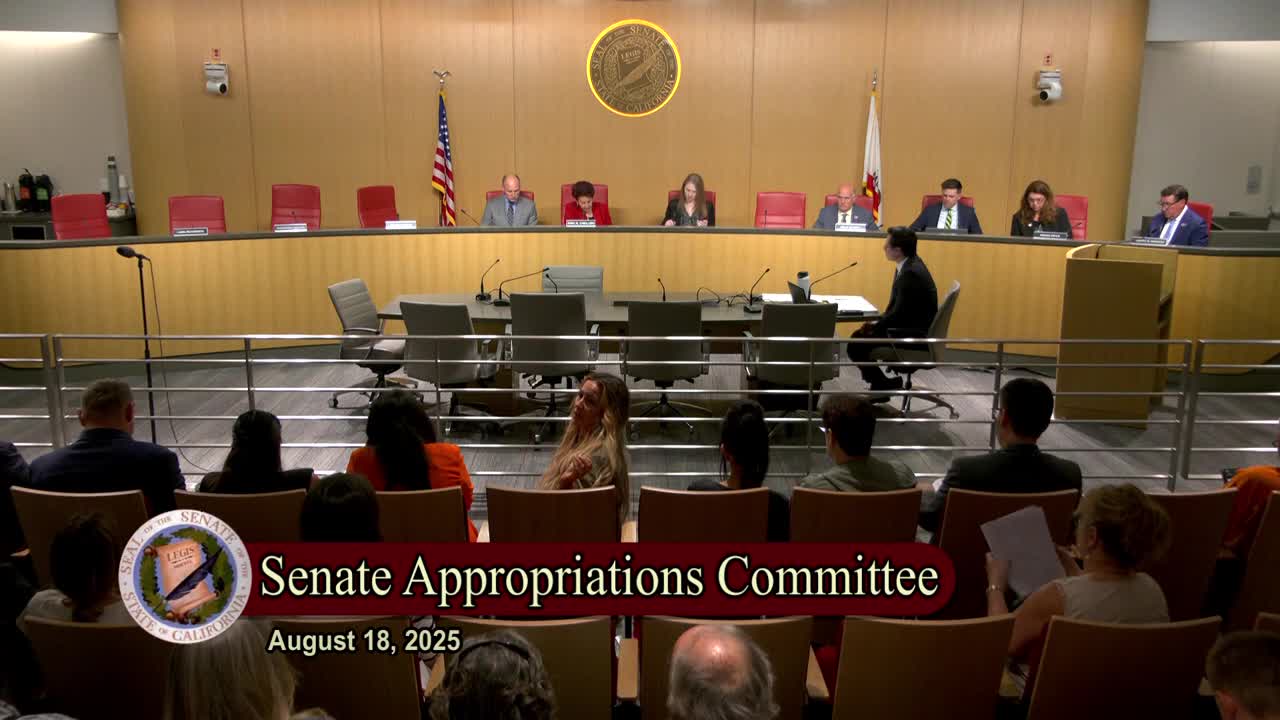
Bill Author
Bill Co-Author(s):