AB 1314: Transitional housing placement providers.
- Session Year: 2025-2026
- House: Assembly
- Latest Version Date: 2025-10-01
Current Status:
Passed
(2025-10-01: Chaptered by Secretary of State - Chapter 187, Statutes of 2025.)
Introduced
In Committee
Awaiting First Chamber Vote
Passed First Chamber
In Committee
Awaiting Second Chamber Vote
Passed Second Chamber
Enacted
Existing law, the California Community Care Facilities Act, requires the State Department of Social Services to license and regulate transitional housing placement providers, which is defined as organizations licensed by the department to provide transitional housing to foster children at least 16 years of age and not more than 18 years of age and to nonminor dependents to promote their transition to adulthood. Existing law requires the department to adopt regulations governing transitional housing placement living arrangement requirements for minors and nonminor dependents, including allowing a participant to share a bedroom or unit with certain other individuals and requiring all counties and program contracts to allow participants and those certain other individuals to share bedrooms, bathrooms, and units together, regardless of gender identity. Under existing law, a violation of the act is a misdemeanor.
This bill would require all counties and program contracts to also ensure that decisions about sharing bedrooms, bathrooms, and units together are led by the program participant and agreed upon in collaboration with the provider. By increasing county duties, this bill would impose a state-mandated local program.
Existing law requires an applicant to obtain certification from a county specifying the population that will be served by the facility in order to be licensed as a transitional housing placement provider. Existing law requires the certification to confirm that the program includes specified components, depending on the population served.
This bill would specify contract requirements if a county contracts with a transitional housing placement provider, including prohibiting the contract from containing terms that create unreasonable barriers for a qualified foster youths admission into or participation in the program.
The California Constitution requires the state to reimburse local agencies and school districts for certain costs mandated by the state. Statutory provisions establish procedures for making that reimbursement.
This bill would provide that no reimbursement is required by this act for a specified reason.
Existing law, the California Community Care Facilities Act, requires the State Department of Social Services to license and regulate transitional housing placement providers, which is defined as organizations licensed by the department to provide transitional housing to foster children at least 16 years of age and not more than 18 years of age and to nonminor dependents to promote their transition to adulthood. Existing law requires the department to adopt regulations governing transitional housing placement living arrangement requirements for minors and nonminor dependents, including allowing a participant to share a bedroom or unit with certain other individuals and requiring all counties and program contracts to allow participants and those certain other individuals to share bedrooms, bathrooms, and units together, regardless of gender identity. Under existing law, a violation of the act is a misdemeanor.
This bill would require all counties and program contracts to also ensure that decisions about sharing bedrooms, bathrooms, and units together are led by the program participant and agreed upon in collaboration with the provider and county partners. The bill would require them to follow, and not have requirements that are more stringent than, the requirements adopted pursuant to the above-described provisions, as specified. provider. By increasing county duties, this bill would impose a state-mandated local program.
Existing law requires an applicant to obtain certification from a county specifying the population that will be served by the facility in order to be licensed as a transitional housing placement provider. Existing law requires the certification to confirm that the program includes specified components, depending on the population served.
This bill would specify contract requirements if a county contracts with a transitional housing placement provider, including prohibiting the contract from containing terms that create unreasonable barriers for a qualified foster youths admission into or participation in the program.
The California Constitution requires the state to reimburse local agencies and school districts for certain costs mandated by the state. Statutory provisions establish procedures for making that reimbursement.
This bill would provide that no reimbursement is required by this act for a specified reason.
Existing law, the California Community Care Facilities Act, requires the State Department of Social Services to license and regulate transitional housing placement providers, which is defined as organizations licensed by the department to provide transitional housing to foster children at least 16 years of age and not more than 18 years of age and to nonminor dependents to promote their transition to adulthood. Existing law requires the department to adopt regulations governing transitional housing placement living arrangement requirements for minors and nonminor dependents, including allowing a participant to share a bedroom or unit with certain other individuals and requiring all counties and program contracts to allow participants and those certain other individuals to share bedrooms, bathrooms, and units together, regardless of gender identity. Under existing law, a violation of the act is a misdemeanor.
This bill would require all counties and program contracts to also ensure that decisions about sharing bedrooms, bathrooms, and units together are led by the program participant and agreed upon in collaboration with the provider and county partners. The bill would require them to follow, and not have requirements that are more stringent than, the requirements adopted pursuant to the above-described provisions, as specified. By increasing county duties, this bill would impose a state-mandated local program.
The California Constitution requires the state to reimburse local agencies and school districts for certain costs mandated by the state. Statutory provisions establish procedures for making that reimbursement.
This bill would provide that no reimbursement is required by this act for a specified reason.
Existing law, the California Community Care Facilities Act, requires the State Department of Social Services to license and regulate transitional housing placement providers, which is defined as organizations licensed by the department to provide transitional housing to foster children at least 16 years of age and not more than 18 years of age and to nonminor dependents to promote their transition to adulthood. Existing law requires the department to adopt regulations governing transitional housing placement living arrangement requirements for minors and nonminor dependents, including allowing a participant to share a bedroom or unit with certain other individuals and requiring all counties and program contracts to allow participants and those certain other individuals to share bedrooms, bathrooms, and units together, regardless of gender identity. Under existing law, a violation of the act is a misdemeanor.
This bill would require all counties and program contracts to follow, and not have requirements that are more stringent than, the requirements adopted pursuant to the above-described provisions, as specified. By increasing county duties, this bill would impose a state-mandated local program.
The California Constitution requires the state to reimburse local agencies and school districts for certain costs mandated by the state. Statutory provisions establish procedures for making that reimbursement.
This bill would provide that no reimbursement is required by this act for a specified reason.
Existing law requires the State Department of Public Health to maintain a dental program, as specified, and requires the department to appoint a dentist licensed in California to administer the program.This bill would make a technical, nonsubstantive change to that provision.Existing law requires the State Department of Public Health to maintain a dental program, as specified, and requires the department to appoint a dentist licensed in California to administer the program.
This bill would make a technical, nonsubstantive change to that provision.
(a)(1)The State Department of Social Services shall license transitional housing placement providers pursuant to this chapter.
(2)A transitional housing placement provider may operate either of the following programs, as described in Section 16522.1 of the Welfare and Institutions Code:
(A)A Transitional Housing Placement program for participants who are minor foster children.
(B)A Transitional Housing Placement program for participants who are nonminor dependents.
(3)Before licensure, a transitional housing placement provider shall obtain program certification from the applicable county, in accordance with Section 16522.1 of the Welfare and Institutions Code. For purposes of this paragraph, applicable county means the county in which the administrative office or subadministrative office of a transitional housing placement provider is located, or a primary placing county.
(b)Transitional housing placement providers shall provide supervised transitional housing services to foster children who are at least 16 years of age.
(c)Transitional housing placement providers shall certify that housing units are adequate, safe, and sanitary.
(d)Transitional housing units shall include any of the following:
(1)A host family with whom a participant lives in an apartment, single-family dwelling, or condominium owned, rented, or leased by the host family, with supervised transitional housing services provided by the licensed transitional housing placement provider.
(A)For a transitional housing placement program serving minor foster children, the host family shall be certified by a transitional housing placement provider.
(B)(i)For a transitional housing placement program serving nonminor dependents, the host family may be a certified family home approved by a foster family agency and concurrently certified pursuant to subparagraph (A) of paragraph (4) of subdivision (a) of Section 1506, a resource family approved by a foster family agency pursuant to Section 16519.5 of the Welfare and Institutions Code and concurrently certified pursuant to subparagraph (A) of paragraph (4) of subdivision (a) of Section 1506, a resource family approved by a county pursuant to Section 16519.5 of the Welfare and Institutions Code, a licensed foster family home, an approved relative caregiver, or a nonrelative extended family member of a participant.
(ii)A resource family, licensed foster family home, certified foster home, approved relative caregiver, or nonrelative extended family member operating as a host family pursuant to clause (i) does not require additional certification by the transitional housing placement provider pursuant to subdivision (c).
(2)A staffed site in which a participant lives in an apartment, single-family dwelling, or condominium owned, rented, or leased by a transitional housing placement provider either with an adult employee of the provider who provides supervision or in a building in which one or more adult employees of the provider reside and provide supervision.
(3)A remote site in which a participant lives independently in an apartment, single-family dwelling, or condominium owned, rented, or leased by a transitional housing placement provider under the supervision of the provider if the department provides approval. The remote site shall only be available to nonminor dependents.
(e)(1)A transitional housing placement provider may cosign a lease with a nonminor dependent as specified by the department.
(2)A participant shall not be permitted to solely sign a rental or lease agreement.
(f)A transitional housing placement providers plan of operation shall include a program statement. The program statement shall contain a description of the core services and supports, as set forth in paragraph (5) of subdivision (b) of Section 11463 of the Welfare and Institutions Code, and as prescribed by the department, to be offered to participants, as appropriate or as necessary.
(g)(1)The department shall adopt regulations to govern transitional housing placement providers licensed pursuant to this section.
(2)The regulations shall be age appropriate and recognize that nonminor dependents who are about to exit from the foster care system should be subject to fewer restrictions than those who are foster children. At a minimum, the regulations shall provide for all of the following:
(A)Require programs that serve both minor foster children and nonminor dependents to have separate rules and program design, as appropriate, for these two groups of youth.
(B)Allow nonminor dependents to have the greatest amount of freedom possible in order to prepare them for their transition to adulthood, in accordance with paragraph (1) of subdivision (b) of Section 1502.7.
(C)Maintain a program staffing ratio for minor foster children of case manager to participant not to exceed 1 to 12, inclusive.
(D)Maintain a program staffing ratio for nonminor dependents of case manager to participant not to exceed a shared average caseload of 1 to 12, inclusive, with a designated lead case manager assigned to each youth.
(E)Allow a nonminor dependent participant to share a bedroom or unit in a transitional housing program with any of the following persons:
(i)Another participant, including a participant sibling or coparent, as approved by the provider.
(ii)A participant in Transitional Housing Program-Plus, as defined in subdivision (s) of Section 11400 of the Welfare and Institutions Code, as approved by the provider.
(iii)A nonparticipant roommate, sibling, or coparent, as approved by the provider on a case-by-case basis, as specified by the department.
(I)A provider shall give priority to program participants.
(II)A provider shall allow a current program participant residing within a unit to reject inclusion of a nonparticipant into their existing unit.
(iv)The participants children.
(v)Any other person as specified by the department.
(F)Allow a minor participant to share a bedroom or unit in a transitional housing placement with any of the following persons:
(i)Another participant, including a participant sibling or coparent, as approved by the provider.
(ii)A participant in Transitional Housing Program-Plus, as defined in subdivision (s) of Section 11400 of the Welfare and Institutions Code, as approved by the provider.
(iii)The participants children.
(iv)A nonparticipant roommate, sibling, or coparent, as approved by the provider on a case-by-case basis, as specified by the department.
(I)A provider shall give priority to program participants.
(II)A provider shall allow a current program participant residing within a unit to reject inclusion of a nonparticipant into their existing unit.
(v)Any other person as specified by the department.
(G)Any adult who is not a participant, including participants in Transitional Housing Program-Plus, as defined in subdivision (s) of Section 11400 of the Welfare and Institutions Code, and who resides with a participant shall obtain a criminal record clearance or exemption in accordance with Section 1522.
(H)All counties and program contracts shall allow individual program participants and individuals described in subparagraphs (E) and (F) to share bedrooms, bathrooms, and units together, regardless of gender identity. Counties and program contracts shall allow providers and participants to make best matches to allow for gender flexibility, and shall ensure that decisions about sharing pursuant to this subparagraph are led by the program participant and agreed upon in collaboration with the provider.
(h)(1)A program manager for a Transitional Housing Placement program for nonminor dependents shall have a masters degree or higher from an accredited or state-approved graduate school, or equivalent education and experience, as determined by the department.
(2)A person who possesses a masters degree or higher from an accredited or state-approved graduate school in any of the following areas, or equivalent education and experience, as determined by the department, shall be considered to be qualified to perform program manager activities in a Transitional Housing Placement program for nonminor dependents:
(A)Marriage, family, and child counseling.
(B)Child psychology.
(C)Child development.
(D)Counseling psychology.
(E)Social psychology.
(F)Clinical psychology.
(G)Educational psychology.
(H)Education, with emphasis on counseling.
(I)Social work or social welfare.
(J)An area that includes the counseling or psychotherapy content required for licensure as a Licensed Professional Clinical Counselor, as specified in Sections 4999.32 and 4999.33 of the Business and Professions Code.
(K)A subject area that is functionally equivalent to those listed in subparagraphs (A) to (J), inclusive, as set forth by the department.
(i)(1)In addition to the degree specifications in subdivision (h), a program manager for a Transitional Housing Placement program for nonminor dependents shall have a minimum of two years experience in a public or private child welfare social services setting or specific experience working with transition age youth who are 16 to 24 years of age, inclusive.
(2)Documentation of the completed education and experience requirements shall be maintained in the personnel file.
(3)A transitional housing placement provider may request an exception, as specified in subdivision (j), for a person who does not meet the requirements specified in this subdivision or subdivision (h).
(4)Persons who were hired as program managers before January 1, 2018, are not required to meet the requirements of this subdivision in order to remain employed as program managers.
(j)(1)A transitional housing placement provider shall apply to the department, using the process established by the department, to request an exception to the requirements of subdivision (h) or (i) based on completion of equivalent education and experience.
(2)The department may grant exceptions to the requirements described in subdivisions (h) and (i) if the person to whom the exception would apply has a baccalaureate degree from an accredited or state-approved college or university.
(3)The department shall approve or deny exceptions to the requirements described in subdivisions (h) and (i) within 30 days of receiving the exception request from the provider.
(k)(1)A case manager for a Transitional Housing Placement program for nonminor dependents shall meet either of the following requirements:
(A)A minimum of a baccalaureate degree in any of the areas specified in paragraph (2) of subdivision (h).
(B)A minimum of a baccalaureate degree in an area not specified in paragraph (2) of subdivision (h) and a minimum of two years experience in a public or private child welfare social services setting, or specific experience working with transition age youth who are 16 to 24 years of age, inclusive.
(2)Documentation of the completed education and experience requirements shall be maintained in the personnel file.
(3)Persons who were hired as case managers before January 1, 2018, are not required to meet the requirements of this subdivision in order to remain employed as a case manager.
(4)A transitional housing placement provider shall apply to the department, using the process established by the department, to request an exception to the requirements of subparagraph (A) or (B) of paragraph (1) based on completion of equivalent education and experience shall apply to the department using the process established by the department.
(l)Notwithstanding the rulemaking provisions of the Administrative Procedure Act (Chapter 3.5 (commencing with Section 11340) of Part 1 of Division 3 of Title 2 of the Government Code), the department may implement, interpret, or make specific the changes made by the act that added this subdivision by means of all-county letters or similar instructions from the department until regulations are adopted. These all-county letters or similar written instructions shall have the same force and effect as regulations until the adoption of regulations.
SEC. 2.Section 16522.1 of the Welfare and Institutions Code is amended to read:16522.1.(a)In order to be licensed as a transitional housing placement provider pursuant to Section 1559.110 of the Health and Safety Code and be eligible for payment of AFDC-FC benefits pursuant to Sections 11403.2 and 11403.3, an applicant shall obtain certification from the applicable county specifying whether the facility will serve foster youth at least 16 years of age and not more than 18 years of age, nonminor dependents, as defined in subdivision (v) of Section 11400, or both, as follows:
(1)A program serving foster children at least 16 years of age and not more than 18 years of age shall obtain a certification entitled Transitional Housing Placement program for minor foster children.
(2)A program serving nonminor dependents at least 18 years of age and not more than 21 years of age shall obtain a certification entitled a Transitional Housing Placement program for nonminor dependents.
(b)The certification for the Transitional Housing Placement program for minor foster children shall confirm that the program provides for all of the following:
(1)Admission criteria for participants in the program, including, but not limited to, consideration of the participants age, previous placement history, delinquency history, history of drug or alcohol abuse, current strengths, level of education, mental health history, medical history, prospects for successful participation in the program, and work experience. Youth who are wards of the court described in Section 602 and youth receiving psychotropic medications shall be eligible for consideration to participate in the program, and shall not be automatically excluded due to these factors.
(2)The department shall review the admission criteria to ensure that the criteria are sufficient to protect participants and that they do not discriminate on the basis of any characteristic listed or defined in Section 11135 of the Government Code.
(3)Strict employment criteria that include a consideration of the employees age, drug or alcohol history, and experience in working with persons in this age group.
(4)A training program designed to educate employees who work directly with participants about the characteristics of persons in this age group placed in long-term care settings, and designed to ensure that these employees are able to adequately supervise and counsel participants and to provide them with training in independent living skills.
(5)A detailed plan for monitoring the placement of persons under the licensees care.
(6)A contract between the participant and the licensee that specifically sets out the requirements for each party, and in which the licensee and the participant agree to the requirements of this article.
(7)An allowance to be provided to each participant in the program. In the case of a participant living independently, this allowance shall be sufficient for the participant to purchase food and other necessities.
(8)A system for payment for utilities, telephone, and rent.
(9)Policies regarding all of the following:
(A)Education requirements.
(B)Work expectations.
(C)Savings requirements.
(D)Personal safety.
(E)Visitors, including, but not limited to, visitation by the placement auditor pursuant to paragraph (5).
(F)Emergencies.
(G)Medical problems.
(H)Disciplinary measures.
(I)Childcare.
(J)Pregnancy.
(K)Curfew.
(L)Housing unit cleanliness.
(M)Use of utilities and telephone.
(N)Budgeting.
(O)Care of furnishings.
(P)Decorating of housing units.
(Q)Cars.
(R)Lending or borrowing money.
(S)Unauthorized purchases.
(T)Dating.
(U)Grounds for termination that may include, but shall not be limited to, illegal activities or harboring runaways.
(V)The approval of any nonparticipant roommates.
(10)Housing unit furnishings, and a policy on disposition of the furnishings when the participant completes the program.
(11)Evaluation of the participants progress in the program and reporting to the independent living program and to the department regarding that progress.
(12)A linkage to the federal Workforce Investment Act of 1998 (29 U.S.C. Sec. 2801 et seq.) program administered in the local area to provide employment training to eligible participants.
(13)Effective January 1, 2013, a program staffing ratio of case manager to participant not to exceed 1 to 12.
(c)The certification for the Transitional Housing Placement program for nonminor dependents shall confirm that the program provides for all of the following:
(1)That the program is needed by the county.
(2)That the transitional housing placement provider is capable of effectively and efficiently operating the program.
(3)That the transitional housing placement provider is willing and able to accept the AFDC-FC-eligible nonminor dependents for placement by the placing agency who need the level of care and services that will be provided by the program.
(4)That the plan of operation is suitable to meet the needs of the identified population.
(5)Maintain a program staffing ratio for nonminor dependents of case manager to participant not to exceed a shared average caseload of 1 to 12, inclusive, with a designated lead case manager assigned to each youth.
(6)That the provider has established a process, which includes the county if the county chooses to participate, to evaluate whether a participant may be placed with a nonparticipant.
(d)(1)A county may continue to approve payment to a transitional housing placement provider for a period of up to 14 days in a calendar month in which the nonminor dependent is absent from the placement if the nonminor dependent provides notice to the transitional housing placement provider that they intend to return to that placement within 14 days or the transitional housing placement provider has reason to believe the nonminor dependent will be returning within 14 days.
(2)If the county continues to pay the board and care costs for up to 14 days during the nonminor dependents absence, the transitional housing placement provider shall not provide a removal notice or fill a nonminor dependents place in the program.
(3)The State Department of Social Services shall issue guidance encouraging counties to continue to approve payment during temporary absences from the program as a best practice, consistent with federal law, to prevent nonminor dependent housing instability.
(e)For purposes of this section, applicable county means the county where the administrative office or subadministrative office of a transitional housing placement provider is located or a primary placing county.
(f)(1)If a county contracts with a transitional housing placement provider, the contract shall not contain terms that create unreasonable barriers for a qualified foster youths admission into or participation in the program. The contract shall be developed to provide maximum flexibility to meet the needs of the minor dependents and nonminor dependents served by the programs in the specific county contracting with the provider. The contract shall be developed with the understanding that, unless modified by a court order, a nonminor dependent has the same legal decisionmaking authority as an adult.
(2)The department is not required to review the contract described in paragraph (1). This subdivision does not require a county to enter into a contract with a transitional housing placement provider.
SEC. 3.To the extent that this act has an overall effect of increasing the costs already borne by a local agency for programs or levels of service mandated by the 2011 Realignment Legislation within the meaning of Section 36 of Article XIII of the California Constitution, it shall apply to local agencies only to the extent that the state provides annual funding for the cost increase. Any new program or higher level of service provided by a local agency pursuant to this act above the level for which funding has been provided shall not require a subvention of funds by the state or otherwise be subject to Section 6 of Article XIIIB of the California Constitution.
(a)(1)The State Department of Social Services shall license transitional housing placement providers pursuant to this chapter.
(2)A transitional housing placement provider may operate either of the following programs, as described in Section 16522.1 of the Welfare and Institutions Code:
(A)A Transitional Housing Placement program for participants who are minor foster children.
(B)A Transitional Housing Placement program for participants who are nonminor dependents.
(3)Before licensure, a transitional housing placement provider shall obtain program certification from the applicable county, in accordance with Section 16522.1 of the Welfare and Institutions Code. For purposes of this paragraph, applicable county means the county in which the administrative office or subadministrative office of a transitional housing placement provider is located, or a primary placing county.
(b)Transitional housing placement providers shall provide supervised transitional housing services to foster children who are at least 16 years of age.
(c)Transitional housing placement providers shall certify that housing units are adequate, safe, and sanitary.
(d)Transitional housing units shall include any of the following:
(1)A host family with whom a participant lives in an apartment, single-family dwelling, or condominium owned, rented, or leased by the host family, with supervised transitional housing services provided by the licensed transitional housing placement provider.
(A)For a transitional housing placement program serving minor foster children, the host family shall be certified by a transitional housing placement provider.
(B)(i)For a transitional housing placement program serving nonminor dependents, the host family may be a certified family home approved by a foster family agency and concurrently certified pursuant to subparagraph (A) of paragraph (4) of subdivision (a) of Section 1506, a resource family approved by a foster family agency pursuant to Section 16519.5 of the Welfare and Institutions Code and concurrently certified pursuant to subparagraph (A) of paragraph (4) of subdivision (a) of Section 1506, a resource family approved by a county pursuant to Section 16519.5 of the Welfare and Institutions Code, a licensed foster family home, an approved relative caregiver, or a nonrelative extended family member of a participant.
(ii)A resource family, licensed foster family home, certified foster home, approved relative caregiver, or nonrelative extended family member operating as a host family pursuant to clause (i) does not require additional certification by the transitional housing placement provider pursuant to subdivision (c).
(2)A staffed site in which a participant lives in an apartment, single-family dwelling, or condominium owned, rented, or leased by a transitional housing placement provider either with an adult employee of the provider who provides supervision or in a building in which one or more adult employees of the provider reside and provide supervision.
(3)A remote site in which a participant lives independently in an apartment, single-family dwelling, or condominium owned, rented, or leased by a transitional housing placement provider under the supervision of the provider if the department provides approval. The remote site shall only be available to nonminor dependents.
(e)(1)A transitional housing placement provider may cosign a lease with a nonminor dependent as specified by the department.
(2)A participant shall not be permitted to solely sign a rental or lease agreement.
(f)A transitional housing placement providers plan of operation shall include a program statement. The program statement shall contain a description of the core services and supports, as set forth in paragraph (5) of subdivision (b) of Section 11463 of the Welfare and Institutions Code, and as prescribed by the department, to be offered to participants, as appropriate or as necessary.
(g)(1)The department shall adopt regulations to govern transitional housing placement providers licensed pursuant to this section.
(2)The regulations shall be age appropriate and recognize that nonminor dependents who are about to exit from the foster care system should be subject to fewer restrictions than those who are foster children. At a minimum, the regulations shall provide for all of the following:
(A)Require programs that serve both minor foster children and nonminor dependents to have separate rules and program design, as appropriate, for these two groups of youth.
(B)Allow nonminor dependents to have the greatest amount of freedom possible in order to prepare them for their transition to adulthood, in accordance with paragraph (1) of subdivision (b) of Section 1502.7.
(C)Maintain a program staffing ratio for minor foster children of case manager to participant not to exceed 1 to 12, inclusive.
(D)Maintain a program staffing ratio for nonminor dependents of case manager to participant not to exceed a shared average caseload of 1 to 12, inclusive, with a designated lead case manager assigned to each youth.
(E)Allow a nonminor dependent participant to share a bedroom or unit in a transitional housing program with any of the following persons:
(i)Another participant, including a participant sibling or coparent, as approved by the provider.
(ii)A participant in Transitional Housing Program-Plus, as defined in subdivision (s) of Section 11400 of the Welfare and Institutions Code, as approved by the provider.
(iii)A nonparticipant roommate, sibling, or coparent, as approved by the provider on a case-by-case basis, as specified by the department.
(I)A provider shall give priority to program participants.
(II)A provider shall allow a current program participant residing within a unit to reject inclusion of a nonparticipant into their existing unit.
(iv)The participants children.
(v)Any other person as specified by the department.
(F)Allow a minor participant to share a bedroom or unit in a transitional housing placement with any of the following persons:
(i)Another participant, including a participant sibling or coparent, as approved by the provider.
(ii)A participant in Transitional Housing Program-Plus, as defined in subdivision (s) of Section 11400 of the Welfare and Institutions Code, as approved by the provider.
(iii)The participants children.
(iv)A nonparticipant roommate, sibling, or coparent, as approved by the provider on a case-by-case basis, as specified by the department.
(I)A provider shall give priority to program participants.
(II)A provider shall allow a current program participant residing within a unit to reject inclusion of a nonparticipant into their existing unit.
(v)Any other person as specified by the department.
(G)Any adult who is not a participant, including participants in Transitional Housing Program-Plus, as defined in subdivision (s) of Section 11400 of the Welfare and Institutions Code, and who resides with a participant shall obtain a criminal record clearance or exemption in accordance with Section 1522.
(H)All counties and program contracts shall allow individual program participants and individuals described in subparagraphs (E) and (F) to share bedrooms, bathrooms, and units together, regardless of gender identity. Counties and program contracts shall allow providers and participants to make best matches to allow for gender flexibility, and shall ensure that decisions about sharing pursuant to this subparagraph are led by the program participant and agreed upon in collaboration with the provider and county partners. provider.
(3)All counties and program contracts shall follow, and not have requirements that are more stringent than, the requirements adopted pursuant to this subdivision and specified in Chapter 7 (commencing with Section 86000) of Division 6 of Title 22 of the California Code of Regulations.(h)(1)A program manager for a Transitional Housing Placement program for nonminor dependents shall have a masters degree or higher from an accredited or state-approved graduate school, or equivalent education and experience, as determined by the department.
(2)A person who possesses a masters degree or higher from an accredited or state-approved graduate school in any of the following areas, or equivalent education and experience, as determined by the department, shall be considered to be qualified to perform program manager activities in a Transitional Housing Placement program for nonminor dependents:
(A)Marriage, family, and child counseling.
(B)Child psychology.
(C)Child development.
(D)Counseling psychology.
(E)Social psychology.
(F)Clinical psychology.
(G)Educational psychology.
(H)Education, with emphasis on counseling.
(I)Social work or social welfare.
(J)An area that includes the counseling or psychotherapy content required for licensure as a Licensed Professional Clinical Counselor, as specified in Sections 4999.32 and 4999.33 of the Business and Professions Code.
(K)A subject area that is functionally equivalent to those listed in subparagraphs (A) to (J), inclusive, as set forth by the department.
(i)(1)In addition to the degree specifications in subdivision (h), a program manager for a Transitional Housing Placement program for nonminor dependents shall have a minimum of two years experience in a public or private child welfare social services setting or specific experience working with transition age youth who are 16 to 24 years of age, inclusive.
(2)Documentation of the completed education and experience requirements shall be maintained in the personnel file.
(3)A transitional housing placement provider may request an exception, as specified in subdivision (j), for a person who does not meet the requirements specified in this subdivision or subdivision (h).
(4)Persons who were hired as program managers before January 1, 2018, are not required to meet the requirements of this subdivision in order to remain employed as program managers.
(j)(1)A transitional housing placement provider shall apply to the department, using the process established by the department, to request an exception to the requirements of subdivision (h) or (i) based on completion of equivalent education and experience.
(2)The department may grant exceptions to the requirements described in subdivisions (h) and (i) if the person to whom the exception would apply has a baccalaureate degree from an accredited or state-approved college or university.
(3)The department shall approve or deny exceptions to the requirements described in subdivisions (h) and (i) within 30 days of receiving the exception request from the provider.
(k)(1)A case manager for a Transitional Housing Placement program for nonminor dependents shall meet either of the following requirements:
(A)A minimum of a baccalaureate degree in any of the areas specified in paragraph (2) of subdivision (h).
(B)A minimum of a baccalaureate degree in an area not specified in paragraph (2) of subdivision (h) and a minimum of two years experience in a public or private child welfare social services setting, or specific experience working with transition age youth who are 16 to 24 years of age, inclusive.
(2)Documentation of the completed education and experience requirements shall be maintained in the personnel file.
(3)Persons who were hired as case managers before January 1, 2018, are not required to meet the requirements of this subdivision in order to remain employed as a case manager.
(4)A transitional housing placement provider shall apply to the department, using the process established by the department, to request an exception to the requirements of subparagraph (A) or (B) of paragraph (1) based on completion of equivalent education and experience shall apply to the department using the process established by the department.
(l)Notwithstanding the rulemaking provisions of the Administrative Procedure Act (Chapter 3.5 (commencing with Section 11340) of Part 1 of Division 3 of Title 2 of the Government Code), the department may implement, interpret, or make specific the changes made by the act that added this subdivision by means of all-county letters or similar instructions from the department until regulations are adopted. These all-county letters or similar written instructions shall have the same force and effect as regulations until the adoption of regulations.
SEC. 2.Section 16522.1 of the Welfare and Institutions Code is amended to read:16522.1.(a)In order to be licensed as a transitional housing placement provider pursuant to Section 1559.110 of the Health and Safety Code and be eligible for payment of AFDC-FC benefits pursuant to Sections 11403.2 and 11403.3, an applicant shall obtain certification from the applicable county specifying whether the facility will serve foster youth at least 16 years of age and not more than 18 years of age, nonminor dependents, as defined in subdivision (v) of Section 11400, or both, as follows:
(1)A program serving foster children at least 16 years of age and not more than 18 years of age shall obtain a certification entitled Transitional Housing Placement program for minor foster children.
(2)A program serving nonminor dependents at least 18 years of age and not more than 21 years of age shall obtain a certification entitled a Transitional Housing Placement program for nonminor dependents.
(b)The certification for the Transitional Housing Placement program for minor foster children shall confirm that the program provides for all of the following:
(1)Admission criteria for participants in the program, including, but not limited to, consideration of the participants age, previous placement history, delinquency history, history of drug or alcohol abuse, current strengths, level of education, mental health history, medical history, prospects for successful participation in the program, and work experience. Youth who are wards of the court described in Section 602 and youth receiving psychotropic medications shall be eligible for consideration to participate in the program, and shall not be automatically excluded due to these factors.
(2)The department shall review the admission criteria to ensure that the criteria are sufficient to protect participants and that they do not discriminate on the basis of any characteristic listed or defined in Section 11135 of the Government Code.
(3)Strict employment criteria that include a consideration of the employees age, drug or alcohol history, and experience in working with persons in this age group.
(4)A training program designed to educate employees who work directly with participants about the characteristics of persons in this age group placed in long-term care settings, and designed to ensure that these employees are able to adequately supervise and counsel participants and to provide them with training in independent living skills.
(5)A detailed plan for monitoring the placement of persons under the licensees care.
(6)A contract between the participant and the licensee that specifically sets out the requirements for each party, and in which the licensee and the participant agree to the requirements of this article.
(7)An allowance to be provided to each participant in the program. In the case of a participant living independently, this allowance shall be sufficient for the participant to purchase food and other necessities.
(8)A system for payment for utilities, telephone, and rent.
(9)Policies regarding all of the following:
(A)Education requirements.
(B)Work expectations.
(C)Savings requirements.
(D)Personal safety.
(E)Visitors, including, but not limited to, visitation by the placement auditor pursuant to paragraph (5).
(F)Emergencies.
(G)Medical problems.
(H)Disciplinary measures.
(I)Childcare.
(J)Pregnancy.
(K)Curfew.
(L)Housing unit cleanliness.
(M)Use of utilities and telephone.
(N)Budgeting.
(O)Care of furnishings.
(P)Decorating of housing units.
(Q)Cars.
(R)Lending or borrowing money.
(S)Unauthorized purchases.
(T)Dating.
(U)Grounds for termination that may include, but shall not be limited to, illegal activities or harboring runaways.
(V)The approval of any nonparticipant roommates.
(10)Housing unit furnishings, and a policy on disposition of the furnishings when the participant completes the program.
(11)Evaluation of the participants progress in the program and reporting to the independent living program and to the department regarding that progress.
(12)A linkage to the federal Workforce Investment Act of 1998 (29 U.S.C. Sec. 2801 et seq.) program administered in the local area to provide employment training to eligible participants.
(13)Effective January 1, 2013, a program staffing ratio of case manager to participant not to exceed 1 to 12.
(c)The certification for the Transitional Housing Placement program for nonminor dependents shall confirm that the program provides for all of the following:
(1)That the program is needed by the county.
(2)That the transitional housing placement provider is capable of effectively and efficiently operating the program.
(3)That the transitional housing placement provider is willing and able to accept the AFDC-FC-eligible nonminor dependents for placement by the placing agency who need the level of care and services that will be provided by the program.
(4)That the plan of operation is suitable to meet the needs of the identified population.
(5)Maintain a program staffing ratio for nonminor dependents of case manager to participant not to exceed a shared average caseload of 1 to 12, inclusive, with a designated lead case manager assigned to each youth.
(6)That the provider has established a process, which includes the county if the county chooses to participate, to evaluate whether a participant may be placed with a nonparticipant.
(d)(1)A county may continue to approve payment to a transitional housing placement provider for a period of up to 14 days in a calendar month in which the nonminor dependent is absent from the placement if the nonminor dependent provides notice to the transitional housing placement provider that they intend to return to that placement within 14 days or the transitional housing placement provider has reason to believe the nonminor dependent will be returning within 14 days.
(2)If the county continues to pay the board and care costs for up to 14 days during the nonminor dependents absence, the transitional housing placement provider shall not provide a removal notice or fill a nonminor dependents place in the program.
(3)The State Department of Social Services shall issue guidance encouraging counties to continue to approve payment during temporary absences from the program as a best practice, consistent with federal law, to prevent nonminor dependent housing instability.
(e)For purposes of this section, applicable county means the county where the administrative office or subadministrative office of a transitional housing placement provider is located or a primary placing county.
(f)(1)If a county contracts with a transitional housing placement provider, the contract shall not contain terms that create unreasonable barriers for a qualified foster youths admission into or participation in the program. The contract shall be developed to provide maximum flexibility to meet the needs of the minor dependents and nonminor dependents served by the programs in the specific county contracting with the provider. The contract shall be developed with the understanding that, unless modified by a court order, a nonminor dependent has the same legal decisionmaking authority as an adult.
(2)The department is not required to review the contract described in paragraph (1). This subdivision does not require a county to enter into a contract with a transitional housing placement provider.
SEC. 2.SEC. 3.To the extent that this act has an overall effect of increasing the costs already borne by a local agency for programs or levels of service mandated by the 2011 Realignment Legislation within the meaning of Section 36 of Article XIII of the California Constitution, it shall apply to local agencies only to the extent that the state provides annual funding for the cost increase. Any new program or higher level of service provided by a local agency pursuant to this act above the level for which funding has been provided shall not require a subvention of funds by the state or otherwise be subject to Section 6 of Article XIIIB of the California Constitution.
(a)(1)The State Department of Social Services shall license transitional housing placement providers pursuant to this chapter.
(2)A transitional housing placement provider may operate either of the following programs, as described in Section 16522.1 of the Welfare and Institutions Code:
(A)A Transitional Housing Placement program for participants who are minor foster children.
(B)A Transitional Housing Placement program for participants who are nonminor dependents.
(3)Before licensure, a transitional housing placement provider shall obtain program certification from the applicable county, in accordance with Section 16522.1 of the Welfare and Institutions Code. For purposes of this paragraph, applicable county means the county in which the administrative office or subadministrative office of a transitional housing placement provider is located, or a primary placing county.
(b)Transitional housing placement providers shall provide supervised transitional housing services to foster children who are at least 16 years of age.
(c)Transitional housing placement providers shall certify that housing units are adequate, safe, and sanitary.
(d)Transitional housing units shall include any of the following:
(1)A host family with whom a participant lives in an apartment, single-family dwelling, or condominium owned, rented, or leased by the host family, with supervised transitional housing services provided by the licensed transitional housing placement provider.
(A)For a transitional housing placement program serving minor foster children, the host family shall be certified by a transitional housing placement provider.
(B)(i)For a transitional housing placement program serving nonminor dependents, the host family may be a certified family home approved by a foster family agency and concurrently certified pursuant to subparagraph (A) of paragraph (4) of subdivision (a) of Section 1506, a resource family approved by a foster family agency pursuant to Section 16519.5 of the Welfare and Institutions Code and concurrently certified pursuant to subparagraph (A) of paragraph (4) of subdivision (a) of Section 1506, a resource family approved by a county pursuant to Section 16519.5 of the Welfare and Institutions Code, a licensed foster family home, an approved relative caregiver, or a nonrelative extended family member of a participant.
(ii)A resource family, licensed foster family home, certified foster home, approved relative caregiver, or nonrelative extended family member operating as a host family pursuant to clause (i) does not require additional certification by the transitional housing placement provider pursuant to subdivision (c).
(2)A staffed site in which a participant lives in an apartment, single-family dwelling, or condominium owned, rented, or leased by a transitional housing placement provider either with an adult employee of the provider who provides supervision or in a building in which one or more adult employees of the provider reside and provide supervision.
(3)A remote site in which a participant lives independently in an apartment, single-family dwelling, or condominium owned, rented, or leased by a transitional housing placement provider under the supervision of the provider if the department provides approval. The remote site shall only be available to nonminor dependents.
(e)(1)A transitional housing placement provider may cosign a lease with a nonminor dependent as specified by the department.
(2)A participant shall not be permitted to solely sign a rental or lease agreement.
(f)A transitional housing placement providers plan of operation shall include a program statement. The program statement shall contain a description of the core services and supports, as set forth in paragraph (5) of subdivision (b) of Section 11463 of the Welfare and Institutions Code, and as prescribed by the department, to be offered to participants, as appropriate or as necessary.
(g)(1)The department shall adopt regulations to govern transitional housing placement providers licensed pursuant to this section.
(2)The regulations shall be age appropriate and recognize that nonminor dependents who are about to exit from the foster care system should be subject to fewer restrictions than those who are foster children. At a minimum, the regulations shall provide for all of the following:
(A)Require programs that serve both minor foster children and nonminor dependents to have separate rules and program design, as appropriate, for these two groups of youth.
(B)Allow nonminor dependents to have the greatest amount of freedom possible in order to prepare them for their transition to adulthood, in accordance with paragraph (1) of subdivision (b) of Section 1502.7.
(C)Maintain a program staffing ratio for minor foster children of case manager to participant not to exceed 1 to 12, inclusive.
(D)Maintain a program staffing ratio for nonminor dependents of case manager to participant not to exceed a shared average caseload of 1 to 12, inclusive, with a designated lead case manager assigned to each youth.
(E)Allow a nonminor dependent participant to share a bedroom or unit in a transitional housing program with any of the following persons:
(i)Another participant, including a participant sibling or coparent, as approved by the provider.
(ii)A participant in Transitional Housing Program-Plus, as defined in subdivision (s) of Section 11400 of the Welfare and Institutions Code, as approved by the provider.
(iii)A nonparticipant roommate, sibling, or coparent, as approved by the provider on a case-by-case basis, as specified by the department.
(I)A provider shall give priority to program participants.
(II)A provider shall allow a current program participant residing within a unit to reject inclusion of a nonparticipant into their existing unit.
(iv)The participants children.
(v)Any other person as specified by the department.
(F)Allow a minor participant to share a bedroom or unit in a transitional housing placement with any of the following persons:
(i)Another participant, including a participant sibling or coparent, as approved by the provider.
(ii)A participant in Transitional Housing Program-Plus, as defined in subdivision (s) of Section 11400 of the Welfare and Institutions Code, as approved by the provider.
(iii)The participants children.
(iv)A nonparticipant roommate, sibling, or coparent, as approved by the provider on a case-by-case basis, as specified by the department.
(I)A provider shall give priority to program participants.
(II)A provider shall allow a current program participant residing within a unit to reject inclusion of a nonparticipant into their existing unit.
(v)Any other person as specified by the department.
(G)Any adult who is not a participant, including participants in Transitional Housing Program-Plus, as defined in subdivision (s) of Section 11400 of the Welfare and Institutions Code, and who resides with a participant shall obtain a criminal record clearance or exemption in accordance with Section 1522.
(H)All counties and program contracts shall allow individual program participants and individuals described in subparagraphs (E) and (F) to share bedrooms, bathrooms, and units together, regardless of gender identity. County Counties and program contracts shall allow providers and participants to make best matches to allow for gender flexibility. flexibility, and shall ensure that decisions about sharing pursuant to this subparagraph are led by the program participant and agreed upon in collaboration with the provider and county partners.
(3)All counties and program contracts shall follow, and not have requirements that are more stringent than, the requirements adopted pursuant to this subdivision and specified in Chapter 7 (commencing with Section 86000) of Division 6 of Title 22 of the California Code of Regulations.
(h)(1)A program manager for a Transitional Housing Placement program for nonminor dependents shall have a masters degree or higher from an accredited or state-approved graduate school, or equivalent education and experience, as determined by the department.
(2)A person who possesses a masters degree or higher from an accredited or state-approved graduate school in any of the following areas, or equivalent education and experience, as determined by the department, shall be considered to be qualified to perform program manager activities in a Transitional Housing Placement program for nonminor dependents:
(A)Marriage, family, and child counseling.
(B)Child psychology.
(C)Child development.
(D)Counseling psychology.
(E)Social psychology.
(F)Clinical psychology.
(G)Educational psychology.
(H)Education, with emphasis on counseling.
(I)Social work or social welfare.
(J)An area that includes the counseling or psychotherapy content required for licensure as a Licensed Professional Clinical Counselor, as specified in Sections 4999.32 and 4999.33 of the Business and Professions Code.
(K)A subject area that is functionally equivalent to those listed in subparagraphs (A) to (J), inclusive, as set forth by the department.
(i)(1)In addition to the degree specifications in subdivision (h), a program manager for a Transitional Housing Placement program for nonminor dependents shall have a minimum of two years experience in a public or private child welfare social services setting or specific experience working with transition age youth who are 16 to 24 years of age, inclusive.
(2)Documentation of the completed education and experience requirements shall be maintained in the personnel file.
(3)A transitional housing placement provider may request an exception, as specified in subdivision (j), for a person who does not meet the requirements specified in this subdivision or subdivision (h).
(4)Persons who were hired as program managers before January 1, 2018, are not required to meet the requirements of this subdivision in order to remain employed as program managers.
(j)(1)A transitional housing placement provider shall apply to the department, using the process established by the department, to request an exception to the requirements of subdivision (h) or (i) based on completion of equivalent education and experience.
(2)The department may grant exceptions to the requirements described in subdivisions (h) and (i) if the person to whom the exception would apply has a baccalaureate degree from an accredited or state-approved college or university.
(3)The department shall approve or deny exceptions to the requirements described in subdivisions (h) and (i) within 30 days of receiving the exception request from the provider.
(k)(1)A case manager for a Transitional Housing Placement program for nonminor dependents shall meet either of the following requirements:
(A)A minimum of a baccalaureate degree in any of the areas specified in paragraph (2) of subdivision (h).
(B)A minimum of a baccalaureate degree in an area not specified in paragraph (2) of subdivision (h) and a minimum of two years experience in a public or private child welfare social services setting, or specific experience working with transition age youth who are 16 to 24 years of age, inclusive.
(2)Documentation of the completed education and experience requirements shall be maintained in the personnel file.
(3)Persons who were hired as case managers before January 1, 2018, are not required to meet the requirements of this subdivision in order to remain employed as a case manager.
(4)A transitional housing placement provider shall apply to the department, using the process established by the department, to request an exception to the requirements of subparagraph (A) or (B) of paragraph (1) based on completion of equivalent education and experience shall apply to the department using the process established by the department.
(l)Notwithstanding the rulemaking provisions of the Administrative Procedure Act (Chapter 3.5 (commencing with Section 11340) of Part 1 of Division 3 of Title 2 of the Government Code), the department may implement, interpret, or make specific the changes made by the act that added this subdivision by means of all-county letters or similar instructions from the department until regulations are adopted. These all-county letters or similar written instructions shall have the same force and effect as regulations until the adoption of regulations.
SEC. 2.To the extent that this act has an overall effect of increasing the costs already borne by a local agency for programs or levels of service mandated by the 2011 Realignment Legislation within the meaning of Section 36 of Article XIII of the California Constitution, it shall apply to local agencies only to the extent that the state provides annual funding for the cost increase. Any new program or higher level of service provided by a local agency pursuant to this act above the level for which funding has been provided shall not require a subvention of funds by the state or otherwise be subject to Section 6 of Article XIIIB of the California Constitution.
(a)(1)The State Department of Social Services shall license transitional housing placement providers pursuant to this chapter.
(2)A transitional housing placement provider may operate either of the following programs, as described in Section 16522.1 of the Welfare and Institutions Code:
(A)A Transitional Housing Placement program for participants who are minor foster children.
(B)A Transitional Housing Placement program for participants who are nonminor dependents.
(3)Before licensure, a transitional housing placement provider shall obtain program certification from the applicable county, in accordance with Section 16522.1 of the Welfare and Institutions Code. For purposes of this paragraph, applicable county means the county in which the administrative office or subadministrative office of a transitional housing placement provider is located, or a primary placing county.
(b)Transitional housing placement providers shall provide supervised transitional housing services to foster children who are at least 16 years of age.
(c)Transitional housing placement providers shall certify that housing units are adequate, safe, and sanitary.
(d)Transitional housing units shall include any of the following:
(1)A host family with whom a participant lives in an apartment, single-family dwelling, or condominium owned, rented, or leased by the host family, with supervised transitional housing services provided by the licensed transitional housing placement provider.
(A)For a transitional housing placement program serving minor foster children, the host family shall be certified by a transitional housing placement provider.
(B)(i)For a transitional housing placement program serving nonminor dependents, the host family may be a certified family home approved by a foster family agency and concurrently certified pursuant to subparagraph (A) of paragraph (4) of subdivision (a) of Section 1506, a resource family approved by a foster family agency pursuant to Section 16519.5 of the Welfare and Institutions Code and concurrently certified pursuant to subparagraph (A) of paragraph (4) of subdivision (a) of Section 1506, a resource family approved by a county pursuant to Section 16519.5 of the Welfare and Institutions Code, a licensed foster family home, an approved relative caregiver, or a nonrelative extended family member of a participant.
(ii)A resource family, licensed foster family home, certified foster home, approved relative caregiver, or nonrelative extended family member operating as a host family pursuant to clause (i) does not require additional certification by the transitional housing placement provider pursuant to subdivision (c).
(2)A staffed site in which a participant lives in an apartment, single-family dwelling, or condominium owned, rented, or leased by a transitional housing placement provider either with an adult employee of the provider who provides supervision or in a building in which one or more adult employees of the provider reside and provide supervision.
(3)A remote site in which a participant lives independently in an apartment, single-family dwelling, or condominium owned, rented, or leased by a transitional housing placement provider under the supervision of the provider if the department provides approval. The remote site shall only be available to nonminor dependents.
(e)(1)A transitional housing placement provider may cosign a lease with a nonminor dependent as specified by the department.
(2)A participant shall not be permitted to solely sign a rental or lease agreement.
(f)A transitional housing placement providers plan of operation shall include a program statement. The program statement shall contain a description of the core services and supports, as set forth in paragraph (5) of subdivision (b) of Section 11463 of the Welfare and Institutions Code, and as prescribed by the department, to be offered to participants, as appropriate or as necessary.
(g)(1)The department shall adopt regulations to govern transitional housing placement providers licensed pursuant to this section.
(2)The regulations shall be age appropriate and recognize that nonminor dependents who are about to exit from the foster care system should be subject to fewer restrictions than those who are foster children. At a minimum, the regulations shall provide for all of the following:
(A)Require programs that serve both minor foster children and nonminor dependents to have separate rules and program design, as appropriate, for these two groups of youth.
(B)Allow nonminor dependents to have the greatest amount of freedom possible in order to prepare them for their transition to adulthood, in accordance with paragraph (1) of subdivision (b) of Section 1502.7.
(C)Maintain a program staffing ratio for minor foster children of case manager to participant not to exceed 1 to 12, inclusive.
(D)Maintain a program staffing ratio for nonminor dependents of case manager to participant not to exceed a shared average caseload of 1 to 12, inclusive, with a designated lead case manager assigned to each youth.
(E)Allow a nonminor dependent participant to share a bedroom or unit in a transitional housing program with any of the following persons:
(i)Another participant, including a participant sibling or coparent, as approved by the provider.
(ii)A participant in Transitional Housing Program-Plus, as defined in subdivision (s) of Section 11400 of the Welfare and Institutions Code, as approved by the provider.
(iii)A nonparticipant roommate, sibling, or coparent, as approved by the provider on a case-by-case basis, as specified by the department.
(I)A provider shall give priority to program participants.
(II)A provider shall allow a current program participant residing within a unit to reject inclusion of a nonparticipant into their existing unit.
(iv)The participants children.
(v)Any other person as specified by the department.
(F)Allow a minor participant to share a bedroom or unit in a transitional housing placement with any of the following persons:
(i)Another participant, including a participant sibling or coparent, as approved by the provider.
(ii)A participant in Transitional Housing Program-Plus, as defined in subdivision (s) of Section 11400 of the Welfare and Institutions Code, as approved by the provider.
(iii)The participants children.
(iv)A nonparticipant roommate, sibling, or coparent, as approved by the provider on a case-by-case basis, as specified by the department.
(I)A provider shall give priority to program participants.
(II)A provider shall allow a current program participant residing within a unit to reject inclusion of a nonparticipant into their existing unit.
(v)Any other person as specified by the department.
(G)Any adult who is not a participant, including participants in Transitional Housing Program-Plus, as defined in subdivision (s) of Section 11400 of the Welfare and Institutions Code, and who resides with a participant shall obtain a criminal record clearance or exemption in accordance with Section 1522.
(H)All counties and program contracts shall allow individual program participants and individuals described in subparagraphs (E) and (F) to share bedrooms, bathrooms, and units together, regardless of gender identity. County program contracts shall allow providers and participants to make best matches to allow for gender flexibility.
(3)All counties and program contracts shall follow, and not have requirements that are more stringent than, the requirements adopted pursuant to this subdivision and specified in Chapter 7 (commencing with Section 86000) of Division 6 of Title 22 of the California Code of Regulations.
(h)(1)A program manager for a Transitional Housing Placement program for nonminor dependents shall have a masters degree or higher from an accredited or state-approved graduate school, or equivalent education and experience, as determined by the department.
(2)A person who possesses a masters degree or higher from an accredited or state-approved graduate school in any of the following areas, or equivalent education and experience, as determined by the department, shall be considered to be qualified to perform program manager activities in a Transitional Housing Placement program for nonminor dependents:
(A)Marriage, family, and child counseling.
(B)Child psychology.
(C)Child development.
(D)Counseling psychology.
(E)Social psychology.
(F)Clinical psychology.
(G)Educational psychology.
(H)Education, with emphasis on counseling.
(I)Social work or social welfare.
(J)An area that includes the counseling or psychotherapy content required for licensure as a Licensed Professional Clinical Counselor, as specified in Sections 4999.32 and 4999.33 of the Business and Professions Code.
(K)A subject area that is functionally equivalent to those listed in subparagraphs (A) to (J), inclusive, as set forth by the department.
(i)(1)(A)In addition to the degree specifications in subdivision (h), a program manager for a Transitional Housing Placement program for nonminor dependents shall have a minimum of two years experience in a public or private child welfare social services setting or specific experience working with transition age youth who are 16 to 24 years of age, inclusive.
(B)(2)Documentation of the completed education and experience requirements shall be maintained in the personnel file.
(C)(3)A transitional housing placement provider may request an exception, as specified in subdivision (j), for a person who does not meet the requirements specified in this subdivision or subdivision (h).
(D)(4)Persons who were hired as program managers before January 1, 2018, are not required to meet the requirements of this subdivision in order to remain employed as program managers.
(j)(1)A transitional housing placement provider shall apply to the department, using the process established by the department, to request an exception to the requirements of subdivision (h) or (i) based on completion of equivalent education and experience.
(2)The department may grant exceptions to the requirements described in subdivisions (h) and (i) if the person to whom the exception would apply has a baccalaureate degree from an accredited or state-approved college or university.
(3)The department shall approve or deny exceptions to the requirements described in subdivisions (h) and (i) within 30 days of receiving the exception request from the provider.
(k)(1)A case manager for a Transitional Housing Placement program for nonminor dependents shall meet either of the following requirements:
(A)A minimum of a baccalaureate degree in any of the areas specified in paragraph (2) of subdivision (h).
(B)A minimum of a baccalaureate degree in an area not specified in paragraph (2) of subdivision (h) and a minimum of two years experience in a public or private child welfare social services setting, or specific experience working with transition age youth who are 16 to 24 years of age, inclusive.
(2)Documentation of the completed education and experience requirements shall be maintained in the personnel file.
(3)Persons who were hired as case managers before January 1, 2018, are not required to meet the requirements of this subdivision in order to remain employed as a case manager.
(4)A transitional housing placement provider shall apply to the department, using the process established by the department, to request an exception to the requirements of subparagraph (A) or (B) of paragraph (1) based on completion of equivalent education and experience shall apply to the department using the process established by the department.
(l)Notwithstanding the rulemaking provisions of the Administrative Procedure Act (Chapter 3.5 (commencing with Section 11340) of Part 1 of Division 3 of Title 2 of the Government Code), the department may implement, interpret, or make specific the changes made by the act that added this subdivision by means of all-county letters or similar instructions from the department until regulations are adopted. These all-county letters or similar written instructions shall have the same force and effect as regulations until the adoption of regulations.
SEC. 2.To the extent that this act has an overall effect of increasing the costs already borne by a local agency for programs or levels of service mandated by the 2011 Realignment Legislation within the meaning of Section 36 of Article XIII of the California Constitution, it shall apply to local agencies only to the extent that the state provides annual funding for the cost increase. Any new program or higher level of service provided by a local agency pursuant to this act above the level for which funding has been provided shall not require a subvention of funds by the state or otherwise be subject to Section 6 of Article XIIIB of the California Constitution.
SECTION 1.Section 104755 of the Health and Safety Code is amended to read:104755.The director shall appoint a dentist licensed in California to administer the dental program.The director shall appoint a dentist licensed in the State of California to administer the dental program.
|
Date
|
Status
|
|---|---|
| Oct 1, 2025 | Chaptered by Secretary of State - Chapter 187, Statutes of 2025. |
| Oct 1, 2025 | Approved by the Governor. |
| Sep 15, 2025 | Enrolled and presented to the Governor at 4:30 p.m. |
| Sep 8, 2025 | Senate amendments concurred in. To Engrossing and Enrolling. (Ayes 68. Noes 4. Page 3036.). |
| Sep 4, 2025 | In Assembly. Concurrence in Senate amendments pending. |
| Sep 4, 2025 | Read third time. Passed. Ordered to the Assembly. (Ayes 32. Noes 0. Page 2507.). |
| Sep 2, 2025 | Read second time. Ordered to third reading. |
| Aug 29, 2025 | Read second time and amended. Ordered returned to second reading. |
| Aug 29, 2025 | From committee: Amend, and do pass as amended. (Ayes 5. Noes 2.) (August 29). |
| Aug 18, 2025 | In committee: Referred to suspense file. |
| Jul 8, 2025 | From committee: Do pass and re-refer to Com. on APPR. (Ayes 4. Noes 0.) (July 7). Re-referred to Com. on APPR. |
| Jun 17, 2025 | From committee chair, with author's amendments: Amend, and re-refer to committee. Read second time, amended, and re-referred to Com. on HUMAN S. |
| Jun 11, 2025 | Referred to Com. on HUMAN S. |
| Jun 3, 2025 | In Senate. Read first time. To Com. on RLS. for assignment. |
| Jun 2, 2025 | Read third time. Passed. Ordered to the Senate. (Ayes 78. Noes 1. Page 1886.) |
| May 27, 2025 | Read second time. Ordered to third reading. |
| May 23, 2025 | From committee: Do pass. (Ayes 14. Noes 0.) (May 23). |
| Apr 23, 2025 | In committee: Set, first hearing. Referred to suspense file. |
| Apr 9, 2025 | From committee: Do pass and re-refer to Com. on APPR. with recommendation: To Consent Calendar. (Ayes 6. Noes 0.) (April 8). Re-referred to Com. on APPR. |
| Mar 11, 2025 | Re-referred to Com. on HUM. S. |
| Mar 10, 2025 | Referred to Com. on HUM. S. |
| Mar 10, 2025 | From committee chair, with author's amendments: Amend, and re-refer to Com. on HUM. S. Read second time and amended. |
| Feb 24, 2025 | Read first time. |
| Feb 22, 2025 | From printer. May be heard in committee March 24. |
| Feb 21, 2025 | Introduced. To print. |
|
Date
|
Description
|
Location
|
Votes
|
|
|---|---|---|---|---|
| Sep 8, 2025 | AB 1314 Ahrens Concurrence in Senate Amendments | Assembly Floor |
Passed |
|
| Sep 4, 2025 | Assembly 3rd Reading AB1314 Ahrens By Arreguín | Senate Floor |
Passed |
|
| Aug 29, 2025 | Do pass as amended | Senate Standing Committee on Appropriations |
Passed |
|
| Aug 18, 2025 | Placed on suspense file | Senate Standing Committee on Appropriations |
Passed |
|
| Jul 7, 2025 | Do pass, but first be re-referred to the Committee on [Appropriations] | Senate Standing Committee on Human Services |
Passed |
|
| Jun 2, 2025 | AB 1314 Ahrens Assembly Third Reading | Assembly Floor |
Passed |
|
| May 23, 2025 | Do pass. | Assembly Standing Committee on Appropriations |
Passed |
|
| Apr 8, 2025 | Do pass and be re-referred to the Committee on [Appropriations] with recommendation: To Consent Calendar | Assembly Standing Committee on Human Services |
Passed |
This list shows positions taken on this bill by organizations on the date displayed, which is linked to the original source.
Positions by individuals are not included.
|
Organization
|
Position
|
Date
|
|---|---|---|
| ASPIRANET | ** Support | |
| Association Of Community Human Service Agencies | ** Support | |
| Aviva | ** Support | |
| Better Angels | ** Support | |
| California Alliance of Caregivers | ** Support | |
| California Alliance of Child and Family Services (Sponsor) | ** Support | |
| Casa de Amparo | ** Support | |
| Casa Pacifica Centers for Children and Families | ** Support | |
| Children'S Law Center Of California | ** Against | |
| ChildrenS Institute | ** Support | |
| Crittenton | ** Support | |
| First Place for Youth | ** Support | |
| Florence Crittenton Services of Orange County, INC. | ** Support | |
| Fred Finch | ** Support | |
| Good River Partners | ** Support | |
| Haynes Family of Programs | ** Support | |
| John Burton Advocates for Youth | ** Support | |
| Kamali’i | ** Support | |
| Mary's Path | ** Support | |
| olive crest | ** Support | |
| Stanford Sierra Youth and Families | ** Support | |
| Sycamores | ** Support | |
| Trinity Youth Services | ** Support | |
| Walden Family Services | ** Support | |
| Youth Law Center | ** Against |
CONCURRENCE IN SENATE AMENDMENTS
CSA1 Bill Id:AB 1314
Author:(Ahrens)
As Amended Ver:August 29, 2025
Majority vote
SUMMARY
Specifies county contract requirements with a transitional housing placement provider (THP), including prohibiting the contract from containing terms that create unreasonable barriers for a foster youth's admission into the THP program. Requires contracts to ensure that decisions about sharing bedrooms, bathroom, and units together, regardless of gender identity, are led by the program participant and agreed upon in collaboration with the provider.
Senate Amendments
- Strike provision requiring all counties and program contracts to follow, and not have requirements that are more stringent than, the requirements in state statute and regulations.
- Clarify that counties and program contracts are required to ensure decisions about sharing bedrooms, bathrooms, and units together, regardless of gender identity, are led by the program participant and agreed upon on collaboration with the provider.
- Require, if a county contracts with a THP provider, the contract to not create unreasonable barriers for a qualified foster youth's admission into or participation in the program.
- Require the contract to be developed to provide maximum flexibility to meet the needs of the minor dependents and nonminor dependents (NMDs) served by the programs in the specific county contracting with the provider.
- Require the contract to be developed with the understanding that, unless modified by a court order, an NMD has the same legal decision-making authority as an adult
- Specifies that California Department of Social Services (CDSS) is not required to review the contact and does not require a county to enter into a contract with a THP provider.
COMMENTS
Background: Child Welfare Services (CWS) System. The goal of California's CWS system is ultimately to protect children from abuse and neglect, and provide for their health, safety, and overall well-being. When a child is identified as being at risk of abuse or neglect, county juvenile courts hold legal jurisdiction and the CWS system appoints a social worker in order to ensure the needs of the child are met. Through the CWS system, multiple opportunities arise for the judicial system to evaluate, review, and determine the custody of the child, or determine the best out-of-home placement for the youth. Together, the judicial system and the child's social worker ensure that the best possible services are provided to the child. The CWS system, when appropriate, also works to reunite children who have been removed from the custody of their parents or guardians with individuals they consider to be family in order to maintain familial bonds wherever possible. As of January 1, 2025, there are 38,894 youth up to 20 years of age placed in California's child welfare system.
Extended Foster Care. In 2010, AB 12 (Beall), Chapter 559, Statutes of 2010, extended foster care benefits for certain eligible youth until 21 years of age. Prior to the expansion of foster care benefits, youth "aged out" of the CWS system at 18 years of age and were required to navigate the challenges of young adulthood, including obtaining education, stable housing, and employment, without the support of the CWS system. In recognition of the difficulties faced by these youth, extended foster care provides eligible youth between 18 and 21 years of age, known as nonminor dependents or NMDs, with the services and supports they need to experience independent living in supervised living environments. Extended foster care also enables youth to obtain educational and employment training to better prepare them to transition to adulthood and self-sufficiency
Current Requirements for THP Providers. CDSS is required to adopt regulations to govern THP providers they license. The regulations are required to be age appropriate and recognize that NMDs who are about to exit from the foster care system should be subject to fewer restrictions than those who are foster children. At a minimum, the regulations are required provide for all of the following:
- Require programs that serve both minor foster children and NMDs to have separate rules and program design, as appropriate, for these two groups of youth;
- Allow NMDs to have the greatest amount of freedom possible in order to prepare them for their transition to adulthood, in accordance with the requirement for regulations to recognize the status of NMDs as legal adults;
- Maintain a program staffing ratio of case manager-to-participant for minor foster children not to exceed one to 12, inclusive;
- Maintain a program staffing ratio for NMDs of case manager-to-participant not to exceed a shared average caseload of one to 12, inclusive, with a designated lead case manager assigned to each youth;
- Allow an NMD participant to share a bedroom or unit in a transitional housing program with any of the following persons:
- Another participant, including a participant sibling or co-parent, as approved by the provider;
- A participant in THP-Plus, as approved by the provider;
- A nonparticipant roommate, sibling, or co-parent, as approved by the provider on a case-by-case basis, as specified by CDSS. Requires a provider to give priority to program participants and for the provider to allow a current program participant residing within a unit to reject inclusion of a nonparticipant into their existing unit.
- The participant's children; or,
- Any other person, as specified by CDSS;
- Allow a minor participant to share a bedroom or unit in a transitional housing placement with any of the following persons:
- Another participant, including a participant sibling or co-parent, as approved by the provider;
- A participant in THP-Plus, as approved by the provider;
- The participant's children;
- A nonparticipant roommate, sibling, or co-parent, as approved by the provider on a case-by-case basis, as specified by CDSS. Requires a provider to give priority to program participants and to allow a current program participant residing within a unit to reject inclusion of a nonparticipant into their existing unit; or,
- Any other person, as specified by CDSS;
- Requires any adult who is not a participant, including participants in THP-Plus, and who resides with a participant, to obtain a criminal record clearance or exemption;
- Requires all counties and program contracts to allow individual program participants and specified individuals as described above, to share bedrooms, bathrooms, and units together, regardless of gender identity; and,
- Requires county program contracts to allow providers and participants to make best matches to allow for gender flexibility.
Current regulations, updated as of July 1, 2024, outline general requirements that govern the THP program, delineate when a license is required, application procedures, administrative actions, enforcement provisions, continuing requirements, and the physical environment.
This bill would require a county contract with a THP provider to not create unreasonable barriers for a qualified foster youth's admission into, or participation in, the program.
Currently, 19 counties collaborate with THP providers, adhering to CDSS licensing requirements. However, advocates report that some counties impose restrictive contracts that limit housing opportunities for vulnerable youth. They report some contracts can demand that each individual have their room or restrict the sharing of bathrooms, which complicates the situation for young people who may need more flexible living arrangements. In contrast, state licensing allows up to two individuals to share a room and efficiently serves transition-age youth. Further, county contracts can hinder youth transfer across county lines, even if slots are available, limiting access to necessary resources. State licensing regulations allow youth to be served within two hours of a provider's office, allowing more flexibility to seek out vacancies, move closer to family, school, or employment opportunities.
Additionally, advocates report that some contracts require unnecessary social worker inspections of housing units, delaying youth access to housing for weeks and incurring extra costs for providers. At times there are losses of an entire month's rent waiting for a unit to be approved where a youth could make a determination on their own along with the provider whether a unit meets their needs.
Youth Homelessness. In December of 2024, the United States Department of Housing and Urban Development released its Annual Homeless Assessment Report to Congress, which found that, 9,052 people in California experienced homelessness on their own as an "unaccompanied youth." Unaccompanied youth are defined as people in households without children, who are not a part of a family with children, or accompanied by their parent or guardian during their episode of homelessness and are between 18 and 24 years of age. Additionally, 60% of the homeless youth in California were unsheltered, meaning they are in living situations that include couch surfing, staying in shelters, living under bridges, in abandoned buildings, and on the streets. Foster youth in California experience disproportionately higher rates of homelessness when compared to their non-foster youth peers, with 65% of emancipating youth reporting they lack safe and affordable housing at the time of emancipation.
Equity Implications: There are currently an estimated 9,871 young adults between 21 and 24 years of age in California who exited foster care at 18 years of age or older, and another 3,000 young adults exit foster care in California each year. Studies have shown that those exiting foster care face disproportionately higher rates of homelessness, with unaccompanied youth up to 24 years of age comprising 10% of California's homeless population. Researchers and advocates also cite lack of stable housing as a significant barrier to continuing education for current and former foster youth. Research shows that 31-46% of young people who have experienced foster care become homeless by 26 years of age, highlighting the urgent need to address the housing crisis and its long-term effects on this vulnerable population. Counties that require more restrictive requirements within their contracts tend to have more difficulty maintaining housing options due to the losses related to the additional limits or wait times for approval of units. Due to rapidly rising rental costs and the losses related to waiting on approvals, in some of these counties, available units are decreasing despite the growth in need for housing for this population. The provisions of this bill seek to ensure additional barriers to finding housing for foster youth are not created.
According to the Author
"In California, there are over 60,000 youths in foster care with most of them being children of color. Addressing the housing crisis and rise in homelessness among young people is imperative as losing secure housing at a young age increases the chance of remaining unhoused as an adult by five times."
Arguments in Support
Aspiranet states, "This bill will ensure that contracts allow THPP participants and the providers to make the best match for roommates, considering gender flexibility. Further, it will prohibit the inclusion of contract provisions that create barriers to youth participation in or admission into the program. This is important for programs serving nonminor dependents who have greater autonomy and ability to make their own decisions. As a provider operating in over thirty counties, the patchwork of county regulations often complicates program administration and makes it difficult for staff to navigate varying requirements. [This bill] will ensure greater consistency in the THPPs and will ensure youth have the same rights with respect to their housing regardless of which county they are in or may move to."
Arguments in Opposition
The Youth Law Center and the Children's Law Center of California write in opposition that this bill, "ties Transitional Housing Placement Program (THPP) contracting requirements to regulations that are still undergoing a rulemaking process, it restricts counties from holding THPP providers to standards beyond the regulatory minimums, and it has unknown costs which could be significant for counties to review and update an unknown number of contracts."
FISCAL COMMENTS
According to the Senate Appropriations Committee on August 29, 2025:
- Unknown potential General Fund costs for the California Department of Social Services (CDSS) for state administration.
- Unknown costs to counties for administration. To the extent the bill increases county costs already borne by a local agency for programs or levels of service mandated by the 2011 Realignment, the bill would apply to local agencies only to the extent that the state provides annual funding for the cost increases.
VOTES:
ASM HUMAN SERVICES: 6-0-0
YES: Lee, Castillo, Calderon, Elhawary, Jackson, Celeste Rodriguez
ASM APPROPRIATIONS: 14-0-1
YES: Wicks, Arambula, Calderon, Caloza, Dixon, Elhawary, Fong, Mark González, Hart, Pacheco, Pellerin, Solache, Ta, Tangipa
ABS, ABST OR NV: Sanchez
ASSEMBLY FLOOR: 78-1-0
YES: Addis, Aguiar-Curry, Ahrens, Alanis, Alvarez, Arambula, Ávila Farías, Bains, Bauer-Kahan, Bennett, Berman, Boerner, Bonta, Bryan, Calderon, Caloza, Carrillo, Castillo, Chen, Connolly, Davies, Dixon, Elhawary, Ellis, Flora, Fong, Gabriel, Gallagher, Garcia, Gipson, Jeff Gonzalez, Mark González, Hadwick, Haney, Harabedian, Hart, Hoover, Irwin, Jackson, Kalra, Krell, Lackey, Lee, Lowenthal, Macedo, McKinnor, Muratsuchi, Nguyen, Ortega, Pacheco, Papan, Patel, Patterson, Pellerin, Petrie-Norris, Quirk-Silva, Ramos, Ransom, Celeste Rodriguez, Michelle Rodriguez, Rogers, Blanca Rubio, Sanchez, Schiavo, Schultz, Sharp-Collins, Solache, Soria, Stefani, Ta, Tangipa, Valencia, Wallis, Ward, Wicks, Wilson, Zbur, Rivas
NO: DeMaio
SENATE FLOOR: 32-0-8
YES: Allen, Alvarado-Gil, Archuleta, Arreguín, Ashby, Becker, Blakespear, Cabaldon, Caballero, Cervantes, Choi, Cortese, Durazo, Gonzalez, Grayson, Grove, Hurtado, Laird, Limón, McGuire, McNerney, Menjivar, Padilla, Pérez, Richardson, Rubio, Smallwood-Cuevas, Stern, Umberg, Wahab, Weber Pierson, Wiener
ABS, ABST OR NV: Dahle, Jones, Niello, Ochoa Bogh, Reyes, Seyarto, Strickland, Valladares
UPDATED
VERSION: August 29, 2025
CONSULTANT: Jessica Langtry / HUM. S. / (916) 319-2089 FN: 0001730
SENATE RULES COMMITTEE Office of Senate Floor Analyses (916) 651-1520 Fax: (916) 327-4478 | AB 1314 |
THIRD READING
Bill No: AB 1314
Author: Ahrens (D)
Amended: 8/29/25 in Senate
Vote: 21
SENATE HUMAN SERVICES COMMITTEE: 4-0, 7/7/25
AYES: Arreguín, Becker, Durazo, Limón
NO VOTE RECORDED: Ochoa Bogh
SENATE APPROPRIATIONS COMMITTEE: 5-2, 8/29/25
AYES: Caballero, Cabaldon, Grayson, Richardson, Wahab
NOES: Seyarto, Dahle
ASSEMBLY FLOOR: 78-1, 6/2/25 - See last page for vote
SUBJECT: Transitional housing placement providers
SOURCE: California Alliance of Child and Family Services
DIGEST:
This bill requires counties and Transitional Housing Placement Program contracts to ensure that decisions about room sharing are led by the program participant and are agreed upon in collaboration with the transitional housing placement provider. Requires all counties and program contracts to follow, and not have requirements more stringent than, the requirements specified in Chapter 7 of Division 6 of Title 22 of the California Code of Regulations (CCR).
ANALYSIS:
Existing law:
- Establishes the California Community Care Facilities Act. Requires the California Department of Social Services (CDSS) to administer and license community care facilities providing nonmedical services, including adult day programs and residential facilities, among others. (Health and Safety Code (HSC) section 1500 et seq.)
- Requires CDSS to license transitional housing placement providers. Defines “transitional housing placement provider” as an organization licensed by CDSS to provide transitional housing to foster children who are at least 16 years of age to promote their transition to adulthood. A transitional housing placement provider shall be privately operated and organized on a nonprofit basis. (HSC section 1559.110(a)(1); HSC section 1502(a)(12))
- Defines “Transitional Housing Placement Program” (Program) as the licensed components, as well as the components that are certified by the Program as meeting licensing requirements.
- The licensed components are the administrative office that provides administrative and operational functions, and the sub-administrative offices.
- The certified components are the units and staff residential units that also may house or allow access to Program participants. (22 CCR section 86001(t)(2))
- Defines “nonminor dependent” (NMD) as a current or former foster youth who is between 18 and 20 years of age; in foster care under the responsibility of the county welfare department, county probation department, or Indian tribe; and is has a transitional independent living case plan. (Welfare and Institutions Code (WIC) section 11400(v))
- Authorizes a transitional housing placement provider to operate either a Transitional Housing Placement Program for minor foster children or for NMDs. Requires transitional housing placement providers to provide supervised transitional housing services to foster children who are at least 16 years of age. (HSC section 1559.110(a)(2); HSC section 1559.110(b))
- Requires a transitional housing placement provider applicant, in order to be licensed and be eligible for payment of Aid to Families with Dependent Children-Foster Care benefits, to obtain certification from the applicable county specifying whether the facility will serve foster youth at least 16 years of age and not be more than 18 years of age, NMDs, or both, as follows:
- A program serving foster children at least 16 years of age and not more than 18 years of age shall obtain a certification entitled “Transitional Housing Placement Program for minor foster children” (THP-M).
- A program serving nonminor dependents at least 18 years of age and not more than 21 years of age shall obtain a certification entitled “Transitional Housing Placement Program for nonminor dependents” (THP-NMD). (WIC section 16522.1(a))
- Requires a transitional housing placement provider, prior to licensure, to obtain program certification from the applicable county. Defines “applicable county” as the county in which the administrative office or subadministrative office of a transitional housing placement provider is located, or a primary placing county. (HSC section 1559.110(a)(3))
- Requires transitional housing placement providers to certify that housing units are adequate, safe, and sanitary. Provides that transitional housing units include any of the following:
- A host family with whom a participant lives in an apartment, single-family dwelling, or condominium owned, rented, or leased by the host family, with supervised transitional housing services provided by the licensed transitional housing placement provider.
- A staffed site in which a participant lives in an apartment, single-family dwelling, or condominium owned, rented, or leased by a transitional housing placement provider either with an adult employee of the provider who provides supervision or in a building in which one or more adult employees of the provider reside and provide supervision.
- A remote site in which a participant lives independently in an apartment, single-family dwelling, or condominium owned, rented, or leased by a transitional housing placement provider under the supervision of the provider if CDSS provides approval. Requires the remote site option to only be available to NMDs. (HSC section 1559.110(c-d))
- Requires CDSS to adopt regulations to govern licensed transitional housing placement providers. Requires the regulations to be age appropriate and recognize that NMDs who are about to exit from the foster care system should be subject to fewer restrictions than those who are foster children. Requires the regulations provide for all of the following at a minimum:
- Require programs that serve both minor foster children and NMDs to have separate rules and program design, as appropriate, for these two groups of youth.
- Allow NMDs to have the greatest amount of freedom possible in order to prepare them for their transition to adulthood, as specified.
- Maintain a program staffing ratio for minor foster children of case manager to participant not to exceed 1 to 12, inclusive.
- Maintain a program staffing ratio for NMDs of case manager to participant not to exceed a shared average caseload of 1 to 12, inclusive, with a designated lead case manager assigned to each youth.
- Allow a minor or NMD participant to share a bedroom or unit in a transitional housing program with any of the following persons:
- Another participant, including a participant sibling or coparent, as approved by the provider.
- A participant in Transitional Housing Program-Plus (THP-Plus), as approved by the provider.
- A nonparticipant roommate, sibling, or coparent, as approved by the provider on a case-by-case basis, as specified by CDSS.
- A provider shall give priority to program participants.
- A provider shall allow a current program participant residing within a unit to reject inclusion of a nonparticipant into their existing unit.
- The participant’s children.
- Any other person as specified by CDSS.
- Any adult who is not a participant, including participants in THP-Plus, and who resides with a participant shall obtain a criminal record clearance or exemption, as specified.
- All counties and program contracts shall allow individual program participants and other individuals, as specified, to share bedrooms, bathrooms, and units together, regardless of gender identity. County program contracts shall allow providers and participants to make best matches to allow for gender flexibility. (HSC section 1559.110(g))
- Defines “gender identify” as a person’s identify based on the individual’s stated gender identity, without regard to whether the self-identified gender accords with the individual’s physical appearance, surgical history, genitalia, legal sex, sex assigned at birth, or name and sex, as it appears in medical records, and without regard to any contrary statement by any other person, including a family member, conservator, or legal representative. Provides that an individual who lacks the present ability to communicate their gender identity shall retain the gender identity most recently expressed by that individual. States that the Gender Recognition Act (2017) established three equally recognized genders in California: female, male, and nonbinary. (22 CCR section 86001(g)(2))
- Allows CDSS to implement, interpret, or make specific changes made by means of all-county letters or similar instructions from CDSS until regulations are adopted. Provides that these all-county letters or similar written instructions shall have the same force and effect as regulations until the adoption of regulations. (HSC section 1559.110(l))
- Defines “THP-Plus” as a transitional housing placement program not licensed by CDSS, but certified by counties to provide housing and supportive services, as needed, to THP-Plus tenants and THP participants who are aged 18-21, as specified. (22 CCR section 86001(t)(4))
- Defines “former foster youth” as a child or NMD who had been removed by the juvenile court from the custody of their parent, legal guardian, or Indian custodian, ordered into a placement, as specified, and for whom juvenile court jurisdiction was terminated while the youth remained in placement. (HSC section 50807)
- Provides that a former foster youth, who is 18 to 24 years of age, inclusive, who has exited from the foster care system on or after their 18th birthday and elects to participate in Transitional Housing Program-Plus, is eligible for transitional housing if the former youth has not received services for more than a total of 36 months, whether or not consecutive. Requires the participant to enter into a transitional independent living plan that shall be mutually agreed upon, and annually reviewed, by the former foster youth and the applicable county welfare or probation department or independent living program coordinator. Requires the participant to inform the county of any changes to conditions specified in the agreed-upon plan that affect eligibility, as specified. (WIC section 11403.2(a)(2))
This bill:
- Requires counties and program contracts to ensure that decisions about sharing rooms are led by the program participant and agreed upon in collaboration with the provider.
- Prohibits, if a county contracts with a transitional housing placement provider, a contract from containing terms that create unreasonable barriers for a qualified foster youth’s admission into or participation in the program. Requires the contract to be developed to provide maximum flexibility to meet the needs of the minor dependents and NMDs served by the programs in the specific county contracting with the provider. Requires the contract to be developed with the understanding that, unless modified by a court order, an NMD has the same legal decisionmaking authority as an adult.
- Provides that CDSS is not required to review contracts between a county and contracted transitional housing placement provider. Provides that a county is not required to enter into a contract with a transitional housing placement provider.
Background
Purpose of this Bill. According to the author, “Supporting our youth during critical moments and transitions in their lives is essential. Transitional housing offers former foster youth a pathway to develop the necessary skills for independent living. The number of 18 to 20-year-olds re-entering foster care has increased by 105% from 2022 to 2024. This alarming rise highlights the urgent need to enhance flexibility in our transitional housing programs, ensuring that as many young people as possible can find suitable placements.”
Transitional Housing Placement Program for Minors (THP-M). THP-M placements provide safe living environments for youth who are 16 to 18 years old and participating in an independent living program. The goal of this placement is to provide youth with a housing environment where they can safely learn and practice independent living and self-sufficiency. Participants are able to live alone, with CDSS approval, with a host family, or with roommates in apartments or single-family dwellings. Participating youth are supported and supervised by Program staff (who sometimes live onsite), county social workers, and independent living program coordinators. The THP agency, county social worker, and independent living program coordinators provide the youth with supportive services including, but not limited to: educational guidance, employment counseling, and assistance in reaching the youth’s emancipation goals outlined in the youth’s transitional independent living plan. Program rules prohibit temporary housing accommodations, including supervised or privately operated shelters, and temporary housing provided by friends or family.
Transitional Housing Placement Program for Nonminor Dependents (THP-NMD). THP-NMD placements are certified residential housing units that provide NMDs, 18 to 21 year olds, with transitional housing and supportive housing based on the youth’s transitional independent living plan. Youth participating in a THP-NMD placement receive case management, supervision, and supportive services from their THP-NMD provider. The goal of these services is to help the NMD transition to independent living by helping them meet education goals, obtain gainful employment, learn financial management and other daily living skills. NMDs are placed in THP-NMD settings based on an assessment their strengths and needs, and their THP-NMD setting may use any of the following three housing models:
- Host Family: The NMD lives with a caring adult who is selected and approved by the THP provider.
- Single Site: The NMD lives in an apartment, condominium, or single family dwelling rented or leased by the THP-NMD provider, in which one or more adult employees of the THP-NMD provider resides on site.
- Remote Site: The NMD lives in a single housing unit rented or leased by the housing provider. The NMD lives independently but still receives regular supervision from the provider.
LGBTQ+ and Gender Expansive Youth. CDSS is working to improve outcomes for LGBTQ+ youth in foster care by working with stakeholders through a partnership with the Sexual Orientation, Gender Identity, and Expression Advisory Committee. Together, this group works to implement legislation, technical assistance resources, and to establish new tools to improve the well-being of LGBTQ+ youth in foster care. Several policies have been implemented at the recommendation of the workgroup over the last few years, all with the goal of promoting affirming placements and positive developmental experiences for LGBTQ+ and gender-expansive foster youth. CDSS released a Sexual Orientation, Gender Identity, and Expression Resource Guide in 2020 for children’s residential providers and caregivers to raise awareness about and how to respond to challenges faced by gender expansive youth. The guide includes ways to create safe spaces for youth, ensure they have access to services, how to be responsive if the youth expresses discomfort in their placement or lack of support because of their gender identity.
AB 2802 (Maienschein, Chapter 245, Statutes of 2024) required counties and THP operators to allow participants to choose who they share living spaces with regardless of gender identity and expanded who a THP participant could share a bedroom or unit with to include a nonparticipant roommate, a nonparticipant or participant sibling, and a nonparticipant or participant coparent, as approved by the provider. AB 2802 also allowed current participants to refuse to share a unit with a nonparticipant. This bill would require that decisions about sharing rooms are led by the program participant and are agreed upon in collaboration with the provider and county.
THP Contracts. Counties may choose to contract with a THP provider. According to the sponsors of this bill, some county contracts have restrictions that do not match licensing requirements, such as:
- Contracts that do not allow more than one person per room, while licensing regulations allow up to two people to share a room.
- Contracts that do not serve youth outside county lines, while licensing regulations allow youth to be served within two hours of the provider.
- Contracts that require the county social worker to inspect properties already licensed by the state.
According to the sponsors, these restrictions have made youth placement more challenging than needed, which delays the provision of services to this population. This bill would prohibit a THP contract from containing terms that create unreasonable barriers for a qualified foster youth’s admission into or participation in the program; and requires the contract to be developed to provide maximum flexibility to meet the needs of minor dependents and NMDs.
CDSS is the state-level department that oversees rulemaking, licensing, and program funding for THP programs. Counties have the option of providing a THP or THP-Plus program, and counties have the discretion to develop memoranda of understanding, interagency agreements, or contracts as required by individual county policies. CDSS does not oversee or review THP contracts. This bill would provide that CDSS is not required to review THP contracts, and that counties are not required to enter into a contract with a THP provider.
Related/Prior Legislation
AB 534 (Schiavo) would require a contract for a THP or THP-Plus provider have an initial term of three years, with an option for the contract to be renewed twice for an additional one year per renewal, followed by an option to renew the contract for additional 10-year terms. AB 534 died on the Senate Appropriations Committee suspense file.
AB 2802 (Maienschein, Chapter 245, Statutes of 2024) required counties and operators of transitional housing placement programs to allow participants to choose who they share living spaces with regardless of gender identity and allow for gender flexibility. The bill expanded the type of nonparticipant or participant sibling and participant’s co-parent, as approved by the provider. The bill allowed current participants to refuse to share a unit with a nonparticipant.
AB 1979 (Friedman, Chapter 141, Statutes of 2020) expanded the definition of a supervised independent living setting, as provided, required counties to examine their ability to meet the emergency housing needs of nonminor dependents, and preserved a nonminor dependent’s transitional housing placement during an absence of up to 14 days.
AB 531 (Friedman, 2019) would have allowed certain approved caregivers of youth in extended foster care to convert to a host family without additional certification, required counties to examine their ability to meet the emergency housing needs of nonminor dependents, and allowed counties, upon appropriation, to request funds for the purpose of providing housing navigation services to youth. AB 531 was held in the Senate Appropriations Committee.
AB 612 (Mitchell, Chapter 731, Statutes of 2017) altered transitional housing program guidelines for former and current foster youth by permitting adults to supervise youth without living onsite with them and to allow nonminor dependents to live independently in an apartment or home, as specified. The bill expanded educational qualifications for managers and caseworkers of transitional housing programs and authorized a home to be both certified under a foster family agency and licensed as a transitional placement facility.
AB 1712 (Beall, Chapter 846, Statutes of 2012) enacted technical, clarifying, and federal conformity changes to the California Fostering Connections to Success Act of 2010 (AB 12).
AB 12 (Beall, Chapter 559, Statutes of 2010) extended transitional foster care services to eligible youth between 18 and 21 years of age and required California to seek federal financial participation in kinship guardianship assistance payments.
Comments
This bill seeks to ensure decisions about room sharing are led by foster youth and recognizes that NMDs have the same legal decision making authority as an adult. This bill additionally seeks to maximize flexibility in THP admission and county contracts to best meet the needs of minor dependents and NMDs served by the program. The goal of THP programs is to provide current and former foster youth additional supports they need to successfully transition to independence while reducing the risks of homelessness, unemployment, and instability after foster care. Ensuring foster youth lead decisions and do not face unreasonable barriers to admission or placement may increase satisfaction and retention in THP programs.
FISCAL EFFECT: Appropriation: No Fiscal Com.: Yes Local: Yes
According to the Senate Appropriations Committee:
- “Unknown potential General Fund costs for the CDSS for state administration.
- “Unknown costs to counties for administration. To the extent the bill increases county costs already borne by a local agency for programs or levels of service mandated by the 2011 Realignment, the bill would apply to local agencies only to the extent that the state provides annual funding for the cost increases.”
SUPPORT: (Verified 8/29/25)
California Alliance of Child and Family Services (Sponsor)
Association of Community Human Service Agencies
Aviva
Better Angels
California Alliance of Caregivers
Casa De Amparo
Casa Pacifica Centers for Children and Families
Children’s Law Center of California
Children’s Institute
Crittenton
First Place for Youth
Florence Crittenton Services of Orange County, INC.
Fred Finch
Good River Partners
John Burton Advocates for Youth
Kamali’i
Haynes Family of Programs
Mary's Path
Olive Crest
Stanford Sierra Youth and Families
Sycamores
Trinity Youth Services
Walden Family Services
Youth Law Center
OPPOSITION: (Verified 8/29/25)
None
ASSEMBLY FLOOR: 78-1, 6/2/25
AYES: Addis, Aguiar-Curry, Ahrens, Alanis, Alvarez, Arambula, Ávila Farías, Bains, Bauer-Kahan, Bennett, Berman, Boerner, Bonta, Bryan, Calderon, Caloza, Carrillo, Castillo, Chen, Connolly, Davies, Dixon, Elhawary, Ellis, Flora, Fong, Gabriel, Gallagher, Garcia, Gipson, Jeff Gonzalez, Mark González, Hadwick, Haney, Harabedian, Hart, Hoover, Irwin, Jackson, Kalra, Krell, Lackey, Lee, Lowenthal, Macedo, McKinnor, Muratsuchi, Nguyen, Ortega, Pacheco, Papan, Patel, Patterson, Pellerin, Petrie-Norris, Quirk-Silva, Ramos, Ransom, Celeste Rodriguez, Michelle Rodriguez, Rogers, Blanca Rubio, Sanchez, Schiavo, Schultz, Sharp-Collins, Solache, Soria, Stefani, Ta, Tangipa, Valencia, Wallis, Ward, Wicks, Wilson, Zbur, Rivas
NOES: DeMaio
Prepared by: Diana Dominguez / HUMAN S. / (916) 651-1524
9/2/25 18:19:15
**** END ****
SENATE COMMITTEE ON APPROPRIATIONS
Senator Anna Caballero, Chair
2025 - 2026 Regular Session
AB 1314 (Ahrens) - Transitional housing placement providers
Version: June 17, 2025 | Policy Vote: HUMAN S. 4 - 0 |
Urgency: No | Mandate: Yes |
Hearing Date: August 29, 2025 | Consultant: Agnes Lee |
Bill Summary:
AB 1314 would require that county contracts with transitional housing providers serving foster youth follow, and not have requirements that are more stringent than, the requirements specified in state regulations.
*********** ANALYSIS ADDENDUM – SUSPENSE FILE ***********
The following information is revised to reflect amendments
adopted by the committee on August 29, 2025
Fiscal Impact:
- Unknown potential General Fund costs for the California Department of Social Services (CDSS) for state administration.
- Unknown costs to counties for administration. To the extent the bill increases county costs already borne by a local agency for programs or levels of service mandated by the 2011 Realignment, the bill would apply to local agencies only to the extent that the state provides annual funding for the cost increases.
Author Amendments:
Delete the requirement that county contracts with transitional housing providers serving foster youth follow, and not have requirements that are more stringent than, the requirements specified in state regulations; and instead require:
- If a county contracts with a transitional housing placement provider, the contract cannot contain terms that create unreasonable barriers for a qualified foster youth’s admission into or participation in the program.
- The contract must be developed to provide maximum flexibility to meet the needs of the minor dependents and nonminor dependents served by the programs in the specific county contracting with the provider.
- The contract must be developed with the understanding that, unless modified by a court order, a nonminor dependent has the same legal decisionmaking authority as an adult.
-- END --
SENATE COMMITTEE ON APPROPRIATIONS
Senator Anna Caballero, Chair
2025 - 2026 Regular Session
AB 1314 (Ahrens) - Transitional housing placement providers
Version: June 17, 2025 | Policy Vote: HUMAN S. 4 - 0 |
Urgency: No | Mandate: Yes |
Hearing Date: August 18, 2025 | Consultant: Agnes Lee |
Bill Summary:
AB 1314 would require that county contracts with transitional housing providers serving foster youth follow, and not have requirements that are more stringent than, the requirements specified in state regulations.
Fiscal Impact:
- Unknown potential General Fund costs for the California Department of Social Services (CDSS) for state administration.
- Unknown costs to counties for administration. To the extent the bill increases county costs already borne by a local agency for programs or levels of service mandated by the 2011 Realignment, the bill would apply to local agencies only to the extent that the state provides annual funding for the cost increases.
Background:
The Transitional Housing Program (THP) provides foster youth and nonminor dependents additional supports they need to successfully transition to independence while reducing the risks of homelessness, unemployment, and instability after foster care. Counties may enter into contracts with THP providers to serve foster youth and nonminor dependents, subject to requirements in existing laws and CDSS rules/guidance.
Current law defines “transitional housing placement provider” to mean an organization licensed by the CDSS to provide supervised transitional housing services to foster children who are at least 16 years of age. In order to be licensed as a transitional housing placement provider, an applicant must obtain certification from the county specifying whether the facility will serve foster youth at least 16 years of age and not more than 18 years of age, nonminor dependents, or both, as follows:
- A program serving foster children at least 16 years of age and not more than 18 years of age must obtain a certification entitled “Transitional Housing Placement program for minor foster children.”
- A program serving nonminor dependents at least 18 years of age and not more than 21 years of age must obtain a certification entitled a “Transitional Housing Placement program for nonminor dependents.”
Current law requires CDSS to adopt regulations to govern transitional housing placement providers and that the regulations be age appropriate and recognize that nonminor dependents who are about to exit from the foster care system should be subject to fewer restrictions than those who are foster children. At a minimum, the regulations must provide for all of the following:
- Require programs that serve both minor foster children and nonminor dependents to have separate rules and program design, as appropriate, for these two groups of youth.
- Allow nonminor dependents to have the greatest amount of freedom possible in order to prepare them for their transition to adulthood, as specified.
- Maintain a program staffing ratio for minor foster children of case manager to participant not to exceed 1 to 12, inclusive.
- Maintain a program staffing ratio for nonminor dependents of case manager to participant not to exceed a shared average caseload of 1 to 12, inclusive, with a designated lead case manager assigned to each youth.
- Allow a nonminor dependent participant to share a bedroom or unit in a transitional housing program with persons, as specified.
- Allow a minor participant to share a bedroom or unit in a transitional housing placement with persons, as specified.
- Any adult who is not a participant and who resides with a participant must obtain a criminal record clearance or exemption.
- All counties and program contracts must allow individual program participants and individuals specified to share bedrooms, bathrooms, and units together, regardless of gender identity. County program contracts must allow providers and participants to make best matches to allow for gender flexibility.
Proposed Law:
Specific provisions of the bill would:
- Require that counties and THP program contracts must also ensure that decisions about sharing bedrooms, bathrooms, and units together are led by the program participant and agreed upon in collaboration with the provider and county partners.
- Require that all counties and THP program contracts follow, and not have requirements that are more stringent than, the requirements specified in state regulations.
Related Legislation:
AB 534 (Schiavo) would impose requirements on the duration of county contracts with transitional housing providers serving current and former foster youth, as specified. The bill is scheduled to be heard August 18, 2025 in this committee.
-- END --
ASSEMBLY THIRD READING
ATR Bill Id:AB 1314
Author:(Ahrens)
As Amended Ver:March 10, 2025
Majority vote
SUMMARY
Requires all counties and program contracts for transitional housing placement (THP) providers to follow, and not have requirements that are more stringent than, the requirements in state statute and regulations.
Major Provisions
COMMENTS
Background: Child Welfare Services (CWS) System. The goal of California's CWS system is ultimately to protect children from abuse and neglect, and provide for their health, safety, and overall well-being. When a child is identified as being at risk of abuse or neglect, county juvenile courts hold legal jurisdiction and the CWS system appoints a social worker in order to ensure the needs of the child are met. Through the CWS system, multiple opportunities arise for the judicial system to evaluate, review, and determine the custody of the child, or determine the best out-of-home placement for the youth. Together, the judicial system and the child's social worker ensure that the best possible services are provided to the child. The CWS system, when appropriate, also works to reunite children who have been removed from the custody of their parents or guardians with individuals they consider to be family in order to maintain familial bonds wherever possible. As of January 1, 2025, there are 38,894 youth up to 20 years of age placed in California's child welfare system.
Extended Foster Care. In 2010, AB 12 (Beall), Chapter 559, Statutes of 2010, extended foster care benefits for certain eligible youth until 21 years of age. Prior to the expansion of foster care benefits, youth "aged out" of the CWS system at 18 years of age and were required to navigate the challenges of young adulthood, including obtaining education, stable housing, and employment, without the support of the CWS system. In recognition of the difficulties faced by these youth, extended foster care provides eligible youth between 18 and 21 years of age, known as nonminor dependents or NMDs, with the services and supports they need to experience independent living in supervised living environments. Extended foster care also enables youth to obtain educational and employment training to better prepare them to transition to adulthood and self-sufficiency
Current Requirements for THP Providers. The California Department of Social Services (CDSS) is required to adopt regulations to govern THP providers they license. The regulations are required to be age appropriate and recognize that NMDs who are about to exit from the foster care system should be subject to fewer restrictions than those who are foster children. At a minimum, the regulations are required provide for all of the following:
- Require programs that serve both minor foster children and NMDs to have separate rules and program design, as appropriate, for these two groups of youth;
- Allow NMDs to have the greatest amount of freedom possible in order to prepare them for their transition to adulthood, in accordance with the requirement for regulations to recognize the status of NMDs as legal adults;
- Maintain a program staffing ratio of case manager-to-participant for minor foster children not to exceed one to 12, inclusive;
- Maintain a program staffing ratio for NMDs of case manager-to-participant not to exceed a shared average caseload of one to 12, inclusive, with a designated lead case manager assigned to each youth;
- Allow an NMD participant to share a bedroom or unit in a transitional housing program with any of the following persons:
- Another participant, including a participant sibling or co-parent, as approved by the provider;
- A participant in THP-Plus, as approved by the provider;
- A nonparticipant roommate, sibling, or co-parent, as approved by the provider on a case-by-case basis, as specified by CDSS. Requires a provider to give priority to program participants and for the provider to allow a current program participant residing within a unit to reject inclusion of a nonparticipant into their existing unit.
- The participant's children; or,
- Any other person, as specified by CDSS;
- Allow a minor participant to share a bedroom or unit in a transitional housing placement with any of the following persons:
- Another participant, including a participant sibling or co-parent, as approved by the provider;
- A participant in THP-Plus, as approved by the provider;
- The participant's children;
- A nonparticipant roommate, sibling, or co-parent, as approved by the provider on a case-by-case basis, as specified by CDSS. Requires a provider to give priority to program participants and to allow a current program participant residing within a unit to reject inclusion of a nonparticipant into their existing unit; or,
- Any other person, as specified by CDSS;
- Requires any adult who is not a participant, including participants in THP-Plus, and who resides with a participant, to obtain a criminal record clearance or exemption;
- Requires all counties and program contracts to allow individual program participants and specified individuals as described above, to share bedrooms, bathrooms, and units together, regardless of gender identity; and,
- Requires county program contracts to allow providers and participants to make best matches to allow for gender flexibility.
Current regulations, updated as of July 1, 2024, outline general requirements that govern the THP program, delineate when a license is required, application procedures, administrative actions, enforcement provisions, continuing requirements, and the physical environment.
This bill would require that all counties and program contracts for THP providers shall follow, and not have requirements that are more stringent than, the requirements described above and specified in Chapter 7 (commencing with Section 86000) of Division 6 of Title 22 of the CCR.
Currently, 19 counties collaborate with THP providers, adhering to CDSS licensing requirements. However, advocates report that some counties impose restrictive contracts that limit housing opportunities for vulnerable youth. They report some contracts can demand that each individual have their room or restrict the sharing of bathrooms, which complicates the situation for young people who may need more flexible living arrangements. In contrast, state licensing allows up to two individuals to share a room and efficiently serves transition-age youth. Further, county contracts can hinder youth transfer across county lines, even if slots are available, limiting access to necessary resources. State licensing regulations allow youth to be served within two hours of a provider's office, allowing more flexibility to seek out vacancies, move closer to family, school, or employment opportunities.
Additionally, advocates report that some contracts require unnecessary social worker inspections of housing units, delaying youth access to housing for weeks and incurring extra costs for providers. At times there are losses of an entire month's rent waiting for a unit to be approved where a youth could make a determination on their own along with the provider whether a unit meets their needs.
Youth Homelessness. In December of 2024, the United States Department of Housing and Urban Development released its Annual Homeless Assessment Report to Congress, which found that, 9,052 people in California experienced homelessness on their own as an "unaccompanied youth." Unaccompanied youth are defined as people in households without children, who are not a part of a family with children, or accompanied by their parent or guardian during their episode of homelessness and are between 18 and 24 years of age. Additionally, 60% of the homeless youth in California were unsheltered, meaning they are in living situations that include couch surfing, staying in shelters, living under bridges, in abandoned buildings, and on the streets. Foster youth in California experience disproportionately higher rates of homelessness when compared to their non-foster youth peers, with 65% of emancipating youth reporting they lack safe and affordable housing at the time of emancipation.
Equity Implications: There are currently an estimated 9,871 young adults between 21 and 24 years of age in California who exited foster care at 18 years of age or older, and another 3,000 young adults exit foster care in California each year. Studies have shown that those exiting foster care face disproportionately higher rates of homelessness, with unaccompanied youth up to 24 years of age comprising 10% of California's homeless population. Researchers and advocates also cite lack of stable housing as a significant barrier to continuing education for current and former foster youth. Research shows that 31-46% of young people who have experienced foster care become homeless by 26 years of age, highlighting the urgent need to address the housing crisis and its long-term effects on this vulnerable population. Counties that require more restrictive requirements within their contracts tend to have more difficulty maintaining housing options due to the losses related to the additional limits or wait times for approval of units. Due to rapidly rising rental costs and the losses related to waiting on approvals, in some of these counties, available units are decreasing despite the growth in need for housing for this population. The provisions of this bill seek to ensure additional barriers to finding housing for foster youth are not created.
According to the Author
"In California, there are over 60,000 youths in foster care with most of them being children of color. Addressing the housing crisis and rise in homelessness among young people is imperative as losing secure housing at a young age increases the chance of remaining unhoused as an adult by 5 times."
Arguments in Support
According to co-sponsor, Good River Partners, "[this bill] would build housing capacity for extended foster care youth up to age 21 by requiring counties to follow existing state licensing requirements and limit additional contractual restrictions in county contracts. Following state licensing guidelines alone would open up the following options: 1) providers would be able to house up to two young people per room which would mirror typical practices among this age group in dormitories in colleges. 2) allow for any suitable residential unit with a working toilet, sink and bath/shower to be considered 3) allow youth to move more easily between counties 4) reduce delays that can be caused when a county staff needs to approve a unit rather than the youth themselves. The goal is partnership and collaboration with youth, providers and counties to build capacity through the flexibilities already allowed via state licensing guidelines to mirror the realities of the housing market."
Arguments in Opposition
None on file.
FISCAL COMMENTS
According to the Assembly Committee on Appropriations on April 23, 2025:
- Costs to counties of an unknown, but potentially significant, amount to update provider contracts and, if needed, to align contract requirements with state statute and regulations. Statewide costs will depend on the number of counties making updates and the number of contracts involved. Although these are state-mandated costs, they are not reimbursable, but instead must be funded by the state pursuant to Proposition 30, which provides that any legislation enacted after September 30, 2012, that has an overall effect of increasing the costs already borne by a local agency for realigned services applies to local agencies only to the extent that the state provides annual funding for the cost increase.
- Negligible costs to CDSS. This bill does not require CDSS to update state regulations, nor does CDSS have enforcement authority over county THP provider contracts.
VOTES
ASM HUMAN SERVICES: 6-0-0
YES: Lee, Castillo, Calderon, Elhawary, Jackson, Celeste Rodriguez
ASM APPROPRIATIONS: 14-0-1
YES: Wicks, Arambula, Calderon, Caloza, Dixon, Elhawary, Fong, Mark González, Hart, Pacheco, Pellerin, Solache, Ta, Tangipa
ABS, ABST OR NV: Sanchez
UPDATED
VERSION: March 10, 2025
CONSULTANT: Jessica Langtry / HUM. S. / (916) 319-2089 FN: 0000810
Date of Hearing: April 23, 2025
ASSEMBLY COMMITTEE ON APPROPRIATIONS
Buffy Wicks, Chair
ABPCA Bill Id:AB 1314
Author:(Ahrens) – As Amended Ver:March 10, 2025
Policy Committee: | Human Services | Vote: | 6 - 0 |
|
| ||
|
|
Urgency: No State Mandated Local Program: Yes Reimbursable: No
SUMMARY:
This bill requires every county and every foster youth transitional housing placement (THP) provider contract to follow, and not have requirements that are more stringent than, the requirements in state statute and regulations.
FISCAL EFFECT:
- Costs to counties of an unknown, but potentially significant, amount to update provider contracts and, if needed, to align contract requirements with state statute and regulations. Statewide costs will depend on the number of counties making updates and the number of contracts involved. Although these are state-mandated costs, they are not reimbursable, but instead must be funded by the state pursuant to Proposition 30, which provides that any legislation enacted after September 30, 2012, that has an overall effect of increasing the costs already borne by a local agency for realigned services applies to local agencies only to the extent that the state provides annual funding for the cost increase.
- Negligible costs to the California Department of Social Services (CDSS). This bill does not require CDSS to update state regulations, nor does CDSS have enforcement authority over county THP provider contracts.
COMMENTS:
- Purpose. According to the author:
In California, there are over 60,000 youths in foster care with most of them being children of color. Addressing the housing crisis and rise in homelessness among young people is imperative as losing secure housing at a young age increases the chance of remaining unhoused as an adult by five times.
- Background. THP programs provide temporary housing along with robust social services designed to help older foster youth and nonminor dependents (NMDs) successfully transition to independent living. Existing law requires CDSS to license and adopt regulations governing THP providers and enumerates the minimum requirements regulations should provide, including that the regulations be age-appropriate.
Existing law specifically requires CDSS to adopt regulations governing THP living arrangement requirements for minors and NMDs, including allowing a participant to share a bedroom or unit with certain other individuals and requiring all counties and program contracts to allow participants and certain other individuals to share bedrooms, bathrooms, and units together, regardless of gender identity.
Advocates express concerns that some counties impose more restrictive contracts that limit housing opportunities for vulnerable youth. Advocates report that some contracts, in contrast to state licensing regulations, demand each individual have their own room or restrict the sharing of bathrooms, or hinder youth transfers across county lines, even if slots are available. Additionally, advocates report that some contracts require unnecessary social worker inspections of housing units, delaying youth access to housing for weeks and incurring extra costs for providers.
This bill requires counties and THP provider contracts to follow state licensing regulations and prohibits THP provider contracts from having standards more stringent than state standards.
- Related Legislation. AB 534 (Schiavo), of this legislative session, requires a contract for a foster youth THP provider or THP-Plus provider to have an initial term of 10 years, among other requirements. AB 534 is pending in this committee.
Analysis Prepared by: Jennifer Swenson / APPR. / (916) 319-2081
Discussed in Hearing
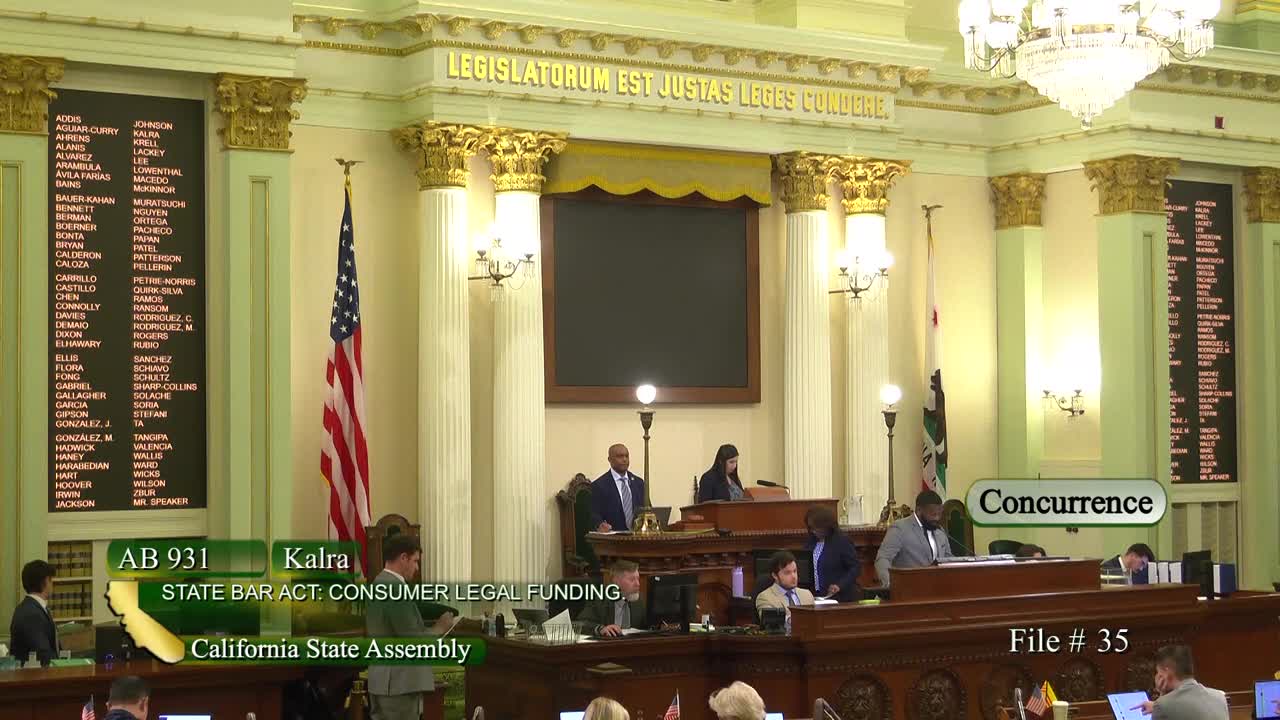 40SEC
Assembly Floor
 3MIN
Senate Floor
 16MIN
Senate Standing Committee on Human Services
 54SEC
Assembly Floor
Bill Author

Bill Co-Author(s):