AB 1344: Restrictions on firearm possession: pilot project.
- Session Year: 2025-2026
- House: Assembly
- Latest Version Date: 2025-10-10
Current Status:
Passed
(2025-10-10: Chaptered by Secretary of State - Chapter 573, Statutes of 2025.)
Introduced
In Committee
Awaiting First Chamber Vote
Passed First Chamber
In Committee
Awaiting Second Chamber Vote
Passed Second Chamber
Enacted
Existing law authorizes a court to issue a gun violence restraining order to prohibit a person from purchasing or possessing a firearm or ammunition for a period of one to 5 years, subject to renewal for additional one- to 5-year periods, if the subject of the petition poses a significant danger of self-harm or harm to another in the near future by having a firearm and the order is necessary to prevent personal injury to the subject of the petition or another. Existing law also allows a gun violence restraining order to be issued on an ex parte basis for up to 21 days. Existing law allows a petition for these gun violence restraining orders to be made by a law enforcement officer, or an immediate family member, employer, coworker, or teacher, as specified, of the subject of the petition.
This bill would authorize the Counties of Alameda, El Dorado, Santa Clara, and Ventura to establish, until January 1, 2032, a pilot program to additionally authorize a district attorney to request that the court issue a temporary emergency gun violence restraining order, as specified. The bill would require the district attorney of a county that establishes a pilot program, commencing April 1, 2027, to annually submit specified data to the California Firearm Violence Research Center at UC Davis, and would authorize the center, commencing July 1, 2027, to conduct an evaluation of the pilot program and annually report that evaluation to the Legislature, as specified. The bill would require the district attorney of a county that establishes a pilot program, commencing April 1, 2027, to make the data described above available upon request to the Department of Justice and the Judicial Council. The bill would make related findings and declarations.
(1)Existing
Existing law authorizes a court to issue a gun violence restraining order to prohibit a person from purchasing or possessing a firearm or ammunition for a period of one to 5 years, subject to renewal for additional one- to 5-year periods, if the subject of the petition poses a significant danger of self-harm or harm to another in the near future by having a firearm and the order is necessary to prevent personal injury to the subject of the petition or another. Existing law also allows a gun violence restraining order to be issued on an ex parte basis for up to 21 days. Existing law allows a petition for these gun violence restraining orders to be made by a law enforcement officer, or an immediate family member, employer, coworker, or teacher, as specified, of the subject of the petition.
This bill would authorize the Counties of El Dorado Dorado, Santa Clara, and Ventura to establish, until January 1, 2032, a pilot program to additionally authorize a district attorney to request that the court issue a temporary emergency gun violence restraining order, as specified. The bill would require the district attorney of a county that establishes a pilot program, commencing April 1, 2027, to annually submit specified data to the California Firearm Violence Research Center at US UC Davis, and would authorize the center, commencing July 1, 2027, to conduct an evaluation of the pilot program and annually report that evaluation to the Legislature, as specified. The bill would require the district attorney of a county that establishes a pilot program, commencing April 1, 2027, to make the data described above available upon request to the Department of Justice and the Judicial Council. The bill would make related findings and declarations.
(2)Under existing law, when a law enforcement agency has reasonable cause to believe that the return of a weapon seized pursuant to a gun violence restraining order would be likely to result in endangering the victim or the person who reported the assault or threat, the agency is required to advise the owner of the weapon, and initiate a petition in superior court within a specified time to determine if the weapon should be returned to the person. Under existing law, a law enforcement agency is authorized to file a petition for an order of default and to dispose of the weapon if they have informed the person of the hearing and that the person has 30 days from the date of receipt of the notice to respond to confirm the persons desire for a hearing, and the person fails to respond.This bill would require the court to transmit a copy of the order of default described above to the Department of Justice.(3)Under existing law, if the court does not order the return of the weapon to the owner after a hearing regarding the return of a weapon seized pursuant to a gun violence restraining order described above, the person is authorized to petition the court for a second hearing, as specified, and unless the court finds that the return of the weapon would result in endangering the victim or the person reporting the assault or threat, requires the court to order the return of the weapon. Under existing law, if the owner does not petition the court in a timely manner for a second hearing or is unsuccessful at gaining return of the firearm at the second hearing, the weapon may be disposed of.This bill would require the court, if the court orders a firearm to be disposed of as described above, to transmit a copy of the order to the Department of Justice.(1)Existing law authorizes a court to issue a gun violence restraining order to prohibit a person from purchasing or possessing a firearm or ammunition for a period of one to 5 years, subject to renewal for additional one- to 5-year periods, if the subject of the petition poses a significant danger of self-harm or harm to another in the near future by having a firearm and the order is necessary to prevent personal injury to the subject of the petition or another. Existing law also allows a gun violence restraining order to be issued on an ex parte basis for up to 21 days. Existing law allows a petition for these gun violence restraining orders to be made by a law enforcement officer, or an immediate family member, employer, coworker, or teacher, as specified, of the subject of the petition.
This bill would authorize the Counties of El Dorado and Ventura to establish, until January 1, 2032, a pilot program to additionally authorize a district attorney to request that the court issue a temporary emergency gun violence restraining order, as specified. The bill would require a county that establishes a pilot program, commencing April 1, 2027, to annually submit specified data to the California Firearm Violence Research Center at US Davis, and would authorize the center, commencing July 1, 2027, to conduct an evaluation of the pilot program and report that evaluation to the Legislature, as specified.
(2)Under existing law, when a law enforcement agency has reasonable cause to believe that the return of a weapon seized pursuant to a gun violence restraining order would be likely to result in endangering the victim or the person who reported the assault or threat, the agency is required to advise the owner of the weapon, and initiate a petition in superior court within a specified time to determine if the weapon should be returned to the person. Under existing law, a law enforcement agency is authorized to file a petition for an order of default and to dispose of the weapon if they have informed the person of the hearing and that the person has 30 days from the date of receipt of the notice to respond to confirm the persons desire for a hearing, and the person fails to respond.
This bill would require the court to transmit a copy of the order of default described above to the Department of Justice.
(3)Under existing law, if the court does not order the return of the weapon to the owner after a hearing regarding the return of a weapon seized pursuant to a gun violence restraining order described above, the person is authorized to petition the court for a second hearing, as specified, and unless the court finds that the return of the weapon would result in endangering the victim or the person reporting the assault or threat, requires the court to order the return of the weapon. Under existing law, if the owner does not petition the court in a timely manner for a second hearing or is unsuccessful at gaining return of the firearm at the second hearing, the weapon may be disposed of.
This bill would require the court, if the court orders a firearm to be disposed of as described above, to transmit a copy of the order to the Department of Justice.
Existing law authorizes specific individuals, including an immediate family member of a person or a law enforcement officer, to request that a court, after notice and a hearing, issue a gun violence restraining order against that person. Under existing law, the petitioner has the burden of proving, by clear and convincing evidence, that the subject of the petition poses a significant danger of causing personal injury and that the order is necessary to prevent personal injury. Under existing law, the restraining order prohibits the subject of the petition from having in their custody or control, or owning, purchasing, possessing, or receiving, a firearm or ammunition for a duration of one to 5 years, subject to earlier termination or renewal by the court.This bill would state the Legislatures intent to enact legislation relating to gun violence restraining orders.Existing law authorizes specific individuals, including an immediate family member of a person or a law enforcement officer, to request that a court, after notice and a hearing, issue a gun violence restraining order against that person. Under existing law, the petitioner has the burden of proving, by clear and convincing evidence, that the subject of the petition poses a significant danger of causing personal injury and that the order is necessary to prevent personal injury. Under existing law, the restraining order prohibits the subject of the petition from having in their custody or control, or owning, purchasing, possessing, or receiving, a firearm or ammunition for a duration of one to 5 years, subject to earlier termination or renewal by the court.
This bill would state the Legislatures intent to enact legislation relating to gun violence restraining orders.
The Legislature finds and declares that it is the intent of this chapter that, in the counties described in this chapter, the district attorney, any assistant district attorney, or any deputy district attorney may petition for a gun violence restraining order in accordance with the same laws and procedures governing the eligibility to petition for a gun violence restraining order pursuant to Chapter 3 (commencing with Section 18150) or Chapter 4 (commencing with Section 18170) of this division.
18215.(a)The following counties may establish, until January 1, 2032, a pilot program to authorize a district attorney to file a petition for a gun violence restraining order issued pursuant to Chapter 3 (commencing with Section 18150) or Chapter 4 (commencing with Section 18170) of this division:
(1)County of Alameda.
(2)County of El Dorado.
(3)County of Santa Clara.
(4)County of Ventura.
(b)(1)As used in Section 18109, 18150, 18170, or 18190, law enforcement officer includes any district attorney, assistant district attorney, or deputy district attorney for a county identified in subdivision (a) that has established a pilot program pursuant to this section.
(2)As used in Section 18109, law enforcement agency includes the district attorneys office for a county identified in subdivision (a) that has established a pilot program pursuant to this section.
18220.(a)The district attorney of a county that establishes a pilot program pursuant to this chapter shall, commencing April 1, 2027, annually submit data regarding the pilot program to the California Firearm Violence Research Center at UC Davis. The data submitted shall include all of the following:
(1)The number of petitions filed and the outcome of the petitions, if any.
(2)Demographic data for the restrained individuals.
(3)The reasons that the petition was filed.
(4)Areas of success and areas for improvement in subsequent years.
(b)(1)The center may conduct an evaluation of a pilot programs impact and effectiveness. If the center conducts an evaluation of a pilot project, the evaluation shall include, but not be limited to, the data described in subdivision (a).
(2)The center may, commencing on or before July 1, 2027, and annually thereafter, submit an evaluation described in paragraph (1) to the Assembly and Senate Committees on Public Safety.
(c)If the center conducts an evaluation of more than one pilot program pursuant to subdivision (b), the center may combine the evaluations into a comprehensive report and may submit the report, commencing on or before July 1, 2027, and annually thereafter, to the Assembly and Senate Committees on Public Safety.
(d)The district attorney of a county that establishes a pilot program pursuant to this chapter shall, commencing April 1, 2027, make the data described in subdivision (a) available upon request to the Department of Justice and the Judicial Council.
18225.This chapter shall remain in effect only until January 1, 2034, and as of that date is repealed, unless a later enacted statute that is enacted before January 1, 2034, deletes or extends that date.
SEC. 2.The provisions of this act are severable. If any provision of this act or its application is held invalid, that invalidity shall not affect other provisions or applications that can be given effect without the invalid provision or application.
The Legislature finds and declares that it is the intent of this chapter that, in the counties described in this chapter, the district attorney, any assistant district attorney, or any deputy district attorney may petition for a gun violence restraining order in accordance with the same laws and procedures governing the eligibility to petition for a gun violence restraining order pursuant to Chapter 3 (commencing with Section 18150) or Chapter 4 (commencing with Section 18170) of this division.
18215.(a)The following counties may establish, until January 1, 2032, a pilot program to authorize a district attorney to file a petition for a gun violence restraining order issued pursuant to Chapter 3 (commencing with Section 18150) or Chapter 4 (commencing with Section 18170) of this division:
(1)County of Alameda.
(1)(2)County of El Dorado.
(2)(3)County of Santa Clara.
(3)(4)County of Ventura.
(b)(1)As used in Section 18109, 18150, 18170, or 18190, law enforcement officer includes any district attorney, assistant district attorney, or deputy district attorney for a county identified in subdivision (a) that has established a pilot program pursuant to this section.
(2)As used in Section 18109, law enforcement agency includes the district attorneys office for a county identified in subdivision (a) that has established a pilot program pursuant to this section.
18220.(a)The district attorney of a county that establishes a pilot program pursuant to this chapter shall, commencing April 1, 2027, annually submit data regarding the pilot program to the California Firearm Violence Research Center at UC Davis. The data submitted shall include all of the following:
(1)The number of petitions filed and the outcome of the petitions, if any.
(2)Demographic data for the restrained individuals.
(3)The reasons that the petition was filed.
(4)Areas of success and areas for improvement in subsequent years.
(b)(1)The center may conduct an evaluation of a pilot programs impact and effectiveness. If the center conducts an evaluation of a pilot project, the evaluation shall include, but not be limited to, the data described in subdivision (a).
(2)The center may, commencing on or before July 1, 2027, and annually thereafter, submit an evaluation described in paragraph (1) to the Assembly and Senate Committees on Public Safety.
(c)If the center conducts an evaluation of more than one pilot program pursuant to subdivision (b), the center may combine the evaluations into a comprehensive report and may submit the report, commencing on or before July 1, 2027, and annually thereafter, to the Assembly and Senate Committees on Public Safety.
(d)The district attorney of a county that establishes a pilot program pursuant to this chapter shall, commencing April 1, 2027, make the data described in subdivision (a) available upon request to the Department of Justice and the Judicial Council.
18225.This chapter shall remain in effect only until January 1, 2034, and as of that date is repealed, unless a later enacted statute that is enacted before January 1, 2034, deletes or extends that date.
SEC. 2.The provisions of this act are severable. If any provision of this act or its application is held invalid, that invalidity shall not affect other provisions or applications that can be given effect without the invalid provision or application.
The Legislature finds and declares that it is the intent of this chapter that, in the counties described in this chapter, the district attorney, any assistant district attorney, or any deputy district attorney may petition for a gun violence restraining order in accordance with the same laws and procedures governing the eligibility to petition for a gun violence restraining order pursuant to Chapter 3 (commencing with Section 18150) or Chapter 4 (commencing with Section 18170) of this division.
18210.18215.(a)The following counties may establish, until January 1, 2032, a pilot program to authorize a district attorney to request that the court issue a temporary emergency gun violence restraining order pursuant to this section: file a petition for a gun violence restraining order issued pursuant to Chapter 3 (commencing with Section 18150) or Chapter 4 (commencing with Section 18170) of this division:
(1)County of El Dorado.
(2)County of Santa Clara.
(2)(3)County of Ventura.
(b)Pursuant to the pilot project established by this chapter, a district attorney may file a petition requesting that the court issue an ex parte gun violence restraining order enjoining the subject of the petition from having in their custody or control, owning, purchasing, possessing, or receiving a firearm or ammunition as described in Section 18150.(c)(1)The court, before issuing an ex parte gun violence restraining order, may examine under oath the district attorney or the law enforcement officer who signed the written affidavit and any witness the district attorney may produce.(2)In lieu of examining the district attorney or a witness produced by the district attorney, the court may require the district attorney or witness to submit a written affidavit signed under oath.(3)In determining whether grounds for a gun violence restraining order exist, the court shall consider the evidence described in subdivision (b) of Section 18155.(d)(1)A district attorney may request that a court, after notice and a hearing, issue a gun violence restraining order enjoining the subject of the petition from having in their custody or control, owning, purchasing, possessing, or receiving a firearm or ammunition for a period of time between one to five years as described in Section 18170.(2)In determining whether to issue a gun violence restraining order pursuant to paragraph (1), the court shall comply with the requirements described in Section 18175.(e)A district attorney may request a renewal of a gun violence restraining order at any time within the three months before the expiration of a gun violence restraining order as described in Section 18190.(f)(1)As described in Section 18400, if a district attorney has reasonable cause to believe that the return of a firearm or other deadly weapon seized pursuant to this division would be likely to result in endangering the victim or the person who reported the assault or threat, the district attorney shall advise the owner of the firearm or other deadly weapon of the belief, and within 60 days after the date of seizure, shall initiate a petition in superior court to determine if the firearm or other deadly weapon should be returned.(2)The district attorney may make an ex parte application stating good cause for an order extending time to file a petition described in paragraph (1).(3)Including any extension of time granted in response to an ex parte request, a petition filed pursuant to paragraph (1) shall be filed within 90 days after the date of the seizure of the firearm or other deadly weapon.(4)(A)If a petition is filed pursuant to paragraph (1), the district attorney shall inform the owner or person who had lawful possession of the firearm or other deadly weapon, at that persons last known address, by registered mail, return receipt requested, that the person has 30 days from the date of receipt of the notice to respond to the court clerk to confirm the persons desire for a hearing, and that the failure to respond shall result in a default order forfeiting the confiscated firearm or other deadly weapon as described in Section 18405.(B)For the purposes of this paragraph, the persons last known address shall be presumed to be the address provided to the district attorney or law enforcement officer at the time the firearm or other deadly weapon was seized.(C)If the person whose firearm or other deadly weapon was seized does not reside at the last address provided to the agency, the agency shall make a diligent, good faith effort to ascertain the whereabouts of the person and to comply with the notification requirements described in this paragraph.(5)If the person who receives a petition pursuant to paragraph (4) requests a hearing, the court shall follow the procedures described in Section 18410.(6)If the person who receives a petition pursuant to paragraph (4) does not request a hearing or does not otherwise respond within 30 days after the receipt of the notice, the district attorney may file a petition for an order of default and may dispose of the firearm or other deadly weapon as described in Section 18415.(7)If the court orders a firearm to be disposed of or orders a default pursuant to paragraph (4) or (6), the court shall transmit a copy of the order to the Department of Justice.(g)A petition brought by a district attorney pursuant to this section shall be brought in the name of the people of the State of California.(b)(1)As used in Section 18109, 18150, 18170, or 18190, law enforcement officer includes any district attorney, assistant district attorney, or deputy district attorney for a county identified in subdivision (a) that has established a pilot program pursuant to this section.
(2)As used in Section 18109, law enforcement agency includes the district attorneys office for a county identified in subdivision (a) that has established a pilot program pursuant to this section.
18215.18220.(a)A The district attorney of a county that establishes a pilot program pursuant to this chapter shall, commencing April 1, 2027, annually submit data regarding the pilot program to the California Firearm Violence Research Center at UC Davis. The data submitted shall include all of the following:
(1)The number of petitions filed and the outcome of the petitions, if any.
(2)Demographic data for the restrained individuals.
(3)The reasons that the petition was filed.
(4)Areas of success and areas for improvement in subsequent years.
(b)(1)The center may conduct an evaluation of a pilot programs impact and effectiveness. If the center conducts an evaluation of a pilot project, the evaluation shall include, but not be limited to, the data described in subdivision (a).
(2)The center may, commencing on or before July 1, 2027, and annually thereafter, submit an evaluation described in paragraph (1) to the Assembly and Senate Committees on Public Safety.
(c)If the center conducts an evaluation of more than one pilot program pursuant to subdivision (b), the center may combine the evaluations into a comprehensive report and may submit the report, commencing on or before July 1, 2027, and annually thereafter, to the Assembly and Senate Committees on Public Safety.
(d)The district attorney of a county that establishes a pilot program pursuant to this chapter shall, commencing April 1, 2027, make the data described in subdivision (a) available upon request to the Department of Justice and the Judicial Council.
18220.18225.This chapter shall remain in effect only until January 1, 2034, and as of that date is repealed, unless a later enacted statute that is enacted before January 1, 2034, deletes or extends that date.
SEC. 2.Section 18415 of the Penal Code is amended to read:18415.(a)If the person who receives a petition under Section 18405 does not request a hearing or does not otherwise respond within 30 days after the receipt of the notice, the law enforcement agency may file a petition for an order of default and may dispose of the firearm or other deadly weapon as provided in Sections 18000 and 18005.(b)The court shall transmit a copy of the order of default described in subdivision (a) to the Department of Justice.SEC. 3.Section 18420 of the Penal Code is amended to read:18420.(a)If, at a hearing under Section 18410, the court does not order the return of the firearm or other deadly weapon to the owner or person who had lawful possession, that person may petition the court for a second hearing within 12 months from the date of the initial hearing.(b)If there is a petition for a second hearing, unless it is shown by clear and convincing evidence that the return of the firearm or other deadly weapon would result in endangering the victim or the person reporting the assault or threat, the court shall order the return of the firearm or other deadly weapon and shall award reasonable attorneys fees to the prevailing party.(c)If the owner or person who had lawful possession does not petition the court within this 12-month period for a second hearing or is unsuccessful at the second hearing in gaining return of the firearm or other deadly weapon, the firearm or other deadly weapon may be disposed of as provided in Sections 18000 and 18005.(d)If the court orders a firearm to be disposed of pursuant to subdivision (c), the court shall transmit a copy of the order to the Department of Justice.SEC. 2.The provisions of this act are severable. If any provision of this act or its application is held invalid, that invalidity shall not affect other provisions or applications that can be given effect without the invalid provision or application.
(a)The following counties may establish, until January 1, 2032, a pilot program to authorize a district attorney to request that the court issue a temporary emergency gun violence restraining order pursuant to this section:
(1)County of El Dorado.
(2)County of Ventura.
(b)Pursuant to the pilot project established by this chapter, a district attorney may file a petition requesting that the court issue an ex parte gun violence restraining order enjoining the subject of the petition from having in their custody or control, owning, purchasing, possessing, or receiving a firearm or ammunition as described in Section 18150.
(c)(1)The court, before issuing an ex parte gun violence restraining order, may examine under oath the district attorney or the law enforcement officer who signed the written affidavit and any witness the district attorney may produce.
(2)In lieu of examining the district attorney or a witness produced by the district attorney, the court may require the district attorney or witness to submit a written affidavit signed under oath.
(3)In determining whether grounds for a gun violence restraining order exist, the court shall consider the evidence described in subdivision (b) of Section 18155.
(d)(1)A district attorney may request that a court, after notice and a hearing, issue a gun violence restraining order enjoining the subject of the petition from having in their custody or control, owning, purchasing, possessing, or receiving a firearm or ammunition for a period of time between one to five years as described in Section 18170.
(2)In determining whether to issue a gun violence restraining order pursuant to paragraph (1), the court shall comply with the requirements described in Section 18175.
(e)A district attorney may request a renewal of a gun violence restraining order at any time within the three months before the expiration of a gun violence restraining order as described in Section 18190.
(f)(1)As described in Section 18400, if a district attorney has reasonable cause to believe that the return of a firearm or other deadly weapon seized pursuant to this division would be likely to result in endangering the victim or the person who reported the assault or threat, the district attorney shall advise the owner of the firearm or other deadly weapon of the belief, and within 60 days after the date of seizure, shall initiate a petition in superior court to determine if the firearm or other deadly weapon should be returned.
(2)The district attorney may make an ex parte application stating good cause for an order extending time to file a petition described in paragraph (1).
(3)Including any extension of time granted in response to an ex parte request, a petition filed pursuant to paragraph (1) shall be filed within 90 days after the date of the seizure of the firearm or other deadly weapon.
(4)(A)If a petition is filed pursuant to paragraph (1), the district attorney shall inform the owner or person who had lawful possession of the firearm or other deadly weapon, at that persons last known address, by registered mail, return receipt requested, that the person has 30 days from the date of receipt of the notice to respond to the court clerk to confirm the persons desire for a hearing, and that the failure to respond shall result in a default order forfeiting the confiscated firearm or other deadly weapon as described in Section 18405.
(B)For the purposes of this paragraph, the persons last known address shall be presumed to be the address provided to the district attorney or law enforcement officer at the time the firearm or other deadly weapon was seized.
(C)If the person whose firearm or other deadly weapon was seized does not reside at the last address provided to the agency, the agency shall make a diligent, good faith effort to ascertain the whereabouts of the person and to comply with the notification requirements described in this paragraph.
(5)If the person who receives a petition pursuant to paragraph (4) requests a hearing, the court shall follow the procedures described in Section 18410.
(6)If the person who receives a petition pursuant to paragraph (4) does not request a hearing or does not otherwise respond within 30 days after the receipt of the notice, the district attorney may file a petition for an order of default and may dispose of the firearm or other deadly weapon as described in Section 18415.
(7)If the court orders a firearm to be disposed of or orders a default pursuant to paragraph (4) or (6), the court shall transmit a copy of the order to the Department of Justice.
(g)A petition brought by a district attorney pursuant to this section shall be brought in the name of the people of the State of California.
18215.(a)A county that establishes a pilot program pursuant to this chapter shall, commencing April 1, 2027, annually submit data regarding the pilot program to the California Firearm Violence Research Center at UC Davis. The data submitted shall include all of the following:
(1)The number of petitions filed and the outcome of the petitions, if any.
(2)Demographic data for the restrained individuals.
(3)The reasons that the petition was filed.
(4)Areas of success and areas for improvement in subsequent years.
(b)The center may conduct an evaluation of a pilot programs impact and effectiveness. If the center conducts an evaluation of a pilot project, the evaluation shall include, but not be limited to, the data described in subdivision (a).
(c)If the center conducts an evaluation of more than one pilot program pursuant to subdivision (b), the center may combine the evaluations into a comprehensive report and may submit the report, commencing on or before July 1, 2027, and annually thereafter, to the Assembly and Senate Committees on Public Safety.
18220.This chapter shall remain in effect only until January 1, 2034, and as of that date is repealed, unless a later enacted statute that is enacted before January 1, 2034, deletes or extends that date.
SEC. 2.Section 18415 of the Penal Code is amended to read:18415.(a)If the person who receives a petition under Section 18405 does not request a hearing or does not otherwise respond within 30 days of after the receipt of the notice, the law enforcement agency may file a petition for an order of default and may dispose of the firearm or other deadly weapon as provided in Sections 18000 and 18005.
(b)The court shall transmit a copy of the order of default described in subdivision (a) to the Department of Justice.
SEC. 3.Section 18420 of the Penal Code is amended to read:18420.(a)If, at a hearing under Section 18410, the court does not order the return of the firearm or other deadly weapon to the owner or person who had lawful possession, that person may petition the court for a second hearing within 12 months from the date of the initial hearing.
(b)If there is a petition for a second hearing, unless it is shown by clear and convincing evidence that the return of the firearm or other deadly weapon would result in endangering the victim or the person reporting the assault or threat, the court shall order the return of the firearm or other deadly weapon and shall award reasonable attorneys fees to the prevailing party.
(c)If the owner or person who had lawful possession does not petition the court within this 12-month period for a second hearing or is unsuccessful at the second hearing in gaining return of the firearm or other deadly weapon, the firearm or other deadly weapon may be disposed of as provided in Sections 18000 and 18005.
(d)If the court orders a firearm to be disposed of pursuant to subdivision (c), the court shall transmit a copy of the order to the Department of Justice.
SECTION 1.It is the intent of the Legislature to enact legislation relating to gun violence restraining orders.It is the intent of the Legislature to enact legislation relating to gun violence restraining orders.
|
Date
|
Status
|
|---|---|
| Oct 10, 2025 | Chaptered by Secretary of State - Chapter 573, Statutes of 2025. |
| Oct 10, 2025 | Approved by the Governor. |
| Sep 15, 2025 | Enrolled and presented to the Governor at 4:30 p.m. |
| Sep 8, 2025 | Senate amendments concurred in. To Engrossing and Enrolling. (Ayes 65. Noes 5. Page 3037.). |
| Sep 4, 2025 | In Assembly. Concurrence in Senate amendments pending. |
| Sep 4, 2025 | Read third time. Passed. Ordered to the Assembly. (Ayes 32. Noes 4. Page 2517.). |
| Aug 29, 2025 | Read second time. Ordered to third reading. |
| Aug 29, 2025 | From committee: Do pass. (Ayes 5. Noes 2.) (August 29). |
| Aug 18, 2025 | In committee: Referred to suspense file. |
| Jul 8, 2025 | From committee: Do pass and re-refer to Com. on APPR. (Ayes 5. Noes 0.) (July 8). Re-referred to Com. on APPR. |
| Jun 23, 2025 | From committee chair, with author's amendments: Amend, and re-refer to committee. Read second time, amended, and re-referred to Com. on PUB. S. |
| Jun 11, 2025 | Referred to Com. on PUB. S. |
| Jun 3, 2025 | In Senate. Read first time. To Com. on RLS. for assignment. |
| Jun 2, 2025 | Read third time. Passed. Ordered to the Senate. (Ayes 69. Noes 3. Page 1922.) |
| May 27, 2025 | Read second time. Ordered to third reading. |
| May 23, 2025 | Read second time and amended. Ordered returned to second reading. |
| May 23, 2025 | From committee: Amend, and do pass as amended. (Ayes 11. Noes 0.) (May 23). |
| May 23, 2025 | Assembly Rule 63 suspended. (Ayes 51. Noes 16. Page 1644.) |
| Apr 30, 2025 | In committee: Set, first hearing. Referred to suspense file. |
| Apr 9, 2025 | From committee: Do pass and re-refer to Com. on APPR. (Ayes 8. Noes 0.) (April 8). Re-referred to Com. on APPR. |
| Mar 25, 2025 | Re-referred to Com. on PUB. S. |
| Mar 24, 2025 | Referred to Com. on PUB. S. |
| Mar 24, 2025 | From committee chair, with author's amendments: Amend, and re-refer to Com. on PUB. S. Read second time and amended. |
| Feb 24, 2025 | Read first time. |
| Feb 22, 2025 | From printer. May be heard in committee March 24. |
| Feb 21, 2025 | Introduced. To print. |
|
Date
|
Description
|
Location
|
Votes
|
|
|---|---|---|---|---|
| Sep 8, 2025 | AB 1344 Irwin Concurrence in Senate Amendments | Assembly Floor |
Passed |
|
| Sep 4, 2025 | Assembly 3rd Reading AB1344 Irwin et al. By Arreguín | Senate Floor |
Passed |
|
| Aug 29, 2025 | Do pass | Senate Standing Committee on Appropriations |
Passed |
|
| Aug 18, 2025 | Placed on suspense file | Senate Standing Committee on Appropriations |
Passed |
|
| Jul 8, 2025 | Do pass, but first be re-referred to the Committee on [Appropriations] | Senate Standing Committee on Public Safety |
Passed |
|
| Jun 2, 2025 | AB 1344 Irwin Assembly Third Reading | Assembly Floor |
Passed |
|
| May 23, 2025 | Do pass as amended. | Assembly Standing Committee on Appropriations |
Passed |
|
| Apr 8, 2025 | Do pass and be re-referred to the Committee on [Appropriations] | Assembly Standing Committee on Public Safety |
Passed |
This list shows positions taken on this bill by organizations on the date displayed, which is linked to the original source.
Positions by individuals are not included.
|
Organization
|
Position
|
Date
|
|---|---|---|
| Aclu California Action | ** Against | |
| California District Attorneys Association (CDAA) | ** Support | |
| County of Ventura Board of Supervisors | ** Support | |
| El Dorado County District Attorney's Office | ** Support | |
| Giffords Law Center To Prevent Gun Violence | ** Support | |
| National Rifle Association (NRA) | ** Against | |
| National Rifle Association - Institute For Legislative Action | ** Against | |
| Santa Clara County District Attorney's Office | ** Support | |
| Ventura County District Attorney's Office | ** Support | |
| Ventura County Office of the District Attorney | ** Support |
CONCURRENCE IN SENATE AMENDMENTS
CSA1 Bill Id:AB 1344
Author:(Irwin)
As Amended Ver:June 23, 2025
Majority vote
SUMMARY
Authorizes the Counties of Alameda, El Dorado, Santa Clara, and Ventura to establish a pilot program to permit a district attorney to file a petition for a gun violence restraining order (GVRO), as specified.
Senate Amendments
Authorize Alameda, in addition to El Dorado, Santa Clara, and Ventura counties, until January 1, 2032, to establish a pilot program to permit a district attorney to file a petition for a GVRO, as defined.
COMMENTS
As passed by the Assembly: This bill authorizes the Counties of El Dorado, Santa Clara, and Ventura to establish a pilot program to permit a district attorney to file a petition for a gun violence restraining order (GVRO), as specified.
Major Provisions
- Authorized El Dorado, Santa Clara, and Ventura counties, until January 1, 2032, to establish a pilot program to permit a district attorney to file a petition for a GVRO, until January 1, 2032.
- Stated that a district attorney may file a petition for a GVRO, as specified.
- Stated that the district attorney of a county that establishes a pilot program shall, commencing April 1, 2027, annually submit data regarding the pilot program to the California Firearm Violence Research Center (CFVRC) at UC Davis. The data submitted shall include all of the following:
- The number of petitions filed and the outcome of the petitions, if any.
- Demographic data for the restrained individuals.
- The reasons that the petition was filed.
- Areas of success and areas for improvement in subsequent years.
- Authorized CFVRC to conduct an evaluation of a pilot program's impact and effectiveness. If the center conducts an evaluation of a pilot project, the evaluation shall include, but not be limited to, the data above.
- Provided that CFVRC may, commencing on or before July 1, 2027, and annually thereafter, submit the above evaluation to the Assembly and Senate Committees on Public Safety.
- Authorized CFVRC, if it conducts an evaluation of more than one pilot program, to combine the evaluations into a comprehensive report and may submit the report, commencing on or before July 1, 2027, and annually thereafter, to the Assembly and Senate Committees on Public Safety.
- Required the district attorney of a county that establishes a pilot program, commencing April 1, 2027, to make the data available upon request to the Department of Justice and the Judicial Council.
- Established a sunset date for the above provisions of January 1, 2034.
- Extended the definition of "law enforcement officer," as specified, to include any district attorney, assistant district attorney, or deputy district attorney, as defined, for the counties participating in the pilot program.
- Extended the definition "law enforcement agency," as specified, to include any district attorney's office, as defined, for the counties participating in the pilot program.
- Included severability provisions.
- Made legislative declarations and findings.
According to the Author
"As Californians continue to endure the trauma of gun violence, I am dedicated to finding every opportunity we can to continue to make a difference in this fight. In 2019, with AB 12 and AB 339, I worked to improve Gun Violence Restraining Orders and require every law enforcement agency to create policies to use them, in hopes of increasing the awareness and use of this lifesaving tool. However we have yet to see widespread use of GVROs, with only small upticks in GVROs in areas where the State has invested in a City Attorney to provide legal assistance for petitions. District Attorneys across the state are willing to step up and provide the legal expertise to petition and defend GVROs in court. As a result of their limited jurisdiction however they have been precluded from joining City Attorneys and County Counsels. AB 1344 will create a pilot program to authorize the District Attorneys of Ventura County and El Dorado County to directly petition for GVROs, adding many attorneys to the fight against gun violence in California and allowing us to truly test whether their addition will meaningfully impact GVRO petition rates."
Arguments in Support
According to the California District Attorneys Association (CDAA), "GVROs are a means of intervening in potentially dangerous situations before the worst can occur. They permit a court to temporarily seize a person's firearms but only after a court process that requires proof that the person is likely to use those weapons against themselves or others. The system for GVROs provides an opportunity for the restrained person to appear and object, as well as opportunities to lift the GVRO once it is imposed.
"Currently GVROs may be sought by law enforcement officers, family members, employers, or coworkers, of the person to be restrained. But district attorneys are not included in this list. CDAA believes this is a significant omission. District attorneys are often in the best position to spot dangerous and escalating patterns of conduct and to act to protect victims and other community members from gun violence.
"AB 1344 builds upon California's existing GVRO framework by allowing prosecutors to intervene before a firearm-related tragedy occurs. El Dorado and Ventura Counties will collect and report data, analyze progress, and develop best practices in the hopes of eventually expanding this pilot program statewide."
Arguments in Opposition
According to the National Rifle Association (NRA), "Denial of constitutional rights is a serious matter that requires proper due process and strong objective supporting data. Currently GVRO's can be issued for a period of one to five years and extended without limitation. The unfortunate reality is that an individual can be placed in a constant restrained state without ever being convicted of a crime or adjudicated mentally ill, but based on third party allegations.
"A foundational principle of the American judicial system is to assure that an individual is entitled to judicial due process – including notice of the relevant accusations, opportunity to appear at a hearing before a neutral judge, to present evidence in his or her favor, and access to legal representation – before the individual is denied a constitutional right. As such, individuals are entitled to judicial due process before they can be declared legally ineligible to possess firearms or forced to surrender any firearms the individual owns.
"It should also be noted that if an individual is truly dangerous, existing law already provides a variety of mechanisms to deal with the individual, all of which can lead to firearm prohibitions in appropriate cases. The issuance of a protective order does nothing to deal with the underlying cause of dangerousness, nor does it subject the person to any actual physical restraint, ongoing reporting or monitoring requirements, or treatment for any underlying mental health condition."
FISCAL COMMENTS
According to the Senate Appropriations Committee, "Unknown costs to the state funded trial court system (Trial Court Trust Fund, General Fund) to adjudicate additional GVRO petitions in the pilot counties and to provide the Department of Justice (DOJ) with required copies of court orders. The fiscal impact of this bill to the courts will depend on many unknowns, including the number of petitions filed and the factors unique to each case. An eight-hour court day costs approximately $10,500 in staff in workload. If court days exceed 10, costs to the trial courts could reach hundreds of thousands of dollars. While the courts are not funded on a workload basis, an increase in workload could result in delayed court services and would put pressure on the General Fund to fund additional staff and resources and to increase the amount appropriated to backfill for trial court operations."
VOTES:
ASM PUBLIC SAFETY: 8-0-1
YES: Schultz, Alanis, Mark González, Haney, Harabedian, Lackey, Ramos, Sharp-Collins
ABS, ABST OR NV: Nguyen
ASM APPROPRIATIONS: 11-0-4
YES: Wicks, Arambula, Calderon, Caloza, Elhawary, Fong, Mark González, Hart, Pacheco, Pellerin, Solache
ABS, ABST OR NV: Sanchez, Dixon, Ta, Tangipa
ASSEMBLY FLOOR: 69-3-7
YES: Addis, Aguiar-Curry, Ahrens, Alanis, Alvarez, Arambula, Ávila Farías, Bains, Bauer-Kahan, Bennett, Berman, Boerner, Bonta, Bryan, Calderon, Caloza, Carrillo, Chen, Connolly, Davies, Elhawary, Ellis, Flora, Fong, Gabriel, Gallagher, Garcia, Gipson, Jeff Gonzalez, Mark González, Haney, Harabedian, Hart, Irwin, Jackson, Kalra, Krell, Lackey, Lee, Lowenthal, McKinnor, Muratsuchi, Nguyen, Ortega, Pacheco, Papan, Patel, Pellerin, Petrie-Norris, Quirk-Silva, Ramos, Ransom, Celeste Rodriguez, Michelle Rodriguez, Rogers, Blanca Rubio, Sanchez, Schiavo, Schultz, Sharp-Collins, Solache, Soria, Stefani, Valencia, Ward, Wicks, Wilson, Zbur, Rivas
NO: DeMaio, Macedo, Tangipa
ABS, ABST OR NV: Castillo, Dixon, Hadwick, Hoover, Patterson, Ta, Wallis
UPDATED
VERSION: June 23, 2025
CONSULTANT: Dustin Weber / PUB. S. / (916) 319-3744 FN: 0001652
SENATE RULES COMMITTEE Office of Senate Floor Analyses (916) 651-1520 Fax: (916) 327-4478 | AB 1344 |
THIRD READING
Bill No: AB 1344
Author: Irwin (D), et al.
Amended: 6/23/25 in Senate
Vote: 21
SENATE PUBLIC SAFETY COMMITTEE: 5-0, 7/8/25
AYES: Arreguín, Caballero, Gonzalez, Pérez, Wiener
NO VOTE RECORDED: Seyarto
SENATE APPROPRIATIONS COMMITTEE: 5-2, 8/29/25
AYES: Caballero, Cabaldon, Grayson, Richardson, Wahab
NOES: Seyarto, Dahle
ASSEMBLY FLOOR: 69-3, 6/2/25 - See last page for vote
SUBJECT: Restrictions on firearm possession: pilot project
SOURCE: Ventura County District Attorney Erik Nasarenko
DIGEST:
This bill authorizes the Counties of Alameda, El Dorado, Santa Clara, and Ventura to establish, until January 1, 2032, a pilot program authorizing a district attorney to request a gun violence restraining order (GVRO).
ANALYSIS:
Existing law:
- Defines a GVRO as an order, in writing, signed by the court, prohibiting and enjoining a named person from having in his or her custody or control, owning, purchasing, possessing, or receiving any firearms or ammunition. (Penal (Pen.) Code, § 18100.)
- Requires a petition for a GVRO to describe the number, types, and locations of any firearms and ammunition presently believed by the petitioner to be possessed or controlled by the subject of the petition. (Pen. Code, § 18107.)
- Requires law enforcement agencies in California to develop and implement written policies and standards relating to GVROs, as specified. (Pen. Code, § 18108.)
- Requires the court to notify Department of Justice (DOJ) when a GVRO is issued, renewed, dissolved, or terminated. (Pen. Code, § 18115.)
- Prohibits a person that is subject to a GVRO from having in his or her custody any firearms or ammunition while the order is in effect. (Pen. Code, § 18120, subd. (a).)
- Provides that the court order the restrained person to surrender all firearms and ammunition in their control, or which the person possesses or owns, and requires the law enforcement officer serving a GVRO to request that all firearms and ammunition be immediately surrendered. (Pen. Code, § 18120, subd. (b)(1) & (2).)
- Requires, if the request is not made by a law enforcement officer, the surrender to occur within 24 hours of being served with the order, as specified. (Pen. Code, § 18120, subd. (b)(3).)
- Authorizes law enforcement to obtain a temporary GVRO if the officer asserts, and the court finds, that there is reasonable cause to believe the following:
- The subject of the petition poses an immediate and present danger of causing injury to himself, herself, or another by having in his or her custody or control, owning, purchasing, possessing, or receiving a firearm or ammunition; and,
- A temporary emergency GVRO is necessary to prevent personal injury to the subject of the order or another because less restrictive alternatives have been tried and been ineffective or have been determined to be inadequate or inappropriate under the circumstances. (Pen. Code, § 18125, subd. (a).)
- Provides that a temporary emergency GVRO and an ex parte GVRO expire after 21 days. (Pen. Code, §§ 18125, subd. (b); 18155, subd. (c).)
- Requires a law enforcement officer who requests a temporary GVRO to complete specified actions after the request is made. (Pen. Code, § 18140.)
- Authorizes a judicial officer to issue a temporary GVRO orally based on the statements of a law enforcement officer, as specified. (Pen. Code, § 18145, subd. (a).)
- Allows only specified individuals to file a petition requesting that the court issue an ex parte GVRO enjoining a person from having in his or her custody or control, owning, purchasing, or receiving a firearm or ammunition, including immediate family members, employers, coworkers, roommates, and law enforcement officers, among others. (Pen. Code, § 18150, subd. (a)(1).)
- Allows a court to issue an ex parte GVRO if an affidavit, made in writing and signed by the petitioner under oath, or an oral statement, and any additional information provided to the court shows there is a substantial likelihood that both of the following are true:
- The subject of the petition poses a significant danger, in the near future, of causing personal injury to himself, herself, or another by having under his or her custody and control, owning, purchasing, possessing, or receiving a firearm as determined by balancing specified factors.
- An ex parte GVRO is necessary to prevent personal injury to the subject of the petition or another because less restrictive alternatives either have been tried and found to be ineffective, or are inadequate or inappropriate for the circumstances of the subject of the petition. (Pen. Code, §§ 18150, subd. (b) & 18155.)
- Requires an ex parte GVRO to be issued or denied on the same day that the petition is submitted to the court unless the petition is filed too late in the day to permit effective review, in which case the order is required to be issued or denied on the next judicial business day. (Pen. Code, § 18150, subd. (d).)
- Specifies what factors a court shall consider and what factors it may consider in determining whether grounds for a GVRO exist. (Pen. Code, § 18155, subd. (b)(1), (2).)
- Authorizes defined persons to file a petition requesting that the court issue a GVRO after notice and a hearing enjoining a person from having in his or her custody or control, owning, purchasing, or receiving a firearm or ammunition. (Pen. Code, § 18170.)
- States that at the hearing, the court shall consider evidence of the facts identified in Section 18155, and that the petitioner has the burden of proof, which is to establish by clear and convincing evidence that a GVRO is necessary, as specified. (Pen. Code, § 18175, subd. (a)-(b).)
This bill:
- Provides that the Counties of Alameda, El Dorado, Santa Clara, and Ventura, may establish, until January 1, 2032, a pilot program to authorize a district attorney to file a petition for a GVRO.
- Specifies that, for the purposes of the pilot project established therein, the terms “law enforcement officer” and “law enforcement agency” include a district attorney and a district attorney’s office, respectively, in the counties participating in the pilot program.
- Requires, commencing April 1, 2027, a district attorney of a county that establishes a pilot program under the bill to annually submit data regarding the pilot program to the California Firearm Violence Research Center (CFVRC) at UC Davis.
- Provides that the data submitted to the CFVRC shall include specified data elements.
- Provides that the CFVRC may conduct an evaluation of a pilot program’s impact and effectiveness, and if the CFVRC conducts an evaluation of a pilot project, the evaluation shall include, but not be limited to, the data described above.
- Provides that the CFVRC may, commencing on or before July 1, 2027, and annually thereafter, submit an evaluation described above to the Assembly and Senate Committees on Public Safety.
- Provides that if the CFRVC conducts an evaluation of more than one pilot program, it may combine the evaluations into a comprehensive report and may submit the report, on or before July 1, 2027, and annually thereafter, to the Assembly and Senate Committees on Public Safety.
- Requires, commencing April 1, 2027, a district attorney that establishes a pilot program to make the data provided to CFRVC also available to the DOJ and the Judicial Council.
- Specifies that its provisions shall remain in effect only until January 1, 2034, and as of that date are repealed, unless that date is deleted or extended by future legislation.
Comments
In 2014, California enacted the nation’s first gun violence restraining order law (AB 1014 Skinner, Ch. 872, Stats. of 2014), which was modeled after similar domestic violence restraining order statutes, and went into effect on January 1, 2016. A GVRO prohibits the restrained person from purchasing or possessing firearms or ammunition and authorizes law enforcement to remove any firearms or ammunition already in the individual’s possession. A court is required to notify DOJ when a GVRO is issued, renewed, dissolved, or terminated. The statutory scheme establishes three types of GVRO’s: (1) a temporary emergency GVRO, (2) an ex parte GVRO, and (3) a GVRO issued after notice and hearing. For a more in-depth description of each of these types of GVRO, see the analysis prepared by the Committee on Public Safety.
Statistics compiled by the DOJ’s Office of Gun Violence Prevention indicate that in the first three years GVROs were available, they were used in 58 cases of threatened mass shootings, and in every instance for which data is available, the mass shooting did not occur. Further, among a study of 379 respondents in GVRO cases, only one later died as a result of a firearm injury. Other data show that during the first few years of GVRO implementation, virtually all GVRO petitions came from law enforcement, with very few filed by family members. Even after the list of authorized petitioners expanded to include employers, coworkers, teachers and school employees, roommates, those in a dating relationship, and those who share a child in common, law enforcement was still responsible for the vast majority of GVRO petitions. In 2024, data collected by the DOJ show that out of 2,762 GVROs issued, the petitioner was a non–law enforcement party in only 27 cases.
The Author cites related data to make the argument that county district attorney’s offices are well-positioned to be authorized GVRO petitioners:
Recent statistics of GVRO use across California have found one of the highest density of requests come from San Diego (21.7% of all petitions in 2021-24, with only 8.4% of state population). The high use of GVROs in San Diego can be linked to the efforts of the San Diego City Attorney’s office, who as the lead civil attorney for the jurisdiction, has allocated staff and resources to assist law enforcement in filing these civil court petitions. All 58 counties have elected District Attorneys whose offices have greater staffing and capabilities than their civil counterparts. District Attorneys however are limited in their ability to represent law enforcement in legal proceedings, as their independence as prosecutors and important accountability role preclude them from forming attorney-client relationships with law enforcement.
Accordingly, the Author submits this bill, which allows 4 counties – Alameda, El Dorado, Santa Clara, and Ventura – until January 1, 2032, to establish a pilot program authorizing district attorneys (as well as their assistant DAs and deputy DAs), to petition for an ex parte GVRO or a GVRO issued after notice and hearing. The bill does not authorize district attorneys to request a temporary emergency GVRO, which would remain solely within the authority of a law enforcement officer.
FISCAL EFFECT: Appropriation: No Fiscal Com.: Yes Local: No
According to the Senate Appropriations Committee:
Unknown costs to the state funded trial court system (Trial Court Trust Fund, General Fund) to adjudicate additional GVRO petitions in the pilot counties and to provide the Department of Justice (DOJ) with required copies of court orders. The fiscal impact of this bill to the courts will depend on many unknowns, including the number of petitions filed and the factors unique to each case. An eight-hour court day costs approximately $10,500 in staff in workload. If court days exceed 10, costs to the trial courts could reach hundreds of thousands of dollars. While the courts are not funded on a workload basis, an increase in workload could result in delayed court services and would put pressure on the General Fund to fund additional staff and resources and to increase the amount appropriated to backfill for trial court operations.
SUPPORT: (Verified 8/29/25)
Ventura County District Attorney’s Office (source)
California District Attorneys Association
County of Ventura Board of Supervisors
El Dorado County District Attorney’s Office
Giffords Law Center to Prevent Gun Violence
Santa Clara County District Attorney’s Office
OPPOSITION: (Verified 8/29/25)
ACLU California Action
ASSEMBLY FLOOR: 69-3, 6/2/25
AYES: Addis, Aguiar-Curry, Ahrens, Alanis, Alvarez, Arambula, Ávila Farías, Bains, Bauer-Kahan, Bennett, Berman, Boerner, Bonta, Bryan, Calderon, Caloza, Carrillo, Chen, Connolly, Davies, Elhawary, Ellis, Flora, Fong, Gabriel, Gallagher, Garcia, Gipson, Jeff Gonzalez, Mark González, Haney, Harabedian, Hart, Irwin, Jackson, Kalra, Krell, Lackey, Lee, Lowenthal, McKinnor, Muratsuchi, Nguyen, Ortega, Pacheco, Papan, Patel, Pellerin, Petrie-Norris, Quirk-Silva, Ramos, Ransom, Celeste Rodriguez, Michelle Rodriguez, Rogers, Blanca Rubio, Sanchez, Schiavo, Schultz, Sharp-Collins, Solache, Soria, Stefani, Valencia, Ward, Wicks, Wilson, Zbur, Rivas
NOES: DeMaio, Macedo, Tangipa
NO VOTE RECORDED: Castillo, Dixon, Hadwick, Hoover, Patterson, Ta, Wallis
Prepared by: Alex Barnett / PUB. S. /
8/30/25 17:26:18
**** END ****
SENATE COMMITTEE ON APPROPRIATIONS
Senator Anna Caballero, Chair
2025 - 2026 Regular Session
AB 1344 (Irwin) - Restrictions on firearm possession: pilot project
Version: June 23, 2025 | Policy Vote: PUB. S. 5 - 0 |
Urgency: No | Mandate: No |
Hearing Date: August 18, 2025 | Consultant: Liah Burnley |
Bill Summary:
AB 1344 would create a pilot program that authorizes district attorneys in the counties of El Dorado, Santa Clara, and Ventura to petition the court for Gun Violence Restraining Orders (GVROs).
Fiscal Impact:
Unknown costs to the state funded trial court system (Trial Court Trust Fund, General Fund) to adjudicate additional GVRO petitions in the pilot counties and to provide the Department of Justice (DOJ) with required copies of court orders. The fiscal impact of this bill to the courts will depend on many unknowns, including the number of petitions filed and the factors unique to each case. An eight-hour court day costs approximately $10,500 in staff in workload. If court days exceed 10, costs to the trial courts could reach hundreds of thousands of dollars. While the courts are not funded on a workload basis, an increase in workload could result in delayed court services and would put pressure on the General Fund to fund additional staff and resources and to increase the amount appropriated to backfill for trial court operations.
Background:
According to materials provided by the author, “Current rates of GVRO use across California remain low, despite efforts to expand the universe of community members who are authorized to petition for them, increase awareness among that universe, and standardize the required forms to submit to the courts. Legal expertise in the form of representation by an attorney has been successful in San Diego in increasing the number of GVROs requested and issued. District Attorneys have more resources and staff to offer in requesting GVROs, but are prevented from doing so as they are not on the authorized list of petitioners. When supported by sworn affidavits of law enforcement, District Attorneys would be in an ideal position to effectively petition for GVROs and attend subsequent court hearings on extensions of prohibitions.”
Proposed Law:
- Authorizes the following counties to establish, until January 1, 2032, a pilot program to authorize a district attorney to file a petition for a GVRO:
- County of Alameda;
- County of El Dorado;
- County of Santa Clara; and,
- County of Ventura.
- Requires the district attorney of a county that establishes a pilot program to, commencing April 1, 2027, annually submit data regarding the pilot program to the California Firearm Violence Research Center at UC Davis. The data submitted shall include all of the following:
- The number of petitions filed and the outcome of the petitions, if any;
- Demographic data for the restrained individuals;
- The reasons that the petition was filed; and,
- Areas of success and areas for improvement in subsequent years.
- Provides that the center may conduct an evaluation of a pilot program’s impact and effectiveness. If the center conducts an evaluation of a pilot project, the evaluation shall include, but not be limited to, the data described above.
- States that the center may, commencing on or before July 1, 2027, and annually thereafter, submit the evaluation to the Assembly and Senate Committees on Public Safety. If the center conducts an evaluation of more than one pilot program, the center may combine the evaluations into a comprehensive report and may submit the report, commencing on or before July 1, 2027, and annually thereafter, to the Assembly and Senate Committees on Public Safety.
- Requires a district attorney of a county that establishes a pilot program, commencing April 1, 2027, to make the data available upon request to the Department of Justice and the Judicial Council.
- Sunsets on January 1, 2034.
-- END --
ASSEMBLY THIRD READING
ATR Bill Id:AB 1344
Author:(Irwin)
As Amended Ver:May 23, 2025
Majority vote
SUMMARY
Authorizes the Counties of El Dorado, Santa Clara, and Ventura to establish a pilot program to permit a district attorney to file a petition for a gun violence restraining order (GVRO), as specified.
Major Provisions
- Authorizes El Dorado, Santa Clara, and Ventura counties, until January 1, 2032, to establish a pilot program to permit a district attorney to file a petition for a GVRO, until January 1, 2032.
- States that a district attorney may file a petition for a GVRO, as specified.
- States that the district attorney of a county that establishes a pilot program shall, commencing April 1, 2027, annually submit data regarding the pilot program to the California Firearm Violence Research Center (CFVRC) at UC Davis. The data submitted shall include all of the following:
- The number of petitions filed and the outcome of the petitions, if any.
- Demographic data for the restrained individuals.
- The reasons that the petition was filed.
- Areas of success and areas for improvement in subsequent years.
- Authorizes CFVRC to conduct an evaluation of a pilot program’s impact and effectiveness. If the center conducts an evaluation of a pilot project, the evaluation shall include, but not be limited to, the data above.
- Provides that CFVRC may, commencing on or before July 1, 2027, and annually thereafter, submit the above evaluation to the Assembly and Senate Committees on Public Safety.
- Authorizes CFVRC, if it conducts an evaluation of more than one pilot program, to combine the evaluations into a comprehensive report and may submit the report, commencing on or before July 1, 2027, and annually thereafter, to the Assembly and Senate Committees on Public Safety.
- Requires the district attorney of a county that establishes a pilot program, commencing April 1, 2027, to make the data available upon request to the Department of Justice and the Judicial Council.
- Establishes a sunset date for the above provisions of January 1, 2034.
- Extends the definition of "law enforcement officer," as specified, to include any district attorney, assistant district attorney, or deputy district attorney, as defined, for the counties participating in the pilot program.
- Extends the definition "law enforcement agency," as specified, to include any district attorney's office, as defined, for the counties participating in the pilot program.
- Includes severability provisions.
- Makes legislative declarations and findings.
COMMENTS
According to the Author
"As Californians continue to endure the trauma of gun violence, I am dedicated to finding every opportunity we can to continue to make a difference in this fight. In 2019, with AB 12 and AB 339, I worked to improve Gun Violence Restraining Orders and require every law enforcement agency to create policies to use them, in hopes of increasing the awareness and use of this lifesaving tool. However we have yet to see widespread use of GVROs, with only small upticks in GVROs in areas where the State has invested in a City Attorney to provide legal assistance for petitions. District Attorneys across the state are willing to step up and provide the legal expertise to petition and defend GVROs in court. As a result of their limited jurisdiction however they have been precluded from joining City Attorneys and County Counsels. AB 1344 will create a pilot program to authorize the District Attorneys of Ventura County and El Dorado County to directly petition for GVROs, adding many attorneys to the fight against gun violence in California and allowing us to truly test whether their addition will meaningfully impact GVRO petition rates."
Arguments in Support
According to the California District Attorneys Association (CDAA), "GVROs are a means of intervening in potentially dangerous situations before the worst can occur. They permit a court to temporarily seize a person's firearms but only after a court process that requires proof that the person is likely to use those weapons against themselves or others. The system for GVROs provides an opportunity for the restrained person to appear and object, as well as opportunities to lift the GVRO once it is imposed.
"Currently GVROs may be sought by law enforcement officers, family members, employers, or coworkers, of the person to be restrained. But district attorneys are not included in this list. CDAA believes this is a significant omission. District attorneys are often in the best position to spot dangerous and escalating patterns of conduct and to act to protect victims and other community members from gun violence.
"AB 1344 builds upon California's existing GVRO framework by allowing prosecutors to intervene before a firearm-related tragedy occurs. El Dorado and Ventura Counties will collect and report data, analyze progress, and develop best practices in the hopes of eventually expanding this pilot program statewide."
Arguments in Opposition
According to the National Rifle Association (NRA), "Denial of constitutional rights is a serious matter that requires proper due process and strong objective supporting data. Currently GVRO's can be issued for a period of one to five years and extended without limitation. The unfortunate reality is that an individual can be placed in a constant restrained state without ever being convicted of a crime or adjudicated mentally ill, but based on third party allegations.
"A foundational principle of the American judicial system is to assure that an individual is entitled to judicial due process – including notice of the relevant accusations, opportunity to appear at a hearing before a neutral judge, to present evidence in his or her favor, and access to legal representation – before the individual is denied a constitutional right. As such, individuals are entitled to judicial due process before they can be declared legally ineligible to possess firearms or forced to surrender any firearms the individual owns.
"It should also be noted that if an individual is truly dangerous, existing law already provides a variety of mechanisms to deal with the individual, all of which can lead to firearm prohibitions in appropriate cases. The issuance of a protective order does nothing to deal with the underlying cause of dangerousness, nor does it subject the person to any actual physical restraint, ongoing reporting or monitoring requirements, or treatment for any underlying mental health condition."
FISCAL COMMENTS
According to the Assembly Appropriations Committee:
- Costs (Trial Court Trust Fund, General Fund) of an unknown amount to adjudicate additional GVRO petitions in the pilot counties and to provide DOJ with required copies of court orders. Although courts are not funded on the basis of workload, increased pressure on the Trial Court Trust Fund may create a demand for increased funding for courts from the General Fund. The fiscal year 2024-25 state budget provides $37.3 million ongoing General Fund to backfill declining revenue to the Trial Court Trust Fund.
- Potentially minor and absorbable costs to DOJ to receive data from participating pilot counties.
- Cost pressures of an unknown but potentially significant amount to the California Firearm Violence Research Center to perform the evaluations authorized by this bill.
- Non-reimbursable costs to each district attorney office that participates in the pilot program.
VOTES
ASM PUBLIC SAFETY: 8-0-1
YES: Schultz, Alanis, Mark González, Haney, Harabedian, Lackey, Ramos, Sharp-Collins
ABS, ABST OR NV: Nguyen
ASM APPROPRIATIONS: 11-0-4
YES: Wicks, Arambula, Calderon, Caloza, Elhawary, Fong, Mark González, Hart, Pacheco, Pellerin, Solache
ABS, ABST OR NV: Sanchez, Dixon, Ta, Tangipa
UPDATED
VERSION: May 23, 2025
CONSULTANT: Dustin Weber / PUB. S. / (916) 319-3744 FN: 0000830
Date of Hearing: April 30, 2025
ASSEMBLY COMMITTEE ON APPROPRIATIONS
Buffy Wicks, Chair
ABPCA Bill Id:AB 1344
Author:(Irwin) – As Amended Ver:March 24, 2025
Policy Committee: | Public Safety | Vote: | 8 - 0 |
|
| ||
|
|
Urgency: No State Mandated Local Program: No Reimbursable: No
SUMMARY:
This bill authorizes the counties of El Dorado and Ventura to establish a pilot program that allows a district attorney to petition the court for a temporary emergency gun violence restraining order (GVRO), and requires a court to send copies of specified orders to the Department of Justice (DOJ).
Specifically, among other provisions, this bill:
- Specifies procedures a district attorney and court must follow regarding petitions for temporary emergency GVROs during the pilot program.
- Requires a county that establishes a pilot program, beginning April 1, 2027, to annually submit specified data about the program to the California Firearm Violence Research Center at the University of California, Davis.
- Permits the California Firearm Violence Research Center to conduct an evaluation of each pilot program using the data required under 2), above, and permits the center to submit its report to the Legislature.
- Ends authorization for the pilot program on January 1, 2034.
Separate from the GVRO pilot program, the bill also requires any court that issues a specified order of default or an order requiring disposal of a firearm to provide a copy of the order to DOJ.
FISCAL EFFECT:
- Costs (General Fund), possibly in the hundreds of thousands of dollars annually, to DOJ to update its California Restraining and Protective Order Systems (CARPOS) to include GVROs sought by district attorneys. DOJ anticipates costs of $732,000 in the first year of implementation, $907,000 in the second year of implementation, and $437,000 annually ongoing thereafter for consultants, limited-term staffing, and two permanent staff positions to make the required changes to CARPOS, provide system maintenance, and extract data for pilot reporting. DOJ notes it needs delayed implementation to fulfill these requirements.
- Costs (Trial Court Trust Fund, General Fund) of an unknown amount to adjudicate additional GVRO petitions in the pilot counties and to provide DOJ with required copies of court orders. Although courts are not funded on the basis of workload, increased pressure on the Trial Court Trust Fund may create a demand for increased funding for courts from the General Fund. The fiscal year 2024-25 state budget provides $37.3 million ongoing General Fund to backfill declining revenue to the Trial Court Trust Fund.
- Cost pressures of an unknown but potentially significant amount to the California Firearm Violence Research Center to perform the evaluations authorized by this bill.
- Non-reimbursable costs to each district attorney office that participates in the pilot program.
Regardless of cost, consistent with Appropriations Committee rules and practice, this bill is eligible for referral to the suspense file because it has the primary purpose of creating a pilot program.
COMMENTS:
- Background. Existing law provides a number of circumstance-specific orders intended to provide legal protection to a person (the petitioner) when another person (the respondent) makes credible threats against them. A GVRO prohibits the respondent from purchasing or possessing firearms or ammunition and authorizes law enforcement to remove any firearms or ammunition already in the respondent’s possession for the duration of the order. There are three types of GVROs: temporary emergency GVROs, ex parte GVROs, and GVROs issued after notice is provided to the respondent and the court holds a hearing. Under existing law, only a law enforcement officer may seek a temporary emergency GVRO. A court may issue an ex parte GVRO for up to 21 days based only on statements from the petitioner that justify restricting the respondent’s access to firearms on a temporary basis. During that 21-day period, the court must provide an opportunity for a hearing at which both the respondent and petitioner may provide information to the court. After a hearing, the court may issue a GVRO that restricts the respondent’s access to firearms for up to five years.
This bill authorizes district attorney offices in two pilot counties to request temporary emergency GVROs, ex parte GVROs, and GVROs issued after hearings. According to the Ventura County District Attorney’s Office and the El Dorado County District Attorney’s Office, sponsors of this bill:
As district attorneys, our offices frequently gather vital intelligence from diverse sources, including multiple law enforcement agencies, victim advocacy organizations, mental health professionals, social services, threat assessment teams, and community stakeholders. Moreover, our offices provide services to thousands of crime victims each year and many victims seek help from our victim advocates without reporting their abusers to police or the sheriff. Our unique access to such a wide array of stakeholders allows us to compile a comprehensive and timely evaluation of potential threats, positioning us strategically to intervene proactively to prevent gun-related violence before tragedies occur.
- Prior Legislation. AB 2532 (Irwin) would have authorized a district attorney to file a GVRO petition on behalf of a law enforcement officer. AB 2532 passed out of the Assembly and was referred to but never heard in the Senate Committee on Public Safety.
Analysis Prepared by: Annika Carlson / APPR. / (916) 319-2081
Date of Hearing: April 8, 2025
Counsel: Dustin Weber
ASSEMBLY COMMITTEE ON
Nick Schultz, Chair
ABPCA Bill Id:
Author:() – As Ver:
SUMMARY:
Authorizes the Counties of El Dorado and Ventura to establish a pilot program to permit a district attorney to request that the court issue a temporary emergency gun violence restraining order (GVRO), as specified. Specifically, this bill:
- Authorizes El Dorado and Ventura counties, until January 1, 2032, to establish a pilot program to permit a district attorney to request that the court issue a temporary emergency gun violence restraining order, until January 1, 2032.
- States that a district attorney may file a petition requesting that the court issue an ex parte GVRO enjoining the subject of the petition from having in their custody or control, owning, purchasing, possessing, or receiving a firearm or ammunition.
- Provides that before issuing an ex parte GVRO, the court may examine under oath the district attorney or the law enforcement officer who signed the written affidavit and any witness the district attorney may produce.
- Authorizes the court, in lieu of examining the district attorney or a witness produced by the district attorney, to require the district attorney or witness to submit a written affidavit signed under oath.
- Requires the court, in determining whether grounds for a GVRO exist, to consider specified evidence.
- Establishes that a district attorney may request that a court, after notice and a hearing, issue a gun violence restraining order enjoining the subject of the petition from having in their custody or control, owning, purchasing, possessing, or receiving a firearm or ammunition for a period of time between one to five years, as defined.
- Requires the court, in determining whether to issue a GVRO, to comply with defined requirements.
- States that a district attorney may request a renewal of a GVRO at any time within the three months before the expiration of a GVRO, as defined.
- Requires the district attorney, if a district attorney has reasonable cause to believe that the return of a firearm or other deadly weapon seized would be likely to result in endangering the victim or the person who reported the assault or threat, to advise the owner of the firearm or other deadly weapon of the belief, and within 60 days after the date of seizure, shall initiate a petition in superior court to determine if the firearm or other deadly weapon should be returned.
- Authorizes the district attorney to make an ex parte application stating good cause for an order extending time to file a petition.
- Provides that, including any extension of time granted in response to an ex parte request, a petition shall be filed within 90 days after the date of the seizure of the firearm or other deadly weapon.
- Requires the district attorney, if a petition is filed, to inform the owner or person who had lawful possession of the firearm or other deadly weapon, at that person’s last known address, by registered mail, that the person has 30 days from the date of receipt to respond to the court clerk to confirm a hearing, and that the failure to respond shall result in a default order forfeiting the confiscated firearm or other deadly weapon, as defined.
- Provides that the person’s last known address shall be presumed to be the address provided to the district attorney or law enforcement officer at the time the firearm or other deadly weapon was seized.
- Provides that, if the person whose firearm or other deadly weapon was seized does not reside at the last address provided to the agency, the agency shall make a diligent, good faith effort to ascertain the whereabouts of the person and to comply with the specified notification requirements.
- Requires the court to follow specified procedures if the person who receives the petition requests a hearing.
- Authorizes the district attorney, if the person who receives a petition does not request a hearing or does not otherwise respond within 30 days after the receipt of the notice, to file a petition for an order of default and may dispose of the firearm or other deadly weapon.
- Requires the court, if the court orders a firearm to be disposed of or orders a default, to transmit a copy of the order to the Department of Justice (DOJ).
- Provides that a petition brought by a district attorney shall be brought in the name of the people of the State of California.
- States that a county that establishes a pilot program shall, commencing April 1, 2027, annually submit data regarding the pilot program to the California Firearm Violence Research Center (CFVRC) at UC Davis. The data submitted shall include all of the following:
- The number of petitions filed and the outcome of the petitions, if any.
- Demographic data for the restrained individuals.
- The reasons that the petition was filed.
- Areas of success and areas for improvement in subsequent years.
- The number of petitions filed and the outcome of the petitions, if any.
- Authorizes CFVRC to conduct an evaluation of a pilot program’s impact and effectiveness. If the center conducts an evaluation of a pilot project, the evaluation shall include, but not be limited to, the data.
- Authorizes CFVRC, if it conducts an evaluation of more than one pilot program, to combine the evaluations into a comprehensive report and may submit the report, commencing on or before July 1, 2027, and annually thereafter, to the Assembly and Senate Committees on Public Safety.
- Establishes a sunset date for the above provisions of January 1, 2034.
- Requires the court to transmit a copy of the order of default to DOJ if the person who receives a petition does not request a hearing or does not respond within 30 days of notice.
- States that if the court orders a firearm to be disposed of, as defined, the court shall transmit a copy of the order to the DOJ.
EXISTING LAW:
- Requires a petition for a GVRO to describe the number, types, and locations of any firearms and ammunition presently believed by the petitioner to be possessed or controlled by the subject of the petition. (Pen. Code, § 18107.)
- Requires the court to notify DOJ when a GVRO is issued, renewed, dissolved, or terminated. (Pen. Code, § 18115.)
- Prohibits a person that is subject to a GVRO from having in his or her custody any firearms or ammunition while the order is in effect. (Pen. Code, § 18120, subd. (a).)
- Provides that the court order the restrained person to surrender all firearms and ammunition in their control, or which the person possesses or owns, and requires the law enforcement officer serving a GVRO to request that all firearms and ammunition be immediately surrendered. (Pen. Code, § 18120, subd. (b)(1) & (2).)
- Requires, if the request is not made by a law enforcement officer, the surrender to occur within 24 hours of being served with the order, as specified. (Pen. Code, § 18120, subd. (b)(3).)
- Authorizes law enforcement to obtain a temporary GVRO if the officer asserts, and the court finds, that there is reasonable cause to believe the following:
- The subject of the petition poses an immediate and present danger of causing injury to himself, herself, or another by having in his or her custody or control, owning, purchasing, possessing, or receiving a firearm or ammunition; and,
- A temporary emergency GVRO is necessary to prevent personal injury to the subject of the order or another because less restrictive alternatives have been tried and been ineffective or have been determined to be inadequate or inappropriate under the circumstances. (Pen. Code, § 18125, subd. (a).)
- States a temporary emergency GVRO and an ex parte GVRO expire after 21 days. (Pen. Code, §§ 18125, subd. (b); 18155, subd. (c).)
- Requires a law enforcement officer who requests a temporary GVRO do all of the following:
- If the request is made orally, sign a declaration under penalty of perjury reciting the oral statements provided to the judicial officer and memorialize the order of the court on the form approved by the Judicial Council;
- Serve the order on the restrained person, if the restrained person can reasonably be located;
- File a copy of the order with the court as soon as practicable, but not later than 3 court days, after issuance; and,
- Have the order entered into the computer database system for protective and restraining orders maintained by the Department of Justice. (Pen. Code, § 18140.)
- Allows only specified individuals to file a petition requesting that the court issue an ex parte GVRO enjoining a person from having in his or her custody or control, owning, purchasing, or receiving a firearm or ammunition, including, among others, an immediate family member of the subject of the petition, a law enforcement officer, and an employer of the subject of the petition. (Pen. Code, § 18150, subd. (a)(1).)
- Authorizes a court to issue an ex parte GVRO if an affidavit, made in writing and signed by the petitioner under oath, or an oral statement, and any additional information provided to the court shows there is a substantial likelihood that both of the following are true:
- The subject of the petition poses a significant danger, in the near future, of causing personal injury to himself, herself, or another by having under his or her custody and control, owning, purchasing, possessing, or receiving a firearm as determined by balancing specified factors.
- An ex parte GVRO is necessary to prevent personal injury to the subject of the petition or another because less restrictive alternatives either have been tried and found to be ineffective, or are inadequate or inappropriate for the circumstances of the subject of the petition. (Pen. Code, §§ 18150, subd. (b) & 18155.)
- States that a law enforcement officer to serve the ex parte GVRO on the restrained person, if the restrained person can reasonably be located. Requires the law enforcement officer to inform the restrained person that he or she is entitled to a hearing and provide the date of the scheduled hearing when serving a gun violence restraining order. (Pen. Code, § 18160.)
- Requires the court that issued the order, within 21 days after the date on the temporary GVRO order or the ex parte GVRO order, to hold a hearing to determine if a GVRO should be issued after notice and hearing. (Pen. Code, §§ 18148 and 18165.)
- Authorizes defined persons to file a petition requesting that the court issue a GVRO after notice and a hearing enjoining a person from having in his or her custody or control, owning, purchasing, or receiving a firearm or ammunition. (Pen. Code, § 18170.)
- States that at the hearing, the petitioner has the burden of proof, which is to establish by clear and convincing evidence that a GVRO is necessary, as specified. (Pen. Code, § 18175, subd. (b).)
- Provides that in determining whether grounds for a GVRO exist, the court shall consider all evidence of the following:
- A recent threat of violence or act of violence by the subject of the petition directed toward another;
- A recent threat of violence or act of violence by the subject of the petition directed toward himself or herself;
- A violation of an emergency protective order issued that is in effect at the time the court is considering the petition;
- A recent violation of an unexpired protective order;
- A conviction for a misdemeanor offense that results in firearm prohibitions; or,
- A pattern of violent acts or violent threats within the past 12 months, including, but not limited to, threats of violence or acts of violence by the subject of the petition directed toward himself, herself, or another. (Pen. Code, § 18155, subd. (b)(1).)
- A recent threat of violence or act of violence by the subject of the petition directed toward another;
- States that in determining whether grounds for a GVRO exist, the court may consider any other evidence of an increased risk for violence, including, but not limited to, evidence of any of the following:
- The unlawful and reckless use, display, or brandishing of a firearm by the subject of the petition;
- The history of use, attempted use, or threatened use of physical force by the subject of the petition against another person;
- A prior arrest of the subject of the petition for a felony offense;
- A history of a violation by the subject of the petition of an emergency protective order;
- A history of a violation by the subject of the petition of a protective order;
- Documentary evidence, including, but not limited to, police reports and records of convictions, of either recent criminal offenses by the subject of the petition that involve controlled substances or alcohol or ongoing abuse of controlled substances or alcohol by the subject of the petition; or,
- Evidence of recent acquisition of firearms, ammunition, or other deadly weapons. (Pen. Code, § 18155, subd. (b)(2).)
- The unlawful and reckless use, display, or brandishing of a firearm by the subject of the petition;
- Defines a “GVRO” as an order in writing, signed by the court, prohibiting and enjoining a named person from having in his or her custody or control, owning, purchasing, possessing, or receiving any firearms or ammunition. (Pen. Code, § 18100.)
FISCAL EFFECT:
Unknown
COMMENTS:
- Author's Statement: According to the author, “As Californians continue to endure the trauma of gun violence, I am dedicated to finding every opportunity we can to continue to make a difference in this fight. In 2019, with AB 12 and AB 339, I worked to improve Gun Violence Restraining Orders and require every law enforcement agency to create policies to use them, in hopes of increasing the awareness and use of this lifesaving tool. However we have yet to see widespread use of GVROs, with only small upticks in GVROs in areas where the State has invested in a City Attorney to provide legal assistance for petitions. District Attorneys across the state are willing to step up and provide the legal expertise to petition and defend GVROs in court. As a result of their limited jurisdiction however they have been precluded from joining City Attorneys and County Counsels. AB 1344 will create a pilot program to authorize the District Attorneys of Ventura County and El Dorado County to directly petition for GVROs, adding many attorneys to the fight against gun violence in California and allowing us to truly test whether their addition will meaningfully impact GVRO petition rates.”
- Effect of the Bill: This bill would create a pilot program for El Dorado and Ventura counties to permit a district attorney to petition the court for a temporary emergency GVRO.
This bill retains much of the underlying structure for GVRO’s as applied to law enforcement officers, which are the only group statutorily authorized to petition the court for this specific type of GVRO, including judicial discretion to review under oath the information provided in the affidavit or information from witnesses and the option for the district attorney to renew the petition within three months of the GVRO’s expiration.
Under this proposal, any of the two counties that establishes this pilot program shall begin reporting data annually regarding the pilot program to the California Firearm Violence Research Center at UC Davis. The data submitted shall include the number of petitions filed and the outcome of the petitions, if any, demographic data for the restrained individuals, the reasons that the petition was filed, and areas of success and areas for improvement in subsequent years.
By extending the petitioning power to district attorneys for temporary emergency GVRO’s, this bill likely operates as a narrow expansion of our state’s red flag laws, which could have additional impacts on public safety in the pilot counties.
- Gun Violence Restraining Orders: California's GVRO laws, modeled after domestic violence restraining order laws, went into effect on January 1, 2016. A GVRO will prohibit the restrained person from purchasing or possessing firearms or ammunition and authorizes law enforcement to remove any firearms already in the individual's possession.
The statutory scheme establishes three types of GVRO's: a temporary emergency GVRO (Pen. Code, § 18125), an ex parte GVRO (Pen. Code, § 18150), and a GVRO issued after notice and hearing (Pen. Code, § 18170). A law enforcement officer may seek a temporary emergency GVRO by submitting a written petition to or calling a judicial officer to request an order at any time. (Pen. Code, § 18125).
In contrast, an immediate family member, an employer, a coworker, an employee or teacher of a secondary or post-secondary school, law enforcement officer, a roommate, an individual who has a dating relationship or a child in common with the subject of the petition can petition for either an ex parte GVRO or a GVRO after notice and a hearing. (Pen. Code, § 18150, subds. (a)-(b).)
An ex parte GVRO is based on an affidavit filed by the petitioner, which sets forth the facts establishing the grounds for the order. The court will determine whether good cause exists to issue the order. If the court issues the order, it can remain in effect for 21 days. (Pen. Code, § 18165.). Within that time frame, the court must provide an opportunity for a hearing. (Ibid.)
If the court issues a GVRO after notice and hearing has been provided to the person to be restrained, this more permanent order can last for up to five years. (Pen. Code, § 18170, subd. (a)(1).) In determining for how long to issue the GVRO the court will be required to consider two things: (1) whether the person poses a significant danger of causing injury to self or others; and, (2) whether the GVRO is necessary to prevent such injury. (Pen. Code, § 18175, subd. (a).) To balance the due process rights of the individual restrained the person is allowed to request a hearing for termination of the order on an annual basis. (Pen. Code, § 18175, subd. (e)(1).)
In determining for how long to issue a GVRO renewal, the court is required to consider two things: (1) the length of time that a person poses a significant danger of causing injury to self or others by owning, purchasing, or possessing a firearm; and (2) that the GVRO is necessary to prevent that injury because less restrictive alternatives either have been tried and been ineffective, or are inadequate or inappropriate for the circumstances. (Pen. Code, § 18190, subds. (b) & (d).)
This bill purports to establish a pilot program modestly extending the petitioning power, which could provide more insight into the costs and benefits of our current GVRO regime.
- The Bruen Analysis: This bill would disarm persons of firearms and ammunition where they are subject to GVRO’s. Since this bill would regulate plain text Second Amendment conduct, a person’s right to keep and bear arms, completing a Bruen analysis should help evaluate the law’s constitutionality.
To justify a law or regulation that purports to place restrictions on protected Second Amendment conduct, the government must demonstrate the law is “consistent with the nation’s historical tradition of firearms regulation.” (New York State Rifle & Pistol Association, Inc. v. Bruen (2022) 597 U.S. 1.) A firearms regulation is constitutional under the Second Amendment if the government establishes the proposed law is “relevantly similar” to historical laws, regulations, and traditions. (Ibid.) Relevantly similar means laws that have historical analogues, how the proposed law comparatively burdens a person’s Second Amendment rights, and how the proposed law is comparatively justified. (Ibid.)
The US Supreme Court has already ruled on a related issue. In a 2023 case, the Court held that when an individual has been found by a court to pose a credible threat to the physical safety of another, that individual may be temporarily disarmed consistent with the Second Amendment. (United States v. Rahimi (2024) 602 U.S. 680, 685.) Including ammunition with firearms as required items to relinquish upon issuance of a protective order appears consistent with current Second Amendment jurisprudence.
Since this bill proposes comparable burdens for comparable justifications on Second Amendment conduct, which is temporary disarmament of dangerous people, this bill constitutionally seems to fit within the nation’s historical tradition of Second Amendment regulations.
- Additional Considerations:
- One case making its way through the courts now, Brownstein, could implicate the language of this bill with an adverse disposition. The court in this case appears to be evaluating whether our GVRO regime, particularly those orders that can be issued ex parte, violate procedural due process rights of individuals who, in these cases, were not given notice or an opportunity for a hearing. (See Brownstein v. Orange County Sheriff's Dept., C.D. Cal. No. 24-cv-00970.)
AB 1078, which is set to be heard on the same day as this bill in the Assembly Public Safety Committee, currently proposes changes of the Penal Code to attempt to address this issue.
- Given the potential for adverse judicial action in an area of the law implicated in this bill, the author may wish to consider including a severability provision to this bill.
- Argument in Support: According to the California District Attorneys Association (CDAA), “GVROs are a means of intervening in potentially dangerous situations before the worst can occur. They permit a court to temporarily seize a person’s firearms but only after a court process that requires proof that the person is likely to use those weapons against themselves or others. The system for GVROs provides an opportunity for the restrained person to appear and object, as well as opportunities to lift the GVRO once it is imposed.
“Currently GVROs may be sought by law enforcement officers, family members, employers, or coworkers, of the person to be restrained. But district attorneys are not included in this list. CDAA believes this is a significant omission. District attorneys are often in the best position to spot dangerous and escalating patterns of conduct and to act to protect victims and other community members from gun violence.
“AB 1344 builds upon California’s existing GVRO framework by allowing prosecutors to intervene before a firearm-related tragedy occurs. El Dorado and Ventura Counties will collect and report data, analyze progress, and develop best practices in the hopes of eventually expanding this pilot program statewide.”
- Argument in Opposition: According to the National Rifle Association (NRA), “Denial of constitutional rights is a serious matter that requires proper due process and strong objective supporting data. Currently GVRO’s can be issued for a period of one to five years and extended without limitation. The unfortunate reality is that an individual can be placed in a constant restrained state without ever being convicted of a crime or adjudicated mentally ill, but based on third party allegations.
“A foundational principle of the American judicial system is to assure that an individual is entitled to judicial due process – including notice of the relevant accusations, opportunity to appear at a hearing before a neutral judge, to present evidence in his or her favor, and access to legal representation – before the individual is denied a constitutional right. As such, individuals are entitled to judicial due process before they can be declared legally ineligible to possess firearms or forced to surrender any firearms the individual owns.
“It should also be noted that if an individual is truly dangerous, existing law already provides a variety of mechanisms to deal with the individual, all of which can lead to firearm prohibitions in appropriate cases. The issuance of a protective order does nothing to deal with the underlying cause of dangerousness, nor does it subject the person to any actual physical restraint, ongoing reporting or monitoring requirements, or treatment for any underlying mental health condition.”
- Related Legislation:
- AB 824 (Stefani) would make clarifying changes to the procedures relating to the protective or restraining orders by explicitly requiring the restrained person to relinquish, in addition to any firearm, any ammunition in that person’s immediate possession or control. This bill is set for hearing in the Assembly Appropriations Committee.
- AB 1078 (Berman), would require the review of the California Restraining and Protective Order System to include information concerning whether the applicant is reasonably likely to be a danger to self, others, or the community at large. AB 1078 is scheduled for hearing today in this committee.
- SB 320 (Limon) would require the DOJ to develop and launch a system to allow a person who resides in California to voluntarily add their name to, and subsequently remove their name from, the California Do Not Sell List, to prevent the sale or transfer of a firearm to a person who adds their name. SB 320 is pending hearing in the Senate Public Safety Committee.
- Prior Legislation:
- AB 2621 (Gabriel), Chapter 532, Statutes of 2024, expands the requirement for law enforcement agencies to have written policies and standards for gun violence to also maintain them in accordance with changes to statute, and also expands to scope of the policies to other firearm prohibiting emergency protective orders.
- AB 301 (Bauer-Kahan), Chapter 234, Statutes of 2023, authorizes the court to consider evidence of acquisition of body armor when determining whether grounds for a GVRO exist.
- AB 667 (Maienschein), of the 2023-2024 Legislative Session, would have required a court to issue a GVRO for a duration of five years if the subject of the petition displayed an extreme risk of violence, as specified, within the prior 12 months. The hearing on AB 667 in the Senate Public Safety Committee was canceled at the request of the author.
- AB 36 (Gabriel), of the 2023-2024 Legislative Session, would have provided that any person subject to a civil or criminal protective order issued on or after July 1, 2024, shall not own, possess, purchase, or receive a firearm or ammunition within three years after expiration of the order. AB 36 was held in the Assembly Appropriations Committee.
- AB 2870 (Santiago), Chapter 974, Statutes of 2022, allows a petition for a GVRO to be made by an individual who has a child in common with the subject, an individual who has a dating relationship.
REGISTERED SUPPORT / OPPOSITION:
Support
California District Attorneys Association
El Dorado County District Attorney's Office
Giffords Law Center to Prevent Gun Violence
Ventura County Office of The District Attorney
1 private individual
Oppose
ACLU California Action
National Rifle Association - Institute for Legislative Action
Analysis Prepared by:
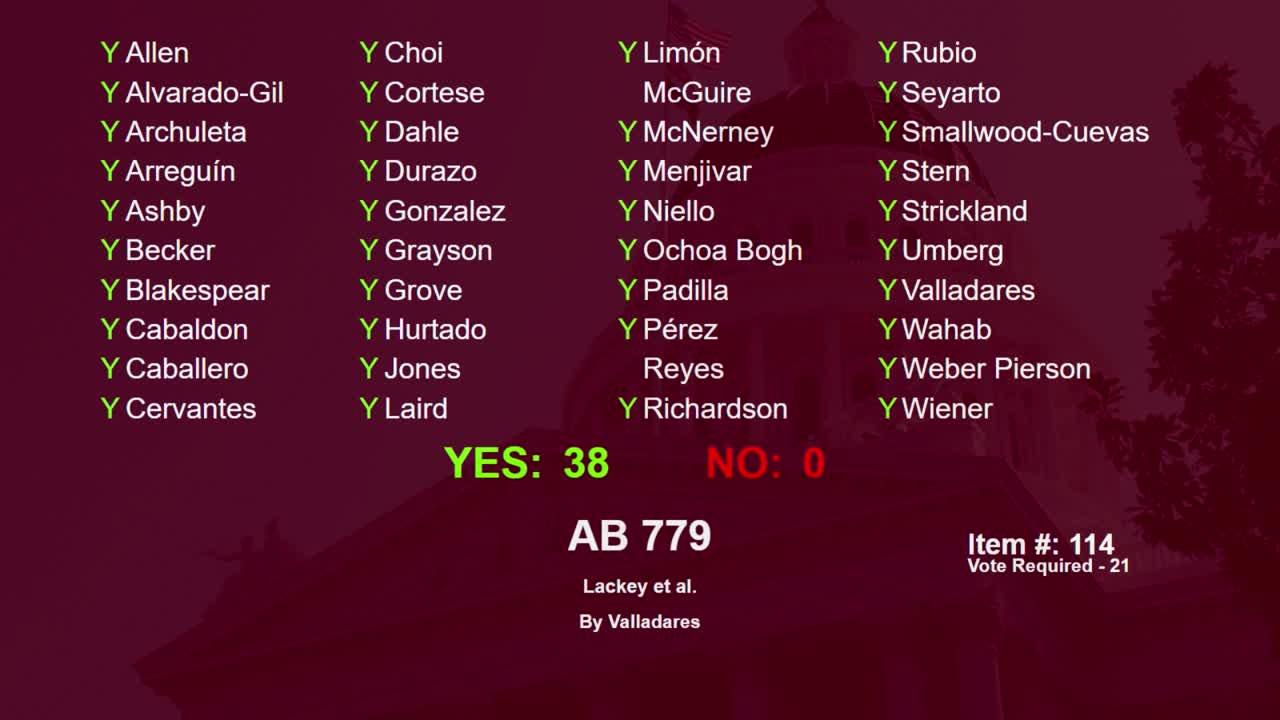
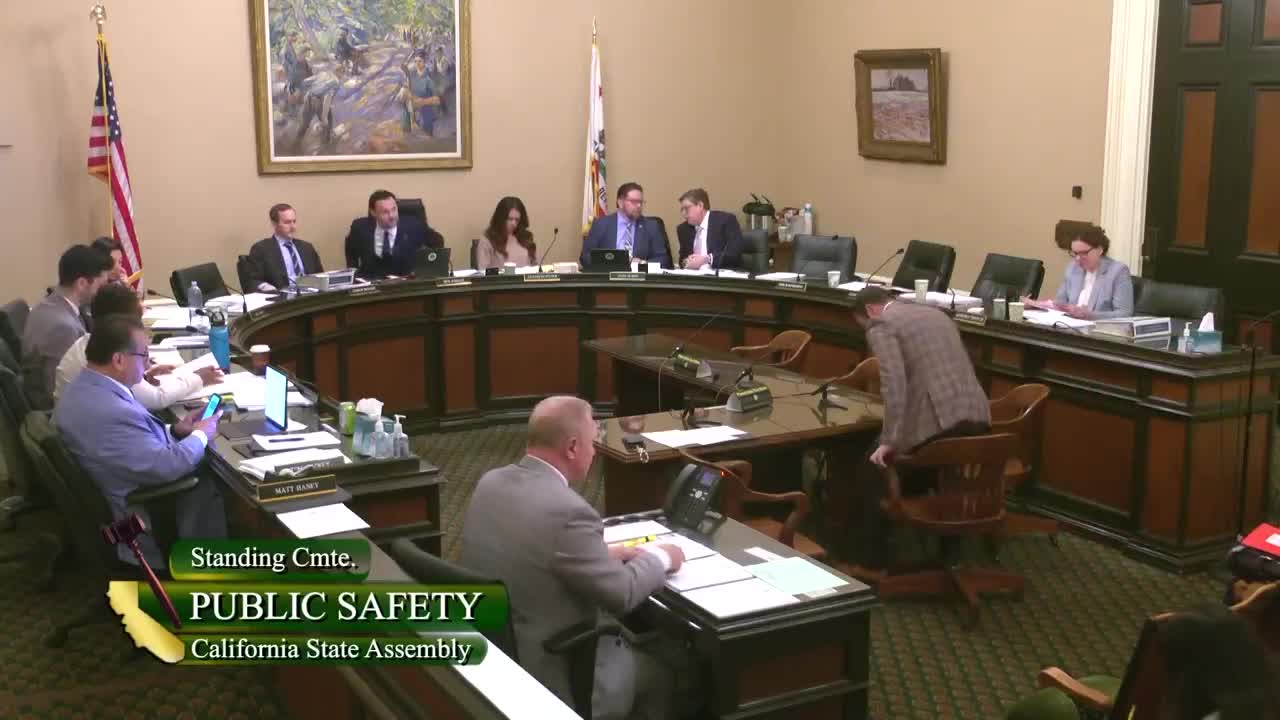
Bill Author

Bill Co-Author(s):