AB 1495: Home health aides: training and certification.
- Session Year: 2025-2026
- House: Assembly
- Latest Version Date: 2025-10-06
Current Status:
Passed
(2025-10-06: Chaptered by Secretary of State - Chapter 400, Statutes of 2025.)
Introduced
In Committee
Awaiting First Chamber Vote
Passed First Chamber
In Committee
Awaiting Second Chamber Vote
Passed Second Chamber
Enacted
Existing law requires the State Department of Public Health to license and regulate home health agencies and to certify and regulate home health aides. Under existing law, a violation of these provisions or the rules and regulations promulgated under these provisions is a misdemeanor. Existing law specifically requires an applicant for certification as a home health aide to complete, among other requirements, a training program approved by the department. Under existing law, a certification for a home health aide is renewed every two years, and to renew an unexpired certificate, the certificate holder is required to apply for renewal on a form provided by the state, as specified.
This bill would require that either a registered nurse or a licensed vocational nurse, as specified, provide the classroom or supervised practical training required for qualification as a certified home health aide. The bill would require an online or distance learning training program for home health aide certification or in-service training for certified home health aides to include specific requirements, including, among others, requiring a trainee to sign an affidavit attesting under penalty of perjury to confirm their identity while completing the program. By expanding the crime of perjury, this bill would impose a state-mandated local program. The bill would require these training programs, among other things, to allow the department access to monitor online or distance learning sessions. This bill would require a certified home health aide, seeking to renew their unexpired certificate, to submit evidence of completing at least 12 hours of in-service training during each 12-month period of the certification. By expanding the duties on home health agencies, applicants for certification as a certified home health aide, or certified home health aides, this bill would expand an existing crime, thereby imposing a state-mandated local program.
The California Constitution requires the state to reimburse local agencies and school districts for certain costs mandated by the state. Statutory provisions establish procedures for making that reimbursement.
This bill would provide that no reimbursement is required by this act for a specified reason.
(a)A person who provides classroom and supervised practical training for a home health aide, as mandated in Section 1736.1, shall be either of the following:
(1)A registered nurse who possesses a minimum of two years nursing experience, at least one year of which is in home health care.
(2)A licensed vocational nurse under the general supervision of a registered nurse who meets the requirements of paragraph (1).
(b)Notwithstanding any other law, a person described in subdivision (a) shall not be required to hold a teaching credential to provide instruction as part of a home health aide certification program, as described in Section 1736.1.
SEC. 2.Section 1736.16 is added to the Health and Safety Code, immediately following Section 1736.15, to read:1736.16.(a)An online or distance learning training program for home health aide certification or in-service training shall comply with all of the following requirements:
(1)Provide online instruction in which the trainee and their approved instructor are online at the same or similar times and allows them to use real-time collaborative software that combines audio, video, file sharing, or any other forms of approved interaction and communication.
(2)Require the use of a personal identification number or personal identification information that confirms the identity of a trainee or instructor, including, but not limited to, having a trainee sign an affidavit attesting under penalty of perjury as to their identity while completing the program.
(3)Provide safeguards to protect personal information.
(4)Include policies and procedures to ensure that instructors are accessible to trainees outside of the normal instruction times.
(5)Include policies and procedures for equipment failures, student absences, and completing assignments past original deadlines.
(6)Provide a clear explanation on its internet website of all technology requirements to participate in and complete the program.
(7)Provide the department with statistics about the performance of trainees in the program, including, but not limited to, exam pass rate and the rate at which trainees repeat each module of the program, and any other information requested by the department regarding trainee participation in and completion of the program.
(b)In addition to the requirements set forth in subdivision (a), an online or distance learning training program or in-service training for certified home health aides shall meet the same standards as a traditional, classroom-based program, and comply with any other standard established by the department for online or distance learning home health aide training programs. Notwithstanding any other law, the department may, without taking any regulatory actions pursuant to Chapter 3.5 (commencing with Section 11340) of Part 1 of Division 3 of Title 2 of the Government Code, implement, interpret, or make specific this section by means of an All Facilities Letter (AFL) or similar instruction.
(c)As a condition of approval by the department, an online or distance learning training program or in-service training for home health aide certification shall provide the department with access rights to the program for the purposes of verifying that the program complies with all requirements and allowing the department to monitor online or distance learning sessions.
SEC. 3.Section 1736.2 of the Health and Safety Code is amended to read:1736.2.(a)Certificates issued for certified home health aides shall be renewed every two years and renewal shall be conditioned on the certificate holder obtaining a criminal record clearance pursuant to Section 1736.6.
(b)Certificates issued to certified home health aides shall expire on the certificate holders birthday.
(c)To renew an unexpired certificate, the certificate holder shall, on or before the certificate expiration date, apply for renewal on a form provided by the state department and submit evidence of completing at least 12 hours of in-service training during each 12-month period of the certification.
(d)The department shall give written notice to a certificate holder 90 days in advance of the renewal date and 90 days in advance of the expiration of the fourth year that an application has not been submitted, and shall give written notice informing the certificate holder in general terms of the provisions governing certificate renewal for certified home health aides. Nonreceipt of the renewal notice does not relieve the certificate holder of the obligation to make a timely renewal. Failure to make a timely renewal shall result in expiration of the certificate.
(e)Except as otherwise provided in this article, an expired certificate may be renewed at any time within four years after its expiration on the filing of an application for renewal on a form prescribed by the department.
Renewal under this article shall be effective on the date on which the application is filed. If renewed, the certificate shall continue in effect until the date provided for in this section, when it shall expire if it is not again renewed.
(f)If a certified home health aide applies for renewal more than 30 days after expiration but within four years after the expiration, and demonstrates in writing to the departments satisfaction why the renewal application was late, then the state department shall issue a renewal. A suspended certificate is subject to expiration and shall be renewed as provided in this article, but this renewal does not entitle the certificate holder, while the certificate remains suspended, and until it is reinstated, to engage in the certified activity, or in any other activity or conduct in violation of the order or judgment by which the certificate was suspended.
(g)A revoked certificate is subject to expiration as provided in this section, but it cannot be renewed.
(h)A certificate that is not renewed within four years after its expiration cannot be renewed, restored, reissued, or reinstated except upon completion of a certification training program unless deemed otherwise by the state department if both of the following conditions are met:
(1)No fact, circumstance, or condition exists that, if the certificate were issued, would justify its revocation or suspension.
(2)The person takes and passes any examination that may be required of an applicant for a new certificate at that time, that shall be given by an approved provider of a certification training program.
(i)Certificate holders shall notify the department within 60 days of any change of address. Any notice sent by the department shall be effective if mailed to the current address filed with the department.
(j)Certificate holders that have been certified as both nurse assistants pursuant to Article 9 (commencing with Section 1337) of Chapter 2 of Division 2 and home health aides pursuant to this chapter shall renew their certificates at the same time on one application.
SEC. 4.No reimbursement is required by this act pursuant to Section 6 of Article XIIIB of the California Constitution because the only costs that may be incurred by a local agency or school district will be incurred because this act creates a new crime or infraction, eliminates a crime or infraction, or changes the penalty for a crime or infraction, within the meaning of Section 17556 of the Government Code, or changes the definition of a crime within the meaning of Section 6 of Article XIIIB of the California Constitution.
(a)A person who provides classroom and supervised practical training for a home health aide, as mandated in Section 1736.1, shall be either of the following:
(1)A registered nurse who possesses a minimum of two years nursing experience, at least one year of which is in home health care.
(2)A licensed vocational nurse under the general supervision of a registered nurse who meets the requirements of paragraph (1).
(b)Notwithstanding any other law, a person described in subdivision (a) shall not be required to hold a teaching credential to provide instruction as part of a home health aide certification program, as described in Section 1736.1.
SEC. 2.Section 1736.16 is added to the Health and Safety Code, immediately following Section 1736.15, to read:1736.16.(a)An online or distance learning training program for home health aide certification or in-service training shall comply with all of the following requirements:
(1)Provide online instruction in which the trainee and their approved instructor are online at the same or similar times and allows them to use real-time collaborative software that combines audio, video, file sharing, or any other forms of approved interaction and communication.
(2)Require the use of a personal identification number or personal identification information that confirms the identity of a trainee or instructor, including, but not limited to, having a trainee sign an affidavit attesting under penalty of perjury as to their identity while completing the program.
(3)Provide safeguards to protect personal information.
(4)Include policies and procedures to ensure that instructors are accessible to trainees outside of the normal instruction times.
(5)Include policies and procedures for equipment failures, student absences, and completing assignments past original deadlines.
(6)Provide a clear explanation on its internet website of all technology requirements to participate in and complete the program.
(7)Provide the department with statistics about the performance of trainees in the program, including, but not limited to, exam pass rate and the rate at which trainees repeat each module of the program, and any other information requested by the department regarding trainee participation in and completion of the program.
(b)In addition to the requirements set forth in subdivision (a), an online or distance learning training program or in-service training for certified home health aides shall meet the same standards as a traditional, classroom-based program, and comply with any other standard established by the department for online or distance learning home health aide training programs. Notwithstanding any other law, the department may, without taking any regulatory actions pursuant to Chapter 3.5 (commencing with Section 11340) of Part 1 of Division 3 of Title 2 of the Government Code, implement, interpret, or make specific this section by means of an All Facilities Letter (AFL) or similar instruction.
(c)As a condition of approval by the department, an online or distance learning training program or in-service training for home health aide certification shall provide the department with access rights to the program for the purposes of verifying that the program complies with all requirements and allowing the department to monitor online or distance learning sessions.
SEC. 3.Section 1736.2 of the Health and Safety Code is amended to read:1736.2.(a)Certificates issued for certified home health aides shall be renewed every two years and renewal shall be conditioned on the certificate holder obtaining a criminal record clearance pursuant to Section 1736.6.
(b)Certificates issued to certified home health aides shall expire on the certificate holders birthday.
(c)To renew an unexpired certificate, the certificate holder shall, on or before the certificate expiration date, apply for renewal on a form provided by the state. state department and submit evidence of completing at least 12 hours of in-service training during each 12-month period of the certification.
(d)The department shall give written notice to a certificate holder 90 days in advance of the renewal date and 90 days in advance of the expiration of the fourth year that an application has not been submitted, and shall give written notice informing the certificate holder in general terms of the provisions governing certificate renewal for certified home health aides. Nonreceipt of the renewal notice does not relieve the certificate holder of the obligation to make a timely renewal. Failure to make a timely renewal shall result in expiration of the certificate.
(e)Except as otherwise provided in this article, an expired certificate may be renewed at any time within four years after its expiration on the filing of an application for renewal on a form prescribed by the department.
Renewal under this article shall be effective on the date on which the application is filed. If renewed, the certificate shall continue in effect until the date provided for in this section, when it shall expire if it is not again renewed.
(f)If a certified home health aide applies for renewal more than 30 days after expiration but within four years after the expiration, and demonstrates in writing to the departments satisfaction why the renewal application was late, then the state department shall issue a renewal. A suspended certificate is subject to expiration and shall be renewed as provided in this article, but this renewal does not entitle the certificate holder, while the certificate remains suspended, and until it is reinstated, to engage in the certified activity, or in any other activity or conduct in violation of the order or judgment by which the certificate was suspended.
(g)A revoked certificate is subject to expiration as provided in this section, but it cannot be renewed.
(h)A certificate that is not renewed within four years after its expiration cannot be renewed, restored, reissued, or reinstated except upon completion of a certification training program unless deemed otherwise by the state department if both of the following conditions are met:
(1)No fact, circumstance, or condition exists that, if the certificate were issued, would justify its revocation or suspension.
(2)The person takes and passes any examination that may be required of an applicant for a new certificate at that time, that shall be given by an approved provider of a certification training program.
(i)Certificate holders shall notify the department within 60 days of any change of address. Any notice sent by the department shall be effective if mailed to the current address filed with the department.
(j)Certificate holders that have been certified as both nurse assistants pursuant to Article 9 (commencing with Section 1337) of Chapter 2 of Division 2 and home health aides pursuant to this chapter shall renew their certificates at the same time on one application.
SEC. 4.No reimbursement is required by this act pursuant to Section 6 of Article XIIIB of the California Constitution because the only costs that may be incurred by a local agency or school district will be incurred because this act creates a new crime or infraction, eliminates a crime or infraction, or changes the penalty for a crime or infraction, within the meaning of Section 17556 of the Government Code, or changes the definition of a crime within the meaning of Section 6 of Article XIIIB of the California Constitution.
|
Date
|
Status
|
|---|---|
| Oct 6, 2025 | Chaptered by Secretary of State - Chapter 400, Statutes of 2025. |
| Oct 6, 2025 | Approved by the Governor. |
| Sep 2, 2025 | Enrolled and presented to the Governor at 3 p.m. |
| Aug 26, 2025 | In Assembly. Ordered to Engrossing and Enrolling. |
| Aug 25, 2025 | Read third time. Passed. Ordered to the Assembly. (Ayes 37. Noes 0. Page 2252.). |
| Aug 20, 2025 | Read second time. Ordered to Consent Calendar. |
| Aug 19, 2025 | From committee: Be ordered to second reading file pursuant to Senate Rule 28.8 and ordered to Consent Calendar. |
| Jul 10, 2025 | From committee: Do pass and re-refer to Com. on APPR. with recommendation: To Consent Calendar. (Ayes 11. Noes 0.) (July 9). Re-referred to Com. on APPR. |
| Jun 18, 2025 | Referred to Com. on HEALTH. |
| Jun 4, 2025 | In Senate. Read first time. To Com. on RLS. for assignment. |
| Jun 3, 2025 | Read third time. Passed. Ordered to the Senate. (Ayes 79. Noes 0. Page 1998.) |
| May 27, 2025 | Read second time. Ordered to third reading. |
| May 23, 2025 | From committee: Do pass. (Ayes 14. Noes 0.) (May 23). |
| May 14, 2025 | In committee: Set, first hearing. Referred to APPR. suspense file. |
| Apr 30, 2025 | From committee: Do pass and re-refer to Com. on APPR. with recommendation: To Consent Calendar. (Ayes 16. Noes 0.) (April 29). Re-referred to Com. on APPR. |
| Mar 13, 2025 | Referred to Com. on HEALTH. |
| Feb 24, 2025 | Read first time. |
| Feb 22, 2025 | From printer. May be heard in committee March 24. |
| Feb 21, 2025 | Introduced. To print. |
|
Date
|
Description
|
Location
|
Votes
|
|
|---|---|---|---|---|
| Aug 25, 2025 | Consent Calendar 2nd AB1495 Valencia | Senate Floor |
Passed |
|
| Jul 9, 2025 | Do pass, but first be re-referred to the Committee on [Appropriations] with the recommendation: To Consent Calendar | Senate Standing Committee on Health |
Passed |
|
| Jun 3, 2025 | AB 1495 Valencia Assembly Third Reading | Assembly Floor |
Passed |
|
| May 23, 2025 | Do pass. | Assembly Standing Committee on Appropriations |
Passed |
|
| Apr 29, 2025 | Do pass and be re-referred to the Committee on [Appropriations] with recommendation: To Consent Calendar | Assembly Standing Committee on Health |
Passed |
This list shows positions taken on this bill by organizations on the date displayed, which is linked to the original source.
Positions by individuals are not included.
|
Organization
|
Position
|
Date
|
|---|---|---|
| AlzheimerS Association | ** Support | |
| California Association For Health Services At Home | ** Support | |
| cleanearth4kids.org | ** Support |
SENATE RULES COMMITTEE Office of Senate Floor Analyses (916) 651-1520 Fax: (916) 327-4478 | AB 1495 |
CONSENT
Bill No: AB 1495
Author: Valencia (D)
Introduced: 2/21/25
Vote: 21
SENATE HEALTH COMMITTEE: 11-0, 7/9/25
AYES: Menjivar, Valladares, Durazo, Gonzalez, Grove, Limón, Padilla, Richardson, Rubio, Weber Pierson, Wiener
ASSEMBLY FLOOR: 79-0, 6/3/25 - See last page for vote
SUBJECT: Home health aides: training and certification
SOURCE: Author
DIGEST:
This bill (1) establishes requirements and standards for online training, distance learning training, or in-service training for certified home health aides (HHAs). (2) Requires a person who provides classroom and supervised practical training for an HHA to be either: a) a registered nurse (RN) who possesses at least two years nursing experience (with at least one year in home health care); or, b) a licensed vocational nurse under the general supervision of the RN.
ANALYSIS:
Existing federal regulations:
- Requires an HHA to receive at least 12 hours of in-service training each year. Permits in-service training to occur while an HHA is furnishing care to a patient. Permits in-service training to be offered by any organization, but is required to be supervised by an RN. [Title 42 Code of Federal Regulations (CFR) §484.80 (d)]
- Requires classroom and supervised practical training to be performed by an RN who has at least two years nursing experience, at least one year in home health care, or by other individuals under the general supervision of the RN. [Title 42 CFR §484.80 (e)]
Existing law:
- Requires organizations that provide skilled nursing services to patients in the home to obtain a home health agency license issued by the California Department of Public Health (CDPH). Prohibits any public or private organization from providing, or arranging for the provision of, skilled nursing services in the home without first obtaining a home health agency license. [Health and Safety Code (HSC) §1725(b) and §1726(a)]
- Defines “home health aide” as an aide who has successfully completed a state-approved training program, is employed by a home health agency or hospice program, and provides personal care services in a patient’s home. Defines “home health aide services” as personal care services provided by a HHA under a plan of treatment prescribed by the patient’s physician. Requires a certified HHA applicant to:
- Have successfully completed a training program with a minimum of 75 hours or an equivalent competency evaluation program approved by CDPH; and,
- Obtain a criminal record clearance from the Department of Justice. [HSC §1727 and §1736.1(a)]
- Requires HHA certificates to be renewed every two years and are conditioned on the certificate holder obtaining a criminal record clearance. [HSC §1736.6]
- Requires CDPH to investigate complaints concerning misconduct by certified HHAs and permits CDPH to take disciplinary action, including denying, suspending, or revoking a certificate. Requires CDPH to maintain a registry that includes the status of all certified HHAs, including the status of any proposed or completed disciplinary actions. Requires home health agencies and hospice providers that hire certified HHAs to consult the registry prior to hiring these individuals or placing them in direct contact with patients. [HSC §1736.4 and §1736.5]
Existing state regulations:
- Requires the basic training for an HHA certificate program to be 120 hours consisting of at least:
- Introduction (four hours): definition, functions, and responsibilities as a HHA as a member of the health service team in a home health agency; and, interpretations of the importance of understanding the employing agency's policies;
- Interpretation of medical and social needs of people being served (20 hours): basic simple description, in lay terms, of disease and its effects on the individual and the family; and, personal adjustment of the individual and his family to illness and disability;
- Personal care services (70 hours): supportive services which are required to help provide and maintain normal bodily and emotional comfort and to assist the patient toward independent living in a safe environment including at least, including assisting patients with personal hygiene; assisting patient in self-care activities (bathing, dressing, feeding); and, assisting with mobility;
- Cleaning and care tasks in the home (10 hours): home safety measures; economical cleaning materials and method of use; maintenance of cleanliness where dishes and food are stored; principles of general cleanliness of environment; and, laundry;
- Nutrition (16 hours): basic principles of diet; meal planning and serving; food purchasing; and, food preparation, sanitation and storage. [22 California Code of Regulations (CCR) §74747]
- Requires the training to include a minimum of 20 hours of clinical experience, of which 15 hours are in personal services, two hours are in cleaning and care tasks, and three hours are in nutrition. Prohibits the training from being any more than 75 hours of classroom lecture. Requires training in personal care services to be given by an RN, preferably a public health nurse. Permits nutritionists, physical therapists, social workers and other health personnel to be involved in appropriate aspects of the training program. Permits personal care services training to be given at a hospital but the emphasis of the program is required to be on home care. [22 CCR §74747]
This bill:
- Requires a person who provides classroom and supervised practical training for a HHA to be either: a) an RN who possesses at least two years nursing experience (with at least one year in home health care); or, b) a licensed vocational nurse under the general supervision of the RN. Prohibits either of these individuals from being required to hold a teaching credential to provide instruction as part of a HHA certification program.
- Requires an online or distance learning training program for home health aide certification or in-service training to:
- Provide online instruction in which the trainee and their approved instructor are online at the same or similar times and allows them to use real-time collaborative software that combines audio, video, file sharing, or any other forms of approved interaction and communication;
- Require the use of a personal identification number or personal identification information that confirms the identity of a trainee or instructor, including, but not limited to, having a trainee sign an affidavit attesting under penalty of perjury as to their identity while completing the program;
- Provide safeguards to protect personal information;
- Include policies and procedures to ensure that instructors are accessible to trainees outside of the normal instruction times;
- Include policies and procedures for equipment failures, student absences, and completing assignments past original deadlines;
- Provide a clear explanation on its website of all technology requirements to participate in and complete the program; and,
- Provide CDPH with statistics about the performance of trainees in the program, including, but not limited to, exam pass rate and the rate at which trainees repeat each module of the program, and any other information requested CDPH regarding trainee participation in and completion of the program.
- Requires an online or distance learning training program or in-service training for certified HHAs to meet the same standards as a traditional, classroom-based program, and comply with any other standard established by CDPH for online or distance learning HHA training programs.
- Permits CDPH, without taking any regulatory actions, to implement, interpret, or make specific provisions of this bill related to online or distance learning by an All Facilities Letter (AFL) or similar instruction.
- Requires an online or distance learning training program or in-service training for HHA certification, as a condition of approval, to provide CDPH with access rights to the program for the purposes of verifying that it complies with all requirements and allowing the CDPH to monitor online or distance learning sessions.
- Requires a certified HHA, in renewing an unexpired certificate, to submit evidence of completing at least 12 hours of in-service training during each 12-month period of the certification.
Comments
According to the author of this bill:
This bill is a crucial step toward addressing California’s growing caregiving crisis. This bill empowers CDPH to permit online or distance learning training programs for HHA training programs. By 2030, one in four Californians will be aged 60 or older, with many relying on home health aides to meet their basic needs. Yet, we are expecting a shortfall of 600,000 to 3.2 million direct care workers by the same year. This bill will expand opportunities for individuals to obtain certification, ensuring we have a larger, qualified pool of home health aides to provide essential services for seniors and others who rely on in-home care. With this bill, we have the opportunity to make meaningful progress in addressing this shortage and ensuring that Californians have the support they deserve.
Background
Master Plan on Aging. In January 2021, the Newsom Administration published its Master Plan for Aging, which is intended to be a ten-year blueprint for state government, local government, the private sector, and philanthropy to prepare the state for the coming demographic changes and “continue California’s leadership in aging, disability, and equity.” The Master Plan for Aging outlines five goals, 23 strategies, and over 100 initiatives. Goal two of the Master Plan, “Health Reimagined,” focuses on ensuring that older adults have access to the care and services needed to optimize health and quality of life and continue to live where they choose. The Master Plan notes that over half of older adults, especially women, will eventually need home care or adult day health care to assist with daily activities such as meal preparation, physical activity, and bathing. One of the key strategies outlined under “Health Reimagined” is “Bridging Health Care with Home,” including testing models of health care delivery that maximize access to services and avoid unnecessary institutionalization. Goal three of the Master Plan, “Inclusion and Equity, not Isolation,” focuses on opportunities for community engagement and protection from isolation.
Direct care workers. HHAs are categorized by the U.S. Bureau of Labor Statistics (BLS) as “direct care workers,” of which there are three types: HHAs, personal care assistants, and nursing assistants (in California these are referred to as “certified nurse assistants” or CNAs). In general, personal care assistants provide custodial care, while HHAs and CNAs provide both custodial and limited skilled care. According to a January 2023 California Health Care Foundation (CHCF) Issue Brief, direct care workers are paid to provide essential, hands-on, daily, and long-term assistance to older adults and people with disabilities. They work in a range of settings (from private homes to community and congregate settings), assisting their clients to maximize their quality of life and supporting their clients’ ability to remain in their own homes or communities when possible. Many of California’s direct care workers come from historically marginalized backgrounds: 80% are women, almost half (47%) are immigrants, and over three-quarters are people of color (38% Latino; 24% Asian, Native Hawaiian, and Pacific Islander; and 12% Black). According to the CHCF Issue Brief, getting an accurate count of California’s direct care workforce is challenging. One reason is that the estimates include those employed by home health agencies and elder care service providers, but may not include independent providers. Additionally, direct care workers may have multiple jobs in different job categories, which could lead to double-counting. For example, a worker might have a full-time job at a nursing home as a CNA and pick up shifts as a personal care assistant at a second job. Finally, a hidden gray market for direct care workers occurs when consumers hire their own workers outside of a regulated program, making accurate counts of direct care workers even more complicated. According to the BLS, California had 811,670 direct care workers in 2021, including 717,220 personal care assistants and HHAs (who were counted as a single category) and 94,450 CNAs. According to CDPH, there are currently 25,234 individuals with active HHA certificates in California.
According to the CHCF Issue Brief, over the next decade, demand for direct care workers will outpace supply in California. Growing demand is driven by an aging and increasingly diverse population, fewer working-aged adults and family caregivers to support this aging population, a growing desire to remain in home and community-based settings, and an increased need for complex care provided in facility-based long-term care settings. Several factors constrain the supply of direct care workers. Direct care work is physically and emotionally demanding, yet wages for direct care workers remain low, and many direct care workers live in poverty. This contributes to high rates of burnout, turnover, and fewer people willing to perform these jobs. Moreover, direct care workers have been on the front line during the COVID-19 pandemic. Yet they were often rendered invisible despite their essential role, receiving little support, supplies, or resources from their employers.
Home health aide training requirements. While statute requires a minimum of 75 hours of training to be a certified home health aide, regulations actually require the basic training program for certification to be a minimum of 120 hours, with the classroom hours limited to 75 hours. Clinical training takes place in health facilities or through home health agencies. Applicants for HHA certificates must be at least 16 years old, obtain a criminal record clearance, and have completed an approved training program. CDPH approves two different types of training programs: a shorter “40 hour” program for applicants that are already CNAs, and therefore have already completed some related training, and the full 120 hour program for applicants without prior certification as a nurse assistant. There over 150 approved “40 hour programs” in 31 counties according to the CDPH L&C website. There only 18 “120 hour programs” listed on the website, and in more limited locations (only in the counties of Alameda, Contra Costa, Fresno, Los Angeles, Orange, Riverside, Sacramento, San Diego, and Sonoma). Programs are offered through community colleges, private nursing schools and career colleges, and public school districts.
COVID-19 waiver. As part of Governor Newsom’s declared State of Emergency during the COVID-19 pandemic, CDPH was granted authority to waive any professional licensing and certification requirements and amend scopes of practices for CNAs, HHAs, and nursing home administrators (among other professions). This was done in order to facilitate the continued provision of health care during the pandemic, and was only authorized for the duration of the declared emergency. CDPH issued an AFL (AFL 20-57.5) stating that an “HHA Training Program may provide up to 75 hours of required classroom training through an online or distance learning format and may begin providing online or distance learning training immediately upon electronic submission of notification to CDPH.” AFL 20-57.5 was rescinded after the state of emergency ended.
Related/Prior Legislation
AB 2069 (Villapudua of 2022) would have established the California Home Health Aide Training Scholarship Act, administered by the Department of Health Care Access and Information (HCAI), to incentivize enrollment in home health aide training programs by awarding $1,500 scholarships. AB 2069 was vetoed by Governor Newsom, who stated, in part: “I support the author's goal of expanding the home health aide workforce. However, this bill duplicates existing HCAI programs that provide funding and scholarships to support and expand the home health aide workforce throughout the state. An individual interested in becoming a home health aide can apply to HCAI's Allied Healthcare Scholarship Program for financial assistance.”
FISCAL EFFECT: Appropriation: No Fiscal Com.: Yes Local: Yes
Senate Rule 28.8
SUPPORT: (Verified 8/18/25)
Alzheimer’s Association
California Association for Health Services at Home
CleanEarth4Kids.org
OPPOSITION: (Verified 8/18/25)
None received
ARGUMENTS IN SUPPORT: The Alzheimer’s Association (AA) supports this bill and states that HHAs provide an integral service to individuals living with Alzheimer’s disease or other dementia by assisting them with Activities of Daily Living. This also provides caregivers with some respite from their responsibilities for their own personal care, which prevents caregiver fatigue. AA argues that under this bill HHAs will receive training to provide quality care to individuals who are living at home with their condition. This training will give caregivers a sense of comfort when leaving their loved one, which can be a guilt-ridden and anxiety inducing experience. AA concludes that this bill provides access to a profession that is badly needed especially as California’s population is aging in a critical mass. The California Association for Health Services at Home (CAHSAH) also supports this bill stating California’s allied health workforce is critically in need of more certified HHAs as California’s senior population continues to grow exponentially each year. CAHSAH says home health agencies are experiencing more hospital referrals for patients who need home health services. California must be ready with a qualified workforce to meet the growing demands of individuals who wish to receive care in their homes. CAHSAH is especially pleased that this bill contains provisions to authorize certified home health aides to complete their continuing education units online. With the growing advancements in online training and the requirement for an RN or LVN to provide the classroom or supervised practical training required for qualification as a certified HHA, CAHSAH is confident the right bill provisions are in place to ensure quality care. Certified HHA training programs are very limited throughout the state and many counties do not offer training programs. CAHSAH concludes that’ creating the authorization for completing training online will greatly improve access to training throughout the entire state and especially in California’s rural areas.
ASSEMBLY FLOOR: 79-0, 6/3/25
AYES: Addis, Aguiar-Curry, Ahrens, Alanis, Alvarez, Arambula, Ávila Farías, Bains, Bauer-Kahan, Bennett, Berman, Boerner, Bonta, Bryan, Calderon, Caloza, Carrillo, Castillo, Chen, Connolly, Davies, DeMaio, Dixon, Elhawary, Ellis, Flora, Fong, Gabriel, Gallagher, Garcia, Gipson, Jeff Gonzalez, Mark González, Hadwick, Haney, Harabedian, Hart, Hoover, Irwin, Jackson, Kalra, Krell, Lackey, Lee, Lowenthal, Macedo, McKinnor, Muratsuchi, Nguyen, Ortega, Pacheco, Papan, Patel, Patterson, Pellerin, Petrie-Norris, Quirk-Silva, Ramos, Ransom, Celeste Rodriguez, Michelle Rodriguez, Rogers, Blanca Rubio, Sanchez, Schiavo, Schultz, Sharp-Collins, Solache, Soria, Stefani, Ta, Tangipa, Valencia, Wallis, Ward, Wicks, Wilson, Zbur, Rivas
Prepared by: Melanie Moreno / HEALTH / (916) 651-4111
8/21/25 16:45:47
**** END ****
SENATE COMMITTEE ON HEALTH
Senator Caroline Menjivar, Chair
BILL NO: AB 1495
AUTHOR: | Valencia | ||
VERSION: | February 21, 2025 | ||
HEARING DATE: | July 9, 2025 | ||
CONSULTANT: | Melanie Moreno | ||
SUBJECT: Home health aides: training and certification
SUMMARY:
Establishes requirements and standards for online training, distance learning training, or in-service training for certified home health aides (HHAs). Requires a person who provides classroom and supervised practical training for an HHA to be either: a) a registered nurse (RN) who possesses at least two years nursing experience (with at least one year in home health care); or, b) a licensed vocational nurse under the general supervision of the RN.
Existing law:
- Requires organizations that provide skilled nursing services to patients in the home to obtain a home health agency license issued by the California Department of Public Health (CDPH). Prohibits any public or private organization from providing, or arranging for the provision of, skilled nursing services in the home without first obtaining a home health agency license. [HSC §1725(b) and §1726(a)]
- Defines “home health aide” as an aide who has successfully completed a state-approved training program, is employed by a home health agency or hospice program, and provides personal care services in a patient’s home. Defines “home health aide services” as personal care services provided by a HHA under a plan of treatment prescribed by the patient’s physician. Requires a certified HHA applicant to:
- Have successfully completed a training program with a minimum of 75 hours or an equivalent competency evaluation program approved by CDPH; and,
- Obtain a criminal record clearance from the Department of Justice. [HSC §1727 and §1736.1(a)]
- Requires HHA certificates to be renewed every two years and are conditioned on the certificate holder obtaining a criminal record clearance. [HSC §1736.6]
- Requires CDPH to investigate complaints concerning misconduct by certified HHAs and permits CDPH to take disciplinary action, including denying, suspending, or revoking a certificate. Requires CDPH to maintain a registry that includes the status of all certified HHAs, including the status of any proposed or completed disciplinary actions. Requires home health agencies and hospice providers that hire certified HHAs to consult the registry prior to hiring these individuals or placing them in direct contact with patients. [HSC §1736.4 and §1736.5]
Existing state regulations:
- Requires the basic training for an HHA certificate program to be 120 hours consisting of at least:
- Introduction (four hours): definition, functions, and responsibilities as a HHA as a member of the health service team in a home health agency; and, interpretations of the importance of understanding the employing agency's policies;
- Interpretation of medical and social needs of people being served (20 hours): basic simple description, in lay terms, of disease and its effects on the individual and the family; and, personal adjustment of the individual and his family to illness and disability;
- Personal care services (70 hours): supportive services which are required to help provide and maintain normal bodily and emotional comfort and to assist the patient toward independent living in a safe environment including at least, including assisting patients with personal hygiene; assisting patient in self-care activities (bathing, dressing, feeding); and, assisting with mobility;
- Cleaning and care tasks in the home (10 hours): home safety measures; economical cleaning materials and method of use; maintenance of cleanliness where dishes and food are stored; principles of general cleanliness of environment; and, laundry;
- Nutrition (16 hours): basic principles of diet; meal planning and serving; food purchasing; and, food preparation, sanitation and storage. [22 CCR §74747]
- Requires the training to include a minimum of 20 hours of clinical experience, of which 15 hours are in personal services, two hours are in cleaning and care tasks, and three hours are in nutrition. Prohibits the training from being any more than 75 hours of classroom lecture. Requires training in personal care services to be given by an RN, preferably a public health nurse. Permits nutritionists, physical therapists, social workers and other health personnel to be involved in appropriate aspects of the training program. Permits personal care services training to be given at a hospital but the emphasis of the program is required to be on home care. [22 CCR §74747]
Existing federal regulations:
- Requires an HHA to receive at least 12 hours of in-service training each year. Permits in-service training to occur while an HHA is furnishing care to a patient. Permits in-service training to be offered by any organization, but is required to be supervised by an RN. [Title 42 CFR §484.80 (d)]
- Requires classroom and supervised practical training to be performed by an RN who has at least two years nursing experience, at least one year in home health care, or by other individuals under the general supervision of the RN. [Title 42 CFR §484.80 (e)]
This bill:
- Requires a person who provides classroom and supervised practical training for a HHA to be either: a) an RN who possesses at least two years nursing experience (with at least one year in home health care); or, b) a licensed vocational nurse under the general supervision of the RN. Prohibits either of these individuals from being required to hold a teaching credential to provide instruction as part of a HHA certification program.
- Requires an online or distance learning training program for home health aide certification or in-service training to:
- Provide online instruction in which the trainee and their approved instructor are online at the same or similar times and allows them to use real-time collaborative software that combines audio, video, file sharing, or any other forms of approved interaction and communication;
- Require the use of a personal identification number or personal identification information that confirms the identity of a trainee or instructor, including, but not limited to, having a trainee sign an affidavit attesting under penalty of perjury as to their identity while completing the program;
- Provide safeguards to protect personal information;
- Include policies and procedures to ensure that instructors are accessible to trainees outside of the normal instruction times;
- Include policies and procedures for equipment failures, student absences, and completing assignments past original deadlines;
- Provide a clear explanation on its website of all technology requirements to participate in and complete the program; and,
- Provide CDPH with statistics about the performance of trainees in the program, including, but not limited to, exam pass rate and the rate at which trainees repeat each module of the program, and any other information requested CDPH regarding trainee participation in and completion of the program.
- Requires an online or distance learning training program or in-service training for certified HHAs to meet the same standards as a traditional, classroom-based program, and comply with any other standard established by CDPH for online or distance learning HHA training programs.
- Permits CDPH, without taking any regulatory actions, to implement, interpret, or make specific provisions of this bill related to online or distance learning by an All Facilities Letter (AFL) or similar instruction.
- Requires an online or distance learning training program or in-service training for HHA certification, as a condition of approval, to provide CDPH with access rights to the program for the purposes of verifying that it complies with all requirements and allowing the CDPH to monitor online or distance learning sessions.
- Requires a certified HHA, in renewing an unexpired certificate, to submit evidence of completing at least 12 hours of in-service training during each 12-month period of the certification.
FISCAL EFFECT:
According to the Assembly Appropriations Committee, one-time costs of an unknown amount, potentially in the hundreds of thousands of dollars, for CDPH to communicate the new requirements to HHA training programs and review the training programs for compliance with the provisions of this bill, and additional lower, ongoing costs to continue to review HHA training programs (Licensing and Certification (L&C) Fund). At the time the Appropriations analysis was prepared, DPH had not provided a cost estimate.
PRIOR VOTES:
Assembly Floor: | 79 - 0 |
Assembly Appropriations Committee: | 14 - 0 |
Assembly Health Committee: | 16 - 0 |
COMMENTS:
- Author’s statement. According to the author, this bill is a crucial step toward addressing California’s growing caregiving crisis. This bill empowers CDPH to permit online or distance learning training programs for HHA training programs. By 2030, one in four Californians will be aged 60 or older, with many relying on home health aides to meet their basic needs. Yet, we are expecting a shortfall of 600,000 to 3.2 million direct care workers by the same year. This bill will expand opportunities for individuals to obtain certification, ensuring we have a larger, qualified pool of home health aides to provide essential services for seniors and others who rely on in-home care. With this bill, we have the opportunity to make meaningful progress in addressing this shortage and ensuring that Californians have the support they deserve.
- Master Plan on Aging. In January 2021, the Newsom Administration published its Master Plan for Aging, which is intended to be a ten-year blueprint for state government, local government, the private sector, and philanthropy to prepare the state for the coming demographic changes and “continue California’s leadership in aging, disability, and equity.” The Master Plan for Aging outlines five goals, 23 strategies, and over 100 initiatives. Goal two of the Master Plan, “Health Reimagined,” focuses on ensuring that older adults have access to the care and services needed to optimize health and quality of life and continue to live where they choose. The Master Plan notes that over half of older adults, especially women, will eventually need home care or adult day health care to assist with daily activities such as meal preparation, physical activity, and bathing. One of the key strategies outlined under “Health Reimagined” is “Bridging Health Care with Home,” including testing models of health care delivery that maximize access to services and avoid unnecessary institutionalization. Goal three of the Master Plan, “Inclusion and Equity, not Isolation,” focuses on opportunities for community engagement and protection from isolation.
- Direct care workers. HHAs are categorized by the U.S. Bureau of Labor Statistics (BLS) as “direct care workers,” of which there are three types: HHAs, personal care assistants, and nursing assistants (in California these are referred to as “certified nurse assistants” or CNAs). In general, personal care assistants provide custodial care, while HHAs and CNAs provide both custodial and limited skilled care. According to a January 2023 California Health Care Foundation (CHCF) Issue Brief, direct care workers are paid to provide essential, hands-on, daily, and long-term assistance to older adults and people with disabilities. They work in a range of settings (from private homes to community and congregate settings), assisting their clients to maximize their quality of life and supporting their clients’ ability to remain in their own homes or communities when possible. Many of California’s direct care workers come from historically marginalized backgrounds: 80% are women, almost half (47%) are immigrants, and over three-quarters are people of color (38% Latino; 24% Asian, Native Hawaiian, and Pacific Islander; and 12% Black). According to the CHCF Issue Brief, getting an accurate count of California’s direct care workforce is challenging. One reason is that the estimates include those employed by home health agencies and elder care service providers, but may not include independent providers. Additionally, direct care workers may have multiple jobs in different job categories, which could lead to double-counting. For example, a worker might have a full-time job at a nursing home as a CNA and pick up shifts as a personal care assistant at a second job. Finally, a hidden gray market for direct care workers occurs when consumers hire their own workers outside of a regulated program, making accurate counts of direct care workers even more complicated. According to the BLS, California had 811,670 direct care workers in 2021, including 717,220 personal care assistants and HHAs (who were counted as a single category) and 94,450 CNAs. According to CDPH, there are currently 25,234 individuals with active HHA certificates in California.
According to the CHCF Issue Brief, over the next decade, demand for direct care workers will outpace supply in California. Growing demand is driven by an aging and increasingly diverse population, fewer working-aged adults and family caregivers to support this aging population, a growing desire to remain in home and community-based settings, and an increased need for complex care provided in facility-based long-term care settings. Several factors constrain the supply of direct care workers. Direct care work is physically and emotionally demanding, yet wages for direct care workers remain low, and many direct care workers live in poverty. This contributes to high rates of burnout, turnover, and fewer people willing to perform these jobs. Moreover, direct care workers have been on the front line during the COVID-19 pandemic. Yet they were often rendered invisible despite their essential role, receiving little support, supplies, or resources from their employers.
- Home health aide training requirements. While statute requires a minimum of 75 hours of training to be a certified home health aide, regulations actually require the basic training program for certification to be a minimum of 120 hours, with the classroom hours limited to 75 hours. Clinical training takes place in health facilities or through home health agencies. Applicants for HHA certificates must be at least 16 years old, obtain a criminal record clearance, and have completed an approved training program. CDPH approves two different types of training programs: a shorter “40 hour” program for applicants that are already CNAs, and therefore have already completed some related training, and the full 120 hour program for applicants without prior certification as a nurse assistant. There over 150 approved “40 hour programs” in 31 counties according to the CDPH L&C website. There only 18 “120 hour programs” listed on the website, and in more limited locations (only in the counties of Alameda, Contra Costa, Fresno, Los Angeles, Orange, Riverside, Sacramento, San Diego, and Sonoma). Programs are offered through community colleges, private nursing schools and career colleges, and public school districts.
- COVID-19 waiver. As part of Governor Newsom’s declared State of Emergency during the COVID-19 pandemic, CDPH was granted authority to waive any professional licensing and certification requirements and amend scopes of practices for CNAs, HHAs, and nursing home administrators (among other professions). This was done in order to facilitate the continued provision of health care during the pandemic, and was only authorized for the duration of the declared emergency. CDPH issued an AFL (AFL 20-57.5) stating that an “HHA Training Program may provide up to 75 hours of required classroom training through an online or distance learning format and may begin providing online or distance learning training immediately upon electronic submission of notification to CDPH.” AFL 20-57.5 was rescinded after the state of emergency ended.
- Prior legislation. AB 2069 (Villapudua of 2022) would have established the California Home Health Aide Training Scholarship Act, administered by the Department of Health Care Access and Information (HCAI), to incentivize enrollment in home health aide training programs by awarding $1,500 scholarships. AB 2069 was vetoed by Governor Newsom, who stated, in part: I support the author's goal of expanding the home health aide workforce. However, this bill duplicates existing HCAI programs that provide funding and scholarships to support and expand the home health aide workforce throughout the state. An individual interested in becoming a home health aide can apply to HCAI's Allied Healthcare Scholarship Program for financial assistance.
- Support. The Alzheimer’s Association (AA) supports this bill and states that HHAs provide an integral service to individuals living with Alzheimer’s disease or other dementia by assisting them with Activities of Daily Living. This also provides caregivers with some respite from their responsibilities for their own personal care, which prevents caregiver fatigue. AA argues that under this bill HHAs will receive training to provide quality care to individuals who are living at home with their condition. This training will give caregivers a sense of comfort when leaving their loved one, which can be a guilt-ridden and anxiety inducing experience. AA concludes that this bill provides access to a profession that is badly needed especially as California’s population is aging in a critical mass. The California Association for Health Services at Home (CAHSAH) also supports this bill stating California’s allied health workforce is critically in need of more certified HHAs as California’s senior population continues to grow exponentially each year. CAHSAH says home health agencies are experiencing more hospital referrals for patients who need home health services. California must be ready with a qualified workforce to meet the growing demands of individuals who wish to receive care in their homes. CAHSAH is especially pleased that this bill contains provisions to authorize certified home health aides to complete their continuing education units online. With the growing advancements in online training and the requirement for an RN or LVN to provide the classroom or supervised practical training required for qualification as a certified HHA, CAHSAH is confident the right bill provisions are in place to ensure quality care. Certified HHA training programs are very limited throughout the state and many counties do not offer training programs. CAHSAH concludes that’ creating the authorization for completing training online will greatly improve access to training throughout the entire state and especially in California’s rural areas.
SUPPORT AND OPPOSITION:
Support: Alzheimer’s Association
California Association for Health Services at Home
Oppose: None received
-- END --
ASSEMBLY THIRD READING
ATR Bill Id:AB 1495
Author:(Valencia)
As Introduced Ver:February 21, 2025
Majority vote
SUMMARY
Requires that either a registered nurse (RN) or a licensed vocational nurse (LVN), as specified, provide the classroom or supervised practical training required for qualification as a certified home health aide (HHA). Requires an online or distance learning training program for HHA certification or in-service training for certified HHAs to include specific requirements, including, among others, requiring a trainee to sign an affidavit attesting under penalty of perjury to confirm their identity while completing the program.
Major Provisions
COMMENTS
Home health aides. According to AARP, a recent analysis estimates that 56% of people turning 65 between 2021 and 2025 will need long term services and supports (LTSS) in their lifetime and millions of people need (or will need) LTSS before they reach age 65. Those trends are fueling rapid growth in the home health care field. According to the most recent data from the federal Bureau of Labor Statistics (BLS), there were more than 3.9 million HHAs and personal care aides working nationwide in 2023, up from 3.5 million three years earlier. The BLS projects their ranks to swell by 21% by 2033, much faster than the average across all occupations. The median wage for a personal care or home health aide in 2023 was $16.78 an hour, or about $34,900 a year, according to BLS.
Home health aide training. While statute requires a minimum of 75 hours of training to be a certified home health aide, current regulations actually require the basic training program for certification to be a minimum of 120 hours, with the classroom hours limited to 75 hours. The State Department of Public Health (DPH) approves two different types of training programs: a shorter 40-hour training program for applicants that are already certified nurse assistants (CNAs), and therefore have already completed some related training, and the full 120-hour program for applicants without prior certification as a nurse assistant. DPH approves and maintains a list of postsecondary education institution HHA training programs in the state. Currently there are 164 approved programs located at California Community Colleges, for-profit institutions, and non-profit institutions throughout the state. These programs only offer the 40-hour HHA training program that is taken after a prospective student has completed the CNA certificate. DPH's training website indicates that there are only 20 training programs that offer the 120-hour course in just 11 counties.
Master Plan on Aging. In January 2021, the Newsom Administration published its Master Plan for Aging, which is intended to be a ten-year blueprint for state government, local government, the private sector, and philanthropy to prepare the state for the coming demographic changes and "continue California's leadership in aging, disability, and equity." The Master Plan for Aging outlines five goals, 23 strategies, and over 100 initiatives. Goal two of the Master Plan, "Health Reimagined," focuses on ensuring that older adults have access to the care and services needed to optimize health and quality of life and continue to live where they choose. The Master Plan notes that over half of older adults, especially women, will eventually need home care or adult day health care to assist with daily activities such as meal preparation, physical activity, and bathing. One of the key strategies outlined under "Health Reimagined" is "Bridging Health Care with Home," including testing models of health care delivery that maximize access to services and avoid unnecessary institutionalization. Goal three of the Master Plan, "Inclusion and Equity, not Isolation," focuses on opportunities for community engagement and protection from isolation.
According to the Author
This bill is a crucial step toward addressing California's growing caregiving crisis. This bill empowers DPH to permit online or distance learning training programs for HHA training programs. The author states that by 2030, one in four Californians will be aged 60 or older, with many relying on HHAs to meet their basic needs yet, we are expecting a shortfall of 600,000 to 3.2 million direct care workers by the same year. The author argues that this bill will expand opportunities for individuals to obtain certification, ensuring we have a larger, qualified pool of HHAs to provide essential services for seniors and others who rely on in-home care. The author concludes that with this bill, we have the opportunity to make meaningful progress in addressing this shortage and ensuring that Californians have the support they deserve.
Arguments in Support
The Alzheimer's Association (AA) supports this bill and states that HHAs provide an integral service to individuals living with Alzheimer's disease or other dementia by assisting them with Activities of Daily Living. This also provides caregivers with some respite from their responsibilities for their own personal care, which prevents caregiver fatigue. AA argues that under this bill HHAs will receive training to provide quality care to individuals who are living at home with their condition. This training will give caregivers a sense of comfort when leaving their loved one, which can be a guilt-ridden and anxiety inducing experience. AA concludes that this bill provides access to a profession that is badly needed especially as California’s population is aging in a critical mass.
The California Association for Health Services at Home (CAHSAH) also supports this bill stating California's allied health workforce is critically in need of more certified HHAs as California's senior population continues to grow exponentially each year. CAHSAH says home health agencies are experiencing more hospital referrals for patients who need home health services. California must be ready with a qualified workforce to meet the growing demands of individuals who wish to receive care in their homes. CAHSAH is especially pleased that this bill contains provisions to authorize certified home health aides to complete their continuing education units online. With the growing advancements in online training and the requirement for an RN or LVN to provide the classroom or supervised practical training required for qualification as a certified HHA, CAHSAH is confident the right bill provisions are in place to ensure quality care. Certified HHA training programs are very limited throughout the state and many counties do not offer training programs. CAHSAH concludes that’ creating the authorization for completing training online will greatly improve access to training throughout the entire state and especially in California's rural areas.
Arguments in Opposition
None.
FISCAL COMMENTS
According to the Assembly Appropriations Committee, one-time costs of an unknown amount, potentially in the hundreds of thousands of dollars, for DPH to communicate the new requirements to HHA training programs and review the training programs for compliance with the provisions of this bill, and additional lower, ongoing costs to continue to review HHA training programs (Licensing and Certification Fund). At the time the Appropriations analysis was prepared, DPH had not provided a cost estimate.
VOTES
ASM HEALTH: 16-0-0
YES: Bonta, Chen, Addis, Aguiar-Curry, Arambula, Carrillo, Flora, Mark González, Krell, Patel, Patterson, Celeste Rodriguez, Sanchez, Schiavo, Sharp-Collins, Stefani
ASM APPROPRIATIONS: 14-0-1
YES: Wicks, Arambula, Calderon, Caloza, Dixon, Elhawary, Fong, Mark González, Hart, Pacheco, Pellerin, Solache, Ta, Tangipa
ABS, ABST OR NV: Sanchez
UPDATED
VERSION: February 21, 2025
CONSULTANT: Logan Hess / HEALTH / (916) 319-2097 FN: 0000844
Date of Hearing: May 14, 2025
ASSEMBLY COMMITTEE ON APPROPRIATIONS
Buffy Wicks, Chair
ABPCA Bill Id:AB 1495
Author:(Valencia) – As Introduced Ver:February 21, 2025
Policy Committee: | Health | Vote: | 16 - 0 |
|
| ||
|
|
Urgency: No State Mandated Local Program: Yes Reimbursable: No
SUMMARY:
This bill requires that either a registered nurse (RN) or a licensed vocational nurse (LVN), as specified, provide the classroom and supervised practical training required for qualification as a certified home health aide (HHA). This bill also requires an online or distance learning training program for HHA certification or in-service training for certified HHAs meet specific requirements.
Specifically, this bill:
- Requires a person who provides classroom and supervised practical training for an HHA to be either an RN with a minimum of two years nursing experience, at least one year of which was in home health care; or an LVN under the general supervision of an RN who is qualified to teach the HHA training. Provides that an RN is not required to hold a teaching credential to provide instruction in an HHA certification program.
- Requires an online or distance learning training program for HHA certification or in-service training to comply with all of the following requirements:
- Provide online instruction in which the trainee and their approved instructor are online at the same or similar times and allows them to use real-time collaborative software that combines audio, video, file sharing, or any other forms of approved interaction and communication.
- Require the use of a personal identification number or personal identification information that confirms the identity of a trainee or instructor, as specified.
- Provide safeguards to protect personal information.
- Include policies and procedures to ensure that instructors are accessible to trainees outside of the normal instruction times.
- Include policies and procedures for equipment failures, student absences, and completing assignments past original deadlines.
- Provide a clear explanation on its internet website of all technology requirements to participate in and complete the program.
- Provide the California Department of Public Health (CDPH) with statistics about the performance of trainees in the program, including exam pass rate and the rate at which trainees repeat each module of the program, and any other information requested by CDPH regarding trainee participation in and completion of the program.
- Requires, in addition to the requirements set forth in item 2, above, an online or distance learning training program or in-service training for certified HHAs to meet the same standards as a traditional, classroom-based program, and comply with any other standard established by CDPH for online or distance learning HHA training programs.
- Authorizes CDPH to implement, interpret, or make specific the provisions of this bill by means of an All Facilities Letter or similar instruction without taking any regulatory actions.
- Requires as a condition of approval by CDPH, an online or distance learning training program or in-service training for HHA certification to provide CDPH with access rights to the program for the purposes of verifying that the program complies with all requirements and allowing CDPH to monitor online or distance learning sessions.
FISCAL EFFECT:
One-time costs of an unknown amount, potentially in the hundreds of thousands of dollars, for CDPH to communicate the new requirements to HHA training programs and review the training programs for compliance with the provisions of this bill, and additional lower, ongoing costs to continue to review HHA training programs (Licensing and Certification Fund). At the time this analysis was prepared, CDPH had not provided a cost estimate.
COMMENTS:
Purpose. According to the author:
AB 1945 is a crucial step toward addressing California’s growing caregiving crisis. This bill empowers the Department of Public Health to permit online or distance learning training programs for Home Health Aide training programs. By 2030, one in four Californians will be aged 60 or older, with many relying on home health aides to meet their basic needs. Yet, we are expecting a shortfall of 600,000 to 3.2 million direct care workers by the same year. AB 1945 will expand opportunities for individuals to obtain certification, ensuring we have a larger, qualified pool of home health aides to provide essential services for seniors and others who rely on in-home care. With this bill, we have the opportunity to make meaningful progress in addressing this shortage and ensuring that Californians have the support they deserve.
Background. HHAs. A recent analysis estimates 56% of people turning 65 between 2021 and 2025 will need long term services and supports (LTSS) in their lifetime and millions of people need (or will need) LTSS before they reach age 65. According to recent data from the federal Bureau of Labor Statistics (BLS), there were more than 3.9 million HHAs and personal care aides working nationwide in 2023, and BLS projects that number to increase 21% by 2033.
HHA Training. While statute requires a minimum of 75 hours of training to be a certified home health aide, regulations actually require the basic training program for certification to be a minimum of 120 hours, with classroom hours limited to 75 hours. CDPH approves two different types of training programs: a shorter 40-hour training program for applicants who are already certified nurse assistants (CNAs), and therefore have already completed some related training, and the full 120-hour program for applicants without prior certification as a nurse assistant. CDPH approves and maintains a list of postsecondary education institution HHA training programs in the state. There are 164 approved programs located at California Community Colleges, for-profit institutions, and non-profit institutions throughout the state. These programs offer only the 40-hour HHA training program that a prospective student who has completed the CNA certificate may take. CDPH’s training website indicates there are 20 training programs that offer the 120-hour course, in only 11 counties.
Analysis Prepared by: Allegra Kim / APPR. / (916) 319-2081
Date of Hearing: April 29, 2025
ASSEMBLY COMMITTEE ON HEALTH
Mia Bonta, Chair
ABPCA Bill Id:AB 1495
Author:(Valencia) – As Introduced Ver:February 21, 2025
SUBJECT: Home health aides: training and certification.
SUMMARY: Requires that either a registered nurse (RN) or a licensed vocational nurse (LVN), as specified, provide the classroom or supervised practical training required for qualification as a certified home health aide (HHA). Requires an online or distance learning training program for HHA certification or in-service training for certified HHAs to include specific requirements, including, among others, requiring a trainee to sign an affidavit attesting under penalty of perjury to confirm their identity while completing the program. Specifically, this bill:
- Requires a person who provides classroom and supervised practical training for a home health aide, to be either of the following:
- An RN who possesses a minimum of two years nursing experience, at least one year of which is in home health care; or,
- An LVN under the general supervision of an RN who meets the requirements of a) above.
- Prohibits, notwithstanding any other law, an RN from being required to hold a teaching credential to provide instruction as part of a HHA certification program.
- Requires an online or distance learning training program for HHA certification or in-service training to comply with all of the following requirements:
- Provide online instruction in which the trainee and their approved instructor are online at the same or similar times and allows them to use real-time collaborative software that combines audio, video, file sharing, or any other forms of approved interaction and communication;
- Require the use of a personal identification number or personal identification information that confirms the identity of a trainee or instructor, including, but not limited to, having a trainee sign an affidavit attesting under penalty of perjury as to their identity while completing the program;
- Provide safeguards to protect personal information;
- Include policies and procedures to ensure that instructors are accessible to trainees outside of the normal instruction times;
- Include policies and procedures for equipment failures, student absences, and completing assignments past original deadline;
- Provide a clear explanation on its internet website of all technology requirements to participate in and complete the program; and,
- Provide the Department of Public Health (DPH) with statistics about the performance of trainees in the program, including, but not limited to, exam pass rate and the rate at which trainees repeat each module of the program, and any other information requested by DPH regarding trainee participation in and completion of the program.
- Requires, in addition to the requirements set forth in 3) above, an online or distance learning training program or in-service training for certified HHAs to meet the same standards as a traditional, classroom-based program, and comply with any other standard established by DPH for online or distance learning HHA training programs.
- Authorizes DPH to, notwithstanding any other law, without taking any regulatory actions pursuant to implement, interpret, or make specific the provisions of this bill by means of an All Facilities Letter (AFL) or similar instruction.
- Requires as a condition of approval by DPH, an online or distance learning training program or in-service training for HHA certification to provide DPH with access rights to the program for the purposes of verifying that the program complies with all requirements and allowing DPH to monitor online or distance learning sessions.
EXISTING LAW:
- Licenses and regulates home health agencies, under DPH, to provide skilled nursing services to patients in the home. [Health and Safety Code (HSC) § 1725 et seq.]
- Defines HHA as an aide who has completed a state-approved training program, is employed by a home health agency or hospice program, and provides personal care service in a patient’s home. Defines home health aide services as personal care services provided within a plan of treatment prescribed by a licensed doctor or surgeon. Specifies that services which do not involve personal care services provided under a plan of treatment prescribed by a physician may be provided by a person who is not a certified HHA. [HSC § 1727]
- Permits a home health agency to also provide therapeutic services, in addition to skilled nursing services, which include physical, speech, occupational therapy, medical social services, or HHA services. [HSC § 1727.1]
- Authorizes the certification of an applicant for a HHA certification if the applicant has done the following:
- Successfully completed a training program with a minimum of 75 hours or an equivalent competency evaluation program as determined by DPH;
- Obtains a clear criminal record clearance by electronically submitting fingerprint images and related information to the Department of Justice; and,
- Provides DPH with their individual taxpayer identification number or social security number for purposes of applying for certification and/or renewal of the certificate. [HSC § 1736.1]
- Requires a certified HHA to renew their certification and obtain criminal record clearance every two years. [HSC § 1736.2]
- Establishes in regulation the basic training for an HHA certificate program to be 120 hours and to consist of, at a minimum, the following:
- Introduction (four hours): including, but not limited to: definition of functions and responsibilities as a home health aide and interpretations of the employing agencies polices, as defined;
- Interpretation of medical and social needs of people being served (20 hours);
- Personal care services (70 hours): including, but not limited to, assisting patients with personal hygiene, assisting patients in self-care activities, and assisting with mobility;
- Cleaning and care tasks in the home (10 hours); including, but not limited to: home safety measures, handling laundry, and principles of general cleanliness of environment; and,
- Nutrition (16 hours): including, but not limited to, meal planning and serving and food preparation, sanitation, and storage. [22 California Code of Regulations (CCR) § 74747]
- Requires in regulation, the training to include 20 hours of clinical experience of which at least 15 hours are personal services, two hours are in cleaning and care, and three hours are in nutrition. Clarifies the in-classroom lecture to only consist of 75 hours of the overall required training. [22 CCR § 74747]
- Requires a HHA receive at least 12 hours of in-service training during each 12-month period. Permits in-service training to occur while an aide is furnishing care to a patient. [Title 42 Code of Federal Regulations (CFR) § 484.80 (d)]
- Requires classroom and supervised practical training to be performed by an RN who possesses a minimum of two years nursing experience, at least one year of which must be in home health care, or by other individuals under the general supervision of the RN. [Title 42 CFR § 484.80 (e)]
FISCAL EFFECT: Unknown. This bill has not yet been analyzed by a fiscal committee.
COMMENTS:
- PURPOSE OF THIS BILL. According to the author, this bill is a crucial step toward addressing California’s growing caregiving crisis. This bill empowers DPH to permit online or distance learning training programs for HHA training programs. The author states that by 2030, one in four Californians will be aged 60 or older, with many relying on HHAs to meet their basic needs yet, we are expecting a shortfall of 600,000 to 3.2 million direct care workers by the same year. The author argues that this bill will expand opportunities for individuals to obtain certification, ensuring we have a larger, qualified pool of HHAs to provide essential services for seniors and others who rely on in-home care. The author concludes that with this bill, we have the opportunity to make meaningful progress in addressing this shortage and ensuring that Californians have the support they deserve.
- BACKGROUND.
- Home health aides. According to AARP, a recent analysis estimates that 56% of people turning 65 between 2021 and 2025 will need long term services and supports (LTSS) in their lifetime and millions of people need (or will need) LTSS before they reach age 65. Those trends are fueling rapid growth in the home health care field. According to the most recent data from the federal Bureau of Labor Statistics (BLS), there were more than 3.9 million HHAs and personal care aides working nationwide in 2023, up from 3.5 million three years earlier. The BLS projects their ranks to swell by 21% by 2033, much faster than the average across all occupations. The median wage for a personal care or home health aide in 2023 was $16.78 an hour, or about $34,900 a year, according to BLS.
- Home health aide training. While statute requires a minimum of 75 hours of training to be a certified home health aide, current regulations actually require the basic training program for certification to be a minimum of 120 hours, with the classroom hours limited to 75 hours. DPH approves two different types of training programs: a shorter 40-hour training program for applicants that are already certified nurse assistants (CNAs), and therefore have already completed some related training, and the full 120-hour program for applicants without prior certification as a nurse assistant. DPH approves and maintains a list of postsecondary education institution HHA training programs in the state. Currently there are 164 approved programs located at California Community Colleges, for-profit institutions, and non-profit institutions throughout the state. These programs only offer the 40-hour HHA training program that is taken after a prospective student has completed the CNA certificate. DPH’s training website indicates that there are only 20 training programs that offer the 120-hour course in just 11 counties.
- Master Plan on Aging. In January 2021, the Newsom Administration published its Master Plan for Aging, which is intended to be a ten-year blueprint for state government, local government, the private sector, and philanthropy to prepare the state for the coming demographic changes and “continue California’s leadership in aging, disability, and equity.” The Master Plan for Aging outlines five goals, 23 strategies, and over 100 initiatives. Goal two of the Master Plan, “Health Reimagined,” focuses on ensuring that older adults have access to the care and services needed to optimize health and quality of life and continue to live where they choose. The Master Plan notes that over half of older adults, especially women, will eventually need home care or adult day health care to assist with daily activities such as meal preparation, physical activity, and bathing. One of the key strategies outlined under “Health Reimagined” is “Bridging Health Care with Home,” including testing models of health care delivery that maximize access to services and avoid unnecessary institutionalization. Goal three of the Master Plan, “Inclusion and Equity, not Isolation,” focuses on opportunities for community engagement and protection from isolation.
- SUPPORT. The Alzheimer’s Association (AA) supports this bill and states that HHAs provide an integral service to individuals living with Alzheimer’s disease or other dementia by assisting them with Activities of Daily Living. This also provides caregivers with some respite from their responsibilities for their own personal care, which prevents caregiver fatigue. AA argues that under this bill HHAs will receive training to provide quality care to individuals who are living at home with their condition. This training will give caregivers a sense of comfort when leaving their loved one, which can be a guilt-ridden and anxiety inducing experience. AA concludes that this bill provides access to a profession that is badly needed especially as California’s population is aging in a critical mass.
The California Association for Health Services at Home (CAHSAH) also supports this bill stating California’s allied health workforce is critically in need of more certified HHAs as California’s senior population continues to grow exponentially each year. CAHSAH says home health agencies are experiencing more hospital referrals for patients who need home health services. California must be ready with a qualified workforce to meet the growing demands of individuals who wish to receive care in their homes. CAHSAH is especially pleased that this bill contains provisions to authorize certified home health aides to complete their continuing education units online. With the growing advancements in online training and the requirement for an RN or LVN to provide the classroom or supervised practical training required for qualification as a certified HHA, CAHSAH is confident the right bill provisions are in place to ensure quality care. Certified HHA training programs are very limited throughout the state and many counties do not offer training programs. CAHSAH concludes that’ creating the authorization for completing training online will greatly improve access to training throughout the entire state and especially in California’s rural areas.
- PREVIOUS LEGISLATION.
- AB 2069 (Villapudua) of 2022 would have established a scholarship program at the Department of Health Care Access and Information (HCAI), with awards of $1,500 for 1,000 people, for costs related to training to become a certified home health aide. Required scholarship recipients to work for one year as a home health aide or repay 25% of the scholarship award. This bill was vetoed by the Governor.
- AB 1306 (Arambula) of 2021 would have authorized HCAI to address barriers to entry in health professions for students from underrepresented background by establishing pilot programs, internships, and fellowships at public universities throughout California. AB 1306 was held on the Senate Appropriations Committee suspense file.
REGISTERED SUPPORT / OPPOSITION:
Support
Alzheimer's Association
California Association for Health Services At Home
Opposition
None on file
Analysis Prepared by: Logan Hess / HEALTH / (916) 319-2097
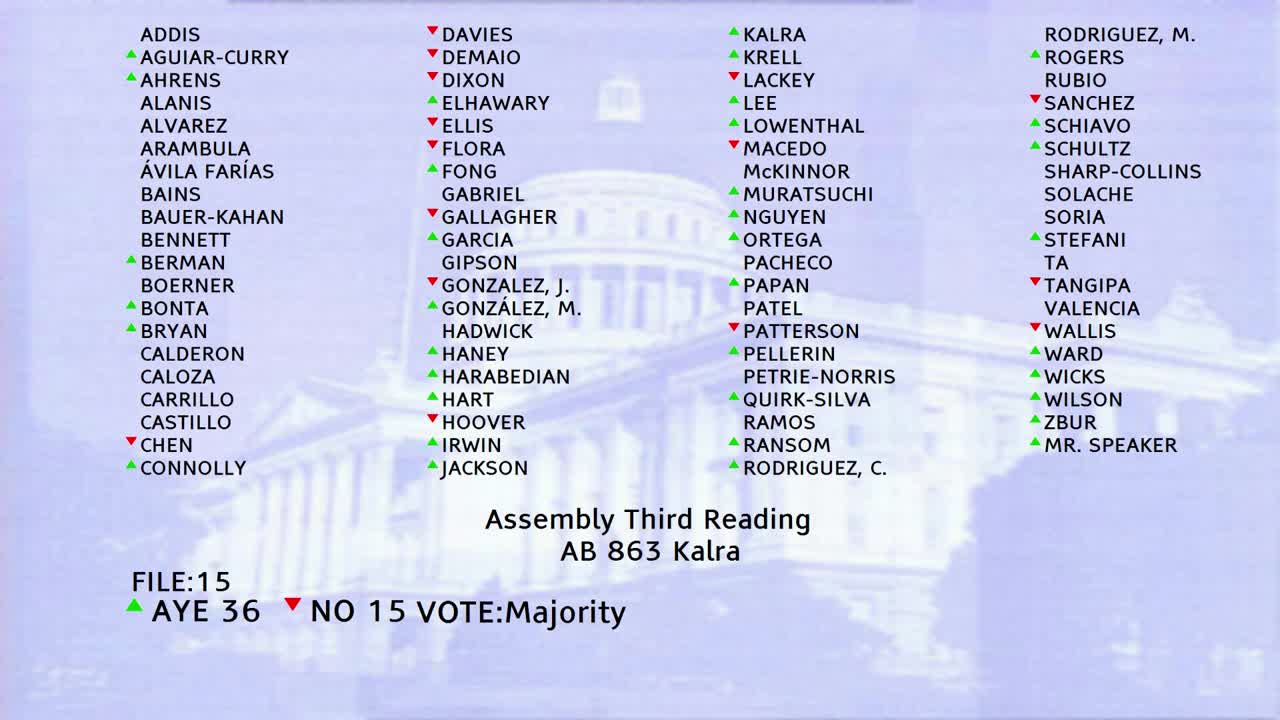
Bill Author

Bill Co-Author(s):