AB 258: Fairs: allocation of revenues: gross receipts for sales and use tax.
- Session Year: 2025-2026
- House: Assembly
- Latest Version Date: 2025-10-13
Current Status:
Passed
(2025-10-13: Chaptered by Secretary of State - Chapter 683, Statutes of 2025.)
Introduced
In Committee
Awaiting First Chamber Vote
Passed First Chamber
In Committee
Awaiting Second Chamber Vote
Passed Second Chamber
Enacted
Existing law requires a tax return filed with the California Department of Tax and Fee Administration (CDTFA) that reports gross receipts for sales and use tax purposes to segregate the gross receipts of the seller and the sales price of the property on a line or a separate form when the place of sale in this state or for use in this state is on or within the real property of a fair, as defined, or any real property of a fair that is leased to another party. Existing law requires, on or before November 1 of each year, the CDTFA to report to the Department of Finance the amount of the total gross receipts segregated on these tax returns for the prior fiscal year, and that 3/4 of 1% of the total gross receipts be included in the next annual Governors Budget for use by the Department of Food and Agriculture for allocation to fairs and that those funds be transferred by the Controller to the Fair and Exposition Fund, which is continuously appropriated, as prescribed.
This bill would increase the amount of the total gross receipts required to be included in the next annual Governors Budget for use by the Department of Food and Agriculture and transferred to the Fair and Exposition Fund, as specified, from 3/4 of 1% to 2%.
Existing law requires a tax return filed with the California Department of Tax and Fee Administration (CDTFA) that reports gross receipts for sales and use tax purposes to segregate the gross receipts of the seller and the sales price of the property on a line or a separate form when the place of sale in this state or for use in this state is on or within the real property of a fair, as defined, or any real property of a fair that is leased to another party. Existing law requires, on or before November 1 of each year, the CDTFA to report to the Department of Finance the amount of the total gross receipts segregated on these tax returns for the prior fiscal year, and that 3/4 of 1% of the total gross receipts be included in the next annual Governors Budget for use by the Department of Food and Agriculture for allocation to fairs and that those funds be transferred by the Controller to the Fair and Exposition Fund, which is continuously appropriated, as prescribed.
This bill would increase the amount of the total gross receipts required to be included in the next annual Governors Budget for use by the Department of Food and Agriculture and transferred to the Fair and Exposition Fund, as specified, from 3/4 of 1% to 2%.
Existing law requires a tax return filed with the California Department of Tax and Fee Administration (CDTFA) that reports gross receipts for sales and use tax purposes to segregate the gross receipts of the seller and the sales price of the property on a line or a separate form when the place of sale in this state or for use in this state is on or within the real property of a fair, as defined, or any real property of a fair that is leased to another party. Existing law requires, on or before November 1 of each year, the CDTFA to report to the Department of Finance the amount of the total gross receipts segregated on these tax returns for the prior fiscal year, and that 3/4 of 1% of the total gross receipts be included in the next annual Governors Budget for use by the Department of Food and Agriculture for allocation to fairs and that those funds be transferred by the Controller to the Fair and Exposition Fund, which is continuously appropriated, as prescribed.
This bill would increase the amount of the total gross receipts required to be included in the next annual Governors Budget for use by the Department of Food and Agriculture and transferred to the Fair and Exposition Fund, as specified, from 3/4 of 1% to 5%. 2%.
Existing law requires a tax return filed with the California Department of Tax and Fee Administration (CDTFA) that reports gross receipts for sales and use tax purposes to segregate the gross receipts of the seller and the sales price of the property on a line or a separate form when the place of sale in this state or for use in this state is on or within the real property of a fair, as defined, or any real property of a fair that is leased to another party. Existing law requires, on or before November 1 of each year, the CDTFA to report to the Department of Finance the amount of the total gross receipts segregated on these tax returns for the prior fiscal year, and that 3/4 of 1% of the total gross receipts be included in the next annual Governors Budget for use by the Department of Food and Agriculture for allocation to fairs and that those funds be transferred by the Controller to the Fair and Exposition Fund, which is continuously appropriated, as prescribed.
This bill would increase the amount of the total gross receipts required to be included in the next annual Governors Budget for use by the Department of Food and Agriculture and transferred to the Fair and Exposition Fund, as specified, from 3/4 of 1% to 5%.
(a)Notwithstanding any other law, a return filed with the California Department of Tax and Fee Administration (CDTFA) to report gross receipts for sales and use tax purposes shall segregate the gross receipts of the seller and the sales price of the property on a line or a separate form as prescribed by the CDTFA when the place of sale in this state or for use in this state is on or within the real property of a fair or any real property of a fair that is leased to another party.
(b)For purposes of this section, fair means a fair as defined in Section 3101, 3102, 3103, or 3104.
(c)The CDTFA shall add a line to a current return form or develop a separate form for purposes of this section.
(d)(1)The CDTFA shall report the amount of the total gross receipts segregated on the returns filed for the prior fiscal year pursuant to subdivision (a) to the Department of Finance on or before November 1 of each year.
(2)The total gross receipts shall be subject to review by the CDTFA for errors. The review may be a review of a sample of returns. The CDTFA shall note any errors identified in the review and the approximate impact of those errors on the total gross receipts in its report to the Department of Finance to allow an adjusted total gross receipt amount to be determined.
(e)An amount equal to 2 percent of the total amount of gross receipts, or adjusted gross receipts, for the prior fiscal year reported to the Department of Finance by the CDTFA as specified in subdivision (d) shall be included in the next annual Governors Budget for the Department of Food and Agriculture for allocation to fairs pursuant to Section 3204. No later than 30 days after the enactment of the annual Budget Act, the amount appropriated by the Legislature to the Department of Food and Agriculture pursuant to this section shall be transferred by the Controller to the Fair and Exposition Fund in the State Treasury and shall be continuously appropriated and available to be allocated pursuant to Section 3204.
(f)The CDTFA shall be paid the actual cost for administering this section from the funds appropriated pursuant to subdivision (e) before any allocation is made to fairs in accordance with Section 3204.
(g)(1)Any revenues deposited into the Fair and Exposition Fund pursuant to this section shall only be allocated to a fair if nonmanagement employees at that fair, or nonmanagement employees at any real property of that fair that is leased to another party, are provided the following working conditions:
(A)The employee receives a meal period of not less than 30 minutes for a work period of more than five hours per day, unless the work period per day of the employee is less than six hours and the meal period is waived by mutual consent of both the employer and the employee.
(B)The employee receives a second meal period of not less than 30 minutes for a work period of more than 10 hours per day, unless the work period per day of the employee is less than 12 hours, the second meal period is waived by mutual consent of both the employer and the employee, and the first meal period was not waived.
(C)Any work in excess of 8 hours in one workday, any work in excess of 40 hours in any one workweek, and the first 8 hours worked on the seventh day of work in any one workweek is compensated at the rate of no less than one and one-half times the regular rate of pay for an employee.
(D)Any work in excess of 12 hours in one day is compensated at the rate of no less than twice the regular rate of pay for an employee.
(E)Any work in excess of eight hours on any seventh day of a workweek is compensated at the rate of no less than twice the regular rate of pay for an employee.
(2)This subdivision does not apply to full-time carnival ride operators employed by a traveling carnival.
(3)For purposes of this subdivision, employee does not include an employee covered by a valid collective bargaining agreement if that agreement expressly provides for all of the following:
(A)Wages, hours of work, and working conditions of the employees.
(B)Meal periods for the employees, including final and binding arbitration of disputes concerning application of its meal period provisions.
(C)Premium wage rates for all overtime hours worked, and a regular hourly rate of pay of not less than 30 percent more than the state minimum wage.
(a)Notwithstanding any other law, a return filed with the California Department of Tax and Fee Administration (CDTFA) to report gross receipts for sales and use tax purposes shall segregate the gross receipts of the seller and the sales price of the property on a line or a separate form as prescribed by the CDTFA when the place of sale in this state or for use in this state is on or within the real property of a fair or any real property of a fair that is leased to another party.
(b)For purposes of this section, fair means a fair as defined in Section 3101, 3102, 3103, or 3104.
(c)The CDTFA shall add a line to a current return form or develop a separate form for purposes of this section.
(d)(1)The CDTFA shall report the amount of the total gross receipts segregated on the returns filed for the prior fiscal year pursuant to subdivision (a) to the Department of Finance on or before November 1 of each year.
(2)The total gross receipts shall be subject to review by the CDTFA for errors. The review may be a review of a sample of returns. The CDTFA shall note any errors identified in the review and the approximate impact of those errors on the total gross receipts in its report to the Department of Finance to allow an adjusted total gross receipt amount to be determined.
(e)An amount equal to 2 percent of the total amount of gross receipts, or adjusted gross receipts, for the prior fiscal year reported to the Department of Finance by the CDTFA as specified in subdivision (d) shall be included in the next annual Governors Budget for the Department of Food and Agriculture for allocation to fairs pursuant to Section 3204. No later than 30 days after the enactment of the annual Budget Act, the amount appropriated by the Legislature to the Department of Food and Agriculture pursuant to this section shall be transferred by the Controller to the Fair and Exposition Fund in the State Treasury and shall be continuously appropriated and available to be allocated pursuant to Section 3204.
(f)The CDTFA shall be paid the actual cost for administering this section from the funds appropriated pursuant to subdivision (e) before any allocation is made to fairs in accordance with Section 3204.
(g)(1)Any revenues deposited into the Fair and Exposition Fund pursuant to this section shall only be allocated to a fair if nonmanagement employees at that fair, or nonmanagement employees at any real property of that fair that is leased to another party, are provided the following working conditions:
(A)The employee receives a meal period of not less than 30 minutes for a work period of more than five hours per day, unless the work period per day of the employee is less than six hours and the meal period is waived by mutual consent of both the employer and the employee.
(B)The employee receives a second meal period of not less than 30 minutes for a work period of more than 10 hours per day, unless the work period per day of the employee is less than 12 hours, the second meal period is waived by mutual consent of both the employer and the employee, and the first meal period was not waived.
(C)Any work in excess of 8 hours in one workday, any work in excess of 40 hours in any one workweek, and the first 8 hours worked on the seventh day of work in any one workweek is compensated at the rate of no less than one and one-half times the regular rate of pay for an employee.
(D)Any work in excess of 12 hours in one day is compensated at the rate of no less than twice the regular rate of pay for an employee.
(E)Any work in excess of eight hours on any seventh day of a workweek is compensated at the rate of no less than twice the regular rate of pay for an employee.
(2)This subdivision does not apply to full-time carnival ride operators employed by a traveling carnival.
(3)For purposes of this subdivision, employee does not include an employee covered by a valid collective bargaining agreement if that agreement expressly provides for all of the following:
(A)Wages, hours of work, and working conditions of the employees.
(B)Meal periods for the employees, including final and binding arbitration of disputes concerning application of its meal period provisions.
(C)Premium wage rates for all overtime hours worked, and a regular hourly rate of pay of not less than 30 percent more than the state minimum wage.
(a)Notwithstanding any other law, a return filed with the California Department of Tax and Fee Administration (CDTFA) to report gross receipts for sales and use tax purposes shall segregate the gross receipts of the seller and the sales price of the property on a line or a separate form as prescribed by the CDTFA when the place of sale in this state or for use in this state is on or within the real property of a fair or any real property of a fair that is leased to another party.
(b)For purposes of this section, fair means a fair as defined in Section 3101, 3102, 3103, or 3104.
(c)The CDTFA shall add a line to a current return form or develop a separate form for purposes of this section.
(d)(1)The CDTFA shall report the amount of the total gross receipts segregated on the returns filed for the prior fiscal year pursuant to subdivision (a) to the Department of Finance on or before November 1 of each year.
(2)The total gross receipts shall be subject to review by the CDTFA for errors. The review may be a review of a sample of returns. The CDTFA shall note any errors identified in the review and the approximate impact of those errors on the total gross receipts in its report to the Department of Finance to allow an adjusted total gross receipt amount to be determined.
(e)An amount equal to 5 2 percent of the total amount of gross receipts, or adjusted gross receipts, for the prior fiscal year reported to the Department of Finance by the CDTFA as specified in subdivision (d) shall be included in the next annual Governors Budget for the Department of Food and Agriculture for allocation to fairs pursuant to Section 3204. No later than 30 days after the enactment of the annual Budget Act, the amount appropriated by the Legislature to the Department of Food and Agriculture pursuant to this section shall be transferred by the Controller to the Fair and Exposition Fund in the State Treasury and shall be continuously appropriated and available to be allocated pursuant to Section 3204.
(f)The CDTFA shall be paid the actual cost for administering this section from the funds appropriated pursuant to subdivision (e) before any allocation is made to fairs in accordance with Section 3204.
(g)(1)Any revenues deposited into the Fair and Exposition Fund pursuant to this section shall only be allocated to a fair if nonmanagement employees at that fair, or nonmanagement employees at any real property of that fair that is leased to another party, are provided the following working conditions:
(A)The employee receives a meal period of not less than 30 minutes for a work period of more than five hours per day, unless the work period per day of the employee is less than six hours and the meal period is waived by mutual consent of both the employer and the employee.
(B)The employee receives a second meal period of not less than 30 minutes for a work period of more than 10 hours per day, unless the work period per day of the employee is less than 12 hours, the second meal period is waived by mutual consent of both the employer and the employee, and the first meal period was not waived.
(C)Any work in excess of 8 hours in one workday, any work in excess of 40 hours in any one workweek, and the first 8 hours worked on the seventh day of work in any one workweek is compensated at the rate of no less than one and one-half times the regular rate of pay for an employee.
(D)Any work in excess of 12 hours in one day is compensated at the rate of no less than twice the regular rate of pay for an employee.
(E)Any work in excess of eight hours on any seventh day of a workweek is compensated at the rate of no less than twice the regular rate of pay for an employee.
(2)This subdivision does not apply to full-time carnival ride operators employed by a traveling carnival.
(3)For purposes of this subdivision, employee does not include an employee covered by a valid collective bargaining agreement if that agreement expressly provides for all of the following:
(A)Wages, hours of work, and working conditions of the employees.
(B)Meal periods for the employees, including final and binding arbitration of disputes concerning application of its meal period provisions.
(C)Premium wage rates for all overtime hours worked, and a regular hourly rate of pay of not less than 30 percent more than the state minimum wage.
(a)Notwithstanding any other law, a return filed with the California Department of Tax and Fee Administration (CDTFA) to report gross receipts for sales and use tax purposes shall segregate the gross receipts of the seller and the sales price of the property on a line or a separate form as prescribed by the CDTFA when the place of sale in this state or for use in this state is on or within the real property of a fair or any real property of a fair that is leased to another party.
(b)For purposes of this section, fair means a fair as defined in Section 3101, 3102, 3103, or 3104.
(c)The CDTFA shall add a line to a current return form or develop a separate form for purposes of this section.
(d)(1)The CDTFA shall report the amount of the total gross receipts segregated on the returns filed for the prior fiscal year pursuant to subdivision (a) to the Department of Finance on or before November 1 of each year.
(2)The total gross receipts shall be subject to review by the CDTFA for errors. The review may be a review of a sample of returns. The CDTFA shall note any errors identified in the review and the approximate impact of those errors on the total gross receipts in its report to the Department of Finance to allow an adjusted total gross receipt amount to be determined.
(e)An amount equal to three-quarters of 1 5 percent of the total amount of gross receipts, or adjusted gross receipts, for the prior fiscal year reported to the Department of Finance by the CDTFA as specified in subdivision (d) shall be included in the next annual Governors Budget for the Department of Food and Agriculture for allocation to fairs pursuant to Section 3204. No later than 30 days after the enactment of the annual Budget Act, the amount appropriated by the Legislature to the Department of Food and Agriculture pursuant to this section shall be transferred by the Controller to the Fair and Exposition Fund in the State Treasury and shall be continuously appropriated and available to be allocated pursuant to Section 3204.
(f)The CDTFA shall be paid the actual cost for administering the provisions of this section from the funds appropriated pursuant to subdivision (e) before any allocation is made to fairs in accordance with Section 3204.
(g)(1)Any revenues deposited into the Fair and Exposition Fund pursuant to this section shall only be allocated to a fair if nonmanagement employees at that fair, or nonmanagement employees at any real property of that fair that is leased to another party, are provided the following working conditions:
(A)The employee receives a meal period of not less than 30 minutes for a work period of more than five hours per day, unless the work period per day of the employee is less than six hours and the meal period is waived by mutual consent of both the employer and the employee.
(B)The employee receives a second meal period of not less than 30 minutes for a work period of more than 10 hours per day, unless the work period per day of the employee is less than 12 hours, the second meal period is waived by mutual consent of both the employer and the employee, and the first meal period was not waived.
(C)Any work in excess of 8 hours in one workday, any work in excess of 40 hours in any one workweek, and the first 8 hours worked on the seventh day of work in any one workweek is compensated at the rate of no less than one and one-half times the regular rate of pay for an employee.
(D)Any work in excess of 12 hours in one day is compensated at the rate of no less than twice the regular rate of pay for an employee.
(E)Any work in excess of eight hours on any seventh day of a workweek is compensated at the rate of no less than twice the regular rate of pay for an employee.
(2)This subdivision does not apply to full-time carnival ride operators employed by a traveling carnival.
(3)For purposes of this subdivision, an employee shall employee does not include an employee covered by a valid collective bargaining agreement if that agreement expressly provides for all of the following:
(A)Wages, hours of work, and working conditions of the employees.
(B)Meal periods for the employees, including final and binding arbitration of disputes concerning application of its meal period provisions.
(C)Premium wage rates for all overtime hours worked, and a regular hourly rate of pay of not less than 30 percent more than the state minimum wage.
|
Date
|
Status
|
|---|---|
| Oct 13, 2025 | Chaptered by Secretary of State - Chapter 683, Statutes of 2025. |
| Oct 13, 2025 | Approved by the Governor. |
| Sep 16, 2025 | Enrolled and presented to the Governor at 2 p.m. |
| Sep 9, 2025 | In Assembly. Ordered to Engrossing and Enrolling. |
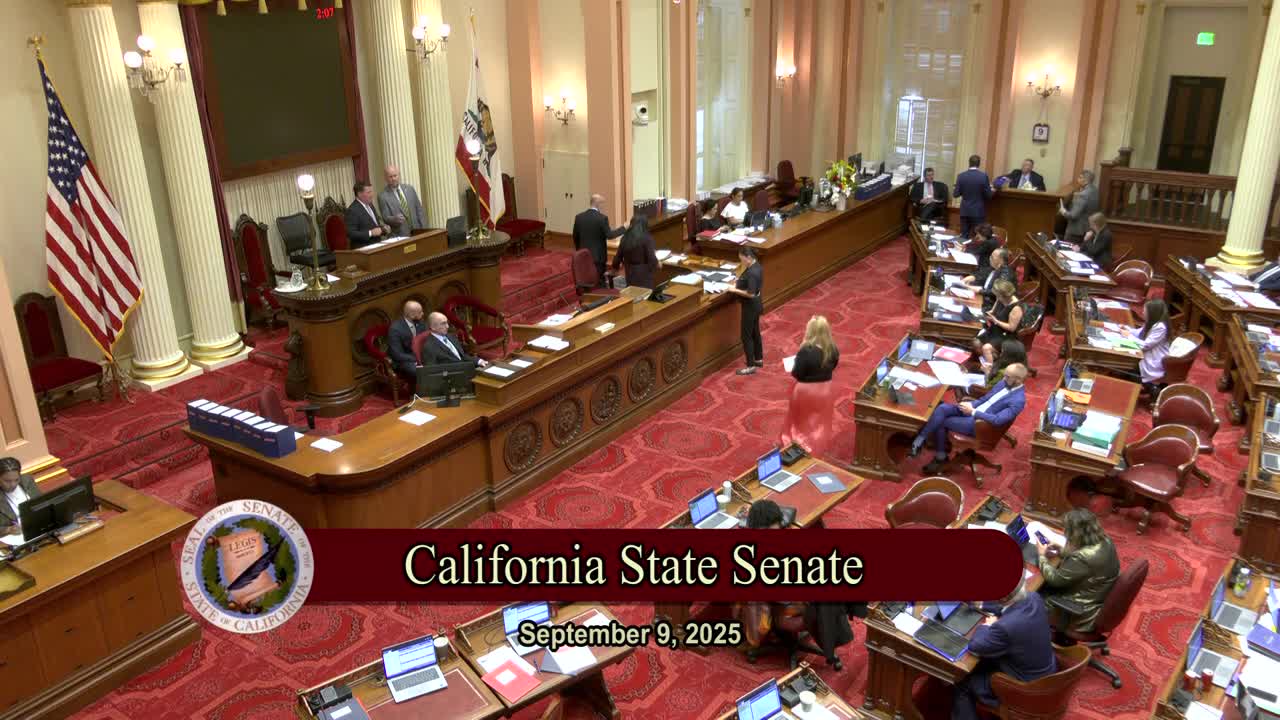
| Sep 9, 2025 | Read third time. Passed. Ordered to the Assembly. (Ayes 40. Noes 0. Page 2699.). |
| Aug 29, 2025 | Read second time. Ordered to third reading. |
| Aug 29, 2025 | From committee: Do pass. (Ayes 7. Noes 0.) (August 29). |
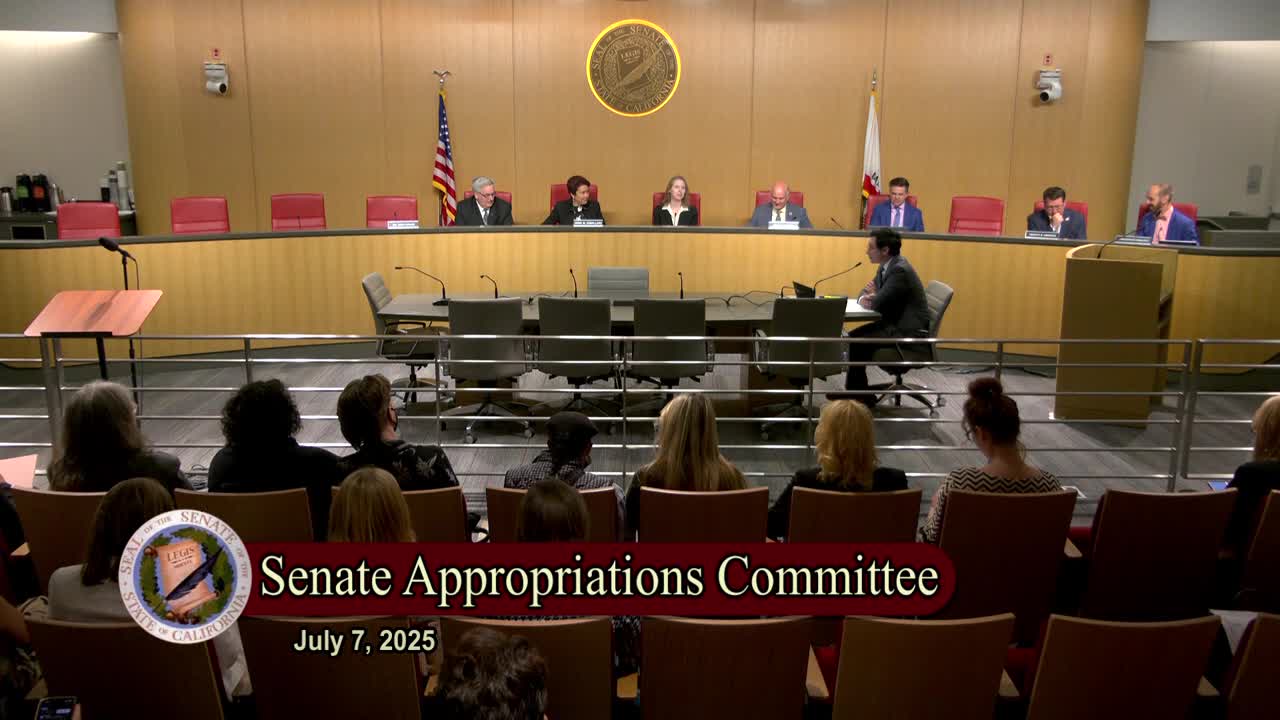
| Jul 7, 2025 | In committee: Referred to APPR. suspense file. |
| Jun 25, 2025 | From committee: Do pass and re-refer to Com. on APPR. (Ayes 5. Noes 0.) (June 25). Re-referred to Com. on APPR. |
| Jun 11, 2025 | Referred to Com. on REV. & TAX. |
| Jun 3, 2025 | In Senate. Read first time. To Com. on RLS. for assignment. |
| Jun 2, 2025 | Read third time. Passed. Ordered to the Senate. (Ayes 77. Noes 1. Page 1817.) |
| May 27, 2025 | Read second time. Ordered to third reading. |
| May 23, 2025 | From committee: Do pass. (Ayes 14. Noes 0.) (May 23). |
| May 21, 2025 | Joint Rule 62(a), file notice suspended. (Page 1627.) |
| May 21, 2025 | In committee: Set, first hearing. Referred to APPR. suspense file. |
| May 14, 2025 | In committee: Hearing postponed by committee. |
| May 1, 2025 | Re-referred to Com. on APPR. |
| Apr 30, 2025 | Read second time and amended. |
| Apr 29, 2025 | From committee: Amend, and do pass as amended and re-refer to Com. on APPR. (Ayes 6. Noes 1.) (April 28). |
| Mar 10, 2025 | In committee: Set, first hearing. Referred to REV. & TAX. suspense file. |
| Feb 18, 2025 | Referred to Com. on REV. & TAX. |
| Jan 17, 2025 | From printer. May be heard in committee February 16. |
| Jan 16, 2025 | Read first time. To print. |
|
Date
|
Description
|
Location
|
Votes
|
|
|---|---|---|---|---|
| Sep 9, 2025 | Assembly 3rd Reading AB258 Connolly et al. By Laird | Senate Floor |
Passed |
|
| Aug 29, 2025 | Do pass | Senate Standing Committee on Appropriations |
Passed |
|
| Jul 7, 2025 | Placed on suspense file | Senate Standing Committee on Appropriations |
Passed |
|
| Jun 25, 2025 | Do pass, but first be re-referred to the Committee on [Appropriations] | Senate Standing Committee on Revenue and Taxation |
Passed |
|
| Jun 2, 2025 | AB 258 Connolly Assembly Third Reading | Assembly Floor |
Passed |
|
| May 23, 2025 | Do pass. | Assembly Standing Committee on Appropriations |
Passed |
|
| Apr 28, 2025 | Do pass as amended and be re-referred to the Committee on [Appropriations] | Assembly Standing Committee on Revenue and Taxation |
Passed |
This list shows positions taken on this bill by organizations on the date displayed, which is linked to the original source.
Positions by individuals are not included.
|
Organization
|
Position
|
Date
|
|---|---|---|
| 40th District Agricultural Association | ** Support | |
| California Agricultural Teachers Association | ** Support | |
| California Agricultural Teachers Association, Inc. | ** Support | |
| California Fairs Alliance (Co-source) | ** Support | |
| California Farm Bureau Federation | ** Support | |
| California State Association Of Counties | ** Support | |
| California State Treasurer | ** Support | |
| California State Treasurer Fiona Ma (Co-Sponsor) | ** Support | |
| Rural County Representatives of California | ** Support | |
| Solano County Fair Association | ** Support | |
| Western Fairs Association (Co-source) | ** Support |
SENATE RULES COMMITTEE Office of Senate Floor Analyses (916) 651-1520 Fax: (916) 327-4478 | AB 258 |
THIRD READING
Bill No: AB 258
Author: Connolly (D), et al.
Amended: 4/30/25 in Assembly
Vote: 21
SENATE REVENUE AND TAXATION COMMITTEE: 5-0, 6/25/25
AYES: McNerney, Valladares, Ashby, Grayson, Umberg
SENATE APPROPRIATIONS COMMITTEE: 7-0, 8/29/25
AYES: Caballero, Seyarto, Cabaldon, Dahle, Grayson, Richardson, Wahab
ASSEMBLY FLOOR: 77-1, 6/2/25 - See last page for vote
SUBJECT: Fairs: allocation of revenues: gross receipts for sales and use tax
SOURCE: California Fairs Alliance
Western Fairs Association
DIGEST:
This bill increases, from 0.75% to 2%, the amount of segregated gross receipts from fair sales that the Governor must propose to distribute to the California Department of Food and Agriculture (CDFA) for allocation to fairs in the annual Governor’s Proposed Budget.
ANALYSIS:
Existing law:
- Imposes the sales tax on every retailer “engaged in business in this state” that sells tangible personal property, and requires them to register with the CDTFA, as well as remit taxes collected from purchasers to CDTFA.
- Applies the sales tax whenever a retail sale occurs, which is generally any sale other than one for resale in the regular course of business.
- Provides that unless the purchaser pays the sales tax to the retailer, they are liable for the use tax, which is imposed on any person consuming tangible personal property in the state, and requires the purchaser to remit use tax to CDTFA.
- Sets the state sales and use tax rate at 7.25% of the sales price of the property sold or used, of which 3.9375% flows to the state General Fund.
- Allows cities, counties, and specified special districts to increase the sales and use tax, also known as district or transactions and use taxes, up to a 2% countywide cap, with some exceptions.
- Creates a network of state fairs, composed of 52 district agricultural associations (DAA), 23 county fairs, two citrus fruit fairs, and the California Exposition and State Fair (Cal Expo).
- Requires retailers, when filing returns to CDTFA, to segregate the gross receipts of the seller and the sales price of tangible personal property when the place of sale or use is on or within the real property of a state fair (AB 1499, Gray, Chapter 798, Statutes of 2017).
- Directs CDTFA to report the total gross receipts segregated to the Department of Finance (DOF) on or before November 1 each year, and requires the Governor to include an amount equal to 0.75% of the segregated gross receipts for allocation to CDFA to fund capital outlay for fair projects at California fairs.
- Provides that CDTFA’s calculation of total gross receipts is subject to its review for errors and requires CDTFA to approximate the impact of any errors on the total gross receipts in its report to DOF, to allow an adjusted total gross receipt amount to be determined AB 92 (Committee on Budget, Chapter 18, Statutes of 2020).
This bill:
- Increases the amount the Governor must propose to distribute to CDFA for allocation to fairs in the annual Proposed Budget from 0.75% to 2% of segregated gross receipt fair sales.
- Makes technical changes.
Background
DAAs are state government entities governed by nine-member governor-appointed boards of directors; county fairs are either directly operated by counties or not-for-profit organizations; citrus fruit fairs are not-for-profit organizations; and Cal Expo is a state agency.
The Division of Fairs and Expositions within the CDFA provides fiscal and policy oversight for the network of California fairs. The Department of General Services provides oversight for the use of state property, procurement, and services contracts. Prior to 2009, license fees imposed on horse racing wagers were deposited into the Fairs and Exposition Fund and the Satellite Wagering Account, which supported the annual budget of the California Horse Racing Board and California fairs. In 2009, the Legislature shifted away from this approach and instead provided an annual continuous appropriation of $32 million from the General Fund to support fairs. However, the 2011-12 Budget Act eliminated this General Fund contribution to the Fairs and Exposition Fund, and instead required DAAs and state fairs to be financially self-sufficient starting January 1, 2012.
Seeking a new funding source for capital projects at fairs, the Legislature created a novel mechanism under AB 1499. AB 1499 became effective on July 1, 2018, and forms the basis of current state law, which requires retailers to separate, on their sales-tax returns, the gross receipts from any tangible good sold or used on state fairgrounds and directs the Governor’s annual budget to propose allocating 0.75% of the amount of those gross receipts to CDFA for state fairs.
However, CDTFA indicated there were significant errors from retailers when segregating sales made at state-designated fairs. As a result, the Legislature enacted AB 92 to authorize CDTFA to review its gross receipts calculations for errors and report the impact of those errors to the DOF for corrected budget proposal allocation amounts. Additionally, the Legislature enacted SB 820 (Committee on Governmental Organization, Chapter 393, Statutes of 2021), which reconciled the timing of retailer reporting and inclusion in the Governor’s proposed Budget, among other changes.
AB 2143 (Connolly, Chapter 559, Statutes of 2024) repealed and recast provisions referencing the Division of Fairs and Expositions in the Business and Professions Code into the Food and Agricultural Code. Segregation of sales on fairgrounds, the November 1st CDTFA report, and the requirement that 0.75% of prior-year gross receipts be proposed in the Governor’s Budget are still required. However, AB 1499 applied to “state-designated fairs,” while AB 2143 uses the broader term “fair.”
The amount proposed and appropriated under the 0.75% requirement declined to $3.1 million in 2022-23, but rebounded to $5.1 million in 2023-24 and 2024-25. $4.9 million is proposed for 2025-26. These amount remains below the funding levels from before the Legislature redistributed license fees on horse racing wagers to the General Fund.
FISCAL EFFECT: Appropriation: No Fiscal Com.: Yes Local: No
According to the Senate Appropriations Committee, this bill would result in an estimated annual General Fund cost pressure of about $8 million. The enacted 2025-26 budget includes a transfer of $4.9 million. Under this bill, the transfer would be $8.2 million higher.
SUPPORT: (Verified 8/28/25)
California Fairs Alliance (Co-source)
Western Fairs Association (Co-source)
California State Treasurer Fiona Ma (Co-Sponsor)
40th District Agricultural Association
California Agricultural Teachers’ Association
California Farm Bureau Federation
California State Association of Counties
Rural County Representatives of California
Solano County Fair Association
OPPOSITION: (Verified 8/28/25)
None received
ARGUMENTS IN SUPPORT: According to the author, “Fairgrounds across California have increasingly been called into action during natural disasters like wildfires, in addition to serving as hubs for events, local businesses, livestock, arts, and more. During the devastating Los Angeles fires, local fairgrounds assisted by serving as a relocation center for victims and their animals. Despite the expectation and burden put on fairgrounds to act as an economic hub, as well as emergency response centers, the funding formula for fairs is outdated and insufficient. AB 258 would modestly increase the amount of funding available for the Network of California Fairs in the Governor’s Budget, dependent upon Legislative approval.”
ASSEMBLY FLOOR: 77-1, 6/2/25
AYES: Addis, Aguiar-Curry, Ahrens, Alanis, Alvarez, Arambula, Ávila Farías, Bains, Bauer-Kahan, Bennett, Berman, Boerner, Bonta, Bryan, Calderon, Caloza, Carrillo, Castillo, Chen, Connolly, Davies, Dixon, Elhawary, Ellis, Flora, Fong, Gabriel, Gallagher, Garcia, Gipson, Jeff Gonzalez, Mark González, Hadwick, Haney, Harabedian, Hart, Irwin, Jackson, Kalra, Krell, Lackey, Lee, Lowenthal, Macedo, McKinnor, Muratsuchi, Nguyen, Ortega, Pacheco, Papan, Patel, Patterson, Pellerin, Petrie-Norris, Quirk-Silva, Ramos, Ransom, Celeste Rodriguez, Michelle Rodriguez, Rogers, Blanca Rubio, Sanchez, Schiavo, Schultz, Sharp-Collins, Solache, Soria, Stefani, Ta, Tangipa, Valencia, Wallis, Ward, Wicks, Wilson, Zbur, Rivas
NOES: DeMaio
NO VOTE RECORDED: Hoover
Prepared by: Haley Summers / REV. & TAX. / (916) 651-4117
8/29/25 20:27:50
**** END ****
SENATE COMMITTEE ON REVENUE AND TAXATION
Senator Jerry McNerney, Chair
2025 - 2026 Regular
Bill No: | AB 258 | Hearing Date: | 6/25/25 |
Author: | Connolly | Tax Levy: | No |
Version: | 4/30/25 | Fiscal: | Yes |
Consultant: | Summers | ||
Fairs: allocation of revenues: gross receipts for sales and use tax
Increases the amount the Governor must propose to distribute to California Department of Food and Agriculture for allocation to fairs in the annual Governor’s Proposed Budget.
Background
Sales tax. State law imposes the sales tax on every retailer “engaged in business in this state” that sells tangible personal property, and requires them to register with the California Department of Tax & Fee Administration (CDTFA), and remit taxes collected from purchasers to CDTFA. Sales tax applies whenever a retail sale occurs, which is generally any sale other than one for resale in the regular course of business. The current rate is 7.25% as shown in the table below. Additionally, cities, counties, and specified special districts may increase the sales and use tax, also known as district or transactions and use taxes.
Rate | Jurisdiction | Purpose/Authority |
|---|---|---|
3.9375% | State (General Fund) | State general purposes |
1.0625% | Local Revenue Fund (2011 Realignment) | Local governments to fund local public safety services |
0.50% | State (1991 Realignment) | Local governments to fund health and welfare programs |
0.50% | State (Proposition 172 - 1993) | Local governments to fund public safety services |
1.25% | Local (City/County) 1.00% City and County | City and county general operations. Dedicated to county transportation purposes |
7.25% | Total Statewide Rate |
CDTFA collects sales taxes from retailers, deposits the state share in the General Fund, and then allocates the local share of the Bradley-Burns sales tax and any district tax to the appropriate jurisdiction. While component parts of the sales and use tax are allocated for specific state and local purposes, all revenue generated from the base state sales and use tax rate flows to the General Fund, which the Legislature then allocates to specific purposes annually in the Budget Act.
California’s network of fairs. Existing law establishes a network of California-designated fairs, composed of 52 district agricultural associations (DAA), 23 county fairs, 2 citrus fruit fairs, and the California Exposition and State Fair (Cal Expo). DAAs are state government entities governed by nine-member governor-appointed boards of directors, county fairs are either directly operated by counties or not-for-profit organizations, citrus fruit fairs are not-for-profit organizations, and Cal Expo is a state agency.
The Division of Fairs and Expositions within the California Department of Food and Agriculture (CDFA) provides fiscal and policy oversight for the network of California fairs. The Department of General Services (DGS) provides oversight for the use of state property, procurement, and services contracts. License fees imposed on horse racing wagers are deposited into the Fairs and Exposition Fund and the Satellite Wagering Account, which supports the annual budget of the California Horse Racing Board and supplements California fairs. However, in 2009, the Legislature shifted the horse racing industry’s obligation to fund fairs through license fees imposed on wagers to the General Fund, and instead provided an annual continuous appropriation of $32 million from the General Fund to support fairs. The 2011-12 Budget Act eliminated General Fund contributions to the Fairs and Exposition Fund, requiring DAAs and all other designated fairs to be financially self-sufficient as of January 1, 2012.
AB 1499. Seeking a new funding source for capital projects at fairs, the Legislature created a novel mechanism under AB 1499 (Gray, 2017). First, AB 1499 required retailers to separate, on their sales-tax returns, the gross receipts from any tangible goods sold or used on state-designated fairgrounds. Second, the bill directs the CDTFA to report the total amount of gross receipts segregated under the bill to the Director of Finance on or before November 1 of each year. Third, the measure requires the Governor’s annual budget to propose 0.75% of the amount of gross receipts recorded in CDFA’s budget for allocation to fairs. Lastly, the State Controller must transfer the amount appropriated by the Legislature in the Budget Act to the Fair and Exposition Fund in the State Treasury.
AB 1499 became effective on July 1, 2018, but did not initially specify the fiscal year upon which CDTFA and the Department of Finance (DOF) should make their required calculations and allocations. On November 1, 2019, CDTFA reported the amount segregated on returns for sales made between July 1, 2018, and June 30, 2019. Based on CDTFA’s reporting, the DOF included $18.6 million for allocation to CDFA for fairs for the 2019-20 and 2020-21 fiscal years.
However, CDTFA indicated there were significant errors from retailers when segregating sales made at state-designated fairs, and noted that in its report to DOF. As a result, the Legislature enacted AB 92 (Committee on Budget, 2020) to:
- Provide that CDTFA’s calculation of total gross receipts is subject to its review for errors.
- Require CDTFA to note any errors identified in the review and the approximate impact of those errors on the total gross receipts in its report to DOF, to allow an adjusted total gross receipt amount to be determined.
- Allow the review to include a sample of returns.
- Apply retroactively to the 2019-20 fiscal year, and to all subsequent fiscal years, with respect to calculating the amount included in the Governor’s Budget.
As a result of the errors, DOF used AB 92’s provisions to reduce the amount of funds allocated to CDFA for fairs from the estimated $18.6 million to the figure to $7.9 million. DOF used this same $7.9 million figure as an estimate for sales made between July 1, 2020, and June 30, 2021, for the Governor’s Proposed 2021-22 budget. In 2021, the Legislature enacted SB 820 (Committee on Governmental Organization), which reconciled the timing of retailer reporting and inclusion in the Governor’s proposed Budget, among other changes.
The amount proposed and appropriated under AB 1499 declined to $3.1 million in 2022-23, but rebounded to $5.1 million in 2023-24 and 2024-25. $4.9 million is proposed for 2025-26. These amount remains below the funding levels from before the Legislature redistributed license fees on horse racing wagers to the General Fund.
AB 2143 (Connolly, 2024) repealed and recast provisions referencing the Division of Fairs and Expositions in the Business and Professions Code into the Food and Agricultural Code. Segregation of sales on fairgrounds, November 1 CDTFA report, and the requirement that 0.75 % of prior-year gross receipts be proposed in the Governor’s Budget are still required. However, AB 1499 applied to “state-designated fairs,” while AB 2143 uses the broader term “fair.”
The California Fairs Alliance and Western Fairs Association want to increase the amount the Governor must propose to distribute to CDFA for allocation to fairs.
Proposed Law
Assembly Bill 258 increases the amount the Governor must propose to distribute to CDFA for allocation to fairs in the annual Proposed Budget from 0.75% to 2% of gross receipts segregated under AB 2143. The bill also makes technical changes.
State Revenue Impact
No estimate.
Comments
1. Purpose of the bill. According to the author, “Fairgrounds across California have increasingly been called into action during natural disasters like wildfires, in addition to serving as hubs for events, local businesses, livestock, arts, and more. During the devastating Los Angeles fires, local fairgrounds assisted by serving as a relocation center for victims and their animals. Despite the expectation and burden put on fairgrounds to act as an economic hub, as well as emergency response centers, the funding formula for fairs is outdated and insufficient. AB 258 would modestly increase the amount of funding available for the Network of California Fairs in the Governor’s Budget, dependent upon Legislative approval.”
2. Fair is fair. The system created by AB 1499, and continued by AB 2143, is not a continuous appropriation to fund capital projects at state fairs. Instead, it seeks to estimate a part of the economic activity that takes place at state fairs (taxable sales by retailers), and set aside a percentage of that activity for the benefit of the fairs. While this system has not gone smoothly, as evidenced by significant errors in reporting by retailers and subsequent legislative adjustments, the Legislature is free to appropriate whatever it wishes to CDFA for allocation to fairs, regardless of the amount required of the Governor to propose in the Budget. As a result, AB 2143’s effect is to restrict the Governor from fashioning a Budget proposal that would propose a lower amount for these purposes; the Legislature retains its authority to appropriate an amount that is more, less, or the same. This begs the question, does AB 258 makes sense at a time when the Legislative Analyst’s Office and others warning of higher budget deficits and pressure on the General Fund?
3. Follow the leader. In 2023, the Legislature enacted SB 96 (Portantino), the Historic Venue Restoration and Resiliency Act, which deploys a similar model as AB 1499 for the sale of tangible personal property during a qualified event at a historic venue, as defined, to the city, county, or city or county that identified the historic venue in which the qualified event occurred. SB 96 became effective January 1, 2024.
4. Timing of implementation. If enacted, AB 258 would be effective January 1, 2026, so the first analysis of segregated receipts by CDTFA will not occur until November 2026. The resulting number will then be included in the Governor’s January 2027-28 budget proposal. Because fiscal years run from July to June, the increased financial support to fairs from AB 258 will not became available until July 2027 at the earliest.
Assembly Actions
Assembly Revenue & Taxation Committee: 6-1
Assembly Appropriations Committee: 14-0
Assembly Floor: 77-0
Support and Opposition
(6/19/2025)
Support: California Fairs Alliance (Sponsor)
Western Fairs Association (Sponsor)
California State Treasurer (Co-Sponsor)
40th District Agricultural Association
California Agricultural Teachers’ Association
California Farm Bureau Federation
California State Association of Counties
Rural County Representatives of California
Solano County Fair Association
Opposition: None received.
-- END --
ASSEMBLY THIRD READING
ATR Bill Id:AB 258
Author:(Connolly)
As Amended Ver:April 30, 2025
Majority vote
SUMMARY
Increases, from 0.75% to 2%, the percentage of gross receipts from sales at state-designated fairs used to calculate the annual proposed budget augmentation for the California Department of Food and Agriculture (CDFA) for allocation to fairs via the Fair and Exposition Fund (Fund).
Major Provisions
COMMENTS
- General background: In 2017, Governor Brown signed into law AB 1499 (Gray), Chapter 798, Statutes of 2017, to provide a dedicated funding source for state fairs. Specifically, the law now requires that sales tax returns filed with the California Department of Tax and Fee Administration (CDTFA) must segregate the retailer's gross receipts when the place of sale in this state is at a state-designated fair, as defined. On or before November 1 of each year, CDTFA must report to the Department of Finance the total gross receipts segregated on returns for the prior fiscal year (FY). An amount equal to 0.75% of the total gross receipts for the prior FY must then be included in the next annual Governor's Budget for CDFA for allocation to fairs.
- What would this bill do? This bill would simply increase, from 0.75% to 2%, the percentage of gross receipts from sales at state-designated fairs used to calculate the annual budget augmentation for the CDFA for allocation to fairs. According to the author, California's network of fairs is critically underfunded and many fairs are in need of repairs to their infrastructure and emergency management facilities. Specifically, the author's office notes:
For roughly 75 years, California's fairs received funding from horse racing license fees and supplementary General Fund allocations. Unfortunately, these funding sources were eliminated in the 2011-12 state budget, and all fairs were required to become self-sufficient. This has caused fairs to suffer from deferred maintenance and infrastructure deterioration. This problem is being exacerbated as fairground use has increased as a result of pandemics, natural disasters and climate emergencies.
According to the Author
The author has provided the following statement in support of this bill:
Our fairgrounds across California serve as hubs for events, local businesses, livestock, arts, and emergency response, and it is vital they receive the funding they need to maintain and update their facilities, serve the community and prepare for emergencies. Today, fairgrounds in Southern California have been called into action to assist as a relocation center for victims, humans and animals, of the devastating fires. I have seen the same activity in my district when our fairgrounds played similar roles.
Arguments in Support
The California Fairs Alliance notes the following in support of this bill:
California's Network of Fairgrounds host more than 10 million visitors each year and strives to be a leader in providing educational and competitive exhibits that highlight California's communities, agriculture, business enterprises, and history. Fairgrounds support their local communities as a central hub for community gatherings and are the birthplace of local small businesses. In order to achieve this mission, fairgrounds need a dedicated funding source to address aging infrastructure, emergency preparedness, and community service.
Arguments in Opposition
None on file.
FISCAL COMMENTS
According to the Assembly Committee on Appropriations:
Annual General Fund cost pressures of approximately $8 million by increasing the amount of sales tax revenue subject to transfer to the CDFA's Fund. The CDTFA notes that reported state fair sales in FY 2021-22 and FY 2022-23 were approximately $598 million and $682 million, respectively. Thus, if the 2% transfer value applied in those FYs, the Fund would have received an additional $7.5 million and $8.5 million, respectively.
VOTES
ASM REVENUE AND TAXATION: 6-1-0
YES: Gipson, Ta, Bains, Garcia, McKinnor, Quirk-Silva
NO: DeMaio
ASM APPROPRIATIONS: 14-0-1
YES: Wicks, Arambula, Calderon, Caloza, Dixon, Elhawary, Fong, Mark González, Hart, Pacheco, Pellerin, Solache, Ta, Tangipa
ABS, ABST OR NV: Sanchez
UPDATED
VERSION: April 30, 2025
CONSULTANT: M. David Ruff / REV. & TAX. / (916) 319-2098 FN: 0000495
Date of Hearing: May 21, 2025
ASSEMBLY COMMITTEE ON APPROPRIATIONS
Buffy Wicks, Chair
ABPCA Bill Id:AB 258
Author:(Connolly) – As Amended Ver:April 30, 2025
Policy Committee: | Revenue and Taxation | Vote: | 6 - 1 |
|
| ||
|
|
Urgency: No State Mandated Local Program: No Reimbursable: No
SUMMARY:
This bill increases, from 0.75% to 2%, the percentage of gross receipts from sales at state-designated fairs used to calculate the annual budget augmentation to support fairs.
FISCAL EFFECT:
Annual General Fund (GF) cost pressures of approximately $8 million by increasing the amount of sales tax revenue subject to transfer to the Department of Food and Agriculture’s (CDFA’s) Fair and Exposition Fund (Fund). The Department of Tax and Fee Administration (CDTFA) notes that reported state fair sales in fiscal year (FY) 2021-22 and FY 2022-23 were approximately $598 million and $682 million, respectively. Thus, if the 3% transfer value applied in those FYs, the Fund would have received an additional $7.5 million and $8.5 million, respectively.
COMMENTS:
- Purpose. According to the author:
Our fairgrounds across California serve as hubs for events, local businesses, livestock, arts, and emergency response, and it is vital they receive the funding they need to maintain and update their facilities, serve the community and prepare for emergencies. Today, fairgrounds in Southern California have been called into action to assist as a relocation center for victims, humans and animals, of the devastating fires. I have seen the same activity in my district when our fairgrounds played similar roles.
This bill is co-sponsored by State Treasurer Fiona Ma and supported by fair and agricultural groups and local government associations.
- Fair Funding. Prior to 2009, funding for California fairs was supported by licensing fees imposed on horse racing wagers. SBx2 16 (Ashburn), Chapter 12, Statutes of 2009, ended this practice and provided a continuous GF appropriation of $32 million for fairs, until the GF appropriation was eliminated in FY 2011-12. AB 1499 (Gray), Chapter 798, Statutes of 2017, provided a new mechanism for funding fairs by requiring CDTFA to develop a form to segregate sales at state-designated fairs and annually report to the Department of Finance the total gross receipts segregated the prior FY. An amount equal to 0.75% of such reported receipts must then be included in the next annual Governor’s Budget for CDFA to allocate to the fairs. However, the actual transfer of designated GF revenue to the Fund is still subject to legislative appropriation during that year’s budget process. This bill increases, from 0.75% to 2%, the percentage of gross receipts from sales at state-designated fairs used to calculate the proposed annual Fund augmentation.
- Prior Legislation. SB 1261 (Alvarado-Gil), of the 2023-24 Legislative Session, was substantially similar to this bill, except SB 1261 would have increased the transfer value to 3%. SB 1261 was held on this committee’s suspense file.
SB 624 (Alvarado-Gil), of the 2023-24 Legislative Session, was substantially similar to this bill, except SB 624 would have increased the transfer value to 3.5%. SB 624 was held on the Assembly Revenue and Taxation Committee’s suspense file.
SB 96 (Portantino), Chapter 595, Statutes of 2023, enacted a funding mechanism for historic venues, similar to this funding mechanism for fairs.
Analysis Prepared by: Irene Ho / APPR. / (916) 319-2081
Date of Hearing: April 28, 2025
ASSEMBLY COMMITTEE ON REVENUE AND TAXATION
Mike Gipson, Chair
ABPCA Bill Id:AB 258 (
Author:Connolly) – As Introduced Ver:January 16, 2025
SUSPENSE
Majority vote. Fiscal committee.
SUBJECT: Fairs: allocation of revenues: gross receipts for sales and use tax
SUMMARY: Increases, from 0.75% to 5%, the percentage of gross receipts from sales at state-designated fairs used to calculate the annual proposed budget augmentation for the California Department of Food and Agriculture (CDFA) for allocation to fairs via the Fair and Exposition Fund (Fund).
EXISTING LAW:
- Requires a tax return filed with the California Department of Tax and Fee Administration (CDTFA) reporting gross receipts for sales and use tax (SUT) purposes to segregate the gross receipts on a line or a separate form when the place of sale in this state is on the real property of a "fair", as defined. (Food and Agricultural Code Section 3203.)
- Requires, on or before November 1 of each year, the CDTFA to report to the Department of Finance (DOF) the amount of the total gross receipts segregated on returns for the prior fiscal year (FY). 0.75% of these gross receipts must then be included in the next annual Governor's Budget for the CDFA for allocation to fairs. Specifically, these funds must be transferred by the State Controller to the Fund, which is continuously appropriated, as prescribed. (Id.)
- Provides that the Office of Emergency Services shall be permitted the use of all state and local fair properties as conditions require. (Government Code Section 8589.)
FISCAL EFFECT: Unknown, but in excess of $150,000 per year.
COMMENTS:
- The author has provided the following statement in support of this bill:
Our fairgrounds across California serve as hubs for events, local businesses, livestock, arts, and emergency response, and it is vital they receive the funding they need to maintain and update their facilities, serve the community and prepare for emergencies. Today, fairgrounds in Southern California have been called into action to assist as a relocation center for victims, humans and animals, of the devastating fires. I have seen the same activity in my district when our fairgrounds played similar roles.
- This bill is co-sponsored by California State Treasurer Fiona Ma, who notes:
As time has passed since the percentage was reduced ten years ago it is now salient to restore the legislation given that many fairgrounds have been vital for emergency responses during wildfires. Not only have fairgrounds served as energy response centers, but they also serve as hubs for important events, small businesses, arts, and livestock. This proposal is vital to the success of fairgrounds and their ability to maintain their facilities and provide opportunities to address our deferred maintenance issues.
AB 258 takes an important step toward achieving that goal by increasing the funding formula. This initiative is not only a response to the ongoing vulnerabilities fairgrounds face, but it also reinforces California's commitment to safeguarding their prosperity and ensuring they continue to serve as essential resources for communities throughout the state.
- This bill is supported by the California Agricultural Teachers' Association, which notes:
This legislation proposes a dedicated funding source to address the aging infrastructure and emergency preparedness needs of local fairgrounds by increasing the percentage of total gross receipts allocated from sales and use tax purposes from 0.75% to 5%.
[. . .]
In addition to their educational role, fairgrounds are crucial for community resilience. They function as command centers for emergency operations, disaster response staging areas, and important community gathering spaces. Unfortunately, these fairgrounds often lack the necessary funding to maintain their facilities and continue providing these essential services. AB 258 offers a sustainable funding mechanism to support the longevity of these vital institutions.
- Committee Staff Comments:
- General background: In 2017, Governor Brown signed into law AB 1499 (Gray), Chapter 798, Statutes of 2017, to provide a dedicated funding source for state fairs. Specifically, the law now requires that SUT returns filed with the CDTFA must segregate the retailer's gross receipts when the place of sale in this state is at a state-designated fair, as defined. On or before November 1 of each year, CDTFA must report to DOF the total gross receipts segregated on returns for the prior FY. An amount equal to 0.75% of the total gross receipts for the prior FY must then be included in the next annual Governor's Budget for CDFA for allocation to fairs.
- What would this bill do? This bill would simply increase, from 0.75% to 5%, the percentage of gross receipts from sales at state-designated fairs used to calculate the annual budget augmentation for the CDFA for allocation to fairs. According to the author, California's network of fairs is critically underfunded and many fairs are in need of repairs to their infrastructure and emergency management facilities. Specifically, the author's office notes:
For roughly 75 years, California's fairs received funding from horse racing license fees and supplementary General Fund allocations. Unfortunately, these funding sources were eliminated in the 2011-12 state budget, and all fairs were required to become self-sufficient. This has caused fairs to suffer from deferred maintenance and infrastructure deterioration. This problem is being exacerbated as fairground use has increased as a result of pandemics, natural disasters and climate emergencies.
- The scale of the need: On January 1, 2023, the CDFA submitted a report to the Legislature identifying the total scope of its deferred maintenance (DM) backlog. This report noted the following:
- "Size of Fairs DM Backlog: In 2015, a survey of California Fairs was performed. The survey was divided into five categories: 1- immediate fire, life & safety, 2 – immediate building infrastructure, 3 – immediate building deficiencies, 4 – conservation measures, and 5 – deferred maintenance, for [a] total of approximately $215 million. The immediate building deficiencies [in] categories (1-3) totaled $43 million, which was the cost reported to the [DOF] in 2018-19.
- "Reason for Increase to Backlog: In 2019-20, CDFA reassessed the Network and asked each fairground to report their top five DM projects. The California Construction Authority (CCA), a Joint Powers Authority created to provide finance, design, and construction services for health and safety and other projects at fairgrounds throughout California, estimated that it would cost approximately $139,708,975 to address these identified prioritized DM projects. Since the fairgrounds have not been assessed since 2019-20, annually CDFA has adjusted the projected cost from 2019-20 to account for the increase in construction costs, arriving at the most recent estimated cost of $253 million reported in September 2022; however, the list of prioritized projects is not comprehensive. There are over 370 facilities throughout the Network that require major infrastructure updates, including Americans with Disabilities Act upgrades.
- "Steps taken to address the DM needs of fairs: Since 2018-19, the Network has received investments in DM through a variety of sources. Through the standard General Fund Budget Act appropriations, the Network has received $3 million in 2018-19 through Control Section 6.10. Additionally, Proposition 68: California Drought, Water, Parks, Climate, Coastal Protection, and Outdoor Access for All, provided $18 million for Network DM costs. Finally, the Budget Act of 2021 provided CDFA with $150 million one-time General Fund for community resilience centers, of which $94 million has been allocated to DM or new structures at fairs."
- How much additional revenue would this bill designate for state fairs? While this Committee has not been provided an estimate of the additional revenue this bill is likely to earmark for California's network of state fairs, an analysis of recent budgetary augmentations suggests the amounts could be sizable. For example, in FY 2023-24, the CDTFA reported over $655,179,935 in total sales at fairgrounds. Using the current 0.75 percentage, this resulted in an allocation total of $4,913,850. Assuming an allocation of 5%, as this bill proposes, that amount would have increased to $32,758,997.
- The scale of the need: On January 1, 2023, the CDFA submitted a report to the Legislature identifying the total scope of its deferred maintenance (DM) backlog. This report noted the following:
FY 2021-22 | FY 2022-23 | FY 2023-24 | |
Net Sales Reported to DOF | $598,450,020 | $682,102,519 | $655,179,935 |
Current Allocation of 0.75% | $4,488,375 | $5,115,769 | $4,913,850 |
Proposed Allocation of 5% | $29,922,501 | $34,105,126 | $32,758,997 |
- The benefits and perils of earmarking: Proponents of this bill might argue that this bill provides a stable and much-needed source of funding for California's network of state fairs. Critics, however, might contend that the practice of earmarking restricts the Legislature's ability to fund vital state programs in a holistic manner through the annual budgetary process. Critics might also argue that this bill elevates the needs of state fairs above other vital programs designed to address basic human necessities, ranging from health care to public safety. It should be noted, however, that while this bill calls for an ongoing augmentation of funding for state fairs in future years, these augmentations would still be subject to adjustment and approval in the annual budget process.
- Prior legislation:
- SB 1261 (Alvarado-Gil), of the 2023-24 Legislative Session, would have increased, from 0.75% to 3%, the percentage of gross receipts from sales at state-designated fairs used to calculate the annual budget augmentation for the CDFA for allocation to fairs via the Fund. SB 1261 (Alvarado-Gil) was held on the Suspense File of the Assembly Committee on Appropriations.
- SB 624 (Alvarado-Gil), of the 2023-24 Legislative Session, would have increased, from 0.75% to 3.5%, the percentage of gross receipts from sales at state-designated fairs used to calculate the annual budget augmentation for the CDFA for allocation to fairs via the Fund. SB 624 (Alvarado-Gil) was held on the Suspense File of this Committee.
- SB 96 (Portantino), Chapter 595, Statutes of 2023, enacted the Historic Venue Restoration and Resiliency Act, which created a funding mechanism for historic venues that is similar to the mechanism proposed by this bill. Specifically, SB 96 established the Historic Venue Restoration and Resiliency Fund in the State Treasury, requires that retailers making sales at historic venues during qualified events segregate the taxable gross receipts from those sales on a separate line or form when filing sales tax returns with CDTFA, and requires the next annual Governor's budget to include an amount equal to 5% of the total amount of gross receipts, or adjusted gross receipts, reported by CDTFA to DOF for the previous FY, for deposit into the Historic Venue Restoration and Resiliency Fund to transmit to cities and counties with identified historic venues.
- AB 1499 (Gray), Chapter 798, Statutes of 2017, required a return filed with the CDTFA for SUT purposes to segregate the gross receipts of the seller on a line or separate form when the place of sale in this state is on or within the real property of a state-designated fair, as provided.
REGISTERED SUPPORT / OPPOSITION:
Support
California State Treasurer Fiona Ma (Co-sponsor)
California Agricultural Teachers Association, Inc.
California Fairs Alliance
California Farm Bureau
California State Association of Counties
Rural County Representatives of California
Western Fairs Association
40th District Agricultural Association
Opposition
None on file
Analysis Prepared by: M. David Ruff / REV. & TAX. / (916) 319-2098
Date of Hearing: March 10, 2025
ASSEMBLY COMMITTEE ON REVENUE AND TAXATION
Mike Gipson, Chair
ABPCA Bill Id:AB 258 (
Author:Connolly) – As Introduced Ver:January 16, 2025
Majority vote. Fiscal committee.
SUBJECT: Fairs: allocation of revenues: gross receipts for sales and use tax
SUMMARY: Increases, from 0.75% to 5%, the percentage of gross receipts from sales at state-designated fairs used to calculate the annual proposed budget augmentation for the California Department of Food and Agriculture (CDFA) for allocation to fairs via the Fair and Exposition Fund (Fund).
EXISTING LAW:
- Requires a tax return filed with the California Department of Tax and Fee Administration (CDTFA) reporting gross receipts for sales and use tax (SUT) purposes to segregate the gross receipts on a line or a separate form when the place of sale in this state is on the real property of a "fair", as defined. (Food and Agricultural Code Section 3203.)
- Requires, on or before November 1 of each year, the CDTFA to report to the Department of Finance (DOF) the amount of the total gross receipts segregated on returns for the prior fiscal year (FY). 0.75% of these gross receipts must then be included in the next annual Governor's Budget for the CDFA for allocation to fairs. Specifically, these funds must be transferred by the State Controller to the Fund, which is continuously appropriated, as prescribed. (Id.)
- Provides that the Office of Emergency Services shall be permitted the use of all state and local fair properties as conditions require. (Government Code Section 8589.)
FISCAL EFFECT: Unknown, but in excess of $150,000 per year.
COMMENTS:
- The author has provided the following statement in support of this bill:
Our fairgrounds across California serve as hubs for events, local businesses, livestock, arts, and emergency response, and it is vital they receive the funding they need to maintain and update their facilities, serve the community and prepare for emergencies. Today, fairgrounds in Southern California have been called into action to assist as a relocation center for victims, humans and animals, of the devastating fires. I have seen the same activity in my district when our fairgrounds played similar roles.
- This bill is co-sponsored by California State Treasurer Fiona Ma, who notes:
As time has passed since the percentage was reduced ten years ago it is now salient to restore the legislation given that many fairgrounds have been vital for emergency responses during wildfires. Not only have fairgrounds served as energy response centers, but they also serve as hubs for important events, small businesses, arts, and livestock. This proposal is vital to the success of fairgrounds and their ability to maintain their facilities and provide opportunities to address our deferred maintenance issues.
AB 258 takes an important step toward achieving that goal by increasing the funding formula. This initiative is not only a response to the ongoing vulnerabilities fairgrounds face, but it also reinforces California's commitment to safeguarding their prosperity and ensuring they continue to serve as essential resources for communities throughout the state.
- This bill is supported by the California Agricultural Teachers' Association, which notes:
This legislation proposes a dedicated funding source to address the aging infrastructure and emergency preparedness needs of local fairgrounds by increasing the percentage of total gross receipts allocated from sales and use tax purposes from 0.75% to 5%.
[. . .]
In addition to their educational role, fairgrounds are crucial for community resilience. They function as command centers for emergency operations, disaster response staging areas, and important community gathering spaces. Unfortunately, these fairgrounds often lack the necessary funding to maintain their facilities and continue providing these essential services. AB 258 offers a sustainable funding mechanism to support the longevity of these vital institutions.
- Committee Staff Comments:
- General background: In 2017, Governor Brown signed into law AB 1499 (Gray), Chapter 798, Statutes of 2017, to provide a dedicated funding source for state fairs. Specifically, the law now requires that SUT returns filed with the CDTFA must segregate the retailer's gross receipts when the place of sale in this state is at a state-designated fair, as defined. On or before November 1 of each year, CDTFA must report to DOF the total gross receipts segregated on returns for the prior FY. An amount equal to 0.75% of the total gross receipts for the prior FY must then be included in the next annual Governor's Budget for CDFA for allocation to fairs.
- What would this bill do? This bill would simply increase, from 0.75% to 5%, the percentage of gross receipts from sales at state-designated fairs used to calculate the annual budget augmentation for the CDFA for allocation to fairs. According to the author, California's network of fairs is critically underfunded and many fairs are in need of repairs to their infrastructure and emergency management facilities. Specifically, the author's office notes:
For roughly 75 years, California's fairs received funding from horse racing license fees and supplementary General Fund allocations. Unfortunately, these funding sources were eliminated in the 2011-12 state budget, and all fairs were required to become self-sufficient. This has caused fairs to suffer from deferred maintenance and infrastructure deterioration. This problem is being exacerbated as fairground use has increased as a result of pandemics, natural disasters and climate emergencies.
- The scale of the need: On January 1, 2023, the CDFA submitted a report to the Legislature identifying the total scope of its deferred maintenance (DM) backlog. This report noted the following:
- "Size of Fairs DM Backlog: In 2015, a survey of California Fairs was performed. The survey was divided into five categories: 1- immediate fire, life & safety, 2 – immediate building infrastructure, 3 – immediate building deficiencies, 4 – conservation measures, and 5 – deferred maintenance, for [a] total of approximately $215 million. The immediate building deficiencies [in] categories (1-3) totaled $43 million, which was the cost reported to the [DOF] in 2018-19.
- "Reason for Increase to Backlog: In 2019-20, CDFA reassessed the Network and asked each fairground to report their top five DM projects. The California Construction Authority (CCA), a Joint Powers Authority created to provide finance, design, and construction services for health and safety and other projects at fairgrounds throughout California, estimated that it would cost approximately $139,708,975 to address these identified prioritized DM projects. Since the fairgrounds have not been assessed since 2019-20, annually CDFA has adjusted the projected cost from 2019-20 to account for the increase in construction costs, arriving at the most recent estimated cost of $253 million reported in September 2022; however, the list of prioritized projects is not comprehensive. There are over 370 facilities throughout the Network that require major infrastructure updates, including Americans with Disabilities Act upgrades.
- "Steps taken to address the DM needs of fairs: Since 2018-19, the Network has received investments in DM through a variety of sources. Through the standard General Fund Budget Act appropriations, the Network has received $3 million in 2018-19 through Control Section 6.10. Additionally, Proposition 68: California Drought, Water, Parks, Climate, Coastal Protection, and Outdoor Access for All, provided $18 million for Network DM costs. Finally, the Budget Act of 2021 provided CDFA with $150 million one-time General Fund for community resilience centers, of which $94 million has been allocated to DM or new structures at fairs."
- How much additional revenue would this bill designate for state fairs? While this Committee has not been provided an estimate of the additional revenue this bill is likely to earmark for California's network of state fairs, an analysis of recent budgetary augmentations suggests the amounts could be sizable. For example, in FY 2023-24, the CDTFA reported over $655,179,935 in total sales at fairgrounds. Using the current 0.75 percentage, this resulted in an allocation total of $4,913,850. Assuming an allocation of 5%, as this bill proposes, that amount would have increased to $32,758,997.
- The scale of the need: On January 1, 2023, the CDFA submitted a report to the Legislature identifying the total scope of its deferred maintenance (DM) backlog. This report noted the following:
FY 2021-22 | FY 2022-23 | FY 2023-24 | |
Net Sales Reported to DOF | $598,450,020 | $682,102,519 | $655,179,935 |
Current Allocation of 0.75% | $4,488,375 | $5,115,769 | $4,913,850 |
Proposed Allocation of 5% | $29,922,501 | $34,105,126 | $32,758,997 |
- The benefits and perils of earmarking: Proponents of this bill might argue that this bill provides a stable and much-needed source of funding for California's network of state fairs. Critics, however, might contend that the practice of earmarking restricts the Legislature's ability to fund vital state programs in a holistic manner through the annual budgetary process. Critics might also argue that this bill elevates the needs of state fairs above other vital programs designed to address basic human necessities, ranging from health care to public safety. It should be noted, however, that while this bill calls for an ongoing augmentation of funding for state fairs in future years, these augmentations would still be subject to adjustment and approval in the annual budget process.
- Prior legislation:
- SB 1261 (Alvarado-Gil), of the 2023-24 Legislative Session, would have increased, from 0.75% to 3%, the percentage of gross receipts from sales at state-designated fairs used to calculate the annual budget augmentation for the CDFA for allocation to fairs via the Fund. SB 1261 (Alvarado-Gil) was held on the Suspense File of the Assembly Committee on Appropriations.
- SB 624 (Alvarado-Gil), of the 2023-24 Legislative Session, would have increased, from 0.75% to 3.5%, the percentage of gross receipts from sales at state-designated fairs used to calculate the annual budget augmentation for the CDFA for allocation to fairs via the Fund. SB 624 (Alvarado-Gil) was held on the Suspense File of this Committee.
- SB 96 (Portantino), Chapter 595, Statutes of 2023, enacted the Historic Venue Restoration and Resiliency Act, which created a funding mechanism for historic venues that is similar to the mechanism proposed by this bill. Specifically, SB 96 established the Historic Venue Restoration and Resiliency Fund in the State Treasury, requires that retailers making sales at historic venues during qualified events segregate the taxable gross receipts from those sales on a separate line or form when filing sales tax returns with CDTFA, and requires the next annual Governor's budget to include an amount equal to 5% of the total amount of gross receipts, or adjusted gross receipts, reported by CDTFA to DOF for the previous FY, for deposit into the Historic Venue Restoration and Resiliency Fund to transmit to cities and counties with identified historic venues.
- AB 1499 (Gray), Chapter 798, Statutes of 2017, required a return filed with the CDTFA for SUT purposes to segregate the gross receipts of the seller on a line or separate form when the place of sale in this state is on or within the real property of a state-designated fair, as provided.
REGISTERED SUPPORT / OPPOSITION:
Support
California State Treasurer Fiona Ma (Co-sponsor)
California Agricultural Teachers Association, Inc.
California Fairs Alliance
Rural County Representatives of California
Western Fairs Association
Opposition
None on file
Analysis Prepared by: M. David Ruff / REV. & TAX. / (916) 319-2098
Discussed in Hearing
 7MIN
Senate Floor
 1MIN
Senate Standing Committee on Appropriations
 7MIN
Senate Standing Committee on Revenue and Taxation
 1MIN
Assembly Floor
 27MIN
Senate Standing Committee on Public Safety
 12MIN
Assembly Standing Committee on Revenue and Taxation
Bill Author
Bill Co-Author(s):