AB 312: Agricultural theft prevention: retention and sale of agricultural commodity: holding and deposit of proceeds.
- Session Year: 2025-2026
- House: Assembly
- Latest Version Date: 2026-09-18
Current Status:
Passed
(2026-09-18: Chaptered by Secretary of State - Chapter 262, Statutes of 2026.)
Introduced
In Committee
Awaiting First Chamber Vote
Passed First Chamber
In Committee
Awaiting Second Chamber Vote
Passed Second Chamber
Enacted
Existing law authorizes, upon reasonable belief that a person is in unlawful possession of an agricultural commodity, as specified, the Secretary of Food and Agriculture, a county agricultural commissioner, or any peace officer to hold or seize the commodity and requires the commodity to be turned over to the custody of the commissioner. Existing law authorizes the commissioner if, for any reason, the commodity is not released to the rightful owner after being in the custody of the commissioner, as specified, to sell the commodity and hold all of the proceeds derived from the sale of the commodity for a period of not less than 6 months, during which time the lawful owner of the commodity may submit satisfactory proof of ownership and obtain possession of the proceeds. Existing law requires if, after retention of the proceeds for a period of at least 6 months, no demand is made or if proof of ownership is not supplied, the commissioner to deposit the proceeds of the sale of the commodity into the general fund of the county.
This bill would require the commissioner to hold the proceeds of the sale of a commodity for at least 3 months, rather than 6 months, before depositing them into the general fund of the county.
(a)If, for any reason, the commodity is not released to the rightful owner after being in the custody of the commissioner for 48 hours or, in the case of a highly perishable commodity, a shorter period of time that the commissioner deems necessary, the commissioner may either sell the commodity by public auction or by private sale at fair market value to a commercial packer of the commodity, or, after 72 hours from the time of seizure, may donate the commodity to a nonprofit charitable organization. If donated, the commodity shall not be sold by the receiving party. If sold, all of the proceeds derived from the sale of the commodity shall be held by the commissioner for a period of not less than three months, during which time the lawful owner of the commodity may submit satisfactory proof of ownership and obtain possession of the proceeds. The commissioner may require the payment by the owner of an amount sufficient to cover the costs incurred for a storage and sale of the commodity, but not to exceed the sale price of the commodity. If, after retention of the proceeds for a period of at least three months, no demand is made or if proof of ownership is not supplied, the commissioner shall deposit the proceeds of the sale of the commodity into the general fund of the county.
(b)If the commodity is unfit for human consumption, the commissioner may destroy it.
(a)If If, for any reason reason, the commodity is not released to the rightful owner after being in the custody of the commissioner for 48 hours or, in the case of a highly perishable commodity, any a shorter period of time that the commissioner deems necessary, the commissioner may either sell the commodity by public auction or by private sale at fair market value to a commercial packer of the commodity, or, after 72 hours from the time of seizure, may donate the commodity to a nonprofit charitable organization. If donated, the commodity shall not be sold by the receiving party. If sold, all of the proceeds derived from the sale of the commodity shall be held by the commissioner for a period of not less than six three months, during which time the lawful owner of the commodity may submit satisfactory proof of ownership and obtain possession of the proceeds. The commissioner may require the payment by the owner of an amount sufficient to cover the costs incurred for a storage and sale of the commodity, but not to exceed the sale price of the commodity. If, after retention of the proceeds for a period of at least six three months, no demand is made or if proof of ownership is not supplied, the commissioner shall deposit the proceeds of the sale of the commodity in into the general fund of the county.
(b)If the commodity is unfit for human consumption, the commissioner may destroy it.
|
Date
|
Status
|
|---|---|
| Sep 18, 2026 | Chaptered by Secretary of State - Chapter 262, Statutes of 2026. |
| Sep 18, 2026 | Approved by the Governor. |
| Sep 3, 2026 | Enrolled and presented to the Governor at 4 p.m. |
| Aug 27, 2026 | In Assembly. Ordered to Engrossing and Enrolling. |
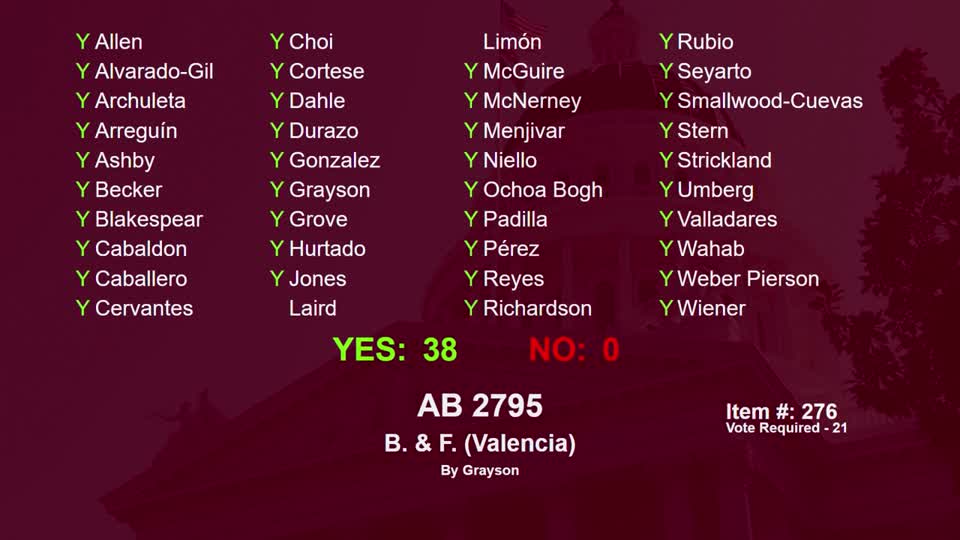
| Aug 26, 2026 | Read third time. Passed. Ordered to the Assembly. (Ayes 39. Noes 0.). |
| Jul 1, 2026 | Read second time. Ordered to third reading. |
| Jun 30, 2026 | From committee: Do pass. (Ayes 5. Noes 0.) (June 30). |
| Jun 12, 2025 | In committee: Set, first hearing. Hearing canceled at the request of author. |
| May 7, 2025 | Referred to Com. on AGRI. |
| Apr 2, 2025 | In Senate. Read first time. To Com. on RLS. for assignment. |
| Apr 1, 2025 | Read third time. Passed. Ordered to the Senate. (Ayes 75. Noes 0.) |
| Apr 1, 2025 | Read third time. Passed. Ordered to the Senate. (Ayes 75. Noes 0. Page 960.) |
| Mar 28, 2025 | Read second time. Ordered to third reading. |
| Mar 27, 2025 | From committee: Do pass. (Ayes 7. Noes 0.) (March 26). |
| Feb 24, 2025 | Referred to Com. on AGRI. |
| Jan 24, 2025 | From printer. May be heard in committee February 23. |
| Jan 23, 2025 | Read first time. To print. |
|
Date
|
Description
|
Location
|
Votes
|
|
|---|---|---|---|---|
| Aug 26, 2026 | Assembly 3rd Reading AB312 Alanis By Alvarado-Gil | Senate Floor |
Passed |
|
| Jun 30, 2026 | Do pass | Senate Standing Committee on Agriculture |
Passed |
|
| Apr 1, 2025 | AB 312 Alanis Assembly Third Reading | Assembly Floor |
Passed |
|
| Mar 26, 2025 | Do pass. | Assembly Standing Committee on Agriculture |
Passed |
This list shows positions taken on this bill by organizations on the date displayed, which is linked to the original source.
Positions by individuals are not included.
SENATE RULES COMMITTEE Office of Senate Floor Analyses (916) 651-4171 | AB 312 |
THIRD READING
Bill No: AB 312
Author: Alanis (R)
Introduced: 1/23/25
Vote: 21
SENATE AGRICULTURE COMMITTEE: 5-0, 6/30/26
AYES: Caballero, Alvarado-Gil, Ashby, McNerney, Padilla
ASSEMBLY FLOOR: 75-0, 4/1/25 - See last page for vote
SUBJECT: Agricultural theft prevention: retention and sale of agricultural commodity: holding and deposit of proceeds
SOURCE: Author
DIGEST:
This bill requires an agricultural commissioner to hold the proceeds of the sale of an agricultural commodity that was seized from someone who was in unlawful possession of the commodity for at least 3 months before depositing the proceeds into the general fund of the county.
ANALYSIS:
Existing law:
- States if, for any reason, an agricultural commodity is not released to the rightful owner after being in custody of the commissioner for 48 hours or, in the case of a highly perishable commodity, any shorter period of time that the commissioner deems necessary, the commissioner may either:
- Sell the commodity by public auction or by private sale at fair market value to a commercial packer of the commodity.
- Donate the commodity to a nonprofit charitable organization.
- If sold, the proceeds derived from the sale of the commodity be held by the commissioner for a period of at least six months before depositing to allow time for the lawful owner of the commodity to submit satisfactory proof of ownership and obtain possession of the proceeds.
- If, after retention of the proceeds for at least six months, no demand is made or if proof of ownership is not supplied, the commissioner shall deposit the proceeds of the sale of the commodity in the general fund of the county.
- If the commodity is unfit for human consumption, the commissioner may destroy it.
This bill requires the commissioner to hold the proceeds of the sale of a commodity for at least 3 months instead of at least 6 months before depositing them into the general fund of the county.
FISCAL EFFECT: Appropriation: No Fiscal Com.: No Local: No
SUPPORT: (Verified 6/30/26)
None received
OPPOSITION: (Verified 6/30/26)
None received
ARGUMENTS IN SUPPORT: According to the author:
“Agricultural commodity theft is a serious issue in farming regions, especially in my district and the greater Central Valley. From my experience in law enforcement, I’ve seen firsthand how this affects businesses. While law enforcement and state personnel work hard to return seized goods to their rightful owners, situations that last more than 48 hours or involve perishable commodities may require the agricultural commissioner to sell the items. This can be done through a public auction or a private sale at fair market value to a commercial packer.
I’ve introduced AB 312 measure to simplify the process of depositing funds from the sale of confiscated agricultural commodities when the owner doesn’t claim them within three months. The sale proceeds would go into the county general fund, which helps support ongoing agricultural inspections and enforcement efforts.”
ASSEMBLY FLOOR: 75-0, 4/1/25
AYES: Addis, Aguiar-Curry, Ahrens, Alanis, Arambula, Ávila Farías, Bains, Bauer-Kahan, Bennett, Berman, Boerner, Bonta, Bryan, Calderon, Caloza, Carrillo, Castillo, Chen, Connolly, Dixon, Elhawary, Ellis, Essayli, Flora, Fong, Gabriel, Gallagher, Garcia, Gipson, Jeff Gonzalez, Mark González, Hadwick, Haney, Harabedian, Hart, Hoover, Irwin, Jackson, Kalra, Krell, Lackey, Lowenthal, Macedo, McKinnor, Muratsuchi, Nguyen, Ortega, Pacheco, Papan, Patel, Patterson, Pellerin, Petrie-Norris, Quirk-Silva, Ramos, Ransom, Celeste Rodriguez, Michelle Rodriguez, Rogers, Blanca Rubio, Sanchez, Schiavo, Schultz, Sharp-Collins, Solache, Soria, Stefani, Ta, Tangipa, Valencia, Wallis, Ward, Wilson, Zbur, Rivas
NO VOTE RECORDED: Alvarez, Davies, DeMaio, Lee, Wicks
Prepared by: Reichel Everhart / AGRI. / (916) 651-1508
7/1/26 16:54:53
**** END ****
SENATE COMMITTEE ON AGRICULTURE
Senator Anna Caballero, Chair
2025 - 2026 Regular
Bill No: AB 312 Hearing Date: 6/30/26
Author: | Alanis | ||
Version: | 1/23/25 | ||
Urgency: | No | Fiscal: | No |
Consultant: | Reichel Everhart | ||
Subject: Agricultural theft prevention: retention and sale of agricultural commodity: holding and deposit of proceeds
SUMMARY
:
This bill would require an agricultural commissioner to hold the proceeds of the sale of an agricultural commodity that was seized from someone who was in unlawful possession of the commodity for at least 3 months before depositing the proceeds into the general fund of the county.
BACKGROUND AND EXISTING LAW
:
Existing law:
State Law: Section 844 of the Food and Agricultural Code states:
- If, for any reason an agricultural commodity is not released to the rightful owner after being in custody of the commissioner for 48 hours or, in the case of a highly perishable commodity, any shorter period of time that the commissioner deems necessary, the commissioner may either:
- Sell the commodity by public auction or by private sale at fair market value to a commercial packer of the commodity.
- Donate the commodity to a nonprofit charitable organization.
- If sold, the proceeds derived from the sale of the commodity be held by the commissioner for a period of at least six months before depositing to allow time for the lawful owner of the commodity to submit satisfactory proof of ownership and obtain possession of the proceeds.
- If, after retention of the proceeds for at least six months, no demand is made or if proof of ownership is not supplied, the commissioner shall deposit the proceeds of the sale of the commodity in the general fund of the county.
- If the commodity is unfit for human consumption, the commissioner may destroy it.
PROPOSED LAW
:
This bill:
- Requires the commissioner to hold the proceeds of the sale of a commodity for at least 3 months instead of at least 6 months before depositing them into the general fund of the county.
ARGUMENTS IN SUPPORT: According to the author:
“Agricultural commodity theft is a serious issue in farming regions, especially in my district and the greater Central Valley. From my experience in law enforcement, I’ve seen firsthand how this affects businesses. While law enforcement and state personnel work hard to return seized goods to their rightful owners, situations that last more than 48 hours or involve perishable commodities may require the agricultural commissioner to sell the items. This can be done through a public auction or a private sale at fair market value to a commercial packer.
I’ve introduced AB 312 measure to simplify the process of depositing funds from the sale of confiscated agricultural commodities when the owner doesn’t claim them within three months. The sale proceeds would go into the county general fund, which helps support ongoing agricultural inspections and enforcement efforts.”
ARGUMENTS IN OPPOSITION:
No received.
COMMENTS
When an agricultural product is seized by the county agricultural commissioner for possible fraud or theft (usually in transit without proper documentation), the commissioner holds the product for up to 48 hours to give a lawful owner a chance to claim it. If the product is perishable, the waiting period may be shorter to prevent spoilage. If the product remains unclaimed, it is either sold or donated if the product is still viable. If the product is sold, the money is held in a trust by the commissioner for a period of 6 months. If no one claims the agricultural product or the funds from the sale of the product, the funds are transferred that that county’s general fund goes towards enforcement and inspections of agricultural products.
PRIOR ACTIONS
:
Assembly Floor: | 75 - 0 |
Assembly Appropriations Committee: |
|
Assembly Agriculture Committee: | 7 - 0 |
SUPPORT
:
None received
OPPOSITION
:
None received
-- END --
ASSEMBLY THIRD READING
ATR Bill Id:AB 312
Author:(Alanis)
As Introduced Ver:January 23, 2025
Majority vote
SUMMARY
Under current law, a county agricultural commissioner (CAC), or any peace officer to hold or seize Ag commodities that are stolen and requires the commodity to be turned over to the custody of the CAC. Furthermore a CAC, if for any reason, the commodity is not released to the rightful owner after being in the custody of the CAC is authorized to sell the commodity and hold all of the proceeds derived from the sale of the commodity for a period of not less than six months. After the six months, if the rightful owner cannot be found the funds will be transferred to the county's general fund.
Major Provisions
- Would require the CAC to hold the proceeds of the sale of a commodity for at least three months.
COMMENTS
Current law states that when an unlawfully possessed agricultural commodity is seized, that product is temporarily managed by the CAC. If those seized commodities are not released to the rightful owner within a specified amount of time, the county agricultural commissioner may sell the agricultural product. However, the sale proceeds must be held for six months, during which time the lawful owner of the commodity may submit satisfactory proof of ownership and obtain possession of the proceeds.
With the rapid advancement of online bulletins, social media platforms, and electronic communications, information now spreads faster than through traditional print and magazines. Therefore, three months is a sufficient period of time for the rightful owner of agricultural commodities to provide satisfactory proof of ownership and personal identification in order to claim the proceeds. This bill proposes that the commissioner holds the proceeds from the sale of a commodity for three months instead of six months before depositing them into the county's general fund. Reducing the holding period to three months will enable the funds to be utilized more quickly.
According to the Author
According to the author, agricultural commodity theft is a serious issue in farming regions, especially in my district and the greater Central Valley. "From my experience in law enforcement, I've seen firsthand how this affects businesses." While law enforcement and state personnel work hard to return seized goods to their rightful owners, situations that last more than 48 hours or involve perishable commodities may require the CAC to sell the items. This can be done through a public auction or a private sale at fair market value to a commercial packer.
This bill is a measure to simplify the process of depositing funds from the sale of confiscated agricultural commodities when the owner doesn't claim them within three months. The sale proceeds would go into the county general fund, which helps support ongoing agricultural inspections and enforcement efforts.
Arguments in Support
None on file.
Arguments in Opposition
None on file.
FISCAL COMMENTS
Unknown
VOTES
ASM AGRICULTURE: 7-0-1
YES: Soria, Alanis, Aguiar-Curry, Jeff Gonzalez, Hadwick, Irwin, Ransom
ABS, ABST OR NV: Connolly
UPDATED
VERSION: January 23, 2025
CONSULTANT: Nicole Willis / AGRI. / (916) 319-2084 FN: 0000197
Date of Hearing: March 26, 2025
ASSEMBLY COMMITTEE ON AGRICULTURE
Esmeralda Soria, Chair
ABPCA Bill Id:AB 312
Author:(Alanis) – As Introduced Ver:January 23, 2025
SUBJECT: Agricultural theft prevention: retention and sale of agricultural commodity: holding and deposit of proceeds
SUMMARY: Under current law, a county agricultural commissioner (CAC), or any peace officer to hold or seize Ag commodities that are stolen and requires the commodity to be turned over to the custody of the CAC. Furthermore a CAC, if for any reason, the commodity is not released to the rightful owner after being in the custody of the CAC is authorized to sell the commodity and hold all of the proceeds derived from the sale of the commodity for a period of not less than 6 months. After the six months, if the rightful owner cannot be found the funds will be transferred to the county’s general fund. Specifically this bill:
- Would require the CAC to hold the proceeds of the sale of a commodity for at least three months.
EXISTING LAW:
- Authorizes, upon reasonable belief that a person is in unlawful possession of an agricultural commodity, as specified, the Secretary of Food and Agriculture (CDFA), a CAC, or any peace officer to hold or seize the commodity and requires the commodity to be turned over to the custody of the CAC. (Food and Agriculture Cod (FAC) 884)
- Authorizes the CAC if, for any reason, the commodity is not released to the rightful owner after being in the custody of the CAC, to sell the commodity and hold all of the proceeds derived from the sale of the commodity for a period of not less than 6 months, during which time the lawful owner of the commodity may submit satisfactory proof of ownership and obtain possession of the proceeds. (FAC 884)
- Requires if, after retention of the proceeds for a period of at least 6 months, no demand is made or if proof of ownership is not supplied, the CAC to deposit the proceeds of the sale of the commodity into the general fund of the county. (FAC 884)
FISCAL EFFECT: Unknown
COMMENTS: Current law states that when an unlawfully possessed agricultural commodity is seized, that product is temporarily managed by the CAC. If those seized commodities are not released to the rightful owner within a specified amount of time, the county agricultural commissioner may sell the agricultural product. However, the sale proceeds must be held for 6 months, during which time the lawful owner of the commodity may submit satisfactory proof of ownership and obtain possession of the proceeds.
With the rapid advancement of online bulletins, social media platforms, and electronic communications, information now spreads faster than through traditional print and magazines. Therefore, three months is a sufficient period of time for the rightful owner of agricultural commodities to provide satisfactory proof of ownership and personal identification in order to claim the proceeds. This bill proposes that the commissioner holds the proceeds from the sale of a commodity for three months instead of six months before depositing them into the county's general fund. Reducing the holding period to three months will enable the funds to be utilized more quickly.
According to the author, agricultural commodity theft is a serious issue in farming regions, especially in my district and the greater Central Valley. “From my experience in law enforcement, I’ve seen firsthand how this affects businesses.” While law enforcement and state personnel work hard to return seized goods to their rightful owners, situations that last more than 48 hours or involve perishable commodities may require the CAC to sell the items. This can be done through a public auction or a private sale at fair market value to a commercial packer.
This bill is a measure to simplify the process of depositing funds from the sale of confiscated agricultural commodities when the owner doesn’t claim them within three months. The sale proceeds would go into the county general fund, which helps support ongoing agricultural inspections and enforcement efforts.
REGISTERED SUPPORT / OPPOSITION:
Support
None on file.
Opposition
None on file.
Analysis Prepared by: Victor Francovich / AGRI. / (916) 319-2084
Discussed in Hearing
 2MIN
Senate Floor
 3MIN
Senate Standing Committee on Agriculture
 12MIN
Senate Standing Committee on Business, Professions and Economic Development
 1MIN
Assembly Floor
 2MIN
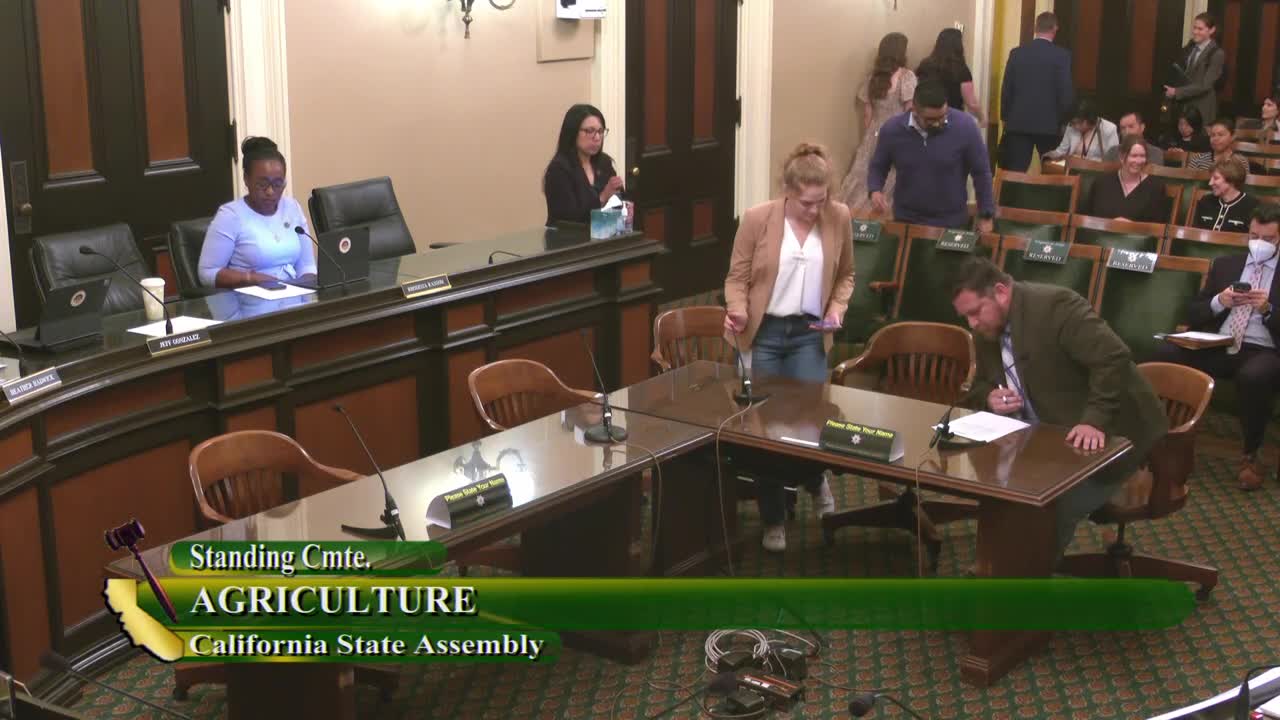
Assembly Standing Committee on Agriculture
Bill Author

Bill Co-Author(s):