AB 492: Alcohol and drug programs: licensing.
- Session Year: 2025-2026
- House: Assembly
- Latest Version Date: 2025-10-06
Current Status:
Passed
(2025-10-06: Chaptered by Secretary of State - Chapter 368, Statutes of 2025.)
Introduced
In Committee
Awaiting First Chamber Vote
Passed First Chamber
In Committee
Awaiting Second Chamber Vote
Passed Second Chamber
Enacted
Under existing law, the State Department of Health Care Services is responsible for administering prevention, treatment, and recovery services for alcohol and drug abuse and problem gambling. Existing law authorizes the department to issue a license to operate an alcohol or other drug recovery or treatment facility upon receipt of a completed written application, fire clearance, and licensing fee, as specified.
This bill would require the department, whenever it issues a license to operate an alcohol or other drug recovery or treatment facility, to concurrently provide written notification of the issuance of the license to the city or county in which the facility is located. The bill would require the notice to include the name and mailing address of the licensee and the location of the facility.
(a)(1)The department may issue a single license to operate an alcohol or other drug recovery or treatment facility upon receipt of a completed written application, fire clearance, and licensing fee subject to the departments review and determination that the applicant can comply with this chapter and regulations adopted pursuant to this chapter.
(2)Whenever the department issues a license pursuant to paragraph (1), the department shall concurrently provide written notification of the issuance of the license to the city in which the facility is located. If the facility is located within an unincorporated area, the notice shall instead be provided to the county. The notice shall include the name and mailing address of the licensee and the location of the facility.
(b)Failure to submit a completed written application, fire clearance, and payment of the required licensing fee in a timely manner shall result in termination of the departments licensure review and shall require submission of a new application by the applicant.
(c)Failure of the applicant to demonstrate the ability to comply with this chapter or the regulations adopted pursuant to this chapter shall result in departmental denial of the application for licensure.
(d)Initial licenses for new facilities shall be provisional for one year. During the term of the provisional license, the department may revoke the license for good cause. For the purposes of this section, good cause means failure to operate in compliance with this chapter or the regulations adopted pursuant to this chapter. A licensee may not reapply for an initial license for five years following a revocation of a provisional license.
(e)On or before July 1, 2022, the department shall adopt regulations to implement this section in accordance with the Administrative Procedure Act (Chapter 3.5 (commencing with Section 11340) of Part 1 of Division 3 of Title 2 of the Government Code).
(f)Notwithstanding the rulemaking provisions of the Administrative Procedure Act, the department may implement, interpret, or make specific this section by means of provider bulletins, written guidelines, or similar instructions, until regulations are adopted.
REVISIONS: HeadingLine 3.|
Date
|
Status
|
|---|---|
| Oct 6, 2025 | Chaptered by Secretary of State - Chapter 368, Statutes of 2025. |
| Oct 6, 2025 | Approved by the Governor. |
| Sep 9, 2025 | Enrolled and presented to the Governor at 3 p.m. |
| Sep 2, 2025 | In Assembly. Ordered to Engrossing and Enrolling. |
| Sep 2, 2025 | Read third time. Passed. Ordered to the Assembly. (Ayes 38. Noes 1. Page 2388.). |
| Jul 1, 2025 | Read second time. Ordered to third reading. |
| Jun 30, 2025 | From committee: Be ordered to second reading pursuant to Senate Rule 28.8. |
| Jun 12, 2025 | From committee: Do pass and re-refer to Com. on APPR. (Ayes 6. Noes 0.) (June 11). Re-referred to Com. on APPR. |
| May 14, 2025 | Referred to Com. on HEALTH. |
| May 6, 2025 | In Senate. Read first time. To Com. on RLS. for assignment. |
| May 5, 2025 | Read third time. Passed. Ordered to the Senate. (Ayes 76. Noes 0. Page 1425.) |
| Apr 24, 2025 | Read second time. Ordered to third reading. |
| Apr 23, 2025 | From committee: Do pass. (Ayes 15. Noes 0.) (April 23). |
| Apr 23, 2025 | Coauthors revised. |
| Apr 2, 2025 | From committee: Do pass and re-refer to Com. on APPR. (Ayes 15. Noes 0.) (April 1). Re-referred to Com. on APPR. |
| Apr 2, 2025 | Coauthors revised. |
| Feb 24, 2025 | Referred to Com. on HEALTH. |
| Feb 11, 2025 | From printer. May be heard in committee March 13. |
| Feb 10, 2025 | Read first time. To print. |
|
Date
|
Description
|
Location
|
Votes
|
|
|---|---|---|---|---|
| Sep 2, 2025 | The committee(s) on EDT recommend(s) that the measure be PASSED, WITH AMENDMENTS | Senate Floor |
Passed |
|
| Jun 11, 2025 | Do pass, but first be re-referred to the Committee on [Appropriations] | Senate Standing Committee on Health |
Passed |
|
| May 5, 2025 | AB 492 Valencia Assembly Third Reading | Assembly Floor |
Passed |
|
| Apr 23, 2025 | Do pass. | Assembly Standing Committee on Appropriations |
Passed |
|
| Apr 1, 2025 | Do pass and be re-referred to the Committee on [Appropriations] | Assembly Standing Committee on Health |
Passed |
This list shows positions taken on this bill by organizations on the date displayed, which is linked to the original source.
Positions by individuals are not included.
|
Organization
|
Position
|
Date
|
|---|---|---|
| Advocates for Responsible Treatment | ** Support | |
| Association of California Cities Orange County | ** Support | |
| California Police Chiefs Association | ** Support | |
| City Of Beverly Hills | ** Support | |
| City of Buena Park | ** Support | |
| City of Camarillo | ** Support | |
| city of carlsbad | ** Support | |
| City Of Clovis | ** Support | |
| city of Cypress | ** Support | |
| City of Encinitas | ** Support | |
| City Of Garden Grove | ** Support | |
| City of Glendale | ** Support | |
| City Of Huntington Beach | ** Support | |
| City of Irvine | ** Support | |
| city of laguna niguel | ** Support | |
| City Of Lathrop | ** Support | |
| City of Los Alamitos | ** Support | |
| City of Manteca | ** Support | |
| City Of Mission Viejo | ** Support | |
| City of Newport Beach | ** Support | |
| City of Oceanside | ** Support | |
| City of Thousand Oaks | ** Support | |
| City Of Villa Park | ** Support | |
| County of Orange | ** Support | |
| League Of California Cities | ** Support |
SENATE COMMITTEE ON HEALTH
Senator Caroline Menjivar, Chair
BILL NO: AB 492
AUTHOR: | Valencia | ||
VERSION: | February 10, 2025 | ||
HEARING DATE: | June 11, 2025 | ||
CONSULTANT: | Reyes Diaz | ||
SUBJECT: Alcohol and drug programs: licensing
SUMMARY:
Requires the Department of Health Care Services to provide specified notification to a city or county, concurrently whenever it issues a license to a residential alcohol or other drug recovery or treatment facility.
Existing law:
- Grants sole authority in the state to the Department of Health Care Services (DHCS) to license adult residential alcohol or other drug recovery or treatment facilities (RTFs).
[HSC §11834.01]
- Requires DHCS to conduct onsite program compliance visits for RTFs at least once during the licensure period. Permits DHCS to conduct announced or unannounced site visits to review for compliance. [HSC §11834.01]
- Permits DHCS to issue a single license to operate RTF upon receipt of a completed written application, fire clearance, and licensing fee subject to DHCS’s review and determination that the applicant can comply with RTF laws. [HCS §11834.09 ]
- Requires initial licenses for new RTFs to be provisional for one year. Permits DHCS to revoke the provisional license for good cause, and prohibits a licensee from reapplying for an initial license for five years following a revocation of a provisional license. Defines “good cause” to mean failure to operate in compliance with RTF statutes and regulations.
[HSC §11834.09(d)]
- Authorizes DHCS to assess civil penalties on facilities that provide recovery, treatment, or detoxification services without a license. [HSC §11834.15]
- Prohibits a person, firm, partnership, association, corporation, or local governmental entity from operating, establishing, managing, conducting, or maintaining a RTF to provide recovery, treatment, or detoxification services within this state without first obtaining a license. [HSC §11834.30]
- Requires DHCS to conduct a site visit to investigate an allegation of an entity operating without a valid RTF license. Requires DHCS to take the following actions if evidence substantiates that the entity is providing RTF services without a license:
- Submit the findings of the investigation;
- Issue a written notice to the entity stating that it is operating in violation DHCS’s licensing law and inform them of the date by which it ceases providing services and notice that DHCS will assess a civil penalty of $2,000 per day for every day they continue to provide services beyond the date specified in the notice;
- Notice that the case will be referred for civil proceedings in the event the entity continues to provide services beyond the date specified in the notice; and,
- Inform the entity of the licensing requirements. [HSC §11834.31]
- Prohibits an entity found to be in violation of DHCS’s licensing laws from applying for initial RTF licensure for a period of five years from the date of the notice specified.
[HSC §11834.31]
This bill: Requires DHCS to provide written notification to the city, or the county if the facility is located within an unincorporated area, concurrently whenever it issues a license to a RTF that includes the name and mailing address of the licensee and the location of the RTF.
FISCAL EFFECT:
According to the Assembly Appropriations Committee, DHCS would need to provide an estimated 100 to 200 notifications per year and states this bill will have no fiscal impact.
PRIOR VOTES:
Assembly Floor: | 76 - 0 |
Assembly Appropriations Committee: | 15 - 0 |
Assembly Health Committee: | 15 - 0 |
COMMENTS:
- Author’s statement. According to the author, this bill will ensure that our communities are well-informed and prepared to support recovery and treatment initiatives. By providing local agencies with timely information, we can foster greater collaboration, improve public safety, and ensure that these facilities operate in a manner that best serves the needs of our residents.
- RTFs. Licensure is required when at least one of the following services is provided: detoxification; group sessions; individual sessions; educational sessions; or, alcoholism or other drug abuse recovery or treatment planning. As part of their licensing function, DHCS conducts reviews of RTFs every two years, or as necessary. DHCS’s SUD Compliance Division checks for compliance with statutes and regulations to ensure the health and safety of RTF residents and investigates all complaints related to RTFs, including deaths, complaints against staff, and allegations of operating without a license. DHCS has the authority to suspend or revoke a license for conduct in the operation of an RTF that is contrary to the health, morals, welfare, or safety of either RTF residents or to the people of the State of California. According to DHCS, 123 RTF initial licenses were issued in 2023 and 172 in 2024.
- California State Auditor (CSA) report. Issued in October 2024, the CSA Drug and Alcohol Treatment Facilities report (or “RTF report”) stated complaints about the roughly 1,000 licensed RTFs to DHCS may arise from various sources, including RTF residents, neighbors, staff members, or government agencies. According to internal guidelines, DHCS prioritizes death investigations over investigations into all other types of complaints. The RTF report stated, in fact, DHCS aims to assign death investigations to a staff member on the day it receives the report of a death. In the course of a death investigation, it directs its staff to perform a complete review of the facility where the death occurred to determine whether the resident’s death was related to deficiencies in the facility’s operation. DHCS also receives and investigates complaints about facilities that operate without a license—for which generally DHCS does not have oversight. If an investigation finds, however, that an unlicensed facility is providing or advertising services that require a license, DHCS notifies the facility that it has been violating the law. If it obtains sufficient evidence the facility has not stopped providing the services in question, DHCS is authorized in current law to bring a civil action against the facility. For a licensed RTF, if during a complaint investigation or compliance inspection, DHCS finds a facility poses serious risks to the health and safety of residents, it may initiate a license suspension or revocation. Current law authorizes DHCS to immediately suspend a license when these concerns are present. A suspension stays in effect until DHCS makes a final determination, which may include revocation, following a hearing and a proposed decision by an Administrative Law Judge.
The RTF report made a series of recommendations to help DHCS improve its complaints processes—mostly through administrative means:
- Provide management with information about the timeliness of compliance inspections;
- Implement a mechanism in its licensing database that notifies staff of the dates for upcoming compliance inspections for their caseload so they can plan accordingly;
- Fill its vacant positions;
- Update its policies and staff training by April 2025 to ensure it assigns complaints to analysts for investigation within 10 days, as currently required by its regulations;
- Implement guidelines by October 2025 that specify the length of time analysts should take to complete key steps in the investigation process for different types of investigations;
- Conduct site visits beginning December 2024 in all instances in which there is an allegation that an unlicensed facility is advertising or providing treatment services without a license; and,
- Develop and implement, by April 2025, a follow-up procedure, such as performing another site visit, to confirm unlicensed facilities have ceased providing services unlawfully.
- The argument surrounding “overconcentration.” The RTF report contained an additional focus of interest popular with some jurisdictions over the years concerning the concentration of RTFs, and concluded state law allows treatment facilities serving six or fewer residents to operate anywhere that a single family home would also be permitted to exist. Local governments may not impose on these facilities any additional zoning requirements or fees that they would not impose on a single‑family home. Accordingly, state law prohibits local governments from imposing distance requirements on small facilities that they can impose on commercial establishments. In addition, state law regarding the licensing of RTFs does not prevent those with individual licenses from operating near one another, including when those facilities share the same owner. However, the facilities may not share residents or treatment services among separately licensed facilities. State law does not limit the number of RTF licenses—regardless of facility capacity—that a single owner may possess.
- Attorney General (AG) Brown opinion. No. 07-601, from December 18, 2007, similarly concluded that the Department of Alcohol and Drug Programs (now DHCS) is not authorized to deny an application for licensure or suspend or revoke the license of RTFs because the particular community already has more than a sufficient number of them to meet the local need, and that a city may not limit the establishment of RTFs serving six or fewer persons using the same argument. In his opinion, AG Brown argued that while DHCS’s RTF licensing law makes a declaration concerning the policy of the state that “counties and cities encourage development of sufficient numbers and types of RTFs as are commensurate with local need,” the matters concerning treatment for those with SUDs and available treatment options are of statewide concern. Therefore, local governments cannot argue additional RTFs would result in overconcentration in their jurisdictions based solely on the belief those jurisdictions have sufficient numbers to meet local need; and AG Brown cited case law to support that opinion.
- Prior legislation. AB 2121 (Dixon of 2024) included, among other things, an identical notification requirement as included in this bill. AB 2121 was not heard in the Assembly Health Committee.
SB 34 (Bates of 2017) would have, among other provisions, required DHCS to develop specified guidelines on how to report to the Legislature about RTFs, including methods for determining whether complaints received regarding RTF overconcentration in communities are substantiated or unsubstantiated. SB 34 was held on the Senate Appropriations Committee suspense file.
SB 786 (Mendoza of 2017) would have, among overconcentration provisions, required DHCS to notify specified entities of an RTF prior to the license being issued. SB 786 was not heard in this Committee at the request of the author.
AB 2403 (Bloom of 2016) and AB 1284 (Huffman of 2009) would have, among other things, required similar notification as this bill. AB 2403 and AB 1284 were held on the Assembly Appropriations Committee suspense file.
- Support. The League of California Cities, as sponsor, and other supporters of this bill, largely local governments, argue California has 2,043 alcohol and drug treatment facilities, nearly 70% of which are in Southern California. DHCS is not currently required to notify local governments when approving licenses, leaving cities in the dark about the operation of new RTFs within their jurisdictions. This lack of communication can make it difficult to address community concerns, maintain public safety, and ensure that RTFs are effectively integrated into local communities. Similar notification requirements are already in place for liquor licenses, cannabis businesses, and syringe exchange programs. Supporters further argue the RTF report confirmed what cities across California have been saying for years: there is an overconcentration of recovery housing in residential neighborhoods, specifically in Orange County. This bill takes a critical step forward by keeping cities informed and enhancing their collaboration with the state to more effectively address SUD treatment needs.
- Unclear need for notification. Information provided by the author’s office notes that DHCS makes its licensing information available through a searchable database, which includes a map of the state and all the currently licensed RTFs. While this bill doesn’t include specific provisions regarding overconcentration, similar bills that contained spacing requirements for RTFs additionally contained notification to local government provisions. Arguments made by supporters of this bill point to the issue of overconcentration even when the RTF report states DHCS appropriately licenses RTFs—regardless of location. Given the RTF report and AG Brown’s opinion on the matter of local governments stating they have met local need, it is unclear why DHCS would need to notify locals of new licenses, particularly when the information is readily available to the public.
SUPPORT AND OPPOSITION:
Support: League of California Cities (sponsor)
Advocates for Responsible Treatment
Association of California Cities – Orange County
California Police Chiefs Association
City of Beverly Hills
City of Buena Park
City of Camarillo
City of Carlsbad
City of Clovis
City of Cypress
City of Encinitas
City of Garden Grove
City of Glendale
City of Huntington Beach
City of Irvine
City of Laguna Niguel
City of Lathrop
City of Los Alamitos
City of Manteca
City of Mission Viejo
City of Newport Beach
City of Oceanside
City of Thousand Oaks
City of Villa Park
County of Orange
Five individuals
Oppose: None received
-- END --
ASSEMBLY THIRD READING
ATR Bill Id:AB 492
Author:(Valencia)
As Introduced Ver:February 10, 2025
Majority vote
SUMMARY
Requires the State Department of Health Care Services (DHCS), upon issuing an initial license to an alcohol or other drug recovery or treatment facility (RTF), to notify the city or county in which the facility is located of the license and provide them with the name and mailing address of the licensee and the location of the facility.
Major Provisions
COMMENTS
Prevalence of Substance Use Disorders (SUD) in California. A 2024 publication from Health Management Associates and the California Health Care Foundation titled, "Substance Use Disorder in California — a Focused Landscape Analysis" reported that approximately 9% of Californians ages 12 years and older met the criteria for SUD in 2022. According to the report, the prevalence of SUD among individuals 12 years of age and older increased to 8.8% in 2022 from 8.1% in 2015. While the health care system is moving toward acknowledging SUD as a chronic illness, only 6% of Americans and 10% of Californians ages 12 and older with an SUD received treatment for their condition in 2021. More than 19,335 Californians ages 12 years and older died from the effects of alcohol from 2020 to 2021, and the total annual number of alcohol-related deaths increased by approximately 18% in the state from 2020 to 2021. Overdose deaths from both opioids and psychostimulants (such as amphetamines), are soaring. This issue, compounded by the increased availability of fentanyl, has resulted in a 10-fold increase in fentanyl related deaths between 2015 and 2019. According to the California Department of Public Health's Overdose Prevention Initiative, 7,847 opioid-related overdose deaths occurred in California in 2023. In the first two quarters of 2024, 2,975 opioid-related overdose deaths were recorded in California.
Alcohol and Drug Treatment Facility Licensing. DHCS has sole authority to license RTFs in the state. Licensure is required when at least one of the following services is provided: detoxification; group sessions; individual sessions; educational sessions; or, alcoholism or other drug abuse recovery or treatment planning. Additionally, facilities may be subject to other types of permits, clearances, business taxes, or local fees that may be required by the cities or counties in which the facilities are located. As part of their licensing function, DHCS conducts reviews of RTF operations every two years, or as necessary. DHCS's SUD Compliance Division checks for compliance with statutes and regulations to ensure the health and safety of RTF residents and investigates all complaints related to RTFs, including deaths, complaints against staff, and allegations of operating without a license. DHCS has the authority to suspend or revoke a license for conduct in the operation of an RTF that is contrary to the health, morals, welfare, or safety of either an individual in, or receiving services from, the facility or to the people of the State of California. According to DHCS, while the number of applicants vary every year, the department issued initial licenses to 123 residential programs in 2023 and 172 in 2024. Local authorities will be notified only for initial licenses, not renewals, under this bill, which DHCS estimates would be 100 to 200 annually. DHCS does not license alcohol and drug recovery residences with six or fewer beds that don't provide licensable services.
Local facility approvals. When licensing residential facilities, DHCS requires a fire clearance from the local fire authority. Both residential and outpatient programs must obtain and provide proof of this clearance, which is requested directly from the fire authority within the city where the program is licensed. Current state law and regulations do not require any other additional local approvals beyond a fire clearance for residential facilities.
According to the Author
This bill will ensure that communities are well-informed and prepared to support recovery and treatment initiatives. The author states that by providing local agencies with timely information, the state can foster greater collaboration, improve public safety, and ensure that these facilities operate in a manner that best serves the needs of residents.
Arguments in Support
The League of California Cities (Cal Cities) is sponsoring this bill and states in support that the lack of a notification requirement can make it difficult to address community concerns, maintain public safety, and ensure that recovery and treatment programs are effectively integrated into local communities. Cal Cities argues that this bill will enable cities to better coordinate services and identify emerging trends and potential gaps in the state's approach to treatment needs, and take a critical step forward by keeping cities informed and enhancing their collaboration with the state to more effectively address substance use treatment needs.
Arguments in Opposition
None on file.
FISCAL COMMENTS
According to the Assembly Appropriations Committee DHCS would need to provide an estimated 100 to 200 notifications per year and states this bill will have no fiscal impact.
VOTES
ASM HEALTH: 15-0-0
YES: Bonta, Chen, Addis, Aguiar-Curry, Arambula, Carrillo, Flora, Mark González, Krell, Patel, Celeste Rodriguez, Sanchez, Schiavo, Sharp-Collins, Stefani
ASM APPROPRIATIONS: 15-0-0
YES: Wicks, Sanchez, Arambula, Calderon, Caloza, Dixon, Elhawary, Fong, Mark González, Hart, Pacheco, Pellerin, Solache, Ta, Tangipa
UPDATED
VERSION: February 10, 2025
CONSULTANT: Logan Hess / HEALTH / (916) 319-2097 FN: 0000278
Date of Hearing: April 23, 2025
ASSEMBLY COMMITTEE ON APPROPRIATIONS
Buffy Wicks, Chair
ABPCA Bill Id:AB 492
Author:(Valencia) – As Introduced Ver:February 10, 2025
Policy Committee: | Health | Vote: | 15 - 0 |
|
| ||
|
|
Urgency: No State Mandated Local Program: No Reimbursable: No
SUMMARY:
This bill requires the Department of Health Care Services (DHCS), when it issues a license to operate an alcohol or other drug recovery or treatment facility (RTF), to concurrently notify in writing the city or county in which the facility is located about the issuance, and include the name and mailing address of the licensee and the location of the facility.
FISCAL EFFECT:
DHCS would need to provide an estimated 100 to 200 notifications per year and states this bill will have no fiscal impact.
COMMENTS:
- Purpose. This bill is sponsored by the League of California Cities. According to the author:
[This bill] will ensure that our communities are well-informed and prepared to support recovery and treatment initiatives. By providing local agencies with timely information, we can foster greater collaboration, improve public safety, and ensure that these facilities operate in a manner that best serves the needs of our residents.
- Background. An RTF is defined in statute to mean a premises, place, or building that provides residential nonmedical services to adults who are recovering from problems related to alcohol, drug, or alcohol and drug misuse or addiction, and who need alcohol, drug, or alcohol and drug recovery, treatment, or detoxification services. DHCS has sole authority to license RTFs in the state. Licensure is required when any of the following services is provided: detoxification, group sessions, individual sessions, educational sessions, or alcoholism or other drug abuse recovery or treatment planning. Facilities may be subject to other types of permits, clearances, business taxes, or local fees required by the cities or counties in which the facilities are located. DHCS does not license alcohol and drug recovery residences with six or fewer beds that do not provide licensable services.
As part of its licensing function, DHCS reviews an RTF every two years, or more frequently as necessary. DHCS checks for compliance with statutes and regulations to ensure the health and safety of RTF residents and investigates all complaints related to the RTF, including deaths, complaints against staff, and allegations of operating without a license. DHCS MAY suspend or revoke a license for conduct in the operation of an RTF that is contrary to the health, morals, welfare, or safety of either an individual in, or receiving services from, the facility or to the people of the state. DHCS issued initial licenses to 123 residential programs in 2023 and 172 in 2024. DHCS will notify local authorities only for initial licenses, not renewals, under this bill. DHCS estimates there would be 100 to 200 new licenses annually. - Related Legislation.
AB 3 (Dixon) exempts an RTF from being considered a residential use of property if multiple single-family dwellings are being used as an RTF; the dwellings share an owner, a director, programs, or amenities with another facility; and any of the dwellings are within 300 feet of that facility, or if a single-family dwelling being used as an RTF shares an owner, a director, programs, or amenities with another facility that is commercially owned, operated, and licensed anywhere in the state. AB 3 is pending in the Assembly Health Committee.
AB 424 (Davies) requires DHCS to provide, within 10 days of the receipt of a complaint from a member of the public against an RTF, notice to the person filing the complaint that the complaint has been received and to provide notice the complaint has been closed and whether the department found the facility to be in violation. AB 424 is pending in the Assembly Health Committee.
- Prior Legislation.
AB 2121 (Dixon), of the 2023-24 Legislative Session, would have required an RTF to confirm that it is located more than 300 feet from any other RTF or any community care facility, as specified, and would have required DHCS to notify the city or the county in which the facility is located of the issuance of a license. AB 2121 was not set for hearing in the Assembly Health Committee.
Analysis Prepared by: Allegra Kim / APPR. / (916) 319-2081
Date of Hearing: April 1, 2025
ASSEMBLY COMMITTEE ON HEALTH
Mia Bonta, Chair
ABPCA Bill Id:AB 492
Author:(Valencia) – As Introduced Ver:February 10, 2025
SUBJECT: Alcohol and drug programs: licensing.
SUMMARY: Requires the State Department of Health Care Services (DHCS), upon issuing an initial license to an alcohol or other drug recovery or treatment facility (RTF), to notify the city or county in which the facility is located of the license and provide them with the name and mailing address of the licensee and the location of the facility.
EXISTING LAW:
- Establishes DHCS as the sole licensing authority for RTFs. Permits new licenses to be issued for a period of two years and requires DHCS to conduct onsite program visits for compliance at least once during the two-year licensing period. [Health and Safety Code (HSC) § 11834.01]
- Requires DHCS to adopt the American Society of Addiction Medicine (ASAM) treatment criteria, or an equivalent evidence-based standard, as the minimum standard of care for licensed facilities and requires a licensee to maintain those standards with respect to the level of care to be provided by the licensee. [HSC § 11834.015]
- Defines RTF to mean a premises, place, or building that provides residential nonmedical services to adults who are recovering from problems related to alcohol, drug, or alcohol and drug misuse or addiction, and who need alcohol, drug, or alcohol and drug recovery, treatment, or detoxification services. [HSC § 11834.02]
- Requires, if a facility intends to provide incidental medical services, evidence of a valid license of a physician and surgeon who will provide or oversee those services, and any other information deemed appropriate by DHCS. Defines “incidental medical services” as services that follow the community standard of practice and are not required to be performed in a licensed clinic or licensed health facility, and includes obtaining medical histories, monitoring health status, testing associated with detoxification from alcohol or drugs, and overseeing patient self-administered medications. [HSC §§ 11834.025-11834.026]
- Permits DHCS to issue a license to operate an alcohol or other drug recovery or treatment facility upon receipt of a completed written application, fire clearance, and licensing fee, and determination that the facility meets applicable requirements and regulations. [HSC § 11834.09(a)]
- Requires DHCS to terminate application review and an applicant to submit a new application upon failure to submit the written application, fire clearance, and payment of the required licensing fee in a timely manner. [HSC § 11834.09(b)]
- Requires DHCS to deny an application for licensure if the applicant fails to demonstrate compliance with the requirements in 4) above. [HSC § 11834.09(c)]
- Requires that initial licenses for a new alcohol or other drug recovery or treatment facility to be provisional for one year and permits DHCS to revoke the provisional license for good cause and prohibits a licensee from reapplying for an initial license for five years following a revocation of a provisional license. Defines “good cause” to mean failure to operate in compliance with the statutes and regulations relating to treatment facilities. [HSC § 11834.09(d)]
- Authorizes DHCS to assess civil penalties on facilities that provide alcohol or drug use recovery, treatment, or detoxification services without a license. [HSC § 11834.15]
FISCAL EFFECT: Unknown. This bill has not yet been analyzed by a fiscal committee.
COMMENTS:
- PURPOSE OF THIS BILL. According to the author, this bill will ensure that communities are well-informed and prepared to support recovery and treatment initiatives. The author states that by providing local agencies with timely information, the state can foster greater collaboration, improve public safety, and ensure that these facilities operate in a manner that best serves the needs of residents.
- BACKGROUND.
- Prevalence of Substance Use Disorders (SUD) in California. A 2024 publication from Health Management Associates and the California Health Care Foundation titled, “Substance Use Disorder in California — a Focused Landscape Analysis” reported that approximately 9% of Californians ages 12 years and older met the criteria for SUD in 2022. According to the report, the prevalence of SUD among individuals 12 years of age and older increased to 8.8% in 2022 from 8.1% in 2015. While the health care system is moving toward acknowledging SUD as a chronic illness, only 6% of Americans and 10% of Californians ages 12 and older with an SUD received treatment for their condition in 2021. More than 19,335 Californians ages 12 years and older died from the effects of alcohol from 2020 to 2021, and the total annual number of alcohol-related deaths increased by approximately 18% in the state from 2020 and 2021. Overdose deaths from both opioids and psychostimulants (such as amphetamines), are soaring. This issue, compounded by the increased availability of fentanyl, has resulted in a 10-fold increase in fentanyl related deaths between 2015 and 2019. According to the California Department of Public Health’s Overdose Prevention Initiative, 7,847 opioid-related overdose deaths occurred in California in 2023. In the first two quarters of 2024, 2,975 opioid-related overdose deaths were recorded in California.
- Alcohol and Drug Treatment Facility Licensing. DHCS has sole authority to license RTFs in the state. Licensure is required when at least one of the following services is provided: detoxification; group sessions; individual sessions; educational sessions; or, alcoholism or other drug abuse recovery or treatment planning. Additionally, facilities may be subject to other types of permits, clearances, business taxes, or local fees that may be required by the cities or counties in which the facilities are located.
As part of their licensing function, DHCS conducts reviews of RTF operations every two years, or as necessary. DHCS's SUD Compliance Division checks for compliance with statutes and regulations to ensure the health and safety of RTF residents and investigates all complaints related to RTFs, including deaths, complaints against staff, and allegations of operating without a license. DHCS has the authority to suspend or revoke a license for conduct in the operation of an RTF that is contrary to the health, morals, welfare, or safety of either an individual in, or receiving services from, the facility or to the people of the State of California. According to DHCS, while the number of applicants vary every year, the department issued initial licenses to 123 residential programs in 2023 and 172 in 2024. Local authorities will be notified only for initial licenses, not renewals, under this bill, which DHCS estimates would be 100 to 200 annually. DHCS does not license alcohol and drug recovery residences with six or fewer beds that don’t provide licensable services.
- Local facility approvals. When licensing residential facilities, DHCS requires a fire clearance from the local fire authority. Both residential and outpatient programs must obtain and provide proof of this clearance, which is requested directly from the fire authority within the city where the program is licensed. Current state law and regulations do not require any other additional local approvals beyond a fire clearance for residential facilities.
- SUPPORT. The League of California Cities (Cal Cities) is sponsoring this bill and states in support that the lack of a notification requirement can make it difficult to address community concerns, maintain public safety, and ensure that recovery and treatment programs are effectively integrated into local communities. Cal Cities argues that this bill will enable cities to better coordinate services and identify emerging trends and potential gaps in the state's approach to treatment needs, and take a critical step forward by keeping cities informed and enhancing their collaboration with the state to more effectively address substance use treatment needs. Several individual cities also support the bill for these same reasons.
- RELATED LEGISLATION.
- AB 3 (Dixon) would exempt an RTF from being considered a residential use of property if multiple single-family dwellings are being used as a licensed or unlicensed RTF, they share an owner, a director, programs, or amenities with another facility, and any of the dwellings are within 300 feet of that facility, or if a single-family dwelling being used as an RTF shares an owner, a director, programs, or amenities with another facility that is commercially owned, operated, and licensed that is located anywhere in the state. AB 3 is pending in the Assembly Health Committee.
- AB 255 (Haney) would authorize state programs to fund supportive-recovery residences, a new type of residence that will satisfy housing first principles, be specifically designed to support substance use recovery, emphasize abstinence, and offer permanent housing only. The bill would require the state to conduct periodic monitoring and also prohibits a resident from being evicted for relapse. However, a resident seeking to leave or at risk of eviction must be provided assistance in accessing housing operated with harm-reduction principles that is also permanent housing. AB 255 is pending in the Assembly Housing and Community Development Committee.
- AB 423 (Davies) would require DHCS to adopt regulations requiring discharge and continuing care planning that are appropriate for recovery, treatment, and detox services and regulations requiring a licensee to develop a plan to help the patient return to their home community at the conclusion of treatment and schedule for the patient a follow-up meeting with a mental health or substance use disorder professional to occur no more than 7 days after discharge. AB 423 is pending in the Assembly Health Committee.
- AB 424 (Davies) would require DHCS to provide, within 10 days of the receipt of a complaint from a member of the public against an RTF, or a complaint alleging that a facility is unlawfully operating without a license, notice to the person filing the complaint that the it has been received and to provide them notice that the complaint has been closed and whether the department found the facility to be in violation. AB 424 is pending in the Assembly Health Committee.
- AB 425 (Davies) would require DHCS to adopt the ASAM treatment criteria, or an equivalent evidence-based standard, as the minimum standard of care for alcohol or other drug programs certified by DHCS. The bill would also require a certified program to maintain those standards. AB 425 is pending in the Assembly Health Committee.
- AB 877 (Dixon) would require the Department of Managed Health Care, the Department of Insurance, and DHCS to prepare and send one letter to each chief financial officer of a health care service plan, health insurer, or Medi-Cal managed care plan that provides coverage for substance use disorder in residential facilities include a statement informing the plan or insurer that SUD treatment in licensed and certified residential facilities is almost exclusively nonmedical, with rare exceptions. AB 877 is pending in the Assembly Health Committee.
- AB 1037 (Elhawary) would update several SUD licensing and public health laws by indefinitely extending sterile syringe access authorization, expanding those authorized to receive opioid antagonists and eliminate the requirement that they receive training, remove testing equipment from the definition of drug paraphernalia and expand those allowed to keep paraphernalia for public health purposes, and require DHCS to offer a combined application for entities to be certified as an alcohol or other drug program and to provide incidental medical services. AB 1037 is pending in the Assembly Health Committee.
- AB 1090 (Davies) would require DHCS to establish a pilot program to locate an investigator within Orange County (OC) to investigate complaints against RTFs within the county and will require OC to reimburse DHCS for the costs associated with the pilot program. The bill would require the pilot program to be completed by December 31, 2029 with a report of the results of the pilot program from OC to the Legislature by December 31, 2030. AB 1090 is pending in the Assembly Health Committee
- AB 1267 (Pellerin) would require DHCS to offer, beginning January 1, 2027, a consolidated license and certification that allows the holder to operate more than one facility that requires a license, a program that requires a certification, or a combination, that the holder operates within the same geographic location, defined as the physical location where clients are generally colocated, intermingle, reside, or receive services in one building or multiple buildings within 1,000 feet of each other. AB 1267 is pending in the Assembly Health Committee.
- AB 1356 (Dixon) would require an RTF to submit a report within 60 days of the death of a resident that describes the follow-up action plan that was implemented and provides any relevant information that was not known at the time of the initial incident or that was known but was not provided to DHCS in the initial report. AB 1356 is pending in the Assembly Health Committee.
- SB 35 (Umberg) would require DHCS to initiate an investigation into unlicensed operation of an RTF within 10 days of receiving the allegation and complete the investigation within 60 days of initiating the investigation. The bill would require an employee or agent to provide the notice within 10 days of submitting their findings to DHCS and to conduct a follow up site visit to determine whether the facility has ceased providing services. SB 35 would authorize these provisions to be enforced by the city attorney of a city in which the facility is located, or by the county counsel or the county behavioral health agency if the facility is located in the unincorporated area of the county, if DHCS fails to initiate or conclude the investigation in accordance with these time limits. SB 35 is pending in the Senate Health Committee.
- SB 43 (Umberg) would require all programs certified and all facilities licensed, no later than July 15, 2026, and annually each July 15 thereafter, to submit to the department a report of all money transfers between the program or facility and a recovery residence during the previous fiscal year. This bill is pending a hearing in the Senate Health Committee.
- SB 329 (Blakespear) would require DHCS to assign a complaint regarding an alcohol or other drug recovery or treatment facility to an analyst for investigation within 10 days of receiving the complaint and to complete an investigation into a complaint regarding a facility within 60 days of receiving the complaint. SB 329 is pending in the Senate Appropriations Committee.
- PREVIOUS LEGISLATION.
- AB 2081 (Davies), Chapter 376, Statutes of 2024, requires entities licensed or certified by DHCS to include on their websites and intake paperwork a disclosure stating an individual may check DHCS’s website to confirm any actions taken against the entity.
- AB 2121 (Dixon) of 2024 would have required an RTF to confirm that it is located more than 300 feet from any other RTF or any community care facility, as specified, and would have required the department to notify in writing the city or the county in which the facility is located of the issuance of a license. This bill was not set for hearing in the Assembly Health Committee.
- AB 1158 (Petrie Norris), Chapter 443, Statutes of 2021, requires an RTF licensed by DHCS serving more than six residents to maintain specified insurance coverages, including commercial general liability insurance and employer’s liability insurance. Requires a licensee serving six or fewer residents to maintain general liability insurance coverage. Requires any government entity that contract with privately owned recovery residence or RTF serving more than six residents to require the contractors to, at all times, maintain specific insurance coverage.
REGISTERED SUPPORT / OPPOSITION:
Support
League of California Cities (Sponsor)
Advocates for Responsible Treatment
Association of California Cities - Orange County (ACC-OC)
City of Buena Park
City of Cypress
City of Laguna Niguel
City of Los Alamitos
City of Mission Viejo
City of Newport Beach
One individual
Opposition
None on file
Analysis Prepared by: Logan Hess / HEALTH / (916) 319-2097
Discussed in Hearing
 2MIN
Senate Floor
 9MIN
Senate Standing Committee on Health
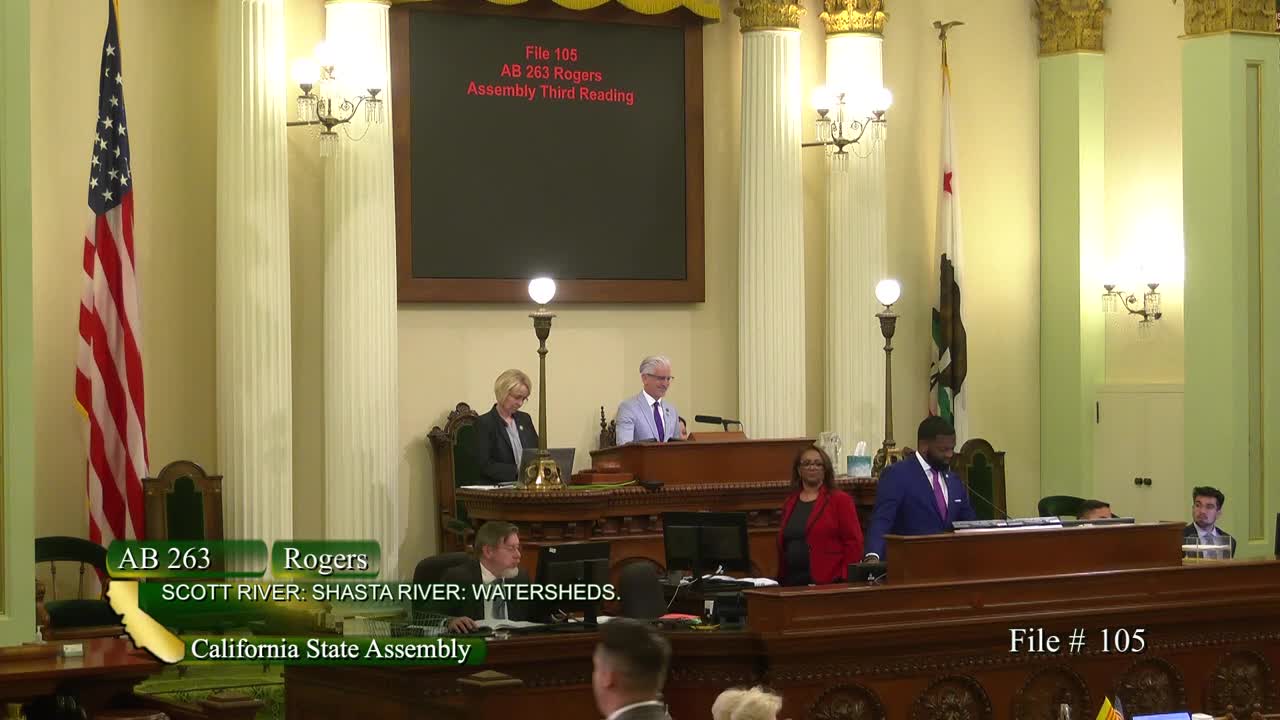 52SEC
Assembly Floor
 9MIN
Assembly Standing Committee on Health
Bill Author