AB 519: Pet broker sales.
- Session Year: 2025-2026
- House: Assembly
- Latest Version Date: 2025-10-09
Current Status:
Passed
(2025-10-09: Chaptered by Secretary of State - Chapter 478, Statutes of 2025.)
Introduced
In Committee
Awaiting First Chamber Vote
Passed First Chamber
In Committee
Awaiting Second Chamber Vote
Passed Second Chamber
Enacted
Existing law, the Lockyer-Polanco-Farr Pet Protection Act, requires dealers of dogs and cats to comply with its provisions, including maintaining certain health and safety standards for pets and providing purchasers and prospective purchasers of pets, upon request, with written notice of consumer rights concerning the sale of a pet, including information about available refunds and other remedies. Existing law prohibits an online pet retailer, as defined, from offering, brokering, making a referral for, or otherwise facilitating a loan or other financing option for, the adoption or sale of a dog, cat, or a rabbit. Existing law makes a violation of these provisions subject to a civil penalty.
This bill would prohibit, subject to specified exemptions, a broker from making available for adoption, selling, or offering for sale a dog under one year of age, a cat, or rabbit. The bill would define a broker as a person or business that sells, arranges, negotiates, or processes, either in person or online, the sale of dogs, cats, or rabbits bred by another for profit and would include facilitating the transfer of those animals for profit.
Existing law, the Lockyer-Polanco-Farr Pet Protection Act, requires dealers of dogs and cats to comply with its provisions, including maintaining certain health and safety standards for pets and providing purchasers and prospective purchasers of pets, upon request, with written notice of consumer rights concerning the sale of a pet, including information about available refunds and other remedies. Existing law prohibits an online pet retailer, as defined, from offering, brokering, making a referral for, or otherwise facilitating a loan or other financing option for, the adoption or sale of a dog, cat, or a rabbit. Existing law makes a violation of these provisions subject to a civil penalty.
This bill would prohibit, subject to specified exemptions, a broker from making available for adoption, selling, or offering for sale a dog, dog under one year of age, a cat, or rabbit. The bill would define a broker as a person or business that sells, arranges, negotiates, or processes, either in person or online, the sale of dogs, cats, or rabbits bred by another for profit and would include facilitating the transfer of those animals for profit.
Existing law, the Lockyer-Polanco-Farr Pet Protection Act, requires dealers of dogs and cats to comply with its provisions, including maintaining certain health and safety standards for pets and providing purchasers and prospective purchasers of pets, upon request, with written notice of consumer rights concerning the sale of a pet, including information about available refunds and other remedies. Existing law prohibits an online pet retailer, as defined, from offering, brokering, making a referral for, or otherwise facilitating a loan or other financing option for, the adoption or sale of a dog, cat, or rabbit. Existing law makes a violation of these provisions subject to a civil penalty.
This bill would prohibit, subject to specified exemptions, a broker from making available for adoption, selling, or offering for sale a dog, cat, or rabbit. The bill would define a broker as a person or business that sells, arranges, negotiates, or processes, either in person or online, the sale of dogs, cats, or rabbits bred by another for profit and would include facilitating the transfer of those animals for profit.
Existing law, the Lockyer-Polanco-Farr Pet Protection Act, requires dealers of dogs and cats to comply with its provisions, including maintaining certain health and safety standards for pets and providing purchasers and prospective purchasers of pets, upon request, with written notice of consumer rights concerning the sale of a pet, including information about available refunds and other remedies. Existing law prohibits an online pet retailer, as defined, from offering, brokering, making a referral for, or otherwise facilitating a loan or other financing option for, the adoption or sale of a dog, cat, or rabbit. Existing law makes a violation of these provisions subject to a civil penalty.
This bill would prohibit prohibit, subject to specified exemptions, a broker from adopting, making available for adoption, selling, or offering for sale a dog, cat, or rabbit. The bill would define a broker as a person or business that sells, arranges, negotiates, or processes, either in person or online, the sale of dogs, cats, or rabbits bred by another for profit and would include facilitating the transfer of those animals for profit.
Existing law, the Lockyer-Polanco-Farr Pet Protection Act, requires dealers of dogs and cats to comply with its provisions, including maintaining certain health and safety standards for pets and providing purchasers and prospective purchasers of pets, upon request, with written notice of consumer rights concerning the sale of a pet, including information about available refunds and other remedies. Existing law prohibits an online pet retailer, as defined, from offering, brokering, making a referral for, or otherwise facilitating a loan or other financing option for, the adoption or sale of a dog, cat, or rabbit. Existing law makes a violation of these provisions subject to a civil penalty.
This bill would prohibit a broker from adopting, selling, or offering for sale a dog, cat, or rabbit. The bill would define a broker as a person or business that sells, arranges, negotiates, or processes, either in person or online, the sale of dogs, cats, or rabbits bred by another for profit and would include facilitating the transfer of those animals for profit.
For purposes of this chapter, all of the following terms have the following meanings:
(a)Animal rescue group means any not-for-profit organization that has tax-exempt status under Section 501(c)(3) of the Internal Revenue Code, whose mission and practice is, in whole or significant part, the rescue and placement of animals into permanent homes, and that meets both of the following:
(1)Does not breed animals.
(2)Does not obtain animals in exchange for payment or compensation from any person that breeds or brokers animals.
(b)Broker means a person or business that sells, arranges, negotiates, or processes, either in person or online, the sale of dogs, cats, or rabbits bred by another for profit. This includes facilitating the transfer of a dog, cat, or rabbit for profit.
(c)Public animal control agency or shelter means any facility operated by or under contract with any governmental entity for the purpose of impounding or harboring seized, stray, homeless, abandoned, or unwanted dogs, cats, rabbits, or other animals.
122365.1.(a)A broker shall not make available for adoption, sell, or offer for sale a dog under one year of age, a cat, or a rabbit.
(b)This chapter shall not apply to any of the following:
(1)The sale or transfer of an animal conducted by, or on behalf of, the bona fide owner to a new owner, so long as the bona fide owner does not sell or transfer an animal more than three instances per calendar year.
(2)The purchase of an animal by, or sale, transfer, or adoption of, an animal to a governmental agency.
(3)The transfer of ownership of a guide, signal, or service dog, as defined in Section 54.1 of the Civil Code.
(4)Public animal control agency or shelter, or animal rescue group.
(5)Nonprofit organizations engaged in youth education related to animal care and rearing.
For purposes of this chapter, all of the following terms have the following meanings:
(a)Animal rescue group means any not-for-profit organization that has tax-exempt status under Section 501(c)(3) of the Internal Revenue Code, whose mission and practice is, in whole or significant part, the rescue and placement of animals into permanent homes, and that meets both of the following:
(1)Does not breed animals.
(2)Does not obtain animals in exchange for payment or compensation from any person that breeds or brokers animals.
(b)Broker means a person or business that sells, arranges, negotiates, or processes, either in person or online, the sale of dogs, cats, or rabbits bred by another for profit. This includes facilitating the transfer of a dog, cat, or rabbit for profit.
(c)Public animal control agency or shelter means any facility operated by or under contract with any governmental entity for the purpose of impounding or harboring seized, stray, homeless, abandoned, or unwanted dogs, cats, rabbits, or other animals.
122365.1.(a)A broker shall not make available for adoption, sell, or offer for sale a dog, dog under one year of age, a cat, or a rabbit.
(b)This chapter shall not apply to any of the following:
(1)The sale or transfer of an animal conducted by, or on behalf of, the bona fide owner to a new owner, so long as the bona fide owner does not sell or transfer an animal more than three instances per calendar year.
(1)(2)The purchase of an animal by, or sale, transfer, or adoption of of, an animal by to a governmental agency.
(2)(3)The transfer of ownership of a guide, signal, or service dog. dog, as defined in Section 54.1 of the Civil Code.
(3)(4)Public animal control agency or shelter, or animal rescue group.
(4)(5)Nonprofit organizations engaged in youth education related to animal care and rearing.
For purposes of this chapter, all of the following terms have the following meanings:
(a)Animal rescue group means any not-for-profit organization that has tax-exempt status under Section 501(c)(3) of the Internal Revenue Code, whose mission and practice is, in whole or significant part, the rescue and placement of animals into permanent homes, and that meets both of the following:
(1)Does not breed animals.
(2)Does not obtain animals in exchange for payment or compensation from any person that breeds or brokers animals.
(b)Broker means a person or business that sells, arranges, negotiates, or processes, either in person or online, the sale of dogs, cats, or rabbits bred by another for profit. This includes facilitating the transfer of a dog, cat, or rabbit for profit.
(c)Public animal control agency or shelter means any facility operated by or under contract with any governmental entity for the purpose of impounding or harboring seized, stray, homeless, abandoned, or unwanted dogs, cats, rabbits, or other animals.
122365.122365.1.(a)A broker shall not make available for adoption, sell, or offer for sale a dog, cat, or rabbit.
(b)For purposes of this section, broker means a person or business that sells, arranges, negotiates, or processes, either in person or online, the sale of dogs, cats, or rabbits bred by another for profit. This includes facilitating the transfer of a dog, cat, or rabbit for profit.(c)(b)This chapter shall not apply to any of the following:
(1)The sale, transfer, or adoption of an animal by a governmental agency.
(2)The transfer of ownership of a guide, signal, or service dog.
(3)Public or privately-operated animal shelters, humane societies, or rescue organizations.(3)Public animal control agency or shelter, or animal rescue group.
(4)Nonprofit organizations engaged in youth education related to animal care and rearing.
(a)A broker shall not adopt, make available for adoption, sell, or offer for sale a dog, cat, or rabbit.
(b)For purposes of this section, broker means a person or business that sells, arranges, negotiates, or processes, either in person or online, the sale of dogs, cats, or rabbits bred by another for profit. This includes facilitating the transfer of a dog, cat, or rabbit for profit.
(c)This chapter shall not apply any of the following:
(1)The sale, transfer, or adoption of an animal by a governmental agency.
(2)The transfer of ownership of a guide, signal, or service dog.
(3)Public or privately-operated animal shelters, humane societies, or rescue organizations.
REVISIONS: HeadingLine 4.(a)A broker shall not adopt, sell, or offer for sale a dog, cat, or rabbit.
(b)For purposes of this section, broker means a person or business that sells, arranges, negotiates, or processes, either in person or online, the sale of dogs, cats, or rabbits bred by another for profit. This includes facilitating the transfer of a dog, cat, or rabbit for profit.
|
Date
|
Status
|
|---|---|
| Oct 9, 2025 | Chaptered by Secretary of State - Chapter 478, Statutes of 2025. |
| Oct 9, 2025 | Approved by the Governor. |
| Sep 15, 2025 | Enrolled and presented to the Governor at 4:30 p.m. |
| Sep 8, 2025 | Senate amendments concurred in. To Engrossing and Enrolling. (Ayes 73. Noes 0. Page 3016.). |
| Sep 3, 2025 | In Assembly. Concurrence in Senate amendments pending. |
| Sep 3, 2025 | Read third time. Passed. Ordered to the Assembly. (Ayes 31. Noes 2. Page 2429.). |
| Jul 2, 2025 | Read second time and amended. Ordered to third reading. |
| Jul 1, 2025 | From committee: Amend, and do pass as amended. (Ayes 6. Noes 0.) (June 30). |
| May 28, 2025 | From committee chair, with author's amendments: Amend, and re-refer to committee. Read second time, amended, and re-referred to Com. on B. P. & E.D. |
| May 14, 2025 | Referred to Com. on B. P. & E.D. |
| May 6, 2025 | In Senate. Read first time. To Com. on RLS. for assignment. |
| May 5, 2025 | Read third time. Passed. Ordered to the Senate. (Ayes 74. Noes 0. Page 1422.) |
| Apr 23, 2025 | Read second time. Ordered to third reading. |
| Apr 22, 2025 | From committee: Do pass. (Ayes 17. Noes 0.) (April 22). |
| Apr 22, 2025 | Coauthors revised. |
| Apr 4, 2025 | In committee: Hearing postponed by committee. |
| Mar 19, 2025 | Re-referred to Com. on B. & P. |
| Mar 18, 2025 | From committee chair, with author's amendments: Amend, and re-refer to Com. on B. & P. Read second time and amended. |
| Mar 17, 2025 | In committee: Hearing postponed by committee. |
| Feb 24, 2025 | Referred to Com. on B. & P. |
| Feb 11, 2025 | From printer. May be heard in committee March 13. |
| Feb 10, 2025 | Read first time. To print. |
|
Date
|
Description
|
Location
|
Votes
|
|
|---|---|---|---|---|
| Sep 8, 2025 | AB 519 Berman Concurrence in Senate Amendments | Assembly Floor |
Passed |
|
| Sep 3, 2025 | Assembly 3rd Reading AB519 Berman et al. By Umberg | Senate Floor |
Passed |
|
| Jun 30, 2025 | Do pass as amended | Senate Standing Committee on Business, Professions and Economic Development |
Passed |
|
| May 5, 2025 | AB 519 Berman Assembly Third Reading | Assembly Floor |
Passed |
|
| Apr 22, 2025 | Do pass. | Assembly Standing Committee on Business and Professions |
Passed |
This list shows positions taken on this bill by organizations on the date displayed, which is linked to the original source.
Positions by individuals are not included.
|
Organization
|
Position
|
Date
|
|---|---|---|
| actors and others for animals | ** Support | |
| American Society for the Prevention of Cruelty to Animals (co-source) | ** Support | |
| Backcountry Hunters Anglers | ** Against | |
| Best Friends Animal Society | ** Support | |
| Black Brant Group | ** Against | |
| Bluffton Decatur Waynedale | ** Against | |
| CalAnimals | ** Support | |
| California Animal Welfare Association (CalAnimals) | ** Support | |
| California Bowmen Hunters/State Archery Association | ** Against | |
| California Cattlemen'S Association | ** Against | |
| California Houndsmen For Conservation | ** Against | |
| California Rifle and Pistol Association | ** Against | |
| California Waterfowl Association | ** Against | |
| Central California SPCA/Fresno County Humane Society | ** Support | |
| City of Sacramento, Animal Care Services Division | ** Support | |
| Cumback Veterinary Service | ** Against | |
| Delta Waterfowl | ** Against | |
| Ducks Unlimited | ** Against | |
| East Holmes Veterinary Clinic | ** Against | |
| Girard Animal Hospital | ** Against | |
| Honorable Rob Bonta, Attorney General, State of California | ** Support | |
| Hoosier Hills Veterinary Services | ** Against | |
| Humane Animal Services and the SPCA of Solano County | ** Support | |
| King Veterinary Clinic | ** Against | |
| Michelson Center For Public Policy | ** Support | |
| Mzuri Safari Club | ** Against | |
| Numerous individuals | ** Against | |
| Pet Advocacy Network | ** Against | |
| Pratt Veterinary Services | ** Against | |
| PuppySpot Group, LLC | ** Against | |
| Riverside County Sheriff's Office | ** Against | |
| Safari Club International | ** Against | |
| San Diego County Wildlife Federation | ** Against | |
| San Diego Humane Society | ** Support | |
| San Francisco Bay Area Chapter - Safari Club International | ** Against | |
| San Francisco Spca | ** Support | |
| santa cruz county animal shelter | ** Support | |
| Social Compassion In Legislation | ** Support | |
| Sparta Road Veterinary Clinic | ** Against | |
| Sugar Creel Veterinary Clinic | ** Against | |
| Thompson's Veterinary Center | ** Against | |
| Tulare Basin Wetlands Association | ** Against | |
| Valley Humane Society | ** Support | |
| Walnut Creek Veterinary Clinic | ** Against | |
| Woods Humane Society | ** Support |
CONCURRENCE IN SENATE AMENDMENTS
CSA1 Bill Id:AB 519
Author:(Berman)
As Amended Ver:July 2, 2025
Majority vote
SUMMARY
Prohibits pet brokers, as defined, from selling, making available for sale, or adopting out a dog, cat, or rabbit to a consumer in California, subject to specified exemptions.
Senate Amendments
- Adds specific definitions for ″animal rescue group″ and ″public animal control agency or shelter″, for purposes of this bill, that are consistent with other sections of existing law.
- Revises the previous exemption for ″public or privately-operated animal shelters, humane societies, or rescue organizations″ to instead apply to ″a public animal control agency or shelter, or animal rescue group″.
- Clarifies that current exemptions for ″guide, signal, or service dogs″ must be consistent with the definition found in Section 54.1 of the Civil Code.
- Adds the following exemptions to the bill:
- The sale or transfer of an animal conducted by, or on behalf of, the bona fide owner to a new owner, so long as the bona fide owner does not sell or transfer an animal more than three (3) instances per calendar year.
- Nonprofit organizations engaged in youth education related to animal care and rearing.
COMMENTS
Legislative Reforms Regarding Animal Welfare. Building off existing federal and state laws, such as the federal Animal Welfare Act (AWA) and the state′s Polanco-Lockyer-Farr Pet Protection Act, the Legislature has made additional reforms in recent years to the sale of animals coming from large-scale animal ″mills″ and other cruel commercial operations. In an effort to reduce the flow of pets sourced from breeder mills, AB 485 (O′Donnell, Chapter 740, Statutes of 2017) was enacted in 2018 to prohibit pet store operators from selling a live cat, dog, or rabbit unless the animal is offered through a public animal control agency or shelter, specified nonprofit, or animal rescue or adoption organization. Pet store operators who violate these provisions are subject to a civil penalty of up to $500 for each animal offered for sale. To address loopholes that resulted from the implementation of AB 485, in which commercial breeders guised their businesses as nonprofit organizations to circumvent prohibitions, further legislation enacted in 2021 (AB 2152, Gloria & O′Donnell, Chapter 96, Statutes of 2020) specifically defined the type of animal rescue organizations that pet stores could source animals from. Additionally, AB 2152 prohibited pet stores from displaying animals except for cases of providing display space for nonprofit partners. In 2023, AB 2380 (Maienschein, Chapter 548, Statutes of 2022) was enacted to further curb the importation of commercially-bred pets into California, and address unscrupulous and predatory lending practices in the pet market, by prohibiting online pet retailers from offering or brokering a loan or other financing option for the adoption or sale of a dog, cat, or rabbit.
LA Times Exposé. Despite California′s many past efforts to address animal welfare in pet sales broadly, and more specifically, to eliminate large-scale, commercially-bred animals from retail channels, a 2024 investigative report by the Los Angeles Times titled ″Inside California′s Brutal Underground Market for Puppies″ exposed loopholes being exploited by some breeders and pet sellers that allow them to serve as brokers, reselling or arranging the sale of dogs bred in ″puppy mills″. Through analysis of more than 88,000 certificates of veterinary inspection—or ″travel certificates″—from states throughout the country, the Times identifies more than 71,000 were imported into California. Individual pet dealers and businesses then rebrand and resell these imported dogs as ″California-bred″ to unknowing consumers. According to the report, many of these pets develop future health problems and consumers are left with little knowledge as to the original source of their pet, nor recourse for the fraudulent sale.
According to the Times investigation, more than 70% of dogs imported into California come from Missouri, Ohio, Oklahoma, and Iowa, areas which the report notes have high concentrations of commercial breeding facilities. Among other egregious cases, the report details ″photos and videos of… dogs with bleeding open wounds, decaying teeth and crusty infected eyes″ documented in the federal inspection reports of a particular Iowa breeder, who was previously suspended by the USDA, that exports puppies to California via brokers. Once in the state, individuals often use fake names and addresses to obfuscate the original source of the dog and ″launder″ the records to imply it is locally bred and raised. The same Iowa breeding operator, for example, did not list their name directly on the travel certificates of dogs imported into California. Rather, they arranged transfers through a former employee who used a portion of the breeding grounds as a ″separate″ business. In some cases, puppies may move through multiple brokers before being sold to a final consumer, further complicating the tracking and retention of veterinary health certificates.
In response to this investigative report, the author and sponsors have put forward this measure to expressly ban most types of pet brokering in California. Specifically, the bill defines a ″broker″ as a person or business that ″sells, arranges, negotiates, or processes″ the sale of a dog, cat, or rabbit that was bred by another person or business in exchange for a profit. This would also include facilitating the transfer of one of these animals for a profit. The bill contains exceptions for dog procurement by government agencies, such as police dogs, as well as the transfer of a guide, signal or service dog. Additionally, the bill exempts private or publicly operated animal shelters, human societies, and rescue organizations, consistent with existing law. In order to address concerns raised by stakeholders representing outdoor sports and agriculture, amendments taken in the Senate further exempt sales or transfers of an animals conducted by, or on behalf of, the bona fide owner to a new owner, so long as the bona fide owner does not sell or transfer an animal more than three instances per calendar year. Further amendments exempt nonprofit organizations engaged in youth education related to animal care and rearing, such as 4H programs.
Notably, this bill is part of a wider ″Close the Puppy Mill Pipeline″ legislative package put forward by the sponsors to address issues raised in the Times investigation. In addition to this bill which bans pet brokers, the package also contains AB 506 (Bennett), which would establish specific contract stipulations and consumer restitution measures related to pet sales, and SB 312 (Umberg), which would require the California Department of Food and Agriculture (CDFA) to retain and make available information related to certificates of veterinary inspection.
According to the Author
As Chair of the Business and Professions Committee, every year I see advocates and animal lovers push for improvements to animal welfare in California. After reading the LA Times exposé, and as a dog dad myself, it was clear to me that we must do more to improve both animal welfare and consumer protection in our state. My bill will crack down on those that represent to be small, local home breeders, when they are actually importing puppies bred in puppy mills in states with inhumane animal welfare laws.
Arguments in Support
A coalition of supporters including the sponsors of the measure, as well as the California Animal Welfare Association (CalAnimals), Best Friends Animal Society, San Francisco SPCA, and more, write: ″California has been a leader in enacting strong protections for companion animals, and AB 519 continues that legacy. At a time when our state′s shelters are overwhelmed with adoptable animals in need of homes, we must prioritize ending the exploitative business practices that fuel the demand for mass-bred puppies and kittens while disregarding the welfare of animals.″
Arguments in Opposition
Pet Advocacy Network, a trade association representing retailers, companion animal suppliers, manufacturers, distributors, and other stakeholders, writes in opposition: ″AB 519 risks repeating and compounding the policy failures of the 2019 retail pet sale ban. It targets the wrong actors, undermines federal standards, and would be incredibly difficult to enforce. We urge you to reconsider this legislation and work toward solutions that focus on enforcement, consumer empowerment, and real accountability for bad actors—not those operating transparently and within the law.″
FISCAL COMMENTS
This bill has been keyed non-fiscal by the Legislative Counsel.
VOTES:
ASM BUSINESS AND PROFESSIONS: 17-0-1
YES: Berman, Flora, Ahrens, Alanis, Bains, Bauer-Kahan, Caloza, Chen, Elhawary, Hadwick, Haney, Irwin, Jackson, Krell, Lowenthal, Nguyen, Pellerin
ABS, ABST OR NV: Macedo
ASSEMBLY FLOOR: 74-0-5
YES: Addis, Aguiar-Curry, Ahrens, Alanis, Alvarez, Arambula, Ávila Farías, Bauer-Kahan, Bennett, Berman, Boerner, Bonta, Bryan, Calderon, Caloza, Carrillo, Castillo, Chen, Connolly, Davies, DeMaio, Dixon, Elhawary, Flora, Fong, Gabriel, Gallagher, Garcia, Gipson, Jeff Gonzalez, Mark González, Hadwick, Haney, Harabedian, Hart, Hoover, Irwin, Jackson, Kalra, Krell, Lackey, Lee, Lowenthal, McKinnor, Muratsuchi, Nguyen, Ortega, Pacheco, Papan, Patel, Patterson, Pellerin, Petrie-Norris, Quirk-Silva, Ramos, Ransom, Celeste Rodriguez, Michelle Rodriguez, Rogers, Blanca Rubio, Sanchez, Schiavo, Schultz, Sharp-Collins, Solache, Soria, Stefani, Valencia, Wallis, Ward, Wicks, Wilson, Zbur, Rivas
ABS, ABST OR NV: Bains, Ellis, Macedo, Ta, Tangipa
UPDATED
VERSION: July 2, 2025
CONSULTANT: Edward Franco / B. & P. / (916) 319-3301 FN: 0001554
SENATE RULES COMMITTEE Office of Senate Floor Analyses (916) 651-1520 Fax: (916) 327-4478 | AB 519 |
THIRD READING
Bill No: AB 519
Author: Berman (D), et al.
Amended: 7/2/25 in Senate
Vote: 21
SENATE BUS., PROF. & ECON. DEV. COMMITTEE: 6-0, 6/30/25
AYES: Ashby, Archuleta, Arreguín, Menjivar, Smallwood-Cuevas, Umberg
NO VOTE RECORDED: Choi, Grayson, Niello, Strickland, Weber Pierson
ASSEMBLY FLOOR: 74-0, 5/5/25 - See last page for vote
SUBJECT: Pet broker sales
SOURCE: American Society for the Prevention of Cruelty to Animals
San Diego Humane Society
DIGEST:
This bill prohibits a pet broker, as defined, from selling, offering for sale, or adopting out a dog one year or younger, cat or rabbit, as specified.
ANALYSIS:
Existing law:
- Prohibits a pet store operator from selling a live dog, cat, or rabbit in a pet store unless the animal was obtained from a public animal control agency or shelter, society for the prevention of cruelty to animals shelter, humane society shelter, or rescue group that is in a cooperative agreement with at least one private or public shelter, as specified. (Health and Safety Code (HSC) § 122354.5)
- Prohibits an online pet retailer, as defined, from offering, brokering or making a referral for a loan or other financing for the adoption or sale of a dog, cat, or rabbit. (HSC § 122191).
- Defines “ pet dealer” under the provisions of law pertaining to the retail sale of dogs or cats to mean a person engaging in the business of selling dogs or cats, or both, at retail, and by virtue of the sales of dogs or cats is required to possess a permit pursuant to Section 6066 of the Revenue and Taxation Code. (HSC § 122125(b))
- Requires every dog dealer, as defined in HSC § 122300 that sells registered dogs or that claims that the dogs being sold are registered or are registerable with a dog pedigree registry shall post conspicuously within close proximity to the dogs offered for sale, a notice containing the following language in at least 100-point type: “Pedigree registration does not assure proper breeding conditions, health, quality, or claims to lineage.” (HSC § 122305)
This bill:
- Prohibits a “broker” as defined, from making available for sale, adoption or offering to sell a dog under one year of age, a cat, or rabbit.
- Defines the following for purposes of this bill:
- “Animal rescue group” to mean any not-for-profit organization that has tax exempt status under 501(c)(3) of the Internal Revenue Code, whose mission and practice is, in whole or part, the rescue and placement of animals into permanent homes and meets both of the following:
- Does not breed animals, and,
- Does not obtain animals in exchange for compensation from any person that breed or broker animals.
- “Broker” to mean a person or business that sells, arranges, negotiates, or, processes either in person or online, the sale of dogs, cats, or rabbits bred by another for profit. This includes facilitating the transfer of a dog, cat, or rabbit for profit.
- “public animal control agency or shelter” to mean any facility operated by or under contract with any governmental entity for the purpose of impounding or harboring seized, stray, homeless, abandoned, or unwanted dogs, cats, rabbits, or other animals.
- Exempts the following from the provisions of this bill:
- The sale, transfer, or adoption of an animal by a governmental agency.
- The transfer of ownership of a guide, signal, or service dog.
- Public animal control agency or shelter, or animal rescue group.
- Nonprofit organizations engaged in youth education related to animal care and rearing.
- A sale or transfer of an animal conducted on or behalf of the bona fide owner to a new owner, so long as there is no more than three occurrences annually.
Background
Pet Brokers. According to the ASPCA, a “dog broker or ‘puppy dealer” is a middleman distributor who obtains puppies in bulk from commercial breeders and re-sells them to retailers.” Currently, there are no prohibitions preventing a broker from purchasing a puppy or kitty from a “puppy mill or kitten factory” and selling that animal to a consumer in California. Pet brokers are required to hold a Class-B license from the United States Department of Agriculture (USDA).
California already prohibits the retail sale of live cats, dogs, or rabbits at pet stores unless the animal is sourced from an animal control agency, shelter or animal rescue group. With the enactment of AB 485 (O’Donnell, Chapter 740, Statutes of 2017), California became one of the first states in the nation to ban the sale of certain live animals in pet stores and instead promote the rehoming of animals through shelter and rescue organization partnerships with pet supply retailers. AB 485 specifically prohibits the sale of dogs, cats, or rabbits in a retail pet store unless the animal was obtained from a public animal control agency or shelter or rescue group as defined. While AB 485 addressed retail sales in this state at traditional retail pet stores, it did not address the online retail animal marketplace.
Generally, California regulates the sale of animals through the Polanco-Lockyer Pet Breeder Warranty Act (Warranty Act) and the Lockyer-Polanco-Farr Pet Protection Act (Protection Act). The Warranty Act is applicable to California breeders and the Protection Act applies to retail sales in stores. California’s breeder and pet retail sales laws are intended to ensure the consumer has recourse should any problems arise with respect to the health of the animal after the animal is purchased. The Protection Act also includes specific requirements to ensure consumers have information about the pet’s origins and the health and safety of the animals prior to purchase and while in the care of the pet retailer. California does not license dog breeders in this state. Instead, dog breeders are authorized to operate if they meet the definition of breeder and comply with the requirements specified in the Warranty Act. Pet dealers are regulated and defined under the Protection Act, and those laws ensure that when selling a pet to a consumer, pet dealers must provide purchasers with written information about the animal's health, including any known illnesses or conditions. Additionally, under the Protection Act, before any dog or cat is sold, the dog or cat must be examined by a licensed veterinarian to ensure it is free from contagious diseases and fit for sale. The Protection Act also outlines consumer remedies in the event a purchased animal is found to be ill or affected by a congenital or hereditary condition within 15 days of sale, in which case the consumer may be entitled to a refund, an exchange, or reimbursement for veterinary costs. The law also imposes recordkeeping requirements, obligating dealers to retain documentation regarding the source of animals, veterinary treatments, and sales transactions for a specified period.
Pet brokers may not be defined as a pet retailer in the Protection Act or defined as a breeder in the Warranty Act and therefore are not subject to the same requirements under either act. This bill defines a pet broker as a person or business that sells, arranges, negotiates, or processes, either in person or online, the sale of dogs, cats, or rabbits bred by another for profit. This includes facilitating the transfer of a dog, cat, or rabbit for profit.
Federal Animal Welfare Laws. The federal Animal Welfare Act, passed by Congress in 1966, establishes minimum standards for the care and treatment of animals bred for commercial sale, exhibited to the public, used in biomedical research or commercial transport. According to information from the USDA, businesses that buy or sell warm-blooded animals, exhibit to the public, transport animals commercially, or use the animals for research, teaching, testing, or experiments must be licensed and/or registered under the jurisdiction of the USDA. The Animal and Plant Health Inspection Service (APHIS), under the USDA is responsible for overseeing the commercial dog breeding industry. Breeders who sell to a pet store or consumers over the Internet are required to hold a license. There are exemptions to the USDA/APHIS licensure requirements including pet retail stores, working dog dealers (unless wholesale), direct sales, hobby breeders, among a few specified others. Licenses issued by the USDA/APHIS are valid for three-years and license holders may increase the number of animals under that license in increments of 50 at any time during the three-year license period without obtaining permission or a new license. As noted by various animal welfare organizations, federal laws provide a minimal level of specificity for animal care and violations are routinely found in many commercial breeding organizations, while others operate underground making enforcement of the laws difficult and challenging.
LA Times Investigative Report. A 2024 investigative report by the Los Angeles Times titled “Inside California’s Brutal Underground Market for Puppies” exposed loopholes being exploited by some breeders and pet sellers that allow them to serve as brokers, reselling or arranging the sale of dogs bred in “puppy mills”. Through analysis of more than 88,000 certificates of veterinary inspection—or “travel certificates”—from states throughout the country, the Times identifies more than 71,000 were imported into California. Individual pet dealers and businesses then rebrand and resell these imported dogs as “California-bred” to unknowing consumers. According to the report, many of these pets develop future health problems and consumers have little knowledge as to the original source of their pet, nor recourse for the fraudulent sale.
The article noted that often time buyers purchase animals online from what they believe to be a breeder in California, when in reality the animal is from another state, and offered for sale through a broker with little knowledge from the prospective buyer, that the dog was not actually bred in California.
This bill contains exceptions for dog over a year, procurement by government agencies, such as police dogs, as well as the transfer of a guide, signal or service dog. This bill exempts private or publicly operated animal shelters, human societies, and rescue organizations, and those that acquire animals for educational purposes. In addition, this bill makes it clear that a bona fide owner can sell to another so long as there are no more than three occurrences per year.
FISCAL EFFECT: Appropriation: No Fiscal Com.: No Local: No
SUPPORT: (Verified 7/2/25)
American Society for the Prevention of Cruelty to Animals (co-source)
San Diego Humane Society (co-source)
Honorable Rob Bonta, Attorney General, State of California
Actors and Others for Animals
Best Friends Animal Society
CalAnimals
Central California SPCA/Fresno County Humane Society
City of Sacramento, Animal Care Services Division
Humane Animal Services and the SPCA of Solano County
Michelson Center for Public Policy
San Francisco SPCA
Santa Cruz County Animal Shelter
Social Compassion in Legislation
Valley Humane Society
Woods Humane Society
OPPOSITION: (Verified 8/26/25)
Backcountry Hunters & Anglers
Black Brant Group
Bluffton Decatur Waynedale
California Bowmen Hunters/State Archery Association
California Houndsmen for Conservation
California Rifle and Pistol Association
California Waterfowl Association
Cumback Veterinary Service
Delta Waterfowl
Ducks Unlimited
East Holmes Veterinary Clinic
Girard Animal Hospital
Hoosier Hills Veterinary Services
King Veterinary Clinic
Pet Advocacy Network
Pratt Veterinary Services
Safari Club International
San Diego County Wildlife Federation
San Francisco Bay Area Chapter - Safari Club International
Sparta Road Veterinary Clinic
Sugar Creel Veterinary Clinic
Thompson's Veterinary Center
Walnut Creek Veterinary Clinic
Mzuri Safari Club
Puppyspot Group, LLC
Tulare Basin Wetlands Association
Numerous Individuals
ARGUMENTS IN SUPPORT: The sponsors and a coalition of supporters note, “Despite California’s existing laws prohibiting retail pet store sales of dogs, cats, and rabbits unless sourced from shelters or rescues, investigative reporting has revealed that a significant number of animals continue to enter the state through unregulated online sales conducted by predatory third-party sellers. These brokers act as middlemen for large-scale commercial breeding operations, commonly referred to as puppy and kitten mills, where animals often endure inhumane conditions, including overbreeding, lack of veterinary care, and poor living environments that result in severe health and behavioral issues.”
“AB 519 provides a solution by defining brokers within California’s pet laws and explicitly prohibiting them from selling or transferring-for-profit a dog, cat, or rabbit bred by another entity. Importantly, this bill does not impact consumers’ ability to obtain pets from responsible breeders, shelters, or breed-specific rescues. Rather, it closes a predatory loophole that enables consumer fraud and perpetuates animal cruelty”
ARGUMENTS IN OPPOSITION: Backcountry Hunters & Anglers, Black Brant Group, California Bowmen Hunters/State Archery Association, California Houndsmen for Conservation, California Rifle and Pistol Association, California Waterfowl Association, Delta Waterfowl, Ducks Unlimited, Safari Club International, San Diego County Wildlife Federation, San Francisco Bay Area Chapter - Safari Club International, Mzuri Safari Club, Tulare Basin Wetlands Association write in opposition and note, “We oppose this measure because it would unnecessarily limit the availability of hunting and other working dogs used by our members. While many hunters acquire their dogs (which include both puppies and started adult dogs) directly from a breeder, others may opt for assistance from third parties such as dog trainers, including through the use of a broker. Reasons for this would include, but are not limited to, the buyer not having sufficient connections, familiarity, or education regarding reputable breeders or adoption agencies - especially those from outside of California.”
PuppySpot Group LLC, is opposed unless amended and notes, “AB 519, as written, threatens to dismantle this process and disrupt access to healthy, well-bred puppies for California families—particularly those seeking specific breed traits for allergy concerns, service animal needs, or personal preferences. We believe this bill penalizes responsible, transparent operations while doing little to prevent the underground or unregulated sales that put animal health and consumer trust at risk.”
Pet Advocacy Network writes in opposition and notes, “Like you, we are committed to ending irresponsible breeding and improving animal welfare outcomes. However, rather than curbing unethical, unlicensed, and unregulated breeding, AB 519 would punish responsible, licensed brokers—many of whom are the most transparent and accountable actors in the pet marketplace—while doing little to stop the very sellers this bill seeks to address.”
Numerous out-of-state veterinary clinics write in opposition and note, “In my capacity, I have examined, vaccinated, and cleared puppies for transport, ensuring their health and wellness prior to travel. Brokers that I have worked with operate under strict animal welfare protocols and demonstrate a strong commitment to the safety and wellbeing of the animals in their care. Their services help breeders reach families throughout the state and the country, while maintaining high standards of health verification, transportation logistics, and placement integrity.”
ASSEMBLY FLOOR: 74-0, 5/5/25
AYES: Addis, Aguiar-Curry, Ahrens, Alanis, Alvarez, Arambula, Ávila Farías, Bauer-Kahan, Bennett, Berman, Boerner, Bonta, Bryan, Calderon, Caloza, Carrillo, Castillo, Chen, Connolly, Davies, DeMaio, Dixon, Elhawary, Flora, Fong, Gabriel, Gallagher, Garcia, Gipson, Jeff Gonzalez, Mark González, Hadwick, Haney, Harabedian, Hart, Hoover, Irwin, Jackson, Kalra, Krell, Lackey, Lee, Lowenthal, McKinnor, Muratsuchi, Nguyen, Ortega, Pacheco, Papan, Patel, Patterson, Pellerin, Petrie-Norris, Quirk-Silva, Ramos, Ransom, Celeste Rodriguez, Michelle Rodriguez, Rogers, Blanca Rubio, Sanchez, Schiavo, Schultz, Sharp-Collins, Solache, Soria, Stefani, Valencia, Wallis, Ward, Wicks, Wilson, Zbur, Rivas
NO VOTE RECORDED: Bains, Ellis, Macedo, Ta, Tangipa
Prepared by: Elissa Silva / B., P. & E.D. / 916-651-4104
8/26/25 16:09:58
**** END ****
SENATE COMMITTEE ON
BUSINESS, PROFESSIONS AND ECONOMIC DEVELOPMENT
Senator Angelique Ashby, Chair
2025 - 2026 Regular
Bill No: AB 519 Hearing Date: June 30, 2025
Author: | Berman | ||
Version: |
| ||
Urgency: | Fiscal: | ||
Consultant: | |||
Subject: Pet broker sales
SUMMARY:
Prohibits a “pet broker” as defined, from selling, offering for sale, or adopting out a dog, cat, or rabbit unless exempt.
Existing law:
- Prohibits a pet store operator from selling a live dog, cat, or rabbit in a pet store unless the animal was obtained from a public animal control agency or shelter, society for the prevention of cruelty to animals shelter, humane society shelter, or rescue group that is in a cooperative agreement with at least one private or public shelter, as specified. (Health and Safety Code (HSC) § 122354.5)
- Prohibits a public animal control agency or shelter, an animal rescue group displaying animals at a pet store, or an animal rescue group operating a retail establishment from offering dogs, cats, or rabbits for adoption unless the animals are sterilized, and the adoption fees from being more than $500. (HSC § 122354.5(c))
- Subjects a pet store operator who violates the prohibition on the sale of retail animals, who failed to correct the first notice of a violation to a civil penalty of $1,000 and $5,000 for subsequent violations, as specified. (HSC § 122354.5(d)(2))
- Prohibits an online pet retailer, as defined, from offering, brokering or making a referral for a loan or other financing for the adoption or sale of a dog, cat, or rabbit. (HSC § 122191).
- Requires every breeder of dogs to deliver each purchaser of a dog a written disclosure containing all of the following:
- The breeder’s name and address and the license number if licensed by the United States Department of Agriculture (USDA);
- The date of the dog’s birth and the date the breeder received the dog;
- The breed, sex, color, and identifying marks at the time of sale, if any;
- If the dog is being sold as being capable of registration, the names and registration numbers of the sire and dam and litter number, if known;
- A record of inoculations and worming treatments administered, if any, to the dog as of the time of sale, including dates of administration and the type of vaccine or worming treatment;
- A record of any veterinarian treatment or medication received by the dog while in the possession of the breeder and either of the following:
- The dog has no known disease or illness; or,
- The dog has no known congenital or hereditary condition that adversely affects the health of the dog at the time of sale or that is likely to adversely affect the health of the dog in the future. (HSC § 122050(a))
- Requires a breeder to maintain a written record on the health, status, and disposition of each dog for a period of not less than one year after the disposition of the dog. (HSC § 122055)
- Defines “ pet dealer” under the provisions of law pertaining to the retail sale of dogs or cats to mean a person engaging in the business of selling dogs or cats, or both, at retail, and by virtue of the sales of dogs or cats is required to possess a permit pursuant to Section 6066 of the Revenue and Taxation Code. (HSC § 122125(b))
- Requires all dogs or cats received by a retail dealer, prior to being placed with other dogs or cats, be examined for sickness. Any dog or cat found to be afflicted with a contagious disease must be kept caged separately from healthy animals. (HSC § 122135)
- Requires every dog dealer, as defined in HSC § 122300 that sells registered dogs or that claims that the dogs being sold are registered or are registerable with a dog pedigree registry shall post conspicuously within close proximity to the dogs offered for sale, a notice containing the following language in at least 100-point type: “Pedigree registration does not assure proper breeding conditions, health, quality, or claims to lineage.” (HSC § 122305)
- Requires for every dog sold by a dog dealer as defined in HSC § 122300 or dog breeder that is sold with any representation that the dog is registered or registerable with a dog pedigree registry, to provide completed disclosure, as specified, made, orally and in writing on a separate sheet from any other statements, including, but not limited to, the name of the dog dealer or breeder and the name of the relevant dog pedigree registry, as specified. (HSC § 122310)
This bill:
- Prohibits a “broker” as defined, from making available for sale, adoption or offering to sell a dog, cat, or rabbit.
- Defines the following for purposes of this bill:
- “Animal rescue group” to mean any not-for-profit organization that has tax exempt status under 501(c)(3) of the Internal Revenue Code, whose mission and practice is, in whole or part, the rescue and placement of animals into permanent homes and meets both of the following:
- Does not breed animals, and,
- Does not obtain animals in exchange for compensation from any person that breeds or brokers animals.
- “Broker” to mean a person or business that sells, arranges, negotiates, or, processes either in person or online, the sale of dogs, cats, or rabbits bred by another for profit. This includes facilitating the transfer of a dog, cat, or rabbit for profit.
- “public animal control agency or shelter” to mean any facility operated by or under contract with any governmental entity for the purpose of impounding or harboring seized, stray, homeless, abandoned, or unwanted dogs, cats, rabbits, or other animals.
- Exempts the following from the provisions of this bill:
- The sale, transfer, or adoption of an animal by a governmental agency.
- The transfer of ownership of a guide, signal, or service dog.
- Public animal control agency or shelter, or animal rescue group.
- Nonprofit organizations engaged in youth education related to animal care and rearing.
FISCAL EFFECT:
Unknown. This bill not keyed fiscal by Legislative Counsel.
COMMENTS:
- Purpose. The American Society for the Prevention of Cruelty to Animals and the San Diego Humane Society are the sponsors of this bill. According to the author, “As Chair of the Business and Professions Committee, every year I see advocates and animal lovers push for improvements to animal welfare in California. After reading the LA Times exposé and as a dog dad myself, it was clear to me that we must do more to improve both animal welfare and consumer protection in our state. My bill will crack down on those that represent to be small, local home breeders, when they are actually importing puppies bred in puppy mills in states with inhumane animal welfare laws.”
- Background.
Pet Brokers. According to the ASPA, “a “dog broker or ‘puppy dealer” is a middleman distributor who obtains puppies in bulk from commercial breeders and re-sells them to retailers.” When obtaining a pet from a broker, consumers are often unaware of the animal’s origination. Although many “brokers” note they only work with quality breeders who meet the broker’s standards for acquiring animals, there are no specifications in current law, which require a broker to acquire animals from licensed breeders, or breeders who provide humane animal treatment, do not source from any breeder or facility with USDA-enforcement actions, as examples. Currently, there are no prohibitions preventing a broker from purchasing a puppy or kitty from a “puppy mill or kitten factory” and selling that animal to a consumer in California.
Pet brokers are required to hold a Class-B license from the USDA. In order to obtain a Class-B license, there is an application on a form provided by the USDA, a $120 application fee, additional requested information, and agreement for minimum animal healthcare standards, which are specified on the application. Those standards include employing a veterinarian who is responsible for the establishment and maintenance of veterinary care for all dogs on the premises of the licensee/registrant.
California already prohibits the retail sale of live cats, dogs, or rabbits at pet stores unless the animal is sourced from an animal control agency, shelter or animal rescue group. With the enactment of AB 485 (O’Donnell, Chapter 740, Statutes of 2017), California became one of the first states in the nation to ban the sale of certain live animals in pet stores and instead promote the rehoming of animals through shelter and rescue organization partnerships with pet supply retailers. AB 485 specifically prohibits the sale of dogs, cats, or rabbits in a retail pet store unless the animal was obtained from a public animal control agency or shelter or rescue group as defined. The aim of AB 485 was to help address the “puppy mill and kitten factory” pipelines into retail sales in California. While AB 485 addressed retail sales in this state at traditional retail pet stores, it did not address the online retail animal marketplace.
Generally, California regulates the sale of animals through the Polanco-Lockyer Pet Breeder Warranty Act (Warranty Act) and the Lockyer-Polanco-Farr Pet Protection Act (Protection Act). The Warranty Act is applicable to California breeders and the Protection Act applies to retail sales in stores. California’s breeder and pet retail sales laws are intended to ensure the consumer has recourse should any problems arise with respect to the health of the animal after the animal is purchased. The Protection Act also includes specific requirements to ensure consumers have information about the pet’s origins and the health and safety of the animals prior to purchase and while in the care of the pet retailer. California does not license dog breeders in this state. Instead, dog breeders are authorized to operate if they meet the definition of breeder and comply with the requirements specified in the Warranty Act. Pet dealers are regulated and defined under the Protection Act, and those laws ensure that when selling a pet to a consumer, pet dealers must provide purchasers with written information about the animal's health, including any known illnesses or conditions. Additionally, under the Protection Act, before any dog or cat is sold, the dog or cat must be examined by a licensed veterinarian to ensure it is free from contagious diseases and fit for sale. The Protection Act also outlines consumer remedies in the event a purchased animal is found to be ill or affected by a congenital or hereditary condition within 15 days of sale, in which case the consumer may be entitled to a refund, an exchange, or reimbursement for veterinary costs. The law also imposes recordkeeping requirements, obligating dealers to retain documentation regarding the source of animals, veterinary treatments, and sales transactions for a specified period.
Pet brokers may not be defined as a pet retailer in the Protection Act or defined as a breeder in the Warranty Act and therefore are not subject to the same requirements under either act. This bill restricts a “pet broker” from selling to a California resident. This bill defines a pet broker as a person or business that sells, arranges, negotiates, or processes, either in person or online, the sale of dogs, cats, or rabbits bred by another for profit. This includes facilitating the transfer of a dog, cat, or rabbit for profit. This bill does not change current law with respect to either Act and does not limit a consumer’s choice in choosing an animal. A consumer may still acquire an animal from an out-of-state breeder, in-state breeder or select an animal based on recommendations from friends, field experts, or others as long as the pet is not sold to the consumer via a broker.
Federal Animal Welfare Laws. The federal Animal Welfare Act, passed by Congress in 1966, establishes minimum standards for the care and treatment of animals bred for commercial sale, exhibited to the public, used in biomedical research or commercial transport. According to information from the USDA, businesses that buy or sell warm-blooded animals, exhibit to the public, transport animals commercially, or use the animals for research, teaching, testing, or experiments must be licensed and/or registered under the jurisdiction of the USDA. The Animal and Plant Health Inspection Service (APHIS), under the USDA is responsible for overseeing the commercial dog breeding industry. Breeders who sell to a pet store or consumers over the Internet are required to hold a license. There are exemptions to the USDA/APHIS licensure requirements including pet retail stores, working dog dealers (unless wholesale), direct sales, hobby breeders, among a few specified others. Licenses issued by the USDA/APHIS are valid for three-years and license holders may increase the number of animals under that license in increments of 50 at any time during the three-year license period without obtaining permission or a new license. As noted by various animal welfare organizations, federal laws provide a minimal level of specificity for animal care and violations are often found in many commercial breeding organizations, while others operate underground making enforcement of the laws difficult and challenging. In data posted by the USDA from 2023, it notes that it oversees more than 16,000 licensees.
As noted in an audit report released in February 2025, from the USDA, Office of Inspector General, the internal audit, among other issues, found that 80% of the dog breeders visited for audit purposes had not corrected AWA non-compliances and additionally that APHIS did not timely address complaints received. According to a report from the ASPCA, The USDA’s Failure to Protect Vulnerable Dogs, it found that less than one-third of the USDA’s registered facilities were inspected in 2024, and for those that were inspected there were over 4,000 violations. Further, the report noted more than 800 documented instances where licensed dog dealers failed to meet the minimum care standards.
LA Times Investigative Report. Despite California’s many past efforts to address animal welfare in pet sales broadly, and more specifically, to eliminate large-scale, commercially-bred animals from retail channels, a 2024 investigative report by the Los Angeles Times titled “Inside California’s Brutal Underground Market for Puppies” exposed loopholes being exploited by some breeders and pet sellers that allow them to serve as brokers, reselling or arranging the sale of dogs bred in “puppy mills”. Through analysis of more than 88,000 certificates of veterinary inspection—or “travel certificates”—from states throughout the country, the Times identifies more than 71,000 were imported into California. Individual pet dealers and businesses then rebrand and resell these imported dogs as “California-bred” to unknowing consumers. According to the report, many of these pets develop future health problems and consumers are left with little knowledge as to the original source of their pet, nor recourse for the fraudulent sale.
The article noted that often time buyers purchase animals online from what they believe to be a breeder in California, when in reality the animal is from another state, and offered for sale through a broker with little knowledge from the prospective buyer, that the dog was not actually bred in California.
In response to this investigative report, the author and sponsors have put forward this measure to expressly ban most types of pet brokering in California. The bill contains exceptions for dog procurement by government agencies, such as police dogs, as well as the transfer of a guide, signal or service dog. The bill exempts private or publicly operated animal shelters, human societies, and rescue organizations, and those that acquire animals for educational purposes.
Notably, this bill is part of a wider “Close the Puppy Mill Pipeline” legislative package put forward by the sponsors to address issues raised in the Times investigation. In addition to this bill which bans pet brokers, the package also contains AB 506 (Bennett of 2025), which would establish specific contract stipulations and consumer restitution measures related to pet sales, and SB 312 (Umberg of 2025), which would require the California Department of Food and Agriculture to retain and make available information related to certificates of veterinary inspection.
- Related Legislation. SB 312 (Umberg of 2025) revises and recasts the requirements for the submission of health certificates (HC) for dogs imported into California; requires additional information be included on a HC and that it be submitted to the CDFA instead of the county in which the dog is imported into, requires the CDFA to make the information available on its website; requires the HC to be submitted electronically; and, makes a HC received by the CDFA a public record, as specified.. (Status: This bill is pending in the Assembly Committee on Appropriations)
AB 506(Bennett of 2025) Requires a person, pet dealer, or business, as defined, that sells a dog, cat, or rabbit (animal) to provide a written notice to the purchaser containing specified information about the animal, and prohibits a person, pet dealer, or business from requiring a nonrefundable deposit for the purchase of an animal. (Status: This bill is pending in the Senate Committee on Appropriations)
AB 2380 (Maienschein, Chapter 548, Statutes of 2022) prohibits an online pet retailer, as defined, from offering a loan or other financing for the adoption or sale of a dog, cat, or rabbit.
AB 2152 (Gloria, O’Donnell), Chapter 96, Statutes of 2020) Prohibits a pet store from selling dogs, cats, or rabbits, but allows a pet store to provide space to display animals for adoption if the animals are displayed by either a shelter or animal rescue group, as defined, and establishes a fee limit, inclusive of the adoption fee, for animals adopted at a pet store.
AB 2445 (O’Donnell, Chapter 145, Statutes of 2018) requires a pet store operator to maintain records to document the health, status, and disposition of each animal it sells for a period of not less than two years, and provide to the prospective purchaser of any animal the veterinary medical records, as specified, and the pet store return policy including the circumstances, if any, under which the pet store will provide follow-up veterinary care for the animal in the event of illness. This bill also requires that an animal shelter, as specified, or a rescue group that supplies an animal to the pet store provide, if requested by the pet store operator, the terms under which the animal is being transferred to the pet store, including certain specified information.
AB 485 (O’Donnell, Chapter 740, Statutes of 2017) prohibited, beginning January 1, 2019, a pet store operator from selling a live cat, dog, or rabbit in a pet store unless they were obtained from a public animal control agency or shelter, specified nonprofit, or animal rescue or adoption organization, as defined; permits a public or private shelter to enter into cooperative agreement with animal rescue or adoption organizations regarding rabbits; requires dogs or cats sold in a retail pet store to comply with current spay and neuter laws; provides specified exemptions to the pet warranty law; and permits an animal control officer, a humane officer, or a peace officer to enforce the pet store prohibition.
AB 1491 (Caballero, Chapter 731, Statutes of 2017) declares as void against public policy a contract for the purchase of a dog or cat which is made contingent on making of payments over a period of time, or other types of lease-to-own
- Arguments in Support. The sponsors and a coalition of supporters note, “Despite California’s existing laws prohibiting retail pet store sales of dogs, cats, and rabbits unless sourced from shelters or rescues, investigative reporting has revealed that a significant number of animals continue to enter the state through unregulated online sales conducted by predatory third-party sellers. These brokers act as middlemen for large-scale commercial breeding operations, commonly referred to as puppy and kitten mills, where animals often endure inhumane conditions, including overbreeding, lack of veterinary care, and poor living environments that result in severe health and behavioral issues.”
“AB 519 provides a solution by defining brokers within California’s pet laws and explicitly prohibiting them from selling or transferring-for-profit a dog, cat, or rabbit bred by another entity. Importantly, this bill does not impact consumers’ ability to obtain pets from responsible breeders, shelters, or breed-specific rescues. Rather, it closes a predatory loophole that enables consumer fraud and perpetuates animal cruelty”
- Arguments in Opposition. Backcountry Hunters & Anglers, Black Brant Group, California Bowmen Hunters/State Archery Association, California Houndsmen for Conservation, California Rifle and Pistol Association, California Waterfowl Association, Delta Waterfowl, Ducks Unlimited, Safari Club International, San Diego County Wildlife Federation, San Francisco Bay Area Chapter - Safari Club International, Mzuri Safari Club, Tulare Basin Wetlands Association write in opposition and note, “We oppose this measure because it would unnecessarily limit the availability of hunting and other working dogs used by our members. While many hunters acquire their dogs (which include both puppies and started adult dogs) directly from a breeder, others may opt for assistance from third parties such as dog trainers, including through the use of a broker. Reasons for this would include, but are not limited to, the buyer not having sufficient connections, familiarity, or education regarding reputable breeders or adoption agencies - especially those from outside of California.”
PuppySpot Group LLC, is opposed unless amended and notes, “AB 519, as written, threatens to dismantle this process and disrupt access to healthy, well-bred puppies for California families—particularly those seeking specific breed traits for allergy concerns, service animal needs, or personal preferences. We believe this bill penalizes responsible, transparent operations while doing little to prevent the underground or unregulated sales that put animal health and consumer trust at risk. We respectfully urge amendments to AB 519 that would allow responsible brokers to continue to operate within the state while ensuring veterinary oversight and enhance consumer protection.”
Pet Advocacy Network writes in opposition and notes, “Like you, we are committed to ending irresponsible breeding and improving animal welfare outcomes. However, rather than curbing unethical, unlicensed, and unregulated breeding, AB 519 would punish responsible, licensed brokers—many of whom are the most transparent and accountable actors in the pet marketplace—while doing little to stop the very sellers this bill seeks to address.”
California Cattlemen’s Association notes, “AB 519, too, ought to make a distinction between pets and working stock dogs which require specialized training.”
The Riverside County Sheriff’s Office is opposed unless amended and notes, “…While we support the broader intent of this bill…We respectfully urge you amend AB 519 to protect law enforcement’s ability to purchase working K9s.”
Numerous out-of-state veterinary clinics write in opposition and note, “In my capacity, I have examined, vaccinated, and cleared puppies for transport, ensuring their health and wellness prior to travel. Brokers that I have worked with operate under strict animal welfare protocols and demonstrate a strong commitment to the safety and wellbeing of the animals in their care. Their services help breeders reach families throughout the state and the country, while maintaining high standards of health verification, transportation logistics, and placement integrity.
- Author Amendments.
In response to a number of concerns raised by opponents, the Author has proposed amendments to address the following:
- Clarify that government agencies (like law enforcement agencies) are exempt from the provisions of this bill when the government agency is also the purchaser of the animal.
- Update the definition of service dog to be consistent with a provision in current law, which defines a service dog as “a dog individually trained to the requirements of the individual with a disability, including, but not limited to, minimal protection work, rescue work, pulling a wheelchair, or fetching dropped items.”
- Exempt from the broker sale prohibition for dogs that are one-year or older.
- Clarify that a sale or transfer between a bona fide owner and a new owner is not considered broker activity, so long as the seller does not make more than three transactions annually.
122365.1. (a) A broker shall not make available for adoption, sell, or offer for sale a dog under one year of age, a cat, or rabbit.
(b) This chapter shall not apply to any of the following:
(1) A sale or transfer of an animal conducted by, or on behalf of, the bona fide owner to a new owner, so long as there is no more than three occurrences per calendar year.
- (2) The purchase of an animal by, or sale, transfer, or adoption of an animal to a government agency.
- (3) The transfer of ownership of a guide, signal, or service dog, as defined in Section 54.1 of the Civil Code.
- (4) Public animal control agency or shelter, or animal rescue group.
(4) (5) Nonprofit organizations engaged in youth education related to animal care and rearing.
SUPPORT AND OPPOSITION:
Support:
American Society for the Prevention of Cruelty to Animals (co-sponsor)
San Diego Humane Society (co-sponsor)
Best Friends Animal Society
CalAnimals
Michelson Center for Public Policy
San Francisco SPCA
Social Compassion in Legislation
Valley Humane Society
Opposition:
Backcountry Hunters & Anglers
Black Brant Group
Bluffton Decatur Waynedale
California Bowmen Hunters/State Archery Association
California Cattlemen's Association
California Houndsmen for Conservation
California Rifle and Pistol Association
California Waterfowl Association
Cumback Veterinary Service
Delta Waterfowl
Ducks Unlimited
East Holmes Veterinary Clinic
Girard Animal Hospital
Hoosier Hills Veterinary Services
King Veterinary Clinic
Pet Advocacy Network
Pratt Veterinary Services
Safari Club International
San Diego County Wildlife Federation
San Francisco Bay Area Chapter - Safari Club International
Sparta Road Veterinary Clinic
Sugar Creel Veterinary Clinic
Thompson's Veterinary Center
Walnut Creek Veterinary Clinic
Mzuri Safari Club
Puppyspot Group, LLC
Riverside County Sheriff's Office
Tulare Basin Wetlands Association
Numerous Individuals
-- END --
ASSEMBLY THIRD READING
ATR Bill Id:AB 519
Author:(Berman)
As Amended Ver:March 18, 2025
Majority vote
SUMMARY
Prohibits pet brokers, as defined, from selling, making available for sale, or adopting out a dog, cat, or rabbit to a consumer in California, subject to specified exemptions.
Major Provisions
- Prohibits a broker from making available for adoption, selling, or offering for sale a dog, cat, or rabbit.
- Defines ″broker″ as a person or a business that sells, arranges, negotiates, or processes, either in person or online, the sale of dogs, cats, or rabbits bred by another for profit.
- Clarifies that facilitating the transfer of a dog, cat, or rabbit for profit is also included in the definition of ″broker″.
- Exempts the following from prohibitions in the bill:
- The sale, transfer, or adoption of an animal by a governmental agency.
- The transfer of ownership of a guide, signal, or service dog.
- Public or privately-operated animal shelters, humane societies, or rescue organizations.
COMMENTS
Legislative Reforms Regarding Animal Welfare. Building off existing federal and state laws, such as the federal Animal Welfare Act (AWA) and the state′s Polanco-Lockyer-Farr Pet Protection Act, the Legislature has made additional reforms in recent years to the sale of animals coming from large-scale animal ″mills″ and other cruel commercial operations. In an effort to reduce the flow of pets sourced from breeder mills, AB 485 (O′Donnell), Chapter 740, Statutes of 2017 was enacted in 2018 to prohibit pet store operators from selling a live cat, dog, or rabbit unless the animal is offered through a public animal control agency or shelter, specified nonprofit, or animal rescue or adoption organization. Pet store operators who violate these provisions are subject to a civil penalty of up to $500 for each animal offered for sale. To address loopholes that resulted from the implementation of AB 485, in which commercial breeders guised their businesses as nonprofit organizations to circumvent prohibitions, further legislation enacted in 2021 AB 2152 (Gloria & O′Donnell), Chapter 96, Statutes of 2020 specifically defined the type of animal rescue organizations that pet stores could source animals from. Additionally, AB 2152 prohibited pet stores from displaying animals except for cases of providing display space for nonprofit partners. In 2023, AB 2380 (Maienschein), Chapter 548, Statutes of 2022 was enacted to further curb the importation of commercially-bred pets into California, and address unscrupulous and predatory lending practices in the pet market, by prohibiting online pet retailers from offering or brokering a loan or other financing option for the adoption or sale of a dog, cat, or rabbit.LA Times Exposé. Despite California′s many past efforts to address animal welfare in pet sales broadly, and more specifically, to eliminate large-scale, commercially-bred animals from retail channels, a 2024 investigative report by the Los Angeles Times titled ″Inside California′s Brutal Underground Market for Puppies″ exposed loopholes being exploited by some breeders and pet sellers that allow them to serve as brokers, reselling or arranging the sale of dogs bred in ″puppy mills″. Through analysis of more than 88,000 certificates of veterinary inspection—or ″travel certificates″—from states throughout the country, the Times identifies more than 71,000 were imported into California. Individual pet dealers and businesses then rebrand and resell these imported dogs as ″California-bred″ to unknowing consumers. According to the report, many of these pets develop future health problems and consumers are left with little knowledge as to the original source of their pet, nor recourse for the fraudulent sale.
According to the Times investigation, more than 70% of dogs imported into California come from Missouri, Ohio, Oklahoma, and Iowa, areas which the report notes have high concentrations of commercial breeding facilities. Among other egregious cases, the report details ″″photos and videos of… dogs with bleeding open wounds, decaying teeth and crusty infected eyes″ documented in the federal inspection reports of a particular Iowa breeder, who was previously suspended by the USDA, that exports puppies to California via brokers. Once in the state, individuals often use fake names and addresses to obfuscate the original source of the dog and ″launder″ the records to imply it is locally bred and raised. The same Iowa breeding operator, for example, did not list their name directly on the travel certificates of dogs imported into California. Rather, they arranged transfers through a former employee who used a portion of the breeding grounds as a ″separate″ business. In some cases, puppies may move through multiple brokers before being sold to a final consumer, further complicating the tracking and retention of veterinary health certificates.
In response to this investigative report, the author and sponsors have put forward this measure to expressly ban most types of pet brokering in California. Specifically, the bill defines a ″broker″ as a person or business that ″sells, arranges, negotiates, or processes″ the sale of a dog, cat, or rabbit that was bred by another person or business in exchange for a profit. This would also include facilitating the transfer of one of these animals for a profit. The bill contains exceptions for dog procurement by government agencies, such as police dogs, as well as the transfer of a guide, signal or service dog. Additionally, the bill exempts private or publicly operated animal shelters, human societies, and rescue organizations.
Notably, this bill is part of a wider ″Close the Puppy Mill Pipeline″ legislative package put forward by the sponsors to address issues raised in the Times investigation. In addition to this bill which bans pet brokers, the package also contains AB 506 (Bennett), which would establish specific contract stipulations and consumer restitution measures related to pet sales, and SB 312 (Umberg), which would require the California Department of Food and Agriculture (CDFA) to retain and make available information related to certificates of veterinary inspection.
According to the Author
As Chair of the Business and Professions Committee, every year I see advocates and animal lovers push for improvements to animal welfare in California. After reading the LA Times exposé, and as a dog dad myself, it was clear to me that we must do more to improve both animal welfare and consumer protection in our state. My bill will crack down on those that represent to be small, local home breeders, when they are actually importing puppies bred in puppy mills in states with inhumane animal welfare laws.
Arguments in Support
A coalition of supporters including the sponsors of the measure, as well as the California Animal Welfare Association (CalAnimals), Best Friends Animal Society, San Francisco SPCA, and more, write: ″California has been a leader in enacting strong protections for companion animals, and AB 519 continues that legacy. At a time when our state′s shelters are overwhelmed with adoptable animals in need of homes, we must prioritize ending the exploitative business practices that fuel the demand for mass-bred puppies and kittens while disregarding the welfare of animals.″
Arguments in Opposition
Pet Advocacy Network, a trade association representing retailers, companion animal suppliers, manufacturers, distributors, and other stakeholders, writes in opposition: ″AB 519 risks repeating and compounding the policy failures of the 2019 retail pet sale ban. It targets the wrong actors, undermines federal standards, and would be incredibly difficult to enforce. We urge you to reconsider this legislation and work toward solutions that focus on enforcement, consumer empowerment, and real accountability for bad actors—not those operating transparently and within the law.″
FISCAL COMMENTS
This bill has been keyed non-fiscal by the Legislative Counsel.
VOTES
ASM BUSINESS AND PROFESSIONS: 17-0-1
YES: Berman, Flora, Ahrens, Alanis, Bains, Bauer-Kahan, Caloza, Chen, Elhawary, Hadwick, Haney, Irwin, Jackson, Krell, Lowenthal, Nguyen, Pellerin
ABS, ABST OR NV: Macedo
UPDATED
VERSION: March 18, 2025
CONSULTANT: Edward Franco / B. & P. / (916) 319-3301 FN: 0000254
Date of Hearing:
ASSEMBLY COMMITTEE ON BUSINESS AND PROFESSIONS
Marc Berman, Chair
ABPCA Bill Id:AB 519
Author:(Berman) – As Amended Ver:March 18, 2025
SUBJECT: Pet broker sales.
SUMMARY: Prohibits pet brokers, as defined, from selling, making available for sale, or adopting out a dog, cat, or rabbit to a consumer in California, subject to specified exemptions.
EXISTING LAW:
- Establishes the Polanco-Lockyer Pet Breeder Warranty Act, which regulates the sale dogs by dog breeders. (Health and Safety Code (HSC) §§ 122045 et seq.)
- Requires every dog breeder to deliver to each purchaser of a dog a specified written disclosure and record of veterinary treatment. (HSC § 122050)
- Requires dog breeders to maintain a written record on the health, status, and disposition of each dog for a period of not less than one year after disposition of the dog. (HSC § 122055)
- Prohibits a dog breeder from knowingly selling a dog that is diseased, ill or has a condition, which requires hospitalization or nonelective surgical procedures. (HSC § 122060)
- Requires every breeder who sells a dog to provide the purchaser at the time of sale, and a prospective purchaser upon request, with a written notice of rights, including conditions to return a dog and be eligible to receive a refund for an animal or reimbursement for veterinarian fees. (HSC § 122100)
- Establishes the Polanco-Lockyer-Farr Pet Protection Act, which regulates the sale of dogs and cats by pet dealers. (HSC §§ 122125 et seq.)
- Requires that every pet dealer receiving a dog or cat from a common carrier shall transport, or have transported, dogs and cats from the carrier’s premises within four hours after receipt of telephone notification by the carrier of the completion of shipment and arrival of the animal at the carrier’s point of destination. (HSC § 122130)
- Requires that all dogs or cats received by a retail dealer shall, prior to being placed with other dogs or cats, be examined for sickness, and that any dog or cat found to be afflicted with a contagious disease shall be kept caged separately from healthy animals. (HSC § 122135)
- Requires pet dealers to provide consumers with similar written disclosures as those contained in the Lockyer-Polanco Pet Breeder Warranty Act, and requires similar recordkeeping requirements. (HSC §§ 122140-122145)
- Requires that a pet dealer must:
- Maintain facilities where the dogs are kept in a sanitary condition;
- Provide dogs with adequate nutrition and potable water;
- Provide adequate space appropriate to the age, size, weight, and breed of dog. Adequate space means sufficient space for the dog to stand up, sit down, and turn about freely using normal body movements, without the head touching the top of the cage, and to lie in a natural position;
- Provide dogs housed on wire flooring with a rest board, floormat, or similar device that can be maintained in a sanitary condition;
- Provide dogs with adequate socialization and exercise. For the purpose of this article “socialization” means physical contact with other dogs or with human beings;
- Wash hands before and after handling each infectious or contagious dog;
- Maintain either a fire alarm system that is connected to a central reporting station that alerts the local fire department, or maintain a fire suppression sprinkler system; and
- Provide veterinary care without delay when necessary.
- (HSC § 122155(a))
- Prohibits a pet dealer from possessing a dog that is less than eight weeks old. (HSC § 122155(b))
- Establishes certain requirements, restitution processes, and consumer rights related to the purchase of a dog by a pet dealer that subsequently falls ill within specified timeframes. (HSC §§ 122160-122190)
- Prohibits an online pet retailer, as defined, from offering, brokering, making a referral for, or otherwise facilitating a loan or other financing option for the adoption or sale of a dog, cat, or rabbit. (HSC § 122191)
- Prohibits pet dealers from selling a dog unless it has been examined by a California-licensed veterinarian, and requires that the dealer quarantine any sick or diseased animal separate from the healthy animals until a veterinarian determines the dog is free from infection. (HSC § 122210)
- Requires every retail pet dealer to conspicuously post a notice indicating the state where the dog was bred and brokered on the cage of each dog offered for sale. (HSC § 122215)
- Prohibits a pet store operator from selling a live dog, cat, or rabbit in a pet store unless the animal was obtained from a public animal control agency or shelter, society for the prevention of cruelty to animals shelter, humane society shelter, or rescue group that is in a cooperative agreement with at least one private or public shelter, as specified. (HSC § 122354.5(a))
- Requires pet store operators to maintain specified minimum standards regarding enclosures. (HSC § 122352)
- Prohibits a public animal control agency or shelter, an animal rescue group displaying animals at a pet store, or an animal rescue group operating a retail establishment from offering dogs, cats, or rabbits for adoption unless the animals are sterilized, and the adoption fees from being more than $500. (HSC § 122354.5(c))
- Subjects a pet store operator who violates the prohibition on the sale of retail animals, who failed to correct the first notice of a violation to a civil penalty of $1,000 and $5,000 for subsequent violations, as specified. (HSC § 122354.5(d)(2))
THIS BILL:
- Prohibits a broker from making available for adoption, selling, or offering for sale a dog, cat, or rabbit.
- Defines “broker” as a person or a business that sells, arranges, negotiates, or processes, either in person or online, the sale of dogs, cats, or rabbits bred by another for profit.
- Clarifies that facilitating the transfer of a dog, cat, or rabbit for profit is also included in the definition of “broker”.
- Exempts the following from prohibitions in the bill:
- The sale, transfer, or adoption of an animal by a governmental agency.
- The transfer of ownership of a guide, signal, or service dog.
- Public or privately-operated animal shelters, humane societies, or rescue organizations.
FISCAL EFFECT: This bill is keyed non-fiscal by the Legislative Counsel.
COMMENTS:
Purpose. This bill is sponsored by the American Society for the Prevention of Cruelty to Animals (ASPCA) and the San Diego Humane Society (SDHS). According to the author:
As Chair of the Business and Professions Committee, every year I see advocates and animal lovers push for improvements to animal welfare in California. After reading the LA Times exposé, and as a dog dad myself, it was clear to me that we must do more to improve both animal welfare and consumer protection in our state. My bill will crack down on those that represent to be small, local home breeders, when they are actually importing puppies bred in puppy mills in states with inhumane animal welfare laws.
Background.
Federal Regulation. National animal welfare and pet sale standards are largely regulated pursuant to the Animal Welfare Act (AWA), passed by Congress in 1966. The AWA is administered by the U.S. Department of Agriculture’s (USDA) Animal and Plant Inspection Service (APHIS), which requires certain entities that breed, sell, exhibit, transport, or conduct other relevant animal business activities to obtain a license or registration. APHIS licensees are required to abide by minimum health, safety, and care standards as required by the AWA, and are subject to inspection and enforcement by the APHIS’s Animal Care (AC) Unit. As it pertains to animal breeding specifically, individuals and businesses that own more than four breeding females, sell more than 25 dogs or cats each year, or make more than $500 in gross sales of bred animals must be licensed by the APHIS. According to USDA data provided by the bill sponsors, there are over 2,000 federal licensed dog breeders across the nation, with most concentrated in the Midwest.
While the AWA stipulates certain requirements that licensees and registrants must abide by, many large-scale commercial breeding facilities—often dubbed “puppy mills” or “kitten factories”—have a documented history of noncompliance and have demonstrated continued violations of the law. In February of this year, the USDA’s Office of Inspector General (OIG) released an audit report regarding the AC Unit’s oversight of dog breeder operations. The audit report demonstrated numerous, repeated cases of dogs kept in squalid and unsanitary conditions that fall far below standards set forth under the AWA. According to the audit, over 80 percent of facilities inspected failed to correct past AWA violations, and 57 percent of inspections conducted by the AC Unit were deemed incomplete. The OIG audit shows that oversight and enforcement of federal animal laws pursuant to the AWA are minimal and sporadic.
State Regulation of Pet Sales. California has a long history of regulating pet sales in the state beyond federal standards, with to a number of laws that oversee pet dealers and their businesses, and aim to protect the wellbeing of the animals they sell. The Lockyer-Polanco-Farr Pet Protection Act (Pet Protection Act) establishes requirements on pet dealers in California. When selling a pet to a consumer, pet dealers must provide purchasers with written information about the animal's health, including any known illnesses or conditions. Additionally, before any dog or cat is sold, it must be examined by a licensed veterinarian to ensure it is free from contagious diseases and fit for sale. The Pet Protection Act also outlines consumer remedies in the event a purchased animal is found to be ill or affected by a congenital or hereditary condition within 15 days of sale, in which case the consumer may be entitled to a refund, an exchange, or reimbursement for veterinary costs. The law also imposes recordkeeping requirements, obligating dealers to retain documentation regarding the source of animals, veterinary treatments, and sales transactions for a specified period. Enforcement of the Pet Protection Act is delegated to local animal control agencies and humane officers, who are authorized to conduct inspections and enforce compliance, and violations of the law may result in civil penalties and administrative actions.
The Pet Store Animal Care Act, contained in Part 6, Chapter 9 of Division 105 of the Health and Safety Code, establishes minimum care and cleanliness standards for animals housed and sold in retail pet stores. The law defines a “pet store” as a retail establishment open to the public that sells or offers for sale animals normally kept as household pets, and outlines detailed requirements for housing, sanitation, feeding, veterinary care, socialization, and environmental enrichment for animals in these stores. Specifically, the law mandates that animals be provided with adequate food and potable water, daily care by competent staff, and housing that ensures comfort through minimum size standards, ventilation, and enrichment devices (i.e., pet toys). Stores must maintain written programs of veterinary care developed in consultation with a licensed veterinarian, and animals showing signs of illness or distress must receive prompt attention. The law also prohibits the sale of animals younger than eight weeks, and requires records of animal origin and health status to be kept for specified periods.
Beyond pet sales that occur in retail settings, California regulates the sale of dogs by dog breeders through the Polanco-Lockyer Pet Breeder Warranty Act (Warranty Act). Under the Warranty Act, “dog breeders” are defined as a person, firm, partnership, corporation, or other association that has sold, transferred, or given away all or part of three or more litters or 20 or more dogs during the preceding 12 months that were bred and reared on the premises of the person, firm, partnership, corporation, or other association. Much like the Pet Protection Act, the Warranty Act allows a consumer to receive a refund or reimbursement should they purchase a sick pet, or a pet that is found to have a hereditary or congenital condition requiring surgery or hospitalization. The Warranty Act further regulates California dog breeders by requiring breeders to provide specific written disclosures, including the breeder’s name, address, information on the dog, and signed statements that the dog has no known diseases or illnesses, as well as a notice of the purchaser’s rights to obtain a refund or reimbursement.
Breeder Operations. There are various types of breeders in the commercial animal market, particularly as federal, state, and local laws evolve to better promote animal welfare in pet sales. Professional breeders are generally recognized as responsible breeding operations who adhere to strict animal health, safety, and breeding standards; maintain active membership in their kennel clubs, and conduct extensive research on breed lineage, health risks, and canine or feline obstetrics. Professional breeders comply with all existing state laws when selling an animal, and ensure that contracts meet existing requirements on health guarantees such as the ones outlined in the Polanco-Lockyer Pet Breeder Warranty Act.
Conversely, “puppy mills” or “kitten factories” generally refer to commercial, high-volume breeding facilities that mass produce animals for retail sale. As detailed in the Federal Regulations section of this analysis, while commercial breeders are required to abide by the AWA, and some operations are even federally licensed, there is limited oversight and enforcement of the requirements. These commercial-scale breeding facilities are often those most associated with inhumane conditions and sickly animals.
“Backyard breeder” is an informal catch-all term referring to breeders with little experience or knowledge in the practice of animal breeding. While such breeders are not necessarily unethical, breeding without the training, knowledge, or even support of a kennel club can lead to genetic issues and put the health and safety of the animal and their offspring at risk. Untrained breeders may have various reasons for breeding an animal, from making extra income, or having extra puppies or kittens for their own family. Over the years, local jurisdictions have reported untrained breeders selling sick or injured animals who were raised in inhumane conditions, though it is unclear to what extent these individuals are responsible for other issues relating to animal overcrowding and welfare.
Further Legislative Reforms. Building off existing federal and state laws, the Legislature has made additional reforms in recent years to the sale of animals coming from large-scale animal “mills” and other cruel commercial operations. In an effort to reduce the flow of pets sourced from breeder mills, AB 485 (O’Donnell, Chapter 740, Statutes of 2017) was enacted in 2018 to prohibit pet store operators from selling a live cat, dog, or rabbit unless the animal is offered through a public animal control agency or shelter, specified nonprofit, or animal rescue or adoption organization. Pet store operators who violate these provisions are subject to a civil penalty of up to $500 for each animal offered for sale.
To address loopholes that resulted from the implementation of AB 485, in which commercial breeders guised their businesses as nonprofit organizations to circumvent prohibitions, further legislation enacted in 2021 (AB 2152, Gloria & O’Donnell, Chapter 96, Statutes of 2020) specifically defined the type of animal rescue organizations that pet stores could source animals from. Additionally, AB 2152 prohibited pet stores from displaying animals except for cases of providing display space for nonprofit partners. In 2023, AB 2380 (Maienschein, Chapter 548, Statutes of 2022) was enacted to further curb the importation of commercially-bred pets into California, and address unscrupulous and predatory lending practices in the pet market, by prohibiting online pet retailers from offering or brokering a loan or other financing option for the adoption or sale of a dog, cat, or rabbit.
LA Times Exposé. Despite California’s many past efforts to address animal welfare in pet sales broadly, and more specifically, to eliminate large-scale, commercially-bred animals from retail channels, a 2024 investigative report by the Los Angeles Times titled “Inside California’s Brutal Underground Market for Puppies” exposed loopholes being exploited by some breeders and pet sellers that allow them to serve as brokers, reselling or arranging the sale of dogs bred in “puppy mills”. Through analysis of more than 88,000 certificates of veterinary inspection—or “travel certificates”—from states throughout the country, the Times identifies more than 71,000 were imported into California. Individual pet dealers and businesses then rebrand and resell these imported dogs as “California-bred” to unknowing consumers. According to the report, many of these pets develop future health problems and consumers are left with little knowledge as to the original source of their pet, nor recourse for the fraudulent sale.
According to the Times investigation, more than 70 percent of dogs imported into California come from Missouri, Ohio, Oklahoma, and Iowa, areas which the report notes have high concentrations of commercial breeding facilities. Among other egregious cases, the report details “photos and videos of… dogs with bleeding open wounds, decaying teeth and crusty infected eyes” documented in the federal inspection reports of a particular Iowa breeder, who was previously suspended by the USDA, that exports puppies to California via brokers. Once in the state, individuals often use fake names and addresses to obfuscate the original source of the dog and “launder” the records to imply it is locally bred and raised. The same Iowa breeding operator, for example, did not list their name directly on the travel certificates of dogs imported into California. Rather, they arranged transfers through a former employee who used a portion of the breeding grounds as a “separate” business. In some cases, puppies may move through multiple brokers before being sold to a final consumer, further complicating the tracking and retention of veterinary health certificates.
In response to this investigative report, the author and sponsors have put forward this measure to expressly ban most types of pet brokering in California. Specifically, the bill defines a “broker” as a person or business that “sells, arranges, negotiates, or processes” the sale of a dog, cat, or rabbit that was bred by another person or business in exchange for a profit. This would also include facilitating the transfer of one of these animals for a profit. The bill contains exceptions for dog procurement by government agencies, such as police dogs, as well as the transfer of a guide, signal or service dog. Additionally, the bill exempts private or publicly operated animal shelters, human societies, and rescue organizations.
Notably, this bill is part of a wider “Close the Puppy Mill Pipeline” legislative package put forward by the sponsors to address issues raised in the Times investigation. In addition to this bill which bans pet brokers, the package also contains AB 506 (Bennett), which would establish specific contract stipulations and consumer restitution measures related to pet sales, and SB 312 (Umberg), which would require the California Department of Food and Agriculture (CDFA) to retain and make available information related to certificates of veterinary inspection. AB 506 is also under consideration by this committee, while SB 312 passed the Senate Business, Professions, and Economic Development committee on April 7th with a vote of 10-0-1, and is currently under consideration by the Senate Agriculture Committee.
Current Related Legislation. AB 506 (Bennett) would specify information that must be included in a contract between a buyer and pet broker, as defined, prohibit such contracts from requiring a nonrefundable deposit, and provide consumer remedies and rights of action for contracts. This bill is pending consideration in this Committee.
SB 312 (Umberg) would expand requirements related to obtaining and submitting a health certificate to the Department of Food and Agriculture (CDFA) when selling or importing dogs into California, and require the CDFA to retain, and make available to the public, information related to the health certificates. This bill is pending consideration in the Senate Agriculture Committee. It passed the Senate Business, Professions, and Economic Development Committee with a vote of 10-0-1.
Prior Related Legislation. AB 2380 (Maienschein), Chapter 548, Statutes of 2022 prohibited an online pet retailer, as defined, from offering a loan or other financing for the adoption or sale of a dog, cat, or rabbit.
AB 2152 (Gloria & O’Donnell), Chapter 96, Statutes of 2020 prohibited a pet store from selling dogs, cats, or rabbits, but allows a pet store to provide space to display animals for adoption if the animals are displayed by either a shelter or animal rescue group, as defined, and establishes a fee limit, inclusive of the adoption fee, for animals adopted at a pet store.
SB 639 (Mitchell), Chapter 856, Statutes of 2019 established various limits on the use of third-party financial products in healthcare settings, including prohibiting the arranging for or establishing of an open-end credit or loan application that contains a deferred interest provision, except as specified.
AB 2445 (O’Donnell), Chapter 145, Statutes of 2018 required a pet store operator to maintain records to document the health, status, and disposition of each animal it sells for a period of not less than two years, and provide to the prospective purchaser of any animal the veterinary medical records, as specified, and the pet store return policy including the circumstances, if any, under which the pet store will provide follow-up veterinary care for the animal in the event of illness.
AB 485 (O’Donnell), Chapter 740, Statutes of 2017 prohibited, beginning January 1, 2019, a pet store operator from selling a live cat, dog, or rabbit in a pet store unless they are offered through a public animal control agency or shelter, specified nonprofit, or animal rescue or adoption organization, as defined; permits a public or private shelter to enter into a cooperative agreement with animal rescue or adoption organizations regarding rabbits; requires dogs or cats sold in a retail pet store to comply with current spay and neuter laws; provides specified exemptions to the pet warranty law; and permits an animal control officer, a humane officer, or a peace officer to enforce the pet store prohibition.
AB 1491 (Caballero), Chapter 731, Statutes of 2017 declares as void against public policy a contract for the purchase of a dog or cat which is made contingent on making of payments over a period of time, or other types of lease-to-own agreements that do not immediately transfer ownership of the animal to the purchaser.
ARGUMENTS IN SUPPORT:
A coalition of supporters including the sponsors of the measure, as well as the California Animal Welfare Association (CalAnimals), Best Friends Animal Society, San Francisco SPCA, and more, write: “California has been a leader in enacting strong protections for companion animals, and AB 519 continues that legacy. At a time when our state’s shelters are overwhelmed with adoptable animals in need of homes, we must prioritize ending the exploitative business practices that fuel the demand for mass-bred puppies and kittens while disregarding the welfare of animals.”
Social Compassion in Legislation (SCIL) writes in support of the bill, stating: “AB 519 provides a solution by defining brokers within California’s pet laws and explicitly prohibiting them from selling or transferring-for-profit a dog, cat, or rabbit bred by another entity. Importantly, this bill does not impact consumers’ ability to obtain pets from responsible breeders, shelters, or breed-specific rescues. Rather, it closes a predatory loophole that enables consumer fraud and perpetuates animal cruelty.”
ARGUMENTS IN OPPOSITION:
Pet Advocacy Network, a trade association representing retailers, companion animal suppliers, manufacturers, distributors, and other stakeholders, writes in opposition: “AB 519 risks repeating and compounding the policy failures of the 2019 retail pet sale ban. It targets the wrong actors, undermines federal standards, and would be incredibly difficult to enforce. We urge you to reconsider this legislation and work toward solutions that focus on enforcement, consumer empowerment, and real accountability for bad actors—not those operating transparently and within the law.”
PuppySpot Group, LLC, a USDA-licensed pet broker, writes in opposition to the bill, arguing “the legislation under consideration (AB 519) punishes the organizations that take these responsibilities seriously and try to lead by example to get at those organizations that prioritize profit over animal care.”
REGISTERED SUPPORT:
American Society for the Prevention of Cruelty to Animals (ASPCA) (Co-Sponsor)
San Diego Humane Society (Co-Sponsor)
Best Friends Animal Society
California Animal Welfare Association
Michelson Center for Public Policy
San Francisco SPCA
Social Compassion in Legislation
Valley Humane Society
REGISTERED OPPOSITION:
Pet Advocacy Network
PuppySpot Group, LLC
Analysis Prepared by: Edward Franco / B. & P. / (916) 319-3301
Discussed in Hearing
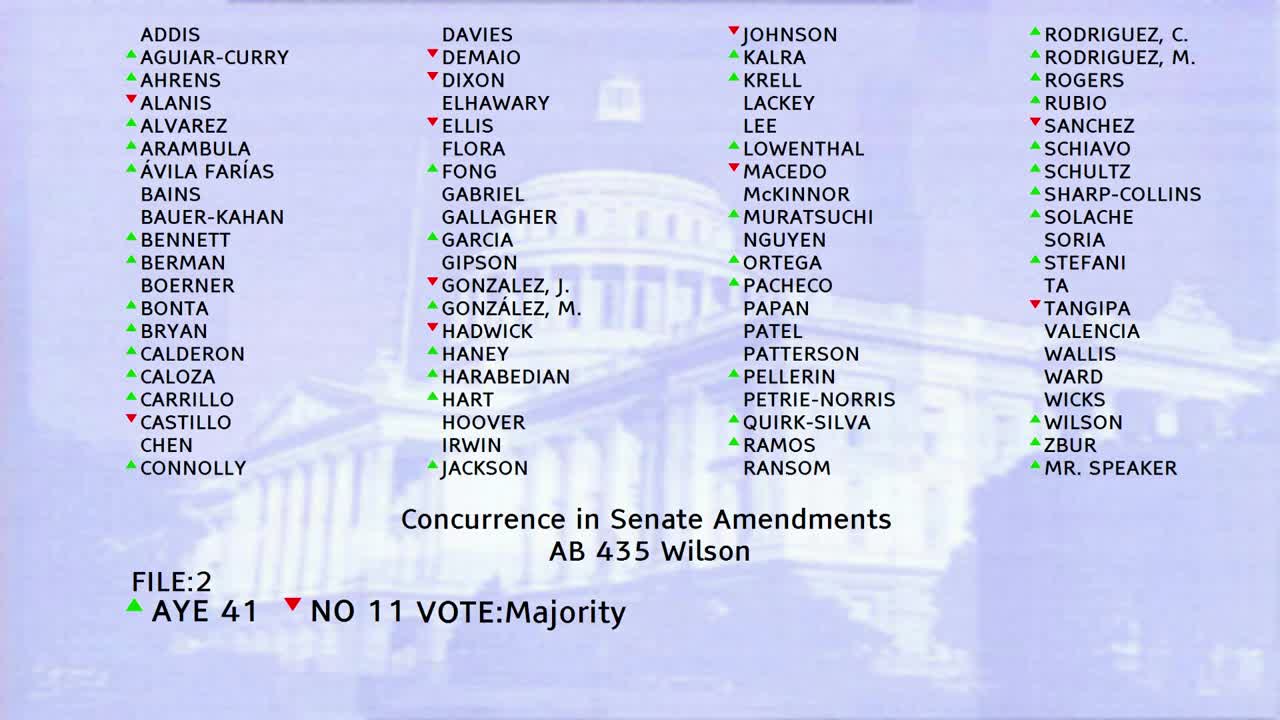 57SEC
Assembly Floor
 3MIN
Senate Floor
 25MIN
Senate Standing Committee on Business, Professions and Economic Development
 1MIN
Assembly Floor
 8MIN
Assembly Standing Committee on Business and Professions
Bill Author




