AB 629: School districts: equipment inventory.
- Session Year: 2025-2026
- House: Assembly
- Latest Version Date: 2025-07-28
Current Status:
Passed
(2025-07-28: Chaptered by Secretary of State - Chapter 62, Statutes of 2025.)
Introduced
In Committee
Awaiting First Chamber Vote
Passed First Chamber
In Committee
Awaiting Second Chamber Vote
Passed Second Chamber
Enacted
What does this bill do?
This bill raises the value that triggers a school district’s required equipment inventory from $500 to $1,500 per item, so districts only need to list equipment worth more than $1,500. It also requires the State Superintendent of Public Instruction to adjust that threshold every two years for inflation, round it to the nearest $50, and post the updated amount on the Department of Education website.
The summary is provided by generative AI which can make mistakes. For original language, please view the details in the table below.
Existing law establishes the system of public elementary and secondary schools in this state and provides for their funding and governance. Existing law requires the governing board of a school district to establish and maintain an inventory, as provided, of each item of equipment acquired by the school district that has a current market value that exceeds $500.
This bill would increase the above-described threshold value from $500 to instead be $1,500. The bill would require the Superintendent of Public Instruction to biennially adjust that threshold market value by a specified inflation factor, rounded to the nearest $50, and to post the adjusted threshold market value to the State Department of Educations internet website.
Existing law establishes the system of public elementary and secondary schools in this state and provides for their funding and governance. Existing law establishes school districts throughout the state to administer the public elementary and secondary schools within their respective jurisdictions. Existing law requires that every school district be under the control of a board of school trustees or a board of education and requires the governing board of each school district to prescribe and enforce rules not inconsistent with the law, or with the rules prescribed by the State Board of Education, for its own government.This bill would make nonsubstantive changes to the latter provision.Existing law establishes the system of public elementary and secondary schools in this state and provides for their funding and governance. Existing law establishes school districts throughout the state to administer the public elementary and secondary schools within their respective jurisdictions. Existing law requires that every school district be under the control of a board of school trustees or a board of education and requires the governing board of each school district to prescribe and enforce rules not inconsistent with the law, or with the rules prescribed by the State Board of Education, for its own government.
This bill would make nonsubstantive changes to the latter provision.
(a)(1)The governing board of a school district, shall establish and maintain a historical inventory, an audit trace inventory system, or any other inventory system authorized by the state board that shall contain the description, name, identification number, date of acquisition, location of use, and original cost, of each item of equipment acquired by the school district that has a current market value that exceeds one thousand five hundred dollars ($1,500) per item.
(2)The governing board of a school district shall also include the date and manner of disposal for each item of equipment in the inventory system maintained pursuant to paragraph (1) upon disposal of the item.
(3)For purposes of paragraph (1), if a school district does not know the original cost of an item, the school district may use a reasonable estimate of the original cost.
(b)(1)The Superintendent shall biennially adjust the threshold market value identified in subdivision (a) by the percentage calculated pursuant to paragraph (2) of subdivision (d) of Section 42238.02 for the 12-month period ending in the prior fiscal year, rounded to the nearest fifty dollars ($50).
(2)The Superintendent shall post the adjusted threshold market value calculated in paragraph (1) to the departments internet website.
(a)(1)The governing board of each a school district, shall establish and maintain a historical inventory, or an audit trace inventory system, or any other inventory system authorized by the State Board of Education, which state board that shall contain the description, name, identification numbers, number, date of acquisition, location of use, and original cost cost, of all items each item of equipment acquired by it whose the school district that has a current market value that exceeds five hundred dollars ($500) one thousand five hundred dollars ($1,500) per item, the date of acquisition, the location of use, and the time and mode of disposal. item. A reasonable estimate of the original cost may be used if the actual original cost is unknown. item.
(2)The governing board of a school district shall also include the date and manner of disposal for each item of equipment in the inventory system maintained pursuant to paragraph (1) upon disposal of the item.
(3)For purposes of paragraph (1), if a school district does not know the original cost of an item, the school district may use a reasonable estimate of the original cost.
(b)(1)The Superintendent shall biennially adjust the threshold market value identified in subdivision (a) by the percentage calculated pursuant to paragraph (2) of subdivision (d) of Section 42238.02 for the 12-month period ending in the prior fiscal year, rounded to the nearest fifty dollars ($50).
(2)The Superintendent shall post the adjusted threshold market value calculated in paragraph (1) to the departments internet website.
SECTION 1.Section 35010 of the Education Code is amended to read:35010.(a)Each school district shall be under the control of a board of school trustees or a board of education.(b)The governing board of each school district shall prescribe and enforce rules not inconsistent with law, or with the rules prescribed by the state board, for its own government.(a)Every Each school district shall be under the control of a board of school trustees or a board of education.
(b)The governing board of each school district shall prescribe and enforce rules not inconsistent with law, or with the rules prescribed by the State Board of Education, state board, for its own government.
|
Date
|
Status
|
|---|---|
| Jul 28, 2025 | Chaptered by Secretary of State - Chapter 62, Statutes of 2025. |
| Jul 28, 2025 | Approved by the Governor. |
| Jul 15, 2025 | Enrolled and presented to the Governor at 3:30 p.m. |
| Jul 10, 2025 | In Assembly. Ordered to Engrossing and Enrolling. |
| Jul 10, 2025 | Read third time. Passed. Ordered to the Assembly. (Ayes 37. Noes 0. Page 2042.). |
| Jul 8, 2025 | Read second time. Ordered to Consent Calendar. |
| Jul 7, 2025 | From committee: Be ordered to second reading file pursuant to Senate Rule 28.8 and ordered to Consent Calendar. |
| Jun 25, 2025 | From committee: Do pass and re-refer to Com. on APPR. with recommendation: To Consent Calendar. (Ayes 7. Noes 0.) (June 25). Re-referred to Com. on APPR. |
| Jun 11, 2025 | Referred to Com. on ED. |
| Jun 3, 2025 | In Senate. Read first time. To Com. on RLS. for assignment. |
| Jun 2, 2025 | Read third time. Passed. Ordered to the Senate. (Ayes 79. Noes 0. Page 1841.) |
| May 27, 2025 | Read second time. Ordered to third reading. |
| May 23, 2025 | From committee: Do pass. (Ayes 14. Noes 0.) (May 23). |
| Apr 9, 2025 | In committee: Set, first hearing. Referred to APPR. suspense file. |
| Mar 27, 2025 | From committee: Do pass and re-refer to Com. on APPR. with recommendation: To Consent Calendar. (Ayes 9. Noes 0.) (March 26). Re-referred to Com. on APPR. |
| Mar 11, 2025 | Re-referred to Com. on ED. |
| Mar 10, 2025 | Referred to Com. on ED. |
| Mar 10, 2025 | From committee chair, with author's amendments: Amend, and re-refer to Com. on ED. Read second time and amended. |
| Feb 14, 2025 | From printer. May be heard in committee March 16. |
| Feb 13, 2025 | Read first time. To print. |
|
Date
|
Description
|
Location
|
Votes
|
|
|---|---|---|---|---|
| Jul 10, 2025 | Consent Calendar 2nd AB629 Ward | Senate Floor |
Passed |
|
| Jun 25, 2025 | Do pass, but first be re-referred to the Committee on [Appropriations] with the recommendation: To Consent Calendar | Senate Standing Committee on Education |
Passed |
|
| Jun 2, 2025 | AB 629 Ward Assembly Third Reading | Assembly Floor |
Passed |
|
| May 23, 2025 | Do pass. | Assembly Standing Committee on Appropriations |
Passed |
|
| Mar 26, 2025 | Do pass and be re-referred to the Committee on [Appropriations] with recommendation: To Consent Calendar | Assembly Standing Committee on Education |
Passed |
This list shows positions taken on this bill by organizations on the date displayed, which is linked to the original source.
Positions by individuals are not included.
|
Organization
|
Position
|
Date
|
|---|---|---|
| California Association Of School Business Officials | ** Support | |
| Corona-Norco Unified School District | ** Support | |
| Desert Sands Unified School District | ** Support | |
| Fresno Unified School District | ** Support | |
| Jurupa Unified School District | ** Support | |
| Menifee Union School District | ** Support | |
| Office of the Riverside County Superintendent of Schools | ** Support | |
| Riverside Unified School District | ** Support | |
| San Diego Unified School District | ** Support |
SENATE RULES COMMITTEE Office of Senate Floor Analyses (916) 651-1520 Fax: (916) 327-4478 | AB 629 |
CONSENT
Bill No: AB 629
Author: Ward (D)
Amended: 3/10/25 in Assembly
Vote: 21
SENATE EDUCATION COMMITTEE: 7-0, 6/25/25
AYES: Pérez, Ochoa Bogh, Cabaldon, Choi, Cortese, Gonzalez, Laird
SENATE APPROPRIATIONS COMMITTEE: Senate Rule 28.8
ASSEMBLY FLOOR: 79-0, 6/2/25 - See last page for vote
SUBJECT: School districts: equipment inventory
SOURCE: Office of the Riverside County Superintendent of Schools
San Diego Unified School District
DIGEST:
This bill raises the threshold value for including equipment in a school district’s inventory system from $500 to $1,500 and requires the Superintendent of Public Instruction (SPI) to biennially adjust the threshold for inflation and post the adjusted amount on the California Department of Education’s (CDE) website.
ANALYSIS:
Existing law:
- Requires each school district governing board to establish and maintain an inventory system—whether historical, audit trace, or another system authorized by the State Board of Education —containing detailed information for all equipment with a current market value exceeding $500 per item, including description, original cost, acquisition date, use location, and disposal information. (Education Code § 35168)
- Authorizes the use of a reasonable estimate for original cost if it is unknown.
This bill:
1) Raises the dollar threshold for inventory inclusion from $500 to $1,500 per item.
2) Requires the same inventory data to be maintained, including description, identification number, original or estimated cost, acquisition date, use location, and, upon disposal, the date and manner of disposal.
3) Requires the SPI to adjust the threshold every two years, based on the same inflation adjustment used for the Local Control Funding Formula (LCFF), and round the result to the nearest $50.
4) Requires the SPI to post the adjusted threshold value on CDE’s website.
Comments
- Need for this bill. According to the author, “Current law requires school districts to maintain a historical inventory of all equipment valued at over $500 that includes a description of the item, its name, original cost, date of acquisition, location of use, and time and mode of disposal. The $500 value threshold triggering inclusion in the inventory was established in 1984 and has never been adjusted for inflation.
“Since 1984, inflation has increased prices by an average of approximately 200% and as a result the number and category of items included in the inventory has increased significantly. At the Riverside County Office of Education (COE), the inventory includes over 42,000 items – nearly half of which would not be included if the $500 threshold was adjusted for inflation to reflect the actual cost of goods in today’s money.
“As the number of items in the inventory increases, so does the staff time and cost required to maintain it. The Riverside COE and the San Diego Unified School District (USD) each spend approximately $500,000 annually complying with this requirement. In an era where the cost of student devices increases frequently, the cost, time and effort to develop the inventory will continue to increase significantly.
“While maintaining an equipment inventory is good practice, the $500 threshold required by law no longer reflects current-day prices. Adjusting the threshold for inflation would reduce the burden on staff and save costs while maintaining the intent of the law.”
- A 40-year-old threshold no longer aligned with modern purchasing realities. The $500 threshold for school district equipment inventories was established in 1984, when the cost of most instructional or operational equipment was significantly lower. Since then, inflation has risen by more than 200%, yet the threshold has remained fixed, resulting in the inclusion of tens of thousands of relatively low-value items in district inventories. In practice, this means school districts are required to track and maintain detailed records for items like folding chairs, hand tools, or athletic pads—equipment that may be important for day-to-day operations but not necessarily significant from a fiscal oversight or asset management perspective. By updating the threshold to $1,500, this bill reflects a pragmatic acknowledgment that what once qualified as a major purchase no longer does.
- Meaningful administrative savings without compromising oversight. Inventory management is essential for transparency, fiscal accountability, and loss prevention. However, requiring staff to track large quantities of lower-value items may divert resources from higher-value oversight or mission-critical tasks. For example, San Diego Unified School District and Riverside County Office of Education report annual inventory-related costs of about $500,000—a figure driven largely by the volume of items subject to tracking under the outdated threshold. By reducing the number of items in the inventory by an estimated 30–50%, this bill could yield millions of dollars in cumulative statewide savings, especially for large or urban districts. Importantly, districts would still retain discretion to track lower-value items locally if they choose to, preserving flexibility where needed.
- Biennial inflation adjustments prevent future obsolescence. Rather than allowing the threshold to stagnate for another four decades, this bill creates a standing mechanism to adjust the $1,500 threshold every two years using the same inflation index that governs adjustments to the LCFF. This approach offers two advantages: it ensures the law remains responsive to economic conditions without further legislative action, and it uses a familiar, education-specific metric that is already incorporated into school budgeting practices.
- Alignment with other financial thresholds. School districts generally do not capitalize equipment purchases in financial statements unless the item exceeds $10,000 in value (or $5,000 for federal purposes). By contrast, the $500 inventory requirement is significantly lower and applies to assets that would not be treated as capitalized expenditures. While this bill does not alter accounting requirements, it narrows the gap between inventory and capitalization thresholds, reducing unnecessary tracking of items with limited impact on a district’s financial position.
FISCAL EFFECT: Appropriation: No Fiscal Com.: Yes Local: No
SUPPORT: (Verified 7/7/25)
Office of the Riverside County Superintendent of Schools (Co-Source)
San Diego Unified School District (Co-Source)
California Association of School Business Officials
Fresno Unified School District
OPPOSITION: (Verified 7/7/25)
None received
ASSEMBLY FLOOR: 79-0, 6/2/25
AYES: Addis, Aguiar-Curry, Ahrens, Alanis, Alvarez, Arambula, Ávila Farías, Bains, Bauer-Kahan, Bennett, Berman, Boerner, Bonta, Bryan, Calderon, Caloza, Carrillo, Castillo, Chen, Connolly, Davies, DeMaio, Dixon, Elhawary, Ellis, Flora, Fong, Gabriel, Gallagher, Garcia, Gipson, Jeff Gonzalez, Mark González, Hadwick, Haney, Harabedian, Hart, Hoover, Irwin, Jackson, Kalra, Krell, Lackey, Lee, Lowenthal, Macedo, McKinnor, Muratsuchi, Nguyen, Ortega, Pacheco, Papan, Patel, Patterson, Pellerin, Petrie-Norris, Quirk-Silva, Ramos, Ransom, Celeste Rodriguez, Michelle Rodriguez, Rogers, Blanca Rubio, Sanchez, Schiavo, Schultz, Sharp-Collins, Solache, Soria, Stefani, Ta, Tangipa, Valencia, Wallis, Ward, Wicks, Wilson, Zbur, Rivas
Prepared by: Ian Johnson / ED. / (916) 651-4105
7/9/25 16:03:28
**** END ****
SENATE COMMITTEE ON EDUCATION
Senator Sasha Renée Pérez, Chair
2025 - 2026 Regular
Bill No: AB 629 Hearing Date: June 25, 2025
Author: | |||
Version: | March 10, 2025 | ||
Urgency: | No | Fiscal: | Yes |
Consultant: | Ian Johnson | ||
Subject: School districts: equipment inventory.
SUMMARY
This bill raises the threshold value for including equipment in a school district’s inventory system from $500 to $1,500 and requires the Superintendent of Public Instruction (SPI) to biennially adjust the threshold for inflation and post the adjusted amount on the California Department of Education’s (CDE) website.
BACKGROUND
Existing law:
- Requires each school district governing board to establish and maintain an inventory system—whether historical, audit trace, or another system authorized by the State Board of Education (SBE) —containing detailed information for all equipment with a current market value exceeding $500 per item, including description, original cost, acquisition date, use location, and disposal information. (Education Code § 35168)
- Authorizes the use of a reasonable estimate for original cost if it is unknown.
ANALYSIS
This bill:
- Raises the dollar threshold for inventory inclusion from $500 to $1,500 per item.
- Requires the same inventory data to be maintained, including description, identification number, original or estimated cost, acquisition date, use location, and, upon disposal, the date and manner of disposal.
- Requires the SPI to adjust the threshold every two years, based on the same inflation adjustment used for the Local Control Funding Formula (LCFF), and round the result to the nearest $50.
- Requires the SPI to post the adjusted threshold value on CDE’s website.
STAFF COMMENTS
- Need for the bill. According to the author, “Current law requires school districts to maintain a historical inventory of all equipment valued at over $500 that includes a description of the item, its name, original cost, date of acquisition, location of use, and time and mode of disposal. The $500 value threshold triggering inclusion in the inventory was established in 1984 and has never been adjusted for inflation.
“Since 1984, inflation has increased prices by an average of approximately 200% and as a result the number and category of items included in the inventory has increased significantly. At the Riverside County Office of Education (COE), the inventory includes over 42,000 items – nearly half of which would not be included if the $500 threshold was adjusted for inflation to reflect the actual cost of goods in today’s money.
“As the number of items in the inventory increases, so does the staff time and cost required to maintain it. The Riverside COE and the San Diego Unified School District (USD) each spend approximately $500,000 annually complying with this requirement. In an era where the cost of student devices increases frequently, the cost, time and effort to develop the inventory will continue to increase significantly.
“While maintaining an equipment inventory is good practice, the $500 threshold required by law no longer reflects current-day prices. Adjusting the threshold for inflation would reduce the burden on staff and save costs while maintaining the intent of the law.”
- A 40-year-old threshold no longer aligned with modern purchasing realities. The $500 threshold for school district equipment inventories was established in 1984, when the cost of most instructional or operational equipment was significantly lower. Since then, inflation has risen by more than 200%, yet the threshold has remained fixed, resulting in the inclusion of tens of thousands of relatively low-value items in district inventories. In practice, this means school districts are required to track and maintain detailed records for items like folding chairs, hand tools, or athletic pads—equipment that may be important for day-to-day operations but not necessarily significant from a fiscal oversight or asset management perspective. By updating the threshold to $1,500, this bill reflects a pragmatic acknowledgment that what once qualified as a major purchase no longer does.
- Meaningful administrative savings without compromising oversight. Inventory management is essential for transparency, fiscal accountability, and loss prevention. However, requiring staff to track large quantities of lower-value items may divert resources from higher-value oversight or mission-critical tasks. For example, San Diego Unified School District and Riverside County Office of Education report annual inventory-related costs of about $500,000—a figure driven largely by the volume of items subject to tracking under the outdated threshold. By reducing the number of items in the inventory by an estimated 30–50%, this bill could yield millions of dollars in cumulative statewide savings, especially for large or urban districts. Importantly, districts would still retain discretion to track lower-value items locally if they choose to, preserving flexibility where needed.
- Biennial inflation adjustments prevent future obsolescence. Rather than allowing the threshold to stagnate for another four decades, the bill creates a standing mechanism to adjust the $1,500 threshold every two years using the same inflation index that governs adjustments to the LCFF. This approach offers two advantages: it ensures the law remains responsive to economic conditions without further legislative action, and it uses a familiar, education-specific metric that is already incorporated into school budgeting practices.
- Alignment with other financial thresholds. School districts generally do not capitalize equipment purchases in financial statements unless the item exceeds $10,000 in value (or $5,000 for federal purposes). By contrast, the $500 inventory requirement is significantly lower and applies to assets that would not be treated as capitalized expenditures. While this bill does not alter accounting requirements, it narrows the gap between inventory and capitalization thresholds, reducing unnecessary tracking of items with limited impact on a district’s financial position.
SUPPORT
Office of the Riverside County Superintendent of Schools (Co-Sponsor)
San Diego Unified School District (Co-Sponsor)
California Association of School Business Officials
OPPOSITION
None received
-- END --
ASSEMBLY THIRD READING
ATR Bill Id:AB 629
Author:(Ward)
As Amended Ver:March 10, 2025
Majority vote
SUMMARY
Raises the threshold amount from $500 to $1500 of the current market value for the requirement of the governing board of a school district to establish and maintain a historical inventory of each item of equipment acquired by the school district.
Major Provisions
- Requires the governing board of a school district to establish and maintain a historical inventory, an audit trace inventory system, or any other inventory system authorized by the State Board of Education (SBE) to contain the description, name, identification number, date of acquisition, location of use, and original cost, of each item of equipment acquired by the school district that has a current market value that exceeds $1,500 per item.
- Requires the governing board of a school district to also include the date and manner of disposal for each item of equipment in the inventory system upon disposal of the item.
- Authorizes, if a school district does not know the original cost of an item, the school district to use a reasonable estimate of the original cost.
- Requires the Superintendent of Public Instruction (SPI) to biennially adjust the threshold market value for the 12-month period ending in the prior fiscal year, rounded to the nearest $50.
- Requires the SPI to post the adjusted threshold market value to the California Department of Education's (CDE) website.
COMMENTS
School district historical inventory threshold has not been updated for four decades. Education Code (EC) 35168 requires school districts to establish and maintain a historical inventory that includes specified information, including original cost, of all items of equipment whose current market value exceeds $500 per item. Due to the fact that this section of current law has not been amended since 1984, the dollar threshold for equipment to be included in the inventory has not been adjusted for inflation for more than 40 years.
School districts report that, over time, the inventory has grown to a point where tens of thousands of items are required to be included. Many large school districts and COEs have a full-time staff member simply to track assets, and apart from them, other units collectively spend hundreds of hours tracking and verifying their assets each year. The sponsors of the bill, San Diego Unified School District (USD) and Riverside County Office of Education (COE) both estimate spending $500,000 annually to complete the inventory. According to both local educational agencies (LEAs), updating the threshold and prospectively providing for a biennial inflation adjustment will save school districts and COEs across the state millions of dollars without impacting the original intent of the statute. San Diego USD reports that with the cost of student devices (such as tablets and laptops) increasing year-over-year, the district expects them to pass the $500 threshold in the near future. When that happens, it will increase the number of items in San Diego USD's inventory by more than 30,000, significantly increasing the cost and workload of inventory maintenance.
This bill would change the current dollar threshold for items to be included in the inventory from $500 to $1500, which reflects the effects of inflation since 1984. Prospectively, the bill would implement a biennial inflation adjustment, based on the percentage change in the annual average value of the Implicit Price Deflator for State and Local Government Purchases of Goods and Services for the United States, as published by the United States Department of Commerce, Bureau of Economic Analyst for the 12-month period ending in the prior fiscal year. This index is the same that is used by the CDE to adjust the bid threshold for contracts awarded by school districts. The sponsoring LEAs estimate that changing the estimate will reduce the size of their inventories by half. Among the items that would fall below the new threshold are desk chairs, lawn mowers, hand tools, some musical instruments, and some athletic equipment (e.g., football helmets).
Capitalization threshold. Property is capitalized for accounting purposes when certain conditions are met. A capitalization threshold is the minimum value of assets that are treated as capital expenditures and included in financial statements. School districts have a capitalization threshold of $10,000 ($5,000 for federal purposes); the discrepancy between the asset inventory requirement value and the capitalization threshold is currently significant.
The cost, time, and effort of inventorying and maintaining inventory on items that are so low cost is burdensome for staff and administrators. School districts provide lists of inventory to school sites each year that they must reconcile. A single high school may have an inventory list hundreds of pages long.
According to the Author
"Current law requires school districts to maintain a historical inventory of all equipment valued at over $500 that includes a description of the item, its name, original cost, date of acquisition, location of use, and time and mode of disposal. The $500 value threshold triggering inclusion in the inventory was established in 1984 and has never been adjusted for inflation.
Since 1984, inflation has increased prices by an average of approximately 200% and as a result the number and category of items included in the inventory has increased significantly. At the Riverside County Office of Education (COE), the inventory includes over 42,000 items – nearly half of which would not be included if the $500 threshold was adjusted for inflation to reflect the actual cost of goods in today's money.
As the number of items in the inventory increases, so does the staff time and cost required to maintain it. The Riverside COE and the San Diego Unified School District (USD) each spend approximately $500,000 annually complying with this requirement. In an era where the cost of student devices increases frequently, the cost, time and effort to develop the inventory will continue to increase significantly.
While maintaining an equipment inventory is good practice, the $500 threshold required by law no longer reflects current-day prices. Adjusting the threshold for inflation would reduce the burden on staff and save costs while maintaining the intent of the law."
Arguments in Support
The San Diego USD (co-sponsor) writes, "Current law requires school districts to maintain a historical inventory of all equipment valued at over $500 that includes a description of the item, its name, original cost, date of acquisition, location of use, and time and mode of disposal. Since this requirement was established in 1984, inflation has increased costs by roughly 200%, but the $500 threshold has never been adjusted for inflation. As a result, the number and category of items included in the inventory has risen dramatically. At San Diego USD the inventory now includes over 130,000 items, many of which would have cost well below the $500 threshold when the law was enacted in the 1980s. The cost of student devices is expected to rise to above $500 in the near future, which would increase the number of items in our inventory by an additional 30,000.
As the number of items in the inventory grows, so does the staff time, effort, and costs required to maintain it. At San Diego USD, maintaining this inventory takes hundreds of staff hours and costs the district over $500,000. While maintaining an equipment inventory is good practice, the $500 threshold required by law no longer reflects current-day prices. Adjusting the threshold for inflation would reduce the burden on staff and save costs while maintaining the intent of the law."
Arguments in Opposition
None on file
FISCAL COMMENTS
According to the Assembly Appropriations Committee:
- Minor and absorbable General Fund costs to the CDE to calculate an inflation adjustment every two years and post it to their internet website.
- Ongoing Proposition 98 General Fund cost savings to school districts likely in the low to tens of millions of dollars statewide.
VOTES
ASM EDUCATION: 9-0-0
YES: Muratsuchi, Hoover, Addis, Alvarez, Bonta, Castillo, Garcia, Lowenthal, Patel
ASM APPROPRIATIONS: 14-0-1
YES: Wicks, Arambula, Calderon, Caloza, Dixon, Elhawary, Fong, Mark González, Hart, Pacheco, Pellerin, Solache, Ta, Tangipa
ABS, ABST OR NV: Sanchez
UPDATED
VERSION: March 10, 2025
CONSULTANT: Marguerite Ries / ED. / (916) 319-2087 FN: 0000838
Date of Hearing: April 9, 2025
ASSEMBLY COMMITTEE ON APPROPRIATIONS
Buffy Wicks, Chair
ABPCA Bill Id:AB 629
Author:(Ward) – As Amended Ver:March 10, 2025
Policy Committee: | Education | Vote: | 9 - 0 |
|
| ||
|
|
Urgency: No State Mandated Local Program: No Reimbursable: No
SUMMARY:
This bill increases the reporting threshold for school district and county office of education (COE) equipment inventory to $1,500 per item and requires the State Superintendent of Public Instruction (SSPI) to adjust the threshold every two years.
Specifically, this bill increases the existing school district and COE inventory reporting requirement threshold from $500 to $1,500 and requires the SSPI to apply an inflation adjustment (the same adjustment applied to the Local Control Funding Formula) every two years and post it to the California Department of Education’s (CDE) internet website.
FISCAL EFFECT:
Minor and absorbable General Fund costs to the CDE to calculate an inflation adjustment every two years and post it to their internet website.
Ongoing Proposition 98 General Fund cost savings to school districts likely in the low to tens of millions of dollars statewide.
COMMENTS:
Existing law requires each school district to establish and maintain a historical inventory that includes specified information, including the original cost, for all items of equipment whose current market value exceeds $500 per item. However, the $500 value threshold triggering inclusion in the inventory was established in 1984 and does not receive an inflation adjustment. Due to inflation and equipment needs at school districts, the number and category of items required to be included in the inventory has increased exponentially.
According to the Riverside COE and the San Diego Unified School District (SDUSD), the number of items in the inventory is directly tied to the staff time and cost required to maintain said inventory. Each of these entities report spending approximately $500,000 annually to comply with this requirement given the tens of thousands of items that must be included. Many large school districts and COEs have a full-time staff member (or contract for the service) simply to track assets, and apart from them, other staff units collectively spend hundreds of hours tracking and verifying their assets each year. With the increased utilization and cost of student devices (tablets, laptops, etc.), SDUSD anticipates the number of items required for inventory to increase by more than 30,000 within the next few years, which presents a significant liability for the district’s long-term budget and planning.
Analysis Prepared by: Aaron Heredia / APPR. / (916) 319-2081
Date of Hearing: March 26, 2025
ASSEMBLY COMMITTEE ON EDUCATION
Al Muratsuchi, Chair
ABPCA Bill Id:AB 629 (
Author:Ward) – As Amended Ver:March 10, 2025
SUBJECT: School districts: equipment inventory
SUMMARY: Raises the threshold amount from $500 to $1500 for the requirement of the governing board of a school district to establish and maintain a historical inventory of each item of equipment acquired by the school district that has a current market value that exceeds $1,500 per item. Specifically, this bill:
- Requires the governing board of a school district to establish and maintain a historical inventory, an audit trace inventory system, or any other inventory system authorized by the State Board of Education (SBE) to contain the description, name, identification number, date of acquisition, location of use, and original cost, of each item of equipment acquired by the school district that has a current market value that exceeds $1,500 per item.
- Requires the governing board of a school district to also include the date and manner of disposal for each item of equipment in the inventory system upon disposal of the item.
- Authorizes, if a school district does not know the original cost of an item, the school district to use a reasonable estimate of the original cost.
- Requires the Superintendent of Public Instruction (SPI) to biennially adjust the threshold market value for the 12-month period ending in the prior fiscal year, rounded to the nearest $50.
- Requires the SPI to post the adjusted threshold market value to the California Department of Education’s (CDE) website.
EXISTING LAW:
- Requires the governing board of each school district, to establish and maintain a historical inventory, an audit trace inventory system, or any other inventory system authorized by the SBE, to contain the description, name, identification numbers, and original cost of all items of equipment acquired by it whose current market value exceeds $500 per item, the date of acquisition, the location of use, and the time and mode of disposal. Authorizes a reasonable estimate of the original cost to be used if the actual original cost is unknown. (Education Code 35168)
FISCAL EFFECT: Unknown
COMMENTS:
Need for the bill. According to the author, “Current law requires school districts to maintain a historical inventory of all equipment valued at over $500 that includes a description of the item, its name, original cost, date of acquisition, location of use, and time and mode of disposal. The $500 value threshold triggering inclusion in the inventory was established in 1984 and has never been adjusted for inflation.
Since 1984, inflation has increased prices by an average of approximately 200% and as a result the number and category of items included in the inventory has increased significantly. At the Riverside County Office of Education (COE), the inventory includes over 42,000 items – nearly half of which would not be included if the $500 threshold was adjusted for inflation to reflect the actual cost of goods in today’s money.
As the number of items in the inventory increases, so does the staff time and cost required to maintain it. The Riverside COE and the San Diego Unified School District (USD) each spend approximately $500,000 annually complying with this requirement. In an era where the cost of student devices increases frequently, the cost, time and effort to develop the inventory will continue to increase significantly.
While maintaining an equipment inventory is good practice, the $500 threshold required by law no longer reflects current-day prices. Adjusting the threshold for inflation would reduce the burden on staff and save costs while maintaining the intent of the law.”
School district historical inventory threshold has not been updated for four decades. EC 35168 requires school districts to establish and maintain a historical inventory that includes specified information, including original cost, of all items of equipment whose current market value exceeds $500 per item. Due to the fact that this section of current law has not been amended since 1984, the dollar threshold for equipment to be included in the inventory has not been adjusted for inflation for more than 40 years.
School districts report that, over time, the inventory has grown to a point where tens of thousands of items are required to be included. Many large school districts and COEs have a full-time staff member simply to track assets, and apart from them, other units collectively spend hundreds of hours tracking and verifying their assets each year. The sponsors of the bill, San Diego USD and Riverside COE both estimate spending $500,000 annually to complete the inventory. According to both local educational agencies, updating the threshold and prospectively providing for a biennial inflation adjustment will save school districts and COEs across the state millions of dollars without impacting the original intent of the statute. San Diego USD reports that with the cost of student devices (such as tablets and laptops) increasing year-over-year, the district expects them to pass the $500 threshold in the near future. When that happens, it will increase the number of items in San Diego USD’s inventory by more than 30,000, significantly increasing the cost and workload of inventory maintenance.
This bill would change the current dollar threshold for items to be included in the inventory from $500 to $1500, which reflects the effects of inflation since 1984. Prospectively, the bill would implement a biennial inflation adjustment, based on the percentage change in the annual average value of the Implicit Price Deflator for State and Local Government Purchases of Goods and Services for the United States, as published by the United States Department of Commerce, Bureau of Economic Analyst for the 12-month period ending in the prior fiscal year. This index is the same that is used by the CDE to adjust the bid threshold for contracts awarded by school districts. The sponsoring local educational agencies (LEAs) estimate that changing the estimate will reduce the size of their inventories by half. Among the items that would fall below the new threshold are desk chairs, lawn mowers, hand tools, some musical instruments, and some athletic equipment (e.g., football helmets).
Capitalization threshold. Property is capitalized for accounting purposes when certain conditions are met. A capitalization threshold is the minimum value of assets that are treated as capital expenditures and included in financial statements. School districts have a capitalization threshold of $10,000 ($5,000 for federal purposes); the discrepancy between the asset inventory requirement value and the capitalization threshold is currently significant.
The cost, time, and effort of inventorying and maintaining inventory on items that are so low cost is burdensome for staff and administrators. School districts provide lists of inventory to school sites each year that they must reconcile. A single high school may have an inventory list hundreds of pages long.
Arguments in support. The San Diego USD (co-sponsor) writes, “Current law requires school districts to maintain a historical inventory of all equipment valued at over $500 that includes a description of the item, its name, original cost, date of acquisition, location of use, and time and mode of disposal. Since this requirement was established in 1984, inflation has increased costs by roughly 200%, but the $500 threshold has never been adjusted for inflation. As a result, the number and category of items included in the inventory has risen dramatically. At San Diego USD the inventory now includes over 130,000 items, many of which would have cost well below the $500 threshold when the law was enacted in the 1980s. The cost of student devices is expected to rise to above $500 in the near future, which would increase the number of items in our inventory by an additional 30,000.
As the number of items in the inventory grows, so does the staff time, effort, and costs required to maintain it. At San Diego USD, maintaining this inventory takes hundreds of staff hours and costs the district over $500,000. While maintaining an equipment inventory is good practice, the $500 threshold required by law no longer reflects current-day prices. Adjusting the threshold for inflation would reduce the burden on staff and save costs while maintaining the intent of the law.
Related legislation. AB 3757 (Hughes), Chapter 482, Statutes of 1984, requires the governing board of each school district, to establish and maintain a historical inventory, or an audit trace inventory system, or any other inventory system authorized by the SBE, to contain the description, name, identification numbers, and original cost of all items of equipment acquired by it whose current market value exceeds $500 per item, the date of acquisition, the location of use, and the time and mode of disposal. Authorizes a reasonable estimate of the original cost to be used if the actual original cost is unknown.
REGISTERED SUPPORT / OPPOSITION:
Support
Corona-Norco Unified School District
Desert Sands Unified School District
Jurupa Unified School District
Menifee Union School District
Office of the Riverside County Superintendent of Schools
Riverside Unified School District
San Diego Unified School District
Opposition
None on file
Analysis Prepared by: Marguerite Ries / ED. / (916) 319-2087
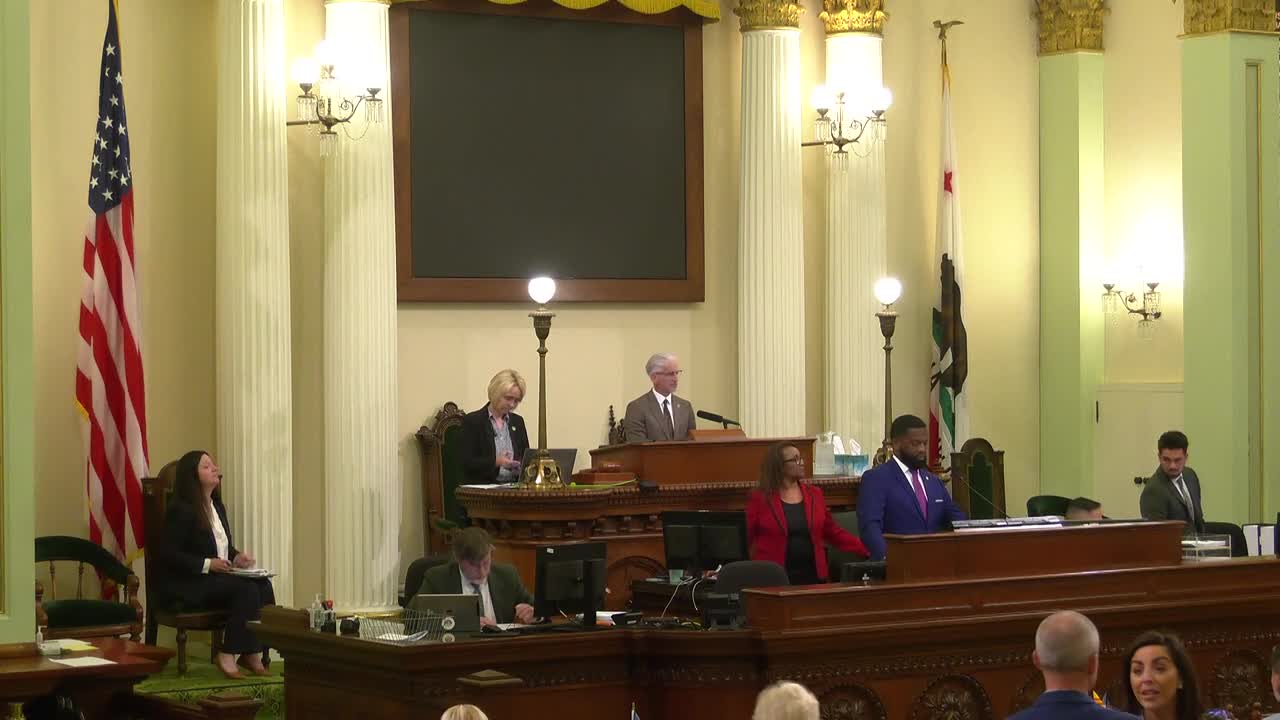
Bill Author

Bill Co-Author(s):