AB 696: Lithium-ion vehicle batteries: emergencies: advisory group.
- Session Year: 2025-2026
- House: Assembly
- Latest Version Date: 2025-09-05
Current Status:
Failed
(2026-01-22: Consideration of Governor's veto stricken from file.)
Introduced
In Committee
Awaiting First Chamber Vote
Passed First Chamber
In Committee
Awaiting Second Chamber Vote
Passed Second Chamber
Enacted
Existing law requires the Secretary for Environmental Protection, until January 1, 2027, to convene the Lithium-Ion Car Battery Recycling Advisory Group to review, and advise the Legislature on, policies pertaining to the recovery and recycling of lithium-ion batteries sold with motor vehicles in the state, and requires the secretary to appoint members to the committee from specified departments, vocations, and organizations.
Existing law, the California Emergency Services Act, establishes the Office of Emergency Services within the Governors office, under the supervision of the Director of Emergency Services, and makes the office responsible for the states emergency and disaster response services for natural, technological, or manmade disasters and emergencies.
This bill would require the Office of the State Fire Marshal on or before December 31, 2026, to convene the Lithium-Ion Car Battery Advisory Group to review, and advise the Legislature on, policies pertaining to the safety and management of lithium-ion vehicle batteries involved in an emergency situation, as provided. The bill would require the Office of the State Fire Marshal to appoint members to the advisory group from specified departments, agencies, vocations, and organizations. The bill would require the advisory group to meet at least quarterly until July 1, 2028, and to consult with universities and research institutions that have conducted research in the area of lithium-ion batteries, with manufacturers of electric and hybrid vehicles, and both state and local first responders. The bill would require the group to develop standards, on or before July 1, 2028, based on local, state, and national guidance and research, aimed at ensuring that best standards and practices are created that allow first responders to respond to lithium-ion vehicle battery emergencies in a safe and efficient manner. The bill would repeal these provisions on January 1, 2029.
Existing law requires the Secretary for Environmental Protection, until January 1, 2027, to convene the Lithium-Ion Car Battery Recycling Advisory Group to review, and advise the Legislature on, policies pertaining to the recovery and recycling of lithium-ion batteries sold with motor vehicles in the state, and requires the secretary to appoint members to the committee from specified departments, vocations, and organizations.
Existing law, the California Emergency Services Act, establishes the Office of Emergency Services within the Governors office, under the supervision of the Director of Emergency Services, and makes the office responsible for the states emergency and disaster response services for natural, technological, or manmade disasters and emergencies.
This bill would require the Director of Emergency Services, Office of the State Fire Marshal on or before December 31, 2026, to convene the Lithium-Ion Car Battery Advisory Group to review, and advise the Legislature on, policies pertaining to the safety and management of lithium-ion vehicle batteries involved in an emergency situation, as provided. The bill would require the director Office of the State Fire Marshal to appoint members to the advisory group from specified departments, agencies, vocations, and organizations. The bill would require the advisory group to meet at least quarterly until July 1, 2028, and to consult with universities and research institutions that have conducted research in the area of lithium-ion batteries, with manufacturers of electric and hybrid vehicles, and both state and local first responders. The bill would require the group to develop standards, on or before July 1, 2028, based on local, state, and national guidance and research, aimed at ensuring that best standards and practices are created that allow first responders to respond to lithium-ion vehicle battery emergencies in a safe and efficient manner. The bill would repeal these provisions on January 1, 2029.
Existing law requires the Secretary for Environmental Protection, until January 1, 2027, to convene the Lithium-Ion Car Battery Recycling Advisory Group to review, and advise the Legislature on, policies pertaining to the recovery and recycling of lithium-ion batteries sold with motor vehicles in the state, and requires the secretary to appoint members to the committee from specified departments, vocations, and organizations.
Existing law, the California Emergency Services Act, establishes the Office of Emergency Services within the Governors office, under the supervision of the Director of Emergency Services, and makes the office responsible for the states emergency and disaster response services for natural, technological, or manmade disasters and emergencies.
This bill would require the Director of Emergency Services, on or before December 31, 2026, to convene the Lithium-Ion Car Battery Advisory Group to review, and advise the Legislature on, policies pertaining to the safety and management of lithium-ion vehicle batteries involved in an emergency situation, as provided. The bill would require the director to appoint members to the advisory group from specified departments, agencies, vocations, and organizations. The bill would require the advisory group to meet at least quarterly until July 1, 2028, and to consult with universities and research institutions that have conducted research in the area of lithium-ion batteries, with manufacturers of electric and hybrid vehicles, and both state and local first responders. The bill would require the group to develop standards, on or before July 1, 2028, based on local, state, and national guidance and research, aimed at ensuring that best standards and practices are created that allow first responders to respond to lithium-ion vehicle battery emergencies in a safe and efficient manner. The bill would repeal these provisions on January 1, 2029.
Existing law requires the Secretary for Environmental Protection, until January 1, 2027, to convene the Lithium-Ion Car Battery Recycling Advisory Group to review, and advise the Legislature on, policies pertaining to the recovery and recycling of lithium-ion batteries sold with motor vehicles in the state, and requires the secretary to appoint members to the committee from specified departments, vocations, and organizations.
Existing law, the California Emergency Services Act, establishes the Office of Emergency Services within the Governors office, under the supervision of the Director of Emergency Services, and makes the office responsible for the states emergency and disaster response services for natural, technological, or manmade disasters and emergencies.
This bill would require the secretary, Director of Emergency Services, on or before July 1, December 31, 2026, to convene the Lithium-Ion Car Battery Advisory Group to review, and advise the Legislature on, policies pertaining to the safety and management of lithium-ion vehicle batteries involved in an emergency situation, as provided. The bill would require the secretary director to appoint members to the advisory group from specified departments, agencies, vocations, and organizations. The bill would require the advisory group to meet at least quarterly until July 1, 2028, and to consult with universities and research institutions that have conducted research in the area of lithium-ion batteries, with manufacturers of electric and hybrid vehicles, and both state and local first responders. The bill would require the group to submit, develop standards, on or before July 1, 2028, policy recommendations to the Legislature based on local, state, and national guidance and research, aimed at ensuring that best standards and practices are created that allow first responders to respond to lithium-ion vehicle battery emergencies in a safe and efficient manner. The bill would repeal these provisions on January 1, 2029.
Existing law requires the Secretary for Environmental Protection, until January 1, 2027, to convene the Lithium-Ion Car Battery Recycling Advisory Group to review, and advise the Legislature on, policies pertaining to the recovery and recycling of lithium-ion batteries sold with motor vehicles in the state, and requires the secretary to appoint members to the committee from specified departments, vocations, and organizations.
This bill would require the secretary, on or before July 1, 2026, to convene the Lithium-Ion Car Battery Advisory Group to review, and advise the Legislature on, policies pertaining to the handling and disposal safety and management of lithium-ion vehicle batteries involved in an emergency capacity. situation, as provided. The bill would require the secretary to appoint members to the advisory group from specified departments, agencies, vocations, and organizations. The bill would require the advisory group to meet at least quarterly until July 1, 2028, and to consult with universities and research institutions that have conducted research in the area of battery recycling, lithium-ion batteries, with manufacturers of electric and hybrid vehicles, and with the recycling industry. both state and local first responders. The bill would require the group to submit, on or before July 1, 2028, policy recommendations to the Legislature aimed at ensuring that best standards and practices are created that allow first responders to respond to lithium-ion vehicle battery emergencies in a safe and efficient manner. The bill would repeal these provisions on January 1, 2029.
Existing law requires the Secretary for Environmental Protection, until January 1, 2027, to convene the Lithium-Ion Car Battery Recycling Advisory Group to review, and advise the Legislature on, policies pertaining to the recovery and recycling of lithium-ion batteries sold with motor vehicles in the state, and requires the secretary to appoint members to the committee from specified departments, vocations, and organizations.
This bill would require the secretary, on or before July 1, 2026, to convene the Lithium-Ion Car Battery Advisory Group to review, and advise the Legislature on, policies pertaining to the handling and disposal of lithium-ion vehicle batteries in an emergency capacity. The bill would require the secretary to appoint members to the advisory group from specified departments, vocations, and organizations. The bill would require the advisory group to meet at least quarterly until July 1, 2028, and to consult with universities and research institutions that have conducted research in the area of battery recycling, with manufacturers of electric and hybrid vehicles, and with the recycling industry. The bill would require the group to submit, on or before July 1, 2028, policy recommendations to the Legislature aimed at ensuring that best standards and practices are created that allow first responders to respond to lithium-ion vehicle battery emergencies in a safe and efficient manner. The bill would repeal these provisions on January 1, 2029.
(a)On or before December 31, 2026, the Office of the State Fire Marshal shall convene the Lithium-Ion Car Battery Advisory Group to review, and advise the Legislature on, policies pertaining to the safety and management of lithium-ion vehicle batteries involved in an emergency situation, including, but not limited to, a battery fire, other nonfire damage to a lithium-ion vehicle battery, submerged vehicle recovery, and roadway collisions. Until July 1, 2028, the advisory group shall meet at least quarterly. The advisory group shall consult with universities and research institutions that have conducted research in the area of lithium-ion batteries, with manufacturers of electric and hybrid vehicles, and both state and local first responders.
(b)The Office of the State Fire Marshal shall appoint at least one member to the advisory group from each of the following:
(1)The California Environmental Protection Agency.
(2)The Department of Toxic Substances Control.
(3)The Office of Emergency Services.
(4)A certified unified program agency.
(5)An organization that represents first responders that respond to vehicle battery fires.
(6)An organization that represents one or more vehicle manufacturers that produce lithium-ion battery-powered vehicles.
(7)An automobile dismantler or an organization that represents one or more automobile dismantlers.
(8)A lithium-ion vehicle battery manufacturer.
(9)A standards-developing organization that has a focus on automotive engineering.
(10)A member representing advanced recycling of electric vehicle batteries, with expertise in electric vehicle battery recovery and hazard mitigation in emergency response.
(c)On or before July 1, 2028, the Lithium-Ion Car Battery Advisory Group shall develop standards, based on local, state, and national guidance and research, aimed at ensuring best standards and practices are created that allow first responders to respond to lithium-ion vehicle battery emergencies in a safe and efficient manner. In developing the standards, the advisory group shall consider both state and local solutions.
(d)This section shall remain in effect only until January 1, 2029, and as of that date is repealed.
(a)On or before December 31, 2026, the Director of Emergency Services Office of the State Fire Marshal shall convene the Lithium-Ion Car Battery Advisory Group to review, and advise the Legislature on, policies pertaining to the safety and management of lithium-ion vehicle batteries involved in an emergency situation, including, but not limited to, a battery fire, other nonfire damage to a lithium-ion vehicle battery, submerged vehicle recovery, and roadway collisions. Until July 1, 2028, the advisory group shall meet at least quarterly. The advisory group shall consult with universities and research institutions that have conducted research in the area of lithium-ion batteries, with manufacturers of electric and hybrid vehicles, and both state and local first responders.
(b)The Director of Emergency Services Office of the State Fire Marshal shall appoint at least one member to the advisory group from each of the following:
(1)The California Environmental Protection Agency.
(2)The Department of Toxic Substances Control.
(3)The Office of the State Fire Marshal. Emergency Services.
(4)A certified unified program agency.
(5)An organization that represents first responders that respond to vehicle battery fires.
(6)A vehicle manufacturer that produces lithium-ion battery-powered vehicles.(6)An organization that represents one or more vehicle manufacturers that produce lithium-ion battery-powered vehicles.
(7)An automobile dismantler or an organization that represents one or more automobile dismantlers.
(8)An organization that represents one or more vehicle manufacturers.(9)(8)A lithium-ion vehicle battery manufacturer.
(10)(9)A standards-developing organization that has a focus on automotive engineering.
(11)(10)A member representing advanced recycling of electric vehicle batteries, with expertise in electric vehicle battery recovery and hazard mitigation in emergency response.
(c)On or before July 1, 2028, the Lithium-Ion Car Battery Advisory Group shall develop standards, based on local, state, and national guidance and research, aimed at ensuring best standards and practices are created that allow first responders to respond to lithium-ion vehicle battery emergencies in a safe and efficient manner. In developing the standards, the advisory group shall consider both state and local solutions.
(d)This section shall remain in effect only until January 1, 2029, and as of that date is repealed.
(a)On or before December 31, 2026, the Director of Emergency Services shall convene the Lithium-Ion Car Battery Advisory Group to review, and advise the Legislature on, policies pertaining to the safety and management of lithium-ion vehicle batteries involved in an emergency situation, including, but not limited to, a battery fire, other nonfire damage to a lithium-ion vehicle battery, submerged vehicle recovery, and roadway collisions. Until July 1, 2028, the advisory group shall meet at least quarterly. The advisory group shall consult with universities and research institutions that have conducted research in the area of lithium-ion batteries, with manufacturers of electric and hybrid vehicles, and both state and local first responders.
(b)The Director of Emergency Services shall appoint at least one member to the advisory group from each of the following:
(1)The California Environmental Protection Agency.
(2)The Department of Toxic Substances Control.
(3)The Office of the State Fire Marshal.
(4)A certified unified program agency.
(5)An organization that represents first responders that respond to vehicle battery fires.
(6)A vehicle manufacturer that produces lithium-ion battery-powered vehicles.
(7)An automobile dismantler or an organization that represents one or more automobile dismantlers.
(8)An organization that represents one or more vehicle manufacturers.
(9)A lithium-ion vehicle battery manufacturer.
(10)A standards-developing organization that has a focus on automotive engineering.
(11)A member representing advanced recycling of electric vehicle batteries, with expertise in electric vehicle battery recovery and hazard mitigation in emergency response.
(c)On or before July 1, 2028, the Lithium-Ion Car Battery Advisory Group shall develop standards, based on local, state, and national guidance and research, aimed at ensuring best standards and practices are created that allow first responders to respond to lithium-ion vehicle battery emergencies in a safe and efficient manner. In developing the standards, the advisory group shall consider both state and local solutions.
(d)This section shall remain in effect only until January 1, 2029, and as of that date is repealed.
(a)On or before July 1, December 31, 2026, the Secretary for Environmental Protection Director of Emergency Services shall convene the Lithium-Ion Car Battery Advisory Group to review, and advise the Legislature on, policies pertaining to the safety and management of lithium-ion vehicle batteries involved in an emergency situation, including, but not limited to, a battery fire, other nonfire damage to a lithium-ion vehicle battery, submerged vehicle recovery, and roadway collisions. Until July 1, 2028, the advisory group shall meet at least quarterly. The advisory group shall consult with universities and research institutions that have conducted research in the area of lithium-ion batteries, with manufacturers of electric and hybrid vehicles, and both state and local first responders.
(b)The Secretary for Environmental Protection Director of Emergency Services shall appoint at least one member to the advisory group from each of the following:
(1)The Office of Emergency Services. California Environmental Protection Agency.
(2)The Department of Toxic Substances Control.
(3)The Office of the State Fire Marshal.
(4)A certified unified program agency.
(5)An organization that represents first responders that respond to vehicle battery fires.
(6)A vehicle manufacturer that produces lithium-ion battery-powered vehicles.
(7)An automobile dismantler or an organization that represents one or more automobile dismantlers.
(8)An organization that represents one or more vehicle manufacturers.
(9)A lithium-ion vehicle battery manufacturer.
(10)A standards-developing organization that has a focus on automotive engineering.
(c)On or before July 1, 2028, the Lithium-Ion Car Battery Advisory Group shall submit policy recommendations to the Legislature, in compliance with Section 9795 of the Government Code, develop standards, based on local, state, and national guidance and research, aimed at ensuring best standards and practices are created that allow first responders to respond to lithium-ion vehicle battery emergencies in a safe and efficient manner. In developing the policy recommendations, standards, the advisory group shall consider both state and local solutions.
(d)This section shall remain in effect only until January 1, 2029, and as of that date is repealed.
(a)On or before July 1, 2026, the Secretary for Environmental Protection shall convene the Lithium-Ion Car Battery Advisory Group to review, and advise the Legislature on, policies pertaining to the handling and disposal safety and management of lithium-ion vehicle batteries involved in an emergency capacity. situation, including, but not limited to, a battery fire, other nonfire damage to a lithium-ion vehicle battery, submerged vehicle recovery, and roadway collisions. Until July 1, 2028, the advisory group shall meet at least quarterly. The advisory group shall consult with universities and research institutions that have conducted research in the area of battery recycling, lithium-ion batteries, with manufacturers of electric and hybrid vehicles, and with the recycling industry. both state and local first responders.
(b)The Secretary for Environmental Protection shall appoint at least one member to the advisory group from each of the following:
(1)The Department of Resources Recycling and Recovery.(1)The Office of Emergency Services.
(2)The Department of Toxic Substances Control.
(3)A vehicle manufacturer.(4)An organization that represents one or more vehicle manufacturers.(5)An electronic waste recycler or an organization that represents one or more electronic waste recyclers.(6)An automotive repair dealer or an organization that represents one or more automotive repair dealers.(3)The Office of the State Fire Marshal.
(4)A certified unified program agency.
(5)An organization that represents first responders that respond to vehicle battery fires.
(6)A vehicle manufacturer that produces lithium-ion battery-powered vehicles.
(7)An automobile dismantler or an organization that represents one or more automobile dismantlers.
(8)An environmental organization that specializes in waste reduction and recycling.(9)A representative of the energy storage industry.(8)An organization that represents one or more vehicle manufacturers.
(10)(9)A lithium-ion vehicle battery manufacturer.
(11)(10)A standards-developing organization that has a focus on automotive engineering.
(12)An organization that represents first responders who respond to battery fires.(c)On or before July 1, 2028, the Lithium-Ion Car Battery Advisory Group shall submit policy recommendations to the Legislature, in compliance with Section 9795 of the Government Code, aimed at ensuring best standards and practices are created that allow first responders to respond to lithium-ion vehicle battery emergencies in a safe and efficient manner. In developing the policy recommendations, the advisory group shall consider both state and local solutions.
(d)This section shall remain in effect only until January 1, 2029, and as of that date is repealed.
(a)On or before July 1, 2026, the Secretary for Environmental Protection shall convene the Lithium-Ion Car Battery Advisory Group to review, and advise the Legislature on, policies pertaining to the handling and disposal of lithium-ion vehicle batteries in an emergency capacity. Until July 1, 2028, the advisory group shall meet at least quarterly. The advisory group shall consult with universities and research institutions that have conducted research in the area of battery recycling, with manufacturers of electric and hybrid vehicles, and with the recycling industry.
(b)The Secretary for Environmental Protection shall appoint at least one member to the advisory group from each of the following:
(1)The Department of Resources Recycling and Recovery.
(2)The Department of Toxic Substances Control.
(3)A vehicle manufacturer.
(4)An organization that represents one or more vehicle manufacturers.
(5)An electronic waste recycler or an organization that represents one or more electronic waste recyclers.
(6)An automotive repair dealer or an organization that represents one or more automotive repair dealers.
(7)An automobile dismantler or an organization that represents one or more automobile dismantlers.
(8)An environmental organization that specializes in waste reduction and recycling.
(9)A representative of the energy storage industry.
(10)A lithium-ion vehicle battery manufacturer.
(11)A standards-developing organization that has a focus on automotive engineering.
(12)An organization that represents first responders who respond to battery fires.
(c)On or before July 1, 2028, the Lithium-Ion Car Battery Advisory Group shall submit policy recommendations to the Legislature, in compliance with Section 9795 of the Government Code, aimed at ensuring best standards and practices are created that allow first responders to respond to lithium-ion vehicle battery emergencies in a safe and efficient manner. In developing the policy recommendations, the advisory group shall consider both state and local solutions.
(d)This section shall remain in effect only until January 1, 2029, and as of that date is repealed.
|
Date
|
Status
|
|---|---|
| Jan 22, 2026 | Consideration of Governor's veto stricken from file. |
| Oct 11, 2025 | Consideration of Governor's veto pending. |
| Oct 11, 2025 | Vetoed by Governor. |
| Sep 9, 2025 | Enrolled and presented to the Governor at 3 p.m. |
| Sep 3, 2025 | Senate amendments concurred in. To Engrossing and Enrolling. (Ayes 79. Noes 0. Page 2860.). |
| Sep 2, 2025 | In Assembly. Concurrence in Senate amendments pending. |
| Sep 2, 2025 | Read third time. Passed. Ordered to the Assembly. (Ayes 40. Noes 0. Page 2396.). |
| Aug 21, 2025 | Read second time. Ordered to third reading. |
| Aug 20, 2025 | Read third time and amended. Ordered to second reading. |
| Aug 20, 2025 | Read second time. Ordered to Consent Calendar. |
| Aug 20, 2025 | Ordered to third reading. |
| Aug 20, 2025 | From Consent Calendar. |
| Aug 19, 2025 | From committee: Be ordered to second reading file pursuant to Senate Rule 28.8 and ordered to Consent Calendar. |
| Jul 16, 2025 | From committee: Do pass and re-refer to Com. on APPR. with recommendation: To Consent Calendar. (Ayes 8. Noes 0.) (July 16). Re-referred to Com. on APPR. |
| Jul 8, 2025 | From committee: Do pass and re-refer to Com. on E.Q. with recommendation: To Consent Calendar. (Ayes 15. Noes 0.) (July 8). Re-referred to Com. on E.Q. |
| Jun 30, 2025 | From committee chair, with author's amendments: Amend, and re-refer to committee. Read second time, amended, and re-referred to Com. on G.O. |
| Jun 18, 2025 | Referred to Coms. on G.O. and E.Q. |
| Jun 5, 2025 | In Senate. Read first time. To Com. on RLS. for assignment. |
| Jun 4, 2025 | Read third time. Passed. Ordered to the Senate. (Ayes 79. Noes 0. Page 2067.) |
| May 27, 2025 | Read second time. Ordered to third reading. |
| May 23, 2025 | Read second time and amended. Ordered returned to second reading. |
| May 23, 2025 | From committee: Amend, and do pass as amended. (Ayes 11. Noes 0.) (May 23). |
| May 23, 2025 | Assembly Rule 63 suspended. (Ayes 51. Noes 16. Page 1644.) |
| Apr 9, 2025 | In committee: Set, first hearing. Referred to APPR. suspense file. |
| Mar 26, 2025 | From committee: Do pass and re-refer to Com. on APPR. with recommendation: To Consent Calendar. (Ayes 7. Noes 0.) (March 25). Re-referred to Com. on APPR. |
| Mar 12, 2025 | Re-referred to Com. on E.S & T.M. |
| Mar 11, 2025 | From committee chair, with author's amendments: Amend, and re-refer to Com. on E.S & T.M. Read second time and amended. |
| Mar 3, 2025 | Referred to Coms. on E.S & T.M. and NAT. RES. |
| Feb 15, 2025 | From printer. May be heard in committee March 17. |
| Feb 14, 2025 | Read first time. To print. |
|
Date
|
Description
|
Location
|
Votes
|
|
|---|---|---|---|---|
| Sep 3, 2025 | The committee on HSH recommend that the measure be PASSED, UNAMENDED | Assembly Floor |
Passed |
|
| Sep 2, 2025 | The committee on EDN recommend that the measure be PASSED, WITH AMENDMENTS | Senate Floor |
Passed |
|
| Jul 16, 2025 | Do pass, but first be re-referred to the Committee on [Appropriations] with the recommendation: To Consent Calendar | Senate Standing Committee on Environmental Quality |
Passed |
|
| Jul 8, 2025 | Do pass, but first be re-referred to the Committee on [Environmental Quality] with the recommendation: To Consent Calendar | Senate Standing Committee on Governmental Organization |
Passed |
|
| Jun 4, 2025 | AB 696 Ransom Assembly Third Reading | Assembly Floor |
Passed |
|
| May 23, 2025 | Do pass as amended. | Assembly Standing Committee on Appropriations |
Passed |
|
| Mar 25, 2025 | Do pass and be re-referred to the Committee on [Appropriations] with recommendation: To Consent Calendar | Assembly Standing Committee on Environmental Safety and Toxic Materials |
Passed |
This list shows positions taken on this bill by organizations on the date displayed, which is linked to the original source.
Positions by individuals are not included.
|
Organization
|
Position
|
Date
|
|---|---|---|
| Big Pine Fire Protection District | ** Support | |
| California Association of Environmental Health Administrators | ** Support | |
| California Electric Transportation Coalition (CalETC) | ** Support | |
| California State Association Of Counties | ** Support | |
| Redwood Materials, Inc. | ** Support | |
| State Of California Auto Dismantlers Association | ** Support |
GOVERNOR'S VETO
GV Bill Id:AB 696
Author:(Ransom)
As Enrolled Ver:September 5, 2025
2/3 vote
SUMMARY
Requires, on or before December 31, 2026, the Office of the State Fire Marshal (OSFM) to convene the Lithium-ion Car Battery Advisory Group (Advisory Group) to review, and advise the Legislature on, policies pertaining to the safety and management of lithium-ion vehicle batteries involved in an emergency situation. Requires, on or before July 1, 2028, the Advisory Group to develop standards based on existing local, state, and national guidance and research aimed at ensuring best standards and practices that allow first responders to respond to lithium-ion vehicle battery emergencies in a safe and efficient manner.
Senate Amendments:
1) Replace the Director of the Governor's Office of Emergency Services with the OSFM as the entity responsible for convening the Advisory Group.
2) Add and remove several organizations that will have representatives, as selected by the OSFM, on the Advisory Group.
Governor's Veto Message
This bill requires the Department of Forestry and Fire Protection's Office of the State Fire Marshal to convene a Lithium-Ion Car Battery Advisory Group by December 31, 2026.
Last year, I established the California Battery Safety Collaborative (Collaborative) to examine battery energy storage technologies and safety considerations, which includes the Office of the State Fire Marshal and several other state agencies and departments.
The establishment of a new advisory group, as required by this bill, would be uncoordinated with the work being done through the Collaborative and it is largely duplicative of the work already completed by the Lithium Ion Car Battery Recycling Advisory Group. In furtherance of my commitment to improve the safety of these technologies, I am directing the Collaborative to expand its state agency membership and scope to assess and address the safety risks of not just stationary, but also mobile, battery energy storage technologies.
For these reasons, I cannot sign this bill.
COMMENTS
California Hazardous Waste Control Law (HWCL): The HWCL is the state's program that implements and enforces federal hazardous waste law in California and directs the Department of Toxic Substances Control (DTSC) to oversee and implement the state's HWCL. Any person who stores, treats, or disposes of hazardous waste must obtain a permit from DTSC. The HWCL covers the entire management of hazardous waste, from the point that the hazardous waste is generated to management, transportation, and ultimately disposal of this waste into a state or federally-authorized facility.
Lithium-ion batteries: Lithium-ion batteries, which are widely used in portable electronics like laptops, smart phones, digital cameras, game consoles, and cordless power tools, are also widely used as vehicle batteries in zero emission vehicles (ZEVs). Lithium-ion batteries are hazardous waste at their end of life.
Fire risks: Because lithium-ion batteries contain hazardous and corrosive materials, they also pose a fire risk if not stored or disposed of properly. Therefore, any program to manage used lithium-ion batteries needs to account for this possible fire risk.
Lithium-ion Car Battery Recycling Advisory Group: In 2018, AB 2832 (Dahle), Chapter 822, Statutes of 2018 required the California Environmental Protection Agency (CalEPA) to convene the Lithium-Ion Battery Recycling Advisory Group (AB 2832 Advisory Group), whose mandate included submission of policy recommendations to the Legislature to ensure "that as close to 100% as possible of lithium-ion batteries in the state are reused or recycled at end-of-life."
The AB 2832 Advisory Group was convened and met quarterly between fall of 2019 and spring of 2022. The AB 2832 Advisory Group heard from 26 experts from industry, academia, and government agencies. The AB 2832 Advisory Group members also participated in subcommittees to identify barriers and opportunities and to develop policy recommendations specific to three key processes for end-of-life lithium-ion batteries: recycling, reuse and repurposing, and logistics.
Recommended policies of the AB 2832 Advisory Group: Two policy proposals that define end-of-life management responsibility rose to the level of majority support of the AB 2832 Advisory Group: core exchange with a vehicle backstop, and producer take-back. These policies complement, and do not replace, current warranty regulations and programs that require the vehicle manufacturer to properly reuse, repurpose, or recycle a removed end-of-life battery that is still under warranty.
United States Environmental Protection Agency (US EPA) Guidance Memo on Lithium Battery Recycling: On May 24, 2023, the US EPA issued a memo titled, "Lithium Battery Recycling Regulatory Status and Frequently Asked Questions," which stated:
"US EPA has determined that most lithium-ion batteries on the market today are likely to be hazardous waste when they are disposed of due to the ignitability and reactivity characteristics. Fires at end of life are common and mismanagement and damage to batteries make them more likely.
Due to the high energy density of lithium batteries, handlers may choose to discharge them before shipping them for recycling. US EPA recommends that handlers ensure that any discharge is done with all appropriate safety measures in place to prevent fires and protect the health of workers and communities. Lithium batteries may remain hazardous waste after being discharged because they contain ignitable solvents."
Risks and Response Strategies for Lithium-ion Battery Fires: According to the United States Fire Administration,
"Lithium-ion batteries have emerged as the power source of choice for a vast array of modern tools and mobility devices. From toothbrushes to smartphones, construction tools to medical devices, scooters to cars, these rechargeable power sources have transformed the way we power our homes, cities and everything in between. However, there are risks associated with lithium-ion batteries, and firefighters must be aware of the challenges they present and the measures needed to mitigate these dangers when tackling incidents involving these devices.
Lithium-ion batteries contain volatile electrolytes, and when exposed to high temperatures or physical damage, they can release flammable gases. Batteries can be ejected from a battery pack or casing during an incident thereby spreading the fire or creating a cascading incident with secondary ignitions/fire origins. Even after extinguishing a lithium-ion battery fire, there is a risk of re-ignition.
Firefighters should be cautious of potential chemical exposure during firefighting operations, and proper personal protective equipment should be donned. Firefighters need to adopt strategic cooling methods to manage these incidents effectively.
Vehicle construction and design is different for battery electric vehicle/hybrid electric vehicle makes and models, so firefighters and other first responders should get Emergency Response Guides from original equipment manufacturers to inform critical actions such as safe and effective rescue and vehicle extrication. Familiarity with these unique designs is essential for swift and effective response.
Even after extinguishing a lithium-ion battery fire, there is a risk of re-ignition. Firefighters should implement thorough post-fire assessments and continued monitoring to prevent rekindling, including during post-incident transport and placement."
This bill: AB 696 builds upon the work by CalEPA regarding the recycling of lithium-ion car batteries, by requiring OSFM to convene a new Advisory Group to develop standards for first responders when responding to an emergency situation where there is a burning or otherwise damaged lithium-ion battery. The Advisory Group being created by this bill is similar to but different than the AB 2832 Advisory Group, in that the focus of this bill is looking at the management of lithium-ion vehicle batteries in an emergency situation.
According to the Author
"AB 696 is an essential piece of legislation which addresses concerns surrounding California's growing use of lithium-ion batteries. As electric vehicles become more widespread, the need for proper safety protocols for their batteries becomes increasingly urgent. The fires resulting from damaged lithium-ion batteries are difficult to contain and extinguish, endangering the lives of residents and first responders alike. In the Palisades and Eaton fires which tore through our southern California communities in the beginning of this year, the high-energy density of lithium-ion batteries presented a significant danger to first responders fighting to defend neighborhoods. These incidents make it clear: California urgently needs effective emergency protocols for handling these batteries on-scene. AB 696 would bring together state and local firefighting professionals, vehicle and battery manufacturers, and other key stakeholders to provide our first responders with evidence-based protocols to keep themselves and others safe as they protect our communities."
Arguments in Support
According to the California Electric Transportation Coalition (CalETC),
"This initiative is a critical step toward enhancing first responder safety and improving best practices for handling lithium-ion vehicle batteries in emergency situations.
As California continues its transition to zero-emission transportation, ensuring the safe handling, disposal, and recycling of lithium-ion vehicle batteries is essential. AB 696 recognizes the growing risks that these batteries pose in accident scenarios, where they can reignite days after an initial fire. First responders, who are the first line of defense, require clear, evidence-based guidance to safely manage compromised batteries, reducing risks to both emergency personnel and the communities they serve.
By bringing together vehicle manufacturers, state agencies, and first responders, this advisory group will develop practical, research-backed solutions to mitigate the dangers associated with lithium-ion battery fires. AB 696 ensures that safety remains a top priority as California accelerates its adoption of electric vehicles (EVs) and strengthens its circular economy for battery reuse and recycling.
CalETC supports AB 696, as it promotes a proactive, collaborative approach to lithium-ion battery safety while reinforcing California's leadership in clean transportation and emergency preparedness."
Arguments in Opposition
None on file.
FISCAL COMMENTS
According to the Senate Appropriations Committee, on a prior version of the bill, there were minor costs and it met the criteria under Senate Rule 28.8. However, with recent amendments enactment of this bill could cost the state's General Fund an unknown amount, for OSFM to convene the advisory group and develop the required standards.
VOTES
ASM ENVIRONMENTAL SAFETY AND TOXIC MATERIALS: 7-0-0
YES: Connolly, Hadwick, Bauer-Kahan, Castillo, Lee, McKinnor, Papan
ASM APPROPRIATIONS: 11-0-4
YES: Wicks, Arambula, Calderon, Caloza, Elhawary, Fong, Mark González, Hart, Pacheco, Pellerin, Solache
ABS, ABST OR NV: Sanchez, Dixon, Ta, Tangipa
ASSEMBLY FLOOR: 79-0-0
YES: Addis, Aguiar-Curry, Ahrens, Alanis, Alvarez, Arambula, Ávila Farías, Bains, Bauer-Kahan, Bennett, Berman, Boerner, Bonta, Bryan, Calderon, Caloza, Carrillo, Castillo, Chen, Connolly, Davies, DeMaio, Dixon, Elhawary, Ellis, Flora, Fong, Gabriel, Gallagher, Garcia, Gipson, Jeff Gonzalez, Mark González, Hadwick, Haney, Harabedian, Hart, Hoover, Irwin, Jackson, Kalra, Krell, Lackey, Lee, Lowenthal, Macedo, McKinnor, Muratsuchi, Nguyen, Ortega, Pacheco, Papan, Patel, Patterson, Pellerin, Petrie-Norris, Quirk-Silva, Ramos, Ransom, Celeste Rodriguez, Michelle Rodriguez, Rogers, Blanca Rubio, Sanchez, Schiavo, Schultz, Sharp-Collins, Solache, Soria, Stefani, Ta, Tangipa, Valencia, Wallis, Ward, Wicks, Wilson, Zbur, Rivas
SENATE FLOOR: 40-0-0
YES: Allen, Alvarado-Gil, Archuleta, Arreguín, Ashby, Becker, Blakespear, Cabaldon, Caballero, Cervantes, Choi, Cortese, Dahle, Durazo, Gonzalez, Grayson, Grove, Hurtado, Jones, Laird, Limón, McGuire, McNerney, Menjivar, Niello, Ochoa Bogh, Padilla, Pérez, Reyes, Richardson, Rubio, Seyarto, Smallwood-Cuevas, Stern, Strickland, Umberg, Valladares, Wahab, Weber Pierson, Wiener
ASSEMBLY FLOOR: 79-0-0
YES: Addis, Aguiar-Curry, Ahrens, Alanis, Alvarez, Arambula, Ávila Farías, Bains, Bauer-Kahan, Bennett, Berman, Boerner, Bonta, Bryan, Calderon, Caloza, Carrillo, Castillo, Chen, Connolly, Davies, DeMaio, Dixon, Elhawary, Ellis, Flora, Fong, Gabriel, Gallagher, Garcia, Gipson, Jeff Gonzalez, Mark González, Hadwick, Haney, Harabedian, Hart, Hoover, Irwin, Jackson, Kalra, Krell, Lackey, Lee, Lowenthal, Macedo, McKinnor, Muratsuchi, Nguyen, Ortega, Pacheco, Papan, Patel, Patterson, Pellerin, Petrie-Norris, Quirk-Silva, Ramos, Ransom, Celeste Rodriguez, Michelle Rodriguez, Rogers, Blanca Rubio, Sanchez, Schiavo, Schultz, Sharp-Collins, Solache, Soria, Stefani, Ta, Tangipa, Valencia, Wallis, Ward, Wicks, Wilson, Zbur, Rivas
UPDATED
VERSION: September 5, 2025
CONSULTANT: Josh Tooker / E.S. & T.M. / (916) 319-3965 FN: 0002189
CONCURRENCE IN SENATE AMENDMENTS
CSA1 Bill Id:AB 696
Author:(Ransom)
As Amended Ver:August 20, 2025
Majority vote
SUMMARY
Requires, on or before December 31, 2026, the Office of the State Fire Marshal (OSFM) to convene the Lithium-ion Car Battery Advisory Group (Advisory Group) to review, and advise the Legislature on, policies pertaining to the safety and management of lithium-ion vehicle batteries involved in an emergency situation. Requires, on or before July 1, 2028, the Advisory Group to develop standards based on existing local, state, and national guidance and research aimed at ensuring best standards and practices that allow first responders to respond to lithium-ion vehicle battery emergencies in a safe and efficient manner.
Senate Amendments
1) Replace the Director of the Governor's Office of Emergency Services with the OSFM as the entity responsible for convening the Advisory Group.
2) Add and remove several organizations that will have representatives, as selected by the OSFM, on the Advisory Group.
COMMENTS
California Hazardous Waste Control Law (HWCL): The HWCL is the state's program that implements and enforces federal hazardous waste law in California and directs the Department of Toxic Substances Control (DTSC) to oversee and implement the state's HWCL. Any person who stores, treats, or disposes of hazardous waste must obtain a permit from DTSC. The HWCL covers the entire management of hazardous waste, from the point that the hazardous waste is generated to management, transportation, and ultimately disposal of this waste into a state or federally-authorized facility.
Lithium-ion batteries: Lithium-ion batteries, which are widely used in portable electronics like laptops, smart phones, digital cameras, game consoles, and cordless power tools, are also widely used as vehicle batteries in zero emission vehicles (ZEVs). Lithium-ion batteries are hazardous waste at their end of life.
Fire risks: Because lithium-ion batteries contain hazardous and corrosive materials, they also pose a fire risk if not stored or disposed of properly. Therefore, any program to manage used lithium-ion batteries needs to account for this possible fire risk.
Lithium-ion Car Battery Recycling Advisory Group: In 2018, AB 2832 (Dahle, Chapter 822, Statutes of 2018) required the California Environmental Protection Agency (CalEPA) to convene the Lithium-Ion Battery Recycling Advisory Group (AB 2832 Advisory Group), whose mandate included submission of policy recommendations to the Legislature to ensure "that as close to 100% as possible of lithium-ion batteries in the state are reused or recycled at end-of-life."
The AB 2832 Advisory Group was convened and met quarterly between fall of 2019 and spring of 2022. The AB 2832 Advisory Group heard from 26 experts from industry, academia, and government agencies. The AB 2832 Advisory Group members also participated in subcommittees to identify barriers and opportunities and to develop policy recommendations specific to three key processes for end-of-life lithium-ion batteries: recycling, reuse and repurposing, and logistics.
Recommended policies of the AB 2832 Advisory Group: Two policy proposals that define end-of-life management responsibility rose to the level of majority support of the AB 2832 Advisory Group: core exchange with a vehicle backstop, and producer take-back. These policies complement, and do not replace, current warranty regulations and programs that require the vehicle manufacturer to properly reuse, repurpose, or recycle a removed end-of-life battery that is still under warranty.
United States Environmental Protection Agency (US EPA) Guidance Memo on Lithium Battery Recycling: On May 24, 2023, the US EPA issued a memo titled, "Lithium Battery Recycling Regulatory Status and Frequently Asked Questions," which stated:
"US EPA has determined that most lithium-ion batteries on the market today are likely to be hazardous waste when they are disposed of due to the ignitability and reactivity characteristics. Fires at end of life are common and mismanagement and damage to batteries make them more likely.
Due to the high energy density of lithium batteries, handlers may choose to discharge them before shipping them for recycling. US EPA recommends that handlers ensure that any discharge is done with all appropriate safety measures in place to prevent fires and protect the health of workers and communities. Lithium batteries may remain hazardous waste after being discharged because they contain ignitable solvents."
Risks and Response Strategies for Lithium-ion Battery Fires: According to the United States Fire Administration,
"Lithium-ion batteries have emerged as the power source of choice for a vast array of modern tools and mobility devices. From toothbrushes to smartphones, construction tools to medical devices, scooters to cars, these rechargeable power sources have transformed the way we power our homes, cities and everything in between. However, there are risks associated with lithium-ion batteries, and firefighters must be aware of the challenges they present and the measures needed to mitigate these dangers when tackling incidents involving these devices.
Lithium-ion batteries contain volatile electrolytes, and when exposed to high temperatures or physical damage, they can release flammable gases. Batteries can be ejected from a battery pack or casing during an incident thereby spreading the fire or creating a cascading incident with secondary ignitions/fire origins. Even after extinguishing a lithium-ion battery fire, there is a risk of re-ignition.
Firefighters should be cautious of potential chemical exposure during firefighting operations, and proper personal protective equipment should be donned. Firefighters need to adopt strategic cooling methods to manage these incidents effectively.
Vehicle construction and design is different for battery electric vehicle/hybrid electric vehicle makes and models, so firefighters and other first responders should get Emergency Response Guides from original equipment manufacturers to inform critical actions such as safe and effective rescue and vehicle extrication. Familiarity with these unique designs is essential for swift and effective response.
Even after extinguishing a lithium-ion battery fire, there is a risk of re-ignition. Firefighters should implement thorough post-fire assessments and continued monitoring to prevent rekindling, including during post-incident transport and placement."
This bill: AB 696 builds upon the work by CalEPA regarding the recycling of lithium-ion car batteries, by requiring OSFM to convene a new Advisory Group to develop standards for first responders when responding to an emergency situation where there is a burning or otherwise damaged lithium-ion battery. The Advisory Group being created by this bill is similar to but different than the AB 2832 Advisory Group, in that the focus of this bill is looking at the management of lithium-ion vehicle batteries in an emergency situation.
According to the Author
"AB 696 is an essential piece of legislation which addresses concerns surrounding California's growing use of lithium-ion batteries. As electric vehicles become more widespread, the need for proper safety protocols for their batteries becomes increasingly urgent. The fires resulting from damaged lithium-ion batteries are difficult to contain and extinguish, endangering the lives of residents and first responders alike. In the Palisades and Eaton fires which tore through our southern California communities in the beginning of this year, the high-energy density of lithium-ion batteries presented a significant danger to first responders fighting to defend neighborhoods. These incidents make it clear: California urgently needs effective emergency protocols for handling these batteries on-scene. AB 696 would bring together state and local firefighting professionals, vehicle and battery manufacturers, and other key stakeholders to provide our first responders with evidence-based protocols to keep themselves and others safe as they protect our communities."
Arguments in Support
According to the California Electric Transportation Coalition (CalETC),
"This initiative is a critical step toward enhancing first responder safety and improving best practices for handling lithium-ion vehicle batteries in emergency situations.
As California continues its transition to zero-emission transportation, ensuring the safe handling, disposal, and recycling of lithium-ion vehicle batteries is essential. AB 696 recognizes the growing risks that these batteries pose in accident scenarios, where they can reignite days after an initial fire. First responders, who are the first line of defense, require clear, evidence-based guidance to safely manage compromised batteries, reducing risks to both emergency personnel and the communities they serve.
By bringing together vehicle manufacturers, state agencies, and first responders, this advisory group will develop practical, research-backed solutions to mitigate the dangers associated with lithium-ion battery fires. AB 696 ensures that safety remains a top priority as California accelerates its adoption of electric vehicles (EVs) and strengthens its circular economy for battery reuse and recycling.
CalETC supports AB 696, as it promotes a proactive, collaborative approach to lithium-ion battery safety while reinforcing California's leadership in clean transportation and emergency preparedness."
Arguments in Opposition
None on file.
FISCAL COMMENTS
According to the Senate Appropriations Committee, on a prior version of the bill, there were minor costs and it met the criteria under Senate Rule 28.8. However, with recent amendments enactment of this bill could cost the state's General Fund an unknown amount, for OSFM to convene the advisory group and develop the required standards.
VOTES:
ASM ENVIRONMENTAL SAFETY AND TOXIC MATERIALS: 7-0-0
YES: Connolly, Hadwick, Bauer-Kahan, Castillo, Lee, McKinnor, Papan
ASM APPROPRIATIONS: 11-0-4
YES: Wicks, Arambula, Calderon, Caloza, Elhawary, Fong, Mark González, Hart, Pacheco, Pellerin, Solache
ABS, ABST OR NV: Sanchez, Dixon, Ta, Tangipa
ASSEMBLY FLOOR: 79-0-0
YES: Addis, Aguiar-Curry, Ahrens, Alanis, Alvarez, Arambula, Ávila Farías, Bains, Bauer-Kahan, Bennett, Berman, Boerner, Bonta, Bryan, Calderon, Caloza, Carrillo, Castillo, Chen, Connolly, Davies, DeMaio, Dixon, Elhawary, Ellis, Flora, Fong, Gabriel, Gallagher, Garcia, Gipson, Jeff Gonzalez, Mark González, Hadwick, Haney, Harabedian, Hart, Hoover, Irwin, Jackson, Kalra, Krell, Lackey, Lee, Lowenthal, Macedo, McKinnor, Muratsuchi, Nguyen, Ortega, Pacheco, Papan, Patel, Patterson, Pellerin, Petrie-Norris, Quirk-Silva, Ramos, Ransom, Celeste Rodriguez, Michelle Rodriguez, Rogers, Blanca Rubio, Sanchez, Schiavo, Schultz, Sharp-Collins, Solache, Soria, Stefani, Ta, Tangipa, Valencia, Wallis, Ward, Wicks, Wilson, Zbur, Rivas
SENATE FLOOR: 40-0-0
YES: Allen, Alvarado-Gil, Archuleta, Arreguín, Ashby, Becker, Blakespear, Cabaldon, Caballero, Cervantes, Choi, Cortese, Dahle, Durazo, Gonzalez, Grayson, Grove, Hurtado, Jones, Laird, Limón, McGuire, McNerney, Menjivar, Niello, Ochoa Bogh, Padilla, Pérez, Reyes, Richardson, Rubio, Seyarto, Smallwood-Cuevas, Stern, Strickland, Umberg, Valladares, Wahab, Weber Pierson, Wiener
UPDATED
VERSION: August 20, 2025
CONSULTANT: Josh Tooker / E.S. & T.M. / (916) 319-3965 FN: 0001285
SENATE RULES COMMITTEE Office of Senate Floor Analyses (916) 651-1520 Fax: (916) 327-4478 | AB 696 |
THIRD READING
Bill No: AB 696
Author: Ransom (D), et al.
Amended: 8/20/25 in Senate
Vote: 21
SENATE GOVERNMENTAL ORG. COMMITTEE: 15-0, 7/8/25
AYES: Padilla, Valladares, Archuleta, Ashby, Blakespear, Cervantes, Dahle, Hurtado, Jones, Ochoa Bogh, Richardson, Rubio, Smallwood-Cuevas, Wahab, Weber Pierson
SENATE ENVIRONMENTAL QUALITY COMMITTEE: 8-0, 7/16/25
AYES: Blakespear, Valladares, Dahle, Gonzalez, Hurtado, Menjivar, Padilla, Pérez
SENATE APPROPRIATIONS COMMITTEE: Senate Rule 28.8
ASSEMBLY FLOOR: 79-0, 6/4/25 - See last page for vote
SUBJECT: Lithium-ion vehicle batteries: emergencies: advisory group
SOURCE: Author
DIGEST:
This bill requires the Office of the State Fire Marshal (SFM) to convene the Lithium-Ion Car Battery Advisory Group (Advisory Group) to review, and advise the Legislature on, policies pertaining to the safety and management of lithium-ion vehicle batteries involved in an emergency situation, as specified.
ANALYSIS:
Existing law:
- Requires the Secretary for Environmental Protection, until January 1, 2027, to convene the Lithium-Ion Car Battery Recycling Advisory Group to review, and advise the Legislature on, policies pertaining to the recovery and recycling of lithium-ion batteries sold with motor vehicles in the state, and requires the secretary to appoint members to the committee from specified departments, vocations, and organizations.
- Establishes, pursuant to the California Emergency Services Act (ESA), OES within the Governor’s office, under the supervision of the Director of OES, and makes the office responsible for the state’s emergency and disaster response services for natural, technological, or manmade disasters and emergencies.
- Establishes the SFM, within the Department of Forestry and Fire Protection (CAL FIRE), as specified.
- Provides that any report required or requested by law be submitted by a state or local agency to a committee of the Legislature or the Members of either house of the Legislature generally, to instead be submitted as a printed copy to the Secretary of the Senate, as an electronic copy to the Chief Clerk of the Assembly, and as an electronic or printed copy to the Legislative Counsel, as specified.
This bill:
- Requires the SFM, on or before December 31, 2026, to convene the Advisory Group to review, and advise the Legislature on, policies pertaining to the safety and management of lithium-ion vehicle batteries involved in an emergency situation, including, but not limited to, a battery fire, other non-fire damage to a lithium-ion vehicle battery, submerged vehicle recovery, and roadway collisions.
- Requires the Advisory Group, until July 1, 2028, to meet at least quarterly and requires the Advisory Group to consult with universities and research institutions that have conducted research in the area of lithium-ion batteries, with manufacturers of electric and hybrid vehicles, and both state and local first responders.
- Requires the SFM to appoint at least one member to the Advisory Group from each of the following:
- The California Environmental Protection Agency (CalEPA).
- The Department of Toxic Substances Control (DTSC).
- The Office of the SFM.
- A certified unified program agency.
- An organization that represents first responders that respond to vehicle battery fires.
- An organization that represents one or more vehicle manufacturers that produce lithium-ion battery-powered vehicles.
- An automobile dismantler or an organization that represents one or more automobile dismantlers.
- A lithium-ion battery manufacturer.
- A standards-developing organization that has a focus on automotive engineering.
- A member representing advanced recycling of electric vehicle batteries, with expertise in electric vehicle battery recovery and hazard mitigation in emergency response.
- Requires the Advisory Group, on or before July 1, 2028, to develop standards, based on local, state, and national guidance and research, aimed at ensuring best standards and practices are created that allow first responders to respond to lithium-ion vehicle battery emergencies in a safe and efficient manner. In developing the standards, the Advisory Group shall consider both state and local solutions.
- Provides that this bill shall remain in effect only until January 1, 2029, and as of that date is repealed.
Background
Author Statement. According to the author’s office, “AB 696 is an essential piece of legislation which addresses concerns surrounding California’s growing use of lithium-ion batteries. As electric vehicles become more widespread, the need for proper safety protocols for their batteries becomes increasingly urgent. The fires resulting from damaged lithium-ion batteries are difficult to contain and extinguish, endangering the lives of residents and first responders alike. In the Palisades and Eaton fires, which tore through our southern California communities in the beginning of this year, the high-energy density of lithium-ion batteries presented a significant danger to first responders fighting to defend neighborhoods. These incidents make it clear: California urgently needs effective emergency protocols for handling these batteries on-scene.”
Further, “AB 696 would bring together state and local firefighting professionals, vehicle and battery manufacturers, and other key stakeholders to provide our first responders with evidence-based protocols to keep themselves and others safe as they protect our communities.”
Lithium-ion Batteries. Lithium-ion batteries are comprised of an anode, cathode, separator, electrolyte, and two current collectors (positive and negative). The anode and the cathode store the lithium. The electrolyte carries positively charged lithium ions from the anode to the cathode and vice versa through the separator. The movement of the lithium ions creates free electrons in the anode, which creates a charge at the positive current collector. The electrical current then flows from the current collector through a device being powered (cellphone, computer, etc.) to the negative current collector. The separator blocks the flow of electrons inside the battery.
Compared to other high-quality rechargeable battery technologies (nickel-cadmium, nickel-metal-hydride, or lead-acid), lithium batteries have a number of advantages. They have one of the highest energy densities of any commercial battery technology, approaching 300 watt-hours per kilogram (Wh/kg) compared to roughly 75 Wh/kg for alternative technologies. High energy densities and long lifespans have made lithium-ion batteries the market leader in portable electronic devices and electrified transportation, including electric vehicles and jets.
Risk of Thermal Runaway. One of the primary risks related to lithium-ion batteries is thermal runaway. Thermal runaway is a phenomenon in which the lithium-ion cell enters an uncontrollable, self-heating state. Thermal runaway can result in extremely high temperatures, violent cell venting, smoke, and fire. Faults in a lithium-ion cell can result in a thermal runaway, and these faults can be caused by internal failure or external conditions. Lithium-ion battery fires and explosions are triggered by the thermal runaway reactions inside the cell and, when stored near or next to another battery or batteries, can set off a chain reaction, making an already tough fire to fight even worse. When they reach thermal runaway, lithium-ion battery fires can burn for hours or even days, until all the flammable chemicals in the battery have been consumed by the combustion reaction.
One such example occurred in Rancho Cordova in June of 2022, when a Tesla Model S, which had been badly damaged in a collision was sitting in a wrecking yard and suddenly erupted in flames. When firefighters arrived the car was engulfed, according to the Sacramento Metropolitan Fire District, “[e]very time the blaze was momentarily extinguished, the car’s battery compartment reignited.” Eventually, the firefighters used a tractor to create a pit in the dirt, were able to get the car inside, and then filled the hole with water. That allowed the firefighters to suffocate the battery pack and ultimately extinguish the fire, which burned hotter than 3,000 degrees and took more than an hour and 4,500 gallons of water to extinguish.
CalEPA’s Lithium-Ion Car Battery Advisory Group. AB 2382 (Dahle, Chapter 822, Statutes of 2018) required the Secretary of CalEPA to convene a research group to review, and advise the Legislature on, policies pertaining to the recovery and recycling of lithium-ion vehicle batteries sold with motor vehicles in the state, as specified. That advisory group concluded its work for which it was established in March of 2022, and completed its final policy recommendations to the Legislature in its Lithium-ion Car Batter Recycling Advisory Group Final Report. The meetings and materials that led up to the final recommendations are additionally available on CalEPA’s internet website under the Past Meetings section.
The Lithium-ion Car Battery Recycling Advisory Group was created to advise the Legislature on policies pertaining to the recovery and recycling of lithium-ion vehicle batteries sold with motor vehicles in the state. It was led by CalEPA, DTSC, and the Department for Resources Recycling and Recovery (CalRecycle). Additional members came from the environmental community, auto dismantlers, public and private representatives involved in the manufacturing, collection, processing and recycling of electric vehicle batteries, and other interested parties.
Office of the State Fire Marshal. The Office of the SFM supports the mission of CAL FIRE by focusing on fire prevention. The SFM provides support through a wide variety of fire safety responsibilities including: regulating buildings in which people live, congregate, or are confined in; by controlling substances and products which may, in and of themselves, or by their misuse, cause injuries, death and destruction by fire; by providing statewide direction for fire prevention within wildland areas; by regulating buildings standards; and by providing training and education in fire protection methods and responsibilities. These achievements are accomplished through several major program elements including engineering, education, enforcement, and support from the State Board of Fire Services.
Reports to the Legislature. State or local agencies required to file reports with the Legislature must submit a printed copy to the Secretary of the Senate, an electronic copy to the Chief Clerk of the Assembly, and an electronic or printed copy to the Office of Legislative Counsel. The Assembly and Senate each compile a list of reports received. The public may access and search agency reports by keywords, agency, authority type, recipient, or due date online at www.agencyreports.ca.gov.
An article in CalMatters from December of last year titled “most reports ordered by California’s Legislature this year are shown as missing,” noted that at the time, of the 867 reports due between January 1 and December 9 of 2024, “84% have not been filed to the Office of Legislative Counsel.” Further, of the “16% that were submitted – 138 reports – 68 were filed late. Another 344 reports are due by Dec. 31.” The article notes that the “data is in line with previous CalMatters reporting that found 70% of about 1,1000 reports due between February 2023 and February 2024 had not been filed to the Office of Legislative Counsel. About half of those that were filed were late.”
OES’s Lithium-Ion Car Batter Advisory Group. This bill requires the SFM, on or before December 31, 2026, to convene the Advisory Group to review, and advise the Legislature on, policies pertaining to the safety and management of lithium-ion vehicle batteries involved in an emergency situation. This bill requires the SFM to appoint members to the Advisory Group from various specified state departments, agencies, as well as various vocations and organizations. Additionally, this bill requires the Advisory Group to meet at least quarterly until July 1, 2028, coinciding with this bill’s requirement that the Advisory Group develop and report on specified standards. This bill includes a repeal provision sun-setting the Advisory Group on January 1, 2029.
Prior/Related Legislation
SB 283 (Laird, 2025) establishes the Clean Energy Safety Act of 2025 by requiring energy storage systems authorized by the California Energy Commission or a local jurisdiction to comply with new fire safety standards and inspection requirements. This bill is pending in the Assembly Appropriations Committee.
AB 841 (Patel, 2025) requires the SFM, in consultation with the Division of Occupational Safety and Health, to develop a working group to make recommendations regarding personal protective equipment used in responding to lithium-ion battery fires, as specified. This bill is pending in the Senate Appropriations Committee.
FISCAL EFFECT: Appropriation: No Fiscal Com.: Yes Local: No
Senate Rule 28.8
SUPPORT: (Verified 8/21/25)
Big Pine Fire Protection District
California Association of Environmental Health Administrators
California Electric Transportation Coalition
California State Association of Counties
Redwood Materials, INC.
State of California Auto Dismantlers Association
OPPOSITION: (Verified 8/21/25)
None received
ARGUMENTS IN SUPPORT: In support of the bill, the California State Association of Counties and the California Association of Health Administrators jointly write that, “Lithium-ion batteries are widely used in zero emission vehicles (ZEVs) and in the first quarter of 2024, nearly 24% of all new cars sold in California were ZEVs. According to a study by the National Transportation Safety Board (NTSB), lithium-ion vehicle batteries can pose major safety risks to first responders, including electric shock and thermal runaway, an uncontrollable increase in temperature causing fires and explosions. Batteries can be ejected from a battery pack or casing during an incident, which can spread the fire or cause a cascading incident with secondary ignitions. Even after extinguishing a lithium-ion battery fire, there is a risk of re-ignition. Therefore, firefighters need to adopt strategic cooling methods to manage these incidents effectively.
ASSEMBLY FLOOR: 79-0, 6/4/25
AYES: Addis, Aguiar-Curry, Ahrens, Alanis, Alvarez, Arambula, Ávila Farías, Bains, Bauer-Kahan, Bennett, Berman, Boerner, Bonta, Bryan, Calderon, Caloza, Carrillo, Castillo, Chen, Connolly, Davies, DeMaio, Dixon, Elhawary, Ellis, Flora, Fong, Gabriel, Gallagher, Garcia, Gipson, Jeff Gonzalez, Mark González, Hadwick, Haney, Harabedian, Hart, Hoover, Irwin, Jackson, Kalra, Krell, Lackey, Lee, Lowenthal, Macedo, McKinnor, Muratsuchi, Nguyen, Ortega, Pacheco, Papan, Patel, Patterson, Pellerin, Petrie-Norris, Quirk-Silva, Ramos, Ransom, Celeste Rodriguez, Michelle Rodriguez, Rogers, Blanca Rubio, Sanchez, Schiavo, Schultz, Sharp-Collins, Solache, Soria, Stefani, Ta, Tangipa, Valencia, Wallis, Ward, Wicks, Wilson, Zbur, Rivas
Prepared by: Brian Duke / G.O. / (916) 651-1530
8/21/25 16:45:33
**** END ****
SENATE COMMITTEE ON ENVIRONMENTAL QUALITY
Senator Blakespear, Chair
2025 - 2026 Regular
Bill No: AB 696
Author: | Ransom | ||
Version: | 6/30/2025 | Hearing Date: | 7/16/2025 |
Urgency: | No | Fiscal: | Yes |
Consultant: | Taylor McKie | ||
SUBJECT: Lithium-ion vehicle batteries: emergencies: advisory group
DIGEST: This bill requires the Director of Emergency Services to convene the Lithium-Ion Car Battery Advisory Group (Advisory Group) and develop standards for best practices for safe responses to lithium-ion vehicle battery emergencies.
ANALYSIS:
Existing federal law:
- Establishes the Resource Conservation and Recovery Act (RCRA) to authorize the United States Environmental Protection Agency (U.S. EPA) to manage hazardous and non-hazardous wastes throughout the waste's life cycle. (42 United States Code § 6901 et seq.)
Existing state law:
- Creates the Hazardous Waste Control Law (HWCL) and provides DTSC with responsibility for overseeing the management of hazardous waste in California. (Health and Safety Code (HSC) § 25100 et seq.)
- Prohibits the disposal of a lead-acid battery at a solid waste facility, or on or in any land, surface waters, watercourses, or marine waters. (HSC § 25215.2)
- Requires the California Environmental Protection Agency (CalEPA) to convene the Lithium-Ion Car Battery Recycling Advisory Group to review and advise the Legislature on policies pertaining to the recovery and recycling of lithium-ion batteries sold with motor vehicles in the state, and requires CalEPA to appoint members to the group from specified departments, vocations, and organizations. (Public Resources Code § 42450.5)
This bill:
- Requires the Director of Emergency Services to convene the Lithium-Ion Car Battery Advisory Group to review and advise the Legislature on policies pertaining to the safety and management of lithium-ion vehicle batteries in an emergency situation on or before December 31, 2026.
- Requires the Advisory Group to meet at least quarterly until July 1, 2028.
- Requires the Advisory Group to consult with the following entities:
- Universities and research institutions that have conducted relevant research;
- Manufacturers of electric and hybrid vehicles; and,
- State and local first responders.
- Requires the Director of Emergency Services to appoint at least one member to the Advisory Group from eleven specified relevant government agencies and various organizations representing first responders, manufacturers, and recyclers.
- Requires the Advisory Group to develop standards to ensure best standards and practices that allow first responders to respond to lithium-ion vehicle battery emergencies in a safe and efficient manner on or before July 1, 2028.
- Requires the Advisory Group to consider both state and local solutions in developing the standards.
Background
- California Hazardous Waste Control Law. The HWCL is the state’s program that implements and enforces federal hazardous waste law in California and directs DTSC to oversee and implement the state's HWCL. Any person who stores, treats, or disposes of hazardous waste must obtain a permit from DTSC. The HWCL covers the entire management of hazardous waste, from the point that the hazardous waste is generated to management, transportation, and ultimately disposal of this waste into a state or federally-authorized facility.
- Lithium-ion Car Battery Recycling Advisory Group. In 2018, AB 2832 (Dahle, Chapter 822, Statutes of 2018) required the convening of the Lithium-Ion Battery Recycling Advisory Group, whose mandate included submission of policy recommendations to the Legislature to ensure “that as close to 100% as possible of lithium-ion batteries in the state are reused or recycled at end-of-life.”
The Advisory Group was convened and met quarterly between fall of 2019 and spring of 2022. The Advisory Group heard from 26 experts from industry, academia, and government agencies. Members of the group also participated in subcommittees to identify barriers and opportunities and to develop policy recommendations specific to three key processes for end-of-life lithium-ion batteries: recycling, reuse and repurposing, and logistics. Two policy proposals arose from the convening: core exchange with a vehicle backstop (refundable deposit upon return of the product and dismantler responsibility), and producer take-back. These policies complement current warranty programs and regulations that require manufacturers to properly reuse, repurpose or recycle an end-of-life battery still under warranty.
- The hazards of lithium-ion batteries. Lithium-ion batteries, which are widely used in portable electronics like laptops, smart phones, digital cameras, game consoles, and cordless power tools, are also widely used as vehicle batteries in zero emission vehicles (ZEVs). Because lithium-ion batteries contain hazardous and corrosive materials, they also pose a fire risk if not stored or disposed of properly. Therefore, any program to manage used lithium-ion batteries needs to account for this possible fire risk.
Fires at the end-of-life of lithium-ion batteries are common, and damage to the batteries make them more likely.[1] Lithium-ion batteries contain volatile electrolytes that can release flammable gases when exposed to high temperatures or physical damage. Even after extinguishing a lithium-ion battery fire, there is a risk of re-ignition. Firefighters have to be cautious of potential chemical exposure during firefighting operations and the proper personal protective equipment should be donned.[2]
Vehicle construction and design is different for battery electric vehicle/hybrid electric vehicle makes and models, so it is recommended that firefighters and other first responders get Emergency Response Guides from original equipment manufacturers to inform critical actions, such as safe and effective rescue and vehicle extrication. Familiarity with these unique designs is essential for swift and effective response.2
Comments
- Purpose of Bill. According to the author, “AB 696 is an essential piece of legislation which addresses concerns surrounding California’s growing use of lithium-ion batteries. As electric vehicles become more widespread, the need for proper safety protocols for their batteries becomes increasingly urgent. The fires resulting from damaged lithium-ion batteries are difficult to contain and extinguish, endangering the lives of residents and first responders alike. In the Palisades and Eaton fires which tore through our southern California communities in the beginning of this year, the high-energy density of lithium-ion batteries presented a significant danger to first responders fighting to defend neighborhoods. These incidents make it clear: California urgently needs effective emergency protocols for handling these batteries on-scene. AB 696 would bring together state and local firefighting professionals, vehicle and battery manufacturers, and other key stakeholders to provide our first responders with evidence-based protocols to keep themselves and others safe as they protect our communities.”
DOUBLE REFERRAL:
This measure was heard in Senate Committee on Governmental Organization on July 8, 2025, and passed out of committee with a vote of 15-0.
Related/Prior Legislation
SB 615 (Allen, 2025) required a vehicle traction battery supplier to be responsible for ensuring the responsible end-of-life management of a vehicle traction battery if it is removed from a vehicle that is still in service or if the vehicle traction battery is offered or returned to its battery supplier, in addition to various reporting requirements. This bill is pending action in the Assembly Natural Resources Committee.
SB 615 (Allen, 2024) would have required vehicle traction battery suppliers to ensure the responsible end-of-life management of a vehicle traction battery; report specified information about the vehicle traction batteries to DTSC; and, fully fund the costs of the collection of a battery for which they are required to ensure end-of-life management. Would have required DTSC, no later than July 1, 2028, to adopt regulations to implement this bill. This bill was vetoed by Governor Newsom.
SB 38 (Laird, Chapter 377, Statutes of 2023) required each battery energy storage facility in the state and subject to regulation by the California Public Utilities Commission to have an emergency response and emergency action plan that covers the premise of the battery energy storage facility.
AB 2832 (Dahle, Chapter 822, Statutes of 2018) required CalEPA to convene a research group to review, and advise the Legislature on, policies pertaining to the recovery and recycling of lithium-ion vehicle batteries sold with motor vehicles in the state.
AB 2407 (Ting, 2018) would have required CalEPA to convene a Lithium-Ion Car Battery Recycling Advisory Group to review and advise the Legislature on policies pertaining to the recovery and reuse of lithium-ion batteries. This bill was held in the Senate Environmental Quality Committee.
SOURCE:
Author
SUPPORT:
California Electric Transportation Coalition
Redwood Materials, INC.
OPPOSITION:
None received
-- END --
Hoskinson, C. (2023). Lithium Battery Recycling Regulatory Status and Frequently Asked Questions. ↑
U.S. Fire Administration. (2024). Risks and Response Strategies for Lithium-ion Battery Fires. ↑
ASSEMBLY THIRD READING
ATR Bill Id:AB 696
Author:(Ransom)
As Amended Ver:May 23, 2025
Majority vote
SUMMARY
Requires, on or before December 31, 2026, the Director of the Governor's Office of Emergency Services (Cal-OES) to convene the Lithium-Ion Car Battery Advisory Group (Advisory Group) to review, and advise the Legislature on, policies pertaining to the safety and management of lithium-ion vehicle batteries involved in an emergency situation. Requires, on or before July 1, 2028, the Advisory Group to develop standards based on existing local, state, and national guidance and research aimed at ensuring best standards and practices that allow first responders to respond to lithium-ion vehicle battery emergencies in a safe and efficient manner.
Major Provisions
N/A
COMMENTS
California Hazardous Waste Control Law (HWCL): The HWCL is the state's program that implements and enforces federal hazardous waste law in California and directs the Department of Toxic Substances Control (DTSC) to oversee and implement the state's HWCL. Any person who stores, treats, or disposes of hazardous waste must obtain a permit from DTSC. The HWCL covers the entire management of hazardous waste, from the point that the hazardous waste is generated to management, transportation, and ultimately disposal of this waste into a state or federally-authorized facility.
Lithium-ion batteries: Lithium-ion batteries, which are widely used in portable electronics like laptops, smart phones, digital cameras, game consoles, and cordless power tools, are also widely used as vehicle batteries in zero emission vehicles (ZEVs). Lithium-ion batteries are hazardous waste at their end of life.
Fire risks: Because lithium-ion batteries contain hazardous and corrosive materials, they also pose a fire risk if not stored or disposed of properly. Therefore, any program to manage used lithium-ion batteries needs to account for this possible fire risk.
Lithium-ion Car Battery Recycling Advisory Group: In 2018, AB 2832 (Dahle, Chapter 822, Statutes of 2018) required the California Environmental Protection Agency (CalEPA) to convene the Lithium-Ion Battery Recycling Advisory Group, whose mandate included submission of policy recommendations to the Legislature to ensure "that as close to 100% as possible of lithium-ion batteries in the state are reused or recycled at end-of-life."
The Lithium-ion Car Battery Recycling Advisory Group was convened and met quarterly between fall of 2019 and spring of 2022. The Lithium-ion Car Battery Recycling Advisory Group heard from 26 experts from industry, academia, and government agencies. Lithium-ion Car Battery Recycling Advisory Group members also participated in subcommittees to identify barriers and opportunities and to develop policy recommendations specific to three key processes for end-of-life lithium-ion batteries: recycling, reuse and repurposing, and logistics.
Recommended policies of the Lithium-ion Car Battery Recycling Advisory Group: Two policy proposals that define end-of-life management responsibility rose to the level of majority support of the Lithium-ion Car Battery Recycling Advisory Group: core exchange with a vehicle backstop, and producer take-back. These policies complement, and do not replace, current warranty regulations and programs that require the vehicle manufacturer to properly reuse, repurpose, or recycle a removed end-of-life battery that is still under warranty.
United States Environmental Protection Agency (US EPA) Guidance Memo on Lithium Battery Recycling: On May 24, 2023, the US EPA issued a memo titled, "Lithium Battery Recycling Regulatory Status and Frequently Asked Questions," which stated:
"US EPA has determined that most lithium-ion batteries on the market today are likely to be hazardous waste when they are disposed of due to the ignitability and reactivity characteristics. Fires at end of life are common and mismanagement and damage to batteries make them more likely.
Due to the high energy density of lithium batteries, handlers may choose to discharge them before shipping them for recycling. US EPA recommends that handlers ensure that any discharge is done with all appropriate safety measures in place to prevent fires and protect the health of workers and communities. Lithium batteries may remain hazardous waste after being discharged because they contain ignitable solvents."
Risks and Response Strategies for Lithium-ion Battery Fires: According to the United States Fire Administration,
"Lithium-ion batteries have emerged as the power source of choice for a vast array of modern tools and mobility devices. From toothbrushes to smartphones, construction tools to medical devices, scooters to cars, these rechargeable power sources have transformed the way we power our homes, cities and everything in between. However, there are risks associated with lithium-ion batteries, and firefighters must be aware of the challenges they present and the measures needed to mitigate these dangers when tackling incidents involving these devices.
Lithium-ion batteries contain volatile electrolytes, and when exposed to high temperatures or physical damage, they can release flammable gases. Batteries can be ejected from a battery pack or casing during an incident thereby spreading the fire or creating a cascading incident with secondary ignitions/fire origins. Even after extinguishing a lithium-ion battery fire, there is a risk of re-ignition.
Firefighters should be cautious of potential chemical exposure during firefighting operations, and proper personal protective equipment should be donned. Firefighters need to adopt strategic cooling methods to manage these incidents effectively.
Vehicle construction and design is different for battery electric vehicle/hybrid electric vehicle makes and models, so firefighters and other first responders should get Emergency Response Guides from original equipment manufacturers to inform critical actions such as safe and effective rescue and vehicle extrication. Familiarity with these unique designs is essential for swift and effective response.
Even after extinguishing a lithium-ion battery fire, there is a risk of re-ignition. Firefighters should implement thorough post-fire assessments and continued monitoring to prevent rekindling, including during post-incident transport and placement."
This bill: AB 696 builds upon the work by CalEPA regarding the recycling of lithium-ion car batteries, by requiring Cal-OES to convene an Advisory Group to develop standards for first responders when responding to an emergency situation where there is a burning or otherwise damaged lithium-ion battery.
According to the Author
"AB 696 is an essential piece of legislation which addresses concerns surrounding California's growing use of lithium-ion batteries. As electric vehicles become more widespread, the need for proper safety protocols for their batteries becomes increasingly urgent. The fires resulting from damaged lithium-ion batteries are difficult to contain and extinguish, endangering the lives of residents and first responders alike. In the Palisades and Eaton fires which tore through our southern California communities in the beginning of this year, the high-energy density of lithium-ion batteries presented a significant danger to first responders fighting to defend neighborhoods. These incidents make it clear: California urgently needs effective emergency protocols for handling these batteries on-scene. AB 696 would bring together state and local firefighting professionals, vehicle and battery manufacturers, and other key stakeholders to provide our first responders with evidence-based protocols to keep themselves and others safe as they protect our communities."
Arguments in Support
According to the California Electric Transportation Coalition (CalETC),
"This initiative is a critical step toward enhancing first responder safety and improving best practices for handling lithium-ion vehicle batteries in emergency situations.
As California continues its transition to zero-emission transportation, ensuring the safe handling, disposal, and recycling of lithium-ion vehicle batteries is essential. AB 696 recognizes the growing risks that these batteries pose in accident scenarios, where they can reignite days after an initial fire. First responders, who are the first line of defense, require clear, evidence-based guidance to safely manage compromised batteries, reducing risks to both emergency personnel and the communities they serve.
By bringing together vehicle manufacturers, state agencies, and first responders, this advisory group will develop practical, research-backed solutions to mitigate the dangers associated with lithium-ion battery fires. AB 696 ensures that safety remains a top priority as California accelerates its adoption of electric vehicles (EVs) and strengthens its circular economy for battery reuse and recycling.
CalETC supports AB 696, as it promotes a proactive, collaborative approach to lithium-ion battery safety while reinforcing California's leadership in clean transportation and emergency preparedness."
Arguments in Opposition
None on file.
FISCAL COMMENTS
General Fund costs of an unknown amount, likely in the low- to mid-hundreds of thousands of dollars, for at least three years, for Cal OES’s fire and rescue hazmat unit to hire one or more new positions to help convene the advisory group and develop the required standards. Possible ongoing cost pressure after the first three years for Cal OES to maintain one or more positions to address the emerging and growing risks associated with lithium-ion batteries and update the required standards, as necessary.
DTSC and OSFM anticipate their costs associated with serving on the advisory group to be minor and absorbable.
Costs of an unknown, likely absorbable, amount for CalEPA (or the State Water Board, acting on CalEPA’s behalf) to serve on the advisory group.
VOTES
ASM ENVIRONMENTAL SAFETY AND TOXIC MATERIALS: 7-0-0
YES: Connolly, Hadwick, Bauer-Kahan, Castillo, Lee, McKinnor, Papan
ASM APPROPRIATIONS: 11-0-4
YES: Wicks, Arambula, Calderon, Caloza, Elhawary, Fong, Mark González, Hart, Pacheco, Pellerin, Solache
ABS, ABST OR NV: Sanchez, Dixon, Ta, Tangipa
UPDATED
VERSION: May 23, 2025
CONSULTANT: Josh Tooker / E.S. & T.M. / (916) 319-3965 FN: 0000639
Date of Hearing: April 9, 2025
ASSEMBLY COMMITTEE ON APPROPRIATIONS
Buffy Wicks, Chair
ABPCA Bill Id:AB 696
Author:(Ransom) – As Amended Ver:March 11, 2025
Policy Committee: | Environmental Safety and Toxic Materials | Vote: | 7 - 0 |
|
| ||
|
|
Urgency: No State Mandated Local Program: No Reimbursable: No
SUMMARY:
This bill establishes the Lithium-Ion Car Battery Advisory Group (Advisory Group) within the California Environmental Protection Agency (CalEPA).
Specifically, this bill, among other things:
1) Requires, or before July 1, 2026, CalEPA to convene the Advisory Group to review, and advise the Legislature on, policies pertaining to the safety and management of lithium-ion vehicle batteries involved in an emergency situation, as specified.
2) Requires, until July 1, 2028, the Advisory Group to meet quarterly and to consult with specified entities.
3) Requires CalEPA to appoint at least one member to the Advisory Group from specified entities, including the Office of Emergency Services (Cal OES), Department of Toxic Substances Control (DTSC), and Office of the State Fire Marshal (OSFM).
4) Requires, on or before July 1, 2028, the Advisory Group to submit policy recommendations to the Legislature, aimed at ensuring best standards and practices are created that allow first responders to respond to lithium-ion vehicle battery emergencies in a safe and efficient manner. Requires the Advisory Group, in developing the policy recommendations, to consider both state and local solutions.
FISCAL EFFECT:
1) The State Water Board estimates ongoing costs, until at least July 1, 2028, of approximately $265,000 for one limited-term position to convene and coordinate the meetings and workload of the Advisory Group (General Fund).
2) Cal OES estimates costs of approximately $370,000 in the first year and $332,000 in the second year for one new position in the office’s fire and rescue hazmat unit (General Fund). As the state’s emergency preparedness coordinator, Cal OES expects this position to help CalEPA develop recommendations related to the management of lithium-ion batteries in emergency situations. Cal OES notes that after the first two years, there would likely be ongoing cost pressure to maintain this position and possibly add one or more positions to address the emerging and growing risks associated with lithium-ion batteries.
3) DTSC and OSFM anticipate their costs to be minor and absorbable.
COMMENTS:
1) Purpose. According to the author:
As electric vehicles become more widespread, the need for proper safety protocols for their batteries becomes increasingly urgent. The fires resulting from damaged lithium-ion batteries are difficult to contain and extinguish, endangering the lives of residents and first responders alike. In the Palisades and Eaton fires which tore through our southern California communities in the beginning of this year, the high-energy density of lithium-ion batteries presented a significant danger to first responders fighting to defend neighborhoods…AB 696 would bring together state and local firefighting professionals, vehicle and battery manufacturers, and other key stakeholders to provide our first responders with evidence-based protocols to keep themselves and others safe as they protect our communities.
2) Background. Lithium-ion batteries, which are widely used in portable electronics, are also used as vehicle batteries in zero-emission vehicles. Because lithium-ion batteries contain hazardous and corrosive materials, they can pose a fire risk if stored or disposed of improperly. According to the U.S. Environmental Protection Agency (U.S. EPA), lithium-ion batteries can spontaneously re-ignite, explode, and emit toxic gases and particulates even after the fire is out. In the aftermath of the recent wildfires in Southern California, U.S. EPA, which is overseeing the cleanup of batteries in the impacted area, noted that the Eaton and Palisades fires burned more lithium-ion batteries than had any fire before it, mainly from electric vehicles and home energy storage systems.
In 2018, AB 2832 (Dahle), Chapter 822, Statutes of 2018, established the Lithium-Ion Car Battery Recycling Advisory Group and required it to submit policy recommendations to the Legislature on policies pertaining to the recovery and recycling of lithium-ion car batteries. The group met quarterly between 2019 and 2022 and issued its final report on May 9, 2022. This bill builds on these efforts and requires CalEPA to convene an Advisory Group to develop best practices for first responders when responding to an emergency situation where there is a burning or otherwise damaged lithium-ion battery.
Writing in support, the California Electric Transportation Coalition states:
As California continues its transition to zero-emission transportation, ensuring the safe handling, disposal, and recycling of lithium-ion vehicle batteries is essential. AB 696 recognizes the growing risks that these batteries pose in accident scenarios, where they can reignite days after an initial fire. First responders, who are the first line of defense, require clear, evidence-based guidance to safely manage compromised batteries, reducing risks to both emergency personnel and the communities they serve. By bringing together vehicle manufacturers, state agencies, and first responders, this advisory group will develop practical, research-backed solutions to mitigate the dangers associated with lithium-ion battery fires.
Analysis Prepared by: Nikita Koraddi / APPR. / (916) 319-2081
Date of Hearing: March 25, 2025
ASSEMBLY COMMITTEE ON ENVIRONMENTAL SAFETY AND TOXIC MATERIALS
Damon Connolly, Chair
ABPCA Bill Id:AB 696 (
Author:Ransom) – As Introduced Ver:February 14, 2025
SUBJECT: Lithium-ion vehicle batteries: emergencies: advisory group
SUMMARY: Requires, on or before July 1, 2026, the Secretary for the Environmental Protection Agency (CalEPA) to convene the Lithium-Ion Car Battery Advisory Group (Advisory Group) to review, and advise the Legislature on, policies pertaining to the safety and management of lithium-ion vehicle batteries involved in an emergency situation. Requires, on or before July 1, 2028, the Advisory Group to submit policy recommendations to the Legislature aimed at ensuring best standards and practices that allow first responders to respond to lithium-ion vehicle battery emergencies in a safe and efficient manner. Specifically, this bill:
1) Requires, on or before July 1, 2026, the Secretary for CalEPA to convene the Advisory Group to review, and advise the Legislature on, policies pertaining to the safety and management of lithium-ion vehicle batteries involved in an emergency situation, including but not limited to, a battery fire, other nonfire damage to a lithium-ion vehicle battery, submerged vehicle recovery, and roadway collisions.
2) Requires the Advisory Group to meet quarterly until July 1, 2028, and to consult with universities and research institutions that have conducted research in the area of lithium-ion batteries, with manufacturers of electric and hybrid vehicles, and with both state and local first responders.
3) Requires the Secretary of CalEPA to appoint at least one member to the Advisory Group from each of the following:
a) The Office of Emergency Services;
b) The Department of Toxic Substances Control (DTSC);
c) The Office of the State Fire Marshal;
d) A certified unified program agency;
e) An organization that represents first responders that respond to vehicle battery fires;
f) A vehicle manufacturer that produces lithium-ion battery-powered vehicles;
g) An automobile dismantler or an organization that represents one or more automobile dismantlers;
h) An organization that represents one or more vehicle manufacturers;
i) A lithium-ion vehicle battery manufacturer; and,
j) A standards-developing organization that has a focus on automotive engineering.
4) Requires, on or before July 1, 2028, the Advisory Group to submit policy recommendations to the Legislature, aimed at creating best standards and practices that allow first responders to respond to lithium-ion vehicle battery emergencies in a safe and efficient manner. Requires the Advisory Group, in developing the policy recommendations, to consider both state and local solutions.
EXISTING LAW:
1) Establishes the Resource Conservation and Recovery Act (RCRA) to authorize the United States Environmental Protection Agency (US EPA) to manage hazardous and non-hazardous wastes throughout the waste's life cycle. (42 United States Code § 6901 et seq.)
2) Creates the Hazardous Waste Control Law (HWCL) and provides DTSC with responsibility for overseeing the management of hazardous waste in California. (Health and Safety Code (HSC) § 25100 et seq).
3) Prohibits the disposal of a lead-acid battery at a solid waste facility, or on or in any land, surface waters, watercourses, or marine waters. (HSC § 25215.2)
4) Requires CalEPA to convene the Lithium-Ion Car Battery Recycling Advisory Group to review and advise the Legislature on policies pertaining to the recovery and recycling of lithium-ion batteries sold with motor vehicles in the state, and requires CalEPA to appoint members to the group from specified departments, vocations, and organizations. (Public Resources Code § 42450.5)
FISCAL EFFECT: Unknown.
COMMENTS:
Need for the bill: According to the author, "AB 696 is an essential piece of legislation which addresses concerns surrounding California’s growing use of lithium-ion batteries. As electric vehicles become more widespread, the need for proper safety protocols for their batteries becomes increasingly urgent. The fires resulting from damaged lithium-ion batteries are difficult to contain and extinguish, endangering the lives of residents and first responders alike. In the Palisades and Eaton fires which tore through our southern California communities in the beginning of this year, the high-energy density of lithium-ion batteries presented a significant danger to first responders fighting to defend neighborhoods. These incidents make it clear: California urgently needs effective emergency protocols for handling these batteries on-scene. AB 696 would bring together state and local firefighting professionals, vehicle and battery manufacturers, and other key stakeholders to provide our first responders with evidence-based protocols to keep themselves and others safe as they protect our communities."
California Hazardous Waste Control Law (HWCL): The HWCL is the state's program that implements and enforces federal hazardous waste law in California and directs DTSC to oversee and implement the state's HWCL. Any person who stores, treats, or disposes of hazardous waste must obtain a permit from DTSC. The HWCL covers the entire management of hazardous waste, from the point that the hazardous waste is generated to management, transportation, and ultimately disposal of this waste into a state or federally-authorized facility.
Lithium-ion batteries: Lithium-ion batteries, which are widely used in portable electronics like laptops, smart phones, digital cameras, game consoles, and cordless power tools, are also widely used as vehicle batteries in zero emission vehicles (ZEVs).
Fire risks: Because lithium-ion batteries contain hazardous and corrosive materials, they also pose a fire risk if not stored or disposed of properly. Therefore, any program to manage used lithium-ion batteries needs to account for this possible fire risk.
Lithium-ion Car Battery Recycling Advisory Group: In 2018, AB 2832 (Dahle, Chapter 822, Statutes of 2018) required the convening of the Lithium-Ion Battery Recycling Advisory Group, whose mandate included submission of policy recommendations to the Legislature to ensure "that as close to 100% as possible of lithium-ion batteries in the state are reused or recycled at end-of-life."
The Lithium-ion Car Battery Recycling Advisory Group was convened and met quarterly between fall of 2019 and spring of 2022. The Lithium-ion Car Battery Recycling Advisory Group heard from 26 experts from industry, academia, and government agencies. Lithium-ion Car Battery Recycling Advisory Group members also participated in subcommittees to identify barriers and opportunities and to develop policy recommendations specific to three key processes for end-of-life lithium-ion batteries: recycling, reuse and repurposing, and logistics.
Recommended policies of the Lithium-ion Car Battery Recycling Advisory Group: Two policy proposals that define end-of-life management responsibility rose to the level of majority support of the Lithium-ion Car Battery Recycling Advisory Group: core exchange with a vehicle backstop, and producer take-back. These policies complement, and do not replace, current warranty regulations and programs that require the vehicle manufacturer to properly reuse, repurpose, or recycle a removed end-of-life battery that is still under warranty.
US EPA Guidance Memo on Lithium Battery Recycling: On May 24, 2023, the US EPA issued a memo titled, "Lithium Battery Recycling Regulatory Status and Frequently Asked Questions," which stated:
"US EPA has determined that most lithium-ion batteries on the market today are likely to be hazardous waste when they are disposed of due to the ignitability and reactivity characteristics. Fires at end of life are common and mismanagement and damage to batteries make them more likely.
Due to the high energy density of lithium batteries, handlers may choose to discharge them before shipping them for recycling. US EPA recommends that handlers ensure that any discharge is done with all appropriate safety measures in place to prevent fires and protect the health of workers and communities. Lithium batteries may remain hazardous waste after being discharged because they contain ignitable solvents."
Risks and Response Strategies for Lithium-ion Battery Fires: According to the United States Fire Administration,
"Lithium-ion batteries have emerged as the power source of choice for a vast array of modern tools and mobility devices. From toothbrushes to smartphones, construction tools to medical devices, scooters to cars, these rechargeable power sources have transformed the way we power our homes, cities and everything in between. However, there are risks associated with lithium-ion batteries, and firefighters must be aware of the challenges they present and the measures needed to mitigate these dangers when tackling incidents involving these devices.
Lithium-ion batteries contain volatile electrolytes, and when exposed to high temperatures or physical damage, they can release flammable gases. Batteries can be ejected from a battery pack or casing during an incident thereby spreading the fire or creating a cascading incident with secondary ignitions/fire origins. Even after extinguishing a lithium-ion battery fire, there is a risk of re-ignition.
Firefighters should be cautious of potential chemical exposure during firefighting operations, and proper personal protective equipment should be donned. Firefighters need to adopt strategic cooling methods to manage these incidents effectively.
Vehicle construction and design is different for battery electric vehicle/hybrid electric vehicle makes and models, so firefighters and other first responders should get Emergency Response Guides from original equipment manufacturers to inform critical actions such as safe and effective rescue and vehicle extrication. Familiarity with these unique designs is essential for swift and effective response.
Even after extinguishing a lithium-ion battery fire, there is a risk of re-ignition. Firefighters should implement thorough post-fire assessments and continued monitoring to prevent rekindling, including during post-incident transport and placement."
This bill: AB 696 builds upon the work by CalEPA regarding the recycling of lithium-ion car batteries, by requiring CalEPA to convene an Advisory Group to develop best practices for first responders when responding to an emergency situation where there is a burning or otherwise damaged lithium-ion battery.
Arguments in support: According to the California Electric Transportation Coalition (CalETC),
"This initiative is a critical step toward enhancing first responder safety and improving best practices for handling lithium-ion vehicle batteries in emergency situations.
As California continues its transition to zero-emission transportation, ensuring the safe handling, disposal, and recycling of lithium-ion vehicle batteries is essential. AB 696 recognizes the growing risks that these batteries pose in accident scenarios, where they can reignite days after an initial fire. First responders, who are the first line of defense, require clear, evidence-based guidance to safely manage compromised batteries, reducing risks to both emergency personnel and the communities they serve.
By bringing together vehicle manufacturers, state agencies, and first responders, this advisory group will develop practical, research-backed solutions to mitigate the dangers associated with lithium-ion battery fires. AB 696 ensures that safety remains a top priority as California accelerates its adoption of electric vehicles (EVs) and strengthens its circular economy for battery reuse and recycling.
CalETC supports AB 696, as it promotes a proactive, collaborative approach to lithium-ion battery safety while reinforcing California’s leadership in clean transportation and emergency preparedness."
Arguments in opposition: None on file.
Related legislation:
- SB 615 (Allen). Requires a vehicle traction battery supplier to be responsible for ensuring the responsible end-of-life management of a vehicle traction battery if it is removed from a vehicle that is still in service or if the vehicle traction battery is offered or returned to its battery supplier, in addition to various reporting requirements. This bill is pending action in the Senate Environmental Quality Committee.
- SB 615 (Allen, 2024). Would have required vehicle traction battery suppliers to ensure the responsible end-of-life management of a vehicle traction battery; report specified information about the vehicle traction batteries to DTSC; and, fully fund the costs of the collection of a battery for which they are required to ensure end-of-life management. Would have required DTSC, no later than July 1, 2028, to adopt regulations to implement this bill. This bill was vetoed by Governor Newsom.
- SB 38 (Laird, Chapter 377, Statutes of 2023). Requires each battery energy storage facility in the state and subject to regulation by the California Public Utilities Commission to have an emergency response and emergency action plan that covers the premise of the battery energy storage facility.
- AB 2832 (Dahle, Chapter 822, Statutes of 2018). Requires CalEPA to convene a research group to review, and advise the Legislature on, policies pertaining to the recovery and recycling of lithium-ion vehicle batteries sold with motor vehicles in the state.
- AB 2407 (Ting, 2018). Would have required CalEPA to convene a Lithium-Ion Car Battery Recycling Advisory Group to review and advise the Legislature on policies pertaining to the recovery and reuse of lithium-ion batteries. This bill died in the Senate Environmental Quality Committee.
REGISTERED SUPPORT / OPPOSITION:
Support
California Electric Transportation Coalition
Opposition
None on file
Analysis Prepared by: Josh Tooker / E.S. & T.M. / (916) 319-3965
Discussed in Hearing
View Older Hearings
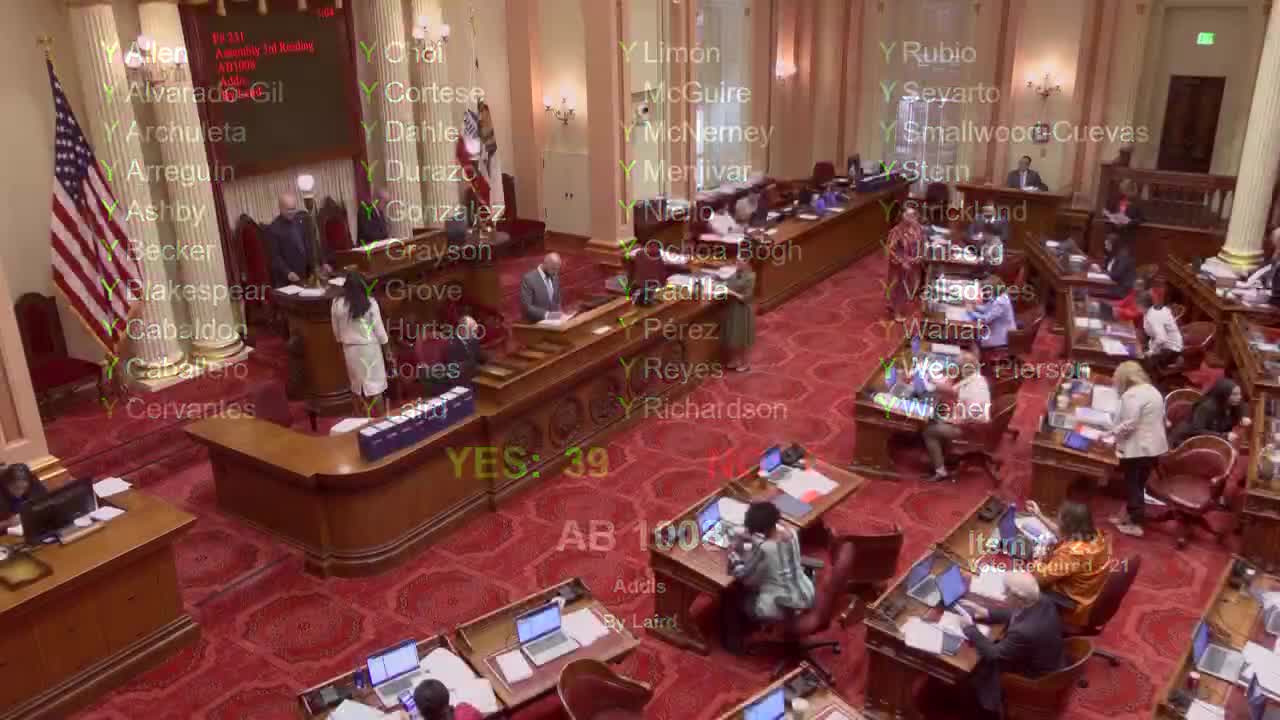
Bill Author

Bill Co-Author(s):
