AB 792: Court interpreters.
- Session Year: 2025-2026
- House: Assembly
- Latest Version Date: 2025-10-03
Current Status:
Passed
(2025-10-03: Chaptered by Secretary of State - Chapter 277, Statutes of 2025.)
Introduced
In Committee
Awaiting First Chamber Vote
Passed First Chamber
In Committee
Awaiting Second Chamber Vote
Passed Second Chamber
Enacted
The existing Trial Court Interpreter Employment and Labor Relations Act divides trial courts into 4 specified regions and establishes regional court interpreter employment relations committees for those regions. Existing law requires each committee to set terms and conditions of employment for court interpreters within the respective region, as specified. Existing law requires that compensation be uniform throughout the region. Existing law, with exceptions, requires that other terms and conditions of employment be uniform throughout the region, but authorizes health and welfare and pension benefits to be the same as those provided to other employees of the same trial court. Existing law authorizes trial courts to set additional local compensation subject to specified conditions.
This bill would authorize a recognized employee organization to request a multiregional bargaining if more than one region is bargaining in a calendar year, subject to the mutual consent of the recognized employee organization and the regional court interpreter employment relations committee.
The existing Trial Court Interpreter Employment and Labor Relations Act divides trial courts into 4 specified regions and establishes regional court interpreter employment relations committees for those regions. Existing law requires each committee to set terms and conditions of employment for court interpreters within the respective region, as specified. Existing law requires that compensation be uniform throughout the region. Existing law, with exceptions, requires that other terms and conditions of employment be uniform throughout the region, but authorizes health and welfare and pension benefits to be the same as those provided to other employees of the same trial court. Existing law authorizes trial courts to set additional local compensation subject to specified conditions.
This bill would authorize a recognized employee organization to request a multiregional bargaining if more than one region is bargaining in a calendar year and require the request to be accepted in no more than 30 days unless an agreement has been reached between all but one of the regions. year, subject to the mutual consent of the recognized employee organization and the regional court interpreter employment relations committee.
The existing Trial Court Interpreter Employment and Labor Relations Act divides trial courts into 4 specified regions and establishes regional court interpreter employment relations committees for those regions. Existing law requires each committee to set terms and conditions of employment for court interpreters within the respective region, as specified. Existing law requires that compensation be uniform throughout the region. Existing law, with exceptions, requires that other terms and conditions of employment be uniform throughout the region, but authorizes health and welfare and pension benefits to be the same as those provided to other employees of the same trial court. Existing law authorizes trial courts to set additional local compensation subject to specified conditions.
This bill would authorize a recognized employee organization to request a multiregional bargaining if more than one region is bargaining in a calendar year and require the request to be accepted in no more than 30 days unless an agreement has been reached between all but one of the regions.
Existing law requires the Supreme Court, a court of appeal, or the appellate division of a superior court to afford the parties an opportunity to present their views on a matter through supplemental briefing before rendering a decision in a proceeding, other than a summary denial of a petition for an extraordinary writ, based upon an issue that was not proposed or briefed by any party to the proceeding.This bill would make technical, nonsubstantive changes to those provisions.Existing law requires the Supreme Court, a court of appeal, or the appellate division of a superior court to afford the parties an opportunity to present their views on a matter through supplemental briefing before rendering a decision in a proceeding, other than a summary denial of a petition for an extraordinary writ, based upon an issue that was not proposed or briefed by any party to the proceeding.
This bill would make technical, nonsubstantive changes to those provisions.
(a)The regional court interpreter employment relations committee shall set terms and conditions of employment for court interpreters within the region, including, but not limited to, hourly rates of pay, subject to meet and confer in good faith. These terms and conditions of employment, when adopted by the regional committee, shall be binding on the trial courts within the region. Hourly rates of pay shall be uniform throughout the region. Unless otherwise provided in a memorandum of understanding or agreement with a recognized employee organization, other terms and conditions of employment shall be uniform throughout the region, except that health and welfare and pension benefits may be the same as those provided to other employees of the same trial court.
(b)Trial courts may set additional local compensation, subject to meet and confer in good faith between the trial court and the recognized employee organization. An agreement establishing local compensation shall be between the trial court and the recognized employee organization, and shall not modify the terms of a regional memorandum of understanding or agreement between the regional court interpreter employment relations committee and the recognized employee organization.
(c)Notwithstanding subdivision (a), if more than one region is bargaining in a calendar year, a recognized employee organization is authorized to request a multiregional bargaining. This request is subject to the mutual consent of the recognized employee organization and the regional court interpreter employment relations committee.
(a)The regional court interpreter employment relations committee shall set terms and conditions of employment for court interpreters within the region, including, but not limited to, hourly rates of pay, subject to meet and confer in good faith. These terms and conditions of employment, when adopted by the regional committee, shall be binding on the trial courts within the region. Hourly rates of pay shall be uniform throughout the region. Unless otherwise provided in a memorandum of understanding or agreement with a recognized employee organization, other terms and conditions of employment shall be uniform throughout the region, except that health and welfare and pension benefits may be the same as those provided to other employees of the same trial court.
(b)Trial courts may set additional local compensation, subject to meet and confer in good faith between the trial court and the recognized employee organization. An agreement establishing local compensation shall be between the trial court and the recognized employee organization, and shall not modify the terms of a regional memorandum of understanding or agreement between the regional court interpreter employment relations committee and the recognized employee organization.
(c)Notwithstanding subdivision (a), if more than one region is bargaining in a calendar year, a recognized employee organization is authorized to request a multiregional bargaining. This request shall be accepted in no more than 30 days unless an agreement has been reached between all but one of the regions. is subject to the mutual consent of the recognized employee organization and the regional court interpreter employment relations committee.
(a)The regional court interpreter employment relations committee shall set terms and conditions of employment for court interpreters within the region, including, but not limited to, hourly rates of pay, subject to meet and confer in good faith. These terms and conditions of employment, when adopted by the regional committee, shall be binding on the trial courts within the region. Hourly rates of pay shall be uniform throughout the region. Unless otherwise provided in a memorandum of understanding or agreement with a recognized employee organization, other terms and conditions of employment shall be uniform throughout the region, except that health and welfare and pension benefits may be the same as those provided to other employees of the same trial court.
(b)Trial courts may set additional local compensation, subject to meet and confer in good faith between the trial court and the recognized employee organization. An agreement establishing local compensation shall be between the trial court and the recognized employee organization, and shall not modify the terms of a regional memorandum of understanding or agreement between the regional court interpreter employment relations committee and the recognized employee organization.
(c)This section shall become operative on January 1, 2025.(c)Notwithstanding subdivision (a), if more than one region is bargaining in a calendar year, a recognized employee organization is authorized to request a multiregional bargaining. This request shall be accepted in no more than 30 days unless an agreement has been reached between all but one of the regions.
SECTION 1.Section 68081 of the Government Code is amended to read:68081.Before the Supreme Court, a court of appeal, or the appellate division of a superior court renders a decision in a proceeding other than a summary denial of a petition for an extraordinary writ, based upon an issue that was not proposed or briefed by any party to the proceeding, the court shall afford the parties an opportunity to present their views on the matter through supplemental briefing. A rehearing shall be ordered upon timely petition of any party if the court fails to afford that opportunity.Before the Supreme Court, a court of appeal, or the appellate division of a superior court renders a decision in a proceeding other than a summary denial of a petition for an extraordinary writ, based upon an issue which that was not proposed or briefed by any party to the proceeding, the court shall afford the parties an opportunity to present their views on the matter through supplemental briefing. If the court fails to afford that opportunity, a A rehearing shall be ordered upon timely petition of any party. party if the court fails to afford that opportunity.
|
Date
|
Status
|
|---|---|
| Oct 3, 2025 | Chaptered by Secretary of State - Chapter 277, Statutes of 2025. |
| Oct 3, 2025 | Approved by the Governor. |
| Sep 11, 2025 | Enrolled and presented to the Governor at 4 p.m. |
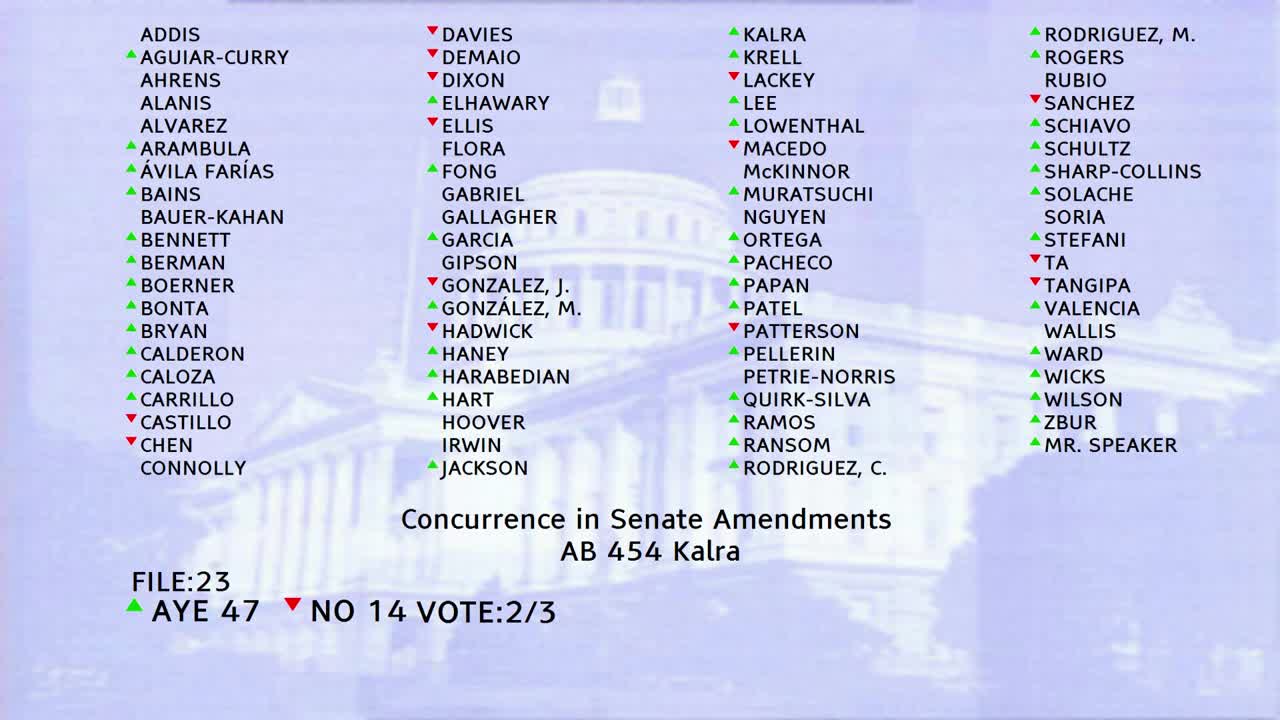
| Sep 4, 2025 | Senate amendments concurred in. To Engrossing and Enrolling. (Ayes 64. Noes 1. Page 2919.). |
| Sep 3, 2025 | In Assembly. Concurrence in Senate amendments pending. |
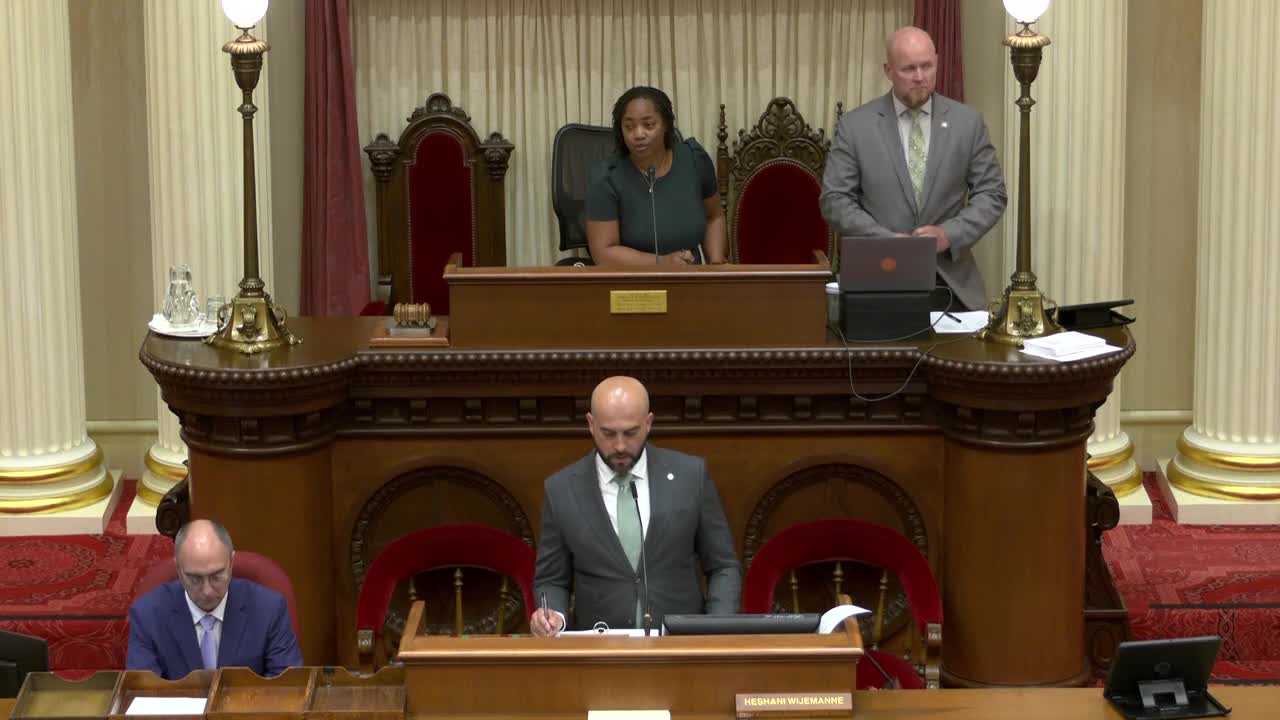
| Sep 3, 2025 | Read third time. Passed. Ordered to the Assembly. (Ayes 30. Noes 6. Page 2446.). |
| Aug 20, 2025 | Read second time. Ordered to third reading. |
| Aug 19, 2025 | From committee: Be ordered to second reading pursuant to Senate Rule 28.8. |
| Jul 9, 2025 | From committee: Do pass and re-refer to Com. on APPR. (Ayes 4. Noes 1.) (July 9). Re-referred to Com. on APPR. |
| Jun 25, 2025 | From committee: Do pass and re-refer to Com. on L., P.E. & R. (Ayes 11. Noes 0.) (June 24). Re-referred to Com. on L., P.E. & R. |
| Jun 12, 2025 | From committee chair, with author's amendments: Amend, and re-refer to committee. Read second time, amended, and re-referred to Com. on JUD. |
| May 7, 2025 | Referred to Coms. on JUD. and L., P.E. & R. |
| Apr 29, 2025 | In Senate. Read first time. To Com. on RLS. for assignment. |
| Apr 28, 2025 | Read third time. Passed. Ordered to the Senate. (Ayes 61. Noes 5. Page 1318.) |
| Apr 24, 2025 | Read second time. Ordered to third reading. |
| Apr 23, 2025 | From committee: Do pass. (Ayes 11. Noes 1.) (April 23). |
| Apr 2, 2025 | From committee: Do pass and re-refer to Com. on APPR. (Ayes 5. Noes 0.) (April 2). Re-referred to Com. on APPR. |
| Mar 11, 2025 | Re-referred to Com. on P. E. & R. |
| Mar 10, 2025 | Referred to Com. on P. E. & R. |
| Mar 10, 2025 | From committee chair, with author's amendments: Amend, and re-refer to Com. on P. E. & R. Read second time and amended. |
| Feb 19, 2025 | From printer. May be heard in committee March 21. |
| Feb 18, 2025 | Read first time. To print. |
|
Date
|
Description
|
Location
|
Votes
|
|
|---|---|---|---|---|
| Sep 4, 2025 | AB 792 Lee Concurrence in Senate Amendments | Assembly Floor |
Passed |
|
| Sep 3, 2025 | Assembly 3rd Reading AB792 Lee By Durazo | Senate Floor |
Passed |
|
| Jul 9, 2025 | Do pass, but first be re-referred to the Committee on [Appropriations] | Senate Standing Committee on Labor, Public Employment and Retirement |
Passed |
|
| Jun 24, 2025 | Do pass, but first be re-referred to the Committee on [Labor, Public Employment and Retirement ] | Senate Standing Committee on Judiciary |
Passed |
|
| Apr 28, 2025 | AB 792 Lee Assembly Third Reading | Assembly Floor |
Passed |
|
| Apr 23, 2025 | Do pass. | Assembly Standing Committee on Appropriations |
Passed |
|
| Apr 2, 2025 | Do pass and be re-referred to the Committee on [Appropriations] | Assembly Standing Committee on Public Employment and Retirement |
Passed |
This list shows positions taken on this bill by organizations on the date displayed, which is linked to the original source.
Positions by individuals are not included.
|
Organization
|
Position
|
Date
|
|---|---|---|
| California Federation Of Interpreters, Local 39000 | ** Support |
CONCURRENCE IN SENATE AMENDMENTS
CSA1 Bill Id:AB 792
Author:(Lee)
As Amended Ver:June 12, 2025
Majority vote
SUMMARY
Amends existing law, known as the Trial Court Interpreter Employment and Labor Relations Act (Court Interpreter Act), relating to regional bargaining and trial court interpreters.
Senate Amendments
Remove the requirement that a recognized employee organization (REO) request for multiregional if more than one region is bargaining in a calendar year be accepted in no more than 30 days unless an agreement has been reached between all but one of the regions and, instead, add that such a request be subject to the mutual consent of the REO and the regional court interpreter employment relations committee.
COMMENTS
Brief History of the Court Interpreter Act and Background
The first of California's public sector bargaining laws was enacted in 1961. Known as the "George Brown Act" or "Brown Act," this act originally covered all public employers and recognized employees' right to participate and be represented by employee organizations. It also granted those organizations the right to meet and confer with the employer on matters affecting employment relations prior to action being taken on such matters.
The breadth of that Brown Act was reduced over time as subsequent statutes nearly removed all employees from coverage and separate statutes were enacted covering the various areas of the public sector employment in California, including court interpreters. Upon effectuation of the Court Interpreter Act in 2002, court interpreters would have a statute of their own governing their employer-employee relations, which continues to exist today.
The Court Interpreter Act divides the trial courts into four specified regions and establishes regional court interpreter employment relations committees for each of those regions. Each committee sets the terms and conditions of employment for court interpreters within the committee's respective region. However, the act does not allow consolidated multi-region bargaining to occur for court interpreters, which has led to prolonged negotiations and delayed contract resolution negatively affecting recruitment and retention.
Court Interpreters are Essential for Access to Justice in California
Court interpreters "are vital to ensuring access and fairness in the trial courts."[1] Without interpreters, litigants, witnesses, and other court users would be unable to understand the proceedings and effectively represent their interests. At the federal level, Title VI of the Civil Rights Act of 1964[2] was interpreted to prohibit practices that result in denying meaningful access to the courts by people who are limited English Proficient;[3] President Trump rescinded protections for limited English speakers this year.[4]
According to the most recent data available from the Judicial Council, California's trial courts reported over 4.4 million interpretations between fiscal year 2014-2015 and fiscal year 2017-2018.[5] Spanish accounted for over 90% of the interpretations, followed by Vietnamese (1.47%).[6] The remaining languages in the top ten most interpreted languages are American Sign Language (ASL), Mandarin, Cantonese, Korean, Punjabi, Russian, Arabic, and Tagalog; Hmong and Eastern Armenian are close behind.[7] Since 2014, several indigenous Mexican languages have entered the top 30 most interpreted languages, including Mixteco, Mixteco Alto, Mixteco Bajo, and Triqui.[8] The Judicial Council provides certification for ASL and 15 spoken languages[9] and offers a written exam and oral proficiency exam to allow individuals to be registered interpreters in 70 languages.[10]
In recognition of the State's linguistic diversity and the importance of interpreters in providing access to justice, the Legislature in 2014 passed Chapter 721, Statutes of 2014 (Assembly Bill 1657, Gomez), which expressly authorized trial courts to provide court interpreter services in civil actions, free of charge to the litigants, and required the Judicial Council to reimburse the trial courts for those services.[11]
This Bill
This bill is intended to facilitate the collective bargaining process for court interpreters by allowing the REO units to engage in multiregional bargaining when both sides agree that it will be beneficial for the negotiations.
Please see the various policy committee analyses for a full discussion of this bill.
According to the Author
"[This bill] empowers California's court interpreters to collectively bargain more efficiently when multiple contracts are being negotiated at the same time. This consolidated bargaining option will promote better contracts, improving the courts' ability to recruit and retain court interpreters, and ensure court access for all Californians."
Arguments in Support
In part, part, the California Federation of Interpreters, Local 39000 states, "[in] 2001 the California Legislature adopted the California Interpreter Act to overhaul what was then a largely independent contractor workforce. By establishing an employee-centric model, courts are better able to provide language access and assign court interpreters to cases throughout courthouses and courtrooms to meet the needs of court users. However, there have been increasing obstacles to hiring court interpreters, including wages that are falling behind the private sector market. The legislature has taken many steps to address this issue including the establishment of a workforce program two years ago which resulted in 1100 applicants for less than 200 employee positions.
"[This bill] fixes one shortcoming of the California Interpreter Act as it pertains to collective bargaining. Under current law, California is divided into four regions for purposes of negotiating union contracts, each with regional teams appointed from local courts, to negotiate terms of a contract. However, often times these negotiations are prolonged, delaying resolution. At times, this delay is extended such that multiple regions are required to bargain simultaneously. However, current law does not allow for combined bargaining sessions which would provide a more efficient mechanism to resolve these labor negotiations. It is important to note that such an approach is supported by the existing funding mechanism. Local courts are ultimately not responsible for funding court interpreters – they pay for these services and then have these payments reimbursed out of the state general fund dollar for dollar. So, in the end the state budget is the source of all interpreter funding. Thus, a multi-regional approach is not hampered by local budget decisions, as all funding will be allocated by the Legislature which has never reduced the line item for interpreters. The more efficiently the courts can reach collective bargaining agreements, the more the courts and union focus time and energy on recruiting individuals to this workforce."
Arguments in Opposition
None.
FISCAL COMMENTS
This bill was passed by the Senate Committee on Appropriations pursuant to Senate Rule 28.8.
VOTES:
ASM PUBLIC EMPLOYMENT AND RETIREMENT: 5-0-2
YES: McKinnor, Boerner, Elhawary, Garcia, Nguyen
ABS, ABST OR NV: Lackey, Alanis
ASM APPROPRIATIONS: 11-1-3
YES: Wicks, Arambula, Calderon, Caloza, Elhawary, Fong, Mark González, Hart, Pacheco, Pellerin, Solache
NO: Tangipa
ABS, ABST OR NV: Sanchez, Dixon, Ta
ASSEMBLY FLOOR: 61-5-13
YES: Addis, Aguiar-Curry, Ahrens, Alvarez, Arambula, Ávila Farías, Bains, Bauer-Kahan, Bennett, Berman, Boerner, Bonta, Bryan, Calderon, Caloza, Carrillo, Connolly, Dixon, Elhawary, Ellis, Fong, Garcia, Gipson, Jeff Gonzalez, Mark González, Harabedian, Hart, Irwin, Jackson, Kalra, Krell, Lee, Lowenthal, McKinnor, Muratsuchi, Nguyen, Ortega, Pacheco, Papan, Patel, Pellerin, Petrie-Norris, Quirk-Silva, Ramos, Ransom, Celeste Rodriguez, Michelle Rodriguez, Rogers, Blanca Rubio, Schiavo, Sharp-Collins, Solache, Soria, Stefani, Valencia, Wallis, Ward, Wicks, Wilson, Zbur, Rivas
NO: Alanis, Davies, DeMaio, Macedo, Tangipa
ABS, ABST OR NV: Castillo, Chen, Flora, Gabriel, Gallagher, Hadwick, Haney, Hoover, Lackey, Patterson, Sanchez, Schultz, Ta
SENATE FLOOR: 30-6-4
YES: Allen, Archuleta, Arreguín, Ashby, Becker, Blakespear, Cabaldon, Caballero, Cervantes, Cortese, Durazo, Gonzalez, Grayson, Hurtado, Laird, Limón, McGuire, McNerney, Menjivar, Padilla, Pérez, Reyes, Richardson, Rubio, Smallwood-Cuevas, Stern, Umberg, Wahab, Weber Pierson, Wiener
NO: Alvarado-Gil, Choi, Grove, Jones, Seyarto, Strickland
ABS, ABST OR NV: Dahle, Niello, Ochoa Bogh, Valladares
UPDATED
VERSION: June 12, 2025
CONSULTANT: Michael Bolden / P. E. & R. / (916) 319-3957 FN: 0001586
Chapter 1047, Statutes of 2002 (Senate Bill 371, Escutia) ↑
Sections 2000 (d) et seq., Title 42, United States Code. ↑
Executive Order No. 13166, 65 Federal Register 50121 (Aug. 11, 2000), repealed by Executive Order No. 14224, 90 Federal Register 11363 (Mar. 1, 2025). ↑
Exec. Order No. 14224, 90 Fed. Reg. 11363 (Mar. 1, 2025). ↑
"2020 Language Need and Interpreter Use Study (March 2022)," p. 2. Judicial Council of California ↑
Ibid. ↑
Id. at p. 25. ↑
Id. at p. 38. ↑
The 15 certified spoken languages are Arabic, Eastern Armenian, Western Armenian, Cantonese, Farsi, Japanese, Khmer, Korean, Mandarin, Portuguese, Punjabi, Russian, Spanish, Tagalog, and Vietnamese. ("Trial Court Interpreters Program Expenditure Report for Fiscal Year 2022-23 (June 2024))," p. 4, fn. 11. Judicial Council of California. ↑
Ibid. ↑
Section 756, Evidence Code. ↑
SENATE RULES COMMITTEE Office of Senate Floor Analyses (916) 651-1520 Fax: (916) 327-4478 | AB 792 |
THIRD READING
Bill No: AB 792
Author: Lee (D)
Amended: 6/12/25 in Senate
Vote: 21
SENATE JUDICIARY COMMITTEE: 11-0, 6/24/25
AYES: Umberg, Allen, Arreguín, Ashby, Caballero, Durazo, Laird, Stern, Wahab, Weber Pierson, Wiener
NO VOTE RECORDED: Niello, Valladares
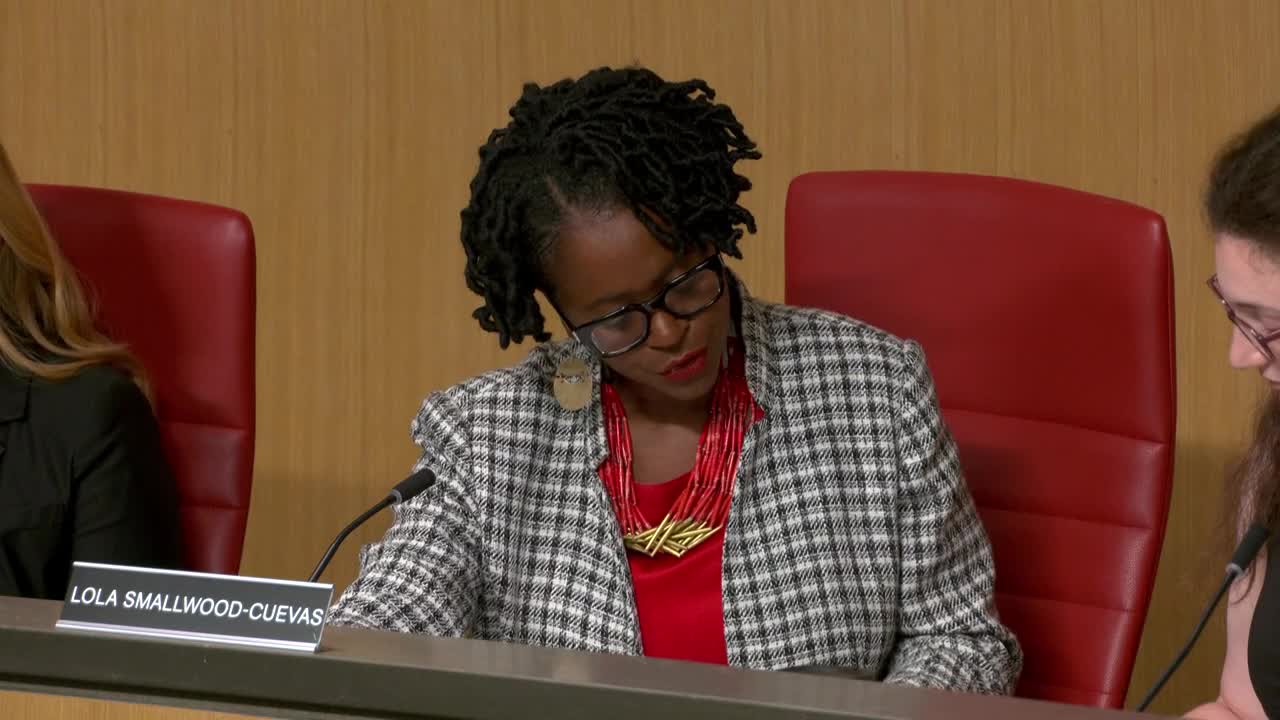
SENATE LABOR, PUB. EMP. & RET. COMMITTEE: 4-1, 7/9/25
AYES: Smallwood-Cuevas, Cortese, Durazo, Laird
NOES: Strickland
SENATE APPROPRIATIONS COMMITTEE: Senate Rule 28.8
ASSEMBLY FLOOR: 61-5, 4/28/25 - See last page for vote
SUBJECT: Court interpreters
SOURCE: California Federation of Interpreters, Local 39000
DIGEST:
This bill permits multiregional bargaining between the regional court interpreter employment relations committees and recognized court interpreter employee organizations with the mutual consent of the parties.
ANALYSIS:
Existing law:
- Establishes the Trial Court Interpreter Employment and Labor Relations Act TCIELRA, which provides for public employer-employee relations between trial courts and court interpreters. (Government Code (Gov. Code), tit. 8, ch. 7.5, §§ 71800 et seq.)
- Defines the following relevant terms:
- “Certified interpreter” and “registered interpreter” are persons certified or registered to provide language translation services, not including sign language.
- “Employee organization” means a labor organization that has as one of its purposes representing employees in their relations with the trial courts.
- “Local compensation” means any amounts paid to employee interpreters by an individual trial court that are not paid pursuant to the regional memorandum of understanding and are not calculated on an hourly basis.
- “Recognized employee organization” means an employee organization that has been formally acknowledged to represent the court interpreters employed by the trial courts in a region.
- “Regional court interpreter employment relations committee” means one of the four regional court interpreter committees established by statute and subject to rules adopted by the Judicial Council. (Gov. Code, §§ 71801, 71807.)
- Divides the trial courts into four regions, for purposes of developing regional terms and conditions of employment and for collective bargaining with recognized employee organizations, with each region controlled by a regional court interpreter employment relations committee, as follows:
- Region 1: Los Angeles, Santa Barbara, and San Luis Obispo Counties.
- Region 2: the counties in the First and Sixth Appellate Districts, except Solano County.
- Region 3: the counties in the Third and Fifth Appellate Districts.
- Region 4: the counties in the Fourth Appellate District. (Gov. Code, § 71807.)
- Permits trial courts in a region to employ certified and registered interpreters to perform spoken language interpretation for the trial courts in full-time, part-time, or intermittent, part-time interpreter positions created by the trial courts, and establishes an order of priority for hiring. (Gov. Code, § 71806.)
- Provides that the regional court interpreter relations committee shall set terms and conditions of employment for court interpreters within the region, including, but not limited to, hourly rates of pay, subject to a meet and confer in good faith; when the terms and conditions of employment are adopted by the regional court interpreter relations committee, they shall be binding on the trial courts; unless otherwise provided in a memorandum of understanding or agreement with a recognized employee organization, other terms and conditions of employment shall be uniform throughout the region, except that health and welfare and pension benefits may be the same as those provided to other employees of the same trial court. (Gov. Code, § 71808(a).)
- Provides that, notwithstanding 5), trial courts may set additional local compensation, subject to meet and confer in good faith between the trial court and the recognized employee organization; an agreement establishing local compensation shall be between the trial court and the recognized employee organization, and shall not modify the terms of a regional memorandum of understanding or agreement between the regional court interpreter employment relations committee and the recognized employee organization. (Gov. Code, § 71808(b).)
This bill:
- Permits, when more than one region is bargaining in calendar year, a recognized employee organization to request multiregional bargaining.
- Permits the request for multiregional bargaining in 1) to be granted with the mutual consent of the recognized employee organization and the regional court interpreter employment relations committee.
Comments
The TCIELRA governs when and how courts may hire spoken-language interpreters or engage independent contractor interpreters to provide translation services in court proceedings. Among other things, the TCIELRA divides the state’s counties into four regions; each region is represented by a regional court interpreter relations committee, established pursuant to rules adopted by the Judicial Council, which sets the terms and conditions for employment for court reporters within the region through the meet-and-confer process with the recognized employee organizations representing the employee-interpreters.
This bill would permit multiregional bargaining under the TCIELRA when (1) more than one region is bargaining in the same calendar year, and (2) the recognized employee organizations and the regional court interpreter employment relations committees give their consent. This option of multiregional bargaining is intended to increase efficiency in the bargaining process and, ideally, make it easier for the courts to retain much-needed employee-interpreters.
FISCAL EFFECT: Appropriation: No Fiscal Com.: Yes Local: No
SUPPORT: (Verified 8/18/25)
California Federation of Interpreters, Local 39000 (source)
OPPOSITION: (Verified 8/18/25)
None received
ARGUMENTS IN SUPPORT: According to the California Federation of Interpreters, Local 39000:
AB 792 fixes one shortcoming of the California Interpreter Act as it pertains to collective bargaining. Under current law, California is divided into four regions for purposes of negotiating union contracts, each with regional teams appointed from local courts, to negotiate terms of a contract. However, often times these negotiations are prolonged, delaying resolution. At times, this delay is extended such that multiple regions are required to bargain simultaneously. However, current law does not allow for combined bargaining sessions which would provide a more efficient mechanism to resolve these labor negotiations. It is important to note that such an approach is supported by the existing funding mechanism. Local courts are ultimately not responsible for funding court interpreters – they pay for these services and then have these payments reimbursed out of the state general fund dollar for dollar. So, in the end the state budget is the source of all interpreter funding. Thus, a multi-regional approach is not hampered by local budget decisions, as all funding will be allocated by the Legislature which has never reduced the line item for interpreters.
The more efficiently the courts can reach collective bargaining agreements, the more the courts and union focus time and energy on recruiting individuals to this workforce.
ASSEMBLY FLOOR: 61-5, 4/28/25
AYES: Addis, Aguiar-Curry, Ahrens, Alvarez, Arambula, Ávila Farías, Bains, Bauer-Kahan, Bennett, Berman, Boerner, Bonta, Bryan, Calderon, Caloza, Carrillo, Connolly, Dixon, Elhawary, Ellis, Fong, Garcia, Gipson, Jeff Gonzalez, Mark González, Harabedian, Hart, Irwin, Jackson, Kalra, Krell, Lee, Lowenthal, McKinnor, Muratsuchi, Nguyen, Ortega, Pacheco, Papan, Patel, Pellerin, Petrie-Norris, Quirk-Silva, Ramos, Ransom, Celeste Rodriguez, Michelle Rodriguez, Rogers, Blanca Rubio, Schiavo, Sharp-Collins, Solache, Soria, Stefani, Valencia, Wallis, Ward, Wicks, Wilson, Zbur, Rivas
NOES: Alanis, Davies, DeMaio, Macedo, Tangipa
NO VOTE RECORDED: Castillo, Chen, Flora, Gabriel, Gallagher, Hadwick, Haney, Hoover, Lackey, Patterson, Sanchez, Schultz, Ta
Prepared by: Allison Whitt Meredith / JUD. / (916) 651-4113
8/20/25 23:22:46
**** END ****
SENATE COMMITTEE ON LABOR, PUBLIC EMPLOYMENT AND RETIREMENT
Senator Lola Smallwood-Cuevas, Chair
2025 - 2026 Regular
Bill No: AB 792 Hearing Date: July 9, 2025
Author: | Lee | ||
Version: | June 12, 2025 | ||
Urgency: | No | Fiscal: | Yes |
Consultant: | Glenn Miles | ||
SUBJECT: Court interpreters
KEY ISSUE
This bill permits the trial court interpreters’ union to request multiregional bargaining between the union and the regional court interpreter employment relations committees subject to the mutual consent of the parties.
ANALYSIS
Existing law:
- Establishes the Trial Court Interpreter Employment and Labor Relations Act (TCIELRA), which provides for public employer-employee relations between trial courts and court interpreters. (Government Code §§71800 et seq.)
- Defines the following relevant terms:
- “Certified interpreter” and “registered interpreter” are persons certified or registered to provide language translation services, not including sign language.
- “Employee organization” means a labor organization that has as one of its purposes representing employees in their relations with the trial courts.
- “Local compensation” means any amounts paid to employee interpreters by an individual trial court that are not paid pursuant to the regional memorandum of understanding and are not calculated on an hourly basis.
- “Recognized employee organization” means an employee organization that has been formally acknowledged to represent the court interpreters employed by the trial courts in a region.
- “Regional court interpreter employment relations committee” means one of the four regional court interpreter committees established by statute and subject to rules adopted by the Judicial Council. (Government Code §§71801, 71807)
- Divides the trial courts into four regions, for purposes of developing regional terms and conditions of employment and for collective bargaining with recognized employee organizations, with each region controlled by a regional court interpreter employment relations committee, as follows:
- Region 1: Los Angeles, Santa Barbara, and San Luis Obispo Counties.
- Region 2: the counties in the First and Sixth Appellate Districts, except Solano County.
- Region 3: the counties in the Third and Fifth Appellate Districts.
- Region 4: the counties in the Fourth Appellate District. (Government Code §71807)
- Permits trial courts in a region to employ certified and registered interpreters to perform spoken language interpretation for the trial courts in full-time, part-time, or intermittent, part-time interpreter positions created by the trial courts, and establishes an order of priority for hiring. (Government Code §71806)
- Provides that the regional court interpreter relations committee shall set terms and conditions of employment for court interpreters within the region, including, but not limited to, hourly rates of pay, subject to a meet and confer in good faith; when the terms and conditions of employment are adopted by the regional court interpreter relations committee, they shall be binding on the trial courts; unless otherwise provided in a memorandum of understanding or agreement with a recognized employee organization, other terms and conditions of employment shall be uniform throughout the region, except that health and welfare and pension benefits may be the same as those provided to other employees of the same trial court. (Government Code §71808(a))
- Provides that trial courts may set additional local compensation, subject to requirements to meet and confer in good faith between the trial court and the recognized employee organization; an agreement establishing local compensation shall be between the trial court and the recognized employee organization, and shall not modify the terms of a regional memorandum of understanding or agreement between the regional court interpreter employment relations committee and the recognized employee organization. (Government Code §71808(b))
This bill:
- Authorizes a recognized employee organization to request a multiregional bargaining if more than one region is bargaining in a calendar year and subject to the mutual consent of the recognized employee organization and the regional court interpreter employment relations committee.
COMMENTS
1. Need for this bill?
According to the author:
“Current law does not allow consolidated multi-region bargaining to occur for court interpreters, which has led to prolonged negotiations and delayed contract resolution. As a result, recruitment and retention has been difficult, and both the courts as employers and the employee representative organization have not been able to focus on meet workforce challenges.”
2. Proponent Arguments
According to the California Federation of Interpreters, Local 39000:
“AB 792 fixes one shortcoming of the California Interpreter Act as it pertains to collective bargaining. Under current law, California is divided into four regions for purposes of negotiating union contracts, each with regional teams appointed from local courts, to negotiate terms of a contract. However, often times these negotiations are prolonged, delaying resolution. At times, this delay is extended such that multiple regions are required to bargain simultaneously. However, current law does not allow for combined bargaining sessions which would provide a more efficient mechanism to resolve these labor negotiations. It is important to note that such an approach is supported by the existing funding mechanism. Local courts are ultimately not responsible for funding court interpreters – they pay for these services and then have these payments reimbursed out of the state general fund dollar for dollar. So, in the end the state budget is the source of all interpreter funding. Thus, a multi-regional approach is not hampered by local budget decisions, as all funding will be allocated by the Legislature which has never reduced the line item for interpreters.
The more efficiently the courts can reach collective bargaining agreements, the more the courts and union focus time and energy on recruiting individuals to this workforce.”
3. Opponent Arguments:
None received.
4. Prior Legislation:
AB 1032 (Pacheco, Chapter 556, Statutes of 2023) made various changes to the Trial Court Interpreter Employment and Labor Relations Act (TCIELRA), a statutory framework governing employer-employee relations between trial courts and court interpreters
SB 818 (Escutia, Chapter 257, Statutes of 2003) made technical, non-substantive, and other clean-up changes to TCIELRA.
SB 371 (Escutia, Chapter 1047, Statutes 2002) established TCIELRA which sets forth provisions and procedures governing the employment and compensation of certified and registered trial court interpreters, and court interpreters pro tempore, employed by the trial courts, as specified.
SUPPORT
California Federation of Interpreters, Local 39000 (Sponsor)
OPPOSITION
None received.
-- END --
Senator Thomas Umberg, Chair
2025-2026 Regular Session
Bill No: AB 792 (Author:Lee)
Version: June 12, 2025
Hearing Date: June 24, 2025
Fiscal: Yes
Urgency: No
Consultant: AWM
SUBJECT
Court interpreters
DIGEST
This bill permits multiregional bargaining between the regional court interpreter employment relations committees and recognized court interpreter employee organizations with the mutual consent of the parties.
EXECUTIVE SUMMARY
The Trial Court Interpreter Employment and Labor Relations Act (TCIELRA) governs when and how courts may hire spoken-language interpreters or engage independent contractor interpreters to provide translation services in court proceedings. Among other things, the TCIELRA divides the state’s counties into four regions; each region is represented by a regional court interpreter relations committee, established pursuant to rules adopted by the Judicial Council, which sets the terms and conditions for employment for court reporters within the region through the meet-and-confer process with the recognized employee organizations representing the employee-interpreters.
This bill would permit multiregional bargaining under the TCIELRA when (1) more than one region is bargaining in the same calendar year, and (2) the recognized employee organizations and the regional court interpreter employment relations committees give their consent. This option of multiregional bargaining is intended to increase efficiency in the bargaining process and, ideally, make it easier for the courts to retain much-needed employee-interpreters.
This bill is sponsored by the California Federation of Interpreters, Local 39000. The Committee has not received timely opposition to this bill. If this Committee passes this bill, it will then be heard by the Senate Labor, Public Employment and Retirement Committee.
PROPOSED CHANGES TO THE LAW
Existing law:
- Establishes the TCIELRA, which provides for public employer-employee relations between trial courts and court interpreters. (Gov. Code, tit. 8, ch. 7.5, §§ 71800 et seq.)
- Defines the following relevant terms:
- “Certified interpreter” and “registered interpreter” are persons certified or registered to provide language translation services, not including sign language.
- “Employee organization” means a labor organization that has as one of its purposes representing employees in their relations with the trial courts.
- “Local compensation” means any amounts paid to employee interpreters by an individual trial court that are not paid pursuant to the regional memorandum of understanding and are not calculated on an hourly basis.
- “Recognized employee organization” means an employee organization that has been formally acknowledged to represent the court interpreters employed by the trial courts in a region.
- “Regional court interpreter employment relations committee” means one of the four regional court interpreter committees established by statute and subject to rules adopted by the Judicial Council. (Gov. Code, §§ 71801, 71807.)
- Divides the trial courts into four regions, for purposes of developing regional terms and conditions of employment and for collective bargaining with recognized employee organizations, with each region controlled by a regional court interpreter employment relations committee, as follows:
- Region 1: Los Angeles, Santa Barbara, and San Luis Obispo Counties.
- Region 2: the counties in the First and Sixth Appellate Districts, except Solano County.
- Region 3: the counties in the Third and Fifth Appellate Districts.
- Region 4: the counties in the Fourth Appellate District. (Gov. Code, § 71807.)
- Permits trial courts in a region to employ certified and registered interpreters to perform spoken language interpretation for the trial courts in full-time, part-time, or intermittent, part-time interpreter positions created by the trial courts, and establishes an order of priority for hiring. (Gov. Code, § 71806.)
- Provides that the regional court interpreter relations committee shall set terms and conditions of employment for court interpreters within the region, including, but not limited to, hourly rates of pay, subject to a meet and confer in good faith; when the terms and conditions of employment are adopted by the regional court interpreter relations committee, they shall be binding on the trial courts; unless otherwise provided in a memorandum of understanding or agreement with a recognized employee organization, other terms and conditions of employment shall be uniform throughout the region, except that health and welfare and pension benefits may be the same as those provided to other employees of the same trial court. (Gov. Code, § 71808(a).)
- Provides that, notwithstanding 5), trial courts may set additional local compensation, subject to meet and confer in good faith between the trial court and the recognized employee organization; an agreement establishing local compensation shall be between the trial court and the recognized employee organization, and shall not modify the terms of a regional memorandum of understanding or agreement between the regional court interpreter employment relations committee and the recognized employee organization. (Gov. Code, § 71808(b).)
This bill:
- Permits, when more than one region is bargaining in calendar year, a recognized employee organization to request multiregional bargaining.
- Permits the request for multiregional bargaining in 1) to be granted with the mutual consent of the recognized employee organization and the regional court interpreter employment relations committee.
COMMENTS
- Author’s comment
According to the author:
AB 792 empowers California’s court interpreters to collectively bargain more efficiently when multiple contracts are being negotiated at the same time. This consolidated bargaining option will promote better contracts, improving the courts’ ability to recruit and retain court interpreters, and ensure court access for all Californians.
2. Court interpreters are essential for access to justice in California
Court interpreters “are vital to ensuring access and fairness in the trial courts.”[1] Without interpreters, litigants, witnesses, and other court users would be unable to understand the proceedings and effectively represent their interests. At the federal level, Title VI of the Civil Rights Act of 1964[2] was interpreted to prohibit practices that result in denying meaningful access to the courts by people who are limited English Proficient;[3] President Trump rescinded protections for limited English speakers this year.[4]
According to the most recent data available from the Judicial Council, California’s trial courts reported over 4.4 million interpretations between fiscal year 2014-2015 and fiscal year 2017-2018.[5] Spanish accounted for over 90 percent of the interpretations, followed by Vietnamese (1.47 percent).[6] The remaining languages in the top ten most interpreted languages are American Sign Language (ASL), Mandarin, Cantonese, Korean, Punjabi, Russian, Arabic, and Tagalog; Hmong and Eastern Armenian are close behind.[7] Since 2014, several indigenous Mexican languages have entered the top 30 most interpreted languages, including Mixteco, Mixteco Alto, Mixteco Bajo, and Triqui.[8] The Judicial Council provides certification for ASL and 15 spoken languages[9] and offers a written exam and oral proficiency exam to allow individuals to be registered interpreters in 70 languages.[10]
In recognition of the State’s linguistic diversity and the importance of interpreters in providing access to justice, the Legislature in 2014 passed AB 1657 (Gomez, Ch. 721, Stats. 2014), which expressly authorized trial courts to provide court interpreter services in civil actions, free of charge to the litigants, and required the Judicial Council to reimburse the trial courts for those services.[11]
3. Background on the TCIELRA
In 2002, the Legislature enacted the TCIELRA, which established procedures by which the trial courts would make an orderly transition from relying on independent contractors for interpretation services to using employees for interpretation services.[12] The TCIELRA built in a two-year “regional transition period” for the courts to put in place procedures for hiring, and to hire, court interpreters,[13] and included a number of provisions to ensure that the court interpreters who had been providing interpretation services most frequently as independent contractors were given the first choice of being hired as employees.[14] The regional transition period ended July 1, 2005.[15]
In 2023, the Legislature enacted AB 1032 (Pacheco, Ch. 556, Stats. 2023), which modified the TCIELRA in an effort to encourage the courts to hire more employee court interpreters rather than relying on contractors. Prior to AB 1032, expenditures for independent contractors comprise between one-fifth and one-quarter of their total interpreter expenditures (with a dip in 2020-2021 that coincided with the COVID-19 related reduction in cases).[16] AB 1032 authorized courts to hire relay interpreters, provided that certain conditions are met; provided that open court interpreter positions will be subject to the TCIELRA if they have been open for a year or more; permitted individual trial courts to set additional compensation for court interpreters; and the order of priority for applicants for full-time and part-time court interpreter positions. Many of the provisions of AB 1032 took effect on January 1, 2025.
4. This bill permits court interpreter regional bargaining units to engage in multiregional bargaining with the consent of all the parties
This bill is intended to facilitate the collective bargaining process for court interpreters by allowing the recognized employee organizations for multiple units to engage in multiregional bargaining when the regions are bargaining in the same calendar year. Recent amendments taken by the author, in response to concerns raised by the Judicial Council, require that both the recognized employee organizations and the regional court interpreter employment relations committees consent to the multiregional bargaining request. This amendment should ensure that multiregional bargaining occurs only when both sides agree that it will be beneficial for the negotiations.
5. Arguments in support
According to the California Federation of Interpreters, Local 39000:
AB 792 fixes one shortcoming of the California Interpreter Act as it pertains to collective bargaining. Under current law, California is divided into four regions for purposes of negotiating union contracts, each with regional teams appointed from local courts, to negotiate terms of a contract. However, often times these negotiations are prolonged, delaying resolution. At times, this delay is extended such that multiple regions are required to bargain simultaneously. However, current law does not allow for combined bargaining sessions which would provide a more efficient mechanism to resolve these labor negotiations. It is important to note that such an approach is supported by the existing funding mechanism. Local courts are ultimately not responsible for funding court interpreters – they pay for these services and then have these payments reimbursed out of the state general fund dollar for dollar. So, in the end the state budget is the source of all interpreter funding. Thus, a multi-regional approach is not hampered by local budget decisions, as all funding will be allocated by the Legislature which has never reduced the line item for interpreters.
The more efficiently the courts can reach collective bargaining agreements, the more the courts and union focus time and energy on recruiting individuals to this workforce.
SUPPORT
California Federation of Interpreters, Local 39000 (sponsor)
OPPOSITION
None received
RELATED LEGISLATION
Pending legislation: None known.
Prior legislation:
AB 1032 (Pacheco, Ch. 556, Stats. 2023) modified the TCIELRA. AB 1032 is discussed in greater detail in Comment 3 of this analysis.
AB 432 (Fong, 2023) would have established the California Court Interpreter Workforce Pilot Program, which would be administered by the Judicial Council to develop training and increase the number of eligible applicants for employment as court interpreters, until January 1, 2030. AB 432 died in the Senate Judiciary Committee after the contents of the bill were passed through the Budget Act of 2023 (SB 101 (Committee on Budget, Ch. 12, Stats. 2023)).
AB 101 (Skinner, Ch. 12, Stats. 2023) among other things, established the California Court Interpreter Workforce Pilot Program in the substantially same form as set forth in AB 432 (Fong, 2023).
SB 1155 (Hueso, Ch. 852, Stats. 2018) deleted the provision excluding small claims proceedings from the definition of a court proceeding for purposes of the requirement to use certified court interpreters, thereby extending that requirement to small claims proceedings.
AB 1657 (Gomez, Ch. 721, Stats. 2014) stated that it is imperative that courts provide interpreters to all parties who require one, and set forth the requirement that Judicial Council reimburse trial courts for interpreter services provided in civil actions.
PRIOR VOTES:
Assembly Floor (Ayes 61, Noes 5)
Assembly Appropriations Committee (Ayes 11, Noes 1)
Assembly Public Employment and Retirement Committee (Ayes 5, Noes 0)
**************
SB 371 (Escutia, Ch. 1047, Stats. 2002). ↑
42 U.S.C. §§ 2000d et seq. ↑
See Exec. Order No. 13166, 65 Fed. Reg. 50121 (Aug. 11, 2000), repealed by Exec. Order No. 14224, 90 Fed. Reg. 11363 (Mar. 1, 2025). ↑
See Exec. Order No. 14224, 90 Fed. Reg. 11363 (Mar. 1, 2025). ↑
Judicial Council of California, 2020 Language Need and Interpreter Use Study (Mar. 2022), p. 2. ↑
Ibid. ↑
Id. at p. 25. ↑
Id. at p. 38. ↑
The 15 certified spoken languages are Arabic, Eastern Armenian, Western Armenian, Cantonese, Farsi, Japanese, Khmer, Korean, Mandarin, Portuguese, Punjabi, Russian, Spanish, Tagalog, and Vietnamese. (Judicial Council of California, Trial Court Interpreters Program Expenditure Report for Fiscal Year 2022-23 (June 2024), p. 4, fn. 11. ↑
Ibid. ↑
Evid. Code, § 756. ↑
SB 371 (Escutia, Ch. 1047, Stats. 2002); Gov. Code, § 71802. ↑
Gov. Code, § 71801(l). ↑
Id., §§ 71804-71806. ↑
Id., § 71801(l). ↑
Judicial Council of California, Trial Court Interpreters Program Expenditure Report for Fiscal Year 2021-2022 (Jun. 2023), p. 6. ↑
ASSEMBLY THIRD READING
ATR Bill Id:AB 792
Author:(Lee)
As Amended Ver:March 10, 2025
Majority vote
SUMMARY
Amends existing law, known as the Trial Court Interpreter Employment and Labor Relations Act (Court Interpreter Act), relating to regional bargaining and trial court interpreters.
Major Provisions
- Authorizes a recognized employee organization to request multiregional bargaining, if more than one region is bargaining in a calendar year.
- Requires the above-described request to be accepted within 30 days, unless an agreement has been reached between all but one of the regions.
COMMENTS
Brief History of the Court Interpreter Act and Background
The first of California's public sector bargaining laws was enacted in 1961. Known as the "George Brown Act" or "Brown Act," this act originally covered all public employers and recognized employees' right to participate and be represented by employee organizations. It also granted those organizations the right to meet and confer with the employer on matters affecting employment relations prior to action being taken on such matters.
The breadth of that Brown Act was reduced over time as subsequent statutes nearly removed all employees from coverage and separate statutes were enacted covering the various areas of the public sector employment in California, including court interpreters. Upon effectuation of the Court Interpreter Act in 2002, court interpreters would have a statute of their own governing their employer-employee relations, which continues to exist today.
The Court Interpreter Act divides the trial courts into four specified regions and establishes regional court interpreter employment relations committees for each of those regions. Each committee sets the terms and conditions of employment for court interpreters within the committee's respective region. However, the act does not allow consolidated multi-region bargaining to occur for court interpreters, which has led to prolonged negotiations and delayed contract resolution negatively affecting recruitment and retention.
According to the Author
"[This bill] empowers California's court interpreters to collectively bargain more efficiently when multiple contracts are being negotiated at the same time. This consolidated bargaining option will promote better contracts, improving the courts' ability to recruit and retain court interpreters, and ensure court access for all Californians."
Arguments in Support
In part, the California Federation of Interpreters, Local 39000 states, "[in] 2001 the California Legislature adopted the California Interpreter Act to overhaul what was then a largely independent contractor workforce. By establishing an employee-centric model, courts are better able to provide language access and assign court interpreters to cases throughout courthouses and courtrooms to meet the needs of court users. However, there have been increasing obstacles to hiring court interpreters, including wages that are falling behind the private sector market. The legislature has taken many steps to address this issue including the establishment of a workforce program two years ago which resulted in 1,100 applicants for less than 200 employee positions.
"[This bill] fixes one shortcoming of the California Interpreter Act as it pertains to collective bargaining. Under current law, California is divided into four regions for purposes of negotiating union contracts, each with regional teams appointed from local courts, to negotiate terms of a contract. However, often times these negotiations are prolonged, delaying resolution. At times, this delay is extended such that multiple regions are required to bargain simultaneously. However, current law does not allow for combined bargaining sessions which would provide a more efficient mechanism to resolve these labor negotiations. It is important to note that such an approach is supported by the existing funding mechanism. Local courts are ultimately not responsible for funding court interpreters – they pay for these services and then have these payments reimbursed out of the state general fund dollar for dollar. So, in the end the state budget is the source of all interpreter funding. Thus, a multi-regional approach is not hampered by local budget decisions, as all funding will be allocated by the Legislature which has never reduced the line item for interpreters. The more efficiently the courts can reach collective bargaining agreements, the more the courts and union focus time and energy on recruiting individuals to this workforce."
Arguments in Opposition
Registering a position of "oppose, unless amended," the Judicial Council of California states, among other things, that, "[it] has concerns with the language in the bill that requires the courts to accept all multiregional bargaining requests. This unbalanced approach to bargaining could be problematic and does not lend to good faith bargaining environments. To address this problem, the council requests amendments to remove the requirement that forces the courts to accept any multiregional bargaining request and instead allow multiregional bargaining upon mutual consent of both parties.
"While the judicial branch appreciates the resources required to conduct bargaining negotiations in multiple regions at the same time, this approach may not create efficiencies as the more regions involved in a negotiation, the more complicated the negotiations become. While there are common issues between the regions, there are not always solutions that can be applied across regions. The regions were originally established to allow for regional components to be considered during bargaining negotiations, including cost of living factors and regional needs."
Further, "[it] also has concerns with the language that would allow the multiregional request to be submitted whenever there is more than one region bargaining within the same year. The timeline of negotiations may be held up or requested earlier than appropriate in order for the bill's provisions to be applied and that may result in negative impacts on court administration and the relationship between the courts and the court interpreters." The Judicial Council seeks an amendment to "…allow the courts to engage in multiregional bargaining upon mutual consent of the parties."
FISCAL COMMENTS
The Assembly Committee on Appropriations states that this bill would result in:
- Likely absorbable costs to the Judicial Council to conduct single-table, multi-regional bargaining. The Judicial Council notes that such bargaining could complicate negotiations and cause bargaining to proceed longer than is currently experienced, but any operational impacts should fit within the existing court budget.
- No costs to the Public Employment Relations Board (PERB).
VOTES
ASM PUBLIC EMPLOYMENT AND RETIREMENT: 5-0-2
YES: McKinnor, Boerner, Elhawary, Garcia, Nguyen
ABS, ABST OR NV: Lackey, Alanis
ASM APPROPRIATIONS: 11-1-3
YES: Wicks, Arambula, Calderon, Caloza, Elhawary, Fong, Mark González, Hart, Pacheco, Pellerin, Solache
NO: Tangipa
ABS, ABST OR NV: Sanchez, Dixon, Ta
UPDATED
VERSION: March 10, 2025
CONSULTANT: Michael Bolden / P. E. & R. / (916) 319-3957 FN: 0000260
Date of Hearing: April 23, 2025
ASSEMBLY COMMITTEE ON APPROPRIATIONS
Buffy Wicks, Chair
ABPCA Bill Id:AB 792
Author:(Lee) – As Amended Ver:March 10, 2025
Policy Committee: | Public Employment and Retirement | Vote: | 5 - 0 |
|
| ||
|
|
Urgency: No State Mandated Local Program: No Reimbursable: No
SUMMARY:
This bill authorizes a recognized employee organization to request multi-regional bargaining for court reporters if more than one region is bargaining in a calendar year.
Unless an agreement has been reached with all but one remaining region, the Judicial Council must accept the request within 30 days.
FISCAL EFFECT:
- Likely absorbable costs to the Judicial Council to conduct single-table, multi-regional bargaining. The Judicial Council notes that such bargaining could complicate negotiations and cause bargaining to proceed longer than is currently experienced, but any operational impacts should fit within the existing court budget.
- No costs to the Public Employment Relations Board (PERB).
COMMENTS:
- Purpose. According to the author:
[This bill] empowers California’s court interpreters to collectively bargain more efficiently when multiple contracts are being negotiated at the same time. This consolidated bargaining option will promote better contracts, improving the courts’ ability to recruit and retain court interpreters, and ensure court access for all Californians.
This bill is sponsored by the California Federation of Interpreters.
- Court Interpreters. The Trial Court Interpreter Employment and Labor Relations Act divides the trial courts into four specified regions and establishes regional court interpreter employment relations committees for each of those regions. Each committee sets the terms and conditions of employment for court interpreters within the committee’s respective region. This bill authorizes a union representing court interpreters to request, and generally requires the Judicial Council to accept, multi-regional bargaining when more than one region is bargaining in a calendar year.
Analysis Prepared by: Irene Ho / APPR. / (916) 319-2081
Date of Hearing: April 2, 2025
ASSEMBLY COMMITTEE ON PUBLIC EMPLOYMENT AND RETIREMENT
Tina S. McKinnor, Chair
ABPCA Bill Id:AB 792 (
Author:Lee) – As Amended Ver:March 10, 2025
SUBJECT: Court interpreters
SUMMARY: Amends existing law, known as the Trial Court Interpreter Employment and Labor Relations Act (Court Interpreter Act), relating to regional bargaining and trial court interpreters. Specifically, this bill:
- Authorizes a recognized employee organization to request multiregional bargaining, if more than one region is bargaining in a calendar year.
- Requires the above-described request to be accepted within 30 days, unless an agreement has been reached between all but one of the regions.
EXISTING LAW:
- Governs collective bargaining in the private sector under the federal National Labor Relations Act (NLRA), but leaves it to the states to regulate collective bargaining in their respective public sectors. (Sections 151 et seq., Title 29, United States Code.)
While the NLRA and the decisions of its National Labor Relations Board often provide persuasive precedent in interpreting state collective bargaining law, public employees have no collective bargaining rights absent specific statutory authority establishing those rights.
- Provides several statutory frameworks under California law to provide public employees collective bargaining rights, govern public employer-employee relations, and limit labor strife and economic disruption in the public sector through a reasonable method of resolving disputes regarding wages, hours and other terms and conditions of employment between public employers and recognized public employee organizations or their exclusive representatives. These include the Court Interpreter Act, which provides for public employer-employee relations between trials courts and court interpreters, as specified, excluding sign language interpreters. (Sections 71800 et seq. of the Government (Gov.) Code.)
- Establishes the Public Employment Relations Board (PERB), a quasi-judicial administrative agency charged with administering certain statutory frameworks governing employer-employee relations, resolving disputes, and enforcing the statutory duties and rights of public agency employers, employees, and employee organizations, but provides the City and County of Los Angeles a local alternative to PERB oversight. (Sections 3541 et seq. of the Gov. Code.)
- Requires a regional court interpreter employment relations committee to set the terms and conditions of employment for court interpreters within the region, subject to meet and confer in good faith requirements. When adopted by the regional committee, the terms and conditions of employment must be binding on trial courts within the region, and hourly rates of pay must be uniform throughout the region. Unless otherwise provided in a memorandum of understanding or agreement (MOU/A) with the recognized employee organization, other terms and condition of employment must be uniform throughout the region, with certain specified exceptions. (Section 71808 (a) of the Gov. Code).
- Authorizes trial courts to set additional local compensation, subject to the meet and confer in good faith requirements; however, an agreement that establishes local compensation must be between the trial court and the recognized employee organization and not modify terms of a regional MOU or agreement between the regional court interpreter employment relations committee and the recognized employee organization. (Section 71808 (b) of the Gov. Code.)
FISCAL EFFECT: Unknown. This bill is keyed as fiscal by Legislative Counsel.
COMMENTS:
- Brief History of the Court Interpreter Act and Background
The first of California’s public sector bargaining laws was enacted in 1961. Known as the “George Brown Act” or “Brown Act,” this act originally covered all public employers and recognized employees’ right to participate and be represented by employee organizations. It also granted those organizations the right to meet and confer with the employer on matters affecting employment relations prior to action being taken on such matters.
The breadth of that Brown Act was reduced over time as subsequent statutes nearly removed all employees from coverage and separate statutes were enacted covering the various areas of the public sector employment in California, including court interpreters. Upon effectuation of the Court Interpreter Act in 2002, court interpreters would have a statute of their own governing their employer-employee relations, which continues to exist today.
As to this bill, information provided by the author states that, “[c]urrent law does not allow consolidated multi-region bargaining to occur for court interpreters, which has led to prolonged negotiations and delayed contract resolution. As a result, recruitment and retention has been difficult, and both the courts as employers and the employee representative organization have not been able to focus on meet workforce challenges.”
- Need for the Bill
The author intimates that, “[authorizing] the employee representative organization to request consolidated multi-region bargaining when multiple regions are in contract negotiation during the same calendar year… multiple contracts may be able to be agreed upon in an efficient manner, allowing for more focus on meeting the workforce needs for interpreter services in the courts.”
- Statement by the Author
“[This bill] empowers California’s court interpreters to collectively bargain more efficiently when multiple contracts are being negotiated at the same time. This consolidated bargaining option will promote better contracts, improving the courts’ ability to recruit and retain court interpreters, and ensure court access for all Californians.”
- Comments by Supporters
In part, the California Federation of Interpreters, Local 39000 states, “[in] 2001 the California Legislature adopted the California Interpreter Act to overhaul what was then a largely independent contractor workforce. By establishing an employee-centric model, courts are better able to provide language access and assign court interpreters to cases throughout courthouses and courtrooms to meet the needs of court users. However, there have been increasing obstacles to hiring court interpreters, including wages that are falling behind the private sector market. The legislature has taken many steps to address this issue including the establishment of a workforce program two years ago which resulted in 1100 applicants for less than 200 employee positions.
“[This bill] fixes one shortcoming of the California Interpreter Act as it pertains to collective bargaining. Under current law, California is divided into four regions for purposes of negotiating union contracts, each with regional teams appointed from local courts, to negotiate terms of a contract. However, often times these negotiations are prolonged, delaying resolution. At times, this delay is extended such that multiple regions are required to bargain simultaneously. However, current law does not allow for combined bargaining sessions which would provide a more efficient mechanism to resolve these labor negotiations. It is important to note that such an approach is supported by the existing funding mechanism. Local courts are ultimately not responsible for funding court interpreters – they pay for these services and then have these payments reimbursed out of the state general fund dollar for dollar. So, in the end the state budget is the source of all interpreter funding. Thus, a multi-regional approach is not hampered by local budget decisions, as all funding will be allocated by the Legislature which has never reduced the line item for interpreters. The more efficiently the courts can reach collective bargaining agreements, the more the courts and union focus time and energy on recruiting individuals to this workforce.”
- Comments by Opponents
None.
- Prior or Related Legislation
Chapter 556, Statutes of 2023 (Assembly Bill 1032, Pacheco) made various changes to the Court Interpreter Act.
Chapter 257, Statutes of 2003 (Senate Bill 818, Escutia) made technical, nonsubstantive and other changes as a clean-up bill to the Court Interpreter Act.
Chapter 1047, Statutes 2002 (Senate Bill 371, Escutia) established the Court Interpreter Act, which sets forth provisions and procedures governing the employment and compensation of certified and registered trial court interpreters, and court interpreters pro tempore, employed by the trial courts, as specified.
REGISTERED SUPPORT / OPPOSITION:
Support
California Federation of Interpreters, Local 39000 (Sponsor)
Opposition
None on file.
Analysis Prepared by: Michael Bolden / P. E. & R. / (916) 319-3957
Discussed in Hearing
 43SEC
Assembly Floor
 3MIN
Senate Floor
 3MIN
Senate Standing Committee on Labor, Public Employment and Retirement
 16MIN
Senate Standing Committee on Judiciary
 50SEC
Assembly Floor
 1MIN
Assembly Standing Committee on Appropriations
 19MIN
Assembly Standing Committee on Public Employment and Retirement
Bill Author

Bill Co-Author(s):