AB 806: Mobilehomes: cooling systems.
- Session Year: 2025-2026
- House: Assembly
- Latest Version Date: 2025-10-06
Current Status:
Passed
(2025-10-06: Chaptered by Secretary of State - Chapter 343, Statutes of 2025.)
Introduced
In Committee
Awaiting First Chamber Vote
Passed First Chamber
In Committee
Awaiting Second Chamber Vote
Passed Second Chamber
Enacted
What does this bill do?
This bill stops mobilehome park owners, managers, and resident associations from banning or limiting homeowners and residents from installing, upgrading, replacing, or using cooling systems in their mobilehomes, and it makes any rental rule to the contrary void. It also prohibits charging fees, forcing a specific unit or contractor, taking rebates, or evicting someone for installing a cooling system, with exceptions if the work would break the law, a required permit is denied, or the lot lacks needed electrical capacity; willful violators can be sued for actual damages and face up to $2,000 in penalties.
The summary is provided by generative AI which can make mistakes. For original language, please view the details in the table below.
Existing law, the Mobilehome Residency Law, governs tenancies in mobilehome parks and includes provisions that are applicable to those who have an ownership interest in a subdivision, cooperative, or condominium for mobilehomes, or a resident-owned mobilehome park, as specified. Among other things, these provisions set forth the rights of residents and homeowners regarding the use of the property.
This bill would make any covenant, restriction, or condition contained in any rental agreement or other instrument affecting the tenancy of a homeowner or resident in a mobilehome park, in a subdivision, cooperative, or condominium for mobilehomes, or in a resident-owned mobilehome park that effectively prohibits or restricts the installation, upgrade, replacement, or use of a cooling system, as defined, in a mobilehome void and unenforceable. The bill would make it unlawful for the management or the ownership to prohibit or restrict a homeowner or resident from installing, upgrading, replacing, or using a cooling system in their mobilehome or to take other specified actions in connection with the installation, upgrade, replacement, or use of a cooling system, subject to specified exceptions.
This bill would prohibit the termination of tenancy for the installation, upgrade, replacement, or use of a cooling system. The bill would make any entity that willfully violates these provisions in a subdivision, cooperative, or condominium for mobilehomes, or a resident-owned mobilehome park liable to the homeowner, resident, or other party for actual damages occasioned thereby, and for a civil penalty paid to the homeowner, resident, or other party in an amount not to exceed $2,000.
Existing law, the Mobilehome Residency Law, governs tenancies in mobilehome parks and includes provisions that are applicable to those who have an ownership interest in a subdivision, cooperative, or condominium for mobilehomes, or a resident-owned mobilehome park, as specified. Among other things, these provisions set forth the rights of residents and homeowners regarding the use of the property.
This bill would make any covenant, restriction, or condition contained in any rental agreement or other instrument affecting the tenancy of a homeowner or resident in a mobilehome park, in a subdivision, cooperative, or condominium for mobilehomes, or in a resident-owned mobilehome park that effectively prohibits or restricts the installation, upgrade, replacement, or use of a cooling system, as defined, in a mobilehome void and unenforceable. The bill would make it unlawful for the management or the ownership to prohibit or restrict a homeowner or resident from installing, upgrading, replacing, or using a cooling system in their mobilehome or to take other specified actions in connection with the installation, upgrade, replacement, or use of a cooling system, subject to specified exceptions.
This bill would require a mobilehome park, a subdivision, cooperative, or condominium for mobilehomes, or a resident-owned mobilehome that has a designated indoor common area or other indoor common space to provide cooling for at least one indoor common area upon the issuance of an Extreme Heat Warning by the National Weather Service, as specified. The bill would prohibit the termination of tenancy for the installation, upgrade, replacement, or use of a cooling system. The bill would make any entity that willfully violates these provisions in a subdivision, cooperative, or condominium for mobilehomes, or a resident-owned mobilehome park liable to the homeowner, resident, or other party for actual damages occasioned thereby, and for a civil penalty paid to the homeowner, resident, or other party in an amount not to exceed $2,000.
Existing law, the Mobilehome Residency Law, governs tenancies in mobilehome parks and includes provisions that are applicable to those who have an ownership interest in a subdivision, cooperative, or condominium for mobilehomes, or a resident-owned mobilehome park, as specified. Among other things, these provisions set forth the rights of residents and homeowners regarding the use of the property.
This bill would make any covenant, restriction, or condition contained in any rental agreement or other instrument affecting the tenancy of a homeowner or resident in a mobilehome park, in a subdivision, cooperative, or condominium for mobilehomes, or in a resident-owned mobilehome park that effectively prohibits or restricts the installation, upgrade, replacement, or use of a cooling system, as defined, in a mobilehome void and unenforceable. The bill would make it unlawful for the management or the ownership to prohibit or restrict a homeowner or resident from installing, upgrading, replacing, or using a cooling system in their mobilehome or to take other specified actions in connection with the installation, upgrade, replacement, or use of a cooling system, subject to specified exceptions.
This bill would require a mobilehome park, a subdivision, cooperative, or condominium for mobilehomes, or a resident-owned mobilehome that has a designated indoor common area or other indoor common space to provide cooling for at least one indoor common area upon the declaration of an extreme heat warning issuance of an Extreme Heat Warning by the National Weather Service, as specified. The bill would prohibit the termination of tenancy for the installation, upgrade, replacement, or use of a cooling system. The bill would make any entity that willfully violates these provisions in a subdivision, cooperative, or condominium for mobilehomes, or a resident-owned mobilehome park liable to the homeowner, resident, or other party for actual damages occasioned thereby, and for a civil penalty paid to the homeowner, resident, or other party in an amount not to exceed $2,000.
Existing law, the Mobilehome Residency Law, governs tenancies in mobilehome parks and includes provisions that are applicable to those who have an ownership interest in a subdivision, cooperative, or condominium for mobilehomes, or a resident-owned mobilehome park, as specified. Among other things, these provisions set forth the rights of residents and homeowners regarding the use of the property.
This bill would make any covenant, restriction, or condition contained in any rental agreement or other instrument affecting the tenancy of a homeowner or resident in a mobilehome park, in a subdivision, cooperative, or condominium for mobilehomes, or in a resident-owned mobilehome park that effectively prohibits or restricts the installation installation, upgrade, or use of a cooling system, as defined, in a mobilehome void and unenforceable. The bill would make it unlawful for the management or the ownership to prohibit or restrict a homeowner or resident from installing installing, upgrading, or using a cooling system in their mobilehome or to take other specified actions in connection with the installation installation, upgrade, or use of a cooling system. system, subject to specified exceptions. The
This bill would require a mobilehome park, a subdivision, cooperative, or condominium for mobilehomes, or a resident-owned mobilehome that has a designated indoor common area or other indoor common space to provide cooling for that common space, at least one indoor common area upon the declaration of an extreme heat warning by the National Weather Service, as specified. The bill would prohibit the termination of tenancy for the installation installation, upgrade, or use of a cooling system. The bill would make any entity that willfully violates these provisions in a subdivision, cooperative, or condominium for mobilehomes, or a resident-owned mobilehome park liable to the homeowner, resident, or other party for actual damages occasioned thereby, and for a civil penalty paid to the homeowner, resident, or other party in an amount not to exceed $2,000.
Existing law, the Mobilehome Residency Law, governs tenancies in mobilehome parks and includes provisions that are applicable to those who have an ownership interest in a subdivision, cooperative, or condominium for mobilehomes, or a resident-owned mobilehome park, as specified. Among other things, these provisions set forth the rights of residents and homeowners regarding the use of the property.
This bill would make any covenant, restriction, or condition contained in any rental agreement or other instrument affecting the tenancy of a homeowner or resident in a mobilehome park, in a subdivision, cooperative, or condominium for mobilehomes, or in a resident-owned mobilehome park that effectively prohibits or restricts the installation or use of a cooling system, as defined, in a mobilehome void and unenforceable. The bill would make it unlawful for the management or the ownership to prohibit or restrict a homeowner or resident from installing a cooling system in their mobilehome or to take other specified actions in connection with the installation or use of a cooling system. The bill would require a mobilehome park, a subdivision, cooperative, or condominium for mobilehomes, or a resident-owned mobilehome that has a designated indoor common area or other common space to provide cooling for that common space, as specified. The bill would prohibit the termination of tenancy for the installation or use of a cooling system. The bill would make any entity that willfully violates these provisions in a subdivision, cooperative, or condominium for mobilehomes, or a resident-owned mobilehome park liable to the homeowner, resident, or other party for actual damages occasioned thereby, and for a civil penalty paid to the homeowner, resident, or other party in an amount not to exceed $2,000.
(a)Any covenant, restriction, or condition contained in any rental agreement or other instrument affecting the tenancy of a homeowner or resident in a mobilehome park that effectively prohibits or restricts the installation, upgrade, replacement, or use of a cooling system in a mobilehome is void and unenforceable.
(b)(1)Subject to paragraph (2), management shall not prohibit or restrict a homeowner or resident from installing, upgrading, replacing, or using a cooling system in their mobilehome. Management shall not do any of the following:
(A)Charge any fee to a homeowner or resident in connection with the installation, upgrade, replacement, or use of a cooling system.
(B)Require a homeowner or resident to use a specific cooling system, type of cooling system, or cooling system contractor or product.
(C)Claim or receive any rebate, credit, or commission in connection with a homeowners or residents installation, upgrade, replacement, or use of a cooling system.
(D)Require homeowners or residents to remove cooling systems or prevent replacements or upgrades to existing cooling systems.
(2)Paragraph (1) shall not apply if management establishes any of the following:
(A)The installation, upgrade, replacement, or use of the cooling system would violate federal, state, or local law.
(B)A permit from a designated permitting authority is required for the installation, upgrade, replacement, or use of the cooling system, and that permit is not granted.
(C)The amperage required to power any individual cooling system cannot be accommodated by the power service to the lot, as demonstrated in writing by a federal, state, or local governmental enforcement authority.
(c)For purposes of this section, cooling system may include, but is not limited to, a portable air-conditioning unit, a window air-conditioning unit, a swamp cooler or any evaporative cooler, a cooling fan system, a heat pump, or any other technology that reasonably creates an internal temperature cooling benefit. A cooling system shall meet applicable health and safety standards and requirements imposed by law.
(d)The tenancy of a homeowner or resident shall not be terminated for the installation, upgrade, replacement, or use of a cooling system as permitted under this section.
SEC. 2.Section 799.13 is added to the Civil Code, immediately following Section 799.12, to read:799.13.(a)Any covenant, restriction, or condition contained in any rental agreement or other instrument affecting the tenancy of a homeowner or resident in a subdivision, cooperative, or condominium for mobilehomes, or resident-owned mobilehome park that effectively prohibits or restricts the installation, upgrade, replacement, or use of a cooling system in a mobilehome is void and unenforceable.
(b)(1)Subject to paragraph (2), ownership or management shall not prohibit or restrict a homeowner or resident from installing, upgrading, replacing, or using a cooling system in their mobilehome. Management shall not do any of the following:
(A)Charge any fee to a homeowner or resident in connection with the installation, upgrade, replacement, or use of a cooling system.
(B)Require a homeowner or resident to use a specific cooling system, type of cooling system, or cooling system contractor or product.
(C)Claim or receive any rebate, credit, or commission in connection with a homeowners or residents installation, upgrade, replacement, or use of a cooling system.
(D)Require homeowners or residents to remove cooling systems or prevent replacements or upgrades to existing cooling systems.
(2)Paragraph (1) shall not apply if ownership or management establishes any of the following:
(A)The installation, upgrade, replacement, or use of the cooling system would violate federal, state, or local law.
(B)A permit from a designated permitting authority is required for the installation, upgrade, replacement, or use of the cooling system, and that permit is not granted.
(C)The amperage required to power any individual cooling system cannot be accommodated by the power service to the lot, as demonstrated in writing by a federal, state, or local governmental enforcement authority.
(c)For purposes of this section, cooling system can include, but is not limited to, a portable air-conditioning unit, a window air-conditioning unit, a swamp cooler or any evaporative cooler, a cooling fan system, a heat pump, or any other technology that reasonably creates an internal temperature cooling benefit. A cooling system shall meet applicable health and safety standards and requirements imposed by law.
(d)The tenancy of a homeowner or resident shall not be terminated for the installation, upgrade, replacement, or use of a cooling system as permitted under this section.
(e)Any entity that willfully violates this section shall be liable to the homeowner, resident, or other party for actual damages occasioned thereby, and shall pay a civil penalty to the homeowner, resident, or other party in an amount not to exceed two thousand dollars ($2,000).
(f)In any action to enforce compliance with this section, the prevailing party shall be awarded reasonable attorneys fees.
(a)Any covenant, restriction, or condition contained in any rental agreement or other instrument affecting the tenancy of a homeowner or resident in a mobilehome park that effectively prohibits or restricts the installation, upgrade, replacement, or use of a cooling system in a mobilehome is void and unenforceable.
(b)(1)Subject to paragraph (2), management shall not prohibit or restrict a homeowner or resident from installing, upgrading, replacing, or using a cooling system in their mobilehome. Management shall not do any of the following:
(A)Charge any fee to a homeowner or resident in connection with the installation, upgrade, replacement, or use of a cooling system.
(B)Require a homeowner or resident to use a specific cooling system, type of cooling system, or cooling system contractor or product.
(C)Claim or receive any rebate, credit, or commission in connection with a homeowners or residents installation, upgrade, replacement, or use of a cooling system.
(D)Require homeowners or residents to remove cooling systems or prevent replacements or upgrades to existing cooling systems.
(2)Paragraph (1) shall not apply if management establishes either any of the following:
(A)The installation, upgrade, replacement, or use of the cooling system would violate federal, state, or local law.
(B)A permit from a designated permitting authority is required for the installation, upgrade, replacement, or use of the cooling system, and that permit is not granted.
(B)(C)The amperage required to power any individual cooling system, including the common area cooling system as described in subdivision (d), system cannot be accommodated by the power service to the park, lot, as demonstrated in writing by a federal, state, or local governmental enforcement authority.
(c)For purposes of this section, cooling system may include, but is not limited to, a portable air-conditioning unit, a window air-conditioning unit, a swamp cooler or any evaporative cooler, a cooling fan system, a heat pump, or any other technology that reasonably creates an internal temperature cooling benefit. A cooling system shall meet applicable health and safety standards and requirements imposed by law.
(d)For mobilehome parks that have a designated indoor common area or other indoor common space, and upon the issuance of an Extreme Heat Warning by the National Weather Service for the area in which the mobilehome park is located, the mobilehome park shall provide cooling to at least one indoor common area or space each day for the duration of the Extreme Heat Warning. The cooled indoor common area within the park shall be made available, minimally, between the hours of 9 a.m. and 9 p.m. each day for the duration of the Extreme Heat Warning. Management shall provide access to the cooled indoor common area without charging a fee for entry, without placing any restrictions on the duration of use between the hours of 9 a.m. and 9 p.m., and without creating any other similar condition that would impose a fee or create a barrier to use for residents to effectively utilize the cooled indoor common area pursuant to this subdivision. The indoor common area shall be cooled to a maximum room temperature of 78 degrees Fahrenheit. If there is more than one indoor common area within the mobilehome park, the park shall provide cooling in either of the following:(1)An indoor common area large enough to accommodate at least 50 percent of the population of the park based on the maximum occupancy load of the common area.(2)The largest available, ADA-accessible, indoor common area. (e)(d)The tenancy of a homeowner or resident shall not be terminated for the installation, upgrade, replacement, or use of a cooling system as permitted under this section.
SEC. 2.Section 799.13 is added to the Civil Code, immediately following Section 799.12, to read:799.13.(a)Any covenant, restriction, or condition contained in any rental agreement or other instrument affecting the tenancy of a homeowner or resident in a subdivision, cooperative, or condominium for mobilehomes, or resident-owned mobilehome park that effectively prohibits or restricts the installation, upgrade, replacement, or use of a cooling system in a mobilehome is void and unenforceable.
(b)(1)Subject to paragraph (2), ownership or management shall not prohibit or restrict a homeowner or resident from installing, upgrading, replacing, or using a cooling system in their mobilehome. Management shall not do any of the following:
(A)Charge any fee to a homeowner or resident in connection with the installation, upgrade, replacement, or use of a cooling system.
(B)Require a homeowner or resident to use a specific cooling system, type of cooling system, or cooling system contractor or product.
(C)Claim or receive any rebate, credit, or commission in connection with a homeowners or residents installation, upgrade, replacement, or use of a cooling system.
(D)Require homeowners or residents to remove cooling systems or prevent replacements or upgrades to existing cooling systems.
(2)Paragraph (1) shall not apply if ownership or management establishes either any of the following:
(A)The installation, upgrade, replacement, or use of the cooling system would violate federal, state, or local law.
(B)A permit from a designated permitting authority is required for the installation, upgrade, replacement, or use of the cooling system, and that permit is not granted.
(B)(C)The amperage required to power any individual cooling system, including the common area cooling system as described in subdivision (d), system cannot be accommodated by the power service to the park, lot, as demonstrated in writing by a federal, state, or local governmental enforcement authority.
(c)For purposes of this section, cooling system can include, but is not limited to, a portable air-conditioning unit, a window air-conditioning unit, a swamp cooler or any evaporative cooler, a cooling fan system, a heat pump, or any other technology that reasonably creates an internal temperature cooling benefit. A cooling system shall meet applicable health and safety standards and requirements imposed by law.
(d)For any subdivision, cooperative, or condominium for mobilehomes, or resident-owned mobilehome parks that have a designated indoor common area or other common space, and upon the issuance of an Extreme Heat Warning by the National Weather Service for the area in which the park is located, the subdivision, cooperative, or condominium for mobilehomes, or resident-owned mobilehome park shall provide cooling to at least one indoor common area or space each day for the duration of the Extreme Heat Warning. The cooled indoor common area within the park shall be made available, minimally, between the hours of 9 a.m. and 9 p.m. each day for the duration of the Extreme Heat Warning. Management shall provide access to the cooled indoor common area without charging a fee for entry, without placing any restrictions on the duration of use between the hours of 9 a.m. and 9 p.m., and without creating any other similar condition that would impose a fee or create a barrier to use for residents to effectively utilize the cooled indoor common area pursuant to this subdivision. The indoor common area shall be cooled to a maximum room temperature of 78 degrees Fahrenheit. If there is more than one indoor common area within the park, the park shall provide cooling in either of the following:(1)An indoor common area large enough to accommodate at least 50 percent of the population of the park based on the maximum occupancy load of the common area.(2)The largest available, ADA-accessible, indoor common area. (e)(d)The tenancy of a homeowner or resident shall not be terminated for the installation, upgrade, replacement, or use of a cooling system as permitted under this section.
(f)(e)Any entity that willfully violates this section shall be liable to the homeowner, resident, or other party for actual damages occasioned thereby, and shall pay a civil penalty to the homeowner, resident, or other party in an amount not to exceed two thousand dollars ($2,000).
(g)(f)In any action to enforce compliance with this section, the prevailing party shall be awarded reasonable attorneys fees.
(a)Any covenant, restriction, or condition contained in any rental agreement or other instrument affecting the tenancy of a homeowner or resident in a mobilehome park that effectively prohibits or restricts the installation, upgrade, replacement, or use of a cooling system in a mobilehome is void and unenforceable.
(b)(1)Subject to paragraph (2), management shall not prohibit or restrict a homeowner or resident from installing, upgrading, replacing, or using a cooling system in their mobilehome. Management shall not do any of the following:
(A)Charge any fee to a homeowner or resident in connection with the installation, upgrade, replacement, or use of a cooling system.
(B)Require a homeowner or resident to use a specific cooling system, type of cooling system, or cooling system contractor or product.
(C)Claim or receive any rebate, credit, or commission in connection with a homeowners or residents installation, upgrade, replacement, or use of a cooling system.
(D)Require homeowners or residents to remove cooling systems or prevent replacements or upgrades to existing cooling systems.
(2)Paragraph (1) shall not apply if management demonstrates the establishes either of the following:
(A)The installation, upgrade, replacement, or use of the cooling system would violate state federal, state, or local government building standards or require law.
(B)The amperage required to power the system that any individual cooling system, including the common area cooling system as described in subdivision (d), cannot be accommodated by the power service to the park. park, as demonstrated in writing by a federal, state, or local governmental enforcement authority.
(c)For purposes of this section, cooling system may include, but is not limited to, a portable air-conditioning unit, a window air-conditioning unit, a swamp cooler or any evaporative cooler, a cooling fan system, a heat pump, or any other technology that reasonably creates an internal temperature cooling benefit. A cooling system shall meet applicable health and safety standards and requirements imposed by state and local permitting authorities. law.
(d)For mobilehome parks that have a designated indoor common area or other indoor common space, and upon the declaration of an extreme heat warning issuance of an Extreme Heat Warning by the National Weather Service for the area in which the mobilehome park is located, the mobilehome park shall provide cooling to at least one indoor common area or space each day for the duration of the extreme heat warning. Extreme Heat Warning. The cooled indoor common area within the park shall be made available, minimally, between the hours of 9 a.m. and 9 p.m. each day for the duration of the Extreme Heat Warning. Management shall provide access to the cooled indoor common area without charging a fee for entry, without placing any restrictions on the duration of use between the hours of 9 a.m. and 9 p.m., and without creating any other similar condition that would impose a fee or create a barrier to use for residents to effectively utilize the cooled indoor common area pursuant to this subdivision. The indoor common area shall be cooled according to the indoor heat illness prevention standards set forth by the Department of Industrial Relations. to a maximum room temperature of 78 degrees Fahrenheit. If there is more than one indoor common area, area within the mobilehome park, the park shall provide cooling in either of the following:
(1)An indoor common area large enough to accommodate at least 50 percent of the homeowner or resident population of the park based on the maximum occupancy load of the common area.
(2)The largest available, ADA-accessible, indoor common area.
(e)The tenancy of a homeowner or resident shall not be terminated for the installation installation, upgrade, replacement, or use of a cooling system as permitted under this section.
SEC. 2.Section 799.13 is added to the Civil Code, immediately following Section 799.12, to read:799.13.(a)Any covenant, restriction, or condition contained in any rental agreement or other instrument affecting the tenancy of a homeowner or resident in a subdivision, cooperative, or condominium for mobilehomes, or resident-owned mobilehome park that effectively prohibits or restricts the installation, upgrade, replacement, or use of a cooling system in a mobilehome is void and unenforceable.
(b)(1)Subject to paragraph (2), ownership or management shall not prohibit or restrict a homeowner or resident from installing, upgrading, replacing, or using a cooling system in their mobilehome. Management shall not do any of the following:
(A)Charge any fee to a homeowner or resident in connection with the installation, upgrade, replacement, or use of a cooling system.
(B)Require a homeowner or resident to use a specific cooling system, type of cooling system, or cooling system contractor or product.
(C)Claim or receive any rebate, credit, or commission in connection with a homeowners or residents installation, upgrade, replacement, or use of a cooling system.
(D)Require homeowners or residents to remove cooling systems or prevent replacements or upgrades to existing cooling systems.
(2)Paragraph (1) shall not apply if ownership or management demonstrates the establishes either of the following:
(A)The installation, upgrade, replacement, or use of the cooling system would violate state federal, state, or local government building standards or require law.
(B)The amperage required to power the system that any individual cooling system, including the common area cooling system as described in subdivision (d), cannot be accommodated by the power service to the park. park, as demonstrated in writing by a federal, state, or local governmental enforcement authority.
(c)For purposes of this section, cooling system can include, but is not limited to, a portable air-conditioning unit, a window air-conditioning unit, a swamp cooler or any evaporative cooler, a cooling fan system, a heat pump, or any other technology that reasonably creates an internal temperature cooling benefit. A cooling system shall meet applicable health and safety standards and requirements imposed by state and local permitting authorities. law.
(d)For any subdivision, cooperative, or condominium for mobilehomes, or resident-owned mobilehome parks that have a designated indoor common area or other common space, and upon the declaration of an extreme heat warning issuance of an Extreme Heat Warning by the National Weather Service for the area in which the park is located, the subdivision, cooperative, or condominium for mobilehomes, or resident-owned mobilehome park shall provide cooling to at least one indoor common area or space each day for the duration of the extreme heat warning. Extreme Heat Warning. The cooled indoor common area within the park shall be made available, minimally, between the hours of 9 a.m. and 9 p.m. each day for the duration of the Extreme Heat Warning. Management shall provide access to the cooled indoor common area without charging a fee for entry, without placing any restrictions on the duration of use between the hours of 9 a.m. and 9 p.m., and without creating any other similar condition that would impose a fee or create a barrier to use for residents to effectively utilize the cooled indoor common area pursuant to this subdivision. The indoor common area shall be cooled according to the indoor heat illness prevention standards set forth by the Department of Industrial Relations. to a maximum room temperature of 78 degrees Fahrenheit. If there is more than one indoor common area, area within the park, the park shall provide cooling in either of the following:
(1)An indoor common area large enough to accommodate at least 50 percent of the homeowner or resident population of the park based on the maximum occupancy load of the common area.
(2)The largest available, ADA-accessible, indoor common area.
(e)The tenancy of a homeowner or resident shall not be terminated for the installation, upgrade, replacement, or use of a cooling system as permitted under this section.
(f)Any entity that willfully violates this section shall be liable to the homeowner, resident, or other party for actual damages occasioned thereby, and shall pay a civil penalty to the homeowner, resident, or other party in an amount not to exceed two thousand dollars ($2,000).
(g)In any action to enforce compliance with this section, the prevailing party shall be awarded reasonable attorneys fees.
(a)Any covenant, restriction, or condition contained in any rental agreement or other instrument affecting the tenancy of a homeowner or resident in a mobilehome park that effectively prohibits or restricts the installation installation, upgrade, or use of a cooling system in a mobilehome is void and unenforceable.
(b)Management shall(b)(1)Subject to paragraph (2), management shall not prohibit or restrict a homeowner or resident from installing installing, upgrading, or using a cooling system in their mobilehome. Management shall not do any of the following:
(1)(A)Charge any fee to a homeowner or resident in connection with the installation installation, upgrade, or use of a cooling system.
(2)(B)Require a homeowner or resident to use a specific cooling system, type of cooling system, or cooling system contractor or product.
(3)(C)Claim or receive any rebate, credit, or commission in connection with a homeowners or residents installation installation, upgrade, or use of a cooling system.
(D)Require homeowners or residents to remove cooling systems or prevent replacements or upgrades to existing cooling systems.
(2)Paragraph (1) shall not apply if management demonstrates the installation, upgrade, or use of the system would violate state or local government building standards or require amperage to power the system that cannot be accommodated by the power service to the park.
(c)For purposes of this section, cooling system may include include, but is not limited to to, a portable air conditioning air-conditioning unit, a window air conditioning air-conditioning unit, a swamp cooler or any evaporative cooler, a cooling fan system, a heat pump, or any other technology that reasonably creates an internal temperature cooling benefit. A cooling system shall meet applicable health and safety standards and requirements imposed by state and local permitting authorities.
(d)For mobilehome parks that have a designated indoor common area or other indoor common space, and upon the declaration of an extreme heat warning by the National Weather Service for the area in which the mobilehome park is located, the mobilehome park shall provide cooling for that to at least one common area when the external temperature exceeds the guidelines recommended by or space for the duration of the extreme heat warning. The indoor common area shall be cooled according to the indoor heat illness prevention standards set forth by the Department of Industrial Relations. If there is more than one indoor common area, the mobilehome park shall provide cooling in either of the following:
(1)An indoor common area large enough to accommodate at least 50 percent of the homeowner or resident population of the park based on the maximum occupancy load of the common area.
(2)The largest available, ADA-accessible, indoor common area.
(e)The tenancy of a homeowner or resident shall not be terminated for the installation or use of a cooling system as permitted under this section.
SEC. 2.Section 799.13 is added to the Civil Code, immediately following Section 799.12, to read:799.13.(a)Any covenant, restriction, or condition contained in any rental agreement or other instrument affecting the tenancy of a homeowner or resident in a subdivision, cooperative, or condominium for mobilehomes, or resident-owned mobilehome park that effectively prohibits or restricts the installation installation, upgrade, or use of a cooling system in a mobilehome is void and unenforceable.
(b)Ownership or(b)(1)Subject to paragraph (2), ownership or management shall not prohibit or restrict a homeowner or resident from installing installing, upgrading, or using a cooling system in their mobilehome. Management shall not do any of the following:
(1)(A)Charge any fee to a homeowner or resident in connection with the installation installation, upgrade, or use of a cooling system.
(2)(B)Require a homeowner or resident to use a specific cooling system, type of cooling system, or cooling system contractor or product.
(3)(C)Claim or receive any rebate, credit, or commission in connection with a homeowners or residents installation installation, upgrade, or use of a cooling system.
(D)Require homeowners or residents to remove cooling systems or prevent replacements or upgrades to existing cooling systems.
(2)Paragraph (1) shall not apply if ownership or management demonstrates the installation, upgrade, or use of the system would violate state or local government building standards or require amperage to power the system that cannot be accommodated by the power service to the park.
(c)For purposes of this section, cooling system can include include, but is not limited to to, a portable air conditioning air-conditioning unit, a window air conditioning air-conditioning unit, a swamp cooler or any evaporative cooler, a cooling fan system, a heat pump, or any other technology that reasonably creates an internal temperature cooling benefit. A cooling system shall meet applicable health and safety standards and requirements imposed by state and local permitting authorities.
(d)For any subdivision, cooperative, or condominium for mobilehomes, or resident-owned mobilehome parks that have a designated indoor common area or other common space, and upon the declaration of an extreme heat warning by the National Weather Service for the area in which the park is located, the subdivision, cooperative, or condominium for mobilehomes, or resident-owned mobilehome park shall provide cooling for that to at least one common area when the external temperature exceeds the guidelines recommended by or space for the duration of the extreme heat warning. The indoor common area shall be cooled according to the indoor heat illness prevention standards set forth by the Department of Industrial Relations. If there is more than one indoor common area, the park shall provide cooling in either of the following:
(1)An indoor common area large enough to accommodate at least 50 percent of the homeowner or resident population of the park based on the maximum occupancy load of the common area.
(2)The largest available, ADA-accessible, indoor common area.
(e)The tenancy of a homeowner or resident shall not be terminated for the installation installation, upgrade, or use of a cooling system as permitted under this section.
(f)Any entity that willfully violates this section shall be liable to the homeowner, resident, or other party for actual damages occasioned thereby, and shall pay a civil penalty to the homeowner, resident, or other party in an amount not to exceed two thousand dollars ($2,000).
(g)In any action to enforce compliance with this section, the prevailing party shall be awarded reasonable attorneys fees.
REVISIONS: HeadingLine 2.(a)Any covenant, restriction, or condition contained in any rental agreement or other instrument affecting the tenancy of a homeowner or resident in a mobilehome park that effectively prohibits or restricts the installation or use of a cooling system in a mobilehome is void and unenforceable.
(b)Management shall not prohibit or restrict a homeowner or resident from installing a cooling system in their mobilehome. Management shall not do any of the following:
(1)Charge any fee to a homeowner or resident in connection with the installation or use of a cooling system.
(2)Require a homeowner or resident to use a specific cooling system, type of cooling system, or cooling system contractor or product.
(3)Claim or receive any rebate, credit, or commission in connection with a homeowners or residents installation or use of a cooling system.
(c)For purposes of this section, cooling system may include but is not limited to a portable air conditioning unit, a window air conditioning unit, a swamp cooler or any evaporative cooler, a cooling fan system, a heat pump, or any other technology that reasonably creates an internal temperature cooling benefit. A cooling system shall meet applicable health and safety standards and requirements imposed by state and local permitting authorities.
(d)For mobilehome parks that have a designated indoor common area or other common space, the mobilehome park shall provide cooling for that common area when the external temperature exceeds the guidelines recommended by indoor heat illness prevention standards set forth by the Department of Industrial Relations.
(e)The tenancy of a homeowner or resident shall not be terminated for the installation or use of a cooling system as permitted under this section.
SEC. 2.Section 799.13 is added to the Civil Code, immediately following Section 799.12, to read:799.13.(a)Any covenant, restriction, or condition contained in any rental agreement or other instrument affecting the tenancy of a homeowner or resident in a subdivision, cooperative, or condominium for mobilehomes, or resident-owned mobilehome park that effectively prohibits or restricts the installation or use of a cooling system in a mobilehome is void and unenforceable.
(b)Ownership or management shall not prohibit or restrict a homeowner or resident from installing a cooling system in their mobilehome. Management shall not do any of the following:
(1)Charge any fee to a homeowner or resident in connection with the installation or use of a cooling system.
(2)Require a homeowner or resident to use a specific cooling system, type of cooling system, or cooling system contractor or product.
(3)Claim or receive any rebate, credit, or commission in connection with a homeowners or residents installation or use of a cooling system.
(c)For purposes of this section, cooling system can include but is not limited to a portable air conditioning unit, a window air conditioning unit, a swamp cooler or any evaporative cooler, a cooling fan system, a heat pump, or any other technology that reasonably creates an internal temperature cooling benefit. A cooling system shall meet applicable health and safety standards and requirements imposed by state and local permitting authorities.
(d)For any subdivision, cooperative, or condominium for mobilehomes, or resident-owned mobilehome parks that have a designated indoor common area or other common space, the subdivision, cooperative, or condominium for mobilehomes, or resident-owned mobilehome park shall provide cooling for that common area when the external temperature exceeds the guidelines recommended by indoor heat illness prevention standards set forth by the Department of Industrial Relations.
(e)The tenancy of a homeowner or resident shall not be terminated for the installation or use of a cooling system as permitted under this section.
(f)Any entity that willfully violates this section shall be liable to the homeowner, resident, or other party for actual damages occasioned thereby, and shall pay a civil penalty to the homeowner, resident, or other party in an amount not to exceed two thousand dollars ($2,000).
(g)In any action to enforce compliance with this section, the prevailing party shall be awarded reasonable attorneys fees.
|
Date
|
Status
|
|---|---|
| Oct 6, 2025 | Chaptered by Secretary of State - Chapter 343, Statutes of 2025. |
| Oct 6, 2025 | Approved by the Governor. |
| Sep 15, 2025 | Enrolled and presented to the Governor at 4:30 p.m. |
| Sep 8, 2025 | Senate amendments concurred in. To Engrossing and Enrolling. (Ayes 75. Noes 0. Page 3017.). |
| Sep 3, 2025 | In Assembly. Concurrence in Senate amendments pending. |
| Sep 3, 2025 | Read third time. Passed. Ordered to the Assembly. (Ayes 40. Noes 0. Page 2441.). |
| Sep 2, 2025 | Read second time. Ordered to third reading. |
| Aug 29, 2025 | Read second time and amended. Ordered returned to second reading. |
| Aug 29, 2025 | From committee: Amend, and do pass as amended. (Ayes 5. Noes 0.) (August 29). |
| Aug 18, 2025 | In committee: Referred to suspense file. |
| Jul 9, 2025 | From committee: Do pass and re-refer to Com. on APPR. (Ayes 10. Noes 1.) (July 8). Re-referred to Com. on APPR. |
| Jun 13, 2025 | In committee: Set, first hearing. Hearing canceled at the request of author. |
| Jun 5, 2025 | From committee chair, with author's amendments: Amend, and re-refer to committee. Read second time, amended, and re-referred to Com. on JUD. |
| May 28, 2025 | Referred to Coms. on JUD. and APPR. |
| May 15, 2025 | In Senate. Read first time. To Com. on RLS. for assignment. |
| May 15, 2025 | Read third time. Passed. Ordered to the Senate. (Ayes 61. Noes 0. Page 1560.) |
| May 7, 2025 | Read second time. Ordered to third reading. |
| May 6, 2025 | From committee: Do pass. (Ayes 9. Noes 0.) (May 6). |
| May 6, 2025 | Coauthors revised. |
| May 1, 2025 | Re-referred to Com. on JUD. |
| Apr 30, 2025 | From committee: Do pass and re-refer to Com. on JUD. (Ayes 9. Noes 0.) (April 30). Re-referred to Com. on JUD. |
| Apr 30, 2025 | From committee chair, with author's amendments: Amend, and re-refer to Com. on JUD. Read second time and amended. |
| Mar 17, 2025 | Referred to Coms. on H. & C.D. and JUD. |
| Feb 19, 2025 | From printer. May be heard in committee March 21. |
| Feb 18, 2025 | Read first time. To print. |
|
Date
|
Description
|
Location
|
Votes
|
|
|---|---|---|---|---|
| Sep 8, 2025 | AB 806 Connolly Concurrence in Senate Amendments | Assembly Floor |
Passed |
|
| Sep 3, 2025 | Assembly 3rd Reading AB806 Connolly et al. By Allen | Senate Floor |
Passed |
|
| Aug 29, 2025 | Do pass as amended | Senate Standing Committee on Appropriations |
Passed |
|
| Aug 18, 2025 | Placed on suspense file | Senate Standing Committee on Appropriations |
Passed |
|
| Jul 8, 2025 | Do pass, but first be re-referred to the Committee on [Appropriations] | Senate Standing Committee on Judiciary |
Passed |
|
| May 15, 2025 | AB 806 Connolly Assembly Third Reading | Assembly Floor |
Passed |
|
| May 6, 2025 | Do pass. | Assembly Standing Committee on Judiciary |
Passed |
|
| Apr 30, 2025 | Do pass and be re-referred to the Committee on [Judiciary] | Assembly Standing Committee on Housing and Community Development |
Passed |
This list shows positions taken on this bill by organizations on the date displayed, which is linked to the original source.
Positions by individuals are not included.
|
Organization
|
Position
|
Date
|
|---|---|---|
| Building Decarbonization Coalition | ** Support | |
| California Center for Movement Legal Services | ** Support | |
| California Mobilehome Parkowners Alliance | ** Against | |
| California Rural Legal Assistance Foundation | ** Support | |
| cleanearth4kids.org | ** Support | |
| Golden State Manufactured-home Owners League, Inc. | ** Support | |
| Leadership Counsel Action | ** Support | |
| Leadership Counsel for Justice and Accountability | ** Support | |
| Legal Aid of Sonoma County | ** Support | |
| Marin Clean Energy | ** Support | |
| Movement Legal | ** Support | |
| Natural Resources Defense Council | ** Support | |
| Regional Asthma Management & Prevention | ** Support | |
| Sierra Club | ** Support | |
| Sonoma County Democratic Party | ** Support | |
| western center on law & poverty | ** Support | |
| Western Manufactured Housing Communities Association | ** Against |
CONCURRENCE IN SENATE AMENDMENTS
CSA1 Bill Id:AB 806
Author:(Connolly)
As Amended Ver:August 29, 2025
Majority vote
SUMMARY
Prohibits management or ownership of mobilehome parks from restricting a homeowner′s ability to install a cooling system in their mobilehome, with some exceptions.
Senate Amendments
- Delete the requirement for mobilehome parks to provide cooling to at least one indoor common area during Extreme Heat Warnings.
- Allow management to prohibit a homeowner or resident from installing, upgrading, replacing, or using a cooling system if a permit from a designated permitting authority is required, and that permit is not granted.
COMMENTS
Background: More than one million people live in California′s approximately 4,500 mobilehome parks. Mobilehomes are not truly mobile, in that it is often cost prohibitive to relocate them. The cost to move a mobilehome ranges from thousands to tens of thousands of dollars depending on the size of the home and the distance traveled. A mobilehome owner whose home is located in a mobilehome park does not own the land the unit sits on, and must pay rent and fees for the land and any community spaces.
The MRL extensively regulates the relationship between landlords and homeowners who occupy a mobilehome park. A limited number of provisions also apply to residents who rent, as opposed to own, their mobilehome. The MRL has two parts: Articles 1 through 8 apply to most mobilehome parks and Article 9 applies to resident-owned parks or parks which are established as a subdivision, cooperative or condominium. The provisions cover many issues, including, but not limited to: 1) the rental and lease contract terms and specific conditions of receipt and delivery of written leases, park rules and regulations, and other mandatory notices; 2) mandatory notice and amendment procedures for mobilehome park rules and regulations; 3) mandatory notice of fees and charges, and increases or changes in them; and 4) specified conditions governing mobilehome park evictions. A dispute that arises pursuant to the application of the MRL generally must be resolved in a civil court of competent jurisdiction.
The Department of Housing and Community Development (HCD) oversees several areas of mobilehome law, including health and safety standards, registration and titling of mobilehomes and parks, and, through the Mobilehome Ombudsman, assists the public with questions or problems associated with various aspects of mobilehome law. The Mobilehome Ombudsman provides assistance by taking complaints and helping to resolve and coordinate the resolution of those complaints. However, the Ombudsman does not have enforcement authority for the MRL, and cannot arbitrate, mediate, negotiate, or provide legal advice on mobilehome park rent disputes, lease or rental agreements, but may provide general information on these issues. HCD also inspects parks and mobilehomes for health and safety issues. HCD annually inspects 5% of parks for compliance with health and safety requirements under the MPA and Title 25. The program is funded through a $4 fee, of which the property owner may charge half ($2) to the homeowners. HCD also responds to health and safety complaints under the MPA.
Generally a mobilehome owner may not make improvements or alterations to their space or home without following the rules and regulations of the park, and all applicable local ordinances and state laws and regulations relating to the improvement or construction, including any that require obtaining a permit. If the park rules require it, a mobilehome owner may have to obtain prior written approval from the park management for any alterations or improvements.
Extreme Heat and Residential Indoor Temperature Challenges: While current housing law generally provides for the right to heat during times of extreme cold, it does not guarantee cooling during heat events. Heat exposure can cause a variety of health impacts including heat cramps, heat exhaustion, heat stroke, exacerbation of respiratory illnesses, and can even lead to death. In fact, heat causes more reported deaths per year on average in the US than any other weather hazard. A heat wave in 2006 led to 140 deaths as well as 16,000 more emergency room visits and 1,100 more hospitalizations as compared to similar time periods without a heat wave. The California Department of Public Health in 2023 reported 395 excess deaths in California during a 10-day heat wave in September 2022. Due to climate change, this extreme weather will become more common – the California Fourth Climate Change Assessment estimates that by 2050, urban heat-related deaths could double or triple due to rising temperatures. In addition, lower income communities are hotter than wealthier communities, and California metro areas have a larger temperature disparity between their poorest and wealthiest areas than any other state in the southwest.
Recent Efforts to Create a Cooling Standard: In 2022, AB 2597 (Bloom) would have required HCD to develop, propose, and submit mandatory building standards for adequate residential cooling for both new and existing units. AB 2597 was parked by the author in the Senate Housing Committee, due to concerns about placing onerous requirements on housing providers, circumventing the state regulatory process for building code adoption, and placing significant challenges on the electric grid due to more air conditioners running during peak energy demand times and during hot weather in general.
Stemming from that conversation, legislation enacted as part of the budget agreement that year (AB 209, Committee on Budget) included a provision requiring HCD to provide recommendations to the Legislature by January 1, 2025 to help ensure that residential dwelling units can maintain a safe indoor temperature. As required by AB 209, HCD recently released its report, ″Policy Recommendations: Recommended Maximum Safe Indoor Temperature.″ The report recommends that the state consider a general maximum safe indoor air temperature of 82 degrees Fahrenheit for residential dwelling units, to be implemented by methods including building standards for newly constructed residential dwelling units, and/or incentive programs for retrofitting existing residential dwelling units, manufactured homes, and mobilehomes.
This Bill: With the incidence of extreme heat events on the rise in California, the author and sponsors argue it is more important than ever to take steps to ensure our most vulnerable populations are better protected during the next extreme heat event. To make matters worse, the summer of 2024 was the hottest summer on record in North America in the past two thousand years. Increased heat events pose specific and significant threats to mobilehome park communities, because many elderly and lower-income Californians reside in mobilehome parks and are particularly vulnerable to health complications during extreme heat events.
Mobilehome park leases, like apartment leases, often contain limitations on the ability of residents to install cooling systems within their homes, sometimes even restricting less energy-intensive and cheaper options like evaporative ″swamp″ coolers or portable window AC units. This bill would declare any such restrictions in mobilehome park rental agreements or resident-owned park rules as void and unenforceable and would prohibit management or ownership in such parks from restricting the ability of a homeowner or resident to install a cooling system in their mobilehome, unless management demonstrates that the installation or use would violate building standards, require power to the system that the park′s power service cannot accommodate, or the homeowner failed to acquire a needed permit for the installation. AB 806 also prohibits management from terminating the tenancy of a resident for installing or using a cooling system that conforms to the requirements in the bill.
This bill is modeled after legislation from 2024, SB 1190 (Laird), Chapter 162, that recently prohibited management or ownership in parks from restricting homeowners′ ability to install solar panels on their homes. It is also similar to a recently passed law in Arizona, HB 2146, which prohibits park management from restricting a mobilehome resident from installing ″reasonably necessary cooling methods to reduce energy costs and prevent heat-related illness and death, including temporary window-mounted ventilation or air conditioning, wall-mounted mini-split air conditioners, commercial window coverings, shutters, window film, shade awnings, skirting, or other commercial cooling methods.″ Oregon also recently enacted SB 1536 which allows tenants to install and use portable cooling devices with some restrictions, as have a number of other local jurisdictions.
This bill′s definition of a ″cooling system″ includes a number of options, but specifies that any system must meet applicable health and safety standards and any state or local permitting requirements, in order to ensure residents do not install unpermitted or otherwise unsafe systems. This bill also prohibits management or ownership from charging a fee to a homeowner who is installing or using a cooling system, and from intercepting any rebate or credit for a system like an energy-efficient heat pump, which may be eligible for rebates from governmental or utility climate resilience programs.
According to the Author
″AB 806 would allow mobilehome park residents to install cooling devices in their homes. This legislation will assist vulnerable residents, including seniors, and ensure that mobilehome park residents are afforded an avenue to stay healthy and safe during heat events. Mobilehome parks are a key source of housing in our communities, and residents deserve a safe avenue to live comfortably.″
Arguments in Support
According to Legal Aid of Sonoma County, the bill′s sponsor, ″Even with the knowledge that extreme heat events continue to increase throughout our state and with a clear understanding of the impact on our vulnerable community members, we continue to see mobilehome park residents reside in parks that explicitly prohibit the installation of cooling systems within the residents own home and do not provide alternative locations for residents to access cooler temperatures. AB 806 will take the necessary steps to help protect the health and safety of our mobilehome park residents by providing a commonsense solution to the extreme heat crisis. This bill will ensure that residents have access to reasonable temperatures within their homes and their parks when possible.″
Arguments in Opposition
None on file for the current version of the bill.
FISCAL COMMENTS
According to the Senate Appropriations Committee:
- Unknown, potentially significant costs to the state funded trial court system (Trial Court Trust Fund, General Fund) to adjudicate civil actions. Creating a new private cause of action that allows for the recovery of attorney′s fees and statutory damages may lead to additional case filings that otherwise would not have been commenced and could lead to lengthier and more complex court proceedings with attendant workload and resource costs to the court. The fiscal impact of this bill to the courts will depend on many unknowns, including the number of cases filed and the factors unique to each case. An eight-hour court day costs approximately $10,500 in staff in workload. If court days exceed 10, costs to the trial courts could reach hundreds of thousands of dollars. While the courts are not funded on a workload basis, an increase in workload could result in delayed court services and would put pressure on the General Fund to fund additional staff and resources and to increase the amount appropriated to backfill for trial court operations.
VOTES:
ASM HOUSING AND COMMUNITY DEVELOPMENT: 9-0-3
YES: Haney, Ávila Farías, Caloza, Garcia, Kalra, Lee, Quirk-Silva, Ta, Wicks
ABS, ABST OR NV: Patterson, Tangipa, Wilson
ASM JUDICIARY: 9-0-3
YES: Kalra, Bauer-Kahan, Bryan, Connolly, Harabedian, Pacheco, Papan, Stefani, Zbur
ABS, ABST OR NV: Dixon, Macedo, Sanchez
ASSEMBLY FLOOR: 61-0-18
YES: Addis, Aguiar-Curry, Ahrens, Alvarez, Bains, Bauer-Kahan, Bennett, Berman, Boerner, Bonta, Bryan, Calderon, Caloza, Carrillo, Chen, Connolly, Davies, Elhawary, Ellis, Flora, Fong, Gabriel, Garcia, Gipson, Mark González, Haney, Harabedian, Hart, Hoover, Irwin, Jackson, Kalra, Krell, Lee, Lowenthal, McKinnor, Muratsuchi, Nguyen, Ortega, Pacheco, Papan, Patel, Pellerin, Petrie-Norris, Ransom, Celeste Rodriguez, Michelle Rodriguez, Rogers, Blanca Rubio, Schiavo, Schultz, Sharp-Collins, Solache, Soria, Ta, Valencia, Wallis, Ward, Wicks, Zbur, Rivas
ABS, ABST OR NV: Alanis, Arambula, Ávila Farías, Castillo, DeMaio, Dixon, Gallagher, Jeff Gonzalez, Hadwick, Lackey, Macedo, Patterson, Quirk-Silva, Ramos, Sanchez, Stefani, Tangipa, Wilson
SENATE FLOOR: 40-0-0
YES: Allen, Alvarado-Gil, Archuleta, Arreguín, Ashby, Becker, Blakespear, Cabaldon, Caballero, Cervantes, Choi, Cortese, Dahle, Durazo, Gonzalez, Grayson, Grove, Hurtado, Jones, Laird, Limón, McGuire, McNerney, Menjivar, Niello, Ochoa Bogh, Padilla, Pérez, Reyes, Richardson, Rubio, Seyarto, Smallwood-Cuevas, Stern, Strickland, Umberg, Valladares, Wahab, Weber Pierson, Wiener
UPDATED
VERSION: August 29, 2025
CONSULTANT: Nicole Restmeyer / H. & C.D. / (916) 319-2085 FN: 0001576
SENATE RULES COMMITTEE Office of Senate Floor Analyses (916) 651-1520 Fax: (916) 327-4478 | AB 806 |
THIRD READING
Bill No: AB 806
Author: Connolly (D), et al.
Amended: 8/29/25 in Senate
Vote: 21
SENATE JUDICIARY COMMITTEE: 10-1, 7/8/25
AYES: Umberg, Allen, Arreguín, Ashby, Caballero, Durazo, Laird, Stern, Wahab, Wiener
NOES: Valladares
NO VOTE RECORDED: Niello, Weber Pierson
SENATE APPROPRIATIONS COMMITTEE: 5-0, 8/29/25
AYES: Caballero, Cabaldon, Grayson, Richardson, Wahab
NO VOTE RECORDED: Seyarto, Dahle
ASSEMBLY FLOOR: 61-0, 5/15/25 - See last page for vote
SUBJECT: Mobilehomes: cooling systems
SOURCE: Legal Aid of Sonoma County
DIGEST:
This bill prohibits a mobilehome park from prohibiting or restricting a mobilehome owner or resident from installing, upgrading, replacing, or using a cooling system in their mobilehome, as specified, and makes any mobilehome park rules or restrictions that effectively prohibit or restricts cooling systems in residents’ mobilehomes void and unenforceable, as specified.
ANALYSIS:
Existing law:
- Establishes the Mobilehome Residency Law (MRL) to regulate the relationship between mobilehome park management and park residents, and establishes various rights, responsibilities and limits of both groups. (Civil Code )Civ. Code §§ 798 et seq.)
- Requires mobilehome site rental agreements to be in writing and contain specified provisions, including a copy of the rules and regulations of the park, a copy of the text of the MRL, and specified notices regarding mobilehome residents’ rights. Requires that mobilehome park management must provide a copy of the MRL, or a notice that a change has been made to the MRL, and that residents may obtain a copy of the MRL from management at no charge, prior to February 1st of each year whenever there has been a significant change to the MRL. (Civ. Code § 798.15.)
- Specifies that a mobilehome park may only evict a resident for: failing to comply with a local or state law or regulation on mobilehomes within a reasonable time after the mobilehome owner receives notice of noncompliance; conduct of the resident that amounts to a substantial annoyance of other mobilehome owners or residents; conviction for certain crimes; failure to comply with a reasonable rule of the park; or for nonpayment of rent, utilities, or other reasonable incidental services charged by the park. (Civ. Code § 798.56.)
- Prohibits management from terminating or refusing to renew a tenancy, except for a reason specified in (3), above, and upon giving written notice to the homeowner to sell or remove the mobilehome from the park, at the homeowner’s election, within a period of not less than 60 days. Requires a copy of this notice to be sent to the legal owner of the mobilehome, each junior lienholder, and the registered owner of the mobilehome, if other than the homeowner, by United States mail within 10 days after notice to the homeowner. (Civ. Code § 798.55(b)(1).)
- Requires that, when mobilehome park management plans to amend the park’s rules and regulations, it must meet and consult with mobilehome residents in the park after providing written notice to all mobilehome residents 10 days or more before the meeting. Requires that mobilehome residents who did not consent to the proposed amendment of a rule or regulation receive written notice not less than 6 months before the amendment may be implemented after the meeting. (Civ. Code § 798.25.)
- Requires management to provide all affected homeowners and residents at least 72 hours’ written advance notice of an interruption in utility service of more than two hours for the maintenance, repair, or replacement of facilities of utility systems over which the management has control within the park, provided that the interruption is not due to an emergency. Allows mobilehome park management to, upon voluntary, written consent of a homeowner or resident, provide this notice by electronic communication in a form of electronic communication to which the homeowner or resident consents. (Civ. Code § 798.42.)
- Requires every mobilehome park to have a person available by telephone or similar means who is responsible for, and must reasonably respond in a timely manner to, emergencies concerning the operation and maintenance of the park, and requires that, for mobilehome parks with 50 or more units, this responsible person or their designee reside in the park and have knowledge of the emergency procedures and the emergency preparedness plans for the park. (Health & Saf. Code § 18603.)
- Requires a mobilehome park owner or operator to adopt an emergency preparedness plan prior to the issuance of the permit to operate, as specified, and requires the owner or operator of the park to post notice of the emergency preparedness plan in the park clubhouse or other publicly accessible area and provide annual notice of how to access the plan and individual emergency preparedness. (Health & Saf. Code § 18603(b)-(c).)
This bill:
- Specifies that any covenant, restriction, or condition in any rental agreement or other instrument affecting a mobilehome owner or resident’s tenancy in a mobilehome park that effectively prohibits or restricts the installation, upgrade, replacement, or use of a cooling system in a mobilehome is void and unenforceable.
- Specifies that mobilehome park management may not prohibit or restrict a mobilehome owner or resident from installing, upgrading, replacing, or using a cooling system in their mobilehome, and that management may not:
- Charge any fee in connection with the installation, upgrade, replacement, or use of a cooling system;
- Require a mobilehome owner or resident to use a specific cooling system, type of cooling system, or cooling system contractor or product;
- Claim or receive any rebate, credit, or commission in connection with a mobilehome owner or resident’s installation, upgrade, replacement, or use of a cooling system; or
- Require mobilehome owners or residents to remove cooling systems, or prevent the replacement or upgrade of an existing cooling system.
- Specifies that (2), above, does not apply if the mobilehome park management establishes that:
- The installation, upgrade, replacement, or use of the cooling system would violate federal, state, or local law;
- A permit from a designated permitting authority is required for the installation, upgrade, replacement, or use of the cooling system, and that permit is not granted; or
- The amperage required to power any individual cooling system cannot be accommodated by the power service to the lot, as demonstrated in writing by a federal, state, or local government enforcement agency.
- Defines, for the purposes of its provisions, “cooling system” to include, but not be limited to, a portable air-conditioning unit, a window air-conditioning unit, a swamp cooler or any evaporative cooler, a cooling fan system, a heat pump, or any other technology that reasonably creates an internal temperature cooling benefit. Specifies that a cooling system must meet all applicable health and safety standards and requirements.
- Adds identical provisions as (1) through (4), above, to provisions regulating subdivisions, cooperatives, and condominiums for mobilehomes, and resident-owned mobilehome parks.
FISCAL EFFECT: Appropriation: No Fiscal Com.: No Local: No
According to the Senate Appropriations Committee:
Unknown, potentially significant costs to the state funded trial court system (Trial Court Trust Fund, General Fund) to adjudicate civil actions. Creating a new private cause of action that allows for the recovery of attorney’s fees and statutory damages may lead to additional case filings that otherwise would not have been commenced and could lead to lengthier and more complex court proceedings with attendant workload and resource costs to the court. The fiscal impact of this bill to the courts will depend on many unknowns, including the number of cases filed and the factors unique to each case. An eight-hour court day costs approximately $10,500 in staff in workload. If court days exceed 10, costs to the trial courts could reach hundreds of thousands of dollars. While the courts are not funded on a workload basis, an increase in workload could result in delayed court services and would put pressure on the General Fund to fund additional staff and resources and to increase the amount appropriated to backfill for trial court operations.
SUPPORT: (Verified 8/29/25)
Legal Aid of Sonoma County (source)
Building Decarbonization Coalition
California Center for Movement Legal Services
Cleanearth4kids.org
Golden State Manufactured-home Owners League, Inc.
Leadership Counsel for Justice and Accountability
Marin Clean Energy
Sonoma County Democratic Party
OPPOSITION: (Verified 8/29/25)
None received
ARGUMENTS IN SUPPORT:
According to the Legal Aid Foundation of Sonoma County, which is the sponsor of AB 806:
In recent years, California’s temperature landscape has shifted dramatically. Our state has experienced record-breaking heat in recent years; extreme heat events have become more frequent, more severe, and more dangerous. The impacts of extreme heat disproportionately impact those who are elderly, disabled, low-income, or have health or mobility related conditions. Many residents living in mobilehome parks meet these vulnerability criteria and face heightened risk during extreme heat events.
We continue to see mobilehome parks that prohibit residents from installing cooling systems within their own homes, and without providing alternative locations for residents to seek respite. In a state where hundreds of people die annually from heat-related illness, denying residents of mobilehome parks the ability to cool their homes is not just unjust – it is dangerous.
AB 806 is a commonsense solution that ensures residents have the right to install cooling systems in their homes, and when possible, provides residents access to air-conditioned common areas within parks during heat emergencies. These steps are critical to protecting the health and well-being of some of our state’s most vulnerable residents.
ARGUMENTS IN OPPOSITION:
ASSEMBLY FLOOR: 61-0, 5/15/25
AYES: Addis, Aguiar-Curry, Ahrens, Alvarez, Bains, Bauer-Kahan, Bennett, Berman, Boerner, Bonta, Bryan, Calderon, Caloza, Carrillo, Chen, Connolly, Davies, Elhawary, Ellis, Flora, Fong, Gabriel, Garcia, Gipson, Mark González, Haney, Harabedian, Hart, Hoover, Irwin, Jackson, Kalra, Krell, Lee, Lowenthal, McKinnor, Muratsuchi, Nguyen, Ortega, Pacheco, Papan, Patel, Pellerin, Petrie-Norris, Ransom, Celeste Rodriguez, Michelle Rodriguez, Rogers, Blanca Rubio, Schiavo, Schultz, Sharp-Collins, Solache, Soria, Ta, Valencia, Wallis, Ward, Wicks, Zbur, Rivas
NO VOTE RECORDED: Alanis, Arambula, Ávila Farías, Castillo, DeMaio, Dixon, Gallagher, Jeff Gonzalez, Hadwick, Lackey, Macedo, Patterson, Quirk-Silva, Ramos, Sanchez, Stefani, Tangipa, Wilson
Prepared by: Ian Dougherty / JUD. / (916) 651-4113
9/2/25 18:04:49
**** END ****
SENATE COMMITTEE ON
Senator Anna Caballero, Chair
2025 - 2026 Regular Session
AB 806 (Connolly) - Mobilehomes: cooling systems
Version: | Policy Vote: |
Urgency: | Mandate: |
Hearing Date: | Consultant: |
Bill Summary:
Creates a new cause of action if ownership or management of a mobilehome park prohibits the installation of a cooling system in a mobile home, as specified.
*********** ANALYSIS ADDENDUM – SUSPENSE FILE ***********
The following information is revised to reflect amendments
adopted by the committee on August 29, 2025
Fiscal Impact:
Unknown, potentially significant costs to the state funded trial court system (Trial Court Trust Fund, General Fund) to adjudicate civil actions. Creating a new private cause of action that allows for the recovery of attorney’s fees and statutory damages may lead to additional case filings that otherwise would not have been commenced and could lead to lengthier and more complex court proceedings with attendant workload and resource costs to the court. The fiscal impact of this bill to the courts will depend on many unknowns, including the number of cases filed and the factors unique to each case. An eight-hour court day costs approximately $10,500 in staff in workload. If court days exceed 10, costs to the trial courts could reach hundreds of thousands of dollars. While the courts are not funded on a workload basis, an increase in workload could result in delayed court services and would put pressure on the General Fund to fund additional staff and resources and to increase the amount appropriated to backfill for trial court operations.
Author Amendments:
- Strike provisions relating to common areas.
- Provide that the provisions prohibiting management from restricting a homeowner from installing a cooling system in their mobilehome do not apply if management establishes that a permit from a designated permitting authority is required and the permit is not granted.
-- END --
SENATE COMMITTEE ON
Senator Anna Caballero, Chair
2025 - 2026 Regular Session
AB 806 (Connolly) - Mobilehomes: cooling systems
Version: | Policy Vote: |
Urgency: | Mandate: |
Hearing Date: | Consultant: |
Bill Summary:
AB 806 creates a new cause of action if ownership or management of a mobilehome park prohibits the installation of a cooling system in a mobile home, as specified.
Fiscal Impact:
Unknown, potentially significant costs to the state funded trial court system (Trial Court Trust Fund, General Fund) to adjudicate civil actions. Creating a new private cause of action that allows for the recovery of attorney’s fees and statutory damages may lead to additional case filings that otherwise would not have been commenced and could lead to lengthier and more complex court proceedings with attendant workload and resource costs to the court. The fiscal impact of this bill to the courts will depend on many unknowns, including the number of cases filed and the factors unique to each case. An eight-hour court day costs approximately $10,500 in staff in workload. If court days exceed 10, costs to the trial courts could reach hundreds of thousands of dollars. While the courts are not funded on a workload basis, an increase in workload could result in delayed court services and would put pressure on the General Fund to fund additional staff and resources and to increase the amount appropriated to backfill for trial court operations.
Background:
Extreme heat poses serious health risks to Californians every year. The incidences of high temperatures and extreme heat have been increasing every year, and will continue to do so as climate change continues to warm the planet. Mobilehome residents can be particularly vulnerable to extreme heat. Mobilehomes are pre-fabricated homes that are designed to be able to be transported and moved between locations, though transporting a mobilehome is incredibly difficult and expensive. Many mobilehome residents own their mobilehome, but lease the land upon which their home is located from a mobilehome park in which their mobilehome sits. The mobilehome park maintains rules for the park, which mobilehome residents must follow as part of their lease agreement. According to the author and sponsor, some mobilehome parks prohibit mobilehome owners from installing and using cooling systems in their mobilehomes.
Proposed Law:
This bill provides, in relevant part, all of the following:
- Makes any covenant, restriction, or condition contained in any rental agreement or other instrument affecting the tenancy of a homeowner or resident in a subdivision, cooperative, or condominium for mobilehomes, or resident-owned mobilehome park that effectively prohibits or restricts the installation, upgrade, replacement, or use of a cooling system in a mobilehome void and unenforceable.
- Provides that ownership or management shall not prohibit or restrict a homeowner or resident from installing, upgrading, replacing, or using a cooling system in their mobilehome.
- States that management shall not do any of the following:
- Charge any fee to a homeowner or resident in connection with the installation, upgrade, replacement, or use of a cooling system;
- Require a homeowner or resident to use a specific cooling system, type of cooling system, or cooling system contractor or product;
- Claim or receive any rebate, credit, or commission in connection with a homeowner’s or resident’s installation, upgrade, replacement, or use of a cooling system; and,
- Require homeowners or residents to remove cooling systems or prevent replacements or upgrades to existing cooling systems.
- Provides that “cooling system” can include, but is not limited to, a portable air-conditioning unit, a window air-conditioning unit, a swamp cooler or any evaporative cooler, a cooling fan system, a heat pump, or any other technology that reasonably creates an internal temperature cooling benefit. A cooling system shall meet applicable health and safety standards and requirements imposed by law.
- Requires, for any subdivision, cooperative, or condominium for mobilehomes, or resident-owned mobilehome parks that have a designated indoor common area or other common space, and upon the issuance of an Extreme Heat Warning by the National Weather Service for the area in which the park is located, the subdivision, cooperative, or condominium for mobilehomes, or resident-owned mobilehome park shall provide cooling to at least one indoor common area or space each day for the duration of the Extreme Heat Warning.
- Provides that the tenancy of a homeowner or resident shall not be terminated for the installation, upgrade, replacement, or use of a cooling system as permitted under this section.
- States that any entity that willfully violates these provisions shall be liable to the homeowner, resident, or other party for actual damages occasioned thereby, and shall pay a civil penalty to the homeowner, resident, or other party in an amount not to exceed $2,000. In any action to enforce compliance, the prevailing party shall be awarded reasonable attorney’s fees.
-- END --
ASSEMBLY THIRD READINGb
ATR Bill Id:AB 806
Author:(Connolly)
As Amended Ver:April 30, 2025
Majority vote
SUMMARY
Prohibits management or ownership of mobilehome parks from restricting a homeowner′s ability to install a cooling system in their mobilehome with some exceptions, and requires mobilehome parks to provide cooling for an indoor common area when there is an extreme heat warning.
Major Provisions
- Declares any covenant, restriction, or condition contained in any rental agreement or other instrument affecting the tenancy of a homeowner or resident in a mobilehome park, or a subdivision, cooperative, or condominium or resident-owned mobilehome park, that effectively prohibits or restricts the installation, upgrade, or use of a cooling system in a mobilehome as void and unenforceable.
- Prohibits ownership or management from prohibiting or restricting a homeowner or resident from installing, upgrading, or using a cooling system in their mobilehome. Prohibits management from doing any of the following:
- Charging any fee to a homeowner or resident in connection with the installation, upgrade, or use of a cooling system;
- Requiring a homeowner or resident to use a specific cooling system, type of cooling system, or cooling system contractor or product; or
- Claiming or receiving any rebate, credit, or commission in connection with a homeowner′s or resident′s installation, upgrade, or use of a cooling system.
- Exempts management from the prohibition in 2) above if management demonstrates the installation, upgrade, or use of the cooling system would violate state or local building standards or require amperage to power the system that cannot be accommodated by the power service to the park.
- Defines ″cooling system″ for purposes of the bill to include, but not be limited to, a portable air conditioning unit, a window air conditioning unit, a swamp cooler or any evaporative cooler, a cooling fan system, a heat pump, or any other technology that reasonably creates an internal temperature cooling benefit.
- Requires a cooling system to meet applicable health and safety standards and requirements imposed by state and local permitting authorities.
- Requires mobilehome parks and resident-owned parks that have a designated indoor common area or other common space to provide cooling for at least one common area upon the declaration of an extreme heat warning by the National Weather Service (NWS) for the duration of the warning.
- Requires the indoor common area under 6) above to be cooled according to the indoor heat illness prevention standards set forth by the Department of Industrial Relations (DIR).
- Requires the park, if there is more than one indoor common area, to provide cooling in either of the following:
- An indoor common area large enough to accommodate at least 50% of the homeowner or resident population of the park based on the maximum occupancy load of the common area; or
- The largest available ADA-accessible indoor common area.
- Prohibits the tenancy of a homeowner or resident from being terminated for the installation or use of a cooling system as permitted under this bill.
- Makes any entity that willfully violates this bill′s provisions that apply to subdivisions, cooperatives, or condominiums for mobilehomes or resident-owned mobilehome parks liable to a homeowner, resident, or other party for actual damages occasioned thereby, and requires the entity to pay a civil penalty to the homeowner, resident, or other party in an amount not to exceed $2,000.
- Provides that in any action to enforce compliance with the provisions referenced in 10) above, the prevailing party shall be awarded reasonable attorney′s fees.
COMMENTS
Background: More than one million people live in California′s approximately 4,500 mobilehome parks. Mobilehomes are not truly mobile, in that it is often cost prohibitive to relocate them. The cost to move a mobilehome ranges from thousands to tens of thousands of dollars depending on the size of the home and the distance traveled. A mobilehome owner whose home is located in a mobilehome park does not own the land the unit sits on, and must pay rent and fees for the land and any community spaces.
The Mobilehome Residency Law (MRL) extensively regulates the relationship between landlords and homeowners who occupy a mobilehome park. A limited number of provisions also apply to residents who rent, as opposed to own, their mobilehome. The MRL has two parts: Articles 1 through 8 apply to most mobilehome parks and Article 9 applies to resident-owned parks or parks which are established as a subdivision, cooperative or condominium. The provisions cover many issues, including, but not limited to: 1) the rental and lease contract terms and specific conditions of receipt and delivery of written leases, park rules and regulations, and other mandatory notices; 2) mandatory notice and amendment procedures for mobilehome park rules and regulations; 3) mandatory notice of fees and charges, and increases or changes in them; and 4) specified conditions governing mobilehome park evictions. A dispute that arises pursuant to the application of the MRL generally must be resolved in a civil court of competent jurisdiction.
The Department of Housing and Community Development (HCD) oversees several areas of mobilehome law, including health and safety standards, registration and titling of mobilehomes and parks, and, through the Mobilehome Ombudsman, assists the public with questions or problems associated with various aspects of mobilehome law. The Mobilehome Ombudsman provides assistance by taking complaints and helping to resolve and coordinate the resolution of those complaints. However, the Ombudsman does not have enforcement authority for the MRL, and cannot arbitrate, mediate, negotiate, or provide legal advice on mobilehome park rent disputes, lease or rental agreements, but may provide general information on these issues. HCD also inspects parks and mobilehomes for health and safety issues. HCD annually inspects 5% of parks for compliance with health and safety requirements under the MPA and Title 25. The program is funded through a $4 fee, of which the property owner may charge half ($2) to the homeowners. HCD also responds to health and safety complaints under the MPA.
Generally a mobilehome owner may not make improvements or alterations to their space or home without following the rules and regulations of the park, and all applicable local ordinances and state laws and regulations relating to the improvement or construction, including any that require obtaining a permit. If the park rules require it, a mobilehome owner may have to obtain prior written approval from the park management for any alterations or improvements.
Extreme Heat and Residential Indoor Temperature Challenges: While current housing law generally provides for the right to heat during times of extreme cold, it does not guarantee cooling during heat events. Heat exposure can cause a variety of health impacts including heat cramps, heat exhaustion, heat stroke, exacerbation of respiratory illnesses, and can even lead to death. In fact, heat causes more reported deaths per year on average in the US than any other weather hazard. A heat wave in 2006 led to 140 deaths as well as 16,000 more emergency room visits and 1,100 more hospitalizations as compared to similar time periods without a heat wave. The California Department of Public Health in 2023 reported 395 excess deaths in California during a 10-day heat wave in September 2022. Due to climate change, this extreme weather will become more common – the California Fourth Climate Change Assessment estimates that by 2050, urban heat-related deaths could double or triple due to rising temperatures. In addition, lower income communities are hotter than wealthier communities, and California metro areas have a larger temperature disparity between their poorest and wealthiest areas than any other state in the southwest.
Recent Efforts to Create a Cooling Standard: In 2022, AB 2597 (Bloom) would have required HCD to develop, propose, and submit mandatory building standards for adequate residential cooling for both new and existing units. AB 2597 was parked by the author in the Senate Housing Committee, due to concerns about placing onerous requirements on housing providers, circumventing the state regulatory process for building code adoption, and placing significant challenges on the electric grid due to more air conditioners running during peak energy demand times and during hot weather in general.
Stemming from that conversation, legislation enacted as part of the budget agreement that year (AB 209, Committee on Budget), Chapter 251, Statutes of 2022 included a provision requiring HCD to provide recommendations to the Legislature by January 1, 2025 to help ensure that residential dwelling units can maintain a safe indoor temperature. As required by AB 209, HCD recently released its report, ″Policy Recommendations: Recommended Maximum Safe Indoor Temperature.″ The report recommends that the state consider a general maximum safe indoor air temperature of 82 degrees Fahrenheit for residential dwelling units, to be implemented by methods including building standards for newly constructed residential dwelling units, and/or incentive programs for retrofitting existing residential dwelling units, manufactured homes, and mobilehomes.
This Bill: With the incidence of extreme heat events on the rise in California, the author and sponsors argue it is more important than ever to take steps to ensure our most vulnerable populations are better protected during the next extreme heat event. To make matters worse, the summer of 2024 was the hottest summer on record in North America in the past two thousand years. Increased heat events pose specific and significant threats to mobilehome park communities, because many elderly and lower-income Californians reside in mobilehome parks and are particularly vulnerable to health complications during extreme heat events.
Mobilehome park leases, like apartment leases, often contain limitations on the ability of residents to install cooling systems within their homes, sometimes even restricting less energy-intensive and cheaper options like evaporative ″swamp″ coolers or portable window AC units. This bill would declare any such restrictions in mobilehome park rental agreements or resident-owned park rules as void and unenforceable and would prohibit management or ownership in such parks from restricting the ability of a homeowner or resident to install a cooling system in their mobilehome, unless management demonstrates that the installation or use would violate building standards or require power to the system that the park′s power service cannot accommodate. AB 806 also prohibits management from terminating the tenancy of a resident for installing or using a cooling system that conforms to the requirements in the bill.
This bill is modeled after legislation from 2024, SB 1190 (Laird), Chapter 162, Statutes of 2024 that recently prohibited management or ownership in parks from restricting homeowners′ ability to install solar panels on their homes. It is also similar to a recently passed law in Arizona, HB 2146, which prohibits park management from restricting a mobilehome resident from installing ″reasonably necessary cooling methods to reduce energy costs and prevent heat-related illness and death, including temporary window-mounted ventilation or air conditioning, wall-mounted mini-split air conditioners, commercial window coverings, shutters, window film, shade awnings, skirting, or other commercial cooling methods.″ Oregon also recently enacted SB 1536 which allows tenants to install and use portable cooling devices with some restrictions, as have a number of other local jurisdictions.
This bill′s definition of a ″cooling system″ includes a number of options, but specifies that any system must meet applicable health and safety standards and any state or local permitting requirements, in order to ensure residents do not install unpermitted or otherwise unsafe systems. This bill also prohibits management or ownership from charging a fee to a homeowner who is installing or using a cooling system, and from intercepting any rebate or credit for a system like an energy-efficient heat pump, which may be eligible for rebates from governmental or utility climate resilience programs.
Given not all park residents will have the financial means or desire to install a cooling system, the bill further requires mobilehome parks that have one or more designated indoor common areas (like a clubhouse or recreation room) to provide cooling for at least one common area when the NWS has declared an extreme heat warning for the area and for the duration of the warning. The common area would have to be cooled to the requirements in the DIR′s indoor heat illness prevention standards, which are triggered when the temperature reaches 82 degrees indoors (similar to HCD′s AB 209 study recommendation) and require an indoor area to be maintained at less than 82 degrees unless there is only incidental heat exposure, as provided in the regulations.
According to the Author
″AB 806 would allow mobilehome park residents to install cooling devices in their homes, and require cooling centers to be established within mobilehome parks. This legislation will assist vulnerable residents, including seniors, and ensure that mobilehome park residents are afforded an avenue to stay health and safe during heat events. Mobilehome parks are a key source of housing in our communities, and residents deserve a safe avenue to buy, sell, and live comfortably.″
Arguments in Support
According to Legal Aid of Sonoma County, the bill′s sponsor, ″Even with the knowledge that extreme heat events continue to increase throughout our state and with a clear understanding of the impact on our vulnerable community members, we continue to see mobilehome park residents reside in parks that explicitly prohibit the installation of cooling systems within the residents own home and do not provide alternative locations for residents to access cooler temperatures. AB 806 will take the necessary steps to help protect the health and safety of our mobilehome park residents by providing a commonsense solution to the extreme heat crisis. This bill will ensure that residents have access to reasonable temperatures within their homes and their parks when possible.″
Arguments in Opposition
According to the Western Manufactured Housing Communities Association (WMA), ″AB 806 applies a DIR employee workplace standard to a non-workplace environment and imposes upon park management a requirement to purchase, install and operate air conditioning in a common area when it is unclear as to how this expense will be paid for, especially in rent-controlled jurisdictions. AB 806 will put further pressure on an electric grid because it will mandate increased usage during peak hours and require usage even when the facility is empty.″
FISCAL COMMENTS
None. This bill is keyed non-fiscal by Legislative Counsel.
VOTES
ASM HOUSING AND COMMUNITY DEVELOPMENT: 9-0-3
YES: Haney, Ávila Farías, Caloza, Garcia, Kalra, Lee, Quirk-Silva, Ta, Wicks
ABS, ABST OR NV: Patterson, Tangipa, Wilson
ASM JUDICIARY: 9-0-3
YES: Kalra, Bauer-Kahan, Bryan, Connolly, Harabedian, Pacheco, Papan, Stefani, Zbur
ABS, ABST OR NV: Dixon, Macedo, Sanchez
UPDATED
VERSION: April 30, 2025
CONSULTANT: Nicole Restmeyer / H. & C.D. / (916) 319-2085 FN: 0000341
Date of Hearing: May 6, 2025
ASSEMBLY COMMITTEE ON JUDICIARY
Ash Kalra, Chair
ABPCA Bill Id:AB 806
Author:(Connolly) – As Amended Ver:April 30, 2025
SUBJECT: Mobilehomes: cooling systems
KEY ISSUES:
- should a mobilehome owner be permitted to install, upgrade, or use a cooling system in their home, unless management demonstrates that the installation, upgrade, or use would violate a local or state building standard or exceed the park’s amperage capacity?
- Should a mobilehome park owner provide cooling in at least one indoor common area within the park during periods of extreme heat, as specified?
SYNOPSIS
This measure would guarantee the right of a resident in a mobile home park to install, upgrade, or use a cooling system in their homes, unless the park owner or management can demonstrate that the installation, upgrade, or use would violate a state or local building standard, or that it would require more amperage than the park’s electrical system can accommodate. The bill would also prohibit park owners from charging a fee for installing, upgrading, or using the cooling system, and would make void and unenforceable any provision in a rental agreement that purports to prohibit the resident’s right to install, upgrade, or use a cooling system. In addition, the bill would require the park to provide a cooling mechanism in at least one indoor common area upon the declaration of an extreme heat warning by the National Weather Service. The bill would make a park owner that violates the provisions of the bill liable for actual damages and a civil penalty not to exceed $2,000.
This bill recently passed out of the Assembly Housing Committee on a 9 to 0 vote, with three members not voting. The bill is sponsored by the Golden State Mobile Homeowners League and supported by tenants’ rights, legal aid, and environmental advocates. The bill is opposed by the Western Manufactured Home Communities Association and the California Mobilehome Parkowners Alliance. Amendments agreed to in the Assembly Housing Committee but taken in this Committee address some, but not all, of the opponent’s concerns.
SUMMARY: Prohibits management or ownership of mobilehome parks from restricting a homeowner’s ability to install, upgrade, or use a cooling system in their mobilehome, and requires mobilehome parks to provide cooling for at least one indoor common area upon declaration of an extreme heat warning by the National Weather Service. Specifically, this bill:
- Makes void and unenforceable any covenant, restriction, or condition contained in any rental agreement or other instrument affecting the tenancy of a homeowner or resident in a mobilehome park, or a subdivision, cooperative, or condominium or resident-owned mobilehome park, that effectively prohibits or restricts the installation, upgrade, or use of a cooling system in a mobilehome.
- Prohibits a park owner or management from prohibiting or restricting a homeowner or resident from installing, upgrading, or using a cooling system in their mobilehome. Further prohibits an owner or management from doing any of the following:
- Charging any fee to a homeowner or resident in connection with the installation, upgrade, or use of a cooling system.
- Requiring a homeowner or resident to use a specific cooling system, type of cooling system, or cooling system contractor or product.
- Claiming or receiving any rebate, credit, or commission in connection with a homeowner’s or resident’s installation, upgrade, or use of a cooling system.
- Requiring a homeowner or resident to remove a cooling system or prevent replacement or upgrade of an existing cooling system.
- Provides that 2) above shall not apply if management demonstrates the installation, upgrade, or use of the system would violate state or local government building standards or require amperage to the power system that cannot be accommodated by the power service to the park.
- Defines “cooling system” for purposes of the bill to include, but not be limited to, a portable air conditioning unit, a window air conditioning unit, a swamp cooler or any evaporative cooler, a cooling fan system, a heat pump, or any other technology that reasonably creates an internal temperature cooling benefit.
- Requires a cooling system to meet applicable health and safety standards and requirements imposed by state and local permitting authorities.
- Requires mobilehome parks and resident-owned parks that have a designated indoor common area or other indoor common space to provide cooling for at least one common area or space if there is an extreme heat warning issued by National Weather Service. Specifies that the indoor cooling area shall be cooled according to standards set forth by the Department of Industrial Relations.
- Provides that if there is more than one indoor common area, the park shall provide cooling in an indoor area large enough to accommodate at least 50 percent of the park population or in the largest available ADA-accessible indoor common area.
- Prohibits the tenancy of a homeowner or resident from being terminated for the installation or use of a cooling system as permitted under this bill.
- Makes any entity that willfully violates this bill’s provisions that apply to subdivisions, cooperatives, or condominiums for mobilehomes or resident-owned mobilehome parks liable to a homeowner, resident, or other party for actual damages occasioned thereby, and requires the entity to pay a civil penalty to the homeowner, resident, or other party in an amount not to exceed $2,000. Provides that the prevailing party in such an action shall be awarded reasonable attorney’s fees.
EXISTING LAW:
- Regulates, pursuant to the Mobilehome Residency Law (MRL), the rights, responsibilities, obligations, and relationships between mobilehome park management and park residents. (Civil Code Section 798 et seq. Subsequent citations refer to this Code unless otherwise indicated.)
- Requires that the rental agreement between a mobilehome owner and the mobilehome park be in writing and contain specified provisions, including the rules and the regulations of the park. (Section 798.15.)
- Requires mobilehome owners, residents, and guests to comply with the rental agreement, and any reasonable rule or regulation of the park that is part of the agreement. (Section 798.56.)
- Specifies that a mobilehome park may only evict a resident for: failing to comply with a local or state law or regulation on mobilehomes within a reasonable time after the homeowner receives notice of noncompliance; conduct of the resident that amounts to a substantial annoyance of other homeowners or residents; conviction for certain crimes; failure to comply with a reasonable rule of the park; or for nonpayment of rent, utilities, or other reasonable incidental services charged by the park. (Section 798.56.)
- Regulates, pursuant to Article 9 of the MRL, the rights of a resident who has an ownership interest in a subdivision, cooperative, or condominium for mobilehomes, or a resident-owned mobilehome park in which their mobilehome is located or installed. Further regulates the relationship between the resident and the ownership or management of the subdivision, cooperative, or condominium for mobilehomes, or of a resident-owned mobilehome park. (Sections 799 and 799.1.)
- Establishes the Mobilehome Parks Act (MPA) to prescribe standards and requirements for construction, maintenance, occupancy, use, and design of mobilehomes and mobilehome parks to guarantee park residents maximum protection of their investment and a decent living environment. Provides the Department of Housing and Community Development (HCD) with authority over enforcement of the MPA, and requires HCD to inspect five percent of state mobilehome parks for violations annually. (Health and Safety Code Section 18400 et seq.)
FISCAL EFFECT: As currently in print this bill is keyed non-fiscal.
COMMENTS: According to the author “AB 806 would provide mobilehome owners within mobilehome parks the right to install cooling systems within their own homes with facing the threat of eviction and would additionally require mobilehome park owners to provide temperate conditions in existing community spaces such as clubhouses, during extreme heat events.
In essence, this bill will ensure that mobilehome park residents have access to cooling during extreme heat events which will not only save lives but ensure housing stability during the extreme heat.”
This bill guarantees the right of a resident in a mobilehome park to install, upgrade, or use a cooling system in their homes, unless the park owner or management can demonstrate that the installation, upgrade, or use would violate a state or local building standard, or that it would require more amperage than the park’s electrical system can accommodate. The bill would also prohibit park owners from charging a fee for installing, upgrading, or using the cooling system, and it would make void and unenforceable any provision in a rental agreement that purports to prohibit the resident’s right to install, upgrade, or use a cooling system. In addition, the bill would require the park to provide a cooling mechanism for at least one indoor common area upon the declaration of an extreme heat warning by the National Weather Service. The bill would make a park owner that violates the provisions of the bill liable for actual damages and a civil penalty not to exceed $2,000.
AB 209 Report on safe indoor temperatures. AB 209 (Chapter 251, Stats. 2022), an omnibus budget trailer bill on energy and climate issues, included a section that required the Department of Housing and Community Development (HCD) to develop policy recommendations to ensure that all residential dwelling units in the state maintain a maximum safe indoor temperature and to report these recommendations to the Legislature on or before January 1, 2025. The recommendations were to take into account state climate goals, the extreme heat plan, regional temperature differences, and various methods for reducing indoor air temperatures, including, but not limited to, technical feasibility, building and site electrical system limitations, cost barriers, electric utility capacity limitations, state and federal statutory requirements, and other relevant factors. HCD’s final report came out in February of this year. (HCD, Policy Recommendations: Recommended Maximum Safe Indoor Temperature, Report to the Legislature, February 2025.) The report recommended that the state “consider a general maximum temperature of 82 degrees Fahrenheit (27.8 degrees Celsius) for residential dwelling units.” The report also stated that the methods used to implement this policy recommendation “may include building standards for newly constructed residential dwelling units and/or incentive programs for retrofitting existing residential dwelling units,” including mobilehomes. While the report noted that California’s ability to regulate the design and construction of manufactured or mobile homes is preempted by construction and safety standards of the federal Department of Housing and Urban Development, there was still much that the state could do in areas other than design and construction. (Id. 2-7).
The question of mobilehome parks and “electrical utility capacity.” While the report included recommendations for both newly constructed and existing residential units, it noted the “unique challenges” in maintaining safe indoor temperatures in many existing buildings and units. These challenges included “infrastructure limitations, technical feasibility, cost of retrofitting, and electrical utility capacity.” An earlier version of this bill was opposed by park owners, in part, on the grounds that some older parks lack sufficient electrical capacity to allow all residents of a park to install cooling systems, especially if all systems were operating at the same time – a distinct possibility during an extreme heat warning. However, as most recently amended, the bill specifies that its requirements will not apply if management demonstrates the installation, upgrade, or use of the system would violate state or local government building standards or require amperage beyond the capacity of the park’s existing power sources. However, this qualification may raise as many questions as it answers. Does this mean that the park could deny an individual owner’s request to install a cooling system on the grounds that the park would lack the capacity if all residents made similar requests? Or does this mean that the park would grant individual requests up to the point that the system would be overburdened? This could create a potentially inequitable situation where those who make a request early on could install cooling systems, while those who ask later could not. It may be cold comfort to those whose request is denied to know that they can seek refuge in the cooled indoor common area required by the bill.
At some point, especially as more regions in the state experience triple digit heat during the dog days of summer, the Legislature may need to consider requiring parks to develop adequate electrical capacity as part of the cost of doing business, at least in certain parts of the state. Perhaps the market addresses this problem insofar as a mobilehome park in the Central Valley will not find many tenants willing to live in parks that lack the capacity to allow every resident to have air conditioning. While the bill before the Committee might not be the appropriate vehicle for doing so, the Legislature may eventually wish to impose a time limit on the exception in the bill that allows the park to deny a request if the park lack’s electrical capacity. In certain parts of the state, at least, the state may wish to require that parks have the necessary capacity for all residents to have a cooling system that meets the state’s maximum safe indoor temperature.
Possible amendments if the bill moves forward. Although the bill was recently amended to address concerns about an individual park’s electrical capacity, there are other amendments that the author may wish to consider if the bill moves forward:
First, the bill requires that temperatures in the indoor common area meet standards set by the Department of Industrial Relations (DIR). However, it is not clear that the standard set for a workplace should be the same as the standard set for a residential unit. First, the DIR standards do not provide that the workplace cannot exceed a certain heat, they provide that if the indoor temperature exceeds a certain heat the employer must take certain steps to ensure the worker’s safety, such as providing adequate water and rest breaks. It is also unclear why this bill should reference the DIR workplace standard when the AB 209 report already recommends 82 degrees Fahrenheit as the maximum safe temperature for a dwelling unit.
Second, the author has apparently already considered ways to clarify the park capacity exemption. For example, HCD already has a permitting process for electrical appliances that, for any cooling system that uses significant electricity, requires an assessment of the electrical load of both the home and the park. Residents, therefore, could obtain any necessary permit before installing a cooling system and HCD or the local enforcement authority, rather than the park owner, could verify that the system could handle the resident’s installation or upgrade.
Third, during the debate on the bill in the Assembly Housing Committee, the opponents and some Committee members raised several questions about the requirement that the park have at least one cooled indoor common area, including questions on the necessary size and hours of operation of the common area. The author’s office has informed the Committee that it is considering adapting language from local ordinances that have similar requirements.
ARGUMENTS IN SUPPORT: The Golden State Mobilehome Owners League (GSMOL) writes in support of this bill:
In 2022, Governor Newsom approved AB 209, which required the Department of Housing and Community Development (HCD) to develop policy recommendations to ensure that residential housing, including mobilehomes, could maintain a safe indoor air temperature.
It doesn’t speak well that we need a law to allow us to install cooling systems in our mobilehomes to prevent us from dying of heat and that we need a law to prevent our eviction for doing so. Most legislators are unaware that hundreds of thousands of mobilehomes are located in high heat areas of the state.
Under AB 806, every cooling system specified in the bill must meet applicable health and safety standards and requirements imposed by state and local permitting authorities.
ARGUMENTS IN OPPOSITION: The Western Manufactured Home Communities Association (WMA) opposes this bill because it “ignores the practical challenges this presents for many mobilehome parks that have not begun to upgrade a park’s electrical system.” WMA claims that many of the older mobilehome parks have only 50 ampere or even 30 ampere services levels. If such parks have not completed turning their electrical service over an electrical utility, if every unit installed cooling systems and turned them on at the same time, WMA contends that “the possibility of a transformer exploding is quite real, and this would cause a disruption in electricity for the entire park.”
The California Mobilehome Parkowners Alliance opposes this bill for many of the same reasons articulated by WMA, though it adds that it also opposed AB 806 because it “requires parkowners to purchase, install, and operate air conditioning in a common area with no clear means to recover the tens of thousands of dollars that may be necessary to comply with this law, especially in rent-controlled jurisdictions. In some cases, local ordinances require park residents to vote on capital improvements. AB 806 requires parkowners to install a cooling system regardless.”
REGISTERED SUPPORT / OPPOSITION:
Support
Golden State Manufactured-home Owners League (sponsor)
Building Decarbonization Coalition
California Rural Legal Assistance Foundation
Leadership Counsel Action
Legal Aid of Sonoma County
Movement Legal
Natural Resources Defense Council
Regional Asthma Management & Prevention
Sierra Club
Western Center on Law & Poverty
Ten individual letters
Opposition
California Mobilehome Parkowners Alliance
Western Manufactured Housing Communities Association
Analysis Prepared by: Tom Clark / JUD. / (916) 319-2334
Date of Hearing: April 30, 2025
ASSEMBLY COMMITTEE ON HOUSING AND COMMUNITY DEVELOPMENT
Matt Haney, Chair
ABPCA Bill Id:AB 806 (
Author:Connolly) – As Introduced Ver:February 18, 2025
SUBJECT: Mobilehomes: cooling systems
SUMMARY: Prohibits management or ownership of mobilehome parks from restricting a homeowner’s ability to install a cooling system in their mobilehome, and requires mobilehome parks to provide cooling for a common area when the external temperature exceeds specified heat illness standards. Specifically, this bill:
- Declares any covenant, restriction, or condition contained in any rental agreement or other instrument affecting the tenancy of a homeowner or resident in a mobilehome park, or a subdivision, cooperative, or condominium or resident-owned mobilehome park, that effectively prohibits or restricts the installation or use of a cooling system in a mobilehome as void and unenforceable.
- Prohibits ownership or management from prohibiting or restricting a homeowner or resident from installing a cooling system in their mobilehome. Prohibits management from doing any of the following:
- Charging any fee to a homeowner or resident in connection with the installation or use of a cooling system;
- Requiring a homeowner or resident to use a specific cooling system, type of cooling system, or cooling system contractor or product; or
- Claiming or receiving any rebate, credit, or commission in connection with a homeowner’s or resident’s installation or use of a cooling system.
- Defines “cooling system” for purposes of the bill to include, but not be limited to, a portable air conditioning unit, a window air conditioning unit, a swamp cooler or any evaporative cooler, a cooling fan system, a heat pump, or any other technology that reasonably creates an internal temperature cooling benefit.
- Requires a cooling system to meet applicable health and safety standards and requirements imposed by state and local permitting authorities.
- Requires mobilehome parks and resident-owned parks that have a designated indoor common area or other common space to provide cooling for that common area when the external temperature exceeds the guidelines recommended by indoor heat illness prevention standards set forth by the Department of Industrial Relations (DIR).
- Prohibits the tenancy of a homeowner or resident from being terminated for the installation or use of a cooling system as permitted under this bill.
- Makes any entity that willfully violates this bill’s provisions that apply to subdivisions, cooperatives, or condominiums for mobilehomes or resident-owned mobilehome parks liable to a homeowner, resident, or other party for actual damages occasioned thereby, and requires the entity to pay a civil penalty to the homeowner, resident, or other party in an amount not to exceed $2,000.
- Provides that in any action to enforce compliance with the provisions referenced in 7) above, the prevailing party shall be awarded reasonable attorney’s fees.
EXISTING LAW:
- Regulates, pursuant to the Mobilehome Residency Law (MRL), the rights, responsibilities, obligations, and relationships between mobilehome park management and park residents. (Civil Code (CIV) Section 798, et seq.)
- Requires that the rental agreement between a mobilehome owner and the mobilehome park be in writing and contain specified provisions, including the rules and the regulations of the park. (CIV 798.15)
- Requires mobilehome owners, residents, and guests to comply with the rental agreement, and any reasonable rule or regulation of the park that is part of the agreement. (CIV 798.56)
- Specifies that a mobilehome park may only evict a resident for: failing to comply with a local or state law or regulation on mobilehomes within a reasonable time after the homeowner receives notice of noncompliance; conduct of the resident that amounts to a substantial annoyance of other homeowners or residents; conviction for certain crimes; failure to comply with a reasonable rule of the park; or for nonpayment of rent, utilities, or other reasonable incidental services charged by the park. (CIV 798.56)
- Regulates, pursuant to Article 9 of the MRL, the rights of a resident who has an ownership interest in a subdivision, cooperative, or condominium for mobilehomes, or a resident-owned mobilehome park in which their mobilehome is located or installed. Further regulates the relationship between the resident and the ownership or management of the subdivision, cooperative, or condominium for mobilehomes, or of a resident-owned mobilehome park. (CIV 799 and 799.1)
- Establishes the Mobilehome Parks Act (MPA) to prescribe standards and requirements for construction, maintenance, occupancy, use, and design of mobilehomes and mobilehome parks to guarantee park residents maximum protection of their investment and a decent living environment. Provides the Department of Housing and Community Development (HCD) with authority over enforcement of the MPA, and requires HCD to inspect five percent of state mobilehome parks for violations annually. (Health and Safety Code Section 18400 et seq.)
FISCAL EFFECT: Unknown. This bill is keyed non-fiscal by the Legislative Counsel.
COMMENTS:
Author’s Statement: According to the author, “AB 806 would allow mobilehome park residents to install cooling devices in their homes, and require cooling centers to be established within mobilehome parks. This legislation will assist vulnerable residents, including seniors, and ensure that mobilehome park residents are afforded an avenue to stay health and safe during heat events. Mobilehome parks are a key source of housing in our communities, and residents deserve a safe avenue to buy, sell, and live comfortably.”
Background: More than one million people live in California's approximately 4,500 mobilehome parks. Mobilehomes are not truly mobile, in that it is often cost prohibitive to relocate them. The cost to move a mobilehome ranges from thousands to tens of thousands of dollars depending on the size of the home and the distance traveled. A mobilehome owner whose home is located in a mobilehome park does not own the land the unit sits on, and must pay rent and fees for the land and any community spaces.
The MRL extensively regulates the relationship between landlords and homeowners who occupy a mobilehome park. A limited number of provisions also apply to residents who rent, as opposed to own, their mobilehome. The MRL has two parts: Articles 1 through 8 apply to most mobilehome parks and Article 9 applies to resident-owned parks or parks which are established as a subdivision, cooperative or condominium. The provisions cover many issues, including, but not limited to: 1) the rental and lease contract terms and specific conditions of receipt and delivery of written leases, park rules and regulations, and other mandatory notices; 2) mandatory notice and amendment procedures for mobilehome park rules and regulations; 3) mandatory notice of fees and charges, and increases or changes in them; and 4) specified conditions governing mobilehome park evictions. A dispute that arises pursuant to the application of the MRL generally must be resolved in a civil court of competent jurisdiction.
HCD oversees several areas of mobilehome law, including health and safety standards, registration and titling of mobilehomes and parks, and, through the Mobilehome Ombudsman, assists the public with questions or problems associated with various aspects of mobilehome law. The Mobilehome Ombudsman provides assistance by taking complaints and helping to resolve and coordinate the resolution of those complaints. However, the Ombudsman does not have enforcement authority for the MRL, and cannot arbitrate, mediate, negotiate, or provide legal advice on mobilehome park rent disputes, lease or rental agreements, but may provide general information on these issues. In 2018, the Mobilehome Residency Law Protection Program (MRLPP) was created to help mobilehome park residents better resolve issues and violations of the MRL. The program requires HCD to receive complaints from mobilehome park residents regarding violations of the MRL and refer complaints to a Legal Service Provider or appropriate enforcement agency.
HCD also inspects parks and mobilehomes for health and safety issues. HCD annually inspects 5% of parks for compliance with health and safety requirements under the MPA and Title 25. The program is funded through a $4 fee, of which the property owner may charge half ($2) to the homeowners. HCD also responds to health and safety complaints under the MPA.
Generally a mobilehome owner may not make improvements or alterations to their space or home without following the rules and regulations of the park, and all applicable local ordinances and state laws and regulations relating to the improvement or construction, including any that require obtaining a permit. If the park rules require it, a mobilehome owner may have to obtain prior written approval from the park management for any alterations or improvements.
Extreme Heat and Residential Indoor Temperature Challenges: While current housing law generally provides for the right to heat during times of extreme cold, it does not guarantee cooling during heat events. Heat exposure can cause a variety of health impacts including heat cramps, heat exhaustion, heat stroke, exacerbation of respiratory illnesses, and can even lead to death. In fact, heat causes more reported deaths per year on average in the US than any other weather hazard.[1] A heat wave in 2006 led to 140 deaths as well as 16,000 more emergency room visits and 1,100 more hospitalizations as compared to similar time periods without a heat wave. The California Department of Public Health in 2023 reported 395 excess deaths in California during a 10-day heat wave in September 2022. Due to climate change, this extreme weather will become more common – the California Fourth Climate Change Assessment estimates that by 2050, urban heat-related deaths could double or triple due to rising temperatures. In addition, lower income communities are hotter than wealthier communities, and California metro areas have a larger temperature disparity between their poorest and wealthiest areas than any other state in the southwest.[2],[3]
Recent Efforts to Create a Cooling Standard: In 2022, AB 2597 (Bloom) would have required HCD to develop, propose, and submit mandatory building standards for adequate residential cooling for both new and existing units. AB 2597 was parked by the author in the Senate Housing Committee, due to concerns about placing onerous requirements on housing providers, circumventing the state regulatory process for building code adoption, and placing significant challenges on the electric grid due to more air conditioners running during peak energy demand times and during hot weather in general.
Stemming from that conversation, legislation enacted as part of the budget agreement that year (AB 209, Committee on Budget) included a provision requiring HCD to provide recommendations to the Legislature by January 1, 2025 to help ensure that residential dwelling units can maintain a safe indoor temperature. As required by AB 209, HCD recently released its report, “Policy Recommendations: Recommended Maximum Safe Indoor Temperature.” The report recommends that the state consider a general maximum safe indoor air temperature of 82 degrees Fahrenheit for residential dwelling units, to be implemented by methods including building standards for newly constructed residential dwelling units, and/or incentive programs for retrofitting existing residential dwelling units, manufactured homes, and mobilehomes.
This Bill: With the incidence of extreme heat events on the rise in California, the author and sponsors argue it is more important than ever to take steps to ensure our most vulnerable populations are better protected during the next extreme heat event. To make matters worse, the summer of 2024 was the hottest summer on record in North America in the past two thousand years. Increased heat events pose specific and significant threats to mobilehome park communities, because many elderly and lower-income Californians reside in mobilehome parks and are particularly vulnerable to health complications during extreme heat events.
Mobilehome park leases, like apartment leases, often contain limitations on the ability of residents to install cooling systems within their homes, sometimes even restricting less energy-intensive and cheaper options like evaporative “swamp” coolers or portable window AC units. This bill would declare any such restrictions in mobilehome park rental agreements or resident-owned park rules as void and unenforceable and would prohibit management or ownership in such parks from restricting the ability of a homeowner or resident to install a cooling system in their mobilehome. AB 806 also prohibits management from terminating the tenancy of a resident for installing or using a cooling system that conforms to the requirements in the bill. This bill is modeled after legislation from 2024, SB 1190 (Laird), Chapter 162, that recently prohibited management or ownership in parks from restricting homeowners’ ability to install solar panels on their homes. It is also similar to a recently passed law in Arizona, HB 2146, which prohibits park management from restricting a mobilehome resident from installing “reasonably necessary cooling methods to reduce energy costs and prevent heat-related illness and death, including temporary window-mounted ventilation or air conditioning, wall-mounted mini-split air conditioners, commercial window coverings, shutters, window film, shade awnings, skirting, or other commercial cooling methods.”[4] Oregon also recently enacted SB 1536 which allows tenants to install and use portable cooling devices with some restrictions, as have a number of other local jurisdictions.[5]
This bill’s definition of a “cooling system” includes a number of options, but specifies that any system must meet applicable health and safety standards and any state or local permitting requirements, in order to ensure residents do not install unpermitted or otherwise unsafe systems. This bill also prohibits management or ownership from charging a fee to a homeowner who is installing or using a cooling system, and from intercepting any rebate or credit for a system like an energy-efficient heat pump, which may be eligible for rebates from governmental or utility climate resilience programs.
Given not all park residents will have the financial means or desire to install a cooling system, the bill further requires mobilehome parks that have a designated indoor common area (like a clubhouse or recreation room) to provide cooling for that common area when the temperature exceeds the guidelines recommended by the DIR’s indoor heat illness prevention standards, which are triggered when the temperature reaches 82 degrees indoors (similar to HCD’s AB 209 study recommendation) and require an indoor area to be maintained at less than 82 degrees unless there is only incidental heat exposure, as provided in the regulations.[6]
Arguments in Support: According to Legal Aid of Sonoma County, the bill’s sponsor, “Even with the knowledge that extreme heat events continue to increase throughout our state and with a clear understanding of the impact on our vulnerable community members, we continue to see mobilehome park residents reside in parks that explicitly prohibit the installation of cooling systems within the residents own home and do not provide alternative locations for residents to access cooler temperatures. AB 806 will take the necessary steps to help protect the health and safety of our mobilehome park residents by providing a commonsense solution to the extreme heat crisis. This bill will ensure that residents have access to reasonable temperatures within their homes and their parks when possible.”
Arguments in Opposition: According to the Western Manufactured Housing Communities Association (WMA), “To summarize, WMA opposes AB 806 because the measure fails to consider the capacity of a park’s electrical system to handle an increased electric load if everyone has and operates their home air conditioning systems on older master metered systems. AB 806 applies a DIR employee workplace standard to a non-workplace environment and imposes upon park management a requirement to purchase, install and operate air conditioning in a common area when it is unclear as to how this expense will be paid for, especially in rent-controlled jurisdictions. AB 806 will put further pressure on an electric grid because it will mandate increased usage during peak hours and require usage even when the facility is empty.”
Committee Amendments: Staff recommends the bill be amended as follows:
- The committee may wish to clarify that the bill also applies to replacing or upgrading a cooling system as well as the installation or use of a system, to cover instances where an existing system needs replacement or an increase in service or coverage.
- Not all mobilehome parks have sufficient electrical capacity to safely permit residents to install cooling systems in their homes. This is of particular relevance to older and master-meter parks, where electrical service is limited. In addition, some parks might have a limited amount of power capacity that can safely accommodate some number of residents installing cooling systems, but not the entire park, or not for certain types of more intensive systems. The committee may wish to consider allowing management to limit the ability of a resident to install a cooling system if they demonstrate installation or use would violate building standards or require amperage to power the system that cannot be accommodated by the power service to the park.
- The DIR heat illness guidance contains an indoor trigger temperature of 82 degrees. However, many areas of California regularly experience weather in the 70s and 80s which could lead to parks having to run cooling almost year-round, and even more so because many parks have asphalt pavement which causes temperatures in surrounding areas to increase significantly faster and by more degrees than areas without asphalt. The committee may wish to consider limiting the requirement for a park to provide cooling in an indoor common area to instances in which the National Weather Service has declared an Extreme Heat Warning in the area the park is located, meaning dangerous heat is happening or about to happen relative to the typical weather conditions in an area. The committee may also wish to consider clarifying which common area should be cooled when a park has multiple indoor common areas.
Section 1. CIV 798.44.2. (a) Any covenant, restriction, or condition contained in any rental agreement or other instrument affecting the tenancy of a homeowner or resident in a mobilehome park that effectively prohibits or restricts the installation, upgrade, or use of a cooling system in a mobilehome is void and unenforceable.
(b) Management shall not prohibit or restrict a homeowner or resident from installing or upgrading a cooling system in their mobilehome, unless the management demonstrates the installation or use of the system would violate state or local government building standards or require amperage to power the system that cannot be accommodated by the power service to the park. Management shall not do any of the following:
(1) Charge any fee to a homeowner or resident in connection with the installation or use of a cooling system.
(2) Require a homeowner or resident to use a specific cooling system, type of cooling system, or cooling system contractor or product.
(3) Claim or receive any rebate, credit, or commission in connection with a homeowner’s or resident’s installation or use of a cooling system.
(4) Require residents to remove cooling systems or prevent replacements or upgrades to existing cooling systems.
(c) For purposes of this section, “cooling system” may include but is not limited to a portable air conditioning unit, a window air conditioning unit, a swamp cooler or any evaporative cooler, a cooling fan system, a heat pump, or any other technology that reasonably creates an internal temperature cooling benefit. A cooling system shall meet applicable health and safety standards and requirements imposed by state and local permitting authorities.
(d) For mobilehome parks that have a designated indoor common area or other indoor common space, and upon the declaration of an Extreme Heat Warning by the National Weather Service for the area in which the mobilehome park is located, the mobilehome park shall provide cooling for that to at least one indoor common area when the external temperature exceeds the guidelines recommended by or space for the duration of the Extreme Heat Warning. The indoor common space shall be cooled according to the indoor heat illness prevention standards set forth by the Department of Industrial Relations.
(1) If there is more than one indoor common area, the mobilehome park shall provide cooling in either:
(i) An indoor common area large enough to accommodate at least 50% of the resident population of the park based on the maximum occupancy load of the common area, or
(ii) The largest indoor, ADA-accessible common area then-available.
(e) The tenancy of a homeowner or resident shall not be terminated for the installation or use of a cooling system as permitted under this section.
Section 2. CIV 799.13. (a) Any covenant, restriction, or condition contained in any rental agreement or other instrument affecting the tenancy of a homeowner or resident in a subdivision, cooperative, or condominium for mobilehomes, or resident-owned mobilehome park that effectively prohibits or restricts the installation, upgrade, or use of a cooling system in a mobilehome is void and unenforceable.
(b) Ownership or management shall not prohibit or restrict a homeowner or resident from installing or upgrading a cooling system in their mobilehome, unless the management demonstrates the installation or use of the system would violate state or local government building standards or require amperage to power the system that cannot be accommodated by the power service to the park. Management shall not do any of the following:
(1) Charge any fee to a homeowner or resident in connection with the installation or use of a cooling system.
(2) Require a homeowner or resident to use a specific cooling system, type of cooling system, or cooling system contractor or product.
(3) Claim or receive any rebate, credit, or commission in connection with a homeowner’s or resident’s installation or use of a cooling system.
(4) Require residents to remove cooling systems or prevent replacements or upgrades to existing cooling systems.
(c) For purposes of this section, “cooling system” can include but is not limited to a portable air conditioning unit, a window air conditioning unit, a swamp cooler or any evaporative cooler, a cooling fan system, a heat pump, or any other technology that reasonably creates an internal temperature cooling benefit. A cooling system shall meet applicable health and safety standards and requirements imposed by state and local permitting authorities.
(d) For any subdivision, cooperative, or condominium for mobilehomes, or resident-owned mobilehome parks that have a designated indoor common area or other indoor common space, and upon the declaration of an Extreme Heat Warning by the National Weather Service for the area in which the mobilehome park is located, the subdivision, cooperative, or condominium for mobilehomes, or resident-owned mobilehome park shall provide cooling for that to at least one indoor common area when the external temperature exceeds the guidelines recommended by or space for the duration of the Extreme Heat Warning. The indoor common space shall be cooled according to the indoor heat illness prevention standards set forth by the Department of Industrial Relations.
(1) If there is more than one indoor common area, the mobilehome park shall provide cooling in either:
(i) An indoor common area large enough to accommodate at least 50% of the resident population of the park based on the maximum occupancy load of the common area, or
(ii) The largest indoor, ADA-accessible common area then-available.
(e) The tenancy of a homeowner or resident shall not be terminated for the installation or use of a cooling system as permitted under this section.
(f) Any entity that willfully violates this section shall be liable to the homeowner, resident, or other party for actual damages occasioned thereby, and shall pay a civil penalty to the homeowner, resident, or other party in an amount not to exceed two thousand dollars ($2,000).
(g) In any action to enforce compliance with this section, the prevailing party shall be awarded reasonable attorney’s fees.
Related Legislation:
SB 655 (Stern) of the current legislative session would require HCD to develop, research, and propose for adoption building standards to achieve a maximum safe indoor air temperature of 82 degrees Fahrenheit for newly constructed residential dwelling units. This bill is currently pending a hearing in the Senate Housing Committee.
SB 1190 (Laird), Chapter 162, Statutes of 2024: Prohibits a mobilehome park from prohibiting or restricting the installation and use of solar energy systems on mobilehomes or their lots, with an exception for reasonable restrictions, as specified.
AB 209 (Committee on Budget), Chapter 251, Statutes of 2022: Required HCD to submit policy recommendations to the Legislature by January 1, 2025 to help ensure that residential dwelling units can maintain safe indoor temperature, as specified.
AB 2597 (Bloom) of 2022 would have required HCD to develop, propose, and submit to the CBSC mandatory standards for adequate residential cooling for both new and existing residential dwelling units. This bill died pending a hearing in the Senate Housing Committee.
Double-referred: This bill was also referred to the Assembly Committee on Judiciary where it will be heard should it pass out of this committee.
REGISTERED SUPPORT / OPPOSITION:
Support
Legal Aid of Sonoma County (Sponsor)
Building Decarbonization Coalition
California Rural Legal Assistance Foundation
Golden State Manufactured-home Owners League
Leadership Counsel Action
Movement Legal
Natural Resources Defense Council
Regional Asthma Management & Prevention
Sierra Club
Western Center on Law & Poverty
Individuals -45
Opposition
California Mobilehome Parkowners Alliance
Western Manufactured Housing Communities Association
Analysis Prepared by: Nicole Restmeyer / H. & C.D. / (916) 319-2085
https://oehha.ca.gov/media/epic/downloads/19humanhealth_14jan2019.pdf ↑
https://www.latimes.com/california/story/2021-10-28/extreme-heat-built-environment-equity ↑
Dialesandro, John; et al. Dimension of thermal Inequity: Neighborhood Social Demographics and Urban Heat in the Southwestern U.S. (Int. J. Environ. Res. Public Health, 2021). https://www.mdpi.com/1660-4601/18/3/941 ↑
https://olis.oregonlegislature.gov/liz/2022R1/Downloads/MeasureDocument/SB1536/A-Engrossed ↑
https://www.dir.ca.gov/OSHSB/documents/Indoor-Heat-4th-15-day.pdf ↑
Discussed in Hearing
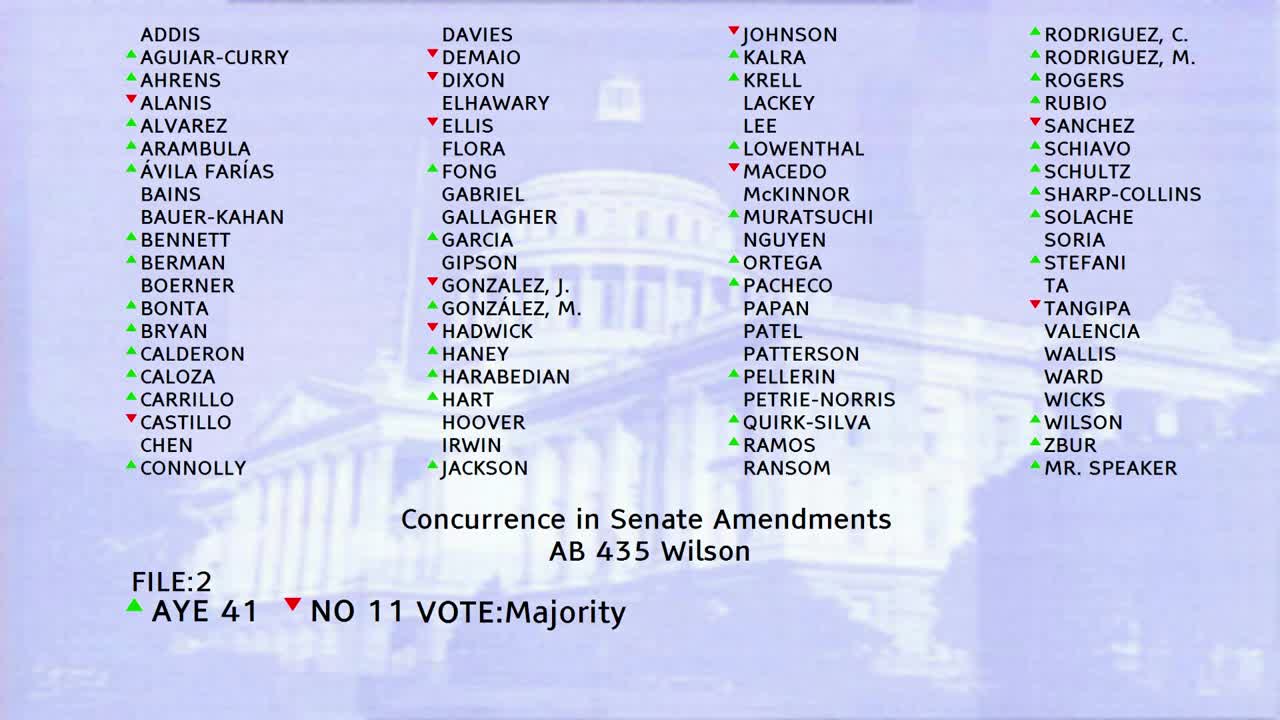 1MIN
Assembly Floor
 2MIN
Senate Floor
 21MIN
Senate Standing Committee on Judiciary
 2MIN
Assembly Floor
 17MIN
Assembly Standing Committee on Judiciary
 23MIN
Assembly Standing Committee on Housing and Community Development
Bill Author

Bill Co-Author(s):
