AB 848: Sexual battery.
- Session Year: 2025-2026
- House: Assembly
- Latest Version Date: 2025-10-11
Current Status:
Passed
(2025-10-11: Chaptered by Secretary of State - Chapter 625, Statutes of 2025.)
Introduced
In Committee
Awaiting First Chamber Vote
Passed First Chamber
In Committee
Awaiting Second Chamber Vote
Passed Second Chamber
Enacted
What does this bill do?
The bill requires that when a person is convicted of felony sexual battery under Penal Code section 243.4, their employment at the hospital where the offense occurred and the fact that the victim was in their care or seeking medical care there be treated as a reason for a harsher sentence. It affects hospital employees who commit sexual battery and patients or people seeking care at those hospitals.
The summary is provided by generative AI which can make mistakes. For original language, please view the details in the table below.
Existing law prohibits the touching of any intimate part of another person for the purpose of sexual arousal, gratification, or abuse, under specified circumstances, including if the victim is unconscious of the nature of the act because the perpetrator fraudulently represented that the touching served a professional purpose. A violation of these provisions is punishable as a misdemeanor or as a felony by imprisonment in the state prison for 2, 3, or 4 years, and by a fine not exceeding $10,000. Existing law requires, in the case of a felony conviction for a violation of these provisions, the fact that the defendant was an employer and the victim was an employee of the defendant to be a factor in aggravation in sentencing.
This bill would require, in the case of a felony conviction for a violation of these provisions, the fact that the defendant was employed at a hospital where the offense occurred and the victim was in the defendants care or seeking medical care at the hospital to be a factor in aggravation in sentencing. By increasing the punishment for a crime, this bill would impose a state-mandated local program.
The California Constitution requires the state to reimburse local agencies and school districts for certain costs mandated by the state. Statutory provisions establish procedures for making that reimbursement.
This bill would provide that no reimbursement is required by this act for a specified reason.
Existing law prohibits the touching of any intimate part of another person for the purpose of sexual arousal, gratification, or abuse, under specified circumstances, including if the victim is unconscious of the nature of the act because the perpetrator fraudulently represented that the touching served a professional purpose. A violation of this provision these provisions is punishable as a misdemeanor or as a felony by imprisonment in the state prison for 2, 3, or 4 years, and by a fine not exceeding $10,000. Existing law requires, in the case of a felony conviction for a violation of these provisions, the fact that the defendant was an employer and the victim was an employee of the defendant to be a factor in aggravation in sentencing.
Existing law requires a person convicted of 2 or more felonies to be sentenced to an aggregate term of imprisonment for all convictions at a sum of the principal term, the subordinate term, and any additional term imposed for applicable enhancements, prior convictions, and prior prison terms. Under existing law, a principal term consists of the greatest term of imprisonment imposed by the court for any of the crimes, including any term imposed for applicable enhancements. Under existing law, the subordinate term for each consecutive offense is 1/3 of the middle term of imprisonment prescribed for each other felony conviction for which a consecutive term of imprisonment is imposed, including 1/3 of the term imposed for any specific enhancements applicable to those subordinate offenses.This bill would authorize a court, in lieu of the existing sentencing scheme, to impose a full, separate, and consecutive term for the above-described crime if it takes place in a hospital, as defined, and involves the same victim on the same occasion. The bill would require the imposition of a full, separate, and consecutive term for each violation if the crime takes place in a hospital, as defined, and involves separate victims or involves the same victim on separate occasions.By creating a new sentencing enhancement, this bill would impose a state-mandated local program.This bill would require, in the case of a felony conviction for a violation of these provisions, the fact that the defendant was employed at a hospital where the offense occurred and the victim was in the defendants care or seeking medical care at the hospital to be a factor in aggravation in sentencing. By increasing the punishment for a crime, this bill would impose a state-mandated local program.
The California Constitution requires the state to reimburse local agencies and school districts for certain costs mandated by the state. Statutory provisions establish procedures for making that reimbursement.
This bill would provide that no reimbursement is required by this act for a specified reason.
Existing law prohibits the touching of any intimate part of another person for the purpose of sexual arousal, gratification, or abuse, if the victim is unconscious of the nature of the act because the perpetrator fraudulently represented that the touching served a professional purpose. A violation of this provision is punishable as a misdemeanor or as a felony by imprisonment in the state prison for 2, 3, or 4 years, and by a fine not exceeding $10,000.
This bill would make a violation of this provision a misdemeanor or a felony by imprisonment in the state prison for 4, 6, or 8 years, and by a fine not exceeding $20,000, if the touching occurs in a hospital, as defined.Existing law requires a person convicted of 2 or more felonies to be sentenced to an aggregate term of imprisonment for all convictions at a sum of the principal term, the subordinate term, and any additional term imposed for applicable enhancements, prior convictions, and prior prison terms. Under existing law, a principal term consists of the greatest term of imprisonment imposed by the court for any of the crimes, including any term imposed for applicable enhancements. Under existing law, the subordinate term for each consecutive offense is 1/3 of the middle term of imprisonment prescribed for each other felony conviction for which a consecutive term of imprisonment is imposed, including 1/3 of the term imposed for any specific enhancements applicable to those subordinate offenses.
This bill would authorize a court, in lieu of the existing sentencing scheme, to impose a full, separate, and consecutive term for the above-described crime if it takes place in a hospital, as defined, and involves the same victim on the same occasion. The bill would require the imposition of a full, separate, and consecutive term for each violation if the crime takes place in a hospital, as defined, and involves separate victims or involves the same victim on separate occasions.
By creating a new sentencing enhancement, this bill would impose a state-mandated local program.
The California Constitution requires the state to reimburse local agencies and school districts for certain costs mandated by the state. Statutory provisions establish procedures for making that reimbursement.
This bill would provide that no reimbursement is required by this act for a specified reason.
Existing law prohibits the touching of any intimate part of another person for the purpose of sexual arousal, gratification, or abuse, if the victim is unconscious of the nature of the act because the perpetrator fraudulently represented that the touching served a professional purpose. A violation of this provision is punishable as a misdemeanor or as a felony by imprisonment in the state prison for 2, 3, or 4 years, and by a fine not exceeding $10,000.
This bill would make a violation of this provision a misdemeanor or a felony by imprisonment in the state prison for 4, 6, or 8 years, and by a fine not exceeding $20,000, if the touching occurs in a hospital, as defined.
By creating a new sentencing enhancement, this bill would impose a state-mandated local program.
The California Constitution requires the state to reimburse local agencies and school districts for certain costs mandated by the state. Statutory provisions establish procedures for making that reimbursement.
This bill would provide that no reimbursement is required by this act for a specified reason.
(a)Any person who touches an intimate part of another person while that person is unlawfully restrained by the accused or an accomplice, and if the touching is against the will of the person touched and is for the purpose of sexual arousal, sexual gratification, or sexual abuse, is guilty of sexual battery. A violation of this subdivision is punishable by imprisonment in a county jail for not more than one year, and by a fine not exceeding two thousand dollars ($2,000); or by imprisonment in the state prison for two, three, or four years, and by a fine not exceeding ten thousand dollars ($10,000).
(b)Any person who touches an intimate part of another person who is institutionalized for medical treatment and who is seriously disabled or medically incapacitated, if the touching is against the will of the person touched, and if the touching is for the purpose of sexual arousal, sexual gratification, or sexual abuse, is guilty of sexual battery. A violation of this subdivision is punishable by imprisonment in a county jail for not more than one year, and by a fine not exceeding two thousand dollars ($2,000); or by imprisonment in the state prison for two, three, or four years, and by a fine not exceeding ten thousand dollars ($10,000).
(c)Any person who touches an intimate part of another person for the purpose of sexual arousal, sexual gratification, or sexual abuse, and the victim is at the time unconscious of the nature of the act because the perpetrator fraudulently represented that the touching served a professional purpose, is guilty of sexual battery. A violation of this subdivision is punishable by imprisonment in a county jail for not more than one year, and by a fine not exceeding two thousand dollars ($2,000); or by imprisonment in the state prison for two, three, or four years, and by a fine not exceeding ten thousand dollars ($10,000).
(d)Any person who, for the purpose of sexual arousal, sexual gratification, or sexual abuse, causes another, against that persons will while that person is unlawfully restrained either by the accused or an accomplice, or is institutionalized for medical treatment and is seriously disabled or medically incapacitated, to masturbate or touch an intimate part of either of those persons or a third person, is guilty of sexual battery. A violation of this subdivision is punishable by imprisonment in a county jail for not more than one year, and by a fine not exceeding two thousand dollars ($2,000); or by imprisonment in the state prison for two, three, or four years, and by a fine not exceeding ten thousand dollars ($10,000).
(e)(1)Any person who touches an intimate part of another person, if the touching is against the will of the person touched, and is for the specific purpose of sexual arousal, sexual gratification, or sexual abuse, or any person who, for the purpose of sexual arousal, sexual gratification, or sexual abuse, causes another, against that persons will, to masturbate or touch an intimate part of either of those persons or a third person, is guilty of misdemeanor sexual battery, punishable by a fine not exceeding two thousand dollars ($2,000), or by imprisonment in a county jail not exceeding six months, or by both that fine and imprisonment. However, if the defendant was an employer and the victim was an employee of the defendant, the misdemeanor sexual battery shall be punishable by a fine not exceeding three thousand dollars ($3,000), by imprisonment in a county jail not exceeding six months, or by both that fine and imprisonment. Notwithstanding any other provision of law, any amount of a fine above two thousand dollars ($2,000) which is collected from a defendant for a violation of this subdivision shall be transmitted to the State Treasury and, upon appropriation by the Legislature, distributed to the Civil Rights Department for the purpose of enforcement of the California Fair Employment and Housing Act (Part 2.8 (commencing with Section 12900) of Division 3 of Title 2 of the Government Code), including, but not limited to, laws that proscribe sexual harassment in places of employment. However, in no event shall an amount over two thousand dollars ($2,000) be transmitted to the State Treasury until all fines, including any restitution fines that may have been imposed upon the defendant, have been paid in full.
(2)As used in this subdivision, touches means physical contact with another person, whether accomplished directly, through the clothing of the person committing the offense, or through the clothing of the victim.
(f)As used in subdivisions (a), (b), (c), and (d), touches means physical contact with the skin of another person whether accomplished directly or through the clothing of the person committing the offense.
(g)As used in this section, the following terms have the following meanings:
(1)Intimate part means the sexual organ, anus, groin, or buttocks of any person, and the breast of a female.
(2)Sexual battery does not include the crimes defined in Section 261 or 289.
(3)Seriously disabled means a person with severe physical or sensory disabilities.
(4)Medically incapacitated means a person who is incapacitated as a result of prescribed sedatives, anesthesia, or other medication.
(5)Institutionalized means a person who is located voluntarily or involuntarily in a hospital, medical treatment facility, nursing home, acute care facility, or mental hospital.
(6)Minor means a person under 18 years of age.
(h)This section does not limit or prevent prosecution under any other law which also proscribes a course of conduct that also is proscribed by this section.
(i)In the case of a felony conviction for a violation of this section, the fact that the defendant was an employer and the victim was an employee of the defendant shall be a factor in aggravation in sentencing.
(j)In the case of a felony conviction for a violation of this section, the fact that the defendant was employed at a hospital, as defined in Section 243.2, where the offense occurred and the victim was in the defendants care or seeking medical care at the hospital shall be a factor in aggravation in sentencing.
(k)A person who commits a violation of subdivision (a), (b), (c), or (d) against a minor when the person has a prior felony conviction for a violation of this section shall be guilty of a felony, punishable by imprisonment in the state prison for two, three, or four years and a fine not exceeding ten thousand dollars ($10,000).
SEC. 2.No reimbursement is required by this act pursuant to Section 6 of Article XIIIB of the California Constitution because the only costs that may be incurred by a local agency or school district will be incurred because this act creates a new crime or infraction, eliminates a crime or infraction, or changes the penalty for a crime or infraction, within the meaning of Section 17556 of the Government Code, or changes the definition of a crime within the meaning of Section 6 of Article XIIIB of the California Constitution.
(a)Any person who touches an intimate part of another person while that person is unlawfully restrained by the accused or an accomplice, and if the touching is against the will of the person touched and is for the purpose of sexual arousal, sexual gratification, or sexual abuse, is guilty of sexual battery. A violation of this subdivision is punishable by imprisonment in a county jail for not more than one year, and by a fine not exceeding two thousand dollars ($2,000); or by imprisonment in the state prison for two, three, or four years, and by a fine not exceeding ten thousand dollars ($10,000).
(b)Any person who touches an intimate part of another person who is institutionalized for medical treatment and who is seriously disabled or medically incapacitated, if the touching is against the will of the person touched, and if the touching is for the purpose of sexual arousal, sexual gratification, or sexual abuse, is guilty of sexual battery. A violation of this subdivision is punishable by imprisonment in a county jail for not more than one year, and by a fine not exceeding two thousand dollars ($2,000); or by imprisonment in the state prison for two, three, or four years, and by a fine not exceeding ten thousand dollars ($10,000).
(c)Any person who touches an intimate part of another person for the purpose of sexual arousal, sexual gratification, or sexual abuse, and the victim is at the time unconscious of the nature of the act because the perpetrator fraudulently represented that the touching served a professional purpose, is guilty of sexual battery. A violation of this subdivision is punishable by imprisonment in a county jail for not more than one year, and by a fine not exceeding two thousand dollars ($2,000); or by imprisonment in the state prison for two, three, or four years, and by a fine not exceeding ten thousand dollars ($10,000).
(d)Any person who, for the purpose of sexual arousal, sexual gratification, or sexual abuse, causes another, against that persons will while that person is unlawfully restrained either by the accused or an accomplice, or is institutionalized for medical treatment and is seriously disabled or medically incapacitated, to masturbate or touch an intimate part of either of those persons or a third person, is guilty of sexual battery. A violation of this subdivision is punishable by imprisonment in a county jail for not more than one year, and by a fine not exceeding two thousand dollars ($2,000); or by imprisonment in the state prison for two, three, or four years, and by a fine not exceeding ten thousand dollars ($10,000).
(e)(1)Any person who touches an intimate part of another person, if the touching is against the will of the person touched, and is for the specific purpose of sexual arousal, sexual gratification, or sexual abuse, or any person who, for the purpose of sexual arousal, sexual gratification, or sexual abuse, causes another, against that persons will, to masturbate or touch an intimate part of either of those persons or a third person, is guilty of misdemeanor sexual battery, punishable by a fine not exceeding two thousand dollars ($2,000), or by imprisonment in a county jail not exceeding six months, or by both that fine and imprisonment. However, if the defendant was an employer and the victim was an employee of the defendant, the misdemeanor sexual battery shall be punishable by a fine not exceeding three thousand dollars ($3,000), by imprisonment in a county jail not exceeding six months, or by both that fine and imprisonment. Notwithstanding any other provision of law, any amount of a fine above two thousand dollars ($2,000) which is collected from a defendant for a violation of this subdivision shall be transmitted to the State Treasury and, upon appropriation by the Legislature, distributed to the Civil Rights Department for the purpose of enforcement of the California Fair Employment and Housing Act (Part 2.8 (commencing with Section 12900) of Division 3 of Title 2 of the Government Code), including, but not limited to, laws that proscribe sexual harassment in places of employment. However, in no event shall an amount over two thousand dollars ($2,000) be transmitted to the State Treasury until all fines, including any restitution fines that may have been imposed upon the defendant, have been paid in full.
(2)As used in this subdivision, touches means physical contact with another person, whether accomplished directly, through the clothing of the person committing the offense, or through the clothing of the victim.
(f)As used in subdivisions (a), (b), (c), and (d), touches means physical contact with the skin of another person whether accomplished directly or through the clothing of the person committing the offense.
(g)As used in this section, the following terms have the following meanings:
(1)Intimate part means the sexual organ, anus, groin, or buttocks of any person, and the breast of a female.
(2)Sexual battery does not include the crimes defined in Section 261 or 289.
(3)Seriously disabled means a person with severe physical or sensory disabilities.
(4)Medically incapacitated means a person who is incapacitated as a result of prescribed sedatives, anesthesia, or other medication.
(5)Institutionalized means a person who is located voluntarily or involuntarily in a hospital, medical treatment facility, nursing home, acute care facility, or mental hospital.
(6)Minor means a person under 18 years of age.
(h)This section does not limit or prevent prosecution under any other law which also proscribes a course of conduct that also is proscribed by this section.
(i)In the case of a felony conviction for a violation of this section, the fact that the defendant was an employer and the victim was an employee of the defendant shall be a factor in aggravation in sentencing.
(j)In the case of a felony conviction for a violation of this section, the fact that the defendant was employed at a hospital hospital, as defined in Section 243.2, where the offense occurred and the victim was in the defendants care or seeking medical care at the hospital shall be a factor in aggravation in sentencing.
(k)A person who commits a violation of subdivision (a), (b), (c), or (d) against a minor when the person has a prior felony conviction for a violation of this section shall be guilty of a felony, punishable by imprisonment in the state prison for two, three, or four years and a fine not exceeding ten thousand dollars ($10,000).
SEC. 2.No reimbursement is required by this act pursuant to Section 6 of Article XIIIB of the California Constitution because the only costs that may be incurred by a local agency or school district will be incurred because this act creates a new crime or infraction, eliminates a crime or infraction, or changes the penalty for a crime or infraction, within the meaning of Section 17556 of the Government Code, or changes the definition of a crime within the meaning of Section 6 of Article XIIIB of the California Constitution.
(a)Any person who touches an intimate part of another person while that person is unlawfully restrained by the accused or an accomplice, and if the touching is against the will of the person touched and is for the purpose of sexual arousal, sexual gratification, or sexual abuse, is guilty of sexual battery. A violation of this subdivision is punishable by imprisonment in a county jail for not more than one year, and by a fine not exceeding two thousand dollars ($2,000); or by imprisonment in the state prison for two, three, or four years, and by a fine not exceeding ten thousand dollars ($10,000).
(b)Any person who touches an intimate part of another person who is institutionalized for medical treatment and who is seriously disabled or medically incapacitated, if the touching is against the will of the person touched, and if the touching is for the purpose of sexual arousal, sexual gratification, or sexual abuse, is guilty of sexual battery. A violation of this subdivision is punishable by imprisonment in a county jail for not more than one year, and by a fine not exceeding two thousand dollars ($2,000); or by imprisonment in the state prison for two, three, or four years, and by a fine not exceeding ten thousand dollars ($10,000).
(c)Any person who touches an intimate part of another person for the purpose of sexual arousal, sexual gratification, or sexual abuse, and the victim is at the time unconscious of the nature of the act because the perpetrator fraudulently represented that the touching served a professional purpose, is guilty of sexual battery. A violation of this subdivision is punishable by imprisonment in a county jail for not more than one year, and by a fine not exceeding two thousand dollars ($2,000); or by imprisonment in the state prison for two, three, or four years, and by a fine not exceeding ten thousand dollars ($10,000).
(d)Any person who, for the purpose of sexual arousal, sexual gratification, or sexual abuse, causes another, against that persons will while that person is unlawfully restrained either by the accused or an accomplice, or is institutionalized for medical treatment and is seriously disabled or medically incapacitated, to masturbate or touch an intimate part of either of those persons or a third person, is guilty of sexual battery. A violation of this subdivision is punishable by imprisonment in a county jail for not more than one year, and by a fine not exceeding two thousand dollars ($2,000); or by imprisonment in the state prison for two, three, or four years, and by a fine not exceeding ten thousand dollars ($10,000).
(e)(1)Any person who touches an intimate part of another person, if the touching is against the will of the person touched, and is for the specific purpose of sexual arousal, sexual gratification, or sexual abuse, or any person who, for the purpose of sexual arousal, sexual gratification, or sexual abuse, causes another, against that persons will, to masturbate or touch an intimate part of either of those persons or a third person, is guilty of misdemeanor sexual battery, punishable by a fine not exceeding two thousand dollars ($2,000), or by imprisonment in a county jail not exceeding six months, or by both that fine and imprisonment. However, if the defendant was an employer and the victim was an employee of the defendant, the misdemeanor sexual battery shall be punishable by a fine not exceeding three thousand dollars ($3,000), by imprisonment in a county jail not exceeding six months, or by both that fine and imprisonment. Notwithstanding any other provision of law, any amount of a fine above two thousand dollars ($2,000) which is collected from a defendant for a violation of this subdivision shall be transmitted to the State Treasury and, upon appropriation by the Legislature, distributed to the Civil Rights Department for the purpose of enforcement of the California Fair Employment and Housing Act (Part 2.8 (commencing with Section 12900) of Division 3 of Title 2 of the Government Code), including, but not limited to, laws that proscribe sexual harassment in places of employment. However, in no event shall an amount over two thousand dollars ($2,000) be transmitted to the State Treasury until all fines, including any restitution fines that may have been imposed upon the defendant, have been paid in full.
(2)As used in this subdivision, touches means physical contact with another person, whether accomplished directly, through the clothing of the person committing the offense, or through the clothing of the victim.
(f)As used in subdivisions (a), (b), (c), and (d), touches means physical contact with the skin of another person whether accomplished directly or through the clothing of the person committing the offense.
(g)As used in this section, the following terms have the following meanings:
(1)Intimate part means the sexual organ, anus, groin, or buttocks of any person, and the breast of a female.
(2)Sexual battery does not include the crimes defined in Section 261 or 289.
(3)Seriously disabled means a person with severe physical or sensory disabilities.
(4)Medically incapacitated means a person who is incapacitated as a result of prescribed sedatives, anesthesia, or other medication.
(5)Institutionalized means a person who is located voluntarily or involuntarily in a hospital, medical treatment facility, nursing home, acute care facility, or mental hospital.
(6)Minor means a person under 18 years of age.
(h)This section does not limit or prevent prosecution under any other law which also proscribes a course of conduct that also is proscribed by this section.
(i)In the case of a felony conviction for a violation of this section, the fact that the defendant was an employer and the victim was an employee of the defendant shall be a factor in aggravation in sentencing.
(j)In the case of a felony conviction for a violation of this section, the fact that the defendant was employed at a hospital where the offense occurred and the victim was in the defendants care or seeking medical care at the hospital shall be a factor in aggravation in sentencing.
(j)(k)A person who commits a violation of subdivision (a), (b), (c), or (d) against a minor when the person has a prior felony conviction for a violation of this section shall be guilty of a felony, punishable by imprisonment in the state prison for two, three, or four years and a fine not exceeding ten thousand dollars ($10,000).
SECTION 1.Section 1170.14 is added to the Penal Code, to read:1170.14.(a)In lieu of the term provided in Section 1170.1, a full, separate, and consecutive term may be imposed for each violation of subdivision (c) of Section 243.4 if the crimes take place in a hospital, as defined in Section 243.2, and involve the same victim on the same occasion.(b)(1)A full, separate, and consecutive term shall be imposed for each violation of subdivision (c) of Section 243.4 if the crimes take place in a hospital, as defined in Section 243.2, and involve separate victims or involve the same victim on separate occasions.(2)In determining whether crimes against a single victim were committed on separate occasions under this subdivision, the court shall consider whether, between the commission of one sex crime and another, the defendant had a reasonable opportunity to reflect upon the defendants actions and nevertheless resumed sexually assaultive behavior. Neither the duration of time between crimes nor whether or not the defendant lost or abandoned the opportunity to attack shall be, in and of itself, determinative on the issue of whether the crimes in question occurred on separate occasions.(3)The term imposed pursuant to this section shall be served consecutively to any other term of imprisonment and shall commence from the time the person otherwise would have been released from imprisonment. The term shall not be included in any determination pursuant to Section 1170.1. Any other term imposed subsequent to that term shall not be merged therein but shall commence at the time the person otherwise would have been released from prison.SEC. 2.No reimbursement is required by this act pursuant to Section 6 of Article XIIIB of the California Constitution because the only costs that may be incurred by a local agency or school district will be incurred because this act creates a new crime or infraction, eliminates a crime or infraction, or changes the penalty for a crime or infraction, within the meaning of Section 17556 of the Government Code, or changes the definition of a crime within the meaning of Section 6 of Article XIIIB of the California Constitution.
(a)In lieu of the term provided in Section 1170.1, a full, separate, and consecutive term may be imposed for each violation of subdivision (c) of Section 243.4 if the crimes take place in a hospital, as defined in Section 243.2, and involve the same victim on the same occasion.
(b)(1)A full, separate, and consecutive term shall be imposed for each violation of subdivision (c) of Section 243.4 if the crimes take place in a hospital, as defined in Section 243.2, and involve separate victims or involve the same victim on separate occasions.
(2)In determining whether crimes against a single victim were committed on separate occasions under this subdivision, the court shall consider whether, between the commission of one sex crime and another, the defendant had a reasonable opportunity to reflect upon the defendants actions and nevertheless resumed sexually assaultive behavior. Neither the duration of time between crimes nor whether or not the defendant lost or abandoned the opportunity to attack shall be, in and of itself, determinative on the issue of whether the crimes in question occurred on separate occasions.
(3)The term imposed pursuant to this section shall be served consecutively to any other term of imprisonment and shall commence from the time the person otherwise would have been released from imprisonment. The term shall not be included in any determination pursuant to Section 1170.1. Any other term imposed subsequent to that term shall not be merged therein but shall commence at the time the person otherwise would have been released from prison.
SEC. 2.No reimbursement is required by this act pursuant to Section 6 of Article XIIIB of the California Constitution because the only costs that may be incurred by a local agency or school district will be incurred because this act creates a new crime or infraction, eliminates a crime or infraction, or changes the penalty for a crime or infraction, within the meaning of Section 17556 of the Government Code, or changes the definition of a crime within the meaning of Section 6 of Article XIIIB of the California Constitution.
SECTION 1.Section 243.4 of the Penal Code is amended to read:243.4.(a)Any person who touches an intimate part of another person while that person is unlawfully restrained by the accused or an accomplice, and if the touching is against the will of the person touched and is for the purpose of sexual arousal, sexual gratification, or sexual abuse, is guilty of sexual battery. A violation of this subdivision is punishable by imprisonment in a county jail for not more than one year, and by a fine not exceeding two thousand dollars ($2,000); or by imprisonment in the state prison for two, three, or four years, and by a fine not exceeding ten thousand dollars ($10,000).(b)Any person who touches an intimate part of another person who is institutionalized for medical treatment and who is seriously disabled or medically incapacitated, if the touching is against the will of the person touched, and if the touching is for the purpose of sexual arousal, sexual gratification, or sexual abuse, is guilty of sexual battery. A violation of this subdivision is punishable by imprisonment in a county jail for not more than one year, and by a fine not exceeding two thousand dollars ($2,000); or by imprisonment in the state prison for two, three, or four years, and by a fine not exceeding ten thousand dollars ($10,000).(c)(1)Any person who touches an intimate part of another person for the purpose of sexual arousal, sexual gratification, or sexual abuse, and the victim is at the time unconscious of the nature of the act because the perpetrator fraudulently represented that the touching served a professional purpose, is guilty of sexual battery. A violation of this paragraph is punishable by imprisonment in a county jail for not more than one year, and by a fine not exceeding two thousand dollars ($2,000); or by imprisonment in the state prison for two, three, or four years, and by a fine not exceeding ten thousand dollars ($10,000).(2)Notwithstanding paragraph (1), any person who touches an intimate part of another person in a hospital, as defined in Section 243.2, for the purpose of sexual arousal, sexual gratification, or sexual abuse, if the victim is at the time unconscious of the nature of the act because the perpetrator fraudulently represented that the touching served a professional purpose, is guilty of sexual battery. A violation of this paragraph is punishable by imprisonment in a county jail for not more than one year, and by a fine not exceeding two thousand dollars ($2,000); or by imprisonment in the state prison for four, six, or eight years, and by a fine not exceeding twenty thousand dollars ($20,000).(d)Any person who, for the purpose of sexual arousal, sexual gratification, or sexual abuse, causes another, against that persons will while that person is unlawfully restrained either by the accused or an accomplice, or is institutionalized for medical treatment and is seriously disabled or medically incapacitated, to masturbate or touch an intimate part of either of those persons or a third person, is guilty of sexual battery. A violation of this subdivision is punishable by imprisonment in a county jail for not more than one year, and by a fine not exceeding two thousand dollars ($2,000); or by imprisonment in the state prison for two, three, or four years, and by a fine not exceeding ten thousand dollars ($10,000).(e)(1)Any person who touches an intimate part of another person, if the touching is against the will of the person touched, and is for the specific purpose of sexual arousal, sexual gratification, or sexual abuse, or any person who, for the purpose of sexual arousal, sexual gratification, or sexual abuse, causes another, against that persons will, to masturbate or touch an intimate part of either of those persons or a third person, is guilty of misdemeanor sexual battery, punishable by a fine not exceeding two thousand dollars ($2,000), or by imprisonment in a county jail not exceeding six months, or by both that fine and imprisonment. However, if the defendant was an employer and the victim was an employee of the defendant, the misdemeanor sexual battery shall be punishable by a fine not exceeding three thousand dollars ($3,000), by imprisonment in a county jail not exceeding six months, or by both that fine and imprisonment. Notwithstanding any other provision of law, any amount of a fine above two thousand dollars ($2,000) which is collected from a defendant for a violation of this subdivision shall be transmitted to the State Treasury and, upon appropriation by the Legislature, distributed to the Civil Rights Department for the purpose of enforcement of the California Fair Employment and Housing Act (Part 2.8 (commencing with Section 12900) of Division 3 of Title 2 of the Government Code), including, but not limited to, laws that proscribe sexual harassment in places of employment. However, in no event shall an amount over two thousand dollars ($2,000) be transmitted to the State Treasury until all fines, including any restitution fines that may have been imposed upon the defendant, have been paid in full.(2)As used in this subdivision, touches means physical contact with another person, whether accomplished directly, through the clothing of the person committing the offense, or through the clothing of the victim.(f)As used in subdivisions (a), (b), (c), and (d), touches means physical contact with the skin of another person whether accomplished directly or through the clothing of the person committing the offense.(g)As used in this section, the following terms have the following meanings:(1)Intimate part means the sexual organ, anus, groin, or buttocks of any person, and the breast of a female.(2)Sexual battery does not include the crimes defined in Section 261 or 289.(3)Seriously disabled means a person with severe physical or sensory disabilities.(4)Medically incapacitated means a person who is incapacitated as a result of prescribed sedatives, anesthesia, or other medication.(5)Institutionalized means a person who is located voluntarily or involuntarily in a hospital, medical treatment facility, nursing home, acute care facility, or mental hospital.(6)Minor means a person under 18 years of age.(h)This section does not limit or prevent prosecution under any other law which also proscribes a course of conduct that also is proscribed by this section.(i)In the case of a felony conviction for a violation of this section, the fact that the defendant was an employer and the victim was an employee of the defendant shall be a factor in aggravation in sentencing.(j)A person who commits a violation of subdivision (a), (b), (c), or (d) against a minor when the person has a prior felony conviction for a violation of this section shall be guilty of a felony, punishable by imprisonment in the state prison for two, three, or four years and a fine not exceeding ten thousand dollars ($10,000).SEC. 2.No reimbursement is required by this act pursuant to Section 6 of Article XIIIB of the California Constitution because the only costs that may be incurred by a local agency or school district will be incurred because this act creates a new crime or infraction, eliminates a crime or infraction, or changes the penalty for a crime or infraction, within the meaning of Section 17556 of the Government Code, or changes the definition of a crime within the meaning of Section 6 of Article XIIIB of the California Constitution.(a)Any person who touches an intimate part of another person while that person is unlawfully restrained by the accused or an accomplice, and if the touching is against the will of the person touched and is for the purpose of sexual arousal, sexual gratification, or sexual abuse, is guilty of sexual battery. A violation of this subdivision is punishable by imprisonment in a county jail for not more than one year, and by a fine not exceeding two thousand dollars ($2,000); or by imprisonment in the state prison for two, three, or four years, and by a fine not exceeding ten thousand dollars ($10,000).
(b)Any person who touches an intimate part of another person who is institutionalized for medical treatment and who is seriously disabled or medically incapacitated, if the touching is against the will of the person touched, and if the touching is for the purpose of sexual arousal, sexual gratification, or sexual abuse, is guilty of sexual battery. A violation of this subdivision is punishable by imprisonment in a county jail for not more than one year, and by a fine not exceeding two thousand dollars ($2,000); or by imprisonment in the state prison for two, three, or four years, and by a fine not exceeding ten thousand dollars ($10,000).
(c)(1)Any person who touches an intimate part of another person for the purpose of sexual arousal, sexual gratification, or sexual abuse, and the victim is at the time unconscious of the nature of the act because the perpetrator fraudulently represented that the touching served a professional purpose, is guilty of sexual battery. A violation of this subdivision paragraph is punishable by imprisonment in a county jail for not more than one year, and by a fine not exceeding two thousand dollars ($2,000); or by imprisonment in the state prison for two, three, or four years, and by a fine not exceeding ten thousand dollars ($10,000).
(2)Notwithstanding paragraph (1), any person who touches an intimate part of another person in a hospital, as defined in Section 243.2, for the purpose of sexual arousal, sexual gratification, or sexual abuse, if the victim is at the time unconscious of the nature of the act because the perpetrator fraudulently represented that the touching served a professional purpose, is guilty of sexual battery. A violation of this paragraph is punishable by imprisonment in a county jail for not more than one year, and by a fine not exceeding two thousand dollars ($2,000); or by imprisonment in the state prison for four, six, or eight years, and by a fine not exceeding twenty thousand dollars ($20,000).
(d)Any person who, for the purpose of sexual arousal, sexual gratification, or sexual abuse, causes another, against that persons will while that person is unlawfully restrained either by the accused or an accomplice, or is institutionalized for medical treatment and is seriously disabled or medically incapacitated, to masturbate or touch an intimate part of either of those persons or a third person, is guilty of sexual battery. A violation of this subdivision is punishable by imprisonment in a county jail for not more than one year, and by a fine not exceeding two thousand dollars ($2,000); or by imprisonment in the state prison for two, three, or four years, and by a fine not exceeding ten thousand dollars ($10,000).
(e)(1)Any person who touches an intimate part of another person, if the touching is against the will of the person touched, and is for the specific purpose of sexual arousal, sexual gratification, or sexual abuse, or any person who, for the purpose of sexual arousal, sexual gratification, or sexual abuse, causes another, against that persons will, to masturbate or touch an intimate part of either of those persons or a third person, is guilty of misdemeanor sexual battery, punishable by a fine not exceeding two thousand dollars ($2,000), or by imprisonment in a county jail not exceeding six months, or by both that fine and imprisonment. However, if the defendant was an employer and the victim was an employee of the defendant, the misdemeanor sexual battery shall be punishable by a fine not exceeding three thousand dollars ($3,000), by imprisonment in a county jail not exceeding six months, or by both that fine and imprisonment. Notwithstanding any other provision of law, any amount of a fine above two thousand dollars ($2,000) which is collected from a defendant for a violation of this subdivision shall be transmitted to the State Treasury and, upon appropriation by the Legislature, distributed to the Civil Rights Department for the purpose of enforcement of the California Fair Employment and Housing Act (Part 2.8 (commencing with Section 12900) of Division 3 of Title 2 of the Government Code), including, but not limited to, laws that proscribe sexual harassment in places of employment. However, in no event shall an amount over two thousand dollars ($2,000) be transmitted to the State Treasury until all fines, including any restitution fines that may have been imposed upon the defendant, have been paid in full.
(2)As used in this subdivision, touches means physical contact with another person, whether accomplished directly, through the clothing of the person committing the offense, or through the clothing of the victim.
(f)As used in subdivisions (a), (b), (c), and (d), touches means physical contact with the skin of another person whether accomplished directly or through the clothing of the person committing the offense.
(g)As used in this section, the following terms have the following meanings:
(1)Intimate part means the sexual organ, anus, groin, or buttocks of any person, and the breast of a female.
(2)Sexual battery does not include the crimes defined in Section 261 or 289.
(3)Seriously disabled means a person with severe physical or sensory disabilities.
(4)Medically incapacitated means a person who is incapacitated as a result of prescribed sedatives, anesthesia, or other medication.
(5)Institutionalized means a person who is located voluntarily or involuntarily in a hospital, medical treatment facility, nursing home, acute care facility, or mental hospital.
(6)Minor means a person under 18 years of age.
(h)This section does not limit or prevent prosecution under any other law which also proscribes a course of conduct that also is proscribed by this section.
(i)In the case of a felony conviction for a violation of this section, the fact that the defendant was an employer and the victim was an employee of the defendant shall be a factor in aggravation in sentencing.
(j)A person who commits a violation of subdivision (a), (b), (c), or (d) against a minor when the person has a prior felony conviction for a violation of this section shall be guilty of a felony, punishable by imprisonment in the state prison for two, three, or four years and a fine not exceeding ten thousand dollars ($10,000).
SEC. 2.No reimbursement is required by this act pursuant to Section 6 of Article XIIIB of the California Constitution because the only costs that may be incurred by a local agency or school district will be incurred because this act creates a new crime or infraction, eliminates a crime or infraction, or changes the penalty for a crime or infraction, within the meaning of Section 17556 of the Government Code, or changes the definition of a crime within the meaning of Section 6 of Article XIIIB of the California Constitution.
|
Date
|
Status
|
|---|---|
| Oct 11, 2025 | Chaptered by Secretary of State - Chapter 625, Statutes of 2025. |
| Oct 11, 2025 | Approved by the Governor. |
| Sep 15, 2025 | Enrolled and presented to the Governor at 4:30 p.m. |
| Sep 8, 2025 | Senate amendments concurred in. To Engrossing and Enrolling. (Ayes 78. Noes 0. Page 3032.). |
| Sep 4, 2025 | In Assembly. Concurrence in Senate amendments pending. |
| Sep 4, 2025 | Read third time. Passed. Ordered to the Assembly. (Ayes 39. Noes 0. Page 2522.). |
| Sep 2, 2025 | Ordered to special consent calendar. |
| Aug 29, 2025 | Read second time. Ordered to third reading. |
| Aug 29, 2025 | From committee: Do pass. (Ayes 7. Noes 0.) (August 29). |
| Jul 7, 2025 | In committee: Referred to APPR. suspense file. |
| Jun 25, 2025 | Read second time and amended. Re-referred to Com. on APPR. |
| Jun 24, 2025 | From committee: Amend, and do pass as amended and re-refer to Com. on APPR. (Ayes 6. Noes 0.) (June 24). |
| Jun 11, 2025 | Referred to Com. on PUB. S. |
| Jun 3, 2025 | In Senate. Read first time. To Com. on RLS. for assignment. |
| Jun 2, 2025 | Read third time. Passed. Ordered to the Senate. (Ayes 77. Noes 0. Page 1858.) |
| May 27, 2025 | Read second time. Ordered to third reading. |
| May 23, 2025 | From committee: Do pass. (Ayes 14. Noes 0.) (May 23). |
| May 7, 2025 | In committee: Set, first hearing. Referred to APPR. suspense file. |
| Apr 29, 2025 | Re-referred to Com. on APPR. |
| Apr 28, 2025 | Read second time and amended. |
| Apr 24, 2025 | From committee: Amend, and do pass as amended and re-refer to Com. on APPR. (Ayes 9. Noes 0.) (April 22). |
| Apr 1, 2025 | In committee: Set, first hearing. Hearing canceled at the request of author. |
| Mar 19, 2025 | Re-referred to Com. on PUB. S. |
| Mar 18, 2025 | From committee chair, with author's amendments: Amend, and re-refer to Com. on PUB. S. Read second time and amended. |
| Mar 3, 2025 | Referred to Com. on PUB. S. |
| Feb 20, 2025 | From printer. May be heard in committee March 22. |
| Feb 19, 2025 | Read first time. To print. |
|
Date
|
Description
|
Location
|
Votes
|
|
|---|---|---|---|---|
| Sep 8, 2025 | AB 848 Soria Concurrence in Senate Amendments | Assembly Floor |
Passed |
|
| Sep 4, 2025 | Special Consent AB848 Soria | Senate Floor |
Passed |
|
| Aug 29, 2025 | Do pass | Senate Standing Committee on Appropriations |
Passed |
|
| Jul 7, 2025 | Placed on suspense file | Senate Standing Committee on Appropriations |
Passed |
|
| Jun 24, 2025 | Do pass as amended, but first amend, and re-refer to the Committee on [Appropriations] | Senate Standing Committee on Public Safety |
Passed |
|
| Jun 2, 2025 | AB 848 Soria Assembly Third Reading | Assembly Floor |
Passed |
|
| May 23, 2025 | Do pass. | Assembly Standing Committee on Appropriations |
Passed |
|
| Apr 22, 2025 | Do pass as amended and be re-referred to the Committee on [Appropriations] | Assembly Standing Committee on Public Safety |
Passed |
This list shows positions taken on this bill by organizations on the date displayed, which is linked to the original source.
Positions by individuals are not included.
|
Organization
|
Position
|
Date
|
|---|---|---|
| Aclu California Action | ** Against | |
| All of Us or None Los Angeles | ** Against | |
| Arcadia Police Officers' Association | ** Support | |
| Brea Police Association | ** Support | |
| Burbank Police Officers' Association | ** Support | |
| California Association of School Police Chiefs | ** Support | |
| California Coalition of School Safety Professionals | ** Support | |
| California District Attorneys Association | ** Support | |
| California Narcotic Officers' Association | ** Support | |
| California Police Chiefs Association | ** Support | |
| California Public Defenders Association | ** Against | |
| California Reserve Peace Officers Association | ** Support | |
| California State Sheriffs' Association | ** Support | |
| Californians United for a Responsible Budget | ** Against | |
| CLAREMONT POLICE OFFICERS ASSOCIATION | ** Support | |
| Corona Police Officers Association | ** Support | |
| County of Orange, Through its Office of The District Attorney/public Administrator | ** Support | |
| Crime Victims United Of California | ** Support | |
| Culver City Police Officers' Association | ** Support | |
| Ella Baker Center For Human Rights | ** Against | |
| Fullerton Police Officers' Association | ** Support | |
| Initiate Justice | ** Against | |
| LA Defensa | ** Against | |
| Legal Services for Prisoners with Children | ** Against | |
| Local 148 La County Public Defenders Union | ** Against | |
| Los Angeles School Police Management Association | ** Support | |
| los angeles school police officers association | ** Support | |
| Murrieta Police Officers' Association | ** Support | |
| Newport Beach Police Association | ** Support | |
| Palos Verdes Police Officers Association | ** Support | |
| Peace Officers Research Association Of California | ** Support | |
| PLACER COUNTY DEPUTY SHERIFFS ASSOCIATION | ** Support | |
| Pomona Police Officers' Association | ** Support | |
| RIVERSIDE POLICE OFFICERS ASSOCIATION | ** Support | |
| Riverside Sheriffs' Association | ** Support | |
| San Diego County District Attorney's Office | ** Support | |
| San Francisco Public Defender | ** Against | |
| Santa Ana Police Officers Association | ** Support | |
| Smart Justice California, a project of Tides Advocacy | ** Against |
CONCURRENCE IN SENATE AMENDMENTS
CSA1 Bill Id:AB 848
Author:(Soria)
As Amended Ver:June 25, 2025
Majority vote
SUMMARY
Makes the fact that a defendant, who is convicted of felony sexual battery, was employed at a hospital where the offense occurred and the victim was in the defendant's care or seeking medical care at the hospital a factor in aggravation at sentencing.
Senate Amendments
Add a definition for hospital by way of reference to existing Penal Code section 243.2.
COMMENTS
According to the Author
"The medical sector has seen several recent high profile cases across the state of serial sexual abuse in hospitals where medical professionals have preyed on patients while fraudulently disguising their actions as providing critical medical care. At Memorial Hospital Los Banos, an ultrasound technician allegedly sexually battered at least seven women over the course of multiple years during sensitive examinations, and is charged with multiple counts of sexual battery by fraud. However, while current California law allows a prison sentence of up to four years for sexual battery by fraud, a person convicted of multiple counts may only be sentenced to one additional year in prison for each additional victim they violate.
"When sexual predators misuse their position as trusted medical professionals to serially victimize multiple patients, every victim deserves to receive justice for their suffering. AB 848 ensures these heinous criminals face the full weight of the law by allowing full consecutive sentencing for multiple counts of sexual battery by fraud committed in a hospital, and requiring it when the crimes are committed against multiple victims or on different occasions. This is already the case for other sex crimes like sodomy and rape, and this bill simply provides ensures the law treats sexual battery by fraud in hospitals the same way. Hospitals are and should always be places of healing and care, and AB 848 protects patient safety by ensuring that those who would violate this trust to sexually abuse multiple patients face appropriate prison sentences for their grievous crimes."
Arguments in Support
According to Riverside Sheriffs' Association: "AB 848 will better protect patient safety by ensuring that those who violate this trust and sexually abuse multiple patients face appropriate prison sentences for their grievous crimes."
Arguments in Opposition
None submitted.
FISCAL COMMENTS
According to the Senate Appropriations Committee:
- Trial Courts: Unknown, potentially significant costs to the state funded trial court system (Trial Court Trust Fund, General Fund) to adjudicate the increased criminal penalties in this bill. Defendants are constitutionally guaranteed certain rights during criminal proceedings, including the right to a jury trial and the right to counsel (at public expense if the defendants are unable to afford the costs of representation). The Sixth Amendment right to a jury trial applies to any factual finding necessary to warrant any sentence beyond the presumptive maximum – e.g., a factor in aggravation.[1] Increasing penalties leads to lengthier and more complex court proceedings with attendant workload and resource costs to the court. The fiscal impact of this bill to the courts will depend on many unknowns, including the numbers of people charged with an offense and the factors unique to each case. An eight-hour court day costs approximately $10,500 in staff in workload. This is a conservative estimate, based on the hourly rate of court personnel including at minimum the judge, clerk, bailiff, court reporter, jury administrator, administrative staff, and jury per-diems. If court days exceed 10, costs to the trial courts could reach hundreds of thousands of dollars. While the courts are not funded on a workload basis, an increase in workload could result in delayed court services and would put pressure on the General Fund to fund additional staff and resources and to increase the amount appropriated to backfill for trial court operations.
- County Jail: Unknown, potentially significant costs (local funds) to the counties to incarcerate people under the increased sentences in this bill. The average annual cost to incarcerate one person in county jail varies by county, but likely ranges from $70,000 to $90,000 per year. For example, in 2021, Los Angeles County budgeted $1.3 billion for jail spending, including $89,580 per incarcerated person. Actual incarceration costs to counties will depend on the number of convictions and the length of each sentence. Generally, county incarceration costs are not reimbursable state mandates pursuant to Proposition 30 (2012).
- California Department of Corrections and Rehabilitation (CDCR): Unknown, potentially significant costs (General Fund) to the Department of Corrections and Rehabilitation (CDCR) to incarcerate people for increased sentences in this bill. The Legislative Analyst’s Office (LAO) estimates the average annual cost to incarcerate one person in state prison is $133,000. The annual cost of operating a mental health crisis bed at CDCR is around $400,000. As part of the ongoing Coleman court case, CDCR has been incurring fines monthly since April 2023 for failing to reduce vacancy rates for five mental health classifications. The state has paid over $200 million in fines to date, and is still accruing fines. Thus, if even if just one person is sentenced to state prison for an additional year under this bill, it will add significant costs pressures to CDCR. The May Revision to the Governor’s 2025-26 Budget proposes total funding of $13.6 billion ($13.2 billion General Fund and $385.4 million other funds) for CDCR in 2025-26. Of this amount, $4.1 billion General Fund is for health care programs.
- Department of State Hospitals (DSH): Potential cost pressures (General Fund) to the Department of State Hospitals (DSH), in order to adequately house, treat, and care for persons committed to DSH that otherwise would not. Cost pressures to DSH are connected with an increase in state prison sentences. Creating a new crime will increase the number of defendants declared incompetent to stand trial (IST), or committed to DSH due to their being not guilty by reason of insanity. DSH's proposed budget for fiscal year 2025-26 totals $3.4 billion – an increase of $3.4 million from the 2024 Budget Act. An increase the DSH population would result in the need for additional funding.
VOTES:
ASM PUBLIC SAFETY: 9-0-0
YES: Schultz, Alanis, Mark González, Haney, Harabedian, Lackey, Nguyen, Ramos, Sharp-Collins
ASM APPROPRIATIONS: 14-0-1
YES: Wicks, Arambula, Calderon, Caloza, Dixon, Elhawary, Fong, Mark González, Hart, Pacheco, Pellerin, Solache, Ta, Tangipa
ABS, ABST OR NV: Sanchez
ASSEMBLY FLOOR: 77-0-2
YES: Addis, Aguiar-Curry, Ahrens, Alanis, Alvarez, Arambula, Ávila Farías, Bains, Bauer‑Kahan, Bennett, Berman, Boerner, Bonta, Calderon, Caloza, Carrillo, Castillo, Chen, Connolly, Davies, DeMaio, Dixon, Elhawary, Ellis, Flora, Fong, Gabriel, Gallagher, Garcia, Gipson, Jeff Gonzalez, Mark González, Hadwick, Haney, Harabedian, Hart, Hoover, Irwin, Jackson, Kalra, Krell, Lackey, Lee, Lowenthal, Macedo, Muratsuchi, Nguyen, Ortega, Pacheco, Papan, Patel, Patterson, Pellerin, Petrie-Norris, Quirk-Silva, Ramos, Ransom, Celeste Rodriguez, Michelle Rodriguez, Rogers, Blanca Rubio, Sanchez, Schiavo, Schultz, Sharp-Collins, Solache, Soria, Stefani, Ta, Tangipa, Valencia, Wallis, Ward, Wicks, Wilson, Zbur, Rivas
ABS, ABST OR NV: Bryan, McKinnor
SENATE FLOOR: 39-0-1
YES: Allen, Alvarado-Gil, Archuleta, Arreguín, Ashby, Becker, Blakespear, Cabaldon, Caballero, Cervantes, Choi, Cortese, Dahle, Durazo, Gonzalez, Grayson, Grove, Hurtado, Jones, Laird, Limón, McGuire, McNerney, Menjivar, Niello, Ochoa Bogh, Padilla, Pérez, Richardson, Rubio, Seyarto, Smallwood-Cuevas, Stern, Strickland, Umberg, Valladares, Wahab, Weber Pierson, Wiener
ABS, ABST OR NV: Reyes
UPDATED
VERSION: June 25, 2025
CONSULTANT: Stella Choe / PUB. S. / (916) 319-3744 FN: 0001650
Apprendi v. New Jersey (2000) 530 U.S. 466, 490; Blakely v. Washington (2004) 524 U.S. 296, 301, 303-04; see also Cunningham v. California (2007) 549 U.S. 270. ↑
SENATE RULES COMMITTEE Office of Senate Floor Analyses (916) 651-1520 Fax: (916) 327-4478 | AB 848 |
THIRD READING
Bill No: AB 848
Author: Soria (D)
Amended: 6/25/25 in Senate
Vote: 21
SENATE PUBLIC SAFETY COMMITTEE: 6-0, 6/24/25
AYES: Arreguín, Seyarto, Caballero, Gonzalez, Pérez, Wiener
SENATE APPROPRIATIONS COMMITTEE: 7-0, 8/29/25
AYES: Caballero, Seyarto, Cabaldon, Dahle, Grayson, Richardson, Wahab
ASSEMBLY FLOOR: 77-0, 6/2/25 - See last page for vote
SUBJECT: Sexual battery
SOURCE: Author
DIGEST:
This bill allows the court to consider as a factor in aggravation for purposes of sentencing a defendant convicted of felony sexual battery that the defendant was employed at a hospital where the offense occurred and that the victim was in the defendant’s care or seeking medical care at the hospital.
ANALYSIS:
Existing law:
- Provides that the following persons are guilty of sexual battery:
- Any person who touches the intimate body part of another person while that person is unlawfully restrained by the accused or accomplice, and if the touching is against the will of the person touched, and is for the purpose of sexual arousal, sexual gratification, or sexual abuse;
- Any person who touches an intimate part of another person who is institutionalized for medical treatment and who is seriously disabled or medically incapacitated, if the touching is against the will of the person touched, and if the touching is for the purpose of sexual arousal, sexual gratification, or sexual abuse;
- Any person who touches an intimate part of another person for the purpose of sexual arousal, sexual gratification, or sexual abuse, and the victim is at the time unconscious of the nature of the act because the perpetrator fraudulently represented that the touching served a professional purpose; and,
- Any person who, for the purpose of sexual arousal, sexual gratification, or sexual abuse, causes another, against that person’s will while that person is unlawfully restrained either by the accused or an accomplice, or is institutionalized for medical treatment and is seriously disabled or medically incapacitated, to masturbate or touch an intimate part of either of those persons or a third person. (Penal (Pen.) Code, § 243.4, subds. (a)–(d).)
- Makes sexual battery punishable as an alternate felony-misdemeanor by imprisonment in a county jail for not more than one year, and by a fine not exceeding $2,000; or by imprisonment in the state prison for two, three, or four years, and by a fine not exceeding $10,000. (Pen. Code, § 243.4, subds. (a)– (d).)
- Defines “touches,” as used in the aforementioned sexual battery offenses, as meaning physical contact with the skin of another person whether accomplished directly or through the clothing of the person committing the offense. (Pen. Code, § 243.4, subd. (f).)
- Provides that “touches,” for the purpose of sexual battery, means physical contact with another person, whether accomplished directly, through the clothing of the person committing the offense, or through the clothing of the victim. (Pen. Code, § 243.4, subd. (e)(2).)
- Provides that any person who touches an intimate part of another person, if the touching is against the will of the person touched, and is for the specific purpose of sexual arousal, sexual gratification, or sexual abuse, or any person who, for the purpose of sexual arousal, sexual gratification, or sexual abuse, causes another, against that person’s will, to masturbate or touch an intimate part of either of those persons or a third person, is guilty of misdemeanor sexual battery, punishable by a fine not exceeding $2,000, or by imprisonment in a county jail not exceeding six months, or by both that fine and imprisonment. However, if the defendant was an employer and the victim was an employee of the defendant, the misdemeanor sexual battery is punishable by a fine not exceeding $3,000, or by imprisonment in a county jail not exceeding six months, or by both that fine and imprisonment. (Pen. Code, § 243.4, subd. (e)(1).)
- Provides that “touches,” for the purpose of misdemeanor sexual battery, means physical contact with another person, whether accomplished directly, through the clothing of the person committing the offense, or through the clothing of the victim. (Pen. Code, § 243.4, subd. (e)(2).)
- Defines “intimate part” for purposes of sexual battery as the sexual organ, anus, groin, or buttocks of any person, and the breast of a female. (Pen. Code, § 243.4, subd. (g)(1).)
- States that in the case of a sexual battery conviction, the fact that the defendant was an employer and the victim was an employee of the defendant shall be a factor in aggravation in sentencing. (Pen. Code, § 243.4, subd. (i).)
- Specifies that “sexual battery” does not include rape or sexual penetration. (Pen. Code, §243.4, subd. (g)(2).)
- Requires a person convicted of sexual battery to register as a sex offender. (Pen. Code, § 290, subd. (c)(1).)
- Provides that when a judgment of imprisonment is to be imposed and the statute specifies three possible terms, the court shall in its sound discretion order imposition of a sentence not to exceed the middle term, except as specified. (Pen. Code, § 1170, subd. (b)(1).)
- Provides that the court may impose a sentence exceeding the middle term only when there are circumstances in aggravation of the crime that justify the imposition of a term of imprisonment exceeding the middle term and the facts underlying those circumstances have been stipulated to by the defendant or have been found true beyond a reasonable doubt at trial by the jury or by the judge in a court trial. (Pen. Code, § 1170, subd. (b)(2).)
- Provides that notwithstanding the presumption for the middle term, and unless the court finds that the aggravating circumstances outweigh the mitigating circumstances and that imposition of the lower term would be contrary to the interests of justice, the court shall order imposition of the lower term if the defendant experienced psychological, physical, or childhood trauma, is a youth (under age 26), or is or has been a victim of domestic violence or human trafficking. (Pen. Code, § 1170, subd. (b)(6).)
- Provides that sentencing choices requiring a statement of a reason include "[s]electing one of the three authorized prison terms referred to in section 1170(b) for either an offense or an enhancement." (Cal. Rules of Court, rule 4.406(b)(4).)
- Requires the sentencing judge to consider relevant criteria enumerated in the Rules of Court. (Cal. Rules of Court, rule 4.409.)
- Enumerates circumstances in aggravation, relating both to the crime and to the defendant, as specified. In addition, any other factors statutorily declared to be circumstances in aggravation or that reasonably relate to the defendant or the circumstances under which the crime was committed can be considered in aggravation. (Cal. Rules of Court, rule 4.421.)
- Enumerates circumstances in mitigation, relating both to the crime and to the defendant, as specified. In addition, any other factors statutorily declared to be circumstances in mitigation or that reasonably relate to the defendant or the circumstances under which the crime was committed can be considered. (Cal. Rules of Court, rule 4.423.)
This bill:
- Provides that for purposes of sentencing a person for felony sexual battery, the fact that the defendant was employed at a hospital where the offense occurred and the victim was in the defendant’s care or seeking medical care at the hospital is a factor in aggravation – i.e., a factor that the court may consider in sentencing the defendant.
- Defines “hospital” as a facility for the diagnosis, care, and treatment of human illness that is subject to, or specifically exempted from, the licensure requirements of the Health and Safety Code, as specified.
Comment
Sexual Battery. The sexual battery statute, Penal Code section 243.4, includes five subdivisions that define sexual battery based on the defendant’s conduct and set the punishment for each respective situation.
Subdivisions (a), (b), and (c) cover situations where the defendant touches the intimate parts of the victim. These subdivisions require that the victim be unlawfully restrained, institutionalized for medical treatment, or not conscious of the sexual nature of the act because of a fraudulent representation. (People v. Elam (2001) 91 Cal.App.4th 298, 310; Pen. Code, § 234.4, subds. (a)-(c).) Subdivisions (a), (b), and (c) are wobblers – i.e., either a felony or misdemeanor. (People v. Dayan (1995) 34 Cal.App.4th 707, 715, fn. 4; Pen. Code, § 17.)
Subdivision (d) proscribes conduct different from the other sexual batteries. Subdivision (d) covers the situation where the defendant causes the victim to masturbate or touch the intimate part of the defendant, another person, or themselves. Subdivision (d) is a wobbler, and like the other wobblers, subdivision (d) requires that the victim is unlawfully restrained or institutionalized for medical treatment, and the “touching” requires the victim to touch the skin of the defendant or another person’s intimate parts. (Pen. Code, § 234.4, subds. (d) & (f); People v. Elam (2001), supra, at p. 310.)
Subdivision (e) is misdemeanor sexual battery. This subdivision covers situations where the defendant touches the intimate parts of the victim. For misdemeanor sexual battery, unlike subdivisions (a), (b), (c), and (d), there is no requirement that the victim be unlawfully restrained, institutionalized for medical treatment, or not conscious of the sexual nature of the act. (Pen. Code, § 243.4, subd. (e).) And there is no requirement that there be actual contact with the victim’s skin, as it applies to touching through the clothes of the victim. (Ibid.; People v. Dayan (1995) 34 Cal.App.4th 707, 715-716.) These differences make the misdemeanor definition broader than the wobbler definition and as such, subdivision (e) proscribes a wider variety of conduct than the other subdivisions.
Subdivision (i) specifies that in the case of a felony conviction, the fact that the defendant was an employer and the victim was an employee of the defendant shall be a factor in aggravation in sentencing.
This bill specifies that that in the case of a felony sexual battery, the fact that the defendant was an employee at a hospital where the offense occurred and the victim was in the defendant’s care or seeking medical care at the hospital is a factor in aggravation at sentencing.
FISCAL EFFECT: Appropriation: No Fiscal Com.: Yes Local: Yes
According to the Senate Appropriations Committee:
Fiscal Impact:
- Trial Courts: Unknown, potentially significant costs to the state funded trial court system (Trial Court Trust Fund, General Fund) to adjudicate the increased criminal penalties in this bill. Defendants are constitutionally guaranteed certain rights during criminal proceedings, including the right to a jury trial and the right to counsel (at public expense if the defendants are unable to afford the costs of representation). The Sixth Amendment right to a jury trial applies to any factual finding necessary to warrant any sentence beyond the presumptive maximum – e.g., a factor in aggravation.[1] Increasing penalties leads to lengthier and more complex court proceedings with attendant workload and resource costs to the court. The fiscal impact of this bill to the courts will depend on many unknowns, including the numbers of people charged with an offense and the factors unique to each case. An eight-hour court day costs approximately $10,500 in staff in workload. This is a conservative estimate, based on the hourly rate of court personnel including at minimum the judge, clerk, bailiff, court reporter, jury administrator, administrative staff, and jury per-diems. If court days exceed 10, costs to the trial courts could reach hundreds of thousands of dollars. While the courts are not funded on a workload basis, an increase in workload could result in delayed court services and would put pressure on the General Fund to fund additional staff and resources and to increase the amount appropriated to backfill for trial court operations.
- County Jail: Unknown, potentially significant costs (local funds) to the counties to incarcerate people under the increased sentences in this bill. The average annual cost to incarcerate one person in county jail varies by county, but likely ranges from $70,000 to $90,000 per year. For example, in 2021, Los Angeles County budgeted $1.3 billion for jail spending, including $89,580 per incarcerated person. Actual incarceration costs to counties will depend on the number of convictions and the length of each sentence. Generally, county incarceration costs are not reimbursable state mandates pursuant to Proposition 30 (2012).
- California Department of Corrections and Rehabilitation (CDCR): Unknown, potentially significant costs (General Fund) to the Department of Corrections and Rehabilitation (CDCR) to incarcerate people for increased sentences in this bill. The Legislative Analyst’s Office (LAO) estimates the average annual cost to incarcerate one person in state prison is $133,000. The annual cost of operating a mental health crisis bed at CDCR is around $400,000. As part of the ongoing Coleman court case, CDCR has been incurring fines monthly since April 2023 for failing to reduce vacancy rates for five mental health classifications. The state has paid over $200 million in fines to date, and is still accruing fines. Thus, if even if just one person is sentenced to state prison for an additional year under this bill, it will add significant costs pressures to CDCR. The May Revision to the Governor’s 2025-26 Budget proposes total funding of $13.6 billion ($13.2 billion General Fund and $385.4 million other funds) for CDCR in 2025-26. Of this amount, $4.1 billion General Fund is for health care programs.
- Department of State Hospitals (DSH): Potential cost pressures (General Fund) to the Department of State Hospitals (DSH), in order to adequately house, treat, and care for persons committed to DSH that otherwise would not. Cost pressures to DSH are connected with an increase in state prison sentences. Creating a new crime will increase the number of defendants declared incompetent to stand trial (IST), or committed to DSH due to their being not guilty by reason of insanity. DSH’s proposed budget for fiscal year 2025-26 totals $3.4 billion – an increase of $3.4 million from the 2024 Budget Act. An increase the DSH population would result in the need for additional funding.
SUPPORT: (Verified 8/29/25)
Arcadia Police Officers' Association
Brea Police Association
Burbank Police Officers' Association
California Association of School Police Chiefs
California Coalition of School Safety Professionals
California District Attorneys Association
California Narcotic Officers' Association
California Police Chiefs Association
California Reserve Peace Officers Association
California State Sheriffs' Association
Claremont Police Officers Association
Corona Police Officers Association
Culver City Police Officers' Association
Fullerton Police Officers' Association
Los Angeles School Police Management Association
Los Angeles School Police Officers Association
Murrieta Police Officers' Association
Newport Beach Police Association
Palos Verdes Police Officers Association
Peace Officers Research Association of California
Placer County Deputy Sheriffs' Association
Pomona Police Officers' Association
Riverside Police Officers Association
Riverside Sheriffs' Association
OPPOSITION: (Verified 8/29/25)
None received
ARGUMENTS IN SUPPORT:
According to the California District Attorneys Association:
A health care professional who preys on a vulnerable patient violates the most basic ethical principles. Such a breach of trust is damaging to the patient, the health care professional and the medical profession. When a vulnerable patient is betrayed and exploited within the hospital setting, the offender should be subject to an upper term sentence. AB 848 would create an aggravating factor in these situations to permit the possibility of an upper term sentence for the commission of a felony sexual battery that occurred at the hospital upon a patient receiving medical care by a hospital employee. For these reasons, CDAA supports AB 848.
ASSEMBLY FLOOR: 77-0, 6/2/25
AYES: Addis, Aguiar-Curry, Ahrens, Alanis, Alvarez, Arambula, Ávila Farías, Bains, Bauer-Kahan, Bennett, Berman, Boerner, Bonta, Calderon, Caloza, Carrillo, Castillo, Chen, Connolly, Davies, DeMaio, Dixon, Elhawary, Ellis, Flora, Fong, Gabriel, Gallagher, Garcia, Gipson, Jeff Gonzalez, Mark González, Hadwick, Haney, Harabedian, Hart, Hoover, Irwin, Jackson, Kalra, Krell, Lackey, Lee, Lowenthal, Macedo, Muratsuchi, Nguyen, Ortega, Pacheco, Papan, Patel, Patterson, Pellerin, Petrie-Norris, Quirk-Silva, Ramos, Ransom, Celeste Rodriguez, Michelle Rodriguez, Rogers, Blanca Rubio, Sanchez, Schiavo, Schultz, Sharp-Collins, Solache, Soria, Stefani, Ta, Tangipa, Valencia, Wallis, Ward, Wicks, Wilson, Zbur, Rivas
NO VOTE RECORDED: Bryan, McKinnor
Prepared by: Cheryl Anderson / PUB. S. /
8/29/25 20:57:14
**** END ****
Apprendi v. New Jersey (2000) 530 U.S. 466, 490; Blakely v. Washington (2004) 524 U.S. 296, 301, 303-04; see also Cunningham v. California (2007) 549 U.S. 270. ↑
SENATE COMMITTEE ON PUBLIC SAFETY
Senator Jesse Arreguín, Chair
2025 - 2026 Regular
Bill No: AB 848 Hearing Date: June 24, 2025
Author: | Soria | ||
Version: | April 28, 2025 | ||
Urgency: | No | Fiscal: | Yes |
Consultant: | CA | ||
Subject: Sexual battery.
HISTORY
Source: Author
Prior Legislation: SB 442 (Limon), Ch. 981, Stats. of 2024
SB 567 (Bradford), Ch. 731, Stats. of 2021
SB 1421 (Romero), Ch. 302, Stats. of 2002
AB 3388 (Alpert), Ch. 1219, Stats. of 1992
Support: Arcadia Police Officers' Association; Brea Police Association; Burbank Police Officers' Association; California Association of School Police Chiefs; California Coalition of School Safety Professionals; California District Attorneys Association; California Narcotic Officers' Association; California Reserve Peace Officers Association; California State Sheriffs' Association; Claremont Police Officers Association; Corona Police Officers Association; Culver City Police Officers' Association; Fullerton Police Officers' Association; Los Angeles School Police Management Association; Los Angeles School Police Officers Association; Murrieta Police Officers' Association; Newport Beach Police Association; Palos Verdes Police Officers Association; Peace Officers Research Association of California (PORAC); Placer County Deputy Sheriffs' Association; Pomona Police Officers' Association; Riverside Police Officers Association; Riverside Sheriffs' Association
Opposition: Initiate Justice
Assembly Floor Vote: 77-0
PURPOSE
The purpose of this bill is to allow the court to consider as a factor in aggravation for purposes of sentencing a defendant convicted of felony sexual battery that the defendant was employed at a hospital where the offense occurred and that the victim was in the defendant’s care or seeking medical care at the hospital.
Existing law provides that the following persons are guilty of sexual battery:
- Any person who touches the intimate body part of another person while that person is unlawfully restrained by the accused or accomplice, and if the touching is against the will of the person touched, and is for the purpose of sexual arousal, sexual gratification, or sexual abuse;
- Any person who touches an intimate part of another person who is institutionalized for medical treatment and who is seriously disabled or medically incapacitated, if the touching is against the will of the person touched, and if the touching is for the purpose of sexual arousal, sexual gratification, or sexual abuse;
- Any person who touches an intimate part of another person for the purpose of sexual arousal, sexual gratification, or sexual abuse, and the victim is at the time unconscious of the nature of the act because the perpetrator fraudulently represented that the touching served a professional purpose; and,
- Any person who, for the purpose of sexual arousal, sexual gratification, or sexual abuse, causes another, against that person’s will while that person is unlawfully restrained either by the accused or an accomplice, or is institutionalized for medical treatment and is seriously disabled or medically incapacitated, to masturbate or touch an intimate part of either of those persons or a third person. (Pen. Code, § 243.4, subds. (a) – (d).)
Existing law makes sexual battery punishable as an alternate felony-misdemeanor by imprisonment in a county jail for not more than one year, and by a fine not exceeding $2,000; or by imprisonment in the state prison for two, three, or four years, and by a fine not exceeding $10,000. (Pen. Code, § 243.4, subds. (a) – (d).)
Existing law defines “touches,” as used in the aforementioned sexual battery offenses, as meaning physical contact with the skin of another person whether accomplished directly or through the clothing of the person committing the offense. (Pen. Code, § 243.4, subd. (f).)
Existing law provides that “touches,” for the purpose of sexual battery, means physical contact with another person, whether accomplished directly, through the clothing of the person committing the offense, or through the clothing of the victim. (Pen. Code, § 243.4, subd. (e)(2).)
Existing law provides that any person who touches an intimate part of another person, if the touching is against the will of the person touched, and is for the specific purpose of sexual arousal, sexual gratification, or sexual abuse, or any person who, for the purpose of sexual arousal, sexual gratification, or sexual abuse, causes another, against that person’s will, to masturbate or touch an intimate part of either of those persons or a third person, is guilty of misdemeanor sexual battery, punishable by a fine not exceeding $2,000, or by imprisonment in a county jail not exceeding six months, or by both that fine and imprisonment. However, if the defendant was an employer and the victim was an employee of the defendant, the misdemeanor sexual battery is punishable by a fine not exceeding $3,000, or by imprisonment in a county jail not exceeding six months, or by both that fine and imprisonment. (Pen. Code, § 243.4, subd. (e)(1).)
Existing law provides that “touches,” for the purpose of misdemeanor sexual battery, means physical contact with another person, whether accomplished directly, through the clothing of the person committing the offense, or through the clothing of the victim. (Pen. Code, § 243.4, subd. (e)(2).)
Existing law defines “intimate part” for purposes of sexual battery as the sexual organ, anus, groin, or buttocks of any person, and the breast of a female. (Pen. Code, § 243.4, subd. (g)(1).)
Existing law states that in the case of a sexual battery conviction, the fact that the defendant was an employer and the victim was an employee of the defendant shall be a factor in aggravation in sentencing. (Pen. Code, § 243.4, subd. (i).)
Existing law specifies that “sexual battery” does not include rape or sexual penetration. (Pen. Code, §243.4, subd. (g)(2).)
Existing law requires a person convicted of sexual battery to register as a sex offender. (Pen. Code, § 290, subd. (c)(1).)
Existing law provides that when a judgment of imprisonment is to be imposed and the statute specifies three possible terms, the court shall in its sound discretion order imposition of a sentence not to exceed the middle term, except as specified. (Pen. Code, § 1170, subd. (b)(1).)
Existing law provides that the court may impose a sentence exceeding the middle term only when there are circumstances in aggravation of the crime that justify the imposition of a term of imprisonment exceeding the middle term and the facts underlying those circumstances have been stipulated to by the defendant or have been found true beyond a reasonable doubt at trial by the jury or by the judge in a court trial. (Pen. Code, § 1170, subd. (b)(2).)
Existing law provides that notwithstanding the presumption for the middle term, and unless the court finds that the aggravating circumstances outweigh the mitigating circumstances and that imposition of the lower term would be contrary to the interests of justice, the court shall order imposition of the lower term if the defendant experienced psychological, physical, or childhood trauma, is a youth (under age 26), or is or has been a victim of domestic violence or human trafficking. (Pen. Code, § 1170, subd. (b)(6).)
Existing law provides that sentencing choices requiring a statement of a reason include "[s]electing one of the three authorized prison terms referred to in section 1170(b) for either an offense or an enhancement." (Cal. Rules of Court, rule 4.406(b)(4).)
Existing law requires the sentencing judge to consider relevant criteria enumerated in the Rules of Court. (Cal. Rules of Court, rule 4.409.)
Existing law enumerates circumstances in aggravation, relating both to the crime and to the defendant, as specified. In addition, any other factors statutorily declared to be circumstances in aggravation or that reasonably relate to the defendant or the circumstances under which the crime was committed can be considered in aggravation. (Cal. Rules of Court, rule 4.421.)
Existing law enumerates circumstances in mitigation, relating both to the crime and to the defendant, as specified. In addition, any other factors statutorily declared to be circumstances in mitigation or that reasonably relate to the defendant or the circumstances under which the crime was committed can be considered. (Cal. Rules of Court, rule 4.423.)
This bill provides that for purposes of sentencing a person for felony sexual battery, the fact that the defendant was employed at a hospital where the offense occurred and the victim was in the defendant’s care or seeking medical care at the hospital is a factor in aggravation – i.e., a factor that the court may consider in sentencing the defendant.
COMMENTS
- Need for This Bill
According to the author:
The medical sector has seen several recent high profile cases across the state of serial sexual abuse in hospitals where medical professionals have preyed on patients while fraudulently disguising their actions as providing critical medical care. At Memorial Hospital Los Banos, an ultrasound technician allegedly sexually battered at least ten women over the course of multiple years during sensitive examinations, and is charged with multiple counts of felony sexual battery. Current law already recognizes that the significant power imbalance between an employer and an employee merits aggravated sentencing in cases of felony sexual battery. However, there is no comparable aggravating factor for a medical professional who sexually batters a patient under their care, despite the power imbalance being similar if not even greater.
AB 848 equitably addresses this problem by creating an aggravating factor in the sentencing of felony sexual battery committed by a hospital employee against a patient. The betrayal of a medical professional using their trusted position to sexually abuse rather than heal patients is a grievous offense that merits sentencing in line with sexual abuse of an employee by their employer. AB 848 preserves the judicial discretion to convict sexual battery as either a misdemeanor or a felony, while also recognizing that the uniquely vulnerable nature of hospital patients merits sentencing to the fullest extent of the law for those medical professionals who would prey on them.
- Sexual Battery
The sexual battery statute, Penal Code section 243.4, includes five subdivisions that define sexual battery based on the defendant’s conduct and set the punishment for each respective situation.
Subdivisions (a), (b), and (c) cover situations where the defendant touches the intimate parts of the victim. These subdivisions require that the victim be unlawfully restrained, institutionalized for medical treatment, or not conscious of the sexual nature of the act because of a fraudulent representation. (People v. Elam (2001) 91 Cal.App.4th 298, 310; Pen. Code, § 234.4, subds. (a)-(c).) Subdivisions (a), (b), and (c) are wobblers – i.e., either a felony or misdemeanor. (People v. Dayan (1995) 34 Cal.App.4th 707, 715, fn. 4; Pen. Code, § 17.)
Subdivision (d) proscribes conduct different from the other sexual batteries. Subdivision (d) covers the situation where the defendant causes the victim to masturbate or touch the intimate part of the defendant, another person, or themselves. Subdivision (d) is a wobbler, and like the other wobblers, subdivision (d) requires that the victim is unlawfully restrained or institutionalized for medical treatment, and the “touching” requires the victim to touch the skin of the defendant or another person’s intimate parts. (Pen. Code, § 234.4, subds. (d) & (f); People v. Elam (2001), supra, at p. 310.)
Subdivision (e) is misdemeanor sexual battery. This subdivision covers situations where the defendant touches the intimate parts of the victim. For misdemeanor sexual battery, unlike subdivisions (a), (b), (c), and (d), there is no requirement that the victim be unlawfully restrained, institutionalized for medical treatment, or not conscious of the sexual nature of the act. (Pen. Code, § 243.4, subd. (e).) And there is no requirement that there be actual contact with the victim’s skin, as it applies to touching through the clothes of the victim. (Ibid.; People v. Dayan (1995) 34 Cal.App.4th 707, 715-716.) These differences make the misdemeanor definition broader than the wobbler definition and as such, subdivision (e) proscribes a wider variety of conduct than the other subdivisions.
Subdivision (i) specifies that in the case of a felony conviction, the fact that the defendant was an employer and the victim was an employee of the defendant shall be a factor in aggravation in sentencing.
This bill specifies that that in the case of a felony sexual battery, the fact that the defendant was an employee at a hospital where the offense occurred and the victim was in the defendant’s care or seeking medical care at the hospital is a factor in aggravation at sentencing.
- Factors in Aggravation
California’s sentencing scheme is, for the most part, determinate and is referred to as the determinate sentencing law (DSL). (Pen. Code, § 1170, subd. (b).) Any person convicted of a felony is sentenced to one of three sentences referred to as the “triad.” For instance, a person convicted of a felony shall be sentenced to 16 months, two years, or three years in the county jail or state prison, unless the statute specifies another term. Burglary of a home or occupied residence, for example, is punishable by two, three, or four years in state prison, as specified in statute. (See Pen. Code, § 461.) “The court may impose a sentence exceeding the middle term only when there are circumstances in aggravation of the crime that justify the imposition of a term of imprisonment exceeding the middle term and the facts underlying those circumstances have been stipulated to by the defendant or have been found true beyond a reasonable doubt at trial by the jury or by the judge in a court trial. (Pen. Code, § 1170, subd. (b)(2).) The Sixth Amendment right to a jury trial applies to any factual finding, other than that of a prior conviction, necessary to warrant any sentence beyond the presumptive maximum – e.g., the middle term. (Apprendi v. New Jersey (2000) 530 U.S. 466, 490; Blakely v. Washington (2004) 524 U.S. 296, 301, 303-04; see also Cunningham v. California (2007) 549 U.S. 270.)
Additionally, were certain factors contributed to the offense, the court is required to impose the low term unless aggravating circumstances outweigh mitigating circumstances. These factors are where the defendant experienced psychological, physical, or childhood trauma, is a youth (under age 26), or is or has been a victim of domestic violence or human trafficking. (Pen. Code, § 1170, subd. (b)(6).) - Rules of Court, rule 4.421 states that circumstances in aggravation include factors relating to the crime (12 enumerated criteria) and factors relating to the defendant (five enumerated criteria), as well as those statutorily declared to be circumstances in aggravation. In a residual clause, the Rule permits a court to consider “any other factors statutorily declared to be circumstances in aggravation or that reasonably relate to the defendant or the circumstances under which the crime was committed.” (Cal. Rules of Court, rule 4.421.) However, in Lovelace v. Superior Court (2025) 108 Cal.App.5th 1081, the First District Court of Appeal, Division Four, held that the residual clause allowing unenumerated aggravating factors was "so vacuous as to be devoid of meaning." (Id. at p. 1089.) The court found it violated the separation of powers clause in the California Constitution, because "by granting prosecutors—and ultimately juries—an open-ended power to define sentencing criteria on an ad hoc basis, the residual clause exceeds the Judicial Council's delegated authority to adopt rules designed to 'promote uniformity in sentencing' under section 1170.3." (Ibid.)
Rather than rely on the questionable residual clause, this bill statutorily declares that sexual battery when committed by a defendant who was employed at a hospital where the offense occurred and the victim was in the defendant’s care or seeking medical care at the hospital is a factor in aggravation that would authorize imposition of the upper term if it is pled and proved beyond a reasonable doubt. This is somewhat analogous to the existing factor in aggravation specified in the sexual battery statute when the defendant was an employer and the victim was an employee of the defendant. (Pen. Code, § 243.4, subd. (i).) That being said, the conduct this bill is directed at appears to already be covered under the current aggravating factors listed in the Rules of Court. (Cal. Rules of Court, rule 4.421(a)(3) [the victim was particularly vulnerable], (a)(11) [the defendant took advantage of a position of trust or confidence to commit the offense].)
- Reason for the Bill
According to background information provided by the author's office, the impetus for this bill arose out of reported incidents of sexual battery committed against six women who received ultrasound examinations at a hospital in Los Banos between 2020 and 2022. (https://www.sfchronicle.com/california/article/los-banos-lawsuits-18451159.php [as of June 5, 2025].) The acts ranged between touching one woman's breasts and simulated sex using an ultrasound probe. (Ibid.) Several of the women have filed lawsuits against the hospital alleging that the hospital knew or should have known that the technician was harassing and assaulting female patients. Additionally, criminal charges have been filed against the technician alleging four counts of sexual battery by fraud as well as enhancements on each count.
Cedars-Sinai Medical Center is also facing multiple lawsuits alleging the hospital knew of the patient complaints against a longtime OB-GYN doctor but failed to address the issue. (https://www.cbsnews.com/losangeles/news/107-women-lawsuit-alleging-sexual-misconduct-former-cedars-sinai-obgyn/ [as of June 5, 2025].) - Related Legislation
AB 352 (Pacheco) allows the court to consider as a factor in aggravation for purposes of sentencing a defendant convicted of a criminal threat that the defendant willfully threatened to commit a crime that would result in the death or great bodily injury of a judge or court commissioner. AB 352 is being heard in this Committee today. - Argument in Support
According to the California District Attorneys Association:
A health care professional who preys on a vulnerable patient violates the most basic ethical principles. Such a breach of trust is damaging to the patient, the health care professional and the medical profession. When a vulnerable patient is betrayed and exploited within the hospital setting, the offender should be subject to an upper term sentence. AB 848 would create an aggravating factor in these situations to permit the possibility of an upper term sentence for the commission of a felony sexual battery that occurred at the hospital upon a patient receiving medical care by a hospital employee. For these reasons, CDAA supports AB 848.
- Argument in Opposition
According to Initiate Justice:
We unequivocally condemn sexual battery and support accountability and existing law already classifies this offense, when committed under fraudulent pretense, as a felony punishable by two, three, or four years in state prison.
-- END –
ASSEMBLY THIRD READING
ATR Bill Id:AB 848
Author:(Soria)
As Amended Ver:April 28, 2025
Majority vote
SUMMARY
Makes the fact that a defendant, who is convicted of felony sexual battery, was employed at a hospital where the offense occurred and the victim was in the defendant's care or seeking medical care at the hospital a factor in aggravation at sentencing.
Major Provisions
COMMENTS
According to the Author
"The medical sector has seen several recent high profile cases across the state of serial sexual abuse in hospitals where medical professionals have preyed on patients while fraudulently disguising their actions as providing critical medical care. At Memorial Hospital Los Banos, an ultrasound technician allegedly sexually battered at least seven women over the course of multiple years during sensitive examinations, and is charged with multiple counts of sexual battery by fraud. However, while current California law allows a prison sentence of up to four years for sexual battery by fraud, a person convicted of multiple counts may only be sentenced to one additional year in prison for each additional victim they violate.
"When sexual predators misuse their position as trusted medical professionals to serially victimize multiple patients, every victim deserves to receive justice for their suffering. AB 848 ensures these heinous criminals face the full weight of the law by allowing full consecutive sentencing for multiple counts of sexual battery by fraud committed in a hospital, and requiring it when the crimes are committed against multiple victims or on different occasions. This is already the case for other sex crimes like sodomy and rape, and this bill simply provides ensures the law treats sexual battery by fraud in hospitals the same way. Hospitals are and should always be places of healing and care, and AB 848 protects patient safety by ensuring that those who would violate this trust to sexually abuse multiple patients face appropriate prison sentences for their grievous crimes."
Arguments in Support
No longer applicable.
Arguments in Opposition
No longer applicable.
FISCAL COMMENTS
According to the Assembly Appropriations Committee, "Costs (General Fund) to the California Department of Corrections and Rehabilitation (CDCR) to incarcerate people for longer periods of time. As described in more detail below, this bill permits a judge to impose a longer prison sentence for felony sexual battery if the offense occurred in a hospital where the defendant worked and where the victim was seeking care. The annual incidence of felony convictions in these circumstances is unknown, but data from CDCR shows 26 new felony admissions in 2024 for which sexual battery was the primary offense. The Legislative Analyst's Office estimates the average annual cost to incarcerate one person in state prison is $133,000. If even two people serve an additional one year each in prison because of this bill, the resulting incarceration costs to CDCR would exceed this committee's suspense threshold. Actual costs will depend on the number of relevant convictions and judicial discretion."
VOTES
ASM PUBLIC SAFETY: 9-0-0
YES: Schultz, Alanis, Mark González, Haney, Harabedian, Lackey, Nguyen, Ramos, Sharp‑Collins
ASM APPROPRIATIONS: 14-0-1
YES: Wicks, Arambula, Calderon, Caloza, Dixon, Elhawary, Fong, Mark González, Hart, Pacheco, Pellerin, Solache, Ta, Tangipa
ABS, ABST OR NV: Sanchez
UPDATED
VERSION: April 28, 2025
CONSULTANT: Stella Choe / PUB. S. / (916) 319-3744 FN: 0000731
Date of Hearing: May 7, 2025
ASSEMBLY COMMITTEE ON APPROPRIATIONS
Buffy Wicks, Chair
ABPCA Bill Id:AB 848
Author:(Soria) – As Amended Ver:April 28, 2025
Policy Committee: | Public Safety | Vote: | 9 - 0 |
|
| ||
|
|
Urgency: No State Mandated Local Program: Yes Reimbursable: No
SUMMARY:
When a court is sentencing a defendant convicted of felony sexual battery, this bill allows the court to consider the fact that the defendant was employed at a hospital where the offense occurred and the victim was in the defendant’s care as an aggravating factor that may justify a longer sentence.
FISCAL EFFECT:
Costs (General Fund) to the California Department of Corrections and Rehabilitation (CDCR) to incarcerate people for longer periods of time. As described in more detail below, this bill permits a judge to impose a longer prison sentence for felony sexual battery if the offense occurred in a hospital where the defendant worked and where the victim was seeking care. The annual incidence of felony convictions in these circumstances is unknown, but data from CDCR shows 26 new felony admissions in 2024 for which sexual battery was the primary offense. The Legislative Analyst’s Office estimates the average annual cost to incarcerate one person in state prison is $133,000. If even two people serve an additional one year each in prison because of this bill, the resulting incarceration costs to CDCR would exceed this committee’s suspense threshold. Actual costs will depend on the number of relevant convictions and judicial discretion.
COMMENTS:
The Penal Code defines sexual battery as the touching of another person’s intimate body part while the person is unlawfully restrained, the touching is against the will of the person touched, and the touching is for the purpose of sexual arousal, sexual gratification, or sexual abuse. Sexual battery is an alternate felony-misdemeanor, meaning it may be charged as a misdemeanor or a felony at the discretion of a prosecutor. As a felony, sexual battery is punishable by two, three, or four years in state prison, plus a fine up to $10,000.
Where three possible sentences are prescribed by statute, the court must determine which sentence to impose in each case. Generally, the court must impose the lower or middle term unless there are circumstances in aggravation of the crime that justify imposing the upper term. The court may impose the upper term only if the defendant admits an aggravating circumstance or the aggravating circumstance is found true beyond a reasonable doubt at trial.
This bill addresses instances of sexual battery that occur in hospitals. Specifically, the bill applies when a defendant convicted of sexual battery against a victim was working in the hospital where the sexual battery occurred, and the victim was in the defendant’s care or was seeking medical care at the hospital. This bill allows a judge to consider the presence of those facts as an aggravating factor at sentencing. If these facts are admitted by the defendant or found true in trial, this bill permits a judge to impose the upper sentence of four years in prison for felony sexual battery, rather than the middle or the lower term. Existing law provides a similar aggravating factor for sexual battery if the defendant was an employer and the victim was an employee of the defendant.
Research shows that lengthy criminal sentences, which are costly to state and local governments, do not effectively deter crime. In general, the certainty that someone will be punished for an offense plays a larger role in deterring their criminal activity, rather than the length of their potential punishment.
Analysis Prepared by: Annika Carlson / APPR. / (916) 319-2081
Date of Hearing:
Deputy Chief Counsel: Stella Choe
ASSEMBLY COMMITTEE ON PUBLIC SAFETY
Nick Schultz, Chair
ABPCA Bill Id:AB 848
Author:(Soria) – As Amended Ver:March 18, 2025
As Proposed to be Amended
SUMMARY:
Makes the fact that a defendant, who is convicted of felony sexual battery, was employed at a hospital where the offense occurred and the victim was in the defendant’s care or seeking medical care at the hospital a factor in aggravation at sentencing.
EXISTING LAW:
- States that any person who touches the intimate body part of another person while that person is unlawfully restrained by the accused or accomplice, and if the touching is against the will of the person touched and is for the purpose of sexual arousal, sexual gratification, or sexual abuse, is guilty of sexual battery. This act is punishable as an alternate felony-misdemeanor by imprisonment in a county jail for not more than one year, and by a fine not exceeding $2,000; or by imprisonment in the state prison for 2, 3, or 4 years, and by a fine not exceeding $10,000. (Pen. Code, § 243.4, subd. (a).)
- States that sexual battery of another person who is institutionalized for medical treatment and who is seriously disabled or medically incapacitated is punishable an as alternate felony-misdemeanor by imprisonment in a county jail for not more than one year, and by a fine not exceeding $2,000; or by imprisonment in the state prison for 2, 3, or 4 years, and by a fine not exceeding $10,000. (Pen. Code, § 243.4, subd. (b).)
- States that sexual battery of another person when the perpetrator fraudulently represented that the touching served a professional purpose is punishable an as alternate felony-misdemeanor by imprisonment in a county jail for not more than one year, and by a fine not exceeding $2,000; or by imprisonment in the state prison for 2, 3, or 4 years, and by a fine not exceeding $10,000. (Pen. Code, § 243.4, subd. (c).)
- States that sexual battery while that person is unlawfully restrained either by the accused or an accomplice, or is institutionalized for medical treatment and is seriously disabled or medically incapacitated, to masturbate or touch an intimate part of either of those persons or a third person is punishable as an alternate felony-misdemeanor by imprisonment in a county jail for not more than one year, and by a fine not exceeding $2,000; or by imprisonment in the state prison for 2, 3, or 4 years, and by a fine not exceeding $10,000. (Pen. Code, § 243.4, subd (d).)
- Makes all other types of sexual battery, including causing a person to masturbate or touch an intimate part of those persons or a third person against the victim’s will, punishable as a misdemeanor by a fine not exceeding $2,000, or by imprisonment in a county jail not exceeding six months, or by both that fine and imprisonment. (Pen. Code, § 243.4, subd. (e)(1).)
- States that in the case of a felony conviction for a violation of this section, the fact that the defendant was an employer and the victim was an employee of the defendant shall be a factor in aggravation in sentencing. (Pen. Code, § 243.4, subd. (i).)
- Provides that “touches,” for the purpose of sexual battery, means physical contact with another person, whether accomplished directly, through the clothing of the person committing the offense, or through the clothing of the victim. (Pen. Code, § 243.4, subd. (e)(2).)
- Defines “intimate part” for purposes of sexual battery as the sexual organ, anus, groin, or buttocks of any person, and the breast of a female. (Pen. Code, § 243.4, subd. (g)(1).)
- Specifies that “sexual battery” does not include rape or sexual penetration. (Pen. Code, §243.4, subd. (g)(2).)
- Requires a person convicted of sexual battery to register as a sex offender. (Pen. Code, § 290, subd. (c).)
FISCAL EFFECT:
Unknown
COMMENTS:
- Author's Statement: According to the author, "The medical sector has seen several recent high profile cases across the state of serial sexual abuse in hospitals where medical professionals have preyed on patients while fraudulently disguising their actions as providing critical medical care. At Memorial Hospital Los Banos, an ultrasound technician allegedly sexually battered at least seven women over the course of multiple years during sensitive examinations, and is charged with multiple counts of sexual battery by fraud. However, while current California law allows a prison sentence of up to four years for sexual battery by fraud, a person convicted of multiple counts may only be sentenced to one additional year in prison for each additional victim they violate.
“When sexual predators misuse their position as trusted medical professionals to serially victimize multiple patients, every victim deserves to receive justice for their suffering. AB 848 ensures these heinous criminals face the full weight of the law by allowing full consecutive sentencing for multiple counts of sexual battery by fraud committed in a hospital, and requiring it when the crimes are committed against multiple victims or on different occasions. This is already the case for other sex crimes like sodomy and rape, and this bill simply provides ensures the law treats sexual battery by fraud in hospitals the same way. Hospitals are and should always be places of healing and care, and AB 848 protects patient safety by ensuring that those who would violate this trust to sexually abuse multiple patients face appropriate prison sentences for their grievous crimes.”
- Sexual Battery Law: The sexual battery statute, Penal Code section 243.4, includes five subdivisions that define sexual battery based on the defendant’s conduct and set the punishment for each respective situation.
Subdivisions (a), (b), and (c) cover situations where the defendant touches the intimate parts of the victim. These subdivisions require that the victim be unlawfully restrained, institutionalized for medical treatment, or not conscious of the sexual nature of the act because of a fraudulent representation. (People v. Elam (2001) 91 Cal.App.4th 298, 310.) Subdivisions (a), (b), and (c) are wobblers., i.e., either a felony or misdemeanor. (People v. Dayan (1995) 34 Cal.App.4th 707, 715, fn. 4; Pen. Code, § 17.)
Subdivision (d) proscribes conduct different from the other sexual batteries. Subdivision (d) covers the situation where the defendant causes the victim to masturbate or touch the intimate part of the defendant or another person. Subdivision (d) is a wobbler, and like the other wobblers, subdivision (d) requires that the victim is unlawfully restrained or institutionalized for medical treatment, and the “touching” requires the victim to touch the skin of the defendant or another person’s intimate parts. (Pen. Code, § 234.4, subds. (d) & (f); People v. Elam (2001), supra, at p. 310; see also CALCRIM No. 953.)
Subdivision (e) is misdemeanor sexual battery. This subdivision covers situations where the defendant touches the intimate parts of the victim. For misdemeanor sexual battery, unlike subdivisions (a), (b), and (c), there is no requirement that the victim be unlawfully restrained, institutionalized for medical treatment, or not conscious of the sexual nature of the act. (People v. Dayan (1995) 34 Cal. App. 4th 707, 715-716.) These differences make the misdemeanor definition broader than the wobbler definition and as such, subdivision (e) proscribes a wider variety of conduct than subdivisions (a), (b), and (c).
Subdivision (i) specifies that in the case of a felony conviction, the fact that the defendant was an employer and the victim was an employee of the defendant shall be a factor in aggravation in sentencing.
- Factors in Aggravation: California’s sentencing scheme is, for the most part, determinate and is referred to as the determinate sentencing law (DSL). (Pen. Code, § 1170, subd. (b)(1).) Any person convicted of a felony is sentenced to one of three sentences referred to the “triad.” For instance, a person convicted or a felony offense that may be charged as either a misdemeanor or felony (known as a “wobbler”) shall be sentenced to 16 months, two years, or three years in either county jail or state prison, unless the statute specifies another sentence. Burglary of a home or occupied residence, for example, may be sentenced to two, three, or four years. The court must consider factors in aggravation and those factors must be proven to the trier of fact beyond a reasonable doubt before imposing the upper term. (Pen. Code, § 1170, subd. (b)(2) and (6).)
The Sixth Amendment right to a jury trial applies to any factual finding, other than that of a prior conviction, necessary to warrant any sentence beyond the presumptive maximum. (Apprendi v. New Jersey (2000) 530 U.S. 466, 490; Blakely v. Washington (2004) 524 U.S. 296, 301, 303-04.) Prior to 2007, the DSL required imposition of the middle term. However, the Supreme Court, following its ruling in Blakely upended the way California sentenced a defendant convicted of a felony.
In Cunningham v. California (2007) 549 U.S. 270, the United States Supreme Court held California's DSL violated a defendant's right to trial by jury by placing sentence-elevating fact finding within the judge's province. (Id. at p. 274.) The DSL authorized the court to increase the defendant's sentence by finding facts not reflected in the jury verdict. Specifically, the trial judge could find factors in aggravation by a preponderance of evidence to increase the defendant’s sentence from the presumptive middle term to the upper term and, as such, was constitutionally flawed. The Court stated, “Because the DSL authorizes the judge, not the jury, to find the facts permitting an upper term sentence, the sentence cannot withstand measurement against our Sixth Amendment precedent.” (Id. at p. 293.)
The Supreme Court provided direction as to what steps the Legislature could take to address the constitutional infirmities in the DSL:
"As to the adjustment of California's sentencing system in light of our decision, the ball . . . lies in [California's] court. We note that several States have modified their systems in the wake of Apprendi and Blakely to retain determinate sentencing. They have done so by calling upon the jury - either at trial or in a separate sentencing proceeding - to find any fact necessary to the imposition of an elevated sentence. As earlier noted, California already employs juries in this manner to determine statutory sentencing enhancements. Other States have chosen to permit judges genuinely to exercise broad discretion . . . within a statutory range, which, everyone agrees, encounters no Sixth Amendment shoal. California may follow the paths taken by its sister States or otherwise alter its system, so long as the State observes Sixth Amendment limitations declared in this Court's decisions." (Cunningham, supra, 549 U.S. at pp. 293-294.)
Following Cunningham, the Legislature amended the DSL, specifically Penal Code Sections 1170 and 1170.1, to make the choice of the lower, middle, or upper prison term one within the sound discretion of the court. (See SB 40 (Romero), Chapter 3, Statutes of 2007.) This approach was embraced by the California Supreme Court in People v. Sandoval (2007) 41 Cal.4th 825, 843-852. The new procedure removed the mandatory middle term and the requirement of weighing aggravation against mitigation before imposition of the upper term.
In 2021, the Legislature enacted SB 567 (Bradford), Chapter 731, Statutes of 2021 which requires that any aggravating factors, except for prior convictions, relied upon by the court to impose a sentence exceeding the middle term either for a criminal offense or for an enhancement be submitted to the trier of facts and found to be true, or be admitted by the defendant.
This bill would add sexual battery when committed by a defendant who was employed at a hospital where the offense occurred and the victim was in the defendant’s care or seeking medical care at the hospital as a factor in aggravation that would authorize imposition of the upper term if it is pled and proved beyond a reasonable doubt. This is analogous to the existing factor in aggravation specified in the sexual battery statute when the defendant was an employer and the victim was an employee of the defendant.
- Impetus for this Bill: According to background information provided by the author’s office, the impetus for this bill arose out of reported incidents of sexual battery committed against six women who received ultrasound examinations at a hospital in Los Banos between 2020 and 2022.[1] The acts ranged between touching one woman’s breasts and simulated sex using an ultrasound probe.[2] Several of the women have filed lawsuits against the hospital alleging that the hospital knew or should have known that the technician was harassing and assaulting female patients. Additionally, criminal charges have been filed against the technician alleging four counts of sexual battery by fraud as well as enhancements on each count.
Cedars-Sinai Medical Center is also facing multiple lawsuits alleging the hospital knew of the patient complaints against a longtime OB-GYN doctor but failed to address the issue.[3]
- Longer Sentences Impact on Recidivism and Deterrence: Research shows that increasing the severity of the punishment does little to deter the crime.[4] According to the National Institute of Justice, “Laws and policies designed to deter crime by focusing mainly on increasing the severity of punishment are ineffective partly because criminals know little about the sanctions for specific crimes. More severe punishments do not ‘chasten’ individuals convicted of crimes, and prisons may exacerbate recidivism… Studies show that for most individuals convicted of a crime, short to moderate prison sentences may be a deterrent but longer prison terms produce only a limited deterrent effect.” [5] Rather, increasing the perception that an individual will be caught and prosecuted is a vastly more effective deterrent than increased punishment. Studies also show that custodial sanctions have no effect on recidivism or slightly increase it when compared with the effects of noncustodial sanctions such as probation.[6]
- Argument in Support: Not applicable.
- Argument in Opposition: Not applicable.
- Prior Legislation:
- SB 442 (Limon), Chapter 981, Statutes of 2024, expanded the definition of misdemeanor sexual battery to include when a person for the purpose of sexual arousal causes another, against their will, to masturbate or touch an intimate part of either of those persons or a third person.
- SB 1421 (Romero), Chapter 302, Statutes of 2002, made touching an intimate part of another person for the purpose of sexual arousal, sexual gratification, or sexual abuse, if the victim is at the time unconscious of the nature of the act because the perpetrator fraudulently represented that the touching served a professional purpose, a sexual battery.
REGISTERED SUPPORT / OPPOSITION:
Support
Arcadia Police Officers' Association
Brea Police Association
Burbank Police Officers' Association
California Association of School Police Chiefs
California Coalition of School Safety Professionals
California District Attorneys Association
California Narcotic Officers' Association
California Police Chiefs Association
California Reserve Peace Officers Association
California State Sheriffs' Association
Claremont Police Officers Association
Corona Police Officers Association
County of Orange, Through its Office of The District Attorney/public Administrator
Crime Victims United of California
Culver City Police Officers' Association
Fullerton Police Officers' Association
Los Angeles School Police Management Association
Los Angeles School Police Officers Association
Murrieta Police Officers' Association
Newport Beach Police Association
Palos Verdes Police Officers Association
Peace Officers Research Association of California (PORAC)
Placer County Deputy Sheriffs' Association
Pomona Police Officers' Association
Riverside Police Officers Association
Riverside Sheriffs' Association
San Diego County District Attorney's Office
Santa Ana Police Officers Association
Oppose
ACLU California Action
All of Us or None Los Angeles
California Public Defenders Association (CPDA)
Californians United for A Responsible Budget
Ella Baker Center for Human Rights
Initiate Justice
LA Defensa
Legal Services for Prisoners With Children
Local 148 LA County Public Defenders Union
San Francisco Public Defender
Smart Justice California, a Project of Tides Advocacy
Analysis Prepared by:
Stella Choe / PUB. S. / (916) 319-3744
Mishanec, Women Say Ultrasound Technician Sexually Assaulted Them – and Sutter Health Protected Him (S.F. Chronicle) Mar. 3, 2024.) ↑
Ibid. ↑
https://www.cbsnews.com/losangeles/news/107-women-lawsuit-alleging-sexual-misconduct-former-cedars-sinai-obgyn/ (accessed Mar. 26, 2025).) ↑
National Institute of Justice, Five Things about Deterrence <https://www.ojp.gov/pdffiles1/nij/247350.pdf> [accessed Mar. 26, 2025]. ↑
Ibid. ↑
D.M. Petrich, et al., Custodial Sanctions and Reoffending: A Meta-Analytic Review (2021). ↑
Date of Hearing:
Deputy Chief Counsel: Stella Choe
ASSEMBLY COMMITTEE ON PUBLIC SAFETY
Nick Schultz, Chair
ABPCA Bill Id:AB 848
Author:(Soria) – As Amended Ver:March 18, 2025
SUMMARY:
Changes the sentencing calculation for convictions of multiple sexual battery offenses when the touching is falsely represented as serving a professional purpose and committed in a hospital. Specifically, this bill:
- States that in lieu of existing provisions of law that specify how courts shall calculate the aggregate term for defendants convicted of multiple felony offenses, the court may impose a full, separate, and consecutive term for each violation of sexual battery when the touching is falsely represented as serving a professional purpose occurs in a hospital and involve the same victim on same occasion.
- Requires the court to impose a full, separate, and consecutive term for each conviction of sexual battery when the touching is falsely represented as serving a professional purpose that occurs in a hospital and involve separate victims or involve the same victim on separate occasions.
- Requires the court, in determining whether crimes against a single victim were committed on separate occasions, to consider whether, between the commission of one violation and another, the defendant had a reasonable opportunity to reflect upon the defendant’s actions and nevertheless resumed sexually assaultive behavior.
- States that neither the duration of time between crimes nor whether or not the defendant lost or abandoned the opportunity to attack shall be, in and of itself, determinative on the issue of whether the crimes in question occurred on separate occasions.
- Requires the term imposed pursuant to this bill’s provisions to be served consecutively to any other term of imprisonment and commence from the time the person otherwise would have been released from imprisonment.
EXISTING LAW:
- States that any person who touches the intimate body part of another person while that person is unlawfully restrained by the accused or accomplice, and if the touching is against the will of the person touched and is for the purpose of sexual arousal, sexual gratification, or sexual abuse, is guilty of sexual battery. This act is punishable as an alternate felony-misdemeanor by imprisonment in a county jail for not more than one year, and by a fine not exceeding $2,000; or by imprisonment in the state prison for 2, 3, or 4 years, and by a fine not exceeding $10,000. (Pen. Code, § 243.4, subd. (a).)
- States that sexual battery of another person who is institutionalized for medical treatment and who is seriously disabled or medically incapacitated is punishable an as alternate felony-misdemeanor by imprisonment in a county jail for not more than one year, and by a fine not exceeding $2,000; or by imprisonment in the state prison for 2, 3, or 4 years, and by a fine not exceeding $10,000. (Pen. Code, § 243.4, subd. (b).)
- States that sexual battery of another person when the perpetrator fraudulently represented that the touching served a professional purpose is punishable an as alternate felony-misdemeanor by imprisonment in a county jail for not more than one year, and by a fine not exceeding $2,000; or by imprisonment in the state prison for 2, 3, or 4 years, and by a fine not exceeding $10,000. (Pen. Code, § 243.4, subd. (c).)
- States that sexual battery while that person is unlawfully restrained either by the accused or an accomplice, or is institutionalized for medical treatment and is seriously disabled or medically incapacitated, to masturbate or touch an intimate part of either of those persons or a third person is punishable as an alternate felony-misdemeanor by imprisonment in a county jail for not more than one year, and by a fine not exceeding $2,000; or by imprisonment in the state prison for 2, 3, or 4 years, and by a fine not exceeding $10,000. (Pen. Code, § 243.4, subd (d).)
- Makes all other types of sexual battery, including causing a person to masturbate or touch an intimate part of those persons or a third person against the victim’s will, punishable as a misdemeanor by a fine not exceeding $2,000, or by imprisonment in a county jail not exceeding six months, or by both that fine and imprisonment. (Pen. Code, § 243.4, subd. (e)(1).)
- Provides that “touches,” for the purpose of sexual battery, means physical contact with another person, whether accomplished directly, through the clothing of the person committing the offense, or through the clothing of the victim. (Pen. Code, § 243.4, subd. (e)(2).)
- Defines “intimate part” for purposes of sexual battery as the sexual organ, anus, groin, or buttocks of any person, and the breast of a female. (Pen. Code, § 243.4, subd. (g)(1).)
- Specifies that “sexual battery” does not include rape or sexual penetration. (Pen. Code, §243.4, subd. (g)(2).)
- Requires a person convicted of sexual battery to register as a sex offender. (Pen. Code, § 290, subd. (c).)
- Provides that when a person is convicted of two or more crimes, whether in the same proceeding or court or in different proceedings or courts, and whether by judgment rendered by the same judge or by different judges, the second or other subsequent judgment upon which sentence is ordered to be executed shall direct whether the terms of imprisonment or any of them to which the defendant is sentenced shall run concurrently or consecutively. (Pen. Code, § 669, subd. (a).)
- States that upon failure to determine how the terms of imprisonment on the second or subsequent judgment shall run, the term of imprisonment on the second or subsequent judgment shall run concurrently. (Pen. Code, § 669, subd. (b).)
- States, except as otherwise provided by law, and subject to prohibitions against double punishment, when any person is convicted by two or more felonies, whether in the same proceeding or court or in different proceedings or courts, and a consecutive term of imprisonment is imposed, the aggregate term of imprisonment for the convictions shall be the sum of the principal term, the subordinate term, and any additional term imposed for applicable enhancements. (Pen. Code, §1170.1, subd. (a).)
- States that the principal term shall consist of the greatest term of imprisonment imposed by the court for any of the crimes, including any term imposed for applicable specific enhancements. The subordinate term for each consecutive offense shall consist of one-third of the middle term of imprisonment prescribed for each other felony conviction for which a consecutive term of imprisonment is imposed, and shall include one-third of the term imposed for any specific enhancements applicable to those subordinate offenses. (Ibid.)
- States that when two or more enhancements may be imposed for the infliction of great bodily injury on the same victim in the commission of a single offense, only the greatest of those enhancements shall be imposed for that offense. (Pen. Code, §1170.1, subd. (g).)
- States that in lieu of the general sentencing rules for multiple felony convictions, the court may impose a full, separate, and consecutive term for each violation of the following offenses if the crimes involve the same victim on the same occasion:
- Rape, by force, or if the person is prevented from resisting by an intoxicating substance, or by threats of retaliation or use of the authority of a public official;
- Former spousal rape by force or by threats of retaliation or use of the authority of a public official;
- Rape or sexual penetration, in concert;
- Sodomy by force, or by threats of retaliation or use of the authority of a public official, or acting in concert with another person;
- Lewd or lascivious acts on a minor under 14 years of age by force or fear;
- Continuous sexual abuse of a child;
- Oral copulation by force, or by threats of retaliation or use of the authority of a public official, or acting in concert with another person;
- Sexual penetration by force, or by threats of retaliation or use of the authority of a public official;
- Assault with intent to commit a specified sexual offense (as a present offense); and,
- An offense committed in another jurisdiction that includes all of the elements of one of the specified offenses (as a prior conviction). (Pen. Code, § 667.6, subds. (c) & (e).)
- Rape, by force, or if the person is prevented from resisting by an intoxicating substance, or by threats of retaliation or use of the authority of a public official;
- Provides that the court shall impose a full, separate, and consecutive term for each violation of one of the above offenses if the crimes involve separate victims or involve the same victim on separate occasion. (Pen. Code, § 667.6, subd. (d)(1).)
- Provides that in determining whether crimes against a single victim were committed on separate occasions, the court shall consider whether, between the commission of one sex crime and another, the defendant had a reasonable opportunity to reflect upon the defendant’s actions and nevertheless resumed sexually assaultive behavior. Neither the duration of time between crimes, nor whether or not the defendant lost or abandoned the opportunity to attack, shall be, in and of itself, determinative on the issue of whether the crimes in question occurred on separate occasions. (Pen. Code, § 667.6, subd. (d)(2).)
- States that the term shall be served consecutively to any other term of imprisonment and shall commence from the time the person otherwise would have been released from imprisonment and shall not be included in any determination pursuant to the general sentencing calculation rules for multiple felony convictions pursuant to Penal Code section 1170.1. (Pen. Code, § 667.6, subd. (d)(3).)
- States that in lieu of the general sentencing rules for multiple felony convictions, a full, separate, and consecutive term may be imposed for each violation of voluntary manslaughter, whether or not the offenses were committed during a single transaction. (Pen. Code, § 1170.16.)
- Provides that when a person is convicted of two or more violations of kidnapping involving separate victims, the subordinate term for each consecutive offense of kidnapping shall consist of the full middle term and shall include the full term imposed for specific enhancements applicable to those subordinate offenses. (Pen. Code, § 1170.1, subd. (b).)
FISCAL EFFECT:
Unknown
COMMENTS:
- Author's Statement: According to the author, "The medical sector has seen several recent high profile cases across the state of serial sexual abuse in hospitals where medical professionals have preyed on patients while fraudulently disguising their actions as providing critical medical care. At Memorial Hospital Los Banos, an ultrasound technician allegedly sexually battered at least seven women over the course of multiple years during sensitive examinations, and is charged with multiple counts of sexual battery by fraud. However, while current California law allows a prison sentence of up to four years for sexual battery by fraud, a person convicted of multiple counts may only be sentenced to one additional year in prison for each additional victim they violate.
“When sexual predators misuse their position as trusted medical professionals to serially victimize multiple patients, every victim deserves to receive justice for their suffering. AB 848 ensures these heinous criminals face the full weight of the law by allowing full consecutive sentencing for multiple counts of sexual battery by fraud committed in a hospital, and requiring it when the crimes are committed against multiple victims or on different occasions. This is already the case for other sex crimes like sodomy and rape, and this bill simply provides ensures the law treats sexual battery by fraud in hospitals the same way. Hospitals are and should always be places of healing and care, and AB 848 protects patient safety by ensuring that those who would violate this trust to sexually abuse multiple patients face appropriate prison sentences for their grievous crimes.”
- Sexual Battery Laws: The sexual battery statute, Penal Code section 243.4, includes five subdivisions that define sexual battery based on the defendant’s conduct and set the punishment for each respective situation.
Subdivisions (a), (b), and (c) cover situations where the defendant touches the intimate parts of the victim. These subdivisions require that the victim be unlawfully restrained, institutionalized for medical treatment, or not conscious of the sexual nature of the act because of a fraudulent representation. (People v. Elam (2001) 91 Cal.App.4th 298, 310.) Subdivisions (a), (b), and (c) are wobblers., i.e., either a felony or misdemeanor. (People v. Dayan (1995) 34 Cal.App.4th 707, 715, fn. 4; Pen. Code, § 17.)
Subdivision (d) proscribes conduct different from the other sexual batteries. Subdivision (d) covers the situation where the defendant causes the victim to masturbate or touch the intimate part of the defendant or another person. Subdivision (d) is a wobbler, and like the other wobblers, subdivision (d) requires that the victim is unlawfully restrained or institutionalized for medical treatment, and the “touching” requires the victim to touch the skin of the defendant or another person’s intimate parts. (Pen. Code, § 234.4, subds. (d) & (f); People v. Elam (2001), supra, at p. 310; see also CALCRIM No. 953.)
Subdivision (e) is misdemeanor sexual battery. This subdivision covers situations where the defendant touches the intimate parts of the victim. For misdemeanor sexual battery, unlike subdivisions (a), (b), and (c), there is no requirement that the victim be unlawfully restrained, institutionalized for medical treatment, or not conscious of the sexual nature of the act. (People v. Dayan (1995) 34 Cal. App. 4th 707, 715-716.) These differences make the misdemeanor definition broader than the wobbler definition and as such, subdivision (e) proscribes a wider variety of conduct than subdivisions (a), (b), and (c).
- Impetus for this Bill: According to background information provided by the author’s office, the impetus for this bill arose out of reported incidents of sexual battery committed against six women who received ultrasound examinations at a hospital in Los Banos between 2020 and 2022.[1] The acts ranged between touching one woman’s breasts and simulated sex using an ultrasound probe.[2] Several of the women have filed lawsuits against the hospital alleging that the hospital knew or should have known that the technician was harassing and assaulting female patients. Additionally, criminal charges have been filed against the technician alleging four counts of sexual battery by fraud.
Cedars-Sinai Medical Center is also facing multiple lawsuits alleging the hospital knew of the patient complaints against a longtime OB-GYN doctor but failed to address the issue.[3]
- Existing Sentencing Rules and Removal of Judicial Discretion: Generally, a sentencing court has discretion to run imprisonment terms either consecutively (served one after the other) or concurrently (served at the same time) when a defendant has committed two or more felonies (Pen. Code, § 669), with some specified exceptions. California Rules of Court 4.425 specify factors that are to be considered when making the decision to impose consecutive rather than concurrent sentences:
Facts relating to crimes, including whether or not:
- The crimes and their objectives were predominantly independent of each other;
- The crimes involved separate acts of violence or threats of violence; or,
- The crimes were committed at different times or separate places, rather than being committed so closely in time and place as to indicate a single period of aberrant behavior.
Any circumstances in aggravation or mitigation, whether or not the factors have been stipulated to by the defendant or found true beyond a reasonable doubt at trial by a jury or the judge in a court trial, may be considered in deciding whether to impose consecutive rather than concurrent sentences, except:
- A fact to impose the upper term;
- A fact used to otherwise enhance the defendant's sentence in prison or county jail; or
- A fact that is an element of the crime.
While the court has the discretion to sentence a person to consecutive or concurrent terms, the sentence would have to conform to the sentencing calculation under Penal Code section 1170.1, subdivision (a). That sentencing rule applies to crimes with a determinate triad sentence, which specifies a lower, middle, and higher term of incarceration. The calculation requires the primary offense and any enhancements attached to that offense to be calculated in full and any subordinate offenses, including any enhancements on subordinate offenses, to be one-third the middle term. Any misdemeanor terms may run at full consecutive terms to felony terms including when the felony term is to be served in state prison. (People v. Brown (2016) 247 Cal.App.4th 1430.)
An exception to this aggregate sentencing calculation is found in Penal Code section 667.6, which provides that for multiple convictions of specified sex crimes involving force, threats, acting in concert, the court is authorized to impose a full, separate and consecutive term for each violation of one of the specified offenses if the crime involves the same victim on the same occasion. (Pen. Code, § 667.6, subd. (c).) A term may be imposed consecutively if a person is convicted of at least one of the specified offenses. (Ibid.) Other exceptions to the one-third midterm rule on subordinate terms include multiple violations of voluntary manslaughter, making threats to use force or violence against witnesses, and kidnapping of multiple victims. (Pen. Code, §§ 1170.1, subd. (c), 1170.13, 1170.15, and 1170.16.)
This bill would create another exception to the general aggregate sentencing rule for sexual battery offenses when the touching was falsely represented as serving a professional purpose and committed in a hospital. For same victims on the same occasion, this bill states that the court may impose full, separate and consecutive terms. For acts involving different victims or the same victim on separate occasions, the bill requires a court to impose full, separate, consecutive terms. This bill appears to be modeled after Penal Code section 667.6 which requires full, separate and consecutive terms to be imposed for convictions of specified sex offenses involving multiple victims or same victims-separate acts. The majority of the listed sex crimes involve force or threats. Not included in the list are those offenses committed under different circumstances. For example, rape or sexual penetration that is accomplished by fraudulent representation that the sexual act served a professional purpose when it served no professional purpose is not included in that list authorizing full, separate and consecutive terms. Creating this more severe sentencing calculation for sexual battery by fraudulent representation, which is a lesser included crime of rape by fraudulent representation (Pen. Code, § 261, subd. (a)(4)(D) or sexual penetration by fraudulent representation (Pen. Code, § 289, subd. (d)(4)), creates inconsistencies in the law that do not necessarily follow the level of seriousness of the offenses.
A report on consecutive sentencing in California notes that:
[W]hile 51% of admissions involving multiple convictions receive consecutive sentences, 72% of those where the offenses occurred on both different days and in different counties receive consecutive sentences. Convictions for crimes in different counties substantially elevates the likelihood of a consecutive sentence, even when the offenses are committed on the same day. By contrast, having committed offenses on different days within the same county does not appear to appreciably increase the likelihood of a consecutive sentence.[4]
The report specified that of those admitted to state prison on a sex offense have the highest share of consecutive sentences – more than half (53%) of those incarcerated as of March 2023 on a sex offense received multiple consecutive sentences.[5]
This bill would remove a court's discretion to make the decision to impose either consecutive or concurrent sentences on its own. This bill would require that the court run terms consecutively for each violation of sexual battery when the touching is falsely represented as serving a professional purpose and is committed in a hospital. As discussed above, courts generally have discretion to decide whether to impose consecutive or concurrent sentences, however, data indicates that persons most likely to receive a consecutive sentence are those being sentenced to state prison on a sex crime. When a court sentences a defendant, the court has before it all of the facts and circumstances surrounding the case. Thus, the court is in a better position than the Legislature to make a case-by-base decision regarding whether to impose a consecutive sentence.
- Longer Sentences Impact on Recidivism and Deterrence: Research shows that increasing the severity of the punishment does little to deter the crime.[6] According to the National Institute of Justice, “Laws and policies designed to deter crime by focusing mainly on increasing the severity of punishment are ineffective partly because criminals know little about the sanctions for specific crimes. More severe punishments do not ‘chasten’ individuals convicted of crimes, and prisons may exacerbate recidivism… Studies show that for most individuals convicted of a crime, short to moderate prison sentences may be a deterrent but longer prison terms produce only a limited deterrent effect.” [7] Rather, increasing the perception that an individual will be caught and prosecuted is a vastly more effective deterrent than increased punishment. Studies also show that custodial sanctions have no effect on recidivism or slightly increase it when compared with the effects of noncustodial sanctions such as probation.[8]
- Argument in Support: According to California District Attorneys Association, “Current law permits a judge to exercise discretion to sentence a full, separate and consecutive term for each violation of rape, sodomy, lewd act on child, sexual abuse of a child, oral copulation, sexual penetration or assault with intent to commit a sex crime. Full strength, consecutive sentencing is mandatory if the crimes involve separate victims or are committed on separate occasions against the same victim.
“However, current law does not extend full, separate and consecutive sentencing for sexual battery violations. Consequently, sex offenders who commit sexual battery offenses against multiple victims receive a substantial sentencing reduction for each subsequent victim. For sexual battery offenses, only one count could receive full strength sentencing. The subordinate consecutive sexual battery counts would only be entitled to one-third of the middle term. AB 848 fixes this anomaly and aligns sentencing for multiple sexual battery offenses committed in a hospital with the existing sentencing scheme that applies for other felony sex offenses.”
- Argument in Opposition: According to California Public Defenders Association, “A person who commits sexual assault against multiple victims is already subject to substantial prison time under existing law, as well as the requirement to register as a sex offender. For example, in the current case of the Irvine doctor who touched the breasts of 17 patients under the guise of medical treatment in a hospital, and who is currently charged with 20 counts of felony sexual battery, he faces a potential sentence of 23 years in state prison under existing law, as well as being required to register as a sex offender. This bill proposes an unnecessary increase in potential state prison sentences for a narrow range of crimes that are relatively rare.”
- Prior Legislation:
- SB 442 (Limon), Chapter 981, Statutes of 2024, expanded the definition of misdemeanor sexual battery to include when a person for the purpose of sexual arousal causes another, against their will, to masturbate or touch an intimate part of either of those persons or a third person.
- SB 1421 (Romero), Chapter 302, Statutes of 2002, made touching an intimate part of another person for the purpose of sexual arousal, sexual gratification, or sexual abuse, if the victim is at the time unconscious of the nature of the act because the perpetrator fraudulently represented that the touching served a professional purpose, a sexual battery.
REGISTERED SUPPORT / OPPOSITION:
Support
California District Attorneys Association
California Police Chiefs Association
County of Orange, Through its Office of The District Attorney/public Administrator
San Diego County District Attorney's Office
Oppose
ACLU California Action
All of Us or None Los Angeles
California Public Defenders Association (CPDA)
Californians United for A Responsible Budget
Legal Services for Prisoners With Children
Local 148 LA County Public Defenders Union
San Francisco Public Defender
Smart Justice California, a Project of Tides Advocacy
Analysis Prepared by:
Stella Choe / PUB. S. / (916) 319-3744
Mishanec, Women Say Ultrasound Technician Sexually Assaulted Them – and Sutter Health Protected Him (S.F. Chronicle) Mar. 3, 2024.) ↑
Ibid. ↑
https://www.cbsnews.com/losangeles/news/107-women-lawsuit-alleging-sexual-misconduct-former-cedars-sinai-obgyn/ (accessed Mar. 26, 2025).) ↑
Gill, et al., Consecutive Sentencing in California (CA Policy Lab) (Feb. 2024), at p. 12. ↑
Id. at p. 14. ↑
National Institute of Justice, Five Things about Deterrence <https://www.ojp.gov/pdffiles1/nij/247350.pdf> [accessed Mar. 26, 2025]. ↑
Ibid. ↑
D.M. Petrich, et al., Custodial Sanctions and Reoffending: A Meta-Analytic Review (2021). ↑
Discussed in Hearing
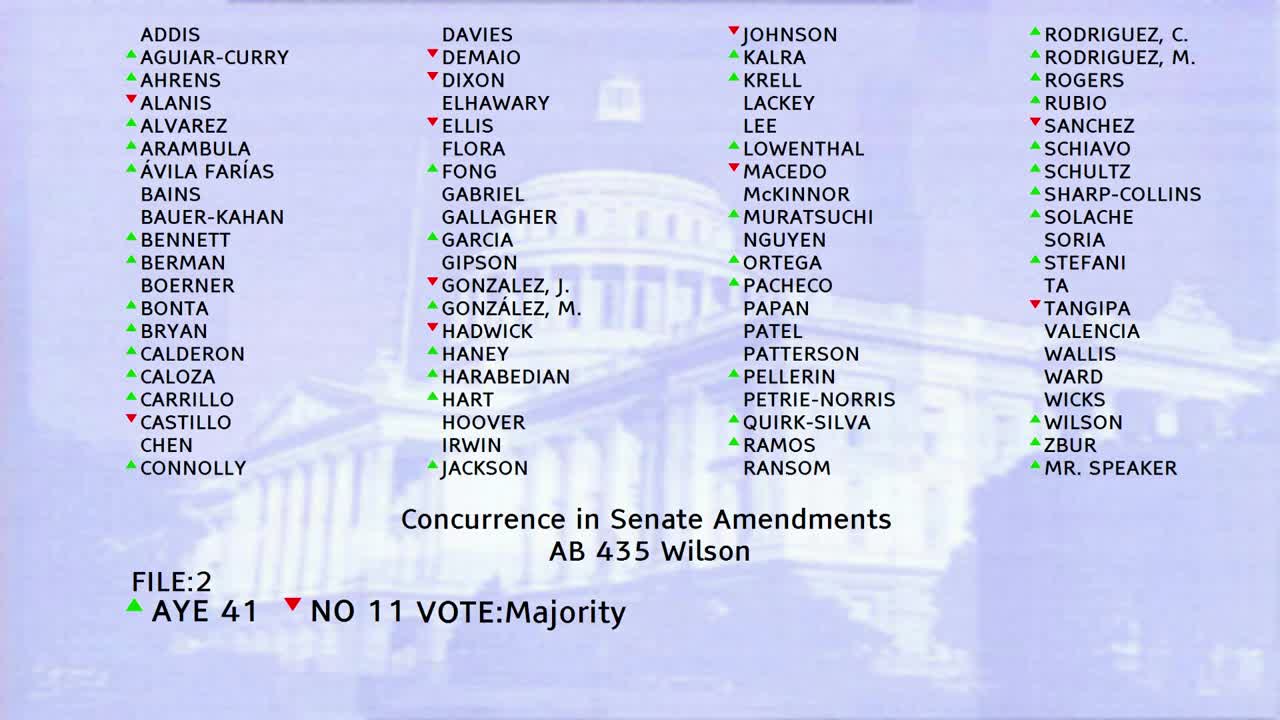 1MIN
Assembly Floor
 7MIN
Senate Standing Committee on Public Safety
 2MIN
Assembly Floor
 10MIN
Assembly Standing Committee on Public Safety
Bill Author

Bill Co-Author(s):