AB 952: Youth Offender Program Camp Pilot Program.
- Session Year: 2025-2026
- House: Assembly
- Latest Version Date: 2025-10-13
Current Status:
Passed
(2025-10-13: Chaptered by Secretary of State - Chapter 718, Statutes of 2025.)
Introduced
In Committee
Awaiting First Chamber Vote
Passed First Chamber
In Committee
Awaiting Second Chamber Vote
Passed Second Chamber
Enacted
What does this bill do?
The bill makes permanent the Youth Offender Program Camp Pilot Program, which lets certain incarcerated young adults (ages 18–25), including those with a Level III classification or a violent administrative designation (a prison record flag), participate in conservation camp programs. It also lets the corrections secretary expand the program to include some or all California Conservation Camps.
The summary is provided by generative AI which can make mistakes. For original language, please view the details in the table below.
Existing law authorizes the Secretary of the Department of Corrections and Rehabilitation to prescribe rules and adopt regulations for the administration of the prisons and administration of the parole of specified persons. Existing law provides that in general, these regulations shall be adopted pursuant to the Administrative Procedure Act, but exempts from that requirement regulations relating to pilot programs that are legislatively authorized or mandated, or departmentally authorized, as specified. Existing law requires a regulation adopted under that exemption to be repealed by operation of law, 2 years after the commencement of the pilot program being implemented unless the regulation is adopted, amended, or repealed pursuant to the Administrative Procedure Act.
Existing law requires the department to automatically grant a youth offender a lower security level than the level that corresponds with that individuals classification score or placement in a facility that permits increased access to programs, except as specified.
Under the authority of those provisions, the department established the Youth Offender Program Camp Pilot Program, with the purpose of the program being to encourage youth offenders to commit to positive change and self-improvement with the goal of being law-abiding members of society upon release and to provide youth the opportunity to receive wildland firefighting training.
This bill would require the secretary to make permanent the Youth Offender Program Camp Pilot Program, and authorize the secretary to expand the program to include some or all of California Conservation Camps.
Existing law authorizes the Secretary of the Department of Corrections and Rehabilitation to prescribe rules and adopt regulations for the administration of the prisons and administration of paroles. Existing law provides that in general, these regulations shall be adopted pursuant to the Administrative Procedure Act, but exempts from that requirement regulations relating to pilot programs that are legislatively authorized or mandated, as specified. Existing law requires a regulation adopted under that exemption to be repealed by operation of law, 2 years after the commencement of the pilot program being implemented unless the regulation is adopted, amended, or repealed pursuant to the Administrative Procedure Act.
Existing law requires the department to automatically grant a youth offender a lower security level than the level that corresponds with that individuals classification score or placement in a facility that permits increased access to programs, except as specified.
Under the authority of those provisions, the department established the Youth Offender Program Camp Pilot Program, with the purpose of the program being to encourage youth offenders to commit to positive change and self-improvement with the goal of being law-abiding members of society upon release and to provide youth the opportunity to receive wildland firefighting training.
This bill would require the secretary to make permanent the Youth Offender Program Camp Pilot Program, and authorize the secretary to expand the program to include some or all of California Conservation Camps.
(a)(1)The Legislature finds and declares both of the following:
(A)The Youth Offender Program Camp Pilot Program was launched by the Department of Corrections and Rehabilitation in August 2023 at Growlersburg Conservation Camp #33 in Georgetown as a pilot program to temporarily allow incarcerated youth between 18 and 25 years of age, who have a Level III classification score or a Violent Administrative Determinant, the ability to participate in the conservation camp program on a case-by-case basis.
(B)The pilot program showed great promise, and the department expanded the pilot program to Pine Grove Youth Conservation Camp #12 in August 2024.
(2)It is the intent of the Legislature to make the Youth Offender Program Camp Pilot Program within the Department of Corrections and Rehabilitation permanent.
(b)(1)The Secretary of the Department of Corrections and Rehabilitation shall make permanent the Youth Offender Program Camp Pilot Program, and may, at the discretion of the secretary, expand the program to include some or all of California Conservation Camps.
(2)For purposes of this subdivision, California Conservation Camps has the same meaning as in Section 4952 of the Public Resources Code.
|
Date
|
Status
|
|---|---|
| Oct 13, 2025 | Chaptered by Secretary of State - Chapter 718, Statutes of 2025. |
| Oct 13, 2025 | Approved by the Governor. |
| Sep 15, 2025 | Enrolled and presented to the Governor at 4:30 p.m. |
| Sep 8, 2025 | In Assembly. Ordered to Engrossing and Enrolling. |
| Sep 8, 2025 | Read third time. Passed. Ordered to the Assembly. (Ayes 39. Noes 0. Page 2580.). |
| Jun 24, 2025 | Read second time. Ordered to third reading. |
| Jun 23, 2025 | From committee: Be ordered to second reading pursuant to Senate Rule 28.8. |
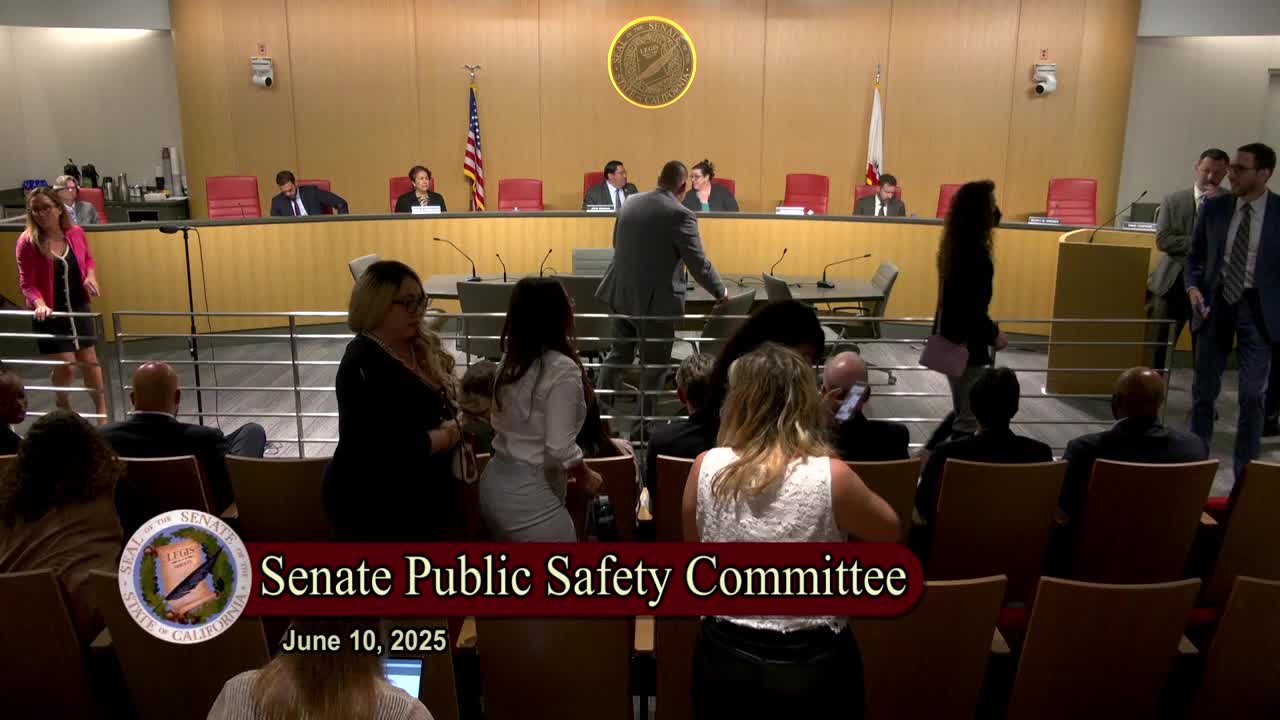
| Jun 10, 2025 | From committee: Do pass and re-refer to Com. on APPR. (Ayes 6. Noes 0.) (June 10). Re-referred to Com. on APPR. |
| May 14, 2025 | Referred to Com. on PUB. S. |
| May 1, 2025 | In Senate. Read first time. To Com. on RLS. for assignment. |
| May 1, 2025 | Read third time. Passed. Ordered to the Senate. (Ayes 76. Noes 0. Page 1387.) |
| Apr 24, 2025 | Read second time. Ordered to Consent Calendar. |
| Apr 23, 2025 | From committee: Do pass. To Consent Calendar. (Ayes 15. Noes 0.) (April 23). |
| Apr 2, 2025 | From committee: Do pass and re-refer to Com. on APPR. with recommendation: To Consent Calendar. (Ayes 9. Noes 0.) (April 1). Re-referred to Com. on APPR. |
| Mar 10, 2025 | Referred to Com. on PUB. S. |
| Feb 21, 2025 | From printer. May be heard in committee March 23. |
| Feb 20, 2025 | Read first time. To print. |
|
Date
|
Description
|
Location
|
Votes
|
|
|---|---|---|---|---|
| Sep 8, 2025 | Assembly 3rd Reading AB952 Elhawary By Seyarto | Senate Floor |
Passed |
|
| Jun 10, 2025 | Do pass, but first be re-referred to the Committee on [Appropriations] | Senate Standing Committee on Public Safety |
Passed |
|
| May 1, 2025 | AB 952 Elhawary Consent Calendar Second Day Regular Session | Assembly Floor |
Passed |
|
| Apr 23, 2025 | Do pass. To Consent Calendar. | Assembly Standing Committee on Appropriations |
Passed |
|
| Apr 1, 2025 | Do pass and be re-referred to the Committee on [Appropriations] with recommendation: To Consent Calendar | Assembly Standing Committee on Public Safety |
Passed |
This list shows positions taken on this bill by organizations on the date displayed, which is linked to the original source.
Positions by individuals are not included.
|
Organization
|
Position
|
Date
|
|---|---|---|
| Aclu California Action | ** Support | |
| California Academy of Child and Adolescent Psychiatry | ** Support | |
| California Forestry Association | ** Support | |
| California Police Chiefs Association | ** Support | |
| California Public Defenders Association | ** Support | |
| Californians for Safety and Justice | ** Support | |
| Communities United for Restorative Youth Justice | ** Support | |
| Courage California | ** Support | |
| Ella Baker Center For Human Rights | ** Support | |
| Friends Committee On Legislation Of California | ** Support | |
| Grip Training Institute | ** Support | |
| Initiate Justice | ** Support | |
| Initiate Justice Action | ** Support | |
| Justice2jobs Coalition | ** Support | |
| LA Defensa | ** Support | |
| Land Together | ** Support | |
| Pacific Juvenile Defender Center | ** Support | |
| Prosecutors Alliance of California | ** Support | |
| Rubicon Programs | ** Support | |
| Sister Warriors Freedom Coalition | ** Support | |
| Smart Justice California | ** Support | |
| The Forestry and Fire Recruitment Program | ** Support | |
| The W. Haywood Burns Institute | ** Support | |
| Vera Institute Of Justice | ** Support |
SENATE RULES COMMITTEE Office of Senate Floor Analyses (916) 651-1520 Fax: (916) 327-4478 | AB 952 |
THIRD READING
Bill No: AB 952
Author: Elhawary (D)
Introduced: 2/20/25
Vote: 21
SENATE PUBLIC SAFETY COMMITTEE: 6-0, 6/10/25
AYES: Arreguín, Seyarto, Caballero, Cortese, Pérez, Wiener
SENATE APPROPRIATIONS COMMITTEE: Senate Rule 28.8
ASSEMBLY FLOOR: 76-0, 5/1/25 (Consent) - See last page for vote
SUBJECT: Youth Offender Program Camp Pilot Program
SOURCE: Initiate Justice Action
DIGEST:
This bill requires the California Department of Corrections and Rehabilitation (CDCR) to make the Youth Offender Program Camp Pilot Program permanent, and authorizes the Secretary of the department to expand the program to include some or all of California Conservation Camps.
ANALYSIS:
Existing law:
- Establishes CDCR and the state’s prisons. (Government (Gov.) Code, § 12383, Subdivision (subd.) (a); Pen. Code, §§ 5000, 5003.)
- Establishes the California Conservation Camp program to provide for the training and use of incarcerated individuals and wards assigned to the camps to perform public conservation projects. (Public (Pub.) Resources Code, § 4951.)
- Defines “California Conservation Camps” or “camps” as “any camps now or hereafter established, as provided by law, for the purpose of receiving prisoners committed to the custody of the Director of Corrections and wards committed to the Director of the Youth Authority, and in which the work projects performed by the inmates or wards are supervised by employees of the department.” (Pub. Resources Code, § 4952.)
This bill:
- States that it is the intent of the Legislature to make the Youth Offender Program Camp Pilot Program within the Department of Corrections and Rehabilitation permanent.
- Requires the Secretary of CDCR to make permanent the Youth Offender Program Camp Pilot Program. Authorizes, at the discretion of the secretary, expansion of the program to include some or all of California Conservation Camps.
- Provides that “California Conservation Camps” has the same meaning as in Section 4952 of the Public Resources Code.
- Includes legislative findings and declarations.
Background
CDCR, in cooperation with Cal Fire and the Los Angeles County Fire Department, jointly operates 35 conservation camps, commonly referred to as fire camps, in 25 counties across the state. Conservation Camp Program participants support state, local, and federal government agencies as they respond to emergencies such as fires, floods, and other natural or manmade disasters, and complete community service projects when not assigned to an emergency. All fire camps are minimum-security facilities which are overseen by CDCR employees. Participants are supervised by Cal Fire staff when responding to a wildfire or working on a conservation project. (See <https://www.cdcr.ca.gov/facility-locator/conservation-camps/faq-conservation-fire-camp-program/ .)
Incarcerated individuals participating in fire camps receive the same entry-level training as Cal Fire’s seasonal firefighters as well as ongoing training from Cal Fire throughout their time in the program. An incarcerated person must volunteer for the fire camp program, and some individuals are ineligible for fire camp assignment based on their convictions, including convictions for sex offenses, arson, and escape with force or violence. (https://www.cdcr.ca.gov/facility-locator/conservation-camps/faq-conservation-fire-camp-program/.)
Individuals who volunteer for fire camp must complete Cal Fire’s Firefighting Training Program, and program participants become certified wildland firefighters after completing tis training. (<https://www.cdcr.ca.gov/facility-locator/conservation-camps/faq-conservation-fire-camp-program/ )
The two-year Youth Offender Program (YOP) Camp Pilot Program was established in August 2023 at the Growlersburg Conservation Camp in Georgetown. The pilot program is intended to expand access to camp programs to individuals 25 years old and younger, and those programs are designed to help participants develop job skills and lead to self-improvement.
Camp participants receive wildland firefighter training as well as educational and rehabilitative programming. The program provides additional hand crew members for emergency response to fires, floods, and other disasters in the state.
YOP candidates are required to be between 18-25 years old and possess either a high school diploma, GED, or have enough time left to serve to obtain a degree at camp. The pilot program allows some individuals to participate who are currently ineligible for the conservation camp program on a case-by-case basis. Applicants who have been convicted of rape, lewd acts with a child under 14, a felony punishable by death or imprisonment for life, a sex offense requiring sex offender registration, escape within the previous 10 years, or arson are automatically disqualified.
The pilot program initially had 17 participants, and following its success at the Growlersburg Conservation Camp, the pilot program expanded to Pine Grove Conservation Camp. Throughout its first year, the pilot program maintained two full YOP crews and ensured Growlersburg operated with five fully staffed crews.
The pilot program is set to expire later this year. This bill makes the YOP pilot program permanent and authorizes its expansion.
FISCAL EFFECT: Appropriation: No Fiscal Com.: Yes Local: No
SUPPORT: (Verified 6/23/25)
Initiate Justice Action (source)
ACLU California Action
California Academy of Child and Adolescent Psychiatry
California Forestry Association
California Public Defenders Association
Communities United for Restorative Youth Justice
Courage California
Ella Baker Center for Human Rights
Friends Committee on Legislation of California
Initiate Justice
Justice2Jobs Coalition
La Defensa
Prosecutors Alliance of California
Sister Warriors Freedom Coalition
Smart Justice California
The Forestry and Fire Recruitment Program
The W. Haywood Burns Institute
Vera Institute of Justice
OPPOSITION: (Verified 6/23/25)
None received
ASSEMBLY FLOOR: 76-0, 5/1/25
AYES: Addis, Aguiar-Curry, Ahrens, Alanis, Alvarez, Arambula, Ávila Farías, Bains, Bauer-Kahan, Bennett, Berman, Boerner, Bonta, Bryan, Calderon, Caloza, Carrillo, Castillo, Connolly, Davies, DeMaio, Dixon, Elhawary, Ellis, Flora, Fong, Gabriel, Gallagher, Garcia, Gipson, Jeff Gonzalez, Mark González, Hadwick, Haney, Harabedian, Hart, Hoover, Irwin, Jackson, Kalra, Krell, Lackey, Lee, Lowenthal, Macedo, Muratsuchi, Nguyen, Ortega, Pacheco, Patel, Patterson, Pellerin, Petrie-Norris, Quirk-Silva, Ramos, Ransom, Celeste Rodriguez, Michelle Rodriguez, Rogers, Blanca Rubio, Sanchez, Schiavo, Schultz, Sharp-Collins, Solache, Soria, Stefani, Ta, Tangipa, Valencia, Wallis, Ward, Wicks, Wilson, Zbur, Rivas
NO VOTE RECORDED: Chen, McKinnor, Papan
Prepared by: Stephanie Jordan / PUB. S. /
6/24/25 16:35:55
**** END ****
SENATE COMMITTEE ON PUBLIC SAFETY
Senator Jesse Arreguín, Chair
2025 - 2026 Regular
Bill No: AB 952 Hearing Date: June 10, 2025
Author: | Elhawary | ||
Version: | February 20, 2025 | ||
Urgency: | No | Fiscal: | Yes |
Consultant: | SJ | ||
Subject: Youth Offender Program Camp Pilot Program
HISTORY
Source: Initiate Justice Action
Prior Legislation: AB 2147 (Reyes), Ch. 60, Stats. of 2020
Support: ACLU California Action; California Public Defenders Association; Communities United for Restorative Youth Justice; Courage California; Ella Baker Center for Human Rights; Friends Committee on Legislation of California; Initiate Justice; Initiate Justice Action; Justice2Jobs Coalition; La Defensa; Prosecutors Alliance of California; Smart Justice California; The W. Haywood Burns Institute; Vera Institute of Justice
Opposition: None known
Assembly Floor Vote: 76 - 0
PURPOSE
The purpose of this bill is to require the California Department of Corrections and Rehabilitation (CDCR) to make the Youth Offender Program Camp Pilot Program permanent, and authorize the Secretary of the department to expand the program to include some or all of California Conservation Camps.
Existing law establishes CDCR and the state’s prisons. (Gov. Code, § 12383, subd. (a); Pen. Code, §§ 5000, 5003.)
Existing law establishes the California Conservation Camp program to provide for the training and use of incarcerated individuals and wards assigned to the camps to perform public conservation projects. (Pub. Resources Code, § 4951.)
Existing law defines “California Conservation Camps” or “camps” as “any camps now or hereafter established, as provided by law, for the purpose of receiving prisoners committed to the custody of the Director of Corrections and wards committed to the Director of the Youth Authority, and in which the work projects performed by the inmates or wards are supervised by employees of the department.” (Pub. Resources Code, § 4952.)
This bill states that it is the intent of the Legislature to make the Youth Offender Program Camp Pilot Program within the Department of Corrections and Rehabilitation permanent.
This bill requires the Secretary of CDCR to make permanent the Youth Offender Program Camp Pilot Program. Authorizes, at the discretion of the secretary, expansion of the program to include some or all of California Conservation Camps.
This bill provides that “California Conservation Camps” has the same meaning as in Section 4952 of the Public Resources Code.
This bill includes legislative findings and declarations.
COMMENTS
- Need For This Bill
According to the author:
AB 952 will make the Youth Offender Camp Pilot Program permanent. This will help reduce recidivism rates and provide a sustainable pathway for young people to participate in this successful program.
- Conservation (Fire) Camp Program
CDCR, in cooperation with Cal Fire and the Los Angeles County Fire Department, jointly operates 35 conservation camps, commonly referred to as fire camps, in 25 counties across the state. Conservation Camp Program participants support state, local, and federal government agencies as they respond to emergencies such as fires, floods, and other natural or manmade disasters, and complete community service projects when not assigned to an emergency. All fire camps are minimum-security facilities which are overseen by CDCR employees. Participants are supervised by Cal Fire staff when responding to a wildfire or working on a conservation project. (See <https://www.cdcr.ca.gov/facility-locator/conservation-camps/faq-conservation-fire-camp-program/>.)
Incarcerated individuals participating in fire camps receive the same entry-level training as Cal Fire’s seasonal firefighters as well as ongoing training from Cal Fire throughout their time in the program. An incarcerated person must volunteer for the fire camp program, and some individuals are ineligible for fire camp assignment based on their convictions, including convictions for sex offenses, arson, and escape with force or violence. (https://www.cdcr.ca.gov/facility-locator/conservation-camps/faq-conservation-fire-camp-program/.)
Individuals who volunteer for fire camp must complete Cal Fire’s Firefighting Training Program, and program participants become certified wildland firefighters after completing tis training. (<https://www.cdcr.ca.gov/facility-locator/conservation-camps/faq-conservation-fire-camp-program/>)
- Youth Offender Program (YOP) Camp Pilot Program
The two-year YOP Camp Pilot Program was established in August 2023 at the Growlersburg Conservation Camp in Georgetown. The pilot program is intended to expand access to camp programs to individuals 25 years old and younger, and those programs are designed to help participants develop job skills and lead to self-improvement.
Camp participants receive wildland firefighter training as well as educational and rehabilitative programming. The program provides additional hand crew members for emergency response to fires, floods, and other disasters in the state.
YOP candidates are required to be between 18-25 years old and possess either a high school diploma, GED, or have enough time left to serve to obtain a degree at camp. The pilot program allows some individuals to participate who are currently ineligible for the conservation camp program on a case-by-case basis. Applicants who have been convicted of rape, lewd acts with a child under 14, a felony punishable by death or imprisonment for life, a sex offense requiring sex offender registration, escape within the previous 10 years, or arson are automatically disqualified.
The pilot program initially had 17 participants, and following its success at the Growlersburg Conservation Camp, the pilot program expanded to Pine Grove Conservation Camp. Throughout its first year, the pilot program maintained two full YOP crews and ensured Growlersburg operated with five fully staffed crews.
The pilot program is set to expire later this year. This bill makes the YOP pilot program permanent and authorizes its expansion.
- Argument in Support
Smart Justice writes:
Incarcerated hand crews play a vital role in our state’s response to wildfire emergencies. For many years, incarcerated people with higher security classifications were categorically ineligible for conservation camps, as were young people under the age of 25. In 2023, CDCR established a pilot program at the Growlersburg Conservation Camp allowing, for the first time, young people between the ages of 18-25 with Level III security classifications to qualify for fire camp. The program was successful, and in 2024 CDCR expanded the program to the Pine Grove Camp.
Fire camp programs have been repeatedly shown to foster positive rehabilitation and to significantly lower recidivism rates, especially for people who spend 1 year or longer in the program. According to recent data from CDCR, recidivism rates for fire camp participants are as much as 14.5 percentage points lower than for the general incarcerated population.
By making the Youth Offender Conservation Camp initiative permanent, it provides a sustainable pathway for young people to participate in this successful program. AB 952 also gives the Secretary of CDCR discretion to expand the program to all 35 existing conservation camps or future ones.
-- END --
Date of Hearing: April 23, 2025
ASSEMBLY COMMITTEE ON APPROPRIATIONS
Buffy Wicks, Chair
ABPCA Bill Id:AB 952
Author:(Elhawary) – As Introduced Ver:February 20, 2025
Policy Committee: | Public Safety | Vote: | 9 - 0 |
|
| ||
|
|
Urgency: No State Mandated Local Program: No Reimbursable: No
SUMMARY:
This bill requires the California Department of Corrections and Rehabilitation (CDCR) to make permanent its the Youth Offender Program (YOP) Camp Pilot Program and authorizes CDCR to expand the program.
FISCAL EFFECT:
No significant costs to CDCR to continue operating the existing YOP Pilot Program. Possible future cost pressures if CDCR expands the program beyond the capacity of its existing conservation camp infrastructure.
COMMENTS:
- Purpose. This bill is sponsored by Initiate Justice. According to the author, making the YOP Camp Pilot Program permanent will “help reduce recidivism rates and provide a sustainable pathway for young people to participate in this successful program.”
- Background. CDCR operates 35 minimum-security conservation camps with CAL FIRE and the Los Angeles County Fire Department. Conservation camp workers support government agencies during emergency responses to fires, floods, and other disasters. Through the camps, incarcerated hand crews use hand tools to aid fire suppression by clearing brush and establishing firelines during wildland fires.
In 2023, CDCR established the YOP Camp Pilot Program at one of its conservation camps. In the YOP Camp Pilot Program, qualifying incarcerated people aged 25 or younger are housed in a conservation camps and receive wildland firefighting training, education, and rehabilitative programming. Participants may also work on hand crews during emergency disaster responses. The population fluctuates but there are likely fewer than 40 participants at any given time. In 2024, the program expanded to a second conservation camp. Currently, the YOP Pilot Program is slated to end in August 2025. This bill would require CDCR to make the program permanent, and permit CDCR to expand the program.
- Related Legislation. AB 247 (Bryan) requires an incarcerated hand crew member be paid $19 per hour while assigned to an active fire incident and requires the wage rate be updated annually. AB 247 is pending in this committee.
AB 799 (C. Rodriguez) requires CDCR to pay a death benefit for the death of an incarcerated crew member in the California Conservation Camp program. AB 799 is pending in this committee.
AB 812 (Lowenthal) permits an incarcerated firefighter to independently file a petition for recall and resentencing, and requires CDCR to promulgate regulations on resentencing recommendations by the department for incarcerated firefighters. AB 812 is pending in this committee.
Analysis Prepared by: Annika Carlson / APPR. / (916) 319-2081
Date of Hearing:
Deputy Chief Counsel: Stella Choe
ASSEMBLY COMMITTEE ON PUBLIC SAFETY
Nick Schultz, Chair
ABPCA Bill Id:AB 952
Author:(Elhawary) – As Introduced Ver:February 20, 2025
SUMMARY:
Makes permanent the Youth Offender Program (YOP) Camp Pilot Program. Specifically, this bill:
- Requires the Secretary of the Department of Corrections and Rehabilitation (CDCR) to make permanent the YOP Camp Pilot Program.
- Authorizes, at the discretion of the secretary, expansion of the program to include some or all of the California Conservation Camps, as defined.
- Contains Legislative findings and declarations about the YOP Camp Pilot Program and that it showed promise and has been expanded to Pine Grove Youth Conservation Camp.
EXISTING LAW:
- Defines “California Conservation Camps” as “any camps now or hereafter established, as provided by law, for the purpose of receiving prisoners committed to the custody of the Director of Corrections and wards committed to the Director of the Youth Authority, and in which the work projects performed by the inmates or wards are supervised by employees of the department.” (Pub. Resources Code, § 4952.)
- States that CDCR shall utilize inmates and wards assigned to conservation camps in performing fire prevention, fire control, and other work of the department. (Pub. Resources Code, § 4953, subd. (a).)
FISCAL EFFECT:
Unknown
COMMENTS:
- Author's Statement: According to the author, “AB 952 will make the Youth Offender Camp Pilot Program permanent. This will help reduce recidivism rates and provide a sustainable pathway for young people to participate in this successful program.”
- Background: Conservation (Fire) Camps: The primary mission of the Conservation Camp Program is to support state, local and federal government agencies as they respond to emergencies such as fires, floods, and other natural or manmade disasters. CDCR, in cooperation with CAL FIRE and the Los Angeles County Fire Department (LAC FIRE), jointly operates 35 conservation camps, commonly known as fire camps, located in 25 counties. All camps are minimum-security facilities and all are staffed with correctional staff.[1]
Inmates must have eight years or less remaining on their sentence and must have minimum custody status to be considered. Some convictions automatically make an inmate ineligible for conservation camp assignment, even if they have minimum custody status. Those convictions include: sexual offenses, arson and any history of escape with force or violence. Other disqualifiers include active warrants, medical issues, and high-notoriety cases.. Inmates considered potential fire crew members are evaluated for their physical fitness by CDCR and are trained in fire-fighting techniques by CAL FIRE, which includes four days of classroom instruction and four days of field exercises.[2]
Overall, there are approximately 3,100 inmates working at fire camps currently. Approximately 2,150 of those are fire line-qualified inmates. All inmates receive the same entry-level training that CAL FIRE’s seasonal firefighters receive in addition to ongoing training from CAL FIRE throughout the time they are in the program. An inmate must volunteer for the fire camp program; no one is involuntarily assigned to work in a fire camp. Volunteers must have “minimum custody” status, or the lowest classification for inmates based on their sustained good behavior in prison, their conforming to rules within the prison and participation in rehabilitative programming.
- YOP Camp Pilot Program: The YOP Camp Pilot Program started on August 7, 2023 and is set to expire August of this year. In order to be eligible for the program, YOP candidates must be between 18-25 years old and possess either a High School Diploma, General Equivalency Degree, or have enough time left to serve to obtain a degree at camp. Participants must meet existing criteria for conservation camp placement, including having eight years or less remaining on their sentence. However, the YOP camp will allow participants who are currently ineligible for the conservation camp program, due to a Level-III classification score or a Violent Administrative Determinant the opportunity to participate on a case-by-case basis if no other exclusionary criteria exist. Similar to conservation camp placement, applicants are automatically disqualified who have been convicted of rape, lewd acts with a child under 14, any felony punishable by death or imprisonment for life, any sex offense requiring registration pursuant to Penal Code section 290, escape from a secure perimeter within the previous 10 years, and arson.[3]
The initial 17 participants arrived at Growlersburg Conservation Camp in November 2023, after completing training at the Sierra Conservation Center (SCC). Following the success of the pilot program at Growlersburg, the YOP expanded to Pine Grove Conservation Camp, which welcomed its first seven YOP camp volunteer firefighters in August 2024. Throughout its first year, the pilot successfully maintained two full YOP crews and ensured Growlersburg operated with five fully staffed crews.[4]
This bill would require CDCR to make permanent the YOP Camp Pilot Program and authorize expansion of the program into other California Conservation Camps.
- Argument in Support: According to Initiate Justice Action, the sponsor of this bill, “The state of California has relied on incarcerated labor since its inception, and specifi cally for fi re response for nearly 100 years. Today, incarcerated hand crews continue to play a vital role in our state’s response to wildfire emergencies. In the wake of the devastating Los Angeles fi res of January 2025, over 1,100 incarcerated hand crews1 were deployed to Los Angeles to help the city and county respond. Among the 1,100 who were deployed were young people in CDCR’s YOP from the Pine Grove and Growlersburg Conservation Camps.
“For many years, incarcerated people with higher security classifications were categorically ineligible for conservation camps, as were young people under the age of 25. In 2023, CDCR established a pilot program at the Growlersburg Conservation Camp allowing, for the first time, young people between the ages of 18-25 with Level III security classifi cations to qualify for fi re camp. The program was successful, and in 2024 CDCR expanded the program to the Pine Grove Camp.
“This program is currently a pilot program. Fire camp programs have been repeatedly shown to foster positive rehabilitation and to significantly lower recidivism rates, especially for people who spend 1 year or longer in the program. According to recent data from CDCR, recidivism rates for fi re camp participants are as much as 14.5 percentage points lower than for the general incarcerated population.
“By making the Youth Offender Conservation Camp initiative permanent, it provides a sustainable pathway for young people to participate in this successful program. The state of California must do significantly more to promote rehabilitation efforts, and making the YOP program permanent is a strong step in the right direction. AB 952 also gives the Secretary of CDCR discretion to expand the program to all 35 existing conservation camps or future ones.” (Fn. omitted.)
- Related Legislation: AB 799 (C. Rodriguez) would require CDCR to pay a death benefit, as specified, for the death of any incarcerated crew members in the California Conservation Camp program, as specified. AB 799 is pending hearing by the Assembly Appropriations Committee.
- Prior Legislation: AB 2147 (Reyes), Chapter 60, Statutes of 2020, allowed a defendant who successfully participated in the California Conservation Camp Program or a county incarcerated individual hand crew as an incarcerated individual hand crew member, and has been released from custody, to petition the court to have their conviction expunged.
REGISTERED SUPPORT / OPPOSITION:
Support
Initiate Justice Action (Sponsor)
ACLU California Action
California Police Chiefs Association
California Public Defenders Association (CPDA)
Californians for Safety and Justice (CSJ)
Communities United for Restorative Youth Justice (CURYJ)
Courage California
Ella Baker Center for Human Rights
Grip Training Institute
Initiate Justice
Land Together
Pacific Juvenile Defender Center
Rubicon Programs
Sister Warriors Freedom Coalition
Smart Justice California, a Project of Tides Advocacy
Vera Institute of Justice
Opposition
None submitted.
Analysis Prepared by:
Stella Choe / PUB. S. / (916) 319-3744
See https://www.cdcr.ca.gov/facility-locator/conservation-camps/faq-conservation-fire-camp-program/ (accessed Mar. 18, 2025). ↑
Ibid. ↑
https://www.cdcr.ca.gov/youthful-offender-camp-pilot-program/ (accessed Mar. 18, 2025). ↑
Ibid. ↑
Discussed in Hearing
View Older Hearings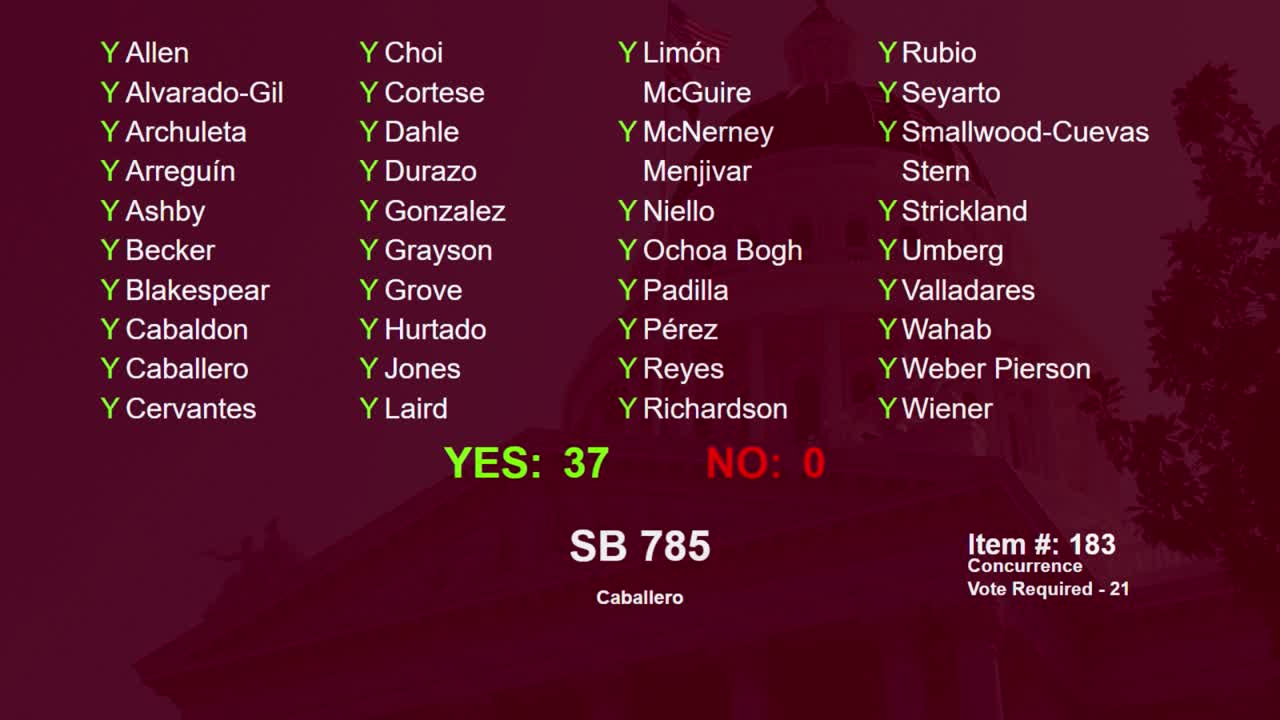
Bill Author

Bill Co-Author(s):