ACR 179: Wildland-Urban Interface Preparedness and Resilience Day.
- Session Year: 2025-2026
- House: Assembly
- Latest Version Date: 2026-06-18
Current Status:
Passed
(2026-06-18: Chaptered by Secretary of State - Res. Chapter 113, Statutes of 2026.)
Introduced
In Committee
Awaiting First Chamber Vote
Passed First Chamber
In Committee
Awaiting Second Chamber Vote
Passed Second Chamber
Enacted
This measure would proclaim May 1, 2026, and the same date annually thereafter, as Wildland-Urban Interface Preparedness and Resilience Day.
This measure would proclaim May 1, 2026, and the same date annually thereafter, as Wildland-Urban Interface Preparedness and Resilience Day.
This measure would proclaim May 1, 2026, and the same date annually thereafter, as Wildland-Urban Interface Preparedness and Resilience Day.
WHEREAS, As California continues to rebuild in the wake of devastating wildfires, it has become unmistakably clear that our states fire season no longer resembles what it was even at the turn of the century fire season is now a year-round reality; and
WHEREAS, Californias Wildland-Urban Interface (WUI) represents an area where homes, communities, and critical infrastructure intermingle with fire-prone wildland vegetation, creating conditions for rapid fire spread, structure-to-structure ignition, and large-loss events across vast areas that are severely at risk for catastrophic wildfire; and
WHEREAS, The scale and consequences of wildfire disasters in California have demonstrated that legacy assumptions regarding fire season, risk, and preparedness are no longer valid, requiring a fundamental shift toward continuous readiness and mitigation; and
WHEREAS, This year-round threat has placed an increased premium on wildfire resilience measures, including home hardening practices, vegetation management, defensible space maintenance, and community preparedness, all aimed at reducing property loss and preventing civilian and firefighter fatalities; and
WHEREAS, The frequency, intensity, and duration of wildfires in California have increased significantly in recent decades, placing WUI communities at heightened risk and underscoring the need for year-round preparedness and coordinated resilience strategies; and
WHEREAS, In 2025, the Department of Forestry and Fire Protection responded to over 8,000 wildfires that burned over 525,000 acres, resulting in 31 combined civilian and firefighter fatalities; and
WHEREAS, WUI areas span more than 7,000,000 acres, represent nearly 14,000,000 people approximately 1 in 3 California residents and account for the majority of buildings destroyed in California wildfires, making proactive planning, defensible space maintenance, home hardening, and communitywide mitigation efforts essential to protecting lives, property, and natural resources; and
WHEREAS, It is appropriate to establish a Wildland-Urban Interface Preparedness and Resilience Day, which will raise public awareness of the unique wildfire risks faced by communities in WUI areas and promote practical actions that reduce the loss of life and property; and
WHEREAS, Ensuring fire-resilient communities requires a shared and enforceable commitment among residents, fire agencies, policymakers, and all levels of government to advance coordinated mitigation, planning, and education efforts across the state; now, therefore, be it
Resolved by the Assembly of the State of California, the Senate thereof concurring, That May 1, 2026, and the same date annually thereafter, shall be declared Wildland-Urban Interface Preparedness and Resilience Day to mark the start of National Wildfire Awareness Month; and be it further
Resolved, That, with the support of the Wildfire Conservancy a nonprofit organization serving California and the nation in addressing critical issues related to wildfires and the Wildland-Urban Interface the State of California shall commemorate this day with the goal of fostering a more prepared and resilient California and encourage education, collaboration, and proactive risk-reduction efforts; and be it further
Resolved, That the Chief Clerk of the Assembly transmit copies of this resolution to the author for appropriate distribution.
|
Date
|
Status
|
|---|---|
| Jun 18, 2026 | Chaptered by Secretary of State - Res. Chapter 113, Statutes of 2026. |
| Jun 18, 2026 | Enrolled and filed with the Secretary of State at 3 p.m. |
| Jun 11, 2026 | In Assembly. Ordered to Engrossing and Enrolling. |
| Jun 11, 2026 | Adopted and to Assembly. (Ayes 36. Noes 0. Page 4699.) |
| Jun 11, 2026 | Adopted and to Assembly. (Ayes 36. Noes 0.) |
| Jun 9, 2026 | Ordered to special consent calendar. |
| May 13, 2026 | From committee: Ordered to third reading. |
| May 5, 2026 | In Senate. To Com. on RLS. |
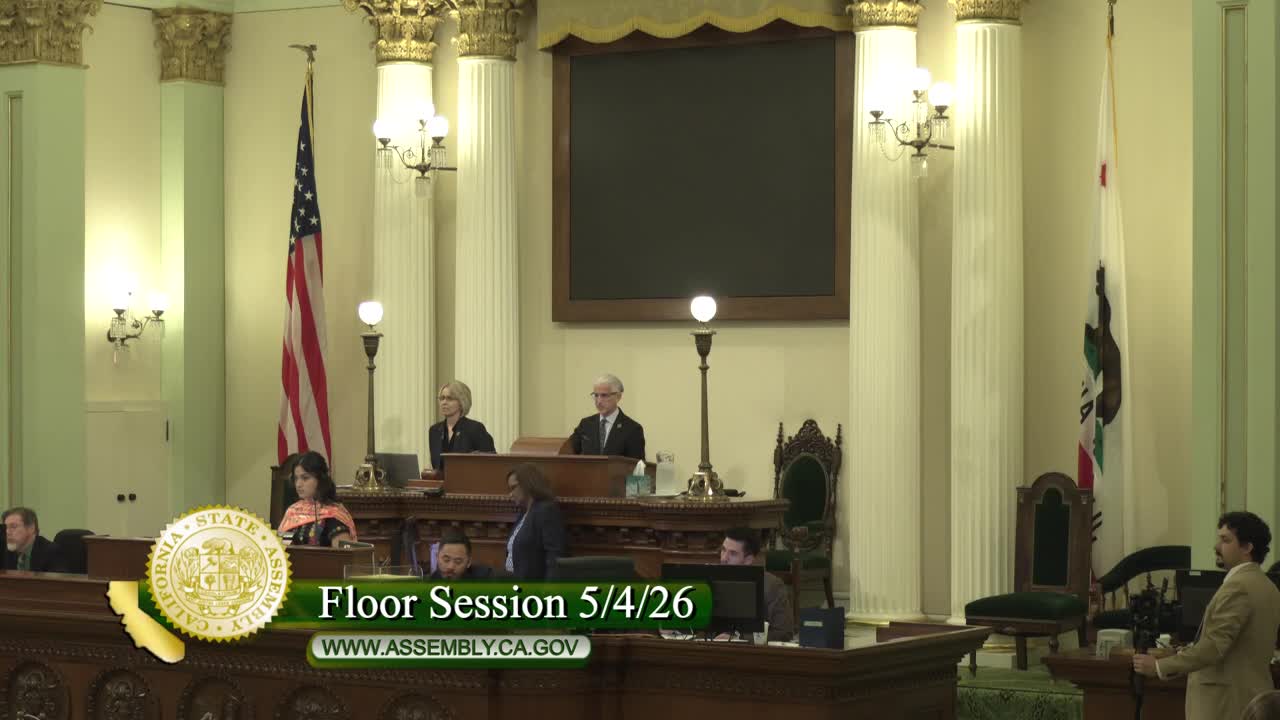
| May 4, 2026 | Adopted and to Senate. |
| May 4, 2026 | Adopted and to Senate. (Page 4908.) |
| May 4, 2026 | Coauthors revised. |
| Apr 27, 2026 | From committee: Be adopted. Ordered to Third Reading. (Ayes 9. Noes 0.) (April 27). |
| Apr 27, 2026 | Referred to Com. on RLS. |
| Apr 21, 2026 | From printer. |
| Apr 20, 2026 | Introduced. To print. |
|
Date
|
Description
|
Location
|
Votes
|
|
|---|---|---|---|---|
| Jun 11, 2026 | Special Consent ACR179 Flora et al. | Senate Floor |
Passed |
|
| Apr 27, 2026 | Be adopted. To third reading. | Assembly Standing Committee on Rules |
Passed |
This list shows positions taken on this bill by organizations on the date displayed, which is linked to the original source.
Positions by individuals are not included.
SENATE RULES COMMITTEE Office of Senate Floor Analyses (916) 651-4171 | ACR 179 |
THIRD READING
Bill No: ACR 179
Author: Flora (R), et al.
Introduced: 4/20/26
Vote: 21
SUBJECT: Wildland-Urban Interface Preparedness and Resilience Day
SOURCE: Author
DIGEST:
This resolution proclaims May 1, 2026, and the same date annually thereafter, as Wildland-Urban Interface Preparedness and Resilience Day.
ANALYSIS: This resolution makes the following legislative findings:
- California’s Wildland-Urban Interface (WUI) represents an area where homes, communities, and critical infrastructure intermingle with fire-prone wildland vegetation, creating conditions for rapid fire spread, structure-to-structure ignition, and large-loss events across vast areas that are severely at risk for catastrophic wildfire.
- In 2025, the Department of Forestry and Fire Protection responded to over 8,000 wildfires that burned over 525,000 acres, resulting in 31 combined civilian and firefighter fatalities.
- WUI areas span more than 7,000,000 acres, represent nearly 14,000,000 people — approximately 1 in 3 California residents — and account for the majority of buildings destroyed in California wildfires, making proactive planning, defensible space maintenance, home hardening, and communitywide mitigation efforts essential to protecting lives, property, and natural resources.
- Ensuring fire-resilient communities requires a shared and enforceable commitment among residents, fire agencies, policymakers, and all levels of government to advance coordinated mitigation, planning, and education efforts across the state.
This resolution proclaims May 1, 2026, and the same date annually thereafter, as Wildland-Urban Interface Preparedness and Resilience Day.
FISCAL EFFECT: Appropriation: No Fiscal Com.: No Local: No
SUPPORT: (Verified 5/12/26)
None received
OPPOSITION: (Verified 5/12/26)
None received
Prepared by: Aizenia Randhawa / SFA / (916) 651-4171
5/13/26 16:27:54
**** END ****
ASSEMBLY THIRD READING
ATR Bill Id:ACR 179
Author:(Flora)
As Introduced Ver:April 20, 2026
Majority vote
SUMMARY
Proclaims May 1, 2026, and the same date annually thereafter, as Wildland-Urban Interface Preparedness and Resilience Day.
Major Provisions
- As California continues to rebuild in the wake of devastating wildfires, it has become unmistakably clear that our state's fire season no longer resembles what it was even at the turn of the century — fire season is now a year-round reality.
- California's Wildland-Urban Interface (WUI) represents an area where homes, communities, and critical infrastructure intermingle with fire-prone wildland vegetation, creating conditions for rapid fire spread, structure-to-structure ignition, and large-loss events across vast areas that are severely at risk for catastrophic wildfire.
- The scale and consequences of wildfire disasters in California have demonstrated that legacy assumptions regarding fire season, risk, and preparedness are no longer valid, requiring a fundamental shift toward continuous readiness and mitigation.
- This year-round threat has placed an increased premium on wildfire resilience measures, including home hardening practices, vegetation management, defensible space maintenance, and community preparedness, all aimed at reducing property loss and preventing civilian and firefighter fatalities.
- The frequency, intensity, and duration of wildfires in California have increased significantly in recent decades, placing WUI communities at heightened risk and underscoring the need for year-round preparedness and coordinated resilience strategies.
- In 2025, the Department of Forestry and Fire Protection responded to over 8,000 wildfires that burned over 525,000 acres, resulting in 31 combined civilian and firefighter fatalities.
- WUI areas span more than 7,000,000 acres, represent nearly 14,000,000 people — approximately 1 in 3 California residents — and account for the majority of buildings destroyed in California wildfires, making proactive planning, defensible space maintenance, home hardening, and communitywide mitigation efforts essential to protecting lives, property, and natural resources.
- It is appropriate to establish a Wildland-Urban Interface Preparedness and Resilience Day, which will raise public awareness of the unique wildfire risks faced by communities in WUI areas and promote practical actions that reduce the loss of life and property.
- Ensuring fire-resilient communities requires a shared and enforceable commitment among residents, fire agencies, policymakers, and all levels of government to advance coordinated mitigation, planning, and education efforts across the state.
COMMENTS
According to the Author
Assembly Concurrent Resolution 179 establishes May 1st as Wildland-Urban Interface Preparedness and Resilience Day to raise awareness of California's year-round wildfire threat and promote practical actions such as defensible space, vegetation management, and home hardening. With nearly one in three Californians living in WUI areas, the measure emphasizes shared responsibility in building more resilient communities.
Arguments in Support
None on file
Arguments in Opposition
None on file
FISCAL COMMENTS
No fiscal impact. This resolution is keyed non-fiscal by Legislative Counsel.
VOTES
ASM RULES: 9-0-1
YES: Pacheco, Lackey, Dixon, Garcia, Mark González, Irwin, Michelle Rodriguez, Sanchez, Zbur
ABS, ABST OR NV: Ahrens
UPDATED
VERSION: April 20, 2026
CONSULTANT: Michael Erke / RLS. / (916) 319-2800 FN: 0002433
Date of Hearing: April 27, 2026
ASSEMBLY COMMITTEE ON RULES
Blanca Pacheco, Chair
ABPCA Bill Id:ACR 179 (
Author:Flora) – As Introduced Ver:April 20, 2026
SUBJECT: Wildland-Urban Interface Preparedness and Resilience Day.
SUMMARY: Proclaims May 1, 2026, and the same date annually thereafter, as Wildland-Urban Interface Preparedness and Resilience Day. Specifically, this resolution makes the following legislative findings:
- As California continues to rebuild in the wake of devastating wildfires, it has become unmistakably clear that our state’s fire season no longer resembles what it was even at the turn of the century — fire season is now a year-round reality.
- California’s Wildland-Urban Interface (WUI) represents an area where homes, communities, and critical infrastructure intermingle with fire-prone wildland vegetation, creating conditions for rapid fire spread, structure-to-structure ignition, and large-loss events across vast areas that are severely at risk for catastrophic wildfire.
- The scale and consequences of wildfire disasters in California have demonstrated that legacy assumptions regarding fire season, risk, and preparedness are no longer valid, requiring a fundamental shift toward continuous readiness and mitigation.
- This year-round threat has placed an increased premium on wildfire resilience measures, including home hardening practices, vegetation management, defensible space maintenance, and community preparedness, all aimed at reducing property loss and preventing civilian and firefighter fatalities.
- The frequency, intensity, and duration of wildfires in California have increased significantly in recent decades, placing WUI communities at heightened risk and underscoring the need for year-round preparedness and coordinated resilience strategies.
- In 2025, the Department of Forestry and Fire Protection responded to over 8,000 wildfires that burned over 525,000 acres, resulting in 31 combined civilian and firefighter fatalities.
- WUI areas span more than 7,000,000 acres, represent nearly 14,000,000 people — approximately 1 in 3 California residents — and account for the majority of buildings destroyed in California wildfires, making proactive planning, defensible space maintenance, home hardening, and communitywide mitigation efforts essential to protecting lives, property, and natural resources.
- It is appropriate to establish a Wildland-Urban Interface Preparedness and Resilience Day, which will raise public awareness of the unique wildfire risks faced by communities in WUI areas and promote practical actions that reduce the loss of life and property.
- Ensuring fire-resilient communities requires a shared and enforceable commitment among residents, fire agencies, policymakers, and all levels of government to advance coordinated mitigation, planning, and education efforts across the state.
FISCAL EFFECT: This resolution is keyed non-fiscal by Legislative Counsel.
REGISTERED SUPPORT / OPPOSITION:
Support
None on file
Opposition
None on file
Analysis Prepared by: Michael Erke / RLS. / (916) 319-2800
Bill Author

Bill Co-Author(s):