ACR 39: Missing and Murdered Indigenous People Awareness Month.
- Session Year: 2025-2026
- House: Assembly
- Latest Version Date: 2025-05-13
Current Status:
Passed
(2025-05-13: Chaptered by Secretary of State - Res. Chapter 60, Statutes of 2025.)
Introduced
In Committee
Awaiting First Chamber Vote
Passed First Chamber
In Committee
Awaiting Second Chamber Vote
Passed Second Chamber
Enacted
This measure would designate the month of May 2025 as Californias Missing and Murdered Indigenous People Awareness Month.
This measure would designate the month of May 2025 as Californias Missing and Murdered Indigenous People Awareness Month.
This measure would designate the month of May 2025 as Californias Missing and Murdered Indigenous People Awareness Month.
This measure would designate the month of May 2025 as Californias Missing and Murdered Indigenous People Awareness Month.
WHEREAS, According to the federal Centers for Disease Control and Prevention 2021 report on Homicides of American Indians/Alaskan Natives between 2003 to 2018, homicide was the fifth leading cause of death among Native Americans in 2019; and
WHEREAS, In the Federal Bureau of Investigations 2023 Missing American Indian and Alaska Native Persons Data report, there were 10,650 reported incidents of Native people who have gone missing. Of those entries, 5,801 were females and 7,124 were juveniles; and
WHEREAS, The federal Centers for Disease Control and Prevention has reported that about 58 percent of American Indian and Alaska Native women have experienced domestic violence during their lifetime. Violence among intimate partners was a leading factor in 44 percent of the homicides of Native women; and
WHEREAS, Today, there is still little data on the epidemic of missing and murdered indigenous people. The data that is available tends to be incomplete and inadequate; and
WHEREAS, Current statistics by the federal Centers for Disease Control and Prevention estimate that about 57 percent of these homicides happened in urban areas and about 43 percent happened in rural areas; and
WHEREAS, According to the first report conducted by the Urban Indian Health Institute in 2018 on missing and murdered indigenous women in urban cities:
(1)In 27 percent of the missing and murdered indigenous women cases, the victims were 18 years of age or younger.
(2)The average age for missing and murdered indigenous women was 29 years of age.
(3)California has the sixth highest death rate of indigenous women in urban cities; and
WHEREAS, According to the most recent census data, California has the largest population of American Indians, more than any other state in the country; and
WHEREAS, In 2022, Governor Newsom signed into law Assembly Bill 1314, the Feather Alert, which is a preventative measure that will be utilized to reunify missing and endangered indigenous people to their homes; and
WHEREAS, Since 2022, California has held its annual Missing and Murdered Indigenous People candlelight vigils on the State Capitol grounds in recognition of the crisis that plagues the tribal community within this state and to remember those who have been lost; and
WHEREAS, Since 2023, the Yurok Tribe has hosted the Missing and Murdered Indigenous People (MMIP) Summit to bring together tribal leaders from across the state, MMIP survivors, and victim advocates, as well as state lawmakers, federal partners, law enforcement, and academic researchers to identify solutions to stop the crisis and to bring awareness, education, and action by giving a voice to Californias missing and murdered indigenous people and their families; and
WHEREAS, In 2023, Governor Newsom signed into law Assembly Bill 44 which requires the Department of Justice to grant access to the California Law Enforcement Telecommunications System to the law enforcement agency or tribal court of a qualified federally recognized Indian tribe, thus facilitating the exchange and dissemination of information between law enforcement agencies in the state; now, therefore, be it
Resolved by the Assembly of the State of California, the Senate thereof concurring, That the Legislature hereby designates the month of May 2025 as Californias Missing and Murdered Indigenous People Awareness Month; and be it further
Resolved, That the Chief Clerk of the Assembly transmit copies of this resolution to the author for appropriate distribution.
WHEREAS, According to the federal Centers for Disease Control and Prevention 2021 report on Homicides of American Indians/Alaskan Natives between 2003 to 2018, homicide was the fifth leading cause of death among Native Americans in 2019; and
WHEREAS, In the Federal Bureau of Investigations 2023 Missing American Indian and Alaska Native Persons Data report, there were 10,650 reported incidents of native Native people who have gone missing. Of those entries, 5,801 were females and 7,124 were juveniles; and
WHEREAS, The federal Centers for Disease Control and Prevention has reported that about 58 percent of American Indian and Alaska Native women have experienced domestic violence during their lifetime. Violence among intimate partners was a leading factor in 44 percent of the homicides of Native women; and
WHEREAS, Today, there is still little data on the epidemic of missing and murdered indigenous people. The data that is available tends to be incomplete and inadequate; and
WHEREAS, Current statistics by the federal Centers for Disease Control and Prevention estimate that about 57 percent of these homicides happened in urban areas and about 43 percent happened in rural areas; and
WHEREAS, According to the first report conducted by the Urban Indian Health Institute in 2018 on missing and murdered indigenous women in urban cities:
(1)In 27 percent of the missing and murdered indigenous women cases, the victims were 18 years of age or younger.
(2)The average age for missing and murdered indigenous women was 29 years of age.
(3)California has the sixth highest death rate of indigenous women in urban cities; and
WHEREAS, According to the most recent census data, California has the largest population of American Indians, more than any other state in the country; and
WHEREAS, In 2022, Governor Newsom signed into law Assembly Bill 1314, the Feather Alert, which is a preventative measure that will be utilized to reunify missing and endangered indigenous people to their homes; and
WHEREAS, Since 2022, California has held its annual Missing and Murdered Indigenous People candlelight vigils on the State Capitol grounds in recognition of the crisis that plagues the tribal community within this state and to remember those who have been lost; and
WHEREAS, Since 2023, the Yurok Tribe has hosted the Missing and Murdered Indigenous People (MMIP) Summit to bring together tribal leaders from across the state, MMIP survivors, and victim advocates, as well as state lawmakers, federal partners, law enforcement, and academic researchers to identify solutions to stop the crisis and to bring awareness, education, and action by giving a voice to Californias missing and murdered indigenous people and their families; and
WHEREAS, In 2023, Governor Newsom signed into law Assembly Bill 44 which requires the Department of Justice to grant access to the California Law Enforcement Telecommunications System to the law enforcement agency or tribal court of a qualified federally recognized Indian tribe, thus facilitating the exchange and dissemination of information between law enforcement agencies in the state; now, therefore, be it
Resolved by the Assembly of the State of California, the Senate thereof concurring, That the Legislature hereby designates the month of May 2025 as Californias Missing and Murdered Indigenous People Awareness Month; and be it further
Resolved, That the Chief Clerk of the Assembly transmit copies of this resolution to the author for appropriate distribution.
WHEREAS, According to the federal Centers for Disease Control and Prevention 2021 report on Homicides of American Indians/Alaskan Natives between 2003 to 2018, homicide was the fifth leading cause of death among Native Americans in 2019; and
WHEREAS, In the Federal Bureau of Investigations 2023 Missing American Indian and Alaska Native Persons Data report, there were 10,650 reported incidents of native people who have gone missing. Of those entries, 5,801 were females and 7,124 were juveniles; and
WHEREAS, The federal Centers for Disease Control and Prevention has reported that about 58 percent of American Indian and Alaska Native women have experienced domestic violence during their lifetime. Violence among intimate partners was a leading factor in 44 percent of the homicides of Native women; and
WHEREAS, Today, there is still little data on the epidemic of missing and murdered indigenous people. The data that is available tends to be incomplete and inadequate; and
WHEREAS, Current statistics by the federal Centers for Disease Control and Prevention estimate that about 57 percent of these homicides happened in urban areas and about 43 percent happened in rural areas; and
WHEREAS, According to the first report conducted by the Urban Indian Health Institute in 2018 on missing and murdered indigenous women in urban cities:
(1)In 27 percent of the missing and murdered indigenous women cases, the victims were 18 years of age or younger.
(2)The average age for missing and murdered indigenous women was 29 years of age.
(3)California has the sixth highest death rate of indigenous women in urban cities; and
WHEREAS, According to the most recent census data, California has the largest population of American Indians, more than any other state in the country; and
WHEREAS, In 2022, Governor Newsom signed into law Assembly Bill 1314, the Feather Alert, which is a preventative measure that will be utilized to reunify missing and endangered indigenous people to their homes; and
WHEREAS, Since 2022, California has held its annual Missing and Murdered Indigenous People candlelight vigils on the State Capitol grounds in recognition of the crisis that plagues the tribal community within this state and to remember those who have been lost; and
WHEREAS, In 2023, Governor Newsom signed into law Assembly Bill 44 which requires the Department of Justice to grant access to the California Law Enforcement Telecommunications System to the law enforcement agency or tribal court of a qualified federally recognized Indian tribe, thus facilitating the exchange and dissemination of information between law enforcement agencies in the state; now, therefore, be it
Resolved by the Assembly of the State of California, the Senate thereof concurring, That the Legislature hereby designates the month of May 2025 as Californias Missing and Murdered Indigenous People Awareness Month; and be it further
Resolved, That the Chief Clerk of the Assembly transmit copies of this resolution to the author for appropriate distribution.
|
Date
|
Status
|
|---|---|
| May 13, 2025 | Chaptered by Secretary of State - Res. Chapter 60, Statutes of 2025. |
| May 13, 2025 | Enrolled and filed with the Secretary of State at 2:30 p.m. |
| May 8, 2025 | Senate amendments concurred in. To Engrossing and Enrolling. (Ayes 73. Noes 0. Page 1475.). |
| Apr 24, 2025 | In Assembly. Concurrence in Senate amendments pending. |
| Apr 24, 2025 | Adopted and to Assembly. (Ayes 37. Noes 0. Page 889.) |
| Apr 22, 2025 | Ordered to special consent calendar. |
| Apr 9, 2025 | From committee: Ordered to third reading. |
| Apr 3, 2025 | From committee chair, with author's amendments: Amend, and re-refer to committee. Amended and re-referred to Com. on RLS. |
| Apr 1, 2025 | In Senate. To Com. on RLS. |
| Mar 28, 2025 | Adopted and to Senate. (Ayes 61. Noes 0. Page 916.) |
| Mar 28, 2025 | Coauthors revised. |
| Mar 24, 2025 | From committee: Be adopted. To Consent Calendar. (Ayes 11. Noes 0.) (March 24). |
| Mar 3, 2025 | Referred to Com. on RLS. |
| Feb 21, 2025 | Introduced. To print. |
|
Date
|
Description
|
Location
|
Votes
|
|
|---|---|---|---|---|
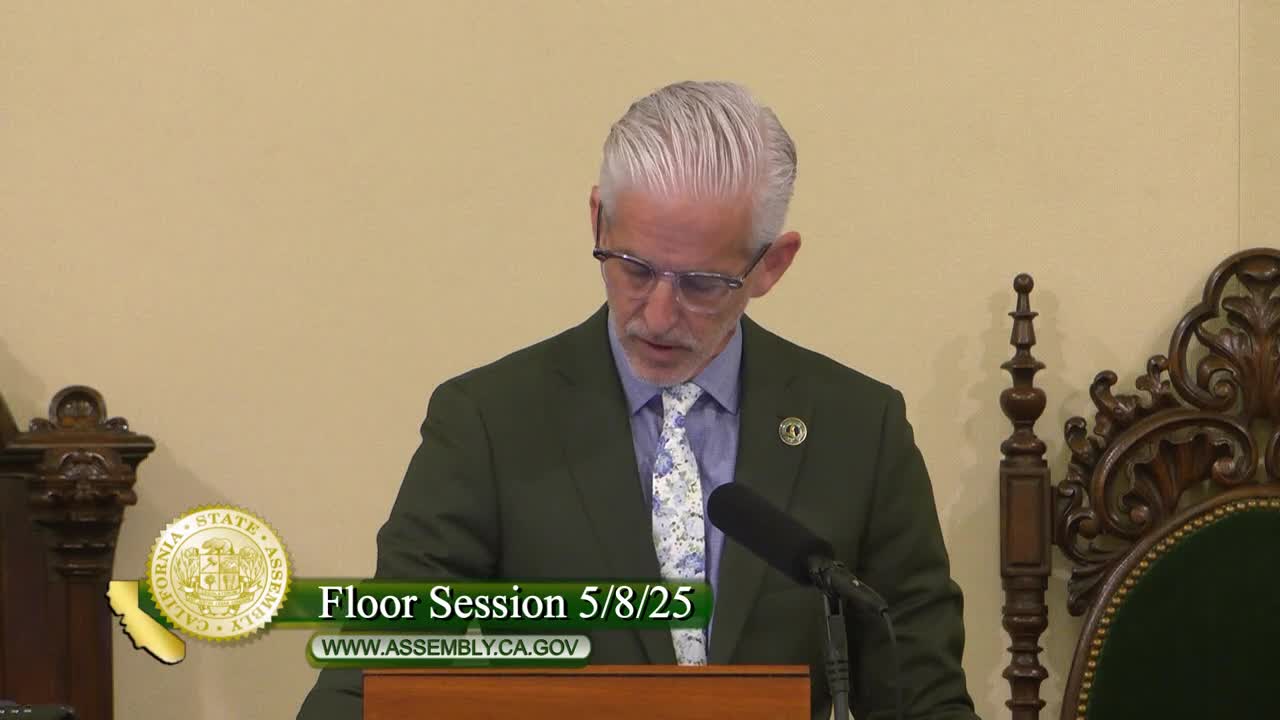
| May 8, 2025 | ACR 39 Ramos Concurrence in Senate Amendments | Assembly Floor |
Passed |
|
| Apr 24, 2025 | Special Consent ACR39 Ramos et al. | Senate Floor |
Passed |
|
| Mar 28, 2025 | ACR 39 Ramos Consent Calendar Second Day | Assembly Floor |
Passed |
|
| Mar 24, 2025 | Be adopted. To Consent Calendar. | Assembly Standing Committee on Rules |
Passed |
This list shows positions taken on this bill by organizations on the date displayed, which is linked to the original source.
Positions by individuals are not included.
|
Organization
|
Position
|
Date
|
|---|---|---|
| Yocha Dehe Wintun Nation | ** Support |
CONCURRENCE IN SENATE AMENDMENTS
CSA1 Bill Id:ACR 39
Author:(Ramos)
As Amended Ver:April 3, 2025
Majority vote
SUMMARY
Designates the month of May 2025 as California's Missing and Murdered Indigenous People Awareness Month.
Senate Amendments
Added a reference to the Missing and Murdered Indigenous People (MMIP) Summit hosted by the Yurok tribe since 2023. The Summit brings together tribal leaders from across the state, MMIP survivors, and victim advocates, as well as state lawmakers, federal partners, law enforcement, and academic researchers to identify solutions to stop the crisis and to bring awareness, education, and action by giving a voice to California's missing and murdered indigenous people and their families.
COMMENTS
According to the Author
The Missing and Murdered Indigenous People (MMIP) crisis has plagued California tribes for generations, and progress has traditionally been slow. However, in recent years the state has made efforts to address MMIP. In order to effectively bring change, we must continue highlighting the issue to ensure we are hearing our tribal communities and working to find solutions to this crisis.
Arguments in Support
The Yocha Dehe Wintun Nation writes in support: "The crisis of missing and murdered Indigenous people affects tribes across the nation, causing immense pain and trauma. Historically, many of these cases have gone unsolved or uninvestigated, further amplifying the sense of injustice and heartbreak experienced by Indigenous communities."
Arguments in Opposition
None on file
FISCAL COMMENTS
No fiscal impact. This resolution is keyed non-fiscal by Legislative Counsel.
VOTES:
ASM RULES: 11-0-0
YES: Pacheco, Lackey, Ahrens, Flora, Mark González, Irwin, Krell, Patel, Michelle Rodriguez, Sanchez, Zbur
ASSEMBLY FLOOR: 62-0-18
YES: Addis, Aguiar-Curry, Ahrens, Alanis, Arambula, Ávila Farías, Bains, Bauer-Kahan, Bennett, Berman, Bonta, Bryan, Calderon, Caloza, Castillo, Connolly, Davies, DeMaio, Dixon, Elhawary, Ellis, Flora, Fong, Garcia, Gipson, Mark González, Hadwick, Haney, Harabedian, Hart, Hoover, Irwin, Jackson, Kalra, Krell, Lackey, Lee, Lowenthal, Macedo, McKinnor, Muratsuchi, Nguyen, Ortega, Pacheco, Patterson, Pellerin, Ramos, Ransom, Celeste Rodriguez, Michelle Rodriguez, Blanca Rubio, Sanchez, Schultz, Solache, Stefani, Ta, Tangipa, Valencia, Wallis, Wicks, Wilson, Rivas
ABS, ABST OR NV: Alvarez, Boerner, Carrillo, Chen, Essayli, Gabriel, Gallagher, Jeff Gonzalez, Papan, Patel, Petrie-Norris, Quirk-Silva, Rogers, Schiavo, Sharp-Collins, Soria, Ward, Zbur
SENATE FLOOR: 37-0-3
YES: Allen, Alvarado-Gil, Arreguín, Ashby, Becker, Blakespear, Cabaldon, Caballero, Cervantes, Choi, Cortese, Dahle, Durazo, Gonzalez, Grayson, Grove, Hurtado, Jones, Laird, Limón, McGuire, McNerney, Menjivar, Niello, Ochoa Bogh, Padilla, Pérez, Richardson, Seyarto, Smallwood-Cuevas, Stern, Strickland, Umberg, Valladares, Wahab, Weber Pierson, Wiener
ABS, ABST OR NV: Archuleta, Reyes, Rubio
UPDATED
VERSION: April 3, 2025
CONSULTANT: Michael Erke / RLS. / (916) 319-2800 FN: 0000288
SENATE RULES COMMITTEE Office of Senate Floor Analyses (916) 651-1520 Fax: (916) 327-4478 | ACR 39 |
THIRD READING
Bill No: ACR 39
Author: Ramos (D), et al.
Amended: 4/3/25 in Senate
Vote: 21
ASSEMBLY FLOOR: 62-0, 3/28/25 (Consent) - See last page for vote
SUBJECT: Missing and Murdered Indigenous People Awareness Month
SOURCE: Author
DIGEST:
This resolution designates the month of May 2025 as California’s Missing and Murdered Indigenous People Awareness Month.
ANALYSIS: This resolution makes the following legislative findings:
- According to the federal Centers for Disease Control and Prevention 2021 report on Homicides of American Indians/Alaskan Natives between 2003 to 2018, homicide was the fifth leading cause of death among Native Americans in 2019.
- In the Federal Bureau of Investigation’s 2023 Missing American Indian and Alaska Native Persons Data report, there were 10,650 reported incidents of Native people who have gone missing. Of those entries, 5,801 were females and 7,124 were juveniles.
- Today, there is still little data on the epidemic of missing and murdered indigenous people. The data that is available tends to be incomplete and inadequate.
- Since 2023, the Yurok Tribe has hosted the Missing and Murdered Indigenous People (MMIP) Summit to bring together tribal leaders from across the state, MMIP survivors, and victim advocates, as well as state lawmakers, federal partners, law enforcement, and academic researchers to identify solutions to stop the crisis and to bring awareness, education, and action by giving a voice to California’s missing and murdered indigenous people and their families.
This resolution designates the month of May 2025 as California’s Missing and Murdered Indigenous People Awareness Month.
Related/Prior Legislation
ACR 133 (Ramos, Resolution Chapter 69, Statutes of 2024)
ACR 25 (Ramos, Resolution Chapter 76, Statutes of 2023)
ACR 136 (Ramos, Resolution Chapter 83, Statutes of 2022)
SCR 107 (Skinner, Resolution Chapter 91, Statutes of 2022)
FISCAL EFFECT: Appropriation: No Fiscal Com.: No Local: No
SUPPORT: (Verified 4/9/25)
Yocha Dehe Wintun Nation
OPPOSITION: (Verified 4/9/25)
None received
ASSEMBLY FLOOR: 62-0, 3/28/25
AYES: Addis, Aguiar-Curry, Ahrens, Alanis, Arambula, Ávila Farías, Bains, Bauer-Kahan, Bennett, Berman, Bonta, Bryan, Calderon, Caloza, Castillo, Connolly, Davies, DeMaio, Dixon, Elhawary, Ellis, Flora, Fong, Garcia, Gipson, Mark González, Hadwick, Haney, Harabedian, Hart, Hoover, Irwin, Jackson, Kalra, Krell, Lackey, Lee, Lowenthal, Macedo, McKinnor, Muratsuchi, Nguyen, Ortega, Pacheco, Patterson, Pellerin, Ramos, Ransom, Celeste Rodriguez, Michelle Rodriguez, Blanca Rubio, Sanchez, Schultz, Solache, Stefani, Ta, Tangipa, Valencia, Wallis, Wicks, Wilson, Rivas
NO VOTE RECORDED: Alvarez, Boerner, Carrillo, Chen, Essayli, Gabriel, Gallagher, Jeff Gonzalez, Papan, Patel, Petrie-Norris, Quirk-Silva, Rogers, Schiavo, Sharp-Collins, Soria, Ward, Zbur
Prepared by: Hunter Flynn / SFA / (916) 651-1520
4/9/25 15:48:07
**** END ****
Date of Hearing: March 24, 2025
ASSEMBLY COMMITTEE ON RULES
Blanca Pacheco, Chair
ABPCA Bill Id:ACR 39 (
Author:Ramos) – As Introduced Ver:February 21, 2025
SUBJECT: Missing and Murdered Indigenous People Awareness Month.
SUMMARY: Designates the month of May 2025 as California’s Missing and Murdered Indigenous People Awareness Month. Specifically, this resolution makes the following legislative findings:
- According to the federal Centers for Disease Control and Prevention (CDC) 2021 report on Homicides of American Indians/Alaskan Natives between 2003 to 2018, homicide was the fifth leading cause of death among Native Americans in 2019.
- In the Federal Bureau of Investigation’s 2023 Missing American Indian and Alaska Native Persons Data report, there were 10,650 reported incidents of native people who have gone missing. Of those entries, 5,801 were females and 7,124 were juveniles.
- The CDC has reported that about 58 percent of American Indian and Alaska Native women have experienced domestic violence during their lifetime. Violence among intimate partners was a leading factor in 44 percent of the homicides of Native women.
- Today, there is still little data on the epidemic of missing and murdered indigenous people. Current statistics by the CDC estimate that about 57 percent of these homicides happened in urban areas and about 43 percent happened in rural areas.
- According to the first report conducted by the Urban Indian Health Institute in 2018 on missing and murdered indigenous women in urban cities, the victims were 18 years of age or younger in 27 percent of the cases; and, the average age for missing and murdered indigenous women was 29 years of age.
- California has the sixth highest death rate of indigenous women in urban cities.
- According to the most census data, California has the largest population of American Indians, more than any other state in the country.
- In 2022, Governor Newsom signed into law Assembly Bill 1314, the Feather Alert, which is a preventative measure that will be utilized to return missing and endangered indigenous people to their homes.
- In 2023, Governor Newsom signed into law Assembly Bill 44 which requires the Department of Justice to grant access to the California Law Enforcement Telecommunications System to the law enforcement agency or tribal court of a qualified federally-recognized Indian tribe, thus facilitating the exchange and dissemination of information between law enforcement agencies in the state.
FISCAL EFFECT: This resolution is keyed non-fiscal by Legislative Counsel.
REGISTERED SUPPORT / OPPOSITION:
Support
None on file
Opposition
None on file
Analysis Prepared by: Michael Erke / RLS. / (916) 319-2800
Bill Author

Bill Co-Author(s):