AJR 10: United States Forest Service: federal funding.
- Session Year: 2025-2026
- House: Assembly
- Latest Version Date: 2025-07-08
Current Status:
Passed
(2025-07-08: Chaptered by Secretary of State - Res. Chapter 133, Statutes of 2025.)
Introduced
In Committee
Awaiting First Chamber Vote
Passed First Chamber
In Committee
Awaiting Second Chamber Vote
Passed Second Chamber
Enacted
What does this bill do?
This resolution asks the President and Congress to protect and strengthen the U.S. Forest Service by vetoing or opposing any bills that cut its funding or staff and by supporting forest management and wildfire risk reduction programs. It also urges California’s members of Congress to vote against budget cuts that would reduce wildfire prevention, suppression, and land stewardship that protect communities, watersheds, and outdoor recreation.
The summary is provided by generative AI which can make mistakes. For original language, please view the details in the table below.
This measure would call on the President of the United States to honor his promise to save American lives and communities through forest management and wildfire risk reduction projects, would request that he veto any legislation that defunds the United States Forest Service and work with Congress to protect and improve these programs, and would call for related congressional action.
This measure would call on the President of the United States to honor his promise to save American lives and communities through forest management and wildfire risk reduction projects, would request that he veto any legislation that defunds the United States Forest Service and work with Congress to protect and improve these programs, and would call for related congressional action.
This measure would call on the President of the United States to honor his promise to save American lives and communities through forest management and wildfire risk reduction projects, would request that he veto any legislation that defunds the United States Forest Service and work with Congress to protect and improve these programs, and would call for related congressional action.
WHEREAS, Federal forest management dates back to 1876 when Congress created the office of Special Agent in the United States Department of Agriculture to assess the quality and conditions of forests in the United States; and
WHEREAS, Established in 1905, the United States Forest Service, an agency of the United States Department of Agriculture, is the nations foremost federal forestry organization, managing federal lands for timber production, outdoor recreation, energy and mineral development, livestock grazing, watershed protection, and wildlife habitat; and
WHEREAS, The United States Forest Service is a world leader in forest research, providing essential direction in the sustainable management, conservation, use, and stewardship of natural and cultural resources on national forests and grasslands in the United States; and
WHEREAS, The United States Forest Service manages 193,000,000 acres of forests and grasslands around the country and estimates a backlog of about 63,000,000 acres and 70,000 communities at risk from catastrophic wildfire; and
WHEREAS, The United States Forest Service Pacific Southwest Region manages over 20,000,000 acres across 18 national forests in California, which make up almost one half of Californias forests; and
WHEREAS, The increasing severity and frequency of wildfires have placed extraordinary pressure on the United States Forest Service, which must double hazardous fuel treatments over the next decade to reduce the risk of wildfire by 80 percent; and
WHEREAS, California has been disproportionately impacted by worsening wildfire seasons, with the state experiencing 9 of the 10 largest fires in its history within the past decade, destroying thousands of homes, displacing entire communities, and costing lives; and
WHEREAS, As wildfire seasons have grown in both length and severity, wildland fire management costs have increased, with $2.4 billion of the United States Forest Services annual budget of $8.9 billion dedicated to wildfire suppression; and
WHEREAS, It has been shown that postwildfire rehabilitation costs can exceed the costs of wildfire suppression by 2 to 30 times, underscoring the necessity of proactive wildfire prevention, forest restoration, and hazardous fuel reduction efforts; and
WHEREAS, The environmental devastation caused by severe wildfires includes widespread air and water pollution, carbon emissions that exacerbate climate change, loss of biodiversity, and long-term damage to watersheds, making wildfire prevention an urgent priority for Californias public health, safety, and environment; and
WHEREAS, Cooperative efforts between federal, state, and local agencies are key in responding to emergencies such as wildfires, with coordinated efforts improving suppression effectiveness, resource allocation, and public safety measures; and
WHEREAS, The United States Forest Service and the State of California have committed to maintain and restore healthy forests and rangelands that reduce public safety risks, protect natural and built infrastructure, and enhance ecological habitat and biological diversity; and
WHEREAS, National forests support the $81.5 billion recreation economy in California and are essential for creating opportunities for access to the outdoors; and
WHEREAS, National forests in California allow opportunities for sustainable recreation, such as hiking, biking, skiing, and camping, with more than 35,000,000 visitors each year; and
WHEREAS, National forests in California offer grazing leases and responsible timber harvesting; and
WHEREAS, Watersheds within national forests serve as important sources of water supply for California; and
WHEREAS, United States Forest Service employees are integral to land stewardship, serving as qualified wildland firefighters, search-and-rescue personnel, trail maintenance crew members, campground managers, and environmental educators, ensuring public lands remain safe, accessible, and ecologically sound; and
WHEREAS, Removing United States Forest Service employees from their jobs prevents the functions that keep the land intact, including clearing downed trees from trails, conducting fire prevention and postfire restoration work, maintaining campgrounds, and ensuring that all land uses comply with federal laws; now, therefore, be it
Resolved by the Assembly and the Senate of the State of California, jointly, That the Legislature calls on the President of the United States to honor his promise to save American lives and communities through forest management and wildfire risk reduction projects, and requests that he veto any legislation that defunds the United States Forest Service and instead, work with Congress to protect and improve these programs; and be it further
Resolved, That the Legislature opposes cuts to the United States Forest Service, as well as proposals to indirectly cut wildfire prevention, wildfire suppression, and other forest management efforts by defunding them, while giving tax breaks to multinational corporations and billionaires, and calls on our states Representatives in Congress to vote against cuts to the United States Forest Service budget and staffing levels, and to support legislation to protect and improve the federal governments forest management activities in California; and be it further
Resolved, That the Chief Clerk of the Assembly transmit copies of this resolution to the President of the United States, the Vice President of the United States, the Speaker of the United States House of Representatives, the Majority Leader of the United States Senate, each Senator and Representative from California in the Congress of the United States, and to the author for appropriate distribution.
|
Date
|
Status
|
|---|---|
| Jul 8, 2025 | Chaptered by Secretary of State - Res. Chapter 133, Statutes of 2025. |
| Jul 8, 2025 | Enrolled and filed with the Secretary of State at 3 p.m. |
| Jul 1, 2025 | In Assembly. Ordered to Engrossing and Enrolling. |
| Jun 30, 2025 | Adopted and to Assembly. (Ayes 39. Noes 0. Page 1842.) |
| Jun 10, 2025 | From committee: Be adopted. Ordered to Third Reading. (Ayes 7. Noes 0.) (June 10). |
| May 21, 2025 | Referred to Com. on N.R. & W. |
| May 12, 2025 | In Senate. To Com. on RLS. |
| May 8, 2025 | Adopted and to Senate. (Ayes 69. Noes 0. Page 1482.) |
| May 8, 2025 | Coauthors revised. |
| May 1, 2025 | From committee: Be adopted. Ordered to Third Reading. (Ayes 14. Noes 0.) (May 1). |
| Apr 28, 2025 | Referred to Com. on NAT. RES. |
| Apr 22, 2025 | From printer. |
| Apr 21, 2025 | Introduced. To print. |
|
Date
|
Description
|
Location
|
Votes
|
|
|---|---|---|---|---|
| Jun 30, 2025 | Assembly 3rd Reading AJR10 Rogers et al. By Limón | Senate Floor |
Passed |
|
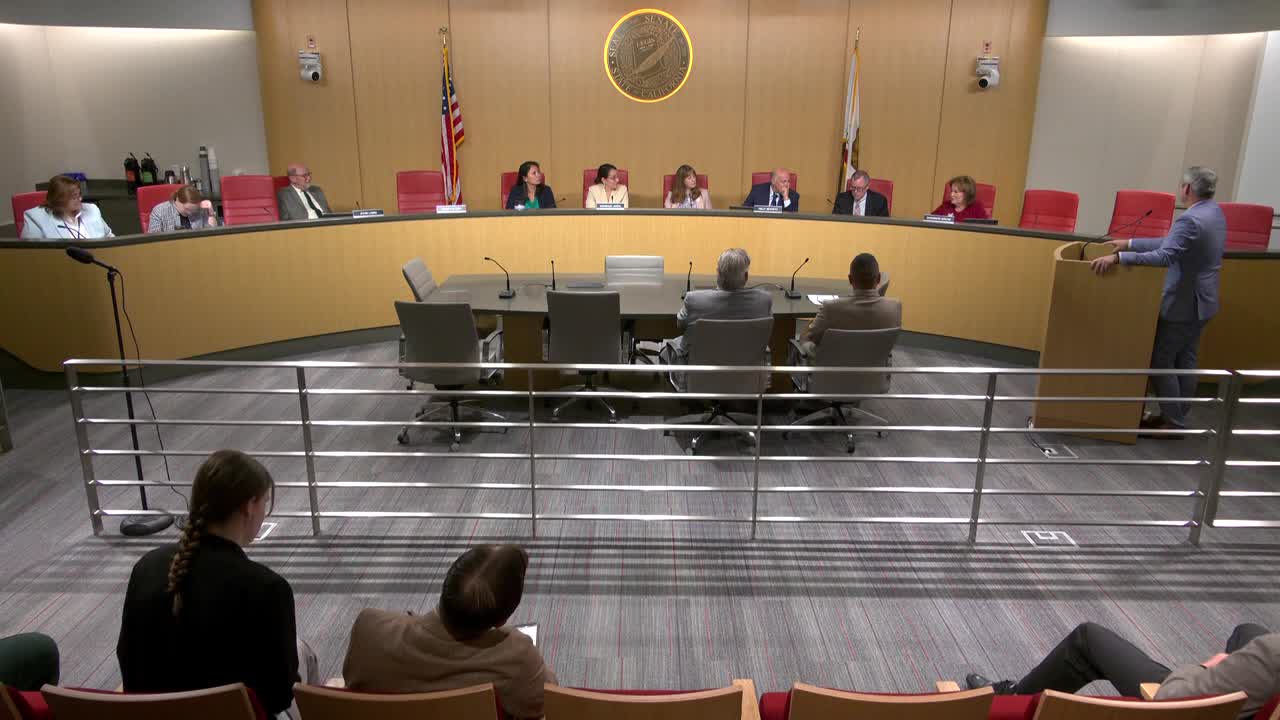
| Jun 10, 2025 | Be adopted. Ordered to third reading | Senate Standing Committee on Natural Resources and Water |
Passed |
|
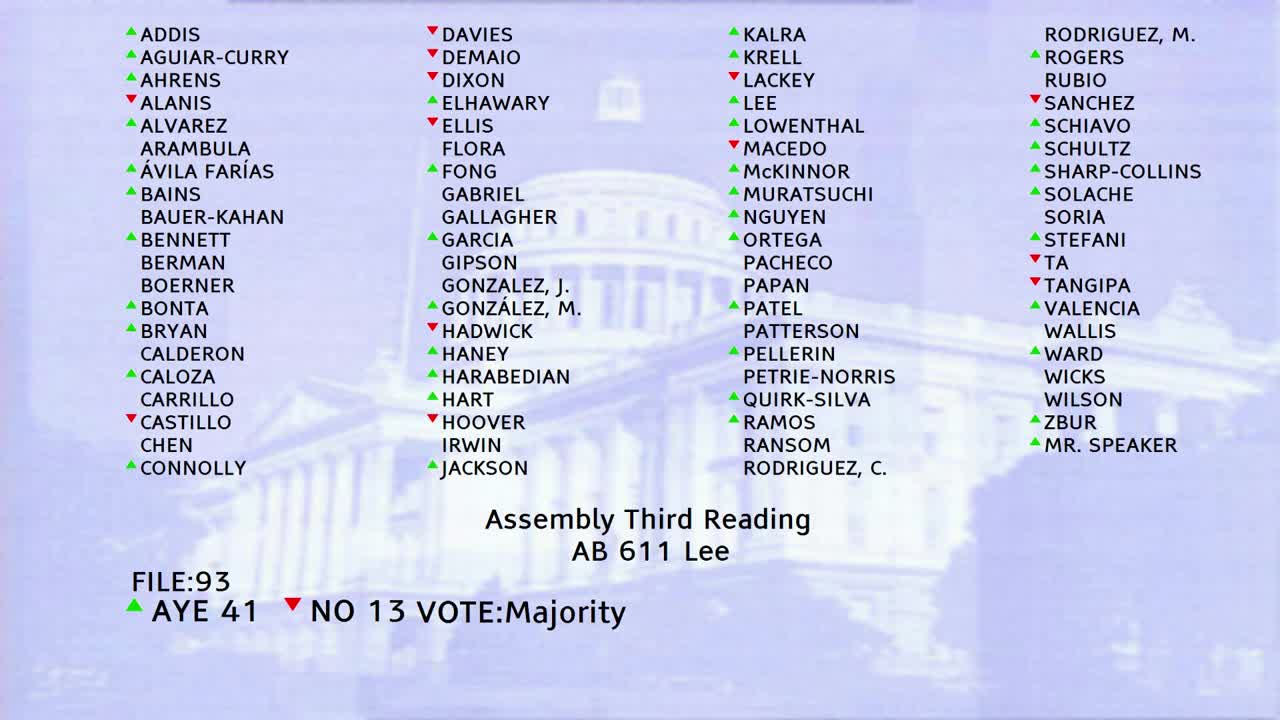
| May 8, 2025 | AJR 10 Rogers Assembly Third Reading | Assembly Floor |
Passed |
|
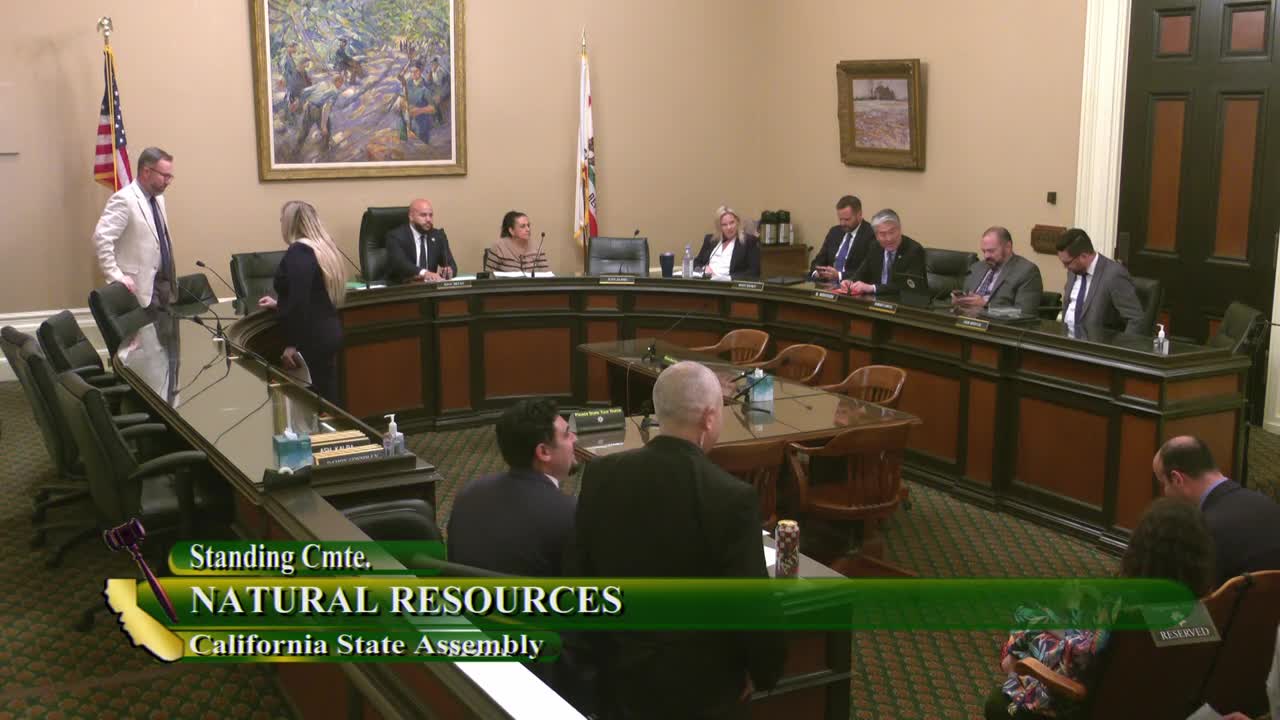
| May 1, 2025 | Be adopted. To third reading. | Assembly Standing Committee on Natural Resources |
Passed |
This list shows positions taken on this bill by organizations on the date displayed, which is linked to the original source.
Positions by individuals are not included.
SENATE RULES COMMITTEE Office of Senate Floor Analyses (916) 651-1520 Fax: (916) 327-4478 | AJR 10 |
THIRD READING
Bill No: AJR 10
Author: Rogers (D), et al.
Introduced: 4/21/25
Vote: 21
SENATE NATURAL RES. & WATER COMMITTEE: 7-0, 6/10/25
AYES: Limón, Seyarto, Allen, Grove, Hurtado, Laird, Stern
ASSEMBLY FLOOR: 69-0, 5/8/25 - See last page for vote
SUBJECT: United States Forest Service: federal funding
SOURCE: Author
DIGEST:
This measure calls on the President of the United States to honor his promise to save American lives and communities through forest management and wildfire risk reduction projects, requests that he veto any legislation that defunds the United States Forest Service (USFS) and work with Congress to protect and improve these programs, and calls for related congressional action.
ANALYSIS:
Existing federal law:
- Requires the United States Secretary of Agriculture to make provisions for the protection against destruction by fire and depredations upon the public forests and national forests which may have been set aside or which may be hereafter set aside. (Title 16, United States Code (USC), section 551)
- Requires officials of the USFS designated by the Secretary of Agriculture, in all ways that are practicable, to aid in the enforcement of the laws of the states or territories with regard to stock, for the prevention and extinguishment of forest fires, and for the protection of fish and game, and with respect to national forests, to aid the other federal bureaus and departments on request from them, in the performance of the duties imposed on them by law. (16 USC 553)
- Directs, in order to determine and demonstrate the best methods for the conservative management of forest and forest lands and the protection of timber and other forest products, the Secretary of Agriculture to establish and maintain, in cooperation with the state of California and with the surrounding states, a forest experiment station at such place or places as the Secretary may determine to be most suitable, and to conduct, independently or in cooperation with other branches of the federal government, the states, universities, colleges, county and municipal agencies, business organizations, and individuals, such silvicultural, dendrological, forest fire, economic, and other experiments and investigations as may be necessary. (16 USC 562)
Existing state law establishes the Wildfire and Forest Resilience Task Force (Task Force) and requires the Task Force to report to the appropriate policy and budget committees of the Legislature on progress made in achieving the goals and key actions identified in the state’s action plan, on state expenditures made to implement these key actions, and on additional resources and policy changes needed to achieve these goals and key actions. (Public Resources Code 4771)
This resolution:
- Makes findings related to:
- The administration of National Forest lands;
- The importance of healthy forestland to the state’s economy, recreation, resource management, and water supply; and
- The value of a fully-staffed Forest Service.
- Resolves that the Legislature calls on the President of the United States to:
- Honor his promise to save American lives through forest management and wildfire risk reduction projects;
- Veto any legislation that defunds the USFS; and
- Work with Congress to protect and improve related programs.
- Further resolves:
- That the Legislature opposes direct and indirect cuts to the USFS and its programs; and
- The Legislature calls on California’s Congressional Representatives to vote against cuts to the USFS and support legislation to protect and improve the federal government’s forest management activities in California.
- Continues to resolve that the Chief Clerk of the Assembly transmit copies of this resolution to the President of the United States, the Vice President of the United States, the Speaker of the United States House of Representatives, the Majority Leader of the United States Senate, each Senator and Representative from California in the Congress of the United States, and to the author for appropriate distribution.
Background
United States Forest Service. Today, the USFS, with approximately 35,000 employees across the country, manages the National Forest System, which consists of 154 national forests and 20 national grasslands covering 193 million acres in 43 states, the Virgin Islands, and Puerto Rico. The USFS helps communities; state, local, and tribal governments; forest industries; and private forest landowners improve conditions in both urban and rural areas. In total, the USFS helps to steward about 900 million forested acres in the United States, including 130 million acres in urban areas, where most Americans live.
Roughly one‑third of California is forested and more than half – 57%, or nearly 19 million acres – of the state’s forestlands are owned and managed by the federal government. California has 20 national forests, and is second only to Alaska in federal forestland acres.
State-Federal Partnerships. In addition to the work USFS conducts independently in each state, it also has partnerships with states for joint forest management goals and projects. The USFS and California have committed to maintain and restore healthy forests and rangelands through the Agreement for Shared Stewardship of California’s Forest and Rangelands to treat a million acres of forest and wildlands annually by 2025, committing to each sustainably treat 500,000 acres per year. The Good Neighbor Authority allows the USFS to enter into agreements with State, County, and Tribal agencies to perform forest, rangeland, and watershed restoration services on, and adjacent to, National Forest System lands. The authority allows the USFS to enter into up to 10-year agreements with partner agencies that have the mandate to conduct forest and watershed restoration activities, who then perform the activities on behalf of the Forest Service.
Partnerships like those through the Good Neighbor Authority, where the state contributes funding and non-cash resources to perform fuels management on federal lands, are at risk. The amount of USFS managed lands and the federal appropriations for that land management are a significant part of California’s overall wildfire risk reduction strategies – budget cuts to USFS activities may raise the cost of shared stewardship and Good Neighbor Authority projects to the state.
Cuts to federal workforce. In early April, ProPublica reported that about 700 USFS employees who were terminated in February were “red carded,” a certification system indicating an employee is qualified to work on the fire line or supporting wildfire response. Understaffing in other units such as information technology also impacts firefighting.
Efficiency at what cost? According to reporting in Politico, President Trump has cut 10% of USFS employees. Chief Randy Moore, the former Regional Forester of the Pacific Southwest Region (Region 5), which covers California, resigned as USFS chief, and more than half of the regional chiefs are also retiring. Vicki Christiansen, who served as the USFS Chief during President Trump’s first term, acknowledges the threat of these cuts – “$40 million in savings now just to have an additional $4 billion in wildfire expenses is crazy.”
FISCAL EFFECT: Appropriation: No Fiscal Com.: No Local: No
SUPPORT: (Verified 6/10/25)
None received
OPPOSITION: (Verified 6/10/25)
None received
ARGUMENTS IN SUPPORT: According to the author, “The United States Forest Service staffing levels might seem like something far from our everyday lives, but it affects us all on a daily basis. So many of our water sources originate in National Forest lands. Critical species, icons like the California Condor, and vulnerable ecosystems rely on these natural lands for survival. These vast forests are the lungs of our state, soaking up carbon and helping keep our air clean.”
“I’m immensely proud that the 2nd Assembly District is home to the Mendocino National Forest, the first established in the state. It spans an area covering almost 1 million acres and is close in size to the entire state of Rhode Island. This Forest and other National Forests in my district sustain tribal communities and thousands of rural residents for their food sources, provide water from crystal clear rivers, and deliver jobs from recreation.”
“These staffing cuts directly impact my constituents, literally taking food off the tables of longtime public servants who work in the Forest Service. In our small rural communities even a few jobs lost can have a large ripple effect on everyone. These cuts imperil residents in all corners of the state, from the Angeles National Forest to the slopes surrounding Lake Tahoe.”
ASSEMBLY FLOOR: 69-0, 5/8/25
AYES: Addis, Aguiar-Curry, Ahrens, Alanis, Alvarez, Ávila Farías, Bains, Bauer-Kahan, Bennett, Berman, Bonta, Bryan, Calderon, Caloza, Castillo, Chen, Connolly, Davies, DeMaio, Dixon, Elhawary, Fong, Gabriel, Gallagher, Garcia, Gipson, Mark González, Hadwick, Haney, Harabedian, Hart, Hoover, Jackson, Kalra, Krell, Lackey, Lee, Lowenthal, McKinnor, Muratsuchi, Nguyen, Ortega, Pacheco, Papan, Patel, Patterson, Pellerin, Petrie-Norris, Quirk-Silva, Ramos, Ransom, Michelle Rodriguez, Rogers, Blanca Rubio, Sanchez, Schiavo, Schultz, Sharp-Collins, Solache, Soria, Stefani, Ta, Tangipa, Valencia, Ward, Wicks, Wilson, Zbur, Rivas
NO VOTE RECORDED: Arambula, Boerner, Carrillo, Ellis, Flora, Jeff Gonzalez, Irwin, Macedo, Celeste Rodriguez, Wallis
Prepared by: Edith Hannigan / N.R. & W. / (916) 651-4116
6/11/25 9:20:32
**** END ****
SENATE COMMITTEE ON NATURAL RESOURCES AND WATER
Senator Monique Limón, Chair
2025 - 2026 Regular
Bill No: AJR Hearing Date: June 10, 2025
Author: | |||
Version: | Introduced | ||
Urgency: | Fiscal: | ||
Consultant: | |||
Subject: United States Forest Service: federal funding
SUMMARY
This measure calls on the President of the United States to honor his promise to save American lives and communities through forest management and wildfire risk reduction projects, requests that he veto any legislation that defunds the United States Forest Service (USFS) and work with Congress to protect and improve these programs, and calls for related congressional action.
BACKGROUND AND EXISTING LAW
Existing law:
- Requires the United States Secretary of Agriculture to make provisions for the protection against destruction by fire and depredations upon the public forests and national forests which may have been set aside or which may be hereafter set aside. (Title 16, United States Code (USC), section 551)
- Requires officials of the USFS designated by the Secretary of Agriculture, in all ways that are practicable, to aid in the enforcement of the laws of the states or territories with regard to stock, for the prevention and extinguishment of forest fires, and for the protection of fish and game, and with respect to national forests, to aid the other federal bureaus and departments on request from them, in the performance of the duties imposed on them by law. (16 USC 553)
- In order to determine and demonstrate the best methods for the conservative management of forest and forest lands and the protection of timber and other forest products, directs the Secretary of Agriculture to establish and maintain, in cooperation with the state of California and with the surrounding states, a forest experiment station at such place or places as the Secretary may determine to be most suitable, and to conduct, independently or in cooperation with other branches of the federal government, the states, universities, colleges, county and municipal agencies, business organizations, and individuals, such silvicultural, dendrological, forest fire, economic, and other experiments and investigations as may be necessary. (16 USC 562)
- Establishes the Wildfire and Forest Resilience Task Force (Task Force) and requires the Task Force to report to the appropriate policy and budget committees of the Legislature on progress made in achieving the goals and key actions identified in the state’s action plan, on state expenditures made to implement these key actions, and on additional resources and policy changes needed to achieve these goals and key actions. (Public Resources Code 4771)
Cuts to federal workforce. In early April, ProPublica reported that about 700 USFS employees who were terminated in February were “red carded,”[1] a certification system indicating an employee is qualified to work on the fire line or supporting wildfire response. Understaffing in other units such as information technology also impacts firefighting.
PROPOSED LAW
This resolution:
- Makes findings related to:
- The administration of National Forest lands;
- The importance of healthy forestland to the state’s economy, recreation, resource management, and water supply; and
- The value of a fully-staffed Forest Service.
- Resolves that the Legislature calls on the President of the United States to:
- Honor his promise to save American lives through forest management and wildfire risk reduction projects;
- Veto any legislation that defunds the USFS; and
- Work with Congress to protect and improve related programs.
- Further resolves:
- That the Legislature opposes direct and indirect cuts to the USFS and its programs; and
- The Legislature calls on California’s Congressional Representatives to vote against cuts to the USFS and support legislation to protect and improve the federal government’s forest management activities in California.
- Continues to resolve:
- The Chief Clerk of the Assembly transmit copies of this resolution to the President of the United States, the Vice President of the United States, the Speaker of the United States House of Representatives, the Majority Leader of the United States Senate, each Senator and Representative from California in the Congress of the United States, and to the author for appropriate distribution.
ARGUMENTS IN SUPPORT
According to the author, “The United States Forest Service staffing levels might seem like something far from our everyday lives, but it affects us all on a daily basis. So many of our water sources originate in National Forest lands. Critical species, icons like the California Condor, and vulnerable ecosystems rely on these natural lands for survival. These vast forests are the lungs of our state, soaking up carbon and helping keep our air clean.”
“I’m immensely proud that the 2nd Assembly District is home to the Mendocino National Forest, the first established in the state. It spans an area covering almost 1 million acres and is close in size to the entire state of Rhode Island. This Forest and other National Forests in my district sustain tribal communities and thousands of rural residents for their food sources, provide water from crystal clear rivers, and deliver jobs from recreation.”
“These staffing cuts directly impact my constituents, literally taking food off the tables of longtime public servants who work in the Forest Service. In our small rural communities even a few jobs lost can have a large ripple effect on everyone. These cuts imperil residents in all corners of the state, from the Angeles National Forest to the slopes surrounding Lake Tahoe.”
ARGUMENTS IN OPPOSITION
None received.
COMMENTS
United States Forest Service. Today, the USFS, with approximately 35,000 employees across the country, manages the National Forest System, which consists of 154 national forests and 20 national grasslands covering 193 million acres in 43 states, the Virgin Islands, and Puerto Rico. The USFS helps communities; state, local, and tribal governments; forest industries; and private forest landowners improve conditions in both urban and rural areas. In total, the USFS helps to steward about 900 million forested acres in the United States, including 130 million acres in urban areas, where most Americans live.
Roughly one‑third of California is forested and more than half – 57%, or nearly 19 million acres – of the state’s forestlands are owned and managed by the federal government. California has 20 national forests, and is second only to Alaska in federal forestland acres.
State-Federal Partnerships. In addition to the work USFS conducts independently in each state, it also has partnerships with states for joint forest management goals and projects. The USFS and California have committed to maintain and restore healthy forests and rangelands through the Agreement for Shared Stewardship of California’s Forest and Rangelands to treat a million acres of forest and wildlands annually by 2025, committing to each sustainably treat 500,000 acres per year. The Good Neighbor Authority (GNA) allows the USFS to enter into agreements with State, County, and Tribal agencies to perform forest, rangeland, and watershed restoration services on, and adjacent to, National Forest System lands. The authority allows the USFS to enter into up to 10-year agreements with partner agencies that have the mandate to conduct forest and watershed restoration activities, who then perform the activities on behalf of the Forest Service.
Partnerships like those through the Good Neighbor Authority, where the state contributes funding and non-cash resources to perform fuels management on federal lands, are at risk. The amount of USFS managed lands and the federal appropriations for that land management are a significant part of California’s overall wildfire risk reduction strategies – budget cuts to USFS activities may raise the cost of shared stewardship and Good Neighbor Authority projects to the state.
Efficiency at what cost? According to reporting in Politico, President Trump has cut 10 percent of USFS employees. Chief Randy Moore, the former Regional Forester of the Pacific Southwest Region (Region 5), which covers California, resigned as USFS chief, and more than half of the regional chiefs are also retiring. Vicki Christiansen, who served as the USFS Chief during President Trump’s first term, acknowledges the threat of these cuts – “$40 million in savings now just to have an additional $4 billion in wildfire expenses is crazy.”[2]
SUPPORT
None Received
OPPOSITION
None Received
-- END --
Olalda, Mark. “Trump said cuts wouldn’t affect public safety. Then he fired hundred of workers who help fight wildfires.” ProPublica, April 7, 2025. https://www.propublica.org/article/trump-doge-cuts-forest-service-firefighting. Accessed May 29, 2025. ↑
Wolman, Jordan and Natalie Fertig. “‘Crazy’: Forest Service cuts ignite fear, fury over wildfire risks” Politico. April 23, 2025. https://www.politico.com/news/2025/04/23/crazy-forest-service-cuts-ignite-fear-fury-over-wildfire-risks-00301499. Accessed May 29, 2025. ↑
ASSEMBLY THIRD READING
ATR Bill Id:AJR 10
Author:(Rogers)
As Introduced Ver:April 21, 2025
Majority vote
SUMMARY
Calls on the President and urges the California Congressional delegation to oppose budgets cuts to the United States Forest Service (USFS).
Major Provisions
- Calls on the President of the United States to honor his promise to save American lives and communities through forest management and wildfire risk reduction projects, and requests that he veto any legislation that defunds the USFS and, instead, work with Congress to protect and improve these programs.
- States that the Legislature opposes cuts to the USFS, as well as proposals to indirectly cut wildfire prevention, wildfire suppression, and other forest management efforts by defunding them, while giving tax breaks to multinational corporations and billionaires.
- Calls on our state's representatives in Congress to vote against cuts to the USFS budget and staffing levels, and to support legislation to protect and improve the federal government's forest management activities in California.
- Requires the Chief Clerk of the Assembly to transmit copies of this resolution to the President of the United States, the Vice President of the United States, the Speaker of the United States House of Representatives, the Majority Leader of the United States Senate, each Senator and Representative from California in the Congress of the United States, and to the author for appropriate distribution.
COMMENTS
Today, the USFS, with approximately 35,000 employees across the country, manages the National Forest System, which consists of 154 national forests and 20 national grasslands covering 193 million acres in 43 states, the Virgin Islands, and Puerto Rico. The USFS helps communities; state, local, and tribal governments; forest industries; and, private forest landowners improve conditions in both urban and rural areas. In total, the USFS helps to steward about 900 million forested acres in the United States, including 130 million acres in urban areas, where most Americans live.
Roughly one‑third of California is forested and more than half – 57%, or nearly 19 million acres – of our forestlands are owned and managed by the federal government. According to the Task Force, in 2023, the USFS committed $930 million under the Wildfire Crisis Strategy to expand and continue efforts to reduce wildfire risk across the Western United States in 21 high risk landscapes, seven of which are in California, covering nearly 19 million acres, including:
- Klamath River Basin in California and Oregon – 10 million acres
- Trinity Forest Health & Fire-Resilient Rural Communities – 910,000 acres
- Plumas Community Protection – 285,000 acres
- North Yuba – 313,000 acres
- Stanislaus – 245,000 acres
- Southern California Fireshed Risk Reduction Strategy – 4 million acres
- Sierra & Elko Fronts in Nevada and California – 3.4 million acres
The amount of USFS managed lands and the federal appropriations for that land management are a significant part of California's overall wildfire risk reduction strategies.
Last October, the USFS directed its employees in California to stop prescribed burning "for the foreseeable future," citing the need to preserve staff and equipment to fight wildfires if needed. The Angeles National Forest, managed by the USFS, covers more than 650,000 acres, about one-quarter of Los Angeles County. Removing USFS employees from their jobs prevents the functions that keep the land intact, including clearing downed trees from trails, conducting post-fire restoration work, reforestation, maintaining campgrounds, and ensuring that all land uses comply with federal laws.
According to a 2010 report by the Western Forestry Leadership Coalition, it has been shown that post-wildfire rehabilitation costs can exceed the costs of wildfire suppression by up to 30 times, underscoring the necessity of proactive wildfire prevention, forest restoration, and hazardous fuel reduction efforts. If an ounce of prevention is worth a pound of cure, it would behoove California – and the nation – to maintain appropriate staffing and funding levels at USFS to fulfill its mission.
According to the Author
Arguments in Support
None on file
Arguments in Opposition
None on file
FISCAL COMMENTS
None
VOTES
ASM NATURAL RESOURCES: 14-0-0
YES: Bryan, Alanis, Connolly, Ellis, Flora, Garcia, Haney, Hoover, Kalra, Muratsuchi, Pellerin, Schultz, Wicks, Zbur
UPDATED
VERSION: April 21, 2025
CONSULTANT: Paige Brokaw / NAT. RES. /(916) 319-2092 FN: 0000326
Date of Hearing: May 1, 2025
ASSEMBLY COMMITTEE ON NATURAL RESOURCES
Isaac G. Bryan, Chair
ABPCA Bill Id:AJR 10 (
Author:Rogers) – As Introduced Ver:April 21, 2025
SUBJECT: United States Forest Service: federal funding
SUMMARY: Calls on the President and urges the California Congressional delegation to oppose budgets cuts to the United States Forest Service (USFS).
EXISTING LAW:
- Requires the United States Secretary of Agriculture to make provisions for the protection against destruction by fire and depredations upon the public forests and national forests which may have been set aside or which may be hereafter set aside. (16 United States Code (USC) 551)
- Requires officials of the Forest Service designated by the Secretary of Agriculture, in all ways that are practicable, to aid in the enforcement of the laws of the states or territories with regard to stock, for the prevention and extinguishment of forest fires, and for the protection of fish and game, and with respect to national forests, to aid the other federal bureaus and departments on request from them, in the performance of the duties imposed on them by law. (16 USC 553)
- In order to determine and demonstrate the best methods for the conservative management of forest and forest lands and the protection of timber and other forest products, directs the Secretary of Agriculture to establish and maintain, in cooperation with the state of California and with the surrounding states, a forest experiment station at such place or places as the Secretary may determine to be most suitable, and to conduct, independently or in cooperation with other branches of the federal government, the states, universities, colleges, county and municipal agencies, business organizations, and individuals, such silvicultural, dendrological, forest fire, economic, and other experiments and investigations as may be necessary. (16 USC 562)
- Establishes the Wildfire and Forest Resilience Task Force (Task Force) and requires the Task Force to report to the appropriate policy and budget committees of the Legislature on progress made in achieving the goals and key actions identified in the state’s action plan, on state expenditures made to implement these key actions, and on additional resources and policy changes needed to achieve these goals and key actions. (Public Resources Code 4771)
THIS RESOLUTION:
- Calls on the President of the United States to honor his promise to save American lives and communities through forest management and wildfire risk reduction projects, and requests that he veto any legislation that defunds the USFS and, instead, work with Congress to protect and improve these programs.
- States that the Legislature opposes cuts to the USFS, as well as proposals to indirectly cut wildfire prevention, wildfire suppression, and other forest management efforts by defunding them, while giving tax breaks to multinational corporations and billionaires.
- Calls on our state’s representatives in Congress to vote against cuts to the USFS budget and staffing levels, and to support legislation to protect and improve the federal government’s forest management activities in California.
- Requires the Chief Clerk of the Assembly to transmit copies of this resolution to the President of the United States, the Vice President of the United States, the Speaker of the United States House of Representatives, the Majority Leader of the United States Senate, each Senator and Representative from California in the Congress of the United States, and to the author for appropriate distribution.
FISCAL EFFECT: Unknown
COMMENTS:
- United States Forest Service. Federal forest management dates back to 1876 when Congress created the office of Special Agent in the U.S. Department of Agriculture (USDA) to assess the quality and conditions of forests in the United States. In 1881 the USDA expanded the office into the Division of Forestry. A decade later Congress passed the Forest Reserve Act of 1891 authorizing the President to designate public lands in the west into what were then called “forest reserves.” Responsibility for these reserves fell under the Department of the Interior (DOI) until 1905 when President Theodore Roosevelt transferred their care to USDA’s new USFS.
Today, the USFS, with approximately 35,000 employees across the country, manages the National Forest System, which consists of 154 national forests and 20 national grasslands covering 193 million acres in 43 states, the Virgin Islands, and Puerto Rico. The USFS helps communities; state, local, and tribal governments; forest industries; and, private forest landowners improve conditions in both urban and rural areas. In total, the USFS helps to steward about 900 million forested acres in the United States, including 130 million acres in urban areas, where most Americans live.
Roughly one‑third of California is forested and more than half – 57%, or nearly 19 million acres – of our forestlands are owned and managed by the federal government.
According to the Task Force, in 2023, the USFS committed $930 million under the Wildfire Crisis Strategy to expand and continue efforts to reduce wildfire risk across the Western United States in 21 high risk landscapes, seven of which are in California, covering nearly 19 million acres, including:
- Klamath River Basin in California and Oregon – 10 million acres
- Trinity Forest Health & Fire-Resilient Rural Communities – 910,000 acres
- Plumas Community Protection – 285,000 acres
- North Yuba – 313,000 acres
- Stanislaus – 245,000 acres
- Southern California Fireshed Risk Reduction Strategy – 4 million acres
- Sierra & Elko Fronts in Nevada and California – 3.4 million acres
In 2020 and 2021, wildfires increased reforestation needs by more than 1.5 million acres, primarily in California and Oregon. In recognition of the fact reforestation needs are increasing in both acres and complexity, the USFS and DOI published Reforestation Goals and Assessments, and a Climate-Informed Plan to Increase Federal Seed and Nursery Capacity, which includes an agency-specific target to reforest more than 2.3 million acres nationwide by 2030 with much of that in California.
In addition to the work USFS conducts independently in each state, it also has partnerships with states for joint forest management goals and projects. The USFS and California have committed to maintain and restore healthy forests and rangelands through the Agreement for Shared Stewardship of California’s Forest and Rangelands to treat a million acres of forest and wildlands annually by 2025, committing to each sustainably treat 500,000 acres per year.
The amount of USFS managed lands and the federal appropriations for that land management are a significant part of California’s overall wildfire risk reduction strategies.
- Federal staffing shortage. Last October, the USFS directed its employees in California to stop prescribed burning “for the foreseeable future,” citing the need to preserve staff and equipment to fight wildfires if needed. The Angeles National Forest, managed by the USFS, covers more than 650,000 acres, about one-quarter of Los Angeles County.
Since taking office, President Trump has downsized the federal workforce by more than two million employees, including more than 7,000 employees at the USFS, and hundreds of positions at the National Park Service, the US Environmental Protection Agency (US EPA), and the Bureau of Land Management (BLM). Further, the Department of Government Efficiency plans to terminate lease contracts at nearly two dozen California offices including the National Oceanic and Atmospheric Administration, US EPA, USFS, and US Geological Survey.
Removing USFS employees from their jobs prevents the functions that keep the land intact, including clearing downed trees from trails, conducting post-fire restoration work, reforestation, maintaining campgrounds, and ensuring that all land uses comply with federal laws.
According to a 2010 report by the Western Forestry Leadership Coalition, it has been shown that post-wildfire rehabilitation costs can exceed the costs of wildfire suppression by up to 30 times, underscoring the necessity of proactive wildfire prevention, forest restoration, and hazardous fuel reduction efforts. If an ounce of prevention is worth a pound of cure, it would behoove California – and the nation – to maintain appropriate staffing and funding levels at USFS to fulfill its mission.
- AJR 10. This resolution:
- States that the Legislature opposes cuts to the USFS, as well as proposals to indirectly cut wildfire prevention, wildfire suppression, and other forest management efforts by defunding them;
- Calls on our state’s Representatives in Congress to vote against cuts to the USFS budget and staffing levels, and to support legislation to protect and improve the federal government’s forest management activities in California; and,
- Calls on the President of the United States to honor his promise to save American lives and communities through forest management and wildfire risk reduction projects, and requests that he veto any legislation that defunds the USFS and instead work with Congress to protect and improve these programs.
REGISTERED SUPPORT / OPPOSITION:
Support
None on file
Opposition
None on file
Analysis Prepared by: Paige Brokaw / NAT. RES. /
Discussed in Hearing
 2MIN
Senate Floor
 4MIN
Senate Standing Committee on Natural Resources and Water
 30MIN
Assembly Floor
 3MIN
Assembly Standing Committee on Natural Resources
Bill Author

Bill Co-Author(s):