AJR 11: Building Resilient Infrastructure and Communities program: federal funding cuts.
- Session Year: 2025-2026
- House: Assembly
- Latest Version Date: 2025-06-18
Current Status:
Passed
(2025-06-18: Chaptered by Secretary of State - Chapter 84, Statutes of 2025.)
Introduced
In Committee
Awaiting First Chamber Vote
Passed First Chamber
In Committee
Awaiting Second Chamber Vote
Passed Second Chamber
Enacted
This measure would urge the President of the United States and the Congress of the United States to immediately restore full funding for Building Resilient Infrastructure and Communities program projects.
This measure would urge the President of the United States and the Congress of the United States to immediately restore full funding for Building Resilient Infrastructure and Communities program projects.
This measure would urge the President of the United States and the Congress of the United States to immediately restore full funding for the Building Resilient Infrastructure and Communities program.
WHEREAS, The federal government has historically provided resources to assist in postdisaster recovery and to reduce future risk; and
WHEREAS, Funding for predisaster mitigation changed significantly with the passage of the federal Disaster Recovery Reform Act of 2018. Under this act, for each major disaster declaration the President may set aside from the Disaster Relief Fund an amount equal to 6 percent of the estimated aggregate amount of funding awarded under seven sections of the federal Robert T. Stafford Disaster Relief and Emergency Assistance Act (42 U.S.C. Sec. 5121 et seq.); and
WHEREAS, The Federal Emergency Management Agency (FEMA) introduced a new program in fiscal year 2020, the Building Resilient Infrastructure and Communities Grant Program (BRIC), to provide states, territories, tribes, and local governments with grants to reduce risk consistent with all of the following priorities:
(a)Natural hazard risk reduction activities that mitigate risk to public infrastructure and disadvantaged communities.
(b)Projects that incorporate naturebased solutions.
(c)Projects that enhance climate resilience and adaption.
(d)Adoption and enforcement of the latest published editions of building codes; and
WHEREAS, FEMAs BRIC program is a critical component of the nations hazard mitigation strategy, which is driven by the fact that investments in hazard mitigation reduce the costs of disasters and save lives; and
WHEREAS, On April 4, 2025, FEMA announced it is ending the BRIC program and canceling all BRIC applications from fiscal years 2020, 2021, 2022, and 2023; and
WHEREAS, According to FEMA, BRIC grant funds that have not been distributed to states, tribes, territories, and local communities will be immediately returned to either the Disaster Relief Fund or the United States Treasury; and
WHEREAS, The California Office of Emergency Services has identified up to $870,000,000 in BRIC projects in California that will lose federal funding for critical hazard mitigation including all of the following projects:
(a)The Wildfire Mitigation Program in the County of Napa will lose approximately $35,000,000.
(b)The Paradise Irrigation District Magalia Dam Seismic Retrofit project will lose approximately $37,500,000.
(c)The California Earthquake Authority Soft-Story Program will lose approximately $41,600,000.
(d)The Shoreline Adaptation project in the County of Orange will lose approximately $9,800,000.
(e)The El Dorado Irrigation District Critical Water System Infrastructure Protection project will lose approximately $7,000,000.
(f)The Nature-Based Mitigation and Wildfire Retrofitting for Climate Resiliency project in the County of Nevada will lose approximately $32,000,000.
(g)The City of Rancho Palos Verdes Portuguese Bend Landslide Remediation project will lose approximately $24,300,000.
(h)The Karuk Tribe Fire-Adaptive Community Resilience project will lose approximately $11,500,000.
(i)The Wildfire Resilient project in the County of Sonoma will lose approximately $37,000,000.
(j)The City of Healdsburg Water Resiliency project will lose approximately $6,000,000.
(k)The Wildfire Resilience project in the County of Mendocino will lose approximately $37,900,000.
(l)The Wildfire Resilient Communities project in the County of Santa Cruz will lose approximately $11,300,000.
(m)The Imperial Irrigation District K-Line Transmission Hardening project will lose approximately $23,900,000.
(n)The City of Sacramento North Beach Levee and Habitat Resiliency project will lose approximately $15,000,000.
(o)The City of Rohnert Park Copeland Creek Detention Basin project will lose approximately $6,000,000.
(p)The City of Menlo Park Strategy to Advance Flood Protection, Ecosytems, and Recreation Along San Francisco Bay (SAFER Bay) project will lose approximately $50,000,000;
(q)The City of Santa Cruz Pump Station Mitigation project will lose approximately $11,300,000.
(r)The Grayson and Walnut Creek Levee Project will lose approximately $2,500,000.
(s)The Town of Grimes Floodplain Restoration and Levee Resiliency project will lose approximately $19,000,000.
(t)The City of Imperial Beach Bayside Community Resiliency project will lose approximately $18,300,000.
(u)The Belvedere Lagoon Coastal Levee System Resiliency project will lose approximately $15,600,000.
(v)The Cable Creek Basin Flood Mitigation project in the County of San Bernardino will lose approximately $15,000,00.
(w)The City of Shafter NatureBased Drought Mitigation Project will lose approximately $12,400,000.
(x)The City of Riverbank Recycled Water and Water Supply Resiliency project will lose approximately $50,000,000.
(y)The Port of San Francisco Downtown Coastal Resilience project will lose approximately $50,000,000.
(z)The Climate Change Resiliency project in the County of Yuba will lose approximately $29,700,000.
(aa)The Inland Empire Recycled Water and Aquifer Storage project in th County of San Bernardino will lose approximately $46,300,000.
(ab)The City of Pacifica Beach Boulevard Infrastructure Resiliency project will lose approximately $50,000,000.
(ac)The Kern Valley Healthcare District Hospital Seismic Retrofitting project will lose approximately $22,700,000.
(ad)The City of Hillsborough Highline Pipeline Project for Potable Water Multi-Hazard Resilience will lose approximately $23,400,000.
(ae)The Oceano Flood Mitigation project in the County of San Luis Obispo will lose approximately $1,000,000.
(af)The Sutter Bypass East Levee project will lose approximately $50,000,000.
(ag)The El Dorado Irrigation District Climate Adaptive Water Infrastructure Resiliency Project will lose approximately $14,600,000.
(ah)The Flood Control District Mission Channel project in the County of San Bernardino will lose approximately $36,400,000.
(ai)The Oakland Alameda Flood Adaptation and Community Benefits project will lose approximately $50,000,000; and
WHEREAS, The above amounts for each project represent the federal award and do not include local and private sector investments identified to complete or broaden these hazard mitigation projects that are intended to alleviate human suffering and avoid economic losses from floods, wildfires, and other disasters in California; and
WHEREAS, Cutting funding from projects already underway will leave state and communities scrambling, increasing disaster risk to families and businesses instead of reducing it. The impact of this decision will be felt for decades to come; and
WHEREAS, FEMA has also canceled the fiscal year 2024 notice of funding opportunity, where $750,000,000 in grants was to be allocated; now, therefore, be it
Resolved by the Assembly and the Senate of the State of California, jointly, That the Legislature urges the President of the United States and the Congress of the United States to immediately restore full funding for Building Resilient Infrastructure and Communities program projects to avoid predictable, costly, and preventable disasters; and be it further
Resolved, That the Chief Clerk of the Assembly transmit copies of this resolution to the President of the United States, the Vice President of the United States, the Speaker of the United States House of Representatives, the Majority Leader of the United States Senate, each Senator and Representative from California in the Congress of the United States, and to the author for appropriate distribution.
|
Date
|
Status
|
|---|---|
| Jun 18, 2025 | Chaptered by Secretary of State - Chapter 84, Statutes of 2025. |
| Jun 18, 2025 | Enrolled and filed with the Secretary of State at 2:30 p.m. |
| Jun 13, 2025 | In Assembly. Ordered to Engrossing and Enrolling. |
| Jun 13, 2025 | Adopted and to Assembly. (Ayes 35. Noes 0. Page 1602.) |
| Jun 11, 2025 | Read second time. Ordered to Consent Calendar. |
| Jun 10, 2025 | From committee: Be adopted. To Consent Calendar. (Ayes 14. Noes 0.) (June 10). |
| May 28, 2025 | Referred to Com. on G.O. |
| May 20, 2025 | In Senate. To Com. on RLS. |
| May 19, 2025 | Adopted and to Senate. (Ayes 75. Noes 0. Page 1600.) |
| May 19, 2025 | Coauthors revised. |
| May 13, 2025 | From committee: Be adopted. Ordered to Third Reading. (Ayes 7. Noes 0.) (May 12). |
| May 5, 2025 | Referred to Com. on E.M. |
| Apr 24, 2025 | From printer. |
| Apr 23, 2025 | Introduced. To print. |
|
Date
|
Description
|
Location
|
Votes
|
|
|---|---|---|---|---|
| Jun 13, 2025 | Consent Calendar 2nd AJR11 Ransom et al. | Senate Floor |
Passed |
|
| Jun 10, 2025 | Be adopted and be ordered to the Consent Calendar | Senate Standing Committee on Governmental Organization |
Passed |
|
| May 19, 2025 | AJR 11 Ransom Assembly Third Reading | Assembly Floor |
Passed |
|
| May 12, 2025 | Be adopted. To third reading. | Assembly Standing Committee on Emergency Management |
Passed |
This list shows positions taken on this bill by organizations on the date displayed, which is linked to the original source.
Positions by individuals are not included.
|
Organization
|
Position
|
Date
|
|---|---|---|
| California Central Valley Flood Control Association | ** Support | |
| California Emergency Services Association | ** Support | |
| California State Association Of Counties | ** Support | |
| Earthquake Engineering Research Institute | ** Support | |
| El Dorado Irrigation District | ** Support | |
| Sacramento River Westside Levee District | ** Support | |
| Sutter Butte Flood Control Agency | ** Support | |
| Sutter Butte Flood Control District | ** Support |
SENATE RULES COMMITTEE Office of Senate Floor Analyses (916) 651-1520 Fax: (916) 327-4478 | AJR 11 |
CONSENT
Bill No: AJR 11
Author: Ransom (D), et al.
Introduced: 4/23/25
Vote: 21
SENATE GOVERNMENTAL ORG. COMMITTEE: 14-0, 6/10/25
AYES: Padilla, Valladares, Ashby, Blakespear, Cervantes, Dahle, Hurtado, Jones, Ochoa Bogh, Richardson, Rubio, Smallwood-Cuevas, Wahab, Weber Pierson
NO VOTE RECORDED: Archuleta
ASSEMBLY FLOOR: 75-0, 5/19/25 - See last page for vote
SUBJECT: Building Resilient Infrastructure and Communities program: federal funding cuts
SOURCE: Author
DIGEST:
This resolution urges the President of the United States and the Congress of the United States to immediately restore full funding for the Building Resilient Infrastructure and Communities (BRIC) program, as specified.
ANALYSIS:
Existing law:
- Authorizes, pursuant to the Disaster Recovery Reform Act of 2018, the National Public Infrastructure Pre-Disaster Mitigation fund, which is funded through the Disaster Relief Fund as a six percent set aside from estimated disaster grant expenditures, allowing for a greater investment in mitigation before a disaster. This new program is known as BRIC.
- Authorizes, pursuant to the federal Robert T. Stafford Disaster Relief and Emergency Assistance Act, the Federal Emergency Management Agency (FEMA) to provide emergency assistance to states and local entities impacted by disasters, as specified. In any emergency, the President may, among other things, authorize public assistance programs aimed at providing essential emergency assistance, repairing and restoring damaged public facilities, and removing debris.
This resolution:
- Resolves that the Assembly and the Senate of the State of California, jointly, urge the President of the United States and the Congress of the United States to immediately restore full funding for BRIC program projects to avoid predictable, costly, and preventable disasters, as specified.
- States that the federal government has historically provided resources to assist in post-disaster recovery and to reduce future risk.
- States that funding for pre-disaster mitigation changed significantly with the passage of the federal Disaster Recovery Reform Act of 2018, authorizing the President to set aside from the Disaster Relief Fund an amount equal to six percent of the estimated aggregate amount of funding under seven sections of the federal Robert T. Stafford Disaster Relief and Emergency Assistance Act for each major disaster declaration, as specified.
- States that FEMA introduced a new program in fiscal year 2020 – BRIC – to provide states, territories, tribes, and local governments with grants to reduce risk consistent with specified priorities.
- States that FEMA’s BRIC program is a critical component of the nation’s hazard mitigation strategy, which is driven by the fact that investments in hazard mitigation reduce the costs of disasters and saves lives.
- States that on April 4, 2025, FEMA announced it is ending the BRIC program and canceling all BRIC applications from fiscal years 2020, 2021, 2022, and 2023.
- States that according to FEMA, BRIC grant funds that have not been distributed to states, tribes, territories, and local communities will be immediately returned to either the Disaster Relief Fund or the United States Treasury.
- States that the California Office of Emergency Services (OES) has identified up to $870,000,000 in BRIC projects in California that will lose federal funding for critical hazard mitigation, as specified.
- States that the amounts for each project represent the federal award and do not include local and private sector investments identified to complete or broaden these hazard mitigation projects that are intended to alleviate human suffering and avoid economic losses from floods, wildfires, and other disasters in California.
- States that cutting funding from projects already underway will leave state and communities scrambling, increasing disaster risk to families and businesses instead of reducing it and that the impact of this decision will be felt for decades to come.
- States that FEMA has also canceled the fiscal year 2024 notice of funding opportunity, where $750 million in grants was to be allocated.
Background
Author Statement. According to the author’s office, “the cancellation of all hazard mitigation project applications from Fiscal Years 2020-2023 in the BRIC program leaves Californians vulnerable to disasters that could have otherwise been prevented. This decision will have severe consequences for local communities that were counting on these funds to reduce the impact of natural disasters. For example, Napa County will lose up to $35 million, Mendocino County will lose up to $37.8 million, and Santa Cruz County will lose up to $11.2 million for wildfire mitigation projects.”
Additionally, “the California Earthquake Authority will lose over $40 million allocated for seismic retrofits in urban areas. The Paradise Irrigation District is also set to lose up to $37.5 million for critical safety improvements to the Magalia Dam. At a time when we are already working to fill critical prevention gaps, we cannot afford to be handicapped by the cancellation of pre-designated funding. This resolution urges Congress to reverse these harmful cuts and ensure that our communities receive the support they need to protect themselves from preventable disasters.”
Disaster Recovery Reform Act of 2018. Signed into law by President Trump on October 5, 2018, and as part of the FAA Reauthorization Act, the Disaster Recovery reform Act marked a major shift in how the federal government approaches emergency management and funding for pre-disasters. The law recognizes that disaster response and recovery is a shared responsibility, and it aims to simplify FEMA operations while strengthening national preparedness for future catastrophes. It includes 56 provisions requiring updates to FEMA policy and regulations, all amending the Robert T. Stafford Act to support more proactive and resilient disaster planning.
National Public Infrastructure Pre-Disaster Hazard Mitigation. Section 1234 of the Disaster Recovery Reform Act authorized the creation of the National Public Infrastructure Pre-Disaster Mitigation Fund. This fund is capitalized by setting aside six percent of the estimated total cost of major disaster grants from the federal Disaster Relief Fund. The goal is straightforward: invest in resilience before disaster strikes. This new funding authority laid the foundation for FEMA’s BRIC program.
Building Resilient Infrastructure and Communities. Launched in fiscal year 2020, BRIC is FEMA’s flagship hazard mitigation grant program – created to help states, tribes, territories, and local governments reduce their exposure to disasters. It was seeded with $500 million in its first year, followed by $1 billion the following fiscal year. BRIC prioritizes projects that strengthen public infrastructure, protect disadvantaged communities, and promote nature-based solutions and climate resilience. The program’s guiding principles emphasize local capacity-building, innovation, public-private partnerships, and flexibility in project scope. The return on investment is estimated to save up to $13 in post-disaster recovery costs for every $1 spent on pre-disaster mitigation projects.
Examples of Impacted BRIC Projects in California. According to OES, California stands to lose over $870 million in federal pre-disaster mitigation grants that were clawed back from communities vulnerable to disaster damage. Given that every $1 invested in pre-disaster mitigation can save up to $13 in post-disaster recovery expenses, the ultimate cost of losing fund could be over $11 billion. Examples of impacted projects include:
- California Earthquake Authority (CEA). The CEA has ceased work on a Statewide Multi-Family Soft-Story Seismic Retrofit Program that would have provided incentives to offer seismic retrofit grants to multi-family properties that are susceptible to collapse or severely damaged following a major earthquake in urban areas throughout the state. The vast majority of two separate BRIC grants totaling $41.6 million have been reverted.
- Colusa County. The Grimes Floodplain Restoration and Levee Resiliency faces the potential loss of $18.9 million for critical flood protection, $9+ million in state matching funds, protection for a rural, severely disadvantaged community, over 9 years of planning and permitting work.
- Mendocino County. The county received a $2.4 million BRIC grant from FEMA for a wildfire community resiliency project. The grant was the first phase of a multi-year, $50 million project to create defensible space, reduce hazardous fuels, and retrofit homes with ignition-resistant materials in the Brooktrails/Sherwood Corridor, near Willits.
- Napa County. In August 2024, the county was awarded a $35 million BRIC grant – one of just 124 projects selected nationwide – and committed an additional 30% local match, bringing the total planned investment to $50 million. The BRIC funds were already supporting large-scale projects to reduce fire risk in the most vulnerable parts of the county including a $22 million contract for hazardous fuels reduction, among others.
- San Bernardino County. Two projects impacted in San Bernardino County include the Mission Channel Project and the Cable Creek Basin Project.
- Santa Cruz County. Two BRIC grants in Santa Cruz County are in the early stages of implementation, although neither have incurred costs yet. Phase 1 of the Wildfire Risk Reduction Grant project would have delivered over $20 million in federal dollars to the county (local match by home owners bringing the grant total to over $30 million) in home hardening, defensible space fuels reduction, evacuation route fuel reduction, and landscape scale fuel reduction work. The Pajaro River Levee System Planning Grant would explore expanding the levee project to protect the wastewater treatment plant that serves over 75,000 residents.
- Sutter County. The cancellation of the BRIC program and all pending grants puts at risk: protection for a rural, disadvantaged community that was designated by FEMA as a Community Disaster Resilience Zone; $50 million in federal funding for critical flood protection; $4 million in state matching funds; $2 million in local in-kind contributions; and over six years of planning, design, and permitting work.
Cancellation of the BRIC Program. On April 4, 2025, the current federal administration announced that FEMA would be ending the BRIC grant program. According to FEMA’s internet website, all BRIC applications from fiscal years 2020-2023 are cancelled, and if grant funds have not been distributed to states, tribes, territories, and local communities, funds will be immediately returned either to the Disaster Relief Fund or the U.S. Treasury. Additionally, the website states that, “[a]pproximately $882 million of funding from the Infrastructure Investment and Jobs Act will be returned to the U.S. Treasury or reapportioned by Congress in the next fiscal year. The 2021 law made $1 billion available for BRIC over five years, $133 million to date has been provided for about 450 applications.”
Reforming FEMA’s Role in Emergency Management. In written testimony before the U.S. House of Representatives Subcommittee on Homeland Security Appropriations on May 6, 205, U.S. Department of Homeland Security Secretary Noem stated, “the Federal Government’s role in emergency management and response needs to be both reformed and reimagined. Under President Trump’s leadership, we are reorienting the Federal Emergency Management Agency’s responsibilities and eliminate the dysfunction of the current agency as it exists today. We need to enable preparedness against global and dynamic threats and hazards, while providing expeditious, effective, and impartial response to disasters. This alignment seeks to empower State and local jurisdictions and individuals to engage more actively in national resilience and preparedness. While taxpayer dollars continue to subsidize the majority of disaster response and recovery costs, we are identifying ways to preserve these tax dollars or use them more responsibly.”
Responding to the decision to cancel BRIC, two members of Congress jointly introduced H.R. 2907 (Stanton & Breshnahan) – the “Save BRIC Act” – which requires FEMA to disburse funding through the BRIC program to help states prepare against natural disasters. The bill includes, among other things, a finding that scientific research has proven that every $1 invested in pre-disaster mitigation saves up to $13 in post-disaster recovery costs. That bill is pending in the House Committee on Transportation and Infrastructure.
FISCAL EFFECT: Appropriation: Fiscal Com.: No Local:
SUPPORT: (Verified 6/10/25)
California Central Valley Flood Control Association
California State Association of Counties
California Emergency Services Association
El Dorado Irrigation District
Earthquake Engineering Research Institute
Sacramento River West Side Levee District
Sutter Butte Flood Control Agency
OPPOSITION: (Verified 6/10/25)
None received
ARGUMENTS IN SUPPORT: In support of the bill, the California Emergency Services Association writes that the “BRIC program has been a cornerstone of the nation’s pre-disaster hazard mitigation strategy since its inception in 2020, established under the Disaster Recovery Reform Act of 2018. It has empowered states, tribes, territories, and local governments to pursue forward-thinking projects that reduce risk, enhance climate resilience, support disadvantaged communities, and ensure that infrastructure can withstand future disasters. In California alone, over $870 million in planned BRIC projects are now at risk of losing federal funding – jeopardizing critical infrastructure improvements and public safety investments.”
Further, “[t]he elimination of the BRIC program and cancellation of grants from fiscal years 2020 through 2023 not only undermines years of planning but also reverses hard-won progress toward making our communities more resilient to wildfires, floods, earthquakes, and other natural hazards. Pre-disaster mitigation is widely recognized as the most cost-effective way to reduce the devastating impact of disasters. Every dollar invested in mitigation saves an average of six dollars in disaster response and recovery costs. That would equate to saving up to 5$.22 billion following a catastrophic event.”
The California State Association of Counties (CSAC) adds that, “[m]any California counties stand to lose millions of dollars of disaster prevention funding after this [cancellation of BRIC] decision. To understand the scale of this loss – in 2023 the BRIC program included $1 billion for 124 projects across 115 communities.”
Further, “[i]n recent years, California has experienced an increasing frequency and intensity of disasters. Wildfires, droughts, floods, floods after wildfires, and more. California counties play a critical role in disaster preparedness, response and recovery. BRIC funding was intended to prevent future disasters around communities who have already experienced a major event. We know that funding for disaster prevention must be flexible to meet the needs of a diverse 58 counties. BRIC funding was a key piece to this flexible puzzle. Weather shifts, ever-stronger wind-driven wildfires, flashy whiplashed water years, and the threat of seismic events are increasing in California disaster risks. We need to take action now to reduce disaster risks in all California communities. Critically, this cannot be accomplished without sustainable funding.”
ASSEMBLY FLOOR: 75-0, 5/19/25
AYES: Addis, Aguiar-Curry, Ahrens, Alanis, Alvarez, Arambula, Ávila Farías, Bains, Bauer-Kahan, Bennett, Berman, Boerner, Bonta, Bryan, Calderon, Caloza, Carrillo, Castillo, Chen, Connolly, Davies, DeMaio, Elhawary, Ellis, Fong, Gabriel, Gallagher, Garcia, Gipson, Mark González, Hadwick, Haney, Harabedian, Hart, Hoover, Irwin, Jackson, Kalra, Krell, Lackey, Lee, Lowenthal, Macedo, McKinnor, Muratsuchi, Nguyen, Ortega, Pacheco, Patel, Patterson, Pellerin, Petrie-Norris, Quirk-Silva, Ramos, Ransom, Celeste Rodriguez, Michelle Rodriguez, Rogers, Blanca Rubio, Sanchez, Schiavo, Schultz, Sharp-Collins, Solache, Soria, Stefani, Ta, Tangipa, Valencia, Wallis, Ward, Wicks, Wilson, Zbur, Rivas
NO VOTE RECORDED: Dixon, Flora, Jeff Gonzalez, Papan
Prepared by: Brian Duke / G.O. / (916) 651-1530
6/12/25 16:02:27
**** END ****
SENATE COMMITTEE ON GOVERNMENTAL ORGANIZATION
Senator Steve Padilla
Chair
2025 - 2026 Regular
Bill No: AJR Hearing Date: 6/10/2025
Author: | Ransom, et al. | ||
Version: | Introduced | ||
Urgency: | Fiscal: | ||
Consultant: | |||
SUBJECT:
DIGEST: This resolution urges the President of the United States and the Congress of the United States to immediately restore full funding for the Building Resilient Infrastructure and Communities (BRIC) program, as specified.
ANALYSIS:
Existing law:
- Authorizes, pursuant to the Disaster Recovery Reform Act of 2018, the National Public Infrastructure Pre-Disaster Mitigation fund, which is funded through the Disaster Relief Fund as a six percent set aside from estimated disaster grant expenditures, which allows for a greater investment in mitigation before a disaster. This new program is known as BRIC.
- Authorizes, pursuant to the federal Robert T. Stafford Disaster Relief and Emergency Assistance Act, the Federal Emergency Management Agency (FEMA) to provide emergency assistance to states and local entities impacted by disasters, as specified. In any emergency, the President may, among other things, authorize public assistance programs aimed at providing essential emergency assistance, repairing and restoring damaged public facilities, and removing debris.
This resolution:
- Resolves that the Assembly and the Senate of the State of California, jointly, urge the President of the United States and the Congress of the United States to immediately restore full funding for BRIC program projects to avoid predictable, costly, and preventable disasters.
- States that the federal government has historically provided resources to assist in post-disaster recovery and to reduce future risk.
- States that funding for pre-disaster mitigation changed significantly with the passage of the federal Disaster Recovery Reform Act of 2018, authorizing the President to set aside from the Disaster Relief Fund an amount equal to six percent of the estimated aggregate amount of funding under seven sections of the federal Robert T. Stafford Disaster Relief and Emergency Assistance Act for each major disaster declaration, as specified.
- States that FEMA introduced a new program in fiscal year 2020 – BRIC – to provide states, territories, tribes, and local governments with grants to reduce risk consistent with all of the following priorities:
- Natural hazard risk reduction activities that mitigate risk to public infrastructure and disadvantaged communities.
- Projects that incorporate nature-based solutions.
- Projects that enhance climate resilience and adaptation.
- Adoption and enforcement of the latest published editions of building codes.
- States that FEMA’s BRIC program is a critical component of the nation’s hazard mitigation strategy, which is driven by the fact that investments in hazard mitigation reduce the costs of disasters and saves lives.
- States that on April 4, 2025, FEMA announced it is ending the BRIC program and canceling all BRIC applications from fiscal years 2020, 2021, 2022, and 2023.
- States that according to FEMA, BRIC grant funds that have not been distributed to states, tribes, territories, and local communities will be immediately returned to either the Disaster Relief Fund or the United States Treasury.
- States that the California Office of Emergency Services (OES) has identified up to $870,000,000 in BRIC projects in California that will lose federal funding for critical hazard mitigation including all of the following projects:
- The Wildfire Mitigation Program in the County of Napa will lose approximately $35,000,000.
- The Paradise Irrigation District Magalia Dam Seismic Retrofit project will lose approximately $37,500,000.
- The California Earthquake Authority Soft-Story Program will lose approximately $9,800,000.
- The Shoreline Adaptation project in the County of Orange will lose approximately $41,600,000.
- The El Dorado Irrigation District Critical Water System Infrastructure Protection project will lose approximately $7,000,000.
- The Nature-Based Mitigation and Wildfire Retrofitting for Climate Resiliency project in the County of Nevada will lose approximately $32,000,000.
- The City of Rancho Palos Verdes Portuguese Bend Landslide Remediation project will lose approximately $24,300,000.
- The Karuk Tribe Fire-Adaptive Community Resilience project will lose approximately $11,500,000.
- The Wildfire Resilient project in the County of Sonoma will lose approximately $37,000,000.
- The City of Healdsburg Water Resiliency project will lose approximately $6,000,000.
- The Wildfire Resilience project in the County of Mendocino will lose approximately $37,900,000.
- The Wildfire Resilient Communities project in County of Santa Cruz will lose approximately $11,300,000.
- The Imperial Irrigation District K-Line Transmission Hardening project will lose approximately $23,900,000.
- The City of Sacramento North Beach Levee and Habitat Resiliency project will lose approximately $15,000,000.
- The City of Rohnert Park Copeland Creek Detention Basin project will lose approximately $6,000,000.
- The City of Menlo Park Strategy to Advance Flood Protection, Ecosystems, and Recreation Along San Francisco Bay (SAFER Bay) project will lose approximately $50,000,000.
- The City of Santa Cruz Pump Station Mitigation project will lose approximately $11,300,000.
- The Grayson and Walnut Creek Levee Project will lose approximately $2,500,000.
- The Town of Grimes Floodplain Restoration and Levee Resiliency project will lose approximately $19,000,000.
- The City of Imperial Beach Bayside Community Resiliency project will lose approximately $15,600,000.
- The Belvedere Lagoon Coastal Levee System Resiliency project will lose approximately $15,600,000.
- The Cable Creek Basin Flood Mitigation project in the County of San Bernardino will lose approximately $15,000,000.
- The City of Shafter Nature-Based Drought Mitigation Project will lose approximately $12,400,000.
- The City of Riverbank Recycled Water and Water Supply Resiliency project will lose approximately $50,000,000.
- The Port of San Francisco Downtown Coastal Resilience project will lose approximately $50,000,000.
- The Climate Change Resiliency project in the County of Yuba will lose approximately $29,700,000.
- The Inland Empire recycled Water and Aquifer Storage project in the County of San Bernardino will lose approximately $46,300,000.
- The City of Pacifica Beach Boulevard Infrastructure Resiliency project will lose approximately $50,000,000.
- The Kern Valley Healthcare District Hospital Seismic Retrofitting project will lose approximately $22,700,000.
- The City of Hillsborough Highline Pipeline Project for Potable Water Multi-Hazard Resilience will lose approximately $23,400,000.
- The Ocean Flood mitigation project in the County of San Luis Obispo will lose approximately $1,000,000.
- The Sutter Bypass East Levee project twill lose approximately $50,000,000.
- The El Dorado Irrigation District Climate Adaptive Water Infrastructure Resiliency project will lose approximately $14,600,000.
- The Flood Control District Mission Channel project in the County of San Bernardino will lose approximately $36,400,000.
- The Oakland Alameda Flood Adaptation and Community Benefits project will lose approximately $50,000,000.
- States that the above amounts for each project represent the federal award and do not include local and private sector investments identified to complete or broaden these hazard mitigation projects that are intended to alleviate human suffering and avoid economic losses from floods, wildfires, and other disasters in California.
- States that cutting funding from already underway will leave state and communities scrambling, increasing disaster risk to families and businesses instead of reducing it and that the impact of this decision will be felt for decades to come.
- States that FEMA has also canceled the fiscal year 2024 notice of funding opportunity, where $750,000,000 in grants was to be allocated.
- Resolves that the Chief Clerk of the Assembly transmit copies of this resolution to the President of the United States, the Vice President of the United States, the Speaker of the United States House of Representatives, the Majority Leader of the United States Senate, each Senator and Representative from California in the Congress of the United States, and to the author for appropriate distribution.
Background
Author Statement. According to the author’s office, “the cancellation of all hazard mitigation project applications from Fiscal Years 2020-2023 in the BRIC program leaves Californians vulnerable to disasters that could have otherwise been prevented. This decision will have severe consequences for local communities that were counting on these funds to reduce the impact of natural disasters. For example, Napa County will lose up to $35 million, Mendocino County will lose up to $37.8 million, and Santa Cruz County will lose up to $11.2 million for wildfire mitigation projects.”
Additionally, “the California Earthquake Authority will lose over $40 million allocated for seismic retrofits in urban areas. The Paradise Irrigation District is also set to lose up to $37.5 million for critical safety improvements to the Magalia Dam. At a time when we are already working to fill critical prevention gaps, we cannot afford to be handicapped by the cancellation of pre-designated funding. This resolution urges Congress to reverse these harmful cuts and ensure that our communities receive the support they need to protect themselves from preventable disasters.”
Disaster Recovery Reform Act of 2018. Signed into law by President Trump on October 5, 2018, and as part of the FAA Reauthorization Act, the Disaster Recovery reform Act marked a major shift in how the federal government approaches emergency management and funding for pre-disasters. The law recognizes that disaster response and recovery is a shared responsibility, and it aims to simplify FEMA operations while strengthening national preparedness for future catastrophes. It includes 56 provisions requiring updates to FEMA policy and regulations, all amending the Robert T. Stafford Act to support more proactive and resilient disaster planning.
National Public Infrastructure Pre-Disaster Hazard Mitigation. Section 1234 of the Disaster Recovery Reform Act authorized the creation of the National Public Infrastructure Pre-Disaster Mitigation Fund. This fund is capitalized by setting aside six percent of the estimated total cost of major disaster grants from the federal Disaster Relief Fund. The goal is straightforward: invest in resilience before disaster strikes. This new funding authority laid the foundation for FEMA’s BRIC program.
Building Resilient Infrastructure and Communities. Launched in fiscal year 2020, BRIC is FEMA’s flagship hazard mitigation grant program – created to help states, tribes, territories, and local governments reduce their exposure to disasters. It was seeded with $500 million in its first year, followed by $1 billion the following fiscal year. BRIC prioritizes projects that strengthen public infrastructure, protect disadvantaged communities, and promote nature-based solutions and climate resilience. The program’s guiding principles emphasize local capacity-building, innovation, public-private partnerships, and flexibility in project scope. The return on investment is estimated to save up to $13 in post-disaster recovery costs for every $1 spent on pre-disaster mitigation projects.
Examples of Impacted BRIC Projects in California. According to OES, California stands to lose over $870 million in federal pre-disaster mitigation grants that were clawed back from communities vulnerable to disaster damage. Given that every $1 invested in pre-disaster mitigation can save up to $13 in post-disaster recovery expenses, the ultimate cost of losing fund could be over $11 billion. Examples of impacted projects include:
- California Earthquake Authority (CEA). The CEA has ceased work on a Statewide Multi-Family Soft-Story Seismic Retrofit Program that would have provided incentives to offer seismic retrofit grants to multi-family properties that are susceptible to collapse or severely damaged following a major earthquake in urban areas throughout the state. The vast majority of two separate BRIC grants totaling $41.6 million have been reverted.
- Colusa County. The Grimes Floodplain Restoration and Levee Resiliency faces the potential loss of $18.9 million for critical flood protection, $9+ million in state matching funds, protection for a rural, severely disadvantaged community, over 9 years of planning and permitting work.
- Mendocino County. The county received a $2.4 million BRIC grant from FEMA for a wildfire community resiliency project. The grant was the first phase of a multi-year, $50 million project to create defensible space, reduce hazardous fuels, and retrofit homes with ignition-resistant materials in the Brooktrails/Sherwood Corridor, near Willits.
- Napa County. In August 2024, the county was awarded a $35 million BRIC grant – one of just 124 projects selected nationwide – and committed and additional 30% local match, bringing the total planned investment to $50 million. The BRIC funds were already supporting large-scale projects to reduce fire risk in the most vulnerable parts of the county including a $22 million contract for hazardous fuels reduction, among others.
- San Bernardino County. Two projects impacted in San Bernardino County include the Mission Channel Project and the Cable Creek Basin Project.
- Santa Cruz County. Two BRIC grants in Santa Cruz County are in the early stages of implementation, although neither have incurred costs yet. Phase 1 of the Wildfire Risk Reduction Grant project would have delivered over $20 million in federal dollars to the county (local match by home owners bringing the grant total to over $30 million) in home hardening, defensible space fuels reduction, evacuation route fuel reduction, and landscape scale fuel reduction work. The Pajaro River Levee System Planning Grant would explore expanding the levee project to protect the wastewater treatment plant that serves over 75,000 residents.
- Sutter County. The cancellation of the BRIC program and all pending grants puts at risk: protection for a rural, disadvantaged community that was designated by FEMA as a Community Disaster Resilience Zone; $50 million in federal funding for critical flood protection; $4 million in state matching funds; $2 million in local in-kind contributions; and over six years of planning, design, and permitting work.
Cancellation of the BRIC Program. On April 4, 2025, the current federal administration announced that FEMA would be ending the BRIC grant program. According to FEMA’s internet website, all BRIC applications from fiscal years 2020-2023 are cancelled, and if grant funds have not been distributed to states, tribes, territories, and local communities, funds will be immediately returned either to the Disaster Relief Fund or the U.S. Treasury. Additionally, the website states that, “[a]pproximately $882 million of funding from the Infrastructure Investment and Jobs Act will be returned to the U.S. Treasury or reapportioned by Congress in the next fiscal year. The 2021 law made $1 billion available for BRIC over five years, $133 million to date has been provided for about 450 applications.”
Reforming FEMA’s Role in Emergency Management. In written testimony before the U.S. House of Representatives Subcommittee on Homeland Security Appropriations on May 6, 205, U.S. Department of Homeland Security Secretary Noem stated, “the Federal Government’s role in emergency management and response needs to be both reformed and reimagined. Under President Trump’s leadership, we are reorienting the Federal Emergency Management Agency’s responsibilities and eliminate the dysfunction of the current agency as it exists today. We need to enable preparedness against global and dynamic threats and hazards, while providing expeditious, effective, and impartial response to disasters. This alignment seeks to empower State and local jurisdictions and individuals to engage more actively in national resilience and preparedness. While taxpayer dollars continue to subsidize the majority of disaster response and recovery costs, we are identifying ways to preserve these tax dollars or use them more responsibly.”
Responding to the decision to cancel BRIC, two members of Congress jointly introduced H.R. 2907 (Stanton & Breshnahan) – the “Save BRIC Act” – which requires FEMA to disburse funding through the BRIC program to help states prepare against natural disasters. The bill includes, among other things, a finding that scientific research has proven that every $1 invested in pre-disaster mitigation saves up to $13 in post-disaster recovery costs. That bill is pending in the House Committee on Transportation and Infrastructure.
Prior/Related Legislation
AB 294 (Gallagher, 2025) would have provided that communities eligible for prioritized funding and technical assistance under the: (1) federal Hazard Mitigation Grant Program; (2) federal BRIC program; (3) California Disaster Assistance Act are those that suffered a loss in population and businesses and have unmet recovery needs a s a result of a major federal disaster, state of emergency, or local emergency, as specified. (Held on the Assembly Appropriations Committee Suspense File)
AB 2344 (Petrie-Norris, 2024) would have required the Wildfire and Forest Resilience Task Force to annually post on its internet website information about specified state, federal, and other publicly funded fire prevention grant programs, as specified. (Held on the Assembly Appropriations Committee Suspense File)
AB 2776 (Rodriguez & Gallagher, 2024) would have authorized OES to prioritize funding and technical assistance under specified grant programs for infrastructure and housing recovery projects in communities that have suffered a loss in population and business and have unmet recovery needs as a result of a major federal disaster, state of emergency, or local emergency. (Held on the Senate Appropriations Committee Suspense File)
AB 788 (Petrie-Norris, 2023) would have required the California Wildfire and Forest Resilience Task Force to annually compile and post on its internet website specified information relating to certain state and federal grant programs related to fire prevention, as specified. (Held on the Senate Appropriations Committee Suspense File)
FISCAL EFFECT: Appropriation: Fiscal Com.: No Local:
SUPPORT:
California Central Valley Flood Control Association
California State Association of Counties
California Emergency Services Association
El Dorado Irrigation District
Earthquake Engineering Research Institute
Sacramento River West Side Levee District
Sutter Butte Flood Control Agency
OPPOSITION:
None received
ARGUMENTS IN SUPPORT: In support of the bill, the California Emergency Services Association writes that the “BRIC program has been a cornerstone of the nation’s pre-disaster hazard mitigation strategy since its inception in 2020, established under the Disaster Recovery Reform Act of 2018. It has empowered states, tribes, territories, and local governments to pursue forward-thinking projects that reduce risk, enhance climate resilience, support disadvantaged communities, and ensure that infrastructure can withstand future disasters. In California alone, over $870 million in planned BRIC projects are now at risk of losing federal funding – jeopardizing critical infrastructure improvements and public safety investments.”
Further, “[t]he elimination of the BRIC program and cancellation of grants from fiscal years 2020 through 2023 not only undermines years of planning but also reverses hard-won progress toward making our communities more resilient to wildfires, floods, earthquakes, and other natural hazards. Pre-disaster mitigation is widely recognized as the most cost-effective way to reduce the devastating impact of disasters. Every dollar invested in mitigation saves an average of six dollars in disaster response and recovery costs. That would equate to saving up to 5$.22 billion following a catastrophic event.”
The California State Association of Counties (CSAC) adds that, “[m]any California counties stand to lose millions of dollars of disaster prevention funding after this [cancellation of BRIC] decision. To understand the scale of this loss – in 2023 the BRIC program included $1 billion for 124 projects across 115 communities.”
Further, “[i]n recent years, California has experienced an increasing frequency and intensity of disasters. Wildfires, droughts, floods, floods after wildfires, and more. California counties play a critical role in disaster preparedness, response and recovery. BRIC funding was intended to prevent future disasters around communities who have already experienced a major event. We know that funding for disaster prevention must be flexible to meet the needs of a diverse 58 counties. BRIC funding was a key piece to this flexible puzzle. Weather shifts, ever-stronger wind-driven wildfires, flashy whiplashed water years, and the threat of seismic events are increasing in California disaster risks. We need to take action now to reduce disaster risks in all California communities. Critically, this cannot be accomplished without sustainable funding.”
ASSEMBLY THIRD READING
ATR Bill Id:AJR 11
Author:(Ransom)
As Introduced Ver:April 23, 2025
Majority vote
SUMMARY
A joint resolution of the Assembly and the Senate urging the President of the United States and the Congress of the United States to immediately restore full funding for Building Resilient Infrastructure and Communities program projects to avoid predictable, costly, and preventable disasters.
Major Provisions
- States the federal government has historically provided resources to assist in postdisaster recovery and to reduce future risk.
2) States funding for predisaster mitigation changed significantly with the passage of the federal Disaster Recovery Reform Act of 2018. Under this act, for each major disaster declaration the President may set aside from the Disaster Relief Fund an amount equal to 6 percent of the estimated aggregate amount of funding awarded under seven sections of the federal Robert T. Stafford Disaster Relief and Emergency Assistance Act.
3) States the Federal Emergency Management Agency (FEMA) introduced a new program in fiscal year 2020, the Building Resilient Infrastructure and Communities Grant Program (BRIC), to provide states, territories, tribes, and local governments with grants to reduce risk consistent with all of the following priorities:
(a) Natural hazard risk reduction activities that mitigate risk to public infrastructure and disadvantaged communities.
(b) Projects that incorporate naturebased solutions.
(c) Projects that enhance climate resilience and adaptation.
(d) Adoption and enforcement of the latest published editions of building codes.
4) States FEMA′s BRIC program is a critical component of the nation′s hazard mitigation strategy, which is driven by the fact that investments in hazard mitigation reduce the costs of disasters and save lives.
5) States On April 4, 2025, FEMA announced it is ending the BRIC program and canceling all BRIC applications from fiscal years 2020, 2021, 2022, and 2023 and according to FEMA, BRIC grant funds that have not been distributed to states, tribes, territories, and local communities will be immediately returned to either the Disaster Relief Fund or the United States Treasury.
6) States the California Office of Emergency Services (Cal OES) has identified up to $870,000,000 in BRIC projects in California that will lose federal funding for critical hazard mitigation, as specified.
7) States the above amounts for each project represent the federal award and do not include local and private sector investments identified to complete or broaden these hazard mitigation projects that are intended to alleviate human suffering and avoid economic losses from floods, wildfires, and other disasters in California.
8) States cutting funding from projects already underway will leave the state and communities scrambling, increasing disaster risk to families and businesses instead of reducing it. The impact of this decision will be felt for decades to come.
9) States FEMA has also canceled the fiscal year 2024 notice of funding opportunity, where $750,000,000 in grants was to be allocated.
10) Resolves the Assembly and the Senate of the State of California, jointly, that the Legislature urges the President of the United States and the Congress of the United States to immediately restore full funding for Building Resilient Infrastructure and Communities program projects to avoid predictable, costly, and preventable disasters.
11) Further resolves that the Chief Clerk of the Assembly transmit copies of this resolution to the President of the United States, the Vice President of the United States, the Speaker of the United States House of Representatives, the Majority Leader of the United States Senate, each Senator and Representative from California in the Congress of the United States, and to the author for appropriate distribution.
COMMENTS
Disaster Recovery Reform Act of 2018: On Oct. 5, 2018, President Trump signed the Disaster Recovery Reform Act of 2018 into law as part of the Federal Aviation Administration Reauthorization Act of 2018. These reforms acknowledge the shared responsibility for disaster response and recovery, aim to reduce the complexity of FEMA, and build the nation′s capacity for the next catastrophic event. The law contains 56 distinct provisions that require FEMA policy or regulation changes for full implementation as they amend the Robert T. Stafford Disaster Relief and Emergency Assistance Act.
National Public Infrastructure Pre-Disaster Hazard Mitigation (Section 1234 of the DRRA): Authorizes the National Public Infrastructure Pre-Disaster Mitigation fund, which is funded through the Disaster Relief Fund as a six percent set aside from estimated disaster grant expenditures. This allows for a greater investment in mitigation before a disaster. This new program is named Building Resilient Infrastructure and Communities (BRIC).
Building Resilient Infrastructure and Communities: FEMA introduced a new program in FY2020, the Building Resilient Infrastructure and Communities Grant Program (BRIC), with $500 million available in FY2020 and $1 billion available in FY2021. The BRIC program supports states, local communities, tribes and territories as they undertake hazard mitigation projects, reducing the risks they face from disasters and natural hazards. The BRIC program guiding principles include: supporting communities through capability- and capacity-building; encouraging and enabling innovation; promoting partnerships; enabling large projects; maintaining flexibility; and providing consistency. Research has proven that every $1 invested in pre-disaster mitigation saves up to $13 in disaster recovery costs.
US Department of Homeland Security announces the end of the BRIC program: On April 4, 2025, US Department of Homeland Security Secretary Noem announced, ″FEMA is ending the Building Resilient Infrastructure and Communities (BRIC) program and canceling all BRIC applications from Fiscal Years 2020-2023. If grant funds have not been distributed to states, tribes, territories and local communities, funds will be immediately returned either to the Disaster Relief Fund or the U.S. Treasury.″ A FEMA spokesperson added, ″The BRIC program was yet another example of a wasteful and ineffective FEMA program. It was more concerned with political agendas than helping Americans affected by natural disasters. Under Secretary Noem′s leadership, we are committed to ensuring that Americans in crisis can get the help and resources they need.″
Related federal legislation: H.R. 2907 (Stanton and Breshnahan) the ″Save BRIC Act,″ which requires FEMA to disburse funding through the BRIC program to help states prepare against natural disasters. (Pending in the House Committee on Transportation and Infrastructure)
According to the Author
″The cancellation of all hazard mitigation project applications from Fiscal Years 2020-2023 in the Building Resilient Infrastructure and Communities (BRIC) program leaves Californians vulnerable to disasters that could have otherwise been prevented. This decision will have severe consequences for local communities that were counting on these funds to reduce the impact of natural disasters. For example, Napa County will lose up to $35 million, Mendocino County will lose up to $37.8 million, and Santa Cruz County will lose up to $11.2 million for wildfire mitigation projects. Additionally, the California Earthquake Authority will lose over $40 million allocated for seismic retrofits in urban areas. The Paradise Irrigation District is also set to lose up to $37.5 million for critical safety improvements to the Magalia Dam. At a time when we are already working to fill critical prevention gaps, we cannot afford to be handicapped by the cancellation of pre-designated funding. This resolution urges Congress to reverse these harmful cuts and ensure that our communities receive the support they need to protect themselves from preventable disasters.″
Arguments in Support
The California Emergency Services Association writes, ″The elimination of the BRIC program and cancellation of grants from fiscal years 2020 through 2023 not only undermines years of planning but also reverses hard won progress toward making our communities more resilient to wildfires, floods, earthquakes, and other natural hazards. Pre-disaster mitigation is widely recognized as the most cost-effective way to reduce the devastating impact of disasters. Every dollar invested in mitigation saves an average of six dollars in disaster response and recovery costs. That would equate to saving up to $5.22 billion following a catastrophic event. California has long demonstrated national leadership in resilience and climate adaptation. The loss of BRIC funding severely undercuts those efforts. AJR 11 rightly calls for federal leaders to honor their commitment to disaster-prone communities and restore this vital funding mechanism.″
The California State Association of Counties writes, ″Many California counties stand to lose millions of dollars of disaster prevention funding after this decision. To understand the scale of this loss— in 2023 the BRIC program included $1 billion for 124 projects across 115 communities. BRIC funding was intended to prevent future disasters around communities who have already experienced a major event. We know that funding for disaster prevention must be flexible to meet the needs of a diverse 58 counties. BRIC funding was a key piece to this flexible puzzle. We need to take action now to reduce disaster risks in all California communities. Critically, this cannot be accomplished without sustainable funding.
An ounce of prevention is worth a pound of cure. In other words, we cannot afford overreliance on reaction-based funding. Proactive funding is the only way to turn the corner on disaster prevention.″
The California Central Valley Flood Control Association writes, ″Four flood risk reduction projects in California are in jeopardy of losing federal funding, including the City of Sacramento North Beach Levee and Habitat Resiliency project, the Town of Grimes Floodplain Restoration and Levee Resiliency project, the Climate Change Resiliency project in the County of Yuba, and the Sutter Bypass East Levee project, which combined total $113.7 million in BRIC funding. Other flood risk reduction projects in California outside of the Central Valley are also at risk of losing BRIC funding. As your measure notes, cutting funding from projects already underway will leave local projects short of funding and therefore increase disaster risk to families and businesses, critical transportation infrastructure, and disadvantaged communities that are the most vulnerable to flood damages.″
The Sutter Butte Flood Control District writes, ″The proposed elimination of BRIC funding threatens to undermine this mission and puts at grave risk the future of the Sutter Bypass East Levee Project, a critical flood protection effort for Tudor, California. Tudor is a rural, disadvantaged community and has been federally designated by FEMA as a Community Disaster Resilience Zone, with a National Risk Index score ranking in the top 1% both nationally and within California. The Sutter Bypass East Levee Project is the product of over six years of planning, design, and permitting, all of which are now jeopardized by the proposed BRIC funding cuts. This eliminates $50M dollars in much needed BRIC grant funds.
The consequences of defunding this project would be dire.″
Arguments in Opposition
None on file.
FISCAL COMMENTS
Although a fiscal committee has not analyzed this bill, Cal OES has identified a loss of over $870 million in federal predisaster mitigation grants that were clawed back from communities vulnerable to disaster damage. Since every $1 invested in predisaster mitigation can save up to $13 in disaster recovery expenses, the ultimate costs of losing these funds could be over $11 billion.
VOTES
ASM EMERGENCY MANAGEMENT: 7-0-0
YES: Ransom, Hadwick, Arambula, Bains, Bennett, Calderon, DeMaio
UPDATED
VERSION: April 23, 2025
CONSULTANT: Mike Dayton / E.M. / (916) 319-3802 FN: 0000398
Date of Hearing: May 12, 2025
ASSEMBLY COMMITTEE ON EMERGENCY MANAGEMENT
Rhodesia Ransom, Chair
ABPCA Bill Id:AJR 11 (
Author:Ransom) – As Introduced Ver:April 23, 2025
SUBJECT: Building Resilient Infrastructure and Communities program: federal funding cuts
SUMMARY: A joint resolution of the Assembly and the Senate urging the President of the United States and the Congress of the United States to immediately restore full funding for Building Resilient Infrastructure and Communities program projects to avoid predictable, costly, and preventable disasters. Specifically, this bill:
- States the federal government has historically provided resources to assist in postdisaster recovery and to reduce future risk.
- States funding for predisaster mitigation changed significantly with the passage of the federal Disaster Recovery Reform Act of 2018. Under this act, for each major disaster declaration the President may set aside from the Disaster Relief Fund an amount equal to 6 percent of the estimated aggregate amount of funding awarded under seven sections of the federal Robert T. Stafford Disaster Relief and Emergency Assistance Act.
- States the Federal Emergency Management Agency (FEMA) introduced a new program in fiscal year 2020, the Building Resilient Infrastructure and Communities Grant Program (BRIC), to provide states, territories, tribes, and local governments with grants to reduce risk consistent with all of the following priorities:
(a) Natural hazard risk reduction activities that mitigate risk to public infrastructure and disadvantaged communities.
(b) Projects that incorporate naturebased solutions.
(c) Projects that enhance climate resilience and adaptation.
(d) Adoption and enforcement of the latest published editions of building codes.
- States FEMA’s BRIC program is a critical component of the nation’s hazard mitigation strategy, which is driven by the fact that investments in hazard mitigation reduce the costs of disasters and save lives.
- States On April 4, 2025, FEMA announced it is ending the BRIC program and canceling all BRIC applications from fiscal years 2020, 2021, 2022, and 2023 and according to FEMA, BRIC grant funds that have not been distributed to states, tribes, territories, and local communities will be immediately returned to either the Disaster Relief Fund or the United States Treasury.
- States the California Office of Emergency Services (Cal OES) has identified up to $870,000,000 in BRIC projects in California that will lose federal funding for critical hazard mitigation including all of the following projects:
(a) The Wildfire Mitigation Program in the County of Napa will lose approximately $35,000,000.
(b) The Paradise Irrigation District Magalia Dam Seismic Retrofit project will lose approximately $37,500,000.
(c) The California Earthquake Authority Soft-Story Program will lose approximately $41,600,000.
(d) The Shoreline Adaptation project in the County of Orange will lose approximately $9,800,000.
(e) The El Dorado Irrigation District Critical Water System Infrastructure Protection project will lose approximately $7,000,000.
(f) The Nature-Based Mitigation and Wildfire Retrofitting for Climate Resiliency project in the County of Nevada will lose approximately $32,000,000.
(g) The City of Rancho Palos Verdes Portuguese Bend Landslide Remediation project will lose approximately $24,300,000.
(h) The Karuk Tribe Fire-Adaptive Community Resilience project will lose approximately $11,500,000.
(i) The Wildfire Resilient project in the County of Sonoma will lose approximately $37,000,000.
(j) The City of Healdsburg Water Resiliency project will lose approximately $6,000,000.
(k) The Wildfire Resilience project in the County of Mendocino will lose approximately $37,900,000.
(l) The Wildfire Resilient Communities project in the County of Santa Cruz will lose approximately $11,300,000.
(m) The Imperial Irrigation District K-Line Transmission Hardening project will lose approximately $23,900,000.
(n) The City of Sacramento North Beach Levee and Habitat Resiliency project will lose approximately $15,000,000.
(o) The City of Rohnert Park Copeland Creek Detention Basin project will lose approximately $6,000,000.
(p) The City of Menlo Park Strategy to Advance Flood Protection, Ecosystems, and Recreation Areas Along San Francisco Bay (SAFER Bay) project will lose approximately $50,000,000;
(q) The City of Santa Cruz Pump Station Mitigation project will lose approximately $11,300,000.
(r) The Grayson and Walnut Creek Levee Project will lose approximately $2,500,000. (s) The Town of Grimes Floodplain Restoration and Levee Resiliency project will lose approximately $19,000,000.
(t) The City of Imperial Beach Bayside Community Resiliency project will lose approximately $18,300,000.
(u) The Belvedere Lagoon Coastal Levee System Resiliency project will lose approximately $15,600,000.
(v) The Cable Creek Basin Flood Mitigation project in the County of San Bernardino will lose approximately $15,000,00.
(w) The City of Shafter NatureBased Drought Mitigation Project will lose approximately $12,400,000.
(x) The City of Riverbank Recycled Water and Water Supply Resiliency project will lose approximately $50,000,000.
(y) The Port of San Francisco Downtown Coastal Resilience project will lose approximately $50,000,000.
(z) The Climate Change Resiliency project in the County of Yuba will lose approximately $29,700,000.
(aa) The Inland Empire Recycled Water and Aquifer Storage project in the County of San Bernardino will lose approximately $46,300,000.
(ab) The City of Pacifica Beach Boulevard Infrastructure Resiliency project will lose approximately $50,000,000.
(ac) The Kern Valley Healthcare District Hospital Seismic Retrofitting project will lose approximately $22,700,000.
(ad) The City of Hillsborough Highline Pipeline Project for Potable Water Multi-Hazard Resilience will lose approximately $23,400,000.
(ae) The Oceano Flood Mitigation project in the County of San Luis Obispo will lose approximately $1,000,000.
(af) The Sutter Bypass East Levee project will lose approximately $50,000,000.
(ag) The El Dorado Irrigation District Climate Adaptive Water Infrastructure Resiliency Project will lose approximately $14,600,000.
(ah) The Flood Control District Mission Channel project in the County of San Bernardino will lose approximately $36,400,000.
(ai) The Oakland Alameda Flood Adaptation and Community Benefits project will lose approximately $50,000,000; and
- States the above amounts for each project represent the federal award and do not include local and private sector investments identified to complete or broaden these hazard mitigation projects that are intended to alleviate human suffering and avoid economic losses from floods, wildfires, and other disasters in California.
- States cutting funding from projects already underway will leave the state and communities scrambling, increasing disaster risk to families and businesses instead of reducing it. The impact of this decision will be felt for decades to come.
- States FEMA has also canceled the fiscal year 2024 notice of funding opportunity, where $750,000,000 in grants was to be allocated.
- Resolves the Assembly and the Senate of the State of California, jointly, that the Legislature urges the President of the United States and the Congress of the United States to immediately restore full funding for Building Resilient Infrastructure and Communities program projects to avoid predictable, costly, and preventable disasters.
- Further resolves that the Chief Clerk of the Assembly transmit copies of this resolution to the President of the United States, the Vice President of the United States, the Speaker of the United States House of Representatives, the Majority Leader of the United States Senate, each Senator and Representative from California in the Congress of the United States, and to the author for appropriate distribution.
EXISTING LAW:
- Under the Disaster Recovery Reform Act of 2018, authorizes the National Public Infrastructure Pre-Disaster Mitigation fund, which is funded through the Disaster Relief Fund as a six percent set aside from estimated disaster grant expenditures, which allows for a greater investment in mitigation before a disaster. This new program is named Building Resilient Infrastructure and Communities (BRIC). (Public Law 115-254)
2) Under the Federal Robert T. Stafford Disaster Relief and Emergency Assistance Act, authorizes the Federal Emergency Management Agency (FEMA) to provide emergency assistance to states and local entities impacted by disasters. In any emergency, the President may, among other things, authorize public assistance programs aimed at providing essential emergency assistance, repairing and restoring damaged public facilities and removing debris. (Public Law 100-707)
FISCAL EFFECT: Although a fiscal committee has not analyzed this bill, Cal OES has identified a loss of over $870 million in federal predisaster mitigation grants that were clawed back from communities vulnerable to disaster damage. Since every $1 invested in predisaster mitigation can save up to $13 in disaster recovery expenses, the ultimate costs of losing these funds could be over $11 billion.
COMMENTS:
Purpose of the resolution: According to the author, “The cancellation of all hazard mitigation project applications from Fiscal Years 2020-2023 in the Building Resilient Infrastructure and Communities (BRIC) program leaves Californians vulnerable to disasters that could have otherwise been prevented. This decision will have severe consequences for local communities that were counting on these funds to reduce the impact of natural disasters. For example, Napa County will lose up to $35 million, Mendocino County will lose up to $37.8 million, and Santa Cruz County will lose up to $11.2 million for wildfire mitigation projects. Additionally, the California Earthquake Authority will lose over $40 million allocated for seismic retrofits in urban areas. The Paradise Irrigation District is also set to lose up to $37.5 million for critical safety improvements to the Magalia Dam. At a time when we are already working to fill critical prevention gaps, we cannot afford to be handicapped by the cancellation of pre-designated funding. This resolution urges Congress to reverse these harmful cuts and ensure that our communities receive the support they need to protect themselves from preventable disasters.”
Equity impact: Committee staff notes the elimination of predisaster mitigation grants will have a disproportionate impact of vulnerable populations in communities prone to disaster damage.
Disaster Recovery Reform Act of 2018: On Oct. 5, 2018, President Trump signed the Disaster Recovery Reform Act of 2018 into law as part of the Federal Aviation Administration Reauthorization Act of 2018. These reforms acknowledge the shared responsibility for disaster response and recovery, aim to reduce the complexity of FEMA, and build the nation’s capacity for the next catastrophic event. The law contains 56 distinct provisions that require FEMA policy or regulation changes for full implementation as they amend the Robert T. Stafford Disaster Relief and Emergency Assistance Act.
National Public Infrastructure Pre-Disaster Hazard Mitigation (Section 1234 of the DRRA): Authorizes the National Public Infrastructure Pre-Disaster Mitigation fund, which is funded through the Disaster Relief Fund as a six percent set aside from estimated disaster grant expenditures. This allows for a greater investment in mitigation before a disaster. This new program is named Building Resilient Infrastructure and Communities (BRIC).
Building Resilient Infrastructure and Communities: FEMA introduced a new program in FY2020, the Building Resilient Infrastructure and Communities Grant Program (BRIC), with $500 million available in FY2020 and $1 billion available in FY2021. The BRIC program supports states, local communities, tribes and territories as they undertake hazard mitigation projects, reducing the risks they face from disasters and natural hazards. The BRIC program guiding principles include: supporting communities through capability- and capacity-building; encouraging and enabling innovation; promoting partnerships; enabling large projects; maintaining flexibility; and providing consistency. Research has proven that every $1 invested in pre-disaster mitigation saves up to $13 in disaster recovery costs.
Examples of impacted BRIC projects in California:
California Earthquake Authority
The California Earthquake Authority has ceased working on a Statewide Multi-Family Soft-Story Seismic Retrofit Program that would have provided incentives to offer seismic retrofit grants to multi-family properties that are susceptible to collapse or severely damaged following a major earthquake in urban areas throughout the state. The vast majority of two separate BRIC grants totaling $41.6 million have been reverted.
Colusa County
Grimes Floodplain Restoration and Levee Resiliency Project. The cancellation of the BRIC program and all pending grants from FY2020-2023 puts at risk:
• $18.9 million in federal funding for critical flood protection
• $9+ million in state matching funds
• Protection for a rural, severely disadvantaged community
• Over $65 million in public and private property
• Over 9 years of planning, design, and permitting work
• A project with a substantial benefit-cost ratio of 2.30 to 1 (total project benefits: $54.4 million)
Mendocino County
The County of Mendocino received a $2.4 million BRIC grant from FEMA for a wildfire community resilience project. The grant was the first phase of a multi-phase, $50 million project to create defensible space, reduce hazardous fuels, and retrofit homes with ignition-resistant materials. in the Brooktrails/Sherwood Corridor, near Willits, CA.
Napa County
In August 2024, Napa County was awarded a $35 million BRIC grant—one of just 124 projects selected nationwide—and committed an additional 30 percent local match, bringing the total planned investment to $50 million. The BRIC funds were already supporting large-scale projects to reduce fire risk in the most vulnerable parts of the county. These include:
• $3.3 million for defensible space and ignition-resistant construction through the Napa Communities Firewise Foundation (NCFF)
• $1 million for environmental permitting and compliance
• $1 million for public education and outreach
• A $22 million contract for hazardous fuels reduction, also with NCFF
San Bernardino County
In San Bernardino County, two projects have been impacted by the elimination of the BRIC program.
- Mission Channel Project: The Mission Channel project is not currently included in the 10-Year Capital Improvement Plan. FCD intended to seek FEMA funding for the planning phase; however, no preliminary work or expenditures have been made to date.
- Cable Creek Basin Project: For the Cable Creek Basin project, the Flood Control District (FCD) has already secured $2.5 million from the California Department of Water Resources (DWR) to support planning and construction activities. FCD will move forward with this project and is exploring alternative funding sources to expedite the project timeframe.
Santa Cruz County
Santa Cruz County had two BRIC grants in the early stages of implementation, neither one had incurred costs.
- Wildfire Risk Reduction Grant - In the aftermath of our worst wildfire in County history where Santa Cruz County lost nearly 1000 homes, the County sought grant funding to build resilience against future catastrophic wildfire events. Phase 1 of the project would have leveraged $1.1 Million in federal funds with $430K local match requirement. Phase 2 of the project would have delivered over $20M in federal dollars to Santa Cruz County (local match by home owners bringing the grant total to over $30M) in home hardening, defensible space fuels reduction, evacuation route fuel reduction and landscape scale fuel reduction work
- Pajaro River Levee System Planning Grant – The County applied for a BRIC planning grant to explore Pajaro Levee work along Reach 1 (WEST of HWY 1) that would explore expanding the levee project to protect the wastewater treatment plant that serves over 75,000 residents and is an over $250M facility. This smaller grant was for $420,000 including local match and was going to provide initial studies for levee improvements. While it’s important work, it is not as significant as the first BRIC grant in terms of size and work program delivery.
Sutter County
Sutter Bypass East Levee Project – The cancellation of the BRIC program and all pending grants from FY2020-2023, including the Sutter Bypass East Levee (SBEL) Project puts at risk:
• Protection for a rural, disadvantaged community that was designated by FEMA as a Community Disaster Resilience Zone (CDRZ)
• $50 million in federal funding for critical flood protection
• $4 million in state matching funds
• $2 million in local in-kind contributions
• Over 6 years of planning, design, and permitting work
• A project with a benefit-cost ratio of 1.27 to 1 (total project benefits: $70.9 million)
US Department of Homeland Security announces the end of the BRIC program: On April 4, 2025, US Department of Homeland Security Secretary Noem announced, “FEMA is ending the Building Resilient Infrastructure and Communities (BRIC) program and canceling all BRIC applications from Fiscal Years 2020-2023. If grant funds have not been distributed to states, tribes, territories and local communities, funds will be immediately returned either to the Disaster Relief Fund or the U.S. Treasury.” A FEMA spokesperson added, “The BRIC program was yet another example of a wasteful and ineffective FEMA program. It was more concerned with political agendas than helping Americans affected by natural disasters. Under Secretary Noem’s leadership, we are committed to ensuring that Americans in crisis can get the help and resources they need.”
FEMA Review Council: On January 24, 2025, the President established the Council to Assess the Federal Emergency Management Agency through Executive Order 14180, Council to Assess the Federal Emergency Management Agency. The goal of the FEMA Review Council is to advise the President, through the Assistant to the President for National Security Affairs, the Assistant to the President for Homeland Security, and the Director of the Office of Management and Budget, on the existing ability of FEMA to capably and impartially address disasters occurring within the United States and shall advise the President on all recommended changes related to FEMA to best serve the national interest.
Under Executive Order 14180, the Council is directed to, among other things, assess the adequacy of FEMA’s response to disasters during the previous 4 years, including sufficiency of staffing; an account of the commentary and debate about the role and operation of FEMA in our Federal system and about the functioning of disaster relief, assistance, and preparedness in the United States; and the traditional role of States and their coordination with the Federal Government in securing the life, liberty, and property of their citizens in preparation for, during, and after disasters.
FEMA’s role in emergency management is being reformed and reimagined: In written testimony before the U.S. House of Representatives Subcommittee on Homeland Security Appropriations on May 6, 2025, U.S. Department of Homeland Security Secretary Noem stated, “The Federal Government’s role in emergency management and response needs to be both reformed and reimagined. Under President Trump’s leadership, we are reorienting the Federal Emergency Management agency’s responsibilities and eliminate the dysfunction of the current agency as it exists today. We need to enable preparedness against global and dynamic threats and hazards, while providing expeditious, effective, and impartial response to disasters. This alignment seeks to empower State and local jurisdictions and individuals to engage more actively in national resilience and preparedness. While taxpayer dollars continue to subsidize the majority of disaster response and recovery costs, we are identifying ways to preserve these tax dollars or use them
more responsibly.”
Arguments in support: The California Emergency Services Association writes, “The elimination of the BRIC program and cancellation of grants from fiscal years 2020 through 2023 not only undermines years of planning but also reverses hard won progress toward making our communities more resilient to wildfires, floods, earthquakes, and other natural hazards. Pre-disaster mitigation is widely recognized as the most cost-effective way to reduce the devastating impact of disasters. Every dollar invested in mitigation saves an average of six dollars in disaster response and recovery costs. That would equate to saving up to $5.22 billion following a catastrophic event. California has long demonstrated national leadership in resilience and climate adaptation. The loss of BRIC funding severely undercuts those efforts. AJR 11 rightly calls for federal leaders to honor their commitment to disaster-prone communities and restore this vital funding mechanism.”
The California State Association of Counties writes, “Many California counties stand to lose millions of dollars of disaster prevention funding after this decision. To understand the scale of this loss— in 2023 the BRIC program included $1 billion for 124 projects across 115 communities. BRIC funding was intended to prevent future disasters around communities who have already experienced a major event. We know that funding for disaster prevention must be flexible to meet the needs of a diverse 58 counties. BRIC funding was a key piece to this flexible puzzle. We need to take action now to reduce disaster risks in all California communities. Critically, this cannot be accomplished without sustainable funding.
An ounce of prevention is worth a pound of cure. In other words, we cannot afford overreliance on reaction-based funding. Proactive funding is the only way to turn the corner on disaster prevention.”
The California Central Valley Flood Control Association writes in support, “Four flood risk reduction projects in California are in jeopardy of losing federal funding, including the City of Sacramento North Beach Levee and Habitat Resiliency project, the Town of Grimes Floodplain Restoration and Levee Resiliency project, the Climate Change Resiliency project in the County of Yuba, and the Sutter Bypass East Levee project, which combined total $113.7 million in BRIC funding. Other flood risk reduction projects in California outside of the Central Valley are also at risk of losing BRIC funding. As your measure notes, cutting funding from projects already underway will leave local projects short of funding and therefore increase disaster risk to families and businesses, critical transportation infrastructure, and disadvantaged communities that are the most vulnerable to flood damages.”
The Sutter Butte Flood Control District writes, “The proposed elimination of BRIC funding threatens to undermine this mission and puts at grave risk the future of the Sutter Bypass East Levee Project, a critical flood protection effort for Tudor, California. Tudor is a rural, disadvantaged community and has been federally designated by FEMA as a Community Disaster Resilience Zone, with a National Risk Index score ranking in the top 1% both nationally and within California. The Sutter Bypass East Levee Project is the product of over six years of planning, design, and permitting, all of which are now jeopardized by the proposed BRIC funding cuts. This eliminates $50M dollars in much needed BRIC grant funds.
The consequences of defunding this project would be dire.”
Napa County’s response to BRIC cuts: “The message is simple: BRIC was working. The need is real. Federal investment in wildfire mitigation is not just cost-effective—it’s essential. Napa County is deeply disappointed by FEMA’s decision to cancel the Building Resilient Infrastructure and Communities (BRIC) program. This federal investment was central to the County’s wildfire mitigation strategy and supported real, measurable work already underway to protect lives, homes, and infrastructure. This is not about future climate projections or ideology. In Napa County, wildfire is a present-tense public safety emergency. The BRIC program funded practical, community-scale solutions to real and growing risks—solutions that are in progress right now. The decision to terminate funding midstream puts people and property at risk.”
Related federal legislation: H.R. 2907 (Stanton and Breshnahan) the “Save BRIC Act,” which requires FEMA to disburse funding through the BRIC program to help states prepare against natural disasters. The bill includes, among other things, a finding that scientific research has proven that every $1 invested in predisaster mitigation saves up to $13 in disaster recovery costs.
(Pending in the House Committee on Transportation and Infrastructure)
REGISTERED SUPPORT / OPPOSITION:
Support
California Central Valley Flood Control Association
California Emergency Services Association
California State Association of Counties
Sutter Butte Flood Control District
Opposition
None on file.
Analysis Prepared by: Mike Dayton / E.M. / (916) 319-3802
Discussed in Hearing
 5MIN
Assembly Floor
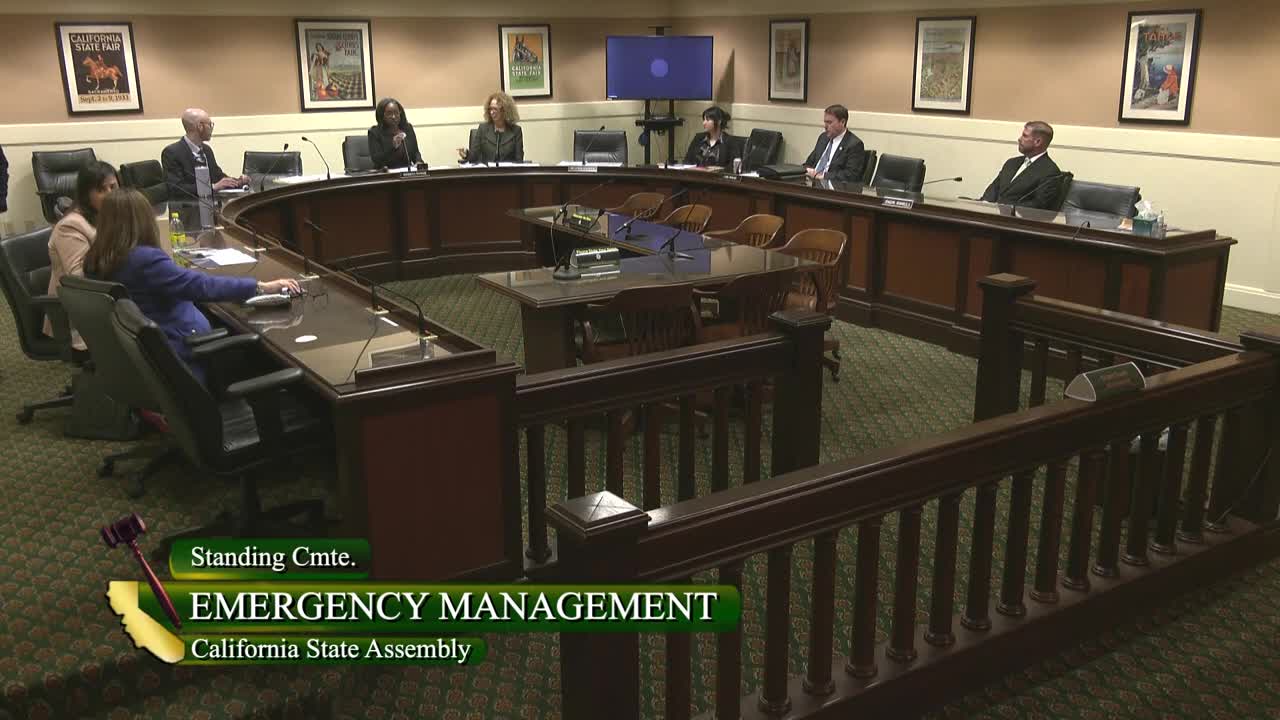 11MIN
Assembly Standing Committee on Emergency Management
Bill Author

Bill Co-Author(s):