AJR 3: Public social services: Social Security, Medicare, and Medicaid.
- Session Year: 2025-2026
- House: Assembly
- Latest Version Date: 2025-09-05
Current Status:
Passed
(2025-09-05: Chaptered by Secretary of State - Res. Chapter 168, Statutes of 2025.)
Introduced
In Committee
Awaiting First Chamber Vote
Passed First Chamber
In Committee
Awaiting Second Chamber Vote
Passed Second Chamber
Enacted
This measure would call on the states Representatives in Congress to support legislation to repeal all of the provisions of the federal One Big Beautiful Bill Act that adversely affect Social Security, Medicare, and Medicaid programs, to oppose privatization of these programs, and to protect and improve these programs, and would call on the President of the United States to immediately restore program staffing levels, to work with Congress to protect and improve these programs, and to disavow any efforts to privatize Social Security.
This measure would call on the states Representatives in Congress to support legislation to repeal all of the provisions of the federal One Big Beautiful Bill Act that adversely affect Social Security, Medicare, and Medicaid programs, to oppose privatization of these programs, and to protect and improve these programs, and would call on the President of the United States to immediately restore program staffing levels, to work with Congress to protect and improve these programs, and to disavow any efforts to privatize Social Security.
This measure would call on the states Representatives in Congress to vote against cuts to, and proposals to privatize, support legislation to repeal all of the provisions of the federal One Big Beautiful Bill Act that adversely affect Social Security, Medicare, and Medicaid programs, to oppose privatization of these programs, and to protect and improve these programs, and would call on the President of the United States to veto any legislation to cut or privatize these programs. immediately restore program staffing levels, to work with Congress to protect and improve these programs, and to disavow any efforts to privatize Social Security.
This measure would call on the states Representatives in Congress to vote against cuts to, and proposals to privatize, Social Security, Medicare, and Medicaid and would call on the President of the United States to veto any legislation to cut or privatize these programs.
This measure would call on the states Representatives in Congress to vote against cuts to, and proposals to privatize, Social Security, Medicare, and Medicaid and would call on the President of the United States to veto any legislation to cut or privatize these programs.
WHEREAS, Social Security, Medicare, and Medicaid are the foundation of the income and health security of older Americans, younger Americans with permanent and severe disabilities, American families that have lost breadwinners, and those whose economic circumstances preclude them from purchasing health insurance in the private market; and
WHEREAS, Social Security is our nations most important source of retirement income, disability insurance, and life insurance; and
WHEREAS, Social Security and Medicare are the foundations of income and health security for older Californians and those with severe work disabilities, providing monthly cash benefits and health insurance to over 6,000,000 residents; and
WHEREAS, Social Security is the single most important source of life insurance for Californias children, which currently provides a virtually guaranteed income to over 300,000 children throughout our state; and
WHEREAS, Social Security prevents more than 1,400,000 Californians 65 years of age and older from living in poverty and lessens the depth of poverty for millions more; and
WHEREAS, Social Security benefits annually contribute over $100 billion to our states economy; and
WHEREAS, Social Security provides benefits to nearly 8,000,000 veterans nationwide; and
WHEREAS, Social Securitys benefits leave over 10 percent of beneficiaries below the poverty line; and
WHEREAS, Our nation is facing a retirement income crisis as the result of the decline of traditional pensions, the failure of 401(k) accounts, and the stagnation or even decline in many areas of home equity and earnings, all of which have caused many workers to fear that they will never be able to retire and maintain their standard of living; and
WHEREAS, One-half of elderly Californians are struggling to make ends meet and most working Californians will not have saved enough to be able to maintain their standard of living in retirement; and
WHEREAS, Improving Social Security benefits is essential to alleviating poverty, which endangers seniors more than any other age group; and
WHEREAS, Social Securitys funding is independent of that of the rest of the federal government, and does not, and by law cannot, contribute to the federal deficit; and
WHEREAS, The costs of administering Social Security benefits are extremely low, having declined from 2.3 percent in 1958 to 1 percent or less since 1989; and
WHEREAS, For the past three years, the costs of administering Social Security benefits have remained at 0.5 percent, an amount that is inadequate to properly administer the nearly $1.5 trillion in benefits paid annually to nearly 70 million beneficiaries: retirees and their dependents, disabled workers and their dependents, and survivors of deceased workers; and
WHEREAS, The Department of Government Efficiency cut 7,000 Social Security Administration staff, or 12 percent of its workforce, resulting in the agency having the fewest employees it has had since 1967 when it served 480 beneficiaries for every staff member. The agency will now be attempting to serve 1,480 beneficiaries for every staff member; and
WHEREAS, Social Security had a surplus of $2.7 trillion at the end of 2024; and
WHEREAS, Prior to the enactment of the federal One Big Beautiful Bill Act (H.R. 1), Social Security had sufficient resources to meet all of its obligations through 2033 and has dedicated revenues that would meet more than 80 percent of promised benefits thereafter; and
WHEREAS, The tax cuts and other policies of H.R. 1 are projected to cause Social Securitys Trust Fund to be depleted two years sooner than currently projected; and
WHEREAS, The loss in staff has already resulted in serious delays in benefit delivery and caused widespread anxiety among current and future beneficiaries; and
WHEREAS, Executive Order No. 14247, issued March 25, 2025, and effective on September 30, 2025, halts the issuance of physical Social Security checks, which will result in unnecessary hardship for hundreds of thousands of beneficiaries who are unbanked or for other reasons require paper checks; and
WHEREAS, If Social Security does not have sufficient resources to meet its obligations, the number of Social Security beneficiaries living in poverty would increase by over 50 percent; and
WHEREAS, Eliminating the cap on income subject to Social Security contributions and requiring the wealthy to pay their fair share would assure that Social Security will have sufficient resources to meet its obligations for the foreseeable future and, indeed, even increase Social Securitys modest benefits, and recent polling shows that 71 percent of Americans support increasing taxes on wealthy Americans to protect Social Security; and
WHEREAS, Recent polling shows that the vast majority (72 percent) of the public, including 59 percent of Republicans, oppose the privatization of Social Security; and
WHEREAS, Medicare has provided health care to those over 65 years of age since 1965 and to those with disabilities since 1972; and
WHEREAS, Medicare insures seniors and people with disabilities, who represent, on average, the part of our population with the highest health care costs, at a fraction of the administrative costs of private health care plans; and
WHEREAS, Medicare has controlled its costs of care better than private insurance plans; and
WHEREAS, Medicares benefit design and Congresss failure to expand traditional Medicare is pushing increasing numbers of seniors into private Medicare plans where they face limited choices of doctors and hospitals and prior authorization restricting access to health care; and
WHEREAS, The private Medicare plans health care restrictions drive beneficiaries to switch to traditional Medicare when their health care needs increase, particularly during the last year of their lives; and
WHEREAS, The provisions of H.R. 1 will result in increased health care insecurity and costs for seniors and disabled beneficiaries and reduce the ability of our government to contain our nations overall health care expenditures, which currently equal 17.6 percent of our gross domestic product, by far the highest relative cost of any industrialized nation, while the European Unions costs are about 8 percent; and
WHEREAS, Medicaid is our nations most important source of long-term care for seniors and people with disabilities and health care for low-income Americans, providing primary care, dental care, vision care, mental health care, and substance use disorder services to over 72,000,000 people nationwide; and
WHEREAS, Expanded Medicaid coverage for Californians as a result of the federal Patient Protection and Affordable Care Act significantly reduced Californias uninsured population and provided increased access to primary and preventive health care, making families healthier; and
WHEREAS, Medicaid provides health care coverage to nearly 15,000,000 Californians whose economic circumstances preclude them from participating in the private health care insurance system, yet they need and deserve medical treatment as much as any American in better economic circumstances; and
WHEREAS, Under H.R. 1, a portion of the over 823,000 seniors and people with disabilities who rely on Medi-Cal home care benefits (In-Home Supportive Services) for help staying healthy at home could instead be forced into costly institutions; and
WHEREAS, Working families rely on the In-Home Supportive Services Program for care, as nearly one in five of all California workers, and as many as one in three workers in the agricultural and restaurant industries, are enrolled in Medi-Cal; and
WHEREAS, The provisions of H.R. 1 that limit federal Medicaid funding to the states threaten to severely limit Medicaids ability to provide adequate health care coverage to the most vulnerable among us; and
WHEREAS, The California Health and Human Services Agency has already determined that, among other consequences, H.R. 1s work requirements may result in up to 3 million Medi-Cal members losing coverage in 2027, and that another 400,000 may lose coverage due to new requirements for redetermining eligibility; and
WHEREAS, Our Social Security, Medicare, and Medicaid systems are fundamental to protecting against risks to which all Californians are subject; and
WHEREAS, Our Social Security, Medicare, and Medicaid systems give expression to widely held values, including caring for our families, our neighbors, and ourselves, personal responsibility, hard work, and personal dignity; now, therefore, be it
Resolved by the Assembly and the Senate of the State of California, jointly, That the Legislature calls on our states Representatives in Congress to support legislation to repeal all of the provisions of H.R. 1 that adversely affect Social Security, Medicare, and Medicaid programs, to oppose any further attempts to cut or privatize them, as well as to support legislation to protect and improve them; and be it further
Resolved, That the Legislature calls on the President of the United States to honor his campaign promise not to cut these programs, and support legislation to repeal the provisions of H.R. 1 that cut these programs, and not to defund them, by immediately restoring program staffing levels, and by, among other actions, rescinding his executive order halting Social Security payments by paper checks, by personally and publicly disavowing any efforts to privatize Social Security, and by working with Congress to protect and improve these programs; and be it further
Resolved, That the Chief Clerk of the Assembly transmit copies of this resolution to the President and Vice President of the United States, to the Speaker of the House of Representatives, to the Majority Leader of the Senate, and to each Senator and Representative from California in the Congress of the United States.
WHEREAS, Social Security, Medicare, and Medicaid are the foundation of the income and health security of older Americans, younger Americans with permanent and severe disabilities, American families that have lost breadwinners, and those whose economic circumstances preclude them from purchasing health insurance in the private market; and
WHEREAS, Social Security is our nations most important source of retirement income, disability insurance, and life insurance; and
WHEREAS, Social Security and Medicare are the foundations of income and health security for older Californians and those with severe work disabilities, providing monthly cash benefits and health insurance to over 6,000,000 residents; and
WHEREAS, Social Security is the single most important source of life insurance for Californias children, which currently provides a virtually guaranteed income to over 300,000 children throughout our state; and
WHEREAS, Social Security prevents more than 1,400,000 Californians 65 years of age and older from living in poverty and lessens the depth of poverty for millions more; and
WHEREAS, Social Security benefits annually contribute over $100 billion to our states economy; and
WHEREAS, Social Security provides benefits to nearly 8,000,000 veterans nationwide; and
WHEREAS, Social Securitys benefits leave over 10 percent of beneficiaries below the poverty line; and
WHEREAS, Our nation is facing a retirement income crisis as the result of the decline of traditional pensions, the failure of 401(k) accounts, and the stagnation or even decline in many areas of home equity and earnings, all of which have caused many workers to fear that they will never be able to retire and maintain their standard of living; and
WHEREAS, One-half of elderly Californians are struggling to make ends meet and most working Californians will not have saved enough to be able to maintain their standard of living in retirement; and
WHEREAS, Improving Social Security benefits is essential to alleviating poverty, which endangers seniors more than any other age group; and
WHEREAS, Social Securitys funding is independent of that of the rest of the federal government, and does not, and by law cannot, contribute to the federal deficit; and
WHEREAS, The costs of administering Social Security benefits are extremely low, having declined from 2.3 percent in 1958 to 1 percent or less since 1989; and
WHEREAS, For the past three years, the costs of administering Social Security benefits have remained at 0.5 percent, an amount that is inadequate to properly administer the nearly $1.5 trillion in benefits paid annually to nearly 70 million beneficiaries: retirees and their dependents, disabled workers and their dependents, and survivors of deceased workers; and
WHEREAS, The Department of Government Efficiency cut 7,000 Social Security Administration staff, or 12 percent of its workforce, resulting in the agency having the fewest employees it has had since 1967 when it served 480 beneficiaries for every staff member. The agency will now be attempting to serve 1,480 beneficiaries for every staff member; and
WHEREAS, Social Security had a surplus of $2.8 $2.7 trillion at the end of 2023; 2024; and
WHEREAS, Prior to the enactment of the federal One Big Beautiful Bill Act (H.R. 1), Social Security has had sufficient resources to meet all of its obligations through 2033 and has dedicated revenues that would meet more than 80 percent of promised benefits thereafter; and
WHEREAS, Tax The tax cuts and other proposed policies would cause of H.R. 1 are projected to cause Social Securitys Trust Fund to be depleted two years sooner than currently projected; and
WHEREAS, The loss in staff has already resulted in serious delays in benefit delivery and caused widespread anxiety among current and future beneficiaries; and
WHEREAS, Executive Order No. 14247, issued March 25, 2025, and effective on September 30, 2025, halts the issuance of physical Social Security checks, which will result in unnecessary hardship for hundreds of thousands of beneficiaries who are unbanked or for other reasons require paper checks; and
WHEREAS, If the Social Security Trust Fund does not have sufficient resources to meet its obligations, the number of Social Security beneficiaries living in poverty would increase by over 50 percent; and
WHEREAS, Eliminating the cap on income subject to the Social Security tax contributions and requiring the wealthy to pay their fair share would assure that the Social Security Trust Fund will have sufficient resources to meet its obligations for at least another 20 years, the foreseeable future and, indeed, even increase Social Securitys modest benefits, and recent polling shows that 71 percent of Americans support increasing taxes on wealthy Americans to protect Social Security; and
WHEREAS, Recent polling shows that the vast majority (72 percent) of the public, including 59 percent of Republicans, oppose the privatization of Social Security; and
WHEREAS, Medicare has provided health care in retirement to those over 65 years of age since 1965 and to those with disabilities since 1972; and
WHEREAS, Medicare insures seniors and people with disabilities, who represent, on average, the part of our population with the highest health care costs, at a fraction of the administrative costs of private health care plans; and
WHEREAS, Medicare has controlled its costs of care better than private insurance plans; and
WHEREAS, Medicares benefit design and Congresss failure to expand traditional Medicare is pushing increasing numbers of seniors into private Medicare plans where they face limited choices of doctors and hospitals and prior authorization restricting access to health care; and
WHEREAS, The private Medicare plans health care restrictions drive beneficiaries to switch to traditional Medicare when their health care needs increase, particularly during the last year of their lives; and
WHEREAS, Congressional proposals could The provisions of H.R. 1 will result in increased health care insecurity and costs for seniors and disabled beneficiaries and reduce the ability of our government to contain our nations overall health care expenditures, which currently equal 17.6 percent of our gross domestic product, by far the highest relative cost of any industrialized nation, while the European Unions costs are about 8 percent; and
WHEREAS, Medicaid is our nations most important source of long-term care for seniors and people with disabilities and health care for low-income Americans, providing primary care, dental care, vision care, mental health care, and substance use disorder services to over 72,000,000 people nationwide; and
WHEREAS, Expanded Medicaid coverage for Californians as a result of the federal Patient Protection and Affordable Care Act significantly reduced Californias uninsured population and provided increased access to primary and preventive health care, making families healthier; and
WHEREAS, Medicaid provides health care coverage to nearly 15,000,000 Californians whose economic circumstances preclude them from participating in the private health care insurance system, yet they need and deserve medical treatment as much as any American in better economic circumstances; and
WHEREAS, Under current congressional proposals, H.R. 1, a portion of the over 823,000 seniors and people with disabilities who rely on Medi-Cal home care benefits (In-Home Supportive Service) Services) for help staying healthy at home could instead be forced into costly institutions; and
WHEREAS, Working families rely on the In-Home Supportive Services Program for care, as nearly one in five of all California workers, and as many as one in three workers in the agricultural and restaurant industries, are enrolled in Medi-Cal; and
WHEREAS, Current congressional proposals to The provisions of H.R. 1 that limit federal Medicaid funding to the states threaten to severely limit Medicaids ability to provide adequate health care coverage to the most vulnerable among us; and
WHEREAS, The California Health and Human Services Agency has already determined that, among other consequences, H.R. 1s work requirements may result in up to 3 million Medi-Cal members losing coverage in 2027, and that another 400,000 may lose coverage due to new requirements for redetermining eligibility; and
WHEREAS, Our Social Security, Medicare, and Medicaid systems are fundamental to protecting against risks to which all Californians are subject; and
WHEREAS, Our Social Security, Medicare, and Medicaid systems give expression to widely held values, including caring for our families, our neighbors, and ourselves, personal responsibility, hard work, and personal dignity; now, therefore, be it
Resolved by the Assembly and the Senate of the State of California, jointly, That the Legislature opposes cuts to, and proposals to privatize, Social Security, Medicare, and Medicaid, as well as proposals to indirectly cut these programs by defunding them, while giving tax breaks to multinational corporations and billionaires, and calls on our states Representatives in Congress to vote against cuts and proposals to privatize and to calls on our states Representatives in Congress to support legislation to repeal all of the provisions of H.R. 1 that adversely affect Social Security, Medicare, and Medicaid programs, to oppose any further attempts to cut or privatize them, as well as to support legislation to protect and improve these systems to strengthen their protections; them; and be it further
Resolved, That the Legislature calls on the President of the United States to honor his campaign promise not to cut these programs, and support legislation to repeal the provisions of H.R. 1 that cut these programs, and not to defund them, to veto any legislation to do so, and to work by immediately restoring program staffing levels, and by, among other actions, rescinding his executive order halting Social Security payments by paper checks, by personally and publicly disavowing any efforts to privatize Social Security, and by working with Congress to protect and improve these programs; and be it further
Resolved, That the Chief Clerk of the Assembly transmit copies of this resolution to the President and Vice President of the United States, to the Speaker of the House of Representatives, to the Majority Leader of the Senate, and to each Senator and Representative from California in the Congress of the United States.
WHEREAS, Social Security, Medicare, and Medicaid are the foundation of the income and health security of older Americans, younger Americans with permanent and severe disabilities, American families that have lost a breadwinner, breadwinners, and those whose economic circumstances preclude them from purchasing health insurance in the private market; and
WHEREAS, Social Security is our nations most important source of retirement income, disability insurance, and life insurance; and
WHEREAS, Social Security and Medicare are the foundations of income and health security for older Californians and those with severe work disabilities, providing monthly cash benefits and health insurance to over 6,000,000 residents; and
WHEREAS, Social Security is the single most important source of life insurance for Californias children, which currently provides a virtually guaranteed income to over 300,000 children throughout our state; and
WHEREAS, Social Security prevents more than 1,400,000 Californians 65 years of age and older from living in poverty and lessens the depth of poverty for millions more; and
WHEREAS, Social Security benefits annually contribute over $100 billion to our states economy; and
WHEREAS, Social Security provides benefits to nearly 8,000,000 veterans nationwide; and
WHEREAS, Social Securitys benefits leave over 10 percent of beneficiaries below the poverty line; and
WHEREAS, Our nation is facing a retirement income crisis as the result of the decline of traditional pensions, the failure of 401(k) accounts, and the stagnation or even decline in many areas of home equity and earnings, all of which have caused many workers to fear that they will never be able to retire and maintain their standard of living; and
WHEREAS, One-half of elderly Californians are struggling to make ends meet and most working Californians will not have saved enough to be able to maintain their standard of living in retirement; and
WHEREAS, Improving Social Security benefits is essential to alleviating poverty, which endangers seniors more than any other age group; and
WHEREAS, Social Securitys funding is independent of that of the rest of the federal government, and does not, and by law cannot, contribute to the federal deficit; and
WHEREAS, Social Security had a surplus of $2.8 trillion at the end of 2023; and
WHEREAS, Social Security has sufficient resources to meet all of its obligations through 2033 and has dedicated revenues that would meet more than 80 percent of promised benefits thereafter; and
WHEREAS, Tax cuts and other proposed policies would cause Social Securitys Trust Fund to be depleted two years sooner than currently projected; and
WHEREAS, If the Social Security Trust Fund does not have sufficient resources to meet its obligations, the number of Social Security beneficiaries living in poverty would increase by over 50 percent; and
WHEREAS, Eliminating the cap on income subject to the Social Security tax would assure that the Social Security Trust Fund will have sufficient resources to meet its obligations for at least another 20 years, and recent polling shows that 71 percent of Americans support increasing taxes on wealthy Americans to protect Social Security; and
WHEREAS, Medicare has provided health care in retirement since 1965 and to those with disabilities since 1972; and
WHEREAS, Medicare insures seniors and people with disabilities, who represent, on average, the part of our population with the highest health care costs, at a fraction of the administrative costs of private health care plans; and
WHEREAS, Medicare has controlled its costs of care better than private insurance plans; and
WHEREAS, Medicare Medicares benefit design is pushing increasing numbers of seniors into private Medicare plans where they face limited choices of doctors and hospitals and prior authorization restricting access to health care; and
WHEREAS, The private Medicare plans health care restrictions drive beneficiaries to switch to traditional Medicare when their health care needs increase, particularly during the last year of their lives; and
WHEREAS, Congressional proposals could result in increased health care insecurity and costs for seniors and disabled beneficiaries and reduce the ability of our government to contain our nations overall health care expenditures, which currently equal 17.6 percent of our gross domestic product, by far the highest relative cost of any industrialized nation, while the European Unions costs are about 8 percent; and
WHEREAS, Medicaid is our nations most important source of long-term care and health care for low-income Americans, providing primary care, dental care, vision care, mental health care, and substance use disorder services to over 72,000,000 people nationwide; and
WHEREAS, Expanded Medicaid coverage for Californians as a result of the federal Patient Protection and Affordable Care Act significantly reduced Californias uninsured population and provided increased access to primary and preventive health care, making families healthier; and
WHEREAS, Medicaid provides health care coverage to nearly 15,000,000 Californians whose economic circumstances preclude them from participating in the private health care insurance system, yet they need and deserve medical treatment as much as any American in better economic circumstances; and
WHEREAS, Under current congressional proposals, a portion of the over 823,000 seniors and people with disabilities who rely on Medi-Cal home care benefits (In-Home Supportive Service) for help staying healthy at home could instead be forced into costly institutions; and
WHEREAS, Working families rely on the In-Home Supportive Services Program for care, as nearly one in five of all California workers, and as many as one in three workers in the agricultural and restaurant industries, are enrolled in Medi-Cal; and
WHEREAS, Current congressional proposals to limit federal Medicaid funding to the states threaten to severely limit Medicaids ability to provide adequate health care coverage to the most vulnerable among us; and
WHEREAS, Our Social Security, Medicare, and Medicaid systems are fundamental to protecting against risks to which all Californians are subject; and
WHEREAS, Our Social Security, Medicare, and Medicaid systems give expression to widely held values, including caring for our families, our neighbors, and ourselves, personal responsibility, hard work, and personal dignity; now, therefore, be it
Resolved by the Assembly and the Senate of the State of California, jointly, That the Legislature opposes cuts to, and proposals to privatize, Social Security, Medicare, and Medicaid, as well as proposals to indirectly cut these programs by defunding them, while giving tax breaks to multinational corporations and billionaires, and calls on our states Representatives in Congress to vote against cuts and proposals to privatize and to support legislation to protect and improve these systems to strengthen their protections; and be it further
Resolved, That the Legislature calls on the President of the United States to honor his campaign promise not to cut these programs, and not to defund them, to veto any legislation to do so, and to work with Congress to protect and improve these programs; and be it further
Resolved, That the Chief Clerk of the Assembly transmit copies of this resolution to the President and Vice President of the United States, to the Speaker of the House of Representatives, to the Majority Leader of the Senate, and to each Senator and Representative from California in the Congress of the United States.
WHEREAS, Social Security, Medicare, and Medicaid are the foundation of the income and health security of older Americans, younger Americans with permanent and severe disabilities, American families that have lost a breadwinner, and those whose economic circumstances preclude them from purchasing health insurance in the private market; and
WHEREAS, Social Security is our nations most important source of retirement income, disability insurance, and life insurance; and
WHEREAS, Social Security and Medicare are the foundations of income and health security for older Californians and those with severe work disabilities, providing monthly cash benefits and health insurance to over 6,000,000 residents; and
WHEREAS, Social Security is the single most important source of life insurance for Californias children, which currently provides a virtually guaranteed income to over 300,000 children throughout our state; and
WHEREAS, Social Security prevents more than 1,400,000 Californians 65 years of age and older from living in poverty and lessens the depth of poverty for millions more; and
WHEREAS, Social Security benefits annually contribute over $100 billion to our states economy; and
WHEREAS, Social Security provides benefits to nearly 8,000,000 veterans nationwide; and
WHEREAS, Social Securitys benefits leave over 10 percent of beneficiaries below the poverty line; and
WHEREAS, Our nation is facing a retirement income crisis as the result of the decline of traditional pensions, the failure of 401(k) accounts, and the stagnation or even decline in many areas of home equity and earnings, all of which have caused many workers to fear that they will never be able to retire and maintain their standard of living; and
WHEREAS, One-half of elderly Californians are struggling to make ends meet and most working Californians will not have saved enough to be able to maintain their standard of living in retirement; and
WHEREAS, Improving Social Security benefits is essential to alleviating poverty, which endangers seniors more than any other age group; and
WHEREAS, Social Securitys funding is independent of that of the rest of the federal government, and does not, and by law cannot, contribute to the federal deficit; and
WHEREAS, Social Security had a surplus of $2.8 trillion at the end of 2023; and
WHEREAS, Social Security has sufficient resources to meet all of its obligations through 2033 and has dedicated revenues that would meet more than 80 percent of promised benefits thereafter; and
WHEREAS, Tax cuts and other proposed policies would cause Social Securitys Trust Fund to be depleted two years sooner than currently projected; and
WHEREAS, If the Social Security Trust Fund does not have sufficient resources to meet its obligations, the number of Social Security beneficiaries living in poverty would increase by over 50 percent; and
WHEREAS, Eliminating the cap on income subject to the Social Security tax would assure that the Social Security Trust Fund will have sufficient resources to meet its obligations for at least another 20 years, and recent polling shows that 71 percent of Americans support increasing taxes on wealthy Americans to protect Social Security; and
WHEREAS, Medicare has provided health care in retirement since 1965 and to those with disabilities since 1972; and
WHEREAS, Medicare insures seniors and people with disabilities, who represent, on average, the part of our population with the highest health care costs, at a fraction of the administrative costs of private health care plans; and
WHEREAS, Medicare has controlled its costs of care better than private insurance plans; and
WHEREAS, Medicare benefit design is pushing increasing numbers of seniors into private Medicare plans where they face limited choices of doctors and hospitals and prior authorization restricting access to health care; and
WHEREAS, The private Medicare plans health care restrictions drive beneficiaries to switch to traditional Medicare when their health care needs increase, particularly during the last year of their lives; and
WHEREAS, Congressional proposals could result in increased health care insecurity and costs for seniors and disabled beneficiaries and reduce the ability of our government to contain our nations overall health care expenditures, which currently equal 17.6 percent of our gross domestic product, by far the highest relative cost of any industrialized nation, while the European Unions costs are about 8 percent; and
WHEREAS, Medicaid is our nations most important source of long-term care and health care for low-income Americans, providing primary care, dental care, vision care, mental health care, and substance use disorder services to over 72,000,000 people nationwide; and
WHEREAS, Expanded Medicaid coverage for Californians as a result of the federal Patient Protection and Affordable Care Act significantly reduced Californias uninsured population and provided increased access to primary and preventive health care, making families healthier; and
WHEREAS, Medicaid provides health care coverage to nearly 15,000,000 Californians whose economic circumstances preclude them from participating in the private health care insurance system, yet they need and deserve medical treatment as much as any American in better economic circumstances; and
WHEREAS, Under current congressional proposals, a portion of the over 823,000 seniors and people with disabilities who rely on Medi-Cal home care benefits (In-Home Supportive Service) for help staying healthy at home could instead be forced into costly institutions; and
WHEREAS, Working families rely on the In-Home Supportive Services Program for care, as nearly one in five of all California workers, and as many as one in three workers in the agricultural and restaurant industries, are enrolled in Medi-Cal; and
WHEREAS, Current congressional proposals to limit federal Medicaid funding to the states threaten to severely limit Medicaids ability to provide adequate health care coverage to the most vulnerable among us; and
WHEREAS, Our Social Security, Medicare, and Medicaid systems are fundamental to protecting against risks to which all Californians are subject; and
WHEREAS, Our Social Security, Medicare, and Medicaid systems give expression to widely held values, including caring for our families, our neighbors, and ourselves, personal responsibility, hard work, and personal dignity; now, therefore, be it
Resolved by the Assembly and the Senate of the State of California, jointly, That the Legislature opposes cuts to, and proposals to privatize, Social Security, Medicare, and Medicaid, as well as proposals to indirectly cut these programs by defunding them, while giving tax breaks to multinational corporations and billionaires, and calls on our states Representatives in Congress to vote against cuts and proposals to privatize and to support legislation to protect and improve these systems to strengthen their protections; and be it further
Resolved, That the Legislature calls on the President of the United States to honor his campaign promise not to cut these programs, and not to defund them, to veto any legislation to do so, and to work with Congress to protect and improve these programs; and be it further
Resolved, That the Chief Clerk of the Assembly transmit copies of this resolution to the President and Vice President of the United States, to the Speaker of the House of Representatives, to the Majority Leader of the Senate, and to each Senator and Representative from California in the Congress of the United States.
|
Date
|
Status
|
|---|---|
| Sep 5, 2025 | Chaptered by Secretary of State - Res. Chapter 168, Statutes of 2025. |
| Sep 5, 2025 | Enrolled and filed with the Secretary of State at 3 p.m. |
| Aug 28, 2025 | Senate amendments concurred in. To Engrossing and Enrolling. (Ayes 57. Noes 0. Page 2774.). |
| Aug 26, 2025 | In Assembly. Concurrence in Senate amendments pending. |
| Aug 25, 2025 | Adopted and to Assembly. (Ayes 29. Noes 0. Page 2249.) |
| Aug 20, 2025 | Read second time. Ordered to third reading. |
| Aug 19, 2025 | Read third time and amended. Ordered to second reading. |
| Jul 9, 2025 | Read second time. Ordered to third reading. |
| Jul 8, 2025 | Read third time and amended. Ordered to second reading. |
| Jun 17, 2025 | From committee: Be adopted. Ordered to Third Reading. (Ayes 5. Noes 0.) (June 16). |
| May 28, 2025 | Referred to Com. on HUMAN S. |
| May 20, 2025 | In Senate. To Com. on RLS. |
| May 19, 2025 | Coauthors revised. |
| May 19, 2025 | Adopted and to Senate. (Ayes 64. Noes 2. Page 1587.) |
| Apr 23, 2025 | From committee: Be adopted. Ordered to Third Reading. (Ayes 7. Noes 0.) (April 23). |
| Apr 23, 2025 | Coauthors revised. |
| Mar 24, 2025 | Referred to Com. on P. E. & R. |
| Mar 4, 2025 | From printer. |
| Mar 3, 2025 | Introduced. To print. |
|
Date
|
Description
|
Location
|
Votes
|
|
|---|---|---|---|---|
| Aug 28, 2025 | AJR 3 Schiavo Concurrence in Senate Amendments | Assembly Floor |
Passed |
|
| Aug 25, 2025 | Assembly 3rd Reading AJR3 Schiavo et al. By Arreguín | Senate Floor |
Passed |
|
| Jun 16, 2025 | Be adopted. Ordered to third reading | Senate Standing Committee on Human Services |
Passed |
|
| May 19, 2025 | AJR 3 Schiavo Assembly Third Reading | Assembly Floor |
Passed |
|
| Apr 23, 2025 | Be adopted. To third reading. | Assembly Standing Committee on Public Employment and Retirement |
Passed |
This list shows positions taken on this bill by organizations on the date displayed, which is linked to the original source.
Positions by individuals are not included.
|
Organization
|
Position
|
Date
|
|---|---|---|
| American Cancer Society Cancer Action Network Inc. | ** Support | |
| American Federation Of State, County And Municipal Employees, Afl-Cio | ** Support | |
| Association Of Regional Center Agencies | ** Support | |
| California Alliance For Retired Americans | ** Support | |
| California Alliance for Retired Americans (Source) | ** Support | |
| California Association Of Food Banks | ** Support | |
| California Behavioral Health Association | ** Support | |
| California Hospital Association | ** Support | |
| California Nurses Association | ** Support | |
| California Public Employees' Retirement System | ** Support | |
| California State Council of Service Employees International Union | ** Support | |
| California State Council of Service Employees International Union (Source) | ** Support | |
| California State Retirees | ** Support | |
| California Teachers Association | ** Support | |
| Californians for SSI | ** Support | |
| Children Now | ** Support | |
| County Welfare Directors Association of California | ** Support | |
| Courage California | ** Support | |
| Disability Rights California | ** Support | |
| Friends Committee On Legislation Of California | ** Support | |
| Health Access California | ** Support | |
| Health Care for All California | ** Support | |
| LeadingAge California | ** Support | |
| Movement to End Privatization of Medicare | ** Support | |
| National Multiple Sclerosis Society | ** Support | |
| National Union Of Healthcare Workers | ** Support | |
| Northeast Valley Health Corporation | ** Support | |
| Peace and Freedom Party of California | ** Support | |
| Southeast Asia Resource Action Center | ** Support | |
| The Children's Partnership | ** Support | |
| Tri-valley Indivisible | ** Support | |
| Western Center on Law & Poverty, INC. | ** Support |
CONCURRENCE IN SENATE AMENDMENTS
CSA1 Bill Id:AJR 3
Author:(Schiavo)
As Amended Ver:August 19, 2025
Majority vote
SUMMARY
Urges California's Representatives in the United States (U.S.) Congress to support legislation to repeal all of the provisions of federal H.R. 1, known as the "One Big Beautiful Act," and the U.S. President and the Congress not to cut or privatize Social Security, or cut Medicare and Medicaid programs and benefits.
Senate Amendments
Add more recent information relating to the federal Social Security, Medicare and Medicaid programs, and information relating to federal legislation, known as the "One Big Beautiful Bill Act" (H.R. 1), and its impacts to those programs and their participants, recipients, or beneficiaries.
COMMENTS
The federal Social Security Program
Social Security was created in 1935 under President Franklin D. Roosevelt in response to the economic uncertainty created by the Great Depression. The program was created to balance the need for people to be economically secure without creating a new welfare assistance program. To qualify to receive monthly social security payments a person needs to pay payroll taxes for 10 years with the understanding they are investing in the program and will receive income when they need it in old age.[1] The program also operates as a life insurance policy because children of deceased workers can receive Social Security Disability Insurance. Though the benefits are not large—the average Social Security benefit in February 2024 was about $1,862 per month—it keeps many older adults out of poverty.[2] It is also especially impactful for communities of color. According to the Center for Budget and Policy Priorities, "Black and Latino workers are less likely to be offered workplace retirement plans and more likely to work in low-paid jobs with little margin for savings. Social Security helps reduce these inequities between older white adults and older adults of color."[3] California has the most social security beneficiaries, approximately 6.3 million individuals, of any state.
This resolution calls on Congress to prevent any cuts or attempts to privatize this program.
The federal Medicare and Medicaid Programs
Medicare and Medicaid were created in 1965 under President Lyndon B. Johnson. The law was an amendment to the Social Security Act of 1935 and was initially under the Social Security Administration but is now overseen by the federal Department of Health and Human Services (DHHS) and administered by the Center for Medicare and Medicaid.
Medicare is health insurance for people age 65 and older regardless of their income or health and people under 65 who have certain disabilities. It is an entitlement program and its health plans cover most of the services that traditional private plans cover. To enroll, older beneficiaries need to show they or their spouse are eligible for social security and have paid payroll taxes for 10 years. According to the DHHS, approximately 6.6 million Californians are covered by Medicare and 90% of them are 65 or older.
Medicaid was created to provide low-income individuals and families with health insurance and long-term services like In-Home Supportive Services. Seniors with low incomes can also receive health coverage through Medicaid for what is not covered by Medicare. According to the Kaiser Family Foundation, in 2016, half of the Medicare enrollees made less than $26,000.[4] The program is jointly administered by federal and state governments with the federal government providing oversight funding and states administering the program, as well as providing additional funding. States have flexibility in the way they administer Medicaid and can apply for waivers that give them the additional flexibility to operate in ways not traditionally allowed through regulation.
In California, Medi-Cal, the state's Medicaid program, has 14.7 million people enrolled as of March 2025, according to the Department of Health Care Services. There have been a number of changes to the program recently which expanded eligibility and enrollment. According to the Legislative Analyst's Office (LAO), these expansions include making "low-income undocumented immigrants eligible for comprehensive coverage… eliminating asset limit eligibility rules for seniors and persons with disabilities, reducing enrollee cost-sharing requirements, and restoring certain services cut during the Great Recession."[5]
This resolution also calls on the President and the Congress to abstain from proposed funding cuts to Medicare and Medicaid, and any changes to the program that would effectively act as funding cuts.
According to the Author
"While the California Legislature cannot change federal policy, this resolution sends a strong message that we are committed to protecting Social Security, Medicaid and Medicare for our most vulnerable: seniors, children, and people with disabilities. Any cuts to these programs will only create irreparable harm for Californians, but especially those with low and middle incomes and our disabled community whose quality of life, and in some cases their very lives, depends on the vitality of these programs. The (federal) administration made a promise to the American people about these programs, and this resolution would urge them to honor it."
Arguments in Support
The various supporters of this resolution offer statements similar to those of the author.
Arguments in Opposition
None.
FISCAL COMMENTS
This resolution is keyed nonfiscal by the Office of Legislative Counsel.
VOTES:
ASM PUBLIC EMPLOYMENT AND RETIREMENT: 7-0-0
YES: McKinnor, Lackey, Alanis, Boerner, Elhawary, Garcia, Nguyen
ASSEMBLY FLOOR: 64-2-13
YES: Addis, Aguiar-Curry, Ahrens, Alanis, Alvarez, Arambula, Ávila Farías, Bains, Bauer‑Kahan, Bennett, Berman, Boerner, Bonta, Bryan, Calderon, Caloza, Carrillo, Connolly, Davies, Elhawary, Fong, Gabriel, Garcia, Gipson, Mark González, Hadwick, Haney, Harabedian, Hart, Hoover, Irwin, Jackson, Kalra, Krell, Lee, Lowenthal, McKinnor, Muratsuchi, Nguyen, Ortega, Pacheco, Patel, Pellerin, Petrie-Norris, Quirk-Silva, Ramos, Ransom, Celeste Rodriguez, Michelle Rodriguez, Rogers, Blanca Rubio, Schiavo, Schultz, Sharp-Collins, Solache, Soria, Stefani, Valencia, Wallis, Ward, Wicks, Wilson, Zbur, Rivas
NO: DeMaio, Gallagher
ABS, ABST OR NV: Castillo, Chen, Dixon, Ellis, Flora, Jeff Gonzalez, Lackey, Macedo, Papan, Patterson, Sanchez, Ta, Tangipa
SENATE FLOOR: 29-0-11
YES: Allen, Archuleta, Arreguín, Ashby, Becker, Blakespear, Cabaldon, Caballero, Cervantes, Cortese, Dahle, Durazo, Gonzalez, Grayson, Laird, Limón, McGuire, McNerney, Menjivar, Padilla, Pérez, Reyes, Richardson, Smallwood-Cuevas, Stern, Umberg, Wahab, Weber Pierson, Wiener
ABS, ABST OR NV: Alvarado-Gil, Choi, Grove, Hurtado, Jones, Niello, Ochoa Bogh, Rubio, Seyarto, Strickland, Valladares
UPDATED
VERSION: August 19, 2025
CONSULTANT: Michael Bolden / P. E. & R. / (916) 319-3957 FN: 0001253
SENATE RULES COMMITTEE Office of Senate Floor Analyses (916) 651-1520 Fax: (916) 327-4478 | AJR 3 |
THIRD READING
Bill No: AJR 3
Author: Schiavo (D), et al.
Amended: 8/19/25 in Senate
Vote: 21
SENATE HUMAN SERVICES COMMITTEE: 5-0, 6/16/25
AYES: Arreguín, Ochoa Bogh, Becker, Limón, Wahab
ASSEMBLY FLOOR: 64-2, 5/19/25 - See last page for vote
SUBJECT: Public social services: Social Security, Medicare, and Medicaid
SOURCE: California Alliance for Retired Americans
California State Council of Service Employees International Union
DIGEST:
This resolution urges the President and Congress of the United States not to cut Social Security, Medicare, or Medicaid benefits.
Senate floor amendments of 8/19/25 add up-to-date information related to social security, Medicare, and Medicaid that was not available at the time of the committee hearing.
ANALYSIS:
Existing Federal Law:
- Establishes the Social Security Act, a system of monthly federal benefits for older people. (42 United States Code (USC) 7 et seq.)
- Establishes Medicare as a federal health insurance program for older people, people with disabilities and for people needing dialysis or kidney transplants for the treatment of end-stage renal disease. (42 USC 1395 et seq.)
- Establishes the Medicaid program to provide health insurance to qualified, low-income individuals and families. (42 USC 1396 et seq.)
Existing State Law:
- Establishes the In- Home Supportive Services program to provide supportive services to individuals who are aged, blind, or living with disabilities, and who are unable to perform the services themselves or remain safely in their homes without receiving these services. (Welfare and Institutions (WIC) 12300 et seq.)
- Establishes the Medi-Cal Act to implement the requirements of the federal Medicaid program and meet the needs of low income individuals and families for health care and related remedial or preventive services. (WIC 14000 et seq.)
This Resolution:
- States that Social Security, Medicare and Medicaid are foundational to the income and health security of many Americans.
- Makes declarations about the importance of Social Security income to older Californians and their children and that polices in H.R. 1 would cause the Social Security Trust Fund to be depleted two years sooner than currently projected.
- States that the Department of Governmental Efficiency instigated staffing cuts that will increase service ratios at the Social Security Administration from 480 beneficiaries for every staff member to 1480 beneficiaries for every staff member.
- States that eliminating the cap on income subject to Social Security contributions and requiring the wealthy to pay their fair share would ensure the Social Security Trust Fund will have sufficient resources to meet its obligations for the foreseeable future.
- Makes declarations about the importance of Medicare to seniors and people with disabilities.
- States that H.R. 1 will result in increased health care insecurity and costs for seniors and disabled beneficiaries.
- Makes declarations about the importance of Medicaid to low-income Americans and the benefits of the expansion of Medicaid through the federal Patient Protection and Affordable Care Act.
- States that H.R. 1 will cause people who rely on In-Home Supportive Services for help staying healthy at home to be forced into costly institutions.
- States that the California Health and Human Services Agency has determined that the Medicaid work requirement policies in H.R. 1 may result in 3 million MediCal members losing coverage in 2027 and 400,000 may lose coverage due to new eligibility requirements.
- Resolves that the Legislature calls on California Representatives in Congress to support legislation to repeal all of the provisions of HR 1 that adversely affect the Social Security, Medicaid, and Medicare programs and support legislation that strengthens them.
- Calls on President of the United States to honor his campaign promise not to cut these programs and not to defund them, support legislation to repeal provisions of H.R. 1 that weaken these programs, immediately restore staffing levels and rescind his executive order to halt Social Security payments by paper checks.
Comments
According to the author. “While the California Legislature cannot change federal policy, this resolution sends a strong message that we are committed to protecting Social Security, Medicaid and Medicare for our most vulnerable: seniors, children, and people with disabilities. Any cuts to these programs will only create irreparable harm for Californians, but especially those with low and middle incomes and our disabled community whose quality of life, and in some cases their very lives, depends on the vitality of these programs. The administration made a promise to the American people about these programs, and this resolution would urge them to honor it.”
Social Security. Social Security was created in 1935 under President Franklin D. Roosevelt in response to the economic uncertainty created by the Great Depression. The program was created to balance the need for people to be economically secure without creating a new welfare assistance program. To qualify to receive monthly social security payments a person needs to pay payroll taxes for 10 years with the understanding they are investing in the program and will receive income when they need it in old age.[1] The program also operates as a life insurance policy because children of deceased workers can receive Social Security Disability Insurance. Though the benefits are not large—the average Social Security benefit in February 2024 was about $1,862 per month—it keeps many older adults out of poverty.[2] It is also especially impactful for communities of color. According to the Center for Budget and Policy Priorities, “Black and Latino workers are less likely to be offered workplace retirement plans and more likely to work in low-paid jobs with little margin for savings. Social Security helps reduce these inequities between older white adults and older adults of color.”[3] California has the most social security beneficiaries of any state, about 6.3 million people. This resolution calls on Congress to prevent any cuts to Social Security or attempts at privatization.
Medicare and Medicaid. Medicare and Medicaid were created in 1965 under President Lyndon B. Johnson. The law was an amendment to the Social Security Act of 1935 and was initially under the Social Security Administration but is now overseen by the Department of Health and Human Services and administered by the Center for Medicare and Medicaid.
Medicare is health insurance for people age 65 and older regardless of their income or health and people under 65 who have certain disabilities. It is an entitlement program and its health plans cover most of the services that traditional private plans cover. To enroll, older beneficiaries just need to show they or their spouse are eligible for social security and have paid payroll taxes for 10 years. According to the Department of Health Care Services, approximately 6.6 million Californians are covered by Medicare and 90 percent of them are 65 or older.
Medicaid was created to provide low-income individuals and families with health insurance and long-term services like In-Home Supportive Services. Seniors with low incomes can also receive health coverage through Medicaid for what is not covered by Medicare. According to the Kaiser Family Foundation, in 2016, half of the Medicare enrollees made less than $26,000.[4] The program is jointly administered by federal and state governments with the federal government providing oversight funding and states administering the program, as well as providing additional funding. States have flexibility in the way they administer Medicaid and can apply for waivers that give them the additional flexibility to operate in ways not traditionally allowed through regulation.
In California, Medi-Cal, the state’s Medicaid program, has 14.7 million people enrolled as of March 2025, according to the Department of Health Care Services. There have been a number of changes to the program recently which expanded eligibility and enrollment. According to the Legislative Analyst’s Office, these expansions include making “low-income undocumented immigrants eligible for comprehensive coverage… eliminating asset limit eligibility rules for seniors and persons with disabilities, reducing enrollee cost-sharing requirements, and restoring certain services cut during the Great Recession.”[5] This resolution calls on Congress and the President to abstain from proposed funding cuts to Medicare and Medicaid, and any changes to the program that would effectively act as funding cuts.
Related/Prior Legislation:
AJR 11 (Davies, 2024) proposed cuts and measures to privatize social security and Medicare and calls on our state’s Representatives in Congress to vote against cuts and measures to privatize and to support legislation to improve and expand these systems to strengthen their protections. This joint resolution was held on the Assembly Floor.
SJR 11 (Skinner, Chapter 157, Statutes of 2022) affirms the Legislature’s support for expanding Social Security and requests California representatives in Congress to support expanding Social Security by voting in favor of the Social Security 2100 Act: A Sacred Trust.
SJR 5 (Wilk, Chapter 181, Statutes of 2022) urges the United States Congress to amend the United States Social Security Administration’s index of earnings to ensure that a decline in aggregate wages due to COVID-19 does not result in decreased benefits.
AJR 9 (Cooper, Chapter 78, Statutes of 2021) requests the Congress of the United States to enact, and the President to sign, legislation that would repeal the Government Pension Offset and the Windfall Elimination Provision from the Social Security Act.
AJR 8 (Kalra, Chapter 96, Statutes of 2017) calls on California’s representatives in Congress to vote against cuts to, and proposals to privatize, Social Security, Medicare, and Medicaid, and calls on the President of the United States to veto any legislation to cut or privatize these programs.
FISCAL EFFECT: Appropriation: Fiscal Com.: No Local:
SUPPORT: (Verified 8/18/25)
California Alliance for Retired Americans (Source)
California State Council of Service Employees International Union (Source)
American Cancer Society Cancer Action Network INC.
American Federation of State, County and Municipal Employees, Afl-cio
Association of Regional Center Agencies
California Association of Food Banks
California Nurses Association
California Public Employees' Retirement System
California State Retirees
California Teachers Association
Californians for Ssi
Children Now
County Welfare Directors Association of California
Health Access California
Health Care for All - California
Leadingage California
Movement to End Privatization of Medicare
National Multiple Sclerosis Society
Peace and Freedom Party of California
Western Center on Law & Poverty, INC.
OPPOSITION: (Verified 8/18/25)
None received
ASSEMBLY FLOOR: 64-2, 5/19/25
AYES: Addis, Aguiar-Curry, Ahrens, Alanis, Alvarez, Arambula, Ávila Farías, Bains, Bauer-Kahan, Bennett, Berman, Boerner, Bonta, Bryan, Calderon, Caloza, Carrillo, Connolly, Davies, Elhawary, Fong, Gabriel, Garcia, Gipson, Mark González, Hadwick, Haney, Harabedian, Hart, Hoover, Irwin, Jackson, Kalra, Krell, Lee, Lowenthal, McKinnor, Muratsuchi, Nguyen, Ortega, Pacheco, Patel, Pellerin, Petrie-Norris, Quirk-Silva, Ramos, Ransom, Celeste Rodriguez, Michelle Rodriguez, Rogers, Blanca Rubio, Schiavo, Schultz, Sharp-Collins, Solache, Soria, Stefani, Valencia, Wallis, Ward, Wicks, Wilson, Zbur, Rivas
NOES: DeMaio, Gallagher
NO VOTE RECORDED: Castillo, Chen, Dixon, Ellis, Flora, Jeff Gonzalez, Lackey, Macedo, Papan, Patterson, Sanchez, Ta, Tangipa
Prepared by: Naima Ford Antal / HUMAN S. / (916) 651-1524
8/20/25 23:35:50
SENATE RULES COMMITTEE Office of Senate Floor Analyses (916) 651-1520 Fax: (916) 327-4478 | AJR 3 |
THIRD READING
Bill No: AJR 3
Author: Schiavo (D), et al.
Amended: 7/8/25 in Senate
Vote: 21
SENATE HUMAN SERVICES COMMITTEE: 5-0, 6/16/25
AYES: Arreguín, Ochoa Bogh, Becker, Limón, Wahab
ASSEMBLY FLOOR: 64-2, 5/19/25 - See last page for vote
SUBJECT: Public social services: Social Security, Medicare, and Medicaid
SOURCE: California Alliance for Retired Americans
California State Council of Service Employees International Union
Health Care for All – California
DIGEST:
This resolution urges the President of the United States and Congress not to cut Social Security, Medicare, or Medicaid benefits.
Senate Floor Amendments of 7/8/25 add co-authors to the bill and make nonsubstantive changes.
ANALYSIS:
Existing Federal Law:
- Establishes the Social Security Act, a system of monthly federal benefits for older people. (42 United States Code (USC) § 7 et seq.)
- Establishes Medicare as a federal health insurance program for older people, people with disabilities and for people needing dialysis or kidney transplants for the treatment of end-stage renal disease. (42 USC § 1395 et seq.)
- Establishes the Medicaid program to provide health insurance to qualified, low-income individuals and families. (42 USC § 1396 et seq.)
Existing State Law:
- Establishes the In- Home Supportive Services program to provide supportive services to individuals who are aged, blind, or living with disabilities, and who are unable to perform the services themselves or remain safely in their homes without receiving these services. (Welfare & Institutions Code (WIC) § 12300 et seq.)
- Establishes the Medi-Cal Act to implement the requirements of the federal Medicaid program and meet the needs of low income individuals and families for health care and related remedial or preventive services. (WIC § 14000 et seq.)
This Resolution:
- States that Social Security, Medicare and Medicaid are foundational to the income and health security of many Americans.
- Makes declarations about the importance of Social Security income to older Californians and their children and that federally proposed tax cuts and other proposed policies would cause the Social Security Trust Fund to be depleted two years sooner than currently projected.
- States that eliminating the cap on income subject to the Social Security tax would ensure the Social Security Trust Fund will have sufficient resources to meet its obligations for at least another 20 years.
- Makes declarations about the importance of Medicare to seniors and people with disabilities.
- States that Congressional proposals could result in increased health care insecurity and costs for seniors and disabled beneficiaries.
- Makes declarations about the importance of Medicaid to low-income Americans and the benefits of the expansion of Medicaid through the federal Patient Protection and Affordable Care Act.
- States that current congressional proposals would cause people who rely on In-Home Supportive Services for help staying healthy at home to be forced into costly institutions.
- Resolves that the Legislature is opposed to cuts to and proposals to privatize Social Security, Medicare, and Medicaid, as well as proposals to indirectly cut these programs by defunding them, while giving tax breaks to multinational corporations and billionaires.
- Calls on California Representatives in Congress to vote against the efforts to cut Social Security, Medicare, and Medicaid as described above.
- Calls on the President of the United States to honor his campaign promise not to cut these programs, and not to defund them, to veto any legislation to do so, and instead work to protect these programs.
Comments
According to the author, “While the California Legislature cannot change federal policy, this resolution sends a strong message that we are committed to protecting Social Security, Medicaid and Medicare for our most vulnerable: seniors, children, and people with disabilities. Any cuts to these programs will only create irreparable harm for Californians, but especially those with low and middle incomes and our disabled community whose quality of life, and in some cases their very lives, depends on the vitality of these programs. The administration made a promise to the American people about these programs, and this resolution would urge them to honor it.”
Social Security. Social Security was created in 1935 under President Franklin D. Roosevelt in response to the economic uncertainty created by the Great Depression. The program was created to balance the need for people to be economically secure without creating a new welfare assistance program. To qualify to receive monthly social security payments a person needs to pay payroll taxes for 10 years with the understanding they are investing in the program and will receive income when they need it in old age.[1] The program also operates as a life insurance policy because children of deceased workers can receive Social Security Disability Insurance. Though the benefits are not large—the average Social Security benefit in February 2024 was about $1,862 per month—it keeps many older adults out of poverty.[2] It is also especially impactful for communities of color. According to the Center for Budget and Policy Priorities, “Black and Latino workers are less likely to be offered workplace retirement plans and more likely to work in low-paid jobs with little margin for savings. Social Security helps reduce these inequities between older white adults and older adults of color.”[3] California has the most social security beneficiaries of any state, about 6.3 million people. This resolution calls on Congress to prevent any cuts to Social Security or attempts at privatization.
Medicare and Medicaid. Medicare and Medicaid were created in 1965 under President Lyndon B. Johnson. The law was an amendment to the Social Security Act of 1935 and was initially under the Social Security Administration but is now overseen by the Department of Health and Human Services and administered by the Center for Medicare and Medicaid.
Medicare is health insurance for people age 65 and older regardless of their income or health and people under 65 who have certain disabilities. It is an entitlement program and its health plans cover most of the services that traditional private plans cover. To enroll, older beneficiaries just need to show they or their spouse are eligible for social security and have paid payroll taxes for 10 years. According to the Department of Health Care Services, approximately 6.6 million Californians are covered by Medicare and 90 percent of them are 65 or older.
Medicaid was created to provide low-income individuals and families with health insurance and long-term services like In-Home Supportive Services. Seniors with low incomes can also receive health coverage through Medicaid for what is not covered by Medicare. According to the Kaiser Family Foundation, in 2016, half of the Medicare enrollees made less than $26,000.[4] The program is jointly administered by federal and state governments with the federal government providing oversight funding and states administering the program, as well as providing additional funding. States have flexibility in the way they administer Medicaid and can apply for waivers that give them the additional flexibility to operate in ways not traditionally allowed through regulation.
In California, Medi-Cal, the state’s Medicaid program, has 14.7 million people enrolled as of March 2025, according to the Department of Health Care Services. There have been a number of changes to the program recently which expanded eligibility and enrollment. According to the Legislative Analyst’s Office, these expansions include making “low-income undocumented immigrants eligible for comprehensive coverage… eliminating asset limit eligibility rules for seniors and persons with disabilities, reducing enrollee cost-sharing requirements, and restoring certain services cut during the Great Recession.”[5] This resolution calls on Congress and the President to abstain from proposed funding cuts to Medicare and Medicaid, and any changes to the program that would effectively act as funding cuts.
Related/Prior Legislation
AJR 11 (Davies, 2024) proposed cuts and measures to privatize social security and Medicare and calls on our state’s Representatives in Congress to vote against cuts and measures to privatize and to support legislation to improve and expand these systems to strengthen their protections. This joint resolution was held on the Assembly Floor.
SJR 11 (Skinner, Chapter 157, Statutes of 2022) affirms the Legislature’s support for expanding Social Security and requests California representatives in Congress to support expanding Social Security by voting in favor of the Social Security 2100 Act: A Sacred Trust.
SJR 5 (Wilk, Chapter 181, Statutes of 2022) urges the United States Congress to amend the United States Social Security Administration’s index of earnings to ensure that a decline in aggregate wages due to COVID-19 does not result in decreased benefits.
AJR 9 (Cooper, Chapter 78, Statutes of 2021) requests the Congress of the United States to enact, and the President to sign, legislation that would repeal the Government Pension Offset and the Windfall Elimination Provision from the Social Security Act.
AJR 8 (Kalra, Chapter 96, Statutes of 2017) calls on California’s representatives in Congress to vote against cuts to, and proposals to privatize, Social Security, Medicare, and Medicaid, and calls on the President of the United States to veto any legislation to cut or privatize these programs.
FISCAL EFFECT: Appropriation: Fiscal Com.: No Local:
SUPPORT: (Verified 7/8/25)
California Alliance for Retired Americans (Sponsor)
California State Council of Service Employees International Union (Co-Sponsor)
Health Care for All – California (Co-Sponsor)
American Cancer Society Cancer Action Network INC.
American Federation of State, County and Municipal Employees, Afl-cio
Association of Regional Center Agencies
California Association of Food Banks
California Nurses Association
California Public Employees' Retirement System
California State Retirees
California Teachers Association
Californians for Ssi
Children Now
County Welfare Directors Association of California
Health Access California
Leading Age California
Movement to End Privatization of Medicare
National Multiple Sclerosis Society
Peace and Freedom Party of California
Western Center on Law & Poverty, INC.
OPPOSITION: (Verified 7/8/25)
None received
ASSEMBLY FLOOR: 64-2, 5/19/25
AYES: Addis, Aguiar-Curry, Ahrens, Alanis, Alvarez, Arambula, Ávila Farías, Bains, Bauer-Kahan, Bennett, Berman, Boerner, Bonta, Bryan, Calderon, Caloza, Carrillo, Connolly, Davies, Elhawary, Fong, Gabriel, Garcia, Gipson, Mark González, Hadwick, Haney, Harabedian, Hart, Hoover, Irwin, Jackson, Kalra, Krell, Lee, Lowenthal, McKinnor, Muratsuchi, Nguyen, Ortega, Pacheco, Patel, Pellerin, Petrie-Norris, Quirk-Silva, Ramos, Ransom, Celeste Rodriguez, Michelle Rodriguez, Rogers, Blanca Rubio, Schiavo, Schultz, Sharp-Collins, Solache, Soria, Stefani, Valencia, Wallis, Ward, Wicks, Wilson, Zbur, Rivas
NOES: DeMaio, Gallagher
NO VOTE RECORDED: Castillo, Chen, Dixon, Ellis, Flora, Jeff Gonzalez, Lackey, Macedo, Papan, Patterson, Sanchez, Ta, Tangipa
Prepared by: Naima Ford Antal / HUMAN S. / (916) 651-1524
7/9/25 16:03:40
**** END ****
SENATE RULES COMMITTEE Office of Senate Floor Analyses (916) 651-1520 Fax: (916) 327-4478 | AJR 3 |
THIRD READING
Bill No: AJR 3
Author: Schiavo (D), et al.
Introduced: 3/3/25
Vote: 21
SENATE HUMAN SERVICES COMMITTEE: 5-0, 6/16/25
AYES: Arreguín, Ochoa Bogh, Becker, Limón, Wahab
ASSEMBLY FLOOR: 64-2, 5/19/25 - See last page for vote
SUBJECT: Public social services: Social Security, Medicare, and Medicaid
SOURCE: California Alliance for Retired Americans
California State Council of Service Employees International Union
Health Care for All – California
DIGEST:
This resolution urges the President of the United States and Congress not to cut Social Security, Medicare, or Medicaid benefits.
ANALYSIS:
Existing Federal Law:
- Establishes the Social Security Act, a system of monthly federal benefits for older people. (42 United States Code (USC) § 7 et seq.)
- Establishes Medicare as a federal health insurance program for older people, people with disabilities and for people needing dialysis or kidney transplants for the treatment of end-stage renal disease. (42 USC § 1395 et seq.)
- Establishes the Medicaid program to provide health insurance to qualified, low-income individuals and families. (42 USC § 1396 et seq.)
Existing State Law:
- Establishes the In- Home Supportive Services program to provide supportive services to individuals who are aged, blind, or living with disabilities, and who are unable to perform the services themselves or remain safely in their homes without receiving these services. (Welfare and Institutions Code (WIC) § 12300 et seq.)
- Establishes the Medi-Cal Act to implement the requirements of the federal Medicaid program and meet the needs of low income individuals and families for health care and related remedial or preventive services. (WIC § 14000 et seq.)
This resolution:
- States that Social Security, Medicare and Medicaid are foundational to the income and health security of many Americans.
- Makes declarations about the importance of Social Security income to older Californians and their children and that federally proposed tax cuts and other proposed policies would cause the Social Security Trust Fund to be depleted two years sooner than currently projected.
- States that eliminating the cap on income subject to the Social Security tax would ensure the Social Security Trust Fund will have sufficient resources to meet its obligations for at least another 20 years.
- Makes declarations about the importance of Medicare to seniors and people with disabilities.
- States that Congressional proposals could result in increased health care insecurity and costs for seniors and disabled beneficiaries.
- Makes declarations about the importance of Medicaid to low-income Americans and the benefits of the expansion of Medicaid through the federal Patient Protection and Affordable Care Act.
- States that current congressional proposals would cause people who rely on In-Home Supportive Services for help staying healthy at home to be forced into costly institutions.
- Resolves that the Legislature is opposed to cuts to and proposals to privatize Social Security, Medicare, and Medicaid, as well as proposals to indirectly cut these programs by defunding them, while giving tax breaks to multinational corporations and billionaires.
- Calls on California Representatives in Congress to vote against the efforts to cut Social Security, Medicare, and Medicaid as described above.
- Calls on President of the United States to honor his campaign promise not to cut these programs, and not to defund them, to veto any legislation to do so, and instead work to protect these programs.
Comments
According to the author, “While the California Legislature cannot change federal policy, this resolution sends a strong message that we are committed to protecting Social Security, Medicaid and Medicare for our most vulnerable: seniors, children, and people with disabilities. Any cuts to these programs will only create irreparable harm for Californians, but especially those with low and middle incomes and our disabled community whose quality of life, and in some cases their very lives, depends on the vitality of these programs. The administration made a promise to the American people about these programs, and this resolution would urge them to honor it.”
Social Security. Social Security was created in 1935 under President Franklin D. Roosevelt in response to the economic uncertainty created by the Great Depression. The program was created to balance the need for people to be economically secure without creating a new welfare assistance program. To qualify to receive monthly social security payments a person needs to pay payroll taxes for 10 years with the understanding they are investing in the program and will receive income when they need it in old age.[1] The program also operates as a life insurance policy because children of deceased workers can receive Social Security Disability Insurance. Though the benefits are not large—the average Social Security benefit in February 2024 was about $1,862 per month—it keeps many older adults out of poverty.[2] It is also especially impactful for communities of color. According to the Center for Budget and Policy Priorities, “Black and Latino workers are less likely to be offered workplace retirement plans and more likely to work in low-paid jobs with little margin for savings. Social Security helps reduce these inequities between older white adults and older adults of color.”[3] California has the most social security beneficiaries of any state, about 6.3 million people. This resolution calls on Congress to prevent any cuts to Social Security or attempts at privatization.
Medicare and Medicaid. Medicare and Medicaid were created in 1965 under President Lyndon B. Johnson. The law was an amendment to the Social Security Act of 1935 and was initially under the Social Security Administration but is now overseen by the Department of Health and Human Services and administered by the Center for Medicare and Medicaid.
Medicare is health insurance for people age 65 and older regardless of their income or health and people under 65 who have certain disabilities. It is an entitlement program and its health plans cover most of the services that traditional private plans cover. To enroll, older beneficiaries just need to show they or their spouse are eligible for social security and have paid payroll taxes for 10 years. According to the Department of Health Care Services, approximately 6.6 million Californians are covered by Medicare and 90 percent of them are 65 or older.
Medicaid was created to provide low-income individuals and families with health insurance and long-term services like In-Home Supportive Services. Seniors with low incomes can also receive health coverage through Medicaid for what is not covered by Medicare. According to the Kaiser Family Foundation, in 2016, half of the Medicare enrollees made less than $26,000.[4] The program is jointly administered by federal and state governments with the federal government providing oversight funding and states administering the program, as well as providing additional funding. States have flexibility in the way they administer Medicaid and can apply for waivers that give them the additional flexibility to operate in ways not traditionally allowed through regulation.
In California, Medi-Cal, the state’s Medicaid program, has 14.7 million people enrolled as of March 2025, according to the Department of Health Care Services. There have been a number of changes to the program recently which expanded eligibility and enrollment. According to the Legislative Analyst’s Office, these expansions include making “low-income undocumented immigrants eligible for comprehensive coverage… eliminating asset limit eligibility rules for seniors and persons with disabilities, reducing enrollee cost-sharing requirements, and restoring certain services cut during the Great Recession.”[5] This resolution calls on Congress and the President to abstain from proposed funding cuts to Medicare and Medicaid, and any changes to the program that would effectively act as funding cuts.
Related/Prior Legislation:
AJR 11 (Davies, 2024) proposes cuts and measures to privatize social security and Medicare and calls on our state’s Representatives in Congress to vote against cuts and measures to privatize and to support legislation to improve and expand these systems to strengthen their protections. This joint resolution was held on the Assembly Floor.
SJR 11 (Skinner, Chapter 157, Statutes of 2022) affirms the Legislature’s support for expanding Social Security and requests California representatives in Congress to support expanding Social Security by voting in favor of the Social Security 2100 Act: A Sacred Trust.
SJR 5 (Wilk, Chapter 181, Statutes of 2022) urges the United States Congress to amend the United States Social Security Administration’s index of earnings to ensure that a decline in aggregate wages due to COVID-19 does not result in decreased benefits.
AJR 9 (Cooper, Chapter 78, Statutes of 2021) requests the Congress of the United States to enact, and the President to sign, legislation that would repeal the Government Pension Offset and the Windfall Elimination Provision from the Social Security Act.
AJR 8 (Kalra, Chapter 96, Statutes of 2017) calls on California’s representatives in Congress to vote against cuts to, and proposals to privatize, Social Security, Medicare, and Medicaid, and calls on the President of the United States to veto any legislation to cut or privatize these programs.
FISCAL EFFECT: Appropriation: Fiscal Com.: No Local:
SUPPORT: (Verified 6/17/25)
California Alliance for Retired Americans (Co-Source)
California State Council of Service Employees International Union (Co-Source)
Health Care for All – California (Co-Source)
American Cancer Society Cancer Action Network INC.
American Federation of State, County and Municipal Employees, Afl-cio
Association of Regional Center Agencies
California Association of Food Banks
California Nurses Association
California Public Employees' Retirement System
California State Retirees
California Teachers Association
Californians for Ssi
Children Now
County Welfare Directors Association of California
Health Access California
Movement to End Privatization of Medicare
National Multiple Sclerosis Society
Peace and Freedom Party of California
Western Center on Law & Poverty, INC.
OPPOSITION: (Verified 6/17/25)
None received
ASSEMBLY FLOOR: 64-2, 5/19/25
AYES: Addis, Aguiar-Curry, Ahrens, Alanis, Alvarez, Arambula, Ávila Farías, Bains, Bauer-Kahan, Bennett, Berman, Boerner, Bonta, Bryan, Calderon, Caloza, Carrillo, Connolly, Davies, Elhawary, Fong, Gabriel, Garcia, Gipson, Mark González, Hadwick, Haney, Harabedian, Hart, Hoover, Irwin, Jackson, Kalra, Krell, Lee, Lowenthal, McKinnor, Muratsuchi, Nguyen, Ortega, Pacheco, Patel, Pellerin, Petrie-Norris, Quirk-Silva, Ramos, Ransom, Celeste Rodriguez, Michelle Rodriguez, Rogers, Blanca Rubio, Schiavo, Schultz, Sharp-Collins, Solache, Soria, Stefani, Valencia, Wallis, Ward, Wicks, Wilson, Zbur, Rivas
NOES: DeMaio, Gallagher
NO VOTE RECORDED: Castillo, Chen, Dixon, Ellis, Flora, Jeff Gonzalez, Lackey, Macedo, Papan, Patterson, Sanchez, Ta, Tangipa
Prepared by: Naima Ford Antal / HUMAN S. / (916) 651-1524
6/18/25 16:38:33
**** END ****
SENATE COMMITTEE ON HUMAN SERVICES
Senator Arreguín, Chair
2025 - 2026 Regular
Bill No: | AJR 3 | ||
Author: | Schiavo | ||
Version: | March 3, 2025 | Hearing Date: | June 16, 2025 |
Urgency: | No | Fiscal: | No |
Consultant: | Naima Ford Antal | ||
Subject: Public social services: Social Security, Medicare, and Medicaid
SUMMARY
This resolution urges the President of the United States and Congress not to cut Social Security, Medicare, or Medicaid benefits.
ABSTRACT
Existing Law:
- Establishes the Social Security Act, a system of monthly federal benefits for older people. (42 USC 7 et seq.)
- Establishes Medicare as a federal health insurance program for older people, people with disabilities and for people needing dialysis or kidney transplants for the treatment of end-stage renal disease. (42 USC 1395 et seq.)
- Establishes the Medicaid program to provide health insurance to qualified, low-income individuals and families. (42 USC 1396 et seq.)
- Establishes the In- Home Supportive Services program to provide supportive services to individuals who are aged, blind, or living with disabilities, and who are unable to perform the services themselves or remain safely in their homes without receiving these services. (WIC 12300 et seq.)
- Establishes the Medi-Cal Act to implement the requirements of the federal Medicaid program and meet the needs of low income individuals and families for health care and related remedial or preventive services. (WIC 14000 et seq.)
This Resolution:
- States that Social Security, Medicare and Medicaid are foundational to the income and health security of many Americans.
- Makes declarations about the importance of Social Security income to older Californians and their children and that federally proposed tax cuts and other proposed policies would cause the Social Security Trust Fund to be depleted two years sooner than currently projected.
- States that eliminating the cap on income subject to the Social Security tax would ensure the Social Security Trust Fund will have sufficient resources to meet its obligations for at least another 20 years.
- Makes declarations about the importance of Medicare to seniors and people with disabilities.
- States that Congressional proposals could result in increased health care insecurity and costs for seniors and disabled beneficiaries.
- Makes declarations about the importance of Medicaid to low-income Americans and the benefits of the expansion of Medicaid through the federal Patient Protection and Affordable Care Act.
- States that current congressional proposals would cause people who rely on In-Home Supportive Services for help staying healthy at home to be forced into costly institutions.
- Resolves that the Legislature is opposed to cuts to and proposals to privatize Social Security, Medicare, and Medicaid, as well as proposals to indirectly cut these programs by defunding them, while giving tax breaks to multinational corporations and billionaires.
- Calls on California Representatives in Congress to vote against the efforts to cut Social Security, Medicare, and Medicaid as described above.
- Calls on President of the United States to honor his campaign promise not to cut these programs, and not to defund them, to veto any legislation to do so, and instead work to protect these programs.
FISCAL IMPACT
This resolution is keyed non-fiscal.
BACKGROUND AND DISCUSSION
Purpose of the Bill:
According to the author, “While the California Legislature cannot change federal policy, this resolution sends a strong message that we are committed to protecting Social Security, Medicaid and Medicare for our most vulnerable: seniors, children, and people with disabilities. Any cuts to these programs will only create irreparable harm for Californians, but especially those with low and middle incomes and our disabled community whose quality of life, and in some cases their very lives, depends on the vitality of these programs. The administration made a promise to the American people about these programs, and this resolution would urge them to honor it.”
Social Security
Social Security was created in 1935 under President Franklin D. Roosevelt in response to the economic uncertainty created by the Great Depression. The program was created to balance the need for people to be economically secure without creating a new welfare assistance program. To qualify to receive monthly social security payments a person needs to pay payroll taxes for 10 years with the understanding they are investing in the program and will receive income when they need it in old age.[1] The program also operates as a life insurance policy because children of deceased workers can receive Social Security Disability Insurance. Though the benefits are not large—the average Social Security benefit in February 2024 was about $1,862 per month—it keeps many older adults out of poverty.[2] It is also especially impactful for communities of color. According to the Center for Budget and Policy Priorities, “Black and Latino workers are less likely to be offered workplace retirement plans and more likely to work in low-paid jobs with little margin for savings. Social Security helps reduce these inequities between older white adults and older adults of color.”[3] California has the most social security beneficiaries of any state, about 6.3 million people. This resolution calls on Congress to prevent any cuts to Social Security or attempts at privatization.
Medicare and Medicaid
Medicare and Medicaid were created in 1965 under President Lyndon B. Johnson. The law was an amendment to the Social Security Act of 1935 and was initially under the Social Security Administration but is now overseen by the Department of Health and Human Services and administered by the Center for Medicare and Medicaid.
Medicare is health insurance for people age 65 and older regardless of their income or health and people under 65 who have certain disabilities. It is an entitlement program and its health plans cover most of the services that traditional private plans cover. To enroll, older beneficiaries just need to show they or their spouse are eligible for social security and have paid payroll taxes for 10 years. According to the Department of Health Care Services, approximately 6.6 million Californians are covered by Medicare and 90 percent of them are 65 or older.
Medicaid was created to provide low-income individuals and families with health insurance and long-term services like In-Home Supportive Services. Seniors with low incomes can also receive health coverage through Medicaid for what is not covered by Medicare. According to the Kaiser Family Foundation, in 2016, half of the Medicare enrollees made less than $26,000.[4] The program is jointly administered by federal and state governments with the federal government providing oversight funding and states administering the program, as well as providing additional funding. States have flexibility in the way they administer Medicaid and can apply for waivers that give them the additional flexibility to operate in ways not traditionally allowed through regulation. In California, Medi-Cal, the state’s Medicaid program, has 14.7 million people enrolled as of March 2025, according to the Department of Health Care Services. There have been a number of changes to the program recently which expanded eligibility and enrollment. According to the Legislative Analyst’s Office, these expansions include making “low-income undocumented immigrants eligible for comprehensive coverage… eliminating asset limit eligibility rules for seniors and persons with disabilities, reducing enrollee cost-sharing requirements, and restoring certain services cut during the Great Recession.”[5] This resolution calls on Congress and the President to abstain from proposed funding cuts to Medicare and Medicaid, and any changes to the program that would effectively act as funding cuts.
Related/Prior Legislation:
AJR 11 (Davies, 2024) was similar to the current joint resolution as to the position of the Legislature and its requests of the Congress, but did not include Medicaid. This joint resolution was held in Assembly.
SJR 11 (Skinner, Chapter 157, Statutes of 2022) affirms the Legislature’s support for expanding Social Security and requests California representatives in Congress to support expanding Social Security by voting in favor of the Social Security 2100 Act: A Sacred Trust.
SJR 5 (Wilk, Chapter 181, Statutes of 2022) urges the United States Congress to amend the United States Social Security Administration’s index of earnings to ensure that a decline in aggregate wages due to COVID-19 does not result in decreased benefits.
AJR 9 (Cooper, Chapter 78, Statutes of 2021) requests the Congress of the United States to enact, and the President to sign, legislation that would repeal the Government Pension Offset and the Windfall Elimination Provision from the Social Security Act.
AJR 8 (Kalra, Chapter 96, Statutes of 2017) calls on California’s representatives in Congress to vote against cuts to, and proposals to privatize, Social Security, Medicare, and Medicaid, and calls on the President of the United States to veto any legislation to cut or privatize these programs.
COMMENTS
This resolution outlines the importance of Social Security, Medicare and Medicaid to all Americans and especially Californians. These programs are relied on by older Californians, people with disabilities, families with low incomes, and young survivors of deceased caregivers. Currently, the budget reconciliation bill moving through Congress, H.R. 1, proposes many changes to these programs, including terminating Medicare coverage for many individuals with lawful immigration status, stopping enrollment streamlining which will decrease Medicaid enrollment, cutting budgets to social security offices and many other changes that will impact the millions of Californian’s that rely on these programs.
PRIOR VOTES
| |
Assembly Floor: | 64 - 2 |
Assembly Public Employment and Retirement Committee: | 7 - 0 |
POSITIONS
Support:
California Alliance for Retired Americans (Sponsor)
California State Council of Service Employees International Union (seiu California) (Co-Sponsor)
American Cancer Society Cancer Action Network INC.
American Federation of State, County and Municipal Employees, Afl-cio
Association of Regional Center Agencies
California Association of Food Banks
Californians for Ssi
Children Now
County Welfare Directors Association of California
Health Access California
Movement to End Privatization of Medicare
National Multiple Sclerosis Society
Western Center on Law & Poverty, INC.
Oppose:
None received
-- END --
ASSEMBLY THIRD READING
ATR Bill Id:AJR 3
Author:(Schiavo)
As Introduced Ver:March 3, 2025
Majority vote
SUMMARY
Opposes cuts to, and proposals to privatize, Social Security, Medicare, and Medicaid, as well those to indirectly cut these programs by defunding them, while giving tax breaks to multinational corporations and billionaires; calls on California's congressional representatives to vote against such proposals that would do so; support legislation to protect and improve these systems to strengthen their protections; calls on the United States (U.S.) President to honor his campaign promise neither to cut or defund these programs, veto any legislation to do so, and to work with Congress to protect and improve them.
Major Provisions
- Generally, makes statements regarding the importance of Social Security, Medicare, and Medicaid – each being essential to the income and health security of various Americans as well as:
- Increasing fear of retirement income insecurity due to declines of traditional pensions, the failure of 401(k) accounts, stagnation, the decline in home equity and earnings, and individual inability to retire and maintain a standard of living;
- The financial status, i.e., surplus, of Social Security at the end of 2023, and its independent funding from the rest of the federal government, but tax cuts and other proposed policies would cause the Social Security Trust Fund to be depleted sooner than currently projected;
- Elimination of the Social Security income capitation would assure that the Social Security Trust Fund will have significant resource to meet its obligations for a specified number of future years, and that, according to polling, 71% of American support increasing taxes on wealthy Americans to protect this program;
- The history of Medicare and how it controls costs, including administrative costs, of better care compared to private insurance plans;
- Private Medicare plans' health restrictions drive beneficiaries to switch to traditional Medicare when health care needs increase, particularly during aged years;
- That Medicaid is the nation's most important source of long-term care and health care for low-income Americans, providing various types of coverage to over 72 million people nationwide;
- Expanded Medicaid coverage for Californians resulting from the federal Patient Protection and Affordable Care Act significantly reduced the state's uninsured population and provided increased access primary and preventive health care, making families healthier;
- Medicaid provides coverage to nearly 15 million Californians who would be precluded from participation in the private health care insurance market due to economic circumstances, but whom still need and deserve medical treatment;
- Current congressional proposals could result in over 823,000 senior and disabled individuals whom rely on Medi-Cal home care benefits (In-Home Supportive Service (IHSS)) being forced into costly institutions, and where working families rely on the IHHS program; and,
- That each of these programs give expression to widely held values of American society.
- States the Legislature's position, as described in "Summary," above.
- Requires transmittal of this resolution, as prescribed.
COMMENTS
Background Regarding Social Security
Established in 1935 by passage of the federal Social Security Act, the federal Old-Age, Survivors, and Disability Insurance Program (OASDI), commonly referred to as Social Security, is a federal program that issues benefits to retirees who paid into the program during their working years, those who are unable to work due to a physical or mental condition, spouses, children of beneficiaries, and surviving family members of beneficiaries. Eligibility, and the amount of a benefit that can be received depend on age, years of work, and earnings during those years, among other factors.
Funded by a special tax paid by employers, employees, and self-employed individuals collected by the federal Internal Revenue Service, nearly 95% of individuals in paid employment are covered by this program making it nearly universal. Generally, those who are not covered are certain public employees who are participating in a state or local pension plan. In California, generally, these are teachers, firefighters, and police officers.
Administered by the federal Social Security Administration (SSA), in 2023, the average monthly social security benefit was approximately $1,800.
Background Regarding Medicare and Medicaid
Established in 1965, and generally referred to as a medical care program for U.S. military personnel and their families, this federal health insurance program is for individuals 65 years or older, and younger individuals who have a disability. Originally administered by the SSA, this federal program is currently administered by the Centers for Medicare and Medicaid Services (CMS) – a federal agency within the U.S. Department of Health and Human Services, working in partnership with state governments administering a local version of Medicare commonly referred to as Medicaid. In California, this program is known as Medi-Cal.
A portion of the payroll taxes paid by employers and employees cover most Medicare expenses. Monthly premiums, usually deducted from Social Security checks, also cover a portion of the costs. Other sources, like income taxes paid on Social Security benefits, interest earned on the trust fund investments, and Medicare Part A premiums from people who aren't eligible for premium-free Part A, also support the program.
As of 2023, there are nearly 66 million individuals enrolled in Medicare.
According to the Author
"While the California Legislature cannot change federal policy, this resolution sends a strong message that we are committed to protecting Social Security, Medicaid and Medicare for our most vulnerable: seniors, children, and people with disabilities. Any cuts to these programs will only create irreparable harm for Californians, but especially those with low and middle incomes and our disabled community whose quality of life, and in some cases their very lives, depends on the vitality of these programs. The administration made a promise to the American people about these programs, and this resolution would urge them to honor it."
Arguments in Support
The various supports of this resolution offer statements similar to those included within the resolution and made by the author.
Arguments in Opposition
None.
FISCAL COMMENTS
None.
VOTES
ASM PUBLIC EMPLOYMENT AND RETIREMENT: 7-0-0
YES: McKinnor, Lackey, Alanis, Boerner, Elhawary, Garcia, Nguyen
UPDATED
VERSION: March 3, 2025
CONSULTANT: Michael Bolden / P. E. & R. / (916) 319-3957 FN: 0000272
Date of Hearing: April 23, 2025
ASSEMBLY COMMITTEE ON PUBLIC EMPLOYMENT AND RETIREMENT
Tina S. McKinnor, Chair
ABPCA Bill Id:AJR 3 (
Author:Schiavo) – As Introduced Ver:March 3, 2025
SUBJECT: Public social services: Social Security, Medicare, and Medicaid
SUMMARY: Opposes cuts to, and proposals to privatize, Social Security, Medicare, and Medicaid, as well those to indirectly cut these programs by defunding them, while giving tax breaks to multinational corporations and billionaires; calls on California’s congressional representatives to vote against such proposals that would do so; support legislation to protect and improve these systems to strengthen their protections; calls on the United States (U.S.) President to honor his campaign promise neither to cut or defund these programs, veto any legislation to do so, and to work with Congress to protect and improve them. Specifically, this Joint Resolution:
- Generally, makes statements regarding the importance of Social Security, Medicare, and Medicaid – each being essential to the income and health security of various Americans as well as:
- Increasing fear of retirement income insecurity due to declines of traditional pensions, the failure of 401(k) accounts, stagnation, the decline in home equity and earnings, and individual inability to retire and maintain a standard of living;
- The financial status, i.e., surplus, of Social Security at the end of 2023, and its independent funding from the rest of the federal government, but tax cuts and other proposed policies would cause the Social Security Trust Fund to be depleted sooner than currently projected;
- Elimination of the Social Security income capitation would assure that the Social Security Trust Fund will have significant resource to meet its obligations for a specified number of future years, and that, according to polling, 71 percent of American support increasing taxes on wealthy Americans to protect this program;
- The history of Medicare and how it controls costs, including administrative costs, of better care compared to private insurance plans;
- Private Medicare plans’ health restrictions drive beneficiaries to switch to traditional Medicare when health care needs increase, particularly during aged years;
- That Medicaid is the nation’s most important source of long-term care and health care for low-income Americans, providing various types of coverage to over 72 million people nationwide;
- Expanded Medicaid coverage for Californians resulting from the federal Patient Protection and Affordable Care Act significantly reduced the state’s uninsured population and provided increased access primary and preventive health care, making families healthier;
- Medicaid provides coverage to nearly 15 million Californians who would be precluded from participation in the private health care insurance market due to economic circumstances, but whom still need and deserve medical treatment;
- Current congressional proposals could result in over 823,000 senior and disabled individuals whom rely on Medi-Cal home care benefits (In-Home Supportive Service (IHSS)) being forced into costly institutions, and where working families rely on the IHHS program; and,
- That each of these programs give expression to widely held values of American society.
- States the Legislature’s position, as described in “Summary,” above.
- Requires transmittal of this resolution, as prescribed.
EXISTING FEDERAL LAW
- Establishes the Social Security Act, a system of federal benefits for aged and low-income people. (Chapter 7, Title 42, United States Code (U.S.C.).)
- Establishes Medicare, a federal health insurance program for aged and disabled individuals. (Sections 1395 et seq., Title 42, U.S.C., and Chapter IV, Title 42, Code of Federal Regulations.)
- Establishes the Medicaid program (Medi-Cal, in California), under which health care services are provided to qualified, low-income persons. (Sections 1396 et seq. Title 42, U.S.C.)
FISCAL EFFECT: None. This Joint Resolution is keyed nonfiscal by Legislative Counsel.
COMMENTS
- Background Regarding Social Security
Established in 1935 by passage of the federal Social Security Act, the federal Old-Age, Survivors, and Disability Insurance Program (OASDI), commonly referred to as Social Security, is a federal program that issues benefits to retirees who paid into the program during their working years, those who are unable to work due to a physical or mental condition, spouses, children of beneficiaries, and surviving family members of beneficiaries. Eligibility, and the amount of a benefit that can be received depend on age, years of work, and earnings during those years, among other factors.
Funded by a special tax paid by employers, employees, and self-employed individuals collected by the federal Internal Revenue Service, nearly 95 percent of individuals in paid employment are covered by this program making it nearly universal. Generally, those who are not covered are certain public employees who are participating in a state or local pension plan. In California, generally, these are teachers, firefighters, and police officers.
Administered by the federal Social Security Administration (SSA), in 2023, the average monthly social security benefit was approximately $1,800.
- Background Regarding Medicare and Medicaid
Established in 1965, and generally referred to as a medical care program for U.S. military personnel and their families, this federal health insurance program is for individuals 65 years or older, and younger individuals who have a disability. Originally administered by the SSA, this federal program is currently administered by the Centers for Medicare and Medicaid Services (CMS) – a federal agency within the U.S. Department of Health and Human Services, working in partnership with state governments administering a local version of Medicare commonly referred to as Medicaid. In California, this program is known as Medi-Cal.
A portion of the payroll taxes paid by employers and employees cover most Medicare expenses. Monthly premiums, usually deducted from Social Security checks, also cover a portion of the costs. Other sources, like income taxes paid on Social Security benefits, interest earned on the trust fund investments, and Medicare Part A premiums from people who aren't eligible for premium-free Part A, also support the program.
As of 2023, there are nearly 66 million individuals enrolled in Medicare.
- Comments by Supporters
The various supports of this resolution offer statements similar to those included within the resolution and made by the author.
- Comments by Opponents
None on file.
- Prior or Related Legislation
Assembly Joint Resolution 8 (Schiavo, 2025) opposes cuts to, and measures that defund, Social Security while giving tax breaks to multinational corporations and billionaires; calls on California’s congressional representatives to vote against cuts and proposals to privatize the program, and to prevent service delays and the closure of offices that would have negative impacts on those receiving benefits, as provided; and, to support legislation to protect, improve, and strengthen its protections. Further, calls on the President of the United States (U.S.) to honor his campaign promise to neither cut nor defund Social Security; veto any legislation that attempts to do so; and, work with the Congress to protect and improve this program. This joint resolution is currently pending in the Assembly.
Assembly Joint Resolution 11 (Davies, 2024) was similar to the current joint resolution as to the position of the Legislature and its requests of the Congress, but also included Medicare. This joint resolution was held in Assembly.
Resolution Chapter 157, Statutes of 2022 (Senate Joint Resolution 11, Skinner) affirms the Legislature’s support for expanding Social Security and requests California Representatives in Congress to support expanding Social Security by voting in favor of the Social Security 2100 Act: A Sacred Trust.
Resolution Chapter 181, Statutes of 2022 (Senate Joint Resolution 5, Wilk) urges the United States Congress to amend the United States Social Security Administration’s index of earnings to ensure that a decline in aggregate wages due to COVID-19 does not result in decreased benefits.
Resolution Chapter 78, Statutes of 2021 (Assembly Joint Resolution 9, Cooper) requests the Congress of the United States to enact, and the President to sign, legislation that would repeal the Government Pension Offset and the Windfall Elimination Provision from the Social Security Act.
Resolution Chapter 96, Statute of 2017 (Assembly Joint Resolution 8, Kalra) calls on California’s Representatives in Congress to vote against cuts to, and proposals to privatize, Social Security, Medicare, and Medicaid, and calls on the President of the United States to veto any legislation to cut or privatize these programs.
REGISTERED SUPPORT / OPPOSITION:
Support
Service Employees International Union, California (Co-Sponsor)
American Federation of State, County and Municipal Employees, AFL-CIO
Association of Regional Center Agencies
California Alliance for Retired Americans
California Association of Food Banks
California Behavioral Health Association
California Hospital Association
California Public Employees' Retirement System
Californians for SSI
Children Now
Courage California
Disability Rights California
Friends Committee on Legislation of California
Health Access California
Leading Age California
National Multiple Sclerosis Society
National Union of Healthcare Workers
Northeast Valley Health Corporation
Southeast Asia Resource Action Center
The Children's Partnership
Tri-valley Indivisible
Western Center on Law and Poverty, Inc.
Opposition
None on file.
Analysis Prepared by: Michael Bolden / P. E. & R. / (916) 319-3957
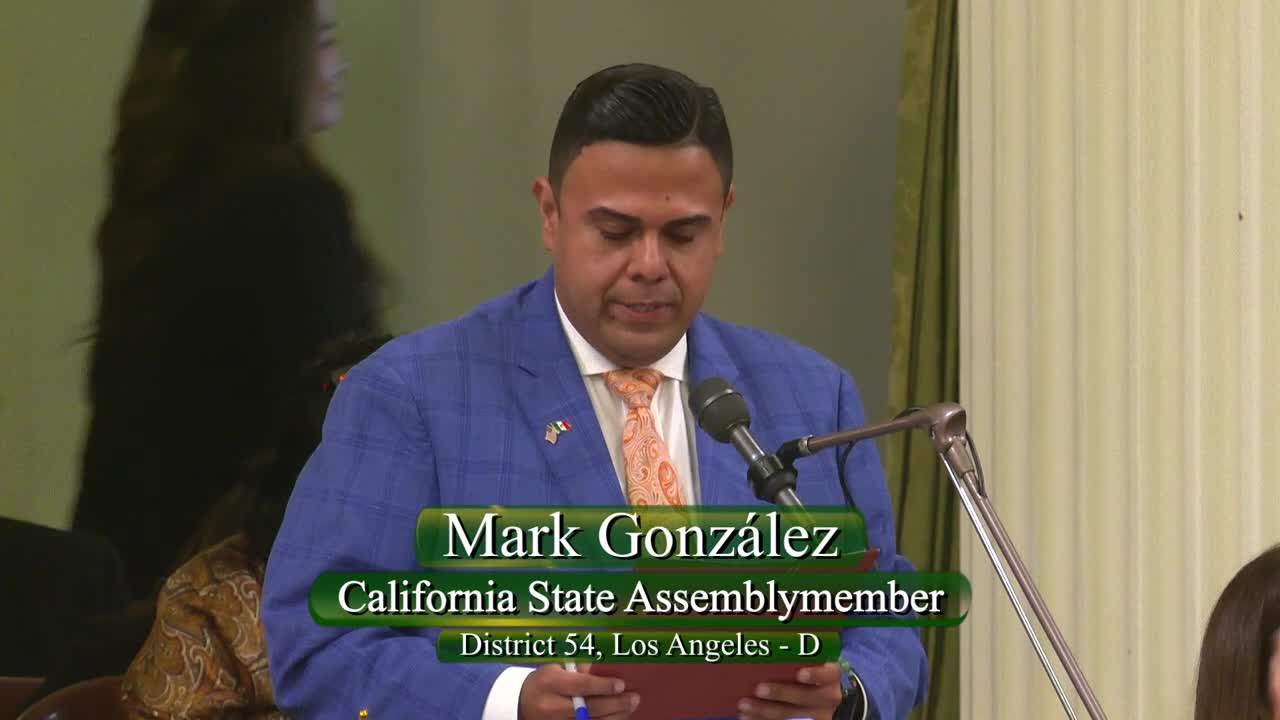
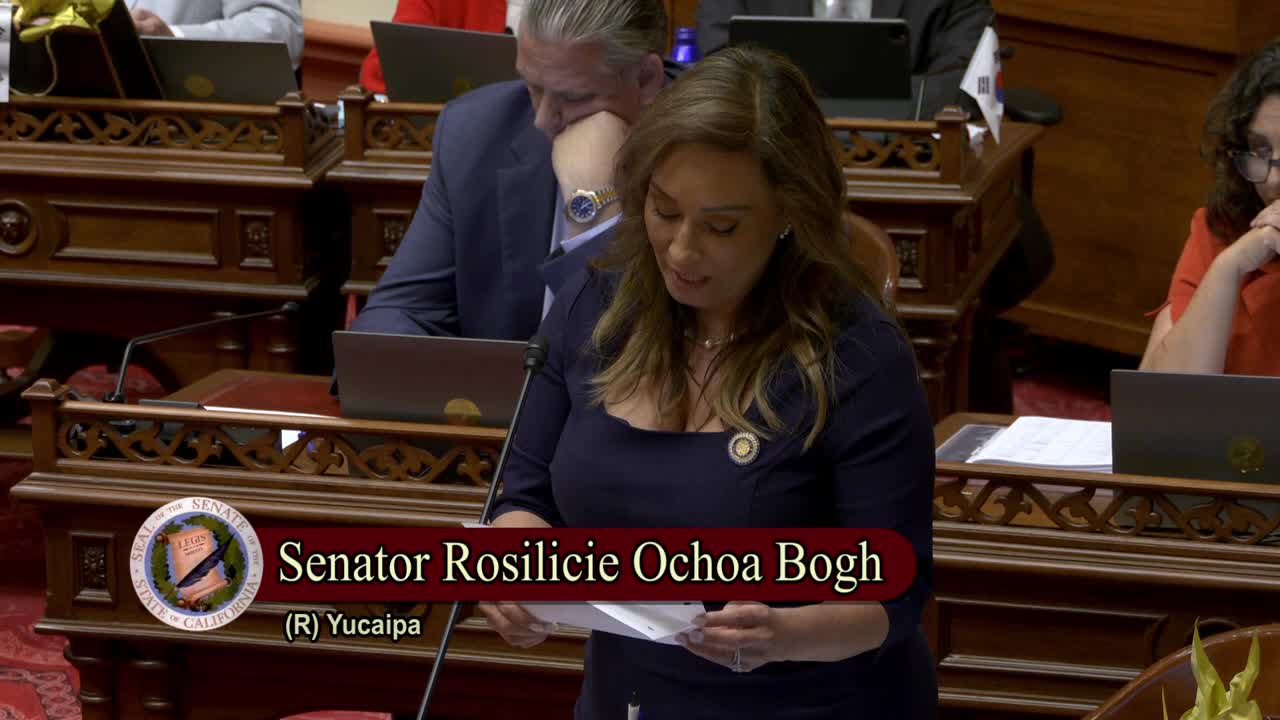
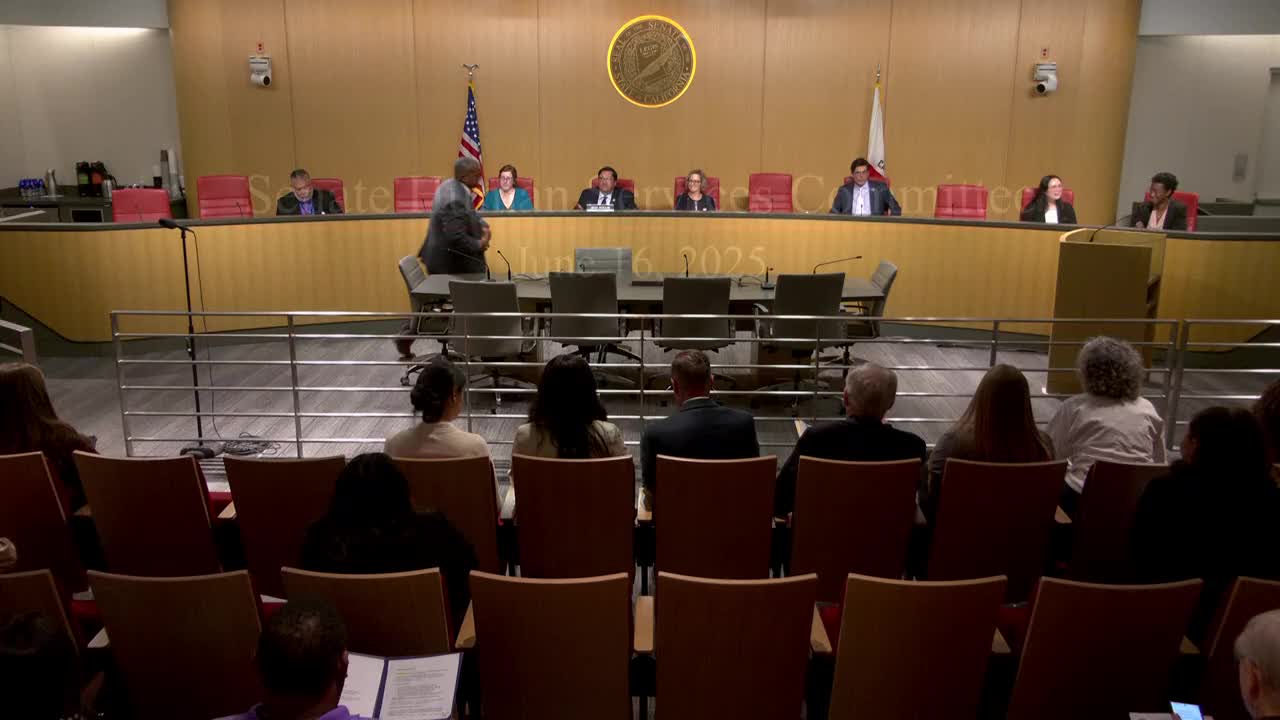
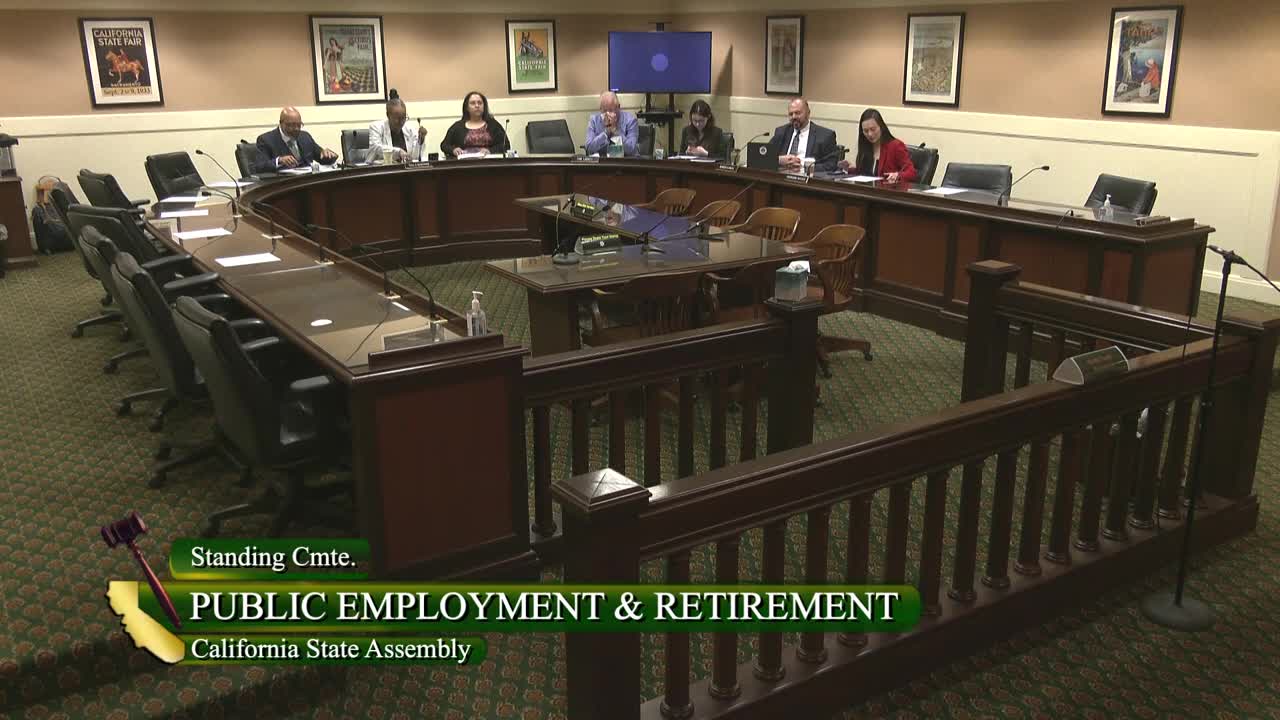
Bill Author

Bill Co-Author(s):