SB 255: County recorders: notification.
- Session Year: 2025-2026
- House: Senate
- Latest Version Date: 2025-10-06
Current Status:
Passed
(2025-10-06: Chaptered by Secretary of State. Chapter 351, Statutes of 2025.)
Introduced
In Committee
Awaiting First Chamber Vote
Passed First Chamber
In Committee
Awaiting Second Chamber Vote
Passed Second Chamber
Enacted
Existing law establishes the office of county recorder and requires the county recorder to accept for recordation any instrument, paper, or notice that is authorized or required to be recorded, subject to the collection of specified fees. Existing law requires the county recorder to maintain various indices of specified documents and records.
Existing law authorizes the county recorder, following adoption of an authorizing resolution by the board of supervisors, within 30 days of recordation of a deed, quitclaim, or deed of trust, to notify by mail the party or parties executing the document. Existing law authorizes the recorder to require, as a condition of recording, that a deed, quitclaim, or deed of trust indicate the assessors identification number or numbers that fully contain the real property described in the legal description, in accordance with a specified format. Existing law also authorizes the Los Angeles County Recorder, until January 1, 2030, and subject to authorization by the Los Angeles County Board of Supervisors, to provide notice by mail to the party or parties subject to a notice of default or notice of sale of a property within a prescribed timeframe following recordation.
This bill would require, on or before January 1, 2027, each county within the state to establish a recorder notification program and the board of supervisors of each county to adopt an authorizing resolution for these purposes. Pursuant to the program and following the adoption of an authorizing resolution, the county recorder, or a designee authorized by the county board of supervisors, would be required, within 30 days of recordation of a deed, quitclaim deed, mortgage, or deed of trust, to notify the parties executing the document by mail in accordance with certain procedures. The bill would also authorize the county recorder, in addition to the mailed notice, to establish an electronic notification program. The bill would create an exemption from these requirements for the recordation of certain documents where a state or local government is the grantee. The bill would also authorize the county recorder to collect a fee from the party filing the deed, quitclaim deed, mortgage, or deed of trust in an amount that does not exceed the reasonable costs of services of the county to comply with these provisions. The bill would create an exception from these requirements for the above-described notification program for the County of Los Angeles. By imposing new duties on county officials and employees, the bill would create a state-mandated local program.
The California Constitution requires the state to reimburse local agencies and school districts for certain costs mandated by the state. Statutory provisions establish procedures for making that reimbursement.
This bill would provide that, if the Commission on State Mandates determines that the bill contains costs mandated by the state, reimbursement for those costs shall be made pursuant to the statutory provisions noted above.
Existing law establishes the office of county recorder and requires the county recorder to accept for recordation any instrument, paper, or notice that is authorized or required to be recorded, subject to the collection of specified fees. Existing law requires the county recorder to maintain various indices of specified documents and records.
Existing law authorizes the county recorder, following adoption of an authorizing resolution by the board of supervisors, within 30 days of recordation of a deed, quitclaim, or deed of trust, to notify by mail the party or parties executing the document. Existing law authorizes the recorder to require, as a condition of recording, that a deed, quitclaim, or deed of trust indicate the assessors identification number or numbers that fully contain the real property described in the legal description, in accordance with a specified format. Existing law also authorizes the Los Angeles County Recorder, until January 1, 2030, and subject to authorization by the Los Angeles County Board of Supervisors, to provide notice by mail to the party or parties subject to a notice of default or notice of sale of a property within a prescribed timeframe following recordation.
This bill would require each county within the state, require, on or before January 1, 2027, each county within the state to establish a recorder notification program. program and the board of supervisors of each county to adopt an authorizing resolution for these purposes. Pursuant to the program, program and following the adoption of an authorizing resolution, the county recorder, or a designee authorized by the county board of supervisors, would be required, within 30 days of recordation of a deed, quitclaim deed, mortgage, or deed of trust, to notify the parties executing the document by mail in accordance with certain procedures. The bill would also authorize the county recorder, in addition to the mailed notice, to establish an electronic notification program. The bill would create an exemption from these requirements for the recordation of certain documents where a state or local government is the grantee. The bill would also authorize the county recorder to collect a fee from the party filing the deed, quitclaim deed, mortgage, or deed of trust in an amount that does not exceed the reasonable costs of services of the county to comply with these provisions. The bill would create an exception from these requirements for the above-described notification program for the County of Los Angeles. By imposing new duties on county officials and employees, the bill would create a state-mandated local program.
The California Constitution requires the state to reimburse local agencies and school districts for certain costs mandated by the state. Statutory provisions establish procedures for making that reimbursement.
This bill would provide that, if the Commission on State Mandates determines that the bill contains costs mandated by the state, reimbursement for those costs shall be made pursuant to the statutory provisions noted above.
Existing law establishes the office of county recorder and requires the county recorder to accept for recordation any instrument, paper, or notice that is authorized or required to be recorded, subject to the collection of specified fees. Existing law requires the county recorder to maintain various indices of specified documents and records.
Existing law authorizes the county recorder, following adoption of an authorizing resolution by the board of supervisors, within 30 days of recordation of a deed, quitclaim, or deed of trust, to notify by mail the party or parties executing the document. Existing law authorizes the recorder to require, as a condition of recording, that a deed, quitclaim, or deed of trust indicate the assessors identification number or numbers that fully contain the real property described in the legal description, in accordance with a specified format. Existing law also authorizes the Los Angeles County Recorder, until January 1, 2030, and subject to authorization by the Los Angeles County Board of Supervisors, to provide notice by mail to the party or parties subject to a notice of default or notice of sale of a property within a prescribed timeframe following recordation.
This bill would require each county within the state, on or before January 1, 2027, to establish a recorder notification program. Pursuant to the program, the county recorder, or a designee authorized by the county board of supervisors, would be required, within 30 days of recordation of a deed, quitclaim deed, mortgage, or deed of trust, to notify the parties executing the document by mail in accordance with certain procedures. The bill would also authorize the county recorder, in addition to the mailed notice, to establish an electronic notification program. The bill would create an exemption from these requirements for the recordation of certain documents where a state or local government is the grantee. The bill would also authorize the county recorder to collect a fee from the party filing the deed, quitclaim deed, mortgage, or deed of trust in an amount that does not exceed the reasonable regulatory costs to of services of the county to comply with these provisions. The bill would create an exception from these requirements for the above-described notification program for the County of Los Angeles. By imposing new duties on county employees, the bill would create a state-mandated local program.
The California Constitution requires the state to reimburse local agencies and school districts for certain costs mandated by the state. Statutory provisions establish procedures for making that reimbursement.
This bill would provide that, if the Commission on State Mandates determines that the bill contains costs mandated by the state, reimbursement for those costs shall be made pursuant to the statutory provisions noted above.
Existing law establishes the office of county recorder and requires the county recorder to accept for recordation any instrument, paper, or notice that is authorized or required to be recorded, subject to the collection of specified fees. Existing law requires the county recorder to maintain various indices of specified documents and records.
Existing law authorizes the county recorder, following adoption of an authorizing resolution by the board of supervisors, within 30 days of recordation of a deed, quitclaim, or deed of trust, to notify by mail the party or parties executing the document. Existing law authorizes the recorder to require, as a condition of recording, that a deed, quitclaim, or deed of trust indicate the assessors identification number or numbers that fully contain the real property described in the legal description, in accordance with a specified format. Existing law also authorizes the Los Angeles County Recorder, until January 1, 2030, and subject to authorization by the Los Angeles County Board of Supervisors, to provide notice by mail to the party or parties subject to a notice of default or notice of sale of a property within a prescribed timeframe following recordation.
This bill would require each county within the state state, on or before January 1, 2027, to establish a recorder notification program. Pursuant to the program, the county recorder, or a designee authorized by the county board of supervisors, would be required, within 30 days of recordation of a deed, quitclaim deed, mortgage, or deed of trust, to notify the parties executing the document by mail or electronic communication in accordance with certain procedures. The bill would also authorize the county recorder, in addition to the mailed notice, to establish an electronic notification program. The bill would create an exemption from these requirements for the recordation of certain documents where a state or local government acquires title. is the grantee. The bill would also authorize the county recorder to collect a fee from the party filing the deed, quitclaim deed, mortgage, or deed of trust in an amount that does not exceed the reasonable regulatory costs to the county to comply with these provisions. The bill would create an exception from these requirements for the above-described notification program for County of Los Angeles. By imposing new duties on county employees, the bill would create a state-mandated local program.
The California Constitution requires the state to reimburse local agencies and school districts for certain costs mandated by the state. Statutory provisions establish procedures for making that reimbursement.
This bill would provide that, if the Commission on State Mandates determines that the bill contains costs mandated by the state, reimbursement for those costs shall be made pursuant to the statutory provisions noted above.
Existing law establishes the office of county recorder and requires the county recorder to accept for recordation any instrument, paper, or notice that is authorized or required to be recorded, subject to the collection of specified fees. Existing law requires the county recorder to maintain various indices of specified documents and records.
Existing law authorizes the county recorder, following adoption of an authorizing resolution by the board of supervisors, within 30 days of recordation of a deed, quitclaim, or deed of trust, to notify by mail the party or parties executing the document. Existing law authorizes the recorder to require, as a condition of recording, that a deed, quitclaim, or deed of trust indicate the assessors identification number or numbers that fully contain the real property described in the legal description, in accordance with a specified format. Existing law also authorizes the Los Angeles County Recorder, until January 1, 2030, and subject to authorization by the Los Angeles County Board of Supervisors, to provide notice by mail to the party or parties subject to a notice of default or notice of sale of a property within a prescribed timeframe following recordation.
This bill would require each county within the state to establish a recorder notification program. Pursuant to the program, the county recorder, or a designee authorized by the county board of supervisors, would be required, within 30 days of recordation of a deed, quitclaim deed, or deed of trust, to notify the parties executing the document by mail or electronic communication in accordance with certain procedures. The bill would create an exemption from these requirements for the recordation of certain documents where a state or local government acquires title. The bill would also authorize the county recorder to collect a fee from the party filing the deed, quitclaim deed, or deed of trust in an amount that does not exceed the reasonable regulatory costs to the county to comply with these provisions. By imposing new duties on county employees, the bill would create a state-mandated local program.
The California Constitution requires the state to reimburse local agencies and school districts for certain costs mandated by the state. Statutory provisions establish procedures for making that reimbursement.
This bill would provide that, if the Commission on State Mandates determines that the bill contains costs mandated by the state, reimbursement for those costs shall be made pursuant to the statutory provisions noted above.
(a)On or before January 1, 2027, each county within the state shall establish a recorder notification program, in accordance with this section, and the board of supervisors of each county shall adopt an authorizing resolution for these purposes.
(b)(1)Following adoption of an authorizing resolution by the board of supervisors, the county recorder shall, within 30 days of recordation of a deed, quitclaim deed, mortgage, or deed of trust, notify by mail the party or parties executing the document. The notification shall be sent to the address for mailing tax bills that was established prior to the recording of the document.
(2)The recorder may require, as a condition of recording, that a deed, quitclaim deed, mortgage, or deed of trust indicate the assessors identification number or numbers that fully contain all, or a portion of, the real property described in the legal description. If the description contains more than one assessors parcel, all assessors parcels shall be indicated. If assessors identification numbers are required, they shall be listed on the first page of the document. The recorder may rely on the assessors identification numbers as indicated on the document. The form of the entry shall be substantially as follows:
Assessors Identification Number __-__-__.
(3)In addition to the mailed notice required by paragraph (1), the county recorder may establish an electronic notification program that notifies parties upon recording of a deed, quitclaim deed, mortgage, or deed of trust.
(c)This section shall not apply to the recordation of any document where the federal government, or state, county, city, or any subdivision of the state is the grantee.
(d)The failure of the county recorder to provide the notice as permitted by this section shall not result in any liability against the recorder or the county. In the event that the notice is returned to the recorder by the postal service as undeliverable, the recorder is not required to retain the returned notice.
(e)Where the county recorder contracts with any party or parties for the performance of the processing or the mailing of the notice, or both, as authorized by this section, the contract shall be awarded by competitive bid. The county recorder shall solicit written bids for the contract in a newspaper of general circulation in the county, and all bids received shall be publicly opened and the contract awarded to the lowest responsible bidder. If the county recorder or their designee deems the acceptance of the lowest responsible bid is not in the best interest of the county, all bids may be rejected.
(f)In addition to any other recording fee, the board of supervisors may authorize the county recorder to collect a fee from the party filing a deed, quitclaim deed, mortgage, or deed of trust for the cost of implementing the program pursuant to this section. The fee shall not exceed the reasonable costs of services of the county to provide a recorder notification program and to comply with this section. This fee shall not be charged until at least 120 days following the establishment of the fee and public notification of the fee and the effective date.
(g)This section shall not apply to a county that operates a notification program pursuant to Section 27297.6.
SEC. 3.If the Commission on State Mandates determines that this act contains costs mandated by the state, reimbursement to local agencies and school districts for those costs shall be made pursuant to Part 7 (commencing with Section 17500) of Division 4 of Title 2 of the Government Code.
(a)On or before January 1, 2027, each county within the state shall establish a recorder notification program, in accordance with this section. section, and the board of supervisors of each county shall adopt an authorizing resolution for these purposes.
(b)(1)Following adoption of an authorizing resolution by the board of supervisors, the county recorder shall, within 30 days of recordation of a deed, quitclaim deed, mortgage, or deed of trust, notify by mail the party or parties executing the document. The notification shall be sent to the address for mailing tax bills that was established prior to the recording of the document.
(2)The recorder may require, as a condition of recording, that a deed, quitclaim deed, mortgage, or deed of trust indicate the assessors identification number or numbers that fully contain all, or a portion of, the real property described in the legal description. If the description contains more than one assessors parcel, all assessors parcels shall be indicated. If assessors identification numbers are required, they shall be listed on the first page of the document. The recorder may rely on the assessors identification numbers as indicated on the document. The form of the entry shall be substantially as follows:
Assessors Identification Number __-__-__.
(3)In addition to the mailed notice required by paragraph (1), the county recorder may establish an electronic notification program that notifies parties upon recording of a deed, quitclaim deed, mortgage, or deed of trust.
(c)This section shall not apply to the recordation of any document where the federal government, or state, county, city, or any subdivision of the state is the grantee.
(d)The failure of the county recorder to provide the notice as permitted by this section shall not result in any liability against the recorder or the county. In the event that the notice is returned to the recorder by the postal service as undeliverable, the recorder is not required to retain the returned notice.
(e)Where the county recorder contracts with any party or parties for the performance of the processing or the mailing of the notice, or both, as authorized by this section, the contract shall be awarded by competitive bid. The county recorder shall solicit written bids for the contract in a newspaper of general circulation in the county, and all bids received shall be publicly opened and the contract awarded to the lowest responsible bidder. If the county recorder or their designee deems the acceptance of the lowest responsible bid is not in the best interest of the county, all bids may be rejected.
(f)In addition to any other recording fee, the board of supervisors may authorize the county recorder to collect a fee from the party filing a deed, quitclaim deed, mortgage, or deed of trust for the cost of implementing the program pursuant to this section. The fee shall not exceed the reasonable costs of services of the county to provide a recorder notification program and to comply with this section. This fee shall not be charged until at least 120 days following the establishment of the fee and public notification of the fee and the effective date.
(g)This section shall not apply to a county that operates a notification program pursuant to Section 27297.6.
SEC. 3.If the Commission on State Mandates determines that this act contains costs mandated by the state, reimbursement to local agencies and school districts for those costs shall be made pursuant to Part 7 (commencing with Section 17500) of Division 4 of Title 2 of the Government Code.
(a)On or before January 1, 2027, each county within the state shall establish a recorder notification program, in accordance with this section.
(b)(1)Following adoption of an authorizing resolution by the board of supervisors, the county recorder shall, within 30 days of recordation of a deed, quitclaim deed, mortgage, or deed of trust, notify by mail the party or parties executing the document. The notification shall be sent to the address for mailing tax bills that was established prior to the recording of the document.
(2)The recorder may require, as a condition of recording, that a deed, quitclaim deed, mortgage, or deed of trust indicate the assessors identification number or numbers that fully contain all, or a portion of, the real property described in the legal description. If the description contains more than one assessors parcel, all assessors parcels shall be indicated. If assessors identification numbers are required, they shall be listed on the first page of the document. The recorder may rely on the assessors identification numbers as indicated on the document. The form of the entry shall be substantially as follows:
Assessors Identification Number __-__-__.
(3)In addition to the mailed notice required by paragraph (1), the county recorder may establish an electronic notification program that notifies parties upon recording of a deed, quitclaim deed, mortgage, or deed of trust.
(c)This section shall not apply to the recordation of any document where the federal government, or state, county, city, or any subdivision of the state is the grantee.
(d)The failure of the county recorder to provide the notice as permitted by this section shall not result in any liability against the recorder or the county. In the event that the notice is returned to the recorder by the postal service as undeliverable, the recorder is not required to retain the returned notice.
(e)Where the county recorder contracts with any party or parties for the performance of the processing or the mailing of the notice, or both, as authorized by this section, the contract shall be awarded by competitive bid. The county recorder shall solicit written bids for the contract in a newspaper of general circulation in the county, and all bids received shall be publicly opened and the contract awarded to the lowest responsible bidder. If the county recorder or their designee deems the acceptance of the lowest responsible bid is not in the best interest of the county, all bids may be rejected.
(f)In addition to any other recording fee, the board of supervisors may authorize the county recorder to collect a fee from the party filing a deed, quitclaim deed, mortgage, or deed of trust for the cost of implementing the program pursuant to this section. The fee shall not exceed the reasonable regulatory costs to the county costs of services of the county to provide a recorder notification program and to comply with this section. This fee shall not be charged until at least 120 days following the establishment of the fee and public notification of the fee and the effective date.
(g)This section shall not apply to a county that operates a notification program pursuant to Section 27297.6.
SEC. 3.If the Commission on State Mandates determines that this act contains costs mandated by the state, reimbursement to local agencies and school districts for those costs shall be made pursuant to Part 7 (commencing with Section 17500) of Division 4 of Title 2 of the Government Code.
(a)On or before January 1, 2027, each county within the state shall establish a recorder notification program, in accordance with this section.
(b)(1)Following adoption of an authorizing resolution by the board of supervisors, the county recorder shall, within 30 days of recordation of a deed, quitclaim deed, mortgage, or deed of trust, notify by mail the party or parties executing the document. The notification shall be sent to the address for mailing tax bills that was established prior to the recording of the document.
(2)The recorder may require, as a condition of recording, that a deed, quitclaim deed, mortgage, or deed of trust indicate the assessors identification number or numbers that fully contain all, or a portion of, the real property described in the legal description. If the description contains more than one assessors parcel, all assessors parcels shall be indicated. The form of the entry shall be substantially as follows:
Assessors Identification Number __-__-__.
(3)In addition to the mailed notice required by paragraph (1), the county recorder may establish an electronic notification program that notifies parties upon recording of a deed, quitclaim deed, mortgage, or deed of trust.
(c)This section shall not apply to the recordation of any document where the federal government, or state, county, city, or any subdivision of the state is the grantee.
(d)The failure of the county recorder to provide the notice as permitted by this section shall not result in any liability against the recorder or the county. In the event that the notice is returned to the recorder by the postal service as undeliverable, the recorder is not required to retain the returned notice.
(e)Where the county recorder contracts with any party or parties for the performance of the processing or the mailing of the notice, or both, as authorized by this section, the contract shall be awarded by competitive bid. The county recorder shall solicit written bids for the contract in a newspaper of general circulation in the county, and all bids received shall be publicly opened and the contract awarded to the lowest responsible bidder. If the county recorder or their designee deems the acceptance of the lowest responsible bid is not in the best interest of the county, all bids may be rejected.
(f)In addition to any other recording fee, the board of supervisors may authorize the county recorder to collect a fee from the party filing a deed, quitclaim deed, mortgage, or deed of trust for the cost of implementing the program pursuant to this section. The fee shall not exceed the reasonable regulatory costs to the county to comply with this section. This fee shall not be charged until at least 120 days following the establishment of the fee and public notification of the fee and the effective date.
(g)This section shall not apply to a county that operates a notification program pursuant to Section 27297.6.
SECTION 1.Section 27297.8 is added to the Government Code, to read:27297.8.(a)Each county within the state shall establish a recorder notification program, in accordance with this section.(b)(1)Pursuant to the recorder notification program, the county recorder, or a designee authorized by the board of supervisors for that county, shall, within 30 days of recordation of a deed, quitclaim deed, or deed of trust, notify the parties executing the document in accordance with paragraph (2). (2)The notification shall be provided by mail or, subject to agreement by the parties, electronic communication.(3)The county recorder may require, as a condition of recording, that a deed, quitclaim deed, or deed of trust indicate the assessors identification number or numbers that fully contain all, or a portion of, the real property described in the legal description. If the description contains more than one assessors parcel, all assessors parcels shall be indicated. The form of the entry shall be substantially as follows:Assessors Identification Number __-__-__.(c)This section shall not apply to the recordation of any document where the federal government, or the state, county, city, or any subdivision of the state, acquires title.SEC. 2.Section 27387.2 is added to the Government Code, to read:27387.2.In addition to any other recording fee, the county recorder, pursuant to Section 27297.8, may collect a fee from the party filing a deed, quitclaim deed, or deed of trust. The fee shall not exceed the reasonable regulatory costs to the county to comply with Section 27297.8.SEC. 3.If the Commission on State Mandates determines that this act contains costs mandated by the state, reimbursement to local agencies and school districts for those costs shall be made pursuant to Part 7 (commencing with Section 17500) of Division 4 of Title 2 of the Government Code.
(a)Each county within the state shall establish a recorder notification program, in accordance with this section.
(b)(1)Pursuant to the recorder notification program, the county recorder, or a designee authorized by the board of supervisors for that county, shall, within 30 days of recordation of a deed, quitclaim deed, or deed of trust, notify the parties executing the document in accordance with paragraph (2).
(2)The notification shall be provided by mail or, subject to agreement by the parties, electronic communication.
(3)The county recorder may require, as a condition of recording, that a deed, quitclaim deed, or deed of trust indicate the assessors identification number or numbers that fully contain all, or a portion of, the real property described in the legal description. If the description contains more than one assessors parcel, all assessors parcels shall be indicated. The form of the entry shall be substantially as follows:
Assessors Identification Number __-__-__.
(c)This section shall not apply to the recordation of any document where the federal government, or the state, county, city, or any subdivision of the state, acquires title.
SEC. 2.Section 27387.2 is added to the Government Code, to read:27387.2.In addition to any other recording fee, the county recorder, pursuant to Section 27297.8, may collect a fee from the party filing a deed, quitclaim deed, or deed of trust. The fee shall not exceed the reasonable regulatory costs to the county to comply with Section 27297.8.
SEC. 3.If the Commission on State Mandates determines that this act contains costs mandated by the state, reimbursement to local agencies and school districts for those costs shall be made pursuant to Part 7 (commencing with Section 17500) of Division 4 of Title 2 of the Government Code.
|
Date
|
Status
|
|---|---|
| Oct 6, 2025 | Chaptered by Secretary of State. Chapter 351, Statutes of 2025. |
| Oct 6, 2025 | Approved by the Governor. |
| Sep 22, 2025 | Enrolled and presented to the Governor at 11 a.m. |
| Sep 11, 2025 | Assembly amendments concurred in. (Ayes 40. Noes 0. Page 2928.) Ordered to engrossing and enrolling. |
| Sep 9, 2025 | Ordered to special consent calendar. |
| Sep 3, 2025 | In Senate. Concurrence in Assembly amendments pending. |
| Sep 2, 2025 | Read third time. Passed. (Ayes 77. Noes 0. Page 2818.) Ordered to the Senate. |
| Aug 27, 2025 | Ordered to third reading. |
| Aug 27, 2025 | Read third time and amended. |
| Aug 21, 2025 | Ordered to third reading. |
| Aug 21, 2025 | Action rescinded whereby bill was read third time, passed, and ordered to Senate. |
| Aug 19, 2025 | In Assembly. Held at Desk. |
| Aug 18, 2025 | Ordered to the Assembly. |
| Jul 17, 2025 | In Senate. Concurrence in Assembly amendments pending. |
| Jul 17, 2025 | Read third time. Passed. (Ayes 75. Noes 0. Page 2595.) Ordered to the Senate. |
| Jul 10, 2025 | Read second time. Ordered to consent calendar. |
| Jul 9, 2025 | From committee: Do pass. Ordered to consent calendar. (Ayes 15. Noes 0.) (July 9). |
| Jun 24, 2025 | From committee: Do pass and re-refer to Com. on APPR. with recommendation: To consent calendar. (Ayes 12. Noes 0.) (June 24). Re-referred to Com. on APPR. |
| Jun 18, 2025 | From committee: Do pass and re-refer to Com. on JUD. with recommendation: To consent calendar. (Ayes 10. Noes 0.) (June 18). Re-referred to Com. on JUD. |
| Jun 9, 2025 | From committee with author's amendments. Read second time and amended. Re-referred to Com. on L. GOV. |
| May 29, 2025 | Referred to Coms. on L. GOV. and JUD. |
| May 8, 2025 | In Assembly. Read first time. Held at Desk. |
| May 8, 2025 | Read third time. Passed. (Ayes 36. Noes 0. Page 1050.) Ordered to the Assembly. |
| May 6, 2025 | Read second time. Ordered to consent calendar. |
| May 5, 2025 | From committee: Be ordered to second reading pursuant to Senate Rule 28.8 and ordered to consent calendar. |
| Apr 25, 2025 | Set for hearing May 5. |
| Apr 23, 2025 | From committee: Do pass and re-refer to Com. on APPR. with recommendation: To consent calendar. (Ayes 13. Noes 0. Page 833.) (April 22). Re-referred to Com. on APPR. |
| Apr 4, 2025 | Set for hearing April 22. |
| Apr 3, 2025 | From committee: Do pass and re-refer to Com. on JUD. (Ayes 7. Noes 0. Page 637.) (April 2). Re-referred to Com. on JUD. |
| Mar 24, 2025 | From committee with author's amendments. Read second time and amended. Re-referred to Com. on L. GOV. |
| Mar 24, 2025 | Set for hearing April 2. |
| Mar 13, 2025 | March 19 hearing postponed by committee. |
| Mar 4, 2025 | Set for hearing March 19. |
| Feb 14, 2025 | Referred to Coms. on L. GOV. and JUD. |
| Feb 4, 2025 | From printer. May be acted upon on or after March 6. |
| Feb 3, 2025 | Introduced. Read first time. To Com. on RLS. for assignment. To print. |
|
Date
|
Description
|
Location
|
Votes
|
|
|---|---|---|---|---|
| Sep 11, 2025 | Special Consent SB255 Seyarto | Senate Floor |
Passed |
|
| Sep 2, 2025 | The committee(s) on WTL recommend(s) that the measure be PASSED, UNAMENDED | Assembly Floor |
Passed |
|
| Jul 17, 2025 | SB 255 Seyarto Consent Calendar Second Day Regular Session | Assembly Floor |
Passed |
|
| Jul 9, 2025 | Do pass. To Consent Calendar. | Assembly Standing Committee on Appropriations |
Passed |
|
| Jun 24, 2025 | Do pass and be re-referred to the Committee on [Appropriations] with recommendation: To Consent Calendar | Assembly Standing Committee on Judiciary |
Passed |
|
| Jun 18, 2025 | Do pass and be re-referred to the Committee on [Judiciary] with recommendation: To Consent Calendar | Assembly Standing Committee on Local Government |
Passed |
|
| May 8, 2025 | Consent Calendar 2nd SB255 Seyarto | Senate Floor |
Passed |
|
| Apr 22, 2025 | Do pass, but first be re-referred to the Committee on [Appropriations] with the recommendation: To Consent Calendar | Senate Standing Committee on Judiciary |
Passed |
|
| Apr 2, 2025 | Do pass, but first be re-referred to the Committee on [Judiciary] | Senate Standing Committee on Local Government |
Passed |
This list shows positions taken on this bill by organizations on the date displayed, which is linked to the original source.
Positions by individuals are not included.
|
Organization
|
Position
|
Date
|
|---|---|---|
| California Land Title Association | ** Support | |
| Howard Jarvis Taxpayers Association | ** Support |
SENATE RULES COMMITTEE Office of Senate Floor Analyses (916) 651-1520 Fax: (916) 327-4478 | SB 255 |
UNFINISHED BUSINESS
Bill No: SB 255
Author: Seyarto (R)
Amended: 8/27/25
Vote: 21
SENATE LOCAL GOVERNMENT COMMITTEE: 7-0, 4/2/25
AYES: Durazo, Choi, Arreguín, Cabaldon, Laird, Seyarto, Wiener
SENATE JUDICIARY COMMITTEE: 13-0, 4/22/25
AYES: Umberg, Niello, Allen, Arreguín, Ashby, Caballero, Durazo, Laird, Stern, Valladares, Wahab, Weber Pierson, Wiener
SENATE APPROPRIATIONS COMMITTEE: Senate Rule 28.8
SENATE FLOOR: 36-0, 5/8/25 (Consent)
AYES: Allen, Alvarado-Gil, Archuleta, Arreguín, Ashby, Becker, Blakespear, Cabaldon, Caballero, Cervantes, Choi, Cortese, Dahle, Durazo, Gonzalez, Grayson, Grove, Jones, Laird, Limón, McGuire, McNerney, Menjivar, Niello, Ochoa Bogh, Padilla, Pérez, Richardson, Seyarto, Smallwood-Cuevas, Stern, Strickland, Umberg, Wahab, Weber Pierson, Wiener
NO VOTE RECORDED: Hurtado, Reyes, Rubio, Valladares
ASSEMBLY FLOOR: 77-0, 9/2/25 - See last page for vote
SUBJECT: County recorders: notification
SOURCE: Author
DIGEST:
This bill requires every county, on or before January 1, 2027, to establish a program to notify the parties to a deed, quitclaim deed, mortgage, or deed of trust within 30 days of recordation of such a document.
Assembly Amendments
of 8/27/25 require a county board of supervisors to adopt an authorizing resolution for the program and make clarifying and technical changes.
ANALYSIS:
Existing law:
- Establishes, within each county, the county recorder, who shall, upon the payment of proper fees and taxes, accept for recordation any instrument, paper, or notice that is authorized or required by statute, or court order to be recorded, or authorized or required to be recorded by a local ordinance that relates to the recordation of any instrument, paper, or notice that relates to real property.
- Authorizes a county recorder to establish a recorder notification program that notifies property-owners by mail when someone records a deed, quitclaim deed, or deed of trust against their property.
- Grants the County of Los Angeles the authority to establish a similar recorder notification program.
This bill:
- Requires, on or before January 1, 2027, every county to establish a recorder notification program, as follows:
- The board of supervisors of the county must adopt an authorizing resolution for the program.
- The county recorder must, within 30 days of recordation of a deed, quitclaim deed, mortgage, or deed of trust, notify by mail the party or parties executing the document.
- The recorder must mail the notification to the address for mailing tax bills that was established prior to the recording of the document.
- The recorder can require documents to contain the assessor’s identification number for the parcel, and specifies the format for that information.
- In addition to the mailed notice, the bill authorizes, but does not require, the county recorder to establish an electronic notification program that notifies parties upon recording of a deed, quitclaim deed, mortgage, or deed of trust.
- Provides that it does not apply to the recordation of any document where a government entity receives ownership of the property.
- Requires the recorder to award contracts by competitive bids, as specified, if the recorder contracts for services associated with the notification.
- Provides that the failure of the county recorder to provide notice does not result in any liability against the recorder or the county. In the event that the notice is returned to the recorder by the postal service as undeliverable, the recorder is not required to retain the returned notice.
- Allows, in addition to any other recording fee, the board of supervisors to authorize the county recorder to collect a fee from the party filing a deed, quitclaim deed, mortgage, or deed of trust for the cost of implementing the program.
- Prohibits the fee from exceeding the reasonable regulatory costs to the county, or being charged until at least 120 days following the establishment of the fee and public notification of the fee and the effective date.
- Provides that it does not apply to Los Angeles County’s recorder notification program.
Background
Real estate fraud has affected property owners across the state for many years. Real estate fraud can take many forms but a form that has risen in prominence is known as title fraud or deed fraud. According to the credit bureau Experian:
Home title fraud is a serious type of real estate scam that happens when a criminal steals a home's title and puts it in their name. Then fraudsters may use the property title to commit further criminal acts, including selling the home or using it as collateral on new loans—all without the homeowner's knowledge. While this type of fraud is rare, it can result in serious financial consequences for homeowners.
Home title fraud, also called home title theft, typically begins with identity theft. Fraudsters may steal your identity, your Social Security number or other private information in order to forge title transfer documents. Common methods include a forged quitclaim deed, warranty or grant. The scammers then file the new paperwork with the appropriate parties, like your town clerk, to record the transfer of ownership—all without your knowledge.
Once your home's title is in the hands of scammers, you no longer technically own your home—even if you continue to make your mortgage payments. Scammers can use your home as collateral to refinance your home or take out new loans, like a second mortgage or a home equity line of credit (HELOC). They may also illegally sell the house or use it in a rental scam.
Real estate fraud remains rare, but significant. The Federal Bureau of Investigation’s 2023 Internet Crime Report noted that in 2023, nationwide the Bureau received about 33,000 claims of real estate fraud totaling roughly $900 million from 2021-2023. These numbers amount to about 1.3% of all claims and 3% of all fraud losses in that time period.
Recorder notification programs. In response to several scams taking place in the early 1990s, the Legislature authorized Los Angeles County to create the Los Angeles County Homeowner Notification Program as a three-year real estate fraud pilot to address foreclosures related to falsified real estate loan documents SB 1842 (Watson, Chapter 815, Statutes of 1992). Under the program, the County notifies homeowners by mail when someone records a deed, quitclaim deed, or deed of trust against their property. The notification instructs homeowners to contact the County’s Department of Consumer and Business Affairs if they suspect forgery or fraud, or if they need additional assistance. Initially, the program authorized the County recorder to charge an additional fee for filing these documents to cover the cost of the notifications, not to exceed $10. When the Legislature reauthorized the program in 1996, it removed the sunset date and allowed the recorder to collect an additional fee of up to $7 from the party filing these documents SB 1631 (Watson, Chapter 177, Statutes of 1996).
Due to concerns about fraud in Riverside County, SB 1287 (Hollingsworth, Chapter 117, Statutes of 2008) gave that county similar authority, but without the fee authority. When other counties expressed interest in operating a similar notification program, AB 2618 (Nestande, Chapter 44, Statutes of 2010) expanded the option to enact a notification program statewide. Currently, at least eight counties operate a notification program: Calaveras, Contra Costa, Los Angeles, Orange, Placer, Riverside, San Diego, and Ventura.
The author wants to make these programs mandatory statewide.
Comments
Purpose of this bill. According to the author, “Property owners throughout California may have heard about new services offering to monitor the status of their property title with their respective county. Several counties already have programs which offer courtesy notifications of changes in real estate documents. SB-255 will give property owners peace of mind and protection from fraud by requiring counties to provide notification to parties involved in a transferring of ownership of a property or modifying a property title.”
Buyer beware. Real estate fraud has garnered attention in recent years, although it remains a small share of overall fraud complaints. SB 255 mandates a recorder notification program statewide to address this issue. In doing so, SB 255 imposes costs on all parties recording these documents in the form of fees. The magnitude of these costs is unclear: for example, the most populous county in the state operates a program, but so does Calaveras County, which has about 45,000 residents, so the cost may not be prohibitive. This bill also builds in a delayed implementation to allow county recorders time to ramp up fees more slowly than if it began on January 1, 2026. Nonetheless, SB 255 raises questions regarding whether the benefit of establishing the programs are worth the cost.
FISCAL EFFECT: Appropriation: No Fiscal Com.: Yes Local: Yes
According to the Assembly Appropriations Committee:
- No state costs. Local costs to each county recorder’s office of an unknown amount to establish and administer a recorder notification program. This bill authorizes a county board of supervisors to authorize its county recorder to collect a fee from the filing party, in addition to other recording fees, to cover the costs of implementing the program.
- Although Legislative Counsel did not include the state mandate local fee disclaimer language, this bill and existing law allow county recorders to recover local costs through fees. Therefore, it is unlikely the Commission on State Mandates would determine any local costs associated with this bill to be reimbursable by the state.
SUPPORT: (Verified 9/2/25)
California Land Title Association
Howard Jarvis Taxpayers Association
OPPOSITION: (Verified 9/2/25)
None received
ASSEMBLY FLOOR: 77-0, 9/2/25
AYES: Addis, Aguiar-Curry, Ahrens, Alanis, Alvarez, Arambula, Ávila Farías, Bains, Bauer-Kahan, Bennett, Boerner, Bonta, Bryan, Calderon, Caloza, Carrillo, Castillo, Chen, Connolly, Davies, DeMaio, Dixon, Elhawary, Ellis, Flora, Fong, Gabriel, Gallagher, Garcia, Gipson, Jeff Gonzalez, Mark González, Hadwick, Haney, Harabedian, Hart, Hoover, Irwin, Jackson, Kalra, Krell, Lackey, Lowenthal, Macedo, McKinnor, Muratsuchi, Nguyen, Ortega, Pacheco, Papan, Patel, Patterson, Pellerin, Petrie-Norris, Quirk-Silva, Ramos, Ransom, Celeste Rodriguez, Michelle Rodriguez, Rogers, Blanca Rubio, Sanchez, Schiavo, Schultz, Sharp-Collins, Solache, Soria, Stefani, Ta, Tangipa, Valencia, Wallis, Ward, Wicks, Wilson, Zbur, Rivas
NO VOTE RECORDED: Berman, Lee
Prepared by: Anton Favorini-Csorba / L. GOV. / (916) 651-4119
9/14/26 11:58:46
**** END ****
SENATE RULES COMMITTEE Office of Senate Floor Analyses (916) 651-1520 Fax: (916) 327-4478 | SB 255 |
UNFINISHED BUSINESS
Bill No: SB 255
Author: Seyarto (R)
Amended: 8/27/25 in Assembly
Vote: 21
SENATE LOCAL GOVERNMENT COMMITTEE: 7-0, 4/2/25
AYES: Durazo, Choi, Arreguín, Cabaldon, Laird, Seyarto, Wiener
SENATE JUDICIARY COMMITTEE: 13-0, 4/22/25
AYES: Umberg, Niello, Allen, Arreguín, Ashby, Caballero, Durazo, Laird, Stern, Valladares, Wahab, Weber Pierson, Wiener
SENATE APPROPRIATIONS COMMITTEE: Senate Rule 28.8
SENATE FLOOR: 36-0, 5/8/25 (Consent)
AYES: Allen, Alvarado-Gil, Archuleta, Arreguín, Ashby, Becker, Blakespear, Cabaldon, Caballero, Cervantes, Choi, Cortese, Dahle, Durazo, Gonzalez, Grayson, Grove, Jones, Laird, Limón, McGuire, McNerney, Menjivar, Niello, Ochoa Bogh, Padilla, Pérez, Richardson, Seyarto, Smallwood-Cuevas, Stern, Strickland, Umberg, Wahab, Weber Pierson, Wiener
NO VOTE RECORDED: Hurtado, Reyes, Rubio, Valladares
ASSEMBLY FLOOR: 75-0, 7/17/25 (Consent) - See last page for vote
SUBJECT: County recorders: notification
SOURCE: Author
DIGEST:
This bill requires every county, on or before January 1, 2027, to establish a program to notify the parties to a deed, quitclaim deed, mortgage, or deed of trust within 30 days of recordation of such a document.
Assembly Amendments
of 8/27/25 require a county board of supervisors to adopt an authorizing resolution for the program and make clarifying and technical changes.
ANALYSIS:
Existing law:
- Establishes, within each county, the county recorder, who shall, upon the payment of proper fees and taxes, accept for recordation any instrument, paper, or notice that is authorized or required by statute, or court order to be recorded, or authorized or required to be recorded by a local ordinance that relates to the recordation of any instrument, paper, or notice that relates to real property.
- Authorizes a county recorder to establish a recorder notification program that notifies property-owners by mail when someone records a deed, quitclaim deed, or deed of trust against their property.
- Grants the County of Los Angeles the authority to establish a similar recorder notification program.
This bill:
- Requires, on or before January 1, 2027, every county to establish a recorder notification program, as follows:
- The board of supervisors of the county must adopt an authorizing resolution for the program.
- The county recorder must, within 30 days of recordation of a deed, quitclaim deed, mortgage, or deed of trust, notify by mail the party or parties executing the document.
- The recorder must mail the notification to the address for mailing tax bills that was established prior to the recording of the document.
- The recorder can require documents to contain the assessor’s identification number for the parcel, and specifies the format for that information.
- In addition to the mailed notice, the bill authorizes, but does not require, the county recorder to establish an electronic notification program that notifies parties upon recording of a deed, quitclaim deed, mortgage, or deed of trust.
- Provides that it does not apply to the recordation of any document where a government entity receives ownership of the property.
- Requires the recorder to award contracts by competitive bids, as specified, if the recorder contracts for services associated with the notification.
- Provides that the failure of the county recorder to provide notice does not result in any liability against the recorder or the county. In the event that the notice is returned to the recorder by the postal service as undeliverable, the recorder is not required to retain the returned notice.
- Allows, in addition to any other recording fee, the board of supervisors to authorize the county recorder to collect a fee from the party filing a deed, quitclaim deed, mortgage, or deed of trust for the cost of implementing the program.
- Prohibits the fee from exceeding the reasonable regulatory costs to the county, or being charged until at least 120 days following the establishment of the fee and public notification of the fee and the effective date.
- Provides that it does not apply to Los Angeles County’s recorder notification program.
Background
Real estate fraud has affected property owners across the state for many years. Real estate fraud can take many forms but a form that has risen in prominence is known as title fraud or deed fraud. According to the credit bureau Experian:
Home title fraud is a serious type of real estate scam that happens when a criminal steals a home's title and puts it in their name. Then fraudsters may use the property title to commit further criminal acts, including selling the home or using it as collateral on new loans—all without the homeowner's knowledge. While this type of fraud is rare, it can result in serious financial consequences for homeowners.
Home title fraud, also called home title theft, typically begins with identity theft. Fraudsters may steal your identity, your Social Security number or other private information in order to forge title transfer documents. Common methods include a forged quitclaim deed, warranty or grant. The scammers then file the new paperwork with the appropriate parties, like your town clerk, to record the transfer of ownership—all without your knowledge.
Once your home's title is in the hands of scammers, you no longer technically own your home—even if you continue to make your mortgage payments. Scammers can use your home as collateral to refinance your home or take out new loans, like a second mortgage or a home equity line of credit (HELOC). They may also illegally sell the house or use it in a rental scam.
Real estate fraud remains rare, but significant. The Federal Bureau of Investigation’s 2023 Internet Crime Report noted that in 2023, nationwide the Bureau received about 33,000 claims of real estate fraud totaling roughly $900 million from 2021-2023. These numbers amount to about 1.3% of all claims and 3% of all fraud losses in that time period.
Recorder notification programs. In response to several scams taking place in the early 1990s, the Legislature authorized Los Angeles County to create the Los Angeles County Homeowner Notification Program as a three-year real estate fraud pilot to address foreclosures related to falsified real estate loan documents SB 1842 (Watson, Chapter 815, Statutes of 1992). Under the program, the County notifies homeowners by mail when someone records a deed, quitclaim deed, or deed of trust against their property. The notification instructs homeowners to contact the County’s Department of Consumer and Business Affairs if they suspect forgery or fraud, or if they need additional assistance. Initially, the program authorized the County recorder to charge an additional fee for filing these documents to cover the cost of the notifications, not to exceed $10. When the Legislature reauthorized the program in 1996, it removed the sunset date and allowed the recorder to collect an additional fee of up to $7 from the party filing these documents SB 1631 (Watson, Chapter 177, Statutes of 1996).
Due to concerns about fraud in Riverside County, SB 1287 (Hollingsworth, Chapter 117, Statutes of 2008) gave that county similar authority, but without the fee authority. When other counties expressed interest in operating a similar notification program, AB 2618 (Nestande, Chapter 44, Statutes of 2010) expanded the option to enact a notification program statewide. Currently, at least eight counties operate a notification program: Calaveras, Contra Costa, Los Angeles, Orange, Placer, Riverside, San Diego, and Ventura.
The author wants to make these programs mandatory statewide.
Comments
Purpose of this bill. According to the author, “Property owners throughout California may have heard about new services offering to monitor the status of their property title with their respective county. Several counties already have programs which offer courtesy notifications of changes in real estate documents. SB-255 will give property owners peace of mind and protection from fraud by requiring counties to provide notification to parties involved in a transferring of ownership of a property or modifying a property title.”
Buyer beware. Real estate fraud has garnered attention in recent years, although it remains a small share of overall fraud complaints. SB 255 mandates a recorder notification program statewide to address this issue. In doing so, SB 255 imposes costs on all parties recording these documents in the form of fees. The magnitude of these costs is unclear: for example, the most populous county in the state operates a program, but so does Calaveras County, which has about 45,000 residents, so the cost may not be prohibitive. This bill also builds in a delayed implementation to allow county recorders time to ramp up fees more slowly than if it began on January 1, 2026. Nonetheless, SB 255 raises questions regarding whether the benefit of establishing the programs are worth the cost.
FISCAL EFFECT: Appropriation: No Fiscal Com.: Yes Local: Yes
According to the Assembly Appropriations Committee:
- No state costs. Local costs to each county recorder’s office of an unknown amount to establish and administer a recorder notification program. This bill authorizes a county board of supervisors to authorize its county recorder to collect a fee from the filing party, in addition to other recording fees, to cover the costs of implementing the program.
- Although Legislative Counsel did not include the state mandate local fee disclaimer language, this bill and existing law allow county recorders to recover local costs through fees. Therefore, it is unlikely the Commission on State Mandates would determine any local costs associated with this bill to be reimbursable by the state.
SUPPORT: (Verified 9/2/25)
California Land Title Association
Howard Jarvis Taxpayers Association
OPPOSITION: (Verified 9/2/25)
None received
ASSEMBLY FLOOR: 75-0, 7/17/25
AYES: Addis, Aguiar-Curry, Ahrens, Alanis, Arambula, Ávila Farías, Bains, Bauer-Kahan, Boerner, Bonta, Bryan, Calderon, Caloza, Carrillo, Castillo, Chen, Connolly, Davies, DeMaio, Dixon, Elhawary, Ellis, Flora, Fong, Gabriel, Garcia, Gipson, Jeff Gonzalez, Mark González, Hadwick, Haney, Harabedian, Hart, Hoover, Irwin, Jackson, Kalra, Krell, Lackey, Lee, Lowenthal, Macedo, McKinnor, Muratsuchi, Nguyen, Ortega, Pacheco, Papan, Patel, Patterson, Pellerin, Petrie-Norris, Quirk-Silva, Ramos, Ransom, Celeste Rodriguez, Michelle Rodriguez, Rogers, Blanca Rubio, Sanchez, Schiavo, Schultz, Sharp-Collins, Solache, Soria, Stefani, Ta, Tangipa, Valencia, Wallis, Ward, Wicks, Wilson, Zbur, Rivas
NO VOTE RECORDED: Alvarez, Bennett, Berman, Gallagher
Prepared by: Anton Favorini-Csorba / L. GOV. / (916) 651-4119
9/3/25 18:38:09
**** END ****
SENATE THIRD READING
STR Bill Id:SB 255
Author:(Seyarto)
As Amended Ver:August 27, 2025
Majority vote
SUMMARY
Requires every county, on or before January 1, 2027, to establish a recorder notification program to notify the parties to a deed, quitclaim deed, mortgage, or deed of trust within 30 days of recordation of such a document.
Major Provisions
- Requires, on or before January 1, 2027, each county within the state to establish a recorder notification program, in accordance with this bill, and the board of supervisors of each county to adopt an authorizing resolution for these purposes.
- Requires, following adoption of an authorizing resolution by the board of supervisors, the county recorder to, within 30 days of recordation of a deed, quitclaim deed, mortgage, or deed of trust, notify by mail the party or parties executing the document. The notification shall be sent to the address for mailing tax bills that was established prior to the recording of the document.
- Allows the recorder to require, as a condition of recording, that a deed, quitclaim deed, mortgage, or deed of trust indicate the assessor's identification number or numbers that fully contain all, or a portion of, the real property described in the legal description, as specified.
- Allows, in addition to the mailed notice required by the provisions outlined above, the county recorder to establish an electronic notification program that notifies parties upon recording of a deed, quitclaim deed, mortgage, or deed of trust.
- Provides that this bill shall not apply to the recordation of any document where the federal government, or state, county, city, or any subdivision of the state is the grantee.
- Provides that the failure of the county recorder to provide the notice as permitted by this bill shall not result in any liability against the recorder or the county, as specified.
- Requires, where the county recorder contracts with any party or parties for the performance of the processing or the mailing of the notice, or both, as authorized by this bill, the contract to be awarded by competitive bid, as specified.
- Allows, in addition to any other recording fee, the board of supervisors to authorize the county recorder to collect a fee from the party filing a deed, quitclaim deed, mortgage, or deed of trust for the cost of implementing the program pursuant to this bill, as specified.
- Provides that this bill shall not apply to the recorder notification program that Los Angeles County operates.
COMMENTS
- Background. County recorders are responsible for accepting, recording, storing, and retrieving a variety of documents. These include deeds, deeds of trust, court decrees, documents affecting title to real property, commercial code filings, subdivision maps, births, marriages, and other items. Existing law authorizes recorders to charge fees for each document recorded at $10 for the first page and $3 for each additional page, and allows additional fees for specified purposes.
- Real Estate Fraud. Real estate fraud has affected property owners across the state for many years. Real estate fraud can take many forms but a form that has risen in prominence is known as title fraud or deed fraud. According to the credit bureau Experian: "Home title fraud is a serious type of real estate scam that happens when a criminal steals a home's title and puts it in their name. Then fraudsters may use the property title to commit further criminal acts, including selling the home or using it as collateral on new loans—all without the homeowner's knowledge. While this type of fraud is rare, it can result in serious financial consequences for homeowners.
"Home title fraud, also called home title theft, typically begins with identity theft. Fraudsters may steal your identity, your Social Security number or other private information in order to forge title transfer documents. Common methods include a forged quitclaim deed, warranty or grant. The scammers then file the new paperwork with the appropriate parties, like your town clerk, to record the transfer of ownership—all without your knowledge.
"Once your home's title is in the hands of scammers, you no longer technically own your home—even if you continue to make your mortgage payments. Scammers can use your home as collateral to refinance your home or take out new loans, like a second mortgage or a home equity line of credit (HELOC). They may also illegally sell the house or use it in a rental scam."
Real estate fraud remains rare, but significant. The Federal Bureau of Investigation's 2023 Internet Crime Report noted that in 2023, nationwide the Bureau received about 33,000 claims of real estate fraud totaling roughly $900 million from 2021-2023. These numbers amount to about 1.3% of all claims and 3% of all fraud losses in that time period.
- Recorder Notification Programs. In response to several scams taking place in the early 1990s, the Legislature authorized Los Angeles County to create the Los Angeles County Homeowner Notification Program (Homeowner Notification Program) as a three-year real estate fraud pilot to address foreclosures related to falsified real estate loan documents SB 1842, (Watson), 1992. Under the program, the County notifies homeowners by mail when someone records a deed, quitclaim deed, or deed of trust against their property. The notification instructs homeowners to contact the County's Department of Consumer and Business Affairs (DCBA) if they suspect forgery or fraud, or if they need additional assistance.
Initially, the program authorized the County recorder to charge an additional fee for filing these documents to cover the cost of the notifications, not to exceed $10. When the Legislature reauthorized the program in 1996, it removed the sunset date and allowed the recorder to collect an additional fee of up to $7 from the party filing these documents (SB 1631, Watson, 1996).
Due to concerns about fraud in Riverside County, SB 1287 (Hollingsworth), Chapter 117, Statutes of 2008 gave that county similar authority, but without the fee authority. When other counties expressed interest in operating a similar notification program, AB 2618 (Nestande), Chapter 44, Statutes of 2010 expanded the option to enact a notification program statewide. Currently, at least eight counties operate a notification program: Calaveras, Contra Costa, Los Angeles, Orange, Placer, Riverside, San Diego, and Ventura.
According to the Author
Property owners throughout California may have heard about new services offering to monitor the status of their property title with their respective county. Several counties already have programs which offer courtesy notifications of changes in real estate documents. SB-255 will give property owners peace of mind and protection from fraud by requiring counties to provide notification to parties involved in a transferring of ownership of a property or modifying a property title.
Arguments in Support
The California Land Title Association writes, "As an association whose members perform a crucial role in the safeguarding of property rights and the orderly transfer of real estate, CLTA has long been an advocate for policies that maintain the integrity and trustworthiness of California's real property records – records that are essential to facilitating hundreds of thousands of real estate transactions every year.
"We are therefore pleased to support SB 255, which will enhance visibility into land records by requiring county recorders to issue timely notices to property owners upon the recording of certain documents. This commonsense measure will alert homeowners to potential recording errors or fraud before those issues complicate or delay a future sale or refinance.
"By strengthening transparency and empowering property owners, SB 255 aligns closely with the goals of the title industry and the interests of consumers. It complements existing efforts by law enforcement, recorders, and private-sector stakeholders – including the title industry, lenders, realtors, and others – to deter fraud and protect the integrity of real estate transactions."
Arguments in Opposition
None on file.
FISCAL COMMENTS
No state costs. Local costs to each county recorder's office of an unknown amount to establish and administer a recorder notification program. This bill authorizes a county board of supervisors to authorize its county recorder to collect a fee from the filing party, in addition to other recording fees, to cover the costs of implementing the program.
Although Legislative Counsel did not include the state mandate local fee disclaimer language, this bill and existing law allow county recorders to recover local costs through fees. Therefore, it is unlikely the Commission on State Mandates would determine any local costs associated with this bill to be reimbursable by the state.
VOTES
SENATE FLOOR: 36-0-4
YES: Allen, Alvarado-Gil, Archuleta, Arreguín, Ashby, Becker, Blakespear, Cabaldon, Caballero, Cervantes, Choi, Cortese, Dahle, Durazo, Gonzalez, Grayson, Grove, Jones, Laird, Limón, McGuire, McNerney, Menjivar, Niello, Ochoa Bogh, Padilla, Pérez, Richardson, Seyarto, Smallwood-Cuevas, Stern, Strickland, Umberg, Wahab, Weber Pierson, Wiener
ABS, ABST OR NV: Hurtado, Reyes, Rubio, Valladares
ASM LOCAL GOVERNMENT: 10-0-0
YES: Carrillo, Ta, Hoover, Pacheco, Ramos, Ransom, Blanca Rubio, Stefani, Haney, Wilson
ASM JUDICIARY: 12-0-0
YES: Kalra, Dixon, Garcia, Bryan, Connolly, Harabedian, Tangipa, Pacheco, Papan, Sanchez, Lee, Zbur
ASM APPROPRIATIONS: 15-0-0
YES: Wicks, Sanchez, Arambula, Calderon, Caloza, Dixon, Elhawary, Fong, Mark González, Hart, Pacheco, Pellerin, Solache, Ta, Tangipa
ASSEMBLY FLOOR: 75-0-4
YES: Addis, Aguiar-Curry, Ahrens, Alanis, Arambula, Ávila Farías, Bains, Bauer-Kahan, Boerner, Bonta, Bryan, Calderon, Caloza, Carrillo, Castillo, Chen, Connolly, Davies, DeMaio, Dixon, Elhawary, Ellis, Flora, Fong, Gabriel, Garcia, Gipson, Jeff Gonzalez, Mark González, Hadwick, Haney, Harabedian, Hart, Hoover, Irwin, Jackson, Kalra, Krell, Lackey, Lee, Lowenthal, Macedo, McKinnor, Muratsuchi, Nguyen, Ortega, Pacheco, Papan, Patel, Patterson, Pellerin, Petrie-Norris, Quirk-Silva, Ramos, Ransom, Celeste Rodriguez, Michelle Rodriguez, Rogers, Blanca Rubio, Sanchez, Schiavo, Schultz, Sharp-Collins, Solache, Soria, Stefani, Ta, Tangipa, Valencia, Wallis, Ward, Wicks, Wilson, Zbur, Rivas
ABS, ABST OR NV: Alvarez, Bennett, Berman, Gallagher
UPDATED
VERSION: August 27, 2025
CONSULTANT: Angela Mapp / L. GOV. / (916) 319-3958 FN: 0001269
SENATE THIRD READING
STR Bill Id:SB 255
Author:(Seyarto)
As Amended Ver:June 9, 2025
Majority vote
SUMMARY
Requires every county, on or before January 1, 2027, to establish a recorder notification program to notify the parties to a deed, quitclaim deed, mortgage, or deed of trust within 30 days of recordation of such a document.
Major Provisions
- Requires, on or before January 1, 2027, each county within the state to establish a recorder notification program, in accordance with this bill.
- Requires, following adoption of an authorizing resolution by the board of supervisors, the county recorder to, within 30 days of recordation of a deed, quitclaim deed, mortgage, or deed of trust, notify by mail the party or parties executing the document. The notification shall be sent to the address for mailing tax bills that was established prior to the recording of the document.
- Allows the recorder to require, as a condition of recording, that a deed, quitclaim deed, mortgage, or deed of trust indicate the assessor's identification number or numbers that fully contain all, or a portion of, the real property described in the legal description, as specified.
- Allows, in addition to the mailed notice required by the provisions outlined above, the county recorder to establish an electronic notification program that notifies parties upon recording of a deed, quitclaim deed, mortgage, or deed of trust.
- Provides that this bill shall not apply to the recordation of any document where the federal government, or state, county, city, or any subdivision of the state is the grantee.
- Provides that the failure of the county recorder to provide the notice as permitted by this bill shall not result in any liability against the recorder or the county, as specified.
- Requires, where the county recorder contracts with any party or parties for the performance of the processing or the mailing of the notice, or both, as authorized by this bill, the contract to be awarded by competitive bid, as specified.
- Allows, in addition to any other recording fee, the board of supervisors to authorize the county recorder to collect a fee from the party filing a deed, quitclaim deed, mortgage, or deed of trust for the cost of implementing the program pursuant to this bill, as specified.
- Provides that this bill shall not apply to the recorder notification program that Los Angeles County operates.
COMMENTS
- Background. County recorders are responsible for accepting, recording, storing, and retrieving a variety of documents. These include deeds, deeds of trust, court decrees, documents affecting title to real property, commercial code filings, subdivision maps, births, marriages, and other items. Existing law authorizes recorders to charge fees for each document recorded at $10 for the first page and $3 for each additional page, and allows additional fees for specified purposes.
- Real Estate Fraud. Real estate fraud has affected property owners across the state for many years. Real estate fraud can take many forms but a form that has risen in prominence is known as title fraud or deed fraud. According to the credit bureau Experian: "Home title fraud is a serious type of real estate scam that happens when a criminal steals a home's title and puts it in their name. Then fraudsters may use the property title to commit further criminal acts, including selling the home or using it as collateral on new loans—all without the homeowner's knowledge. While this type of fraud is rare, it can result in serious financial consequences for homeowners.
"Home title fraud, also called home title theft, typically begins with identity theft. Fraudsters may steal your identity, your Social Security number or other private information in order to forge title transfer documents. Common methods include a forged quitclaim deed, warranty or grant. The scammers then file the new paperwork with the appropriate parties, like your town clerk, to record the transfer of ownership—all without your knowledge.
"Once your home's title is in the hands of scammers, you no longer technically own your home—even if you continue to make your mortgage payments. Scammers can use your home as collateral to refinance your home or take out new loans, like a second mortgage or a home equity line of credit (HELOC). They may also illegally sell the house or use it in a rental scam."
Real estate fraud remains rare, but significant. The Federal Bureau of Investigation's 2023 Internet Crime Report noted that in 2023, nationwide the Bureau received about 33,000 claims of real estate fraud totaling roughly $900 million from 2021-2023. These numbers amount to about 1.3% of all claims and 3% of all fraud losses in that time period.
- Recorder Notification Programs. In response to several scams taking place in the early 1990s, the Legislature authorized Los Angeles County to create the Los Angeles County Homeowner Notification Program (Homeowner Notification Program) as a three-year real estate fraud pilot to address foreclosures related to falsified real estate loan documents SB 1842, (Watson), 1992. Under the program, the County notifies homeowners by mail when someone records a deed, quitclaim deed, or deed of trust against their property. The notification instructs homeowners to contact the County's Department of Consumer and Business Affairs (DCBA) if they suspect forgery or fraud, or if they need additional assistance.
Initially, the program authorized the County recorder to charge an additional fee for filing these documents to cover the cost of the notifications, not to exceed $10. When the Legislature reauthorized the program in 1996, it removed the sunset date and allowed the recorder to collect an additional fee of up to $7 from the party filing these documents (SB 1631, Watson, 1996).
Due to concerns about fraud in Riverside County, SB 1287 (Hollingsworth), Chapter 117, Statutes of 2008 gave that county similar authority, but without the fee authority. When other counties expressed interest in operating a similar notification program, AB 2618 (Nestande), Chapter 44, Statutes of 2010 expanded the option to enact a notification program statewide. Currently, at least eight counties operate a notification program: Calaveras, Contra Costa, Los Angeles, Orange, Placer, Riverside, San Diego, and Ventura.
According to the Author
Property owners throughout California may have heard about new services offering to monitor the status of their property title with their respective county. Several counties already have programs which offer courtesy notifications of changes in real estate documents. SB-255 will give property owners peace of mind and protection from fraud by requiring counties to provide notification to parties involved in a transferring of ownership of a property or modifying a property title.
Arguments in Support
The California Land Title Association writes, "As an association whose members perform a crucial role in the safeguarding of property rights and the orderly transfer of real estate, CLTA has long been an advocate for policies that maintain the integrity and trustworthiness of California's real property records – records that are essential to facilitating hundreds of thousands of real estate transactions every year.
"We are therefore pleased to support SB 255, which will enhance visibility into land records by requiring county recorders to issue timely notices to property owners upon the recording of certain documents. This commonsense measure will alert homeowners to potential recording errors or fraud before those issues complicate or delay a future sale or refinance.
"By strengthening transparency and empowering property owners, SB 255 aligns closely with the goals of the title industry and the interests of consumers. It complements existing efforts by law enforcement, recorders, and private-sector stakeholders – including the title industry, lenders, realtors, and others – to deter fraud and protect the integrity of real estate transactions.">
Arguments in Opposition
None on file.
FISCAL COMMENTS
No state costs. Local costs to each county recorder's office of an unknown amount to establish and administer a recorder notification program. This bill authorizes a county board of supervisors to authorize its county recorder to collect a fee from the filing party, in addition to other recording fees, to cover the costs of implementing the program.
Although Legislative Counsel did not include the state mandate local fee disclaimer language, this bill and existing law allow county recorders to recover local costs through fees. Therefore, it is unlikely the Commission on State Mandates would determine any local costs associated with this bill to be reimbursable by the state.
VOTES
SENATE FLOOR: 36-0-4
YES: Allen, Alvarado-Gil, Archuleta, Arreguín, Ashby, Becker, Blakespear, Cabaldon, Caballero, Cervantes, Choi, Cortese, Dahle, Durazo, Gonzalez, Grayson, Grove, Jones, Laird, Limón, McGuire, McNerney, Menjivar, Niello, Ochoa Bogh, Padilla, Pérez, Richardson, Seyarto, Smallwood-Cuevas, Stern, Strickland, Umberg, Wahab, Weber Pierson, Wiener
ABS, ABST OR NV: Hurtado, Reyes, Rubio, Valladares
ASM LOCAL GOVERNMENT: 10-0-0
YES: Carrillo, Ta, Hoover, Pacheco, Ramos, Ransom, Blanca Rubio, Stefani, Haney, Wilson
ASM JUDICIARY: 12-0-0
YES: Kalra, Dixon, Garcia, Bryan, Connolly, Harabedian, Tangipa, Pacheco, Papan, Sanchez, Lee, Zbur
ASM APPROPRIATIONS: 15-0-0
YES: Wicks, Sanchez, Arambula, Calderon, Caloza, Dixon, Elhawary, Fong, Mark González, Hart, Pacheco, Pellerin, Solache, Ta, Tangipa
ASSEMBLY FLOOR: 75-0-4
YES: Addis, Aguiar-Curry, Ahrens, Alanis, Arambula, Ávila Farías, Bains, Bauer-Kahan, Boerner, Bonta, Bryan, Calderon, Caloza, Carrillo, Castillo, Chen, Connolly, Davies, DeMaio, Dixon, Elhawary, Ellis, Flora, Fong, Gabriel, Garcia, Gipson, Jeff Gonzalez, Mark González, Hadwick, Haney, Harabedian, Hart, Hoover, Irwin, Jackson, Kalra, Krell, Lackey, Lee, Lowenthal, Macedo, McKinnor, Muratsuchi, Nguyen, Ortega, Pacheco, Papan, Patel, Patterson, Pellerin, Petrie-Norris, Quirk-Silva, Ramos, Ransom, Celeste Rodriguez, Michelle Rodriguez, Rogers, Blanca Rubio, Sanchez, Schiavo, Schultz, Sharp-Collins, Solache, Soria, Stefani, Ta, Tangipa, Valencia, Wallis, Ward, Wicks, Wilson, Zbur, Rivas
ABS, ABST OR NV: Alvarez, Bennett, Berman, Gallagher
UPDATED
VERSION: June 9, 2025
CONSULTANT: Angela Mapp / L. GOV. / (916) 319-3958 FN: 0001240
Date of Hearing: July 9, 2025
ASSEMBLY COMMITTEE ON APPROPRIATIONS
Buffy Wicks, Chair
SBPCA Bill Id:SB 255
Author:(Seyarto) – As Amended Ver:June 9, 2025
Policy Committee: | Local Government | Vote: | 10 - 0 |
Judiciary | 12 - 0 | ||
|
|
Urgency: No State Mandated Local Program: Yes Reimbursable: No
SUMMARY:
This bill requires each county, by January 1, 2027, to establish a recorder notification program to notify the parties to a deed, quitclaim deed, mortgage, or deed of trust within 30 days of recordation of such a document.
Specifically, this bill:
- Requires each county to establish a recorder notification program by January 1, 2027.
- Following adoption of an authorizing resolution by the board of supervisors, requires the county recorder to mail a notice within 30 days of recording a deed, quitclaim deed, mortgage, or deed of trust, to the executing party at the tax bill mailing address on file prior to recording.
- Authorizes the recorder to require documents include all applicable assessor’s parcel numbers on the first page, and allows the recorder to rely on those numbers for notification purposes.
- Allows, in addition to the mailed notice requirement, the county recorder to establish an electronic notification program.
- Exempts documents where the grantee is a federal, state, or local government entity.
- Provides that failure to send or deliver the notice does not create liability for the recorder or county and clarifies that returned mail need not be retained.
- Requires any mailing or processing contracts be awarded through a public competitive bidding process to the lowest responsible bidder, unless all bids are rejected, as specified.
- Allows the board of supervisors to impose, in addition to other recording fees, a cost-recovery fee on recorded documents to fund the program, subject to 120 days’ notice before taking effect.
- Exempts Los Angeles County, which operates an existing notification program under Government Code Section 27297.6.
FISCAL EFFECT:
No state costs. Local costs to each county recorder’s office of an unknown amount to establish and administer a recorder notification program. This bill authorizes a county board of supervisors to authorize its county recorder to collect a fee from the filing party, in addition to other recording fees, to cover the costs of implementing the program.
Although Legislative Counsel did not include the state mandate local fee disclaimer language, this bill and existing law allow county recorders to recover local costs through fees. Therefore, it is unlikely the Commission on State Mandates would determine any local costs associated with this bill to be reimbursable by the state.
COMMENTS:
- Purpose. According to the author:
Several counties already have programs that offer courtesy notifications of changes in real estate documents. [This bill] will give property owners peace of mind and protection from fraud by requiring counties to provide notification to parties involved in a transferring of ownership of a property or modifying a property title.
- Background. County recorders are responsible for accepting, recording, storing, and retrieving a variety of documents, including deeds, deeds of trust, court decrees, documents affecting title to real property, commercial code filings, subdivision maps, and other items. Existing law authorizes recorders to charge fees for each document recorded at $10 for the first page and $3 for each additional page, and allows additional fees for specified purposes.
In response to several real estate scams in the early 1990s, the Legislature authorized Los Angeles County to create the Los Angeles County Homeowner Notification Program as a three-year real estate fraud pilot program to address foreclosures related to falsified real estate loan documents. The program required the county to notify homeowners by mail when anyone recorded a deed, quitclaim deed, or deed of trust against their property. Initially, the program authorized the county recorder to charge an additional fee for filing these documents to cover the cost of the notifications, not to exceed $10. When the Legislature reauthorized the program in 1996, it removed the sunset date and allowed the recorder to collect an additional fee of up to $7 from the party filing these documents.
SB 1287 (Hollingsworth), Chapter, 117, Statutes of 2008, gave Riverside County similar authorization for a notification program, but without the additional fee authority. AB 2618 (Nestande), Chapter 44, Statutes of 2010, expanded this authorization to counties statewide. At least seven counties operate a recorder notification program under the 2010 authorization, including Calaveras, Contra Costa, Orange, Placer, Riverside, San Diego, and Ventura counties.
This bill repeals the authorization for an optional notification program, and instead requires every county establish a recorder notification program by January 1, 2027. The bill exempts Los Angeles County, which has a separate code section authorizing the county’s program.
Analysis Prepared by: Jennifer Swenson / APPR. / (916) 319-2081
Date of Hearing: June 24, 2025
ASSEMBLY COMMITTEE ON JUDICIARY
Ash Kalra, Chair
SBPCA Bill Id:SB 255
Author:(Seyarto) – As Amended Ver:June 9, 2025
PROPOSED CONSENT
SENATE VOTE: 36-0
SUBJECT: COUNTY RECORDERS: NOTIFICATION
KEY ISSUE: IN ORDER TO MINIMIZE TITLE FRAUD, SHOULD THE LEGISLATURE REQUIRE EVERY COUNTY TO ESTABLISH A RECORDER NOTIFICATION PROGRAM To send timely alerts to property owners about real estate transactions that could affect their title?
SYNOPSIS
Title fraud is an infrequent, but devastating, problem for homeowners who experience it. Title fraud occurs when a bad actor forges a deed, using stolen personal information, and records the fraudulent deed without the true owner’s knowledge. Once a fraudulent document is recorded, the scammer may use it to take out loans, sell the property, or lease it in a rental scam, often leaving the rightful owner unaware until they face foreclosure proceedings or other legal consequences. Title fraud can be particularly hard to detect early; and difficult to unwind after the fact. To minimize against this type of fraud, the Legislature created an optional recordation notification program (AB 2618, Nestande, Chap. 44, Stats. 2010), which various counties—most notably Los Angeles County—have implemented to automatically notify property owners whenever a document is recorded against their property. This bill would replace the optional program with a statewide mandate, requiring every county in the state to adopt a recorder notification program by January 1, 2027. The measure is supported by the California Land Title Association and the Howard Jarvis Taxpayers Association. SB 255 previously passed the Assembly Committee on Local Government on Consent.
SUMMARY: Requires every county, on or before January 1, 2027, to establish a recorder notification program to alert the parties to a deed, quitclaim deed, mortgage, or deed of trust within 30 days of recordation of such a document. Specifically, this bill:
- Requires each county to establish a recorder notification program by January 1, 2027.
- Authorizes implementation of the program upon adoption of a resolution by the board of supervisors.
- Requires the county recorder to mail a notice within 30 days of recording a deed, quitclaim deed, mortgage, or deed of trust, to the executing party at the tax bill mailing address on file prior to recording.
- Authorizes the recorder to require that documents include all applicable assessor’s parcel numbers on the first page, and allows the recorder to rely on those numbers for notification purposes.
- Allows, in addition to the mailed notice required by the provisions outlined above, the county recorder to establish an electronic notification program that notifies parties upon recording of a deed, quitclaim deed, mortgage, or deed of trust.
- Exempts documents where the grantee is a federal, state, or local government entity.
- Provides that failure to send or deliver the notice does not create liability for the recorder or county and clarifies that returned mail need not be retained.
- Requires any mailing or processing contracts to be awarded through a public competitive bidding process to the lowest responsible bidder, unless all bids are rejected as not in the county’s best interest.
- Allows the board of supervisors to impose a cost-recovery fee on recorded documents to fund the program, subject to 120 days’ notice before taking effect.
- Exempts counties with existing notification programs under Government Code Section 27297.6 (Los Angeles County).
- Provides that, if the Commission on State Mandates determines that this bill contains costs mandated by the state, reimbursement to local agencies and school districts for those costs is to be made pursuant to current law governing state-mandated local costs.
EXISTING LAW:
- Specifies that, when an abstract of judgment or other document creating an involuntary lien on real property is recorded, the county recorder may notify the person or persons, or their attorney of record, against whom the lien is recorded when the document recorded contains their address, as specified. (Government Code Section 27297.5.)
- Specifies that, following adoption of an authorizing resolution by the Los Angeles County Board of Supervisors, the Los Angeles County Recorder may notify by mail within 30 days a party or parties executing a deed, quitclaim deed, or deed of trust, as specified. Also specifies that the county recorder may notify no later than 14 days the party or parties subject to a notice of default or notice of sale, including the occupants of the property, of that recorded notice, as specified. (Government Code Section 27297.6.)
- Specifies that, if the Los Angeles County Board of Supervisors approve a program for the notification of parties subject to a notice of default or sale, the County must submit a report to the Legislature with specified information regarding the program by January 1, 2029. (Government Code Section 27297.6 (e).)
- Specifies that specified provisions relating to this program are repealed on January 1, 2030. (Government Code Section 27297.6 (f).)
- Specifies that, following the adoption of an authorizing resolution by the board of supervisors, the county recorder of any county in the state may notify the party or parties executing a deed, quitclaim deed, or deed of trust within 30 days of recordation of the deed.
- Specifies that the county recorder may require, as a condition of recording, that the deed include the assessor’s identification number or numbers associated with the property, and specifies the form in which the number shall be provided. (Government Code Section 27297.7.)
- Provides that 3), above, does not apply to the recordation of any document where the federal government or state or local government acquires title. (Government Code Section 27297.7 (b).)
- Establishes that the failure of the county recorder to provide notice as permitted does not result in any liability against the recorder or the county, and that, in the event that the notice is returned to the recorder as undeliverable, the recorder is not required to retain the returned notice. (Government Code Section 27297.7 (c).)
- Provides that, where the county recorder contracts with a party or parties for the performance of the mailing of the authorized notice, the contract must be awarded by competitive bid. Requires that the county recorder solicit bids in a newspaper of general circulation in the county, with each bid received publicly opened and the award given to the lowest responsible bidder. Specifies that, if the county recorder determines that the acceptance of the lowest responsible bid is not in the best interest of the county, all bids may be rejected. (Government Code Section 27297.7 (d).)
- Specifies that the Los Angeles County Recorder may collect a fee from a party filing a deed, quitclaim deed, deed of trust, notice of default, or notice of sale pursuant to a notification program approved by the county board of supervisors, and specifies that this fee may not exceed the mailing cost of the notice and the actual cost to provide the information, counseling, or assistance to a person who receives the notice, not to exceed seven dollars. (Government Code Section 27387.1.)
FISCAL EFFECT: As currently in print this bill is keyed fiscal.
COMMENTS: Under California law, when a person buys, sells, or otherwise transfers ownership of real property—or takes out a mortgage or home loan—a document evidencing that transaction must be recorded with the county recorder’s office where the property is located. This document, typically a deed, quitclaim deed, mortgage, or deed of trust, must describe the parties involved, identify the property, and be properly notarized. Once submitted, the recorder indexes the document and adds it to the county’s public record, creating a traceable history of ownership and encumbrances. Recording is essential to establishing priority and resolving future title disputes, and a clean recording system is the foundation of California’s property title regime.
Despite these safeguards, the system remains vulnerable to a form of real estate crime known as title fraud or deed fraud, in which a bad actor forges a deed using stolen personal information and records it without the true owner’s knowledge. Once a fraudulent document is recorded, the scammer may use it to take out loans, sell the property, or lease it in a rental scam, often leaving the rightful owner unaware until they face foreclosure proceedings or other legal consequences. Title fraud can be particularly hard to detect early and difficult to unwind after the fact. Though rare, these schemes can cause devastating financial harm, especially to elderly homeowners, individuals who own multiple or vacant properties, or those living out of state. In 2024 alone, the FBI received nearly 10,000 complaints of real estate fraud totaling over $173 million in losses, with vacant property and identity theft identified as key risk factors. (Internet Crime Complaint Center, Internet Crime Report: 2024, Federal Bureau of Investigation (2024), available at https://www.ic3.gov/AnnualReport/Reports.)
While several counties—most notably Los Angeles, San Diego, and Riverside—have implemented local notification programs to alert property owners when certain documents are recorded against their property, existing law only authorizes (but does not require) such programs. SB 255 addresses this gap by requiring all California counties to establish a title notification system by January 1, 2027. The intent is to give property owners timely notice when a deed or related document is recorded, so they can detect unauthorized activity and take action before harm is complete. By transforming a patchwork of voluntary local efforts into a uniform statewide program, SB 255 seeks to enhance transparency, prevent fraud, and restore confidence in California’s property recording system.
According to the author:
Property owners throughout California may have heard about new services offering to monitor the status of their property title with their respective county. Several counties already have programs that offer courtesy notifications of changes in real estate documents. SB-255 will give property owners peace of mind and protection from fraud by requiring counties to provide notification to parties involved in a transferring of ownership of a property or modifying a property title.
This bill. SB 255 mandates that every California county establishes a recorder notification program by January 1, 2027, to provide timely alerts to individuals involved in real estate transactions that affect title. Under the bill, once a county’s board of supervisors adopts an authorizing resolution, the county recorder must mail a notice to the party or parties executing a deed, quitclaim deed, mortgage, or deed of trust within 30 days of recordation. This notice must be sent to the address used for mailing property tax bills, as it existed prior to the recording. To support accurate identification of affected properties, the bill authorizes county recorders to require that documents include the assessor’s parcel number(s) on the first page. The recorder may rely on those parcel identifiers when determining which properties are subject to notification. In addition to the required mailed notice, SB 255 permits—but does not require—counties to offer electronic notification programs as a supplemental fraud prevention tool.
To fund the program, counties may impose a cost-recovery fee on parties recording the affected documents, provided that the fee does not exceed the reasonable cost of operating the notification system. The bill also requires competitive bidding for any contracts entered into for processing or mailing notifications. The lowest responsible bidder must be selected unless the recorder determines that rejecting all bids is in the county’s best interest.
To minimize liability risks associated with missed or undelivered notices, SB 255 explicitly states that failure to provide notice does not result in liability for the recorder or the county. This liability limitation mirrors the liability limitation under the existing optional program. The obligation to ensure clean title ultimately falls on the homeowner, and this measure, which would provide a notification service to the homeowner of activity affecting title, should not be construed to expand a county’s liability. The bill exempts documents in which the grantee is a federal, state, or local government entity, and also exempts counties like Los Angeles that already operate a notification program under Government Code Section 27297.6. In effect, SB 255 builds upon existing permissive law by making such title notification programs mandatory statewide, while preserving existing statutory protections and implementation flexibility.
ARGUMENTS IN SUPPORT: The California Land Title Association explains its support of SB 255:
As an association whose members perform a crucial role in the safeguarding of property rights and the orderly transfer of real estate, CLTA has long been an advocate for policies that maintain the integrity and trustworthiness of California’s real property records – records that are essential to facilitating hundreds of thousands of real estate transactions every year.
We are therefore pleased to support SB 255, which will enhance visibility into land records by requiring county recorders to issue timely notices to property owners upon the recording of certain documents. This commonsense measure will alert homeowners to potential recording errors or fraud before those issues complicate or delay a future sale or refinance.
By strengthening transparency and empowering property owners, SB 255 aligns closely with the goals of the title industry and the interests of consumers. It complements existing efforts by law enforcement, recorders, and private-sector stakeholders – including the title industry, lenders, realtors, and others – to deter fraud and protect the integrity of real estate transactions.
REGISTERED SUPPORT / OPPOSITION:
Support
California Land Title Association
Howard Jarvis Taxpayers Association (HJTA)
Opposition
None on file
Analysis Prepared by: Shiran Zohar / JUD. / (916) 319-2334
Date of Hearing: June 18, 2025
ASSEMBLY COMMITTEE ON LOCAL GOVERNMENT
Juan Carrillo, Chair
SBPCA Bill Id:SB 255
Author:(Seyarto) – As Amended Ver:June 9, 2025
SENATE VOTE: 36-0
SUBJECT: County recorders: notification
SUMMARY: Requires every county, on or before January 1, 2027, to establish a recorder notification program to notify the parties to a deed, quitclaim deed, mortgage, or deed of trust within 30 days of recordation of such a document. Specifically, this bill:
- Requires, on or before January 1, 2027, each county within the state to establish a recorder notification program, in accordance with this bill.
- Requires, following adoption of an authorizing resolution by the board of supervisors, the county recorder to, within 30 days of recordation of a deed, quitclaim deed, mortgage, or deed of trust, notify by mail the party or parties executing the document. The notification shall be sent to the address for mailing tax bills that was established prior to the recording of the document.
- Allows the recorder to require, as a condition of recording, that a deed, quitclaim deed, mortgage, or deed of trust indicate the assessor’s identification number or numbers that fully contain all, or a portion of, the real property described in the legal description. If the description contains more than one assessor’s parcel, all assessor’s parcels shall be indicated. If assessor’s identification numbers are required, they shall be listed on the first page of the document. The recorder may rely on the assessor’s identification numbers as indicated on the document. The form of the entry shall be substantially as follows:
Assessor’s Identification Number __-__-__.
- Allows, in addition to the mailed notice required by the provisions outlined above, the county recorder to establish an electronic notification program that notifies parties upon recording of a deed, quitclaim deed, mortgage, or deed of trust.
- Provides that this bill shall not apply to the recordation of any document where the federal government, or state, county, city, or any subdivision of the state is the grantee.
- Provides that the failure of the county recorder to provide the notice as permitted by this bill shall not result in any liability against the recorder or the county. In the event that the notice is returned to the recorder by the postal service as undeliverable, the recorder is not required to retain the returned notice.
- Requires, where the county recorder contracts with any party or parties for the performance of the processing or the mailing of the notice, or both, as authorized by this bill, the contract to be awarded by competitive bid. The county recorder shall solicit written bids for the contract in a newspaper of general circulation in the county, and all bids received shall be publicly opened and the contract awarded to the lowest responsible bidder. If the county recorder or their designee deems the acceptance of the lowest responsible bid is not in the best interest of the county, all bids may be rejected.
- Allows, in addition to any other recording fee, the board of supervisors to authorize the county recorder to collect a fee from the party filing a deed, quitclaim deed, mortgage, or deed of trust for the cost of implementing the program pursuant to this bill. The fee shall not exceed the reasonable costs of services of the county to provide a recorder notification program and to comply with this bill. This fee shall not be charged until at least 120 days following the establishment of the fee and public notification of the fee and the effective date.
- Provides that this bill shall not apply to the recorder notification program that Los Angeles County operates.
- Provides that, if the Commission on State Mandates determines that this bill contains costs mandated by the state, reimbursement to local agencies and school districts for those costs shall be made pursuant to current law governing state-mandated local costs.
FISCAL EFFECT: According to the Senate Appropriations Committee, pursuant to Senate Rule 28.8, negligible state costs.
COMMENTS:
- Author’s Statement. According to the author, “Property owners throughout California may have heard about new services offering to monitor the status of their property title with their respective county. Several counties already have programs which offer courtesy notifications of changes in real estate documents. SB-255 will give property owners peace of mind and protection from fraud by requiring counties to provide notification to parties involved in a transferring of ownership of a property or modifying a property title.”
- Background. County recorders are responsible for accepting, recording, storing, and retrieving a variety of documents. These include deeds, deeds of trust, court decrees, documents affecting title to real property, commercial code filings, subdivision maps, births, marriages, and other items. Existing law authorizes recorders to charge fees for each document recorded at $10 for the first page and $3 for each additional page, and allows additional fees for specified purposes.
- Real Estate Fraud. Real estate fraud has affected property owners across the state for many years. Real estate fraud can take many forms but a form that has risen in prominence is known as title fraud or deed fraud. According to the credit bureau Experian: “Home title fraud is a serious type of real estate scam that happens when a criminal steals a home's title and puts it in their name. Then fraudsters may use the property title to commit further criminal acts, including selling the home or using it as collateral on new loans—all without the homeowner's knowledge. While this type of fraud is rare, it can result in serious financial consequences for homeowners.
“Home title fraud, also called home title theft, typically begins with identity theft. Fraudsters may steal your identity, your Social Security number or other private information in order to forge title transfer documents. Common methods include a forged quitclaim deed, warranty or grant. The scammers then file the new paperwork with the appropriate parties, like your town clerk, to record the transfer of ownership—all without your knowledge.
“Once your home's title is in the hands of scammers, you no longer technically own your home—even if you continue to make your mortgage payments. Scammers can use your home as collateral to refinance your home or take out new loans, like a second mortgage or a home equity line of credit (HELOC). They may also illegally sell the house or use it in a rental scam.”
Real estate fraud remains rare, but significant. The Federal Bureau of Investigation’s 2023 Internet Crime Report noted that in 2023, nationwide the Bureau received about 33,000 claims of real estate fraud totaling roughly $900 million from 2021-2023. These numbers amount to about 1.3% of all claims and 3% of all fraud losses in that time period.
- Recorder Notification Programs. In response to several scams taking place in the early 1990s, the Legislature authorized Los Angeles County to create the Los Angeles County Homeowner Notification Program (Homeowner Notification Program) as a three-year real estate fraud pilot to address foreclosures related to falsified real estate loan documents (SB 1842, Watson, 1992). Under the program, the County notifies homeowners by mail when someone records a deed, quitclaim deed, or deed of trust against their property. The notification instructs homeowners to contact the County’s Department of Consumer and Business Affairs (DCBA) if they suspect forgery or fraud, or if they need additional assistance.
Initially, the program authorized the County recorder to charge an additional fee for filing these documents to cover the cost of the notifications, not to exceed $10. When the Legislature reauthorized the program in 1996, it removed the sunset date and allowed the recorder to collect an additional fee of up to $7 from the party filing these documents (SB 1631, Watson, 1996).
Due to concerns about fraud in Riverside County, SB 1287 (Hollingsworth, 2008) gave that county similar authority, but without the fee authority. When other counties expressed interest in operating a similar notification program, AB 2618 (Nestande, 2010) expanded the option to enact a notification program statewide. Currently, at least eight counties operate a notification program: Calaveras, Contra Costa, Los Angeles, Orange, Placer, Riverside, San Diego, and Ventura.
- Bill Summary. This bill requires every county to establish a recorder notification program by January 1, 2027. After adopting an authorizing resolution by the board of supervisors, the county recorder must, within 30 days of recordation of a deed, quitclaim deed, mortgage, or deed of trust, notify by mail the party or parties executing the document. The recorder must mail the notification to the address for mailing tax bills that was established before the recording of the document.
The recorder can require documents to contain the assessor’s identification number for the parcel, and specifies the format for that information. This bill provides that it does not apply to the recordation of any document where a government entity receives ownership of the property. This bill requires the recorder to award contracts by competitive bids, as specified, if the recorder contracts for services associated with the notification.
In addition to the mailed notice, this bill authorizes, but does not require, the county recorder to establish an electronic notification program that notifies parties upon recording of a deed, quitclaim deed, mortgage, or deed of trust.
This bill provides that the failure of the county recorder to provide notice does not result in any liability against the recorder or the county. In the event that the notice is returned to the recorder by the postal service as undeliverable, the recorder is not required to retain the returned notice.
The bill allows, in addition to any other recording fee, the board of supervisors to authorize the county recorder to collect a fee from the party filing a deed, quitclaim deed, mortgage, or deed of trust for the cost of implementing the program. The fee cannot exceed the reasonable costs of services of the county to provide a recorder notification program, and can’t be charged until at least 120 days following the establishment of the fee and public notification of the fee and the effective date.
This bill specifies that it does not apply to Los Angeles County’s recorder notification program.
This bill is sponsored by the author.
- Related Legislation. AB 1430 (Bennett) increases the recording and indexing fee to $15 for recording the first page and $4 for recording each additional page at the county recorder's office, and makes additional changes to various recording fees for specified purposes. AB 1430 is pending in the Senate Local Government Committee.
- Arguments in Support. The California Land Title Association writes, “As an association whose members perform a crucial role in the safeguarding of property rights and the orderly transfer of real estate, CLTA has long been an advocate for policies that maintain the integrity and trustworthiness of California’s real property records – records that are essential to facilitating hundreds of thousands of real estate transactions every year.
“We are therefore pleased to support SB 255, which will enhance visibility into land records by requiring county recorders to issue timely notices to property owners upon the recording of certain documents. This commonsense measure will alert homeowners to potential recording errors or fraud before those issues complicate or delay a future sale or refinance.
“By strengthening transparency and empowering property owners, SB 255 aligns closely with the goals of the title industry and the interests of consumers. It complements existing efforts by law enforcement, recorders, and private-sector stakeholders – including the title industry, lenders, realtors, and others – to deter fraud and protect the integrity of real estate transactions.”
- Arguments in Opposition. None on file.
REGISTERED SUPPORT / OPPOSITION:
Support
California Land Title Association
Howard Jarvis Taxpayers Association
Opposition
None on file
Analysis Prepared by: Angela Mapp / L. GOV. / (916) 319-3958
SENATE RULES COMMITTEE Office of Senate Floor Analyses (916) 651-1520 Fax: (916) 327-4478 | SB 255 |
CONSENT
Bill No: SB 255
Author: Seyarto (R)
Amended: 3/24/25
Vote: 21
SENATE LOCAL GOVERNMENT COMMITTEE: 7-0, 4/2/25
AYES: Durazo, Choi, Arreguín, Cabaldon, Laird, Seyarto, Wiener
SENATE JUDICIARY COMMITTEE: 13-0, 4/22/25
AYES: Umberg, Niello, Allen, Arreguín, Ashby, Caballero, Durazo, Laird, Stern, Valladares, Wahab, Weber Pierson, Wiener
SENATE APPROPRIATIONS COMMITTEE: Senate Rule 28.8
SUBJECT: County recorders: notification
SOURCE: Author
DIGEST:
This bill requires every county, on or before January 1, 2027, to establish a program to notify the parties to a deed, quitclaim deed, mortgage, or deed of trust within 30 days of recordation of such a document.
ANALYSIS:
Existing law:
- Establishes, within each county, the county recorder, who shall, upon the payment of proper fees and taxes, accept for recordation any instrument, paper, or notice that is authorized or required by statute, or court order to be recorded, or authorized or required to be recorded by a local ordinance that relates to the recordation of any instrument, paper, or notice that relates to real property.
- Authorizes a county recorder to establish a recorder notification program that notifies property-owners by mail when someone records a deed, quitclaim deed, or deed of trust against their property.
- Grants the County of Los Angeles the authority to establish a similar recorder notification program.
This bill:
- Requires, on or before January 1, 2027, every county to establish a recorder notification program, as follows:
- The county recorder must, within 30 days of recordation of a deed, quitclaim deed, mortgage, or deed of trust, notify by mail the party or parties executing the document.
- The recorder must mail the notification to the address for mailing tax bills that was established prior to the recording of the document.
- The recorder can require documents to contain the assessor’s identification number for the parcel, and specifies the format for that information.
- In addition to the mailed notice, the bill authorizes, but does not require, the county recorder to establish an electronic notification program that notifies parties upon recording of a deed, quitclaim deed, mortgage, or deed of trust.
- Provides that it does not apply to the recordation of any document where a government entity receives ownership of the property.
- Requires the recorder to award contracts by competitive bids, as specified, if the recorder contracts for services associated with the notification.
- Provides that the failure of the county recorder to provide notice does not result in any liability against the recorder or the county. In the event that the notice is returned to the recorder by the postal service as undeliverable, the recorder is not required to retain the returned notice.
- Allows, in addition to any other recording fee, the board of supervisors to authorize the county recorder to collect a fee from the party filing a deed, quitclaim deed, mortgage, or deed of trust for the cost of implementing the program.
- Prohibits the fee from exceeding the reasonable regulatory costs to the county, or being charged until at least 120 days following the establishment of the fee and public notification of the fee and the effective date.
- Provides that it does not apply to Los Angeles County’s recorder notification program.
Background
Real estate fraud has affected property owners across the state for many years. Real estate fraud can take many forms but a form that has risen in prominence is known as title fraud or deed fraud. According to the credit bureau Experian:
Home title fraud is a serious type of real estate scam that happens when a criminal steals a home's title and puts it in their name. Then fraudsters may use the property title to commit further criminal acts, including selling the home or using it as collateral on new loans—all without the homeowner's knowledge. While this type of fraud is rare, it can result in serious financial consequences for homeowners.
Home title fraud, also called home title theft, typically begins with identity theft. Fraudsters may steal your identity, your Social Security number or other private information in order to forge title transfer documents. Common methods include a forged quitclaim deed, warranty or grant. The scammers then file the new paperwork with the appropriate parties, like your town clerk, to record the transfer of ownership—all without your knowledge.
Once your home's title is in the hands of scammers, you no longer technically own your home—even if you continue to make your mortgage payments. Scammers can use your home as collateral to refinance your home or take out new loans, like a second mortgage or a home equity line of credit (HELOC). They may also illegally sell the house or use it in a rental scam.
Real estate fraud remains rare, but significant. The Federal Bureau of Investigation’s 2023 Internet Crime Report noted that in 2023, nationwide the Bureau received about 33,000 claims of real estate fraud totaling roughly $900 million from 2021-2023. These numbers amount to about 1.3% of all claims and 3% of all fraud losses in that time period.
Recorder notification programs. In response to several scams taking place in the early 1990s, the Legislature authorized Los Angeles County to create the Los Angeles County Homeowner Notification Program as a three-year real estate fraud pilot to address foreclosures related to falsified real estate loan documents SB 1842 (Watson, 1992). Under the program, the County notifies homeowners by mail when someone records a deed, quitclaim deed, or deed of trust against their property. The notification instructs homeowners to contact the County’s Department of Consumer and Business Affairs if they suspect forgery or fraud, or if they need additional assistance. Initially, the program authorized the County recorder to charge an additional fee for filing these documents to cover the cost of the notifications, not to exceed $10. When the Legislature reauthorized the program in 1996, it removed the sunset date and allowed the recorder to collect an additional fee of up to $7 from the party filing these documents SB 1631 (Watson, 1996).
Due to concerns about fraud in Riverside County, SB 1287 (Hollingsworth, Chapter 117, Statutes of 2008) gave that county similar authority, but without the fee authority. When other counties expressed interest in operating a similar notification program, AB 2618 (Nestande, Chapter 44, Statutes of 2010) expanded the option to enact a notification program statewide. Currently, at least eight counties operate a notification program: Calaveras, Contra Costa, Los Angeles, Orange, Placer, Riverside, San Diego, and Ventura.
The author wants to make these programs mandatory statewide.
Comments
Purpose of the bill. According to the author, “Property owners throughout California may have heard about new services offering to monitor the status of their property title with their respective county. Several counties already have programs which offer courtesy notifications of changes in real estate documents. SB-255 will give property owners peace of mind and protection from fraud by requiring counties to provide notification to parties involved in a transferring of ownership of a property or modifying a property title.”
Buyer beware. Real estate fraud has garnered attention in recent years, although it remains a small share of overall fraud complaints. SB 255 mandates a recorder notification program statewide to address this issue. In doing so, SB 255 imposes costs on all parties recording these documents in the form of fees. The magnitude of these costs is unclear: for example, the most populous county in the state operates a program, but so does Calaveras County, which has about 45,000 residents, so the cost may not be prohibitive. This bill also builds in a delayed implementation to allow county recorders time to ramp up fees more slowly than if it began on January 1, 2026. Nonetheless, SB 255 raises questions regarding whether the benefit of establishing the programs are worth the cost.
FISCAL EFFECT: Appropriation: No Fiscal Com.: Yes Local: Yes
SUPPORT: (Verified 5/6/25)
Howard Jarvis Taxpayers Association
OPPOSITION: (Verified 5/6/25)
Prepared by: Anton Favorini-Csorba / L. GOV. / (916) 651-4119
5/7/25 16:02:16
**** END ****
Senator Thomas Umberg, Chair
2025-2026 Regular Session
Bill No: SB 255 (Author:Seyarto)
Version: March 24, 2025
Hearing Date: April 22, 2025
Fiscal: Yes
Urgency: No
Consultant: ID
SUBJECT
County recorders: notification
DIGEST
This bill requires each county within the state to establish a recorder notification program to notify by mail the party or parties executing a deed, quitclaim deed, mortgage, or deed of trust within 30 days of recordation, as specified.
EXECUTIVE SUMMARY
Title fraud occurs when a scammer obtains an individual’s personal information and uses it to fraudulently create a deed and record it against the victim’s property. With that recorded deed, the scammer may try to take out a loan or line of credit against the victim’s property, run a rental scam on a would-be renter, or even sell the property to an unsuspecting buyer. A property owner may not even know that a deed has been recorded on their property until months or years later when they try to sell their property or receive a foreclosure notice or other communication relating to the unpaid debt that the scammer obtained through the fraud. Although title fraud is infrequent, it does take place. In response to reports of title fraud, the Legislature enacted a law in 2010 that authorized counties to implement programs to notify property owners whenever a deed, quitclaim deed, or deed of trust is recorded against their property. At least six counties currently run such a program. Companies also exist that promise to protect property owners’ title, essentially through monitoring the property’s deed and notifying owners of any documents recorded against the property. SB 255 proposes to address title fraud and the deceptive business practices of companies that monitor property deeds by requiring every county in the state to implement a record notification program to notify parties to an executed deed whenever a deed or mortgage is recorded on the property. SB is author-sponsored and is supported by the Howard Jarvis Taxpayers Association. The Committee has received no timely opposition. SB 255 passed out of the Senate Local Government Committee by a vote of 7 to 0.
PROPOSED CHANGES TO THE LAW
Existing law:
- Specifies that, when an abstract of judgment or other document creating an involuntary lien on real property is recorded, the county recorder may notify the person or persons, or their attorney of record, against whom the lien is recorded when the document recorded contains their address, as specified. (Gov. Code § 27297.5.)
- Specifies that, following adoption of an authorizing resolution by the Los Angeles County Board of Supervisors, the Los Angeles County Recorder may notify by mail within 30 days a party or parties executing a deed, quitclaim deed, or deed of trust, as specified. Also specifies that the county recorder may notify no later than 14 days the party or parties subject to a notice of default or notice of sale, including the occupants of the property, of that recorded notice, as specified. (Gov. Code § 27297.6.)
- Specifies that, if the Los Angeles County Board of Supervisors approve a program for the notification of parties subject to a notice of default or sale, the County must submit a report to the Legislature with specified information regarding the program by January 1, 2029. (Gov. Code § 27297.6(e).)
- Specifies that specified provisions relating to this program are repealed on January 1, 2030.
- Specifies that, following the adoption of an authorizing resolution by the board of supervisors, the county recorder of any county in the state may notify the party or parties executing a deed, quitclaim deed, or deed of trust within 30 days of recordation of the deed. Specifies that the county recorder may require, as a condition of recording, that the deed include the assessor’s identification number or numbers associated with the property, and specifies the form in which the number shall be provided. (Gov. Code § 27297.7.)
- Specifies that (3), above, does not apply to the recordation of any document where the federal government or state or local government acquires title. (Gov. Code § 27297.7(b).)
- Specifies that the failure of the county recorder to provide notice as permitted does not result in any liability against the recorder or the county, and that, in the event that the notice is returned to the recorder as undeliverable, the recorder is not required to retain the returned notice. (Gov. Code § 27297.7(c).)
- Specifies that, where the county recorder contracts with a party or parties for the performance of the mailing of the authorized notice, the contract must be awarded by competitive bid. Requires that the county recorder solicit bids in a newspaper of general circulation in the county, with each bid received publicly opened and the award given to the lowest responsible bidder. Specifies that, if the county recorder determines that the acceptance of the lowest responsible bid is not in the best interest of the county, all bids may be rejected. (Gov. Code § 27297.7(d).)
- Specifies that the Los Angeles County Recorder may collect a fee from a party filing a deed, quitclaim deed, deed of trust, notice of default, or notice of sale pursuant to a notification program approved by the county board of supervisors, and specifies that this fee may not exceed the mailing cost of the notice and the actual cost to provide the information, counseling, or assistance to a person who receives the notice, not to exceed seven dollars. (Gov. Code § 27387.1.)
This bill:
- Repeals the provisions in (3) through (5), above, and replaces them with a requirement that, on or before January 1, 2027, each county must establish a recorder notification program.
- Specifies that, following the adoption of an authorizing resolution by the board of supervisors, the county recorder must notify by mail the party or parties executing a deed, quitclaim deed, mortgage, or deed of trust within 30 days of recordation. Specifies that notification must be mailed to the address for mailing tax bills that was established prior to the recording of the document.
- Specifies that a county recorder may require, as a condition of recording the document, that the deed, quitclaim deed, mortgage, or deed of trust indicate the assessor’s identification number or numbers that contain the property, and specifies that format in which the assessor’s identification number shall follow.
- Permits a county recorder to establish an electronic notification program to complete the required notifications.
- Specifies that the failure of the county recorder to provide notice may not result in any liability against the recorder or the county, and that, in the event that a notice is returned to the county recorder as undeliverable, the recorder is not required to retain the returned notice.
- Specifies that, if the county recorder contracts with a party or parties for the performance of mailing this notice, the contract must be awarded by competitive bid, in which the county recorder must solicit written bids in a newspaper of general circulation in the county and must award the contract to the lowest responsible bidder. Specifies that bids must be publicly opened, and that, if the county recorder determines that the acceptance of the lowest responsible bid is not in the best interest of the county, all bids may be rejected.
- Provides that, in addition to any other recording fee permitted, the board of supervisors may authorize the county recorder to collect a fee from the party filing the deed, quitclaim deed, mortgage, or deed of trust to cover the cost of implementing the notification program. Specifies that the fee may not exceed the reasonable regulatory costs to the county of the program, and that the fee may not be charged until at least 120 days after the establishment of the fee and public notification of the fee and its effective date.
- Specifies that its provisions do not apply to a county that operates a program pursuant to Government Code section 27297.6 (relating to the County of Los Angeles).
COMMENTS
- Author’s statement
According to the author:
Property owners throughout California may have heard about new services offering to monitor the status of their property title with their respective county. Several counties already have programs that offer courtesy notifications of changes in real estate documents. SB-255 will give property owners peace of mind and protection from fraud by requiring counties to provide notification to parties involved in a transferring of ownership of a property or modifying a property title.
- Who owns Graceland? Title fraud and its consequences
When someone owns property, they have title to that property. To evidence their ownership, a document called a deed is created. Deeds can evidence the transfer of title to property between two parties, such as through a quitclaim deed or a warranty deed. Another type of deed, the deed of trust, is used to secure a loan by conveying title to property from the borrower to a third party as security for the loan from the lender. When deeds are created, they must contain sufficient information to describe the parties and property involved, and describe the type of transfer or transaction regarding the property it is making. Deeds must be notarized and filed with the county recorder of the county in which the property is located, after which the county recorder will record the deed and index it in the county’s database as part of the public record. Recording a deed helps determine ownership if there is a dispute later on.
While the deed and title process is meant to ensure a clear record of ownership of a property, title theft or fraud can threaten an owner’s actual ownership of property and their financial well-being. Title fraud happens when a scammer obtains an individual’s personal information and commits identity theft, and uses that theft to fraudulently create a deed and record it against the victim’s property. With that recorded deed, the scammer may try to take out a loan or line of credit against the victim’s property, run a rental scam on a would-be renter, or even sell the property to an unsuspecting buyer. Once a scammer has a deed recorded against your property, it may be very difficult to catch and reverse. A property owner may not even know that a deed has been recorded on their property until months or years later when they try to sell their property or receive a foreclosure notice or other communication relating to the unpaid debt that the scammer obtained through the fraud. At that point, the fraud has already been committed.
Although title fraud is infrequent, it does take place. The Federal Bureau of Investigations statistics show that the agency’s Internet Crime Complaint Center received 9,521 complaints of real estate fraud in 2023, resulting in more than 145 million dollars of loss for the victims.[1] Title fraud is only one type of real estate fraud, so the exact numbers of title fraud are unclear. Nonetheless, it does happen, and the financial consequences can be severe. The FBI has warned property owners that vacant property is particularly vulnerable to title fraud, and that the increasing prevalence of electronic transactions and business has increased the successfulness of such scams.[2] In one particularly colorful example of title fraud, a scammer threatened to sell Elvis Presley’s Graceland mansion unless his family paid the scammer $2.85 million, alleging that Elvis Presley’s daughter pledged Graceland as collateral for a fictitious loan to a fake company.[3] While Graceland was saved and the scammer was caught, many other instances of title fraud can result in serious financial consequences for the property owner.
- How you can protect your property against title fraud
Fortunately, there are numerous ways that property owners can protect themselves against title fraud and its financial consequences. Most of the solutions come down to vigilance; a property owner should regularly check their credit report, which will reflect any new mortgages, loans, or foreclosures related to their name or address, and should monitor the mail for suspicious bills or other documents that might evidence identity or title theft. Additionally, property owners can regularly review their county’s deed records related to their property. An owner may also elect to obtain owner’s title insurance when they purchase the property. This type of insurance can cover defects in or disputes against the title to the property, including errors in the public records, unknown liens or encumbrances against the property, property boundary disputes, and acts of title fraud. While mortgage lenders typically require title insurance to cover their interest in the property, an owner’s title is not protected without obtaining a separate, owner’s title insurance.
Another type of service that claims to protect property owners from title fraud is called title lock insurance. However, title lock insurance is a deceptive name; the service provides neither insurance, nor a lock on an owner’s title. Instead, such a company simply monitors the owner’s title for a fee, and alerts the owner if any deeds or other documents are recorded on their title. At the point of the notification, the fraud has already occurred. A 2024 FTC consumer alert warned consumers about these types of deceptive services.[4] The author argues that this type of notification service is something county recorders should simply provide, and in fact, some counties already do.
- Current title notification programs in California
In the last few decades, various counties throughout California have implemented programs to automatically notify property owners whenever a document is recorded against their property. In 1992, the Legislature enacted SB 1842 (Watson, Ch. 815, Stats. 1992) to allow the county of Los Angeles to create a Homeowner Notification Program in response to an increase in real estate and title fraud in the county. The program was a three-year pilot project that allowed the county to design a program to notify the owner of property by mail whenever a deed, quitclaim deed, or deed of trust is recorded on the owner’s property. Later, the sunset date for the statute authorizing the program was extended (SB 1631, Watson, Ch. 177, Stats. 1996), and the program was expanded to include notices regarding foreclosures in 2011 (SB 62, Liu, Ch. 141, Stats. 2011). It was last amended in 2014 to extend the program’s sunset to 2029. (AB 1106, Smith, Ch. 165, Stats. 2014.)
Continued interest across the state led to the creation of an optional program statewide. Under AB 2618 (Nestande, Ch. 44, Stats. 2010), a county recorder of any county in the state may, after adoption of an authorizing resolution by the board of supervisors, establish a program to notify the party or parties executing a deed, quitclaim deed, or deed of trust within 30 days of recordation of such a document. (Gov. Code § 27297.7.) The statute allows a county recorder to require a deed to include the assessor’s identification number or numbers associated with the program to be listed, and allows the county recorder to contract with a private party for completing this notice, subject to requirements for competitive bidding. (Gov. Code § 27297.7.) The statute also specifies that the failure of the county recorder to provide notice will not result in any liability for the recorder or the county, and allows the recorder to discard a returned notice in the event that the notification is returned by the postal service as undeliverable. The notification program may not apply to the recordation of any document where the federal government or the state or a local government is the grantee. According to the Department of Real Estate, six counties currently operate a property owner notification program: Calaveras, Contra Costa, Los Angeles, Placer, Riverside, and San Diego counties.[5]
- SB 255 mandates that counties create title notification programs
SB 255 proposes to extend this optional program statewide by mandating that every county create a title notification program. It would replace the permissive program created by AB 2618 (Nestande, Ch. 44, Stats. 2010) with a substantially similar program that is required of each county. In addition to the current optional program that provides for notification of the recordation of a deed, quitclaim deed, or deed of trust, SB 255 would require notification for the recordation of any mortgage. SB 255 specifies that the notice must be mailed to the mailing address established for mailing tax bills prior to the recordation of the deed.
SB 255 also would allow notification to take place by electronic notification, at the election of the county recorder. SB 255 includes the provisions of the current statute that require competitive bidding for any contracts to perform the required notice, and the provisions limiting a county recorder and county’s liability for failing to provide notice. SB 255 also authorizes the county recorder to collect a fee from a party filing a deed, quitclaim deed, mortgage, or deed of trust for the cost of implementing the program, and specifies that the fee may not exceed the reasonable regulatory costs to the county of the program. It would require each county to create the program by January 1, 2027, and exempts Los Angeles county because of the separate code section that already authorizes Los Angeles county to create such a program.
While limiting liability is not usually an advisable public policy position, since harmed parties should be afforded the ability to obtain relief and be made whole, there may be some reasonable rationales for doing so in the context of this notification program. Here, while the program is a service to a property owner, it is not a guarantee of the property owner’s title, and nor should it construed to be. It provides owners with reassurance about the security of their title, and timely notice when a document is recorded related to their property. Property owners may well come to rely on the notification program, and take it as accurate. But nonetheless, the only way to truly determine title is to inspect the county recorder’s records, and the responsibility to protect oneself against title fraud still falls upon the property owner. SB 255 would simply require every county to create a program that would provide property owners with more information, and the chance to stop title fraud before it goes too far. Lastly, the limitation on liability created by SB 255 is the exact same limitation on liability that exists in the current statute for a permissive program, and thus is simply continuing that limitation for these title notification programs.
SUPPORT
Howard Jarvis Taxpayers Association
OPPOSITION
None received
RELATED LEGISLATION
Pending Legislation: None known.
Prior Legislation:
AB 2618 (Nestande, Ch. 44, Stats. 2010) permitted a county recorder of any county in the state may, after adoption of an authorizing resolution by the board of supervisors, to establish a program to notify the party or parties executing a deed, quitclaim deed, or deed of trust within 30 days of recordation of such a document.
SB 62 (Liu, Ch. 141, Stats. 2011) expanded the Los Angeles County Homeowner Notification Program to include notices regarding foreclosures.
SB 1842 (Watson, Ch. 815, Stats. 1992) permitted the county of Los Angeles to create a Los Angeles County Homeowner Notification Program to notify by mail the owner of property whenever a deed, quitclaim deed, or deed of trust is recorded on the owner’s property.
PRIOR VOTES:
Senate Local Government Committee (Ayes 7, Noes 0)
**************
Internet Crime Complaint Center, Internet Crime Report: 2023, Fed. Bureau of Investigation (2023), available at https://www.ic3.gov/AnnualReport/Reports. ↑
Federal Bureau of Investigation, “Fraudsters are stealing land out from under owners,” (May 28, 2024), https://www.fbi.gov/contact-us/field-offices/newark/news/fraudsters-are-stealing-land-out-from-under-owners. ↑
Alanna Durik Richer and Jonathan Mattise, “Woman charged in brazen plot to extort Elvis Presley’s family and auction off Graceland,” Associated Press (Aug. 16, 2024), https://apnews.com/article/graceland-elvis-presley-sale-fraudulent-d6431df76860570e5d31526e81974f7d. ↑
Larissa Bungo, “Home title lock insurance? Not a lock at all,” Federal Trade Cms’n (Aug. 26, 2024), https://consumer.ftc.gov/consumer-alerts/2024/08/home-title-lock-insurance-not-lock-all. ↑
Ca. Dept. of Real Estate, “County Recorder Property Owner Alert Program,” (accessed Mar. 29, 2025), https://dre.ca.gov/consumers/CountyAlerts.html. ↑
SENATE COMMITTEE ON LOCAL GOVERNMENT
Senator María Elena Durazo, Chair
2025 - 2026 Regular
Bill No: | SB 255 | Hearing Date: | 4/2/25 |
Author: | Seyarto | Fiscal: | Yes |
Version: | 3/24/25 | Consultant: | Favorini-Csorba |
County recorders: notification
Requires every county, on or before January 1, 2027, to establish a program to notify the parties to a deed, quitclaim deed, mortgage, or deed of trust within 30 days of recordation of such a document.
Background
County recorders. County recorders are responsible for accepting, recording, storing, and retrieving a variety of documents. These include deeds, deeds of trust, court decrees, documents affecting title to real property, commercial code filings, subdivision maps, births, marriages, and other items. Existing law authorizes recorders to charge fees for each document recorded at $10 for the first page and $3 for each additional page, and allows additional fees for specified purposes.
Real estate fraud. Real estate fraud has affected property owners across the state for many years. Real estate fraud can take many forms but a form that has risen in prominence is known as title fraud or deed fraud. According to the credit bureau Experian:
“Home title fraud is a serious type of real estate scam that happens when a criminal steals a home's title and puts it in their name. Then fraudsters may use the property title to commit further criminal acts, including selling the home or using it as collateral on new loans—all without the homeowner's knowledge. While this type of fraud is rare, it can result in serious financial consequences for homeowners.
“Home title fraud, also called home title theft, typically begins with identity theft. Fraudsters may steal your identity, your Social Security number or other private information in order to forge title transfer documents. Common methods include a forged quitclaim deed, warranty or grant. The scammers then file the new paperwork with the appropriate parties, like your town clerk, to record the transfer of ownership—all without your knowledge.
“Once your home's title is in the hands of scammers, you no longer technically own your home—even if you continue to make your mortgage payments. Scammers can use your home as collateral to refinance your home or take out new loans, like a second mortgage or a home equity line of credit (HELOC). They may also illegally sell the house or use it in a rental scam.”
Real estate fraud remains rare, but significant. The Federal Bureau of Investigation’s 2023 Internet Crime Report noted that in 2023, nationwide the Bureau received about 33,000 claims of real estate fraud totaling roughly $900 million from 2021-2023. These numbers amount to about 1.3% of all claims and 3% of all fraud losses in that time period.
Recorder notification programs. In response to several scams taking place in the early 1990s, the Legislature authorized Los Angeles County to create the Los Angeles County Homeowner Notification Program (Homeowner Notification Program) as a three-year real estate fraud pilot to address foreclosures related to falsified real estate loan documents (SB 1842, Watson, 1992). Under the program, the County notifies homeowners by mail when someone records a deed, quitclaim deed, or deed of trust against their property. The notification instructs homeowners to contact the County’s Department of Consumer and Business Affairs (DCBA) if they suspect forgery or fraud, or if they need additional assistance. Initially, the program authorized the County recorder to charge an additional fee for filing these documents to cover the cost of the notifications, not to exceed $10. When the Legislature reauthorized the program in 1996, it removed the sunset date and allowed the recorder to collect an additional fee of up to $7 from the party filing these documents (SB 1631, Watson, 1996).
Due to concerns about fraud in Riverside County, SB 1287 (Hollingsworth, 2008) gave that county similar authority, but without the fee authority. When other counties expressed interest in operating a similar notification program, AB 2618 (Nestande, 2010) expanded the option to enact a notification program statewide. Currently, at least eight counties operate a notification program: Calaveras, Contra Costa, Los Angeles, Orange, Placer, Riverside, San Diego, and Ventura.
The author wants to make these programs mandatory statewide.
Proposed Law
Senate Bill 255 requires, on or before January 1, 2027, every county to establish a recorder notification program.
Specifically, following adoption of an authorizing resolution by the board of supervisors, the county recorder must, within 30 days of recordation of a deed, quitclaim deed, mortgage, or deed of trust, notify by mail the party or parties executing the document. The recorder must mail the notification to the address for mailing tax bills that was established prior to the recording of the document. The recorder can require documents to contain the assessor’s identification number for the parcel, and specifies the format for that information. SB 255 provides that it does not apply to the recordation of any document where a government entity receives ownership of the property. SB 255 requires the recorder to award contracts by competitive bids, as specified, if the recorder contracts for services associated with the notification.
In addition to the mailed notice, SB 255 authorizes, but does not require, the county recorder to establish an electronic notification program that notifies parties upon recording of a deed, quitclaim deed, mortgage, or deed of trust.
SB 255 says that the failure of the county recorder to provide notice does not result in any liability against the recorder or the county. In the event that the notice is returned to the recorder by the postal service as undeliverable, the recorder is not required to retain the returned notice.
The bill allows, in addition to any other recording fee, the board of supervisors to authorize the county recorder to collect a fee from the party filing a deed, quitclaim deed, mortgage, or deed of trust for the cost of implementing the program. The fee cannot exceed the reasonable regulatory costs to the county and can’t be charged until at least 120 days following the establishment of the fee and public notification of the fee and the effective date.
SB 255 says that it does not apply to Los Angeles County’s recorder notification program.
Comments
1. Purpose of the bill. According to the author, “Property owners throughout California may have heard about new services offering to monitor the status of their property title with their respective county. Several counties already have programs which offer courtesy notifications of changes in real estate documents. SB-255 will give property owners peace of mind and protection from fraud by requiring counties to provide notification to parties involved in a transferring of ownership of a property or modifying a property title.”
2. Buyer beware. Real estate fraud has garnered attention in recent years, although it remains a small share of overall fraud complaints. SB 255 mandates a recorder notification program statewide to address this issue. In doing so, SB 255 imposes costs on all parties recording these documents in the form of fees. The magnitude of these costs is unclear: for example, the most populous county in the state operates a program, but so does Calaveras County, which has about 45,000 residents, so the cost may not be prohibitive. The bill also builds in a delayed implementation to allow county recorders time to ramp up fees more slowly than if it began on January 1, 2026. Nonetheless, SB 255 raises questions regarding whether the benefit of establishing the programs are worth the cost.
3. Scams on scams on scams. As attention to title fraud has increased, so has the promotion of title lock insurance: private services that offer—for a fee—to notify property owners when deed changes occur. This type of service has been subject to a consumer alert by the Federal Trade Commission (FTC). The FTC’s alert says:
“If you’ve seen ads for home title lock insurance, they might have you worried. After all, the ads say thieves can steal the title to your home. But then the ads tell you to buy title lock insurance to supposedly prevent home title theft. Stop. Take a breath. It’s just a ploy to scare you.
“First, know that ‘title lock insurance’ is not title insurance. If you’re a homeowner, you might remember buying title insurance when you first bought your house. It protects you against challenges to the title, like a lien you didn’t know about. But ‘title lock insurance’ is different — and it’s not insurance at all. Instead, it’s a service that claims to monitor your deed to protect you against title fraud. You’d only find out AFTER your title got transferred to someone else without your authorization. So much for the lock. However, these services don’t actually prevent the fraud, and advertisements for the services may oversell the likelihood of fraud in order to attract customers.”
SB 255 offers an alternative to these private services. On one hand, title lock insurance can be predatory, and if SB 255 passes, the hope is that fewer homeowners will be drawn into paying for these services. On the other hand, SB 255 pushes this requirement, and the costs, onto property owners, whether they are concerned about real estate fraud or not, and title lock insurance companies may still aggressively market their product, duplicating the local efforts and continuing to ensnare homeowners.
4. Being comprehensive. In making notification mandatory, SB 255 expands on the existing (currently optional) program in a few ways. Specifically, the bill:
- Adds mortgages to the list of documents that require notification;
- Authorizes, but does not require, a flexible electronic notification program;
- Specifies that notification must be mailed to the address on file for mailing tax bills prior to the recording of the document;
- Authorizes a fee to cover the cost of the notification program; and
- Makes other technical changes.
5. Mandate. The California Constitution requires the state to reimburse local governments for the costs of new or expanded state mandated local programs. Because SB 255 imposes new duties on county recorders, Legislative Counsel says it imposes a new state mandate. The measure states that if the Commission on State Mandates determines that the bill imposes a reimbursable mandate, then reimbursement must be made pursuant to existing statutory provisions.
6. Coming and going. The Senate Rules Committee has ordered a double referral of SB 255: first to the Committee on Local Government hear issues related to local powers and duties, and second to the Committee on Judiciary.
Support and Opposition
(3/28/2025)
Support: Howard Jarvis Taxpayers Association (HJTA)
Opposition: None Submitted
-- END --
Discussed in Hearing
View Older Hearings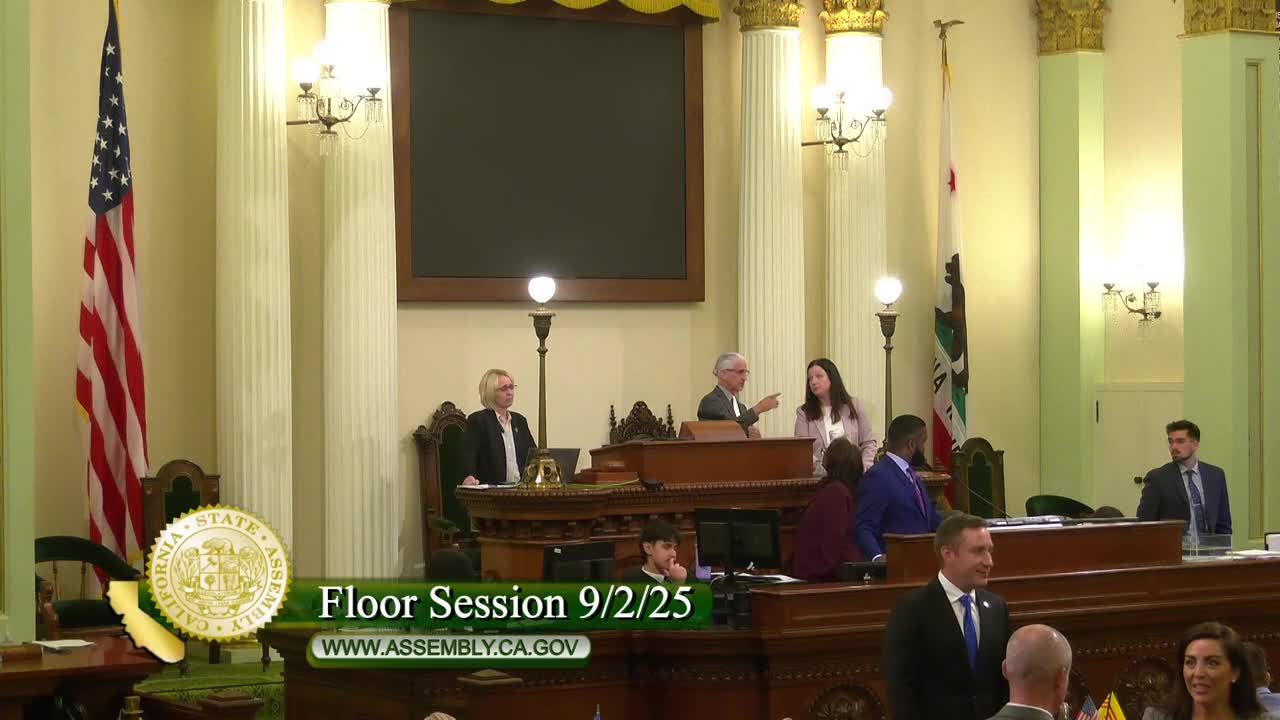
Bill Author
Bill Co-Author(s):