SB 317: Wastewater surveillance.
- Session Year: 2025-2026
- House: Senate
- Latest Version Date: 2025-09-13
Current Status:
Failed
(2026-03-02: Veto sustained.)
Introduced
In Committee
Awaiting First Chamber Vote
Passed First Chamber
In Committee
Awaiting Second Chamber Vote
Passed Second Chamber
Enacted
What does this bill do?
This bill requires the State Department of Public Health to run and maintain a statewide wastewater surveillance network (Cal‑SuWers) to test sewage for germs (such as viruses and bacteria), toxins, and other signs of public‑health risk. Participation by local health departments and wastewater treatment facilities is voluntary; the department may share results on a public website, coordinate with health care and emergency agencies for response and planning, and use outside grants and donations to support the program.
The summary is provided by generative AI which can make mistakes. For original language, please view the details in the table below.
Existing law establishes the State Department of Public Health to implement various programs throughout the state relating to public health. The department administers the California Wastewater Surveillance Dashboard that provides an overview of data from testing wastewater for SARS-CoV-2 virus in California. The data in the dashboard is generated by those participating in the departments California Surveillance of Wastewaters (Cal-SuWers) network, including the Cal-SuWers program, WastewaterSCAN, the federal Centers for Disease Control and Prevention National Wastewater Surveillance System, wastewater utilities, and academic, laboratory, and other state and federal partners.
This bill would require the department, in consultation with participating wastewater treatment facilities, local health departments, and other subject matter experts, to maintain the Cal-SuWers network to test, as appropriate for public health use, for pathogens, toxins, or other public health indicators in wastewater. The bill would require participation in the Cal-SuWers network from local health departments and wastewater treatment facilities to be voluntary. The bill would authorize the department to coordinate with health care providers, local health departments, and emergency response agencies to ensure wastewater surveillance data is used for early intervention, outbreak response, epidemiological investigations, and public health planning. The bill would authorize the department to communicate to the general public, through a publicly accessible internet website, as specified, to provide transparency and public awareness of wastewater-based disease monitoring. The bill would authorize the department to utilize external funding sources, in addition to the departments existing, noncontinuously appropriated funding sources, to implement these provisions. The bill would make related findings and declarations.
Existing law establishes the State Department of Public Health to implement various programs throughout the state relating to public health. The department administers the California Wastewater Surveillance Dashboard that provides an overview of data from testing wastewater for SARS-CoV-2 virus in California. The data in the dashboard is generated by those participating in the departments California Surveillance of Wastewaters (Cal-SuWers) network, including the Cal-SuWers program, WastewaterSCAN, the federal Centers for Disease Control and Prevention National Wastewater Surveillance System, wastewater utilities, and academic, laboratory, and other state and federal partners.
This bill would require the department, in consultation with participating wastewater treatment facilities, local health departments, and other subject matter experts, to maintain the Cal-SuWers network of monitoring programs to test to test, as appropriate for public health use, for pathogens, toxins, and or other public health indicators in wastewater. The bill would require participation in the Cal-SuWers network from local health departments and wastewater treatment facilities to be voluntary. The bill would authorize the department to coordinate with health care providers, local health departments, and emergency response agencies to ensure wastewater surveillance data is used for early intervention, outbreak response, epidemiological investigations, and public health planning. The bill would authorize the department to communicate to the general public, through a publicly accessible internet website, as specified, to provide transparency and public awareness of wastewater-based disease monitoring. The bill would authorize the department to utilize external funding sources, in addition to the departments existing, noncontinuously appropriated funding sources, to implement these provisions. The bill would make related findings and declarations.
Existing law establishes the State Department of Public Health to implement various programs throughout the state relating to public health. The department administers the California Wastewater Surveillance Dashboard that provides an overview of data from testing wastewater for SARS-CoV-2 virus in California. The data in the dashboard is generated by those participating in the departments California Surveillance of Wastewaters (Cal-SuWers) network, including the Cal-SuWers program, WastewaterSCAN, the federal Centers for Disease Control and Prevention National Wastewater Surveillance System, wastewater utilities, and academic, laboratory, and other state and federal partners.
This bill would require the department, in consultation with participating wastewater treatment facilities, local health departments, and other subject matter experts, to maintain the Cal-SuWers network of monitoring programs to test for pathogens, toxins, and other public health indicators in wastewater. The bill would require participation in the Cal-SuWers network from local health departments and wastewater treatment facilities to be voluntary. The bill would authorize the department to coordinate with health care providers, local health departments, and emergency response agencies through the regional public health office to ensure wastewater surveillance data is used for early intervention, outbreak response, epidemiological investigations, and public health planning. The bill would authorize the department to communicate to the general public, through a publicly accessible internet website, as specified, to provide transparency and public awareness of wastewater-based disease monitoring. The bill would authorize the department to utilize external funding sources, in addition to the departments existing, noncontinuously appropriated funding sources, to implement these provisions. The bill would make related findings and declarations.
Existing law establishes the State Department of Public Health to implement various programs throughout the state relating to public health. The department administers the California Wastewater Surveillance Dashboard that provides an overview of data from testing wastewater for SARS-CoV-2 virus in California. The data in the dashboard is generated by those participating in the departments California Surveillance of Wastewaters (Cal-SuWers) network, including the Cal-SuWers program, WastewaterSCAN, the federal Centers for Disease Control and Prevention National Wastewater Surveillance System, wastewater utilities, and academic, laboratory, and other state and federal partners.
This bill would require the department, in consultation with participating wastewater treatment facilities, local health departments, and other subject matter experts, to maintain the Cal-SuWers network of monitoring programs to test for pathogens, toxins, and other public health indicators in wastewater. The bill would require participation in the Cal-SuWers network from local health departments and wastewater treatment facilities to be voluntary. The bill would authorize the department to coordinate with health care providers, local health departments, and emergency response agencies through the regional public health office to ensure wastewater surveillance data is used for early intervention, outbreak response, epidemiological investigations, and public health planning. The bill would authorize the department to adopt guidelines for timely reporting of wastewater surveillance data to health care facilities and providers, local health departments, state public health agencies, and the general public, as specified. communicate to the general public, through a publicly accessible internet website, as specified, to provide transparency and public awareness of wastewater-based disease monitoring. The bill would authorize the department to utilize external funding sources, in addition to the departments existing, noncontinuously appropriated funding sources, to implement these provisions. The bill would make related findings and declarations.
Existing law establishes the State Department of Public Health to implement various programs throughout the state relating to public health. The department administers the California Wastewater Surveillance Dashboard that provides an overview of data from testing wastewater for SARS-CoV-2 virus in California. The data in the dashboard is generated by those participating in the departments California Surveillance of Wastewaters (Cal-SuWers) network, including the Cal-SuWers program, WastewaterSCAN, the federal Centers for Disease Control and Prevention National Wastewater Surveillance System, wastewater utilities, and academic, laboratory, and other state and federal partners.
This bill would require a county to establish and maintain at least one wastewater surveillance site to monitor for pathogens and public health indicators. The bill would require the department to expand the Cal-SuWers network to include all counties and prioritize underserved and high-risk areas, as specified. The bill would require the department and counties to share wastewater surveillance data with health care providers to enable early intervention for emerging health threats. By imposing new duties on counties, this bill would impose a state-mandated local program. The California Constitution requires the state to reimburse local agencies and school districts for certain costs mandated by the state. Statutory provisions establish procedures for making that reimbursement.This bill would provide that, if the Commission on State Mandates determines that the bill contains costs mandated by the state, reimbursement for those costs shall be made pursuant to the statutory provisions noted above.This bill would require the department, in consultation with participating wastewater treatment facilities, local health departments, and other subject matter experts, to maintain the Cal-SuWers network of monitoring programs to test for pathogens, toxins, and other public health indicators in wastewater. The bill would require participation in the Cal-SuWers network from local health departments and wastewater treatment facilities to be voluntary. The bill would authorize the department to coordinate with health care providers, local health departments, and emergency response agencies to ensure wastewater surveillance data is used for early intervention, outbreak response, and public health planning. The bill would authorize the department to adopt guidelines for timely reporting of wastewater surveillance data to health care facilities and providers, local health departments, state public health agencies, and the general public, as specified. The bill would authorize the department to utilize external funding sources, in addition to the departments existing, noncontinuously appropriated funding sources, to implement these provisions. The bill would make related findings and declarations.
Existing law establishes the State Department of Public Health to implement various programs throughout the state relating to public health. The department administers the California Wastewater Surveillance Dashboard that provides an overview of data from testing wastewater for SARS-CoV-2 virus in California. The data in the dashboard is generated by those participating in the departments California Surveillance of Wastewaters (Cal-SuWers) network, including the Cal-SuWers program, WastewaterSCAN, the federal Centers for Disease Control and Prevention National Wastewater Surveillance System, wastewater utilities, and academic, laboratory, and other state and federal partners.
This bill would require a county to establish and maintain at least one wastewater surveillance site to monitor for pathogens and public health indicators. The bill would require the department to expand the Cal-SuWers network to include all counties and prioritize underserved and high-risk areas, as specified. The bill would require the department and counties to share wastewater surveillance data with health care providers to enable early intervention for emerging health threats. By imposing new duties on counties, this bill would impose a state-mandated local program.
The California Constitution requires the state to reimburse local agencies and school districts for certain costs mandated by the state. Statutory provisions establish procedures for making that reimbursement.
This bill would provide that, if the Commission on State Mandates determines that the bill contains costs mandated by the state, reimbursement for those costs shall be made pursuant to the statutory provisions noted above.
The Legislature finds and declares all of the following:
(a)Wastewater surveillance is a proven and cost-effective tool for public health monitoring, allowing for the early detection of infectious diseases, including COVID-19, influenza, mpox, norovirus, and antimicrobial-resistant pathogens.
(b)Wastewater monitoring played a crucial role during the COVID-19 pandemic, providing early warnings of infection trends, guiding public health responses, and reducing the burden on hospitals and testing systems.
(c)The State Department of Public Health has demonstrated leadership in disease monitoring and response by establishing a wastewater-based epidemiology program in partnership with the Centers for Disease Control and Prevention, the National Wastewater Surveillance System, academic institutions, local health departments, and wastewater treatment agencies. This program is critical for ongoing disease tracking and the infrastructure must remain in place and at the ready in anticipation of future outbreaks of infectious diseases.
(d)Despite its effectiveness, wastewater surveillance infrastructure remains inconsistent across California, with significant gaps in rural, underserved, and high-risk areas, including counties reliant on septic systems, tribal lands, and regions with vulnerable populations.
(e)Californias agricultural economy and food supply chain depend on proactive disease monitoring, particularly in the face of outbreaks, including avian influenza, which has already infected over two-thirds of Californias dairy herds and 90 percent of commercial and backyard poultry flocks.
SEC. 2.Chapter 6.63 (commencing with Section 25249.20) is added to Division 20 of the Health and Safety Code, to read:6.63.Wastewater Surveillance25249.20.For purposes of this chapter, the following definitions apply:
(a)California Surveillance of Wastewaters program or Cal-SuWers program means the wastewater surveillance program administered by the State Department of Public Health, in coordination with local health departments and wastewater utilities, for the purpose of monitoring pathogens and other public health indicators. Laboratory analysis is performed at the department or through contracts with qualified laboratories.
(b)Cal-SuWers network means the statewide wastewater surveillance program administered by the department that includes both of the following:
(1)Data from the Cal-SuWers program.
(2)Data generated by and received from participating wastewater programs not administered by the department.
(c)Department means the State Department of Public Health.
(d)Wastewater surveillance means the collection and analysis of wastewater samples to detect pathogens, toxins, and other public health indicators to provide early warning for infectious disease outbreaks and environmental health threats.
25249.21.(a)The department, in consultation with participating wastewater treatment facilities, local health departments, and other subject matter experts, shall maintain the Cal-SuWers network to test, as appropriate for public health use, for pathogens, toxins, or other public health indicators in wastewater. Testing shall be conducted by the department or other monitoring programs in the Cal-SuWers network.
(b)Participation in the Cal-SuWers network from local health departments and wastewater treatment facilities shall be voluntary.
(c)Subject to subdivision (b), the department shall work with the local health departments and wastewater treatment facilities participating in the Cal-SuWers program to collect samples. The department shall arrange for those samples to be tested by qualified laboratories.
(d)The department may consult with, or contract with, other wastewater epidemiology projects or public health programs being conducted or previously completed by nonprofits, nongovernmental organizations, academic institutions, and other governmental entities to maintain the mission of the Cal-SuWers network.
25249.22.(a)The department may coordinate with health care providers, local health departments, and emergency response agencies to ensure wastewater surveillance data is used for early intervention, outbreak response, epidemiological investigations, and public health planning.
(b)The department may communicate to the general public, through a publicly accessible internet website, to provide transparency and public awareness of wastewater-based disease monitoring. For purposes of this paragraph, a publicly accessible internet website may be maintained by an entity other than the department and shall do all of the following:
(1)Provide real-time data visualization of wastewater surveillance results, including regional trends and pathogen detection patterns.
(2)Include educational materials and resources to help the public understand how wastewater surveillance supports public health.
(3)Be updated to ensure current information is available to residents, public health officials, and policymakers.
25249.23.In addition to the departments existing, noncontinuously appropriated funding sources, the department may utilize external funding sources to implement this chapter. The department may solicit private donations or grants and may accept moneys donated by other wastewater epidemiology or federal programs.
The Legislature finds and declares all of the following:
(a)Wastewater surveillance is a proven and cost-effective tool for public health monitoring, allowing for the early detection of infectious diseases, including COVID-19, influenza, mpox, norovirus, and antimicrobial-resistant pathogens.
(b)Wastewater monitoring played a crucial role during the COVID-19 pandemic, providing early warnings of infection trends, guiding public health responses, and reducing the burden on hospitals and testing systems.
(c)The State Department of Public Health has demonstrated leadership in disease monitoring and response by establishing a wastewater-based epidemiology program in partnership with the Centers for Disease Control and Prevention, the National Wastewater Surveillance System, academic institutions, local health departments, and wastewater treatment agencies. This program is critical for ongoing disease tracking and the infrastructure must remain in place and at the ready in anticipation of future outbreaks of infectious diseases.
(d)Despite its effectiveness, wastewater surveillance infrastructure remains inconsistent across California, with significant gaps in rural, underserved, and high-risk areas, including counties reliant on septic systems, tribal lands, and regions with vulnerable populations.
(e)Californias agricultural economy and food supply chain depend on proactive disease monitoring, particularly in the face of outbreaks, including avian influenza, which has already infected over two-thirds of Californias dairy herds and 90 percent of commercial and backyard poultry flocks.
SEC. 2.Chapter 6.63 (commencing with Section 25249.20) is added to Division 20 of the Health and Safety Code, to read:6.63.Wastewater Surveillance25249.20.For purposes of this chapter, the following definitions apply:
(a)California Surveillance of Wastewaters network program or Cal-SuWers network program means the statewide wastewater surveillance program administered by the State Department of Public Health, in coordination with local health departments, wastewater utilities, academic institutions, and other partners, departments and wastewater utilities, for the purpose of monitoring pathogens and other public health indicators. Laboratory analysis is performed at the department or through contracts with qualified laboratories.
(b)Cal-SuWers network means the statewide wastewater surveillance program administered by the department that includes both of the following:
(1)Data from the Cal-SuWers program.
(2)Data generated by and received from participating wastewater programs not administered by the department.
(b)(c)Department means the State Department of Public Health.
(c)(d)Wastewater surveillance means the collection and analysis of wastewater samples to detect pathogens, toxins, and other public health indicators to provide early warning for infectious disease outbreaks and environmental health threats.
25249.21.(a)The department, in consultation with participating wastewater treatment facilities, local health departments, and other subject matter experts, shall maintain the Cal-SuWers network of monitoring programs to test to test, as appropriate for public health use, for pathogens, toxins, and or other public health indicators in wastewater. Testing shall be conducted by the department or other monitoring programs in the Cal-SuWers network.
(b)Participation in the Cal-SuWers network from local health departments and wastewater treatment facilities shall be voluntary.
(c)The Subject to subdivision (b), the department shall work with the participating local health departments and wastewater treatment facilities participating in the Cal-SuWers program to collect samples. The department shall arrange for those samples to be tested by qualified laboratories.
(d)The department may consult with, or contract with, other wastewater epidemiology projects or public health programs being conducted or previously completed by nonprofits, nongovernmental organizations, academic institutions, and other governmental entities to maintain the mission of the Cal-SuWers network.
25249.22.(a)The department may coordinate with health care providers, local health departments, and emergency response agencies to ensure wastewater surveillance data is used for early intervention, outbreak response, epidemiological investigations, and public health planning.
(b)The department may communicate to the general public, through a publicly accessible internet website, to provide transparency and public awareness of wastewater-based disease monitoring. For purposes of this paragraph, a publicly accessible internet website may be maintained by an entity other than the department and shall do all of the following:
(1)Provide real-time data visualization of wastewater surveillance results, including regional trends and pathogen detection patterns.
(2)Include educational materials and resources to help the public understand how wastewater surveillance supports public health.
(3)Be updated to ensure current information is available to residents, public health officials, and policymakers.
25249.23.In addition to the departments existing, noncontinuously appropriated funding sources, the department may utilize external funding sources to implement this chapter. The department may solicit private donations or grants and may accept moneys donated by other wastewater epidemiology or federal programs.
The Legislature finds and declares all of the following:
(a)Wastewater surveillance is a proven and cost-effective tool for public health monitoring, allowing for the early detection of infectious diseases, including COVID-19, influenza, mpox, norovirus, and antimicrobial-resistant pathogens.
(b)Wastewater monitoring played a crucial role during the COVID-19 pandemic, providing early warnings of infection trends, guiding public health responses, and reducing the burden on hospitals and testing systems.
(c)The State Department of Public Health has demonstrated leadership in disease monitoring and response by establishing a wastewater-based epidemiology program in partnership with the Centers for Disease Control and Prevention, the National Wastewater Surveillance System, academic institutions, local health departments, and wastewater treatment agencies. This program is critical for ongoing disease tracking and the infrastructure must remain in place and at the ready in anticipation of future outbreaks of infectious diseases.
(d)Despite its effectiveness, wastewater surveillance infrastructure remains inconsistent across California, with significant gaps in rural, underserved, and high-risk areas, including counties reliant on septic systems, tribal lands, and regions with vulnerable populations.
(e)Californias agricultural economy and food supply chain depend on proactive disease monitoring, particularly in the face of outbreaks, including avian influenza, which has already infected over two-thirds of Californias dairy herds and 90 percent of commercial and backyard poultry flocks.
SEC. 2.Chapter 6.63 (commencing with Section 25249.20) is added to Division 20 of the Health and Safety Code, to read:6.63.Wastewater Surveillance25249.20.For purposes of this chapter, the following definitions apply:
(a)California Surveillance of Wastewaters network or Cal-SuWers network means the statewide wastewater surveillance program administered by the State Department of Public Health, in coordination with local health departments, wastewater utilities, academic institutions, and other partners, for the purpose of monitoring pathogens and other public health indicators.
(b)Department means the State Department of Public Health.
(c)Wastewater surveillance means the collection and analysis of wastewater samples to detect pathogens, toxins, and other public health indicators to provide early warning for infectious disease outbreaks and environmental health threats.
25249.21.(a)The department, in consultation with participating wastewater treatment facilities, local health departments, and other subject matter experts, shall maintain the Cal-SuWers network of monitoring programs to test for pathogens, toxins, and other public health indicators in wastewater.
(b)Participation in the Cal-SuWers network from local health departments and wastewater treatment facilities shall be voluntary.
(c)The department shall work with the participating local health departments and wastewater treatment facilities to collect samples. The department shall arrange for those samples to be tested by qualified laboratories.
(d)The department may consult with, or contract with, other wastewater epidemiology projects or public health programs being conducted or previously completed by nonprofits, nongovernmental organizations, academic institutions, and other governmental entities to maintain the mission of the Cal-SuWers network.
25249.22.(a)The department may coordinate with health care providers, local health departments, and emergency response agencies through the regional public health office to ensure wastewater surveillance data is used for early intervention, outbreak response, epidemiological investigations, and public health planning.
(b)The department may adopt guidelines for timely reporting of wastewater surveillance data to all of the following:(1)Health care facilities and providers to facilitate early clinical detection of emerging health threats.(2)Local health departments and state public health agencies to support epidemiological investigations and public health interventions.(3)The(b)The department may communicate to the general public, through a publicly accessible internet website, to provide transparency and public awareness of wastewater-based disease monitoring. For purposes of this paragraph, a publicly accessible internet website may be maintained by an entity other than the department and shall do all of the following:
(A)(1)Provide real-time data visualization of wastewater surveillance results, including regional trends and pathogen detection patterns.
(B)(2)Include educational materials and resources to help the public understand how wastewater surveillance supports public health.
(C)(3)Be updated to ensure current information is available to residents, public health officials, and policymakers.
25249.23.In addition to the departments existing, noncontinuously appropriated funding sources, the department may utilize external funding sources to implement this chapter. The department may solicit private donations or grants and may accept moneys donated by other wastewater epidemiology or federal programs.
The Legislature finds and declares all of the following:
(a)Wastewater surveillance is a proven and cost-effective tool for public health monitoring, allowing for the early detection of infectious diseases, including COVID-19, influenza, mpox, norovirus, and antimicrobial-resistant pathogens.
(b)Wastewater monitoring played a crucial role during the COVID-19 pandemic, providing early warnings of infection trends, guiding public health responses, and reducing the burden on hospitals and testing systems.
(c)The State Department of Public Health has demonstrated leadership in disease monitoring and response by establishing a wastewater-based epidemiology program in partnership with the Centers for Disease Control and Prevention, the National Wastewater Surveillance System, academic institutions, local health departments, and wastewater treatment agencies. This program is critical for ongoing disease tracking and the infrastructure must remain in place and at the ready in anticipation of future outbreaks of infectious diseases.
(d)Despite its effectiveness, wastewater surveillance infrastructure remains inconsistent across California, with significant gaps in rural, underserved, and high-risk areas, including counties reliant on septic systems, tribal lands, and regions with vulnerable populations.
(e)Californias agricultural economy and food supply chain depend on proactive disease monitoring, particularly in the face of outbreaks, including avian influenza, which has already infected over two-thirds of Californias dairy herds and 90 percent of commercial and backyard poultry flocks.
SECTION 1.SEC. 2.Chapter 6.63 (commencing with Section 25249.20) is added to Division 20 of the Health and Safety Code, to read:6.63.Wastewater Surveillance25249.20.For purposes of this chapter, the following definitions apply:
(a)California Surveillance of Wastewaters network or Cal-SuWers network means the network of contributing partners that collect and analyze wastewater samples and generate data that is included in the departments California Wastewater Surveillance Dashboard. statewide wastewater surveillance program administered by the State Department of Public Health, in coordination with local health departments, wastewater utilities, academic institutions, and other partners, for the purpose of monitoring pathogens and other public health indicators.
(b)Department means the State Department of Public Health.
(c)Wastewater surveillance means the collection and analysis of wastewater samples to detect pathogens, toxins, and other public health indicators to provide early warning for infectious disease outbreaks and environmental health threats.
25249.21.A county shall establish and maintain at least one wastewater surveillance site to monitor for pathogens and public health indicators. 25249.22.The department shall expand the Cal-SuWers network to do both of the following:(a)Include all counties.(b)Prioritize underserved and high-risk areas, including both of the following:(1)Areas reliant on septic systems, through alternative or decentralized surveillance methods. (2)Tribal lands, in coordination with tribal governments, if they elect to participate. 25249.23.The department and counties shall share wastewater surveillance data with health care providers to enable early intervention for emerging health threats. 25249.21.(a)The department, in consultation with participating wastewater treatment facilities, local health departments, and other subject matter experts, shall maintain the Cal-SuWers network of monitoring programs to test for pathogens, toxins, and other public health indicators in wastewater.
(b)Participation in the Cal-SuWers network from local health departments and wastewater treatment facilities shall be voluntary.
(c)The department shall work with the participating local health departments and wastewater treatment facilities to collect samples. The department shall arrange for those samples to be tested by qualified laboratories.
(d)The department may consult with, or contract with, other wastewater epidemiology projects or public health programs being conducted or previously completed by nonprofits, nongovernmental organizations, academic institutions, and other governmental entities to maintain the mission of the Cal-SuWers network.
25249.22.(a)The department may coordinate with health care providers, local health departments, and emergency response agencies to ensure wastewater surveillance data is used for early intervention, outbreak response, and public health planning.
(b)The department may adopt guidelines for timely reporting of wastewater surveillance data to all of the following:
(1)Health care facilities and providers to facilitate early clinical detection of emerging health threats.
(2)Local health departments and state public health agencies to support epidemiological investigations and public health interventions.
(3)The general public, through a publicly accessible internet website, to provide transparency and public awareness of wastewater-based disease monitoring. For purposes of this paragraph, a publicly accessible internet website may be maintained by an entity other than the department and shall do all of the following:
(A)Provide real-time data visualization of wastewater surveillance results, including regional trends and pathogen detection patterns.
(B)Include educational materials and resources to help the public understand how wastewater surveillance supports public health.
(C)Be updated to ensure current information is available to residents, public health officials, and policymakers.
25249.23.In addition to the departments existing, noncontinuously appropriated funding sources, the department may utilize external funding sources to implement this chapter. The department may solicit private donations or grants and may accept moneys donated by other wastewater epidemiology or federal programs.
SEC. 2.If the Commission on State Mandates determines that this act contains costs mandated by the state, reimbursement to local agencies and school districts for those costs shall be made pursuant to Part 7 (commencing with Section 17500) of Division 4 of Title 2 of the Government Code.For purposes of this chapter, the following definitions apply:
(a)California Surveillance of Wastewaters network or Cal-SuWers network means the network of contributing partners that collect and analyze wastewater samples and generate data that is included in the departments California Wastewater Surveillance Dashboard.
(b)Department means the State Department of Public Health.
25249.21.A county shall establish and maintain at least one wastewater surveillance site to monitor for pathogens and public health indicators.
25249.22.The department shall expand the Cal-SuWers network to do both of the following:
(a)Include all counties.
(b)Prioritize underserved and high-risk areas, including both of the following:
(1)Areas reliant on septic systems, through alternative or decentralized surveillance methods.
(2)Tribal lands, in coordination with tribal governments, if they elect to participate.
25249.23.The department and counties shall share wastewater surveillance data with health care providers to enable early intervention for emerging health threats.
SEC. 2.If the Commission on State Mandates determines that this act contains costs mandated by the state, reimbursement to local agencies and school districts for those costs shall be made pursuant to Part 7 (commencing with Section 17500) of Division 4 of Title 2 of the Government Code.
|
Date
|
Status
|
|---|---|
| Mar 2, 2026 | Veto sustained. |
| Mar 2, 2026 | Stricken from file. |
| Oct 6, 2025 | In Senate. Consideration of Governor's veto pending. |
| Oct 6, 2025 | Vetoed by the Governor. |
| Sep 22, 2025 | Enrolled and presented to the Governor at 11 a.m. |
| Sep 11, 2025 | Assembly amendments concurred in. (Ayes 40. Noes 0. Page 2890.) Ordered to engrossing and enrolling. |
| Sep 8, 2025 | In Senate. Concurrence in Assembly amendments pending. |
| Sep 8, 2025 | Read third time. Passed. (Ayes 79. Noes 0. Page 3001.) Ordered to the Senate. |
| Sep 3, 2025 | Read second time. Ordered to third reading. |
| Sep 2, 2025 | Read second time and amended. Ordered to second reading. |
| Aug 29, 2025 | From committee: Do pass as amended. (Ayes 11. Noes 0.) (August 29). |
| Aug 20, 2025 | August 20 set for first hearing. Placed on APPR. suspense file. |
| Jul 2, 2025 | From committee: Do pass and re-refer to Com. on APPR. with recommendation: To consent calendar. (Ayes 7. Noes 0.) (July 1). Re-referred to Com. on APPR. |
| Jun 18, 2025 | Read second time and amended. Re-referred to Com. on E.S & T.M. |
| Jun 17, 2025 | From committee: Do pass as amended and re-refer to Com. on E.S & T.M. with recommendation: To consent calendar. (Ayes 15. Noes 0.) (June 17). |
| Jun 5, 2025 | Referred to Coms. on HEALTH and E.S & T.M. |
| May 29, 2025 | In Assembly. Read first time. Held at Desk. |
| May 29, 2025 | Read third time. Passed. (Ayes 38. Noes 0. Page 1324.) Ordered to the Assembly. |
| May 27, 2025 | Ordered to special consent calendar. |
| May 23, 2025 | Read second time. Ordered to third reading. |
| May 23, 2025 | From committee: Do pass. (Ayes 6. Noes 0. Page 1196.) (May 23). |
| May 16, 2025 | Set for hearing May 23. |
| May 12, 2025 | May 12 hearing: Placed on APPR. suspense file. |
| May 2, 2025 | Set for hearing May 12. |
| Apr 28, 2025 | Read second time and amended. Re-referred to Com. on APPR. |
| Apr 24, 2025 | From committee: Do pass as amended and re-refer to Com. on APPR. with recommendation: To consent calendar. (Ayes 11. Noes 0. Page 868.) (April 23). |
| Apr 10, 2025 | From committee with author's amendments. Read second time and amended. Re-referred to Com. on HEALTH. |
| Apr 2, 2025 | Set for hearing April 23. |
| Mar 26, 2025 | April 2 set for first hearing canceled at the request of author. |
| Mar 17, 2025 | Set for hearing April 2. |
| Feb 19, 2025 | Referred to Com. on HEALTH. |
| Feb 12, 2025 | From printer. May be acted upon on or after March 14. |
| Feb 11, 2025 | Introduced. Read first time. To Com. on RLS. for assignment. To print. |
|
Date
|
Description
|
Location
|
Votes
|
|
|---|---|---|---|---|
| Sep 11, 2025 | Unfinished Business SB317 Hurtado et al. Concurrence | Senate Floor |
Passed |
|
| Sep 8, 2025 | SB 317 Hurtado Senate Third Reading By Michelle Rodriguez | Assembly Floor |
Passed |
|
| Aug 29, 2025 | Do pass as amended. | Assembly Standing Committee on Appropriations |
Passed |
|
| Jul 1, 2025 | Do pass and be re-referred to the Committee on [Appropriations] with recommendation: To Consent Calendar | Assembly Standing Committee on Environmental Safety and Toxic Materials |
Passed |
|
| Jun 17, 2025 | Do pass as amended, and be re-referred to the Committee on [Environmental Safety and Toxic Materials] with recommendation: To Consent Calendar | Assembly Standing Committee on Health |
Passed |
|
| May 29, 2025 | Special Consent SB317 Hurtado et al. | Senate Floor |
Passed |
|
| May 23, 2025 | Do pass | Senate Standing Committee on Appropriations |
Passed |
|
| May 12, 2025 | Placed on suspense file | Senate Standing Committee on Appropriations |
Passed |
|
| Apr 23, 2025 | Do pass as amended, but first amend, and re-refer to the Committee on [Appropriations] with the recommendation: To Consent Calendar | Senate Standing Committee on Health |
Passed |
This list shows positions taken on this bill by organizations on the date displayed, which is linked to the original source.
Positions by individuals are not included.
|
Organization
|
Position
|
Date
|
|---|---|---|
| California Association Of Sanitation Agencies | ** Support | |
| California Nurses Association | ** Support | |
| Los Angeles County Sanitation Districts | ** Support | |
| Orange County Sanitation District | ** Support |
SENATE RULES COMMITTEE Office of Senate Floor Analyses (916) 651-1520 Fax: (916) 327-4478 | SB 317 |
VETO
Bill No: SB 317
Author: Hurtado (D), et al.
Enrolled: 9/13/25
Vote: 27
SENATE HEALTH COMMITTEE: 11-0, 4/23/25
AYES: Menjivar, Valladares, Durazo, Gonzalez, Grove, Limón, Padilla, Richardson, Rubio, Weber Pierson, Wiener
SENATE APPROPRIATIONS COMMITTEE: 6-0, 5/23/25
AYES: Caballero, Seyarto, Cabaldon, Grayson, Richardson, Wahab
NO VOTE RECORDED: Dahle
SENATE FLOOR: 40-0, 9/11/25
AYES: Allen, Alvarado-Gil, Archuleta, Arreguín, Ashby, Becker, Blakespear, Cabaldon, Caballero, Cervantes, Choi, Cortese, Dahle, Durazo, Gonzalez, Grayson, Grove, Hurtado, Jones, Laird, Limón, McGuire, McNerney, Menjivar, Niello, Ochoa Bogh, Padilla, Pérez, Reyes, Richardson, Rubio, Seyarto, Smallwood-Cuevas, Stern, Strickland, Umberg, Valladares, Wahab, Weber Pierson, Wiener
ASSEMBLY FLOOR: 79-0, 9/8/25 - See last page for vote
SUBJECT: Wastewater surveillance
SOURCE: Author
DIGEST:
This bill codifies the existing California Surveillance of Wastewaters (Cal-SuWers) program by requiring the California Department of Public Health, in consultation with participating wastewater treatment facilities, local health departments, and other subject matter experts, to maintain the network to test for pathogens, toxins, or other public health indicators in wastewater.
Assembly Amendments
make nonsubstantive, clarifying changes.
ANALYSIS:
Existing law:
- Establishes the California Department of Public Health (CDPH), directed by a state Public Health Officer (PHO), to be vested with all the duties, powers, purposes, functions, responsibilities, and jurisdictions as they relate to public health and licensing of health facilities. Gives the PHO broad authority to detect, monitor, and prevent the spread of communicable disease in the state.
[Healthy and Safety Code (HSC) §131050 and §120130]
- Requires CDPH to examine the causes of communicable disease in man and domestic animals occurring or likely to occur in this state. [HSC §120125]
- Requires each county board of supervisors to appoint a local health officer (LHO). Requires LHOs to enforce and observe orders and ordinances of the board of supervisors, pertaining to the public health and sanitary matters, orders, including quarantine and other regulations prescribed by CDPH, and statutes relating to public health. [HSC §101000 and §101030]
- Requires LHOs to immediately report to CDPH every discovered or known case or suspected case of certain reportable diseases. Requires LHOs to make reports that CDPH requires within 24 hours after investigation. [HSC §120190]
This bill:
- Requires CDPH, in consultation with participating wastewater treatment facilities, local health departments (LHDs), and other subject matter experts, to maintain the Cal-SuWers network to test, as appropriate for public health use, for pathogens, toxins, and other public health indicators in wastewater. Requires testing to be conducted by CDPH or other monitoring programs in Cal-SuWers.
- Defines “Cal-SuWers network” as the statewide wastewater surveillance program administered by CDPH that includes data from the Cal-SuWers program and data generated by and received from participating wastewater programs not administered by CDPH.
- Makes participation in Cal-SuWers by LHDs and wastewater treatment facilities voluntary.
- Requires CDPH to work with participating LHDs and wastewater treatment facilities to collect samples and to arrange for those samples to be tested by qualified laboratories.
- Permits CDPH to consult with, or contract with, other wastewater epidemiology projects or public health programs being conducted or previously completed by nonprofits, nongovernmental organizations, academic institutions, and other governmental entities to maintain the mission of Cal-SuWers.
- Permits CDPH to coordinate with health care providers, LHDs, and emergency response agencies to ensure wastewater surveillance data is used for early intervention, outbreak response, and public health planning.
- Permits CDPH to communicate to the general public, through a publicly accessible website, to provide transparency and public awareness of wastewater-based disease monitoring. Permits the website to be maintained by an entity other than CDPH, and requires the website to:
- Provide real-time data visualization of wastewater surveillance results, including regional trends and pathogen detection patterns;
- Include educational materials and resources to help the public understand how wastewater surveillance supports public health; and,
- Be updated to ensure current information is available to residents, public health officials, and policymakers.
- Permits CDPH to utilize external funding sources to implement this bill, to solicit private donations or grants, and to accept moneys donated by other wastewater epidemiology or federal programs.
Comments
According to the author of this bill:
This bill requires CDPH, in consultation with participating wastewater treatment facilities, LHDs, and other subject matter experts, to maintain the Cal-SuWers network. This network of monitoring programs will continue to test for pathogens, toxins, and other public health indicators in California wastewater. Wastewater surveillance is a proven and cost-effective tool for public health monitoring, allowing for the early detection of infectious diseases. Ensuring wastewater monitoring programs like Cal-SuWers will endure is of the upmost importance to safeguard food supply sources and California residents.
Background
Cal-SuWers. Cal-SuWers is managed by CDPH and funded through a U.S. Centers for Disease Control and Prevention (CDC) Epidemiology and Laboratory Capacity (ELC) grant. Groups participating in wastewater monitoring include LHDs, wastewater utilities, academic researchers, commercial laboratories, and the CDC National Wastewater Surveillance System (NWSS). Typically, a wastewater utility is responsible for collecting samples on-site, but in some circumstances, partnerships between LHDs and utilities have been formed to collect and ship samples to a testing lab. Samples collected are tested for infectious disease pathogens including SARS-CoV-2, influenza, and mpox. Other programs that participate in the network or the NWSS may test for other pathogens. Data collected through the program are submitted to the NWSS. The cost of physically collecting the wastewater samples is covered by the participating sanitation district and sometimes subsidized by the ELC grant. Cal-SuWers sites are monitored by the CDPH Drinking Water and Radiation Lab, which tests samples from several counties. Cal-SuWers covers more than 60% of the state’s population. According to CDPH, California has hundreds of active wastewater treatment plants, but due to resource constraints at the utility, laboratory, and public health levels, it is not currently feasible nor necessary to collect and test wastewater samples from all utilities in the state. CDPH states that the goal of Cal-SuWers is to serve as a sentinel surveillance system with enough wastewater treatment plants participating to be representative of most populations and regions of the state so that CDPH and LHDs have useful disease trends.
Federal grant reductions. On March 24, 2025, CDPH received notice from the CDC that it intends to immediately end a significant amount of state and local public health funding. According to background information received from CDPH, “Although this funding was initially awarded during COVID-19, it also now supports, with prior federal approval, respiratory virus and vaccine preventable disease monitoring, testing and response, immunizations and vaccines for children, and health disparities efforts. This funding also supports the public health work and data systems improved during the pandemic, including continued response to COVID-19 disease and other respiratory and vaccine-preventable diseases that require similar resources. CDPH estimates that grant terminations will result in a loss of at least $840 million of federal funding. More than $330 million of these funds were targeted at supporting public health efforts at the local level. There are also local health departments that are directly funded by the federal government that would increase this statewide total amount at risk.” CDPH received termination notices for three federal grants: ELC, Immunization and Vaccines for Children, and Health Disparities Grant. These grants were scheduled to end between May 2026 and July 2027, depending on the grant.
FISCAL EFFECT: Appropriation: No Fiscal Com.: Yes Local: No
According to the Assembly Appropriations Committee, General Fund (GF) cost pressures in the millions of dollars annually to maintain the Cal-SuWers network and continue testing in future years. The 2025-26 state budget includes a GF allocation of $3.25 million to support a statewide wastewater surveillance program of routine wastewater testing for detection of infectious diseases.
California Association of Sanitation Agencies
California Nurses Association
Los Angeles County Sanitation Districts
Orange County Sanitation District
OPPOSITION: (Verified 10/9/25)
None received
ARGUMENTS IN SUPPORT: The California Association of Sanitation
Agencies Municipal writes that wastewater surveillance offers an emerging and
innovative tool for disease monitoring and provides an alternative metric for
assessing the state of infectious diseases circulating in a community, even for
underreported or asymptomatic outbreaks. Many wastewater agencies in
California, across the nation, and around the globe, with the support of the CDC
and of their own volition, have been cooperating with public health authorities by
sampling their influent wastewater to determine the presence or absence of
COVID-19, mpox, influenza, Respiratory Syncytial Virus (RSV), and other
diseases. This testing ramped up in the early days of the COVID-19 pandemic, and
has evolved into a robust network of monitoring programs managed by CDPH in
coordination with the CDC, academia, public health laboratories, LHDs and
wastewater agencies known as Cal-SuWers. The surveillance data provided by the
Cal SuWers program has offered valuable insight into whether a viral incident
trend is increasing, decreasing, or plateauing in the community within a given
sewer shed. The Los Angeles County Sanitation Districts writes that in April 2020,
the Sanitation Districts began testing for SARS-CoV-2 in wastewater to help
public health officials manage the COVID-19 pandemic. Since then, the program
has expanded through partnerships with additional laboratories and now includes
sampling from two major treatment plants: the Warren Water Resource Facility,
serving 3.5 million people in the Los Angeles Basin, and the Lancaster Water
Reclamation Plant. The testing scope has broadened to include not only COVID-19
but also Influenza A and B, RSV, mpox, Norovirus, Avian Flu (H5N1), and
Human Metapneumovirus. Years of wastewater surveillance data show a
consistent pattern: an increase in pathogen-specific genetic material in wastewater
precedes corresponding increases in new cases and hospitalizations. This makes
wastewater testing a timely, cost-effective early warning system, helping public
health officials respond quickly to emerging threats. The Orange County Sanitation
District states that this bill comes at a critical time, as the CDC faces significant
budget cuts that threaten support for these surveillance programs. As such, this bill
would allow flexibility to scale based on available funding, including both state
and external sources such as grants and private donations. This ensures that the
program can maintain a baseline level of surveillance. By building this capacity at
the state level, this bill helps insulate California from the uncertainty of shifting
federal priorities and enables a more resilient, proactive response to emerging
threats. By investing in a comprehensive wastewater monitoring system, California
can continue to be a leader in public health innovation and disease prevention.
GOVERNOR'S VETO MESSAGE:
This bill would require the California Department of Public Health (CDPH) to administer the statewide wastewater surveillance program, known as the California Surveillance of Wastewaters network (CalSuWers network), in consultation with local health departments, wastewater utilities, academic institutions, and other partners, to monitor pathogens and other public health indicators.
While I share the author’s commitment to increasing surveillance tools available to monitor public health, this bill will result in ongoing General Fund cost pressures not accounted for in the 2025 Budget Act. In partnership with the Legislature this year, my Administration has enacted a balanced budget that recognizes the challenging fiscal landscape our state faces while maintaining our commitment to working families and our most vulnerable communities. With significant fiscal pressures and the federal government’s hostile economic policies, it is vital that we remain disciplined when considering bills with significant fiscal implications that are not included in the budget, such as this measure.
ASSEMBLY FLOOR: 79-0, 9/8/25
AYES: Addis, Aguiar-Curry, Ahrens, Alanis, Alvarez, Arambula, Ávila Farías, Bains, Bauer-Kahan, Bennett, Berman, Boerner, Bonta, Bryan, Calderon, Caloza, Carrillo, Castillo, Chen, Connolly, Davies, DeMaio, Dixon, Elhawary, Ellis, Flora, Fong, Gabriel, Gallagher, Garcia, Gipson, Jeff Gonzalez, Mark González, Hadwick, Haney, Harabedian, Hart, Hoover, Irwin, Jackson, Johnson, Kalra, Krell, Lackey, Lee, Lowenthal, Macedo, McKinnor, Muratsuchi, Ortega, Pacheco, Papan, Patel, Patterson, Pellerin, Petrie-Norris, Quirk-Silva, Ramos, Ransom, Celeste Rodriguez, Michelle Rodriguez, Rogers, Blanca Rubio, Sanchez, Schiavo, Schultz, Sharp-Collins, Solache, Soria, Stefani, Ta, Tangipa, Valencia, Wallis, Ward, Wicks, Wilson, Zbur, Rivas
NO VOTE RECORDED: Nguyen
Prepared by: Melanie Moreno / HEALTH / (916) 651-4111
10/9/25 12:55:01
**** END ****
SENATE RULES COMMITTEE Office of Senate Floor Analyses (916) 651-1520 Fax: (916) 327-4478 | SB 317 |
UNFINISHED BUSINESS
Bill No: SB 317
Author: Hurtado (D), et al.
Amended: 9/2/25 in Assembly
Vote: 21
SENATE HEALTH COMMITTEE: 11-0, 4/23/25
AYES: Menjivar, Valladares, Durazo, Gonzalez, Grove, Limón, Padilla, Richardson, Rubio, Weber Pierson, Wiener
SENATE APPROPRIATIONS COMMITTEE: 6-0, 5/23/25
AYES: Caballero, Seyarto, Cabaldon, Grayson, Richardson, Wahab
NO VOTE RECORDED: Dahle
SENATE FLOOR: 38-0, 5/29/25
AYES: Allen, Alvarado-Gil, Archuleta, Arreguín, Ashby, Becker, Blakespear, Cabaldon, Caballero, Cervantes, Choi, Cortese, Dahle, Durazo, Gonzalez, Grayson, Grove, Hurtado, Jones, Laird, McGuire, McNerney, Menjivar, Niello, Ochoa Bogh, Padilla, Pérez, Richardson, Rubio, Seyarto, Smallwood-Cuevas, Stern, Strickland, Umberg, Valladares, Wahab, Weber Pierson, Wiener
NO VOTE RECORDED: Limón, Reyes
ASSEMBLY FLOOR: 79-0, 9/8/25 - See last page for vote
SUBJECT: Wastewater surveillance
SOURCE: Author
DIGEST:
This bill codifies the existing California Surveillance of Wastewaters (Cal-SuWers) program by requiring the California Department of Public Health, in consultation with participating wastewater treatment facilities, local health departments, and other subject matter experts, to maintain the network to test for pathogens, toxins, or other public health indicators in wastewater.
Assembly Amendments
make nonsubstantive, clarifying changes.
ANALYSIS:
Existing law:
- Establishes the California Department of Public Health (CDPH), directed by a state Public Health Officer (PHO), to be vested with all the duties, powers, purposes, functions, responsibilities, and jurisdictions as they relate to public health and licensing of health facilities. Gives the PHO broad authority to detect, monitor, and prevent the spread of communicable disease in the state.
[Healthy and Safety Code (HSC) §131050 and §120130]
- Requires CDPH to examine the causes of communicable disease in man and domestic animals occurring or likely to occur in this state. [HSC §120125]
- Requires each county board of supervisors to appoint a local health officer (LHO). Requires LHOs to enforce and observe orders and ordinances of the board of supervisors, pertaining to the public health and sanitary matters, orders, including quarantine and other regulations prescribed by CDPH, and statutes relating to public health. [HSC §101000 and §101030]
- Requires LHOs to immediately report to CDPH every discovered or known case or suspected case of certain reportable diseases. Requires LHOs to make reports that CDPH requires within 24 hours after investigation. [HSC §120190]
This bill:
- Requires CDPH, in consultation with participating wastewater treatment facilities, local health departments (LHDs), and other subject matter experts, to maintain the Cal-SuWers network to test, as appropriate for public health use, for pathogens, toxins, and other public health indicators in wastewater. Requires testing to be conducted by CDPH or other monitoring programs in Cal-SuWers.
- Defines “Cal-SuWers network” as the statewide wastewater surveillance program administered by CDPH that includes data from the Cal-SuWers program and data generated by and received from participating wastewater programs not administered by CDPH.
- Makes participation in Cal-SuWers by LHDs and wastewater treatment facilities voluntary.
- Requires CDPH to work with participating LHDs and wastewater treatment facilities to collect samples and to arrange for those samples to be tested by qualified laboratories.
- Permits CDPH to consult with, or contract with, other wastewater epidemiology projects or public health programs being conducted or previously completed by nonprofits, nongovernmental organizations, academic institutions, and other governmental entities to maintain the mission of Cal-SuWers.
- Permits CDPH to coordinate with health care providers, LHDs, and emergency response agencies to ensure wastewater surveillance data is used for early intervention, outbreak response, and public health planning.
- Permits CDPH to communicate to the general public, through a publicly accessible website, to provide transparency and public awareness of wastewater-based disease monitoring. Permits the website to be maintained by an entity other than CDPH, and requires the website to:
- Provide real-time data visualization of wastewater surveillance results, including regional trends and pathogen detection patterns;
- Include educational materials and resources to help the public understand how wastewater surveillance supports public health; and,
- Be updated to ensure current information is available to residents, public health officials, and policymakers.
- Permits CDPH to utilize external funding sources to implement this bill, to solicit private donations or grants, and to accept moneys donated by other wastewater epidemiology or federal programs.
Comments
According to the author of this bill:
This bill requires CDPH, in consultation with participating wastewater treatment facilities, LHDs, and other subject matter experts, to maintain the Cal-SuWers network. This network of monitoring programs will continue to test for pathogens, toxins, and other public health indicators in California wastewater. Wastewater surveillance is a proven and cost-effective tool for public health monitoring, allowing for the early detection of infectious diseases. Ensuring wastewater monitoring programs like Cal-SuWers will endure is of the upmost importance to safeguard food supply sources and California residents.
Background
Cal-SuWers. Cal-SuWers is managed by CDPH, and funded through a U.S. Centers for Disease Control and Prevention (CDC) Epidemiology and Laboratory Capacity (ELC) grant. Groups participating in wastewater monitoring include LHDs, wastewater utilities, academic researchers, commercial laboratories, and the CDC National Wastewater Surveillance System (NWSS). Typically, a wastewater utility is responsible for collecting samples on-site, but in some circumstances, partnerships between LHDs and utilities have been formed to collect and ship samples to a testing lab. Samples collected are tested for infectious disease pathogens including SARS-CoV-2, influenza, and mpox. Other programs that participate in the network or the NWSS may test for other pathogens. Data collected through the program are submitted to the NWSS. The cost of physically collecting the wastewater samples is covered by the participating sanitation district and sometimes subsidized by the ELC grant. Cal-SuWers sites are monitored by the CDPH Drinking Water and Radiation Lab, which tests samples from several counties. Cal-SuWers covers more than 60% of the state’s population. According to CDPH, California has hundreds of active wastewater treatment plants, but due to resource constraints at the utility, laboratory, and public health levels, it is not currently feasible nor necessary to collect and test wastewater samples from all utilities in the state. CDPH states that the goal of Cal-SuWers is to serve as a sentinel surveillance system with enough wastewater treatment plants participating to be representative of most populations and regions of the state so that CDPH and LHDs have useful disease trends.
Federal grant reductions. On March 24, 2025, CDPH received notice from the CDC that it intends to immediately end a significant amount of state and local public health funding. According to background information received from CDPH, “Although this funding was initially awarded during COVID-19, it also now supports, with prior federal approval, respiratory virus and vaccine preventable disease monitoring, testing and response, immunizations and vaccines for children, and health disparities efforts. This funding also supports the public health work and data systems improved during the pandemic, including continued response to COVID-19 disease and other respiratory and vaccine-preventable diseases that require similar resources. CDPH estimates that grant terminations will result in a loss of at least $840 million of federal funding. More than $330 million of these funds were targeted at supporting public health efforts at the local level. There are also local health departments that are directly funded by the federal government that would increase this statewide total amount at risk.” CDPH received termination notices for three federal grants: ELC, Immunization and Vaccines for Children, and Health Disparities Grant. These grants were scheduled to end between May 2026 and July 2027, depending on the grant.
FISCAL EFFECT: Appropriation: No Fiscal Com.: Yes Local: No
According to the Assembly Appropriations Committee, General Fund (GF) cost pressures in the millions of dollars annually to maintain the Cal-SuWers network and continue testing in future years. The 2025-26 state budget includes a GF allocation of $3.25 million to support a statewide wastewater surveillance program of routine wastewater testing for detection of infectious diseases.
SUPPORT: (Verified 9/8/25)
California Association of Sanitation Agencies
California Nurses Association
Los Angeles County Sanitation Districts
Orange County Sanitation District
OPPOSITION: (Verified 9/8/25)
None received
ARGUMENTS IN SUPPORT: The California Association of Sanitation Agencies Municipal writes that wastewater surveillance offers an emerging and innovative tool for disease monitoring and provides an alternative metric for assessing the state of infectious diseases circulating in a community, even for underreported or asymptomatic outbreaks. Many wastewater agencies in California, across the nation, and around the globe, with the support of the CDC and of their own volition, have been cooperating with public health authorities by sampling their influent wastewater to determine the presence or absence of COVID-19, mpox, influenza, Respiratory Syncytial Virus (RSV), and other diseases. This testing ramped up in the early days of the COVID-19 pandemic, and has evolved into a robust network of monitoring programs managed by CDPH in coordination with the CDC, academia, public health laboratories, LHDs and wastewater agencies known as Cal-SuWers. The surveillance data provided by the Cal SuWers program has offered valuable insight into whether a viral incident trend is increasing, decreasing, or plateauing in the community within a given sewer shed. The Los Angeles County Sanitation Districts writes that in April 2020, the Sanitation Districts began testing for SARS-CoV-2 in wastewater to help public health officials manage the COVID-19 pandemic. Since then, the program has expanded through partnerships with additional laboratories and now includes sampling from two major treatment plants: the Warren Water Resource Facility, serving 3.5 million people in the Los Angeles Basin, and the Lancaster Water Reclamation Plant. The testing scope has broadened to include not only COVID-19 but also Influenza A and B, RSV, mpox, Norovirus, Avian Flu (H5N1), and Human Metapneumovirus. Years of wastewater surveillance data show a consistent pattern: an increase in pathogen-specific genetic material in wastewater precedes corresponding increases in new cases and hospitalizations. This makes wastewater testing a timely, cost-effective early warning system, helping public health officials respond quickly to emerging threats. The Orange County Sanitation District states that this bill comes at a critical time, as the CDC faces significant budget cuts that threaten support for these surveillance programs. As such, this bill would allow flexibility to scale based on available funding, including both state and external sources such as grants and private donations. This ensures that the program can maintain a baseline level of surveillance. By building this capacity at the state level, this bill helps insulate California from the uncertainty of shifting federal priorities and enables a more resilient, proactive response to emerging threats. By investing in a comprehensive wastewater monitoring system, California can continue to be a leader in public health innovation and disease prevention.Click or tap here to enter text.
Prepared by: Melanie Moreno / HEALTH / (916) 651-4111
9/8/25 19:46:32
**** END ****
SENATE THIRD READING
STR Bill Id:SB 317
Author:(Hurtado)
As Amended Ver:September 02, 2025
Majority vote
SUMMARY
Codifies the existing California Surveillance of Wastewaters (Cal-SuWers) network by requiring the California Department of Public Health (DPH), in consultation with participating wastewater treatment facilities, local health departments (LHDs), and other subject matter experts, to maintain the network to test, as appropriate for public health use, for pathogens, toxins, or other public health indicators in wastewater.
Major Provisions
COMMENTS
What is wastewater? According to DPH′s website, wastewater, or sewage, is the ″dirty″ or used water that is generated from homes (from toilets, sinks, kitchens, showers, laundry, etc.) and from facilities like restaurants, schools, offices, or industrial buildings. It is not potable or drinking water. Wastewater is collected through a series of pipes and drains and transported to a wastewater treatment plant (WWTP) where it is cleaned and treated before being safely returned to the environment.
What is wastewater surveillance? According to DPH, wastewater surveillance, also known as Wastewater-Based Epidemiology (WBE), is a supplementary public health tool that can track the presence and amount of viruses or other disease-causing pathogens in wastewater. Samples for wastewater surveillance are generally collected as the wastewater enters a wastewater treatment plant before it begins the treatment process in which microbes, contaminants, and debris are removed from the wastewater. While testing these wastewater samples cannot determine the exact number of infected persons in the area being monitored, it can provide additional understanding about the presence or spread of diseases within a community to supplement other sources of public health information. For example, people infected with SARS-CoV-2, the virus that causes Coronavirus disease 2019 (COVID-19), can shed the virus in their feces for several days before they are able to get tested. Those viral fragments get flushed down the toilet where it gets mixed together with sewage from the entire community. By taking a small sample of wastewater at the wastewater treatment plant and looking for how much viral material is in it, wastewater surveillance can quickly provide public health with information about how much COVID-19 is impacting the entire community. This type of public health monitoring tool can provide useful information even as people change their testing habits over time and can sometimes provide early warning of increased disease activity. This information can help provide important information to help prepare public health, the community, and the healthcare system.
Who carries out wastewater surveillance in California? DPH coordinates with wastewater utilities, LHDs, academic researchers, and laboratories in California on wastewater surveillance for infectious disease pathogens of interest to public health (such as COVID-19, influenza, respiratory syncytial virus (RSV), mpox, and norovirus). Data collected from the Cal-SuWers Network, are submitted to the U.S. Centers for Disease Control and Prevention (CDC) National Wastewater Surveillance System (NWSS). DPH Cal-SuWers Program sites are monitored by DPH Drinking Water and Radiation Lab (DWRL), which conducts testing of samples from several counties across the state.
How is wastewater surveillance funded and operated? According to information provided by the Los Angeles County Sanitation Districts, an organization which supports this bill, Cal-SuWers is funded and operated through a five-year Epidemiology and Laboratory Capacity (ELC) grant from the Centers for Disease Control and Prevention (CDC), of which two years remain. The program functions through voluntary participation by LHDs, wastewater treatment agencies, and other subject matter experts. The cost of physically collecting the wastewater samples is currently being covered either by the participating sanitation district on a voluntary basis, or sometimes subsidized partially by the CDC grant. Lab testing for DPH Cal-SuWers programs is done at DPH Drinking Water and Radiation Laboratory, supported by these ELC funds.
On March 24, 2025, DPH received notice from the CDC that it intends to immediately end a significant amount of state and local public health funding. According to background information received from DPH, ″although this funding was initially awarded during COVID-19, it also now supports, with prior federal approval, respiratory virus and vaccine preventable disease monitoring, testing and response, immunizations and vaccines for children, and health disparities efforts. This funding also supports the public health work and data systems improved during the pandemic, including continued response to COVID-19 disease and other respiratory and vaccine-preventable diseases that require similar resources. DPH estimates that grant terminations will result in a loss of at least $840 million of federal funding. More than $330 million of these funds were targeted at supporting public health efforts at the local level. There are also LHDs that are directly funded by the federal government that would increase this statewide total amount at risk.″ DPH received termination notices for three federal grants: ELC, Immunization and Vaccines for Children, and Health Disparities Grant. These grants were scheduled to end between May 2026 and July 2027, depending on the grant.
According to the Assembly Budget Committee′s ″Subcommittee Report 2025-2026 Budget″ published on June 9, 2025, the Assembly and Senate budget agreement includes $3,249,000 one-time allocation from the General Fund (GF) to support a statewide wastewater surveillance program of routine wastewater testing for detection of infectious diseases.
According to the Author
This bill requires DPH, in consultation with participating wastewater treatment facilities, LHDs, and other subject matter experts, to maintain the Cal-SuWers network. The author continues that this network of monitoring programs will continue to test for pathogens, toxins, and other public health indicators in California wastewater. The author contends that wastewater surveillance is a proven and cost-effective tool for public health monitoring, allowing for the early detection of infectious diseases. The author concludes that ensuring wastewater monitoring programs like Cal-SuWers will endure is of the upmost importance to safeguard food supply sources and California residents.
Arguments in Support
The California Association of Sanitation Agencies (CASA) supports this bill and states that wastewater surveillance offers an emerging and innovative tool for disease monitoring and provides an alternative metric for assessing the state of infectious diseases circulating in a community, even for underreported or asymptomatic outbreaks. CASA states that the surveillance data provided by the Cal-SuWers program has offered valuable insight into whether a viral incident trend is increasing, decreasing, or plateauing in the community within a given sewer shed. CASA continues that this data is becoming increasingly important to support public health decision making, and for tracking incidence of new diseases in communities. CASA contends that looking to the future, WBE may be able to help California predict and respond to new influenza outbreaks, track antimicrobial resistance, and improve public health equity and will allow state and local health officials to respond far more quickly and effectively to the next pandemic. CASA concludes that it is essential that the Cal-SuWers Program is codified to keep this existing infrastructure in place, noting that disruption or lack of continuity for the program could result in the loss of hard-earned progress made by wastewater treatment facilities and public health departments across the country, potentially hindering their ability to predict and respond to current and future public health crises.
Arguments in Opposition
None.
FISCAL COMMENTS
According to the Assembly Committee on Appropriations, General Fund (GF) cost pressures in the millions of dollars annually to maintain the Cal-SuWers network and continue testing in future years. The 2025-26 state budget includes a GF allocation of $3.25 million to support a statewide wastewater surveillance program of routine wastewater testing for detection of infectious diseases.
VOTES
SENATE FLOOR: 38-0-2
YES: Allen, Alvarado-Gil, Archuleta, Arreguín, Ashby, Becker, Blakespear, Cabaldon, Caballero, Cervantes, Choi, Cortese, Dahle, Durazo, Gonzalez, Grayson, Grove, Hurtado, Jones, Laird, McGuire, McNerney, Menjivar, Niello, Ochoa Bogh, Padilla, Pérez, Richardson, Rubio, Seyarto, Smallwood-Cuevas, Stern, Strickland, Umberg, Valladares, Wahab, Weber Pierson, Wiener
ABS, ABST OR NV: Limón, Reyes
ASM HEALTH: 15-0-1
YES: Bonta, Chen, Addis, Aguiar-Curry, Caloza, Carrillo, Flora, Mark González, Krell, Patel, Patterson, Celeste Rodriguez, Sanchez, Schiavo, Sharp-Collins
ABS, ABST OR NV: Stefani
ASM ENVIRONMENTAL SAFETY AND TOXIC MATERIALS: 7-0-0
YES: Connolly, Ellis, Bauer-Kahan, Castillo, Lee, McKinnor, Papan
ASM APPROPRIATIONS: 11-0-4
YES: Wicks, Arambula, Calderon, Caloza, Elhawary, Fong, Mark González, Ahrens, Pacheco, Pellerin, Solache
ABS, ABST OR NV: Sanchez, Dixon, Ta, Tangipa
UPDATED
VERSION: September 02, 2025
CONSULTANT: Eliza Brooks / HEALTH / (916) 319-2097 FN: 0001469
Date of Hearing: August 20, 2025
ASSEMBLY COMMITTEE ON APPROPRIATIONS
Buffy Wicks, Chair
SBPCA Bill Id:SB 317
Author:(Hurtado) – As Amended Ver:June 18, 2025
Policy Committee: | Health | Vote: | 15 - 0 |
Environmental Safety and Toxic Materials | 7 - 0 | ||
|
|
Urgency: No State Mandated Local Program: No Reimbursable: No
SUMMARY:
This bill codifies the California Surveillance of Wastewaters network (Cal-SuWers), which is a network of monitoring programs to test for pathogens, toxins, and other public health indicators in wastewater.
Specifically, this bill:
1) Defines "California Surveillance of Wastewaters network" or "Cal-SuWers network" to mean the statewide wastewater surveillance program administered by the California Department of Public Health (CDPH), in coordination with local health departments (LHDs), wastewater utilities, academic institutions, and other partners, for the purpose of monitoring pathogens and other public health indicators.
2) Defines "wastewater surveillance" as the collection and analysis of wastewater samples to detect pathogens, toxins, and other public health indicators to provide early warning for infectious disease outbreaks and environmental health threats.
3) Requires CDPH, in consultation with participating wastewater treatment facilities, LHDs, and other subject matter experts, maintain the Cal-SuWers network of monitoring programs to test for pathogens, toxins, and other public health indicators in wastewater.
4) Provides that participation in the Cal-SuWers network by LHDs and wastewater treatment facilities is voluntary.
5) Requires CDPH work with the participating LHDs and wastewater treatment facilities to collect samples and requires CDPH arrange for testing of samples by qualified laboratories.
6) Authorizes CDPH to consult with, or contract with, other wastewater epidemiology projects or public health programs conducted or previously completed by nonprofits, nongovernmental organizations, academic institutions, and other governmental entities to maintain the mission of the Cal-SuWers network.
7) Authorizes CDPH to coordinate with health care providers, LHDs, and emergency response agencies to ensure wastewater surveillance data is used for early intervention, outbreak response, epidemiological investigations, and public health planning.
8) Authorizes CDPH to communicate to the general public, through a publicly accessible internet website, to provide transparency and public awareness of wastewater-based disease monitoring. Provides that a publicly accessible internet website may be maintained by an entity other than the CDPH and must do all of the following:
a) Provide real-time data visualization of wastewater surveillance results, including regional trends and pathogen detection patterns.
b) Include educational materials and resources to help the public understand how wastewater surveillance supports public health.
c) Be updated to ensure current information is available to residents, public health officials, and policymakers.
9) Authorizes CDPH to utilize external funding sources, in addition to its existing funding sources, to implement this bill. Authorizes CDPH to solicit private donations or grants and to accept moneys donated by other wastewater epidemiology or federal programs.
FISCAL EFFECT:
General Fund (GF) cost pressures in the millions of dollars annually to maintain the Cal-SuWers network and continue testing in future years. The 2025-26 state budget includes a GF allocation of $3.25 million to support a statewide wastewater surveillance program of routine wastewater testing for detection of infectious diseases.
COMMENTS:
- Purpose. According to the author:
[This bill requires CDPH], in consultation with participating wastewater treatment facilities, [LHDs], and other subject matter experts, to maintain the Cal-SuWers network. This network of monitoring programs will continue to test for pathogens, toxins, and other public health indicators in California wastewater. Wastewater surveillance is a proven and cost-effective tool for public health monitoring, allowing for the early detection of infectious diseases. Ensuring wastewater monitoring programs like Cal-SuWers will endure is of the upmost importance to safeguard food supply sources and California residents.
- Background. Wastewater Surveillance. Wastewater surveillance, also known as wastewater-based epidemiology, is a public health tool used to track the presence and amount of viruses or other disease-causing pathogens in wastewater. Samples for wastewater surveillance are generally collected as the wastewater enters a wastewater treatment plant before the treatment process begins to remove microbes, contaminants, and debris. While testing wastewater samples cannot determine the exact number of infected persons in the area being monitored, testing can aid understanding about the presence or spread of diseases within a community to supplement other sources of public health information. For example, people infected with the virus that causes COVID-19 can shed the virus in their feces for several days before they are able to get tested. Those viral fragments end up in the sewage from the entire community. Testing a small sample of wastewater from the wastewater treatment plant for viral material can quickly provide information about how much COVID-19 is impacting the entire community, even as people change their testing habits over time, and can provide early warning of increasing disease in a community. Early warning helps public health workers, the community, and the healthcare system prepare.
CDPH coordinates with wastewater utilities, LHDs, academic researchers, and laboratories in California on wastewater surveillance for infectious disease pathogens of interest to public health (such as COVID-19, influenza, respiratory syncytial virus (RSV), mpox, and norovirus). Cal-SuWers functions through voluntary participation by LHDs, wastewater treatment agencies, and other subject matter experts. Data collected from the Cal-SuWers Network is submitted to the U.S. Centers for Disease Control and Prevention (CDC) National Wastewater Surveillance System. CDPH Cal-SuWers Program tests samples from several counties across the state.
Funding for Cal-SuWers. According to information provided by the Los Angeles County Sanitation Districts, Cal-SuWers was funded and operated through a five-year Epidemiology and Laboratory Capacity (ELC) grant from CDC, which had two years remaining when this bill was introduced. The cost of physically collecting the wastewater samples is currently borne by the participating sanitation district on a voluntary basis, or sometimes subsidized partially by the CDC ELC grant. CDPH, with support from the ELC grant, conducts the lab testing for Cal-SuWers.
In March 2025, CDPH received notice that CDC intends to immediately end a significant amount of state and local public health funding. CDPH estimates grant terminations will result in a loss of at least $840 million of federal funding, including the ELC grant.
Analysis Prepared by: Allegra Kim / APPR. / (916) 319-2081
Date of Hearing: July 1, 2025
ASSEMBLY COMMITTEE ON ENVIRONMENTAL SAFETY AND TOXIC MATERIALS
Damon Connolly, Chair
SBPCA Bill Id:SB 317
Author:(Hurtado) – As Amended Ver:June 18, 2025
SENATE VOTE: 38-0
SUBJECT: Wastewater surveillance
SUMMARY: Codifies the Department of Public Health's (CDPH) surveillance of wastewaters network, which is a network of monitoring programs to test for pathogens, toxins, and other public health indicators in wastewater. Specifically, this bill:
1) Defines "California Surveillance of Wastewaters network" or "Cal-SuWers network" as the statewide wastewater surveillance program administered by CDPH, in coordination with local health departments, wastewater utilities, academic institutions, and other partners, for the purpose of monitoring pathogens and other public health indicators.
2) Defines "wastewater surveillance" as the collection and analysis of wastewater samples to detect pathogens, toxins, and other public health indicators to provide early warning for infectious disease outbreaks and environmental health threats.
3) Requires CDPH, in consultation with participating wastewater treatment facilities, local health departments, and other subject matter experts, to maintain the Cal-SuWers network of monitoring programs to test for pathogens, toxins, and other public health indicators in wastewater.
4) Provides that participation in the Cal-SuWers network from local health departments and wastewater treatment facilities is voluntary.
5) Requires CDPH to work with the participating local health departments and wastewater treatment facilities to collect samples. Requires CDPH to sarrange(to or shall?) for those samples to be tested by qualified laboratories.
6) Authorizes CDPH to consult with, or contract with, other wastewater epidemiology projects or public health programs being conducted or previously completed by nonprofits, nongovernmental organizations, academic institutions, and other governmental entities to maintain the mission of the Cal-SuWers network.
7) Authorizes CDPH to coordinate with health care providers, local health departments, and emergency response agencies to ensure wastewater surveillance data is used for early intervention, outbreak response, epidemiological investigations, and public health planning.
8) Authorizes CDPH to communicate to the general public, through a publicly accessible internet website, to provide transparency and public awareness of wastewater-based disease monitoring. Provides that a publicly accessible internet website may be maintained by an entity other than the CDPH and must do all of the following:
a) Provide real-time data visualization of wastewater surveillance results, including regional trends and pathogen detection patterns;
b) Include educational materials and resources to help the public understand how wastewater surveillance supports public health; and,
c) Be updated to ensure current information is available to residents, public health officials, and policymakers.
9) Authorizes CDPH, in addition to its existing, noncontinuously appropriated funding sources, to utilize external funding sources to implement this bill. Authorizes CDPH to solicit private donations or grants and to accept moneys donated by other wastewater epidemiology or federal programs.
EXISTING LAW:
1) Declares, under the Porter-Cologne Water Quality Control Act (Porter-Cologne Act), that the health, safety, and welfare of people require there to be a statewide program for water quality control and that the statewide program for water quality control can be most effectively administered regionally, within a framework of statewide coordination and policy. (Water Code (WC) § 13000)
2) Defines "wastewater treatment plant" as any of the following:
(a) Any facility owned by a state, local, or federal agency and used in the treatment or reclamation of sewage or industrial wastes;
(b) Any privately owned facility used in the treatment or reclamation of sewage or industrial wastes, and regulated by the Public Utilities Commission; or,
- Any privately owned facility used primarily in the treatment or reclamation of sewage for which the State Water Resources Control Board (State Water Board) or a Regional Water Quality Control Board (Regional Water Board) has issued waste discharge requirements. (WC 13625 § (d)(1))
3) Requires CDPH to maintain a laboratory and branch laboratories as necessary to perform the microbiological, physical, and chemical analyses required to meet the responsibilities of CDPH. (Health and Safety Code (HSC) § 100250).
4) Establishes the intent of the Legislature to establish an Environmental Health Surveillance System to establish ongoing surveillance of the environmental exposures and diseases affecting Californians. (HSC § 104324)
FISCAL EFFECT: Unknown.
COMMENTS:
Need for the bill: According to the author, "Senate Bill 317 requires the California Department of Public Health (CDPH), in consultation with participating wastewater treatment facilities, local health departments, and other subject matter experts, to maintain the Cal-SuWers network. This network of monitoring programs will continue to test for pathogens, toxins, and other public health indicators in California wastewater. Wastewater surveillance is a proven and cost-effective tool for public health monitoring, allowing for the early detection of infectious diseases. Ensuring wastewater monitoring programs like Cal-SuWers will endure is of the upmost importance (change wording)to safeguard food supply sources and California residents."
State Water Board authority over sewer systems: To provide a consistent, statewide regulatory approach to address sanitary sewer spills, the State Water Board adopted a General Order for Waste Discharge Requirements for Sanitary Sewer Systems (General Order). The General Order requires public agencies that own or operate sanitary sewer systems to develop and implement sewer system management plans and report all sanitary sewer spills to the State Water Board’s online California Integrated Water Quality System (CIWQS) Sanitary Sewer System Database. Among the requirements of the General Order are requirements to monitor, track, and analyze spills for ongoing system-specific performance.
According to its 2022 General Order, the State Water Board regulates over 1,100 publicly owned sanitary sewer systems. California also has a large unknown number of unregulated privately owned sanitary sewer systems. Under authority granted pursuant to the Clean Water Act and the Porter-Cologne Act, the State Water Board's General Order regulates sewer service providers, which can include state agencies, federal agencies, municipalities, special districts, private companies, or other non-governmental entities that own and/or operate a sewer system. The General Order regulates multiple aspects of sewer systems, including the discharge of sewage and monitoring and reporting requirements.
The California Department of Public Health (CDPH): CDPH's fundamental responsibilities include infectious disease control and prevention, food safety, environmental health, laboratory services, patient safety, emergency preparedness, chronic disease prevention and health promotion, family health, health equity, and vital records and statistics. CDPH's key activities and services include protecting people in California from the threat of preventable infectious diseases like Zika virus, HIV/AIDS, tuberculosis and viral hepatitis, and providing reliable and accurate public health laboratory services and information about health threats.
Wastewater surveillance for SARS-CoV-2 virus: CDPH and the State Water Board together are coordinating with several wastewater utilities, local health departments, universities and laboratories in California on wastewater surveillance for SARS-CoV-2, the virus causing COVID-19. Data collected from this network of participants, through the Cal-SuWers Network, are submitted to the United States Centers for Disease Control and Prevention (CDC) National Wastewater Surveillance System (NWSS). Along with local partners, CDPH is monitoring and quantifying levels of SARS-CoV-2 at the headworks or "influent" of 13 wastewater treatment plants.
Wastewater surveillance, or wastewater-based epidemiology, is a public health tool that can track the presence and amount of pathogens (e.g., viruses, such as SARS-CoV2, bacteria, etc.) in wastewater samples. These data can provide important information about the spread of diseases within a community or potentially as an early warning, even when people are not tested for a disease. This can be an especially important tool for diseases that are not reportable to public health, that are not routinely tested for, or if people rely on at-home testing, which often does not get reported to public health. Wastewater surveillance can provide insight about the spread of pathogens within a community, as infected persons can shed pathogens in their waste, with or without symptoms. Sewage or waste from an entire community is conveyed to a wastewater treatment plant through a network of underground pipes and connections, also known as a sewershed or service area. Samples of raw wastewater are collected at the headworks of a treatment plant before the wastewater is treated. These samples are then shipped to a laboratory, where they are analyzed to quantify the amount of viral genomic material present. The results and data are shared with epidemiologists at public health departments, who interpret trends in the data to inform public health actions. Cal-SuWers, has been administratively established by CDPH with funding from CDC.
This bill: SB 317 places into state law, Cal-SuWers, CDPH's program to test and monitor wastewater for toxins, pathogens, and other public health indicators to provide early warning for infectious disease outbreaks and environmental health threats. Tools, such as wastewater surveillance, are valuable in assisting the state with responding to public health threats.
Arguments in support: According to the Los Angeles County Sanitation Districts,
"Wastewater surveillance is a public health tool that can track the presence and amount of viruses or other disease-causing pathogens in wastewater. The California Department of Public Health coordinates with local health departments, wastewater utilities, academic researchers, and laboratories in California to monitor the different pathogens and diseases in communities. The data collected by this network of participants is called the California Surveillance of Wastewater Systems, also known as Cal-SuWers. Since Cal-SuWers' inception, the program has provided valuable insights into the presence and spread of pathogens in communities – especially when individual testing was limited or delayed.
In April 2020, the Sanitation Districts began testing for SARS-CoV-2 in wastewater to help public health officials manage the COVID-19 pandemic. Since then, our program has expanded through partnerships with additional laboratories and now includes sampling from two major treatment plants: the Warren Water Resource Facility, serving 3.5 million people in the Los Angeles Basin, and the Lancaster Water Reclamation Plant. The testing scope has broadened to include not only COVID-19 but also Influenza A and B, Respiratory Syncytial Virus (RSV), MPox, Norovirus, Avian Flu (H5N1), and Human Metapneumovirus. Years of wastewater surveillance data show a consistent pattern: an increase in pathogen-specific genetic material in wastewater precedes corresponding increases in new cases and hospitalizations. This makes wastewater testing a timely, cost-effective early warning system, helping public health officials respond quickly to emerging threats.
SB 317 would help ensure the program’s continuity by creating the necessary state-level statutory framework to continue operating on the existing CDC grant and in the face of potential federal disruption. The bill would also enable Cal-SuWers to accept any available state or private funding to scale the program. By building this capacity at the state level, SB 317 helps insulate California from the uncertainty of shifting federal priorities and enables a more resilient, proactive response to emerging public health threats."
Arguments in opposition: None on file.
Double-referral: This bill was heard by the Assembly Health Committee on June 17, 2025, and passed by a vote of 15-0.
Related legislation:
AB 3073 (Haney, 2024). Would have required CDPH, in consultation with participating wastewater treatment facilities, local public health agencies, and other subject matter experts, to create a pilot program to test for high-risk substances and related treatment medications in wastewater. This bill was held on the suspense file in the Assembly Appropriations Committee.
REGISTERED SUPPORT / OPPOSITION:
Support
California Association of Sanitation Agencies
Los Angeles County Sanitation Districts
Orange County Sanitation District
Opposition
None on file.
Analysis Prepared by: Josh Tooker / E.S. & T.M. / (916) 319-3965
Date of Hearing: June 17, 2025
ASSEMBLY COMMITTEE ON HEALTH
Mia Bonta, Chair
SBPCA Bill Id:SB 317
Author:(Hurtado) – As Amended Ver:April 28, 2025
SENATE VOTE: 38-0
SUBJECT: Wastewater surveillance.
SUMMARY: Codifies the existing California Surveillance of Wastewaters (Cal-SuWers) network by requiring the California Department of Public Health (DPH), in consultation with participating wastewater treatment facilities, local health departments (LHDs), and other subject matter experts, to maintain the network of monitoring programs to test for pathogens, toxins, and other public health indicators in wastewater. Specifically, this bill:
- Requires DPH, in consultation with participating wastewater treatment facilities, LHDs, and other subject matter experts, to maintain the Cal-SuWers network of monitoring programs to test for pathogens, toxins, and other public health indicators in wastewater.
- Requires participation in the Cal-SuWers network from LHDs and wastewater treatment facilities to be voluntary.
- Requires DPH to work with the participating LHDs and wastewater treatment facilities to collect samples. Requires DPH to arrange for those samples to be tested by qualified laboratories.
- Authorizes DPH to consult with, or contract with, other wastewater epidemiology projects or public health programs being conducted or previously completed by nonprofits, nongovernmental organizations, academic institutions, and other governmental entities to maintain the mission of the Cal-SuWers network.
- Authorizes DPH to coordinate with health care providers, LHDs, and emergency response agencies through the regional public health office to ensure wastewater surveillance data is used for early intervention, outbreak response, epidemiological investigations, and public health planning.
- Authorizes DPH to communicate to the general public, through a publicly accessible internet website to provide transparency and public awareness of wastewater-based disease monitoring.
- Authorizes the publicly accessible internet website to be maintained by an entity other than DPH and requires the website to do all of the following:
- Provide real-time data visualization of wastewater surveillance results, including regional trends and pathogen detection patterns;
- Include educational materials and resources to help the public understand how wastewater surveillance supports public health; and,
- Be updated to ensure current information is available to residents, public health officials, and policymakers.
- Authorizes DPH to utilize external funding sources, in addition to DPH’s existing, noncontinuously appropriated funding sources, to implement these provisions.
- Authorizes DPH to solicit private donations or grants and accept moneys donated by other wastewater epidemiology or federal programs.
- Makes related findings and declarations regarding the importance of wastewater surveillance as a tool for public health monitoring.
- Defines the following for purposes of this bill:
- “California Surveillance of Wastewaters network” or “Cal-SuWers network” to mean the statewide wastewater surveillance program administered by DPH, in coordination with LHDs, wastewater utilities, academic institutions, and other partners, for the purpose of monitoring pathogens and other public health indicators;
- “Department” to mean DPH; and,
- “Wastewater surveillance” to mean the collection and analysis of wastewater samples to detect pathogens, toxins, and other public health indicators to provide early warning for infectious disease outbreaks and environmental health threats.
EXISTING LAW:
- Establishes DPH, directed by a state Public Health Officer (PHO), to be vested with all the duties, powers, purposes, functions, responsibilities, and jurisdictions as they relate to public health and licensing of health facilities. [Health and Safety Code (HSC) § 131050]
- Requires DPH to examine the causes of communicable disease in man and domestic animals occurring or likely to occur in this state. [HSC § 120125]
- Requires each county board of supervisors to appoint a local health officer (LHO). [HSC § 101000]
- Requires LHOs to enforce and observe orders and ordinances of the board of supervisors, pertaining to the public health and sanitary matters, orders, including quarantine and other regulations prescribed by DPH, and statutes relating to public health. [HSC § 101030]
- Requires LHOs to immediately report to DPH every discovered or known case or suspected case of certain reportable diseases. Requires LHOs to make reports that DPH requires within 24 hours after investigation. [HSC § 120190]
FISCAL EFFECT: According to the Senate Appropriations Committee Analysis, unknown ongoing General Fund (GF) costs for DPH for state operations and unknown ongoing GF cost pressures to maintain the Cal-SuWers network to the extent that existing funding for the program is reduced.
COMMENTS:
- PURPOSE OF THIS BILL. According to the author, this bill requires DPH, in consultation with participating wastewater treatment facilities, LHDs, and other subject matter experts, to maintain the Cal-SuWers network. The author continues that this network of monitoring programs will continue to test for pathogens, toxins, and other public health indicators in California wastewater. The author contends that wastewater surveillance is a proven and cost-effective tool for public health monitoring, allowing for the early detection of infectious diseases. The author concludes that ensuring wastewater monitoring programs like Cal-SuWers will endure is of the upmost importance to safeguard food supply sources and California residents.
- BACKGROUND.
- What is wastewater? According to DPH’s website, wastewater, or sewage, is the “dirty" or used water that is generated from homes (from toilets, sinks, kitchens, showers, laundry, etc.) and from facilities like restaurants, schools, offices, or industrial buildings. It is not potable or drinking water. Wastewater is collected through a series of pipes and drains and transported to a wastewater treatment plant (WWTP) where it is cleaned and treated before being safely returned to the environment.
- What is wastewater surveillance? According to DPH, wastewater surveillance, also known as Wastewater-Based Epidemiology (WBE), is a supplementary public health tool that can track the presence and amount of viruses or other disease-causing pathogens in wastewater. Samples for wastewater surveillance are generally collected as the wastewater enters a wastewater treatment plant before it begins the treatment process in which microbes, contaminants, and debris are removed from the wastewater. While testing these wastewater samples cannot determine the exact number of infected persons in the area being monitored, it can provide additional understanding about the presence or spread of diseases within a community to supplement other sources of public health information. For example, people infected with SARS-CoV-2, the virus that causes Coronavirus disease 2019 (COVID-19), can shed the virus in their feces for several days before they are able to get tested. Those viral fragments get flushed down the toilet where it gets mixed together with sewage from the entire community. By taking a small sample of wastewater at the wastewater treatment plant and looking for how much viral material is in it, wastewater surveillance can quickly provide public health with information about how much COVID-19 is impacting the entire community. This type of public health monitoring tool can provide useful information even as people change their testing habits over time and can sometimes provide early warning of increased disease activity. This information can help provide important information to help prepare public health, the community, and the healthcare system.
- Who carries out wastewater surveillance in California? DPH coordinates with wastewater utilities, LHDs, academic researchers, and laboratories in California on wastewater surveillance for infectious disease pathogens of interest to public health (such as COVID-19, influenza, respiratory syncytial virus (RSV), mpox, and norovirus). Data collected from the Cal-SuWers Network, are submitted to the U.S. Centers for Disease Control and Prevention (CDC) National Wastewater Surveillance System (NWSS). DPH Cal-SuWers Program sites are monitored by DPH Drinking Water and Radiation Lab (DWRL), which conducts testing of samples from several counties across the state.
- DPH’s Regional Public Health Office (RPHO). The RPHO was established in March 2023 with the mission to strengthen public health capacity across all regions by fostering trusting and collaborative state and local partnerships. According to DPH’s website, the RPHO works closely with local health jurisdiction (LHJ) leaders to address complex public health challenges, pool resources, share knowledge, and promote communication and coordination. The RPHO offers technical assistance to rural and under-resourced LHJs in support of regional goals, priorities, and projects, particularly in the areas of epidemiology and communication strategies and oversees the local allocation of the Future of Public Health funds and the California Strengthening Public Health Initiative.
- How is wastewater surveillance funded and operated? According to information provided by the Los Angeles County Sanitation Districts, an organization which supports this bill, Cal-SuWers is funded and operated through a five-year Epidemiology and Laboratory Capacity (ELC) grant from the Centers for Disease Control and Prevention (CDC), of which two years remain. The program functions through voluntary participation by LHDs, wastewater treatment agencies, and other subject matter experts. The cost of physically collecting the wastewater samples is currently being covered either by the participating sanitation district on a voluntary basis, or sometimes subsidized partially by the CDC grant. Lab testing for DPH Cal-SuWers programs is done at DPH Drinking Water and Radiation Laboratory, supported by these ELC funds.
On March 24, 2025, DPH received notice from the CDC that it intends to immediately end a significant amount of state and local public health funding. According to background information received from DPH, “although this funding was initially awarded during COVID-19, it also now supports, with prior federal approval, respiratory virus and vaccine preventable disease monitoring, testing and response, immunizations and vaccines for children, and health disparities efforts. This funding also supports the public health work and data systems improved during the pandemic, including continued response to COVID-19 disease and other respiratory and vaccine-preventable diseases that require similar resources. DPH estimates that grant terminations will result in a loss of at least $840 million of federal funding. More than $330 million of these funds were targeted at supporting public health efforts at the local level. There are also LHDs that are directly funded by the federal government that would increase this statewide total amount at risk.” DPH received termination notices for three federal grants: ELC, Immunization and Vaccines for Children, and Health Disparities Grant. These grants were scheduled to end between May 2026 and July 2027, depending on the grant.
According to the Assembly Budget Committee’s “Subcommittee Report 2025-2026 Budget” published on June 9, 2025, the Assembly and Senate budget agreement includes $3,249,000 one-time from the GF to support a statewide wastewater surveillance program of routine wastewater testing for detection of infectious diseases.
- SUPPORT. The California Association of Sanitation Agencies (CASA) supports this bill and states that wastewater surveillance offers an emerging and innovative tool for disease monitoring and provides an alternative metric for assessing the state of infectious diseases circulating in a community, even for underreported or asymptomatic outbreaks. CASA states that the surveillance data provided by the Cal-SuWers program has offered valuable insight into whether a viral incident trend is increasing, decreasing, or plateauing in the community within a given sewer shed. CASA continues that this data is becoming increasingly important to support public health decision making, and for tracking incidence of new diseases in communities. CASA contends that looking to the future, WBE may be able to help California predict and respond to new influenza outbreaks, track antimicrobial resistance, and improve public health equity and will allow state and local health officials to respond far more quickly and effectively to the next pandemic. CASA concludes that it is essential that the Cal-SuWers Program is codified to keep this existing infrastructure in place, noting that disruption or lack of continuity for the program could result in the loss of hard-earned progress made by wastewater treatment facilities and public health departments across the country, potentially hindering their ability to predict and respond to current and future public health crises.
- PREVIOUS LEGISLATION. SB 1296 (Pan) of 2022 would have required DPH to evaluate the effectiveness of the state’s viral surveillance capacity; required DPH to establish the Viral Surveillance Hub (VSH), responsible for timely communication with any laboratory that conducts viral surveillance, and that identifies a potential novel virus or variant; and, required laboratories that conduct viral surveillance and identify a potential novel virus or variant to report to VSH. SB 196 was vetoed by Governor Newsom, who stated in part: “I support the author's efforts to enhance California's surveillance capabilities. However, a broad scale surveillance framework and system must be developed in coordination with the robust public health and infectious disease framework our state and local public entities are currently pursuing. Before I can sign a measure that contemplates how to bolster one of the pillars of our public health system, we must first consider the framework of how the other systems will be lifted and addressed.”
- DOUBLE REFERRAL. This bill is double-referred. Upon passage of this committee, it will be referred to the Assembly Committee on Environmental Safety and Toxic Materials.
- PROPOSED AMENDMENTS. According to DPH, DPH communicates broadly with providers, LHDs, and emergency response agencies. The RPHO is not involved in wastewater surveillance work, as this work is managed through the communicable disease control teams. DPH states that a specific entity within DPH does not need to be specified since the office names and functions may change. Thus, the Committee may wish to consider amending the bill to strike the specific reference to the Regional Public Health Office.
25249.22. (a) The department may coordinate with health care providers, LHDs, and emergency response agencies through the regional public health office to ensure wastewater surveillance data is used for early intervention, outbreak response, epidemiological investigations, and public health planning.
REGISTERED SUPPORT / OPPOSITION:
Support
California Association of Sanitation Agencies
Los Angeles County Sanitation Districts
Orange County Sanitation District
Opposition
None on file
Analysis Prepared by: Eliza Brooks / HEALTH / (916) 319-2097
SENATE RULES COMMITTEE Office of Senate Floor Analyses (916) 651-1520 Fax: (916) 327-4478 | SB 317 |
THIRD READING
Bill No: SB 317
Author: Hurtado (D), et al.
Amended: 4/28/25
Vote: 21
SENATE HEALTH COMMITTEE: 11-0, 4/23/25
AYES: Menjivar, Valladares, Durazo, Gonzalez, Grove, Limón, Padilla, Richardson, Rubio, Weber Pierson, Wiener
SENATE APPROPRIATIONS COMMITTEE: 6-0, 5/23/25
AYES: Caballero, Seyarto, Cabaldon, Grayson, Richardson, Wahab
NO VOTE RECORDED: Dahle
SUBJECT: Wastewater surveillance
SOURCE: Author
DIGEST:
This bill codifies the existing California Surveillance of Wastewaters (Cal-SuWers) program by requiring the California Department of Public Health, in consultation with participating wastewater treatment facilities, local health departments, and other subject matter experts, to maintain the network of monitoring programs to test for pathogens, toxins, and other public health indicators in wastewater.
ANALYSIS:
Existing law:
- Establishes the California Department of Public Health (CDPH), directed by a state Public Health Officer (PHO), to be vested with all the duties, powers, purposes, functions, responsibilities, and jurisdictions as they relate to public health and licensing of health facilities. Gives the PHO broad authority to detect, monitor, and prevent the spread of communicable disease in the state.
[Healthy and Safety Code (HSC) §131050 and §120130]
- Requires CDPH to examine the causes of communicable disease in man and domestic animals occurring or likely to occur in this state. [HSC §120125]
- Requires each county board of supervisors to appoint a local health officer (LHO). Requires LHOs to enforce and observe orders and ordinances of the board of supervisors, pertaining to the public health and sanitary matters, orders, including quarantine and other regulations prescribed by CDPH, and statutes relating to public health. [HSC §101000 and §101030]
- Requires LHOs to immediately report to CDPH every discovered or known case or suspected case of certain reportable diseases. Requires LHOs to make reports that CDPH requires within 24 hours after investigation. [HSC §120190]
This bill:
- Requires CDPH, in consultation with participating wastewater treatment facilities, local health departments (LHDs), and other subject matter experts, to maintain the Cal-SuWers network of monitoring programs to test for pathogens, toxins, and other public health indicators in wastewater.
- Makes participation in Cal-SuWers by LHDs and wastewater treatment facilities voluntary.
- Requires CDPH to work with participating LHDs and wastewater treatment facilities to collect samples and to arrange for those samples to be tested by qualified laboratories.
- Permits CDPH to consult with, or contract with, other wastewater epidemiology projects or public health programs being conducted or previously completed by nonprofits, nongovernmental organizations, academic institutions, and other governmental entities to maintain the mission of Cal-SuWers.
- Permits CDPH to coordinate with health care providers, LHDs, and emergency response agencies to ensure wastewater surveillance data is used for early intervention, outbreak response, and public health planning
- Permits CDPH to communicate to the general public, through a publicly accessible website, to provide transparency and public awareness of wastewater-based disease monitoring. Permits the website to be maintained by an entity other than CDPH, and requires the website to:
- Provide real-time data visualization of wastewater surveillance results, including regional trends and pathogen detection patterns;
- Include educational materials and resources to help the public understand how wastewater surveillance supports public health; and,
- Be updated to ensure current information is available to residents, public health officials, and policymakers.
- Permits CDPH to utilize external funding sources to implement this bill, to solicit private donations or grants, and to accept moneys donated by other wastewater epidemiology or federal programs.
Comments
According to the author of this bill:
This bill requires CDPH, in consultation with participating wastewater treatment facilities, LHDs, and other subject matter experts, to maintain the Cal-SuWers network. This network of monitoring programs will continue to test for pathogens, toxins, and other public health indicators in California wastewater. Wastewater surveillance is a proven and cost-effective tool for public health monitoring, allowing for the early detection of infectious diseases. Ensuring wastewater monitoring programs like Cal-SuWers will endure is of the upmost importance to safeguard food supply sources and California residents.
Background
Cal-SuWers. Cal-SuWers is managed by CDPH, and funded through a U.S. Centers for Disease Control and Prevention (CDC) Epidemiology and Laboratory Capacity (ELC) grant. Groups participating in wastewater monitoring include LHDs, wastewater utilities, academic researchers, commercial laboratories, and the CDC National Wastewater Surveillance System (NWSS). Typically, a wastewater utility is responsible for collecting samples on-site, but in some circumstances, partnerships between LHDs and utilities have been formed to collect and ship samples to a testing lab. Samples collected are tested for infectious disease pathogens including SARS-CoV-2, influenza, and mpox. Other programs that participate in the network or the NWSS may test for other pathogens. Data collected through the program are submitted to the NWSS. The cost of physically collecting the wastewater samples is covered by the participating sanitation district and sometimes subsidized by the ELC grant. Cal-SuWers sites are monitored by the CDPH Drinking Water and Radiation Lab, which tests samples from several counties. Cal-SuWers covers more than 60% of the state’s population. According to CDPH, California has hundreds of active wastewater treatment plants, but due to resource constraints at the utility, laboratory, and public health levels, it is not currently feasible nor necessary to collect and test wastewater samples from all utilities in the state. CDPH states that the goal of Cal-SuWers is to serve as a sentinel surveillance system with enough wastewater treatment plants participating to be representative of most populations and regions of the state so that CDPH and LHDs have useful disease trends.
CDPH Regional Public Health Office (RPHO). The RPHO was established in March 2023 (during the COVID-19 response), with the mission to strengthen public health capacity through collaborative state and local partnerships. The RPHO works with LHDs to address complex public health challenges, pool resources, share knowledge, and promote communication and coordination. They offer technical assistance to rural and under-resourced LHDs in support of regional goals, priorities, and projects. The RPHO also oversees the local allocation of the Future of Public Health funds and the California Strengthening Public Health Initiative. Through RPHO, regional program coordinators, epidemiologists, communication specialists, and program specialists work regionally to ensure coordination, effective communication, science and data analysis, and funding support. The RPHO covers the regions:
- Rural North (Del Norte, Glenn, Humboldt, Lake, Lassen, Mendocino, Modoc, Shasta, Siskiyou, Tehama, Trinity);
- Greater Sierra Sacramento (Alpine, Amador, Butte, Colusa, El Dorado, Nevada, Placer, Plumas, Sacramento, Sierra, Sutter, Yolo, Yuba);
- Bay Area (Alameda, City of Berkeley, Contra Costa, Marin, Monterey, Napa, San Benito, San Francisco, San Mateo, Santa Clara, Santa Cruz, Solano, Sonoma);
- Central California (Calaveras, Fresno, Kern, Kings, Madera, Mariposa, Merced, San Joaquin, Stanislaus, Tulare, Tuolumne);
- Southern California (Imperial, Inyo, Mono, Orange, Riverside, San Bernardino, San Diego, San Luis Obispo, Santa Barbara, Ventura); and,
- Los Angeles (City of Long Beach, Los Angeles, City of Pasadena).
Federal grant reductions. On March 24, 2025, CDPH received notice from the CDC that it intends to immediately end a significant amount of state and local public health funding. According to background information received from CDPH, “Although this funding was initially awarded during COVID-19, it also now supports, with prior federal approval, respiratory virus and vaccine preventable disease monitoring, testing and response, immunizations and vaccines for children, and health disparities efforts. This funding also supports the public health work and data systems improved during the pandemic, including continued response to COVID-19 disease and other respiratory and vaccine-preventable diseases that require similar resources. CDPH estimates that grant terminations will result in a loss of at least $840 million of federal funding. More than $330 million of these funds were targeted at supporting public health efforts at the local level. There are also local health departments that are directly funded by the federal government that would increase this statewide total amount at risk.” CDPH received termination notices for three federal grants: ELC, Immunization and Vaccines for Children, and Health Disparities Grant. These grants were scheduled to end between May 2026 and July 2027, depending on the grant.
FISCAL EFFECT: Appropriation: No Fiscal Com.: Yes Local: No
According to the Senate Appropriations Committee, unknown ongoing General Fund costs for CDPH for state operations and unknown ongoing General Fund cost pressures to maintain the Cal-SuWers network to the extent that existing funding for the program is reduced.
SUPPORT: (Verified 5/23/25)
California Association of Sanitation Agencies
Los Angeles County Sanitation Districts
Orange County Sanitation District
OPPOSITION: (Verified 5/23/25)
None received
ARGUMENTS IN SUPPORT: The California Association of Sanitation Agencies Municipal writes that wastewater surveillance offers an emerging and innovative tool for disease monitoring and provides an alternative metric for assessing the state of infectious diseases circulating in a community, even for underreported or asymptomatic outbreaks. Many wastewater agencies in California, across the nation, and around the globe, with the support of the CDC and of their own volition, have been cooperating with public health authorities by sampling their influent wastewater to determine the presence or absence of COVID-19, mpox, influenza, Respiratory Syncytial Virus (RSV), and other diseases. This testing ramped up in the early days of the COVID-19 pandemic, and has evolved into a robust network of monitoring programs managed by CDPH in coordination with the CDC, academia, public health laboratories, LHDs and wastewater agencies known as Cal-SuWers. The surveillance data provided by the Cal SuWers program has offered valuable insight into whether a viral incident trend is increasing, decreasing, or plateauing in the community within a given sewer shed. The Los Angeles County Sanitation Districts writes that in April 2020, the Sanitation Districts began testing for SARS-CoV-2 in wastewater to help public health officials manage the COVID-19 pandemic. Since then, the program has expanded through partnerships with additional laboratories and now includes sampling from two major treatment plants: the Warren Water Resource Facility, serving 3.5 million people in the Los Angeles Basin, and the Lancaster Water Reclamation Plant. The testing scope has broadened to include not only COVID-19 but also Influenza A and B, RSV, mpox, Norovirus, Avian Flu (H5N1), and Human Metapneumovirus. Years of wastewater surveillance data show a consistent pattern: an increase in pathogen-specific genetic material in wastewater precedes corresponding increases in new cases and hospitalizations. This makes wastewater testing a timely, cost-effective early warning system, helping public health officials respond quickly to emerging threats. The Orange County Sanitation District states that this bill comes at a critical time, as the CDC faces significant budget cuts that threaten support for these surveillance programs. As such, this bill would allow flexibility to scale based on available funding, including both state and external sources such as grants and private donations. This ensures that the program can maintain a baseline level of surveillance. By building this capacity at the state level, this bill helps insulate California from the uncertainty of shifting federal priorities and enables a more resilient, proactive response to emerging threats. By investing in a comprehensive wastewater monitoring system, California can continue to be a leader in public health innovation and disease prevention.
Prepared by: Melanie Moreno / HEALTH / (916) 651-4111
5/26/25 13:09:51
**** END ****
SENATE COMMITTEE ON APPROPRIATIONS
Senator Anna Caballero, Chair
2025 - 2026 Regular Session
SB 317 (Hurtado) - Wastewater surveillance
Version: April 28, 2025 | Policy Vote: HEALTH 11 - 0 |
Urgency: No | Mandate: No |
Hearing Date: May 12, 2025 | Consultant: Agnes Lee |
Bill Summary:
SB 317 would codify the existing California Surveillance of Wastewaters (Cal-SuWers) network, as specified.
Fiscal Impact:
Unknown ongoing General Fund costs for the California Department of Public Health (CDPH) for state operations and unknown ongoing General Fund cost pressures to maintain the Cal-SuWers network to the extent that existing funding for the program is reduced.
Background:
Cal-SuWers is funded through a U.S. Centers for Disease Control and Prevention (CDC) grant. Groups participating in wastewater monitoring include local health departments (LHDs), wastewater utilities, academic researchers, commercial laboratories, and the CDC National Wastewater Surveillance System (NWSS). Typically, a wastewater utility is responsible for collecting samples on-site, but in some circumstances, partnerships between LHDs and utilities have been formed to collect and ship samples to a testing lab. Samples collected are tested for infectious disease pathogens and data collected through the program are submitted to the NWSS. The cost of physically collecting the wastewater samples is covered by the participating sanitation district and sometimes subsidized by the CDC grant. Cal-SuWers sites are monitored by the CDPH Drinking Water and Radiation Lab, which tests samples from several counties.
CDPH’s Regional Public Health Office was established with the mission to strengthen public health capacity through collaborative state and local partnerships. The RPHO works with LHDs to address complex public health challenges, pool resources, share knowledge, and promote communication and coordination. They offer technical assistance to rural and under-resourced LHDs in support of regional goals, priorities, and projects.
Proposed Law:
Specific provisions of the bill would:
- Require CDPH, in consultation with participating wastewater treatment facilities, LHDs, and other subject matter experts, to maintain the Cal-SuWers network of monitoring programs to test for pathogens, toxins, and other public health indicators in wastewater.
- Specify that participation in the Cal-SuWers network from LHDs and wastewater treatment facilities is voluntary.
- Require CDPH to work with the participating LHDs and wastewater treatment facilities to collect samples; and require CDPH to arrange for those samples to be tested by qualified laboratories.
- Provide that CDPH may consult with, or contract with, other wastewater epidemiology projects or public health programs being conducted or previously completed by nonprofits, nongovernmental organizations, academic institutions, and other governmental entities to maintain the mission of the Cal-SuWers network.
- Permit CDPH to coordinate with health care providers, LHDs, and emergency response agencies through the regional public health office to ensure wastewater surveillance data is used for early intervention, outbreak response, epidemiological investigations, and public health planning; and permit CDPH to communicate to the general public, through a publicly accessible internet website, to provide transparency and public awareness of wastewater-based disease monitoring.
- Provide that CDPH may utilize external funding sources to implement the bill’s provisions; and may solicit private donations or grants and may accept moneys donated by other wastewater epidemiology or federal programs.
-- END --
SENATE COMMITTEE ON HEALTH
Senator Caroline Menjivar, Chair
BILL NO: SB 317
AUTHOR: | Hurtado | ||
VERSION: | April 10, 2025 | ||
HEARING DATE: | April 23, 2025 | ||
CONSULTANT: | Melanie Moreno | ||
SUBJECT: Wastewater surveillance
SUMMARY:
- Codifies the existing Cal-SuWers program by requiring the California Department of Public Health, in consultation with participating wastewater treatment facilities, local health departments, and other subject matter experts, to maintain the network of monitoring programs to test for pathogens, toxins, and other public health indicators in wastewater.
Existing law:
- Establishes the California Department of Public Health (CDPH), directed by a state Public Health Officer (PHO), to be vested with all the duties, powers, purposes, functions, responsibilities, and jurisdictions as they relate to public health and licensing of health facilities. Gives the PHO broad authority to detect, monitor, and prevent the spread of communicable disease in the state. [HSC §131050 and §120130]
- Requires CDPH to examine the causes of communicable disease in man and domestic animals occurring or likely to occur in this state. [HSC §120125]
- Requires each county board of supervisors to appoint a local health officer (LHO). Requires LHOs to enforce and observe orders and ordinances of the board of supervisors, pertaining to the public health and sanitary matters, orders, including quarantine and other regulations prescribed by CDPH, and statutes relating to public health. [HSC §101000 and §101030]
- Requires LHOs to immediately report to CDPH every discovered or known case or suspected case of certain reportable diseases. Requires LHOs to make reports that CDPH requires within 24 hours after investigation. [HSC §120190]
This bill:
- Requires CDPH, in consultation with participating wastewater treatment facilities, local health departments (LHDs), and other subject matter experts, to maintain the California Surveillance of Wastewaters (Cal-SuWers) network of monitoring programs to test for pathogens, toxins, and other public health indicators in wastewater.
- Makes participation in Cal-SuWers by LHDs and wastewater treatment facilities voluntary.
- Requires CDPH to work with participating LHDs and wastewater treatment facilities to collect samples and to arrange for those samples to be tested by qualified laboratories.
- Permits CDPH to consult with, or contract with, other wastewater epidemiology projects or public health programs being conducted or previously completed by nonprofits, nongovernmental organizations, academic institutions, and other governmental entities to maintain the mission of Cal-SuWers.
- Permits CDPH to coordinate with health care providers, LHDs, and emergency response agencies to ensure wastewater surveillance data is used for early intervention, outbreak response, and public health planning
- Permits CDPH to adopt guidelines for timely reporting of wastewater surveillance data to:
- Health care facilities and providers to facilitate early clinical detection of emerging health threats;
- LHDs and state public health agencies to support epidemiological investigations and public health interventions; and,
- The general public, through a publicly accessible website, to provide transparency and public awareness of wastewater-based disease monitoring.
- Permits the website to be maintained by an entity other than CDPH, and requires the website to:
- Provide real-time data visualization of wastewater surveillance results, including regional trends and pathogen detection patterns;
- Include educational materials and resources to help the public understand how wastewater surveillance supports public health; and,
- Be updated to ensure current information is available to residents, public health officials, and policymakers.
- Permits CDPH to utilize external funding sources to implement this bill, to solicit private donations or grants, and to accept moneys donated by other wastewater epidemiology or federal programs.
FISCAL EFFECT:
This bill has not been analyzed by a fiscal committee.
COMMENTS:
- Author’s statement. According to the author, this bill requires CDPH, in consultation with participating wastewater treatment facilities, LHDs, and other subject matter experts, to maintain the Cal-SuWers network. This network of monitoring programs will continue to test for pathogens, toxins, and other public health indicators in California wastewater. Wastewater surveillance is a proven and cost-effective tool for public health monitoring, allowing for the early detection of infectious diseases. Ensuring wastewater monitoring programs like Cal-SuWers will endure is of the upmost importance to safeguard food supply sources and California residents.
- Cal-SuWers. Cal-SuWers is managed by CDPH, and funded through a U.S. Centers for Disease Control and Prevention (CDC) Epidemiology and Laboratory Capacity (ELC) grant. Groups participating in wastewater monitoring include LHDs, wastewater utilities, academic researchers, commercial laboratories, and the CDC National Wastewater Surveillance System (NWSS). Typically, a wastewater utility is responsible for collecting samples on-site, but in some circumstances, partnerships between LHDs and utilities have been formed to collect and ship samples to a testing lab. Samples collected are tested for infectious disease pathogens including SARS-CoV-2, influenza, and mpox. Other programs that participate in the network or the NWSS may test for other pathogens. Data collected through the program are submitted to the NWSS. The cost of physically collecting the wastewater samples is covered by the participating sanitation district and sometimes subsidized by the ELC grant. Cal-SuWers sites are monitored by the CDPH Drinking Water and Radiation Lab, which tests samples from several counties. Cal-SuWers covers more than 60% of the state’s population. According to CDPH, California has hundreds of active wastewater treatment plants, but due to resource constraints at the utility, laboratory, and public health levels, it is not currently feasible nor necessary to collect and test wastewater samples from all utilities in the state. CDPH states that the goal of Cal-SuWers is to serve as a sentinel surveillance system with enough wastewater treatment plants participating to be representative of most populations and regions of the state so that CDPH and LHDs have useful disease trends.
- CDPH Regional Public Health Office (RPHO). The RPHO was established in March 2023 (during the COVID-19 response), with the mission to strengthen public health capacity through collaborative state and local partnerships. The RPHO works with LHDs to address complex public health challenges, pool resources, share knowledge, and promote communication and coordination. They offer technical assistance to rural and under-resourced LHDs in support of regional goals, priorities, and projects. The RPHO also oversees the local allocation of the Future of Public Health funds and the California Strengthening Public Health Initiative. Through RPHO, regional program coordinators, epidemiologists, communication specialists, and program specialists work regionally to ensure coordination, effective communication, science and data analysis, and funding support. The RPHO covers the regions:
- Rural North (Del Norte, Glenn, Humboldt, Lake, Lassen, Mendocino, Modoc, Shasta, Siskiyou, Tehama, Trinity);
- Greater Sierra Sacramento (Alpine, Amador, Butte, Colusa, El Dorado, Nevada, Placer, Plumas, Sacramento, Sierra, Sutter, Yolo, Yuba);
- Bay Area (Alameda, City of Berkeley, Contra Costa, Marin, Monterey, Napa, San Benito, San Francisco, San Mateo, Santa Clara, Santa Cruz, Solano, Sonoma);
- Central California (Calaveras, Fresno, Kern, Kings, Madera, Mariposa, Merced, San Joaquin, Stanislaus, Tulare, Tuolumne);
- Southern California (Imperial, Inyo, Mono, Orange, Riverside, San Bernardino, San Diego, San Luis Obispo, Santa Barbara, Ventura); and,
- Los Angeles (City of Long Beach, Los Angeles, City of Pasadena).
- Federal grant reductions. On March 24, 2025, CDPH received notice from the CDC that it intends to immediately end a significant amount of state and local public health funding. According to background information received from CDPH, “Although this funding was initially awarded during COVID-19, it also now supports, with prior federal approval, respiratory virus and vaccine preventable disease monitoring, testing and response, immunizations and vaccines for children, and health disparities efforts. This funding also supports the public health work and data systems improved during the pandemic, including continued response to COVID-19 disease and other respiratory and vaccine-preventable diseases that require similar resources. CDPH estimates that grant terminations will result in a loss of at least $840 million of federal funding. More than $330 million of these funds were targeted at supporting public health efforts at the local level. There are also local health departments that are directly funded by the federal government that would increase this statewide total amount at risk.” CDPH received termination notices for three federal grants: ELC, Immunization and Vaccines for Children, and Health Disparities Grant. These grants were scheduled to end between May 2026 and July 2027, depending on the grant.
- Prior legislation. SB 1296 (Pan of 2022) would have required CDPH to evaluate the effectiveness of the state’s viral surveillance capacity; required CDPH to establish the Viral Surveillance Hub (VSH), responsible for timely communication with any laboratory that conducts viral surveillance, and that identifies a potential novel virus or variant; and, required laboratories that conduct viral surveillance and identify a potential novel virus or variant to report to VSH. SB 196 was vetoed by Governor Newsom, who stated in part:
I support the author's efforts to enhance California's surveillance capabilities. However, a broad scale surveillance framework and system must be developed in coordination with the robust public health and infectious disease framework our state and local public entities are currently pursuing. Before I can sign a measure that contemplates how to bolster one of the pillars of our public health system, we must first consider the framework of how the other systems will be lifted and addressed.
- Support. The California Association of Sanitation Agencies Municipal writes that wastewater surveillance offers an emerging and innovative tool for disease monitoring and provides an alternative metric for assessing the state of infectious diseases circulating in a community, even for underreported or asymptomatic outbreaks. Many wastewater agencies in California, across the nation, and around the globe, with the support of the CDC and of their own volition, have been cooperating with public health authorities by sampling their influent wastewater to determine the presence or absence of COVID-19, mpox, influenza, Respiratory Syncytial Virus (RSV), and other diseases. This testing ramped up in the early days of the COVID-19 pandemic, and has evolved into a robust network of monitoring programs managed by CDPH in coordination with the CDC, academia, public health laboratories, LHDs and wastewater agencies known as Cal-SuWers. The surveillance data provided by the Cal SuWers program has offered valuable insight into whether a viral incident trend is increasing, decreasing, or plateauing in the community within a given sewer shed. The Los Angeles County Sanitation Districts writes that in April 2020, the Sanitation Districts began testing for SARS-CoV-2 in wastewater to help public health officials manage the COVID-19 pandemic. Since then, the program has expanded through partnerships with additional laboratories and now includes sampling from two major treatment plants: the Warren Water Resource Facility, serving 3.5 million people in the Los Angeles Basin, and the Lancaster Water Reclamation Plant. The testing scope has broadened to include not only COVID-19 but also Influenza A and B, RSV, mpox, Norovirus, Avian Flu (H5N1), and Human Metapneumovirus. Years of wastewater surveillance data show a consistent pattern: an increase in pathogen-specific genetic material in wastewater precedes corresponding increases in new cases and hospitalizations. This makes wastewater testing a timely, cost-effective early warning system, helping public health officials respond quickly to emerging threats. The Orange County Sanitation District states that this bill comes at a critical time, as the CDC faces significant budget cuts that threaten support for these surveillance programs. As such, this bill would allow flexibility to scale based on available funding, including both state and external sources such as grants and private donations. This ensures that the program can maintain a baseline level of surveillance. By building this capacity at the state level, this bill helps insulate California from the uncertainty of shifting federal priorities and enables a more resilient, proactive response to emerging threats. By investing in a comprehensive wastewater monitoring system, California can continue to be a leader in public health innovation and disease prevention.
- Amendments. Rather than requiring CDPH to adopt guidelines for timely reporting of wastewater surveillance data to health facilities, providers, and LHDs, this bill should be amended to require CDPH to work through the RPHO to coordinate with LHDs for these purposes, as follows:
25249.22. (a) The department may coordinate with health care providers, local health departments, and emergency response agencies through the regional public health office to ensure wastewater surveillance data is used for early intervention, outbreak response, epidemiological investigations, and public health planning.
(b) The department may adopt guidelines for timely reporting of wastewater surveillance data to all of the following:
(1) Health care facilities and providers to facilitate early clinical detection of emerging health threats.
(2) Local health departments and state public health agencies to support epidemiological investigations and public health interventions.
(3) communicate to the general public, through a publicly accessible internet website, to provide transparency and public awareness of wastewater-based disease monitoring. For purposes of this paragraph, a publicly accessible internet website may be maintained by an entity other than the department and shall do all of the following:
(A) Provide real-time data visualization of wastewater surveillance results, including regional trends and pathogen detection patterns.
(B) Include educational materials and resources to help the public understand how wastewater surveillance supports public health.
(C) Be updated to ensure current information is available to residents, public health officials, and policymakers.
SUPPORT AND OPPOSITION:
Support: California Association of Sanitation Agencies
Los Angeles County Sanitation Districts
Orange County Sanitation District
Oppose: None received.
-- END --
Discussed in Hearing
View Older Hearings
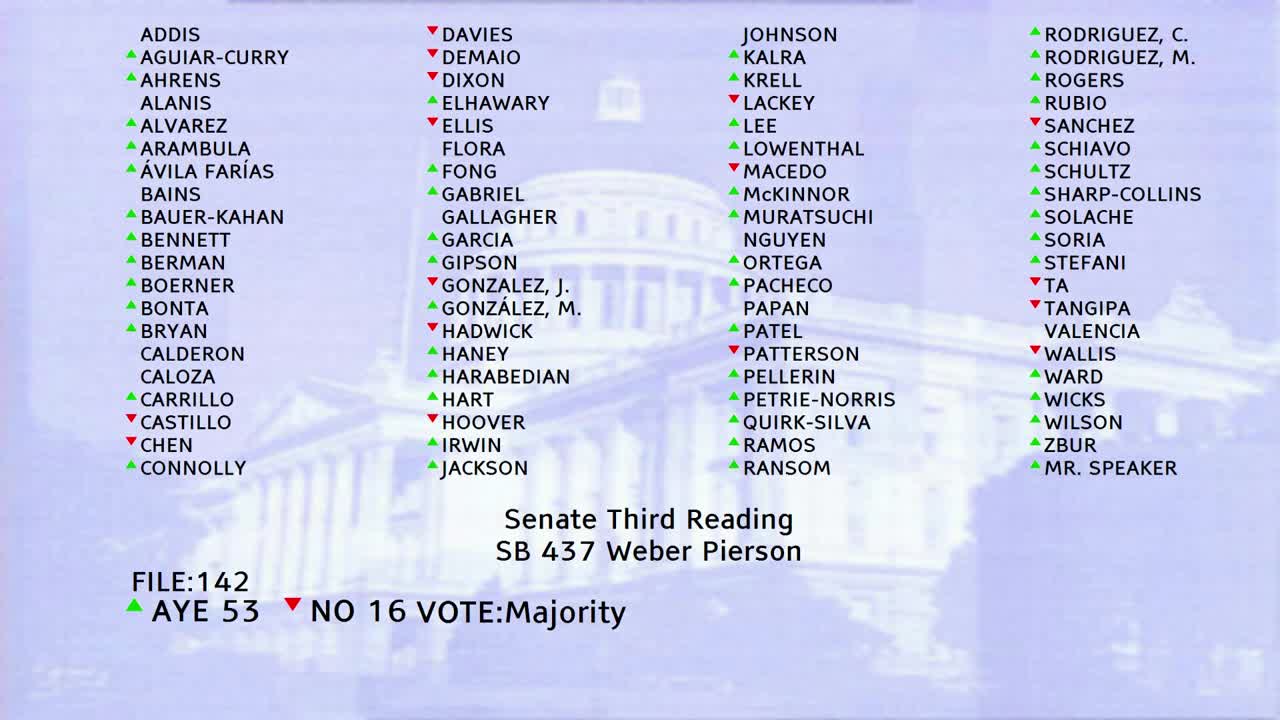
Bill Author