SB 373: Special education: nonpublic, nonsectarian schools or agencies.
- Session Year: 2025-2026
- House: Senate
- Latest Version Date: 2025-10-10
Current Status:
Passed
(2025-10-10: Chaptered by Secretary of State. Chapter 579, Statutes of 2025.)
Introduced
In Committee
Awaiting First Chamber Vote
Passed First Chamber
In Committee
Awaiting Second Chamber Vote
Passed Second Chamber
Enacted
(1)Existing law requires local educational agencies to identify, locate, and assess individuals with exceptional needs and to provide those pupils with a free appropriate public education in the least restrictive environment, with special education and related services as reflected in an individualized education program. Existing law requires, in accordance with specified federal laws, parents to be given a copy of their rights and procedural safeguards, as specified.
This bill would require pupils to also be given a copy of their rights and procedural safeguards. By imposing additional duties on local educational agencies, the bill would impose a state-mandated local program.
(2)Existing law permits, under certain circumstances, contracts to be entered into for the provision of special education and related services by nonpublic, nonsectarian schools or agencies, as defined. Existing law authorizes a master contract for special education and related services provided by a nonpublic, nonsectarian school or agency only if the school or agency has been certified by the Superintendent of Public Instruction as meeting specified standards relating to special education and related services and facilities for individuals with exceptional needs. Existing law requires, before certification, the Superintendent to conduct an onsite review of the facility and program for which the applicant seeks certification, as specified.
This bill, commencing with the 202627 school year, would require the Superintendent, before certifying a nonpublic, nonsectarian school located outside of California, to take additional actions, including, among other things, to review policies on restraint and seclusion to evaluate consistency with California laws. The bill would require, during an onsite review of a nonpublic, nonsectarian school located outside of California, the Superintendent to interview all pupils with individualized education programs to discuss progress and address any concerns respecting any limitations due to the pupils disabilities, as specified. The bill would require the Superintendent, by July 1, 2026, to develop a tool for purposes of the interviews, as provided, and would require the tool to be made available to local educational agencies for their own use, which the bill would authorize.
Existing law requires a nonpublic, nonsectarian school or agency that seeks certification to file an application with the Superintendent on forms provided by the State Department of Education, and to include specified information on the application.
This bill would add assurances of compliance with specified laws relating to behavioral interventions to be included in that required information on the application.
Existing law requires, commencing with the 202021 school year, a local educational agency that enters into a master contract with a nonpublic, nonsectarian school to conduct at least one onsite monitoring visit during each school year to the nonpublic, nonsectarian school at which the local educational agency has a pupil attending and with which it maintains a master contract. Existing law requires the monitoring visit to include, among other things, an observation of the pupil during instruction and a walkthrough of the facility. Existing law requires the local educational agency to report the findings resulting from the monitoring visit to the department within 60 calendar days of the onsite visit. Existing law requires, before June 30, 2020, the department to, with input from special education local plan area administrators, create and publish criteria for reporting this information to the department.
This bill would require the monitoring visit to include, for a pupil placed in a nonpublic, nonsectarian school located outside of California, an in-person interview with the pupil, in a manner consistent with the pupils individualized education program, to evaluate the pupils health and safety. The bill would require the local educational agency to report the findings resulting from the monitoring visit to the department using a specified form developed and published by the department on its internet website. The bill would require, on or before July 1, 2026, the department to update the form to require, for nonpublic, nonsectarian schools located outside of California, additional findings to be reported to the department. The bill would also require the local educational agency to conduct a quarterly check-in with a pupil attending the nonpublic, nonsectarian school located outside of California through an unmonitored telephone call in a manner consistent with the pupils individualized education program.
Existing law requires the Superintendent to make a determination on an application for certification within 120 days of receipt of the application and to certify, conditionally certify, or deny certification to the applicant. If certification is denied, existing law requires the Superintendent to provide reasons for the denial.
This bill, commencing with the 202627 school year, would require, for a nonpublic, nonsectarian school located outside of California, the Superintendent to make available, upon request from a local educational agency or special education local plan area, specified information and documentation relating to certification, if available. The bill would require a local educational agency to disclose the information received, if available, to the parent or guardian at the time the individualized education program team considers placement of the pupil in a nonpublic, nonsectarian school or agency, as specified. By imposing additional duties on local educational agencies, the bill would impose a state-mandated local program.
Existing law requires a nonpublic, nonsectarian school to ensure private and confidential communication between a pupil of the nonpublic, nonsectarian school and members of the pupils individualized education program team, at the pupils discretion.
This bill would explicitly require a nonpublic, nonsectarian school to ensure privacy and confidentiality of telecommunication in this circumstance and would require a nonpublic, nonsectarian school to also ensure private and confidential communication between a pupil and the departments Constituent Services Office.
(3)The California Constitution requires the state to reimburse local agencies and school districts for certain costs mandated by the state. Statutory provisions establish procedures for making that reimbursement.
This bill would provide that, if the Commission on State Mandates determines that the bill contains costs mandated by the state, reimbursement for those costs shall be made pursuant to the statutory provisions noted above.
(1)Existing law requires local educational agencies to identify, locate, and assess individuals with exceptional needs and to provide those pupils with a free appropriate public education in the least restrictive environment, with special education and related services as reflected in an individualized education program. Existing law requires, in accordance with specified federal laws, parents to be given a copy of their rights and procedural safeguards, as specified.
This bill would require pupils to also be given a copy of their rights and procedural safeguards and would require both parents and pupils to be given information on how to contact the State Department of Educations Equitable Services Ombudsman. safeguards. By imposing additional duties on local educational agencies, the bill would impose a state-mandated local program.
(2)Existing law permits, under certain circumstances, contracts to be entered into for the provision of special education and related services by nonpublic, nonsectarian schools or agencies, as defined. Existing law authorizes a master contract for special education and related services provided by a nonpublic, nonsectarian school or agency only if the school or agency has been certified by the Superintendent of Public Instruction as meeting specified standards. standards relating to special education and related services and facilities for individuals with exceptional needs. Existing law requires, before certification, the Superintendent to conduct an onsite review of the facility and program for which the applicant seeks certification, as specified.
This bill, commencing with the 202627 school year, would require the Superintendent, before certifying a nonpublic, nonsectarian school, school located outside of California, to take additional actions, including, among other things, to review policies on restraint and seclusion to evaluate consistency with California laws and laws. The bill would require, during an onsite review of a nonpublic, nonsectarian school located outside of California, the Superintendent to interview all pupils with an individualized education program programs to discuss progress and address any concerns respecting any limitations due to the pupils disability, pupils disabilities, as specified. The bill would require the Superintendent, by July 1, 2026, to develop a tool for purposes of the interviews, as provided, and would require the tool to be made available to local educational agencies for their own use, which the bill would authorize.
Existing law requires a nonpublic, nonsectarian school or agency that seeks certification to file an application with the Superintendent on forms provided by the department, State Department of Education, and to include specified information on the application.
This bill would add assurances of compliance with specified laws relating to behavioral interventions to be included in that required information on the application.
Existing law requires, commencing with the 202021 school year, a local educational agency that enters into a master contract with a nonpublic, nonsectarian school to conduct at least one onsite monitoring visit during each school year to the nonpublic, nonsectarian school at which the local educational agency has a pupil attending and with which it maintains a master contract. Existing law requires the monitoring visit to include, among other things, an observation of the pupil during instruction and a walkthrough of the facility. Existing law requires the local educational agency to report the findings resulting from the monitoring visit to the department within 60 calendar days of the onsite visit. Existing law requires, before June 30, 2020, the department to, with input from special education local plan area administrators, create and publish criteria for reporting this information to the department.
This bill would require the monitoring visit to include include, for a pupil placed in a nonpublic, nonsectarian school located outside of California, an in-person interview with the pupil, in a manner consistent with their the pupils individualized education program, to evaluate their the pupils health and safety. The bill would require the local educational agency to report the findings resulting from the monitoring visit to the department using a specified form developed and published by the department on its internet website. The bill would require, on or before July 1, 2026, the department to update the form to require require, for nonpublic, nonsectarian schools located outside of California, additional findings to be reported to the department. The bill would also require the local educational agency to conduct a quarterly check-in with a pupil attending the nonpublic, nonsectarian school located outside of California through an unmonitored telephone call in a manner consistent with their the pupils individualized education program.
Existing law requires the Superintendent to make a determination on an application for certification within 120 days of receipt of the application and to certify, conditionally certify, or deny certification to the applicant. If certification is denied, existing law requires the Superintendent to provide reasons for the denial.
This bill, commencing with the 202627 school year, would require require, for a nonpublic, nonsectarian school located outside of California, the Superintendent to make available, upon request from a local educational agency or special education local plan area, specified information and documentation relating to certification. certification, if available. The bill would require a local educational agency to disclose the information received received, if available, to the parent or guardian at the time the individualized education program team considers placement of the pupil in a nonpublic, nonsectarian school or agency, as specified. By imposing additional duties on local educational agencies, the bill would impose a state-mandated local program.
Existing law requires a nonpublic, nonsectarian school to ensure private and confidential communication between a pupil of the nonpublic, nonsectarian school and members of the pupils individualized education program team, at the pupils discretion.
This bill would explicitly require the private and confidential communication to include a nonpublic, nonsectarian school to ensure privacy and confidentiality of telecommunication in this circumstance and would require a nonpublic, nonsectarian school to also ensure private and confidential communication between a pupil and the departments Equitable Services Ombudsman. Constituent Services Office.
(3)The California Constitution requires the state to reimburse local agencies and school districts for certain costs mandated by the state. Statutory provisions establish procedures for making that reimbursement.
This bill would provide that, if the Commission on State Mandates determines that the bill contains costs mandated by the state, reimbursement for those costs shall be made pursuant to the statutory provisions noted above.
(1)Existing law requires local educational agencies to identify, locate, and assess individuals with exceptional needs and to provide those pupils with a free appropriate public education in the least restrictive environment, with special education and related services as reflected in an individualized education program. Existing law requires, in accordance with specified federal laws, parents to be given a copy of their rights and procedural safeguards, as specified.
This bill would require pupils to also be given a copy of their rights and procedural safeguards and would require both parents and pupils to be given information on how to contact the State Department of Educations Equitable Services Ombudsman. By imposing additional duties on local educational agencies, the bill would impose a state-mandated local program.
(2)Existing law permits, under certain circumstances, contracts to be entered into for the provision of special education and related services by nonpublic, nonsectarian schools or agencies, as defined. Existing law authorizes a master contract for special education and related services provided by a nonpublic, nonsectarian school or agency only if the school or agency has been certified by the Superintendent of Public Instruction as meeting specified standards. Existing law requires, before certification, the Superintendent to conduct an onsite review of the facility and program for which the applicant seeks certification, as specified.
This bill, commencing with the 202627 school year, would require the Superintendent, before certifying a nonpublic, nonsectarian school, to take additional actions, including, among other things, to review policies on restraint and seclusion to evaluate consistency with California laws and to interview pupils with an individualized education program to discuss progress and address any concerns respecting any limitations due to the pupils disability, as specified. The bill would require the Superintendent, by July 1, 2026, to develop a tool for purposes of the interviews, as provided, and would require the tool to be made available to local educational agencies for their own use, which the bill would authorize.
Existing law requires a nonpublic, nonsectarian school or agency that seeks certification to file an application with the Superintendent on forms provided by the department, and to include specified information on the application.
This bill would add assurances of compliance with specified laws relating to behavioral interventions to be included in that required information on the application.
Existing law requires, commencing with the 202021 school year, a local educational agency that enters into a master contract with a nonpublic, nonsectarian school to conduct at least one onsite monitoring visit during each school year to the nonpublic, nonsectarian school at which the local educational agency has a pupil attending and with which it maintains a master contract. Existing law requires the monitoring visit to include, among other things, an observation of the pupil during instruction and a walkthrough of the facility. Existing law requires the local educational agency to report the findings resulting from the monitoring visit to the department within 60 calendar days of the onsite visit. Existing law requires, before June 30, 2020, the department to, with input from special education local plan area administrators, create and publish criteria for reporting this information to the department.
This bill would require the monitoring visit to include an in-person interview with the pupil, in a manner consistent with their individualized education program, to evaluate their health and safety. The bill would require the local educational agency to report the findings resulting from the monitoring visit to the department using a specified form developed and published by the department on its internet website. The bill would require, on or before July 1, 2026, the department to update the form to require additional findings to be reported to the department. The bill would also require the local educational agency to conduct a quarterly check-in with a pupil attending the nonpublic, nonsectarian school through an unmonitored telephone call in a manner consistent with their individualized education program.
Existing law requires the Superintendent to make a determination on an application for certification within 120 days of receipt of the application and to certify, conditionally certify, or deny certification to the applicant. If certification is denied, existing law requires the Superintendent to provide reasons for the denial.
This bill, commencing with the 202627 school year, would require the Superintendent to make available, upon request from a local educational agency or special education local plan area, specified information and documentation relating to certification. The bill would require a local educational agency to disclose the information received to the parent or guardian at the time the individualized education program team considers placement of the pupil in a nonpublic, nonsectarian school or agency, as specified. By imposing additional duties on local educational agencies, the bill would impose a state-mandated local program.
Existing law requires a nonpublic, nonsectarian school to ensure private and confidential communication between a pupil of the nonpublic, nonsectarian school and members of the pupils individualized education program team, at the pupils discretion.
This bill would require the private and confidential communication to include telecommunication and would require a nonpublic, nonsectarian school to also ensure private and confidential communication between a pupil and the departments Equitable Services Ombudsman.
(3)The California Constitution requires the state to reimburse local agencies and school districts for certain costs mandated by the state. Statutory provisions establish procedures for making that reimbursement.
This bill would provide that, if the Commission on State Mandates determines that the bill contains costs mandated by the state, reimbursement for those costs shall be made pursuant to the statutory provisions noted above.
(1)Existing law requires local educational agencies to identify, locate, and assess individuals with exceptional needs and to provide those pupils with a free appropriate public education in the least restrictive environment, with special education and related services as reflected in an individualized education program. Existing law requires, in accordance with specified federal laws, parents to be given a copy of their rights and procedural safeguards, as specified.
This bill would require pupils to also be given a copy of their rights and procedural safeguards and would require both parents and pupils to be given information on how to contact the State Department of Educations Equitable Services Ombudsman. By imposing additional duties on local educational agencies, the bill would impose a state-mandated local program.
(2)Existing law permits, under certain circumstances, contracts to be entered into for the provision of special education and related services by nonpublic, nonsectarian schools or agencies, as defined. Existing law authorizes a master contract for special education and related services provided by a nonpublic, nonsectarian school or agency only if the school or agency has been certified by the Superintendent of Public Instruction as meeting specified standards. Existing law requires, before certification, the Superintendent to conduct an onsite review of the facility and program for which the applicant seeks certification, as specified.
This bill would require, bill, commencing with the 202627 school year, would require the Superintendent, before certifying a nonpublic, nonsectarian school or agency, the Superintendent school, to take additional actions, including, among other things, to review policies on restraint and seclusion to evaluate consistency with California laws. laws and to interview pupils with an individualized education program to discuss progress and address any concerns respecting any limitations due to the pupils disability, as specified. The bill would require the Superintendent, by July 1, 2026, to develop a tool for purposes of the interviews, as provided, and would require the tool to be made available to local educational agencies for their own use, which the bill would authorize.
Existing law requires a nonpublic, nonsectarian school or agency that seeks certification to file an application with the Superintendent on forms provided by the department, and to include specified information on the application.
This bill would add assurances of compliance with specified laws relating to behavioral interventions to be included in that required information on the application.
Existing law requires, commencing with the 202021 school year, a local educational agency that enters into a master contract with a nonpublic, nonsectarian school to conduct at least one onsite monitoring visit during each school year to the nonpublic, nonsectarian school at which the local educational agency has a pupil attending and with which it maintains a master contract. Existing law requires the monitoring visit to include, among other things, an observation of the pupil during instruction and a walkthrough of the facility. Existing law requires the local educational agency to report the findings resulting from the monitoring visit to the department within 60 calendar days of the onsite visit. Existing law requires, before June 30, 2020, the department to, with input from special education local plan area administrators, create and publish criteria for reporting this information to the department.
This bill would require the monitoring visit to include an in-person, private meeting in-person interview with the pupil pupil, in a manner consistent with their individualized education program, to evaluate their health and safety. The bill would require the local educational agency to report the findings resulting from the monitoring visit to the department using a specified form developed and published by the department on its internet website. The bill would require, on or before July 1, 2026, the department to update the form to require additional findings to be reported to the department. The bill would also require the local educational agency to conduct a quarterly check-in with a pupil attending the nonpublic, nonsectarian school through an unmonitored telephone call. call in a manner consistent with their individualized education program.
Existing law requires the Superintendent to make a determination on an application for certification within 120 days of receipt of the application and to certify, conditionally certify, or deny certification to the applicant. If certification is denied, existing law requires the Superintendent to provide reasons for the denial.
This bill, commencing with the 202627 school year, would require the Superintendent to make available, upon request from a local educational agency or special education local plan area, specified information and documentation relating to certification. The bill would require a local educational agency to disclose the information received to the parent or guardian at the time the individualized education program team considers placement of the pupil in a nonpublic, nonsectarian school or agency, as specified. By imposing additional duties on local educational agencies, the bill would impose a state-mandated local program.
Existing law requires a nonpublic, nonsectarian school to ensure private and confidential communication between a pupil of the nonpublic, nonsectarian school and members of the pupils individualized education program team, at the pupils discretion.
This bill would require the private and confidential communication to include telecommunication and would require a nonpublic, nonsectarian school to also ensure private and confidential communication between a pupil and the departments Equitable Services Ombudsman.
(3)The California Constitution requires the state to reimburse local agencies and school districts for certain costs mandated by the state. Statutory provisions establish procedures for making that reimbursement.
This bill would provide that, if the Commission on State Mandates determines that the bill contains costs mandated by the state, reimbursement for those costs shall be made pursuant to the statutory provisions noted above.
(1)Existing law requires local educational agencies to identify, locate, and assess individuals with exceptional needs and to provide those pupils with a free appropriate public education in the least restrictive environment, with special education and related services as reflected in an individualized education program. Existing law requires, in accordance with specified federal laws, parents to be given a copy of their rights and procedural safeguards, as specified.
This bill would require pupils to also be given a copy of their rights and procedural safeguards and would require both parents and pupils to be given information on how to contact the State Department of Educations Equitable Services Ombudsman. By imposing additional duties on local educational agencies, the bill would impose a state-mandated local program.
(2)Existing law permits, under certain circumstances, contracts to be entered into for the provision of special education and related services by nonpublic, nonsectarian schools or agencies, as defined. Existing law authorizes a master contract for special education and related services provided by a nonpublic, nonsectarian school or agency only if the school or agency has been certified by the Superintendent of Public Instruction as meeting specified standards. Existing law requires, before certification, the Superintendent to conduct an onsite review of the facility and program for which the applicant seeks certification, as specified.
This bill would require, before certifying a nonpublic, nonsectarian school or agency, the Superintendent to take additional actions, including, among other things, to review policies on restraint to evaluate consistency with California laws.
Existing law requires, commencing with the 202021 school year, a local educational agency that enters into a master contract with a nonpublic, nonsectarian school to conduct at least one onsite monitoring visit during each school year to the nonpublic, nonsectarian school at which the local educational agency has a pupil attending and with which it maintains a master contract. Existing law requires the monitoring visit to include, among other things, an observation of the pupil during instruction and a walkthrough of the facility. Existing law requires the local educational agency to report the findings resulting from the monitoring visit to the department within 60 calendar days of the onsite visit. Existing law requires, before June 30, 2020, the department to, with input from special education local plan area administrators, create and publish criteria for reporting this information to the department.
This bill would require the monitoring visit to include an in-person, private meeting with the pupil to evaluate their health and safety. The bill would require the local educational agency to report the findings resulting from the monitoring visit to the department using a specified form developed and published by the department on its internet website. The bill would require, on or before July 1, 2026, the department to update the form to require additional findings to be reported to the department. The bill would also require the local educational agency to conduct a quarterly check-in with a pupil attending the nonpublic, nonsectarian school through an unmonitored telephone call.
Existing law requires a nonpublic, nonsectarian school to ensure private and confidential communication between a pupil of the nonpublic, nonsectarian school and members of the pupils individualized education program team, at the pupils discretion.
This bill would require the private and confidential communication to include telecommunication and would require a nonpublic, nonsectarian school to also ensure private and confidential communication between a pupil and the departments Equitable Services Ombudsman.
(3)The California Constitution requires the state to reimburse local agencies and school districts for certain costs mandated by the state. Statutory provisions establish procedures for making that reimbursement.
This bill would provide that, if the Commission on State Mandates determines that the bill contains costs mandated by the state, reimbursement for those costs shall be made pursuant to the statutory provisions noted above.
Existing law sets forth a method for providing special education and related services to pupils with exceptional needs. Existing law permits, under certain circumstances, contracts to be entered into for the provision of those services by nonpublic, nonsectarian schools or agencies, as defined. Existing law authorizes a master contract for special education and related services provided by a nonpublic, nonsectarian school or agency only if the school or agency has been certified by the Superintendent of Public Instruction as meeting specified standards. Existing law authorizes the Superintendent to revoke or suspend the certification of a nonpublic, nonsectarian school or agency for specified reasons and requires the Superintendent to notify contracting local educational agencies and the special education local plan area in which the nonpublic, nonsectarian school or agency is located of the determination to suspend or revoke state certification.Existing law requires a contracting local educational agency and charter school, within 14 days of becoming aware of any change to the certification status of a nonpublic, nonsectarian school or agency, to notify parents, as defined, of pupils of the local educational agency or charter school who attend the nonpublic, nonsectarian school or agency of the change in certification status, as provided.This bill would make nonsubstantive changes to that parental notification provision.Existing law sets forth a method for providing special education and related services to pupils with exceptional needs. Existing law permits, under certain circumstances, contracts to be entered into for the provision of those services by nonpublic, nonsectarian schools or agencies, as defined. Existing law authorizes a master contract for special education and related services provided by a nonpublic, nonsectarian school or agency only if the school or agency has been certified by the Superintendent of Public Instruction as meeting specified standards. Existing law authorizes the Superintendent to revoke or suspend the certification of a nonpublic, nonsectarian school or agency for specified reasons and requires the Superintendent to notify contracting local educational agencies and the special education local plan area in which the nonpublic, nonsectarian school or agency is located of the determination to suspend or revoke state certification.
Existing law requires a contracting local educational agency and charter school, within 14 days of becoming aware of any change to the certification status of a nonpublic, nonsectarian school or agency, to notify parents, as defined, of pupils of the local educational agency or charter school who attend the nonpublic, nonsectarian school or agency of the change in certification status, as provided.
This bill would make nonsubstantive changes to that parental notification provision.
This act shall be known, and may be cited, as the California Accountability for Placements in Education Act.
SEC. 2.Section 49001 of the Education Code is amended to read:49001.(a)For the purposes of this section, corporal punishment means the willful infliction of, or willfully causing the infliction of, physical pain on a pupil. An amount of force that is reasonable and necessary for a person employed by or engaged in a public school to quell a disturbance threatening physical injury to persons or damage to property, for purposes of self-defense, or to obtain possession of weapons or other dangerous objects within the control of the pupil, is not and shall not be construed to be corporal punishment within the meaning and intent of this section. Physical pain or discomfort caused by athletic competition or other such recreational activity, voluntarily engaged in by the pupil, is not and shall not be construed to be corporal punishment within the meaning and intent of this section.
(b)No person employed by or engaged in a public school shall inflict, or cause to be inflicted corporal punishment upon a pupil. Every resolution, bylaw, rule, ordinance, or other act or authority permitting or authorizing the infliction of corporal punishment upon a pupil attending a public school is void and unenforceable.
(c)For purposes of this section, public school includes a school operated by a school district or a county office of education, a charter school, a nonpublic, nonsectarian school, and a state special school for the blind or the deaf.
SEC. 3.Section 56301 of the Education Code is amended to read:56301.(a)All children with disabilities residing in the state, including children with disabilities who are homeless children or are wards of the state and children with disabilities attending private, including religious, elementary and secondary schools, regardless of the severity of their disabilities, and who are in need of special education and related services, shall be identified, located, and assessed and a practical method is developed and implemented to determine which children with disabilities are currently receiving needed special education and related services as required by Sections 1412(a)(3) and 1412(a)(10)(A)(ii) of Title 20 of the United States Code. A child is not required to be classified by their disability so long as each child who has a disability listed in Section 1401(3) of Title 20 of the United States Code and who, by reason of that disability, needs special education and related services as an individual with exceptional needs defined in Section 56026.
(b)(1)In accordance with Section 300.111(c) of Title 34 of the Code of Federal Regulations, the requirements of this section also apply to highly mobile individuals with exceptional needs, including migrant children, and children who are suspected of being an individual with exceptional needs pursuant to Section 56026 and in need of special education, even though they are advancing from grade to grade.
(2)In accordance with Section 300.213 of Title 34 of the Code of Federal Regulations, the local educational agency shall cooperate in the efforts of the federal Secretary of Education, under Section 6398 of Title 20 of the United States Code, to ensure the linkage of records pertaining to migratory children with disabilities for the purpose of electronically exchanging, among other states, health and educational information regarding those children.
(c)(1)The child find process shall ensure the equitable participation in special education and related services of parentally placed private schoolchildren with disabilities and an accurate count of those children. Child find activities conducted by local educational agencies, or where applicable, the department, shall be similar to those activities undertaken for pupils in public schools.
(2)In accordance with Section 1412(a)(10)(A)(ii)(IV) of Title 20 of the United States Code, the cost of the child find activities in private, including religious, elementary and secondary schools, may not be considered in determining whether a local educational agency has met its obligations under the proportionate funding provisions for children enrolled in private, including religious, elementary and secondary schools.
(3)The child find process described in paragraph (1) shall be completed in a time period comparable to that for other pupils attending public schools in the local educational agency.
(d)(1)Each special education local plan area shall establish written policies and procedures pursuant to Section 56205 for use by its constituent local agencies for a continuous child find system that addresses the relationships among identification, screening, referral, assessment, planning, implementation, review, and the triennial assessment. The policies and procedures shall include, but need not be limited to, written notification to all parents of their rights under this chapter, and the procedure for initiating a referral for assessment to identify individuals with exceptional needs.
(2)In accordance with Section 1415(d)(1)(A) of Title 20 of the United States Code and Section 300.504(a) of Title 34 of the Code of Federal Regulations, parents and pupils shall be given a copy of their rights and procedural safeguards once every school year and at all of the following times:
(A)Upon initial referral or parental request for assessment.
(B)Upon receipt of the first state complaint under Section 56500.2 in a school year.
(C)Upon receipt of the first due process hearing request under Section 56502 in a school year.
(D)When a decision is made to make a removal that constitutes a change of placement of an individual with exceptional needs because of a violation of a code of pupil conduct in accordance with Section 300.530(h) of Title 34 of the Code of Federal Regulations.
(E)Upon request by a parent or pupil.
(3)A local educational agency may place a current copy of the procedural safeguards notice on its internet website, if the internet website exists, pursuant to Section 1415(d)(1)(B) of Title 20 of the United States Code.
(4)The contents of the procedural safeguards notice shall contain the requirements listed in Section 1415(d)(2) of Title 20 of the United States Code and Section 300.504(c) of Title 34 of the Code of Federal Regulations.
(e)Child find data collected pursuant to this chapter, or collected pursuant to a regulation or an interagency agreement, are subject to the confidentiality requirements of Sections 300.610 to 300.627, inclusive, of Title 34 of the Code of Federal Regulations.
SEC. 4.Section 56366.1 of the Education Code is amended to read:56366.1.(a)A nonpublic, nonsectarian school or agency that seeks certification shall file an application with the Superintendent on forms provided by the department, and shall include all of the following information on the application:
(1)A description of the special education and designated instruction and services provided to individuals with exceptional needs if the application is for nonpublic, nonsectarian school certification.
(2)A description of the designated instruction and services provided to individuals with exceptional needs if the application is for nonpublic, nonsectarian agency certification.
(3)A list of appropriately qualified staff, a description of the credential, license, or registration that qualifies each staff member rendering special education or designated instruction and services to do so, and copies of their credentials, licenses, or certificates of registration with the appropriate state or national organization that has established standards for the service rendered.
(4)(A)(i)Commencing with the 202021 school year, documentation that the nonpublic, nonsectarian school or agency will train staff who will have contact or interaction with pupils during the schoolday in the use of evidence-based practices and interventions specific to the unique behavioral needs of the nonpublic, nonsectarian schools or agencys pupil population. The training shall be provided within 30 days of employment to new staff who have any contact or interaction with pupils during the schoolday, and annually to all staff who have any contact or interaction with pupils during the schoolday.
(ii)For a nonpublic, nonsectarian school or agency that was in existence as of the January 1 immediately preceding a school year, documentation that the nonpublic, nonsectarian schools or agencys staff members who will have contact or interaction with pupils during the schoolday have received training that complies with the requirements of subparagraphs (B) and (C).
(B)The training described in this paragraph shall be selected and conducted by the nonpublic, nonsectarian school or agency and shall satisfy all of the following conditions:
(i)Be conducted by persons licensed or certified in fields related to the evidence-based practices and interventions being taught.
(ii)Be taught in a manner consistent with the development and implementation of individualized education programs.
(iii)Be consistent with the requirements of Article 5.2 (commencing with Section 49005) of Chapter 6 of Part 27, relating to pupil discipline.
(C)The content of the training described in this paragraph shall include, but is not limited to, all of the following:
(i)Positive behavioral intervention and supports, including collection, analysis, and use of data to inform, plan, and implement behavioral supports.
(ii)How to understand and address challenging behaviors, including evidence-based strategies for preventing those behaviors.
(iii)Evidence-based interventions for reducing and replacing challenging behaviors, including de-escalation techniques.
(D)(i)The contracting local educational agency shall verify the nonpublic, nonsectarian schools or agencys compliance with the requirements of this paragraph, and the nonpublic, nonsectarian school or agency shall report the contracting local educational agencys verification to the Superintendent annually with the annual certification documents described in subdivision (h).
(ii)For a nonpublic, nonsectarian school or agency seeking initial certification, the contracting local educational agency shall verify that the plan and timeline for training provided pursuant to this paragraph are included in the master contract.
(iii)For a nonpublic, nonsectarian school or agency not in existence as of the January 1 immediately preceding a school year, the contracting local educational agency shall, 30 days following the commencement of the school year, verify that the nonpublic, nonsectarian school or agency provided the training required by this paragraph, and shall submit the verification to the Superintendent at that time.
(iv)The nonpublic, nonsectarian school or agency shall maintain written records of the training provided pursuant to this paragraph, and shall provide written verification of the training upon request.
(5)Commencing with the 202122 school year, documentation that the administrator of the nonpublic, nonsectarian school holds or is in the process of obtaining one of the following:
(A)An administrative credential granted by an accredited postsecondary educational institution and two years of experience with pupils with disabilities.
(B)A pupil personnel services credential that authorizes school counseling or psychology.
(C)A license as a clinical social worker issued by the Board of Behavioral Sciences.
(D)A license in psychology regulated by the Board of Psychology.
(E)A masters degree issued by an accredited postsecondary institution in education, special education, psychology, counseling, behavioral analysis, social work, behavioral science, or rehabilitation.
(F)A credential authorizing special education instruction and at least two years of experience teaching in special education before becoming an administrator.
(G)A license as a marriage and family therapist certified by the Board of Behavioral Sciences.
(H)A license as an educational psychologist issued by the Board of Behavioral Sciences.
(I)A license as a professional clinical counselor issued by the Board of Behavioral Sciences.
(6)An annual operating budget.
(7)Affidavits and assurances necessary to comply with all applicable federal, state, and local laws and regulations that include criminal record summaries required of all nonpublic, nonsectarian school or agency personnel having contact with minor children under Section 44237.
(8)Assurances of compliance with Article 5 (commencing with Section 49000) and Article 5.2 (commencing with Section 49005) of Chapter 6 of Part 27, and Section 56521.1, relating to behavioral interventions.
(9)Commencing with the 202425 school year, a nonpublic nonsectarian school shall include assurances that for any pupil served by the school who is a foster child as defined in subdivision (a) of Section 48853.5, the school agrees to do both of the following:
(A)Serve as the school of origin of the foster child, as applicable pursuant to subdivision (g) of Section 48853.5.
(B)Allow the foster child to continue their education in the school, as applicable pursuant to subdivisions (f) and (g) of Section 48853.5.
(b)(1)The applicant shall provide the special education local plan area in which the applicant is located with the written notification of its intent to seek certification or renewal of its certification. The local educational agency representatives shall acknowledge that they have been notified of the intent to certify or renew certification. The acknowledgment shall include a statement that representatives of the local educational agency for the area in which the applicant is located have had the opportunity to review the application at least 60 calendar days before submission of an initial application to the Superintendent, or at least 30 calendar days before submission of a renewal application to the Superintendent. The acknowledgment shall provide assurances that local educational agency representatives have had the opportunity to provide input on all required components of the application.
(2)If the local educational agency has not acknowledged an applicants intent to be certified 60 calendar days from the date of submission for initial applications or 30 calendar days from the date of the return receipt for renewal applications, the applicant may file the application with the Superintendent.
(3)The department shall provide electronic notification of the availability of renewal application materials to certified nonpublic, nonsectarian schools and agencies at least 120 days before the date their current certification expires.
(c)If the applicant operates a facility or program on more than one site, each site shall be certified.
(d)If the applicant is part of a larger program or facility on the same site, the Superintendent shall consider the effect of the total program on the applicant. A copy of the policies and standards for the nonpublic, nonsectarian school or agency and the larger program shall be available to the Superintendent.
(e)(1)Before certification, the Superintendent shall conduct an onsite review of the facility and program for which the applicant seeks certification. The Superintendent may be assisted by representatives of the special education local plan area in which the applicant is located and a nonpublic, nonsectarian school or agency representative who does not have a conflict of interest with the applicant. The Superintendent shall conduct an additional onsite review of the facility and program within three years of the effective date of the certification, unless the Superintendent conditionally certifies the nonpublic, nonsectarian school or agency, or unless the Superintendent receives a formal complaint against the nonpublic, nonsectarian school or agency. In the latter two cases, the Superintendent shall conduct an onsite review at least annually.
(2)In carrying out paragraph (1), the Superintendent may verify that the nonpublic, nonsectarian school or agency has received a successful criminal background check clearance and has enrolled in subsequent arrest notice service, pursuant to Section 44237, for each owner, operator, and employee of the nonpublic, nonsectarian school or agency.
(3)Commencing with the 202627 school year, the Superintendent shall also do all of the following before certifying a nonpublic, nonsectarian school located outside of California:
(A)Review assurances provided pursuant to paragraph (8) of subdivision (a) relating to behavioral interventions to evaluate consistency with California laws.
(B)Ensure that pupils have been provided a copy of their rights and procedural safeguards, as referenced in Section 300.504(a) of Title 34 of the Code of Federal Regulations, and information on how to contact the departments Constituent Services Office, upon admission to the nonpublic, nonsectarian school and that this information is accessible and require the telephone number for the departments Constituent Services Office to be prominently displayed at the nonpublic, nonsectarian school.
(C)Review policies, procedures, and practices of the nonpublic, nonsectarian school to determine if there is a clear and confidential process for residents to report grievances without fear of retaliation and review the process for investigating and reporting internal and external resident complaints.
(D)Examine the use of positive behavioral reinforcement systems, including if the nonpublic, nonsectarian school correctly implements behavior intervention pursuant to Chapter 5.5 (commencing with Section 56520) and manifestation determinations pursuant to Section 300.530(e) of Title 34 of the Code of Federal Regulations, and provide a copy of the nonpublic, nonsectarian schools policies on behavior intervention to pupils and parents of pupils enrolled in the nonpublic, nonsectarian school.
(E)Review protocols for identifying signs of abuse or neglect, both physical and psychological, for consistency with the mandated reporting requirements of Section 11165.7 of the Penal Code, ensure that all staff are trained to recognize these signs, and review any behavior emergency reports required pursuant to Section 56521.1 to ensure compliance with that section.
(4)Commencing with the 202021 school year, a local educational agency that enters into a master contract with a nonpublic, nonsectarian school shall conduct, at minimum, all of the following:
(A)An onsite visit to the nonpublic, nonsectarian school before placement of a pupil if the local educational agency does not have any pupils enrolled at the school at the time of placement.
(B)At least one onsite monitoring visit during each school year to the nonpublic, nonsectarian school at which the local educational agency has a pupil attending and with which it maintains a master contract. The monitoring visit shall include, but is not limited to, a review of services provided to the pupil through the individual service agreement between the local educational agency and the nonpublic, nonsectarian school, a review of progress the pupil is making toward the goals set forth in the pupils individualized education program, a review of progress the pupil is making toward the goals set forth in the pupils behavioral intervention plan, if applicable, an observation of the pupil during instruction, a walkthrough of the facility, and, for a pupil placed in a nonpublic, nonsectarian school located outside of California, an in-person interview with the pupil, in a manner consistent with the pupils individualized education program, to evaluate the pupils health and safety. The local educational agency shall report the findings resulting from the monitoring visit to the department, using the Local Educational Agency Onsite Visit for Nonpublic School form developed and published by the department on its internet website, within 60 calendar days of the onsite visit. On or before July 1, 2026, the department shall update the form to additionally require, for nonpublic, nonsectarian schools located outside of California, all of the following findings to be reported to the department:
(i)A summary of the local educational agencys interview of pupils to assess their perceptions of the nonpublic, nonsectarian school and the services provided, including whether pupils feel that they are treated with respect and dignity and whether nonpublic, nonsectarian school staff maintain appropriate professional boundaries. The local educational agency may also use the tool used by the Superintendent to conduct interviews or develop its own interview tool and shall respect any limitations caused by the pupils disability and conduct the interview in a manner consistent with the pupils individualized education program.
(ii)Evidence of positive behavioral support, for which the local educational agency shall examine the use of positive behavioral reinforcement systems, including if the nonpublic, nonsectarian school correctly implements behavior intervention pursuant to Chapter 5.5 (commencing with Section 56520) and manifestation determinations pursuant to Section 300.530(e) of Title 34 of the Code of Federal Regulations.
(iii)Evidence of screening for abuse and neglect, for which the local educational agency shall review the protocols for identifying signs of abuse or neglect, both physical and psychological, and ensure that all staff are trained to recognize these signs through a review of any behavior emergency reports required pursuant to Section 56521.1.
(C)A quarterly check-in with a pupil attending the nonpublic, nonsectarian school located outside of California through an unmonitored telephone call, in a manner consistent with the pupils individualized education program.
(f)(1)The Superintendent shall make a determination on an application within 120 days of receipt of the application and shall certify, conditionally certify, or deny certification to the applicant. If the Superintendent fails to take one of these actions within 120 days, the applicant is automatically granted conditional certification for a period terminating on August 31 of the current school year. If certification is denied, the Superintendent shall provide reasons for the denial. The Superintendent shall not certify the nonpublic, nonsectarian school or agency for a period longer than one year.
(2)Commencing with the 202627 school year, for a nonpublic, nonsectarian school located outside of California, the Superintendent shall make available, upon request from a local educational agency or a special education local plan area, the following information, if available:
(A)The certification status of the nonpublic, nonsectarian school or agency, including whether certification was granted, denied, revoked, suspended, or granted with conditions.
(B)A summary of the findings supporting the Superintendents determination, including any corrective actions or areas of noncompliance identified.
(C)Access to relevant documentation used to support the determination, including compliance review reports and any findings resulting from onsite monitoring visits.
(3)A local educational agency shall disclose the information received in paragraph (2), if available, to the parent or guardian at the time the individualized education program team considers placement of the pupil in a nonpublic, nonsectarian school or agency.
(4)The local educational agency shall document in the individualized education program that the information described in paragraph (2), if available, was provided to the parent or guardian and that the parent or guardian was given an opportunity to review and discuss the information as part of the placement decision.
(5)This subdivision does not authorize the disclosure of any personally identifiable information and shall be consistent with applicable state and federal pupil privacy laws.
(g)Certification becomes effective on the date the nonpublic, nonsectarian school or agency meets all the application requirements and is approved by the Superintendent. Certification may be retroactive if the nonpublic, nonsectarian school or agency met all the requirements of this section on the date the retroactive certification is effective. Certification expires on December 31 of the terminating year.
(h)The Superintendent annually shall review the certification of each nonpublic, nonsectarian school or agency. For this purpose, a certified nonpublic, nonsectarian school or agency annually shall update its application between August 1 and October 31, unless the state board grants a waiver pursuant to Section 56101. The Superintendent may conduct an onsite review as part of the annual review.
(i)(1)The Superintendent shall conduct an investigation of a nonpublic, nonsectarian school or agency onsite at any time without prior notice if there is substantial reason to believe that there is an immediate danger to the health, safety, or welfare of a child. The Superintendent shall document the concern and submit it to the nonpublic, nonsectarian school or agency at the time of the onsite investigation. The Superintendent shall require a written response to any noncompliance or deficiency found.
(2)A nonpublic, nonsectarian school or agency shall notify the department and the local educational agency with which it has a master contract of any pupil-involved incident at the school or agency in which law enforcement was contacted. This notification shall be provided in writing, no later than one business day after the incident occurred.
(3)With respect to a nonpublic, nonsectarian school or agency, the Superintendent shall conduct an investigation, which may include an unannounced onsite visit, if the Superintendent receives evidence of a significant deficiency in the quality of educational services provided, a violation of Section 56366.9, or noncompliance with the policies expressed by subdivision (b) of Section 1501 of the Health and Safety Code by the nonpublic, nonsectarian school or agency. The Superintendent shall document the complaint and the results of the investigation and shall provide copies of the documentation to the complainant, the nonpublic, nonsectarian school or agency, and the contracting local educational agency.
(4)Violations or noncompliance documented pursuant to paragraph (1) or (3) shall be reflected in the status of the certification of the nonpublic, nonsectarian school or agency, at the discretion of the Superintendent, pending an approved plan of correction by the nonpublic, nonsectarian school or agency. The department shall retain for a period of 10 years all violations pertaining to certification of the nonpublic, nonsectarian school or agency.
(5)In carrying out this subdivision, the Superintendent may verify that the nonpublic, nonsectarian school or agency received a successful criminal background check clearance and has enrolled in subsequent arrest notice service, pursuant to Section 44237, for each owner, operator, and employee of the nonpublic, nonsectarian school or agency.
(j)The Superintendent shall monitor the facilities, the educational environment, and the quality of the educational program, including the teaching staff, the credentials authorizing service, the standards-based core curriculum being employed, and the standards-focused instructional materials used, of an existing certified nonpublic, nonsectarian school or agency on a three-year cycle, as follows:
(1)The nonpublic, nonsectarian school or agency shall complete a self-review in year one.
(2)The Superintendent shall conduct an onsite review of the nonpublic, nonsectarian school or agency in year two.
(3)The Superintendent shall conduct a followup visit to the nonpublic, nonsectarian school or agency in year three.
(k)(1)During an onsite review of a nonpublic, nonsectarian school located outside of California, the Superintendent shall interview all pupils with individualized education programs to discuss progress and address any concerns respecting any limitations due to the pupils disabilities at the following times:
(A)If the nonpublic, nonsectarian school is the subject of an investigation pursuant to subdivision (i).
(B)If there is a change in certification status or during the year-three monitoring followup visit specified in paragraph (3) of subdivision (j).
(C)If the nonpublic, nonsectarian school has pupil-level findings from year two.
(2)On or before July 1, 2026, the Superintendent shall develop an interview tool to be used for interviews with pupils to assess the pupils perceptions of the nonpublic, nonsectarian school and the services provided, discuss progress, and address any concerns. The interview tool shall require interviews to include, at minimum, the pupils perceptions of being treated with respect and dignity and of whether the staff maintain appropriate professional boundaries. This tool shall be made available to local educational agencies upon request to conduct interviews.
(l)(1)Notwithstanding any other law, the Superintendent shall not certify a nonpublic, nonsectarian school or agency that proposes to initiate or expand services to pupils currently educated in the immediate prior fiscal year in a juvenile court program, community school pursuant to Section 56150, or other nonspecial education program, including independent study or adult school, or both, unless the nonpublic, nonsectarian school or agency notifies the county superintendent of schools and the special education local plan area in which the proposed new or expanded nonpublic, nonsectarian school or agency is located of its intent to seek certification.
(2)The notification shall occur no later than the December 1 before the new fiscal year in which the proposed or expanding school or agency intends to initiate services. The notice shall include the following:
(A)The specific date upon which the proposed nonpublic, nonsectarian school or agency is to be established.
(B)The location of the proposed program or facility.
(C)The number of pupils proposed for services, the number of pupils currently served in the juvenile court, community school, or other nonspecial education program, the current school services including special education and related services provided for these pupils, and the specific program of special education and related services to be provided under the proposed program.
(D)The reason for the proposed change in services.
(E)The number of staff who will provide special education and designated instruction and services and hold a current valid California credential or license in the service rendered.
(3)In addition to the requirements in subdivisions (a) to (f), inclusive, the Superintendent shall require and consider the following in determining whether to certify a nonpublic, nonsectarian school or agency as described in this subdivision:
(A)A complete statement of the information required as part of the notice under paragraph (1).
(B)Documentation of the steps taken in preparation for the conversion to a nonpublic, nonsectarian school or agency, including information related to changes in the population to be served and the services to be provided pursuant to each pupils individualized education program.
(4)Notwithstanding any other law, the certification becomes effective no earlier than July 1 if the nonpublic, nonsectarian school or agency provided the notification required pursuant to paragraph (1).
(m)(1)Notwithstanding any other law, the Superintendent shall not certify or renew the certification of a nonpublic, nonsectarian school that also operates a licensed childrens institution, unless all of the following conditions are met:
(A)The entity operating the nonpublic, nonsectarian school maintains separate financial records for each entity that it operates, with each nonpublic, nonsectarian school identified separately from any licensed childrens institution that it operates.
(B)The entity submits an annual budget that identifies the projected costs and revenues for each entity and demonstrates that the rates to be charged are reasonable to support the operation of the entity.
(C)The entity submits an entitywide annual audit that identifies its costs and revenues, by entity, in accordance with generally accepted accounting and auditing principles. The audit shall clearly document the amount of moneys received and expended on the educational program provided by the nonpublic, nonsectarian school.
(D)The relationship between various entities operated by the same entity are documented, defining the responsibilities of the entities. The documentation shall clearly identify the services to be provided as part of each program, for example, the residential or medical program, the mental health program, or the educational program. The entity shall not seek funding from a public agency for a service, either separately or as part of a package of services, if the service is funded by another public agency, either separately or as part of a package of services.
(2)For purposes of this section, licensed childrens institution has the same meaning as it is defined by Section 56155.5.
(n)(1)The nonpublic, nonsectarian school or agency shall be charged a reasonable fee for certification. The Superintendent may adjust the fee annually commensurate with the statewide average percentage inflation adjustment computed for local control funding formula allocations pursuant to Section 42238.02, as implemented by Section 42238.03, of unified school districts with greater than 1,500 units of average daily attendance if the percentage increase is reflected in the school district local control funding formula allocation pursuant to Section 42238.02, as implemented by Section 42238.03, for inflation purposes. For purposes of this section, the base fee shall be the following:
(1)15 pupils | $300 | |
(2)610 pupils | 500 | |
(3)1124 pupils | 1,000 | |
(4)2575 pupils | 1,500 | |
(5)76 pupils and over | 2,000 | |
(2)The nonpublic, nonsectarian school or agency shall pay this fee when it applies for certification and when it updates its application for annual renewal by the Superintendent. The Superintendent shall use these fees to conduct onsite reviews, which may include field experts. A fee shall not be refunded if the application is withdrawn or is denied by the Superintendent.
(o)(1)Notwithstanding any other law, only those nonpublic, nonsectarian schools or agencies that provide special education and designated instruction and services using administrators and staff who hold a certificate, permit, or other document equivalent to that which staff in a public school are required to hold in the service rendered are eligible to receive certification. Only those nonpublic, nonsectarian schools or agencies located outside of California that employ staff who hold a current valid credential or license to render special education and related services as required by that state shall be eligible to be certified. Commencing with the 202122 school year, this paragraph shall not apply to administrators.
(2)Commencing with the 202122 school year, notwithstanding any other law, only those nonpublic, nonsectarian schools or agencies that provide special education and related services using administrators who hold or are in the process of obtaining a credential, degree, or license in accordance with paragraph (5) of subdivision (a) are eligible to be certified.
(3)The state board shall develop regulations to implement this subdivision.
(p)In addition to meeting the standards adopted by the state board, a nonpublic, nonsectarian school or agency shall provide written assurances that it meets all applicable standards relating to fire, health, sanitation, and building safety.
(q)(1)Notwithstanding subdivision (n) of Section 44237, and for purposes of enabling the Superintendent to carry out the duties pursuant to this section, a nonpublic, nonsectarian school or agency shall, upon demand, make available to the Superintendent evidence of a successful criminal background check clearance and enrollment in subsequent arrest notice service, conducted pursuant to Section 44237, for each owner, operator, and employee of the nonpublic, nonsectarian school or agency.
(2)The nonpublic, nonsectarian school or agency shall retain the evidence and store it in a locked file separate from other files.
SEC. 5.Section 56366.4 of the Education Code is amended to read:56366.4.(a)The Superintendent may revoke or suspend the certification of a nonpublic, nonsectarian school or agency for any of the following reasons:
(1)Violation of an applicable state or federal rule or regulation, or aiding, abetting, or permitting the violation of an applicable state or federal rule or regulation.
(2)Falsification or intentional misrepresentation of an element of the application, pupil records, or program presented for certification purposes.
(3)Conduct in the operation or maintenance of the nonpublic, nonsectarian school or agency that is harmful to the health, welfare, or safety of an individual with exceptional needs, including, but not limited to, the use of interventions prohibited by subdivision (d) of Section 56521.1 and subdivision (a) of Section 49005.8.
(4)Failure to comply with a provision in the master contract with the local educational agency.
(5)Failure to notify the department in writing of any of the following within 45 days of the occurrence:
(A)Changes in credentialed, licensed, or registered staff who render special education and related services, ownership, management, or control of the nonpublic, nonsectarian school or agency.
(B)Major modification or relocation of facilities.
(C)Significant modification of the nonpublic, nonsectarian school or agency program.
(6)Failure to implement recommendations and compliance requirements following an onsite review of the school or agency.
(7)Failure to provide appropriate services, supplies, equipment, or facilities for a pupil as required in the pupils individualized education program.
(8)Failure to notify the Superintendent in writing within 10 days of the revocation or suspension of a license or permit, including, but not limited to, a residential care license, business license, or other required license or permit.
(9)Failure to implement a pupils individualized education program.
(10)Failure to notify the Superintendent in writing within 10 days of the death of a pupil or any other individual of unnatural causes within the school or agency, including the circumstances surrounding the death and appropriate preventative measures being taken or recommended.
(b)If an investigation conducted by the department results in a finding that pupil health or safety has been compromised or is in danger of being compromised at a nonpublic, nonsectarian school or agency, the department may immediately suspend or revoke the certification of the nonpublic, nonsectarian school or agency.
(c)The Superintendent shall notify contracting local educational agencies and the special education local plan area in which the nonpublic, nonsectarian school or agency is located of the determination to suspend or revoke state certification.
(d)If the Superintendent determines that a nonpublic, nonsectarian school or agency has violated the certification requirements pursuant to this section and revokes the certification, the nonpublic, nonsectarian school or agency; the site administrator, business, organization, or entity involved in the administration of the nonpublic, nonsectarian school or agency whose certification was revoked; and the site administrator, business, organization, or entity whose nonpublic, nonsectarian school or agency certification was revoked at any time previously, shall not be eligible to apply for recertification of the school or agency for two full years from the date of revocation.
SEC. 6.Section 56366.12 of the Education Code is amended to read:56366.12.A nonpublic, nonsectarian school shall ensure private and confidential communication, including telecommunication, between a pupil of the nonpublic, nonsectarian school and members of the pupils individualized education program team and the departments Constituent Services Office, at the pupils discretion.
SEC. 7.Section 56836.20 of the Education Code is amended to read:56836.20.(a)The cost of master contracts with nonpublic, nonsectarian schools and agencies that a special education local plan area enters into shall not include any of the following costs that a special education local plan area may incur:
(1)Administrative or indirect costs of the special education local plan area.
(2)Direct support costs for the special education local plan area.
(3)Transportation costs provided either directly, or through a nonpublic, nonsectarian school or agency contract for use of services or equipment owned, leased, or contracted, by a special education local plan area for any pupils enrolled in nonpublic, nonsectarian schools or agencies, unless provided directly or subcontracted by that nonpublic, nonsectarian school or agency pursuant to subdivisions (a) and (b) of Section 56366.
(4)Costs for services routinely provided by the special education local plan area including the following, unless the board grants a waiver under Section 56101:
(A)School psychologist services other than those described in Sections 56324 and 56363 and included in a master contract and individual services agreement under subdivision (a) of Section 56366.
(B)School nurse services other than those described in Sections 49423.5, 56324, and 56363 and included in a master contract and individual services agreement under subdivision (a) of Section 56366.
(C)Language, speech, and hearing services other than those included in a master contract and individual services agreement under subdivision (a) of Section 56366.
(D)Modified, specialized, or adapted physical education services other than those included in a master contract and individual services agreement under subdivision (a) of Section 56366.
(E)Other services not specified by a pupils individualized education program or funded by the state on a caseload basis.
(5)Costs for nonspecial education programs or settings, including those provided for individuals with exceptional needs between the ages of birth and five years, inclusive, pursuant to Sections 56431 and 56441.8.
(6)Costs for nonpublic, nonsectarian school or agency placements outside of the state unless the board has granted a waiver pursuant to subdivisions (e) and (f) of Section 56365.
(7)Costs for related nonpublic, nonsectarian school pupil assessments by a school psychologist or school nurse pursuant to Sections 56320 and 56324.
(8)Costs for services that the nonpublic, nonsectarian school or agency is not certified to provide.
(9)Costs for services provided by personnel who do not meet the requirements specified in subdivision (m) of Section 56366.1.
(10)Costs for services provided by public school employees.
(b)A nonpublic, nonsectarian school or agency shall not claim and is not entitled to receive reimbursement for attendance unless the site where the pupil is receiving special education or designated instruction and services is certified.
SEC. 8.If the Commission on State Mandates determines that this act contains costs mandated by the state, reimbursement to local agencies and school districts for those costs shall be made pursuant to Part 7 (commencing with Section 17500) of Division 4 of Title 2 of the Government Code.
This act shall be known, and may be cited, as the California Accountability for Placements in Education Act.
SEC. 2.Section 49001 of the Education Code is amended to read:49001.(a)For the purposes of this section, corporal punishment means the willful infliction of, or willfully causing the infliction of, physical pain on a pupil. An amount of force that is reasonable and necessary for a person employed by or engaged in a public school to quell a disturbance threatening physical injury to persons or damage to property, for purposes of self-defense, or to obtain possession of weapons or other dangerous objects within the control of the pupil, is not and shall not be construed to be corporal punishment within the meaning and intent of this section. Physical pain or discomfort caused by athletic competition or other such recreational activity, voluntarily engaged in by the pupil, is not and shall not be construed to be corporal punishment within the meaning and intent of this section.
(b)No person employed by or engaged in a public school shall inflict, or cause to be inflicted corporal punishment upon a pupil. Every resolution, bylaw, rule, ordinance, or other act or authority permitting or authorizing the infliction of corporal punishment upon a pupil attending a public school is void and unenforceable.
(c)For purposes of this section, public school includes a school operated by a school district or a county office of education, a charter school, a nonpublic, nonsectarian school, and a state special school for the blind or the deaf.
SEC. 3.Section 56301 of the Education Code is amended to read:56301.(a)All children with disabilities residing in the state, including children with disabilities who are homeless children or are wards of the state and children with disabilities attending private, including religious, elementary and secondary schools, regardless of the severity of their disabilities, and who are in need of special education and related services, shall be identified, located, and assessed and a practical method is developed and implemented to determine which children with disabilities are currently receiving needed special education and related services as required by Sections 1412(a)(3) and 1412(a)(10)(A)(ii) of Title 20 of the United States Code. A child is not required to be classified by their disability so long as each child who has a disability listed in Section 1401(3) of Title 20 of the United States Code and who, by reason of that disability, needs special education and related services as an individual with exceptional needs defined in Section 56026.
(b)(1)In accordance with Section 300.111(c) of Title 34 of the Code of Federal Regulations, the requirements of this section also apply to highly mobile individuals with exceptional needs, including migrant children, and children who are suspected of being an individual with exceptional needs pursuant to Section 56026 and in need of special education, even though they are advancing from grade to grade.
(2)In accordance with Section 300.213 of Title 34 of the Code of Federal Regulations, the local educational agency shall cooperate in the efforts of the federal Secretary of Education, under Section 6398 of Title 20 of the United States Code, to ensure the linkage of records pertaining to migratory children with disabilities for the purpose of electronically exchanging, among other states, health and educational information regarding those children.
(c)(1)The child find process shall ensure the equitable participation in special education and related services of parentally placed private schoolchildren with disabilities and an accurate count of those children. Child find activities conducted by local educational agencies, or where applicable, the department, shall be similar to those activities undertaken for pupils in public schools.
(2)In accordance with Section 1412(a)(10)(A)(ii)(IV) of Title 20 of the United States Code, the cost of the child find activities in private, including religious, elementary and secondary schools, may not be considered in determining whether a local educational agency has met its obligations under the proportionate funding provisions for children enrolled in private, including religious, elementary and secondary schools.
(3)The child find process described in paragraph (1) shall be completed in a time period comparable to that for other pupils attending public schools in the local educational agency.
(d)(1)Each special education local plan area shall establish written policies and procedures pursuant to Section 56205 for use by its constituent local agencies for a continuous child find system that addresses the relationships among identification, screening, referral, assessment, planning, implementation, review, and the triennial assessment. The policies and procedures shall include, but need not be limited to, written notification to all parents of their rights under this chapter, and the procedure for initiating a referral for assessment to identify individuals with exceptional needs.
(2)In accordance with Section 1415(d)(1)(A) of Title 20 of the United States Code and Section 300.504(a) of Title 34 of the Code of Federal Regulations, parents and pupils shall be given a copy of their rights and procedural safeguards once every school year and at all of the following times:
(A)Upon initial referral or parental request for assessment.
(B)Upon receipt of the first state complaint under Section 56500.2 in a school year.
(C)Upon receipt of the first due process hearing request under Section 56502 in a school year.
(D)When a decision is made to make a removal that constitutes a change of placement of an individual with exceptional needs because of a violation of a code of pupil conduct in accordance with Section 300.530(h) of Title 34 of the Code of Federal Regulations.
(E)Upon request by a parent or pupil.
(3)A local educational agency may place a current copy of the procedural safeguards notice on its internet website, if the internet website exists, pursuant to Section 1415(d)(1)(B) of Title 20 of the United States Code.
(4)The contents of the procedural safeguards notice shall contain the requirements listed in Section 1415(d)(2) of Title 20 of the United States Code and Section 300.504(c) of Title 34 of the Code of Federal Regulations.
(e)Child find data collected pursuant to this chapter, or collected pursuant to a regulation or an interagency agreement, are subject to the confidentiality requirements of Sections 300.610 to 300.627, inclusive, of Title 34 of the Code of Federal Regulations.
SEC. 4.Section 56366.1 of the Education Code is amended to read:56366.1.(a)A nonpublic, nonsectarian school or agency that seeks certification shall file an application with the Superintendent on forms provided by the department, and shall include all of the following information on the application:
(1)A description of the special education and designated instruction and services provided to individuals with exceptional needs if the application is for nonpublic, nonsectarian school certification.
(2)A description of the designated instruction and services provided to individuals with exceptional needs if the application is for nonpublic, nonsectarian agency certification.
(3)A list of appropriately qualified staff, a description of the credential, license, or registration that qualifies each staff member rendering special education or designated instruction and services to do so, and copies of their credentials, licenses, or certificates of registration with the appropriate state or national organization that has established standards for the service rendered.
(4)(A)(i)Commencing with the 202021 school year, documentation that the nonpublic, nonsectarian school or agency will train staff who will have contact or interaction with pupils during the schoolday in the use of evidence-based practices and interventions specific to the unique behavioral needs of the nonpublic, nonsectarian schools or agencys pupil population. The training shall be provided within 30 days of employment to new staff who have any contact or interaction with pupils during the schoolday, and annually to all staff who have any contact or interaction with pupils during the schoolday.
(ii)For a nonpublic, nonsectarian school or agency that was in existence as of the January 1 immediately preceding a school year, documentation that the nonpublic, nonsectarian schools or agencys staff members who will have contact or interaction with pupils during the schoolday have received training that complies with the requirements of subparagraphs (B) and (C).
(B)The training described in this paragraph shall be selected and conducted by the nonpublic, nonsectarian school or agency and shall satisfy all of the following conditions:
(i)Be conducted by persons licensed or certified in fields related to the evidence-based practices and interventions being taught.
(ii)Be taught in a manner consistent with the development and implementation of individualized education programs.
(iii)Be consistent with the requirements of Article 5.2 (commencing with Section 49005) of Chapter 6 of Part 27, relating to pupil discipline.
(C)The content of the training described in this paragraph shall include, but is not limited to, all of the following:
(i)Positive behavioral intervention and supports, including collection, analysis, and use of data to inform, plan, and implement behavioral supports.
(ii)How to understand and address challenging behaviors, including evidence-based strategies for preventing those behaviors.
(iii)Evidence-based interventions for reducing and replacing challenging behaviors, including deescalation de-escalation techniques.
(D)(i)The contracting local educational agency shall verify the nonpublic, nonsectarian schools or agencys compliance with the requirements of this paragraph, and the nonpublic, nonsectarian school or agency shall report the contracting local educational agencys verification to the Superintendent annually with the annual certification documents described in subdivision (h).
(ii)For a nonpublic, nonsectarian school or agency seeking initial certification, the contracting local educational agency shall verify that the plan and timeline for training provided pursuant to this paragraph are included in the master contract.
(iii)For a nonpublic, nonsectarian school or agency not in existence as of the January 1 immediately preceding a school year, the contracting local educational agency shall, 30 days following the commencement of the school year, verify that the nonpublic, nonsectarian school or agency provided the training required by this paragraph, and shall submit the verification to the Superintendent at that time.
(iv)The nonpublic, nonsectarian school or agency shall maintain written records of the training provided pursuant to this paragraph, and shall provide written verification of the training upon request.
(5)Commencing with the 202122 school year, documentation that the administrator of the nonpublic, nonsectarian school holds or is in the process of obtaining one of the following:
(A)An administrative credential granted by an accredited postsecondary educational institution and two years of experience with pupils with disabilities.
(B)A pupil personnel services credential that authorizes school counseling or psychology.
(C)A license as a clinical social worker issued by the Board of Behavioral Sciences.
(D)A license in psychology regulated by the Board of Psychology.
(E)A masters degree issued by an accredited postsecondary institution in education, special education, psychology, counseling, behavioral analysis, social work, behavioral science, or rehabilitation.
(F)A credential authorizing special education instruction and at least two years of experience teaching in special education before becoming an administrator.
(G)A license as a marriage and family therapist certified by the Board of Behavioral Sciences.
(H)A license as an educational psychologist issued by the Board of Behavioral Sciences.
(I)A license as a professional clinical counselor issued by the Board of Behavioral Sciences.
(6)An annual operating budget.
(7)Affidavits and assurances necessary to comply with all applicable federal, state, and local laws and regulations that include criminal record summaries required of all nonpublic, nonsectarian school or agency personnel having contact with minor children under Section 44237.
(8)Assurances of compliance with Article 5 (commencing with Section 49000) and Article 5.2 (commencing with Section 49005) of Chapter 6 of Part 27, and Section 56521.1, relating to behavioral interventions.
(9)Commencing with the 202425 school year, a nonpublic nonsectarian school shall include assurances that for any pupil served by the school who is a foster child as defined in subdivision (a) of Section 48853.5, the school agrees to do both of the following:
(A)Serve as the school of origin of the foster child, as applicable pursuant to subdivision (g) of Section 48853.5.
(B)Allow the foster child to continue their education in the school, as applicable pursuant to subdivisions (f) and (g) of Section 48853.5.
(b)(1)The applicant shall provide the special education local plan area in which the applicant is located with the written notification of its intent to seek certification or renewal of its certification. The local educational agency representatives shall acknowledge that they have been notified of the intent to certify or renew certification. The acknowledgment shall include a statement that representatives of the local educational agency for the area in which the applicant is located have had the opportunity to review the application at least 60 calendar days before submission of an initial application to the Superintendent, or at least 30 calendar days before submission of a renewal application to the Superintendent. The acknowledgment shall provide assurances that local educational agency representatives have had the opportunity to provide input on all required components of the application.
(2)If the local educational agency has not acknowledged an applicants intent to be certified 60 calendar days from the date of submission for initial applications or 30 calendar days from the date of the return receipt for renewal applications, the applicant may file the application with the Superintendent.
(3)The department shall provide electronic notification of the availability of renewal application materials to certified nonpublic, nonsectarian schools and agencies at least 120 days before the date their current certification expires.
(c)If the applicant operates a facility or program on more than one site, each site shall be certified.
(d)If the applicant is part of a larger program or facility on the same site, the Superintendent shall consider the effect of the total program on the applicant. A copy of the policies and standards for the nonpublic, nonsectarian school or agency and the larger program shall be available to the Superintendent.
(e)(1)Before certification, the Superintendent shall conduct an onsite review of the facility and program for which the applicant seeks certification. The Superintendent may be assisted by representatives of the special education local plan area in which the applicant is located and a nonpublic, nonsectarian school or agency representative who does not have a conflict of interest with the applicant. The Superintendent shall conduct an additional onsite review of the facility and program within three years of the effective date of the certification, unless the Superintendent conditionally certifies the nonpublic, nonsectarian school or agency, or unless the Superintendent receives a formal complaint against the nonpublic, nonsectarian school or agency. In the latter two cases, the Superintendent shall conduct an onsite review at least annually.
(2)In carrying out paragraph (1), the Superintendent may verify that the nonpublic, nonsectarian school or agency has received a successful criminal background check clearance and has enrolled in subsequent arrest notice service, pursuant to Section 44237, for each owner, operator, and employee of the nonpublic, nonsectarian school or agency.
(3)Commencing with the 202627 school year, the Superintendent shall also do all of the following before certifying a nonpublic, nonsectarian school located outside of California:
(A)Review assurances provided pursuant to paragraph (8) of subdivision (a) relating to behavioral interventions to evaluate consistency with California laws.
(B)Ensure that pupils have been provided a copy of their rights and procedural safeguards, as referenced in Section 300.504(a) of Title 34 of the Code of Federal Regulations, and information on how to contact the departments Constituent Services Office, upon admission to the nonpublic, nonsectarian school and that this information is accessible and require the telephone number for the departments Constituent Services Office to be prominently displayed at the nonpublic, nonsectarian school.
(C)Review policies, procedures, and practices of the nonpublic, nonsectarian school to determine if there is a clear and confidential process for residents to report grievances without fear of retaliation and review the process for investigating and reporting internal and external resident complaints.
(D)Examine the use of positive behavioral reinforcement systems, including if the nonpublic, nonsectarian school correctly implements behavior intervention pursuant to Chapter 5.5 (commencing with Section 56520) and manifestation determinations pursuant to Section 300.530(e) of Title 34 of the Code of Federal Regulations, and provide a copy of the nonpublic, nonsectarian schools policies on behavior intervention to pupils and parents of pupils enrolled in the nonpublic, nonsectarian school.
(E)Review protocols for identifying signs of abuse or neglect, both physical and psychological, for consistency with the mandated reporting requirements of Section 11165.7 of the Penal Code, ensure that all staff are trained to recognize these signs, and review any behavior emergency reports required pursuant to Section 56521.1 to ensure compliance with that section.
(4)Commencing with the 202021 school year, a local educational agency that enters into a master contract with a nonpublic, nonsectarian school shall conduct, at minimum, all of the following:
(A)An onsite visit to the nonpublic, nonsectarian school before placement of a pupil if the local educational agency does not have any pupils enrolled at the school at the time of placement.
(B)At least one onsite monitoring visit during each school year to the nonpublic, nonsectarian school at which the local educational agency has a pupil attending and with which it maintains a master contract. The monitoring visit shall include, but is not limited to, a review of services provided to the pupil through the individual service agreement between the local educational agency and the nonpublic, nonsectarian school, a review of progress the pupil is making toward the goals set forth in the pupils individualized education program, a review of progress the pupil is making toward the goals set forth in the pupils behavioral intervention plan, if applicable, an observation of the pupil during instruction, a walkthrough of the facility, and, for a pupil placed in a nonpublic, nonsectarian school located outside of California, an in-person interview with the pupil, in a manner consistent with the pupils individualized education program, to evaluate the pupils health and safety. The local educational agency shall report the findings resulting from the monitoring visit to the department, using the Local Educational Agency Onsite Visit for Nonpublic School form developed and published by the department on its internet website, within 60 calendar days of the onsite visit. On or before July 1, 2026, the department shall update the form to additionally require, for nonpublic, nonsectarian schools located outside of California, all of the following findings to be reported to the department:
(i)A summary of the local educational agencys interview of pupils to assess their perceptions of the nonpublic, nonsectarian school and the services provided, including whether pupils feel that they are treated with respect and dignity and whether nonpublic, nonsectarian school staff maintain appropriate professional boundaries. The local educational agency may also use the tool used by the Superintendent to conduct interviews or develop its own interview tool and shall respect any limitations caused by the pupils disability and conduct the interview in a manner consistent with the pupils individualized education program.
(ii)Evidence of positive behavioral support, for which the local educational agency shall examine the use of positive behavioral reinforcement systems, including if the nonpublic, nonsectarian school correctly implements behavior intervention pursuant to Chapter 5.5 (commencing with Section 56520) and manifestation determinations pursuant to Section 300.530(e) of Title 34 of the Code of Federal Regulations.
(iii)Evidence of screening for abuse and neglect, for which the local educational agency shall review the protocols for identifying signs of abuse or neglect, both physical and psychological, and ensure that all staff are trained to recognize these signs through a review of any behavior emergency reports required pursuant to Section 56521.1.
(C)A quarterly check-in with a pupil attending the nonpublic, nonsectarian school located outside of California through an unmonitored telephone call, in a manner consistent with the pupils individualized education program.
(f)(1)The Superintendent shall make a determination on an application within 120 days of receipt of the application and shall certify, conditionally certify, or deny certification to the applicant. If the Superintendent fails to take one of these actions within 120 days, the applicant is automatically granted conditional certification for a period terminating on August 31 of the current school year. If certification is denied, the Superintendent shall provide reasons for the denial. The Superintendent shall not certify the nonpublic, nonsectarian school or agency for a period longer than one year.
(2)Commencing with the 202627 school year, for a nonpublic, nonsectarian school located outside of California, the Superintendent shall make available, upon request from a local educational agency or a special education local plan area, the following information, if available:
(A)The certification status of the nonpublic, nonsectarian school or agency, including whether certification was granted, denied, revoked, suspended, or granted with conditions.
(B)A summary of the findings supporting the Superintendents determination, including any corrective actions or areas of noncompliance identified.
(C)Access to relevant documentation used to support the determination, including compliance review reports and any findings resulting from onsite monitoring visits.
(3)A local educational agency shall disclose the information received in paragraph (2), if available, to the parent or guardian at the time the individualized education program team considers placement of the pupil in a nonpublic, nonsectarian school or agency.
(4)The local educational agency shall document in the individualized education program that the information described in paragraph (2), if available, was provided to the parent or guardian and that the parent or guardian was given an opportunity to review and discuss the information as part of the placement decision.
(5)This subdivision does not authorize the disclosure of any personally identifiable information and shall be consistent with applicable state and federal pupil privacy laws.
(g)Certification becomes effective on the date the nonpublic, nonsectarian school or agency meets all the application requirements and is approved by the Superintendent. Certification may be retroactive if the nonpublic, nonsectarian school or agency met all the requirements of this section on the date the retroactive certification is effective. Certification expires on December 31 of the terminating year.
(h)The Superintendent annually shall review the certification of each nonpublic, nonsectarian school or agency. For this purpose, a certified nonpublic, nonsectarian school or agency annually shall update its application between August 1 and October 31, unless the state board grants a waiver pursuant to Section 56101. The Superintendent may conduct an onsite review as part of the annual review.
(i)(1)The Superintendent shall conduct an investigation of a nonpublic, nonsectarian school or agency onsite at any time without prior notice if there is substantial reason to believe that there is an immediate danger to the health, safety, or welfare of a child. The Superintendent shall document the concern and submit it to the nonpublic, nonsectarian school or agency at the time of the onsite investigation. The Superintendent shall require a written response to any noncompliance or deficiency found.
(2)A nonpublic, nonsectarian school or agency shall notify the department and the local educational agency with which it has a master contract of any pupil-involved incident at the school or agency in which law enforcement was contacted. This notification shall be provided in writing, no later than one business day after the incident occurred.
(3)With respect to a nonpublic, nonsectarian school or agency, the Superintendent shall conduct an investigation, which may include an unannounced onsite visit, if the Superintendent receives evidence of a significant deficiency in the quality of educational services provided, a violation of Section 56366.9, or noncompliance with the policies expressed by subdivision (b) of Section 1501 of the Health and Safety Code by the nonpublic, nonsectarian school or agency. The Superintendent shall document the complaint and the results of the investigation and shall provide copies of the documentation to the complainant, the nonpublic, nonsectarian school or agency, and the contracting local educational agency.
(4)Violations or noncompliance documented pursuant to paragraph (1) or (3) shall be reflected in the status of the certification of the nonpublic, nonsectarian school or agency, at the discretion of the Superintendent, pending an approved plan of correction by the nonpublic, nonsectarian school or agency. The department shall retain for a period of 10 years all violations pertaining to certification of the nonpublic, nonsectarian school or agency.
(5)In carrying out this subdivision, the Superintendent may verify that the nonpublic, nonsectarian school or agency received a successful criminal background check clearance and has enrolled in subsequent arrest notice service, pursuant to Section 44237, for each owner, operator, and employee of the nonpublic, nonsectarian school or agency.
(j)The Superintendent shall monitor the facilities, the educational environment, and the quality of the educational program, including the teaching staff, the credentials authorizing service, the standards-based core curriculum being employed, and the standards-focused instructional materials used, of an existing certified nonpublic, nonsectarian school or agency on a three-year cycle, as follows:
(1)The nonpublic, nonsectarian school or agency shall complete a self-review in year one.
(2)The Superintendent shall conduct an onsite review of the nonpublic, nonsectarian school or agency in year two.
(3)The Superintendent shall conduct a followup visit to the nonpublic, nonsectarian school or agency in year three.
(k)(1)During an onsite review of a nonpublic, nonsectarian school located outside of California, the Superintendent shall interview all pupils with individualized education programs to discuss progress and address any concerns respecting any limitations due to the pupils disabilities at the following times:
(A)If the nonpublic, nonsectarian school is the subject of an investigation pursuant to subdivision (i).
(B)If there is a change in certification status or during the year-three monitoring followup visit specified in paragraph (3) of subdivision (j).
(C)If the nonpublic, nonsectarian school has pupil-level findings from year two.
(2)On or before July 1, 2026, the Superintendent shall develop an interview tool to be used for interviews with pupils to assess the pupils perceptions of the nonpublic, nonsectarian school and the services provided, discuss progress, and address any concerns. The interview tool shall require interviews to include, at minimum, the pupils perceptions of being treated with respect and dignity and of whether the staff maintain appropriate professional boundaries. This tool shall be made available to local educational agencies upon request to conduct interviews.
(l)(1)Notwithstanding any other law, the Superintendent shall not certify a nonpublic, nonsectarian school or agency that proposes to initiate or expand services to pupils currently educated in the immediate prior fiscal year in a juvenile court program, community school pursuant to Section 56150, or other nonspecial education program, including independent study or adult school, or both, unless the nonpublic, nonsectarian school or agency notifies the county superintendent of schools and the special education local plan area in which the proposed new or expanded nonpublic, nonsectarian school or agency is located of its intent to seek certification.
(2)The notification shall occur no later than the December 1 before the new fiscal year in which the proposed or expanding school or agency intends to initiate services. The notice shall include the following:
(A)The specific date upon which the proposed nonpublic, nonsectarian school or agency is to be established.
(B)The location of the proposed program or facility.
(C)The number of pupils proposed for services, the number of pupils currently served in the juvenile court, community school, or other nonspecial education program, the current school services including special education and related services provided for these pupils, and the specific program of special education and related services to be provided under the proposed program.
(D)The reason for the proposed change in services.
(E)The number of staff who will provide special education and designated instruction and services and hold a current valid California credential or license in the service rendered.
(3)In addition to the requirements in subdivisions (a) to (f), inclusive, the Superintendent shall require and consider the following in determining whether to certify a nonpublic, nonsectarian school or agency as described in this subdivision:
(A)A complete statement of the information required as part of the notice under paragraph (1).
(B)Documentation of the steps taken in preparation for the conversion to a nonpublic, nonsectarian school or agency, including information related to changes in the population to be served and the services to be provided pursuant to each pupils individualized education program.
(4)Notwithstanding any other law, the certification becomes effective no earlier than July 1 if the nonpublic, nonsectarian school or agency provided the notification required pursuant to paragraph (1).
(m)(1)Notwithstanding any other law, the Superintendent shall not certify or renew the certification of a nonpublic, nonsectarian school that also operates a licensed childrens institution, unless all of the following conditions are met:
(A)The entity operating the nonpublic, nonsectarian school maintains separate financial records for each entity that it operates, with each nonpublic, nonsectarian school identified separately from any licensed childrens institution that it operates.
(B)The entity submits an annual budget that identifies the projected costs and revenues for each entity and demonstrates that the rates to be charged are reasonable to support the operation of the entity.
(C)The entity submits an entitywide annual audit that identifies its costs and revenues, by entity, in accordance with generally accepted accounting and auditing principles. The audit shall clearly document the amount of moneys received and expended on the educational program provided by the nonpublic, nonsectarian school.
(D)The relationship between various entities operated by the same entity are documented, defining the responsibilities of the entities. The documentation shall clearly identify the services to be provided as part of each program, for example, the residential or medical program, the mental health program, or the educational program. The entity shall not seek funding from a public agency for a service, either separately or as part of a package of services, if the service is funded by another public agency, either separately or as part of a package of services.
(2)For purposes of this section, licensed childrens institution has the same meaning as it is defined by Section 56155.5.
(n)(1)The nonpublic, nonsectarian school or agency shall be charged a reasonable fee for certification. The Superintendent may adjust the fee annually commensurate with the statewide average percentage inflation adjustment computed for local control funding formula allocations pursuant to Section 42238.02, as implemented by Section 42238.03, of unified school districts with greater than 1,500 units of average daily attendance if the percentage increase is reflected in the school district local control funding formula allocation pursuant to Section 42238.02, as implemented by Section 42238.03, for inflation purposes. For purposes of this section, the base fee shall be the following:
(1)15 pupils | $300 | |
(2)610 pupils | 500 | |
(3)1124 pupils | 1,000 | |
(4)2575 pupils | 1,500 | |
(5)76 pupils and over | 2,000 | |
(2)The nonpublic, nonsectarian school or agency shall pay this fee when it applies for certification and when it updates its application for annual renewal by the Superintendent. The Superintendent shall use these fees to conduct onsite reviews, which may include field experts. A fee shall not be refunded if the application is withdrawn or is denied by the Superintendent.
(o)(1)Notwithstanding any other law, only those nonpublic, nonsectarian schools or agencies that provide special education and designated instruction and services using administrators and staff who hold a certificate, permit, or other document equivalent to that which staff in a public school are required to hold in the service rendered are eligible to receive certification. Only those nonpublic, nonsectarian schools or agencies located outside of California that employ staff who hold a current valid credential or license to render special education and related services as required by that state shall be eligible to be certified. Commencing with the 202122 school year, this paragraph shall not apply to administrators.
(2)Commencing with the 202122 school year, notwithstanding any other law, only those nonpublic, nonsectarian schools or agencies that provide special education and related services using administrators who hold or are in the process of obtaining a credential, degree, or license in accordance with paragraph (5) of subdivision (a) are eligible to be certified.
(3)The state board shall develop regulations to implement this subdivision.
(p)In addition to meeting the standards adopted by the state board, a nonpublic, nonsectarian school or agency shall provide written assurances that it meets all applicable standards relating to fire, health, sanitation, and building safety.
(q)(1)Notwithstanding subdivision (n) of Section 44237, and for purposes of enabling the Superintendent to carry out the duties pursuant to this section, a nonpublic, nonsectarian school or agency shall, upon demand, make available to the Superintendent evidence of a successful criminal background check clearance and enrollment in subsequent arrest notice service, conducted pursuant to Section 44237, for each owner, operator, and employee of the nonpublic, nonsectarian school or agency.
(2)The nonpublic, nonsectarian school or agency shall retain the evidence and store it in a locked file separate from other files.
SEC. 5.Section 56366.4 of the Education Code is amended to read:56366.4.(a)The Superintendent may revoke or suspend the certification of a nonpublic, nonsectarian school or agency for any of the following reasons:
(1)Violation of an applicable state or federal rule or regulation, or aiding, abetting, or permitting the violation of an applicable state or federal rule or regulation.
(2)Falsification or intentional misrepresentation of an element of the application, pupil records, or program presented for certification purposes.
(3)Conduct in the operation or maintenance of the nonpublic, nonsectarian school or agency that is harmful to the health, welfare, or safety of an individual with exceptional needs, including, but not limited to, the use of interventions prohibited by subdivision (d) of Section 56521.1 and subdivision (a) of Section 49005.8.
(4)Failure to comply with a provision in the master contract with the local educational agency.
(5)Failure to notify the department in writing of any of the following within 45 days of the occurrence:
(A)Changes in credentialed, licensed, or registered staff who render special education and related services, ownership, management, or control of the nonpublic, nonsectarian school or agency.
(B)Major modification or relocation of facilities.
(C)Significant modification of the nonpublic, nonsectarian school or agency program.
(6)Failure to implement recommendations and compliance requirements following an onsite review of the school or agency.
(7)Failure to provide appropriate services, supplies, equipment, or facilities for a pupil as required in the pupils individualized education program.
(8)Failure to notify the Superintendent in writing within 10 days of the revocation or suspension of a license or permit, including, but not limited to, a residential care license, business license, or other required license or permit.
(9)Failure to implement a pupils individualized education program.
(10)Failure to notify the Superintendent in writing within 10 days of the death of a pupil or any other individual of unnatural causes within the school or agency, including the circumstances surrounding the death and appropriate preventative measures being taken or recommended.
(b)If an investigation conducted by the department results in a finding that pupil health or safety has been compromised or is in danger of being compromised at a nonpublic, nonsectarian school or agency, the department may immediately suspend or revoke the certification of the nonpublic, nonsectarian school or agency.
(c)The Superintendent shall notify contracting local educational agencies and the special education local plan area in which the nonpublic, nonsectarian school or agency is located of the determination to suspend or revoke state certification.
(d)If the Superintendent determines that a nonpublic, nonsectarian school or agency has violated the certification requirements pursuant to this section and revokes the certification, the nonpublic, nonsectarian school or agency; the site administrator, business, organization, or entity involved in the administration of the nonpublic, nonsectarian school or agency whose certification was revoked; and the site administrator, business, organization, or entity whose nonpublic, nonsectarian school or agency certification was revoked at any time previously, shall not be eligible to apply for recertification of the school or agency for two full years from the date of revocation.
SEC. 6.Section 56366.12 of the Education Code is amended to read:56366.12.A nonpublic, nonsectarian school shall ensure private and confidential communication, including telecommunication, between a pupil of the nonpublic, nonsectarian school and members of the pupils individualized education program team and the departments Constituent Services Office, at the pupils discretion.
SEC. 7.Section 56836.20 of the Education Code is amended to read:56836.20.(a)The cost of master contracts with nonpublic, nonsectarian schools and agencies that a special education local plan area enters into shall not include any of the following costs that a special education local plan area may incur:
(1)Administrative or indirect costs of the special education local plan area.
(2)Direct support costs for the special education local plan area.
(3)Transportation costs provided either directly, or through a nonpublic, nonsectarian school or agency contract for use of services or equipment owned, leased, or contracted, by a special education local plan area for any pupils enrolled in nonpublic, nonsectarian schools or agencies, unless provided directly or subcontracted by that nonpublic, nonsectarian school or agency pursuant to subdivisions (a) and (b) of Section 56366.
(4)Costs for services routinely provided by the special education local plan area including the following, unless the board grants a waiver under Section 56101:
(A)School psychologist services other than those described in Sections 56324 and 56363 and included in a master contract and individual services agreement under subdivision (a) of Section 56366.
(B)School nurse services other than those described in Sections 49423.5, 56324, and 56363 and included in a master contract and individual services agreement under subdivision (a) of Section 56366.
(C)Language, speech, and hearing services other than those included in a master contract and individual services agreement under subdivision (a) of Section 56366.
(D)Modified, specialized, or adapted physical education services other than those included in a master contract and individual services agreement under subdivision (a) of Section 56366.
(E)Other services not specified by a pupils individualized education program or funded by the state on a caseload basis.
(5)Costs for nonspecial education programs or settings, including those provided for individuals with exceptional needs between the ages of birth and five years, inclusive, pursuant to Sections 56431 and 56441.8.
(6)Costs for nonpublic, nonsectarian school or agency placements outside of the state unless the board has granted a waiver pursuant to subdivisions (e) and (f) of Section 56365.
(7)Costs for related nonpublic, nonsectarian school pupil assessments by a school psychologist or school nurse pursuant to Sections 56320 and 56324.
(8)Costs for services that the nonpublic, nonsectarian school or agency is not certified to provide.
(9)Costs for services provided by personnel who do not meet the requirements specified in subdivision (m) of Section 56366.1.
(10)Costs for services provided by public school employees.
(b)A nonpublic, nonsectarian school or agency shall not claim and is not entitled to receive reimbursement for attendance unless the site where the pupil is receiving special education or designated instruction and services is certified.
SEC. 8.If the Commission on State Mandates determines that this act contains costs mandated by the state, reimbursement to local agencies and school districts for those costs shall be made pursuant to Part 7 (commencing with Section 17500) of Division 4 of Title 2 of the Government Code.
This act shall be known, and may be cited, as the California Accountability for Placements in Education Act.
SECTION 1.SEC. 2.Section 49001 of the Education Code is amended to read:49001.(a)For the purposes of this section section, corporal punishment means the willful infliction of, or willfully causing the infliction of, physical pain on a pupil. An amount of force that is reasonable and necessary for a person employed by or engaged in a public school to quell a disturbance threatening physical injury to persons or damage to property, for purposes of self-defense, or to obtain possession of weapons or other dangerous objects within the control of the pupil, is not and shall not be construed to be corporal punishment within the meaning and intent of this section. Physical pain or discomfort caused by athletic competition or other such recreational activity, voluntarily engaged in by the pupil, is not and shall not be construed to be corporal punishment within the meaning and intent of this section.
(b)No person employed by or engaged in a public school shall inflict, or cause to be inflicted corporal punishment upon a pupil. Every resolution, bylaw, rule, ordinance, or other act or authority permitting or authorizing the infliction of corporal punishment upon a pupil attending a public school is void and unenforceable.
(c)For purposes of this section, a public school includes a school operated by a school district or a county office of education, a charter school, a nonpublic, nonsectarian school, and the a state special schools school for the blind and or the deaf.
SEC. 2.SEC. 3.Section 56301 of the Education Code is amended to read:56301.(a)All children with disabilities residing in the state, including children with disabilities who are homeless children or are wards of the state and children with disabilities attending private, including religious, elementary and secondary schools, regardless of the severity of their disabilities, and who are in need of special education and related services, shall be identified, located, and assessed and a practical method is developed and implemented to determine which children with disabilities are currently receiving needed special education and related services as required by Sections 1412(a)(3) and 1412(a)(10)(A)(ii) of Title 20 of the United States Code. A child is not required to be classified by their disability so long as each child who has a disability listed in Section 1401(3) of Title 20 of the United States Code and who, by reason of that disability, needs special education and related services as an individual with exceptional needs defined in Section 56026.
(b)(1)In accordance with Section 300.111(c) of Title 34 of the Code of Federal Regulations, the requirements of this section also apply to highly mobile individuals with exceptional needs, including migrant children, and children who are suspected of being an individual with exceptional needs pursuant to Section 56026 and in need of special education, even though they are advancing from grade to grade.
(2)In accordance with Section 300.213 of Title 34 of the Code of Federal Regulations, the local educational agency shall cooperate in the efforts of the federal Secretary of Education, under Section 6398 of Title 20 of the United States Code, to ensure the linkage of records pertaining to migratory children with disabilities for the purpose of electronically exchanging, among other states, health and educational information regarding those children.
(c)(1)The child find process shall ensure the equitable participation in special education and related services of parentally placed private schoolchildren with disabilities and an accurate count of those children. Child find activities conducted by local educational agencies, or where applicable, the department, shall be similar to those activities undertaken for pupils in public schools.
(2)In accordance with Section 1412(a)(10)(A)(ii)(IV) of Title 20 of the United States Code, the cost of the child find activities in private, including religious, elementary and secondary schools, may not be considered in determining whether a local educational agency has met its obligations under the proportionate funding provisions for children enrolled in private, including religious, elementary and secondary schools.
(3)The child find process described in paragraph (1) shall be completed in a time period comparable to that for other pupils attending public schools in the local educational agency.
(d)(1)Each special education local plan area shall establish written policies and procedures pursuant to Section 56205 for use by its constituent local agencies for a continuous child find system that addresses the relationships among identification, screening, referral, assessment, planning, implementation, review, and the triennial assessment. The policies and procedures shall include, but need not be limited to, written notification to all parents of their rights under this chapter, and the procedure for initiating a referral for assessment to identify individuals with exceptional needs.
(2)Parents and pupils shall be given information on how to contact the departments Equitable Services Ombudsman and a copy of their rights and procedural safeguards in In accordance with Section 1415(d)(1)(A) of Title 20 of the United States Code and Section 300.504(a) of Title 34 of the Code of Federal Regulations, parents and pupils shall be given a copy of their rights and procedural safeguards once every school year and at all of the following times:
(A)Upon initial referral or parental request for assessment.
(B)Upon receipt of the first state complaint under Section 56500.2 in a school year.
(C)Upon receipt of the first due process hearing request under Section 56502 in a school year.
(D)When a decision is made to make a removal that constitutes a change of placement of an individual with exceptional needs because of a violation of a code of pupil conduct in accordance with Section 300.530(h) of Title 34 of the Code of Federal Regulations.
(E)Upon request by a parent or pupil.
(3)A local educational agency may place a current copy of the procedural safeguards notice on its internet website, if the internet website exists, pursuant to Section 1415(d)(1)(B) of Title 20 of the United States Code.
(4)The contents of the procedural safeguards notice shall contain the requirements listed in Section 1415(d)(2) of Title 20 of the United States Code and Section 300.504(c) of Title 34 of the Code of Federal Regulations.
(e)Child find data collected pursuant to this chapter, or collected pursuant to a regulation or an interagency agreement, are subject to the confidentiality requirements of Sections 300.610 to 300.627, inclusive, of Title 34 of the Code of Federal Regulations.
SEC. 3.SEC. 4.Section 56366.1 of the Education Code is amended to read:56366.1.(a)A nonpublic, nonsectarian school or agency that seeks certification shall file an application with the Superintendent on forms provided by the department, and shall include all of the following information on the application:
(1)A description of the special education and designated instruction and services provided to individuals with exceptional needs if the application is for nonpublic, nonsectarian school certification.
(2)A description of the designated instruction and services provided to individuals with exceptional needs if the application is for nonpublic, nonsectarian agency certification.
(3)A list of appropriately qualified staff, a description of the credential, license, or registration that qualifies each staff member rendering special education or designated instruction and services to do so, and copies of their credentials, licenses, or certificates of registration with the appropriate state or national organization that has established standards for the service rendered.
(4)(A)(i)Commencing with the 202021 school year, documentation that the nonpublic, nonsectarian school or agency will train staff who will have contact or interaction with pupils during the schoolday in the use of evidence-based practices and interventions specific to the unique behavioral needs of the nonpublic, nonsectarian schools or agencys pupil population. The training shall be provided within 30 days of employment to new staff who have any contact or interaction with pupils during the schoolday, and annually to all staff who have any contact or interaction with pupils during the schoolday.
(ii)For a nonpublic, nonsectarian school or agency that was in existence as of the January 1 immediately preceding a school year, documentation that the nonpublic, nonsectarian schools or agencys staff members who will have contact or interaction with pupils during the schoolday have received training that complies with the requirements of subparagraphs (B) and (C).
(B)The training described in this paragraph shall be selected and conducted by the nonpublic, nonsectarian school or agency and shall satisfy all of the following conditions:
(i)Be conducted by persons licensed or certified in fields related to the evidence-based practices and interventions being taught.
(ii)Be taught in a manner consistent with the development and implementation of individualized education programs.
(iii)Be consistent with the requirements of Article 5.2 (commencing with Section 49005) of Chapter 6 of Part 27, relating to pupil discipline.
(C)The content of the training described in this paragraph shall include, but is not limited to, all of the following:
(i)Positive behavioral intervention and supports, including collection, analysis, and use of data to inform, plan, and implement behavioral supports.
(ii)How to understand and address challenging behaviors, including evidence-based strategies for preventing those behaviors.
(iii)Evidence-based interventions for reducing and replacing challenging behaviors, including deescalation techniques.
(D)(i)The contracting local educational agency shall verify the nonpublic, nonsectarian schools or agencys compliance with the requirements of this paragraph, and the nonpublic, nonsectarian school or agency shall report the contracting local educational agencys verification to the Superintendent annually with the annual certification documents described in subdivision (h).
(ii)For a nonpublic, nonsectarian school or agency seeking initial certification, the contracting local educational agency shall verify that the plan and timeline for training provided pursuant to this paragraph are included in the master contract.
(iii)For a nonpublic, nonsectarian school or agency not in existence as of the January 1 immediately preceding a school year, the contracting local educational agency shall, 30 days following the commencement of the school year, verify that the nonpublic, nonsectarian school or agency provided the training required by this paragraph, and shall submit the verification to the Superintendent at that time.
(iv)The nonpublic, nonsectarian school or agency shall maintain written records of the training provided pursuant to this paragraph, and shall provide written verification of the training upon request.
(5)Commencing with the 202122 school year, documentation that the administrator of the nonpublic, nonsectarian school holds or is in the process of obtaining one of the following:
(A)An administrative credential granted by an accredited postsecondary educational institution and two years of experience with pupils with disabilities.
(B)A pupil personnel services credential that authorizes school counseling or psychology.
(C)A license as a clinical social worker issued by the Board of Behavioral Sciences.
(D)A license in psychology regulated by the Board of Psychology.
(E)A masters degree issued by an accredited postsecondary institution in education, special education, psychology, counseling, behavioral analysis, social work, behavioral science, or rehabilitation.
(F)A credential authorizing special education instruction and at least two years of experience teaching in special education before becoming an administrator.
(G)A license as a marriage and family therapist certified by the Board of Behavioral Sciences.
(H)A license as an educational psychologist issued by the Board of Behavioral Sciences.
(I)A license as a professional clinical counselor issued by the Board of Behavioral Sciences.
(6)An annual operating budget.
(7)Affidavits and assurances necessary to comply with all applicable federal, state, and local laws and regulations that include criminal record summaries required of all nonpublic, nonsectarian school or agency personnel having contact with minor children under Section 44237.
(8)Assurances of compliance with Article 5 (commencing with Section 49000) and Article 5.2 (commencing with Section 49005) of Chapter 6 of Part 27, and Section 56521.1, relating to behavioral interventions.
(9)Commencing with the 202425 school year, a nonpublic nonsectarian school shall include assurances that for any pupil served by the school who is a foster child as defined in subdivision (a) of Section 48853.5, the school agrees to do both of the following:
(A)Serve as the school of origin of the foster child, as applicable pursuant to subdivision (g) of Section 48853.5.
(B)Allow the foster child to continue their education in the school, as applicable pursuant to subdivisions (f) and (g) of Section 48853.5.
(b)(1)The applicant shall provide the special education local plan area in which the applicant is located with the written notification of its intent to seek certification or renewal of its certification. The local educational agency representatives shall acknowledge that they have been notified of the intent to certify or renew certification. The acknowledgment shall include a statement that representatives of the local educational agency for the area in which the applicant is located have had the opportunity to review the application at least 60 calendar days before submission of an initial application to the Superintendent, or at least 30 calendar days before submission of a renewal application to the Superintendent. The acknowledgment shall provide assurances that local educational agency representatives have had the opportunity to provide input on all required components of the application.
(2)If the local educational agency has not acknowledged an applicants intent to be certified 60 calendar days from the date of submission for initial applications or 30 calendar days from the date of the return receipt for renewal applications, the applicant may file the application with the Superintendent.
(3)The department shall provide electronic notification of the availability of renewal application materials to certified nonpublic, nonsectarian schools and agencies at least 120 days before the date their current certification expires.
(c)If the applicant operates a facility or program on more than one site, each site shall be certified.
(d)If the applicant is part of a larger program or facility on the same site, the Superintendent shall consider the effect of the total program on the applicant. A copy of the policies and standards for the nonpublic, nonsectarian school or agency and the larger program shall be available to the Superintendent.
(e)(1)Before certification, the Superintendent shall conduct an onsite review of the facility and program for which the applicant seeks certification. The Superintendent may be assisted by representatives of the special education local plan area in which the applicant is located and a nonpublic, nonsectarian school or agency representative who does not have a conflict of interest with the applicant. The Superintendent shall conduct an additional onsite review of the facility and program within three years of the effective date of the certification, unless the Superintendent conditionally certifies the nonpublic, nonsectarian school or agency, or unless the Superintendent receives a formal complaint against the nonpublic, nonsectarian school or agency. In the latter two cases, the Superintendent shall conduct an onsite review at least annually.
(2)In carrying out paragraph (1), the Superintendent may verify that the nonpublic, nonsectarian school or agency has received a successful criminal background check clearance and has enrolled in subsequent arrest notice service, pursuant to Section 44237, for each owner, operator, and employee of the nonpublic, nonsectarian school or agency.
(3)Commencing with the 202627 school year, the Superintendent shall also do all of the following before certifying a nonpublic, nonsectarian school: school located outside of California:
(A)Review assurances provided pursuant to paragraph (8) of subdivision (a) relating to behavioral interventions to evaluate consistency with California laws.
(B)Ensure that pupils have been provided a copy of their rights and procedural safeguards, as referenced in Section 300.504(a) of Title 34 of the Code of Federal Regulations, and information on how to contact the departments Constituent Services Office, upon admission to the nonpublic, nonsectarian school and that this information is accessible, accessible and require the telephone number for the departments Equitable Services Ombudsman Constituent Services Office to be prominently displayed at the nonpublic, nonsectarian school.
(C)Review policies, procedures, and practices of the nonpublic, nonsectarian school to determine if there is a clear and confidential process for residents to report grievances without fear of retaliation, retaliation and review the process for investigating and reporting internal and external resident complaints.
(D)(i)Interview pupils with an individualized education program to discuss progress and address any concerns respecting any limitations due to the pupils disability at the following times:(I)If the nonpublic, nonsectarian school is the subject of an investigation pursuant to subdivision (i).(II)If there is a change in certification status or during the year three monitoring follow-up visit specified in paragraph (3) of subdivision (j).(III)The nonpublic, nonsectarian school has pupil level findings from year two.(ii)On or before July 1, 2026, the Superintendent shall develop an interview tool to be used for interviews with pupils to assess their perceptions of the nonpublic, nonsectarian school and the services provided to discuss progress and address any concerns. The interview tool shall include, at minimum, the pupils perceptions of being treated with respect and dignity, and if the staff maintain appropriate professional boundaries. This tool shall be made available to local educational agencies upon request to conduct interviews.(E)(D)Examine the use of positive behavioral reinforcement systems, including if the nonpublic, nonsectarian school correctly implements behavior intervention pursuant to Chapter 5.5 (commencing with Section 56520) and manifestation determinations pursuant to Section 300.530(e) of Title 34 of the Code of Federal Regulations, and provide a copy of the nonpublic, nonsectarian schools policies on behavior intervention to pupils of and parents of pupils enrolled in the nonpublic, nonsectarian school.
(F)(E)Review protocols for identifying signs of abuse or neglect, both physical and psychological, for consistency with the mandated reporting requirements of Section 11165.7 of the Penal Code, ensure that all staff are trained to recognize these signs, and review any behavior emergency reports required pursuant to Section 56521.1 to ensure compliance with that section.
(4)Commencing with the 202021 school year, a local educational agency that enters into a master contract with a nonpublic, nonsectarian school shall conduct, at minimum, all of the following:
(A)An onsite visit to the nonpublic, nonsectarian school before placement of a pupil if the local educational agency does not have any pupils enrolled at the school at the time of placement.
(B)At least one onsite monitoring visit during each school year to the nonpublic, nonsectarian school at which the local educational agency has a pupil attending and with which it maintains a master contract. The monitoring visit shall include, but is not limited to, a review of services provided to the pupil through the individual service agreement between the local educational agency and the nonpublic, nonsectarian school, a review of progress the pupil is making toward the goals set forth in the pupils individualized education program, a review of progress the pupil is making toward the goals set forth in the pupils behavioral intervention plan, if applicable, an observation of the pupil during instruction, a walkthrough of the facility, and and, for a pupil placed in a nonpublic, nonsectarian school located outside of California, an in-person interview with the pupil, in a manner consistent with their the pupils individualized education program, to evaluate their the pupils health and safety. The local educational agency shall report the findings resulting from the monitoring visit to the department, using the Local Educational Agency Onsite Visit for Nonpublic School form developed and published by the department on its internet website, within 60 calendar days of the onsite visit. On or before July 1, 2026, the department shall update the form to additionally require require, for nonpublic, nonsectarian schools located outside of California, all of the following findings to be reported to the department:
(i)A summary of the perception of respect for pupil dignity, collected during the local educational interview of pupils respecting any limitations caused by the pupils disability local educational agencys interview of pupils to assess their perceptions of the nonpublic, nonsectarian school and the services provided, including their perceptions of being whether pupils feel that they are treated with respect and dignity, and dignity and whether nonpublic, nonsectarian school staff maintain appropriate professional boundaries from staff at the nonpublic, nonsectarian school. boundaries. The local educational agency may also use the tool used by the Superintendent to conduct interviews or develop their its own interview tool. tool and shall respect any limitations caused by the pupils disability and conduct the interview in a manner consistent with the pupils individualized education program.
(ii)Positive Evidence of positive behavioral support, for which the local educational agency shall examine the use of positive behavioral reinforcement systems, including if the nonpublic, nonsectarian school correctly implements behavior intervention pursuant to Chapter 5.5 (commencing with Section 56520) and manifestation determinations pursuant to Section 300.530(e) of Title 34 of the Code of Federal Regulations.
(iii)Screening Evidence of screening for abuse and neglect, for which the local educational agency shall review the protocols for identifying signs of abuse or neglect, both physical and psychological, and ensure that all staff are trained to recognize these signs through a review of any behavior emergency reports required pursuant to Section 56521.1.
(C)A quarterly check-in with a pupil attending the nonpublic, nonsectarian school located outside of California through an unmonitored telephone call, in a manner consistent with the pupils individualized education program.
(f)(1)The Superintendent shall make a determination on an application within 120 days of receipt of the application and shall certify, conditionally certify, or deny certification to the applicant. If the Superintendent fails to take one of these actions within 120 days, the applicant is automatically granted conditional certification for a period terminating on August 31 of the current school year. If certification is denied, the Superintendent shall provide reasons for the denial. The Superintendent shall not certify the nonpublic, nonsectarian school or agency for a period longer than one year.
(2)Commencing with the 202627 school year, for a nonpublic, nonsectarian school located outside of California, the Superintendent shall make available, upon request from a local educational agency or a special education local plan area, the following information: information, if available:
(A)The certification status of the nonpublic, nonsectarian school or agency, including whether certification was granted, denied, revoked, suspended, or granted with conditions.
(B)A summary of the findings supporting the Superintendents determination, including any corrective actions or areas of noncompliance identified.
(C)Access to relevant documentation used to support the determination, including compliance review reports and any findings resulting from onsite monitoring visits.
(3)A local educational agency shall disclose the information received in paragraph (2) (2), if available, to the parent or guardian at the time the individualized education program team considers placement of the pupil in a nonpublic, nonsectarian school or agency.
(4)The local educational agency shall document in the individualized education program that the information described in paragraph (2) (2), if available, was provided to the parent or guardian, guardian and that the parent or guardian was given an opportunity to review and discuss the information as part of the placement decision.
(5)This subdivision does not authorize the disclosure of any personally identifiable information and shall be consistent with applicable state and federal pupil privacy laws.
(g)Certification becomes effective on the date the nonpublic, nonsectarian school or agency meets all the application requirements and is approved by the Superintendent. Certification may be retroactive if the nonpublic, nonsectarian school or agency met all the requirements of this section on the date the retroactive certification is effective. Certification expires on December 31 of the terminating year.
(h)The Superintendent annually shall review the certification of each nonpublic, nonsectarian school or agency. For this purpose, a certified nonpublic, nonsectarian school or agency annually shall update its application between August 1 and October 31, unless the state board grants a waiver pursuant to Section 56101. The Superintendent may conduct an onsite review as part of the annual review.
(i)(1)The Superintendent shall conduct an investigation of a nonpublic, nonsectarian school or agency onsite at any time without prior notice if there is substantial reason to believe that there is an immediate danger to the health, safety, or welfare of a child. The Superintendent shall document the concern and submit it to the nonpublic, nonsectarian school or agency at the time of the onsite investigation. The Superintendent shall require a written response to any noncompliance or deficiency found.
(2)A nonpublic, nonsectarian school or agency shall notify the department and the local educational agency with which it has a master contract of any pupil-involved incident at the school or agency in which law enforcement was contacted. This notification shall be provided in writing, no later than one business day after the incident occurred.
(3)With respect to a nonpublic, nonsectarian school or agency, the Superintendent shall conduct an investigation, which may include an unannounced onsite visit, if the Superintendent receives evidence of a significant deficiency in the quality of educational services provided, a violation of Section 56366.9, or noncompliance with the policies expressed by subdivision (b) of Section 1501 of the Health and Safety Code by the nonpublic, nonsectarian school or agency. The Superintendent shall document the complaint and the results of the investigation and shall provide copies of the documentation to the complainant, the nonpublic, nonsectarian school or agency, and the contracting local educational agency.
(4)Violations or noncompliance documented pursuant to paragraph (1) or (3) shall be reflected in the status of the certification of the nonpublic, nonsectarian school or agency, at the discretion of the Superintendent, pending an approved plan of correction by the nonpublic, nonsectarian school or agency. The department shall retain for a period of 10 years all violations pertaining to certification of the nonpublic, nonsectarian school or agency.
(5)In carrying out this subdivision, the Superintendent may verify that the nonpublic, nonsectarian school or agency received a successful criminal background check clearance and has enrolled in subsequent arrest notice service, pursuant to Section 44237, for each owner, operator, and employee of the nonpublic, nonsectarian school or agency.
(j)The Superintendent shall monitor the facilities, the educational environment, and the quality of the educational program, including the teaching staff, the credentials authorizing service, the standards-based core curriculum being employed, and the standards-focused instructional materials used, of an existing certified nonpublic, nonsectarian school or agency on a three-year cycle, as follows:
(1)The nonpublic, nonsectarian school or agency shall complete a self-review in year one.
(2)The Superintendent shall conduct an onsite review of the nonpublic, nonsectarian school or agency in year two.
(3)The Superintendent shall conduct a followup visit to the nonpublic, nonsectarian school or agency in year three.
(k)(1)During an onsite review of a nonpublic, nonsectarian school located outside of California, the Superintendent shall interview all pupils with individualized education programs to discuss progress and address any concerns respecting any limitations due to the pupils disabilities at the following times:
(A)If the nonpublic, nonsectarian school is the subject of an investigation pursuant to subdivision (i).
(B)If there is a change in certification status or during the year-three monitoring followup visit specified in paragraph (3) of subdivision (j).
(C)If the nonpublic, nonsectarian school has pupil-level findings from year two.
(2)On or before July 1, 2026, the Superintendent shall develop an interview tool to be used for interviews with pupils to assess the pupils perceptions of the nonpublic, nonsectarian school and the services provided, discuss progress, and address any concerns. The interview tool shall require interviews to include, at minimum, the pupils perceptions of being treated with respect and dignity and of whether the staff maintain appropriate professional boundaries. This tool shall be made available to local educational agencies upon request to conduct interviews.
(k)(l)(1)Notwithstanding any other law, the Superintendent shall not certify a nonpublic, nonsectarian school or agency that proposes to initiate or expand services to pupils currently educated in the immediate prior fiscal year in a juvenile court program, community school pursuant to Section 56150, or other nonspecial education program, including independent study or adult school, or both, unless the nonpublic, nonsectarian school or agency notifies the county superintendent of schools and the special education local plan area in which the proposed new or expanded nonpublic, nonsectarian school or agency is located of its intent to seek certification.
(2)The notification shall occur no later than the December 1 before the new fiscal year in which the proposed or expanding school or agency intends to initiate services. The notice shall include the following:
(A)The specific date upon which the proposed nonpublic, nonsectarian school or agency is to be established.
(B)The location of the proposed program or facility.
(C)The number of pupils proposed for services, the number of pupils currently served in the juvenile court, community school, or other nonspecial education program, the current school services including special education and related services provided for these pupils, and the specific program of special education and related services to be provided under the proposed program.
(D)The reason for the proposed change in services.
(E)The number of staff who will provide special education and designated instruction and services and hold a current valid California credential or license in the service rendered.
(3)In addition to the requirements in subdivisions (a) to (f), inclusive, the Superintendent shall require and consider the following in determining whether to certify a nonpublic, nonsectarian school or agency as described in this subdivision:
(A)A complete statement of the information required as part of the notice under paragraph (1).
(B)Documentation of the steps taken in preparation for the conversion to a nonpublic, nonsectarian school or agency, including information related to changes in the population to be served and the services to be provided pursuant to each pupils individualized education program.
(4)Notwithstanding any other law, the certification becomes effective no earlier than July 1 if the nonpublic, nonsectarian school or agency provided the notification required pursuant to paragraph (1).
(l)(m)(1)Notwithstanding any other law, the Superintendent shall not certify or renew the certification of a nonpublic, nonsectarian school that also operates a licensed childrens institution, unless all of the following conditions are met:
(A)The entity operating the nonpublic, nonsectarian school maintains separate financial records for each entity that it operates, with each nonpublic, nonsectarian school identified separately from any licensed childrens institution that it operates.
(B)The entity submits an annual budget that identifies the projected costs and revenues for each entity and demonstrates that the rates to be charged are reasonable to support the operation of the entity.
(C)The entity submits an entitywide annual audit that identifies its costs and revenues, by entity, in accordance with generally accepted accounting and auditing principles. The audit shall clearly document the amount of moneys received and expended on the educational program provided by the nonpublic, nonsectarian school.
(D)The relationship between various entities operated by the same entity are documented, defining the responsibilities of the entities. The documentation shall clearly identify the services to be provided as part of each program, for example, the residential or medical program, the mental health program, or the educational program. The entity shall not seek funding from a public agency for a service, either separately or as part of a package of services, if the service is funded by another public agency, either separately or as part of a package of services.
(2)For purposes of this section, licensed childrens institution has the same meaning as it is defined by Section 56155.5.
(m)(n)(1)The nonpublic, nonsectarian school or agency shall be charged a reasonable fee for certification. The Superintendent may adjust the fee annually commensurate with the statewide average percentage inflation adjustment computed for local control funding formula allocations pursuant to Section 42238.02, as implemented by Section 42238.03, of unified school districts with greater than 1,500 units of average daily attendance if the percentage increase is reflected in the school district local control funding formula allocation pursuant to Section 42238.02, as implemented by Section 42238.03, for inflation purposes. For purposes of this section, the base fee shall be the following:
(1)15 pupils | $300 | |
(2)610 pupils | 500 | |
(3)1124 pupils | 1,000 | |
(4)2575 pupils | 1,500 | |
(5)76 pupils and over | 2,000 | |
(2)The nonpublic, nonsectarian school or agency shall pay this fee when it applies for certification and when it updates its application for annual renewal by the Superintendent. The Superintendent shall use these fees to conduct onsite reviews, which may include field experts. A fee shall not be refunded if the application is withdrawn or is denied by the Superintendent.
(n)(o)(1)Notwithstanding any other law, only those nonpublic, nonsectarian schools or agencies that provide special education and designated instruction and services using administrators and staff who hold a certificate, permit, or other document equivalent to that which staff in a public school are required to hold in the service rendered are eligible to receive certification. Only those nonpublic, nonsectarian schools or agencies located outside of California that employ staff who hold a current valid credential or license to render special education and related services as required by that state shall be eligible to be certified. Commencing with the 202122 school year, this paragraph shall not apply to administrators.
(2)Commencing with the 202122 school year, notwithstanding any other law, only those nonpublic, nonsectarian schools or agencies that provide special education and related services using administrators who hold or are in the process of obtaining a credential, degree, or license in accordance with paragraph (5) of subdivision (a) are eligible to be certified.
(3)The state board shall develop regulations to implement this subdivision.
(o)(p)In addition to meeting the standards adopted by the state board, a nonpublic, nonsectarian school or agency shall provide written assurances that it meets all applicable standards relating to fire, health, sanitation, and building safety.
(p)(q)(1)Notwithstanding subdivision (n) of Section 44237, and for purposes of enabling the Superintendent to carry out the duties pursuant to this section, a nonpublic, nonsectarian school or agency shall, upon demand, make available to the Superintendent evidence of a successful criminal background check clearance and enrollment in subsequent arrest notice service, conducted pursuant to Section 44237, for each owner, operator, and employee of the nonpublic, nonsectarian school or agency.
(2)The nonpublic, nonsectarian school or agency shall retain the evidence and store it in a locked file separate from other files.
SEC. 4.SEC. 5.Section 56366.4 of the Education Code is amended to read:56366.4.(a)The Superintendent may revoke or suspend the certification of a nonpublic, nonsectarian school or agency for any of the following reasons:
(1)Violation of an applicable state or federal rule or regulation, or aiding, abetting, or permitting the violation of an applicable state or federal rule or regulation.
(2)Falsification or intentional misrepresentation of an element of the application, pupil records, or program presented for certification purposes.
(3)Conduct in the operation or maintenance of the nonpublic, nonsectarian school or agency that is harmful to the health, welfare, or safety of an individual with exceptional needs, including, but not limited to, the use of interventions prohibited by subdivision (d) of Section 56521.1 and subdivision (a) of Section 49005.8.
(4)Failure to comply with a provision in the master contract with the local educational agency.
(5)Failure to notify the department in writing of any of the following within 45 days of the occurrence:
(A)Changes in credentialed, licensed, or registered staff who render special education and related services, ownership, management, or control of the nonpublic, nonsectarian school or agency.
(B)Major modification or relocation of facilities.
(C)Significant modification of the nonpublic, nonsectarian school or agency program.
(6)Failure to implement recommendations and compliance requirements following an onsite review of the school or agency.
(7)Failure to provide appropriate services, supplies, equipment, or facilities for a pupil as required in the pupils individualized education program.
(8)Failure to notify the Superintendent in writing within 10 days of the revocation or suspension of a license or permit, including, but not limited to, a residential care license, business license, or other required license or permit.
(9)Failure to implement a pupils individualized education program.
(10)Failure to notify the Superintendent in writing within 10 days of the death of a pupil or any other individual of unnatural causes within the school or agency, including the circumstances surrounding the death and appropriate preventative measures being taken or recommended.
(b)If an investigation conducted by the department results in a finding that pupil health or safety has been compromised or is in danger of being compromised at a nonpublic, nonsectarian school or agency, the department may immediately suspend or revoke the certification of the nonpublic, nonsectarian school or agency.
(c)The Superintendent shall notify contracting local educational agencies and the special education local plan area in which the nonpublic, nonsectarian school or agency is located of the determination to suspend or revoke state certification.
(d)If the Superintendent determines that a nonpublic, nonsectarian school or agency has violated the certification requirements pursuant to this section and revokes the certification, the nonpublic, nonsectarian school or agency; the site administrator, business, organization, or entity involved in the administration of the nonpublic, nonsectarian school or agency whose certification was revoked; and the site administrator, business, organization, or entity whose nonpublic, nonsectarian school or agency certification was revoked at any time previously, shall not be eligible to apply for recertification of the school or agency for two full years from the date of revocation.
SEC. 5.SEC. 6.Section 56366.12 of the Education Code is amended to read:56366.12.A nonpublic, nonsectarian school shall ensure private and confidential communication, including telecommunication, between a pupil of the nonpublic, nonsectarian school and members of the pupils individualized education program team and the departments Equitable Services Ombudsman, Constituent Services Office, at the pupils discretion.
SEC. 7.Section 56836.20 of the Education Code is amended to read:56836.20.(a)The cost of master contracts with nonpublic, nonsectarian schools and agencies that a special education local plan area enters into shall not include any of the following costs that a special education local plan area may incur:
(1)Administrative or indirect costs of the special education local plan area.
(2)Direct support costs for the special education local plan area.
(3)Transportation costs provided either directly, or through a nonpublic, nonsectarian school or agency contract for use of services or equipment owned, leased, or contracted, by a special education local plan area for any pupils enrolled in nonpublic, nonsectarian schools or agencies, unless provided directly or subcontracted by that nonpublic, nonsectarian school or agency pursuant to subdivisions (a) and (b) of Section 56366.
(4)Costs for services routinely provided by the special education local plan area including the following, unless the board grants a waiver under Section 56101:
(A)School psychologist services other than those described in Sections 56324 and 56363 and included in a master contract and individual services agreement under subdivision (a) of Section 56366.
(B)School nurse services other than those described in Sections 49423.5, 56324, and 56363 and included in a master contract and individual services agreement under subdivision (a) of Section 56366.
(C)Language, speech, and hearing services other than those included in a master contract and individual services agreement under subdivision (a) of Section 56366.
(D)Modified, specialized, or adapted physical education services other than those included in a master contract and individual services agreement under subdivision (a) of Section 56366.
(E)Other services not specified by a pupils individualized education program or funded by the state on a caseload basis.
(5)Costs for nonspecial education programs or settings, including those provided for individuals with exceptional needs between the ages of birth and five years, inclusive, pursuant to Sections 56431 and 56441.8.
(6)Costs for nonpublic, nonsectarian school or agency placements outside of the state unless the board has granted a waiver pursuant to subdivisions (e) and (f) of Section 56365.
(7)Costs for related nonpublic, nonsectarian school pupil assessments by a school psychologist or school nurse pursuant to Sections 56320 and 56324.
(8)Costs for services that the nonpublic, nonsectarian school or agency is not certified to provide.
(9)Costs for services provided by personnel who do not meet the requirements specified in subdivision (l) (m) of Section 56366.1.
(10)Costs for services provided by public school employees.
(b)A nonpublic, nonsectarian school or agency shall not claim and is not entitled to receive reimbursement for attendance unless the site where the pupil is receiving special education or designated instruction and services is certified.
SEC. 6.SEC. 8.If the Commission on State Mandates determines that this act contains costs mandated by the state, reimbursement to local agencies and school districts for those costs shall be made pursuant to Part 7 (commencing with Section 17500) of Division 4 of Title 2 of the Government Code.
(a)For the purposes of this section corporal punishment means the willful infliction of, or willfully causing the infliction of, physical pain on a pupil. An amount of force that is reasonable and necessary for a person employed by or engaged in a public school to quell a disturbance threatening physical injury to persons or damage to property, for purposes of self-defense, or to obtain possession of weapons or other dangerous objects within the control of the pupil, is not and shall not be construed to be corporal punishment within the meaning and intent of this section. Physical pain or discomfort caused by athletic competition or other such recreational activity, voluntarily engaged in by the pupil, is not and shall not be construed to be corporal punishment within the meaning and intent of this section.
(b)No person employed by or engaged in a public school shall inflict, or cause to be inflicted corporal punishment upon a pupil. Every resolution, bylaw, rule, ordinance, or other act or authority permitting or authorizing the infliction of corporal punishment upon a pupil attending a public school is void and unenforceable.
(c)For purposes of this section, a public school includes a school operated by a school district or a county office of education, a charter school, a nonpublic, nonsectarian school, and the state special schools for the blind and the deaf.
SEC. 2.Section 56301 of the Education Code is amended to read:56301.(a)All children with disabilities residing in the state, including children with disabilities who are homeless children or are wards of the state and children with disabilities attending private, including religious, elementary and secondary schools, regardless of the severity of their disabilities, and who are in need of special education and related services, shall be identified, located, and assessed and a practical method is developed and implemented to determine which children with disabilities are currently receiving needed special education and related services as required by Sections 1412(a)(3) and 1412(a)(10)(A)(ii) of Title 20 of the United States Code. A child is not required to be classified by their disability so long as each child who has a disability listed in Section 1401(3) of Title 20 of the United States Code and who, by reason of that disability, needs special education and related services as an individual with exceptional needs defined in Section 56026.
(b)(1)In accordance with Section 300.111(c) of Title 34 of the Code of Federal Regulations, the requirements of this section also apply to highly mobile individuals with exceptional needs, including migrant children, and children who are suspected of being an individual with exceptional needs pursuant to Section 56026 and in need of special education, even though they are advancing from grade to grade.
(2)In accordance with Section 300.213 of Title 34 of the Code of Federal Regulations, the local educational agency shall cooperate in the efforts of the federal Secretary of Education, under Section 6398 of Title 20 of the United States Code, to ensure the linkage of records pertaining to migratory children with disabilities for the purpose of electronically exchanging, among other states, health and educational information regarding those children.
(c)(1)The child find process shall ensure the equitable participation in special education and related services of parentally placed private schoolchildren with disabilities and an accurate count of those children. Child find activities conducted by local educational agencies, or where applicable, the department, shall be similar to those activities undertaken for pupils in public schools.
(2)In accordance with Section 1412(a)(10)(A)(ii)(IV) of Title 20 of the United States Code, the cost of the child find activities in private, including religious, elementary and secondary schools, may not be considered in determining whether a local educational agency has met its obligations under the proportionate funding provisions for children enrolled in private, including religious, elementary and secondary schools.
(3)The child find process described in paragraph (1) shall be completed in a time period comparable to that for other pupils attending public schools in the local educational agency.
(d)(1)Each special education local plan area shall establish written policies and procedures pursuant to Section 56205 for use by its constituent local agencies for a continuous child find system that addresses the relationships among identification, screening, referral, assessment, planning, implementation, review, and the triennial assessment. The policies and procedures shall include, but need not be limited to, written notification to all parents of their rights under this chapter, and the procedure for initiating a referral for assessment to identify individuals with exceptional needs.
(2)Parents and pupils shall be given information on how to contact the departments Equitable Services Ombudsman and a copy of their rights and procedural safeguards in accordance with Section 1415(d)(1)(A) of Title 20 of the United States Code and Section 300.504(a) of Title 34 of the Code of Federal Regulations, once every school year and at all of the following times:
(A)Upon initial referral or parental request for assessment.
(B)Upon receipt of the first state complaint under Section 56500.2 in a school year.
(C)Upon receipt of the first due process hearing request under Section 56502 in a school year.
(D)When a decision is made to make a removal that constitutes a change of placement of an individual with exceptional needs because of a violation of a code of pupil conduct in accordance with Section 300.530(h) of Title 34 of the Code of Federal Regulations.
(E)Upon request by a parent or pupil.
(3)A local educational agency may place a current copy of the procedural safeguards notice on its internet website, if the internet website exists, pursuant to Section 1415(d)(1)(B) of Title 20 of the United States Code.
(4)The contents of the procedural safeguards notice shall contain the requirements listed in Section 1415(d)(2) of Title 20 of the United States Code and Section 300.504(c) of Title 34 of the Code of Federal Regulations.
(e)Child find data collected pursuant to this chapter, or collected pursuant to a regulation or an interagency agreement, are subject to the confidentiality requirements of Sections 300.610 to 300.627, inclusive, of Title 34 of the Code of Federal Regulations.
SEC. 3.Section 56366.1 of the Education Code is amended to read:56366.1.(a)A nonpublic, nonsectarian school or agency that seeks certification shall file an application with the Superintendent on forms provided by the department, and shall include all of the following information on the application:
(1)A description of the special education and designated instruction and services provided to individuals with exceptional needs if the application is for nonpublic, nonsectarian school certification.
(2)A description of the designated instruction and services provided to individuals with exceptional needs if the application is for nonpublic, nonsectarian agency certification.
(3)A list of appropriately qualified staff, a description of the credential, license, or registration that qualifies each staff member rendering special education or designated instruction and services to do so, and copies of their credentials, licenses, or certificates of registration with the appropriate state or national organization that has established standards for the service rendered.
(4)(A)(i)Commencing with the 202021 school year, documentation that the nonpublic, nonsectarian school or agency will train staff who will have contact or interaction with pupils during the schoolday in the use of evidence-based practices and interventions specific to the unique behavioral needs of the nonpublic, nonsectarian schools or agencys pupil population. The training shall be provided within 30 days of employment to new staff who have any contact or interaction with pupils during the schoolday, and annually to all staff who have any contact or interaction with pupils during the schoolday.
(ii)For a nonpublic, nonsectarian school or agency that was in existence as of the January 1 immediately preceding a school year, documentation that the nonpublic, nonsectarian schools or agencys staff members who will have contact or interaction with pupils during the schoolday have received training that complies with the requirements of subparagraphs (B) and (C).
(B)The training described in this paragraph shall be selected and conducted by the nonpublic, nonsectarian school or agency and shall satisfy all of the following conditions:
(i)Be conducted by persons licensed or certified in fields related to the evidence-based practices and interventions being taught.
(ii)Be taught in a manner consistent with the development and implementation of individualized education programs.
(iii)Be consistent with the requirements of Article 5.2 (commencing with Section 49005) of Chapter 6 of Part 27, relating to pupil discipline.
(C)The content of the training described in this paragraph shall include, but is not limited to, all of the following:
(i)Positive behavioral intervention and supports, including collection, analysis, and use of data to inform, plan, and implement behavioral supports.
(ii)How to understand and address challenging behaviors, including evidence-based strategies for preventing those behaviors.
(iii)Evidence-based interventions for reducing and replacing challenging behaviors, including deescalation techniques.
(D)(i)The contracting local educational agency shall verify the nonpublic, nonsectarian schools or agencys compliance with the requirements of this paragraph, and the nonpublic, nonsectarian school or agency shall report the contracting local educational agencys verification to the Superintendent annually with the annual certification documents described in subdivision (h).
(ii)For a nonpublic, nonsectarian school or agency seeking initial certification, the contracting local educational agency shall verify that the plan and timeline for training provided pursuant to this paragraph are included in the master contract.
(iii)For a nonpublic, nonsectarian school or agency not in existence as of the January 1 immediately preceding a school year, the contracting local educational agency shall, 30 days following the commencement of the school year, verify that the nonpublic, nonsectarian school or agency provided the training required by this paragraph, and shall submit the verification to the Superintendent at that time.
(iv)The nonpublic, nonsectarian school or agency shall maintain written records of the training provided pursuant to this paragraph, and shall provide written verification of the training upon request.
(5)Commencing with the 202122 school year, documentation that the administrator of the nonpublic, nonsectarian school holds or is in the process of obtaining one of the following:
(A)An administrative credential granted by an accredited postsecondary educational institution and two years of experience with pupils with disabilities.
(B)A pupil personnel services credential that authorizes school counseling or psychology.
(C)A license as a clinical social worker issued by the Board of Behavioral Sciences.
(D)A license in psychology regulated by the Board of Psychology.
(E)A masters degree issued by an accredited postsecondary institution in education, special education, psychology, counseling, behavioral analysis, social work, behavioral science, or rehabilitation.
(F)A credential authorizing special education instruction and at least two years of experience teaching in special education before becoming an administrator.
(G)A license as a marriage and family therapist certified by the Board of Behavioral Sciences.
(H)A license as an educational psychologist issued by the Board of Behavioral Sciences.
(I)A license as a professional clinical counselor issued by the Board of Behavioral Sciences.
(6)An annual operating budget.
(7)Affidavits and assurances necessary to comply with all applicable federal, state, and local laws and regulations that include criminal record summaries required of all nonpublic, nonsectarian school or agency personnel having contact with minor children under Section 44237.
(8)Assurances of compliance with Article 5 (commencing with Section 49000) and Article 5.2 (commencing with Section 49005) of Chapter 6 of Part 27, and Section 56521.1, relating to behavioral interventions.
(9)Commencing with the 202425 school year, a nonpublic nonsectarian school shall include assurances that for any pupil served by the school who is a foster child as defined in subdivision (a) of Section 48853.5, the school agrees to do both of the following:
(A)Serve as the school of origin of the foster child, as applicable pursuant to subdivision (g) of Section 48853.5.
(B)Allow the foster child to continue their education in the school, as applicable pursuant to subdivisions (f) and (g) of Section 48853.5.
(b)(1)The applicant shall provide the special education local plan area in which the applicant is located with the written notification of its intent to seek certification or renewal of its certification. The local educational agency representatives shall acknowledge that they have been notified of the intent to certify or renew certification. The acknowledgment shall include a statement that representatives of the local educational agency for the area in which the applicant is located have had the opportunity to review the application at least 60 calendar days before submission of an initial application to the Superintendent, or at least 30 calendar days before submission of a renewal application to the Superintendent. The acknowledgment shall provide assurances that local educational agency representatives have had the opportunity to provide input on all required components of the application.
(2)If the local educational agency has not acknowledged an applicants intent to be certified 60 calendar days from the date of submission for initial applications or 30 calendar days from the date of the return receipt for renewal applications, the applicant may file the application with the Superintendent.
(3)The department shall provide electronic notification of the availability of renewal application materials to certified nonpublic, nonsectarian schools and agencies at least 120 days before the date their current certification expires.
(c)If the applicant operates a facility or program on more than one site, each site shall be certified.
(d)If the applicant is part of a larger program or facility on the same site, the Superintendent shall consider the effect of the total program on the applicant. A copy of the policies and standards for the nonpublic, nonsectarian school or agency and the larger program shall be available to the Superintendent.
(e)(1)Before certification, the Superintendent shall conduct an onsite review of the facility and program for which the applicant seeks certification. The Superintendent may be assisted by representatives of the special education local plan area in which the applicant is located and a nonpublic, nonsectarian school or agency representative who does not have a conflict of interest with the applicant. The Superintendent shall conduct an additional onsite review of the facility and program within three years of the effective date of the certification, unless the Superintendent conditionally certifies the nonpublic, nonsectarian school or agency, or unless the Superintendent receives a formal complaint against the nonpublic, nonsectarian school or agency. In the latter two cases, the Superintendent shall conduct an onsite review at least annually.
(2)In carrying out paragraph (1), the Superintendent may verify that the nonpublic, nonsectarian school or agency has received a successful criminal background check clearance and has enrolled in subsequent arrest notice service, pursuant to Section 44237, for each owner, operator, and employee of the nonpublic, nonsectarian school or agency.
(3)Commencing with the 202627 school year, the Superintendent shall also do all of the following before certifying a nonpublic, nonsectarian school:
(A)Review policies on restraint and seclusion assurances provided pursuant to paragraph (8) of subdivision (a) relating to behavioral interventions to evaluate consistency with California laws.
(B)Ensure that pupils have been provided a copy of their rights and procedural safeguards, as referenced in Section 300.504(a) of Title 34 of the Code of Federal Regulations, upon admission to the nonpublic, nonsectarian school and that this information is accessible, and require the telephone number for the departments Equitable Services Ombudsman to be prominently displayed at the nonpublic, nonsectarian school.
(C)Review policies, procedures, and practices of the nonpublic, nonsectarian school to determine if there is a clear and confidential process for residents to report grievances without fear of retaliation, and review the process for investigating and reporting internal and external resident complaints.
(D)(i)Interview pupils with an individualized education program to discuss progress and address any concerns respecting any limitations due to the pupils disability at the following times:
(I)If the nonpublic, nonsectarian school is the subject of an investigation pursuant to subdivision (i).
(II)If there is a change in certification status or during the year three monitoring follow-up visit specified in paragraph (3) of subdivision (j).
(III)The nonpublic, nonsectarian school has pupil level findings from year two.
(ii)On or before July 1, 2026, the Superintendent shall develop an interview tool to be used for interviews with pupils to assess their perceptions of the nonpublic, nonsectarian school and the services provided to discuss progress and address any concerns. The interview tool shall include, at minimum, the pupils perceptions of being treated with respect and dignity, and if the staff maintain appropriate professional boundaries. This tool shall be made available to local educational agencies upon request to conduct interviews.
(E)Examine the use of positive behavioral reinforcement systems, including if the nonpublic, nonsectarian school correctly implements behavior intervention pursuant to Chapter 5.5 (commencing with Section 56520) and manifestation determinations pursuant to Section 300.530(e) of Title 34 of the Code of Federal Regulations, and provide a copy of the nonpublic, nonsectarian schools policies on behavior intervention to pupils of parents enrolled in the nonpublic, nonsectarian school.
(F)Review protocols for identifying signs of abuse or neglect, both physical and psychological, for consistency with the mandated reporting requirements of Section 11165.7 of the Penal Code, ensure that all staff are trained to recognize these signs, and review any behavior emergency reports required pursuant to Section 56521.1 to ensure compliance with that section.
(4)Commencing with the 202021 school year, a local educational agency that enters into a master contract with a nonpublic, nonsectarian school shall conduct, at minimum, all of the following:
(A)An onsite visit to the nonpublic, nonsectarian school before placement of a pupil if the local educational agency does not have any pupils enrolled at the school at the time of placement.
(B)At least one onsite monitoring visit during each school year to the nonpublic, nonsectarian school at which the local educational agency has a pupil attending and with which it maintains a master contract. The monitoring visit shall include, but is not limited to, a review of services provided to the pupil through the individual service agreement between the local educational agency and the nonpublic, nonsectarian school, a review of progress the pupil is making toward the goals set forth in the pupils individualized education program, a review of progress the pupil is making toward the goals set forth in the pupils behavioral intervention plan, if applicable, an observation of the pupil during instruction, a walkthrough of the facility, and an in-person interview with the pupil, in a manner consistent with their individualized education program, to evaluate their health and safety. The local educational agency shall report the findings resulting from the monitoring visit to the department, using the Local Educational Agency Onsite Visit for Nonpublic School form developed and published by the department on its internet website, within 60 calendar days of the onsite visit. On or before July 1, 2026, the department shall update the form to additionally require all of the following findings to be reported to the department:
(i)A summary of the perception of respect for pupil dignity, collected during the local educational interview of pupils respecting any limitations caused by the pupils disability to assess their perceptions of the nonpublic, nonsectarian school and the services provided, including their perceptions of being treated with respect and dignity, and appropriate professional boundaries from staff at the nonpublic, nonsectarian school. The local educational agency may also use the tool used by the Superintendent to conduct interviews or develop their own interview tool.
(ii)Positive behavioral support, for which the local educational agency shall examine the use of positive behavioral reinforcement systems, including if the nonpublic, nonsectarian school correctly implements behavior intervention pursuant to Chapter 5.5 (commencing with Section 56520) and manifestation determinations pursuant to Section 300.530(e) of Title 34 of the Code of Federal Regulations.
(iii)Screening for abuse and neglect, for which the local educational agency shall review the protocols for identifying signs of abuse or neglect, both physical and psychological, ensure that all staff are trained to recognize these signs through a review of any behavior emergency reports required pursuant to Section 56521.1.
(C)A quarterly check-in with a pupil attending the nonpublic, nonsectarian school through an unmonitored telephone call, in a manner consistent with the pupils individualized education program.
(f)(1)The Superintendent shall make a determination on an application within 120 days of receipt of the application and shall certify, conditionally certify, or deny certification to the applicant. If the Superintendent fails to take one of these actions within 120 days, the applicant is automatically granted conditional certification for a period terminating on August 31 of the current school year. If certification is denied, the Superintendent shall provide reasons for the denial. The Superintendent shall not certify the nonpublic, nonsectarian school or agency for a period longer than one year.
(2)Commencing with the 202627 school year, the Superintendent shall make available, upon request from a local educational agency or a special education local plan area, the following information:
(A)The certification status of the nonpublic, nonsectarian school or agency, including whether certification was granted, denied, revoked, suspended, or granted with conditions.
(B)A summary of the findings supporting the Superintendents determination, including any corrective actions or areas of noncompliance identified.
(C)Access to relevant documentation used to support the determination, including compliance review reports and any findings resulting from onsite monitoring visits.
(3)A local educational agency shall disclose the information received in paragraph (2) to the parent or guardian at the time the individualized education program team considers placement of the pupil in a nonpublic, nonsectarian school or agency.
(4)The local educational agency shall document in the individualized education program that the information described in paragraph (2) was provided to the parent or guardian, and that the parent or guardian was given an opportunity to review and discuss the information as part of the placement decision.
(5)This subdivision does not authorize the disclosure of any personally identifiable information and shall be consistent with applicable state and federal pupil privacy laws.
(g)Certification becomes effective on the date the nonpublic, nonsectarian school or agency meets all the application requirements and is approved by the Superintendent. Certification may be retroactive if the nonpublic, nonsectarian school or agency met all the requirements of this section on the date the retroactive certification is effective. Certification expires on December 31 of the terminating year.
(h)The Superintendent annually shall review the certification of each nonpublic, nonsectarian school or agency. For this purpose, a certified nonpublic, nonsectarian school or agency annually shall update its application between August 1 and October 31, unless the state board grants a waiver pursuant to Section 56101. The Superintendent may conduct an onsite review as part of the annual review.
(i)(1)The Superintendent shall conduct an investigation of a nonpublic, nonsectarian school or agency onsite at any time without prior notice if there is substantial reason to believe that there is an immediate danger to the health, safety, or welfare of a child. The Superintendent shall document the concern and submit it to the nonpublic, nonsectarian school or agency at the time of the onsite investigation. The Superintendent shall require a written response to any noncompliance or deficiency found.
(2)A nonpublic, nonsectarian school or agency shall notify the department and the local educational agency with which it has a master contract of any pupil-involved incident at the school or agency in which law enforcement was contacted. This notification shall be provided in writing, no later than one business day after the incident occurred.
(3)With respect to a nonpublic, nonsectarian school or agency, the Superintendent shall conduct an investigation, which may include an unannounced onsite visit, if the Superintendent receives evidence of a significant deficiency in the quality of educational services provided, a violation of Section 56366.9, or noncompliance with the policies expressed by subdivision (b) of Section 1501 of the Health and Safety Code by the nonpublic, nonsectarian school or agency. The Superintendent shall document the complaint and the results of the investigation and shall provide copies of the documentation to the complainant, the nonpublic, nonsectarian school or agency, and the contracting local educational agency.
(4)Violations or noncompliance documented pursuant to paragraph (1) or (3) shall be reflected in the status of the certification of the nonpublic, nonsectarian school or agency, at the discretion of the Superintendent, pending an approved plan of correction by the nonpublic, nonsectarian school or agency. The department shall retain for a period of 10 years all violations pertaining to certification of the nonpublic, nonsectarian school or agency.
(5)In carrying out this subdivision, the Superintendent may verify that the nonpublic, nonsectarian school or agency received a successful criminal background check clearance and has enrolled in subsequent arrest notice service, pursuant to Section 44237, for each owner, operator, and employee of the nonpublic, nonsectarian school or agency.
(j)The Superintendent shall monitor the facilities, the educational environment, and the quality of the educational program, including the teaching staff, the credentials authorizing service, the standards-based core curriculum being employed, and the standards-focused instructional materials used, of an existing certified nonpublic, nonsectarian school or agency on a three-year cycle, as follows:
(1)The nonpublic, nonsectarian school or agency shall complete a self-review in year one.
(2)The Superintendent shall conduct an onsite review of the nonpublic, nonsectarian school or agency in year two.
(3)The Superintendent shall conduct a followup visit to the nonpublic, nonsectarian school or agency in year three.
(k)(1)Notwithstanding any other law, the Superintendent shall not certify a nonpublic, nonsectarian school or agency that proposes to initiate or expand services to pupils currently educated in the immediate prior fiscal year in a juvenile court program, community school pursuant to Section 56150, or other nonspecial education program, including independent study or adult school, or both, unless the nonpublic, nonsectarian school or agency notifies the county superintendent of schools and the special education local plan area in which the proposed new or expanded nonpublic, nonsectarian school or agency is located of its intent to seek certification.
(2)The notification shall occur no later than the December 1 before the new fiscal year in which the proposed or expanding school or agency intends to initiate services. The notice shall include the following:
(A)The specific date upon which the proposed nonpublic, nonsectarian school or agency is to be established.
(B)The location of the proposed program or facility.
(C)The number of pupils proposed for services, the number of pupils currently served in the juvenile court, community school, or other nonspecial education program, the current school services including special education and related services provided for these pupils, and the specific program of special education and related services to be provided under the proposed program.
(D)The reason for the proposed change in services.
(E)The number of staff who will provide special education and designated instruction and services and hold a current valid California credential or license in the service rendered.
(3)In addition to the requirements in subdivisions (a) to (f), inclusive, the Superintendent shall require and consider the following in determining whether to certify a nonpublic, nonsectarian school or agency as described in this subdivision:
(A)A complete statement of the information required as part of the notice under paragraph (1).
(B)Documentation of the steps taken in preparation for the conversion to a nonpublic, nonsectarian school or agency, including information related to changes in the population to be served and the services to be provided pursuant to each pupils individualized education program.
(4)Notwithstanding any other law, the certification becomes effective no earlier than July 1 if the nonpublic, nonsectarian school or agency provided the notification required pursuant to paragraph (1).
(l)(1)Notwithstanding any other law, the Superintendent shall not certify or renew the certification of a nonpublic, nonsectarian school that also operates a licensed childrens institution, unless all of the following conditions are met:
(A)The entity operating the nonpublic, nonsectarian school maintains separate financial records for each entity that it operates, with each nonpublic, nonsectarian school identified separately from any licensed childrens institution that it operates.
(B)The entity submits an annual budget that identifies the projected costs and revenues for each entity and demonstrates that the rates to be charged are reasonable to support the operation of the entity.
(C)The entity submits an entitywide annual audit that identifies its costs and revenues, by entity, in accordance with generally accepted accounting and auditing principles. The audit shall clearly document the amount of moneys received and expended on the educational program provided by the nonpublic, nonsectarian school.
(D)The relationship between various entities operated by the same entity are documented, defining the responsibilities of the entities. The documentation shall clearly identify the services to be provided as part of each program, for example, the residential or medical program, the mental health program, or the educational program. The entity shall not seek funding from a public agency for a service, either separately or as part of a package of services, if the service is funded by another public agency, either separately or as part of a package of services.
(2)For purposes of this section, licensed childrens institution has the same meaning as it is defined by Section 56155.5.
(m)(1)The nonpublic, nonsectarian school or agency shall be charged a reasonable fee for certification. The Superintendent may adjust the fee annually commensurate with the statewide average percentage inflation adjustment computed for local control funding formula allocations pursuant to Section 42238.02, as implemented by Section 42238.03, of unified school districts with greater than 1,500 units of average daily attendance if the percentage increase is reflected in the school district local control funding formula allocation pursuant to Section 42238.02, as implemented by Section 42238.03, for inflation purposes. For purposes of this section, the base fee shall be the following:
(1)15 pupils | $300 | |
(2)610 pupils | 500 | |
(3)1124 pupils | 1,000 | |
(4)2575 pupils | 1,500 | |
(5)76 pupils and over | 2,000 | |
(2)The nonpublic, nonsectarian school or agency shall pay this fee when it applies for certification and when it updates its application for annual renewal by the Superintendent. The Superintendent shall use these fees to conduct onsite reviews, which may include field experts. A fee shall not be refunded if the application is withdrawn or is denied by the Superintendent.
(n)(1)Notwithstanding any other law, only those nonpublic, nonsectarian schools or agencies that provide special education and designated instruction and services using administrators and staff who hold a certificate, permit, or other document equivalent to that which staff in a public school are required to hold in the service rendered are eligible to receive certification. Only those nonpublic, nonsectarian schools or agencies located outside of California that employ staff who hold a current valid credential or license to render special education and related services as required by that state shall be eligible to be certified. Commencing with the 202122 school year, this paragraph shall not apply to administrators.
(2)Commencing with the 202122 school year, notwithstanding any other law, only those nonpublic, nonsectarian schools or agencies that provide special education and related services using administrators who hold or are in the process of obtaining a credential, degree, or license in accordance with paragraph (5) of subdivision (a) are eligible to be certified.
(3)The state board shall develop regulations to implement this subdivision.
(o)In addition to meeting the standards adopted by the state board, a nonpublic, nonsectarian school or agency shall provide written assurances that it meets all applicable standards relating to fire, health, sanitation, and building safety.
(p)(1)Notwithstanding subdivision (n) of Section 44237, and for purposes of enabling the Superintendent to carry out the duties pursuant to this section, a nonpublic, nonsectarian school or agency shall, upon demand, make available to the Superintendent evidence of a successful criminal background check clearance and enrollment in subsequent arrest notice service, conducted pursuant to Section 44237, for each owner, operator, and employee of the nonpublic, nonsectarian school or agency.
(2)The nonpublic, nonsectarian school or agency shall retain the evidence and store it in a locked file separate from other files.
SEC. 4.Section 56366.4 of the Education Code is amended to read:56366.4.(a)The Superintendent may revoke or suspend the certification of a nonpublic, nonsectarian school or agency for any of the following reasons:
(1)Violation of an applicable state or federal rule or regulation, or aiding, abetting, or permitting the violation of an applicable state or federal rule or regulation.
(2)Falsification or intentional misrepresentation of an element of the application, pupil records, or program presented for certification purposes.
(3)Conduct in the operation or maintenance of the nonpublic, nonsectarian school or agency that is harmful to the health, welfare, or safety of an individual with exceptional needs, including, but not limited to, the use of interventions prohibited by subdivision (d) of Section 56521.1 and subdivision (a) of Section 49005.8.
(4)Failure to comply with a provision in the master contract with the local educational agency.
(5)Failure to notify the department in writing of any of the following within 45 days of the occurrence:
(A)Changes in credentialed, licensed, or registered staff who render special education and related services, ownership, management, or control of the nonpublic, nonsectarian school or agency.
(B)Major modification or relocation of facilities.
(C)Significant modification of the nonpublic, nonsectarian school or agency program.
(6)Failure to implement recommendations and compliance requirements following an onsite review of the school or agency.
(7)Failure to provide appropriate services, supplies, equipment, or facilities for a pupil as required in the pupils individualized education program.
(8)Failure to notify the Superintendent in writing within 10 days of the revocation or suspension of a license or permit, including, but not limited to, a residential care license, business license, or other required license or permit.
(9)Failure to implement a pupils individualized education program.
(10)Failure to notify the Superintendent in writing within 10 days of the death of a pupil or any other individual of unnatural causes within the school or agency, including the circumstances surrounding the death and appropriate preventative measures being taken or recommended.
(b)If an investigation conducted by the department results in a finding that pupil health or safety has been compromised or is in danger of being compromised at a nonpublic, nonsectarian school or agency, the department may immediately suspend or revoke the certification of the nonpublic, nonsectarian school or agency.
(c)The Superintendent shall notify contracting local educational agencies and the special education local plan area in which the nonpublic, nonsectarian school or agency is located of the determination to suspend or revoke state certification.
(d)If the Superintendent determines that a nonpublic, nonsectarian school or agency has violated the certification requirements pursuant to this section and revokes the certification, the nonpublic, nonsectarian school or agency; the site administrator, business, organization, or entity involved in the administration of the nonpublic, nonsectarian school or agency whose certification was revoked; and the site administrator, business, organization, or entity whose nonpublic, nonsectarian school or agency certification was revoked at any time previously, shall not be eligible to apply for recertification of the school or agency for two full years from the date of revocation.
SEC. 5.Section 56366.12 of the Education Code is amended to read:56366.12.A nonpublic, nonsectarian school shall ensure private and confidential communication, including telecommunication, between a pupil of the nonpublic, nonsectarian school and members of the pupils individualized education program team and the departments Equitable Services Ombudsman, at the pupils discretion.
SEC. 6.If the Commission on State Mandates determines that this act contains costs mandated by the state, reimbursement to local agencies and school districts for those costs shall be made pursuant to Part 7 (commencing with Section 17500) of Division 4 of Title 2 of the Government Code.
(a)For the purposes of this section corporal punishment means the willful infliction of, or willfully causing the infliction of, physical pain on a pupil. An amount of force that is reasonable and necessary for a person employed by or engaged in a public school to quell a disturbance threatening physical injury to persons or damage to property, for purposes of self-defense, or to obtain possession of weapons or other dangerous objects within the control of the pupil, is not and shall not be construed to be corporal punishment within the meaning and intent of this section. Physical pain or discomfort caused by athletic competition or other such recreational activity, voluntarily engaged in by the pupil, is not and shall not be construed to be corporal punishment within the meaning and intent of this section.
(b)No person employed by or engaged in a public school shall inflict, or cause to be inflicted corporal punishment upon a pupil. Every resolution, bylaw, rule, ordinance, or other act or authority permitting or authorizing the infliction of corporal punishment upon a pupil attending a public school is void and unenforceable.
(c)For purposes of this section, a public school includes a school operated by a school district or a county office of education, a charter school, a nonpublic, nonsectarian school, and the state special schools for the blind and the deaf.
SECTION 1.SEC. 2.Section 56301 of the Education Code is amended to read:56301.(a)All children with disabilities residing in the state, including children with disabilities who are homeless children or are wards of the state and children with disabilities attending private, including religious, elementary and secondary schools, regardless of the severity of their disabilities, and who are in need of special education and related services, shall be identified, located, and assessed and a practical method is developed and implemented to determine which children with disabilities are currently receiving needed special education and related services as required by Sections 1412(a)(3) and 1412(a)(10)(A)(ii) of Title 20 of the United States Code. A child is not required to be classified by their disability so long as each child who has a disability listed in Section 1401(3) of Title 20 of the United States Code and who, by reason of that disability, needs special education and related services as an individual with exceptional needs defined in Section 56026.
(b)(1)In accordance with Section 300.111(c) of Title 34 of the Code of Federal Regulations, the requirements of this section also apply to highly mobile individuals with exceptional needs, including migrant children, and children who are suspected of being an individual with exceptional needs pursuant to Section 56026 and in need of special education, even though they are advancing from grade to grade.
(2)In accordance with Section 300.213 of Title 34 of the Code of Federal Regulations, the local educational agency shall cooperate in the efforts of the federal Secretary of Education, under Section 6398 of Title 20 of the United States Code, to ensure the linkage of records pertaining to migratory children with disabilities for the purpose of electronically exchanging, among other states, health and educational information regarding those children.
(c)(1)The child find process shall ensure the equitable participation in special education and related services of parentally placed private schoolchildren with disabilities and an accurate count of those children. Child find activities conducted by local educational agencies, or where applicable, the department, shall be similar to those activities undertaken for pupils in public schools.
(2)In accordance with Section 1412(a)(10)(A)(ii)(IV) of Title 20 of the United States Code, the cost of the child find activities in private, including religious, elementary and secondary schools, may not be considered in determining whether a local educational agency has met its obligations under the proportionate funding provisions for children enrolled in private, including religious, elementary and secondary schools.
(3)The child find process described in paragraph (1) shall be completed in a time period comparable to that for other pupils attending public schools in the local educational agency.
(d)(1)Each special education local plan area shall establish written policies and procedures pursuant to Section 56205 for use by its constituent local agencies for a continuous child find system that addresses the relationships among identification, screening, referral, assessment, planning, implementation, review, and the triennial assessment. The policies and procedures shall include, but need not be limited to, written notification of to all parents of their rights under this chapter, and the procedure for initiating a referral for assessment to identify individuals with exceptional needs.
(2)Parents and pupils shall be given information on how to contact the departments Equitable Services Ombudsman and a copy of their rights and procedural safeguards in accordance with Section 1415(d)(1)(A) of Title 20 of the United States Code and Section 300.504(a) of Title 34 of the Code of Federal Regulations, once every school year and at all of the following times:
(A)Upon initial referral or parental request for assessment.
(B)Upon receipt of the first state complaint under Section 56500.2 in a school year.
(C)Upon receipt of the first due process hearing request under Section 56502 in a school year.
(D)When a decision is made to make a removal that constitutes a change of placement of an individual with exceptional needs because of a violation of a code of pupil conduct in accordance with Section 300.530(h) of Title 34 of the Code of Federal Regulations.
(E)Upon request by a parent or pupil.
(3)A local educational agency may place a current copy of the procedural safeguards notice on its internet website, if the internet website exists, pursuant to Section 1415(d)(1)(B) of Title 20 of the United States Code.
(4)The contents of the procedural safeguards notice shall contain the requirements listed in Section 1415(d)(2) of Title 20 of the United States Code and Section 300.504(c) of Title 34 of the Code of Federal Regulations.
(e)Child find data collected pursuant to this chapter, or collected pursuant to a regulation or an interagency agreement, are subject to the confidentiality requirements of Sections 300.610 to 300.627, inclusive, of Title 34 of the Code of Federal Regulations.
SEC. 2.SEC. 3.Section 56366.1 of the Education Code is amended to read:56366.1.(a)A nonpublic, nonsectarian school or agency that seeks certification shall file an application with the Superintendent on forms provided by the department, and shall include all of the following information on the application:
(1)A description of the special education and designated instruction and services provided to individuals with exceptional needs if the application is for nonpublic, nonsectarian school certification.
(2)A description of the designated instruction and services provided to individuals with exceptional needs if the application is for nonpublic, nonsectarian agency certification.
(3)A list of appropriately qualified staff, a description of the credential, license, or registration that qualifies each staff member rendering special education or designated instruction and services to do so, and copies of their credentials, licenses, or certificates of registration with the appropriate state or national organization that has established standards for the service rendered.
(4)(A)(i)Commencing with the 202021 school year, documentation that the nonpublic, nonsectarian school or agency will train staff who will have contact or interaction with pupils during the schoolday in the use of evidence-based practices and interventions specific to the unique behavioral needs of the nonpublic, nonsectarian school schools or agencys pupil population. The training shall be provided within 30 days of employment to new staff who have any contact or interaction with pupils during the schoolday, and annually to all staff who have any contact or interaction with pupils during the schoolday.
(ii)For a nonpublic, nonsectarian school or agency that was in existence as of the January 1 immediately preceding a school year, documentation that the nonpublic, nonsectarian school schools or agencys staff members who will have contact or interaction with pupils during the schoolday have received training that complies with the requirements of subparagraphs (B) and (C).
(B)The training described in this paragraph shall be selected and conducted by the nonpublic, nonsectarian school or agency and shall satisfy all of the following conditions:
(i)Be conducted by persons licensed or certified in fields related to the evidence-based practices and interventions being taught.
(ii)Be taught in a manner consistent with the development and implementation of individualized education programs.
(iii)Be consistent with the requirements of Article 5.2 (commencing with Section 49005) of Chapter 6 of Part 27, relating to pupil discipline.
(C)The content of the training described in this paragraph shall include, but is not limited to, all of the following:
(i)Positive behavioral intervention and supports, including collection, analysis, and use of data to inform, plan, and implement behavioral supports.
(ii)How to understand and address challenging behaviors, including evidence-based strategies for preventing those behaviors.
(iii)Evidence-based interventions for reducing and replacing challenging behaviors, including deescalation techniques.
(D)(i)The contracting local educational agency shall verify the nonpublic, nonsectarian school schools or agencys compliance with the requirements of this paragraph, and the nonpublic, nonsectarian school or agency shall report the contracting local educational agencys verification to the Superintendent annually with the annual certification documents described in subdivision (h).
(ii)For a nonpublic, nonsectarian school or agency seeking initial certification, the contracting local educational agency shall verify that the plan and timeline for training provided pursuant to this paragraph are included in the master contract.
(iii)For a nonpublic, nonsectarian school or agency not in existence as of the January 1 immediately preceding a school year, the contracting local educational agency shall, 30 days following the commencement of the school year, verify that the nonpublic, nonsectarian school or agency provided the training required by this paragraph, and shall submit the verification to the Superintendent at that time.
(iv)The nonpublic, nonsectarian school or agency shall maintain written records of the training provided pursuant to this paragraph, and shall provide written verification of the training upon request.
(5)Commencing with the 202122 school year, documentation that the administrator of the nonpublic, nonsectarian school holds or is in the process of obtaining one of the following:
(A)An administrative credential granted by an accredited postsecondary educational institution and two years of experience with pupils with disabilities.
(B)A pupil personnel services credential that authorizes school counseling or psychology.
(C)A license as a clinical social worker issued by the Board of Behavioral Sciences.
(D)A license in psychology regulated by the Board of Psychology.
(E)A masters degree issued by an accredited postsecondary institution in education, special education, psychology, counseling, behavioral analysis, social work, behavioral science, or rehabilitation.
(F)A credential authorizing special education instruction and at least two years of experience teaching in special education before becoming an administrator.
(G)A license as a marriage and family therapist certified by the Board of Behavioral Sciences.
(H)A license as an educational psychologist issued by the Board of Behavioral Sciences.
(I)A license as a professional clinical counselor issued by the Board of Behavioral Sciences.
(6)An annual operating budget.
(7)Affidavits and assurances necessary to comply with all applicable federal, state, and local laws and regulations that include criminal record summaries required of all nonpublic, nonsectarian school or agency personnel having contact with minor children under Section 44237.
(8)Assurances of compliance with Article 5 (commencing with Section 49000) and Article 5.2 (commencing with Section 49005) of Chapter 6 of Part 27, and Section 56521.1, relating to behavioral interventions.
(8)(9)Commencing with the 202425 school year, a nonpublic nonsectarian school shall include assurances that for any pupil served by the school who is a foster child as defined in subdivision (a) of Section 48853.5, the school agrees to do both of the following:
(A)Serve as the school of origin of the foster child, as applicable pursuant to subdivision (g) of Section 48853.5.
(B)Allow the foster child to continue their education in the school, as applicable pursuant to subdivisions (f) and (g) of Section 48853.5.
(b)(1)The applicant shall provide the special education local plan area in which the applicant is located with the written notification of its intent to seek certification or renewal of its certification. The local educational agency representatives shall acknowledge that they have been notified of the intent to certify or renew certification. The acknowledgment shall include a statement that representatives of the local educational agency for the area in which the applicant is located have had the opportunity to review the application at least 60 calendar days before submission of an initial application to the Superintendent, or at least 30 calendar days before submission of a renewal application to the Superintendent. The acknowledgment shall provide assurances that local educational agency representatives have had the opportunity to provide input on all required components of the application.
(2)If the local educational agency has not acknowledged an applicants intent to be certified 60 calendar days from the date of submission for initial applications or 30 calendar days from the date of the return receipt for renewal applications, the applicant may file the application with the Superintendent.
(3)The department shall provide electronic notification of the availability of renewal application materials to certified nonpublic, nonsectarian schools and agencies at least 120 days before the date their current certification expires.
(c)If the applicant operates a facility or program on more than one site, each site shall be certified.
(d)If the applicant is part of a larger program or facility on the same site, the Superintendent shall consider the effect of the total program on the applicant. A copy of the policies and standards for the nonpublic, nonsectarian school or agency and the larger program shall be available to the Superintendent.
(e)(1)Before certification, the Superintendent shall conduct an onsite review of the facility and program for which the applicant seeks certification. The Superintendent may be assisted by representatives of the special education local plan area in which the applicant is located and a nonpublic, nonsectarian school or agency representative who does not have a conflict of interest with the applicant. The Superintendent shall conduct an additional onsite review of the facility and program within three years of the effective date of the certification, unless the Superintendent conditionally certifies the nonpublic, nonsectarian school or agency, or unless the Superintendent receives a formal complaint against the nonpublic, nonsectarian school or agency. In the latter two cases, the Superintendent shall conduct an onsite review at least annually.
(2)In carrying out paragraph (1), the Superintendent may verify that the nonpublic, nonsectarian school or agency has received a successful criminal background check clearance and has enrolled in subsequent arrest notice service, pursuant to Section 44237, for each owner, operator, and employee of the nonpublic, nonsectarian school or agency.
(3)The Commencing with the 202627 school year, the Superintendent shall also do all of the following before certifying a nonpublic, nonsectarian school or agency: school:
(A)Review policies on restraint and isolation seclusion to evaluate consistency with California laws.
(B)Ensure that pupils are informed about their rights have been provided a copy of their rights and procedural safeguards, as referenced in Section 300.504(a) of Title 34 of the Code of Federal Regulations, upon admission to the nonpublic, nonsectarian school and that this information is accessible and understandable, accessible, and require the telephone number for the departments Equitable Services Ombudsman to be prominently displayed at the nonpublic, nonsectarian school.
(C)Inspect whether there is a clear, confidential, and effective process for residents to report internal and external grievances without fear of retaliation, review the process for responding to complaints, and assess whether complaints are taken seriously and acted upon appropriately.(D)Examine policies and practices to ensure that all pupils and their guardians, as applicable, give informed consent to treatment plans, medical care, and participation in therapeutic activities.(E)Interview pupils about their perceptions of being treated with respect and dignity, and assess whether staff demonstrate empathy, respect personal space, and maintain appropriate professional boundaries.(F)Examine the use of positive behavioral reinforcement systems versus punitive measures, and assess whether the nonpublic, nonsectarian school fosters a positive, supportive environment for behavior management.(C)Review policies, procedures, and practices of the nonpublic, nonsectarian school to determine if there is a clear and confidential process for residents to report grievances without fear of retaliation, and review the process for investigating and reporting internal and external resident complaints.
(D)(i)Interview pupils with an individualized education program to discuss progress and address any concerns respecting any limitations due to the pupils disability at the following times:
(I)If the nonpublic, nonsectarian school is the subject of an investigation pursuant to subdivision (i).
(II)If there is a change in certification status or during the year three monitoring follow-up visit specified in paragraph (3) of subdivision (j).
(III)The nonpublic, nonsectarian school has pupil level findings from year two.
(ii)On or before July 1, 2026, the Superintendent shall develop an interview tool to be used for interviews with pupils to assess their perceptions of the nonpublic, nonsectarian school and the services provided to discuss progress and address any concerns. The interview tool shall include, at minimum, the pupils perceptions of being treated with respect and dignity, and if the staff maintain appropriate professional boundaries. This tool shall be made available to local educational agencies upon request to conduct interviews.
(E)Examine the use of positive behavioral reinforcement systems, including if the nonpublic, nonsectarian school correctly implements behavior intervention pursuant to Chapter 5.5 (commencing with Section 56520) and manifestation determinations pursuant to Section 300.530(e) of Title 34 of the Code of Federal Regulations, and provide a copy of the nonpublic, nonsectarian schools policies on behavior intervention to pupils of parents enrolled in the nonpublic, nonsectarian school.
(G)(F)Review protocols for identifying signs of abuse or neglect, both physical and psychological, ensure that all staff are trained to recognize these signs, and inspect pupil records for patterns that might indicate abuse, such as frequent hospitalizations, unexplained injuries, and withdrawal behaviors. review any behavior emergency reports required pursuant to Section 56521.1 to ensure compliance with that section.
(4)Commencing with the 202021 school year, a local educational agency that enters into a master contract with a nonpublic, nonsectarian school shall conduct, at minimum, all of the following:
(A)An onsite visit to the nonpublic, nonsectarian school before placement of a pupil if the local educational agency does not have any pupils enrolled at the school at the time of placement.
(B)At least one onsite monitoring visit during each school year to the nonpublic, nonsectarian school at which the local educational agency has a pupil attending and with which it maintains a master contract. The monitoring visit shall include, but is not limited to, a review of services provided to the pupil through the individual service agreement between the local educational agency and the nonpublic, nonsectarian school, a review of progress the pupil is making toward the goals set forth in the pupils individualized education program, a review of progress the pupil is making toward the goals set forth in the pupils behavioral intervention plan, if applicable, an observation of the pupil during instruction, a walkthrough of the facility, and an in-person, private meeting in-person interview with the pupil pupil, in a manner consistent with their individualized education program, to evaluate their health and safety. The local educational agency shall report the findings resulting from the monitoring visit to the department, using the Local Educational Agency Onsite Visit for Nonpublic School form developed and published by the department on its internet website, within 60 calendar days of the onsite visit. On or before July 1, 2026, the department shall update the form to additionally require all of the following findings to be reported to the department:
(i)Respect for pupil dignity, for which the local educational agency shall interview pupils about their perceptions of being treated with respect and dignity and assess whether staff demonstrate empathy, respect personal space, and maintain appropriate professional boundaries.(i)A summary of the perception of respect for pupil dignity, collected during the local educational interview of pupils respecting any limitations caused by the pupils disability to assess their perceptions of the nonpublic, nonsectarian school and the services provided, including their perceptions of being treated with respect and dignity, and appropriate professional boundaries from staff at the nonpublic, nonsectarian school. The local educational agency may also use the tool used by the Superintendent to conduct interviews or develop their own interview tool.
(ii)Positive behavioral support, for which the local educational agency shall examine the use of positive behavioral reinforcement systems versus punitive measures and assess whether the nonpublic, nonsectarian school fosters a positive, supportive environment for behavior management. systems, including if the nonpublic, nonsectarian school correctly implements behavior intervention pursuant to Chapter 5.5 (commencing with Section 56520) and manifestation determinations pursuant to Section 300.530(e) of Title 34 of the Code of Federal Regulations.
(iii)Screening for abuse and neglect, for which the local educational agency shall review the protocols for identifying signs of abuse or neglect, both physical and psychological, ensure that all staff are trained to recognize these signs, and inspect pupil records for patterns that might indicate abuse, such as frequent hospitalizations, unexplained injuries, and withdrawal behaviors. signs through a review of any behavior emergency reports required pursuant to Section 56521.1.
(C)A quarterly check-in with a pupil attending the nonpublic, nonsectarian school through an unmonitored telephone call. call, in a manner consistent with the pupils individualized education program.
(f)(1)The Superintendent shall make a determination on an application within 120 days of receipt of the application and shall certify, conditionally certify, or deny certification to the applicant. If the Superintendent fails to take one of these actions within 120 days, the applicant is automatically granted conditional certification for a period terminating on August 31 of the current school year. If certification is denied, the Superintendent shall provide reasons for the denial. The Superintendent shall not certify the nonpublic, nonsectarian school or agency for a period longer than one year.
(2)Commencing with the 202627 school year, the Superintendent shall make available, upon request from a local educational agency or a special education local plan area, the following information:
(A)The certification status of the nonpublic, nonsectarian school or agency, including whether certification was granted, denied, revoked, suspended, or granted with conditions.
(B)A summary of the findings supporting the Superintendents determination, including any corrective actions or areas of noncompliance identified.
(C)Access to relevant documentation used to support the determination, including compliance review reports and any findings resulting from onsite monitoring visits.
(3)A local educational agency shall disclose the information received in paragraph (2) to the parent or guardian at the time the individualized education program team considers placement of the pupil in a nonpublic, nonsectarian school or agency.
(4)The local educational agency shall document in the individualized education program that the information described in paragraph (2) was provided to the parent or guardian, and that the parent or guardian was given an opportunity to review and discuss the information as part of the placement decision.
(5)This subdivision does not authorize the disclosure of any personally identifiable information and shall be consistent with applicable state and federal pupil privacy laws.
(g)Certification becomes effective on the date the nonpublic, nonsectarian school or agency meets all the application requirements and is approved by the Superintendent. Certification may be retroactive if the nonpublic, nonsectarian school or agency met all the requirements of this section on the date the retroactive certification is effective. Certification expires on December 31 of the terminating year.
(h)The Superintendent annually shall review the certification of each nonpublic, nonsectarian school or agency. For this purpose, a certified nonpublic, nonsectarian school or agency annually shall update its application between August 1 and October 31, unless the state board grants a waiver pursuant to Section 56101. The Superintendent may conduct an onsite review as part of the annual review.
(i)(1)The Superintendent shall conduct an investigation of a nonpublic, nonsectarian school or agency onsite at any time without prior notice if there is substantial reason to believe that there is an immediate danger to the health, safety, or welfare of a child. The Superintendent shall document the concern and submit it to the nonpublic, nonsectarian school or agency at the time of the onsite investigation. The Superintendent shall require a written response to any noncompliance or deficiency found.
(2)A nonpublic, nonsectarian school or agency shall notify the department and the local educational agency with which it has a master contract of any pupil-involved incident at the school or agency in which law enforcement was contacted. This notification shall be provided in writing, no later than one business day after the incident occurred.
(3)With respect to a nonpublic, nonsectarian school or agency, the Superintendent shall conduct an investigation, which may include an unannounced onsite visit, if the Superintendent receives evidence of a significant deficiency in the quality of educational services provided, a violation of Section 56366.9, or noncompliance with the policies expressed by subdivision (b) of Section 1501 of the Health and Safety Code by the nonpublic, nonsectarian school or agency. The Superintendent shall document the complaint and the results of the investigation and shall provide copies of the documentation to the complainant, the nonpublic, nonsectarian school or agency, and the contracting local educational agency.
(4)Violations or noncompliance documented pursuant to paragraph (1) or (3) shall be reflected in the status of the certification of the nonpublic, nonsectarian school or agency, at the discretion of the Superintendent, pending an approved plan of correction by the nonpublic, nonsectarian school or agency. The department shall retain for a period of 10 years all violations pertaining to certification of the nonpublic, nonsectarian school or agency.
(5)In carrying out this subdivision, the Superintendent may verify that the nonpublic, nonsectarian school or agency received a successful criminal background check clearance and has enrolled in subsequent arrest notice service, pursuant to Section 44237, for each owner, operator, and employee of the nonpublic, nonsectarian school or agency.
(j)The Superintendent shall monitor the facilities, the educational environment, and the quality of the educational program, including the teaching staff, the credentials authorizing service, the standards-based core curriculum being employed, and the standards-focused instructional materials used, of an existing certified nonpublic, nonsectarian school or agency on a three-year cycle, as follows:
(1)The nonpublic, nonsectarian school or agency shall complete a self-review in year one.
(2)The Superintendent shall conduct an onsite review of the nonpublic, nonsectarian school or agency in year two.
(3)The Superintendent shall conduct a followup visit to the nonpublic, nonsectarian school or agency in year three.
(k)(1)Notwithstanding any other law, the Superintendent shall not certify a nonpublic, nonsectarian school or agency that proposes to initiate or expand services to pupils currently educated in the immediate prior fiscal year in a juvenile court program, community school pursuant to Section 56150, or other nonspecial education program, including independent study or adult school, or both, unless the nonpublic, nonsectarian school or agency notifies the county superintendent of schools and the special education local plan area in which the proposed new or expanded nonpublic, nonsectarian school or agency is located of its intent to seek certification.
(2)The notification shall occur no later than the December 1 before the new fiscal year in which the proposed or expanding school or agency intends to initiate services. The notice shall include the following:
(A)The specific date upon which the proposed nonpublic, nonsectarian school or agency is to be established.
(B)The location of the proposed program or facility.
(C)The number of pupils proposed for services, the number of pupils currently served in the juvenile court, community school, or other nonspecial education program, the current school services including special education and related services provided for these pupils, and the specific program of special education and related services to be provided under the proposed program.
(D)The reason for the proposed change in services.
(E)The number of staff who will provide special education and designated instruction and services and hold a current valid California credential or license in the service rendered.
(3)In addition to the requirements in subdivisions (a) to (f), inclusive, the Superintendent shall require and consider the following in determining whether to certify a nonpublic, nonsectarian school or agency as described in this subdivision:
(A)A complete statement of the information required as part of the notice under paragraph (1).
(B)Documentation of the steps taken in preparation for the conversion to a nonpublic, nonsectarian school or agency, including information related to changes in the population to be served and the services to be provided pursuant to each pupils individualized education program.
(4)Notwithstanding any other law, the certification becomes effective no earlier than July 1 if the nonpublic, nonsectarian school or agency provided the notification required pursuant to paragraph (1).
(l)(1)Notwithstanding any other law, the Superintendent shall not certify or renew the certification of a nonpublic, nonsectarian school that also operates a licensed childrens institution, unless all of the following conditions are met:
(A)The entity operating the nonpublic, nonsectarian school maintains separate financial records for each entity that it operates, with each nonpublic, nonsectarian school identified separately from any licensed childrens institution that it operates.
(B)The entity submits an annual budget that identifies the projected costs and revenues for each entity and demonstrates that the rates to be charged are reasonable to support the operation of the entity.
(C)The entity submits an entitywide annual audit that identifies its costs and revenues, by entity, in accordance with generally accepted accounting and auditing principles. The audit shall clearly document the amount of moneys received and expended on the educational program provided by the nonpublic, nonsectarian school.
(D)The relationship between various entities operated by the same entity are documented, defining the responsibilities of the entities. The documentation shall clearly identify the services to be provided as part of each program, for example, the residential or medical program, the mental health program, or the educational program. The entity shall not seek funding from a public agency for a service, either separately or as part of a package of services, if the service is funded by another public agency, either separately or as part of a package of services.
(2)For purposes of this section, licensed childrens institution has the same meaning as it is defined by Section 56155.5.
(m)(1)The nonpublic, nonsectarian school or agency shall be charged a reasonable fee for certification. The Superintendent may adjust the fee annually commensurate with the statewide average percentage inflation adjustment computed for local control funding formula allocations pursuant to Section 42238.02, as implemented by Section 42238.03, of unified school districts with greater than 1,500 units of average daily attendance if the percentage increase is reflected in the school district local control funding formula allocation pursuant to Section 42238.02, as implemented by Section 42238.03, for inflation purposes. For purposes of this section, the base fee shall be the following:
(1)15 pupils | $300 | |
(2)610 pupils | 500 | |
(3)1124 pupils | 1,000 | |
(4)2575 pupils | 1,500 | |
(5)76 pupils and over | 2,000 | |
(2)The nonpublic, nonsectarian school or agency shall pay this fee when it applies for certification and when it updates its application for annual renewal by the Superintendent. The Superintendent shall use these fees to conduct onsite reviews, which may include field experts. A fee shall not be refunded if the application is withdrawn or is denied by the Superintendent.
(n)(1)Notwithstanding any other law, only those nonpublic, nonsectarian schools or agencies that provide special education and designated instruction and services using administrators and staff who hold a certificate, permit, or other document equivalent to that which staff in a public school are required to hold in the service rendered are eligible to receive certification. Only those nonpublic, nonsectarian schools or agencies located outside of California that employ staff who hold a current valid credential or license to render special education and related services as required by that state shall be eligible to be certified. Commencing with the 202122 school year, this paragraph shall not apply to administrators.
(2)Commencing with the 202122 school year, notwithstanding any other law, only those nonpublic, nonsectarian schools or agencies that provide special education and related services using administrators who hold or are in the process of obtaining a credential, degree, or license in accordance with paragraph (5) of subdivision (a) are eligible to be certified.
(3)The state board shall develop regulations to implement this subdivision.
(o)In addition to meeting the standards adopted by the state board, a nonpublic, nonsectarian school or agency shall provide written assurances that it meets all applicable standards relating to fire, health, sanitation, and building safety.
(p)(1)Notwithstanding subdivision (n) of Section 44237, and for purposes of enabling the Superintendent to carry out the duties pursuant to this section, a nonpublic, nonsectarian school or agency shall, upon demand, make available to the Superintendent evidence of a successful criminal background check clearance and enrollment in subsequent arrest notice service, conducted pursuant to Section 44237, for each owner, operator, and employee of the nonpublic, nonsectarian school or agency.
(2)The nonpublic, nonsectarian school or agency shall retain the evidence and store it in a locked file separate from other files.
SEC. 4.Section 56366.4 of the Education Code is amended to read:56366.4.(a)The Superintendent may revoke or suspend the certification of a nonpublic, nonsectarian school or agency for any of the following reasons:
(1)Violation of an applicable state or federal rule or regulation, or aiding, abetting, or permitting the violation of an applicable state or federal rule or regulation.
(2)Falsification or intentional misrepresentation of an element of the application, pupil records, or program presented for certification purposes.
(3)Conduct in the operation or maintenance of the nonpublic, nonsectarian school or agency that is harmful to the health, welfare, or safety of an individual with exceptional needs. needs, including, but not limited to, the use of interventions prohibited by subdivision (d) of Section 56521.1 and subdivision (a) of Section 49005.8.
(4)Failure to comply with a provision in the master contract with the local educational agency.
(5)Failure to notify the department in writing of any of the following within 45 days of the occurrence:
(A)Changes in credentialed, licensed, or registered staff who render special education and related services, ownership, management, or control of the nonpublic, nonsectarian school or agency.
(B)Major modification or relocation of facilities.
(C)Significant modification of the nonpublic, nonsectarian school or agency program.
(6)Failure to implement recommendations and compliance requirements following an onsite review of the school or agency.
(7)Failure to provide appropriate services, supplies, equipment, or facilities for a pupil as required in the pupils individualized education program.
(8)Failure to notify the Superintendent in writing within 10 days of the revocation or suspension of a license or permit, including, but not limited to, a residential care license, business license, or other required license or permit.
(9)Failure to implement a pupils individualized education program.
(10)Failure to notify the Superintendent in writing within 10 days of the death of a pupil or any other individual of unnatural causes within the school or agency, including the circumstances surrounding the death and appropriate preventative measures being taken or recommended.
(b)If an investigation conducted by the department results in a finding that pupil health or safety has been compromised or is in danger of being compromised at a nonpublic, nonsectarian school or agency, the department may immediately suspend or revoke the certification of the nonpublic, nonsectarian school or agency.
(c)The Superintendent shall notify contracting local educational agencies and the special education local plan area in which the nonpublic, nonsectarian school or agency is located of the determination to suspend or revoke state certification.
(d)If the Superintendent determines that a nonpublic, nonsectarian school or agency has violated the certification requirements pursuant to this section and revokes the certification, the nonpublic, nonsectarian school or agency; the site administrator, business, organization, or entity involved in the administration of the nonpublic, nonsectarian school or agency whose certification was revoked; and the site administrator, business, organization, or entity whose nonpublic, nonsectarian school or agency certification was revoked at any time previously, shall not be eligible to apply for recertification of the school or agency for two full years from the date of revocation.
SEC. 3.SEC. 5.Section 56366.12 of the Education Code is amended to read:56366.12.A nonpublic, nonsectarian school shall ensure private and confidential communication, including telecommunication, between a pupil of the nonpublic, nonsectarian school and members of the pupils individualized education program team and the departments Equitable Services Ombudsman, at the pupils discretion.
SEC. 4.SEC. 6.If the Commission on State Mandates determines that this act contains costs mandated by the state, reimbursement to local agencies and school districts for those costs shall be made pursuant to Part 7 (commencing with Section 17500) of Division 4 of Title 2 of the Government Code.
(a)All children with disabilities residing in the state, including children with disabilities who are homeless children or are wards of the state and children with disabilities attending private, including religious, elementary and secondary schools, regardless of the severity of their disabilities, and who are in need of special education and related services, shall be identified, located, and assessed and a practical method is developed and implemented to determine which children with disabilities are currently receiving needed special education and related services as required by Section Sections 1412(a)(3) and (10)(A)(ii) 1412(a)(10)(A)(ii) of Title 20 of the United States Code. A child is not required to be classified by his or her their disability so long as each child who has a disability listed in Section 1401(3) of Title 20 of the United States Code and who, by reason of that disability, needs special education and related services as an individual with exceptional needs defined in Section 56026.
(b)(1)In accordance with Section 300.111(c) of Title 34 of the Code of Federal Regulations, the requirements of this section also apply to highly mobile individuals with exceptional needs, including migrant children, and children who are suspected of being an individual with exceptional needs pursuant to Section 56026 and in need of special education, even though they are advancing from grade to grade.
(2)In accordance with Section 300.213 of Title 34 of the Code of Federal Regulations, the local educational agency shall cooperate in the efforts of the federal Secretary of Education, under Section 6398 of Title 20 of the United States Code, to ensure the linkage of records pertaining to migratory children with disabilities for the purpose of electronically exchanging, among other states, health and educational information regarding those children.
(c)(1)The child find process shall ensure the equitable participation in special education and related services of parentally placed private schoolchildren with disabilities and an accurate count of those children. Child find activities conducted by local educational agencies, or where applicable, the department, shall be similar to those activities undertaken for pupils in public schools.
(2)In accordance with Section 1412(a)(10)(A)(ii)(IV) of Title 20 of the United States Code, the cost of the child find activities in private, including religious, elementary and secondary schools, may not be considered in determining whether a local educational agency has met its obligations under the proportionate funding provisions for children enrolled in private, including religious, elementary and secondary schools.
(3)The child find process described in paragraph (1) shall be completed in a time period comparable to that for other pupils attending public schools in the local educational agency.
(d)(1)Each special education local plan area shall establish written policies and procedures pursuant to Section 56205 for use by its constituent local agencies for a continuous child find system that addresses the relationships among identification, screening, referral, assessment, planning, implementation, review, and the triennial assessment. The policies and procedures shall include, but need not be limited to, written notification of all parents of their rights under this chapter, and the procedure for initiating a referral for assessment to identify individuals with exceptional needs.
(2)In Parents and pupils shall be given information on how to contact the departments Equitable Services Ombudsman and a copy of their rights and procedural safeguards in accordance with Section 1415(d)(1)(A) of Title 20 of the United States Code, Code and Section 300.504(a) of Title 34 of the Code of Federal Regulations, parents shall be given a copy of their rights and procedural safeguards only one time a school year, except that a copy also shall be given to the parents: once every school year and at all of the following times:
(A)Upon initial referral or parental request for assessment.
(B)Upon receipt of the first state complaint under Section 56500.2 in a school year.
(C)Upon receipt of the first due process hearing request under Section 56502 in a school year.
(D)When a decision is made to make a removal that constitutes a change of placement of an individual with exceptional needs because of a violation of a code of pupil conduct in accordance with Section 300.530(h) of Title 34 of the Code of Federal Regulations.
(E)Upon request by a parent. parent or pupil.
(3)A local educational agency may place a current copy of the procedural safeguards notice on its Internet Web site, internet website, if such Web site the internet website exists, pursuant to Section 1415(d)(1)(B) of Title 20 of the United States Code.
(4)The contents of the procedural safeguards notice shall contain the requirements listed in Section 1415(d)(2) of Title 20 of the United States Code and Section 300.504(c) of Title 34 of the Code of Federal Regulations.
(e)Child find data collected pursuant to this chapter, or collected pursuant to a regulation or an interagency agreement, are subject to the confidentiality requirements of Sections 300.611 300.610 to 300.627, inclusive, of Title 34 of the Code of Federal Regulations.
SEC. 2.Section 56366.1 of the Education Code is amended to read:56366.1.(a)A nonpublic, nonsectarian school or agency that seeks certification shall file an application with the Superintendent on forms provided by the department, and shall include all of the following information on the application:
(1)A description of the special education and designated instruction and services provided to individuals with exceptional needs if the application is for nonpublic, nonsectarian school certification.
(2)A description of the designated instruction and services provided to individuals with exceptional needs if the application is for nonpublic, nonsectarian agency certification.
(3)A list of appropriately qualified staff, a description of the credential, license, or registration that qualifies each staff member rendering special education or designated instruction and services to do so, and copies of their credentials, licenses, or certificates of registration with the appropriate state or national organization that has established standards for the service rendered.
(4)(A)(i)Commencing with the 202021 school year, documentation that the nonpublic, nonsectarian school or agency will train staff who will have contact or interaction with pupils during the schoolday in the use of evidence-based practices and interventions specific to the unique behavioral needs of the nonpublic, nonsectarian school or agencys pupil population. The training shall be provided within 30 days of employment to new staff who have any contact or interaction with pupils during the schoolday, and annually to all staff who have any contact or interaction with pupils during the schoolday.
(ii)For a nonpublic, nonsectarian school or agency that was in existence as of the January 1 immediately preceding a school year, documentation that the nonpublic, nonsectarian school or agencys staff members who will have contact or interaction with pupils during the schoolday have received training that complies with the requirements of subparagraphs (B) and (C).
(B)The training described in this paragraph shall be selected and conducted by the nonpublic, nonsectarian school or agency and shall satisfy all of the following conditions:
(i)Be conducted by persons licensed or certified in fields related to the evidence-based practices and interventions being taught.
(ii)Be taught in a manner consistent with the development and implementation of individualized education programs.
(iii)Be consistent with the requirements of Article 5.2 (commencing with Section 49005) of Chapter 6 of Part 27, relating to pupil discipline.
(C)The content of the training described in this paragraph shall include, but is not limited to, all of the following:
(i)Positive behavioral intervention and supports, including collection, analysis, and use of data to inform, plan, and implement behavioral supports.
(ii)How to understand and address challenging behaviors, including evidence-based strategies for preventing those behaviors.
(iii)Evidence-based interventions for reducing and replacing challenging behaviors, including deescalation techniques.
(D)(i)The contracting local educational agency shall verify the nonpublic, nonsectarian school or agencys compliance with the requirements of this paragraph, and the nonpublic, nonsectarian school or agency shall report the contracting local educational agencys verification to the Superintendent annually with the annual certification documents described in subdivision (h).
(ii)For a nonpublic, nonsectarian school or agency seeking initial certification, the contracting local educational agency shall verify that the plan and timeline for training provided pursuant to this paragraph are included in the master contract.
(iii)For a nonpublic, nonsectarian school or agency not in existence as of the January 1 immediately preceding a school year, the contracting local educational agency shall, 30 days following the commencement of the school year, verify that the nonpublic, nonsectarian school or agency provided the training required by this paragraph, and shall submit the verification to the Superintendent at that time.
(iv)The nonpublic, nonsectarian school or agency shall maintain written records of the training provided pursuant to this paragraph, and shall provide written verification of the training upon request.
(5)Commencing with the 202122 school year, documentation that the administrator of the nonpublic, nonsectarian school holds or is in the process of obtaining one of the following:
(A)An administrative credential granted by an accredited postsecondary educational institution and two years of experience with pupils with disabilities.
(B)A pupil personnel services credential that authorizes school counseling or psychology.
(C)A license as a clinical social worker issued by the Board of Behavioral Sciences.
(D)A license in psychology regulated by the Board of Psychology.
(E)A masters degree issued by an accredited postsecondary institution in education, special education, psychology, counseling, behavioral analysis, social work, behavioral science, or rehabilitation.
(F)A credential authorizing special education instruction and at least two years of experience teaching in special education before becoming an administrator.
(G)A license as a marriage and family therapist certified by the Board of Behavioral Sciences.
(H)A license as an educational psychologist issued by the Board of Behavioral Sciences.
(I)A license as a professional clinical counselor issued by the Board of Behavioral Sciences.
(6)An annual operating budget.
(7)Affidavits and assurances necessary to comply with all applicable federal, state, and local laws and regulations that include criminal record summaries required of all nonpublic, nonsectarian school or agency personnel having contact with minor children under Section 44237.
(8)Commencing with the 202425 school year, a nonpublic nonsectarian school shall include assurances that for any pupil served by the school who is a foster child as defined in subdivision (a) of Section 48853.5, the school agrees to do both of the following:
(A)Serve as the school of origin of the foster child, as applicable pursuant to subdivision (g) of Section 48853.5.
(B)Allow the foster child to continue their education in the school, as applicable pursuant to subdivisions (f) and (g) of Section 48853.5.
(b)(1)The applicant shall provide the special education local plan area in which the applicant is located with the written notification of its intent to seek certification or renewal of its certification. The local educational agency representatives shall acknowledge that they have been notified of the intent to certify or renew certification. The acknowledgment shall include a statement that representatives of the local educational agency for the area in which the applicant is located have had the opportunity to review the application at least 60 calendar days before submission of an initial application to the Superintendent, or at least 30 calendar days before submission of a renewal application to the Superintendent. The acknowledgment shall provide assurances that local educational agency representatives have had the opportunity to provide input on all required components of the application.
(2)If the local educational agency has not acknowledged an applicants intent to be certified 60 calendar days from the date of submission for initial applications or 30 calendar days from the date of the return receipt for renewal applications, the applicant may file the application with the Superintendent.
(3)The department shall provide electronic notification of the availability of renewal application materials to certified nonpublic, nonsectarian schools and agencies at least 120 days before the date their current certification expires.
(c)If the applicant operates a facility or program on more than one site, each site shall be certified.
(d)If the applicant is part of a larger program or facility on the same site, the Superintendent shall consider the effect of the total program on the applicant. A copy of the policies and standards for the nonpublic, nonsectarian school or agency and the larger program shall be available to the Superintendent.
(e)(1)Before certification, the Superintendent shall conduct an onsite review of the facility and program for which the applicant seeks certification. The Superintendent may be assisted by representatives of the special education local plan area in which the applicant is located and a nonpublic, nonsectarian school or agency representative who does not have a conflict of interest with the applicant. The Superintendent shall conduct an additional onsite review of the facility and program within three years of the effective date of the certification, unless the Superintendent conditionally certifies the nonpublic, nonsectarian school or agency, or unless the Superintendent receives a formal complaint against the nonpublic, nonsectarian school or agency. In the latter two cases, the Superintendent shall conduct an onsite review at least annually.
(2)In carrying out this subdivision, paragraph (1), the Superintendent may verify that the nonpublic, nonsectarian school or agency has received a successful criminal background check clearance and has enrolled in subsequent arrest notice service, pursuant to Section 44237, for each owner, operator, and employee of the nonpublic, nonsectarian school or agency.
(3)The Superintendent shall also do all of the following before certifying a nonpublic, nonsectarian school or agency:
(A)Review policies on restraint and isolation to evaluate consistency with California laws.
(B)Ensure that pupils are informed about their rights upon admission to the nonpublic, nonsectarian school and that this information is accessible and understandable, and require the telephone number for the departments Equitable Services Ombudsman to be prominently displayed at the nonpublic, nonsectarian school.
(C)Inspect whether there is a clear, confidential, and effective process for residents to report internal and external grievances without fear of retaliation, review the process for responding to complaints, and assess whether complaints are taken seriously and acted upon appropriately.
(D)Examine policies and practices to ensure that all pupils and their guardians, as applicable, give informed consent to treatment plans, medical care, and participation in therapeutic activities.
(E)Interview pupils about their perceptions of being treated with respect and dignity, and assess whether staff demonstrate empathy, respect personal space, and maintain appropriate professional boundaries.
(F)Examine the use of positive behavioral reinforcement systems versus punitive measures, and assess whether the nonpublic, nonsectarian school fosters a positive, supportive environment for behavior management.
(G)Review protocols for identifying signs of abuse or neglect, both physical and psychological, ensure that all staff are trained to recognize these signs, and inspect pupil records for patterns that might indicate abuse, such as frequent hospitalizations, unexplained injuries, and withdrawal behaviors.
(3)(4)Commencing with the 202021 school year, a local educational agency that enters into a master contract with a nonpublic, nonsectarian school shall conduct, at minimum, both all of the following:
(A)An onsite visit to the nonpublic, nonsectarian school before placement of a pupil if the local educational agency does not have any pupils enrolled at the school at the time of placement.
(B)At least one onsite monitoring visit during each school year to the nonpublic, nonsectarian school at which the local educational agency has a pupil attending and with which it maintains a master contract. The monitoring visit shall include, but is not limited to, a review of services provided to the pupil through the individual service agreement between the local educational agency and the nonpublic, nonsectarian school, a review of progress the pupil is making toward the goals set forth in the pupils individualized education program, a review of progress the pupil is making toward the goals set forth in the pupils behavioral intervention plan, if applicable, an observation of the pupil during instruction, and a walkthrough of the facility. facility, and an in-person, private meeting with the pupil to evaluate their health and safety. The local educational agency shall report the findings resulting from the monitoring visit to the department department, using the Local Educational Agency Onsite Visit for Nonpublic School form developed and published by the department on its internet website, within 60 calendar days of the onsite visit. On or before June 30, 2020, the department shall, with input from special education local plan area administrators, create and publish criteria for reporting this information to the department. July 1, 2026, the department shall update the form to additionally require all of the following findings to be reported to the department:
(i)Respect for pupil dignity, for which the local educational agency shall interview pupils about their perceptions of being treated with respect and dignity and assess whether staff demonstrate empathy, respect personal space, and maintain appropriate professional boundaries.
(ii)Positive behavioral support, for which the local educational agency shall examine the use of positive behavioral reinforcement systems versus punitive measures and assess whether the nonpublic, nonsectarian school fosters a positive, supportive environment for behavior management.
(iii)Screening for abuse and neglect, for which the local educational agency shall review the protocols for identifying signs of abuse or neglect, both physical and psychological, ensure that all staff are trained to recognize these signs, and inspect pupil records for patterns that might indicate abuse, such as frequent hospitalizations, unexplained injuries, and withdrawal behaviors.
(C)A quarterly check-in with a pupil attending the nonpublic, nonsectarian school through an unmonitored telephone call.
(f)The Superintendent shall make a determination on an application within 120 days of receipt of the application and shall certify, conditionally certify, or deny certification to the applicant. If the Superintendent fails to take one of these actions within 120 days, the applicant is automatically granted conditional certification for a period terminating on August 31 of the current school year. If certification is denied, the Superintendent shall provide reasons for the denial. The Superintendent shall not certify the nonpublic, nonsectarian school or agency for a period longer than one year.
(g)Certification becomes effective on the date the nonpublic, nonsectarian school or agency meets all the application requirements and is approved by the Superintendent. Certification may be retroactive if the nonpublic, nonsectarian school or agency met all the requirements of this section on the date the retroactive certification is effective. Certification expires on December 31 of the terminating year.
(h)The Superintendent annually shall review the certification of each nonpublic, nonsectarian school or agency. For this purpose, a certified nonpublic, nonsectarian school or agency annually shall update its application between August 1 and October 31, unless the state board grants a waiver pursuant to Section 56101. The Superintendent may conduct an onsite review as part of the annual review.
(i)(1)The Superintendent shall conduct an investigation of a nonpublic, nonsectarian school or agency onsite at any time without prior notice if there is substantial reason to believe that there is an immediate danger to the health, safety, or welfare of a child. The Superintendent shall document the concern and submit it to the nonpublic, nonsectarian school or agency at the time of the onsite investigation. The Superintendent shall require a written response to any noncompliance or deficiency found.
(2)A nonpublic, nonsectarian school or agency shall notify the department and the local educational agency with which it has a master contract of any pupil-involved incident at the school or agency in which law enforcement was contacted. This notification shall be provided in writing, no later than one business day after the incident occurred.
(3)With respect to a nonpublic, nonsectarian school or agency, the Superintendent shall conduct an investigation, which may include an unannounced onsite visit, if the Superintendent receives evidence of a significant deficiency in the quality of educational services provided, a violation of Section 56366.9, or noncompliance with the policies expressed by subdivision (b) of Section 1501 of the Health and Safety Code by the nonpublic, nonsectarian school or agency. The Superintendent shall document the complaint and the results of the investigation and shall provide copies of the documentation to the complainant, the nonpublic, nonsectarian school or agency, and the contracting local educational agency.
(4)Violations or noncompliance documented pursuant to paragraph (1) or (3) shall be reflected in the status of the certification of the nonpublic, nonsectarian school or agency, at the discretion of the Superintendent, pending an approved plan of correction by the nonpublic, nonsectarian school or agency. The department shall retain for a period of 10 years all violations pertaining to certification of the nonpublic, nonsectarian school or agency.
(5)In carrying out this subdivision, the Superintendent may verify that the nonpublic, nonsectarian school or agency received a successful criminal background check clearance and has enrolled in subsequent arrest notice service, pursuant to Section 44237, for each owner, operator, and employee of the nonpublic, nonsectarian school or agency.
(j)The Superintendent shall monitor the facilities, the educational environment, and the quality of the educational program, including the teaching staff, the credentials authorizing service, the standards-based core curriculum being employed, and the standards-focused instructional materials used, of an existing certified nonpublic, nonsectarian school or agency on a three-year cycle, as follows:
(1)The nonpublic, nonsectarian school or agency shall complete a self-review in year one.
(2)The Superintendent shall conduct an onsite review of the nonpublic, nonsectarian school or agency in year two.
(3)The Superintendent shall conduct a followup visit to the nonpublic, nonsectarian school or agency in year three.
(k)(1)Notwithstanding any other law, the Superintendent shall not certify a nonpublic, nonsectarian school or agency that proposes to initiate or expand services to pupils currently educated in the immediate prior fiscal year in a juvenile court program, community school pursuant to Section 56150, or other nonspecial education program, including independent study or adult school, or both, unless the nonpublic, nonsectarian school or agency notifies the county superintendent of schools and the special education local plan area in which the proposed new or expanded nonpublic, nonsectarian school or agency is located of its intent to seek certification.
(2)The notification shall occur no later than the December 1 before the new fiscal year in which the proposed or expanding school or agency intends to initiate services. The notice shall include the following:
(A)The specific date upon which the proposed nonpublic, nonsectarian school or agency is to be established.
(B)The location of the proposed program or facility.
(C)The number of pupils proposed for services, the number of pupils currently served in the juvenile court, community school, or other nonspecial education program, the current school services including special education and related services provided for these pupils, and the specific program of special education and related services to be provided under the proposed program.
(D)The reason for the proposed change in services.
(E)The number of staff who will provide special education and designated instruction and services and hold a current valid California credential or license in the service rendered.
(3)In addition to the requirements in subdivisions (a) to (f), inclusive, the Superintendent shall require and consider the following in determining whether to certify a nonpublic, nonsectarian school or agency as described in this subdivision:
(A)A complete statement of the information required as part of the notice under paragraph (1).
(B)Documentation of the steps taken in preparation for the conversion to a nonpublic, nonsectarian school or agency, including information related to changes in the population to be served and the services to be provided pursuant to each pupils individualized education program.
(4)Notwithstanding any other law, the certification becomes effective no earlier than July 1 if the nonpublic, nonsectarian school or agency provided the notification required pursuant to paragraph (1).
(l)(1)Notwithstanding any other law, the Superintendent shall not certify or renew the certification of a nonpublic, nonsectarian school that also operates a licensed childrens institution, unless all of the following conditions are met:
(A)The entity operating the nonpublic, nonsectarian school maintains separate financial records for each entity that it operates, with each nonpublic, nonsectarian school identified separately from any licensed childrens institution that it operates.
(B)The entity submits an annual budget that identifies the projected costs and revenues for each entity and demonstrates that the rates to be charged are reasonable to support the operation of the entity.
(C)The entity submits an entitywide annual audit that identifies its costs and revenues, by entity, in accordance with generally accepted accounting and auditing principles. The audit shall clearly document the amount of moneys received and expended on the educational program provided by the nonpublic, nonsectarian school.
(D)The relationship between various entities operated by the same entity are documented, defining the responsibilities of the entities. The documentation shall clearly identify the services to be provided as part of each program, for example, the residential or medical program, the mental health program, or the educational program. The entity shall not seek funding from a public agency for a service, either separately or as part of a package of services, if the service is funded by another public agency, either separately or as part of a package of services.
(2)For purposes of this section, licensed childrens institution has the same meaning as it is defined by Section 56155.5.
(m)(1)The nonpublic, nonsectarian school or agency shall be charged a reasonable fee for certification. The Superintendent may adjust the fee annually commensurate with the statewide average percentage inflation adjustment computed for local control funding formula allocations pursuant to Section 42238.02, as implemented by Section 42238.03, of unified school districts with greater than 1,500 units of average daily attendance if the percentage increase is reflected in the school district local control funding formula allocation pursuant to Section 42238.02, as implemented by Section 42238.03, for inflation purposes. For purposes of this section, the base fee shall be the following:
(1)15 pupils | $300 | |
(2)610 pupils | 500 | |
(3)1124 pupils | 1,000 | |
(4)2575 pupils | 1,500 | |
(5)76 pupils and over | 2,000 | |
(2)The nonpublic, nonsectarian school or agency shall pay this fee when it applies for certification and when it updates its application for annual renewal by the Superintendent. The Superintendent shall use these fees to conduct onsite reviews, which may include field experts. A fee shall not be refunded if the application is withdrawn or is denied by the Superintendent.
(n)(1)Notwithstanding any other law, only those nonpublic, nonsectarian schools or agencies that provide special education and designated instruction and services using administrators and staff who hold a certificate, permit, or other document equivalent to that which staff in a public school are required to hold in the service rendered are eligible to receive certification. Only those nonpublic, nonsectarian schools or agencies located outside of California that employ staff who hold a current valid credential or license to render special education and related services as required by that state shall be eligible to be certified. Commencing with the 202122 school year, this paragraph shall not apply to administrators.
(2)Commencing with the 202122 school year, notwithstanding any other law, only those nonpublic, nonsectarian schools or agencies that provide special education and related services using administrators who hold or are in the process of obtaining a credential, degree, or license in accordance with paragraph (5) of subdivision (a) are eligible to be certified.
(3)The state board shall develop regulations to implement this subdivision.
(o)In addition to meeting the standards adopted by the state board, a nonpublic, nonsectarian school or agency shall provide written assurances that it meets all applicable standards relating to fire, health, sanitation, and building safety.
(p)(1)Notwithstanding subdivision (n) of Section 44237, and for purposes of enabling the Superintendent to carry out the duties pursuant to this section, a nonpublic, nonsectarian school or agency shall, upon demand, make available to the Superintendent evidence of a successful criminal background check clearance and enrollment in subsequent arrest notice service, conducted pursuant to Section 44237, for each owner, operator, and employee of the nonpublic, nonsectarian school or agency.
(2)The nonpublic, nonsectarian school or agency shall retain the evidence and store it in a locked file separate from other files.
SEC. 3.Section 56366.12 of the Education Code is amended to read:56366.12.A nonpublic, nonsectarian school shall ensure private and confidential communication communication, including telecommunication, between a pupil of the nonpublic, nonsectarian school and members of the pupils individualized education program team, team and the departments Equitable Services Ombudsman, at the pupils discretion.
SEC. 4.If the Commission on State Mandates determines that this act contains costs mandated by the state, reimbursement to local agencies and school districts for those costs shall be made pursuant to Part 7 (commencing with Section 17500) of Division 4 of Title 2 of the Government Code.
SECTION 1.Section 56366.45 of the Education Code is amended to read:56366.45.(a)(1)A contracting local educational agency and a charter school, within 14 days of becoming aware of any change to the certification status of a nonpublic, nonsectarian school or agency, shall notify parents of pupils of the local educational agency or charter school who attend the nonpublic, nonsectarian school or agency through email or regular mail notice of the change in certification status and include a copy of the procedural safeguards as specified in Chapter 5 (commencing with Section 56500).(2)The contracting local educational agency or charter school shall maintain a record of the notice given pursuant to paragraph (1) and shall make this notice available for inspection upon request of the department.(b)For purposes of this section, becoming aware of any change in certification status may include, but is not limited to, receiving notification pursuant to subdivision (c) of Section 56366.4 of a determination to suspend or revoke the certification of the nonpublic, nonsectarian school or agency, including, but not limited to, a determination resulting from a department investigation into pupil restraint or seclusion.(c)For purposes of this section, parent has the same meaning as defined in Section 56028.(a)(1)A contracting local educational agency and a charter school shall, school, within 14 days of becoming aware of any change to the certification status of a nonpublic, nonsectarian school or agency, shall notify parents of pupils of the local educational agency or charter school who attend the nonpublic, nonsectarian school or agency through email or regular mail notice of the change in certification status and include a copy of the procedural safeguards as specified in Chapter 5 (commencing with Section 56500).
(2)The contracting local educational agency or charter school shall maintain a record of the notice given pursuant to paragraph (1) and shall make this notice available for inspection upon request of the department.
(b)For purposes of this section, becoming aware of any change in certification status may include, but is not limited to, receiving notification pursuant to subdivision (c) of Section 56366.4 of a determination to suspend or revoke the certification of the nonpublic, nonsectarian school or agency, including, but not limited to, a determination resulting from a department investigation into pupil restraint or seclusion.
(c)For purposes of this section, parent has the same meaning as defined in Section 56028.
|
Date
|
Status
|
|---|---|
| Oct 10, 2025 | Chaptered by Secretary of State. Chapter 579, Statutes of 2025. |
| Oct 10, 2025 | Approved by the Governor. |
| Sep 22, 2025 | Enrolled and presented to the Governor at 2 p.m. |
| Sep 11, 2025 | Assembly amendments concurred in. (Ayes 40. Noes 0. Page 2902.) Ordered to engrossing and enrolling. |
| Sep 8, 2025 | In Senate. Concurrence in Assembly amendments pending. |
| Sep 8, 2025 | Read third time. Passed. (Ayes 78. Noes 0. Page 3002.) Ordered to the Senate. |
| Sep 4, 2025 | Ordered to third reading. |
| Sep 4, 2025 | Read third time and amended. |
| Sep 3, 2025 | Read second time. Ordered to third reading. |
| Sep 2, 2025 | Read second time and amended. Ordered to second reading. |
| Aug 29, 2025 | From committee: Do pass as amended. (Ayes 15. Noes 0.) (August 29). |
| Aug 20, 2025 | August 20 set for first hearing. Placed on APPR. suspense file. |
| Jul 17, 2025 | Read second time and amended. Re-referred to Com. on APPR. |
| Jul 17, 2025 | From committee: Do pass as amended and re-refer to Com. on APPR. (Ayes 9. Noes 0.) (July 16). |
| Jul 17, 2025 | Assembly Rule 63 suspended. (Ayes 49. Noes 15. Page 2578.) |
| Jul 7, 2025 | From committee with author's amendments. Read second time and amended. Re-referred to Com. on ED. |
| Jun 13, 2025 | July 2 set for first hearing canceled at the request of author. |
| Jun 5, 2025 | Referred to Com. on ED. |
| May 29, 2025 | In Assembly. Read first time. Held at Desk. |
| May 29, 2025 | Read third time. Passed. (Ayes 38. Noes 0. Page 1326.) Ordered to the Assembly. |
| May 27, 2025 | Ordered to special consent calendar. |
| May 23, 2025 | Read second time. Ordered to third reading. |
| May 23, 2025 | From committee: Do pass. (Ayes 6. Noes 0. Page 1198.) (May 23). |
| May 16, 2025 | Set for hearing May 23. |
| Apr 21, 2025 | April 21 hearing: Placed on APPR. suspense file. |
| Apr 10, 2025 | Set for hearing April 21. |
| Apr 9, 2025 | From committee: Do pass and re-refer to Com. on APPR. with recommendation: To consent calendar. (Ayes 7. Noes 0. Page 735.) (April 9). Re-referred to Com. on APPR. |
| Apr 4, 2025 | Set for hearing April 9. |
| Apr 2, 2025 | Re-referred to Com. on ED. |
| Mar 26, 2025 | From committee with author's amendments. Read second time and amended. Re-referred to Com. on RLS. |
| Feb 26, 2025 | Referred to Com. on RLS. |
| Feb 14, 2025 | From printer. May be acted upon on or after March 16. |
| Feb 13, 2025 | Introduced. Read first time. To Com. on RLS. for assignment. To print. |
|
Date
|
Description
|
Location
|
Votes
|
|
|---|---|---|---|---|
| Sep 11, 2025 | Unfinished Business SB373 Grove et al. Concurrence | Senate Floor |
Passed |
|
| Sep 8, 2025 | SB 373 Grove Senate Third Reading By Jeff Gonzalez | Assembly Floor |
Passed |
|
| Aug 29, 2025 | Do pass as amended. | Assembly Standing Committee on Appropriations |
Passed |
|
| Jul 16, 2025 | Do pass as amended and be re-referred to the Committee on [Appropriations] | Assembly Standing Committee on Education |
Passed |
|
| May 29, 2025 | Special Consent SB373 Grove et al. | Senate Floor |
Passed |
|
| May 23, 2025 | Do pass | Senate Standing Committee on Appropriations |
Passed |
|
| Apr 21, 2025 | Placed on suspense file | Senate Standing Committee on Appropriations |
Passed |
|
| Apr 9, 2025 | Do pass, but first be re-referred to the Committee on [Appropriations] with the recommendation: To Consent Calendar | Senate Standing Committee on Education |
Passed |
This list shows positions taken on this bill by organizations on the date displayed, which is linked to the original source.
Positions by individuals are not included.
|
Organization
|
Position
|
Date
|
|---|---|---|
| 11:11 Media Impact (source) | ** Support | |
| Alameda County Office Of Education | ** Support | |
| Ambika Law | ** Support | |
| Ambika Law, PC | ** Support | |
| California State PTA | ** Support | |
| Concerned Women for America | ** Support | |
| Disability Rights California | ** Support | |
| Educate. Advocate. | ** Support | |
| Empowerment Dess Perkins Foundation | ** Support | |
| Include CA | ** Support | |
| Institutional Child Abuse Prevention & Advocacy Network | ** Support | |
| Institutional Child Abuse Prevention and Advocacy Network | ** Support | |
| Junior Leagues of California State Public Affairs Committee | ** Support | |
| Kern County Supervisor Jeff Flores | ** Support | |
| Kern Family Health Care | ** Support | |
| Kern Health Systems | ** Support | |
| Lives in The Balance | ** Support | |
| MOM Army | ** Support | |
| National Association of Social Workers California | ** Support | |
| Orange County United Way | ** Support | |
| State Council on Developmental Disabilities | ** Support | |
| The Foundation United | ** Support | |
| Unsilenced | ** Support |
SENATE RULES COMMITTEE Office of Senate Floor Analyses (916) 651-1520 Fax: (916) 327-4478 | SB 373 |
UNFINISHED BUSINESS
Bill No: SB 373
Author: Grove (R), et al.
Amended: 9/4/25 in Assembly
Vote: 21
SENATE EDUCATION COMMITTEE: 7-0, 4/9/25
AYES: Pérez, Ochoa Bogh, Cabaldon, Choi, Cortese, Gonzalez, Laird
SENATE APPROPRIATIONS COMMITTEE: 6-0, 5/23/25
AYES: Caballero, Seyarto, Cabaldon, Grayson, Richardson, Wahab
NO VOTE RECORDED: Dahle
SENATE FLOOR: 38-0, 5/29/25
AYES: Allen, Alvarado-Gil, Archuleta, Arreguín, Ashby, Becker, Blakespear, Cabaldon, Caballero, Cervantes, Choi, Cortese, Dahle, Durazo, Gonzalez, Grayson, Grove, Hurtado, Jones, Laird, McGuire, McNerney, Menjivar, Niello, Ochoa Bogh, Padilla, Pérez, Richardson, Rubio, Seyarto, Smallwood-Cuevas, Stern, Strickland, Umberg, Valladares, Wahab, Weber Pierson, Wiener
NO VOTE RECORDED: Limón, Reyes
ASSEMBLY FLOOR: 78-0, 9/8/25 - See last page for vote
SUBJECT: Special education: nonpublic, nonsectarian schools or agencies
SOURCE: 11:11 Media Impact
DIGEST:
This bill expands state oversight of nonpublic, nonsectarian schools (NPSs) located outside of California that serve students with disabilities by strengthening certification standards, requiring local educational agencies (LEAs) to conduct in-person interviews with placed students each year to assess their health and safety, and directing the California Department of Education (CDE) to develop an interview tool for this purpose.
Assembly Amendments
of 9/4/25 narrow this bill’s focus to primarily strengthening oversight and transparency for out-of-state nonpublic, NPSs that serve California students with disabilities. They push most new requirements to begin in the 2026–27 school year and clarify that several provisions—such as in-person interviews, quarterly check-ins, and health and safety evaluations—apply only to out-of-state placements. The amendments also direct the CDE to develop a new pupil interview tool, expand LEA disclosure requirements when considering out-of-state NPS placements, and reinforce the right to private and confidential communication, including by phone or video.
ANALYSIS:
Existing law:
- Requires LEAs to identify, locate, and assess students with exceptional needs and to provide them with a free appropriate public education in the least restrictive environment. (Education Code (EC) § 56301)
- Requires parents to be provided with a copy of their procedural safeguards annually and at specified milestones. (EC § 56301)
- Permits LEAs to contract with NPSs for special education services if the school is certified by the Superintendent of Public Instruction (SPI). (EC § 56366)
- Requires the SPI to conduct an onsite review before initial certification of an NPS and annually thereafter. (EC § 56366.1)
- Requires LEAs to conduct at least one onsite monitoring visit per year for each NPS they contract with. (EC § 56366.1)
- Requires NPSs to ensure private and confidential communication between students and members of their individualized education plan (IEP) team. (EC § 56366.12)
This bill:
- Requires the CDE, commencing in the 2026-27 school year, do all of the following prior to certifying an NPS located outside of California:
- Review assurances relating to behavioral interventions to evaluate consistency with California laws;
- Ensure that students have been provided a copy of their rights and procedural safeguards upon admission to the NPS and are provided contact information for the CDE’s Constituent Services Office, and requires this contact information to be prominently displayed at the NPS;
- Review policies, procedures, and practices of the NPS to determine if there is a clear and confidential process for residents to report grievances without fear of retaliation, and review the process for investigating and reporting internal and external resident complaints;
- Examine the use of positive behavioral reinforcement systems, including if the NPS correctly implements behavior intervention and manifestation determinations, and provide a copy of the NPS’s policies on behavior intervention to parents of students enrolled in the NPS; and
- Review protocols for identifying signs of abuse or neglect, both physical and psychological, for consistency with the mandated reporting requirements, to ensure that all staff are trained to recognize these signs, and review any behavior emergency reports required to ensure compliance with existing law.
- Requires, for NPSs located outside of California, the SPI, to interview students with IEPs to discuss their progress and address any concerns respecting any limitations due to the student’s disability at the following times:
- If the NPS is the subject of an investigation;
- If there is a change in certification status or during the year three monitoring follow-up visit; and
- The NPS has student-level findings from year two.
- Requires the SPI, by July 1, 2026, to develop an interview tool to be used for interviews with students to assess their perceptions of the NPS and the services provided, discuss progress, and address any concerns. Requires the interview tool to include, at minimum, the student’s perceptions of being treated with respect and dignity, and whether the staff maintain appropriate professional boundaries. Requires that this tool be made available to LEAs upon request to conduct interviews.
- Requires LEAs which have placed a students at an NPS located outside of California and with which they maintain a master contract, as part of their annual onsite visit, to include an in-person interview with the student, in a manner consistent with their IEP, to evaluate their health and safety, and to report the findings using the LEA Onsite Visit for NPS form developed by the CDE.
- Requires the CDE to update this form by July 1, 2026, to require that, for NPSs located outside of California, it include the following new findings:
- A summary of the perception of respect for student dignity, collected during the LEA interview of students, respecting any limitations caused by the student’s disability to assess their perceptions of the NPS and the services provided, including their perceptions of being treated with respect and dignity, and appropriate professional boundaries from staff at the NPS. States that the LEA may also use the tool used by the SPI to conduct interviews or develop their own interview tool;
- Evidence of positive behavioral support, for which the LEA would be required to examine the use of positive behavioral reinforcement systems, including whether the NPS correctly implements behavior intervention and manifestation determinations pursuant to existing law;
- Evidence of screening for abuse and neglect, for which the LEA would be required to review the protocols for identifying signs of abuse or neglect, both physical and psychological, and ensure that all staff are trained to recognize these signs through a review of any behavior emergency reports; and
- A quarterly check-in with a student attending the NPS through an unmonitored telephone call, in a manner consistent with the student’s IEP.
- Commencing with the 2026–27 school year, once the SPI has made a determination on an NPS application for a school located outside of California, requires the SPI to make available, upon request from an LEA or a Special Education Local Plan Area (SELPA), the following information, if available:
- The certification status of the NPS or agency, including whether certification was granted, denied, revoked, suspended, or granted with conditions;
- A summary of the findings supporting the SPI’s determination, including any corrective actions or areas of noncompliance identified; and
- Access to relevant documentation used to support the determination, including compliance review reports and any findings resulting from onsite monitoring visits.
- Requires an LEA, with respect to this information, to:
- Disclose the information to the parent or guardian at the time the IEP team considers placement of the student in a NPS; and
- Document in the student’s IEP that the information was provided to the parent or guardian, and that the parent or guardian was given an opportunity to review and discuss the information as part of the placement decision.
- States that this provision does not authorize the disclosure of any personally identifiable information and shall be consistent with applicable state and federal student privacy laws.
- Requires that NPSs ensure private and confidential communication between the student and the CDE’s Constituent Services Office.
- Requires that the CDE’s application form for certification of NPSs require assurances that they will comply with prohibitions on the use of corporal punishment and applicable law regarding the use of seclusion and restraint.
- Specifies that, among the reasons for suspension or revocation of certification of an NPS, conduct that is harmful to students includes the use of prohibited methods of seclusion and restraint.
- Clarifies that NPSs, charter schools, and the State Special Schools for the blind and deaf are prohibited from inflicting, or causing to be inflicted, corporal punishment upon a student.
Comments
- Need for this bill. According to the author, “California has long been a leader in safeguarding our children. Yet, many vulnerable students in out-of-state placements lack the protections they need. I am dedicated to ensuring that every child in a special education program receives top-quality care and oversight. SB 373 will deliver the transparency and accountability our children deserve.”
- What are NPSs? NPSs are privately operated schools that contract with LEAs to serve public school students with disabilities whose needs cannot be met in traditional settings. Students are placed by their IEP team, remain enrolled in public school, and their tuition is publicly funded. As of 2022–23, 202 in-state and 47 out-of-state NPSs served 6,163 students. NPSs primarily serve students with autism (40%) or emotional disturbance (31%). Placement is based on individual need and governed by state-certified master contracts. Though enrollment has declined in recent years, NPSs continue to serve students with the most intensive needs.
- Strengthening Student-Centered Oversight and Building on Past Reforms. The Legislature has acted in recent years to strengthen oversight of NPSs, most notably through AB 1172 (Frazier, Chapter 454, Statutes of 2019), which responded to a student death in an NPS by requiring LEA monitoring visits, incident reporting, and administrative credentialing. This bill would build on that framework by embedding student voice and trauma-informed care more deeply into oversight processes. It requires in-person interviews during site visits, quarterly check-ins, review of abuse and neglect indicators, and improved access to grievance systems. These changes move the oversight system beyond basic compliance to one that is more responsive to student experiences.
FISCAL EFFECT: Appropriation: No Fiscal Com.: Yes Local: Yes
According to the Assembly Appropriations Committee:
- Ongoing General Fund costs of approximately $1.1 million for the CDE to hire five additional staff to perform the additional oversight and monitoring of NPSs, along with travel and technology costs to develop an integrated data system. The CDE also cites potential for significant costs, likely in the millions of dollars, associated with potential litigation, likely occurring within the first year of the bill’s enactment, related to parent rights and student safety.
- Ongoing Proposition 98 General Fund cost pressures of an unknown but potentially significant amount, likely in the hundreds of thousands to millions of dollars annually, for LEAs, collectively statewide, serving students in NPS placements to conduct the required oversight and student polling. These students, and therefore the cost associated, are not evenly distributed throughout the state; therefore, fulfilling these responsibilities will cost more small LEAs without robust staff dedicated to special education student supports.
SUPPORT: (Verified 9/8/25)
11:11 Media Impact (source)
Alameda County Office of Education
Ambika Law, PC
Disability Rights California
Educate. Advocate.
emPOWERment DRess Perkins Foundation
Include CA
Institutional Child Abuse Prevention & Advocacy Network
Junior Leagues of California State Public Affairs Committee
Kern County Supervisor Jeff Flores
Kern Family Health Care
Kern Health Systems
Lives in the Balance
Mom Army
National Association of Social Workers California
Orange County United Way
State Council on Developmental Disabilities
The Foundation United
Unsilenced
OPPOSITION: (Verified 9/8/25)
None received
ASSEMBLY FLOOR: 78-0, 9/8/25
AYES: Addis, Aguiar-Curry, Ahrens, Alanis, Alvarez, Arambula, Ávila Farías, Bains, Bauer-Kahan, Bennett, Berman, Boerner, Bonta, Bryan, Calderon, Caloza, Carrillo, Castillo, Chen, Connolly, Davies, DeMaio, Dixon, Elhawary, Ellis, Flora, Fong, Gabriel, Gallagher, Garcia, Gipson, Jeff Gonzalez, Mark González, Hadwick, Haney, Harabedian, Hart, Hoover, Irwin, Jackson, Johnson, Kalra, Krell, Lackey, Lowenthal, Macedo, McKinnor, Muratsuchi, Ortega, Pacheco, Papan, Patel, Patterson, Pellerin, Petrie-Norris, Quirk-Silva, Ramos, Ransom, Celeste Rodriguez, Michelle Rodriguez, Rogers, Blanca Rubio, Sanchez, Schiavo, Schultz, Sharp-Collins, Solache, Soria, Stefani, Ta, Tangipa, Valencia, Wallis, Ward, Wicks, Wilson, Zbur, Rivas
NO VOTE RECORDED: Lee, Nguyen
Prepared by: Ian Johnson / ED. / (916) 651-4105
9/8/25 19:46:34
**** END ****
SENATE THIRD READING
STR Bill Id:SB 373
Author:(Grove)
As Amended Ver:September 4, 2025
Majority vote
SUMMARY
Expands certification requirements for nonpublic, nonsectarian schools (NPSs) located outside of California which serve students with disabilities, requires local educational agencies (LEAs) which have placed students at NPSs outside of California to conduct annual in-person interviews with students to evaluate their health and safety, and requires the California Department of Education (CDE) to develop an interview tool for this purpose.
Major Provisions
- Requires the CDE, commencing in the 2026-27 school year, do all of the following prior to certifying an NPS located outside of California:
- Review assurances relating to behavioral interventions to evaluate consistency with California laws;
- Ensure that students have been provided a copy of their rights and procedural safeguards upon admission to the NPS and are provided contact information for the CDE's Constituent Services Office, and requires this contact information to be prominently displayed at the NPS;
- Review policies, procedures, and practices of the NPS to determine if there is a clear and confidential process for residents to report grievances without fear of retaliation, and review the process for investigating and reporting internal and external resident complaints;
- Examine the use of positive behavioral reinforcement systems, including if the NPS correctly implements behavior intervention and manifestation determinations, and provide a copy of the NPS's policies on behavior intervention to parents of students enrolled in the NPS; and
- Review protocols for identifying signs of abuse or neglect, both physical and psychological, for consistency with the mandated reporting requirements, to ensure that all staff are trained to recognize these signs, and review any behavior emergency reports required to ensure compliance with existing law.
- Requires, for NPSs located outside of California, the Superintendent of Public Instruction (SPI), to interview students with individualized education programs (IEPs) to discuss their progress and address any concerns respecting any limitations due to the student's disability at the following times:
- If the NPS is the subject of an investigation;
- If there is a change in certification status or during the year three monitoring follow-up visit; and
- The NPS has student-level findings from year two.
- Requires the SPI, by July 1, 2026, to develop an interview tool to be used for interviews with students to assess their perceptions of the NPS and the services provided, discuss progress, and address any concerns. Requires the interview tool to include, at minimum, the student's perceptions of being treated with respect and dignity, and whether the staff maintain appropriate professional boundaries. Requires that this tool be made available to LEAs upon request to conduct interviews.
- Requires LEAs which have placed a students at an NPS located outside of California and with which they maintain a master contract, as part of their annual onsite visit, to include an in-person interview with the student, in a manner consistent with their IEP, to evaluate their health and safety, and to report the findings using the LEA Onsite Visit for NPS form developed by the CDE.
- Requires the CDE to update this form by July 1, 2026, to require that, for NPSs located outside of California, it include the following new findings:
- A summary of the perception of respect for student dignity, collected during the LEA interview of students, respecting any limitations caused by the student's disability to assess their perceptions of the NPS and the services provided, including their perceptions of being treated with respect and dignity, and appropriate professional boundaries from staff at the NPS. States that the LEA may also use the tool used by the SPI to conduct interviews or develop their own interview tool;
- Evidence of positive behavioral support, for which the LEA would be required to examine the use of positive behavioral reinforcement systems, including whether the NPS correctly implements behavior intervention and manifestation determinations pursuant to existing law;
- Evidence of screening for abuse and neglect, for which the LEA would be required to review the protocols for identifying signs of abuse or neglect, both physical and psychological, and ensure that all staff are trained to recognize these signs through a review of any behavior emergency reports; and
- A quarterly check-in with a student attending the NPS through an unmonitored telephone call, in a manner consistent with the student's IEP.
- Commencing with the 2026–27 school year, once the SPI has made a determination on an NPS application for a school located outside of California, requires the SPI to make available, upon request from an LEA or a Special Education Local Plan Area (SELPA), the following information, if available:
- The certification status of the NPS or agency, including whether certification was granted, denied, revoked, suspended, or granted with conditions;
- A summary of the findings supporting the SPI's determination, including any corrective actions or areas of noncompliance identified; and
- Access to relevant documentation used to support the determination, including compliance review reports and any findings resulting from onsite monitoring visits.
- Requires an LEA, with respect to this information, to:
- Disclose the information to the parent or guardian at the time the IEP team considers placement of the student in a NPS; and
- Document in the student's IEP that the information was provided to the parent or guardian, and that the parent or guardian was given an opportunity to review and discuss the information as part of the placement decision.
- States that this provision does not authorize the disclosure of any personally identifiable information and shall be consistent with applicable state and federal student privacy laws.
- Requires that NPSs ensure private and confidential communication between the student and the CDE's Constituent Services Office.
- Requires that the CDE's application form for certification of NPSs require assurances that they will comply with prohibitions on the use of corporal punishment and applicable law regarding the use of seclusion and restraint.
- Specifies that, among the reasons for suspension or revocation of certification of an NPS, conduct that is harmful to students includes the use of prohibited methods of seclusion and restraint.
Clarifies that NPSs, charter schools, and the State Special Schools for the blind and deaf are prohibited from inflicting, or causing to be inflicted, corporal punishment upon a student.
COMMENTS
Nonpublic schools (NPSs). California's NPSs are specialized private schools that provide services to public school students with disabilities. They are defined in statute as private, non-sectarian schools that enroll individuals with exceptional needs pursuant to an IEP. The tuition of a student in a non-public school is paid by the public LEA that places the student in the school. Each NPS is certified by the CDE.
According to the CDE, 202 in-state and 47 out-of-state NPSs served 5,858 and 305 students, respectively, during the 2022-23 school year. As of 2018, 40% of students served by NPSs were identified as on the Autism spectrum. The next largest group by disability are the students who are identified as having emotional disability, at 31%. In recent years, there has been a dramatic decline in both in-state and out-of-state NPS enrollment. Enrollment declined from 14,258 in 2008 to 6,163 in 2023. Out-of-state enrollment has declined significantly, from 893 in 2008 to 294 in fall of 2024.
Out-of-state NPS enrollment. Under current law, LEAs may place students in certified NPSs outside of California, pursuant to their IEPs. If they do so, they must document their efforts to utilize public schools or to locate an appropriate NPS within the state. Out-of-state NPSs must be certified by the CDE.
According to materials provided by the author, as of fall 2024, there were 294 California students attending out-of-state NPSs, of whom 228 were attending schools in Utah, and 11 were attending schools in Missouri. Students were also attending schools in Arizona, Florida, Georgia, Idaho, Kansas, Massachusetts, Montana, New York, Ohio, Tennessee, Texas, and Wisconsin, but the numbers were too small to report publicly for privacy reasons.
NPS report finds a "patchwork of state laws" creating "duplication, gaps, and confusion about state and local entity roles and responsibilities." The Budget Act of 2021, AB 180 (Committee on Budget), Chapter 44, Statutes of 2021, required the CDE to contract for a study that examined numerous aspects of NPS/As. The CDE contracted with WestEd to conduct the study, which noted the following key consideration for California:
The State of California's patchwork of state laws to cover the certification and oversight of both nonpublic schools and agencies, which in many instances have created duplication, gaps, and confusion about state and local entity roles and responsibilities with respect to the oversight of the process of student placement as well as the quality of the educational experience for those students who attend a nonpublic school or receive services from a nonpublic agency.
In general, the authors concluded that the most significant improvement to nonpublic school and agency effectiveness would come from updating the California Education Code and its supporting regulations to clarify the expected outcomes, certification and monitoring processes, the roles and responsibilities, the placement process and the requirement for data collection and reporting.
Who is responsible for monitoring residential placements for students attending out-of-state NPSs? According to the WestEd report, in 2020, the CDSS determined that all out-of-state residential programs for youth in foster care had violated the state's licensing standards, decertified all of the out-of-state facilities for failure to meet licensing standards, and required that all youth placed in those facilities by CCDSS agencies be returned to California, effectively ending, or placing a permanent moratorium on out-of-state placements for students who are wards of the state. AB 153 (Committee on Budget), Chapter 86, Statutes of 2021 required the CDSS to decertify all out-of-state residential facilities for placement by county child welfare agencies or probation departments by January 1, 2023, and by that date to ensure that all children and youth had been returned to California. The change in out-of-state residential certification requirements did not apply to placements of students with disabilities at out-of-state NPS, pursuant to their IEPs.
The WestEd report noted that, prior to 2020, the CDE and the CDSS collaborated on certifying the residential components of out-of-state NPSs where students were placed by an LEA, but that currently:
With the elimination of out-of-state residential certification by the CDSS, it is now unclear which entity is responsible for certifying and monitoring the residential program at out-of-state nonpublic school facilities where students with IEPs may be placed to ensure that the facilities meet licensing, health, and safety standards…The CDE certification process is limited to the educational portion of the program. The CDE does not have authority nor the agency expertise to make any findings about the appropriateness of the residential program, which is not within the purview of the CDE.
The report recommended that the state "clarify agency oversight and monitoring responsibilities with regard to certification and monitoring of residential programs at out-of-state nonpublic schools that serve students with disabilities."
According to the Author
"California has long been a leader in safeguarding our children, yet many vulnerable students in out-of-state placements lack the protections they need. I am dedicated to ensuring that every child in a special education program receives top-quality care and oversight. SB 373 will deliver the transparency and accountability our children deserve."
Arguments in Support
11:11 Media Impact writes, "California has made commendable progress in addressing issues within the foster care system, particularly concerning the placement of children in out-of-state facilities. However, there remains a pressing need to ensure the safety and well-being of children in residential care settings. While previous measures helped return many foster youth to California, nearly 300 students with IEPs continue to be placed in out-of-state nonpublic schools.
Building on our collaboration on SB 1043, which increased transparency and oversight in residential treatment programs, SB 373 expands protections for students placed in out-of-state nonpublic schools. While California has made progress in addressing issues within the foster care system, nearly 300 students with IEPs remain in certified out-of-state nonpublic schools, where they are at risk of mistreatment. SB 373 closes this gap by requiring Local Education Agencies (LEAs) to monitor not just the physical facilities, but also the well-being of students through quarterly unmonitored phone check-ins, annual private in-person meetings during onsite visits, and standardized reporting to the California Department of Education. Additionally, the bill strengthens certification requirements for out-of-state NPSs by enforcing stricter protocols on the use of physical restraints and isolation, improving rights awareness, enhancing complaint mechanisms, and ensuring informed consent processes.
We believe that the enhanced oversight and transparency provided by SB 373 will empower families, hold facilities accountable, and ultimately ensure that our most vulnerable youth are protected."
Arguments in Opposition
None on file
FISCAL COMMENTS
- Ongoing General Fund costs of approximately $530,000 for the CDE to hire three additional staff to perform the additional oversight and monitoring of NPSs, along with travel and technology costs to develop an integrated data system. The CDE also cites potential for significant costs, likely in the millions of dollars, associated with potential litigation, likely occurring within the first year of the bill's enactment, related to parent rights and student safety.
- Ongoing Proposition 98 General Fund cost pressures of an unknown but potentially significant amount, possibly in the hundreds of thousands of dollars annually, for LEAs, collectively statewide, serving students in NPS placements to conduct the required oversight and student polling for students in out-of-state placements. These students, and therefore the cost associated, are not evenly distributed throughout the state; therefore, fulfilling these responsibilities will cost more small LEAs without robust staff dedicated to special education student supports.
VOTES
SENATE FLOOR: 38-0-2
YES: Allen, Alvarado-Gil, Archuleta, Arreguín, Ashby, Becker, Blakespear, Cabaldon, Caballero, Cervantes, Choi, Cortese, Dahle, Durazo, Gonzalez, Grayson, Grove, Hurtado, Jones, Laird, McGuire, McNerney, Menjivar, Niello, Ochoa Bogh, Padilla, Pérez, Richardson, Rubio, Seyarto, Smallwood-Cuevas, Stern, Strickland, Umberg, Valladares, Wahab, Weber Pierson, Wiener
ABS, ABST OR NV: Limón, Reyes
ASM EDUCATION: 9-0-0
YES: Muratsuchi, Hoover, Addis, Alvarez, Bonta, Castillo, Garcia, Lowenthal, Patel
ASM APPROPRIATIONS: 15-0-0
YES: Wicks, Sanchez, Arambula, Calderon, Caloza, Dixon, Elhawary, Fong, Mark González, Ahrens, Pacheco, Pellerin, Solache, Ta, Tangipa
UPDATED
VERSION: September 4, 2025
CONSULTANT: Tanya Lieberman / ED. / (916) 319-2087 FN: 0001610
SENATE THIRD READING
STR Bill Id:SB 373
Author:(Grove)
As Amended Ver:September 2, 2025
Majority vote
SUMMARY
Expands certification requirements for nonpublic, nonsectarian schools (NPSs) located outside of California which serve students with disabilities, requires local educational agencies (LEAs) which have placed students at NPSs outside of California to conduct annual in-person interviews with students to evaluate their health and safety, and requires the California Department of Education (CDE) to develop an interview tool for this purpose.
Major Provisions
- Requires the CDE, commencing in the 2026-27 school year, do all of the following prior to certifying an NPS located outside of California:
- Review assurances relating to behavioral interventions to evaluate consistency with California laws;
- Ensure that students have been provided a copy of their rights and procedural safeguards upon admission to the NPS and are provided contact information for the CDE's Constituent Services Office, and requires this contact information to be prominently displayed at the NPS;
- Review policies, procedures, and practices of the NPS to determine if there is a clear and confidential process for residents to report grievances without fear of retaliation, and review the process for investigating and reporting internal and external resident complaints;
- Examine the use of positive behavioral reinforcement systems, including if the NPS correctly implements behavior intervention and manifestation determinations, and provide a copy of the NPS's policies on behavior intervention to parents of students enrolled in the NPS; and
- Review protocols for identifying signs of abuse or neglect, both physical and psychological, for consistency with the mandated reporting requirements, to ensure that all staff are trained to recognize these signs, and review any behavior emergency reports required to ensure compliance with existing law.
- Requires, for NPSs located outside of California, the Superintendent of Public Instruction (SPI), to interview students with individualized education programs (IEPs) to discuss their progress and address any concerns respecting any limitations due to the student's disability at the following times:
- If the NPS is the subject of an investigation;
- If there is a change in certification status or during the year three monitoring follow-up visit; and
- The NPS has student-level findings from year two.
- Requires the SPI, by July 1, 2026, to develop an interview tool to be used for interviews with students to assess their perceptions of the NPS and the services provided, discuss progress, and address any concerns. Requires the interview tool to include, at minimum, the student's perceptions of being treated with respect and dignity, and whether the staff maintain appropriate professional boundaries. Requires that this tool be made available to LEAs upon request to conduct interviews.
- Requires LEAs which have placed a students at an NPS located outside of California and with which they maintain a master contract, as part of their annual onsite visit, to include an in-person interview with the student, in a manner consistent with their IEP, to evaluate their health and safety, and to report the findings using the LEA Onsite Visit for NPS form developed by the CDE.
- Requires the CDE to update this form by July 1, 2026, to require that, for NPSs located outside of California, it include the following new findings:
- A summary of the perception of respect for student dignity, collected during the LEA interview of students, respecting any limitations caused by the student’s disability to assess their perceptions of the NPS and the services provided, including their perceptions of being treated with respect and dignity, and appropriate professional boundaries from staff at the NPS. States that the LEA may also use the tool used by the SPI to conduct interviews or develop their own interview tool;
- Evidence of positive behavioral support, for which the LEA would be required to examine the use of positive behavioral reinforcement systems, including whether the NPS correctly implements behavior intervention and manifestation determinations pursuant to existing law;
- Evidence of screening for abuse and neglect, for which the LEA would be required to review the protocols for identifying signs of abuse or neglect, both physical and psychological, and ensure that all staff are trained to recognize these signs through a review of any behavior emergency reports; and
- A quarterly check-in with a student attending the NPS through an unmonitored telephone call, in a manner consistent with the student’s IEP.
- Commencing with the 2026–27 school year, once the SPI has made a determination on an NPS application for a school located outside of California, requires the SPI to make available, upon request from an LEA or a Special Education Local Plan Area (SELPA), the following information, if available:
- The certification status of the NPS or agency, including whether certification was granted, denied, revoked, suspended, or granted with conditions;
- A summary of the findings supporting the SPI’s determination, including any corrective actions or areas of noncompliance identified; and
- Access to relevant documentation used to support the determination, including compliance review reports and any findings resulting from onsite monitoring visits.
- Requires an LEA, with respect to this information, to:
- Disclose the information to the parent or guardian at the time the IEP team considers placement of the student in a NPS; and
- Document in the student's IEP that the information was provided to the parent or guardian, and that the parent or guardian was given an opportunity to review and discuss the information as part of the placement decision.
- States that this provision does not authorize the disclosure of any personally identifiable information and shall be consistent with applicable state and federal student privacy laws.
- Requires that NPSs ensure private and confidential communication between the student and the CDE's Constituent Services Office.
- Requires that the CDE's application form for certification of NPSs require assurances that they will comply with prohibitions on the use of corporal punishment and applicable law regarding the use of seclusion and restraint.
- Specifies that, among the reasons for suspension or revocation of certification of an NPS, conduct that is harmful to students includes the use of prohibited methods of seclusion and restraint.
- Clarifies that NPSs, charter schools, and the State Special Schools for the blind and deaf are prohibited from inflicting, or causing to be inflicted, corporal punishment upon a student.
COMMENTS
Nonpublic schools (NPSs). California's NPSs are specialized private schools that provide services to public school students with disabilities. They are defined in statute as private, non-sectarian schools that enroll individuals with exceptional needs pursuant to an IEP. The tuition of a student in a non-public school is paid by the public LEA that places the student in the school. Each NPS is certified by the CDE.
According to the CDE, 202 in-state and 47 out-of-state NPSs served 5,858 and 305 students, respectively, during the 2022-23 school year. As of 2018, 40% of students served by NPSs were identified as on the Autism spectrum. The next largest group by disability are the students who are identified as having emotional disability, at 31%. In recent years, there has been a dramatic decline in both in-state and out-of-state NPS enrollment. Enrollment declined from 14,258 in 2008 to 6,163 in 2023. Out-of-state enrollment has declined significantly, from 893 in 2008 to 294 in fall of 2024.
Out-of-state NPS enrollment. Under current law, LEAs may place students in certified NPSs outside of California, pursuant to their IEPs. If they do so, they must document their efforts to utilize public schools or to locate an appropriate NPS within the state. Out-of-state NPSs must be certified by the CDE.
According to materials provided by the author, as of fall 2024, there were 294 California students attending out-of-state NPSs, of whom 228 were attending schools in Utah, and 11 were attending schools in Missouri. Students were also attending schools in Arizona, Florida, Georgia, Idaho, Kansas, Massachusetts, Montana, New York, Ohio, Tennessee, Texas, and Wisconsin, but the numbers were too small to report publicly for privacy reasons.
NPS report finds a "patchwork of state laws" creating "duplication, gaps, and confusion about state and local entity roles and responsibilities." The Budget Act of 2021, AB 180 (Committee on Budget), Chapter 44, Statutes of 2021, required the CDE to contract for a study that examined numerous aspects of NPS/As. The CDE contracted with WestEd to conduct the study, which noted the following key consideration for California:
The State of California's patchwork of state laws to cover the certification and oversight of both nonpublic schools and agencies, which in many instances have created duplication, gaps, and confusion about state and local entity roles and responsibilities with respect to the oversight of the process of student placement as well as the quality of the educational experience for those students who attend a nonpublic school or receive services from a nonpublic agency.
In general, the authors concluded that the most significant improvement to nonpublic school and agency effectiveness would come from updating the California Education Code and its supporting regulations to clarify the expected outcomes, certification and monitoring processes, the roles and responsibilities, the placement process and the requirement for data collection and reporting.
Who is responsible for monitoring residential placements for students attending out-of-state NPSs? According to the WestEd report, in 2020, the CDSS determined that all out-of-state residential programs for youth in foster care had violated the state's licensing standards, decertified all of the out-of-state facilities for failure to meet licensing standards, and required that all youth placed in those facilities by CCDSS agencies be returned to California, effectively ending, or placing a permanent moratorium on out-of-state placements for students who are wards of the state. AB 153 (Committee on Budget), Chapter 86, Statutes of 2021 required the CDSS to decertify all out-of-state residential facilities for placement by county child welfare agencies or probation departments by January 1, 2023, and by that date to ensure that all children and youth had been returned to California. The change in out-of-state residential certification requirements did not apply to placements of students with disabilities at out-of-state NPS, pursuant to their IEPs.
The WestEd report noted that, prior to 2020, the CDE and the CDSS collaborated on certifying the residential components of out-of-state NPSs where students were placed by an LEA, but that currently:
With the elimination of out-of-state residential certification by the CDSS, it is now unclear which entity is responsible for certifying and monitoring the residential program at out-of-state nonpublic school facilities where students with IEPs may be placed to ensure that the facilities meet licensing, health, and safety standards…The CDE certification process is limited to the educational portion of the program. The CDE does not have authority nor the agency expertise to make any findings about the appropriateness of the residential program, which is not within the purview of the CDE.
The report recommended that the state "clarify agency oversight and monitoring responsibilities with regard to certification and monitoring of residential programs at out-of-state nonpublic schools that serve students with disabilities."
According to the Author
"California has long been a leader in safeguarding our children, yet many vulnerable students in out-of-state placements lack the protections they need. I am dedicated to ensuring that every child in a special education program receives top-quality care and oversight. SB 373 will deliver the transparency and accountability our children deserve."
Arguments in Support
11:11 Media Impact writes, "California has made commendable progress in addressing issues within the foster care system, particularly concerning the placement of children in out-of-state facilities. However, there remains a pressing need to ensure the safety and well-being of children in residential care settings. While previous measures helped return many foster youth to California, nearly 300 students with IEPs continue to be placed in out-of-state nonpublic schools.
Building on our collaboration on SB 1043, which increased transparency and oversight in residential treatment programs, SB 373 expands protections for students placed in out-of-state nonpublic schools. While California has made progress in addressing issues within the foster care system, nearly 300 students with IEPs remain in certified out-of-state nonpublic schools, where they are at risk of mistreatment. SB 373 closes this gap by requiring Local Education Agencies (LEAs) to monitor not just the physical facilities, but also the well-being of students through quarterly unmonitored phone check-ins, annual private in-person meetings during onsite visits, and standardized reporting to the California Department of Education. Additionally, the bill strengthens certification requirements for out-of-state NPSs by enforcing stricter protocols on the use of physical restraints and isolation, improving rights awareness, enhancing complaint mechanisms, and ensuring informed consent processes.
We believe that the enhanced oversight and transparency provided by SB 373 will empower families, hold facilities accountable, and ultimately ensure that our most vulnerable youth are protected."
Arguments in Opposition
None on file
FISCAL COMMENTS
- Ongoing General Fund costs of approximately $530,000 for the CDE to hire three additional staff to perform the additional oversight and monitoring of NPSs, along with travel and technology costs to develop an integrated data system. The CDE also cites potential for significant costs, likely in the millions of dollars, associated with potential litigation, likely occurring within the first year of the bill's enactment, related to parent rights and student safety.
- Ongoing Proposition 98 General Fund cost pressures of an unknown but potentially significant amount, possibly in the hundreds of thousands of dollars annually, for LEAs, collectively statewide, serving students in NPS placements to conduct the required oversight and student polling for students in out-of-state placements. These students, and therefore the cost associated, are not evenly distributed throughout the state; therefore, fulfilling these responsibilities will cost more small LEAs without robust staff dedicated to special education student supports.
VOTES
SENATE FLOOR: 38-0-2
YES: Allen, Alvarado-Gil, Archuleta, Arreguín, Ashby, Becker, Blakespear, Cabaldon, Caballero, Cervantes, Choi, Cortese, Dahle, Durazo, Gonzalez, Grayson, Grove, Hurtado, Jones, Laird, McGuire, McNerney, Menjivar, Niello, Ochoa Bogh, Padilla, Pérez, Richardson, Rubio, Seyarto, Smallwood-Cuevas, Stern, Strickland, Umberg, Valladares, Wahab, Weber Pierson, Wiener
ABS, ABST OR NV: Limón, Reyes
ASM EDUCATION: 9-0-0
YES: Muratsuchi, Hoover, Addis, Alvarez, Bonta, Castillo, Garcia, Lowenthal, Patel
ASM APPROPRIATIONS: 15-0-0
YES: Wicks, Sanchez, Arambula, Calderon, Caloza, Dixon, Elhawary, Fong, Mark González, Ahrens, Pacheco, Pellerin, Solache, Ta, Tangipa
UPDATED
VERSION: September 2, 2025
CONSULTANT: Tanya Lieberman / ED. / (916) 319-2087 FN: 0001453
Date of Hearing: August 20, 2025
ASSEMBLY COMMITTEE ON APPROPRIATIONS
Buffy Wicks, Chair
SBPCA Bill Id:SB 373
Author:(Grove) – As Amended Ver:July 17, 2025
Policy Committee: | Education | Vote: | 9 - 0 |
|
| ||
|
|
Urgency: No State Mandated Local Program: Yes Reimbursable: Yes
SUMMARY:
This bill, beginning with the 2026-27 school year, expands the certification requirements for nonpublic, nonsectarian schools (NPS) serving students with disabilities and increases the oversight responsibilities the California Department of Education (CDE) and local educational agencies (LEAs) must conduct for students placed in these schools.
FISCAL EFFECT:
- Ongoing General Fund costs of approximately $1.1 million for the CDE to hire five additional staff to perform the additional oversight and monitoring of NPSs, along with travel and technology costs to develop an integrated data system. The CDE also cites potential for significant costs, likely in the millions of dollars, associated with potential litigation, likely occurring within the first year of the bill’s enactment, related to parent rights and student safety.
- Ongoing Proposition 98 General Fund cost pressures of an unknown but potentially significant amount, likely in the hundreds of thousands to millions of dollars annually, for LEAs, collectively statewide, serving students in NPS placements to conduct the required oversight and student polling. These students, and therefore the cost associated, are not evenly distributed throughout the state; therefore, fulfilling these responsibilities will cost more small LEAs without robust staff dedicated to special education student supports.
COMMENTS:
- Purpose. According to the author:
California has long been a leader in safeguarding our children, yet many vulnerable students in out-of-state placements lack the protections they need. I am dedicated to ensuring that every child in a special education program receives top-quality care and oversight. SB 373 will deliver the transparency and accountability our children deserve.
- Background. NPS Placements. In some cases, a student with disabilities’ Individualized Education Plan (IEP) dictates services their home LEA setting cannot sufficiently meet. Such students may be enrolled at an NPS, which is a privately operated school that contracts with LEAs to serve such students. The student generates state funding at their home LEA which the LEA then uses to fund that student’s tuition at the NPS. According to data provided by the CDE, as of 2018, 40% of students in these placements were diagnosed with autism and 31% with emotional disturbance. While NPSs still serve students in the state with the most intensive needs, their enrollment has significantly declined in the last twenty years, dropping from 14,258 statewide in 2008 to 6,163 in 2023.
NPS Oversight. LEAs may place students in an NPS either in-state or out-of-state, any of which must meet certification requirements monitored by the CDE. As of the fall of 2024, there were 294 students attending NPSs out-of-state. Current law requires the CDE to conduct an annual review of certification of each NPS or Nonpublic School Agency (NPA) and authorizes it to conduct an onsite review as part of the annual review, including unannounced visits if the CDE receives evidence of a significant deficiency in the quality of educational services provided. Additionally, statute charges the CDE with ensuring that only appropriately qualified and credentialed staff provide special education instruction and services in such settings. Under certain circumstances the Superintendent of Public Instruction may revoke or suspend the certification of an NPS or NPA.
Concern over CDE and LEA Oversight. A 2020 WestEd report cited several concerns regarding education quality and conditions for students placed in NPS and NPA settings, including a conclusion that:
There is confusion among both LEAs and nonpublic schools about the roles and responsibilities of CDE and LEAs in monitoring and overseeing nonpublic schools. In some instances, there is duplication between the CDE and LEA oversight activities and in other instances, the LEA is not conducting any oversight activities. Regardless, the CDE is not holding LEAs accountable for conducting required oversight activities and is not required to do so under the Education Code.
Additionally, no state entity conducts oversight of out-of-state NPSs with regard to licensing, health, and safety standards. This is because because current law authorizes CDE to oversee only the educational program aspect of NPSs. To this end, WestEd noted the following in its report:
With the elimination of out-of-state residential certification by the CDSS, it is now unclear which entity is responsible for certifying and monitoring the residential program at out-of-state nonpublic school facilities where students with IEPs may be placed to ensure that the facilities meet licensing, health, and safety standards. The CDE certification process is limited to the educational portion of the program. The CDE does not have authority nor the agency expertise to make any findings about the appropriateness of the residential program, which is not within the purview of the CDE.
Particularly for students in out-of-state placements, it appears effective oversight of these schools is not occurring; nor do all other states have the same laws and prohibitions regarding use of seclusion and restraints in schools, leading to concerns of abuse and mistreatment of California students in such schools. Therefore, this bill adds several explicit responsibilities on the CDE and LEAs with regard to overseeing both in- and out-of-state NPSs and NPAs, including a requirement that the CDE develop an interview tool for use with students in such placements to address any concerns and determine whether they are being treated with professionally and with respect. The bill also requires that, before the CDE may certify an NPS, the school must provide assurances that its policies comply with the applicable California law regarding corporal punishment, seclusion, and restraint.
Analysis Prepared by: Aaron Heredia / APPR. / (916) 319-2081
Date of Hearing: July 16, 2025
ASSEMBLY COMMITTEE ON EDUCATION
Al Muratsuchi, Chair
SBPCA Bill Id:SB 373
Author:(Grove) – As Amended Ver:March 26, 2025
SENATE VOTE: 38-0
SUBJECT: Special education: nonpublic, nonsectarian schools or agencies.
SUMMARY: Expands certification requirements for nonpublic, nonsectarian schools (NPSs) serving students with disabilities, requires local educational agencies (LEAs) which have placed students at NPSs to conduct annual in-person interviews with students to evaluate their health and safety, and requires the California Department of Education (CDE) to develop an interview tool for this purpose. Specifically, this bill:
- Requires the CDE, commencing in the 2026-27 school year, do all of the following prior to certifying an NPS:
- Review policies on restraint and seclusion to evaluate consistency with California laws;
- Ensure that students have been provided a copy of their rights and procedural safeguards upon admission to the NPS and that this information is accessible, and require the telephone number for the CDE’s Equitable Services Ombudsman to be prominently displayed at the NPS;
- Review policies, procedures, and practices of the NPS to determine if there is a clear and confidential process for residents to report grievances without fear of retaliation, and review the process for investigating and reporting internal and external resident complaints;
- Interview students with individualized education programs (IEPs) to discuss their progress and address any concerns respecting any limitations due to the student’s disability at the following times:
- If the NPS is the subject of an investigation;
- If there is a change in certification status or during the year three monitoring follow-up visit; and
- The NPS has student-level findings from year two.
- Examine the use of positive behavioral reinforcement systems, including if the NPS correctly implements behavior intervention and manifestation determinations, and provide a copy of the NPS’s policies on behavior intervention to parents of students enrolled in the NPS; and
- Review protocols for identifying signs of abuse or neglect, both physical and psychological, ensure that all staff are trained to recognize these signs, and review any behavior emergency reports required to ensure compliance with existing law.
- Requires the Superintendent of Public Instruction (SPI), by July 1, 2026, to develop an interview tool to be used for interviews with students to assess their perceptions of the NPS and the services provided, discuss progress, and address any concerns. Requires the interview tool to include, at minimum, the student’s perceptions of being treated with respect and dignity, and whether the staff maintain appropriate professional boundaries. Requires that this tool be made available to LEAs upon request to conduct interviews.
- Requires LEAs which have placed a students at an NPS and with which they maintain a master contract, as part of their annual onsite visit, to include an in-person interview with the student, in a manner consistent with their IEP, to evaluate their health and safety, and to report the findings using the LEA Onsite Visit for NPS form developed by the CDE.
- Requires the CDE to update this form by July 1, 2026, to require that it include the following new findings:
- A summary of the perception of respect for student dignity, collected during the LEA interview of students, respecting any limitations caused by the student’s disability to assess their perceptions of the NPS and the services provided, including their perceptions of being treated with respect and dignity, and appropriate professional boundaries from staff at the NPS. States that the LEA may also use the tool used by the SPI to conduct interviews or develop their own interview tool;
- Positive behavioral support, for which the LEA would be required to examine the use of positive behavioral reinforcement systems, including whether the NPS correctly implements behavior intervention and manifestation determinations pursuant to existing law;
- Screening for abuse and neglect, for which the LEA would be required to review the protocols for identifying signs of abuse or neglect, both physical and psychological, and ensure that all staff are trained to recognize these signs through a review of any behavior emergency reports; and
- A quarterly check-in with a student attending the NPS through an unmonitored telephone call, in a manner consistent with the student’s IEP.
- Commencing with the 2026–27 school year, once the SPI has made a determination on an NPS application, requires the SPI to make available, upon request from an LEA or a Special Education Local Plan Area (SELPA), the following information:
- The certification status of the NPS or agency, including whether certification was granted, denied, revoked, suspended, or granted with conditions;
- A summary of the findings supporting the SPI’s determination, including any corrective actions or areas of noncompliance identified; and
- Access to relevant documentation used to support the determination, including compliance review reports and any findings resulting from onsite monitoring visits.
- Requires an LEA, with respect to this information, to:
- Disclose the information to the parent or guardian at the time the IEP team considers placement of the student in a NPS or NPA (NPS/A); and
- Document in the student’s IEP that the information was provided to the parent or guardian, and that the parent or guardian was given an opportunity to review and discuss the information as part of the placement decision.
- States that this provision does not authorize the disclosure of any personally identifiable information and shall be consistent with applicable state and federal student privacy laws.
- Requires that parents and students be given information on how to contact the CDE’s Equitable Services Ombudsman when they are provided a copy of their procedural rights and safeguards, and requires that NPSs ensure private and confidential communication between the student and the CDE’s Equitable Services Ombudsman.
- Requires that the CDE’s application form for certification of NPSs require assurances that they will comply with prohibitions on the use of corporal punishment and applicable law regarding the use of seclusion and restraint.
- Specifies that, among the reasons for suspension or revocation of certification of an NPS, conduct that is harmful to students includes the use of prohibited methods of seclusion and restraint.
- Clarifies that NPSs, charter schools, and the State Special Schools for the blind and deaf are prohibited from inflicting, or causing to be inflicted, corporal punishment upon a student.
EXISTING LAW:
- Requires an NPS or a nonpublic agency (NPS/A) that seeks certification to file an application with the SPI on forms provided by the CDE, with specified information. Requires applicant NPSs and NPAs to notify the SELPA in which they are located. (Education Code (EC) 56366.1)
- Requires the SPI to conduct an onsite review of the facility and program for which the applicant seeks certification, and within three years of the effective date of the certification. (EC 56366.1)
- Requires the SPI to annually review the certification of each NPS/A. (EC 56366.1)
- Requires the SPI to conduct an investigation of a NPS/A onsite at any time without prior notice if there is substantial reason to believe that there is an immediate danger to the health, safety, or welfare of a child. (EC 56366.1)
- Requires the SPI to monitor the facilities, the educational environment, and the quality of the educational program, including the teaching staff, the credentials authorizing service, the standards-based core curriculum being employed, and the standards-focused instructional materials used, of an existing certified NPS/A on a three-year cycle. (EC 56366.1)
- Authorizes the SPI to suspend or revoke the certification of a NPS/A for specified reasons, including:
- Violation of an applicable state or federal rule or regulation, or aiding, abetting, or permitting the violation of an applicable state or federal rule or regulation;
- Falsification or intentional misrepresentation of an element of the application, student records, or program presented for certification purposes;
- Conduct in the operation or maintenance of the NPS/A that is harmful to the health, welfare, or safety of an individual with exceptional needs;
- Failure to comply with a provision in the master contract with the LEA;
- Failure to notify the CDE in writing of any of the following within 45 days of the occurrence of:
- Changes in credentialed, licensed, or registered staff who render special education and related services, ownership, management, or control of the NPS/A;
- Major modification or relocation of facilities; or
- Significant modification of the NPS/A program.
- Failure to implement recommendations and compliance requirements following an onsite review of the NPS/A;
- Failure to provide appropriate services, supplies, equipment, or facilities for a student as required in the student’s IEP;
- Failure to notify the SPI in writing within 10 days of the revocation or suspension of a license or permit, including, but not limited to, a residential care license, business license, or other required license or permit; or
- Failure to implement a student’s IEP. (EC 56366.4)
- Permits an educational provider from using seclusion or behavioral restraint only to control behavior that poses a clear and present danger of serious physical harm to the student or others that cannot be immediately prevented by a response that is less restrictive. (EC 49005.4)
- Requires educational providers to avoid, whenever possible, the use of seclusion or behavioral restraint techniques. (EC 49005.6)
- Requires LEAs, as specified, to collect and, no later than three months after the end of a school year, report to the CDE annually on the use of behavioral restraints and seclusion for students enrolled in or served by the LEA for all or part of the prior school year. (EC) 49006)
- Requires that, no later than three months after the report is due to the CDE, the CDE post the data from the report annually on its website. (EC 49006)
- Require LEAs to annually post on their websites the data on seclusions and restraints of students which is currently reported to the CDE.
- States that the data collection and reporting is in compliance with federal data reporting requirements and that it shall not be construed to impose a new program or higher level of service on LEAs or NPS/As. (EC 49006.2)
- Prohibits an educational provider, including NPSs, from doing any of the following:
- Using seclusion or a behavioral restraint for the purpose of coercion, discipline, convenience, or retaliation;
- Using locked seclusion, unless it is in a facility otherwise licensed or permitted by state law to use a locked room;
- Use a physical restraint technique that obstructs a student’s respiratory airway or impairs the student’s breathing or respiratory capacity, including techniques in which a staff member places pressure on a student’s back or places his or her body weight against the student’s torso or back;
- Use a behavioral restraint technique that restricts breathing, including, but not limited to, using a pillow, blanket, carpet, mat, or other item to cover a student’s face;
- Use prone restraint, as defined;
- Place a student in a facedown position with the student’s hands held or restrained behind the student’s back; and
- Use a behavioral restraint for longer than is necessary to contain the behavior that poses a clear and present danger of serious physical harm to the student or others. (EC 49005.8)
- Requires an educational provider to:
- Keep constant, direct observation of a student who is in seclusion, which may be through observation of the student through a window or another barrier, through which the educational provider is able to make direct eye contact with the student. Prohibits observation through indirect means, including through a security camera or a closed-circuit television;
- Afford to students who are restrained the least restrictive alternative and the maximum freedom of movement, and shall use the least number of restraint points, while ensuring the physical safety of the student and others; and
- Ensure that, if prone restraint techniques are used, a staff member observes the student for any signs of physical distress throughout the use of prone restraint. States that, whenever possible, the staff member monitoring the student shall not be involved in restraining the student. (EC 49005.8)
- Prohibits an LEA or an NPS/A from serving students with disabilities from authorizing, ordering, consenting to, or paying for the following interventions, or any other interventions similar to or like the following:
- Any intervention that is designed to, or likely to, cause physical pain, including, but not limited to, electric shock;
- An intervention that involves the release of noxious, toxic, or otherwise unpleasant sprays, mists, or substances in proximity to the face of the individual;
- An intervention that denies adequate sleep, food, water, shelter, bedding, physical comfort, or access to bathroom facilities;
- An intervention that is designed to subject, used to subject, or likely to subject the individual to verbal abuse, ridicule, or humiliation, or that can be expected to cause excessive emotional trauma;
- Restrictive interventions that employ a device, material, or objects that simultaneously immobilize all four extremities;
- Prone restraint;
- Locked seclusion, unless it is in a facility otherwise licensed or permitted by state law to use a locked room;
- An intervention that precludes adequate supervision of the individual; and
- An intervention that deprives the individual of one or more of the individual’s senses. (EC 56521.2)
- In regulations, requires that applications for certification as an NPS to include a signed assurance that the school will maintain compliance with the prohibition on the use of corporal punishment and prohibited behavioral interventions. (California Code of Regulations (CCR) Title V, Section 3060.)
- Requires the California Department of Social Services (CDSS) to decertify all out-of-state residential facilities for placement by county child welfare agencies or probation departments by January 1, 2023, and by that date to ensure that all children and youth in these placements have been returned to California. (Family Code (FC) 7901)
- Prohibits, on and after July 1, 2022, county child welfare agencies or probation departments from making new placements in out-of-state residential facilities, except for specified circumstances. (FC 7901)
FISCAL EFFECT: According to the Senate Appropriations Committee, the CDE estimates General Fund costs of $863,000 each year and 5.0 positions to comply with the bill’s requirements. This estimate includes additional travel expenses resulting from increased monitoring requirements, and a new integrated data system in the NPS unit.
COMMENTS:
Need for the bill. According to the author, “California has long been a leader in safeguarding our children, yet many vulnerable students in out-of-state placements lack the protections they need. I am dedicated to ensuring that every child in a special education program receives top-quality care and oversight. SB 373 will deliver the transparency and accountability our children deserve.”
Nonpublic schools (NPSs). California's NPSs are specialized private schools that provide services to public school students with disabilities. They are defined in statute as private, non-sectarian schools that enroll individuals with exceptional needs pursuant to an IEP. The tuition of a student in a non-public school is paid by the public LEA that places the student in the school. Each NPS is certified by the CDE.
According to the CDE, 202 in-state and 47 out-of-state NPSs served 5,858 and 305 students, respectively, during the 2022-23 school year. As shown in the table below, as of 2018, 40% of students served by NPSs were identified as on the Autism spectrum. The next largest group by disability are the students who are identified as having emotional disability, at 31%.
In recent years, there has been a dramatic decline in both in-state and out-of-state NPS enrollment. According to the CDE, and as illustrated in the graph above, enrollment in NPS has been declining precipitously. Enrollment declined from 14,258 in 2008 to 6,163 in 2023. Out-of-state enrollment has declined significantly, from 893 in 2008 to 294 in fall of 2024.
Out-of-state NPS enrollment. Under current law, LEAs may place students in certified NPSs outside of California, pursuant to their IEPs. If they do so, they must document their efforts to utilize public schools or to locate an appropriate NPS within the state. Out-of-state NPSs must be certified by the CDE.
According to materials provided by the author, as of fall 2024, there were 294 California students attending out-of-state NPSs, of whom 228 were attending schools in Utah, and 11 were attending schools in Missouri. Students were also attending schools in Arizona, Florida, Georgia, Idaho, Kansas, Massachusetts, Montana, New York, Ohio, Tennessee, Texas, and Wisconsin, but the numbers were too small to report publicly for privacy reasons.
What role does the state currently have in maintaining student health and safety at NPSs?
Current law requires the following oversight of NPSs by the CDE, by requiring the SPI to:
- Annually review the certification of each NPS or NPA, and authorizes the SPI to conduct an onsite review as part of the annual review.
- Conduct an onsite investigation of an NPS or an NPA at any time without prior notice if there is substantial reason to believe that there is an immediate danger to the health, safety, or welfare of a child.
- Conduct an investigation, which may include an unannounced onsite visit, if the SPI receives evidence of a significant deficiency in the quality of educational services provided, making enrollment in an NPS a condition of placement in a licensed children’s institution, among other requirements.
- Reflect violations or noncompliance in the certification status of the NPS or NPA, at the discretion of the SPI, pending an approved plan of correction by the NPS or NPA. Requires the CDE to retain records of all violations for a period of 10 years.
- Monitor the facilities, the educational environment, and the quality of the educational program, including the teaching staff, the credentials authorizing service, the standards-based core curriculum being employed, and the standards-focused instructional materials used, of an existing certified NPS or NPA on a three-year cycle.
- Ensure that only those NPSs and NPAs that provide special education and designated instruction and services using staff who hold a certificate, permit, or other document equivalent to that which staff in a public school are required to hold in the service rendered are eligible to receive certification.
- Authorizes the SPI to revoke or suspend the certification of an NPS or an NPA for specified reasons, including failure to notify the CDE in writing of any of the following within 45 days of specified occurrences, including failure to notify the SPI in writing within 10 days of the death of a student or any other individual of unnatural causes within the school or agency, and including the circumstances surrounding the death and appropriate preventative measures being taken or recommended.
NPS report finds a “patchwork of state laws” creating “duplication, gaps, and confusion about state and local entity roles and responsibilities.” The Budget Act of 2021, AB 180 (Committee on Budget), Chapter 44, Statutes of 2021, required the CDE to contract for a study that examines NPS/As. The CDE contracted with WestEd to conduct the study, which was required to examine:
- How California compares to other states in serving students through nonpublic schools and nonpublic agencies;
- Both in-state and out-of-state nonpublic school placements of California students;
- The process used by IEP teams in determining placements;
- Student outcomes in nonpublic school placements;
- The education certification, monitoring, and oversight activities at both the state and local levels; and
- How to improve coordination between the CDE and the CDSS.
The report noted the following key consideration for California:
The State of California’s patchwork of state laws to cover the certification and oversight of both nonpublic schools and agencies, which in many instances have created duplication, gaps, and confusion about state and local entity roles and responsibilities with respect to the oversight of the process of student placement as well as the quality of the educational experience for those students who attend a nonpublic school or receive services from a nonpublic agency.
In general, the authors concluded that the most significant improvement to nonpublic school and agency effectiveness would come from updating the California Education Code and its supporting regulations to clarify the expected outcomes, certification and monitoring processes, the roles and responsibilities, the placement process and the requirement for data collection and reporting.
The report made numerous recommendations to improve this system. Recommendations related to the monitoring and oversight of NPSs, the topic of this bill, included:
- To meet the state obligations under the Individuals with Disabilities Education Act (IDEA), the focus of the CDE’s monitoring and oversight should be examining data related to student placement in nonpublic schools and the outcomes for those students;
- Continue to investigate complaints regarding placement in or the implementation of a student’s IEP by nonpublic schools, in coordination with a student’s LEA of accountability, through the existing dispute resolution mechanisms;
- Consider updating the focus of oversight and monitoring, especially site visits, to monitor LEAs and nonpublic schools together. Monitoring would be focused on the nonpublic school placement process, how LEAs work with nonpublic schools to ensure implementation of student’s IEPs, and how each LEA oversees the provision of services and evaluates whether students are making educational progress;
- Consider monitoring the use of nonpublic schools to provide services and ensure access to the general education curriculum as part of the CDE’s monitoring of how LEAs implement all students’ IEPs in cases where the data indicates the LEA may be placing more students in separate settings; and
- Clarify the shared nature of monitoring and oversight responsibility between CDE and each LEA placing a student in a nonpublic school.
The report concluded that “there is confusion among both LEAs and nonpublic schools about the roles and responsibilities of CDE and LEAs in monitoring and overseeing nonpublic schools.” It noted that “in some instances, there is duplication between the CDE and LEA oversight activities and in other instances, the LEA is not conducting any oversight activities. Regardless, the CDE is not holding LEAs accountable for conducting required oversight activities and is not required to do so under the Education Code.” The report made the following recommendations to clarify roles and responsibilities:
- Revise and update Education Code to require the CDE to oversee LEA implementation of the procedural oversight and monitoring activities rather than duplicating that oversight;
- Leverage the relationships SELPAs have with LEAs and nonpublic schools toward more efficient and effective monitoring and oversight; and
- Implement a monitoring system by which it monitors LEA oversight, jointly monitors nonpublic schools together with LEAs, and retains the authority to monitor nonpublic schools directly.
The report also discussed the use of waivers to permit placement of students in non-certified private schools, and recommended:
- Should the Legislature continue to permit LEAs to apply for [waivers to allow the LEA to use federal and state special education funds for the placement of the student in nonpublic schools that are not certified by the CDE] under the Education Code, clarification should be made either through process, regulation, and/or statute to clearly delineate the ability of an LEA and the CDE to impose requirements on uncertified nonpublic schools to allow an LEA to use state and federal funding for uncertified nonpublic school placements.
The report noted that “However, questions have been raised about the CDE’s ability to monitor these conditions, including the ability of LEAs and the CDE to impose requirements upon nonpublic schools that are not certified by the CDE.”
Who is responsible for monitoring residential placements for students attending out-of-state NPSs? According to the WestEd report, in 2020, the CDSS determined that all out-of-state residential programs for youth in foster care had violated the state’s licensing standards, decertified all of the out-of-state facilities for failure to meet licensing standards, and required that all youth placed in those facilities by CCDSS agencies be returned to California, effectively ending, or placing a permanent moratorium on out-of-state placements for students who are wards of the state. AB 153 (Committee on Budget), Chapter 86, Statutes of 2021 required the CDSS to decertify all out-of-state residential facilities for placement by county child welfare agencies or probation departments by January 1, 2023, and by that date to ensure that all children and youth had been returned to California. The change in out-of-state residential certification requirements did not apply to placements of students with disabilities at out-of-state NPS, pursuant to their IEPs.
The WestEd report noted that, prior to 2020, the CDE and the CDSS collaborated on certifying the residential components of out-of-state NPSs where students were placed by an LEA, but that currently:
With the elimination of out-of-state residential certification by the CDSS, it is now unclear which entity is responsible for certifying and monitoring the residential program at out-of-state nonpublic school facilities where students with IEPs may be placed to ensure that the facilities meet licensing, health, and safety standards…The CDE certification process is limited to the educational portion of the program. The CDE does not have authority nor the agency expertise to make any findings about the appropriateness of the residential program, which is not within the purview of the CDE.
The report recommended that the state “clarify agency oversight and monitoring responsibilities with regard to certification and monitoring of residential programs at out-of-state nonpublic schools that serve students with disabilities.”
Other states’ laws may provide weaker protections against seclusion and restraint, corporal punishment. This bill would require that, prior to certifying an NPS, the applicant provide assurances that its policies comply with applicable California law regarding corporal punishment, seclusion, and restraint. It would also specify that the statutory prohibitions on corporal punishment apply to NPSs.
California is regarded as having some of the strongest protections regarding the use of seclusion and restraint in schools, including a prohibition on the use of prone restraint. Some states, to which California students may be sent to attend an NPS pursuant to an IEP, do not have such prohibitions. According to the National Education Association, while corporal punishment has been banned in most states since the mid-1990s (California prohibited it in 1986), as of 2024, corporal punishment in schools is legal in 17 states and practiced in 14.
The dangers of seclusion and restraint have been known for years. This bill would require that, prior to certifying an NPS, the applicant provide assurances that its policies comply with applicable state law regarding corporal punishment, seclusion, and restraint.
In 2014, the federal Office of Civil Rights (OCR) within the U.S. Department of Education (USDOE) reported the following statistics, collected for its biennial Civil Rights Data Collection, for nationwide use of seclusion and restraint in public schools in 2011-12:
- Students with disabilities represent 12% of the national student population, but 58% of those placed in seclusion and 75% of those subjected to physical restraint. In California, 81% of students exposed to physical restraint are students with IEPs; and
- African American students represent 19% of students with disabilities served with IDEA, but 36% of those subjected to mechanical restraint, defined as the use of devices or equipment to restrict a student’s movement.
In 2018, the U.S. Government Accountability Office (GAO) released a report entitled K-12 Education: Discipline Disparities for Black Students, Boys, and Students with Disabilities, in which it shows that in 2013-14, African American students represented 15% of the national population of public school students, but 33% of students subjected to mechanical restraint, 25% of students subjected to physical restraint, and 22% of students placed in seclusion. The GAO also found that African American boys constitute 8% of public school students, but 23% of students subjected to mechanical restraint. The GAO stated, “Teachers and staff sometimes have discretion to make case-by-case decisions about whether to discipline, and the form of discipline to impose in response to student behaviors…Studies show that these decisions can result in certain groups of students being more harshly disciplined than others.”
After investigating case studies involving seclusion and restraint use in schools throughout the nation, the GAO concluded in 2009 that certain types of restraint are more dangerous than others, particularly for children. Specifically, the GAO stated that certain techniques are “dangerous because they may involve physical struggling, pressure on the chest, or other interruptions in breathing.” The GAO also found that children are subjected to restraint or seclusion at higher rates than adults and are at greater risk for injury. Prone restraints, in which students are placed face-down on the ground, and restraints that impede breathing were identified as having the greatest risk of death.
In 2016, OCR issued a “Dear Colleague” letter to explain the limits that federal civil rights laws impose on the use of seclusion and restraint in public schools. OCR stated that a “school district discriminates on the basis of disability in its use of restraint or seclusion by (1) unnecessarily treating students with disabilities differently from students without disabilities; (2) implementing policies, practices, procedures, or criteria that have an effect of discriminating against students on the basis of disability or defeating or substantially impairing accomplishment of the objectives of the school district’s program or activity with respect to students with disabilities; or (3) denying the right to a free appropriate public education.”
In 2018, AB 2756 (Weber), Chapter 998, Statutes of 2018, prohibited the use of restraint or seclusion on any student in California, except in specified circumstances, established parameters and procedures for situations in which restraint or seclusion may be used, and required data collection and reporting to the CDE, and posting of the data on the CDE website. AB 1466 (Akilah Weber), Chapter 582, Statutes of 2023, requires LEAs, as defined, to annually post on their websites data on seclusions and restraints of students which is currently reported to the CDE. SB 483 (Cortese), Chapter 587, Statutes of 2024 prohibits the use of prone restraint for any period of time by LEAs, charter schools, the State Special Schools for the Blind and the Deaf, and NPS/As.
Equitable Services Ombudsman. This bill requires that parents and students be given information on how to contact the CDE’s Equitable Services Ombudsman when they are provided a copy of their procedural rights and safeguards, and requires that NPSs ensure private and confidential communication between the student and the CDE’s Equitable Services Ombudsman.
Under the federal Every Student Succeeds Act, each state must designate an Equitable Services Ombudsman to monitor and enforce provisions related to equitable services for students enrolled in private schools. In California, the Ombudsman is housed within the CDE and serves as a point of contact for private school families, educators, and LEAs regarding the implementation of equitable services. Although originally focused on Title I and Title VIII services, the Ombudsman is named in this bill to ensure that students in NPSs have an external, independent channel for confidential communication.
Recommended Committee amendments. Staff recommends that this bill be amended as follows:
- Change the requirement that the CDE review policies on restraint and seclusion to evaluate consistency with California laws as part of certification process, to instead review the assurances on those topics required by the bill; and
- Clarify that, as part of the certification process, the CDE’s review protocols for identifying signs of abuse or neglect would be consistent with the requirements on mandated reporters in existing law.
Arguments in support. 11:11 Media Impact writes, “California has made commendable progress in addressing issues within the foster care system, particularly concerning the placement of children in out-of-state facilities. However, there remains a pressing need to ensure the safety and well-being of children in residential care settings. While previous measures helped return many foster youth to California, nearly 300 students with IEPs continue to be placed in out-of-state nonpublic schools.
Building on our collaboration on SB 1043, which increased transparency and oversight in residential treatment programs, SB 373 expands protections for students placed in out-of-state nonpublic schools. While California has made progress in addressing issues within the foster care system, nearly 300 students with IEPs remain in certified out-of-state nonpublic schools, where they are at risk of mistreatment. SB 373 closes this gap by requiring Local Education Agencies (LEAs) to monitor not just the physical facilities, but also the well-being of students through quarterly unmonitored phone check-ins, annual private in-person meetings during onsite visits, and standardized reporting to the California Department of Education. Additionally, the bill strengthens certification requirements for out-of-state NPSs by enforcing stricter protocols on the use of physical restraints and isolation, improving rights awareness, enhancing complaint mechanisms, and ensuring informed consent processes.
We believe that the enhanced oversight and transparency provided by SB 373 will empower families, hold facilities accountable, and ultimately ensure that our most vulnerable youth are protected.”
Related legislation. SB 483 (Cortese), Chapter 587, Statutes of 2024 prohibits the use of prone restraint for any period of time by LEAs, charter schools, the State Special Schools for the Blind and the Deaf, and NPS/As.
AB 1466 (Weber), Chapter 582, Statutes of 2024, requires LEAs and charter schools to annually post on their websites data on seclusions and restraints of students which is currently reported to the CDE.
AB 611 (Weber), Chapter 611, Statutes of 2023 requires that a contracting LEA inform parents and guardians of students who attend an NPS/A of the change in its certification status within 14 days of becoming aware of any such a change
AB 153 (Committee on Budget), Chapter 86, Statutes of 2021 required the CDSS to decertify all out-of-state residential facilities for placement by county child welfare agencies or probation departments by January 1, 2023, and by that date to ensure that all children and youth had been returned to California.
AB 1172 (Frazier), Chapter 454, Statutes of 2019, requires that LEAs that send students to NPSs conduct on-site monitoring visits; requires that NPSs notify the CDE of any student-involved incident in which law enforcement is contacted; requires the CDE, if an investigation conducted by the CDE results in a finding that student health or safety has been compromised, to immediately suspend or revoke the school’s certification; requires that an NPS serving students with significant behavioral needs to have an individual on site who is qualified to implement behavior interventions, and requires that administrators of NPSs hold or be working toward specified credentials or licenses; requires that NPSs train specified staff in evidence-based practices and interventions specific to students’ unique behavioral needs.
AB 216 (Shirley Weber) of the 2019-20 Session would have, among other things, prohibited prone restraint, chemical restraint, and mechanical restraint; permit seclusion or restraint only be used when behavior is unpredictable and spontaneous; required every school to implement a program of positive behavioral interventions and supports; prohibit the use of seclusion or restraint until school staff have received emergency behavioral intervention training from a CDE-approved training provider; require that after the use of seclusion or restraint the student’s parent be notified by the end of the schoolday and require that a school file an emergency report within 24 hours; require that a debriefing meeting be held within 2 schooldays of the use of seclusion or restraint; require that, if seclusion or restraint occurs for more than 20 minutes, a student must be provided with access to the bathroom and water every 30 minutes, and that after the first 20 minutes, every 10 minutes the administrator must provide written authorization for the continuation of the seclusion or restraint. This bill was held in the Assembly Education Committee.
AB 2756 (Shirley Weber), Chapter 998, Statutes of 2018, prohibits the use of restraint or seclusion on any student, except under specified circumstances; establishes parameters and procedures for situations in which restraint or seclusion may be used; requires data collection and reporting to the CDE.
REGISTERED SUPPORT / OPPOSITION:
Support
11:11 Media Impact
Alameda County Office of Education
Ambika Law
California State PTA
Concerned Women for America
Disability Rights California
Educate. Advocate.
emPOWERment Dess Perkins Foundation
Include CA
Institutional Child Abuse Prevention and Advocacy Network
Junior Leagues of California State Public Affairs Committee
Kern County Supervisor Jeff Flores
Kern Family Health Care
Kern Health Systems
Lives in the Balance
Mom Army
National Association of Social Workers, California
Orange County United Way
State Council on Developmental Disabilities
The Foundation United
Unsilenced
Opposition
None on file
Analysis Prepared by: Tanya Lieberman / ED. / (916) 319-2087
SENATE RULES COMMITTEE Office of Senate Floor Analyses (916) 651-1520 Fax: (916) 327-4478 | SB 373 |
THIRD READING
Bill No: SB 373
Author: Grove (R), et al.
Amended: 3/26/25
Vote: 21
SENATE EDUCATION COMMITTEE: 7-0, 4/9/25
AYES: Pérez, Ochoa Bogh, Cabaldon, Choi, Cortese, Gonzalez, Laird
SENATE APPROPRIATIONS COMMITTEE: 6-0, 5/23/25
AYES: Caballero, Seyarto, Cabaldon, Grayson, Richardson, Wahab
NO VOTE RECORDED: Dahle
SUBJECT: Special education: nonpublic, nonsectarian schools or agencies
SOURCE: 11:11 Media Impact
DIGEST:
This bill expands student protections and oversight requirements for nonpublic, nonsectarian schools (NPSs) serving students with disabilities. Specifically, it expands procedural safeguards, strengthens certification and monitoring duties for the state and local educational agencies (LEAs), and adds safeguards related to pupil dignity, abuse prevention, behavioral interventions, and confidential communication.
ANALYSIS:
Existing law:
- Requires LEAs to identify, locate, and assess students with exceptional needs and to provide them with a free appropriate public education in the least restrictive environment. (Education Code (EC) § 56301)
- Requires parents to be provided with a copy of their procedural safeguards annually and at specified milestones. (EC § 56301)
- Permits LEAs to contract with NPSs for special education services if the school is certified by the Superintendent of Public Instruction (SPI). (EC § 56366)
- Requires the SPI to conduct an onsite review before initial certification of an NPS and annually thereafter. (EC § 56366.1)
- Requires LEAs to conduct at least one onsite monitoring visit per year for each NPS they contract with. (EC § 56366.1)
- Requires NPSs to ensure private and confidential communication between students and members of their individualized education plan (IEP) team. (EC § 56366.12)
This bill:
- Requires both parents and pupils to be given information on how to contact the California Department of Education (CDE) Equitable Services Ombudsman and receive a copy of procedural safeguards, upon request.
- Requires SPI, before certifying an NPS, to:
- Review restraint and isolation policies for compliance with state law.
- Ensure students are informed of their rights and that ombudsman contact information is posted.
- Evaluate the existence and functionality of a confidential grievance process.
- Examine informed consent protocols for treatment or therapy.
- Interview students about how they are treated by staff.
- Assess whether positive behavioral supports are used instead of punitive discipline.
- Review training and records for signs of abuse, including hospitalizations or injuries.
- Expands LEA monitoring to require:
- A private, in-person meeting with the pupil to evaluate health and safety.
- Use of the CDE “Local Educational Agency Onsite Visit for Nonpublic School” form.
- CDE to update this form by July 1, 2026, to include findings on dignity, behavioral supports, and abuse screening.
- Quarterly unmonitored phone check-ins with each pupil attending the NPS.
- Requires NPSs to notify CDE and the LEA within one business day of any pupil-involved incident involving law enforcement.
- Authorizes unannounced SPI investigations where there is reason to believe a student is in immediate danger, requires findings to be reflected in certification status, and mandates record retention for 10 years.
- Requires that students be allowed confidential telecommunication with their IEP team and the ombudsman.
Comments
- Need for the bill. According to the author, “California has long been a leader in safeguarding our children. Yet, many vulnerable students in out-of-state placements lack the protections they need. I am dedicated to ensuring that every child in a special education program receives top-quality care and oversight. SB 373 will deliver the transparency and accountability our children deserve.”
- What are NPSs? NPSs are privately operated schools that contract with LEAs to serve public school students with disabilities whose needs cannot be met in traditional settings. Students are placed by their IEP team, remain enrolled in public school, and their tuition is publicly funded. As of 2022–23, 202 in-state and 47 out-of-state NPSs served 6,163 students. NPSs primarily serve students with autism (40%) or emotional disturbance (31%). Placement is based on individual need and governed by state-certified master contracts. Though enrollment has declined in recent years, NPSs continue to serve students with the most intensive needs.
- Strengthening Student-Centered Oversight and Building on Past Reforms. The Legislature has acted in recent years to strengthen oversight of NPSs, most notably through AB 1172 (Frazier, Chapter 454, Statutes of 2019), which responded to a student death in an NPS by requiring LEA monitoring visits, incident reporting, and administrative credentialing. This bill would build on that framework by embedding student voice and trauma-informed care more deeply into oversight processes. It requires in-person interviews during site visits, quarterly check-ins, review of abuse and neglect indicators, and improved access to grievance systems. These changes move the oversight system beyond basic compliance to one that is more responsive to student experiences.
- What is the Equitable Services Ombudsman? Under the federal Every Student Succeeds Act, each state must designate an Equitable Services Ombudsman to monitor and enforce provisions related to equitable services for students enrolled in private schools. In California, the Ombudsman is housed within the CDE and serves as a point of contact for private school families, educators, and LEAs regarding the implementation of equitable services. Although originally focused on Title I and Title VIII services, the Ombudsman is named in this bill to ensure that students in NPSs have an external, independent channel for confidential communication. This may offer students an additional layer of protection and a trusted resource outside of the school or LEA when concerns arise about their treatment, safety, or educational experience.
FISCAL EFFECT: Appropriation: No Fiscal Com.: Yes Local: Yes
According to the Senate Appropriations Committee, CDE estimates General Fund costs of $863,000 each year and 5.0 positions to comply the bill’s requirements. This estimate includes additional travel expenses resulting from increased monitoring requirements, and a new integrated data system in the NPS unit.
SUPPORT: (Verified 5/23/25)
11:11 Media Impact (source)
Alameda County Office of Education
Ambika Law, PC
Disability Rights California
Educate. Advocate.
emPOWERment Dress Perkins Foundation
Institutional Child Abuse Prevention & Advocacy Network
Junior Leagues of California State Public Affairs Committee
Kern County Supervisor Jeff Flores
Kern Family Health Care
Kern Health Systems
Lives in the Balance
Mom Army
National Association of Social Workers California
State Council on Developmental Disabilities
The Foundation United
Unsilenced
2 Individuals
OPPOSITION: (Verified 5/23/25)
Prepared by: Ian Johnson / ED. / (916) 651-4105
5/25/25 16:39:48
**** END ****
SENATE COMMITTEE ON
Senator Anna Caballero, Chair
2025 - 2026 Regular Session
SB 373 (Grove) - Special education: nonpublic, nonsectarian schools or agencies
Version: | Policy Vote: |
Urgency: | Mandate: |
Hearing Date: | Consultant: |
Bill Summary:
This bill expands student protections and oversight requirements for nonpublic, nonsectarian schools (NPSs) serving students with disabilities, including the strengthening of certification and monitoring duties for the state and local educational agencies (LEAs). The bill also adds safeguards related to pupil dignity, abuse prevention, behavioral interventions, and confidential communication.
Fiscal Impact:
The California Department of Education (CDE) estimates General Fund costs of $863,000 each year and 5.0 positions to comply the bill’s requirements. This estimate includes additional travel expenses resulting from increased monitoring requirements, and a new integrated data system in the NPS unit.
Background:
Existing law permits LEAs to contract with NPSs for special education services if the school is certified by the Superintendent of Public Instruction (SPI). The law requires the SPI to conduct an onsite review before initial certification of an NPS and annually thereafter. Further, LEAs are required to conduct at least one onsite monitoring visit per year for each NPS they contract with.
NPSs are privately operated schools that contract with LEAs to serve public school students with disabilities whose needs cannot be met in traditional settings. Students are placed by their IEP team, remain enrolled in public school, and their tuition is publicly funded. As of 2022–23, 202 in-state and 47 out-of-state NPSs served 6,163 students. NPSs primarily serve students with autism or emotional disturbance. Placement is based on individual need and governed by state-certified master contracts.
Proposed Law:
This bill requires both parents and pupils to be given information on how to contact CDE’s Equitable Services Ombudsman and receive a copy of procedural safeguards, upon request.
This bill requires the SPI, prior to certifying an NPS, to:
- Review restraint and isolation policies for compliance with state law.
- Ensure students are informed of their rights and that ombudsman contact information is posted.
- Evaluate the existence and functionality of a confidential grievance process.
- Examine informed consent protocols for treatment or therapy.
- Interview students about how they are treated by staff.
- Assess whether positive behavioral supports are used instead of punitive discipline.
- Review training and records for signs of abuse, including hospitalizations or injuries.
This bill expands LEA monitoring to require the following: a private, in-person meeting with the pupil to evaluate health and safety; use of the CDE “Local Educational Agency Onsite Visit for Nonpublic School” form; a requirement for CDE to update this form by July 1, 2026, to include findings on dignity, behavioral supports, and abuse screening; and quarterly unmonitored phone check-ins with each pupil attending the NPS.
This bill requires NPSs to notify CDE and the LEA within one business day of any pupil-involved incident involving law enforcement. It also authorizes unannounced SPI investigations where there is reason to believe a student is in immediate danger, requires findings to be reflected in certification status, and mandates record retention for 10 years.
This bill requires that students be allowed confidential telecommunication with their IEP team and the ombudsman.
Staff Comments:
Nonpublic schools typically serve students with the most intensive needs that cannot be met in traditional school settings. While the Legislature has attempted to strengthen the oversight of NPSs, e.g. AB 1172 (Frazier, Chapter 454, Statutes of 2019), the author indicates that students with IEPs are still being placed in out-of-state facilities, some of which have documented cases of abuse. This bill is intended to create additional safeguards for these students by requiring increased oversight. Specifically, this bill would require LEAs to provide a notice of procedural safeguards to ensure that both parents and students are fully informed of their rights, including how to contact the Equitable Services Ombudsman. Under the federal Every Student Succeeds Act (ESSA), each state must designate an Equitable Services Ombudsman to monitor and enforce provisions related to equitable services for students enrolled in private schools. In California, the Ombudsman is housed within the CDE and serves as a point of contact for private school families, educators, and LEAs regarding the implementation of equitable services.
-- END --
SENATE COMMITTEE ON EDUCATION
Senator Sasha Renée Pérez, Chair
2025 - 2026 Regular
Bill No: Hearing Date: April 9, 2025
Author: | Grove | ||
Version: |
| ||
Urgency: | Fiscal: | ||
Consultant: | |||
Subject:
SUMMARY
This bill expands student protections and oversight requirements for nonpublic, nonsectarian schools (NPSs) serving students with disabilities. Specifically, it expands procedural safeguards, strengthens certification and monitoring duties for the state and local educational agencies (LEAs), and adds safeguards related to pupil dignity, abuse prevention, behavioral interventions, and confidential communication.
BACKGROUND
Existing law:
- Requires LEAs to identify, locate, and assess students with exceptional needs and to provide them with a free appropriate public education (FAPE) in the least restrictive environment. (Education Code (EC) § 56301)
- Requires parents to be provided with a copy of their procedural safeguards annually and at specified milestones. (EC § 56301)
- Permits LEAs to contract with NPSs for special education services if the school is certified by the Superintendent of Public Instruction (SPI). (EC § 56366)
- Requires the SPI to conduct an onsite review before initial certification of an NPS and annually thereafter. (EC § 56366.1)
- Requires LEAs to conduct at least one onsite monitoring visit per year for each NPS they contract with. (EC § 56366.1)
- Requires NPSs to ensure private and confidential communication between students and members of their individualized education plan (IEP) team. (EC § 56366.12)
ANALYSIS
This bill:
- Requires both parents and pupils to be given information on how to contact the California Department of Education (CDE) Equitable Services Ombudsman and receive a copy of procedural safeguards, upon request.
- Requires SPI, before certifying an NPS, to:
- Review restraint and isolation policies for compliance with state law.
- Ensure students are informed of their rights and that ombudsman contact information is posted.
- Evaluate the existence and functionality of a confidential grievance process.
- Examine informed consent protocols for treatment or therapy.
- Interview students about how they are treated by staff.
- Assess whether positive behavioral supports are used instead of punitive discipline.
- Review training and records for signs of abuse, including hospitalizations or injuries.
- Expands LEA monitoring to require:
- A private, in-person meeting with the pupil to evaluate health and safety.
- Use of the CDE “Local Educational Agency Onsite Visit for Nonpublic School” form.
- CDE to update this form by July 1, 2026, to include findings on dignity, behavioral supports, and abuse screening.
- Quarterly unmonitored phone check-ins with each pupil attending the NPS.
- Requires NPSs to notify CDE and the LEA within one business day of any pupil-involved incident involving law enforcement.
- Authorizes unannounced SPI investigations where there is reason to believe a student is in immediate danger, requires findings to be reflected in certification status, and mandates record retention for 10 years.
- Requires that students be allowed confidential telecommunication with their IEP team and the ombudsman.
STAFF COMMENTS
- Need for the bill. According to the author, “California has long been a leader in safeguarding our children. Yet, many vulnerable students in out-of-state placements lack the protections they need. I am dedicated to ensuring that every child in a special education program receives top-quality care and oversight. SB 373 will deliver the transparency and accountability our children deserve.”
- What are NPSs? NPSs are privately operated schools that contract with LEAs to serve public school students with disabilities whose needs cannot be met in traditional settings. Students are placed by their IEP team, remain enrolled in public school, and their tuition is publicly funded. As of 2022–23, 202 in-state and 47 out-of-state NPSs served 6,163 students. NPSs primarily serve students with autism (40%) or emotional disturbance (31%). Placement is based on individual need and governed by state-certified master contracts. Though enrollment has declined in recent years, NPSs continue to serve students with the most intensive needs.
- Strengthening Student-Centered Oversight and Building on Past Reforms. The Legislature has acted in recent years to strengthen oversight of NPSs, most notably through AB 1172 (Frazier, Chapter 454, Statutes of 2019), which responded to a student death in an NPS by requiring LEA monitoring visits, incident reporting, and administrative credentialing. This bill would build on that framework by embedding student voice and trauma-informed care more deeply into oversight processes. It requires in-person interviews during site visits, quarterly check-ins, review of abuse and neglect indicators, and improved access to grievance systems. These changes move the oversight system beyond basic compliance to one that is more responsive to student experiences.
- What is the Equitable Services Ombudsman? Under the federal Every Student Succeeds Act (ESSA), each state must designate an Equitable Services Ombudsman to monitor and enforce provisions related to equitable services for students enrolled in private schools. In California, the Ombudsman is housed within the CDE and serves as a point of contact for private school families, educators, and LEAs regarding the implementation of equitable services. Although originally focused on Title I and Title VIII services, the Ombudsman is named in this bill to ensure that students in NPSs have an external, independent channel for confidential communication. This may offer students an additional layer of protection and a trusted resource outside of the school or LEA when concerns arise about their treatment, safety, or educational experience.
SUPPORT
11:11 Media Impact (sponsor)
OPPOSITION
None received
-- END --
Discussed in Hearing
 1MIN
Senate Floor
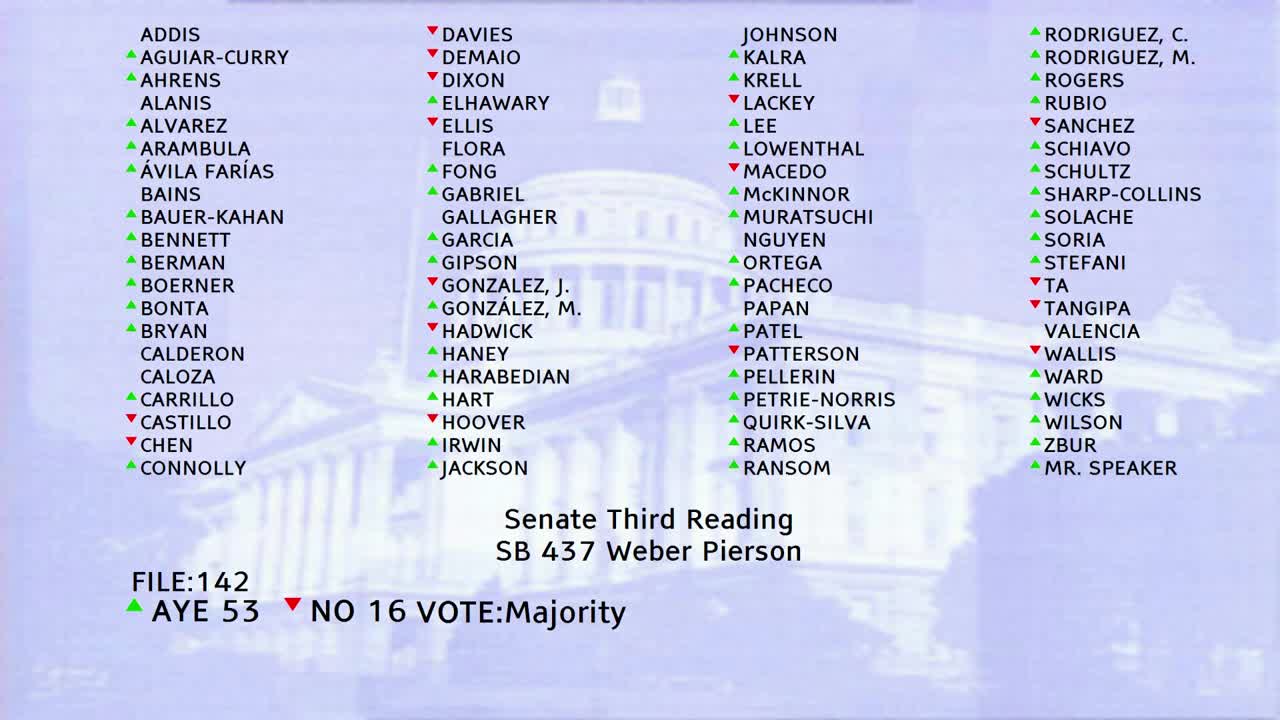 4MIN
Assembly Floor
 18MIN
Assembly Standing Committee on Education
Bill Author