SB 410: Common interest developments: association records: exterior elevated elements inspection.
- Session Year: 2025-2026
- House: Senate
- Latest Version Date: 2025-10-10
Current Status:
Passed
(2025-10-10: Chaptered by Secretary of State. Chapter 516, Statutes of 2025.)
Introduced
In Committee
Awaiting First Chamber Vote
Passed First Chamber
In Committee
Awaiting Second Chamber Vote
Passed Second Chamber
Enacted
Existing law, the Davis-Stirling Common Interest Development Act, governs the management and operation of common interest developments. Existing law requires the board of an association of a condominium project to cause a visual inspection to be conducted, at least every 9 years, of the exterior elevated elements for which the association has maintenance or repair responsibility. Existing law requires an inspector to perform the visual inspection described above, as specified, and to issue a written report containing certain information, including recommendations for any necessary repair or replacement of the load-bearing components and associated waterproofing system, as those terms are defined. Existing law limits the above-described provisions related to exterior elevated element inspections to buildings containing 3 or more multifamily dwelling units. Existing law requires the owner of a separate interest, as defined, to provide specified documents to a prospective purchaser, as provided, and an association, as defined, to provide to the owner of a separate interest, upon request, those specified documents. Existing law requires an association to distinguish and bill separately any fee charged for providing those specified documents to a separate interest owner and provides a form for billing disclosures, as provided.
This bill would, in addition, require the above-described inspectors report to contain certain information, including the total number of units in the condominium project, as prescribed, and a certification that the inspector has conducted a visual inspection and evaluated a statistically significant sample, as defined, of the exterior elevated elements within the condominium project. The bill would, instead, apply the above-described provisions related to exterior elevated element inspections to buildings containing 3 or more attached multifamily dwelling units. The bill would include in the list of documents that a separate interest owner is required to provide to a prospective purchaser a copy of the report issued pursuant to the most recent inspection of any exterior elevated elements, as provided, and would modify the above-described form to reflect this requirement.
Existing law requires an association to make association records available for inspection and copying by a member of the association or the members designated representative, as specified. Existing law defines the term association records for this purpose to include, among other things, any financial document or statement required to be provided pursuant to certain provisions governing the prospective purchase of a separate interest, as described above. Existing law provides specified time periods for member inspection of certain association records, including those described above, and generally requires any association records from the current fiscal year and the prior 2 fiscal years to be available for inspection, except as provided.
This bill would include in the definition of association records the above-described inspectors reports and would require those reports to be available for member inspection for 2 inspection cycles, as provided.
Existing law, the Davis-Stirling Common Interest Development Act, governs the management and operation of common interest developments. Existing law requires the board of an association of a condominium project to cause a visual inspection to be conducted, at least every 9 years, of the exterior elevated elements for which the association has maintenance or repair responsibility. Existing law requires an inspector to perform the visual inspection described above, as specified, and to issue a written report containing certain information, including recommendations for any necessary repair or replacement of the load-bearing components and associated waterproofing system, as those terms are defined. Existing law limits the above-described provisions related to exterior elevated element inspections to buildings containing 3 or more multifamily dwelling units. Existing law requires the owner of a separate interest, as defined, to provide specified documents to a prospective purchaser, as provided, and an association, as defined, to provide to the owner of a separate interest, upon request, those specified documents. Existing law requires an association to distinguish and bill separately any fee charged for providing those specified documents to a separate interest owner and provides a form for billing disclosures, as provided.
This bill would, in addition, require the above-described inspectors report to contain certain information, including the total number of units in the condominium project, as prescribed, and a certification that the inspector has conducted a visual inspection and evaluated a statistically significant sample, as defined, of the exterior elevated elements within the condominium project. The bill would, instead, apply the above-described provisions related to exterior elevated element inspections to buildings containing 3 or more attached multifamily dwelling units. The bill would include in the list of documents that a separate interest owner is required to provide to a prospective purchaser a copy of the report issued pursuant to the most recent inspection of any exterior elevated elements, as provided, and would modify the above-described form to reflect this requirement.
Existing law requires an association to make association records available for inspection and copying by a member of the association or the members designated representative, as specified. Existing law defines the term association records for this purpose to include, among other things, any financial document or statement required to be provided pursuant to certain provisions governing the prospective purchase of a separate interest, as described above. Existing law provides specified time periods for member inspection of certain association records, including those described above, and generally requires any association records from the current fiscal year and the prior 2 fiscal years to be available for inspection, except as provided.
This bill would include in the definition of association records the above-described inspectors reports and would require those reports to be available for member inspection permanently. for 2 inspection cycles, as provided.
Existing law, the Davis-Stirling Common Interest Development Act, governs the management and operation of common interest developments. Existing law requires the board of an association of a condominium project to cause a visual inspection to be conducted, at least every 9 years, of the exterior elevated elements for which the association has maintenance or repair responsibility. Existing law requires an inspector to perform the visual inspection described above, as specified, and to issue a written report containing certain information, including recommendations for any necessary repair or replacement of the load-bearing components and associated waterproofing system, as those terms are defined. Existing law limits the above-described provisions related to exterior elevated element inspections to buildings containing 3 or more multifamily dwelling units. Existing law requires the owner of a separate interest, as defined, to provide specified documents to a prospective purchaser, as provided, and an association, as defined, to provide to the owner of a separate interest, upon request, those specified documents. Existing law requires an association to distinguish and bill separately any fee charged for providing those specified documents to a separate interest owner and provides a form for billing disclosures, as provided.
This bill would, in addition, require the above-described inspectors report to contain certain information, including the total number of units in the condominium project, as prescribed, and a certification that the inspector has conducted a visual inspection and evaluated a statistically significant sample, as defined, of the exterior elevated elements within the condominium project. The bill would, instead, apply the above-described provisions related to exterior elevated element inspections to buildings containing 3 or more attached multifamily dwelling units. The bill would include in the list of documents that a separate interest owner is required to provide to a prospective purchaser a copy of the report issued pursuant to the most recent inspection of any exterior elevated elements, as provided, and would modify the above-described form to reflect this requirement.
Existing law requires an association to make association records available for inspection and copying by a member of the association or the members designated representative, as specified. Existing law defines the term association records for this purpose to include, among other things, any financial document or statement required to be provided pursuant to certain provisions governing the prospective purchase of a separate interest, as described above. Existing law provides specified time periods for member inspection of certain association records, including those described above, and generally requires any association records from the current fiscal year and the prior 2 fiscal years to be available for inspection, except as provided.
This bill would expand the definition of association records to include any document, statement, or information required to be provided by those provisions governing the prospective purchase of a separate interest. include in the definition of association records the above-described inspectors reports and would require those reports to be available for member inspection permanently.
Existing law provides specified time periods for member inspection of certain association records. In this regard, any record or statement made available pursuant to the above-described provisions related governing the prospective purchase of a separate interest and certain provisions requiring an association to distribute certain financial information are required to be made available within the timeframe specified in those provisions.This bill would also require any other information required to be made available pursuant to those provisions to be made available within that timeframe.Existing law, the Davis-Stirling Common Interest Development Act, governs the management and operation of common interest developments. Existing law requires the board of an association of a condominium project to cause a visual inspection to be conducted, at least every 9 years, of the exterior elevated elements for which the association has maintenance or repair responsibility. Existing law requires an inspector to perform the visual inspection described above, as specified, and to issue a written report containing certain information, including recommendations for any necessary repair or replacement of the load-bearing components and associated waterproofing system, as those terms are defined. Existing law limits the above-described provisions related to exterior elevated element inspections to buildings containing 3 or more multifamily dwelling units. Existing law requires the owner of a separate interest, as defined, to provide specified documents to a prospective purchaser, as provided, and an association, as defined, to provide to the owner of a separate interest, upon request, those specified documents. Existing law requires an association to distinguish and bill separately any fee charged for providing those specified documents to a separate interest owner and provides a form for billing disclosures, as provided.
This bill would would, in addition, require the above-described inspectors report to contain certain information, including the total number of units in the condominium project, as prescribed, and a certification that the inspector has conducted a visual inspection and evaluated a statistically significant sample, as defined, of the exterior elevated elements within the condominium project. The bill would, instead, apply the above-described provisions related to exterior elevated element inspections to buildings containing 3 or more attached multifamily dwelling units. The bill would include in the list of documents that a separate interest owner is required to provide to a prospective purchaser a copy of the report issued pursuant to the most recent inspection of any exterior elevated elements, as provided, and would modify the above-described form to reflect this requirement.
Existing law requires an association to make association records available for inspection and copying by a member of the association or the members designated representative, as specified. Existing law defines the term association records for this purpose to include, among other things, any financial document or statement required to be provided pursuant to certain provisions governing the prospective purchase of a separate interest, as described above.
This bill would expand the definition of association records to include any document, statement, or information required to be provided by those provisions governing the prospective purchase of a separate interest.
Existing law provides specified time periods for member inspection of certain association records. In this regard, any record or statement made available pursuant to the above-described provisions related governing the prospective purchase of a separate interest and certain provisions requiring an association to distribute certain financial information are required to be made available within the timeframe specified in those provisions.
This bill would also require any other information required to be made available pursuant to those provisions to be made available within that timeframe.
Existing law, the Davis-Stirling Common Interest Development Act, governs the management and operation of common interest developments. Existing law requires the board of an association of a condominium project to cause a visual inspection to be conducted, at least every 9 years, of the exterior elevated elements for which the association has maintenance or repair responsibility. Existing law requires the owner of a separate interest, as defined, to provide specified documents to a prospective purchaser, as provided, and an association, as defined, to provide to the owner of a separate interest, upon request, those specified documents. Existing law requires an association to distinguish and bill separately any fee charged for providing those specified documents to a separate interest owner and provides a form for billing disclosures, as provided.
This bill would include in the list of documents that a separate interest owner is required to provide to a prospective purchaser the result of an a copy of the report issued pursuant to the most recent inspection of any exterior elevated elements, as provided, and would modify the above-described form to reflect this requirement.
Existing law, the Davis-Stirling Common Interest Development Act, governs the management and operation of common interest developments. Existing law requires the board of an association of a condominium project to cause a visual inspection to be conducted, at least every 9 years, of the exterior elevated elements for which the association has maintenance or repair responsibility. Existing law requires the owner of a separate interest, as defined, to provide specified documents to a prospective purchaser, as provided, and an association, as defined, to provide to the owner of a separate interest, upon request, those specified documents. Existing law requires an association to distinguish and bill separately any fee charged for providing those specified documents to a separate interest owner and provides a form for billing disclosures, as provided.
This bill would include in the list of documents that a separate interest owner is required to provide to a prospective purchaser the result of an inspection of any exterior elevated elements, as provided, and would modify the above-described form to reflect this requirement.
Existing law, the Planning and Zoning Law, requires each county and city to adopt a comprehensive general plan for the physical development of the county or city and of certain land outside its boundaries, and requires a county or city zoning ordinance to be consistent with the general plan if certain conditions are met. In the event that a zoning ordinance becomes inconsistent with a general plan by reason of amendment to the general plan, existing law requires the zoning ordinance to be amended within a reasonable time so that it is consistent with the general plan.This bill would make a nonsubstantive change to the latter provision.Existing law, the Planning and Zoning Law, requires each county and city to adopt a comprehensive general plan for the physical development of the county or city and of certain land outside its boundaries, and requires a county or city zoning ordinance to be consistent with the general plan if certain conditions are met. In the event that a zoning ordinance becomes inconsistent with a general plan by reason of amendment to the general plan, existing law requires the zoning ordinance to be amended within a reasonable time so that it is consistent with the general plan.
This bill would make a nonsubstantive change to the latter provision.
(a)The owner of a separate interest shall provide the following documents to a prospective purchaser of the separate interest, as soon as practicable before the transfer of title or the execution of a real property sales contract, as defined in Section 2985:
(1)A copy of all governing documents. If the association is not incorporated, this shall include a statement in writing from an authorized representative of the association that the association is not incorporated.
(2)If there is a restriction in the governing documents limiting the occupancy, residency, or use of a separate interest on the basis of age in a manner different from that provided in Section 51.3, a statement that the restriction is only enforceable to the extent permitted by Section 51.3 and a statement specifying the applicable provisions of Section 51.3.
(3)A copy of the most recent documents distributed pursuant to Article 7 (commencing with Section 5300) of Chapter 6.
(4)A true statement in writing obtained from an authorized representative of the association as to the amount of the associations current regular and special assessments and fees, any assessments levied upon the owners interest in the common interest development that are unpaid on the date of the statement, and any monetary fines or penalties levied upon the owners interest and unpaid on the date of the statement. The statement obtained from an authorized representative shall also include true information on late charges, interest, and costs of collection which, as of the date of the statement, are or may be made a lien upon the owners interest in a common interest development pursuant to Article 2 (commencing with Section 5650) of Chapter 8.
(5)A copy or a summary of any notice previously sent to the owner pursuant to Section 5855 that sets forth any alleged violation of the governing documents that remains unresolved at the time of the request. The notice shall not be deemed a waiver of the associations right to enforce the governing documents against the owner or the prospective purchaser of the separate interest with respect to any violation. This paragraph shall not be construed to require an association to inspect an owners separate interest.
(6)A copy of the initial list of defects provided to each member pursuant to Section 6000, unless the association and the builder subsequently enter into a settlement agreement or otherwise resolve the matter and the association complies with Section 6100. Disclosure of the initial list of defects pursuant to this paragraph does not waive any privilege attached to the document. The initial list of defects shall also include a statement that a final determination as to whether the list of defects is accurate and complete has not been made.
(7)A copy of the latest information provided for in Section 6100.
(8)Any change in the associations current regular and special assessments and fees which have been approved by the board, but have not become due and payable as of the date disclosure is provided pursuant to this subdivision.
(9)If there is a provision in the governing documents that prohibits the rental or leasing of any of the separate interests in the common interest development to a renter, lessee, or tenant, a statement describing the prohibition.
(10)If requested by the prospective purchaser, a copy of the minutes of board meetings, excluding meetings held in executive session, conducted over the previous 12 months, that were approved by the board.
(11)A copy of the report issued pursuant to the most recent inspection conducted pursuant to Section 5551.
(b)This section does not apply to an owner that is subject to Section 11018.6 of the Business and Professions Code.
SEC. 2.Section 4528 of the Civil Code is amended to read:4528.The form for billing disclosures required by Section 4530 shall be in at least 10-point type and substantially the following form:
CHARGES FOR DOCUMENTS PROVIDED AS REQUIRED BY SECTION 4525* |
The seller may, in accordance with Section 4530 of the Civil Code, provide to the prospective purchaser, at no cost, current copies of any documents specified by Section 4525 that are in the possession of the seller. |
| A seller may request to purchase some or all of these documents, but shall not be required to purchase ALL of the documents listed on this form. |
Property Address |
Owner of Property |
Owners Mailing Address (If known or different from property address.) |
Provider of the Section 4525 Items: |
Print Name _________ Position or Title _________ Association or Agent |
| Date Form Completed |
Check or Complete Applicable Column or Columns Below | |||
Not Available | |||
Document | Civil Code Section Included | Fee for Document | |
Articles of Incorporation or statement that not incorporated | Section 4525(a)(1) | ||
CC&Rs | Section 4525(a)(1) | ||
Bylaws | Section 4525(a)(1) | ||
Operating Rules | Section 4525(a)(1) | ||
Age restrictions, if any | Section 4525(a)(2) | ||
Rental restrictions, if any | Section 4525(a)(9) | ||
Annual budget report or summary, including reserve study | Sections 5300 and 4525(a)(3) | ||
Assessment and reserve funding disclosure summary | Sections 5300 and 4525(a)(4) | ||
Financial statement review | Sections 5305 and 4525(a)(3) | ||
Assessment enforcement policy | Sections 5310 and 4525(a)(4) | ||
Insurance summary | Sections 5300 and 4525(a)(3) | ||
Regular assessment | Section 4525(a)(4) | ||
Special assessment | Section 4525(a)(4) | ||
Emergency assessment | Section 4525(a)(4) | ||
Other unpaid obligations of seller | Sections 5675 and 4525(a)(4) | ||
Approved changes to assessments | Sections 5300 and 4525(a)(4), (8) | ||
Settlement notice regarding common area defects | Sections 4525(a)(6), (7), and 6100 | ||
Preliminary list of defects | Sections 4525(a)(6), 6000, and 6100 | ||
Notice(s) of violation | Sections 5855 and 4525(a)(5) | ||
Required statement of fees | Section 4525 | ||
Minutes of regular board meetings conducted over the previous 12 months, if requested | Section 4525(a)(10) | ||
Copy of the report issued pursuant to the most recent inspection of exterior elevated elements | Sections 4525(a)(11) and 5551 | ||
Total fees for these documents: | |||
* The information provided by this form may not include all fees that may be imposed before the close of escrow. Additional fees that are not related to the requirements of Section 4525 shall be charged separately. | |||
For the purposes of this article, the following definitions shall apply:
(a)Association records means all of the following:
(1)Any financial document required to be provided to a member in Article 7 (commencing with Section 5300) or in Sections 5565 and 5810.
(2)Any financial document or statement required to be provided in Article 2 (commencing with Section 4525) of Chapter 4.
(3)Interim financial statements, periodic or as compiled, containing any of the following:
(A)Balance sheet.
(B)Income and expense statement.
(C)Budget comparison.
(D)General ledger. A general ledger is a report that shows all transactions that occurred in an association account over a specified period of time.
The records described in this paragraph shall be prepared in accordance with an accrual or modified accrual basis of accounting.
(4)Executed contracts not otherwise privileged under law.
(5)Written board approval of vendor or contractor proposals or invoices.
(6)State and federal tax returns.
(7)Reserve account balances and records of payments made from reserve accounts.
(8)Agendas and minutes of meetings of the members, the board, and any committees appointed by the board pursuant to Section 7212 of the Corporations Code; excluding, however, minutes and other information from executive sessions of the board as described in Article 2 (commencing with Section 4900).
(9)Membership lists, including name, property address, mailing address, email address, as collected by the association in accordance with Section 4041 where applicable, but not including information for members who have opted out pursuant to Section 5220.
(10)Check registers.
(11)The governing documents.
(12)An accounting prepared pursuant to subdivision (b) of Section 5520.
(13)An enhanced association record as defined in subdivision (b).
(14)Association election materials as defined in subdivision (c).
(15)All inspectors reports compiled pursuant to Section 5551.
(b)Enhanced association records means invoices, receipts, and canceled checks for payments made by the association, purchase orders approved by the association, bank account statements for bank accounts in which assessments are deposited or withdrawn, credit card statements for credit cards issued in the name of the association, statements for services rendered, and reimbursement requests submitted to the association.
(c)Association election materials means returned ballots, signed voter envelopes, the voter list of names, parcel numbers, and voters to whom ballots were to be sent, proxies, the candidate registration list, and the tally sheet of votes cast by electronic secret ballot. Signed voter envelopes may be inspected but may not be copied. An association shall maintain association election materials for one year after the date of the election.
SEC. 4.Section 5210 of the Civil Code is amended to read:5210.(a)Association records are subject to member inspection for the following time periods:
(1)For the current fiscal year and for each of the previous two fiscal years.
(2)Notwithstanding paragraph (1), minutes of member and board meetings are subject to inspection permanently. If a committee has decisionmaking authority, minutes of the meetings of that committee shall be made available commencing January 1, 2007, and shall thereafter be permanently subject to inspection.
(3)Notwithstanding paragraph (1), all inspectors reports compiled pursuant to Section 5551 shall be subject to inspection for the time period required by subdivision (i) of Section 5551.
(b)When a member properly requests access to association records, access to the requested records shall be granted within the following time periods:
(1)Association records prepared during the current fiscal year, within 10 business days following the associations receipt of the request.
(2)Association records prepared during the previous two fiscal years, within 30 calendar days following the associations receipt of the request.
(3)Any record or statement available pursuant to Article 2 (commencing with Section 4525) of Chapter 4, Article 7 (commencing with Section 5300), Section 5565, or Section 5810, within the timeframe specified therein.
(4)Minutes of member and board meetings, within the timeframe specified in subdivision (a) of Section 4950.
(5)Minutes of meetings of committees with decisionmaking authority for meetings commencing on or after January 1, 2007, within 15 calendar days following approval.
(6)Membership list, within the timeframe specified in Section 8330 of the Corporations Code.
(c)There shall be no liability pursuant to this article for an association that fails to retain records for the periods specified in subdivision (a) that were created prior to January 1, 2006.
SEC. 5.Section 5551 of the Civil Code is amended to read:5551.(a)For purposes of this section, the following definitions apply:
(1)Associated waterproofing systems include flashings, membranes, coatings, and sealants that protect the load-bearing components of exterior elevated elements from exposure to water.
(2)Exterior elevated elements mean the load-bearing components together with their associated waterproofing system.
(3)Load-bearing components means those components that extend beyond the exterior walls of the building to deliver structural loads to the building from decks, balconies, stairways, walkways, and their railings, that have a walking surface elevated more than six feet above ground level, that are designed for human occupancy or use, and that are supported in whole or in substantial part by wood or wood-based products.
(4)Statistically significant sample means a sufficient number of units inspected to provide 95 percent confidence that the results from the sample are reflective of the whole, with a margin of error of no greater than plus or minus 5 percent.
(5)Visual inspection means inspection through the least intrusive method necessary to inspect load-bearing components, including visual observation only or visual observation in conjunction with, for example, the use of moisture meters, borescopes, or infrared technology.
(b)(1)At least once every nine years, the board of an association of a condominium project shall cause a reasonably competent and diligent visual inspection to be conducted by a licensed structural or civil engineer or architect of a random and statistically significant sample of exterior elevated elements for which the association has maintenance or repair responsibility.
(2)The inspection shall determine whether the exterior elevated elements are in a generally safe condition and performing in accordance with applicable standards.
(c)Prior to conducting the first visual inspection, the inspector shall generate a random list of the locations of each type of exterior elevated element. The list shall include all exterior elevated elements for which the association has maintenance or repair responsibility. The list shall be provided to the association for future use.
(d)The inspector shall perform the visual inspections in accordance with the random list generated pursuant to subdivision (c). If during the visual inspection the inspector observes building conditions indicating that unintended water or water vapor has passed into the associated waterproofing system, thereby creating the potential for damage to the load-bearing components, then the inspector may conduct a further inspection. The inspector shall exercise their best professional judgment in determining the necessity, scope, and breadth of any further inspection.
(e)Based upon the inspectors visual inspections, further inspection, and construction and materials expertise, the inspector shall issue a written report containing the following:
(1)The identification of the building components comprising the load-bearing components and associated waterproofing system.
(2)The current physical condition of the load-bearing components and associated waterproofing system, including whether the condition presents an immediate threat to the health and safety of the residents.
(3)The expected future performance and remaining useful life of the load-bearing components and associated waterproofing system.
(4)Recommendations for any necessary repair or replacement of the load-bearing components and associated waterproofing system.
(5)On the first page of the report, all of the following:
(A)The date of inspection.
(B)The total number of units in the condominium project.
(C)The total number of units in the condominium project with exterior elevated elements.
(D)The total number of exterior elevated elements in the condominium project.
(E)The total number of exterior elevated elements inspected pursuant to subdivision (b).
(F)As of the date of inspection in subparagraph (A), the total number of inspected exterior elevated elements identified as posing an immediate threat to the safety of the occupants, pursuant to subdivision (g), and the number of units impacted.
(G)A certification that the inspector has conducted a visual inspection and evaluated a statistically significant sample of the exterior elevated elements within the condominium project, as required by subdivision (b).
(f)The report issued pursuant to subdivision (e) shall be stamped or signed by the inspector, presented to the board, and incorporated into the study required by Section 5550.
(g)(1)If, after inspection of any exterior elevated element, the inspector advises that the exterior elevated element poses an immediate threat to the safety of the occupants, the inspector shall provide a copy of the inspection report to the association immediately upon completion of the report, and to the local code enforcement agency within 15 days of completion of the report. Upon receiving the report, the association shall take preventive measures immediately, including preventing occupant access to the exterior elevated element until repairs have been inspected and approved by the local enforcement agency.
(2)Local enforcement agencies shall have the ability to recover enforcement costs associated with the requirements of this section from the association.
(h)Each subsequent visual inspection conducted under this section shall commence with the next exterior elevated element identified on the random list and shall proceed in order through the list.
(i)The first inspection shall be completed by January 1, 2025, and then every nine years thereafter in coordination with the reserve study inspection pursuant to Section 5550. All written reports shall be maintained for two inspection cycles as records of the association.
(j)(1)The association shall be responsible for complying with the requirements of this section.
(2)The continued and ongoing maintenance and repair of the load-bearing components and associated waterproofing systems in a safe, functional, and sanitary condition shall be the responsibility of the association as required by the associations governing documents.
(k)The inspection of buildings for which a building permit application has been submitted on or after January 1, 2020, shall occur no later than six years following the issuance of a certificate of occupancy. The inspection shall otherwise comply with the provisions of this section.
(l)This section shall only apply to buildings containing three or more attached multifamily dwelling units.
(m)The association board may enact rules or bylaws imposing requirements greater than those imposed by this section.
(n)A local government or local enforcement agency may enact an ordinance or other rule imposing requirements greater than those imposed by this section.
(a)The owner of a separate interest shall provide the following documents to a prospective purchaser of the separate interest, as soon as practicable before the transfer of title or the execution of a real property sales contract, as defined in Section 2985:
(1)A copy of all governing documents. If the association is not incorporated, this shall include a statement in writing from an authorized representative of the association that the association is not incorporated.
(2)If there is a restriction in the governing documents limiting the occupancy, residency, or use of a separate interest on the basis of age in a manner different from that provided in Section 51.3, a statement that the restriction is only enforceable to the extent permitted by Section 51.3 and a statement specifying the applicable provisions of Section 51.3.
(3)A copy of the most recent documents distributed pursuant to Article 7 (commencing with Section 5300) of Chapter 6.
(4)A true statement in writing obtained from an authorized representative of the association as to the amount of the associations current regular and special assessments and fees, any assessments levied upon the owners interest in the common interest development that are unpaid on the date of the statement, and any monetary fines or penalties levied upon the owners interest and unpaid on the date of the statement. The statement obtained from an authorized representative shall also include true information on late charges, interest, and costs of collection which, as of the date of the statement, are or may be made a lien upon the owners interest in a common interest development pursuant to Article 2 (commencing with Section 5650) of Chapter 8.
(5)A copy or a summary of any notice previously sent to the owner pursuant to Section 5855 that sets forth any alleged violation of the governing documents that remains unresolved at the time of the request. The notice shall not be deemed a waiver of the associations right to enforce the governing documents against the owner or the prospective purchaser of the separate interest with respect to any violation. This paragraph shall not be construed to require an association to inspect an owners separate interest.
(6)A copy of the initial list of defects provided to each member pursuant to Section 6000, unless the association and the builder subsequently enter into a settlement agreement or otherwise resolve the matter and the association complies with Section 6100. Disclosure of the initial list of defects pursuant to this paragraph does not waive any privilege attached to the document. The initial list of defects shall also include a statement that a final determination as to whether the list of defects is accurate and complete has not been made.
(7)A copy of the latest information provided for in Section 6100.
(8)Any change in the associations current regular and special assessments and fees which have been approved by the board, but have not become due and payable as of the date disclosure is provided pursuant to this subdivision.
(9)If there is a provision in the governing documents that prohibits the rental or leasing of any of the separate interests in the common interest development to a renter, lessee, or tenant, a statement describing the prohibition.
(10)If requested by the prospective purchaser, a copy of the minutes of board meetings, excluding meetings held in executive session, conducted over the previous 12 months, that were approved by the board.
(11)A copy of the report issued pursuant to the most recent inspection conducted pursuant to Section 5551.
(b)This section does not apply to an owner that is subject to Section 11018.6 of the Business and Professions Code.
SEC. 2.Section 4528 of the Civil Code is amended to read:4528.The form for billing disclosures required by Section 4530 shall be in at least 10-point type and substantially the following form:
CHARGES FOR DOCUMENTS PROVIDED AS REQUIRED BY SECTION 4525* |
The seller may, in accordance with Section 4530 of the Civil Code, provide to the prospective purchaser, at no cost, current copies of any documents specified by Section 4525 that are in the possession of the seller. |
| A seller may request to purchase some or all of these documents, but shall not be required to purchase ALL of the documents listed on this form. |
Property Address |
Owner of Property |
Owners Mailing Address (If known or different from property address.) |
Provider of the Section 4525 Items: |
Print Name _________ Position or Title _________ Association or Agent |
| Date Form Completed |
Check or Complete Applicable Column or Columns Below | |||
Not Available | |||
Document | Civil Code Section Included | Fee for Document | |
Articles of Incorporation or statement that not incorporated | Section 4525(a)(1) | ||
CC&Rs | Section 4525(a)(1) | ||
Bylaws | Section 4525(a)(1) | ||
Operating Rules | Section 4525(a)(1) | ||
Age restrictions, if any | Section 4525(a)(2) | ||
Rental restrictions, if any | Section 4525(a)(9) | ||
Annual budget report or summary, including reserve study | Sections 5300 and 4525(a)(3) | ||
Assessment and reserve funding disclosure summary | Sections 5300 and 4525(a)(4) | ||
Financial statement review | Sections 5305 and 4525(a)(3) | ||
Assessment enforcement policy | Sections 5310 and 4525(a)(4) | ||
Insurance summary | Sections 5300 and 4525(a)(3) | ||
Regular assessment | Section 4525(a)(4) | ||
Special assessment | Section 4525(a)(4) | ||
Emergency assessment | Section 4525(a)(4) | ||
Other unpaid obligations of seller | Sections 5675 and 4525(a)(4) | ||
Approved changes to assessments | Sections 5300 and 4525(a)(4), (8) | ||
Settlement notice regarding common area defects | Sections 4525(a)(6), (7), and 6100 | ||
Preliminary list of defects | Sections 4525(a)(6), 6000, and 6100 | ||
Notice(s) of violation | Sections 5855 and 4525(a)(5) | ||
Required statement of fees | Section 4525 | ||
Minutes of regular board meetings conducted over the previous 12 months, if requested | Section 4525(a)(10) | ||
Copy of the report issued pursuant to the most recent inspection of exterior elevated elements | Sections 4525(a)(11) and 5551 | ||
Total fees for these documents: | |||
* The information provided by this form may not include all fees that may be imposed before the close of escrow. Additional fees that are not related to the requirements of Section 4525 shall be charged separately. | |||
For the purposes of this article, the following definitions shall apply:
(a)Association records means all of the following:
(1)Any financial document required to be provided to a member in Article 7 (commencing with Section 5300) or in Sections 5565 and 5810.
(2)Any financial document or statement required to be provided in Article 2 (commencing with Section 4525) of Chapter 4.
(3)Interim financial statements, periodic or as compiled, containing any of the following:
(A)Balance sheet.
(B)Income and expense statement.
(C)Budget comparison.
(D)General ledger. A general ledger is a report that shows all transactions that occurred in an association account over a specified period of time.
The records described in this paragraph shall be prepared in accordance with an accrual or modified accrual basis of accounting.
(4)Executed contracts not otherwise privileged under law.
(5)Written board approval of vendor or contractor proposals or invoices.
(6)State and federal tax returns.
(7)Reserve account balances and records of payments made from reserve accounts.
(8)Agendas and minutes of meetings of the members, the board, and any committees appointed by the board pursuant to Section 7212 of the Corporations Code; excluding, however, minutes and other information from executive sessions of the board as described in Article 2 (commencing with Section 4900).
(9)Membership lists, including name, property address, mailing address, email address, as collected by the association in accordance with Section 4041 where applicable, but not including information for members who have opted out pursuant to Section 5220.
(10)Check registers.
(11)The governing documents.
(12)An accounting prepared pursuant to subdivision (b) of Section 5520.
(13)An enhanced association record as defined in subdivision (b).
(14)Association election materials as defined in subdivision (c).
(15)All inspectors reports compiled pursuant to Section 5551.
(b)Enhanced association records means invoices, receipts, and canceled checks for payments made by the association, purchase orders approved by the association, bank account statements for bank accounts in which assessments are deposited or withdrawn, credit card statements for credit cards issued in the name of the association, statements for services rendered, and reimbursement requests submitted to the association.
(c)Association election materials means returned ballots, signed voter envelopes, the voter list of names, parcel numbers, and voters to whom ballots were to be sent, proxies, the candidate registration list, and the tally sheet of votes cast by electronic secret ballot. Signed voter envelopes may be inspected but may not be copied. An association shall maintain association election materials for one year after the date of the election.
SEC. 4.Section 5210 of the Civil Code is amended to read:5210.(a)Association records are subject to member inspection for the following time periods:
(1)For the current fiscal year and for each of the previous two fiscal years.
(2)Notwithstanding paragraph (1), minutes of member and board meetings are subject to inspection permanently. If a committee has decisionmaking authority, minutes of the meetings of that committee shall be made available commencing January 1, 2007, and shall thereafter be permanently subject to inspection.
(3)Notwithstanding paragraph (1), all inspectors reports compiled pursuant to Section 5551 shall be subject to inspection for the time period required by subdivision (i) of Section 5551.
(b)When a member properly requests access to association records, access to the requested records shall be granted within the following time periods:
(1)Association records prepared during the current fiscal year, within 10 business days following the associations receipt of the request.
(2)Association records prepared during the previous two fiscal years, within 30 calendar days following the associations receipt of the request.
(3)Any record or statement available pursuant to Article 2 (commencing with Section 4525) of Chapter 4, Article 7 (commencing with Section 5300), Section 5565, or Section 5810, within the timeframe specified therein.
(4)Minutes of member and board meetings, within the timeframe specified in subdivision (a) of Section 4950.
(5)Minutes of meetings of committees with decisionmaking authority for meetings commencing on or after January 1, 2007, within 15 calendar days following approval.
(6)Membership list, within the timeframe specified in Section 8330 of the Corporations Code.
(c)There shall be no liability pursuant to this article for an association that fails to retain records for the periods specified in subdivision (a) that were created prior to January 1, 2006.
SEC. 5.Section 5551 of the Civil Code is amended to read:5551.(a)For purposes of this section, the following definitions apply:
(1)Associated waterproofing systems include flashings, membranes, coatings, and sealants that protect the load-bearing components of exterior elevated elements from exposure to water.
(2)Exterior elevated elements mean the load-bearing components together with their associated waterproofing system.
(3)Load-bearing components means those components that extend beyond the exterior walls of the building to deliver structural loads to the building from decks, balconies, stairways, walkways, and their railings, that have a walking surface elevated more than six feet above ground level, that are designed for human occupancy or use, and that are supported in whole or in substantial part by wood or wood-based products.
(4)Statistically significant sample means a sufficient number of units inspected to provide 95 percent confidence that the results from the sample are reflective of the whole, with a margin of error of no greater than plus or minus 5 percent.
(5)Visual inspection means inspection through the least intrusive method necessary to inspect load-bearing components, including visual observation only or visual observation in conjunction with, for example, the use of moisture meters, borescopes, or infrared technology.
(b)(1)At least once every nine years, the board of an association of a condominium project shall cause a reasonably competent and diligent visual inspection to be conducted by a licensed structural or civil engineer or architect of a random and statistically significant sample of exterior elevated elements for which the association has maintenance or repair responsibility.
(2)The inspection shall determine whether the exterior elevated elements are in a generally safe condition and performing in accordance with applicable standards.
(c)Prior to conducting the first visual inspection, the inspector shall generate a random list of the locations of each type of exterior elevated element. The list shall include all exterior elevated elements for which the association has maintenance or repair responsibility. The list shall be provided to the association for future use.
(d)The inspector shall perform the visual inspections in accordance with the random list generated pursuant to subdivision (c). If during the visual inspection the inspector observes building conditions indicating that unintended water or water vapor has passed into the associated waterproofing system, thereby creating the potential for damage to the load-bearing components, then the inspector may conduct a further inspection. The inspector shall exercise their best professional judgment in determining the necessity, scope, and breadth of any further inspection.
(e)Based upon the inspectors visual inspections, further inspection, and construction and materials expertise, the inspector shall issue a written report containing the following:
(1)The identification of the building components comprising the load-bearing components and associated waterproofing system.
(2)The current physical condition of the load-bearing components and associated waterproofing system, including whether the condition presents an immediate threat to the health and safety of the residents.
(3)The expected future performance and remaining useful life of the load-bearing components and associated waterproofing system.
(4)Recommendations for any necessary repair or replacement of the load-bearing components and associated waterproofing system.
(5)On the first page of the report, all of the following:
(A)The date of inspection.
(B)The total number of units in the condominium project.
(C)The total number of units in the condominium project with exterior elevated elements.
(D)The total number of exterior elevated elements in the condominium project.
(E)The total number of exterior elevated elements inspected pursuant to subdivision (b).
(F)As of the date of inspection in subparagraph (A), the total number of inspected exterior elevated elements identified in the inspectors written report and the number of units impacted in each of the following repair urgency categories:(i)Exterior elevated elements requiring repair within the first year, or 365 days, following the inspection.(ii)Exterior elevated elements requiring repair more than one year but fewer than four years following the inspection.(iii)Exterior elevated elements requiring repair more than four years but fewer than nine years following the inspection.(iv)Exterior elevated elements demonstrating no need for repair at the time of inspection.(G)(F)As of the date of inspection in subparagraph (A), the total number of inspected exterior elevated elements identified as posing an immediate threat to the safety of the occupants, pursuant to subdivision (g), and the number of units impacted.
(H)(G)A certification that the inspector has conducted a visual inspection and evaluated a statistically significant sample of the exterior elevated elements within the condominium project, as required by subdivision (b).
(f)The report issued pursuant to subdivision (e) shall be stamped or signed by the inspector, presented to the board, and incorporated into the study required by Section 5550.
(g)(1)If, after inspection of any exterior elevated element, the inspector advises that the exterior elevated element poses an immediate threat to the safety of the occupants, the inspector shall provide a copy of the inspection report to the association immediately upon completion of the report, and to the local code enforcement agency within 15 days of completion of the report. Upon receiving the report, the association shall take preventive measures immediately, including preventing occupant access to the exterior elevated element until repairs have been inspected and approved by the local enforcement agency.
(2)Local enforcement agencies shall have the ability to recover enforcement costs associated with the requirements of this section from the association.
(h)Each subsequent visual inspection conducted under this section shall commence with the next exterior elevated element identified on the random list and shall proceed in order through the list.
(i)The first inspection shall be completed by January 1, 2025, and then every nine years thereafter in coordination with the reserve study inspection pursuant to Section 5550. All written reports shall be maintained for two inspection cycles as records of the association.
(j)(1)The association shall be responsible for complying with the requirements of this section.
(2)The continued and ongoing maintenance and repair of the load-bearing components and associated waterproofing systems in a safe, functional, and sanitary condition shall be the responsibility of the association as required by the associations governing documents.
(k)The inspection of buildings for which a building permit application has been submitted on or after January 1, 2020, shall occur no later than six years following the issuance of a certificate of occupancy. The inspection shall otherwise comply with the provisions of this section.
(l)This section shall only apply to buildings containing three or more attached multifamily dwelling units.
(m)The association board may enact rules or bylaws imposing requirements greater than those imposed by this section.
(n)A local government or local enforcement agency may enact an ordinance or other rule imposing requirements greater than those imposed by this section.
(a)The owner of a separate interest shall provide the following documents to a prospective purchaser of the separate interest, as soon as practicable before the transfer of title or the execution of a real property sales contract, as defined in Section 2985:
(1)A copy of all governing documents. If the association is not incorporated, this shall include a statement in writing from an authorized representative of the association that the association is not incorporated.
(2)If there is a restriction in the governing documents limiting the occupancy, residency, or use of a separate interest on the basis of age in a manner different from that provided in Section 51.3, a statement that the restriction is only enforceable to the extent permitted by Section 51.3 and a statement specifying the applicable provisions of Section 51.3.
(3)A copy of the most recent documents distributed pursuant to Article 7 (commencing with Section 5300) of Chapter 6.
(4)A true statement in writing obtained from an authorized representative of the association as to the amount of the associations current regular and special assessments and fees, any assessments levied upon the owners interest in the common interest development that are unpaid on the date of the statement, and any monetary fines or penalties levied upon the owners interest and unpaid on the date of the statement. The statement obtained from an authorized representative shall also include true information on late charges, interest, and costs of collection which, as of the date of the statement, are or may be made a lien upon the owners interest in a common interest development pursuant to Article 2 (commencing with Section 5650) of Chapter 8.
(5)A copy or a summary of any notice previously sent to the owner pursuant to Section 5855 that sets forth any alleged violation of the governing documents that remains unresolved at the time of the request. The notice shall not be deemed a waiver of the associations right to enforce the governing documents against the owner or the prospective purchaser of the separate interest with respect to any violation. This paragraph shall not be construed to require an association to inspect an owners separate interest.
(6)A copy of the initial list of defects provided to each member pursuant to Section 6000, unless the association and the builder subsequently enter into a settlement agreement or otherwise resolve the matter and the association complies with Section 6100. Disclosure of the initial list of defects pursuant to this paragraph does not waive any privilege attached to the document. The initial list of defects shall also include a statement that a final determination as to whether the list of defects is accurate and complete has not been made.
(7)A copy of the latest information provided for in Section 6100.
(8)Any change in the associations current regular and special assessments and fees which have been approved by the board, but have not become due and payable as of the date disclosure is provided pursuant to this subdivision.
(9)If there is a provision in the governing documents that prohibits the rental or leasing of any of the separate interests in the common interest development to a renter, lessee, or tenant, a statement describing the prohibition.
(10)If requested by the prospective purchaser, a copy of the minutes of board meetings, excluding meetings held in executive session, conducted over the previous 12 months, that were approved by the board.
(11)A copy of the report issued pursuant to the most recent inspection conducted pursuant to Section 5551.
(b)This section does not apply to an owner that is subject to Section 11018.6 of the Business and Professions Code.
SEC. 2.Section 4528 of the Civil Code is amended to read:4528.The form for billing disclosures required by Section 4530 shall be in at least 10-point type and substantially the following form:
CHARGES FOR DOCUMENTS PROVIDED AS REQUIRED BY SECTION 4525* |
The seller may, in accordance with Section 4530 of the Civil Code, provide to the prospective purchaser, at no cost, current copies of any documents specified by Section 4525 that are in the possession of the seller. |
| A seller may request to purchase some or all of these documents, but shall not be required to purchase ALL of the documents listed on this form. |
Property Address |
Owner of Property |
Owners Mailing Address (If known or different from property address.) |
Provider of the Section 4525 Items: |
Print Name _________ Position or Title _________ Association or Agent |
| Date Form Completed |
Check or Complete Applicable Column or Columns Below | |||
Not Available | |||
Document | Civil Code Section Included | Fee for Document | |
Articles of Incorporation or statement that not incorporated | Section 4525(a)(1) | ||
CC&Rs | Section 4525(a)(1) | ||
Bylaws | Section 4525(a)(1) | ||
Operating Rules | Section 4525(a)(1) | ||
Age restrictions, if any | Section 4525(a)(2) | ||
Rental restrictions, if any | Section 4525(a)(9) | ||
Annual budget report or summary, including reserve study | Sections 5300 and 4525(a)(3) | ||
Assessment and reserve funding disclosure summary | Sections 5300 and 4525(a)(4) | ||
Financial statement review | Sections 5305 and 4525(a)(3) | ||
Assessment enforcement policy | Sections 5310 and 4525(a)(4) | ||
Insurance summary | Sections 5300 and 4525(a)(3) | ||
Regular assessment | Section 4525(a)(4) | ||
Special assessment | Section 4525(a)(4) | ||
Emergency assessment | Section 4525(a)(4) | ||
Other unpaid obligations of seller | Sections 5675 and 4525(a)(4) | ||
Approved changes to assessments | Sections 5300 and 4525(a)(4), (8) | ||
Settlement notice regarding common area defects | Sections 4525(a)(6), (7), and 6100 | ||
Preliminary list of defects | Sections 4525(a)(6), 6000, and 6100 | ||
Notice(s) of violation | Sections 5855 and 4525(a)(5) | ||
Required statement of fees | Section 4525 | ||
Minutes of regular board meetings conducted over the previous 12 months, if requested | Section 4525(a)(10) | ||
Copy of the report issued pursuant to the most recent inspection of exterior elevated elements | Sections 4525(a)(11) and 5551 | ||
Total fees for these documents: | |||
* The information provided by this form may not include all fees that may be imposed before the close of escrow. Additional fees that are not related to the requirements of Section 4525 shall be charged separately. | |||
For the purposes of this article, the following definitions shall apply:
(a)Association records means all of the following:
(1)Any financial document required to be provided to a member in Article 7 (commencing with Section 5300) or in Sections 5565 and 5810.
(2)Any financial document or statement required to be provided in Article 2 (commencing with Section 4525) of Chapter 4.
(3)Interim financial statements, periodic or as compiled, containing any of the following:
(A)Balance sheet.
(B)Income and expense statement.
(C)Budget comparison.
(D)General ledger. A general ledger is a report that shows all transactions that occurred in an association account over a specified period of time.
The records described in this paragraph shall be prepared in accordance with an accrual or modified accrual basis of accounting.
(4)Executed contracts not otherwise privileged under law.
(5)Written board approval of vendor or contractor proposals or invoices.
(6)State and federal tax returns.
(7)Reserve account balances and records of payments made from reserve accounts.
(8)Agendas and minutes of meetings of the members, the board, and any committees appointed by the board pursuant to Section 7212 of the Corporations Code; excluding, however, minutes and other information from executive sessions of the board as described in Article 2 (commencing with Section 4900).
(9)Membership lists, including name, property address, mailing address, email address, as collected by the association in accordance with Section 4041 where applicable, but not including information for members who have opted out pursuant to Section 5220.
(10)Check registers.
(11)The governing documents.
(12)An accounting prepared pursuant to subdivision (b) of Section 5520.
(13)An enhanced association record as defined in subdivision (b).
(14)Association election materials as defined in subdivision (c).
(15)All inspectors reports compiled pursuant to Section 5551.
(b)Enhanced association records means invoices, receipts, and canceled checks for payments made by the association, purchase orders approved by the association, bank account statements for bank accounts in which assessments are deposited or withdrawn, credit card statements for credit cards issued in the name of the association, statements for services rendered, and reimbursement requests submitted to the association.
(c)Association election materials means returned ballots, signed voter envelopes, the voter list of names, parcel numbers, and voters to whom ballots were to be sent, proxies, the candidate registration list, and the tally sheet of votes cast by electronic secret ballot. Signed voter envelopes may be inspected but may not be copied. An association shall maintain association election materials for one year after the date of the election.
SEC. 4.Section 5210 of the Civil Code is amended to read:5210.(a)Association records are subject to member inspection for the following time periods:
(1)For the current fiscal year and for each of the previous two fiscal years.
(2)Notwithstanding paragraph (1), minutes of member and board meetings are subject to inspection permanently. If a committee has decisionmaking authority, minutes of the meetings of that committee shall be made available commencing January 1, 2007, and shall thereafter be permanently subject to inspection.
(3)Notwithstanding paragraph (1), all inspectors reports compiled pursuant to Section 5551 shall be subject to inspection permanently. for the time period required by subdivision (i) of Section 5551.
(b)When a member properly requests access to association records, access to the requested records shall be granted within the following time periods:
(1)Association records prepared during the current fiscal year, within 10 business days following the associations receipt of the request.
(2)Association records prepared during the previous two fiscal years, within 30 calendar days following the associations receipt of the request.
(3)Any record or statement available pursuant to Article 2 (commencing with Section 4525) of Chapter 4, Article 7 (commencing with Section 5300), Section 5565, or Section 5810, within the timeframe specified therein.
(4)Minutes of member and board meetings, within the timeframe specified in subdivision (a) of Section 4950.
(5)Minutes of meetings of committees with decisionmaking authority for meetings commencing on or after January 1, 2007, within 15 calendar days following approval.
(6)Membership list, within the timeframe specified in Section 8330 of the Corporations Code.
(c)There shall be no liability pursuant to this article for an association that fails to retain records for the periods specified in subdivision (a) that were created prior to January 1, 2006.
SEC. 5.Section 5551 of the Civil Code is amended to read:5551.(a)For purposes of this section, the following definitions apply:
(1)Associated waterproofing systems include flashings, membranes, coatings, and sealants that protect the load-bearing components of exterior elevated elements from exposure to water.
(2)Exterior elevated elements mean the load-bearing components together with their associated waterproofing system.
(3)Load-bearing components means those components that extend beyond the exterior walls of the building to deliver structural loads to the building from decks, balconies, stairways, walkways, and their railings, that have a walking surface elevated more than six feet above ground level, that are designed for human occupancy or use, and that are supported in whole or in substantial part by wood or wood-based products.
(4)Statistically significant sample means a sufficient number of units inspected to provide 95 percent confidence that the results from the sample are reflective of the whole, with a margin of error of no greater than plus or minus 5 percent.
(5)Visual inspection means inspection through the least intrusive method necessary to inspect load-bearing components, including visual observation only or visual observation in conjunction with, for example, the use of moisture meters, borescopes, or infrared technology.
(b)(1)At least once every nine years, the board of an association of a condominium project shall cause a reasonably competent and diligent visual inspection to be conducted by a licensed structural or civil engineer or architect of a random and statistically significant sample of exterior elevated elements for which the association has maintenance or repair responsibility.
(2)The inspection shall determine whether the exterior elevated elements are in a generally safe condition and performing in accordance with applicable standards.
(c)Prior to conducting the first visual inspection, the inspector shall generate a random list of the locations of each type of exterior elevated element. The list shall include all exterior elevated elements for which the association has maintenance or repair responsibility. The list shall be provided to the association for future use.
(d)The inspector shall perform the visual inspections in accordance with the random list generated pursuant to subdivision (c). If during the visual inspection the inspector observes building conditions indicating that unintended water or water vapor has passed into the associated waterproofing system, thereby creating the potential for damage to the load-bearing components, then the inspector may conduct a further inspection. The inspector shall exercise their best professional judgment in determining the necessity, scope, and breadth of any further inspection.
(e)Based upon the inspectors visual inspections, further inspection, and construction and materials expertise, the inspector shall issue a written report containing the following:
(1)The identification of the building components comprising the load-bearing components and associated waterproofing system.
(2)The current physical condition of the load-bearing components and associated waterproofing system, including whether the condition presents an immediate threat to the health and safety of the residents.
(3)The expected future performance and remaining useful life of the load-bearing components and associated waterproofing system.
(4)Recommendations for any necessary repair or replacement of the load-bearing components and associated waterproofing system.
(5)On the first page of the report, all of the following:
(A)The date of inspection.
(B)The total number of units in the condominium project.
(C)The total number of units in the condominium project with exterior elevated elements.
(D)The total number of exterior elevated elements in the condominium project.
(E)The total number of exterior elevated elements inspected. inspected pursuant to subdivision (b).
(F)The As of the date of inspection in subparagraph (A), the total number of inspected exterior elevated elements identified in the inspectors written report and the number of units impacted in each of the following repair urgency categories:
(i)Exterior elevated elements requiring repair within the next year. first year, or 365 days, following the inspection.
(ii)Exterior elevated elements requiring repair between the next one to four years, inclusive. more than one year but fewer than four years following the inspection.
(iii)Exterior elevated elements requiring repair between the next four to nine years, inclusive. more than four years but fewer than nine years following the inspection.
(iv)Exterior elevated elements requiring repair after the next nine years. demonstrating no need for repair at the time of inspection.
(v)The total number of exterior elevated elements requiring repair within the next four years.(G)As of the date of inspection in subparagraph (A), the total number of inspected exterior elevated elements identified as posing an immediate threat to the safety of the occupants, pursuant to subdivision (g), and the number of units impacted.
(6)(H)A certification that the inspector has conducted a visual inspection and evaluated a statistically significant sample of the exterior elevated elements within the condominium project. project, as required by subdivision (b).
(f)The report issued pursuant to subdivision (e) shall be stamped or signed by the inspector, presented to the board, and incorporated into the study required by Section 5550.
(g)(1)If, after inspection of any exterior elevated element, the inspector advises that the exterior elevated element poses an immediate threat to the safety of the occupants, the inspector shall provide a copy of the inspection report to the association immediately upon completion of the report, and to the local code enforcement agency within 15 days of completion of the report. Upon receiving the report, the association shall take preventive measures immediately, including preventing occupant access to the exterior elevated element until repairs have been inspected and approved by the local enforcement agency.
(2)Local enforcement agencies shall have the ability to recover enforcement costs associated with the requirements of this section from the association.
(h)Each subsequent visual inspection conducted under this section shall commence with the next exterior elevated element identified on the random list and shall proceed in order through the list.
(i)The first inspection shall be completed by January 1, 2025, and then every nine years thereafter in coordination with the reserve study inspection pursuant to Section 5550. All written reports shall be maintained for two inspection cycles as records of the association.
(j)(1)The association shall be responsible for complying with the requirements of this section.
(2)The continued and ongoing maintenance and repair of the load-bearing components and associated waterproofing systems in a safe, functional, and sanitary condition shall be the responsibility of the association as required by the associations governing documents.
(k)The inspection of buildings for which a building permit application has been submitted on or after January 1, 2020, shall occur no later than six years following the issuance of a certificate of occupancy. The inspection shall otherwise comply with the provisions of this section.
(l)This section shall only apply to buildings containing three or more attached multifamily dwelling units.
(m)The association board may enact rules or bylaws imposing requirements greater than those imposed by this section.
(n)A local government or local enforcement agency may enact an ordinance or other rule imposing requirements greater than those imposed by this section.
(a)The owner of a separate interest shall provide the following documents to a prospective purchaser of the separate interest, as soon as practicable before the transfer of title or the execution of a real property sales contract, as defined in Section 2985:
(1)A copy of all governing documents. If the association is not incorporated, this shall include a statement in writing from an authorized representative of the association that the association is not incorporated.
(2)If there is a restriction in the governing documents limiting the occupancy, residency, or use of a separate interest on the basis of age in a manner different from that provided in Section 51.3, a statement that the restriction is only enforceable to the extent permitted by Section 51.3 and a statement specifying the applicable provisions of Section 51.3.
(3)A copy of the most recent documents distributed pursuant to Article 7 (commencing with Section 5300) of Chapter 6.
(4)A true statement in writing obtained from an authorized representative of the association as to the amount of the associations current regular and special assessments and fees, any assessments levied upon the owners interest in the common interest development that are unpaid on the date of the statement, and any monetary fines or penalties levied upon the owners interest and unpaid on the date of the statement. The statement obtained from an authorized representative shall also include true information on late charges, interest, and costs of collection which, as of the date of the statement, are or may be made a lien upon the owners interest in a common interest development pursuant to Article 2 (commencing with Section 5650) of Chapter 8.
(5)A copy or a summary of any notice previously sent to the owner pursuant to Section 5855 that sets forth any alleged violation of the governing documents that remains unresolved at the time of the request. The notice shall not be deemed a waiver of the associations right to enforce the governing documents against the owner or the prospective purchaser of the separate interest with respect to any violation. This paragraph shall not be construed to require an association to inspect an owners separate interest.
(6)A copy of the initial list of defects provided to each member pursuant to Section 6000, unless the association and the builder subsequently enter into a settlement agreement or otherwise resolve the matter and the association complies with Section 6100. Disclosure of the initial list of defects pursuant to this paragraph does not waive any privilege attached to the document. The initial list of defects shall also include a statement that a final determination as to whether the list of defects is accurate and complete has not been made.
(7)A copy of the latest information provided for in Section 6100.
(8)Any change in the associations current regular and special assessments and fees which have been approved by the board, but have not become due and payable as of the date disclosure is provided pursuant to this subdivision.
(9)If there is a provision in the governing documents that prohibits the rental or leasing of any of the separate interests in the common interest development to a renter, lessee, or tenant, a statement describing the prohibition.
(10)If requested by the prospective purchaser, a copy of the minutes of board meetings, excluding meetings held in executive session, conducted over the previous 12 months, that were approved by the board.
(11)A copy of the report issued pursuant to the most recent inspection conducted pursuant to Section 5551.
(b)This section does not apply to an owner that is subject to Section 11018.6 of the Business and Professions Code.
SEC. 2.Section 4528 of the Civil Code is amended to read:4528.The form for billing disclosures required by Section 4530 shall be in at least 10-point type and substantially the following form:
CHARGES FOR DOCUMENTS PROVIDED AS REQUIRED BY SECTION 4525* |
The seller may, in accordance with Section 4530 of the Civil Code, provide to the prospective purchaser, at no cost, current copies of any documents specified by Section 4525 that are in the possession of the seller. |
| A seller may request to purchase some or all of these documents, but shall not be required to purchase ALL of the documents listed on this form. |
Property Address |
Owner of Property |
Owners Mailing Address (If known or different from property address.) |
Provider of the Section 4525 Items: |
Print Name _________ Position or Title _________ Association or Agent |
| Date Form Completed |
Check or Complete Applicable Column or Columns Below | |||
Not Available | |||
Document | Civil Code Section Included | Fee for Document | |
Articles of Incorporation or statement that not incorporated | Section 4525(a)(1) | ||
CC&Rs | Section 4525(a)(1) | ||
Bylaws | Section 4525(a)(1) | ||
Operating Rules | Section 4525(a)(1) | ||
Age restrictions, if any | Section 4525(a)(2) | ||
Rental restrictions, if any | Section 4525(a)(9) | ||
Annual budget report or summary, including reserve study | Sections 5300 and 4525(a)(3) | ||
Assessment and reserve funding disclosure summary | Sections 5300 and 4525(a)(4) | ||
Financial statement review | Sections 5305 and 4525(a)(3) | ||
Assessment enforcement policy | Sections 5310 and 4525(a)(4) | ||
Insurance summary | Sections 5300 and 4525(a)(3) | ||
Regular assessment | Section 4525(a)(4) | ||
Special assessment | Section 4525(a)(4) | ||
Emergency assessment | Section 4525(a)(4) | ||
Other unpaid obligations of seller | Sections 5675 and 4525(a)(4) | ||
Approved changes to assessments | Sections 5300 and 4525(a)(4), (8) | ||
Settlement notice regarding common area defects | Sections 4525(a)(6), (7), and 6100 | ||
Preliminary list of defects | Sections 4525(a)(6), 6000, and 6100 | ||
Notice(s) of violation | Sections 5855 and 4525(a)(5) | ||
Required statement of fees | Section 4525 | ||
Minutes of regular board meetings conducted over the previous 12 months, if requested | Section 4525(a)(10) | ||
Copy of the report issued pursuant to the most recent inspection of exterior elevated elements | Sections 4525(a)(11) and 5551 | ||
Total fees for these documents: | |||
* The information provided by this form may not include all fees that may be imposed before the close of escrow. Additional fees that are not related to the requirements of Section 4525 shall be charged separately. | |||
For the purposes of this article, the following definitions shall apply:
(a)Association records means all of the following:
(1)Any financial document required to be provided to a member in Article 7 (commencing with Section 5300) or in Sections 5565 and 5810.
(2)Any document, statement, or other information financial document or statement required to be provided in Article 2 (commencing with Section 4525) of Chapter 4.
(3)Interim financial statements, periodic or as compiled, containing any of the following:
(A)Balance sheet.
(B)Income and expense statement.
(C)Budget comparison.
(D)General ledger. A general ledger is a report that shows all transactions that occurred in an association account over a specified period of time.
The records described in this paragraph shall be prepared in accordance with an accrual or modified accrual basis of accounting.
(4)Executed contracts not otherwise privileged under law.
(5)Written board approval of vendor or contractor proposals or invoices.
(6)State and federal tax returns.
(7)Reserve account balances and records of payments made from reserve accounts.
(8)Agendas and minutes of meetings of the members, the board, and any committees appointed by the board pursuant to Section 7212 of the Corporations Code; excluding, however, minutes and other information from executive sessions of the board as described in Article 2 (commencing with Section 4900).
(9)Membership lists, including name, property address, mailing address, email address, as collected by the association in accordance with Section 4041 where applicable, but not including information for members who have opted out pursuant to Section 5220.
(10)Check registers.
(11)The governing documents.
(12)An accounting prepared pursuant to subdivision (b) of Section 5520.
(13)An enhanced association record as defined in subdivision (b).
(14)Association election materials as defined in subdivision (c).
(15)All inspectors reports compiled pursuant to Section 5551.
(b)Enhanced association records means invoices, receipts, and canceled checks for payments made by the association, purchase orders approved by the association, bank account statements for bank accounts in which assessments are deposited or withdrawn, credit card statements for credit cards issued in the name of the association, statements for services rendered, and reimbursement requests submitted to the association.
(c)Association election materials means returned ballots, signed voter envelopes, the voter list of names, parcel numbers, and voters to whom ballots were to be sent, proxies, the candidate registration list, and the tally sheet of votes cast by electronic secret ballot. Signed voter envelopes may be inspected but may not be copied. An association shall maintain association election materials for one year after the date of the election.
SEC. 4.Section 5210 of the Civil Code is amended to read:5210.(a)Association records are subject to member inspection for the following time periods:
(1)For the current fiscal year and for each of the previous two fiscal years.
(2)Notwithstanding paragraph (1), minutes of member and board meetings are subject to inspection permanently. If a committee has decisionmaking authority, minutes of the meetings of that committee shall be made available commencing January 1, 2007, and shall thereafter be permanently subject to inspection.
(3)Notwithstanding paragraph (1), all inspectors reports compiled pursuant to Section 5551 shall be subject to inspection permanently.
(b)When a member properly requests access to association records, access to the requested records shall be granted within the following time periods:
(1)Association records prepared during the current fiscal year, within 10 business days following the associations receipt of the request.
(2)Association records prepared during the previous two fiscal years, within 30 calendar days following the associations receipt of the request.
(3)Any document, statement, or other information record or statement available pursuant to Article 2 (commencing with Section 4525) of Chapter 4, Article 7 (commencing with Section 5300), Section 5565, or Section 5810, within the timeframe specified therein.
(4)Minutes of member and board meetings, within the timeframe specified in subdivision (a) of Section 4950.
(5)Minutes of meetings of committees with decisionmaking authority for meetings commencing on or after January 1, 2007, within 15 calendar days following approval.
(6)Membership list, within the timeframe specified in Section 8330 of the Corporations Code.
(c)There shall be no liability pursuant to this article for an association that fails to retain records for the periods specified in subdivision (a) that were created prior to January 1, 2006.
SEC. 5.Section 5551 of the Civil Code is amended to read:5551.(a)For purposes of this section, the following definitions apply:
(1)Associated waterproofing systems include flashings, membranes, coatings, and sealants that protect the load-bearing components of exterior elevated elements from exposure to water.
(2)Exterior elevated elements mean the load-bearing components together with their associated waterproofing system.
(3)Load-bearing components means those components that extend beyond the exterior walls of the building to deliver structural loads to the building from decks, balconies, stairways, walkways, and their railings, that have a walking surface elevated more than six feet above ground level, that are designed for human occupancy or use, and that are supported in whole or in substantial part by wood or wood-based products.
(4)Statistically significant sample means a sufficient number of units inspected to provide 95 percent confidence that the results from the sample are reflective of the whole, with a margin of error of no greater than plus or minus 5 percent.
(5)Visual inspection means inspection through the least intrusive method necessary to inspect load-bearing components, including visual observation only or visual observation in conjunction with, for example, the use of moisture meters, borescopes, or infrared technology.
(b)(1)At least once every nine years, the board of an association of a condominium project shall cause a reasonably competent and diligent visual inspection to be conducted by a licensed structural or civil engineer or architect of a random and statistically significant sample of exterior elevated elements for which the association has maintenance or repair responsibility.
(2)The inspection shall determine whether the exterior elevated elements are in a generally safe condition and performing in accordance with applicable standards.
(c)Prior to conducting the first visual inspection, the inspector shall generate a random list of the locations of each type of exterior elevated element. The list shall include all exterior elevated elements for which the association has maintenance or repair responsibility. The list shall be provided to the association for future use.
(d)The inspector shall perform the visual inspections in accordance with the random list generated pursuant to subdivision (c). If during the visual inspection the inspector observes building conditions indicating that unintended water or water vapor has passed into the associated waterproofing system, thereby creating the potential for damage to the load-bearing components, then the inspector may conduct a further inspection. The inspector shall exercise their best professional judgment in determining the necessity, scope, and breadth of any further inspection.
(e)Based upon the inspectors visual inspections, further inspection, and construction and materials expertise, the inspector shall issue a written report containing the following:
(1)The identification of the building components comprising the load-bearing components and associated waterproofing system.
(2)The current physical condition of the load-bearing components and associated waterproofing system, including whether the condition presents an immediate threat to the health and safety of the residents.
(3)The expected future performance and remaining useful life of the load-bearing components and associated waterproofing system.
(4)Recommendations for any necessary repair or replacement of the load-bearing components and associated waterproofing system.
(5)On the first page of the report, all of the following:
(A)The date of inspection.
(B)The total number of units in the condominium project.
(C)The total number of units in the condominium project with exterior elevated elements.
(D)The total number of exterior elevated elements in the condominium project.
(E)The total number of exterior elevated elements inspected.
(F)The total number of inspected exterior elevated elements in each of the following categories:
(i)Exterior elevated elements requiring repair within the next year.
(ii)Exterior elevated elements requiring repair between the next one to four years, inclusive.
(iii)Exterior elevated elements requiring repair between the next four to nine years, inclusive.
(iv)Exterior elevated elements requiring repair after the next nine years.
(v)The total number of exterior elevated elements requiring repair within the next four years.
(6)A certification that the inspector has conducted a visual inspection and evaluated a statistically significant sample of the exterior elevated elements within the condominium project.
(f)The report issued pursuant to subdivision (e) shall be stamped or signed by the inspector, presented to the board, and incorporated into the study required by Section 5550.
(g)(1)If, after inspection of any exterior elevated element, the inspector advises that the exterior elevated element poses an immediate threat to the safety of the occupants, the inspector shall provide a copy of the inspection report to the association immediately upon completion of the report, and to the local code enforcement agency within 15 days of completion of the report. Upon receiving the report, the association shall take preventive measures immediately, including preventing occupant access to the exterior elevated element until repairs have been inspected and approved by the local enforcement agency.
(2)Local enforcement agencies shall have the ability to recover enforcement costs associated with the requirements of this section from the association.
(h)Each subsequent visual inspection conducted under this section shall commence with the next exterior elevated element identified on the random list and shall proceed in order through the list.
(i)The first inspection shall be completed by January 1, 2025, and then every nine years thereafter in coordination with the reserve study inspection pursuant to Section 5550. All written reports shall be maintained for two inspection cycles as records of the association.
(j)(1)The association shall be responsible for complying with the requirements of this section.
(2)The continued and ongoing maintenance and repair of the load-bearing components and associated waterproofing systems in a safe, functional, and sanitary condition shall be the responsibility of the association as required by the associations governing documents.
(k)The inspection of buildings for which a building permit application has been submitted on or after January 1, 2020, shall occur no later than six years following the issuance of a certificate of occupancy. The inspection shall otherwise comply with the provisions of this section.
(l)This section shall only apply to buildings containing three or more attached multifamily dwelling units.
(m)The association board may enact rules or bylaws imposing requirements greater than those imposed by this section.
(n)A local government or local enforcement agency may enact an ordinance or other rule imposing requirements greater than those imposed by this section.
(a)The owner of a separate interest shall provide the following documents to a prospective purchaser of the separate interest, as soon as practicable before the transfer of title or the execution of a real property sales contract, as defined in Section 2985:
(1)A copy of all governing documents. If the association is not incorporated, this shall include a statement in writing from an authorized representative of the association that the association is not incorporated.
(2)If there is a restriction in the governing documents limiting the occupancy, residency, or use of a separate interest on the basis of age in a manner different from that provided in Section 51.3, a statement that the restriction is only enforceable to the extent permitted by Section 51.3 and a statement specifying the applicable provisions of Section 51.3.
(3)A copy of the most recent documents distributed pursuant to Article 7 (commencing with Section 5300) of Chapter 6.
(4)A true statement in writing obtained from an authorized representative of the association as to the amount of the associations current regular and special assessments and fees, any assessments levied upon the owners interest in the common interest development that are unpaid on the date of the statement, and any monetary fines or penalties levied upon the owners interest and unpaid on the date of the statement. The statement obtained from an authorized representative shall also include true information on late charges, interest, and costs of collection which, as of the date of the statement, are or may be made a lien upon the owners interest in a common interest development pursuant to Article 2 (commencing with Section 5650) of Chapter 8.
(5)A copy or a summary of any notice previously sent to the owner pursuant to Section 5855 that sets forth any alleged violation of the governing documents that remains unresolved at the time of the request. The notice shall not be deemed a waiver of the associations right to enforce the governing documents against the owner or the prospective purchaser of the separate interest with respect to any violation. This paragraph shall not be construed to require an association to inspect an owners separate interest.
(6)A copy of the initial list of defects provided to each member pursuant to Section 6000, unless the association and the builder subsequently enter into a settlement agreement or otherwise resolve the matter and the association complies with Section 6100. Disclosure of the initial list of defects pursuant to this paragraph does not waive any privilege attached to the document. The initial list of defects shall also include a statement that a final determination as to whether the list of defects is accurate and complete has not been made.
(7)A copy of the latest information provided for in Section 6100.
(8)Any change in the associations current regular and special assessments and fees which have been approved by the board, but have not become due and payable as of the date disclosure is provided pursuant to this subdivision.
(9)If there is a provision in the governing documents that prohibits the rental or leasing of any of the separate interests in the common interest development to a renter, lessee, or tenant, a statement describing the prohibition.
(10)If requested by the prospective purchaser, a copy of the minutes of board meetings, excluding meetings held in executive session, conducted over the previous 12 months, that were approved by the board.
(11)A copy of the report issued pursuant to the most recent inspection conducted pursuant to Section 5551.
(b)This section does not apply to an owner that is subject to Section 11018.6 of the Business and Professions Code.
SEC. 2.Section 4528 of the Civil Code is amended to read:4528.The form for billing disclosures required by Section 4530 shall be in at least 10-point type and substantially the following form:
CHARGES FOR DOCUMENTS PROVIDED AS REQUIRED BY SECTION 4525* |
The seller may, in accordance with Section 4530 of the Civil Code, provide to the prospective purchaser, at no cost, current copies of any documents specified by Section 4525 that are in the possession of the seller. |
| A seller may request to purchase some or all of these documents, but shall not be required to purchase ALL of the documents listed on this form. |
Property Address |
Owner of Property |
Owners Mailing Address (If known or different from property address.) |
Provider of the Section 4525 Items: |
Print Name _________ Position or Title _________ Association or Agent |
| Date Form Completed |
Check or Complete Applicable Column or Columns Below | |||
Not Available | |||
Document | Civil Code Section Included | Fee for Document | |
Articles of Incorporation or statement that not incorporated | Section 4525(a)(1) | ||
CC&Rs | Section 4525(a)(1) | ||
Bylaws | Section 4525(a)(1) | ||
Operating Rules | Section 4525(a)(1) | ||
Age restrictions, if any | Section 4525(a)(2) | ||
Rental restrictions, if any | Section 4525(a)(9) | ||
Annual budget report or summary, including reserve study | Sections 5300 and 4525(a)(3) | ||
Assessment and reserve funding disclosure summary | Sections 5300 and 4525(a)(4) | ||
Financial statement review | Sections 5305 and 4525(a)(3) | ||
Assessment enforcement policy | Sections 5310 and 4525(a)(4) | ||
Insurance summary | Sections 5300 and 4525(a)(3) | ||
Regular assessment | Section 4525(a)(4) | ||
Special assessment | Section 4525(a)(4) | ||
Emergency assessment | Section 4525(a)(4) | ||
Other unpaid obligations of seller | Sections 5675 and 4525(a)(4) | ||
Approved changes to assessments | Sections 5300 and 4525(a)(4), (8) | ||
Settlement notice regarding common area defects | Sections 4525(a)(6), (7), and 6100 | ||
Preliminary list of defects | Sections 4525(a)(6), 6000, and 6100 | ||
Notice(s) of violation | Sections 5855 and 4525(a)(5) | ||
Required statement of fees | Section 4525 | ||
Minutes of regular board meetings conducted over the previous 12 months, if requested | Section 4525(a)(10) | ||
Result of Copy of the report issued pursuant to the most recent inspection of exterior elevated elements | Sections 4525(a)(11) and 5551 | ||
Total fees for these documents: | |||
* The information provided by this form may not include all fees that may be imposed before the close of escrow. Additional fees that are not related to the requirements of Section 4525 shall be charged separately. | |||
For the purposes of this article, the following definitions shall apply:
(a)Association records means all of the following:
(1)Any financial document required to be provided to a member in Article 7 (commencing with Section 5300) or in Sections 5565 and 5810.
(2)Any financial document or statement document, statement, or other information required to be provided in Article 2 (commencing with Section 4525) of Chapter 4.
(3)Interim financial statements, periodic or as compiled, containing any of the following:
(A)Balance sheet.
(B)Income and expense statement.
(C)Budget comparison.
(D)General ledger. A general ledger is a report that shows all transactions that occurred in an association account over a specified period of time.
The records described in this paragraph shall be prepared in accordance with an accrual or modified accrual basis of accounting.
(4)Executed contracts not otherwise privileged under law.
(5)Written board approval of vendor or contractor proposals or invoices.
(6)State and federal tax returns.
(7)Reserve account balances and records of payments made from reserve accounts.
(8)Agendas and minutes of meetings of the members, the board, and any committees appointed by the board pursuant to Section 7212 of the Corporations Code; excluding, however, minutes and other information from executive sessions of the board as described in Article 2 (commencing with Section 4900).
(9)Membership lists, including name, property address, mailing address, email address, as collected by the association in accordance with Section 4041 where applicable, but not including information for members who have opted out pursuant to Section 5220.
(10)Check registers.
(11)The governing documents.
(12)An accounting prepared pursuant to subdivision (b) of Section 5520.
(13)An enhanced association record as defined in subdivision (b).
(14)Association election materials as defined in subdivision (c).
(b)Enhanced association records means invoices, receipts, and canceled checks for payments made by the association, purchase orders approved by the association, bank account statements for bank accounts in which assessments are deposited or withdrawn, credit card statements for credit cards issued in the name of the association, statements for services rendered, and reimbursement requests submitted to the association.
(c)Association election materials means returned ballots, signed voter envelopes, the voter list of names, parcel numbers, and voters to whom ballots were to be sent, proxies, the candidate registration list, and the tally sheet of votes cast by electronic secret ballot. Signed voter envelopes may be inspected but may not be copied. An association shall maintain association election materials for one year after the date of the election.
SEC. 4.Section 5210 of the Civil Code is amended to read:5210.(a)Association records are subject to member inspection for the following time periods:
(1)For the current fiscal year and for each of the previous two fiscal years.
(2)Notwithstanding paragraph (1), minutes of member and board meetings are subject to inspection permanently. If a committee has decisionmaking authority, minutes of the meetings of that committee shall be made available commencing January 1, 2007, and shall thereafter be permanently subject to inspection.
(b)When a member properly requests access to association records, access to the requested records shall be granted within the following time periods:
(1)Association records prepared during the current fiscal year, within 10 business days following the associations receipt of the request.
(2)Association records prepared during the previous two fiscal years, within 30 calendar days following the associations receipt of the request.
(3)Any record or statement document, statement, or other information available pursuant to Article 2 (commencing with Section 4525) of Chapter 4, Article 7 (commencing with Section 5300), Section 5565, or Section 5810, within the timeframe specified therein.
(4)Minutes of member and board meetings, within the timeframe specified in subdivision (a) of Section 4950.
(5)Minutes of meetings of committees with decisionmaking authority for meetings commencing on or after January 1, 2007, within 15 calendar days following approval.
(6)Membership list, within the timeframe specified in Section 8330 of the Corporations Code.
(c)There shall be no liability pursuant to this article for an association that fails to retain records for the periods specified in subdivision (a) that were created prior to January 1, 2006.
SEC. 5.Section 5551 of the Civil Code is amended to read:5551.(a)For purposes of this section, the following definitions apply:
(1)Associated waterproofing systems include flashings, membranes, coatings, and sealants that protect the load-bearing components of exterior elevated elements from exposure to water.
(2)Exterior elevated elements mean the load-bearing components together with their associated waterproofing system.
(3)Load-bearing components means those components that extend beyond the exterior walls of the building to deliver structural loads to the building from decks, balconies, stairways, walkways, and their railings, that have a walking surface elevated more than six feet above ground level, that are designed for human occupancy or use, and that are supported in whole or in substantial part by wood or wood-based products.
(4)Statistically significant sample means a sufficient number of units inspected to provide 95 percent confidence that the results from the sample are reflective of the whole, with a margin of error of no greater than plus or minus 5 percent.
(5)Visual inspection means inspection through the least intrusive method necessary to inspect load-bearing components, including visual observation only or visual observation in conjunction with, for example, the use of moisture meters, borescopes, or infrared technology.
(b)(1)At least once every nine years, the board of an association of a condominium project shall cause a reasonably competent and diligent visual inspection to be conducted by a licensed structural or civil engineer or architect of a random and statistically significant sample of exterior elevated elements for which the association has maintenance or repair responsibility.
(2)The inspection shall determine whether the exterior elevated elements are in a generally safe condition and performing in accordance with applicable standards.
(c)Prior to conducting the first visual inspection, the inspector shall generate a random list of the locations of each type of exterior elevated element. The list shall include all exterior elevated elements for which the association has maintenance or repair responsibility. The list shall be provided to the association for future use.
(d)The inspector shall perform the visual inspections in accordance with the random list generated pursuant to subdivision (c). If during the visual inspection the inspector observes building conditions indicating that unintended water or water vapor has passed into the associated waterproofing system, thereby creating the potential for damage to the load-bearing components, then the inspector may conduct a further inspection. The inspector shall exercise their best professional judgment in determining the necessity, scope, and breadth of any further inspection.
(e)Based upon the inspectors visual inspections, further inspection, and construction and materials expertise, the inspector shall issue a written report containing the following information: following:
(1)The identification of the building components comprising the load-bearing components and associated waterproofing system.
(2)The current physical condition of the load-bearing components and associated waterproofing system, including whether the condition presents an immediate threat to the health and safety of the residents.
(3)The expected future performance and remaining useful life of the load-bearing components and associated waterproofing system.
(4)Recommendations for any necessary repair or replacement of the load-bearing components and associated waterproofing system.
(5)On the first page of the report, all of the following:
(A)The date of inspection.
(B)The total number of units in the condominium project.
(C)The total number of units in the condominium project with exterior elevated elements.
(D)The total number of exterior elevated elements in the condominium project.
(E)The total number of exterior elevated elements inspected.
(F)The total number of inspected exterior elevated elements in each of the following categories:
(i)Exterior elevated elements requiring repair within the next year.
(ii)Exterior elevated elements requiring repair between the next one to four years, inclusive.
(iii)Exterior elevated elements requiring repair between the next four to nine years, inclusive.
(iv)Exterior elevated elements requiring repair after the next nine years.
(v)The total number of exterior elevated elements requiring repair within the next four years.
(6)A certification that the inspector has conducted a visual inspection and evaluated a statistically significant sample of the exterior elevated elements within the condominium project.
(f)The report issued pursuant to subdivision (e) shall be stamped or signed by the inspector, presented to the board, and incorporated into the study required by Section 5550.
(g)(1)If, after inspection of any exterior elevated element, the inspector advises that the exterior elevated element poses an immediate threat to the safety of the occupants, the inspector shall provide a copy of the inspection report to the association immediately upon completion of the report, and to the local code enforcement agency within 15 days of completion of the report. Upon receiving the report, the association shall take preventive measures immediately, including preventing occupant access to the exterior elevated element until repairs have been inspected and approved by the local enforcement agency.
(2)Local enforcement agencies shall have the ability to recover enforcement costs associated with the requirements of this section from the association.
(h)Each subsequent visual inspection conducted under this section shall commence with the next exterior elevated element identified on the random list and shall proceed in order through the list.
(i)The first inspection shall be completed by January 1, 2025, and then every nine years thereafter in coordination with the reserve study inspection pursuant to Section 5550. All written reports shall be maintained for two inspection cycles as records of the association.
(j)(1)The association shall be responsible for complying with the requirements of this section.
(2)The continued and ongoing maintenance and repair of the load-bearing components and associated waterproofing systems in a safe, functional, and sanitary condition shall be the responsibility of the association as required by the associations governing documents.
(k)The inspection of buildings for which a building permit application has been submitted on or after January 1, 2020, shall occur no later than six years following the issuance of a certificate of occupancy. The inspection shall otherwise comply with the provisions of this section.
(l)This section shall only apply to buildings containing three or more attached multifamily dwelling units.
(m)The association board may enact rules or bylaws imposing requirements greater than those imposed by this section.
(n)A local government or local enforcement agency may enact an ordinance or other rule imposing requirements greater than those imposed by this section.
(a)The owner of a separate interest shall provide the following documents to a prospective purchaser of the separate interest, as soon as practicable before the transfer of title or the execution of a real property sales contract, as defined in Section 2985:
(1)A copy of all governing documents. If the association is not incorporated, this shall include a statement in writing from an authorized representative of the association that the association is not incorporated.
(2)If there is a restriction in the governing documents limiting the occupancy, residency, or use of a separate interest on the basis of age in a manner different from that provided in Section 51.3, a statement that the restriction is only enforceable to the extent permitted by Section 51.3 and a statement specifying the applicable provisions of Section 51.3.
(3)A copy of the most recent documents distributed pursuant to Article 7 (commencing with Section 5300) of Chapter 6.
(4)A true statement in writing obtained from an authorized representative of the association as to the amount of the associations current regular and special assessments and fees, any assessments levied upon the owners interest in the common interest development that are unpaid on the date of the statement, and any monetary fines or penalties levied upon the owners interest and unpaid on the date of the statement. The statement obtained from an authorized representative shall also include true information on late charges, interest, and costs of collection which, as of the date of the statement, are or may be made a lien upon the owners interest in a common interest development pursuant to Article 2 (commencing with Section 5650) of Chapter 8.
(5)A copy or a summary of any notice previously sent to the owner pursuant to Section 5855 that sets forth any alleged violation of the governing documents that remains unresolved at the time of the request. The notice shall not be deemed a waiver of the associations right to enforce the governing documents against the owner or the prospective purchaser of the separate interest with respect to any violation. This paragraph shall not be construed to require an association to inspect an owners separate interest.
(6)A copy of the initial list of defects provided to each member pursuant to Section 6000, unless the association and the builder subsequently enter into a settlement agreement or otherwise resolve the matter and the association complies with Section 6100. Disclosure of the initial list of defects pursuant to this paragraph does not waive any privilege attached to the document. The initial list of defects shall also include a statement that a final determination as to whether the list of defects is accurate and complete has not been made.
(7)A copy of the latest information provided for in Section 6100.
(8)Any change in the associations current regular and special assessments and fees which have been approved by the board, but have not become due and payable as of the date disclosure is provided pursuant to this subdivision.
(9)If there is a provision in the governing documents that prohibits the rental or leasing of any of the separate interests in the common interest development to a renter, lessee, or tenant, a statement describing the prohibition.
(10)If requested by the prospective purchaser, a copy of the minutes of board meetings, excluding meetings held in executive session, conducted over the previous 12 months, that were approved by the board.
(11)The result of an A copy of the report issued pursuant to the most recent inspection conducted pursuant to Section 5551.
(b)This section does not apply to an owner that is subject to Section 11018.6 of the Business and Professions Code.
SEC. 2.Section 4528 of the Civil Code is amended to read:4528.The form for billing disclosures required by Section 4530 shall be in at least 10-point type and substantially the following form:
CHARGES FOR DOCUMENTS PROVIDED AS REQUIRED BY SECTION 4525* |
The seller may, in accordance with Section 4530 of the Civil Code, provide to the prospective purchaser, at no cost, current copies of any documents specified by Section 4525 that are in the possession of the seller. |
| A seller may request to purchase some or all of these documents, but shall not be required to purchase ALL of the documents listed on this form. |
Property Address |
Owner of Property |
Owners Mailing Address (If known or different from property address.) |
Provider of the Section 4525 Items: |
Print Name _________ Position or Title _________ Association or Agent |
| Date Form Completed |
Check or Complete Applicable Column or Columns Below | |||
Not Available | |||
Document | Civil Code Section Included | Fee for Document | |
Articles of Incorporation or statement that not incorporated | Section 4525(a)(1) | ||
CC&Rs | Section 4525(a)(1) | ||
Bylaws | Section 4525(a)(1) | ||
Operating Rules | Section 4525(a)(1) | ||
Age restrictions, if any | Section 4525(a)(2) | ||
Rental restrictions, if any | Section 4525(a)(9) | ||
Annual budget report or summary, including reserve study | Sections 5300 and 4525(a)(3) | ||
Assessment and reserve funding disclosure summary | Sections 5300 and 4525(a)(4) | ||
Financial statement review | Sections 5305 and 4525(a)(3) | ||
Assessment enforcement policy | Sections 5310 and 4525(a)(4) | ||
Insurance summary | Sections 5300 and 4525(a)(3) | ||
Regular assessment | Section 4525(a)(4) | ||
Special assessment | Section 4525(a)(4) | ||
Emergency assessment | Section 4525(a)(4) | ||
Other unpaid obligations of seller | Sections 5675 and 4525(a)(4) | ||
Approved changes to assessments | Sections 5300 and 4525(a)(4), (8) | ||
Settlement notice regarding common area defects | Sections 4525(a)(6), (7), and 6100 | ||
Preliminary list of defects | Sections 4525(a)(6), 6000, and 6100 | ||
Notice(s) of violation | Sections 5855 and 4525(a)(5) | ||
Required statement of fees | Section 4525 | ||
Minutes of regular board meetings conducted over the previous 12 months, if requested | Section 4525(a)(10) | ||
Result of inspection of exterior elevated elements | Sections 4525(a)(11) and 5551 | ||
Total fees for these documents: | |||
* The information provided by this form may not include all fees that may be imposed before the close of escrow. Additional fees that are not related to the requirements of Section 4525 shall be charged separately. | |||
(a)The owner of a separate interest shall provide the following documents to a prospective purchaser of the separate interest, as soon as practicable before the transfer of title or the execution of a real property sales contract, as defined in Section 2985:
(1)A copy of all governing documents. If the association is not incorporated, this shall include a statement in writing from an authorized representative of the association that the association is not incorporated.
(2)If there is a restriction in the governing documents limiting the occupancy, residency, or use of a separate interest on the basis of age in a manner different from that provided in Section 51.3, a statement that the restriction is only enforceable to the extent permitted by Section 51.3 and a statement specifying the applicable provisions of Section 51.3.
(3)A copy of the most recent documents distributed pursuant to Article 7 (commencing with Section 5300) of Chapter 6.
(4)A true statement in writing obtained from an authorized representative of the association as to the amount of the associations current regular and special assessments and fees, any assessments levied upon the owners interest in the common interest development that are unpaid on the date of the statement, and any monetary fines or penalties levied upon the owners interest and unpaid on the date of the statement. The statement obtained from an authorized representative shall also include true information on late charges, interest, and costs of collection which, as of the date of the statement, are or may be made a lien upon the owners interest in a common interest development pursuant to Article 2 (commencing with Section 5650) of Chapter 8.
(5)A copy or a summary of any notice previously sent to the owner pursuant to Section 5855 that sets forth any alleged violation of the governing documents that remains unresolved at the time of the request. The notice shall not be deemed a waiver of the associations right to enforce the governing documents against the owner or the prospective purchaser of the separate interest with respect to any violation. This paragraph shall not be construed to require an association to inspect an owners separate interest.
(6)A copy of the initial list of defects provided to each member pursuant to Section 6000, unless the association and the builder subsequently enter into a settlement agreement or otherwise resolve the matter and the association complies with Section 6100. Disclosure of the initial list of defects pursuant to this paragraph does not waive any privilege attached to the document. The initial list of defects shall also include a statement that a final determination as to whether the list of defects is accurate and complete has not been made.
(7)A copy of the latest information provided for in Section 6100.
(8)Any change in the associations current regular and special assessments and fees which have been approved by the board, but have not become due and payable as of the date disclosure is provided pursuant to this subdivision.
(9)If there is a provision in the governing documents that prohibits the rental or leasing of any of the separate interests in the common interest development to a renter, lessee, or tenant, a statement describing the prohibition.
(10)If requested by the prospective purchaser, a copy of the minutes of board meetings, excluding meetings held in executive session, conducted over the previous 12 months, that were approved by the board.
(11)The result of an inspection conducted pursuant to Section 5551.
(b)This section does not apply to an owner that is subject to Section 11018.6 of the Business and Professions Code.
SEC. 2.Section 4528 of the Civil Code is amended to read:4528.The form for billing disclosures required by Section 4530 shall be in at least 10-point type and substantially the following form:
CHARGES FOR DOCUMENTS PROVIDED AS REQUIRED BY SECTION 4525* |
The seller may, in accordance with Section 4530 of the Civil Code, provide to the prospective purchaser, at no cost, current copies of any documents specified by Section 4525 that are in the possession of the seller. |
| A seller may request to purchase some or all of these documents, but shall not be required to purchase ALL of the documents listed on this form. |
Property Address |
Owner of Property |
Owners Mailing Address (If known or different from property address.) |
Provider of the Section 4525 Items: |
Print Name _________ Position or Title _________ Association or Agent |
| Date Form Completed |
Check or Complete Applicable Column or Columns Below | |||
Not Available | |||
Document | Civil Code Section Included | Fee for Document | |
Articles of Incorporation or statement that not incorporated | Section 4525(a)(1) | ||
CC&Rs | Section 4525(a)(1) | ||
Bylaws | Section 4525(a)(1) | ||
Operating Rules | Section 4525(a)(1) | ||
Age restrictions, if any | Section 4525(a)(2) | ||
Rental restrictions, if any | Section 4525(a)(9) | ||
Annual budget report or summary, including reserve study | Sections 5300 and 4525(a)(3) | ||
Assessment and reserve funding disclosure summary | Sections 5300 and 4525(a)(4) | ||
Financial statement review | Sections 5305 and 4525(a)(3) | ||
Assessment enforcement policy | Sections 5310 and 4525(a)(4) | ||
Insurance summary | Sections 5300 and 4525(a)(3) | ||
Regular assessment | Section 4525(a)(4) | ||
Special assessment | Section 4525(a)(4) | ||
Emergency assessment | Section 4525(a)(4) | ||
Other unpaid obligations of seller | Sections 5675 and 4525(a)(4) | ||
Approved changes to assessments | Sections 5300 and 4525(a)(4), (8) | ||
Settlement notice regarding common area defects | Sections 4525(a)(6), (7), and 6100 | ||
Preliminary list of defects | Sections 4525(a)(6), 6000, and 6100 | ||
Notice(s) of violation | Sections 5855 and 4525(a)(5) | ||
Required statement of fees | Section 4525 | ||
Minutes of regular board meetings conducted over the previous 12 months, if requested | Section 4525(a)(10) | ||
Result of inspection of exterior elevated elements | Sections 4525(a)(11) and 5551 | ||
Total fees for these documents: | |||
* The information provided by this form may not include all fees that may be imposed before the close of escrow. Additional fees that are not related to the requirements of Section 4525 shall be charged separately. | |||
(a)County or city zoning ordinances shall be consistent with the general plan of the county or city by January 1, 1974. A zoning ordinance shall be consistent with a city or county general plan only if both of the following conditions are met:
(1)The city or county has officially adopted a plan.
(2)The various land uses authorized by the ordinance are compatible with the objectives, policies, general land uses, and programs specified in the plan.
(b)A resident or property owner within a city or a county, as the case may be, may bring an action or proceeding in the superior court to enforce compliance with this section. An action or proceeding shall be governed by Chapter 2 (commencing with Section 1084) of Title 1 of Part 3 of the Code of Civil Procedure. An action or proceeding shall not be maintained pursuant to this section by a person unless the action or proceeding is commenced and service is made on the legislative body within 90 days of any of the following:
(1)The enactment of any new zoning ordinance.
(2)The amendment of any existing zoning ordinance.
(3)The failure of a local agency to comply with this section.
(c)(1)In the event that If a zoning ordinance becomes inconsistent with a general plan by reason of amendment to the general plan, or to any element of the plan, the zoning ordinance shall be amended within a reasonable time so that it is consistent with the general plan, as amended.
(2)If a zoning ordinance becomes inconsistent with the general plan due to amendment to the general plan or to any element of the general plan, and a local agency receives a development application for a project that is not subject to Section 65589.5 and that is consistent with the general plan, but inconsistent with the zoning ordinance, the local agency shall do one of the following:
(A)For any provision of the zoning ordinance that is applicable to the proposed development and inconsistent with the general plan, amend the zoning ordinance within 180 days from the receipt of the development application to be consistent with the general plan.
(B)Process the development application in accordance with all applicable laws. When processing the development application, the local agency shall apply the objective general plan standards, but not inconsistent zoning standards, to the proposed development project to facilitate and accommodate development at the density allowed on the site by the general plan. A proposed development shall not be deemed inconsistent with any zoning ordinance or related zoning standard or criteria and shall not be required to be rezoned to accommodate the proposed development, if there is substantial evidence that would allow a reasonable person to conclude that the proposed development is consistent with objective general plan standards and criteria but the zoning for the project site is inconsistent with the general plan. The objective general plan standards shall be applied to facilitate and accommodate development at the density allowed on the site by the general plan and proposed by the development project.
(3)If a local agency fails to amend the zoning ordinance within 180 days from the receipt of the development application pursuant to subparagraph (A) of paragraph (2), the local agency shall process the development application pursuant to subparagraph (B) of paragraph (2).
(d)Notwithstanding Section 65803, this section shall also apply to a charter city.
|
Date
|
Status
|
|---|---|
| Oct 10, 2025 | Chaptered by Secretary of State. Chapter 516, Statutes of 2025. |
| Oct 10, 2025 | Approved by the Governor. |
| Sep 17, 2025 | Enrolled and presented to the Governor at 2 p.m. |
| Sep 10, 2025 | Assembly amendments concurred in. (Ayes 40. Noes 0. Page 2818.) Ordered to engrossing and enrolling. |
| Sep 8, 2025 | In Senate. Concurrence in Assembly amendments pending. |
| Sep 8, 2025 | Read third time. Passed. (Ayes 79. Noes 0. Page 2978.) Ordered to the Senate. |
| Sep 2, 2025 | Read third time and amended. |
| Sep 2, 2025 | Ordered to third reading. |
| Aug 26, 2025 | Read third time and amended. |
| Aug 26, 2025 | Ordered to third reading. |
| Jul 17, 2025 | Ordered to third reading. |
| Jul 17, 2025 | From consent calendar on motion of Assembly Member Garcia. |
| Jul 14, 2025 | Read second time. Ordered to consent calendar. |
| Jul 10, 2025 | Read second time and amended. Ordered to second reading. |
| Jul 9, 2025 | From committee: Do pass as amended. Ordered to consent calendar. (Ayes 12. Noes 0.) (July 8). |
| Jun 27, 2025 | From committee with author's amendments. Read second time and amended. Re-referred to Com. on JUD. |
| Jun 18, 2025 | From committee: Do pass and re-refer to Com. on JUD. with recommendation: To consent calendar. (Ayes 11. Noes 0.) (June 18). Re-referred to Com. on JUD. |
| May 29, 2025 | Referred to Coms. on H. & C.D. and JUD. |
| May 15, 2025 | In Assembly. Read first time. Held at Desk. |
| May 15, 2025 | Read third time. Passed. (Ayes 34. Noes 0. Page 1090.) Ordered to the Assembly. |
| May 8, 2025 | Read second time and amended. Ordered to consent calendar. |
| May 7, 2025 | From committee: Do pass as amended. Ordered to consent calendar. (Ayes 12. Noes 0. Page 1026.) (May 6). |
| Apr 23, 2025 | From committee: Do pass and re-refer to Com. on JUD. with recommendation: To consent calendar. (Ayes 11. Noes 0. Page 831.) (April 22). Re-referred to Com. on JUD. |
| Apr 17, 2025 | Set for hearing May 6 in JUD. pending receipt. |
| Apr 4, 2025 | Set for hearing April 22. |
| Apr 2, 2025 | Re-referred to Coms. on HOUSING and JUD. |
| Mar 20, 2025 | From committee with author's amendments. Read second time and amended. Re-referred to Com. on RLS. |
| Feb 26, 2025 | Referred to Com. on RLS. |
| Feb 18, 2025 | From printer. May be acted upon on or after March 17. |
| Feb 14, 2025 | Introduced. Read first time. To Com. on RLS. for assignment. To print. |
|
Date
|
Description
|
Location
|
Votes
|
|
|---|---|---|---|---|
| Sep 10, 2025 | Unfinished Business SB410 Grayson Concurrence | Senate Floor |
Passed |
|
| Sep 8, 2025 | SB 410 Grayson Senate Third Reading By Quirk-Silva | Assembly Floor |
Passed |
|
| Jul 8, 2025 | Do pass as amended. To Consent Calendar. | Assembly Standing Committee on Judiciary |
Passed |
|
| Jun 18, 2025 | Do pass and be re-referred to the Committee on [Judiciary] with recommendation: To Consent Calendar | Assembly Standing Committee on Housing and Community Development |
Passed |
|
| May 15, 2025 | Consent Calendar 2nd SB410 Grayson | Senate Floor |
Passed |
|
| May 6, 2025 | Do pass as amended, and be ordered to the Consent Calendar | Senate Standing Committee on Judiciary |
Passed |
|
| Apr 22, 2025 | Do pass, but first be re-referred to the Committee on [Judiciary] with the recommendation: To Consent Calendar | Senate Standing Committee on Housing |
Passed |
This list shows positions taken on this bill by organizations on the date displayed, which is linked to the original source.
Positions by individuals are not included.
|
Organization
|
Position
|
Date
|
|---|---|---|
| California Association Of Realtors | ** Support |
SENATE RULES COMMITTEE Office of Senate Floor Analyses (916) 651-1520 Fax: (916) 327-4478 | SB 410 |
UNFINISHED BUSINESS
Bill No: SB 410
Author: Grayson (D)
Amended: 9/2/25 in Assembly
Vote: 21
SENATE HOUSING COMMITTEE: 11-0, 4/22/25
AYES: Wahab, Seyarto, Arreguín, Cabaldon, Caballero, Cortese, Durazo, Gonzalez, Grayson, Ochoa Bogh, Padilla
SENATE JUDICIARY COMMITTEE: 12-0, 5/6/25
AYES: Umberg, Niello, Allen, Arreguín, Ashby, Caballero, Durazo, Laird, Stern, Wahab, Weber Pierson, Wiener
NO VOTE RECORDED: Valladares
SENATE FLOOR: 34-0, 5/15/25 (Consent)
AYES: Allen, Archuleta, Arreguín, Ashby, Becker, Blakespear, Cabaldon, Caballero, Choi, Cortese, Dahle, Durazo, Gonzalez, Grayson, Hurtado, Jones, Laird, Limón, McGuire, McNerney, Menjivar, Niello, Ochoa Bogh, Pérez, Richardson, Seyarto, Smallwood-Cuevas, Stern, Strickland, Umberg, Valladares, Wahab, Weber Pierson, Wiener
NO VOTE RECORDED: Alvarado-Gil, Cervantes, Grove, Padilla, Reyes, Rubio
ASSEMBLY FLOOR: 79-0, 9/8/25 - See last page for vote
SUBJECT: Common interest developments: association records: exterior elevated elements inspection
SOURCE: Author
DIGEST:
This bill requires the owner of a separate interest to provide a copy of the report issued from the most recent inspection of exterior elevated elements in a common interest development (CID) to a prospective purchaser of the separate interest, requires inspection reports to contain specified information, and requires homeowners associations (HOAs) to preserve inspection reports as association records.
Assembly Amendments
clarify that balcony inspection reports are association records available to all homeowners within a common interest development
ANALYSIS:
Existing law:
- Requires owners of all buildings containing three or more multifamily dwelling units to have inspections of exterior elevated elements (EEEs) that include load-bearing components by specified professionals.
- Specifies that the purpose of the inspection is to determine that EEEs and their associated waterproofing elements are in a generally safe condition, adequate working order, and free from any hazardous condition as specified to the extent that the life, limb, health, property, safety, or welfare of the public or the occupants is not endangered.
- Defines “exterior elevated element” as the following types of structures, including their supports and railings: balconies, decks, porches, stairways, walkways, and entry structures that extend beyond the exterior walls of the building and which have a walking surface that is elevated more than six feet above ground level, are designed for human occupancy or use, and rely in whole or in substantial part on wood-based products for structural support or stability of the EEE.
- Requires the inspection to include, at a minimum:
- Identification of each type of EEE that constitute a threat to the health or safety of the occupants;
- Assessment of the load-bearing components and associated waterproofing elements of a sample of at least 15% of each type of EEE;
- The current condition of the EEEs, expectations of future performance and projected service life, and recommendations of any further inspection necessary; and
- A written report of the evaluation that includes certain specified information and is stamped or signed by the inspector and presented to the building owner within 45 days.
- Requires the initial inspection to be completed by January 1, 2026, with follow-up inspections every six years thereafter.
- Requires the inspector to produce an initial report and, if requested by the owner, a final report indicating that any required repairs have been completed. The inspector must provide a copy of any report that recommends immediate repairs or finds severe safety issues to the building owner and the local enforcement agency within 15 days.
- Requires the building owner to correct an EEE found by the inspector to be in need of repair or replacement. All repair and replacement work must follow certain prescribed timelines and be performed by a qualified and licensed contractor in compliance with the recommendations of a specified licensed professional, any applicable manufacturer’s specifications, applicable building standards, and local jurisdictional requirements.
- Requires the HOA board of a CID with buildings containing three or more multifamily units to cause a reasonably competent and diligent visual inspection to be conducted of EEEs for which the HOA has maintenance or repair responsibility, as specified.
- Requires the inspection to determine whether the EEEs are in a generally safe condition and performing in accordance with applicable standards.
- Requires the first inspection to be completed by January 1, 2025, and every nine years thereafter in coordination with the HOA reserve study inspection pursuant to existing law.
- Requires the owner of a separate interest (housing unit) in a CID to provide the following documents to a prospective buyer prior, to transfer of title or the execution of a real property sales contract, as specified:
- A copy of all governing documents for the HOA, or a written statement that the HOA is not incorporated, as specified.
- If applicable, a statement that a restriction in the governing documents limiting the occupancy, residency, or use of a unit on the basis of age is only enforceable as specified.
- A copy of the most recent HOA annual budget report and policy statements, as specified.
- A written statement regarding the amount of the HOA’s current regular and special assessments and fees, any unpaid assessments on the unit, and any unpaid fines or penalties on the unit, as specified.
- A copy or summary of any notice previously sent to the seller setting forth any alleged violation of the governing documents that is unresolved, as specified.
- A copy of the initial list of defects provided to each HOA member, unless the HOA and the builder subsequently enter into a settlement agreement or otherwise resolve the matter, as specified.
- A copy of the latest information on construction defect litigation affecting the HOA, as specified.
- Any change in the HOA’s current regular and special assessments and fees approved by the board that have not yet become due and payable.
- If applicable, a statement describing any prohibition on renting or leasing any individual units in the CID.
- If requested by the buyer, a copy of the minutes of HOA board meetings conducted over the previous 12 months, as specified.
- Specifies the format and contents for the disclosure form given to the prospective buyer of a unit in a CID.
This bill:
1) Adds to the list of documents the seller of a CID unit must provide to the buyer, a copy of the EEE inspection report conducted pursuant to existing law.
2) Adds a copy of the EEE inspection report to the disclosure form that must be provided to prospective buyers of a CID unit.
Background
CIDs and HOAs. CIDs are a type of housing with separate ownership of housing units that also share common areas and amenities. There are a variety of different types of CIDs, including condominium complexes, planned unit developments, and resident-owned mobile home parks. In recent years CIDs have represented a growing share of California’s housing stock. Data from 2019 indicates that there are an estimated 54,065 CIDs in the state that are made up of 5 million housing units, or about 35% of the state’s total housing stock.
CIDs are regulated under the Davis-Stirling Act as well as the governing documents of the HOA, including the bylaws, declaration, and operating rules. CIDs can also have Covenants, Conditions, and Restrictions (CC&Rs) that are filed with the county and recorded at the time they are established. Owners in a CID are contractually obligated to abide by the CC&Rs and the governing documents of a CID, which specify rules such as parking policies, allowable modifications to homes, and rental restrictions. Additionally, HOAs are governed by a board of directors elected by the membership in elections that closely resemble California’s vote-by-mail process. In addition, many associations use a managing agent to assist with finances, logistics, and other services provided to homeowners.
HOA boards have a number of duties and powers. The board determines the annual assessments that members must pay in order to cover communal expenses, including maintenance obligations. The board enforces the community rules and can propose as well as make changes to those rules. If members do not pay their assessments in full or on time, or if members violate the community rules, the board has the power to fine the members and, if necessary, the power to foreclose upon the offending member’s property.
Comments
Author statement. “Due to state-mandated requirements on balcony inspections for Homeowner Associations (HOAs), many lenders require compliance with the State's inspection mandates as a condition of loan approval. In some cases, repairs to balconies not connected to a sale have also been placed as a prerequisite for loan approval. Some of these requirements have caused transactions to breakdown, as HOA managers have failed to provide necessary copies of balcony inspection reports, nor conduct required inspections. Further, State law is also unclear on whether HOAs are required to share inspection reports. SB 410 will provide clarity in State law by requiring that HOAs provide copies of balcony inspection reports in the suite of documents they are required to provide to homeowners during the purchase of HOA managed properties. This will ensure that buyers will have the necessary information in order to meet loan requirements, and increase transparency on the condition of balconies and other exterior elements."
Balcony safety. In 2015, a wooden balcony collapsed at the Library Gardens apartment complex in the City of Berkeley, near the University of California, Berkeley campus. The balcony collapse killed six young adults and injured seven others. Investigations later revealed that the balcony had decayed wooden joists caused by wood dry rot left untreated due to poor building maintenance. Ultimately, the Contractor’s State License Board revoked the license of Segue Construction, Inc., the general contractor responsible for building the apartment complex where the collapse occurred, as it was alleged that the contractor company “willfully departed from or disregarded building plans or specifications, and willfully departed from accepted trade standards for good and workmanlike construction.”
As a result of that collapse, the Legislature passed SB 465 (Hill, Chapter 372, Statutes of 2016), which, in addition to requiring additional oversight for contractors, also required the California Building Standards Commission (CBSC) to establish a working group to study the failure of EEEs. The bill directed the CBSC to submit a report to the Legislature containing findings and possible recommendations for statutory or other changes to the California Building Standards Code. In 2017, the CBSC approved emergency regulations to accelerate the adoption of higher construction standards.
The following year, SB 721 (Hill, Chapter 445, Statutes of 2018) established a requirement to perform regular inspections of EEEs of certain multi-unit residential buildings. The bill required building owners to have those elements and other load-bearing components and waterproofing elements inspected at least every six years by certain licensed persons, to determine that the EEEs and their associated waterproofing elements are in a generally safe condition, adequate working order, and free from any hazardous conditions. It also required any identified repairs be made within a designated timeframe and provided penalties for building owners who do not complete the required repairs.
Notably, SB 721 specifically excluded CIDs from its provisions. In 2019, SB 326 (Hill, Chapter 207, Statutes of 2019) extended similar inspection requirements to CIDs. SB 326 requires HOA boards to arrange an inspection every nine years, as specified, of the CID’s balconies over which the HOA has maintenance or repair responsibility. The inspector must provide a report for the board, which must be incorporated into the HOA’s reserve study.
The deadline for the initial inspection under both SB 721 and SB 326 was January 1, 2025. However, recent legislation AB 2579, (Quirk-Silva, Chapter 835, statutes of 2024) generally extended this deadline to January 1, 2026—but did not explicitly extend the deadline for CIDs.
California’s homeowner’s insurance crisis. Obtaining homeowners insurance for a unit in a CID has become even more challenging than insuring a traditional single-family home. This is partly due to the Surfside condominium tower collapse in Florida in June 2021, which killed 98 people. A contributing factor to the collapse was alleged to be long-term degradation of reinforced concrete structural support in the basement-level parking garage under the pool deck, due to water penetration and corrosion of the reinforcing steel. (Although the problems were reported in 2018 and a remediation program was approved, the main structural work had not commenced.)
EEE inspections and homeowners insurance. As noted above, SB 326 (Chapter 207, 2019) required each HOA board to have an initial inspection conducted by January 1, 2025 of the EEEs over which it has maintenance or repair responsibility. The author notes that many lenders, as well as Fannie Mae and Freddie Mac, are now requiring compliance with the EEE inspection mandate as a condition of loan approval for a buyer of a CID unit. In some cases, repairs to unit balconies that are not connected to a sale have also been included as a prerequisite for loan approval. According to the California Association of Realtors, many transactions in CIDs have stalled because some HOAs have not provided inspection reports or conducted required inspections.
Helping ensure accountability. The original EEE inspection legislation (SB 721 of 2018) included a mechanism for follow-up from any inspection that results in a finding that repairs are needed. If an inspector advises that the condition of an EEE poses an immediate threat to the safety of the occupants, the inspector must provide a copy of the inspection report to the local code enforcement agency and the building owner must immediately undertake preventive measures. For less urgent repairs, SB 721 requires building owners to apply for a permit to make the repairs within 120 days. In addition, SB 721 imposes fines on building owners who do not commence repairs in a timely fashion.
However, the legislation imposing EEE inspection requirements on CIDs (SB 326 of 2019) did not include any follow-up mechanism, and does not impose any consequences if an HOA does not take action in response to an inspection report that finds an EEE in need of repair. Instead, SB 326 deems EEE inspections to be part of an HOA’s ongoing maintenance responsibility.
To help increase transparency around EEE inspections and help ensure that inspections are being performed as required, this bill adds copies of EEE inspection reports to the documents an HOA is required to provide to homeowners during the purchase of HOA managed properties.
FISCAL EFFECT: Appropriation: No Fiscal Com.: No Local: No
SUPPORT: (Verified 9/8/25)
California Association of Realtors
OPPOSITION: (Verified 9/8/25)
None received.
ARGUMENTS IN SUPPORT: The California Association of Realtors writes in support, “This measure is a follow-up to earlier legislation (SB 721 and SB 326) that mandated inspections of balconies, decks, and other elevated elements after a fatal collapse in Berkeley, California. Due to delays in inspections for apartment buildings, many transactions in common interest developments have stalled because some HOAs haven't provided inspection reports or conducted required inspections. SB 410 (Grayson) aims to clarify that these reports must be included, helping buyers meet loan requirements and ensuring transparency about the condition of exterior structures”
ARGUMENTS IN OPPOSITION: None received.
ASSEMBLY FLOOR: 79-0, 9/8/25
AYES: Addis, Aguiar-Curry, Ahrens, Alanis, Alvarez, Arambula, Ávila Farías, Bains, Bauer-Kahan, Bennett, Berman, Boerner, Bonta, Bryan, Calderon, Caloza, Carrillo, Castillo, Chen, Connolly, Davies, DeMaio, Dixon, Elhawary, Ellis, Flora, Fong, Gabriel, Gallagher, Garcia, Gipson, Jeff Gonzalez, Mark González, Hadwick, Haney, Harabedian, Hart, Hoover, Irwin, Jackson, Johnson, Kalra, Krell, Lackey, Lee, Lowenthal, Macedo, McKinnor, Muratsuchi, Ortega, Pacheco, Papan, Patel, Patterson, Pellerin, Petrie-Norris, Quirk-Silva, Ramos, Ransom, Celeste Rodriguez, Michelle Rodriguez, Rogers, Blanca Rubio, Sanchez, Schiavo, Schultz, Sharp-Collins, Solache, Soria, Stefani, Ta, Tangipa, Valencia, Wallis, Ward, Wicks, Wilson, Zbur, Rivas
NO VOTE RECORDED: Nguyen
Prepared by: Hank Brady / HOUSING / (916) 651-4124
9/8/25 19:32:03
SENATE THIRD READING
STR Bill Id:SB 410
Author:(Grayson)
As Amended Ver:September 2, 2025
Majority vote
SUMMARY
Requires the owner of a separate interest to provide a copy of the report issued from the most recent inspection of exterior elevated elements in a common interest development (CID) to a prospective purchaser of the separate interest, requires inspection reports to contain specified information, and requires homeowners associations (HOAs) to preserve inspection reports as association records.
Major Provisions
- Requires the owner of a separate interest in a CID to provide a copy of the report issued from the most recent inspection of exterior elevated elements in the CID to a prospective purchaser of the separate interest.
- Adds all exterior elevated element inspection reports to the definition of "association records."
- Requires inspector's reports for exterior elevated elements to be subject to inspection for two inspection cycles, as specified.
- Requires the inspector's written report to include specified information on the first page of the report, including the date of inspection, total number of units and units with exterior elevated elements, the number of elements inspected, the number of elements identified as posing an immediate threat to the safety of occupants and the number of impacted units, and a certification that the inspector conducted a visual inspection and evaluated a statistically significant sample of the elements within the condominium project.
- Clarifies that the requirement to perform inspections of exterior elevated elements only applies to buildings containing three or more attached multifamily dwelling units.
COMMENTS
CIDs and HOAs: CIDs are a type of housing with separate ownership of housing units that also share common areas and amenities. There are a variety of different types of CIDs, including condominium complexes, planned unit developments, and resident-owned mobilehome parks. In recent years CIDs have represented a growing share of California's housing stock. Data from 2019 indicates that there are an estimated 54,065 CIDs in the state that are made up of 5 million housing units, or about 35% of the state's total housing stock.
CIDs are regulated under the Davis-Stirling Act as well as the governing documents of the HOA, including the bylaws, declaration, and operating rules. CIDs can also have Covenants, Conditions, and Restrictions (CC&Rs) that are filed with the county and recorded at the time they are established. Owners in a CID are contractually obligated to abide by the CC&Rs and the governing documents of a CID, which specify rules such as parking policies, allowable modifications to homes, and rental restrictions. Additionally, HOAs are governed by a board of directors elected by the membership in elections that closely resemble California's vote-by-mail process. In addition, many associations use a managing agent to assist with finances, logistics, and other services provided to homeowners.
HOA boards have a number of duties and powers. The board determines the annual assessments that members must pay in order to cover communal expenses, including maintenance obligations. The board enforces the community rules and can propose as well as make changes to those rules. If members do not pay their assessments in full or on time, or if members violate the community rules, the board has the power to fine the members and, if necessary, the power to foreclose upon the offending member’s property.
Balcony Collapses and Inspection Mandates: In 2015, a wooden balcony collapsed at the Library Gardens apartment complex in the City of Berkeley, near the University of California, Berkeley campus. The balcony collapse killed six young adults and injured seven others. Investigations later revealed that the balcony had decayed wooden joists caused by wood dry rot left untreated due to poor building maintenance.
Ultimately, the Contractor's State License Board revoked the license of Segue Construction, Inc., the general contractor responsible for building the apartment complex where the collapse occurred, as it was alleged that the contractor company "willfully departed from or disregarded building plans or specifications, and willfully departed from accepted trade standards for good and workmanlike construction."
As a result of that collapse, the Legislature passed SB 465 (Hill), Chapter 372, Statutes of 2016, which, in addition to requiring additional oversight for contractors, also required the California Building Standards Commission (CBSC) to establish a working group to study the failure of exterior elevated elements including balconies. The bill directed the CBSC to submit a report to the Legislature containing findings and possible recommendations for statutory or other changes to the California Building Standards Code. In 2017, the CBSC approved emergency regulations to accelerate the adoption of higher construction standards.
The following year, SB 721 (Hill), Chapter 445, Statutes of 2018, established a requirement to perform regular inspections of exterior elevated elements of certain multi-unit residential buildings. The bill required building owners to have those elements and other load-bearing components and waterproofing elements inspected at least every six years by certain licensed persons, to determine that the elements and their associated waterproofing elements are in a generally safe condition, adequate working order, and free from any hazardous conditions. It also required any identified repairs be made within a designated timeframe and provided penalties for building owners who do not complete the required repairs.
Notably, SB 721 specifically excluded CIDs from its provisions. In 2019, SB 326 (Hill), Chapter 207, Statutes of 2019, extended similar inspection requirements to CIDs. SB 326 requires HOA boards to arrange an inspection every nine years, as specified, of the CID's balconies over which the HOA has maintenance or repair responsibility. The inspector must provide a report for the board, which must be incorporated into the HOA's reserve study.
The deadline for the initial inspection under both SB 721 and SB 326 was January 1, 2025. However, recent legislation (AB 2579 (Quirk-Silva), Chapter 835, Statutes of 2024) generally extended this deadline for multifamily buildings to January 1, 2026 – but did not extend the deadline for CIDs.
California's Homeowner's Insurance Crisis: The devastating wildfires that have occurred in California in recent years have led many insurance companies to pull out of high-risk areas of the state or significantly raise premiums and deductibles. Many California homeowners are now being forced obtain fire insurance coverage from the California FAIR Plan. Obtaining homeowners insurance for a unit in a CID has become even more challenging than insuring a traditional single-family home. This is partly due to the Surfside condominium tower collapse in Florida in June 2021, which killed 98 people. A contributing factor to the collapse was alleged to be long-term degradation of reinforced concrete structural support in the basement-level parking garage under the pool deck, due to water penetration and corrosion of the reinforcing steel. (Although the problems were reported in 2018 and a remediation program was approved, the main structural work had not commenced.)
Recent reports indicate that it has become much more difficult to get government-backed mortgages (e.g., mortgages backed by Fannie Mae and Freddie Mac) on condominiums in many states – particularly Florida, California, Colorado, Hawaii, and Texas – due to the significant rise in the number of properties deemed since the Surfside event as failing to meet Fannie Mae and Freddie Mac standards. In addition, it has been reported that some HOAs are combating soaring insurance rates by agreeing to pared-down policies that make individual CID units ineligible for government-backed loans.
As noted above, SB 326 (Hill) required each HOA board to have an initial inspection conducted by January 1, 2025 of the exterior elevated elements over which it has maintenance or repair responsibility. The author notes that many lenders, as well as Fannie Mae and Freddie Mac, are now requiring compliance with the inspection mandate as a condition of loan approval for a buyer of a CID unit. In some cases, repairs to unit balconies that are not connected to a sale have also been included as a prerequisite for loan approval. According to the sponsor of this bill, many transactions in CIDs have stalled because some HOAs have not provided inspection reports or conducted required inspections. To help increase transparency around inspections and help ensure that inspections are being performed as required, this bill adds copies of inspection reports to the documents an HOA is required to provide to homeowners and prospective buyers during the purchase of condo properties and requires inspection reports to be retained as association records for two inspection cycles.
According to the Author
"Due to state-mandated requirements on balcony inspections for Homeowner Associations (HOAs), many lenders require compliance with the State's inspection mandates as a condition of loan approval. In some cases, repairs to balconies not connected to a sale have also been placed as a prerequisite for loan approval. Some of these requirements have caused transactions to breakdown, as HOA managers have failed to provide necessary copies of balcony inspection reports, nor conduct required inspections. Further, State law is also unclear on whether HOAs are required to share inspection reports. SB 410 will provide clarity in State law by requiring that HOAs provide copies of balcony inspection reports in the suite of documents they are required to provide to homeowners during the purchase of HOA managed properties. This will ensure that buyers will have the necessary information in order to meet loan requirements, and increase transparency on the condition of balconies and other exterior elements."
Arguments in Support
According to the California Association of Realtors, the bill's sponsor, "SB 410 (Grayson) simply requires homeowner's associations (HOA) to provide sellers a copy of balcony inspection reports in the suite of documents HOAs are required to provide to homeowners and buyers in connection with the purchase of a real property managed by the HOA. This measure is a follow-up to earlier legislation (SB 721 and SB 326) that mandated inspections of balconies, decks, and other elevated elements after a fatal collapse in Berkeley, California. Due to delays in inspections for apartment buildings, many transactions in common interest developments have stalled because some HOAs haven't provided inspection reports or conducted required inspections. SB 410 (Grayson) aims to clarify that these reports must be included, helping buyers meet loan requirements and ensuring transparency about the condition of exterior structures."
Arguments in Opposition
None on file.
FISCAL COMMENTS
Unknown. This bill is keyed non-fiscal by Legislative Counsel.
VOTES
SENATE FLOOR: 34-0-6
YES: Allen, Archuleta, Arreguín, Ashby, Becker, Blakespear, Cabaldon, Caballero, Choi, Cortese, Dahle, Durazo, Gonzalez, Grayson, Hurtado, Jones, Laird, Limón, McGuire, McNerney, Menjivar, Niello, Ochoa Bogh, Pérez, Richardson, Seyarto, Smallwood-Cuevas, Stern, Strickland, Umberg, Valladares, Wahab, Weber Pierson, Wiener
ABS, ABST OR NV: Alvarado-Gil, Cervantes, Grove, Padilla, Reyes, Rubio
ASM HOUSING AND COMMUNITY DEVELOPMENT: 11-0-1
YES: Haney, Patterson, Ávila Farías, Caloza, Garcia, Lee, Quirk-Silva, Ta, Tangipa, Wicks, Wilson
ABS, ABST OR NV: Kalra
ASM JUDICIARY: 12-0-0
YES: Kalra, Dixon, Hart, Bryan, Connolly, Harabedian, Macedo, Pacheco, Papan, Sanchez, Stefani, Zbur
UPDATED
VERSION: September 2, 2025
CONSULTANT: Nicole Restmeyer / H. & C.D. / (916) 319-2085 FN: 0001475
SENATE THIRD READING
STR Bill Id:SB 410
Author:(Grayson)
As Amended Ver:August 26, 2025
Majority vote
SUMMARY
Requires the owner of a separate interest to provide a copy of the report issued from the most recent inspection of exterior elevated elements in a common interest development (CID) to a prospective purchaser of the separate interest, requires inspection reports to contain specified information, and requires homeowners associations (HOAs) to preserve inspection reports as association records.
Major Provisions
- Requires the owner of a separate interest in a CID to provide a copy of the report issued from the most recent inspection of exterior elevated elements in the CID to a prospective purchaser of the separate interest.
- Adds all exterior elevated element inspection reports to the definition of ″association records.″
- Requires inspector′s reports for exterior elevated elements to be subject to inspection for two inspection cycles, as specified.
- Requires the inspector′s written report to include specified information on the first page of the report, including the date of inspection, total number of units and units with exterior elevated elements, the number of elements inspected, the elements requiring repair within specified timeframes, the number of elements identified as posing an immediate threat to the safety of occupants and the number of impacted units, and a certification that the inspector conducted a visual inspection and evaluated a statistically significant sample of the elements within the condominium project.
- Clarifies that the requirement to perform inspections of exterior elevated elements only applies to buildings containing three or more attached multifamily dwelling units.
COMMENTS
CIDs and HOAs: CIDs are a type of housing with separate ownership of housing units that also share common areas and amenities. There are a variety of different types of CIDs, including condominium complexes, planned unit developments, and resident-owned mobilehome parks. In recent years CIDs have represented a growing share of California′s housing stock. Data from 2019 indicates that there are an estimated 54,065 CIDs in the state that are made up of 5 million housing units, or about 35% of the state′s total housing stock.
CIDs are regulated under the Davis-Stirling Act as well as the governing documents of the HOA, including the bylaws, declaration, and operating rules. CIDs can also have Covenants, Conditions, and Restrictions (CC&Rs) that are filed with the county and recorded at the time they are established. Owners in a CID are contractually obligated to abide by the CC&Rs and the governing documents of a CID, which specify rules such as parking policies, allowable modifications to homes, and rental restrictions. Additionally, HOAs are governed by a board of directors elected by the membership in elections that closely resemble California′s vote-by-mail process. In addition, many associations use a managing agent to assist with finances, logistics, and other services provided to homeowners.
HOA boards have a number of duties and powers. The board determines the annual assessments that members must pay in order to cover communal expenses, including maintenance obligations. The board enforces the community rules and can propose as well as make changes to those rules. If members do not pay their assessments in full or on time, or if members violate the community rules, the board has the power to fine the members and, if necessary, the power to foreclose upon the offending member′s property.
Balcony Collapses and Inspection Mandates: In 2015, a wooden balcony collapsed at the Library Gardens apartment complex in the City of Berkeley, near the University of California, Berkeley campus. The balcony collapse killed six young adults and injured seven others. Investigations later revealed that the balcony had decayed wooden joists caused by wood dry rot left untreated due to poor building maintenance.
Ultimately, the Contractor′s State License Board revoked the license of Segue Construction, Inc., the general contractor responsible for building the apartment complex where the collapse occurred, as it was alleged that the contractor company ″willfully departed from or disregarded building plans or specifications, and willfully departed from accepted trade standards for good and workmanlike construction.″
As a result of that collapse, the Legislature passed SB 465 (Hill), Chapter 372, Statutes of 2016, which, in addition to requiring additional oversight for contractors, also required the California Building Standards Commission (CBSC) to establish a working group to study the failure of exterior elevated elements including balconies. The bill directed the CBSC to submit a report to the Legislature containing findings and possible recommendations for statutory or other changes to the California Building Standards Code. In 2017, the CBSC approved emergency regulations to accelerate the adoption of higher construction standards.
The following year, SB 721 (Hill), Chapter 445, Statutes of 2018, established a requirement to perform regular inspections of exterior elevated elements of certain multi-unit residential buildings. The bill required building owners to have those elements and other load-bearing components and waterproofing elements inspected at least every six years by certain licensed persons, to determine that the elements and their associated waterproofing elements are in a generally safe condition, adequate working order, and free from any hazardous conditions. It also required any identified repairs be made within a designated timeframe and provided penalties for building owners who do not complete the required repairs.
Notably, SB 721 specifically excluded CIDs from its provisions. In 2019, SB 326 (Hill), Chapter 207, Statutes of 2019, extended similar inspection requirements to CIDs. SB 326 requires HOA boards to arrange an inspection every nine years, as specified, of the CID′s balconies over which the HOA has maintenance or repair responsibility. The inspector must provide a report for the board, which must be incorporated into the HOA′s reserve study.
The deadline for the initial inspection under both SB 721 and SB 326 was January 1, 2025. However, recent legislation (AB 2579 (Quirk-Silva), Chapter 835, Statutes of 2024) generally extended this deadline for multifamily buildings to January 1, 2026 – but did not extend the deadline for CIDs.
California′s Homeowner′s Insurance Crisis: The devastating wildfires that have occurred in California in recent years have led many insurance companies to pull out of high-risk areas of the state or significantly raise premiums and deductibles. Many California homeowners are now being forced obtain fire insurance coverage from the California FAIR Plan. Obtaining homeowners insurance for a unit in a CID has become even more challenging than insuring a traditional single-family home. This is partly due to the Surfside condominium tower collapse in Florida in June 2021, which killed 98 people. A contributing factor to the collapse was alleged to be long-term degradation of reinforced concrete structural support in the basement-level parking garage under the pool deck, due to water penetration and corrosion of the reinforcing steel. (Although the problems were reported in 2018 and a remediation program was approved, the main structural work had not commenced.)
Recent reports indicate that it has become much more difficult to get government-backed mortgages (e.g., mortgages backed by Fannie Mae and Freddie Mac) on condominiums in many states – particularly Florida, California, Colorado, Hawaii, and Texas – due to the significant rise in the number of properties deemed since the Surfside event as failing to meet Fannie Mae and Freddie Mac standards. In addition, it has been reported that some HOAs are combating soaring insurance rates by agreeing to pared-down policies that make individual CID units ineligible for government-backed loans.
As noted above, SB 326 (Hill) required each HOA board to have an initial inspection conducted by January 1, 2025 of the exterior elevated elements over which it has maintenance or repair responsibility. The author notes that many lenders, as well as Fannie Mae and Freddie Mac, are now requiring compliance with the inspection mandate as a condition of loan approval for a buyer of a CID unit. In some cases, repairs to unit balconies that are not connected to a sale have also been included as a prerequisite for loan approval. According to the sponsor of this bill, many transactions in CIDs have stalled because some HOAs have not provided inspection reports or conducted required inspections. To help increase transparency around inspections and help ensure that inspections are being performed as required, this bill adds copies of inspection reports to the documents an HOA is required to provide to homeowners and prospective buyers during the purchase of condo properties and requires inspection reports to be retained as association records for two inspection cycles.
According to the Author
″Due to state-mandated requirements on balcony inspections for Homeowner Associations (HOAs), many lenders require compliance with the State′s inspection mandates as a condition of loan approval. In some cases, repairs to balconies not connected to a sale have also been placed as a prerequisite for loan approval. Some of these requirements have caused transactions to breakdown, as HOA managers have failed to provide necessary copies of balcony inspection reports, nor conduct required inspections. Further, State law is also unclear on whether HOAs are required to share inspection reports. SB 410 will provide clarity in State law by requiring that HOAs provide copies of balcony inspection reports in the suite of documents they are required to provide to homeowners during the purchase of HOA managed properties. This will ensure that buyers will have the necessary information in order to meet loan requirements, and increase transparency on the condition of balconies and other exterior elements.″
Arguments in Support
According to the California Association of Realtors, the bill′s sponsor, ″SB 410 (Grayson) simply requires homeowner′s associations (HOA) to provide sellers a copy of balcony inspection reports in the suite of documents HOAs are required to provide to homeowners and buyers in connection with the purchase of a real property managed by the HOA. This measure is a follow-up to earlier legislation (SB 721 and SB 326) that mandated inspections of balconies, decks, and other elevated elements after a fatal collapse in Berkeley, California. Due to delays in inspections for apartment buildings, many transactions in common interest developments have stalled because some HOAs haven′t provided inspection reports or conducted required inspections. SB 410 (Grayson) aims to clarify that these reports must be included, helping buyers meet loan requirements and ensuring transparency about the condition of exterior structures.″
Arguments in Opposition
None on file.
FISCAL COMMENTS
Unknown. This bill is keyed non-fiscal by Legislative Counsel.
VOTES
SENATE FLOOR: 34-0-6
YES: Allen, Archuleta, Arreguín, Ashby, Becker, Blakespear, Cabaldon, Caballero, Choi, Cortese, Dahle, Durazo, Gonzalez, Grayson, Hurtado, Jones, Laird, Limón, McGuire, McNerney, Menjivar, Niello, Ochoa Bogh, Pérez, Richardson, Seyarto, Smallwood-Cuevas, Stern, Strickland, Umberg, Valladares, Wahab, Weber Pierson, Wiener
ABS, ABST OR NV: Alvarado-Gil, Cervantes, Grove, Padilla, Reyes, Rubio
ASM HOUSING AND COMMUNITY DEVELOPMENT: 11-0-1
YES: Haney, Patterson, Ávila Farías, Caloza, Garcia, Lee, Quirk-Silva, Ta, Tangipa, Wicks, Wilson
ABS, ABST OR NV: Kalra
ASM JUDICIARY: 12-0-0
YES: Kalra, Dixon, Hart, Bryan, Connolly, Harabedian, Macedo, Pacheco, Papan, Sanchez, Stefani, Zbur
UPDATED
VERSION: August 26, 2025
CONSULTANT: Nicole Restmeyer / H. & C.D. / (916) 319-2085 FN: 0001256
SENATE THIRD READING
STR Bill Id:SB 410
Author:(Grayson)
As Amended Ver:July 10, 2025
Majority vote
SUMMARY
Requires the owner of a separate interest to provide a copy of the report issued from the most recent inspection of exterior elevated elements in a common interest development (CID) to a prospective purchaser of the separate interest, requires inspection reports to contain specified information, and requires homeowners associations (HOAs) to preserve inspection reports as association records.
Major Provisions
- Requires the owner of a separate interest in a CID to provide a copy of the report issued from the most recent inspection of exterior elevated elements in the CID to a prospective purchaser of the separate interest.
- Adds all exterior elevated element inspection reports to the definition of "association records."
- Requires inspector's reports for exterior elevated elements to be subject to inspection permanently.
- Requires the inspector's written report to include specified information on the first page of the report, including the date of inspection, total number of units and units with exterior elevated elements, the number of elements inspected, the elements requiring repair within specified timeframes, and a certification that the inspector conducted a visual inspection and evaluated a statistically significant sample of the elements within the condominium project.
- Clarifies that the requirement to perform inspections of exterior elevated elements only applies to buildings containing three or more attached multifamily dwelling units.
COMMENTS
CIDs and HOAs: CIDs are a type of housing with separate ownership of housing units that also share common areas and amenities. There are a variety of different types of CIDs, including condominium complexes, planned unit developments, and resident-owned mobilehome parks. In recent years CIDs have represented a growing share of California's housing stock. Data from 2019 indicates that there are an estimated 54,065 CIDs in the state that are made up of five million housing units, or about 35% of the state's total housing stock.
CIDs are regulated under the Davis-Stirling Act as well as the governing documents of the HOA, including the bylaws, declaration, and operating rules. CIDs can also have Covenants, Conditions, and Restrictions (CC&Rs) that are filed with the county and recorded at the time they are established. Owners in a CID are contractually obligated to abide by the CC&Rs and the governing documents of a CID, which specify rules such as parking policies, allowable modifications to homes, and rental restrictions. Additionally, HOAs are governed by a board of directors elected by the membership in elections that closely resemble California's vote-by-mail process. In addition, many associations use a managing agent to assist with finances, logistics, and other services provided to homeowners.
HOA boards have a number of duties and powers. The board determines the annual assessments that members must pay in order to cover communal expenses, including maintenance obligations. The board enforces the community rules and can propose as well as make changes to those rules. If members do not pay their assessments in full or on time, or if members violate the community rules, the board has the power to fine the members and, if necessary, the power to foreclose upon the offending member's property.
Balcony Collapses and Inspection Mandates: In 2015, a wooden balcony collapsed at the Library Gardens apartment complex in the City of Berkeley, near the University of California, Berkeley campus. The balcony collapse killed six young adults and injured seven others. Investigations later revealed that the balcony had decayed wooden joists caused by wood dry rot left untreated due to poor building maintenance.
Ultimately, the Contractor's State License Board revoked the license of Segue Construction, Inc., the general contractor responsible for building the apartment complex where the collapse occurred, as it was alleged that the contractor company "willfully departed from or disregarded building plans or specifications, and willfully departed from accepted trade standards for good and workmanlike construction."
As a result of that collapse, the Legislature passed SB 465 (Hill), Chapter 372, Statutes of 2016, which, in addition to requiring additional oversight for contractors, also required the California Building Standards Commission (CBSC) to establish a working group to study the failure of exterior elevated elements including balconies. The bill directed the CBSC to submit a report to the Legislature containing findings and possible recommendations for statutory or other changes to the California Building Standards Code. In 2017, the CBSC approved emergency regulations to accelerate the adoption of higher construction standards.
The following year, SB 721 (Hill), Chapter 445, Statutes of 2018, established a requirement to perform regular inspections of exterior elevated elements of certain multi-unit residential buildings. The bill required building owners to have those elements and other load-bearing components and waterproofing elements inspected at least every six years by certain licensed persons, to determine that the elements and their associated waterproofing elements are in a generally safe condition, adequate working order, and free from any hazardous conditions. It also required any identified repairs be made within a designated timeframe and provided penalties for building owners who do not complete the required repairs.
Notably, SB 721 specifically excluded CIDs from its provisions. In 2019, SB 326 (Hill), Chapter 207, Statutes of 2019, extended similar inspection requirements to CIDs. SB 326 requires HOA boards to arrange an inspection every nine years, as specified, of the CID's balconies over which the HOA has maintenance or repair responsibility. The inspector must provide a report for the board, which must be incorporated into the HOA's reserve study.
The deadline for the initial inspection under both SB 721 and SB 326 was January 1, 2025. However, recent legislation (AB 2579 (Quirk-Silva), Chapter 835, Statutes of 2024) generally extended this deadline for multifamily buildings to January 1, 2026 – but did not extend the deadline for CIDs.
California's Homeowner's Insurance Crisis: The devastating wildfires that have occurred in California in recent years have led many insurance companies to pull out of high-risk areas of the state or significantly raise premiums and deductibles. Many California homeowners are now being forced obtain fire insurance coverage from the California FAIR Plan. Obtaining homeowners insurance for a unit in a CID has become even more challenging than insuring a traditional single-family home. This is partly due to the Surfside condominium tower collapse in Florida in June 2021, which killed 98 people. A contributing factor to the collapse was alleged to be long-term degradation of reinforced concrete structural support in the basement-level parking garage under the pool deck, due to water penetration and corrosion of the reinforcing steel. (Although the problems were reported in 2018 and a remediation program was approved, the main structural work had not commenced.)
Recent reports indicate that it has become much more difficult to get government-backed mortgages (e.g., mortgages backed by Fannie Mae and Freddie Mac) on condominiums in many states – particularly Florida, California, Colorado, Hawaii, and Texas – due to the significant rise in the number of properties deemed since the Surfside event as failing to meet Fannie Mae and Freddie Mac standards. In addition, it has been reported that some HOAs are combating soaring insurance rates by agreeing to pared-down policies that make individual CID units ineligible for government-backed loans.
As noted above, SB 326 (Hill) required each HOA board to have an initial inspection conducted by January 1, 2025 of the exterior elevated elements over which it has maintenance or repair responsibility. The author notes that many lenders, as well as Fannie Mae and Freddie Mac, are now requiring compliance with the inspection mandate as a condition of loan approval for a buyer of a CID unit. In some cases, repairs to unit balconies that are not connected to a sale have also been included as a prerequisite for loan approval. According to the sponsor of this bill, many transactions in CIDs have stalled because some HOAs have not provided inspection reports or conducted required inspections. To help increase transparency around inspections and help ensure that inspections are being performed as required, this bill adds copies of inspection reports to the documents an HOA is required to provide to homeowners and prospective buyers during the purchase of condo properties and requires inspection reports to be retained permanently as association records.
According to the Author
"Due to state-mandated requirements on balcony inspections for Homeowner Associations (HOAs), many lenders require compliance with the State's inspection mandates as a condition of loan approval. In some cases, repairs to balconies not connected to a sale have also been placed as a prerequisite for loan approval. Some of these requirements have caused transactions to breakdown, as HOA managers have failed to provide necessary copies of balcony inspection reports, nor conduct required inspections. Further, State law is also unclear on whether HOAs are required to share inspection reports. SB 410 will provide clarity in State law by requiring that HOAs provide copies of balcony inspection reports in the suite of documents they are required to provide to homeowners during the purchase of HOA managed properties. This will ensure that buyers will have the necessary information in order to meet loan requirements, and increase transparency on the condition of balconies and other exterior elements."
Arguments in Support
According to the California Association of Realtors, the bill's sponsor, "SB 410 (Grayson) simply requires homeowner's associations (HOA) to provide sellers a copy of balcony inspection reports in the suite of documents HOAs are required to provide to homeowners and buyers in connection with the purchase of a real property managed by the HOA. This measure is a follow-up to earlier legislation (SB 721 and SB 326) that mandated inspections of balconies, decks, and other elevated elements after a fatal collapse in Berkeley, California. Due to delays in inspections for apartment buildings, many transactions in common interest developments have stalled because some HOAs haven't provided inspection reports or conducted required inspections. SB 410 (Grayson) aims to clarify that these reports must be included, helping buyers meet loan requirements and ensuring transparency about the condition of exterior structures."
Arguments in Opposition
None on file.
FISCAL COMMENTS
Unknown. This bill is keyed non-fiscal by Legislative Counsel.
VOTES
SENATE FLOOR: 34-0-6
YES: Allen, Archuleta, Arreguín, Ashby, Becker, Blakespear, Cabaldon, Caballero, Choi, Cortese, Dahle, Durazo, Gonzalez, Grayson, Hurtado, Jones, Laird, Limón, McGuire, McNerney, Menjivar, Niello, Ochoa Bogh, Pérez, Richardson, Seyarto, Smallwood-Cuevas, Stern, Strickland, Umberg, Valladares, Wahab, Weber Pierson, Wiener
ABS, ABST OR NV: Alvarado-Gil, Cervantes, Grove, Padilla, Reyes, Rubio
ASM HOUSING AND COMMUNITY DEVELOPMENT: 11-0-1
YES: Haney, Patterson, Ávila Farías, Caloza, Garcia, Lee, Quirk-Silva, Ta, Tangipa, Wicks, Wilson
ABS, ABST OR NV: Kalra
ASM JUDICIARY: 12-0-0
YES: Kalra, Dixon, Hart, Bryan, Connolly, Harabedian, Macedo, Pacheco, Papan, Sanchez, Stefani, Zbur
UPDATED
VERSION: July 10, 2025
CONSULTANT: Nicole Restmeyer / H. & C.D. / (916) 319-2085 FN: 0001147
Date of Hearing: June 18, 2025
ASSEMBLY COMMITTEE ON HOUSING AND COMMUNITY DEVELOPMENT
Matt Haney, Chair
SBPCA Bill Id:SB 410
Author:(Grayson) – As Amended Ver:May 8, 2025
SENATE VOTE: 34-0
SUBJECT: Common interest developments: disclosures to prospective purchasers: exterior elevated elements inspection
SUMMARY: Requires the owner of a separate interest to provide a copy of the report issued from the most recent inspection of exterior elevated elements in a common interest development (CID) to a prospective purchaser of the separate interest, as soon as practicable before the transfer of title or the execution of a real property sales contract, as specified.
EXISTING LAW:
- Requires a transferor (seller) of single-family residential property to provide the transferee (buyer) with certain disclosures about the property by use of a statutorily prescribed Real Estate Transfer Disclosure Statement (TDS), describing whether the single-family residence has any significant defects or malfunctions in various components of the home. (Civil Code (CIV) Section 1102-1102.6)
- Requires that delivery of the disclosures required be made by the seller to the buyer as soon as practicable before transfer of title, or in the case of a sale by a real property sales contract, lease with an option to purchase, or ground lease with improvements, as soon as practicable before the making or acceptance of an offer. If disclosure is delivered after the execution of an offer to purchase the property, the prospective buyer has three to five days (depending on the method of delivery) to terminate the offer. (CIV 1102.3)
- Provides that if a seller willfully or negligently fails to provide specified disclosures in specified real estate transactions, they can be held liable for actual damages by the buyer. (CIV 1102.13)
- Establishes the Davis-Stirling Act, providing rules and regulations governing the establishment and operation of residential CIDs and the rights and responsibilities of a CID’s homeowner association (HOA) and its members. (CIV 4000 et seq.)
- Requires an owner of a separate interest in a CID to provide a prospective buyer of the separate interest specified documents, as soon as practicable before the transfer of title or execution of a real property sales contract, including:
- A copy of all governing documents;
- A statement that a restriction limiting the occupancy, residency, or use of the separate interest is only enforceable to the extent permitted by law, if applicable;
- A copy of the most recent HOA annual budget and financial documents, a true statement of the amount of the HOA’s current regular and special assessments and fees, any assessments levied upon the owner’s interest that are unpaid, and any monetary fines that are unpaid;
- A copy or summary of any notice sent by the HOA to the owner for an alleged violation of the governing documents that remains unresolved;
- A copy of the initial list of construction defects for the CID, unless the builder entered into a settlement agreement to resolve the defects;
- Information regarding any settlement agreement with a builder to resolve construction defects;
- Any change in the HOA’s current regular and special assessments and fees that have been approved by the HOA but have yet to go into effect;
- A statement describing any provision in the HOA’s governing documents that prohibits the rental or leasing of separate interests in the HOA; and
- A copy of the minutes of HOA board meetings over the previous 12 months, if requested. (CIV 4525)
- Requires an HOA to provide an owner of a separate interest a copy of the documents specified in 5) above within 10 days of any request for these documents, including a written estimate of the fees that will be assessed for providing such documents. (CIV 4530)
- Specifies that any person who willfully violates 5) or 6) above is liable to the purchaser of a separate interest for actual damages, and a civil penalty of up to $500. Specifies that, in any civil action to enforce those provisions, reasonable attorney’s fees must be awarded to the prevailing party. (CIV 4540)
- Provides that, unless otherwise provided in the declaration of a CID, the HOA is responsible for repairing, replacing, and maintaining the common area; the owners of each separate interest are responsible for repairing, replacing, and maintaining their separate interest; and the owner of each separate interest is responsible for maintaining the exclusive use common area appurtenant to that separate interest and the association is responsible for repairing and replacing the exclusive use common area. (CIV 4775)
- Requires the board of directors of an HOA to cause to be conducted, at least once every three years, a reasonably competent and diligent visual inspection of the accessible areas of the major components that the association is obligated to repair, replace, restore, or maintain as part of a study of the reserve account requirements of the CID. (CIV 5550)
- Requires an HOA board of a condominium project with buildings containing three or more multifamily units to cause a reasonably competent and diligent visual inspection to be conducted by a licensed structural engineer or architect of a random and statistically significant sample of the exterior elevated elements of the CID for which the HOA has maintenance or repair responsibility. (CIV 5551(b))
- Requires the inspection to determine whether the exterior elevated elements are in a generally safe condition and performing in accordance with applicable standards. (CIV 5551(b)(2).)
- Requires the first inspection to be completed by January 1, 2025, and then every nine years thereafter, in coordination with the reserve study inspection. (CIV 5551(i))
- Requires the inspector, prior to conducting the first visual inspection under 10) above, to generate a random list of the locations of each type of exterior elevated element, which must include all exterior elevated elements for which the HOA has maintenance or repair responsibility. (CIV 5551(c))
- Requires the inspector to issue a written report based on the inspection required in 10), above, containing the following information:
- The identification of the building components comprising the load-bearing components and associated waterproofing system;
- The current physical condition of the load-bearing components and associated waterproofing system, including whether the condition presents an immediate threat to the health and safety of the residents;
- The expected future performance and remaining useful life of the load-bearing components and associated waterproofing system; and
- Recommendations for any necessary repair or replacement of the load-bearing components and associated waterproofing system. (CIV 5551(e))
- Requires the inspector to provide a copy of the report to the HOA immediately upon completion of the report, and to the local code enforcement agency within 15 days, if the inspector advises that an exterior elevated element poses an immediate threat to the safety of the occupants. Requires the HOA to take preventive measures immediately upon receiving the report, including preventing occupant access to the element until repairs have been inspected and approved by the local enforcement agency. (CIV 5551(g))
- Defines, for the purposes of the provisions requiring inspections of CID elevated exterior elements in 10) above, the following terms:
- “Exterior elevated elements” to mean the load-bearing components together with their associated waterproofing system;
- “Load-bearing components” to mean components that extend beyond the exterior walls of the building to deliver structural loads to the building from decks, balconies, stairways, walkways, and their railings, that have a walking surface elevated more than six feet above ground level, that are designed for human occupancy or use, and that are supported by wood or wood-based products;
- “Statistically significant sample” to mean a sufficient number of units inspected to provide a 95% confidence that the results from the sample are reflective of the whole, with a margin of error of no more than five percent; and
- “Visual inspection” to mean inspection through the least intrusive method necessary to inspect load-bearing components, including visual observation only or combined with the use of moisture meters, borescopes, or infrared technology. (CIV 5551(a))
FISCAL EFFECT: Unknown. This bill is keyed non-fiscal by Legislative Counsel.
COMMENTS:
Author’s Statement: According to the author, “Due to state-mandated requirements on balcony inspections for Homeowner Associations (HOAs), many lenders require compliance with the State’s inspection mandates as a condition of loan approval. In some cases, repairs to balconies not connected to a sale have also been placed as a prerequisite for loan approval. Some of these requirements have caused transactions to breakdown, as HOA managers have failed to provide necessary copies of balcony inspection reports, nor conduct required inspections. Further, State law is also unclear on whether HOAs are required to share inspection reports. SB 410 will provide clarity in State law by requiring that HOAs provide copies of balcony inspection reports in the suite of documents they are required to provide to homeowners during the purchase of HOA managed properties. This will ensure that buyers will have the necessary information in order to meet loan requirements, and increase transparency on the condition of balconies and other exterior elements.”
CIDs and HOAs: CIDs are a type of housing with separate ownership of housing units that also share common areas and amenities. There are a variety of different types of CIDs, including condominium complexes, planned unit developments, and resident-owned mobilehome parks. In recent years CIDs have represented a growing share of California’s housing stock. Data from 2019 indicates that there are an estimated 54,065 CIDs in the state that are made up of 5 million housing units, or about 35% of the state’s total housing stock.
CIDs are regulated under the Davis-Stirling Act as well as the governing documents of the HOA, including the bylaws, declaration, and operating rules. CIDs can also have Covenants, Conditions, and Restrictions (CC&Rs) that are filed with the county and recorded at the time they are established. Owners in a CID are contractually obligated to abide by the CC&Rs and the governing documents of a CID, which specify rules such as parking policies, allowable modifications to homes, and rental restrictions. Additionally, HOAs are governed by a board of directors elected by the membership in elections that closely resemble California’s vote-by-mail process. In addition, many associations use a managing agent to assist with finances, logistics, and other services provided to homeowners.
HOA boards have a number of duties and powers. The board determines the annual assessments that members must pay in order to cover communal expenses, including maintenance obligations. The board enforces the community rules and can propose as well as make changes to those rules. If members do not pay their assessments in full or on time, or if members violate the community rules, the board has the power to fine the members and, if necessary, the power to foreclose upon the offending member’s property.
Balcony Collapses and Inspection Mandates: In 2015, a wooden balcony collapsed at the Library Gardens apartment complex in the City of Berkeley, near the University of California, Berkeley campus. The balcony collapse killed six young adults and injured seven others. Investigations later revealed that the balcony had decayed wooden joists caused by wood dry rot left untreated due to poor building maintenance.
Ultimately, the Contractor’s State License Board revoked the license of Segue Construction, Inc., the general contractor responsible for building the apartment complex where the collapse occurred, as it was alleged that the contractor company “willfully departed from or disregarded building plans or specifications, and willfully departed from accepted trade standards for good and workmanlike construction.”
As a result of that collapse, the Legislature passed SB 465 (Hill), Chapter 372, Statutes of 2016, which, in addition to requiring additional oversight for contractors, also required the California Building Standards Commission (CBSC) to establish a working group to study the failure of exterior elevated elements including balconies. The bill directed the CBSC to submit a report to the Legislature containing findings and possible recommendations for statutory or other changes to the California Building Standards Code. In 2017, the CBSC approved emergency regulations to accelerate the adoption of higher construction standards.
The following year, SB 721 (Hill), Chapter 445, Statutes of 2018, established a requirement to perform regular inspections of exterior elevated elements of certain multi-unit residential buildings. The bill required building owners to have those elements and other load-bearing components and waterproofing elements inspected at least every six years by certain licensed persons, to determine that the elements and their associated waterproofing elements are in a generally safe condition, adequate working order, and free from any hazardous conditions. It also required any identified repairs be made within a designated timeframe and provided penalties for building owners who do not complete the required repairs.
Notably, SB 721 specifically excluded CIDs from its provisions. In 2019, SB 326 (Hill), Chapter 207, Statutes of 2019, extended similar inspection requirements to CIDs. SB 326 requires HOA boards to arrange an inspection every nine years, as specified, of the CID’s balconies over which the HOA has maintenance or repair responsibility. The inspector must provide a report for the board, which must be incorporated into the HOA’s reserve study.
The deadline for the initial inspection under both SB 721 and SB 326 was January 1, 2025. However, recent legislation (AB 2579 (Quirk-Silva), Chapter 835, Statutes of 2024) generally extended this deadline for multifamily buildings to January 1, 2026 – but did not extend the deadline for CIDs.
California’s Homeowner’s Insurance Crisis: The devastating wildfires that have occurred in California in recent years have led many insurance companies to pull out of high-risk areas of the state or significantly raise premiums and deductibles. Many California homeowners are now being forced obtain fire insurance coverage from the California FAIR Plan. Obtaining homeowners insurance for a unit in a CID has become even more challenging than insuring a traditional single-family home. This is partly due to the Surfside condominium tower collapse in Florida in June 2021, which killed 98 people. A contributing factor to the collapse was alleged to be long-term degradation of reinforced concrete structural support in the basement-level parking garage under the pool deck, due to water penetration and corrosion of the reinforcing steel. (Although the problems were reported in 2018 and a remediation program was approved, the main structural work had not commenced.)
Recent reports indicate that it has become much more difficult to get government-backed mortgages (e.g., mortgages backed by Fannie Mae and Freddie Mac) on condominiums in many states – particularly Florida, California, Colorado, Hawaii, and Texas – due to the significant rise in the number of properties deemed since the Surfside event as failing to meet Fannie Mae and Freddie Mac standards. In addition, it has been reported that some HOAs are combating soaring insurance rates by agreeing to pared-down policies that make individual CID units ineligible for government-backed loans.
As noted above, SB 326 (Hill) required each HOA board to have an initial inspection conducted by January 1, 2025 of the exterior elevated elements over which it has maintenance or repair responsibility. The author notes that many lenders, as well as Fannie Mae and Freddie Mac, are now requiring compliance with the inspection mandate as a condition of loan approval for a buyer of a CID unit. In some cases, repairs to unit balconies that are not connected to a sale have also been included as a prerequisite for loan approval. According to the sponsor of this bill, many transactions in CIDs have stalled because some HOAs have not provided inspection reports or conducted required inspections. To help increase transparency around inspections and help ensure that inspections are being performed as required, this bill adds copies of inspection reports to the documents an HOA is required to provide to homeowners and prospective buyers during the purchase of condo properties.
Arguments in Support: According to the California Association of Realtors, the bill’s sponsor, “SB 410 (Grayson) simply requires homeowner’s associations (HOA) to provide sellers a copy of balcony inspection reports in the suite of documents HOAs are required to provide to homeowners and buyers in connection with the purchase of a real property managed by the HOA. This measure is a follow-up to earlier legislation (SB 721 and SB 326) that mandated inspections of balconies, decks, and other elevated elements after a fatal collapse in Berkeley, California. Due to delays in inspections for apartment buildings, many transactions in common interest developments have stalled because some HOAs haven't provided inspection reports or conducted required inspections. SB 410 (Grayson) aims to clarify that these reports must be included, helping buyers meet loan requirements and ensuring transparency about the condition of exterior structures.”
Arguments in Opposition: None on file.
Related Legislation:
AB 2579 (Quirk-Silva), Chapter 835, Statutes of 2024: Extended the deadline by one year, to January 1, 2026, for performing inspections of exterior elevated elements in non-CID buildings containing three or more multifamily dwelling units.
AB 2114 (Irwin), Chapter 100, Statutes of 2024: Added licensed civil engineers to the types of inspectors eligible to perform visual inspections of exterior elevated elements for which an HOA has maintenance or repair responsibility.
SB 326 (Hill), Chapter 207, Statutes of 2019: Established minimum inspection requirements for exterior elevated elements within HOAs.
SB 721 (Hill), Chapter 445, Statutes of 2018: Established minimum inspection requirements for the exterior elevated elements, including balconies and decks, of buildings with three or more multifamily dwelling units, as specified.
Double-referred: This bill was also referred to the Assembly Committee on Judiciary where it will be heard should it pass out of this committee.
REGISTERED SUPPORT / OPPOSITION:
Support
California Association of Realtors (Sponsor)
Opposition
None on file.
Analysis Prepared by: Nicole Restmeyer / H. & C.D. / (916) 319-2085
SENATE RULES COMMITTEE Office of Senate Floor Analyses (916) 651-1520 Fax: (916) 327-4478 | SB 410 |
CONSENT
Bill No: SB 410
Author: Grayson (D)
Amended: 5/8/25
Vote: 21
SENATE HOUSING COMMITTEE: 11-0, 4/22/25
AYES: Wahab, Seyarto, Arreguín, Cabaldon, Caballero, Cortese, Durazo, Gonzalez, Grayson, Ochoa Bogh, Padilla
SENATE JUDICIARY COMMITTEE: 12-0, 5/6/25
AYES: Umberg, Niello, Allen, Arreguín, Ashby, Caballero, Durazo, Laird, Stern, Wahab, Weber Pierson, Wiener
NO VOTE RECORDED: Valladares
SUBJECT: Common interest developments: disclosures to prospective purchasers: exterior elevated elements inspection
SOURCE: Author
DIGEST:
This bill adds a copy of the report of the statutorily required inspection of exterior elevated elements (EEEs) to the list of documents the seller of a unit in a common interest development (CID) must provide to the buyer.
ANALYSIS:
Existing law:
- Requires owners of all buildings containing three or more multifamily dwelling units to have inspections of EEEs that include load-bearing components by specified professionals.
- Specifies that the purpose of the inspection is to determine that EEEs and their associated waterproofing elements are in a generally safe condition, adequate working order, and free from any hazardous condition as specified to the extent that the life, limb, health, property, safety, or welfare of the public or the occupants is not endangered.
- Defines “exterior elevated element” as the following types of structures, including their supports and railings: balconies, decks, porches, stairways, walkways, and entry structures that extend beyond the exterior walls of the building and which have a walking surface that is elevated more than six feet above ground level, are designed for human occupancy or use, and rely in whole or in substantial part on wood-based products for structural support or stability of the EEE.
- Requires the inspection to include, at a minimum:
- Identification of each type of EEE that constitute a threat to the health or safety of the occupants;
- Assessment of the load-bearing components and associated waterproofing elements of a sample of at least 15% of each type of EEE;
- The current condition of the EEEs, expectations of future performance and projected service life, and recommendations of any further inspection necessary; and
- A written report of the evaluation that includes certain specified information and is stamped or signed by the inspector and presented to the building owner within 45 days.
- Requires the initial inspection to be completed by January 1, 2026, with follow-up inspections every six years thereafter.
- Requires the inspector to produce an initial report and, if requested by the owner, a final report indicating that any required repairs have been completed. The inspector must provide a copy of any report that recommends immediate repairs or finds severe safety issues to the building owner and the local enforcement agency within 15 days.
- Requires the building owner to correct an EEE found by the inspector to be in need of repair or replacement. All repair and replacement work must follow certain prescribed timelines and be performed by a qualified and licensed contractor in compliance with the recommendations of a specified licensed professional, any applicable manufacturer’s specifications, applicable building standards, and local jurisdictional requirements.
- Requires the homeowner association (HOA) board of a CID with buildings containing three or more multifamily units to cause a reasonably competent and diligent visual inspection to be conducted of EEEs for which the HOA has maintenance or repair responsibility, as specified.
- Requires the inspection to determine whether the EEEs are in a generally safe condition and performing in accordance with applicable standards.
- Requires the first inspection to be completed by January 1, 2025, and every nine years thereafter in coordination with the HOA reserve study inspection pursuant to existing law.
- Requires the owner of a separate interest (housing unit) in a CID to provide the following documents to a prospective buyer prior, to transfer of title or the execution of a real property sales contract, as specified:
- A copy of all governing documents for the HOA, or a written statement that the HOA is not incorporated, as specified.
- If applicable, a statement that a restriction in the governing documents limiting the occupancy, residency, or use of a unit on the basis of age is only enforceable as specified.
- A copy of the most recent HOA annual budget report and policy statements, as specified.
- A written statement regarding the amount of the HOA’s current regular and special assessments and fees, any unpaid assessments on the unit, and any unpaid fines or penalties on the unit, as specified.
- A copy or summary of any notice previously sent to the seller setting forth any alleged violation of the governing documents that is unresolved, as specified.
- A copy of the initial list of defects provided to each HOA member, unless the HOA and the builder subsequently enter into a settlement agreement or otherwise resolve the matter, as specified.
- A copy of the latest information on construction defect litigation affecting the HOA, as specified.
- Any change in the HOA’s current regular and special assessments and fees approved by the board that have not yet become due and payable.
- If applicable, a statement describing any prohibition on renting or leasing any individual units in the CID.
- If requested by the buyer, a copy of the minutes of HOA board meetings conducted over the previous 12 months, as specified.
- Specifies the format and contents for the disclosure form given to the prospective buyer of a unit in a CID.
This bill:
1) Adds to the list of documents the seller of a CID unit must provide to the buyer, a copy of the EEE inspection report conducted pursuant to existing law.
2) Adds a copy of the EEE inspection report to the disclosure form that must be provided to prospective buyers of a CID unit.
Background
CIDs and HOAs. CIDs are a type of housing with separate ownership of housing units that also share common areas and amenities. There are a variety of different types of CIDs, including condominium complexes, planned unit developments, and resident-owned mobile home parks. In recent years CIDs have represented a growing share of California’s housing stock. Data from 2019 indicates that there are an estimated 54,065 CIDs in the state that are made up of 5 million housing units, or about 35% of the state’s total housing stock.
CIDs are regulated under the Davis-Stirling Act as well as the governing documents of the HOA, including the bylaws, declaration, and operating rules. CIDs can also have Covenants, Conditions, and Restrictions (CC&Rs) that are filed with the county and recorded at the time they are established. Owners in a CID are contractually obligated to abide by the CC&Rs and the governing documents of a CID, which specify rules such as parking policies, allowable modifications to homes, and rental restrictions. Additionally, HOAs are governed by a board of directors elected by the membership in elections that closely resemble California’s vote-by-mail process. In addition, many associations use a managing agent to assist with finances, logistics, and other services provided to homeowners.
HOA boards have a number of duties and powers. The board determines the annual assessments that members must pay in order to cover communal expenses, including maintenance obligations. The board enforces the community rules and can propose as well as make changes to those rules. If members do not pay their assessments in full or on time, or if members violate the community rules, the board has the power to fine the members and, if necessary, the power to foreclose upon the offending member’s property.
Comments
Author statement. “Due to state-mandated requirements on balcony inspections for HOAs, many lenders require compliance with the state’s inspection mandates as a condition of loan approval. In some cases, repairs to balconies not connected to a sale have also been placed as prerequisite for loan approval. Some of these requirements have caused transactions to break down, as HOA managers have failed to provide necessary copies of balcony inspection reports or conduct required inspections. Further, state law is also unclear on whether HOAs are required to share inspection reports. SB 410 will provide clarity in state law by requiring that HOAs provide copies of balcony inspection reports in the suite of documents they are required to provide to homeowners during the purchase of HOA managed properties. This will ensure that buyers will have the necessary information in order to meet loan requirements, and increase transparency on the condition of balconies and other exterior elements.”
Balcony safety. In 2015, a wooden balcony collapsed at the Library Gardens apartment complex in the City of Berkeley, near the University of California, Berkeley campus. The balcony collapse killed six young adults and injured seven others. Investigations later revealed that the balcony had decayed wooden joists caused by wood dry rot left untreated due to poor building maintenance. Ultimately, the Contractor’s State License Board revoked the license of Segue Construction, Inc., the general contractor responsible for building the apartment complex where the collapse occurred, as it was alleged that the contractor company “willfully departed from or disregarded building plans or specifications, and willfully departed from accepted trade standards for good and workmanlike construction.”
As a result of that collapse, the Legislature passed SB 465 (Hill, Chapter 372, Statutes of 2016), which, in addition to requiring additional oversight for contractors, also required the California Building Standards Commission (CBSC) to establish a working group to study the failure of EEEs. The bill directed the CBSC to submit a report to the Legislature containing findings and possible recommendations for statutory or other changes to the California Building Standards Code. In 2017, the CBSC approved emergency regulations to accelerate the adoption of higher construction standards.
The following year, SB 721 (Hill, Chapter 445, Statutes of 2018) established a requirement to perform regular inspections of EEEs of certain multi-unit residential buildings. The bill required building owners to have those elements and other load-bearing components and waterproofing elements inspected at least every six years by certain licensed persons, to determine that the EEEs and their associated waterproofing elements are in a generally safe condition, adequate working order, and free from any hazardous conditions. It also required any identified repairs be made within a designated timeframe and provided penalties for building owners who do not complete the required repairs.
Notably, SB 721 specifically excluded CIDs from its provisions. In 2019, SB 326 (Hill, Chapter 207, Statutes of 2019) extended similar inspection requirements to CIDs. SB 326 requires HOA boards to arrange an inspection every nine years, as specified, of the CID’s balconies over which the HOA has maintenance or repair responsibility. The inspector must provide a report for the board, which must be incorporated into the HOA’s reserve study.
The deadline for the initial inspection under both SB 721 and SB 326 was January 1, 2025. However, recent legislation (AB 2579, Chapter 835, statutes of 2024) generally extended this deadline to January 1, 2026—but did not explicitly extend the deadline for CIDs.
California’s homeowner’s insurance crisis. Obtaining homeowners insurance for a unit in a CID has become even more challenging than insuring a traditional single-family home. This is partly due to the Surfside condominium tower collapse in Florida in June 2021, which killed 98 people. A contributing factor to the collapse was alleged to be long-term degradation of reinforced concrete structural support in the basement-level parking garage under the pool deck, due to water penetration and corrosion of the reinforcing steel. (Although the problems were reported in 2018 and a remediation program was approved, the main structural work had not commenced.)
EEE inspections and homeowners insurance. As noted above, SB 326 (Chapter 207, 2019) required each HOA board to have an initial inspection conducted by January 1, 2025 of the EEEs over which it has maintenance or repair responsibility. The author notes that many lenders, as well as Fannie Mae and Freddie Mac, are now requiring compliance with the EEE inspection mandate as a condition of loan approval for a buyer of a CID unit. In some cases, repairs to unit balconies that are not connected to a sale have also been included as a prerequisite for loan approval. According to the California Association of Realtors, many transactions in CIDs have stalled because some HOAs have not provided inspection reports or conducted required inspections.
Helping ensure accountability. The original EEE inspection legislation (SB 721 of 2018) included a mechanism for follow-up from any inspection that results in a finding that repairs are needed. If an inspector advises that the condition of an EEE poses an immediate threat to the safety of the occupants, the inspector must provide a copy of the inspection report to the local code enforcement agency and the building owner must immediately undertake preventive measures. For less urgent repairs, SB 721 requires building owners to apply for a permit to make the repairs within 120 days. In addition, SB 721 imposes fines on building owners who do not commence repairs in a timely fashion.
However, the legislation imposing EEE inspection requirements on CIDs (SB 326 of 2019) did not include any follow-up mechanism, and does not impose any consequences if an HOA does not take action in response to an inspection report that finds an EEE in need of repair. Instead, SB 326 deems EEE inspections to be part of an HOA’s ongoing maintenance responsibility.
To help increase transparency around EEE inspections and help ensure that inspections are being performed as required, this bill adds copies of EEE inspection reports to the documents an HOA is required to provide to homeowners during the purchase of HOA managed properties.
FISCAL EFFECT: Appropriation: No Fiscal Com.: No Local: No
SUPPORT: (Verified 5/7/25)
California Association of Realtors
OPPOSITION: (Verified 5/7/25)
None received
Prepared by: Alison Hughes / HOUSING / (916) 651-4124
5/12/25 16:06:18
**** END ****
Senator Thomas Umberg, Chair
2025-2026 Regular Session
Bill No: SB 410 (Author:Grayson)
Version: March 20, 2025
Hearing Date: May 6, 2025
Fiscal: No
Urgency: No
Consultant: ID
SUBJECT
Common interest developments: disclosures to prospective purchasers: exterior elevated elements inspection
DIGEST
This bill would require a seller of a separate interest in a common interest development to provide a prospective buyer with the result of an inspection of the development’s exterior elevated elements, and would permit the homeowner’s association to charge a fee for providing the result of the inspection to the owner.
EXECUTIVE SUMMARY
The condition and safety of the balconies and other exterior elevated elements of California’s housing structures is of vital importance. In 2015, the balcony of an apartment building in Berkeley, California collapsed, killing six people and injuring seven others. In response, the Legislature enacted various measures to strengthen the state’s standards for balconies and exterior elevated elements, and to require that these structures be regularly inspected for safety. One type of housing in California subject to these new requirements were common interest developments (CIDs), which are self-governing housing developments comprised of individually-owned housing units and common space. In 2019, the Legislature enacted SB 326 to create a requirement that CIDs with three or more multifamily units obtain a visual inspection of a statistically significant sample of its exterior elevated elements by January 1, 2025 and every nine years thereafter. When an owner of a separate interest in a CID sells their separate interest, they must make a variety of disclosures to the prospective buyer regarding the separate interest and the CID. SB 410 would require an owner of a separate interest to also disclose to a prospective buyer the result of an inspection of the CID’s exterior elevated elements, and would permit the CID’s homeowner’s association to charge an owner a fee to provide the results to the owner. SB 410 is sponsored by the California Association of Realtors, and the Committee has received no other timely letters of support or opposition.
PROPOSED CHANGES TO THE LAW
Existing law:
- Requires a transferor (seller) of single-family residential property to provide the transferee (buyer) with certain disclosures about the property by use of a statutorily prescribed Real Estate Transfer Disclosure Statement (TDS), describing whether the single-family residence has any significant defects or malfunctions in various components of the home. (Civ. Code §§ 1102-1102.6.)
- Exempts from these disclosure requirements certain sales, such as sales between co-owners or spouses, sales from a foreclosure, sales to or from any government entity, sales that require a public report under section 11018.1 of the Business and Professions Code, and sales pursuant to a court order. (Civ. Code § 1102.2.)
- Requires that delivery of the disclosures required be made by the seller to the buyer as soon as practicable before transfer of title, or in the case of a sale by a real property sales contract, lease with an option to purchase, or ground lease with improvements, as soon as practicable before the making or acceptance of an offer. If disclosure is delivered after the execution of an offer to purchase the property, the prospective buyer has three to five days (depending on the method of delivery) to terminate the offer. (Civ. Code § 1102.3.)
- Provides that, if any information disclosed is subsequently rendered inaccurate as a result of any act, occurrence, or agreement after the disclosure is delivered it does not constitute a violation of the disclosure requirements. (§ 1102.5.)
- Allows that any disclosure may be amended in writing by the seller or their agent as soon as practicable. (§ 1102.9.)
- Requires that the delivery of the disclosures be by personal delivery to the potential buyer or by mail to the potential buyer. Delivery to the spouse of a potential buyer shall be deemed delivery to the buyer themselves, unless provided otherwise by contract. (Civ. Code § 1102.10.)
- Provides that if a seller willfully or negligently fails to provide specified disclosures in specified real estate transactions they can be held liable for actual damages by the buyer. (Cal. Civ. Code § 1102.13.)
- Establishes the Davis-Stirling Common Interest Development Act, providing rules and regulations governing the establishment and operation of residential Common Interest Developments (CIDs) and the rights and responsibilities of a CID’s homeowner association (HOA) and its members. (Civ. Code §§ 4000 et seq.)
- Requires an owner of a separate interest in a CID to provide a prospective buyer of the separate interest specified documents, as soon as practicable before the transfer of title or execution of a real property sales contract, including:
- a copy of all governing documents;
- a statement that a restriction limiting the occupancy, residency, or use of the separate interest is only enforceable to the extent permitted by law, if applicable;
- a copy of the most recent HOA annual budget and financial documents; a true statement of the amount of the HOA’s current regular and special assessments and fees, any assessments levied upon the owner’s interest that are unpaid, and any monetary fines that are unpaid;
- a copy or summary of any notice sent by the HOA to the owner for an alleged violation of the governing documents that remains unresolved;
- a copy of the initial list of construction defects for the CID, unless the builder entered into a settlement agreement to resolve the defects;
- information regarding any settlement agreement with a builder to resolve construction defects;
- any change in the HOA’s current regular and special assessments and fees that have been approved by the HOA but have yet to go into effect;
- a statement describing any provision in the HOA’s governing documents that prohibits the rental or leasing of separate interests in the HOA;
- and a copy of the minutes of HOA board meetings over the previous 12 months, if requested. (Civ. Code § 4525.)
- Requires an HOA to provide an owner of a separate interest a copy of the documents specified in (9), above, within 10 days of any request for these documents, including a written estimate of the fees that will be assessed for providing such documents. (Civ. Code § 4530.)
- Specifies that any person who willfully violates the provisions described in (9) and (10), above, is liable to the purchaser of a separate interest for actual damages, and a civil penalty of up to $500. Specifies that, in any civil action to enforce those provisions, reasonable attorney’s fees must be awarded to the prevailing party. (Civ. Code § 4540.)
- Provides that, unless the declaration states otherwise, any shutters, awnings, window boxes, doorsteps, stoops, porches, balconies, patios, exterior doors, doorframes, and hardware incident thereto, screens and windows or other fixtures designed to serve a single separate interest, but located outside the boundaries of the separate interest, are exclusive use common areas allocated exclusively to that separate interest. (Civ. Code § 4145(b).)
- Provides that, unless otherwise provided in the declaration of a CID, the HOA is responsible for repairing, replacing, and maintaining the common area; the owners of each separate interest are responsible for repairing, replacing, and maintaining their separate interest; and the owner of each separate interest is responsible for maintaining the exclusive use common area appurtenant to that separate interest and the association is responsible for repairing and replacing the exclusive use common area. (Civ. Code § 4775.)
- Requires the board of directors of an association to cause to be conducted, at least once every three years, a reasonably competent and diligent visual inspection of the accessible areas of the major components that the association is obligated to repair, replace, restore, or maintain as part of a study of the reserve account requirements of the CID. (Civ. Code § 5550.)
- Requires an HOA board of a condominium project with buildings containing three or more multifamily units to cause a reasonably competent and diligent visual inspection to be conducted by a licensed structural engineer or architect of a random and statistically significant sample of the exterior elevated elements of the CID for which the HOA has maintenance or repair responsibility. (Civ. Code § 5551(b).)
- Requires the inspection to determine whether the exterior elevated elements are in a generally safe condition and performing in accordance with applicable standards. (Civ. Code § 5551(b)(2).)
- Requires the first inspection to be completed by January 1, 2025, and then every nine years thereafter, in coordination with the reserve study inspection. (Civ. Code § 5551(i).)
- Requires the inspector, prior to conducting the first visual inspection under (15), above, to generate a random list of the locations of each type of exterior elevated element, which must include all exterior elevated elements for which the HOA has maintenance or repair responsibility. (Civ. Code § 5551(c).)
- Requires the inspector to perform the visual inspections in accordance with the random list described in (16), above, and specifies that, if during the inspection the inspector observes building conditions indicating that unintended water or water vapor has passed into the associated waterproofing system, creating the potential for damage to the load-bearing components, the inspector is authorized to conduct a further inspection exercising their best professional judgment in determining the necessity, scope, and breadth of further testing. (Civ. Code § 5551(d).)
- Requires the inspector to issue a written report based on the inspection required in (15), above, containing the following information:
- The identification of the building components comprising the load-bearing components and associated waterproofing system;
- The current physical condition of the load-bearing components and associated waterproofing system, including whether the condition presents an immediate threat to the health and safety of the residents;
- The expected future performance and remaining useful life of the load-bearing components and associated waterproofing system; and
- Recommendations for any necessary repair or replacement of the load-bearing components and associated waterproofing system. (Civ. Code
§ 5551(e).)
- Requires the inspector to provide a copy of the report to the HOA immediately upon completion of the report, and to the local code enforcement agency within 15 days, if the inspector advises that an exterior elevated element poses an immediate threat to the safety of the occupants. Requires the HOA to take preventive measures immediately upon receiving the report, including preventing occupant access to the element until repairs have been inspected and approved by the local enforcement agency. (Civ. Code § 5551(g).)
- Defines, for the purposes of the provisions requiring inspections of CID elevated exterior elements in (15) through (19), above, the following terms:
- “exterior elevated elements” to mean the load-bearing components together with their associated waterproofing system;
- “load-bearing components” to mean components that extend beyond the exterior walls of the building to deliver structural loads to the building from decks, balconies, stairways, walkways, and their railings, that have a walking surface elevated more than six feet above ground level, that are designed for human occupancy or use, and that are supported by wood or wood-based products;
- “statistically significant sample” to mean a sufficient number of units inspected to provide a 95 percent confidence that the results from the sample are reflective of the whole, with a margin of error of no more than five percent;
- “visual inspection” to mean inspection through the least intrusive method necessary to inspect load-bearing components, including visual observation only or combined with the use of moisture meters, borescopes, or infrared technology. (Civ. Code § 5551(a).)
This bill:
- Requires an owner of a separate interest in a CID to provide a prospective purchaser of their separate interest the results of an inspection of an exterior elevated element required by law.
- Includes the result of an inspection of exterior elevated elements as an item for which the HOA may charge an owner of a separate interest a fee for providing.
COMMENTS
- Author’s statement
According to the author:
Due to state-mandated requirements on balcony inspections for Homeowner Associations (HOAs), many lenders require compliance with the State’s inspection mandates as a condition of loan approval. In some cases, repairs to balconies not connected to a sale have also been placed as a prerequisite for loan approval. Some of these requirements have caused transactions to breakdown, as HOA managers have failed to provide necessary copies of balcony inspection reports, nor conduct required inspections. Further, State law is also unclear on whether HOAs are required to share inspection reports. SB 410 will provide clarity in State law by requiring that HOAs provide copies of balcony inspection reports in the suite of documents they are required to provide to homeowners during the purchase of HOA managed properties. This will ensure that buyers will have the necessary information in order to meet loan requirements, and increase transparency on the condition of balconies and other exterior elements.
- Common Interest Developments
Common interest developments (CIDs) are self-governing housing developments comprised of individually-owned housing units and common space that all homeowners and residents of the CID can enjoy. Arrangements of CIDs can vary widely, from condominiums, townhouses, and detached single-family homes, to apartment-like high rises. They may be comprised of only a few housing units, or thousands. CIDs are commonly referred to as homeowner associations, or HOAs, for the body that provides for the CID’s self-governance.
The laws that regulate CIDs are encompassed in the Davis-Sterling Common Interest Development Act (Civ. Code §§ 4000 et seq.). Many of the rules and structure of the CID are determined by the Declaration of Covenants, Conditions, and Restrictions (CC&Rs) that are filed with the county recorder when the CID is established. These CC&Rs identify the CID’s common area, the HOA’s responsibilities, the obligation of the HOA to collect assessments from homeowners to cover the HOA’s expenses, and a variety of other topics. All homeowners in the CID are members of the HOA, which provides for the self-governance of the CID, managing and maintaining the common space of the CID, setting the rules for the CID, and resolving disputes. The HOA elects a board of directors, and usually has bylaws outlining the governance rules of the HOA and its board of directors (board). HOAs are usually funded through monthly dues charged by the HOA to the owners of each separate unit within the CID. In addition, HOAs may implement one-time assessments on their members to cover a major project or unexpected costs that the members’ dues are not able to cover.
The HOA has significant power over individual members: when a homeowner in the CID does not pay their assessments, the HOA has the authority to impose a lien and foreclose on an individual’s property. (Civ. Code §§ 5660, 5700.) The HOA may also impose fines on individual members for violations of the rules of the HOA.
The Davis-Sterling Act also sets out the various responsibilities for maintenance of the facilities of the CID between the HOA and the individual homeowners. The HOA is generally responsible for repairing, replacing, and maintaining the common area in the CID, while each owner is responsible for repairing, replacing, and maintaining their separate interest in the CID (typically their individual unit). (Civ. Code § 4775.) Exclusive use common areas appurtenant to an owner’s separate interest must be maintained by the owner of the separate interest, while the HOA is responsible for repairing and replacing this exclusive use common area. (Civ. Code § 4775(a)(3).) An exclusive use common area is a portion of the common area designated by the CID’s declaration for the exclusive use of one or more, but fewer than all, owners of a separate interest in the CID, and which is tied to the respective separate interest or interests. (Civ. Code § 4145.) Exclusive use common areas are typically balconies, patios, exterior entryways, and designated parking spaces. The law specifies that any costs for temporary relocation during repair and maintenance of areas within the responsibility of the HOA are to be borne by the owner of the separate interest that is affected. (Civ. Code § 4775(b).)
The Davis-Sterling Act requires that the HOA complete what is called a reserve study at least every three years. (Civ. Code § 5550.) The study must include: an identification of the major components of the CID that the HOA is obligated to repair, replace, restore, or maintain that, as of the date of the study, have a remaining useful life of less than 30 years; identification of the probable remaining useful life of the components with less than 30 years remaining, as identified; an estimate of the cost to repair, replace, restore, or maintain the identified aging components; an estimate of the total annual contributions necessary to defray the cost to repair, replace, restore, or maintain the identified aging components at the end of their useful life, beyond the current total reserves; and a reserve funding plan that indicates how the HOA plans to fund the contributions required to repair, restore, replace, or maintain the identified aging components. (Civ. Code § 5550.) To complete this reserve study, the HOA board must arrange for a visual inspection of the accessible areas of the major components that the HOA is obligated to repair, replace, restore, or maintain.
- Legislation regarding the safety of HOA balconies
The issue of balcony safety became a statewide concern after a balcony at an apartment complex in Berkeley, California, collapsed in 2015. The balcony’s collapse killed six people and injured seven more.[1] An investigation by the California State Contractors Licensing Board found that the accident was the result of substantial water damage, moisture saturation, and dry rot in the balcony’s supports, resulting from a combination of poor building materials and failures to waterproof the structure during construction.[2]
Following that tragedy, the Legislature enacted a number of laws meant to increase oversight over the construction of balconies and to increase regular inspection of balconies. SB 465 (Hill, Ch. 372, Stats. 2016) created greater oversight over the construction industry and required the California Building Standards Commission (CBSC) to study balcony failures and submit a report to the Legislature. The report issued by the CBSC found that “deterioration of EEEs [exterior elevated elements] is a significant problem and illustrates that a post-occupancy inspection program is critical to reducing the risk of failure of existing EEEs.”[3] The report recommended periodic post-occupancy inspections and legislation to enable programs for such inspections.
In 2019, the Legislature passed SB 326 (Hill, Ch. 207, Stats. 2019) to place inspection requirements for balconies in CIDs. SB 326 required that the HOA board arrange a reasonably competent and diligent visual inspection every nine years of a statistically-significant sample of the CID’s balconies over which the association has maintenance or repair responsibility. (Civ. Code § 5551(b).) The purpose of the inspection is to “determine whether the exterior elevated elements are in a generally safe condition and performing in accordance with applicable standards.” The inspector must prepare a report of the inspection for the Board, which also must be incorporated into the HOA’s reserve study. (Civ. Code § 5551(e).) SB 325 requires that the first required inspection be conducted by the HOA by January 1, 2025, and every nine years thereafter. (Civ. Code § 5551(i).)
- Various disclosures are required when residential real estate is sold or transferred
When an owner sells a single-family residential property, they generally must provide the buyer with certain disclosures that outline the conditions and issues with the property of which the seller is aware. Many of these disclosures are made on the Real Estate Transfer Disclosure Statement (TDS). (Civ. Code § 1102.6.) Disclosures required by the TDS include any known significant defects in the insulation, roof, foundation, plumbing and sewers, and electrical systems, among others. It requires an explanation of any noted defects, and also requires a comprehensive list of appliances and other features present on the property, along with an extensive questionnaire relating to specific dangers or issues known about the property. If the seller knows that any listed feature is not in working condition, they must disclose that fact. In addition to the disclosures required in the TDS, a number of other disclosures and notices are also required by law. For example, a seller must disclose to a potential buyer whether the property is located in a designated high or very high fire hazard severity zone, and must provide a natural hazard disclosure statement disclosing whether the property is located in various disaster areas. (Civ. Code §§ 1102.6f; 1103.2.)
A seller must deliver the disclosure statement as soon as practicable before transfer of title, or in the case of a sale through a real property sales contract, a lease with an option to purchase, or a ground lease with improvements, as soon as practicable before the making or acceptance of an offer. (Cal. Civ. Code § 1102.3). If the disclosure or an amendment to it is delivered after the execution of an offer to purchase, the buyer is given three to five days (depending on the method of delivery of the disclosure) to terminate the offer. (Cal. Civ. Code § 1102.3(c).) If a seller willfully or negligently fails to provide the required disclosures, they are liable for any actual damages to the buyer caused by that failure. (Cal. Civ. Code § 1102.13.)
Condominium owners must make these disclosures when they sell their condo. They must also make a number of other disclosures specific to the HOA. These include: a copy of the HOA’s governing documents; the most recent budget and financial report for the HOA; a statement of the HOA’s current fees and regular and special assessments; any unpaid fines levied against the seller’s separate interest; a list of any construction defects; and whether the governing documents prohibit rental or leasing of any separate interests, among other disclosures. (Civ. Code § 4525.) If a seller of a condominium willfully fails to provide this required information, they may be liable to a purchaser for actual damages, and a civil penalty of up to $500. (Civ. Code § 4540.)
- SB 410 proposes to require disclosure of an HOA’s balcony inspection reports
The requirement that HOAs inspect the CID’s balconies, and subsequently discovered issues with these balconies, can have significant impacts on an HOA member’s ability to sell their unit. That is because any structural issue may disqualify the unit for a conforming loan, or that meets the guidelines of government-sponsored entities (GSEs) like Fannie Mae and Freddie Mac. If the loan does not meet these guidelines, the GSE will not purchase the loan, which then makes the loan less attractive to lenders because the lender would need to take on more risk. Thus, a buyer of a condominium with issues with its inspection report of its balcony may not be able to obtain a conforming loan and thus may struggle obtaining financing, or may have to obtain a nonconforming loan that typically requires a higher premium and a higher interest rate. Moreover, having an existing structural issue with a condo’s balcony may make obtaining insurance more difficult, and may require substantial expenses to repair. Having inadequate insurance itself can cause an entire condominium complex to be ineligible for conforming loans.[4] These issues have raised concerns regarding increased condo fees and the marketability of condominiums that are non-compliant with the balcony inspection and repair requirements.[5] Beyond these financial concerns, structural issues with a condo’s balcony pose a safety risk to the residents of the condo and any would-be purchasers.
SB 410 proposes to ensure that potential buyers of condominiums are fully informed of any potential issues with the condo’s balcony and the results of the required balcony inspection. It would require an owner of a separate interest in a CID to provide a prospective buyer of their unit the result of a required balcony inspection with the other disclosures that they already are required to provide. It would also require the HOA to provide the result of the balcony inspection upon request by the owner.
SB 410 would help ensure that prospective buyers of condominiums are best informed regarding the property’s condition and any safety risks or other issues with the property’s balconies. This could help a buyer become aware of potential future expenditures or HOA special assessments required to repair balconies. It could also make a buyer aware that there may be issues obtaining financing for their purchase. It is worth noting that, if there is a significant issue with the condo’s balcony, it likely already would have to be disclosed under current disclosure rules. However, it is possible the owner is unaware of the issue, and it may not be disclosed if it does not arise to the level of a significant defect or does not affect the balcony’s working condition. Thus, SB 410 is an explicit requirement regarding the balcony’s inspection, requiring that a purchaser be informed of the results of that inspection regardless of whether or not the inspection found a significant defect. Moreover, HOAs that are not in compliance with the inspection requirements for their balconies would have trouble complying with SB 410’s requirements, and thus could potentially expose an HOA owner to liability when the member attempts to sell their separate interest. This risk may serve to encourage noncompliant HOAs to come into compliance with the balcony inspection requirements. In all of these ways, SB 410 would serve to better protect and inform potential buyers of condominiums, and could ensure better compliance among HOAs with the requirements to have their balconies inspected.
- Amendments
The author has agreed to amendments that will clarify that it is a copy of the report produced pursuant to the most recent inspection of the CID’s exterior elevated elements that must be disclosed. A full mock-up of the amendments is attached to the end of this analysis.
- Arguments in support
According to the California Association of Realtors, which is the sponsor of SB 410:
SB 410 (Grayson) promotes transparency and ensures that homeowners and prospective buyers are fully informed about the condition and safety of exterior elevated elements. SB 410 (Grayson) simply requires homeowner’s associations (HOA) to provide sellers a copy of balcony inspection reports in the suite of documents HOAs are required to provide to homeowners and buyers in connection with the purchase of a real property managed by the HOA. This measure is a follow-up to earlier legislation (SB 721 and SB 326) that mandated inspections of balconies, decks, and other elevated elements after a fatal collapse in Berkeley, California. Due to delays in inspections for apartment buildings, many transactions in common interest developments have stalled because some HOAs haven't provided inspection reports or conducted required inspections. SB 410 (Grayson) aims to clarify that these reports must be included, helping buyers meet loan requirements and ensuring transparency about the condition of exterior structures.
SUPPORT
California Association of Realtors (sponsor)
OPPOSITION
None received
RELATED LEGISLATION
Pending Legislation: SB 237 (Grayson, 2025) requires a seller of a single-family residential property to disclose the names and license numbers of any contractors and third parties that worked on the property, and the work that was performed, when the property was rebuilt after the property was destroyed in a disaster and received a certificate of occupancy on or after January 1, 2025. SB 237 is currently pending before this Committee.
Prior Legislation:
SB 1366 (Hurtado, Ch. 21, Stats. 2024) required a seller of any real property who received domestic water storage tank assistance or is aware the real property received such assistance and the real property still has the domestic water storage tank, to provide a disclosure statement to a prospective buyer, as specified.
AB 2114 (Irwin, Ch. 100, Stats. 2024) allowed, with immediate effect as an urgency measure, common interest developments with three or more multifamily units to obtain visual inspections of their exterior elevated elements, as required by law, through a civil engineer.
AB 1280 (Maienschein, Ch. 99, Stats. 2023) expanded a requirement that, if a single-family residential property is located within a fire hazard severity zone, the seller disclose to the seller whether the property is located in a high or very high fire hazard severity zone, and whether it is located in a state or local responsibility area.
AB 1101 (Flora, 2023) would have permitted a Branch 3 company registered with the Structural Pest Control Board with at least five years of experience to conduct the visual inspections of CID’s elevated exterior elements, as required by Civil Code Section 5551. AB 1101 died in the Assembly Appropriations Committee.
AB 968 (Grayson, Ch. 95, Stats. 2023) required a seller of a single-family residential real property that the seller sells within 18 months of the owner’s acquisition of the property to disclose specified information to a potential buyer regarding any renovations done to the property and the contractors used and permits obtained for such work.
SB 326 (Hill, Ch. 207, Stats. 2019) required that CIDs with three or more multifamily units obtain visual inspections of a statistically significant sample of the CID’s elevated exterior elements by January 1, 2025 and every nine years thereafter, among other requirements.
AB 892 (Holden, Ch. 310, Stats. 2019) revised the form for the real estate transfer disclosure statement, and defined the terms “single-family residential property” and “single-family residential real property,” among other changes.
AB 1289 (Arambula, Ch. 907, Stats. 2018) made a series of modifications to the Real Estate Law provisions contained in the Civil Code.
SB 721 (Hill, Ch. 441, Stats. 2017) established inspection and repair requirements for elevated exterior elements, including decks and balconies, for buildings with three or more multifamily dwelling units. Established reporting and repair requirements if repairs are needed, including specific timelines for carrying out the repairs. Provided for civil penalties against building owners for violations.
SB 1406 (Petris, Ch. 1574, Stats. 1985) required specified written disclosures by the seller of real property to the buyer on a transfer disclosure statement, and created a duty for seller to make a record of compliance with the disclosure requirements.
PRIOR VOTES:
Senate Housing Committee (Ayes 11, Noes 0)
**************
MOCK-UP OF AMENDMENTS TO 2025-2026 SB 410 (GRAYSON)
(Amendments may be subject to technical changes by Legislative Counsel)
Mock-up based on Version Number 98 - Amended Senate 3/20/25
The people of the State of California do enact as follows:
SECTION 1. Section 4525 of the Civil Code is amended to read:
4525. (a) The owner of a separate interest shall provide the following documents to a prospective purchaser of the separate interest, as soon as practicable before the transfer of title or the execution of a real property sales contract, as defined in Section 2985:
(1) A copy of all governing documents. If the association is not incorporated, this shall include a statement in writing from an authorized representative of the association that the association is not incorporated.
(2) If there is a restriction in the governing documents limiting the occupancy, residency, or use of a separate interest on the basis of age in a manner different from that provided in Section 51.3, a statement that the restriction is only enforceable to the extent permitted by Section 51.3 and a statement specifying the applicable provisions of Section 51.3.
(3) A copy of the most recent documents distributed pursuant to Article 7 (commencing with Section 5300) of Chapter 6.
(4) A true statement in writing obtained from an authorized representative of the association as to the amount of the association’s current regular and special assessments and fees, any assessments levied upon the owner’s interest in the common interest development that are unpaid on the date of the statement, and any monetary fines or penalties levied upon the owner’s interest and unpaid on the date of the statement. The statement obtained from an authorized representative shall also include true information on late charges, interest, and costs of collection which, as of the date of the statement, are or may be made a lien upon the owner’s interest in a common interest development pursuant to Article 2 (commencing with Section 5650) of Chapter 8.
(5) A copy or a summary of any notice previously sent to the owner pursuant to Section 5855 that sets forth any alleged violation of the governing documents that remains unresolved at the time of the request. The notice shall not be deemed a waiver of the association’s right to enforce the governing documents against the owner or the prospective purchaser of the separate interest with respect to any violation. This paragraph shall not be construed to require an association to inspect an owner’s separate interest.
(6) A copy of the initial list of defects provided to each member pursuant to Section 6000, unless the association and the builder subsequently enter into a settlement agreement or otherwise resolve the matter and the association complies with Section 6100. Disclosure of the initial list of defects pursuant to this paragraph does not waive any privilege attached to the document. The initial list of defects shall also include a statement that a final determination as to whether the list of defects is accurate and complete has not been made.
(7) A copy of the latest information provided for in Section 6100.
(8) Any change in the association’s current regular and special assessments and fees which have been approved by the board, but have not become due and payable as of the date disclosure is provided pursuant to this subdivision.
(9) If there is a provision in the governing documents that prohibits the rental or leasing of any of the separate interests in the common interest development to a renter, lessee, or tenant, a statement describing the prohibition.
(10) If requested by the prospective purchaser, a copy of the minutes of board meetings, excluding meetings held in executive session, conducted over the previous 12 months, that were approved by the board.
(11) The result of an A copy of the report issued pursuant to the most recent inspection conducted pursuant to Section 5551.
(b) This section does not apply to an owner that is subject to Section 11018.6 of the Business and Professions Code.
SEC. 2. Section 4528 of the Civil Code is amended to read:
4528. The form for billing disclosures required by Section 4530 shall be in at least 10-point type and substantially the following form:
CHARGES FOR DOCUMENTS PROVIDED AS REQUIRED BY SECTION 4525* |
The seller may, in accordance with Section 4530 of the Civil Code, provide to the prospective purchaser, at no cost, current copies of any documents specified by Section 4525 that are in the possession of the seller. |
A seller may request to purchase some or all of these documents, but shall not be required to purchase ALL of the documents listed on this form. |
Property Address |
Owner of Property |
Owner’s Mailing Address (If known or different from property address.) |
Provider of the Section 4525 Items: |
Print Name _________ Position or Title _________ Association or Agent |
Date Form Completed |
Check or Complete Applicable Column or Columns Below | |||
Not Available (N/A), Not Applicable (N/App), or Directly Provided by Seller and confirmed in writing by Seller as a current document (DP) | |||
Document | Civil Code Section Included | Fee for Document | |
Articles of Incorporation or statement that not incorporated | Section 4525(a)(1) | ||
CC&Rs | Section 4525(a)(1) | ||
Bylaws | Section 4525(a)(1) | ||
Operating Rules | Section 4525(a)(1) | ||
Age restrictions, if any | Section 4525(a)(2) | ||
Rental restrictions, if any | Section 4525(a)(9) | ||
Annual budget report or summary, including reserve study | Sections 5300 and 4525(a)(3) | ||
Assessment and reserve funding disclosure summary | Sections 5300 and 4525(a)(4) | ||
Financial statement review | Sections 5305 and 4525(a)(3) | ||
Assessment enforcement policy | Sections 5310 and 4525(a)(4) | ||
Insurance summary | Sections 5300 and 4525(a)(3) | ||
Regular assessment | Section 4525(a)(4) | ||
Special assessment | Section 4525(a)(4) | ||
Emergency assessment | Section 4525(a)(4) | ||
Other unpaid obligations of seller | Sections 5675 and 4525(a)(4) | ||
Approved changes to assessments | Sections 5300 and 4525(a)(4), (8) | ||
Settlement notice regarding common area defects | Sections 4525(a)(6), (7), and 6100 | ||
Preliminary list of defects | Sections 4525(a)(6), 6000, and 6100 | ||
Notice(s) of violation | Sections 5855 and 4525(a)(5) | ||
Required statement of fees | Section 4525 | ||
Minutes of regular board meetings conducted over the previous 12 months, if requested | Section 4525(a)(10) | ||
Result of inspection of exterior elevated elements | Sections 4525(a)(11) and 5551 | ||
Total fees for these documents: | |||
* The information provided by this form may not include all fees that may be imposed before the close of escrow. Additional fees that are not related to the requirements of Section 4525 shall be charged separately. | |||
Jason Hanna and Pere Taggart, Balcony collapses during Irish students’ party in Berkeley, killing 6. CNN (Jun. 16, 2015), available at https://www.cnn.com/2015/06/16/us/california-balcony-collapse/index.html. ↑
Cal. Contractors State Licensing Board, Berkeley Balcony Investigation Materials (May 30, 2017), available at https://www.cslb.ca.gov/About_Us/Library/Reports.aspx. ↑
California Building Standards Commission, SB 465 Exterior Elevated Elements Working Group: Report to the Legislature, Dept. of General Svcs., (Jan. 1, 2018) p. 6, available at https://www.dgs.ca.gov/en/Resources/Legislative-Reports. ↑
Jean Eaglesham & Nicole Friedman, “A secret mortgage blacklist is leaving homeowners stuck with unsellable condos,” Wall Street Journal (Mar. 17, 2025), https://www.wsj.com/finance/regulation/condo-sales-home-insurance-crisis-a921362b. ↑
Jeff Lazerson, “California’s balcony law and Fannie Mae standards could push condo fees higher,” The Orange County Register (Feb. 6, 2025), https://www.ocregister.com/2025/02/06/californias-balcony-law-and-fannie-mae-standards-could-push-condo-fees-higher/?clearUserState=true. ↑
SENATE COMMITTEE ON HOUSING
Senator Aisha Wahab, Chair
2025 - 2026 Regular
Bill No: SB 410 Hearing Date: 4/22/25
Author: | Grayson | ||
Version: | 3/20/2025 Amended | ||
Urgency: | No | Fiscal: | No |
Consultant: | Erin Riches/Hank Brady | ||
SUBJECT: Common interest developments: disclosures to prospective purchasers: exterior elevated elements inspection
DIGEST: This bill adds the results of the statutorily required inspection of exterior elevated elements (EEEs) to the list of documents the seller of a unit in a common interest development (CID) must provide to the buyer.
ANALYSIS:
Existing law:
EEE inspection requirements for multifamily buildings:
- Requires owners of all buildings containing three or more multifamily dwelling units to have inspections of exterior elevated elements (EEEs) that include load-bearing components by specified professionals.
- Specifies that the purpose of the inspection is to determine that exterior elevated elements (EEEs) and their associated waterproofing elements are in a generally safe condition, adequate working order, and free from any hazardous condition as specified to the extent that the life, limb, health, property, safety, or welfare of the public or the occupants is not endangered.
- Defines “exterior elevated element” as the following types of structures, including their supports and railings: balconies, decks, porches, stairways, walkways, and entry structures that extend beyond the exterior walls of the building and which have a walking surface that is elevated more than six feet above ground level, are designed for human occupancy or use, and rely in whole or in substantial part on wood-based products for structural support or stability of the EEE.
- Requires the inspection to include, at a minimum:
- Identification of each type of EEE that constitute a threat to the health or safety of the occupants;
- Assessment of the load-bearing components and associated waterproofing elements of a sample of at least 15 percent of each type of EEE;
- The current condition of the EEEs, expectations of future performance and projected service life, and recommendations of any further inspection necessary; and
- A written report of the evaluation that includes certain specified information and is stamped or signed by the inspector and presented to the building owner within 45 days.
- Requires the initial inspection to be completed by January 1, 2026, with follow-up inspections every six years thereafter.
- Requires the inspector to produce an initial report and, if requested by the owner, a final report indicating that any required repairs have been completed. The inspector must provide a copy of any report that recommends immediate repairs or finds severe safety issues to the building owner and the local enforcement agency within 15 days.
- Requires the building owner to correct an EEE found by the inspector to be in need of repair or replacement. All repair and replacement work must follow certain prescribed timelines and be performed by a qualified and licensed contractor in compliance with the recommendations of a specified licensed professional, any applicable manufacturer’s specifications, applicable building standards, and local jurisdictional requirements.
EEE inspection requirements for CIDs specifically:
- Requires the homeowner association (HOA) board of a CID with buildings containing three or more multifamily units to cause a reasonably competent and diligent visual inspection to be conducted of EEEs for which the HOA has maintenance or repair responsibility, as specified.
- Requires the inspection to determine whether the EEEs are in a generally safe condition and performing in accordance with applicable standards.
- Requires the first inspection to be completed by January 1, 2025, and every nine years thereafter in coordination with the HOA reserve study inspection pursuant to existing law.
Seller requirements for units in CIDs:
- Requires the owner of a separate interest (housing unit) in a CID to provide the following documents to a prospective buyer prior, to transfer of title or the execution of a real property sales contract, as specified:
- A copy of all governing documents for the HOA, or a written statement that the HOA is not incorporated, as specified.
- If applicable, a statement that a restriction in the governing documents limiting the occupancy, residency, or use of a unit on the basis of age is only enforceable as specified.
- A copy of the most recent HOA annual budget report and policy statements, as specified.
- A written statement regarding the amount of the HOA’s current regular and special assessments and fees, any unpaid assessments on the unit, and any unpaid fines or penalties on the unit, as specified.
- A copy or summary of any notice previously sent to the seller setting forth any alleged violation of the governing documents that is unresolved, as specified.
- A copy of the initial list of defects provided to each HOA member, unless the HOA and the builder subsequently enter into a settlement agreement or otherwise resolve the matter, as specified.
- A copy of the latest information on construction defect litigation affecting the HOA, as specified.
- Any change in the HOA’s current regular and special assessments and fees approved by the board that have not yet become due and payable.
- If applicable, a statement describing any prohibition on renting or leasing any individual units in the CID.
- If requested by the buyer, a copy of the minutes of HOA board meetings conducted over the previous 12 months, as specified.
- Specifies the format and contents for the disclosure form given to the prospective buyer of a unit in a CID.
This bill:
1) Adds to the list of documents the seller of a CID unit must provide to the buyer, the results of the EEE inspection conducted pursuant to existing law.
2) Adds the results of the EEE inspection to the disclosure form that must be provided to prospective buyers of a CID unit.
Background
CIDs and HOAs. CIDs are a type of housing with separate ownership of housing units that also share common areas and amenities. There are a variety of different types of CIDs, including condominium complexes, planned unit developments, and resident-owned mobile home parks. In recent years CIDs have represented a growing share of California’s housing stock. Data from 2019 indicates that there are an estimated 54,065 CIDs in the state that are made up of 5 million housing units, or about 35% of the state’s total housing stock.
CIDs are regulated under the Davis-Stirling Act as well as the governing documents of the HOA, including the bylaws, declaration, and operating rules. CIDs can also have Covenants, Conditions, and Restrictions (CC&Rs) that are filed with the county and recorded at the time they are established. Owners in a CID are contractually obligated to abide by the CC&Rs and the governing documents of a CID, which specify rules such as parking policies, allowable modifications to homes, and rental restrictions. Additionally, HOAs are governed by a board of directors elected by the membership in elections that closely resemble California’s vote-by-mail process. In addition, many associations use a managing agent to assist with finances, logistics, and other services provided to homeowners.
HOA boards have a number of duties and powers. The board determines the annual assessments that members must pay in order to cover communal expenses, including maintenance obligations. The board enforces the community rules and can propose as well as make changes to those rules. If members do not pay their assessments in full or on time, or if members violate the community rules, the board has the power to fine the members and, if necessary, the power to foreclose upon the offending member’s property.
Comments:
- Author statement. “Due to state-mandated requirements on balcony inspections for HOAs, many lenders require compliance with the state’s inspection mandates as a condition of loan approval. In some cases, repairs to balconies not connected to a sale have also been placed as prerequisite for loan approval. Some of these requirements have caused transactions to break down, as HOA managers have failed to provide necessary copies of balcony inspection reports or conduct required inspections. Further, state law is also unclear on whether HOAs are required to share inspection reports. SB 410 will provide clarity in state law by requiring that HOAs provide copies of balcony inspection reports in the suite of documents they are required to provide to homeowners during the purchase of HOA managed properties. This will ensure that buyers will have the necessary information in order to meet loan requirements, and increase transparency on the condition of balconies and other exterior elements.”
- Balcony safety. In 2015, a wooden balcony collapsed at the Library Gardens apartment complex in the City of Berkeley, near the University of California, Berkeley campus. The balcony collapse killed six young adults and injured seven others. Investigations later revealed that the balcony had decayed wooden joists caused by wood dry rot left untreated due to poor building maintenance.
Ultimately, the Contractor’s State License Board revoked the license of Segue Construction, Inc., the general contractor responsible for building the apartment complex where the collapse occurred, as it was alleged that the contractor company “willfully departed from or disregarded building plans or specifications, and willfully departed from accepted trade standards for good and workmanlike construction.”
As a result of that collapse, the Legislature passed SB 465 (Hill, Chapter 372, Statutes of 2016), which, in addition to requiring additional oversight for contractors, also required the California Building Standards Commission (CBSC) to establish a working group to study the failure of EEEs. The bill directed the CBSC to submit a report to the Legislature containing findings and possible recommendations for statutory or other changes to the California Building Standards Code. In 2017, the CBSC approved emergency regulations to accelerate the adoption of higher construction standards.
The following year, SB 721 (Hill, Chapter 445, Statutes of 2018) established a requirement to perform regular inspections of EEEs of certain multi-unit residential buildings. The bill required building owners to have those elements and other load-bearing components and waterproofing elements inspected at least every six years by certain licensed persons, to determine that the EEEs and their associated waterproofing elements are in a generally safe condition, adequate working order, and free from any hazardous conditions. It also required any identified repairs be made within a designated timeframe and provided penalties for building owners who do not complete the required repairs.
Notably, SB 721 specifically excluded CIDs from its provisions. In 2019, SB 326 (Hill, Chapter 207, Statutes of 2019) extended similar inspection requirements to CIDs. SB 326 requires HOA boards to arrange an inspection every nine years, as specified, of the CID’s balconies over which the HOA has maintenance or repair responsibility. The inspector must provide a report for the board, which must be incorporated into the HOA’s reserve study.
The deadline for the initial inspection under both SB 721 and SB 326 was January 1, 2025. However, recent legislation (AB 2579, Chapter 835, 2024) generally extended this deadline to January 1, 2026—but did not explicitly extend the deadline for CIDs.
- California’s homeowner’s insurance crisis. The devastating wildfires that have occurred in California in recent years have led many insurance companies to pull out of high-risk areas of the state or significantly raise premiums and deductibles. Many California homeowners are now being forced obtain fire insurance coverage from the California FAIR Plan. The FAIR plan was originally intended to be the “insurer of last resort,” providing basic property coverage to businesses in high-risk areas until coverage became available from a traditional carrier. However, with many insurance companies now reducing their footprint or even withdrawing from the state altogether, the FAIR Plan now provides coverage to a significant number of California homeowners. The FAIR Plan reported in December 2024 that it holds 516,313 policies, a 217% increase since September 2021.
Obtaining homeowners insurance for a unit in a CID has become even more challenging than insuring a traditional single-family home. This is partly due to the Surfside condominium tower collapse in Florida in June 2021, which killed 98 people. A contributing factor to the collapse was alleged to be long-term degradation of reinforced concrete structural support in the basement-level parking garage under the pool deck, due to water penetration and corrosion of the reinforcing steel. (Although the problems were reported in 2018 and a remediation program was approved, the main structural work had not commenced.)
Recent reports indicate that it has become much more difficult to get government-backed mortgages (e.g., mortgages backed by Fannie Mae and Freddie Mac) on condominiums in many states – particularly Florida, California, Colorado, Hawaii, and Texas – due to the significant rise in the number of properties deemed since the Surfside event as failing to meet Fannie Mae and Freddie Mac standards. In addition, it has been reported that some HOAs are combating soaring insurance rates by agreeing to pared-down policies that make individual CID units ineligible for government-backed loans.[1]
- EEE inspections and homeowners insurance. As noted above, SB 326 (Chapter 207, 2019) required each HOA board to have an initial inspection conducted by January 1, 2025 of the EEEs over which it has maintenance or repair responsibility. The author notes that many lenders, as well as Fannie Mae and Freddie Mac, are now requiring compliance with the EEE inspection mandate as a condition of loan approval for a buyer of a CID unit. In some cases, repairs to unit balconies that are not connected to a sale have also been included as a prerequisite for loan approval. According to the California Association of Realtors, sponsor of this bill, many transactions in CIDs have stalled because some HOAs have not provided inspection reports or conducted required inspections.
- Helping ensure accountability. The original EEE inspection legislation (SB 721 of 2018) included a mechanism for follow-up from any inspection that results in a finding that repairs are needed. If an inspector advises that the condition of an EEE poses an immediate threat to the safety of the occupants, the inspector must provide a copy of the inspection report to the local code enforcement agency and the building owner must immediately undertake preventive measures. For less urgent repairs, SB 721 requires building owners to apply for a permit to make the repairs within 120 days. In addition, SB 721 imposes fines on building owners who do not commence repairs in a timely fashion.
However, the legislation imposing EEE inspection requirements on CIDs (SB 326 of 2019) did not include any follow-up mechanism, and does not impose any consequences if an HOA does not take action in response to an inspection report that finds an EEE in need of repair. Instead, SB 326 deems EEE inspections to be part of an HOA’s ongoing maintenance responsibility.
To help increase transparency around EEE inspections and help ensure that inspections are being performed as required, this bill adds copies of EEE inspection reports to the documents an HOA is required to provide to homeowners during the purchase of HOA managed properties.
- Double referral. This bill will be heard next by the Committee on Judiciary.
Related/Prior Legislation
AB 2579 (Quirk-Silva, Chapter 835, Statutes of 2024) – extends the deadline by one year, to January 1, 2026, for performing inspections of exterior elevated elements in all buildings containing three or more multifamily dwelling units.
AB 2114 (Irwin, Chapter 100, Statutes of 2024) – adds licensed civil engineers to the types of inspectors eligible to perform visual inspections of EEEs for which an HOA has maintenance or repair responsibility.
SB 326 (Hill, Chapter 207, Statutes of 2019) – establishes minimum inspection requirements for EEEs within HOAs.
SB 721 (Hill, Chapter 445, Statutes of 2018) established minimum inspection requirements for the exterior elevated elements, including balconies and decks, of buildings with three or more multifamily dwelling units, as specified.
FISCAL EFFECT: Appropriation: Fiscal Com.: Local:
POSITIONS: (Communicated to the committee before noon on Wednesday,
April 16, 2025.)
SUPPORT:
California Association of Realtors (sponsor)
OPPOSITION:
None received
-- END --
Jean Eaglesham and Nicole Friedman, “A Secret Mortgage Blacklist Is Leaving Homeowners Stuck with Unsellable Condos,” March 17, 2025, Wall Street Journal at https://www.wsj.com/finance/regulation/condo-sales-home-insurance-crisis-a921362b and Christian Leonard, “A Federal ‘Naughty List’ Is Making Some California Condo Sales Nearly Impossible,” March 23, 2025, San Francisco Chronicle at https://www.sfchronicle.com/realestate/article/condo-building-mortgage-california-20232902.php ↑
Discussed in Hearing
View Older Hearings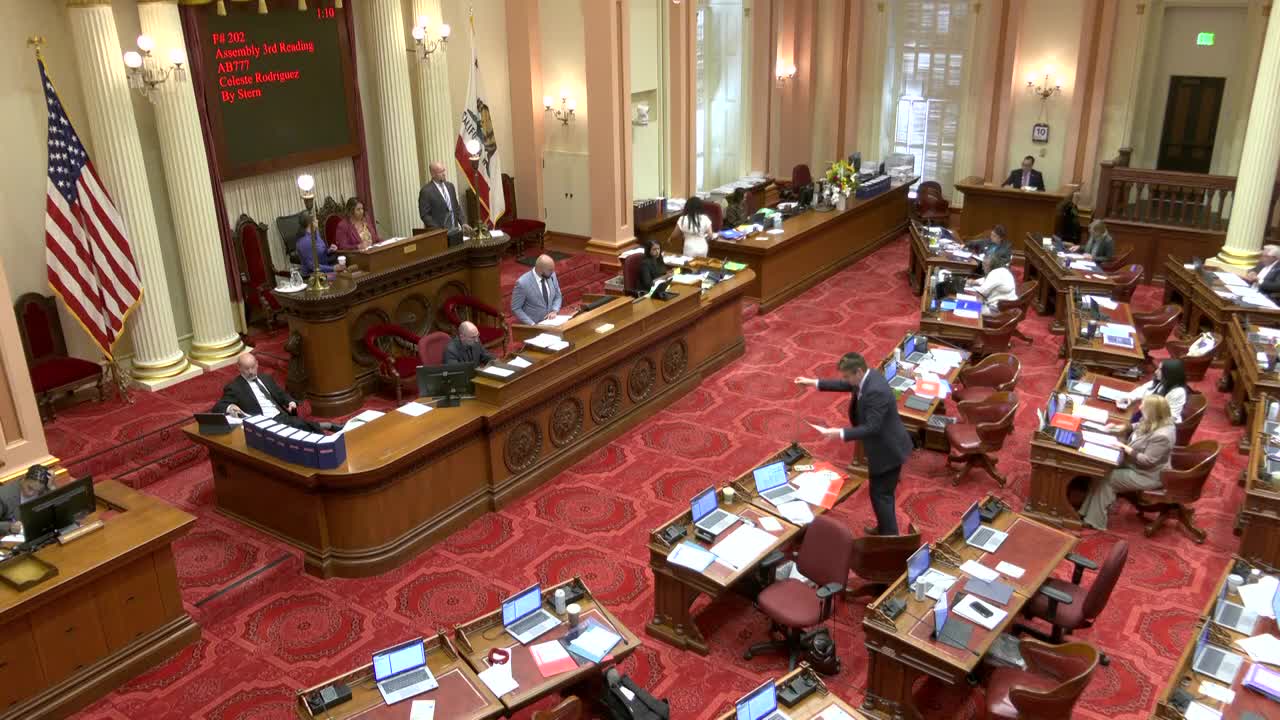
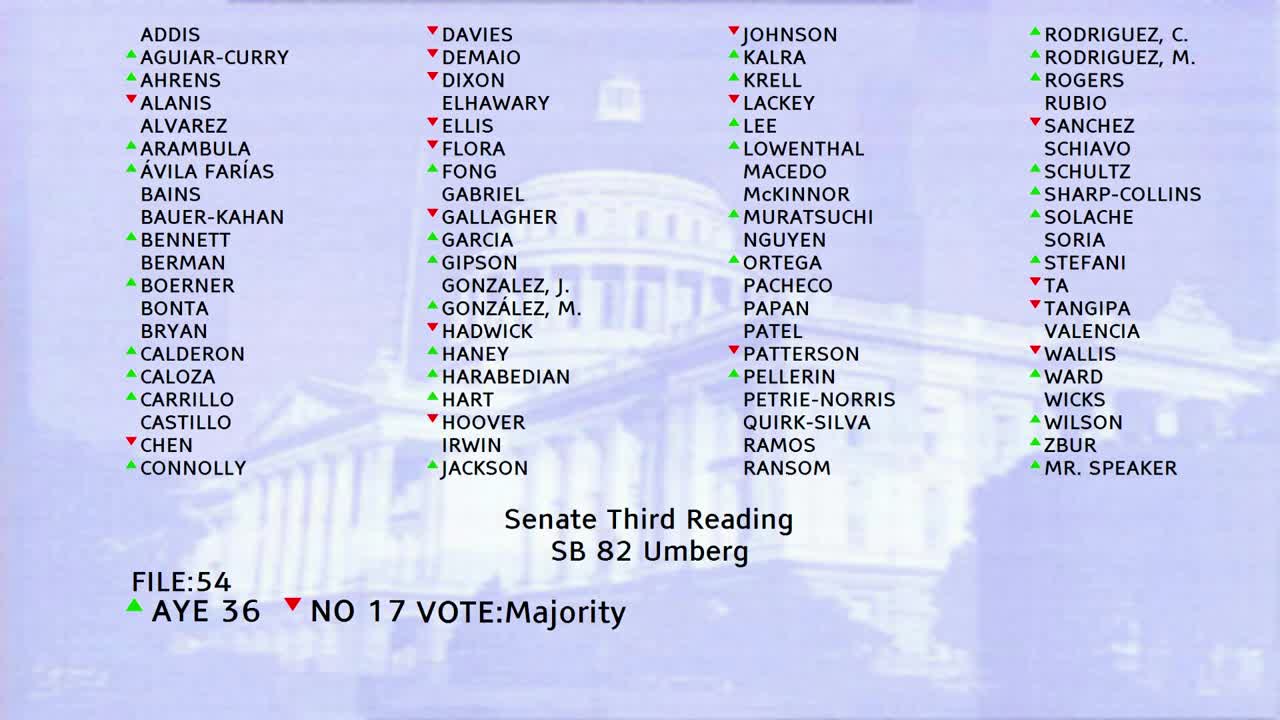
Bill Author

Bill Co-Author(s):