SB 454: State Water Resources Control Board: PFAS Mitigation Program.
- Session Year: 2025-2026
- House: Senate
- Latest Version Date: 2025-09-12
Current Status:
Failed
(2026-03-02: Stricken from file.)
Introduced
In Committee
Awaiting First Chamber Vote
Passed First Chamber
In Committee
Awaiting Second Chamber Vote
Passed Second Chamber
Enacted
Existing law designates the State Water Resources Control Board as the agency responsible for administering specific programs related to drinking water, including, among others, the California Safe Drinking Water Act and the Emerging Contaminants for Small or Disadvantaged Communities Funding Program.
This bill, which would become operative upon an appropriation by the Legislature, would enact a perfluoroalkyl and polyfluoroalkyl substances (PFAS) mitigation program. As part of that program, the bill would create the PFAS Mitigation Fund in the State Treasury and would authorize certain moneys in the fund to be expended by the state board, upon appropriation by the Legislature, for specified purposes. The bill would authorize the state board to seek out nonstate, federal, and private funds designated for PFAS remediation and treatment and deposit the funds into the PFAS Mitigation Fund. The bill would continuously appropriate these funds to the state board for specified purposes. The bill would authorize the state board to establish accounts within the PFAS Mitigation Fund. The bill would authorize the state board to expend moneys from the fund in the form of a grant, loan, or contract, or to provide assistance services to water suppliers and sewer system providers, as those terms are defined, for multiple purposes, including, among other things, to cover or reduce the costs for water suppliers associated with treating drinking water to meet the applicable state and federal maximum PFAS contaminant levels. The bill would require a water supplier or sewer system provider to include a clear and definite purpose for how the funds will be used to provide public benefits to their community related to safe drinking water, recycled water, stormwater, or treated wastewater in order to be eligible to receive funds. The bill would require the state board to adopt guidelines to implement these provisions, as provided.
Existing law designates the State Water Resources Control Board as the agency responsible for administering specific programs related to drinking water, including, among others, the California Safe Drinking Water Act and the Emerging Contaminants for Small or Disadvantaged Communities Funding Program.
This bill, which would become operative upon an appropriation by the Legislature, would enact a PFAS perfluoroalkyl and polyfluoroalkyl substances (PFAS) mitigation program. As part of that program, the bill would create the PFAS Mitigation Fund in the State Treasury and would authorize certain moneys in the fund to be expended by the state board, upon appropriation by the Legislature, for specified purposes. The bill would authorize the state board to seek out and deposit nonstate, federal, and private funds, require those funds to be deposited funds designated for PFAS remediation and treatment and deposit the funds into the PFAS Mitigation Fund, and Fund. The bill would continuously appropriate the nonstate, federal, and private funds in the fund these funds to the state board for specified purposes. The bill would authorize the state board to establish accounts within the PFAS Mitigation Fund. The bill would authorize the state board to expend moneys from the fund in the form of a grant, loan, or contract, or to provide assistance services to water suppliers and sewer system providers, as those terms are defined, for multiple purposes, including, among other things, to cover or reduce the costs for water suppliers associated with treating drinking water to meet the applicable state and federal maximum perfluoroalkyl and polyfluoroalkyl substances (PFAS) PFAS contaminant levels. The bill would require a water supplier or sewer system provider to include a clear and definite purpose for how the funds will be used to provide public benefits to their community related to safe drinking water, recycled water, stormwater, or treated wastewater in order to be eligible to receive funds. The bill would require the state board to adopt guidelines to implement these provisions, as provided.
Existing law designates the State Water Resources Control Board as the agency responsible for administering specific programs related to drinking water, including, among others, the California Safe Drinking Water Act and the Emerging Contaminants for Small or Disadvantaged Communities Funding Program.
This bill bill, which would become operative upon an appropriation by the Legislature, would enact a PFAS mitigation program. As part of that program, the bill would create the PFAS Mitigation Fund in the State Treasury and would authorize certain moneys in the fund to be expended by the state board, upon appropriation by the Legislature, for specified purposes. The bill would authorize the state board to seek out and deposit nonstate, federal, and private funds, require those funds to be deposited into the PFAS Mitigation Fund, and continuously appropriate the nonstate, federal, and private funds in the fund to the state board for specified purposes, thereby making an appropriation. purposes. The bill would authorize the state board to establish accounts within the PFAS Mitigation Fund. The bill would authorize the state board to expend moneys from the fund in the form of a grant, loan, or contract, or to provide assistance services to water suppliers and sewer system providers, as those terms are defined, for multiple purposes, including, among other things, to cover or reduce the costs for water suppliers associated with treating drinking water to meet the applicable state and federal maximum perfluoroalkyl and polyfluoroalkyl substances (PFAS) contaminant levels. The bill would require a water supplier or sewer system provider to include a clear and definite purpose for how the funds will be used to provide public benefits to their community related to safe drinking water, recycled water, or treated wastewater in order to be eligible to receive funds. The bill would require the state board, on or before July 1, 2027, board to adopt guidelines to implement these provisions, as provided.
Existing law designates the State Water Resources Control Board as the agency responsible for administering specific programs related to drinking water, including, among others, the California Safe Drinking Water Act and the Emerging Contaminants for Small or Disadvantaged Communities Funding Program.
This bill would create the PFAS Mitigation Fund in the State Treasury and would authorize certain moneys in the fund to be expended by the state board, upon appropriation by the Legislature, for purposes of these provisions. specified purposes. The bill would authorize the state board to seek out and accept deposit nonstate, federal, and private funds, require those funds to be deposited into the PFAS Reduction Account within the PFAS Mitigation Fund, and continuously appropriate the moneys nonstate, federal, and private funds in the account fund to the state board for purposes of these provisions, specified purposes, thereby making an appropriation. The bill would authorize the state board to establish accounts within the PFAS Mitigation Fund. The bill would authorize the state board to expend moneys from the fund and account in the form of a grant, loan, or contract, or to provide assistance services to water suppliers and sewer system providers, as those terms are defined, for multiple purposes, including, among other things, to cover or reduce the costs for water suppliers associated with treating drinking water to meet the applicable state and federal maximum perfluoroalkyl and polyfluoroalkyl substances (PFAS) contaminant levels. The bill would require a water supplier or sewer system provider to include a clear and definite purpose for how the funds will be used to provide public benefits to their community related to safe drinking water, recycled water, or treated wastewater in order to be eligible to receive funds. The bill would require the state board, on or before July 1, 2027, to adopt guidelines to implement these provisions, as provided.
Existing law designates the State Water Resources Control Board as the agency responsible for administering specific programs related to drinking water, including, among others, the California Safe Drinking Water Act and the Emerging Contaminants for Small or Disadvantaged Communities Funding Program.
This bill would create the PFAS Mitigation Fund in the General Fund State Treasury and would authorize the fund to be expended by the state board, upon appropriation by the Legislature, for purposes of these provisions. The bill would authorize the state board to seek out and accept nonstate, federal, and private funds, require those funds to be deposited into the PFAS Reduction Account within the PFAS Mitigation Fund, and continuously appropriate the moneys in the account to the state board for purposes of these provisions, thereby making an appropriation. The bill would authorize the state board to expend moneys from the fund and account in the form of a grant, loan, or contract, or to provide assistance services to water suppliers and wastewater operators, sewer system providers, as those terms are defined, for multiple purposes, including, among other things, to cover or reduce the costs for water suppliers associated with treating drinking water to meet the applicable state and federal maximum PFAS perfluoroalkyl and polyfluoroalkyl substances (PFAS) contaminant levels. The bill would require a water supplier or wastewater operator sewer system provider to include a clear and definite purpose for how the funds will be used to provide a public benefit benefits to their community related to safe drinking water water, recycled water, or treated wastewater in order to be eligible to receive funds. The bill would authorize the state board require the state board, on or before July 1, 2027, to adopt guidelines to implement these provisions. provisions, as provided.
Existing law designates the State Water Resources Control Board as the agency responsible for administering specific programs related to drinking water, including, among others, the California Safe Drinking Water Act and the Emerging Contaminants for Small or Disadvantaged Communities Funding Program.
This bill would create the PFAS Mitigation Fund in the General Fund and would authorize the fund to be expended by the state board, upon appropriation by the Legislature, for purposes of these provisions. The bill would authorize the state board to seek out and accept nonstate, federal, and private funds, require those funds to be deposited into the PFAS Reduction Account within the PFAS Mitigation Fund, and continuously appropriate the moneys in the account to the state board for purposes of these provisions, thereby making an appropriation. The bill would authorize the state board to expend moneys from the fund and account in the form of a grant, loan, or contract, or to provide assistance services to water suppliers and wastewater operators, as those terms are defined, for multiple purposes, including, among other things, to cover or reduce the costs for water suppliers associated with treating drinking water to meet the applicable state and federal maximum PFAS contaminant levels. The bill would require a water supplier or wastewater operator to include a clear and definite purpose for how the funds will be used to provide a public benefit related to safe drinking water or treated wastewater in order to be eligible to receive funds. The bill would authorize the state board to adopt guidelines to implement these provisions.
(a)The Legislature finds and declares all of the following:
(1)Every Californian should enjoy the same degree of protection from environmental and health hazards. No single group of people should bear a disproportionate share of the negative environmental consequences and adverse health impacts arising from industrial, governmental, or commercial operations or policies.
(2)State law also declares that it is the established policy of the state that every human being has the right to safe, clean, affordable, and accessible water adequate for human consumption, cooking, and sanitary purposes.
(3)Perfluoroalkyl and polyfluoroalkyl substances (PFAS) continues to be used in a broad range of industrial processes and in manufacturing products because of their water and stain resistant, nonstick, surfactant, and other properties, including for making packaging, plastic food ware, cleaning products, ski waxes, menstrual products, metal products, propellants, coatings and paints, and much more, despite the growing body of evidence that these chemicals may leach into food, water supplies, and even the human body through exposures.
(4)Concentrated PFAS contamination in the environment creates cumulative health burdens resulting in communities with greater health risks, such as cancer, reproductive health and fertility effects, and immune system disorders.
(5)PFAS makes its way into community water supplies and wastewater. Water suppliers and wastewater treatment operators are not responsible for the introduction of PFAS into the environment, yet these local agencies are responsible for treating our water and wastewater.
(6)Enhancing the long-term sustainability of drinking water systems and wastewater systems for all communities increases our communities resilience and environmental safety.
(7)Funding for the infrastructure to treat PFAS in water supplies, including recycled water, and wastewater systems under this chapter promotes investments for communities, including disadvantaged communities, and important contributions to help those communities create a cleaner environment.
(b)It is the intent of the Legislature that true environmental justice be brought to our state by addressing PFAS contamination, including the continuing disproportionate environmental burdens in the state and on passive receivers by creating a fund to provide for the treatment of PFAS in water, wastewater, and recycled water.
(c)It is further the intent of the Legislature that the state board, in managing the fund, strive to ensure all regions of the state receive an equitable level of consideration for funding pursuant to this chapter, to the extent practicable.
2.PFAS Mitigation Fund116774.21.For the purposes of this chapter, the following definitions apply:
(a)Fund means the PFAS Mitigation Fund established pursuant to Section 116774.22.
(b)Perfluoroalkyl and polyfluoroalkyl substances or PFAS means a class of fluorinated organic chemicals containing at least one fully fluorinated carbon atom.
(c)Recycled water has the same meaning as defined in subdivision (n) of Section 13050 of the Water Code.
(d)Sewer service provider has the same meaning as defined in subdivision (n) of Section 13288 of the Water Code.
(e)State board means the State Water Resources Control Board.
(f)Water supplier means a local public agency or private company supplying or storing water, or a mutual water company.
116774.22.(a)The PFAS Mitigation Fund is hereby created in the State Treasury. Upon appropriation by the Legislature, moneys deposited into the fund shall be available for the state board to expend consistent with the purposes of this chapter.
(b)The state board may seek out and deposit nonstate, federal, and private funds designated for PFAS remediation and treatment into the fund for purposes of this chapter. The state board may establish accounts within the fund. Notwithstanding Section 13340 of the Government Code, the nonstate, federal, and private funds in the fund shall be continuously appropriated without regard to fiscal years to the state board for purposes of this chapter.
116774.23.(a)The state board may expend moneys from the fund in the form of a grant, loan, or contract, or to provide technical assistance services to water suppliers and sewer system providers for one or more of the following purposes:
(1)Cover or reduce the costs for water suppliers associated with treating drinking water, including recycled water, to meet the applicable state advisory levels and applicable state and federal maximum PFAS contaminant levels.
(2)(A)Cover or reduce the costs for sewer system providers associated with treating wastewater or recycled water to reduce or remove PFAS.
(B)Upon the establishment of state or federal standards regarding treating wastewater or recycled water to reduce or remove PFAS, cover or reduce the costs for sewer system providers to meet the applicable standards.
(3)Cover or reduce the costs for water suppliers or sewer system providers associated with proper disposal of PFAS contamination after treating drinking water supplies, recycled water, stormwater, or wastewater.
(4)Any other costs an applicant claims are associated with the removal of PFAS in drinking water, recycled water, stormwater, and wastewater.
(b)Eligible expenditures made pursuant to subdivision (a) shall include, but not be limited to, all of the following:
(1)Construction of a new treatment facility or to upgrade an existing treatment facility that addresses PFAS contamination.
(2)Infrastructure related to monitoring PFAS.
(3)The costs associated with planning, design, and infrastructure for eligible projects.
(c)The state board may expend no more than 5 percent of the total moneys available in the fund for the purposes of administering the fund.
116774.24.In order to be eligible for funds pursuant to this chapter, a water supplier or sewer system provider shall include a clear and definite purpose for how the funds will be used to provide benefits to their community related to safe drinking water, recycled water, stormwater, or treated wastewater.
116774.25.(a)The state board shall adopt guidelines to implement this chapter.
(b)The development of the guidelines shall include, but not be limited to, all of the following:
(1)Specific funding criteria from each funding source.
(2)Identification of minimum and maximum grant amounts, based on percentage of the total annual moneys available.
(3)Opportunities for public comment, where the state board shall solicit stakeholder input by doing both of the following:
(A)Notify the public when draft guidelines are posted on the state boards internet website.
(B)Conduct two public workshops on the draft guidelines to receive and consider public comment prior to finalizing the guidelines.
3.General Provisions116774.26.Actions taken to implement, interpret, or make specific this chapter are not subject to the Administrative Procedure Act (Chapter 3.5 (commencing with Section 11340) of Part 1 of Division 3 of Title 2 of the Government Code).
116774.27.This chapter does not expand any obligation of the state to provide resources for the provisions of this chapter.
116774.28.The Legislature finds and declares that participation in an activity authorized for funding from the fund or a contribution to the fund by a federal, state, or local agency serves a public purpose and does not constitute a gift of public funds within the meaning of Section 6 of Article XVI of the California Constitution.
4.Contingent Operation116774.29.This chapter shall become operative contingent upon an appropriation by the Legislature for its purposes.
(a)The Legislature finds and declares all of the following:
(1)Every Californian should enjoy the same degree of protection from environmental and health hazards. No single group of people should bear a disproportionate share of the negative environmental consequences and adverse health impacts arising from industrial, governmental, or commercial operations or policies.
(2)State law also declares that it is the established policy of the state that every human being has the right to safe, clean, affordable, and accessible water adequate for human consumption, cooking, and sanitary purposes.
(3)Perfluoroalkyl and polyfluoroalkyl substances (PFAS) continues to be used in a broad range of industrial processes and in manufacturing products because of their water and stain resistant, nonstick, surfactant, and other properties, including for making packaging, plastic food ware, cleaning products, ski waxes, menstrual products, metal products, propellants, coatings and paints, and much more, despite the growing body of evidence that these chemicals may leach into food, water supplies, and even the human body through exposures.
(4)Concentrated PFAS contamination in the environment creates cumulative health burdens resulting in communities with greater health risks, such as cancer, reproductive health and fertility effects, and immune system disorders.
(5)PFAS makes its way into community water supplies and wastewater. Water suppliers and wastewater treatment operators are not responsible for the introduction of PFAS into the environment, yet these local agencies are responsible for treating our water and wastewater.
(6)Enhancing the long-term sustainability of drinking water systems and wastewater systems for all communities increases our communities resilience and environmental safety.
(7)Funding for the infrastructure to treat PFAS in water supplies, including recycled water, and wastewater systems under this chapter promotes investments for communities, including disadvantaged communities, and important contributions to help those communities in adapting to a cleaner climate and create a cleaner environment.
(b)It is the intent of the Legislature that true environmental justice be brought to our state by addressing PFAS contamination, including the continuing disproportionate environmental burdens in the state and on passive receivers by creating a fund to provide for the treatment of PFAS in water, wastewater, and recycled water.
(c)It is further the intent of the Legislature that the state board, in managing the fund, strive to ensure all regions of the state receive an equitable level of consideration for funding pursuant to this chapter, to the extent practicable.
2.PFAS Mitigation Fund116774.21.For the purposes of this chapter, the following definitions apply:
(a)Fund means the PFAS Mitigation Fund established pursuant to Section 116774.22.
(b)Perfluoroalkyl and polyfluoroalkyl substances or PFAS means a class of fluorinated organic chemicals containing at least one fully fluorinated carbon atom.
(c)Recycled water has the same meaning as defined in subdivision (n) of Section 13050 of the Water Code.
(d)Sewer service provider has the same meaning as defined in subdivision (n) of Section 13288 of the Water Code.
(e)State board means the State Water Resources Control Board.
(f)Water supplier means a local public agency or private company supplying or storing water, or a mutual water company.
116774.22.(a)The PFAS Mitigation Fund is hereby created in the State Treasury. Upon appropriation by the Legislature, moneys deposited into the fund shall be available for the state board to expend consistent with the purposes of this chapter.
(b)The state board may seek out and deposit nonstate, federal, and private funds designated for PFAS remediation and treatment into the fund for purposes of this chapter. The state board may establish accounts within the fund. Notwithstanding Section 13340 of the Government Code, the nonstate, federal, and private funds in the fund shall be continuously appropriated without regard to fiscal years to the state board for purposes of this chapter.
116774.23.(a)The state board may expend moneys from the fund in the form of a grant, loan, or contract, or to provide technical assistance services to water suppliers and sewer system providers for one or more of the following purposes:
(1)Cover or reduce the costs for water suppliers associated with treating drinking water, including recycled water, to meet the applicable state advisory levels and applicable state and federal maximum PFAS contaminant levels.
(2)(A)Cover or reduce the costs for sewer system providers associated with treating wastewater or recycled water to reduce or remove PFAS.
(B)Upon the establishment of state or federal standards regarding treating wastewater or recycled water to reduce or remove PFAS, cover or reduce the costs for sewer system providers to meet the applicable standards.
(3)Cover or reduce the costs for water suppliers or sewer system providers associated with proper disposal of PFAS contamination after treating drinking water supplies, recycled water, stormwater, or wastewater.
(4)Any other costs an applicant claims are associated with the removal of PFAS in drinking water, recycled water, stormwater, and wastewater.
(b)Eligible expenditures made pursuant to subdivision (a) shall include, but not be limited to, all of the following:
(1)Construction of a new treatment facility or to upgrade an existing treatment facility that addresses PFAS contamination.
(2)Infrastructure related to monitoring PFAS.
(3)The costs associated with planning, design, and infrastructure for eligible projects.
(c)The state board may expend no more than 5 percent of the total moneys available in the fund for the purposes of administering the fund.
116774.24.In order to be eligible for funds pursuant to this chapter, a water supplier or sewer system provider shall include a clear and definite purpose for how the funds will be used to provide benefits to their community related to safe drinking water, recycled water, stormwater, or treated wastewater.
116774.25.(a)The state board shall adopt guidelines to implement this chapter.
(b)The development of the guidelines shall include, but not be limited to, all of the following:
(1)Specific funding criteria from each funding source.
(2)Identification of minimum and maximum grant amounts, based on percentage of the total annual moneys available.
(3)Opportunities for public comment, where the state board shall solicit stakeholder input by doing both of the following:
(A)Notify the public when draft guidelines are posted on the state boards internet website.
(B)Conduct two public workshops on the draft guidelines to receive and consider public comment prior to finalizing the guidelines.
3.General Provisions116774.26.Actions taken to implement, interpret, or make specific this chapter are not subject to the Administrative Procedure Act (Chapter 3.5 (commencing with Section 11340) of Part 1 of Division 3 of Title 2 of the Government Code).
116774.27.This chapter does not expand any obligation of the state to provide resources for the provisions of this chapter or to require the expenditure of additional resources beyond the amount of moneys deposited in the fund. chapter.
116774.28.The Legislature finds and declares that participation in an activity authorized for funding from the fund or a contribution to the fund by a federal, state, or local agency serves a public purpose and does not constitute a gift of public funds within the meaning of Section 6 of Article XVI of the California Constitution.
4.Contingent Operation116774.29.This chapter shall become operative contingent upon an appropriation by the Legislature for its purposes.
(a)The Legislature finds and declares all of the following:
(1)Every Californian should enjoy the same degree of protection from environmental and health hazards. No single group of people should bear a disproportionate share of the negative environmental consequences and adverse health impacts arising from industrial, governmental, or commercial operations or policies.
(2)State law also declares that it is the established policy of the state that every human being has the right to safe, clean, affordable, and accessible water adequate for human consumption, cooking, and sanitary purposes.
(3)Perfluoroalkyl and polyfluoroalkyl substances (PFAS) continues to be used in a broad range of industrial processes and in manufacturing products because of their water and stain resistant, nonstick, surfactant, and other properties, including for making packaging, plastic food ware, cleaning products, ski waxes, menstrual products, metal products, propellants, coatings and paints, and much more, despite the growing body of evidence that these chemicals may leach into food, water supplies, and even the human body through exposures.
(4)Concentrated PFAS contamination in the environment creates cumulative health burdens resulting in communities with greater health risks, such as cancer, reproductive health and fertility effects, and immune system disorders.
(5)PFAS makes its way into community water supplies and wastewater. Water suppliers and wastewater treatment operators are not responsible for the introduction of PFAS into the environment, yet these local agencies are responsible for treating our water and wastewater.
(6)Enhancing the long-term sustainability of drinking water systems and wastewater systems for all communities increases our communities resilience and environmental safety.
(7)Funding for the infrastructure to treat PFAS in water supplies, including recycled water, and wastewater systems under this chapter promotes investments for communities, including disadvantaged communities, and important contributions to those communities in adapting to a cleaner climate and environment.
(b)It is the intent of the Legislature that true environmental justice be brought to our state by addressing PFAS contamination, including the continuing disproportionate environmental burdens in the state and on passive receivers by creating a fund to provide for the treatment of PFAS in water, wastewater, and recycled water.
(c)It is further the intent of the Legislature that the state board, in managing the fund, strive to ensure all regions of the state receive an equitable level of consideration for funding pursuant to this chapter, to the extent practicable.
2.PFAS Mitigation Fund116774.21.For the purposes of this chapter, the following definitions apply:
(a)Fund means the PFAS Mitigation Fund established pursuant to Section 116774.22.
(b)Perfluoroalkyl and polyfluoroalkyl substances or PFAS means a class of fluorinated organic chemicals containing at least one fully fluorinated carbon atom.
(c)Recycled water has the same meaning as defined in subdivision (n) of Section 13050 of the Water Code.
(d)Sewer service provider has the same meaning as defined in subdivision (n) of Section 13288 of the Water Code.
(e)State board means the State Water Resources Control Board.
(f)Water supplier means a local public agency or private company supplying or storing water, or a mutual water company.
116774.22.(a)The PFAS Mitigation Fund is hereby created in the State Treasury. Upon appropriation by the Legislature, moneys deposited into the fund shall be available for the state board to expend consistent with the purposes of this chapter.
(b)The state board may seek out and deposit nonstate, federal, and private funds into the fund for purposes of this chapter. The state board may establish accounts within the fund. Notwithstanding Section 13340 of the Government Code, the nonstate, federal, and private funds in the fund shall be continuously appropriated without regard to fiscal years to the state board for purposes of this chapter.
116774.23.(a)The state board may expend moneys from the fund in the form of a grant, loan, or contract, or to provide technical assistance services to water suppliers and sewer system providers for one or more of the following purposes:
(1)Cover or reduce the costs for water suppliers associated with treating drinking water, including recycled water, to meet the applicable state advisory levels and applicable state and federal maximum PFAS contaminant levels.
(2)(A)Cover or reduce the costs for sewer system providers associated with treating wastewater or recycled water to reduce or remove PFAS.
(B)Upon the establishment of state or federal standards regarding treating wastewater or recycled water to reduce or remove PFAS, cover or reduce the costs for sewer system providers to meet the applicable standards.
(3)Cover or reduce the costs for water suppliers or sewer system providers associated with proper disposal of PFAS contamination after treating drinking water supplies, recycled water, or wastewater.
(4)Any other costs an applicant claims are associated with the removal of PFAS in drinking water, recycled water, and wastewater.
(b)Eligible expenditures made pursuant to subdivision (a) shall include, but not be limited to, all of the following:
(1)Construction of a new treatment facility or to upgrade an existing treatment facility that addresses PFAS contamination.
(2)Infrastructure related to monitoring PFAS.
(3)The costs associated with planning, design, and infrastructure for eligible projects.
(c)The state board may expend no more than 5 percent of the total moneys available in the fund for the purposes of administering the fund.
116774.24.In order to be eligible for funds pursuant to this chapter, a water supplier or sewer system provider shall include a clear and definite purpose for how the funds will be used to provide benefits to their community related to safe drinking water, recycled water, or treated wastewater.
116774.25.(a)On or before July 1, 2027, the The state board shall adopt guidelines to implement this chapter.
(b)The development of the guidelines shall include, but not be limited to, all of the following:
(1)Specific funding criteria from each funding source.
(2)Identification of minimum and maximum grant amounts, based on percentage of the total annual moneys available.
(3)Opportunities for public comment, where the state board shall solicit stakeholder input by doing both of the following:
(A)Notify the public when draft guidelines are posted on the state boards internet website.
(B)Conduct two public workshops on the draft guidelines to receive and consider public comment prior to finalizing the guidelines.
3.General Provisions116774.26.Actions taken to implement, interpret, or make specific this chapter are not subject to the Administrative Procedure Act (Chapter 3.5 (commencing with Section 11340) of Part 1 of Division 3 of Title 2 of the Government Code).
116774.27.This chapter does not expand any obligation of the state to provide resources for the provisions of this chapter or to require the expenditure of additional resources beyond the amount of moneys deposited in the fund.
116774.28.The Legislature finds and declares that participation in an activity authorized for funding from the fund or a contribution to the fund by a federal, state, or local agency serves a public purpose and does not constitute a gift of public funds within the meaning of Section 6 of Article XVI of the California Constitution.
4.Contingent Operation116774.29.This chapter shall become operative contingent upon an appropriation by the Legislature for its purposes.
(a)The Legislature finds and declares all of the following:
(1)Every Californian should enjoy the same degree of protection from environmental and health hazards. No single group of people should bear a disproportionate share of the negative environmental consequences and adverse health impacts arising from industrial, governmental, or commercial operations or policies.
(2)State law also declares that it is the established policy of the state that every human being has the right to safe, clean, affordable, and accessible water adequate for human consumption, cooking, and sanitary purposes.
(3)Perfluoroalkyl and polyfluoroalkyl substances (PFAS) continues to be used in a broad range of industrial processes and in manufacturing products because of their water and stain resistant, nonstick, surfactant, and other properties, including for making packaging, plastic food ware, cleaning products, ski waxes, menstrual products, metal products, propellants, coatings and paints, and much more, despite the growing body of evidence that these chemicals may leach into food, water supplies, and even the human body through exposures.
(4)Concentrated PFAS contamination in the environment creates cumulative health burdens resulting in communities with greater health risks, such as cancer, reproductive health and fertility effects, and immune system disorders.
(5)PFAS makes its way into community water supplies and wastewater. Water suppliers and wastewater treatment operators are not responsible for the introduction of PFAS into the environment, yet these local agencies are responsible for treating our water and wastewater.
(6)Enhancing the long-term sustainability of drinking water systems and wastewater systems for all communities increases our communities resilience and environmental safety.
(7)Funding for the infrastructure to treat PFAS in water supplies, including recycled water, and wastewater systems under this chapter promotes investments for communities, including disadvantaged communities, and important contributions to those communities in adapting to a cleaner climate and environment.
(b)It is the intent of the Legislature that true environmental justice be brought to our state by addressing PFAS contamination, including the continuing disproportionate environmental burdens in the state and on passive receivers by creating a fund to provide for the treatment of PFAS in water, wastewater, and recycled water.
(c)It is further the intent of the Legislature that the state board, in managing the fund, strive to ensure all regions of the state receive an equitable level of consideration for funding pursuant to this chapter, to the extent practicable.
2.PFAS Mitigation Fund116774.21.For the purposes of this chapter, the follow following definitions apply:
(a)Account means the PFAS Reduction Account established pursuant to Section 116774.22. (b)(a)Fund means the PFAS Mitigation Fund established pursuant to Section 116774.22.
(c)(b)Perfluoroalkyl and polyfluoroalkyl substances or PFAS means a class of fluorinated organic chemicals containing at least one fully fluorinated carbon atom.
(d)(c)Recycled water has the same meaning as defined in subdivision (n) of Section 13050 of the Water Code.
(e)(d)Sewer service provider has the same meaning as defined in subdivision (n) of Section 13288 of the Water Code.
(f)(e)State board means the State Water Resources Control Board.
(g)(f)Water supplier means a local public agency or private company supplying or storing water, or a mutual water company.
116774.22.(a)The PFAS Mitigation Fund is hereby created in the State Treasury. Upon appropriation by the Legislature, moneys deposited into the fund shall be available for the state board to expend consistent with the purposes of this chapter.
(b)The state board may seek out and accept deposit nonstate, federal, and private funds for purposes of this chapter, and those funds shall be deposited into the PFAS Reduction Account, which is hereby created within the PFAS Mitigation Fund. into the fund for purposes of this chapter. The state board may establish accounts within the fund. Notwithstanding Section 13340 of the Government Code, moneys the nonstate, federal, and private funds in the account fund shall be continuously appropriated without regard to fiscal years to the state board for purposes of this chapter.
116774.23.(a)The state board may expend moneys from the fund and account in the form of a grant, loan, or contract, or to provide technical assistance services to water suppliers and sewer system providers for one or more of the following purposes:
(1)Cover or reduce the costs for water suppliers associated with treating drinking water, including recycled water, to meet the applicable state advisory levels and applicable state and federal maximum PFAS contaminant levels.
(2)(A)Cover or reduce the costs for sewer system providers associated with treating wastewater or recycled water to reduce or remove PFAS.
(B)Upon the establishment of state or federal standards regarding treating wastewater or recycled water to reduce or remove PFAS, cover or reduce the costs for sewer system providers to meet the applicable standards.
(3)Cover or reduce the costs for water suppliers or sewer system providers associated with proper disposal of PFAS contamination after treating drinking water supplies, recycled water, or wastewater.
(4)Any other costs an applicant claims are associated with the removal of PFAS in drinking water, recycled water, and wastewater.
(b)Eligible expenditures made pursuant to subdivision (a) shall include, but not be limited to, all of the following:
(1)Construction of a new treatment facility or to upgrade an existing treatment facility that addresses PFAS contamination.
(2)Infrastructure related to monitoring or pilot testing for PFAS treatment alternatives. PFAS.
(3)The costs associated with planning, design, and infrastructure for eligible projects.
(c)The state board may expend no more than 5 percent of the total moneys available in the fund for the purposes of administering the fund.
116774.24.In order to be eligible for funds pursuant to this chapter, a water supplier or sewer system provider shall include a clear and definite purpose for how the funds will be used to provide benefits to their community related to safe drinking water, recycled water, or treated wastewater.
116774.25.(a)On or before July 1, 2027, the state board shall adopt guidelines to implement this chapter.
(b)The development of the guidelines shall include, but not be limited to, all of the following:
(1)Specific funding criteria from each funding source.
(2)Identification of minimum and maximum grant amounts, based on percentage of the total annual moneys available.
(3)Opportunities for public comment, where the state board shall solicit stakeholder input by doing both of the following:
(A)Notify the public when draft guidelines are posted on the state boards internet website.
(B)Conduct two public workshops on the draft guidelines to receive and consider public comment prior to finalizing the guidelines.
3.General Provisions116774.26.Actions taken to implement, interpret, or make specific this chapter are not subject to the Administrative Procedure Act (Chapter 3.5 (commencing with Section 11340) of Part 1 of Division 3 of Title 2 of the Government Code).
116774.27.This chapter does not expand any obligation of the state to provide resources for the provisions of this chapter or to require the expenditure of additional resources beyond the amount of moneys deposited in the fund.
116774.28.The Legislature finds and declares that participation in an activity authorized for funding from the fund or a contribution to the fund by a federal, state, or local agency serves a public purpose and does not constitute a gift of public funds within the meaning of Section 6 of Article XVI of the California Constitution.
(a)The Legislature finds and declares all of the following:
(1)Every Californian should enjoy the same degree of protection from environmental and health hazards. No single group of people should bear a disproportionate share of the negative environmental consequences and adverse health impacts arising from industrial, governmental, or commercial operations or policies.
(2)State law also declares that it is the established policy of the state that every human being has the right to safe, clean, affordable, and accessible water adequate for human consumption, cooking, and sanitary purposes.
(3)Perfluoroalkyl and polyfluoroalkyl substances (PFAS) continues to be used in a broad range of industrial processes and in manufacturing products because of their water and stain resistant, nonstick, surfactant, and other properties, including for making packaging, plastic food ware, cleaning products, ski waxes, menstrual products, metal products, propellants, coatings and paints, and much more, despite the growing body of evidence that these chemicals may leach into food, water supplies, and even the human body through exposures.
(3)(4)Concentrated perfluoroalkyl and polyfluoroalkyl substances (PFAS) PFAS contamination in water the environment creates cumulative health burdens resulting in communities with greater health risks, such as cancer, reproductive health and fertility effects, and immune system disorders.
(4)Community
(5)PFAS makes its way into community water supplies and wastewater contain contamination with PFAS substances leaving water unsafe. wastewater. Water suppliers and wastewater suppliers treatment operators are not responsible for the introduction of PFAS into the environment, yet these local agencies are responsible for treating our water supplies to provide potable, safe drinking water and treating our wastewater so as to not harm the environment and prevent furthering the ubiquitous nature of PFAS. and wastewater.
(5)(6)Enhancing the long-term sustainability of drinking water systems and wastewater systems for all communities increases our communities resilience and environmental safety.
(6)(7)Funding for treating the infrastructure to treat PFAS in water supplies supplies, including recycled water, and wastewater systems under this chapter promotes investments for communities, including disadvantaged communities, and important contributions to those communities in adapting to a cleaner climate and environment.
(b)It is the intent of the Legislature that true environmental justice be brought to our state by beginning to address addressing PFAS contamination, including the continuing disproportionate environmental burdens in the state and on passive receivers by creating a fund to provide safe and clean water by treating for PFAS in every California community, for every Californian. for the treatment of PFAS in water, wastewater, and recycled water.
(c)It is the intent of the Legislature that the state board, in managing the fund, strive to ensure all regions of the state receive an equitable level of consideration for funding pursuant to this chapter, to the extent practicable.
2.PFAS Mitigation Fund116774.21.For the purposes of this chapter, the follow definitions apply:
(a)Account means the PFAS Reduction Account established pursuant to Section 116774.22.
(b)Fund means the PFAS Mitigation Fund established pursuant to Section 116774.22.
(c)Perfluoroalkyl and polyfluoroalkyl substances or PFAS means a class of fluorinated organic chemicals containing at least one fully fluorinated carbon atom.
(d)Recycled water has the same meaning as defined in subdivision (n) of Section 13050 of the Water Code.
(e)Sewer service provider has the same meaning as defined in subdivision (n) Section 13288 of the Water Code.
(d)(f)State board means the State Water Resources Control Board.
(e)Wastewater operator means a person or entity who operates a wastewater treatment plant and who possesses a valid, unexpired operator certificate. (f)(g)Water supplier means a local public agency or private company supplying or storing water, or a mutual water company.
116774.22.(a)The PFAS Mitigation Fund is hereby created in the General Fund and may be expended by the state board, upon appropriation by the Legislature, for purposes of this chapter. State Treasury. Upon appropriation by the Legislature, moneys deposited into the fund shall be available for the state board to expend consistent with the purposes of this chapter.
(b)The state board may seek out and accept nonstate, federal, and private funds for purposes of this chapter, and those funds shall be deposited into the PFAS Reduction Account, which is hereby created within the PFAS Mitigation Fund. Notwithstanding Section 13340 of the Government Code, moneys in the account shall be continuously appropriated without regard to fiscal years to the state board for purposes of this chapter.
116774.23.(a)The state board may expend moneys from the fund and account in the form of a grant, loan, or contract, or to provide technical assistance services to water suppliers and wastewater operators sewer system providers for one or more of the following purposes:
(a)(1)Cover or reduce the costs for water suppliers associated with treating drinking water water, including recycled water, to meet the applicable state advisory levels and applicable state and federal maximum PFAS contaminant levels.
(b)(2)Cover or reduce the costs for wastewater operators sewer system providers associated with treating wastewater to meet applicable waste discharge requirements. or recycled water to reduce or remove PFAS.
(c)(3)Cover or reduce the costs for water suppliers or wastewater operators sewer system providers associated with proper disposal of PFAS contamination after treating drinking water and wastewater supplies. supplies, recycled water, or wastewater.
(d)(4)Any other costs an applicant claims are associated with the removal of PFAS in drinking water water, recycled water, and wastewater.
(b)Eligible expenditures made pursuant to subdivision (a) shall include, but not be limited to, all of the following:
(1)Construction of a new treatment facility or to upgrade an existing treatment facility that addresses PFAS contamination.
(2)Infrastructure related to monitoring or pilot testing for PFAS treatment alternatives.
(3)The costs associated with planning, design, and infrastructure for eligible projects.
(c)The state board may expend no more than 5 percent of the total moneys available in the fund for the purposes of administering the fund.
116774.24.In order to be eligible for funds pursuant to this chapter, a water supplier or wastewater operator sewer system provider shall include a clear and definite purpose for how the funds will be used to provide a public benefit benefits to their community related to safe drinking water water, recycled water, or treated wastewater.
116774.25.The state board may (a)On or before July 1, 2027, the state board shall adopt guidelines to implement this chapter.
(b)The development of the guidelines shall include, but not be limited to, all of the following:
(1)Specific funding criteria from each funding source.
(2)Identification of minimum and maximum grant amounts, based on percentage of the total annual moneys available.
(3)Opportunities for public comment, where the state board shall solicit stakeholder input by doing both of the following:
(A)Notify the public when draft guidelines are posted on the state boards internet website.
(B)Conduct two public workshops on the draft guidelines to receive and consider public comment prior to finalizing the guidelines.
3.General Provisions116774.26.Actions taken to implement, interpret, or make specific this chapter are not subject to the Administrative Procedure Act (Chapter 3.5 (commencing with Section 11340) of Part 1 of Division 3 of Title 2 of the Government Code).
116774.27.This chapter does not expand any obligation of the state to provide resources for the provisions of this chapter or to require the expenditure of additional resources beyond the amount of moneys deposited in the fund.
116774.28.The Legislature finds and declares that participation in an activity authorized for funding from the fund or a contribution to the fund by a federal, state, or local agency serves a public purpose and does not constitute a gift of public funds within the meaning of Section 6 of Article XVI of the California Constitution.
(a)The Legislature finds and declares all of the following:
(1)Every Californian should enjoy the same degree of protection from environmental and health hazards. No single group of people should bear a disproportionate share of the negative environmental consequences and adverse health impacts arising from industrial, governmental, or commercial operations or policies.
(2)State law also declares that it is the established policy of the state that every human being has the right to safe, clean, affordable, and accessible water adequate for human consumption, cooking, and sanitary purposes.
(3)Concentrated perfluoroalkyl and polyfluoroalkyl substances (PFAS) contamination in water creates cumulative health burdens resulting in communities with greater health risks, such as cancer, reproductive health and fertility effects, and immune system disorders.
(4)Community water supplies and wastewater contain contamination with PFAS substances leaving water unsafe. Water and wastewater suppliers are not responsible for the introduction of PFAS into the environment, yet these local agencies are responsible for treating our water supplies to provide potable, safe drinking water and treating our wastewater so as to not harm the environment and prevent furthering the ubiquitous nature of PFAS.
(5)Enhancing the long-term sustainability of drinking water systems and wastewater systems for all communities increases our communities resilience and environmental safety.
(6)Funding for treating PFAS in water supplies and wastewater systems under this chapter promotes investments for communities, including disadvantaged communities, and important contributions to those communities in adapting to a cleaner climate and environment.
(b)It is the intent of the Legislature that true environmental justice be brought to our state by beginning to address the continuing disproportionate environmental burdens in the state by creating a fund to provide safe and clean water by treating for PFAS in every California community, for every Californian.
(c)It is the intent of the Legislature that the state board, in managing the fund, strive to ensure all regions of the state receive an equitable level of consideration for funding pursuant to this chapter, to the extent practicable.
2.PFAS Mitigation Fund116774.21.For the purposes of this chapter, the follow definitions apply:
(a)Account means the PFAS Reduction Account established pursuant to Section 116774.22.
(b)Fund means the PFAS Mitigation Fund established pursuant to Section 116774.22.
(c)Perfluoroalkyl and polyfluoroalkyl substances or PFAS means a class of fluorinated organic chemicals containing at least one fully fluorinated carbon atom.
(d)State board means the State Water Resources Control Board.
(e)Wastewater operator means a person or entity who operates a wastewater treatment plant and who possesses a valid, unexpired operator certificate.
(f)Water supplier means a local public agency or private company supplying or storing water, or a mutual water company.
116774.22.(a)The PFAS Mitigation Fund is hereby created in the General Fund and may be expended by the state board, upon appropriation by the Legislature, for purposes of this chapter.
(b)The state board may seek out and accept nonstate, federal, and private funds for purposes of this chapter, and those funds shall be deposited into the PFAS Reduction Account, which is hereby created within the PFAS Mitigation Fund. Notwithstanding Section 13340 of the Government Code, moneys in the account shall be continuously appropriated without regard to fiscal years to the state board for purposes of this chapter.
116774.23.The state board may expend moneys from the fund and account in the form of a grant, loan, or contract, or to provide assistance services to water suppliers and wastewater operators for one or more of the following purposes:
(a)Cover or reduce the costs for water suppliers associated with treating drinking water to meet the applicable state and federal maximum PFAS contaminant levels.
(b)Cover or reduce the costs for wastewater operators associated with treating wastewater to meet applicable waste discharge requirements.
(c)Cover or reduce the costs for water suppliers or wastewater operators associated with proper disposal of PFAS contamination after treating drinking water and wastewater supplies.
(d)Any other costs an applicant claims are associated with the removal of PFAS in drinking water and wastewater.
116774.24.In order to be eligible for funds pursuant to this chapter, a water supplier or wastewater operator shall include a clear and definite purpose for how the funds will be used to provide a public benefit related to safe drinking water or treated wastewater.
116774.25.The state board may adopt guidelines to implement this chapter.
3.General Provisions116774.26.Actions taken to implement, interpret, or make specific this chapter are not subject to the Administrative Procedure Act (Chapter 3.5 (commencing with Section 11340) of Part 1 of Division 3 of Title 2 of the Government Code).
116774.27.This chapter does not expand any obligation of the state to provide resources for the provisions of this chapter or to require the expenditure of additional resources beyond the amount of moneys deposited in the fund.
116774.28.The Legislature finds and declares that participation in an activity authorized for funding from the fund or a contribution to the fund by a federal, state, or local agency serves a public purpose and does not constitute a gift of public funds within the meaning of Section 6 of Article XVI of the California Constitution.
|
Date
|
Status
|
|---|---|
| Mar 2, 2026 | Veto sustained. |
| Mar 2, 2026 | Stricken from file. |
| Oct 1, 2025 | In Senate. Consideration of Governor's veto pending. |
| Oct 1, 2025 | Vetoed by the Governor. |
| Sep 17, 2025 | Enrolled and presented to the Governor at 2 p.m. |
| Sep 9, 2025 | Assembly amendments concurred in. (Ayes 40. Noes 0. Page 2742.) Ordered to engrossing and enrolling. |
| Sep 8, 2025 | In Senate. Concurrence in Assembly amendments pending. |
| Sep 8, 2025 | Read third time. Passed. (Ayes 79. Noes 0. Page 2994.) Ordered to the Senate. |
| Sep 2, 2025 | Read third time and amended. |
| Sep 2, 2025 | Read second time. Ordered to third reading. |
| Sep 2, 2025 | Ordered to third reading. |
| Aug 29, 2025 | From committee: Do pass. (Ayes 15. Noes 0.) (August 29). |
| Jul 2, 2025 | July 2 set for first hearing. Placed on APPR. suspense file. |
| Jun 18, 2025 | From committee: Do pass and re-refer to Com. on APPR. with recommendation: To consent calendar. (Ayes 7. Noes 0.) (June 17). Re-referred to Com. on APPR. |
| Jun 5, 2025 | Referred to Com. on E.S & T.M. |
| May 28, 2025 | In Assembly. Read first time. Held at Desk. |
| May 28, 2025 | Read third time. Passed. (Ayes 37. Noes 0. Page 1283.) Ordered to the Assembly. |
| May 27, 2025 | Read second time. Ordered to third reading. |
| May 23, 2025 | Read second time and amended. Ordered to second reading. |
| May 23, 2025 | From committee: Do pass as amended. (Ayes 6. Noes 0. Page 1201.) (May 23). |
| May 16, 2025 | Set for hearing May 23. |
| Apr 21, 2025 | April 21 hearing: Placed on APPR. suspense file. |
| Apr 10, 2025 | Set for hearing April 21. |
| Apr 8, 2025 | Read second time and amended. Re-referred to Com. on APPR. |
| Apr 7, 2025 | From committee: Do pass as amended and re-refer to Com. on APPR. with recommendation: To consent calendar. (Ayes 8. Noes 0. Page 634.) (April 2). |
| Mar 24, 2025 | From committee with author's amendments. Read second time and amended. Re-referred to Com. on E.Q. |
| Mar 11, 2025 | Set for hearing April 2. |
| Feb 26, 2025 | Referred to Com. on E.Q. |
| Feb 20, 2025 | From printer. May be acted upon on or after March 22. |
| Feb 19, 2025 | Introduced. Read first time. To Com. on RLS. for assignment. To print. |
|
Date
|
Description
|
Location
|
Votes
|
|
|---|---|---|---|---|
| Sep 9, 2025 | Unfinished Business SB454 McNerney et al. Concurrence | Senate Floor |
Passed |
|
| Sep 8, 2025 | SB 454 McNerney Senate Third Reading By Connolly | Assembly Floor |
Passed |
|
| Aug 29, 2025 | Do pass. | Assembly Standing Committee on Appropriations |
Passed |
|
| Jun 17, 2025 | Do pass and be re-referred to the Committee on [Appropriations] with recommendation: To Consent Calendar | Assembly Standing Committee on Environmental Safety and Toxic Materials |
Passed |
|
| May 28, 2025 | Senate 3rd Reading SB454 McNerney et al. | Senate Floor |
Passed |
|
| May 23, 2025 | Do pass as amended | Senate Standing Committee on Appropriations |
Passed |
|
| Apr 21, 2025 | Placed on suspense file | Senate Standing Committee on Appropriations |
Passed |
|
| Apr 2, 2025 | Do pass as amended, but first amend, and re-refer to the Committee on [Appropriations] with the recommendation: To Consent Calendar | Senate Standing Committee on Environmental Quality |
Passed |
This list shows positions taken on this bill by organizations on the date displayed, which is linked to the original source.
Positions by individuals are not included.
|
Organization
|
Position
|
Date
|
|---|---|---|
| A Voice for Choice Advocacy | ** Support | |
| Association Of California Water Agencies | ** Support | |
| BEAUMONT- CHERRY VALLEY WATER DISTRICT | ** Support | |
| Bella Vista Water District | ** Support | |
| Burbank Water and Power | ** Support | |
| California Association of Environmental Health Administrators | ** Support | |
| California Association Of Sanitation Agencies | ** Support | |
| California Environmental Voters | ** Support | |
| California Municipal Utilities Association | ** Support | |
| California Special Districts Association | ** Support | |
| California State Association Of Counties | ** Support | |
| California-Nevada Section, American Water Works Association | ** Support | |
| Calleguas Municipal Water District | ** Support | |
| CAMARILLO; CITY OF | ** Support | |
| Camrosa Water District | ** Support | |
| Carmichael Water District | ** Support | |
| City of Agoura Hills | ** Support | |
| City of Alameda | ** Support | |
| City of Pico Rivera | ** Support | |
| City of Point Arena | ** Support | |
| City of Roseville | ** Support | |
| City Of Sacramento | ** Support | |
| City of Santa Rosa | ** Support | |
| City of Shasta Lake | ** Support | |
| City of Thousand Oaks | ** Support | |
| City Of Vernon | ** Support | |
| cleanearth4kids.org | ** Support | |
| Climate Reality Project San Diego | ** Support | |
| Climate Reality Project, Los Angeles Chapter | ** Support | |
| Climate Reality Project, Orange County | ** Support | |
| Climate Reality Project: San Fernando Valley Chapter | ** Support | |
| Coachella Valley Water District | ** Support | |
| Crescenta Valley Water District | ** Support | |
| Crestline-Lake Arrowhead Water Agency | ** Support | |
| Cucamonga Valley Water District | ** Support | |
| Desert Water Agency | ** Support | |
| Diablo Water District | ** Support | |
| East Valley Water District | ** Support | |
| Eastern Municipal Water District | ** Support | |
| Elsinore Valley Municipal Water District | ** Support | |
| Helix Water District | ** Support | |
| Hidden Valley Lake Community Services District | ** Support | |
| Irvine Ranch Water District | ** Support | |
| Jurupa Community Services District | ** Support | |
| Lake Arrowhead Community Services District | ** Support | |
| League Of California Cities | ** Support | |
| Los Angeles County Sanitation Districts | ** Support | |
| Mendocino County Russian River Flood Control & Water Conservation | ** Support | |
| Mesa Water District | ** Support | |
| Metropolitan Water District Of Southern California | ** Support | |
| Mid-Peninsula Water District | ** Support | |
| Monte Vista Water District | ** Support | |
| Monterey Peninsula Water Management District | ** Support | |
| Olivenhain Municipal Water District | ** Support | |
| Orange County Water District | ** Support | |
| Paradise Irrigation District | ** Support | |
| Rancho California Water District | ** Support | |
| Regional Water Authority | ** Support | |
| Rowland Water District | ** Support | |
| san gabriel county water district | ** Support | |
| Santa Clarita Valley Water Agency | ** Support | |
| SANTA ROSA; CITY OF | ** Support | |
| Scotts Valley Water District | ** Support | |
| Stockton East Water District | ** Support | |
| Sustainable Rossmoor | ** Support | |
| Sweetwater Authority | ** Support | |
| Three Valleys Municipal Water District | ** Support | |
| Tri-Valley Cities of Dublin, Livermore, Pleasanton, San Ramon and the Town of Danville | ** Support | |
| Upper San Gabriel Valley Municipal Water District | ** Support | |
| Walnut Valley Water District | ** Support | |
| West Valley Water District | ** Support | |
| Western Canal Water District | ** Support | |
| Western Municipal Water District | ** Support | |
| Yorba Linda Water District | ** Support | |
| Zone 7 Water Agency | ** Support |
SENATE RULES COMMITTEE Office of Senate Floor Analyses (916) 651-1520 Fax: (916) 327-4478 | SB 454 |
VETO
Bill No: SB 454
Author: McNerney (D), et al.
Enrolled: 9/12/25
Vote: 27
SENATE ENVIRONMENTAL QUALITY COMMITTEE: 8-0, 4/2/25
AYES: Blakespear, Valladares, Dahle, Gonzalez, Hurtado, Menjivar, Padilla, Pérez
SENATE APPROPRIATIONS COMMITTEE: 6-0, 5/23/25
AYES: Caballero, Seyarto, Cabaldon, Grayson, Richardson, Wahab
NO VOTE RECORDED: Dahle
SENATE FLOOR: 40-0, 9/9/25
AYES: Allen, Alvarado-Gil, Archuleta, Arreguín, Ashby, Becker, Blakespear, Cabaldon, Caballero, Cervantes, Choi, Cortese, Dahle, Durazo, Gonzalez, Grayson, Grove, Hurtado, Jones, Laird, Limón, McGuire, McNerney, Menjivar, Niello, Ochoa Bogh, Padilla, Pérez, Reyes, Richardson, Rubio, Seyarto, Smallwood-Cuevas, Stern, Strickland, Umberg, Valladares, Wahab, Weber Pierson, Wiener
ASSEMBLY FLOOR: 79-0, 9/8/25 - See last page for vote
SUBJECT: State Water Resources Control Board: PFAS Mitigation Program
SOURCE: Author
DIGEST:
This bill creates, upon an appropriation by the Legislature, the PFAS Mitigation Fund in the State Treasury and authorizes the State Water Resources Control Board (State Water Board) to use the fund to cover or reduce the costs associated with treating per- and polyfluoroalkyl substances (PFAS) in drinking water, recycled water, stormwater, and wastewater.
ANALYSIS:
Existing law:
- Authorizes, pursuant to the federal Safe Drinking Water Act (SDWA), the United States Environmental Protection Agency (U.S. EPA) to set standards for drinking water quality and to oversee the local entities that implement those standards. (Title 42 United States Code (USC) § 300 (f) et seq.)
- Establishes the California SDWA and requires the State Water Board to maintain a drinking water program. (Health and Safety Code (HSC) § 116270, et seq.)
- Provides, under federal Drinking Water State Revolving Fund (DWSRF) statute, financial assistance to help water systems and states achieve the health protection objectives of the SDWA. States must create a drinking water revolving loan fund to receive a federal DWSRF grant. (42 USC § 300j-12, et seq.)
- Establishes the state DWSRF to provide financial assistance for the design and construction of projects for public water systems to meet safe drinking water standards. (HSC §116760, et seq.)
- Creates the Safe and Affordable Drinking Water Fund (SADWF) in the State Treasury to help water systems provide an adequate and affordable supply of safe drinking water. (HSC § 116766.)
- Establishes the Cleanup and Abatement Account (CAA) within the State Water Quality Control Fund, which is administered by the State Water Board. (Water Code (WC) § 13440)
- Authorizes the State Water Board to award CAA funds to help clean up a waste, abate the effects of a waste, or address an urgent drinking water need. Public agencies, tribal governments, non-profit organizations serving disadvantaged communities, and community water systems that serve a disadvantaged community are all eligible to receive funds from the CAA. (WC § 13442)
- Establishes the Emerging Contaminants for Small or Disadvantaged Communities Funding Program (EC-SDC) to provide grants to address emerging contaminants in small or disadvantaged communities (WC § 116774)
- Establishes the policy of the state that every human being has the right to safe, clean, affordable, and accessible water adequate for human consumption, cooking, and sanitary purposes. (WC § 106.3)
This bill:
- Creates the PFAS Mitigation Fund in the State Treasury, contingent upon an appropriation by the Legislature.
- Authorizes the State Water Board to expend moneys deposited in the fund upon appropriation by the Legislature to provide specified technical assistance services related to PFAS to water suppliers and sewer system providers.
- Authorizes the State Water Board to seek out and accept non-state, federal, and private funds designated for PFAS remediation and treatment and deposit those funds into the PFAS Mitigation Fund.
- Establishes eligibility criteria for water or sewer system providers in order to receive funds.
- Requires the State Water Board to adopt guidelines to implement this chapter.
Background
- The paths of PFAS. Per- and polyfluoroalkyl substances (PFAS) are a broad class of human-made chemicals consisting of chains with bonded carbon and fluorine atoms. Because of their physical and chemical nature, PFAS are very durable making them extremely useful in many industrial, commercial, and medical applications. As a consequence of their durability, they are persistent, meaning that they do not degrade easily in the environment and can bioaccumulate in living things.[1],[2],[3]
The PFAS on or in products find different ways into the environment throughout a product’s life cycle. When some products are manufactured, PFAS gets released into the atmosphere and through wastewater. Common household products, such as pots and cleaners, leach PFAS into household wastewater. PFAS can also leach from products at their end-of-life in landfills. PFAS compounds have been detected globally in soil, groundwater, and surface water.
Humans are primarily exposed to PFAS through eating and drinking water.[4] The drinking water of at least 70 million Americans contains PFAS at levels high enough to require reporting under federal law. California has multiple water systems that contain at least double the reporting concentration level.[5] Exposure to certain types of PFAS may lead to adverse health effects, including reproductive and developmental effects, increased risk of cancer, suppressed immune systems, and endocrine disruption.[6]
- Meeting water quality standards. The State Water Board's Division of Drinking Water implements and enforces the federal and state Safe Drinking Water Acts, monitors drinking water quality, and issues permits to public water systems throughout the state. The U.S. EPA requires drinking water systems to test and monitor their drinking water and take action if the contamination exceeds the maximum contaminant levels (MCLs). MCLs are based on human exposure limits to harmful chemicals and the extent to which they cause adverse health impacts.[7] Last year, the U.S. EPA updated the enforceable MCLs for six types of PFAS in drinking water and required drinking water systems to implement solutions to reduce concentrations of PFAS to meet these higher standards by 2029.[8] If a public water system does not resolve the contamination through treatment and comply with the required standards within a period of time, then state agencies can take enforcement actions, including administrative orders, legal actions, or issue fines.[9],[10]
- California’s programs for PFAS mitigation. Efforts of the state to address the PFAS problem have included prohibiting the use of the chemicals in products, data collection, and mitigation and treatment down the line. The Legislature has enacted bans for products containing intentionally added PFAS for non-essential use, including but not limited to cosmetic products (AB 2771, Friedman, Chapter 804, Statutes of 2022); food packaging (AB 1200, Ting, Chapter 503, Statutes of 2021); and juvenile products (AB 652, Friedman, Chapter 500, Statutes of 2021). The PFAS in these products can leach into the environment and may have frequent physical contact with the human body.
California Environmental Protection Agency (CalEPA) has been coordinating efforts with federal agencies and the State Water Board regarding PFAS since 2012. Efforts to address contamination in drinking water have included sampling public water supplies, biomonitoring studies, establishing advisory limits and notification levels, issuing investigative and sampling orders, and providing grants for treatment. SB 170 (Skinner, Chapter 240, Statutes of 2021) appropriated $30 million from the General Fund to the State Water Board to provide technical and financial assistance to address PFAS contamination in drinking water supplies. Another $50 million was allocated in fiscal year 2022/23 and $20 million for fiscal year 2023/24.
- Where does funding flow? The Division of Financial Assistance administers the State Water Board’s financial assistance programs, including the Drinking Water State Revolving Fund (DWSRF) and the Clean Water State Revolving Fund (CWSRF). The DWSRF is a financial assistance program to help water systems achieve the health protection objectives of the SDWA. Funds originate from congressional appropriation and are allocated based on the results of the Drinking Water Infrastructure Needs Survey and Assessment. The grants from the federal government are matched by state funds, then flow into a dedicated revolving loan fund which provides loans and assistance to water systems for eligible infrastructure projects. As water systems repay their loans, the repayments and interest flow back into the dedicated revolving fund. The issues this fund addresses are broad, from improving treatment or water sources to repairing or updating distribution or system infrastructure.
The CWSRF behaves similarly but provides mainly for water quality infrastructure projects and has the capacity to support large projects ( $100 million). For fiscal year 2024/25, the State Water Board intended to apply for nearly $100 million for the DWSRF and CWSRF and transfer the full amount to the DWSRF program. The federal Bipartisan Infrastructure Law provides $5 billion nationwide through the CWSRF and DWSRF for the EC-SDC to reduce exposure to PFAS and other emerging contaminants in drinking water, wastewater, and non-point sources in small or disadvantaged communities. For FFY 2024, the state intended to apply for approximately $83 million from this grant program.[11]
Other funds include the SADWF (Monning, Chapter 120, Statutes of 2019) which helps water systems provide an adequate and affordable supply of safe drinking water. This fund is broad in a drinking water sense, as it also applies to consolidating water systems and operation and maintenance costs. The CAA provides grants for the cleanup or abatement of a condition of pollution when there are no viable responsible parties available to undertake the work.
Because the needs that are addressed through funding from these programs are diverse and the demand for certain projects may be high, funding to address all or most PFAS concerns across the state may be scarce. This bill would create a dedicated fund to address PFAS mitigation through grants, loans, or other contracts, with funds originating from a variety of sources.
Comments
- Author’s statement. According to the author, “California has banned PFAS in consumer products ranging from food packaging and cosmetics to children’s cribs and playpens. But PFAS has been used in thousands of products during the past eight decades, so forever chemicals have contaminated a substantial portion of our drinking water. SB 454 would create a much-needed funding tool to help local agencies pay for PFAS cleanup, while also helping protect ratepayers from higher costs.”
- How the costs of contamination trickle down. Part of the burden in addressing PFAS contamination can fall on municipal drinking water systems, especially if the source of contamination is unknown. In 2019, 74 community water systems serving 7.5 million Californians with drinking water were found to have PFAS levels that exceeded levels considered safe by independent research, with at least 40% of systems far exceeding the MCLs established by the U.S. EPA today.[12] Water systems that exceed these MCLs are required to take action, from public notification to sufficient treatment methods to meet the respective water quality standards. As mentioned above, if drinking water systems do not meet the required water quality standards by 2029, they may face enforcement actions. The costs of enforcement could further inhibit the ability to comply.
Treatment is expensive, and addressing contamination levels could cost on the order of tens of millions of dollars. This financial burden can then be shifted to the public. Because water rates are directly tied to the cost of service, costly updates to infrastructure to treat contamination can be passed down and increase utility rates. Some water agencies, such as Orange County Water District and Santa Clarita Valley Water Agency, have joined class action lawsuits with hopes of supplementing the costs of treatment with the settlements.[13] However, not all water agencies may have the capacity to litigate and it’s not guaranteed that a settlement will cover the full costs. In some cases, if sources of drinking water supply cannot meet MCLs and have no ability to treat the contamination, those systems can be shut down, eliminating access to water supplies.
One water agency currently grappling with this issue is Sweetwater Authority, a municipal water agency in San Diego County. The water agency found that the concentration of PFOA, a PFAS compound, exceeded the recently established MCL for PFOA that is set to take effect in four years.[14] This gives the water agency time to treat the drinking water supply, but the costs to address this issue are upwards of $40 million and source funds have yet to be identified. This also puts into context the financial demand of individual water agencies to address PFAS contamination compared to the grants available. The need from this local water agency is half of what would be available through the EC-SDC grant for FFY 2024 and this is only one of at least 74 water systems.
FISCAL EFFECT: Appropriation: No Fiscal Com.: Yes Local: No
According to the Assembly Appropriations Committee, “The State Water Board will likely incur significant costs, potentially in the hundreds of thousands to low millions of dollars annually, to establish and administer the Fund. The bill allows the State Water Board to utilize up to 5% of the moneys available in the Fund to administer the Fund. Absent sufficient moneys in the Fund to cover these costs at the 5% administrative cap, the State Water Board will require an appropriation from a different fund source – likely the General Fund.”
“For its part, State Water Board estimates ongoing annual implementation costs of at least $6.5 million to hire new staff. Specifically, the Division of Financial Assistance estimates $2.75 million in ongoing costs, of which $1.5 million would be for an engineering unit to perform application review and management and $1.25 million would be for administrative staff to draft agreements and coordinate disbursements. The Office of Chief Counsel estimates $250,000 in legal review costs. The Division of Administrative Services estimates costs of at least $2 million to track revenue and claim disbursements, and to provide technical and administrative assistance. The Office of Enforcement anticipates at least $1.5 million in costs to audit and enforce the terms, conditions, and requirements of funding agreements and to prevent fraud, waste, and abuse of the Fund.”
SUPPORT: (Verified 10/6/25)
A Voice for Choice Advocacy
Association of California Water Agencies
Bella Vista Water District
Burbank Water and Power
California Association of Sanitation Agencies
California Environmental Voters
California Municipal Utilities Association
California Special Districts Association
California-nevada Section, American Water Works Association
Calleguas Municipal Water District
Camarillo; City of
Camrosa Water District
Carmichael Water District
City of Agoura Hills
City of Pico Rivera
City of Point Arena
City of Roseville
City of Santa Rosa
City of Thousand Oaks
City of Vernon
Cleanearth4kids.org
Climate Reality Project San Diego
Climate Reality Project San Fernando Valley Chapter
Climate Reality Project, Los Angeles Chapter
Climate Reality Project, Orange County
Coachella Valley Water District
Crescenta Valley Water District
Crestline-lake Arrowhead Water Agency
Cucamonga Valley Water District
Desert Water Agency
Diablo Water District
East Valley Water District
Eastern Municipal Water District
Helix Water District
Hidden Valley Lake Community Services District
Jurupa Community Services District
Lake Arrowhead Community Services District
League of California Cities
Los Angeles County Sanitation Districts
Mendocino County Russian River Flood Control & Water Conservation
Mesa Water District
Metropolitan Water District of Southern California
Mid-peninsula Water District
Monte Vista Water District
Monterey Peninsula Water Management District
Olivenhain Municipal Water District
Orange County Water District
Paradise Irrigation District
Rancho California Water District
Regional Water Authority
Rowland Water District
San Gabriel County Water District
Santa Clarita Valley Water Agency
Santa Rosa; City of
Scotts Valley Water District
Stockton East Water District
Sustainable Rossmoor
Sweetwater Authority
Three Valleys Municipal Water District
Tri-valley Cities of Dublin, Livermore, Pleasanton, San Ramon, and Town of Danville
Walnut Valley Water District
Western Municipal Water District
Yorba Linda Water District
Zone 7 Water Agency
OPPOSITION: (Verified 10/6/25)
None received
GOVERNOR'S VETO MESSAGE:
I am returning Senate Bill 454 without my signature.
This bill establishes the PFAS Mitigation Fund, to be administered by the State Water Resources Control Board, to provide financial support or technical assistance for water suppliers and sewer system providers to reduce or remove perfluoroalkyl and polyfluoroalkyl substances (PFAS) contamination.
While well-intentioned, this bill is unnecessary. The California Environmental Protection Agency has conducted significant work in coordination with other governmental agencies on PFAS concerns since 2012. Establishing a new program without a clear source of funding would divert limited available staff resources toward developing regulations without a definitive improved outcome for Californians.
ASSEMBLY FLOOR: 79-0, 9/8/25
AYES: Addis, Aguiar-Curry, Ahrens, Alanis, Alvarez, Arambula, Ávila Farías, Bains, Bauer-Kahan, Bennett, Berman, Boerner, Bonta, Bryan, Calderon, Caloza, Carrillo, Castillo, Chen, Connolly, Davies, DeMaio, Dixon, Elhawary, Ellis, Flora, Fong, Gabriel, Gallagher, Garcia, Gipson, Jeff Gonzalez, Mark González, Hadwick, Haney, Harabedian, Hart, Hoover, Irwin, Jackson, Johnson, Kalra, Krell, Lackey, Lee, Lowenthal, Macedo, McKinnor, Muratsuchi, Ortega, Pacheco, Papan, Patel, Patterson, Pellerin, Petrie-Norris, Quirk-Silva, Ramos, Ransom, Celeste Rodriguez, Michelle Rodriguez, Rogers, Blanca Rubio, Sanchez, Schiavo, Schultz, Sharp-Collins, Solache, Soria, Stefani, Ta, Tangipa, Valencia, Wallis, Ward, Wicks, Wilson, Zbur, Rivas
NO VOTE RECORDED: Nguyen
Prepared by: Taylor McKie / E.Q. / (916) 651-4108
10/7/25 10:15:21
**** END ****
National Institute of Environmental Health Sciences. (2025). Perfluoroalkyl and Polyfluoroalkly Substances. ↑
Henry, B. J., et. al. (2018). A critical review of the application of polymer of low concern. ↑
Jacobs, S. A., et. al. (2024). Assessment of Fluoropolymer Production and Use With Analysis of Alternative Replacement Materials (No. SRNL-STI-2023-00587). ↑
Kibuye, F. (2023). Understanding PFAS – What they are, their impact, and what we can do. ↑
Fast, A. et. al. (2024). 70 million American s drink water from systems reporting PFAS to EPA. ↑
U.S. Environmental Protection Agency. (2024). Our Current Understanding of the Human Health and Environmental Risks of PFAS. ↑
U.S. Environmental Protection Agency. (2024). How EPA regulates drinking water contaminants. ↑
U.S. EPA (2025). Final PFAS national primary drinking water regulation. ↑
U.S. Environmental Protection Agency (2024). Safe Drinking Water Act (SDWA) Resources and FAQs. ↑
U.S. Environmental Protection Agency (2004). Understanding the Safe Drinking Water Act. ↑
California Water Boards. (2024). Supplemental intended use plan: state fiscal year 2024-25. ↑
Environmental Working Group. (2019). Toxic ‘forever chemicals’ detected in drinking water supplies across California. ↑
Withrow, K. (2024). The PFAS Challenge: How Two California Water Agencies are Responding. ↑
Hinch, J. (2024). South County Report: ‘Forever’ Chemicals Discovered in South County Water. ↑
SENATE RULES COMMITTEE Office of Senate Floor Analyses (916) 651-1520 Fax: (916) 327-4478 | SB 454 |
UNFINISHED BUSINESS
Bill No: SB 454
Author: McNerney (D), et al.
Amended: 9/2/25 in Assembly
Vote: 21
SENATE ENVIRONMENTAL QUALITY COMMITTEE: 8-0, 4/2/25
AYES: Blakespear, Valladares, Dahle, Gonzalez, Hurtado, Menjivar, Padilla, Pérez
SENATE APPROPRIATIONS COMMITTEE: 6-0, 5/23/25
AYES: Caballero, Seyarto, Cabaldon, Grayson, Richardson, Wahab
NO VOTE RECORDED: Dahle
SENATE FLOOR: 37-0, 5/28/25
AYES: Allen, Alvarado-Gil, Archuleta, Arreguín, Ashby, Becker, Blakespear, Cabaldon, Caballero, Choi, Cortese, Dahle, Durazo, Gonzalez, Grayson, Grove, Hurtado, Jones, Laird, McGuire, McNerney, Menjivar, Niello, Ochoa Bogh, Padilla, Pérez, Richardson, Rubio, Seyarto, Smallwood-Cuevas, Stern, Strickland, Umberg, Valladares, Wahab, Weber Pierson, Wiener
NO VOTE RECORDED: Cervantes, Limón, Reyes
ASSEMBLY FLOOR: 79-0, 9/8/25 - See last page for vote
SUBJECT: State Water Resources Control Board: PFAS Mitigation Program
SOURCE: Author
DIGEST:
This bill, upon an appropriation by the Legislature, creates the per- and polyfluoroalkyl substances (PFAS) Mitigation Fund in the State Treasury and authorizes the State Water Resources Control Board (State Water Board) to use the fund to cover or reduce the costs associated with treating PFAS in drinking water, recycled water, stormwater, and wastewater.
Assembly Amendments
of 9/2/25 allow funds to be used to address PFAS contamination in stormwater and for the State Water Board to seek out nonstate, federal, and private funds that are designated for PFAS remediation and treatment.
ANALYSIS:
Existing law:
- Authorizes, pursuant to the federal Safe Drinking Water Act (SDWA), the United States Environmental Protection Agency (U.S. EPA) to set standards for drinking water quality and to oversee the local entities that implement those standards. (42 United States Code (USC) § 300 (f) et seq.)
- Establishes the California SDWA and requires the State Water Board to maintain a drinking water program. (Health and Safety Code (HSC) § 116270, et seq.)
- Provides, under federal Drinking Water State Revolving Fund (DWSRF) statute, financial assistance to help water systems and states achieve the health protection objectives of the SDWA. States must create a drinking water revolving loan fund to receive a federal DWSRF grant. (42 USC § 300j-12, et seq.)
- Establishes the state DWSRF to provide financial assistance for the design and construction of projects for public water systems to meet safe drinking water standards. (HSC §116760, et seq.)
- Creates the Safe and Affordable Drinking Water Fund (SADWF) in the State Treasury to help water systems provide an adequate and affordable supply of safe drinking water. (HSC § 116766.)
- Establishes the Cleanup and Abatement Account (CAA) within the State Water Quality Control Fund, which is administered by the State Water Board. (Water Code (WC) § 13440)
- Authorizes the State Water Board to award CAA funds to help clean up a waste, abate the effects of a waste, or address an urgent drinking water need. Public agencies, tribal governments, non-profit organizations serving disadvantaged communities, and community water systems that serve a disadvantaged community are all eligible to receive funds from the CAA. (WC § 13442)
- Establishes the Emerging Contaminants for Small or Disadvantaged Communities Funding Program (EC-SDC) to provide grants to address emerging contaminants in small or disadvantaged communities (WC § 116774)
- Establishes the policy of the state that every human being has the right to safe, clean, affordable, and accessible water adequate for human consumption, cooking, and sanitary purposes. (WC § 106.3)
This bill:
- Creates the PFAS Mitigation Fund in the State Treasury, contingent upon an appropriation by the Legislature.
- Authorizes the State Water Board to expend moneys deposited in the fund upon appropriation by the Legislature to provide specified technical assistance services related to PFAS to water suppliers and sewer system providers.
- Authorizes the State Water Board to seek out and accept non-state, federal, and private funds designated for PFAS remediation and treatment and deposit those funds into the PFAS Mitigation Fund.
- Establishes eligibility criteria for water or sewer system providers in order to receive funds.
- Requires the State Water Board to adopt guidelines to implement this chapter.
Background
- The paths of PFAS. PFAS are a broad class of human-made chemicals consisting of chains with bonded carbon and fluorine atoms. Because of their physical and chemical nature, PFAS are very durable making them extremely useful in many industrial, commercial, and medical applications. As a consequence of their durability, they are persistent, meaning that they do not degrade easily in the environment and can bioaccumulate in living things.[1],[2],[3]
The PFAS on or in products find different ways into the environment throughout a product’s life cycle. When some products are manufactured, PFAS gets released into the atmosphere and through wastewater. Common household products, such as pots and cleaners, leach PFAS into household wastewater. PFAS can also leach from products at their end-of-life in landfills. PFAS compounds have been detected globally in soil, groundwater, and surface water.
Humans are primarily exposed to PFAS through eating and drinking water.[4] The drinking water of at least 70 million Americans contains PFAS at levels high enough to require reporting under federal law. California has multiple water systems that contain at least double the reporting concentration level.[5] Exposure to certain types of PFAS may lead to adverse health effects, including reproductive and developmental effects, increased risk of cancer, suppressed immune systems, and endocrine disruption.[6]
- Meeting water quality standards. The State Water Board's Division of Drinking Water implements and enforces the federal and state Safe Drinking Water Acts, monitors drinking water quality, and issues permits to public water systems throughout the state. The U.S. EPA requires drinking water systems to test and monitor their drinking water and take action if the contamination exceeds the maximum contaminant levels (MCLs). MCLs are based on human exposure limits to harmful chemicals and the extent to which they cause adverse health impacts.[7] Last year, the U.S. EPA updated the enforceable MCLs for six types of PFAS in drinking water and required drinking water systems to implement solutions to reduce concentrations of PFAS to meet these higher standards by 2029.[8] If a public water system does not resolve the contamination through treatment and comply with the required standards within a period of time, then state agencies can take enforcement actions, including administrative orders, legal actions, or issue fines.[9],[10]
- California’s programs for PFAS mitigation. Efforts of the state to address the PFAS problem have included prohibiting the use of the chemicals in products, data collection, and mitigation and treatment down the line. The Legislature has enacted bans for products containing intentionally added PFAS for non-essential use, including but not limited to cosmetic products AB 2771, (Friedman, Chapter 804, Statutes of 2022); food packaging AB 1200, (Ting, Chapter 503, Statutes of 2021); and juvenile products AB 652, (Friedman, Chapter 500, Statutes of 2021). The PFAS in these products can leach into the environment and may have frequent physical contact with the human body.
California Environmental Protection Agency (CalEPA) has been coordinating efforts with federal agencies and the State Water Board regarding PFAS since 2012. Efforts to address contamination in drinking water have included sampling public water supplies, biomonitoring studies, establishing advisory limits and notification levels, issuing investigative and sampling orders, and providing grants for treatment. SB 170 (Skinner, Chapter 240, Statutes of 2021) appropriated $30 million from the General Fund to the State Water Board to provide technical and financial assistance to address PFAS contamination in drinking water supplies. Another $50 million was allocated in fiscal year 2022/23 and $20 million for fiscal year 2023/24.
- Where does funding flow? The Division of Financial Assistance administers the State Water Board’s financial assistance programs, including the DWSRF and the Clean Water State Revolving Fund (CWSRF). The DWSRF is a financial assistance program to help water systems achieve the health protection objectives of the SDWA. Funds originate from congressional appropriation and are allocated based on the results of the Drinking Water Infrastructure Needs Survey and Assessment. The grants from the federal government are matched by state funds, then flow into a dedicated revolving loan fund which provides loans and assistance to water systems for eligible infrastructure projects. As water systems repay their loans, the repayments and interest flow back into the dedicated revolving fund. The issues this fund addresses are broad, from improving treatment or water sources to repairing or updating distribution or system infrastructure.
The CWSRF behaves similarly but provides mainly for water quality infrastructure projects and has the capacity to support large projects ( $100 million). For fiscal year 2024/25, the State Water Board intended to apply for nearly $100 million for the DWSRF and CWSRF and transfer the full amount to the DWSRF program. The federal Bipartisan Infrastructure Law provides $5 billion nationwide through the CWSRF and DWSRF for the EC-SDC to reduce exposure to PFAS and other emerging contaminants in drinking water, wastewater, and non-point sources in small or disadvantaged communities. For FFY 2024, the state intended to apply for approximately $83 million from this grant program.[11]
Other funds include the SADWF (Monning, Chapter 120, Statutes of 2019) which helps water systems provide an adequate and affordable supply of safe drinking water. This fund is broad in a drinking water sense, as it also applies to consolidating water systems and operation and maintenance costs. The CAA provides grants for the cleanup or abatement of a condition of pollution when there are no viable responsible parties available to undertake the work.
Because the needs that are addressed through funding from these programs are diverse and the demand for certain projects may be high, funding to address all or most PFAS concerns across the state may be scarce. This bill would create a dedicated fund to address PFAS mitigation through grants, loans, or other contracts, with funds originating from a variety of sources.
Comments
- Author’s statement. According to the author, “California has banned PFAS in consumer products ranging from food packaging and cosmetics to children’s cribs and playpens. But PFAS has been used in thousands of products during the past eight decades, so forever chemicals have contaminated a substantial portion of our drinking water. SB 454 would create a much-needed funding tool to help local agencies pay for PFAS cleanup, while also helping protect ratepayers from higher costs.”
- How the costs of contamination trickle down. Part of the burden in addressing PFAS contamination can fall on municipal drinking water systems, especially if the source of contamination is unknown. In 2019, 74 community water systems serving 7.5 million Californians with drinking water were found to have PFAS levels that exceeded levels considered safe by independent research, with at least 40% of systems far exceeding the MCLs established by the U.S. EPA today.[12] Water systems that exceed these MCLs are required to take action, from public notification to sufficient treatment methods to meet the respective water quality standards. As mentioned above, if drinking water systems do not meet the required water quality standards by 2029, they may face enforcement actions. The costs of enforcement could further inhibit the ability to comply.
Treatment is expensive, and addressing contamination levels could cost on the order of tens of millions of dollars. This financial burden can then be shifted to the public. Because water rates are directly tied to the cost of service, costly updates to infrastructure to treat contamination can be passed down and increase utility rates. Some water agencies, such as Orange County Water District and Santa Clarita Valley Water Agency, have joined class action lawsuits with hopes of supplementing the costs of treatment with the settlements.[13] However, not all water agencies may have the capacity to litigate and it’s not guaranteed that a settlement will cover the full costs. In some cases, if sources of drinking water supply cannot meet MCLs and have no ability to treat the contamination, those systems can be shut down, eliminating access to water supplies.
One water agency currently grappling with this issue is Sweetwater Authority, a municipal water agency in San Diego County. The water agency found that the concentration of PFOA, a PFAS compound, exceeded the recently established MCL for PFOA that is set to take effect in four years.[14] This gives the water agency time to treat the drinking water supply, but the costs to address this issue are upwards of $40 million and source funds have yet to be identified. This also puts into context the financial demand of individual water agencies to address PFAS contamination compared to the grants available. The need from this local water agency is half of what would be available through the EC-SDC grant for FFY 2024 and this is only one of at least 74 water systems.
FISCAL EFFECT: Appropriation: No Fiscal Com.: Yes Local: No
According to the Assembly Appropriations Committee, “The State Water Board will likely incur significant costs, potentially in the hundreds of thousands to low millions of dollars annually, to establish and administer the Fund. The bill allows the State Water Board to utilize up to 5% of the moneys available in the Fund to administer the Fund. Absent sufficient moneys in the Fund to cover these costs at the 5% administrative cap, the State Water Board will require an appropriation from a different fund source – likely the General Fund.”
“For its part, State Water Board estimates ongoing annual implementation costs of at least $6.5 million to hire new staff. Specifically, the Division of Financial Assistance estimates $2.75 million in ongoing costs, of which $1.5 million would be for an engineering unit to perform application review and management and $1.25 million would be for administrative staff to draft agreements and coordinate disbursements. The Office of Chief Counsel estimates $250,000 in legal review costs. The Division of Administrative Services estimates costs of at least $2 million to track revenue and claim disbursements, and to provide technical and administrative assistance. The Office of Enforcement anticipates at least $1.5 million in costs to audit and enforce the terms, conditions, and requirements of funding agreements and to prevent fraud, waste, and abuse of the Fund.”
SUPPORT: (Verified 9/8/25)
A Voice for Choice Advocacy
Association of California Water Agencies
Bella Vista Water District
Burbank Water and Power
California Association of Sanitation Agencies
California Environmental Voters (formerly Clcv)
California Municipal Utilities Association
California Special Districts Association
California-nevada Section, American Water Works Association
Calleguas Municipal Water District
Camarillo; City of
Camrosa Water District
Carmichael Water District
City of Agoura Hills
City of Pico Rivera
City of Point Arena
City of Roseville
City of Santa Rosa
City of Thousand Oaks
City of Vernon
Cleanearth4kids.org
Climate Reality Project San Diego
Climate Reality Project San Fernando Valley Chapter
Climate Reality Project, Los Angeles Chapter
Climate Reality Project, Orange County
Coachella Valley Water District
Crescenta Valley Water District
Crestline-lake Arrowhead Water Agency
Cucamonga Valley Water District
Desert Water Agency
Diablo Water District
East Valley Water District
Eastern Municipal Water District
Helix Water District
Hidden Valley Lake Community Services District
Jurupa Community Services District
Lake Arrowhead Community Services District
League of California Cities
Los Angeles County Sanitation Districts
Mendocino County Russian River Flood Control & Water Conservation
Mesa Water District
Metropolitan Water District of Southern California
Mid-peninsula Water District
Monte Vista Water District
Monterey Peninsula Water Management District
Olivenhain Municipal Water District
Orange County Water District
Paradise Irrigation District
Rancho California Water District
Regional Water Authority
Rowland Water District
San Gabriel County Water District
Santa Clarita Valley Water Agency
Santa Rosa; City of
Scotts Valley Water District
Stockton East Water District
Sustainable Rossmoor
Sweetwater Authority
Three Valleys Municipal Water District
Tri-valley Cities of Dublin, Livermore, Pleasanton, San Ramon, and Town of Danville
Walnut Valley Water District
Western Municipal Water District
Yorba Linda Water District
Zone 7 Water Agency
OPPOSITION: (Verified 9/8/25)
None received
ASSEMBLY FLOOR: 79-0, 9/8/25
AYES: Addis, Aguiar-Curry, Ahrens, Alanis, Alvarez, Arambula, Ávila Farías, Bains, Bauer-Kahan, Bennett, Berman, Boerner, Bonta, Bryan, Calderon, Caloza, Carrillo, Castillo, Chen, Connolly, Davies, DeMaio, Dixon, Elhawary, Ellis, Flora, Fong, Gabriel, Gallagher, Garcia, Gipson, Jeff Gonzalez, Mark González, Hadwick, Haney, Harabedian, Hart, Hoover, Irwin, Jackson, Johnson, Kalra, Krell, Lackey, Lee, Lowenthal, Macedo, McKinnor, Muratsuchi, Ortega, Pacheco, Papan, Patel, Patterson, Pellerin, Petrie-Norris, Quirk-Silva, Ramos, Ransom, Celeste Rodriguez, Michelle Rodriguez, Rogers, Blanca Rubio, Sanchez, Schiavo, Schultz, Sharp-Collins, Solache, Soria, Stefani, Ta, Tangipa, Valencia, Wallis, Ward, Wicks, Wilson, Zbur, Rivas
NO VOTE RECORDED: Nguyen
Prepared by: Taylor McKie / E.Q. / (916) 651-4108
9/8/25 19:42:27
**** END ****
National Institute of Environmental Health Sciences. (2025). Perfluoroalkyl and Polyfluoroalkly Substances. ↑
Henry, B. J., et. al. (2018). A critical review of the application of polymer of low concern. ↑
Jacobs, S. A., et. al. (2024). Assessment of Fluoropolymer Production and Use With Analysis of Alternative Replacement Materials (No. SRNL-STI-2023-00587). ↑
Kibuye, F. (2023). Understanding PFAS – What they are, their impact, and what we can do. ↑
Fast, A. et. al. (2024). 70 million American s drink water from systems reporting PFAS to EPA. ↑
U.S. Environmental Protection Agency. (2024). Our Current Understanding of the Human Health and Environmental Risks of PFAS. ↑
U.S. Environmental Protection Agency. (2024). How EPA regulates drinking water contaminants. ↑
U.S. EPA (2025). Final PFAS national primary drinking water regulation. ↑
U.S. Environmental Protection Agency (2024). Safe Drinking Water Act (SDWA) Resources and FAQs. ↑
U.S. Environmental Protection Agency (2004). Understanding the Safe Drinking Water Act. ↑
California Water Boards. (2024). Supplemental intended use plan: state fiscal year 2024-25. ↑
Environmental Working Group. (2019). Toxic ‘forever chemicals’ detected in drinking water supplies across California. ↑
Withrow, K. (2024). The PFAS Challenge: How Two California Water Agencies are Responding. ↑
Hinch, J. (2024). South County Report: ‘Forever’ Chemicals Discovered in South County Water. ↑
SENATE THIRD READING
STR Bill Id:SB 454
Author:(McNerney)
As Amended Ver:May 23, 2025
Majority vote
SUMMARY
Creates the PFAS Mitigation Fund (Fund), and authorizes, upon appropriation by the Legislature, moneys deposited into the Fund to be available for the State Water Resources Control Board (State Water Board) to expend for the treatment of perfluoroalkyl and polyfluoroalkyl substances (PFAS) in drinking water, wastewater, and recycled water.
Major Provisions
- Creates the Fund in the State Treasury, and authorizes, upon appropriation by the Legislature, moneys deposited into the Fund to be available for the State Water Board to expend consistent with the purposes of this bill.
- Authorizes the State Water Board to seek out and deposit nonstate, federal, and private funds into the Fund, and to establish accounts within the Fund.
- Authorizes the State Water Board to expend moneys from the Fund in the form of a grant, loan, or contract, or to provide technical assistance services to water suppliers and sewer system providers for one or more specified purposes related to the remediation of PFAS in drinking water.
- Provides that eligible expenditures from the Fund include, but are not limited to, all of the following:
- Construction of a new treatment facility or to upgrade an existing treatment facility that addresses PFAS contamination;
- Infrastructure related to monitoring PFAS; and,
- The costs associated with planning, design, and infrastructure for eligible projects.
- Requires the State Water Board to adopt guidelines to implement the provisions of this bill.
COMMENTS
Perfluoroalkyl and polyfluoroalkyl substances (PFAS): PFAS are synthetic, highly fluorinated substances that have been widely used in industrial and consumer applications for their heat, water, and lipid resistance properties for more than seven decades. During production, use, and disposal, PFAS can migrate into the soil, water, and air. Some PFAS are volatile, and can be carried long distances through the air, leading to contamination of soils and groundwater far from the emission source. Researchers have found PFAS in indoor and outdoor environments, plants, soil, food, drinking water, wildlife, companion animals, production animals, and humans at locations across the nation and around the globe. PFAS are extremely persistent and degrade very slowly over time, which has resulted in their accumulation in the environment since the onset of their production in the late 1940s. Currently, nearly 15,000 PFAS chemicals are included in the chemicals database CompTox, which is maintained by the United States Environmental Protection Agency (US EPA).
Hazard traits of PFAS: According to the US EPA, current peer-reviewed scientific studies have shown that exposure to certain levels of PFAS may lead to: reproductive effects such as decreased fertility or increased high blood pressure in pregnant women; developmental effects or delays in children, including low birth weight, accelerated puberty, bone variations, or behavioral changes; increased risk of some cancers, including prostate, kidney, and testicular cancers; reduced ability of the body's immune system to fight infections, including reduced vaccine response; interference with the body's natural hormones; and, increased cholesterol levels and/or risk of obesity. In addition to direct human health impacts, some PFAS may have high global warming potential. Also, several PFAS bioaccumulate significantly in animals or plants and emerging evidence points to their phytotoxicity, aquatic toxicity, and terrestrial ecotoxicity.
PFAS in drinking water: According to the United States (U.S.) Geological Survey, "Exposure to PFAS through drinking water is a global human-health concern." PFAS in drinking water is an escalating issue due to the persistence of PFAS chemicals in the environment and their tendency to accumulate in groundwater. Currently, at least 45% of the nation's tap water is estimated to have one or more types of PFAS, according to a 2023 study by the U.S. Geological Survey that tested for the presence of 32 types of PFAS. Since there are more than 15,000 types of PFAS, not all of which can be detected with current tests, the levels of PFAS in American tap water can be assumed to be even higher than the levels detected in the U.S. Geological Survey study.
Recent action on PFAS in drinking water: On April 10, 2024, under the administration of Joseph R. Biden, Jr., the US EPA announced final national drinking water regulations for PFAS that established legally enforceable maximum contaminant levels (MCLs) for six PFAS in drinking water and for several PFAS mixtures containing specified PFAS in drinking water. The US EPA also finalized health-based, non-enforceable maximum contaminant level goals for these PFAS. The US EPA gave public water systems until 2029 to comply with the PFAS MCLs.
On May 14, 2025, under the administration of Donald Trump, the US EPA announced its intent to extend the compliance deadlines for two PFAS chemicals, and to establish a federal exemption framework for others. Additionally, the US EPA announced its intent to rescind the regulations and reconsider the regulatory determinations for PFAS chemicals. Since the federal Safer Drinking Water Act (SDWA) includes a provision meant to prevent new rules from weakening previous rules, it is unclear whether or how the Trump administration can roll back or rescind the current PFAS regulations.
In California, the State Water Board administers the federal and state SDWAs. According to the State Water Board, for California, the development of standards for PFAS are among the priorities of the State Water Board's Division of Drinking Water.
Costs for mitigation of PFAS in water: According to the US EPA, "The [US EPA] estimates the costs for public water systems and primacy agencies to implement [the April 10, 2024, PFAS] regulation are approximately $1.548 billion per year. These costs include water system monitoring, communicating with customers, and if necessary, obtaining new or additional sources of water or installing and maintaining treatment technologies to reduce levels of the six PFAS in drinking water. The estimated costs also include the costs to dispose of drinking water treatment residuals. The [US EPA] estimates 4,100 – 6,700 public water systems serving 83 - 105 million people will be required to take action to address PFAS above the regulatory standards."
Following US EPA's establishment of MCLs for six PFAS chemicals, the Orange County Water District (OCWD) stated, "PFAS contamination remains OCWD’s top priority—it's a significant and costly challenge. The estimated cost of addressing PFAS in Orange County over the next 30 years is approximately $1.8 billion."
This bill: This bill creates the Fund in the State Treasury, and authorizes, upon appropriation by the Legislature, moneys deposited into the Fund to be available for the State Water Board to expend in the form of a grant, loan, or contract, or to provide technical assistance services to cover or reduce the costs for water suppliers associated with treating drinking water, including recycled water, to meet the applicable state advisory levels and applicable state and federal maximum PFAS contaminant levels; cover or reduce the costs for sewer system providers associated with treating wastewater or recycled water to reduce or remove PFAS; cover or reduce the costs for sewer system providers to meet applicable PFAS standards; cover or reduce the costs for water suppliers or sewer system providers associated with proper disposal of PFAS contamination after treating drinking water supplies, recycled water, or wastewater; and, cover any other costs an applicant claims are associated with the removal of PFAS in drinking water, recycled water, and wastewater.
According to the Author
"California has banned PFAS in consumer products ranging from food packaging and cosmetics to children’s cribs and playpens. But PFAS has been used in thousands of products during the past eight decades, so forever chemicals have contaminated a substantial portion of our drinking water. SB 454 would create a much-needed funding tool to help local agencies pay for PFAS cleanup, while also helping protect ratepayers from higher costs."
Arguments in Support
According to a coalition of supporters, including the Association of California Water Agencies (ACWA) and the League of California Cities,
"Public water agencies are responsible for delivering safe, clean, and affordable drinking water throughout California. To fulfill that responsibility, public water agencies must comply with federal and state drinking water standards, including PFAS drinking water standards. Drinking water standards can have significant financial impacts on public water agencies, which are passed on to ratepayers and ultimately, impact water affordability.
In April 2024, the [US EPA] established new national, legally enforceable maximum contaminant levels (MCL) of 4.0 parts per trillion for PFOA and PFOS as individual contaminants. Public water agencies are required to comply with these MCLs by 2031. [US EPA] estimated that the nationwide cost for public water agencies to comply with the PFAS MCLs will be between $772 million and $1.2 billion annually.
This year, the [State Water Board] is expected to initiate a formal rulemaking process to set a PFAS drinking water standard… With California's MCL anticipated to be at least as protective as the federal MCL, the costs associated with treating California's water supplies will be significant.
SB 454, which would become operative upon appropriation by the Legislature, proposes the establishment of a PFAS Mitigation Fund to leverage continuously appropriated current and future nonstate, federal, and private funding for the State Water Board to help local public agencies in addressing costs associated with treating for PFAS and in ensuring the availability of safe and affordable drinking water for communities."
Arguments in Opposition
None on file.
FISCAL COMMENTS
According to the Assembly Appropriations Committee, should this bill be enacted, the State Water Board will likely incur significant costs, potentially in the hundreds of thousands to low millions of dollars annually, to establish and administer the Fund. The Assembly Appropriations Committee also asserts that enactment of this bill will likely result in ongoing cost pressures of an unknown but significant amount, likely in the millions of dollars, to fund the mitigation of PFAS contamination.
VOTES
SENATE FLOOR: 37-0-3
YES: Allen, Alvarado-Gil, Archuleta, Arreguín, Ashby, Becker, Blakespear, Cabaldon, Caballero, Choi, Cortese, Dahle, Durazo, Gonzalez, Grayson, Grove, Hurtado, Jones, Laird, McGuire, McNerney, Menjivar, Niello, Ochoa Bogh, Padilla, Pérez, Richardson, Rubio, Seyarto, Smallwood-Cuevas, Stern, Strickland, Umberg, Valladares, Wahab, Weber Pierson, Wiener
ABS, ABST OR NV: Cervantes, Limón, Reyes
ASM ENVIRONMENTAL SAFETY AND TOXIC MATERIALS: 7-0-0
YES: Connolly, Ellis, Bauer-Kahan, Castillo, Lee, McKinnor, Papan
ASM APPROPRIATIONS: 15-0-0
YES: Wicks, Sanchez, Arambula, Calderon, Caloza, Dixon, Elhawary, Fong, Mark González, Ahrens, Pacheco, Pellerin, Solache, Ta, Tangipa
UPDATED
VERSION: May 23, 2025
CONSULTANT: Shannon McKinney / E.S. & T.M. / (916) 319-3965 FN: 0001300
SENATE THIRD READING
STR Bill Id:SB 454
Author:(McNerney)
As Amended Ver:September 2, 2025
Majority vote
SUMMARY
Creates the PFAS Mitigation Fund (Fund), and authorizes, upon appropriation by the Legislature, moneys deposited into the Fund to be available for the State Water Resources Control Board (State Water Board) to expend for the treatment of perfluoroalkyl and polyfluoroalkyl substances (PFAS) in drinking water, wastewater, stormwater, and recycled water.
Major Provisions
- Creates the Fund in the State Treasury, and authorizes, upon appropriation by the Legislature, moneys deposited into the Fund to be available for the State Water Board to expend consistent with the purposes of this bill.
- Authorizes the State Water Board to seek out and deposit nonstate, federal, and private funds designated for PFAS remediation and treatment into the Fund, and to establish accounts within the Fund.
- Authorizes the State Water Board to expend moneys from the Fund in the form of a grant, loan, or contract, or to provide technical assistance services to water suppliers and sewer system providers for one or more specified purposes related to the remediation of PFAS, as specified.
- Provides that eligible expenditures from the Fund include, but are not limited to, all of the following:
- Construction of a new treatment facility or to upgrade an existing treatment facility that addresses PFAS contamination;
- Infrastructure related to monitoring PFAS; and,
- The costs associated with planning, design, and infrastructure for eligible projects.
- Requires the State Water Board to adopt guidelines to implement the provisions of this bill.
COMMENTS
Perfluoroalkyl and polyfluoroalkyl substances (PFAS): PFAS are synthetic, highly fluorinated substances that have been widely used in industrial and consumer applications for their heat, water, and lipid resistance properties for more than seven decades. During production, use, and disposal, PFAS can migrate into the soil, water, and air. Some PFAS are volatile, and can be carried long distances through the air, leading to contamination of soils and groundwater far from the emission source. Researchers have found PFAS in indoor and outdoor environments, plants, soil, food, drinking water, wildlife, companion animals, production animals, and humans at locations across the nation and around the globe. PFAS are extremely persistent and degrade very slowly over time, which has resulted in their accumulation in the environment since the onset of their production in the late 1940s. Currently, nearly 15,000 PFAS chemicals are included in the chemicals database CompTox, which is maintained by the United States Environmental Protection Agency (US EPA).
Hazard traits of PFAS: According to the US EPA, current peer-reviewed scientific studies have shown that exposure to certain levels of PFAS may lead to: reproductive effects such as decreased fertility or increased high blood pressure in pregnant women; developmental effects or delays in children, including low birth weight, accelerated puberty, bone variations, or behavioral changes; increased risk of some cancers, including prostate, kidney, and testicular cancers; reduced ability of the body’s immune system to fight infections, including reduced vaccine response; interference with the body’s natural hormones; and, increased cholesterol levels and/or risk of obesity. In addition to direct human health impacts, some PFAS may have high global warming potential. Also, several PFAS bioaccumulate significantly in animals or plants and emerging evidence points to their phytotoxicity, aquatic toxicity, and terrestrial ecotoxicity.
PFAS in drinking water: According to the United States (U.S.) Geological Survey, "Exposure to PFAS through drinking water is a global human-health concern." PFAS in drinking water is an escalating issue due to the persistence of PFAS chemicals in the environment and their tendency to accumulate in groundwater. Currently, at least 45% of the nation’s tap water is estimated to have one or more types of PFAS, according to a 2023 study by the U.S. Geological Survey that tested for the presence of 32 types of PFAS. Since there are more than 15,000 types of PFAS, not all of which can be detected with current tests, the levels of PFAS in American tap water can be assumed to be even higher than the levels detected in the U.S. Geological Survey study.
Recent action on PFAS in drinking water: On April 10, 2024, under the administration of Joseph R. Biden, Jr., the US EPA announced final national drinking water regulations for PFAS that established legally enforceable maximum contaminant levels (MCLs) for six PFAS in drinking water and for several PFAS mixtures containing specified PFAS in drinking water. The US EPA also finalized health-based, non-enforceable maximum contaminant level goals for these PFAS. The US EPA gave public water systems until 2029 to comply with the PFAS MCLs.
On May 14, 2025, under the administration of Donald Trump, the US EPA announced its intent to extend the compliance deadlines for two PFAS chemicals, and to establish a federal exemption framework for others. Additionally, the US EPA announced its intent to rescind the regulations and reconsider the regulatory determinations for PFAS chemicals. Since the federal Safer Drinking Water Act (SDWA) includes a provision meant to prevent new rules from weakening previous rules, it is unclear whether or how the Trump administration can roll back or rescind the current PFAS regulations.
In California, the State Water Board administers the federal and state SDWAs. According to the State Water Board, for California, the development of standards for PFAS are among the priorities of the State Water Board's Division of Drinking Water.
Costs for mitigation of PFAS in water: According to the US EPA, "The [US EPA] estimates the costs for public water systems and primacy agencies to implement [the April 10, 2024, PFAS] regulation are approximately $1.548 billion per year. These costs include water system monitoring, communicating with customers, and if necessary, obtaining new or additional sources of water or installing and maintaining treatment technologies to reduce levels of the six PFAS in drinking water. The estimated costs also include the costs to dispose of drinking water treatment residuals. The [US EPA] estimates 4,100 – 6,700 public water systems serving 83 - 105 million people will be required to take action to address PFAS above the regulatory standards."
Following US EPA's establishment of MCLs for six PFAS chemicals, the Orange County Water District (OCWD) stated, "PFAS contamination remains OCWD’s top priority—it's a significant and costly challenge. The estimated cost of addressing PFAS in Orange County over the next 30 years is approximately $1.8 billion."
This bill: This bill creates the Fund in the State Treasury, and authorizes, upon appropriation by the Legislature, moneys deposited into the Fund to be available for the State Water Board to expend in the form of a grant, loan, or contract, or to provide technical assistance services to cover or reduce the costs for water suppliers associated with treating drinking water, including recycled water, to meet the applicable state advisory levels and applicable state and federal maximum PFAS contaminant levels; cover or reduce the costs for sewer system providers associated with treating wastewater or recycled water to reduce or remove PFAS; cover or reduce the costs for sewer system providers to meet applicable PFAS standards; cover or reduce the costs for water suppliers or sewer system providers associated with proper disposal of PFAS contamination after treating drinking water supplies, recycled water, stormwater, or wastewater; and, cover any other costs an applicant claims are associated with the removal of PFAS in drinking water, recycled water, stormwater, and wastewater.
According to the Author
"California has banned PFAS in consumer products ranging from food packaging and cosmetics to children’s cribs and playpens. But PFAS has been used in thousands of products during the past eight decades, so forever chemicals have contaminated a substantial portion of our drinking water. SB 454 would create a much-needed funding tool to help local agencies pay for PFAS cleanup, while also helping protect ratepayers from higher costs."
Arguments in Support
According to a coalition of supporters, including the Association of California Water Agencies (ACWA) and the League of California Cities,
"Public water agencies are responsible for delivering safe, clean, and affordable drinking water throughout California. To fulfill that responsibility, public water agencies must comply with federal and state drinking water standards, including PFAS drinking water standards. Drinking water standards can have significant financial impacts on public water agencies, which are passed on to ratepayers and ultimately, impact water affordability.
In April 2024, the [US EPA] established new national, legally enforceable maximum contaminant levels (MCL) of 4.0 parts per trillion for PFOA and PFOS as individual contaminants. Public water agencies are required to comply with these MCLs by 2031. [US EPA] estimated that the nationwide cost for public water agencies to comply with the PFAS MCLs will be between $772 million and $1.2 billion annually.
This year, the [State Water Board] is expected to initiate a formal rulemaking process to set a PFAS drinking water standard… With California’s MCL anticipated to be at least as protective as the federal MCL, the costs associated with treating California’s water supplies will be significant.
SB 454, which would become operative upon appropriation by the Legislature, proposes the establishment of a PFAS Mitigation Fund to leverage continuously appropriated current and future nonstate, federal, and private funding for the State Water Board to help local public agencies in addressing costs associated with treating for PFAS and in ensuring the availability of safe and affordable drinking water for communities."
Arguments in Opposition
None on file.
FISCAL COMMENTS
According to the Assembly Appropriations Committee, should this bill be enacted, the State Water Board will likely incur significant costs, potentially in the hundreds of thousands to low millions of dollars annually, to establish and administer the Fund. The Assembly Appropriations Committee also asserts that enactment of this bill will likely result in ongoing cost pressures of an unknown but significant amount, likely in the millions of dollars, to fund the mitigation of PFAS contamination.
VOTES
SENATE FLOOR: 37-0-3
YES: Allen, Alvarado-Gil, Archuleta, Arreguín, Ashby, Becker, Blakespear, Cabaldon, Caballero, Choi, Cortese, Dahle, Durazo, Gonzalez, Grayson, Grove, Hurtado, Jones, Laird, McGuire, McNerney, Menjivar, Niello, Ochoa Bogh, Padilla, Pérez, Richardson, Rubio, Seyarto, Smallwood-Cuevas, Stern, Strickland, Umberg, Valladares, Wahab, Weber Pierson, Wiener
ABS, ABST OR NV: Cervantes, Limón, Reyes
ASM ENVIRONMENTAL SAFETY AND TOXIC MATERIALS: 7-0-0
YES: Connolly, Ellis, Bauer-Kahan, Castillo, Lee, McKinnor, Papan
ASM APPROPRIATIONS: 15-0-0
YES: Wicks, Sanchez, Arambula, Calderon, Caloza, Dixon, Elhawary, Fong, Mark González, Ahrens, Pacheco, Pellerin, Solache, Ta, Tangipa
UPDATED
VERSION: September 2, 2025
CONSULTANT: Shannon McKinney / E.S. & T.M. / (916) 319-3965 FN: 0001542
Date of Hearing: June 17, 2025
ASSEMBLY COMMITTEE ON ENVIRONMENTAL SAFETY AND TOXIC MATERIALS
Damon Connolly, Chair
SBPCA Bill Id:SB 454
Author:(McNerney) – As Amended Ver:May 23, 2025
SENATE VOTE: 37-0
SUBJECT: State Water Resources Control Board: PFAS Mitigation Program
SUMMARY: Creates the PFAS Mitigation Fund (Fund), and authorizes, upon appropriation by the Legislature, moneys deposited into the Fund to be available for the State Water Resources Control Board (State Water Board) to expend for the treatment of perfluoroalkyl and polyfluoroalkyl substances (PFAS) in drinking water, wastewater, and recycled water. Specifically, this bill:
- Makes legislative findings about the human right to water, the health impacts of PFAS contamination in water, and that funding for the infrastructure to treat PFAS in water supplies and wastewater systems under this bill promotes investments for communities to create a cleaner environment.
- Provides that it is the intent of the Legislature that true environmental justice be brought to our state by addressing PFAS contamination, including the continuing disproportionate environmental burdens in the state and on passive receivers, by creating a fund to provide for the treatment of PFAS in water, wastewater, and recycled water.
- Provides that it is the intent of the Legislature that the State Water Board, in managing the Fund, strive to ensure all regions of the state receive an equitable level of consideration for funding, to the extent practicable.
- Defines "water supplier" as a local public agency or private company supplying or storing water, or a mutual water company.
- Creates the Fund in the State Treasury, and authorizes, upon appropriation by the Legislature, moneys deposited into the Fund to be available for the State Water Board to expend consistent with the purposes of this bill.
- Authorizes the State Water Board to seek out and deposit nonstate, federal, and private funds into the Fund, and to establish accounts within the Fund.
- Authorizes the State Water Board to expend moneys from the Fund in the form of a grant, loan, or contract, or to provide technical assistance services to water suppliers and sewer system providers for one or more of the following purposes:
- Cover or reduce the costs for water suppliers associated with treating drinking water, including recycled water, to meet the applicable state advisory levels and applicable state and federal maximum PFAS contaminant levels;
- Cover or reduce the costs for sewer system providers associated with treating wastewater or recycled water to reduce or remove PFAS;
- Upon the establishment of state or federal standards regarding treating wastewater or recycled water to reduce or remove PFAS, cover or reduce the costs for sewer system providers to meet the applicable standards;
- Cover or reduce the costs for water suppliers or sewer system providers associated with proper disposal of PFAS contamination after treating drinking water supplies, recycled water, or wastewater; and,
- Any other costs an applicant claims are associated with the removal of PFAS in drinking water, recycled water, and wastewater.
- Provides that eligible expenditures from the Fund include, but are not limited to, all of the following:
- Construction of a new treatment facility or to upgrade an existing treatment facility that addresses PFAS contamination;
- Infrastructure related to monitoring PFAS; and,
- The costs associated with planning, design, and infrastructure for eligible projects.
- Prohibits the State Water Board from expending more than 5 % of the total moneys available in the Fund to administer the Fund.
- Requires a water supplier or sewer system provider to, in order to be eligible for funds in the Fund, include a clear and definite purpose for how the funds will be used to provide benefits to their community related to safe drinking water, recycled water, or treated wastewater.
- Requires the State Water Board to adopt guidelines to implement the provisions of this bill.
- Requires the development of the guidelines to include, but not be limited to, all of the following:
- Specific funding criteria from each funding source;
- Identification of minimum and maximum grant amounts, based on percentage of the total annual moneys available; and,
- Opportunities for public comment, for which the State Water Board shall solicit stakeholder input by doing both of the following:
- Notify the public when draft guidelines are posted on the State Water Board's internet website; and,
- Conduct two public workshops on the draft guidelines to receive and consider public comment prior to finalizing the guidelines.
- Provides that actions taken to implement, interpret, or make specific the provisions of this bill are not subject to the Administrative Procedure Act.
- Provides that this bill does not expand any obligation of the state to provide resources for the provisions of this bill or to require the expenditure of additional resources beyond the amount of moneys deposited in the Fund.
- Makes a legislative finding that participation in an activity authorized for funding from the Fund or a contribution to the Fund by a federal, state, or local agency serves a public purpose and does not constitute a gift of public funds within the meaning of Section 6 of Article XVI of the California Constitution.
- Provides that the requirements in this bill shall become operative contingent upon an appropriation by the Legislature for its purposes.
EXISTING LAW:
- Authorizes, pursuant to the federal Safe Drinking Water Act (SDWA), the United States Environmental Protection Agency (US EPA) to set standards for drinking water quality and to oversee the local entities that implement those standards. (42 United States Code (USC) § 300(f ),et seq.)
- Provides, under federal Drinking Water State Revolving Fund (DWSRF) statute, financial assistance to help water systems and states achieve the health protection objectives of the SDWA. Requires that states must create a drinking water revolving loan fund to receive a federal DWSRF grant. (42 USC § 300(j-12), et seq.)
- Provides, under the Clean Water State Revolving Fund (CWSRF) statute, financial assistance for a wide range of water infrastructure projects. (33 USC §1383)
- Establishes the California SDWA and requires the State Water Board to maintain a drinking water program. (Health and Safety Code (HSC) § 116270, et seq.)
- Establishes the state DWSRF to provide financial assistance for the design and construction of projects for public water systems to meet safe drinking water standards. (HSC § 116760, et seq.)
- Creates the Safe and Affordable Drinking Water Fund in the State Treasury to help water systems provide an adequate and affordable supply of safe drinking water. (HSC § 116766)
- Establishes the Emerging Contaminants for Small or Disadvantaged Communities Funding Program to provide grants to address emerging contaminants in small or disadvantaged communities. (HSC § 116774)
- Establishes as policy of the state that every human being has the right to safe, clean, affordable, and accessible water adequate for human consumption, cooking, and sanitary purposes. (Water Code (WC) § 106.3)
- Establishes the Cleanup and Abatement Account (CAA) within the State Water Quality Control Fund, which is administered by the State Water Board. (WC § 13440)
- Authorizes the State Water Board to award CAA funds to help clean up a waste, abate the effects of a waste, or address an urgent drinking water need. Provides that public agencies, tribal governments, non-profit organizations serving disadvantaged communities, and community water systems that serve a disadvantaged community are all eligible to receive funds from the CAA. (WC § 13442)
- Provides that of the funds made available by Proposition 4, the Safe Drinking Water, Wildfire Prevention, Drought Preparedness, and Clean Air Bond Act of 2024 (Proposition 4), as approved by the voters on November 5, 2024, $610 million shall be available, upon appropriation by the Legislature, to the State Water Board for grants or loans that improve water quality or help provide clean, safe, and reliable drinking water. Provides that eligible projects include, but are not limited to, projects that increase water quality monitoring and remediation of PFAS. (Public Resources Code § 91011)
FISCAL EFFECT: Unknown.
COMMENTS:
Need for the bill: According to the author, "California has banned PFAS in consumer products ranging from food packaging and cosmetics to children’s cribs and playpens. But PFAS has been used in thousands of products during the past eight decades, so forever chemicals have contaminated a substantial portion of our drinking water. SB 454 would create a much-needed funding tool to help local agencies pay for PFAS cleanup, while also helping protect ratepayers from higher costs."
Perfluoroalkyl and polyfluoroalkyl substances (PFAS): PFAS are synthetic, highly fluorinated substances that have been widely used in industrial and consumer applications for their heat, water, and lipid resistance properties for more than seven decades. In consumer products, PFAS are used in carpets, furniture fabrics, apparel, food packaging, non-stick cookware, personal care products, and other products designed to be waterproof; grease, heat, water and stain resistant; or, non-stick. Commercial applications span many sectors of the economy, including aerospace, automotive, building and construction, pharmaceuticals, medical devices, paints, electronics, semiconductors, energy, oil and gas exploration, first responder safety, firefighting foams, and health care. During production, use, and disposal, PFAS can migrate into the soil, water, and air. Some PFAS are volatile, and can be carried long distances through the air, leading to contamination of soils and groundwater far from the emission source. Researchers have found PFAS in indoor and outdoor environments, plants, soil, food, drinking water, wildlife, companion animals, production animals, and humans at locations across the nation and around the globe. PFAS are extremely persistent and degrade very slowly over time, which has resulted in their accumulation in the environment since the onset of their production in the late 1940s. Currently, nearly 15,000 PFAS chemicals are included in the chemicals database CompTox, which is maintained by the US EPA.
Exposure to PFAS: The main route of exposure to PFAS is through ingestion of contaminated food or liquid (accounting for up to half of total exposure), through contact with consumer products, and through inhalation and ingestion of contaminated indoor air and dust. Food can become contaminated with PFAS through soil and water used to grow the food, food packaging containing PFAS, and equipment that uses PFAS during processing. Some foods, such as fish, meat, eggs, and leafy vegetables, may contain PFAS due to bioaccumulation and crop uptake. Studies have shown that PFAS can transfer from pregnant mothers to their fetuses via the placenta during gestation, as well as transfer from nursing mothers to their infants via breastfeeding. Dermal exposure is also possible when people touch products treated with PFAS, such as carpets or clothing. Young children may be exposed to higher levels of PFAS than adults because they ingest more dust containing PFAS and mouth PFAS-treated consumer products. Workers, such as carpet installers, carpet cleaners, firefighters, and workers in furniture, furnishings, outdoor clothing, and carpet stores, may also experience above average PFAS exposure levels.
Like humans, wildlife is exposed to PFAS by consuming contaminated water or food. Within aquatic food webs, PFAS are found to increase in concentration from ambient water to plankton and further up the food chain.
PFAS in drinking water: According to the United States (U.S.) Geological Survey, "Exposure to PFAS through drinking water is a global human-health concern." PFAS in drinking water is an escalating issue due to the persistence of PFAS chemicals in the environment and their tendency to accumulate in groundwater. Groundwater PFAS contamination typically has been associated with industrial facilities where these chemicals were manufactured or are used in other products, and in airfields where the chemicals have been used for firefighting. PFAS chemicals can also enter the environment and drinking water through composting, landfilling, recycling, and incineration of products containing PFAS. The State Water Board indicates that the four major sources of PFAS in drinking water in California are fire training/fire response sites, industrial sites, landfills, and wastewater treatment plants/biosolids. The State Water Board notes that because of their presence and persistence in many drinking water supplies, PFAS remain a serious source of exposure decades after their release into the environment.
Currently, at least 45% of the nation’s tap water is estimated to have one or more types of PFAS, according to a 2023 study by the U.S. Geological Survey that tested for the presence of 32 types of PFAS. Since there are more than 15,000 types of PFAS, not all of which can be detected with current tests, the levels of PFAS in American tap water can be assumed to be even higher than the levels detected in the U.S. Geological Survey study.
Hazard traits of PFAS: According to the Department of Toxic Substances Control (DTSC), all PFAS display at least one of the hazard traits identified in California's Safer Consumer Products (Green Chemistry) Hazard Traits Regulations (22 C.C.R § 69401, et seq.). An intrinsic property of PFAS is the extreme environmental persistence of either the individual compounds or their degradation products or both, resulting in their classification as "forever chemicals." Most PFAS are mobile in environmental media such as air and water, and thus are widespread in living organisms and the environment.
Scientific studies have shown that exposure to some PFAS can lead to adverse health outcomes in humans and animals. DTSC states that if humans are exposed to PFAS through diet, drinking water, or inhalation, some of these chemicals remain in the body for a long time. As people continue to be exposed to PFAS, the PFAS levels in their bodies may increase to the point that they suffer adverse health effects. According to the US EPA, current peer-reviewed scientific studies have shown that exposure to certain levels of PFAS may lead to: reproductive effects such as decreased fertility or increased high blood pressure in pregnant women; developmental effects or delays in children, including low birth weight, accelerated puberty, bone variations, or behavioral changes; increased risk of some cancers, including prostate, kidney, and testicular cancers; reduced ability of the body’s immune system to fight infections, including reduced vaccine response; interference with the body’s natural hormones; and, increased cholesterol levels and/or risk of obesity. In addition to direct human health impacts, some PFAS may have high global warming potential. Also, several PFAS bioaccumulate significantly in animals or plants and emerging evidence points to their phytotoxicity, aquatic toxicity, and terrestrial ecotoxicity.
Federal drinking water standards: The federal SDWA is the primary federal law to protect public water supplies from harmful contaminants. First enacted in 1974 and substantially amended in 1986, 1996, and 2018, the SDWA is administered by the US EPA through programs that establish national health-based drinking water standards and treatment requirements for public water supplies; finance drinking water infrastructure projects; promote water system compliance; and, control the underground injection of fluids to protect underground sources of drinking water.
Under the SDWA, the US EPA controls the level of contaminants in the nation's drinking water by setting drinking water standards, including national primary drinking water regulations (NPDWRs). These regulations also require water monitoring schedules and methods to measure contaminants in water. To establish a drinking water standard, US EPA reviews health effects data and then sets a maximum contaminant level goal (MCLG). The MCLG is the maximum level of a contaminant in drinking water at which no known or anticipated adverse effect on the health of exposed persons would occur, allowing an adequate margin of safety. MCLGs are non-enforceable public health goals. MCLGs consider only public health and not the limits of detection and treatment technology effectiveness; therefore, MCLGs sometimes are set at levels that water systems cannot meet because of technological limitations.
Once the MCLG for a certain contaminant is determined, the US EPA sets an enforceable standard. In most cases, the standard is a maximum contaminant level (MCL). The MCL is the maximum level allowed of a contaminant in water that is delivered to any user of a public water system.
Recent federal action on PFAS in drinking water: On April 10, 2024, under the administration of Joseph R. Biden, Jr., the US EPA announced final NPDWRs for six PFAS. Under these regulations, the US EPA established legally enforceable MCLs for the following six PFAS in drinking water: PFOA, PFOS, PFHxS, PFNA, and HFPO-DA as contaminants with individual MCLs, and PFAS mixtures containing at least two or more of PFHxS, PFNA, HFPO-DA (commonly known as GenX) and PFBS using a Hazard Index MCL to account for the combined and co-occurring levels of these PFAS in drinking water. The US EPA also finalized health-based, non-enforceable MCLGs for these PFAS. The US EPA gave public water systems until 2029 to comply with the PFAS MCLs.
To inform the final rule, US EPA evaluated over 120,000 comments submitted by the public on the rule proposal, as well as considered input received during multiple consultations and stakeholder engagement activities held both prior to and following the proposed rule. The US EPA expects that over many years, the final rule will prevent PFAS exposure in drinking water for approximately 100 million people; prevent thousands of deaths; and, reduce tens of thousands of serious PFAS-attributable illnesses.
On May 14, 2025, under the administration of Donald Trump, the US EPA announced its intent to extend the PFOA and PFOS MCL compliance deadlines and to establish a federal exemption framework. Additionally, the US EPA announced its intent to rescind the regulations and reconsider the regulatory determinations for PFHxS, PFNA, HFPO-DA, and the Hazard Index mixture of these three PFAS plus PFBS.
In its May 14, 2025, press release, the US EPA said, "To allow drinking water systems more time to develop plans for addressing PFOA and PFOS where they are found and implement solutions, [US] EPA plans to develop a rulemaking to provide additional time for compliance, including a proposal to extend the compliance date to 2031. [US] EPA plans to issue a proposed rule this fall and finalize this rule in the Spring of 2026. Aligned with the agency’s intent to provide additional compliance time for water systems, [US] EPA encourages states seeking primacy for implementing the PFAS drinking water regulation to request additional time from [US] EPA to develop their applications. At the same time, [US] EPA will support the U.S. Department of Justice in defending ongoing legal challenges to the PFAS National Primary Drinking Water Regulation with respect to PFOA and PFOS. "
Since the SDWA includes a provision meant to prevent new rules from weakening previous rules, it is unclear whether or how the Trump administration can roll back or rescind the current PFAS regulations.
Recent state action on PFAS in drinking water: In California, the State Water Board administers the federal and state SDWAs. According to the State Water Board, for California, the development of standards for PFOA, PFOS, PFHxS, PFNA, HFPO-DA (GenX), PFBS, and other PFAS are among the priorities of the State Water Board's Division of Drinking Water.
To address PFAS in California, on April 5, 2024, the Office of Environmental Health Hazard Assessment (OEHHA) adopted Public Health Goals (PHGs) for two PFAS: PFOA and PFOS. PHGs are established by OEHHA and are the concentration of drinking water contaminants that pose no significant health risk, based on current risk assessment principles, practices, and methods. OEHHA establishes PHGs pursuant to HSC §116365(c) for contaminants with MCLs, and for those for which MCLs will be adopted. HSC §116365(a) requires a contaminant's MCL to be established at a level as close to its PHG as is technologically and economically feasible, placing primary emphasis on the protection of public health. In this way, PHGs serve as the basis for the development of MCLs in California.
In addition to the PHGs for PFOA and PFOS, the Division of Drinking Water has also requested that OEHHA include evaluations to determine whether PFAS can be grouped together for regulatory purposes or based on specific characteristics or features of the chemicals. In May 2025, the Division of Drinking Water requested that OEHHA establish a PHG for PFHxS.
The State Water Board has the authority to, if scientific findings support the action, set a more stringent MCL for drinking water contaminants than federal regulations require. Should the federal regulations on PFAS be weakened, California has the authority to proceed with its regulatory process to regulate PFAS in drinking water.
Costs for mitigation of PFAS in water: According to the US EPA, "The [US EPA] estimates the costs for public water systems and primacy agencies to implement [the April 10, 2024, PFAS] regulation are approximately $1.548 billion per year. These costs include water system monitoring, communicating with customers, and if necessary, obtaining new or additional sources of water or installing and maintaining treatment technologies to reduce levels of the six PFAS in drinking water. The estimated costs also include the costs to dispose of drinking water treatment residuals. The [US EPA] estimates 4,100 – 6,700 public water systems serving 83 - 105 million people will be required to take action to address PFAS above the regulatory standards."
Following US EPA's establishment of MCLs for six PFAS chemicals, the Orange County Water District (OCWD) stated, "PFAS contamination remains OCWD’s top priority—it's a significant and costly challenge. The estimated cost of addressing PFAS in Orange County over the next 30 years is approximately $1.8 billion."
Benefits of mitigating PFAS in water: When rolling out the April 10, 2024, PFAS regulation, the US EPA also quantified the benefits of the regulation, saying,
"Over many years, this action will prevent thousands of deaths and reduce tens of thousands of serious illnesses that would be attributable to long-term exposure to these PFAS. The [US] EPA has quantified some of the benefits associated with decreases in adverse health effects resulting from this rule and estimates these quantified benefits to be approximately $1.549 billion per year. The quantified health benefits include fewer cancers, lower incidents of heart attacks and strokes, and reduced birth complications.
The [US EPA] expects significant additional non-quantified benefits beyond those that the agency has quantified and that are not included in the quantified monetary estimate. Non-quantified benefits are those that [US EPA] could not assign a specific dollar amount to, but it doesn’t mean their benefits are less important than those with numerical values. These substantial health benefits the agency could not quantify include reduced impacts to immune systems and ability to fight disease, reductions in thyroid disease and impacts to human hormone systems, reductions in liver disease, and reductions in negative reproductive effects such as decreased fertility. Furthermore, outside of the benefits related to the six PFAS which the [US EPA] is regulating in this rule, the agency also expects there are more benefits related to reductions in co-occurring contaminants (e.g., other PFAS, unregulated disinfection byproducts). The agency anticipates that the non-quantifiable human health benefits associated with reductions in drinking water PFAS exposure are substantial and may reasonably exceed the benefits the agency was able to quantify for this final rule."
This bill: This bill creates the Fund in the State Treasury, and authorizes, upon appropriation by the Legislature, moneys deposited into the Fund to be available for the State Water Board to expend in the form of a grant, loan, or contract, or to provide technical assistance services to cover or reduce the costs for water suppliers associated with treating drinking water, including recycled water, to meet the applicable state advisory levels and applicable state and federal maximum PFAS contaminant levels; cover or reduce the costs for sewer system providers associated with treating wastewater or recycled water to reduce or remove PFAS; cover or reduce the costs for sewer system providers to meet applicable PFAS standards; cover or reduce the costs for water suppliers or sewer system providers associated with proper disposal of PFAS contamination after treating drinking water supplies, recycled water, or wastewater; and, cover any other costs an applicant claims are associated with the removal of PFAS in drinking water, recycled water, and wastewater.
Potential funding sources: The Fund established by this bill is currently unfunded; however, the intent of the bill is to create a dedicated fund for the deposition of federal, state, and private funding in future years to support efforts for mitigating PFAS contamination. Sponsors of the bill hope for an initial infusion of Proposition 4 funding, and potentially funding from other sources, next year and in future years. Proposition 4, the Safe Drinking Water, Wildfire Prevention, Drought Preparedness, and Clean Air Bond Act of 2024, as approved by the voters on November 5, 2024, provides $610 million, upon appropriation by the Legislature, to the State Water Board for grants or loans that improve water quality or help provide clean, safe, and reliable drinking water. Projects eligible for Proposition 4 funding include, but are not limited to, projects that increase water quality monitoring and remediation of PFAS.
This bill: This bill authorizes the State Water Board to seek out and deposit nonstate, federal, and private funds into the Fund, and to establish accounts within the Fund.
Arguments in support: According to a coalition of supporters, including the Association of California Water Agencies (ACWA) and the League of California Cities,
"Public water agencies are responsible for delivering safe, clean, and affordable drinking water throughout California. To fulfill that responsibility, public water agencies must comply with federal and state drinking water standards, including PFAS drinking water standards. Drinking water standards can have significant financial impacts on public water agencies, which are passed on to ratepayers and ultimately, impact water affordability.
In April 2024, the [US EPA] established new national, legally enforceable maximum contaminant levels (MCL) of 4.0 parts per trillion for PFOA and PFOS as individual contaminants. Public water agencies are required to comply with these MCLs by 2031. [US EPA] estimated that the nationwide cost for public water agencies to comply with the PFAS MCLs will be between $772 million and $1.2 billion annually.
This year, the [State Water Board] is expected to initiate a formal rulemaking process to set a PFAS drinking water standard. Existing law requires a contaminant’s MCL to be established at a level as close to its public health goal as is technologically and economically feasible. Existing law also requires state drinking water standards to be at least as stringent as federal standards set by the [US EPA]. With California’s MCL anticipated to be at least as protective as the federal MCL, the costs associated with treating California’s water supplies will be significant.
SB 454, which would become operative upon appropriation by the Legislature, proposes the establishment of a PFAS Mitigation Fund to leverage continuously appropriated current and future nonstate, federal, and private funding for the State Water Board to help local public agencies in addressing costs associated with treating for PFAS and in ensuring the availability of safe and affordable drinking water for communities."
Arguments in opposition: None on file.
Related legislation:
- SB 682 (Allen). Prohibits a person from distributing, selling, or offering for sale covered products that contain intentionally added PFAS by 2027, 2035, and 2040. Exempts specified products from prohibition upon a granted determination from the DTSC that the use of PFAS in the product is a currently unavoidable use. This bill is pending in the Assembly Environmental Safety and Toxic Materials Committee.
- SB 903 (Skinner). Would have prohibited the distribution, sale, or offering for sale products that contain intentionally added PFAS unless the use of PFAS is currently unavoidable and would have authorized DTSC to establish regulations to administer the prohibition. This bill was held on the Senate Appropriations Committee’s suspense file.
- AB 2515 (Papan, Chapter 1008, Statutes of 2024). Prohibits, as specified, a person from manufacturing, distributing, selling, or offering for sale a menstrual product that contains regulated PFAS, as defined.
- AB 347 (Ting, Chapter 932, Statutes of 2024). Requires the DTSC to enforce and ensure compliance with three existing laws that set limits for PFAS in food packaging, textiles, and juvenile products.
- AB 1817 (Ting, Chapter 762, Statutes of 2022). Prohibits, beginning January 1, 2024, a person from distributing, selling, or offering for sale in the state a textile article, as defined, that contains regulated PFAS, and requires a manufacturer to use the least toxic alternative when removing regulated PFAS in textile articles to comply with the provisions of the bill.
- AB 2771 (Friedman, Chapter 804, Statutes of 2022). Prohibits, commencing January 1, 2025, a person or entity from manufacturing, selling, delivering, holding, or offering for sale in commerce any cosmetic product that contains intentionally added PFAS.
- AB 1200 (Ting, Chapter 503, Statutes of 2021). Prohibits, among other requirements, commencing January 1, 2023, the sale of food packaging that contains PFAS.
- AB 652 (Freidman, Chapter 500, Statutes of 2021). Prohibits, on or after July 1, 2023, a person from selling or distributing in commerce any new juvenile products that contain PFAS.
- SB 1044 (Allen, Chapter 308, Statutes of 2020). Prohibits the manufacture, sale, distribution, and use of firefighting foam containing PFAS chemicals by January 1, 2022, with some exceptions, and requires notification of the presence of PFAS in the protective equipment of firefighters.
- SB 1056 (Portantino, 2020). Would have required the State Water Board to establish an analytical laboratory method that can be used as a tool to assess the extent of PFAS contamination in drinking water, surface water, groundwater, and wastewater. This bill was held in the Senate Environmental Quality Committee.
- AB 756 (C. Garcia, Chapter 162, Statutes of 2019). Authorizes the State Water Board to order one or more public water systems to monitor for PFAS and requires municipalities to notify consumers of PFAS detected above notification levels.
- SB 200 (Monning, Chapter 120, Statutes of 2019). Established the Safe and Affordable Drinking Water Fund in the State Treasury to help water systems provide an adequate and affordable supply of safe drinking water.
- AB 841 (Ting, Chapter 372, Statutes of 2019). As heard by the Assembly, would have required OEHHA to assess PFAS substances, especially as they might be found in drinking water, to determine which might pose a potential risk to human health. The contents of this bill were deleted in the Senate and amended with unrelated content.
- AB 958 (Ting, 2018). Would have required a manufacturer of food packaging or cookware sold in the state to visibly disclose on an exterior location of the food packaging or cookware packaging a specified statement relating to the presence of PFAS in the product. This bill was held on the Senate Floor.
- AB 685 (Eng, Chapter 685, Statutes of 2012). Established a policy of the state that every human being has the right to safe, clean, affordable, and accessible water adequate for human consumption, cooking, and sanitary purposes.
- SB 1313 (Corbett, 2008). Would have prohibited the manufacture, sale, or distribution of any food contact substance, as defined, which contains perfluorinated compounds, as defined, in any concentration exceeding 10 parts per billion. This bill was vetoed by Governor Arnold Schwarzenegger.
REGISTERED SUPPORT / OPPOSITION:
Support
American Water Works Association, California-Nevada Section
Association of California Water Agencies
Beaumont-Cherry Valley Water District
Bella Vista Water District
Burbank Water and Power
California Association of Environmental Health Administrators
California Association of Sanitation Agencies
California Environmental Voters
California Municipal Utilities Association
California Special Districts Association
California State Association of Counties
Calleguas Municipal Water District
Camrosa Water District
Carmichael Water District
City of Alameda
City of Roseville
City of Sacramento
City of Santa Rosa
City of Shasta Lake
City of Thousand Oaks
City of Vernon
Coachella Valley Water District
Crescenta Valley Water District
Crestline-Lake Arrowhead Water Agency
Cucamonga Valley Water District
Desert Water Agency
Diablo Water District
East Valley Water District
Eastern Municipal Water District
Elsinore Valley Municipal Water District
Helix Water District
Hidden Valley Lake Community Services District
Irvine Ranch Water District
Jurupa Community Services District
Lake Arrowhead Community Services District
League of California Cities
Los Angeles County Sanitation Districts
Mendocino County Russian River Flood Control & Water Conservation
Mesa Water District
Metropolitan Water District of Southern California
Mid-Peninsula Water District
Monte Vista Water District
Monterey Peninsula Water Management District
Olivenhain Municipal Water District
Orange County Water District
Rancho California Water District
Regional Water Authority
Rowland Water District
San Gabriel County Water District
Santa Clarita Valley Water Agency
Scotts Valley Water District
Stockton East Water District
Sweetwater Authority
Three Valleys Municipal Water District
Upper San Gabriel Valley Municipal Water District
Walnut Valley Water District
West Valley Water District
Western Canal Water District
Western Municipal Water District
Opposition
None on file
Analysis Prepared by: Shannon McKinney / E.S. & T.M. / (916) 319-3965
SENATE RULES COMMITTEE Office of Senate Floor Analyses (916) 651-1520 Fax: (916) 327-4478 | SB 454 |
THIRD READING
Bill No: SB 454
Author: McNerney (D), et al.
Amended: 5/23/25
Vote: 21
SENATE ENVIRONMENTAL QUALITY COMMITTEE: 8-0, 4/2/25
AYES: Blakespear, Valladares, Dahle, Gonzalez, Hurtado, Menjivar, Padilla, Pérez
SENATE APPROPRIATIONS COMMITTEE: 6-0, 5/23/25
AYES: Caballero, Seyarto, Cabaldon, Grayson, Richardson, Wahab
NO VOTE RECORDED: Dahle
SUBJECT: State Water Resources Control Board: PFAS Mitigation Program
SOURCE: League of California Cities, and Association of California Water Agencies
DIGEST:
This bill, upon an appropriation by the Legislature, creates the PFAS Mitigation Fund in the State Treasury and authorizes the State Water Resources Control Board (State Water Board) to use the fund to cover or reduce the costs associated with treating per- and polyfluoroalkyl substances (PFAS) in drinking water and wastewater.
ANALYSIS:
Existing law:
- Authorizes, pursuant to the federal Safe Drinking Water Act (SDWA), the United States Environmental Protection Agency (U.S. EPA) to set standards for drinking water quality and to oversee the local entities that implement those standards. (42 United States Code (USC) § 300 (f) et seq.)
- Establishes the California SDWA and requires the State Water Board to maintain a drinking water program. (Health and Safety Code (HSC) § 116270, et seq.)
- Provides, under federal Drinking Water State Revolving Fund (DWSRF) statute, financial assistance to help water systems and states achieve the health protection objectives of the SDWA. States must create a drinking water revolving loan fund to receive a federal DWSRF grant. (42 USC § 300j-12, et seq.)
- Establishes the state DWSRF to provide financial assistance for the design and construction of projects for public water systems to meet safe drinking water standards. (HSC §116760, et seq.)
- Creates the Safe and Affordable Drinking Water Fund (SADWF) in the State Treasury to help water systems provide an adequate and affordable supply of safe drinking water. (HSC § 116766.)
- Establishes the Cleanup and Abatement Account (CAA) within the State Water Quality Control Fund, which is administered by the State Water Board. (Water Code (WC) § 13440)
- Authorizes the State Water Board to award CAA funds to help clean up a waste, abate the effects of a waste, or address an urgent drinking water need. Public agencies, tribal governments, non-profit organizations serving disadvantaged communities, and community water systems that serve a disadvantaged community are all eligible to receive funds from the CAA. (WC § 13442)
- Establishes the Emerging Contaminants for Small or Disadvantaged Communities Funding Program (EC-SDC) to provide grants to address emerging contaminants in small or disadvantaged communities (WC § 116774)
- Establishes the policy of the state that every human being has the right to safe, clean, affordable, and accessible water adequate for human consumption, cooking, and sanitary purposes. (WC § 106.3)
This bill:
- Creates the PFAS Mitigation Fund in the State Treasury, contingent upon an appropriation by the Legislature.
- Authorizes the State Water Board to expend moneys deposited in the fund upon appropriation by the Legislature to provide specified technical assistance services related to PFAS to water suppliers and sewer system providers.
- Authorizes the State Water Board to seek out and accept non-state, federal, and private funds and deposit those funds into the PFAS Mitigation Fund.
- Establishes eligibility criteria for water or sewer system providers in order to receive funds.
- Requires the State Water Board to adopt guidelines to implement this chapter.
Background
- The paths of PFAS. Per- and polyfluoroalkyl substances (PFAS) are a broad class of human-made chemicals consisting of chains with bonded carbon and fluorine atoms. Because of their physical and chemical nature, PFAS are very durable making them extremely useful in many industrial, commercial, and medical applications. As a consequence of their durability, they are persistent, meaning that they do not degrade easily in the environment and can bioaccumulate in living things.[1],[2],[3]
The PFAS on or in products find different ways into the environment throughout a product’s life cycle. When some products are manufactured, PFAS gets released into the atmosphere and through wastewater. Common household products, such as pots and cleaners, leach PFAS into household wastewater. PFAS can also leach from products at their end-of-life in landfills. PFAS compounds have been detected globally in soil, groundwater, and surface water.
Humans are primarily exposed to PFAS through eating and drinking water.[4] The drinking water of at least 70 million Americans contains PFAS at levels high enough to require reporting under federal law. California has multiple water systems that contain at least double the reporting concentration level.[5] Exposure to certain types of PFAS may lead to adverse health effects, including reproductive and developmental effects, increased risk of cancer, suppressed immune systems, and endocrine disruption.[6]
- Meeting water quality standards. The State Water Board's Division of Drinking Water implements and enforces the federal and state Safe Drinking Water Acts, monitors drinking water quality, and issues permits to public water systems throughout the state. The U.S. EPA requires drinking water systems to test and monitor their drinking water and take action if the contamination exceeds the maximum contaminant levels (MCLs). MCLs are based on human exposure limits to harmful chemicals and the extent to which they cause adverse health impacts.[7] Last year, the U.S. EPA updated the enforceable MCLs for six types of PFAS in drinking water and required drinking water systems to implement solutions to reduce concentrations of PFAS to meet these higher standards by 2029.[8] If a public water system does not resolve the contamination through treatment and comply with the required standards within a period of time, then state agencies can take enforcement actions, including administrative orders, legal actions, or issue fines.[9],[10]
- California’s programs for PFAS mitigation. Efforts of the state to address the PFAS problem have included prohibiting the use of the chemicals in products, data collection, and mitigation and treatment down the line. The Legislature has enacted bans for products containing intentionally added PFAS for non-essential use, including but not limited to cosmetic products (AB 2771, Friedman, Chapter 804, Statutes of 2022); food packaging (AB 1200, Ting, Chapter 503, Statutes of 2021); and juvenile products (AB 652, Friedman, Chapter 500, Statutes of 2021). The PFAS in these products can leach into the environment and may have frequent physical contact with the human body.
California Environmental Protection Agency (CalEPA) has been coordinating efforts with federal agencies and the State Water Board regarding PFAS since 2012. Efforts to address contamination in drinking water have included sampling public water supplies, biomonitoring studies, establishing advisory limits and notification levels, issuing investigative and sampling orders, and providing grants for treatment. SB 170 (Skinner, Chapter 240, Statutes of 2021) appropriated $30 million from the General Fund to the State Water Board to provide technical and financial assistance to address PFAS contamination in drinking water supplies. Another $50 million was allocated in fiscal year 2022/23 and $20 million for fiscal year 2023/24.
- Where does funding flow? The Division of Financial Assistance administers the State Water Board’s financial assistance programs, including the Drinking Water State Revolving Fund (DWSRF) and the Clean Water State Revolving Fund (CWSRF). The DWSRF is a financial assistance program to help water systems achieve the health protection objectives of the SDWA. Funds originate from congressional appropriation and are allocated based on the results of the Drinking Water Infrastructure Needs Survey and Assessment. The grants from the federal government are matched by state funds, then flow into a dedicated revolving loan fund which provides loans and assistance to water systems for eligible infrastructure projects. As water systems repay their loans, the repayments and interest flow back into the dedicated revolving fund. The issues this fund addresses are broad, from improving treatment or water sources to repairing or updating distribution or system infrastructure.
The CWSRF behaves similarly but provides mainly for water quality infrastructure projects and has the capacity to support large projects ( $100 million). For fiscal year 2024/25, the State Water Board intended to apply for nearly $100 million for the DWSRF and CWSRF and transfer the full amount to the DWSRF program. The federal Bipartisan Infrastructure Law provides $5 billion nationwide through the CWSRF and DWSRF for the EC-SDC to reduce exposure to PFAS and other emerging contaminants in drinking water, wastewater, and non-point sources in small or disadvantaged communities. For FFY 2024, the state intended to apply for approximately $83 million from this grant program.[11]
Other funds include the SADWF (Monning, Chapter 120, Statutes of 2019) which helps water systems provide an adequate and affordable supply of safe drinking water. This fund is broad in a drinking water sense, as it also applies to consolidating water systems and operation and maintenance costs. The CAA provides grants for the cleanup or abatement of a condition of pollution when there are no viable responsible parties available to undertake the work.
Because the needs that are addressed through funding from these programs are diverse and the demand for certain projects may be high, funding to address all or most PFAS concerns across the state may be scarce. This bill would create a dedicated fund to address PFAS mitigation through grants, loans, or other contracts, with funds originating from a variety of sources.
Comments
- Author’s statement. According to the author, “California has banned PFAS in consumer products ranging from food packaging and cosmetics to children’s cribs and playpens. But PFAS has been used in thousands of products during the past eight decades, so forever chemicals have contaminated a substantial portion of our drinking water. SB 454 would create a much-needed funding tool to help local agencies pay for PFAS cleanup, while also helping protect ratepayers from higher costs.”
- How the costs of contamination trickle down. Part of the burden in addressing PFAS contamination can fall on municipal drinking water systems, especially if the source of contamination is unknown. In 2019, 74 community water systems serving 7.5 million Californians with drinking water were found to have PFAS levels that exceeded levels considered safe by independent research, with at least 40% of systems far exceeding the MCLs established by the U.S. EPA today.[12] Water systems that exceed these MCLs are required to take action, from public notification to sufficient treatment methods to meet the respective water quality standards. As mentioned above, if drinking water systems do not meet the required water quality standards by 2029, they may face enforcement actions. The costs of enforcement could further inhibit the ability to comply.
Treatment is expensive, and addressing contamination levels could cost on the order of tens of millions of dollars. This financial burden can then be shifted to the public. Because water rates are directly tied to the cost of service, costly updates to infrastructure to treat contamination can be passed down and increase utility rates. Some water agencies, such as Orange County Water District and Santa Clarita Valley Water Agency, have joined class action lawsuits with hopes of supplementing the costs of treatment with the settlements.[13] However, not all water agencies may have the capacity to litigate and it’s not guaranteed that a settlement will cover the full costs. In some cases, if sources of drinking water supply cannot meet MCLs and have no ability to treat the contamination, those systems can be shut down, eliminating access to water supplies.
One water agency currently grappling with this issue is Sweetwater Authority, a municipal water agency in San Diego County. The water agency found that the concentration of PFOA, a PFAS compound, exceeded the recently established MCL for PFOA that is set to take effect in four years.[14] This gives the water agency time to treat the drinking water supply, but the costs to address this issue are upwards of $40 million and source funds have yet to be identified. This also puts into context the financial demand of individual water agencies to address PFAS contamination compared to the grants available. The need from this local water agency is half of what would be available through the EC-SDC grant for FFY 2024 and this is only one of at least 74 water systems.
FISCAL EFFECT: Appropriation: No Fiscal Com.: Yes Local: No
According to the Senate Appropriations Committee, “The State Water Board estimates ongoing costs of at least $6.5 million annually (PFAS Mitigation Fund) to implement the provisions of this bill. Unknown but likely significant ongoing cost pressure (various funds) to provide funding to cover or reduce costs associated with treating PFAS in drinking water and wastewater.”
SUPPORT: (Verified 5/23/25)
Association of California Water Agencies (co-source)
League of California Cities (co-source
A Voice for Choice Advocacy
Bella Vista Water District
Burbank Water and Power
California Association of Sanitation Agencies
California Environmental Voters (formerly Clcv)
California Municipal Utilities Association
California Special Districts Association
California-nevada Section, American Water Works Association
Calleguas Municipal Water District
Camarillo; City of
Camrosa Water District
Carmichael Water District
City of Agoura Hills
City of Point Arena
City of Roseville
City of Thousand Oaks
City of Vernon
Cleanearth4kids.org
Climate Reality Project San Diego
Climate Reality Project San Fernando Valley Chapter
Climate Reality Project, Los Angeles Chapter
Climate Reality Project, Orange County
Coachella Valley Water District
Crescenta Valley Water District
Crestline-lake Arrowhead Water Agency
Cucamonga Valley Water District
Desert Water Agency
East Valley Water District
Eastern Municipal Water District
Helix Water District
Hidden Valley Lake Community Services District
Jurupa Community Services District
Lake Arrowhead Community Services District
Los Angeles County Sanitation Districts
Mendocino County Russian River Flood Control & Water Conservation
Mesa Water District
Metropolitan Water District of Southern California
Mid-peninsula Water District
Monte Vista Water District
Monterey Peninsula Water Management District
Olivenhain Municipal Water District
Orange County Water District
Paradise Irrigation District
Rancho California Water District
Regional Water Authority
Rowland Water District
San Gabriel County Water District
Santa Clarita Valley Water Agency
Santa Rosa; City of
Scotts Valley Water District
Stockton East Water District
Sustainable Rossmoor
Sweetwater Authority
Three Valleys Municipal Water District
Walnut Valley Water District
Western Municipal Water District
Zone 7 Water Agency
OPPOSITION: (Verified 5/23/25)
Prepared by: Taylor McKie / E.Q. / (916) 651-4108
5/27/25 12:20:13
National Institute of Environmental Health Sciences. (2025). Perfluoroalkyl and Polyfluoroalkly Substances. ↑
Henry, B. J., et. al. (2018). A critical review of the application of polymer of low concern. ↑
Jacobs, S. A., et. al. (2024). Assessment of Fluoropolymer Production and Use With Analysis of Alternative Replacement Materials (No. SRNL-STI-2023-00587). ↑
Kibuye, F. (2023). Understanding PFAS – What they are, their impact, and what we can do. ↑
Fast, A. et. al. (2024). 70 million American s drink water from systems reporting PFAS to EPA. ↑
U.S. Environmental Protection Agency. (2024). Our Current Understanding of the Human Health and Environmental Risks of PFAS. ↑
U.S. Environmental Protection Agency. (2024). How EPA regulates drinking water contaminants. ↑
U.S. EPA (2025). Final PFAS national primary drinking water regulation. ↑
U.S. Environmental Protection Agency (2024). Safe Drinking Water Act (SDWA) Resources and FAQs. ↑
U.S. Environmental Protection Agency (2004). Understanding the Safe Drinking Water Act. ↑
California Water Boards. (2024). Supplemental intended use plan: state fiscal year 2024-25. ↑
Environmental Working Group. (2019). Toxic ‘forever chemicals’ detected in drinking water supplies across California. ↑
Withrow, K. (2024). The PFAS Challenge: How Two California Water Agencies are Responding. ↑
Hinch, J. (2024). South County Report: ‘Forever’ Chemicals Discovered in South County Water. ↑
SENATE COMMITTEE ON
Senator Anna Caballero, Chair
2025 - 2026 Regular Session
SB 454 (McNerney) - State Water Resources Control Board: PFAS Mitigation Program
Version: | Policy Vote: |
Urgency: | Mandate: |
Hearing Date: | Consultant: |
Bill Summary:
This bill would create the PFAS Mitigation Fund in the State Treasury and authorize the State Water Resources Control Board (State Water Board) to use the fund to cover or reduce the costs associated with treating per- and polyfluoroalkyl substances (PFAS) in drinking water and wastewater.
*********** ANALYSIS ADDENDUM – SUSPENSE FILE ***********
The following information is revised to reflect amendments
adopted by the committee on May 23, 2025
Fiscal Impact:
- The State Water Board estimates ongoing costs of at least $6.5 million annually (PFAS Mitigation Fund) to implement the provisions of this bill.
- Unknown but likely significant ongoing cost pressure (various funds) to provide funding to cover or reduce costs associated with treating PFAS in drinking water and wastewater.
Author Amendments:
Author amendments would make implementation of the bill contingent upon an appropriation and add coauthors.
-- END --
SENATE COMMITTEE ON
Senator Anna Caballero, Chair
2025 - 2026 Regular Session
SB 454 (McNerney) - State Water Resources Control Board: PFAS Mitigation Program
Version: | Policy Vote: |
Urgency: | Mandate: |
Hearing Date: | Consultant: |
Bill Summary:
This bill would create the PFAS Mitigation Fund in the State Treasury and authorize the State Water Resources Control Board (State Water Board) to use the fund to cover or reduce the costs associated with treating per- and polyfluoroalkyl substances (PFAS) in drinking water and wastewater.
Fiscal Impact:
- The State Water Board estimates ongoing costs of at least $6.5 million annually (PFAS Mitigation Fund) to implement the provisions of this bill.
- Unknown but likely significant ongoing cost pressure (various funds) to provide funding to cover or reduce costs associated with treating PFAS in drinking water and wastewater.
Background:
Humans are primarily exposed to PFAS through eating and drinking water. The drinking water of at least 70 million Americans contains PFAS at levels high enough to require reporting under federal law. California has multiple water systems that contain at least double the reporting concentration level. Exposure to certain types of PFAS may lead to adverse health effects, including reproductive and developmental effects, increased risk of cancer, suppressed immune systems, and endocrine disruption. It has been estimated that the cost associated with the contribution of PFAS exposure to disease and disability in the United States may be between $5.5 billion and $62 billion.
Last year, the U.S. EPA updated the enforceable maximum contaminant levels (MCLs) for six types of PFAS in drinking water and required drinking water systems to implement solutions to reduce concentrations of PFAS to meet these higher standards by 2029. If a public water system does not resolve the contamination through treatment and comply with the required standards within a period of time, then state agencies can take enforcement actions, including administrative orders, legal actions, or issue fines.
The State Water Board's Division of Drinking Water implements and enforces the federal and state Safe Drinking Water Acts, monitors drinking water quality, and issues permits to public water systems throughout the state.
The California Environmental Protection Agency (CalEPA) has been coordinating efforts with federal agencies and the State Water Board regarding PFAS since 2012. Efforts to address contamination in drinking water have included sampling public water supplies, biomonitoring studies, establishing advisory limits and notification levels, issuing investigative and sampling orders, and providing grants for treatment. SB 170 (Skinner, Chapter 240, Statutes of 2021) appropriated $30 million from the General Fund to the State Water Board to provide technical and financial assistance to address PFAS contamination in drinking water supplies. Another $50 million was allocated in fiscal year 2022/23 and $20 million for fiscal year 2023/24.
Where does funding flow? The Division of Financial Assistance administers the State Water Board’s financial assistance programs, including the Drinking Water State Revolving Fund (DWSRF) and the Clean Water State Revolving Fund (CWSRF). The DWSRF is a financial assistance program to help water systems achieve the health protection objectives of the SDWA. Funds originate from congressional appropriation and are allocated based on the results of the Drinking Water Infrastructure Needs Survey and Assessment. The grants from the federal government are matched by state funds, then flow into a dedicated revolving loan fund which provides loans and assistance to water systems for eligible infrastructure projects. As water systems repay their loans, the repayments and interest flow back into the dedicated revolving fund. The issues this fund addresses are broad, from improving treatment or water sources to repairing or updating distribution or system infrastructure.
The CWSRF behaves similarly but provides mainly for water quality infrastructure projects and has the capacity to support large projects (> $100 million). For fiscal year 2024/25, the State Water Board intended to apply for nearly $100 million for the DWSRF and CWSRF and transfer the full amount to the DWSRF program. The federal Bipartisan Infrastructure Law provides $5 billion nationwide through the CWSRF and DWSRF for the Emerging Contaminants in Small or Disadvantaged Communities Grant (SDC) to reduce exposure to PFAS and other emerging contaminants in drinking water, wastewater, and non-point sources in small or disadvantaged communities. For FFY 2024, the state intended to apply for approximately $83 million from this grant program.
Other funds include the Safe and Affordable Drinking Water Fund (Monning, Chapter 120, Statutes of 2019) which helps water systems provide an adequate and affordable supply of safe drinking water. This fund is broad in a drinking water sense, as it also applies to consolidating water systems and operation and maintenance costs. The Cleanup and Abatement Account provides grants for the cleanup or abatement of a condition of pollution when there are no viable responsible parties available to undertake the work. This account may also address urgent drinking water needs in the case of an emergency. Because the needs that are addressed through funding from these programs are diverse and the demand for certain projects may be high, funding to address all or most PFAS concerns across the state may be scarce. Some of these funding sources are loans that collect interest, maintaining a financial strain on these entities. This bill would create a dedicated fund to address PFAS mitigation through grants, loans, or other contracts, with funds originating from a variety of sources. It would be the creation of a pot that could address an urgent need with no strings attached for certain sources of funding.
Proposed Law:
This bill would create the PFAS Mitigation Fund in the State Treasury and authorize the State Water Board to use the fund to cover or reduce the costs associated with treating PFAS in drinking water and wastewater. Specifically, this bill would:
- Create the PFAS Mitigation Fund in the State Treasury.
- Authorize the State Water Board to establish accounts within the fund.
- Authorize the State Water Board to expend moneys deposited in the fund upon appropriation by the Legislature in the form of a grant, loan, or contract, or to provide technical assistance services to water suppliers and sewer system providers to:
- Treat drinking water to meet state and federal advisory and maximum PFAS contaminant levels;
- Treat wastewater or recycled water to reduce or remove PFAS;
- Properly disposal of PFAS contamination after treatment; or
- Any other costs claimed to be associated with removing PFAS from drinking water, recycled water, and wastewater.
- Require eligible expenditures to include, but not be limited to:
- Construction of new treatment facilities or upgrades to an existing treatment facility
- Infrastructure related to monitoring or pilot testing for PFAS treatment alternatives; and
- Costs associated with planning, design, and infrastructure for eligible projects
- Authorize the State Water Board to seek out and deposit non-state, federal, and private funds and deposit those funds into the PFAS Mitigation Fund.
- Authorize the State Water Board to expend no more than 5 percent of the funds in the account for administrative costs.
- Establish eligibility criteria for water or sewer system providers in order to receive funds.
- Require the State Water Board to adopt guidelines to implement this chapter by July 1, 2027. The guidelines must establish:
- Specific funding criteria from each funding source;
- Minimum and maximum grant amounts; and
- Opportunities for public comment.
- Define terms for the purposes of this legislation including, but not limited to: “Per- and polyfluoroalkyl substances,” “PFAS,” “Recycled water,” “Sewer service provider,” and “Water supplier.”
- Make related findings and declarations.
Related Legislation:
SB 682 (Allen, 2025) would prohibit a person from distributing, selling, or offering for sale covered products that contain intentionally added PFAS beginning January 1, 2027. Prohibits certain specified products that contain intentionally added PFAS, unless the Department of Toxic Substances Control (DTSC) determines the use of PFAS in the product is a currently unavoidable use.
AB 333 (Alanis, 2025) would exempt apparel designed for and used by law enforcement from the state’s ban on selling clothing containing PFAS until January 1, 2028.
SB 903 (Skinner, 2024) sought to prohibit the distribution, sale, or offering for sale products that contain intentionally added PFAS unless the use of PFAS is currently unavoidable and would have authorized DTSC to establish regulations to administer the prohibition. This bill was held on the Senate Appropriations Committee’s suspense file.
AB 2515 (Papan, Chapter 1008, Statutes of 2024) prohibited the manufacture, distribution, sale, or offer for sale any menstrual products that contain regulated PFAS and required DTSC to adopt regulations to implement the law.
AB 1817 (Ting, Chapter 762, Statutes of 2022) prohibited the manufacture, sale, delivery, hold or offer for sale any new, not previously owned, textile articles containing regulated PFAS.
AB 2771 (Friedman, Chapter 804, Statutes of 2022) prohibited the manufacture, sale, delivery, hold or offer for sale in commerce any cosmetic product that contains intentionally added PFAS.
AB 1200 (Ting, Chapter 503, Statutes of 2021) prohibited the sale, distribution, or offer for sale any food packaging that contains PFAS and required manufacturers to use the least toxic alternative.
SB 200 (Monning, Chapter 120, Statutes of 2019) established the Safe and Affordable Drinking Water Fund in the State Treasury to help water systems provide an adequate and affordable supply of safe drinking water.
AB 685 (Statutes of 2012) established a policy of the state that every human being has the right to safe, clean, affordable, and accessible water adequate for human consumption, cooking, and sanitary purposes.
Staff Comments:
The Division of Financial Assistance within the State Water Board estimates ongoing costs of $2.75 million annually. Within the total cost for Division of Financial Assistance, $1.5 million would be for an engineering unit to perform application review and management and $1.25 million would be for administrative staff to draft agreements and coordinate disbursements. Additionally, the Water Board’s Office of Chief Counsel estimates $250,000 to conduct legal review. The Division of Administrative Services estimates at least $2 million to track revenue and claim disbursements, as well as to provide technical and administrative assistance. The Office of Enforcement anticipates at least $1.5 million to audit and enforce the terms, conditions, and requirements of funding agreements and to prevent fraud, waste, and abuse of the fund. Absent sufficient moneys in the PFAS Mitigation Fund to cover these costs at the five percent administrative cap, this bill would require an appropriation from the General Fund.
-- END --
SENATE COMMITTEE ON ENVIRONMENTAL QUALITY
Senator Blakespear, Chair
2025 - 2026 Regular
Bill No: SB 454
Author: | McNerney | ||
Version: | 3/24/2025 | Hearing Date: | 4/2/2025 |
Urgency: | No | Fiscal: | Yes |
Consultant: | Taylor McKie | ||
SUBJECT: State Water Resources Control Board: PFAS Mitigation Program
DIGEST: This bill creates the PFAS Mitigation Fund in the State Treasury and authorizes the State Water Resources Control Board (State Water Board) to use the fund to cover or reduce the costs associated with treating per- and polyfluoroalkyl substances (PFAS) in drinking water and wastewater.
ANALYSIS:
Existing law:
- Authorizes, pursuant to the federal Safe Drinking Water Act (SDWA), the United States Environmental Protection Agency (U.S. EPA) to set standards for drinking water quality and to oversee the local entities that implement those standards. (42 United States Code (USC) § 300 (f) et seq.)
- Establishes the California SDWA and requires the State Water Board to maintain a drinking water program. (Health and Safety Code (HSC) § 116270, et seq.)
- Provides, under federal Drinking Water State Revolving Fund (DWSRF) statute, financial assistance to help water systems and states achieve the health protection objectives of the SDWA. States must create a drinking water revolving loan fund to receive a federal DWSRF grant. (42 USC § 300j-12, et seq.)
- Establishes the state DWSRF to provide financial assistance for the design and construction of projects for public water systems to meet safe drinking water standards. (HSC §116760, et seq.)
- Creates the Safe and Affordable Drinking Water Fund in the State Treasury to help water systems provide an adequate and affordable supply of safe drinking water. (HSC § 116766.)
- Establishes the Cleanup and Abatement Account (CAA) within the State Water Quality Control Fund, which is administered by the State Water Board. (Water Code (WC) § 13440)
- Authorizes the State Water Board to award CAA funds to help clean up a waste, abate the effects of a waste, or address an urgent drinking water need. Public agencies, tribal governments, non-profit organizations serving disadvantaged communities, and community water systems that serve a disadvantaged community are all eligible to receive funds from the CAA. (WC § 13442)
- Establishes the Emerging Contaminants for Small or Disadvantaged Communities Funding Program to provide grants to address emerging contaminants in small or disadvantaged communities (WC § 116774)
- Establishes the policy of the state that every human being has the right to safe, clean, affordable, and accessible water adequate for human consumption, cooking, and sanitary purposes. (WC § 106.3)
This bill:
- Creates the PFAS Mitigation Fund in the State Treasury.
- Authorizes the State Water Board to expend moneys deposited in the fund upon appropriation by the Legislature in the form of a grant, loan, or contract, or to provide technical assistance services to water suppliers and sewer system providers to:
- Treat drinking water to meet state and federal advisory and maximum PFAS contaminant levels;
- Treat wastewater or recycled water to reduce or remove PFAS;
- Properly disposal of PFAS contamination after treatment; or
- Any other costs claimed to be associated with removing PFAS from drinking water, recycled water, and wastewater.
- Requires eligible expenditures to include, but not be limited to:
- Construction of new treatment facilities or upgrades to an existing treatment facility
- Infrastructure related to monitoring or pilot testing for PFAS treatment alternatives; and
- Costs associated with planning, design, and infrastructure for eligible projects
- Authorizes the State Water Board to seek out and accept non-state, federal, and private funds and deposit those funds into the PFAS Reduction Account in the PFAS Mitigation Fund.
- Authorizes the State Water Board to expend no more than 5 percent of the funds in the account for administrative costs.
- Establishes eligibility criteria for water or sewer system providers in order to receive funds.
- Requires the State Water Board to adopt guidelines to implement this chapter by July 1, 2027. The guidelines must establish:
- Specific funding criteria from each funding source;
- Minimum and maximum grant amounts; and
- Opportunities for public comment.
- Defines terms for the purposes of this legislation including, but not limited to: “Per- and polyfluoroalkyl substances,” “PFAS,” “Recycled water,” “Sewer service provider,” and “Water supplier.”
- Makes related findings and declarations.
Background
- The paths of PFAS. Per- and polyfluoroalkyl substances (PFAS) are a broad class of man-made chemicals consisting of chains with bonded carbon and fluorine atoms. Because of their physical and chemical nature, PFAS are very durable and resistant to heat, water and oil, making them extremely useful in many industrial, commercial, and medical applications. As a consequence of their durability, they are persistent, meaning that they do not degrade easily in the environment and can bioaccumulate in living things.[1],[2],[3]
The PFAS on or in products find many different ways into the environment throughout a product’s life cycle. When some products are manufactured, PFAS gets released into the atmosphere and through wastewater. Common household products, such as pots and cleaners, leach PFAS into household wastewater. PFAS can also leach from products at their end-of-life in landfills. PFAS compounds have been detected globally in soil, groundwater, and surface water. Plants can absorb PFAS through their root systems and the chemicals are then transferred to animals that eat them.
Humans are primarily exposed to PFAS through eating and drinking water.[4] The drinking water of at least 70 million Americans contains PFAS at levels high enough to require reporting under federal law. California has multiple water systems that contain at least double the reporting concentration level.[5] Exposure to certain types of PFAS may lead to adverse health effects, including reproductive and developmental effects, increased risk of cancer, suppressed immune systems, and endocrine disruption.[6] It has been estimated that the cost associated with the contribution of PFAS exposure to disease and disability in the United States may be between $5.5 billion and $62 billion.[7]
- Meeting water quality standards. The State Water Board's Division of Drinking Water implements and enforces the federal and state Safe Drinking Water Acts, monitors drinking water quality, and issues permits to public water systems throughout the state. Under the Safe Drinking Water Act, the U.S. EPA requires drinking water systems to test and monitor their drinking water and take action if the contamination exceeds the maximum contaminant levels (MCLs). MCLs are based on human exposure limits to harmful chemicals and the extent to which they cause adverse health impacts.[8] The U.S. EPA can establish more stringent MCLs based on further research, which may increase the number of public drinking water systems that exceed an MCL and are considered in a health-based violation under the Safe Drinking Water Act. Last year, the U.S. EPA updated the enforceable MCLs for six types of PFAS in drinking water and required drinking water systems to implement solutions to reduce concentrations of PFAS to meet these higher standards by 2029.[9] If a public water system does not resolve the contamination through treatment and comply with the required standards within a period of time, then state agencies can take enforcement actions, including administrative orders, legal actions, or issue fines.[10],[11]
- California’s programs for PFAS mitigation. Efforts of the state to address the PFAS problem have included prohibiting the use of the chemicals in products, data collection, and mitigation and treatment down the line. The Legislature has enacted bans for products containing intentionally added PFAS for non-essential use, including but not limited to cosmetic products (AB 2771, Friedman, Chapter 804, Statutes of 2022); food packaging (AB 1200, Ting, Chapter 503, Statutes of 2021); and juvenile products (AB 652, Friedman, Chapter 500, Statutes of 2021). The PFAS in these products can easily leach into the environment and may have frequent physical contact with the human body.
California Environmental Protection Agency (CalEPA) has been coordinating efforts with federal agencies and the State Water Board regarding PFAS since 2012. Efforts to address contamination in drinking water have included sampling public water supplies, biomonitoring studies, establishing advisory limits and notification levels, issuing investigative and sampling orders, and providing grants for treatment. SB 170 (Skinner, Chapter 240, Statutes of 2021) appropriated $30 million from the General Fund to the State Water Board to provide technical and financial assistance to address PFAS contamination in drinking water supplies. Another $50 million was allocated in fiscal year 2022/23 and $20 million for fiscal year 2023/24.
Where does funding flow? The Division of Financial Assistance administers the State Water Board’s financial assistance programs, including the Drinking Water State Revolving Fund (DWSRF) and the Clean Water State Revolving Fund (CWSRF). The DWSRF is a financial assistance program to help water systems achieve the health protection objectives of the SDWA. Funds originate from congressional appropriation and are allocated based on the results of the Drinking Water Infrastructure Needs Survey and Assessment. The grants from the federal government are matched by state funds, then flow into a dedicated revolving loan fund which provides loans and assistance to water systems for eligible infrastructure projects. As water systems repay their loans, the repayments and interest flow back into the dedicated revolving fund. The issues this fund addresses are broad, from improving treatment or water sources to repairing or updating distribution or system infrastructure.
The CWSRF behaves similarly but provides mainly for water quality infrastructure projects and has the capacity to support large projects (> $100 million). For fiscal year 2024/25, the State Water Board intended to apply for nearly $100 million for the DWSRF and CWSRF and transfer the full amount to the DWSRF program. The federal Bipartisan Infrastructure Law provides $5 billion nationwide through the CWSRF and DWSRF for the Emerging Contaminants in Small or Disadvantaged Communities Grant (SDC) to reduce exposure to PFAS and other emerging contaminants in drinking water, wastewater, and non-point sources in small or disadvantaged communities. For FFY 2024, the state intended to apply for approximately $83 million from this grant program.[12]
Other funds include the Safe and Affordable Drinking Water Fund (Monning, Chapter 120, Statutes of 2019) which helps water systems provide an adequate and affordable supply of safe drinking water. This fund is broad in a drinking water sense, as it also applies to consolidating water systems and operation and maintenance costs. The Cleanup and Abatement Account provides grants for the cleanup or abatement of a condition of pollution when there are no viable responsible parties available to undertake the work. This account may also address urgent drinking water needs in the case of an emergency. Because the needs that are addressed through funding from these programs are diverse and the demand for certain projects may be high, funding to address all or most PFAS concerns across the state may be scarce. Some of these funding sources are loans that collect interest, maintaining a financial strain on these entities. This bill would create a dedicated fund to address PFAS mitigation through grants, loans, or other contracts, with funds originating from a variety of sources. It would be the creation of a pot that could address an urgent need with no strings attached for certain sources of funding.
Comments
- Purpose of Bill. According to the author, “California has banned PFAS in consumer products ranging from food packaging and cosmetics to children’s cribs and playpens. But PFAS has been used in thousands of products during the past eight decades, so forever chemicals have contaminated a substantial portion of our drinking water. SB 454 would create a much-needed funding tool to help local agencies pay for PFAS cleanup, while also helping protect ratepayers from higher costs.”
- How the costs of contamination trickle down. Part of the burden in addressing PFAS contamination can fall on municipal drinking water systems, especially if the source of contamination is unknown. In 2019, 74 community water systems serving 7.5 million Californians with drinking water were found to have PFAS levels that exceeded levels considered safe by independent research, with at least 40% of systems far exceeding the MCLs established by the U.S. EPA today.[13] Water systems that exceed these MCLs are required to take action, from public notification to sufficient treatment methods to meet the respective water quality standards. As mentioned above, if drinking water systems do not meet the required water quality standards by 2029, they may face enforcement actions. The costs of enforcement could then further inhibit the ability to comply.
Treatment is expensive, and addressing contamination levels could cost on the order of tens of millions of dollars. This financial burden can then be shifted to the public. Because water rates are directly tied to the cost of service, costly updates to infrastructure to treat contamination can be passed down and increase utility rates. The taxpayer may burden the costs as often, water agencies seek state and federal funds which may be limited. Some water agencies, such as Orange County Water District and Santa Clarita Valley Water Agency, have joined class action lawsuits with hopes of supplementing the costs of treatment with the settlements.[14] However, not all water agencies may have the capacity to litigate and it’s not guaranteed that a settlement will cover the full costs. In some cases, if sources of drinking water supply cannot meet MCLs and have no ability to treat the contamination, those systems can be shut down, eliminating access to water supplies.
One water agency currently grappling with this issue is Sweetwater Authority, a municipal water agency in San Diego County. The water agency found that the concentration of PFOA, a PFAS compound, exceeded the recently established MCL for PFOA that is set to take effect in four years.[15] This gives the water agency time to treat the drinking water supply, but the costs to address this issue are upwards of $40 million and source funds have yet to be identified. This also puts into context the financial demand of individual water agencies to address PFAS contamination compared to the grants available. The need from this local water agency is half of what would be available through the SDC grant for FFY 2024 and this is only one of at least 74 water systems.
- An efficient use of funds. This bill states money can be used to treat drinking water to meet the applicable advisory levels and contaminant levels. This same standard should be applied for treating wastewater or recycled water to ensure it meets water quality standards for effluents. Setting specific contaminant levels will likely allow for more efficient use of funds and may eliminate unnecessary spending. However, some of these standards are in the process of being developed at the federal level and it is uncertain when they may be adopted.
Additionally, because the demand for funding is high, there may not be capacity for experimenting with PFAS treatment alternatives through pilot testing. It may be better to narrow the focus on projects to solely address contamination.
Furthermore, the State Water Board notes that federal funds may not transact through a special fund, such as the PFAS Mitigation Fund, for local assistance grant funding. This type of fund would be better suited to issuing loans if federal funds were directed to it. Grants awarded by this fund would have to originate from sources outside of federal funds. The fund structure may need clarity to become feasible for the State Water Board. The author and committee may wish to adopt amendments to address the inefficient uses of the fund and ensure that the fund is feasible for the State Water Board to administer.
- A pot with a purpose. At the time of writing this analysis, source funds have not been identified. Prop 4 will authorize approximately $2 billion for activities to increase the amount and quality of water, however, it is uncertain whether those funds would be appropriated into this pot. The author and sponsors intend for the State Water Board to expend funds upon appropriation by the Legislature. As detailed in the Background section, the state has awarded hundreds of millions of dollars to local entities to help address PFAS and other water contamination issues through the General Fund and other pots administered by the State Water Board. The author and committee may wish to consider whether a new account established in the State Treasury dedicated exclusively to addressing PFAS is necessary. The new pot may have some purpose as it will not seek to supply the demand for other water issues and it can collect funds from a diverse set of sources, including private sources, but only if and when they shall arise.
This pot could serve a greater purpose, if in conjunction with a concurrent bill. SB 682 (Allen), set to be heard at the same Senate Environmental Quality hearing as this bill, proposes a mechanism for source control through a tiered prohibition of all products containing PFAS with the exception of certain products determined to have a “currently unavoidable use” of PFAS. Manufacturers would have to petition to the Department of Toxic Substances Control (DTSC) to every five years to receive “currently unavoidable use” status, which industries have indicated would be an undesirable, time-consuming, and resource-intensive process as well as potentially cumbersome for DTSC to review and evaluate hundreds to thousands of petitions. According to some of these industries, alternatives are difficult to find and may take years if not decades, so these manufacturers may be petitioning for exemption in perpetuity while still producing products containing PFAS.
Making this bill and SB 682 work in concert provides an opportunity to shift the burden and costs of keeping pollutants out of our water systems and onto the entities that produce those pollutants. In joining these two programs, manufacturers petitioning for exemptions would pay a fee from products, which would generate revenue to be deposited into the PFAS Mitigation Fund. Instead of requiring manufacturers to provide information for their petitions, the bans could remain in place to incentivize the development of safer alternatives. As written, SB 682 would deposit petition fees into an oversight fund. In this case, the fees would be deposited into both funds for administrative costs and mitigation. If manufacturers will still be allowed to produce and use PFAS through exemptions, they ought to fund mitigation for the problem they perpetuate. Staff encourages the author and stakeholders to engage on these issues and develop mechanisms to create source funds for the PFAS Mitigation Fund through prohibition exemptions for PFAS.
- Committee amendments. Staff recommends the committee adopt the bolded amendments contained in comment 3 above.
Related/Prior Legislation
SB 682 (Allen, 2025) would prohibit a person from distributing, selling, or offering for sale covered products that contain intentionally added PFAS beginning January 1, 2027. Prohibits certain specified products that contain intentionally added PFAS, unless the Department of Toxic Substances Control (DTSC) determines the use of PFAS in the product is a currently unavoidable use. This concurrent bill is scheduled to be heard in the same hearing as this bill in the Senate Environmental Quality Committee.
AB 333 (Alanis, 2025) would exempt apparel designed for and used by law enforcement from the state’s ban on selling clothing containing PFAS until January 1, 2028. This concurrent bill is pending in the Assembly Environmental Safety & Toxic Materials Committee.
SB 903 (Skinner, 2024) sought to prohibit the distribution, sale, or offering for sale products that contain intentionally added PFAS unless the use of PFAS is currently unavoidable and would have authorized DTSC to establish regulations to administer the prohibition. This bill was held on the Senate Appropriations Committee’s suspense file.
AB 2515 (Papan, Chapter 1008, Statutes of 2024) prohibited the manufacture, distribution, sale, or offer for sale any menstrual products that contain regulated PFAS and required DTSC to adopt regulations to implement the law.
AB 1817 (Ting, Chapter 762, Statutes of 2022) prohibited the manufacture, sale, delivery, hold or offer for sale any new, not previously owned, textile articles containing regulated PFAS.
AB 2771 (Friedman, Chapter 804, Statutes of 2022) prohibited the manufacture, sale, delivery, hold or offer for sale in commerce any cosmetic product that contains intentionally added PFAS.
AB 1200 (Ting, Chapter 503, Statutes of 2021) prohibited the sale, distribution, or offer for sale any food packaging that contains PFAS and required manufacturers to use the least toxic alternative.
SB 200 (Monning, Chapter 120, Statutes of 2019) established the Safe and Affordable Drinking Water Fund in the State Treasury to help water systems provide an adequate and affordable supply of safe drinking water.
AB 685 (Statutes of 2012) established a policy of the state that every human being has the right to safe, clean, affordable, and accessible water adequate for human consumption, cooking, and sanitary purposes.
SOURCE:
League of California Cities
Association of California Water Agencies
SUPPORT:
A Voice for Choice Advocacy
Association of California Water Agencies (ACWA)
Bella Vista Water District
Burbank Water and Power
California Association of Sanitation Agencies
California Environmental Voters (formerly Clcv)
California Municipal Utilities Association
California Special Districts Association
California-nevada Section, American Water Works Association
Calleguas Municipal Water District
Camrosa Water District
Carmichael Water District
City of Roseville
Cleanearth4kids.org
Climate Reality Project San Diego
Climate Reality Project San Fernando Valley Chapter
Climate Reality Project, Los Angeles Chapter
Climate Reality Project, Orange County
Coachella Valley Water District
Crescenta Valley Water District
Crestline-lake Arrowhead Water Agency
Cucamonga Valley Water District
Desert Water Agency
East Valley Water District
Eastern Municipal Water District
Helix Water District
Hidden Valley Lake Community Services District
Jurupa Community Services District
Lake Arrowhead Community Services District
League of California Cities
Los Angeles County Sanitation Districts
Mendocino County Russian River Flood Control & Water Conservation
Mesa Water District
Metropolitan Water District of Southern California
Mid-peninsula Water District
Monte Vista Water District
Monterey Peninsula Water Management District
Olivenhain Municipal Water District
Orange County Water District
Paradise Irrigation District
Rancho California Water District
Regional Water Authority
Rowland Water District
San Gabriel County Water District
Santa Clarita Valley Water Agency
Scotts Valley Water District
Stockton East Water District
Sustainable Rossmoor
Sweetwater Authority
Three Valleys Municipal Water District
Walnut Valley Water District
Western Municipal Water District
OPPOSITION:
None received
-- END --
National Institute of Environmental Health Sciences. (2025). Perfluoroalkyl and Polyfluoroalkly Substances. ↑
Henry, B. J., et. al. (2018). A critical review of the application of polymer of low concern. ↑
Jacobs, S. A., et. al. (2024). Assessment of Fluoropolymer Production and Use With Analysis of Alternative Replacement Materials (No. SRNL-STI-2023-00587). ↑
Kibuye, F. (2023). Understanding PFAS – What they are, their impact, and what we can do. ↑
Fast, A. et. al. (2024). 70 million American s drink water from systems reporting PFAS to EPA. ↑
U.S. Environmental Protection Agency. (2024). Our Current Understanding of the Human Health and Environmental Risks of PFAS. ↑
Obsekov, V., et. al. (2023). Leveraging systematic reviews to explore disease burden and costs of per-and polyfluoroalkyl substance exposures in the United States. ↑
U.S. Environmental Protection Agency. (2024). How EPA regulates drinking water contaminants. ↑
U.S. EPA (2025). Final PFAS national primary drinking water regulation. ↑
U.S. Environmental Protection Agency (2024). Safe Drinking Water Act (SDWA) Resources and FAQs. ↑
U.S. Environmental Protection Agency (2004). Understanding the Safe Drinking Water Act. ↑
California Water Boards. (2024). Supplemental intended use plan: state fiscal year 2024-25. ↑
Environmental Working Group. (2019). Toxic ‘forever chemicals’ detected in drinking water supplies across California. ↑
Withrow, K. (2024). The PFAS Challenge: How Two California Water Agencies are Responding. ↑
Hinch, J. (2024). South County Report: ‘Forever’ Chemicals Discovered in South County Water. ↑
Discussed in Hearing
View Older Hearings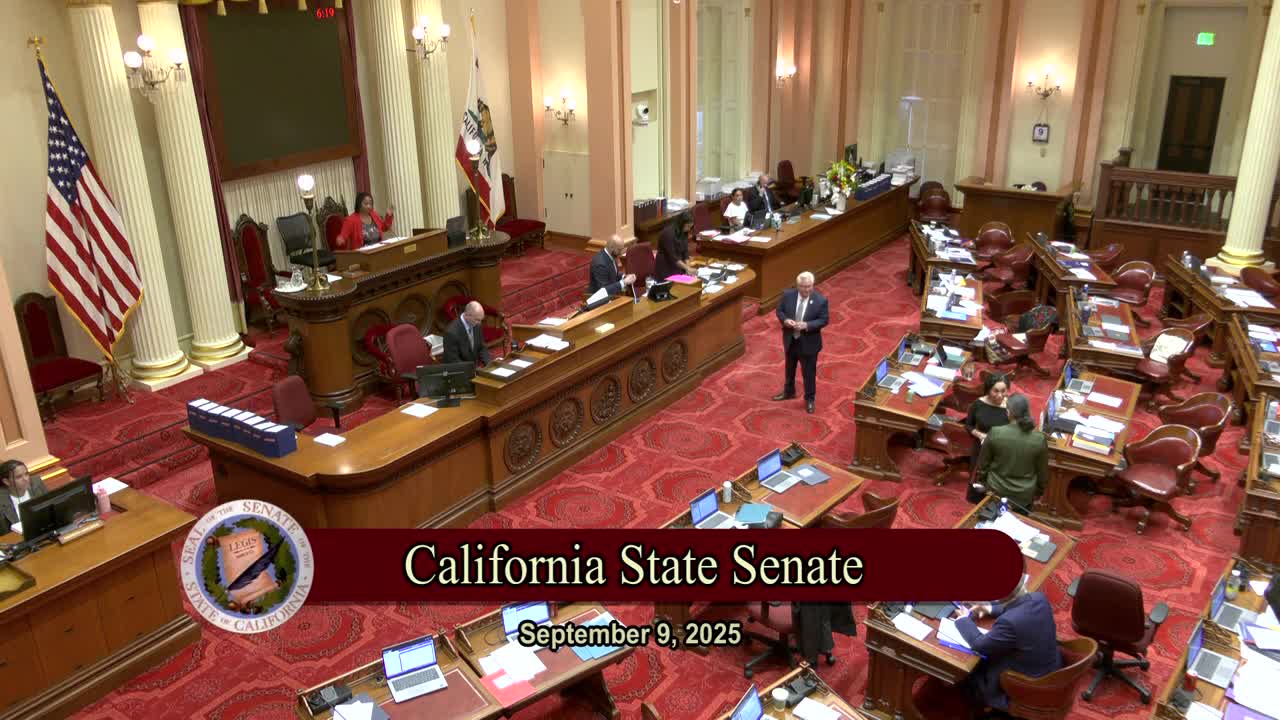
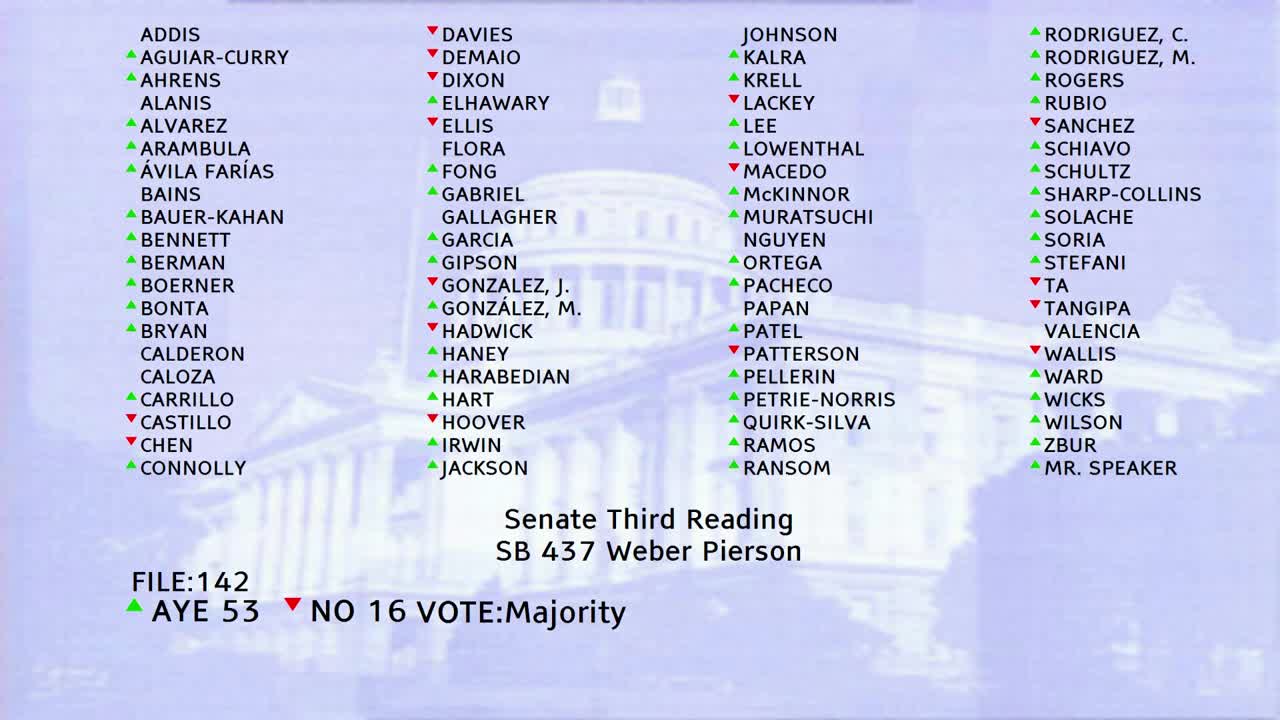
Bill Author