SB 499: Residential projects: fees and charges.
- Session Year: 2025-2026
- House: Senate
- Latest Version Date: 2025-10-10
Current Status:
Passed
(2025-10-10: Chaptered by Secretary of State. Chapter 543, Statutes of 2025.)
Introduced
In Committee
Awaiting First Chamber Vote
Passed First Chamber
In Committee
Awaiting Second Chamber Vote
Passed Second Chamber
Enacted
What does this bill do?
The bill lets local agencies collect utility service charges for new connections when an application for service is filed, and requires that any early-collected water or sewer connection charges not exceed the utility’s estimated reasonable cost to provide the service. It also clarifies that agencies may collect earlier payments for public-safety or emergency-related improvements and explicitly includes parkland and recreational facilities that a jurisdiction’s safety element or local hazard mitigation plan identifies for emergency use.
The summary is provided by generative AI which can make mistakes. For original language, please view the details in the table below.
Existing law, the Mitigation Fee Act, imposes various requirements with respect to the establishment, increase, or imposition of a fee by a local agency as a condition of approval of a development project. If a local agency imposes any fees or charges on designated residential developments for the construction of public improvements or facilities, existing law imposes various conditions on the fees and charges. Among these conditions, existing law prohibits the local agency from requiring the payment of those fees or charges until the date the first certificate of occupancy or first temporary certificate of occupancy is issued, whichever occurs first, except as specified. Existing law, for designated residential development projects, authorizes the local agency to collect utility service fees related to connections at the time an application for service is received if those fees do not exceed the costs incurred by the utility provider resulting from the connection activities.
This bill would additionally authorize a local agency to collect utility service charges related to connections at the time an application is received, as described above.
Existing law also authorizes a local agency to require the payment of fees or charges on designated residential developments for the construction of public improvements or facilities earlier than the date the first certificate of occupancy or first temporary certificate of occupancy is issued if the local agency determines that the fees or charges will be collected for public improvements or facilities related to providing water, sewer, or wastewater service to the residential development.
This bill would also require the fees or charges to be consistent with an existing provision of law prohibiting a local agency from imposing fees or charges for water or sewer connections that exceed the estimated reasonable cost for providing the service for which the fee or charge is imposed, except as specified.
Existing law also authorizes a local agency to require the payment of fees or charges on designated residential developments for the construction of public improvements or facilities earlier than the date the first certificate of occupancy or first temporary certificate of occupancy is issued if the local agency determines that the fees or charges will be collected for public improvements or facilities related to providing fire, public safety, and emergency services to the residential development.
This bill would revise that provision to specify that those public improvements or facilities related to providing fire, public safety, and emergency services include parkland and recreational facilities identified in the local agencys safety element or local hazard mitigation plan for an emergency purpose, as specified.
Existing law, the Mitigation Fee Act, imposes various requirements with respect to the establishment, increase, or imposition of a fee by a local agency as a condition of approval of a development project. If a local agency imposes any fees or charges on designated residential developments for the construction of public improvements or facilities, existing law imposes various conditions on the fees and charges. Among these conditions, existing law prohibits the local agency from requiring the payment of those fees or charges until the date the first certificate of occupancy or first temporary certificate of occupancy is issued, whichever occurs first, except as specified. Existing law, for designated residential development projects, authorizes the local agency to collect utility service fees related to connections at the time an application for service is received if those fees do not exceed the costs incurred by the utility provider resulting from the connection activities.
This bill would additionally authorize a local agency to collect utility service charges related to connections at the time an application is received, as described above.
Existing law also authorizes a local agency to require the payment of fees or charges on designated residential developments for the construction of public improvements or facilities earlier than the date the first certificate of occupancy or first temporary certificate of occupancy is issued if the local agency determines that the fees or charges will be collected for public improvements or facilities related to providing water, sewer, or wastewater service to the residential development.
This bill would also require the fees or charges to be consistent with an existing provision of law prohibiting a local agency from imposing fees or charges for water or sewer connections that exceed the estimated reasonable cost for providing the service for which the fee or charge is imposed, except as specified.
Existing law also authorizes a local agency to require the payment of those fees or charges on designated residential developments for the construction of public improvements or facilities earlier than the date the first certificate of occupancy or first temporary certificate of occupancy is issued if the local agency determines, among other things, determines that the fees or charges will be collected for, among other types of public improvements or facilities, for public improvements or facilities related to providing fire, public safety, and emergency services to the residential development.
This bill would revise that provision to specify that the those public improvements or facilities related to providing fire, public safety, and emergency services for which a local agency may require the earlier payment of fees and charges under the above-described provisions include parkland and recreational facilities identified in the local agencys safety element or local hazard mitigation plan for an emergency purpose, as specified.
Existing law, the Mitigation Fee Act, imposes various requirements with respect to the establishment, increase, or imposition of a fee by a local agency as a condition of approval of a development project. If a local agency imposes any fees or charges on designated residential developments for the construction of public improvements or facilities, existing law imposes various conditions on the fees and charges. Among these conditions, existing law prohibits the local agency from requiring the payment of those fees or charges until the date the first certificate of occupancy or first temporary certificate of occupancy is issued, whichever occurs first, except as specified. Existing law authorizes a local agency to require the payment of those fees or charges earlier if the local agency determines, among other things, that the fees or charges will be collected for, among other types of public improvements or facilities, public improvements or facilities related to providing fire, public safety, and emergency services to the residential development.
This bill would specify that the public improvements or facilities related to providing fire, public safety, and emergency services for which a local agency may require the earlier payment of fees and charges under the above-described provisions include parkland and recreational facilities identified in the local agencys safety element or local hazard mitigation plan for an emergency purpose, as specified. The bill would authorize a local hazard mitigation plan to be used in lieu of a safety element for this purpose until January 1, 2031.
Existing law, the Mitigation Fee Act, imposes various requirements with respect to the establishment, increase, or imposition of a fee by a local agency as a condition of approval of a development project. If a local agency imposes any fees or charges on designated residential developments for the construction of public improvements or facilities, existing law imposes various conditions on the fees and charges. Among these conditions, existing law prohibits the local agency from requiring the payment of those fees or charges until the date the first certificate of occupancy or first temporary certificate of occupancy is issued, whichever occurs first, except as specified. Existing law authorizes a local agency to require the payment of those fees or charges earlier if the local agency determines, among other things, that the fees or charges will be collected for, among other types of public improvements or facilities, public improvements or facilities related to providing fire, public safety, and emergency services to the residential development.
This bill would specify that the public improvements or facilities related to providing fire, public safety, and emergency services for which a local agency may require the earlier payment of fees and charges under the above-described provisions include parkland and recreational facilities when identified in the local agencys hazard mitigation plan or related general plan element for use in fire, public safety, and emergency services. safety element for an emergency purpose, as specified. The bill would authorize a local hazard mitigation plan to be used in lieu of a safety element for this purpose until January 1, 2031.
Existing law, the Mitigation Fee Act, imposes various requirements with respect to the establishment, increase, or imposition of a fee by a local agency as a condition of approval of a development project. If a local agency imposes any fees or charges on designated residential developments for the construction of public improvements or facilities, existing law imposes various conditions on the fees and charges. Among these conditions, existing law prohibits the local agency from requiring the payment of those fees or charges until the date the first certificate of occupancy or first temporary certificate of occupancy is issued, whichever occurs first, except as specified. Existing law authorizes a local agency to require the payment of those fees or charges earlier if the local agency determines, among other things, that the fees or charges will be collected for, among other types of public improvements or facilities, public improvements or facilities related to providing fire, public safety, and emergency services to the residential development.
This bill would specify that the public improvements or facilities related to providing fire, public safety, and emergency services for which a local agency may require the earlier payment of fees and charges under the above-described provisions include parkland and recreational facilities when identified in the local agencys hazard mitigation plan or related general plan element for those uses. use in fire, public safety, and emergency services.
Existing law, the Mitigation Fee Act, imposes various requirements with respect to the establishment, increase, or imposition of a fee by a local agency as a condition of approval of a development project. If a local agency imposes any fees or charges on designated residential developments for the construction of public improvements or facilities, existing law imposes various conditions on the fees and charges. Among these conditions, existing law prohibits the local agency from requiring the payment of those fees or charges until the date the first certificate of occupancy or first temporary certificate of occupancy is issued, whichever occurs first, except as specified. Existing law authorizes a local agency to require the payment of those fees or charges earlier if the local agency determines, among other things, that the fees or charges will be collected for, among other types of public improvements or facilities, public improvements or facilities related to providing fire, public safety, and emergency services to the residential development.
This bill would specify that the public improvements or facilities related to providing fire, public safety, and emergency services for which a local agency may require the earlier payment of fees and charges under the above-described provisions include parkland and recreational facilities when identified in the local agencys hazard mitigation plan or related general plan element for those uses.
Existing law requires the Director of Forestry and Fire Protection, until January 1, 2026, to establish a statewide program to allow qualified entities to support and augment the Department of Forestry and Fire Protection in its defensible space and home hardening assessment and education efforts. Existing law requires the director to establish a common reporting platform that allows defensible space and home hardening assessment data, collected by the qualified entities, to be reported to the department and requires the director to establish any necessary quality control measure to ensure that the assessment data is accurate and reliable. Existing law authorizes the director to use the assessment data, as specified. This bill would instead require the director to use that assessment data, as specified.Existing law requires the Director of Forestry and Fire Protection, until January 1, 2026, to establish a statewide program to allow qualified entities to support and augment the Department of Forestry and Fire Protection in its defensible space and home hardening assessment and education efforts. Existing law requires the director to establish a common reporting platform that allows defensible space and home hardening assessment data, collected by the qualified entities, to be reported to the department and requires the director to establish any necessary quality control measure to ensure that the assessment data is accurate and reliable. Existing law authorizes the director to use the assessment data, as specified.
This bill would instead require the director to use that assessment data, as specified.
(a)Except as otherwise provided in subdivisions (b) and (h), any local agency that imposes any fees or charges on a residential development for the construction of public improvements or facilities shall not require the payment of those fees or charges, notwithstanding any other provision of law, until the date of the final inspection, or the date the certificate of occupancy is issued, whichever occurs first. However, utility service fees related to connections may be collected at the time an application for service is received, provided that those fees do not exceed the costs incurred by the utility provider resulting from the connection activities. If the residential development contains more than one dwelling, the local agency may determine whether the fees or charges shall be paid on a pro rata basis for each dwelling when it receives its final inspection or certificate of occupancy, whichever occurs first; on a pro rata basis when a certain percentage of the dwellings have received their final inspection or certificate of occupancy, whichever occurs first; or on a lump-sum basis when the first dwelling in the development receives its final inspection or certificate of occupancy, whichever occurs first.
(b)(1)Notwithstanding subdivision (a), the local agency may require the payment of those fees or charges at an earlier time if (A) the local agency determines that the fees or charges will be collected for public improvements or facilities for which an account has been established and funds appropriated and for which the local agency has adopted a proposed construction schedule or plan before final inspection or issuance of the certificate of occupancy or (B) the fees or charges are to reimburse the local agency for expenditures previously made. Appropriated, as used in this subdivision, means authorization by the governing body of the local agency for which the fee is collected to make expenditures and incur obligations for specific purposes.
(2)(A)Paragraph (1) does not apply to units reserved for occupancy by lower income households included in a residential development proposed by a housing developer in which at least 49 percent of the total units are reserved for occupancy by lower income households, as defined in Section 50079.5 of the Health and Safety Code, at an affordable rent, as defined in Section 50053 of the Health and Safety Code. In addition to the contract that may be required under subdivision (d), a city, county, or city and county may require the posting of a performance bond or a letter of credit from a federally insured, recognized depository institution to guarantee payment of any fees or charges that are subject to this paragraph. Fees and charges exempted from paragraph (1) under this paragraph shall become immediately due and payable when the residential development no longer meets the requirements of this paragraph.
(B)The exception provided in subparagraph (A) does not apply to fees and charges levied pursuant to Chapter 6 (commencing with Section 17620) of Part 10.5 of Division 1 of Title 1 of the Education Code.
(c)All of the following apply to designated residential development projects:
(1)If a local agency imposes any fees or charges on the residential development for the construction of public improvements or facilities, then all of the following conditions apply:
(A)(i)Notwithstanding any other law, the local agency shall not require the payment of those fees or charges until the date the first certificate of occupancy or first temporary certificate of occupancy is issued, whichever occurs first.
(ii)Notwithstanding clause (i), utility service fees and charges related to connections may be collected at the time an application for service is received, provided that those fees and charges do not exceed the costs incurred by the utility provider resulting from the connection activities.
(iii)Clause (i) shall not apply if construction of the residential development does not begin within five years of the date upon which the building permit is issued.
(B)The amount of the fees and charges shall be the same amount as would have been paid had the fees and charges been paid prior to the issuance of building permits, and the local agency shall not charge interest or other fees on any amount deferred pursuant to this paragraph.
(C)If the development contains more than one dwelling, the local agency may determine whether the fees or charges described shall be paid on a pro rata basis for each dwelling when it receives its certificate of occupancy, on a pro rata basis when a certain percentage of the dwellings have received their certificate of occupancy, or on a lump-sum basis when all the dwellings in the development receive their certificate of occupancy.
(D)Notwithstanding any other law, the local agency may withhold a certificate of occupancy or a temporary certificate of occupancy until payment of those fees or charges is received.
(2)(A)Notwithstanding paragraph (1), the local agency may require the payment of those fees or charges at an earlier time if either of the following conditions is met:
(i)The fees or charges are to reimburse the local agency for expenditures previously made to the extent those expenditures have not been paid or reimbursed by another party.
(ii)The local agency determines both of the following:
(I)The fees or charges will be collected for any of the following public improvements or facilities:
(ia)Public improvements or facilities related to providing water service to the residential development consistent with Section 66013.
(ib)Public improvements or facilities related to providing sewer or wastewater service to the residential development consistent with Section 66013.
(ic)Public improvements or facilities related to providing fire, public safety, and emergency services to the residential development, including parkland and recreational facilities identified in its safety element or local hazard mitigation plan, provided the parkland and recreational facilities are identified for an emergency purpose beyond general recreational or aesthetic use.
(id)Roads, sidewalks, or other public improvements or facilities for the transportation of people that serve the development, including the acquisition of all property, easements, and rights-of-way that may be required to carry out the improvements or facilities.
(ie)Construction and rehabilitation of school facilities, if the school district governing board has approved a five-year school facilities master plan pursuant to subdivision (a) of Section 17070.54 of the Education Code. For purposes of this section, if the school district does not intend to participate in the school facilities program pursuant to Chapter 12.5 (commencing with Section 17070.10) of Part 10 of Division 1 of Title 1 of the Education Code, the school district is not required to submit the five-year school facilities master plan to the Department of General Services and the five-year school facilities master plan is not required to include information specific to the school facilities program pursuant to Chapter 12.5 (commencing with Section 17070.10) of Part 10 of Division 1 of Title 1 of the Education Code.
(II)An account has been established and funds appropriated for the public improvements or facilities described in subclause (I). Appropriated, as used in this subclause, means authorization by the governing body of the local agency for which the fee is collected to make expenditures and incur obligations for specific purposes.
(B)(i)Subparagraph (A) does not apply to units reserved for occupancy by lower income households included in a residential development proposed by a housing developer in which at least 49 percent of the total units are reserved for occupancy by lower income households, as defined in Section 50079.5 of the Health and Safety Code, at an affordable rent, as defined in Section 50053 of the Health and Safety Code. Fees and charges exempted from subparagraph (A) under this subparagraph shall become immediately due and payable when the residential development no longer meets the requirements of this subparagraph.
(ii)The exception provided in clause (i) does not apply to fees and charges levied pursuant to Chapter 6 (commencing with Section 17620) of Part 10.5 of Division 1 of Title 1 of the Education Code.
(iii)(I)The developer may elect to post a performance bond or a letter of credit from a federally insured, recognized depository institution to guarantee payment of any fees or charges that are subject to this subparagraph.
(II)If the developer does not post a performance bond or letter of credit pursuant to subclause (I), the city, county, or city and county may collect any fees and charges subject to this subparagraph that are not paid at the time the first certificate of occupancy or first temporary certificate of occupancy is issued, whichever occurs first, in accordance with the following procedure:
(ia)On or before August 10 of each year, the building official of the local agency shall furnish in writing to the county auditor a description of each parcel of land for which a performance bond or letter of credit has not been posted within the local agencys jurisdiction upon which fees or charges are unpaid and the amount of the unpaid fees or charges.
(ib)The amount of the unpaid fees or charges shall constitute a lien upon the land for which the fees or charges are unpaid.
(ic)The unpaid fees or charges shall be collected in the same manner and at the same time as county ad valorem taxes.
(id)The unpaid fees or charges shall be subject to the same penalties, lien priority, and procedure and sale in case of delinquency that apply to county ad valorem taxes.
(ie)All laws applicable to the levy, collection, and enforcement of county ad valorem taxes shall be applicable to the unpaid fees and charges.
(iv)Clause (iii) does not apply to projects that dedicate 100 percent of units, exclusive of a managers unit or units, to lower income households, as defined by Section 50079.5 of the Health and Safety Code, and have a recorded regulatory agreement with the California Tax Credit Allocation Committee, the California Debt Limit Allocation Committee, or the Department of Housing and Community Development.
(3)If the local agency does not issue certificates of occupancy for the type of residential developments described in this subdivision, the final inspection shall serve as the certificate of occupancy.
(4)For purposes of this subdivision, designated residential development project means a residential development project that meets any of the following conditions:
(A)The project dedicates 100 percent of units, exclusive of a managers unit or units, to lower income households, as defined by Section 50079.5 of the Health and Safety Code.
(B)The project meets the requirements described in Section 65662.
(C)The project is approved by a local government pursuant to Article 2 (commencing with Section 65912.110) or Article 3 (commencing with Section 65912.120) of Chapter 4.1.
(D)The project meets the requirements described in subdivision (a) of Section 65913.4.
(E)The project meets the criteria described in subdivision (c) of Section 65913.16.
(F)The project is entitled to a density bonus pursuant to subdivision (b) of Section 65915.
(G)The project includes 10 or fewer units.
(d)(1)If any fee or charge specified in subdivision (a) or (c) is not fully paid prior to issuance of a building permit for construction of any portion of the residential development encumbered thereby, the local agency issuing the building permit may require the property owner, or lessee if the lessees interest appears of record, as a condition of issuance of the building permit, to execute a contract to pay the fee or charge, or applicable portion thereof, within the time specified in subdivision (a) or (c). If the fee or charge is prorated pursuant to subdivision (a) or (c), the obligation under the contract shall be similarly prorated.
(2)The obligation to pay the fee or charge shall inure to the benefit of, and be enforceable by, the local agency that imposed the fee or charge, regardless of whether it is a party to the contract. The contract shall contain a legal description of the property affected, shall be recorded in the office of the county recorder of the county and, from the date of recordation, shall constitute a lien for the payment of the fee or charge, which shall be enforceable against successors in interest to the property owner or lessee at the time of issuance of the building permit. The contract shall be recorded in the grantor-grantee index in the name of the public agency issuing the building permit as grantee and in the name of the property owner or lessee as grantor. The local agency shall record a release of the obligation, containing a legal description of the property, in the event the obligation is paid in full, or a partial release in the event the fee or charge is prorated pursuant to subdivision (a) or (c).
(3)The contract may require the property owner or lessee to provide appropriate notification of the opening of any escrow for the sale of the property for which the building permit was issued and to provide in the escrow instructions that the fee or charge be paid to the local agency imposing the same from the sale proceeds in escrow prior to disbursing proceeds to the seller.
(4)The governing body of a local agency may authorize an officer or employee of the local agency to approve and execute contracts under this subdivision on behalf of the local agency.
(5)Before requiring execution of a contract under this subdivision, the local agency shall post a model form of contract on its internet website, if it maintains an internet website.
(e)This section applies only to fees collected by a local agency to fund the construction of public improvements or facilities. It does not apply to fees collected to cover the cost of code enforcement or inspection services, or to other fees collected to pay for the cost of enforcement of local ordinances or state law.
(f)Final inspection, temporary certificate of occupancy, or certificate of occupancy, as used in this section, has the same meaning as described in Sections 305 and 307 of the Uniform Building Code, International Conference of Building Officials, 1985 edition.
(g)Methods of complying with the requirement in subdivision (b) that a proposed construction schedule or plan be adopted, include, but are not limited to, (1) the adoption of the capital improvement plan described in Section 66002, or (2) the submittal of a five-year school facilities master plan approved by the applicable school district governing board pursuant to subdivision (a) of Section 17070.54 of the Education Code. For purposes of this section, if the school district does not intend to participate in the school facilities program pursuant to Chapter 12.5 (commencing with Section 17070.10) of Part 10 of Division 1 of Title 1 of the Education Code, the school district is not required to submit the five-year school facilities master plan to the Department of General Services and the five-year school facilities master plan is not required to include information specific to the school facilities program pursuant to Chapter 12.5 (commencing with Section 17070.10) of Part 10 of Division 1 of Title 1 of the Education Code.
(h)A local agency may defer the collection of one or more fees up to the close of escrow. This subdivision shall not apply to fees and charges levied pursuant to Chapter 6 (commencing with Section 17620) of Part 10.5 of Division 1 of Title 1 of the Education Code.
(a)Except as otherwise provided in subdivisions (b) and (h), any local agency that imposes any fees or charges on a residential development for the construction of public improvements or facilities shall not require the payment of those fees or charges, notwithstanding any other provision of law, until the date of the final inspection, or the date the certificate of occupancy is issued, whichever occurs first. However, utility service fees related to connections may be collected at the time an application for service is received, provided that those fees do not exceed the costs incurred by the utility provider resulting from the connection activities. If the residential development contains more than one dwelling, the local agency may determine whether the fees or charges shall be paid on a pro rata basis for each dwelling when it receives its final inspection or certificate of occupancy, whichever occurs first; on a pro rata basis when a certain percentage of the dwellings have received their final inspection or certificate of occupancy, whichever occurs first; or on a lump-sum basis when the first dwelling in the development receives its final inspection or certificate of occupancy, whichever occurs first.
(b)(1)Notwithstanding subdivision (a), the local agency may require the payment of those fees or charges at an earlier time if (A) the local agency determines that the fees or charges will be collected for public improvements or facilities for which an account has been established and funds appropriated and for which the local agency has adopted a proposed construction schedule or plan before final inspection or issuance of the certificate of occupancy or (B) the fees or charges are to reimburse the local agency for expenditures previously made. Appropriated, as used in this subdivision, means authorization by the governing body of the local agency for which the fee is collected to make expenditures and incur obligations for specific purposes.
(2)(A)Paragraph (1) does not apply to units reserved for occupancy by lower income households included in a residential development proposed by a housing developer in which at least 49 percent of the total units are reserved for occupancy by lower income households, as defined in Section 50079.5 of the Health and Safety Code, at an affordable rent, as defined in Section 50053 of the Health and Safety Code. In addition to the contract that may be required under subdivision (d), a city, county, or city and county may require the posting of a performance bond or a letter of credit from a federally insured, recognized depository institution to guarantee payment of any fees or charges that are subject to this paragraph. Fees and charges exempted from paragraph (1) under this paragraph shall become immediately due and payable when the residential development no longer meets the requirements of this paragraph.
(B)The exception provided in subparagraph (A) does not apply to fees and charges levied pursuant to Chapter 6 (commencing with Section 17620) of Part 10.5 of Division 1 of Title 1 of the Education Code.
(c)All of the following apply to designated residential development projects:
(1)If a local agency imposes any fees or charges on the residential development for the construction of public improvements or facilities, then all of the following conditions apply:
(A)(i)Notwithstanding any other law, the local agency shall not require the payment of those fees or charges until the date the first certificate of occupancy or first temporary certificate of occupancy is issued, whichever occurs first.
(ii)Notwithstanding clause (i), utility service fees and charges related to connections may be collected at the time an application for service is received, provided that those fees and charges do not exceed the costs incurred by the utility provider resulting from the connection activities.
(iii)Clause (i) shall not apply if construction of the residential development does not begin within five years of the date upon which the building permit is issued.
(B)The amount of the fees and charges shall be the same amount as would have been paid had the fees and charges been paid prior to the issuance of building permits, and the local agency shall not charge interest or other fees on any amount deferred pursuant to this paragraph.
(C)If the development contains more than one dwelling, the local agency may determine whether the fees or charges described shall be paid on a pro rata basis for each dwelling when it receives its certificate of occupancy, on a pro rata basis when a certain percentage of the dwellings have received their certificate of occupancy, or on a lump-sum basis when all the dwellings in the development receive their certificate of occupancy.
(D)Notwithstanding any other law, the local agency may withhold a certificate of occupancy or a temporary certificate of occupancy until payment of those fees or charges is received.
(2)(A)Notwithstanding paragraph (1), the local agency may require the payment of those fees or charges at an earlier time if either of the following conditions is met:
(i)The fees or charges are to reimburse the local agency for expenditures previously made to the extent those expenditures have not been paid or reimbursed by another party.
(ii)The local agency determines both of the following:
(I)The fees or charges will be collected for any of the following public improvements or facilities:
(ia)Public improvements or facilities related to providing water service to the residential development. development consistent with Section 66013.
(ib)Public improvements or facilities related to providing sewer or wastewater service to the residential development. development consistent with Section 66013.
(ic)Public improvements or facilities related to providing fire, public safety, and emergency services to the residential development. development, including parkland and recreational facilities identified in its safety element or local hazard mitigation plan, provided the parkland and recreational facilities are identified for an emergency purpose beyond general recreational or aesthetic use.
(id)Roads, sidewalks, or other public improvements or facilities for the transportation of people that serve the development, including the acquisition of all property, easements, and rights-of-way that may be required to carry out the improvements or facilities.
(ie)Construction and rehabilitation of school facilities, if the school district governing board has approved a five-year school facilities master plan pursuant to subdivision (a) of Section 17070.54 of the Education Code. For purposes of this section, if the school district does not intend to participate in the school facilities program pursuant to Chapter 12.5 (commencing with Section 17070.10) of Part 10 of Division 1 of Title 1 of the Education Code, the school district is not required to submit the five-year school facilities master plan to the Department of General Services and the five-year school facilities master plan is not required to include information specific to the school facilities program pursuant to Chapter 12.5 (commencing with Section 17070.10) of Part 10 of Division 1 of Title 1 of the Education Code.
(II)An account has been established and funds appropriated for the public improvements or facilities described in subclause (I). Appropriated, as used in this subclause, means authorization by the governing body of the local agency for which the fee is collected to make expenditures and incur obligations for specific purposes.
(B)(i)Subparagraph (A) does not apply to units reserved for occupancy by lower income households included in a residential development proposed by a housing developer in which at least 49 percent of the total units are reserved for occupancy by lower income households, as defined in Section 50079.5 of the Health and Safety Code, at an affordable rent, as defined in Section 50053 of the Health and Safety Code. Fees and charges exempted from subparagraph (A) under this subparagraph shall become immediately due and payable when the residential development no longer meets the requirements of this subparagraph.
(ii)The exception provided in clause (i) does not apply to fees and charges levied pursuant to Chapter 6 (commencing with Section 17620) of Part 10.5 of Division 1 of Title 1 of the Education Code.
(iii)(I)The developer may elect to post a performance bond or a letter of credit from a federally insured, recognized depository institution to guarantee payment of any fees or charges that are subject to this subparagraph.
(II)If the developer does not post a performance bond or letter of credit pursuant to subclause (I), the city, county, or city and county may collect any fees and charges subject to this subparagraph that are not paid at the time the first certificate of occupancy or first temporary certificate of occupancy is issued, whichever occurs first, in accordance with the following procedure:
(ia)On or before August 10 of each year, the building official of the local agency shall furnish in writing to the county auditor a description of each parcel of land for which a performance bond or letter of credit has not been posted within the local agencys jurisdiction upon which fees or charges are unpaid and the amount of the unpaid fees or charges.
(ib)The amount of the unpaid fees or charges shall constitute a lien upon the land for which the fees or charges are unpaid.
(ic)The unpaid fees or charges shall be collected in the same manner and at the same time as county ad valorem taxes.
(id)The unpaid fees or charges shall be subject to the same penalties, lien priority, and procedure and sale in case of delinquency that apply to county ad valorem taxes.
(ie)All laws applicable to the levy, collection, and enforcement of county ad valorem taxes shall be applicable to the unpaid fees and charges.
(iv)Clause (iii) does not apply to projects that dedicate 100 percent of units, exclusive of a managers unit or units, to lower income households, as defined by Section 50079.5 of the Health and Safety Code, and have a recorded regulatory agreement with the California Tax Credit Allocation Committee, the California Debt Limit Allocation Committee, or the Department of Housing and Community Development.
(3)If the local agency does not issue certificates of occupancy for the type of residential developments described in this subdivision, the final inspection shall serve as the certificate of occupancy.
(4)For purposes of this subdivision, designated residential development project means a residential development project that meets any of the following conditions:
(A)The project dedicates 100 percent of units, exclusive of a managers unit or units, to lower income households, as defined by Section 50079.5 of the Health and Safety Code.
(B)The project meets the requirements described in Section 65662.
(C)The project is approved by a local government pursuant to Article 2 (commencing with Section 65912.110) or Article 3 (commencing with Section 65912.120) of Chapter 4.1.
(D)The project meets the requirements described in subdivision (a) of Section 65913.4.
(E)The project meets the criteria described in subdivision (c) of Section 65913.16.
(F)The project is entitled to a density bonus pursuant to subdivision (b) of Section 65915.
(G)The project includes 10 or fewer units.
(d)(1)If any fee or charge specified in subdivision (a) or (c) is not fully paid prior to issuance of a building permit for construction of any portion of the residential development encumbered thereby, the local agency issuing the building permit may require the property owner, or lessee if the lessees interest appears of record, as a condition of issuance of the building permit, to execute a contract to pay the fee or charge, or applicable portion thereof, within the time specified in subdivision (a) or (c). If the fee or charge is prorated pursuant to subdivision (a) or (c), the obligation under the contract shall be similarly prorated.
(2)The obligation to pay the fee or charge shall inure to the benefit of, and be enforceable by, the local agency that imposed the fee or charge, regardless of whether it is a party to the contract. The contract shall contain a legal description of the property affected, shall be recorded in the office of the county recorder of the county and, from the date of recordation, shall constitute a lien for the payment of the fee or charge, which shall be enforceable against successors in interest to the property owner or lessee at the time of issuance of the building permit. The contract shall be recorded in the grantor-grantee index in the name of the public agency issuing the building permit as grantee and in the name of the property owner or lessee as grantor. The local agency shall record a release of the obligation, containing a legal description of the property, in the event the obligation is paid in full, or a partial release in the event the fee or charge is prorated pursuant to subdivision (a) or (c).
(3)The contract may require the property owner or lessee to provide appropriate notification of the opening of any escrow for the sale of the property for which the building permit was issued and to provide in the escrow instructions that the fee or charge be paid to the local agency imposing the same from the sale proceeds in escrow prior to disbursing proceeds to the seller.
(4)The governing body of a local agency may authorize an officer or employee of the local agency to approve and execute contracts under this subdivision on behalf of the local agency.
(5)Before requiring execution of a contract under this subdivision, the local agency shall post a model form of contract on its internet website, if it maintains an internet website.
(e)This section applies only to fees collected by a local agency to fund the construction of public improvements or facilities. It does not apply to fees collected to cover the cost of code enforcement or inspection services, or to other fees collected to pay for the cost of enforcement of local ordinances or state law.
(f)Final inspection, temporary certificate of occupancy, or certificate of occupancy, as used in this section, has the same meaning as described in Sections 305 and 307 of the Uniform Building Code, International Conference of Building Officials, 1985 edition.
(g)Methods of complying with the requirement in subdivision (b) that a proposed construction schedule or plan be adopted, include, but are not limited to, (1) the adoption of the capital improvement plan described in Section 66002, or (2) the submittal of a five-year school facilities master plan approved by the applicable school district governing board pursuant to subdivision (a) of Section 17070.54 of the Education Code. For purposes of this section, if the school district does not intend to participate in the school facilities program pursuant to Chapter 12.5 (commencing with Section 17070.10) of Part 10 of Division 1 of Title 1 of the Education Code, the school district is not required to submit the five-year school facilities master plan to the Department of General Services and the five-year school facilities master plan is not required to include information specific to the school facilities program pursuant to Chapter 12.5 (commencing with Section 17070.10) of Part 10 of Division 1 of Title 1 of the Education Code.
(h)A local agency may defer the collection of one or more fees up to the close of escrow. This subdivision shall not apply to fees and charges levied pursuant to Chapter 6 (commencing with Section 17620) of Part 10.5 of Division 1 of Title 1 of the Education Code.
SECTION 1.Section 66007 of the Government Code is amended to read:66007.(a)Except as otherwise provided in subdivisions (b) and (h), any local agency that imposes any fees or charges on a residential development for the construction of public improvements or facilities shall not require the payment of those fees or charges, notwithstanding any other provision of law, until the date of the final inspection, or the date the certificate of occupancy is issued, whichever occurs first. However, utility service fees related to connections may be collected at the time an application for service is received, provided that those fees do not exceed the costs incurred by the utility provider resulting from the connection activities. If the residential development contains more than one dwelling, the local agency may determine whether the fees or charges shall be paid on a pro rata basis for each dwelling when it receives its final inspection or certificate of occupancy, whichever occurs first; on a pro rata basis when a certain percentage of the dwellings have received their final inspection or certificate of occupancy, whichever occurs first; or on a lump-sum basis when the first dwelling in the development receives its final inspection or certificate of occupancy, whichever occurs first.(b)(1)Notwithstanding subdivision (a), the local agency may require the payment of those fees or charges at an earlier time if (A) the local agency determines that the fees or charges will be collected for public improvements or facilities for which an account has been established and funds appropriated and for which the local agency has adopted a proposed construction schedule or plan before final inspection or issuance of the certificate of occupancy or (B) the fees or charges are to reimburse the local agency for expenditures previously made. Appropriated, as used in this subdivision, means authorization by the governing body of the local agency for which the fee is collected to make expenditures and incur obligations for specific purposes.(2)(A)Paragraph (1) does not apply to units reserved for occupancy by lower income households included in a residential development proposed by a housing developer in which at least 49 percent of the total units are reserved for occupancy by lower income households, as defined in Section 50079.5 of the Health and Safety Code, at an affordable rent, as defined in Section 50053 of the Health and Safety Code. In addition to the contract that may be required under subdivision (d), a city, county, or city and county may require the posting of a performance bond or a letter of credit from a federally insured, recognized depository institution to guarantee payment of any fees or charges that are subject to this paragraph. Fees and charges exempted from paragraph (1) under this paragraph shall become immediately due and payable when the residential development no longer meets the requirements of this paragraph.(B)The exception provided in subparagraph (A) does not apply to fees and charges levied pursuant to Chapter 6 (commencing with Section 17620) of Part 10.5 of Division 1 of Title 1 of the Education Code.(c)All of the following apply to designated residential development projects:(1)If a local agency imposes any fees or charges on the residential development for the construction of public improvements or facilities, then all of the following conditions apply:(A)(i)Notwithstanding any other law, the local agency shall not require the payment of those fees or charges until the date the first certificate of occupancy or first temporary certificate of occupancy is issued, whichever occurs first.(ii)Notwithstanding clause (i), utility service fees related to connections may be collected at the time an application for service is received, provided that those fees do not exceed the costs incurred by the utility provider resulting from the connection activities.(iii)Clause (i) shall not apply if construction of the residential development does not begin within five years of the date upon which the building permit is issued.(B)The amount of the fees and charges shall be the same amount as would have been paid had the fees and charges been paid prior to the issuance of building permits, and the local agency shall not charge interest or other fees on any amount deferred pursuant to this paragraph.(C)If the development contains more than one dwelling, the local agency may determine whether the fees or charges described shall be paid on a pro rata basis for each dwelling when it receives its certificate of occupancy, on a pro rata basis when a certain percentage of the dwellings have received their certificate of occupancy, or on a lump-sum basis when all the dwellings in the development receive their certificate of occupancy.(D)Notwithstanding any other law, the local agency may withhold a certificate of occupancy or a temporary certificate of occupancy until payment of those fees or charges is received.(2)(A)Notwithstanding paragraph (1), the local agency may require the payment of those fees or charges at an earlier time if either of the following conditions is met:(i)The fees or charges are to reimburse the local agency for expenditures previously made to the extent those expenditures have not been paid or reimbursed by another party.(ii)The local agency determines both of the following:(I)The fees or charges will be collected for any of the following public improvements or facilities:(ia)Public improvements or facilities related to providing water service to the residential development.(ib)Public improvements or facilities related to providing sewer or wastewater service to the residential development.(ic)Public improvements or facilities related to providing fire, public safety, and emergency services to the residential development, including parkland and recreational facilities identified in its safety element or local hazard mitigation plan, provided the parkland and recreational facilities are identified for an emergency purpose beyond general recreational or aesthetic use.(id)Roads, sidewalks, or other public improvements or facilities for the transportation of people that serve the development, including the acquisition of all property, easements, and rights-of-way that may be required to carry out the improvements or facilities.(ie)Construction and rehabilitation of school facilities, if a school district has a five-year plan pursuant to subdivision (c) of Section 17017.5 of the Education Code.(II)An account has been established and funds appropriated for the public improvements or facilities described in subclause (I). Appropriated, as used in this subclause, means authorization by the governing body of the local agency for which the fee is collected to make expenditures and incur obligations for specific purposes.(B)(i)Subparagraph (A) does not apply to units reserved for occupancy by lower income households included in a residential development proposed by a housing developer in which at least 49 percent of the total units are reserved for occupancy by lower income households, as defined in Section 50079.5 of the Health and Safety Code, at an affordable rent, as defined in Section 50053 of the Health and Safety Code. Fees and charges exempted from subparagraph (A) under this subparagraph shall become immediately due and payable when the residential development no longer meets the requirements of this subparagraph.(ii)The exception provided in clause (i) does not apply to fees and charges levied pursuant to Chapter 6 (commencing with Section 17620) of Part 10.5 of Division 1 of Title 1 of the Education Code.(iii)(I)The developer may elect to post a performance bond or a letter of credit from a federally insured, recognized depository institution to guarantee payment of any fees or charges that are subject to this subparagraph.(II)If the developer does not post a performance bond or letter of credit pursuant to subclause (I), the city, county, or city and county may collect any fees and charges subject to this subparagraph that are not paid at the time the first certificate of occupancy or first temporary certificate of occupancy is issued, whichever occurs first, in accordance with the following procedure:(ia)On or before August 10 of each year, the building official of the local agency shall furnish in writing to the county auditor a description of each parcel of land for which a performance bond or letter of credit has not been posted within the local agencys jurisdiction upon which fees or charges are unpaid and the amount of the unpaid fees or charges.(ib)The amount of the unpaid fees or charges shall constitute a lien upon the land for which the fees or charges are unpaid.(ic)The unpaid fees or charges shall be collected in the same manner and at the same time as county ad valorem taxes.(id)The unpaid fees or charges shall be subject to the same penalties, lien priority, and procedure and sale in case of delinquency that apply to county ad valorem taxes.(ie)All laws applicable to the levy, collection, and enforcement of county ad valorem taxes shall be applicable to the unpaid fees and charges.(iv)Clause (iii) does not apply to projects that dedicate 100 percent of units, exclusive of a managers unit or units, to lower income households, as defined by Section 50079.5 of the Health and Safety Code, and have a recorded regulatory agreement with the California Tax Credit Allocation Committee, the California Debt Limit Allocation Committee, or the Department of Housing and Community Development.(3)If the local agency does not issue certificates of occupancy for the type of residential developments described in this subdivision, the final inspection shall serve as the certificate of occupancy.(4)For purposes of this subdivision, designated residential development project means a residential development project that meets any of the following conditions:(A)The project dedicates 100 percent of units, exclusive of a managers unit or units, to lower income households, as defined by Section 50079.5 of the Health and Safety Code.(B)The project meets the requirements described in Section 65662.(C)The project is approved by a local government pursuant to Article 2 (commencing with Section 65912.110) or Article 3 (commencing with Section 65912.120) of Chapter 4.1.(D)The project meets the requirements described in subdivision (a) of Section 65913.4.(E)The project meets the criteria described in subdivision (c) of Section 65913.16.(F)The project is entitled to a density bonus pursuant to subdivision (b) of Section 65915.(G)The project includes 10 or fewer units.(d)(1)If any fee or charge specified in subdivision (a) or (c) is not fully paid prior to issuance of a building permit for construction of any portion of the residential development encumbered thereby, the local agency issuing the building permit may require the property owner, or lessee if the lessees interest appears of record, as a condition of issuance of the building permit, to execute a contract to pay the fee or charge, or applicable portion thereof, within the time specified in subdivision (a) or (c). If the fee or charge is prorated pursuant to subdivision (a) or (c), the obligation under the contract shall be similarly prorated.(2)The obligation to pay the fee or charge shall inure to the benefit of, and be enforceable by, the local agency that imposed the fee or charge, regardless of whether it is a party to the contract. The contract shall contain a legal description of the property affected, shall be recorded in the office of the county recorder of the county and, from the date of recordation, shall constitute a lien for the payment of the fee or charge, which shall be enforceable against successors in interest to the property owner or lessee at the time of issuance of the building permit. The contract shall be recorded in the grantor-grantee index in the name of the public agency issuing the building permit as grantee and in the name of the property owner or lessee as grantor. The local agency shall record a release of the obligation, containing a legal description of the property, in the event the obligation is paid in full, or a partial release in the event the fee or charge is prorated pursuant to subdivision (a) or (c).(3)The contract may require the property owner or lessee to provide appropriate notification of the opening of any escrow for the sale of the property for which the building permit was issued and to provide in the escrow instructions that the fee or charge be paid to the local agency imposing the same from the sale proceeds in escrow prior to disbursing proceeds to the seller.(4)The governing body of a local agency may authorize an officer or employee of the local agency to approve and execute contracts under this subdivision on behalf of the local agency.(5)Before requiring execution of a contract under this subdivision, the local agency shall post a model form of contract on its internet website, if it maintains an internet website.(e)This section applies only to fees collected by a local agency to fund the construction of public improvements or facilities. It does not apply to fees collected to cover the cost of code enforcement or inspection services, or to other fees collected to pay for the cost of enforcement of local ordinances or state law.(f)Final inspection, temporary certificate of occupancy, or certificate of occupancy, as used in this section, has the same meaning as described in Sections 305 and 307 of the Uniform Building Code, International Conference of Building Officials, 1985 edition.(g)Methods of complying with the requirement in subdivision (b) that a proposed construction schedule or plan be adopted, include, but are not limited to, (1) the adoption of the capital improvement plan described in Section 66002, or (2) the submittal of a five-year plan for construction and rehabilitation of school facilities pursuant to subdivision (c) of Section 17017.5 of the Education Code.(h)A local agency may defer the collection of one or more fees up to the close of escrow. This subdivision shall not apply to fees and charges levied pursuant to Chapter 6 (commencing with Section 17620) of Part 10.5 of Division 1 of Title 1 of the Education Code.(a)Except as otherwise provided in subdivisions (b) and (h), any local agency that imposes any fees or charges on a residential development for the construction of public improvements or facilities shall not require the payment of those fees or charges, notwithstanding any other provision of law, until the date of the final inspection, or the date the certificate of occupancy is issued, whichever occurs first. However, utility service fees related to connections may be collected at the time an application for service is received, provided that those fees do not exceed the costs incurred by the utility provider resulting from the connection activities. If the residential development contains more than one dwelling, the local agency may determine whether the fees or charges shall be paid on a pro rata basis for each dwelling when it receives its final inspection or certificate of occupancy, whichever occurs first; on a pro rata basis when a certain percentage of the dwellings have received their final inspection or certificate of occupancy, whichever occurs first; or on a lump-sum basis when the first dwelling in the development receives its final inspection or certificate of occupancy, whichever occurs first.
(b)(1)Notwithstanding subdivision (a), the local agency may require the payment of those fees or charges at an earlier time if (A) the local agency determines that the fees or charges will be collected for public improvements or facilities for which an account has been established and funds appropriated and for which the local agency has adopted a proposed construction schedule or plan before final inspection or issuance of the certificate of occupancy or (B) the fees or charges are to reimburse the local agency for expenditures previously made. Appropriated, as used in this subdivision, means authorization by the governing body of the local agency for which the fee is collected to make expenditures and incur obligations for specific purposes.
(2)(A)Paragraph (1) does not apply to units reserved for occupancy by lower income households included in a residential development proposed by a housing developer in which at least 49 percent of the total units are reserved for occupancy by lower income households, as defined in Section 50079.5 of the Health and Safety Code, at an affordable rent, as defined in Section 50053 of the Health and Safety Code. In addition to the contract that may be required under subdivision (d), a city, county, or city and county may require the posting of a performance bond or a letter of credit from a federally insured, recognized depository institution to guarantee payment of any fees or charges that are subject to this paragraph. Fees and charges exempted from paragraph (1) under this paragraph shall become immediately due and payable when the residential development no longer meets the requirements of this paragraph.
(B)The exception provided in subparagraph (A) does not apply to fees and charges levied pursuant to Chapter 6 (commencing with Section 17620) of Part 10.5 of Division 1 of Title 1 of the Education Code.
(c)All of the following apply to designated residential development projects:
(1)If a local agency imposes any fees or charges on the residential development for the construction of public improvements or facilities, then all of the following conditions apply:
(A)(i)Notwithstanding any other law, the local agency shall not require the payment of those fees or charges until the date the first certificate of occupancy or first temporary certificate of occupancy is issued, whichever occurs first.
(ii)Notwithstanding clause (i), utility service fees related to connections may be collected at the time an application for service is received, provided that those fees do not exceed the costs incurred by the utility provider resulting from the connection activities.
(iii)Clause (i) shall not apply if construction of the residential development does not begin within five years of the date upon which the building permit is issued.
(B)The amount of the fees and charges shall be the same amount as would have been paid had the fees and charges been paid prior to the issuance of building permits, and the local agency shall not charge interest or other fees on any amount deferred pursuant to this paragraph.
(C)If the development contains more than one dwelling, the local agency may determine whether the fees or charges described shall be paid on a pro rata basis for each dwelling when it receives its certificate of occupancy, on a pro rata basis when a certain percentage of the dwellings have received their certificate of occupancy, or on a lump-sum basis when all the dwellings in the development receive their certificate of occupancy.
(D)Notwithstanding any other law, the local agency may withhold a certificate of occupancy or a temporary certificate of occupancy until payment of those fees or charges is received.
(2)(A)Notwithstanding paragraph (1), the local agency may require the payment of those fees or charges at an earlier time if either of the following conditions is met:
(i)The fees or charges are to reimburse the local agency for expenditures previously made to the extent those expenditures have not been paid or reimbursed by another party.
(ii)The local agency determines both of the following:
(I)The fees or charges will be collected for any of the following public improvements or facilities:
(ia)Public improvements or facilities related to providing water service to the residential development.
(ib)Public improvements or facilities related to providing sewer or wastewater service to the residential development.
(ic)(Ia)Public improvements or facilities related to providing fire, public safety, and emergency services to the residential development, including parkland and recreational facilities identified in its safety element, element or local hazard mitigation plan, provided the parkland and recreational facilities are identified for an emergency purpose beyond general recreational or aesthetic use.
(Ib)For purposes of this sub-subclause, a local hazard mitigation plan may be used in lieu of a safety element until January 1, 2031.(id)Roads, sidewalks, or other public improvements or facilities for the transportation of people that serve the development, including the acquisition of all property, easements, and rights-of-way that may be required to carry out the improvements or facilities.
(ie)Construction and rehabilitation of school facilities, if a school district has a five-year plan pursuant to subdivision (c) of Section 17017.5 of the Education Code.
(II)An account has been established and funds appropriated for the public improvements or facilities described in subclause (I). Appropriated, as used in this subclause, means authorization by the governing body of the local agency for which the fee is collected to make expenditures and incur obligations for specific purposes.
(B)(i)Subparagraph (A) does not apply to units reserved for occupancy by lower income households included in a residential development proposed by a housing developer in which at least 49 percent of the total units are reserved for occupancy by lower income households, as defined in Section 50079.5 of the Health and Safety Code, at an affordable rent, as defined in Section 50053 of the Health and Safety Code. Fees and charges exempted from subparagraph (A) under this subparagraph shall become immediately due and payable when the residential development no longer meets the requirements of this subparagraph.
(ii)The exception provided in clause (i) does not apply to fees and charges levied pursuant to Chapter 6 (commencing with Section 17620) of Part 10.5 of Division 1 of Title 1 of the Education Code.
(iii)(I)The developer may elect to post a performance bond or a letter of credit from a federally insured, recognized depository institution to guarantee payment of any fees or charges that are subject to this subparagraph.
(II)If the developer does not post a performance bond or letter of credit pursuant to subclause (I), the city, county, or city and county may collect any fees and charges subject to this subparagraph that are not paid at the time the first certificate of occupancy or first temporary certificate of occupancy is issued, whichever occurs first, in accordance with the following procedure:
(ia)On or before August 10 of each year, the building official of the local agency shall furnish in writing to the county auditor a description of each parcel of land for which a performance bond or letter of credit has not been posted within the local agencys jurisdiction upon which fees or charges are unpaid and the amount of the unpaid fees or charges.
(ib)The amount of the unpaid fees or charges shall constitute a lien upon the land for which the fees or charges are unpaid.
(ic)The unpaid fees or charges shall be collected in the same manner and at the same time as county ad valorem taxes.
(id)The unpaid fees or charges shall be subject to the same penalties, lien priority, and procedure and sale in case of delinquency that apply to county ad valorem taxes.
(ie)All laws applicable to the levy, collection, and enforcement of county ad valorem taxes shall be applicable to the unpaid fees and charges.
(iv)Clause (iii) does not apply to projects that dedicate 100 percent of units, exclusive of a managers unit or units, to lower income households, as defined by Section 50079.5 of the Health and Safety Code, and have a recorded regulatory agreement with the California Tax Credit Allocation Committee, the California Debt Limit Allocation Committee, or the Department of Housing and Community Development.
(3)If the local agency does not issue certificates of occupancy for the type of residential developments described in this subdivision, the final inspection shall serve as the certificate of occupancy.
(4)For purposes of this subdivision, designated residential development project means a residential development project that meets any of the following conditions:
(A)The project dedicates 100 percent of units, exclusive of a managers unit or units, to lower income households, as defined by Section 50079.5 of the Health and Safety Code.
(B)The project meets the requirements described in Section 65662.
(C)The project is approved by a local government pursuant to Article 2 (commencing with Section 65912.110) or Article 3 (commencing with Section 65912.120) of Chapter 4.1.
(D)The project meets the requirements described in subdivision (a) of Section 65913.4.
(E)The project meets the criteria described in subdivision (c) of Section 65913.16.
(F)The project is entitled to a density bonus pursuant to subdivision (b) of Section 65915.
(G)The project includes 10 or fewer units.
(d)(1)If any fee or charge specified in subdivision (a) or (c) is not fully paid prior to issuance of a building permit for construction of any portion of the residential development encumbered thereby, the local agency issuing the building permit may require the property owner, or lessee if the lessees interest appears of record, as a condition of issuance of the building permit, to execute a contract to pay the fee or charge, or applicable portion thereof, within the time specified in subdivision (a) or (c). If the fee or charge is prorated pursuant to subdivision (a) or (c), the obligation under the contract shall be similarly prorated.
(2)The obligation to pay the fee or charge shall inure to the benefit of, and be enforceable by, the local agency that imposed the fee or charge, regardless of whether it is a party to the contract. The contract shall contain a legal description of the property affected, shall be recorded in the office of the county recorder of the county and, from the date of recordation, shall constitute a lien for the payment of the fee or charge, which shall be enforceable against successors in interest to the property owner or lessee at the time of issuance of the building permit. The contract shall be recorded in the grantor-grantee index in the name of the public agency issuing the building permit as grantee and in the name of the property owner or lessee as grantor. The local agency shall record a release of the obligation, containing a legal description of the property, in the event the obligation is paid in full, or a partial release in the event the fee or charge is prorated pursuant to subdivision (a) or (c).
(3)The contract may require the property owner or lessee to provide appropriate notification of the opening of any escrow for the sale of the property for which the building permit was issued and to provide in the escrow instructions that the fee or charge be paid to the local agency imposing the same from the sale proceeds in escrow prior to disbursing proceeds to the seller.
(4)The governing body of a local agency may authorize an officer or employee of the local agency to approve and execute contracts under this subdivision on behalf of the local agency.
(5)Before requiring execution of a contract under this subdivision, the local agency shall post a model form of contract on its internet website, if it maintains an internet website.
(e)This section applies only to fees collected by a local agency to fund the construction of public improvements or facilities. It does not apply to fees collected to cover the cost of code enforcement or inspection services, or to other fees collected to pay for the cost of enforcement of local ordinances or state law.
(f)Final inspection, temporary certificate of occupancy, or certificate of occupancy, as used in this section, has the same meaning as described in Sections 305 and 307 of the Uniform Building Code, International Conference of Building Officials, 1985 edition.
(g)Methods of complying with the requirement in subdivision (b) that a proposed construction schedule or plan be adopted, include, but are not limited to, (1) the adoption of the capital improvement plan described in Section 66002, or (2) the submittal of a five-year plan for construction and rehabilitation of school facilities pursuant to subdivision (c) of Section 17017.5 of the Education Code.
(h)A local agency may defer the collection of one or more fees up to the close of escrow. This subdivision shall not apply to fees and charges levied pursuant to Chapter 6 (commencing with Section 17620) of Part 10.5 of Division 1 of Title 1 of the Education Code.
(a)Except as otherwise provided in subdivisions (b) and (h), any local agency that imposes any fees or charges on a residential development for the construction of public improvements or facilities shall not require the payment of those fees or charges, notwithstanding any other provision of law, until the date of the final inspection, or the date the certificate of occupancy is issued, whichever occurs first. However, utility service fees related to connections may be collected at the time an application for service is received, provided that those fees do not exceed the costs incurred by the utility provider resulting from the connection activities. If the residential development contains more than one dwelling, the local agency may determine whether the fees or charges shall be paid on a pro rata basis for each dwelling when it receives its final inspection or certificate of occupancy, whichever occurs first; on a pro rata basis when a certain percentage of the dwellings have received their final inspection or certificate of occupancy, whichever occurs first; or on a lump-sum basis when the first dwelling in the development receives its final inspection or certificate of occupancy, whichever occurs first.
(b)(1)Notwithstanding subdivision (a), the local agency may require the payment of those fees or charges at an earlier time if (A) the local agency determines that the fees or charges will be collected for public improvements or facilities for which an account has been established and funds appropriated and for which the local agency has adopted a proposed construction schedule or plan before final inspection or issuance of the certificate of occupancy or (B) the fees or charges are to reimburse the local agency for expenditures previously made. Appropriated, as used in this subdivision, means authorization by the governing body of the local agency for which the fee is collected to make expenditures and incur obligations for specific purposes.
(2)(A)Paragraph (1) does not apply to units reserved for occupancy by lower income households included in a residential development proposed by a housing developer in which at least 49 percent of the total units are reserved for occupancy by lower income households, as defined in Section 50079.5 of the Health and Safety Code, at an affordable rent, as defined in Section 50053 of the Health and Safety Code. In addition to the contract that may be required under subdivision (d), a city, county, or city and county may require the posting of a performance bond or a letter of credit from a federally insured, recognized depository institution to guarantee payment of any fees or charges that are subject to this paragraph. Fees and charges exempted from paragraph (1) under this paragraph shall become immediately due and payable when the residential development no longer meets the requirements of this paragraph.
(B)The exception provided in subparagraph (A) does not apply to fees and charges levied pursuant to Chapter 6 (commencing with Section 17620) of Part 10.5 of Division 1 of Title 1 of the Education Code.
(c)All of the following apply to designated residential development projects:
(1)If a local agency imposes any fees or charges on the residential development for the construction of public improvements or facilities, then all of the following conditions apply:
(A)(i)Notwithstanding any other law, the local agency shall not require the payment of those fees or charges until the date the first certificate of occupancy or first temporary certificate of occupancy is issued, whichever occurs first.
(ii)Notwithstanding clause (i), utility service fees related to connections may be collected at the time an application for service is received, provided that those fees do not exceed the costs incurred by the utility provider resulting from the connection activities.
(iii)Clause (i) shall not apply if construction of the residential development does not begin within five years of the date upon which the building permit is issued.
(B)The amount of the fees and charges shall be the same amount as would have been paid had the fees and charges been paid prior to the issuance of building permits, and the local agency shall not charge interest or other fees on any amount deferred pursuant to this paragraph.
(C)If the development contains more than one dwelling, the local agency may determine whether the fees or charges described shall be paid on a pro rata basis for each dwelling when it receives its certificate of occupancy, on a pro rata basis when a certain percentage of the dwellings have received their certificate of occupancy, or on a lump-sum basis when all the dwellings in the development receive their certificate of occupancy.
(D)Notwithstanding any other law, the local agency may withhold a certificate of occupancy or a temporary certificate of occupancy until payment of those fees or charges is received.
(2)(A)Notwithstanding paragraph (1), the local agency may require the payment of those fees or charges at an earlier time if either of the following conditions is met:
(i)The fees or charges are to reimburse the local agency for expenditures previously made to the extent those expenditures have not been paid or reimbursed by another party.
(ii)The local agency determines both of the following:
(I)The fees or charges will be collected for any of the following public improvements or facilities:
(ia)Public improvements or facilities related to providing water service to the residential development.
(ib)Public improvements or facilities related to providing sewer or wastewater service to the residential development.
(ic)(Ia)Public improvements or facilities related to providing fire, public safety, and emergency services to the residential development, including parkland and recreational facilities when identified in its hazard mitigation plan or related general plan element for use in fire, public safety, and emergency services. safety element, provided the parkland and recreational facilities are identified for an emergency purpose beyond general recreational or aesthetic use.
(Ib)For purposes of this sub-subclause, a local hazard mitigation plan may be used in lieu of a safety element until January 1, 2031.
(id)Roads, sidewalks, or other public improvements or facilities for the transportation of people that serve the development, including the acquisition of all property, easements, and rights-of-way that may be required to carry out the improvements or facilities.
(ie)Construction and rehabilitation of school facilities, if a school district has a five-year plan pursuant to subdivision (c) of Section 17017.5 of the Education Code.
(II)An account has been established and funds appropriated for the public improvements or facilities described in subclause (I). Appropriated, as used in this subclause, means authorization by the governing body of the local agency for which the fee is collected to make expenditures and incur obligations for specific purposes.
(B)(i)Subparagraph (A) does not apply to units reserved for occupancy by lower income households included in a residential development proposed by a housing developer in which at least 49 percent of the total units are reserved for occupancy by lower income households, as defined in Section 50079.5 of the Health and Safety Code, at an affordable rent, as defined in Section 50053 of the Health and Safety Code. Fees and charges exempted from subparagraph (A) under this subparagraph shall become immediately due and payable when the residential development no longer meets the requirements of this subparagraph.
(ii)The exception provided in clause (i) does not apply to fees and charges levied pursuant to Chapter 6 (commencing with Section 17620) of Part 10.5 of Division 1 of Title 1 of the Education Code.
(iii)(I)The developer may elect to post a performance bond or a letter of credit from a federally insured, recognized depository institution to guarantee payment of any fees or charges that are subject to this subparagraph.
(II)If the developer does not post a performance bond or letter of credit pursuant to subclause (I), the city, county, or city and county may collect any fees and charges subject to this subparagraph that are not paid at the time the first certificate of occupancy or first temporary certificate of occupancy is issued, whichever occurs first, in accordance with the following procedure:
(ia)On or before August 10 of each year, the building official of the local agency shall furnish in writing to the county auditor a description of each parcel of land for which a performance bond or letter of credit has not been posted within the local agencys jurisdiction upon which fees or charges are unpaid and the amount of the unpaid fees or charges.
(ib)The amount of the unpaid fees or charges shall constitute a lien upon the land for which the fees or charges are unpaid.
(ic)The unpaid fees or charges shall be collected in the same manner and at the same time as county ad valorem taxes.
(id)The unpaid fees or charges shall be subject to the same penalties, lien priority, and procedure and sale in case of delinquency that apply to county ad valorem taxes.
(ie)All laws applicable to the levy, collection, and enforcement of county ad valorem taxes shall be applicable to the unpaid fees and charges.
(iv)Clause (iii) does not apply to projects that dedicate 100 percent of units, exclusive of a managers unit or units, to lower income households, as defined by Section 50079.5 of the Health and Safety Code, and have a recorded regulatory agreement with the California Tax Credit Allocation Committee, the California Debt Limit Allocation Committee, or the Department of Housing and Community Development.
(3)If the local agency does not issue certificates of occupancy for the type of residential developments described in this subdivision, the final inspection shall serve as the certificate of occupancy.
(4)For purposes of this subdivision, designated residential development project means a residential development project that meets any of the following conditions:
(A)The project dedicates 100 percent of units, exclusive of a managers unit or units, to lower income households, as defined by Section 50079.5 of the Health and Safety Code.
(B)The project meets the requirements described in Section 65662.
(C)The project is approved by a local government pursuant to Article 2 (commencing with Section 65912.110) or Article 3 (commencing with Section 65912.120) of Chapter 4.1.
(D)The project meets the requirements described in subdivision (a) of Section 65913.4.
(E)The project meets the criteria described in subdivision (c) of Section 65913.16.
(F)The project is entitled to a density bonus pursuant to subdivision (b) of Section 65915.
(G)The project includes 10 or fewer units.
(d)(1)If any fee or charge specified in subdivision (a) or (c) is not fully paid prior to issuance of a building permit for construction of any portion of the residential development encumbered thereby, the local agency issuing the building permit may require the property owner, or lessee if the lessees interest appears of record, as a condition of issuance of the building permit, to execute a contract to pay the fee or charge, or applicable portion thereof, within the time specified in subdivision (a) or (c). If the fee or charge is prorated pursuant to subdivision (a) or (c), the obligation under the contract shall be similarly prorated.
(2)The obligation to pay the fee or charge shall inure to the benefit of, and be enforceable by, the local agency that imposed the fee or charge, regardless of whether it is a party to the contract. The contract shall contain a legal description of the property affected, shall be recorded in the office of the county recorder of the county and, from the date of recordation, shall constitute a lien for the payment of the fee or charge, which shall be enforceable against successors in interest to the property owner or lessee at the time of issuance of the building permit. The contract shall be recorded in the grantor-grantee index in the name of the public agency issuing the building permit as grantee and in the name of the property owner or lessee as grantor. The local agency shall record a release of the obligation, containing a legal description of the property, in the event the obligation is paid in full, or a partial release in the event the fee or charge is prorated pursuant to subdivision (a) or (c).
(3)The contract may require the property owner or lessee to provide appropriate notification of the opening of any escrow for the sale of the property for which the building permit was issued and to provide in the escrow instructions that the fee or charge be paid to the local agency imposing the same from the sale proceeds in escrow prior to disbursing proceeds to the seller.
(4)The governing body of a local agency may authorize an officer or employee of the local agency to approve and execute contracts under this subdivision on behalf of the local agency.
(5)Before requiring execution of a contract under this subdivision, the local agency shall post a model form of contract on its internet website, if it maintains an internet website.
(e)This section applies only to fees collected by a local agency to fund the construction of public improvements or facilities. It does not apply to fees collected to cover the cost of code enforcement or inspection services, or to other fees collected to pay for the cost of enforcement of local ordinances or state law.
(f)Final inspection, temporary certificate of occupancy, or certificate of occupancy, as used in this section, has the same meaning as described in Sections 305 and 307 of the Uniform Building Code, International Conference of Building Officials, 1985 edition.
(g)Methods of complying with the requirement in subdivision (b) that a proposed construction schedule or plan be adopted, include, but are not limited to, (1) the adoption of the capital improvement plan described in Section 66002, or (2) the submittal of a five-year plan for construction and rehabilitation of school facilities pursuant to subdivision (c) of Section 17017.5 of the Education Code.
(h)A local agency may defer the collection of one or more fees up to the close of escrow. This subdivision shall not apply to fees and charges levied pursuant to Chapter 6 (commencing with Section 17620) of Part 10.5 of Division 1 of Title 1 of the Education Code.
(a)Except as otherwise provided in subdivisions (b) and (h), any local agency that imposes any fees or charges on a residential development for the construction of public improvements or facilities shall not require the payment of those fees or charges, notwithstanding any other provision of law, until the date of the final inspection, or the date the certificate of occupancy is issued, whichever occurs first. However, utility service fees related to connections may be collected at the time an application for service is received, provided that those fees do not exceed the costs incurred by the utility provider resulting from the connection activities. If the residential development contains more than one dwelling, the local agency may determine whether the fees or charges shall be paid on a pro rata basis for each dwelling when it receives its final inspection or certificate of occupancy, whichever occurs first; on a pro rata basis when a certain percentage of the dwellings have received their final inspection or certificate of occupancy, whichever occurs first; or on a lump-sum basis when the first dwelling in the development receives its final inspection or certificate of occupancy, whichever occurs first.
(b)(1)Notwithstanding subdivision (a), the local agency may require the payment of those fees or charges at an earlier time if (A) the local agency determines that the fees or charges will be collected for public improvements or facilities for which an account has been established and funds appropriated and for which the local agency has adopted a proposed construction schedule or plan before final inspection or issuance of the certificate of occupancy or (B) the fees or charges are to reimburse the local agency for expenditures previously made. Appropriated, as used in this subdivision, means authorization by the governing body of the local agency for which the fee is collected to make expenditures and incur obligations for specific purposes.
(2)(A)Paragraph (1) does not apply to units reserved for occupancy by lower income households included in a residential development proposed by a housing developer in which at least 49 percent of the total units are reserved for occupancy by lower income households, as defined in Section 50079.5 of the Health and Safety Code, at an affordable rent, as defined in Section 50053 of the Health and Safety Code. In addition to the contract that may be required under subdivision (d), a city, county, or city and county may require the posting of a performance bond or a letter of credit from a federally insured, recognized depository institution to guarantee payment of any fees or charges that are subject to this paragraph. Fees and charges exempted from paragraph (1) under this paragraph shall become immediately due and payable when the residential development no longer meets the requirements of this paragraph.
(B)The exception provided in subparagraph (A) does not apply to fees and charges levied pursuant to Chapter 6 (commencing with Section 17620) of Part 10.5 of Division 1 of Title 1 of the Education Code.
(c)All of the following apply to designated residential development projects:
(1)If a local agency imposes any fees or charges on the residential development for the construction of public improvements or facilities, then all of the following conditions apply:
(A)(i)Notwithstanding any other law, the local agency shall not require the payment of those fees or charges until the date the first certificate of occupancy or first temporary certificate of occupancy is issued, whichever occurs first.
(ii)Notwithstanding clause (i), utility service fees related to connections may be collected at the time an application for service is received, provided that those fees do not exceed the costs incurred by the utility provider resulting from the connection activities.
(iii)Clause (i) shall not apply if construction of the residential development does not begin within five years of the date upon which the building permit is issued.
(B)The amount of the fees and charges shall be the same amount as would have been paid had the fees and charges been paid prior to the issuance of building permits, and the local agency shall not charge interest or other fees on any amount deferred pursuant to this paragraph.
(C)If the development contains more than one dwelling, the local agency may determine whether the fees or charges described shall be paid on a pro rata basis for each dwelling when it receives its certificate of occupancy, on a pro rata basis when a certain percentage of the dwellings have received their certificate of occupancy, or on a lump-sum basis when all the dwellings in the development receive their certificate of occupancy.
(D)Notwithstanding any other law, the local agency may withhold a certificate of occupancy or a temporary certificate of occupancy until payment of those fees or charges is received.
(2)(A)Notwithstanding paragraph (1), the local agency may require the payment of those fees or charges at an earlier time if either of the following conditions is met:
(i)The fees or charges are to reimburse the local agency for expenditures previously made to the extent those expenditures have not been paid or reimbursed by another party.
(ii)The local agency determines both of the following:
(I)The fees or charges will be collected for any of the following public improvements or facilities:
(ia)Public improvements or facilities related to providing water service to the residential development.
(ib)Public improvements or facilities related to providing sewer or wastewater service to the residential development.
(ic)Public improvements or facilities related to providing fire, public safety, and emergency services to the residential development, including parkland and recreational facilities when identified in its hazard mitigation plan or related general plan element for those uses. use in fire, public safety, and emergency services.
(id)Roads, sidewalks, or other public improvements or facilities for the transportation of people that serve the development, including the acquisition of all property, easements, and rights-of-way that may be required to carry out the improvements or facilities.
(ie)Construction and rehabilitation of school facilities, if a school district has a five-year plan pursuant to subdivision (c) of Section 17017.5 of the Education Code.
(II)An account has been established and funds appropriated for the public improvements or facilities described in subclause (I). Appropriated, as used in this subclause, means authorization by the governing body of the local agency for which the fee is collected to make expenditures and incur obligations for specific purposes.
(B)(i)Subparagraph (A) does not apply to units reserved for occupancy by lower income households included in a residential development proposed by a housing developer in which at least 49 percent of the total units are reserved for occupancy by lower income households, as defined in Section 50079.5 of the Health and Safety Code, at an affordable rent, as defined in Section 50053 of the Health and Safety Code. Fees and charges exempted from subparagraph (A) under this subparagraph shall become immediately due and payable when the residential development no longer meets the requirements of this subparagraph.
(ii)The exception provided in clause (i) does not apply to fees and charges levied pursuant to Chapter 6 (commencing with Section 17620) of Part 10.5 of Division 1 of Title 1 of the Education Code.
(iii)(I)The developer may elect to post a performance bond or a letter of credit from a federally insured, recognized depository institution to guarantee payment of any fees or charges that are subject to this subparagraph.
(II)If the developer does not post a performance bond or letter of credit pursuant to subclause (I), the city, county, or city and county may collect any fees and charges subject to this subparagraph that are not paid at the time the first certificate of occupancy or first temporary certificate of occupancy is issued, whichever occurs first, in accordance with the following procedure:
(ia)On or before August 10 of each year, the building official of the local agency shall furnish in writing to the county auditor a description of each parcel of land for which a performance bond or letter of credit has not been posted within the local agencys jurisdiction upon which fees or charges are unpaid and the amount of the unpaid fees or charges.
(ib)The amount of the unpaid fees or charges shall constitute a lien upon the land for which the fees or charges are unpaid.
(ic)The unpaid fees or charges shall be collected in the same manner and at the same time as county ad valorem taxes.
(id)The unpaid fees or charges shall be subject to the same penalties, lien priority, and procedure and sale in case of delinquency that apply to county ad valorem taxes.
(ie)All laws applicable to the levy, collection, and enforcement of county ad valorem taxes shall be applicable to the unpaid fees and charges.
(iv)Clause (iii) does not apply to projects that dedicate 100 percent of units, exclusive of a managers unit or units, to lower income households, as defined by Section 50079.5 of the Health and Safety Code, and have a recorded regulatory agreement with the California Tax Credit Allocation Committee, the California Debt Limit Allocation Committee, or the Department of Housing and Community Development.
(3)If the local agency does not issue certificates of occupancy for the type of residential developments described in this subdivision, the final inspection shall serve as the certificate of occupancy.
(4)For purposes of this subdivision, designated residential development project means a residential development project that meets any of the following conditions:
(A)The project dedicates 100 percent of units, exclusive of a managers unit or units, to lower income households, as defined by Section 50079.5 of the Health and Safety Code.
(B)The project meets the requirements described in Section 65662.
(C)The project is approved by a local government pursuant to Article 2 (commencing with Section 65912.110) or Article 3 (commencing with Section 65912.120) of Chapter 4.1.
(D)The project meets the requirements described in subdivision (a) of Section 65913.4.
(E)The project meets the criteria described in subdivision (c) of Section 65913.16.
(F)The project is entitled to a density bonus pursuant to subdivision (b) of Section 65915.
(G)The project includes 10 or fewer units.
(d)(1)If any fee or charge specified in subdivision (a) or (c) is not fully paid prior to issuance of a building permit for construction of any portion of the residential development encumbered thereby, the local agency issuing the building permit may require the property owner, or lessee if the lessees interest appears of record, as a condition of issuance of the building permit, to execute a contract to pay the fee or charge, or applicable portion thereof, within the time specified in subdivision (a) or (c). If the fee or charge is prorated pursuant to subdivision (a) or (c), the obligation under the contract shall be similarly prorated.
(2)The obligation to pay the fee or charge shall inure to the benefit of, and be enforceable by, the local agency that imposed the fee or charge, regardless of whether it is a party to the contract. The contract shall contain a legal description of the property affected, shall be recorded in the office of the county recorder of the county and, from the date of recordation, shall constitute a lien for the payment of the fee or charge, which shall be enforceable against successors in interest to the property owner or lessee at the time of issuance of the building permit. The contract shall be recorded in the grantor-grantee index in the name of the public agency issuing the building permit as grantee and in the name of the property owner or lessee as grantor. The local agency shall record a release of the obligation, containing a legal description of the property, in the event the obligation is paid in full, or a partial release in the event the fee or charge is prorated pursuant to subdivision (a) or (c).
(3)The contract may require the property owner or lessee to provide appropriate notification of the opening of any escrow for the sale of the property for which the building permit was issued and to provide in the escrow instructions that the fee or charge be paid to the local agency imposing the same from the sale proceeds in escrow prior to disbursing proceeds to the seller.
(4)The governing body of a local agency may authorize an officer or employee of the local agency to approve and execute contracts under this subdivision on behalf of the local agency.
(5)Before requiring execution of a contract under this subdivision, the local agency shall post a model form of contract on its internet website, if it maintains an internet website.
(e)This section applies only to fees collected by a local agency to fund the construction of public improvements or facilities. It does not apply to fees collected to cover the cost of code enforcement or inspection services, or to other fees collected to pay for the cost of enforcement of local ordinances or state law.
(f)Final inspection, temporary certificate of occupancy, or certificate of occupancy, as used in this section, has the same meaning as described in Sections 305 and 307 of the Uniform Building Code, International Conference of Building Officials, 1985 edition.
(g)Methods of complying with the requirement in subdivision (b) that a proposed construction schedule or plan be adopted, include, but are not limited to, (1) the adoption of the capital improvement plan described in Section 66002, or (2) the submittal of a five-year plan for construction and rehabilitation of school facilities pursuant to subdivision (c) of Section 17017.5 of the Education Code.
(h)A local agency may defer the collection of one or more fees up to the close of escrow. This subdivision shall not apply to fees and charges levied pursuant to Chapter 6 (commencing with Section 17620) of Part 10.5 of Division 1 of Title 1 of the Education Code.
(a)Except as otherwise provided in subdivisions (b) and (h), any local agency that imposes any fees or charges on a residential development for the construction of public improvements or facilities shall not require the payment of those fees or charges, notwithstanding any other provision of law, until the date of the final inspection, or the date the certificate of occupancy is issued, whichever occurs first. However, utility service fees related to connections may be collected at the time an application for service is received, provided that those fees do not exceed the costs incurred by the utility provider resulting from the connection activities. If the residential development contains more than one dwelling, the local agency may determine whether the fees or charges shall be paid on a pro rata basis for each dwelling when it receives its final inspection or certificate of occupancy, whichever occurs first; on a pro rata basis when a certain percentage of the dwellings have received their final inspection or certificate of occupancy, whichever occurs first; or on a lump-sum basis when the first dwelling in the development receives its final inspection or certificate of occupancy, whichever occurs first.
(b)(1)Notwithstanding subdivision (a), the local agency may require the payment of those fees or charges at an earlier time if (A) the local agency determines that the fees or charges will be collected for public improvements or facilities for which an account has been established and funds appropriated and for which the local agency has adopted a proposed construction schedule or plan before final inspection or issuance of the certificate of occupancy or (B) the fees or charges are to reimburse the local agency for expenditures previously made. Appropriated, as used in this subdivision, means authorization by the governing body of the local agency for which the fee is collected to make expenditures and incur obligations for specific purposes.
(2)(A)Paragraph (1) does not apply to units reserved for occupancy by lower income households included in a residential development proposed by a housing developer in which at least 49 percent of the total units are reserved for occupancy by lower income households, as defined in Section 50079.5 of the Health and Safety Code, at an affordable rent, as defined in Section 50053 of the Health and Safety Code. In addition to the contract that may be required under subdivision (d), a city, county, or city and county may require the posting of a performance bond or a letter of credit from a federally insured, recognized depository institution to guarantee payment of any fees or charges that are subject to this paragraph. Fees and charges exempted from paragraph (1) under this paragraph shall become immediately due and payable when the residential development no longer meets the requirements of this paragraph.
(B)The exception provided in subparagraph (A) does not apply to fees and charges levied pursuant to Chapter 6 (commencing with Section 17620) of Part 10.5 of Division 1 of Title 1 of the Education Code.
(c)All of the following apply to designated residential development projects:
(1)If a local agency imposes any fees or charges on the residential development for the construction of public improvements or facilities, then all of the following conditions apply:
(A)(i)Notwithstanding any other law, the local agency shall not require the payment of those fees or charges until the date the first certificate of occupancy or first temporary certificate of occupancy is issued, whichever occurs first.
(ii)Notwithstanding clause (i), utility service fees related to connections may be collected at the time an application for service is received, provided that those fees do not exceed the costs incurred by the utility provider resulting from the connection activities.
(iii)Clause (i) shall not apply if construction of the residential development does not begin within five years of the date upon which the building permit is issued.
(B)The amount of the fees and charges shall be the same amount as would have been paid had the fees and charges been paid prior to the issuance of building permits, and the local agency shall not charge interest or other fees on any amount deferred pursuant to this paragraph.
(C)If the development contains more than one dwelling, the local agency may determine whether the fees or charges described shall be paid on a pro rata basis for each dwelling when it receives its certificate of occupancy, on a pro rata basis when a certain percentage of the dwellings have received their certificate of occupancy, or on a lump-sum basis when all the dwellings in the development receive their certificate of occupancy.
(D)Notwithstanding any other law, the local agency may withhold a certificate of occupancy or a temporary certificate of occupancy until payment of those fees or charges is received.
(2)(A)Notwithstanding paragraph (1), the local agency may require the payment of those fees or charges at an earlier time if either of the following conditions is met:
(i)The fees or charges are to reimburse the local agency for expenditures previously made to the extent those expenditures have not been paid or reimbursed by another party.
(ii)The local agency determines both of the following:
(I)The fees or charges will be collected for any of the following public improvements or facilities:
(ia)Public improvements or facilities related to providing water service to the residential development.
(ib)Public improvements or facilities related to providing sewer or wastewater service to the residential development.
(ic)Public improvements or facilities related to providing fire, public safety, and emergency services to the residential development. development, including parkland and recreational facilities when identified in its hazard mitigation plan or related general plan element for those uses.
(id)Roads, sidewalks, or other public improvements or facilities for the transportation of people that serve the development, including the acquisition of all property, easements, and rights-of-way that may be required to carry out the improvements or facilities.
(ie)Construction and rehabilitation of school facilities, if a school district has a five-year plan pursuant to subdivision (c) of Section 17017.5 of Education Code.
(II)An account has been established and funds appropriated for the public improvements or facilities described in subclause (I). Appropriated, as used in this subclause, means authorization by the governing body of the local agency for which the fee is collected to make expenditures and incur obligations for specific purposes.
(B)(i)Subparagraph (A) does not apply to units reserved for occupancy by lower income households included in a residential development proposed by a housing developer in which at least 49 percent of the total units are reserved for occupancy by lower income households, as defined in Section 50079.5 of the Health and Safety Code, at an affordable rent, as defined in Section 50053 of the Health and Safety Code. Fees and charges exempted from subparagraph (A) under this subparagraph shall become immediately due and payable when the residential development no longer meets the requirements of this subparagraph.
(ii)The exception provided in clause (i) does not apply to fees and charges levied pursuant to Chapter 6 (commencing with Section 17620) of Part 10.5 of Division 1 of Title 1 of the Education Code.
(iii)(I)The developer may elect to post a performance bond or a letter of credit from a federally insured, recognized depository institution to guarantee payment of any fees or charges that are subject to this subparagraph.
(II)If the developer does not post a performance bond or letter of credit pursuant to subclause (I), the city, county, or city and county may collect any fees and charges subject to this subparagraph that are not paid at the time the first certificate of occupancy or first temporary certificate of occupancy is issued, whichever occurs first, in accordance with the following procedure:
(ia)On or before August 10 of each year, the building official of the local agency shall furnish in writing to the county auditor a description of each parcel of land for which a performance bond or letter of credit has not been posted within the local agencys jurisdiction upon which fees or charges are unpaid and the amount of the unpaid fees or charges.
(ib)The amount of the unpaid fees or charges shall constitute a lien upon the land for which the fees or charges are unpaid.
(ic)The unpaid fees or charges shall be collected in the same manner and at the same time as county ad valorem taxes.
(id)The unpaid fees or charges shall be subject to the same penalties, lien priority, and procedure and sale in case of delinquency that apply to county ad valorem taxes.
(ie)All laws applicable to the levy, collection, and enforcement of county ad valorem taxes shall be applicable to the unpaid fees and charges.
(iv)Clause (iii) does not apply to projects that dedicate 100 percent of units, exclusive of a managers unit or units, to lower income households, as defined by Section 50079.5 of the Health and Safety Code, and have a recorded regulatory agreement with the California Tax Credit Allocation Committee, the California Debt Limit Allocation Committee, or the Department of Housing and Community Development.
(3)If the local agency does not issue certificates of occupancy for the type of residential developments described in this subdivision, the final inspection shall serve as the certificate of occupancy.
(4)For purposes of this subdivision, designated residential development project means a residential development project that meets any of the following conditions:
(A)The project dedicates 100 percent of units, exclusive of a managers unit or units, to lower income households, as defined by Section 50079.5 of the Health and Safety Code.
(B)The project meets the requirements described in Section 65662.
(C)The project is approved by a local government pursuant to Article 2 (commencing with Section 65912.110) or Article 3 (commencing with Section 65912.120) of Chapter 4.1.
(D)The project meets the requirements described in subdivision (a) of Section 65913.4.
(E)The project meets the criteria described in subdivision (c) of Section 65913.16.
(F)The project is entitled to a density bonus pursuant to subdivision (b) of Section 65915.
(G)The project includes 10 or fewer units.
(d)(1)If any fee or charge specified in subdivision (a) or (c) is not fully paid prior to issuance of a building permit for construction of any portion of the residential development encumbered thereby, the local agency issuing the building permit may require the property owner, or lessee if the lessees interest appears of record, as a condition of issuance of the building permit, to execute a contract to pay the fee or charge, or applicable portion thereof, within the time specified in subdivision (a) or (c). If the fee or charge is prorated pursuant to subdivision (a) or (c), the obligation under the contract shall be similarly prorated.
(2)The obligation to pay the fee or charge shall inure to the benefit of, and be enforceable by, the local agency that imposed the fee or charge, regardless of whether it is a party to the contract. The contract shall contain a legal description of the property affected, shall be recorded in the office of the county recorder of the county and, from the date of recordation, shall constitute a lien for the payment of the fee or charge, which shall be enforceable against successors in interest to the property owner or lessee at the time of issuance of the building permit. The contract shall be recorded in the grantor-grantee index in the name of the public agency issuing the building permit as grantee and in the name of the property owner or lessee as grantor. The local agency shall record a release of the obligation, containing a legal description of the property, in the event the obligation is paid in full, or a partial release in the event the fee or charge is prorated pursuant to subdivision (a) or (c).
(3)The contract may require the property owner or lessee to provide appropriate notification of the opening of any escrow for the sale of the property for which the building permit was issued and to provide in the escrow instructions that the fee or charge be paid to the local agency imposing the same from the sale proceeds in escrow prior to disbursing proceeds to the seller.
(4)The governing body of a local agency may authorize an officer or employee of the local agency to approve and execute contracts under this subdivision on behalf of the local agency.
(5)Before requiring execution of a contract under this subdivision, the local agency shall post a model form of contract on its internet website, if it maintains an internet website.
(e)This section applies only to fees collected by a local agency to fund the construction of public improvements or facilities. It does not apply to fees collected to cover the cost of code enforcement or inspection services, or to other fees collected to pay for the cost of enforcement of local ordinances or state law.
(f)Final inspection, temporary certificate of occupancy, or certificate of occupancy, as used in this section, has the same meaning as described in Sections 305 and 307 of the Uniform Building Code, International Conference of Building Officials, 1985 edition.
(g)Methods of complying with the requirement in subdivision (b) that a proposed construction schedule or plan be adopted, include, but are not limited to, (1) the adoption of the capital improvement plan described in Section 66002, or (2) the submittal of a five-year plan for construction and rehabilitation of school facilities pursuant to subdivision (c) of Section 17017.5 of the Education Code.
(h)A local agency may defer the collection of one or more fees up to the close of escrow. This subdivision shall not apply to fees and charges levied pursuant to Chapter 6 (commencing with Section 17620) of Part 10.5 of Division 1 of Title 1 of the Education Code.
SECTION 1.Section 4291.5 of the Public Resources Code is amended to read:4291.5.(a)For purposes of this section, the following definitions apply:(1)Home hardening means the replacement or repair of structural features that are affixed to the property with features that are in compliance with Chapter 7A (commencing with Section 701A.1) of Title 24 of the California Code of Regulations.(2)Qualified entities means the following entities that have completed the program developed and received a certification, pursuant to Section 4291.6:(A)Counties, state conservancies, special districts, and other political subdivisions of the state.(B)Members of the California Conservation Corps, the Board of Commissioners under CaliforniaVolunteers described in Section 8411 of the Government Code, local conservation corps, resource conservation districts, fire safe councils, and Firewise USA organizations.(C)University of California fire advisors.(D)Registered Professional Foresters.(E)Other entities or individuals deemed appropriate by the director.(3)Wildfire safety improvements mean wildfire resilience and fire safety improvements, including measures for home hardening, the creation of defensible space, and other appropriate fuel reduction activities, to residential, commercial, industrial, agricultural, or other real property identified by the State Fire Marshal, in consultation with the director.(b)The director shall establish a statewide program to allow qualified entities to support and augment the department in its defensible space and home hardening assessment and education efforts. Qualified entities participating in the program shall be authorized by the director to conduct defensible space assessments to assess compliance with Section 4291 within the state responsibility area, educate property owners about wildfire safety improvements that may be undertaken to harden a structure and make it more resistant to fire, and assess whether wildfire safety improvements have been completed in or on a structure.(c)(1)The director shall establish a common reporting platform that allows defensible space and home hardening assessment data, collected by the qualified entities, to be reported to the department and shall establish any necessary quality control measure to ensure that the assessment data is accurate and reliable.(2)The department shall compile the data submitted pursuant to paragraph (1).(d)The director shall use the defensible space and home hardening assessment data to do the following:(1)Direct inspection and enforcement resources away from landowners who meet or exceed the departments standards and regulations for maintaining defensible space.(2)Direct inspection and enforcement resources toward landowners who do not meet the departments standards and regulations for maintaining defensible space.(3)Direct educational resources toward landowners who own or maintain structures that can be hardened to make them more resistant to fire.(4)Assist in estimating defensible space compliance in the state responsibility area.(e)The department may expand or amend existing programs for the implementation of this section.(f)This section does not grant any right of entry onto private land or regulatory or enforcement authority to participating qualified entities.(g)Any local governmental entity that is qualified to conduct defensible space assessments pursuant to this section in very high and high fire hazard severity zones, as identified by the State Fire Marshal pursuant to Section 51178 of the Government Code or Article 9 (commencing with Section 4201) of this chapter or by a local agency pursuant to Section 51179 of the Government Code and reports that information to the department, shall report that information using the common reporting platform established pursuant to subdivision (c).(h)(1)On December 31, 2023, and annually thereafter, the department shall report to the Legislature all defensible space data collected pursuant paragraph (2) of subdivision (c). The report may include information on the proportion of unique parcels that were inspected, the degree of compliance with requirements set forth in Section 4291, any enforcement actions that may have been taken for noncompliant parcels, and the proportion of parcels that were found to be in compliance across jurisdictions. At minimum, the report shall include data with sufficient detail to facilitate comparisons of community compliance with the requirements of Section 4291 between local governmental entities qualified to conduct defensible space assessments pursuant to this section and local governmental entities that are not.(2)A report submitted pursuant to this subdivision shall be submitted in compliance with Section 9795 of the Government Code.(i)This section shall remain in effect only until January 1, 2026, and as of that date is repealed.(a)For purposes of this section, the following definitions apply:
(1)Home hardening means the replacement or repair of structural features that are affixed to the property with features that are in compliance with Chapter 7A (commencing with Section 701A.1) of Title 24 of the California Code of Regulations.
(2)Qualified entities means the following entities that have completed the program developed and received a certification, pursuant to Section 4291.6:
(A)Counties, state conservancies, special districts, and other political subdivisions of the state.
(B)Members of the California Conservation Corps, the Board of Commissioners under CaliforniaVolunteers described in Section 8411 of the Government Code, local conservation corps, resource conservation districts, fire safe councils, and Firewise USA organizations.
(C)University of California fire advisors.
(D)Registered Professional Foresters.
(E)Other entities or individuals deemed appropriate by the director.
(3)Wildfire safety improvements mean wildfire resilience and fire safety improvements, including measures for home hardening, the creation of defensible space, and other appropriate fuel reduction activities, to residential, commercial, industrial, agricultural, or other real property identified by the State Fire Marshal, in consultation with the director.
(b)The director shall establish a statewide program to allow qualified entities to support and augment the department in its defensible space and home hardening assessment and education efforts. Qualified entities participating in the program shall be authorized by the director to conduct defensible space assessments to assess compliance with Section 4291 within the state responsibility area, educate property owners about wildfire safety improvements that may be undertaken to harden a structure and make it more resistant to fire, and assess whether wildfire safety improvements have been completed in or on a structure.
(c)(1)The director shall establish a common reporting platform that allows defensible space and home hardening assessment data, collected by the qualified entities, to be reported to the department and shall establish any necessary quality control measure to ensure that the assessment data is accurate and reliable.
(2)The department shall compile the data submitted pursuant to paragraph (1).
(d)The director may shall use the defensible space and home hardening assessment data to do any of the following:
(1)Direct inspection and enforcement resources away from landowners who meet or exceed the departments standards and regulations for maintaining defensible space.
(2)Direct inspection and enforcement resources toward landowners who do not meet the departments standards and regulations for maintaining defensible space.
(3)Direct educational resources toward landowners who own or maintain structures that can be hardened to make them more resistant to fire.
(4)Assist in estimating defensible space compliance in the state responsibility area.
(e)The department may expand or amend existing programs for the implementation of this section.
(f)This section does not grant any right of entry onto private land or regulatory or enforcement authority to participating qualified entities.
(g)Any local governmental entity that is qualified to conduct defensible space assessments pursuant to this section in very high and high fire hazard severity zones, as identified by the State Fire Marshal pursuant to Section 51178 of the Government Code or Article 9 (commencing with Section 4201) of this chapter or by a local agency pursuant to Section 51179 of the Government Code and reports that information to the department, shall report that information using the common reporting platform established pursuant to subdivision (c).
(h)(1)On December 31, 2023, and annually thereafter, the department shall report to the Legislature all defensible space data collected pursuant paragraph (2) of subdivision (c). The report may include information on the proportion of unique parcels that were inspected, the degree of compliance with requirements set forth in Section 4291, any enforcement actions that may have been taken for noncompliant parcels, and the proportion of parcels that were found to be in compliance across jurisdictions. At minimum, the report shall include data with sufficient detail to facilitate comparisons of community compliance with the requirements of Section 4291 between local governmental entities qualified to conduct defensible space assessments pursuant to this section and local governmental entities that are not.
(2)A report submitted pursuant to this subdivision shall be submitted in compliance with Section 9795 of the Government Code.
(i)This section shall remain in effect only until January 1, 2026, and as of that date is repealed.
|
Date
|
Status
|
|---|---|
| Oct 10, 2025 | Chaptered by Secretary of State. Chapter 543, Statutes of 2025. |
| Oct 10, 2025 | Approved by the Governor. |
| Sep 22, 2025 | Enrolled and presented to the Governor at 11 a.m. |
| Sep 10, 2025 | Assembly amendments concurred in. (Ayes 31. Noes 1. Page 2817.) Ordered to engrossing and enrolling. |
| Sep 3, 2025 | In Senate. Concurrence in Assembly amendments pending. |
| Sep 3, 2025 | Read third time. Passed. (Ayes 46. Noes 12. Page 2877.) Ordered to the Senate. |
| Aug 20, 2025 | Read third time and amended. |
| Aug 20, 2025 | Ordered to third reading. |
| Jul 8, 2025 | Read second time. Ordered to third reading. |
| Jul 7, 2025 | Read second time and amended. Ordered to second reading. |
| Jul 3, 2025 | From committee: Do pass as amended. (Ayes 7. Noes 0.) (July 2). |
| Jun 5, 2025 | Referred to Com. on L. GOV. |
| May 28, 2025 | In Assembly. Read first time. Held at Desk. |
| May 28, 2025 | Read third time. Passed. (Ayes 29. Noes 1. Page 1270.) Ordered to the Assembly. |
| May 8, 2025 | Read second time and amended. Ordered to third reading. |
| May 7, 2025 | From committee: Do pass as amended. (Ayes 6. Noes 1. Page 1038.) (May 7). |
| Apr 30, 2025 | From committee with author's amendments. Read second time and amended. Re-referred to Com. on L. GOV. |
| Apr 8, 2025 | Set for hearing May 7. |
| Apr 7, 2025 | April 30 hearing postponed by committee. |
| Apr 4, 2025 | Set for hearing April 30. |
| Apr 2, 2025 | Re-referred to Com. on L. GOV. |
| Mar 27, 2025 | Withdrawn from committee. |
| Mar 27, 2025 | Re-referred to Com. on RLS. |
| Mar 27, 2025 | April 8 hearing postponed by committee. |
| Mar 26, 2025 | From committee with author's amendments. Read second time and amended. Re-referred to Com. on N.R. & W. |
| Mar 24, 2025 | Set for hearing April 8. |
| Feb 26, 2025 | Referred to Com. on N.R. & W. |
| Feb 20, 2025 | From printer. May be acted upon on or after March 22. |
| Feb 19, 2025 | Introduced. Read first time. To Com. on RLS. for assignment. To print. |
|
Date
|
Description
|
Location
|
Votes
|
|
|---|---|---|---|---|
| Sep 10, 2025 | Final Reading | Senate Floor |
Passed |
|
| Sep 3, 2025 | SB 499 Stern Senate Third Reading By Ransom | Assembly Floor |
Passed |
|
| Jul 2, 2025 | Do pass as amended. | Assembly Standing Committee on Local Government |
Passed |
|
| May 28, 2025 | Senate 3rd Reading SB499 Stern | Senate Floor |
Passed |
|
| May 7, 2025 | Do pass as amended | Senate Standing Committee on Local Government |
Passed |
This list shows positions taken on this bill by organizations on the date displayed, which is linked to the original source.
Positions by individuals are not included.
|
Organization
|
Position
|
Date
|
|---|---|---|
| California Association of Recreation & Park Districts (Source) | ** Support | |
| California Association of Recreation and Park Districts | ** Support | |
| California Building Industry Association | ** Against | |
| California Fire Chiefs Association | ** Support | |
| California Special Districts Association | ** Support | |
| California YIMBY | ** Against | |
| City of Belmont | ** Support | |
| City of Rancho Cucamonga | ** Support | |
| Conejo Recreation and Park District | ** Support | |
| Cordova Recreation And Park District | ** Support | |
| Fire Districts Association Of California | ** Support | |
| Fulton-El Camino Recreation And Park District | ** Support | |
| Housing Action Coalition | ** Against | |
| Mendocino Coast Recreation and Park District | ** Support | |
| North Of The River Recreation And Park District | ** Support | |
| Pleasant Hill Recreation And Park District | ** Support | |
| Rim of The World Recreation and Park District | ** Support | |
| Rio Linda Elverta Recreation and Park District | ** Support | |
| Truckee Donner Recreation and Park District | ** Support | |
| Valley-Wide Recreation And Park District | ** Support | |
| Wasco Recreation and Parks District | ** Support |
SENATE RULES COMMITTEE Office of Senate Floor Analyses (916) 651-1520 Fax: (916) 327-4478 | SB 499 |
UNFINISHED BUSINESS
Bill No: SB 499
Author: Stern (D)
Amended: 8/20/25 in Assembly
Vote: 21
SENATE LOCAL GOVERNMENT COMMITTEE: 6-1, 5/7/25
AYES: Durazo, Choi, Arreguín, Cabaldon, Laird, Seyarto
NOES: Wiener
SENATE FLOOR: 29-1, 5/28/25
AYES: Allen, Archuleta, Arreguín, Ashby, Becker, Blakespear, Cabaldon, Caballero, Choi, Cortese, Durazo, Gonzalez, Grove, Hurtado, Laird, Limón, McGuire, McNerney, Niello, Padilla, Pérez, Richardson, Rubio, Seyarto, Smallwood-Cuevas, Stern, Umberg, Wahab, Weber Pierson
NOES: Wiener
NO VOTE RECORDED: Alvarado-Gil, Cervantes, Dahle, Grayson, Jones, Menjivar, Ochoa Bogh, Reyes, Strickland, Valladares
ASSEMBLY FLOOR: 46-12, 9/3/25 - See last page for vote
SUBJECT: Residential projects: fees and charges
SOURCE: California Association of Recreation & Park Districts
DIGEST:
This bill allows local agencies to collect impact fees for parks earlier than certificate of occupancy if they are identified in its safety element, or, for the next five years, its local hazard mitigation plan.
Assembly Amendments
make technical and clarifying changes.
ANALYSIS:
Existing law:
- Allows local governments to require applicants for development projects to pay fees to mitigate the project’s effects, known as mitigation or development impact fees.
- Requires, under the Mitigation Fee Act, local officials that are establishing, increasing, or imposing a fee as a condition of approving a development project to:
- Identify the fee's purpose.
- Identify the fee's use, including the public facilities to be financed.
- Determine a reasonable relationship between the fee's use and the development.
- Determine a reasonable relationship between the public facility's need and the development.
- Determine a reasonable relationship between the fee's amount and the cost of the public facility.
- Hold at least one open and public meeting prior to levying a new fee or increasing an existing one.
- If they decide to adopt capital improvement plans, indicate the approximate location, size, time of availability, and estimates of cost for all facilities or improvements to be financed with the fees.
- Deposit and spend the fees within five years of collecting them.
- Refund fees or make specific findings on when and how the fees will be spent for construction, if the fees aren’t spent within five years of collection.
- Requires local agencies to deposit mitigation fees to fund a capital improvement associated with a development in a separate account or fund.
- Requires local agencies to conduct and adopt a nexus study prior to the adoption of an impact fee, and specified standards and practices.
- Provides that cities and counties cannot collect impact fees before they conduct the final inspection or issue a certificate of occupancy, whichever occurs first. However, utilities can collect impact fees at the time the utility receives an application for service, which can happen before a final inspection.
- Allows local agencies to require payment earlier than described above if it has adopted a proposed construction schedule or to reimburse the local agency for expenditures already made, so long as the project does not come from a nonprofit developer that reserves at least 49% of units for lower income households. Cities and counties can require performance bonds or letters of credits to guarantee these specific payments.
- Provides, for designated residential development projects, that if a local agency imposes any fees or charges on the housing development for the construction of public improvements or facilities, then all of the following conditions apply:
- Prohibits the local agency from requiring the payment of those fees or charges until the date the first certificate of occupancy or temporary certificate of occupancy is issued, whichever occurs first. However, this does not apply if construction on the residential development does not begin within five years of the date the local agency issues the building permit.
- Requires the amount of fees and charges to be the same amount as would have been paid had they been paid prior to the issuance of building permits. Prohibits the local agency from charging interest or other fees on any deferred amount.
- Limits when local agencies can collect fees earlier than final inspection or certificate of occupancy for designated housing development projects:
- Instead of any fees or charges to reimburse the local agency for expenditures previously made, they can only collect earlier for those expenditures previously made provided the local agency has not been paid or reimbursed by another party.
- The local agency can collect earlier if they establish a separate account and the fees or charges are for:
- Public improvements related to providing water, sewer, wastewater, fire, public safety, or emergency services to the residential development.
- Roads, sidewalks, or other public improvements or facilities for the transportation of people that serve the development, including the acquisition of all property, easements, and rights-of-way that may be required to carry out the improvements or facilities.
- Construction and rehabilitation of school facilities, if a school district has a five-year plan as specified.
- Defines “designated residential development project” as specified streamlined and affordable housing projects, as well as all projects ten units or less.
This bill:
- Allows a local agency to require payment of impact fees for designated residential development projects earlier than certificate of occupancy for parkland and recreational facilities when identified in its safety element or local hazard mitigation plan provided they are identified for an emergency purpose beyond general recreational or aesthetic use.
- Makes clarifying changes to include “charges” in the types of utility levies that can be collected earlier than certificate of occupancy.
Background
A series of propositions have drastically cut into local revenue sources, requiring local governments to look elsewhere to fund services that the public demands. First, Proposition 13 (1978) capped property tax rates at 1% of assessed value (which only changes upon new construction or when ownership changes) and required 2/3 voter approval for special taxes. As a result local governments turned to general taxes to avoid the higher voter threshold. When Proposition 62 (1986) required majority voter approval of general taxes, local agencies imposed assessments that were more closely tied to the benefit that an individual property owner receives. Subsequently, Proposition 218 (1996) required voter approval of parcel taxes, assessments, and property-related fees. Since they cannot impose broad-based taxes without great difficulty, cities and counties follow a simple principle: new developments should pay for the impacts they have on the community and the burden they impose on public services.
Comments
- Purpose of this bill. According to the author, “In its rebuilding and future development, California must carefully plan with urban fire mitigation and public safety top of mind. SB 499 clarifies that parkland and recreational facilities are exempt from certain fee deferrals when identified as a mitigation strategy in a local agency’s hazard mitigation plan. Parks and recreation centers are essential utilities for emergency management and response, serving as heating and cooling centers, gathering locations for coordinated evacuations, and staging areas for other types of natural disasters such as flooding and wind events. Most importantly, parklands serve as fuel breaks, which is a critical tool in community hardening and fire resiliency. The recent Palisades and Eaton Fires devastated densely populated regions, with over 37,000 acres and 16,000 structures destroyed by these fires alone. As California continues to develop and rebuild stronger, emergency-response readiness and holistic community protection must be uplifted. By clarifying this exemption from certain fee deferrals, SB 499 affirms the essential role of parks in providing safety and support during crises and facilitates local strategic planning and mitigation efforts that utilize all available resources to protect residents effectively.”
- Wet paint. SB 937 (Wiener, Chapter 290, Statutes of 2024) which made significant changes to impact fee collection for certain projects has been in effect for less than a year. While SB 937 excluded certain public improvements from its impact fee collection requirements, including those related to providing fire, public safety, or emergency services to the residential development, it did not include parklands and recreational facilities. SB 499 adds parklands and recreational facilities to the list of public improvements that can still collect fees earlier than certificate of occupancy, if they are identified in local hazard mitigation plans or related land use documents for fire, public safety and emergency services. On the one hand, collecting fees earlier in the process can increase financing costs for developers trying to build housing. On the other hand, parklands have become important sites when it comes to emergency management. SB 499 tilts the balance slightly away from addressing the housing crisis and shifts it towards addressing wildfire risk. The Legislature may wish to consider whether SB 499 adequately balances housing costs and the need for available park space during emergencies without having more data from SB 937’s implementation.
FISCAL EFFECT: Appropriation: No Fiscal Com.: No Local: No
SUPPORT: (Verified 9/3/25)
California Association of Recreation & Park Districts (Source)
California Fire Chiefs Association
California Special Districts Association
City of Belmont
City of Rancho Cucamonga
Conejo Recreation and Park District
Cordova Recreation and Park District
Fire Districts Association of California
Fulton-el Camino Recreation and Park District
Mendocino Coast Recreation and Park District
North of the River Recreation and Park District
Pleasant Hill Recreation and Park District
Rim of the World Recreation and Park District
Rio Linda Elverta Recreation and Park District
Truckee Donner Recreation and Park District
Valley-wide Recreation and Park District
Wasco Recreation and Parks District
OPPOSITION: (Verified 9/3/25)
California Building Industry Association
California Yimby
Housing Action Coalition
ASSEMBLY FLOOR: 46-12, 9/3/25
AYES: Addis, Aguiar-Curry, Ahrens, Ávila Farías, Bains, Bauer-Kahan, Bennett, Berman, Boerner, Bonta, Bryan, Calderon, Carrillo, Connolly, Davies, Elhawary, Fong, Garcia, Gipson, Mark González, Harabedian, Hart, Irwin, Lowenthal, McKinnor, Nguyen, Ortega, Pacheco, Papan, Patel, Pellerin, Petrie-Norris, Quirk-Silva, Ramos, Ransom, Celeste Rodriguez, Michelle Rodriguez, Rogers, Blanca Rubio, Schiavo, Schultz, Sharp-Collins, Solache, Ward, Wilson, Rivas
NOES: Alanis, Chen, DeMaio, Ellis, Gallagher, Hoover, Lee, Macedo, Patterson, Sanchez, Tangipa, Wicks
NO VOTE RECORDED: Alvarez, Arambula, Caloza, Castillo, Dixon, Flora, Gabriel, Jeff Gonzalez, Hadwick, Haney, Jackson, Kalra, Krell, Lackey, Muratsuchi, Soria, Stefani, Ta, Valencia, Wallis, Zbur
Click here to enter text.
Prepared by: Jonathan Peterson / L. GOV. / (916) 651-4119
9/3/25 18:38:13
**** END ****
SENATE THIRD READING
STR Bill Id:SB 499
Author:(Stern)
As Amended Ver:August 20, 2025
Majority vote
SUMMARY
Authorizes local agencies to collect impact fees before issuance of the certificate of occupancy if the fees are for parkland or recreational facilities that serve an emergency purpose.
Major Provisions
- Authorizes local agencies to require payment of impact fees or charges prior to the date the first certificate of occupancy or first temporary certificate of occupancy is issued for a designated residential development project provided the local agency does both of the following:
- Determines that the fees or charges will be collected for parkland or recreational facilities that are identified for an emergency purpose beyond general recreational or aesthetic use; and,
- Identifies the parkland or recreational facility in the safety element or local hazard mitigation plan.
- Clarifies that utility service charges related to connections may be collected at the time an application for service is received, provided that those charges do not exceed the costs incurred by the utility provider resulting from the connection activities.
- Makes additional technical and clarifying changes.
COMMENTS
- The Mitigation Fee Act. When approving development projects, cities and counties can require the applicants to mitigate the project's effects by paying fees – known as impact fees, mitigation fees, or developer fees. Impact fees stem from a straightforward principle: new developments should pay for the impacts that they have on the community and the burden they impose on public services. Prior to establishing, increasing, or imposing a fee as a condition of approving a development project, the Mitigation Fee Act requires local officials to:
- Identify the fee's purpose;
- Identify the fee's use, including the public facilities to be financed;
- Determine a reasonable relationship between the fee's use and the development;
- Determine a reasonable relationship between the public facility's need and the development; and,
- Determine a reasonable relationship between the amount of the fee and the cost of the public facility or portion of the public facility attributable to the development on which the fee is imposed.
The developer is typically required to pay multiple impact fees, each corresponding to different public services or infrastructure needs that the development will affect, such as roadways, schools, water and sewer infrastructure, public facilities, affordable housing, and parks.
- "Essential Nexus" and "Rough Proportionality." The United States (U.S.) Supreme Court and the California Supreme Court issued a series of decisions in the 1980s and 1990s that affected the scope and application of impact fees. In its 1987 Nollan decision, the U.S. Supreme Court said there must be an "essential nexus" between a project's impacts and the conditions for approval. In the 1994 Dolan decision, the U.S. Supreme Court opined that conditions placed on development must have a "rough proportionality" to a project's impacts.
In the 1996 Ehrlich decision, the California Supreme Court distinguished between "legislatively enacted" conditions that apply to all projects and "ad hoc" conditions imposed on a project-by-project basis. Ehrlich applied the "essential nexus" test from Nollan and the "rough proportionality" test from Dolan to "ad hoc" conditions. The Court did not apply the Nollan and Dolan tests to the conditions that were "legislatively enacted." In other words, local officials face greater scrutiny when they impose conditions on a project-by-project basis.
As a result of these decisions and the Mitigation Fee Act, local agencies must conduct a nexus study to ensure that any proposed impact fees meet these legal tests. Other requirements in the Mitigation Fee Act ensure that impact fees are appropriately levied and spent, including that a local agency must:
- Hold at least one open and public meeting prior to levying a new fee or increasing an existing one;
- Deposit and spend the fees within five years of collecting them; and,
- Refund fees or make specific findings on when and how the fees will be spent for construction, if the fees are not spent within five years of collection.
- Impact Fee Uses. Different jurisdictions charge and use impact fees differently. The Department of Housing and Community Development's 2019 report on Residential Impact Fees in California: Current Practices and Policy Considerations to Improve Implementation of Fees Governed by the Mitigation Fee Act describes: "Our case studies display a variance in fee revenue indicative of the breadth of ways in which localities rely on impact fees to fund public services… Fremont collected the highest amount of free revenue among the case studies… primarily driven by its prioritization of a high level of service for parkland and facilities… Roseville depends on impact fees to fund development-related infrastructure like transportation and utilities… Riverside County rel[ies] on revenue to fund a variety of services, including parks, transportation, fire, and library improvements… Oakland prioritizes affordable housing fees… Los Angeles also recently implemented affordable housing fees… parks are a priority for Los Angeles, and the city asks development to support new parks within a certain radius of the project in order to maintain existing levels of service."
- Impact Fee Collection. Generally, cities and counties cannot collect impact fees before they conduct the final inspection or issue a certificate of occupancy, whichever occurs first. A certificate of occupancy is issued by the local code enforcement agency to indicate compliance with all applicable state and local building code and health and safety code requirements; it is generally issued after the final inspection, though a temporary certificate of occupancy may be issued before the final inspection. For residential developments with more than one dwelling, the local agency can determine whether developers pay fees on a pro rata or on a lump sum basis when the first dwelling in the development receives its final inspection or certificate of occupancy, whichever occurs first.
A local agency can require payment earlier than described above if it has adopted a proposed construction schedule or to reimburse the local agency for expenditures already made, so long as the project does not come from a nonprofit developer that reserves at least 49 percent of its units for lower income households. Cities and counties can require performance bonds or letters of credits to guarantee these specific payments.
If the developer has not fully paid the impact fees before the local agency has issued a building permit for construction of any portion of the residential development, the local agency can require the developer, as a condition of receiving the building permit, to enter into a contract to pay the fees, secured by a lien on the property. Additionally, the local agency can require the developer to provide notification of the opening of any escrow for the sale of the property, and require the escrow instructions to include a disclosure that the fees must be paid before disbursing proceeds to the seller. The local agency can defer collection of one or more fees up to the close of escrow.
- SB 937 of 2024. SB 937 (Wiener), Chapter 290, Statutes of 2024, created new types of residential development projects called “designated residential development projects,” which have different impact fee collection requirements. Designated residential development projects include any residential development that meets any of the following conditions:
- Contain 10 units or less with the exception of manager’s units;
- 100% of the units are affordable;
- Meet requirements under recent housing streamlining legislation, including affordability; or,
- Use Density Bonus Law, which grants projects that provide specified percentages of affordable units relief from some local development standards.
For these projects, local agencies generally cannot collect fees earlier than final inspection or certificate of occupancy, unless it is to reimburse expenditures previously made. They can only collect earlier if the local agency has not received payment or reimbursement by another party, or if the revenue supports:
- Public improvements related to providing water, sewer, wastewater, fire, public safety, or emergency services to the residential development;
- Roads, sidewalks, or other public improvements or facilities for the transportation of people that serve the development, including the acquisition of all property, easements, and rights-of-way that may be required to carry out the improvements or facilities; or
- Construction and rehabilitation of school facilities, if a school district has a five-year plan.
- Safety Element. Every city and county must adopt a general plan with seven mandatory elements: land use, circulation, housing, conservation, open space, noise, and safety. The safety element establishes policies and programs to protect the community from risks associated with seismic, geologic, flood, and wildfire hazards, as well as from other concerns such as drought. The safety element also addresses evacuation routes, military installations, peak load water supply requirements, and minimum road widths and clearances around structures. Existing law requires the safety element to be updated upon revision of the housing element, which occurs every five or eight years, in accordance with the schedule set by the Department of Housing and Community Development for that jurisdiction.
- Local Hazard Mitigation Plan. The Federal Emergency Management Agency (FEMA) defines hazard mitigation as any action taken to reduce or eliminate the long-term risk to human life and property from natural hazards. Local hazard mitigation plans (LHMPs) allow state, tribal, and local governments to develop long-term strategies for protecting people and property from natural disaster risks and vulnerability that are common in their area. These plans help guide land use, emergency preparedness, and infrastructure investments. LHMPs are required for jurisdictions to be eligible for certain types of federal disaster funding from FEMA. LHMPs must be reviewed and updated every five years and formally adopted by each participating jurisdiction’s governing body before receiving approval from FEMA. According to the California Governor’s Office of Emergency Services website, 45 out of 58 counties have approved LHMPs, while 13 counties have expired LHMPs.
According to the Author
According to the author, "In its rebuilding and future development, California must carefully plan with urban fire mitigation and public safety top of mind. SB 499 clarifies that parkland and recreational facilities are exempt from certain fee deferrals when identified as a mitigation strategy in a local agency's hazard mitigation plan.
"Parks and recreation centers are essential utilities for emergency management and response, serving as heating and cooling centers, gathering locations for coordinated evacuations, and staging areas for other types of natural disasters such as flooding and wind events. Most importantly, parklands serve as fuel breaks, which is a critical tool in community hardening and fire resiliency. The recent Palisades and Eaton Fires devastated densely populated regions, with over 37,000 acres and 16,000 structures destroyed by these fires alone. As California continues to develop and rebuild stronger, emergency-response readiness and holistic community protection must be uplifted.
"By clarifying this exemption from certain fee deferrals, SB 499 affirms the essential role of parks in providing safety and support during crises and facilitates local strategic planning and mitigation efforts that utilize all available resources to protect residents effectively."
Arguments in Support
The California Association of Recreation and Park Districts, sponsor of this bill, states, "As California faces increasingly severe wildfires and other climate-driven disasters, it is vital that we empower communities with every available tool for mitigation and emergency response. Parks and recreational areas are more than community amenities—they are integral components of our public safety infrastructure. These spaces serve as fuel breaks, emergency gathering sites, evacuation staging areas, and heating or cooling centers during climate emergencies.
"Recent events such as the Palisades and Eaton Fires have underscored the need for comprehensive, cross-sector planning. In 2018, for example, the Conejo Recreation and Park District's North Ranch Neighborhood Park played a crucial role as a fuel buffer during the Woolsey Fire, helping protect nearby homes from devastation. SB 499 acknowledges and codifies the essential role that parks and recreational facilities play in emergency preparedness and wildfire resiliency.
"By clarifying that these facilities are eligible for fee deferral exemptions under existing development statutes, SB 499 will remove ambiguity and support more effective local planning and resource allocation. It complements the intent of SB 937 (Wiener) [Chapter 290, Statutes of 2024] by ensuring that park infrastructure—when directly related to public safety—is not overlooked in development-related funding decisions. CARPD is committed to supporting practical, forward-thinking solutions that build community resilience and protect Californians from the growing threats of climate change. We thank you for your leadership on this important issue."
Arguments in Opposition
According to the Housing Action Coalition and California YIMBY, who have an oppose unless amended position, "Last year, our coalition sponsored SB 937 (Wiener), which established a standard for delaying local government development fees (impact fees) unless specified circumstances are met. These circumstances include infrastructure or public improvements relating to water and sewer services, public improvements or facilities for the transportation that serve the development (i.e., roads), and providing fire, public safety, and emergency services. The intent of SB 937 was to delay the collection of impact fees by a local government until the first certificate or temporary certificate of occupancy is issued in an attempt to provide a layer of security for desperately needed housing projects.
"We are wholeheartedly aligned with the intent of SB 499 to ensure local governments are able to prioritize emergency preparedness and appreciate the constructive dialogue with your office and the Assembly Local Government Committee staff throughout this process. In that collaborative spirit, we propose these targeted clarifying amendments to SB 499 to ensure its alignment with the carefully negotiated, narrow nexus of SB 937…
"Specifically, this language would ensure that a local jurisdiction’s hazard mitigation plan—and where applicable, a hazard-specific annex—falls within the scope of the bill, as well as include local agencies, such as large park districts, which can adopt and operate under their own hazard mitigation plans. By incorporating this clarification, SB 499 can better support the shared goal of community emergency preparedness without compromising the housing production outcomes that SB 937 sought to protect."
FISCAL COMMENTS
None.
VOTES
SENATE FLOOR: 29-1-10
YES: Allen, Archuleta, Arreguín, Ashby, Becker, Blakespear, Cabaldon, Caballero, Choi, Cortese, Durazo, Gonzalez, Grove, Hurtado, Laird, Limón, McGuire, McNerney, Niello, Padilla, Pérez, Richardson, Rubio, Seyarto, Smallwood-Cuevas, Stern, Umberg, Wahab, Weber Pierson
NO: Wiener
ABS, ABST OR NV: Alvarado-Gil, Cervantes, Dahle, Grayson, Jones, Menjivar, Ochoa Bogh, Reyes, Strickland, Valladares
ASM LOCAL GOVERNMENT: 7-0-3
YES: Carrillo, Pacheco, Ramos, Ransom, Blanca Rubio, Ward, Wilson
ABS, ABST OR NV: Ta, Hoover, Stefani
UPDATED
VERSION: August 20, 2025
CONSULTANT: Julia Mouat / Linda Rios / L. GOV. / (916) 319-3958 FN: 0001199
SENATE THIRD READING
STR Bill Id:SB 499
Author:(Stern)
As Amended Ver:July 07, 2025
Majority vote
SUMMARY
Authorizes local agencies to collect impact fees before issuance of the certificate of occupancy if the fees are for parkland or recreational facilities that serve an emergency purpose.
Major Provisions
- Authorizes local agencies to require payment of impact fees or charges prior to the date the first certificate of occupancy or first temporary certificate of occupancy is issued for a designated residential development project provided the local agency does both of the following:
- Determines that the fees or charges will be collected for parkland or recreational facilities that are identified for an emergency purpose beyond general recreational or aesthetic use; and,
- Identifies the parkland or recreational facility in the safety element or local hazard mitigation plan.
COMMENTS
- The Mitigation Fee Act. When approving development projects, cities and counties can require the applicants to mitigate the project's effects by paying fees – known as impact fees, mitigation fees, or developer fees. Impact fees stem from a straightforward principle: new developments should pay for the impacts that they have on the community and the burden they impose on public services. Prior to establishing, increasing, or imposing a fee as a condition of approving a development project, the Mitigation Fee Act requires local officials to:
- Identify the fee's purpose;
- Identify the fee's use, including the public facilities to be financed;
- Determine a reasonable relationship between the fee's use and the development;
- Determine a reasonable relationship between the public facility's need and the development; and,
- Determine a reasonable relationship between the amount of the fee and the cost of the public facility or portion of the public facility attributable to the development on which the fee is imposed.
The developer is typically required to pay multiple impact fees, each corresponding to different public services or infrastructure needs that the development will affect, such as roadways, schools, water and sewer infrastructure, public facilities, affordable housing, and parks.
- "Essential Nexus" and "Rough Proportionality." The U.S. Supreme Court and the California Supreme Court issued a series of decisions in the 1980s and 1990s that affected the scope and application of impact fees. In its 1987 Nollan decision, the U.S. Supreme Court said there must be an "essential nexus" between a project's impacts and the conditions for approval. In the 1994 Dolan decision, the U.S. Supreme Court opined that conditions placed on development must have a "rough proportionality" to a project's impacts.
In the 1996 Ehrlich decision, the California Supreme Court distinguished between "legislatively enacted" conditions that apply to all projects and "ad hoc" conditions imposed on a project-by-project basis. Ehrlich applied the "essential nexus" test from Nollan and the "rough proportionality" test from Dolan to "ad hoc" conditions. The Court did not apply the Nollan and Dolan tests to the conditions that were "legislatively enacted." In other words, local officials face greater scrutiny when they impose conditions on a project-by-project basis.
As a result of these decisions and the Mitigation Fee Act, local agencies must conduct a nexus study to ensure that any proposed impact fees meet these legal tests. Other requirements in the Mitigation Fee Act ensure that impact fees are appropriately levied and spent, including that a local agency must:
- Hold at least one open and public meeting prior to levying a new fee or increasing an existing one;
- Deposit and spend the fees within five years of collecting them; and,
- Refund fees or make specific findings on when and how the fees will be spent for construction, if the fees are not spent within five years of collection.
- Impact Fee Uses. Different jurisdictions charge and use impact fees differently. The Department of Housing and Community Development's 2019 report on Residential Impact Fees in California: Current Practices and Policy Considerations to Improve Implementation of Fees Governed by the Mitigation Fee Act describes: "Our case studies display a variance in fee revenue indicative of the breadth of ways in which localities rely on impact fees to fund public services… Fremont collected the highest amount of free revenue among the case studies… primarily driven by its prioritization of a high level of service for parkland and facilities… Roseville depends on impact fees to fund development-related infrastructure like transportation and utilities… Riverside County rel[ies] on revenue to fund a variety of services, including parks, transportation, fire, and library improvements… Oakland prioritizes affordable housing fees… Los Angeles also recently implemented affordable housing fees… parks are a priority for Los Angeles, and the city asks development to support new parks within a certain radius of the project in order to maintain existing levels of service."
- Impact Fee Collection. Generally, cities and counties cannot collect impact fees before they conduct the final inspection or issue a certificate of occupancy, whichever occurs first. A certificate of occupancy is issued by the local code enforcement agency to indicate compliance with all applicable state and local building code and health and safety code requirements; it is generally issued after the final inspection, though a temporary certificate of occupancy may be issued before the final inspection. For residential developments with more than one dwelling, the local agency can determine whether developers pay fees on a pro rata or on a lump sum basis when the first dwelling in the development receives its final inspection or certificate of occupancy, whichever occurs first.
A local agency can require payment earlier than described above if it has adopted a proposed construction schedule or to reimburse the local agency for expenditures already made, so long as the project does not come from a nonprofit developer that reserves at least 49 percent of its units for lower income households. Cities and counties can require performance bonds or letters of credits to guarantee these specific payments.
If the developer has not fully paid the impact fees before the local agency has issued a building permit for construction of any portion of the residential development, the local agency can require the developer, as a condition of receiving the building permit, to enter into a contract to pay the fees, secured by a lien on the property. Additionally, the local agency can require the developer to provide notification of the opening of any escrow for the sale of the property, and require the escrow instructions to include a disclosure that the fees must be paid before disbursing proceeds to the seller. The local agency can defer collection of one or more fees up to the close of escrow.
- SB 937 of 2024. SB 937 (Wiener), Chapter 290, Statutes of 2024, created new types of residential development projects called "designated residential development projects," which have different impact fee collection requirements. Designated residential development projects include any residential development that meets any of the following conditions:
- Contain 10 units or less with the exception of manager's units;
- 100% of the units are affordable;
- Meet requirements under recent housing streamlining legislation, including affordability; or,
- Use Density Bonus Law, which grants projects that provide specified percentages of affordable units relief from some local development standards.
For these projects, local agencies generally cannot collect fees earlier than final inspection or certificate of occupancy, unless it is to reimburse expenditures previously made. They can only collect earlier if the local agency has not received payment or reimbursement by another party, or if the revenue supports:
- Public improvements related to providing water, sewer, wastewater, fire, public safety, or emergency services to the residential development;
- Roads, sidewalks, or other public improvements or facilities for the transportation of people that serve the development, including the acquisition of all property, easements, and rights-of-way that may be required to carry out the improvements or facilities; or
- Construction and rehabilitation of school facilities, if a school district has a five-year plan.
- Safety Element. Every city and county must adopt a general plan with seven mandatory elements: land use, circulation, housing, conservation, open space, noise, and safety. The safety element establishes policies and programs to protect the community from risks associated with seismic, geologic, flood, and wildfire hazards, as well as from other concerns such as drought. The safety element also addresses evacuation routes, military installations, peak load water supply requirements, and minimum road widths and clearances around structures. Existing law requires the safety element to be updated upon revision of the housing element, which occurs every five or eight years, in accordance with the schedule set by the Department of Housing and Community Development for that jurisdiction.
- Local Hazard Mitigation Plan. The Federal Emergency Management Agency (FEMA) defines hazard mitigation as any action taken to reduce or eliminate the long-term risk to human life and property from natural hazards. Local hazard mitigation plans (LHMPs) allow state, tribal, and local governments to develop long-term strategies for protecting people and property from natural disaster risks and vulnerability that are common in their area. These plans help guide land use, emergency preparedness, and infrastructure investments. LHMPs are required for jurisdictions to be eligible for certain types of federal disaster funding from FEMA. LHMPs must be reviewed and updated every five years and formally adopted by each participating jurisdiction's governing body before receiving approval from FEMA. According to the California Governor's Office of Emergency Services website, 45 out of 58 counties have approved LHMPs, while 13 counties have expired LHMPs.
According to the Author
According to the author, "In its rebuilding and future development, California must carefully plan with urban fire mitigation and public safety top of mind. SB 499 clarifies that parkland and recreational facilities are exempt from certain fee deferrals when identified as a mitigation strategy in a local agency's hazard mitigation plan.
"Parks and recreation centers are essential utilities for emergency management and response, serving as heating and cooling centers, gathering locations for coordinated evacuations, and staging areas for other types of natural disasters such as flooding and wind events. Most importantly, parklands serve as fuel breaks, which is a critical tool in community hardening and fire resiliency. The recent Palisades and Eaton Fires devastated densely populated regions, with over 37,000 acres and 16,000 structures destroyed by these fires alone. As California continues to develop and rebuild stronger, emergency-response readiness and holistic community protection must be uplifted.
"By clarifying this exemption from certain fee deferrals, SB 499 affirms the essential role of parks in providing safety and support during crises and facilitates local strategic planning and mitigation efforts that utilize all available resources to protect residents effectively."
Arguments in Support
The California Association of Recreation and Park Districts, sponsor of this bill, states, "As California faces increasingly severe wildfires and other climate-driven disasters, it is vital that we empower communities with every available tool for mitigation and emergency response. Parks and recreational areas are more than community amenities—they are integral components of our public safety infrastructure. These spaces serve as fuel breaks, emergency gathering sites, evacuation staging areas, and heating or cooling centers during climate emergencies.
"Recent events such as the Palisades and Eaton Fires have underscored the need for comprehensive, cross-sector planning. In 2018, for example, the Conejo Recreation and Park District's North Ranch Neighborhood Park played a crucial role as a fuel buffer during the Woolsey Fire, helping protect nearby homes from devastation. SB 499 acknowledges and codifies the essential role that parks and recreational facilities play in emergency preparedness and wildfire resiliency.
"By clarifying that these facilities are eligible for fee deferral exemptions under existing development statutes, SB 499 will remove ambiguity and support more effective local planning and resource allocation. It complements the intent of SB 937 (Wiener) [Chapter 290, Statutes of 2024] by ensuring that park infrastructure—when directly related to public safety—is not overlooked in development-related funding decisions. CARPD is committed to supporting practical, forward-thinking solutions that build community resilience and protect Californians from the growing threats of climate change. We thank you for your leadership on this important issue."
Arguments in Opposition
According to the Housing Action Coalition and California YIMBY, who have an oppose unless amended position, "The language in SB 937 that was ultimately signed into law was carefully negotiated with the Assembly and Senate Local Government Committees in an effort to strike the balance between local agency need and the alleviation of some of the financial barriers that prevent housing development. While it is our understanding that the intent of SB 499 is to expand the exemption to include park improvements and development to ensure fire, public safety, and emergency management readiness, we believe the language in print would inadvertently create a much broader exemption than intended. We are concerned that this change could open the door to impact fees being charged upfront, negatively impacting project feasibility and ultimately resulting in fewer housing units being built."
According to the California Building Industry Association, "Impact fees for parks are among the most expensive of all fees, exceeding $60,000 per housing unit in some instances. By forcing housing creators to pay these impact fees earlier in the development process, the construction of housing for working families will be negatively impacted, thereby exacerbating the state's housing crisis."
FISCAL COMMENTS
None.
VOTES
SENATE FLOOR: 29-1-10
YES: Allen, Archuleta, Arreguín, Ashby, Becker, Blakespear, Cabaldon, Caballero, Choi, Cortese, Durazo, Gonzalez, Grove, Hurtado, Laird, Limón, McGuire, McNerney, Niello, Padilla, Pérez, Richardson, Rubio, Seyarto, Smallwood-Cuevas, Stern, Umberg, Wahab, Weber Pierson
NO: Wiener
ABS, ABST OR NV: Alvarado-Gil, Cervantes, Dahle, Grayson, Jones, Menjivar, Ochoa Bogh, Reyes, Strickland, Valladares
ASM LOCAL GOVERNMENT: 7-0-3
YES: Carrillo, Pacheco, Ramos, Ransom, Blanca Rubio, Ward, Wilson
ABS, ABST OR NV: Ta, Hoover, Stefani
UPDATED
VERSION: July 07, 2025
CONSULTANT: Julia Mouat / L. GOV. / (916) 319-3958 FN: 0001087
SENATE RULES COMMITTEE Office of Senate Floor Analyses (916) 651-1520 Fax: (916) 327-4478 | SB 499 |
THIRD READING
Bill No: SB 499
Author: Stern (D)
Amended: 5/8/25
Vote: 21
SENATE LOCAL GOVERNMENT COMMITTEE: 6-1, 5/7/25
AYES: Durazo, Choi, Arreguín, Cabaldon, Laird, Seyarto
NOES: Wiener
SUBJECT: Residential projects: fees and charges: emergency services
SOURCE: California Association of Recreation & Park Districts
DIGEST:
This bill allows local agencies to collect impact fees for parks earlier than certificate of occupancy if they are identified in its safety element, or, for the next five years, its local hazard mitigation plan.
ANALYSIS:
- Allows local governments to require applicants for development projects to pay fees to mitigate the project’s effects, known as mitigation or development impact fees.
- Requires, under the Mitigation Fee Act, local officials that are establishing, increasing, or imposing a fee as a condition of approving a development project to:
- Identify the fee's purpose.
- Identify the fee's use, including the public facilities to be financed.
- Determine a reasonable relationship between the fee's use and the development.
- Determine a reasonable relationship between the public facility's need and the development.
- Determine a reasonable relationship between the fee's amount and the cost of the public facility.
- Hold at least one open and public meeting prior to levying a new fee or increasing an existing one.
- If they decide to adopt capital improvement plans, indicate the approximate location, size, time of availability, and estimates of cost for all facilities or improvements to be financed with the fees.
- Deposit and spend the fees within five years of collecting them.
- Refund fees or make specific findings on when and how the fees will be spent for construction, if the fees aren’t spent within five years of collection.
- Requires local agencies to deposit mitigation fees to fund a capital improvement associated with a development in a separate account or fund.
- Requires local agencies to conduct and adopt a nexus study prior to the adoption of an impact fee, and specified standards and practices.
- Provides that cities and counties cannot collect impact fees before they conduct the final inspection or issue a certificate of occupancy, whichever occurs first. However, utilities can collect impact fees at the time the utility receives an application for service, which can happen before a final inspection.
- Allows local agencies to require payment earlier than described above if it has adopted a proposed construction schedule or to reimburse the local agency for expenditures already made, so long as the project does not come from a nonprofit developer that reserves at least 49% of units for lower income households. Cities and counties can require performance bonds or letters of credits to guarantee these specific payments.
- Provides, for designated residential development projects, that if a local agency imposes any fees or charges on the housing development for the construction of public improvements or facilities, then all of the following conditions apply:
- Prohibits the local agency from requiring the payment of those fees or charges until the date the first certificate of occupancy or temporary certificate of occupancy is issued, whichever occurs first. However, this does not apply if construction on the residential development does not begin within five years of the date the local agency issues the building permit.
- Requires the amount of fees and charges to be the same amount as would have been paid had they been paid prior to the issuance of building permits. Prohibits the local agency from charging interest or other fees on any deferred amount.
- Limits when local agencies can collect fees earlier than final inspection or certificate of occupancy for designated housing development projects:
- Instead of any fees or charges to reimburse the local agency for expenditures previously made, they can only collect earlier for those expenditures previously made provided the local agency has not been paid or reimbursed by another party.
- The local agency can collect earlier if they establish a separate account and the fees or charges are for:
- Public improvements related to providing water, sewer, wastewater, fire, public safety, or emergency services to the residential development.
- Roads, sidewalks, or other public improvements or facilities for the transportation of people that serve the development, including the acquisition of all property, easements, and rights-of-way that may be required to carry out the improvements or facilities.
- Construction and rehabilitation of school facilities, if a school district has a five-year plan as specified.
- Defines “designated residential development project” as specified streamlined and affordable housing projects, as well as all projects ten units or less.
This bill:
- Allows a local agency to require payment of impact fees for designated residential development projects earlier than certificate of occupancy for parkland and recreational facilities when identified in its safety element provided they are identified for an emergency purpose beyond general recreational or aesthetic use.
- Provides that for purposes of 1), a local hazard mitigation plan can be used in lieu of a safety element until January 1, 2031.
Background
A series of propositions have drastically cut into local revenue sources, requiring local governments to look elsewhere to fund services that the public demands. First, Proposition 13 (1978) capped property tax rates at 1% of assessed value (which only changes upon new construction or when ownership changes) and required 2/3 voter approval for special taxes. As a result local governments turned to general taxes to avoid the higher voter threshold. When Proposition 62 (1986) required majority voter approval of general taxes, local agencies imposed assessments that were more closely tied to the benefit that an individual property owner receives. Subsequently, Proposition 218 (1996) required voter approval of parcel taxes, assessments, and property-related fees. Since they cannot impose broad-based taxes without great difficulty, cities and counties follow a simple principle: new developments should pay for the impacts they have on the community and the burden they impose on public services.
Comments
Purpose of the bill. According to the author, “In its rebuilding and future development, California must carefully plan with urban fire mitigation and public safety top of mind. SB 499 clarifies that parkland and recreational facilities are exempt from certain fee deferrals when identified as a mitigation strategy in a local agency’s hazard mitigation plan. Parks and recreation centers are essential utilities for emergency management and response, serving as heating and cooling centers, gathering locations for coordinated evacuations, and staging areas for other types of natural disasters such as flooding and wind events. Most importantly, parklands serve as fuel breaks, which is a critical tool in community hardening and fire resiliency. The recent Palisades and Eaton Fires devastated densely populated regions, with over 37,000 acres and 16,000 structures destroyed by these fires alone. As California continues to develop and rebuild stronger, emergency-response readiness and holistic community protection must be uplifted. By clarifying this exemption from certain fee deferrals, SB 499 affirms the essential role of parks in providing safety and support during crises and facilitates local strategic planning and mitigation efforts that utilize all available resources to protect residents effectively.”
Wet paint. SB 937 (Wiener, Chapter 290, Statutes of 2024) which made significant changes to impact fee collection for certain projects has been in effect for less than a year. While SB 937 excluded certain public improvements from its impact fee collection requirements, including those related to providing fire, public safety, or emergency services to the residential development, it did not include parklands and recreational facilities. SB 499 adds parklands and recreational facilities to the list of public improvements that can still collect fees earlier than certificate of occupancy, if they are identified in local hazard mitigation plans or related land use documents for fire, public safety and emergency services. On the one hand, collecting fees earlier in the process can increase financing costs for developers trying to build housing. On the other hand, parklands have become important sites when it comes to emergency management. SB 499 tilts the balance slightly away from addressing the housing crisis and shifts it towards addressing wildfire risk. The Legislature may wish to consider whether SB 499 adequately balances housing costs and the need for available park space during emergencies without having more data from SB 937’s implementation.
FISCAL EFFECT: Appropriation: No Fiscal Com.: No Local: No
SUPPORT: (Verified 5/8/25)
California Association of Recreation & Park Districts (Source)
California Fire Chiefs Association
California Special Districts Association
City of Belmont
City of Rancho Cucamonga
Conejo Recreation and Park District
Cordova Recreation and Park District
Fire Districts Association of California
Fulton-el Camino Recreation and Park District
Mendocino Coast Recreation and Park District
North of the River Recreation and Park District
Pleasant Hill Recreation and Park District
Rim of the World Recreation and Park District
Rio Linda Elverta Recreation and Park District
Truckee Donner Recreation and Park District
Valley-wide Recreation and Park District
Wasco Recreation and Parks District
OPPOSITION: (Verified 5/8/25)
California Building Industry Association
Housing Action Coalition
California Yimby
Prepared by: Jonathan Peterson / L. GOV. / (916) 651-4119
5/9/25 13:49:41
**** END ****
SENATE COMMITTEE ON LOCAL GOVERNMENT
Senator María Elena Durazo, Chair
2025 - 2026 Regular
Bill No: | SB 499 | Hearing Date: | 5/7/25 |
Author: | Stern | Fiscal: | No |
Version: | 4/30/25 | Consultant: | Peterson |
Residential projects: fees and charges: emergency services
Allows local agencies to collect impact fees for parks earlier than certificate of occupancy if they are identified in its hazard mitigation plan or related general plan element.
Background
Local government finance after Proposition 13. A series of propositions have drastically cut into local revenue sources, requiring local governments to look elsewhere to fund services that the public demands. First, Proposition 13 (1978) capped property tax rates at 1% of assessed value (which only changes upon new construction or when ownership changes) and required 2/3 voter approval for special taxes. As a result local governments turned to general taxes to avoid the higher voter threshold. When Proposition 62 (1986) required majority voter approval of general taxes, local agencies imposed assessments that were more closely tied to the benefit that an individual property owner receives. Subsequently, Proposition 218 (1996) required voter approval of parcel taxes, assessments, and property-related fees.
Since they cannot impose broad-based taxes without great difficulty, cities and counties follow a simple principle: new developments should pay for the impacts they have on the community and the burden they impose on public services.
Mitigation Fee Act. When approving development projects, counties and cities can require the applicants to mitigate the project's effects by paying fees—known as mitigation fees, impact fees, or developer fees. The California courts have upheld impact fees for sidewalks, parks, school construction, and many other public purposes.
When establishing, increasing, or imposing a fee as a condition of approving a development project, the Mitigation Fee Act requires local officials to:
- Identify the fee’s purpose;
- Identify the fee’s use, including the public facilities to be financed;
- Determine a reasonable relationship between the fee’s use and the development; and
- Determine a reasonable relationship between the public facility’s need and the development.
When imposing a fee as a condition of approving a development project, the Mitigation Fee Act also requires local officials to determine a reasonable relationship between the fee’s amount and the cost of the public facility. In its 1987 Nollan decision, the U.S. Supreme Court said there must be an “essential nexus” between a project's impacts and the conditions for approval. In the 1994 Dolan decision, the U.S. Supreme Court said that conditions on development must have a "rough proportionality" to a project's impacts.
In the 1996 Ehrlich decision, the California Supreme Court distinguished between “legislatively enacted” conditions that apply to all projects and “ad hoc” conditions imposed on a project-by- project basis. Ehrlich applied the “essential nexus” test from Nollan and the “rough proportionality” test from Dolan to “ad hoc’ conditions. The Court did not apply the Nollan and Dolan tests to the conditions that were “legislatively enacted.” In other words, local officials face greater scrutiny when they impose conditions on a project-by-project basis. In the 2024 U.S. Supreme Court decision Sheetz vs. County of El Dorado, the Supreme Court opined that that the U.S. Constitution does not distinguish between legislatively enacted and ad-hoc conditions.
As a result of these decisions and the Mitigation Fee Act, local agencies must conduct a nexus study to ensure any proposed impact fees meet these legal tests for most impact fees. Other requirements in the Mitigation Fee Act ensure that impact fees are appropriately levied and spent, including that a local agency must:
- Hold at least one open and public meeting prior to levying a new fee or increasing an existing one;
- If it decides to adopt capital improvement plans, indicate the approximate location, size, time of availability, and estimates of cost for all facilities or improvements to be financed with the fees;
- Deposit and spend the fees within five years of collecting them; and
- Refund fees or make specific findings on when and how the fees will be spent for construction, if the fees are not spent within five years of collection.
If a local agency levies an impact fee to fund a capital improvement associated with a development, it must deposit the fees with any other fees for that improvement in a separate account or fund. Any person may request an independent audit of how the impact fees have been collected and spent, including an assessment of whether the fees exceed the amount reasonably necessary to cover the costs of the stated projects or services.
Impact fee collection. Generally, cities and counties cannot collect impact fees before they conduct the final inspection or issue a certificate of occupancy, whichever occurs first. Utilities can collect impact fees at the time the utility receives an application for service, which can happen before a final inspection. For residential developments with more than one dwelling, the local agency can determine whether developers pay fees on a pro rata or on a lump sum basis when the first dwelling in the development receives its final inspection or certificate of occupancy, whichever occurs first.
A local agency can require payment earlier than described above if it has adopted a proposed construction schedule or to reimburse the local agency for expenditures already made, so long as the project does not come from a nonprofit developer that reserves at least 49 percent of its units for lower income households. Cities and counties can require performance bonds or letters of credits to guarantee these specific payments.
If the developer has not fully paid the impact fees before the local agency has issued a building permit for construction of any portion of the residential development, the local agency can require the developer, as a condition of receiving the building permit, to enter into a contract to pay the fees, secured by a lien on the property. Additionally, the local agency can require the developer to provide notification of the opening of any escrow for the sale of the property, and require the escrow instructions to include a disclosure that the fees must be paid before disbursing proceeds to the seller. The local agency can defer collection of one or more fees up to the close of escrow.
SB 937 (Wiener, 2024) created a new type of residential development projects called “designated residential development projects,” which have different impact fee collection requirements. Designated residential development projects include any residential development that meets any of the following conditions:
- Contain 10 units or less with the exception of manager’s units;
- 100% of the units are affordable;
- Meet requirements under recent housing streamlining legislation, including affordability; or
- Use Density Bonus Law, which grants projects that provide specified percentages of affordable units relief from some local development standards.
For these projects, local agencies generally cannot collect fees earlier than final inspection or certificate of occupancy, unless it is to reimburse expenditures previously made, they can only collect earlier if the local agency has not received payment or reimbursement by another party, or if the revenue supports:
- Public improvements related to providing water, sewer, wastewater, fire, public safety, or emergency services to the residential development;
- Roads, sidewalks, or other public improvements or facilities for the transportation of people that serve the development, including the acquisition of all property, easements, and rights-of-way that may be required to carry out the improvements or facilities; or
- Construction and rehabilitation of school facilities, if a school district has a five-year plan.
Additionally, the following conditions apply for these projects:
- Local agencies cannot requirement payment of fees and charges until certificate of occupancy, unless construction does not begin within five years of when the local agency issues the building permit;
- The amount of fees and charges must be the same amount as the developer would have paid prior to the issuance of building permit, and the local agency cannot charge interest;
- If the housing development includes more than one dwelling, the local agency can determine whether the developer should pay fees on a pro rata basis for each dwelling, or a certain percentage of total dwellings, when it receives its certificate of occupancy, or on a lump sum basis when all the dwellings receive their certificate of occupancy; and
- If the developer decides not to post a performance bond or letter of credit, local agencies can collect fees by making them a lien upon the land.
Parklands and recreational facilities. While many local agencies impose impact fees for parklands and recreational facilities so they can expand services to serve the additional residents in the new development, SB 937 did not include parklands and recreational facilities in the fees for which local agencies can collect earlier than certificate of occupancy for designated residential development projects. Parklands and recreational facilities serve a broad range of purposes beyond the enjoyment of open spaces. Increasingly, local agencies use these facilities to serve fire, public safety, or emergency services. For example, the Contra Costa County 2024 Hazard Mitigation Plan identifies both how inadequately maintained parklands and recreational facilities can increase hazard risks, but also how the public can use them to access shelter and services during emergencies like floods and wildfires.
The California Association of Recreation and Park Districts wants to allow local agencies to collect fees for park and recreation facilities used for emergency purposes earlier than certificate of occupancy.
Proposed Law
Senate Bill 499 allows a local agency to require payment of impact fees earlier than certificate of occupancy for parkland and recreational facilities when identified in its hazard mitigation plan or related general plan element for those fire, public safety, or emergency services uses.
Comments
1. Purpose of the bill. According to the author, “In its rebuilding and future development, California must carefully plan with urban fire mitigation and public safety top of mind. SB 499 clarifies that parkland and recreational facilities are exempt from certain fee deferrals when identified as a mitigation strategy in a local agency’s hazard mitigation plan.
“Parks and recreation centers are essential utilities for emergency management and response, serving as heating and cooling centers, gathering locations for coordinated evacuations, and staging areas for other types of natural disasters such as flooding and wind events. Most importantly, parklands serve as fuel breaks, which is a critical tool in community hardening and fire resiliency. The recent Palisades and Eaton Fires devastated densely populated regions, with over 37,000 acres and 16,000 structures destroyed by these fires alone. As California continues to develop and rebuild stronger, emergency-response readiness and holistic community protection must be uplifted.
“By clarifying this exemption from certain fee deferrals, SB 499 affirms the essential role of parks in providing safety and support during crises and facilitates local strategic planning and mitigation efforts that utilize all available resources to protect residents effectively.”
2. Wet paint. SB 937, which made significant changes to impact fee collection for certain projects has been in effect for less than a year. While SB 937 excluded certain public improvements from its impact fee collection requirements, including those related to providing fire, public safety, or emergency services to the residential development, it did not include parklands and recreational facilities. SB 499 adds parklands and recreational facilities to the list of public improvements that can still collect fees earlier than certificate of occupancy, if they are identified in local hazard mitigation plans or related land use documents for fire, public safety and emergency services. On the one hand, collecting fees earlier in the process can increase financing costs for developers trying to build housing. On the other hand, parklands have become important sites when it comes to emergency management. SB 499 tilts the balance slightly away from addressing the housing crisis and shifts it towards addressing wildfire risk. The Committee may wish to consider whether SB 499 adequately balances housing costs and the need for available park space during emergencies without having more data from SB 937’s implementation.
Support and Opposition
(5/2/2025)
Support: California Association of Recreation & Park Districts (Sponsor)
California Fire Chiefs Association
California Special Districts Association
City of Belmont
City of Rancho Cucamonga
Conejo Recreation and Park District
Cordova Recreation and Park District
Fire Districts Association of California
Fulton-el Camino Recreation and Park District
Mendocino Coast Recreation and Park District
North of the River Recreation and Park District
Pleasant Hill Recreation and Park District
Rim of the World Recreation and Park District
Rio Linda Elverta Recreation and Park District
Truckee Donner Recreation and Park District
Valley-wide Recreation and Park District
Wasco Recreation and Parks District
Opposition: None Submitted
-- END --
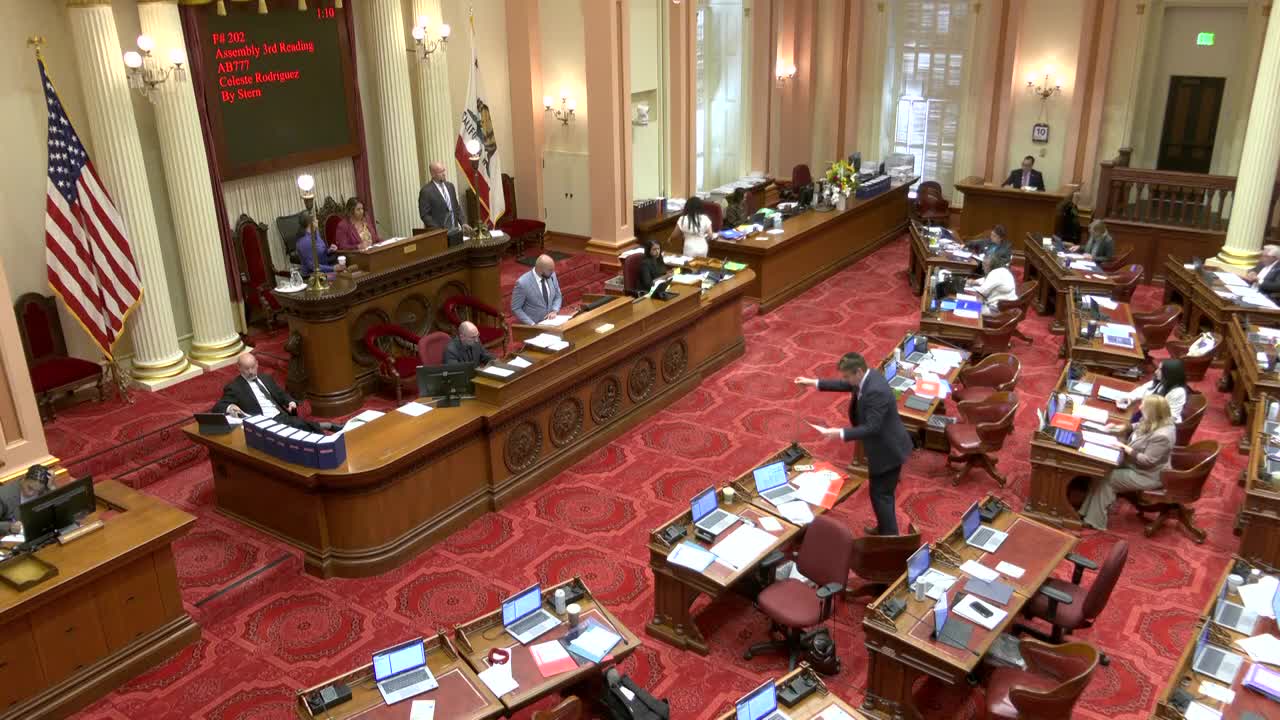
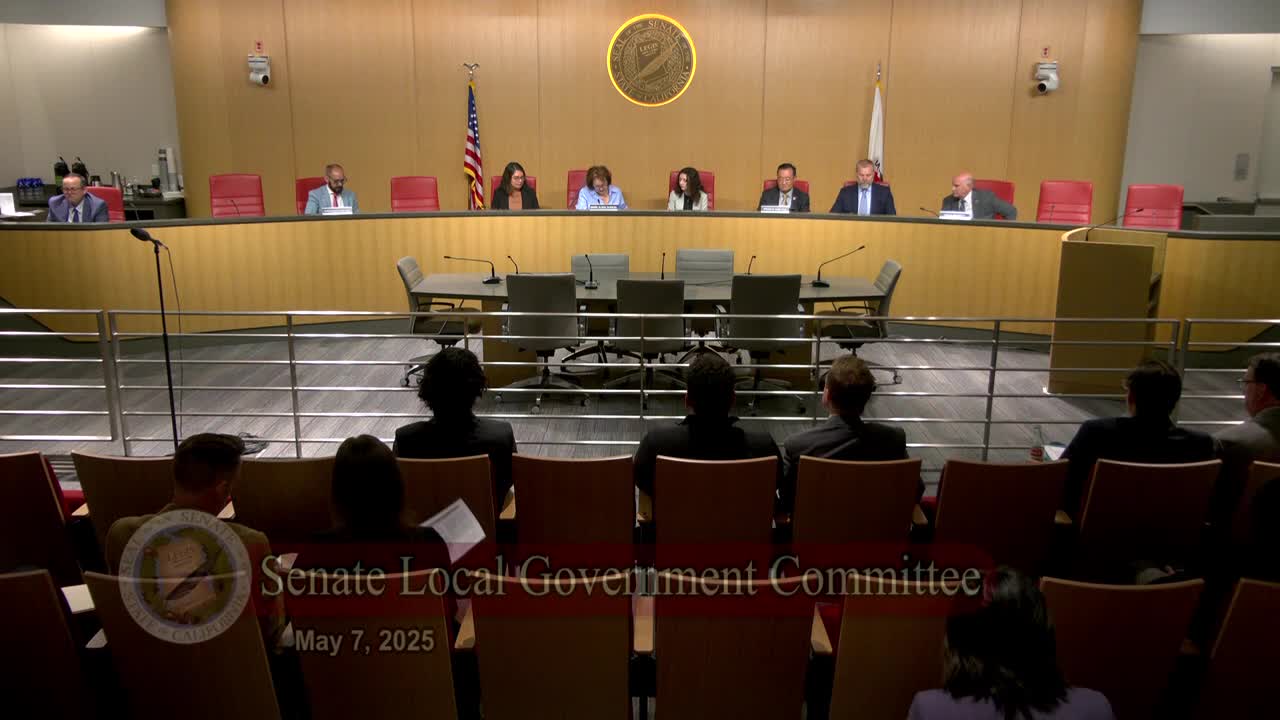
Bill Author

Bill Co-Author(s):