SB 514: Wildfire prevention: qualified entities: assessments: California Fire Service Training and Education Program Act.
- Session Year: 2025-2026
- House: Senate
- Latest Version Date: 2025-10-13
Current Status:
Passed
(2025-10-13: Chaptered by Secretary of State. Chapter 767, Statutes of 2025.)
Introduced
In Committee
Awaiting First Chamber Vote
Passed First Chamber
In Committee
Awaiting Second Chamber Vote
Passed Second Chamber
Enacted
Existing law requires the Director of Forestry and Fire Protection, until January 1, 2026, to establish a statewide program to allow qualified entities, as defined, who have completed a specific training program developed and administered by the Department of Forestry and Fire Protection to support and augment the department in its defensible space and home hardening assessment and education efforts. Existing law authorizes these qualified entities to, among other things, assess compliance with defensible space requirements applicable to the state responsibility area. Existing law requires the director to establish a common reporting platform that allows defensible space and home hardening assessment data, collected by qualifying entities, to be reported to the department, and authorizes the director to use this data for specified reasons.
This bill would revise and recast these provisions by, among other things, indefinitely extending the operative date of both the above-described statewide program and the associated training program for qualified entities. The bill would add nonprofit entities focused on wildfire resiliency to the list of qualified entities. The bill would authorize qualified entities to additionally assess compliance with defensible space requirements applicable to local responsibility areas, as provided. The bill would require specified data obtained voluntarily from property owners for purposes of the common reporting platform to be anonymized and kept confidential if requested by the property owner, and would prohibit that data from being used for compliance or enforcement purposes associated with ordinances that directly relate to defensible space and home hardening inspections unless specifically requested by the property owner. The bill would limit the data the director may use for specified purposes to that data gathered in response to requests related to compliance with defensible space requirements, and other data voluntarily provided by a property owner if authorized by the property owner, as provided.
Existing law establishes the California Fire Service Training and Education Program in the Office of the State Fire Marshal and requires the State Fire Marshal to make or encourage studies of any aspect of fire service training and education. Existing law requires the Office of the State Fire Marshal to develop and make available on its internet website a Wildland-Urban Interface Fire Safety Building Standards Compliance training intended for use in the training of local building officials, builders, and fire service personnel, as specified.
This bill would authorize the Office of the State Fire Marshal, as part of the California Fire Service Training and Education Program, to allow certification of contractors who conduct defensible space, home hardening, fuel reduction, roadside clearance, and other contracting activities for wildfire resiliency efforts and who have completed the above-described training program for qualified entities to support and augment the Department of Forestry and Fire Protection in its defensible space and home hardening and education efforts or an equivalent program.
Existing constitutional provisions require that a statute that limits the right of access to the meetings of public bodies or the writings of public officials and agencies be adopted with findings demonstrating the interest protected by the limitation and the need for protecting that interest.
This bill would make legislative findings to that effect.
This bill would incorporate additional changes to Section 13159.5 of the Health and Safety Code proposed by AB 1143 to be operative only if this bill and AB 1143 are enacted and this bill is enacted last.
This bill would incorporate additional changes to Sections 4291.5 and 4291.6 of the Public Resources Code proposed by AB 1457 to be operative only if this bill and AB 1457 are enacted and this bill is enacted last.
Existing law requires the Director of Forestry and Fire Protection, until January 1, 2026, to establish a statewide program to allow qualifying qualified entities, as defined, who have completed a specific training program developed and administered by the Department of Forestry and Fire Protection to support and augment the department in its defensible space and home hardening assessment and education efforts. Existing law authorizes these qualified entities to to, among other things, assess compliance with defensible space requirements applicable to the state responsibility area. Existing law requires the director to establish a common reporting platform that allows defensible space and home hardening assessment data, collected by qualifying entities, to be reported to the department, and authorizes the department director to use this data for specified reasons.
This bill would revise and recast these provisions by, among other things, indefinitely extending the operative date of both the above-described statewide program and the associated training program for qualified entities. The bill would add nonprofit entities focused on wildfire resiliency and contractors who conduct specified wildfire resiliency activities to the list of qualified entities. The bill would authorize qualified entities to additionally assess compliance with defensible space requirements applicable to local responsibility areas, as provided. The bill would require specified data obtained voluntarily from property owners for purposes of the common reporting platform to be anonymized and kept confidential if requested by the property owner, and would prohibit that data from being used for compliance or enforcement purposes associated with ordinances that directly relate to defensible space and home hardening investigations inspections unless specifically requested by the property owner. The bill would limit the data the director may use for specified purposes to that data gathered in response to requests related to compliance with defensible space requirements, and other data voluntarily provided by a property owner if authorized by the property owner, as provided.
Existing law establishes the California Fire Service Training and Education Program in the Office of the State Fire Marshal and requires the State Fire Marshal to make or encourage studies of any aspect of fire service training and education. Existing law requires the Office of the State Fire Marshal to develop and make available on its internet website a Wildland-Urban Interface Fire Safety Building Standards Compliance training intended for use in the training of local building officials, builders, and fire service personnel, as specified.
This bill would authorize the Office of the State Fire Marshal, as part of the California Fire Service Training and Education Program, to allow certification of contractors who conduct defensible space, home hardening, fuel reduction, roadside clearance, and other contracting activities for wildfire resiliency efforts and who have completed the above-described training program for qualified entities to support and augment the Department of Forestry and Fire Protection in its defensible space and home hardening and education efforts or an equivalent program.
Existing constitutional provisions require that a statute that limits the right of access to the meetings of public bodies or the writings of public officials and agencies be adopted with findings demonstrating the interest protected by the limitation and the need for protecting that interest.
This bill would make legislative findings to that effect.
Existing law requires the Director of Forestry and Fire Protection, until January 1, 2026, to establish a statewide program to allow qualifying entities entities, as defined, who have completed a specific training program developed and administered by the Department of Forestry and Fire Protection to support and augment the Department of Forestry and Fire Protection department in its defensible space and home hardening assessment and education efforts, and efforts. Existing law authorizes these qualified entities to assess compliance with defensible space requirements applicable to the state responsibility area. Existing law requires the director to establish a common reporting platform that allows defensible space and home hardening assessment data, collected by qualifying entities, to be reported to the department, among other things. and authorizes the department to use this data for specified reasons.
Existing law requires the department, until January 1, 2026, to develop and implement a training program for individuals to support and augment the department in its defensible and home hardening assessment and public education efforts. Existing law requires the training program to do specified things.This bill would extend the operative date of both programs described above indefinitely.Existing law requires the department, in accordance with a plan approved by the State Board of Forestry and Fire Protection, to carry out specified duties with respect to the prevention and control of forest fires.This bill would require the department to create a standardized accreditation framework to accredit local governments, fire safe councils, and neighborhoods for following wildfire prevention practices, as provided. The bill would require the department to publish on its internet website specified information, including a list of all accredited entities.This bill would revise and recast these provisions by, among other things, indefinitely extending the operative date of both the above-described statewide program and the associated training program for qualified entities. The bill would add nonprofit entities focused on wildfire resiliency and contractors who conduct specified wildfire resiliency activities to the list of qualified entities. The bill would authorize qualified entities to additionally assess compliance with defensible space requirements applicable to local responsibility areas, as provided. The bill would require specified data obtained voluntarily from property owners for purposes of the common reporting platform to be anonymized and kept confidential if requested by the property owner, and would prohibit that data from being used for compliance or enforcement purposes associated with ordinances that directly relate to defensible space and home hardening investigations unless specifically requested by the property owner. The bill would limit the data the director may use for specified purposes to that data gathered in response to requests related to compliance with defensible space requirements, and other data voluntarily provided by a property owner if authorized by the property owner, as provided.
Existing constitutional provisions require that a statute that limits the right of access to the meetings of public bodies or the writings of public officials and agencies be adopted with findings demonstrating the interest protected by the limitation and the need for protecting that interest.
This bill would make legislative findings to that effect.
Existing law requires the Director of Forestry and Fire Protection, until January 1, 2026, to establish a statewide program to allow qualifying entities who have completed a specific training program to support and augment the Department of Forestry and Fire Protection in its defensible space and home hardening assessment and education efforts, and requires the director to establish a common reporting platform that allows defensible space and home hardening assessment data, collected by qualifying entities, to be reported to the department, among other things.
Existing law requires the department, until January 1, 2026, to develop and implement a training program for individuals to support and augment the department in its defensible and home hardening assessment and public education efforts. Existing law requires the training program to do specified things.
This bill would extend the operative date of both programs described above indefinitely.
Existing law requires the department, in accordance with a plan approved by the State Board of Forestry and Fire Protection, to carry out specified duties with respect to the prevention and control of forest fires.
This bill would require the department to create a standardized accreditation framework to accredit local governments, fire safe councils, and neighborhoods for following wildfire prevention practices, as provided. The bill would require the department to publish on their its internet website specified information, including a list of all accredited entities.
Existing law requires the Director of Forestry and Fire Protection, until January 1, 2026, to establish a statewide program to allow qualifying entities who have completed a specific training program to support and augment the Department of Forestry and Fire Protection in its defensible space and home hardening assessment and education efforts, and requires the director to establish a common reporting platform that allows defensible space and home hardening assessment data, collected by qualifying entities, to be reported to the department, among other things.
Existing law requires the department, until January 1, 2026, to develop and implement a training program for individuals to support and augment the department in its defensible and home hardening assessment and public education efforts. Existing law requires the training program to do specified things.
This bill would extend the operative date of both programs described above indefinitely.
Under existing law,Existing law requires the Department of Forestry and Fire Protection, department, in accordance with a plan approved by the State Board of Forestry and Fire Protection, is required to carry out specified duties with respect to the prevention and control of forest fires.
This bill would require the department to create a standardized accreditation framework for counties to accredit local governments, fire safe councils, and homeowners neighborhoods for following wildfire prevention practices, as provided. The bill would require the department to maintain a publicly available database with publish on their internet website specified information, including the counties that have opted into the accreditation framework. a list of all accredited entities.
Under existing law, the Department of Forestry and Fire Protection, in accordance with a plan approved by the State Board of Forestry and Fire Protection, is required to carry out specified duties with respect to the prevention and control of forest fires.
This bill would require the department to create a standardized accreditation framework for counties to accredit local governments, fire safe councils, and homeowners for following wildfire prevention practices, as provided. The bill would require the department to maintain a publicly available database with specified information, including the counties that have opted into the accreditation framework.
(a)The Office of the State Fire Marshal shall develop and make available on its internet website a Wildland-Urban Interface Fire Safety Building Standards Compliance training intended for use in the training of local building officials, builders, and fire service personnel. This training shall be updated as changes are made to Chapter 7A (commencing with Section 701A.1) of Part 2 of Title 24 of the California Code of Regulations, or any appropriate successor regulatory code, and shall include any pertinent mandates for emergency power backup, including, but not limited to, battery backup requirements for automatic garage door openers.
(b)The Office of the State Fire Marshal may allow certification of contractors who conduct defensible space, home hardening, fuel reduction, roadside clearance, and other contracting activities for wildfire resiliency efforts and who have completed the training program developed pursuant to Section 4291.6 of the Public Resources Code or an equivalent program.
(c)The Office of the State Fire Marshal shall develop and update on a regular basis a Wildland-Urban Interface Products listing of products and construction assemblies that comply with Chapter 7A (commencing with Section 701A.1) of Part 2 of Title 24 of the California Code of Regulations, or any appropriate successor regulatory code, for products such as the following:
(1)Exterior wall siding and sheathing.
(2)Exterior windows, skylights, and doors.
(3)Vents, including eave and cornice vents.
(4)Decking.
(5)Treated lumber and ignition-resistant materials.
(6)Roofing materials.
(7)Emergency battery power backup for automatic garage door openers.
(d)In researching and developing the products listing and the educational and training provisions under this section, the Office of the State Fire Marshal is authorized to expend funds from the Building Standards Administration Special Revolving Fund, upon an appropriation by the Legislature, pursuant to Section 18931.7.
SEC. 1.5.Section 13159.5 of the Health and Safety Code is amended to read:13159.5.(a)The Office of the State Fire Marshal shall develop and make available on its internet website a Wildland-Urban Interface Fire Safety Building Standards Compliance training intended for use in the training of local building officials, builders, and fire service personnel. This training shall be updated as changes are made to Chapter 7A (commencing with Section 701A.1) of Part 2 of Title 24 of the California Code of Regulations, or any appropriate successor regulatory code, and shall include any pertinent mandates for emergency power backup, including, but not limited to, battery backup requirements for automatic garage door openers.
(b)The Office of the State Fire Marshal may allow certification of contractors who conduct defensible space, home hardening, fuel reduction, roadside clearance, and other contracting activities for wildfire resiliency efforts and who have completed the training program developed pursuant to Section 4291.6 of the Public Resources Code or an equivalent program.
(c)The Office of the State Fire Marshal shall develop and update on a regular basis a Wildland-Urban Interface Products listing of products and construction assemblies that comply with Chapter 7A (commencing with Section 701A.1) of Part 2 of Title 24 of the California Code of Regulations, or any appropriate successor regulatory code, for products such as the following:
(1)Exterior wall siding and sheathing.
(2)Exterior windows, skylights, and doors.
(3)Vents, including eave and cornice vents.
(4)Decking.
(5)Treated lumber and ignition-resistant materials.
(6)Roofing materials.
(7)Emergency battery power backup for automatic garage door openers.
(d)In researching and developing the products listing, the educational and training provisions, and developing the home hardening certification program under this section, the Office of the State Fire Marshal is authorized to expend funds from the Building Standards Administration Special Revolving Fund, upon an appropriation by the Legislature, pursuant to Section 18931.7.
(e)On or before January 1, 2027, the State Fire Marshals Wildfire Mitigation Advisory Committee, established pursuant to Section 4209.4 of the Public Resources Code, shall develop a home hardening certification program that identifies home hardening measures, including defensible space, that can be implemented during renovation or property improvement projects, or both, to substantially reduce the risk of loss during a fire and bring existing building stock into alignment with the provisions adopted in the California Building Code (Part 7 of Title 24 of the California Code of Regulations).
SEC. 2.Section 4291.5 of the Public Resources Code is amended to read:4291.5.(a)For purposes of this section, the following definitions apply:
(1)Home hardening means the replacement or repair of structural features that are affixed to the property with features that are in compliance with Chapter 7A (commencing with Section 701A.1) of Title 24 of the California Code of Regulations.
(2)Property owner means a person described in subdivision (a) of Section 4291 of this code or subdivision (a) of Section 51182 of the Government Code.
(3)Qualified entities means the following entities that have completed the program developed, and received a certification, pursuant to Section 4291.6:
(A)Counties, state conservancies, special districts, and other political subdivisions of the state.
(B)Members of the California Conservation Corps, the Board of Commissioners under CaliforniaVolunteers described in Section 8411 of the Government Code, local conservation corps, resource conservation districts, fire safe councils, Firewise USA organizations, and nonprofit entities focused on wildfire resiliency.
(C)University of California fire advisors.
(D)Registered Professional Foresters.
(E)Other entities or individuals deemed appropriate by the director.
(4)Wildfire safety improvements means wildfire resilience and fire safety improvements, including measures for home hardening, the creation of defensible space, and other appropriate fuel reduction activities, to residential, commercial, industrial, agricultural, or other real property identified by the State Fire Marshal, in consultation with the director.
(b)The director shall establish a statewide program to allow qualified entities to support and augment the department in its defensible space and home hardening assessment and education efforts. Qualified entities participating in the program shall be authorized by the director to conduct defensible space assessments to assess compliance with Section 4291 within the state responsibility area, to assess compliance with Section 51182 of the Government Code within local responsibility areas, educate property owners about wildfire safety improvements that may be undertaken to harden a structure and make it more resistant to fire, and assess whether wildfire safety improvements have been completed in or on a structure.
(c)(1)The director shall establish a common reporting platform that allows defensible space and home hardening assessment data, collected by the qualified entities, to be reported to the department and shall establish any necessary quality control measure to ensure that the assessment data is accurate and reliable. Data obtained voluntarily from a property owner for reasons other than responding to a request related to compliance with Section 4291 of this code or Section 51182 of the Government Code shall be anonymized and kept confidential if requested by the property owner, and shall not be used for compliance or enforcement purposes associated with ordinances that directly relate to defensible space and home hardening inspections unless specifically requested by the property owner.
(2)The department shall compile the data submitted pursuant to paragraph (1).
(d)The director may use the defensible space and home hardening assessment data that is gathered in response to requests related to compliance with Section 4291 of this code or Section 51182 of the Government Code, and other data voluntarily provided by a property owner if authorized by the property owner, to do any of the following:
(1)Direct inspection and enforcement resources away from landowners who meet or exceed the departments standards and regulations for maintaining defensible space.
(2)Direct inspection and enforcement resources toward landowners who do not meet the departments standards and regulations for maintaining defensible space.
(3)Direct educational resources toward landowners who own or maintain structures that can be hardened to make them more resistant to fire.
(4)Assist in estimating defensible space compliance in the state responsibility area.
(e)The department may expand or amend existing programs for the implementation of this section.
(f)This section does not grant any right of entry onto private land or regulatory or enforcement authority to participating qualified entities.
(g)Any local governmental entity that is qualified to conduct defensible space assessments pursuant to this section in very high and high fire hazard severity zones, as identified by the State Fire Marshal pursuant to Section 51178 of the Government Code or Article 9 (commencing with Section 4201) of this chapter or by a local agency pursuant to Section 51179 of the Government Code, and reports that information to the department, shall report that information using the common reporting platform established pursuant to subdivision (c).
(h)(1)On December 31, 2023, and annually thereafter, the department shall report to the Legislature all defensible space data collected pursuant to paragraph (2) of subdivision (c). The report may include information on the proportion of unique parcels that were inspected, the degree of compliance with requirements set forth in Section 4291 of this code and Section 51182 of the Government Code, any enforcement actions that may have been taken for noncompliant parcels, and the proportion of parcels that were found to be in compliance across jurisdictions. At minimum, the report shall include data with sufficient detail to facilitate comparisons of community compliance with the requirements of Section 4291 of this code and Section 51182 of the Government Code between local governmental entities qualified to conduct defensible space assessments pursuant to this section and local governmental entities that are not.
(2)A report submitted pursuant to this subdivision shall be submitted in compliance with Section 9795 of the Government Code.
SEC. 2.5.Section 4291.5 of the Public Resources Code is amended to read:4291.5.(a)For purposes of this section, the following definitions apply:
(1)Home hardening means the replacement or repair of structural features that are affixed to the property with features that are in compliance with Chapter 7A (commencing with Section 701A.1) of Title 24 of the California Code of Regulations.
(2)Property owner means a person described in subdivision (a) of Section 4291 of this code or subdivision (a) of Section 51182 of the Government Code.
(3)Qualified entities means the following entities that have completed the program developed, and received a certification, pursuant to Section 4291.6:
(A)Counties, state conservancies, special districts, and other political subdivisions of the state.
(B)Members of the California Conservation Corps, the Board of Commissioners under CaliforniaVolunteers described in Section 8411 of the Government Code, local conservation corps, resource conservation districts, fire safe councils, Firewise USA organizations, and nonprofit entities focused on wildfire resiliency.
(C)University of California fire advisers.
(D)Registered Professional Foresters.
(E)Other entities or individuals deemed appropriate by the director.
(4)Wildfire safety improvements means wildfire resilience and fire safety improvements, including measures for home hardening, the creation of defensible space, and other appropriate fuel reduction activities, to residential, commercial, industrial, agricultural, or other real property identified by the State Fire Marshal, in consultation with the director.
(b)The director shall establish a statewide program to allow qualified entities to support and augment the department in its defensible space and home hardening assessment and education efforts. Qualified entities participating in the program shall be authorized by the director to conduct defensible space assessments to assess compliance with Section 4291 within the state responsibility area, to assess compliance with Section 51182 of the Government Code within local responsibility areas, educate property owners about wildfire safety improvements that may be undertaken to harden a structure and make it more resistant to fire, and assess whether wildfire safety improvements have been completed in or on a structure.
(c)(1)The director shall establish a common reporting platform that allows defensible space and home hardening assessment data, collected by the qualified entities, to be reported to the department and shall establish any necessary quality control measure to ensure that the assessment data is accurate and reliable. Data obtained voluntarily from a property owner for reasons other than responding to a request related to compliance with Section 4291 of this code or Section 51182 of the Government Code shall be anonymized and kept confidential if requested by the property owner, and shall not be used for compliance or enforcement purposes associated with ordinances that directly relate to defensible space and home hardening inspections unless specifically requested by the property owner.
(2)The department shall compile the data submitted pursuant to paragraph (1).
(d)The director may use the defensible space and home hardening assessment data that is gathered in response to requests related to compliance with Section 4291 of this code or Section 51182 of the Government Code, and other data voluntarily provided by a property owner if authorized by the property owner, to do any of the following:
(1)Direct inspection and enforcement resources away from landowners who meet or exceed the departments standards and regulations for maintaining defensible space.
(2)Direct inspection and enforcement resources toward landowners who do not meet the departments standards and regulations for maintaining defensible space.
(3)Direct educational resources toward landowners who own or maintain structures that can be hardened to make them more resistant to fire.
(4)Assist in estimating defensible space compliance in the state responsibility area.
(e)The department may expand or amend existing programs for the implementation of this section.
(f)This section does not grant any right of entry onto private land or regulatory or enforcement authority to participating qualified entities.
(g)Any local governmental entity that is qualified to conduct defensible space assessments pursuant to this section in very high and high fire hazard severity zones, as identified by the State Fire Marshal pursuant to Section 51178 of the Government Code or Article 9 (commencing with Section 4201) of this chapter or by a local agency pursuant to Section 51179 of the Government Code, and reports that information to the department, shall report that information using the common reporting platform established pursuant to subdivision (c).
(h)(1)On December 31, 2023, and annually thereafter, the department shall report to the Legislature all defensible space data collected pursuant to paragraph (2) of subdivision (c). The report may include information on the proportion of unique parcels that were inspected, the degree of compliance with requirements set forth in Section 4291 of this code and Section 51182 of the Government Code, any enforcement actions that may have been taken for noncompliant parcels, and the proportion of parcels that were found to be in compliance across jurisdictions. At minimum, the report shall include data with sufficient detail to facilitate comparisons of community compliance with the requirements of Section 4291 of this code and Section 51182 of the Government Code between local governmental entities qualified to conduct defensible space assessments pursuant to this section and local governmental entities that are not.
(2)A report submitted pursuant to this subdivision shall be submitted in compliance with Section 9795 of the Government Code.
SEC. 3.Section 4291.6 of the Public Resources Code is amended to read:4291.6.(a)(1)The Legislature finds and declares that the use of trained volunteers to assist homeowners and fire agencies in achieving compliance with defensible space requirements will provide multiple benefits, including all of the following:
(A)Creating a significant public benefit by reducing the risk of the spread of wildfire.
(B)Creating significant savings for fire agencies by increasing general compliance with defensible space requirements, and thereby reducing the volume of inspections required by public agencies.
(C)Allowing fire agencies to focus their defensible space regulatory enforcement on landowners who are not in compliance after suggestions for voluntary compliance from trained volunteers.
(2)It is further the intent of the Legislature that the department do both of the following:
(A)Establish a pilot program using trained volunteers with any costs for the pilot project coming from the existing funds made available to the department from the Greenhouse Gas Reduction Fund, created pursuant to Section 16428.8 of the Government Code.
(B)Consider using the services of the California Fire Science Consortium and the Regional Forest and Fire Capacity program at the Natural Resources Agency to implement this section.
(b)The department shall develop and implement a training program to train individuals to support and augment the department in its defensible space and home hardening assessment and public education efforts. The training program shall do both of the following:
(1)Provide for consistent training for third-party assessors who shall function to provide nonregulatory assistance to homeowners to reduce fire risk and to achieve compliance with defensible space requirements.
(2)Ensure that all defensible space and home hardening assessment and education programs undertaken by the department and by third parties are conducted to the same standard and use coordinated messaging, including messages at www.readyforwildfire.org or a successor internet website, as updated by the department.
(c)Upon an individuals successful completion of the training program, the department shall issue a certification of completion to the individual.
SEC. 3.5.Section 4291.6 of the Public Resources Code is amended to read:4291.6.(a)(1)The Legislature finds and declares that the use of trained volunteers to assist homeowners and fire agencies in achieving compliance with defensible space requirements will provide multiple benefits, including all of the following:
(A)Creating a significant public benefit by reducing the risk of the spread of wildfire.
(B)Creating significant savings for fire agencies by increasing general compliance with defensible space requirements, and thereby reducing the volume of inspections required by public agencies.
(C)Allowing fire agencies to focus their defensible space regulatory enforcement on landowners who are not in compliance after suggestions for voluntary compliance from trained volunteers.
(2)It is further the intent of the Legislature that the department do both of the following:
(A)Establish a pilot program using trained volunteers with any costs for the pilot project coming from the existing funds made available to the department from the Greenhouse Gas Reduction Fund, created pursuant to Section 16428.8 of the Government Code.
(B)Consider using the services of the California Fire Science Consortium and the Regional Forest and Fire Capacity program at the Natural Resources Agency to implement this section.
(b)The department shall develop and implement a training program to train individuals to support and augment the department in its defensible space and home hardening assessment and public education efforts. The training program shall do all of the following:
(1)Provide for consistent training for third-party assessors who shall function to provide nonregulatory assistance to homeowners to reduce fire risk and to achieve compliance with defensible space requirements.
(2)Ensure that all defensible space and home hardening assessment and education programs undertaken by the department and by third parties are conducted to the same standard and use coordinated messaging, including messages at www.readyforwildfire.org or a successor internet website, as updated by the department.
(3)Beginning July 1, 2026, provide training consistent with the Home Ignition Zone/Defensible Space Inspector course plan, established by the State Fire Marshal, in order to ensure that individuals are trained to conduct home ignition zone inspections.
(c)Upon an individuals successful completion of the training program, the department shall issue a certification of completion to the individual.
SEC. 4.The Legislature finds and declares that Section 2 of this act, which amends Section 4291.5 of the Public Resources Code, imposes a limitation on the publics right of access to the meetings of public bodies or the writings of public officials and agencies within the meaning of Section 3 of Article I of the California Constitution. Pursuant to that constitutional provision, the Legislature makes the following findings to demonstrate the interest protected by this limitation and the need for protecting that interest:
This limitation is necessary in order to increase participation in the defensible space and home hardening assessment and education program established by the Department of Forestry and Fire Protection, which educates and assists high fire risk communities in making their homes and surrounding area more resilient to wildfire.
SEC. 5.(a)Section 1.5 of this bill incorporates amendments to Section 13159.5 of the Health and Safety Code proposed by both this bill and Assembly Bill 1143. That section of this bill shall only become operative if (1) both bills are enacted and become effective on or before January 1, 2026, (2) each bill amends Section 13159.5 of the Health and Safety Code, and (3) this bill is enacted after Assembly Bill 1143, in which case Section 1 of this bill shall not become operative.
(b)Section 2.5 of this bill incorporates amendments to Section 4291.5 of the Public Resources Code proposed by both this bill and Assembly Bill 1457. That section of this bill shall only become operative if (1) both bills are enacted and become effective on or before January 1, 2026, (2) each bill amends Section 4291.5 of the Public Resources Code, and (3) this bill is enacted after Assembly Bill 1457, in which case Section 2 of this bill shall not become operative.
(c)Section 3.5 of this bill incorporates amendments to Section 4291.6 of the Public Resources Code proposed by both this bill and Assembly Bill 1457. That section of this bill shall only become operative if (1) both bills are enacted and become effective on or before January 1, 2026, (2) each bill amends Section 4291.6 of the Public Resources Code, and (3) this bill is enacted after Assembly Bill 1457, in which case Section 3 of this bill shall not become operative.
(a)The Office of the State Fire Marshal shall develop and make available on its internet website a Wildland-Urban Interface Fire Safety Building Standards Compliance training intended for use in the training of local building officials, builders, and fire service personnel. This training shall be updated as changes are made to Chapter 7A (commencing with Section 701A.1) of Part 2 of Title 24 of the California Code of Regulations, or any appropriate successor regulatory code, and shall include any pertinent mandates for emergency power backup, including, but not limited to, battery backup requirements for automatic garage door openers.
(b)The Office of the State Fire Marshal may allow certification of contractors who conduct defensible space, home hardening, fuel reduction, roadside clearance, and other contracting activities for wildfire resiliency efforts and who have completed the training program developed pursuant to Section 4291.6 of the Public Resources Code or an equivalent program.
(c)The Office of the State Fire Marshal shall develop and update on a regular basis a Wildland-Urban Interface Products listing of products and construction assemblies that comply with Chapter 7A (commencing with Section 701A.1) of Part 2 of Title 24 of the California Code of Regulations, or any appropriate successor regulatory code, for products such as the following:
(1)Exterior wall siding and sheathing.
(2)Exterior windows, skylights, and doors.
(3)Vents, including eave and cornice vents.
(4)Decking.
(5)Treated lumber and ignition-resistant materials.
(6)Roofing materials.
(7)Emergency battery power backup for automatic garage door openers.
(d)In researching and developing the products listing and the educational and training provisions under this section, the Office of the State Fire Marshal is authorized to expend funds from the Building Standards Administration Special Revolving Fund, upon an appropriation by the Legislature, pursuant to Section 18931.7.
SEC. 1.5.Section 13159.5 of the Health and Safety Code is amended to read:13159.5.(a)The Office of the State Fire Marshal shall develop and make available on its internet website a Wildland-Urban Interface Fire Safety Building Standards Compliance training intended for use in the training of local building officials, builders, and fire service personnel. This training shall be updated as changes are made to Chapter 7A (commencing with Section 701A.1) of Part 2 of Title 24 of the California Code of Regulations, or any appropriate successor regulatory code, and shall include any pertinent mandates for emergency power backup, including, but not limited to, battery backup requirements for automatic garage door openers.
(b)The Office of the State Fire Marshal may allow certification of contractors who conduct defensible space, home hardening, fuel reduction, roadside clearance, and other contracting activities for wildfire resiliency efforts and who have completed the training program developed pursuant to Section 4291.6 of the Public Resources Code or an equivalent program.
(b)(c)The Office of the State Fire Marshal shall develop and update on a regular basis a Wildland-Urban Interface Products listing of products and construction assemblies that comply with Chapter 7A (commencing with Section 701A.1) of Part 2 of Title 24 of the California Code of Regulations, or any appropriate successor regulatory code, for products such as the following:
(1)Exterior wall siding and sheathing.
(2)Exterior windows, skylights, and doors.
(3)Vents, including eave and cornice vents.
(4)Decking.
(5)Treated lumber and ignition-resistant materials.
(6)Roofing materials.
(7)Emergency battery power backup for automatic garage door openers.
(c)(d)In researching and developing the products listing and listing, the educational and training provisions provisions, and developing the home hardening certification program under this section, the Office of the State Fire Marshal is authorized to expend funds from the Building Standards Administration Special Revolving Fund, upon an appropriation by the Legislature, pursuant to Section 18931.7.
(e)On or before January 1, 2027, the State Fire Marshals Wildfire Mitigation Advisory Committee, established pursuant to Section 4209.4 of the Public Resources Code, shall develop a home hardening certification program that identifies home hardening measures, including defensible space, that can be implemented during renovation or property improvement projects, or both, to substantially reduce the risk of loss during a fire and bring existing building stock into alignment with the provisions adopted in the California Building Code (Part 7 of Title 24 of the California Code of Regulations).
SEC. 2.Section 4291.5 of the Public Resources Code is amended to read:4291.5.(a)For purposes of this section, the following definitions apply:
(1)Home hardening means the replacement or repair of structural features that are affixed to the property with features that are in compliance with Chapter 7A (commencing with Section 701A.1) of Title 24 of the California Code of Regulations.
(2)Property owner means a person described in subdivision (a) of Section 4291 of this code or subdivision (a) of Section 51182 of the Government Code.
(3)Qualified entities means the following entities that have completed the program developed, and received a certification, pursuant to Section 4291.6:
(A)Counties, state conservancies, special districts, and other political subdivisions of the state.
(B)Members of the California Conservation Corps, the Board of Commissioners under CaliforniaVolunteers described in Section 8411 of the Government Code, local conservation corps, resource conservation districts, fire safe councils, Firewise USA organizations, and nonprofit entities focused on wildfire resiliency.
(C)University of California fire advisors.
(D)Registered Professional Foresters.
(E)Other entities or individuals deemed appropriate by the director.
(4)Wildfire safety improvements means wildfire resilience and fire safety improvements, including measures for home hardening, the creation of defensible space, and other appropriate fuel reduction activities, to residential, commercial, industrial, agricultural, or other real property identified by the State Fire Marshal, in consultation with the director.
(b)The director shall establish a statewide program to allow qualified entities to support and augment the department in its defensible space and home hardening assessment and education efforts. Qualified entities participating in the program shall be authorized by the director to conduct defensible space assessments to assess compliance with Section 4291 within the state responsibility area, to assess compliance with Section 51182 of the Government Code within local responsibility areas, educate property owners about wildfire safety improvements that may be undertaken to harden a structure and make it more resistant to fire, and assess whether wildfire safety improvements have been completed in or on a structure.
(c)(1)The director shall establish a common reporting platform that allows defensible space and home hardening assessment data, collected by the qualified entities, to be reported to the department and shall establish any necessary quality control measure to ensure that the assessment data is accurate and reliable. Data obtained voluntarily from a property owner for reasons other than responding to a request related to compliance with Section 4291 of this code or Section 51182 of the Government Code shall be anonymized and kept confidential if requested by the property owner, and shall not be used for compliance or enforcement purposes associated with ordinances that directly relate to defensible space and home hardening inspections unless specifically requested by the property owner.
(2)The department shall compile the data submitted pursuant to paragraph (1).
(d)The director may use the defensible space and home hardening assessment data that is gathered in response to requests related to compliance with Section 4291 of this code or Section 51182 of the Government Code, and other data voluntarily provided by a property owner if authorized by the property owner, to do any of the following:
(1)Direct inspection and enforcement resources away from landowners who meet or exceed the departments standards and regulations for maintaining defensible space.
(2)Direct inspection and enforcement resources toward landowners who do not meet the departments standards and regulations for maintaining defensible space.
(3)Direct educational resources toward landowners who own or maintain structures that can be hardened to make them more resistant to fire.
(4)Assist in estimating defensible space compliance in the state responsibility area.
(e)The department may expand or amend existing programs for the implementation of this section.
(f)This section does not grant any right of entry onto private land or regulatory or enforcement authority to participating qualified entities.
(g)Any local governmental entity that is qualified to conduct defensible space assessments pursuant to this section in very high and high fire hazard severity zones, as identified by the State Fire Marshal pursuant to Section 51178 of the Government Code or Article 9 (commencing with Section 4201) of this chapter or by a local agency pursuant to Section 51179 of the Government Code, and reports that information to the department, shall report that information using the common reporting platform established pursuant to subdivision (c).
(h)(1)On December 31, 2023, and annually thereafter, the department shall report to the Legislature all defensible space data collected pursuant to paragraph (2) of subdivision (c). The report may include information on the proportion of unique parcels that were inspected, the degree of compliance with requirements set forth in Section 4291 of this code and Section 51182 of the Government Code, any enforcement actions that may have been taken for noncompliant parcels, and the proportion of parcels that were found to be in compliance across jurisdictions. At minimum, the report shall include data with sufficient detail to facilitate comparisons of community compliance with the requirements of Section 4291 of this code and Section 51182 of the Government Code between local governmental entities qualified to conduct defensible space assessments pursuant to this section and local governmental entities that are not.
(2)A report submitted pursuant to this subdivision shall be submitted in compliance with Section 9795 of the Government Code.
SEC. 2.5.Section 4291.5 of the Public Resources Code is amended to read:4291.5.(a)For purposes of this section, the following definitions apply:
(1)Home hardening means the replacement or repair of structural features that are affixed to the property with features that are in compliance with Chapter 7A (commencing with Section 701A.1) of Title 24 of the California Code of Regulations.
(2)Property owner means a person described in subdivision (a) of Section 4291 of this code or subdivision (a) of Section 51182 of the Government Code.
(2)(3)Qualified entities means the following entities that have completed the program developed developed, and received a certification, pursuant to Section 4291.6:
(A)Counties, state conservancies, special districts, and other political subdivisions of the state.
(B)Members of the California Conservation Corps, the Board of Commissioners under CaliforniaVolunteers described in Section 8411 of the Government Code, local conservation corps, resource conservation districts, fire safe councils, and Firewise USA organizations. Firewise USA organizations, and nonprofit entities focused on wildfire resiliency.
(C)University of California fire advisors. advisers.
(D)Registered Professional Foresters.
(E)Other entities or individuals deemed appropriate by the director.
(3)(4)Wildfire safety improvements mean means wildfire resilience and fire safety improvements, including measures for home hardening, the creation of defensible space, and other appropriate fuel reduction activities, to residential, commercial, industrial, agricultural, or other real property identified by the State Fire Marshal, in consultation with the director.
(b)The director shall establish a statewide program to allow qualified entities to support and augment the department in its defensible space and home hardening assessment and education efforts. Qualified entities participating in the program shall be authorized by the director to conduct defensible space assessments to assess compliance with Section 4291 within the state responsibility area, to assess compliance with Section 51182 of the Government Code within local responsibility areas, educate property owners about wildfire safety improvements that may be undertaken to harden a structure and make it more resistant to fire, and assess whether wildfire safety improvements have been completed in or on a structure.
(c)(1)The director shall establish a common reporting platform that allows defensible space and home hardening assessment data, collected by the qualified entities, to be reported to the department and shall establish any necessary quality control measure to ensure that the assessment data is accurate and reliable. Data obtained voluntarily from a property owner for reasons other than responding to a request related to compliance with Section 4291 of this code or Section 51182 of the Government Code shall be anonymized and kept confidential if requested by the property owner, and shall not be used for compliance or enforcement purposes associated with ordinances that directly relate to defensible space and home hardening inspections unless specifically requested by the property owner.
(2)The department shall compile the data submitted pursuant to paragraph (1).
(d)The director may use the defensible space and home hardening assessment data to that is gathered in response to requests related to compliance with Section 4291 of this code or Section 51182 of the Government Code, and other data voluntarily provided by a property owner if authorized by the property owner, to do any of the following:
(1)Direct inspection and enforcement resources away from landowners who meet or exceed the departments standards and regulations for maintaining defensible space.
(2)Direct inspection and enforcement resources toward landowners who do not meet the departments standards and regulations for maintaining defensible space.
(3)Direct educational resources toward landowners who own or maintain structures that can be hardened to make them more resistant to fire.
(4)Assist in estimating defensible space compliance in the state responsibility area.
(e)The department may expand or amend existing programs for the implementation of this section.
(f)This section does not grant any right of entry onto private land or regulatory or enforcement authority to participating qualified entities.
(g)Any local governmental entity that is qualified to conduct defensible space assessments pursuant to this section in very high and high fire hazard severity zones, as identified by the State Fire Marshal pursuant to Section 51178 of the Government Code or Article 9 (commencing with Section 4201) of this chapter or by a local agency pursuant to Section 51179 of the Government Code Code, and reports that information to the department, shall report that information using the common reporting platform established pursuant to subdivision (c).
(h)(1)On December 31, 2023, and annually thereafter, the department shall report to the Legislature all defensible space data collected pursuant to paragraph (2) of subdivision (c). The report may include information on the proportion of unique parcels that were inspected, the degree of compliance with requirements set forth in Section 4291, 4291 of this code and Section 51182 of the Government Code, any enforcement actions that may have been taken for noncompliant parcels, and the proportion of parcels that were found to be in compliance across jurisdictions. At minimum, the report shall include data with sufficient detail to facilitate comparisons of community compliance with the requirements of Section 4291 of this code and Section 51182 of the Government Code between local governmental entities qualified to conduct defensible space assessments pursuant to this section and local governmental entities that are not.
(2)A report submitted pursuant to this subdivision shall be submitted in compliance with Section 9795 of the Government Code.
(i)This section shall remain in effect only until January 1, 2026, and as of that date is repealed.SEC. 3.Section 4291.6 of the Public Resources Code is amended to read:4291.6.(a)(1)The Legislature finds and declares that the use of trained volunteers to assist homeowners and fire agencies in achieving compliance with defensible space requirements will provide multiple benefits, including all of the following:
(A)Creating a significant public benefit by reducing the risk of the spread of wildfire.
(B)Creating significant savings for fire agencies by increasing general compliance with defensible space requirements, and thereby reducing the volume of inspections required by public agencies.
(C)Allowing fire agencies to focus their defensible space regulatory enforcement on landowners who are not in compliance after suggestions for voluntary compliance from trained volunteers.
(2)It is further the intent of the Legislature that the department do both of the following:
(A)Establish a pilot program using trained volunteers with any costs for the pilot project coming from the existing funds made available to the department from the Greenhouse Gas Reduction Fund, created pursuant to Section 16428.8 of the Government Code.
(B)Consider using the services of the California Fire Science Consortium and the Regional Forest and Fire Capacity program at the Natural Resources Agency to implement this section.
(b)The department shall develop and implement a training program to train individuals to support and augment the department in its defensible space and home hardening assessment and public education efforts. The training program shall do both of the following:
(1)Provide for consistent training for third-party assessors who shall function to provide nonregulatory assistance to homeowners to reduce fire risk and to achieve compliance with defensible space requirements.
(2)Ensure that all defensible space and home hardening assessment and education programs undertaken by the department and by third parties are conducted to the same standard and use coordinated messaging, including messages at www.readyforwildfire.org or a successor internet website, as updated by the department.
(c)Upon an individuals successful completion of the training program, the department shall issue a certification of completion to the individual.
SEC. 3.5.Section 4291.6 of the Public Resources Code is amended to read:4291.6.(a)(1)The Legislature finds and declares that the use of trained volunteers to assist homeowners and fire agencies in achieving compliance with defensible space requirements will provide multiple benefits, including all of the following:
(A)Creating a significant public benefit by reducing the risk of the spread of wildfire.
(B)Creating significant savings for fire agencies by increasing general compliance with defensible space requirements, and thereby reducing the volume of inspections required by public agencies.
(C)Allowing fire agencies to focus their defensible space regulatory enforcement on landowners who are not in compliance after suggestions for voluntary compliance from trained volunteers.
(2)It is further the intent of the Legislature that the department do both of the following:
(A)Establish a pilot program using trained volunteers with any costs for the pilot project coming from the existing funds made available to the department from the Greenhouse Gas Reduction Fund, created pursuant to Section 16428.8 of the Government Code.
(B)Consider using the services of the California Fire Science Consortium and the Regional Forest and Fire Capacity program at the Natural Resources Agency to implement this section.
(b)The department shall develop and implement a training program to train individuals to support and augment the department in its defensible space and home hardening assessment and public education efforts. The training program shall do both all of the following:
(1)Provide for consistent training for third-party assessors who shall function to provide nonregulatory assistance to homeowners to reduce fire risk and to achieve compliance with defensible space requirements.
(2)Ensure that all defensible space and home hardening assessment and education programs undertaken by the department and by third parties are conducted to the same standard and use coordinated messaging, including messages at www.readyforwildfire.org or a successor internet website, as updated by the department.
(3)Beginning July 1, 2026, provide training consistent with the Home Ignition Zone/Defensible Space Inspector course plan, established by the State Fire Marshal, in order to ensure that individuals are trained to conduct home ignition zone inspections.
(c)Upon an individuals successful completion of the training program, the department shall issue a certification of completion to the individual.
(d)This section shall remain in effect only until January 1, 2026, and as of that date is repealed.SEC. 4.The Legislature finds and declares that Section 2 of this act, which amends Section 4291.5 of the Public Resources Code, imposes a limitation on the publics right of access to the meetings of public bodies or the writings of public officials and agencies within the meaning of Section 3 of Article I of the California Constitution. Pursuant to that constitutional provision, the Legislature makes the following findings to demonstrate the interest protected by this limitation and the need for protecting that interest:
This limitation is necessary in order to increase participation in the defensible space and home hardening assessment and education program established by the Department of Forestry and Fire Protection, which educates and assists high fire risk communities in making their homes and surrounding area more resilient to wildfire.
SEC. 5.(a)Section 1.5 of this bill incorporates amendments to Section 13159.5 of the Health and Safety Code proposed by both this bill and Assembly Bill 1143. That section of this bill shall only become operative if (1) both bills are enacted and become effective on or before January 1, 2026, (2) each bill amends Section 13159.5 of the Health and Safety Code, and (3) this bill is enacted after Assembly Bill 1143, in which case Section 1 of this bill shall not become operative.
(b)Section 2.5 of this bill incorporates amendments to Section 4291.5 of the Public Resources Code proposed by both this bill and Assembly Bill 1457. That section of this bill shall only become operative if (1) both bills are enacted and become effective on or before January 1, 2026, (2) each bill amends Section 4291.5 of the Public Resources Code, and (3) this bill is enacted after Assembly Bill 1457, in which case Section 2 of this bill shall not become operative.
(c)Section 3.5 of this bill incorporates amendments to Section 4291.6 of the Public Resources Code proposed by both this bill and Assembly Bill 1457. That section of this bill shall only become operative if (1) both bills are enacted and become effective on or before January 1, 2026, (2) each bill amends Section 4291.6 of the Public Resources Code, and (3) this bill is enacted after Assembly Bill 1457, in which case Section 3 of this bill shall not become operative.
(a)The Office of the State Fire Marshal shall develop and make available on its internet website a Wildland-Urban Interface Fire Safety Building Standards Compliance training intended for use in the training of local building officials, builders, and fire service personnel. This training shall be updated as changes are made to Chapter 7A (commencing with Section 701A.1) of Part 2 of Title 24 of the California Code of Regulations, or any appropriate successor regulatory code, and shall include any pertinent mandates for emergency power backup, including, but not limited to, battery backup requirements for automatic garage door openers.
(b)The Office of the State Fire Marshal may allow certification of contractors who conduct defensible space, home hardening, fuel reduction, roadside clearance, and other contracting activities for wildfire resiliency efforts and who have completed the training program developed pursuant to Section 4291.6 of the Public Resources Code or an equivalent program.
(b)(c)The Office of the State Fire Marshal shall develop and update on a regular basis a Wildland-Urban Interface Products listing of products and construction assemblies that comply with Chapter 7A (commencing with Section 701A.1) of Part 2 of Title 24 of the California Code of Regulations, or any appropriate successor regulatory code, for products such as the following:
(1)Exterior wall siding and sheathing.
(2)Exterior windows, skylights, and doors.
(3)Vents, including eave and cornice vents.
(4)Decking.
(5)Treated lumber and ignition-resistant materials.
(6)Roofing materials.
(7)Emergency battery power backup for automatic garage door openers.
(c)(d)In researching and developing the products listing and the educational and training provisions under this section, the Office of the State Fire Marshal is authorized to expend funds from the Building Standards Administration Special Revolving Fund, upon an appropriation by the Legislature, pursuant to Section 18931.7.
SECTION 1.SEC. 2.Section 4291.5 of the Public Resources Code is amended to read:4291.5.(a)For purposes of this section, the following definitions apply:
(1)Home hardening means the replacement or repair of structural features that are affixed to the property with features that are in compliance with Chapter 7A (commencing with Section 701A.1) of Title 24 of the California Code of Regulations.
(2)Property owner means a person described in subdivision (a) of Section 4291 of this code or subdivision (a) of Section 51182 of the Government Code.
(3)Qualified entities means the following entities that have completed the program developed, and received a certification, pursuant to Section 4291.6:
(A)Counties, state conservancies, special districts, and other political subdivisions of the state.
(B)Members of the California Conservation Corps, the Board of Commissioners under CaliforniaVolunteers described in Section 8411 of the Government Code, local conservation corps, resource conservation districts, fire safe councils, Firewise USA organizations, and nonprofit entities focused on wildfire resiliency.
(C)University of California fire advisors.
(D)Registered Professional Foresters.
(E)Contractors who conduct defensible space, home hardening, fuel reduction, roadside clearance, and other contracting activities for wildfire resiliency efforts.(F)(E)Other entities or individuals deemed appropriate by the director.
(4)Wildfire safety improvements means wildfire resilience and fire safety improvements, including measures for home hardening, the creation of defensible space, and other appropriate fuel reduction activities, to residential, commercial, industrial, agricultural, or other real property identified by the State Fire Marshal, in consultation with the director.
(b)The director shall establish a statewide program to allow qualified entities to support and augment the department in its defensible space and home hardening assessment and education efforts. Qualified entities participating in the program shall be authorized by the director to conduct defensible space assessments to assess compliance with Section 4291 within the state responsibility area, to assess compliance with Section 51182 of the Government Code within local responsibility areas, educate property owners about wildfire safety improvements that may be undertaken to harden a structure and make it more resistant to fire, and assess whether wildfire safety improvements have been completed in or on a structure.
(c)(1)The director shall establish a common reporting platform that allows defensible space and home hardening assessment data, collected by the qualified entities, to be reported to the department and shall establish any necessary quality control measure to ensure that the assessment data is accurate and reliable. Data obtained voluntarily from a property owner for reasons other than responding to a request related to compliance with Section 4291 of this code or Section 51182 of the Government Code shall be anonymized and kept confidential if requested by the property owner, and shall not be used for compliance or enforcement purposes associated with ordinances that directly relate to defensible space and home hardening investigations inspections unless specifically requested by the property owner.
(2)The department shall compile the data submitted pursuant to paragraph (1).
(d)The director may use the defensible space and home hardening assessment data that is gathered in response to requests related to compliance with Section 4291 of this code or Section 51182 of the Government Code, and other data voluntarily provided by a property owner if authorized by the property owner, to do any of the following:
(1)Direct inspection and enforcement resources away from landowners who meet or exceed the departments standards and regulations for maintaining defensible space.
(2)Direct inspection and enforcement resources toward landowners who do not meet the departments standards and regulations for maintaining defensible space.
(3)Direct educational resources toward landowners who own or maintain structures that can be hardened to make them more resistant to fire.
(4)Assist in estimating defensible space compliance in the state responsibility area.
(e)The department may expand or amend existing programs for the implementation of this section.
(f)This section does not grant any right of entry onto private land or regulatory or enforcement authority to participating qualified entities.
(g)Any local governmental entity that is qualified to conduct defensible space assessments pursuant to this section in very high and high fire hazard severity zones, as identified by the State Fire Marshal pursuant to Section 51178 of the Government Code or Article 9 (commencing with Section 4201) of this chapter or by a local agency pursuant to Section 51179 of the Government Code, and reports that information to the department, shall report that information using the common reporting platform established pursuant to subdivision (c).
(h)(1)On December 31, 2023, and annually thereafter, the department shall report to the Legislature all defensible space data collected pursuant paragraph (2) of subdivision (c). The report may include information on the proportion of unique parcels that were inspected, the degree of compliance with requirements set forth in Section 4291 of this code and Section 51182 of the Government Code, any enforcement actions that may have been taken for noncompliant parcels, and the proportion of parcels that were found to be in compliance across jurisdictions. At minimum, the report shall include data with sufficient detail to facilitate comparisons of community compliance with the requirements of Section 4291 of this code and Section 51182 of the Government Code between local governmental entities qualified to conduct defensible space assessments pursuant to this section and local governmental entities that are not.
(2)A report submitted pursuant to this subdivision shall be submitted in compliance with Section 9795 of the Government Code.
SEC. 2.SEC. 3.Section 4291.6 of the Public Resources Code is amended to read:4291.6.(a)(1)The Legislature finds and declares that the use of trained volunteers to assist homeowners and fire agencies in achieving compliance with defensible space requirements will provide multiple benefits, including all of the following:
(A)Creating a significant public benefit by reducing the risk of the spread of wildfire.
(B)Creating significant savings for fire agencies by increasing general compliance with defensible space requirements, and thereby reducing the volume of inspections required by public agencies.
(C)Allowing fire agencies to focus their defensible space regulatory enforcement on landowners who are not in compliance after suggestions for voluntary compliance from trained volunteers.
(2)It is further the intent of the Legislature that the department do both of the following:
(A)Establish a pilot program using trained volunteers with any costs for the pilot project coming from the existing funds made available to the department from the Greenhouse Gas Reduction Fund, created pursuant to Section 16428.8 of the Government Code.
(B)Consider using the services of the California Fire Science Consortium and the Regional Forest and Fire Capacity program at the Natural Resources Agency to implement this section.
(b)The department shall develop and implement a training program to train individuals to support and augment the department in its defensible space and home hardening assessment and public education efforts. The training program shall do both of the following:
(1)Provide for consistent training for third-party assessors who shall function to provide nonregulatory assistance to homeowners to reduce fire risk and to achieve compliance with defensible space requirements.
(2)Ensure that all defensible space and home hardening assessment and education programs undertaken by the department and by third parties are conducted to the same standard and use coordinated messaging, including messages at www.readyforwildfire.org or a successor internet website, as updated by the department.
(c)Upon an individuals successful completion of the training program, the department shall issue a certification of completion to the individual.
SEC. 3.SEC. 4.The Legislature finds and declares that Section 1 2 of this act, which amends Section 4291.5 of the Public Resources Code, imposes a limitation on the publics right of access to the meetings of public bodies or the writings of public officials and agencies within the meaning of Section 3 of Article I of the California Constitution. Pursuant to that constitutional provision, the Legislature makes the following findings to demonstrate the interest protected by this limitation and the need for protecting that interest:
This limitation is necessary in order to increase participation in the defensible space and home hardening assessment and education program established by the Department of Forestry and Fire Protection, which educates and assists high fire risk communities in making their homes and surrounding area more resilient to wildfire.
(a)For purposes of this section, the following definitions apply:
(1)Home hardening means the replacement or repair of structural features that are affixed to the property with features that are in compliance with Chapter 7A (commencing with Section 701A.1) of Title 24 of the California Code of Regulations.
(2)Property owner means a person described in subdivision (a) of Section 4291 of this code or subdivision (a) of Section 51182 of the Government Code.
(2)(3)Qualified entities means the following entities that have completed the program developed, and received a certification, pursuant to Section 4291.6:
(A)Counties, state conservancies, special districts, and other political subdivisions of the state.
(B)Members of the California Conservation Corps, the Board of Commissioners under CaliforniaVolunteers described in Section 8411 of the Government Code, local conservation corps, resource conservation districts, fire safe councils, and Firewise USA organizations. organizations, and nonprofit entities focused on wildfire resiliency.
(C)University of California fire advisors.
(D)Registered Professional Foresters.
(E)Contractors who conduct defensible space, home hardening, fuel reduction, roadside clearance, and other contracting activities for wildfire resiliency efforts.
(E)(F)Other entities or individuals deemed appropriate by the director.
(3)(4)Wildfire safety improvements mean means wildfire resilience and fire safety improvements, including measures for home hardening, the creation of defensible space, and other appropriate fuel reduction activities, to residential, commercial, industrial, agricultural, or other real property identified by the State Fire Marshal, in consultation with the director.
(b)The director shall establish a statewide program to allow qualified entities to support and augment the department in its defensible space and home hardening assessment and education efforts. Qualified entities participating in the program shall be authorized by the director to conduct defensible space assessments to assess compliance with Section 4291 within the state responsibility area, to assess compliance with Section 51182 of the Government Code within local responsibility areas, educate property owners about wildfire safety improvements that may be undertaken to harden a structure and make it more resistant to fire, and assess whether wildfire safety improvements have been completed in or on a structure.
(c)(1)The director shall establish a common reporting platform that allows defensible space and home hardening assessment data, collected by the qualified entities, to be reported to the department and shall establish any necessary quality control measure to ensure that the assessment data is accurate and reliable. Data obtained voluntarily from a property owner for reasons other than responding to a request related to compliance with Section 4291 of this code or Section 51182 of the Government Code shall be anonymized and kept confidential if requested by the property owner, and shall not be used for compliance or enforcement purposes associated with ordinances that directly relate to defensible space and home hardening investigations unless specifically requested by the property owner.
(2)The department shall compile the data submitted pursuant to paragraph (1).
(d)The director may use the defensible space and home hardening assessment data that is gathered in response to requests related to compliance with Section 4291 of this code or Section 51182 of the Government Code, and other data voluntarily provided by a property owner if authorized by the property owner, to do any of the following:
(1)Direct inspection and enforcement resources away from landowners who meet or exceed the departments standards and regulations for maintaining defensible space.
(2)Direct inspection and enforcement resources toward landowners who do not meet the departments standards and regulations for maintaining defensible space.
(3)Direct educational resources toward landowners who own or maintain structures that can be hardened to make them more resistant to fire.
(4)Assist in estimating defensible space compliance in the state responsibility area.
(e)The department may expand or amend existing programs for the implementation of this section.
(f)This section does not grant any right of entry onto private land or regulatory or enforcement authority to participating qualified entities.
(g)Any local governmental entity that is qualified to conduct defensible space assessments pursuant to this section in very high and high fire hazard severity zones, as identified by the State Fire Marshal pursuant to Section 51178 of the Government Code or Article 9 (commencing with Section 4201) of this chapter or by a local agency pursuant to Section 51179 of the Government Code Code, and reports that information to the department, shall report that information using the common reporting platform established pursuant to subdivision (c).
(h)(1)On December 31, 2023, and annually thereafter, the department shall report to the Legislature all defensible space data collected pursuant paragraph (2) of subdivision (c). The report may include information on the proportion of unique parcels that were inspected, the degree of compliance with requirements set forth in Section 4291, 4291 of this code and Section 51182 of the Government Code, any enforcement actions that may have been taken for noncompliant parcels, and the proportion of parcels that were found to be in compliance across jurisdictions. At minimum, the report shall include data with sufficient detail to facilitate comparisons of community compliance with the requirements of Section 4291 of this code and Section 51182 of the Government Code between local governmental entities qualified to conduct defensible space assessments pursuant to this section and local governmental entities that are not.
(2)A report submitted pursuant to this subdivision shall be submitted in compliance with Section 9795 of the Government Code.
SEC. 2.Section 4291.6 of the Public Resources Code is amended to read:4291.6.(a)(1)The Legislature finds and declares that the use of trained volunteers to assist homeowners and fire agencies in achieving compliance with defensible space requirements will provide multiple benefits, including all of the following:
(A)Creating a significant public benefit by reducing the risk of the spread of wildfire.
(B)Creating significant savings for fire agencies by increasing general compliance with defensible space requirements, and thereby reducing the volume of inspections required by public agencies.
(C)Allowing fire agencies to focus their defensible space regulatory enforcement on landowners who are not in compliance after suggestions for voluntary compliance from trained volunteers.
(2)It is further the intent of the Legislature that the department do both of the following:
(A)Establish a pilot program using trained volunteers with any costs for the pilot project coming from the existing funds made available to the department from the Greenhouse Gas Reduction Fund, created pursuant to Section 16428.8 of the Government Code.
(B)Consider using the services of the California Fire Science Consortium and the Regional Forest and Fire Capacity program at the Natural Resources Agency to implement this section.
(b)The department shall develop and implement a training program to train individuals to support and augment the department in its defensible space and home hardening assessment and public education efforts. The training program shall do both of the following:
(1)Provide for consistent training for third-party assessors who shall function to provide nonregulatory assistance to homeowners to reduce fire risk and to achieve compliance with defensible space requirements.
(2)Ensure that all defensible space and home hardening assessment and education programs undertaken by the department and by third parties are conducted to the same standard and use coordinated messaging, including messages at www.readyforwildfire.org or a successor internet website, as updated by the department.
(c)Upon an individuals successful completion of the training program, the department shall issue a certification of completion to the individual.
SEC. 3.Section 4291.7 is added to the Public Resources Code, to read:4291.7.(a)(1)The department shall create a standardized accreditation framework to recognize neighborhoods, fire safe councils, and local governments for following best practices for wildfire mitigation.(2)Neighborhoods, fire safe councils, and local governments shall be eligible for accreditation and participation in the accreditation framework by those entities shall be optional.(3)The accreditation framework shall include three tiers designated as bronze tier, silver tier, and gold tier.(4)Each practice for wildfire mitigation shall be assigned a point value that shall vary based on the practices value to fire prevention. The department shall grant points to participating neighborhoods, fire safe councils, and local governments towards accreditation.(b)When granting points to neighborhoods, fire safe councils, and local governments, as described in paragraph (4) of subdivision (a), the department may consider, but is not limited to, all of the following practices:(1)Fuel breaks and vegetation management, particularly at roadsides or around perimeters.(2)Reflective address signs.(3)Recognition as a National Fire Protection Association Firewise USA community.(4)Other practices implemented at the neighborhood, fire safe council, or local government scale.(c)When granting points toward accreditation for neighborhoods pursuant to paragraph (4) of subdivision (a), the department shall also require a minimum percentage of properties to have received a certificate upon an assessment by a qualified entity, as defined in Section 4291.5, that any structures on the property comply with home hardening and wildfire safety improvements, as those terms are defined in Section 4291.5.(d)When granting points toward accreditation for fire safe councils and local governments pursuant to paragraph (4) of subdivision (a), the department shall also consider both of the following:(1)The overall rate of protection for individual properties and neighborhoods in a given area pursuant to subdivision (c).(2)The number of communities recognized as a National Fire Protection Association Firewise USA community.(e)When granting points toward accreditation for local governments pursuant to paragraph (4) of subdivision (a), the department shall also require the local government to comply with minimum fire safety standards, including, but not limited to, the applicable standards pursuant to Sections 4290 and 4290.5 of this code, and Sections 51179, 65302.5, and 65302.15 of the Government Code.(f)The department shall periodically review and update the accreditation standards to ensure the standards reflect the most current fire science and technology.(g)The department shall publish on its internet website a list of all accredited entities, the entities accreditation tiers, and the practices implemented to receive accreditation.SEC. 3.The Legislature finds and declares that Section 1 of this act, which amends Section 4291.5 of the Public Resources Code, imposes a limitation on the publics right of access to the meetings of public bodies or the writings of public officials and agencies within the meaning of Section 3 of Article I of the California Constitution. Pursuant to that constitutional provision, the Legislature makes the following findings to demonstrate the interest protected by this limitation and the need for protecting that interest:
This limitation is necessary in order to increase participation in the defensible space and home hardening assessment and education program established by the Department of Forestry and Fire Protection, which educates and assists high fire risk communities in making their homes and surrounding area more resilient to wildfire.
(a)For purposes of this section, the following definitions apply:
(1)Home hardening means the replacement or repair of structural features that are affixed to the property with features that are in compliance with Chapter 7A (commencing with Section 701A.1) of Title 24 of the California Code of Regulations.
(2)Qualified entities means the following entities that have completed the program developed developed, and received a certification, pursuant to Section 4291.6:
(A)Counties, state conservancies, special districts, and other political subdivisions of the state.
(B)Members of the California Conservation Corps, the Board of Commissioners under CaliforniaVolunteers described in Section 8411 of the Government Code, local conservation corps, resource conservation districts, fire safe councils, and Firewise USA organizations.
(C)University of California fire advisors.
(D)Registered Professional Foresters.
(E)Other entities or individuals deemed appropriate by the director.
(3)Wildfire safety improvements mean wildfire resilience and fire safety improvements, including measures for home hardening, the creation of defensible space, and other appropriate fuel reduction activities, to residential, commercial, industrial, agricultural, or other real property identified by the State Fire Marshal, in consultation with the director.
(b)The director shall establish a statewide program to allow qualified entities to support and augment the department in its defensible space and home hardening assessment and education efforts. Qualified entities participating in the program shall be authorized by the director to conduct defensible space assessments to assess compliance with Section 4291 within the state responsibility area, educate property owners about wildfire safety improvements that may be undertaken to harden a structure and make it more resistant to fire, and assess whether wildfire safety improvements have been completed in or on a structure.
(c)(1)The director shall establish a common reporting platform that allows defensible space and home hardening assessment data, collected by the qualified entities, to be reported to the department and shall establish any necessary quality control measure to ensure that the assessment data is accurate and reliable.
(2)The department shall compile the data submitted pursuant to paragraph (1).
(d)The director may use the defensible space and home hardening assessment data to do any of the following:
(1)Direct inspection and enforcement resources away from landowners who meet or exceed the departments standards and regulations for maintaining defensible space.
(2)Direct inspection and enforcement resources toward landowners who do not meet the departments standards and regulations for maintaining defensible space.
(3)Direct educational resources toward landowners who own or maintain structures that can be hardened to make them more resistant to fire.
(4)Assist in estimating defensible space compliance in the state responsibility area.
(e)The department may expand or amend existing programs for the implementation of this section.
(f)This section does not grant any right of entry onto private land or regulatory or enforcement authority to participating qualified entities.
(g)Any local governmental entity that is qualified to conduct defensible space assessments pursuant to this section in very high and high fire hazard severity zones, as identified by the State Fire Marshal pursuant to Section 51178 of the Government Code or Article 9 (commencing with Section 4201) of this chapter or by a local agency pursuant to Section 51179 of the Government Code and reports that information to the department, shall report that information using the common reporting platform established pursuant to subdivision (c).
(h)(1)On December 31, 2023, and annually thereafter, the department shall report to the Legislature all defensible space data collected pursuant paragraph (2) of subdivision (c). The report may include information on the proportion of unique parcels that were inspected, the degree of compliance with requirements set forth in Section 4291, any enforcement actions that may have been taken for noncompliant parcels, and the proportion of parcels that were found to be in compliance across jurisdictions. At minimum, the report shall include data with sufficient detail to facilitate comparisons of community compliance with the requirements of Section 4291 between local governmental entities qualified to conduct defensible space assessments pursuant to this section and local governmental entities that are not.
(2)A report submitted pursuant to this subdivision shall be submitted in compliance with Section 9795 of the Government Code.
SEC. 2.Section 4291.6 of the Public Resources Code is amended to read:4291.6.(a)(1)The Legislature finds and declares that the use of trained volunteers to assist homeowners and fire agencies in achieving compliance with defensible space requirements will provide multiple benefits, including all of the following:
(A)Creating a significant public benefit by reducing the risk of the spread of wildfire.
(B)Creating significant savings for fire agencies by increasing general compliance with defensible space requirements, and thereby reducing the volume of inspections required by public agencies.
(C)Allowing fire agencies to focus their defensible space regulatory enforcement on landowners who are not in compliance after suggestions for voluntary compliance from trained volunteers.
(2)It is further the intent of the Legislature that the department do both of the following:
(A)Establish a pilot program using trained volunteers with any costs for the pilot project coming from the existing funds made available to the department from the Greenhouse Gas Reduction Fund, created pursuant to Section 16428.8 of the Government Code.
(B)Consider using the services of the California Fire Science Consortium and the Regional Forest and Fire Capacity program at the Natural Resources Agency to implement this section.
(b)The department shall develop and implement a training program to train individuals to support and augment the department in its defensible space and home hardening assessment and public education efforts. The training program shall do both of the following:
(1)Provide for consistent training for third-party assessors who shall function to provide nonregulatory assistance to homeowners to reduce fire risk and to achieve compliance with defensible space requirements.
(2)Ensure that all defensible space and home hardening assessment and education programs undertaken by the department and by third parties are conducted to the same standard and use coordinated messaging, including messages at www.readyforwildfire.org or a successor internet website, as updated by the department.
(c)Upon an individuals successful completion of the training program, the department shall issue a certification of completion to the individual.
SEC. 3.Section 4291.7 is added to the Public Resources Code, to read:4291.7.(a)(1)The department shall create a standardized accreditation framework to recognize neighborhoods, fire safe councils, and local governments for following best practices for wildfire mitigation.
(2)Neighborhoods, fire safe councils, and local governments shall be eligible for accreditation and participation in the accreditation framework by those entities shall be optional.
(3)The accreditation framework shall include three tiers designated as bronze tier, silver tier, and gold tier.
(4)Each practice for wildfire mitigation shall be assigned a point value that shall vary based on the practices value to fire prevention. The department shall grant points to participating neighborhoods, fire safe councils, and local governments towards accreditation.
(b)(1)When granting points to neighborhoods, fire safe councils, and local governments, as described in paragraph (4) of subdivision (a), the department may consider, but is not limited to, all of the following practices:
(A)(1)Fuel breaks. breaks and vegetation management, particularly at roadsides or around perimeters.
(B)(2)Reflective address signs.
(C)Vegetation thinning, particularly at roadsides or around perimeters.(D)Forest thinning.(E)(3)Recognition of the neighborhood as a National Fire Protection Association Firewise USA community.
(4)Other practices implemented at the neighborhood, fire safe council, or local government scale.
(2)Points granted(c)When granting points toward accreditation for neighborhoods pursuant to this subdivision paragraph (4) of subdivision (a), the department shall also require a minimum percentage of properties to have received a certificate upon an assessment by a qualified entity, as defined in Section 4291.5, that any structures on the property comply with home hardening and wildfire safety improvements, as those terms are defined in Section 4291.5.
(c)(d)When granting points to toward accreditation for fire safe councils, as described in councils and local governments pursuant to paragraph (4) of subdivision (a), the department may consider, but not is limited to, all shall also consider both of the following:
(1)The overall rate of protection for individual properties and neighborhoods in a given area pursuant to paragraph (2) of subdivision (c).
(2)The number of communities recognized as a National Fire Protection Association Firewise USA community.
(3)The councils implementation of wildfire mitigation practices on a larger scale including, but not limited to, the following:(A)Fuel breaks.(B)Vegetation thinning.(C)Other practices implemented at a larger scale.(d)(1)When granting points to local governments, as described in paragraph (4) of subdivision (a), the department may consider, but is not limited to, all of the following:(A)Overall rate of protection for individual properties and neighborhoods in a given area pursuant to paragraph (2) of subdivision (c).(B)The local governments implementation of wildfire mitigation practices on a larger scale, including, but not limited to, all of the following:(i)Fuel breaks.(ii)Vegetation thinning.(iii)Other practices implemented at a larger scale.(2)Points granted(e)When granting points toward accreditation for local governments pursuant to paragraph (4) of subdivision (a), the department shall also require the local government to comply with minimum fire safety standards, including, but not limited to, the boards regulations applicable standards pursuant to Sections 4290 and 4290.5 of this code, and Sections 51179, 65302.5, and 65302.15 of the Government Code.
(e)(f)The department shall periodically review and update the accreditation standards to ensure the standards reflect the most current fire science and technology.
(f)(g)The department shall publish on their its internet website a list of all accredited entities, the entities accreditation tiers, and the practices implemented to receive accreditation.
(a)For purposes of this section, the following definitions apply:
(1)Home hardening means the replacement or repair of structural features that are affixed to the property with features that are in compliance with Chapter 7A (commencing with Section 701A.1) of Title 24 of the California Code of Regulations.
(2)Qualified entities means the following entities that have completed the program developed and received a certification, pursuant to Section 4291.6:
(A)Counties, state conservancies, special districts, and other political subdivisions of the state.
(B)Members of the California Conservation Corps, the Board of Commissioners under CaliforniaVolunteers described in Section 8411 of the Government Code, local conservation corps, resource conservation districts, fire safe councils, and Firewise USA organizations.
(C)University of California fire advisors.
(D)Registered Professional Foresters.
(E)Other entities or individuals deemed appropriate by the director.
(3)Wildfire safety improvements mean wildfire resilience and fire safety improvements, including measures for home hardening, the creation of defensible space, and other appropriate fuel reduction activities, to residential, commercial, industrial, agricultural, or other real property identified by the State Fire Marshal, in consultation with the director.
(b)The director shall establish a statewide program to allow qualified entities to support and augment the department in its defensible space and home hardening assessment and education efforts. Qualified entities participating in the program shall be authorized by the director to conduct defensible space assessments to assess compliance with Section 4291 within the state responsibility area, educate property owners about wildfire safety improvements that may be undertaken to harden a structure and make it more resistant to fire, and assess whether wildfire safety improvements have been completed in or on a structure.
(c)(1)The director shall establish a common reporting platform that allows defensible space and home hardening assessment data, collected by the qualified entities, to be reported to the department and shall establish any necessary quality control measure to ensure that the assessment data is accurate and reliable.
(2)The department shall compile the data submitted pursuant to paragraph (1).
(d)The director may use the defensible space and home hardening assessment data to do any of the following:
(1)Direct inspection and enforcement resources away from landowners who meet or exceed the departments standards and regulations for maintaining defensible space.
(2)Direct inspection and enforcement resources toward landowners who do not meet the departments standards and regulations for maintaining defensible space.
(3)Direct educational resources toward landowners who own or maintain structures that can be hardened to make them more resistant to fire.
(4)Assist in estimating defensible space compliance in the state responsibility area.
(e)The department may expand or amend existing programs for the implementation of this section.
(f)This section does not grant any right of entry onto private land or regulatory or enforcement authority to participating qualified entities.
(g)Any local governmental entity that is qualified to conduct defensible space assessments pursuant to this section in very high and high fire hazard severity zones, as identified by the State Fire Marshal pursuant to Section 51178 of the Government Code or Article 9 (commencing with Section 4201) of this chapter or by a local agency pursuant to Section 51179 of the Government Code and reports that information to the department, shall report that information using the common reporting platform established pursuant to subdivision (c).
(h)(1)On December 31, 2023, and annually thereafter, the department shall report to the Legislature all defensible space data collected pursuant paragraph (2) of subdivision (c). The report may include information on the proportion of unique parcels that were inspected, the degree of compliance with requirements set forth in Section 4291, any enforcement actions that may have been taken for noncompliant parcels, and the proportion of parcels that were found to be in compliance across jurisdictions. At minimum, the report shall include data with sufficient detail to facilitate comparisons of community compliance with the requirements of Section 4291 between local governmental entities qualified to conduct defensible space assessments pursuant to this section and local governmental entities that are not.
(2)A report submitted pursuant to this subdivision shall be submitted in compliance with Section 9795 of the Government Code.
(i)This section shall remain in effect only until January 1, 2026, and as of that date is repealed.SEC. 2.Section 4291.6 of the Public Resources Code is amended to read:4291.6.(a)(1)The Legislature finds and declares that the use of trained volunteers to assist homeowners and fire agencies in achieving compliance with defensible space requirements will provide multiple benefits, including all of the following:
(A)Creating a significant public benefit by reducing the risk of the spread of wildfire.
(B)Creating significant savings for fire agencies by increasing general compliance with defensible space requirements, and thereby reducing the volume of inspections required by public agencies.
(C)Allowing fire agencies to focus their defensible space regulatory enforcement on landowners who are not in compliance after suggestions for voluntary compliance from trained volunteers.
(2)It is further the intent of the Legislature that the department do both of the following:
(A)Establish a pilot program using trained volunteers with any costs for the pilot project coming from the existing funds made available to the department from the Greenhouse Gas Reduction Fund, created pursuant to Section 16428.8 of the Government Code.
(B)Consider using the services of the California Fire Science Consortium and the Regional Forest and Fire Capacity program at the Natural Resources Agency to implement this section.
(b)The department shall develop and implement a training program to train individuals to support and augment the department in its defensible space and home hardening assessment and public education efforts. The training program shall do both of the following:
(1)Provide for consistent training for third-party assessors who shall function to provide nonregulatory assistance to homeowners to reduce fire risk and to achieve compliance with defensible space requirements.
(2)Ensure that all defensible space and home hardening assessment and education programs undertaken by the department and by third parties are conducted to the same standard and use coordinated messaging, including messages at www.readyforwildfire.org or a successor internet website, as updated by the department.
(c)Upon an individuals successful completion of the training program, the department shall issue a certification of completion to the individual.
(d)This section shall remain in effect only until January 1, 2026, and as of that date is repealed.SEC. 3.Section 4291.7 is added to the Public Resources Code, to read:4291.7.(a)(1)The department shall create a standardized accreditation framework to recognize neighborhoods, fire safe councils, and local governments for following best practices for wildfire mitigation.
(2)Neighborhoods, fire safe councils, and local governments shall be eligible for accreditation and participation in the accreditation framework by those entities shall be optional.
(3)The accreditation framework shall include three tiers designated as bronze tier, silver tier, and gold tier.
(4)Each practice for wildfire mitigation shall be assigned a point value that shall vary based on the practices value to fire prevention. The department shall grant points to participating neighborhoods, fire safe councils, and local governments towards accreditation.
(b)(1)When granting points to neighborhoods, as described in paragraph (4) of subdivision (a), the department may consider, but is not limited to, all of the following practices:
(A)Fuel breaks.
(B)Reflective address signs.
(C)Vegetation thinning, particularly at roadsides or around perimeters.
(D)Forest thinning.
(E)Recognition of the neighborhood as a National Fire Protection Association Firewise USA community.
(2)Points granted toward accreditation for neighborhoods pursuant to this subdivision shall require a minimum percentage of properties to have received a certificate upon an assessment by a qualified entity, as defined in Section 4291.5, that any structures on the property comply with home hardening and wildfire safety improvements, as those terms are defined in Section 4291.5.
(c)When granting points to fire safe councils, as described in paragraph (4) of subdivision (a), the department may consider, but not is limited to, all of the following:
(1)The overall rate of protection for individual properties and neighborhoods in a given area pursuant to paragraph (2) of subdivision (c).
(2)The number of communities recognized as a National Fire Protection Association Firewise USA community.
(3)The councils implementation of wildfire mitigation practices on a larger scale including, but not limited to, the following:
(A)Fuel breaks.
(B)Vegetation thinning.
(C)Other practices implemented at a larger scale.
(d)(1)When granting points to local governments, as described in paragraph (4) of subdivision (a), the department may consider, but is not limited to, all of the following:
(A)Overall rate of protection for individual properties and neighborhoods in a given area pursuant to paragraph (2) of subdivision (c).
(B)The local governments implementation of wildfire mitigation practices on a larger scale, including, but not limited to, all of the following:
(i)Fuel breaks.
(ii)Vegetation thinning.
(iii)Other practices implemented at a larger scale.
(2)Points granted toward accreditation for local governments shall require the local government to comply with minimum fire safety standards, including, but not limited to, the boards regulations pursuant to Sections 4290 and 4290.5 of this code, and Sections 51179, 65302.5, and 65302.15 of the Government Code.
(e)The department shall periodically review and update the accreditation standards to ensure the standards reflect the most current fire science and technology.
(f)The department shall publish on their internet website a list of all accredited entities, the entities accreditation tiers, and the practices implemented to receive accreditation.
SECTION 1.Article 10.5 (commencing with Section 4207) is added to Chapter 1 of Part 2 of Division 4 of the Public Resources Code, to read:10.5.Wildfire Prevention Accreditation4207.(a)The department shall create a standardized accreditation framework for counties to accredit local governments, fire safe councils, and homeowners for following wildfire prevention practices. (b)The accreditation shall be awarded as different tiers as follows:(1)(A)At the neighborhood tier, accreditation shall be granted if a certain percentage of homes in a designated neighborhood acquire a homeowner certificate as provided in subparagraph (B).(B)A homeowner may receive a certificate for following individual home hardening and defensible space practices.(2)At the fire safe council tier, a council may be accredited for the overall rate of protection for individual homes and neighborhoods in a given area to demonstrate home hardening practices on a larger scale including, but not limited to, fuel breaks, vegetation thinning, and other practices for larger scale areas.(3)At the local government tier, a local government may be accredited if the local government takes action to ensure wildfire prevention practices are followed.(c)The department shall maintain a publicly available database with the following information: (1)The counties that have opted into the accreditation framework.(2)Accreditation tiers achieved by location.(3)Number of homeowner certificates awarded by location.(a)The department shall create a standardized accreditation framework for counties to accredit local governments, fire safe councils, and homeowners for following wildfire prevention practices.
(b)The accreditation shall be awarded as different tiers as follows:
(1)(A)At the neighborhood tier, accreditation shall be granted if a certain percentage of homes in a designated neighborhood acquire a homeowner certificate as provided in subparagraph (B).
(B)A homeowner may receive a certificate for following individual home hardening and defensible space practices.
(2)At the fire safe council tier, a council may be accredited for the overall rate of protection for individual homes and neighborhoods in a given area to demonstrate home hardening practices on a larger scale including, but not limited to, fuel breaks, vegetation thinning, and other practices for larger scale areas.
(3)At the local government tier, a local government may be accredited if the local government takes action to ensure wildfire prevention practices are followed.
(c)The department shall maintain a publicly available database with the following information:
(1)The counties that have opted into the accreditation framework.
(2)Accreditation tiers achieved by location.
(3)Number of homeowner certificates awarded by location.
|
Date
|
Status
|
|---|---|
| Oct 13, 2025 | Chaptered by Secretary of State. Chapter 767, Statutes of 2025. |
| Oct 13, 2025 | Approved by the Governor. |
| Sep 17, 2025 | Enrolled and presented to the Governor at 2 p.m. |
| Sep 9, 2025 | Assembly amendments concurred in. (Ayes 40. Noes 0. Page 2716.) Ordered to engrossing and enrolling. |
| Sep 8, 2025 | In Senate. Concurrence in Assembly amendments pending. |
| Sep 8, 2025 | Read third time. Passed. (Ayes 79. Noes 0. Page 3005.) Ordered to the Senate. |
| Sep 4, 2025 | Read third time and amended. |
| Sep 4, 2025 | Ordered to third reading. |
| Sep 3, 2025 | Read second time. Ordered to third reading. |
| Sep 2, 2025 | Read second time and amended. Ordered to second reading. |
| Aug 29, 2025 | From committee: Do pass as amended. (Ayes 11. Noes 0.) (August 29). |
| Aug 20, 2025 | August 20 set for first hearing. Placed on APPR. suspense file. |
| Jul 8, 2025 | From committee: Do pass and re-refer to Com. on APPR. with recommendation: To consent calendar. (Ayes 14. Noes 0.) (July 7). Re-referred to Com. on APPR. |
| Jun 25, 2025 | From committee with author's amendments. Read second time and amended. Re-referred to Com. on NAT. RES. |
| Jun 5, 2025 | Referred to Com. on NAT. RES. |
| May 29, 2025 | In Assembly. Read first time. Held at Desk. |
| May 29, 2025 | Read third time. Passed. (Ayes 38. Noes 0. Page 1327.) Ordered to the Assembly. |
| May 27, 2025 | Ordered to special consent calendar. |
| May 23, 2025 | Read second time. Ordered to third reading. |
| May 23, 2025 | From committee: Do pass. (Ayes 6. Noes 0. Page 1202.) (May 23). |
| May 16, 2025 | Set for hearing May 23. |
| Apr 28, 2025 | April 28 hearing: Placed on APPR. suspense file. |
| Apr 17, 2025 | Set for hearing April 28. |
| Apr 9, 2025 | Read second time and amended. Re-referred to Com. on APPR. |
| Apr 8, 2025 | From committee: Do pass as amended and re-refer to Com. on APPR. with recommendation: To consent calendar. (Ayes 6. Noes 0. Page 707.) (April 8). |
| Mar 28, 2025 | From committee with author's amendments. Read second time and amended. Re-referred to Com. on N.R. & W. |
| Mar 25, 2025 | Set for hearing April 8. |
| Feb 26, 2025 | Referred to Com. on N.R. & W. |
| Feb 20, 2025 | From printer. May be acted upon on or after March 22. |
| Feb 19, 2025 | Introduced. Read first time. To Com. on RLS. for assignment. To print. |
|
Date
|
Description
|
Location
|
Votes
|
|
|---|---|---|---|---|
| Sep 9, 2025 | Unfinished Business SB514 Cabaldon Concurrence | Senate Floor |
Passed |
|
| Sep 8, 2025 | SB 514 Cabaldon Senate Third Reading By Bryan | Assembly Floor |
Passed |
|
| Aug 29, 2025 | Do pass as amended. | Assembly Standing Committee on Appropriations |
Passed |
|
| Jul 7, 2025 | Do pass and be re-referred to the Committee on [Appropriations] with recommendation: To Consent Calendar | Assembly Standing Committee on Natural Resources |
Passed |
|
| May 29, 2025 | Special Consent SB514 Cabaldon | Senate Floor |
Passed |
|
| May 23, 2025 | Do pass | Senate Standing Committee on Appropriations |
Passed |
|
| Apr 28, 2025 | Placed on suspense file | Senate Standing Committee on Appropriations |
Passed |
|
| Apr 8, 2025 | Do pass as amended, but first amend, and re-refer to the Committee on [Appropriations] with the recommendation: To Consent Calendar | Senate Standing Committee on Natural Resources and Water |
Passed |
This list shows positions taken on this bill by organizations on the date displayed, which is linked to the original source.
Positions by individuals are not included.
|
Organization
|
Position
|
Date
|
|---|---|---|
| Napa Communities Firewise Foundation | ** Support | |
| Napa County | ** Support | |
| Napa County Board of Supervisors | ** Support |
SENATE RULES COMMITTEE Office of Senate Floor Analyses (916) 651-1520 Fax: (916) 327-4478 | SB 514 |
UNFINISHED BUSINESS
Bill No: SB 514
Author: Cabaldon (D)
Amended: 9/4/25 in Assembly
Vote: 21
SENATE NATURAL RES. & WATER COMMITTEE: 6-0, 4/8/25
AYES: Limón, Seyarto, Allen, Hurtado, Laird, Stern
NO VOTE RECORDED: Grove
SENATE APPROPRIATIONS COMMITTEE: 6-0, 5/23/25
AYES: Caballero, Seyarto, Cabaldon, Grayson, Richardson, Wahab
NO VOTE RECORDED: Dahle
SENATE FLOOR: 38-0, 5/29/25
AYES: Allen, Alvarado-Gil, Archuleta, Arreguín, Ashby, Becker, Blakespear, Cabaldon, Caballero, Cervantes, Choi, Cortese, Dahle, Durazo, Gonzalez, Grayson, Grove, Hurtado, Jones, Laird, McGuire, McNerney, Menjivar, Niello, Ochoa Bogh, Padilla, Pérez, Richardson, Rubio, Seyarto, Smallwood-Cuevas, Stern, Strickland, Umberg, Valladares, Wahab, Weber Pierson, Wiener
NO VOTE RECORDED: Limón, Reyes
ASSEMBLY FLOOR: 79-0, 9/8/25 - See last page for vote
SUBJECT: Wildfire prevention: qualified entities: assessments: California Fire Service Training and Education Program Act
SOURCE: Author
DIGEST:
This bill authorizes the Office of the State Fire Marshal (OSFM), as part of the California Fire Service Training and Education Program (FSTEP), to allow certification of contractors who conduct defensible space, home hardening, fuel reduction, roadside clearance, and other contracting activities for wildfire resiliency efforts and who have completed the above-described training program for qualified entities to support and augment the Department of Forestry and Fire Protection (Department) in its defensible space and home hardening and education efforts or an equivalent program.
Assembly Amendments
- Authorizes OSFM to certify contractors who conduct defensible space, home hardening, fuel reduction, roadside clearance, and other contracting activities for wildfire resiliency efforts and who have completed a training program.
- Requires the OSFM’s Wildfire Mitigation Advisory Committee (WMAC) to, by January 1, 2027, develop a home hardening certification program that identifies home hardening or defensible measures that can be implemented during renovation or property improvement projects.
- Expands the types of qualified entities that can perform defensible space assessments and education to include nonprofit entities focused on wildfire resiliency.
- Specifies that data collected by qualified entities shall not be used for compliance or enforcement purposes.
- Repeals the sunset date for the qualified entities and trained volunteer programs.
- Provides chaptering out amendments with AB 1143 (Bennett) and AB 1457 (Bryan).
ANALYSIS:
Existing law:
- Requires the Department to establish a statewide program to allowed qualified entities, as defined, to support and augment the Department’s efforts in defensible space and home hardening assessments (Public Resources Code (PRC) §4291.5).
- Requires the Department to establish a common reporting platform that allows qualified entities to submit assessment data (PRC §4291.5(c)).
- Sunsets the qualified entities program on January 1, 2026 (PRC §4291.5(i)).
- Requires the Department to implement a training program for individuals to support and augment defensible space and home hardening assessments and public education efforts (PRC §4291.6).
- Sunsets the trained volunteer program on January 1, 2026 (PRC § 4291.6(d)).
- Establishes the State Responsibility Area as the lands where the State has the financial responsibility for the prevention and suppression of wildfires (PRC § 4102).
- Establishes requirements for “defensible space” around structures in the State Responsibility Area (PRC § 4291).
This bill:
- Repeals the sunset provision in PRC § 4291.5.
- Repeals the sunset provision in PRC § 4291.6.
- Authorizes OSFM to certify contractors who conduct defensible space, home hardening, fuel reduction, roadside clearance, and other contracting activities for wildfire resiliency efforts and who have completed a training program.
- Requires the OSFM’s Wildfire Mitigation Advisory Committee (WMAC) to, by January 1, 2027, develop a home hardening certification program that identifies home hardening or defensible measures that can be implemented during renovation or property improvement projects.
- Expands the types of qualified entities that can perform defensible space assessments and education to include nonprofit entities focused on wildfire resiliency.
- Authorizes qualified entities and trained volunteers to conduct assessments in the Local Responsibility Area (LRA).
- Specifies that data collected by qualified entities shall not be used for compliance or enforcement purposes.
- Provides chaptering out amendments with AB 1143 (Bennett) and AB 1457 (Bryan).
Background
Qualified Entities Program. Existing law requires the Department to establish a statewide program to allowed qualified entities, as defined, to support and augment the Department’s efforts in defensible space and home hardening assessments. Qualified entities are those who have completed training by the Department and received a certificate from the program. The Director of the Department is required to establish a common reporting platform that allows qualified entities to submit assessment data.
In the current fiscal year, qualified entities have conducted 1,480 defensible space assessments. The California Conservation Corps conducted most of them, 1,406; Fire Safe Councils conducted 25; and other qualified entities conducted 51. A plurality of the assessments (238) were conducted in El Dorado County; 194 in Nevada County; 183 in Mono County; 133 in Los Angeles County; and 131 in San Diego County. Other counties saw fewer than 100 assessments by qualified entities.
Existing law sunsets this program on January 1, 2026 (PRC §4291.5(i)).
Trained Volunteers Program. Existing law also requires the Department to implement a training program for individuals to support and augment defensible space and home hardening assessments and public education efforts (PRC §4291.6).
Existing law sunsets this program on January 1, 2026 (PRC §4291.6(d)).
Comments
The Department acknowledges that the training program will create more face-to-face interaction and educational opportunities between homeowners and individuals who are trained in defensible space and home hardening. By expanding the program to the LRA, this bill will have a farther reach to more properties across the state to provide greater wildfire resilience.
SB 514 expands the list of qualified entities to include nonprofits and contractors, boosting the workforce that can skillfully inform and educate residents living in more urban areas in the LRA.
FISCAL EFFECT: Appropriation: No Fiscal Com.: Yes Local: No
SUPPORT: (Verified 9/8/25)
Napa County
Napa Communities Firewise Foundation
OPPOSITION: (Verified 9/8/25)
None received
ARGUMENTS IN SUPPORT: According to the author, “Neighborhoods, communities, and property owners are implementing evidence-based steps to mitigate wildfire risk…This bill not only encourages individual action but also fosters collaboration across neighborhoods, local governments, and organizations…SB 514 will empower residents and officials to track progress, identify gaps, and set specific, measurable goals for improving wildfire safety.”
ARGUMENTS IN OPPOSITION: None received.
ASSEMBLY FLOOR:
Ayes: Addis, Aguiar-Curry, Ahrens, Alanis, Alvarez, Arambula, Ávila Farías, Bains, Bauer-Kahan, Bennett, Berman, Boerner, Bonta, Bryan, Calderon, Caloza, Carrillo, Castillo, Chen, Connolly, Davies, DeMaio, Dixon, Elhawary, Ellis, Flora, Fong, Gabriel, Gallagher, Garcia, Gipson, Jeff Gonzalez, Mark González, Hadwick, Haney, Harabedian, Hart, Hoover, Irwin, Jackson, Johnson, Kalra, Krell, Lackey, Lee, Lowenthal, Macedo, McKinnor, Muratsuchi, Ortega, Pacheco, Papan, Patel, Patterson, Pellerin, Petrie-Norris, Quirk-Silva, Ramos, Ransom, Celeste Rodriguez, Michelle Rodriguez, Rogers, Blanca Rubio, Sanchez, Schiavo, Schultz, Sharp-Collins, Solache, Soria, Stefani, Ta, Tangipa, Valencia, Wallis, Ward, Wicks, Wilson, Zbur, Rivas
No Vote Recorded: Nguyen
Prepared by: Edith Hannigan / N.R. & W. / (916) 651-4116
9/8/25 19:49:49
**** END ****
SENATE THIRD READING
STR Bill Id:SB 514
Author:(Cabaldon)
As Amended Ver:September 4, 2025
Majority vote
SUMMARY
Eliminates the sunset date on the statewide program to allow qualified entities to support and augment the Department of Forestry and Fire Protection (CAL FIRE) in its defensible space and home hardening assessment; adds nonprofit entities focused on wildfire resiliency and contractors who conduct specified wildfire resiliency activities to the list of qualified entities; and, authorizes qualified entities to additionally assess compliance with defensible space requirements applicable to local responsibility areas (LRA).
Major Provisions
- Authorizes the Office of the State Fire Marshal (OSFM) to allow certification of contractors who conduct defensible space, home hardening, fuel reduction, roadside clearance, and other contracting activities for wildfire resiliency efforts and who have completed the training program developed pursuant to existing law or an equivalent program.
- Authorizes the OSFM to allow certification of contractors who conduct defensible space, home hardening, fuel reduction, roadside clearance, and other contracting activities for wildfire resiliency efforts and who have completed the training program developed pursuant to Section 4291.6 of the Public Resources Code or an equivalent program.
- Expands the definition of "qualified entity" to include Firewise USA organizations, and nonprofit entities focused on wildfire resiliency. Requires the qualified entities participating in the program to be authorized by the director to additionally assess compliance with the defensible space requirements in the LRA.
- Requires, on or before January 1, 2027, the OSFM's Wildfire Mitigation Advisory Committee to develop a home hardening certification program that identifies home hardening measures, including defensible space, that can be implemented during renovation or property improvement projects, or both, to substantially reduce the risk of loss during a fire and bring existing building stock into alignment with the provisions adopted in the California Building Code.
- Requires data obtained voluntarily from a property owner to be anonymized and kept confidential if requested by the property owner, and prohibits the data from being used for compliance or enforcement purposes associated with ordinances that directly relate to defensible space and home hardening investigations unless specifically requested by the property owner.
- Requires CAL FIRE's annual reporting to the Legislature on defensible space compliance to additionally include defensible space compliance in the LRA.
- Finds and declares that the amendments to PRC 4291.5 impose a limitation on the public's right of access to the meetings of public bodies or the writings of public officials and agencies within the meaning of Section 3 of Article I of the California Constitution.
- Eliminates the January 1, 2026, sunset date on CAL FIRE's defensible space training program.
- Provides chaptering out amendments with AB 1143 (Bennett) and AB 1457 (Bryan).
COMMENTS
Defensible space is the buffer created between a building on a property and the grass, trees, shrubs, or any wildland area that surrounds it. This space is needed to slow or stop the spread of wildfire, and it helps protect structures from catching fire.
Homeowners are responsible for maintaining defensible space around their property. According to a 2021 Legislative Analyst's Office report, researchers have explored – mostly using survey data and interviews – some of the barriers homeowners typically face related to completing defensible space work, including prohibitive costs and/or time constraints, inadequate motivation to comply, and incomplete understanding of the nature of the risk to their home.
In 2023, the OSFM established a statewide program to allow qualified entities to support CAL FIRE in its defensible space and home hardening assessment and education efforts. Qualified entities include the California Conservation Corps, California Volunteers, Resource Conservation Districts, Fire Safe Councils, Firewise, University of California Fire Advisors, Registered Professional Foresters, and local agencies, and who, once certified, can then provide nonregulatory assistance to homeowners to reduce fire risk and achieve compliance with defensible space requirements within the state responsibility area.
CAL FIRE acknowledges that the training program will create more face-to-face interaction and educational opportunities between homeowners and individuals who are trained in defensible space and home hardening. By expanding the program to the LRA, this bill will have a farther reach to more properties across the state to provide greater wildfire resilience.
SB 514 expands the list of qualified entities to include nonprofits and contractors, boosting the workforce that can skillfully inform and educate residents living in more urban areas in the LRA
According to the Author
As California's wildfire season lengthens, and the number of residential areas considered high risk grows, it's more critical than ever that property owners maintain defensible space around their homes. Existing ordinances and regulations require them to do so, but research suggests that many do not – either because they lack the resources or don't fully understand the risk that fire poses to their property. The state has left defensible space rules largely unenforced with an average inspection rate of just 17%. Nonetheless, fear of enforcement can make homeowners reluctant to seek technical assistance on how to create defensible space. SB 514 will help by encouraging property owners to voluntarily comply. The bill lets those who request defensible space inspections keep their data confidential and ensures the information won't be used for enforcement against them. It also allows wildlife resiliency non-profits and qualified contractors to do inspections. Finally, it removes the sunset from the defensible space data reporting platform, which allows the state to gather information about compliance, helping California further understand how our homes can be protected.
Arguments in Support
The Napa Communities Firewise Foundation write that SB 514, "would significantly support and advance California's goals for protecting and making our communities across the state safer from catastrophic wildfires, through defensible space and other wildfire resilience projects that are essential to the safety and sustainability of our communities. SB 514 will authorize and expand CAL FIRE's approval of local defensible space inspections, surveys, outreach and education to benefit residents, property owners, vulnerable communities and businesses. SB 514 will enable all members of those communities to take advantage of essential defensible space and wildfire prevention measures to help themselves."
Arguments in Opposition
None on file
FISCAL COMMENTS
According to the Assembly Appropriations Committee, costs of an unknown, likely minor, amount for CAL FIRE to implement this bill.
VOTES
SENATE FLOOR: 38-0-2
YES: Allen, Alvarado-Gil, Archuleta, Arreguín, Ashby, Becker, Blakespear, Cabaldon, Caballero, Cervantes, Choi, Cortese, Dahle, Durazo, Gonzalez, Grayson, Grove, Hurtado, Jones, Laird, McGuire, McNerney, Menjivar, Niello, Ochoa Bogh, Padilla, Pérez, Richardson, Rubio, Seyarto, Smallwood-Cuevas, Stern, Strickland, Umberg, Valladares, Wahab, Weber Pierson, Wiener
ABS, ABST OR NV: Limón, Reyes
ASM NATURAL RESOURCES: 14-0-0
YES: Bryan, Alanis, Connolly, Ellis, Flora, Garcia, Haney, Hoover, Kalra, Muratsuchi, Pellerin, Schultz, Wicks, Zbur
ASM APPROPRIATIONS: 11-0-4
YES: Wicks, Arambula, Calderon, Caloza, Elhawary, Fong, Mark González, Ahrens, Pacheco, Pellerin, Solache
ABS, ABST OR NV: Sanchez, Dixon, Ta, Tangipa
UPDATED
VERSION: September 4, 2025
CONSULTANT: Paige Brokaw / NAT. RES. / (916) 319-2092 FN: 0001708
SENATE THIRD READING
STR Bill Id:SB 514
Author:(Cabaldon)
As Amended Ver:September 02, 2025
Majority vote
SUMMARY
Eliminates the sunset date on the statewide program to allow qualified entities to support and augment the Depaertment of Forestry and Fire Protection (CAL FIRE) in its defensible space and home hardening assessment; adds nonprofit entities focused on wildfire resiliency and contractors who conduct specified wildfire resiliency activities to the list of qualified entities; and, authorizes qualified entities to additionally assess compliance with defensible space requirements applicable to local responsibility areas (LRA).
Major Provisions
- Authorizes the Office of the State Fire Marshal (OSFM) to allow certification of contractors who conduct defensible space, home hardening, fuel reduction, roadside clearance, and other contracting activities for wildfire resiliency efforts and who have completed the training program developed pursuant to existing law or an equivalent program.
- Expands the definition of "qualified entity" to include Firewise USA organizations, and nonprofit entities focused on wildfire resiliency.
- Requires the qualified entities participating in the program to be authorized by the director to additionally assess compliance with the defensible space requirements in the LRA.
- Requires data obtained voluntarily from a property owner to be anonymized and kept confidential if requested by the property owner, and prohibits the data from being used for compliance or enforcement purposes associated with ordinances that directly relate to defensible space and home hardening investigations unless specifically requested by the property owner.
- Requires CAL FIRE's annual reporting to the Legislature on defensible space compliance to additionally include defensible space compliance in the LRA.
- Finds and declares that the amendments to PRC 4291.5 impose a limitation on the public's right of access to the meetings of public bodies or the writings of public officials and agencies within the meaning of Section 3 of Article I of the California Constitution.
- Eliminates the January 1, 2026, sunset date on CAL FIRE's defensible space training program.
COMMENTS
Defensible space is the buffer created between a building on a property and the grass, trees, shrubs, or any wildland area that surrounds it. This space is needed to slow or stop the spread of wildfire, and it helps protect structures from catching fire.
Homeowners are responsible for maintaining defensible space around their property. According to a 2021 Legislative Analyst's Office report, researchers have explored – mostly using survey data and interviews – some of the barriers homeowners typically face related to completing defensible space work, including prohibitive costs and/or time constraints, inadequate motivation to comply, and incomplete understanding of the nature of the risk to their home.
In 2023, the OSFM established a statewide program to allow qualified entities to support CAL FIRE in its defensible space and home hardening assessment and education efforts. Qualified entities include the California Conservation Corps, California Volunteers, Resource Conservation Districts, Fire Safe Councils, Firewise, University of California Fire Advisors, Registered Professional Foresters, and local agencies, and who, once certified, can then provide nonregulatory assistance to homeowners to reduce fire risk and achieve compliance with defensible space requirements within the state responsibility area.
CAL FIRE acknowledges that the training program will create more face-to-face interaction and educational opportunities between homeowners and individuals who are trained in defensible space and home hardening. By expanding the program to the LRA, this bill will have a farther reach to more properties across the state to provide greater wildfire resilience.
SB 514 expands the list of qualified entities to include nonprofits and contractors, boosting the workforce that can skillfully inform and educate residents living in more urban areas in the LRA.
According to the Author
As California's wildfire season lengthens, and the number of residential areas considered high risk grows, it's more critical than ever that property owners maintain defensible space around their homes. Existing ordinances and regulations require them to do so, but research suggests that many do not – either because they lack the resources or don't fully understand the risk that fire poses to their property. The state has left defensible space rules largely unenforced with an average inspection rate of just 17%. Nonetheless, fear of enforcement can make homeowners reluctant to seek technical assistance on how to create defensible space. SB 514 will help by encouraging property owners to voluntarily comply. The bill lets those who request defensible space inspections keep their data confidential and ensures the information won't be used for enforcement against them. It also allows wildlife resiliency non-profits and qualified contractors to do inspections. Finally, it removes the sunset from the defensible space data reporting platform, which allows the state to gather information about compliance, helping California further understand how our homes can be protected.
Arguments in Support
The Napa Communities Firewise Foundation write that SB 514, "would significantly support and advance California's goals for protecting and making our communities across the state safer from catastrophic wildfires, through defensible space and other wildfire resilience projects that are essential to the safety and sustainability of our communities. SB 514 will authorize and expand CAL FIRE's approval of local defensible space inspections, surveys, outreach and education to benefit residents, property owners, vulnerable communities and businesses. SB 514 will enable all members of those communities to take advantage of essential defensible space and wildfire prevention measures to help themselves."
Arguments in Opposition
None on file
FISCAL COMMENTS
According to the Assembly Appropriations Committee, costs of an unknown, likely minor, amount for CAL FIRE to implement this bill.
VOTES
SENATE FLOOR: 38-0-2
YES: Allen, Alvarado-Gil, Archuleta, Arreguín, Ashby, Becker, Blakespear, Cabaldon, Caballero, Cervantes, Choi, Cortese, Dahle, Durazo, Gonzalez, Grayson, Grove, Hurtado, Jones, Laird, McGuire, McNerney, Menjivar, Niello, Ochoa Bogh, Padilla, Pérez, Richardson, Rubio, Seyarto, Smallwood-Cuevas, Stern, Strickland, Umberg, Valladares, Wahab, Weber Pierson, Wiener
ABS, ABST OR NV: Limón, Reyes
ASM NATURAL RESOURCES: 14-0-0
YES: Bryan, Alanis, Connolly, Ellis, Flora, Garcia, Haney, Hoover, Kalra, Muratsuchi, Pellerin, Schultz, Wicks, Zbur
ASM APPROPRIATIONS: 11-0-4
YES: Wicks, Arambula, Calderon, Caloza, Elhawary, Fong, Mark González, Ahrens, Pacheco, Pellerin, Solache
ABS, ABST OR NV: Sanchez, Dixon, Ta, Tangipa
UPDATED
VERSION: September 02, 2025
CONSULTANT: Paige Brokaw / NAT. RES. / (916) 319-2092 FN: 0001336
Date of Hearing: August 20, 2025
ASSEMBLY COMMITTEE ON APPROPRIATIONS
Buffy Wicks, Chair
SBPCA Bill Id:SB 514
Author:(Cabaldon) – As Amended Ver:June 25, 2025
Policy Committee: | Natural Resources | Vote: | 14 - 0 |
|
| ||
|
|
Urgency: No State Mandated Local Program: No Reimbursable: No
SUMMARY:
This bill removes the sunset date on a statewide program to allow qualified entities to support and augment the California Department of Forestry and Fire Protection (CAL FIRE) in its defensible space and home hardening assessment and education efforts; expands the list of eligible qualified entities; and authorizes qualified entities to additionally assess compliance with defensible space requirements applicable to local responsibility areas (LRAs).
Specifically, this bill, among other things:
- Eliminates the January 1, 2026, sunset date on CAL FIRE’s (a) statewide program to allow qualified entities to support and augment the department in its defensible space and home hardening assessment and education efforts, (b) an associated defensible space training program for qualified entities, and (c) a common reporting platform that allows defensible space and home hardening assessment data collected by qualified entities to be reported to CAL FIRE.
- Expands the definition of “qualified entity” to include (a) nonprofit entities focused on wildfire resiliency and (b) contractors who conduct defensible space, home hardening, fuel reduction, roadside clearance, and other contracting activities for wildfire reiliency efforts.
- Provides CAL FIRE to authroize qualified entities participating in the program to additionally assess compliance with defensible space requirements in the LRA.
- Requires data obtained voluntarily from a property owner for reasons other than responding to a request related to compliance, as specified, be anonymized and kept confidential if requested by the property owner, and prohibits the data from being used for compliance or enforcement purposes associated with ordinances directly related to defensible space and home hardening investigations unless specifically requested by the property owner.
- Requires CAL FIRE’s annual report to the Legislature on defensible space compliance to additionally include defensible space compliance in the LRA.
FISCAL EFFECT:
CAL FIRE will incur ongoing annual costs (General Fund or special fund such as the Greenhouse Gas Reduction Fund (GGRF)) to implement this bill. Expanding the definition of “qualified entity” to include certain nonprofits and contractors, as well as authorizing an expansion of the qualified entities program to include LRAs, is likely to drive significant interest from organizations, businesses, and individuals interested in receiving training and certification from CAL FIRE to serve as qualified entities – thereby increasing CAL FIRE statewide training- and certification- related workload.
For its part, CAL FIRE estimates costs of approximately $1.3 million in year one, $1.2 million in year two, and $1.1 million annually thereafter (GGRF) to hire two Battalion Chiefs and two Fire Prevention Specialist IIs to implement this bill. The Battalion Chiefs – under the direction of the Assistant Chief of Defensible Space for the Office of the State Fire Marshal's (OSFM) Community Wildfire Preparedness and Mitigation Division – will, among other tasks, support CAL FIRE units throughout the state and coordinate and provide oversight of outreach and training to participants of the qualified entities program and to CAL FIRE personnel. This includes offering a greater number of CAL FIRE Home Ignition/Defensible Space Inspector courses as well as other courses as appropriate. The Fire Prevention Specialist IIs will, among other tasks, maintain curriculum updates and provide training to qualified entities as defensible space and home hardening assessors and to CAL FIRE defensible space inspectors.
Additionally, CAL FIRE estimates costs of $724,000 in year one, $300,000 in year two, and $204,000 annually thereafter to support the cost of four vehicles for the Battalion Chiefs and Fire Prevention Specialist IIs. The department contends the vehicles are necessary for staff to travel to various statewide locations to provide expanded training and meet with various entities to explain and enforce appropriate rules, laws, and codes. CAL FIRE notes there are no additional vehicles within the department that can be redirected for this purpose.
COMMENTS:
1) Purpose. According to the author:
The state has left defensible space rules largely unenforced with an average inspection rate of just 17 percent. Nonetheless, fear of enforcement can make homeowners reluctant to seek technical assistance on how to create defensible space. SB 514 will help by encouraging property owners to voluntarily comply. The bill lets those who request defensible space inspections keep their data confidential and ensures the information won’t be used for enforcement against them. It also allows wildlife resiliency non-profits and qualified contractors to do inspections. Finally, it removes the sunset from the defensible space data reporting platform, which allows the state to gather information about compliance, helping California further understand how our homes can be protected.
2) Background. Defensible Space. State responsibility areas (SRA) are areas where CAL FIRE is the primary emergency response agency responsible for fire suppression and prevention. LRAs are areas where local agencies are primarily responsible for fire protection and emergency response. State law requires the Board of Forestry and Fire Protection to establish defensible space requirements for structures in SRAs and Very High Fire Hazard Severity Zones in LRAs. According to the Legislative Analyst’s Office, there are about 768,000 structures in SRAs and roughly 700,000 structures in Very High Fire Hazard Severity Zones in the LRAs.
In 2023, OSFM established a statewide program to allow qualified entities to support CAL FIRE in its defensible space and home hardening assessment and education efforts. Qualified entities include the California Conservation Corps, California Volunteers, Resource Conservation Districts, Fire Safe Councils, Firewise, University of California Fire Advisors, Registered Professional Foresters, and local agencies. Once certified, these entities may provide non-regulatory assistance to homeowners to reduce fire risk and achieve compliance with defensible space requirements within SRAs. This includes educating property owners about wildfire safety improvements that may be undertaken to harden a structure and make it more resistant to wildfire and assessing whether wildfire safety improvements have been completed on or around a structure.
This bill authorizes qualified entities to additionally assess compliance with defensible space requirements applicable to LRAs, as provided. The bill also expands the list of qualified entities to include nonprofits and contractors, boosting the workforce that can skillfully inform and educate residents living in LRAs. The Napa County Board of Supervisors writes in support, “SB 514 will enhance and expand local capacity for defensible space work, while protecting resident privacy and supporting collaboration with trusted nonprofit and community partners.”
Analysis Prepared by: Nikita Koraddi / APPR. / (916) 319-2081
SENATE RULES COMMITTEE Office of Senate Floor Analyses (916) 651-1520 Fax: (916) 327-4478 | SB 514 |
THIRD READING
Bill No: SB 514
Author: Cabaldon (D)
Amended: 4/9/25
Vote: 21
SENATE NATURAL RES. & WATER COMMITTEE: 6-0, 4/8/25
AYES: Limón, Seyarto, Allen, Hurtado, Laird, Stern
NO VOTE RECORDED: Grove
SENATE APPROPRIATIONS COMMITTEE: 6-0, 5/23/25
AYES: Caballero, Seyarto, Cabaldon, Grayson, Richardson, Wahab
NO VOTE RECORDED: Dahle
SUBJECT: Wildfire prevention: assessment: accreditation
SOURCE: Author
DIGEST:
This bill (1) repeals the sunset provisions related to the Department of Forestry and Fire Protection’s (Department’s) statewide program to support its defensible space inspection and home hardening assessment and education efforts, including its training pilot program for qualified organizations and individual volunteers, as provided. This bill also (2) requires the Department to create a standardized framework to accredit local governments, fire safe councils, and neighborhoods for following wildfire prevention practices, and to publish certain information, including a list of all accredited entities, on its website.
ANALYSIS:
Existing law:
- Requires the Department to establish a statewide program to allowed qualified entities, as defined, to support and augment the Department’s efforts in defensible space and home hardening assessments (Public Resources Code (PRC) §4291.5).
- Requires the Department to establish a common reporting platform that allows qualified entities to submit assessment data (PRC §4291.5(c)).
- Sunsets the qualified entities program on January 1, 2026 (PRC §4291.5(i)).
- Requires the Department to implement a training program for individuals to support and augment defensible space and home hardening assessments and public education efforts (PRC §4291.6).
- Sunsets the trained volunteer program on January 1, 2026 (PRC § 4291.6(d)).
- Establishes the State Responsibility Area as the lands where the State has the financial responsibility for the prevention and suppression of wildfires (PRC § 4102).
- Establishes requirements for “defensible space” around structures in the State Responsibility Area (PRC § 4291).
This bill:
- Repeals the sunset provision in PRC § 4291.5.
- Repeals the sunset provision in PRC § 4291.6.
- Requires the Department to create a standardized framework to recognize neighborhoods, fire safe councils, and local governments for following best practices for wildfire mitigation.
Background
Qualified Entities Program. Existing law requires the Department to establish a statewide program to allowed qualified entities, as defined, to support and augment the Department’s efforts in defensible space and home hardening assessments. Qualified entities are those who have completed training by the Department and received a certificate from the program. The Director of the Department is required to establish a common reporting platform that allows qualified entities to submit assessment data.
In the current fiscal year, qualified entities have conducted 1,480 defensible space assessments. The California Conservation Corps conducted most of them, 1,406; Fire Safe Councils conducted 25; and other qualified entities conducted 51. A plurality of the assessments (238) were conducted in El Dorado County; 194 in Nevada County; 183 in Mono County; 133 in Los Angeles County; and 131 in San Diego County. Other counties saw fewer than 100 assessments by qualified entities.
This program sunsets on January 1, 2026.
Trained Volunteers Program. Existing law also requires the Department to implement a training program for individuals to support and augment defensible space and home hardening assessments and public education efforts.
This program sunsets on January 1, 2026.
Recognition for following best practices. The Board of Forestry and Fire Protection (Board) is required to establish a list of Fire Risk Reduction Communities (PRC §4290.1). These are local agencies located in the State Responsibility Area or Very High Fire Hazard Severity Zones in the Local Responsibility Area that meet best practices for fire hazard planning. Local agencies, including Tribes, are added to the list if they meet certain required criteria, such as complying with the Board’s various fire safety regulations, and a certain number of optional criteria. These optional criteria include projects that go above and beyond the minimum requirements in law. This program is limited to governmental bodies. Nonprofits or nongovernmental agencies are not eligible. If a local agency is on the Fire Risk Reduction Community List, they are eligible for prioritization for certain grant funding from the Department (PRC §4124.7). Additionally, an insurer is required to consider whether a building being evaluated for an insurance policy is within a local agency on the list when writing the policy for the building (Title 10, California Code of Regulations, section 2644.9(d)(1)(A)(1)).
[NOTE: See the Senate Natural Resources and Water Committee’s analysis for additional information regarding this bill.]
FISCAL EFFECT: Appropriation: No Fiscal Com.: Yes Local: No
According to the Senate Appropriations Committee:
- Unknown but likely significant ongoing costs (General Fund and special fund) for CalFire to continue its statewide program indefinitely as well as implement the other provisions of this bill.
SUPPORT: (Verified 5/23/25)
None received
OPPOSITION: (Verified 5/23/25)
None received
ARGUMENTS IN SUPPORT: According to the author, “Neighborhoods, communities, and property owners are implementing evidence-based steps to mitigate wildfire risk, but too often those steps don’t count. Grant agencies, insurers, and others could use validated, comparable, and science-based practices to target investments and account for real, on-the-ground risk reduction—if only such systemic validation existed. SB 514 creates a standardized accreditation system to recognize and certify local actions to prevent wildfires. By establishing a clear, tiered framework for homeowners, fire-safe councils, and communities, SB 514 ensures that those taking meaningful steps—such as home hardening, creating defensible spaces, and implementing large-scale mitigation efforts—are properly acknowledged for their commitment to protecting lives and property.”
“This bill not only encourages individual action but also fosters collaboration across neighborhoods, local governments, and organizations…SB 514 will empower residents and officials to track progress, identify gaps, and set specific, measurable goals for improving wildfire safety. This coordinated, data-driven approach will help ensure that wildfire prevention is not just a series of isolated efforts, but a unified community strategy—a strategy that the state, granting agencies, and insurers can see and trust.”
“Wildfire resilience is a collective, community-based effort. SB 514 creates a standardized system with tangible steps so Californians can mobilize their communities, making them safer, more prepared, and more resilient.”
Prepared by: Edith Hannigan / N.R. & W. / (916) 651-4116
5/25/25 18:12:21
**** END ****
SENATE COMMITTEE ON
Senator Anna Caballero, Chair
2025 - 2026 Regular Session
SB 514 (Cabaldon) - Wildfire prevention: assessment: accreditation
Version: | Policy Vote: |
Urgency: | Mandate: |
Hearing Date: | Consultant: |
Bill Summary:
This bill would repeal the sunset provisions on CalFire of Forestry and Fire Protection’s (CalFire’s) statewide program to support its defensible space inspection and home hardening assessment and education efforts, including its training pilot program for qualified organizations and individual volunteers, as provided. It would also require CalFire to create a standardized framework to accredit local governments, fire safe councils, and neighborhoods for following wildfire prevention practices, and to publish certain information, including a list of all accredited entities, on its website.
Fiscal Impact:
- Unknown but likely significant ongoing costs (General Fund and special fund) for CalFire to continue its statewide program indefinitely as well as implement the other provisions of this bill.
Background:
Defensible Space. Defensible space is the buffer between a structure and the surrounding area. Creating defensible space in combination with home hardening reduces the wildfire risk to residences and businesses. The Department and their partners conduct defensible space inspections in the State Responsibility Area (SRA), where CalFire has primary responsibility for wildfire protection.
Defensible space acts as a barrier to slow or halt the progress of fire that would otherwise engulf a property. It also helps to ensure the safety of firefighters defending structures. The intensity of wildfire fuel management varies within the 100-foot perimeter of the home, with more intense fuels reduction occurring closer to the structure.
Defensible Space Inspectors. The Department annually hires temporary employees as Defensible Space Inspectors (DSIs), in the Forestry Aide classification, to conduct defensible space inspections and interact with the public to provide fire prevention information. DSIs are required to be 18 years of age and possess either a) at least 12 semester units/18 quarter units from an accredited college or university in forestry, fire science, natural resource management, conservation, or a closely related subject, or b) three months of experience performing sub-professional work in forestry, fire prevention, fire suppression and control, natural resources management, or related work. The Department hires approximately 150 DSIs on a temporary (up to 9 months) basis each year.
Defensible Space Inspection Dashboard. The Department publishes a public, online dashboard demonstrating the progress of inspections towards CalFire’s annual goal (by fiscal year (FY)) of 250,000 defensible space inspections. In the current FY 24-25, CalFire has conducted 186,435 inspections. In the previous FY, 23-24, CalFire completed 299,273 inspections. Most of the inspections in FY 23-24 took place between March and August, inclusive. So far in FY 24-25, September, October, and November have seen a greater number of inspections than they did last year.
Defensible Space Compliance. In FY 23-24, 30,506 properties received initial notices of noncompliance. That number dropped to 7,946 second noncompliance notices, and 1,695 third noncompliance notices.
So far in FY 24-25, 15,411 properties have received initial notices of noncompliance. That number dropped to 5,847 properties receiving second notices of noncompliance, and 1,246 receiving third notices. It is likely these numbers will increase as inspections continue through spring of the FY.
Qualified Entities Program. Existing law requires CalFire to establish a statewide program to allowed qualified entities, as defined, to support and augment CalFire’s efforts in defensible space and home hardening assessments (Public Resources Code (PRC) §4291.5). Qualified entities are those who have completed training by CalFire and received a certificate from the program. These entities include:
A) Counties, state conservancies, special districts, and other political subdivisions of the state.
(B) Members of the California Conservation Corps, the Board of Commissioners under CaliforniaVolunteers, local conservation corps, resource conservation districts, fire safe councils, and Firewise USA organizations, as provided.
(C) University of California fire advisors.
(D) Registered Professional Foresters.
(E) Other entities or individuals deemed appropriate by the director.
Qualified entities are authorized by the Director of CalFire to conduct defensible space assessments regarding compliance with defensible space requirements, educate property owners about home hardening, and assess whether wildfire safety improvements have been made in or on a structure. The Director of CalFire is required to establish a common reporting platform that allows qualified entities to submit assessment data (PRC §4291.5(c)).
In the current fiscal year, qualified entities have conducted 1,480 defensible space assessments. The California Conservation Corps conducted most of them, 1,406; Fire Safe Councils conducted 25; and other qualified entities conducted 51. A plurality of the assessments (238) were conducted in El Dorado County; 194 in Nevada County; 183 in Mono County; 133 in Los Angeles County; and 131 in San Diego County. Other counties saw fewer than 100 assessments by qualified entities.
Existing law sunsets this program on January 1, 2026 (PRC §4291.5(i)).
Trained Volunteers Program. Existing law also requires CalFire to implement a training program for individuals to support and augment defensible space and home hardening assessments and public education efforts (PRC §4291.6). The training program is required to:
1) Provide for consistent training for third-party assessors who shall function to provide nonregulatory assistance to homeowners to reduce fire risk and to achieve compliance with defensible space requirements.
(2) Ensure that all defensible space and home hardening assessment and education programs undertaken by CalFire and by third parties are conducted to the same standard and use coordinated messaging, including messages at www.readyforwildfire.org.
Existing law sunsets this program on January 1, 2026 (PRC §4291.6(d)).
Recognition for following best practices. Existing law requires the Board of Forestry and Fire Protection (Board) to establish a list of Fire Risk Reduction Communities (PRC §4290.1). These are local agencies located in the SRA or Very High Fire Hazard Severity Zones in the Local Responsibility Area (LRA) that meet best practices for fire hazard planning. Local agencies, including Tribes, are added to the list if they meet certain required criteria, such as complying with the Board’s various fire safety regulations, and a certain number of optional criteria. These optional criteria include projects that go above and beyond the minimum requirements in law. This program is limited to governmental bodies. Nonprofits or nongovernmental agencies are not eligible. If a local agency is on the Fire Risk Reduction Community List, they are eligible for prioritization for certain grant funding from CalFire (PRC §4124.7). Additionally, an insurer is required to consider whether a building being evaluated for an insurance policy is within a local agency on the list when writing the policy for the building (Title 10, California Code of Regulations, section 2644.9(d)(1)(A)(1))(10 CCR 2644.9(d)(1)(A)(1)).
Proposed Law:
This bill would repeal the sunset provisions on CalFire’s statewide program to support its defensible space inspection and home hardening assessment and education efforts, including its training pilot program for qualified organizations and individual volunteers, as provided. It would also require CalFire to create a standardized framework to accredit local governments, fire safe councils, and neighborhoods for following wildfire prevention practices, and to publish certain information, including a list of all accredited entities, on its website.
Related Legislation:
Conflict with SB 662 (Alvarado-Gil) and AB 1457 (Bryan). Both this bill and SB 662 propose to make changes to PRC §4291.5 and §4291.6. Another bill, AB 1457 (Bryan), also eliminates the sunset in these sections, among other things. As these bills move forward, the authors may wish to coordinate.
-- END --
SENATE COMMITTEE ON NATURAL RESOURCES AND WATER
Senator Monique Limón, Chair
2025 - 2026 Regular
Bill No: SB 514 Hearing Date: April 8, 2025
Author: | |||
Version: | Amended | ||
Urgency: | Fiscal: | ||
Consultant: | |||
Subject: Wildfire prevention: assessment: accreditation
SUMMARY
This bill would repeal the sunset provisions on the Department of Forestry and Fire Protection’s statewide program to support its defensible space inspection and home hardening assessment and education efforts, including its training pilot program for qualified organizations and individual volunteers, as provided. This bill would also require the Department of Forestry and Fire Protection (Department) to create a standardized framework to accredit local governments, fire safe councils, and neighborhoods for following wildfire prevention practices, and would require the Department to publish on their website information including a list of all accredited entities.
BACKGROUND AND EXISTING LAW
Defensible Space. Defensible space is the buffer between a structure and the surrounding area. Creating defensible space in combination with home hardening reduces the wildfire risk to residences and businesses. The Department and their partners conduct defensible space inspections in the State Responsibility Area (SRA), where the Department has primary responsibility for wildfire protection.
Defensible space acts as a barrier to slow or halt the progress of fire that would otherwise engulf a property. It also helps to ensure the safety of firefighters defending structures. The intensity of wildfire fuel management varies within the 100-foot perimeter of the home, with more intense fuels reduction occurring closer to the structure.
Defensible Space Inspectors. The Department annually hires temporary employees as Defensible Space Inspectors (DSIs), in the Forestry Aide classification, to conduct defensible space inspections and interact with the public to provide fire prevention information. DSIs are required to be 18 years of age and possess either a) at least 12 semester units/18 quarter units from an accredited college or university in forestry, fire science, natural resource management, conservation, or a closely related subject, or b) three months of experience performing sub-professional work in forestry, fire prevention, fire suppression and control, natural resources management, or related work. The Department hires approximately 150 DSIs on a temporary (up to 9 months) basis each year.
Defensible Space Inspection Dashboard. The Department publishes a public, online dashboard demonstrating the progress of inspections towards the Department’s annual goal (by fiscal year (FY)) of 250,000 defensible space inspections. In the current FY 24-25, the Department has conducted 186,435 inspections. In the previous FY, 23-24, the Department completed 299,273 inspections. Most of the inspections in FY 23-24 took place between March and August, inclusive. So far in FY 24-25, September, October, and November have seen a greater number of inspections than they did last year.
Defensible Space Compliance. In FY 23-24, 30,506 properties received initial notices of noncompliance. That number dropped to 7,946 second noncompliance notices, and 1,695 third noncompliance notices.
So far in FY 24-25, 15,411 properties have received initial notices of noncompliance. That number dropped to 5,847 properties receiving second notices of noncompliance, and 1,246 receiving third notices. It is likely these numbers will increase as inspections continue through spring of the FY.
Qualified Entities Program. Existing law requires the Department to establish a statewide program to allowed qualified entities, as defined, to support and augment the Department’s efforts in defensible space and home hardening assessments (Public Resources Code (PRC) §4291.5). Qualified entities are those who have completed training by the Department and received a certificate from the program. These entities include:
A) Counties, state conservancies, special districts, and other political subdivisions of the state.
(B) Members of the California Conservation Corps, the Board of Commissioners under CaliforniaVolunteers, local conservation corps, resource conservation districts, fire safe councils, and Firewise USA organizations, as provided.
(C) University of California fire advisors.
(D) Registered Professional Foresters.
(E) Other entities or individuals deemed appropriate by the director.
Qualified entities are authorized by the Director of the Department to conduct defensible space assessments regarding compliance with defensible space requirements, educate property owners about home hardening, and assess whether wildfire safety improvements have been made in or on a structure. The Director of the Department is required to establish a common reporting platform that allows qualified entities to submit assessment data (PRC §4291.5(c)).
In the current fiscal year, qualified entities have conducted 1,480 defensible space assessments. The California Conservation Corps conducted most of them, 1,406; Fire Safe Councils conducted 25; and other qualified entities conducted 51. A plurality of the assessments (238) were conducted in El Dorado County; 194 in Nevada County; 183 in Mono County; 133 in Los Angeles County; and 131 in San Diego County. Other counties saw fewer than 100 assessments by qualified entities.
Existing law sunsets this program on January 1, 2026 (PRC §4291.5(i)).
Trained Volunteers Program. Existing law also requires the Department to implement a training program for individuals to support and augment defensible space and home hardening assessments and public education efforts (PRC §4291.6). The training program is required to:
1) Provide for consistent training for third-party assessors who shall function to provide nonregulatory assistance to homeowners to reduce fire risk and to achieve compliance with defensible space requirements.
(2) Ensure that all defensible space and home hardening assessment and education programs undertaken by the Department and by third parties are conducted to the same standard and use coordinated messaging, including messages at www.readyforwildfire.org.
Existing law sunsets this program on January 1, 2026 (PRC §4291.6(d)).
Recognition for following best practices. Existing law requires the Board of Forestry and Fire Protection (Board) to establish a list of Fire Risk Reduction Communities (PRC §4290.1). These are local agencies located in the SRA or Very High Fire Hazard Severity Zones in the Local Responsibility Area (LRA) that meet best practices for fire hazard planning. Local agencies, including Tribes, are added to the list if they meet certain required criteria, such as complying with the Board’s various fire safety regulations, and a certain number of optional criteria. These optional criteria include projects that go above and beyond the minimum requirements in law. This program is limited to governmental bodies. Nonprofits or nongovernmental agencies are not eligible. If a local agency is on the Fire Risk Reduction Community List, they are eligible for prioritization for certain grant funding from the Department (PRC §4124.7). Additionally, an insurer is required to consider whether a building being evaluated for an insurance policy is within a local agency on the list when writing the policy for the building (Title 10, California Code of Regulations, section 2644.9(d)(1)(A)(1))(10 CCR 2644.9(d)(1)(A)(1)).
Committee staff is unaware of other programs in statute that provide benefits to local agencies for implementing best practices for fire hazard planning or mitigation.
PROPOSED LAW
This bill would:
- Repeal the 2026 sunsets for the “qualified entities program” and “training volunteers program,” described above, authorizing those programs to operate indefinitely.
- Require the Department to create a standardized framework to recognize neighborhoods, fire safe councils, and local governments for following best practices for wildfire mitigation.
ARGUMENTS IN SUPPORT
According to the author, “Neighborhoods, communities, and property owners are implementing evidence-based steps to mitigate wildfire risk, but too often those steps don’t count. Grant agencies, insurers, and others could use validated, comparable, and science-based practices to target investments and account for real, on-the-ground risk reduction—if only such systemic validation existed. SB 514 creates a standardized accreditation system to recognize and certify local actions to prevent wildfires. By establishing a clear, tiered framework for homeowners, fire-safe councils, and communities, SB 514 ensures that those taking meaningful steps—such as home hardening, creating defensible spaces, and implementing large-scale mitigation efforts—are properly acknowledged for their commitment to protecting lives and property.”
“This bill not only encourages individual action but also fosters collaboration across neighborhoods, local governments, and organizations…SB 514 will empower residents and officials to track progress, identify gaps, and set specific, measurable goals for improving wildfire safety. This coordinated, data-driven approach will help ensure that wildfire prevention is not just a series of isolated efforts, but a unified community strategy—a strategy that the state, granting agencies, and insurers can see and trust.”
“Wildfire resilience is a collective, community-based effort. SB 514 creates a standardized system with tangible steps so Californians can mobilize their communities, making them safer, more prepared, and more resilient.”
ARGUMENTS IN OPPOSITION
None received.
COMMENTS
Should these new programs have a sunset? This bill proposes to repeal the sunset provisions of the trained volunteers and qualified entities programs. These provisions authorize the Department to certify qualified entities and volunteers, respectively, to conduct defensible space and home hardening assessments and conduct public education regarding the same. These programs were established by SB 63 (Stern, Chapter 282, Statutes of 2021), have only been in place for three and a half years, and will sunset at the end of this year. Although qualified entities have so far performed a small percentage of defensible space assessments, it is unknown if their impact on defensible space and home hardening public education efforts has been significant, as they are not tracked in the dashboard.
Qualified entities provide a softer touch. The DSIs hired by the Department wear Department-issued uniforms, which may be intimidating to the public when DSIs approach their property. Qualified entities and trained volunteers, who live and work in the local community for years at a time, may be a more comforting presence to the public. When a property owner makes decisions about the aesthetics of their landscaping or how to spend money on renovations or improvements, it can be emotionally loaded and fraught with personal history, desires, and motivations. It is sometimes more effective to convince someone to modify their landscaping or postpone a kitchen renovation in the name of wildfire safety improvements if the person delivering the message was a trusted member of the local community. Defensible space inspections and formal enforcement mechanisms are an important part of ensuring defensible space requirements are adhered to, and it is not suggested that qualified entities or verified individuals should replace the work of DSIs, but informal conversations between community members play an important role in reducing the amount of defensible space violations.
The qualified entities and trained volunteers programs are valuable components of the defensible space and home hardening assessment program. Repealing their sunset provisions would recognize the value these programs have contributed so far and allow them to continue to grow, ultimately improving the fire safety of Californians across the state.
Preparing for a worst case scenario while hoping that never happens. Undertaking home hardening or defensible space actions on one’s property and implementing community-wide vegetation management projects takes time, sweat equity, and funding. Ironically, one hopes that all this effort is never put to the test and the community avoids a destructive wildfire. From a psychological point of view, it can be difficult for people to find the motivation to complete work when there isn’t an apparent, relatively immediate, external reward or punishment for doing so. While there is a program to recognize governmental agencies for implementing best practices for fire hazard planning (the Fire Risk Reduction Communities List), and there are nongovernmental organizations that recognize individuals and neighborhoods for implementing fire hazard mitigation projects (for example, Firewise USA), there are no programs in statute recognizing individuals, neighborhoods, communities, or non-profits for their wildfire mitigation work.
Abstract extrinsic motivation may not be enough. Intrinsic motivation is a term in human psychology describing undertaking an activity for its inherent satisfaction. Extrinsic motivation, on the other hand, describes an activity undertaken for external rewards or punishments, whether abstract or concrete.
Defensible space and home hardening activities undertaken by an individual or community are largely driven by the extrinsic motivation of avoiding home loss via wildfire. However, preparing for a hypothetical wildfire is an abstract motivator that may not provide enough satisfaction to the public to warrant someone prioritizing home hardening over other structural changes, such as a new bathroom or updated kitchen, which are more concrete motivators (the joy of using a modern dishwasher is immediate and apparent; a home surviving a wildfire is also joyful, but not immediate). A program that rewards non-governmental agencies and members of the public for their defensible space and home hardening efforts may provide more concrete extrinsic motivation, convincing people to implement those efforts and improve community wildfire mitigation.
Missing pieces. This bill is a work in progress. While the bill describes a robust program to accredit communities, non-governmental organizations, and local governments for their wildfire mitigation efforts, there are no additional benefits to the program besides the general recognition for their efforts. This accreditation program is similar to the existing Fire Risk Reduction Community List, which prioritizes local agencies on the List for grant funding, and individuals who live in the areas on the List may receive discounts on their fire insurance. The author may wish to consider additional extrinsic motivating factors for individuals and communities to submit to accreditation. The Committee may wish to secure a commitment from the author to continue working with Committee staff on this bill as the bill moves forward.
A lack of definitions and redundant terms creates confusion. As noted, this bill is a work in progress. The author may wish to consider defining the following terms to prevent confusion and more effectively target the bill:
- Neighborhoods. At what scale is a neighborhood determined?
- Fire safe councils. Fire safe councils are local non-profit organizations under the umbrella California Fire Safe Council. The author may wish to consider additional non-governmental organizations who provide similar services as Fire Safe Councils, such as environmental organizations or local community groups such as the San Lorenzo Valley Women’s Group in Santa Cruz County.
- Local governments. Many special districts, such as fire districts and water districts, and semi-governmental organizations such as Resource Conservation Districts, conduct wildfire mitigation activities. The author may wish to define this term to specify whether those governmental bodies are included in this definition.
There is also some redundant language in the bill that would benefit from refinement. For example, in proposed Section 4291.7(b)(1), neighborhoods may receive points for conducting “fuel breaks,” “vegetation thinning, particularly at roadsides or around perimeters,” and “forest thinning.” Generally, in wildfire mitigation terminology, vegetation thinning projects along roadsides or perimeters are called “fuel breaks.” The terms “forest thinning” and “vegetation thinning” are also frequently used synonymously. This terminology is repeated in a few other places in the bill, though not exactly, which could cause additional confusion amongst the public. See Amendments.
Conflict with SB 662 (Alvarado-Gil) and AB 1457 (Bryan). Both this bill and SB 662 propose to make changes to PRC §4291.5 and §4291.6. Another bill, AB 1457 (Bryan), also eliminates the sunset in these sections, among other things. As these bills move forward, the authors may wish to coordinate.
SUGGESTED AMENDMENTS
AMENDMENT 1
SEC. 3. Section 4291.7 is added to the Public Resources Code, to read:
4291.7. (a) (1) The department shall create a standardized accreditation framework to recognize neighborhoods, fire safe councils, and local governments for following best practices for wildfire mitigation.
(2) Neighborhoods, fire safe councils, and local governments shall be eligible for accreditation and participation in the accreditation framework by those entities shall be optional.
(3) The accreditation framework shall include three tiers designated as bronze tier, silver tier, and gold tier.
(4) Each practice for wildfire mitigation shall be assigned a point value that shall vary based on the practice’s value to fire prevention. The department shall grant points to participating neighborhoods, fire safe councils, and local governments towards accreditation.
(b) (1) When granting points to neighborhoods, as described in paragraph (4) of subdivision (a), the department may consider, but is not limited to, all of the following practices:
(A) Fuel breaks and vegetation management, particularly at roadsides or around perimeters.
(B) Reflective address signs.
(C) Vegetation thinning, particularly at roadsides or around perimeters.
(D) Forest thinning.
(E) Recognition of the neighborhood as a National Fire Protection Association Firewise USA community.
(F) Other practices implemented at the neighborhood, fire safe council, or local government scale.
(2c) Points granted toward accreditation for neighborhoods pursuant to this subdivision shall also require a minimum percentage of properties to have received a certificate upon an assessment by a qualified entity, as defined in Section 4291.5, that any structures on the property comply with home hardening and wildfire safety improvements, as those terms are defined in Section 4291.5.
(cd) Points granted toward accreditation for fire safe councils and local governments pursuant to this subdivision shall also consider: When granting points to fire safe councils, as described in paragraph (4) of subdivision (a), the department may consider, but not is limited to, all of the following:
(1) The overall rate of protection for individual properties and neighborhoods in a given area pursuant to paragraph (2) of subdivision (c).
(2) The number of communities recognized as a National Fire Protection Association Firewise USA community.
(3) The council’s implementation of wildfire mitigation practices on a larger scale including, but not limited to, the following:
(A) Fuel breaks.
(B) Vegetation thinning.
(C) Other practices implemented at a larger scale.
(d) (1) When granting points to local governments, as described in paragraph (4) of subdivision (a), the department may consider, but is not limited to, all of the following:
(A) Overall rate of protection for individual properties and neighborhoods in a given area pursuant to paragraph (2) of subdivision (c).
(B) The local government’s implementation of wildfire mitigation practices on a larger scale, including, but not limited to, all of the following:
(i) Fuel breaks.
(ii) Vegetation thinning.
(iii) Other practices implemented at a larger scale.
(2e) Points granted toward accreditation for local governments shall also require the local government to comply with minimum fire safety standards, including, but not limited to, the board’s regulations pursuant to Sections 4290 and 4290.5 of this code, and Sections 51179, 65302.5, and 65302.15 of the Government Code.
(ef) The department shall periodically review and update the accreditation standards to ensure the standards reflect the most current fire science and technology.
(fg) The department shall publish on their internet website a list of all accredited entities, the entities’ accreditation tiers, and the practices implemented to receive accreditation.
SUPPORT
None Received
OPPOSITION
None Received
-- END --
Discussed in Hearing
View Older Hearings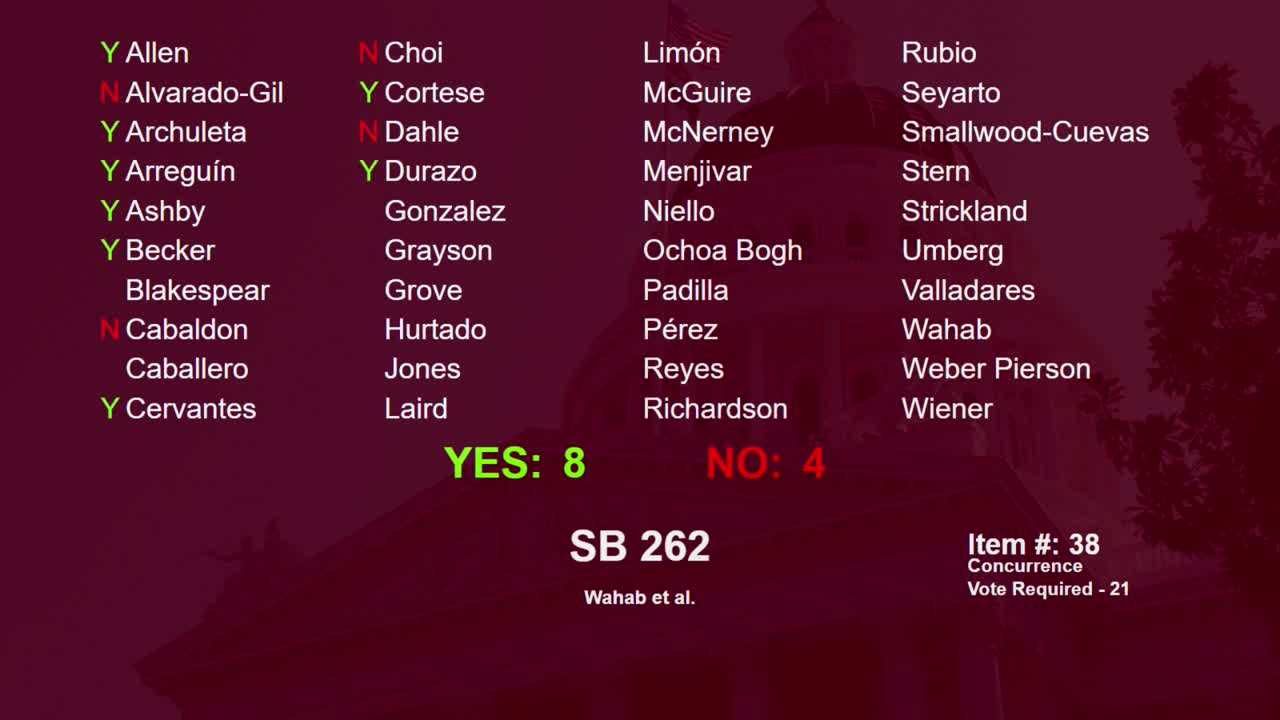
Bill Author

Bill Co-Author(s):