SB 567: Gravity-Based Energy Storage Well Pilot Program.
- Session Year: 2025-2026
- House: Senate
- Latest Version Date: 2025-10-06
Current Status:
Passed
(2025-10-06: Chaptered by Secretary of State. Chapter 419, Statutes of 2025.)
Introduced
In Committee
Awaiting First Chamber Vote
Passed First Chamber
In Committee
Awaiting Second Chamber Vote
Passed Second Chamber
Enacted
What does this bill do?
This bill creates a temporary pilot letting the state approve conversion of up to 250 oil or gas wells into "gravity-based energy storage" wells that store or produce power by raising and lowering a weight, affecting well operators and nearby communities. It requires wells to be proven structurally sound before conversion and at least annually thereafter, continuous leak monitoring, notice to regulators and schools or residents within 3,200 feet if leaks occur or integrity is lost, annual operator reports, prevailing wages for conversion work, and an operator fee to cover oversight costs.
The summary is provided by generative AI which can make mistakes. For original language, please view the details in the table below.
Existing law requires the State Oil and Gas Supervisor to supervise the drilling, operation, maintenance, and abandonment of wells so as to prevent damage to life, health, property, and natural resources, damage to underground oil and gas deposits from infiltrating water and other causes, loss of oil, gas, or reservoir of energy, and damage to underground and surface waters suitable for irrigation or domestic purposes by the infiltration of, or the addition of, detrimental substances. Existing law defines wells to mean oil or gas wells or other wells related to oil or gas production.
Under existing law, a person who fails to comply with the requirements relating to the regulation of wells is guilty of a misdemeanor.
This bill would, until January 1, 2035, establish the Gravity-Based Energy Storage Well Pilot Program and would authorize the supervisor to authorize the conversion of not more than 250 wells for use as gravity-based energy storage wells, as defined, to evaluate their use, including the establishment of appropriate operating conditions and physical parameters to safely generate energy, as provided. The bill would authorize the supervisor, the State Water Resources Control Board, or an appropriate regional water quality control board, before authorizing the use of a well as a gravity-based energy storage well, to require the operator to provide certain information demonstrating the suitability of the well for use as a gravity-based energy storage well. The bill would require idle wells that are authorized for use as gravity-based energy storage wells to be identified as gravity-based energy storage wells in a plan for the management and elimination of idle wells or updates to the plan required to be filed with the supervisor. The bill would require the Geologic Energy Management Division to require mechanical integrity testing of wells before conversion to gravity-based energy storage wells and not less than annually thereafter. The bill would require an operator of a gravity-based energy storage well, in the event of a loss of mechanical integrity of the well or a leak to the environment, to notify the division, the State Air Resources Board, the appropriate regional water quality control board, and schools and community members within 3,200 feet of the well and to cease operation until the mechanical integrity is restored or to plug and abandon the well, as provided. The bill would require gravity-based energy storage wells to be continuously monitored for leaks. The bill would require operators of gravity-based energy storage wells to annually report to the division certain information regarding their operation of the gravity-based energy storage wells. The bill would specify that the authorization for wells to be used as gravity-based energy storage wells ends at the termination of the pilot program. The bill would, by January 1, 2033, require the division, in consultation with certain entities, to evaluate the pilot program and make recommendations to the Legislature for a framework to implement an ongoing Gravity-Based Energy Storage Well Program to regulate the operation of gravity-based energy storage wells, as provided. The bill would, until January 1, 2035, impose an annual charge on operators of gravity-based energy storage wells, as provided, to defray the regulatory costs incurred by the state in maintaining surveillance of those wells, ensuring that testing is conducted properly, and ensuring no damage occurs to the environment by reason of the conversion.
Because a violation of the requirements of the Gravity-Based Energy Storage Well Pilot Program would be a crime, this bill would impose a state-mandated local program.
The California Constitution requires the state to reimburse local agencies and school districts for certain costs mandated by the state. Statutory provisions establish procedures for making that reimbursement.
This bill would provide that no reimbursement is required by this act for a specified reason.
Existing law requires the State Oil and Gas Supervisor to supervise the drilling, operation, maintenance, and abandonment of wells so as to prevent damage to life, health, property, and natural resources, damage to underground oil and gas deposits from infiltrating water and other causes, loss of oil, gas, or reservoir of energy, and damage to underground and surface waters suitable for irrigation or domestic purposes by the infiltration of, or the addition of, detrimental substances. Existing law defines wells to mean oil or gas wells or other wells related to oil or gas production.
Under existing law, a person who fails to comply with the requirements relating to the regulation of wells is guilty of a misdemeanor.
This bill would, until January 1, 2035, establish the Gravity-Based Energy Storage Well Pilot Program and would authorize the supervisor to authorize the conversion of not more than 250 wells for use as gravity-based energy storage wells, as defined, to evaluate their use, including the establishment of appropriate operating conditions and physical parameters to safely generate energy, as provided. The bill would authorize the supervisor, the State Water Resources Control Board, or an appropriate regional water quality control board, before authorizing the use of a well as a gravity-based energy storage well, to require the operator to provide certain information demonstrating the suitability of the well for use as a gravity-based energy storage well. The bill would require idle wells that are authorized for use as gravity-based energy storage wells to be identified as gravity-based energy storage wells in a plan for the management and elimination of idle wells or updates to the plan required to be filed with the supervisor. The bill would require the Geologic Energy Management Division to require mechanical integrity of testing of wells before conversion to gravity-based energy storage wells to be assessed by the Geologic Energy Management Division and not less than annually. annually thereafter. The bill would require an operator of a gravity-based energy storage well, in the event of a loss of mechanical integrity of the well or a leak to the environment, to notify the division, the State Air Resources Board, the appropriate regional water quality control board, and schools and community members within 3,200 feet of the well and to cease operation until the mechanical integrity is restored or to plug and abandon the well, as provided. The bill would require gravity-based energy storage wells to be continuously monitored for fluid leaks. The bill would require operators of gravity-based energy storage wells to annually report to the division certain information regarding their operation of the gravity-based energy storage wells. The bill would specify that the authorization for wells to be used as gravity-based energy storage wells end ends at the termination of the pilot program. The bill would, by January 1, 2033, require the Secretary for Environmental Protection, division, in consultation with certain entities, to evaluate the pilot program and make recommendations to the Legislature for a framework to implement an ongoing Gravity-Based Energy Storage Well Program to regulate the operation of gravity-based energy storage wells, as provided. The bill would, until January 1, 2035, impose an annual charge on operators of gravity-based energy storage wells, as provided, to defray the regulatory costs incurred by the state in maintaining surveillance of those wells, ensuring that testing is conducted properly, and ensuring no damage occurs to the environment by reason of the conversion.
Because a violation of the requirements of the Gravity-Based Energy Storage Well Pilot Program would be a crime, this bill would impose a state-mandated local program.
The California Constitution requires the state to reimburse local agencies and school districts for certain costs mandated by the state. Statutory provisions establish procedures for making that reimbursement.
This bill would provide that no reimbursement is required by this act for a specified reason.
Existing law requires the State Oil and Gas Supervisor to supervise the drilling, operation, maintenance, and abandonment of wells so as to prevent damage to life, health, property, and natural resources, damage to underground oil and gas deposits from infiltrating water and other causes, loss of oil, gas, or reservoir of energy, and damage to underground and surface waters suitable for irrigation or domestic purposes by the infiltration of, or the addition of, detrimental substances. Existing law defines wells to mean oil or gas wells or other wells related to oil or gas production.
Under existing law, a person who fails to comply with the requirements relating to the regulation of wells is guilty of a misdemeanor.
This bill would, until January 1, 2035, establish the Gravity-Based Energy Storage Well Pilot Program and would authorize the supervisor to authorize the conversion of not more than 250 wells for use as gravity-based energy storage wells, as defined, to evaluate their use, including the establishment of appropriate operating conditions and physical parameters to safely generate energy, as provided. The bill would require idle wells that are authorized for use as gravity-based energy storage wells to be identified as gravity-based energy storage wells in a plan for the management and elimination of idle wells or updates to the plan required to be filed with the supervisor. The bill would require the mechanical integrity of gravity-based energy storage wells to be assessed by the Geologic Energy Management Division not less than annually. The bill would require an operator of a gravity-based energy storage well, in the event of a loss of mechanical integrity of the well or a leak to the environment, to notify the division, the State Air Resources Board, the appropriate regional water quality control board, and schools and community members within 3,200 feet of the well and to cease operation until the mechanical integrity is restored or to plug and abandon the well, as provided. The bill would require gravity-based energy storage wells to be continuously monitored for fluid leaks. The bill would specify that the authorization for wells to be used as gravity-based energy storage wells end at the termination of the pilot program. The bill would, by January 1, 2033, require the Secretary for Environmental Protection, in consultation with certain entities, to evaluate the pilot program and make recommendations to the Legislature for a framework to implement an ongoing Gravity-Based Energy Storage Well Program to regulate the operation of gravity-based energy storage wells, as provided.
Because a violation of the requirements of the Gravity-Based Energy Storage Well Pilot Program would be a crime, this bill would impose a state-mandated local program.
This bill would prohibit the supervisor from authorizing or allowing the use of a well or hydrocarbon reservoir for any purpose other than provided for in law.The California Constitution requires the state to reimburse local agencies and school districts for certain costs mandated by the state. Statutory provisions establish procedures for making that reimbursement.
This bill would provide that no reimbursement is required by this act for a specified reason.
Existing law requires the State Oil and Gas Supervisor to supervise the drilling, operation, maintenance, and abandonment of wells so as to prevent damage to life, health, property, and natural resources, damage to underground oil and gas deposits from infiltrating water and other causes, loss of oil, gas, or reservoir of energy, and damage to underground and surface waters suitable for irrigation or domestic purposes by the infiltration of, or the addition of, detrimental substances. Existing law defines wells to mean oil or gas wells or other wells related to oil or gas production.
Under existing law, a person who fails to comply with the requirements relating to the regulation of wells is guilty of a misdemeanor.
This bill would, until January 1, 2035, establish the Gravity-Based Energy Storage Well Pilot Program and would authorize the supervisor to authorize the conversion of not more than 250 wells for use as gravity-based energy storage wells, as defined, to evaluate their use, including the establishment of appropriate operating conditions and physical parameters to safely generate energy. energy, as provided. The bill would require idle wells that are authorized for use as gravity-based energy storage wells to be identified as gravity-based energy storage wells in a plan for the management and elimination of idle wells or updates to the plan required to be filed with the supervisor. The bill would require the mechanical integrity of gravity-based energy storage wells to be assessed by the Geologic Energy Management Division not less than annually. The bill would require an operator of a gravity-based energy storage well, in the event of a loss of mechanical integrity of the well or a leak to the environment, to notify the division, the State Air Resources Board, the appropriate regional water quality control board, and schools and community members within 3,200 feet of the well and to cease operation until the mechanical integrity is restored or to plug and abandon the well, as provided. The bill would require gravity-based energy storage wells to be continuously monitored for fluid leaks. The bill would specify that the authorization for wells to be used as gravity-based energy storage wells end at the termination of the pilot program. The bill would, by January 1, 2033, require the Secretary for Environmental Protection, in consultation with certain entities, to evaluate the pilot program and make recommendations to the Legislature for a framework to implement an ongoing Gravity-Based Energy Storage Well Program to regulate the operation of gravity-based energy storage wells, as provided.
Because a violation of the requirements of the Gravity-Based Energy Storage Well Pilot Program would be a crime, this bill would impose a state-mandated local program.
This bill would prohibit the supervisor from authorizing or allowing the use of a well or hydrocarbon reservoir for any purpose other than provided for in law.
The California Constitution requires the state to reimburse local agencies and school districts for certain costs mandated by the state. Statutory provisions establish procedures for making that reimbursement.
This bill would provide that no reimbursement is required by this act for a specified reason.
Existing law requires the State Oil and Gas Supervisor to supervise the drilling, operation, maintenance, and abandonment of wells so as to prevent damage to life, health, property, and natural resources, damage to underground oil and gas deposits from infiltrating water and other causes, loss of oil, gas, or reservoir of energy, and damage to underground and surface waters suitable for irrigation or domestic purposes by the infiltration of, or the addition of, detrimental substances. Existing law defines wells to mean oil or gas wells or other wells related to oil or gas production.
Under existing law, a person who fails to comply with the requirements relating to the regulation of wells is guilty of a misdemeanor.
This bill would, until January 1, 2035, establish the Gravity-Based Energy Storage Well Pilot Program and would authorize the supervisor to authorize the conversion of not more than 1,000 250 wells for use as gravity-based energy storage wells, as defined, to evaluate their use, including the establishment of appropriate operating conditions and physical parameters to safely generate energy. The bill would require idle wells that are authorized for use as gravity-based energy storage wells to be identified as gravity-based energy storage wells in a plan for the management and elimination of idle wells or updates to the plan required to be filed with the supervisor. The bill would require the mechanical integrity of gravity-based energy storage wells to be assessed by the Geologic Energy Management Division not less than annually. The bill would require an operator of a gravity-based energy storage well, in the event of a loss of mechanical integrity of the well or a leak to the environment, to notify the division, the State Air Resources Board, the appropriate regional water quality control board, and schools and community members within 3,200 feet of the well and to cease operation until the mechanical integrity is restored or to plug and abandon the well, as provided. The bill would require gravity-based energy storage wells to be continuously monitored for fluid leaks. The bill would specify that the authorization for wells to be used as gravity-based energy storage wells end at the termination of the pilot program. The bill would, by January 1, 2033, require the Secretary for Environmental Protection, in consultation with certain entities, to evaluate the pilot program and make recommendations to the Legislature for a framework to implement an ongoing Gravity-Based Energy Storage Well Program to regulate the operation of gravity-based energy storage wells. wells, as provided.
Because a violation of the requirements of the Gravity-Based Energy Storage Well Pilot Program would be a crime, this bill would impose a state-mandated local program.
This bill would prohibit the supervisor from authorizing or allowing the use of a well or hydrocarbon reservoir for any purpose other than provided for in law.
The California Constitution requires the state to reimburse local agencies and school districts for certain costs mandated by the state. Statutory provisions establish procedures for making that reimbursement.
This bill would provide that no reimbursement is required by this act for a specified reason.
Existing law requires the State Oil and Gas Supervisor to supervise the drilling, operation, maintenance, and abandonment of wells so as to prevent damage to life, health, property, and natural resources, damage to underground oil and gas deposits from infiltrating water and other causes, loss of oil, gas, or reservoir of energy, and damage to underground and surface waters suitable for irrigation or domestic purposes by the infiltration of, or the addition of, detrimental substances. Existing law defines wells to mean oil or gas wells or other wells related to oil or gas production.
Under existing law, a person who fails to comply with the requirements relating to the regulation of wells is guilty of a misdemeanor.
This bill would, until January 1, 2035, establish the Gravity-Based Energy Storage Well Pilot Program and would authorize the supervisor to authorize the conversion of not more than 1,000 wells for use as gravity-based energy storage wells, as defined, to evaluate their use, including the establishment of appropriate operating conditions and physical parameters to safely generate energy. The bill would require idle wells that are authorized for use as gravity-based energy storage wells to be identified as gravity-based energy storage wells in a plan or updates to the plan required to be filed with the supervisor. The bill would require the mechanical integrity of gravity-based energy storage wells to be assessed by the Geologic Energy Management Division not less than annually. The bill would require an operator of a gravity-based energy storage well, in the event of a loss of mechanical integrity of the well or a leak to the environment, to notify the division, the State Air Resources Board, the appropriate regional water quality control board, and schools and community members within 3,200 feet of the well and to cease operation until the mechanical integrity is restored or to plug and abandon the well, as provided. The bill would require gravity-based energy storage wells to be continuously monitored for fluid leaks. The bill would specify that the authorization for wells to be used as gravity-based energy storage wells end at the termination of the pilot program. The bill would, by January 1, 2033, require the Secretary for Environmental Protection, in consultation with certain entities, to evaluate the pilot program and make recommendations to the Legislature for a framework to implement an ongoing Gravity-Based Energy Storage Well Program to regulate the operation of gravity-based energy storage wells.
Because a violation of the requirements of the Gravity-Based Energy Storage Well Pilot Program would be a crime, this bill would impose a state-mandated local program.
This bill would prohibit the supervisor from authorizing or allowing the use of a well or hydrocarbon reservoir for any purpose other than provided for in law.
The California Constitution requires the state to reimburse local agencies and school districts for certain costs mandated by the state. Statutory provisions establish procedures for making that reimbursement.
This bill would provide that no reimbursement is required by this act for a specified reason.
For purposes of this article, the following definitions apply:
(a)Federal agency means the United States Environmental Protection Agency, including Region 9 of that agency.
(b)(1)Gravity-based energy storage well means a well that meets all of the following:
(A)The well is plugged with all perforations sealed, including by the use of permanent bridge plug.
(B)The well is isolated from a hydrocarbon reservoir.
(C)The well has mechanical integrity.
(D)The well is not a conduit for fluid migration into a beneficial use aquifer.
(E)The well is exclusively used to store or generate energy by raising or lowering a weight within the well casing.
(2)A well that has been fully plugged and abandoned pursuant to Section 3208 is not eligible to be a gravity-based energy storage well.
(3)A well listed as an orphan well pursuant to subparagraph (C) of paragraph (1) of subdivision (a) of Section 3206.3 or an idle-deserted well, as defined in Section 3251, is eligible to be converted for use as a gravity-based energy storage well if all applicable and necessary rights to do so have been obtained.
3190.1.(a)The supervisor, after consulting with the State Water Resources Control Board and an appropriate regional water quality control board, may authorize the conversion of not more than 250 wells for use as gravity-based energy storage wells pursuant to this article to evaluate their use, including the establishment of appropriate operating conditions and physical parameters to safely store and generate energy.
(b)Before authorizing the use of a well as a gravity-based energy storage well, the supervisor, the State Water Resources Control Board, or an appropriate regional water quality control board may require the operator to provide additional information demonstrating the suitability of the well for use as a gravity-based energy storage well, including, but not limited to, providing an analysis of the chemical composition of the fluid in the wellbore, and may require testing for, among other indicators of suitability, total dissolved solids, total petroleum hydrocarbon as crude oil, major cations, including, but not limited to, calcium, magnesium, sodium, potassium, iron, manganese, strontium, and boron, major anions, including, but not limited to, chloride, sulfate, bicarbonate, carbonate, bromide, and iodide, total alkalinity and hydroxide, electrical conductance, potential of hydrogen or pH, and temperature. Liquid analysis required pursuant to this section shall be performed by a laboratory that is certified by the State Water Resources Control Boards Environmental Laboratory Accreditation Program. The performing laboratory shall submit the data and analysis directly to the supervisor or the appropriate regional water quality control board, as appropriate, using a digital format, and also to the State Water Resources Control Board, in an electronic format uploaded to their online GeoTracker information system following the applicable regulations adopted pursuant to Section 13197.5 of the Water Code.
(c)The operator, before conversion of a well to a gravity-based energy storage well, shall file with the supervisor a written notice of intention to convert the well to a gravity-based energy storage well. The notice shall contain the pertinent data the supervisor requires in a format acceptable to the supervisor. The supervisor may require other pertinent information to supplement the notice. If conversion has not commenced within 24 months from the approval of the notice, the notice shall be deemed canceled. The notice shall not be extended and the cancellation shall be noted in the divisions records.
(d)The conversion of a well for use as a gravity-based energy storage well does not relieve the operator of its obligation to plug and abandon the well, decommission attendant facilities, and remediate the site, consistent with the requirements of this division.
(e)(1)Before authorizing the conversion of a well for use as a gravity-based energy storage well, the supervisor shall obtain an enforceable commitment from the operator that all contractors and subcontractors, at every tier, performing the conversion will pay at least prevailing wages and will use a skilled and trained workforce to perform all work that falls within an apprenticeable occupation in the building and construction trades.
(2)Paragraph (1) shall not apply if all work to perform the conversion is subject to a project labor agreement that requires the payment of prevailing wages and the use of a skilled and trained workforce.
(3)For purposes of this subdivision, the following definitions apply:
(A)Prevailing wages means at the general prevailing rate of per diem wages for the type of work and geographic area, as determined by the Director of Industrial Relations pursuant to Sections 1773 and 1773.9 of the Labor Code, except that apprentices registered in programs approved by the Chief of the Division of Apprenticeship Standards may be paid at least the applicable apprentice prevailing rate.
(B)Project labor agreement means a prehire collective bargaining agreement that establishes terms and conditions of employment for a specific construction project or projects and is an agreement described in Section 158(f) of Title 29 of the United States Code.
(C)Skilled and trained workforce has the same meaning as set forth in Section 2601 of the Public Contract Code.
(f)Submittal of a written notice of intention or supplemental notice pursuant to this section is separate from, and in addition to, any requirement to submit a written notice of intention or supplemental notice pursuant to Section 3203.
3190.2.A well that has been permitted or operated as a Class II well, as defined in Section 3130, shall not be authorized for use as a gravity-based energy storage well without the written acknowledgment and authorization of the federal agency. The written acknowledgment and authorization shall be part of the well record.
3190.3.(a)For purposes of this section, plan means the plan required pursuant to paragraph (2) of subdivision (a) of Section 3206.
(b)An idle well that is authorized for use as a gravity-based energy storage well shall be identified in any plan or update to a plan. Identification of the idle well as a gravity-based energy storage well within the plan or update to the plan shall constitute the elimination of an idle well for purposes of compliance with plan requirements.
(c)A gravity-based energy storage well that ceases to be operated as a gravity-based energy storage well may be incorporated as an idle well in any plan or update to a plan and subject to the plan elimination requirements.
(d)An idle well that is authorized for use as a gravity-based energy storage well remains subject to the requirements of Section 3205.3.
3190.4.(a)The division shall require mechanical integrity testing before the conversion of a well to a gravity-based energy storage well, and not less than annually thereafter, that shall include, at a minimum, pressure testing. Test results and testing requirements shall be part of the well record. A gravity-based energy storage well that has lost mechanical integrity shall cease operation as a gravity-based energy storage well until mechanical integrity is restored. In the event of a loss of mechanical integrity or leak to the environment, the operator of a gravity-based energy storage well shall notify the division, the State Air Resources Board, the appropriate regional water quality control board, and any schools or community members living within 3,200 feet of the well of the loss of mechanical integrity or leak.
(b)A well, after being converted for use as a gravity-based energy storage well, shall be continuously monitored for leaks, including, but not limited to, methane leaks. The supervisor, in consultation with the State Air Resources Board and the State Water Resources Control Board, shall establish criteria for leak monitoring and reporting.
(c)The operator of a gravity-based energy storage well shall annually report data, including, but not limited to, the number of wells converted to gravity-based energy storage wells, the number of converted gravity-based energy storage wells that were previously leaking methane or other fluid, the average number of cycles to store and produce energy per day by gravity-based energy storage wells, and energy production from gravity-based energy storage wells, to the division.
(d)This section does not alter or affect the obligation of the operator to comply with Section 8589.7 of the Government Code, as applicable.
3190.5.A gravity-based energy storage well that has lost its mechanical integrity shall be plugged and abandoned within one year or scheduled for plugging and abandonment in an approved idle well management plan or related plan approved by the supervisor unless the mechanical integrity of the well is restored.
3190.6.Except as otherwise provided in this article, a gravity-based energy storage well shall meet all requirements applicable to a well specified in this division.
3190.7.The division shall identify all wells converted to or being operated as gravity-based energy storage wells on its internet website.
3190.8.(a)On or by January 1, 2033, the division, in consultation with entities operating gravity-based energy storage wells, the Secretary for Environmental Protection, the State Water Resources Control Board and regional water quality boards, the State Air Resources Board, the State Energy Resources Conservation and Development Commission, relevant local jurisdictions, environmental and environmental justice organizations, tribes, and other stakeholders, shall evaluate the Gravity-Based Energy Storage Well Pilot Program and make recommendations to the Legislature for a framework to implement an ongoing Gravity-Based Energy Storage Well Program to provide for regulation of the operation of gravity-based energy storage wells as a result of the benefits determined for renewable energy sources and the storage of the energy in gravity-based energy storage wells. The recommendations shall be informed by the Gravity-Based Energy Storage Well Pilot Program and shall include, but are not limited to, all of the following:
(1)Implications of conversion of a well to a gravity-based energy storage well for local land use authorization and applicability of the California Environmental Quality Act (Division 13 (commencing with Section 21000)), including designation of the appropriate lead agency.
(2)Appropriate regulatory parameters, including physical design, operating conditions, mechanical integrity, and inspection protocols, for gravity-based energy storage wells to ensure safe, leak-free operation, including, but not limited to, methane leaks and leakage to the environment, including into aquifers of beneficial use. This shall include whether the redrilling of a plugged and abandoned well may be allowed for a gravity-based energy storage well.
(3)Implications of conversion of a well to a gravity-based energy storage well for existing well classifications and associated requirements.
(4)Tracking and monitoring by the regulator of gravity-based energy storage wells to ensure that those wells are ultimately plugged and abandoned pursuant to Section 3208, attendant equipment and infrastructure is decommissioned, and the site remediated.
(b)The recommendations pursuant to subdivision (a) shall include a review of gravity-based energy storage well operations including any leaks to the environment and loss of mechanical integrity.
(c)In developing the recommendations pursuant to subdivision (a), there shall be at least one public meeting to solicit public input.
(d)The recommendations shall be submitted to the Legislature in accordance with Section 9795 of the Government Code.
3190.9.(a)Except as provided in subdivision (c), this article shall remain in effect only until January 1, 2035, and as of that date is repealed.
(b)The authorization issued pursuant to Section 3474.2 shall terminate upon the repeal of this article.
(c)Notwithstanding subdivision (a), in the absence of another program authorizing the use of gravity-based energy storage wells, idle wells that are authorized to be used as gravity-based energy storage wells under this article shall be reclassified, upon the repeal of this article, as idle wells subject to Section 3206 and other applicable law.
SEC. 2.Section 3403.6 is added to the Public Resources Code, to read:3403.6.(a)For the purposes of this section, gravity-based energy storage well has the same meaning as set forth in Section 3190.
(b)To support the regulatory effort of the supervisor, there shall be imposed an annual charge on operators of gravity-based energy storage wells to defray the regulatory costs incurred by the state in maintaining surveillance of these wells, ensuring that testing is conducted properly, and ensuring that no damage occurs to the environment by reason of conversion. Each gravity-based energy storage well operator shall pay a proportionate share of the total regulatory costs for each fiscal year based on the operators number of gravity-based energy storage wells. For each gravity-based energy storage well, the portion owed by the operator shall be computed by dividing the statewide sum of reasonably incurred regulatory costs across all gravity-based energy source wells by the number of gravity-based energy storage wells.
(c)This section shall remain in effect only until January 1, 2035, and as of that date is repealed.
SEC. 3.No reimbursement is required by this act pursuant to Section 6 of Article XIIIB of the California Constitution because the only costs that may be incurred by a local agency or school district will be incurred because this act creates a new crime or infraction, eliminates a crime or infraction, or changes the penalty for a crime or infraction, within the meaning of Section 17556 of the Government Code, or changes the definition of a crime within the meaning of Section 6 of Article XIIIB of the California Constitution.
For purposes of this article, the following definitions apply:
(a)Federal agency means the United States Environmental Protection Agency, including Region 9 of that agency.
(b)(1)Gravity-based energy storage well means a well that meets all of the following:
(A)The well is plugged with all perforations sealed, including by the use of permanent bridge plug.
(B)The well is isolated from a hydrocarbon reservoir.
(C)The well has mechanical integrity.
(D)The well is not a conduit for fluid migration into a beneficial use aquifer.
(E)The well is exclusively used to store or generate energy by raising or lowering a weight within the well casing.
(2)A well that has been fully plugged and abandoned pursuant to Section 3208 is not eligible to be a gravity-based energy storage well.
(3)A well listed as an orphan well pursuant to subparagraph (C) of paragraph (1) of subdivision (a) of Section 3206.3 or an idle-deserted well, as defined in Section 3251, is eligible to be converted for use as a gravity-based energy storage well if all applicable and necessary rights to do so have been obtained.
3474.2.3190.1.(a)The supervisor supervisor, after consulting with the State Water Resources Control Board and an appropriate regional water quality control board, may authorize the conversion of not more than 250 wells for use as gravity-based energy storage wells pursuant to this article to evaluate their use, including the establishment of appropriate operating conditions and physical parameters to safely store and generate energy.
(b)Before authorizing the use of a well as a gravity-based energy storage well, the supervisor supervisor, the State Water Resources Control Board, or an appropriate regional water quality control board may require the operator to provide additional information demonstrating the suitability of the well for use as a gravity-based energy storage well. well, including, but not limited to, providing an analysis of the chemical composition of the fluid in the wellbore, and may require testing for, among other indicators of suitability, total dissolved solids, total petroleum hydrocarbon as crude oil, major cations, including, but not limited to, calcium, magnesium, sodium, potassium, iron, manganese, strontium, and boron, major anions, including, but not limited to, chloride, sulfate, bicarbonate, carbonate, bromide, and iodide, total alkalinity and hydroxide, electrical conductance, potential of hydrogen or pH, and temperature. Liquid analysis required pursuant to this section shall be performed by a laboratory that is certified by the State Water Resources Control Boards Environmental Laboratory Accreditation Program. The performing laboratory shall submit the data and analysis directly to the supervisor or the appropriate regional water quality control board, as appropriate, using a digital format, and also to the State Water Resources Control Board, in an electronic format uploaded to their online GeoTracker information system following the applicable regulations adopted pursuant to Section 13197.5 of the Water Code.
(c)The operator, before conversion of a well to a gravity-based energy storage well, shall file with the supervisor a written notice of intention to convert the well to a gravity-based energy storage well. The notice shall contain the pertinent data the supervisor requires in a format acceptable to the supervisor. The supervisor may require other pertinent information to supplement the notice. If conversion has not commenced within 24 months from the approval of the notice, the notice shall be deemed canceled. The notice shall not be extended and the cancellation shall be noted in the divisions records.
(c)(d)The conversion of a well for use as a gravity-based energy storage well does not relieve the operator of its obligation to plug and abandon the well, decommission attendant facilities, and remediate the site. site, consistent with the requirements of this division.
(d)(e)(1)Before authorizing the conversion of a well for use as a gravity-based energy storage well, the supervisor shall obtain an enforceable commitment from the operator that all contractors and subcontractors, at every tier, performing the conversion will pay at least prevailing wages and will use a skilled and trained workforce to perform all work that falls within an apprenticeable occupation in the building and construction trades.
(2)Paragraph (1) shall not apply if all work to perform the conversion is subject to a project labor agreement that requires the payment of prevailing wages and the use of a skilled and trained workforce.
(3)For purposes of this subdivision, the following definitions apply:
(A)Prevailing wages means at the general prevailing rate of per diem wages for the type of work and geographic area, as determined by the Director of Industrial Relations pursuant to Sections 1773 and 1773.9 of the Labor Code, except that apprentices registered in programs approved by the Chief of the Division of Apprenticeship Standards may be paid at least the applicable apprentice prevailing rate.
(B)Project labor agreement means a prehire collective bargaining agreement that establishes terms and conditions of employment for a specific construction project or projects and is an agreement described in Section 158(f) of Title 29 of the United States Code.
(C)Skilled and trained workforce has the same meaning as set forth in Section 2601 of the Public Contract Code.
(e)The supervisor may assess a fee not to exceed the reasonable costs incurred by the division in implementing this article.(f)Submittal of a written notice of intention or supplemental notice pursuant to this section is separate from, and in addition to, any requirement to submit a written notice of intention or supplemental notice pursuant to Section 3203.
3474.4.3190.2.A well that has been permitted or operated as a Class II well, as defined in Section 3130, shall not be authorized for use as a gravity-based energy storage well without the written acknowledgment and authorization from of the federal agency. The written acknowledgment and authorization shall be part of the well record.
3474.6.3190.3.(a)For purposes of this section, plan means the plan required pursuant to paragraph (2) of subdivision (a) of Section 3206.
(b)An idle well that is authorized for use as a gravity-based energy storage well shall be eliminated from identified in any plan or update to a plan except that the well shall be identified as a gravity-based energy storage well within the plan. Identification of the idle well as a gravity-based energy storage well within the plan or update to the plan shall constitute the elimination of an idle well for purposes of compliance with plan requirements.
(c)A gravity-based energy storage well that ceases to be operated as a gravity-based energy storage well shall may be incorporated as an idle well in any plan or update to a plan and removed from identification as a gravity-based energy storage well in the plan or update to the plan. subject to the plan elimination requirements.
(d)An idle well that is authorized for use as a gravity-based energy storage well remains subject to the requirements of Section 3205.3.
3474.8.3190.4.(a)The division shall require mechanical integrity of testing before the conversion of a well to a gravity-based energy storage well shall be assessed by the division well, and not less than annually and thereafter, that shall include, at a minimum, pressure testing. The assessment Test results and testing requirements shall be part of the well record. A gravity-based energy storage well that has lost mechanical integrity shall cease operation as a gravity-based energy storage well until mechanical integrity is restored. In the event of a loss of mechanical integrity or leak to the environment, the operator of a gravity-based energy storage well shall notify the division, the State Air Resources Board, the appropriate regional water quality control board, and any schools or community members living within 3,200 feet of the well of the loss of mechanical integrity or leak.
(b)A well well, after being converted for use as a gravity-based energy storage well well, shall be continuously monitored for fluid leaks, including, but not limited to, methane leaks. The supervisor, in consultation with the State Air Resources Board and the State Water Resources Control Board, shall establish criteria for fluid leak monitoring and reporting.
(c)The operator of a gravity-based energy storage well shall annually report data, including, but not limited to, the number of wells converted to gravity-based energy storage wells, the number of converted gravity-based energy storage wells that were previously leaking methane or other fluid, the average number of cycles to store and produce energy per day by gravity-based energy storage wells, and energy production from gravity-based energy storage wells, to the division.
(d)This section does not alter or affect the obligation of the operator to comply with Section 8589.7 of the Government Code, as applicable.
3474.9.3190.5.A gravity-based energy storage well that has lost its mechanical integrity shall be plugged and abandoned within one year or scheduled for plugging and abandonment in an approved idle well management plan or related plan approved by the supervisor unless the mechanical integrity of the well is restored.
3474.10.Beginning after the first month in which the gravity-based energy storage well becomes operational, the operator of a gravity-based energy storage well shall, on a monthly basis, report to the supervisor the total energy discharged by the well during the prior month.3474.12.3190.6.Except as otherwise provided in this article, a gravity-based energy storage well shall meet all requirements applicable to a well specified in this division.
3474.14.3190.7.The division shall identify all wells converted to or being operated as gravity-based energy storage wells on its internet website.
3474.16.3190.8.(a)On or by January 1, 2033, the Secretary for Environmental Protection, division, in consultation with entities operating gravity-based energy storage wells, the division, Secretary for Environmental Protection, the State Water Resources Control Board and regional water quality boards, the State Air Resources Board, the State Energy Resources Conservation and Development Commission, relevant local jurisdictions, environmental and environmental justice organizations, tribes, and other stakeholders, shall evaluate the Gravity-Based Energy Storage Well Pilot Program and make recommendations to the Legislature for a framework to implement an ongoing Gravity-Based Energy Storage Well Program to provide for regulation of the operation of gravity-based energy storage wells as a result of the benefits determined for renewable energy sources and the storage of the energy in gravity-based energy storage wells. The recommendations shall be informed by the Gravity-Based Energy Storage Well Pilot Program and shall include, but are not limited to, all of the following:
(1)Implications of conversion of a well to a gravity-based energy storage well for local land use authorization and applicability of the California Environmental Quality Act (Division 13 (commencing with Section 21000)), including designation of the appropriate lead agency.
(2)Appropriate regulatory parameters, including physical design, operating conditions, mechanical integrity, and inspection protocols, for a gravity-based energy storage well wells to ensure safe operation and no fluid, safe, leak-free operation, including, but not limited to, methane, methane leaks and leakage to the environment, including into aquifers of beneficial use. This shall include whether the redrilling of a plugged and abandoned well may be allowed for a gravity-based energy storage well.
(3)Implications of conversion of a well to a gravity-based energy storage well for existing well classifications and associated requirements.
(4)Tracking and monitoring by the regulator of gravity-based energy storage wells to ensure that those wells are ultimately plugged and abandoned pursuant to Section 3208, attendant equipment and infrastructure is decommissioned, and the site remediated.
(5)Fee structure for gravity-based energy storage well operations to ensure that gravity-based energy storage well operations fully compensate regulatory oversight by the state.(6)Structure and payment schedule from gravity-based energy storage well operations to fund the applicable plugging and abandonment of a gravity-based energy storage well, decommissioning of associated infrastructure, and site remediation.(7)The amount of renewable energy generated and the ease of connecting a gravity-based energy storage well to existing electrical infrastructure.(b)The recommendations pursuant to subdivision (a) shall include a review of gravity-based energy storage well operations including any leaks to the environment and loss of mechanical integrity.
(c)In developing the recommendations pursuant to subdivision (a), there shall be at least one public meeting to solicit public input.
(d)The recommendations shall be submitted to the Legislature in accordance with Section 9795 of the Government Code.
3474.18.3190.9.(a)Except as provided in subdivision (c), this article shall remain in effect only until January 1, 2035, and as of that date is repealed.
(b)The authorization issued pursuant to Section 3474.2 shall terminate upon the repeal of this article.
(c)Notwithstanding subdivision (a), in the absence of another program authorizing the use of gravity-based energy storage wells, idle wells that are authorized to be used as gravity-based energy storage wells under this article shall be reclassified reclassified, upon the repeal of this article, as idle wells subject to Section 3206 and other applicable law.
SEC. 2.Section 3403.6 is added to the Public Resources Code, to read:3403.6.(a)For the purposes of this section, gravity-based energy storage well has the same meaning as set forth in Section 3190.
(b)To support the regulatory effort of the supervisor, there shall be imposed an annual charge on operators of gravity-based energy storage wells to defray the regulatory costs incurred by the state in maintaining surveillance of these wells, ensuring that testing is conducted properly, and ensuring that no damage occurs to the environment by reason of conversion. Each gravity-based energy storage well operator shall pay a proportionate share of the total regulatory costs for each fiscal year based on the operators number of gravity-based energy storage wells. For each gravity-based energy storage well, the portion owed by the operator shall be computed by dividing the statewide sum of reasonably incurred regulatory costs across all gravity-based energy source wells by the number of gravity-based energy storage wells.
(c)This section shall remain in effect only until January 1, 2035, and as of that date is repealed.
SEC. 2.SEC. 3.No reimbursement is required by this act pursuant to Section 6 of Article XIIIB of the California Constitution because the only costs that may be incurred by a local agency or school district will be incurred because this act creates a new crime or infraction, eliminates a crime or infraction, or changes the penalty for a crime or infraction, within the meaning of Section 17556 of the Government Code, or changes the definition of a crime within the meaning of Section 6 of Article XIIIB of the California Constitution.
For purposes of this article, the following definitions apply:
(a)Federal agency means the United States Environmental Protection Agency, including Region 9 of that agency.
(b)(1)Gravity-based energy storage well means a well that meets all of the following:
(A)The well is plugged with all perforations sealed, including by the use of permanent bridge plug.
(B)The well is isolated from a hydrocarbon reservoir.
(C)The well has mechanical integrity.
(D)The well is not a conduit for fluid migration into a beneficial use aquifer.
(E)The well is exclusively used to store or generate energy by raising or lowering a weight within the well casing.
(2)A well that has been fully plugged and abandoned pursuant to Section 3208 is not eligible to be a gravity-based energy storage well.
(3)A well listed as an orphan well pursuant to subparagraph (C) of paragraph (1) of subdivision (a) of Section 3206.3 or an idle-deserted well, as defined in Section 3251, is eligible to be converted for use as a gravity-based energy storage well if all applicable and necessary rights to do so have been obtained.
3474.2.(a)The supervisor may authorize the conversion of not more than 250 wells for use as gravity-based energy storage wells pursuant to this article to evaluate their use, including the establishment of appropriate operating conditions and physical parameters to safely store and generate energy.
(b)Before authorizing the use of a well as a gravity-based energy storage well, the supervisor may require the operator to provide additional information demonstrating the suitability of the well for use as a gravity-based energy storage well.
(c)The conversion of a well for use as a gravity-based energy storage well does not relieve the operator of its obligation to plug and abandon the well, decommission attendant facilities, and remediate the site.
(d)(1)Before authorizing the conversion of a well for use as a gravity-based energy storage well, the supervisor shall obtain an enforceable commitment from the operator that all contractors and subcontractors, at every tier, performing the conversion will pay at least prevailing wages and will use a skilled and trained workforce to perform all work that falls within an apprenticeable occupation in the building and construction trades.
(2)Paragraph (1) shall not apply if all work to perform the conversion is subject to a project labor agreement that requires the payment of prevailing wages and the use of a skilled and trained workforce.
(3)For purposes of this subdivision, the following definitions apply:
(A)Prevailing wages means at the general prevailing rate of per diem wages for the type of work and geographic area, as determined by the Director of Industrial Relations pursuant to Sections 1773 and 1773.9 of the Labor Code, except that apprentices registered in programs approved by the Chief of the Division of Apprenticeship Standards may be paid at least the applicable apprentice prevailing rate.
(B)Project labor agreement means a prehire collective bargaining agreement that establishes terms and conditions of employment for a specific construction project or projects and is an agreement described in Section 158(f) of Title 29 of the United States Code.
(C)Skilled and trained workforce has the same meaning as set forth in Section 2601 of the Public Contract Code.
(e)The supervisor may assess a fee not to exceed the reasonable costs incurred by the division in implementing this article.
3474.4.A well that has been permitted or operated as a Class II well, as defined in Section 3130, shall not be authorized for use as a gravity-based energy storage well without the written acknowledgment and authorization from the federal agency. The written acknowledgment and authorization shall be part of the well record.
3474.6.(a)For purposes of this section, plan means the plan required pursuant to paragraph (2) of subdivision (a) of Section 3206.
(b)An idle well that is authorized for use as a gravity-based energy storage well shall be eliminated from any plan or update to a plan except that the well shall be identified as a gravity-based energy storage well within the plan. Identification of the idle well as a gravity-based energy storage well within the plan or update to the plan shall constitute compliance with plan requirements.
(c)A gravity-based energy storage well that ceases to be operated as a gravity-based energy storage well shall be incorporated as an idle well in any plan or update to a plan and removed from identification as a gravity-based energy storage well in the plan or update to the plan.
(d)An idle well that is authorized for use as a gravity-based energy storage well remains subject to the requirements of Section 3205.3.
3474.8.(a)The mechanical integrity of a gravity-based energy storage well shall be assessed by the division not less than annually and shall include, at a minimum, pressure testing. The assessment shall be part of the well record. A gravity-based energy storage well that has lost mechanical integrity shall cease operation as a gravity-based energy storage well until mechanical integrity is restored. In the event of a loss of mechanical integrity or leak to the environment, the operator of a gravity-based energy storage well shall notify the division, the State Air Resources Board, the appropriate regional water quality control board, and any schools or community members living within 3,200 feet of the well of the loss of mechanical integrity or leak.
(b)A well after being converted for use as a gravity-based energy storage well shall be continuously monitored for fluid leaks, including, but not limited to, methane leaks. The supervisor, in consultation with the State Air Resources Board and the State Water Resources Control Board, shall establish criteria for fluid leak monitoring and reporting.
3474.9.A gravity-based energy storage well that has lost its mechanical integrity shall be plugged and abandoned within one year or scheduled for plugging and abandonment in an approved idle well management plan or related plan approved by the supervisor unless the mechanical integrity of the well is restored.
3474.10.Beginning after the first month in which the gravity-based energy storage well becomes operational, the operator of a gravity-based energy storage well shall, on a monthly basis, report to the supervisor the total energy discharged by the well during the prior month.
3474.12.Except as otherwise provided in this article, a gravity-based energy storage well shall meet all requirements applicable to a well specified in this division.
3474.14.The division shall identify all wells converted to or being operated as gravity-based energy storage wells on its internet website.
3474.16.(a)On or by January 1, 2033, the Secretary for Environmental Protection, in consultation with entities operating gravity-based energy storage wells, the division, the State Water Resources Control Board and regional water quality boards, the State Air Resources Board, the State Energy Resources Conservation and Development Commission, relevant local jurisdictions, environmental and environmental justice organizations, tribes, and other stakeholders, shall evaluate the Gravity-Based Energy Storage Well Pilot Program and make recommendations to the Legislature for a framework to implement an ongoing Gravity-Based Energy Storage Well Program to provide for regulation of the operation of gravity-based energy storage wells as a result of the benefits determined for renewable energy sources and the storage of the energy in gravity-based energy storage wells. The recommendations shall be informed by the Gravity-Based Energy Storage Well Pilot Program and shall include, but are not limited to, all of the following:
(1)Implications of conversion of a well to a gravity-based energy storage well for local land use authorization and applicability of the California Environmental Quality Act (Division 13 (commencing with Section 21000)), including designation of the appropriate lead agency.
(2)Appropriate regulatory parameters, including physical design, operating conditions, mechanical integrity, and inspection protocols, for a gravity-based energy storage well to ensure safe operation and no fluid, including, but not limited to, methane, leakage to the environment, including into aquifers of beneficial use. This shall include whether the redrilling of a plugged and abandoned well may be allowed for a gravity-based energy storage well.
(3)Implications of conversion of a well to a gravity-based energy storage well for existing well classifications and associated requirements.
(4)Tracking and monitoring by the regulator of gravity-based energy storage wells to ensure that those wells are ultimately plugged and abandoned pursuant to Section 3208, attendant equipment and infrastructure is decommissioned, and the site remediated.
(5)Fee structure for gravity-based energy storage well operations to ensure that gravity-based energy storage well operations fully compensate regulatory oversight by the state.
(6)Structure and payment schedule from gravity-based energy storage well operations to fund the applicable plugging and abandonment of a gravity-based energy storage well, decommissioning of associated infrastructure, and site remediation.
(7)The amount of renewable energy generated and the ease of connecting a gravity-based energy storage well to existing electrical infrastructure.
(b)The recommendations pursuant to subdivision (a) shall include a review of gravity-based energy storage well operations including any leaks to the environment and loss of mechanical integrity.
(c)In developing the recommendations pursuant to subdivision (a), there shall be at least one public meeting to solicit public input.
(d)The recommendations shall be submitted to the Legislature in accordance with Section 9795 of the Government Code.
3474.18.(a)Except as provided in subdivision (c), this article shall remain in effect only until January 1, 2035, and as of that date is repealed.
(b)The authorization issued pursuant to Section 3474.2 shall terminate upon the repeal of this article.
(c)Notwithstanding subdivision (a), in the absence of another program authorizing the use of gravity-based energy storage wells, idle wells that are authorized to be used as gravity-based energy storage wells under this article shall be reclassified as idle wells subject to Section 3206 and other applicable law.
SEC. 3.SEC. 2.No reimbursement is required by this act pursuant to Section 6 of Article XIIIB of the California Constitution because the only costs that may be incurred by a local agency or school district will be incurred because this act creates a new crime or infraction, eliminates a crime or infraction, or changes the penalty for a crime or infraction, within the meaning of Section 17556 of the Government Code, or changes the definition of a crime within the meaning of Section 6 of Article XIIIB of the California Constitution.
The supervisor shall not authorize or allow the use of a well or hydrocarbon reservoir for any purpose other than provided for in this division, including Section 3106.
SEC. 2.Article 10 (commencing with Section 3474) is added to Chapter 1 of Division 3 of the Public Resources Code, to read:10.Gravity-Based Energy Storage Well Pilot Program3474.For purposes of this article, the following definitions apply:
(a)Federal agency means the United States Environmental Protection Agency, including Region 9 of that agency.
(b)(1)Gravity-based energy storage well means a well that meets all of the following:
(A)The well is plugged with all perforations sealed, including by the use of permanent bridge plug.
(B)The well is isolated from a hydrocarbon reservoir.
(C)The well has mechanical integrity.
(D)The well is not a conduit for fluid migration into a beneficial use aquifer, aquifer.
(E)The well is exclusively used to store or generate energy by raising or lowering a weight within the well casing.
(2)A well that has been fully plugged and abandoned pursuant to Section 3208 is not eligible to be a gravity-based energy storage well.
(3)A well listed as an orphan well pursuant to subparagraph (C) of paragraph (1) of subdivision (a) of Section 3206.3 or an idle-deserted well, as defined in Section 3251, is eligible to be converted for use as a gravity-based energy storage well if all applicable and necessary rights to do so have been obtained.
3474.2.(a)The supervisor may authorize the conversion of not more than 250 wells for use as gravity-based energy storage wells pursuant to this article to evaluate their use, including the establishment of appropriate operating conditions and physical parameters to safely store and generate energy.
(b)Before authorizing the use of a well as a gravity-based energy storage well, the supervisor may require the operator to provide additional information demonstrating the suitability of the well for use as a gravity-based energy storage well.
(c)The conversion of a well for use as a gravity-based energy storage well does not relieve the operator of its obligation to plug and abandon the well, decommission attendant facilities, and remediate the site.
(d)(1)Before authorizing the conversion of a well for use as a gravity-based energy storage well, the supervisor shall obtain an enforceable commitment from the operator that all contractors and subcontractors, at every tier, performing the conversion will pay at least prevailing wages and will use a skilled and trained workforce to perform all work that falls within an apprenticeable occupation in the building and construction trades.
(2)Paragraph (1) shall not apply if all work to perform the conversion is subject to a project labor agreement that requires the payment of prevailing wages and the use of a skilled and trained workforce.
(3)For purposes of this subdivision, the following definitions apply:
(A)Prevailing wages means at the general prevailing rate of per diem wages for the type of work and geographic area, as determined by the Director of Industrial Relations pursuant to Sections 1773 and 1773.9 of the Labor Code, except that apprentices registered in programs approved by the Chief of the Division of Apprenticeship Standards may be paid at least the applicable apprentice prevailing rate.
(B)Project labor agreement means a prehire collective bargaining agreement that establishes terms and conditions of employment for a specific construction project or projects and is an agreement described in Section 158(f) of Title 29 of the United States Code.
(C)Skilled and trained workforce has the same meaning as set forth in Section 2601 of the Public Contract Code.
(d)(e)The supervisor may assess a fee not to exceed the reasonable costs incurred by the division in implementing this article.
3474.4.A well that has been permitted or operated as a Class II well, as defined in Section 3130, shall not be authorized for use as a gravity-based energy storage well without the written acknowledgment and authorization from the federal agency. The written acknowledgment and authorization shall be part of the well record.
3474.6.(a)For purposes of this section, plan means the plan required pursuant to paragraph (2) of subdivision (a) of Section 3206.
(b)An idle well that is authorized for use as a gravity-based energy storage well shall be eliminated from any plan or update to a plan except that the well shall be identified as a gravity-based energy storage well within the plan. Identification of the idle well as a gravity-based energy storage well within the plan or update to the plan shall constitute compliance with plan requirements.
(c)A gravity-based energy storage well that ceases to be operated as a gravity-based energy storage well shall be incorporated as an idle well in any plan or update to a plan and removed from identification as a gravity-based energy storage well in the plan or update to the plan.
(d)An idle well that is authorized for use as a gravity-based energy storage well remains subject to the requirements of Section 3205.3.
3474.8.(a)The mechanical integrity of a gravity-based energy storage well shall be assessed by the division not less than annually and shall include, at a minimum, pressure testing. The assessment shall be part of the well record. A gravity-based energy storage well that has lost mechanical integrity shall cease operation as a gravity-based energy storage well until mechanical integrity is restored. In the event of a loss of mechanical integrity or leak to the environment, the operator of a gravity-based energy storage well shall notify the division, the State Air Resources Board, the appropriate regional water quality control board, and any schools or community members living within 3,200 feet of the well of the loss of mechanical integrity or leak.
(b)A well after being converted for use as a gravity-based energy storage well shall be continuously monitored for fluid leaks, including, but not limited to, methane leaks. The supervisor, in consultation with the State Air Resources Board and the State Water Resources Control Board, shall establish criteria for fluid leak monitoring and reporting.
3474.9.A gravity-based energy storage well that has lost its mechanical integrity shall be plugged and abandoned within one year or scheduled for plugging and abandonment in an approved idle well management plan or related plan approved by the supervisor unless the mechanical integrity of the well is restored.
3474.10.Beginning after the first month in which the gravity-based energy storage well becomes operational, the operator of a gravity-based energy storage well shall, on a monthly basis, report to the supervisor the total energy discharged by the well during the prior month.
3474.12.Except as otherwise provided in this article, a gravity-based energy storage well shall meet all requirements applicable to a well specified in this division.
3474.14.The division shall identify all wells converted to or being operated as gravity-based energy storage wells on its internet website.
3474.16.(a)On or by January 1, 2033, the Secretary for Environmental Protection, in consultation with entities operating gravity-based energy storage wells, the division, the State Water Resources Control Board and regional water quality boards, the State Air Resources Board, the State Energy Resources Conservation and Development Commission, relevant local jurisdictions, environmental and environmental justice organizations, tribes, and other stakeholders, shall evaluate the Gravity-Based Energy Storage Well Pilot Program and make recommendations to the Legislature for a framework to implement an ongoing Gravity-Based Energy Storage Well Program to provide for regulation of the operation of gravity-based energy storage wells as a result of the benefits determined for renewable energy sources and the storage of the energy in gravity-based energy storage wells. The recommendations shall be informed by the Gravity-Based Energy Storage Well Pilot Program and shall include, but are not limited to, all of the following:
(1)Implications of conversion of a well to a gravity-based energy storage well for local land use authorization and applicability of the California Environmental Quality Act (Division 13 (commencing with Section 21000)), including designation of the appropriate lead agency.
(2)Appropriate regulatory parameters, including physical design, operating conditions, mechanical integrity, and inspection protocols, for a gravity-based energy storage well to ensure safe operation and no fluid, including, but not limited to, methane, leakage to the environment, including into aquifers of beneficial use. This shall include whether the redrilling of a plugged and abandoned well may be allowed for a gravity-based energy storage well.
(3)Implications of conversion of a well to a gravity-based energy storage well for existing well classifications and associated requirements.
(4)Tracking and monitoring by the regulator of gravity-based energy storage wells to ensure that those wells are ultimately plugged and abandoned pursuant to Section 3208, attendant equipment and infrastructure is decommissioned, and the site remediated.
(5)Fee structure for gravity-based energy storage well operations to ensure that gravity-based energy storage well operations fully compensate regulatory oversight by the state.
(6)Structure and payment schedule from gravity-based energy storage well operations to fund the applicable plugging and abandonment of a gravity-based energy storage well, decommissioning of associated infrastructure, and site remediation.
(7)The amount of renewable energy generated and the ease of connecting a gravity-based energy storage well to existing electrical infrastructure.
(b)The recommendations pursuant to subdivision (a) shall include a review of gravity-based energy storage well operations including any leaks to the environment and loss of mechanical integrity.
(c)In developing the recommendations pursuant to subdivision (a), there shall be at least one public meeting to solicit public input.
(d)The recommendations shall be submitted to the Legislature in accordance with Section 9795 of the Government Code.
3474.18.(a)Except as provided in subdivision (c), this article shall remain in effect only until January 1, 2035, and as of that date is repealed.
(b)The authorization issued pursuant to Section 3474.2 shall terminate upon the repeal of this article.
(c)Notwithstanding subdivision (a), in the absence of another program authorizing the use of gravity-based energy storage wells, idle wells that are authorized to be used as gravity-based energy storage wells under this article shall be reclassified as idle wells subject to Section 3206 and other applicable law.
SEC. 3.No reimbursement is required by this act pursuant to Section 6 of Article XIIIB of the California Constitution because the only costs that may be incurred by a local agency or school district will be incurred because this act creates a new crime or infraction, eliminates a crime or infraction, or changes the penalty for a crime or infraction, within the meaning of Section 17556 of the Government Code, or changes the definition of a crime within the meaning of Section 6 of Article XIIIB of the California Constitution.
The supervisor shall not authorize or allow the use of a well or hydrocarbon reservoir for any purpose other than provided for in this division, including Section 3106.
SEC. 2.Article 10 (commencing with Section 3474) is added to Chapter 1 of Division 3 of the Public Resources Code, to read:10.Gravity-Based Energy Storage Well Pilot Program3474.For purposes of this article, the following definitions apply:
(a)Federal agency means the United States Environmental Protection Agency, including Region 9 of that agency.
(b)(1)Gravity-based energy storage well means a well that meets all of the following:
(A)The well is plugged with all perforations sealed, including by the use of permanent bridge plug.
(B)The well is isolated from a hydrocarbon reservoir.
(C)The well has mechanical integrity.
(D)The well is not a conduit for fluid migration into a beneficial use aquifer,
(E)The well is exclusively used to store or generate energy by raising or lowering a weight within the well casing.
(2)A well that has been fully plugged and abandoned pursuant to Section 3208 is not eligible to be a gravity-based energy storage well.
(3)A well listed as an orphan well pursuant to subparagraph (C) of paragraph (1) of subdivision (a) of Section 3206.3 or an idle-deserted well, as defined in Section 3251, is eligible to be converted for use as a gravity-based energy storage well if all applicable and necessary rights to do so have been obtained.
3474.2.(a)The supervisor may authorize the conversion of not more than 1,000 250 wells for use as gravity-based energy storage wells pursuant to this article to evaluate their use, including the establishment of appropriate operating conditions and physical parameters to safely store and generate energy.
(b)Before authorizing the use of a well as a gravity-based energy storage well, the supervisor may require the operator to provide additional information demonstrating the suitability of the well for use as a gravity-based energy storage well.
(c)The conversion of a well for use as a gravity-based energy storage well does not relieve the operator of its obligation to plug and abandon the well, decommission attendant facilities, and remediate the site.
(d)The supervisor may assess a fee not to exceed the reasonable costs incurred by the division in implementing this article.
3474.4.A well that has been permitted or operated as a Class II well, as defined in Section 3130, shall not be authorized for use as a gravity-based energy storage well without the written acknowledgment and authorization from the federal agency. The written acknowledgment and authorization shall be part of the well record.
3474.6.(a)(1)An idle well that is authorized for use as a gravity-based energy storage well shall be identified as a gravity-based energy storage well in any plan or update to a plan required pursuant to paragraph (2) of subdivision (a) of Section 3206 and shall not be required to be eliminated.(2)An operator shall update an applicable plan pursuant to paragraph (2) of subdivision (a) of Section 3206 to identify the use of an idle well as a gravity-based energy storage well not less than annually.(b)(1)An idle well that is authorized for use as a gravity-based energy storage well remains subject to the requirements of Section 3205.3 and the applicable idle well fee specified in paragraph (1) of subdivision (a) of Section 3206.(2)An operator that ceases to operate an idle well as a gravity-based energy storage well shall identify that well as an idle well in any plan or update to a plan required pursuant to paragraph (2) of subdivision (a) of Section 3206.3474.6.(a)For purposes of this section, plan means the plan required pursuant to paragraph (2) of subdivision (a) of Section 3206.
(b)An idle well that is authorized for use as a gravity-based energy storage well shall be eliminated from any plan or update to a plan except that the well shall be identified as a gravity-based energy storage well within the plan. Identification of the idle well as a gravity-based energy storage well within the plan or update to the plan shall constitute compliance with plan requirements.
(c)A gravity-based energy storage well that ceases to be operated as a gravity-based energy storage well shall be incorporated as an idle well in any plan or update to a plan and removed from identification as a gravity-based energy storage well in the plan or update to the plan.
(d)An idle well that is authorized for use as a gravity-based energy storage well remains subject to the requirements of Section 3205.3.
3474.8.(a)The mechanical integrity of a gravity-based energy storage well shall be assessed by the division not less than annually and shall include, at a minimum, pressure testing. The assessment shall be part of the well record. A gravity-based energy storage well that has lost mechanical integrity shall cease operation as a gravity-based energy storage well until mechanical integrity is restored. In the event of a loss of mechanical integrity or leak to the environment, the operator of a gravity-based energy storage well shall notify the division, the State Air Resources Board, the appropriate regional water quality control board, and any schools or community members living within 3,200 feet of the well of the loss of mechanical integrity or leak.
(b)A well after being converted for use as a gravity-based energy storage well shall be continuously monitored for fluid leaks, including, but not limited to, methane leaks. The supervisor, in consultation with the State Air Resources Board and the State Water Resources Control Board, shall establish criteria for fluid leak monitoring and reporting.
3474.9.A gravity-based energy storage well that has lost its mechanical integrity shall be plugged and abandoned within one year or scheduled for plugging and abandonment in an approved idle well management plan or related plan approved by the supervisor unless the mechanical integrity of the well is restored.
3474.10.Beginning after the first month in which the gravity-based energy storage well becomes operational, the operator of a gravity-based energy storage well shall, on a monthly basis, report to the supervisor the total energy discharged by the well during the prior month.
3474.12.Except as otherwise provided in this article, a gravity-based energy storage well shall meet all requirements applicable to a well specified in this division.
3474.14.The division shall identify all wells converted to or being operated as gravity-based energy storage wells on its internet website.
3474.16.(a)On or by January 1, 2033, the Secretary for Environmental Protection, in consultation with entities operating gravity-based energy storage wells, the division, the State Water Resources Control Board and regional water quality boards, the State Air Resources Board, the State Energy Resources Conservation and Development Commission, relevant local jurisdictions, environmental and environmental justice organizations, tribes, and other stakeholders, shall evaluate the Gravity-Based Energy Storage Well Pilot Program and make recommendations to the Legislature for a framework to implement an ongoing Gravity-Based Energy Storage Well Program to provide for regulation of the operation of gravity-based energy storage wells as a result of the benefits determined for renewable energy sources and the storage of the energy in gravity-based energy storage wells. The recommendations shall be informed by the Gravity-Based Energy Storage Well Pilot Program and shall include, but are not limited to, all of the following:
(1)Implications of conversion of a well to a gravity-based energy storage well for local land use authorization and applicability of the California Environmental Quality Act (Division 13 (commencing with Section 21000)), including designation of the appropriate lead agency.
(2)Appropriate regulatory parameters, including physical design, operating conditions, mechanical integrity, and inspection protocols, for a gravity-based energy storage well to ensure safe operation and no fluid, including, but not limited to, methane, leakage to the environment, including into aquifers of beneficial use. This shall include whether the redrilling of a plugged and abandoned well may be allowed for a gravity-based energy storage well.
(3)Implications of conversion of a well to a gravity-based energy storage well for existing well classifications and associated requirements.
(4)Tracking and monitoring by the regulator of gravity-based energy storage wells to ensure that those wells are ultimately plugged and abandoned pursuant to Section 3208, attendant equipment and infrastructure is decommissioned, and the site remediated.
(5)Fee structure for gravity-based energy storage well operations to ensure that gravity-based energy storage well operations fully compensate regulatory oversight by the state.
(6)Structure and payment schedule from gravity-based energy storage well operations to fund the applicable plugging and abandonment of a gravity-based energy storage well, decommissioning of associated infrastructure, and site remediation.
(7)The amount of renewable energy generated and the ease of connecting a gravity-based energy storage well to existing electrical infrastructure.
(b)The recommendations pursuant to subdivision (a) shall include a review of gravity-based energy storage well operations including any leaks to the environment and loss of mechanical integrity.
(c)In developing the recommendations pursuant to subdivision (a), there shall be at least one public meeting to solicit public input.
(d)The recommendations shall be submitted to the Legislature in accordance with Section 9795 of the Government Code.
3474.18.(a)Except as provided in subdivision (c), this article shall remain in effect only until January 1, 2035, and as of that date is repealed.
(b)The authorization issued pursuant to Section 3474.2 shall terminate upon the repeal of this article.
(c)Notwithstanding subdivision (a), in the absence of another program authorizing the use of gravity-based energy storage wells, idle wells that are authorized to be used as gravity-based energy storage wells under this article shall be reclassified as idle wells subject to Section 3206 and other applicable law.
SEC. 3.No reimbursement is required by this act pursuant to Section 6 of Article XIIIB of the California Constitution because the only costs that may be incurred by a local agency or school district will be incurred because this act creates a new crime or infraction, eliminates a crime or infraction, or changes the penalty for a crime or infraction, within the meaning of Section 17556 of the Government Code, or changes the definition of a crime within the meaning of Section 6 of Article XIIIB of the California Constitution.
The supervisor shall not authorize or allow the use of a well or hydrocarbon reservoir for any purpose other than provided for in this division, including Section 3106.
SEC. 2.Article 10 (commencing with Section 3474) is added to Chapter 1 of Division 3 of the Public Resources Code, to read:10.Gravity-Based Energy Storage Well Pilot Program3474.For purposes of this article, the following definitions apply:
(a)Federal agency means the United States Environmental Protection Agency, including Region 9 of that agency.
(b)(1)Gravity-based energy storage well means a well that meets all of the following:
(A)The well is plugged with all perforations sealed, including by the use of permanent bridge plug.
(B)The well is isolated from a hydrocarbon reservoir.
(C)The well has mechanical integrity.
(D)The well is not a conduit for fluid migration into a beneficial use aquifer,
(E)The well is exclusively used to store or generate energy by raising or lowering a weight within the well casing.
(2)A well that has been fully plugged and abandoned pursuant to Section 3208 is not eligible to be a gravity-based energy storage well.
(3)A well listed as an orphan well pursuant to subparagraph (C) of paragraph (1) of subdivision (a) of Section 3206.3 or an idle-deserted well, as defined in Section 3251, is eligible to be converted for use as a gravity-based energy storage well if all applicable and necessary rights to do so have been obtained.
3474.2.(a)The supervisor may authorize the conversion of not more than 1,000 wells for use as gravity-based energy storage wells pursuant to this article to evaluate their use, including the establishment of appropriate operating conditions and physical parameters to safely store and generate energy.
(b)Before authorizing the use of a well as a gravity-based energy storage well, the supervisor may require the operator to provide additional information demonstrating the suitability of the well for use as a gravity-based energy storage well.
(c)The conversion of a well for use as a gravity-based energy storage well does not relieve the operator of its obligation to plug and abandon the well, decommission attendant facilities, and remediate the site.
(d)The supervisor may assess a fee not to exceed the reasonable costs incurred by the division in implementing this article.
3474.4.A well that has been permitted or operated as a Class II well, as defined in Section 3130, shall not be authorized for use as a gravity-based energy storage well without the written acknowledgment and authorization from the federal agency. The written acknowledgment and authorization shall be part of the well record.
3474.6.(a)(1)An idle well that is authorized for use as a gravity-based energy storage well shall be identified as a gravity-based energy storage well in any plan or update to a plan required pursuant to paragraph (2) of subdivision (a) of Section 3206 and shall not be required to be eliminated.
(2)An operator shall update an applicable plan pursuant to paragraph (2) of subdivision (a) of Section 3206 to identify the use of an idle well as a gravity-based energy storage well not less than annually.
(b)(1)An idle well that is authorized for use as a gravity-based energy storage well remains subject to the requirements of Section 3205.3 and the applicable idle well fee specified in paragraph (1) of subdivision (a) of Section 3206.
(2)An operator that ceases to operate an idle well as a gravity-based energy storage well shall identify that well as an idle well in any plan or update to a plan required pursuant to paragraph (2) of subdivision (a) of Section 3206.
3474.8.(a)The mechanical integrity of a gravity-based energy storage well shall be assessed by the division not less than annually and shall include, at a minimum, pressure testing. The assessment shall be part of the well record. A gravity-based energy storage well that has lost mechanical integrity shall cease operation as a gravity-based energy storage well until mechanical integrity is restored. In the event of a loss of mechanical integrity or leak to the environment, the operator of a gravity-based energy storage well shall notify the division, the State Air Resources Board, the appropriate regional water quality control board, and any schools or community members living within 3,200 feet of the well of the loss of mechanical integrity or leak.
(b)A well after being converted for use as a gravity-based energy storage well shall be continuously monitored for fluid leaks, including, but not limited to, methane leaks. The supervisor, in consultation with the State Air Resources Board and the State Water Resources Control Board, shall establish criteria for fluid leak monitoring and reporting.
3474.9.A gravity-based energy storage well that has lost its mechanical integrity shall be plugged and abandoned within one year or scheduled for plugging and abandonment in an approved idle well management plan or related plan approved by the supervisor unless the mechanical integrity of the well is restored.
3474.10.Beginning after the first month in which the gravity-based energy storage well becomes operational, the operator of a gravity-based energy storage well shall, on a monthly basis, report to the supervisor the total energy discharged by the well during the prior month.
3474.12.Except as otherwise provided in this article, a gravity-based energy storage well shall meet all requirements applicable to a well specified in this division.
3474.14.The division shall identify all wells converted to or being operated as gravity-based energy storage wells on its internet website.
3474.16.(a)On or by January 1, 2033, the Secretary for Environmental Protection, in consultation with entities operating gravity-based energy storage wells, the division, the State Water Resources Control Board and regional water quality boards, the State Air Resources Board, the State Energy Resources Conservation and Development Commission, relevant local jurisdictions, environmental and environmental justice organizations, tribes, and other stakeholders, shall evaluate the Gravity-Based Energy Storage Well Pilot Program and make recommendations to the Legislature for a framework to implement an ongoing Gravity-Based Energy Storage Well Program to provide for regulation of the operation of gravity-based energy storage wells. The recommendations shall be informed by the Gravity-Based Energy Storage Well Pilot Program and shall include, but are not limited to, all of the following:
(1)Implications of conversion of a well to a gravity-based energy storage well for local land use authorization and applicability of the California Environmental Quality Act (Division 13 (commencing with Section 21000)), including designation of the appropriate lead agency.
(2)Appropriate regulatory parameters, including physical design, operating conditions, mechanical integrity, and inspection protocols, for a gravity-based energy storage well to ensure safe operation and no fluid, including, but not limited to, methane, leakage to the environment, including into aquifers of beneficial use. This shall include whether the redrilling of a plugged and abandoned well may be allowed for a gravity-based energy storage well.
(3)Implications of conversion of a well to a gravity-based energy storage well for existing well classifications and associated requirements.
(4)Tracking and monitoring by the regulator of gravity-based energy storage wells to ensure that those wells are ultimately plugged and abandoned pursuant to Section 3208, attendant equipment and infrastructure is decommissioned, and the site remediated.
(5)Fee structure for gravity-based energy storage well operations to ensure that gravity-based energy storage well operations fully compensate regulatory oversight by the state.
(6)Structure and payment schedule from gravity-based energy storage well operations to fund the applicable plugging and abandonment of a gravity-based energy storage well, decommissioning of associated infrastructure, and site remediation.
(7)The amount of renewable energy generated and the ease of connecting a gravity-based energy storage well to existing electrical infrastructure.
(b)The recommendations pursuant to subdivision (a) shall include a review of gravity-based energy storage well operations including any leaks to the environment and loss of mechanical integrity.
(c)In developing the recommendations pursuant to subdivision (a), there shall be at least one public meeting to solicit public input.
(d)The recommendations shall be submitted to the Legislature in accordance with Section 9795 of the Government Code.
3474.18.(a)Except as provided in subdivision (c), this article shall remain in effect only until January 1, 2035, and as of that date is repealed.
(b)The authorization issued pursuant to Section 3474.2 shall terminate upon the repeal of this article.
(c)Notwithstanding subdivision (a), in the absence of another program authorizing the use of gravity-based energy storage wells, idle wells that are authorized to be used as gravity-based energy storage wells under this article shall be reclassified as idle wells subject to Section 3206 and other applicable law.
SEC. 3.No reimbursement is required by this act pursuant to Section 6 of Article XIIIB of the California Constitution because the only costs that may be incurred by a local agency or school district will be incurred because this act creates a new crime or infraction, eliminates a crime or infraction, or changes the penalty for a crime or infraction, within the meaning of Section 17556 of the Government Code, or changes the definition of a crime within the meaning of Section 6 of Article XIIIB of the California Constitution.
|
Date
|
Status
|
|---|---|
| Oct 6, 2025 | Chaptered by Secretary of State. Chapter 419, Statutes of 2025. |
| Oct 6, 2025 | Approved by the Governor. |
| Sep 17, 2025 | Enrolled and presented to the Governor at 2 p.m. |
| Sep 9, 2025 | Assembly amendments concurred in. (Ayes 37. Noes 1. Page 2716.) Ordered to engrossing and enrolling. |
| Sep 8, 2025 | In Senate. Concurrence in Assembly amendments pending. |
| Sep 8, 2025 | Read third time. Passed. (Ayes 79. Noes 0. Page 3006.) Ordered to the Senate. |
| Sep 4, 2025 | Read third time and amended. |
| Sep 4, 2025 | Ordered to third reading. |
| Sep 3, 2025 | Read second time. Ordered to third reading. |
| Sep 2, 2025 | Read second time and amended. Ordered to second reading. |
| Aug 29, 2025 | From committee: Do pass as amended. (Ayes 11. Noes 0.) (August 29). |
| Jul 9, 2025 | July 9 set for first hearing. Placed on APPR. suspense file. |
| Jun 24, 2025 | From committee: Do pass and re-refer to Com. on APPR. (Ayes 14. Noes 0.) (June 23). Re-referred to Com. on APPR. |
| Jun 9, 2025 | Referred to Com. on NAT. RES. |
| Jun 4, 2025 | In Assembly. Read first time. Held at Desk. |
| Jun 3, 2025 | Read third time. Passed. (Ayes 33. Noes 1. Page 1447.) Ordered to the Assembly. |
| May 27, 2025 | Read second time. Ordered to third reading. |
| May 23, 2025 | Read second time and amended. Ordered to second reading. |
| May 23, 2025 | From committee: Do pass as amended. (Ayes 5. Noes 0. Page 1204.) (May 23). |
| May 16, 2025 | Set for hearing May 23. |
| May 12, 2025 | May 12 hearing: Placed on APPR. suspense file. |
| May 2, 2025 | Set for hearing May 12. |
| May 1, 2025 | From committee: Do pass and re-refer to Com. on APPR. (Ayes 8. Noes 0. Page 963.) (April 30). Re-referred to Com. on APPR. |
| Apr 2, 2025 | Set for hearing April 30. |
| Mar 26, 2025 | Read second time and amended. Re-referred to Com. on E.Q. |
| Mar 25, 2025 | From committee: Do pass as amended and re-refer to Com. on E.Q. (Ayes 7. Noes 0. Page 532.) (March 25). |
| Mar 12, 2025 | Set for hearing March 25. |
| Mar 5, 2025 | Referred to Coms. on N.R. & W. and E.Q. |
| Feb 21, 2025 | From printer. May be acted upon on or after March 23. |
| Feb 20, 2025 | Introduced. Read first time. To Com. on RLS. for assignment. To print. |
|
Date
|
Description
|
Location
|
Votes
|
|
|---|---|---|---|---|
| Sep 9, 2025 | Unfinished Business SB567 Limón Concurrence | Senate Floor |
Passed |
|
| Sep 8, 2025 | SB 567 Limón Senate Third Reading By Bryan | Assembly Floor |
Passed |
|
| Aug 29, 2025 | Do pass as amended. | Assembly Standing Committee on Appropriations |
Passed |
|
| Jun 23, 2025 | Do pass and be re-referred to the Committee on [Appropriations] | Assembly Standing Committee on Natural Resources |
Passed |
|
| Jun 3, 2025 | Senate 3rd Reading SB567 Limón | Senate Floor |
Passed |
|
| May 23, 2025 | Do pass as amended | Senate Standing Committee on Appropriations |
Passed |
|
| May 12, 2025 | Placed on suspense file | Senate Standing Committee on Appropriations |
Passed |
|
| Apr 30, 2025 | Do pass, but first be re-referred to the Committee on [Appropriations] | Senate Standing Committee on Environmental Quality |
Passed |
|
| Mar 25, 2025 | Do pass as amended, but first amend, and re-refer to the Committee on [Environmental Quality] | Senate Standing Committee on Natural Resources and Water |
Passed |
This list shows positions taken on this bill by organizations on the date displayed, which is linked to the original source.
Positions by individuals are not included.
|
Organization
|
Position
|
Date
|
|---|---|---|
| California Department of Finance | ** Against | |
| County Of Kern | ** Support | |
| County of Santa Barbara | ** Support | |
| Environmental Defense Fund | ** Support | |
| Renewell | ** Support | |
| Renewell Energy | ** Support | |
| State Building and Construction Trades Council of California | ** Support | |
| Water Replenishment District | ** Against | |
| Water Replenishment District (WRD) | ** Against | |
| Water Replenishment District Of Southern California | ** Against |
SENATE RULES COMMITTEE Office of Senate Floor Analyses (916) 651-1520 Fax: (916) 327-4478 | SB 567 |
UNFINISHED BUSINESS
Bill No: SB 567
Author: Limón (D)
Amended: 9/4/25
Vote: 21
SENATE NATURAL RES. & WATER COMMITTEE: 7-0, 3/25/25
AYES: Limón, Seyarto, Allen, Grove, Hurtado, Laird, Stern
SENATE ENVIRONMENTAL QUALITY COMMITTEE: 8-0, 4/30/25
AYES: Blakespear, Valladares, Dahle, Gonzalez, Hurtado, Menjivar, Padilla, Pérez
SENATE APPROPRIATIONS COMMITTEE: 5-0, 5/23/25
AYES: Caballero, Cabaldon, Grayson, Richardson, Wahab
NO VOTE RECORDED: Seyarto, Dahle
SENATE FLOOR: 33-1, 6/3/25
AYES: Allen, Alvarado-Gil, Archuleta, Arreguín, Ashby, Becker, Blakespear, Cabaldon, Caballero, Cervantes, Choi, Cortese, Durazo, Gonzalez, Grayson, Grove, Laird, Limón, McGuire, McNerney, Menjivar, Niello, Padilla, Pérez, Rubio, Smallwood-Cuevas, Stern, Strickland, Umberg, Valladares, Wahab, Weber Pierson, Wiener
NOES: Jones
NO VOTE RECORDED: Dahle, Hurtado, Ochoa Bogh, Reyes, Richardson, Seyarto
ASSEMBLY FLOOR: 79-0, 9/8/25 - See last page for vote
SUBJECT: Gravity-Based Energy Storage Well Pilot Program
SOURCE: Author
DIGEST:
This bill establishes the Gravity-Based Energy Storage Well Pilot Program until January 1, 2035 and authorizes the State Oil and Gas Supervisor to authorize the conversion of 250 oil and gas wells for use as gravity-based energy storage wells, as defined, in order to evaluate their use to safely generate energy, among other provisions.
Assembly Amendments
revise and recast many of the pilot program requirements, including requiring the Geologic Energy Management Division (CalGEM) to consult with the State Water Resources Control Board (State Water Board) or appropriate regional water quality control board (regional board) prior to authorizing a well conversion; explicitly authorize CalGEM, the State Water Board or appropriate regional board to request additional information from an operator seeking to convert a well to a gravity-based energy storage well; require an operator to submit a written notice of intention to convert a well to a gravity-based energy storage well; revise and recast CalGEM’s ability to assess an annual charge to recover its costs in implementing the pilot program; revise operator data reporting requirements, revise and recast well mechanical integrity testing requirements; remove the prohibition on CalGEM authorizing other uses for wells; and make various conforming and technical changes.
ANALYSIS:
Existing law:
- Establishes CalGEM in the Department of Conservation as the state’s oil and gas production regulator. The State Oil and Gas Supervisor (supervisor) leads CalGEM.
- Defines “well” to mean any oil or gas well or well for the discovery of oil or gas; any well on lands producing or reasonably presumed to contain oil or gas; any well drilled for the purpose of injecting fluids or gas for stimulating oil or gas recovery, among other definitions related to oil and gas production and related activities.
- An “idle well” is a well that for a period of 24 consecutive months has not either produced oil or natural gas, or been used for enhanced oil recovery or other related purposes, as provided. A long-term idle well means a well that has been idle for eight or more years (Public Resources Code (PRC) §3008).
- Requires bonds or other financial surety to be provided to CalGEM when a well is drilled, transferred, re-drilled or otherwise re-worked, as provided (PRC §3204, §3205, §3205.8, among others).
- Requires that the operator of an idle well either pay an annual fee or submit a plan to the supervisor for the management and elimination of all long-term idle wells (PRC §3206).
- Requires that the proceeds of charges levied, assessed, and collected pursuant to the state’s oil and gas conservation laws upon the properties of every person operating or owning an interest in the production of a well shall be used exclusively for the support and maintenance of the department charged with the supervision of oil and gas operations, and for certain other state entities for their activities related to oil and gas operations, as provided (PRC §3401).
This bill:
- Establishes the Gravity-Based Energy Storage Well Pilot Program (pilot program).
- Defines various terms including that a gravity-based energy storage well means a well that is plugged with all perforations sealed, is isolated from a hydrocarbon reservoir, has mechanical integrity, is not a conduit for fluid migration, and is exclusively used to store or generate energy by raising or lowering a weight within the well casing, as provided. Wells eligible for conversion include orphan and idle-deserted wells, as specified.
- Authorizes the supervisor, after consulting with the State Water Board or appropriate regional board, to allow the conversion of up to 250 wells to gravity-based energy storage wells to evaluate their use to safely store and generate energy, as provided.
- Authorizes the supervisor, State Water Board or appropriate regional board to require the operator to provide additional information demonstrating the suitability of the well for use as a gravity-based energy storage well including, but not limited to, an analysis of the chemical composition of the fluid in the wellbore, as provided.
- Requires the operator to submit to the supervisor a written notice of intention to convert the well to a gravity-based energy storage well, as provided.
- Requires the supervisor to obtain an enforceable commitment from the operator prior to authorizing a well conversion that all contractors and subcontractors performing the conversion will pay at least prevailing wages and use a skilled and trained workforce to perform all work within an apprenticeable occupation in the building and construction trades, unless a project labor agreement for all work performed for the conversion already requires the payment of prevailing wages and the use of a skilled and trained workforce, as provided.
- Requires a well that has been part of a Class II Underground Injection Control program project to receive written acknowledgement and authorization for its conversion to a gravity-based energy storage well from the U.S. Environmental Protection Agency, as provided.
- Requires identification of an idle well as a gravity-based energy storage well in the operator’s idle well management plan or update to the plan. Requires identification as a gravity-based energy storage well to constitute elimination of an idle well for purposes of compliance with the plan, as provided.
- Authorizes returning a former gravity-based energy storage well to idle well status, as applicable, in an operator’s idle well management plan or update to the plan.
- Requires a gravity-based energy storage well to remain subject to certain bonding requirements.
- Requires CalGEM to require the mechanical integrity testing of well prior to its conversion to a gravity-based energy storage well, and not less than annually thereafter, as provided. Requires a gravity-based energy storage well that has lost mechanical integrity to cease operation until integrity is restored, and requires appropriate reporting in the event of a leak, including to any schools or community members living within 3,200 feet of the well, as provided.
- Requires a gravity-based energy storage well to be continuously monitored for leaks, as provided.
- Requires the operator to annually report certain data to CalGEM, including the number of leaking gravity-based energy storage wells, and energy production from the gravity-based energy storage wells, among other requirements, as provided.
- Requires a gravity-based energy storage well that has lost its mechanical integrity to be plugged and abandoned within one year or scheduled for plugging and abandonment, unless the mechanical integrity is restored, as provided.
- Requires CalGEM to identify all gravity-based energy storage wells on its internet website.
- Requires a gravity-based energy storage well to meet all requirements applicable to a well except as otherwise provided.
- Requires CalGEM to conduct a study, in consultation with specified stakeholders, by January 1, 2033 to evaluate the pilot program and make recommendations to the Legislature for a framework to implement an ongoing Gravity-Based Energy Storage Well program to regulate the operation of gravity-based energy storage wells, as provided, including appropriate design and operating parameters, and fees.
- Sunsets the pilot program on January 1, 2035, as provided. Requires any gravity-based energy storage wells to be reclassified as idle wells after the sunset, as specified.
- Requires an annual charge be imposed on operators of gravity-based energy storage wells to defray the regulatory costs incurred by the state, as specified. Sunsets the annual charge on January 1, 2035.
- Provides that no reimbursement for a state mandated local program is required, as specified.
FISCAL EFFECT: Appropriation: No Fiscal Com.: Yes Local: Yes
According to the Assembly Appropriations Committee:
- The Department of Conservation will incur annual costs of an unknown amount, likely in the high hundreds of thousands to low millions of dollars, to develop and administer the pilot program until it sunsets in 2035. These costs could be offset by fees assessed to cover CalGEM's implementation costs, as provided for in the bill.
- ARB and CalEPA will incur annual costs of an unknown amount until January 1, 2033, likely in the high hundreds of thousands of dollars, to evaluate the pilot program and make specified recommendations.
SUPPORT: (Verified 9/8/25)
Environmental Defense Fund
County of Kern
County of Santa Barbara
Renewell
State Building and Construction Trades Council of California
OPPOSITION: (Verified 9/8/25)
California Department of Finance
Water Replenishment District of Southern California
ARGUMENTS IN SUPPORT: According to the author, “SB 567 will allow idle wells to be used for energy storage once they have been isolated from the oil or gas reservoir and satisfy other monitoring requirements. California has over 38,000 idle wells and a projected need of 52,000 MW of energy storage by 2045. To address both of these issues it is important the State consider new technologies. This bill will create a pathway for transitioning some idle wells into energy storage, while providing for the plugging and abandoning of the well when it is no longer being used for energy storage.”
ARGUMENTS IN OPPOSITION: Writing in opposition, the Water Replenishment District of Southern California that they “oppose SB 567 due to the threat the use of idle oil and gas wells for gravity-based energy storage in the Central and West Coast basins would pose to groundwater quality and access to drinking water for four million residents.” They are concerned that the integrity of a gravity-based energy storage well could fail during use and result in groundwater contamination that could be challenging to remediate.
They recommend amendments to limit the geographic scope of the pilot program, among other provisions.
ASSEMBLY FLOOR: 79-0, 9/8/25
AYES: Addis, Aguiar-Curry, Ahrens, Alanis, Alvarez, Arambula, Ávila Farías, Bains, Bauer-Kahan, Bennett, Berman, Boerner, Bonta, Bryan, Calderon, Caloza, Carrillo, Castillo, Chen, Connolly, Davies, DeMaio, Dixon, Elhawary, Ellis, Flora, Fong, Gabriel, Gallagher, Garcia, Gipson, Jeff Gonzalez, Mark González, Hadwick, Haney, Harabedian, Hart, Hoover, Irwin, Jackson, Johnson, Kalra, Krell, Lackey, Lee, Lowenthal, Macedo, McKinnor, Muratsuchi, Ortega, Pacheco, Papan, Patel, Patterson, Pellerin, Petrie-Norris, Quirk-Silva, Ramos, Ransom, Celeste Rodriguez, Michelle Rodriguez, Rogers, Blanca Rubio, Sanchez, Schiavo, Schultz, Sharp-Collins, Solache, Soria, Stefani, Ta, Tangipa,
Valencia, Wallis, Ward, Wicks, Wilson, Zbur, Rivas
NO VOTE RECORDED: Nguyen
Prepared by: Katharine Moore / N.R. & W. / (916) 651-4116
9/8/25 19:49:51
**** END ****
SENATE THIRD READING
STR Bill Id:SB 567
Author:(Limón)
As Amended Ver:September 4, 2025
Majority vote
SUMMARY
Establishes, until January 1, 2035, the Gravity-Based Energy Storage Well Pilot Program (Pilot Program) and authorizes the conversion of not more than 250 wells for use as gravity-based energy storage wells, as defined, to evaluate their use, including the establishment of appropriate operating conditions and physical parameters to safely generate energy.
Major Provisions
- Allows the state oil and gas supervisor (supervisor), after consulting with the State Water Resources Control Board and appropriate regional water quality control board, with certain restrictions and subject to various requirements, to authorize the conversion of not more than 250 wells for use as gravity-based energy storage wells, as defined, to evaluate their use, including the establishment of appropriate operating conditions and physical parameters to safely store and generate energy. Requires the Geologic Energy Management Division (CalGEM) to identify each well converted to or being operated as a gravity-based energy storage well on its website. Specifies requirements for, among others, a Class II well or an idle well authorized for use as a gravity-based energy storage well.
- Requires the operator, before conversion of a well to a gravity-based energy storage well, to file with the supervisor a written notice of intention with specified information to convert the well to a gravity-based energy storage well.
- Requires the supervisor before authorizing the conversion of a well for use as a gravity-based energy storage well, to obtain an enforceable commitment from the well operator that all contractors and subcontractors performing the conversion will pay at least prevailing wages and will use a skilled and trained workforce to perform all work that falls within an apprenticeable occupation in the building and construction trades, as specified.
- Allows a gravity-based storage well that ceases to be operated as a gravity-based storage well to be incorporated as an idle well in a plan subject to the elimination requirements.
- Requires CalGEM to require mechanical integrity testing of a gravity-based energy storage well before the conversion and at least annually, as specified. Requires testing data reporting. Specifies various requirements for a gravity-based energy storage well in the event of a loss of mechanical integrity or leak to the environment. Requires the supervisor, in consultation with the Air Resources Board (ARB) and the State Water Resources Control Board, to establish criteria for fluid leak monitoring and reporting.
- Requires, by January 1, 2033, CalGEM, in consultation with entities operating gravity-based energy storage wells, the Secretary for the California Environmental Protection Agency (CalEPA), the State Water Resources Control Board and regional water quality boards, ARB, the California Energy Commission, relevant local jurisdictions, environmental and environmental justice organizations, tribes, and other stakeholders, to evaluate the pilot program and make recommendations – as specified – to the Legislature for a framework to implement an ongoing program to provide for regulation of the operation of gravity-based energy storage wells as a result of the benefits determined for renewable energy sources and the storage of the energy in gravity-based energy storage wells.
- Requires, until January 1, 2035, an annual charge on operators of gravity-based energy storage wells to defray the regulatory costs incurred by the state in maintaining surveillance of these wells, ensuring that testing is conducted properly, and ensuring that no damage occurs to the environment by reason of conversion.
COMMENTS
In California, an idle well is a well that has not been used for two years or more and has not yet been properly plugged and abandoned (sealed and closed). According to CalGEM, there are more than 37,000 known idle wells in California, all of which will eventually come to their end of life, and their owner/operators will be required to plug the wells with cement and decommission the production facilities, restoring the well site to its prior condition.
A gravity well is an idle oil or gas well that is retrofitted with a gravity-based mechatronic energy conversion system to generate renewable energy for the grid. The technology charges and discharges by lifting and lowering a long, cylindrical weight, which consists of used oilfield tubing or casing and high-density filling. It is suspended by wire rope in an idle well that is sealed with a cement plug prior to installation. It is estimated that each conversion can generate and store upwards of 2,000 megawatt hours (Mwh) of clean energy. Converting orphan wells into energy storage systems can both potentially permanently seal the well, stemming the noxious pollution from the well from seeping into the nearby communities, and can create potentially significant renewable energy storage.
California does not currently have a way to permit gravity-well technologies as it is outside CalGEM's statutory jurisdiction. SB 567 provides explicit authority, until January 1, 2035, for the Pilot Program for CalGEM to permit the conversion of up to 250 wells for use as gravity-based energy storage wells to evaluate their use, including the establishment of appropriate operating conditions and physical parameters to safely store and generate energy. The bill excludes Class II injection wells, which are used to safely dispose of the salt and fresh water produced with oil and gas, from potential conversion.
According to the Author
SB 567 will allow idle wells to be used for energy storage once they have been isolated from the oil or gas reservoir and satisfy other monitoring requirements. California has over 38,000 idle wells and a projected need of 52,000 MW of energy storage by 2045. To address both of these issues it is important the State consider new technologies. This bill will create a pathway for transitioning some idle wells into energy storage, while providing for the plugging and abandoning of the well when it is no longer being used for energy storage.
Arguments in Support
The Kern County Board of Supervisors writes in support that "Kern is committed to helping our oil and gas companies repurpose their assets to enhance financial stability, create jobs, and generate essential county revenue. Supporting continued employment for oil and gas workers is crucial for the long-term economic strength and sustainability of our community. Transforming inactive wells for uses such as energy storage, carbon capture and sequestration, and geothermal applications provides valuable job opportunities for local workers who already possess the expertise needed to drive these projects forward."
Arguments in Opposition
The Water Replenishment District" opposes SB 567 due to the threat the use of idle oil and gas wells for gravity-based energy storage in the Central and West Coast basins would pose to groundwater quality and access to drinking water for four million residents. The structural integrity of an idle well might not be known and repurposing a well for gravity-based energy storage even following mechanical integrity testing present concerns, especially at deeper depths as breaches in structural integrity that leads to the movement of contaminants could escape detection for a period of time. Regional water quality control boards do not have the financial capacity to respond to groundwater contamination and generally limit their work to remediating sites that have a funding mechanism like a responsible party. The remediation of contaminated groundwater should an idle well used for gravity-based energy storage fail would take years due to the time and uncertainty regarding identification of the source of contamination and identification of a responsible party. In the meantime, WRD or public water systems could be faced with the contamination of drinking water wells."
FISCAL COMMENTS
According to the Assembly Appropriations Committee:
- The Department of Conservation will incur annual costs of an unknown amount, likely in the high hundreds of thousands to low millions of dollars, to develop and administer the pilot program until it sunsets in 2035. These costs could be offset by fees assessed to cover CalGEM's implementation costs, as provided for in the bill.
- ARB and CalEPA will incur annual costs of an unknown amount until January 1, 2033, likely in the high hundreds of thousands of dollars, to evaluate the pilot program and make specified recommendations.
VOTES
SENATE FLOOR: 33-1-6
YES: Allen, Alvarado-Gil, Archuleta, Arreguín, Ashby, Becker, Blakespear, Cabaldon, Caballero, Cervantes, Choi, Cortese, Durazo, Gonzalez, Grayson, Grove, Laird, Limón, McGuire, McNerney, Menjivar, Niello, Padilla, Pérez, Rubio, Smallwood-Cuevas, Stern, Strickland, Umberg, Valladares, Wahab, Weber Pierson, Wiener
NO: Jones
ABS, ABST OR NV: Dahle, Hurtado, Ochoa Bogh, Reyes, Richardson, Seyarto
ASM NATURAL RESOURCES: 14-0-0
YES: Bryan, Alanis, Connolly, Ellis, Flora, Garcia, Haney, Hoover, Kalra, Muratsuchi, Pellerin, Schultz, Wicks, Zbur
ASM APPROPRIATIONS: 11-0-4
YES: Wicks, Arambula, Calderon, Caloza, Elhawary, Fong, Mark González, Ahrens, Pacheco, Pellerin, Solache
ABS, ABST OR NV: Sanchez, Dixon, Ta, Tangipa
UPDATED
VERSION: September 4, 2025
CONSULTANT: Paige Brokaw / NAT. RES. / (916) 319-2092 FN: 0001705
SENATE THIRD READING
STR Bill Id:SB 567
Author:(Limón)
As Amended Ver:September 02, 2025
Majority vote
SUMMARY
Establishes, until January 1, 2035, the Gravity-Based Energy Storage Well Pilot Program (Pilot Program) and authorizes the conversion of not more than 250 wells for use as gravity-based energy storage wells, as defined, to evaluate their use, including the establishment of appropriate operating conditions and physical parameters to safely generate energy.
Major Provisions
- Allows the state oil and gas supervisor (supervisor), with certain restrictions and subject to various requirements, to authorize the conversion of not more than 250 wells for use as gravity-based energy storage wells, as defined, to evaluate their use, including the establishment of appropriate operating conditions and physical parameters to safely store and generate energy. Requires the Geologic Energy Management Division (CalGEM) to identify each well converted to or being operated as a gravity-based energy storage well on its website. Specifies requirements for, among others, a Class II well or an idle well authorized for use as a gravity-based energy storage well.
- Requires the supervisor, before authorizing the conversion of a well for use as a gravity-based energy storage well, to obtain an enforceable commitment from the well operator that all contractors and subcontractors performing the conversion will pay at least prevailing wages and will use a skilled and trained workforce to perform all work that falls within an apprenticeable occupation in the building and construction trades, as specified.
- Authorizes the supervisor to assess a fee not to exceed the reasonable implementation costs incurred by CalGEM.
- Requires CalGEM to assess the mechanical integrity of a gravity-based energy storage well at least annually, as specified. Specifies various requirements for a gravity-based energy storage well in the event of a loss of mechanical integrity or leak to the environment. Requires the supervisor, in consultation with the Air Resources Board (ARB) and the State Water Resources Control Board (State Water Board), to establish criteria for fluid leak monitoring and reporting.
- Requires, by January 1, 2033, the Secretary for the California Environmental Protection Agency (CalEPA), in consultation with entities operating gravity-based energy storage wells, CalGEM, the State Water Board and regional water quality boards, ARB, the California Energy Commission, relevant local jurisdictions, environmental and environmental justice organizations, tribes, and other stakeholders, to evaluate the pilot program and make recommendations – as specified – to the Legislature for a framework to implement an ongoing pogram to provide for regulation of the operation of gravity-based energy storage wells as a result of the benefits determined for renewable energy sources and the storage of the energy in gravity-based energy storage wells.
COMMENTS
In California, an idle well is a well that has not been used for two years or more and has not yet been properly plugged and abandoned (sealed and closed). According to CalGEM, there are more than 37,000 known idle wells in California, all of which will eventually come to their end of life, and their owner/operators will be required to plug the wells with cement and decommission the production facilities, restoring the well site to its prior condition.
A gravity well is an idle oil or gas well that is retrofitted with a gravity-based mechatronic energy conversion system to generate renewable energy for the grid. The technology charges and discharges by lifting and lowering a long, cylindrical weight, which consists of used oilfield tubing or casing and high-density filling. It is suspended by wire rope in an idle well that is sealed with a cement plug prior to installation. It is estimated that each conversion can generate and store upwards of 2,000 megawatt hours (Mwh) of clean energy. Converting orphan wells into energy storage systems can both potentially permanently seal the well, stemming the noxious pollution from the well from seeping into the nearby communities, and can create potentially significant renewable energy storage.
California does not currently have a way to permit gravity-well technologies as it is outside CalGEM's statutory jurisdiction. This bill provides explicit authority, until January 1, 2035, for the Pilot Program for CalGEM to permit the conversion of up to 250 wells for use as gravity-based energy storage wells to evaluate their use, including the establishment of appropriate operating conditions and physical parameters to safely store and generate energy. The bill excludes Class II injection wells, which are used to safely dispose of the salt and fresh water produced with oil and gas, from potential conversion.
According to the Author
SB 567 will allow idle wells to be used for energy storage once they have been isolated from the oil or gas reservoir and satisfy other monitoring requirements. California has over 38,000 idle wells and a projected need of 52,000 MW of energy storage by 2045. To address both of these issues it is important the State consider new technologies. This bill will create a pathway for transitioning some idle wells into energy storage, while providing for the plugging and abandoning of the well when it is no longer being used for energy storage.
Arguments in Support
The Kern County Board of Supervisors writes in support that "Kern is committed to helping our oil and gas companies repurpose their assets to enhance financial stability, create jobs, and generate essential county revenue. Supporting continued employment for oil and gas workers is crucial for the long-term economic strength and sustainability of our community. Transforming inactive wells for uses such as energy storage, carbon capture and sequestration, and geothermal applications provides valuable job opportunities for local workers who already possess the expertise needed to drive these projects forward."
Arguments in Opposition
The Water Replenishment District" opposes SB 567 due to the threat the use of idle oil and gas wells for gravity-based energy storage in the Central and West Coast basins would pose to groundwater quality and access to drinking water for four million residents. The structural integrity of an idle well might not be known and repurposing a well for gravity-based energy storage even following mechanical integrity testing present concerns, especially at deeper depths as breaches in structural integrity that leads to the movement of contaminants could escape detection for a period of time. Regional water quality control boards do not have the financial capacity to respond to groundwater contamination and generally limit their work to remediating sites that have a funding mechanism like a responsible party. The remediation of contaminated groundwater should an idle well used for gravity-based energy storage fail would take years due to the time and uncertainty regarding identification of the source of contamination and identification of a responsible party. In the meantime, WRD or public water systems could be faced with the contamination of drinking water wells."
FISCAL COMMENTS
According to the Assembly Appropriations Committee:
- The Department of Conservation will incur annual costs of an unknown amount, likely in the high hundreds of thousands to low millions of dollars, to develop and administer the pilot program until it sunsets in 2035. These costs could be offset by fees assessed to cover CalGEM's implementation costs, as provided for in the bill.
- ARB and CalEPA will incur annual costs of an unknown amount until January 1, 2033, likely in the high hundreds of thousands of dollars, to evaluate the pilot program and make specified recommendations.
VOTES
SENATE FLOOR: 33-1-6
YES: Allen, Alvarado-Gil, Archuleta, Arreguín, Ashby, Becker, Blakespear, Cabaldon, Caballero, Cervantes, Choi, Cortese, Durazo, Gonzalez, Grayson, Grove, Laird, Limón, McGuire, McNerney, Menjivar, Niello, Padilla, Pérez, Rubio, Smallwood-Cuevas, Stern, Strickland, Umberg, Valladares, Wahab, Weber Pierson, Wiener
NO: Jones
ABS, ABST OR NV: Dahle, Hurtado, Ochoa Bogh, Reyes, Richardson, Seyarto
ASM NATURAL RESOURCES: 14-0-0
YES: Bryan, Alanis, Connolly, Ellis, Flora, Garcia, Haney, Hoover, Kalra, Muratsuchi, Pellerin, Schultz, Wicks, Zbur
ASM APPROPRIATIONS: 11-0-4
YES: Wicks, Arambula, Calderon, Caloza, Elhawary, Fong, Mark González, Ahrens, Pacheco, Pellerin, Solache
ABS, ABST OR NV: Sanchez, Dixon, Ta, Tangipa
UPDATED
VERSION: September 02, 2025
CONSULTANT: Paige Brokaw / NAT. RES. / (916) 319-2092 FN: 0001346
Date of Hearing: July 9, 2025
ASSEMBLY COMMITTEE ON APPROPRIATIONS
Buffy Wicks, Chair
SBPCA Bill Id:SB 567
Author:(Limón) – As Amended Ver:May 23, 2025
Policy Committee: | Natural Resources | Vote: | 14 - 0 |
|
| ||
|
|
Urgency: No State Mandated Local Program: Yes Reimbursable: No
SUMMARY:
This bill establishes, until January 1, 2035, the Gravity-Based Energy Storage Well Pilot Program (pilot program) and authorizes the State Oil and Gas Supervisor (supervisor) to convert up to 250 wells for use as gravity-based energy storage wells (GBESWs), as specified.
Specifically, this bill, among other things:
- Allows the supervisor, with certain restrictions and subject to various requirements, to authorize the conversion of not more than 250 wells for use as GBESWs, as defined, to evaluate their use, including the establishment of appropriate operating conditions and physical parameters to safely store and generate energy. Requires the Geologic Energy Management Division (CalGEM) to identify each well converted to or being operated as a GBESW on its website. Specifies requirements for, among others, a Class II well or an idle well authorized for use as a GBESW.
- Requires the supervisor, before authorizing the conversion of a well for use as a GBESW, to obtain an enforceable commitment from the well operator that all contractors and subcontractors performing the conversion will pay at least prevailing wages and will use a skilled and trained workforce to perform all work that falls within an apprenticeable occupation in the building and construction trades, as specified.
- Authorizes the supervisor to assess a fee not to exceed the reasonable implementation costs incurred by CalGEM.
- Requires CalGEM to assess the mechanical integrity of a GBESW at least annually, as specified. Specifies various requirements for a GBESW in the event of a loss of mechanical integrity or leak to the environment. Requires the supervisor, in consultation with the Air Resources Board (ARB) and the State Water Resources Control Board (State Water Board), to establish criteria for fluid leak monitoring and reporting.
- Requires, by January 1, 2033, the Secretary for the California Environmental Protection Agency (CalEPA), in consultation with entities operating GBESWs, CalGEM, the State Water Board and regional water quality boards, ARB, the California Energy Commission, relevant local jurisdictions, environmental and environmental justice organizations, tribes, and other stakeholders, to evaluate the pilot program and make recommendations – as specified – to the Legislature for a framework to implement an ongoing GBESW Program to provide for regulation of the operation of GBESWs as a result of the benefits determined for renewable energy sources and the storage of the energy in GBESWs.
FISCAL EFFECT:
1) The Department of Conservation (DOC) will incur annual costs of an unknown amount, likely in the high hundreds of thousands to low millions of dollars, to develop and administer the pilot program until it sunsets in 2035. These costs could be offset by fees assessed to cover CalGEM’s implementation costs, as provided for in the bill.
For its part, DOC notes that should 250 wells be authorized for conversion to GBESWs, the department would likely incur annual costs of approximately $2 million (Oil, Gas, and Geothermal Administrative (OGGA) Fund), though these costs may reduce over time as the pilot program continues and eventually sunsets. Actual costs could be lower depending on the number of wells ultimately authorized for conversion under the pilot program.
DOC contends it would need to hire one senior oil and gas engineer (in a supervisory role), one associate oil and gas engineer, five engineering geologists, one associate governmental program analyst, and one attorney. Tasks include developing pilot program requirements; reviewing GBESW project plans, technical documentation, well transfers, and lease agreements; developing and applying specialized expertise in gravity-based energy storage technology and how best to deploy and maintain the technology at a well site; conducting permitting reviews and on-site witnessing requirements for specified work associated with managing these projects over the life of the pilot project, including plugging and abandonment of the wells; administering fee invoicing; taking enforcement actions, as appropriate; administrative support; and interpreting and delivering program findings to the state agencies and stakeholders tasked with assessing the program and reporting to the Legislature.
2) ARB and CalEPA will incur annual costs of an unknown amount until January 1, 2033, likely in the high hundreds of thousands of dollars, to evaluate the pilot program and make specified recommendations.
CalEPA reports it would likely delegate implementation of the bill to ARB. For its part, ARB estimates annual costs of approximately $1.7 million (OGGA Fund) to hire seven staff. Tasks include, among other things, consultation with CalGEM and the State Water Board to establish criteria for methane monitoring and reporting, as well as other fluid and gas leak monitoring and reporting, for the pilot program; consultation with various entities; evaluation of the pilot program and development of recommendations to the Legislature; and consultation with CalGEM and the State Water Board to develop a notification system for mechanical integrity losses.
While ARB asserts it will need permanent positions, presumably, the work of the positions described above will cease, or diminish significantly, following the end of the pilot program.
COMMENTS:
1) Purpose. According to the author:
SB 567 will allow idle wells to be used for energy storage once they have been isolated from the oil or gas reservoir and satisfy other monitoring requirements. California has over 38,000 idle wells and a projected need of 52,000 MW of energy storage by 2045. To address both of these issues it is important the State consider new technologies. This bill will create a pathway for transitioning some idle wells into energy storage, while providing for the plugging and abandoning of the well when it is no longer being used for energy storage.
2) Background. A gravity well is an idle oil or gas well retrofitted with a gravity-based mechatronic energy conversion system to generate renewable energy for the grid. California does not currently have a way to permit gravity-well technologies as it is outside CalGEM’s statutory jurisdiction. This bill provides the supervisor, with certain restrictions, explicit authority until January 1, 2035, to permit the conversion of up to 250 wells for use as GBESWs. The bill also requires CalEPA, in consultation with various entities, to evaluate the pilot program and make recommendations to the Legislature for a framework to implement an ongoing GBESW program.
Renewell Energy, one of the bill’s supporters, uses existing oil and gas infrastructure to create energy storage. The company writes:
California is home to over 35,000 idle wells and over 5,000 orphan wells. Unfortunately, without significant changes to idle well management, today’s idle wells will become tomorrow’s orphan wells. At the same time, California needs to expand its energy storage capacity to facilitate a transition of the grid from fossil fuels to 100% clean and renewable energy… SB 567 would provide the regulatory framework needed to repurpose existing infrastructure for a beneficial use.
The Water Replenishment District (WRD) opposes this bill unless it is amended due to the threat the use of idle oil and gas wells for gravity-based energy storage in the Central and West Coast basins would pose to groundwater quality and access to drinking water for four million residents. WRD writes:
The structural integrity of an idle well might not be known and repurposing a well for gravity-based energy storage even following mechanical integrity testing present concerns, especially at deeper depths as breaches in structural integrity that leads to the movement of contaminants could escape detection for a period of time. Regional water quality control boards do not have the financial capacity to respond to groundwater contamination and generally limit their work to remediating sites that have a funding mechanism like a responsible party.
3) Prior Legislation. SB 1433 (Limón), of the 2023-2024 Legislative Session, would have established, until January 1, 2034, the GBESW Pilot Program for the conversion of up to 1,000 wells for use as GBESWs. SB 1433 was held on this committee’s suspense file.
Analysis Prepared by: Nikita Koraddi / APPR. / (916) 319-2081
Date of Hearing: June 23, 2025
ASSEMBLY COMMITTEE ON NATURAL RESOURCES
Isaac G. Bryan, Chair
SBPCA Bill Id:SB 567
Author:(Limón) – As Amended Ver:May 23, 2025
SENATE VOTE: 33-1
SUBJECT: Gravity-Based Energy Storage Well Pilot Program
SUMMARY: Establishes, until January 1, 2035, the Gravity-Based Energy Storage Well Pilot Program (Pilot Program) and authorizes the conversion of not more than 250 wells for use as gravity-based energy storage wells, as defined, to evaluate their use, including the establishment of appropriate operating conditions and physical parameters to safely generate energy.
EXISTING LAW:
- Establishes the Division of Geologic Energy Management (CalGEM) in the Department of Conservation (DOC), under the direction of the State Oil and Gas Supervisor (supervisor). (Public Resources Code (PRC) 3000 et seq.)
- Requires the supervisor to supervise the drilling, operation, maintenance, and abandonment of wells and the operation, maintenance, and removal or abandonment of tanks and facilities attendant to oil and gas production, including pipelines that are within an oil and gas field, so as to prevent, as far as possible, damage to life, health, property, and natural resources; damage to underground oil and gas deposits from infiltrating water and other causes; loss of oil, gas, or reservoir energy; and, damage to underground and surface waters suitable for irrigation or domestic purposes by the infiltration of, or the addition of, detrimental substances. (PRC 3106)
- Authorizes CalGEM to require an operator filing an individual indemnity bond or a blanket indemnity bond, as applicable, to provide an additional amount of security acceptable to the division based on CalGEM’s evaluation of the risk that the operator will desert its well or wells and the potential threats the operator’s well or wells pose to life, health, property, and natural resources. (PRC 3205.3)
- Requires the supervisor to prepare and transmit to the Legislature a comprehensive report on the status of idle and long-term idle wells for the preceding calendar year, including a list of orphan wells remaining, the estimated costs of abandoning those orphan wells, and a timeline for future orphan well abandonment with a specific schedule of goals. For the purposes of this report, an orphan well is a well that has no responsible party, leaving the state to plug and abandon. (PRC 3206.3 (a)(1)(C))
- Defines “idle-deserted well” as an oil and gas well determined by the supervisor to be deserted and for which there is no operator responsible for its plugging and abandonment under Section 3237. (PRC 3251 (e))
- Defines a “health protection zone” as the area within 3,200 feet of a sensitive receptor. Defines “sensitive receptor” as a residence, an education resource, a community resource center, including a youth center, a health care facility, including a hospital, retirement home, and nursing home, live-in housing, and any building housing a business that is open to the public. (PRC 3280)
THIS BILL:
- Prohibits the supervisor from authorizing or allowing the use of a well or hydrocarbon reservoir for any purpose other than provided for in the statutory division on oil and gas.
- Establishes the Gravity-Based Energy Storage Well Pilot Program.
- Defines “Gravity-based energy storage well” as:
- A well that meets all of the following:
- The well is plugged with all perforations sealed, including by the use of permanent bridge plug;
- The well is isolated from a hydrocarbon reservoir;
- The well has mechanical integrity;
- The well is not a conduit for fluid migration into a beneficial use aquifer; and,
- The well is exclusively used to store or generate energy by raising or lowering a weight within the well casing.
- A well that has been fully plugged and abandoned is not eligible to be a gravity-based energy storage well.
- A well listed as an orphan well or an idle-deserted well is eligible to be converted for use as a gravity-based energy storage well if all applicable and necessary rights to do so have been obtained.
- A well that meets all of the following:
- Authorizes the supervisor to authorize the conversion of not more than 250 wells for use as gravity-based energy storage wells pursuant to this article to evaluate their use, including the establishment of appropriate operating conditions and physical parameters to safely store and generate energy.
- Authorizes the supervisor, before authorizing the use of a well as a gravity-based energy storage well, to require the operator to provide additional information demonstrating the suitability of the well for use as a gravity-based energy storage well.
- Provides that the conversion of a well for use as a gravity-based energy storage well does not relieve the operator of its obligation to plug and abandon the well, decommission attendant facilities, and remediate the site.
- Requires, before authorizing the conversion of a well for use as a gravity-based energy storage well, the supervisor to obtain an enforceable commitment from the operator that all contractors and subcontractors, at every tier, performing the conversion will pay at least prevailing wages and will use a skilled and trained workforce to perform all work that falls within an apprenticeable occupation in the building and construction trades. Provides that this requirement does not apply if all work to perform the conversion is subject to a project labor agreement that requires the payment of prevailing wages and the use of a skilled and trained workforce.
- Defines “prevailing wages” as at the general prevailing rate of per diem wages for the type of work and geographic area, as determined by the Director of Industrial Relations, except that apprentices registered in programs approved by the Chief of the Division of Apprenticeship Standards may be paid at least the applicable apprentice prevailing rate.
- Defines “project labor agreement” as a prehire collective bargaining agreement that establishes terms and conditions of employment for a specific construction project or projects and is an agreement described in Section 158(f) of Title 29 of the United States Code.
- Provides that “skilled and trained workforce” has the same meaning as set forth in Section 2601 of the Public Contract Code.
- Authorizes the supervisor to assess a fee not to exceed the reasonable costs.
- Prohibits a well that has been permitted or operated as a Class II well from being authorized for use as a gravity-based energy storage well without the written acknowledgment and authorization from the United States Environmental Protection Agency. The written acknowledgment and authorization shall be part of the well record.
- Requires an idle well that is authorized for use as a gravity-based energy storage well to be eliminated from any plan or update to a plan except that the well shall be identified as a gravity-based energy storage well within the plan. Identification of the idle well as a gravity-based energy storage well within the plan or update to the plan shall constitute compliance with plan requirements.
- Requires a gravity-based energy storage well that ceases to be operated as a gravity-based energy storage well to be incorporated as an idle well in any plan or update to a plan and removed from identification as a gravity-based energy storage well in the plan or update to the plan.
- Provides that an idle well that is authorized for use as a gravity-based energy storage well remains subject to bonding requirements.
- Requires the mechanical integrity of a gravity-based energy storage well to be assessed by CalGEM not less than annually and to include, at a minimum, pressure testing. Requires the assessment to be part of the well record. Requires a gravity-based energy storage well that has lost mechanical integrity to cease operation as a gravity-based energy storage well until mechanical integrity is restored. In the event of a loss of mechanical integrity or leak to the environment, the operator of a gravity-based energy storage well shall notify the division, the State Air Resources Board (ARB), the appropriate regional water quality control board, and any schools or community members living within 3,200 feet of the well of the loss of mechanical integrity or leak.
- Requires a well after being converted for use as a gravity-based energy storage well to be continuously monitored for fluid leaks, including, but not limited to, methane leaks.
- Requires the supervisor, in consultation with ARB and the State Water Resources Control Board (State Water Board), to establish criteria for fluid leak monitoring and reporting.
- Requires a gravity-based energy storage well that has lost its mechanical integrity to be plugged and abandoned within one year or scheduled for plugging and abandonment in an approved idle well management plan or related plan approved by the supervisor unless the mechanical integrity of the well is restored.
- Requires, beginning after the first month in which the gravity-based energy storage well becomes operational, the operator of a gravity-based energy storage well to, on a monthly basis, report to the supervisor the total energy discharged by the well during the prior month.
- Requires a gravity-based energy storage well to meet all requirements applicable to a well.
- Requires CalGEM to identify all wells converted to or being operated as gravity-based energy storage wells on its internet website.
- Requires, on or by January 1, 2033, the Secretary for Environmental Protection (CalEPA), in consultation with entities operating gravity-based energy storage wells, CalGEM, the State Water Board and regional water quality boards, ARB, the State Energy Resources Conservation and Development Commission (CEC), relevant local jurisdictions, environmental and environmental justice organizations, tribes, and other stakeholders, to evaluate the Pilot Program and make recommendations to the Legislature for a framework to implement an ongoing Gravity-Based Energy Storage Well Program to provide for regulation of the operation of gravity-based energy storage wells as a result of the benefits determined for renewable energy sources and the storage of the energy in gravity-based energy storage wells. The recommendations shall be informed by the Pilot Program and shall include, but are not limited to, all of the following:
- Implications of conversion of a well to a gravity-based energy storage well for local land use authorization and applicability of the California Environmental Quality Act (CEQA), including designation of the appropriate lead agency;
- Appropriate regulatory parameters, including physical design, operating conditions, mechanical integrity, and inspection protocols, for a gravity-based energy storage well to ensure safe operation and no fluid, including, but not limited to, methane, leakage to the environment, including into aquifers of beneficial use;
- Implications of conversion of a well to a gravity-based energy storage well for existing well classifications and associated requirements;
- Tracking and monitoring by the regulator of gravity-based energy storage wells to ensure that those wells are ultimately plugged and abandoned, attendant equipment and infrastructure is decommissioned, and the site remediated;
- Fee structure for gravity-based energy storage well operations to ensure that gravity-based energy storage well operations fully compensate regulatory oversight by the state;
- Structure and payment schedule from gravity-based energy storage well operations to fund the applicable plugging and abandonment of a gravity-based energy storage well, decommissioning of associated infrastructure, and site remediation; and,
- The amount of renewable energy generated and the ease of connecting a gravity-based energy storage well to existing electrical infrastructure.
- Requires the recommendations to include a review of gravity-based energy storage well operations including any leaks to the environment and loss of mechanical integrity.
- Requires there to be at least one public meeting to solicit public input.
- Sunsets this bill on January 1, 2035.
- Provides that in the absence of another program authorizing the use of gravity-based energy storage wells, idle wells that are authorized to be used as gravity-based energy storage wells under this bill shall be reclassified as idle wells and other applicable law.
- Provides that no reimbursement is required by this act pursuant to Section 6 of Article XIII B of the California Constitution.
FISCAL EFFECT: According to the Senate Appropriations Committee:
- DOC estimates first year costs of about $2 million and annual costs of $1.9 million until the sunset date in 2035 (Oil and Geothermal Gas Account(OGGA)) for 9 positions to develop and administer the pilot program. This estimate is based on authorization and use of 250 wells for gravity-based energy storage, Actual costs may be lower depending on the actual number of wells in the program.
- ARB estimates ongoing costs of about $1.7 million annually (OGGA) for methane monitoring and reporting, and to evaluate the pilot program and produce the report on behalf of CalEPA.
- Potentially significant ongoing cost pressure, likely in the millions of dollars annually (OGGA or other special fund), to provide funding to continue the program after it sunsets in 2025, or to expand or scale up the pilot program should it prove successful.
- Unknown, likely minor costs for the State Water Board to consult with ARB and other agencies.
COMMENTS:
- Author’s statement:
SB 567 will allow idle wells to be used for energy storage once they have been isolated from the oil or gas reservoir and satisfy other monitoring requirements. California has over 38,000 idle wells and a projected need of 52,000 MW of energy storage by 2045. To address both of these issues it is important the State consider new technologies. This bill will create a pathway for transitioning some idle wells into energy storage, while providing for the plugging and abandoning of the well when it is no longer being used for energy storage.
- California energy portfolio. The 100 Percent Clean Energy Act of 2018 increased California’s renewable portfolio standard (RPS) goal to 60% by 2030 and requires RPS-eligible resources and zero-carbon resources to supply 100% of California’s electricity retail sales and electricity procured to serve state agencies by 2045.
Based on a joint analysis by the CEC and the ARB, an estimated six gigawatts (GW) of renewable energy and storage resources need to come online annually to meet the state’s 2045 carbon neutrality goal. To meet these bold renewable energy targets, the state is looking to new renewable sources and yet-to-be deployed technologies, including offshore wind, ocean currents, and emerging battery storage. With necessity being the mother of invention, it is likely more technologies will continue to be presented as solutions to reach the state’s RPS and climate goals.
- Orphan oil and gas wells. In California, an idle well is a well that has not been used for two years or more and has not yet been properly plugged and abandoned (sealed and closed). According to CalGEM, there are more than 37,000 known idle wells in California, all of which will eventually come to their end of life, and their owner/operators will be required to plug the wells with cement and decommission the production facilities, restoring the well site to its prior condition. Idle wells can become orphan wells if they are deserted by insolvent operators. When this happens, there is the risk of shifting responsibilities and costs for decommissioning the wells to the state. Not reflecting well-specific cost drivers, the average cost to the state to plug and abandon wells since 2011 has been about $95,000 per well. As of December 31, 2021, CalGEM had identified more than 5,300 wells as orphan or potentially orphan.
- Gravity energy storage wells. A gravity well is an idle oil or gas well that is retrofitted with a gravity-based mechatronic energy conversion system to generate renewable energy for the grid. The technology charges and discharges by lifting and lowering a long, cylindrical weight, which consists of used oilfield tubing or casing and high-density filling. It is suspended by wire rope in an idle well that is sealed with a cement plug prior to installation. It is estimated that each conversion can generate and store upwards of 2,000 megawatt hours (Mwh) of clean energy. Converting orphan wells into energy storage systems can both potentially permanently seal the well, stemming the noxious pollution from the well from seeping into the nearby communities, and can create potentially significant renewable energy storage.
Renewell, a California-based gravity well company, is in the process of installing a gravity well on an idle well in California Resource Corporation’s (CRC) Elk Hills Field. The well is 7,000 feet deep and has a seven-inch diameter casing cemented all the way to the surface. CalGEM approved the permit as a Rework in September 2023. In September and October 2023, the production tubing was removed, the well was scraped and flushed, and a 100 foot cement plug was set (and witnessed by CalGEM), and was also pressure tested.
After the well was prepped, Renewell installed a 30,000lb weight made of steel casing joints filled with heavily weighted mud. The weight is suspended in the water that fills the well and is currently secured to the wellhead. Renewell expects the system to be operational in 2024. Under the arrangement, CRC will remain the owner/operator of the well.
While this bill is not company specific – many technology companies may have or develop gravity-based energy storage wells – Renewell’s pilot can inform CalGEM as to how they can and should be regulated.
- This bill. California does not currently have a way to permit gravity-well technologies as it is outside CalGEM’s statutory jurisdiction. SB 567 provides explicit authority,
until January 1, 2035, for the Pilot Program for CalGEM to permit the conversion of up to 250 wells for use as gravity-based energy storage wells to evaluate their use, including the establishment of appropriate operating conditions and physical parameters to safely store and generate energy. The bill excludes Class II injection wells, which are used to safely dispose of the salt and fresh water produced with oil and gas, from potential conversion.
By January 1, 2033, CalEPA, in consultation with state entities, gravity-well operators, and specified stakeholder groups would be required to evaluate the Pilot Program and make recommendations to the Legislature for a framework to implement an ongoing Gravity-Based Energy Storage Well Program. The evaluation would consider CEQA, mechanical integrity, well classification for future conversion, tracking and monitoring, among other things.
- Environmental concerns. The Water Replenishment District, whose service area covers 420 square-mile region of southern Los Angeles County, opposes SB 567 due to the threat the use of idle oil and gas wells for gravity-based energy storage in the Central and West Coast basins would pose to groundwater quality and access to drinking water for four million residents. The structural integrity of an idle well might not be known and repurposing a well for gravity-based energy storage even following mechanical integrity testing present concerns.
While it’s unlikely that a gravity-based energy storage well would present greater groundwater threats than an idle well, the bill includes checks and balances to ensure that’s the case. SB 567 requires the mechanical integrity of a gravity-based energy storage well to be assessed and pressure testing by CalGEM at least once annually.
After being converted for use as a gravity-based energy storage well, a well would be required to be continuously monitored for fluid leaks, including, but not limited to, methane leaks, and the state oil and gas supervisor would establish criteria for fluid leak monitoring and reporting in consultation with the State Water Board.
- Related legislation. AB 1433 (Limón, 2024) would have established, until January 1, 2034, the Gravity-Based Energy Storage Well Pilot Program for the conversion of up to 1,000 wells for use as gravity-based energy storage wells, as defined, to evaluate their use, including the establishment of appropriate operating conditions and physical parameters to safely generate energy. This bill was held in the Assembly Appropriations Committee.
REGISTERED SUPPORT / OPPOSITION:
Support
County of Kern
Environmental Defense Fund
Kern County Board of Supervisors
Renewell Energy
State Building & Construction Trades Council of California
Opposition
Water Replenishment District
Analysis Prepared by: Paige Brokaw / NAT. RES. /
SENATE RULES COMMITTEE Office of Senate Floor Analyses (916) 651-1520 Fax: (916) 327-4478 | SB 567 |
THIRD READING
Bill No: SB 567
Author: Limón (D)
Amended: 5/23/25
Vote: 21
SENATE NATURAL RES. & WATER COMMITTEE: 7-0, 3/25/25
AYES: Limón, Seyarto, Allen, Grove, Hurtado, Laird, Stern
SENATE ENVIRONMENTAL QUALITY COMMITTEE: 8-0, 4/30/25
AYES: Blakespear, Valladares, Dahle, Gonzalez, Hurtado, Menjivar, Padilla, Pérez
SENATE APPROPRIATIONS COMMITTEE: 5-0, 5/23/25
AYES: Caballero, Cabaldon, Grayson, Richardson, Wahab
NO VOTE RECORDED: Seyarto, Dahle
SUBJECT: Gravity-Based Energy Storage Well Pilot Program
SOURCE: Author
DIGEST:
This bill establishes the Gravity-Based Energy Storage Well Pilot Program until January 1, 2035 and authorizes the State Oil and Gas Supervisor to authorize the conversion of 250 oil and gas wells for use as gravity-based energy storage wells, as defined, in order to evaluate their use to safely generate energy, among other provisions.
ANALYSIS:
Existing law:
- Establishes the Geologic Energy Management Division (CalGEM) in the Department of Conservation as the state’s oil and gas production regulator. The State Oil and Gas Supervisor (supervisor) leads CalGEM.
- Defines “well” to mean any oil or gas well or well for the discovery of oil or gas; any well on lands producing or reasonably presumed to contain oil or gas; any well drilled for the purpose of injecting fluids or gas for stimulating oil or gas recovery, among other definitions related to oil and gas production and related activities.
- An “idle well” is a well that for a period of 24 consecutive months has not either produced oil or natural gas, or been used for enhanced oil recovery or other related purposes, as provided. A long-term idle well means a well that has been idle for eight or more years (Public Resources Code (PRC) §3008).
- Requires bonds or other financial surety to be provided to CalGEM when a well is drilled, transferred, re-drilled or otherwise re-worked, as provided (PRC §3204, §3205, §3205.8, among others).
- Requires that the operator of an idle well either pay an annual fee or submit a plan to the supervisor for the management and elimination of all long-term idle wells (PRC §3206).
- Requires that the proceeds of charges levied, assessed, and collected pursuant to the state’s oil and gas conservation laws upon the properties of every person operating or owning an interest in the production of a well shall be used exclusively for the support and maintenance of the department charged with the supervision of oil and gas operations, and for certain other state entities for their activities related to oil and gas operations, as provided (PRC §3401).
- Establishes the California Environmental Protection Agency (CalEPA). The Secretary for Environmental Protection coordinates the activities of the California Air Resources Board, the State Water Resources Control Board (State Water Board), CalRecycle, the Department of Pesticide Regulation, the Department of Toxic Substances Control, and the Office of Environmental Health Hazard Assessment. (Government Code §12800)
This bill:
- Establishes the Gravity-Based Energy Storage Well Pilot Program (pilot program).
- Defines various terms including that a gravity-based energy storage well means a well that is plugged with all perforations sealed, is isolated from a hydrocarbon reservoir, has mechanical integrity, is not a conduit for fluid migration, and is exclusively used to store or generate energy by raising or lowering a weight within the well casing, as provided. Wells eligible for conversion include orphan and idle-deserted wells, as specified.
- Authorizes the supervisor to allow the conversion of up to 250 wells to gravity-based energy storage wells to evaluate their use to safely store and generate energy, as provided.
- Requires the supervisor to obtain an enforceable commitment from the operator prior to authorizing a well conversion that all contractors and subcontractors performing the conversion will pay at least prevailing wages and use a skilled and trained workforce to perform all work within an apprenticeable occupation in the building and construction trades, unless a project labor agreement for all work performed for the conversion already requires the payment of prevailing wages and the use of a skilled and trained workforce, as provided.
- Authorizes the supervisor to assess a fee not to exceed the costs to CalGEM of implementing the pilot program.
- Requires a well that has been part of a Class II Underground Injection Control program project to receive written acknowledgement and authorization for its conversion to a gravity-based energy storage well from the U.S. Environmental Protection Agency, as provided.
- Requires identification of an idle well as a gravity-based energy storage well and returning a former gravity-based energy storage well to idle well status, as applicable, in at least annual updates to the operator’s idle well plan.
- Requires a gravity-based energy storage well to remain subject to certain bonding requirements, and requires applicable idle well fees to be paid on the gravity-based energy storage well, as provided.
- Requires the mechanical integrity of a gravity-based energy storage well to be assessed by CalGEM at least annually, as provided. Requires a gravity-based energy storage well that has lost mechanical integrity to cease operation until integrity is restored, and requires appropriate reporting in the event of a leak, including to any schools or community members living within 3,200 feet of the well, as provided.
- Requires a gravity-based energy storage well to be continuously monitored for fluid leaks, as provided.
- Requires CalGEM to identify all gravity-based energy storage wells on its internet website.
- Requires a gravity-based energy storage well to meet all requirements applicable to a well except as otherwise provided.
- Requires the Secretary of the California Environmental Protection Agency to conduct a study, in consultation with specified stakeholders, by January 1, 2033 to evaluate the pilot program and make recommendations to the Legislature for a framework to implement an ongoing Gravity-Based Energy Storage Well program to regulate the operation of gravity-based energy storage wells, as provided, including appropriate design and operating parameters, and fees.
- Sunsets the pilot program on January 1, 2035, as provided. Requires any gravity-based energy storage wells to be reclassified as idle wells after the sunset, as specified.
- Prohibits the supervisor from authorizing or allowing the use of a well for any not specifically authorized purpose.
- Provides that no reimbursement for a state mandated local program is required, as specified.
[NOTE: See the Senate Natural Resources and Water, and Environmental Quality Committees’ analyses for additional information regarding this bill.]
FISCAL EFFECT: Appropriation: No Fiscal Com.: Yes Local: Yes
According to the Senate Appropriations Committee:
- First year costs around $2 million and annual costs likely in the low millions until the sunset date in 2035 (Oil and Geothermal Gas Account [OGGA]) to the Department of Conservation (DOC) to develop and administer the pilot program. This estimate is based on authorization and use of 250 wells for gravity-based energy storage. Actual costs could be lower depending on the ultimate number of wells in the program. Staff note that these administrative costs could be offset by fees assessed to cover the state’s regulatory oversight costs for gravity-based energy storage wells, as provided for in the bill.
- The California Air Resources Board (CARB) estimates ongoing costs of about $1.7 million annually (OGGA) for methane monitoring and reporting, and to evaluate the pilot program and produce the report on behalf of CalEPA.
- Potentially significant ongoing cost pressure, likely in the millions of dollars annually (OGGA or other special fund), to provide funding to continue the program after it sunsets in 2025, or to expand or scale up the pilot program should it prove successful.
- Unknown, likely minor costs for the State Water Board to consult with ARB and other agencies.
SUPPORT: (Verified 5/23/25)
Environmental Defense Fund
Kern County Board of Supervisors
Renewell
OPPOSITION: (Verified 5/23/25)
Water Replenishment District of Southern California
ARGUMENTS IN SUPPORT: According to the author, “SB 567 will allow idle wells to be used for energy storage once they have been isolated from the oil or gas reservoir and satisfy other monitoring requirements. California has over 38,000 idle wells and a projected need of 52,000 MW of energy storage by 2045. To address both of these issues it is important the State consider new technologies. This bill will create a pathway for transitioning some idle wells into energy storage, while providing for the plugging and abandoning of the well when it is no longer being used for energy storage.”
ARGUMENTS IN OPPOSITION: Writing in opposition, the Water Replenishment District of Southern California that they “oppose SB 567 due to the threat the use of idle oil and gas wells for gravity-based energy storage in the Central and West Coast basins would pose to groundwater quality and access to drinking water for four million residents.” They are concerned that the integrity of a gravity-based energy storage well could fail during use and result in groundwater contamination that could be challenging to remediate.
Prepared by: Katharine Moore / N.R. & W. / (916) 651-4116
5/27/25 13:54:14
**** END ****
SENATE COMMITTEE ON
Senator Anna Caballero, Chair
2025 - 2026 Regular Session
SB 567 (Limón) - Gravity-Based Energy Storage Well Pilot Program
Version: | Policy Vote: |
Urgency: | Mandate: |
Hearing Date: | Consultant: |
Bill Summary:
This bill would establish the Gravity-Based Energy Storage Well Pilot Program until January 1, 2035 and authorize the State Oil and Gas Supervisor to authorize the conversion of 250 oil and gas wells for use as gravity-based energy storage wells, as defined.
*********** ANALYSIS ADDENDUM – SUSPENSE FILE ***********
The following information is revised to reflect amendments
adopted by the committee on May 23, 2025
Fiscal Impact:
- First year costs around $2 million and annual costs likely in the low millions until the sunset date in 2035 (Oil and Geothermal Gas Account [OGGA]) to the Department of Conservation (DOC) to develop and administer the pilot program. This estimate is based on authorization and use of 250 wells for gravity-based energy storage. Actual costs could be lower depending on the ultimate number of wells in the program. Staff note that these administrative costs could be offset by fees assessed to cover the state’s regulatory oversight costs for gravity-based energy storage wells, as provided for in the bill.
- The California Air Resources Board (CARB) estimates ongoing costs of about $1.7 million annually (OGGA) for methane monitoring and reporting, and to evaluate the pilot program and produce the report on behalf of CalEPA.
- Potentially significant ongoing cost pressure, likely in the millions of dollars annually (OGGA or other special fund), to provide funding to continue the program after it sunsets in 2025, or to expand or scale up the pilot program should it prove successful.
- Unknown, likely minor costs for the State Water Board to consult with ARB and other agencies.
Author Amendments:
Authors amendments would require an MOU and the use of a skilled and trained workforce.
-- END --
SENATE COMMITTEE ON
Senator Anna Caballero, Chair
2025 - 2026 Regular Session
SB 567 (Limón) - Gravity-Based Energy Storage Well Pilot Program
Version: | Policy Vote: |
Urgency: | Mandate: |
Hearing Date: | Consultant: |
Bill Summary:
This bill would establish the Gravity-Based Energy Storage Well Pilot Program until January 1, 2035 and authorize the State Oil and Gas Supervisor to authorize the conversion of 250 oil and gas wells for use as gravity-based energy storage wells, as defined.
Fiscal Impact:
- The Department of Conservation (DOC) estimates first year costs of about $2 million and annual costs of $1.9 million until the sunset date in 2035 (Oil and Geothermal Gas Account [OGGA]) for 9 positions to develop and administer the pilot program. This estimate is based on authorization and use of 250 wells for gravity-based energy storage, Actual costs may be lower depending on the actual number of wells in the program. Staff note that these administrative costs should be offset by fees assessed to cover the state’s regulatory oversight costs for gravity-based energy storage wells, as provided for in the bill.
- The California Air Resources Board (CARB) estimates ongoing costs of about $1.7 million annually (OGGA) for methane monitoring and reporting, and to evaluate the pilot program and produce the report on behalf of CalEPA.
- Potentially significant ongoing cost pressure, likely in the millions of dollars annually (OGGA or other special fund), to provide funding to continue the program after it sunsets in 2025, or to expand or scale up the pilot program should it prove successful.
- Unknown, likely minor costs for the State Water Board to consult with ARB and other agencies.
Background:
Orphan wells. Idle wells that have no responsible operator to take ownership of plugging the well are called orphan wells. Emissions from orphaned wells that are failing may be hazardous to the surrounding environment and public health and safety.
According to a 2020 study by the California Council on Science and Technology (CCST) the difference between the cost to plug and abandon potentially orphan oil and gas wells and related decommissioning costs and the value of the indemnity bonds held by the state was on the order of $9 billion. A 2023 estimate by the Carbon Tracker Initiative estimated onshore decommissioning liability to be $13.2 billion with an increase to as much as $21 billion when incorporating site remediation and inflation in the estimates. A study by Carbon Tracker Initiative study estimated that dedicating all remaining projected profits from hydrocarbon production to decommissioning the wells would still leave a multi-billion dollar shortfall.
While recent reforms at CalGEM have resulted in operators plugging and abandoning more wells and long-term idle wells, CalGEM recently estimated a total cost of almost $1 billion to plug and abandon about 5,400 orphaned, deserted, and potentially deserted wells.
Need for energy storage capacity. According to the California Energy Commission, California is projected to need 52,000 mega-watts (MW) of energy storage capacity by 2045 to meet electricity demand. An advantage of energy storage projects is that they can store energy produced by renewable resources such as wind and solar and then discharge that energy to the electric grid when demand peaks. For example, electricity demand is highest in the state during the late afternoon and early evening hours. Solar energy production is highest during the day and then tapers off as the sun sets while wind energy production is highest overnight. Energy storage can fill the late afternoon/early evening gap in wind and solar production. Energy storage provides grid resiliency.
Gravity wells. Energy storage can be provided by many different technologies, not just batteries. One company has proposed re-purposing oil and gas wells as energy storage devices. When renewable energy is available during the day, a weight inside the re-purposed well is raised in the vertical portion of the well. When energy is needed, the weight can be released and allowed to fall due to gravity. The falling weight converts potential to kinetic energy which can be used to generate electricity. While each individual well would be only able to generate electricity for a limited period of time, a synchronized array of multiple wells could be used to generate electricity for more extended periods of time. In California, an estimated 21,500 oil and gas wells could be re-purposed for this use.
Proposed Law:
This bill would:
- Establish the Gravity-Based Energy Storage Well Pilot Program which allows State Oil and Gas Supervisor to convert 250 wells to gravity-based energy storage wells and evaluate their use until January 1, 2035. Establishes policies for gravity-based energy storage wells, including:
- Specifies that the conversion of a well to a gravity-based energy storage well does not relieve the operator of its obligation to plug and abandon the well, decommission facilities, and remediate the site;
- Authorizes the supervisor to assess a fee to cover CalGEM’s cost of implementing the pilot program, and requires that converted wells remain subject to certain bonding requirements and idle well fees;
- Requires a well that has been part of a Class II Underground Injection Control (UIC) program project to receive written acknowledgment and authorization for its conversion from the U.S. Environmental Protection Agency (US EPA), as provided;
- Requires that gravity-based energy storage wells remain in the operator’s idle well plan, and specifies that if a well loses its mechanical integrity, it shall be scheduled for plugged and abandoned within one year in an approved idle well management plan; and
- Requires CalGEM to assess the mechanical integrity of a gravity-based energy storage well at least annually and tasks CalGEM with identifying all gravity-based energy storage wells on its internet website.
- Require the Secretary of the California Environmental Protection Agency (CalEPA) to conduct a study, in consultation with specified stakeholders, by January 1, 2033, to evaluate the pilot program and make recommendations to the Legislature for a framework to implement an ongoing Gravity-Based Energy Storage Well program.
Related Legislation:
SB 13 (Grove, 2025) would require the State Air Resources Board to annually produce an assessment of greenhouse gas emissions associated with the transportation of oil into California, as provided, among other things.
AB 1448 (Hart, 2025) would modify the requirements for the State Lands Commission to assign certain offshore oil leases, require the onshore transportation of oil to processing and refining facilities to use best achievable technology, and require a coastal development permit to be obtained for certain infrastructure that had been idle for 3 or more years, among other provisions.
SB 1433 (Limon, 2024) would have established the Gravity-Based Energy Storage Well Pilot Program until January 1, 2035, and authorized the State Oil and Gas Supervisor to authorize the conversion of 1,000 oil and gas wells for use as gravity-based energy storage wells. This bill was held on the Assembly Appropriations suspense file.
-- END --
SENATE COMMITTEE ON ENVIRONMENTAL QUALITY
Senator Blakespear, Chair
2025 - 2026 Regular
Bill No: SB 567
Author: | Limón | ||
Version: | 3/26/2025 | Hearing Date: | 4/30/2025 |
Urgency: | No | Fiscal: | Yes |
Consultant: | Brynn Cook | ||
SUBJECT: Gravity-Based Energy Storage Well Pilot Program
DIGEST: This bill would establish the Gravity-Based Energy Storage Well Pilot Program until January 1, 2035 and authorize the State Oil and Gas Supervisor to authorize the conversion of 250 oil and gas wells for use as gravity-based energy storage wells, as defined.
ANALYSIS:
Existing law:
- Establishes the California Environmental Protection Agency (CalEPA). The Secretary for Environmental Protection coordinates the activities of the California Air Resources Board, the State Water Resources Control Board (State Water Board), CalRecycle, the Department of Pesticide Regulation, the Department of Toxic Substances Control, and the Office of Environmental Health Hazard Assessment. (Government Code §12800)
- Requires the Department of Conservation, Geologic Energy Management Division’s (CalGEM) State Oil and Gas Supervisor (supervisor) to supervise the drilling, operation, maintenance, and abandonment of wells so as to prevent damage to life, health, property, and natural resources, damage to underground oil and gas deposits from infiltrating water and other causes, loss of oil, gas, or reservoir energy, and damage to underground and surface waters suitable for irrigation or domestic purposes by the infiltration of, or the addition of, detrimental substances. (Public Resources Code (PRC) §3106a)
- Defines “well” to mean any oil or gas well or other well related to oil and gas production.
- An “idle well” is one that hasn’t produced oil, gas, or been used for oil well recovery for 24 months. A long-term idle well means a well that has been idle for eight or more years. (PRC §3008)
- An “idle well” is one that hasn’t produced oil, gas, or been used for oil well recovery for 24 months. A long-term idle well means a well that has been idle for eight or more years. (PRC §3008)
- Requires bonds or other financial surety to be provided to CalGEM when a well is drilled, transferred, re-drilled or otherwise re-worked, as provided. (PRC §3204, §3205, §3205.8, among others)
- Requires that the operator of an idle well either pay an annual fee or submit a plan to the supervisor for the management and elimination of all long-term idle wells. (PRC §3206)
This bill:
- Establishes the Gravity-Based Energy Storage Well Pilot Program which allows State Oil and Gas Supervisor to convert 250 wells to gravity-based energy storage wells and evaluate their use until January 1, 2035. Establishes policies for gravity-based energy storage wells, including:
- Specifies that the conversion of a well to a gravity-based energy storage well does not relieve the operator of its obligation to plug and abandon the well, decommission facilities, and remediate the site;
- Authorizes the supervisor to assess a fee to cover CalGEM’s cost of implementing the pilot program, and requires that converted wells remain subject to certain bonding requirements and idle well fees;
- Requires a well that has been part of a Class II Underground Injection Control (UIC) program project to receive written acknowledgment and authorization for its conversion from the U.S. Environmental Protection Agency (US EPA), as provided;
- Requires that gravity-based energy storage wells remain in the operator’s idle well plan, and specifies that if a well loses its mechanical integrity, it shall be scheduled for plugged and abandoned within one year in an approved idle well management plan; and
- Requires CalGEM to assess the mechanical integrity of a gravity-based energy storage well at least annually and tasks CalGEM with identifying all gravity-based energy storage wells on its internet website.
- Requires the Secretary of the California Environmental Protection Agency (CalEPA) to conduct a study, in consultation with specified stakeholders, by January 1, 2033, to evaluate the pilot program and make recommendations to the Legislature for a framework to implement an ongoing Gravity-Based Energy Storage Well program.
Background
- California is a major oil and gas producing state. According to the U.S. Energy Information Administration, the state was 7th and 15th for oil and marketed natural gas production, respectively, among the 50 states. California has a long history of oil extraction, dating back to the 19th century. Production of oil was about 123 million barrels in 2023[1]and continues to decline from the 1985 peak.
There are approximately 101,250 active, new, and idle oil and gas wells in the state and related production facilities. Active wells are those currently in use that either produce or inject fluids related to hydrocarbon production. Wells are expensive to drill, and to seal (“plug and abandon”) when they are no longer needed. Therefore, operators may prefer to keep wells idle – sometimes for extended periods of time. There are over 35,000 idle wells in California[2]. In a 2021 idle well report, CalGEM reported that about half of all idle wells were long-term idle wells (idle for 15 years or more) and that less than 2% of idle wells returned to active status during that year[3].
- Orphan wells. Idle wells that have no responsible operator to take ownership of plugging the well are called orphan wells. Emissions from orphaned wells that are failing may be hazardous to the surrounding environment and public health and safety.
According to a 2020 study by the California Council on Science and Technology (CCST) the difference between the cost to plug and abandon potentially orphan oil and gas wells and related decommissioning costs and the value of the indemnity bonds held by the state was on the order of $9 billion. A 2023 estimate by the Carbon Tracker Initiative estimated onshore decommissioning liability to be $13.2 billion with an increase to as much as $21 billion when incorporating site remediation and inflation in the estimates. A study by Carbon Tracker Initiative study estimated that dedicating all remaining projected profits from hydrocarbon production to decommissioning the wells would still leave a multi-billion dollar shortfall.
While recent reforms at CalGEM have resulted in operators plugging and abandoning more wells and long-term idle wells, CalGEM recently estimated a total cost of almost $1 billion to plug and abandon about 5,400 orphaned, deserted, and potentially deserted wells.
- Need for energy storage capacity. According to the California Energy Commission, California is projected to need 52,000 mega-watts (MW) of energy storage capacity by 2045 to meet electricity demand. An advantage of energy storage projects is that they can store energy produced by renewable resources such as wind and solar and then discharge that energy to the electric grid when demand peaks. For example, electricity demand is highest in the state during the late afternoon and early evening hours. Solar energy production is highest during the day and then tapers off as the sun sets while wind energy production is highest overnight. Energy storage can fill the late afternoon/early evening gap in wind and solar production. Energy storage provides grid resiliency.
- Beyond batteries: gravity wells included. Energy storage can be provided by many different technologies, not just batteries. One company has proposed re-purposing oil and gas wells as energy storage devices. When renewable energy is available during the day, a weight inside the re-purposed well is raised in the vertical portion of the well. When energy is needed, the weight can be released and allowed to fall due to gravity. The falling weight converts potential to kinetic energy which can be used to generate electricity. While each individual well would be only able to generate electricity for a limited period of time, a synchronized array of multiple wells could be used to generate electricity for more extended periods of time. In California, an estimated 21,500 oil and gas wells could be re-purposed for this use.
Comments
- Purpose of Bill. According to the author, “SB 567 will allow idle wells to be used for energy storage once they have been isolated from the oil or gas reservoir and satisfy other monitoring requirements. California has over 38,000 idle wells and a projected need of 52,000 MW of energy storage by 2045. To address both of these issues it is important the State consider new technologies. This bill will create a pathway for transitioning some idle wells into energy storage, while providing for the plugging and abandoning of the well when it is no longer being used for energy storage.”
- SB 567 is a rerun. SB 567 is substantially similar to SB 1433 (Limon, 2024), introduced last year. SB 567 differs from SB 1433 in a few small ways, including a lowering the number of idle wells in the pilot program from 1000 to 250, and clarifying that idle wells in the Gravity-Based Energy Storage Well Pilot Program are required to be in plan for idle and abandoned wells, but do not need to be plugged while they are operating in the program. SB 1433 was held on the assembly appropriations suspense file.
- Gravity-based energy storage holds promise. The re-purposing of existing oil and gas wells to gravity-based energy storage wells has the potential to help de-carbonize the state’s energy supply, improve grid resiliency, reduce leaks from idle oil and gas wells, provide jobs in the state, and provide revenues to offset the multi-billion dollar liability to plug-and-abandon oil and gas wells and decommission related facilities.
The bill would also require CalEPA to evaluate the pilot program and make recommendations to the Legislature for a framework to implement an ongoing program to regulate the operation of gravity-based energy storage wells. Because the primary concerns related to the operation of the gravity-based energy storage wells relate to potential leaks that could impact water, soil, and air quality, it seems reasonable to task the Secretary of CalEPA to lead this effort rather than CalGEM.
The conversion of idle wells to energy storage could help speed up the rate at which wells are cleaned-up and add to the grid’s resiliency. A pilot program could help the state determine if this is a reasonable and environmentally sound option for more energy storage in the state.
DOUBLE REFERRAL:
This measure was heard in Senate Natural Resources and Water Committee on March 25, 2025, and passed out of committee with a vote of 7-0.
Related/Prior Legislation
SB 13 (Grove, 2025) would require the State Air Resources Board to annually produce an assessment of greenhouse gas emissions associated with the transportation of oil into California, as provided, among other things. This bill is pending hearing in Senate Appropriations Committee
AB 1448 (Hart, 2025) would modify the requirements for the State Lands Commission to assign certain offshore oil leases, require the onshore transportation of oil to processing and refining facilities to use best achievable technology, and require a coastal development permit to be obtained for certain infrastructure that had been idle for 3 or more years, among other provisions. This bill is pending before the Assembly Natural Resources Committee.
SB 1433 (Limon, 2024) would have established the Gravity-Based Energy Storage Well Pilot Program until January 1, 2035, and authorized the State Oil and Gas Supervisor to authorize the conversion of 1,000 oil and gas wells for use as gravity-based energy storage wells. This measure was held on the assembly appropriations suspense file.
SOURCE:
Renwell
SUPPORT:
County of Kern
Environmental Defense Fund
Kern County Board of Supervisors
Renewell Energy
OPPOSITION:
Water Replenishment District of Southern California
-- END --
SENATE COMMITTEE ON NATURAL RESOURCES AND WATER
Senator Monique Limón, Chair
2025 - 2026 Regular
Bill No: SB 567 Hearing Date: March 25, 2025
Author: | |||
Version: | Introduced | ||
Urgency: | Fiscal: | ||
Consultant: | |||
Subject: Gravity-Based Energy Storage Well Pilot Program
SUMMARY
This bill would establish the Gravity-Based Energy Storage Well Pilot Program until January 1, 2035 and authorize the State Oil and Gas Supervisor to authorize the conversion of oil and gas wells for use as gravity-based energy storage wells, as defined, in order to evaluate their use to safely generate energy, among other provisions.
BACKGROUND AND EXISTING LAW
- California is a major oil and gas producing state. According to the U.S. Energy Information Administration, the state was 7th and 15th for oil and marketed natural gas production, respectively, among the 50 states.[1] Oil exploration and production in California started in the 19th century. Production of oil was about 113 million barrels in 2024,[2] and continues to decline from the 1985 peak. California’s large oil fields have been in production for multiple decades, and generally require the more expensive secondary and tertiary production methods to produce.
- The Geologic Energy Management Division (CalGEM[3]) in the Department of Conservation is the state’s oil and gas regulator. The State Oil and Gas Supervisor (supervisor) leads CalGEM.
- There are approximately 94,250 active, new,[4] and idle oil and gas wells in the state and related production facilities.[5] Of these, about 57,900 are active, and 34,650 are idle. In addition, there are on the order of 138,500 wells that have been plugged-and-abandoned in some form.[6]
- Active wells are those currently in use that either produce or inject fluids related to hydrocarbon production. Wells are expensive to drill, and to seal when they are no longer needed (“plug and abandon”). Therefore, operators may prefer to keep wells idle – sometimes for extended periods of time. In the 2022 idle well report, CalGEM reported that about 45% of all idle wells were long-term idle wells (idle for 15 years or more) and that about 4% of idle wells returned to active status during that year.
- Idle wells do not generate oil production revenue for the operator, and are more likely to become orphan wells. Orphan wells are deserted wells that the state has to address because no responsible operator has been found to do so. Orphan wells are likely to not be maintained consistently, and emissions from wells that fail or are failing may be hazardous to the surrounding environment, and public health and safety.
- By multiple estimates, the orphan well/potential orphan well problem the state faces already is on the order of billions of dollars. While recent reforms at CalGEM have resulted in operators plugging and abandoning more wells and long-term idle wells, CalGEM recently estimated a total cost of almost $1 billion to plug and abandon about 5,300 orphaned, deserted, and potentially deserted wells.[7]
- According to a 2020 study by the California Council on Science and Technology (CCST), the difference between the cost to plug and abandon potentially orphan oil and gas wells and related decommissioning costs and the value of the indemnity bonds held by the state was on the order of $9 billion. A 2023 estimate by the Carbon Tracker Initiative estimated onshore decommissioning liability to be $13.2 billion with an increase to as much as $21 billion when incorporating site remediation and inflation in the estimates. To offset that liability, the oil industry has provided financial surety on the order of about 1% to the state. In addition, the Carbon Tracker Initiative study estimated that dedicating all remaining projected profits from hydrocarbon production to decommissioning the wells would still lead to a multi-billion dollar shortfall.
- According to the California Energy Commission, California is projected to need 52,000 mega-watts (MW) of energy storage capacity by 2045 to meet electricity demand.
- An advantage of energy storage projects is that they can store energy produced by renewable resources, such as wind and solar, and then discharge that energy to the electric grid when demand peaks. For example, electricity demand is highest in the state during the late afternoon and early evening hours. Solar energy production is highest during the day and then tapers off as the sun sets while wind energy production is highest overnight. Energy storage can help provide grid resiliency by filling the late afternoon/early evening gap in wind and solar production.
- Energy storage can be provided by many different technologies, not just batteries.
- One company has proposed re-purposing oil and gas wells as energy storage devices. When renewable energy is available during the day, a weight inside the re-purposed well is raised in the vertical portion of the well. When energy is needed, the weight can be released and allowed to fall due to gravity. The falling weight converts potential energy to kinetic energy which can be used to generate electricity. While each individual well would be only able to generate electricity for a limited period of time, a synchronized array of multiple wells could be used to generate electricity for more extended periods of time. In California, estimates are up to 21,500 oil and gas wells could be re-purposed for this use, and these wells could provide storage of up to 2000 MW-hours in aggregate. Deep, vertical wells provide the most opportunity.
- Additional potential benefits of re-purposing these wells to provide energy storage include additional revenue from sales of generated electricity to eventually help fund well plugging-and-abandonment, site decommissioning and remediation, new job opportunities, and monitoring and mitigation of any fluid emissions from these wells, such as methane leakage, among others.
- Two oil and gas wells in the state have been converted to prototype gravity-based energy storage wells, and additional projects are pending.
- This proposed re-purposing of oil and gas wells, however, was not anticipated when federal and state law and regulation applicable to oil and gas wells were developed. The re-purposing is outside of CalGEM’s authority.
Existing law:
- Provides that the supervisor shall so supervise the drilling, operation, maintenance, and abandonment of wells and the operation, maintenance, and removal or abandonment of tanks and facilities attendant to oil and gas production, so as to prevent, as far as possible, damage to life, health, property, and natural resources; damage to underground oil and gas deposits from infiltrating water and other causes; loss of oil, gas, or reservoir energy, and damage to underground and surface waters suitable for irrigation or domestic purposes by the infiltration of, or the addition of, detrimental substances (Public Resources Code (PRC) §3106a).
- Further provides that the supervisor shall also supervise the drilling, operation, maintenance, and abandonment of wells so as to permit the owners or operators of the wells to utilize all methods and practices known to the oil industry for the purpose of increasing the ultimate recovery of underground hydrocarbons, as provided. Additionally, establishes the “prudent operator” standard for the use of various techniques to produce and remove hydrocarbons from the productive strata, as specified (PRC §3106b).
- Requires the supervisor to administer the state’s oil and gas conservation laws to encourage the wise development of oil and gas resources (PRC §3106d).
- Defines “well” to mean any oil or gas well or well for the discovery of oil or gas; any well on lands producing or reasonably presumed to contain oil or gas; any well drilled for the purpose of injecting fluids or gas for stimulating oil or gas recovery, among other definitions related to oil and gas production and related activities.
- An “idle well” is a well that for a period of 24 consecutive months has not either produced oil or natural gas, or been used for enhanced oil recovery or other related purposes, as provided. A long-term idle well means a well that has been idle for eight or more years (PRC §3008).
- Requires bonds or other financial surety to be provided to CalGEM when a well is drilled, transferred, re-drilled or otherwise re-worked, as provided (PRC §3204, §3205, §3205.8, among others).
- Requires CalGEM to obtain a copy of the local land use authorization that supports the installation of a well, as provided (PRC §3203.5).
- Requires that the operator of an idle well either pay an annual fee or submit a plan to the supervisor for the management and elimination of all long-term idle wells (PRC §3206).
- The proceeds of charges levied, assessed, and collected pursuant to the state’s oil and gas conservation laws upon the properties of every person operating or owning an interest in the production of a well shall be used exclusively for the support and maintenance of the department charged with the supervision of oil and gas operations, and for certain other state entities for their activities related to oil and gas operations, as provided (PRC §3401).
PROPOSED LAW
This bill would establish the Gravity-Based Energy Storage Well Pilot Program until January 1, 2035 and authorize the State Oil and Gas Supervisor to authorize the conversion of oil and gas wells for use as gravity-based energy storage wells, as defined, in order to evaluate their use to safely generate energy, among other provisions.
Specifically, this bill:
- Establishes the Gravity-Based Energy Storage Well Pilot Program (pilot program).
- Defines various terms including that a gravity-based energy storage well means a well that is plugged with all perforations sealed, is isolated from a hydrocarbon reservoir, has mechanical integrity, is not a conduit for fluid migration, and is exclusively used to store or generate energy by raising or lowering a weight within the well casing, as provided. Wells eligible for conversion include orphan and idle-deserted wells, as specified.
- Authorizes the supervisor to allow the conversion of up to 1,000 wells to gravity-based energy storage wells to evaluate their use to safely store and generate energy.
- The supervisor is authorized to request additional information demonstrating the suitability of the well for conversion.
- The conversion of a well to a gravity-based energy storage well does not relieve the operator of its obligation to plug and abandon the well, decommission facilities, and remediate the site, as provided.
- Authorizes the supervisor to assess a fee not to exceed the costs to CalGEM of implementing the pilot program.
- Requires a well that has been part of a Class II Underground Injection Control (UIC) program project to receive written acknowledgement and authorization for its conversion to a gravity-based energy storage well from the U.S. Environmental Protection Agency (US EPA), as provided.
- Requires identification of an idle well as a gravity-based energy storage well and returning a former gravity-based energy storage well to idle well status, as applicable, in at least annual updates to the operator’s idle well plan.
- Requires a gravity-based energy storage well to remain subject to certain bonding requirements, and requires applicable idle well fees to be paid on the gravity-based energy storage well, as provided.
- Requires the mechanical integrity of a gravity-based energy storage well to be assessed by CalGEM at least annually, as provided. Requires a gravity-based energy storage well that has lost mechanical integrity to cease operation until integrity is restored, and requires appropriate reporting in the event of a leak, including to any schools or community members living within 3,200 feet of the well, as provided.
- Requires a gravity-based energy storage well to be continuously monitored for fluid leaks, as provided.
- Requires CalGEM to identify all gravity-based energy storage wells on its internet website.
- Requires a gravity-based energy storage well to meet all requirements applicable to a well except as otherwise provided.
- Requires the Secretary of the California Environmental Protection Agency to conduct a study, in consultation with specified stakeholders, by January 1, 2033 to evaluate the pilot program and make recommendations to the Legislature for a framework to implement an ongoing Gravity-Based Energy Storage Well program to regulate the operation of gravity-based energy storage wells, as provided, including appropriate design and operating parameters, and fees.
- Sunsets the pilot program on January 1, 2035, as provided. Requires any gravity-based energy storage wells to be reclassified as idle wells after the sunset, as specified.
- Prohibits the supervisor from authorizing or allowing the use of a well for any not specifically authorized purpose.
- Provides that no reimbursement for a state mandated local program is required, as specified.
ARGUMENTS IN SUPPORT
According to the author, “SB 567 will allow idle wells to be used for energy storage once they have been isolated from the oil or gas reservoir and satisfy other monitoring requirements. California has over 38,000 idle wells and a projected need of 52,000 MW of energy storage by 2045. To address both of these issues it is important the State consider new technologies. This bill will create a pathway for transitioning some idle wells into energy storage, while providing for the plugging and abandoning of the well when it is no longer being used for energy storage.”
ARGUMENTS IN OPPOSITION
None received
COMMENTS
This bill is double-referred. This bill is referred to both this Committee and the Senate Environmental Quality Committee. Elements of the bill under the Senate Environmental Quality Committee’s jurisdiction will be discussed before that Committee and are included here for context and completeness only.
Potential win-win-win-win-win. The re-purposing of existing oil and gas wells to gravity-based energy storage wells has the potential to help reliably de-carbonize the state’s energy supply, improve grid resiliency, reduce leaks from idle oil and gas wells, provide thousands of jobs, and provide revenues to offset the multi-billion dollar liability to plug-and-abandon oil and gas wells and decommission related facilities.
This bill is necessary. CalGEM does not have the legal authority under existing law to allow the re-purposing of an oil and gas well for a different use.[8] The supervisor’s authority for oil and gas wells is only within the framework of oil and gas production, and a gravity-based energy storage well is isolated from any oil and gas production zone. CalGEM has a checkered history of following its own legal requirements,[9] and this is another example.
According to Legislative Counsel in a 2024 written opinion,
“In summary, it is our opinion that the Legislature has limited the use of idle wells to the purposes expressed in statute. Under current law, these purposes do not include allowing an experimental and industrial heavy weight system to be inserted into an idle oil or gas well to accumulate or release store energy. Accordingly, that use is necessarily prohibited by the statutory scheme. It follows that CalGEM does not have the authority to authorize that use or regulate it.”
A liberal interpretation of its laws[10] does not provide the supervisor with the ability to “so supervise” another use of a well in a manner not directly related to oil and gas production. Additionally, some other state or federal authority or authorities may well already have jurisdiction over some of the potential alternative uses of oil and gas wells. For example, it is worth noting that some different types of wells – such as may be required for a compressed air storage facility – already require federal permitting under the regulations implementing the federal Safe Drinking Water Act. In that instance, the US EPA is the appropriate regulator, not CalGEM.
An internet search reveals multiple schemes to re-purpose oil and gas wells and reservoirs for various purposes related to energy storage and renewable energy. While these may all have merit and make important contributions to the de-carbonization of the state’s economy, the fact remains that existing law and regulations applicable to oil and gas wells, including construction standards and operating parameters, were developed for oil and gas production – not these new purposes – and therefore are not necessarily adequate or appropriate. Again, as noted above, existing federal and state law and regulation may already provide for regulation of these new purposes by other entities. That written, the Legislature may wish to expand the authority of CalGEM – as this bill seeks to do – to regulate other uses and types of wells.
Finally, while Class II UIC oil and gas wells can potentially be converted to or approved as Class VI UIC carbon sequestration wells, Class VI UIC wells remain under the permitting authority of the US EPA.
Author amendments. It was not possible to obtain a RN after amendment negotiations were completed in time to meet the deadline for this hearing. Those amendments are included here. These amendments include a reduction to 250 in the number of wells eligible to participate in the pilot program, removal of the requirement for idle well fees to be paid for gravity-based energy storage wells as there will be a separate fee assessed to support the pilot program, and a technical revision to the treatment of a gravity-based energy storage well under an idle well management plan. [Amendment #1]
The Committee may wish to accept the author’s proposed amendments.
Extended sunset. The bill’s sunset is relatively long for a pilot program, and was chosen to permit full development of the concept without requiring additional legislation. There is nothing preventing an earlier effort – if warranted – to make the pilot program permanent.
Federal acknowledgement. It is likely that wells that are currently part of Class II UIC projects will be candidates for conversion to gravity-based energy storage wells. The state remains out-of-compliance with its Class II UIC primacy agreement with the US EPA. Requiring federal acknowledgement of any conversion will help to provide transparency and facilitate future compliance.
The study. The required study is led by the California Environmental Protection Agency because the primary concerns related to the operation of the gravity-based energy storage wells – as no oil or gas is being produced – relate to potential leaks that may impact water, soil, and air quality. Representatives of local jurisdictions are included because of the implications for local land use permitting related to the re-purposing of oil and gas wells.
Recent related legislation
SB 13 (Grove, 2025) would require the State Air Resources Board to annually produce an assessment of greenhouse gas emissions associated with the transportation of oil into California, as provided, among other things. (This bill is pending before the Senate Environmental Quality Committee.)
AB 1448 (Hart, 2025) would modify the requirements for the State Lands Commission to assign certain offshore oil leases, require the onshore transportation of oil to processing and refining facilities to use best achievable technology, and require a coastal development permit to be obtained for certain infrastructure that had been idle for 3 or more years, among other provisions. (This bill is pending before the Assembly Natural Resources Committee.)
SB 1425 (Gonzalez, Chapter 609, Statutes of 2024) increases the monthly contribution from certain offshore oil revenues to the Oil Trust Fund to at least $5 million, as provided.
SB 1304 (Limón, Chapter 467, Statutes of 2024) modifies the state process for submission of a Class II UIC program aquifer exemption proposal to the US EPA, including requiring the State Water Resources Control Board to determine in a public meeting whether a proposed aquifer exemption merits consideration, instituting certain public notice and comment requirements, and requires an analysis of all conduits, among other provisions.
SB 1087 (Grove, 2024) would have required the State Air Resources Board to annually produce an assessment of greenhouse gas emissions associated with the transportation of oil into California, as provided, among other things. (This bill was held on the suspense file in the Senate Appropriations Committee.)
SB 979 (Grove, 2024) would have required CalGEM to provide a written response for a denial of a notice of intention to drill or re-drill an oil and gas well. (This bill was held without hearing in this committee.)
SJR 12 (Min, Chapter 174, Resolutions of 2024) asks the federal government to modify federal bankruptcy laws to not allow the discharge of oil and gas well clean-up and decommissioning obligations.
AB 3233 (Addis, Chapter 550, Statutes of 2024) authorizes a local jurisdiction to limit or prohibit oil and gas operations or development in its jurisdiction, as provided, among other things.
AB 3155 (Friedman, 2024) would have made the operator or owner of any oil or gas production facility presumptively, jointly and severally liable for certain ailments in select populations that lived within 3,200 feet of an oil or gas wellhead, as provided. (This bill died on the inactive file on the Assembly floor.)
AB 3019 (Bains, 2024) would have required CalGEM to make available funding from the Hazardous and Idle-Deserted Well Abatement Fund to a county that meets certain requirements for oil and gas well plugging-and-abandonment and related activities, among other things. (This bill was held on the suspense file in the Assembly Appropriations Committee.)
AB 2716 (Bryan, Chapter 549, Statutes of 2024) prohibits the operation of low-production oil and gas wells located in an oil field within the Baldwin Hills Conservancy, requires CalGEM to identify these wells, imposes a $10,000 per month penalty upon these wells if certain criteria are not met, and provides for penalty revenue to fund certain projects to benefit the nearby community, as provided, among other provisions.
AB 1866 (Hart, Chapter 548, Statutes of 2024) increases the idle well fees and increases the number of wells that must be eliminated under an idle well management plan, as provided.
AB 1167 (W. Carillo, Chapter 359, Statutes of 2023) requires a person who acquires the right to operate a well or production facility by purchase, transfer, assignment, conveyance, exchange, or other disposition, to file with the supervisor an individual indemnity bond for the well or production facility or a blanket indemnity bond for multiple wells or facilities in an amount determined by the supervisor to be sufficient to cover, in full, all costs of plugging and abandonment, decommissioning, and site restoration, with certain exceptions, as provided, among other provisions.
AB 631 (Hart, Chapter 337, Statutes of 2023) enhances CalGEM’s authority to take certain actions or impose various penalties on oil and gas operators and property owners for violations of the state’s oil and gas conservation laws and regulations, as specified.
SB 1137 (Gonzalez, Chapter 365, Statutes of 2022) provides for health protection zones around oil and gas wellheads, among other provisions.
AB 205 (Committee on Budget, Chapter 61, Statutes of 2022), the energy budget trailer bill, among other provisions, provides for the eligibility of compressed air storage for a long-duration energy storage program.
SUGGESTED AMENDMENTS
AMENDMENT 1
On page 3, line 29: Replace “1,000” with “250”.
On page 4, lines 9 – 13: Replace proposed PRC §3474.6(a)(1) with the following:
“An idle well that has been converted to a gravity based energy storage system pursuant to this article shall be eliminated from the operator’s idle well management plan and any plans stemming from the idle well management plan authorized by the supervisor.”
On page 4, lines 20 – 21: Delete “and the applicable idle well fee specified in paragraph (1) of subdivision (a) of Section 3206” (part of proposed PRC §3474.6(b)(1)).
On page 5, line 32: Replace “wells.” with the following: “wells as a result of the benefit determined for renewable energy sources and the storage of this energy in gravity-based energy storage wells.
SUPPORT
Environmental Defense Fund
Kern County Board of Supervisors
Renewell
OPPOSITION
None received
-- END --
Ranking based upon 2023 data. ↑
According to the WellSTAR data dashboard (accessed March 18, 2025) ↑
The state’s oil and gas regulator was renamed CalGEM in 2020 and CalGEM is used uniformly herein. ↑
“Permitted” according to the WellSTAR data dashboard (accessed March 19, 2025) ↑
Active (57,907), idle (34,649), permitted (1,672), plugged-and-abandoned (138,521) according to the WellSTAR data dashboard (accessed March 19, 2025). ↑
Compiled well data obtained from CalGEM’s website by Committee staff and aggregated well information reported by CalGEM in various documents do not always appear to be entirely consistent, even while making allowance for varying reporting periods. ↑
The CalGEM 2022 Idle well report. ↑
The supervisor also has separate statutory authority over geothermal wells. ↑
In 2015, CalGEM acknowledged that it had improperly permitted thousands of wells and not adhered to the requirements of the Class II UIC well primacy agreement with the US EPA. CalGEM further acknowledged that wells had been approved with minimal review and documentation. CalGEM remains out of compliance with the Class II UIC primacy agreement. ↑
See PRC §3013. ↑
Discussed in Hearing
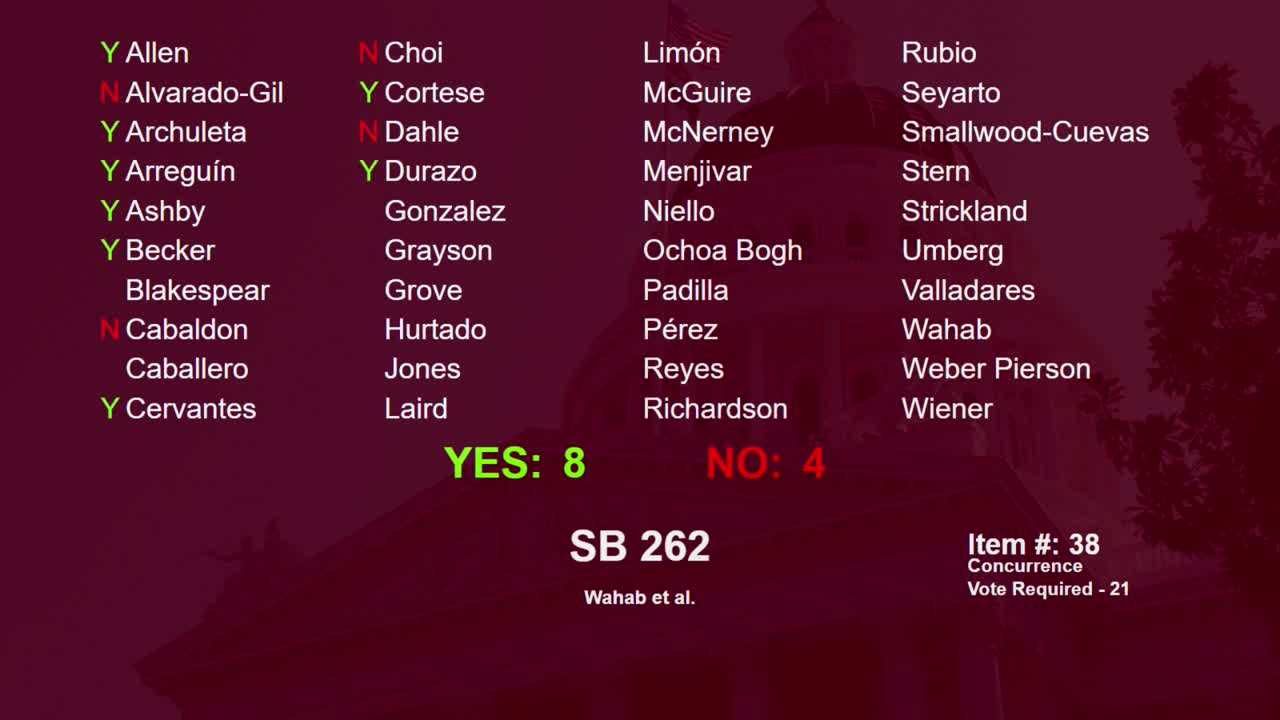 1MIN
Senate Floor
 1MIN
Assembly Floor
 10MIN
Assembly Standing Committee on Natural Resources
 3MIN
Senate Floor
 3SEC
Senate Standing Committee on Appropriations
 7MIN
Senate Standing Committee on Environmental Quality
 8MIN
Senate Standing Committee on Natural Resources and Water
Bill Author

Bill Co-Author(s):