SB 624: Nonminor dependents: tax guidance.
- Session Year: 2025-2026
- House: Senate
- Latest Version Date: 2025-10-01
Current Status:
Passed
(2025-10-01: Chaptered by Secretary of State. Chapter 230, Statutes of 2025.)
Introduced
In Committee
Awaiting First Chamber Vote
Passed First Chamber
In Committee
Awaiting Second Chamber Vote
Passed Second Chamber
Enacted
What does this bill do?
The bill requires the state Department of Social Services to create and regularly update guidance for county welfare and juvenile probation departments to help nonminor dependents and former foster youth file state and federal tax returns and claim the California foster youth tax credit. It also requires those local offices to mail every nonminor dependent each year clear information about filing, foster youth credit eligibility and maximum amount, other tax credits, free Volunteer Income Tax Assistance sites, and self‑filing resources.
The summary is provided by generative AI which can make mistakes. For original language, please view the details in the table below.
Existing law establishes the Independent Living Program (ILP), that, among its purposes, provides training in daily living skills, budgeting, locating and maintaining housing, and career planning for foster youth up to 21 years of age. Existing federal law authorizes a state, under certain circumstances, to expand eligibility for the ILP to former foster youth who have not attained 23 years of age. Existing law requires the State Department of Social Services, with the approval of the federal government, to amend the foster care state plan to permit all eligible children to be served by the ILP up to 21 years of age.
The Personal Income Tax Law allows a refundable foster youth tax credit for taxable years beginning on or after January 1, 2022, to a qualified taxpayer in a specified amount multiplied by the earned income tax credit adjustment factor, as provided.
This bill, the Foster Outreach and Support for Tax Education Readiness (FOSTER) Act, would require, by no later than July 30, 2026, the department to issue guidance to county welfare departments and juvenile probation departments with information to support best practices for nonminor dependents to file state and federal income tax returns and to access the foster youth tax credit. The bill would require the guidance to be updated as needed and reissued no less than every 2 years. The bill would specify the information to be included in the guidance issued, including, but not limited to, the eligibility requirements for the foster youth tax credit and the maximum credit available, outreach strategies to increase awareness among nonminor dependents and former foster youth about the foster youth tax credit, and resources from the Internal Revenue Service website for identifying local Volunteer Income Tax Assistance providers. The bill would require county welfare departments and juvenile probation departments to annually send by mail to every nonminor dependent information about filing state and federal income tax returns and, among other things, the foster youth tax credit and information about local Volunteer Income Tax Assistance sites, as specified. By increasing the duties of county welfare departments and juvenile probation departments, this bill would impose a state-mandated local program.
The California Constitution requires the state to reimburse local agencies and school districts for certain costs mandated by the state. Statutory provisions establish procedures for making that reimbursement.
This bill would provide that no reimbursement is required by this act for a specified reason.
Existing law establishes the Independent Living Program (ILP), that, among its purposes, provides training in daily living skills, budgeting, locating and maintaining housing, and career planning for foster youth up to 21 years of age. Existing federal law authorizes a state, under certain circumstances, to expand eligibility for the ILP to former foster youth who have not attained 23 years of age. Existing law requires the State Department of Social Services, with the approval of the federal government, to amend the foster care state plan to permit all eligible children to be served by the ILP up to 21 years of age.
The Personal Income Tax Law allows a refundable foster youth tax credit for taxable years beginning on or after January 1, 2022, to a qualified taxpayer in a specified amount multiplied by the earned income tax credit adjustment factor, as provided.
This bill, the Foster Outreach and Support for Tax Education Readiness (FOSTER) Act, would require, by no later than July 1, 30, 2026, the department to issue guidance to county welfare departments and juvenile probation departments with information about practices for supporting nonminor dependents in filing to support best practices for nonminor dependents to file state and federal income tax returns and accessing to access the foster youth tax credit. The bill would require the guidance to be updated as needed and reissued no less than every 2 years. The bill would specify the information to be included in the guidance issued, including, but not limited to, a description of the foster youth tax credit, the eligibility requirements for the foster youth tax credit and the maximum credit available, outreach strategies to increase awareness among nonminor dependents and former foster youth about the foster youth tax credit, and opportunities to partner with local Volunteer Income Tax Assistance sites. resources from the Internal Revenue Service website for identifying local Volunteer Income Tax Assistance providers. The bill would require county welfare departments and juvenile probation departments to annually send by mail to every nonminor dependent information about filing state and federal income tax returns and, among other things, the foster youth tax credit and information about local Volunteer Income Tax Assistance sites, as specified. By increasing the duties of county welfare departments and juvenile probation departments, this bill would impose a state-mandated local program.
The California Constitution requires the state to reimburse local agencies and school districts for certain costs mandated by the state. Statutory provisions establish procedures for making that reimbursement.
This bill would provide that no reimbursement is required by this act for a specified reason.
Existing law establishes the Independent Living Program (ILP), that, among its purposes, provides training in daily living skills, budgeting, locating and maintaining housing, and career planning for foster youth up to 21 years of age. Existing federal law authorizes a state, under certain circumstances, to expand eligibility for the ILP to former foster youth who have not attained 23 years of age. Existing law requires the State Department of Social Services, with the approval of the federal government, to amend the foster care state plan to permit all eligible children to be served by the ILP up to 21 years of age.
The Personal Income Tax Law allows a refundable foster youth tax credit for taxable years beginning on or after January 1, 2022, to a qualified taxpayer in a specified amount multiplied by the earned income tax credit adjustment factor, as provided.
This bill, the Foster Outreach and Support for Tax Education Readiness (FOSTER) Act, would require, by no later than July 1, 2026, the department to issue guidance to county welfare departments and juvenile probation departments with information about practices for supporting nonminor dependents in filing state and federal income tax returns and accessing the foster youth tax credit. The bill would require the guidance to be updated as needed and reissued no less than every 2 years. The bill would specify the information to be included in the guidance issued, including, but not limited to, a description of the foster youth tax credit, outreach strategies to increase awareness among nonminor dependents and former foster youth about the foster youth tax credit, and opportunities to partner with local Volunteer Income Tax Assistance sites. The bill would require county welfare departments and juvenile probation departments to annually send by mail to every nonminor dependent information about filing state and federal income tax returns and, among other things, the foster youth tax credit and information about local Volunteer Income Tax Assistance sites, as specified. By increasing the duties of county welfare departments and juvenile probation departments, this bill would impose a state-mandated local program.
The California Constitution requires the state to reimburse local agencies and school districts for certain costs mandated by the state. Statutory provisions establish procedures for making that reimbursement.
This bill would provide that no reimbursement is required by this act for a specified reason.
Existing law establishes the Independent Living Program (ILP), that, among its purposes, provides training in daily living skills, budgeting, locating and maintaining housing, and career planning for foster youth up to 21 years of age. Existing federal law authorizes a state, under certain circumstances, to expand eligibility for the ILP to former foster youth who have not attained 23 years of age. Existing law requires the State Department of Social Services, with the approval of the federal government, to amend the foster care state plan to permit all eligible children to be served by the ILP up to 21 years of age.
The Personal Income Tax Law allows a refundable foster youth tax credit for taxable years beginning on or after January 1, 2022, to a qualified taxpayer in a specified amount multiplied by the earned income tax credit adjustment factor, as provided.
This bill bill, the Foster Outreach and Support for Tax Education Readiness (FOSTER) Act, would require, by no later than July 1, 2026, the department to issue guidance to county welfare departments and juvenile probation departments with information about practices for supporting nonminor dependents in filing state and federal income tax returns and accessing the foster youth tax credit. The bill would require the guidance to be updated as needed and reissued no less than every 2 years. The bill would specify the information to be included in the guidance issued, including, but not limited to, a description of the foster youth tax credit, outreach strategies to increase awareness among nonminor dependents and former foster youth about the foster youth tax credit, and opportunities to partner with local Volunteer Income Tax Assistance sites. The bill would require county welfare departments and juvenile probation departments to annually send by mail to every nonminor dependent information about filing state and federal income tax returns and, among other things, the foster youth tax credit and information about local Volunteer Income Tax Assistance sites, as specified. By increasing the duties of county welfare departments and juvenile probation departments, this bill would impose a state-mandated local program.
The California Constitution requires the state to reimburse local agencies and school districts for certain costs mandated by the state. Statutory provisions establish procedures for making that reimbursement.
This bill would provide that no reimbursement is required by this act for a specified reason.
Existing law establishes the Independent Living Program (ILP), that, among its purposes, provides training in daily living skills, budgeting, locating and maintaining housing, and career planning for foster youth up to 21 years of age. Existing federal law authorizes a state, under certain circumstances, to expand eligibility for the ILP to former foster youth who have not attained 23 years of age. Existing law requires the State Department of Social Services, with the approval of the federal government, to amend the foster care state plan to permit all eligible children to be served by the ILP up to 21 years of age.
The Personal Income Tax Law allows a refundable foster youth tax credit for taxable years beginning on or after January 1, 2022, to a qualified taxpayer in a specified amount multiplied by the earned income tax credit adjustment factor, as provided.
This bill would require, by no later than July 1, 2026, the department to issue guidance to county welfare departments and juvenile probation departments with information about practices for supporting nonminor dependents in filing state and federal income tax returns and accessing the foster youth tax credit. The bill would require the guidance to be updated as needed and reissued no less than every 2 years. The bill would specify the information to be included in the guidance issued, including, but not limited to, a description of the foster youth tax credit, outreach strategies to increase awareness among nonminor dependents and former foster youth about the foster youth tax credit, and opportunities to partner with local Volunteer Income Tax Assistance sites. The bill would require county welfare departments and juvenile probation departments to annually send by mail to every nonminor dependent information about filing state and federal income tax returns and, among other things, the foster youth tax credit and information about local Volunteer Income Tax Assistance sites, as specified. By increasing the duties of county welfare departments and juvenile probation departments, this bill would impose a state-mandated local program.
The California Constitution requires the state to reimburse local agencies and school districts for certain costs mandated by the state. Statutory provisions establish procedures for making that reimbursement.
This bill would provide that no reimbursement is required by this act for a specified reason.
Existing law establishes the Independent Living Program (ILP), that, among its purposes, provides training in daily living skills, budgeting, locating and maintaining housing, and career planning for foster youth up to 21 years of age. Existing federal law authorizes a state, under certain circumstances, to expand eligibility for the ILP to former foster youth who have not attained 23 years of age. Existing law requires the State Department of Social Services, with the approval of the federal government, to amend the foster care state plan to permit all eligible children to be served by the ILP up to 21 years of age.
The Personal Income Tax Law allows a refundable foster youth tax credit for taxable years beginning on or after January 1, 2022, to a qualified taxpayer in a specified amount multiplied by the earned income tax credit adjustment factor, as provided.
This bill would require, no later than July 1, 2026, the department to issue guidance to county welfare departments and juvenile probation departments with information about practices for supporting nonminor dependents in filing state and federal income tax returns and accessing the foster youth tax credit. The bill would require the guidance to be updated as needed and reissued no less than every 2 years. The bill would specify the information to be included in the guidance issued, including, but not limited to, a description of the foster youth tax credit, outreach strategies to increase awareness among nonminor dependents and former foster youth about the foster youth tax credit, and opportunities to partner with local Volunteer Income Tax Assistance sites. The bill would require county welfare departments and juvenile probation departments to annually send by mail to every nonminor dependent information about filing state and federal income tax returns and, among other things, the foster youth tax credit and information about local Volunteer Income Tax Assistance sites, as specified. By increasing the duties of county welfare departments and juvenile probation departments, this bill would impose a state-mandated local program.
The California Constitution requires the state to reimburse local agencies and school districts for certain costs mandated by the state. Statutory provisions establish procedures for making that reimbursement.
This bill would provide that no reimbursement is required by this act for a specified reason.
(a)This section shall be known, and may be cited, as the Foster Outreach and Support for Tax Education Readiness (FOSTER) Act.
(b)(1)By no later than July 30, 2026, the department shall issue guidance to county welfare departments and juvenile probation departments with information to support best practices for encouraging nonminor dependents to file state and federal income tax returns and to access the state foster youth tax credit, as described in Section 17052.2 of the Revenue and Taxation Code.
(2)This guidance shall be updated as needed and reissued no less than every two years thereafter.
(3)The guidance issued pursuant to this subdivision shall include, but not be limited to, all of the following:
(A)The eligibility requirements for the foster youth tax credit and the maximum foster youth tax credit available pursuant to Section 17502.2 of the Revenue and Taxation Code.
(B)An advisement of the county responsibilities described in subdivision (c).
(C)Outreach strategies to increase awareness among nonminor dependents and former foster youth about the foster youth tax credit.
(D)Resources from the Internal Revenue Service internet website for identifying local Volunteer Income Tax Assistance providers.
(E)Any promising strategies developed by individual counties to communicate with the eligible population about resources available to assist them with tax filing, including county-hosted workshops for foster youth to educate and assist them with filing their taxes, in partnership with a local Volunteer Income Tax Assistance internet website by the Internal Revenue Service or community-based organizations.
(F)Identification of resources available through nonprofit organizations for improving knowledge about the foster youth tax credit.
(G)Identification of resources available through other state agencies to aid with communication or disseminating the information described in subparagraph (A) and subparagraphs (C) to (F), inclusive.
(c)(1) The county welfare department and juvenile probation department shall annually send by mail to every nonminor dependent information about filing state and federal income tax returns and the foster youth tax credit.
(2)The mailing pursuant to this subdivision shall occur between November 1 and January 31, inclusive, of each year.
(3)The mailing pursuant to this subdivision shall include, but not be limited to, all of the following information:
(A)Eligibility requirements for the foster youth tax credit pursuant to subdivision (c) of Section 17052.2 of the Revenue and Taxation Code.
(B)The maximum amount of the foster youth tax credit for the forthcoming tax season pursuant to paragraph (2) of subdivision (a) of Section 17052.2 of the Revenue and Taxation Code.
(C)An advisement that the nonminor dependent may be eligible for other tax credits, including, but not limited to, state and federal earned income tax credits, the federal Child Tax Credit and state Young Child Tax Credit, the federal Child and Dependent Care Credit and state Child and Dependent Care Expenses Credit, the federal American Opportunity Tax Credit, the federal Lifetime Learning Credit, and the state Renters Credit.
(D)The location of and how to set up an appointment with or otherwise receive services from local Volunteer Income Tax Assistance internet websites certified by the Internal Revenue Service within the county where the nonminor dependent resides, or, if none are available, those located in nearby counties, and any workshops, as described in subparagraph (E) of paragraph (3) of subdivision (b).
(E)Resources to assist the nonminor dependent with self-filing federal and state tax returns at no cost.
SEC. 2.To the extent that this act has an overall effect of increasing the costs already borne by a local agency for programs or levels of service mandated by the 2011 Realignment Legislation within the meaning of Section 36 of Article XIII of the California Constitution, it shall apply to local agencies only to the extent that the state provides annual funding for the cost increase. Any new program or higher level of service provided by a local agency pursuant to this act above the level for which funding has been provided shall not require a subvention of funds by the state or otherwise be subject to Section 6 of Article XIIIB of the California Constitution.
(a)This section shall be known, and may be cited, as the Foster Outreach and Support for Tax Education Readiness (FOSTER) Act.
(b)(1)By no later than July 1, 2026, the department shall issue guidance to county welfare departments and juvenile probation departments with information about practices for supporting nonminor dependents in filing state and federal income tax returns and accessing the foster youth tax credit, as described in Section 17052.2 of the Revenue and Taxation Code.
(2)This guidance shall be updated as needed and reissued no less than every two years thereafter.
(3)The guidance issued pursuant to this subdivision shall include, but not be limited to, all of the following:
(A)A description of the foster youth tax credit.
(B)The mailing requirement described in subdivision (b). (c).
(C)Outreach strategies to increase awareness among nonminor dependents and former foster youth about the foster youth tax credit.
(D)Opportunities to partner with local Volunteer Income Tax Assistance sites.
(E)Hosting workshops for foster youth to educate them about tax filing through the Independent Living Program or community-based organizations.
(F)Hosting workshops through the Independent Living Program or community-based organizations to assist foster youth with filing their taxes, in partnership with a local Volunteer Income Tax Assistance site certified by the Internal Revenue Service.
(G)Resources available from stakeholders or state agencies to aid with executing strategies described in paragraphs (B) through (F), inclusive.
(c)(1)The county welfare department and juvenile probation department shall annually send by mail to every nonminor dependent information about filing state and federal income tax returns and the foster youth tax credit.
(2)The mailing pursuant to this subdivision shall occur between November 1 and January 31, inclusive, of each year.
(3)The mailing pursuant to this subdivision shall include, but not be limited to, all of the following information:
(A)Eligibility requirements for the foster youth tax credit pursuant to subdivision (c) of Section 17052.2 of the Revenue and Taxation Code.
(B)The maximum amount of the foster youth tax credit for the forthcoming tax season pursuant to paragraph (2) of subdivision (a) of Section 17052.2 of the Revenue and Taxation Code.
(C)The availability of other tax credits, including, but not limited to, state and federal earned income tax credits, the federal Child Tax Credit and state Young Child Tax Credit, the federal Child and Dependent Care Credit and state Child and Dependent Care Expenses Credit, the federal American Opportunity Tax Credit, the federal Lifetime Learning Credit, and the state Renters Credit.
(D)The location of and how to set up an appointment with or otherwise receive services from local Volunteer Income Tax Assistance sites certified by the Internal Revenue Service within the county where the nonminor dependent resides, or, if none are available, those located in nearby counties.
(E)Resources to assist the nonminor dependent with self-filing federal and state tax returns at no cost.
SEC. 2.To the extent that this act has an overall effect of increasing the costs already borne by a local agency for programs or levels of service mandated by the 2011 Realignment Legislation within the meaning of Section 36 of Article XIII of the California Constitution, it shall apply to local agencies only to the extent that the state provides annual funding for the cost increase. Any new program or higher level of service provided by a local agency pursuant to this act above the level for which funding has been provided shall not require a subvention of funds by the state or otherwise be subject to Section 6 of Article XIIIB of the California Constitution.
(a)This section shall be known, and may be cited, as the Foster Outreach and Support for Tax Education Readiness (FOSTER) Act.
(b)(1)By no later than July 1, 2026, the department shall issue guidance to county welfare departments and juvenile probation departments with information about practices for supporting nonminor dependents in filing state and federal income tax returns and accessing the foster youth tax credit, as described in Section 17052.2 of the Revenue and Taxation Code.
(2)This guidance shall be updated as needed and reissued no less than every two years thereafter.
(3)The guidance issued pursuant to this subdivision shall include, but not be limited to, all of the following:
(A)A description of the foster youth tax credit.
(B)The mailing requirement described in subdivision (b).
(C)Outreach strategies to increase awareness among nonminor dependents and former foster youth about the foster youth tax credit.
(D)Opportunities to partner with local Volunteer Income Tax Assistance sites.
(E)Hosting workshops for foster youth to educate them about tax filing through the Independent Living Program or community-based organizations.
(F)Hosting workshops through the Independent Living Program or community-based organizations to assist foster youth with filing their taxes, in partnership with a local Volunteer Income Tax Assistance site certified by the Internal Revenue Service.
(G)Resources available from stakeholders or state agencies to aid with executing strategies described in paragraphs (B) through (F), inclusive.
(b)(c)(1)The county welfare department and juvenile probation department shall annually send by mail to every nonminor dependent information about filing state and federal income tax returns and the foster youth tax credit.
(2)The mailing pursuant to this subdivision shall occur between November 1 and January 31, inclusive, of each year.
(3)The mailing pursuant to this subdivision shall include, but not be limited to, all of the following information:
(A)Eligibility requirements for the foster youth tax credit pursuant to subdivision (c) of Section 17052.2 of the Revenue and Taxation Code.
(B)The maximum amount of the foster youth tax credit for the forthcoming tax season pursuant to paragraph (2) of subdivision (a) of Section 17052.2 of the Revenue and Taxation Code.
(C)The availability of other tax credits, including, but not limited to, state and federal earned income tax credits, the federal Child Tax Credit and state Young Child Tax Credit, the federal Child and Dependent Care Credit and state Child and Dependent Care Expenses Credit, the federal American Opportunity Tax Credit, the federal Lifetime Learning Credit, and the state Renters Credit.
(D)The location of and how to set up an appointment with or otherwise receive services from local Volunteer Income Tax Assistance sites certified by the Internal Revenue Service within the county where the nonminor dependent resides, or, if none are available, those located in nearby counties.
(E)Resources to assist the nonminor dependent with self-filing federal and state tax returns at no cost.
SEC. 2.To the extent that this act has an overall effect of increasing the costs already borne by a local agency for programs or levels of service mandated by the 2011 Realignment Legislation within the meaning of Section 36 of Article XIII of the California Constitution, it shall apply to local agencies only to the extent that the state provides annual funding for the cost increase. Any new program or higher level of service provided by a local agency pursuant to this act above the level for which funding has been provided shall not require a subvention of funds by the state or otherwise be subject to Section 6 of Article XIIIB of the California Constitution.
(a)(1)By no later than July 1, 2026, the department shall issue guidance to county welfare departments and juvenile probation departments with information about practices for supporting nonminor dependents in filing state and federal income tax returns and accessing the foster youth tax credit, as described in Section 17052.2 of Revenue and Taxation Code.
(2)This guidance shall be updated as needed and reissued no less than every two years thereafter.
(3)The guidance issued pursuant to this subdivision shall include, but not be limited to, all of the following:
(A)A description of the foster youth tax credit.
(B)The mailing requirement described in subdivision (b).
(C)Outreach strategies to increase awareness among nonminor dependents and former foster youth about the foster youth tax credit.
(D)Opportunities to partner with local volunteer income tax assistance Volunteer Income Tax Assistance sites.
(E)Hosting workshops for foster youth to educate them about tax filing through the Independent Living Program or community-based organizations.
(F)Hosting workshops through the Independent Living Program or community-based organizations to assist foster youth with filing their taxes, in partnership with a local Volunteer Income Tax Assistance site certified by the Internal Revenue Service.
(G)Resources available from stakeholders or state agencies to aid with executing strategies described in paragraphs (B) through (F), inclusive.
(b)(1)The county welfare department and juvenile probation department shall annually send by mail to every nonminor dependent information about filing state and federal income tax returns and the foster youth tax credit.
(2)The mailing pursuant to this subdivision shall occur between December November 1 and January 31, inclusive, of each year.
(3)The mailing pursuant to this subdivision shall include, but not be limited to, all of the following information:
(A)Eligibility requirements for the foster youth tax credit pursuant to subdivision (c) of Section 17052.2 of the Revenue and Taxation Code.
(B)The maximum amount of the foster youth tax credit for the forthcoming tax season pursuant to paragraph (2) of subdivision (a) of Section 17052.2 of the Revenue and Taxation Code.
(C)The availability of other tax credits, including, but not limited to, state and federal earned income tax credits, the federal Child Tax Credit and state Young Child Tax Credit, the federal Child and Dependent Care Credit and state Child and Dependent Care Expenses Credit, the federal American Opportunity Tax Credit, the federal Lifetime Learning Credit, and the state Renters Credit.
(D)The location of and how to set up an appointment with or otherwise receive services from local Volunteer Income Tax Assistance sites certified by the Internal Revenue Service within the county where the nonminor dependent resides, or, if none are available, those located in nearby counties.
(E)Resources to assist the nonminor dependent with self-filing federal and state tax returns at no cost.
SEC. 2.To the extent that this act has an overall effect of increasing the costs already borne by a local agency for programs or levels of service mandated by the 2011 Realignment Legislation within the meaning of Section 36 of Article XIII of the California Constitution, it shall apply to local agencies only to the extent that the state provides annual funding for the cost increase. Any new program or higher level of service provided by a local agency pursuant to this act above the level for which funding has been provided shall not require a subvention of funds by the state or otherwise be subject to Section 6 of Article XIIIB of the California Constitution.
(a)(1)No By no later than July 1, 2026, the department shall issue guidance to county welfare departments and juvenile probation departments with information about practices for supporting nonminor dependents in filing state and federal income tax returns and accessing the foster youth tax credit, as described in Section 17052.2 of Revenue and Taxation Code.
(2)This guidance shall be updated as needed and reissued no less than every two years thereafter.
(3)The guidance issued pursuant to this subdivision shall include, but not be limited to, all of the following:
(A)A description of the foster youth tax credit.
(B)The mailing requirement described in subdivision (b).
(C)Outreach strategies to increase awareness among nonminor dependents and former foster youth about the foster youth tax credit.
(D)Opportunities to partner with local volunteer income tax assistance sites.
(E)Hosting workshops for foster youth to educate them about tax filing through the Independent Living Program or community-based organizations.
(F)Hosting workshops through the Independent Living Program or community-based organizations to assist foster youth with filing their taxes, in partnership with a local Volunteer Income Tax Assistance site certified by the Internal Revenue Service.
(G)Resources available from stakeholders or state agencies to aid with executing strategies described in paragraphs (B) through (F), inclusive.
(b)(1) The county welfare department and juvenile probation department shall annually send by mail to every nonminor dependent information about filing state and federal income tax returns and the foster youth tax credit.
(2)The mailing pursuant to this subdivision shall occur between December 1 and January 31, inclusive, of each year.
(3)The mailing pursuant to this subdivision shall include, but not be limited to, all of the following information:
(A)Eligibility requirements for the foster youth tax credit pursuant to subdivision (c) of Section 17052.2 of the Revenue and Taxation Code.
(B)The maximum amount of the foster youth tax credit for the forthcoming tax season pursuant to paragraph (2) of subdivision (a) of Section 17052.2 of the Revenue and Taxation Code.
(C)The availability of other tax credits, including, but not limited to, state and federal earned income tax credits, the federal Child Tax Credit and state Young Child Tax Credit, the federal Child and Dependent Care Credit and state Child and Dependent Care Expenses Credit, the federal American Opportunity Tax Credit, the federal Lifetime Learning Credit, and the state Renters Credit.
(D)The location of and how to set up an appointment with or otherwise receive services from local Volunteer Income Tax Assistance sites certified by the Internal Revenue Service within the county where the nonminor dependent resides, or, if none are available, those located in nearby counties.
(E)Resources to assist the nonminor dependent with self-filing federal and state tax returns at no cost.
SEC. 2.To the extent that this act has an overall effect of increasing the costs already borne by a local agency for programs or levels of service mandated by the 2011 Realignment Legislation within the meaning of Section 36 of Article XIII of the California Constitution, it shall apply to local agencies only to the extent that the state provides annual funding for the cost increase. Any new program or higher level of service provided by a local agency pursuant to this act above the level for which funding has been provided shall not require a subvention of funds by the state or otherwise be subject to Section 6 of Article XIIIB of the California Constitution.
(a)(1)No later than July 1, 2026, the department shall issue guidance to county welfare departments and juvenile probation departments with information about practices for supporting nonminor dependents in filing state and federal income tax returns and accessing the foster youth tax credit, as described in Section 17052.2 of Revenue and Taxation Code.
(2)This guidance shall be updated as needed and reissued no less than every two years thereafter.
(3)The guidance issued pursuant to this subdivision shall include, but not be limited to, all of the following:
(A)A description of the foster youth tax credit.
(B)The mailing requirement described in subdivision (b).
(C)Outreach strategies to increase awareness among nonminor dependents and former foster youth about the foster youth tax credit.
(D)Opportunities to partner with local volunteer income tax assistance sites.
(E)Hosting workshops for foster youth to educate them about tax filing through the Independent Living Program or community-based organizations.
(F)Hosting workshops through the Independent Living Program or community-based organizations to assist foster youth with filing their taxes, in partnership with a local Volunteer Income Tax Assistance site certified by the Internal Revenue Service.
(G)Resources available from stakeholders or state agencies to aid with executing strategies described in paragraphs (B) through (F), inclusive.
(b)(1) The county welfare department and juvenile probation department shall annually send by mail to every nonminor dependent information about filing state and federal income tax returns and the foster youth tax credit.
(2)The mailing pursuant to this subdivision shall occur between December 1 and January 31, inclusive, of each year.
(3)The mailing pursuant to this subdivision shall include, but not be limited to, all of the following information:
(A) Eligibility requirements for the foster youth tax credit pursuant to subdivision (c) of Section 17052.2 of the Revenue and Taxation Code.
(B)The maximum amount of the foster youth tax credit for the forthcoming tax season pursuant to paragraph (2) of subdivision (a) of Section 17052.2 of the Revenue and Taxation Code.
(C)The availability of other tax credits, including, but not limited to, state and federal earned income tax credits, the federal Child Tax Credit and state Young Child Tax Credit, the federal Child and Dependent Care Credit and state Child and Dependent Care Expenses Credit, the federal American Opportunity Tax Credit, the federal Lifetime Learning Credit, and the state Renters Credit.
(D)The location of and how to set up an appointment with or otherwise receive services from local Volunteer Income Tax Assistance sites certified by the Internal Revenue Service within the county where the nonminor dependent resides, or, if none are available, those located in nearby counties.
(E)Resources to assist the nonminor dependent with self-filing federal and state tax returns at no cost.
SEC. 2.To the extent that this act has an overall effect of increasing the costs already borne by a local agency for programs or levels of service mandated by the 2011 Realignment Legislation within the meaning of Section 36 of Article XIII of the California Constitution, it shall apply to local agencies only to the extent that the state provides annual funding for the cost increase. Any new program or higher level of service provided by a local agency pursuant to this act above the level for which funding has been provided shall not require a subvention of funds by the state or otherwise be subject to Section 6 of Article XIIIB of the California Constitution.
|
Date
|
Status
|
|---|---|
| Oct 1, 2025 | Chaptered by Secretary of State. Chapter 230, Statutes of 2025. |
| Oct 1, 2025 | Approved by the Governor. |
| Sep 22, 2025 | Enrolled and presented to the Governor at 2 p.m. |
| Sep 11, 2025 | Assembly amendments concurred in. (Ayes 40. Noes 0. Page 2928.) Ordered to engrossing and enrolling. |
| Sep 9, 2025 | Ordered to special consent calendar. |
| Sep 3, 2025 | In Senate. Concurrence in Assembly amendments pending. |
| Sep 2, 2025 | Read third time. Passed. (Ayes 78. Noes 0. Page 2817.) Ordered to the Senate. |
| Aug 25, 2025 | Read third time and amended. |
| Aug 25, 2025 | Ordered to third reading. |
| Jul 17, 2025 | Read second time. Ordered to third reading. |
| Jul 16, 2025 | From committee: Do pass. (Ayes 13. Noes 0.) (July 16). |
| Jul 3, 2025 | Read second time and amended. Re-referred to Com. on APPR. |
| Jul 2, 2025 | From committee: Do pass as amended and re-refer to Com. on APPR. (Ayes 7. Noes 0.) (July 1). |
| Jun 10, 2025 | From committee with author's amendments. Read second time and amended. Re-referred to Com. on HUM. S. |
| Jun 5, 2025 | Referred to Com. on HUM. S. |
| May 28, 2025 | In Assembly. Read first time. Held at Desk. |
| May 28, 2025 | Read third time. Passed. (Ayes 38. Noes 0. Page 1292.) Ordered to the Assembly. |
| May 27, 2025 | Read second time. Ordered to third reading. |
| May 23, 2025 | Read second time and amended. Ordered to second reading. |
| May 23, 2025 | From committee: Do pass as amended. (Ayes 6. Noes 0. Page 1207.) (May 23). |
| May 16, 2025 | Set for hearing May 23. |
| Apr 21, 2025 | April 21 hearing: Placed on APPR. suspense file. |
| Apr 9, 2025 | Set for hearing April 21. |
| Apr 8, 2025 | From committee: Do pass and re-refer to Com. on APPR. with recommendation: To consent calendar. (Ayes 5. Noes 0. Page 682.) (April 7). Re-referred to Com. on APPR. |
| Mar 27, 2025 | From committee with author's amendments. Read second time and amended. Re-referred to Com. on HUMAN S. |
| Mar 13, 2025 | Set for hearing April 7. |
| Mar 5, 2025 | Referred to Com. on HUMAN S. |
| Feb 21, 2025 | From printer. May be acted upon on or after March 23. |
| Feb 20, 2025 | Introduced. Read first time. To Com. on RLS. for assignment. To print. |
|
Date
|
Description
|
Location
|
Votes
|
|
|---|---|---|---|---|
| Sep 11, 2025 | Special Consent SB624 Caballero et al. | Senate Floor |
Passed |
|
| Sep 2, 2025 | The committee(s) on HRE recommend(s) that the measure be PASSED, WITH AMENDMENTS | Assembly Floor |
Passed |
|
| Jul 16, 2025 | Do pass. | Assembly Standing Committee on Appropriations |
Passed |
|
| Jul 1, 2025 | Do pass as amended and be re-referred to the Committee on [Appropriations] | Assembly Standing Committee on Human Services |
Passed |
|
| May 28, 2025 | Senate 3rd Reading SB624 Caballero et al. | Senate Floor |
Passed |
|
| May 23, 2025 | Do pass as amended | Senate Standing Committee on Appropriations |
Passed |
|
| Apr 21, 2025 | Placed on suspense file | Senate Standing Committee on Appropriations |
Passed |
|
| Apr 7, 2025 | Do pass, but first be re-referred to the Committee on [Appropriations] with the recommendation: To Consent Calendar | Senate Standing Committee on Human Services |
Passed |
This list shows positions taken on this bill by organizations on the date displayed, which is linked to the original source.
Positions by individuals are not included.
|
Organization
|
Position
|
Date
|
|---|---|---|
| Alliance for Children's Rights | ** Support | |
| Asian Americans Advancing Justice Southern California | ** Support | |
| ASPIRANET | ** Support | |
| Bill Wilson Center | ** Support | |
| California Alliance of Caregivers | ** Support | |
| California Alliance Of Child And Family Services | ** Support | |
| California Court Appointed Special Advocate Association | ** Support | |
| CENTER FOR PUBLIC INTEREST LAW/CHILDREN'S ADVOCACY INSTITUTE/UNIVERSITY OF SAN DIEGO | ** Support | |
| Center For Public Interest LawChildrenS Advocacy InstituteUniversity Of San Diego | ** Support | |
| Children Now | ** Support | |
| Children's Advocacy Institute | ** Support | |
| Creative Alternatives | ** Support | |
| Ea Family Services | ** Support | |
| Economic Security California Action | ** Support | |
| Edgewood Center for Children and Families | ** Support | |
| Everychild Foundation | ** Support | |
| First Place for Youth | ** Support | |
| Fred Finch Youth and Family Services | ** Support | |
| Glenn County Office of Education - Foster Youth Services | ** Support | |
| Golden State Opportunity | ** Support | |
| John Burton Advocates for Youth (sponsor) | ** Support | |
| Just in Time for Foster Youth | ** Support | |
| Marin County Office of Education | ** Support | |
| Napa Valley College | ** Support | |
| National Center for Youth Law | ** Support | |
| New Alternatives | ** Support | |
| Norco College | ** Support | |
| Power To Soar | ** Support | |
| Prosper California Coalition | ** Support | |
| Public Counsel - TAY | ** Support | |
| Redwood Community Action Agency Youth Services Bureau | ** Support | |
| Safe Place For Youth | ** Support | |
| SAN BERNARDINO VALLEY COLLEGE | ** Support | |
| San Francisco CASA | ** Support | |
| Santa Cruz County Office Of Education | ** Support | |
| St Anne's Family Services | ** Support | |
| Students Rising Above | ** Support | |
| The Community College Foundation | ** Support | |
| Walden Family Services | ** Support | |
| Western Center on Law & Poverty, INC. | ** Support | |
| Youth Law Center | ** Support |
SENATE RULES COMMITTEE Office of Senate Floor Analyses (916) 651-1520 Fax: (916) 327-4478 | SB 624 |
UNFINISHED BUSINESS
Bill No: SB 624
Author: Caballero (D), et al.
Amended: 8/25/25 in Assembly
Vote: 21
SENATE HUMAN SERVICES COMMITTEE: 5-0, 4/7/25
AYES: Arreguín, Ochoa Bogh, Becker, Limón, Pérez
SENATE APPROPRIATIONS COMMITTEE: 6-0, 5/23/25
AYES: Caballero, Seyarto, Cabaldon, Grayson, Richardson, Wahab
NO VOTE RECORDED: Dahle
SENATE FLOOR: 38-0, 5/28/25
AYES: Allen, Alvarado-Gil, Archuleta, Arreguín, Ashby, Becker, Blakespear, Cabaldon, Caballero, Cervantes, Choi, Cortese, Dahle, Durazo, Gonzalez, Grayson, Grove, Hurtado, Jones, Laird, McGuire, McNerney, Menjivar, Niello, Ochoa Bogh, Padilla, Pérez, Richardson, Rubio, Seyarto, Smallwood-Cuevas, Stern, Strickland, Umberg, Valladares, Wahab, Weber Pierson, Wiener
NO VOTE RECORDED: Limón, Reyes
ASSEMBLY FLOOR: 78-0, 9/2/25 – Roll call not available.
SUBJECT: Nonminor dependents: tax guidance
SOURCE: John Burton Advocates for Youth
DIGEST:
This bill requires the California Department of Social Services (CDSS) to issue guidance to counties with information about practices to support nonminor dependents with filing state and federal income tax returns and accessing the foster youth tax credit. This bill requires county welfare departments and juvenile probation departments to annually send, by mail, to every nonminor dependent, information about filing state and federal income tax returns and the foster youth tax credit.
Assembly Amendments
of 8/25/25 make technical and clarifying changes.
ANALYSIS:
Existing Law:
- Provides for a refundable California Earned Income Tax Credit (EITC) based on the federal EITC amount. (Revenue & Taxation Code 17052)
- Creates a Foster Youth Tax Credit of up to $1,000 per individual against the personal income tax as specified:
- Eligible individuals:
- Were in foster care placement, as specified in the bill, while 13 years of age or older;
- Is between the ages of 18 to 25
- Is eligible to claim the EITC in the taxable year of the credit.
- Were in foster care placement, as specified in the bill, while 13 years of age or older;
- Total credit amount is indexed to inflation.
- Commences in the taxable year starting January 1, 2022.
- Provides allowances for the confidential sharing of data between CDSS Services and the Franchise Tax Board for purposes of verifying eligibility.
- Specifies that the tax credit is not considered income for the purposes of receiving state or local benefits. (Revenue & Taxation Code 17052.2)
- Eligible individuals:
This Bill:
- Creates the Foster Outreach and Support for Tax Education Readiness (FOSTER) Act.
- Requires CDSS, no later than July 30, 2026, to issue guidance to county welfare departments and juvenile probation departments with information about practices for supporting nonminor dependents in filing state and federal income tax returns and accessing the foster youth tax credit.
- Provides that this guidance shall be updated as needed and reissued no less than every two years thereafter and shall include, but not be limited to, all of the following:
- The eligibility requirements for the foster youth tax credit and the maximum foster youth tax credit.
- An advisement of the county responsibilities to mail nonminor dependents information about filing income tax returns and the foster youth tax credit.
- Outreach strategies to increase awareness among nonminor dependents and former foster youth about the foster youth tax credit.
- Resources from the Internal Revenue Service internet website for identifying local Volunteer Income Tax Assistance providers.
- Any promising strategies developed by individual counties to communicate with the eligible population about resources available to assist them with tax filing, including county-hosted workshops for foster youth to educate and assist them with filing their taxes, in partnership with a local Volunteer Income Tax Assistance internet website by the Internal Revenue Service or community-based organizations.
- Identification of resources available through nonprofit organizations for improving knowledge about the foster youth tax credit.
- Identification of resources available through other state agencies to aid with communication or disseminating this information.
- The eligibility requirements for the foster youth tax credit and the maximum foster youth tax credit.
- Provides that the county welfare department and juvenile probation department shall annually send by mail to every nonminor dependent information about filing state and federal income tax returns and the foster youth tax credit, and that this mailing shall occur between November 1 and January 31, inclusive, of each year.
- Provides that the mailing shall include, but not be limited to, all of the following information:
- Eligibility requirements for the foster youth tax credit.
- The maximum amount of the foster youth tax credit for the forthcoming tax season.
- An advisement that the nonminor dependent may be eligible for other tax credits, including, but not limited to, state and federal earned income tax credits, the federal Child Tax Credit and state Young Child Tax Credit, the federal Child and Dependent Care Credit and state Child and Dependent Care Expenses Credit, the federal American Opportunity Tax Credit, the federal Lifetime Learning Credit, and the state Renters’ Credit.
- The location of and how to set up an appointment with or otherwise receive services from local Volunteer Income Tax Assistance internet websites certified by the Internal Revenue Service within the county where the nonminor dependent resides, or, if none are available, those located in nearby counties.
- Resources to assist the nonminor dependent with self-filing federal and state tax returns at no cost.
Comments
According to the author. “Senate Bill 624 addresses the significant gap in access to the Foster Youth Tax Credit and will require standardized outreach efforts from county child welfare agencies in order to ensure eligible foster youth are informed and supported in filing their taxes. This bill tackles the primary barriers—tax-filing knowledge, and access to free assistance—by mandating county level engagement, educational workshops, and direct resource distribution. Through the implementation of these measures, SB 624 will help reduce poverty among foster youth, increase financial stability, and ensure they receive the critical support they rightfully deserve.”
Earned Income Tax Credits (EITC) Tax credits help to reduce the amount of tax you may owe. Frequently this is done through a dollar-for-dollar amount that is claimed to reduce the income tax owed. There are both federal and state tax credits for which filers may be eligible. Tax credits may also be available to those who do not make enough money to be required to file taxes.
At the federal level, the EITC is for low to moderate income individuals and households. The tax credit is structured so that a person or family may be eligible for a credit, and thus money from the government, even if their income is not so high as to require them to file. In 2015, the Legislature enacted a California EITC (SB 80, (Committee on Budget and Fiscal Review, Chapter 21, Statutes of 2015)). The California EITC (CalEITC) is a refundable personal income tax credit allowed to eligible individuals determined in accordance with the federal EITC, except as modified for California. The amount of EITC allowed is dependent upon filing status of the eligible individual, how many qualifying children the eligible individual has, and how much earned income the eligible individual claims.
Foster Youth Tax Credit (FTYC). In 2022, the Legislature enacted SB 201 (Committee on Budget) to create the FTYC. This credit provides up to $1,083 per eligible individual. To qualify for this credit, current and former foster youth must meet all of the following requirements:
- Qualify for the CalEITC – which requires earnings between $1 and $31,950;
- Were between the ages of 18 and 25 at the end of the taxable year;
- Were in California foster care at age 13 or older and placed through the California foster care system; and
- Satisfy the foster care verification requirement.
This tax credit can be a powerful tool against poverty. When current and former foster youth file taxes they often find they are also eligible for other state and federal tax credits. One report found[1] that in 2024 FYTC filers received $1,370 for single filers and $5,265 for head of household filers. Nonprofit organizations that assisted 619 current and former foster youth for the 2024 tax season found that these tax credits can help to increase their Adjusted Gross Income by 8% for single filers and 57% for head of household filers. Despite the clear benefits these tax credits can have, the uptake of the FYTC in 2024 was only 15%. Data suggests there are conservatively over 36,000 foster youth who could be eligible for the FYTC. With an uptake of only 15%, this means there are potentially over 30,000 current and former foster youth eligible for tax credits and not receiving them.
The John Burton Advocates for Youth (JBAY) published a report in 2024 entitled “Gaining Momentum: How Foster Youth Tax Credit Performed in 2024.[2]” This report outlines the California Foster Youth Tax Project and their findings. JBAY employed multiple strategies to increase utilization of the FYTC including:
- Volunteer Income Tax Assistance (VITA) Sites – grants were provided to four community based organizations to operate VITA sites for current and former foster youth. These four VITA sites completed 619 tax returns for foster youth in 2024, an increase of 5% from the prior year.
- Statewide Outreach – JBAY worked with partners on statewide marketing and outreach, including the development of a comprehensive self-filing training
- Self-Filing Events – JBAY partnered with seven community based groups that held 13 self-filing events that assisted an estimated 151 current and former foster youth
- California Foster Youth Tax Credit Challenge – this was a statewide competition to reach the highest rate of FTYC receipt. County representatives were trained on the basics of tax filing and how to help youth obtain the necessary documents needed for filing. Sutter County had the highest rate of receipt of the FTYC for the small county category with 46%, Kern had the highest rate for medium counties with 22%, and Sacramento had the highest rate in the large county category with 19%.
The results of this outreach was a 17% increase in the number of youth claiming the FYTC, with a total of 5,587, but this only represents about 15% of the total eligible population. This bill seeks to increase the number of youth who claim the FYTC by having information about filing taxes and the FYTC sent directly to the youth.
Related/Prior Legislation
AB 1002 (Irwin, 2023) This bill would have authorized, for taxable years beginning on or after January 1, 2026, a method for taxpayers to claim the CalEITC, the Young Child Tax Credit (YCTC), and the FYTC without filing a tax return. This bill was vetoed by the Governor.
AB 2191 (Santiago, 2024) This bill would have required the Franchise Tax Board to allocate grants to nonprofit community-based organizations or local government agencies to provide free tax preparation services and outreach regarding the availability of various tax credits. This bill was held in the Assembly Appropriations Committee.
FISCAL EFFECT: Appropriation: No Fiscal Com.: Yes Local: Yes
According to the Assembly Appropriations Committee Analysis:
CDSS estimates annual General Fund costs of $34,000 in fiscal year 2025-26 and ongoing for county administrative workload statewide. These costs include an estimated $26,000 for research and mailer distribution, and an estimated $8,000 for postage materials. Although these county costs are state-mandated costs, they are not reimbursable, but instead must be funded by the state pursuant to Proposition 30 (2012). Proposition 30 requires, to the extent a bill increases county costs already borne by a local agency for programs or levels of service mandated by the 2011 Realignment, the bill to apply to local agencies only to the extent the state provides annual funding for the cost increase.
SUPPORT: (Verified 9/2/25)
John Burton Advocates for Youth (sponsor)
Alliance for Children's Rights
Asian Americans Advancing Justice – Southern California
Aspiranet
Bill Wilson Center
California Alliance of Caregivers
California Alliance of Child and Family Services
California Court Appointed Special Advocate Association
Children's Advocacy Institute
Children Now
Creative Alternatives
Ea Family Services
Economic Security California Action
Edgewood Center for Children and Families
Everychild Foundation
First Place for Youth
Fred Finch Youth and Family Services
Glenn County Office of Education - Foster Youth Services
Golden State Opportunity
Just in Time for Foster Youth
Marin County Office of Education
Napa Valley College
National Center for Youth Law
New Alternatives
Norco College
Power to Soar
Prosper California Coalition
Public Counsel - Tay
Redwood Community Action Agency - Youth Services Bureau
Safe Place for Youth
San Bernardino Valley College
Santa Cruz County Office of Education
Students Rising Above
The Community College Foundation
Walden Family Services
OPPOSITION: (Verified 9/2/25)
Prepared by: Heather Hopkins / HUMAN S. / (916) 651-1524
9/3/25 18:38:16
**** END ****
SENATE THIRD READING
STR Bill Id:SB 624
Author:(Caballero)
As Amended Ver:August 25, 2025
Majority vote
SUMMARY
Requires the California Department of Social Services (CDSS) to issue guidance to counties with information about practices for supporting nonminor dependents (NMDs) in filing income tax returns and accessing the foster youth tax credit (FYTC).
Major Provisions
- Requires CDSS, by no later than July 30, 2026, to issue guidance to county welfare departments and juvenile probation departments (counties) with information to support best practices for encouraging NMDs to file state and federal income tax returns to access the FYTC.
- Requires this guidance to be updated as needed and reissued no less than every two years thereafter, and to include, but not be limited to, all of the following:
- The eligibility requirements for the FYTC and the maximum credit available;
- An advisement of the county responsibilities that describe the annual mailing requirement;
- Resources from the Internal Revenue Services' (IRS) website for identifying local Volunteer Income Tax Assistance providers;
- Any promising strategies developed by individual counties to communicate with the eligible population about resources available to assist them with tax filing, including county-hosted workshops for foster youth to educate and assist them with filing their taxes, in partnership with a local Volunteer Income Tax Assistance website by the IRS or community-based organizations;
- Identification of resources available through nonprofit organizations for improving knowledge about the FYTC; and,
- Identification of resources available through other state agencies to aid with communication or disseminating relevant information.
- Requires counties to annually send by mail to every NMD information about filing state and federal income tax returns and the FYTC to occur between November 1 and January 31, inclusive, of each year.
- Requires the mailing to include, but not be limited to, all of the following information:
- Eligibility requirements for the FYTC;
- The maximum amount of the FYTC for the forthcoming tax season;
- An advisement that the NMD may be eligible for other tax credits, including, but not limited to, state and federal earned income tax credits, the federal Child Tax Credit and state Young Child Tax Credit, the federal Child and Dependent Care Credit and state Child and Dependent Care Expenses Credit, the federal American Opportunity Tax Credit, the federal Lifetime Learning Credit, and the state Renters' Credit;
- The location of, and how to set up an appointment with or otherwise receive services from, local Volunteer Income Tax Assistance sites certified by the IRS within the county where the NMD resides, or, if none are available, those located in nearby counties; and, any workshops, as described; and,
- Resources to assist the NMD with self-filing federal and state tax returns at no cost.
COMMENTS
Background: Extended Foster Care and Nonminor Dependents. California was one of the first states to opt into the federal option to create an extended foster care program, which represented a historic expansion of services to foster youth. Extending foster care to those who were over 18 years of age was intended to improve outcomes for youth who often faced enormous challenges as they emancipated from the foster care system at 18 years of age and experienced poverty, homelessness, and incarceration at levels much higher than their non-foster youth peers.
In 2010, Governor Schwarzenegger signed AB 12 (Beall), Chapter 559, Statutes of 2010, which extended foster care benefits for certain eligible youth until the age of 21. Prior to the adoption of AB 12, known as the Fostering Connections to Success Act, youth aged out of the child welfare system at 18 years of age and were required to navigate the challenges of young adulthood, including obtaining education, stable housing, and employment, without the support provided by the child welfare system. In recognition of these difficulties, AB 12 provided eligible youth between 18 and 21 years of age, known as NMDs, with the services and supports they need to experience independent living in supervised living environments. Extended foster care also enables youth to obtain educational and employment training to better prepare them to transition to adulthood and self-sufficiency.
At the six-month hearing prior to a youth attaining 18 years of age, the youth's social worker or probation officer must have a plan to ensure that the youth will meet at least one of the specified criteria for participation in extended foster care such as being enrolled in school or having a job. NMDs must also sign an agreement to remain in foster care within six months of turning 18 years of age, reside in an eligible placement, and agree to work with their social worker to meet the goals of their transitional living plan.
This bill would require CDSS, by no later than July 1, 2026, to issue guidance to counties with information about practices for supporting NMDs in filing state and federal income tax returns and accessing the FYTC.
Foster Youth Tax Credit: California became the first state in the nation to establish a tax credit specifically for current and former foster youth between the ages of 18 and 24 years of age, making transition-age youth eligible for up to $1,000 from a refundable tax credit.
Currently, there is no requirement in state law that requires current and former foster youth to be informed about the availability of and their potential eligibility for the FYTC which has resulted in a lack of awareness of this resource. Data show that just 16% of eligible youth are receiving the FYTC (5,696 of an estimated 36,275 youth), highlighting the need for coordinated outreach.
John Burton Advocates for Youth (JBAY) published a report in 2022 entitled Pilot to Practice: California's New Foster Youth Tax Credit which details the lessons learned from a pilot project involving six counties to ensure current and former foster youth receive state and federal tax credits by filing taxes, including the FYTC. The report provided 20 recommendations to assist with fully implementing the FYTC. One of the recommendations was to issue state guidance directing county child welfare agencies to share information on the FYTC.
Because CDSS issues All County Information Notices about the California Earned Income Tax Credit, the report recommended that a new notice should include information about the FYTC, provide youth-friendly outreach materials for child welfare agencies to utilize, and direct child welfare agencies to assist youth with making appointments. The recommendation further directed CDSS to explore methods of direct outreach strategies such as text, email, and mail to foster youth receiving direct foster care payments and infant supplement payments.
This bill would codify this recommendation by requiring counties to annually send by mail information about filing state and federal income tax returns and the FYTC between November 1 and January 31 to every NMD. The Author contends that this practice would institutionalize FYTC outreach efforts at the county level and raise state-level visibility of the FYTC.
According to a 2024 JBAY publication entitled, Gaining Momentum: How the Foster Youth Tax Credit Performed in 2024: "During the 2024 tax season, current and former foster youth who filed taxes had an average adjusted gross income of just $15,474—$16,182 for single filers and only $9,256 for parenting youth. These income levels fall below the federal poverty level and far below what's needed to afford housing and other basic necessities in California. This is especially concerning given that many of these young people lack a family safety net or stable home. Ensuring they have access to income supports and other resources is essential to help them meet their basic needs and avoid homelessness."
Equity Implications: The FYTC can provide up to $1,000 in direct cash assistance to eligible youth. For young adults transitioning out of foster care, many of whom face housing instability, food insecurity, and limited family support, this money can be a lifeline. And by not claiming this benefit, the economic disparities many foster youth, when compared to their non-foster peers, deepen. While there have been targeted efforts launched by nonprofits to conduct outreach on the FYTC, without statewide mandates, many foster youth will continue leaving this money on the table, missing out on a benefit that is rightly theirs to claim.
According to the Author
"[This bill] would help reduce poverty among current and former foster youth by increasing access to the California Foster Youth Tax Credit (FYTC), a critical but underutilized tool for economic security.
"Children and youth are placed into foster care due to abuse and neglect, and too often, their trauma is compounded by instability in school and placement. As young adults, they face steep challenges. A 2024 study found that the average adjusted gross income for a single foster youth was just $16,182—and only $9,256 for parenting youth—placing them below the federal poverty level. Unsurprisingly, former foster youth experience disproportionately high rates of homelessness and economic hardship.
"In 2022, myself alongside Governor Newsom and former State Controller Betty Yee, established the FYTC, the first and only tax credit in the nation for current and former foster youth. This refundable tax credit, worth up to $1,154 in 2025, not only increases income but also encourages youth to file taxes, unlocking access to other credits. In 2024, youth who filed and received the FYTC saw average returns of $1,370 (single youth filers) and $5,265 (parenting youth filers), increasing their annual income by 8% and 57%, respectively."
"Yet despite its proven benefits, only 16% of the estimated 36,275 eligible youth received the credit in 2024."
"[This bill] aims to change that by institutionalizing outreach and education within county child welfare agencies and juvenile probation departments. The bill would require annual informational mailers to nonminor dependents—a low-cost, high-impact strategy piloted in four counties in 2024 with strong results. It would also require the California Department of Social Services to issue bi-annual guidance to counties on best practices for promoting FYTC access, including partnerships with free tax filing services and integration into Independent Living Program curricula.
"[This bill] is a practical, proven step toward economic justice for foster youth--and a critical investment in their long-term stability and success."
Arguments in Support
According to sponsor, JBAY, "The FYTC is the first tax credit in the nation for transition-age current and former foster youth. In 2025, eligible youth receive up to $1,154 from the FYTC when they file their state taxes. During the 2024 tax season, the FYTC provided $6.1 million to nearly 5,700 youth, approximately 16% of the estimated 36,275 eligible youth."
"While the FYTC alone is impactful in the monetary benefit it provides, the power of the FYTC as a poverty reduction tool is borne out in the incentive it provides to file taxes. When youth file, they also benefit from other state and federal tax credits. In 2024, FYTC recipients who filed as single received an average of $1,370 in their total tax return, and $5,265 for head of household (parenting) filers. This increased Adjusted Gross Income by 8% for single filers and a full 57% for head of household filers."
Arguments in Opposition
None on file.
FISCAL COMMENTS
According to the Assembly Appropriations Committee on July 16, 2025:
CDSS estimates annual General Fund costs of $34,000 in fiscal year 2025-26 and ongoing for county administrative workload statewide. These costs include an estimated $26,000 for research and mailer distribution, and an estimated $8,000 for postage materials.
Although these county costs are state-mandated costs, they are not reimbursable, but instead must be funded by the state pursuant to Proposition 30 (2012). Proposition 30 requires, to the extent a bill increases county costs already borne by a local agency for programs or levels of service mandated by the 2011 Realignment, the bill to apply to local agencies only to the extent the state provides annual funding for the cost increase.
VOTES
SENATE FLOOR: 38-0-2
YES: Allen, Alvarado-Gil, Archuleta, Arreguín, Ashby, Becker, Blakespear, Cabaldon, Caballero, Cervantes, Choi, Cortese, Dahle, Durazo, Gonzalez, Grayson, Grove, Hurtado, Jones, Laird, McGuire, McNerney, Menjivar, Niello, Ochoa Bogh, Padilla, Pérez, Richardson, Rubio, Seyarto, Smallwood-Cuevas, Stern, Strickland, Umberg, Valladares, Wahab, Weber Pierson, Wiener
ABS, ABST OR NV: Limón, Reyes
ASM HUMAN SERVICES: 7-0-0
YES: Lee, Castillo, Calderon, Elhawary, Jackson, Celeste Rodriguez, Tangipa
ASM APPROPRIATIONS: 13-0-2
YES: Wicks, Sanchez, Calderon, Caloza, Dixon, Elhawary, Fong, Mark González, Hart, Pacheco, Solache, Ta, Tangipa
ABS, ABST OR NV: Arambula, Pellerin
UPDATED
VERSION: August 25, 2025
CONSULTANT: Jessica Langtry / HUM. S. / (916) 319-2089 FN: 0001242
SENATE THIRD READING
STR Bill Id:SB 624
Author:(Caballero)
As Amended Ver:July 3, 2025
Majority vote
SUMMARY
Requires the California Department of Social Services (CDSS) to issue guidance to counties with information about practices for supporting nonminor dependents (NMDs) in filing income tax returns and accessing the foster youth tax credit (FYTC).
Major Provisions
- Establishes the Foster Outreach and Support for Tax Education Readiness (FOSTER) Act which requires CDSS, by no later than July 1, 2026, to issue guidance to county welfare departments and juvenile probation departments (counties) with information about practices for supporting NMDs in filing state and federal income tax returns and accessing the FYTC.
- Requires this guidance to be updated as needed and reissued no less than every two years thereafter, and to include, but not be limited to, all of the following:
- A description of the FYTC;
- The mailing requirement, as described;
- Outreach strategies to increase awareness among NMDs and former foster youth about the FYTC;
- Opportunities to partner with local Volunteer Income Tax Assistance sites;
- Hosting workshops for foster youth to educate them about tax filing through the Independent Living Program or community-based organizations;
- Hosting workshops through the Independent Living Program or community-based organizations to assist foster youth with filing their taxes, in partnership with a local Volunteer Income Tax Assistance site certified by the Internal Revenue Service; and,
- Resources available from stakeholders or state agencies to aid with executing strategies, as described.
- Requires counties to annually send by mail to every NMD information about filing state and federal income tax returns and the FYTC to occur between November 1 and January 31, inclusive, of each year.
- Requires the mailing to include, but not be limited to, all of the following information:
- Eligibility requirements for the FYTC;
- The maximum amount of the FYTC for the forthcoming tax season;
- The availability of other tax credits, including, but not limited to, state and federal earned income tax credits, the federal Child Tax Credit and state Young Child Tax Credit, the federal Child and Dependent Care Credit and state Child and Dependent Care Expenses Credit, the federal American Opportunity Tax Credit, the federal Lifetime Learning Credit, and the state Renters' Credit;
- The location of, and how to set up an appointment with or otherwise receive services from, local Volunteer Income Tax Assistance sites certified by the Internal Revenue Service within the county where the NMD resides, or, if none are available, those located in nearby counties; and,
- Resources to assist the NMD with self-filing federal and state tax returns at no cost.
COMMENTS
Background: Extended Foster Care and Nonminor Dependents. California was one of the first states to opt into the federal option to create an extended foster care program, which represented a historic expansion of services to foster youth. Extending foster care to those who were over 18 years of age was intended to improve outcomes for youth who often faced enormous challenges as they emancipated from the foster care system at 18 years of age and experienced poverty, homelessness, and incarceration at levels much higher than their non-foster youth peers.
In 2010, Governor Schwarzenegger signed AB 12 (Beall), Chapter 559, Statutes of 2010, which extended foster care benefits for certain eligible youth until the age of 21. Prior to the adoption of AB 12, known as the Fostering Connections to Success Act, youth aged out of the child welfare system at 18 years of age and were required to navigate the challenges of young adulthood, including obtaining education, stable housing, and employment, without the support provided by the child welfare system. In recognition of these difficulties, AB 12 provided eligible youth between 18 and 21 years of age, known as NMDs, with the services and supports they need to experience independent living in supervised living environments. Extended foster care also enables youth to obtain educational and employment training to better prepare them to transition to adulthood and self-sufficiency.
At the six-month hearing prior to a youth attaining 18 years of age, the youth's social worker or probation officer must have a plan to ensure that the youth will meet at least one of the specified criteria for participation in extended foster care such as being enrolled in school or having a job. NMDs must also sign an agreement to remain in foster care within six months of turning 18 years of age, reside in an eligible placement, and agree to work with their social worker to meet the goals of their transitional living plan.
This bill would require CDSS, by no later than July 1, 2026, to issue guidance to counties with information about practices for supporting NMDs in filing state and federal income tax returns and accessing the FYTC.
Foster Youth Tax Credit: California became the first state in the nation to establish a tax credit specifically for current and former foster youth between the ages of 18 and 24 years of age, making transition-age youth eligible for up to $1,000 from a refundable tax credit.
Currently, there is no requirement in state law that requires current and former foster youth to be informed about the availability of and their potential eligibility for the FYTC which has resulted in a lack of awareness of this resource. Data show that just 16% of eligible youth are receiving the FYTC (5,696 of an estimated 36,275 youth), highlighting the need for coordinated outreach.
John Burton Advocates for Youth (JBAY) published a report in 2022 entitled Pilot to Practice: California's New Foster Youth Tax Credit which details the lessons learned from a pilot project involving six counties to ensure current and former foster youth receive state and federal tax credits by filing taxes, including the FYTC. The report provided 20 recommendations to assist with fully implementing the FYTC. One of the recommendations was to issue state guidance directing county child welfare agencies to share information on the FYTC.
Because CDSS issues All County Information Notices about the California Earned Income Tax Credit, the report recommended that a new notice should include information about the FYTC, provide youth-friendly outreach materials for child welfare agencies to utilize, and direct child welfare agencies to assist youth with making appointments. The recommendation further directed CDSS to explore methods of direct outreach strategies such as text, email, and mail to foster youth receiving direct foster care payments and infant supplement payments.
This bill would codify this recommendation by requiring counties to annually send by mail information about filing state and federal income tax returns and the FYTC between November 1 and January 31 to every NMD. The Author contends that this practice would institutionalize FYTC outreach efforts at the county level and raise state-level visibility of the FYTC.
According to a 2024 JBAY publication entitled, Gaining Momentum: How the Foster Youth Tax Credit Performed in 2024: "During the 2024 tax season, current and former foster youth who filed taxes had an average adjusted gross income of just $15,474—$16,182 for single filers and only $9,256 for parenting youth. These income levels fall below the federal poverty level and far below what’s needed to afford housing and other basic necessities in California. This is especially concerning given that many of these young people lack a family safety net or stable home. Ensuring they have access to income supports and other resources is essential to help them meet their basic needs and avoid homelessness."
Equity Implications: The FYTC can provide up to $1,000 in direct cash assistance to eligible youth. For young adults transitioning out of foster care, many of whom face housing instability, food insecurity, and limited family support, this money can be a lifeline. And by not claiming this benefit, the economic disparities many foster youth, when compared to their non-foster peers, deepen. While there have been targeted efforts launched by nonprofits to conduct outreach on the FYTC, without statewide mandates, many foster youth will continue leaving this money on the table, missing out on a benefit that is rightly theirs to claim.
According to the Author
"[This bill] would help reduce poverty among current and former foster youth by increasing access to the California Foster Youth Tax Credit (FYTC), a critical but underutilized tool for economic security.
"Children and youth are placed into foster care due to abuse and neglect, and too often, their trauma is compounded by instability in school and placement. As young adults, they face steep challenges. A 2024 study found that the average adjusted gross income for a single foster youth was just $16,182—and only $9,256 for parenting youth—placing them below the federal poverty level. Unsurprisingly, former foster youth experience disproportionately high rates of homelessness and economic hardship.
"In 2022, myself alongside Governor Newsom and former State Controller Betty Yee, established the FYTC, the first and only tax credit in the nation for current and former foster youth. This refundable tax credit, worth up to $1,154 in 2025, not only increases income but also encourages youth to file taxes, unlocking access to other credits. In 2024, youth who filed and received the FYTC saw average returns of $1,370 (single youth filers) and $5,265 (parenting youth filers), increasing their annual income by 8% and 57%, respectively.
"Yet despite its proven benefits, only 16% of the estimated 36,275 eligible youth received the credit in 2024.
"[This bill] aims to change that by institutionalizing outreach and education within county child welfare agencies and juvenile probation departments. The bill would require annual informational mailers to nonminor dependents—a low-cost, high-impact strategy piloted in four counties in 2024 with strong results. It would also require the California Department of Social Services to issue bi-annual guidance to counties on best practices for promoting FYTC access, including partnerships with free tax filing services and integration into Independent Living Program curricula.
"[This bill] is a practical, proven step toward economic justice for foster youth--and a critical investment in their long-term stability and success."
Arguments in Support
According to sponsor, JBAY, "The FYTC is the first tax credit in the nation for transition-age current and former foster youth. In 2025, eligible youth receive up to $1,154 from the FYTC when they file their state taxes. During the 2024 tax season, the FYTC provided $6.1 million to nearly 5,700 youth, approximately 16% of the estimated 36,275 eligible youth."
"While the FYTC alone is impactful in the monetary benefit it provides, the power of the FYTC as a poverty reduction tool is borne out in the incentive it provides to file taxes. When youth file, they also benefit from other state and federal tax credits. In 2024, FYTC recipients who filed as single received an average of $1,370 in their total tax return, and $5,265 for head of household (parenting) filers. This increased Adjusted Gross Income by 8% for single filers and a full 57% for head of household filers."
Arguments in Opposition
None on file.
FISCAL COMMENTS
According to the Assembly Appropriations Committee on July 16, 2025:
CDSS estimates annual General Fund costs of $34,000 in fiscal year 2025-26 and ongoing for county administrative workload statewide. These costs include an estimated $26,000 for research and mailer distribution, and an estimated $8,000 for postage materials.
Although these county costs are state-mandated costs, they are not reimbursable, but instead must be funded by the state pursuant to Proposition 30 (2012). Proposition 30 requires, to the extent a bill increases county costs already borne by a local agency for programs or levels of service mandated by the 2011 Realignment, the bill to apply to local agencies only to the extent the state provides annual funding for the cost increase.
VOTES
SENATE FLOOR: 38-0-2
YES: Allen, Alvarado-Gil, Archuleta, Arreguín, Ashby, Becker, Blakespear, Cabaldon, Caballero, Cervantes, Choi, Cortese, Dahle, Durazo, Gonzalez, Grayson, Grove, Hurtado, Jones, Laird, McGuire, McNerney, Menjivar, Niello, Ochoa Bogh, Padilla, Pérez, Richardson, Rubio, Seyarto, Smallwood-Cuevas, Stern, Strickland, Umberg, Valladares, Wahab, Weber Pierson, Wiener
ABS, ABST OR NV: Limón, Reyes
ASM HUMAN SERVICES: 7-0-0
YES: Lee, Castillo, Calderon, Elhawary, Jackson, Celeste Rodriguez, Tangipa
ASM APPROPRIATIONS: 13-0-2
YES: Wicks, Sanchez, Calderon, Caloza, Dixon, Elhawary, Fong, Mark González, Hart, Pacheco, Solache, Ta, Tangipa
ABS, ABST OR NV: Arambula, Pellerin
UPDATED
VERSION: July 3, 2025
CONSULTANT: Jessica Langtry / HUM. S. / (916) 319-2089 FN: 0001145
Date of Hearing: July 16, 2025
ASSEMBLY COMMITTEE ON APPROPRIATIONS
Buffy Wicks, Chair
SBPCA Bill Id:SB 624
Author:(Caballero) – As Amended Ver:July 3, 2025
Policy Committee: | Human Services | Vote: | 7 - 0 |
|
| ||
|
|
Urgency: No State Mandated Local Program: Yes Reimbursable: No
SUMMARY:
This bill requires the California Department of Social Services (CDSS) to issue guidance to county welfare departments and juvenile probation departments about practices for supporting nonminor dependents (NMDs) with filing income tax returns and accessing the foster youth tax credit (FYTC).
Specifically, this bill:
- Requires CDSS, by July 1, 2026, to issue guidance to county welfare departments and juvenile probation departments with information about practices for supporting NMDs in filing state and federal income tax returns and accessing the FYTC.
- Requires CDSS to update the guidance as needed and to reissue the guidance no less than every two years thereafter.
- Requires the CDSS guidance to include (a) a description of the FYTC, (b) the mailing requirement described in item 4, below, (c) outreach strategies, (d) opportunities to partner with local volunteer income tax assistance sites, (e) hosting workshops to educate and assist foster youth with tax filing, and (f) resources available from stakeholders or state agencies, as described.
- Requires, between November 1 and January 31 of each year, county welfare departments and juvenile probation departments to send by mail to every NMD information about filing state and federal income tax returns and the FYTC.
- Requires the mailing in item 4, above, to include (a) eligibility requirements for the FYTC, (b) the maximum amount of the FYTC for the forthcoming tax season, (c) the availability of other tax credits, as specified, (d) the location of, and how to set up an appointment with or otherwise receive services from, local volunteer income tax assistance sites, as specified, and (e) resources to assist the NMD with self-filing federal and state tax returns at no cost.
FISCAL EFFECT:
CDSS estimates annual General Fund costs of $34,000 in fiscal year 2025-26 and ongoing for county administrative workload statewide. These costs include an estimated $26,000 for research and mailer distribution, and an estimated $8,000 for postage materials.
Although these county costs are state-mandated costs, they are not reimbursable, but instead must be funded by the state pursuant to Proposition 30 (2012). Proposition 30 requires, to the extent a bill increases county costs already borne by a local agency for programs or levels of service mandated by the 2011 Realignment, the bill to apply to local agencies only to the extent the state provides annual funding for the cost increase.
COMMENTS:
- Purpose. According to the author:
[This bill] would help reduce poverty among current and former foster youth by increasing access to the California Foster Youth Tax Credit (FYTC), a critical but underutilized tool for economic security. In 2022, myself alongside Governor Newsom and former State Controller Betty Yee, established the FYTC, the first and only tax credit in the nation for current and former foster youth. This refundable tax credit not only increases income but also encourages youth to file taxes, unlocking access to other credits. In 2024, youth who filed and received the FYTC saw average returns of $1,370 (single youth filers) and $5,265 (parenting youth filers), increasing their annual income by 8% and 57%, respectively. Yet despite its proven benefits, only 16% of the estimated 36,275 eligible youth received the credit in 2024.
[This bill] aims to change that by institutionalizing outreach and education within county child welfare agencies and juvenile probation departments.
- Background. In 2022, California became the first state in the nation to establish a tax credit specifically for current and former foster youth. For tax year 2024, the FYTC provides up to $1,154 per eligible individual or up to $2,308 if both primary taxpayer and spouse or registered domestic partner qualify.
To claim the FYTC, a current or former foster youth must, among other requirements, qualify for the California Earned Income Tax Credit (CalEITC), be aged 18 to 25 years at the end of the tax year, be in foster care at age 13 or older and placed through the California foster care system, and satisfy the foster care verification requirement.
Existing law requires CDSS to provide to the Franchise Tax Board (FTB) specified data necessary to verify an individual qualifies for the FYTC. There is no requirement, however, to inform current and former foster youth about the availability of and their potential eligibility for the FYTC. Data show only 16% of eligible youth received the FYTC in 2024.
In 2022, John Burton Advocates for Youth (JBAY) published a report detailing lessons learned from a pilot project involving six counties to ensure current and former foster youth receive state and federal tax credits by filing taxes, including the FYTC. The report provided numerous recommendations to assist with fully implementing the FYTC, including a detailed recommendation to issue state guidance directing county child welfare agencies to share information on the FYTC. This bill codifies that recommendation.
Analysis Prepared by: Jennifer Swenson / APPR. / (916) 319-2081
Date of Hearing: July 1, 2025
ASSEMBLY COMMITTEE ON HUMAN SERVICES
Alex Lee, Chair
SBPCA Bill Id:SB 624
Author:(Caballero) – As Amended Ver:June 10, 2025
SENATE VOTE: 38-0
SUBJECT: Nonminor dependents: tax guidance
SUMMARY: Requires the California Department of Social Services (CDSS) to issue guidance to counties with information about practices for supporting nonminor dependents (NMDs) in filing income tax returns and accessing the foster youth tax credit (FYTC). Specifically, this bill:
- Establishes the Foster Outreach and Support for Tax Education Readiness (FOSTER) Act which requires CDSS, by no later than July 1, 2026, to issue guidance to county welfare departments and juvenile probation departments (counties) with information about practices for supporting NMDs in filing state and federal income tax returns and accessing the FYTC.
- Requires this guidance to be updated as needed and reissued no less than every two years thereafter, and to include, but not be limited to, all of the following:
- A description of the FYTC;
- The mailing requirement, as described;
- Outreach strategies to increase awareness among NMDs and former foster youth about the FYTC;
- Opportunities to partner with local Volunteer Income Tax Assistance sites;
- Hosting workshops for foster youth to educate them about tax filing through the Independent Living Program or community-based organizations;
- Hosting workshops through the Independent Living Program or community-based organizations to assist foster youth with filing their taxes, in partnership with a local Volunteer Income Tax Assistance site certified by the Internal Revenue Service; and,
- Resources available from stakeholders or state agencies to aid with executing strategies, as described.
- Requires counties to annually send by mail to every NMD information about filing state and federal income tax returns and the FYTC to occur between November 1 and January 31, inclusive, of each year.
- Requires the mailing to include, but not be limited to, all of the following information:
- Eligibility requirements for the FYTC;
- The maximum amount of the FYTC for the forthcoming tax season;
- The availability of other tax credits, including, but not limited to, state and federal earned income tax credits, the federal Child Tax Credit and state Young Child Tax Credit, the federal Child and Dependent Care Credit and state Child and Dependent Care Expenses Credit, the federal American Opportunity Tax Credit, the federal Lifetime Learning Credit, and the state Renters’ Credit;
- The location of, and how to set up an appointment with or otherwise receive services from, local Volunteer Income Tax Assistance sites certified by the Internal Revenue Service within the county where the NMD resides, or, if none are available, those located in nearby counties; and,
- Resources to assist the NMD with self-filing federal and state tax returns at no cost.
EXISTING LAW:
- Establishes the FYTC beginning January 1, 2022, to a qualified taxpayer for the taxable year, as specified. (Revenue and Taxation Code [RTC] § 17052.2)
- Defines “qualified taxpayer” to mean an individual who satisfies all of the following:
- Has been allowed a tax credit for the taxable year;
- Is 18 to 25 years of age, inclusive, as of the last day of the taxable year; and,
- Was in foster care while 13 years of age or older. (RTC § 17052.2 (c))
- Defines “nonminor dependent” as a current foster youth or a nonminor under the transition jurisdiction of the court who is at least 18 and not more than 21 years of age, turned 18 years of age while under an order of foster care placement, is in foster care under the responsibility of the county welfare department, county probation department, or Indian tribe, and is participating in a transitional independent living plan, as specified. (Welfare and Institutions Code § 11400(v))
FISCAL EFFECT: According to the Senate Appropriations Committee analysis on May 23, 2025:
- No fiscal impact to CDSS for state operations.
- Unknown General Fund costs, likely in the tens of thousands annually, for county welfare departments for: 1) social worker time for researching local tax resources 2) developing content for the mailers and 3) printing and sending the mailers.
- To the extent the bill increases county costs already borne by a local agency for programs or levels of service mandated by the 2011 Realignment, the bill would apply to local agencies only to the extent that the state provides annual funding for the cost increases.
COMMENTS:
Background: Extended Foster Care and Nonminor Dependents. California was one of the first states to opt into the federal option to create an extended foster care program, which represented a historic expansion of services to foster youth. Extending foster care to those who were over 18 years of age was intended to improve outcomes for youth who often faced enormous challenges as they emancipated from the foster care system at 18 years of age and experienced poverty, homelessness, and incarceration at levels much higher than their non-foster youth peers.
In 2010, Governor Schwarzenegger signed AB 12 (Beall), Chapter 559, Statutes of 2010, which extended foster care benefits for certain eligible youth until the age of 21. Prior to the adoption of AB 12, known as the Fostering Connections to Success Act, youth aged out of the child welfare system at 18 years of age and were required to navigate the challenges of young adulthood, including obtaining education, stable housing, and employment, without the support provided by the child welfare system. In recognition of these difficulties, AB 12 provided eligible youth between 18 and 21 years of age, known as NMDs, with the services and supports they need to experience independent living in supervised living environments. Extended foster care also enables youth to obtain educational and employment training to better prepare them to transition to adulthood and self-sufficiency.
At the six-month hearing prior to a youth attaining 18 years of age, the youth’s social worker or probation officer must have a plan to ensure that the youth will meet at least one of the specified criteria for participation in extended foster care such as being enrolled in school or having a job. NMDs must also sign an agreement to remain in foster care within six months of turning 18 years of age, reside in an eligible placement, and agree to work with their social worker to meet the goals of their transitional living plan.
This bill would require CDSS, by no later than July 1, 2026, to issue guidance to counties with information about practices for supporting NMDs in filing state and federal income tax returns and accessing the FYTC.
Foster Youth Tax Credit: California became the first state in the nation to establish a tax credit specifically for current and former foster youth between the ages of 18 and 24 years of age, making transition-age youth eligible for up to $1,000 from a refundable tax credit.
Currently, there is no requirement in state law that requires current and former foster youth to be informed about the availability of and their potential eligibility for the FYTC which has resulted in a lack of awareness of this resource. Data show that just 16% of eligible youth are receiving the FYTC (5,696 of an estimated 36,275 youth), highlighting the need for coordinated outreach.
John Burton Advocates for Youth (JBAY) published a report in 2022 entitled Pilot to Practice: California’s New Foster Youth Tax Credit which details the lessons learned from a pilot project involving six counties to ensure current and former foster youth receive state and federal tax credits by filing taxes, including the FYTC. The report provided 20 recommendations to assist with fully implementing the FYTC. One of the recommendations was to issue state guidance directing county child welfare agencies to share information on the FYTC.
Because CDSS issues All County Information Notices about the California Earned Income Tax Credit, the report recommended that a new notice should include information about the FYTC, provide youth-friendly outreach materials for child welfare agencies to utilize, and direct child welfare agencies to assist youth with making appointments. The recommendation further directed CDSS to explore methods of direct outreach strategies such as text, email, and mail to foster youth receiving direct foster care payments and infant supplement payments.
This bill would codify this recommendation by requiring counties to annually send by mail information about filing state and federal income tax returns and the FYTC between November 1 and January 31 to every NMD. The Author contends that this practice would institutionalize FYTC outreach efforts at the county level and raise state-level visibility of the FYTC.
According to a 2024 JBAY publication entitled, Gaining Momentum: How the Foster Youth Tax Credit Performed in 2024: “During the 2024 tax season, current and former foster youth who filed taxes had an average adjusted gross income of just $15,474—$16,182 for single filers and only $9,256 for parenting youth. These income levels fall below the federal poverty level and far below what’s needed to afford housing and other basic necessities in California. This is especially concerning given that many of these young people lack a family safety net or stable home. Ensuring they have access to income supports and other resources is essential to help them meet their basic needs and avoid homelessness.”
Author’s Statement: According to the Author, “[This bill] would help reduce poverty among current and former foster youth by increasing access to the California Foster Youth Tax Credit (FYTC), a critical but underutilized tool for economic security.
“Children and youth are placed into foster care due to abuse and neglect, and too often, their trauma is compounded by instability in school and placement. As young adults, they face steep challenges. A 2024 study found that the average adjusted gross income for a single foster youth was just $16,182—and only $9,256 for parenting youth—placing them below the federal poverty level. Unsurprisingly, former foster youth experience disproportionately high rates of homelessness and economic hardship.
“In 2022, myself alongside Governor Newsom and former State Controller Betty Yee, established the FYTC, the first and only tax credit in the nation for current and former foster youth. This refundable tax credit, worth up to $1,154 in 2025, not only increases income but also encourages youth to file taxes, unlocking access to other credits. In 2024, youth who filed and received the FYTC saw average returns of $1,370 (single youth filers) and $5,265 (parenting youth filers), increasing their annual income by 8% and 57%, respectively.
“Yet despite its proven benefits, only 16% of the estimated 36,275 eligible youth received the credit in 2024.
“[This bill] aims to change that by institutionalizing outreach and education within county child welfare agencies and juvenile probation departments. The bill would require annual informational mailers to nonminor dependents—a low-cost, high-impact strategy piloted in four counties in 2024 with strong results. It would also require the California Department of Social Services to issue bi-annual guidance to counties on best practices for promoting FYTC access, including partnerships with free tax filing services and integration into Independent Living Program curricula.
“[This bill] is a practical, proven step toward economic justice for foster youth--and a critical investment in their long-term stability and success.”
Equity Implications: The FYTC can provide up to $1,000 in direct cash assistance to eligible youth. For young adults transitioning out of foster care, many of whom face housing instability, food insecurity, and limited family support, this money can be a lifeline. And by not claiming this benefit, the economic disparities many foster youth, when compared to their non-foster peers, deepen. While there have been targeted efforts launched by nonprofits to conduct outreach on the FYTC, without statewide mandates, many foster youth will continue leaving this money on the table, missing out on a benefit that is rightly theirs to claim.
Proposed Committee Amendments: To address a minor drafting error, the Committee is proposing amendments to correct a cross reference:
SECTION 1.
Section 10618.7 is added to the Welfare and Institutions Code, to read:
10618.7.
(a) This section shall be known, and may be cited, as the Foster Outreach and Support for Tax Education Readiness (FOSTER) Act.
(b) (1) By no later than July 1, 2026, the department shall issue guidance to county welfare departments and juvenile probation departments with information about practices for supporting nonminor dependents in filing state and federal income tax returns and accessing the foster youth tax credit, as described in Section 17052.2 of the Revenue and Taxation Code.
(2) This guidance shall be updated as needed and reissued no less than every two years thereafter.
(3) The guidance issued pursuant to this subdivision shall include, but not be limited to, all of the following:
(A) A description of the foster youth tax credit.
(B) The mailing requirement described in subdivision (b)(c).
RELATED AND PRIOR LEGISLATION:
AB 12 (Beall), Chapter 559, Statutes of 2010, see comments above.
SB 201 (Committee on Budget), Chapter 71, Statutes of 2021, established the FYTC.
REGISTERED SUPPORT / OPPOSITION:
Support
John Burton Advocates for Youth (Sponsor)
Alliance for Children's Rights
Aspiranet
California Alliance of Caregivers
California Alliance of Child and Family Services
California Court Appointed Special Advocate Association
Children Now
Everychild Foundation
First Place for Youth
Golden State Opportunity
Just in Time for Foster Youth (JIT)
San Francisco CASA
St Anne's Family Services
Western Center on Law & Poverty, INC.
Youth Law Center
Opposition
None on file.
Analysis Prepared by: Jessica Langtry / HUM. S. / (916) 319-2089
SENATE RULES COMMITTEE Office of Senate Floor Analyses (916) 651-1520 Fax: (916) 327-4478 | SB 624 |
THIRD READING
Bill No: SB 624
Author: Caballero (D), et al.
Amended: 5/23/25
Vote: 21
SENATE HUMAN SERVICES COMMITTEE: 5-0, 4/7/25
AYES: Arreguín, Ochoa Bogh, Becker, Limón, Pérez
SENATE APPROPRIATIONS COMMITTEE: 6-0, 5/23/25
AYES: Caballero, Seyarto, Cabaldon, Grayson, Richardson, Wahab
NO VOTE RECORDED: Dahle
SUBJECT: Nonminor dependents: tax guidance
SOURCE: John Burton Advocates for Youth
DIGEST:
This bill requires the Department of Social Services (DSS) to issue guidance to county welfare departments and juvenile probation departments with information about practices to support nonminor dependents with filing state and federal income tax returns and accessing the foster youth tax credit (FYTC). This bill requires county welfare departments and juvenile probation departments to annually send, by mail, to every nonminor dependent, information about filing state and federal income tax returns and the foster youth tax credit.
ANALYSIS:
Existing Law:
- Provides for a refundable California Earned Income Tax Credit (EITC) based on the federal EITC amount. (Revenue & Taxation Code 17052)
- Creates a Foster Youth Tax Credit of up to $1,000 per individual against the personal income tax as specified:
- Eligible individuals:
- Were in foster care placement, as specified in this bill, while 13 years of age or older;
- Is between the ages of 18 to 25
- Is eligible to claim the EITC in the taxable year of the credit.
- Total credit amount is indexed to inflation.
- Commences in the taxable year starting January 1, 2022.
- Provides allowances for the confidential sharing of data between Department of Social Services and the Franchise Tax Board for purposes of verifying eligibility.
- Specifies that the tax credit is not considered income for the purposes of receiving state or local benefits. (Revenue & Taxation Code 17052.2)
- Eligible individuals:
This Bill:
- Requires DSS, no later than July 1, 2026, to issue guidance to county welfare departments and juvenile probation departments with information about practices for supporting nonminor dependents in filing state and federal income tax returns and accessing the FYTC.
- Requires this guidance to be updated as needed and reissued no less than every two years thereafter.
- Requires that the guidance issued shall include, but not be limited to, all of the following:
- A description of the foster youth tax credit.
- The mailing requirements for county welfare departments and juvenile probation departments listed in 4) below
- Outreach strategies to increase awareness among nonminor dependents and former foster youth about the FYTC.
- Opportunities to partner with local Volunteer Income Tax Assistance sites.
- Hosting workshops for foster youth to educate them about tax filing through the Independent Living Program or community-based organizations.
- Hosting workshops through the Independent Living Program or community-based organizations to assist foster youth with filing their taxes, in partnership with a local Volunteer Income Tax Assistance site certified by the Internal Revenue Service.
- Resources available from stakeholders or state agencies to aid with executing strategies described above.
- Requires the county welfare department and juvenile probation department to annually send by mail, between November 1 and January 31 of each year, to every nonminor dependent information about filing state and federal income tax returns and the FYTC. This mailing shall include, but not be limited to, the following information:
- Eligibility requirements for the FYTC.
- The maximum amount of the FYTC for the forthcoming tax season.
- The availability of other tax credits, including, but not limited to, state and federal earned income tax credits, the federal Child Tax Credit and state Young Child Tax Credit, the federal Child and Dependent Care Credit and state Child and Dependent Care Expenses Credit, the federal American Opportunity Tax Credit, the federal Lifetime Learning Credit, and the state Renters’ Credit.
- The location of and how to set up an appointment with or otherwise receive services from local Volunteer Income Tax Assistance sites certified by the Internal Revenue Service within the county where the nonminor dependent resides, or, if none are available, those located in nearby counties.
- Resources to assist the nonminor dependent with self-filing federal and state tax returns at no cost.
Comments
According to the author. “Senate Bill 624 addresses the significant gap in access to the Foster Youth Tax Credit and will require standardized outreach efforts from county child welfare agencies in order to ensure eligible foster youth are informed and supported in filing their taxes. This bill tackles the primary barriers—tax-filing knowledge, and access to free assistance—by mandating county level engagement, educational workshops, and direct resource distribution. Through the implementation of these measures, SB 624 will help reduce poverty among foster youth, increase financial stability, and ensure they receive the critical support they rightfully deserve.”
Earned Income Tax Credits (EITC) Tax credits help to reduce the amount of tax you may owe. Frequently this is done through a dollar-for-dollar amount that is claimed to reduce the income tax owed. There are both federal and state tax credits for which filers may be eligible. Tax credits may also be available to those who do not make enough money to be required to file taxes.
At the federal level, the EITC is for low to moderate income individuals and households. The tax credit is structured so that a person or family may be eligible for a credit, and thus money from the government, even if their income is not so high as to require them to file. In 2015, the Legislature enacted a California EITC (SB 80, Committee on Budget and Fiscal Review). The California EITC (CalEITC) is a refundable personal income tax credit allowed to eligible individuals determined in accordance with the federal EITC, except as modified for California. The amount of EITC allowed is dependent upon filing status of the eligible individual, how many qualifying children the eligible individual has, and how much earned income the eligible individual claims.
Foster Youth Tax Credit (FTYC). In 2022, the Legislature enacted SB 201 (Committee on Budget) to create the FTYC. This credit provides up to $1,083 per eligible individual. To qualify for this credit, current and former foster youth must meet all of the following requirements:
- Qualify for the CalEITC – which requires earnings between $1 and $31,950;
- Were between the ages of 18 and 25 at the end of the taxable year;
- Were in California foster care at age 13 or older and placed through the California foster care system; and
- Satisfy the foster care verification requirement.
This tax credit can be a powerful tool against poverty. When current and former foster youth file taxes they often find they are also eligible for other state and federal tax credits. One report found[1] that in 2024 FYTC filers received $1,370 for single filers and $5,265 for head of household filers. Nonprofit organizations that assisted 619 current and former foster youth for the 2024 tax season found that these tax credits can help to increase their Adjusted Gross Income by 8% for single filers and 57% for head of household filers. Despite the clear benefits these tax credits can have, the uptake of the FYTC in 2024 was only 15%. Data suggests there are conservatively over 36,000 foster youth who could be eligible for the FYTC. With an uptake of only 15%, this means there are potentially over 30,000 current and former foster youth eligible for tax credits and not receiving them.
The John Burton Advocates for Youth (JBAY) published a report in 2024 entitled “Gaining Momentum: How Foster Youth Tax Credit Performed in 2024.[2]” This report outlines the California Foster Youth Tax Project and their findings. JBAY employed multiple strategies to increase utilization of the FYTC including:
- Volunteer Income Tax Assistance (VITA) Sites – grants were provided to four community based organizations to operate VITA sites for current and former foster youth. These four VITA sites completed 619 tax returns for foster youth in 2024, an increase of 5% from the prior year.
- Statewide Outreach – JBAY worked with partners on statewide marketing and outreach, including the development of a comprehensive self-filing training
- Self-Filing Events – JBAY partnered with seven community based groups that held 13 self-filing events that assisted an estimated 151 current and former foster youth
- California Foster Youth Tax Credit Challenge – this was a statewide competition to reach the highest rate of FTYC receipt. County representatives were trained on the basics of tax filing and how to help youth obtain the necessary documents needed for filing. Sutter County had the highest rate of receipt of the FTYC for the small county category with 46%, Kern had the highest rate for medium counties with 22%, and Sacramento had the highest rate in the large county category with 19%.
The results of this outreach was a 17% increase in the number of youth claiming the FYTC, with a total of 5,587, but this only represents about 15% of the total eligible population. This bill seeks to increase the number of youth who claim the FYTC by having information about filing taxes and the FYTC sent directly to the youth.
Related/Prior Legislation
AB 1002 (Irwin, 2023) This bill would have authorized, for taxable years beginning on or after January 1, 2026, a method for taxpayers to claim the CalEITC, the Young Child Tax Credit (YCTC), and the FYTC without filing a tax return. This bill was vetoed by the Governor.
AB 2191 (Santiago, 2024) This bill would have required the Franchise Tax Board to allocate grants to nonprofit community-based organizations or local government agencies to provide free tax preparation services and outreach regarding the availability of various tax credits. This bill was held in the Assembly Appropriations Committee.
FISCAL EFFECT: Appropriation: No Fiscal Com.: Yes Local: Yes
SUPPORT: (5/24/25)
John Burton Advocates for Youth (Source)
Alliance for Children's Rights
Asian Americans Advancing Justice-southern California
Aspiranet
Bill Wilson Center
California Alliance of Caregivers
California Alliance of Child and Family Services
California Court Appointed Special Advocate Association
Center for Public Interest Law/children's Advocacy Institute/university of San Diego
Children Now
Creative Alternatives
Ea Family Services
Economic Security California Action
Edgewood Center for Children and Families
Everychild Foundation
First Place for Youth
Fred Finch Youth and Family Services
Glenn County Office of Education - Foster Youth Services
Golden State Opportunity
Just in Time for Foster Youth (JIT)
Marin County Office of Education
Napa Valley College
National Center for Youth Law (UNREG)
New Alternatives
Norco College
Power to Soar
Prosper California Coalition
Public Counsel - Tay
Redwood Community Action Agency - Youth Services Bureau
Safe Place for Youth
San Bernardino Valley College
Santa Cruz County Office of Education
Students Rising Above
The Community College Foundation
Walden Family Services
OPPOSITION: (5/24/25)
None received
Prepared by: Heather Hopkins / HUMAN S. / (916) 651-1524
5/27/25 11:17:23
**** END ****
SENATE COMMITTEE ON
Senator Anna Caballero, Chair
2025 - 2026 Regular Session
SB 624 (Caballero) - Nonminor dependents: tax guidance
Version: | Policy Vote: |
Urgency: | Mandate: |
Hearing Date: | Consultant: |
Bill Summary:
SB 624 would require the California Department of Social Services (CDSS) to issue guidance to county welfare departments and juvenile probation departments with information about practices to support nonminor dependents with filing state and federal income tax returns and accessing the Foster Youth Tax Credit.
*********** ANALYSIS ADDENDUM – SUSPENSE FILE ***********
The following information is revised to reflect amendments
adopted by the committee on May 23, 2025
Fiscal Impact:
- No fiscal impact to CDSS for state operations.
- Unknown General Fund costs, likely in the tens of thousands annually, for county welfare departments for: 1) social worker time for researching local tax resources 2) developing content for the mailers and 3) printing and sending the mailers.
- To the extent the bill increases county costs already borne by a local agency for programs or levels of service mandated by the 2011 Realignment, the bill would apply to local agencies only to the extent that the state provides annual funding for the cost increases.
Author Amendments:
Add a co-author and revise the time period for annual county mailings to occur between November 1 and January 1 inclusive, instead of between December 1 and January 1 inclusive.
-- END --
SENATE COMMITTEE ON
Senator Anna Caballero, Chair
2025 - 2026 Regular Session
SB 624 (Caballero) - Nonminor dependents: tax guidance
Version: | Policy Vote: |
Urgency: | Mandate: |
Hearing Date: | Consultant: |
Bill Summary:
SB 624 would require the California Department of Social Services (CDSS) to issue guidance to county welfare departments and juvenile probation departments with information about practices to support nonminor dependents with filing state and federal income tax returns and accessing the Foster Youth Tax Credit.
Fiscal Impact:
- The CDSS estimates no fiscal impact to state operations.
- The CDSS estimates General Fund costs, likely in the tens of thousands annually, for county welfare departments for: 1) social worker time for researching local tax resources 2) developing content for the mailers and 3) printing and sending the mailers.
- To the extent the bill increases county costs already borne by a local agency for programs or levels of service mandated by the 2011 Realignment, the bill would apply to local agencies only to the extent that the state provides annual funding for the cost increases.
Background:
Tax credits help to reduce the amount of tax you may owe. Frequently this is done through a dollar-for-dollar amount that is claimed to reduce the income tax owed. There are both federal and state tax credits for which filers may be eligible. Tax credits may also be available to those who do not make enough money to be required to file taxes.
At the federal level, the Earned Income Tax Credit (EITC) is for low to moderate income individuals and households. The tax credit is structured so that a person or family may be eligible for a credit, even if their income is not so high as to require them to file. The California EITC (CalEITC) is a refundable personal income tax credit allowed to eligible individuals determined in accordance with the federal EITC, except as modified for California. The amount of EITC allowed is dependent upon filing status of the eligible individual, how many qualifying children the eligible individual has, and how much earned income the eligible individual claims.
The California Foster Youth Tax Credit (FYTC) for tax year 2024 provides up to $1,154 per eligible individual or up to $2,308 if both primary taxpayer and spouse/ Registered Domestic Partner qualify. Current law requires the CDSS to provide to the Franchise Tax Board specified data that may be necessary to verify that an individual qualifies for the FYTC. The following are required by current and former foster youth to claim the FYTC:
- Qualify for the CalEITC
- Were ages 18 to 25 at the end of the tax year
- Were in foster care at age 13 or older and placed through the California foster care system
- Claim the credit on the 2024 FTB 3514 form, CalEITC, or follow the instructions on the tax software
- Satisfy the foster care verification requirement
Proposed Law:
Specific provisions of the bill would:
- Require CDSS to issue guidance, as specified, to county welfare departments and juvenile probation departments with information about practices to support nonminor dependents with filing state and federal income tax returns and accessing the FYTC; and require the guidance to be updated as needed and reissued no less than every two years thereafter.
- Require county welfare departments and juvenile probation departments to annually send by mail to every nonminor dependent information about filing state and federal income tax returns and the FYTC; and require the mailing to include, but not be limited to, all of the following information:
- Eligibility requirements for the FYTC.
- The maximum amount of the FYTC for the forthcoming tax season.
- The availability of other tax credits, including, but not limited to, state and federal earned income tax credits, the federal Child Tax Credit and state Young Child Tax Credit, the federal Child and Dependent Care Credit and state Child and Dependent Care Expenses Credit, the federal American Opportunity Tax Credit, the federal Lifetime Learning Credit, and the state Renters’ Credit.
- The location of and how to set up an appointment with or otherwise receive services from local Volunteer Income Tax Assistance sites certified by the Internal Revenue Service within the county where the nonminor dependent resides, or, if none are available, those located in nearby counties.
- Resources to assist the nonminor dependent with self-filing federal and state tax returns at no cost.
-- END --
SENATE COMMITTEE ON HUMAN SERVICES
Senator Arreguín, Chair
2025 - 2026 Regular
Bill No: | SB 624 | ||
Author: | Caballero | ||
Version: | March 27, 2025 | Hearing Date: | April 7, 2025 |
Urgency: | No | Fiscal: | Yes |
Consultant: | Heather Hopkins | ||
Subject: Nonminor dependents: tax guidance
SUMMARY
This bill requires the Department of Social Services (DSS) to issue guidance to county welfare departments and juvenile probation departments with information about practices to support nonminor dependents with filing state and federal income tax returns and accessing the foster youth tax credit (FYTC). The bill requires county welfare departments and juvenile probation departments to annually send, by mail, to every nonminor dependent, information about filing state and federal income tax returns and the foster youth tax credit.
ABSTRACT
Existing Law:
- Provides for a refundable California Earned Income Tax Credit (EITC) based on the federal EITC amount. (Revenue & Taxation Code 17052)
- Creates a Foster Youth Tax Credit of up to $1,000 per individual against the personal income tax as specified:
- Eligible individuals:
- Were in foster care placement, as specified in the bill, while 13 years of age or older;
- Is between the ages of 18 to 25
- Is eligible to claim the EITC in the taxable year of the credit.
- Total credit amount is indexed to inflation.
- Commences in the taxable year starting January 1, 2022.
- Provides allowances for the confidential sharing of data between Department of Social Services and the Franchise Tax Board for purposes of verifying eligibility.
- Specifies that the tax credit is not considered income for the purposes of receiving state or local benefits. (Revenue & Taxation Code 17052.2)
- Eligible individuals:
This Bill:
- Requires DSS, no later than July 1, 2026, to issue guidance to county welfare departments and juvenile probation departments with information about practices for supporting nonminor dependents in filing state and federal income tax returns and accessing the FYTC.
- Requires this guidance to be updated as needed and reissued no less than every two years thereafter.
- Requires that the guidance issued shall include, but not be limited to, all of the following:
- A description of the foster youth tax credit.
- The mailing requirements for county welfare departments and juvenile probation departments listed in 4) below
- Outreach strategies to increase awareness among nonminor dependents and former foster youth about the FYTC.
- Opportunities to partner with local volunteer income tax assistance sites.
- Hosting workshops for foster youth to educate them about tax filing through the Independent Living Program or community-based organizations.
- Hosting workshops through the Independent Living Program or community-based organizations to assist foster youth with filing their taxes, in partnership with a local Volunteer Income Tax Assistance site certified by the Internal Revenue Service.
- Resources available from stakeholders or state agencies to aid with executing strategies described above.
- Requires the county welfare department and juvenile probation department to annually send by mail, between December 1 and January 31 of each year, to every nonminor dependent information about filing state and federal income tax returns and the FYTC. This mailing shall include, but not be limited to, the following information:
- Eligibility requirements for the FYTC.
- The maximum amount of the FYTC for the forthcoming tax season.
- The availability of other tax credits, including, but not limited to, state and federal earned income tax credits, the federal Child Tax Credit and state Young Child Tax Credit, the federal Child and Dependent Care Credit and state Child and Dependent Care Expenses Credit, the federal American Opportunity Tax Credit, the federal Lifetime Learning Credit, and the state Renters’ Credit.
- The location of and how to set up an appointment with or otherwise receive services from local Volunteer Income Tax Assistance sites certified by the Internal Revenue Service within the county where the nonminor dependent resides, or, if none are available, those located in nearby counties.
- Resources to assist the nonminor dependent with self-filing federal and state tax returns at no cost.
FISCAL IMPACT
This bill has not yet been analyzed by a fiscal committee.
BACKGROUND AND DISCUSSION
Purpose of the Bill:
According to the author, “Senate Bill 624 addresses the significant gap in access to the Foster Youth Tax Credit and will require standardized outreach efforts from county child welfare agencies in order to ensure eligible foster youth are informed and supported in filing their taxes. This bill tackles the primary barriers—tax-filing knowledge, and access to free assistance—by mandating county level engagement, educational workshops, and direct resource distribution. Through the implementation of these measures, SB 624 will help reduce poverty among foster youth, increase financial stability, and ensure they receive the critical support they rightfully deserve.”
Earned Income Tax Credits (EITC)
Tax credits help to reduce the amount of tax you may owe. Frequently this is done through a dollar-for-dollar amount that is claimed to reduce the income tax owed. There are both federal and state tax credits for which filers may be eligible. Tax credits may also be available to those who do not make enough money to be required to file taxes.
At the federal level, the EITC is for low to moderate income individuals and households. The tax credit is structured so that a person or family may be eligible for a credit, and thus money from the government, even if their income is not so high as to require them to file. In 2015, the Legislature enacted a California EITC (SB 80, Committee on Budget and Fiscal Review). The California EITC (CalEITC) is a refundable personal income tax credit allowed to eligible individuals determined in accordance with the federal EITC, except as modified for California. The amount of EITC allowed is dependent upon filing status of the eligible individual, how many qualifying children the eligible individual has, and how much earned income the eligible individual claims.
Foster Youth Tax Credit (FTYC).
In 2022, the Legislature enacted SB 201 (Committee on Budget) to create the FTYC. This credit provides up to $1,083 per eligible individual. To qualify for this credit, current and former foster youth must meet all of the following requirements:
- Qualify for the CalEITC – which requires earnings between $1 and $31,950;
- Were between the ages of 18 and 25 at the end of the taxable year;
- Were in California foster care at age 13 or older and placed through the California foster care system; and
- Satisfy the foster care verification requirement.
This tax credit can be a powerful tool against poverty. When current and former foster youth file taxes they often find they are also eligible for other state and federal tax credits. One report found[1] that in 2024 FYTC filers received $1,370 for single filers and $5,265 for head of household filers. Nonprofit organizations that assisted 619 current and former foster youth for the 2024 tax season found that these tax credits can help to increase their Adjusted Gross Income by 8% for single filers and 57% for head of household filers. Despite the clear benefits these tax credits can have, the uptake of the FYTC in 2024 was only 15%. Data suggests there are conservatively over 36,000 foster youth who could be eligible for the FYTC. With an uptake of only 15%, this means there are potentially over 30,000 current and former foster youth eligible for tax credits and not receiving them.
The John Burton Advocates for Youth (JBAY) published a report in 2024 entitled “Gaining Momentum: How Foster Youth Tax Credit Performed in 2024.[2]” This report outlines the California Foster Youth Tax Project and their findings. JBAY employed multiple strategies to increase utilization of the FYTC including:
- Volunteer Income Tax Assistance (VITA) Sites – grants were provided to four community based organizations to operate VITA sites for current and former foster youth. These four VITA sites completed 619 tax returns for foster youth in 2024, an increase of 5% from the prior year.
- Statewide Outreach – JBAY worked with partners on statewide marketing and outreach, including the development of a comprehensive self-filing training
- Self-Filing Events – JBAY partnered with seven community based groups that held 13 self-filing events that assisted an estimated 151 current and former foster youth
- California Foster Youth Tax Credit Challenge – this was a statewide competition to reach the highest rate of FTYC receipt. County representatives were trained on the basics of tax filing and how to help youth obtain the necessary documents needed for filing. Sutter County had the highest rate of receipt of the FTYC for the small county category with 46%, Kern had the highest rate for medium counties with 22%, and Sacramento had the highest rate in the large county category with 19%.
The results of this outreach was a 17% increase in the number of youth claiming the FYTC, with a total of 5,587, but this only represents about 15% of the total eligible population. This bill seeks to increase the number of youth who claim the FYTC by having information about filing taxes and the FYTC sent directly to the youth.
Related/Prior Legislation:
AB 1002 (Irwin, 2023) This bill would have authorized, for taxable years beginning on or after January 1, 2026, a method for taxpayers to claim the CalEITC, the Young Child Tax Credit (YCTC), and the FYTC without filing a tax return. This bill was vetoed by the Governor.
AB 2191 (Santiago, 2024) This bill would have required the Franchise Tax Board to allocate grants to nonprofit community-based organizations or local government agencies to provide free tax preparation services and outreach regarding the availability of various tax credits. This bill was held in the Assembly Appropriations Committee.
COMMENTS
The income increase of the FYTC can help move foster youth above the poverty line and increase their gross income by up to thousands of dollars. Despite the benefits of the tax credit, it is being incredibly underutilized with not even one-fifth of the eligible population receiving the credit. This bill works to bridge that gap by having counties conduct outreach to nonminor dependents. The sponsors report that direct outreach by county child welfare agencies has been the most impactful strategy to date to increase youth receiving the FYTC. This bill seeks to build on that by having agencies familiar to youth in foster care mail information directly to the youth about filing taxes and the FYTC.
POSITIONS
Support:
John Burton Advocates for Youth (Sponsor)
Alliance for Children's Rights
Asian Americans Advancing Justice-southern California
Aspiranet
Bill Wilson Center
California Alliance of Caregivers
California Alliance of Child and Family Services
California Court Appointed Special Advocate Association
Center for Public Interest Law/children's Advocacy Institute/university of San Diego
Children Now
Creative Alternatives
Ea Family Services
Economic Security California Action
Edgewood Center for Children and Families
First Place for Youth
Fred Finch Youth and Family Services
Glenn County Office of Education - Foster Youth Services
Golden State Opportunity
Just in Time for Foster Youth (JIT)
Marin County Office of Education
Napa Valley College
National Center for Youth Law (UNREG)
New Alternatives
Norco College
Power to Soar
Prosper California Coalition
Redwood Community Action Agency - Youth Services Bureau
Safe Place for Youth
San Bernardino Valley College
Santa Cruz County Office of Education
Students Rising Above
Walden Family Services
Oppose:
None on file
-- END --
Discussed in Hearing
 2MIN
Assembly Floor
 11MIN
Assembly Standing Committee on Human Services
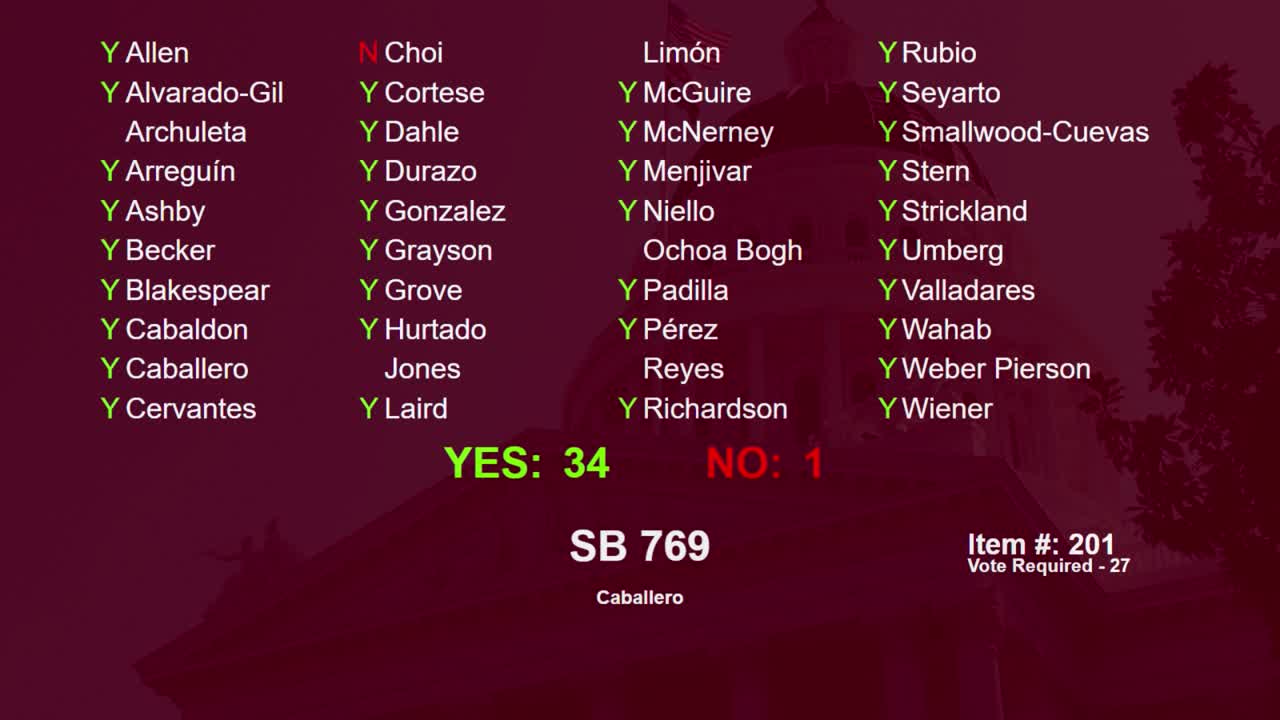 1MIN
Senate Floor
Bill Author

Bill Co-Author(s):