SB 695: Transportation: climate resiliency: projects of statewide and regional significance.
- Session Year: 2025-2026
- House: Senate
- Latest Version Date: 2025-10-13
Current Status:
Passed
(2025-10-13: Chaptered by Secretary of State. Chapter 781, Statutes of 2025.)
Introduced
In Committee
Awaiting First Chamber Vote
Passed First Chamber
In Committee
Awaiting Second Chamber Vote
Passed Second Chamber
Enacted
Existing law establishes the State Transportation Infrastructure Climate Adaptation Program, administered by the Department of Transportation, for purposes of planning, developing, and implementing projects adapting state transportation infrastructure to climate change. Existing law requires the department, in consultation with, among others, the Transportation Agency and the California Transportation Commission, to develop a program of its top priority climate adaptation projects and to submit projects in this program to the commission for adoption. Existing law requires the department, in developing the program of projects, to consider specified criteria, including, but not limited to, the benefits of the project to preserving or enhancing regional or statewide mobility, economy, goods movement, and safety, and other benefits associated with protecting the asset.
This bill would require the department, in consultation with the commission and the agency, and on or before July 1, 2026, and annually thereafter, to create a prioritized list of projects of statewide and regional significance, as defined, to better prepare the state for extreme weather-related events, with priority based on specified criteria. The bill would require the department, on or before January 1, 2027, and annually thereafter, to submit to the Legislature a report containing the prioritized list of projects.
Existing law, the California Disaster Assistance Act, authorizes moneys appropriated for the purposes of the act to be used to provide financial assistance for specified local agency and state costs, including to repair, restore, reconstruct, or replace facilities belonging to local agencies damaged as a result of disasters, as defined.This bill would express the intent of the Legislature to enact legislation that would amend the act to invest in infrastructure projects that are of regional importance in California to make them more resilient to the impacts of climate change and to avoid infrastructure failure. The bill would state findings and declarations in that regard.Existing law, the California Disaster Assistance Act, authorizes moneys appropriated for the purposes of the act to be used to provide financial assistance for specified local agency and state costs, including to repair, restore, reconstruct, or replace facilities belonging to local agencies damaged as a result of disasters, as defined.
This bill would express the intent of the Legislature to enact legislation that would amend the act to invest in infrastructure projects that are of regional importance in California to make them more resilient to the impacts of climate change and to avoid infrastructure failure. The bill would state findings and declarations in that regard.
(a)The Legislature finds and declares all of the following:
(1)Californias aging infrastructure is increasingly vulnerable to the impacts of climate-related disasters, including increased flooding, wildfires, and earthquakes, as many critical systems, built decades ago, are not adequately designed to withstand these extreme events.
(2)Failure to act now will result in significantly greater state costs to repair, rebuild, and replace failing infrastructure. Delays will also contribute to disruptions to public services, economic activity, and transportation safety.
(3)Proactive investment in resilient infrastructure today aligns with Californias commitment to sustainability, climate adaptation, and long-term economic growth and stability.
(b)It is the intent of the Legislature to promote infrastructure projects of statewide and regional significance that will enhance resilience to climate change, reduce disaster recovery costs, and ensure continued public safety and economic vitality.
SEC. 2.Section 14053 is added to the Government Code, immediately following Section 14052, to read:14053.(a)For purposes of this section, project of statewide and regional significance means a high-priority highway project on the state highway system that would benefit two or more counties and that satisfies the requirements of paragraphs (1) and (2).
(1)Meets one or both of the following:
(A)The project would improve public safety on a highway that serves as a major corridor for the movement of goods and people.
(B)The project would contribute to the states economy by supporting key transportation routes that facilitate commerce, trade, and job growth.
(2)Meets one or both of the following:
(A)The project would enhance climate resilience by mitigating climate-related impacts on state highways, thereby reducing long-term infrastructure repair or replacement costs.
(B)The project would address a vulnerability to a natural disaster, including, but not limited to, an earthquake, mudslide, wildfire, or another extreme climate event.
(b)(1)On or before July 1, 2026, and annually thereafter, the department, in consultation with the commission and the Transportation Agency, shall create a prioritized list of projects of statewide and regional significance to better prepare the state for extreme weather-related events. Priority shall be given to projects that advance the following cobenefits, with greater priority given to projects that include more than one of the following cobenefits:
(A)Enhanced safety.
(B)Efficient goods movement along trade corridors.
(C)Climate resiliency, including, but not limited to, water storage, access to safe drinking water, and flood mitigation.
(D)Improvement to electric transmission infrastructure for electrical grid reliability.
(2)The list described in paragraph (1) shall include only a project of statewide and regional significance in the project approval and environmental documentation stage or the planning, environmental, and design stage, or further along.
(c)Notwithstanding Section 10231.5, on or before January 1, 2027, and annually thereafter, the department shall submit to the Legislature, in compliance with Section 9795, a report containing the prioritized list described in subdivision (b).
SECTION 1.(a)The Legislature finds and declares all of the following:(1)Californias aging infrastructure is increasingly vulnerable to the impacts of climate change, including increased flooding, wildfires, and earthquakes. Many critical systems, built decades ago, are struggling to withstand these extreme environmental disaster-related events.(2)Failure to act now will result in significantly greater state costs to repair, rebuild, and respond to infrastructure failures in the future, along with increased disruptions to daily life, public services, and economic productivity. Proactively investing in resilient infrastructure today aligns with Californias commitment to sustainability, climate adaptation, and long-term economic stability.(b)It is the intent of the Legislature to enact legislation that would amend the California Disaster Assistance Act (Chapter 7.5 (commencing with Section 8680) of Division 1 of Title 2 of the Government Code) to invest in infrastructure projects that are of regional importance in California to make them more resilient to the impacts of climate change and to avoid infrastructure failure.(a)The Legislature finds and declares all of the following:
(1)Californias aging infrastructure is increasingly vulnerable to the impacts of climate change, including increased flooding, wildfires, and earthquakes. Many critical systems, built decades ago, are struggling to withstand these extreme environmental disaster-related events.
(2)Failure to act now will result in significantly greater state costs to repair, rebuild, and respond to infrastructure failures in the future, along with increased disruptions to daily life, public services, and economic productivity. Proactively investing in resilient infrastructure today aligns with Californias commitment to sustainability, climate adaptation, and long-term economic stability.
(b)It is the intent of the Legislature to enact legislation that would amend the California Disaster Assistance Act (Chapter 7.5 (commencing with Section 8680) of Division 1 of Title 2 of the Government Code) to invest in infrastructure projects that are of regional importance in California to make them more resilient to the impacts of climate change and to avoid infrastructure failure.
|
Date
|
Status
|
|---|---|
| Oct 13, 2025 | Chaptered by Secretary of State. Chapter 781, Statutes of 2025. |
| Oct 13, 2025 | Approved by the Governor. |
| Sep 10, 2025 | Enrolled and presented to the Governor at 2 p.m. |
| Sep 4, 2025 | In Senate. Ordered to engrossing and enrolling. |
| Sep 4, 2025 | Read third time. Passed. (Ayes 78. Noes 0. Page 2908.) Ordered to the Senate. |
| Sep 2, 2025 | Read second time. Ordered to third reading. |
| Aug 29, 2025 | From committee: Do pass. (Ayes 15. Noes 0.) (August 29). |
| Aug 20, 2025 | August 20 set for first hearing. Placed on APPR. suspense file. |
| Jul 8, 2025 | From committee: Do pass and re-refer to Com. on APPR. with recommendation: To consent calendar. (Ayes 16. Noes 0.) (July 7). Re-referred to Com. on APPR. |
| Jun 5, 2025 | Referred to Com. on TRANS. |
| May 29, 2025 | In Assembly. Read first time. Held at Desk. |
| May 29, 2025 | Read third time. Passed. (Ayes 38. Noes 0. Page 1328.) Ordered to the Assembly. |
| May 27, 2025 | Ordered to special consent calendar. |
| May 23, 2025 | Read second time. Ordered to third reading. |
| May 23, 2025 | From committee: Do pass. (Ayes 6. Noes 0. Page 1210.) (May 23). |
| May 16, 2025 | Set for hearing May 23. |
| May 12, 2025 | May 12 hearing: Placed on APPR. suspense file. |
| May 2, 2025 | Set for hearing May 12. |
| Apr 29, 2025 | From committee: Do pass and re-refer to Com. on APPR. with recommendation: To consent calendar. (Ayes 15. Noes 0. Page 919.) (April 28). Re-referred to Com. on APPR. |
| Apr 10, 2025 | Set for hearing April 28. |
| Apr 2, 2025 | Re-referred to Com. on TRANS. |
| Mar 26, 2025 | From committee with author's amendments. Read second time and amended. Re-referred to Com. on RLS. |
| Mar 5, 2025 | Referred to Com. on RLS. |
| Feb 24, 2025 | Read first time. |
| Feb 24, 2025 | From printer. May be acted upon on or after March 24. |
| Feb 21, 2025 | Introduced. To Com. on RLS. for assignment. To print. |
|
Date
|
Description
|
Location
|
Votes
|
|
|---|---|---|---|---|
| Sep 4, 2025 | SB 695 Cortese Senate Third Reading By Soria | Assembly Floor |
Passed |
|
| Aug 29, 2025 | Do pass. | Assembly Standing Committee on Appropriations |
Passed |
|
| Jul 7, 2025 | Do pass and be re-referred to the Committee on [Appropriations] with recommendation: To Consent Calendar | Assembly Standing Committee on Transportation |
Passed |
|
| May 29, 2025 | Special Consent SB695 Cortese et al. | Senate Floor |
Passed |
|
| May 23, 2025 | Do pass | Senate Standing Committee on Appropriations |
Passed |
|
| May 12, 2025 | Placed on suspense file | Senate Standing Committee on Appropriations |
Passed |
|
| Apr 28, 2025 | Do pass, but first be re-referred to the Committee on [Appropriations] with the recommendation: To Consent Calendar | Senate Standing Committee on Transportation |
Passed |
This list shows positions taken on this bill by organizations on the date displayed, which is linked to the original source.
Positions by individuals are not included.
|
Organization
|
Position
|
Date
|
|---|---|---|
| Association of California Water Agencies (ACWA) | ** Support | |
| Grassland Water District | ** Support | |
| San Luis Delta-Mendota Water Authority | ** Support | |
| Santa Clara Valley Water District | ** Support | |
| Water Blueprint for the San Joaquin Valley Advocacy Fund | ** Support | |
| Westlands Water District | ** Support |
SENATE THIRD READING
STR Bill Id:SB 695
Author:(Cortese and Caballero)
As Amended Ver:March 26, 2025
Majority vote
SUMMARY
Requires the Department of Transportation (Caltrans), by July 1, 2026, and annually thereafter, and in consultation with the California Transportation Commission (CTC) and the California State Transportation Agency (CalSTA), to create a prioritized list of highway projects on the state highway system that are of statewide and regional significance, as defined, to better prepare the state for extreme weather-related events, to be submitted annually to the Legislature.
Major Provisions
Directs Caltrans to prioritize projects that advance certain cobenefits, with greater priority given to projects that include more than one of the following cobenefits:
- Enhanced safety.
2) Efficient goods movement along trade corridors.
3) Climate resiliency, including, but not limited to, water storage, access to safe drinking water, and flood mitigation.
4) Improvement to electric transmission infrastructure for electrical grid reliability.
COMMENTS
The State Highway System Management Plan (SHSMP) is a performance-driven and integrated management plan for the State Highway System (SHS) in California. SHS needs, investments, and resulting performance for the ten-year period are presented in the SHSMP.The SHSMP aligns with Caltrans′ Strategic Plan.
The SHSMP integrates the maintenance, rehabilitation, and operation of the SHS into a single management plan which implements a number of state and federal asset management requirements with new resources from SB 1 (Beall), Chapter 5, Statutes of 2017.The SHSMP utilizes objective analysis to focus investments on measured condition and performance objectives.The historic asset-based funding approach has been replaced by a performance-driven methodology that provides greater local flexibility to achieve multiple objectives within a single project. The new management methodology allows Caltrans to better integrate multi-modal transportation options into traditional rehabilitation work to provide a cost-effective way to expand mode choice and reduce transportation-related emission.
The 2025 draft SHSMP provides an overview and roadmap of the state′s policies, regulations, and implementation strategies to carry out climate adaptation and resiliency projects. Specifically, Caltrans has developed district-level vulnerability assessments to guide analysis of at-risk transportation assets. These district adaptation reports prioritize potentially exposed transportation assets in each Caltrans′ district. According to the 2025 draft SHSMP, Caltrans is presently undergoing an update of all the district adaptation reports with an anticipated completion date sometime in 2026.
Caltrans notes in the draft SHSMP, ″Climate change is already leading to increased variability in precipitation, rising temperatures, rising sea levels, variability in storm surges and their intensity, and in the frequency and intensity of wildfires. Flooding and erosion can damage or wash out roads; longer periods of intense heat can buckle pavement and railroad tracks; storm surges combined with a rising sea level can inundate highways. Wildfire can directly burn facilities and indirectly cause damage when rain falls on denuded slopes that landslide after a fire. Effects will vary by location and may, in the most extreme cases, require that a facility be relocated or redesigned. Accordingly, Caltrans must consider these types of climate stressors in how highways are planned, designed, built, operated, and maintained, to ensure overall resilience of the transportation system to climate impacts.″
Climate change and transportation infrastructure. In accordance with the California Action Plan for Transportation Infrastructure (CAPTI), Executive Order (EO) N-19-19, and EO B-30-15 Caltrans must incorporate climate change impacts into state investments.
Caltrans completed a statewide Climate Change Vulnerability Assessment (Assessment) for the state highway system in 2019, and most recently in 2021. This study involves using climate data to refine Caltrans′ understanding of potential climate impacts to the state highway system, and coordination with various state and federal agencies and academic institutions to obtain the best available climate data for California. Each of Caltrans′ 12 districts developed climate change vulnerability assessment technical and summary reports that include assessment methodologies, findings, potential challenges, and ongoing efforts. Discussions with professionals from various engineering disciplines helped identify how changing climate hazards may affect highways, including their design. This assessment allows Caltrans to begin to understand how climate change may affect state transportation infrastructure and identifies a subset of state highway system assets on which to focus future efforts. Additionally, this enables Caltrans to incorporate climate change assessments into project development and ensure staff and stakeholders are engaged.
- The results from the Assessment conclude that California′s transportation system is under increasing threat from climate change, with extreme weather events like wildfires, floods, and heat waves causing major disruptions. According to Caltrans 2021 Assessment, California faces over $1 billion per year in infrastructure damages due to climate disasters.
According to the Author
″SB 695 provides our transportation agencies and the Legislature with the information necessary to make informed decisions about prioritization of projects that move California toward a more climate resilient future.
Specifically, this bill establishes a list of projects of statewide and regional significance that meet specific criteria and provide specific co-benefits of safety and climate resiliency. Through the prioritization of these projects, California will be better prepared to enhance its resilience to climate change, reduce disaster recovery costs, and ensure continued public safety and economic vitality.″
Arguments in Support
San Luis Delta-Mendota Water Authority writes, ″The Water Authority, working in partnership with the U.S. Bureau of Reclamation, is the lead agency advancing the B.F. Sisk Dam Safety and Reservoir Expansion Project - a project to raise the B.F. Sisk Dam at San Luis Reservoir by an additional 10 feet, increasing the Reservoir′s water storage capacity by 130,000 acre-feet, which is the equivalent of supplying 400,000 homes with water for a year. In order to advance the project, a portion of State Highway Route 152 must be modified, including improving the embankment and grade of a one-mile stretch across Cottonwood Creek, which will address critical seismic safety concerns where the roadway crosses an active earthquake fault. The improvements will also reduce the number of traffic collisions along this heavily traveled segment.
Arguments in Opposition
No opposition on file.
FISCAL COMMENTS
According to the Assembly Committee on Appropriations:
″Creation of the prioritized list will entail significant new analytical and ongoing work of Caltrans, likely at a cost in the mid to high hundreds of thousands of dollars annually (State Highway Account). Caltrans estimates this workload will require two fulltime position, with an ongoing annual cost of $350,000 (State Highway Account).
Similarly, CalSTA and CTC will each experience costs to consult with Caltrans, though the magnitude of costs to each should be substantially less than Caltrans′ costs annually (State Highway Account).″
VOTES
SENATE FLOOR: 38-0-2
YES: Allen, Alvarado-Gil, Archuleta, Arreguín, Ashby, Becker, Blakespear, Cabaldon, Caballero, Cervantes, Choi, Cortese, Dahle, Durazo, Gonzalez, Grayson, Grove, Hurtado, Jones, Laird, McGuire, McNerney, Menjivar, Niello, Ochoa Bogh, Padilla, Pérez, Richardson, Rubio, Seyarto, Smallwood-Cuevas, Stern, Strickland, Umberg, Valladares, Wahab, Weber Pierson, Wiener
ABS, ABST OR NV: Limón, Reyes
ASM TRANSPORTATION: 16-0-0
YES: Wilson, Davies, Ahrens, Bennett, Caloza, Carrillo, Hart, Hoover, Jackson, Lackey, Lowenthal, Macedo, Papan, Ransom, Rogers, Ward
ASM APPROPRIATIONS: 15-0-0
YES: Wicks, Sanchez, Arambula, Calderon, Caloza, Dixon, Elhawary, Fong, Mark González, Ahrens, Pacheco, Pellerin, Solache, Ta, Tangipa
UPDATED
VERSION: March 26, 2025
CONSULTANT: Julia Kingsley / TRANS. / (916) 319-2093 FN: 0001314
Date of Hearing: August 20, 2025
ASSEMBLY COMMITTEE ON APPROPRIATIONS
Buffy Wicks, Chair
SBPCA Bill Id:SB 695
Author:(Cortese) – As Amended Ver:March 26, 2025
Policy Committee: | Transportation | Vote: | 16 - 0 |
|
| ||
|
|
Urgency: No State Mandated Local Program: No Reimbursable: No
SUMMARY:
This bill requires the Department of Transportation (Caltrans), by July 1, 2026, and annually thereafter, and in consultation with the California Transportation Commission (CTC) and the California State Transportation Agency (CalSTA), to create a prioritized list of highway projects on the state highway system that are of statewide and regional significance, as defined, to better prepare the state for extreme weather-related events, to be submitted annually to the Legislature.
The bill directs Caltrans to prioritize projects that advance certain cobenefits, with greater priority given to projects that include more than one of the following cobenefits:
- Enhanced safety.
- Efficient goods movement along trade corridors.
- Climate resiliency, including, but not limited to, water storage, access to safe drinking water, and flood mitigation.
- Improvement to electric transmission infrastructure for electrical grid reliability.
FISCAL EFFECT:
Creation of the prioritized list will entail significant new analytical and ongoing work of Caltrans, likely at a cost in the mid to high hundreds of thousands of dollars annually (State Highway Account). Caltrans estimates this workload will require two fulltime position, with an ongoing annual cost of $350,000 (State Highway Account).
Similarly, CalSTA and CTC will each experience costs to consult with Caltrans, though the magnitude of costs to each should be substantially less than Caltrans’ costs annually (State Highway Account).
COMMENTS:
The state’s transportation agencies use a complex, iterative, four-piece set of processes to plan for, fund and carry out maintenance and improvement projects on the state highway system. Those processes are (a) the Interregional Transportation Strategic Plan (ITSP), (b) the Interregional Transportation Improvement Program (ITIP), (c) State Transportation Improvement Program (STIP) and (d) the Climate Action Plan for Transportation Infrastructure (CAPTI). Caltrans describes each process as follows:
- ITSP—offers strategic direction for assessing and improving California’s interregional transportation system and outlines policies and strategies that guide the development of the ITIP and other related plans.
- ITIP—a component of the STIP, focusing on projects that connect different regions of the state, which Caltrans develops to reflects priorities set forth in the ITSP.
- STIP—a five-year plan Caltrans completes every two years that allocates state transportation funds to various projects. The two main components of the STIP are the ITIP, which accounts for 25% of funds, and the Regional Transportation Improvement Programs (RTIPs), which regional agencies develop and which account for 75% of the funds.
- CAPTI—Adopted by CalSTA, CAPTI outlines strategies to reduce greenhouse gas emissions and promote sustainable transportation infrastructure.
Each of the processes described above influence and feed in to one another. But Caltrans asserts one of these processes—CAPTI—influences the development of the ITSP and, by extension, the ITIP, thereby ensuring the effects of current and anticipated climate change are integrated into the state’s transportation planning. The CAPTI process, and its influence on the state’s other transportation planning efforts, would seem to encompass, in a general sense, the goal of this bill as expressed by the author: preparing the state for extreme weather-related events, at least in the context of transportation infrastructure.
Nonetheless, the author sees the state’s transportation planning efforts in the context of a changing climate as wanting. Specifically, the author describes the state as lacking both “a clear inventory of priority projects” and the “strategic vision” needed to “future-proof” its transportation infrastructure:
While existing assessments such as the Climate Action Plan for Transportation Infrastructure (CAPTI) and Climate Change Vulnerability Assessment have taken important steps to understand climate risks, they do not produce one prioritized list of infrastructure upgrades where failure would cause widespread impacts. Without this kind of strategic inventory, California lacks a clear roadmap to proactively safeguard its most essential transportation systems. SB 695 addresses this gap by directing the state to create such a list, helping ensure we can target investments before disasters strike, because without proactive funding, we will ultimately spend far more on emergency repairs.
The creation of the list of projects required by this bill, the author asserts, will provide “our transportation agencies and the Legislature with the information necessary to make informed decisions about prioritization of projects that move California toward a more climate resilient future.”
The Association of California Water Agencies (ACWA) agrees, arguing the bill “could help public water systems across California upgrade and retrofit key infrastructure,” some of which ACWA describes as having “a nexus to larger statewide transportation planning,” thereby allowing such water systems to “continue to provide customers with a reliable water supply in times of natural disaster.”
There is no opposition registered against this bill.
Analysis Prepared by: Jay Dickenson / APPR. / (916) 319-2081
SENATE RULES COMMITTEE Office of Senate Floor Analyses (916) 651-1520 Fax: (916) 327-4478 | SB 695 |
THIRD READING
Bill No: SB 695
Author: Cortese (D) and Caballero (D)
Amended: 3/26/25
Vote: 21
SENATE TRANSPORTATION COMMITTEE: 15-0, 4/28/25
AYES: Cortese, Strickland, Archuleta, Arreguín, Blakespear, Cervantes, Dahle, Gonzalez, Grayson, Limón, Menjivar, Richardson, Seyarto, Umberg, Valladares
SENATE APPROPRIATIONS COMMITTEE: 6-0, 5/23/25
AYES: Caballero, Seyarto, Cabaldon, Grayson, Richardson, Wahab
NO VOTE RECORDED: Dahle
SUBJECT: Transportation: climate resiliency: projects of statewide and regional significance
SOURCE: Author
DIGEST:
This bill requires the State Department of Transportation (Caltrans) on or before July 1, 2026 to create a priority list of infrastructure projects of regional significance, as defined, that aim to address the impacts of climate change, as specified.
ANALYSIS:
Existing law:
- Establishes the State Transportation Agency (CalSTA), California Transportation Commission (CTC), and Caltrans and further directs each entity to carry out a variety of duties and functions as they relate to the State’s transportation system, as specified.
- Establishes the State Transportation Infrastructure Climate Adaption Program (program), requires Caltrans to administer the program, and provides that the program is utilized for planning, developing, and implementing transportation infrastructure projects that address climate change.
- Requires Caltrans, in consultation with CalSTA and CTC to develop the program consisting of the State’s top priority climate adaptation projects and requires Caltrans to submit the identified projects to CTC for adoption.
- Requires Caltrans to consider certain criteria when developing the list of projects for the program, as specified.
- At the federal level, enacted on November 15, 2021, the Infrastructure Investment and Jobs Act authorized approximately $1.2 trillion in new federal spending for a variety of infrastructure programs, including, but not limited to, surface transportation and transit programs, as specified.
This bill:
- Makes finding and declarations pertaining to the impacts of climate change on the State’s infrastructure.
- Provides that it is the intent of the Legislature to promote infrastructure projects of statewide and regional significance that will enhance resilience to climate change, reduce disaster recovery costs, and ensure continued public safety and economic vitality.
- Requires on or before July 1, 2026, Caltrans in consultation with CTC and CalSTA, to create a prioritized list of infrastructure projects of statewide and regional significance, as specified.
- Specifies the list of prioritized projects are intended to address / mitigate extreme weather-related events with priority to be given to infrastructure projects that provide certain co-benefits including, but not limited to, enhanced safety, climate resiliency, or improved movement of goods along trade corridors.
- Defines, for the purposes of this bill, “project of statewide and regional significance” as a high-priority highway project on the state highway system that would benefit two or more counties and that satisfies a number of requirements, as specified.
- Provides that projects identified on the abovementioned priority list are required to only be projects in the planning, environmental, design, or subsequent project stage, as specified.
- Requires Caltrans to update the abovementioned priority list annually and submit a report to the Legislature containing the priority list on or before January 1, 2027 and annually thereafter.
Comments
- Purpose of the bill: According to the author, “SB 695 provides our transportation agencies and the Legislature with the information necessary to make informed decisions about prioritization of projects that move California toward a more climate resilient future. While existing assessments and planning documents have taken important steps to understand climate risks, they do not provide a targeted strategy to identify and prioritize infrastructure upgrades where failure would have statewide or regional consequences. Furthermore, current programs do not provide a consistent definition or inventory of such high-stakes assets and the potential impacts of natural disasters or extreme weather events on safety and economic sustainability.
“SB 695 establishes a list of projects of statewide and regional significance that meet specific criteria and provide the co-benefits of safety and climate resiliency. Through the prioritization of these projects, California will be better prepared to enhance its resilience to climate change, reduce disaster recovery costs, and ensure continued public safety and economic vitality.”
- State Highway System Management Plan (SHSMP): The SHSMP presents a performance-driven and integrated management plan for the State Highway System (SHS) in California. SHS needs, investments, and resulting performance for the 10-year period are presented in the SHSMP. The SHSMP is organized to align with Caltrans’ Strategic Plan.
The SHSMP integrates the maintenance, rehabilitation, and operation of the SHS into a single management plan which implements a number of state and federal asset management requirements with new resources from California Senate Bill 1 (SB 1). The SHSMP operationalizes the California Transportation Asset Management Plan by utilizing the CTC-adopted asset classes, performance measures, and performance targets. The SHSMP utilizes objective analysis to focus investments on measured condition and performance objectives. The historic asset-based funding approach has been replaced by a performance-driven methodology that provides greater local flexibility to achieve multiple objectives within a single project. The new management methodology allows Caltrans to better integrate multi-modal transportation options into traditional rehabilitation work to provide a cost-effective way to expand mode choice and reduce transportation-related emission.
Moreover, the currently available 2025 draft SHSMP further provides an overview and roadmap of the state’s policies, regulations, and implementation strategies to carry out climate adaptation and resiliency projects. Specifically, Caltrans has developed district-level vulnerability assessments to guide analysis of at-risk transportation assets via District Adaptation Priority Reports. These district adaptation reports include a prioritized list of potentially exposed transportation assets in each Caltrans’ district. According to the 2025 draft SHSMP, Caltrans is presently undergoing an update of all the district adaptation reports with an anticipated completion date sometime in 2026.
- Climate Change and Transportation Infrastructure. Caltrans notes in the draft SHSMP:
“Climate change is already leading to increased variability in precipitation, rising temperatures, rising sea levels, variability in storm surges and their intensity, and in the frequency and intensity of wildfires. Flooding and erosion can damage or wash out roads; longer periods of intense heat can buckle pavement and railroad tracks; storm surges combined with a rising sea level can inundate highways. Wildfire can directly burn facilities and indirectly cause damage when rain falls on denuded slopes that landslide after a fire. Effects will vary by location and may, in the most extreme cases, require that a facility be relocated or redesigned. Accordingly, Caltrans must consider these types of climate stressors in how highways are planned, designed, built, operated, and maintained, to ensure overall resilience of the transportation system to climate impacts.”
While the SHSMP highlights climate adaptation and resilience objectives and the district adaptation priority reports identify projects / vulnerabilities at the Caltrans district level, this bill aims to develop a statewide comprehensive list of projects of regional significance to allow the state to better prepare for the impacts of climate change on transportation infrastructure.
FISCAL EFFECT: Appropriation: No Fiscal Com.: Yes Local: No
According to the Senate Appropriations Committee:
- Caltrans estimates costs of approximately $350,000 annually for two years for 2.0 personnel years of limited-term staff workload to develop the framework for the annual prioritized list of projects, coordinate with regional partners to collect project information, and provide analytical and logistical support for evaluating, scoring, and prioritizing projects. Caltrans would also incur relatively minor ongoing costs to annually update the project list and report to the Legislature. (State Highway Account)
- CalSTA indicates that any costs to consult with Caltrans to develop the list of prioritized projects of statewide and regional significance. (State Highway Account)
- CTC has not identified a fiscal impact as of this analysis, but indicates that costs to consult with Caltrans would depend upon the scope of the report and how the list of prioritized projects would interact with existing program and project-level planning processes. (State Highway Account)
SUPPORT: (Verified 5/23/25)
Association of California Water Agencies
Grassland Water District
San Luis Delta-mendota Water Authority
Santa Clara Valley Water District
Water Blueprint for the San Joaquin Valley Advocacy Fund
Westlands Water District
OPPOSITION: (Verified 5/23/25)
None received
Prepared by: Manny Leon / TRANS. / (916) 651-4121
5/26/25 13:27:04
**** END ****
SENATE COMMITTEE ON
Senator Anna Caballero, Chair
2025 - 2026 Regular Session
SB 695 (Cortese) - Transportation: climate resiliency: projects of statewide and regional significance
Version: | Policy Vote: |
Urgency: | Mandate: |
Hearing Date: | Consultant: |
Bill Summary:
SB 695 would require the Department of Transportation (Caltrans), in consultation with the Transportation Agency (CalSTA) and the California Transportation Commission (CTC), to create a prioritized list of projects of statewide and regional significance to better prepare the state for extreme weather-related events, as specified.
Fiscal Impact:
- Caltrans estimates costs of approximately $350,000 annually for two years for 2.0 PY of limited-term staff workload to develop the framework for the annual prioritized list of projects, coordinate with regional partners to collect project information, and provide analytical and logistical support for evaluating, scoring, and prioritizing projects. Caltrans would also incur relatively minor ongoing costs to annually update the project list and report to the Legislature. (State Highway Account)
- CalSTA indicates that any costs to consult with Caltrans to develop the list of prioritized projects of statewide and regional significance. (State Highway Account)
- The CTC has not identified a fiscal impact as of this analysis, but indicates that costs to consult with Caltrans would depend upon the scope of the report and how the list of prioritized projects would interact with existing program and project-level planning processes. (State Highway Account)
Background:
Existing law requires Caltrans, in consultation with the CTC, to prepare a robust transportation asset management plan (TAMP), and requires the CTC to adopt targets and performance measures for inclusion in the TAMP that reflect the state’s goals and objectives, in order to guide selection of State Highway Operation and Protection Program (SHOPP) projects. Existing law also requires Caltrans to prepare a biennial State Highway System Management Plan (SHSMP) that consists of both a 10-year state highway rehabilitation plan and a 5-year maintenance plan that attempts to balance resources to achieve identified goals at the lowest possible long-term costs. The SHSMP must include specific quantifiable accomplishments, goals, objectives, costs, and performance measures, consistent with the TAMP.
The currently available 2025 draft SHSMP further provides an overview and roadmap of the state’s policies, regulations, and implementation strategies to carry out climate adaptation and resiliency projects. Specifically, Caltrans has developed district-level vulnerability assessments to guide analysis of at-risk transportation assets via District Adaptation Priority Reports. These district adaptation reports include a prioritized list of potentially exposed transportation assets in each Caltrans’ district. According to the 2025 draft SHSMP, Caltrans is presently undergoing an update of all the district adaptation reports with an anticipated completion date sometime in 2026.
Proposed Law:
SB 695 would require Caltrans, in consultation with CalSTA and the CTC, to create a prioritized list of projects of statewide and regional significance to better prepare the state for extreme weather-related events. Specifically, this bill would:
- Define a “project of statewide and regional significance” to mean a high-priority project on the state highway system that would benefit two or more counties that satisfies the following requirements:
- The project would improve public safety on a highway that serves as a major corridor for the movement of goods and people, and/or the project would contribute to the state’s economy by supporting key transportation routes that facilitate commerce, trade, and job growth.
- The project would enhance climate resilience by mitigating climate-related impacts on state highways, and/or the project would address a vulnerability to a natural disaster, as specified.
- Require Caltrans to create the prioritized list of projects by July 1, 2026, and annually thereafter, and require priority to be given to projects that advance the following co-benefits, with greater priority given to those that advance multiple co-benefits:
- Enhanced safety.
- Efficient goods movement along trade corridors.
- Climate resiliency, including water storage, access to safe drinking water, and flood mitigation.
- Improvement to electric transmission infrastructure for electrical grid reliability.
- Require projects on the prioritized list to be in the project approval and environmental documentation stage or the planning, environmental, and design stage, or a subsequent project stage, as specified.
- Require Caltrans to submit a report to the Legislature that contains the prioritized list by January 1, 2027, and annually thereafter.
Related Legislation:
SB 198 (Budget and Fiscal Review Committee), Chap. 71/2022, included provisions establishing the State Transportation Infrastructure Climate Adaptation Program, administered by Caltrans, to provide federal funding for planning, developing, and implementing transportation infrastructure projects that address climate change.
-- END --
SENATE COMMITTEE ON TRANSPORTATION
Senator Dave Cortese, Chair
2025 - 2026 Regular
Bill No: Hearing Date: 4/28/2025
Author: | Cortese | ||
Version: | 3/26/2025 Amended | ||
Urgency: | No | Fiscal: | Yes |
Consultant: | Manny Leon | ||
SUBJECT:
DIGEST: This bill requires the State Department of Transportation (Caltrans) on or before July 1, 2026 to create a priority list of infrastructure projects of regional significance, as defined, that aim to address the impacts of climate change, as specified.
ANALYSIS:
Existing law:
- Establishes the State Transportation Agency (CalSTA), California Transportation Commission (CTC), and Caltrans and further directs each entity to carry out a variety of duties and functions as they relate to the State’s transportation system, as specified.
- Establishes the State Transportation Infrastructure Climate Adaption Program (program), requires Caltrans to administer the program, and provides that the program is utilized for planning, developing, and implementing transportation infrastructure projects that address climate change.
- Requires Caltrans, in consultation with CalSTA and CTC to develop the program consisting of the State’s top priority climate adaptation projects and requires Caltrans to submit the identified projects to CTC for adoption.
- Requires Caltrans to consider certain criteria when developing the list of projects for the program, as specified.
- At the federal level, enacted on November 15, 2021, the Infrastructure Investment and Jobs Act (IIJA) authorized approximately $1.2 trillion in new federal spending for a variety of infrastructure programs, including, but not limited to, surface transportation and transit programs, as specified.
This bill:
- Makes finding and declarations pertaining to the impacts of climate change on the State’s infrastructure.
- Provides that it is the intent of the Legislature to promote infrastructure projects of statewide and regional significance that will enhance resilience to climate change, reduce disaster recovery costs, and ensure continued public safety and economic vitality.
- Requires on or before July 1, 2026, Caltrans in consultation with CTC and CalSTA, to create a prioritized list of infrastructure projects of statewide and regional significance, as specified.
- Specifies the list of prioritized projects are intended to address / mitigate extreme weather-related events with priority to be given to infrastructure projects that provide certain cobenefits including, but not limited to, enhanced safety, climate resiliency, or improved movement of goods along trade corridors.
- For purposes of this bill, defines “project of statewide and regional significance” as a high-priority highway project on the state highway system that would benefit two or more counties and that satisfies a number of requirements, as specified.
- Provides that projects identified on the abovementioned priority list are required to only be projects in the planning, environmental, design, or subsequent project stage, as specified.
- Requires Caltrans to update the abovementioned priority list annually and submit a report to the Legislature containing the priority list on or before January 1, 2027 and annually thereafter.
COMMENTS:
- Purpose of the bill. According to the author, “SB 695 provides our transportation agencies and the Legislature with the information necessary to make informed decisions about prioritization of projects that move California toward a more climate resilient future. While existing assessments and planning documents have taken important steps to understand climate risks, they do not provide a targeted strategy to identify and prioritize infrastructure upgrades where failure would have statewide or regional consequences. Furthermore, current programs do not provide a consistent definition or inventory of such high-stakes assets and the potential impacts of natural disasters or extreme weather events on safety and economic sustainability.
SB 695 establishes a list of projects of statewide and regional significance that meet specific criteria and provide the co-benefits of safety and climate resiliency. Through the prioritization of these projects, California will be better prepared to enhance its resilience to climate change, reduce disaster recovery costs, and ensure continued public safety and economic vitality.”
- State Highway System Management Plan (SHSMP). The SHSMP presents a performance-driven and integrated management plan for the State Highway System (SHS) in California. SHS needs, investments, and resulting performance for the 10-year period are presented in the SHSMP. The SHSMP is organized to align with Caltrans’ Strategic Plan.
The SHSMP integrates the maintenance, rehabilitation, and operation of the SHS into a single management plan which implements a number of state and federal asset management requirements with new resources from California Senate Bill 1 (SB 1). The SHSMP operationalizes the California Transportation Asset Management Plan (TAMP) by utilizing the CTC-adopted asset classes, performance measures, and performance targets. The SHSMP utilizes objective analysis to focus investments on measured condition and performance objectives. The historic asset-based funding approach has been replaced by a performance-driven methodology that provides greater local flexibility to achieve multiple objectives within a single project. The new management methodology allows Caltrans to better integrate multi-modal transportation options into traditional rehabilitation work to provide a cost-effective way to expand mode choice and reduce transportation-related emission.
Moreover, the currently available 2025 draft SHSMP further provides an overview and roadmap of the state’s policies, regulations, and implementation strategies to carry out climate adaptation and resiliency projects. Specifically, Caltrans has developed district-level vulnerability assessments to guide analysis of at-risk transportation assets via District Adaptation Priority Reports. These district adaptation reports include a prioritized list of potentially exposed transportation assets in each Caltrans’ district. According to the 2025 draft SHSMP, Caltrans is presently undergoing an update of all the district adaptation reports with an anticipated completion date sometime in 2026.
- PROTECT Program. One of the transportation programs created under IIJA was the Promoting Resilient Operations for Transformative, Efficient, and Cost Saving Transportation (PROTECT) formula funding program to help make surface transportation more resilient to natural hazards, including climate change impacts. Subsequently, the Legislature passed Senate Bill (SB) 198 (Committee on Budget and Fiscal Review, Chapter 71, Statutes of 2022), which established two programs to oversee the state’s implementation of PROTECT funds: the State Transportation Infrastructure Climate Adaptation Program and the Local Transportation Infrastructure Project Program. The State Transportation Infrastructure Climate Adaptation Program oversees State system PROTECT funds through the SHOPP and adds additional requirements around consideration of climate risk and alignment with State of California adaptation planning guidance.
Caltrans is now pursuing adaptation strategies in implementing PROTECT funds to the State Highway Operation and Protection Program (SHOPP) projects as a part of the State Transportation Climate Adaptation Program established under SB 198. These projects include adding shade trees and shelters to mitigate extreme heat to support transit and active transportation, rock slope stabilization in areas identified as high risk for impacts from increased precipitation and subsequent landslides, and filling gaps for wildfire resilience, amongst other strategies. Projects funded via PROTECT were identified through a coordinated effort between multiple Caltrans divisions including Planning, Project Delivery, Maintenance, and Asset Management.
- Climate Change and Transportation Infrastructure. Caltrans notes in the draft SHSMP:
“Climate change is already leading to increased variability in precipitation, rising temperatures, rising sea levels, variability in storm surges and their intensity, and in the frequency and intensity of wildfires. Flooding and erosion can damage or wash out roads; longer periods of intense heat can buckle pavement and railroad tracks; storm surges combined with a rising sea level can inundate highways. Wildfire can directly burn facilities and indirectly cause damage when rain falls on denuded slopes that landslide after a fire. Effects will vary by location and may, in the most extreme cases, require that a facility be relocated or redesigned. Accordingly, Caltrans must consider these types of climate stressors in how highways are planned, designed, built, operated, and maintained, to ensure overall resilience of the transportation system to climate impacts.”
While the SHSMP highlights climate adaptation and resilience objectives and the district adaptation priority reports identify projects / vulnerabilities at the Caltrans district level, this bill aims to develop a statewide comprehensive list of projects of regional significance to allow the state to better prepare for the impacts of climate change on transportation infrastructure.
Related/Previous Legislation:
SB 198 (Committee on Budget and Fiscal Review, Chapter 71, Statutes of 2022) – Amongst other transportation provisions, established the two climate resiliency programs to administer the federal PROTECT funds, as specified.
FISCAL EFFECT: Appropriation: No Fiscal Com.: Yes Local: No
POSITIONS: (Communicated to the committee before noon on Wednesday,
April 23, 2025.)
SUPPORT:
Grassland Water District
San Luis Delta-mendota Water Authority
Santa Clara Valley Water District
Water Blueprint for the San Joaquin Valley Advocacy Fund
Westlands Water District
OPPOSITION:
None received
-- END --
Discussed in Hearing
View Older Hearings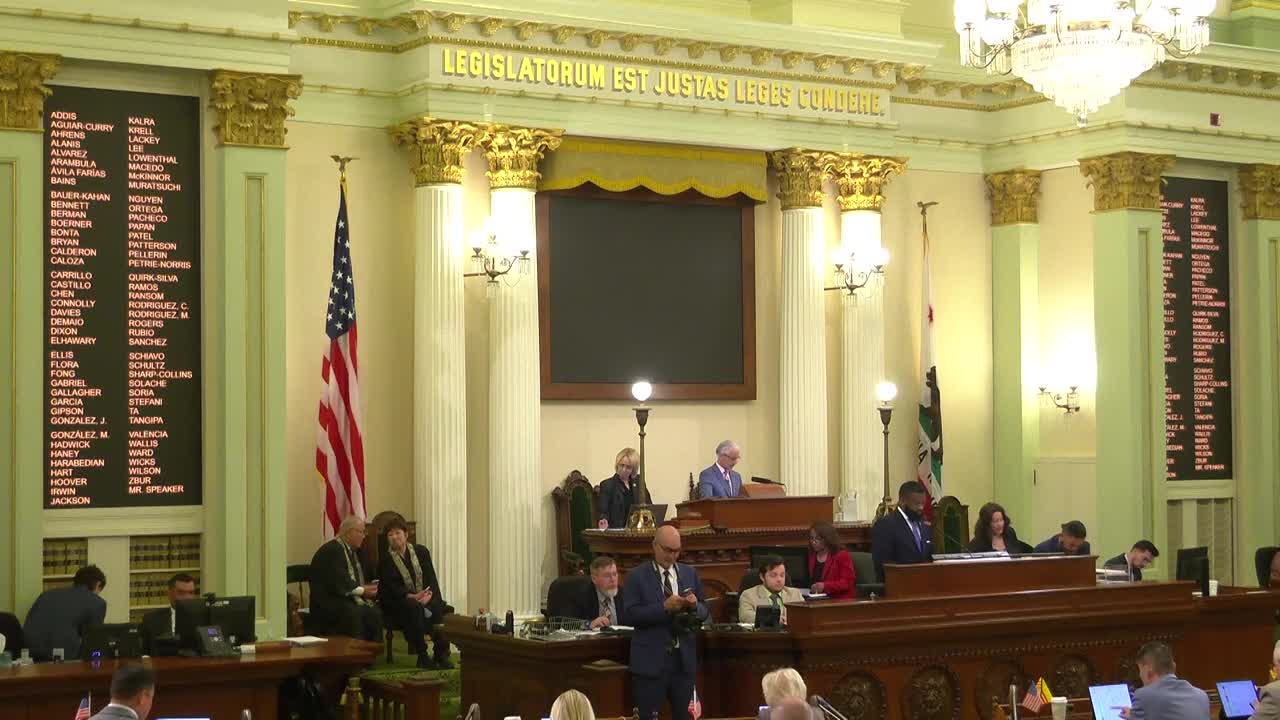


Bill Co-Author(s):