SB 697: Determination of water rights: stream system.
- Session Year: 2025-2026
- House: Senate
- Latest Version Date: 2025-10-06
Current Status:
Passed
(2025-10-06: Chaptered by Secretary of State. Chapter 422, Statutes of 2025.)
Introduced
In Committee
Awaiting First Chamber Vote
Passed First Chamber
In Committee
Awaiting Second Chamber Vote
Passed Second Chamber
Enacted
(1)Existing law authorizes the State Water Resources Control Board to hold proceedings to determine all rights to water of a stream system whether based upon appropriation, riparian right, or other basis of right. Existing law provides various requirements for the board when determining adjudication of water rights, including, among other things, performing a detailed field investigation of a stream system, as defined, issuing an order of determination, providing notice and a hearing process, and filing a final order.
This bill would revise the above-described provisions regarding the boards statutory adjudication of water rights during an investigation of a stream system to, among other things, require representatives of the board to investigate in detail the use of water with the authority, but no requirement, to conduct a field investigation, authorize the board, if the board determines that the information provided by the person, as specified, is inadequate, to issue information orders that require claimants to submit reports of water use from the stream system through a form provided by the board, and require claimants to respond to that order within 75 days of the date of issuance by the board.
(2)Existing law establishes procedures for reconsideration and amendment of specified decisions and orders of the board. Existing law authorizes any party aggrieved by a specified decision or order of the board to file, not later than 30 days from the date of final board action, a petition for writ of mandate for judicial review of the decision or order.
This bill would apply the procedures for reconsideration, amendment, and judicial review to decisions and orders of the board issued pursuant to the provisions described above.
(1)Existing law authorizes the State Water Resources Control Board to hold proceedings to determine all rights to water of a stream system whether based upon appropriation, riparian right, or other basis of right. Existing law provides various requirements for the board when determining adjudication of water rights, including, among other things, performing a detailed field investigation of a stream system, as defined, issuing an order of determination, providing notice and a hearing process, and filing a final order.
This bill would revise the above-described provisions regarding the boards statutory adjudication of water rights during an investigation of a stream system to, among other things, require representatives of the board to investigate in detail the use of water with the authority, but no requirement, to conduct a field investigation, authorize the board board, if the board determines that the information provided by the person, as specified, is inadequate, to issue information orders that require claimants to submit monthly reports of water use from the stream system through a form provided by the board, and require claimants to respond to that order within 45 75 days of the date of issuance by the board.
(2)Existing law establishes procedures for reconsideration and amendment of specified decisions and orders of the board. Existing law authorizes any party aggrieved by a specified decision or order of the board to file, not later than 30 days from the date of final board action, a petition for writ of mandate for judicial review of the decision or order.
This bill would apply the procedures for reconsideration, amendment, and judicial review to decisions and orders of the board issued pursuant to the provisions described above.
Existing law authorizes the State Water Resources Control Board to hold proceedings to determine all rights to water of a stream system whether based upon appropriation, riparian right, or other basis of right. Existing law provides various requirements for the board when determining adjudication of water rights, including, among other things, performing a detailed field investigation of a stream system, as defined, issuing an order of determination, providing notice and a hearing process, and filing a final order.
This bill would revise the above-described provisions regarding the boards statutory adjudication of water rights during an investigation of a stream system to, among other things, require representatives of the board to investigate in detail the use of water with the authority, but no requirement, to conduct a field investigation, authorize the board to issue information orders that require claimants to submit monthly reports of water use from the stream system through a form provided by the board, and require claimants to respond to that order within 45 days of the date of issuance by the board.
This chapter applies to any decision or order issued under this part or Section 275, Part 2 (commencing with Section 1200), Part 2 (commencing with Section 10500) of Division 6, Part 2.55 (commencing with Section 10608) of Division 6, or Chapter 11 (commencing with Section 10735) of Part 2.74 of Division 6, Article 7 (commencing with Section 13550) of Chapter 7 of Division 7, or the public trust doctrine, and to any information order issued under Article 3 (commencing with Section 2550) of Chapter 3 of Part 3.
SEC. 2.Section 2551 of the Water Code is amended to read:2551.(a)During the investigation of the stream system, the representatives of the board shall investigate in detail the use of water by each person who has given notice of intent to file a proof of claim, and shall determine the acreage under irrigation or otherwise define the place of use and purpose of use, determine the location and capacity of the persons diversion works and conduits conveying water from the stream system, and the amount of water diverted and reasonably required to satisfy the uses being made.
(b)In conducting investigations under this article, the board shall consider all pertinent information, including, but not limited to, information provided under Sections 1840 and 1841.
(c)Representatives of the board may conduct a field investigation of a persons water use after giving 30 days notice in writing to the person subject to the investigation, or at the request of that person as part of the investigation of the stream system. It shall be the duty of each claimant to be present at some time during the detailed field investigation either in person or by an agent who is authorized to sign the proof of claim.
SEC. 3.Section 2552 of the Water Code is amended to read:2552.Each claimant shall provide to the representatives of the board all pertinent information on the extent and nature of the claimants water use and basis of water right, so as to expedite the investigation and facilitate the completion of the proof of claim.
SEC. 4.Section 2553 of the Water Code is amended to read:2553.Immediately upon conclusion of the investigation of water use, the claimant or the claimants representative shall be provided, by registered mail, a blank form of proof of claim and a copy of the factual determinations of the representatives of the board for use in preparing the proof of claim.
SEC. 5.Section 2554 of the Water Code is amended to read:2554.During the investigation of the stream system, the board shall investigate in detail the projects of all water users known to the board who have not filed a notice of intent to file proof of claim. The investigations may include a field investigation in accordance with Section 2551, except that the water users need not be notified in advance of the investigation and, if not notified, are not required to be present during the field investigation.
SEC. 6.Section 2555 of the Water Code is amended to read:2555.Water users who do not file notice of intent shall, insofar as they are known, be supplied a copy of the factual determinations of the representative of the board and a blank form of proof of claim and shall be allowed to file proof of claim after completion of the detailed investigation of their project by the representatives of the board on the same basis as persons who were present and who filed timely notices of intent.
SEC. 7.Section 2556 is added to the Water Code, immediately following Section 2555, to read:2556.(a)In conducting an investigation pursuant to this chapter, if the board determines in writing that the information provided by the person pursuant to Sections 1840 and 1841 and any regulations adopted by the board pursuant to those sections is inadequate for the boards investigation, the board may issue an information order to any person or entity that diverts or uses water or claims a water right to prepare and submit to the board any technical or monitoring program reports related to that diversion or use, or to submit any report of the basis for that claimed water right, as the board may specify.
(b)The burden of preparing the report, including costs, shall bear a reasonable relationship to the need for the requested information and the benefits to be obtained from the board receiving that information. In making a request, the board shall do both of the following:
(1)Provide the person to whom the request is directed with a written explanation with regard to the need for the information.
(2)Identify the evidence that supports requiring that person to provide the information.
(c)If the preparation of individual reports would result in a duplication of effort, the board may order any person or entity subject to the order to pay a reasonable share of the cost of preparing reports.
(d)In conducting an investigation pursuant to this chapter, the board may inspect property or facilities where water is claimed to be used, diverted, or conveyed. The board is authorized to obtain an inspection warrant pursuant to the procedure set forth in Title 13 (commencing with Section 1822.50) of Part 3 of the Code of Civil Procedure for purposes of an inspection pursuant to this subdivision.
(e)A person or entity who receives an information order shall respond within 75 days of the date of the information order. An information order issued pursuant to this section may include a requirement that the recipient update the information annually while an adjudication is pending. A recipient of an order may request from the board an extension of time to respond to the information order for good cause shown, which request shall not be unreasonably denied.
SEC. 8.Section 2600 of the Water Code is amended to read:2600.After all investigations of water use have been completed and the time for filing proofs of claims has expired, the board shall prepare a report describing the water supply and abstracting the claim of water right of each claimant.
This chapter applies to any decision or order issued under this part or Section 275, Part 2 (commencing with Section 1200), Part 2 (commencing with Section 10500) of Division 6, Part 2.55 (commencing with Section 10608) of Division 6, or Chapter 11 (commencing with Section 10735) of Part 2.74 of Division 6, Article 7 (commencing with Section 13550) of Chapter 7 of Division 7, or the public trust doctrine, and to any information order issued under Article 3 (commencing with Section 2550) of Chapter 3 of Part 3.
SEC. 2.Section 2551 of the Water Code is amended to read:2551.(a)During the investigation of the stream system, the representatives of the board shall investigate in detail the use of water by each person who has given notice of intent to file a proof of claim, and shall determine the acreage under irrigation or otherwise define the place of use and purpose of use, determine the location and capacity of the persons diversion works and conduits conveying water from the stream system, and the amount of water diverted and reasonably required to satisfy the uses being made.
(b)In conducting investigations under this article, the board shall consider all pertinent information, including, but not limited to, information provided under Sections 1840 and 1841.
(c)Representatives of the board may conduct a field investigation of a persons water use after giving 30 days notice in writing to the person subject to the investigation, or at the request of that person as part of the investigation of the stream system. It shall be the duty of each claimant to be present at some time during the detailed field investigation either in person or by an agent who is authorized to sign the proof of claim.
SEC. 3.Section 2552 of the Water Code is amended to read:2552.Each claimant shall provide to the representatives of the board all pertinent information on the extent and nature of the claimants water use and basis of water right, so as to expedite the investigation and facilitate the completion of the proof of claim.
SEC. 4.Section 2553 of the Water Code is amended to read:2553.Immediately upon conclusion of the investigation of water use, the claimant or the claimants representative shall be provided, by registered mail, a blank form of proof of claim and a copy of the factual determinations of the representatives of the board for use in preparing the proof of claim.
SEC. 5.Section 2554 of the Water Code is amended to read:2554.During the investigation of the stream system, the board shall investigate in detail the projects of all water users known to the board who have not filed a notice of intent to file proof of claim. The investigations may include a field investigation in accordance with Section 2551, except that the water users need not be notified in advance of the investigation and, if not notified, are not required to be present during the field investigation.
SEC. 6.Section 2555 of the Water Code is amended to read:2555.Water users who do not file notice of intent shall, insofar as they are known, be supplied a copy of the factual determinations of the representative of the board and a blank form of proof of claim and shall be allowed to file proof of claim after completion of the detailed investigation of their project by the representatives of the board on the same basis as persons who were present and who filed timely notices of intent.
SEC. 7.Section 2556 is added to the Water Code, immediately following Section 2555, to read:2556.(a)In conducting an investigation pursuant to this chapter, if the board determines in writing that the information provided by the person pursuant to Sections 1840 and 1841 and any regulations adopted by the board pursuant to those sections is inadequate for the boards investigation, the board may issue an information order to any person or entity that diverts or uses water or claims a water right to prepare and submit to the board any technical or monitoring program reports related to that diversion or use, or to submit any report of the basis for that claimed water right, as the board may specify. The burden of preparing the report shall bear a reasonable relationship to the need for the report.
(b)The burden of preparing the report, including costs, shall bear a reasonable relationship to the need for the requested information and the benefits to be obtained from the board receiving that information. In making a request, the board shall do both of the following:
(1)Provide the person to whom the request is directed with a written explanation with regard to the need for the information.
(2)Identify the evidence that supports requiring that person to provide the information.
(c)If the preparation of individual reports would result in a duplication of effort, the board may order any person or entity subject to the order to pay a reasonable share of the cost of preparing reports.
(d)In conducting an investigation pursuant to this chapter, the board may inspect property or facilities where water is claimed to be used, diverted, or conveyed. The board is authorized to obtain an inspection warrant pursuant to the procedure set forth in Title 13 (commencing with Section 1822.50) of Part 3 of the Code of Civil Procedure for purposes of an inspection pursuant to this subdivision.
(e)A person or entity who receives an information order shall respond within 75 days of the date of the information order. An information order issued pursuant to this section may include a requirement that the recipient update the information annually while an adjudication is pending. A recipient of an order may request from the board an extension of time to respond to the information order for good cause shown, which request shall not be unreasonably denied.
SEC. 8.Section 2600 of the Water Code is amended to read:2600.After all investigations of water use have been completed and the time for filing proofs of claims has expired, the board shall prepare a report describing the water supply and abstracting the claim of water right of each claimant.
This chapter applies to any decision or order issued under this part or Section 275, Part 2 (commencing with Section 1200), Part 2 (commencing with Section 10500) of Division 6, Part 2.55 (commencing with Section 10608) of Division 6, or Chapter 11 (commencing with Section 10735) of Part 2.74 of Division 6, Article 7 (commencing with Section 13550) of Chapter 7 of Division 7, or the public trust doctrine. doctrine, and to any information order issued under Article 3 (commencing with Section 2550) of Chapter 3 of Part 3.
SECTION 1.SEC. 2.Section 2551 of the Water Code is amended to read:2551.(a)During the investigation of the stream system, the representatives of the board shall investigate in detail the use of water by each person who has given notice of intent to file a proof of claim, and shall determine the acreage under irrigation or otherwise define the place of use and purpose of use, determine the location and capacity of the persons diversion works and conduits conveying water from the stream system, and the amount of water diverted and reasonably required to satisfy the uses being made.
(b)In conducting investigations under this article, the board shall consider all pertinent information, including, but not limited to, information provided under Sections 1840 and 1841.
(b)(c)Representatives of the board may conduct a field investigation of a persons water use after giving 30 days notice in writing to the person subject to the investigation. investigation, or at the request of that person as part of the investigation of the stream system. It shall be the duty of each claimant to be present at some time during the detailed field investigation either in person or by an agent who is authorized to sign the proof of claim.
SEC. 2.SEC. 3.Section 2552 of the Water Code is amended to read:2552.Each claimant shall provide to the representatives of the board all pertinent information on the extent and nature of the claimants water use and basis of water right, so as to expedite the investigation and facilitate the completion of the proof of claim. Claimants shall respond to an order to submit the information within 45 days of the date of the information order. An information order issued pursuant to this section may include a requirement that claimants update the information annually while an adjudication is pending.
SEC. 3.SEC. 4.Section 2553 of the Water Code is amended to read:2553.Immediately upon conclusion of the investigation of water use, the claimant or the claimants representative shall be provided, by registered mail, a blank form of proof of claim and a copy of the factual determinations of the representatives of the board for use in preparing the proof of claim.
SEC. 4.SEC. 5.Section 2554 of the Water Code is amended to read:2554.During the investigation of the stream system, the board shall investigate in detail the projects of all water users known to the board who have not filed a notice of intent to file proof of claim. The investigations may include a field investigation in accordance with Section 2551, except that the water users need not be notified in advance of the investigation and, if not notified, are not required to be present during the field investigation.
SEC. 5.SEC. 6.Section 2555 of the Water Code is amended to read:2555.Water users who do not file notice of intent shall, insofar as they are known, be supplied a copy of the factual determinations of the representative of the board and a blank form of proof of claim and shall be allowed to file proof of claim after completion of the detailed investigation of their project by the representatives of the board on the same basis as persons who were present and who filed timely notices of intent.
SEC. 6.SEC. 7.Section 2556 is added to the Water Code, immediately following Section 2555, to read:2556.(a)In conducting an investigation pursuant to this chapter, if the board determines in writing that the information provided by the person pursuant to Sections 1840 and 1841 and any regulations adopted by the board pursuant to those sections is inadequate for the boards investigation, the board may issue an information order to any person or entity that diverts or uses water or claims a water right to prepare and submit to the board any technical or monitoring program reports related to that diversion or use, or to submit any report of the basis for that claimed water right, as the board may specify. The burden of preparing the report shall bear a reasonable relationship to the need for the report. If the preparation of individual reports would result in a duplication of effort, the board may order any person or entity subject to this subdivision to pay a reasonable share of the cost of preparing reports.
(b)The burden of preparing the report, including costs, shall bear a reasonable relationship to the need for the requested information and the benefits to be obtained from the board receiving that information. In making a request, the board shall do both of the following:
(1)Provide the person to whom the request is directed with a written explanation with regard to the need for the information.
(2)Identify the evidence that supports requiring that person to provide the information.
(c)If the preparation of individual reports would result in a duplication of effort, the board may order any person or entity subject to the order to pay a reasonable share of the cost of preparing reports.
(b)(d)In conducting an investigation pursuant to this chapter, the board may inspect property or facilities where water is claimed to be used, diverted, or conveyed. The board is authorized to obtain an inspection warrant pursuant to the procedure set forth in Title 13 (commencing with Section 1822.50) of Part 3 of the Code of Civil Procedure for purposes of an inspection pursuant to this subdivision.
(e)A person or entity who receives an information order shall respond within 75 days of the date of the information order. An information order issued pursuant to this section may include a requirement that the recipient update the information annually while an adjudication is pending. A recipient of an order may request from the board an extension of time to respond to the information order for good cause shown, which request shall not be unreasonably denied.
SEC. 7.SEC. 8.Section 2600 of the Water Code is amended to read:2600.After all investigations of water use have been completed and the time for filing proofs of claims has expired, the board shall prepare a report describing the water supply and abstracting the claim of water right of each claimant.
(a)During the investigation of the stream system, the representatives of the board shall, after 30 days notice in writing to each person who has given notice of intent to file proof of claim, conduct a detailed field investigation of such persons shall investigate in detail the use of water, water by each person who has given notice of intent to file a proof of claim, and shall determine the acreage under irrigation or otherwise define the place of use and purpose of use, determine the location and capacity of such the persons diversion works and conduits conveying water from the stream system, and the amount of water diverted and reasonably required to satisfy the uses being made. It
(b)Representatives of the board may conduct a field investigation after giving 30 days notice in writing to the person subject to the investigation. It shall be the duty of each claimant to be present at some time during the detailed field investigation either in person or by an agent who is authorized to sign the proof of claim.
SEC. 2.Section 2552 of the Water Code is amended to read:2552.Each claimant shall have available at the detailed field investigation provide to the representatives of the board all pertinent information on the extent and nature of the claimants water use and basis of water right, so as to expedite the investigation and facilitate the completion of the proof of claim. Claimants shall respond to an order to submit the information within 45 days of the date of the information order. An information order issued pursuant to this section may include a requirement that claimants update the information annually while an adjudication is pending.
SEC. 3.Section 2553 of the Water Code is amended to read:2553.Immediately upon conclusion of the detailed field investigation, investigation of water use, the claimant or the claimants representative shall be provided, by registered mail, a blank form of proof of claim and a copy of the factual determinations of the representatives of the board for use in preparing the proof of claim.
SEC. 4.Section 2554 of the Water Code is amended to read:2554.During the investigation of the stream system, the board shall also conduct detailed field investigations of investigate in detail the projects of all water users known to the board who have not filed a notice of intent to file proof of claim. Such The investigations shall be may include a field investigation in accordance with Section 2551, except that the water users need not be notified in advance of the investigation. investigation and, if not notified, are not required to be present during the field investigation.
SEC. 5.Section 2555 of the Water Code is amended to read:2555.Water users not present during conduct of the detailed field investigation and those not filing who do not file notice of intent shall, insofar as they are known, be supplied a copy of the factual determinations of the representative of the board and a blank form of proof of claim and shall be allowed to file proof of claim after completion of the detailed investigation of their project by the representatives of the board on the same basis as persons who were present and who filed timely notices of intent.
SEC. 6.Section 2556 is added to the Water Code, immediately following Section 2555, to read:2556.(a)In conducting an investigation pursuant to this chapter, the board may issue an information order to any person or entity that diverts or uses water or claims a water right to prepare and submit to the board any technical or monitoring program reports related to that diversion or use, or to submit any report of the basis for that claimed water right, as the board may specify. The burden of preparing the report shall bear a reasonable relationship to the need for the report. If the preparation of individual reports would result in a duplication of effort, the board may order any person or entity subject to this subdivision to pay a reasonable share of the cost of preparing reports.
(b)In conducting an investigation pursuant to this chapter, the board may inspect property or facilities where water is claimed to be used, diverted, or conveyed. The board is authorized to obtain an inspection warrant pursuant to the procedure set forth in Title 13 (commencing with Section 1822.50) of Part 3 of the Code of Civil Procedure for purposes of an inspection pursuant to this subdivision.
SEC. 7.Section 2600 of the Water Code is amended to read:2600.After all field investigations of water use have been completed and the time for filing proofs of claims has expired, the board shall prepare a report describing the water supply and abstracting the claim of water right of each claimant.
|
Date
|
Status
|
|---|---|
| Oct 6, 2025 | Chaptered by Secretary of State. Chapter 422, Statutes of 2025. |
| Oct 6, 2025 | Approved by the Governor. |
| Sep 9, 2025 | Enrolled and presented to the Governor at 2 p.m. |
| Sep 2, 2025 | Assembly amendments concurred in. (Ayes 36. Noes 0. Page 2410.) Ordered to engrossing and enrolling. |
| Aug 29, 2025 | In Senate. Concurrence in Assembly amendments pending. |
| Aug 29, 2025 | Read third time. Passed. (Ayes 66. Noes 0. Page 2793.) Ordered to the Senate. |
| Aug 21, 2025 | Read second time. Ordered to third reading. |
| Aug 20, 2025 | From committee: Do pass. (Ayes 13. Noes 0.) (August 20). |
| Jul 9, 2025 | From committee: Do pass and re-refer to Com. on APPR. (Ayes 11. Noes 0.) (July 8). Re-referred to Com. on APPR. |
| Jul 3, 2025 | Read second time and amended. Re-referred to Com. on JUD. |
| Jul 2, 2025 | From committee: Do pass as amended and re-refer to Com. on JUD. (Ayes 11. Noes 0.) (July 1). |
| Jun 5, 2025 | Referred to Coms. on W. P., & W. and JUD. |
| May 28, 2025 | In Assembly. Read first time. Held at Desk. |
| May 28, 2025 | Read third time. Passed. (Ayes 29. Noes 1. Page 1272.) Ordered to the Assembly. |
| May 13, 2025 | Read second time. Ordered to third reading. |
| May 12, 2025 | From committee: Be ordered to second reading pursuant to Senate Rule 28.8. |
| May 2, 2025 | Set for hearing May 12. |
| May 1, 2025 | May 5 hearing postponed by committee. |
| May 1, 2025 | From committee with author's amendments. Read second time and amended. Re-referred to Com. on APPR. |
| Apr 25, 2025 | Set for hearing May 5. |
| Apr 23, 2025 | From committee: Do pass and re-refer to Com. on APPR. (Ayes 11. Noes 0. Page 837.) (April 22). Re-referred to Com. on APPR. |
| Apr 3, 2025 | Set for hearing April 22. |
| Mar 25, 2025 | From committee: Do pass and re-refer to Com. on JUD. (Ayes 5. Noes 0. Page 532.) (March 25). Re-referred to Com. on JUD. |
| Mar 12, 2025 | Set for hearing March 25. |
| Mar 5, 2025 | Referred to Coms. on N.R. & W. and JUD. |
| Feb 24, 2025 | Read first time. |
| Feb 24, 2025 | From printer. May be acted upon on or after March 24. |
| Feb 21, 2025 | Introduced. To Com. on RLS. for assignment. To print. |
|
Date
|
Description
|
Location
|
Votes
|
|
|---|---|---|---|---|
| Sep 2, 2025 | The Conference Committee recommends that the measure be Passed, with Amendments | Senate Floor |
Passed |
|
| Aug 29, 2025 | SB 697 Laird Senate Third Reading By Papan | Assembly Floor |
Passed |
|
| Aug 20, 2025 | Do pass. | Assembly Standing Committee on Appropriations |
Passed |
|
| Jul 8, 2025 | Do pass and be re-referred to the Committee on [Appropriations] | Assembly Standing Committee on Judiciary |
Passed |
|
| Jul 1, 2025 | Do pass as amended and be re-referred to the Committee on [Judiciary] | Assembly Standing Committee on Water, Parks, and Wildlife |
Passed |
|
| May 28, 2025 | Senate 3rd Reading SB697 Laird | Senate Floor |
Passed |
|
| Apr 22, 2025 | Do pass, but first be re-referred to the Committee on [Appropriations] | Senate Standing Committee on Judiciary |
Passed |
|
| Mar 25, 2025 | Do pass, but first be re-referred to the Committee on [Judiciary] | Senate Standing Committee on Natural Resources and Water |
Passed |
This list shows positions taken on this bill by organizations on the date displayed, which is linked to the original source.
Positions by individuals are not included.
|
Organization
|
Position
|
Date
|
|---|---|---|
| Sierra Club | ** Support |
SENATE RULES COMMITTEE Office of Senate Floor Analyses (916) 651-1520 Fax: (916) 327-4478 | SB 697 |
UNFINISHED BUSINESS
Bill No: SB 697
Author: Laird (D)
Amended: 7/3/25 in Assembly
Vote: 21
SENATE NATURAL RES. & WATER COMMITTEE: 5-0, 3/25/25
AYES: Limón, Allen, Hurtado, Laird, Stern
NO VOTE RECORDED: Seyarto, Grove
SENATE JUDICIARY COMMITTEE: 11-0, 4/22/25
AYES: Umberg, Allen, Arreguín, Ashby, Caballero, Durazo, Laird, Stern, Wahab, Weber Pierson, Wiener
NO VOTE RECORDED: Niello, Valladares
SENATE APPROPRIATIONS COMMITTEE: Senate Rule 28.8
SENATE FLOOR: 29-1, 5/28/25
AYES: Allen, Archuleta, Arreguín, Ashby, Becker, Blakespear, Cabaldon, Caballero, Cortese, Dahle, Durazo, Gonzalez, Grayson, Hurtado, Laird, Limón, McGuire, McNerney, Menjivar, Padilla, Pérez, Richardson, Rubio, Smallwood-Cuevas, Stern, Umberg, Wahab, Weber Pierson, Wiener
NOES: Alvarado-Gil
NO VOTE RECORDED: Cervantes, Choi, Grove, Jones, Niello, Ochoa Bogh, Reyes, Seyarto, Strickland, Valladares
ASSEMBLY FLOOR: 66-0, 8/29/25 - See last page for vote
SUBJECT: Determination of water rights: stream system
SOURCE: Author
DIGEST:
This bill gives the State Water Resources Control Board (State Water Board) flexibility in the manner used to investigate a stream system, rather than requiring the State Water Board to conduct a detailed field investigation, and, when conducting these investigations, authorizes the State Water Board to issue an information order to any person or entity that diverts or uses water or claims a water right.
Assembly Amendments
of 7/3/25 make a technical amendment.
ANALYSIS:
Existing law:
- Authorizes the State Water Board to:
- Investigate all streams, stream systems, portions of stream systems, lakes, or other bodies of water.
- Take testimony in regard to the rights to water or the use of water.
- Investigate and ascertain whether or not water filed upon or any claimed riparian or appropriative right is valid. (Water Code (Wat. C.) §1051(a))
- Authorizes the State Water Board, in furtherance of the above described investigation, to issue an information order to provide specified information related to a diversion and use of water. (Wat. C. §1051(b))
- Authorizes the State Water Board to determine all rights to water of a stream system whether based upon appropriation, riparian right, or other basis of right upon petition by a claimant to water of the steam system requesting the determination of the rights of the various claimants to the water of that stream system. Requires the State Water Board to comply with specific notice, proceeding, and investigation processes and requires claimants to notify the State Water Board of their intention to file proof of claim and to submit proof of their respective claims. (Wat. C. §§2500 et seq.)
- Requires the State Water Board to begin an investigation of the stream system, of the diversion of water, of all beneficial uses being made of the water, and of the water supply available for those uses, and to gather data and information that may be essential to the proper determination of water rights in the stream system. (Wat. C. §2550)
- Requires representatives of the State Water Board, after giving 30 days’ notice in writing to each person who has given notice of intent to file proof of claim, to conduct a detailed field investigation of those persons’ uses of water and to make certain determinations regarding the location, use, purpose, and amount of water diverted. (Wat. C. §2551)
- Requires each claimant to have available at the field investigation all pertinent information on the extent and nature of the claimant’s water use and basis of water right. (Wat. C. §2552)
- Requires that the claimant or the claimant’s representative be provided a blank form of proof of claim and a copy of the factual determinations upon conclusion of the field investigation. (Wat. C. §2553)
- Requires the State Water Board to also investigate projects of all water users known to the State Water Board who have not filed a notice of intent to file proof of claim during the investigation of the stream system. (Wat. C. §2554)
- Requires that water users who are not present during the field investigation and who do not file a notice of intent are, insofar as they are known, are supplied a copy of the factual determinations of the State Water Board and a blank form of proof claim and requires that they are allowed to file proof of claim after the investigation has been completed.
- Requires each person who diverts water to file with the State Water Board a statement of their diversion and use, except that a statement is not required in specific circumstances. (Wat. C. §5101)
This bill:
- When investigating stream systems, generally requires the State Water Board to investigate in detail the use of water by each person who has given notice of intent to file a proof of claim, instead of requiring the State Water Board to conduct a detailed field investigation, and makes conforming changes. Requires the State Water Board to consider all pertinent information, as specified.
- Authorizes the State Water Board, when conducting an investigation of a stream system and if the State Water Board determines that the information provided is inadequate for the investigation, to issue an information order to any person or entity that diverts or uses water or claims a water right to prepare and submit to the State Water Board any technical or monitoring program reports related to the diversion or use, or to submit any report of the basis for that claimed water right.
- Requires the burden of preparing the report bear a reasonable relationship to the report’s need, as specified.
- Requires a person or entity who receives an information order to respond within 75 days, which may be extended as specified, and authorizes the information order to include a requirement that the information be annually updated while adjudication is pending.
- Authorizes the State Water Board, when conducting an investigation of a stream system, to inspect property or facilities where water is claimed to be used, diverted, or conveyed. Authorizes the State Water Board to obtain an inspection warrant for these purposes.
- Applies specific procedures for reconsideration, amendment, and judicial review to information orders issued pursuant to the above-described provisions.
Background
Under existing law, the State Water Board protects water quality and allocates surface water rights. To that end, the State Water Board is required to take all appropriate actions to prevent waste, unreasonable use, unreasonable method of use, or unreasonable method of diversion of water and provides that the unauthorized diversion or use of water is a trespass. Existing law authorizes the State Water Board to (1) investigate all streams, stream systems, portions of stream systems, lakes, or other bodies of water; (2) take testimony in regard to the rights to water or the use of water, and (3) ascertain whether water filed upon or attempted to be appropriated is appropriated under the laws of the State (Wat. C. §1051).
The State Water Board is also authorized to determine all rights to water of a stream system whether based on appropriation, riparian right, or other basis of right (Wat. C. §2501). This is known as a statutory adjudication. Statutory adjudication is a process by which the comprehensive determination of all water rights in a stream is made. This happens if a claimant petitions the State Water Board for an adjudication, and the State Water Board finds the action necessary and in the public interest. The California Supreme Court has held that claimants or petitioners can include not only water users, but also those seeking recognition of public trust values on a streamwide basis.
FISCAL EFFECT: Appropriation: No Fiscal Com.: Yes Local: No
According to the Assembly Floor Analysis, the Assembly Appropriations Committee states that “the State Water Board does not anticipate any increased costs as a result of this bill and notes that procedures to simplify adjudications and make the investigation of the subject stream systems more efficient may result in cost savings to the board. Further, the State Water Board recovers its statutory adjudication expenses from the claimants in the adjudication.”
SUPPORT: (Verified 8/29/25)
Sierra Club
OPPOSITION: (Verified 8/29/25)
None received
ARGUMENTS IN SUPPORT: According to the author, “Senate Bill 697 modernizes the State Water Board’s investigation of water right claims in stream systems. Currently, the law requires State Water Board staff to travel and perform costly and time intensive in person field investigations along a stream system. Senate Bill 697 allows the Board the option to use modern technology such as satellite imagery and digital data when conducting investigations, increasing efficiency without compromising data accuracy.”
ASSEMBLY FLOOR: 66-0, 8/29/25
AYES: Addis, Aguiar-Curry, Ahrens, Alanis, Alvarez, Arambula, Ávila Farías, Bains, Bauer-Kahan, Bennett, Boerner, Bonta, Bryan, Calderon, Caloza, Carrillo, Chen, Connolly, Davies, DeMaio, Dixon, Fong, Gabriel, Garcia, Gipson, Jeff Gonzalez, Mark González, Haney, Harabedian, Hart, Hoover, Irwin, Jackson, Kalra, Krell, Lackey, Lowenthal, Muratsuchi, Nguyen, Ortega, Pacheco, Papan, Patel, Patterson, Pellerin, Petrie-Norris, Quirk-Silva, Ramos, Ransom, Celeste Rodriguez, Michelle Rodriguez, Rogers, Blanca Rubio, Sanchez, Schiavo, Schultz, Sharp-Collins, Solache, Soria, Stefani, Wallis, Ward, Wicks, Wilson, Zbur, Rivas
NO VOTE RECORDED: Berman, Castillo, Elhawary, Ellis, Flora, Gallagher, Hadwick, Lee, Macedo, McKinnor, Ta, Tangipa, Valencia
Prepared by: Genevieve Wong / N.R. & W. / (916) 651-4116
8/29/25 21:01:35
**** END ****
SENATE THIRD READING
STR Bill Id:SB 697
Author:(Laird)
As Amended Ver:July 3, 2025
Majority vote
SUMMARY
Removes the requirement for field investigations of each person who has given notice of intent to file a proof of claim ("claimant") in a statutory adjudication and makes related procedural changes regarding statutory adjudications.
Major Provisions
- Removes the requirement that the State Water Resources Control Board (State Water Board) conduct a detailed field investigation of each claimant involved in a statutory adjudication. Instead, requires the State Water Board, when conducting a statutory adjudication, to consider all pertinent information when investigating a stream system, including information on diversions collected by a measuring device and reported to the State Water Board by a water right holder.
- Removes the requirement for the State Water Board to conduct a field investigation of the use of all known water users on a stream system that have not filed a notice of proof of claim in a statutory adjudication. Instead, requires the State Water Board to investigate in detail the water use of such users to the extent they are known to the State Water Board.
- Authorizes the State Water Board to issue an information order to any claimant on a stream system to produce a report on the claimant's water use or basis of right if the State Water Board determines in writing that information provided by the claimant is inadequate for the State Water Board's investigation as part of a statutory adjudication. The burden of preparing the report shall bear a reasonable relationship to the need for the report.
- Provides that, if the preparation of individual reports would result in duplication of effort, the State Water Board may require a claimant subject to an information order to pay a reasonable share of the cost of preparing a report.
- Authorizes the State Water Board to inspect property or facilities where water is claimed to be used, diverted, or conveyed when conducting an investigation as part of a statutory adjudication. Provides that the State Water Board may obtain an inspection warrant from a judge for this purpose.
COMMENTS
A "statutory adjudication" is a process whereby the State Water Board may determine, subject to judicial approval, the rights to water of a stream system. The State Water Board must receive a petition from a water right claimant to waters of a stream system in order for a statutory adjudication to be initiated. The State Water Board commences the proceeding by judging whether an adjudication would serve the public interest and necessity. In making its decision, the State Water Board considers among other factors: (1) the degree to which the waters of the stream system are fully used; (2) the existence of uncertainty as to the relative priority of rights to the use of waters of the stream system; (3) the unsuitability of less comprehensive measures, such as private litigation or agreements, to achieve certainty of rights to the use of waters of the stream system; and (4) the need for a system-wide decree or watermaster service, or both, to assure fair and efficient allocation of the waters of the stream system.
If the State Water Board finds that an adjudication would further the public interest and necessity, then the State Water Board investigates the water right claims and, after notice and opportunity for hearing, issues an order determining and establishing the rights to the water of the stream system. The State Water Board completes the adjudication process by filing the order with the superior court in the county where at least some of the stream system is located. Any dissatisfied party may contest the order in a superior court. After holding a hearing, the court then considers any objections (deemed "exceptions") and adopts a decree "determining the rights of all persons involved in the proceeding" (Water Code Section 2768).
The State Water Board has completed 28 statutory adjudications to date, mostly on small stream systems. Examples include: Bidwell Creek (Modoc County) finalized in 1960, Mojave River Basin (Riverside County) finalized in 1996, Soquel Creek (Santa Cruz County) finalized in 1977, and Willow Creek (Shasta County) finalized in 1986. A statutory adjudication on the Fresno River is pending.
According to the Author
This bill "modernizes the State Water Board's investigation of water right claims in stream systems. Currently, the law requires State Water Board staff to travel and perform costly and time intensive in-person field investigations along a stream system. [This bill] allows the [State Water] Board the option to use modern technology such as satellite imagery and digital data when conducting investigations, increasing efficiency without compromising data accuracy."
Arguments in Support
The Sierra Club supports this bill and asserts that "the State Water Board's ability to investigate water rights claim issues is severely restricted by bureaucracy" and argues "this bill will streamline these processes so that the State Water Board may complete important investigations into water rights claims in a timely fashion."
Arguments in Opposition
None on file.
FISCAL COMMENTS
According to the Assembly Appropriations Committee, "the State Water Board does not anticipate any increased costs as a result of this bill and notes that procedures to simplify adjudications and make the investigation of the subject stream systems more efficient may result in cost savings to the board. Further, the State Water Board recovers its statutory adjudication expenses from the claimants in the adjudication."
VOTES
SENATE FLOOR: 29-1-10
YES: Allen, Archuleta, Arreguín, Ashby, Becker, Blakespear, Cabaldon, Caballero, Cortese, Dahle, Durazo, Gonzalez, Grayson, Hurtado, Laird, Limón, McGuire, McNerney, Menjivar, Padilla, Pérez, Richardson, Rubio, Smallwood-Cuevas, Stern, Umberg, Wahab, Weber Pierson, Wiener
NO: Alvarado-Gil
ABS, ABST OR NV: Cervantes, Choi, Grove, Jones, Niello, Ochoa Bogh, Reyes, Seyarto, Strickland, Valladares
ASM WATER, PARKS, AND WILDLIFE: 11-0-2
YES: Papan, Jeff Gonzalez, Alvarez, Ávila Farías, Bains, Bennett, Boerner, Caloza, Hart, Celeste Rodriguez, Rogers
ABS, ABST OR NV: Macedo, Tangipa
ASM JUDICIARY: 11-0-1
YES: Kalra, Dixon, Hart, Bryan, Connolly, Harabedian, Pacheco, Papan, Sanchez, Stefani, Zbur
ABS, ABST OR NV: Macedo
ASM APPROPRIATIONS: 13-0-2
YES: Wicks, Arambula, Calderon, Caloza, Dixon, Elhawary, Fong, Mark González, Hart, Pacheco, Pellerin, Jeff Gonzalez, Solache
ABS, ABST OR NV: Ta, Tangipa
UPDATED
VERSION: July 3, 2025
CONSULTANT: Pablo Garza / W., P., & W. / (916) 319-2096 FN: 0001214
Date of Hearing: August 20, 2025
ASSEMBLY COMMITTEE ON APPROPRIATIONS
Buffy Wicks, Chair
SBPCA Bill Id:SB 697
Author:(Laird) – As Amended Ver:July 3, 2025
Policy Committee: | Water, Parks and Wildlife | Vote: | 11 - 0 |
Judiciary | 11 - 0 | ||
|
|
Urgency: No State Mandated Local Program: No Reimbursable: No
SUMMARY:
This bill updates and streamlines the State Water Resources Control Board’s (State Water Board) adjudication process for stream system water rights.
Specifically, this bill, among other things:
- Repeals the requirement that the State Water Board conduct a detailed field investigation of each claimant involved in a statutory adjudication. Instead, requires the State Water Board, when conducting a statutory adjudication, to consider all pertinent information when investigating a stream system, including information on diversions collected by a measuring device and reported to the State Water Board by a water right holder.
- Repeals the requirement that the State Water Board conduct a field investigation of the use of all known water users on a stream system that have not filed a notice of proof of claim in a statutory adjudication, and instead requires the State Water Board to investigate, in detail, the water use of such users to the extent they are known to the State Water Board.
- Authorizes the State Water Board to issue an information order to any claimant in a statutory adjudication on a stream system to produce a report on the claimant’s water use or basis of right if the State Water Board determines in writing that information provided by the claimant is inadequate for the State Water Board’s investigation as part of the adjudication.
- Requires the State Water Board to do both of the following when issuing an information order requiring a claimant to produce a report on their water use or basis of right: (a) provide a written explanation with regard to the need for the information and (b) identify the evidence that supports requiring that person to provide the information.
- Provides that if the preparation of individual reports would result in duplication of effort, the State Water Board may order any person or entity subject to the order to pay a reasonable share of the cost of preparing reports.
- Authorizes the State Water Board, when conducting an investigation in furtherance of an adjudication, to inspect property or facilities where water is claimed to be used, diverted, or conveyed, so long as the board has obtained a valid inspection warrant, as specified.
- Requires a party receiving an information order to respond within 75 days of the date of the information order.
FISCAL EFFECT:
The State Water Board does not anticipate any increased costs as a result of this bill and notes that procedures to simplify adjudications and make the investigation of the subject stream systems more efficient may result in cost savings to the board. Further, the State Water Board recovers its statutory adjudication expenses from the claimants in the adjudication.
COMMENTS:
1) Purpose. According to the author:
Senate Bill 697 modernizes the State Water Board’s investigation of water right claims in stream systems. Currently, the law requires State Water Board staff to travel and perform costly and time intensive in person field investigations along a stream system. Senate Bill 697 allows the Board the option to use modern technology such as satellite imagery and digital data when conducting investigations, increasing efficiency without compromising data accuracy.
2) Background. A statutory adjudication is a process whereby the State Water Board may determine, subject to judicial approval, the rights to water of a stream system. The State Water Board has completed 28 statutory adjudications to date, mostly on small stream systems. A statutory adjudication on the Fresno River is pending. Under existing law, as a part of the adjudication, the State Water Board must conduct a comprehensive in-person field investigation of the stream system and the properties involved in the dispute. According to the author, the existing process is overly prescriptive and needlessly burdensome on the State Water Board, especially in light of modern technology.
Seeking to streamline stream system adjudications, this bill eliminates the requirement that the State Water Board conduct a field inspection of the water course. The bill replaces that mandate with an authorization to conduct field inspections when necessary. Recognizing that some water rights cases may be resolved utilizing property documents and expert reports, this bill clarifies the State Water Board’s authority to issue “information orders” to the parties who are claimants in the adjudication. In furtherance of expediting the adjudicatory process, the bill requires a claimant to respond to the information order within 75 days.
The author notes that the state has already invested in improving stream gages and digitizing its water rights system to align with modern technological advancements, and that this bill allows water managers to utilize enriched, real-time data from these investments to inform their decisions, increasing the efficiency of the adjudicatory process, while continuing to authorize the use of field investigations if needed.
Analysis Prepared by: Nikita Koraddi / APPR. / (916) 319-2081
Date of Hearing: July 1, 2025
ASSEMBLY COMMITTEE ON WATER, PARKS, AND WILDLIFE
Diane Papan, Chair
SBPCA Bill Id:SB 697
Author:(Laird) – As Amended Ver:May 1, 2025
SENATE VOTE: 29-1
SUBJECT: Determination of water rights: stream system
SUMMARY: Removes the requirement for field investigations of each person who has given notice of intent to file a proof of claim (“claimant”) in a statutory adjudication and makes related procedural changes regarding statutory adjudications. Specifically, this bill:
- Removes the requirement that the State Water Resources Control Board (State Water Board) conduct a detailed field investigation of each claimant involved in a statutory adjudication. Instead, requires the State Water Board, when conducting a statutory adjudication, to consider all pertinent information when investigating a stream system, including information on diversions collected by a measuring device and reported to the State Water Board by a water right holder.
- Removes the requirement for the State Water Board to conduct a field investigation of the use of all known water users on a stream system that have not filed a notice of proof of claim in a statutory adjudication. Instead, requires the State Water Board to investigate in detail the water use of such users to the extent they are known to the State Water Board.
- Authorizes the State Water Board to issue an information order to any claimant on a stream system to produce a report on the claimant’s water use or basis of right if the State Water Board determines in writing that information provided by the claimant is inadequate for the State Water Board’s investigation as part of a statutory adjudication. The burden of preparing the report shall bear a reasonable relationship to the need for the report.
- Requires the State Water Board to do both of the following when issuing an information order requiring a claimant to produce a report on their water use or basis of right:
- Provide a written explanation with regard to the need for the information; and
- Identify the evidence that supports requiring the claimant to provide the information.
- Provides that, if the preparation of individual reports would result in duplication of effort, the State Water Board may require a claimant subject to an information order to pay a reasonable share of the cost of preparing a report.
- Requires the recipient of an information order from the State Water Board to respond within 75 days of receiving the order. The recipient may request an extension if good cause is shown.
- Authorizes the State Water Board to inspect property or facilities where water is claimed to be used, diverted, or conveyed when conducting an investigation as part of a statutory adjudication. Provides that the State Water Board may obtain an inspection warrant from a judge for this purpose.
- Makes technical and conforming changes.
EXISTING LAW:
- Authorizes the State Water Board to determine all rights to the water of a stream system whether based upon appropriation, riparian right, or other claim (a “statutory adjudication”). Provides that the State Water Board may only initiate a statutory adjudication upon petition by one or more claimants to water of the stream system in question and must follow prescribed procedures in conducting the statutory adjudication (Water Code § 2500 et seq.).
- Requires the State Water Board to conduct a detailed field investigation of every claimant involved in a statutory adjudication to determine the location, use, purpose, and amount of water being diverted by a claimant. The State Water Board shall provide 30 days’ notice in writing before conducting a field investigation (Water Code § 2551).
- Requires a claimant to have all pertinent information on the extent and nature of the claimant’s water use and basis of water right available at a field investigation (Water Code § 2552).
- Requires that the State Water Board provide a claimant, or the claimant’s representative, a blank form of proof of claim and a copy of the factual determinations upon conclusion of a field investigation (Water Code § 2553).
- Requires the State Water Board to investigate projects of all water users known to the State Water Board who have not filed a notice of intent to file proof of claim during a statutory adjudication (Water Board § 2554).
- Requires the State Water Board, after completing investigations, adopting a preliminary report, and hearing objections to the preliminary report, to adopt an order determining and establishing water rights on a stream system subject to a statutory adjudication (Water Code § 2700). The order of determination shall be submitted to the superior court of the county in which the stream system is situated and the court shall issue a final decree determining rights to the stream system after providing an opportunity to hear objections to the order (Water Code § 2763, § 2768).
- Requires a person who diverts 10 acre-feet or more of water per year under a permit or license to install and maintain a device or method to measure the direct rate of diversion, rate of collection to storage, and rate of withdrawal or release from storage and to report this information to the State Water Board annually (Water Code § 1840).
FISCAL EFFECT: Unknown. This bill is keyed fiscal.
COMMENTS:
- Purpose of this bill. According to the author, this bill “modernizes the State Water Board’s investigation of water right claims in stream systems. Currently, the law requires State Water Board staff to travel and perform costly and time intensive in-person field investigations along a stream system. [This bill] allows the [State Water] Board the option to use modern technology such as satellite imagery and digital data when conducting investigations, increasing efficiency without compromising data accuracy.”
- Background. A “statutory adjudication” is a process whereby the State Water Board may determine, subject to judicial approval, the rights to water of a stream system. The State Water Board must receive a petition from a water right claimant to waters of a stream system in order for a statutory adjudication to be initiated. The State Water Board commences the proceeding by judging whether an adjudication would serve the public interest and necessity. In making its decision, the State Water Board considers among other factors: (1) the degree to which the waters of the stream system are fully used; (2) the existence of uncertainty as to the relative priority of rights to the use of waters of the stream system; (3) the unsuitability of less comprehensive measures, such as private litigation or agreements, to achieve certainty of rights to the use of waters of the stream system; and (4) the need for a system-wide decree or watermaster service, or both, to assure fair and efficient allocation of the waters of the stream system.
If the State Water Board finds that an adjudication would further the public interest and necessity, then the State Water Board investigates the water right claims and, after notice and opportunity for hearing, issues an order determining and establishing the rights to the water of the stream system. The State Water Board completes the adjudication process by filing the order with the superior court in the county where at least some of the stream system is located. Any dissatisfied party may contest the order in a superior court. After holding a hearing, the court then considers any objections (deemed “exceptions”) and adopts a decree “determining the rights of all persons involved in the proceeding” (Water Code § 2768).
The State Water Board has completed 28 statutory adjudications to date, mostly on small stream systems. Examples include: Bidwell Creek (Modoc County) finalized in 1960, Mojave River Basin (Riverside County) finalized in 1996, Soquel Creek (Santa Cruz County) finalized in 1977, and Willow Creek (Shasta County) finalized in 1986. A statutory adjudication on the Fresno River is pending. - Technical amendment. The author may wish to consider deleting redundant language in proposed Water Code § 2556 as follows:
2556. (a) In conducting an investigation pursuant to this chapter, if the board determines in writing that the information provided by the person pursuant to Sections 1840 and 1841 and any regulations adopted by the board pursuant to those sections is inadequate for the board’s investigation, the board may issue an information order to any person or entity that diverts or uses water or claims a water right to prepare and submit to the board any technical or monitoring program reports related to that diversion or use, or to submit any report of the basis for that claimed water right, as the board may specify. The burden of preparing the report shall bear a reasonable relationship to the need for the report.
(b) The burden of preparing the report, including costs, shall bear a reasonable relationship to the need for the requested information and the benefits to be obtained from the board receiving that information. In making a request, the board shall do both of the following:
(1) Provide the person to whom the request is directed with a written explanation with regard to the need for the information.
(2) Identify the evidence that supports requiring that person to provide the information.
(c) If the preparation of individual reports would result in a duplication of effort, the board may order any person or entity subject to the order to pay a reasonable share of the cost of preparing reports.
- Double referral. This bill has also been referred to the Assembly Judiciary Committee.
- Related legislation. SB 389 (Allen), Chapter 486, Statutes of 2023, authorizes the State Water Board to issue an information order to ascertain whether any claimed water right is valid, including pre-1914 appropriative or riparian rights.
SB 19 (Dodd), Chapter 361, Statutes of 2019, requires the Department of Water Resources (DWR) and the State Water Board, upon an appropriation of funds by the Legislature, to develop a plan to deploy a network of stream gages.
AB 1755 (Dodd), Chapter 506, Statutes of 2016, enacts the Open and Transparent Water Data Act which requires DWR, in consultation with the State Water Board, the Department of Fish and Wildlife, and the California Water Quality Monitoring Council, to create and maintain a statewide integrated water data platform by August 1, 2020
REGISTERED SUPPORT / OPPOSITION:
Support
None on file
Opposition
None on file
Analysis Prepared by: Pablo Garza / W., P., & W. / (916) 319-2096
SENATE RULES COMMITTEE Office of Senate Floor Analyses (916) 651-1520 Fax: (916) 327-4478 | SB 697 |
THIRD READING
Bill No: SB 697
Author: Laird (D)
Amended: 5/1/25
Vote: 21
SENATE NATURAL RES. & WATER COMMITTEE: 5-0, 3/25/25
AYES: Limón, Allen, Hurtado, Laird, Stern
NO VOTE RECORDED: Seyarto, Grove
SENATE JUDICIARY COMMITTEE: 11-0, 4/22/25
AYES: Umberg, Allen, Arreguín, Ashby, Caballero, Durazo, Laird, Stern, Wahab, Weber Pierson, Wiener
NO VOTE RECORDED: Niello, Valladares
SENATE APPROPRIATIONS COMMITTEE: Senate Rule 28.8
SUBJECT: Determination of water rights: stream system
SOURCE: Author
DIGEST:
This bill gives the State Water Resources Control Board (State Water Board) flexibility in the manner used to investigate a stream system, rather than requiring the State Water Board to conduct a detailed field investigation, and, when conducting these investigations, authorizes the State Water Board to issue an information order to any person or entity that diverts or uses water or claims a water right.
ANALYSIS:
Existing law:
- Authorizes the State Water Board to:
- Investigate all streams, stream systems, portions of stream systems, lakes, or other bodies of water.
- Take testimony in regard to the rights to water or the use of water.
- Investigate and ascertain whether or not water filed upon or any claimed riparian or appropriative right is valid. (Water Code (Wat. C.) §1051(a))
- Authorizes the State Water Board, in furtherance of the above described investigation, to issue an information order to provide specified information related to a diversion and use of water. (Wat. C. §1051(b))
- Authorizes the State Water Board to determine all rights to water of a stream system whether based upon appropriation, riparian right, or other basis of right upon petition by a claimant to water of the steam system requesting the determination of the rights of the various claimants to the water of that stream system. Requires the State Water Board to comply with specific notice, proceeding, and investigation processes and requires claimants to notify the State Water Board of their intention to file proof of claim and to submit proof of their respective claims. (Wat. C. §§2500 et seq.)
- Requires the State Water Board to begin an investigation of the stream system, of the diversion of water, of all beneficial uses being made of the water, and of the water supply available for those uses, and to gather data and information that may be essential to the proper determination of water rights in the stream system. (Wat. C. §2550)
- Requires representatives of the State Water Board, after giving 30 days’ notice in writing to each person who has given notice of intent to file proof of claim, to conduct a detailed field investigation of those persons’ uses of water and to make certain determinations regarding the location, use, purpose, and amount of water diverted. (Wat. C. §2551)
- Requires each claimant to have available at the field investigation all pertinent information on the extent and nature of the claimant’s water use and basis of water right. (Wat. C. §2552)
- Requires that the claimant or the claimant’s representative be provided a blank form of proof of claim and a copy of the factual determinations upon conclusion of the field investigation. (Wat. C. §2553)
- Requires the State Water Board to also investigate projects of all water users known to the State Water Board who have not filed a notice of intent to file proof of claim during the investigation of the stream system. (Wat. C. §2554)
- Requires that water users who are not present during the field investigation and who do not file a notice of intent are, insofar as they are known, are supplied a copy of the factual determinations of the State Water Board and a blank form of proof claim and requires that they are allowed to file proof of claim after the investigation has been completed.
- Requires the State Water Board, after all field investigations have been completed and the time for filing proofs of claims has expired, to prepare a report describing the water supply and abstracting the claim of water right of each claimant.
- Requires each person who diverts water to file with the State Water Board a statement of their diversion and use, except that a statement is not required in specific circumstances. (Wat. C. §5101)
This bill:
- Requires, that when investigating stream systems, generally the State Water Board to investigate in detail the use of water by each person who has given notice of intent to file a proof of claim, instead of requiring the State Water Board to conduct a detailed field investigation, and makes conforming changes. Requires the State Water Board to consider all pertinent information, as specified.
- Authorizes the State Water Board, when conducting an investigation of a stream system and if the State Water Board determines that the information provided is inadequate for the investigation, to issue an information order to any person or entity that diverts or uses water or claims a water right to prepare and submit to the State Water Board any technical or monitoring program reports related to the diversion or use, or to submit any report of the basis for that claimed water right:
- Requires the burden of preparing the report bear a reasonable relationship to the report’s need, as specified.
- Requires a person or entity who receives an information order to respond within 75 days, which may be extended as specified, and authorizes the information order to include a requirement that the information be annually updated while adjudication is pending.
- Authorizes the State Water Board, when conducting an investigation of a stream system, to inspect property or facilities where water is claimed to be used, diverted, or conveyed. Authorizes the State Water Board to obtain an inspection warrant for these purposes.
- Applies specific procedures for reconsideration, amendment, and judicial review to information orders issued pursuant to the above-described provisions.
Background
Under existing law, the State Water Board protects water quality and allocates surface water rights. To that end, the State Water Board is required to take all appropriate actions to prevent waste, unreasonable use, unreasonable method of use, or unreasonable method of diversion of water and provides that the unauthorized diversion or use of water is a trespass. Existing law authorizes the State Water Board to (1) investigate all streams, stream systems, portions of stream systems, lakes, or other bodies of water; (2) take testimony in regard to the rights to water or the use of water, and (3) ascertain whether water filed upon or attempted to be appropriated is appropriated under the laws of the State (Wat. C. §1051).
The State Water Board is also authorized to determine all rights to water of a stream system whether based on appropriation, riparian right, or other basis of right (Wat. C. §2501). This is known as a statutory adjudication. Statutory adjudication is a process by which the comprehensive determination of all water rights in a stream is made. This happens if a claimant petitions the State Water Board for an adjudication, and the State Water Board finds the action necessary and in the public interest. The California Supreme Court has held that claimants or petitioners can include not only water users, but also those seeking recognition of public trust values on a streamwide basis.
After the State Water Board has investigated the stream system, a draft Order of Determination is issued and a hearing held. After the hearing, the State Water Board adopts a final Order of Determination and files it with the appropriate Superior Court. The court determines the merits of any objections to the final Order of Determination and issues a court decree that determines all water rights within the disputed stream system.
Comments
More flexibility for the State Water Board. Currently, the State Water Board, when conducting an investigation pursuant to a statutory adjudication, is required to conduct detailed field (in-person) investigations. According to information provided by the author’s office, field investigations can involve sending State Water Board staff to various locations, including diversion locations, conveyance facilities, and places of use, in order to determine details of water use and the amounts of water required for those uses. Sometimes multiple staff field visits may be necessary to make determinations. These investigations can require large amounts of staff time for travel and investigation of multiple, and sometimes thousands, of locations within a watershed.
This bill would modernize the State Water Board’s statutory stream system adjudication process by providing the State Water Board with flexibility and discretion to use modern technology, such as satellite imagery, use of evapotranspiration methodologies, and improvements to digital data, to conduct investigations, rather than requiring in-person field investigations.
Sharing is caring. This bill authorizes the State Water Board to order any person or entity to pay a reasonable share of the cost of preparing reports. According to the author’s office, this authorization is intended to cover circumstances where there are multiple claimants to a stream. Rather than the State Water Board issuing duplicative information orders to all claimants, which could result in either (1) multiple monitoring and reporting or (2) claimants being required to figure out a coordinated monitoring system, this language is intended to authorize the State Water Board to require claimants to provide reimbursement for their share of costs to the entity conducting the monitoring and submitting reports. This could include situations where some claimants pay for the monitoring and reporting, to be reimbursed by the other claimants for their share, or where a third party conducts the monitoring and reporting, to be reimbursed by all the claimants.
FISCAL EFFECT: Appropriation: No Fiscal Com.: Yes Local: No
SUPPORT: (Verified 5/12/25)
Sierra Club
OPPOSITION: (Verified 5/12/25)
None received
ARGUMENTS IN SUPPORT: According to the author, “Senate Bill 697 modernizes the State Water Board’s investigation of water right claims in stream systems. Currently, the law requires State Water Board staff to travel and perform costly and time intensive in person field investigations along a stream system. Senate Bill 697 allows the Board the option to use modern technology such as satellite imagery and digital data when conducting investigations, increasing efficiency without compromising data accuracy.”
Prepared by: Genevieve Wong / N.R. & W. / (916) 651-4116
5/14/25 12:30:08
**** END ****
Senator Thomas Umberg, Chair
2025-2026 Regular Session
Bill No: SB 697 (Author:Laird)
Version: February 21, 2025
Hearing Date: April 22, 2025
Fiscal: Yes
Urgency: No
Consultant: AM
SUBJECT
Determination of water rights: stream system
DIGEST
This bill removes the requirement that a field investigation by the State Water Resources Control Board (State Water Board) be conducted before granting or denying a petition for an adjudication of the water rights of a stream, and instead requires an investigation to be conducted.
EXECUTIVE SUMMARY
Under existing law, the State Water Board is authorized to determine all rights to water of a stream system whether based upon appropriation, riparian right, or other basis of right. This process is generally referred to as statutory adjudication. Under statutory adjudication, a claimant can petition the State Water Board for an adjudication of the water rights of a stream. Before granting or denying a petition, the State Water Board is required to conduct a field investigation to determine if the facts and conditions are such that the public interest and necessity will be served by a determination of the water rights involved. This bill seeks to provide the State Water Board more flexibility in the investigation process by not requiring a field investigation, but allowing one. According to the author, this will allow the State Water Board the ability to use technology in addition to field investigations, which will allow for administrative efficiencies in the statutory adjudication process. This bill is author-sponsored. The bill is supported by the Sierra Club. No timely opposition was received by the Committee. The bill passed the Senate Natural Resources and Water Committee on a vote of 5 to 0.
PROPOSED CHANGES TO THE LAW
Existing law:
- Authorizes the State Water Board to:
- investigate all streams, stream systems, portions of stream systems, lakes, or other bodies of water;
- take testimony in regard to the rights to water or the use of water; and
- investigate and ascertain whether or not water heretofore filed upon or any claimed riparian or appropriative right is valid under the laws of this state. (Wat. Code § 1051(a).)[1]
- Authorizes the State Water Board, in furtherance of the investigation described in 1)c), above, to issue an information order to a water right holder or claimant to provide certain information related to a diversion and use of water. (§ 1051(b).)
- Authorizes the State Water Board to determine all rights to water of a stream system whether based upon appropriation, riparian right, or other basis of right upon petition by a claimant to water of the steam system requesting the determination of the rights of the various claimants to the water of that stream system. Requires the State Water Board to comply with specific notice, proceeding, and investigation procedures and requires claimants to notify the State Water Board of their intention to file proof of claim and to submit proof of their respective claims. (Wat. Code §§ 2500 et seq.)
- Requires the State Water Board, as soon as practicable after granting the petition, to begin an investigation of the stream system, of the diversion of water, of all beneficial uses being made of the water, and of the water supply available for those uses, and to gather data and information that may be essential to the proper determination of water rights in the stream system. (§ 2550.)
- Requires representatives of the State Water Board to conduct a detailed field investigation of uses of water and to make certain determinations regarding the location, use, purpose, and amount of water diverted after giving 30 days’ notice in writing to each person who gave notice of intent to file proof of claim. (§ 2551.)
- Requires each claimant to have available at the field investigation all pertinent information on the extent and nature of the claimant’s water use and basis of water right. (§ 2552.)
- Requires that the claimant or the claimant’s representative be provided a blank form of proof of claim and a copy of the factual determinations upon conclusion of the field investigation. (§ 2553.)
- Requires the State Water Board to also investigate projects of all water users known to the State Water Board who have not filed a notice of intent to file proof of claim during the investigation of the stream system. (§ 2554.)
- Requires that water users who are not present during the field investigation and who do not file a notice of intent, insofar as they are known, be supplied a copy of the factual determinations of the State Water Board and a blank proof of claim form.
- Specifies that they are allowed to file proof of claim after the investigation has been completed on the same basis as persons who were present and who filed timely notices of intent. (§ 2555.)
- Requires the State Water Board to prepare a report describing the water supply and abstracting the claim of water right of each claimant after all field investigations have been completed and the time for filing proofs of claims has expired. (§ 2600.)
- Requires each person who diverts water to file with the State Water Board a statement of their diversion and use, except as specifed. (§ 5101.)
This bill:
- Requires the State Water Board to investigate in detail the use of water by each person who has given notice of intent to file a proof of claim during the investigation of a stream system, instead of requiring a detailed field investigation to be conducted, and makes various conforming changes.
- Authorizes the State Water Board to conduct a field investigation after providing 30 days’ written notice to the person subject to the investigation, and makes various conforming changes.
- Requires each claimant to provide the State Water Board all pertinent information on the extent and nature of the claimant’s water use and basis of water right, and to respond to an order to submit the information within 45 days of the date of an information order.
- Authorizes an information order to include a requirement that claimants update the information annually during the pendency of an adjudication.
- Authorizes investigations of the projects of all water users to include a field investigation except that the prior notice in 3), above, is not required. Specifies that if prior notice is not given, then the water users are not required to be present during the field investigation.
- Specifies that water users who do not file a notice of intent, insofar as they are known, are to be supplied a copy of the factual determination of the State Water Board representative and a blank form of proof claim, instead of water users not present during the conduct of a filed investigation.
COMMENTS
- Stated need for the bill
The author writes:
Senate Bill 697 modernizes the State Water Board’s investigation of water right claims in stream systems. Currently, the law requires State Water Board staff to travel and perform costly and time intensive in person field investigations along a stream system. Senate Bill 697 allows the Board the option to use modern technology such as satellite imagery and digital data when conducting investigations, increasing efficiency without compromising data accuracy.
- State Water Resources Control Board – statutory adjudications
- Water rights
The adjudication of water rights in the state can be complex and involve many parties. According to the State Water Resources Control Board a “water right is a legal entitlement authorizing water to be diverted from a specified source and put to beneficial, nonwasteful use. Water rights are property rights, but their holders do not own the water itself.” [2] Existing state law recognizes three types of water rights—riparian rights, appropriative rights, and groundwater rights. Riparian rights are granted to landowners whose land is adjacent to waterways. Appropriative rights allow the holder to divert water based on a theory of first in time, first in right, and is a relic of the Gold Rush era. Groundwater rights give landowners overlying groundwater basins rights to pump groundwater.
- This bill seeks to modernize statutory adjudications
The author argues requiring field investigations places a significant administrative burden on the State Water Board because it can involve enormous amounts of staff time for travel and investigation of potentially thousands of locations within a watershed. This bill seeks to modernize this process by giving the State Water Board more flexibility in conducting these investigations through the use of technology in addition to field investigations, including satellite imagery, use of evapotranspiration methodologies, and improvements in digital data. The author notes that California has already invested in improving stream gages and digitizing its water rights system to align with technological advancements, and this bill allows water managers to utilize enriched, real-time data from these investments to inform their decisions, which will increase efficiency of the adjudicatory process.
The bill also makes several other changes to increase efficiency of the statutory stream adjudication process, such as requiring each claimant to provide the State Water Board all pertinent information on the extent and nature of the claimant’s water use and basis of water right, and to respond to an order to submit the information within 45 days of the date of an information order. Additionally the bill authorizes an information order to include a requirement that claimants update the information annually during the pendency of an adjudication. Lastly, the bill specifies that water users who do not file a notice of intent, insofar as they are known, are to be supplied a copy of the factual determination of the State Water Board representative and a blank form of proof claim, instead of water users not present during the conduct of a filed investigation.
- Statements in support
The Sierra Club writes in support stating:
The primary objective of the legislation is to refine the process by which the State Water Resources Control Board conducts investigations into water rights claims. The bill modifies existing procedures by allowing board representatives to investigate water use in detail without the mandatory requirement of conducting a field investigation.
The State Water Board’s ability to investigate water rights claim issues is severely restricted by bureaucracy- strained to complete reports and investigate claims. This bill will streamline these processes so that the State Water Board may complete important investigations into water rights claims in a timely fashion.
SUPPORT
Sierra Club
OPPOSITION
None received
RELATED LEGISLATION
Pending Legislation: None known.
Prior Legislation:
SB 389 (Allen, Ch. 486, Stats. 2023) authorized the State Water Board to investigate and ascertain whether or not a water right is valid, to issue an information order in furtherance of the investigation, and authorized a diversion of use of water ascertained to be unauthorized to be enforced as a trespass.
PRIOR VOTES:
Senate Natural Resources and Water Committee (Ayes 5, Noes 0)
**************
All further references are to the Water Code unless specified otherwise. ↑
State Wat. Resources Control Bd., The Water Right Process (updated Aug. 20, 2020), available at https://www.waterboards.ca.gov/waterrights/board_info/water_rights_process.html. ↑
SENATE COMMITTEE ON NATURAL RESOURCES AND WATER
Senator Monique Limón, Chair
2025 - 2026 Regular
Bill No: SB 697 Hearing Date: March 25, 2025
Author: | |||
Version: | Introduced | ||
Urgency: | Fiscal: | ||
Consultant: | |||
Subject: Determination of water rights: stream system
SUMMARY
This bill gives the State Water Resources Control Board (State Water Board) flexibility in the manner used to investigate a stream system, rather than requiring the State Water Board to conduct a detailed field investigation, and, when conducting these investigations, authorizes the State Water Board to issue an information order to any person or entity that diverts or uses water or claims a water right.
BACKGROUND AND EXISTING LAW
Background: Under existing law, the State Water Board protects water quality and allocates surface water rights. To that end, the State Water Board is required to take all appropriate actions to prevent waste, unreasonable use, unreasonable method of use, or unreasonable method of diversion of water and provides that the unauthorized diversion or use of water is a trespass. Existing law authorizes the State Water Board to (1) investigate all streams, stream systems, portions of stream systems, lakes, or other bodies of water; (2) take testimony in regard to the rights to water or the use of water, and (3) ascertain whether water filed upon or attempted to be appropriated is appropriated under the laws of the State (Water Code (Wat. C.) §1051).
The State Water Board is also authorized to determine all rights to water of a stream system whether based on appropriation, riparian right, or other basis of right (Wat. C. §2501). This is known as a statutory adjudication. Statutory adjudication is a process by which the comprehensive determination of all water rights in a stream is made. This happens if a claimant petitions the State Water Board for an adjudication, and the State Water Board finds the action necessary and in the public interest. The California Supreme Court has held that claimants or petitioners can include not only water users, but also those seeking recognition of public trust values on a streamwide basis.
After the State Water Board has investigated the stream system, a draft Order of Determination is issued and a hearing held. After the hearing, the State Water Board adopts a final Order of Determination and files it with the appropriate Superior Court. The court determines the merits of any objections to the final Order of Determination and issues a court decree that determines all water rights within the disputed stream system.
Existing law:
- Authorizes the State Water Board to:
- Investigate all streams, stream systems, portions of stream systems, lakes, or other bodies of water.
- Take testimony in regard to the rights to water or the use of water.
- Investigate and ascertain whether or not water filed upon or any claimed riparian or appropriative right is valid. (Wat. C. §1051(a))
- Authorizes the State Water Board, in furtherance of the above described investigation, to issue an information order to provide specified information related to a diversion and use of water. (Wat. C. §1051(b))
- Authorizes the State Water Board to determine all rights to water of a stream system whether based upon appropriation, riparian right, or other basis of right upon petition by a claimant to water of the steam system requesting the determination of the rights of the various claimants to the water of that stream system. Requires the State Water Board to comply with specific notice, proceeding, and investigation processes and requires claimants to notify the State Water Board of their intention to file proof of claim and to submit proof of their respective claims. (Wat. C. §§2500 et seq.)
- Requires the State Water Board to begin an investigation of the stream system, of the diversion of water, of all beneficial uses being made of the water, and of the water supply available for those uses, and to gather data and information that may be essential to the proper determination of water rights in the stream system. (Wat. C. §2550)
- Requires representatives of the State Water Board, after giving 30 days’ notice in writing to each person who has given notice of intent to file proof of claim, to conduct a detailed field investigation of those persons’ uses of water and to make certain determinations regarding the location, use, purpose, and amount of water diverted. (Wat. C. §2551)
- Requires each claimant to have available at the field investigation all pertinent information on the extent and nature of the claimant’s water use and basis of water right. (Wat. C. §2552)
- Requires that the claimant or the claimant’s representative be provided a blank form of proof of claim and a copy of the factual determinations upon conclusion of the field investigation. (Wat. C. §2553)
- Requires the State Water Board to also investigate projects of all water users known to the State Water Board who have not filed a notice of intent to file proof of claim during the investigation of the stream system. (Wat. C. §2554)
- Requires that water users who are not present during the field investigation and who do not file a notice of intent are, insofar as they are known, are supplied a copy of the factual determinations of the State Water Board and a blank form of proof claim and requires that they are allowed to file proof of claim after the investigation has been completed.
- Requires the State Water Board, after all field investigations have been completed and the time for filing proofs of claims has expired, to prepare a report describing the water supply and abstracting the claim of water right of each claimant.
- Requires each person who diverts water to file with the State Water Board a statement of their diversion and use, except that a statement is not required in specific circumstances. (Wat. C. §5101)
PROPOSED LAW
This bill would:
- When investigating stream systems, generally require the State Water Board to investigate in detail the use of water by each person who has given notice of intent to file a proof of claim, instead of requiring the State Water Board to conduct a detailed field investigation and make conforming changes.
- Require claimants to respond to an order to submit information within 45 days of the date on the information order. Authorize such information orders to include a requirement that claimants update the information annually while an adjudication is pending.
- Authorize the State Water Board, when conducting an investigation of a stream system, to issue an information order to any person or entity that diverts or uses water or claims a water right to prepare and submit to the State Water Board any technical or monitoring program reports related to the diversion or use, or to submit any report of the basis for that claimed water right.
- Require the burden of preparing the report bear a reasonable relationship to the report’s need.
- Require the burden of preparing the report bear a reasonable relationship to the report’s need.
- Authorize the State Water Board, when conducting an investigation of a stream system, to inspect property or facilities where water is claimed to be used, diverted, or conveyed. Authorize the State Water Board to obtain an inspection warrant for these purposes.
ARGUMENTS IN SUPPORT
According to the author, “Senate Bill 697 modernizes the State Water Board’s investigation of water right claims in stream systems. Currently, the law requires State Water Board staff to travel and perform costly and time intensive in person field investigations along a stream system. Senate Bill 697 allows the Board the option to use modern technology such as satellite imagery and digital data when conducting investigations, increasing efficiency without compromising data accuracy.”
ARGUMENTS IN OPPOSITION
None Received
COMMENTS
This bill is double referred. This bill is referred to both this Committee and the Senate Judiciary Committee. Elements of the bill under the Senate Judiciary Committee’s jurisdiction will be discussed before that Committee and are included here for context and completeness only.
More flexibility for the State Water Board. Currently, the State Water Board, when conducting an investigation pursuant to a statutory adjudication, is required to conduct detailed field (in-person) investigations. According to information provided by the author’s office, field investigations can involve sending State Water Board staff to various locations, including diversion locations, conveyance facilities, and places of use, in order to determine details of water use and the amounts of water required for those uses. Sometimes multiple staff field visits may be necessary to make determinations. These investigations can require large amounts of staff time for travel and investigation of multiple, and sometimes thousands, of locations within a watershed.
This bill would modernize the State Water Board’s statutory stream system adjudication process by providing the State Water Board with flexibility and discretion to use modern technology, such as satellite imagery, use of evapotranspiration methodologies, and improvements to digital data, to conduct investigations, rather than requiring in-person field investigations.
Sharing is caring. This bill authorizes the State Water Board to order any person or entity to pay a reasonable share of the cost of preparing reports. According to the author’s office, this authorization is intended to cover circumstances where there are multiple claimants to a stream. Rather than the State Water Board issuing duplicative information orders to all claimants, which could result in either (1) multiple monitoring and reporting or (2) claimants being required to figure out a coordinated monitoring system, this language is intended to authorize the State Water Board to require claimants to provide reimbursement for their share of costs to the entity conducting the monitoring and submitting reports. This could include situations where some claimants pay for the monitoring and reporting, to be reimbursed by the other claimants for their share, or where a third party conducts the monitoring and reporting, to be reimbursed by all the claimants.
A work in progress. SB 389 (Allen, Ch. 486, Stats. 2023) authorizes the State Water Board to investigate and ascertain the validity of a claimed water right and, in conducting the investigation, to issue an information order. The author is working on amendments with stakeholders regarding the information order authorized under this bill and potentially aligning the information order with the information order authorized under SB 389.
The committee may wish to require the author to continue to work with committee staff on these issues.
Recent Related legislation.
SB 389 (Allen, Ch. 486, Stats. 2023) authorizes the State Water Board to investigate and ascertain whether or not a water right is valid, authorizes the State Water Board to issue an information order in furtherance of the investigation, and authorizes a diversion of use of water ascertained to be unauthorized to be enforced as a trespass.
SUPPORT
None Received
OPPOSITION
None Received
-- END --
Discussed in Hearing
 2MIN
Senate Floor
 54SEC
Assembly Floor
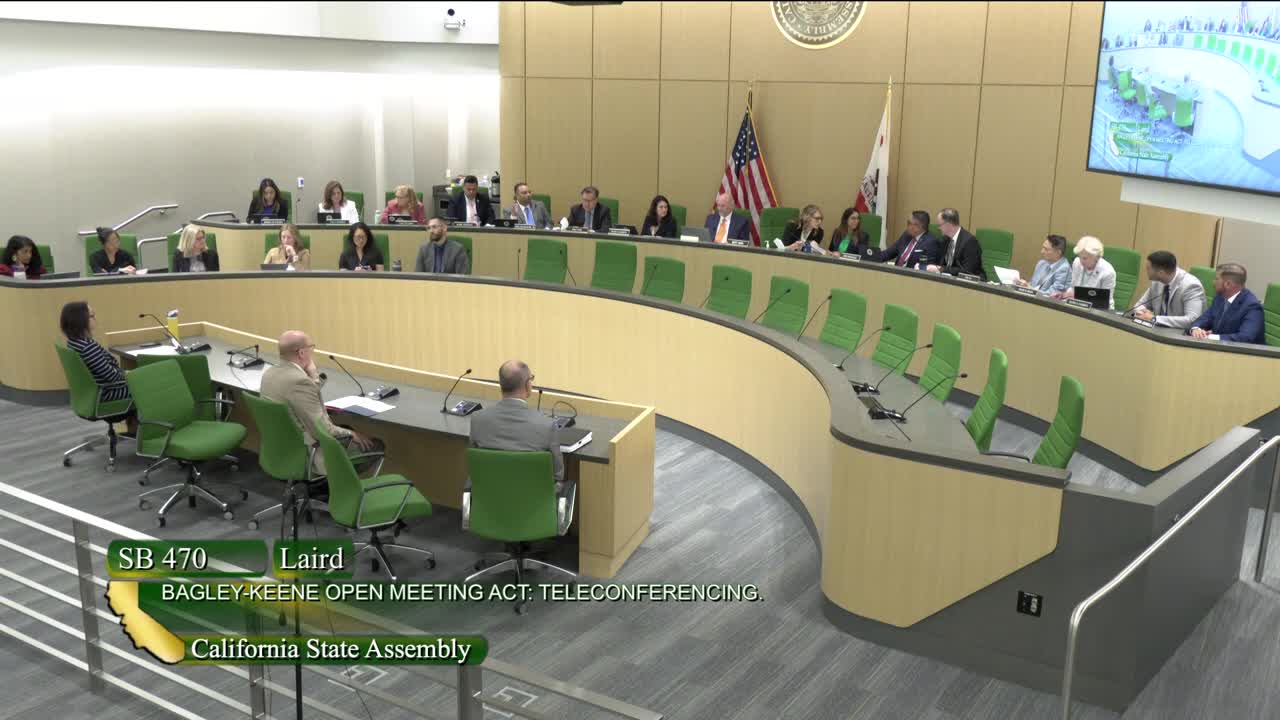 1MIN
Assembly Standing Committee on Appropriations
 1MIN
Assembly Standing Committee on Judiciary
 5MIN
Assembly Standing Committee on Water, Parks, and Wildlife
 2MIN
Senate Floor
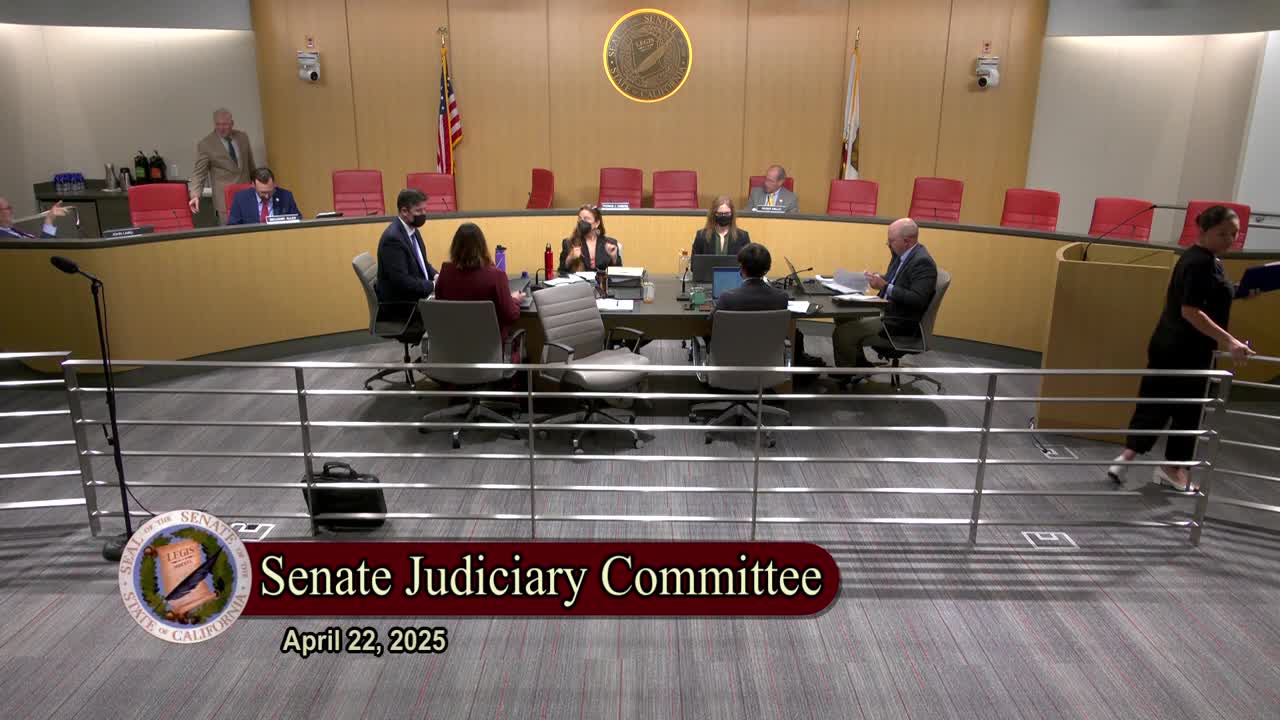 1MIN
Senate Standing Committee on Judiciary
 4MIN
Senate Standing Committee on Natural Resources and Water
Bill Author

Bill Co-Author(s):