SB 704: Firearms: firearm barrels.
- Session Year: 2025-2026
- House: Senate
- Latest Version Date: 2025-10-10
Current Status:
Passed
(2025-10-10: Chaptered by Secretary of State. Chapter 591, Statutes of 2025.)
Introduced
In Committee
Awaiting First Chamber Vote
Passed First Chamber
In Committee
Awaiting Second Chamber Vote
Passed Second Chamber
Enacted
Existing law generally requires the sale or transfer of firearms to be conducted through a licensed firearms dealer. For purposes of these provisions, existing law defines firearm to mean a device, designed to be used as a weapon, from which is expelled through a barrel a projectile by the force of an explosion or other form of combustion and to include the frame or receiver of the weapon, including both a completed frame or receiver, or a firearm precursor part. For these purposes, existing law defines firearm precursor part as any forging, casting, printing, extrusion, machined body, or similar article that has reached a stage in manufacture where it may readily be completed, assembled, or converted to be used as the frame or receiver of a functional firearm, or that is marketed or sold to the public to become or be used as the frame or receiver of a functional firearm once completed, assembled, or converted.
This bill would, except as specified, prohibit the sale or transfer of a firearm barrel, as defined, unless the transaction is completed in person by a licensed firearms dealer. The bill would also prohibit a person from possessing a firearm barrel with the intent to sell, or offering to sell, unless the person is a licensed firearms dealer. Commencing on July 1, 2027, except as specified, the bill would require the licensed firearms dealer to conduct an eligibility check of the purchaser or transferee and to record specified information pertaining to the transaction, including the date of the sale or transfer. The bill would make a first and 2nd violation of these provisions punishable as a misdemeanor, and any additional violations punishable as a misdemeanor or a felony, as specified. The bill would require the department to require the licensed firearms dealer to charge a fee up to $5 for each firearm barrel eligibility check, as specified. By creating a new crime, this bill would create a state-mandated local program.
The California Constitution requires the state to reimburse local agencies and school districts for certain costs mandated by the state. Statutory provisions establish procedures for making that reimbursement.
This bill would provide that no reimbursement is required by this act for a specified reason.
The bill would declare the severability of its provisions.
Existing law generally requires the sale or transfer of firearms to be conducted through a licensed firearms dealer. For purposes of these provisions, existing law defines firearm to mean a device, designed to be used as a weapon, from which is expelled through a barrel a projectile by the force of an explosion or other form of combustion and to include the frame or receiver of the weapon, including both a completed frame or receiver, or a firearm precursor part. For these purposes, existing law defines firearm precursor part as any forging, casting, printing, extrusion, machined body, or similar article that has reached a stage in manufacture where it may readily be completed, assembled, or converted to be used as the frame or receiver of a functional firearm, or that is marketed or sold to the public to become or be used as the frame or receiver of a functional firearm once completed, assembled, or converted.
Commencing January 1, 2027, thisThis bill would, except as specified, prohibit the sale or transfer of a firearm barrel, as defined, unless the transaction is completed in person by a licensed firearms dealer. The bill would also prohibit a person from possessing a firearm barrel with the intent to sell, or offering to sell, unless the person is a licensed firearms dealer. The Commencing on July 1, 2027, except as specified, the bill would require the licensed firearms dealer to conduct a background an eligibility check of the purchaser or transferee and to record specified information pertaining to the transaction, including the date of the sale or transfer. The bill would make a first and 2nd violation of these provisions punishable as a misdemeanor, and any additional violations punishable as a misdemeanor or a felony, as specified. The bill would require the department to require the licensed firearms dealer to charge a fee up to $5 for each firearm barrel eligibility check, as specified. By creating a new crime, this bill would create a state-mandated local program.
The California Constitution requires the state to reimburse local agencies and school districts for certain costs mandated by the state. Statutory provisions establish procedures for making that reimbursement.
This bill would provide that no reimbursement is required by this act for a specified reason.
The bill would declare the severability of its provisions.
Existing law generally requires the sale or transfer of firearms to be conducted through a licensed firearms dealer. For purposes of these provisions, existing law defines firearm to mean a device, designed to be used as a weapon, from which is expelled through a barrel a projectile by the force of an explosion or other form of combustion and to include the frame or receiver of the weapon, including both a completed frame or receiver, or a firearm precursor part. For these purposes, existing law defines firearm precursor part as any forging, casting, printing, extrusion, machined body, or similar article that has reached a stage in manufacture where it may readily be completed, assembled, or converted to be used as the frame or receiver of a functional firearm, or that is marketed or sold to the public to become or be used as the frame or receiver of a functional firearm once completed, assembled, or converted.
Commencing January 1, 2027, this bill would, except as specified, prohibit the sale or transfer of a firearm barrel, as defined, unless the transaction is completed in person by a licensed firearms dealer. The bill would also prohibit a person from possessing a firearm barrel with the intent to sell, or offering to sell, unless the person is a licensed firearms dealer. The bill would require the licensed firearms dealer to conduct a background check of the purchaser or transferee and to record specified information pertaining to the transaction, including the date of the sale or transfer. The bill would make the first violation of these provisions punishable as a misdemeanor, as specified, and any additional violation of these provisions punishable as a wobbler, as specified. a first and 2nd violation of these provisions punishable as a misdemeanor, and any additional violations punishable as a misdemeanor or a felony, as specified. By creating a new crime, this bill would create a state-mandated local program.
The California Constitution requires the state to reimburse local agencies and school districts for certain costs mandated by the state. Statutory provisions establish procedures for making that reimbursement.
This bill would provide that no reimbursement is required by this act for a specified reason.
The bill would declare the severability of its provisions.
Existing law generally requires the sale or transfer of firearms to be conducted through a licensed firearms dealer. For purposes of these provisions, existing law defines firearm to mean a device, designed to be used as a weapon, from which is expelled through a barrel a projectile by the force of an explosion or other form of combustion and to include the frame or receiver of the weapon, including both a completed frame or receiver, or a firearm precursor part. For these purposes, existing law defines firearm precursor part as any forging, casting, printing, extrusion, machined body, or similar article that has reached a stage in manufacture where it may readily be completed, assembled, or converted to be used as the frame or receiver of a functional firearm, or that is marketed or sold to the public to become or be used as the frame or receiver of a functional firearm once completed, assembled, or converted.
Commencing on July 1, 2026, January 1, 2027, this bill would, except as specified, prohibit the sale or transfer of a firearm barrel, as defined, unless the transaction is completed in person by a licensed firearms dealer. The bill would also prohibit a person from possessing a firearm barrel with the intent to sell, or offering to sell, unless the person is a licensed firearms dealer. The bill would require the licensed firearms dealer to conduct a background check of the purchaser or transferee and to record specified information pertaining to the transaction, including the date of the sale or transfer. The bill would make a the first violation of these provisions punishable as a misdemeanor. misdemeanor, as specified, and any additional violation of these provisions punishable as a wobbler, as specified. By creating a new crime, this bill would create a state-mandated local program.
The California Constitution requires the state to reimburse local agencies and school districts for certain costs mandated by the state. Statutory provisions establish procedures for making that reimbursement.
This bill would provide that no reimbursement is required by this act for a specified reason.
The bill would declare the severability of its provisions.
Existing law generally requires the sale or transfer of firearms to be conducted through a licensed firearms dealer. For purposes of these provisions, existing law defines firearm to mean a device, designed to be used as a weapon, from which is expelled through a barrel a projectile by the force of an explosion or other form of combustion and to include the frame or receiver of the weapon, including both a completed frame or receiver, or a firearm precursor part. For these purposes, existing law defines firearm precursor part as any forging, casting, printing, extrusion, machined body, or similar article that has reached a stage in manufacture where it may readily be completed, assembled, or converted to be used as the frame or receiver of a functional firearm, or that is marketed or sold to the public to become or be used as the frame or receiver of a functional firearm once completed, assembled, or converted.
Commencing on July 1, 2026, this bill would, except as specified, prohibit the sale or transfer of a firearm barrel, as defined, unless the transaction is completed in person by a licensed firearms dealer. The bill would require the licensed firearms dealer to conduct a background check of the purchaser or transferee and to record specified information pertaining to the transaction, including the date of the sale or transfer. The bill would require any costs incurred by the Department of Justice to implement these provisions, which cannot be absorbed by the department, to be funded from the Dealers Record of Sale Special Account upon appropriation by the Legislature. The bill would make a violation of these provisions punishable as a misdemeanor. By creating a new crime, this bill would create a state-mandated local program.
The California Constitution requires the state to reimburse local agencies and school districts for certain costs mandated by the state. Statutory provisions establish procedures for making that reimbursement.
This bill would provide that no reimbursement is required by this act for a specified reason.
Existing law, as amended by the Safety for All Act of 2016, an initiative statute approved by the voters as Proposition 63 at the November 8, 2016, statewide general election, requires the sale of ammunition to be conducted by or processed through a licensed ammunition vendor. Existing law exempts from that requirement the sale, delivery, or transfer of ammunition to specified individuals, including a sworn peace officer or sworn federal law enforcement officer who is authorized to carry a firearm in the course and scope of the officers duties. A violation of this provision is a misdemeanor. Proposition 63 allows its provisions to be amended by a vote of 55% of the Legislature so long as the amendments are consistent with and further the intent of the act.This bill would make technical, nonsubstantive changes to those provisions.Existing law, as amended by the Safety for All Act of 2016, an initiative statute approved by the voters as Proposition 63 at the November 8, 2016, statewide general election, requires the sale of ammunition to be conducted by or processed through a licensed ammunition vendor. Existing law exempts from that requirement the sale, delivery, or transfer of ammunition to specified individuals, including a sworn peace officer or sworn federal law enforcement officer who is authorized to carry a firearm in the course and scope of the officers duties. A violation of this provision is a misdemeanor. Proposition 63 allows its provisions to be amended by a vote of 55% of the Legislature so long as the amendments are consistent with and further the intent of the act.
This bill would make technical, nonsubstantive changes to those provisions.
(a)As used in Section 33700, firearm barrel means the tube, usually metal and cylindrical, through which a projectile or shot charge is fired. A firearm barrel includes any forging, casting, printing, extrusion, machined body, or similar article that has reached a stage in manufacture where it may readily be completed, assembled, or converted to be used as a firearm barrel, or that is marketed or sold to the public to become or be used as a firearm barrel once completed, assembled, or converted. A firearm barrel may have a rifled or smooth bore.
(b)A firearm barrel that is attached or affixed to a firearm is not subject to the requirements of Section 33700.
SEC. 2.Section 28235 of the Penal Code is amended to read:28235.Except as otherwise provided in Section 28233, moneys received by the department pursuant to this article shall be deposited in the Dealers Record of Sale Special Account of the General Fund, which is hereby created, to be available, upon appropriation by the Legislature, for expenditure by the department to offset the costs incurred pursuant to any of the following:
(a)This article.
(b)Section 18910.
(c)Section 27555.
(d)Subdivisions (d) and (e) of Section 27560.
(e)Chapter 4.1 (commencing with Section 28010).
(f)Article 6 (commencing with Section 28450).
(g)Section 31110.
(h)Section 31115.
(i)Subdivision (a) of Section 32020.
(j)Section 32670.
(k)Section 33320.
(l)Section 33700.
SEC. 3.Chapter 11 (commencing with Section 33700) is added to Division 10 of Title 4 of Part 6 of the Penal Code, to read:11.Firearm Barrel33700.(a)(1)A firearm barrel, as defined in Section 16525, shall not be sold or transferred unless that transaction is completed in person by a firearms dealer licensed pursuant to Sections 26700 to 26915, inclusive.
(2)Commencing July 1, 2027, a firearm barrel, as defined in Section 16525, shall not be sold or transferred unless that transaction is completed in person by a firearms dealer licensed pursuant to Sections 26700 to 26915, inclusive, and the licensed firearms dealer has conducted an eligibility check to determine if that the person is authorized to purchase a firearm barrel under subdivision (b) in a manner prescribed by the Department of Justice.
(3)No person shall possess with the intent to sell or offer to sell a firearm barrel in violation of this section.
(b)A person is authorized to purchase or otherwise acquire a firearm barrel if they meet the following criteria:
(1)They are at least 18 years of age.
(2)They are not prohibited from possessing, receiving, owning, or purchasing a firearm under state or federal law.
(c)Commencing July 1, 2027, the licensed firearms dealer shall legibly record all of the following on a form to be prescribed by the department pertaining to the sale or transfer of the firearm barrel:
(1)The date of the sale or transfer.
(2)The purchasers or transferees drivers license or other identification number and the state in which it was issued.
(3)The make, model, and caliber of the firearm that the firearm barrel is designed for or used in.
(4)The purchasers or transferees full name.
(5)The name of the salesperson who processed the sale or transfer.
(6)The purchasers or transferees full residential address and telephone number.
(7)The purchasers or transferees date of birth.
(d)Commencing July 1, 2027, a licensed firearms dealer shall electronically submit to the department the information required by subdivision (c) for all sales and transfers of ownership of a firearm barrel.
(e)The department is authorized to adopt regulations to implement this act.
(f)(1)A first violation of subdivision (a) shall be punishable as a misdemeanor.
(2)A second violation of subdivision (a) shall be punishable as a misdemeanor by up to one year in jail and a fine of one thousand dollars ($1,000).
(3)A third violation of subdivision (a), and any subsequent violation thereafter of subdivision (a), shall be punishable by imprisonment in a county jail not exceeding one year or pursuant to subdivision (h) of Section 1170, or by a fine not to exceed two thousand dollars ($2,000), or by both that fine and imprisonment.
(g)The following are exempt from the process outlined in this section:
(1)Sales or transfers to federal, state, and local law enforcement agencies.
(2)Sales or transfers to a federal firearms licensee.
(3)Sales or transfers to the United States military.
(4)Sales or transfers to a person who, in the same transaction, is separately purchasing a firearm and undergoing a state and federal firearm eligibility check pursuant to Section 28220.
(5)Sales or transfers to a federally licensed collector who is acquiring or being loaned the barrel of a firearm that is a curio or relic, as defined in Section 478.11 of Title 27 of the Code of Federal Regulations, who has a current certificate of eligibility issued by the department pursuant to Section 26710.
(6)Transfers to or from the public administrator, public guardian, public conservator, the executor, personal representative, guardian, conservator, or administrator of an estate. Any transfers or sales from these persons to any third party other than law enforcement or a licensed firearms dealer shall be conducted by a licensed firearms dealer and is subject to the requirements of this section.
(7)A barrel that is attached to or affixed to a firearm.
(8)The sale or other transfer of ownership of a firearm barrel if the sale or other transfer of ownership is to an authorized representative of a city, city and county, county, or state government, or of the federal government, and the entity is acquiring the firearm barrel as part of an authorized, voluntary program in which the entity is buying or receiving weapons from private individuals. All such barrels shall be disposed of pursuant to Sections 18000 and 18005.
(h)The department is authorized to adopt regulations to implement the provisions of this section.
(i)The department shall require the licensed firearms dealer to charge each firearm barrel purchaser or transferee a fee of up to 5 dollars ($5) to conduct the eligibility check described in paragraph (2) of subdivision (a), but shall not to exceed the departments actual processing costs. The fee may be increased each year by an amount not to exceed one dollar ($1) as necessary to reimburse the department for costs to conduct the eligibility check.
SEC. 4.The provisions of this act are severable. If any provision of this act or its application is held invalid, that invalidity shall not affect other provisions or applications that can be given effect without the invalid provision or application.
SEC. 5.No reimbursement is required by this act pursuant to Section 6 of Article XIIIB of the California Constitution because the only costs that may be incurred by a local agency or school district will be incurred because this act creates a new crime or infraction, eliminates a crime or infraction, or changes the penalty for a crime or infraction, within the meaning of Section 17556 of the Government Code, or changes the definition of a crime within the meaning of Section 6 of Article XIIIB of the California Constitution.
(a)As used in Section 33700, firearm barrel means the tube, usually metal and cylindrical, through which a projectile or shot charge is fired. A firearm barrel includes a firearm barrel any forging, casting, printing, extrusion, machined body, or similar article that has reached a stage in manufacture where it may readily be completed, assembled, or converted to be used as a firearm barrel, or that is marketed or sold to the public to become or be used as a firearm barrel once completed, assembled, or converted. A firearm barrel may have a rifled or smooth bore.
(b)A firearm barrel that is attached or affixed to a firearm is not subject to the requirements of Section 33700.
SEC. 2.Section 28235 of the Penal Code is amended to read:28235.Except as otherwise provided in Section 28233, moneys received by the department pursuant to this article shall be deposited in the Dealers Record of Sale Special Account of the General Fund, which is hereby created, to be available, upon appropriation by the Legislature, for expenditure by the department to offset the costs incurred pursuant to any of the following:
(a)This article.
(b)Section 18910.
(c)Section 27555.
(d)Subdivisions (d) and (e) of Section 27560.
(e)Chapter 4.1 (commencing with Section 28010).
(f)Article 6 (commencing with Section 28450).
(g)Section 31110.
(h)Section 31115.
(i)Subdivision (a) of Section 32020.
(j)Section 32670.
(k)Section 33320.
(l)Section 33700.
SEC. 3.Chapter 11 (commencing with Section 33700) is added to Division 10 of Title 4 of Part 6 of the Penal Code, to read:11.Firearm Barrel33700.(a)(1)Commencing January A firearm barrel, as defined in Section 16525, shall not be sold or transferred unless that transaction is completed in person by a firearms dealer licensed pursuant to Sections 26700 to 26915, inclusive.
(2)Commencing July 1, 2027, a firearm barrel, as defined in Section 16525, shall not be sold or transferred unless that transaction is completed in person by a firearms dealer licensed pursuant to Sections 26700 to 26915, inclusive, and the licensed firearms dealer has conducted a background an eligibility check to determine if that the person is authorized to purchase a firearm, ammunition, and a firearm barrel under subdivision (b) in a manner prescribed by the department. Department of Justice.
(2)Commencing January 1, 2027, a firearm barrel shall only be possessed with the intent to be sold or offered to be sold by a firearms dealer licensed pursuant to Sections 26700 to 26915, inclusive.(3)No person shall possess with the intent to sell or offer to sell a firearm barrel in violation of this section.
(b)A person is authorized to purchase or otherwise acquire a firearm barrel if they meet the following criteria:
(1)They are at least 18 years of age.
(2)They are not prohibited from possessing possessing, receiving, owning, or purchasing a firearm under state or federal law.
(c)The Commencing July 1, 2027, the licensed firearms dealer shall legibly record all of the following on a form to be prescribed by the Department of Justice department pertaining to the sale or transfer of the firearm barrel:
(1)The date of the sale or transfer.
(2)The purchasers or transferees drivers license or other identification number and the state in which it was issued.
(3)The make, model, and caliber of the firearm that the firearm barrel is designed for or used in.
(4)The purchasers or transferees full name.
(5)The name of the salesperson who processed the sale or transfer.
(6)The purchasers or transferees full residential address and telephone number.
(7)The purchasers or transferees date of birth.
(d)Commencing January July 1, 2027, a licensed firearms dealer shall electronically submit to the department the information required by subdivision (c) for all sales and transfers of ownership of a firearm barrel. The department shall not retain this information once the background check is completed and the firearm barrel has been listed as delivered to the purchaser or transferee.
(e)The Department of Justice department is authorized to adopt regulations to implement this act.
(f)(1)A first violation of subdivision (a) shall be punishable as a misdemeanor.
(2)A second violation of subdivision (a) shall be punishable as a misdemeanor by up to one year in jail and a fine of one thousand dollars ($1,000).
(3)A third violation of subdivision (a), and any subsequent violation thereafter of subdivision (a), shall be punishable by imprisonment in a county jail not exceeding one year or pursuant to subdivision (h) of Section 1170, or by a fine not to exceed two thousand dollars ($2,000), or by both that fine and imprisonment.
(g)The following are exempt from the process outlined in this section:
(1)Sales or transfers to federal, state, and local law enforcement agencies.
(2)Sales or transfers to a federal firearms licensee.
(3)Sales or transfers to the United States military.
(4)Sales or transfers to a person who, in the same transaction, is separately purchasing a firearm and undergoing a state and federal firearm background eligibility check pursuant to Section 28220.
(5)Sales or transfers to a federally licensed collector who is acquiring or being loaned the barrel of a firearm that is a curio or relic, as defined in Section 478.11 of Title 27 of the Code of Federal Regulations, who has a current certificate of eligibility issued by the department pursuant to Section 26710.
(6)Transfers to or from the public administrator, public guardian, public conservator, the executor, personal representative, guardian, conservator, or administrator of an estate. Any transfers or sales from these persons to any third party other than law enforcement or a licensed firearms dealer shall be conducted by a licensed firearms dealer and is subject to the requirements of this section.
(7)A barrel that is attached to or affixed to a firearm.
(8)The sale or other transfer of ownership of a firearm barrel if the sale or other transfer of ownership is to an authorized representative of a city, city and county, county, or state government, or of the federal government, and the entity is acquiring the firearm barrel as part of an authorized, voluntary program in which the entity is buying or receiving weapons from private individuals. All such barrels shall be disposed of pursuant to Sections 18000 and 18005.
(h)The department is authorized to adopt regulations to implement the provisions of this section.
(i)The department shall require the licensed firearms dealer to charge each firearm barrel purchaser or transferee a fee of up to 5 dollars ($5) to conduct the eligibility check described in paragraph (2) of subdivision (a), but shall not to exceed the departments actual processing costs. The fee may be increased each year by an amount not to exceed one dollar ($1) as necessary to reimburse the department for costs to conduct the eligibility check.
SEC. 4.The provisions of this act are severable. If any provision of this act or its application is held invalid, that invalidity shall not affect other provisions or applications that can be given effect without the invalid provision or application.
SEC. 5.No reimbursement is required by this act pursuant to Section 6 of Article XIIIB of the California Constitution because the only costs that may be incurred by a local agency or school district will be incurred because this act creates a new crime or infraction, eliminates a crime or infraction, or changes the penalty for a crime or infraction, within the meaning of Section 17556 of the Government Code, or changes the definition of a crime within the meaning of Section 6 of Article XIIIB of the California Constitution.
(a)As used in Section 33700, firearm barrel means the tube, usually metal and cylindrical, through which a projectile or shot charge is fired. A firearm barrel includes a firearm barrel that has reached a stage in manufacture where it may readily be completed, assembled, or converted to be used as a firearm barrel, or that is marketed or sold to the public to become or be used as a firearm barrel once completed, assembled, or converted. A firearm barrel may have a rifled or smooth bore.
(b)A firearm barrel that is attached or affixed to a firearm is not subject to the requirements of Section 33700.
SEC. 2.Section 28235 of the Penal Code is amended to read:28235.Except as otherwise provided in Section 28233, moneys received by the department pursuant to this article shall be deposited in the Dealers Record of Sale Special Account of the General Fund, which is hereby created, to be available, upon appropriation by the Legislature, for expenditure by the department to offset the costs incurred pursuant to any of the following:
(a)This article.
(b)Section 18910.
(c)Section 27555.
(d)Subdivisions (d) and (e) of Section 27560.
(e)Chapter 4.1 (commencing with Section 28010).
(f)Article 6 (commencing with Section 28450).
(g)Section 31110.
(h)Section 31115.
(i)Subdivision (a) of Section 32020.
(j)Section 32670.
(k)Section 33320.
(l)Section 33700.
SEC. 3.Chapter 11 (commencing with Section 33700) is added to Division 10 of Title 4 of Part 6 of the Penal Code, to read:11.Firearm Barrel33700.(a)(1)Commencing January 1, 2027, a firearm barrel, as defined in Section 16525, shall not be sold or transferred unless that transaction is completed in person by a firearms dealer licensed pursuant to Sections 26700 to 26915, inclusive, and the licensed firearms dealer has conducted a background check to determine that the person is authorized to purchase a firearm, ammunition, and a firearm barrel in a manner prescribed by the department.
(2)Commencing January 1, 2027, a firearm barrel shall only be possessed with the intent to be sold or offered to be sold by a firearms dealer licensed pursuant to Sections 26700 to 26915, inclusive.
(b)A person is authorized to purchase a firearm barrel if they meet the following criteria:
(1)They are at least 18 years of age.
(2)They are not prohibited from possessing or purchasing a firearm under state or federal law.
(c)The licensed firearms dealer shall legibly record all of the following on a form to be prescribed by the Department of Justice pertaining to the sale or transfer of the firearm barrel:
(1)The date of the sale or transfer.
(2)The purchasers or transferees drivers license or other identification number and the state in which it was issued.
(3)The make, model, and caliber of the firearm that the firearm barrel is designed for or used in.
(4)The purchasers or transferees full name.
(5)The name of the salesperson who processed the sale or transfer.
(6)The purchasers or transferees full residential address and telephone number.
(7)The purchasers or transferees date of birth.
(d)Commencing January 1, 2027, a licensed firearms dealer shall electronically submit to the department the information required by subdivision (c) for all sales and transfers of ownership of a firearm barrel. The department shall not retain this information once the background check is completed and the firearm barrel has been listed as delivered to the purchaser or transferee.
(e)The Department of Justice is authorized to adopt regulations to implement this act.
(f)(1)The A first violation of subdivision (a) shall be a misdemeanor punishable by up to one year in jail and a fine of one thousand dollars ($1,000). punishable as a misdemeanor.
(2)Any subsequent violation of subdivision (a) shall be punishable by imprisonment in the state prison for two, three, or four years, or in a county jail for not exceeding one year, or by a fine not exceeding two thousand dollars ($2,000), or by both the fine and imprisonment.(2)A second violation of subdivision (a) shall be punishable as a misdemeanor by up to one year in jail and a fine of one thousand dollars ($1,000).
(3)A third violation of subdivision (a), and any subsequent violation thereafter of subdivision (a), shall be punishable by imprisonment in a county jail not exceeding one year or pursuant to subdivision (h) of Section 1170, or by a fine not to exceed two thousand dollars ($2,000), or by both that fine and imprisonment.
(g)The following are exempt from the process outlined in this section:
(1)Sales or transfers to federal, state, and local law enforcement agencies.
(2)Sales or transfers to a federal firearms licensee.
(3)Sales or transfers to the United States military.
(4)Sales or transfers to a person who, in the same transaction, is separately purchasing a firearm and undergoing a state and federal firearm background check pursuant to Section 28220.
(5)Sales or transfers to a federally licensed collector who is acquiring or being loaned the barrel of a firearm that is a curio or relic, as defined in Section 478.11 of Title 27 of the Code of Federal Regulations, who has a current certificate of eligibility issued by the department pursuant to Section 26710.
(6)Transfers to the executor, personal representative, or administrator of an estate.
(7)A barrel that is attached to or affixed to a firearm.
(h)The department is authorized to adopt regulations to implement the provisions of this section.
SEC. 4.The provisions of this act are severable. If any provision of this act or its application is held invalid, that invalidity shall not affect other provisions or applications that can be given effect without the invalid provision or application.
SEC. 5.No reimbursement is required by this act pursuant to Section 6 of Article XIIIB of the California Constitution because the only costs that may be incurred by a local agency or school district will be incurred because this act creates a new crime or infraction, eliminates a crime or infraction, or changes the penalty for a crime or infraction, within the meaning of Section 17556 of the Government Code, or changes the definition of a crime within the meaning of Section 6 of Article XIIIB of the California Constitution.
(a)As used in Section 33700, firearm barrel means the tube, usually metal and cylindrical, through which a projectile or shot charge is fired. A firearm barrel includes a firearm barrel that has reached a stage in manufacture where it may readily be completed, assembled, or converted to be used as a firearm barrel, or that is marketed or sold to the public to become or be used as a firearm barrel once completed, assembled, or converted. A firearm barrel may have a rifled or smooth bore.
(b)A firearm barrel that is attached or affixed to a firearm is not subject to the requirements of Section 33700.
SEC. 2.Section 28235 of the Penal Code is amended to read:28235.Except as otherwise provided in Section 28233, moneys received by the department pursuant to this article shall be deposited in the Dealers Record of Sale Special Account of the General Fund, which is hereby created, to be available, upon appropriation by the Legislature, for expenditure by the department to offset the costs incurred pursuant to any of the following:
(a)This article.
(b)Section 18910.
(c)Section 27555.
(d)Subdivisions (d) and (e) of Section 27560.
(e)Chapter 4.1 (commencing with Section 28010).
(f)Article 6 (commencing with Section 28450).
(g)Section 31110.
(h)Section 31115.
(i)Subdivision (a) of Section 32020.
(j)Section 32670.
(k)Section 33320.
(l)Section 33700.
SEC. 3.Chapter 11 (commencing with Section 33700) is added to Division 10 of Title 4 of Part 6 of the Penal Code, to read:11.Firearm Barrel33700.(a)(1)Commencing July 1, 2026, January 1, 2027, a firearm barrel, as defined in Section 16525, shall not be sold or transferred unless that transaction is completed in person by a firearms dealer licensed pursuant to Sections 26700 to 26915, inclusive, and the licensed firearms dealer has conducted a background check to determine that the person is authorized to purchase a firearm, ammunition, and a firearm barrel in a manner prescribed by the department.
(2)Commencing January 1, 2027, a firearm barrel shall only be possessed with the intent to be sold or offered to be sold by a firearms dealer licensed pursuant to Sections 26700 to 26915, inclusive.
(b)A person is authorized to purchase a firearm barrel if they meet the following criteria:
(1)They are at least 18 years of age.
(2)They are not prohibited from possessing or purchasing a firearm under state or federal law.
(b)(c)The licensed firearms dealer shall legibly record all of the following on a form to be prescribed by the Department of Justice pertaining to the sale or transfer of the firearm barrel:
(1)The date of the sale or transfer.
(2)The purchasers or transferees drivers license or other identification number and the state in which it was issued.
(3)The make, model, and caliber of the firearm that the firearm barrel is designed for or used in.
(4)The purchasers or transferees full name.
(5)The name of the salesperson who processed the sale or transfer.
(6)The purchasers or transferees full residential address and telephone number.
(7)The purchasers or transferees date of birth.
(c)(d)Commencing July 1, 2026, January 1, 2027, a licensed firearms dealer shall electronically submit to the department the information required by subdivision (b) (c) for all sales and transfers of ownership of a firearm barrel. The department shall not retain this information in a manner established by the department. once the background check is completed and the firearm barrel has been listed as delivered to the purchaser or transferee.
(d)(e)The Department of Justice is authorized to adopt regulations to implement this act.
(e)A violation of this section shall be a misdemeanor punishable by up to one year in jail and a ten-thousand-dollar ($10,000) fine.(f)(1)The first violation of subdivision (a) shall be a misdemeanor punishable by up to one year in jail and a fine of one thousand dollars ($1,000).
(2)Any subsequent violation of subdivision (a) shall be punishable by imprisonment in the state prison for two, three, or four years, or in a county jail for not exceeding one year, or by a fine not exceeding two thousand dollars ($2,000), or by both the fine and imprisonment.
(f)(g)The following are exempt from the process outlined in this section:
(1)Federal, Sales or transfers to federal, state, and local law enforcement agencies.
(2)Sales or transfers to a federal firearms licensee.
(2)The(3)Sales or transfers to the United States military.
(3)A(4)Sales or transfers to a person who, in the same transaction, is separately purchasing a firearm and undergoing a state and federal firearm background check pursuant to Section 28220.
(5)Sales or transfers to a federally licensed collector who is acquiring or being loaned the barrel of a firearm that is a curio or relic, as defined in Section 478.11 of Title 27 of the Code of Federal Regulations, who has a current certificate of eligibility issued by the department pursuant to Section 26710.
(6)Transfers to the executor, personal representative, or administrator of an estate.
(7)A barrel that is attached to or affixed to a firearm.
(h)The department is authorized to adopt regulations to implement the provisions of this section.
SEC. 4.The provisions of this act are severable. If any provision of this act or its application is held invalid, that invalidity shall not affect other provisions or applications that can be given effect without the invalid provision or application.
SEC. 4.SEC. 5.No reimbursement is required by this act pursuant to Section 6 of Article XIIIB of the California Constitution because the only costs that may be incurred by a local agency or school district will be incurred because this act creates a new crime or infraction, eliminates a crime or infraction, or changes the penalty for a crime or infraction, within the meaning of Section 17556 of the Government Code, or changes the definition of a crime within the meaning of Section 6 of Article XIIIB of the California Constitution.
As used in Section 33700, firearm barrel means the tube, usually metal and cylindrical, through which a projectile or shot charge is fired. A firearm barrel includes a firearm barrel that has reached a stage in manufacture where it may readily be completed, assembled, or converted to be used as a firearm barrel, or that is marketed or sold to the public to become or be used as a firearm barrel once completed, assembled, or converted. A firearm barrel may have a rifled or smooth bore.
SEC. 2.Section 28235 of the Penal Code is amended to read:28235.Except as otherwise provided in Section 28233, moneys received by the department pursuant to this article shall be deposited in the Dealers Record of Sale Special Account of the General Fund, which is hereby created, to be available, upon appropriation by the Legislature, for expenditure by the department to offset the costs incurred pursuant to any of the following:
(a)This article.
(b)Section 18910.
(c)Section 27555.
(d)Subdivisions (d) and (e) of Section 27560.
(e)Chapter 4.1 (commencing with Section 28010).
(f)Article 6 (commencing with Section 28450).
(g)Section 31110.
(h)Section 31115.
(i)Subdivision (a) of Section 32020.
(j)Section 32670.
(k)Section 33320.
(l)Section 33700.
SEC. 3.Chapter 11 (commencing with Section 33700) is added to Division 10 of Title 4 of Part 6 of the Penal Code, to read:11.Firearm Barrel33700.(a)Commencing July 1, 2026, a firearm barrel, as defined in Section 16525, shall not be sold or transferred unless that transaction is completed in person by a firearms dealer licensed pursuant to Sections 26700 to 26915, inclusive, and the licensed firearms dealer has conducted a background check to determine that the person is authorized to purchase a firearm, ammunition, and a firearm barrel in a manner prescribed by the department.
(b)The licensed firearms dealer shall legibly record all of the following on a form to be prescribed by the Department of Justice pertaining to the sale or transfer of the firearm barrel:
(1)The date of the sale or transfer.
(2)The purchasers or transferees drivers license or other identification number and the state in which it was issued.
(3)The make, model, and caliber of the firearm that the firearm barrel is designed for or used in.
(4)The purchasers or transferees full name.
(5)The name of the salesperson who processed the sale or transfer.
(6)The purchasers or transferees full residential address and telephone number.
(7)The purchasers or transferees date of birth.
(c)Commencing July 1, 2026, a licensed firearms dealer shall electronically submit to the department the information required by subdivision (b) for all sales and transfers of ownership of a firearm barrel. The department shall retain this information in a manner established by the department.
(d)The Department of Justice is authorized to adopt regulations to implement this act. These regulations are exempt from the Administrative Procedure Act (Chapter 3.5 (commencing with Section 11340) of Part 1 of Division 3 of Title 2 of the Government Code).
(e)Any costs incurred by the Department of Justice to implement this section, which cannot be absorbed by the department, shall be funded from the Dealers Record of Sale Special Account, as set forth in Section 28235, or former Section 12076 as it read at any time from when it was amended by Section 1.7 of Chapter 954 of the Statutes of 1991 to when it was repealed by Section 12 of Chapter 606 of the Statutes of 1993, or former Section 12076 as it read at any time from when it was enacted by Section 13 of Chapter 606 of the Statutes of 1993 to when it was repealed by the Deadly Weapons Recodification Act of 2010, upon appropriation by the Legislature.(f)(e)A violation of this section shall be a misdemeanor punishable by up to one year in jail and a ten-thousand-dollar ($10,000) fine.
(g)(f)The following are exempt from the process outlined in this section:
(1)Federal, state, and local law enforcement agencies.
(2)The United States military.
(3)A person purchasing a firearm and undergoing a state and federal firearm background check pursuant to Section 28220.
SEC. 4.No reimbursement is required by this act pursuant to Section 6 of Article XIIIB of the California Constitution because the only costs that may be incurred by a local agency or school district will be incurred because this act creates a new crime or infraction, eliminates a crime or infraction, or changes the penalty for a crime or infraction, within the meaning of Section 17556 of the Government Code, or changes the definition of a crime within the meaning of Section 6 of Article XIIIB of the California Constitution.
As used in Section 33700, firearm barrel means the tube, usually metal and cylindrical, through which a projectile or shot charge is fired. A firearm barrel includes a firearm barrel that has reached a stage in manufacture where it may readily be completed, assembled, or converted to be used as a firearm barrel, or that is marketed or sold to the public to become or be used as a firearm barrel once completed, assembled, or converted. A firearm barrel may have a rifled or smooth bore.
SEC. 2.Section 28235 of the Penal Code is amended to read:28235.Except as otherwise provided in Section 28233, moneys received by the department pursuant to this article shall be deposited in the Dealers Record of Sale Special Account of the General Fund, which is hereby created, to be available, upon appropriation by the Legislature, for expenditure by the department to offset the costs incurred pursuant to any of the following:
(a)This article.
(b)Section 18910.
(c)Section 27555.
(d)Subdivisions (d) and (e) of Section 27560.
(e)Chapter 4.1 (commencing with Section 28010).
(f)Article 6 (commencing with Section 28450).
(g)Section 31110.
(h)Section 31115.
(i)Subdivision (a) of Section 32020.
(j)Section 32670.
(k)Section 33320.
(l)Section 33700.
SEC. 3.Chapter 11 (commencing with Section 33700) is added to Division 10 of Title 4 of Part 6 of the Penal Code, to read:11.Firearm Barrel33700.(a)Commencing July 1, 2026, a firearm barrel, as defined in Section 16525, shall not be sold or transferred unless that transaction is completed in person by a firearms dealer licensed pursuant to Sections 26700 to 26915, inclusive, and the licensed firearms dealer has conducted a background check to determine that the person is authorized to purchase a firearm, ammunition, and a firearm barrel in a manner prescribed by the department.
(b)The licensed firearms dealer shall legibly record all of the following on a form to be prescribed by the Department of Justice pertaining to the sale or transfer of the firearm barrel:
(1)The date of the sale or transfer.
(2)The purchasers or transferees drivers license or other identification number and the state in which it was issued.
(3)The make, model, and caliber of the firearm that the firearm barrel is designed for or used in.
(4)The purchasers or transferees full name.
(5)The name of the salesperson who processed the sale or transfer.
(6)The purchasers or transferees full residential address and telephone number.
(7)The purchasers or transferees date of birth.
(c)Commencing July 1, 2026, a licensed firearms dealer shall electronically submit to the department the information required by subdivision (b) for all sales and transfers of ownership of a firearm barrel. The department shall retain this information in a manner established by the department.
(d)The Department of Justice is authorized to adopt regulations to implement this act. These regulations are exempt from the Administrative Procedure Act (Chapter 3.5 (commencing with Section 11340) of Part 1 of Division 3 of Title 2 of the Government Code).
(e)Any costs incurred by the Department of Justice to implement this section, which cannot be absorbed by the department, shall be funded from the Dealers Record of Sale Special Account, as set forth in Section 28235, or former Section 12076 as it read at any time from when it was amended by Section 1.7 of Chapter 954 of the Statutes of 1991 to when it was repealed by Section 12 of Chapter 606 of the Statutes of 1993, or former Section 12076 as it read at any time from when it was enacted by Section 13 of Chapter 606 of the Statutes of 1993 to when it was repealed by the Deadly Weapons Recodification Act of 2010, upon appropriation by the Legislature.
(f)A violation of this section shall be a misdemeanor punishable by up to one year in jail and a ten-thousand-dollar ($10,000) fine.
(g)The following are exempt from the process outlined in this section:
(1)Federal, state, and local law enforcement agencies.
(2)The United States military.
(3)A person purchasing a firearm and undergoing a state and federal firearm background check pursuant to Section 28220.
SEC. 4.No reimbursement is required by this act pursuant to Section 6 of Article XIIIB of the California Constitution because the only costs that may be incurred by a local agency or school district will be incurred because this act creates a new crime or infraction, eliminates a crime or infraction, or changes the penalty for a crime or infraction, within the meaning of Section 17556 of the Government Code, or changes the definition of a crime within the meaning of Section 6 of Article XIIIB of the California Constitution.
SECTION 1.Section 30312 of the Penal Code is amended to read:30312.(a)(1)Commencing January 1, 2018, the sale of ammunition by any party shall be conducted by or processed through a licensed ammunition vendor.(2)When neither party to an ammunition sale is a licensed ammunition vendor, the seller shall deliver the ammunition to a vendor to process the transaction. The ammunition vendor shall promptly and properly deliver the ammunition to the purchaser, if the sale is not prohibited, as if the ammunition were the vendors own merchandise. If the ammunition vendor cannot legally deliver the ammunition to the purchaser, the vendor shall forthwith return the ammunition to the seller. The ammunition vendor may charge the purchaser an administrative fee to process the transaction, in an amount to be set by the Department of Justice, in addition to any applicable fees that may be charged pursuant to the provisions of this title.(b)Commencing January 1, 2018, the sale, delivery, or transfer of ownership of ammunition by any party may only occur in a face-to-face transaction with the seller, deliverer, or transferor, provided, however, that ammunition may be purchased or acquired over the Internet or through other means of remote ordering if a licensed ammunition vendor initially receives the ammunition and processes the transaction in compliance with this section and Article 3 (commencing with Section 30342) of Chapter 1 of Division 10 of Title 4 of this part.(c)Subdivisions (a) and (b) shall not apply to the sale, delivery, or transfer of ammunition to any of the following:(1)An authorized law enforcement representative of a city, county, city and county, or state or federal government, if the sale, delivery, or transfer is for exclusive use by that government agency and, prior to the sale, delivery, or transfer of the ammunition, written authorization from the head of the agency employing the purchaser or transferee is obtained, identifying the employee as an individual authorized to conduct the transaction, and authorizing the transaction for the exclusive use of the agency employing the individual.(2)A sworn peace officer, as defined in Chapter 4.5 (commencing with Section 830) of Title 3 of Part 2, or sworn federal law enforcement officer, who is authorized to carry a firearm in the course and scope of the officers duties.(3)An importer or manufacturer of ammunition or firearms who is licensed to engage in business pursuant to Chapter 44 (commencing with Section 921) of Title 18 of the United States Code and the regulations issued pursuant thereto.(4)A person who is on the centralized list of exempted federal firearms licensees maintained by the Department of Justice pursuant to Article 6 (commencing with Section 28450) of Chapter 6 of Division 6 of this title.(5)A person whose licensed premises are outside this state and who is licensed as a dealer or collector of firearms pursuant to Chapter 44 (commencing with Section 921) of Title 18 of the United States Code and the regulations issued pursuant thereto.(6)A person who is licensed as a collector of firearms pursuant to Chapter 44 (commencing with Section 921) of Title 18 of the United States Code and the regulations issued pursuant thereto, whose licensed premises are within this state, and who has a current certificate of eligibility issued by the Department of Justice pursuant to Section 26710.(7)An ammunition vendor.(8)A consultant-evaluator.(9)A person who purchases or receives ammunition at a target facility holding a business or other regulatory license, provided that the ammunition is kept within the premises of the facility at all times.(10)A person who purchases or receives ammunition from a spouse, registered domestic partner, or immediate family member as defined in Section 16720.(11)A person enrolled in the basic training academy for peace officers or any other course certified by the Commission on Peace Officer Standards and Training, an instructor of the academy or course, or a staff member of the academy or entity providing the course, who is purchasing the ammunition for the purpose of participation or use in the course.(d)A violation of this section is a misdemeanor.(a)(1)Commencing January 1, 2018, the sale of ammunition by any party shall be conducted by or processed through a licensed ammunition vendor.
(2)When neither party to an ammunition sale is a licensed ammunition vendor, the seller shall deliver the ammunition to a vendor to process the transaction. The ammunition vendor shall promptly and properly deliver the ammunition to the purchaser, if the sale is not prohibited, as if the ammunition were the vendors own merchandise. If the ammunition vendor cannot legally deliver the ammunition to the purchaser, the vendor shall forthwith return the ammunition to the seller. The ammunition vendor may charge the purchaser an administrative fee to process the transaction, in an amount to be set by the Department of Justice, in addition to any applicable fees that may be charged pursuant to the provisions of this title.
(b)Commencing January 1, 2018, the sale, delivery, or transfer of ownership of ammunition by any party may only occur in a face-to-face transaction with the seller, deliverer, or transferor, provided, however, that ammunition may be purchased or acquired over the Internet or through other means of remote ordering if a licensed ammunition vendor initially receives the ammunition and processes the transaction in compliance with this section and Article 3 (commencing with Section 30342) of Chapter 1 of Division 10 of Title 4 of this part.
(c)Subdivisions (a) and (b) shall not apply to the sale, delivery, or transfer of ammunition to any of the following:
(1)An authorized law enforcement representative of a city, county, city and county, or state or federal government, if the sale, delivery, or transfer is for exclusive use by that government agency and, prior to the sale, delivery, or transfer of the ammunition, written authorization from the head of the agency employing the purchaser or transferee is obtained, identifying the employee as an individual authorized to conduct the transaction, and authorizing the transaction for the exclusive use of the agency employing the individual.
(2)A sworn peace officer, as defined in Chapter 4.5 (commencing with Section 830) of Title 3 of Part 2, or sworn federal law enforcement officer, who is authorized to carry a firearm in the course and scope of the officers duties.
(3)An importer or manufacturer of ammunition or firearms who is licensed to engage in business pursuant to Chapter 44 (commencing with Section 921) of Title 18 of the United States Code and the regulations issued pursuant thereto.
(4)A person who is on the centralized list of exempted federal firearms licensees maintained by the Department of Justice pursuant to Article 6 (commencing with Section 28450) of Chapter 6 of Division 6 of this title.
(5)A person whose licensed premises are outside this state and who is licensed as a dealer or collector of firearms pursuant to Chapter 44 (commencing with Section 921) of Title 18 of the United States Code and the regulations issued pursuant thereto.
(6)A person who is licensed as a collector of firearms pursuant to Chapter 44 (commencing with Section 921) of Title 18 of the United States Code and the regulations issued pursuant thereto, whose licensed premises are within this state, and who has a current certificate of eligibility issued by the Department of Justice pursuant to Section 26710.
(7)An ammunition vendor.
(8)A consultant-evaluator.
(9)A person who purchases or receives ammunition at a target facility holding a business or other regulatory license, provided that the ammunition is at all times kept within the facilitys premises. premises of the facility at all times.
(10)A person who purchases or receives ammunition from a spouse, registered domestic partner, or immediate family member as defined in Section 16720.
(11)A person enrolled in the basic training academy for peace officers or any other course certified by the Commission on Peace Officer Standards and Training, an instructor of the academy or course, or a staff member of the academy or entity providing the course, who is purchasing the ammunition for the purpose of participation or use in the course.
(d)A violation of this section is a misdemeanor.
|
Date
|
Status
|
|---|---|
| Oct 10, 2025 | Chaptered by Secretary of State. Chapter 591, Statutes of 2025. |
| Oct 10, 2025 | Approved by the Governor. |
| Sep 17, 2025 | Enrolled and presented to the Governor at 2 p.m. |
| Sep 9, 2025 | Assembly amendments concurred in. (Ayes 29. Noes 10. Page 2718.) Ordered to engrossing and enrolling. |
| Sep 8, 2025 | In Senate. Concurrence in Assembly amendments pending. |
| Sep 8, 2025 | Read third time. Passed. (Ayes 57. Noes 20. Page 3008.) Ordered to the Senate. |
| Sep 3, 2025 | Read second time. Ordered to third reading. |
| Sep 2, 2025 | Read second time and amended. Ordered to second reading. |
| Aug 29, 2025 | From committee: Do pass as amended. (Ayes 11. Noes 4.) (August 29). |
| Aug 20, 2025 | August 20 set for first hearing. Placed on APPR. suspense file. |
| Jul 17, 2025 | Read second time and amended. Re-referred to Com. on APPR. |
| Jul 16, 2025 | From committee: Do pass as amended and re-refer to Com. on APPR. (Ayes 7. Noes 2.) (July 15). |
| Jul 1, 2025 | July 1 set for first hearing canceled at the request of author. |
| Jun 25, 2025 | From committee with author's amendments. Read second time and amended. Re-referred to Com. on PUB. S. |
| Jun 16, 2025 | Referred to Com. on PUB. S. |
| Jun 5, 2025 | In Assembly. Read first time. Held at Desk. |
| Jun 4, 2025 | Read third time. Passed. (Ayes 28. Noes 11. Page 1508.) Ordered to the Assembly. |
| May 27, 2025 | Read second time. Ordered to third reading. |
| May 23, 2025 | Read second time and amended. Ordered to second reading. |
| May 23, 2025 | From committee: Do pass as amended. (Ayes 5. Noes 1. Page 1210.) (May 23). |
| May 16, 2025 | Set for hearing May 23. |
| May 12, 2025 | May 12 hearing: Placed on APPR. suspense file. |
| May 2, 2025 | Set for hearing May 12. |
| Apr 30, 2025 | From committee: Do pass and re-refer to Com. on APPR. (Ayes 5. Noes 1. Page 945.) (April 29). Re-referred to Com. on APPR. |
| Apr 11, 2025 | Set for hearing April 29. |
| Apr 2, 2025 | Re-referred to Com. on PUB. S. |
| Mar 26, 2025 | From committee with author's amendments. Read second time and amended. Re-referred to Com. on RLS. |
| Mar 12, 2025 | Referred to Com. on RLS. |
| Feb 24, 2025 | Read first time. |
| Feb 24, 2025 | From printer. May be acted upon on or after March 24. |
| Feb 21, 2025 | Introduced. To Com. on RLS. for assignment. To print. |
|
Date
|
Description
|
Location
|
Votes
|
|
|---|---|---|---|---|
| Sep 9, 2025 | Unfinished Business SB704 Arreguín et al. Concurrence | Senate Floor |
Passed |
|
| Sep 8, 2025 | SB 704 Arreguín Senate Third Reading By Stefani | Assembly Floor |
Passed |
|
| Aug 29, 2025 | Do pass as amended. | Assembly Standing Committee on Appropriations |
Passed |
|
| Jul 15, 2025 | Do pass as amended and be re-referred to the Committee on [Appropriations] | Assembly Standing Committee on Public Safety |
Passed |
|
| Jun 4, 2025 | Senate 3rd Reading SB704 Arreguín | Senate Floor |
Passed |
|
| May 23, 2025 | Do pass as amended | Senate Standing Committee on Appropriations |
Passed |
|
| May 12, 2025 | Placed on suspense file | Senate Standing Committee on Appropriations |
Passed |
|
| Apr 29, 2025 | Do pass, but first be re-referred to the Committee on [Appropriations] | Senate Standing Committee on Public Safety |
Passed |
This list shows positions taken on this bill by organizations on the date displayed, which is linked to the original source.
Positions by individuals are not included.
|
Organization
|
Position
|
Date
|
|---|---|---|
| Aclu California Action | ** Against | |
| Brady California (co-source) | ** Support | |
| Brady Campaign | ** Support | |
| California Rifle and Pistol Association | ** Against | |
| City of Alameda | ** Support | |
| City Of Oakland | ** Support | |
| City of Santa Rosa | ** Support | |
| Everytown for Gun Safety Action Fund | ** Support | |
| Giffords Law Center To Prevent Gun Violence | ** Support | |
| Gun Owners of America | ** Against | |
| Gun Owners of California | ** Against | |
| Libertarian Party of Fresno County | ** Against | |
| San Diegans For Gun Violence Prevention | ** Support | |
| San Francisco City Attorney Office | ** Support | |
| Team Enough - UC Berkeley Chapter | ** Support |
SENATE RULES COMMITTEE Office of Senate Floor Analyses (916) 651-1520 Fax: (916) 327-4478 | SB 704 |
UNFINISHED BUSINESS
Bill No: SB 704
Author: Arreguín (D), et al.
Amended: 9/2/25
Vote: 21
SENATE PUBLIC SAFETY COMMITTEE: 5-1, 4/29/25
AYES: Arreguín, Caballero, Gonzalez, Pérez, Wiener
NOES: Seyarto
SENATE APPROPRIATIONS COMMITTEE: 5-1, 5/23/25
AYES: Caballero, Cabaldon, Grayson, Richardson, Wahab
NOES: Seyarto
NO VOTE RECORDED: Dahle
SENATE FLOOR: 28-11, 6/4/25
AYES: Allen, Archuleta, Arreguín, Ashby, Becker, Blakespear, Cabaldon, Caballero, Cervantes, Cortese, Durazo, Gonzalez, Grayson, Laird, Limón, McGuire, McNerney, Menjivar, Padilla, Pérez, Richardson, Rubio, Smallwood-Cuevas, Stern, Umberg, Wahab, Weber Pierson, Wiener
NOES: Alvarado-Gil, Choi, Dahle, Grove, Hurtado, Jones, Niello, Ochoa Bogh, Seyarto, Strickland, Valladares
NO VOTE RECORDED: Reyes
ASSEMBLY FLOOR: 57-20, 9/8/25 - See last page for vote
SUBJECT: Firearms: firearm barrels
SOURCE: Brady California
Brady Campaign
DIGEST:
This bill prohibits, commencing January 1, 2027, the sale or transfer of a firearm barrel unless the transaction is completed in person by a licensed firearms dealer, as specified.
Assembly Amendments
expressly exempt barrels attached or affixed to firearms, delay implementation to July 1, 2027, modify the penalty structure, expand exemptions related to estate transfers and buyback programs, and expands the prohibition to include possession with the intent to sell or offer to sell a firearm barrel, as specified.
ANALYSIS:
Existing law:
- Generally prohibits the sale, lease or transfer of firearms unless the person has been issued a license by the Department of Justice (DOJ), and establishes various exceptions to this prohibition. (Penal (Pen.) Code, §§ 26500 – 26625.)
- Requires a firearms dealer or licensee to meet specified requirements as a prerequisite of obtaining a firearms dealer license. (Pen. Code, § 26700.)
- Provides that a license to sell firearms is subject to forfeiture for any violation of a number of specified prohibitions and requirements, with limited exceptions. (Pen. Code, § 26800, subd. (a).)
- Includes several exemptions from the requirement that transfers go through a licensed dealer, including for the transfer of a firearm by bequest or intestate succession, or to a surviving spouse, or transfers by a person acting pursuant to operation of law, a court order, or pursuant to other specified laws. (Pen. Code, §§ 26505, 26515.)
- Provides that where neither party to a firearms transaction holds a dealer’s license (i.e. a “private party transaction”), the parties shall complete the transaction through a licensed firearms dealer. (Pen. Code, § 27545.)
- Requires firearms dealers to keep a register or record of electronic or telephonic transfer of firearms (also known as the Dealers’ Record of Sale, or DROS), unless certain specified circumstances apply. Makes a failure to comply a misdemeanor. (Pen. Code, § 28100.)
- Provides that the register required above shall be prepared by and obtained from the State Printer, and that DOJ shall prescribe the form of the register and the record of electronic transfer. (Pen. Code, §§ 28105, 28155.)
- Establishes the DROS Special Account within the General Fund, which shall be available, upon appropriation by the Legislature, for expenditure by the DOJ to offset the reasonable costs of firearms-related regulatory and enforcement activities related to the sale, purchase, manufacturing, lawful or unlawful possession, loan, or transfer of firearms, as specified. (Pen. Code, §§ 28233, 28235).
- Requires that in connection with any sale, loan or transfer of a firearm, a licensed dealer must provide the DOJ with specified personal information about the seller and purchaser as well as the name and address of the dealer. This personal information of buyer and seller required to be provided includes: the name; address; phone number; date of birth; place of birth; occupation; eye color; hair color; height; weight; race; sex; citizenship status; and a driver's license number; California identification card number; or, military identification number. A copy of the DROS, containing the buyer and seller's personal information, must be provided to the buyer or seller upon request. (Pen. Code, §§ 28160, 28210, & 28215.)
- Requires the DOJ, upon submission of firearm purchaser information, to examine its records to determine if the purchaser is prohibited from possessing, receiving, owning, or purchasing a firearm. Prohibits the delivery of a firearm within 10 days of the application to purchase, or, after notice by the department, within 10 days of the submission to the DOJ of any corrections to the application to purchase, or within 10 days of the submission to the DOJ of a specified fee. (Pen. Code, §§ 28200-28250.)
- Provides that the DOJ shall participate in the National Instant Criminal Background Check System (NICS), and specifies the process DOJ must follow in notifying various parties that a prospective firearm purchaser is prohibited from acquiring a firearm under state or federal law. (Pen. Code, § 28220.)
- Defines “firearm” for most provisions of the Penal Code related to firearms as a device, designed to be used as a weapon, from which is expelled through a barrel, a projectile by the force of an explosion or other form of combustion. (Pen. Code, § 16520, subd. (a).)
- Provides that for numerous specified provisions, the definition of “firearm” immediately above includes the frame or receiver of the weapon, including both a completed frame or receiver or firearm precursor part. (Pen. Code, § 16520, subd. (b).)
- Defines “firearm precursor part” as any forging, casting, printing, extrusion, machined body or similar article that has reached a stage in manufacture where it may readily be completed, assembled or converted to be used as the frame or receiver of a functional firearm, or that is marketed or sold to the public to become or be used as the frame or receiver of a functional firearm once completed, assembled or converted. (Pen. Code, § 16531, subd. (a).)
- Defines “federally regulated firearm precursor part” as any firearm precursor part deemed to be a firearm pursuant to specified federal statutes and regulations issued pursuant thereto, and, if required, has been imprinted with a serial number by a federal licensee authorized to serialize firearms in compliance with those federal laws. (Pen. Code, § 16519.)
- Prohibits the purchase, sale, offer for sale, or transfer of ownership of any firearm precursor part that is not a federally regulated firearm precursor part, except as specified. (Pen. Code, §§ 30400, 30420.)
- Authorizes DOJ to issue ammunition vendor licenses pursuant to a statutorily prescribed process, and requires a valid ammunition vendor license for any person, firm, corporation, or other business for the sale of more than 500 rounds in any 30-day period, as specified. (Pen. Code, §§ 30385-30395, 30342.)
- Requires ammunition vendors to collect specified ammunition purchaser information and transmit the information to DOJ. DOJ is required to electronically approve the purchase or transfer of ammunition through a vendor, as specified. (Pen. Code, §§ 30352, 30370.)
This bill:
- States that, commencing July 1, 2027, a firearm barrel shall not be sold or transferred unless that transaction is completed in person by a licensed firearm dealer, and the licensed firearm dealer has conducted an eligibility check to determine that the person is authorized to purchase a firearm, ammunition, and a firearm barrel in a manner prescribed by the California Department of Justice (DOJ).
- Establishes that no person shall possess a firearm barrel with the intent to be sold or offered to be sold, as defined.
- Provides that a person is authorized to purchase a firearm barrel if they are at least 18 years of age and are not prohibited from possessing, receiving, owning, or purchasing a firearm barrel under state or federal law.
- Requires the licensed firearm dealer to legibly record all of the following information on a form to be prescribed by the DOJ pertaining to the sale or transfer of the firearm barrel:
- The date of the sale or transfer;
- The purchaser's or transferee's driver's license or other identification number and the state in which it was issued;
- The make, model, and caliber of the firearm that the firearm barrel is designed for or used in;
- The purchaser's or transferee's full name;
- The name of the salesperson who processed the sale or transfer;
- The purchaser's or transferee's full residential address and telephone number; and,
- The purchaser's or transferee's date of birth.
- Provides that, commencing July 1, 2027, a licensed firearms dealer shall electronically submit to the DOJ the information above for all sales and transfers of ownership of a firearm barrel.
- Exempts the following entities from the process outlined above:
- Sales or transfers to federal, state and local law enforcement agencies;
- Sales or transfer to federal firearms licensees;
- Sales or transfers to the United States military;
- Sales or transfers to a person who, in the same transaction, is separately purchasing a firearm and undergoing a state and federal firearm background check, as defined;
- Sales or transfers to a federally licensed collector who is acquiring or being loaned the barrel of a firearm that is a curio or relic, as defined, and who has a current certificate of eligibility issued by DOJ, as defined;
- The sale or other transfer of ownership of a firearm barrel if the sale or other transfer of ownership is to an authorized representative of a city, city and county, county, or state government, or of the federal government, and the entity is acquiring the firearm barrel as part of an authorized, voluntary program in which the entity is buying or receiving weapons from private individuals. All such barrels shall be disposed of, as specified.
- Transfers to or from the public administrator, public guardian, public conservator, the executor, personal representative, guardian, conservator, or administrator of an estate. Any transfers or sales from these persons to any third party other than law enforcement or a licensed firearms dealer shall be conducted by a licensed firearms dealer and is subject to the requirements of this section; and
- A barrel that is attached to or affixed to a firearm.
- Establishes that a first violation of the prohibition on the sale or transfer of a firearm barrel, as specified above, shall be punishable by up to six months in county jail, by a $1,000 fine, or by both.
- Establishes that a second violation of that above shall be punishable as a misdemeanor by up to one year in jail and a fine of $1,000.
- Establishes that a third or subsequent violation of the above shall be punishable by imprisonment in a county jail not exceeding one year, by imprisonment in county jail for 16 months, two years, or three years, or by a fine of up to $2,000, or by both that fine and imprisonment.
- States that the DOJ shall require the licensed firearms dealer to charge each firearm barrel purchaser or transferee a fee of up to $5 to conduct the eligibility check, as defined, but shall not to exceed the department's actual processing costs. The fee may be increased each year by an amount not to exceed $1 as necessary to reimburse the department for costs to conduct the eligibility check.
- Defines "firearm barrel" as the tube, usually metal and cylindrical, through which a projectile or shot charge is fired. A firearm barrel includes any forging, casting, printing, extrusion, machined body, or similar article that has reached a stage in manufacture where it may readily be completed, assembled, or converted to be used as a firearm barrel, or that is marketed or sold to the public to become or be used as a firearm barrel once completed, assembled, or converted. A firearm barrel may have a rifled or smooth bore.
- Requires money received by DOJ deposited in the DROS Special Account of the General Fund to be used to offset the costs associated with implementing this bill, among other laws.
- Authorizes the DOJ to adopt regulations to implement its provisions, as specified.
- Makes other technical and conforming changes.
- Establishes that provisions of the bill are severable.
Comments
Existing federal law requires all federally licensed firearms dealers (FFLs) to conduct background checks on prospective firearm purchasers. In order to process those background checks, the Federal Bureau of Investigation (FBI) created the National Instant Criminal Background Check System (NICS), a digital catalog of records integrating three separate national databases which FFLs can query when processing the purchase of a firearm. Existing federal law also requires FFLs to “identify by means of a serial number engraved or cast on the receiver or frame of the weapon” each firearm manufactured in, or imported into, the United States.
In order to address California’s ghost gun epidemic, the Legislature passed AB 1621 (Gipson) Ch. 76, Stats. of 2022, which enacted a host of reforms related to the regulation of firearm “precursor parts,” or components that may be readily convertible into usable firearms. Generally, AB 1621 rendered the sale, transfer and manufacture of both completed and unfinished frames and receivers (another way of referring to firearm precursor parts) subject to the same rules as fully assembled firearms. Among the changes enacted by AB 1621 was a prohibition against the knowing possession of any firearm that does not have a valid state or federal serial number or mark of identification. AB 1621 additionally prohibited the sale or transfer of manufactured or assembled firearms by entities that are not federally licensed and prohibited any person or entity from knowingly manufacturing or assembly, or aiding and abetting the manufacture or assembly of a firearm that is not properly serialized. The measure also established several provisions of law limiting the acquisition, possession, purchase and use of CNC milling machines that have the sole or primary function of manufacturing firearms by any entity except for a federally licensed firearms manufacturer or importer. In 2023, AB 1089 (Gipson, Chapter 243, Statutes of 2023), extended these limitations to three-dimensional printers.
Under existing California law, all firearm sales and transfers, including sales and transfers of firearm precursor parts, must be completed through licensed firearm dealers. As firearm barrels are neither precursor parts nor firearms in and of themselves, state law imposes virtually no restrictions on their sale or transfer. This bill seeks to change that by prohibiting, commencing July 1, 2027, the sale or transfer of a firearm barrel unless that transaction is completed in person by a licensed firearms dealer and the dealer has conducted an eligibility check, as specified. The bill further requires the firearm dealer to record certain information regarding the transaction and the purchaser/transferee and submit that information to the DOJ. Exempt from these requirements are federal, state and local law enforcement agencies, the United States military, a person already undergoing a state and federal background check because they are purchasing a firearm, specified collectors, estate transfers, specified buyback programs, and barrels attached to firearms. Additionally, a first or second violation of these requirements is punishable as a misdemeanor, and a third or subsequent offense is punishable as a wobbler.
FISCAL EFFECT: Appropriation: No Fiscal Com.: Yes Local: Yes
According to the Assembly Appropriations Committee:
- Costs (DROS Account, General Fund) to DOJ, possibly in the hundreds of thousands of dollars to low millions of dollars annually. DOJ anticipates costs of approximately $851,000 in fiscal year (FY) 2025-26, $805,000 in FY 2026-27, $471,000 in FY 2027-28, and $259,000 ongoing thereafter. This estimate includes one full-time IT specialist in DOJ’s California Justice Information Services (CJIS) Division to help manage software development project, project consultants within CJIS, and increased workload in DOJ’s Bureau of Firearms for implementation of the bill’s requirements and ongoing operations, including conducting background checks, processing requests for information from criminal justice agencies, and drafting regulations and information bulletins. In addition to these costs, DOJ will likely incur workload to defend this bill from legal challenges, given the legal landscape (discussed below). If DOJ must hire additional legal staff as a result, workload costs may be in the low hundreds of thousands of dollars annually.
- Cost pressures (Trial Court Trust Fund, General Fund) of an unknown but potentially significant amount to the courts to adjudicate charges of the crimes created by this bill. A defendant charged with a misdemeanor or felony is entitled to a jury trial and, if the defendant is indigent, legal representation provided by the government. Actual court costs will depend on the number of violations, prosecutorial discretion, and the amount of court time needed to adjudicate each case. Although courts are not funded on the basis of workload, increased pressure on the Trial Court Trust Fund may create a demand for increased funding for courts from the General Fund. The fiscal year 2025-26 state budget provides $82 million ongoing General Fund to the Trial Court Trust Fund for court operations.
- Costs (local funds, General Fund) to the counties and the California Department of Corrections and Rehabilitation to incarcerate people convicted of organized retail theft. Actual incarceration costs will depend on the number of convictions, the length of each sentence, and whether each sentence must be served in county jail or state prison. The average annual cost to incarcerate one person in county jail is approximately $29,000, though costs are higher in larger counties. The Legislative Analyst’s Office estimates the average annual cost to incarcerate one person in state prison is $133,000. County incarceration costs are not subject to reimbursement by the state. However, overcrowding in county jails creates cost pressure on the General Fund because the state has historically granted new funding to counties to offset overcrowding resulting from public safety realignment.
SUPPORT: (Verified 9/8/25)
Brady California (co-source)
Brady Campaign (co-source)
City of Alameda
City of Oakland
City of Santa Rosa
Everytown for Gun Safety Action Fund
Giffords Law Center to Prevent Gun Violence
San Francisco City Attorney’s Office
Team Enough - UC Berkeley Chapter
OPPOSITION: (Verified 9/8/25)
California Rifle and Pistol Association
Gun Owners of California
Libertarian Party of Fresno County
1 Individual
ASSEMBLY FLOOR: 57-20, 9/8/25
AYES: Addis, Aguiar-Curry, Ahrens, Alvarez, Ávila Farías, Bauer-Kahan, Bennett, Berman, Boerner, Bonta, Bryan, Calderon, Caloza, Carrillo, Connolly, Elhawary, Fong, Gabriel, Garcia, Gipson, Mark González, Haney, Harabedian, Hart, Irwin, Jackson, Kalra, Krell, Lee, Lowenthal, McKinnor, Muratsuchi, Ortega, Pacheco, Papan, Patel, Pellerin, Petrie-Norris, Quirk-Silva, Ramos, Ransom, Celeste Rodriguez, Michelle Rodriguez, Rogers, Blanca Rubio, Schiavo, Schultz, Sharp-Collins, Solache, Soria, Stefani, Valencia, Ward, Wicks, Wilson, Zbur, Rivas
NOES: Alanis, Castillo, Chen, Davies, DeMaio, Dixon, Ellis, Flora, Gallagher, Jeff Gonzalez, Hadwick, Hoover, Johnson, Lackey, Macedo, Patterson, Sanchez, Ta, Tangipa, Wallis
NO VOTE RECORDED: Arambula, Bains, Nguyen
Prepared by: Alex Barnett / PUB. S. /
9/8/25 19:51:49
**** END ****
SENATE THIRD READING
STR Bill Id:SB 704
Author:(Arreguín)
As Amended Ver:September 02, 2025
Majority vote
SUMMARY
Prohibits the sale or transfer of a firearm barrel unless the transaction is completed in person by a licensed firearms dealer.
Major Provisions
- States that, commencing July 1, 2027, a firearm barrel shall not be sold or transferred unless that transaction is completed in person by a licensed firearm dealer, and the licensed firearm dealer has conducted an eligibility check to determine that the person is authorized to purchase a firearm, ammunition, and a firearm barrel in a manner prescribed by the California Department of Justice (DOJ).
- Establishes that no person shall possess a firearm barrel with the intent to be sold or offered to be sold, as defined.
- Provides that a person is authorized to purchase a firearm barrel if they are at least 18 years of age and are not prohibited from possessing, receiving, owning, or purchasing a firearm barrel under state or federal law.
- Requires the licensed firearm dealer to legibly record all of the following information on a form to be prescribed by the DOJ pertaining to the sale or transfer of the firearm barrel:
- The date of the sale or transfer;
- The purchaser's or transferee's driver's license or other identification number and the state in which it was issued;
- The make, model, and caliber of the firearm that the firearm barrel is designed for or used in;
- The purchaser's or transferee's full name;
- The name of the salesperson who processed the sale or transfer;
- The purchaser's or transferee's full residential address and telephone number; and,
- The purchaser's or transferee's date of birth.
- Provides that, commencing July 1, 2027, a licensed firearms dealer shall electronically submit to the DOJ the information above for all sales and transfers of ownership of a firearm barrel.
- Exempts the following from the process outlined above:
- Federal, state and local law enforcement agencies;
- Federal firearms licensees;
- The United States military;
- A person purchasing a firearm and undergoing a state and federal firearm background check pursuant to existing law;
- Sales or transfers to a person who, in the same transaction, is separately purchasing a firearm and undergoing a state and federal firearm background check, as defined;
- Sales or transfers to a federally licensed collector who is acquiring or being loaned the barrel of a firearm that is a curio or relic, as defined, and who has a current certificate of eligibility issued by DOJ, as defined;
- The sale or other transfer of ownership of a firearm barrel if the sale or other transfer of ownership is to an authorized representative of a city, city and county, county, or state government, or of the federal government, and the entity is acquiring the firearm barrel as part of an authorized, voluntary program in which the entity is buying or receiving weapons from private individuals. All such barrels shall be disposed of, as specified.
- Transfers to or from the public administrator, public guardian, public conservator, the executor, personal representative, guardian, conservator, or administrator of an estate. Any transfers or sales from these persons to any third party other than law enforcement or a licensed firearms dealer shall be conducted by a licensed firearms dealer and is subject to the requirements of this section; and
- A barrel that is attached to or affixed to a firearm.
- Establishes that a first violation of the prohibition on the sale or transfer of a firearm barrel, as specified above, shall be punishable by up to six months in county jail, by a $1,000 fine, or by both.
- Establishes that a second violation of that above shall be punishable as a misdemeanor by up to one year in jail and a fine of $1,000.
- Establishes that a third or subsequent violation of the above shall be punishable by imprisonment in a county jail not exceeding one year, by imprisonment in county jail for 16 months, two years, or three years, or by a fine of up to $2,000, or by both that fine and imprisonment.
- States that the DOJ shall require the licensed firearms dealer to charge each firearm barrel purchaser or transferee a fee of up to $5 to conduct the eligibility check, as defined, but shall not to exceed the department's actual processing costs. The fee may be increased each year by an amount not to exceed $1 as necessary to reimburse the department for costs to conduct the eligibility check.
- Defines "firearm barrel" as the tube, usually metal and cylindrical, through which a projectile or shot charge is fired. A firearm barrel includes any forging, casting, printing, extrusion, machined body, or similar article that has reached a stage in manufacture where it may readily be completed, assembled, or converted to be used as a firearm barrel, or that is marketed or sold to the public to become or be used as a firearm barrel once completed, assembled, or converted. A firearm barrel may have a rifled or smooth bore.
- Requires money received by DOJ deposited in the DROS Special Account of the General Fund to be used to offset the costs associated with implementing this bill, among other laws.
- Authorizes the DOJ to adopt regulations to implement its provisions, as specified.
- Makes other technical and nonsubstantive changes.
- Establishes that provisions of the bill are severable.
COMMENTS
According to the Author
"In recent years, California experienced a proliferation of ghost guns built from unregulated parts including unfinished frames and receivers. The legislature and the governor have taken strong action to prevent the unregulated sale and possession of these untraceable firearms. However, there is an emerging ghost gun threat. Criminals and the firearm industry quickly pivoted away from ghost gun kits and parts to three-dimensional printing (3D printing) of as many parts as possible to construct a working firearm, without having to go through a firearm background check or being subject to any of the other state or federal laws regulating firearms. These firearms are being recovered at increased rates all over the state and it is imperative that we take action now to curb the threat.
"This bill builds on California's nation-leading gun safety laws and seeks to prevent firearm assembly by those who are not legally authorized to possess them."
Arguments in Support
According to the City of Alameda, "Firearm barrels, especially those that can be used to convert pistols into more lethal or untraceable weapons, are currently sold without oversight, by mail or online, without background checks or transaction records. Unregulated parts like barrels enable the assembly of "ghost guns," weapons without serial numbers that evade tracing, posing a significant threat to public safety.
"SB 704 addresses all off these issues. Specifically, this bill ensures that all barrel transfers are conducted through licensed firearm dealers, in-person, and with a background check requirement to help deter illicit access to these firearm barrels. Additionally, the record-keeping provisions in this bill will establish accountability and aid law enforcement with investigations into firearm misuse. By mandating that these transactions flow through licensed dealers, SB 704 improves the traceability of firearm parts and complements existing gun control measures—supporting safer, more secure communities.
"The City of Alameda supports gun safety and common-sense gun laws and policies that keep guns out of the wrong hands, including expanded background check requirements. For these reasons, we are pleased to support SB 704 and respectfully ask for your "AYE" vote when this measure comes before you."
Arguments in Opposition
According to Gun Owners of America, "On behalf of Gun Owners of California, I am writing in my continued strong opposition to SB 704, which would require all sales/transfers of firearm barrels to be processed through a licensed dealer, complete with background checks and entry into state databases. California already enforces some of the strictest gun laws in the country—including background checks for every firearm purchase. Adding barrels to this process is unnecessary, duplicative, and targets the wrong people. Criminals aren't walking into gun stores and asking for serialized barrels. This bill burdens only the law-abiding.
"A firearm barrel is an essential component of a firearm, and as such, is protected under the Second Amendment. The continued scrutiny and regulation of individual gun parts—like barrels, springs, and pins—is not about safety. It's about creating a slow, bureaucratic stranglehold on gun ownership by regulating every possible aspect of a constitutionally protected right. If someone already owns a legally purchased, registered firearm, there is no legitimate safety interest in requiring them to undergo another background check just to replace or upgrade a barrel.
"Worse yet, this bill proposes a penalty of up to $10,000 and a year in jail for violating its terms—an absurd and excessive punishment for something as simple as acquiring a piece of metal tubing that only functions when paired with a firearm already subject to full regulation. SB 704 is not about safety; it's about harassment and intimidation of lawful gun owners through regulatory overkill. We urge you to refocus legislative energy on real solutions to violent crime—not the micromanagement of constitutionally protected tools."
FISCAL COMMENTS
According to the Assembly Appropriations Committee:
- Costs (DROS Account, General Fund) to DOJ, possibly in the hundreds of thousands of dollars to low millions of dollars annually. DOJ anticipates costs of approximately $851,000 in fiscal year (FY) 2025-26, $805,000 in FY 2026-27, $471,000 in FY 2027-28, and $259,000 ongoing thereafter. This estimate includes one full-time IT specialist in DOJ's California Justice Information Services (CJIS) Division to help manage software development project, project consultants within CJIS, and increased workload in DOJ's Bureau of Firearms for implementation of the bill's requirements and ongoing operations, including conducting background checks, processing requests for information from criminal justice agencies, and drafting regulations and information bulletins.
In addition to these costs, DOJ will likely incur workload to defend this bill from legal challenges, given the legal landscape (discussed below). If DOJ must hire additional legal staff as a result, workload costs may be in the low hundreds of thousands of dollars annually.
- Cost pressures (Trial Court Trust Fund, General Fund) of an unknown but potentially significant amount to the courts to adjudicate charges of the crimes created by this bill. A defendant charged with a misdemeanor or felony is entitled to a jury trial and, if the defendant is indigent, legal representation provided by the government. Actual court costs will depend on the number of violations, prosecutorial discretion, and the amount of court time needed to adjudicate each case. Although courts are not funded on the basis of workload, increased pressure on the Trial Court Trust Fund may create a demand for increased funding for courts from the General Fund. The fiscal year 2025-26 state budget provides $82 million ongoing General Fund to the Trial Court Trust Fund for court operations.
- Costs (local funds, General Fund) to the counties and the California Department of Corrections and Rehabilitation to incarcerate people convicted of organized retail theft. Actual incarceration costs will depend on the number of convictions, the length of each sentence, and whether each sentence must be served in county jail or state prison. The average annual cost to incarcerate one person in county jail is approximately $29,000, though costs are higher in larger counties. The Legislative Analyst's Office estimates the average annual cost to incarcerate one person in state prison is $133,000. County incarceration costs are not subject to reimbursement by the state. However, overcrowding in county jails creates cost pressure on the General Fund because the state has historically granted new funding to counties to offset overcrowding resulting from public safety realignment.
VOTES
SENATE FLOOR: 28-11-1
YES: Allen, Archuleta, Arreguín, Ashby, Becker, Blakespear, Cabaldon, Caballero, Cervantes, Cortese, Durazo, Gonzalez, Grayson, Laird, Limón, McGuire, McNerney, Menjivar, Padilla, Pérez, Richardson, Rubio, Smallwood-Cuevas, Stern, Umberg, Wahab, Weber Pierson, Wiener
NO: Alvarado-Gil, Choi, Dahle, Grove, Hurtado, Jones, Niello, Ochoa Bogh, Seyarto, Strickland, Valladares
ABS, ABST OR NV: Reyes
ASM PUBLIC SAFETY: 7-2-0
YES: Schultz, Mark González, Haney, Harabedian, Nguyen, Ramos, Sharp-Collins
NO: Alanis, Lackey
ASM APPROPRIATIONS: 11-4-0
YES: Wicks, Arambula, Calderon, Caloza, Elhawary, Fong, Mark González, Ahrens, Pacheco, Pellerin, Solache
NO: Sanchez, Dixon, Ta, Tangipa
UPDATED
VERSION: September 02, 2025
CONSULTANT: Dustin Weber / PUB. S. / (916) 319-3744 FN: 0001458
Date of Hearing: August 20, 2025
ASSEMBLY COMMITTEE ON APPROPRIATIONS
Buffy Wicks, Chair
SBPCA Bill Id:SB 704
Author:(Arreguín) – As Amended Ver:July 17, 2025
Policy Committee: | Public Safety | Vote: | 7 - 2 |
|
| ||
|
|
Urgency: No State Mandated Local Program: Yes Reimbursable: No
SUMMARY:
This bill requires a person to pass a background check and conduct an in-person transaction with a licensed firearm dealer to buy a firearm barrel.
Specifically, among other provisions, this bill:
- Prohibits sale or transfer of a firearm barrel unless the transaction is completed in person by a licensed firearm dealer, and the licensed firearm dealer has conducted a background check to determine that the buyer is authorized to purchase a firearm, ammunition, and a firearm barrel in a manner prescribed by the California Department of Justice (DOJ).
- Specifies a firearm barrel may only be possessed with the intent to be sold or offered to be sold by a licensed firearm dealer.
- Makes a violation of the above provisions a crime as follows:
- A first violation is a misdemeanor punishable by up to six months in county jail, a fine of up to $1,000, or both jail and a fine.
- A second violation is a misdemeanor punishable by up to one year in county jail, a fine of $1,000, or both jail and a fine.
- A third or subsequent violation is an alternate felony-misdemeanor punishable as follows:
- As a misdemeanor, by up to one year in county jail, a fine up to $2,000, or both jail and a fine.
- As a felony, by 16 months, two years, or three years in county jail, a fine up to $2,000, or both jail and a fine. If the defendant has certain prior convictions, a felony conviction is punishable by a term in state prison instead of county jail.
- Exempts specified transactions from the prohibition described in item 1), above, including sales and transfers to law enforcement agencies, the U.S. military, and transactions in which the buyer is separately purchasing a firearm and undergoing a state and federal background check.
- Permits funds in the Dealers’ Record of Sales (DROS) Special Account of the General Fund to be used, upon appropriation by the Legislature, to offset DOJ’s costs for implementing this bill.
- Authorizes DOJ to adopt regulations to implement the bill’s provisions.
FISCAL EFFECT:
- Costs (DROS Account, General Fund) to DOJ, possibly in the hundreds of thousands of dollars to low millions of dollars annually. DOJ anticipates costs of approximately $851,000 in fiscal year (FY) 2025-26, $805,000 in FY 2026-27, $471,000 in FY 2027-28, and $259,000 ongoing thereafter. This estimate includes one full-time IT specialist in DOJ’s California Justice Information Services (CJIS) Division to help manage software development project, project consultants within CJIS, and increased workload in DOJ’s Bureau of Firearms for implementation of the bill’s requirements and ongoing operations, including conducting background checks, processing requests for information from criminal justice agencies, and drafting regulations and information bulletins.
In addition to these costs, DOJ will likely incur workload to defend this bill from legal challenges, given the legal landscape (discussed below). If DOJ must hire additional legal staff as a result, workload costs may be in the low hundreds of thousands of dollars annually.
- Cost pressures (Trial Court Trust Fund, General Fund) of an unknown but potentially significant amount to the courts to adjudicate charges of the crimes created by this bill. A defendant charged with a misdemeanor or felony is entitled to a jury trial and, if the defendant is indigent, legal representation provided by the government. Actual court costs will depend on the number of violations, prosecutorial discretion, and the amount of court time needed to adjudicate each case. Although courts are not funded on the basis of workload, increased pressure on the Trial Court Trust Fund may create a demand for increased funding for courts from the General Fund. The fiscal year 2025-26 state budget provides $82 million ongoing General Fund to the Trial Court Trust Fund for court operations.
- Costs (local funds, General Fund) to the counties and the California Department of Corrections and Rehabilitation to incarcerate people convicted of organized retail theft. Actual incarceration costs will depend on the number of convictions, the length of each sentence, and whether each sentence must be served in county jail or state prison. The average annual cost to incarcerate one person in county jail is approximately $29,000, though costs are higher in larger counties. The Legislative Analyst’s Office estimates the average annual cost to incarcerate one person in state prison is $133,000. County incarceration costs are not subject to reimbursement by the state. However, overcrowding in county jails creates cost pressure on the General Fund because the state has historically granted new funding to counties to offset overcrowding resulting from public safety realignment.
COMMENTS:
- Background. This bill is sponsored by Brady and Brady California. The author states this bill builds on California’s existing laws to prevent the sale and possession of “ghost guns.” Unauthorized self-manufactured firearms are known as ghost guns because they do not have serial numbers and are untraceable by law enforcement agencies. It is illegal to possess or manufacture a ghost gun in California, and state law imposes civil and criminal liability for companies and individuals who facilitate the creation of ghost guns. According to the bill’s sponsors, “criminals and segments of the firearm industry” now circumvent California’s ghost gun laws by purchasing commercially-manufactured firearm barrels and attaching them to 3D-printed firearm parts to construct a functional firearm. To ensure firearm barrels are commercially available only to people who are authorized to possess or purchase a firearm, this bill requires a firearm barrel be purchased through an in-person transaction with a licensed firearm dealer, who must conduct a background check on the buyer.
- Legal Landscape. In recent years, federal courts have significantly redefined Second Amendment case law. In 2022, the U.S. Supreme Court issued a new test, ruling that a court should uphold a restriction on someone’s right to bear arms only if there is a tradition of similar regulation in U.S. history. (NYSRPA v. Bruen (2022) 142 S.Ct. 2111.) The Supreme Court refined the Bruen standard somewhat in its 2024 decision in U.S. v. Rahimi (2024) 602 S.Ct. 680, but the court’s approach to firearms restrictions remains uncertain. Last month, the Ninth Circuit Court of Appeals, citing Bruen and Rahimi, held that California’s ammunition background check regime is unconstitutional. The Ninth Circuit held the background check regime “infringes on the fundament right to keep and bear arms,” and found that none of the historical regulations cited by the state were sufficiently relevant or similar to justify the law. However, according to DOJ’s website, the ammunition background regime remains in effect for now, pending further procedural action by the Ninth Circuit. In the past, courts have generally accepted background checks as an element of firearm regulation, but it is unclear how the courts will ultimately resolve this question in light of recent changes in court precedent.
Analysis Prepared by: Annika Carlson / APPR. / (916) 319-2081
Date of Hearing: July 15, 2025
Counsel: Dustin Weber
ASSEMBLY COMMITTEE ON PUBLIC SAFETY
Nick Schultz, Chair
SBPCA Bill Id:SB 704
Author:(Arreguín) – As Amended Ver:June 25, 2025
UPDATED
As Proposed to be Amended in Committee
SUMMARY: Prohibits the sale or transfer of a firearm barrel unless the transaction is completed in person by a licensed firearms dealer. Specifically, this bill:
- States that, commencing January 1, 2027, a firearm barrel shall not be sold or transferred unless that transaction is completed in person by a licensed firearm dealer, and the licensed firearm dealer has conducted a background check to determine that the person is authorized to purchase a firearm, ammunition, and a firearm barrel in a manner prescribed by the California Department of Justice (DOJ).
- Establishes that a firearm barrel shall only be possessed with the intent to be sold or offered to be sold by a licensed firearms dealer, as defined.
- Provides that a person is authorized to purchase a firearm barrel if they are at least 18 years of age and are not prohibited from possessing or purchasing a firearm under state or federal law.
- Requires the licensed firearm dealer to legibly record all of the following information on a form to be prescribed by the DOJ pertaining to the sale or transfer of the firearm barrel:
- The date of the sale or transfer;
- The purchaser’s or transferee’s driver’s license or other identification number and the state in which it was issued;
- The make, model, and caliber of the firearm that the firearm barrel is designed for or used in;
- The purchaser’s or transferee’s full name;
- The name of the salesperson who processed the sale or transfer;
- The purchaser’s or transferee’s full residential address and telephone number; and,
- The purchaser’s or transferee’s date of birth.
- Provides that, commencing January 1, 2027, a licensed firearms dealer shall electronically submit to the DOJ the information above for all sales and transfers of ownership of a firearm barrel, and that the DOJ shall not retain this information once the background check is completed and the firearm barrel has been listed as delivered.
- Exempts the following from the process outlined above:
- Federal, state and local law enforcement agencies;
- Federal firearms licensees;
- The United States military;
- A person purchasing a firearm and undergoing a state and federal firearm background check pursuant to existing law;
- Sales or transfers to a person who, in the same transaction, is separately purchasing a firearm and undergoing a state and federal firearm background check, as defined;
- Sales or transfers to a federally licensed collector who is acquiring or being loaned the barrel of a firearm that is a curio or relic, as defined, and who has a current certificate of eligibility issued by DOJ, as defined;
- Transfers to the executor, personal representative, or administrator of an estate; and
- A barrel that is attached to or affixed to a firearm.
- Establishes that a first violation of the prohibition on the sale or transfer of a firearm barrel, as specified above, shall be punishable by up to six months in county jail, by a $1,000 fine, or by both.
- Establishes that a second violation of that above shall be punishable as a misdemeanor by up to one year in jail and a fine of $1,000.
- Establishes that a third or subsequent violation of the above shall be punishable by imprisonment in a county jail not exceeding one year, by imprisonment in county jail for 16 months, two years, or three years, or by a fine of up to $2,000, or by both that fine and imprisonment.
- Defines “firearm barrel” as the tube, usually metal and cylindrical, through which a projectile or shot charge is fired. A firearm barrel includes a firearm barrel that has reached a stage in manufacture where it may readily be completed, assembled, or converted to be used as a firearm barrel, or that is marketed or sold to the public to become or be used as a firearm barrel once completed, assembled, or converted. A firearm barrel may have a rifled or smooth bore.
- Requires money received by DOJ deposited in the DROS Special Account of the General Fund to be used to offset the costs associated with implementing this bill, among other laws.
- Authorizes the DOJ to adopt regulations to implement its provisions, as specified.
- Establishes that provisions of the bill are severable.
EXISTING FEDERAL LAW:
- Provides that Congress shall have the power to regulate commerce with foreign nations, among states, and with the Indian tribes. (U.S. Const., art. I, Sec. 8, cl. 3.)
- States that a well-regulated militia, being necessary to the security of a free state, the right of the people to keep and bear arms, shall not be infringed. (U.S. Const., 2nd Amend.)
- Establishes that the Attorney General shall prescribe regulations to ensure the privacy and security of the information of the National Instant Criminal Background Check (NICS) system established under this section. (34 U.S.C. § 40901(h).)
EXISTING LAW:
1) Prohibits the sale, lease or transfer of firearms unless the person has been issued a license by the Department of Justice (DOJ), and establishes various exceptions to this prohibition. (Pen. Code, §§ 26500 – 26625.)
2) Requires a firearms dealer or licensee to meet all the following requirements:
- Have a valid federal firearms license;
- Have any regulatory or business license, or licenses, required by local government;
- Have a valid seller’s permit issued by the California Department of Tax and Fee Administration;
- Have a certificate of eligibility issued by the DOJ, as specified;
- Have a license issued in a specified format; and,
- Be recorded in the DOJ’s centralized list of licensees. (Pen. Code, § 26700.)
3) Provides that a license to sell firearms is subject to forfeiture for any violation of specified prohibitions and requirements, with limited exceptions. (Pen. Code, § 26800, subd. (a).)
- States that transfers go through a licensed dealer, including for the transfer of a firearm by bequest or intestate succession, or to a surviving spouse, or transfers by a person acting pursuant to operation of law, a court order, or pursuant to other specified laws, with defined exceptions. (Pen. Code, §§ 26505, 26515.)
- Provides that where neither party to a firearms transaction holds a dealer’s license (i.e., a “private party transaction”), the parties shall complete the transaction through a licensed firearms dealer. (Pen. Code, § 27545.)
- Requires firearms dealers to keep a register or record of electronic or telephonic transfer of firearms (also known as the Dealers’ Record of Sale, or DROS), unless certain specified circumstances apply. Makes a failure to comply a misdemeanor. (Pen. Code, § 28100.)
- Provides that the register required above shall be prepared by and obtained from the State Printer, and that DOJ shall prescribe the form of the register and the record of electronic transfer. (Pen. Code, §§ 28105, 28155.)
- Establishes the DROS Special Account within the General Fund, which shall be available for expenditure by the DOJ to offset the reasonable costs of firearms-related regulatory and enforcement activities related to the sale, purchase, manufacturing, lawful or unlawful possession, loan, or transfer of firearms, as specified. (Pen. Code, §§ 28233, 28235).
- Requires that in connection with any sale, loan or transfer of a firearm, a licensed dealer must provide the DOJ with specified personal information about the seller and purchaser as well as the name and address of the dealer. A copy of the DROS, containing the buyer and seller's personal information, must be provided to the buyer or seller upon request. (Pen. Code, §§ 28160, 28210, & 28215.)
- Requires the DOJ, upon submission of firearm purchaser information, to examine its records to determine if the purchaser is prohibited from possessing, receiving, owning, or purchasing a firearm. Prohibits the delivery of a firearm within 10 days of the application to purchase or, after notice by DOJ, within 10 days of the submission to the DOJ of any corrections to the application to purchase, or within 10 days of the submission to the DOJ of a specified fee. (Pen. Code, §§ 28200 – 28250.)
- Provides that the DOJ shall participate in the National Instant Criminal Background Check System (NICS), and specifies the process DOJ must follow in notifying various parties that a prospective firearm purchaser is prohibited from acquiring a firearm under state or federal law. (Pen. Code, § 28220.)
- Provides that for numerous specified provisions, the definition of “firearm” immediately above includes the frame or receiver of the weapon, including both a completed frame or receiver or firearm precursor part. (Pen. Code, § 16520, subd. (b).)
- Prohibits the purchase, sale, offer, or transfer of any firearm precursor part that is not a federally regulated firearm precursor part, except as specified. (Pen. Code, §§ 30400, 30420.)
- Authorizes DOJ to issue ammunition vendor licenses and requires a valid ammunition vendor license for any person, firm, corporation, or other business for the sale of more than 500 rounds in any 30-day period, as specified. (Pen. Code, §§ 30385 – 30395, 30342.)
- Requires ammunition vendors to collect specified ammunition purchaser information and transmit the information to DOJ. DOJ is required to electronically approve the purchase or transfer of ammunition through a vendor, as specified. (Pen. Code, §§ 30352, 30370.)
- Defines “firearm” for most provisions of the Penal Code related to firearms as a device, designed to be used as a weapon, from which is expelled through a barrel, a projectile by the force of an explosion or other form of combustion. (Pen. Code, § 16520, subd. (a).)
- Defines “firearm precursor part” as any forging, casting, printing, extrusion, machined body or similar article that has reached a stage in manufacture where it may readily be completed, assembled or converted to be used as the frame or receiver of a functional firearm, or that is marketed or sold to the public to become or be used as the frame or receiver of a functional firearm once completed, assembled or converted. (Pen. Code, § 16531, subd. (a).)
- Defines “federally regulated firearm precursor part” as any firearm precursor part deemed to be a firearm pursuant to specified federal statutes and regulations issued pursuant thereto, and, if required, has been imprinted with a serial number by a federal licensee authorized to serialize firearms in compliance with those federal laws. (Pen. Code, § 16519.)
FISCAL EFFECT: Unknown.
COMMENTS:
- Author's Statement: According to the author, “In recent years, California experienced a proliferation of ghost guns built from unregulated parts including unfinished frames and receivers. The legislature and the governor have taken strong action to prevent the unregulated sale and possession of these untraceable firearms. However, there is an emerging ghost gun threat. Criminals and the firearm industry quickly pivoted away from ghost gun kits and parts to three-dimensional printing (3D printing) of as many parts as possible to construct a working firearm, without having to go through a firearm background check or being subject to any of the other state or federal laws regulating firearms. These firearms are being recovered at increased rates all over the state and it is imperative that we take action now to curb the threat.
“This bill builds on California’s nation-leading gun safety laws and seeks to prevent firearm assembly by those who are not legally authorized to possess them.”
- Effect of this Bill: Under existing California law, all firearm sales and transfers, including sales and transfers of firearm precursor parts, must be completed through licensed firearm dealers. (Pen. Code, §§ 26500 – 26625.) As firearm barrels seem to be neither precursor parts nor firearms in and of themselves under existing definitions, state law imposes virtually no restrictions on their sale or transfer. This bill seeks to prohibit the sale or transfer of a firearm barrel unless a licensed firearms dealer completes that transaction in person and the dealer conducts a background check. The bill further requires the firearm dealer to record certain information regarding the transaction, which would be submitted to DOJ. Some are exempt from these requirements, including among others, federal, state, and local law enforcement agencies, the United States military, and a person already undergoing a state and federal background check because they are purchasing a firearm.
This bill would regulate only one component of a firearm. Barrels are components of almost all firearms and are one of the three essential components to nearly every firearm (the other two being action and stock).[1] With the enormous variety of firearms available, it is difficult to note every distinct part of a firearm, but most firearms appear to have at least a dozen distinct parts.[2] More comprehensive lists that identify more than thirty distinct parts can be readily found, too.[3]
It does not appear possible currently to manufacture a 3D-printed fully formed and functional firearm. Manufacturing or acquiring many distinct parts is therefore required. Tragedy can strike with just one sufficiently manufactured firearm firing one accurate bullet, but whether those tragedies are avoidable by regulating just one part of a firearm was not found during research.
It is likewise unclear whether increasing penalties has a deterrent effect. There is reliable evidence showing increased penalties generally fails to deter criminal behavior.[4] Data shows greater deterrent effects as the likelihood of being caught increases and the perception rises that one will be caught.[5] In contrast, the act of punishment and the length of punishment largely do not increase deterrence.[6] Given the data on confinement and deterrence,[7] it is debatable whether new criminal penalties only on firearm barrels will reduce the proliferation of ghost guns or increase public safety.
This bill additionally makes violations of its provisions punishable by up to one year in jail and a mandatory $1,000 fine for a first offense. Notably, the amount spelled out in statute as a fine for violating a criminal offense are base figures, as these amounts are subject to statutorily-imposed penalty assessments, such as fees and surcharges. (See Pen. Code, §§ 1464-1465.8, Gov. Code, §§ 70373, 7600.5, 76000-76104.7.) Current penalty assessments total roughly four times of the base fine. (Ibid.) Therefore, a fine of $1,000 actually could cost an individual $4,100. (Ibid.)
Criminal fines rapidly balloon into unpayable amounts for most of the population, which create downstream economic consequences for impacted individuals and society. Unsurprisingly, the judicial branch reported that $8.6 billion in fines and fees remained unpaid at the end of 2019-20.[8] With evidence also showing that rising criminal fines increases felony recidivism,[9] specifically among a population that historically has faced disproportionate punishment in the criminal justice system, it remains questionable whether increasing criminal punishment would produce the desired public safety results.
- The Bruen Analysis: This bill would require background checks for purchases or transfers of firearm barrels. The Second Amendment says, “. . . the right of the people to keep and bear arms[] shall not be infringed.” (U.S. Const. amend II.) The US Supreme Court has interpreted the Second Amendment to recognize an individual right to keep and bear arms. (See District of Columbia v. Heller (2008) 554 U.S. 570.) The Court also incorporated the Second Amendment to the States, thereby binding the States to protect this right, at least at the same level of the federal government. (See New York State Rifle & Pistol Association, Inc. v. Bruen (2022) 597 U.S. 1, 37) When evaluating a Second Amendment challenge, we must first analyze whether the individual has shown that “the Second Amendment’s plain text covers [their] conduct.” (Id. at p. 17.) This burden is met “if the law at issue ‘regulates’ Americans’ arms-bearing conduct.” (United States v. Rahimi (2023) 602 U.S. 680, 691.) Once the individual clears this threshold, the Constitution presumptively protects their conduct. (Ibid.) Here, whether a firearm barrel is an “arm” is a potentially dispositive consideration—if a firearm barrel were not an arm, then the Second Amendment would not apply to this bill.
Using a Framing-era dictionary, the Court defined arms as “weapons of offence, or armour of defence,” including “any thing that a [person] wears for his defence, or takes into his hands, or used in wrath to cast or strike at another.” (Heller, supra, at p. 581.) The Court found the Second Amendment extends to “all instruments that constitute bearable arms, even those not in existence at the time of the founding.” (Id. at p. 582.) Given the breadth and imprecision of this definition, it is arguable whether a firearm barrel, standing alone, could be a bearable arm. The size, material, and weight of most firearm barrels could lend themselves to use as offensive weapons, but such use would be uncommon and would not be an intended use.[10] While the US Supreme Court has not directly addressed this question, our Ninth Circuit Court of Appeals has given us guidance.
As the Ninth Circuit stated over a decade ago, “for the right to bear arms to have meaning, the Amendment’s text must carry an implicit, corollary right to bear components or accessories necessary for the ordinary functioning of a firearm.” (Duncan v. Bonta (9th Cir. 2025) 133 F.4th 852, 866, quoting Jackson v. City & County of San Francisco (9th Cir. 2014) 746 F.3d 953, 967.) The Ninth Circuit therefore found the Second Amendment encompasses a right to possess components “necessary to render . . . firearms operable.” (Duncan v. Bonta (9th Cir. 2025) 133 F.4th 852, 866-67, quoting Fyock v. Sunnyvale (9th Cir. 2015) 779 F.3d 991, 998.)
The court would go on to distinguish between “arms” and “accoutrements,” the latter of which they stated are not protected by the Second Amendment. (Duncan, supra, at p. 867.) The court defined “accoutrements” as “flint, scabbards, holsters, and ammunition containers such as cartridge cases or cartridge boxes.” (Ibid.) Because a firearm barrel is one of the few essential components of a firearm[11] and appears distinct from the court’s definition of accoutrements, a firearm barrel seems to most clearly land in the Second Amendment’s corollary right to keep components necessary to operate a firearm. Therefore, a firearm barrel is likely an “arm” under the Second Amendment. This means the Constitution presumptively protects ordinary conduct related to firearm barrels, such as possession, purchasing, selling, and ownership.
It is arguable whether corollary Second Amendment rights need be subjected to a “full historical inquiry” to pass constitutional muster (See United States v. Manney (9th Cir. 2024) 114 F. 4th 1048.) The Ninth Circuit has noted that when regulation implicates ancillary Second Amendment rights, the relevant question is whether the law “meaningfully constrain[s] the right to keep and bear arms for the purpose of self-defense.” (See B&L
Prods. V. Newsom (9th Cir. 2024) 104 F.4th at 108, 119.) If the challenged law does not implicate conduct necessary to effectuate core Second Amendment rights, like the right to keep and bear arms, it may not need to satisfy Bruen’s historical tradition test. (Oakland Tactical Supply LLC v. Howell Township, Michigan (6th Cir. 2024) 103 F.4th 1186, 1196.) An argument can be made that firearm barrel regulations both meaningfully constrain the core rights because a barrel is one of three essential components to a firearm and do not meaningfully constrain core rights because the law is not a prohibition on acquiring barrels, but simply requires a person go through essentially the same process as acquiring a firearm. Since we do not have clear Supreme Court precedent guiding us on this particular issue, however, it seems reasonable to analyze the bill under the historical tradition test.
With the threshold showing satisfied, the burden is on the government to justify a law or regulation that purports to place restrictions on protected Second Amendment conduct by showing the law is “consistent with the nation’s historical tradition of firearms regulation.” (Bruen, supra, at p. 17.) A firearms regulation is constitutional under the Second Amendment if the government establishes the proposed law is “relevantly similar” to historical laws, regulations, and traditions. (Id. at p. 29.) Relevantly similar means laws that have historical analogues, how the proposed law comparatively burdens a person’s Second Amendment rights, and how the proposed law is comparatively justified. (Ibid.)
The search for relevantly similar laws regulating firearm barrels yields some results. In 1616, King James I banned dags, which is a small handgun.[12] The 1541 statute from King Henry VIII’s reign banned handguns “shorter than one yard[] in length” and shoulder guns shorter than “thre[e] quarters of one yard[]” in length.[13] In an effort to restrict trading and selling arms to Native Americans, the colony of New Netherland instituted a severe gun barrel ban around 1652 with the purpose of limiting trade with Native Americans and Black Americans.[14] A 1792 Pennsylvania law disarmed “‘disaffected’ persons during the Revolutionary War of ‘any blunderbuss,’” though this law largely was aimed at giving American militia members authority to seize weapons from those who may be opposing the revolutionary cause.[15] Some American colonies also established militia laws that regulated the length of firearms required for militia service.[16]
There is an argument that surveying other historical laws for other necessary components to render a firearm operable, like actions, stocks, and ammunition, more fully represents the historical tradition courts could apply to this bill. The Bruen Court advised us that satisfying the test “requires only that the government identify a well-established and representative historical analogue, not a historical twin.” (Bruen, supra, at p. 30.) The Bruen Court also warned that, “courts should not ‘uphold every modern law that remotely resembles a historical analogue,’ because doing so ‘risk[s] endorsing outliers that our ancestors would never have accepted.’” (Ibid.) The Bruen and Rahimi Courts were looking for analogues to regulations essentially targeted at behavior related to possessing operable firearms – public carry laws and laws authorizing temporary dispossession of dangerous individuals (See generally, Bruen and Rahimi, supra.). This bill would likewise regulate behavior in the sense that it regulates sales and transfers, but the regulations in this bill primarily are targeted at regulating specific behaviors with just one component of a non-operable firearm – firearm barrels. This makes determining the scope of the historical inquiry challenging without clearer judicial guidance. Given the existence of historical firearm barrel regulations, focusing the historical analysis on those regulations as analogous seems worth examination.
It is unclear whether the firearms barrel laws add up to a sufficiently comprehensive historical tradition. In Bruen, the Court evaluated more than a dozen laws and regulations from English common law, the American colonial period, the Framing era, antebellum America, the Civil War and Reconstruction eras, and the American territorial period. (Id. at pp. 43-70.) They found insignificant historical evidence to support a tradition of public carry regulations that constitutionally would justify New York’s may-issue licensing regime. (Id. at 70.) In Rahimi, however, the Court largely used only two sets of laws (going armed laws and surety laws) to justify dispossession of someone who had a demonstrated history of dangerousness. (See Rahimi, supra, at p. 696.)
The question of whether these laws evidence a relevantly similar historical tradition that would be sufficient to support the restrictions in this bill produce an important source of constitutional concern. The relevantly similar laws cited in Rahimi, where the “how” and “why” involved historical laws regulating firearm use by dangerous individuals because a history of dangerousness indicates the person is a greater threat to public safety, were used by the Court as support for a federal law temporarily dispossessing people of firearms who have a history of dangerous behavior. (Rahimi, supra, at pp. 697-99.) The historical tradition of firearm barrel regulations analogous to this bill (the “how”) almost entirely involve barrel length with the restrictions being inconsistently enforced and then abandoned.[17] This bill largely regulates acquisition, transfer, and sales of firearm barrels, with authorization for bans in certain cases but without any references to the size of the barrel. The historical concerns around barrel length (the “why”) focused on the risks of concealability and ensuring greater accuracy of the firearms used by militia members.[18] Concerns over concealability and accuracy do not appear present in this bill. This bill purports to make ghost guns more difficult to produce, which would then ideally reduce ghost guns used in crimes and improve public safety.
Two English laws from the 16th and 17th centuries and some colonial-era laws, all which regulated only firearm barrel length, may not be sufficiently and relevantly similar to this bill to establish constitutionality.[19] Even the historical regulations on barrel length appear sparse. As one scholar wrote, “There were very few length-based firearms regulations in England, the colonial era, founding era, or United States’s first 150 years.”[20] The author went on to write:
Some American colonies enacted militia laws specifying the length of firearms certain militiamen had to keep and bear for militia service. But these laws did not prevent militiamen or anyone else from owning firearms of other lengths. Nor did any founding era or nineteenth-century laws, although a great variety of firearms were invented with a myriad of barrel lengths and different numbers of barrels throughout those time periods.[21]
Even the 1652 gun barrel ban in the New Netherland colony and the 1792 Pennsylvania law authorizing militias to dispossess “disaffected persons,” both of which did not address barrel length, offer limited evidence of a historical tradition. These laws regulated firearm barrels in a different way – one authorized a firearm barrel ban and the other authorized seizure of firearm barrels, while this bill conditions mostly sales to in-person transactions following a background check.[22] Additionally, the rationale for these laws were rooted in national defense and discrimination,[23] which are concerns different from this bill.[24] Because this bill would regulate differently and for different reasons, the historical evidence unlikely is relevantly similar. The lack of historical evidence here creates important constitutional concerns,[25] and its constitutionality reasonably may be questioned.
- The Dormant Commerce Clause: This bill would impact certain out-of-state firearms businesses by establishing requirements that firearm barrels in the State be sold or transferred in person at a licensed California dealer. Because this would create a disadvantage for out-of-state sellers, the bill’s constitutionality under the Constitution’s Commerce Clause may also be at issue.
The dormant Commerce Clause is a constitutional rule read into the Commerce Clause. The Supreme Court has interpreted the Commerce Clause to infer a constitutional rule that state laws putting unreasonable restrictions on interstate commerce, even in areas where Congress has not regulated, are unconstitutional. (See Nat’l Pork Producers Council v. Ross (2023) 598 U.S. 356, 357.) The Supreme Court has identified two main tenets for dormant Commerce Clause analysis: 1) states may not discriminate against interstate commerce, and 2) states may not take actions that are facially neutral but unduly burden interstate commerce. (South Dakota v. Wayfair, Inc. (2018) 585 U.S. 162, 172-73.) It is possible for a state law to discriminate against interstate commerce “either on its face or in practical effect.” (Maine v. Taylor (1986) 477 U.S. 131, 138.) If a showing is made that the law discriminates against interstate commerce, the proponents must demonstrate that the statute serves a legitimate local purpose and that purpose cannot be equally served by available nondiscriminatory means. (Ibid.) In these cases, the extent of the burden from the law that can be tolerated depends on “the nature of the local interest involved.” (Pike v. Bruce Church, Inc. (1970) 397 U.S. 137, 142.)
This Pike balancing test was questioned in the Supreme Court’s most recent dormant Commerce Clause case, but was not outright rejected, which leaves analyses of potential dormant Commerce Clause violations subject to multiple possible lines of inquiry. (See generally, Ross, supra.) The Court, however, appeared to reject a per se rule for interstate commerce discrimination in this same case, which does somewhat narrow the analytical focus. (Ibid.) While there may be relevant questions about whether Congress can waive dormant Commerce violations for states regulating in the same area Congress has regulated,[26] the Court did not address this issue in its most recent case implicating the dormant Commerce Clause. (Ibid.) It remains unclear whether Congress ever established such a waiver in this context and thus, whether that waiver would apply to this bill, which is a unique state law that regulates only firearm barrels. (See, e.g., Prudential Ins. Co. v. Benjamin (1946) 328 U.S. 408, 426 [“[I]f the commerce clause ‘by its own force’ forbids discriminatory state taxation, or other measures, how is it that Congress by expressly consenting can give that action validity?”].)
On its face, this bill does not appear to discriminate against interstate commerce. The purpose of the bill is to enhance public safety for Californians by placing regulations on firearms barrels. The author expects this will enhance public safety by reducing the proliferation of ghost guns, which would reduce those guns used in crimes. Even starting with the assumption that the law is facially neutral, certain elements of the bill place burdens on interstate commerce, like those requiring in-person transactions at a California licensed dealer following a background check. This bill as law would produce some amount of discrimination against interstate commerce because out-of-state retailers of firearms barrels no longer would be able to sell firearm barrels directly to California consumers. Whether this law rises to the level of an “undue” burden is debatable, since the bill does carve out exceptions and does not appear to restrict out-of-state seller to in-state seller or dealer transactions.
The key questions here may then be the nature of the bill’s purpose, whether that purpose is legitimate, and if that purpose otherwise can be accomplished by available, nondiscriminatory means. The nature and legitimacy of the bill appear sound. Public safety concerns are a widely accepted and foundational purpose for state regulation. Whether there are available, nondiscriminatory means to achieve this objective likely presents the greatest constitutional concern under a dormant Commerce Clause analysis, especially as one court recently found an analogous firearms-related law unconstitutional under both the Second Amendment and the dormant Commerce Clause.
In a case implicating some of California’s ammunition regulations, one federal court found a violation of the dormant Commerce Clause. This bill would be at least partly analogous to those regulations because the background checks would be conducted without using NICS (as discussed further in Section 6) and like our ammunition regulations, this bill would preclude transactions from out-of-state sellers directly to in-state consumers. There, the court wrote, “The Attorney General has pointed to no other laws in the nation that erect a similar barrier to this one, keeping away out-of-state ammunition sellers and guaranteeing all sales originate with, or flow through, only in-state ammunition sellers. It is precisely such purposeful discrimination that lies at the core of the Supreme Court's dormant Commerce Clause concerns.” (Rhode v. Bonta (Fed. S. Dist. 2024) 713 F. Supp 865, 885.) The court, finding that our ammunition laws discriminated against interstate commerce, enjoined enforcement of the laws to “permit out-of-state businesses to sell directly to California’s residents.” (Id. at pp. 885-86.) The Ninth Circuit Court of Appeals agreed to hear this case and, pending their decision, allowed those ammunition laws to go into effect. (Rhode v. Bonta (9th Cir. Feb. 5, 2024), Order Granting Stay No. 24-542.)
Given the similarity of certain aspects of this bill relative to our ammunition regulatory regime, should this bill become law it could soon face the same fate. Ultimately, however, whether this bill’s provisions would violate the dormant Commerce Clause is unclear.
- Ease of Manufacture: The author references the ghost gun threat in California and states that “this bill . . . seeks to prevent firearm assembly by those who are not legally authorized to possess them.” It is unclear whether this is supported by research evidence. No data was located or provided that shows a link between subjecting the purchasers of firearm barrels to background checks and a reduction in the unlawful manufacture, possession, or use of ghost guns. Without more data, it is difficult to analyze the potential public safety implications in this section. There are, however, practical concerns that can be analyzed.
One argument made by the author is that “. . . one major firearm component, its barrel, is difficult to manufacture . . . These 3D-printed firearm barrels present unique challenges due to the extreme pressures of firing the cartridge.” Various searches of different source types using different key word combinations yielded no peer-reviewed research squarely supporting this claim. Even anecdotally, the evidence is mixed.
In May 2020, more than five years ago, the barrel for a .22 AR-style pistol was printed successfully from polymer and one tester fired 65 shots, with the last 45 rounds fired in rapid succession.[27] The article did note, “[T]he effectiveness and durability of entirely-polymer rifling remains a trickier challenge to overcome,” but also pointed to viable alternative processes for Do-It Yourself (DIY) firearm manufacturing.[28] This suggests some evidence that five years ago firearm barrels were uniquely difficult to manufacture, but also that numerous options remained available.
In one study, where a primary aim was to conduct experiments with various models of fully 3-D Printed (F3DP) firearms to examine the functionality and reliability of these arms, six separate fully-printed models (including the barrels) were manufactured from polymer and all six successfully discharged at least one round.[29] Some of the firearms remained intact following discharge, though two of the six firearms developed broken barrels.[30] The other four all developed some issue after firing, too.[31] A designer of F3DP firearms cited by the study warned against using polymer material to print the firearms, “especially the barrel.”[32] This certainly shows some evidence for barrels being uniquely difficult to manufacture, especially when printed using polymer, but the research did not establish any firm conclusions.
In an example showing the ease of manufacturing a ghost gun in 2025, a reporter successfully built a replica of the gun used by Luigi Mangione in the killing of health care CEO Brian Thompson.[33] As the article noted, “[T]he 3D printing . . . was the easy part.”[34] To legally build the replica firearm, the author had to spend approximately $1,150, travel out of state, expend efforts to secure the services of a dealer with a specialty FFL and an expert in 3D printing firearms parts, locate and access reliable software, and spend two days to build the printable parts (other parts were purchased online and shipped to the printing site).[35] Before use, the author was warned that the firearm might not be reliable.[36] To avoid damage to himself, the reporter shot the gun from his hip.[37] The firearm malfunctioned and became unusable after discharging two rounds.[38] This suggests some evidence that firearm barrels may be uniquely difficult to manufacture, but the story did not highlight the barrel specifically and instead focused on both the relative ease of printing the firearm and the myriad issues associated with creating an operational finished product.
- Avoiding NICS: This bill proposes a background check system for purchase of firearm barrels. Existing California law requires that DOJ participate in NICS, which is the backbone of California’s background check system for firearms. (Pen. Code, § 28220.) Background checks through NICS involve licensed dealers querying the NICS database via the DOJ, which acts as an official, designated point of contact (POC).[39] States that participate in NICS are required to adhere to a strict set of federal regulations, including a requirement that FFLs only initiate a background check in connection with a proposed firearm transfer, and for no other purpose. (28 C.F.R. § 25.6(a) (2025).)
“Misuse or unauthorized access includes, but is not limited to, the following: State or local agencies, FFLs, or individuals purposefully using the system to perform a check for unauthorized purposes.” (28 C.F.R. § 25.11(b)(2) (2025).) Federal regulations provide that state or local agencies that violate these rules are subject to a $10,000 fine and cancellation of NICS inquiry privileges. (28 C.F.R. § 25.11(a) (2025).) Since firearm barrels are not “firearms,” running NICS background checks for purchasers or transferees of firearm barrels likely would qualify as misuse of the NICS system.
This bill seems to steer away from use of the NICS system to do background checks for those purchasing firearm barrels. Considering the extraordinary public safety importance of NICS access, and the pronounced risk of access loss under the current federal administration, it is essential that use of the NICS system be not in any way implicated in this bill.
- Committee Amendments: The proposed amendments to this bill would reduce and realign the penalties for violations of the bill. The amendments would change the penalties for violations of the bill to the following:
- A first violation of subdivision (a) shall be punishable as a misdemeanor by up to six months in county jail, by a $1,000 fine, or by both.
- A second violation of subdivision (a) shall be punishable as a misdemeanor by up to one year in jail and by a fine of $1,000.
- A third violation of subdivision (a), and any subsequent violation thereafter of subdivision (a), shall be imprisonment in a county jail not exceeding one year, by imprisonment in county jail for 16 months, two years, or three years, or by a fine of up to $2,000, or by both that fine and imprisonment.
- Argument in Support: According to the City of Alameda, “Firearm barrels, especially those that can be used to convert pistols into more lethal or untraceable weapons, are currently sold without oversight, by mail or online, without background checks or transaction records. Unregulated parts like barrels enable the assembly of “ghost guns,” weapons without serial numbers that evade tracing, posing a significant threat to public safety.
“SB 704 addresses all off these issues. Specifically, this bill ensures that all barrel transfers are conducted through licensed firearm dealers, in-person, and with a background check requirement to help deter illicit access to these firearm barrels. Additionally, the record-keeping provisions in this bill will establish accountability and aid law enforcement with investigations into firearm misuse. By mandating that these transactions flow through licensed dealers, SB 704 improves the traceability of firearm parts and complements existing gun control measures—supporting safer, more secure communities.
“The City of Alameda supports gun safety and common-sense gun laws and policies that keep guns out of the wrong hands, including expanded background check requirements. For these reasons, we are pleased to support SB 704 and respectfully ask for your “AYE” vote when this measure comes before you.”
- Argument in Opposition: According to Gun Owners of America, “On behalf of Gun Owners of California, I am writing in my continued strong opposition to SB 704, which would require all sales/transfers of firearm barrels to be processed through a licensed dealer, complete with background checks and entry into state databases. California already enforces some of the strictest gun laws in the country—including background checks for every firearm purchase. Adding barrels to this process is unnecessary, duplicative, and targets the wrong people. Criminals aren't walking into gun stores and asking for serialized barrels. This bill burdens only the law-abiding.
“A firearm barrel is an essential component of a firearm, and as such, is protected under the Second Amendment. The continued scrutiny and regulation of individual gun parts—like barrels, springs, and pins—is not about safety. It’s about creating a slow, bureaucratic stranglehold on gun ownership by regulating every possible aspect of a constitutionally protected right. If someone already owns a legally purchased, registered firearm, there is no legitimate safety interest in requiring them to undergo another background check just to replace or upgrade a barrel.
“Worse yet, this bill proposes a penalty of up to $10,000 and a year in jail for violating its terms—an absurd and excessive punishment for something as simple as acquiring a piece of metal tubing that only functions when paired with a firearm already subject to full regulation. SB 704 is not about safety; it’s about harassment and intimidation of lawful gun owners through regulatory overkill. We urge you to refocus legislative energy on real solutions to violent crime—not the micromanagement of constitutionally protected tools.”
- Related Legislation:
- SB 15 (Blakespear) would authorize DOJ to remove a person from the centralized list who has willfully failed to comply with specified licensing requirements or who, among other things, failed to remedy violations discovered as a result of an inspection within 90 days of the inspection. SB 15 was held in suspense in the Senate Appropriations Committee.
- SB 320 (Limon) would require DOJ to develop and launch a system to allow a person who resides in California to voluntarily add their own name to, and subsequently remove their own name from, the California Do Not Sell List, to prevent the sale or transfer of a firearm to a person who adds their name. SB 320 was held in suspense in the Senate Appropriations Committee.
- AB 1092 (Castillo) would extend the concealed carry weapon license window from two to four years, beginning on January 1, 2027. AB 1092 failed passage in this committee.
- Prior Legislation:
- SB 899 (Skinner), Chapter 544, Statutes of 2024, required the court, when issuing protective orders, to provide to the person subject to the order how any firearms or ammunition still in their possession need to be relinquished.
- AB 1133 (Schiavo), of the 2023-2024 Legislative Session, would have required DOJ to develop, evaluate, update, maintain, and publish a standardized curricula for a license to carry a concealed firearm. AB 1133 was held in suspense in the Senate Appropriations Committee.
- SB 715 (Portantino), Chapter 250, Statutes of 2021, amended the available exceptions to include new requirements for loans based upon the type of firearm and the age of the minor. This bill also prohibits the dealer from returning a firearm to the person making the sale, transfer, or loan, if that person was prohibited from obtaining a firearm.
REGISTERED SUPPORT / OPPOSITION:
Support
Brady California
Brady Campaign
Brady United Against Gun Violence
City of Alameda
City of Santa Rosa
Everytown for Gun Safety Action Fund
Giffords Law Center to Prevent Gun Violence
Oakland; City of
San Diegans for Gun Violence Prevention
San Francisco City Attorney's Office (UNREG)
Oppose
ACLU California Action
California Rifle and Pistol Association, INC.
Gun Owners of California, INC.
Libertarian Party of Fresno County
1 private individual
Analysis Prepared by: Dustin Weber / PUB. S. / (916) 319-3744
Basic Parts of a Gun, American Gun Association <https://blog.gunassociation.org/parts-of-a-gun/> [as of June 19, 2025]. ↑
Ibid. ↑
Parts of Firearms, U.S. Concealed Carry Association <https://www.usconcealedcarry.com/resources/terminology/parts-of-firearms/> [as of June 19, 2025]. ↑
Five Things About Deterrence (May 2016) National Institute of Justice <https://www.ojp.gov/pdffiles1/nij/247350.pdf> [as of June 24, 2025]. ↑
Ibid. ↑
Ibid. ↑
See infra, at footnotes 6-10. ↑
Overview of Criminal Fine and Fee System (May 13, 2021) Legislative Analyst’s Office <https://lao.ca.gov/Publications/Detail/4427> [as of June 24, 2025]. ↑
Giles, The Government Revenue, Recidivism, and Financial Health Effects of Criminal Fines and Fees (Sept. 9, 2023) Wellesley College <http://dx.doi.org/10.2139/ssrn.4568724> [as of June 27, 2025] (showing that the increase in fines levied for criminal punishment increased the likelihood of felony recidivism, especially among Black defendants). ↑
See supra, at footnote 1. ↑
Greenlee, The Tradition of Short-Barreled Rifle Use and Regulation in America (2025) 25.1 Wyom. L.Rev. 112, 128 <https://scholarship.law.uwyo.edu/cgi/viewcontent.cgi?article=1514&context=wlr> [as of June 19, 2025]. ↑
Ibid. ↑
Kopel & Greenlee, The History on Bans of Types of Arms Before 1900 (2024) University of Denver Journal of Legislation <https://scholarship.law.nd.edu/cgi/viewcontent.cgi?article=1774&context=jleg> [as of June 19, 2025] (the ban read, in part, “no person . . . shall be at liberty to bring into the country . . . any sort of gunbarrels, finished or unfinished . . . .”). ↑
Supra, note 32, at pp. 114-18 (Blunderbusses had a “‘short flintlock’ with a ‘flared muzzle’ that could ‘fire one large projectile or several at once,’ and appeared in [many] forms, ‘including pistols, carbines, and musketoons.’” Larger ones for carrying in a coach had 9 inch barrels, while pistol and carbine blunderbusses were smaller.). ↑
Id. at 130, fn. 152 (militia members were required to be outfitted with “a good musket . . . not under three foot nine inches in length.”). ↑
Id. at 128-130 (noting the 1541 statute was “not enforced for long”, the 1652 New Netherland restriction on gun barrel sales was “futile” that led the colony to permit each colonist one flintlock carbine, and even this allowance “did not survive” after England seized control of the colony in 1664.). ↑
Supra, note 32, at pp. 128-31. ↑
See supra, notes 13-17; and Bruen, supra, at p. 35 (“As with historical evidence generally, courts must be careful when assessing evidence concerning English common-law rights . . . And English common-law practices and understandings at any given time in history cannot be indiscriminately attributed to the Framers of our own Constitution.) ↑
Supra, note 14, at p. 128. ↑
Supra, note 14, at pp. 129-30 ↑
See supra, notes 15-16. ↑
See supra, notes 14-15. ↑
See ibid. ↑
Bruen, supra, at p. 29 (“whether modern and historical regulations impose a comparable burden on the right of armed self-defense and whether that burden is comparably justified are ‘central’ considerations when engaging in an analogical inquiry.”]; and Rahimi, supra, at p. 698 [“Like the surety and going armed laws, [the federal law at issue] applies to individuals found to threaten the physical safety of another. This provision is ‘relevantly similar’ to those founding era regimes in both why and how it burdens the Second Amendment right.”].) ↑
Hays, Polymer 3D-printed Barrel Successfully Tested (May 28, 2020) Armament Research Services <https://armamentresearch.com/polymer-3d-printed-barrel-successfully-tested/> [as of June 24, 2025]. ↑
Ibid. ↑
Szwed, et al., Was a 3D-printed Firearm Discharged? Study of Traces Produced by the use of Six Fully 3D-printed Firearms (July 2023) Forensic Science International <https://www.sciencedirect.com/science/article/pii/S037907382300186X#bib2> [as of June 24, 2025]. ↑
Ibid. ↑
Ibid. ↑
Ibid. ↑
Greenberg, Andy, We Made Luigi Mangione’s 3D-Printed Gun-and Fired It (May 19, 2025) Wired <https://www.wired.com/story/luigi-mangione-ghost-gun-built-tested/> [as of June 19, 2025]. ↑
Ibid. ↑
Ibid. ↑
Ibid. ↑
Ibid. ↑
Ibid. ↑
National Instant Criminal Background Check System 2022 Operational Report (2022) U.S. Department of Justice <https://ucr.fbi.gov/nics/reports/active-records-in-the-nics-index-by-state> [as of June 19, 2025]. ↑
Date of Hearing: July 15, 2025
Counsel: Dustin Weber
ASSEMBLY COMMITTEE ON PUBLIC SAFETY
Nick Schultz, Chair
SBPCA Bill Id:SB 704
Author:(Arreguín) – As Amended Ver:June 25, 2025
As Proposed to be Amended in Committee
SUMMARY: Prohibits the sale or transfer of a firearm barrel unless the transaction is completed in person by a licensed firearms dealer. Specifically, this bill:
- States that, commencing January 1, 2027, a firearm barrel shall not be sold or transferred unless that transaction is completed in person by a licensed firearm dealer, and the licensed firearm dealer has conducted a background check to determine that the person is authorized to purchase a firearm, ammunition, and a firearm barrel in a manner prescribed by the California Department of Justice (DOJ).
- Establishes that a firearm barrel shall only be possessed with the intent to be sold or offered to be sold by a licensed firearms dealer, as defined.
- Provides that a person is authorized to purchase a firearm barrel if they are at least 18 years of age and are not prohibited from possessing or purchasing a firearm under state or federal law.
- Requires the licensed firearm dealer to legibly record all of the following information on a form to be prescribed by the DOJ pertaining to the sale or transfer of the firearm barrel:
- The date of the sale or transfer;
- The purchaser’s or transferee’s driver’s license or other identification number and the state in which it was issued;
- The make, model, and caliber of the firearm that the firearm barrel is designed for or used in;
- The purchaser’s or transferee’s full name;
- The name of the salesperson who processed the sale or transfer;
- The purchaser’s or transferee’s full residential address and telephone number; and,
- The purchaser’s or transferee’s date of birth.
- Provides that, commencing January 1, 2027, a licensed firearms dealer shall electronically submit to the DOJ the information above for all sales and transfers of ownership of a firearm barrel, and that the DOJ shall not retain this information once the background check is completed and the firearm barrel has been listed as delivered.
- Exempts the following from the process outlined above:
- Federal, state and local law enforcement agencies;
- Federal firearms licensees;
- The United States military;
- A person purchasing a firearm and undergoing a state and federal firearm background check pursuant to existing law;
- Sales or transfers to a person who, in the same transaction, is separately purchasing a firearm and undergoing a state and federal firearm background check, as defined;
- Sales or transfers to a federally licensed collector who is acquiring or being loaned the barrel of a firearm that is a curio or relic, as defined, and who has a current certificate of eligibility issued by DOJ, as defined;
- Transfers to the executor, personal representative, or administrator of an estate; and
- A barrel that is attached to or affixed to a firearm.
- Establishes that a first violation of the prohibition on the sale or transfer of a firearm barrel, as specified above, shall be punishable by up to six months in county jail, by a $1,000 fine, or by both.
- Establishes that a second violation of that above shall be punishable as a misdemeanor by up to one year in jail and a fine of $1,000.
- Establishes that a third or subsequent violation of the above shall be punishable by imprisonment in a county jail not exceeding one year, by imprisonment in county jail for 16 months, two years, or three years, or by a fine of up to $2,000, or by both that fine and imprisonment.
- Defines “firearm barrel” as the tube, usually metal and cylindrical, through which a projectile or shot charge is fired. A firearm barrel includes a firearm barrel that has reached a stage in manufacture where it may readily be completed, assembled, or converted to be used as a firearm barrel, or that is marketed or sold to the public to become or be used as a firearm barrel once completed, assembled, or converted. A firearm barrel may have a rifled or smooth bore.
- Requires money received by DOJ deposited in the DROS Special Account of the General Fund to be used to offset the costs associated with implementing this bill, among other laws.
- Authorizes the DOJ to adopt regulations to implement its provisions, as specified.
- Establishes that provisions of the bill are severable.
EXISTING FEDERAL LAW:
- Provides that Congress shall have the power to regulate commerce with foreign nations, among states, and with the Indian tribes. (U.S. Const., art. I, Sec. 8, cl. 3.)
- States that a well-regulated militia, being necessary to the security of a free state, the right of the people to keep and bear arms, shall not be infringed. (U.S. Const., 2nd Amend.)
- Establishes that the Attorney General shall prescribe regulations to ensure the privacy and security of the information of the National Instant Criminal Background Check (NICS) system established under this section. (34 U.S.C. § 40901(h).)
EXISTING LAW:
1) Prohibits the sale, lease or transfer of firearms unless the person has been issued a license by the Department of Justice (DOJ), and establishes various exceptions to this prohibition. (Pen. Code, §§ 26500 – 26625.)
2) Requires a firearms dealer or licensee to meet all the following requirements:
- Have a valid federal firearms license;
- Have any regulatory or business license, or licenses, required by local government;
- Have a valid seller’s permit issued by the California Department of Tax and Fee Administration;
- Have a certificate of eligibility issued by the DOJ, as specified;
- Have a license issued in a specified format; and,
- Be recorded in the DOJ’s centralized list of licensees. (Pen. Code, § 26700.)
3) Provides that a license to sell firearms is subject to forfeiture for any violation of specified prohibitions and requirements, with limited exceptions. (Pen. Code, § 26800, subd. (a).)
- States that transfers go through a licensed dealer, including for the transfer of a firearm by bequest or intestate succession, or to a surviving spouse, or transfers by a person acting pursuant to operation of law, a court order, or pursuant to other specified laws, with defined exceptions. (Pen. Code, §§ 26505, 26515.)
- Provides that where neither party to a firearms transaction holds a dealer’s license (i.e., a “private party transaction”), the parties shall complete the transaction through a licensed firearms dealer. (Pen. Code, § 27545.)
- Requires firearms dealers to keep a register or record of electronic or telephonic transfer of firearms (also known as the Dealers’ Record of Sale, or DROS), unless certain specified circumstances apply. Makes a failure to comply a misdemeanor. (Pen. Code, § 28100.)
- Provides that the register required above shall be prepared by and obtained from the State Printer, and that DOJ shall prescribe the form of the register and the record of electronic transfer. (Pen. Code, §§ 28105, 28155.)
- Establishes the DROS Special Account within the General Fund, which shall be available for expenditure by the DOJ to offset the reasonable costs of firearms-related regulatory and enforcement activities related to the sale, purchase, manufacturing, lawful or unlawful possession, loan, or transfer of firearms, as specified. (Pen. Code, §§ 28233, 28235).
- Requires that in connection with any sale, loan or transfer of a firearm, a licensed dealer must provide the DOJ with specified personal information about the seller and purchaser as well as the name and address of the dealer. A copy of the DROS, containing the buyer and seller's personal information, must be provided to the buyer or seller upon request. (Pen. Code, §§ 28160, 28210, & 28215.)
- Requires the DOJ, upon submission of firearm purchaser information, to examine its records to determine if the purchaser is prohibited from possessing, receiving, owning, or purchasing a firearm. Prohibits the delivery of a firearm within 10 days of the application to purchase or, after notice by DOJ, within 10 days of the submission to the DOJ of any corrections to the application to purchase, or within 10 days of the submission to the DOJ of a specified fee. (Pen. Code, §§ 28200 – 28250.)
- Provides that the DOJ shall participate in the National Instant Criminal Background Check System (NICS), and specifies the process DOJ must follow in notifying various parties that a prospective firearm purchaser is prohibited from acquiring a firearm under state or federal law. (Pen. Code, § 28220.)
- Provides that for numerous specified provisions, the definition of “firearm” immediately above includes the frame or receiver of the weapon, including both a completed frame or receiver or firearm precursor part. (Pen. Code, § 16520, subd. (b).)
- Prohibits the purchase, sale, offer, or transfer of any firearm precursor part that is not a federally regulated firearm precursor part, except as specified. (Pen. Code, §§ 30400, 30420.)
- Authorizes DOJ to issue ammunition vendor licenses and requires a valid ammunition vendor license for any person, firm, corporation, or other business for the sale of more than 500 rounds in any 30-day period, as specified. (Pen. Code, §§ 30385 – 30395, 30342.)
- Requires ammunition vendors to collect specified ammunition purchaser information and transmit the information to DOJ. DOJ is required to electronically approve the purchase or transfer of ammunition through a vendor, as specified. (Pen. Code, §§ 30352, 30370.)
- Defines “firearm” for most provisions of the Penal Code related to firearms as a device, designed to be used as a weapon, from which is expelled through a barrel, a projectile by the force of an explosion or other form of combustion. (Pen. Code, § 16520, subd. (a).)
- Defines “firearm precursor part” as any forging, casting, printing, extrusion, machined body or similar article that has reached a stage in manufacture where it may readily be completed, assembled or converted to be used as the frame or receiver of a functional firearm, or that is marketed or sold to the public to become or be used as the frame or receiver of a functional firearm once completed, assembled or converted. (Pen. Code, § 16531, subd. (a).)
- Defines “federally regulated firearm precursor part” as any firearm precursor part deemed to be a firearm pursuant to specified federal statutes and regulations issued pursuant thereto, and, if required, has been imprinted with a serial number by a federal licensee authorized to serialize firearms in compliance with those federal laws. (Pen. Code, § 16519.)
FISCAL EFFECT: Unknown.
COMMENTS:
- Author's Statement: According to the author, “In recent years, California experienced a proliferation of ghost guns built from unregulated parts including unfinished frames and receivers. The legislature and the governor have taken strong action to prevent the unregulated sale and possession of these untraceable firearms. However, there is an emerging ghost gun threat. Criminals and the firearm industry quickly pivoted away from ghost gun kits and parts to three-dimensional printing (3D printing) of as many parts as possible to construct a working firearm, without having to go through a firearm background check or being subject to any of the other state or federal laws regulating firearms. These firearms are being recovered at increased rates all over the state and it is imperative that we take action now to curb the threat.
“This bill builds on California’s nation-leading gun safety laws and seeks to prevent firearm assembly by those who are not legally authorized to possess them.”
- Effect of this Bill: Under existing California law, all firearm sales and transfers, including sales and transfers of firearm precursor parts, must be completed through licensed firearm dealers. (Pen. Code, §§ 26500 – 26625.) As firearm barrels seem to be neither precursor parts nor firearms in and of themselves under existing definitions, state law imposes virtually no restrictions on their sale or transfer. This bill seeks to prohibit the sale or transfer of a firearm barrel unless a licensed firearms dealer completes that transaction in person and the dealer conducts a background check. The bill further requires the firearm dealer to record certain information regarding the transaction, which would be submitted to DOJ. Some are exempt from these requirements, including among others, federal, state, and local law enforcement agencies, the United States military, and a person already undergoing a state and federal background check because they are purchasing a firearm.
This bill would regulate only one component of a firearm. Barrels are components of almost all firearms and are one of the three essential components to nearly every firearm (the other two being action and stock).[1] With the enormous variety of firearms available, it is difficult to note every distinct part of a firearm, but most firearms appear to have at least a dozen distinct parts.[2] More comprehensive lists that identify more than thirty distinct parts can be readily found, too.[3]
It does not appear possible currently to manufacture a 3D-printed fully formed and functional firearm. Manufacturing or acquiring many distinct parts is therefore required. Tragedy can strike with just one sufficiently manufactured firearm firing one accurate bullet, but whether those tragedies are avoidable by regulating just one part of a firearm was not found during research.
It is likewise unclear whether increasing penalties has a deterrent effect. There is reliable evidence showing increased penalties generally fails to deter criminal behavior.[4] Data shows greater deterrent effects as the likelihood of being caught increases and the perception rises that one will be caught.[5] In contrast, the act of punishment and the length of punishment largely do not increase deterrence.[6] Given the data on confinement and deterrence,[7] it is debatable whether new criminal penalties only on firearm barrels will reduce the proliferation of ghost guns or increase public safety.
This bill additionally makes violations of its provisions punishable by up to one year in jail and a mandatory $1,000 fine for a first offense. Notably, the amount spelled out in statute as a fine for violating a criminal offense are base figures, as these amounts are subject to statutorily-imposed penalty assessments, such as fees and surcharges. (See Pen. Code, §§ 1464-1465.8, Gov. Code, §§ 70373, 7600.5, 76000-76104.7.) Current penalty assessments total roughly four times of the base fine. (Ibid.) Therefore, a fine of $1,000 actually could cost an individual $4,100. (Ibid.)
Criminal fines rapidly balloon into unpayable amounts for most of the population, which create downstream economic consequences for impacted individuals and society. Unsurprisingly, the judicial branch reported that $8.6 billion in fines and fees remained unpaid at the end of 2019-20.[8] With evidence also showing that rising criminal fines increases felony recidivism,[9] specifically among a population that historically has faced disproportionate punishment in the criminal justice system, it remains questionable whether increasing criminal punishment would produce the desired public safety results.
- The Bruen Analysis: This bill would require background checks for purchases or transfers of firearm barrels. The Second Amendment says, “. . . the right of the people to keep and bear arms[] shall not be infringed.” (U.S. Const. amend II.) The US Supreme Court has interpreted the Second Amendment to recognize an individual right to keep and bear arms. (See District of Columbia v. Heller (2008) 554 U.S. 570.) The Court also incorporated the Second Amendment to the States, thereby binding the States to protect this right, at least at the same level of the federal government. (See New York State Rifle & Pistol Association, Inc. v. Bruen (2022) 597 U.S. 1, 37) When evaluating a Second Amendment challenge, we must first analyze whether the individual has shown that “the Second Amendment’s plain text covers [their] conduct.” (Id. at p. 17.) This burden is met “if the law at issue ‘regulates’ Americans’ arms-bearing conduct.” (United States v. Rahimi (2023) 602 U.S. 680, 691.) Once the individual clears this threshold, the Constitution presumptively protects their conduct. (Ibid.) Here, whether a firearm barrel is an “arm” is a potentially dispositive consideration—if a firearm barrel were not an arm, then the Second Amendment would not apply to this bill.
Using a Framing-era dictionary, the Court defined arms as “weapons of offence, or armour of defence,” including “any thing that a [person] wears for his defence, or takes into his hands, or used in wrath to cast or strike at another.” (Heller, supra, at p. 581.) The Court found the Second Amendment extends to “all instruments that constitute bearable arms, even those not in existence at the time of the founding.” (Id. at p. 582.) Given the breadth and imprecision of this definition, it is arguable whether a firearm barrel, standing alone, could be a bearable arm. The size, material, and weight of most firearm barrels could lend themselves to use as offensive weapons, but such use would be uncommon and would not be an intended use.[10] While the US Supreme Court has not directly addressed this question, our Ninth Circuit Court of Appeals has given us guidance.
As the Ninth Circuit stated over a decade ago, “for the right to bear arms to have meaning, the Amendment’s text must carry an implicit, corollary right to bear components or accessories necessary for the ordinary functioning of a firearm.” (Duncan v. Bonta (9th Cir. 2025) 133 F.4th 852, 866, quoting Jackson v. City & County of San Francisco (9th Cir. 2014) 746 F.3d 953, 967.) The Ninth Circuit therefore found the Second Amendment encompasses a right to possess components “necessary to render . . . firearms operable.” (Duncan v. Bonta (9th Cir. 2025) 133 F.4th 852, 866-67, quoting Fyock v. Sunnyvale (9th Cir. 2015) 779 F.3d 991, 998.)
The court would go on to distinguish between “arms” and “accoutrements,” the latter of which they stated are not protected by the Second Amendment. (Duncan, supra, at p. 867.) The court defined “accoutrements” as “flint, scabbards, holsters, and ammunition containers such as cartridge cases or cartridge boxes.” (Ibid.) Because a firearm barrel is one of the few essential components of a firearm[11] and appears distinct from the court’s definition of accoutrements, a firearm barrel seems to most clearly land in the Second Amendment’s corollary right to keep components necessary to operate a firearm. Therefore, a firearm barrel is likely an “arm” under the Second Amendment. This means the Constitution presumptively protects ordinary conduct related to firearm barrels, such as possession, purchasing, selling, and ownership.
It is arguable whether corollary Second Amendment rights need be subjected to a “full historical inquiry” to pass constitutional muster (See United States v. Manney (9th Cir. 2024) 114 F. 4th 1048.) The Ninth Circuit has noted that when regulation implicates ancillary Second Amendment rights, the relevant question is whether the law “meaningfully constrain[s] the right to keep and bear arms for the purpose of self-defense.” (See B&L
Prods. V. Newsom (9th Cir. 2024) 104 F.4th at 108, 119.) If the challenged law does not implicate conduct necessary to effectuate core Second Amendment rights, like the right to keep and bear arms, it may not need to satisfy Bruen’s historical tradition test. (Oakland Tactical Supply LLC v. Howell Township, Michigan (6th Cir. 2024) 103 F.4th 1186, 1196.) An argument can be made that firearm barrel regulations both meaningfully constrain the core rights because a barrel is one of three essential components to a firearm and do not meaningfully constrain core rights because the law is not a prohibition on acquiring barrels, but simply requires a person go through essentially the same process as acquiring a firearm. Since we do not have clear Supreme Court precedent guiding us on this particular issue, however, it seems reasonable to analyze the bill under the historical tradition test.
With the threshold showing satisfied, the burden is on the government to justify a law or regulation that purports to place restrictions on protected Second Amendment conduct by showing the law is “consistent with the nation’s historical tradition of firearms regulation.” (Bruen, supra, at p. 17.) A firearms regulation is constitutional under the Second Amendment if the government establishes the proposed law is “relevantly similar” to historical laws, regulations, and traditions. (Id. at p. 29.) Relevantly similar means laws that have historical analogues, how the proposed law comparatively burdens a person’s Second Amendment rights, and how the proposed law is comparatively justified. (Ibid.)
The search for relevantly similar laws regulating firearm barrels yields some results. In 1616, King James I banned dags, which is a small handgun.[12] The 1541 statute from King Henry VIII’s reign banned handguns “shorter than one yard[] in length” and shoulder guns shorter than “thre[e] quarters of one yard[]” in length.[13] In an effort to restrict trading and selling arms to Native Americans, the colony of New Netherland instituted a severe gun barrel ban around 1652 with the purpose of limiting trade with Native Americans and Black Americans.[14] A 1792 Pennsylvania law disarmed “‘disaffected’ persons during the Revolutionary War of ‘any blunderbuss,’” though this law largely was aimed at giving American militia members authority to seize weapons from those who may be opposing the revolutionary cause.[15] Some American colonies also established militia laws that regulated the length of firearms required for militia service.[16]
There is an argument that surveying other historical laws for other necessary components to render a firearm operable, like actions, stocks, and ammunition, more fully represents the historical tradition courts could apply to this bill. The Bruen Court advised us that satisfying the test “requires only that the government identify a well-established and representative historical analogue, not a historical twin.” (Bruen, supra, at p. 30.) The Bruen Court also warned that, “courts should not ‘uphold every modern law that remotely resembles a historical analogue,’ because doing so ‘risk[s] endorsing outliers that our ancestors would never have accepted.’” (Ibid.) The Bruen and Rahimi Courts were looking for analogues to regulations essentially targeted at behavior related to possessing operable firearms – public carry laws and laws authorizing temporary dispossession of dangerous individuals (See generally, Bruen and Rahimi, supra.). This bill would likewise regulate behavior in the sense that it regulates sales and transfers, but the regulations in this bill primarily are targeted at regulating specific behaviors with just one component of a non-operable firearm – firearm barrels. This makes determining the scope of the historical inquiry challenging without clearer judicial guidance. Given the existence of historical firearm barrel regulations, focusing the historical analysis on those regulations as analogous seems worth examination.
It is unclear whether the firearms barrel laws add up to a sufficiently comprehensive historical tradition. In Bruen, the Court evaluated more than a dozen laws and regulations from English common law, the American colonial period, the Framing era, antebellum America, the Civil War and Reconstruction eras, and the American territorial period. (Id. at pp. 43-70.) They found insignificant historical evidence to support a tradition of public carry regulations that constitutionally would justify New York’s may-issue licensing regime. (Id. at 70.) In Rahimi, however, the Court largely used only two sets of laws (going armed laws and surety laws) to justify dispossession of someone who had a demonstrated history of dangerousness. (See Rahimi, supra, at p. 696.)
The question of whether these laws evidence a relevantly similar historical tradition that would be sufficient to support the restrictions in this bill produce an important source of constitutional concern. The relevantly similar laws cited in Rahimi, where the “how” and “why” involved historical laws regulating firearm use by dangerous individuals because a history of dangerousness indicates the person is a greater threat to public safety, were used by the Court as support for a federal law temporarily dispossessing people of firearms who have a history of dangerous behavior. (Rahimi, supra, at pp. 697-99.) The historical tradition of firearm barrel regulations analogous to this bill (the “how”) almost entirely involve barrel length with the restrictions being inconsistently enforced and then abandoned.[17] This bill largely regulates acquisition, transfer, and sales of firearm barrels, with authorization for bans in certain cases but without any references to the size of the barrel. The historical concerns around barrel length (the “why”) focused on the risks of concealability and ensuring greater accuracy of the firearms used by militia members.[18] Concerns over concealability and accuracy do not appear present in this bill. This bill purports to make ghost guns more difficult to produce, which would then ideally reduce ghost guns used in crimes and improve public safety.
Two English laws from the 16th and 17th centuries and some colonial-era laws, all which regulated only firearm barrel length, may not be sufficiently and relevantly similar to this bill to establish constitutionality.[19] Even the historical regulations on barrel length appear sparse. As one scholar wrote, “There were very few length-based firearms regulations in England, the colonial era, founding era, or United States’s first 150 years.”[20] The author went on to write:
Some American colonies enacted militia laws specifying the length of firearms certain militiamen had to keep and bear for militia service. But these laws did not prevent militiamen or anyone else from owning firearms of other lengths. Nor did any founding era or nineteenth-century laws, although a great variety of firearms were invented with a myriad of barrel lengths and different numbers of barrels throughout those time periods.[21]
Even the 1652 gun barrel ban in the New Netherland colony and the 1792 Pennsylvania law authorizing militias to dispossess “disaffected persons,” both of which did not address barrel length, offer limited evidence of a historical tradition. These laws regulated firearm barrels in a different way – one authorized a firearm barrel ban and the other authorized seizure of firearm barrels, while this bill conditions mostly sales to in-person transactions following a background check.[22] Additionally, the rationale for these laws were rooted in national defense and discrimination,[23] which are concerns different from this bill.[24] Because this bill would regulate differently and for different reasons, the historical evidence unlikely is relevantly similar. The lack of historical evidence here creates important constitutional concerns,[25] and its constitutionality reasonably may be questioned.
- The Dormant Commerce Clause: This bill would impact certain out-of-state firearms businesses by establishing requirements that firearm barrels in the State be sold or transferred in person at a licensed California dealer. Because this would create a disadvantage for out-of-state sellers, the bill’s constitutionality under the Constitution’s Commerce Clause may also be at issue.
The dormant Commerce Clause is a constitutional rule read into the Commerce Clause. The Supreme Court has interpreted the Commerce Clause to infer a constitutional rule that state laws putting unreasonable restrictions on interstate commerce, even in areas where Congress has not regulated, are unconstitutional. (See Nat’l Pork Producers Council v. Ross (2023) 598 U.S. 356, 357.) The Supreme Court has identified two main tenets for dormant Commerce Clause analysis: 1) states may not discriminate against interstate commerce, and 2) states may not take actions that are facially neutral but unduly burden interstate commerce. (South Dakota v. Wayfair, Inc. (2018) 585 U.S. 162, 172-73.) It is possible for a state law to discriminate against interstate commerce “either on its face or in practical effect.” (Maine v. Taylor (1986) 477 U.S. 131, 138.) If a showing is made that the law discriminates against interstate commerce, the proponents must demonstrate that the statute serves a legitimate local purpose and that purpose cannot be equally served by available nondiscriminatory means. (Ibid.) In these cases, the extent of the burden from the law that can be tolerated depends on “the nature of the local interest involved.” (Pike v. Bruce Church, Inc. (1970) 397 U.S. 137, 142.)
This Pike balancing test was questioned in the Supreme Court’s most recent dormant Commerce Clause case, but was not outright rejected, which leaves analyses of potential dormant Commerce Clause violations subject to multiple possible lines of inquiry. (See generally, Ross, supra.) The Court, however, appeared to reject a per se rule for interstate commerce discrimination in this same case, which does somewhat narrow the analytical focus. (Ibid.) While there may be relevant questions about whether Congress can waive dormant Commerce violations for states regulating in the same area Congress has regulated,[26] the Court did not address this issue in its most recent case implicating the dormant Commerce Clause. (Ibid.) It remains unclear whether Congress ever established such a waiver in this context and thus, whether that waiver would apply to this bill, which is a unique state law that regulates only firearm barrels. (See, e.g., Prudential Ins. Co. v. Benjamin (1946) 328 U.S. 408, 426 [“[I]f the commerce clause ‘by its own force’ forbids discriminatory state taxation, or other measures, how is it that Congress by expressly consenting can give that action validity?”].)
On its face, this bill does not appear to discriminate against interstate commerce. The purpose of the bill is to enhance public safety for Californians by placing regulations on firearms barrels. The author expects this will enhance public safety by reducing the proliferation of ghost guns, which would reduce those guns used in crimes. Even starting with the assumption that the law is facially neutral, certain elements of the bill place burdens on interstate commerce, like those requiring in-person transactions at a California licensed dealer following a background check. This bill as law would produce some amount of discrimination against interstate commerce because out-of-state retailers of firearms barrels no longer would be able to sell firearm barrels directly to California consumers. Whether this law rises to the level of an “undue” burden is debatable, since the bill does carve out exceptions and does not appear to restrict out-of-state seller to in-state seller or dealer transactions.
The key questions here may then be the nature of the bill’s purpose, whether that purpose is legitimate, and if that purpose otherwise can be accomplished by available, nondiscriminatory means. The nature and legitimacy of the bill appear sound. Public safety concerns are a widely accepted and foundational purpose for state regulation. Whether there are available, nondiscriminatory means to achieve this objective likely presents the greatest constitutional concern under a dormant Commerce Clause analysis, especially as one court recently found an analogous firearms-related law unconstitutional under both the Second Amendment and the dormant Commerce Clause.
In a case implicating some of California’s ammunition regulations, one federal court found a violation of the dormant Commerce Clause. This bill would be at least partly analogous to those regulations because the background checks would be conducted without using NICS (as discussed further in Section 6) and like our ammunition regulations, this bill would preclude transactions from out-of-state sellers directly to in-state consumers. There, the court wrote, “The Attorney General has pointed to no other laws in the nation that erect a similar barrier to this one, keeping away out-of-state ammunition sellers and guaranteeing all sales originate with, or flow through, only in-state ammunition sellers. It is precisely such purposeful discrimination that lies at the core of the Supreme Court's dormant Commerce Clause concerns.” (Rhode v. Bonta (Fed. S. Dist. 2024) 713 F. Supp 865, 885.) The court, finding that our ammunition laws discriminated against interstate commerce, enjoined enforcement of the laws to “permit out-of-state businesses to sell directly to California’s residents.” (Id. at pp. 885-86.) The Ninth Circuit Court of Appeals agreed to hear this case and, pending their decision, allowed those ammunition laws to go into effect. (Rhode v. Bonta (9th Cir. Feb. 5, 2024), Order Granting Stay No. 24-542.)
Given the similarity of certain aspects of this bill relative to our ammunition regulatory regime, should this bill become law it could soon face the same fate. Ultimately, however, whether this bill’s provisions would violate the dormant Commerce Clause is unclear.
- Ease of Manufacture: The author references the ghost gun threat in California and states that “this bill . . . seeks to prevent firearm assembly by those who are not legally authorized to possess them.” It is unclear whether this is supported by research evidence. No data was located or provided that shows a link between subjecting the purchasers of firearm barrels to background checks and a reduction in the unlawful manufacture, possession, or use of ghost guns. Without more data, it is difficult to analyze the potential public safety implications in this section. There are, however, practical concerns that can be analyzed.
One argument made by the author is that “. . . one major firearm component, its barrel, is difficult to manufacture . . . These 3D-printed firearm barrels present unique challenges due to the extreme pressures of firing the cartridge.” Various searches of different source types using different key word combinations yielded no peer-reviewed research squarely supporting this claim. Even anecdotally, the evidence is mixed.
In May 2020, more than five years ago, the barrel for a .22 AR-style pistol was printed successfully from polymer and one tester fired 65 shots, with the last 45 rounds fired in rapid succession.[27] The article did note, “[T]he effectiveness and durability of entirely-polymer rifling remains a trickier challenge to overcome,” but also pointed to viable alternative processes for Do-It Yourself (DIY) firearm manufacturing.[28] This suggests some evidence that five years ago firearm barrels were uniquely difficult to manufacture, but also that numerous options remained available.
In one study, where a primary aim was to conduct experiments with various models of fully 3-D Printed (F3DP) firearms to examine the functionality and reliability of these arms, six separate fully-printed models (including the barrels) were manufactured from polymer and all six successfully discharged at least one round.[29] Some of the firearms remained intact following discharge, though two of the six firearms developed broken barrels.[30] The other four all developed some issue after firing, too.[31] A designer of F3DP firearms cited by the study warned against using polymer material to print the firearms, “especially the barrel.”[32] This certainly shows some evidence for barrels being uniquely difficult to manufacture, especially when printed using polymer, but the research did not establish any firm conclusions.
In an example showing the ease of manufacturing a ghost gun in 2025, a reporter successfully built a replica of the gun used by Luigi Mangione in the killing of health care CEO Brian Thompson.[33] As the article noted, “[T]he 3D printing . . . was the easy part.”[34] To legally build the replica firearm, the author had to spend approximately $1,150, travel out of state, expend efforts to secure the services of a dealer with a specialty FFL and an expert in 3D printing firearms parts, locate and access reliable software, and spend two days to build the printable parts (other parts were purchased online and shipped to the printing site).[35] Before use, the author was warned that the firearm might not be reliable.[36] To avoid damage to himself, the reporter shot the gun from his hip.[37] The firearm malfunctioned and became unusable after discharging two rounds.[38] This suggests some evidence that firearm barrels may be uniquely difficult to manufacture, but the story did not highlight the barrel specifically and instead focused on both the relative ease of printing the firearm and the myriad issues associated with creating an operational finished product.
- Avoiding NICS: This bill proposes a background check system for purchase of firearm barrels. Existing California law requires that DOJ participate in NICS, which is the backbone of California’s background check system for firearms. (Pen. Code, § 28220.) Background checks through NICS involve licensed dealers querying the NICS database via the DOJ, which acts as an official, designated point of contact (POC).[39] States that participate in NICS are required to adhere to a strict set of federal regulations, including a requirement that FFLs only initiate a background check in connection with a proposed firearm transfer, and for no other purpose. (28 C.F.R. § 25.6(a) (2025).)
“Misuse or unauthorized access includes, but is not limited to, the following: State or local agencies, FFLs, or individuals purposefully using the system to perform a check for unauthorized purposes.” (28 C.F.R. § 25.11(b)(2) (2025).) Federal regulations provide that state or local agencies that violate these rules are subject to a $10,000 fine and cancellation of NICS inquiry privileges. (28 C.F.R. § 25.11(a) (2025).) Since firearm barrels are not “firearms,” running NICS background checks for purchasers or transferees of firearm barrels likely would qualify as misuse of the NICS system.
This bill seems to steer away from use of the NICS system to do background checks for those purchasing firearm barrels. Considering the extraordinary public safety importance of NICS access, and the pronounced risk of access loss under the current federal administration, it is essential that use of the NICS system be not in any way implicated in this bill.
- Committee Amendments: The proposed amendments to this bill would reduce and realign the penalties for violations of the bill. The amendments would change the penalties for violations of the bill to the following:
- A first violation of subdivision (a) shall be punishable as a misdemeanor by up to six months in county jail, by a $1,000 fine, or by both.
- A second violation of subdivision (a) shall be punishable as a misdemeanor by up to one year in jail and by a fine of $1,000.
- A third violation of subdivision (a), and any subsequent violation thereafter of subdivision (a), shall be imprisonment in a county jail not exceeding one year, by imprisonment in county jail for 16 months, two years, or three years, or by a fine of up to $2,000, or by both that fine and imprisonment.
- Argument in Support: According to the City of Alameda, “Firearm barrels, especially those that can be used to convert pistols into more lethal or untraceable weapons, are currently sold without oversight, by mail or online, without background checks or transaction records. Unregulated parts like barrels enable the assembly of “ghost guns,” weapons without serial numbers that evade tracing, posing a significant threat to public safety.
“SB 704 addresses all off these issues. Specifically, this bill ensures that all barrel transfers are conducted through licensed firearm dealers, in-person, and with a background check requirement to help deter illicit access to these firearm barrels. Additionally, the record-keeping provisions in this bill will establish accountability and aid law enforcement with investigations into firearm misuse. By mandating that these transactions flow through licensed dealers, SB 704 improves the traceability of firearm parts and complements existing gun control measures—supporting safer, more secure communities.
“The City of Alameda supports gun safety and common-sense gun laws and policies that keep guns out of the wrong hands, including expanded background check requirements. For these reasons, we are pleased to support SB 704 and respectfully ask for your “AYE” vote when this measure comes before you.”
- Argument in Opposition: According to Gun Owners of America, “On behalf of Gun Owners of California, I am writing in my continued strong opposition to SB 704, which would require all sales/transfers of firearm barrels to be processed through a licensed dealer, complete with background checks and entry into state databases. California already enforces some of the strictest gun laws in the country—including background checks for every firearm purchase. Adding barrels to this process is unnecessary, duplicative, and targets the wrong people. Criminals aren't walking into gun stores and asking for serialized barrels. This bill burdens only the law-abiding.
“A firearm barrel is an essential component of a firearm, and as such, is protected under the Second Amendment. The continued scrutiny and regulation of individual gun parts—like barrels, springs, and pins—is not about safety. It’s about creating a slow, bureaucratic stranglehold on gun ownership by regulating every possible aspect of a constitutionally protected right. If someone already owns a legally purchased, registered firearm, there is no legitimate safety interest in requiring them to undergo another background check just to replace or upgrade a barrel.
“Worse yet, this bill proposes a penalty of up to $10,000 and a year in jail for violating its terms—an absurd and excessive punishment for something as simple as acquiring a piece of metal tubing that only functions when paired with a firearm already subject to full regulation. SB 704 is not about safety; it’s about harassment and intimidation of lawful gun owners through regulatory overkill. We urge you to refocus legislative energy on real solutions to violent crime—not the micromanagement of constitutionally protected tools.”
- Related Legislation:
- SB 15 (Blakespear) would authorize DOJ to remove a person from the centralized list who has willfully failed to comply with specified licensing requirements or who, among other things, failed to remedy violations discovered as a result of an inspection within 90 days of the inspection. SB 15 was held in suspense in the Senate Appropriations Committee.
- SB 320 (Limon) would require DOJ to develop and launch a system to allow a person who resides in California to voluntarily add their own name to, and subsequently remove their own name from, the California Do Not Sell List, to prevent the sale or transfer of a firearm to a person who adds their name. SB 320 was held in suspense in the Senate Appropriations Committee.
- AB 1092 (Castillo) would extend the concealed carry weapon license window from two to four years, beginning on January 1, 2027. AB 1092 failed passage in this committee.
- Prior Legislation:
- SB 899 (Skinner), Chapter 544, Statutes of 2024, required the court, when issuing protective orders, to provide to the person subject to the order how any firearms or ammunition still in their possession need to be relinquished.
- AB 1133 (Schiavo), of the 2023-2024 Legislative Session, would have required DOJ to develop, evaluate, update, maintain, and publish a standardized curricula for a license to carry a concealed firearm. AB 1133 was held in suspense in the Senate Appropriations Committee.
- SB 715 (Portantino), Chapter 250, Statutes of 2021, amended the available exceptions to include new requirements for loans based upon the type of firearm and the age of the minor. This bill also prohibits the dealer from returning a firearm to the person making the sale, transfer, or loan, if that person was prohibited from obtaining a firearm.
REGISTERED SUPPORT / OPPOSITION:
Support
Brady California
Brady Campaign
Brady United Against Gun Violence
City of Alameda
City of Santa Rosa
Everytown for Gun Safety Action Fund
Giffords Law Center to Prevent Gun Violence
Oakland; City of
San Diegans for Gun Violence Prevention
San Francisco City Attorney's Office (UNREG)
Oppose
ACLU California Action
California Rifle and Pistol Association, INC.
Gun Owners of California, INC.
Libertarian Party of Fresno County
1 private individual
Analysis Prepared by: Dustin Weber / PUB. S. / (916) 319-3744
Basic Parts of a Gun, American Gun Association <https://blog.gunassociation.org/parts-of-a-gun/> [as of June 19, 2025]. ↑
Ibid. ↑
Parts of Firearms, U.S. Concealed Carry Association <https://www.usconcealedcarry.com/resources/terminology/parts-of-firearms/> [as of June 19, 2025]. ↑
Five Things About Deterrence (May 2016) National Institute of Justice <https://www.ojp.gov/pdffiles1/nij/247350.pdf> [as of June 24, 2025]. ↑
Ibid. ↑
Ibid. ↑
See infra, at footnotes 6-10. ↑
Overview of Criminal Fine and Fee System (May 13, 2021) Legislative Analyst’s Office <https://lao.ca.gov/Publications/Detail/4427> [as of June 24, 2025]. ↑
Giles, The Government Revenue, Recidivism, and Financial Health Effects of Criminal Fines and Fees (Sept. 9, 2023) Wellesley College <http://dx.doi.org/10.2139/ssrn.4568724> [as of June 27, 2025] (showing that the increase in fines levied for criminal punishment increased the likelihood of felony recidivism, especially among Black defendants). ↑
See supra, at footnote 1. ↑
Greenlee, The Tradition of Short-Barreled Rifle Use and Regulation in America (2025) 25.1 Wyom. L.Rev. 112, 128 <https://scholarship.law.uwyo.edu/cgi/viewcontent.cgi?article=1514&context=wlr> [as of June 19, 2025]. ↑
Ibid. ↑
Kopel & Greenlee, The History on Bans of Types of Arms Before 1900 (2024) University of Denver Journal of Legislation <https://scholarship.law.nd.edu/cgi/viewcontent.cgi?article=1774&context=jleg> [as of June 19, 2025] (the ban read, in part, “no person . . . shall be at liberty to bring into the country . . . any sort of gunbarrels, finished or unfinished . . . .”). ↑
Supra, note 32, at pp. 114-18 (Blunderbusses had a “‘short flintlock’ with a ‘flared muzzle’ that could ‘fire one large projectile or several at once,’ and appeared in [many] forms, ‘including pistols, carbines, and musketoons.’” Larger ones for carrying in a coach had 9 inch barrels, while pistol and carbine blunderbusses were smaller.). ↑
Id. at 130, fn. 152 (militia members were required to be outfitted with “a good musket . . . not under three foot nine inches in length.”). ↑
Id. at 128-130 (noting the 1541 statute was “not enforced for long”, the 1652 New Netherland restriction on gun barrel sales was “futile” that led the colony to permit each colonist one flintlock carbine, and even this allowance “did not survive” after England seized control of the colony in 1664.). ↑
Supra, note 32, at pp. 128-31. ↑
See supra, notes 13-17; and Bruen, supra, at p. 35 (“As with historical evidence generally, courts must be careful when assessing evidence concerning English common-law rights . . . And English common-law practices and understandings at any given time in history cannot be indiscriminately attributed to the Framers of our own Constitution.) ↑
Supra, note 14, at p. 128. ↑
Supra, note 14, at pp. 129-30 ↑
See supra, notes 15-16. ↑
See supra, notes 14-15. ↑
See ibid. ↑
Bruen, supra, at p. 29 (“whether modern and historical regulations impose a comparable burden on the right of armed self-defense and whether that burden is comparably justified are ‘central’ considerations when engaging in an analogical inquiry.”]; and Rahimi, supra, at p. 698 [“Like the surety and going armed laws, [the federal law at issue] applies to individuals found to threaten the physical safety of another. This provision is ‘relevantly similar’ to those founding era regimes in both why and how it burdens the Second Amendment right.”].) ↑
Hays, Polymer 3D-printed Barrel Successfully Tested (May 28, 2020) Armament Research Services <https://armamentresearch.com/polymer-3d-printed-barrel-successfully-tested/> [as of June 24, 2025]. ↑
Ibid. ↑
Szwed, et al., Was a 3D-printed Firearm Discharged? Study of Traces Produced by the use of Six Fully 3D-printed Firearms (July 2023) Forensic Science International <https://www.sciencedirect.com/science/article/pii/S037907382300186X#bib2> [as of June 24, 2025]. ↑
Ibid. ↑
Ibid. ↑
Ibid. ↑
Greenberg, Andy, We Made Luigi Mangione’s 3D-Printed Gun-and Fired It (May 19, 2025) Wired <https://www.wired.com/story/luigi-mangione-ghost-gun-built-tested/> [as of June 19, 2025]. ↑
Ibid. ↑
Ibid. ↑
Ibid. ↑
Ibid. ↑
Ibid. ↑
National Instant Criminal Background Check System 2022 Operational Report (2022) U.S. Department of Justice <https://ucr.fbi.gov/nics/reports/active-records-in-the-nics-index-by-state> [as of June 19, 2025]. ↑
SENATE RULES COMMITTEE Office of Senate Floor Analyses (916) 651-1520 Fax: (916) 327-4478 | SB 704 |
THIRD READING
Bill No: SB 704
Author: Arreguín (D)
Amended: 5/23/25
Vote: 21
SENATE PUBLIC SAFETY COMMITTEE: 5-1, 4/29/25
AYES: Arreguín, Caballero, Gonzalez, Pérez, Wiener
NOES: Seyarto
SENATE APPROPRIATIONS COMMITTEE: 5-1, 5/23/25
AYES: Caballero, Cabaldon, Grayson, Richardson, Wahab
NOES: Seyarto
NO VOTE RECORDED: Dahle
SUBJECT: Firearms: firearm barrels
SOURCE: Brady Campaign and Brady California
DIGEST:
This bill prohibits, commencing July 1, 2026, the sale or transfer of a firearm barrel unless the transaction is completed in person by a licensed firearms dealer, as specified.
ANALYSIS:
Existing law:
- Prohibits, generally, the sale, lease or transfer of firearms unless the person has been issued a license by the Department of Justice (DOJ), and establishes various exceptions to this prohibition. (Penal Code (PEN) §§ 26500 – 26625.)
- Requires a firearms dealer or licensee to meet specified requirements as a prerequisite of obtaining a firearms dealer license. (PEN § 26700.)
- Provides that a license to sell firearms is subject to forfeiture for any violation of a number of specified prohibitions and requirements, with limited exceptions. (PEN § 26800, subd. (a).)
- Includes several exemptions from the requirement that transfers go through a licensed dealer, including for the transfer of a firearm by bequest or intestate succession, or to a surviving spouse, or transfers by a person acting pursuant to operation of law, a court order, or pursuant to other specified laws. (PEN §§ 26505, 26515.)
- Provides that where neither party to a firearms transaction holds a dealer’s license (i.e. a “private party transaction”), the parties shall complete the transaction through a licensed firearms dealer. (PEN § 27545.)
- Requires firearms dealers to keep a register or record of electronic or telephonic transfer of firearms (also known as the Dealers’ Record of Sale, or DROS), unless certain specified circumstances apply. Makes a failure to comply a misdemeanor. (PEN § 28100.)
- Provides that the register required above shall be prepared by and obtained from the State Printer, and that DOJ shall prescribe the form of the register and the record of electronic transfer. (PEN §§ 28105, 28155.)
- Establishes the DROS Special Account within the General Fund, which shall be available, upon appropriation by the Legislature, for expenditure by the DOJ to offset the reasonable costs of firearms-related regulatory and enforcement activities related to the sale, purchase, manufacturing, lawful or unlawful possession, loan, or transfer of firearms, as specified. (PEN §§ 28233, 28235).
- Requires that in connection with any sale, loan or transfer of a firearm, a licensed dealer must provide the DOJ with specified personal information about the seller and purchaser as well as the name and address of the dealer. This personal information of buyer and seller required to be provided includes: the name; address; phone number; date of birth; place of birth; occupation; eye color; hair color; height; weight; race; sex; citizenship status; and a driver's license number; California identification card number; or, military identification number. A copy of the DROS, containing the buyer and seller's personal information, must be provided to the buyer or seller upon request. (PEN §§ 28160, 28210, & 28215.)
- Requires the DOJ, upon submission of firearm purchaser information, to examine its records to determine if the purchaser is prohibited from possessing, receiving, owning, or purchasing a firearm. Prohibits the delivery of a firearm within 10 days of the application to purchase, or, after notice by the department, within 10 days of the submission to the DOJ of any corrections to the application to purchase, or within 10 days of the submission to the DOJ of a specified fee. (PEN §§ 28200-28250.)
- Provides that the DOJ shall participate in the National Instant Criminal Background Check System (NICS), and specifies the process DOJ must follow in notifying various parties that a prospective firearm purchaser is prohibited from acquiring a firearm under state or federal law. (Pen. Code, § 28220.)
- Defines “firearm” for most provisions of the Penal Code related to firearms as a device, designed to be used as a weapon, from which is expelled through a barrel, a projectile by the force of an explosion or other form of combustion. (PEN § 16520, subd. (a).)
- Provides that for numerous specified provisions, the definition of “firearm” immediately above includes the frame or receiver of the weapon, including both a completed frame or receiver or firearm precursor part. (PEN § 16520, subd. (b).)
- Defines “firearm precursor part” as any forging, casting, printing, extrusion, machined body or similar article that has reached a stage in manufacture where it may readily be completed, assembled or converted to be used as the frame or receiver of a functional firearm, or that is marketed or sold to the public to become or be used as the frame or receiver of a functional firearm once completed, assembled or converted. (PEN § 16531, subd. (a).)
- Defines “federally regulated firearm precursor part” as any firearm precursor part deemed to be a firearm pursuant to specified federal statutes and regulations issued pursuant thereto, and, if required, has been imprinted with a serial number by a federal licensee authorized to serialize firearms in compliance with those federal laws. (PEN § 16519.)
- Prohibits the purchase, sale, offer for sale, or transfer of ownership of any firearm precursor part that is not a federally regulated firearm precursor part, except as specified. (PEN §§ 30400, 30420.)
- Authorizes DOJ to issue ammunition vendor licenses pursuant to a statutorily prescribed process, and requires a valid ammunition vendor license for any person, firm, corporation, or other business for the sale of more than 500 rounds in any 30-day period, as specified. (PEN §§ 30385-30395, 30342.)
- Requires ammunition vendors to collect specified ammunition purchaser information and transmit the information to DOJ. DOJ is required to electronically approve the purchase or transfer of ammunition through a vendor, as specified. (PEN Code, §§ 30352, 30370.)
This bill:
- Provides, commencing July 1, 2026, that a firearm barrel shall not be sold or transferred unless that transaction is completed in person by a licensed firearm dealer, and the licensed firearm dealer has conducted a background check to determine that the person is authorized to purchase a firearm, ammunition, and a firearm barrel in a manner prescribed by the DOJ.
- Defines “firearm barrel” as the tube, usually metal and cylindrical, through which a projectile or shot charge is fired, and includes a firearm barrel that has reached a stage in manufacture where it may readily be completed, assembled or converted to be used as a firearm barrel, or that is marketed or sold to the public to become or be used as a firearm barrel once completed, assembled or converted. Additionally, a firearm barrel may have a rifled or smooth bore.
- Requires the licensed firearm dealer to legibly record all of the following information on a form to be prescribed by the DOJ pertaining to the sale or transfer of the firearm barrel:
- The date of the sale or transfer.
- The purchaser’s or transferee’s driver’s license or other identification number and the state in which it was issued.
- The make, model, and caliber of the firearm that the firearm barrel is designed for or used in.
- The purchaser’s or transferee’s full name.
- The name of the salesperson who processed the sale or transfer.
- The purchaser’s or transferee’s full residential address and telephone number.
- The purchaser’s or transferee’s date of birth.
- Provides that, commencing July 1, 2026, a licensed firearms dealer shall electronically submit to the DOJ the information above for all sales and transfers of ownership of a firearm barrel, and that the DOJ shall retain this information.
- Exempts the following from the process outlined above:
- Federal, state and local law enforcement agencies.
- The United States military.
- A person purchasing a firearm and undergoing a state and federal firearm background check pursuant to existing law.
- Provides that a violation of its provisions is a misdemeanor, punishable by up to one year in jail and a $10,000 fine.
- Authorizes the DOJ to adopt regulations to implement its provisions.
Comments
Existing federal law requires all federally licensed firearms dealers (FFLs) to conduct background checks on prospective firearm purchasers. In order to process those background checks, the Federal Bureau of Investigation (FBI) created the National Instant Criminal Background Check System (NICS), a digital catalog of records integrating three separate national databases which FFLs can query when processing the purchase of a firearm. Existing federal law also requires FFLs to “identify by means of a serial number engraved or cast on the receiver or frame of the weapon” each firearm manufactured in, or imported into, the United States.
These requirements, part of the Gun Control Act of 1968 (GCA), apply exclusively to “firearms,” a term defined broadly under federal law to include “(A) any weapon (including a starter gun) which will or is designed to or may readily be converted to expel a projectile by the action of an explosive; (B) the frame or receiver of any such weapon; (C) any firearm muffler or firearm silencer; or (D) any destructive device.” However, the definitions and regulations set forth in the GCA have not kept pace with advances in gun manufacturing technology, rendering many privately manufactured firearms (PMFs) not subject to these serialization and background check requirements. Consequently, in April 2022 the Bureau of Alcohol, Tobacco, Firearms and Explosives (ATF) adopted Final Rule 2021R-05F, which, among other provisions, revised the definition of “firearm” under the GCA to include parts kits that can be readily converted into a fully assembled firearm, and expanded the definition of “frame or receiver” to include a partially complete, disassembled, or nonfunctional frame or receiver – including a frame or receiver parts kit – that is designed to or may readily be turned into a functioning frame or receiver. The rule also required FFLs that have, or take into inventory, any PMFs (including kit-built firearms and 3D printed firearms), to serialize the firearms. However, it should be noted that the rule does not restrict a person’s ability to make a PMF if they are otherwise eligible to purchase and possess firearms, and does not prevent an unlicensed person from selling a PMF without a background check.
In order to address California’s ghost gun epidemic, the Legislature passed AB 1621 (Gipson) Ch. 76, Stats. of 2022, which enacted a host of reforms related to the regulation of firearm “precursor parts,” or components that may be readily convertible into usable firearms. Generally, AB 1621 rendered the sale, transfer and manufacture of both completed and unfinished frames and receivers (another way of referring to firearm precursor parts) subject to the same rules as fully assembled firearms. Among the changes enacted by AB 1621 was a prohibition against the knowing possession of any firearm that does not have a valid state or federal serial number or mark of identification. AB 1621 additionally prohibited the sale or transfer of manufactured or assembled firearms by entities that are not federally licensed and prohibited any person or entity from knowingly manufacturing or assembly, or aiding and abetting the manufacture or assembly of a firearm that is not properly serialized. The measure also established several provisions of law limiting the acquisition, possession, purchase and use of CNC milling machines that have the sole or primary function of manufacturing firearms by any entity except for a federally licensed firearms manufacturer or importer. In 2023, AB 1089 (Gipson), Ch. 243, Stats. of 2023, extended these limitations to three-dimensional printers.
Under existing California law, a “firearm precursor part” is defined as “any forging, casting, printing, extrusion, machined body or similar article that has reached a stage in manufacture where it may readily be completed, assembled or converted to be used as the frame or receiver of a functional firearm, or that is marketed or sold to the public to become or be used as the frame or receiver of a functional firearm once completed, assembled or converted.” Thus, a firearm barrel, in and of itself, constitutes neither a “firearm precursor part” under California law, nor a “firearm” under the GCA.
Under existing California law, all firearm sales and transfers, including sales and transfers of firearm precursor parts, must be completed through licensed firearm dealers. As firearm barrels are neither precursor parts nor firearms in and of themselves, state law imposes virtually no restrictions on their sale or transfer. This bill seeks to change that by prohibiting the sale or transfer of a firearm barrel unless that transaction is completed in person by a licensed firearms dealer and the dealer has conducted a background check. The bill further requires the firearm dealer to record certain information regarding the transaction and the purchaser/transferee and submit that information to the DOJ. Exempt from these requirements are federal, state and local law enforcement agencies, the United States military, and a person already undergoing a state and federal background check because they are purchasing a firearm. Additionally, a violation of these requirements is a misdemeanor punishable by up to one year in jail and a $10,000 fine.
The fundamental constitutional question with regard to this bill is whether the Second Amendment’s protections even extend to firearm barrels. The Court has reiterated that “the Second Amendment extends, prima facie, to all instruments that constitute bearable arms, even those that were not in existence at the time of the founding. “Arms” in the Second Amendment sense comprises “weapons of offence,” “armor of defence,” and “anything that a man wears for his defense, …takes into his hands, or used in wrath to cast at or strike another.” In Heller, the Court concluded that taken together, the textual elements of the Second Amendment “guarantee the individual right to possess and carry weapons in case of confrontation.”
Though it does not appear that any court has yet ruled as to whether a firearm barrel constitutes an “arm” under the Second Amendment, the Fifth Circuit recently issued a decision in which a firearm dealer selling guns out of his house was convicted of illegally possessing a firearm sound suppressor that he had built from a kit and had not registered pursuant to federal law. The court ruled that the Second Amendment’s protection only extends to gun parts that are integral to a firearm’s operation, which did not include the suppressor, as a mere firearm accessory.
The Second Amendment’s applicability to firearm barrels may ultimately turn on whether a barrel is a firearm accessory and does not constitute a “bearable arm” in and of itself, or whether, because it is integral to the functioning of a firearm, barrels are necessary for “casting and striking” at a target, and thus fit into Heller’s definition of a firearm.
FISCAL EFFECT: Appropriation: No Fiscal Com.: Yes Local: Yes
According to the Senate Appropriations Committee:
- Department of Justice (DOJ): Unknown, potentially significant cost pressures to the DOJ (General Fund) to implement this bill.
- County Jails: Unknown, potentially significant costs (local funds, General Fund) to the counties to incarcerate people for the crime created by this bill.
- Trial Court: Unknown, potentially significant cost to the state funded trial court system (Trial Court Trust Fund, General Fund) to adjudicate the criminal penalties created in this bill.
SUPPORT: (Verified 5/23/25)
Brady Campaign (co-source)
Brady California (co-source)
Giffords Law Center to Prevent Gun Violence
OPPOSITION: (Verified 5/23/25)
Gun Owners of California
1 Individual
Prepared by: Alex Barnett / PUB. S. /
5/27/25 14:15:52
**** END ****
SENATE COMMITTEE ON
Senator Anna Caballero, Chair
2025 - 2026 Regular Session
SB 704 (Arreguín) - Firearms: firearm barrels
Version: | Policy Vote: |
Urgency: | Mandate: |
Hearing Date: | Consultant: |
Bill Summary:
SB 704 prohibits the sale or transfer of a firearm barrel unless the transaction is completed in person by a licensed firearms dealer.
*********** ANALYSIS ADDENDUM – SUSPENSE FILE ***********
The following information is revised to reflect amendments
adopted by the committee on May 23, 2025
Fiscal Impact:
- Department of Justice (DOJ): Unknown, potentially significant cost pressures to the DOJ (General Fund) to implement this bill.
- County Jails: Unknown, potentially significant costs (local funds, General Fund) to the counties to incarcerate people for the crime created by this bill.
- Trial Court: Unknown, potentially significant cost to the state funded trial court system (Trial Court Trust Fund, General Fund) to adjudicate the criminal penalties created in this bill.
Committee Amendments:
- Strike provisions requiring any costs incurred to implement this bill, that cannot be absorbed by the DOJ, to be funded from the Dealers’ Record of Sale Special Account.
- Strike provisions exempting DOJ’s regulations from the Administrative Procedure Act.
-- END --
SENATE COMMITTEE ON
Senator Anna Caballero, Chair
2025 - 2026 Regular Session
SB 704 (Arreguín) - Firearms: firearm barrels
Version: | Policy Vote: |
Urgency: | Mandate: |
Hearing Date: | Consultant: |
Bill Summary:
SB 704 prohibits the sale or transfer of a firearm barrel unless the transaction is completed in person by a licensed firearms dealer.
Fiscal Impact:
- Department of Justice (DOJ): Unknown, potentially significant cost pressures to the DOJ (Dealers Record of Sale, General Fund) to implement this bill. (See Staff Comments)
- County Jails: Unknown, potentially significant costs (local funds, General Fund) to the counties to incarcerate people for the crime created by this bill. The average annual cost to incarcerate one person in county jail is approximately $77,252 per year. Actual incarceration costs to counties will depend on the number of convictions and the length of each sentence. Although county incarceration costs are generally not considered reimbursable state mandates pursuant to Proposition 30 (2012), overcrowding in county jails creates cost pressure on the General Fund because the state has historically granted new funding to counties to offset overcrowding resulting from 2011 public safety realignment. (See staff comments)
- Trial Court: Unknown, potentially significant cost to the state funded trial court system (Trial Court Trust Fund, General Fund) to adjudicate the criminal penalties created in this bill. Defendants are constitutionally guaranteed certain rights during criminal proceedings, including the right to a jury trial and the right to counsel (at public expense if the defendants are unable to afford the costs of representation). Creating new crimes leads to lengthier and more complex court proceedings with attendant workload and resource costs to the court. The fiscal impact of this bill to the courts will depend on many unknown factors, including the numbers of people charged with an offense and the factors unique to each case. An eight-hour court day costs approximately $10,500 in staff in workload. If court days exceed 10, costs to the trial courts could reach hundreds of thousands of dollars. In 2023–24, over 4.8 million cases were filed statewide in the superior courts, including 77,850 nontraffic infractions, 451,647 misdemeanor cases, and 179,821 felony cases. Filings increased over the past year, driven mostly by misdemeanors and infractions, and civil limited cases. The increase in filings from the previous year is greater than 5% for civil limited and unlimited, appellate division appeals, juvenile delinquency, misdemeanors and infractions, and probate. While the courts are not funded on a workload basis, an increase in workload could result in delayed court services and would put pressure on the General Fund to fund additional staff and resources and to increase the amount appropriated to backfill for trial court operations. The Governor’s 2025-26 budget proposes a $40 million ongoing increase in discretionary funding from the General Fund to help pay for increased trial court operation costs beginning in 2025-26.
Background:
As discussed in the policy committee analysis of this bill, it is not clear whether the Second Amendment’s right to bear arms extend to firearm barrels. The Court has reiterated that “the Second Amendment extends, prima facie, to all instruments that constitute bearable arms, even those that were not in existence at the time of the founding. “Arms” in the Second Amendment sense comprises “weapons of offence,” “armor of defense,” and “anything that a man wears for his defense, …takes into his hands, or used in wrath to cast at or strike another.”
While courts have not considered firearm barrels, a Fifth Circuit court recently issued a decision in which a firearm dealer was convicted of illegally possessing a firearm sound suppressor. The court ruled that the Second Amendment’s protection only extends to gun parts that are integral to a firearm’s operation, which did not include the suppressor, as a mere firearm accessory. The Second Amendment’s applicability to firearm barrels may ultimately turn on whether a barrel is a firearm accessory and does not constitute a “bearable arm” in and of itself, or whether, because it is integral to the functioning of a firearm, barrels are necessary for “casting and striking” at a target. Logic certainly dictates that a gun barrel is a crucial part of a firearm—as defined by Merriam Webster, it is the “discharging tube of a gun.”
The United States Supreme Court recently held, that when the Second Amendment's plain text covers an individual's conduct, the Constitution presumptively protects that conduct. The government must then justify its regulation by demonstrating that it is consistent with the Nation's historical tradition of firearm regulation. Only then may a court conclude that the individual's conduct falls outside the Second Amendment's 'unqualified command.[1]
There is scant historical precedent for regulating individual gun parts like barrels, especially via background checks or retail-level restrictions a violation of which results in criminal punishment. While regulation of barrels may be comparable to modern regulations on firearm receivers, Bruen makes clear that modern public safety justifications alone are insufficient unless supported by historical tradition.
Proposed Law:
- Defines “firearm barrel” as the tube, usually metal and cylindrical, through which a projectile or shot charge is fired. A firearm barrel includes a firearm barrel that has reached a stage in manufacture where it may readily be completed, assembled, or converted to be used as a firearm barrel, or that is marketed or sold to the public to become or be used as a firearm barrel once completed, assembled, or converted. A firearm barrel may have a rifled or smooth bore.
- Provides that, commencing July 1, 2026, a firearm barrel shall not be sold or transferred unless that transaction is completed in person by a licensed firearms dealer who has conducted a background check to determine that the person is authorized to purchase a firearm, ammunition, and a firearm barrel.
- States that the licensed firearms dealer shall record all of the following on a form to be prescribed by the DOJ pertaining to the sale or transfer of the firearm barrel and electronically submit it to the DOJ. The DOJT shall retain this information:
- The date of the sale or transfer;
- The purchaser’s or transferee’s driver’s license or other identification number and the state in which it was issued;
- The make, model, and caliber of the firearm that the firearm barrel is designed for or used in;
- The purchaser’s or transferee’s full name;
- The name of the salesperson who processed the sale or transfer;
- The purchaser’s or transferee’s full residential address and telephone number; and,
- The purchaser’s or transferee’s date of birth.
- Creates a new crime for violating these provisions:
- A violation is a misdemeanor;
- A violation is punishable by up to one year in jail and a $10,000 fine.
- Authorizes DOJ to adopt regulations to implement these provisions.
- Specifies that any costs incurred by the DOJ which cannot be absorbed shall be funded from the Dealers’ Record of Sale Special Account (DROS).
Staff Comments:
This bill requires DOJ’s costs to be funded by the DROS. The Governor’s 2025-26 Budget proposes augmentations to support workload within the DOJ including the Bureau of Firearms Workload. To address ongoing workload within the Bureau, the Budget provides $3.2 million ($2.7 million General Fund and $519,000 Fingerprint Fees Account) and 26.0 positions in 2025-26 and ongoing to help the Bureau process an increased number of concealed carry weapon permit applications as a result of the New York State Rifle & Pistol Association v. Bruen U.S. Supreme Court decision. Additionally, the Budget proposes $2.2 million General Fund and 14.0 positions in 2025-26 and $1.9 million in 2026-27 and ongoing for the Firearms Clearance Section within the Bureau to process an increased number of Dealers Record of Sale transactions on specified timelines. The Budget also proposes $2.4 million ($2.3 million General Fund and $100,000 Special Fund) and 7.0 positions in 2025-26 and $1.2 million General Fund ongoing for DOJ to address workload from recently chaptered legislation related to the storage, sale, transfer, and relinquishment of firearms.
This bill creates a new crime punishable by one year in jail. Mass incarceration in California did not occur in a vacuum; it was the result of decades of cumulative policy decisions—often well-intentioned on their own—that collectively expanded the scope and severity of the criminal justice system. Although individual pieces of legislation like this bill, and many others introduced this legislative session, may appear narrow or incremental, their combined effect will significantly increase incarceration rates.
As discussed above, this bill raises questions about whether it burden the Second Amendment. As a result, this bill may result in additional trial court costs to the extent that the state is required to defend its constitutionality.
-- END --
New York State Rifle & Pistol Association, Inc. v. Bruen (2022) 597 U.S. 1. ↑
SENATE COMMITTEE ON PUBLIC SAFETY
Senator Jesse Arreguín, Chair
2025 - 2026 Regular
Bill No: SB 704 Hearing Date: April 29, 2025
Author: | Arreguín | ||
Version: | March 26, 2025 | ||
Urgency: | No | Fiscal: | Yes |
Consultant: | AB | ||
Subject: Firearms: firearm barrels
HISTORY
Source: Brady California
Brady Campaign
Prior Legislation: AB 1089 (Gipson), Ch. 243, Stats. of 2023
AB 97 (Rodriguez), Ch. 233, Stats. of 2023
AB 1621 (Gipson), Ch. 76, Stats. of 2022
AB 857 (Cooper, Ch. 60, Stats. of 2016)
Support: Giffords Law Center to Prevent Gun Violence
Opposition: Gun Owners of California; 1individual
PURPOSE
The purpose of this bill is to prohibit, commencing July 1, 2026, the sale or transfer of a firearm barrel unless the transaction is completed in person by a licensed firearms dealer, as specified.
Existing law generally prohibits the sale, lease or transfer of firearms unless the person has been issued a license by the Department of Justice (DOJ), and establishes various exceptions to this prohibition. (Pen. Code, §§ 26500 – 26625.)
Existing law requires a firearms dealer or licensee to meet all the following requirements:
- Have a valid federal firearms license;
- Have any regulatory or business license, or licenses, required by local government;
- Have a valid seller’s permit issued by the California Department of Tax and Fee Administration;
- Have a certificate of eligibility issued by the DOJ, as specified;
- Have a license issued in a specified format; and,
- Be recorded in the DOJ’s centralized list of licensees. (Pen. Code, § 26700.)
Existing law provides that a license to sell firearms is subject to forfeiture for any violation of a number of specified prohibitions and requirements, with limited exceptions. (Pen. Code, § 26800, subd. (a).)
Existing law includes several exemptions from the requirement that transfers go through a licensed dealer, including for the transfer of a firearm by bequest or intestate succession, or to a surviving spouse, or transfers by a person acting pursuant to operation of law, a court order, or pursuant to other specified laws. (Pen. Code, §§ 26505, 26515.)
Existing law provides that where neither party to a firearms transaction holds a dealer’s license (i.e. a “private party transaction”), the parties shall complete the transaction through a licensed firearms dealer. (Pen. Code, § 27545.)
Existing law requires firearms dealers to keep a register or record of electronic or telephonic transfer of firearms (also known as the Dealers’ Record of Sale, or DROS), unless certain specified circumstances apply. Makes a failure to comply a misdemeanor. (Pen. Code, § 28100.)
Existing law provides that the register required above shall be prepared by and obtained from the State Printer, and that DOJ shall prescribe the form of the register and the record of electronic transfer. (Pen. Code, §§ 28105, 28155.)
Existing law establishes the DROS Special Account within the General Fund, which shall be available, upon appropriation by the Legislature, for expenditure by the DOJ to offset the reasonable costs of firearms-related regulatory and enforcement activities related to the sale, purchase, manufacturing, lawful or unlawful possession, loan, or transfer of firearms, as specified. (Pen. Code, §§ 28233, 28235).
Existing law requires that in connection with any sale, loan or transfer of a firearm, a licensed dealer must provide the DOJ with specified personal information about the seller and purchaser as well as the name and address of the dealer. This personal information of buyer and seller required to be provided includes: the name; address; phone number; date of birth; place of birth; occupation; eye color; hair color; height; weight; race; sex; citizenship status; and a driver's license number; California identification card number; or, military identification number. A copy of the DROS, containing the buyer and seller's personal information, must be provided to the buyer or seller upon request. (Pen. Code, §§ 28160, 28210, & 28215.)
Existing law requires the DOJ, upon submission of firearm purchaser information, to examine its records to determine if the purchaser is prohibited from possessing, receiving, owning, or purchasing a firearm. Prohibits the delivery of a firearm within 10 days of the application to purchase, or, after notice by the department, within 10 days of the submission to the DOJ of any corrections to the application to purchase, or within 10 days of the submission to the DOJ of a specified fee. (Pen. Code, §§ 28200-28250.)
Existing law provides that the DOJ shall participate in the National Instant Criminal Background Check System (NICS), and specifies the process DOJ must follow in notifying various parties that a prospective firearm purchaser is prohibited from acquiring a firearm under state or federal law. (Pen. Code, § 28220.)
Existing law defines “firearm” for most provisions of the Penal Code related to firearms as a device, designed to be used as a weapon, from which is expelled through a barrel, a projectile by the force of an explosion or other form of combustion. (Pen. Code, § 16520, subd. (a).)
Existing law provides that for numerous specified provisions, the definition of “firearm” immediately above includes the frame or receiver of the weapon, including both a completed frame or receiver or firearm precursor part. (Pen. Code, § 16520, subd. (b).)
Existing law defines “firearm precursor part” as any forging, casting, printing, extrusion, machined body or similar article that has reached a stage in manufacture where it may readily be completed, assembled or converted to be used as the frame or receiver of a functional firearm, or that is marketed or sold to the public to become or be used as the frame or receiver of a functional firearm once completed, assembled or converted. (Pen. Code, § 16531, subd. (a).)
Existing law defines “federally regulated firearm precursor part” as any firearm precursor part deemed to be a firearm pursuant to specified federal statutes and regulations issued pursuant thereto, and, if required, has been imprinted with a serial number by a federal licensee authorized to serialize firearms in compliance with those federal laws. (Pen. Code, § 16519.)
Existing law prohibits the purchase, sale, offer for sale, or transfer of ownership of any firearm precursor part that is not a federally regulated firearm precursor part, except as specified. (Pen. Code, §§ 30400, 30420.)
Existing law authorizes DOJ to issue ammunition vendor licenses pursuant to a statutorily prescribed process, and requires a valid ammunition vendor license for any person, firm, corporation, or other business for the sale of more than 500 rounds in any 30-day period, as specified. (Pen. Code, §§ 30385-30395, 30342.)
Existing law requires ammunition vendors to collect specified ammunition purchaser information and transmit the information to DOJ. DOJ is required to electronically approve the purchase or transfer of ammunition through a vendor, as specified. (Pen. Code, §§ 30352, 30370.)
This bill, commencing July 1, 2026, provides that a firearm barrel shall not be sold or transferred unless that transaction is completed in person by a licensed firearm dealer, and the licensed firearm dealer has conducted a background check to determine that the person is authorized to purchase a firearm, ammunition, and a firearm barrel in a manner prescribed by the DOJ.
This bill defines “firearm barrel” as the tube, usually metal and cylindrical, through which a projectile or shot charge is fired, and includes a firearm barrel that has reached a stage in manufacture where it may readily be completed, assembled or converted to be used as a firearm barrel, or that is marketed or sold to the public to become or be used as a firearm barrel once completed, assembled or converted. Additionally, a firearm barrel may have a rifled or smooth bore.
This bill requires the licensed firearm dealer to legibly record all of the following information on a form to be prescribed by the DOJ pertaining to the sale or transfer of the firearm barrel:
- The date of the sale or transfer.
- The purchaser’s or transferee’s driver’s license or other identification number and the state in which it was issued.
- The make, model, and caliber of the firearm that the firearm barrel is designed for or used in.
- The purchaser’s or transferee’s full name.
- The name of the salesperson who processed the sale or transfer.
- The purchaser’s or transferee’s full residential address and telephone number.
- The purchaser’s or transferee’s date of birth.
This bill provides that, commencing July 1, 2026, a licensed firearms dealer shall electronically submit to the DOJ the information above for all sales and transfers of ownership of a firearm barrel, and that the DOJ shall retain this information.
This bill exempts the following from the process outlined above:
- Federal, state and local law enforcement agencies.
- The United States military.
- A person purchasing a firearm and undergoing a state and federal firearm background check pursuant to existing law.
This bill provides that a violation of its provisions is a misdemeanor, punishable by up to one year in jail and a $10,000 fine.
This bill specifies that any costs incurred by the DOJ to implement its provisions shall be funded from the Dealers’ Record of Sale Special Account.
This bill authorizes the DOJ to adopt regulations to implement its provisions, as specified.
COMMENTS
- Need for This Bill
According to the Author:
In recent years, California experienced a proliferation of ghost guns built from unregulated parts including unfinished frames and receivers. The legislature and the governor have taken strong action to prevent the unregulated sale and possession of these untraceable firearms. However, there is an emerging ghost gun threat. Criminals and the firearm industry quickly pivoted away from ghost gun kits and parts to three-dimensional printing (3D printing) of as many parts as possible to construct a working firearm, without having to go through a firearm background check or being subject to any of the other state or federal laws regulating firearms. These firearms are being recovered at increased rates all over the state and it is imperative that we take action now to curb the threat.
- 3D-Printed Firearms and The Ghost Gun Crisis
In the United States, traditional firearms are produced by licensed manufacturers and sold through licensed gun dealers. Federal law requires all guns manufactured in the United States and imported from abroad to have serial numbers, typically displayed on the back of the frame. By contrast, “ghost guns” are manufactured in parts – also known as “firearm precursor parts” – which can be acquired without a background check and can easily be assembled by an unlicensed buyer. Ghost guns are designed to avoid regulation by being sold in DIY kits containing their component parts, which, individually, are unregulated, but when assembled form a fully functional firearm. Ghost guns are also unserialized, meaning they cannot be traced by law enforcement.
Advances in technology have led to an increasing number of ghost guns being produced via consumer-level computer operated machines such as 3D printers and computerized numerical control (CNC) milling machines. CNC milling machines are machines capable of automatically processing raw materials such as metal, plastic, wood or composite into digitally modeled shapes based solely on programed instructions, without the need for a human operator. CNC milling machines use subtractive manufacturing: essentially breaking down a raw material until the desired product is created. 3D printers, by contrast, use an additive manufacturing process which lays down consecutive layers of material to generate various products. 3D printers have grown significantly in popularity in recent years - the first 3D-printed gun, the “Liberator,” was produced in 2013, and since then its design has become widely available online.[1] Since 2013, however, the quality and design of 3D printed firearms have improved significantly, and the process has become more widespread. For instance, a company known as “Ghost Gunner” is currently marketing its latest CNC milling machine, the Ghost Gunner 3, which costs only $2,500 and comes programmed to complete several fully functional assault-style weapons.[2]
In October 2024, the DOJ’s Office of Gun Violence Prevention released a report examining the impact of ghost guns in California, including statistics on ghost guns recovered by law enforcement agencies. Notably, from 2013 to 2021, the number of ghost guns recovered by law enforcement from suspected criminal activity increased dramatically every year, from just three in 2013 (.01% of all reported crime guns) to nearly 11,000 in 2021 (18.5% of reported crime guns).[3] Between 2019 and 2021 in particular, amid gun violence spikes nationwide, law enforcement agencies reported a 30% increase in the total number of recovered crime guns, with a staggering 592% increase in unserialized ghost guns.[4] Since the number of recovered ghost guns peaked in late 2021into early 2022, however, the state has seen a consistent decline in that statistic – from 2021 to 2023, law enforcement agencies reported a 23% overall decrease in the number of recovered ghost guns, and the fourth quarter of 2023 (the most recent year analyzed by the report) saw the lowest number of recovered ghost guns since early 2020.[5]
The Author argues that despite recent legislative action targeting ghost guns (see Comment 4, below), the firearm industry has shifted its business practice to focus more on enabling consumers to manufacture firearms themselves, mainly via 3D printing, though “one major firearm component, its barrel, is difficult to manufacture. Although it is technically possible to 3D-print a firearm barrel, the functionality and durability of a 3D-printed barrel are extremely limited, if not dangerous to the end user. These 3D-printed firearm barrels present unique challenges due to the extreme pressures of firing the cartridge. A 3D-printed firearm barrel is more likely to fail, cause significant damage to the firearm, and injure the shooter, [so] nearly all 3D-printed firearms must still be equipped with a modern, industrially manufactured firearm barrel.” Accordingly, this bill seeks to regulate the sale and transfer of firearm barrels.
- Relevant Federal and State Laws and Regulations
Existing federal law requires all federally licensed firearms dealers (FFLs) to conduct background checks on prospective firearm purchasers.[6] In order to process those background checks, the Federal Bureau of Investigation (FBI) created the National Instant Criminal Background Check System (NICS), a digital catalog of records integrating three separate national databases which FFLs can query when processing the purchase of a firearm.[7] Existing federal law also requires FFLs to “identify by means of a serial number engraved or cast on the receiver or frame of the weapon” each firearm manufactured in, or imported into, the United States.[8]
These requirements, part of the Gun Control Act of 1968 (GCA), apply exclusively to “firearms,” a term defined broadly under federal law to include “(A) any weapon (including a starter gun) which will or is designed to or may readily be converted to expel a projectile by the action of an explosive; (B) the frame or receiver of any such weapon; (C) any firearm muffler or firearm silencer; or (D) any destructive device.”[9] However, the definitions and regulations set forth in the GCA have not kept pace with advances in gun manufacturing technology, rendering many privately manufactured firearms (PMFs) not subject to these serialization and background check requirements. Consequently, in April 2022 the Bureau of Alcohol, Tobacco, Firearms and Explosives (ATF) adopted Final Rule 2021R-05F, which, among other provisions, revised the definition of “firearm” under the GCA to include parts kits that can be readily converted into a fully assembled firearm, and expanded the definition of “frame or receiver” to include a partially complete, disassembled, or nonfunctional frame or receiver – including a frame or receiver parts kit – that is designed to or may readily be turned into a functioning frame or receiver. The rule also required FFLs that have, or take into inventory, any PMFs (including kit-built firearms and 3D printed firearms), to serialize the firearms.[10] However, it should be noted that the rule does not restrict a person’s ability to make a PMF if they are otherwise eligible to purchase and possess firearms, and does not prevent an unlicensed person from selling a PMF without a background check.[11]
In order to address California’s ghost gun epidemic, the Legislature passed AB 1621 (Gipson) Ch. 76, Stats. of 2022, which enacted a host of reforms related to the regulation of firearm “precursor parts,” or components that may be readily convertible into usable firearms. Generally, AB 1621 rendered the sale, transfer and manufacture of both completed and unfinished frames and receivers (another way of referring to firearm precursor parts) subject to the same rules as fully assembled firearms. Among the changes enacted by AB 1621 was a prohibition against the knowing possession of any firearm that does not have a valid state or federal serial number or mark of identification.[12] AB 1621 additionally prohibited the sale or transfer of manufactured or assembled firearms by entities that are not federally licensed and prohibited any person or entity from knowingly manufacturing or assembly, or aiding and abetting the manufacture or assembly of a firearm that is not properly serialized.[13] The measure also established several provisions of law limiting the acquisition, possession, purchase and use of CNC milling machines that have the sole or primary function of manufacturing firearms by any entity except for a federally licensed firearms manufacturer or importer.[14] In 2023, AB 1089 (Gipson), Ch. 243, Stats. of 2023, extended these limitations to three-dimensional printers.[15]
Under existing California law, a “firearm precursor part” is defined as “any forging, casting, printing, extrusion, machined body or similar article that has reached a stage in manufacture where it may readily be completed, assembled or converted to be used as the frame or receiver of a functional firearm, or that is marketed or sold to the public to become or be used as the frame or receiver of a functional firearm once completed, assembled or converted.” Thus, a firearm barrel, in and of itself, constitutes neither a “firearm precursor part” under California law, nor a “firearm” under the GCA.
- Effect of This Bill
Under existing California law, all firearm sales and transfers, including sales and transfers of firearm precursor parts, must be completed through licensed firearm dealers. As firearm barrels are neither precursor parts nor firearms in and of themselves, state law imposes virtually no restrictions on their sale or transfer. This bill seeks to change that by prohibiting the sale or transfer of a firearm barrel unless that transaction is completed in person by a licensed firearms dealer and the dealer has conducted a background check.[16] The bill further requires the firearm dealer to record certain information regarding the transaction and the purchaser/transferee and submit that information to the DOJ. Exempt from these requirements are federal, state and local law enforcement agencies, the United States military, and a person already undergoing a state and federal background check because they are purchasing a firearm. Additionally, a violation of these requirements is a misdemeanor punishable by up to one year in jail and a $10,000 fine.
The provisions of this bill raise several issues that the Author and Committee may wish to consider. Existing California law requires that DOJ participate in NICS, which is the backbone of California’s firearm background check system. Background checks through NICS involve licensed dealers querying the NICS database through the DOJ, which acts as an official, designated point of contact. States that participate in NICS, and by extension state and local agencies that operate as designated points of contact, are required to adhere to a strict set of federal regulations, including a requirement that FFLs only initiate a background check in connection with a proposed firearm transfer, and for no other purpose.[17] Further, federal regulations provide that state or local agencies that violate these rules are subject to a $10,000 fine and cancellation of NICS inquiry privileges, and specified violations include state or local agencies’ purposefully using the system to perform a check for unauthorized purposes.[18] Because firearm barrels are not “firearms,” the bill’s requirement that a background check be performed for sales and transfers of firearm barrels is likely to constitute a violation of the aforementioned federal regulations regarding NICS.
As mentioned above, the bill requires a background check prior to the purchase or sale of a firearm barrel. Specifically, the bill states that the purchase or sale may not be completed unless the dealer has “conducted a background check to determine that the person is authorized to purchase a firearm, ammunition, and a firearm barrel in a manner prescribed by the [DOJ].” However, since the transfer of firearm barrels have not previously been regulated, and existing law does not currently include restrictions on who may or may not purchase a barrel, it is unclear when someone would be affirmatively “authorized to purchase a firearm barrel.” Does this simply mean they are not prohibited from purchasing a firearm or ammunition? Do these prohibitions extend to firearm barrels? Should they? Should the bill prescribe when an individual is prohibited from purchasing a barrel? Is this something the bill intends the DOJ to address in rulemaking?
Finally, this bill makes violations of its provisions punishable by up to one year in jail and a mandatory $10,000 fine. For reference, a standard misdemeanor in California is punishable by imprisonment in county jail for up to six months and a fine of up to $1,000.[19] Notably, the amount spelled out in statute as a fine for violating a criminal offense are base figures, as these amounts are subject to statutorily-imposed penalty assessments, such as fees and surcharges. Though most base fines have not been increased since 2006, the penalty assessments attached to the fines have increased approximately 40% since 2006, thus increasing the total that a person actually pays. Current penalty assessments total roughly 310% of the initial fine, so a fine of $100 for a first offense, for instance, will actually cost an individual $410.[20] Taken together with additional fines and assessments, the total owed by a person convicted of a crime under this bill would be roughly $41,000. Should the bill give judges discretion to set the fine at an amount “up to $10,000? The Author and Committee may wish to consider such a substantial financial penalty is commensurate with the conduct criminalized by the bill.
- Second Amendment Considerations
The Second Amendment to the U.S. Constitution provides, “A well regulated Militia, being necessary to the security of a free State, the right of the people to keep and bear Arms, shall not be infringed.” In New York State Rifle and Pistol Association v. Bruen (2022), 142 S. Ct. 2111, the Supreme Court of the United States established a new test for determining whether a law comports with the Second Amendment’s right to bear arms, abrogating the earlier test that lower courts had been using since the Supreme Court’s 2008 decision in District of Columbia v. Heller (2008) 554 U.S. 570. Under the Bruen test, the first inquiry is whether the Second Amendment’s plain text covers the individual conduct at issue.[21] Next, in defense of a law regulating firearms, the government must show more than that the regulation promotes an important governmental interest – rather, the law must be “consistent with this Nation’s historical tradition of firearm regulation.”[22] Under the Bruen decision, “how and why the regulations burden a law-abiding citizen’s right to armed self-defense” matters, and further, “whether modern and historical regulations impose a comparable burden on the right of armed self-defense and whether that burden is comparably justified are ‘central’ considerations when engaging in an analogical inquiry.”[23]
The fundamental constitutional question with regard to this bill is whether the Second Amendment’s protections even extend to firearm barrels. The Court has reiterated that “the Second Amendment extends, prima facie, to all instruments that constitute bearable arms, even those that were not in existence at the time of the founding.[24] “Arms” in the Second Amendment sense comprises “weapons of offence,” “armor of defence,” and “anything that a man wears for his defense, …takes into his hands, or used in wrath to cast at or strike another.”[25] In Heller, the Court concluded that taken together, the textual elements of the Second Amendment “guarantee the individual right to possess and carry weapons in case of confrontation.”[26]
Though it does not appear that any court has yet ruled as to whether a firearm barrel constitutes an “arm” under the Second Amendment, the Fifth Circuit recently issued a decision in which a firearm dealer selling guns out of his house was convicted of illegally possessing a firearm sound suppressor that he had built from a kit and had not registered pursuant to federal law.[27] The court ruled that the Second Amendment’s protection only extends to gun parts that are integral to a firearm’s operation, which did not include the suppressor, as a mere firearm accessory. According to the court:
A suppressor, by itself, is not a weapon. Without being attached to a firearm, it would not be of much use for self-defense. And unless a suppressor itself is thrown (which, of course, is not how firearms work), it cannot do any casting or striking. […] While a suppressor might prove useful to one casting or striking at another, that usefulness does not transform a gas dissipater into a bullet caster. Instead, we agree with the Tenth Circuit that a suppressor "is a firearm accessory . . . not a weapon." And while possession of firearms themselves is covered by the plain text of the Second Amendment, possession of firearm accessories is not.[28]
The Second Amendment’s applicability to firearm barrels may ultimately turn on whether a barrel is a firearm accessory and does not constitute a “bearable arm” in and of itself, or whether, because it is integral to the functioning of a firearm, barrels are necessary for “casting and striking” at a target, and thus fit into Heller’s definition of a firearm.[29]
- Related Legislation
AB 1263 (Gipson) includes several ghost-gun related requirements, including a prohibition against knowingly or willfully causing another person to engage in the unlawful manufacture or firearms or abetting, prompting, or facilitating the unlawful manufacture of firearms, as specified. AB 1263 also requires, prior to completing the sale or delivery in California to a California resident of a firearm barrel that is unattached to a firearm, firearm accessory, or a firearm manufacturing machine, a firearm industry member to comply with specified requirements. AB 1263 passed out of Assembly Public Safety on a vote of 7-0, and as of the time that this analysis was finalized was awaiting hearing in Assembly Judiciary Committee.
- Argument in Support
According to the bill’s sponsor, the Brady Campaign:
Over the past decade, California, like much of the nation, has faced an epidemic of ghost guns flooding communities. While the state has taken significant action to stem this flow, the firearms industry has once again adapted—this time turning to consumer-grade 3D manufacturing. The one major component that remains difficult to reproduce via 3D printing is the barrel. While it is technically possible to 3D-print a barrel, the resulting component is usually unsafe and unreliable due to the extreme pressures generated during firing. A 3D-printed barrel is more prone to failure, which can damage the firearm and injure the shooter. Consequently, nearly all 3D-printed firearms must still rely on industrially manufactured barrels.
Currently, these barrels are entirely unregulated and can be purchased online or in-store without a background check or any restriction. This loophole enables individuals who are prohibited from owning firearms—or who intend to manufacture illegal guns—to easily acquire one of the most essential components of a firearm and attach it to a 3D-printed gun. Regulating industrially manufactured barrels will create a practical and non-burdensome barrier to the illegal manufacturing of 3D-printed firearms.
- Argument in Opposition
According to Gun Owners of California:
California already enforces some of the strictest gun laws in the country—including background checks for every firearm purchase. Adding barrels to this process is unnecessary, duplicative, and targets the wrong people. Criminals aren't walking into gun stores and asking for serialized barrels. This bill burdens only the law-abiding. A firearm barrel is an essential component of a firearm, and as such, is protected under the Second Amendment. The continued scrutiny and regulation of individual gun parts—like barrels, springs, and pins—is not about safety. It’s about creating a slow, bureaucratic stranglehold on gun ownership by regulating every possible aspect of a constitutionally protected right. If someone already owns a legally purchased, registered firearm, there is no legitimate safety interest in requiring them to undergo another background check just to replace or upgrade a barrel. Worse yet, this bill proposes a penalty of up to $10,000 and a year in jail for violating its terms—an absurd and excessive punishment for something as simple as acquiring a piece of metal tubing that only functions when paired with a firearm already subject to full regulation. SB 704 is not about safety; it’s about harassment and intimidation of lawful gun owners through regulatory overkill.
-- END –
“The Liberator – the world’s first 3d printed handgun.” The Liberator – the world's first 3D printed handgun · V&A (vam.ac.uk) ↑
“California’s Fight Against The Ghost Gun Crisis: Progress and New Challenges.” California Department of Justice Office of Gun Violence Prevention. October 2024, at 4. October 2024 - Office of Gun Violence Prevention Reports: California's Fight Against the Ghost Gun Crisis. A “crime gun” is a firearm that was recovered by a law enforcement agency after it was (1) used in a crime, (2) suspected to have been used in a crime, or (3) illegally possessed. ↑
Ibid. ↑
Ibid, at 5-6. ↑
18 U.S.C. § 922, subd. (t). ↑
For more information on NICS, see: Firearms Checks (NICS) — FBI ↑
18 U.S.C. §923, subd.(i). ↑
18 U.S.C. § 921, subd.(a)(3) ↑
The rule is codified at 27 CFR, Parts 447, 478, and 479. ↑
“Ghost Guns.” Giffords Law Center to Prevent Gun Violence. Accessed 20 April 2025. Ghost Guns | GIFFORDS; Though not critical to the analysis of this bill, it should be noted that Final Rule 2021R-05F was recently upheld by the Supreme Court in Bondi v. VanDerStok (2025) 604 U.S. ___, a ruling handed down just last month. ↑
Pen. Code, § 23920(b). A similar prohibition is operative in existing law in PC §23920(a). ↑
Pen. Code, § 29180(d), (f). ↑
Pen. Code, § 29185. ↑
Ibid. ↑
This requirement goes into effect July 1, 2026. ↑
28 CFR §25.6, subd. (a). ↑
28 CFR §25.11. ↑
Pen. Code, § 19 ↑
Until the budget year 2002-2003, there was 170% in penalty assessments applied to every fine; the current penalty assessments are approximately 310% plus a flat fee of $79. (See Penal Code § 1464; Penal Code § 1465.7; Penal Code § 1465.8 Government Code § 70373; Government Code § 7600.5; Government Code § 76000 et seq; Government Code §76000.10 Government Code § 76104.6; Government Code §76104,7) ↑
Id at 2129-2130. ↑
Id. at p. 2132-2133. ↑
Id. ↑
Id. at 28 (quoting Heller, 554 U.S. at 582). ↑
Heller, 554 U.S. at 581-82. ↑
Id., at 592. ↑
United States v. Peterson 127 F.4th 941 (5th Cir. 2025) ↑
Id. at 946. The Tenth Circuit case cited by the court here is United States v. Cox 906 F.3d 1170 (10th Cir. 2018). ↑
Heller, at 581. See also United States v. Miller 307 U.S. 174 (1939) ↑
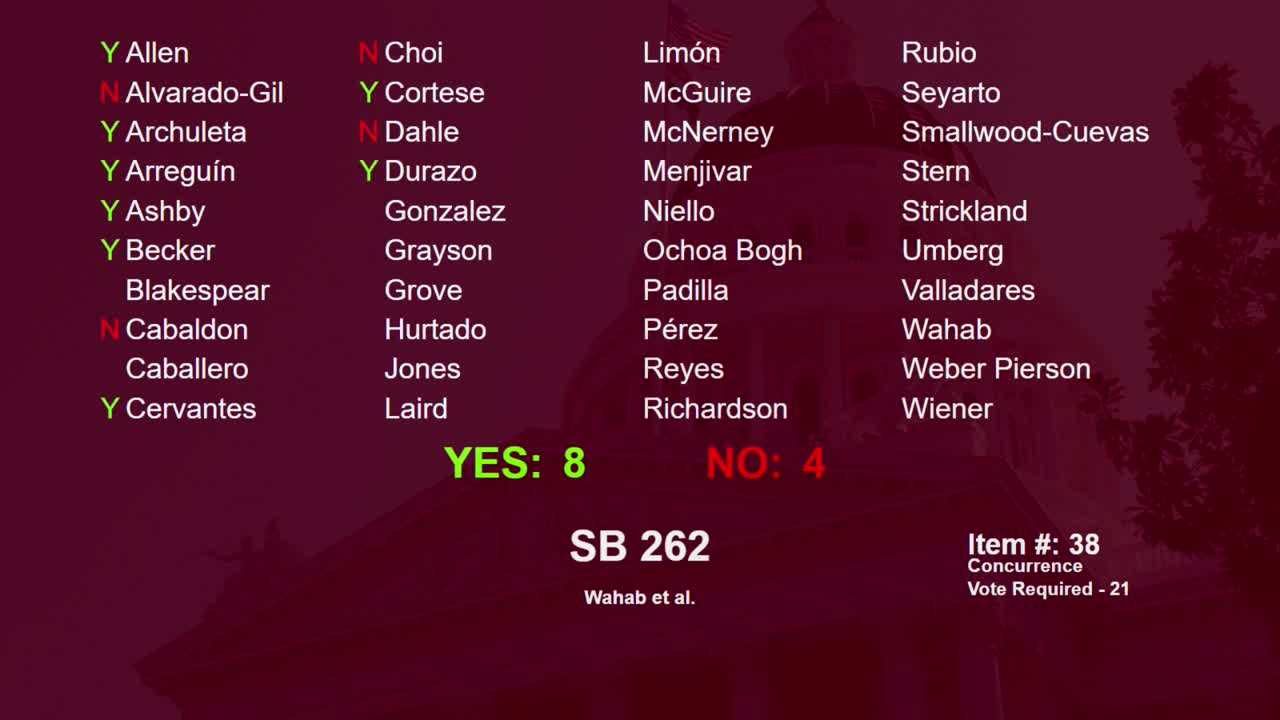
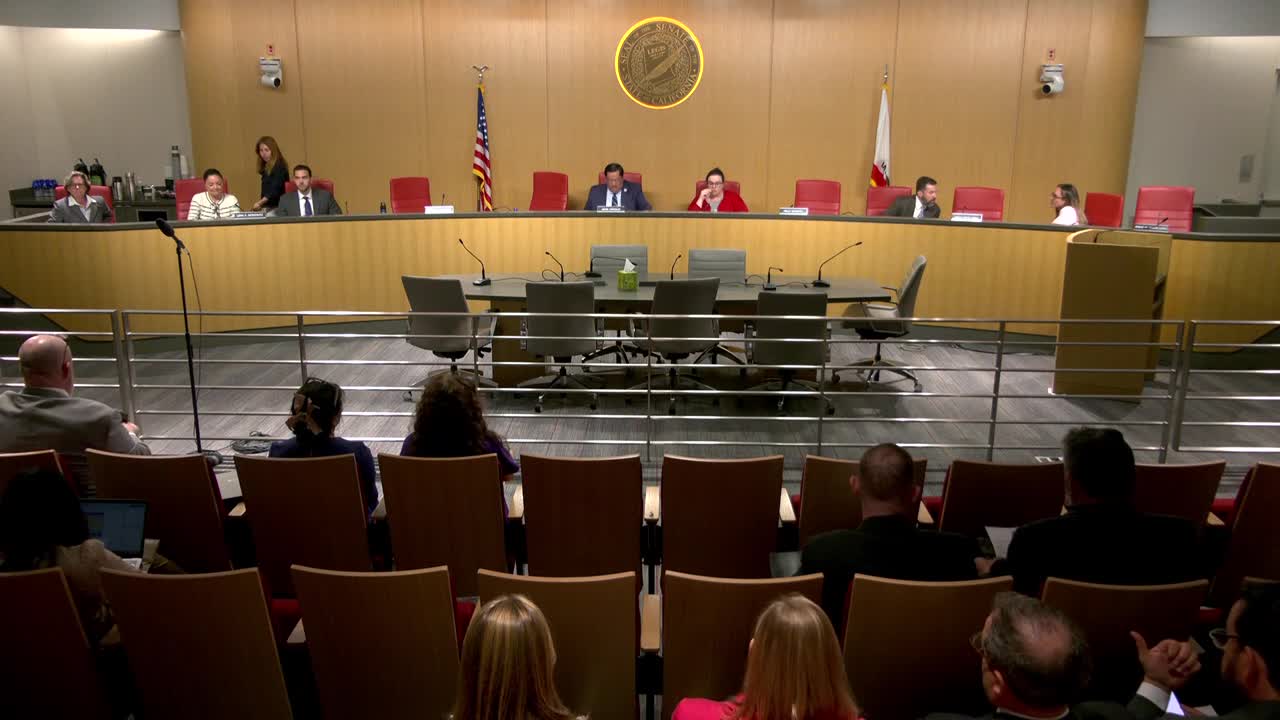
Bill Author
Bill Co-Author(s):