SB 78: Department of Transportation: report: state highway system: safety enhancements.
- Session Year: 2025-2026
- House: Senate
- Latest Version Date: 2025-10-13
Current Status:
Passed
(2025-10-13: Chaptered by Secretary of State. Chapter 743, Statutes of 2025.)
Introduced
In Committee
Awaiting First Chamber Vote
Passed First Chamber
In Committee
Awaiting Second Chamber Vote
Passed Second Chamber
Enacted
Existing law establishes the Department of Transportation and vests it with full possession and control of the state highway system.
This bill would require the department to prepare a report evaluating current efforts and potential opportunities to streamline the processes and procedures for the delivery of safety enhancement projects on the state highway system, as specified. The bill would require the department to submit the report to the Legislature on or before January 1, 2027.
Existing law establishes the Department of Transportation and vests it with full possession and control of the state highway system.
This bill would require the department to prepare a report to identify the types of safety enhancements that could be implemented on the state highway system, the common factors, if any, contributing to the delay in delivering those safety enhancements, and strategies to expedite safety enhancements evaluating current efforts and potential opportunities to streamline the processes and procedures for the delivery of safety enhancement projects on the state highway system. system, as specified. The bill would require the department to submit the report to the Legislature on or before January 1, 2027.
Existing law establishes the Department of Transportation and vests it with full possession and control of the state highway system.
This bill would require the department to conduct a study prepare a report to identify certain locations in the state highway system with regard to vehicle collisions, projects that could improve road safety at each of those locations, and common factors, if any, contributing to the delay in the delivery of those projects. the types of safety enhancements that could be implemented on the state highway system, the common factors, if any, contributing to the delay in delivering those safety enhancements, and strategies to expedite safety enhancements on the state highway system. The bill would require the department to post the study on its internet website submit the report to the Legislature on or before January 1, 2027.
Existing law establishes the Department of Transportation and vests it with full possession and control of the state highway system.
This bill would require the department to conduct a study to identify certain locations in the state highway system with regard to vehicle collisions, projects that could improve road safety at each of those locations, and common factors, if any, contributing to the delay in the delivery of those projects. The bill would require the department to post the study on its internet website on or before January 1, 2027.
(a)The department shall prepare a report evaluating current efforts and potential opportunities to streamline the processes and procedures for the delivery of safety enhancement projects on the state highway system, including all of the following:
(1)A review of administrative, regulatory, and procedural factors that affect the timing of safety enhancement projects.
(2)An evaluation of the use and feasibility of alternative project delivery methods, such as design-build, progressive design-build, job order contracting, and construction manager/general contractor, and other innovative approaches, as determined by the department.
(3)An assessment of whether the department has sufficient statutory authority to effectively use the methods evaluated pursuant to paragraph (2) for safety-specific projects, and the identification of any areas where additional authority may be needed.
(4)Recommendations for enhancing interagency coordination and procurement strategies to streamline delivery of safety enhancement projects without compromising safety or transparency.
(5)A summary of existing and planned department initiatives to streamline the delivery of safety enhancements.
(b)The report required by this section shall be used as an informational source and shall be based only on available data.
(c)The report required by this section shall not do either of the following:
(1)Include project-specific findings or imply causality between delivery timelines and safety outcomes.
(2)Create a new duty, right, or standard of care for the department.
(d)(1)On or before January 1, 2027, the department shall submit the report required by this section to the Legislature in compliance with Section 9795 of the Government Code.
(2)Pursuant to Section 10231.5 of the Government Code, this section is repealed on January 1, 2031.
(a)The department shall prepare a report to identify evaluating current efforts and potential opportunities to streamline the processes and procedures for the delivery of safety enhancement projects on the state highway system, including all of the following:
(1)Types of safety enhancements that could be implemented on the state highway system.(2)Common factors, if any, contributing to the delay in the delivery of safety enhancements identified pursuant to paragraph (1).(3)Strategies to expedite safety enhancements on the state highway system.(1)A review of administrative, regulatory, and procedural factors that affect the timing of safety enhancement projects.
(2)An evaluation of the use and feasibility of alternative project delivery methods, such as design-build, progressive design-build, job order contracting, and construction manager/general contractor, and other innovative approaches, as determined by the department.
(3)An assessment of whether the department has sufficient statutory authority to effectively use the methods evaluated pursuant to paragraph (2) for safety-specific projects, and the identification of any areas where additional authority may be needed.
(4)Recommendations for enhancing interagency coordination and procurement strategies to streamline delivery of safety enhancement projects without compromising safety or transparency.
(5)A summary of existing and planned department initiatives to streamline the delivery of safety enhancements.
(b)The report required by this section shall be used as an informational source and shall be based only on available data.
(c)The report required by this section shall not do either of the following:
(1)Include project-specific findings or imply causality between delivery timelines and safety outcomes.
(2)Create a new duty, right, or standard of care for the department.
(b)(d)(1)On or before January 1, 2027, the department shall submit the report required by this section to the Legislature in compliance with Section 9795 of the Government Code.
(2)Pursuant to Section 10231.5 of the Government Code, this section is repealed on January 1, 2031.
(a)The department shall conduct a study prepare a report to identify all of the following:
(1)The top 15 locations in the state highway system with the highest rate of vehicle collisions during each calendar year within a range of calendar years selected by the department for purposes of the study.(2)Projects that could improve road safety at each of the locations identified pursuant to paragraph (1).(1)Types of safety enhancements that could be implemented on the state highway system.
(3)(2)Common factors, if any, contributing to the delay in the delivery of the projects safety enhancements identified pursuant to paragraph (2). (1).
(3)Strategies to expedite safety enhancements on the state highway system.
(b)(1)On or before January 1, 2027, the department shall post the study conducted pursuant to subdivision (a) on its internet website. submit the report required by this section to the Legislature in compliance with Section 9795 of the Government Code.
(2)Pursuant to Section 10231.5 of the Government Code, this section is repealed on January 1, 2031.
(a)The department shall conduct a study to identify all of the following:
(1)The top 15 locations in the state highway system with the highest rate of vehicle collisions during each calendar year within a range of calendar years selected by the department for purposes of the study.
(2)Projects that could improve road safety at each of the locations identified pursuant to paragraph (1).
(3)Common factors, if any, contributing to the delay in the delivery of the projects identified pursuant to paragraph (2).
(b)On or before January 1, 2027, the department shall post the study conducted pursuant to subdivision (a) on its internet website.
|
Date
|
Status
|
|---|---|
| Oct 13, 2025 | Chaptered by Secretary of State. Chapter 743, Statutes of 2025. |
| Oct 13, 2025 | Approved by the Governor. |
| Sep 23, 2025 | Enrolled and presented to the Governor at 2 p.m. |
| Sep 12, 2025 | Assembly amendments concurred in. (Ayes 38. Noes 0. Page 2997.) Ordered to engrossing and enrolling. |
| Sep 8, 2025 | In Senate. Concurrence in Assembly amendments pending. |
| Sep 8, 2025 | Read third time. Passed. (Ayes 77. Noes 0. Page 2989.) Ordered to the Senate. |
| Sep 2, 2025 | Read third time and amended. |
| Sep 2, 2025 | Read second time. Ordered to third reading. |
| Sep 2, 2025 | Ordered to third reading. |
| Aug 29, 2025 | From committee: Do pass. (Ayes 15. Noes 0.) (August 29). |
| Aug 20, 2025 | August 20 set for first hearing. Placed on APPR. suspense file. |
| Jul 8, 2025 | From committee: Do pass and re-refer to Com. on APPR. with recommendation: To consent calendar. (Ayes 16. Noes 0.) (July 7). Re-referred to Com. on APPR. |
| Jun 5, 2025 | Referred to Com. on TRANS. |
| May 29, 2025 | In Assembly. Read first time. Held at Desk. |
| May 29, 2025 | Read third time. Passed. (Ayes 38. Noes 0. Page 1323.) Ordered to the Assembly. |
| May 27, 2025 | Ordered to special consent calendar. |
| May 23, 2025 | Read second time. Ordered to third reading. |
| May 23, 2025 | From committee: Do pass. (Ayes 6. Noes 0. Page 1191.) (May 23). |
| May 16, 2025 | Set for hearing May 23. |
| Apr 21, 2025 | April 21 hearing: Placed on APPR. suspense file. |
| Apr 10, 2025 | Set for hearing April 21. |
| Apr 9, 2025 | From committee: Do pass and re-refer to Com. on APPR. with recommendation: To consent calendar. (Ayes 15. Noes 0. Page 710.) (April 8). Re-referred to Com. on APPR. |
| Apr 2, 2025 | From committee with author's amendments. Read second time and amended. Re-referred to Com. on TRANS. |
| Apr 1, 2025 | Set for hearing April 8. |
| Jan 29, 2025 | Referred to Com. on TRANS. |
| Jan 16, 2025 | From printer. May be acted upon on or after February 15. |
| Jan 15, 2025 | Introduced. Read first time. To Com. on RLS. for assignment. To print. |
|
Date
|
Description
|
Location
|
Votes
|
|
|---|---|---|---|---|
| Sep 12, 2025 | Unfinished Business SB78 Seyarto et al. Concurrence | Senate Floor |
Passed |
|
| Sep 8, 2025 | SB 78 Seyarto Senate Third Reading By Lackey | Assembly Floor |
Passed |
|
| Aug 29, 2025 | Do pass. | Assembly Standing Committee on Appropriations |
Passed |
|
| Jul 7, 2025 | Do pass and be re-referred to the Committee on [Appropriations] with recommendation: To Consent Calendar | Assembly Standing Committee on Transportation |
Passed |
|
| May 29, 2025 | Special Consent SB78 Seyarto et al. | Senate Floor |
Passed |
|
| May 23, 2025 | Do pass | Senate Standing Committee on Appropriations |
Passed |
|
| Apr 21, 2025 | Placed on suspense file | Senate Standing Committee on Appropriations |
Passed |
|
| Apr 8, 2025 | Do pass, but first be re-referred to the Committee on [Appropriations] with the recommendation: To Consent Calendar | Senate Standing Committee on Transportation |
Passed |
This list shows positions taken on this bill by organizations on the date displayed, which is linked to the original source.
Positions by individuals are not included.
|
Organization
|
Position
|
Date
|
|---|---|---|
| Associated General Contractors Of California | ** Support | |
| Associated General Contractors, California Chapters | ** Support | |
| Associated General Contractors-San Diego Chapter | ** Support | |
| California Asphalt Pavement Association | ** Support | |
| California Trucking Association | ** Support | |
| Chino Valley Chamber of Commerce | ** Support | |
| CSAC | ** Support | |
| League Of California Cities | ** Support | |
| ONTARIO; CITY OF | ** Support | |
| Streets for All | ** Support |
SENATE RULES COMMITTEE Office of Senate Floor Analyses (916) 651-1520 Fax: (916) 327-4478 | SB 78 |
UNFINISHED BUSINESS
Bill No: SB 78
Author: Seyarto (R), et al.
Amended: 9/2/25
Vote: 21
SENATE TRANSPORTATION COMMITTEE: 15-0, 4/8/25
AYES: Cortese, Strickland, Archuleta, Arreguín, Blakespear, Cervantes, Dahle, Gonzalez, Grayson, Limón, Menjivar, Richardson, Seyarto, Umberg, Valladares
SENATE APPROPRIATIONS COMMITTEE: 6-0, 5/23/25
AYES: Caballero, Seyarto, Cabaldon, Grayson, Richardson, Wahab
NO VOTE RECORDED: Dahle
SENATE FLOOR: 38-0, 5/29/25
AYES: Allen, Alvarado-Gil, Archuleta, Arreguín, Ashby, Becker, Blakespear, Cabaldon, Caballero, Cervantes, Choi, Cortese, Dahle, Durazo, Gonzalez, Grayson, Grove, Hurtado, Jones, Laird, McGuire, McNerney, Menjivar, Niello, Ochoa Bogh, Padilla, Pérez, Richardson, Rubio, Seyarto, Smallwood-Cuevas, Stern, Strickland, Umberg, Valladares, Wahab, Weber Pierson, Wiener
NO VOTE RECORDED: Limón, Reyes
ASSEMBLY FLOOR: 77-0, 9/8/25 - See last page for vote
SUBJECT: Department of Transportation: report: state highway system: safety enhancements
SOURCE: Author
DIGEST:
This bill requires the California Department of Transportation (Caltrans) to prepare and submit a report to the Legislature by January 1, 2027 that evaluates current efforts and potential opportunities to streamline the processes and procedures for the delivery of safety enhancement projects on the state highway system.
Assembly Amendments
of 9/2/25 recast provisions of the Caltrans study on safety enhancements to include recommendations for enhancing interagency coordination and procurement strategies, an evaluation of the use and feasibility of alternative project delivery methods, and an assessment of whether Caltrans has sufficient statutory authority to effectively these methods.
ANALYSIS:
Existing law:
- Assigns Caltrans the responsibility of operating and maintaining state highways (Streets & Highways Code (SHC) §91)
- Establishes the California Traffic Safety Program (OTS), which consists of a comprehensive plan in conformity with the laws of this state to reduce traffic accidents and deaths, injuries, and property damage resulting from accidents. (Vehicle Code (VEH) §2900)
- Requires OTS to provide a detailed presentation and a statement concerning the progress made in implementing the program and recommendations concerning possible legislative action deemed necessary or desirable to implement the program. (VEH §2905)
This bill:
- Requires Caltrans to prepare a report to the Legislature containing the following:
- A review of factors that affect the timing of safety enhancement projects.
- An evaluation of, and Caltrans′ statutory authority to utilize, alternative project delivery methods such as design-build, progressive design-build, job order contracting, and construction manager/general contractor, and other innovative approaches.
- Recommendations for enhancing interagency coordination and procurement strategies to streamline delivery of safety enhancement projects.
- A summary of existing and planned department initiatives to streamline the delivery of safety enhancements.
- Requires the report be used as an informational source and be based on available data.
- Prohibits the report from including project-specific findings, imply causality between delivery timelines and safety outcomes, or create a new duty, right, or standard of care for Caltrans.
Comments
- Purpose of this bill. According to the author, “By prioritizing safety enhancements in high-risk areas, this bill will reduce the rising toll of traffic fatalities. We need to pay attention to the parts of our highway system that chronically cause serious accidents and ensure they are addressed for the safety of our constituents. California′s future depends on its ability to build and maintain a safe and reliable transportation network. By investing in delayed infrastructure projects, protecting consumers, and prioritizing road safety, we can ensure a better quality of life for all Californians while addressing long-standing challenges.”
- Traffic safety in California. Despite the general decrease in driving during the COVID-19 pandemic, traffic crashes and fatalities actually increased. According to OTS, traffic fatalities increased approximately 7.6% from 3,980 in 2020 to 4,285 in 2021. The increase of traffic fatalities in recent years led to the creation of the Vision Zero Network, a collaborative nonprofit campaign with the goal of eliminating all traffic fatalities and severe injuries while increasing safe, healthy, and equitable mobility for all. Today, more than 40 communities (including at least 13 in California) across the country have joined the Vision Zero Network.
- Safe Systems. In 2022, Caltrans issued a Director’s Policy on Road Safety (DP-36) that committed the department to a Safe System approach and reaffirmed the vision of reaching zero fatalities and serious injuries on state highways by 2050. Under the Safe System approach, Caltrans focuses on five elements: safe road users, safe roads, safe speeds, safe vehicles, and post-crash care. As part of the policy, Caltrans committed to prioritizing safety in highway planning, operation, construction, and maintenance, to focus on eliminating the most serious crashes rather than all crashes, and eliminating disparities in road safety outcomes.
- Calmer roads. One key element of the Safe Systems approach is speed management to ensure that vehicles are traveling at safe speeds on the highways. One approach is to include features along the roadway itself that encourage drivers to maintain a safer speed. These traffic calming devices include things like vehicle speed feedback signs, road markings that create the impression of reducing spacing on the road to encourage slower speeds, improved crosswalks and pedestrian signage, roundabouts, intersection barriers, road diets, curb bulbous, and speed humps. Caltrans’ guide on traffic calming states that traffic calming strategies should be given increased consideration along safety corridors or roadway segments with a high percentage of speed-related collisions.
- Delays in road infrastructure. The process by which improvements on the State Highway System are planned is very forward-looking, but also very protracted. The Transportation Asset Management Plan is the strategic plan Caltrans produces every two years that assesses the state of the physical assets on the national and state highway systems. This information, along with information from Caltrans’ policy documents, is used to create the State Highways System Management (SHSMP) plan which is an operational plan that includes all major physical assets and deficiencies on the state highway system. The targets set in that plan then are used to establish the set of projects in the State Highway Operation and Protection Program (SHOPP), which is the state’s “fix-it-first” program that funds the repair, preservation, and safety improvements on the state highway system. As such, the SHOPP and the projects Caltrans will be working on for the next four years are actually based on the SHSMP from five years prior. Policy changes, like implementation of the Safe System approach, can take a long time to have an impact.
Related/Prior Legislation
SB 936 (Seyarto, 2024) – Would have required Caltrans to complete a study identifying the 15 locations on the state highway system with the highest rates of vehicle collisions and to propose projects to improve road safety at each of these locations by January 1, 2026.
FISCAL EFFECT: Appropriation: No Fiscal Com.: Yes Local: No
According to the Assembly Committee on Appropriations:
- The scope of the report this bill is broad, and Caltrans will face significant new analytical and administrative work to produce it. Costs will likely be in the low- to high hundreds of thousands of dollars (special fund) over the period it takes Caltrans to produce the report.
- Caltrans anticipates one-time costs of approximately $543,000 to produce the report. According to Caltrans, this amount covers 1.25 personnel years at an approximate cost $243,000, as well as, if needed, $300,000 for a contract with an outside consultant.
SUPPORT: (Verified 9/3/25)
Associated General Contractors of California
Associated General Contractors, California Chapters
Associated General Contractors-san Diego Chapter
California Asphalt Pavement Association
California Trucking Association
Chino Valley Chamber of Commerce
CSAC
League of California Cities
Ontario; City of
Streets for All
OPPOSITION: (Verified 9/3/25)
None received
ARGUMENTS IN SUPPORT: Associated General Contractors, California Chapters writes, ″[s]afety is paramount on California′s transportation system. AGC strongly supports initiatives aimed at reducing vehicle collisions on the State Highway System. This study presents a valuable opportunity to identify and develop safety projects to address these risks effectively. Furthermore, by examining delays in project delivery would inform additional opportunities for streamlined project delivery.″
Ayes: Addis, Aguiar-Curry, Ahrens, Alanis, Alvarez, Arambula, Ávila Farías, Bains, Bauer-Kahan, Bennett, Berman, Boerner, Bonta, Bryan, Calderon, Caloza, Carrillo, Castillo, Chen, Connolly, Davies, DeMaio, Dixon, Elhawary, Ellis, Flora, Fong, Gabriel, Gallagher, Garcia, Gipson, Jeff Gonzalez, Mark González, Hadwick, Haney, Harabedian, Hart, Hoover, Jackson, Johnson, Kalra, Krell, Lackey, Lowenthal, Macedo, McKinnor, Muratsuchi, Ortega, Pacheco, Papan, Patel, Patterson, Pellerin, Petrie-Norris, Quirk-Silva, Ramos, Ransom, Celeste Rodriguez, Michelle Rodriguez, Rogers, Blanca Rubio, Sanchez, Schiavo, Schultz, Sharp-Collins, Solache, Soria, Stefani, Ta, Tangipa, Valencia, Wallis, Ward, Wicks, Wilson, Zbur, Rivas
Noes:
No Vote Recorded: Irwin, Lee, Nguyen
Prepared by: Isabelle LaSalle / TRANS. / (916) 651-4121
9/8/25 19:36:11
**** END ****
SENATE THIRD READING
STR Bill Id:SB 78
Author:(Seyarto)
As Amended Ver:April 2, 2025
Majority vote
SUMMARY
Requires the California Department of Transportation (Caltrans) to prepare and submit a report to the Legislature by January 1, 2027 that identifies types of safety enhancements that could be implemented on the state highway system, common factors contributing to the delay in the delivery of safety enhancements projects, and strategies to expedite these projects.
Major Provisions
COMMENTS
Projections from the National Highway Traffic Safety Administration (NHSTA) estimate more than 4,400 people were killed in motor vehicle crashes throughout California in 2022, or about 12 people every day. Early data from NHSTA for 2023 and 2024 estimates a year over year 5% increase in traffic fatalities. Across the state, traffic fatalities increased approximately 7.6% from 3,980 in 2020 to 4,285 in 2021. The increase of traffic fatalities in recent years led to the creation of the Vision Zero Network—a collaborative campaign with the goal of eliminating all traffic fatalities and severe injuries while increasing safe, healthy, and equitable mobility for all. Today, more than 40 communities (including at least 13 in California) across the country have joined the Vision Zero Network.
Safety is the priority. The Legislature enacted in 1967 the California Traffic Safety Program, what is now OTS, to provide authority for the State to implement the requirements of national legislation. Each year OTS develops a Highway Safety Plan (HSP) to reflect current needs as well as detailing the planned use of federal funds. The HSP identifies problems, specific performance measures, proposed solutions, time frames and fiscal information on continuing and planned new grants which are designed to mitigate traffic safety problems.
The OTS has identified 10 priority areas of concentration for grant funding; alcohol-impaired driving, distracted driving, drug-impaired driving, occupant protection, pedestrian and bicycle safety, traffic records and roadway safety, emergency medical services, police traffic services, motorcycle safety, and public awareness and education.
Additionally, OTS maintains online crash rankings for local streets and state highways within city limits so that cities can compare traffic safety statistics. These comparisons enable cities and OTS to identify emerging or on-going traffic safety problem areas in order to help plan how to combat the problems and to facilitate grant awards. The Statewide Traffic Records System (SWITRS) provides crash data, the Department of Finance develops population estimates, and Caltrans provides daily vehicle miles traveled (DVMT).
Last year, OTS started the "Go Safely Movement," a call to action to raise awareness about the road safety crisis and to establish a strong road safety culture. More than 2,000 California residents filled out a community survey on their perceived traffic safety concerns and actions needed to make roads safer in their community that will help inform highway safety planning. The survey also called upon residents to sign up as a "traffic safety champion" and commit to being more engaged in traffic safety for their families and community.
In 2022, Caltrans issued a Director's Policy on Road Safety (DP-36) that committed the department to a Safe System approach and reaffirmed the vision of reaching zero fatalities and serious injuries on state highways by 2050. Under the Safe System approach, Caltrans focuses on five elements: safe road users, safe roads, safe speeds, safe vehicles, and post-crash care. As part of the policy, Caltrans committed to prioritizing safety in highway planning, operation, construction, and maintenance, to focus on eliminating the most serious crashes rather than all crashes, and eliminating disparities in road safety outcomes.
Last year Caltrans released their Road Safety Action Plan designed to review and track progress towards aligning Caltrans policies and practices with the Safe Systems approach. One step that was taken was to update the safety project prioritization methodology in the federally funded Highway Safety Improvement Program to better prioritize sites with the highest severity of collisions. Other goals planned to be completed by the end of this year include updating statewide planning guidelines to incorporate the Safe System Approach, developing a statewide decision-making framework for proactively identifying and prioritizing roadway safety investment, and developing trainings for project development teams on how to design safer roadways.
One key element of the Safe Systems approach is speed management to ensure that vehicles are traveling at safe speeds on the highways. One approach to reduce unsafe speeding is to improve enforcement of existing speed limits through the use of speed cameras or more traffic officers. Other approaches include traffic calming measures to encourage drivers to maintain a safer speeds such as vehicle speed feedback signs, road markings that create the impression of reducing spacing on the road to encourage slower speeds, improved crosswalks and pedestrian signage, roundabouts, intersection barriers, road diets, curb bulbous, and speed humps. Caltrans' guide on traffic calming states that traffic calming strategies should be given increased consideration along safety corridors or roadway segments with a high percentage of speed-related collisions.
Delays in road infrastructure. The process to improve the State Highway System is forward-looking, but also protracted. Caltrans produces the Transportation Asset Management Plan (TAMP) every two years to assess the state of the physical assets on the national and state highway systems. Caltrans uses this information, along with information from its policy documents to create the State Highways System Management (SHSMP) plan, which is an operational plan that includes all major physical assets and deficiencies on the state highway system. The targets set in that plan then are used to establish the set of projects in the State Highway Operation and Protection Program (SHOPP), which is the state's "fix-it-first" program that funs the repair, preservation, and safety improvements on the state highway system. As such, the SHOPP and the projects Caltrans will be working on for the next four years are based on the SHSMP from five years prior. Therefore, policy changes, like implementation of the Safe System approach, can take a long time to have an impact.
Governor's veto. A similar bill last year, SB 936 (Seyarto of 2024), also aimed to address delays in highway safety improvement projects. Specifically, the bill would have required Caltrans to complete a study identifying the 15 locations on the state highway system with the highest rates of vehicle collisions and to propose projects to improve road safety at each of these locations by January 1, 2026. The bill was vetoed by Governor Newsom, with the following reasoning included in the veto message:
"Caltrans is already implementing various initiatives to prioritize road safety improvements, including its Safe System Approach. This innovative approach aims to reduce fatal and serious injuries for all road users by taking a comprehensive view of safety, focusing on multiple layers of protection, from building safer roads to post-crash care. While I support efforts to expedite traffic safety enhancements, this bill conflicts with Caltrans' data-driven approach to identifying and developing a holistic traffic safety framework for its projects. Prioritizing locations based solely on overall collision rates, without considering crash severity and other associated collision factors, may fail to address the areas of greatest safety concern.
Existing safety planning efforts that proactively identify and implement safety projects, such as the California Strategic Highway Safety Plan, can already effectively achieve the goals that this bill seeks to accomplish. I encourage the Legislature to partner with Caltrans to advance the implementation of these efforts."
While this bill does not limit Caltrans' study to 15 locations on the state highway system with the highest rate of vehicle collisions like SB 936 (Seyarto of 2024), it also does not address the Governor's veto message of encouraging the Legislature to work with Caltrans to enhance the effort of existing safety efforts. Given OTS and Caltrans' current efforts and prioritization of road safety, and existing data collection, it is unclear what this bill will add that is different or valuable.
According to the Author
"By prioritizing safety enhancements in high-risk areas, this bill will reduce the rising toll of traffic fatalities. We need to pay attention to the parts of our highway system that chronically cause serious accidents and ensure they are addressed for the safety of our constituents. California's future depends on its ability to build and maintain a safe and reliable transportation network. By investing in delayed infrastructure projects, protecting consumers, and prioritizing road safety, we can ensure a better quality of life for all Californians while addressing long-standing challenges."
Arguments in Support
Associated General Contractors, California Chapters writes, "Safety is paramount on California's transportation system. AGC strongly supports initiatives aimed at reducing vehicle collisions on the State Highway System. This study presents a valuable opportunity to identify and develop safety projects to address these risks effectively. Furthermore, by examining delays in project delivery would inform additional opportunities for streamlined project delivery."
Arguments in Opposition
No opposition on file.
FISCAL COMMENTS
According to the Assembly Committee on Appropriations:
"The scope of the report this bill is broad, and Caltrans will face significant new analytical and administrative work to produce it. Costs will likely be in the low- to high hundreds of thousands of dollars (special fund) over the period it takes Caltrans to produce the report.
Caltrans anticipates one-time costs of approximately $543,000 to produce the report. According to Caltrans, this amount covers 1.25 personnel years at an approximate cost $243,000, as well as, if needed, $300,000 for a contract with an outside consultant."
VOTES
SENATE FLOOR: 38-0-2
YES: Allen, Alvarado-Gil, Archuleta, Arreguín, Ashby, Becker, Blakespear, Cabaldon, Caballero, Cervantes, Choi, Cortese, Dahle, Durazo, Gonzalez, Grayson, Grove, Hurtado, Jones, Laird, McGuire, McNerney, Menjivar, Niello, Ochoa Bogh, Padilla, Pérez, Richardson, Rubio, Seyarto, Smallwood-Cuevas, Stern, Strickland, Umberg, Valladares, Wahab, Weber Pierson, Wiener
ABS, ABST OR NV: Limón, Reyes
ASM TRANSPORTATION: 16-0-0
YES: Wilson, Davies, Ahrens, Bennett, Caloza, Carrillo, Hart, Hoover, Jackson, Lackey, Lowenthal, Macedo, Papan, Ransom, Rogers, Ward
ASM APPROPRIATIONS: 15-0-0
YES: Wicks, Sanchez, Arambula, Calderon, Caloza, Dixon, Elhawary, Fong, Mark González, Ahrens, Pacheco, Pellerin, Solache, Ta, Tangipa
UPDATED
VERSION: April 2, 2025
CONSULTANT: Julia Kingsley / TRANS. / (916) 319-2093 FN: 0001315
SENATE THIRD READING
STR Bill Id:SB 78
Author:(Seyarto)
As Amended Ver:September 02, 2025
Majority vote
SUMMARY
Requires the California Department of Transportation (Caltrans) to prepare and submit a report to the Legislature by January 1, 2027 that evaluates current efforts and potential opportunities to streamline the processes and procedures for the delivery of safety enhancement projects on the state highway system.
Major Provisions
- Requires Caltrans′ report to the Legislature to contain the following:
- A review of factors that affect the timing of safety enhancement projects.
- An evaluation of, and Caltrans′ statutory authority to utilize, alternative project delivery methods such as design-build, progressive design-build, job order contracting, and construction manager/general contractor, and other innovative approaches.
- Recommendations for enhancing interagency coordination and procurement strategies to streamline delivery of safety enhancement projects.
- A summary of existing and planned department initiatives to streamline the delivery of safety enhancements.
- Requires the report be used as an informational source and be based on available data.
- Prohibits the report from including project-specific findings, imply causality between delivery timelines and safety outcomes, or create a new duty, right, or standard of care for Caltrans.
COMMENTS
Projections from the National Highway Traffic Safety Administration (NHSTA) estimate more than 4,400 people were killed in motor vehicle crashes throughout California in 2022, or about 12 people every day. Early data from NHSTA for 2023 and 2024 estimates a year over year 5% increase in traffic fatalities. Across the state, traffic fatalities increased approximately 7.6% from 3,980 in 2020 to 4,285 in 2021. The increase of traffic fatalities in recent years led to the creation of the Vision Zero Network—a collaborative campaign with the goal of eliminating all traffic fatalities and severe injuries while increasing safe, healthy, and equitable mobility for all. Today, more than 40 communities (including at least 13 in California) across the country have joined the Vision Zero Network.
Safety is the priority. The Legislature enacted in 1967 the California Traffic Safety Program, what is now OTS, to provide authority for the State to implement the requirements of national legislation. Each year OTS develops a Highway Safety Plan (HSP) to reflect current needs as well as detailing the planned use of federal funds. The HSP identifies problems, specific performance measures, proposed solutions, time frames and fiscal information on continuing and planned new grants which are designed to mitigate traffic safety problems.
The OTS has identified ten priority areas of concentration for grant funding; alcohol-impaired driving, distracted driving, drug-impaired driving, occupant protection, pedestrian and bicycle safety, traffic records and roadway safety, emergency medical services, police traffic services, motorcycle safety, and public awareness and education.
Additionally, OTS maintains online crash rankings for local streets and state highways within city limits so that cities can compare traffic safety statistics. These comparisons enable cities and OTS to identify emerging or on-going traffic safety problem areas in order to help plan how to combat the problems and to facilitate grant awards. The Statewide Traffic Records System (SWITRS) provides crash data, the Department of Finance develops population estimates, and Caltrans provides daily vehicle miles traveled (DVMT).
Last year, OTS started the ″Go Safely Movement,″ a call to action to raise awareness about the road safety crisis and to establish a strong road safety culture. More than 2,000 California residents filled out a community survey on their perceived traffic safety concerns and actions needed to make roads safer in their community that will help inform highway safety planning. The survey also called upon residents to sign up as a ″traffic safety champion″ and commit to being more engaged in traffic safety for their families and community.
In 2022, Caltrans issued a Director′s Policy on Road Safety (DP-36) that committed the department to a Safe System approach and reaffirmed the vision of reaching zero fatalities and serious injuries on state highways by 2050. Under the Safe System approach, Caltrans focuses on five elements: safe road users, safe roads, safe speeds, safe vehicles, and post-crash care. As part of the policy, Caltrans committed to prioritizing safety in highway planning, operation, construction, and maintenance, to focus on eliminating the most serious crashes rather than all crashes, and eliminating disparities in road safety outcomes.
Last year Caltrans released their Road Safety Action Plan designed to review and track progress towards aligning Caltrans policies and practices with the Safe Systems approach. One step that was taken was to update the safety project prioritization methodology in the federally funded Highway Safety Improvement Program to better prioritize sites with the highest severity of collisions. Other goals planned to be completed by the end of this year include updating statewide planning guidelines to incorporate the Safe System Approach, developing a statewide decision-making framework for proactively identifying and prioritizing roadway safety investment, and developing trainings for project development teams on how to design safer roadways.
One key element of the Safe Systems approach is speed management to ensure that vehicles are traveling at safe speeds on the highways. One approach to reduce unsafe speeding is to improve enforcement of existing speed limits through the use of speed cameras or more traffic officers. Other approaches include traffic calming measures to encourage drivers to maintain a safer speeds such as vehicle speed feedback signs, road markings that create the impression of reducing spacing on the road to encourage slower speeds, improved crosswalks and pedestrian signage, roundabouts, intersection barriers, road diets, curb bulbous, and speed humps. Caltrans′ guide on traffic calming states that traffic calming strategies should be given increased consideration along safety corridors or roadway segments with a high percentage of speed-related collisions.
Delays in road infrastructure. The process to improve the State Highway System is forward-looking, but also protracted. Caltrans produces the Transportation Asset Management Plan (TAMP) every two years to assess the state of the physical assets on the national and state highway systems. Caltrans uses this information, along with information from its policy documents to create the State Highways System Management (SHSMP) plan, which is an operational plan that includes all major physical assets and deficiencies on the state highway system. The targets set in that plan then are used to establish the set of projects in the State Highway Operation and Protection Program (SHOPP), which is the state′s ″fix-it-first″ program that funs the repair, preservation, and safety improvements on the state highway system. As such, the SHOPP and the projects Caltrans will be working on for the next four years are based on the SHSMP from five years prior. Therefore, policy changes, like implementation of the Safe System approach, can take a long time to have an impact.
According to the Author
″By prioritizing safety enhancements in high-risk areas, this bill will reduce the rising toll of traffic fatalities. We need to pay attention to the parts of our highway system that chronically cause serious accidents and ensure they are addressed for the safety of our constituents. California′s future depends on its ability to build and maintain a safe and reliable transportation network. By investing in delayed infrastructure projects, protecting consumers, and prioritizing road safety, we can ensure a better quality of life for all Californians while addressing long-standing challenges.″
Arguments in Support
Associated General Contractors, California Chapters writes, ″Safety is paramount on California′s transportation system. AGC strongly supports initiatives aimed at reducing vehicle collisions on the State Highway System. This study presents a valuable opportunity to identify and develop safety projects to address these risks effectively. Furthermore, by examining delays in project delivery would inform additional opportunities for streamlined project delivery.″
Arguments in Opposition
No opposition on file.
FISCAL COMMENTS
According to the Assembly Committee on Appropriations:
″The scope of the report this bill is broad, and Caltrans will face significant new analytical and administrative work to produce it. Costs will likely be in the low- to high hundreds of thousands of dollars (special fund) over the period it takes Caltrans to produce the report.
Caltrans anticipates one-time costs of approximately $543,000 to produce the report. According to Caltrans, this amount covers 1.25 personnel years at an approximate cost $243,000, as well as, if needed, $300,000 for a contract with an outside consultant.″
VOTES
SENATE FLOOR: 38-0-2
YES: Allen, Alvarado-Gil, Archuleta, Arreguín, Ashby, Becker, Blakespear, Cabaldon, Caballero, Cervantes, Choi, Cortese, Dahle, Durazo, Gonzalez, Grayson, Grove, Hurtado, Jones, Laird, McGuire, McNerney, Menjivar, Niello, Ochoa Bogh, Padilla, Pérez, Richardson, Rubio, Seyarto, Smallwood-Cuevas, Stern, Strickland, Umberg, Valladares, Wahab, Weber Pierson, Wiener
ABS, ABST OR NV: Limón, Reyes
ASM TRANSPORTATION: 16-0-0
YES: Wilson, Davies, Ahrens, Bennett, Caloza, Carrillo, Hart, Hoover, Jackson, Lackey, Lowenthal, Macedo, Papan, Ransom, Rogers, Ward
ASM APPROPRIATIONS: 15-0-0
YES: Wicks, Sanchez, Arambula, Calderon, Caloza, Dixon, Elhawary, Fong, Mark González, Ahrens, Pacheco, Pellerin, Solache, Ta, Tangipa
UPDATED
VERSION: September 02, 2025
CONSULTANT: Julia Kingsley / TRANS. / (916) 319-2093 FN: 0001543
Date of Hearing: August 20, 2025
ASSEMBLY COMMITTEE ON APPROPRIATIONS
Buffy Wicks, Chair
SBPCA Bill Id:SB 78
Author:(Seyarto) – As Amended Ver:April 2, 2025
Policy Committee: | Transportation | Vote: | 16 - 0 |
|
| ||
|
|
Urgency: No State Mandated Local Program: No Reimbursable: No
SUMMARY:
This bill requires the Department of Transportation (Caltrans) to prepare a report on highway safety and submit the report to the Legislature by January 1, 2027.
Specifically, this bill requires the Caltrans report identify (a) types of safety enhancements that could be implemented on the state highway system, (b) common factors, if any, contributing to the delay in the delivery of those safety enhancements and (c) strategies to expedite safety enhancements on the state highway system.
FISCAL EFFECT:
The scope of the report this bill is broad, and Caltrans will face significant new analytical and administrative work to produce it. Costs will likely be in the low- to high hundreds of thousands of dollars (special fund) over the period it takes Caltrans to produce the report.
Caltrans anticipates one-time costs of approximately $543,000 to produce the report. According to Caltrans, this amount covers 1.25 personnel years at an approximate cost $243,000, as well as, if needed, $300,000 for a contract with an outside consultant.
COMMENTS:
- Purpose. The author contends this bill will lead to a safer transportation system, asserting “California’s future depends on its ability to build and maintain a safe and reliable transportation network.”
- Background. The California Office of Traffic Safety (OTS) within the State Transportation Agency uses grants from the federal National Highway Traffic Safety Administration (NHTSA) to fund what OTS describes as “evidence-based education and enforcement programs and technologies designed to make California’s roadways safer.” To this end, OTS identifies and prioritizes the state’s most significant traffic safety problems and develops methods for the distribution of funds to address those problems. And, as described in the Assembly Committee on Transportation analysis of this bill, the state has several ongoing programs to identify deficient and unsafe roadways, and to plan for funding to address those deficiencies to make those roadways safer.
Nonetheless, California’s roadways have become increasingly dangerous in recent years. According to the National Safety Council, vehicle miles traveled dropped 13% in 2020, but the mileage death rate went up 24%. OTS reports that, in 2018, 893 pedestrians were killed on California roadways, a 26% increase from 2014. Additionally, in 2018, more than 14,000 pedestrians were injured. The total number of pedestrian fatalities between 2009 and 2018 was 7,500, representing a pedestrian fatality rate almost 25% higher than the national average. Projections from NHSTA estimate more than 4,400 people were killed in motor vehicle crashes throughout California in 2022, or about 12 people every day. Early data from NHSTA for 2023 and 2024 estimates a 5% year-over-year increase in traffic fatalities. Across the state, traffic fatalities increased approximately 7.6%, from 3,980 in 2020 to 4,285 in 2021.
This bill requires Caltrans prepare a report on highway safety and submit the report to the Legislature. This approach is similar to last year’s SB 936 (Seyarto), which would have required Caltrans complete a study to identify the 15 locations on the state highway system with the highest rates of vehicle collisions and to propose projects to improve road safety at each of these locations. SB 936 passed this committee but was vetoed by the Governor, who asserted that existing planning efforts “can already effectively achieve the goals that this bill seeks to accomplish.”
Analysis Prepared by: Jay Dickenson / APPR. / (916) 319-2081
SENATE RULES COMMITTEE Office of Senate Floor Analyses (916) 651-1520 Fax: (916) 327-4478 | SB 78 |
THIRD READING
Bill No: SB 78
Author: Seyarto (R), et al.
Amended: 4/2/25
Vote: 21
SENATE TRANSPORTATION COMMITTEE: 15-0, 4/8/25
AYES: Cortese, Strickland, Archuleta, Arreguín, Blakespear, Cervantes, Dahle, Gonzalez, Grayson, Limón, Menjivar, Richardson, Seyarto, Umberg, Valladares
SENATE APPROPRIATIONS COMMITTEE: 6-0, 5/23/25
AYES: Caballero, Seyarto, Cabaldon, Grayson, Richardson, Wahab
NO VOTE RECORDED: Dahle
SUBJECT: Department of Transportation: report: state highway system: safety enhancements
SOURCE: Author
DIGEST:
This bill requires the California Department of Transportation (Caltrans) to prepare a report to the Legislature that identifies types of safety enhancements that could be implemented on the state highway system, common factors contributing to the delay in the delivery of the projects safety enhancements, and strategies to expedite the safety enhancements.
ANALYSIS:
Existing law:
- Assigns Caltrans the responsibility of operating and maintaining state highways (Streets and Highways Code (SHC) §91)
- Establishes the California Traffic Safety Program (OTS), which consists of a comprehensive plan in conformity with the laws of this state to reduce traffic accidents and deaths, injuries, and property damage resulting from accidents. (Vehicle Code (VEH) §2900)
- Requires OTS to provide a detailed presentation and a statement concerning the progress made in implementing the program and recommendations concerning possible legislative action deemed necessary or desirable to implement the program. (VEH §2905)
This bill directs Caltrans to prepare and submit a report to the Legislature by January 1, 2027 that identifies types of safety enhancements that could be implemented on the state highway system, common factors contributing to the delay in the delivery of safety enhancements, and strategies to expedite safety enhancements.
Comments
- Purpose of this bill. According to the author, “By prioritizing safety enhancements in high-risk areas, this bill will reduce the rising toll of traffic fatalities. We need to pay attention to the parts of our highway system that chronically cause serious accidents and ensure they are addressed for the safety of our constituents. California’s future depends on its ability to build and maintain a safe and reliable transportation network. By investing in delayed infrastructure projects, protecting consumers, and prioritizing road safety, we can ensure a better quality of life for all Californians while addressing long-standing challenges.”
- Traffic safety in California. Despite the general decrease in driving during the COVID-19 pandemic, traffic crashes and fatalities actually increased. According to OTS, traffic fatalities increased approximately 7.6% from 3,980 in 2020 to 4,285 in 2021. The increase of traffic fatalities in recent years led to the creation of the Vision Zero Network, a collaborative nonprofit campaign with the goal of eliminating all traffic fatalities and severe injuries while increasing safe, healthy, and equitable mobility for all. Today, more than 40 communities (including at least 13 in California) across the country have joined the Vision Zero Network.
- Safe Systems. In 2022, Caltrans issued a Director’s Policy on Road Safety (DP-36) that committed the department to a Safe System approach and reaffirmed the vision of reaching zero fatalities and serious injuries on state highways by 2050. Under the Safe System approach, Caltrans focuses on five elements: safe road users, safe roads, safe speeds, safe vehicles, and post-crash care. As part of the policy, Caltrans committed to prioritizing safety in highway planning, operation, construction, and maintenance, to focus on eliminating the most serious crashes rather than all crashes, and eliminating disparities in road safety outcomes.
- Calmer roads. One key element of the Safe Systems approach is speed management to ensure that vehicles are traveling at safe speeds on the highways. One approach is to include features along the roadway itself that encourage drivers to maintain a safer speed. These traffic calming devices include things like vehicle speed feedback signs, road markings that create the impression of reducing spacing on the road to encourage slower speeds, improved crosswalks and pedestrian signage, roundabouts, intersection barriers, road diets, curb bulbous, and speed humps. Caltrans’ guide on traffic calming states that traffic calming strategies should be given increased consideration along safety corridors or roadway segments with a high percentage of speed-related collisions.
- Delays in road infrastructure. The process by which improvements on the State Highway System are planned is very forward-looking, but also very protracted. The Transportation Asset Management Plan (TAMP) is the strategic plan Caltrans produces every two years to assess the state of the physical assets on the national and state highway systems. This information, along with information from Caltrans’ policy documents, is used to create the State Highways System Management (SHSMP) plan which is an operational plan that includes all major physical assets and deficiencies on the state highway system. The targets set in this plan then are used to establish the set of projects in the State Highway Operation and Protection Program (SHOPP), which is the state’s “fix-it-first” program that funds the repair, preservation, and safety improvements on the state highway system. As such, SHOPP and the projects Caltrans will be working on for the next four years are actually based on SHSMP from five years prior. Policy changes, like implementation of the Safe System approach, can take a long time to have an impact. Even so, delays in implementing road safety infrastructure can cost lives.
- Governor’s veto. A similar bill last year, SB 936 (Seyarto), also aimed to address delays in highway safety improvement projects. Specifically, the bill would have required Caltrans to complete a study identifying the 15 locations on the state highway system with the highest rates of vehicle collisions and to propose projects to improve road safety at each of these locations by January 1, 2026. The bill was vetoed by Governor Gavin Newsom with a veto message suggesting that existing safety planning efforts already achieve the bill’s goal.
Related/Previous Legislation
SB 936 (Seyarto, 2024) – Would have required Caltrans to complete a study identifying the 15 locations on the state highway system with the highest rates of vehicle collisions and to propose projects to improve road safety at each of these locations by January 1, 2026. SB 936 was vetoed by Governor Newsom.
AB 43 (Friedman, Chapter 690, Statutes of 2021) – Grants the California Department of Transportation (Caltrans) and local authorities greater flexibility in setting speed limits based on recommendations the Zero Traffic Fatality Task Force (Task Force) made in January 2020.
AB 2363 (Friedman, Chapter 650, Statutes of 2018) – Requires the Secretary of Transportation to establish and convene the Zero Traffic Fatalities Task Force, on or before, July 1, 2019, and prepare and submit a report of findings based on the efforts of this task force by January 1, 2020.
FISCAL EFFECT: Appropriation: No Fiscal Com.: Yes Local: No
According to the Senate Appropriations Committee:
- Caltrans anticipates one-time workload and contract costs of approximately $543,000 in the 2026 calendar year, including the workload equivalent of 1.25 Personnel Year (PY) of department staff resources at a cost of approximately $243,000, and potentially additional costs of approximately $300,000 to the extent it is deemed necessary to contract with an outside consultant to supplement the department’s subject matter expertise and provide additional insight and perspective. Caltrans staff resources would be responsible for gathering information about cost-effective safety enhancements, coordinating with subject matter experts from across Caltrans to identify potential reasons for any delays in the delivery of safety enhancements, identifying strategies to expedite the delivery of those safety enhancements, and drafting the report. (State Highway Account)
SUPPORT: (Verified 5/23/25)
Associated General Contractors of California
Associated General Contractors-san Diego Chapter
California Trucking Association
Chino Valley Chamber of Commerce
California State Associations of Counties
League of California Cities
Ontario; City of
Streets for All
OPPOSITION: (Verified 5/23/25)
None received
Prepared by: Isabelle LaSalle / TRANS. / (916) 651-4121
5/25/25 13:17:08
**** END ****
SENATE COMMITTEE ON TRANSPORTATION
Senator Dave Cortese, Chair
2025 - 2026 Regular
Bill No: Hearing Date: 04/08/2025
Author: | Seyarto | ||
Version: | 04/02/2025 Amended | ||
Urgency: | No | Fiscal: | Yes |
Consultant: | Isabelle LaSalle | ||
SUBJECT:
DIGEST: This bill requires the California Department of Transportation (Caltrans) to prepare a report that identifies types of safety enhancements that could be implemented on the state highway system, common factors contributing to the delay in the delivery of the projects safety enhancements, as specified, and strategies to expedite the safety enhancements.
ANALYSIS:
Existing law:
- Assigns Caltrans the responsibility of operating and maintaining state highways (SHC §91)
- Establishes the California Traffic Safety Program (OTS), which consists of a comprehensive plan in conformity with the laws of this state to reduce traffic accidents and deaths, injuries, and property damage resulting from accidents. (VEH §2900)
- Requires OTS to provide a detailed presentation and a statement concerning the progress made in implementing the program and recommendations concerning possible legislative action deemed necessary or desirable to implement the program. (VEH §2905)
This bill:
- Directs Caltrans to prepare and submit a report to the Legislature by January 1, 2027 that identifies types of safety enhancements that could be implemented on the state highway system, common factors contributing to the delay in the delivery of safety enhancements, and strategies to expedite safety enhancements.
COMMENTS:
- Purpose of the bill. According to the author, “By prioritizing safety enhancements in high-risk areas, this bill will reduce the rising toll of traffic fatalities. We need to pay attention to the parts of our highway system that chronically cause serious accidents and ensure they are addressed for the safety of our constituents. California’s future depends on its ability to build and maintain a safe and reliable transportation network. By investing in delayed infrastructure projects, protecting consumers, and prioritizing road safety, we can ensure a better quality of life for all Californians while addressing long-standing challenges.”
- Traffic safety in California. Despite the general decrease in driving during the COVID-19 pandemic, traffic crashes and fatalities actually increased. According to OTS, traffic fatalities increased approximately 7.6% from 3,980 in 2020 to 4,285 in 2021. The increase of traffic fatalities in recent years led to the creation of the Vision Zero Network, a collaborative nonprofit campaign with the goal of eliminating all traffic fatalities and severe injuries while increasing safe, healthy, and equitable mobility for all. Today, more than 40 communities (including at least 13 in California) across the country have joined the Vision Zero Network.
- Safe Systems. In 2022, Caltrans issued a Director’s Policy on Road Safety (DP-36) that committed the department to a Safe System approach and reaffirmed the vision of reaching zero fatalities and serious injuries on state highways by 2050. Under the Safe System approach, Caltrans focuses on five elements: safe road users, safe roads, safe speeds, safe vehicles, and post-crash care. As part of the policy, Caltrans committed to prioritizing safety in highway planning, operation, construction, and maintenance, to focus on eliminating the most serious crashes rather than all crashes, and eliminating disparities in road safety outcomes.
- Calmer roads. One key element of the Safe Systems approach is speed management to ensure that vehicles are traveling at safe speeds on the highways. One approach is to include features along the roadway itself that encourage drivers to maintain a safer speed. These traffic calming devices include things like vehicle speed feedback signs, road markings that create the impression of reducing spacing on the road to encourage slower speeds, improved crosswalks and pedestrian signage, roundabouts, intersection barriers, road diets, curb bulbous, and speed humps. Caltrans’ guide on traffic calming states that traffic calming strategies should be given increased consideration along safety corridors or roadway segments with a high percentage of speed-related collisions.
- Delays in road infrastructure. The process by which improvements on the State Highway System are planned is very forward-looking, but also very protracted. The Transportation Asset Management Plan (TAMP) is the strategic plan Caltrans produces every two years that assesses the state of the physical assets on the national and state highway systems. This information, along with information from Caltrans policy documents, is used to create the State Highways System Management (SHSMP) plan which is an operational plan that includes all major physical assets and deficiencies on the state highway system. The targets set in that plan then are used to establish the set of projects in the State Highway Operation and Protection Program (SHOPP), which is the state’s “fix-it-first” program that funds the repair, preservation, and safety improvements on the state highway system. As such, the SHOPP and the projects Caltrans will be working on for the next four years are actually based on the SHSMP from five years prior. Policy changes, like implementation of the Safe System approach, can take a long time to have an impact. Even so, delays in implementing road safety infrastructure can cost lives.
- Governor’s veto. A similar bill last year, SB 936 (Seyarto), also aimed to address delays in highway safety improvement projects. Specifically, the bill would have required Caltrans to complete a study identifying the 15 locations on the state highway system with the highest rates of vehicle collisions and to propose projects to improve road safety at each of these locations by January 1, 2026. The bill was vetoed by Governor Gavin Newsom, with the following reasoning included in the veto message:
“Caltrans is already implementing various initiatives to prioritize road safety improvements, including its Safe System Approach. This innovative approach aims to reduce fatal and serious injuries for all road users by taking a comprehensive view of safety, focusing on multiple layers of protection, from building safer roads to post-crash care. While I support efforts to expedite traffic safety enhancements, this bill conflicts with Caltrans' data-driven approach to identifying and developing a holistic traffic safety framework for its projects. Prioritizing locations based solely on overall collision rates, without considering crash severity and other associated collision factors, may fail to address the areas of greatest safety concern.
Existing safety planning efforts that proactively identify and implement safety projects, such as the California Strategic Highway Safety Plan, can already effectively achieve the goals that this bill seeks to accomplish. I encourage the Legislature to partner with Caltrans to advance the implementation of these efforts.”
- Support for the bill. Writing in support, the California League of Cities and the California State Associations of Counties state, “Senate Bill 78 aligns with California's broader transportation safety goals and Vision Zero initiatives, reinforcing the state's commitment to reducing traffic fatalities and serious injuries. Investing in safety improvements at high-collision sites will not only save lives but also enhance the overall quality of life for communities throughout the state.”
Related/Previous Legislation:
SB 936 (Seyarto, 2024) -- Would have required Caltrans to complete a study identifying the 15 locations on the state highway system with the highest rates of vehicle collisions and to propose projects to improve road safety at each of these locations by January 1, 2026.
AB 43 (Friedman, Chapter 690, Statutes of 2021) -- Grants the California Department of Transportation (Caltrans) and local authorities greater flexibility in setting speed limits based on recommendations the Zero Traffic Fatality Task Force (Task Force) made in January 2020.
AB 2363 (Friedman, Chapter 650, Statutes of 2018) -- Requires the Secretary of Transportation to establish and convene the Zero Traffic Fatalities Task Force, on or before, July 1, 2019, and prepare and submit a report of findings based on the efforts of this task force by January 1, 2020.
FISCAL EFFECT: Appropriation: No Fiscal Com.: Yes Local: No
POSITIONS: (Communicated to the committee before noon on Wednesday, April 2, 2025.)
SUPPORT:
Associated General Contractors of California
Associated General Contractors-san Diego Chapter
California Trucking Association
Chino Valley Chamber of Commerce
Csac
League of California Cities
Ontario; City of
Streets for All
OPPOSITION:
None received.
-- END --
SENATE COMMITTEE ON
Senator Anna Caballero, Chair
2025 - 2026 Regular Session
SB 78 (Seyarto) - Department of Transportation: report: state highway system: safety enhancements
Version: | Policy Vote: |
Urgency: | Mandate: |
Hearing Date: | Consultant: |
Bill Summary:
SB 78 would require the Department of Transportation (Caltrans) to submit a report to the Legislature by January 1, 2027 that identifies the types of safety enhancements that could be implemented on the state highway system, common factors that can contribute to the delay in delivering those measures, and strategies to expedite those safety enhancements.
Fiscal Impact:
- Caltrans anticipates one-time workload and contract costs of approximately $543,000 in the 2026 calendar year, including the workload equivalent of 1.25 PY of department staff resources at a cost of approximately $243,000, and potentially additional costs of approximately $300,000 to the extent it is deemed necessary to contract with an outside consultant to supplement the department’s subject matter expertise and provide additional insight and perspective. Caltrans staff resources would be responsible for gathering information about cost-effective safety enhancements, coordinating with subject matter experts from across Caltrans to identify potential reasons for any delays in the delivery of safety enhancements, identifying strategies to expedite the delivery of those safety enhancements, and drafting the report. (State Highway Account)
Background:
Existing law vests Caltrans with the full possession and control of all state highways, and the responsibility of operating and maintaining those highways. In 2022, Caltrans issued a Director’s Policy on Road Safety (DP-36) that committed the department to a “Safe System” approach and reaffirmed the vision of reaching zero fatalities and serious injuries on state highways by 2050. Under the Safe System approach, Caltrans focuses on five elements: safe road users, safe roads, safe speeds, safe vehicles, and post-crash care. As part of the policy, Caltrans committed to prioritizing safety in highway planning, operation, construction, and maintenance, to focus on eliminating fatal and serious injury crashes, and eliminating disparities in road safety outcomes.
In 2023, Caltrans released their Road Safety Action Plan, which is a coordinated effort led by its Division of Safety Programs in partnership with each of the 12 Caltrans districts and other divisions within the department. The Plan is designed to review and track progress towards aligning Caltrans policies and practices with the Safe Systems approach. One step taken by the department has been to update the safety project prioritization methodology in the federally funded Highway Safety Improvement Program to better prioritize sites with the highest severity of collisions. Other goals that were to be completed by the end of last year include updating statewide planning guidelines to incorporate the Safe System Approach, developing a statewide decision-making framework for proactively identifying and prioritizing roadway safety investment, and developing trainings for project development teams on how to design safer roadways.
Proposed Law:
SB 78 would require Caltrans to prepare and submit a report to the Legislature by January 1, 2027 that identifies all of the following:
- Types of safety enhancements that could be implemented on the state highway system.
- Common factors, if any, contributing to the delay in the delivery of safety enhancements.
- Strategies to expedite safety enhancements on the state highway system.
This provision would be repealed on January 1, 2031.
Related Legislation:
SB 936 (Seyarto), which was vetoed by Governor Newsom last year, would have required Caltrans to publish a study by January 1, 2026 that identifies the 15 locations on the state highway system with the highest rates of vehicle collisions, projects that could improve road safety at those locations, and factors that could contribute to the delay of those projects. The veto message stated, in part, that the bill conflicts with Caltrans’ approach to identifying and developing a holistic traffic safety framework for its projects, and that:
Existing safety planning efforts that proactively identify and implement safety projects, such as the California Strategic Highway Safety Plan, can already effectively achieve the goals that this bill seeks to accomplish. I encourage the Legislature to partner with Caltrans to advance the implementation of these efforts.
-- END --
SENATE COMMITTEE ON TRANSPORTATION
Senator Dave Cortese, Chair
2025 - 2026 Regular
Bill No: SB 78 Hearing Date: 04/08/2025
Author: | Seyarto | ||
Version: | 04/03/2025 Amended | ||
Urgency: | No | Fiscal: | Yes |
Consultant: | Isabelle LaSalle | ||
SUBJECT: Department of Transportation: study: state highway system: road safety projects
DIGEST: This bill requires the California Department of Transportation (Caltrans) to prepare a report that identifies types of safety enhancements that could be implemented on the state highway system, common factors contributing to the delay in the delivery of the projects safety enhancements, as specified, and strategies to expedite the safety enhancements.
ANALYSIS:
Existing law:
- Assigns Caltrans the responsibility of operating and maintaining state highways (SHC §91)
- Establishes the California Traffic Safety Program (OTS), which consists of a comprehensive plan in conformity with the laws of this state to reduce traffic accidents and deaths, injuries, and property damage resulting from accidents. (VEH §2900)
- Requires OTS to provide a detailed presentation and a statement concerning the progress made in implementing the program and recommendations concerning possible legislative action deemed necessary or desirable to implement the program. (VEH §2905)
This bill:
- Directs Caltrans to prepare and submit a report to the Legislature by January 1, 2027 that identifies types of safety enhancements that could be implemented on the state highway system, common factors contributing to the delay in the delivery of safety enhancements, and strategies to expedite safety enhancements.
COMMENTS:
- Purpose of the bill. According to the author, “By prioritizing safety enhancements in high-risk areas, this bill will reduce the rising toll of traffic fatalities. We need to pay attention to the parts of our highway system that chronically cause serious accidents and ensure they are addressed for the safety of our constituents. California’s future depends on its ability to build and maintain a safe and reliable transportation network. By investing in delayed infrastructure projects, protecting consumers, and prioritizing road safety, we can ensure a better quality of life for all Californians while addressing long-standing challenges.”
- Traffic safety in California. Despite the general decrease in driving during the COVID-19 pandemic, traffic crashes and fatalities actually increased. According to OTS, traffic fatalities increased approximately 7.6% from 3,980 in 2020 to 4,285 in 2021. The increase of traffic fatalities in recent years led to the creation of the Vision Zero Network, a collaborative nonprofit campaign with the goal of eliminating all traffic fatalities and severe injuries while increasing safe, healthy, and equitable mobility for all. Today, more than 40 communities (including at least 13 in California) across the country have joined the Vision Zero Network.
- Safe Systems. In 2022, Caltrans issued a Director’s Policy on Road Safety (DP-36) that committed the department to a Safe System approach and reaffirmed the vision of reaching zero fatalities and serious injuries on state highways by 2050. Under the Safe System approach, Caltrans focuses on five elements: safe road users, safe roads, safe speeds, safe vehicles, and post-crash care. As part of the policy, Caltrans committed to prioritizing safety in highway planning, operation, construction, and maintenance, to focus on eliminating the most serious crashes rather than all crashes, and eliminating disparities in road safety outcomes.
- Calmer roads. One key element of the Safe Systems approach is speed management to ensure that vehicles are traveling at safe speeds on the highways. One approach is to include features along the roadway itself that encourage drivers to maintain a safer speed. These traffic calming devices include things like vehicle speed feedback signs, road markings that create the impression of reducing spacing on the road to encourage slower speeds, improved crosswalks and pedestrian signage, roundabouts, intersection barriers, road diets, curb bulbous, and speed humps. Caltrans’ guide on traffic calming states that traffic calming strategies should be given increased consideration along safety corridors or roadway segments with a high percentage of speed-related collisions.
- Delays in road infrastructure. The process by which improvements on the State Highway System are planned is very forward-looking, but also very protracted. The Transportation Asset Management Plan (TAMP) is the strategic plan Caltrans produces every two years that assesses the state of the physical assets on the national and state highway systems. This information, along with information from Caltrans policy documents, is used to create the State Highways System Management (SHSMP) plan which is an operational plan that includes all major physical assets and deficiencies on the state highway system. The targets set in that plan then are used to establish the set of projects in the State Highway Operation and Protection Program (SHOPP), which is the state’s “fix-it-first” program that funds the repair, preservation, and safety improvements on the state highway system. As such, the SHOPP and the projects Caltrans will be working on for the next four years are actually based on the SHSMP from five years prior. Policy changes, like implementation of the Safe System approach, can take a long time to have an impact. Even so, delays in implementing road safety infrastructure can cost lives.
- Governor’s veto. A similar bill last year, SB 936 (Seyarto), also aimed to address delays in highway safety improvement projects. Specifically, the bill would have required Caltrans to complete a study identifying the 15 locations on the state highway system with the highest rates of vehicle collisions and to propose projects to improve road safety at each of these locations by January 1, 2026. The bill was vetoed by Governor Gavin Newsom, with the following reasoning included in the veto message:
“Caltrans is already implementing various initiatives to prioritize road safety improvements, including its Safe System Approach. This innovative approach aims to reduce fatal and serious injuries for all road users by taking a comprehensive view of safety, focusing on multiple layers of protection, from building safer roads to post-crash care. While I support efforts to expedite traffic safety enhancements, this bill conflicts with Caltrans' data-driven approach to identifying and developing a holistic traffic safety framework for its projects. Prioritizing locations based solely on overall collision rates, without considering crash severity and other associated collision factors, may fail to address the areas of greatest safety concern.
Existing safety planning efforts that proactively identify and implement safety projects, such as the California Strategic Highway Safety Plan, can already effectively achieve the goals that this bill seeks to accomplish. I encourage the Legislature to partner with Caltrans to advance the implementation of these efforts.”
- Support for the bill. Writing in support, the California League of Cities and the California State Associations of Counties state, “Senate Bill 78 aligns with California's broader transportation safety goals and Vision Zero initiatives, reinforcing the state's commitment to reducing traffic fatalities and serious injuries. Investing in safety improvements at high-collision sites will not only save lives but also enhance the overall quality of life for communities throughout the state.”
Related/Previous Legislation:
SB 936 (Seyarto, 2024) -- Would have required Caltrans to complete a study identifying the 15 locations on the state highway system with the highest rates of vehicle collisions and to propose projects to improve road safety at each of these locations by January 1, 2026.
AB 43 (Friedman, Chapter 690, Statutes of 2021) -- Grants the California Department of Transportation (Caltrans) and local authorities greater flexibility in setting speed limits based on recommendations the Zero Traffic Fatality Task Force (Task Force) made in January 2020.
AB 2363 (Friedman, Chapter 650, Statutes of 2018) -- Requires the Secretary of Transportation to establish and convene the Zero Traffic Fatalities Task Force, on or before, July 1, 2019, and prepare and submit a report of findings based on the efforts of this task force by January 1, 2020.
FISCAL EFFECT: Appropriation: Fiscal Com.: Local:
POSITIONS: (Communicated to the committee before noon on Wednesday, April 2, 2025.)
SUPPORT:
Associated General Contractors of California
Associated General Contractors-san Diego Chapter
California Trucking Association
Chino Valley Chamber of Commerce
Csac
League of California Cities
Ontario; City of
Streets for All
OPPOSITION:
None received.
-- END --
Discussed in Hearing
View Older Hearings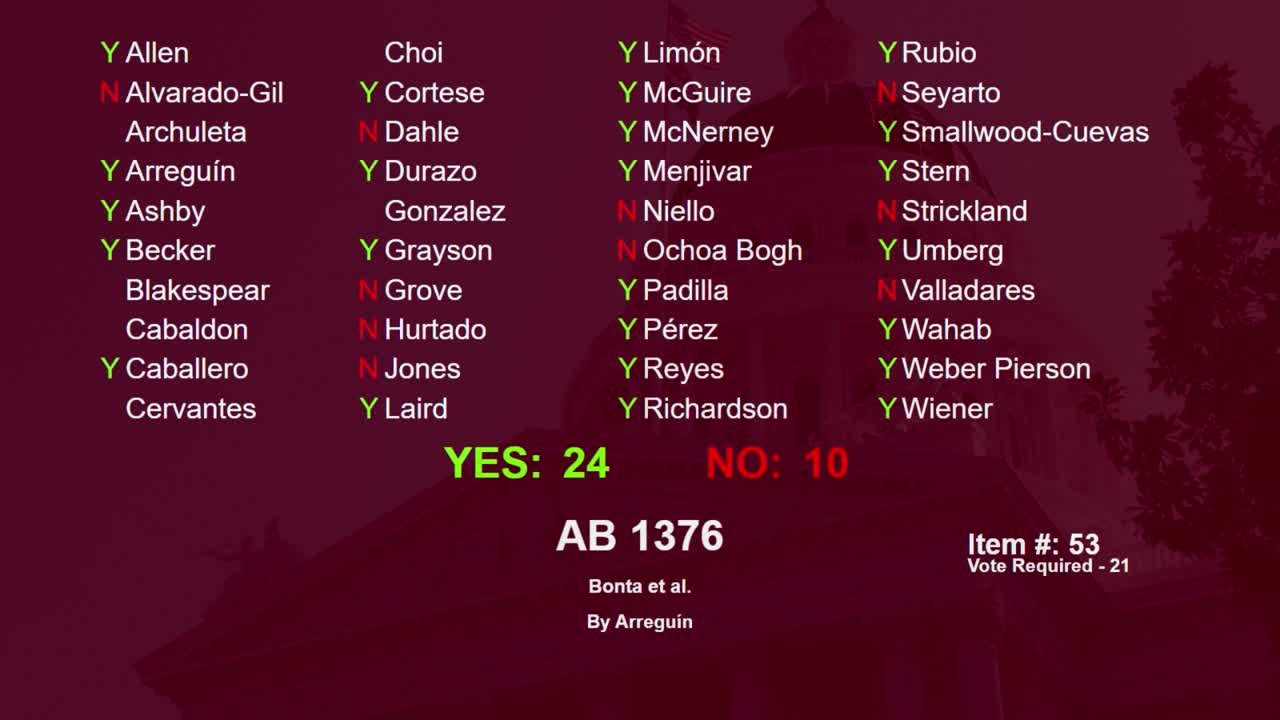
Bill Author
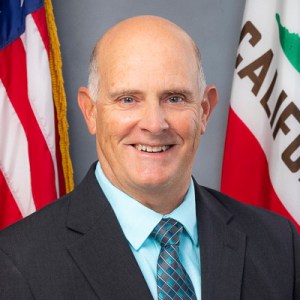
Bill Co-Author(s):