AB 1049: California Food Assistance Program: sponsor deeming rules.
- Session Year: 2025-2026
- House: Assembly
- Latest Version Date: 2026-09-01
Current Status:
Failed
(2026-09-18: Vetoed by Governor.)
Introduced
In Committee
Awaiting First Chamber Vote
Passed First Chamber
In Committee
Awaiting Second Chamber Vote
Passed Second Chamber
Enacted
What does this bill do?
The bill removes federal “sponsor deeming” rules and related sponsored noncitizen exemptions from the California Food Assistance Program (CFAP), so a sponsor’s income and assets would no longer be counted when deciding CFAP eligibility. This change affects immigrants with sponsors (those who signed affidavits of support) and the counties that run CFAP, which must stop applying those federal sponsor rules to state food-assistance decisions.
The summary is provided by generative AI which can make mistakes. For original language, please view the details in the table below.
Existing federal law establishes the Supplemental Nutrition Assistance Program (SNAP), known in California as CalFresh, under which supplemental nutrition assistance benefits allocated to the state by the federal government are distributed to eligible individuals by each county. Existing state law establishes, in addition to CalFresh, the California Food Assistance Program (CFAP) to provide nutrition benefits to households that are ineligible for CalFresh benefits solely due to their immigration status, as specified. Existing law sets forth provisions relating to state funding for CFAP.
Under existing federal and state law, in determining the eligibility and amount of aid for a person who is not a citizen or national of the United States under certain public social services programs, the income and resources of the person are deemed to include the income and resources of any person who has executed an affidavit of support on behalf of the person and the spouse of that person, with certain exemptions.
Existing state law requires that federal deeming rules and exemptions governing SNAP also govern CFAP, with certain exceptions.
Under this bill, beginning January 1, 2028, or when the department notifies the Legislature that the Statewide Automated Welfare System can perform the necessary automation to implement these provisions, whichever is later, federal sponsor deeming rules and noncitizen exemptions governing SNAP would instead not apply to CFAP. By creating new duties for counties relating to CFAP eligibility, the bill would impose a state-mandated local program.
The California Constitution requires the state to reimburse local agencies and school districts for certain costs mandated by the state. Statutory provisions establish procedures for making that reimbursement.
This bill would provide that, if the Commission on State Mandates determines that the bill contains costs mandated by the state, reimbursement for those costs shall be made pursuant to the statutory provisions noted above.
Existing federal law establishes the Supplemental Nutrition Assistance Program (SNAP), known in California as CalFresh, under which supplemental nutrition assistance benefits allocated to the state by the federal government are distributed to eligible individuals by each county. Existing state law establishes, in addition to CalFresh, the California Food Assistance Program (CFAP) to provide nutrition benefits to households that are ineligible for CalFresh benefits solely due to their immigration status, as specified. Existing law sets forth provisions relating to state funding for CFAP.
Under existing federal and state law, in determining the eligibility and amount of aid for a person who is not a citizen or national of the United States under certain public social services programs, the income and resources of the person are deemed to include the income and resources of any person who has executed an affidavit of support on behalf of the person and the spouse of that person, with certain exemptions.
Existing state law requires that federal deeming rules and exemptions governing SNAP also govern CFAP, with certain exceptions.
Under this bill, federal beginning January 1, 2028, or when the department notifies the Legislature that the Statewide Automated Welfare System can perform the necessary automation to implement these provisions, whichever is later, federal sponsor deeming rules and noncitizen exemptions governing SNAP would instead not apply to CFAP. By creating new duties for counties relating to CFAP eligibility, the bill would impose a state-mandated local program.
The California Constitution requires the state to reimburse local agencies and school districts for certain costs mandated by the state. Statutory provisions establish procedures for making that reimbursement.
This bill would provide that, if the Commission on State Mandates determines that the bill contains costs mandated by the state, reimbursement for those costs shall be made pursuant to the statutory provisions noted above.
Existing federal law establishes the Supplemental Nutrition Assistance Program (SNAP), known in California as CalFresh, under which supplemental nutrition assistance benefits allocated to the state by the federal government are distributed to eligible individuals by each county. Existing state law establishes, in addition to CalFresh, the California Food Assistance Program (CFAP) to provide nutrition benefits to households that are ineligible for CalFresh benefits solely due to their immigration status, as specified. Existing law sets forth provisions relating to state funding for CFAP.
Under existing federal and state law, in determining the eligibility and amount of aid for a person who is not a citizen or national of the United States under certain public social services programs, the income and resources of the person are deemed to include the income and resources of any person who has executed an affidavit of support on behalf of the person and the spouse of that person, with certain exemptions.
Existing state law requires that federal deeming rules and exemptions governing SNAP also govern CFAP, with certain exceptions.
Under this bill, federal deeming rules and exemptions governing SNAP would instead not apply to CFAP. By creating new duties for counties relating to CFAP eligibility, the bill would impose a state-mandated local program.
The California Constitution requires the state to reimburse local agencies and school districts for certain costs mandated by the state. Statutory provisions establish procedures for making that reimbursement.
This bill would provide that, if the Commission on State Mandates determines that the bill contains costs mandated by the state, reimbursement for those costs shall be made pursuant to the statutory provisions noted above.
(a)Except as otherwise provided in this chapter, the federal and state laws and regulations governing the federal Supplemental Nutrition Assistance Program shall also govern the program provided for under this chapter.
(b)Federal deeming rules and exemptions governing the federal Supplemental Nutrition Assistance Program shall also govern the program provided for under this chapter, except that for immigrants with affidavits of support under Section 1183a of Title 8 of the United States Code who do not meet exemptions from deeming, the period for deeming of a sponsors income and resources shall be three years from the date of the sponsors execution of the affidavit of support pursuant to Section 1183a of Title 8 of the United States Code.
(c)Notwithstanding any other provision in this chapter, immigrants who are victims of abuse by their sponsor or sponsors spouse shall be exempt from deeming. Abuse shall be defined in the same manner as provided in Section 11495.1 and Section 11495.12. A sworn statement of abuse by a victim, or the representative of the victim if the victim is not able to competently swear, shall be sufficient to establish abuse if one or more additional items of evidence of abuse is also provided. Additional evidence may include, but is not limited to, the following:
(1)Police, government agency, or court records or files.
(2)Documentation from a domestic violence program, or from a legal, clinical, medical, or other professional from whom the applicant or recipient has sought assistance in dealing with abuse.
(3)A statement from any other individual with knowledge of the circumstances that provided the basis for the claim.
(4)Physical evidence of abuse.
(5)If the victim cannot provide additional evidence of abuse, then the sworn statement shall be sufficient if the county makes a determination documented in writing in the case file that the applicant is credible.
(d)This section shall become inoperative on January 1, 2028, or on the date the department notifies the Legislature that the Statewide Automated Welfare System can perform the necessary automation to implement Section 18932, as added by the act that added this subdivision, whichever date is later, and, as of January 1 of the following year, is repealed.
SEC. 2.Section 18932 is added to the Welfare and Institutions Code, to read:18932.(a)Except as otherwise provided in this chapter, the federal and state laws and regulations governing the federal Supplemental Nutrition Assistance Program shall also govern the program provided for under this chapter.
(b)The federal sponsor deeming rules and sponsored noncitizen exemptions governing the federal Supplemental Nutrition Assistance Program, as specified in paragraphs (2) and (3) of subdivision (c) of Section 273.4 of Title 7 of the Code of Federal Regulations, respectively, shall not apply to the program established under this chapter.
(c)This section shall become operative on January 1, 2028, or on the date the department notifies the Legislature that the Statewide Automated Welfare System can perform the necessary automation to implement this section, whichever date is later.
SEC. 3.If the Commission on State Mandates determines that this act contains costs mandated by the state, reimbursement to local agencies and school districts for those costs shall be made pursuant to Part 7 (commencing with Section 17500) of Division 4 of Title 2 of the Government Code.
(a)Except as otherwise provided in this chapter, the federal and state laws and regulations governing the federal Food Stamp Supplemental Nutrition Assistance Program shall also govern the program provided for under this chapter.
(b)Federal deeming rules and exemptions governing the federal Food Stamp Supplemental Nutrition Assistance Program shall also govern the program provided for under this chapter, except that for immigrants with affidavits of support under Section 1183a of Title 8 of the United States Code who do not meet exemptions from deeming, the period for deeming of a sponsors income and resources shall be three years from the date of the sponsors execution of the affidavit of support pursuant to Section 1183a of Title 8 of the United States Code.
(c)Notwithstanding any other provision in this chapter, immigrants who are victims of abuse by their sponsor or sponsors spouse shall be exempt from deeming. Abuse shall be defined in the same manner as provided in Section 11495.1 and Section 11495.12. A sworn statement of abuse by a victim, or the representative of the victim if the victim is not able to competently swear, shall be sufficient to establish abuse if one or more additional items of evidence of abuse is also provided. Additional evidence may include, but is not limited to, the following:
(1)Police, government agency, or court records or files.
(2)Documentation from a domestic violence program, or from a legal, clinical, medical, or other professional from whom the applicant or recipient has sought assistance in dealing with abuse.
(3)A statement from any other individual with knowledge of the circumstances that provided the basis for the claim.
(4)Physical evidence of abuse.
(5)If the victim cannot provide additional evidence of abuse, then the sworn statement shall be sufficient if the county makes a determination documented in writing in the case file that the applicant is credible.
(d)This section shall become inoperative on January 1, 2028, or on the date the department notifies the Legislature that the Statewide Automated Welfare System can perform the necessary automation to implement Section 18932, as added by the act that added this subdivision, whichever date is later, and, as of January 1 of the following year, is repealed.
SEC. 2.Section 18932 is added to the Welfare and Institutions Code, to read:18932.(a)Except as otherwise provided in this chapter, the federal and state laws and regulations governing the federal Supplemental Nutrition Assistance Program shall also govern the program provided for under this chapter.
(b)The federal sponsor deeming rules and sponsored noncitizen exemptions governing the federal Supplemental Nutrition Assistance Program, as specified in paragraphs (2) and (3) of subdivision (c) of Section 273.4 of Title 7 of the Code of Federal Regulations, respectively, shall not apply to the program established under this chapter.
(c)This section shall become operative on January 1, 2028, or on the date the department notifies the Legislature that the Statewide Automated Welfare System can perform the necessary automation to implement this section, whichever date is later.
SEC. 2.SEC. 3.If the Commission on State Mandates determines that this act contains costs mandated by the state, reimbursement to local agencies and school districts for those costs shall be made pursuant to Part 7 (commencing with Section 17500) of Division 4 of Title 2 of the Government Code.
(a)Except as otherwise provided in this chapter, the federal and state laws and regulations governing the federal Food Stamp Supplemental Nutrition Assistance Program shall also govern the program provided for under this chapter.
(b)Federal deeming rules and exemptions governing the federal Food Stamp Program shall also govern the program provided for under this chapter, except that for immigrants with affidavits of support under Section 1183a of Title 8 of the United States Code who do not meet exemptions from deeming, the period for deeming of a sponsors income and resources shall be three years from the date of the sponsors execution of the affidavit of support pursuant to Section 1183a of Title 8 of the United States Code. Supplemental Nutrition Assistance Program shall not apply to the program established under this chapter.
(c)Notwithstanding any other provision in this chapter, immigrants who are victims of abuse by their sponsor or sponsors spouse shall be exempt from deeming. Abuse shall be defined in the same manner as provided in Section 11495.1 and Section 11495.12. A sworn statement of abuse by a victim, or the representative of the victim if the victim is not able to competently swear, shall be sufficient to establish abuse if one or more additional items of evidence of abuse is also provided. Additional evidence may include, but is not limited to, the following:(1)Police, government agency, or court records or files.(2)Documentation from a domestic violence program, or from a legal, clinical, medical, or other professional from whom the applicant or recipient has sought assistance in dealing with abuse.(3)A statement from any other individual with knowledge of the circumstances that provided the basis for the claim.(4)Physical evidence of abuse.(5)If the victim cannot provide additional evidence of abuse, then the sworn statement shall be sufficient if the county makes a determination documented in writing in the case file that the applicant is credible.SEC. 2.If the Commission on State Mandates determines that this act contains costs mandated by the state, reimbursement to local agencies and school districts for those costs shall be made pursuant to Part 7 (commencing with Section 17500) of Division 4 of Title 2 of the Government Code.
REVISIONS: HeadingLine 2.|
Date
|
Status
|
|---|---|
| Sep 18, 2026 | Vetoed by Governor. |
| Sep 4, 2026 | Enrolled and presented to the Governor at 4 p.m. |
| Aug 27, 2026 | Senate amendments concurred in. To Engrossing and Enrolling. (Ayes 59. Noes 15.). |
| Aug 27, 2026 | Senate amendments concurred in. To Engrossing and Enrolling. (Ayes 59. Noes 15. Page 6694.). |
| Aug 27, 2026 | In Assembly. Concurrence in Senate amendments pending. |
| Aug 26, 2026 | Read third time. Passed. Ordered to the Assembly. (Ayes 30. Noes 10.). |
| Aug 20, 2026 | Read second time. Ordered to third reading. |
| Aug 19, 2026 | Read third time and amended. Ordered to second reading. |
| Aug 13, 2026 | Read second time. Ordered to third reading. |
| Aug 13, 2026 | From committee: Do pass. (Ayes 5. Noes 2.) (August 13). |
| Jun 29, 2026 | In committee: Referred to APPR. suspense file. |
| Jun 16, 2026 | From committee: Do pass and re-refer to Com. on APPR. (Ayes 4. Noes 1.) (June 15). Re-referred to Com. on APPR. |
| May 28, 2026 | In committee: Set, first hearing. Hearing canceled at the request of author. |
| May 6, 2026 | Referred to Com. on HUMAN S. |
| Jan 29, 2026 | In Senate. Read first time. To Com. on RLS. for assignment. |
| Jan 29, 2026 | Read third time. Passed. Ordered to the Senate. (Ayes 54. Noes 15. Page 3867.) |
| Jan 22, 2026 | Read second time. Ordered to third reading. |
| Jan 22, 2026 | From committee: Do pass. (Ayes 11. Noes 3.) (January 22). |
| Jan 22, 2026 | Assembly Rule 63 suspended. (Page 3806.) |
| May 23, 2025 | In committee: Hearing postponed by committee. |
| Apr 23, 2025 | In committee: Set, first hearing. Referred to suspense file. |
| Apr 9, 2025 | From committee: Do pass and re-refer to Com. on APPR. (Ayes 5. Noes 1.) (April 8). Re-referred to Com. on APPR. |
| Apr 9, 2025 | Coauthors revised. |
| Mar 10, 2025 | Referred to Com. on HUM. S. |
| Feb 21, 2025 | From printer. May be heard in committee March 23. |
| Feb 20, 2025 | Read first time. To print. |
|
Date
|
Description
|
Location
|
Votes
|
|
|---|---|---|---|---|
| Aug 27, 2026 | AB 1049 Celeste Rodriguez Concurrence in Senate Amendments | Assembly Floor |
Passed |
|
| Aug 26, 2026 | Assembly 3rd Reading AB1049 Celeste Rodriguez By Gonzalez | Senate Floor |
Passed |
|
| Aug 13, 2026 | Do pass | Senate Standing Committee on Appropriations |
Passed |
|
| Jun 29, 2026 | Placed on suspense file | Senate Standing Committee on Appropriations |
Passed |
|
| Jun 15, 2026 | Do pass, but first be re-referred to the Committee on [Appropriations] | Senate Standing Committee on Human Services |
Passed |
|
| Jan 29, 2026 | AB 1049 Celeste Rodriguez Assembly Third Reading By JACKSON | Assembly Floor |
Passed |
|
| Jan 22, 2026 | Do pass. | Assembly Standing Committee on Appropriations |
Passed |
|
| Apr 8, 2025 | Do pass and be re-referred to the Committee on [Appropriations] | Assembly Standing Committee on Human Services |
Passed |
This list shows positions taken on this bill by organizations on the date displayed, which is linked to the original source.
Positions by individuals are not included.
|
Organization
|
Position
|
Date
|
|---|---|---|
| Aclu California Action | ** Support | |
| Alameda County Community Food Bank | ** Support | |
| Alchemist CDC | ** Support | |
| API Forward Movement | ** Support | |
| asian pacific islander forward movement | ** Support | |
| California Association Of Food Banks | ** Support | |
| California Community Foundation | ** Support | |
| California Food and Farming Network | ** Support | |
| California Hospital Association | ** Support | |
| California Immigrant Policy Center | ** Support | |
| California Pan - Ethnic Health Network | ** Support | |
| California Primary Care Association | ** Support | |
| California Wic Association | ** Support | |
| Ceres Community Project | ** Support | |
| Chinese for Affirmative Action | ** Support | |
| Coalition for Humane Immigrant Rights | ** Support | |
| Coalition of California Welfare Rights Organizations | ** Support | |
| Community Clinic Association of Los Angeles County | ** Support | |
| Farm2people | ** Support | |
| First 5 La | ** Support | |
| Food Access LA | ** Support | |
| Fresh Approach | ** Support | |
| Glide | ** Support | |
| Grace Institute - End Child Poverty in Ca | ** Support | |
| Grantmakers Concerned With Immigrants and Refugees | ** Support | |
| HealthRight 360 | ** Support | |
| Healthy Kids Happy Faces | ** Support | |
| Interfaith Sustainable Food Collaborative | ** Support | |
| Latino Coalition for a Healthy California | ** Support | |
| Los Angeles County | ** Support | |
| Los Angeles Food Policy Council | ** Support | |
| Marin Food Policy Council | ** Support | |
| Mazon: A Jewish Response to Hunger | ** Support | |
| Nourish California | ** Support | |
| Nourish California (Co-Sponsor) | ** Support | |
| Oasis Legal Services | ** Support | |
| Orale: Organizing Rooted in Abolition Liberation and Empowerment | ** Support | |
| Organizing Rooted in Abolition Liberation and Empowerment | ** Support | |
| Para Los Ninos | ** Support | |
| Pesticide Action Network North America | ** Support | |
| Roots of Change | ** Support | |
| San Diego Food System Alliance | ** Support | |
| San Diego Hunger Coalition | ** Support | |
| Second Harvest Food Bank of Orange County | ** Support | |
| Second Harvest of Silicon Valley | ** Support | |
| Sierra Harvest | ** Support | |
| Survivors of Torture, International | ** Support | |
| The Children's Partnership | ** Support | |
| The Children’s Partnership | ** Support | |
| Vision y Compromiso | ** Support | |
| What We All Deserve | ** Support | |
| What We All Deserve (WWAD) | ** Support |
GOVERNOR'S VETO
GV Bill Id:AB 1049
Author:(Celeste Rodriguez)
As Enrolled Ver:September 1, 2026
2/3 vote
SUMMARY
Exempts the California Food Assistance Program (CFAP) from the federal Supplemental Nutrition Assistance Program (SNAP) sponsor-deeming rules and exemptions so that a sponsor's income and resources are no longer attributed to a sponsored immigrant applicant or recipient.
Senate Amendments
- Delayed operations of this bill's provisions until January 1, 2028, or the date the California Department of Social Services (CDSS) notifies the Legislature that the California Statewide Automated Welfare System (CalSAWS) can perform the necessary automation, whichever is later.
- Preserved existing law in the interim, including the three-year sponsor-deeming period for immigrants with affidavits of support and the exemption from deeming for immigrants who are victims of abuse by a sponsor or sponsor's spouse.
- Narrowed the scope of the exemption from all federal SNAP-deeming rules and exemptions to the federal sponsor-deeming rules and sponsored noncitizen exemptions, as specified in federal regulations. Allow all other federal SNAP rules to continue to govern CFAP as specified.
- Added a co-author.
Governor's Veto Message
This bill exempts the California Food Assistance Program (CFAP) from federal sponsor-deeming rules and exemptions so that a sponsor's income and resources are no longer attributed to a sponsored immigrant applicant.
I applaud the author's commitment to removing barriers for individuals seeking access to food assistance. Unfortunately, the changes proposed by this bill would create a significant inconsistency between the federally funded CalFresh program and the state-funded CFAP program. Both programs utilize the same application and follow the same sponsor deeming requirements. I am reluctant to fundamentally alter rules that could lead to apparent discrepancies that could be weaponized by the current federal administration. We have already witnessed their limitless cruelty in denying millions of American families food assistance with little to no regard.
There are existing exemptions to sponsor deeming that are aligned with the intent of the bill. I am directing the Department of Social Services to continue to work with counties and trusted community messengers to support awareness of these exemptions, alongside other efforts to connect Californians to food benefits.
COMMENTS
Background: CalFresh. The CalFresh program is California's version of the federal SNAP, which provides monthly food assistance to qualifying low‑income households. CalFresh benefits are federally funded, and the federal government establishes income eligibility standards and benefit levels. Costs to administer the program are shared among the federal government, the state and counties. On average, an individual receives between $20 and $250 per month. Families receive more depending on income and household size. Under federal law, CalFresh benefits are available to U.S. citizens and, under narrow circumstances, lawfully present non-U.S. citizens. As of June 2026, over 5.1 million individuals were receiving CalFresh.
California Food Assistance Program. Prior to the passage of the Personal Responsibility and Work Opportunity Reconciliation Act (PRWORA) of 1996, most noncitizens lawfully residing in the U.S. were eligible for SNAP benefits on the same basis as citizens. With the enactment of PRWORA, lawfully present non-citizens (legal permanent residents (LPRs); green card holders) lost eligibility even if they had been in the country when the law was passed. The 2022 Farm Bill broadly restored SNAP eligibility to most lawfully present noncitizens, including individuals who resided in the U.S. for five years, children under 18 years of age, and individuals receiving disability-related assistance or benefits.
Despite this expansion, not all noncitizens were able to get access. States were granted the option to offer state-funded food assistance to these populations, resulting in the establishment of CFAP, which uses the same electronic benefits transfer (EBT) system and CalSAWS as CalFresh to distribute benefits. Through the EBT system, the federal government directly deposits funds into the accounts of participating households, with the state later reimbursing the federal government for these expenditures.
According to CDSS, examples of individuals eligible for CFAP include noncitizens who are LPRs who have not met the five-year U.S. residency requirements or 40 qualifying work quarters criteria; parolees; conditional entrants; or, battered or abused. Currently, certain noncitizens, such as undocumented individuals, are ineligible for CFAP based on their immigration status. However, under the 2024 Budget Act, the state planned to expand CFAP eligibility to include all adults 55 years of age and older, regardless of immigration status, starting in 2027. This expansion was delayed from its original timeline as part of budget negotiations.
CFAP benefits are equivalent to those provided by CalFresh and vary based on factors such as household size, income, and deductible expenses. In the 2024-25 fiscal year, CFAP benefits totaled approximately $130 million from the General Fund for 28,900 households, with an estimated average monthly benefit of $372 per household.
Sponsor-Deeming Rules. Federal sponsor-deeming rules are provisions established under the PRWORA of 1996, which require that an immigrant's eligibility for federal means-tested benefits, such as SNAP, be determined by including the income and resources of their sponsor. The purpose of these deeming rules is to ensure that sponsors who have committed to financially supporting a noncitizen, through an affidavit of support, uphold their obligations. An affidavit of support is a contract signed by the sponsor to demonstrate that the applicant of the green card will not become a public charge, dependent on government resources. The application of federal deeming rules to state-level programs like CFAP has historically been intended to maintain consistency with federal standards.
Sponsor-deeming rules do not apply to several groups of immigrants, including immigrants who are not required to have sponsors; immigrants without Form I-864; immigrant children under 18 years of age; immigrants living with their sponsor; victims of abuse; and, indigence exception. In the federal SNAP program, sponsor-deeming ends when the sponsored LPR becomes a U.S. citizen; completes 40 work quarters; leaves the U.S.; meets an exception; or, or if either the sponsor or immigrant dies.
Sponsors' income and resources are "deemed" or attributed to the noncitizen, thereby limiting eligibility for public benefits based on the sponsor's financial capacity rather than the noncitizen's own resources. Only certain portions of a sponsor's income and resources are deemed, with deductions applied for earned income, federal poverty level allowances for the sponsor's family, and pro-rata adjustments when a sponsor supports multiple immigrants. The applicant is responsible for obtaining the income and resources from the sponsor by asking for these details and submitting required verification such as tax forms. Benefits cannot be approved until this information is provided, even if the sponsor is uncooperative or their whereabouts are unknown. To bypass this requirement, an immigrant must qualify for an exemption. However, if a noncitizen changes sponsors during the certification period, then deemed income and resources are required to be recalculated based on the required information of the new sponsor.
Burdens of Sponsor-Deeming Rules. Proponents may argue that it ensures accountability by holding sponsors financially responsible if there is an over-issuance of benefits, much like a co-signer on a loan who is liable for repayment if the primary borrower cannot pay. However, it is important to note that there is no comparable mechanism for U.S. citizens applying for benefits. Sponsor-deeming rules create barriers for immigrants who are economically vulnerable, particularly when sponsors are unwilling or unable to provide the promised support. Sponsor-deeming assumes that sponsors are both financially capable and willing to fulfill their obligations, which is not always the case. It also creates a parallel system where immigrants are assessed not only based on their own financial circumstances, but also the income and resources of their sponsors, even if the sponsors are not contributing any actual support. This extra layer of scrutiny applies exclusively to noncitizens and reflects a fundamental difference in how eligibility is determined for immigrants versus citizens.
Reporting requirements under the indigence exception require counties to report the names of sponsor's immigrants and their sponsors to the U.S. Attorney General, discouraging eligible individuals from seeking assistance out of fear of jeopardizing their legal status or their sponsor's legal status. A November 2023 report published by the Urban Institute found that an estimated one in six immigrant families with children avoided government benefits in the last year because of green card concerns. Delayed benefits due to these logistical hurdles can leave vulnerable immigrants without essential food assistance.
Additionally, not only does misinformation and confusion around the sponsor-deeming requirement deter immigrants and their sponsors from seeking critical food benefits, but many immigrants may not be aware of available exemptions, leading to incomplete or incorrect applications or wrongful denial of food benefits. On a county-level, inconsistent application of deeming rules across counties can also result in unequal access to benefits, undermining the purpose of CFAP. Overall, access to CFAP is heavily reliant on sponsor cooperation.
According to the Author
"We must commit to making sure we streamline the processes to ensure families are able to access the resources they need, especially when it comes to food assistance. Currently, many eligible low-income immigrant families in California fear accessing public programs in our state because of concerns with the status of their green cards. [This bill] seeks to make a change to the California Food Assistance Program. Currently, the income and resources of an immigrant's sponsor are used when determining eligibility, even if the sponsor is not actively able to provide financial support to the sponsored immigrant. [This bill] would remove that requirement and allow eligible low-income immigrant families to gain access to food assistance without feeling stigmatized or fearful of accessing essential food assistance. [This bill] is a step forward in improving food security and overall well-being on our communities."
Arguments in Support
According to the California Immigrant Policy Center and Nourish California, "Sponsor deeming is a complex and discriminatory rule that adds a portion of the income and resources of an immigrant's sponsor when determining eligibility for food benefits. Because of its complexity, this rule can cause confusion about eligibility during the enrollment process and lead to low-income immigrant families being wrongfully denied benefits that they are eligible for. Because CFAP is a state-funded program, California's leaders have the power to remove this burdensome and inequitable rule, simplifying enrollment for the families who need it most. By passing [this bill], we can strengthen California's food safety net, reduce the chilling effect, and build a simpler pathway for struggling families to find much-needed support, especially in times of economic hardship."
Arguments in Opposition
None on file.
FISCAL COMMENTS
According to the Senate Appropriations Committee, "Unknown General Fund costs for increased CFAP caseloads due to more individuals becoming eligible for the program. The California Department of Social Services (CDSS) estimates a one-time General Fund cost of approximately $103,500 for automation. Unknown potential costs to counties for administration. Costs would be potentially reimbursable by the state, subject to a determination by the Commission on State Mandates."
VOTES
ASM HUMAN SERVICES: 5-1-0
YES: Lee, Calderon, Elhawary, Jackson, Celeste Rodriguez
NO: Castillo
ASM APPROPRIATIONS: 11-3-1
YES: Wicks, Stefani, Calderon, Caloza, Fong, Mark González, Krell, Bauer-Kahan, Pacheco, Pellerin, Solache
NO: Hoover, Dixon, Tangipa
ABS, ABST OR NV: Ta
ASSEMBLY FLOOR: 54-15-11
YES: Addis, Aguiar-Curry, Ahrens, Alvarez, Ávila Farías, Bains, Bauer-Kahan, Bennett, Berman, Boerner, Bonta, Bryan, Calderon, Caloza, Carrillo, Connolly, Elhawary, Fong, Gabriel, Garcia, Mark González, Haney, Harabedian, Hart, Irwin, Jackson, Kalra, Krell, Lee, Lowenthal, McKinnor, Muratsuchi, Nguyen, Ortega, Pacheco, Papan, Patel, Pellerin, Petrie-Norris, Quirk-Silva, Ramos, Michelle Rodriguez, Rogers, Blanca Rubio, Schultz, Sharp-Collins, Solache, Soria, Stefani, Ward, Wicks, Wilson, Zbur, Rivas
NO: Alanis, Castillo, Chen, DeMaio, Dixon, Ellis, Gallagher, Jeff Gonzalez, Hadwick, Johnson, Lackey, Macedo, Patterson, Sanchez, Tangipa
ABS, ABST OR NV: Arambula, Davies, Flora, Gipson, Hoover, Ransom, Celeste Rodriguez, Schiavo, Ta, Valencia, Wallis
SENATE FLOOR: 30-10-0
YES: Allen, Archuleta, Arreguín, Ashby, Becker, Blakespear, Cabaldon, Caballero, Cervantes, Cortese, Durazo, Gonzalez, Grayson, Hurtado, Laird, Limón, McGuire, McNerney, Menjivar, Padilla, Pérez, Reyes, Richardson, Rubio, Smallwood-Cuevas, Stern, Umberg, Wahab, Weber Pierson, Wiener
NO: Alvarado-Gil, Choi, Dahle, Grove, Jones, Niello, Ochoa Bogh, Seyarto, Strickland, Valladares
ASSEMBLY FLOOR: 59-15-5
YES: Addis, Aguiar-Curry, Ahrens, Alvarez, Arambula, Ávila Farías, Bains, Bauer-Kahan, Bennett, Berman, Boerner, Bonta, Bryan, Calderon, Caloza, Carrillo, Connolly, Elhawary, Fong, Gabriel, Garcia, Gipson, Mark González, Haney, Harabedian, Hart, Irwin, Jackson, Kalra, Krell, Lee, Lowenthal, Muratsuchi, Nguyen, Ortega, Pacheco, Papan, Patel, Pellerin, Petrie-Norris, Quirk-Silva, Ramos, Ransom, Celeste Rodriguez, Michelle Rodriguez, Rogers, Blanca Rubio, Schiavo, Schultz, Sharp-Collins, Solache, Soria, Stefani, Valencia, Ward, Wicks, Wilson, Zbur, Rivas
NO: Alanis, Castillo, Chen, DeMaio, Dixon, Ellis, Flora, Jeff Gonzalez, Hadwick, Johnson, Lackey, Macedo, Patterson, Sanchez, Tangipa
ABS, ABST OR NV: Davies, Hoover, McKinnor, Ta, Wallis
UPDATED
VERSION: September 1, 2026
CONSULTANT: Bri-Ann Hernández-Mengual / HUM. S. / (916) 319-2089 FN: 0004596
CONCURRENCE IN SENATE AMENDMENTS
CSA1 Bill Id:AB 1049
Author:(Celeste Rodriguez)
As Amended Ver:August 19, 2026
Majority vote
SUMMARY
Exempts the California Food Assistance Program (CFAP) from the federal Supplemental Nutrition Assistance Program (SNAP) sponsor-deeming rules and exemptions so that a sponsor's income and resources are no longer attributed to a sponsored immigrant applicant or recipient.
Senate Amendments
- Delay operations of this bill's provisions until January 1, 2028, or the date the California Department of Social Services (CDSS) notifies the Legislature that the California Statewide Automated Welfare System (CalSAWS) can perform the necessary automation, whichever is later.
- Preserve existing law in the interim, including the three-year sponsor-deeming period for immigrants with affidavits of support and the exemption from deeming for immigrants who are victims of abuse by a sponsor or sponsor's spouse.
- Narrow the scope of the exemption from all federal SNAP-deeming rules and exemptions to the federal sponsor-deeming rules and sponsored noncitizen exemptions, as specified in federal regulations. Allow all other federal SNAP rules to continue to govern CFAP as specified.
- Add a co-author.
COMMENTS
Background: CalFresh. The CalFresh program is California's version of the federal SNAP, which provides monthly food assistance to qualifying low‑income households. CalFresh benefits are federally funded, and the federal government establishes income eligibility standards and benefit levels. Costs to administer the program are shared among the federal government, the state and counties. On average, an individual receives between $20 and $250 per month. Families receive more depending on income and household size. Under federal law, CalFresh benefits are available to U.S. citizens and, under narrow circumstances, lawfully present non-U.S. citizens. As of June 2026, over 5.1 million individuals were receiving CalFresh.
California Food Assistance Program. Prior to the passage of the Personal Responsibility and Work Opportunity Reconciliation Act (PRWORA) of 1996, most noncitizens lawfully residing in the U.S. were eligible for SNAP benefits on the same basis as citizens. With the enactment of PRWORA, lawfully present non-citizens (legal permanent residents (LPRs); green card holders) lost eligibility even if they had been in the country when the law was passed. The 2022 Farm Bill broadly restored SNAP eligibility to most lawfully present noncitizens, including individuals who resided in the U.S. for five years, children under 18 years of age, and individuals receiving disability-related assistance or benefits.
Despite this expansion, not all noncitizens were able to get access. States were granted the option to offer state-funded food assistance to these populations, resulting in the establishment of CFAP, which uses the same electronic benefits transfer (EBT) system and CalSAWS as CalFresh to distribute benefits. Through the EBT system, the federal government directly deposits funds into the accounts of participating households, with the state later reimbursing the federal government for these expenditures.
According to CDSS, examples of individuals eligible for CFAP include noncitizens who are LPRs who have not met the five-year U.S. residency requirements or 40 qualifying work quarters criteria; parolees; conditional entrants; or, battered or abused. Currently, certain noncitizens, such as undocumented individuals, are ineligible for CFAP based on their immigration status. However, under the 2024 Budget Act, the state planned to expand CFAP eligibility to include all adults 55 years of age and older, regardless of immigration status, starting in 2027. This expansion was delayed from its original timeline as part of budget negotiations.
CFAP benefits are equivalent to those provided by CalFresh and vary based on factors such as household size, income, and deductible expenses. In the 2024-25 fiscal year, CFAP benefits totaled approximately $130 million from the General Fund for 28,900 households, with an estimated average monthly benefit of $372 per household.
Sponsor-Deeming Rules. Federal sponsor-deeming rules are provisions established under the PRWORA of 1996, which require that an immigrant's eligibility for federal means-tested benefits, such as SNAP, be determined by including the income and resources of their sponsor. The purpose of these deeming rules is to ensure that sponsors who have committed to financially supporting a noncitizen, through an affidavit of support, uphold their obligations. An affidavit of support is a contract signed by the sponsor to demonstrate that the applicant of the green card will not become a public charge, dependent on government resources. The application of federal deeming rules to state-level programs like CFAP has historically been intended to maintain consistency with federal standards.
Sponsor-deeming rules do not apply to several groups of immigrants, including immigrants who are not required to have sponsors; immigrants without Form I-864; immigrant children under 18 years of age; immigrants living with their sponsor; victims of abuse; and, indigence exception. In the federal SNAP program, sponsor-deeming ends when the sponsored LPR becomes a U.S. citizen; completes 40 work quarters; leaves the U.S.; meets an exception; or, or if either the sponsor or immigrant dies.
Sponsors' income and resources are "deemed" or attributed to the noncitizen, thereby limiting eligibility for public benefits based on the sponsor's financial capacity rather than the noncitizen's own resources. Only certain portions of a sponsor's income and resources are deemed, with deductions applied for earned income, federal poverty level allowances for the sponsor's family, and pro-rata adjustments when a sponsor supports multiple immigrants. The applicant is responsible for obtaining the income and resources from the sponsor by asking for these details and submitting required verification such as tax forms. Benefits cannot be approved until this information is provided, even if the sponsor is uncooperative or their whereabouts are unknown. To bypass this requirement, an immigrant must qualify for an exemption. However, if a noncitizen changes sponsors during the certification period, then deemed income and resources are required to be recalculated based on the required information of the new sponsor.
Burdens of Sponsor-Deeming Rules. Proponents may argue that it ensures accountability by holding sponsors financially responsible if there is an over-issuance of benefits, much like a co-signer on a loan who is liable for repayment if the primary borrower cannot pay. However, it is important to note that there is no comparable mechanism for U.S. citizens applying for benefits. Sponsor-deeming rules create barriers for immigrants who are economically vulnerable, particularly when sponsors are unwilling or unable to provide the promised support. Sponsor-deeming assumes that sponsors are both financially capable and willing to fulfill their obligations, which is not always the case. It also creates a parallel system where immigrants are assessed not only based on their own financial circumstances, but also the income and resources of their sponsors, even if the sponsors are not contributing any actual support. This extra layer of scrutiny applies exclusively to noncitizens and reflects a fundamental difference in how eligibility is determined for immigrants versus citizens.
Reporting requirements under the indigence exception require counties to report the names of sponsor's immigrants and their sponsors to the U.S. Attorney General, discouraging eligible individuals from seeking assistance out of fear of jeopardizing their legal status or their sponsor's legal status. A November 2023 report published by the Urban Institute found that an estimated one in six immigrant families with children avoided government benefits in the last year because of green card concerns. Delayed benefits due to these logistical hurdles can leave vulnerable immigrants without essential food assistance.
Additionally, not only does misinformation and confusion around the sponsor-deeming requirement deter immigrants and their sponsors from seeking critical food benefits, but many immigrants may not be aware of available exemptions, leading to incomplete or incorrect applications or wrongful denial of food benefits. On a county-level, inconsistent application of deeming rules across counties can also result in unequal access to benefits, undermining the purpose of CFAP. Overall, access to CFAP is heavily reliant on sponsor cooperation.
According to the Author
"We must commit to making sure we streamline the processes to ensure families are able to access the resources they need, especially when it comes to food assistance. Currently, many eligible low-income immigrant families in California fear accessing public programs in our state because of concerns with the status of their green cards. [This bill] seeks to make a change to the California Food Assistance Program. Currently, the income and resources of an immigrant's sponsor are used when determining eligibility, even if the sponsor is not actively able to provide financial support to the sponsored immigrant. [This bill] would remove that requirement and allow eligible low-income immigrant families to gain access to food assistance without feeling stigmatized or fearful of accessing essential food assistance. [This bill] is a step forward in improving food security and overall well-being on our communities."
Arguments in Support
According to the California Immigrant Policy Center and Nourish California, "Sponsor deeming is a complex and discriminatory rule that adds a portion of the income and resources of an immigrant's sponsor when determining eligibility for food benefits. Because of its complexity, this rule can cause confusion about eligibility during the enrollment process and lead to low-income immigrant families being wrongfully denied benefits that they are eligible for. Because CFAP is a state-funded program, California's leaders have the power to remove this burdensome and inequitable rule, simplifying enrollment for the families who need it most. By passing [this bill], we can strengthen California's food safety net, reduce the chilling effect, and build a simpler pathway for struggling families to find much-needed support, especially in times of economic hardship."
Arguments in Opposition
None on file.
FISCAL COMMENTS
According to the Senate Appropriations Committee, "Unknown General Fund costs for increased CFAP caseloads due to more individuals becoming eligible for the program. The California Department of Social Services (CDSS) estimates a one-time General Fund cost of approximately $103,500 for automation. Unknown potential costs to counties for administration. Costs would be potentially reimbursable by the state, subject to a determination by the Commission on State Mandates."
VOTES:
ASM HUMAN SERVICES: 5-1-0
YES: Lee, Calderon, Elhawary, Jackson, Celeste Rodriguez
NO: Castillo
ASM APPROPRIATIONS: 11-3-1
YES: Wicks, Stefani, Calderon, Caloza, Fong, Mark González, Krell, Bauer-Kahan, Pacheco, Pellerin, Solache
NO: Hoover, Dixon, Tangipa
ABS, ABST OR NV: Ta
ASSEMBLY FLOOR: 54-15-11
YES: Addis, Aguiar-Curry, Ahrens, Alvarez, Ávila Farías, Bains, Bauer-Kahan, Bennett, Berman, Boerner, Bonta, Bryan, Calderon, Caloza, Carrillo, Connolly, Elhawary, Fong, Gabriel, Garcia, Mark González, Haney, Harabedian, Hart, Irwin, Jackson, Kalra, Krell, Lee, Lowenthal, McKinnor, Muratsuchi, Nguyen, Ortega, Pacheco, Papan, Patel, Pellerin, Petrie-Norris, Quirk-Silva, Ramos, Michelle Rodriguez, Rogers, Blanca Rubio, Schultz, Sharp-Collins, Solache, Soria, Stefani, Ward, Wicks, Wilson, Zbur, Rivas
NO: Alanis, Castillo, Chen, DeMaio, Dixon, Ellis, Gallagher, Jeff Gonzalez, Hadwick, Johnson, Lackey, Macedo, Patterson, Sanchez, Tangipa
ABS, ABST OR NV: Arambula, Davies, Flora, Gipson, Hoover, Ransom, Celeste Rodriguez, Schiavo, Ta, Valencia, Wallis
SENATE FLOOR: 30-10-0
YES: Allen, Archuleta, Arreguín, Ashby, Becker, Blakespear, Cabaldon, Caballero, Cervantes, Cortese, Durazo, Gonzalez, Grayson, Hurtado, Laird, Limón, McGuire, McNerney, Menjivar, Padilla, Pérez, Reyes, Richardson, Rubio, Smallwood-Cuevas, Stern, Umberg, Wahab, Weber Pierson, Wiener
NO: Alvarado-Gil, Choi, Dahle, Grove, Jones, Niello, Ochoa Bogh, Seyarto, Strickland, Valladares
UPDATED
VERSION: August 19, 2026
CONSULTANT: Bri-Ann Hernandez-Mengual / HUM. S. / (916) 319-2089 FN: 0004337
SENATE RULES COMMITTEE Office of Senate Floor Analyses (916) 651-4171 | AB 1049 |
THIRD READING
Bill No: AB 1049
Author: Celeste Rodriguez (D), et al.
Amended: 8/19/26
Vote: 21
SENATE HUMAN SERVICES COMMITTEE: 4-1, 6/15/26
AYES: Becker, Laird, Pérez, Weber Pierson
NOES: Ochoa Bogh
SENATE APPROPRIATIONS COMMITTEE: 5-2, 8/13/26
AYES: Cervantes, Cabaldon, Grayson, Richardson, Wahab
NOES: Seyarto, Dahle
ASSEMBLY FLOOR: 54-15, 1/29/26 - See last page for vote
SUBJECT: California Food Assistance Program: sponsor deeming rules
SOURCE: California Immigrant Policy Center
Nourish California
DIGEST:
This bill eliminates the requirement that applicants to the California Food Assistance Program (CFAP) must abide by the federal sponsor deeming rules required of qualified immigrants applying to the Supplemental Nutrition Assistance Program (SNAP).
Senate Floor Amendments of 8/19/26 delay the operative date to January 1, 2028, or on the date the bill can be automated.
ANALYSIS:
Existing Law:
- Establishes under federal law, SNAP to promote the general welfare and to safeguard the health and wellbeing of the nation’s population by raising the levels of nutrition among low-income households. (7 United States Code (USC) Section 2011 et seq.)
- States that any immigrant visa or green card applicant who, in the opinion of the consular officer at the time of application for a visa, or in the opinion of the Attorney General at the time of application for admission or adjustment of status, is likely at any time to become a public charge is inadmissible, unless they meet certain exceptions. Factors to determine inadmissibility for public charge concerns include, at a minimum:
- Requires an affidavit of support [United States Citizenship and Immigration Services Form I-864] to be submitted for an immigrant visa or green card applicant to establish that the applicant is excludable as a public charge and be executed as a contract that includes all of the following:
- The sponsor agrees to provide support to maintain the sponsored applicant at an annual income that is not less than 125% of the Federal poverty line during the period in which the affidavit is enforceable;
- Enforceability against the sponsor by the sponsored person, the Federal Government, any State, or by any other entity that provides any means-tested public benefit;
- Agreement by the sponsor to submit to the jurisdiction of any Federal or State court for the purpose of actions brought this law. (8 USC section 1183a (a)(1))
- Establishes citizenship requirements for SNAP benefits, including that undocumented immigrants are not eligible for SNAP. (7 Code of Federal Regulations (CFR) section 273.4)
- Requires state agencies, if a sponsored immigrant applies for SNAP, to deem the income and resources of the sponsor and the sponsor's spouse as the unearned income and resources of the SNAP applicant that they sponsored until the applicant gains U.S. citizenship, has worked 40 qualifying quarters of work, or the sponsor dies. (7 CFR section 273.4(c)(2))
- Establishes the CalFresh program to administer the provision of federal SNAP benefits to families and individuals meeting specified criteria. (Welfare & Institutions Code (WIC) section 18900 et seq.)
- Requires the California Department of Social Services (CDSS) to establish CFAP to provide food assistance to people who are not eligible for federal SNAP benefits due solely to their immigration status. (WIC section 18930 et seq.)
- Requires CFAP to utilize existing CalFresh and electronic benefits transfer (EBT) system infrastructure to the extent permissible by federal law. (WIC section 18930(b))
- Provides that noncitizens of the United States are eligible for CFAP if the person’s immigration status meets the SNAP eligibility criteria in effect on August 21, 1996, but is not eligible for SNAP benefits solely due to their immigration status under Public Law 104-193 and any subsequent amendments thereto. (WIC section 18930(c)(2))
- Requires the CFAP benefits provided to household be identical to amount of CalFresh received if household was eligible. (WIC section 18930(d)(1))
- Requires, except as otherwise stated, the federal and state laws and regulations governing SNAP to also govern the CFAP, including federal sponsor deeming rules and exemptions, unless the person has a qualifying affidavit for exemptions, which provides the period for deeming of a sponsor’s income and resources shall be three years from the date of the sponsor’s execution of the affidavit of support. (WIC section 18932(a-b))
This bill:
- Makes inoperative the statute requiring applicants for CFAP that are sponsored for citizenship must abide by the federal sponsor deeming rules and exemptions, which are required for qualified immigrants applying for the SNAP program, which consider the income and resources of a sponsor and the sponsor's spouse to be the unearned income of the CFAP applicant, on January 1, 2028 or on the date the department notifies the Legislature that the Statewide Automated Welfare System can perform the necessary automation, and as of January 1 of the following year is repealed.
- Prohibits the federal sponsor deeming rules and exemptions, which are required for qualified immigrants applying for the SNAP program from applying to CFAP on January 1, 2028 or on the date the department notifies the Legislature that the Statewide Automated Welfare System can perform the necessary automation, whichever is later.
Background
According to the author, “We must commit to making sure we streamline the processes to ensure families are able to access the resources they need, especially when it comes to food assistance. Currently, many eligible low-income immigrant families in California fear accessing public programs in our state because of concerns with the status of their green cards. AB 1049 seeks to make a change to the California Food Assistance Program. Currently, the income and resources of an immigrant’s sponsor are used when determining eligibility, even if the sponsor is not actively able to provide financial support to the sponsored immigrant. AB 1049 would remove that requirement and allow eligible low-income immigrant families to gain access to food assistance without feeling stigmatized or fearful of accessing essential food assistance. AB 1049 is a step forward in improving food security and overall well-being of our communities.”
CalFresh . CalFresh is California’s version of federal SNAP, an entitlement program that provides eligible households with federally funded monthly benefits to purchase food are delivered through an EBT card which cardholders can use at point-of-sale terminals authorized by the USDA. Grocers and other retailers are paid directly by the federal government for the dollar value of purchases made with CalFresh food benefits. The average benefit in 2025-2026 is approximately $333 a month for all households.
California Food Assistance Program. Under federal law, CalFresh benefits are not available to certain non-citizens. However, California provides state-funded food assistance through CFAP for a limited group of qualified non-citizens who are not eligible for federal benefits due to their immigration status. Like CalFresh, CFAP benefits are provided via EBT cards and can only be used to purchase food products authorized under CalFresh.
CFAP was created in response to passage of the Personal Responsibility and Work Opportunity Reconciliation Act in 1996 (discussed more below), which restricted federal eligibility for aid to immigrant populations entering the United States. However, income and other federal eligibility requirements, as well as benefit amounts, for CFAP align with those for CalFresh.
California law identifies specific categories of lawfully present immigrants who are eligible for CFAP benefits as those who would be eligible for CalFresh except for the restrictions on immigrants in the Personal Responsibility and Work Opportunity Reconciliation Act in 1996, which, until recent changes in federal law, included:
- Lawful permanent residents (green card holders);
- Refugees, those receiving asylum, persons granted withholding of deportation/removal, conditional entry (in effect prior to April 1, 1980), or paroled into the U.S. for at least one year;
- Cuban/Haitian entrants;
- Battered spouses and children with one of the following, whether it be pending or approved: a self-petition for an immigrant visa; an immigrant visa filed for a spouse or child by a U.S. citizen or lawful permanent resident; or, an application for cancellation of removal/suspension of deportation, whose need for benefits has a substantial connection to the battery or cruelty. Parent/child of such battered child/spouse are also “qualified”;
- Victims of trafficking and their derivative beneficiaries who have obtained a T visa or whose application for a T visa sets forth a prima facie case.
Recent changes through the federal bill, H.R. 1, changed the CalFresh eligibility rule for noncitizens and disqualifies certain noncitizen groups from being eligible for CalFresh assistance, including asylees, refugees, parolees, and trafficking victims, among others. Meaning those groups are also now no longer eligible for CFAP. According to CDSS, about 34,000 individuals enrolled in CalFresh will lose assistance because of this change.
Public Charge Final Rule. In 1996, the federal government changed the way social service benefits are provided through a major reform of the Aid to Families with Dependent Children welfare program. The reform bill was called the Personal Responsibility and Work Opportunity Reconciliation Act of 1996. The Act codified benefit restrictions to certain immigrants, specifically those who are undocumented or do not have a qualifying citizenship status. The law states that unqualified immigrants cannot receive federal public benefits except for a limited number of exceptions.
One way benefits are restricted to unqualified immigrants is the Inadmissibility on Public Charge Grounds final rule administered by the Department of Homeland Security (DHS) United States Citizenship and Immigration Services (USCIS). Per the 2019 final rule, DHS officers were directed to consider all factors that are relevant and listed minimum factors to consider which include age, health, family size, assets and resources, and education and skills. This created a chilling affect causing immigrants who might be eligible for CalFresh to not seek out the benefits out of concern that accepting such assistance might jeopardize their future efforts to change their immigration status.
In November 2025, DHS proposed another change to the Final Rule because, as the proposal states, the most recent 2022 rule “straitjacket[s] DHS officers' ability to make public charge inadmissibility determinations that are consistent with Congress's express national policy on welfare and immigration enacted by the Personal Responsibility and Work Opportunity Reconciliation Act of 1996.” The new rule proposal brings back the broader interpretation of the 2019 rule including the past and future use of all benefits like food assistance and Medicaid. One of the proposed changes also requires DHS officers to consider the “minimum factors,” listed above, when determining admissibility or green card eligibility, including a person’s assets and resources.
Sponsor Deeming Rules. To satisfy the inadmissibility on public charge grounds requirement, an immigrant visa or green card applicant’s sponsor must fill out form USCIS I- 864 Affidavit of Support, where they commit to supporting the green card applicant at an income level of at least 125% of the federal poverty level, to prevent the person from needing to use public benefits. After a person is admitted into the United States with a visa or obtains a green card, if they apply for public benefits, the sponsor must also report a portion of their income on those public benefit applications. This means a sponsor’s income is deemed unearned income for the noncitizen applicant for the purpose of determining eligibility. This also means the applicant’s reported income will be larger than what they earn whether the sponsor is providing that additional reported income to the noncitizen applicant or not. Deeming rules apply to people applying for SSI, the State Cash Assistance Program for Immigrants, CalFresh, CalWORKs and CFAP.
As stated above, California state law requires many of the federal requirements for CalFresh to also apply to CFAP, including the sponsor deeming rule. A portion of the sponsor’s income must be reported for the first three years the person is accessing CFAP. There are a few exceptions to the requirement for sponsor deeming including a person being at risk of indigence, meaning they are unable to access food or shelter; their sponsor dies; they are victims of domestic violence; or the sponsor is also a recipient of public food assistance. However, CFAP is a state funded nutrition assistance program, and the federal law only explicitly requires sponsor deeming for federally funded programs. This bill would remove the requirement that the state deem the assets and resources of a sponsor applicable sponsored immigrant individuals and families applying for CFAP.
[NOTE: See the Senate Human Services Committee analysis for detailed background of this bill.]
Related/Prior Legislation
AB 311 (Santiago, 2024) would have removed the 55 years and older age limit for noncitizens eligible for the CFAP if the noncitizens satisfy all eligibility criteria for participation in CalFresh except any requirements related to immigration status. This bill was held in the Senate Appropriations Committee.
AB 135 (Committee on Budget, Chapter 85, Statutes of 2021) provides $5 million in the 2021 Budget Act to expand food assistance CFAP to individuals 55 years of age or older, who are ineligible for CalFresh benefits due solely to their immigration status.
FISCAL EFFECT: Appropriation: No Fiscal Com.: Yes Local: Yes
According to the Senate Appropriations Committee: “Unknown General Fund costs for increased CFAP caseloads due to more individuals becoming eligible for the program. The California Department of Social Services (CDSS) estimates a one-time General Fund cost of approximately $103,500 for automation. Unknown potential costs to counties for administration. Costs would be potentially reimbursable by the state, subject to a determination by the Commission on State Mandates.”
SUPPORT: (Verified 8/19/26)
California Immigrant Policy Center (Co-Sponsor)
Nourish California (Co-Sponsor)
ACLU California Action
Alameda County Community Food Bank
Alchemist CDC
Api Forward Movement
Asian Pacific Islander Forward Movement
California Association of Food Banks
California Community Foundation
California Food and Farming Network
California Hospital Association
California Pan - Ethnic Health Network
California Primary Care Association
California Wic Association
Ceres Community Project
Chinese for Affirmative Action
Coalition for Humane Immigrant Rights
Farm2people
First 5 LA
Food Access LA
Fresh Approach
Glide
Grace Institute - End Child Poverty in CA
Grantmakers Concerned With Immigrants and Refugees
Healthright 360
Interfaith Sustainable Food Collaborative
Latino Coalition for a Healthy California
Los Angeles County
Los Angeles Food Policy Council
Marin Food Policy Council
Orale: Organizing Rooted in Abolition Liberation and Empowerment
Para Los Ninos
Pesticide Action Network North America
Roots of Change
San Diego Food System Alliance
Second Harvest Food Bank of Orange County
Second Harvest of Silicon Valley
Sierra Harvest
Survivors of Torture, International
The Children's Partnership
Vision Y Compromiso
What We All Deserve
OPPOSITION: (Verified 8/19/26)
None received
ASSEMBLY FLOOR: 54-15, 1/29/26
AYES: Addis, Aguiar-Curry, Ahrens, Alvarez, Ávila Farías, Bains, Bauer-Kahan, Bennett, Berman, Boerner, Bonta, Bryan, Calderon, Caloza, Carrillo, Connolly, Elhawary, Fong, Gabriel, Garcia, Mark González, Haney, Harabedian, Hart, Irwin, Jackson, Kalra, Krell, Lee, Lowenthal, McKinnor, Muratsuchi, Nguyen, Ortega, Pacheco, Papan, Patel, Pellerin, Petrie-Norris, Quirk-Silva, Ramos, Michelle Rodriguez, Rogers, Blanca Rubio, Schultz, Sharp-Collins, Solache, Soria, Stefani, Ward, Wicks, Wilson, Zbur, Rivas
NOES: Alanis, Castillo, Chen, DeMaio, Dixon, Ellis, Gallagher, Jeff Gonzalez, Hadwick, Johnson, Lackey, Macedo, Patterson, Sanchez, Tangipa
NO VOTE RECORDED: Arambula, Davies, Flora, Gipson, Hoover, Ransom, Celeste Rodriguez, Schiavo, Ta, Valencia, Wallis
Prepared by: Naima Ford Antal / HUMAN S. / (916) 651-1524
8/20/26 10:56:35
**** END ****
SENATE RULES COMMITTEE Office of Senate Floor Analyses (916) 651-4171 | AB 1049 |
THIRD READING
Bill No: AB 1049
Author: Celeste Rodriguez (D), et al.
Introduced: 2/20/25
Vote: 21
SENATE HUMAN SERVICES COMMITTEE: 4-1, 6/15/26
AYES: Becker, Laird, Pérez, Weber Pierson
NOES: Ochoa Bogh
SENATE APPROPRIATIONS COMMITTEE: 5-2, 8/13/26
AYES: Cervantes, Cabaldon, Grayson, Richardson, Wahab
NOES: Seyarto, Dahle
ASSEMBLY FLOOR: 54-15, 1/29/26 - See last page for vote
SUBJECT: California Food Assistance Program: sponsor deeming rules
SOURCE: California Immigrant Policy Center
Nourish California
DIGEST:
This bill deletes the requirement that applicants to the California Food Assistance Program (CFAP) must abide by the federal sponsor deeming rules required of qualified immigrants applying to the Supplemental Nutrition Assistance Program (SNAP).
ANALYSIS:
Existing Law:
- Establishes under federal law, SNAP to promote the general welfare and to safeguard the health and wellbeing of the nation’s population by raising the levels of nutrition among low-income households. (7 United States Code (USC) Section 2011 et seq.)
- States that any immigrant visa or green card applicant who, in the opinion of the consular officer at the time of application for a visa, or in the opinion of the Attorney General at the time of application for admission or adjustment of status, is likely at any time to become a public charge is inadmissible, unless they meet certain exceptions. Factors to determine inadmissibility for public charge concerns include, at a minimum:
- Requires an affidavit of support [United States Citizenship and Immigration Services Form I-864] to be submitted for an immigrant visa or green card applicant to establish that the applicant is excludable as a public charge and be executed as a contract that includes all of the following:
- The sponsor agrees to provide support to maintain the sponsored applicant at an annual income that is not less than 125% of the Federal poverty line during the period in which the affidavit is enforceable;
- Enforceability against the sponsor by the sponsored person, the Federal Government, any State, or by any other entity that provides any means-tested public benefit;
- Agreement by the sponsor to submit to the jurisdiction of any Federal or State court for the purpose of actions brought this law. (8 USC section 1183a (a)(1))
- Establishes citizenship requirements for SNAP benefits, including that undocumented immigrants are not eligible for SNAP. (7 Code of Federal Regulations (CFR) section 273.4)
- Requires state agencies, if a sponsored immigrant applies for SNAP, to deem the income and resources of the sponsor and the sponsor's spouse as the unearned income and resources of the SNAP applicant that they sponsored until the applicant gains U.S. citizenship, has worked 40 qualifying quarters of work, or the sponsor dies. (7 CFR section 273.4(c)(2))
- Establishes the CalFresh program to administer the provision of federal SNAP benefits to families and individuals meeting specified criteria. (Welfare & Institutions Code (WIC) section 18900 et seq.)
- Requires the California Department of Social Services (CDSS) to establish CFAP to provide food assistance to people who are not eligible for federal SNAP benefits due solely to their immigration status. (WIC section 18930 et seq.)
- Requires CFAP to utilize existing CalFresh and electronic benefits transfer (EBT) system infrastructure to the extent permissible by federal law. (WIC section 18930(b))
- Provides that noncitizens of the United States are eligible for CFAP if the person’s immigration status meets the SNAP eligibility criteria in effect on August 21, 1996, but is not eligible for SNAP benefits solely due to their immigration status under Public Law 104-193 and any subsequent amendments thereto. (WIC section 18930(c)(2))
- Requires the CFAP benefits provided to household be identical to amount of CalFresh received if household was eligible. (WIC section 18930(d)(1))
- Requires, except as otherwise stated, the federal and state laws and regulations governing SNAP to also govern the CFAP, including federal sponsor deeming rules and exemptions, unless the person has a qualifying affidavit for exemptions, which provides the period for deeming of a sponsor’s income and resources shall be three years from the date of the sponsor’s execution of the affidavit of support. (WIC section 18932(a-b))
This bill removes the requirement that applicants for CFAP that are sponsored for citizenship must abide by the federal sponsor deeming rules and exemptions, which are required for qualified immigrants applying for the SNAP program, which consider the income and resources of a sponsor and the sponsor's spouse to be the unearned income of the CFAP applicant.
Background
According to the author, “We must commit to making sure we streamline the processes to ensure families are able to access the resources they need, especially when it comes to food assistance. Currently, many eligible low-income immigrant families in California fear accessing public programs in our state because of concerns with the status of their green cards. AB 1049 seeks to make a change to the California Food Assistance Program. Currently, the income and resources of an immigrant’s sponsor are used when determining eligibility, even if the sponsor is not actively able to provide financial support to the sponsored immigrant. AB 1049 would remove that requirement and allow eligible low-income immigrant families to gain access to food assistance without feeling stigmatized or fearful of accessing essential food assistance. AB 1049 is a step forward in improving food security and overall well-being of our communities.”
CalFresh . CalFresh is California’s version of federal SNAP, an entitlement program that provides eligible households with federally funded monthly benefits to purchase food are delivered through an EBT card which cardholders can use at point-of-sale terminals authorized by the USDA. Grocers and other retailers are paid directly by the federal government for the dollar value of purchases made with CalFresh food benefits. The average benefit in 2025-2026 is approximately $333 a month for all households.
California Food Assistance Program. Under federal law, CalFresh benefits are not available to certain non-citizens. However, California provides state-funded food assistance through CFAP for a limited group of qualified non-citizens who are not eligible for federal benefits due to their immigration status. Like CalFresh, CFAP benefits are provided via EBT cards and can only be used to purchase food products authorized under CalFresh.
CFAP was created in response to passage of the Personal Responsibility and Work Opportunity Reconciliation Act in 1996 (discussed more below), which restricted federal eligibility for aid to immigrant populations entering the United States. However, income and other federal eligibility requirements, as well as benefit amounts, for CFAP align with those for CalFresh.
California law identifies specific categories of lawfully present immigrants who are eligible for CFAP benefits as those who would be eligible for CalFresh except for the restrictions on immigrants in the Personal Responsibility and Work Opportunity Reconciliation Act in 1996, which, until recent changes in federal law, included:
- Lawful permanent residents (green card holders);
- Refugees, those receiving asylum, persons granted withholding of deportation/removal, conditional entry (in effect prior to April 1, 1980), or paroled into the U.S. for at least one year;
- Cuban/Haitian entrants;
- Battered spouses and children with one of the following, whether it be pending or approved: a self-petition for an immigrant visa; an immigrant visa filed for a spouse or child by a U.S. citizen or lawful permanent resident; or, an application for cancellation of removal/suspension of deportation, whose need for benefits has a substantial connection to the battery or cruelty. Parent/child of such battered child/spouse are also “qualified”;
- Victims of trafficking and their derivative beneficiaries who have obtained a T visa or whose application for a T visa sets forth a prima facie case.
Recent changes through the federal bill, H.R. 1, changed the CalFresh eligibility rule for noncitizens and disqualifies certain noncitizen groups from being eligible for CalFresh assistance, including asylees, refugees, parolees, and trafficking victims, among others. Meaning those groups are also now no longer eligible for CFAP. According to CDSS, about 34,000 individuals enrolled in CalFresh will lose assistance because of this change.
Public Charge Final Rule. In 1996, the federal government changed the way social service benefits are provided through a major reform of the Aid to Families with Dependent Children welfare program. The reform bill was called the Personal Responsibility and Work Opportunity Reconciliation Act of 1996. The Act codified benefit restrictions to certain immigrants, specifically those who are undocumented or do not have a qualifying citizenship status. The law states that unqualified immigrants cannot receive federal public benefits except for a limited number of exceptions.
One way benefits are restricted to unqualified immigrants is the Inadmissibility on Public Charge Grounds final rule administered by the Department of Homeland Security (DHS) United States Citizenship and Immigration Services (USCIS). Per the 2019 final rule, DHS officers were directed to consider all factors that are relevant and listed minimum factors to consider which include age, health, family size, assets and resources, and education and skills. This created a chilling affect causing immigrants who might be eligible for CalFresh to not seek out the benefits out of concern that accepting such assistance might jeopardize their future efforts to change their immigration status.
In November 2025, DHS proposed another change to the Final Rule because, as the proposal states, the most recent 2022 rule “straitjacket[s] DHS officers' ability to make public charge inadmissibility determinations that are consistent with Congress's express national policy on welfare and immigration enacted by the Personal Responsibility and Work Opportunity Reconciliation Act of 1996.” The new rule proposal brings back the broader interpretation of the 2019 rule including the past and future use of all benefits like food assistance and Medicaid. One of the proposed changes also requires DHS officers to consider the “minimum factors,” listed above, when determining admissibility or green card eligibility, including a person’s assets and resources.
[NOTE: See the Senate Human Services Committee analysis for detailed background of this bill.]
Sponsor Deeming Rules. To satisfy the inadmissibility on public charge grounds requirement, an immigrant visa or green card applicant’s sponsor must fill out form USCIS I- 864 Affidavit of Support, where they commit to supporting the green card applicant at an income level of at least 125 percent of the federal poverty level, to prevent the person from needing to use public benefits. After a person is admitted into the United States with a visa or obtains a green card, if they apply for public benefits, the sponsor must also report a portion of their income on those public benefit applications. This means a sponsor’s income is deemed unearned income for the noncitizen applicant for the purpose of determining eligibility. This also means the applicant’s reported income will be larger than what they earn whether the sponsor is providing that additional reported income to the noncitizen applicant or not. Deeming rules apply to people applying for SSI, the State Cash Assistance Program for Immigrants, CalFresh, CalWORKs and CFAP.
As stated above, California state law requires many of the federal requirements for CalFresh to also apply to CFAP, including the sponsor deeming rule. A portion of the sponsor’s income must be reported for the first three years the person is accessing CFAP. There are a few exceptions to the requirement for sponsor deeming including a person being at risk of indigence, meaning they are unable to access food or shelter; their sponsor dies; they are victims of domestic violence; or the sponsor is also a recipient of public food assistance. However, CFAP is a state funded nutrition assistance program, and the federal law only explicitly requires sponsor deeming for federally funded programs. This bill would remove the requirement that the state deem the assets and resources of a sponsor applicable sponsored immigrant individuals and families applying for CFAP.
Related/Prior Legislation
AB 311 (Santiago, 2024) would have removed the 55 years and older age limit for noncitizens eligible for the CFAP if the noncitizens satisfy all eligibility criteria for participation in CalFresh except any requirements related to immigration status. This bill was held in the Senate Appropriations Committee.
AB 135 (Committee on Budget, Chapter 85, Statutes of 2021) provides $5 million in the 2021 Budget Act to expand food assistance CFAP to individuals 55 years of age or older, who are ineligible for CalFresh benefits due solely to their immigration status.
FISCAL EFFECT: Appropriation: No Fiscal Com.: Yes Local: Yes
According to the Senate Appropriations Committee: “Unknown General Fund costs for increased CFAP caseloads due to more individuals becoming eligible for the program. The California Department of Social Services (CDSS) estimates a one-time General Fund cost of approximately $103,500 for automation. Unknown potential costs to counties for administration. Costs would be potentially reimbursable by the state, subject to a determination by the Commission on State Mandates.”
SUPPORT: (Verified 8/14/26)
California Immigrant Policy Center (Co-Sponsor)
Nourish California (Co-Sponsor)
ACLU California Action
Alameda County Community Food Bank
Alchemist CDC
Api Forward Movement
Asian Pacific Islander Forward Movement
California Association of Food Banks
California Community Foundation
California Food and Farming Network
California Hospital Association
California Pan - Ethnic Health Network
California Primary Care Association
California Wic Association
Ceres Community Project
Chinese for Affirmative Action
Coalition for Humane Immigrant Rights
Farm2people
First 5 LA
Food Access LA
Fresh Approach
Glide
Grace Institute - End Child Poverty in CA
Grantmakers Concerned With Immigrants and Refugees
Healthright 360
Interfaith Sustainable Food Collaborative
Latino Coalition for a Healthy California
Los Angeles County
Los Angeles Food Policy Council
Marin Food Policy Council
Orale: Organizing Rooted in Abolition Liberation and Empowerment
Para Los Ninos
Pesticide Action Network North America
Roots of Change
San Diego Food System Alliance
Second Harvest Food Bank of Orange County
Second Harvest of Silicon Valley
Sierra Harvest
Survivors of Torture, International
The Children's Partnership
Vision Y Compromiso
What We All Deserve
OPPOSITION: (Verified 8/14/26)
None received
ASSEMBLY FLOOR: 54-15, 1/29/26
AYES: Addis, Aguiar-Curry, Ahrens, Alvarez, Ávila Farías, Bains, Bauer-Kahan, Bennett, Berman, Boerner, Bonta, Bryan, Calderon, Caloza, Carrillo, Connolly, Elhawary, Fong, Gabriel, Garcia, Mark González, Haney, Harabedian, Hart, Irwin, Jackson, Kalra, Krell, Lee, Lowenthal, McKinnor, Muratsuchi, Nguyen, Ortega, Pacheco, Papan, Patel, Pellerin, Petrie-Norris, Quirk-Silva, Ramos, Michelle Rodriguez, Rogers, Blanca Rubio, Schultz, Sharp-Collins, Solache, Soria, Stefani, Ward, Wicks, Wilson, Zbur, Rivas
NOES: Alanis, Castillo, Chen, DeMaio, Dixon, Ellis, Gallagher, Jeff Gonzalez, Hadwick, Johnson, Lackey, Macedo, Patterson, Sanchez, Tangipa
NO VOTE RECORDED: Arambula, Davies, Flora, Gipson, Hoover, Ransom, Celeste Rodriguez, Schiavo, Ta, Valencia, Wallis
Prepared by: Naima Ford Antal / HUMAN S. / (916) 651-1524
8/15/26 12:09:56
SENATE COMMITTEE ON
Senator Sabrina Cervantes, Chair
2025 - 2026 Regular Session
AB 1049 (Celeste Rodriguez) - California Food Assistance Program: sponsor deeming rules
Version: | Policy Vote: |
Urgency: | Mandate: |
Hearing Date: | Consultant: |
Bill Summary:
AB 1049 would delete the requirement that federal sponsor-deeming rules apply to the California Food Assistance Program.
Fiscal Impact:
- Unknown General Fund costs for increased CFAP caseloads due to more individuals becoming eligible for the program.
- The California Department of Social Services (CDSS) estimates a one-time General Fund cost of approximately $103,500 for automation.
- Unknown potential costs to counties for administration. Costs would be potentially reimbursable by the state, subject to a determination by the Commission on State Mandates.
Background:
CalFresh. CalFresh is California’s version of the federal Supplemental Nutrition Assistance Program (SNAP), an entitlement program that provides eligible households with monthly benefits to purchase food. Benefits are delivered through an electronic benefits transfer (EBT) card which cardholders can use at authorized point-of-sale terminals. Monthly benefits per household vary based on household size, income, and deductible living expenses. CDSS provides oversight for the CalFresh program at the state level, and counties are responsible for eligibility determinations and administration at the local level.
California Food Assistance Program (CFAP). CFAP provides state-funded food benefits for certain lawfully present noncitizens who do not qualify for federal CalFresh benefits. In order to be eligible to CFAP, noncitizens must currently be ineligible for CalFresh benefits solely due to their immigration status under the federal Personal Responsibility and Work Opportunity Reconciliation Act (PRWORA) of 1996. For example, CFAP-eligible individuals include noncitizens who are lawful permanent residents who have not met the five-year U.S. residency requirement. Counties are responsible for eligibility determinations and administration at the local level.
Sponsor Deeming. Federal law requires certain immigrants to be sponsored, meaning that a sponsor must have signed an affidavit stating that they will provide assistance to maintain the immigrant at a certain annual income. When determining eligibility for federal means-tested public benefits such as SNAP, the income and resources of the sponsor are deemed available to the sponsored immigrant. State law requires that federal deeming rules and exemptions governing SNAP also govern CFAP for purposes of program eligibility, with certain exceptions.
Proposed Law:
AB 1049 would delete the requirement that the federal deeming rules and exemptions governing SNAP apply to CFAP.
Related Legislation: AB 2299 (Calderon) would expand eligibility for CFAP. The bill is currently in the Senate Human Services Committee.
-- END --
SENATE COMMITTEE ON HUMAN SERVICES
Senator Becker, Chair
2025 - 2026 Regular
Bill No: | AB 1049 | ||
Author: | Celeste Rodriguez | ||
Version: | February 20, 2025 | Hearing Date: | June 15, 2026 |
Urgency: | No | Fiscal: | Yes |
Consultant: | Naima Ford Antal | ||
Subject: California Food Assistance Program: sponsor deeming rules
SUMMARY
This bill deletes the requirement that applicants to the California Food Assistance Program (CFAP) must abide by the federal sponsor deeming rules required of qualified immigrants applying to the Supplemental Nutrition Assistance Program (SNAP).
ABSTRACT
Existing Law:
- Establishes under federal law, SNAP to promote the general welfare and to safeguard the health and wellbeing of the nation’s population by raising the levels of nutrition among low-income households. (7 USC Section 2011 et seq.)
- States that any immigrant visa or green card applicant who, in the opinion of the consular officer at the time of application for a visa, or in the opinion of the Attorney General at the time of application for admission or adjustment of status, is likely at any time to become a public charge is inadmissible, unless they meet certain exceptions. Factors to determine inadmissibility for public charge concerns include, at a minimum:
- Requires an affidavit of support [United States Citizenship and Immigration Services Form I-864] to be submitted for an immigrant visa or green card applicant to establish that the applicant is excludable as a public charge and be executed as a contract that includes all of the following:
- The sponsor agrees to provide support to maintain the sponsored applicant at an annual income that is not less than 125 percent of the Federal poverty line during the period in which the affidavit is enforceable;
- Enforceability against the sponsor by the sponsored person, the Federal Government, any State, or by any other entity that provides any means-tested public benefit;
- Agreement by the sponsor to submit to the jurisdiction of any Federal or State court for the purpose of actions brought this law. (8 USC 1183a (a)(1))
- Establishes citizenship requirements for SNAP benefits, including that undocumented immigrants are not eligible for SNAP. (7 CFR 273.4)
- Requires state agencies, if a sponsored immigrant applies for SNAP, to deem the income and resources of the sponsor and the sponsor's spouse as the unearned income and resources of the SNAP applicant that they sponsored until the applicant gains U.S. citizenship, has worked 40 qualifying quarters of work, or the sponsor dies. (7 CFR 273.4(c)(2))
- Establishes the CalFresh program to administer the provision of federal SNAP benefits to families and individuals meeting specified criteria. (WIC 18900 et seq.)
- Requires the California Department of Social Services (CDSS) to establish CFAP to provide food assistance to people who are not eligible for federal SNAP benefits due solely to their immigration status. (WIC 18930 et seq.)
- Requires CFAP to utilize existing CalFresh and electronic benefits transfer (EBT) system infrastructure to the extent permissible by federal law. (WIC 18930(b))
- Provides that noncitizens of the United States are eligible for CFAP if the person’s immigration status meets the SNAP eligibility criteria in effect on August 21, 1996, but is not eligible for SNAP benefits solely due to their immigration status under Public Law 104-193 and any subsequent amendments thereto. (WIC 18930(c)(2))
- Requires the CFAP benefits provided to household be identical to amount of CalFresh receieved if household was eligible. (WIC 18930(d)(1))
- Requires, except as otherwise stated, the federal and state laws and regulations governing SNAP to also govern the CFAP, including federal sponsor deeming rules and exemptions, unless the person has a qualifying affidavit for exemptions, which provides the period for deeming of a sponsor’s income and resources shall be three years from the date of the sponsor’s execution of the affidavit of support. (WIC 18932(a-b))
This Bill:
- Removes the requirement that applicants for CFAP that are sponsored for citizenship must abide by the federal sponsor deeming rules and exemptions, which are required for qualified immigrants applying for the SNAP program, which consider the income and resources of a sponsor and the sponsor's spouse to be the unearned income of the CFAP applicant.
FISCAL IMPACT
According to the Assembly Appropriations Committee:
CDSS estimates a one-time General Fund cost of approximately $163,500 to reprogram the California Statewide Automated Welfare System (CalSAWS) to remove sponsor deeming rules from regulation and execute automation. CDSS indicates CalSAWS can automate this change nine to 12 months after the final policy guidance is issued.
BACKGROUND AND DISCUSSION
Purpose of the Bill:
According to the author, “We must commit to making sure we streamline the processes to ensure families are able to access the resources they need, especially when it comes to food assistance. Currently, many eligible low-income immigrant families in California fear accessing public programs in our state because of concerns with the status of their green cards. AB 1049 seeks to make a change to the California Food Assistance Program. Currently, the income and resources of an immigrant’s sponsor are used when determining eligibility, even if the sponsor is not actively able to provide financial support to the sponsored immigrant. AB 1049 would remove that requirement and allow eligible low-income immigrant families to gain access to food assistance without feeling stigmatized or fearful of accessing essential food assistance. AB 1049 is a step forward in improving food security and overall well-being of our communities.”
Food Insecurity Among Immigrant Populations
Food insecurity is a statewide problem that affects people from all backgrounds. While California is the greatest food-producing state in the country, 22% of households and 27% of households with children faced food insecurity in 2024, according to the California Association of Food Banks. Food insecurity disproportionally affects certain communities. According to the same California Association of Food Banks study, 35% of Black households and 31% of Latino households reported food insecurity in September 2024.[1] According to the Public Policy Institute of California, “Black and Latino households (18%) and households with children (17%) are more likely to experience food insecurity compared to white and Asian American households (7%) and households without children (11%).”[2]
Among immigrant families, concerns that participating in public assistance programs could endanger their citizenship or residence process discourages them from accessing services they may be eligible to receive. One study found that 28 percent of the immigrant families they surveyed faced food insecurity, that families had “concerns about safety net program participation… especially salient during discussions about the Trump administration’s expanded public charge rule, which considered the use of noncash public benefits, such as SNAP, Medicaid, or housing assistance, in applications for green cards or temporary visas”.[3] Many of these families were afraid accessing benefits will make is harder to get a green card. The study also found that families with children were more likely to avoid benefits than those without children. The impacts of childhood hunger are well known. Children who live in households experiencing food insecurity are at higher risk of health, academic, behavioral, and emotional problems than those who are not.
CalFresh
CalFresh is California’s version of federal SNAP, an entitlement program that provides eligible households with federally funded monthly benefits to purchase food. Currently, CalFresh food benefits are 100 percent federally funded, but recent changes in federal law will require states to pay a portion of the benefit. CalFresh administration costs are funded with 50 percent federal funds, 35 percent General Fund, and 15 percent county funds, except for state-mandated program changes. Benefits are delivered through an EBT card which cardholders can use at point-of-sale terminals authorized by the USDA. Grocers and other retailers are paid directly by the federal government for the dollar value of purchases made with CalFresh food benefits. Monthly benefits per household vary based on household size, income, and deductible living expenses. Larger households generally receive more benefits than smaller households and relatively higher-income households generally receiving fewer benefits than lower-income households. The average benefit in 2025-2026 is approximately $333 a month for all households.
California Food Assistance Program
Under federal law, CalFresh benefits are not available to certain non-citizens. However, California provides state-funded food assistance through CFAP for a limited group of qualified non-citizens who are not eligible for federal benefits due to their immigration status. Like CalFresh, CFAP benefits are provided via EBT cards and can only be used to purchase food products authorized under CalFresh.
CFAP was created in response to passage of the Personal Responsibility and Work Opportunity Reconciliation Act in 1996 (discussed more below), which restricted federal eligibility for aid to immigrant populations entering the United States. However, income and other federal eligibility requirements, as well as benefit amounts, for CFAP align with those for CalFresh.
California law identifies specific categories of lawfully present immigrants who are eligible for CFAP benefits as those who would be eligible for CalFresh except for the restrictions on immigrants in the Personal Responsibility and Work Opportunity Reconciliation Act in 1996, which, until recent changes in federal law, included:
- Lawful permanent residents (green card holders);
- Refugees, those receiving asylum, persons granted withholding of deportation/removal, conditional entry (in effect prior to April 1, 1980), or paroled into the U.S. for at least one year;
- Cuban/Haitian entrants;
- Battered spouses and children with one of the following, whether it be pending or approved: a self-petition for an immigrant visa; an immigrant visa filed for a spouse or child by a U.S. citizen or lawful permanent resident; or, an application for cancellation of removal/suspension of deportation, whose need for benefits has a substantial connection to the battery or cruelty. Parent/child of such battered child/spouse are also “qualified”;
- Victims of trafficking and their derivative beneficiaries who have obtained a T visa or whose application for a T visa sets forth a prima facie case.
Recent changes through the federal bill, H.R. 1, changed the CalFresh eligibility rule for noncitizens and disqualifies certain noncitizen groups from being eligible for CalFresh assistance, including asylees, refugees, parolees, and trafficking victims, among others. Meaning those groups are also now no longer eligible for CFAP. According to CDSS, about 34,000 individuals enrolled in CalFresh will lose assistance because of this change. According to the Legislative Analysts Office, participation in CalFresh and CFAP has declined in 2026 due to eligibility requirements and possibly a chilling effect. Participation in CFAP has had a steeper decline than CalFresh.
Public Charge Final Rule
In 1996, the federal government changed the way social service benefits are provided through a major reform of the Aid to Families with Dependent Children welfare program. The reform bill was called the Personal Responsibility and Work Opportunity Reconciliation Act of 1996. The Act codified benefit restrictions to certain immigrants, specifically those who are undocumented or do not have a qualifying citizenship status. The law states that unqualified immigrants cannot receive federal public benefits except for a limited number of exceptions.
One way benefits are restricted to unqualified immigrants is the Inadmissibility on Public Charge Grounds final rule administered by the Department of Homeland Security (DHS) United States Citizenship and Immigration Services (USCIS). Per the 2019 final rule, DHS officers were directed to consider all factors that are relevant and listed minimum factors to consider which include age, health, family size, assets and resources, and education and skills. This created a chilling affect causing immigrants who might be eligible for CalFresh to not seek out the benefits out of concern that accepting such assistance might jeopardize their future efforts to change their immigration status.
On December 23, 2022, DHS implemented a new final rule to narrow how DHS USCIS will interpret the “public charge” ground of inadmissibility to focus on the use of cash aid programs and long-term institutional care. The new rule also requires DHS officers to consider potential future use and not the past use of benefits. Under this final rule, DHS USCIS states it “will not penalize individuals who choose to access the vast majority of health-related benefits and other supplemental government services available to them, including most Medicaid (Medi-Cal) benefits…. and will also not consider non-cash benefits provided by other government agencies including food and nutrition assistance such as SNAP (CalFresh), disaster assistance received under the Stafford Act; pandemic assistance; benefits received via a tax credit or deduction; and government pensions or other earned benefits. Receipt of cash-based benefits, such as Supplemental Security Income (SSI), Temporary Assistance for Needy Families (TANF), and other similar programs, will not automatically exclude an individual from admission or green card eligibility, and will instead be considered in a ‘totality of the circumstances’ analysis.”[4]
In November 2025, DHS proposed rescinding the 2022 Final Rule because, as the proposal states, the 2022 rule “straitjacket[s] DHS officers' ability to make public charge inadmissibility determinations that are consistent with Congress's express national policy on welfare and immigration enacted by the Personal Responsibility and Work Opportunity Reconciliation Act of 1996.” The new rule proposal brings back the broader interpretation of the 2019 rule including the past and future use of all benefits like food assistance and Medicaid. One of the proposed changes also requires DHS officers to consider the “minimum factors,” listed above, when determining admissibility or green card eligibility, including a person’s assets and resources.
Sponsor Deeming Rules
To satisfy the inadmissibility on public charge grounds requirement, an immigrant visa or green card applicant’s sponsor must fill out form USCIS I- 864 Affidavit of Support, where they commit to supporting the green card applicant at an income level of at least 125 percent of the federal poverty level, to prevent the person from needing to use public benefits. After a person is admitted into the United States with a visa or obtains a green card, if they apply for public benefits, the sponsor must also report a portion of their income on those public benefit applications. This means a sponsor’s income is deemed unearned income for the noncitizen applicant for the purpose of determining eligibility. This also means the applicant’s reported income will be larger than what they earn whether the sponsor is providing that additional reported income to the noncitizen applicant or not. Deeming rules apply to people applying for SSI, the State Cash Assistance Program for Immigrants, CalFresh, CalWORKs and CFAP.
As stated above, California state law requires many of the federal requirements for CalFresh to also apply to CFAP, including the sponsor deeming rule. A portion of the sponsor’s income must be reported for the first three years the person is accessing CFAP. There are a few exceptions to the requirement for sponsor deeming including a person being at risk of indigence, meaning they are unable to access food or shelter; their sponsor dies; they are victims of domestic violence; or the sponsor is also a recipient of public food assistance. However, CFAP is a state funded nutrition assistance program, and the federal law only explicitly requires sponsor deeming for federally funded programs.
This bill would remove the requirement that the state deem the assets and resources of a sponsor applicable sponsored immigrant individuals and families applying for CFAP.
Related/Prior Legislation:
AB 311 (Santiago, 2024) would have removed the 55 years and older age limit for noncitizens eligible for the CFAP if the noncitizens satisfy all eligibility criteria for participation in CalFresh except any requirements related to immigration status. This bill was held in the Senate Appropriations Committee.
SB 628 (Hurtado, Chapter 879, Statutes of 2023) declares that it is the established policy of the state that every human being has the right to access sufficient affordable and healthy food and requires relevant agencies to consider that right when making policies.
SB 187 (Committee on Budget and Fiscal Review, Chapter 50, Statutes of 2022) among other things, removes the requirement that CFAP applicants provide a social security number if they do not have one and eliminates the work requirement for CFAP participants when the CFAP expansion is implemented.
AB 135 (Committee on Budget, Chapter 85, Statutes of 2021) provides $5 million in the 2021 Budget Act to expand food assistance CFAP to individuals 55 years of age or older, who are ineligible for CalFresh benefits due solely to their immigration status.
COMMENTS
AB 1049 removes the requirement that, when applying for CFAP, a sponsored immigrant, like a green card holder, include their sponsor’s income as theirs as part of the eligibility determination for the green card holder. When CFAP was created, the state mirrored many of the requirements for CalFresh including the application process. Today an applicant for food assistance and other benefit program uses the BenefitsCal website and/or works with a county eligibility worker to learn what help they can access, and if required, include their sponsor’s income information. Including the income of a sponsor may cause the applicant to exceed the income threshold for eligibility. Sponsors may also be hesitant to want their income listed on an application for public assistance if they also have a green card. Since sponsor deeming is not a federal requirement to access CFAP, this bill would remove the requirement as part of a larger effort to streamline access to food assistance and remove barriers that could cause a chilling effect for applicants.
PRIOR VOTES
| |
Assembly Floor: | 54 - 15 |
Assembly Appropriations Committee: | 11 - 3 |
Assembly Human Services Committee: | 5 - 1 |
POSITIONS
Support:
California Immigrant Policy Center (Co-Sponsor)
Nourish California (Co-Sponsor)
Alameda County Community Food Bank
Alchemist CDC
Api Forward Movement
Asian Pacific Islander Forward Movement
California Association of Food Banks
California Community Foundation
California Food and Farming Network
California Hospital Association
California Pan - Ethnic Health Network
California Primary Care Association
California Wic Association
Ceres Community Project
Chinese for Affirmative Action
Coalition for Humane Immigrant Rights (CHIRLA)
Farm2people
First 5 LA
Food Access LA
Fresh Approach
Glide
Grace Institute - End Child Poverty in CA
Grantmakers Concerned With Immigrants and Refugees
Healthright 360
Interfaith Sustainable Food Collaborative
Latino Coalition for a Healthy California
Los Angeles County
Los Angeles Food Policy Council
Marin Food Policy Council
Orale: Organizing Rooted in Abolition Liberation and Empowerment
Pesticide Action Network North America
Roots of Change
San Diego Food System Alliance
Second Harvest Food Bank of Orange County
Second Harvest of Silicon Valley
Sierra Harvest
Survivors of Torture, International
The Children's Partnership
Vision Y Compromiso (UNREG)
What We All Deserve (WWAD)
Oppose:
None received
-- END --
www.cafoodbanks.org/food-insecurity-data/ ↑
Thorman, T.; Malagon P. California’s Nutrition Safety Net. Public Policy Institute of California. May, 2025. www.ppic.org/publication/californias-nutrition-safety-net ↑
Gonzalez, et. al., 2023. “One in Six Adults in Immigrant Families with Children Avoided Public Programs in 2022 Because of Green Card Concerns.” ↑
https://www.federalregister.gov/documents/2022/09/09/2022-18867/public-charge-ground-of-inadmissibility ↑
SENATE COMMITTEE ON HUMAN SERVICES
Senator Becker, Chair
2025 - 2026 Regular
Bill No: | AB 1049 | ||
Author: | Celeste Rodriguez | ||
Version: | February 20, 2025 | Hearing Date: | June 1, 2026 |
Urgency: | No | Fiscal: | Yes |
Consultant: | Naima Ford Antal | ||
Subject: California Food Assistance Program: sponsor deeming rules
SUMMARY
This bill deletes the requirement that applicants to the California Food Assistance Program (CFAP) must abide by the federal sponsor deeming rules required of qualified immigrants applying to the Supplemental Nutrition Assistance Program (SNAP).
ABSTRACT
Existing Law:
- Establishes under federal law, SNAP to promote the general welfare and to safeguard the health and wellbeing of the nation’s population by raising the levels of nutrition among low-income households. (7 USC Section 2011 et seq.)
- States that any immigrant visa or green card applicant who, in the opinion of the consular officer at the time of application for a visa, or in the opinion of the Attorney General at the time of application for admission or adjustment of status, is likely at any time to become a public charge is inadmissible, unless they meet certain exceptions. Factors to determine inadmissibility for public charge concerns include, at a minimum:
- Requires an affidavit of support [United States Citizenship and Immigration Services Form I-864] to be submitted for an immigrant visa or green card applicant to establish that the applicant is excludable as a public charge and be executed as a contract that includes all of the following:
- The sponsor agrees to provide support to maintain the sponsored applicant at an annual income that is not less than 125 percent of the Federal poverty line during the period in which the affidavit is enforceable;
- Enforceability against the sponsor by the sponsored person, the Federal Government, any State, or by any other entity that provides any means-tested public benefit;
- Agreement by the sponsor to submit to the jurisdiction of any Federal or State court for the purpose of actions brought this law. (8 USC 1183a (a)(1))
- Establishes citizenship requirements for SNAP benefits, including that undocumented immigrants are not eligible for SNAP. (7 CFR 273.4)
- Requires state agencies, if a sponsored immigrant applies for SNAP, to deem the income and resources of the sponsor and the sponsor's spouse as the unearned income and resources of the SNAP applicant that they sponsored until the applicant gains U.S. citizenship, has worked 40 qualifying quarters of work, or the sponsor dies. (7 CFR 273.4(c)(2))
- Establishes the CalFresh program to administer the provision of federal SNAP benefits to families and individuals meeting specified criteria. (WIC 18900 et seq.)
- Requires the California Department of Social Services (CDSS) to establish CFAP to provide food assistance to people who are not eligible for federal SNAP benefits due solely to their immigration status. (WIC 18930 et seq.)
- Requires CFAP to utilize existing CalFresh and electronic benefits transfer (EBT) system infrastructure to the extent permissible by federal law. (WIC 18930(b))
- Provides that noncitizens of the United States are eligible for CFAP if the person’s immigration status meets the SNAP eligibility criteria in effect on August 21, 1996, but is not eligible for SNAP benefits solely due to their immigration status under Public Law 104-193 and any subsequent amendments thereto. (WIC 18930(c)(2))
- Requires the CFAP benefits provided to household be identical to amount of CalFresh receieved if household was eligible. (WIC 18930(d)(1))
- Requires, except as otherwise stated, the federal and state laws and regulations governing SNAP to also govern the CFAP, including federal sponsor deeming rules and exemptions, unless the person has a qualifying affidavit for exemptions, which provides the period for deeming of a sponsor’s income and resources shall be three years from the date of the sponsor’s execution of the affidavit of support. (WIC 18932(a-b))
This Bill:
- Removes the requirement that applicants for CFAP that are sponsored for citizenship must abide by the federal sponsor deeming rules and exemptions, which are required for qualified immigrants applying for the SNAP program, which consider the income and resources of a sponsor and the sponsor's spouse to be the unearned income of the CFAP applicant.
FISCAL IMPACT
According to the Assembly Appropriations Committee:
“CDSS estimates a one-time General Fund cost of approximately $163,500 to reprogram the California Statewide Automated Welfare System (CalSAWS) to remove sponsor deeming rules from regulation and execute automation. CDSS indicates CalSAWS can automate this change nine to 12 months after the final policy guidance is issued.”
BACKGROUND AND DISCUSSION
Purpose of the Bill:
According to the author, “We must commit to making sure we streamline the processes to ensure families are able to access the resources they need, especially when it comes to food assistance. Currently, many eligible low-income immigrant families in California fear accessing public programs in our state because of concerns with the status of their green cards. AB 1049 seeks to make a change to the California Food Assistance Program. Currently, the income and resources of an immigrant’s sponsor are used when determining eligibility, even if the sponsor is not actively able to provide financial support to the sponsored immigrant. AB 1049 would remove that requirement and allow eligible low-income immigrant families to gain access to food assistance without feeling stigmatized or fearful of accessing essential food assistance. AB 1049 is a step forward in improving food security and overall well-being of our communities.”
Food Insecurity Among Immigrant Populations
Food insecurity is a statewide problem that affects people from all backgrounds. While California is the greatest food-producing state in the country, 22% of households and 27% of households with children faced food insecurity in 2024, according to the California Association of Food Banks. Food insecurity disproportionally affects certain communities. According to the same California Association of Food Banks study, 35% of Black households and 31% of Latino households reported food insecurity in September 2024.[1] According to the Public Policy Institute of California, “Black and Latino households (18%) and households with children (17%) are more likely to experience food insecurity compared to white and Asian American households (7%) and households without children (11%).”[2]
Among immigrant families, concerns that participating in public assistance programs could endanger their citizenship or residence process discourages them from accessing services they may be eligible to receive. One study found that 28 percent of the immigrant families they surveyed faced food insecurity, that families had “concerns about safety net program participation… especially salient during discussions about the Trump administration’s expanded public charge rule, which considered the use of noncash public benefits, such as SNAP, Medicaid, or housing assistance, in applications for green cards or temporary visas”.[3] Many of these families were afraid accessing benefits will make is harder to get a green card. The study also found that families with children were more likely to avoid benefits than those without children. The impacts of childhood hunger are well known. Children who live in households experiencing food insecurity are at higher risk of health, academic, behavioral, and emotional problems than those who are not.
CalFresh
CalFresh is California’s version of federal SNAP, an entitlement program that provides eligible households with federally funded monthly benefits to purchase food. Currently, CalFresh food benefits are 100 percent federally funded, but recent changes in federal law will require states to pay a portion of the benefit. CalFresh administration costs are funded with 50 percent federal funds, 35 percent General Fund, and 15 percent county funds, except for state-mandated program changes. Benefits are delivered through an EBT card which cardholders can use at point-of-sale terminals authorized by the USDA. Grocers and other retailers are paid directly by the federal government for the dollar value of purchases made with CalFresh food benefits. Monthly benefits per household vary based on household size, income, and deductible living expenses. Larger households generally receive more benefits than smaller households and relatively higher-income households generally receiving fewer benefits than lower-income households. The average benefit in 2025-2026 is approximately $333 a month for all households.
California Food Assistance Program
Under federal law, CalFresh benefits are not available to certain non-citizens. However, California provides state-funded food assistance through CFAP for a limited group of qualified non-citizens who are not eligible for federal benefits due to their immigration status. Like CalFresh, CFAP benefits are provided via EBT cards and can only be used to purchase food products authorized under CalFresh.
CFAP was created in response to passage of the Personal Responsibility and Work Opportunity Reconciliation Act in 1996 (discussed more below), which restricted federal eligibility for aid to immigrant populations entering the United States. However, income and other federal eligibility requirements, as well as benefit amounts, for CFAP align with those for CalFresh.
California law identifies specific categories of lawfully present immigrants who are eligible for CFAP benefits as follows:
- Lawful permanent residents (green card holders);
- Refugees, those receiving asylum, persons granted withholding of deportation/removal, conditional entry (in effect prior to April 1, 1980), or paroled into the U.S. for at least one year;
- Cuban/Haitian entrants;
- Battered spouses and children with one of the following, whether it be pending or approved: a self-petition for an immigrant visa; an immigrant visa filed for a spouse or child by a U.S. citizen or lawful permanent resident; or, an application for cancellation of removal/suspension of deportation, whose need for benefits has a substantial connection to the battery or cruelty. Parent/child of such battered child/spouse are also “qualified”;
- Victims of trafficking and their derivative beneficiaries who have obtained a T visa or whose application for a T visa sets forth a prima facie case.
Recent changes in the federal bill, H.R. 1, change the CalFresh eligibility rule for noncitizens and disqualifies certain noncitizen groups from being eligible for CalFresh assistance, including asylees, refugees, parolees, battered noncitizens, and trafficking victims, among others. According to CDSS, about 34,000 individuals enrolled in CalFresh will lose assistance because of this change. According to the Legislative Analysts Office, participation in CalFresh and CFAP has declined in 2026 due to eligibility requirements and possibly a chilling effect. Participation in CFAP has had a steeper decline than CalFresh.
Public Charge Final Rule
In 1996, the federal government changed the way social service benefits are provided through a major reform of the Aid to Families with Dependent Children welfare program. The reform bill was called the Personal Responsibility and Work Opportunity Reconciliation Act of 1996. The Act codified benefit restrictions to certain immigrants, specifically those who are undocumented or do not have a qualifying citizenship status. The law states that unqualified immigrants cannot receive federal public benefits except for a limited number of exceptions.
One way benefits are restricted to unqualified immigrants is the Inadmissibility on Public Charge Grounds final rule administered by the Department of Homeland Security (DHS) United States Citizenship and Immigration Services (USCIS). Per the 2019 final rule, DHS officers were directed to consider all factors that are relevant and listed minimum factors to consider which include age, health, family size, assets and resources, and education and skills. This created a chilling affect causing immigrants who might be eligible for CalFresh to not seek out the benefits out of concern that accepting such assistance might jeopardize their future efforts to change their immigration status.
On December 23, 2022, DHS implemented a new final rule to narrow how DHS USCIS will interpret the “public charge” ground of inadmissibility to focus on the use of cash aid programs and long-term institutional care. The new rule also requires DHS officers to consider potential future use and not the past use of benefits. Under this final rule, DHS USCIS states it “will not penalize individuals who choose to access the vast majority of health-related benefits and other supplemental government services available to them, including most Medicaid (Medi-Cal) benefits…. and will also not consider non-cash benefits provided by other government agencies including food and nutrition assistance such as SNAP (CalFresh), disaster assistance received under the Stafford Act; pandemic assistance; benefits received via a tax credit or deduction; and government pensions or other earned benefits. Receipt of cash-based benefits, such as Supplemental Security Income (SSI), Temporary Assistance for Needy Families (TANF), and other similar programs, will not automatically exclude an individual from admission or green card eligibility, and will instead be considered in a ‘totality of the circumstances’ analysis.”[4]
In November 2025, DHS proposed rescinding the 2022 Final Rule because, as the proposal states, the 2022 rule “straitjacket[s] DHS officers' ability to make public charge inadmissibility determinations that are consistent with Congress's express national policy on welfare and immigration enacted by the Personal Responsibility and Work Opportunity Reconciliation Act of 1996.” The new rule proposal brings back the broader interpretation of the 2019 rule including the past and future use of all benefits like food assistance and Medicaid. One of the proposed changes also requires DHS officers to consider the “minimum factors,” listed above, when determining admissibility or green card eligibility, including a person’s assets and resources.
Sponsor Deeming Rules
To satisfy the inadmissibility on public charge grounds requirement, an immigrant visa or green card applicant’s sponsor must fill out form USCIS I- 864 Affidavit of Support, where they commit to supporting the green card applicant at an income level of at least 125 percent of the federal poverty level, to prevent the person from needing to use public benefits. After a person is admitted into the United States with a visa or obtains a green card, if they apply for public benefits, the sponsor must also report a portion of their income on those public benefit applications. This means a sponsor’s income is deemed unearned income for the noncitizen applicant for the purpose of determining eligibility. This also means the applicant’s reported income will be larger than what they earn whether the sponsor is providing that additional reported income to the noncitizen applicant or not. Deeming rules apply to people applying for SSI, the State Cash Assistance Program for Immigrants, CalFresh, CalWORKs and CFAP.
As stated above, California state law requires many of the federal requirements for CalFresh to also apply to CFAP, including the sponsor deeming rule. A portion of the sponsor’s income must be reported for the first three years the person is accessing CFAP. There are a few exceptions to the requirement for sponsor deeming including a person being at risk of indigence, meaning they are unable to access food or shelter; their sponsor dies; they are victims of domestic violence; or the sponsor is also a recipient of public food assistance. However, CFAP is a state funded nutrition assistance program, and the federal law only explicitly requires sponsor deeming for federally funded programs.
This bill would remove the requirement that the state deem the assets and resources of a sponsor applicable sponsored immigrant individuals and families applying for CFAP.
Related/Prior Legislation:
AB 311 (Santiago, 2024) would have removed the 55 years and older age limit for noncitizens eligible for the CFAP if the noncitizens satisfy all eligibility criteria for participation in CalFresh except any requirements related to immigration status. This bill was held in the Senate Appropriations Committee.
SB 628 (Hurtado, Chapter 879, Statutes of 2023) declares that it is the established policy of the state that every human being has the right to access sufficient affordable and healthy food and requires relevant agencies to consider that right when making policies.
SB 187 (Committee on Budget and Fiscal Review, Chapter 50, Statutes of 2022) among other things, removes the requirement that CFAP applicants provide a social security number if they do not have one and eliminates the work requirement for CFAP participants when the CFAP expansion is implemented.
AB 135 (Committee on Budget, Chapter 85, Statutes of 2021) provides $5 million in the 2021 Budget Act to expand food assistance CFAP to individuals 55 years of age or older, who are ineligible for CalFresh benefits due solely to their immigration status.
COMMENTS
AB 1049 removes the requirement that, when applying for CFAP, a sponsored immigrant, like a green card holder, include their sponsor’s income as their as part of the eligibility determination for the green card holder. When CFAP was created, the state mirrored many of the requirements for CalFresh including the application process. Today an applicant for food assistance and other benefit program uses the BenefitsCal website and/ or works with a county eligibility worker to learn what help they can access, and if required, include their sponsor’s income information. Including the income of a sponsor may cause the applicant to exceed the income threshold for eligibility. Sponsors may also be hesitant to want their income listed on an application for public assistance if they also have a green card. Since sponsor deeming is not a federal requirement to access CFAP, this bill would remove the requirement as part of a larger effort to streamline access to food assistance and remove barriers that could cause a chilling effect for applicants.
PRIOR VOTES
| |
Assembly Floor: | 54 - 15 |
Assembly Appropriations Committee: | 11 - 3 |
Assembly Human Services Committee: | 5 - 1 |
POSITIONS
Support:
California Immigrant Policy Center (Co-Sponsor)
Nourish California (Co-Sponsor)
Alameda County Community Food Bank
Alchemist CDC
Api Forward Movement
Asian Pacific Islander Forward Movement
California Association of Food Banks
California Food and Farming Network
California Pan - Ethnic Health Network
California Primary Care Association
California Wic Association
Ceres Community Project
Coalition for Humane Immigrant Rights (CHIRLA)
Farm2people
Food Access LA
Fresh Approach
Glide
Healthright 360
Interfaith Sustainable Food Collaborative
Latino Coalition for a Healthy California
Los Angeles County
Los Angeles Food Policy Council
Marin Food Policy Council
Organizing Rooted in Abolition Liberation and Empowerment
Pesticide Action Network North America
Roots of Change
San Diego Food System Alliance
Second Harvest Food Bank of Orange County
Second Harvest of Silicon Valley
Sierra Harvest
Survivors of Torture, International
The Children's Partnership
Vision Y Compromiso (UNREG)
What We All Deserve
Oppose:
None received
-- END --
www.cafoodbanks.org/food-insecurity-data/ ↑
Thorman, T.; Malagon P. California’s Nutrition Safety Net. Public Policy Institute of California. May, 2025. www.ppic.org/publication/californias-nutrition-safety-net ↑
Gonzalez, et. al., 2023. “One in Six Adults in Immigrant Families with Children Avoided Public Programs in 2022 Because of Green Card Concerns.” ↑
https://www.federalregister.gov/documents/2022/09/09/2022-18867/public-charge-ground-of-inadmissibility ↑
ASSEMBLY THIRD READING
ATR Bill Id:AB 1049
Author:(Celeste Rodriguez)
As Introduced Ver:February 20, 2025
Majority vote
SUMMARY
Explicitly specifies that federal sponsor-deeming rules and exemptions governing the Supplemental Nutrition Assistance Program (SNAP) do not apply to the California Food Assistance Program (CFAP); Repeals existing law, which requires federal sponsor-deeming rules and exceptions governing the SNAP to also govern CFAP, and repeals existing law which permitted an exemption for victims of abuse.
Major Provisions
COMMENTS
Background: CalFresh. The CalFresh program is California's version of the federal Supplemental Nutrition Assistance Program (SNAP), which provides monthly food assistance to qualifying low‑income households. CalFresh benefits are federally funded and the federal government establishes income eligibility standards and benefit levels. Costs to administer the program are shared among the federal government, the state and counties. On average, an individual receives between $20 and $250 per month. Families receive more depending on income and household size. Under federal law, CalFresh benefits are available to U.S. citizens and, under narrow circumstances, lawfully-present non-U.S. citizens. As of February 2024, over 5.5 million individuals were receiving CalFresh.
California Food Assistance Program. Prior to the passage of the Personal Responsibility and Work Opportunity Reconciliation Act (PRWORA) of 1996, most noncitizens lawfully residing in the U.S. were eligible for SNAP benefits on the same basis as citizens. With the enactment of PRWORA, lawfully present non-citizens (legal permanent residents (LPRs); green card holders) lost eligibility even if they had been in the country when the law was passed. The 2022 Farm Bill broadly restored SNAP eligibility to most lawfully present noncitizens, including individuals who resided in the U.S. for five years, children under 18 years of age, and individuals receiving disability-related assistance or benefits.
Despite this expansion, not all noncitizens were able to get access. States were granted the option to offer state-funded food assistance to these populations, resulting in the establishment of CFAP, which uses the same EBT and California Statewide Automated Welfare System as CalFresh to distribute benefits. Through the EBT system, the federal government directly deposits funds into the accounts of participating households, with the state later reimbursing the federal government for these expenditures.
According to CDSS, examples of individuals eligible for CFAP include noncitizens who are LPRs who have not met the five-year U.S. residency requirements or 40 qualifying work quarters criteria; parolees; conditional entrants; or, battered or abused. Currently, certain noncitizens, such as undocumented individuals, are ineligible for CFAP based on their immigration status. However, under the 2024 Budget Act, the state plans to expand CFAP eligibility to include all adults 55 years of age and older, regardless of immigration status, staring in 2027. This expansion was delayed from its original timeline as part of budget negotiations.
CFAP benefits are equivalent to those provided by CalFresh and vary based on factors such as household size, income, and deductible expenses. In the 2024-25 fiscal year, CFAP benefits totaled approximately $130 million from the General Fund for 28,900 households, with an estimated average monthly benefit of $372 per household.
Sponsor-Deeming Rules. Federal sponsor-deeming rules are provisions established under the PRWORA of 1996, which require that an immigrant's eligibility for federal means-tested benefits, such as SNAP, be determined by including the income and resources of their sponsor. The purpose of these deeming rules is to ensure that sponsors who have committed to financially supporting a noncitizen, through an affidavit of support, uphold their obligations. An affidavit of support is a contract signed by the sponsor to demonstrate that the applicant of the green card will not become a public charge, dependent on government resources. The application of federal deeming rules to state-level programs like CFAP has historically been intended to maintain consistency with federal standards.
Sponsor-deeming rules do not apply to several groups of immigrants, including immigrants who are not required to have sponsors; immigrants without Form I-864; immigrant children under 18 years of age; immigrants living with their sponsor; victims of abuse; and, indigence exception. In the federal SNAP program, sponsor-deeming ends when the sponsored LPR becomes a U.S. citizen; completes 40 work quarters; leaves the U.S.; meets an exception; or, or if either the sponsor or immigrant dies.
Sponsors' income and resources are "deemed" or attributed to the noncitizen, thereby limiting eligibility for public benefits based on the sponsor's financial capacity rather than the noncitizen's own resources. Only certain portions of a sponsor's income and resources are deemed, with deductions applied for earned income, federal poverty level allowances for the sponsor's family, and pro-rata adjustments when a sponsor supports multiple immigrants. The applicant is responsible for obtaining the income and resources from the sponsor by asking for these details and submitting required verification such as tax forms. Benefits cannot be approved until this information is provided, even if the sponsor is uncooperative or their whereabouts are unknown. To bypass this requirement, an immigrant must qualify for an exemption. However, if a noncitizen changes sponsors during the certification period, then deemed income and resources are required to be recalculated based on the required information of the new sponsor.
According to the Legal Services of Northern California (LSNC) Guide to CalFresh Benefits, "Sponsor deeming, if applied properly, should disqualify very few immigrants from receiving CalFresh benefits." This means that sponsor-deeming is theoretically designed to be applied in a way that only disqualifies a small number of immigrants from receiving CFAP benefits because there are multiple exceptions, deductions, and adjustments that reduce or eliminate the impact of sponsor deeming eligibility. However, sponsor-deeming rules create an unnecessary burden for low-income immigrant families.
Burdens of Sponsor-Deeming Rules. Proponents may argue that it ensures accountability by holding sponsors financially responsible if there is an over-issuance of benefits, much like a co-signer on a loan who is liable for repayment if the primary borrower cannot pay. However, it is important to note that there is no comparable mechanism for U.S. citizens applying for benefits. Sponsor-deeming rules create barriers for immigrants who are economically vulnerable, particularly when sponsors are unwilling or unable to provide the promised support. Sponsor-deeming assumes that sponsors are both financially capable and willing to fulfill their obligations, which is not always the case. It also creates a parallel system where immigrants are assessed not only based on their own financial circumstances, but also the income and resources of their sponsors, even if the sponsors are not contributing any actual support. This extra layer of scrutiny applies exclusively to noncitizens and reflects a fundamental difference in how eligibility is determined for immigrants versus citizens.
Moreover, the complexity of sponsor-deeming rules creates administrative challenges and adds complexity to the eligibility determination process, including verifying sponsor income, requiring additional paperwork, applying various deductions and exemptions, conducting annual reassessments for those qualifying under the indigence exception, and ensuring consistent enforcement across counties. For example, when sponsors are uncooperative or unavailable to provide financial information and an immigrant does not qualify for an exemption, applicants may miss much needed-benefits. When sponsors support multiple immigrants, caseworkers are required to calculate deemed income by dividing the sponsor's income and resources by the number of sponsored immigrants and deem only a proportional share to each sponsored immigrant, which is both time-consuming and may be prone to errors.
Logistically, communication barriers, such as language differences or lack of contact information can hinder the process of obtaining necessary sponsor information. Geographic challenges also arise when sponsors live out of state or in different counties, complicating verification efforts, especially if an applicant changes sponsors. Reporting requirements under the indigence exception require counties to report the names of sponsor's immigrants and their sponsors to the U.S. Attorney General, discouraging eligible individuals from seeking assistance out of fear of jeopardizing their legal status or their sponsor's legal status. A November 2023 report published by the Urban Institute found that an estimated one in six immigrant families with children avoided government benefits in the last year because of green card concerns. Delayed benefits due to these logistical hurdles can leave vulnerable immigrants without essential food assistance.
Additionally, not only does misinformation and confusion around the sponsor-deeming requirement deter immigrants and their sponsors from seeking critical food benefits, but many immigrants may not be aware of available exemptions, leading to incomplete or incorrect applications or wrongful denial of food benefits. On a county-level, inconsistent application of deeming rules across counties can also result in unequal access to benefits, undermining the purpose of CFAP. Overall, access to CFAP is a heavily reliant on sponsor cooperation.
This bill would eliminate sponsor-deeming requirements from CFAP. When CFAP expands eligibility in 2027-28 to include undocumented immigrants 55 years of age and older, sponsor-deeming rules would also not apply under this bill.
According to the Author
"We must commit to making sure we streamline the processes to ensure families are able to access the resources they need, especially when it comes to food assistance. Currently, many eligible low-income immigrant families in California fear accessing public programs in our state because of concerns with the status of their green cards. [This bill] seeks to make a change to the California Food Assistance Program. Currently, the income and resources of an immigrant's sponsor are used when determining eligibility, even if the sponsor is not actively able to provide financial support to the sponsored immigrant. [This bill] would remove that requirement and allow eligible low-income immigrant families to gain access to food assistance without feeling stigmatized or fearful of accessing essential food assistance. [This bill] is a step forward in improving food security and overall well-being on our communities."
Arguments in Support
According to the California Immigrant Policy Center and Nourish California, "Sponsor deeming is a complex and discriminatory rule that adds a portion of the income and resources of an immigrant's sponsor when determining eligibility for food benefits. Because of its complexity, this rule can cause confusion about eligibility during the enrollment process and lead to low-income immigrant families being wrongfully denied benefits that they are eligible for. Because CFAP is a state-funded program, California's leaders have the power to remove this burdensome and inequitable rule, simplifying enrollment for the families who need it most. By passing [this bill], we can strengthen California's food safety net, reduce the chilling effect, and build a simpler pathway for struggling families to find much-needed support, especially in times of economic hardship."
Arguments in Opposition
None on file.
FISCAL COMMENTS
According to the Assembly Committee on Appropriations on April 23, 2025, CDSS estimates a one-time General Fund cost of approximately $163,500 to reprogram the California Statewide Automated Welfare System (CalSAWS) to remove sponsor deeming rules from regulation and execute automation. CDSS indicates CalSAWS can automate this change nine to 12 months after the final policy guidance is issued.
VOTES
ASM HUMAN SERVICES: 5-1-0
YES: Lee, Calderon, Elhawary, Jackson, Celeste Rodriguez
NO: Castillo
ASM APPROPRIATIONS: 11-3-1
YES: Wicks, Stefani, Calderon, Caloza, Fong, Mark González, Krell, Bauer-Kahan, Pacheco, Pellerin, Solache
NO: Hoover, Dixon, Tangipa
ABS, ABST OR NV: Ta
UPDATED
VERSION: February 20, 2025
CONSULTANT: Bri-Ann Hernandez-Mengual / HUM. S. / (916) 319-2089 FN: 0002221
Date of Hearing: April 23, 2025
ASSEMBLY COMMITTEE ON APPROPRIATIONS
Buffy Wicks, Chair
ABPCA Bill Id:AB 1049
Author:(Celeste Rodriguez) – As Introduced Ver:February 20, 2025
Policy Committee: | Human Services | Vote: | 5 - 1 |
|
| ||
|
|
Urgency: No State Mandated Local Program: Yes Reimbursable: Yes
SUMMARY:
This bill specifies that federal sponsor-deeming rules and exemptions governing the Supplemental Nutrition Assistance Program (SNAP), known as CalFresh in California, do not apply to the California Food Assistance Program (CFAP).
Specifically, this bill:
- Deletes existing law requiring federal sponsor-deeming rules and exemptions governing the Supplemental Nutrition Assistance Program (SNAP), known as CalFresh in California, to also govern the California Food Assistance Program (CFAP).
- Instead, explicitly specifies that federal sponsor-deeming rules and exemptions governing SNAP do not apply to CFAP.
FISCAL EFFECT:
CDSS estimates a one-time General Fund cost of approximately $163,500 to reprogram the California Statewide Automated Welfare System (CalSAWS) to remove sponsor deeming rules from regulation and execute automation. CDSS indicates CalSAWS can automate this change nine to 12 months after the final policy guidance is issued.
COMMENTS:
- Purpose. According to the author:
Currently, many eligible low-income immigrant families in California fear accessing public programs in our state because of concerns with the status of their green cards. [This bill] seeks to make a change to the CFAP. Currently, the income and resources of an immigrant’s sponsor are used when determining eligibility, even if the sponsor is not actively able to provide financial support to the sponsored immigrant. [This bill] would remove that requirement and allow eligible low-income immigrant families to gain access to food assistance without feeling stigmatized or fearful of accessing essential food assistance. [This bill] is a step forward in improving food security and overall well-being on our communities.
- Background. CalFresh. The CalFresh program is California’s version of the federal Supplemental Nutrition Assistance Program (SNAP), which provides monthly food assistance to qualifying low‑income households. CalFresh benefits are federally funded and the federal government establishes income eligibility standards and benefit levels. Costs to administer the program are shared among the federal government, the state and counties. On average, an individual receives between $20 and $250 per month. Families receive more depending on income and household size. Under federal law, CalFresh benefits are available to U.S. citizens and, under narrow circumstances, lawfully-present non-U.S. citizens. As of February 2024, over 5.5 million individuals were receiving CalFresh.
CFAP. California provides state-funded food benefits through the CFAP program for individuals who fall into limited categories of legal immigrant status (meaning refugees and victims of domestic violence) who are not eligible for federal CalFresh benefits due solely to their immigration status. CFAP benefits are equivalent to those provided by CalFresh. In the 2024-25 fiscal year, CFAP benefits totaled approximately $130 million from the General Fund for 28,900 households, with an estimated average monthly benefit of $372 per household.
CFAP benefits are not available to undocumented immigrants, Deferred Action for Childhood Arrivals (DACA) recipients, Temporary Protected Status (TPS) holders, and certain visa holders. Under the Budget Act of 2024, the state plans to expand CFAP eligibility to include all adults 55 years of age and older, regardless of immigration status, starting in 2027.
Sponsor-deeming. Existing federal and state law deem the income and resources of a person who is not a citizen or national of the United States, and who is applying for certain mean-tested public social service programs, to include the income and resources of the person’s “sponsor.” Federal law defines a sponsor as an individual who has executed an affidavit of support on behalf of the sponsored immigrant and their spouse, with certain exemptions. The sponsor must be a citizen or national of the U.S., be at least 18 years of age; live in the U.S. or any territory of the U.S.; be petitioning for the admission of the immigrant; and demonstrate the means to maintain an annual income equal to at least 125% of the federal poverty line.
Sponsor-deeming rules ensure sponsors who have committed to financially supporting a noncitizen, through an affidavit of support, uphold their obligations so the applicant will not become a public charge, dependent on government resources. Existing state law requires that federal deeming rules governing SNAP also govern CFAP, with certain exceptions.
According to the California Immigrant Policy Center, co-sponsor of the bill:
Fear surrounding public benefit access makes it harder for immigrant communities to get the basic resources they need. Sponsor deeming contributes to the existing “chilling effect” brought on by other federal policies like the public charge rule, exacerbating material hardships for immigrant families by increasing fear and decreasing rates of enrollment. By passing [this bill], we can strengthen California’s food safety net, reduce the chilling effect, and build a simpler pathway for struggling families to find much-needed support, especially in times of economic hardship.
This bill eliminates sponsor-deeming requirements that current law applies to an applicant for CFAP.
Analysis Prepared by: Jennifer Swenson / APPR. / (916) 319-2081
Date of Hearing: April 8, 2025
ASSEMBLY COMMITTEE ON HUMAN SERVICES
Alex Lee, Chair
ABPCA Bill Id:AB 1049 (
Author:Celeste Rodriguez) – As Introduced Ver:February 20, 2025
SUBJECT: California Food Assistance Program: sponsor deeming rules
SUMMARY: Explicitly specifies that federal sponsor-deeming rules and exemptions governing the Supplemental Nutrition Assistance Program (SNAP) do not apply to the California Food Assistance Program (CFAP); Repeals existing law which requires federal sponsor-deeming rules and exceptions governing the SNAP to also govern CFAP, and repeals existing law which permitted an exemption for victims of abuse.
EXISTING LAW:
State law:
- Establishes the CalFresh program to administer the provision of federal SNAP benefits to families and individuals meeting certain criteria. (Welfare and Institutions Code [WIC] § 18900 et seq.)
- Requires the California Department of Social Services (CDSS) to establish CFAP to provide assistance for persons who are not eligible for federal SNAP benefits solely due to their immigration status. Requires, when possible, that the income, resources, and deductible expenses of those who receive CFAP benefits to be excluded when calculating CalFresh benefits. (WIC § 18930 et seq.)
- Specifies that noncitizens of the United States (U.S.) are eligible for CFAP if the person’s immigration status meets the SNAP eligibility criteria in effect on August 21, 1996, but is not eligible for SNAP benefits solely due to their immigration status. (WIC § 18930(c)(3))
- Requires an applicant who is otherwise eligible for CFAP but who entered the U.S. on or after August 22, 1996, to be eligible for CFAP if the applicant is sponsored and one of the following apply: the sponsor has died; the sponsor is disabled; or, the applicant, after entry into the U.S., is a victim of abuse by the sponsor or the spouse of the sponsor if the spouse is living with the sponsor. (WIC § 18930(c)(4))
- Provides that an applicant who is otherwise eligible for CFAP but who entered the U.S. on or after August 22, 1996, who does not meet one of the conditions of 4) above, to be eligible for CFAP beginning on October 1, 1999. (WIC § 18930(b)(5))
- Requires CFAP to provide verification that one of the conditions of eligibility in 4) above, are met. (WIC § 18930(b)(6))
- Requires the amount of nutrition benefits provided to each CFAP household to be identical to the amount that would otherwise be provided to a household eligible for CalFresh benefits. (WIC § 18930(d)(1))
- Requires, except as otherwise provided, the federal and state laws and regulations governing the federal Food Stamp to also govern CFAP. (WIC § 18932(a))
- Requires federal deeming rules and exemptions governing the federal Food Stamp Program to also govern CFAP, except that for immigrants with affidavits of support, pursuant to 14) below, who do not meet exemptions from deeming, the period of deeming of a sponsor’s income and resource to be three years from the date of the sponsor’s execution of the affidavit of support (WIC § 18932(b))
- Exempts immigrants who are victims of abuse by their sponsor or sponsor’s spouse from deeming. (WIC 18932(c))
- Defines “abuse” to mean battering or subjecting a victim to extreme cruelty and outlines necessary documents and evidence to verify abuse as a condition of eligibility for CFAP. (WIC § 11495.12; WIC § 18932(c))
Federal law: Note: For the purposes of referring to federal law accurately, this section uses the term “alien” which is not a term used in the Committee or California, per AB 1096 (Luz Rivas), Chapter 296, Statutes of 2021.
- Establishes the Immigration and Nationality Act, covering aspects related to immigration, naturalization, deportation, and citizenship. (8 United States Code [U.S.C.] § 1101 et seq.)
- Establishes SNAP pursuant to the Food Stamp Act of 1964. (7 U.S.C. § 2011 et seq.)
- Establishes requirements for sponsor’s affidavit of support. (8 U.S.C. § 1183 et seq.; 7 Code of Federal Regulations [CFR] § 273.4(c)(1); Manual of Policies and Procedures [MPP] 63-102(s)(7)-(8))
- Defines “sponsor” to mean an individual who executes an affidavit of support with respect to the sponsored alien and who is a citizen or national of the U.S. or an alien who is lawfully admitted to the U.S. for permanent residence; is at least 18 years of age; is domiciled in any of the several states of the U.S., the District of Columbia, or any territory or possession of the U.S.; is petitioning for the admission of the alien under; and, demonstrates the means to maintain an annual income equal to at least 125% of the federal poverty line. (8 U.S.C. § 1183(f)(1); 7 CFR § 273.4(c)(1); MPP § 63-102(s)(7)-(8))
- Requires, for purposes of determining the eligibility and benefit level of a household of which an eligible sponsored alien is a member, the state agency to deem the income and resources of the sponsor and the sponsor’s spouse, if they have executed an affidavit of support, as the unearned income and resources of the sponsored alien. (7 CFR § 273.4(c)(2); MPP 63-503.493)
- Specifies that a demonstration of the means to maintain income shall include provision of a certified copy of the individual’s federal income tax return for the individual’s three most recent taxable years and a written statement, executed under oath or as permitted under penalty of perjury that the copies are certified copies of such returns. (8 U.S.C. § 1883(f)(6)(i))
- Requires an affidavit of support include the social security account number of each sponsor. (8 U.S.C. § 1183(i)(1))
FISCAL EFFECT: Unknown, this bill has not been analyzed by a fiscal committee.
COMMENTS:
Background: Food Insecurity. The U.S. Department of Agriculture (USDA), which monitors food insecurity and oversees the nation’s largest food aid programs, defines food security as “access by all people at all times to enough food for an active, healthy life.” It categorizes food security into four levels:
While California declared food as a human right in 2023 and produces nearly half of the nation’s fruits and vegetables, data from the U.S. Census Household Pulse Survey shows that as of September 2024, 22% of California households are food insecure and 27% of households with children are food insecure, with deep disparities for Black, Latino, and Native households. Specifically, 33% of Hispanic/Latino and 43% Black households with children respectively are food insecure. According to a report by the Urban Institute, in the last 12 months an estimated 1 in 4 adults in mixed immigration-status families have reported food insecurity. During the COVID-19 pandemic, 72% of nearly 800,000 agricultural workers – mostly Latino and Indigenous Mexican and Central American immigrants – struggled to afford food, despite being essential to the state’s food production. Factors contributing to food insecurity include socioeconomic disparities and geographic barriers, among other factors.
A lack of adequate food can have long-term physical health consequences across the lifespan. During pregnancy, it can lead to poor birth outcomes, impacting a child’s physical and cognitive development. Young children with inadequate or interrupted food intake are at a higher risk of iron deficiency, respiratory illnesses, infections, and developmental delays. In school-aged children, food insecurity is associated with poor academic performance, attention difficulties, and behavioral issues. In adolescence, food insecurity is associated with having many sexual partners, drug and alcohol abuse, greater exposure to violence, high-risk pregnancy, and suicide ideation. Long-term, these disadvantages contribute to intergenerational cycles of poverty and food insecurity. In adulthood, food insecurity increases the risk of chronic, diet-related diseases such as diabetes, obesity, hypertension, cardiovascular disease, and certain cancers due to poor nutrition and limited access to healthcare. Beyond physical health, the emotional and psychological stress of uncertain food access causes anxiety, depression, and social isolation.
CalFresh. SNAP (formerly known as the Food Stamp Program) is the largest federal food safety-net program that serves as the first line of defense against hunger and food insecurity for low-income households. In California, SNAP funds are administered through the CalFresh program. Overseen by CDSS and administered locally by county human services departments, CalFresh serves a large and diverse caseload, with substantial shares comprising low-income working families with children, elderly and disabled people, and very low-income individuals with substantial barriers to employment. Participants use electronic benefit transfer (EBT) cards to purchase eligible food items such as fruits and vegetables, meat, dairy products, and seeds and plants that produce food at authorized retailers, including grocery stores, supermarkets, and farmers’ markets. Individuals can complete the CalFresh application online, over the phone, in-person at their county CalFresh office, or through the mail.
The USDA sets eligibility requirements for SNAP programs across the country, including gross and net income, household size, assets, and certain expenses. The basic rules to qualify are gross monthly income below 130% of the federal poverty line. Broad-based categorical eligibility gives states the option (that most states take, including California) to increase the gross income eligibility threshold up to 200% of the poverty line for SNAP recipients receiving support from other government programs. Effective October 1, 2024, through September 30, 2025, these gross income limits for a household of three in the U.S. is currently $2,798 per month, or $33,576 annually.
CalFresh plays a critical role in reducing poverty and food insecurity in California. In early 2023, participation in CalFresh helped keep approximately 1.1 million Californians out of poverty. Research also shows that SNAP reduces overall food insecurity by about 20% and reduces food insecurity among children by approximately 33%. According to the Legislative Analyst’s Office, about 3.2 million households received a total of $12.7 billion in CalFresh benefits, all of it federally funded, with an estimated average monthly benefit of about $328 per household in 2024‑25.
California Food Assistance Program. Prior to the passage of the Personal Responsibility and Work Opportunity Reconciliation Act (PRWORA) of 1996, most noncitizens lawfully residing in the U.S. were eligible for SNAP benefits on the same basis as citizens. With the enactment of PRWORA, lawfully present non-citizens (legal permanent residents (LPRs); green card holders) lost eligibility even if they had been in the country when the law was passed. The 2022 Farm Bill broadly restored SNAP eligibility to most lawfully present noncitizens, including individuals who resided in the U.S. for five years, children under 18 years of age, and individuals receiving disability-related assistance or benefits.
Despite this expansion, not all noncitizens were able to get access. States were granted the option to offer state-funded food assistance to these populations, resulting in the establishment of CFAP, which uses the same EBT and California Statewide Automated Welfare System as CalFresh to distribute benefits. Through the EBT system, the federal government directly deposits funds into the accounts of participating households, with the state later reimbursing the federal government for these expenditures.
According to CDSS, examples of individuals eligible for CFAP include noncitizens who are LPRs who have not met the five-year U.S. residency requirements or 40 qualifying work quarters criteria; parolees; conditional entrants; or, battered or abused. Currently, certain noncitizens, such as undocumented individuals, are ineligible for CFAP based on their immigration status. However, under the 2024 Budget Act, the state plans to expand CFAP eligibility to include all adults 55 years of age and older, regardless of immigration status, staring in 2027. This expansion was delayed from its original timeline as part of budget negotiations.
CFAP benefits are equivalent to those provided by CalFresh and vary based on factors such as household size, income, and deductible expenses. In the 2024-25 fiscal year, CFAP benefits totaled approximately $130 million from the General Fund for 28,900 households, with an estimated average monthly benefit of $372 per household.
Sponsor-Deeming Rules. Federal sponsor-deeming rules are provisions established under the PRWORA of 1996, which require that an immigrant’s eligibility for federal means-tested benefits, such as SNAP, be determined by including the income and resources of their sponsor. The purpose of these deeming rules is to ensure that sponsors who have committed to financially supporting a noncitizen, through an affidavit of support, uphold their obligations. An affidavit of support is a contract signed by the sponsor to demonstrate that the applicant of the green card will not become a public charge, dependent on government resources. The application of federal deeming rules to state-level programs like CFAP has historically been intended to maintain consistency with federal standards.
Sponsor-deeming rules do not apply to several groups of immigrants, including:
- Immigrants who are not required to have sponsors. Includes, but is not limited to, refugees, asylees, parolees, and individuals granted withholding of deportation;
- Immigrants without Form I-864. Applies to those who obtain green cards before December 19, 1997, or whose sponsors used other forms like Form I-134. Organizational sponsors are also exempt;
- Immigrant children under 18 years of age. Deeming applies once they turn 18 years of age, but counties may delay review until the next certification period;
- Immigrants living with their sponsor;
- Victims of abuse. Applies to immigrants or their children who have been abused by a sponsor or parent. Exemption lasts 12 months and can be extended with proof of continued abuse; and,
- Indigence exception. Applies if household income, including sponsor-provided in-kind income support, is below 130% of the federal poverty level. Verification of sponsor income or resources is not required, and immigrants can self-declare lack of support. This determination must be reassessed annually. If an immigrant receives CFAP benefits under the indigence exception, the county must report the names of the immigrant and their sponsor to the U.S. Attorney General. If the noncitizen refuses to consent this reporting, only the sponsored immigrant will be made ineligible for benefits, while other household members may still qualify.
In the federal SNAP program, sponsor-deeming ends when the sponsored LPR becomes a U.S. citizen; completes 40 work quarters; leaves the U.S.; meets an exception; or, or if either the sponsor or immigrant dies.
Sponsors’ income and resources are “deemed” or attributed to the noncitizen, thereby limiting eligibility for public benefits based on the sponsor’s financial capacity rather than the noncitizen’s own resources. Only certain portions of a sponsor’s income and resources are deemed, with deductions applied for earned income, federal poverty level allowances for the sponsor’s family, and pro-rata adjustments when a sponsor supports multiple immigrants. The applicant is responsible for obtaining the income and resources from the sponsor by asking for these details and submitting required verification such as tax forms. Benefits cannot be approved until this information is provided, even if the sponsor is uncooperative or their whereabouts are unknown. To bypass this requirement, an immigrant must qualify for an exemption. However, if a noncitizen changes sponsors during the certification period, then deemed income and resources are required to be recalculated based on the required information of the new sponsor.
According to the Legal Services of Northern California (LSNC) Guide to CalFresh Benefits, “Sponsor deeming, if applied properly, should disqualify very few immigrants from receiving CalFresh benefits.” This means that sponsor-deeming is theoretically designed to be applied in a way that only disqualifies a small number of immigrants from receiving CFAP benefits because there are multiple exceptions, deductions, and adjustments that reduce or eliminate the impact of sponsor deeming eligibility. However, sponsor-deeming rules create an unnecessary burden for low-income immigrant families.
Burdens of Sponsor-Deeming Rules. Proponents may argue that it ensures accountability by holding sponsors financially responsible if there is an over-issuance of benefits, much like a co-signer on a loan who is liable for repayment if the primary borrower cannot pay. However, it is important to note that there is no comparable mechanism for U.S. citizens applying for benefits. Sponsor-deeming rules create barriers for immigrants who are economically vulnerable, particularly when sponsors are unwilling or unable to provide the promised support. Sponsor-deeming assumes that sponsors are both financially capable and willing to fulfill their obligations, which is not always the case. It also creates a parallel system where immigrants are assessed not only based on their own financial circumstances, but also the income and resources of their sponsors, even if the sponsors are not contributing any actual support. This extra layer of scrutiny applies exclusively to noncitizens and reflects a fundamental difference in how eligibility is determined for immigrants versus citizens.
Moreover, the complexity of sponsor-deeming rules creates administrative challenges and adds complexity to the eligibility determination process, including verifying sponsor income, requiring additional paperwork, applying various deductions and exemptions, conducting annual reassessments for those qualifying under the indigence exception, and ensuring consistent enforcement across counties. For example, when sponsors are uncooperative or unavailable to provide financial information and an immigrant does not qualify for an exemption, applicants may miss much needed-benefits. When sponsors support multiple immigrants, caseworkers are required to calculate deemed income by dividing the sponsor’s income and resources by the number of sponsored immigrants and deem only a proportional share to each sponsored immigrant, which is both time-consuming and may be prone to errors.
Logistically, communication barriers, such as language differences or lack of contact information can hinder the process of obtaining necessary sponsor information. Geographic challenges also arise when sponsors live out of state or in different counties, complicating verification efforts, especially if an applicant changes sponsors. Reporting requirements under the indigence exception require counties to report the names of sponsor’s immigrants and their sponsors to the U.S. Attorney General, discouraging eligible individuals from seeking assistance out of fear of jeopardizing their legal status or their sponsor’s legal status. A November 2023 report published by the Urban Institute found that an estimated one in six immigrant families with children avoided government benefits in the last year because of green card concerns. Delayed benefits due to these logistical hurdles can leave vulnerable immigrants without essential food assistance.
Additionally, not only does misinformation and confusion around the sponsor-deeming requirement deter immigrants and their sponsors from seeking critical food benefits, but many immigrants may not be aware of available exemptions, leading to incomplete or incorrect applications or wrongful denial of food benefits. On a county-level, inconsistent application of deeming rules across counties can also result in unequal access to benefits, undermining the purpose of CFAP. Overall, access to CFAP is a heavily reliant on sponsor cooperation.
This bill would eliminate sponsor-deeming requirements from CFAP. When CFAP expands eligibility in 2027-28 to include undocumented immigrants 55 years of age and older, sponsor-deeming rules would also not apply under this bill.
Author’s Statement: According to the Author, “We must commit to making sure we streamline the processes to ensure families are able to access the resources they need, especially when it comes to food assistance. Currently, many eligible low-income immigrant families in California fear accessing public programs in our state because of concerns with the status of their green cards. [This bill] seeks to make a change to the California Food Assistance Program. Currently, the income and resources of an immigrant’s sponsor are used when determining eligibility, even if the sponsor is not actively able to provide financial support to the sponsored immigrant. [This bill] would remove that requirement and allow eligible low-income immigrant families to gain access to food assistance without feeling stigmatized or fearful of accessing essential food assistance. [This bill] is a step forward in improving food security and overall well-being on our communities.”
Equity Implications: With California being home to 10.6 million immigrants, sponsor-deeming disproportionately affects low-income immigrants who are more likely to seek assistance through programs like CFAP. It often places the burden of proof on the immigrant to demonstrate lack of support, which can be difficult and invasive, and result in unintended harm to vulnerable immigrants who need support the most. By removing the sponsor-deeming requirement from CFAP, this bill would enable low-income immigrant Californians to apply and be eligible for the program solely based on their actual own financial status rather than by counting the income of their sponsor towards the applicant’s household income. The disparities -between sponsor-deeming requirements for immigrants and eligibility requirements for citizens highlight the broader issues of fairness and consistency in CalFresh and CFAP. This bill would increase CFAP participation of families in need and increase food security by simplifying the application process and eliminating sponsor-deeming requirements.
Policy Considerations: According to CDSS, CalFresh and CFAP applicants use the same application form, which includes a question about sponsor-deeming. While this question is asked of both citizens and noncitizens, only noncitizens applying for CFAP benefits are required to provide sponsor-deeming information. As such, the sponsor-deeming question cannot simply be removed from the application because this application is used to determine eligibility for other public benefits. Implementing such a change would require creating a new form specific to CFAP since other public benefit programs like Cash Assistance Program for Immigrants (CAPI) also require sponsor-deeming rules. Creating a new form for CFAP may inadvertently exclude individuals from other benefits, like CAPI.
Additionally, sponsor-deeming rules in state law mirrors federal requirements to streamline delivery through the same EBT system, making it easier to administer benefits. As a result, these federal requirements are embedded in other sections of state statute not addressed in this bill.
Should this bill move forward, the Author may wish to consider eliminating these federal requirements by repealing or amending the existing law that aligns with federal standards.
RELATED AND PRIOR LEGISLATION:
AB 221 (Santiago) of 2021, would have required CDSS to provide a food assistance benefit statewide to low-income California residents, regardless of their immigration status, to contract with certain entities to issue the food assistance benefit, and to conduct a study to provide recommendations and solutions on a permanent food assistance program for low-income California residents experiencing food insecurity, regardless of their immigration status. AB 221 was held on the Senate Appropriations Committee suspense file.
AB 1096 (Luz Rivas), Chapter 296, Statutes of 2021, struck the offensive and dehumanizing term "alien" used to describe a person who is not a citizen or national of the U.S. where it appears in multiple California code sections, and replaced it with other terms that do not include the word "alien," and made other non-substantive changes.
AB 826 (Santiago) of 2020, would have required CDSS to establish a program to provide eligible immigrants with a cash benefit intended for food assistance. AB 826 was vetoed by Governor Newsom.
REGISTERED SUPPORT / OPPOSITION:
Support
California Immigrant Policy Center (Co-Sponsor)
Nourish California (Co-Sponsor)
Alameda County Community Food Bank
Alchemist CDC
Asian Pacific Islander Forward Movement
California Association of Food Banks
California Food and Farming Network
California Pan - Ethnic Health Network
California WIC Association
Ceres Community Project
Chinese for Affirmative Action/AACRE
Coalition for Humane Immigrant Rights (CHIRLA)
Coalition of California Welfare Rights Organizations
Community Clinic Association of Los Angeles County (CCALAC)
Farm2People
Food Access LA
Fresh Approach
Glide
Healthy Kids Happy Faces
Latino Coalition for A Healthy California
Mazon: a Jewish Response to Hunger
Oasis Legal Services
Orale: Organizing Rooted in Abolition Liberation and Empowerment
Pesticide Action Network North America
Roots of Change
San Diego Hunger Coalition
Second Harvest Food Bank of Orange County
Sierra Harvest
The Children's Partnership
What We All Deserve (WWAD)
Opposition
None on file.
Analysis Prepared by: Bri-Ann Hernández-Mengual / HUM. S. / (916) 319-2089

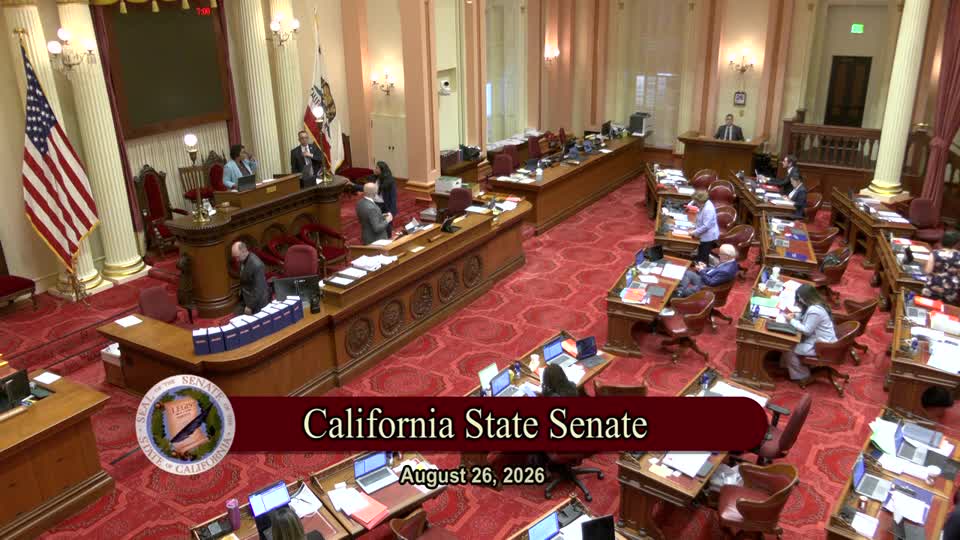
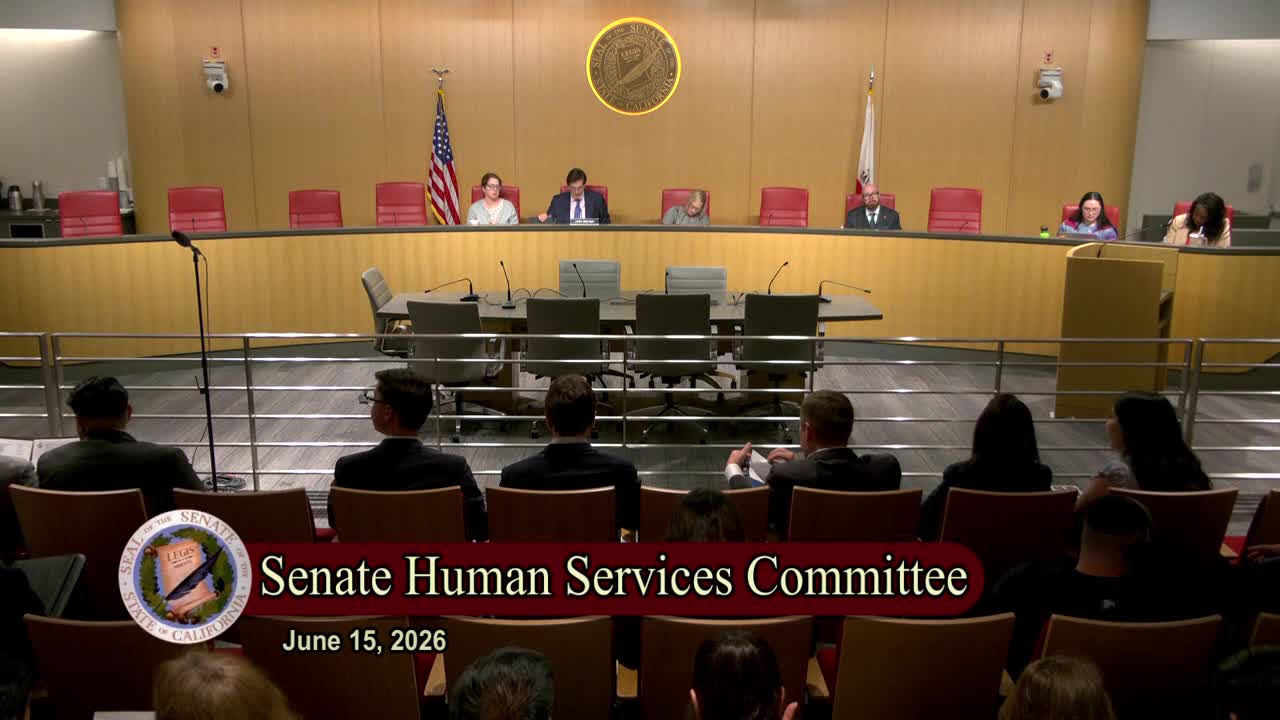
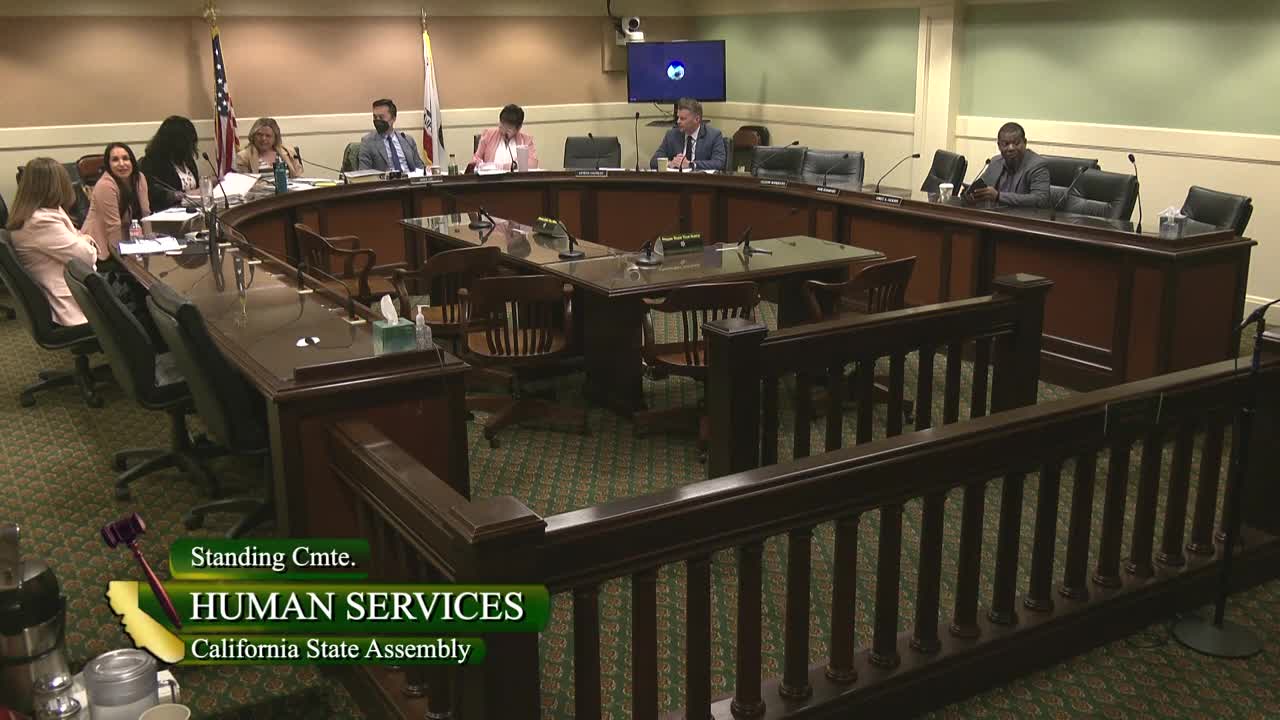
Bill Author

Bill Co-Author(s):
