AB 1125: Workers’ compensation: peace officers.
- Session Year: 2025-2026
- House: Assembly
- Latest Version Date: 2025-10-03
Current Status:
Passed
(2025-10-03: Chaptered by Secretary of State - Chapter 291, Statutes of 2025.)
Introduced
In Committee
Awaiting First Chamber Vote
Passed First Chamber
In Committee
Awaiting Second Chamber Vote
Passed Second Chamber
Enacted
Existing law designates various persons as peace officers, including officers of a state hospital under the jurisdiction of the State Department of State Hospitals or the State Department of Developmental Services. Existing law establishes a workers compensation system, administered by the Administrative Director of the Division of Workers Compensation, to compensate an employee for injuries sustained in the course of their employment. Existing law creates a disputable presumption, applicable to officers and employees in the Department of Corrections and Rehabilitation, that heart trouble that develops or manifests during a period when the employee is in the service of the department arose out of and in the course of employment.
This bill would add to the above-described presumption a peace officer, as defined, employed by the State Department of State Hospitals and would make other conforming and technical changes.
Existing law designates various persons as peace officers, including officers of a state hospital under the jurisdiction of the State Department of State Hospitals or the State Department of Developmental Services. Existing law establishes a workers compensation system, administered by the Administrative Director of the Division of Workers Compensation, to compensate an employee for injuries sustained in the course of their employment. Existing law creates a disputable presumption, applicable to officers and employees in the Department of Corrections and Rehabilitation, that heart trouble that develops or manifests during a period when the employee is in the service of the department arose out of and in the course of employment.
This bill would limit the above-described presumption to a peace officer with custodial duties in the Department of Corrections and Rehabilitation and would add to the add to the above-described presumption a peace officer, as defined, employed by the State Department of State Hospitals and would make other conforming and technical changes.
Existing law designates various persons as peace officers, including officers of a state hospital under the jurisdiction of the State Department of State Hospitals or the State Department of Developmental Services. Existing law establishes a workers compensation system, administered by the Administrative Director of the Division of Workers Compensation, to compensate an employee for injuries sustained in the course of their employment. Existing law creates a disputable presumption, applicable to officers and employees in the Department of Corrections and Rehabilitation, that heart trouble that develops or manifests during a period when the employee is in the service of the department arose out of and in the course of employment.
This bill would add to the above-described limit the above-described presumption to a peace officer with custodial duties in the Department of Corrections and Rehabilitation and would add to the presumption a peace officer, as defined, employed by the State Department of State Hospitals and would make other conforming and technical changes.
Existing law designates various persons as peace officers, including officers of a state hospital under the jurisdiction of the State Department of State Hospitals or the State Department of Developmental Services. Existing law establishes a workers compensation system, administered by the Administrative Director of the Division of Workers Compensation, to compensate an employee for injuries sustained in the course of their employment. Existing law creates a disputable presumption, applicable to officers and employees in the Department of Corrections and Rehabilitation, that heart trouble that develops or manifests during a period when the employee is in the service of the department arose out of and in the course of employment.
This bill would add to the above-described presumption a peace officer officer, as defined, employed by the State Department of State Hospitals and would make other conforming and technical changes.
Existing law designates various persons as peace officers, including officers of a state hospital under the jurisdiction of the State Department of State Hospitals or the State Department of Developmental Services. Existing law establishes a workers compensation system, administered by the Administrative Director of the Division of Workers Compensation, to compensate an employee for injuries sustained in the course of their employment. Existing law creates a disputable presumption, applicable to officers and employees in the Department of Corrections and Rehabilitation, that heart trouble that develops or manifests during a period when the employee is in the service of the department arose out of and in the course of employment.
This bill would add to the above-described presumption a peace officer employed by the State Department of State Hospitals and would make other conforming and technical changes.
(a)For an officer and employee in the Department of Corrections and Rehabilitation having custodial duties and for a peace officer, as defined in Section 830.38 of the Penal Code, employed by the State Department of State Hospitals, the term injury includes heart trouble that develops or manifests itself during a period while such officer or employee is in the service of such department or hospital.
(b)The compensation that is awarded for heart trouble includes full hospital, surgical, medical treatment, disability indemnity, and death benefits, as provided by the workers compensation laws of this state.
(c)The heart trouble so developing or manifesting itself in these cases shall be presumed to arise out of and in the course of the employment. This presumption is disputable and may be controverted by other evidence, but unless so controverted, the appeals board is bound to find in accordance with it. This presumption shall be extended to a member following termination of service for a period of three calendar months for each full year of the requisite service, but not to exceed 60 months in any circumstance, commencing with the last date actually worked in the specified capacity.
(a)For a peace officer with custodial duties an officer and employee in the Department of Corrections and Rehabilitation having custodial duties and for a peace officer, as defined in Section 830.38 of the Penal Code, employed by the State Department of State Hospitals, the term injury includes heart trouble that develops or manifests itself during a period while such officer or employee is in the service of such department or hospital.
(b)The compensation that is awarded for heart trouble includes full hospital, surgical, medical treatment, disability indemnity, and death benefits, as provided by the workers compensation laws of this state.
(c)The heart trouble so developing or manifesting itself in these cases shall be presumed to arise out of and in the course of the employment. This presumption is disputable and may be controverted by other evidence, but unless so controverted, the appeals board is bound to find in accordance with it. This presumption shall be extended to a member following termination of service for a period of three calendar months for each full year of the requisite service, but not to exceed 60 months in any circumstance, commencing with the last date actually worked in the specified capacity.
(a)For an officer and employee a peace officer with custodial duties in the Department of Corrections and Rehabilitation having custodial duties and for a peace officer, as defined in Section 830.38 of the Penal Code, employed by the State Department of State Hospitals, the term injury includes heart trouble that develops or manifests itself during a period while such officer or employee is in the service of such department or hospital.
(b)The compensation that is awarded for heart trouble includes full hospital, surgical, medical treatment, disability indemnity, and death benefits, as provided by the workers compensation laws of this state.
(c)The heart trouble so developing or manifesting itself in these cases shall be presumed to arise out of and in the course of the employment. This presumption is disputable and may be controverted by other evidence, but unless so controverted, the appeals board is bound to find in accordance with it. This presumption shall be extended to a member following termination of service for a period of three calendar months for each full year of the requisite service, but not to exceed 60 months in any circumstance, commencing with the last date actually worked in the specified capacity.
(a)For an officer and employee in the Department of Corrections and Rehabilitation having custodial duties and for a peace officer officer, as defined in Section 830.38 of the Penal Code, employed by the State Department of State Hospitals, the term injury includes heart trouble that develops or manifests itself during a period while such officer or employee is in the service of such department or hospital.
(b)The compensation that is awarded for heart trouble includes full hospital, surgical, medical treatment, disability indemnity, and death benefits, as provided by the workers compensation laws of this state.
(c)The heart trouble so developing or manifesting itself in these cases shall be presumed to arise out of and in the course of the employment. This presumption is disputable and may be controverted by other evidence, but unless so controverted, the appeals board is bound to find in accordance with it. This presumption shall be extended to a member following termination of service for a period of three calendar months for each full year of the requisite service, but not to exceed 60 months in any circumstance, commencing with the last date actually worked in the specified capacity.
In the case of officers and employees (a)For an officer and employee in the Department of Corrections having custodial duties, each officer and employee in the Department of Youth Authority having group supervisory duties, and each security officer employed at the Atascadero State Hospital, and Rehabilitation having custodial duties and for a peace officer employed by the State Department of State Hospitals, the term injury includes heart trouble which that develops or manifests itself during a period while such officer or employee is in the service of such department or hospital.
The(b)The compensation which is awarded for such heart trouble shall include that is awarded for heart trouble includes full hospital, surgical, medical treatment, disability indemnity, and death benefits, as provided by the workmens workers compensation laws of this state.
Such(c)The heart trouble so developing or manifesting itself in such these cases shall be presumed to arise out of and in the course of the employment. This presumption is disputable and may be controverted by other evidence, but unless so controverted, the appeals board is bound to find in accordance with it. This presumption shall be extended to a member following termination of service for a period of three calendar months for each full year of the requisite service, but not to exceed 60 months in any circumstance, commencing with the last date actually worked in the specified capacity.
|
Date
|
Status
|
|---|---|
| Oct 3, 2025 | Chaptered by Secretary of State - Chapter 291, Statutes of 2025. |
| Oct 3, 2025 | Approved by the Governor. |
| Sep 22, 2025 | Enrolled and presented to the Governor at 3 p.m. |
| Sep 10, 2025 | Senate amendments concurred in. To Engrossing and Enrolling. (Ayes 79. Noes 0. Page 3232.). |
| Sep 9, 2025 | In Assembly. Concurrence in Senate amendments pending. |
| Sep 9, 2025 | Read third time. Passed. Ordered to the Assembly. (Ayes 40. Noes 0. Page 2664.). |
| Sep 8, 2025 | Read second time. Ordered to third reading. |
| Sep 4, 2025 | Read third time and amended. Ordered to second reading. |
| Aug 27, 2025 | Read second time. Ordered to third reading. |
| Aug 26, 2025 | Read third time and amended. Ordered to second reading. |
| Jun 27, 2025 | Ordered to third reading. |
| Jun 27, 2025 | From Consent Calendar. |
| Jun 24, 2025 | Read second time. Ordered to Consent Calendar. |
| Jun 23, 2025 | From committee: Be ordered to second reading file pursuant to Senate Rule 28.8 and ordered to Consent Calendar. |
| Jun 11, 2025 | From committee: Do pass and re-refer to Com. on APPR. with recommendation: To Consent Calendar. (Ayes 5. Noes 0.) (June 11). Re-referred to Com. on APPR. |
| Jun 4, 2025 | Referred to Com. on L., P.E. & R. |
| May 23, 2025 | In Senate. Read first time. To Com. on RLS. for assignment. |
| May 23, 2025 | Read third time. Passed. Ordered to the Senate. (Ayes 71. Noes 0. Page 1664.) |
| May 15, 2025 | Read second time. Ordered to Consent Calendar. |
| May 14, 2025 | From committee: Do pass. To Consent Calendar. (Ayes 15. Noes 0.) (May 14). |
| Apr 23, 2025 | From committee: Do pass and re-refer to Com. on APPR. with recommendation: To Consent Calendar. (Ayes 17. Noes 0.) (April 23). Re-referred to Com. on APPR. |
| Apr 22, 2025 | Re-referred to Com. on INS. |
| Apr 21, 2025 | From committee chair, with author's amendments: Amend, and re-refer to Com. on INS. Read second time and amended. |
| Mar 10, 2025 | Referred to Com. on INS. |
| Feb 21, 2025 | From printer. May be heard in committee March 23. |
| Feb 20, 2025 | Read first time. To print. |
|
Date
|
Description
|
Location
|
Votes
|
|
|---|---|---|---|---|
| Sep 10, 2025 | AB 1125 Nguyen Concurrence in Senate Amendments | Assembly Floor |
Passed |
|
| Sep 9, 2025 | Assembly 3rd Reading AB1125 Nguyen By Durazo | Senate Floor |
Passed |
|
| Jun 11, 2025 | Do pass, but first be re-referred to the Committee on [Appropriations] with the recommendation: To Consent Calendar | Senate Standing Committee on Labor, Public Employment and Retirement |
Passed |
|
| May 23, 2025 | AB 1125 Nguyen Consent Calendar Second Day Regular Session | Assembly Floor |
Passed |
|
| May 14, 2025 | Do pass. To Consent Calendar. | Assembly Standing Committee on Appropriations |
Passed |
|
| Apr 23, 2025 | Do pass and be re-referred to the Committee on [Appropriations] with recommendation: To Consent Calendar | Assembly Standing Committee on Insurance |
Passed |
This list shows positions taken on this bill by organizations on the date displayed, which is linked to the original source.
Positions by individuals are not included.
|
Organization
|
Position
|
Date
|
|---|---|---|
| California Correctional Supervisors Association | ** Support |
CONCURRENCE IN SENATE AMENDMENTS
CSA1 Bill Id:AB 1125
Author:(Nguyen)
As Amended Ver:September 4, 2025
Majority vote
SUMMARY
Expands an existing rebuttable presumption of occupational injury for heart trouble in security officers at Atascadero State Hospital to include any peace officer employed by the Department of State Hospitals (DSH).
Senate Amendments
Make no substantive changes to the version of the bill passed by the Assembly.
COMMENTS
- Workers' compensation and peace officer presumptions: At its core, the workers' compensation system relies on a so-called "grand bargain." If a worker is injured on the job, the employer must pay for the worker's medical treatment, including monetary benefits if the injury is permanent. In exchange for receiving the guarantee of such treatment, the worker surrenders the right to sue the employer for monetary damages in civil court. To receive such care and/or benefits, the worker must be able to demonstrate that it is more likely than not that the injury arose "out of and in the course of employment."
Occupational injury presumptions (henceforth, "presumptions") reverse this burden of proof. In other words, presumptions shift the dynamic of a claim from a worker having the burden of proving that their injury is work-related to an employer having the burden to prove that the injury is not work-related. Presumptions have never been intended to imply or create work-related injuries when the injuries in question are not work-related. As a matter of law, employers have the opportunity to rebut the presumption by establishing that the injury or condition was not the result of employment. As a practical matter, however, presumptions are rarely rebutted.
With few exceptions, all existing presumptions for workers' compensation claims apply exclusively to peace officers or firefighters, and are limited to a subset of injuries common in those professions, such as hernias, cancer, and heart disease. This means any additional costs resulting from potentially fraudulent claims made under these presumptions are borne by the state, rather than a private employer. As policy rationales for these presumptions, the Legislature has generally relied on three main characteristics that distinguish these professions and associated injury claims from other workers’ compensation claims:
- Peace officers and firefighters take steps to reduce occupational hazards, but it is not possible to effectively abate all occupational hazards in these professions. Peace officers and firefighters are instead responsible for directly confronting occupational hazards such as fires, panic, civil unrest, and violent confrontations.
- Peace officers and firefighters face higher relative injury rates compared to other similarly situated workers.
- Prior to adopting these presumptions, peace officers and firefighters faced high claim denial rates for the specified injuries, largely due to the difficulty in proving the injury was work-related.
This bill seeks to recognize the similarity in work conditions and experience between peace officers subject to presumptions for heart trouble, including peace officers that work at Atascadero State Hospital, and peace officers that work at other state hospitals. By expanding the existing presumption for heart trouble in security officers working at Atascadero State Hospital to apply to peace officers at all state hospitals, the bill would avoid the present two-tiered system that differentiates the workers' compensation claims process for those developing heart trouble at Atascadero State Hospital, and those working at other state hospitals with similar functions, populations, and responsibilities.
- State hospitals: DSH operates five state hospitals (Atascadero, Coalinga, Metropolitan, Napa, and Patton) that almost exclusively serve patients subject to forensic or civil commitment. This means their patient populations consist of a total of approximately 12,000 individuals (as of 2018) that have been accused or convicted of crimes associated with a mental illness, or have been identified as a danger to themselves or others.
Among the state hospitals, Atascadero State Hospital has historically served the largest patient population, and specifically provides treatment for male forensic commitments, i.e. felony defendants found incompetent to stand trial, patients judged not guilty of felony crimes by reason of insanity, parolees who committed specified crimes and were treated for severe psychiatric disorders associated with that crime, and inmate-patients transferred from the California Department of Corrections and Rehabilitation (CDCR) for inpatient mental health care. This means the criminal population at Atascadero is larger than that of the other state hospitals. Still, all five state hospitals are considered high-security and have patient populations generally assumed to present a higher risk of violence to staff, other patients, or themselves, relative to other psychiatric hospitals.
Atascadero was the first state hospital to employ its own security officers, but the other four state hospitals have since employed security officers for the protection of patients, workers, and the public. Section 4313 of the Welfare & Institutions Code tasks the DSH Police Force (i.e. "[t]he chief of police services, supervising investigators, investigators, and each hospital police officer") with "[enforcing] the rules and regulations of the hospital, [preserving] peace and order on the premises thereof, [protecting and preserving] the property of the state, and [helping] ensure integration of treatment, safety, and security." The DSH Police Force is granted full authority to enforce relevant laws, make arrests, and issue citations. Officers of the DSH Police Force also occasionally assist neighboring law enforcement agencies with their off-site police activities as needed. As a result, their training and day-to-day responsibilities do not differ considerably from other peace officers who, under existing law, are granted an occupational injury presumption for heart trouble occurring during the period of employment.
Absent the passage of AB 1125, peace officers employed at state hospitals other than Atascadero would still be able to receive workers' compensation benefits for heart trouble if they can prove the heart trouble resulted from their employment. Nonetheless, to the extent this presumption is reasonable for peace officers employed at Atascadero State Hospital, and for law enforcement officers in general, under existing law, it is not clear why it would not be similarly reasonable for peace officers employed at other state hospitals.
According to the Author
"Our peace officers face an increased risk of developing heart-related health complications, up to 70 percent higher than the general public, due to the immense stress and emotional trauma they experience in the line of duty. AB 1125 ensures that peace officers employed at any of the five California Department of State Hospitals, are given equitable access to workers' compensation to cover any medical expenses associated with heart problems that may arise during their employment as a peace officer. The bill recognizes their service and the sacrifices they make to keep our state hospitals safe."
Arguments in Support
According to the California Correctional Supervisors Association, who sponsor this bill:
In 1976, California enacted legislation recognizing heart conditions experienced by security guards' staff at Atascadero State Hospital as work-related injuries if they occurred during employment or within three months after leaving the job. […] When this Labor Code section was enacted, it did not include peace officers of the California Department of State Hospitals (DSH) because the DSH Police Force did not exist at that time. Rather, they were designated as "security officers employed at Atascadero State Hospital."
Since that time, the DSH Security Officers have evolved from covering one state hospital to covering all state hospitals and have grown to approximately seven hundred officers who provide public safety service to patients, employees, and the public in and around each hospital. In addition, DSH Security Officers have been reclassified as peace officers covered by Penal Code Section 832 which requires basic peace officer training to hold the position. This makes the DSH Police Force a fully functioning police force with academy standards and qualifications equal to all other California law enforcement officers. The same issues impact these policy officers as all other law enforcement listed in this labor code.
Arguments in Opposition
None on file.
FISCAL COMMENTS
According to the Assembly Appropriations Committee, "Additional workers' compensation premium costs of an unknown, but potentially absorbable, amount to DSH to the extent the presumption results in benefits awarded to specified peace officers that would not have otherwise occurred […and] [m]inor and absorbable administrative costs to DSH and the Division of Workers’ Compensation."
VOTES:
ASM INSURANCE: 17-0-0
YES: Calderon, Wallis, Addis, Alvarez, Ávila Farías, Berman, Chen, Ellis, Gipson, Hadwick, Harabedian, Krell, Nguyen, Ortega, Petrie-Norris, Michelle Rodriguez, Valencia
ASM APPROPRIATIONS: 15-0-0
YES: Wicks, Sanchez, Arambula, Calderon, Caloza, Dixon, Elhawary, Fong, Mark González, Hart, Pacheco, Pellerin, Solache, Ta, Tangipa
ASSEMBLY FLOOR: 71-0-8
YES: Addis, Aguiar-Curry, Ahrens, Alanis, Alvarez, Arambula, Ávila Farías, Bains, Bauer‑Kahan, Bennett, Berman, Boerner, Bonta, Calderon, Caloza, Carrillo, Castillo, Connolly, Davies, DeMaio, Dixon, Elhawary, Flora, Fong, Gabriel, Gallagher, Garcia, Gipson, Jeff Gonzalez, Mark González, Hadwick, Haney, Harabedian, Hart, Hoover, Irwin, Jackson, Kalra, Krell, Lackey, Lee, Lowenthal, Macedo, McKinnor, Muratsuchi, Ortega, Pacheco, Papan, Patel, Patterson, Pellerin, Petrie-Norris, Quirk-Silva, Ramos, Ransom, Celeste Rodriguez, Michelle Rodriguez, Rogers, Blanca Rubio, Schiavo, Solache, Soria, Stefani, Ta, Tangipa, Valencia, Wallis, Ward, Wilson, Zbur, Rivas
ABS, ABST OR NV: Bryan, Chen, Ellis, Nguyen, Sanchez, Schultz, Sharp-Collins, Wicks
UPDATED
VERSION: September 4, 2025
CONSULTANT: Landon Klein / INS. / (916) 319-2086 FN: 0001824
SENATE RULES COMMITTEE Office of Senate Floor Analyses (916) 651-1520 Fax: (916) 327-4478 | AB 1125 |
THIRD READING
Bill No: AB 1125
Author: Nguyen (D)
Amended: 9/4/25 in Senate
Vote: 21
SENATE LABOR, PUB. EMP. & RET. COMMITTEE: 5-0, 6/11/25
AYES: Smallwood-Cuevas, Strickland, Cortese, Durazo, Laird
SENATE APPROPRIATIONS COMMITTEE: Senate Rule 28.8
ASSEMBLY FLOOR: 71-0, 5/23/25 (Consent) - See last page for vote
SUBJECT: Workers’ compensation: peace officers
SOURCE: California Correctional Supervisors Organization
DIGEST:
This bill expands an existing rebuttable presumption that heart trouble is an occupational injury to any peace officer employed by the Department of State Hospitals, as defined, instead of only security officers at Atascadero State Hospital.
Senate Floor Amendments of 9/4/25 preserves the existing workers’ compensation presumption for all peace officers including non-peace officer employees with custodial duties at the California Department of Corrections and Rehabilitation (CDCR), thus reversing amendments made on 8/26/25.
Senate Floor Amendments of 8/26/25 removed non-peace officer employees with custodial duties at CDCR from this workers’ compensation presumption.
ANALYSIS:
Existing law:
- Establishes a comprehensive system of workers’ compensation that provides a range of benefits for an employee who suffers from an injury or illness that arises out of and in the course of employment, regardless of fault. This system requires all employers to insure payment of benefits by either securing the consent of the Department of Industrial Relations (DIR) to self-insure or by obtaining insurance from a company authorized by the state. (Labor Code §§3200-6002)
- Creates a series of rebuttable presumptions of an occupational injury for peace and safety officers for the purpose of the workers’ compensation system. These presumptions include: heart disease, hernias, pneumonia, cancer, tuberculosis, blood-borne infectious disease or methicillin-resistant Staphylococcus aureus skin infection (MRSA), bio-chemical illness, and meningitis. The compensation awarded for these injuries must include full hospital, surgical, medical treatment, disability indemnity, and death benefits, as provided by workers’ compensation law. (Labor Code §§3212-3213.2)
- Specifically establishes that, in the case of officers and employees in the Department of Corrections having custodial duties, each officer and employee in the Department of Youth Authority having group supervisory duties, and each security officer employed at the Atascadero State Hospital, heart trouble that develops or manifests during the period of employment is presumed to arise out of that employment. The presumption is available for three calendar months for each full year of service, not to exceed 60 months, from the last date worked in the position. (Labor Code §3212.2)
- Establishes the Department of State Hospitals (DSH) within the California Health and Human Services Agency. (Welfare and Institutions Code §4000):
- Specifies DSH has jurisdiction over the execution of the laws relating to care and treatment of persons with mental health disorders under the custody of DSH. (Welfare and Institutions Code §4011)
- Defines “state hospital” to mean any of the following hospitals, under the jurisdiction of DSH:
- Atascadero State Hospital
- Coaling State Hospital
- Metropolitan State Hospital
- Napa State Hospital
- Patton State Hospital
- The Admission, Evaluation, and Stabilization (AES) Center in the County of Kern, and other AES Centers as defined by regulation, as specified.
- A county jail treatment facility under contract with DSH to provide competency restoration services.
- A facility under contract with DSH, as specified, excluding community-based restoration of competency services that are operated by the county.
- Any other DSH facility subject to available funding by the Legislature. (Welfare and Institutions Code §4100)
- Specifies that the chief of police is responsible for preserving the peace in the hospital buildings and grounds, and authorizes the chief of police services to arrest or cause the arrest of all persons who attempt to commit or have committed a public offense. (Welfare and Institutions §4311)
- Provides the chief of police services, supervising investigators, investigators, and each hospital police officer with specified powers and authority, and specifies they will enforce the rules and regulations of the hospital, preserve peace and order on the premises, protect and preserve the property of the state, and help ensure integration of treatment, safety, and security. (Welfare and Institutions Code §4313)
- Provides that officers of a state hospital under the jurisdiction of DSH, are peace officers, as specified. (Penal Code §830.38)
This bill:
- Expands an existing rebuttable presumption that heart trouble is an occupational injury for security officers at Atascadero State Hospital to include any peace officer employed by the Department of State Hospitals, as defined.
- Eliminates obsolete reference to the California Youth Authority, which was renamed to the California Division of Juvenile Justice (DJJ), until its closure in 2023.
- Makes conforming, non-substantive changes.
Background
Workers’ Compensation Presumptions. Under the California workers’ compensation system, if a worker is injured on a job, the employer must pay for the worker’s medical treatment, and provide monetary benefits if the injury is permanent. In return for receiving free medical treatment, the worker surrenders the right to sue the employer for monetary damages in civil court.
The Legislature has created disputable or rebuttable presumptions within the workers’ compensation system, which shifts the burden of proof in an injury claim from the employee to the employer. If an injury is covered by a presumption, the employer carries the burden to prove the injury is not related to work. Presumptions reflect unique circumstances where injuries or illnesses appear to logically be work-related, but it is difficult for the injured worker to prove them as such. For certain occupations, such as firefighters and peace officers, where workers can be exposed to more types of injuries than in other occupations, the law presumes certain injuries and illnesses (i.e. heart disease, hernias, pneumonia, cancer, post-traumatic stress disorder injuries, tuberculosis, blood-borne infectious diseases, bio-chemical illness, and meningitis) are occupational injuries for purposes of workers’ compensation coverage.
State Hospitals. DSH operates and oversees five state hospitals – Atascadero, Coalinga, Metropolitan (in Los Angeles County), Napa, and Patton – that provide mental health services to patients admitted into DSH facilities. As of fiscal year 2021-22, DSH served more than 12,000 patients through its hospital system, conditional release and other communicated-based programs, and jail treatment programs and employed nearly 13,000 staff.
According to DSH, their patient population includes patients mandated for treatment by a criminal or civil court judge. In fact, more than 90 percent of DSH patients are forensic commitments (i.e. patients incompetent to stand trial, offenders with mental health disorders, mentally ill prisoners transferred from prison, and those found not guilty by reason of insanity). These patients are sent to DSH through the criminal court system and have committed or have been accused of committing crimes linked to a mental illness. In addition to forensic commitments, DSH treats patients who have been classified by a judge or jury as Sexually Violent Predators. These patients have served prison sentences for committing crimes enumerated under the Sexually Violent Predator Act (Welfare and Inst. Code Sections 6600 et. al.) and are committed to DSH for treatment until a judge deems they are no longer a threat to the community. The remainder of DSH’s population have been committed in civil court for being a danger to themselves or others. These patients are commonly referred to as Lanterman-Petris-Short commitments.
Atascadero State Hospital and DSH Police Force. Atascadero State Hospital is a secure forensic hospital, open since 1954, and located on the Central Coast of California in San Luis Obispo County. The majority of the all-male patient population is remanded for treatment by county superior courts or by the Department of Corrections and Rehabilitation (CDCR), and the hospital does not accept voluntary admissions. Atascadero State Hospital has historically served the largest patient population, and has the largest criminal population of all the state hospitals. However, all five state hospitals are considered high-security and have patient populations generally assumed to present a higher risk of violence to staff, other patients, or themselves.
According to the author and sponsors, the California Correctional Supervisors Organization, Atascadero State Hospital was the first state hospital to employ its own security officers, but the other four state hospitals have since employed security officers for the protection of patients, workers, and the public:
“When California Labor Code section 3212.2 was enacted in 1976, it did not include peace officers of the California Department of State Hospitals (DSH) because the Police Force for DSH did not exist at that time. Rather, they were designated as ‘security officers employed at Atascadero State Hospital.’
Since that time, the DSH Police Officers have evolved from covering one state hospital to covering all state hospitals and have grown to approximately seven hundred officers who provide public safety service, and security to patients, employees, and the general public in and around each hospital.”
As mentioned, all five state hospitals now include the DSH police force, a 24-hour law enforcement agency, granted with the full authority to enforce relevant laws, make arrests, and issue citations. The author and sponsors further state:
“In addition, DSH Police Officers are now covered by Penal Code Section 832 which requires basic Peace Officer training to hold the position. This makes the Police Force for the DSH a fully functioning police force with academy standards and qualifications equal to all other California law enforcement officers. The same issues impact these police officers as all other law enforcement listed in this labor code.”
Day-to-day responsibilities and training for officers of the DSH police force do not differ considerably from other peace officers who are granted the occupational injury presumption for heart trouble during their course of employment. This is likely why this presumption was extended to officers employed at the Atascadero State Hospital. This bill would expand the heart trouble workers’ compensation presumption currently afforded to officers at the Atascadero State Hospital to the officers working at all the other four state hospitals as well.
This bill proposes to recognize the similar work conditions and experiences between peace offices that have an existing workers’ compensation presumption for heart trouble, including the current peace officers that work at Atascadero State hospital, and peace officers that work at other state hospitals. As the Assembly Insurance Committee analysis points out, “[b]y expanding the existing presumption for heart trouble in security officers working at Atascadero State hospital to apply to peace officers at all state hospitals, the bill would avoid the present two-tiered system that differentiates the worker’s compensation claims process for those developing heart trouble at Atascadero State Hospital, and those working at other state hospitals with similar functions, populations, and responsibilities.”
Related/Prior Legislation
AB 1156 (Bonta, 2023) would have established workers’ compensation rebuttable presumptions that specified diagnoses are occupational for a hospital employee who provides direct patient care in an acute care hospital. These diagnoses included infectious diseases, cancer, musculoskeletal injuries, post-traumatic stress disorder, and respiratory diseases. The bill would also have included the 2019 novel coronavirus disease (COVID-19) from SARS-CoV-2 and its variants, among other conditions, in the definitions of infectious and respiratory diseases. The bill would have further extended these presumptions for specified time periods after the hospital employee’s termination of employment. The bill was held in the Assembly Committee on Insurance.
AB 597 (Rodriguez, 2023) would have, for injuries occurring on or after January 1, 2025, created a rebuttable presumption for emergency medical technicians and paramedics that PTSI is an occupational injury and covered under workers’ compensation. The bill was held in the Assembly Committee on Insurance.
AB 699 (Weber, 2023, Vetoed) would have extended rebuttable presumptions for hernia, pneumonia, heart trouble, cancer, tuberculosis, blood-borne infectious disease, methicillin-resistant Staphylococcus aureus skin infection, and meningitis-related illnesses and injuries to a lifeguard employed on a year-round, full-time basis in the Boating Safety Unit by the City of San Diego Fire-Rescue Department, as specified. It would also have expanded the presumptions for post-traumatic stress disorder or exposure to biochemical substances, as defined, to a lifeguard employed in the Boating Safety Unit by the City of San Diego Fire-Rescue Department.
AB 1145 (Maienschein, 2023, Vetoed) would have provided, until January 1, 2030, that for specified state nurses, psychiatric technicians, and various medical and social services specialists, the term “injury” also included post-traumatic stress that develops or manifests itself during a period in which the injured person is in the service of the department or unit. The bill would have applied to injuries occurring on or after January 1, 2024. The bill would have prohibited compensation from being paid for a claim of injury unless the member performed services for the department or unit for at least 6 months, unless the injury is caused by a sudden and extraordinary employment condition.
SB 623 (Laird, Chapter 621, Statutes of 2023) extended the sunset until January 1, 2029 for a rebuttable presumption that a diagnosis of post-traumatic stress disorder injuries for specified peace officers and firefighters is an occupational injury, and required the Commission on Health and Safety and Workers’ Compensation to submit both reports to the Legislature analyzing the effectiveness of the presumption and a review of claims filed by specified types of employees not included in the presumption, such as public safety dispatchers, as defined.
SB 416 (Hueso, 2019) would have expanded the presumption that certain defined injuries and illnesses are occupational injuries and therefore covered by workers’ compensation for all peace officers, as specified. The bill was held at the Assembly Desk.
AB 2269 (Adams, 2010) would have expanded the workers' compensation presumption for peace officers working at Department of Developmental Services Developmental Centers (DC) and Department of Mental Health (DMH) psychiatric hospitals. Specifically, this bill would have extended a cardiac presumption available to officers at Atascadero DC to peace officers at the following facilities: a) Coalinga State Hospital, b) Metropolitan State Hospital, c) Napa State Hospital, d) Patton State Hospital, e) Porterville Developmental Center, f) Lanterman Developmental Center, g) Sonoma Developmental Center, h) Fairview Developmental Center, and i) Canyon Springs Community Facility. The bill was held in the Assembly Committee on Appropriations.
FISCAL EFFECT: Appropriation: No Fiscal Com.: Yes Local: No
SUPPORT: (Verified 9/4/25)
California Correctional Supervisors Organization (Source)
OPPOSITION: (Verified 9/4/25)
None received
ARGUMENTS IN SUPPORT: According to the sponsors, the California Correctional Supervisors Organization: “In 1976, California enacted legislation recognizing heart conditions experienced by security guards’ staff at Atascadero State Hospital as work-related injuries if they occurred during employment or within three months after leaving the job. This classification established that heart trouble developing or manifesting while employed as a security guard at the Atascadero State Hospital is presumed to arise out of and in the course of that employment for the purpose of awarding workers’ compensation benefits. When this Labor Code section was enacted, it did not include peace officers of the California Department of State Hospitals (DSH) because the DHS Police Force did not exist at that time. Rather, they were designated as "security officers employed at Atascadero State Hospital. Since that time, the DSH Security Officers have evolved from covering one state hospital to covering all state hospitals and have grown to approximately seven hundred officers who provide public safety service to patients, employees, and the public in and around each hospital. In addition, DSH Security Officers have been reclassified as peace officers covered by Penal Code Section 832 which requires basic peace officer training to hold the position. This makes the DHS Police Force a fully functioning police force with academy standards and qualifications equal to all other California law enforcement officers. The same issues impact these police officers as all other law enforcement listed in this labor code.”
ASSEMBLY FLOOR: 71-0, 5/23/25
AYES: Addis, Aguiar-Curry, Ahrens, Alanis, Alvarez, Arambula, Ávila Farías, Bains, Bauer-Kahan, Bennett, Berman, Boerner, Bonta, Calderon, Caloza, Carrillo, Castillo, Connolly, Davies, DeMaio, Dixon, Elhawary, Flora, Fong, Gabriel, Gallagher, Garcia, Gipson, Jeff Gonzalez, Mark González, Hadwick, Haney, Harabedian, Hart, Hoover, Irwin, Jackson, Kalra, Krell, Lackey, Lee, Lowenthal, Macedo, McKinnor, Muratsuchi, Ortega, Pacheco, Papan, Patel, Patterson, Pellerin, Petrie-Norris, Quirk-Silva, Ramos, Ransom, Celeste Rodriguez, Michelle Rodriguez, Rogers, Blanca Rubio, Schiavo, Solache, Soria, Stefani, Ta, Tangipa, Valencia, Wallis, Ward, Wilson, Zbur, Rivas
NO VOTE RECORDED: Bryan, Chen, Ellis, Nguyen, Sanchez, Schultz, Sharp-Collins, Wicks
Prepared by: Jazmin Marroquin / L., P.E. & R. / (916) 651-1556
9/8/25 21:33:34
**** END ****
SENATE RULES COMMITTEE Office of Senate Floor Analyses (916) 651-1520 Fax: (916) 327-4478 | AB 1125 |
THIRD READING
Bill No: AB 1125
Author: Nguyen (D)
Amended: 8/26/25 in Senate
Vote: 21
SENATE LABOR, PUB. EMP. & RET. COMMITTEE: 5-0, 6/11/25
AYES: Smallwood-Cuevas, Strickland, Cortese, Durazo, Laird
SENATE APPROPRIATIONS COMMITTEE: Senate Rule 28.8
ASSEMBLY FLOOR: 71-0, 5/23/25 (Consent) - See last page for vote
SUBJECT: Workers’ compensation: peace officers
SOURCE: California Correctional Supervisors Organization
DIGEST:
This bill expands an existing rebuttable presumption that heart trouble is an occupational injury and therefore covered by workers’ compensation benefits to any peace officer employed by the Department of State Hospitals, as defined, and limits the heart trouble presumption to a peace officer with custodial duties in the Department of Corrections and Rehabilitation (CDCR).
Senate Floor Amendments of 8/26/2025 specify that, for CDCR, the application of this workers’ compensation presumption is limited to peace officers with custodial duties.
ANALYSIS:
Existing law:
- Establishes a comprehensive system of workers’ compensation that provides a range of benefits for an employee who suffers from an injury or illness that arises out of and in the course of employment, regardless of fault. This system requires all employers to insure payment of benefits by either securing the consent of the Department of Industrial Relations (DIR) to self-insure or by obtaining insurance from a company authorized by the state. (Labor Code §§3200-6002)
- Creates a series of rebuttable presumptions of an occupational injury for peace and safety officers for the purpose of the workers’ compensation system. These presumptions include: heart disease, hernias, pneumonia, cancer, tuberculosis, blood-borne infectious disease or methicillin-resistant Staphylococcus aureus skin infection (MRSA), bio-chemical illness, and meningitis. The compensation awarded for these injuries must include full hospital, surgical, medical treatment, disability indemnity, and death benefits, as provided by workers’ compensation law. (Labor Code §§3212-3213.2)
- Specifically establishes that, in the case of officers and employees in the Department of Corrections having custodial duties, each officer and employee in the Department of Youth Authority having group supervisory duties, and each security officer employed at the Atascadero State Hospital, heart trouble that develops or manifests during the period of employment is presumed to arise out of that employment. The presumption is available for three calendar months for each full year of service, not to exceed 60 months, from the last date worked in the position. (Labor Code §3212.2)
- Establishes the Department of State Hospitals (DSH) within the California Health and Human Services Agency. (Welfare and Institutions Code §4000):
- Specifies DSH has jurisdiction over the execution of the laws relating to care and treatment of persons with mental health disorders under the custody of DSH. (Welfare and Institutions Code §4011)
- Defines “state hospital” to mean any of the following hospitals, under the jurisdiction of DSH:
- Atascadero State Hospital
- Coaling State Hospital
- Metropolitan State Hospital
- Napa State Hospital
- Patton State Hospital
- The Admission, Evaluation, and Stabilization (AES) Center in the County of Kern, and other AES Centers as defined by regulation, as specified.
- A county jail treatment facility under contract with DSH to provide competency restoration services.
- A facility under contract with DSH, as specified, excluding community-based restoration of competency services that are operated by the county.
- Any other DSH facility subject to available funding by the Legislature. (Welfare and Institutions Code §4100)
- Specifies that the chief of police is responsible for preserving the peace in the hospital buildings and grounds, and authorizes the chief of police services to arrest or cause the arrest of all persons who attempt to commit or have committed a public offense. (Welfare and Institutions §4311)
- Provides the chief of police services, supervising investigators, investigators, and each hospital police officer with specified powers and authority, and specifies they will enforce the rules and regulations of the hospital, preserve peace and order on the premises, protect and preserve the property of the state, and help ensure integration of treatment, safety, and security. (Welfare and Institutions Code §4313)
- Provides that officers of a state hospital under the jurisdiction of DSH, are peace officers, as specified. (Penal Code §830.38)
This bill:
- Expands an existing rebuttable presumption that heart trouble is an occupational injury for security officers at Atascadero State Hospital to include any peace officer employed by the Department of State Hospitals, as defined.
- Limits the application of this workers’ compensation presumption that heart trouble is an occupational injury to a peace officer with custodial duties in CDCR.
- Eliminates obsolete reference to the California Youth Authority, which was renamed to the California Division of Juvenile Justice (DJJ), until its closure in 2023.
- Makes conforming, non-substantive changes.
Background
Workers’ Compensation Presumptions: Under the California workers’ compensation system, if a worker is injured on a job, the employer must pay for the worker’s medical treatment, and provide monetary benefits if the injury is permanent. In return for receiving free medical treatment, the worker surrenders the right to sue the employer for monetary damages in civil court.
The Legislature has created disputable or rebuttable presumptions within the workers’ compensation system, which shifts the burden of proof in an injury claim from the employee to the employer. If an injury is covered by a presumption, the employer carries the burden to prove the injury is not related to work. Presumptions reflect unique circumstances where injuries or illnesses appear to logically be work-related, but it is difficult for the injured worker to prove them as such. For certain occupations, such as firefighters and peace officers, where workers can be exposed to more types of injuries than in other occupations, the law presumes certain injuries and illnesses (i.e. heart disease, hernias, pneumonia, cancer, post-traumatic stress disorder injuries, tuberculosis, blood-borne infectious diseases, bio-chemical illness, and meningitis) are occupational injuries for purposes of workers’ compensation coverage.
State Hospitals: DSH operates and oversees five state hospitals – Atascadero, Coalinga, Metropolitan (in Los Angeles County), Napa, and Patton – that provide mental health services to patients admitted into DSH facilities. As of fiscal year 2021-22, DSH served more than 12,000 patients through its hospital system, conditional release and other communicated-based programs, and jail treatment programs and employed nearly 13,000 staff.
According to DSH, their patient population includes patients mandated for treatment by a criminal or civil court judge. In fact, more than 90 percent of DSH patients are forensic commitments (i.e. patients incompetent to stand trial, offenders with mental health disorders, mentally ill prisoners transferred from prison, and those found not guilty by reason of insanity). These patients are sent to DSH through the criminal court system and have committed or have been accused of committing crimes linked to a mental illness. In addition to forensic commitments, DSH treats patients who have been classified by a judge or jury as Sexually Violent Predators. These patients have served prison sentences for committing crimes enumerated under the Sexually Violent Predator Act (Welfare and Inst. Code Sections 6600 et. al.) and are committed to DSH for treatment until a judge deems they are no longer a threat to the community. The remainder of DSH’s population have been committed in civil court for being a danger to themselves or others. These patients are commonly referred to as Lanterman-Petris-Short commitments.
Atascadero State Hospital and DSH Police Force: Atascadero State Hospital is a secure forensic hospital, open since 1954, and located on the Central Coast of California in San Luis Obispo County. The majority of the all-male patient population is remanded for treatment by county superior courts or by the Department of Corrections and Rehabilitation (CDCR), and the hospital does not accept voluntary admissions. Atascadero State Hospital has historically served the largest patient population, and has the largest criminal population of all the state hospitals. However, all five state hospitals are considered high-security and have patient populations generally assumed to present a higher risk of violence to staff, other patients, or themselves.
According to the author and sponsors, the California Correctional Supervisors Organization, Atascadero State Hospital was the first state hospital to employ its own security officers, but the other four state hospitals have since employed security officers for the protection of patients, workers, and the public:
“When California Labor Code section 3212.2 was enacted in 1976, it did not include peace officers of the California Department of State Hospitals (DSH) because the Police Force for DSH did not exist at that time. Rather, they were designated as ‘security officers employed at Atascadero State Hospital.’
Since that time, the DSH Police Officers have evolved from covering one state hospital to covering all state hospitals and have grown to approximately seven hundred officers who provide public safety service, and security to patients, employees, and the general public in and around each hospital.”
As mentioned, all five state hospitals now include the DSH police force, a 24-hour law enforcement agency, granted with the full authority to enforce relevant laws, make arrests, and issue citations. The author and sponsors further state:
“In addition, DSH Police Officers are now covered by Penal Code Section 832 which requires basic Peace Officer training to hold the position. This makes the Police Force for the DSH a fully functioning police force with academy standards and qualifications equal to all other California law enforcement officers. The same issues impact these police officers as all other law enforcement listed in this labor code.”
Day-to-day responsibilities and training for officers of the DSH police force do not differ considerably from other peace officers who are granted the occupational injury presumption for heart trouble during their course of employment. This is likely why this presumption was extended to officers employed at the Atascadero State Hospital. This bill, AB 1125, would expand the heart trouble workers’ compensation presumption currently afforded to officers at the Atascadero State Hospital to the officers working at all the other four state hospitals as well.
This bill proposes to recognize the similar work conditions and experiences between peace offices that have an existing workers’ compensation presumption for heart trouble, including the current peace officers that work at Atascadero State hospital, and peace officers that work at other state hospitals. As the Assembly Insurance Committee analysis points out, “[b]y expanding the existing presumption for heart trouble in security officers working at Atascadero State hospital to apply to peace officers at all state hospitals, the bill would avoid the present two-tiered system that differentiates the worker’s compensation claims process for those developing heart trouble at Atascadero State Hospital, and those working at other state hospitals with similar functions, populations, and responsibilities.”
Prior/Related Legislation
AB 1156 (Bonta, 2023) would have established workers’ compensation rebuttable presumptions that specified diagnoses are occupational for a hospital employee who provides direct patient care in an acute care hospital. These diagnoses included infectious diseases, cancer, musculoskeletal injuries, post-traumatic stress disorder, and respiratory diseases. The bill would also have included the 2019 novel coronavirus disease (COVID-19) from SARS-CoV-2 and its variants, among other conditions, in the definitions of infectious and respiratory diseases. The bill would have further extended these presumptions for specified time periods after the hospital employee’s termination of employment. This bill was held in the Assembly Committee on Insurance.
AB 597 (Rodriguez, 2023) would have, for injuries occurring on or after January 1, 2025, created a rebuttable presumption for emergency medical technicians and paramedics that PTSI is an occupational injury and covered under workers’ compensation. This bill was held in the Assembly Committee on Insurance.
AB 699 (Weber, 2023, Vetoed) would have extended rebuttable presumptions for hernia, pneumonia, heart trouble, cancer, tuberculosis, blood-borne infectious disease, methicillin-resistant Staphylococcus aureus skin infection, and meningitis-related illnesses and injuries to a lifeguard employed on a year-round, full-time basis in the Boating Safety Unit by the City of San Diego Fire-Rescue Department, as specified. It would also have expanded the presumptions for post-traumatic stress disorder or exposure to biochemical substances, as defined, to a lifeguard employed in the Boating Safety Unit by the City of San Diego Fire-Rescue Department. This bill was vetoed.
AB 1145 (Maienschein, 2023, Vetoed) would have provided, until January 1, 2030, that for specified state nurses, psychiatric technicians, and various medical and social services specialists, the term “injury” also included post-traumatic stress that develops or manifests itself during a period in which the injured person is in the service of the department or unit. The bill would have applied to injuries occurring on or after January 1, 2024. The bill would have prohibited compensation from being paid for a claim of injury unless the member performed services for the department or unit for at least 6 months, unless the injury is caused by a sudden and extraordinary employment condition. This bill was vetoed.
SB 623 (Laird, Chapter 621, Statutes of 2023) extended the sunset until January 1, 2029 for a rebuttable presumption that a diagnosis of post-traumatic stress disorder injuries for specified peace officers and firefighters is an occupational injury, and required the Commission on Health and Safety and Workers’ Compensation to submit both reports to the Legislature analyzing the effectiveness of the presumption and a review of claims filed by specified types of employees not included in the presumption, such as public safety dispatchers, as defined.
SB 416 (Hueso, 2019) would have expanded the presumption that certain defined injuries and illnesses are occupational injuries and therefore covered by workers’ compensation for all peace officers, as specified. This bill was held at the Assembly Desk.
AB 2269 (Adams, 2010) would have expanded the workers' compensation presumption for peace officers working at Department of Developmental Services Developmental Centers (DC) and Department of Mental Health (DMH) psychiatric hospitals. Specifically, this bill would have extended a cardiac presumption available to officers at Atascadero DC to peace officers at the following facilities: a) Coalinga State Hospital, b) Metropolitan State Hospital, c) Napa State Hospital, d) Patton State Hospital, e) Porterville Developmental Center, f) Lanterman Developmental Center, g) Sonoma Developmental Center, h) Fairview Developmental Center, and i) Canyon Springs Community Facility. This bill was held in the Assembly Committee on Appropriations.
FISCAL EFFECT: Appropriation: No Fiscal Com.: Yes Local: No
SUPPORT: (Verified 8/27/25)
California Correctional Supervisors Organization (Source)
OPPOSITION: (Verified 8/27/25)
None received
ARGUMENTS IN SUPPORT: According to the sponsors, the California Correctional Supervisors Organization:
“In 1976, California enacted legislation recognizing heart conditions experienced by security guards’ staff at Atascadero State Hospital as work-related injuries if they occurred during employment or within three months after leaving the job. This classification established that heart trouble developing or manifesting while employed as a security guard at the Atascadero State Hospital is presumed to arise out of and in the course of that employment for the purpose of awarding workers’ compensation benefits. When this Labor Code section was enacted, it did not include peace officers of the California Department of State Hospitals (DSH) because the DHS Police Force did not exist at that time. Rather, they were designated as "security officers employed at Atascadero State Hospital. Since that time, the DSH Security Officers have evolved from covering one state hospital to covering all state hospitals and have grown to approximately seven hundred officers who provide public safety service to patients, employees, and the public in and around each hospital. In addition, DSH Security Officers have been reclassified as peace officers covered by Penal Code Section 832 which requires basic peace officer training to hold the position. This makes the DHS Police Force a fully functioning police force with academy standards and qualifications equal to all other California law enforcement officers. The same issues impact these police officers as all other law enforcement listed in this labor code.”
ASSEMBLY FLOOR: 71-0, 5/23/25
AYES: Addis, Aguiar-Curry, Ahrens, Alanis, Alvarez, Arambula, Ávila Farías, Bains, Bauer-Kahan, Bennett, Berman, Boerner, Bonta, Calderon, Caloza, Carrillo, Castillo, Connolly, Davies, DeMaio, Dixon, Elhawary, Flora, Fong, Gabriel, Gallagher, Garcia, Gipson, Jeff Gonzalez, Mark González, Hadwick, Haney, Harabedian, Hart, Hoover, Irwin, Jackson, Kalra, Krell, Lackey, Lee, Lowenthal, Macedo, McKinnor, Muratsuchi, Ortega, Pacheco, Papan, Patel, Patterson, Pellerin, Petrie-Norris, Quirk-Silva, Ramos, Ransom, Celeste Rodriguez, Michelle Rodriguez, Rogers, Blanca Rubio, Schiavo, Solache, Soria, Stefani, Ta, Tangipa, Valencia, Wallis, Ward, Wilson, Zbur, Rivas
NO VOTE RECORDED: Bryan, Chen, Ellis, Nguyen, Sanchez, Schultz, Sharp-Collins, Wicks
Prepared by: Jazmin Marroquin / L., P.E. & R. / (916) 651-1556
8/27/25 16:24:49
SENATE RULES COMMITTEE Office of Senate Floor Analyses (916) 651-1520 Fax: (916) 327-4478 | AB 1125 |
THIRD READING
Bill No: AB 1125
Author: Nguyen (D)
Amended: 4/21/25 in Assembly
Vote: 21
SENATE LABOR, PUB. EMP. & RET. COMMITTEE: 5-0, 6/11/25
AYES: Smallwood-Cuevas, Strickland, Cortese, Durazo, Laird
SENATE APPROPRIATIONS COMMITTEE: Senate Rule 28.8
ASSEMBLY FLOOR: 71-0, 5/23/25 (Consent) - See last page for vote
SUBJECT: Workers’ compensation: peace officers
SOURCE: California Correctional Supervisors Organization
DIGEST:
This bill expands an existing rebuttable presumption that heart trouble is an occupational injury to any peace officer employed by the Department of State Hospitals, as defined, instead of only security officers at Atascadero State Hospital.
ANALYSIS:
Existing law:
- Establishes a comprehensive system of workers’ compensation that provides a range of benefits for an employee who suffers from an injury or illness that arises out of and in the course of employment, regardless of fault. This system requires all employers to insure payment of benefits by either securing the consent of the Department of Industrial Relations (DIR) to self-insure or by obtaining insurance from a company authorized by the state. (Labor Code §§3200-6002)
- Creates a series of rebuttable presumptions of an occupational injury for peace and safety officers for the purpose of the workers’ compensation system. These presumptions include: heart disease, hernias, pneumonia, cancer, tuberculosis, blood-borne infectious disease or methicillin-resistant Staphylococcus aureus skin infection (MRSA), bio-chemical illness, and meningitis. The compensation awarded for these injuries must include full hospital, surgical, medical treatment, disability indemnity, and death benefits, as provided by workers’ compensation law. (Labor Code §§3212-3213.2)
- Specifically establishes that, in the case of officers and employees in the Department of Corrections having custodial duties, each officer and employee in the Department of Youth Authority having group supervisory duties, and each security officer employed at the Atascadero State Hospital, heart trouble that develops or manifests during the period of employment is presumed to arise out of that employment. The presumption is available for three calendar months for each full year of service, not to exceed 60 months, from the last date worked in the position. (Labor Code §3212.2)
- Establishes the Department of State Hospitals (DSH) within the California Health and Human Services Agency. (Welfare and Institutions Code §4000):
- Specifies DSH has jurisdiction over the execution of the laws relating to care and treatment of persons with mental health disorders under the custody of DSH. (Welfare and Institutions Code §4011)
- Defines “state hospital” to mean any of the following hospitals, under the jurisdiction of DSH:
- Atascadero State Hospital
- Coaling State Hospital
- Metropolitan State Hospital
- Napa State Hospital
- Patton State Hospital
- The Admission, Evaluation, and Stabilization (AES) Center in the County of Kern, and other AES Centers as defined by regulation, as specified.
- A county jail treatment facility under contract with DSH to provide competency restoration services.
- A facility under contract with DSH, as specified, excluding community-based restoration of competency services that are operated by the county.
- Any other DSH facility subject to available funding by the Legislature. (Welfare and Institutions Code §4100)
- Specifies that the chief of police is responsible for preserving the peace in the hospital buildings and grounds, and authorizes the chief of police services to arrest or cause the arrest of all persons who attempt to commit or have committed a public offense. (Welfare and Institutions §4311):
- Provides the chief of police services, supervising investigators, investigators, and each hospital police officer with specified powers and authority, and specifies they will enforce the rules and regulations of the hospital, preserve peace and order on the premises, protect and preserve the property of the state, and help ensure integration of treatment, safety, and security. (Welfare and Institutions Code §4313)
- Provides that officers of a state hospital under the jurisdiction of DSH, are peace officers, as specified. (Penal Code §830.38)
This bill:
- Expands an existing rebuttable presumption that heart trouble is an occupational injury for security officers at Atascadero State Hospital to include any peace officer employed by the Department of State Hospitals, as defined.
- Eliminates obsolete reference to the California Youth Authority, which was renamed to the California Division of Juvenile Justice (DJJ), until its closure in 2023.
- Makes conforming, non-substantive changes.
Background
Workers’ Compensation Presumptions. Under the California workers’ compensation system, if a worker is injured on a job, the employer must pay for the worker’s medical treatment, and provide monetary benefits if the injury is permanent. In return for receiving free medical treatment, the worker surrenders the right to sue the employer for monetary damages in civil court. This simple premise is sometimes referred to as the “grand bargain.”
The Legislature has created disputable or rebuttable presumptions within the workers’ compensation system, which shifts the burden of proof in an injury claim from the employee to the employer. If an injury is covered by a presumption, the employer carries the burden to prove the injury is not related to work. Presumptions reflect unique circumstances where injuries or illnesses appear to logically be work-related, but it is difficult for the injured worker to prove them as such. For certain occupations, such as firefighters and peace officers, where workers can be exposed to more types of injuries than in other occupations, the law presumes certain injuries and illnesses (i.e. heart disease, hernias, pneumonia, cancer, post-traumatic stress disorder injuries, tuberculosis, blood-borne infectious diseases, bio-chemical illness, and meningitis) are occupational injuries for purposes of workers’ compensation coverage.
State Hospitals. DSH operates and oversees five state hospitals – Atascadero, Coalinga, Metropolitan (in Los Angeles County), Napa, and Patton – that provide mental health services to patients admitted into DSH facilities. As of fiscal year 2021-22, DSH served more than 12,000 patients through its hospital system, conditional release and other communicated-based programs, and jail treatment programs and employed nearly 13,000 staff.
According to DSH, their patient population includes patients mandated for treatment by a criminal or civil court judge. In fact, more than 90 percent of DSH patients are forensic commitments (i.e. patients incompetent to stand trial, offenders with mental health disorders, mentally ill prisoners transferred from prison, and those found not guilty by reason of insanity). These patients are sent to DSH through the criminal court system and have committed or have been accused of committing crimes linked to a mental illness. In addition to forensic commitments, DSH treats patients who have been classified by a judge or jury as Sexually Violent Predators. These patients have served prison sentences for committing crimes enumerated under the Sexually Violent Predator Act (Welfare and Inst. Code Sections 6600 et. al.) and are committed to DSH for treatment until a judge deems they are no longer a threat to the community. The remainder of DSH’s population have been committed in civil court for being a danger to themselves or others. These patients are commonly referred to as Lanterman-Petris-Short commitments.
Atascadero State Hospital and DSH Police Force. Atascadero State Hospital is a secure forensic hospital, open since 1954, and located on the Central Coast of California in San Luis Obispo County. The majority of the all-male patient population is remanded for treatment by county superior courts or by the Department of Corrections and Rehabilitation (CDCR), and the hospital does not accept voluntary admissions. Atascadero State Hospital has historically served the largest patient population, and has the largest criminal population of all the state hospitals. However, all five state hospitals are considered high-security and have patient populations generally assumed to present a higher risk of violence to staff, other patients, or themselves.
According to the author and sponsors, the California Correctional Supervisors Organization, Atascadero State Hospital was the first state hospital to employ its own security officers, but the other four state hospitals have since employed security officers for the protection of patients, workers, and the public:
“When California Labor Code section 3212.2 was enacted in 1976, it did not include peace officers of the California Department of State Hospitals (DSH) because the Police Force for DSH did not exist at that time. Rather, they were designated as ‘security officers employed at Atascadero State Hospital.’
Since that time, the DSH Police Officers have evolved from covering one state hospital to covering all state hospitals and have grown to approximately seven hundred officers who provide public safety service, and security to patients, employees, and the general public in and around each hospital.”
As mentioned, all five state hospitals now include the DSH police force, a 24-hour law enforcement agency, granted with the full authority to enforce relevant laws, make arrests, and issue citations. The author and sponsors further state:
“In addition, DSH Police Officers are now covered by Penal Code Section 832 which requires basic Peace Officer training to hold the position. This makes the Police Force for the DSH a fully functioning police force with academy standards and qualifications equal to all other California law enforcement officers. The same issues impact these police officers as all other law enforcement listed in this labor code.”
Day-to-day responsibilities and training for officers of the DSH police force do not differ considerably from other peace officers who are granted the occupational injury presumption for heart trouble during their course of employment. This is likely why this presumption was extended to officers employed at the Atascadero State Hospital. This bill, AB 1125, would expand the heart trouble workers’ compensation presumption currently afforded to officers at the Atascadero State Hospital to the officers working at all the other four state hospitals as well.
This bill proposes to recognize the similar work conditions and experiences between peace offices that have an existing workers’ compensation presumption for heart trouble, including the current peace officers that work at Atascadero State hospital, and peace officers that work at other state hospitals. As the Assembly Insurance Committee analysis points out, “[b]y expanding the existing presumption for heart trouble in security officers working at Atascadero State hospital to apply to peace officers at all state hospitals, the bill would avoid the present two-tiered system that differentiates the worker’s compensation claims process for those developing heart trouble at Atascadero State Hospital, and those working at other state hospitals with similar functions, populations, and responsibilities.”
Related/Prior Legislation
AB 1156 (Bonta, 2023) would have established workers’ compensation rebuttable presumptions that specified diagnoses are occupational for a hospital employee who provides direct patient care in an acute care hospital. These diagnoses included infectious diseases, cancer, musculoskeletal injuries, post-traumatic stress disorder, and respiratory diseases. The bill would also have included the 2019 novel coronavirus disease (COVID-19) from SARS-CoV-2 and its variants, among other conditions, in the definitions of infectious and respiratory diseases. The bill would have further extended these presumptions for specified time periods after the hospital employee’s termination of employment. This bill was held in the Assembly Committee on Insurance.
AB 597 (Rodriguez, 2023) would have, for injuries occurring on or after January 1, 2025, created a rebuttable presumption for emergency medical technicians and paramedics that PTSI is an occupational injury and covered under workers’ compensation. This bill was held in the Assembly Committee on Insurance.
AB 699 (Weber, 2023, Vetoed) would have extended rebuttable presumptions for hernia, pneumonia, heart trouble, cancer, tuberculosis, blood-borne infectious disease, methicillin-resistant Staphylococcus aureus skin infection, and meningitis-related illnesses and injuries to a lifeguard employed on a year-round, full-time basis in the Boating Safety Unit by the City of San Diego Fire-Rescue Department, as specified. It would also have expanded the presumptions for post-traumatic stress disorder or exposure to biochemical substances, as defined, to a lifeguard employed in the Boating Safety Unit by the City of San Diego Fire-Rescue Department. This bill was vetoed.
AB 1145 (Maienschein, 2023, Vetoed) would have provided, until January 1, 2030, that for specified state nurses, psychiatric technicians, and various medical and social services specialists, the term “injury” also included post-traumatic stress that develops or manifests itself during a period in which the injured person is in the service of the department or unit. The bill would have applied to injuries occurring on or after January 1, 2024. The bill would have prohibited compensation from being paid for a claim of injury unless the member performed services for the department or unit for at least 6 months, unless the injury is caused by a sudden and extraordinary employment condition. This bill was vetoed.
SB 623 (Laird, Chapter 621, Statutes of 2023) extended the sunset until January 1, 2029 for a rebuttable presumption that a diagnosis of post-traumatic stress disorder injuries for specified peace officers and firefighters is an occupational injury, and required the Commission on Health and Safety and Workers’ Compensation to submit both reports to the Legislature analyzing the effectiveness of the presumption and a review of claims filed by specified types of employees not included in the presumption, such as public safety dispatchers, as defined.
SB 416 (Hueso, 2019) would have expanded the presumption that certain defined injuries and illnesses are occupational injuries and therefore covered by workers’ compensation for all peace officers, as specified. This bill was held at the Assembly Desk.
AB 2269 (Adams, 2010) would have expanded the workers' compensation presumption for peace officers working at Department of Developmental Services Developmental Centers (DC) and Department of Mental Health (DMH) psychiatric hospitals. Specifically, this bill would have extended a cardiac presumption available to officers at Atascadero DC to peace officers at the following facilities: a) Coalinga State Hospital, b) Metropolitan State Hospital, c) Napa State Hospital, d) Patton State Hospital, e) Porterville Developmental Center, f) Lanterman Developmental Center, g) Sonoma Developmental Center, h) Fairview Developmental Center, and i) Canyon Springs Community Facility. This bill was held in the Assembly Committee on Appropriations.
FISCAL EFFECT: Appropriation: No Fiscal Com.: Yes Local: No
SUPPORT: (Verified 6/23/25)
California Correctional Supervisors Organization (Source)
OPPOSITION: (Verified 6/23/25)
None received
ARGUMENTS IN SUPPORT:
According to the sponsors, the California Correctional Supervisors Organization:
“In 1976, California enacted legislation recognizing heart conditions experienced by security guards’ staff at Atascadero State Hospital as work-related injuries if they occurred during employment or within three months after leaving the job. This classification established that heart trouble developing or manifesting while employed as a security guard at the Atascadero State Hospital is presumed to arise out of and in the course of that employment for the purpose of awarding workers’ compensation benefits. When this Labor Code section was enacted, it did not include peace officers of the California Department of State Hospitals (DSH) because the DHS Police Force did not exist at that time. Rather, they were designated as "security officers employed at Atascadero State Hospital. Since that time, the DSH Security Officers have evolved from covering one state hospital to covering all state hospitals and have grown to approximately seven hundred officers who provide public safety service to patients, employees, and the public in and around each hospital. In addition, DSH Security Officers have been reclassified as peace officers covered by Penal Code Section 832 which requires basic peace officer training to hold the position. This makes the DHS Police Force a fully functioning police force with academy standards and qualifications equal to all other California law enforcement officers. The same issues impact these police officers as all other law enforcement listed in this labor code.”
ASSEMBLY FLOOR: 71-0, 5/23/25
AYES: Addis, Aguiar-Curry, Ahrens, Alanis, Alvarez, Arambula, Ávila Farías, Bains, Bauer-Kahan, Bennett, Berman, Boerner, Bonta, Calderon, Caloza, Carrillo, Castillo, Connolly, Davies, DeMaio, Dixon, Elhawary, Flora, Fong, Gabriel, Gallagher, Garcia, Gipson, Jeff Gonzalez, Mark González, Hadwick, Haney, Harabedian, Hart, Hoover, Irwin, Jackson, Kalra, Krell, Lackey, Lee, Lowenthal, Macedo, McKinnor, Muratsuchi, Ortega, Pacheco, Papan, Patel, Patterson, Pellerin, Petrie-Norris, Quirk-Silva, Ramos, Ransom, Celeste Rodriguez, Michelle Rodriguez, Rogers, Blanca Rubio, Schiavo, Solache, Soria, Stefani, Ta, Tangipa, Valencia, Wallis, Ward, Wilson, Zbur, Rivas
NO VOTE RECORDED: Bryan, Chen, Ellis, Nguyen, Sanchez, Schultz, Sharp-Collins, Wicks
Prepared by: Jazmin Marroquin / L., P.E. & R. / (916) 651-1556
6/27/25 11:11:35
**** END ****
SENATE RULES COMMITTEE Office of Senate Floor Analyses (916) 651-1520 Fax: (916) 327-4478 | AB 1125 |
CONSENT
Bill No: AB 1125
Author: Nguyen (D)
Amended: 4/21/25 in Assembly
Vote: 21
SENATE LABOR, PUB. EMP. & RET. COMMITTEE: 5-0, 6/11/25
AYES: Smallwood-Cuevas, Strickland, Cortese, Durazo, Laird
SENATE APPROPRIATIONS COMMITTEE: Senate Rule 28.8
ASSEMBLY FLOOR: 71-0, 5/23/25 (Consent) - See last page for vote
SUBJECT: Workers’ compensation: peace officers
SOURCE: California Correctional Supervisors Organization
DIGEST:
This bill expands an existing rebuttable presumption that heart trouble is an occupational injury to any peace officer employed by the Department of State Hospitals, as defined, instead of only security officers at Atascadero State Hospital.
ANALYSIS:
Existing law:
- Establishes a comprehensive system of workers’ compensation that provides a range of benefits for an employee who suffers from an injury or illness that arises out of and in the course of employment, regardless of fault. This system requires all employers to insure payment of benefits by either securing the consent of the Department of Industrial Relations (DIR) to self-insure or by obtaining insurance from a company authorized by the state. (Labor Code §§3200-6002)
- Creates a series of rebuttable presumptions of an occupational injury for peace and safety officers for the purpose of the workers’ compensation system. These presumptions include: heart disease, hernias, pneumonia, cancer, tuberculosis, blood-borne infectious disease or methicillin-resistant Staphylococcus aureus skin infection (MRSA), bio-chemical illness, and meningitis. The compensation awarded for these injuries must include full hospital, surgical, medical treatment, disability indemnity, and death benefits, as provided by workers’ compensation law. (Labor Code §§3212-3213.2)
- Specifically establishes that, in the case of officers and employees in the Department of Corrections having custodial duties, each officer and employee in the Department of Youth Authority having group supervisory duties, and each security officer employed at the Atascadero State Hospital, heart trouble that develops or manifests during the period of employment is presumed to arise out of that employment. The presumption is available for three calendar months for each full year of service, not to exceed 60 months, from the last date worked in the position. (Labor Code §3212.2)
- Establishes the Department of State Hospitals (DSH) within the California Health and Human Services Agency. (Welfare and Institutions Code §4000):
- Specifies DSH has jurisdiction over the execution of the laws relating to care and treatment of persons with mental health disorders under the custody of DSH. (Welfare and Institutions Code §4011)
- Defines “state hospital” to mean any of the following hospitals, under the jurisdiction of DSH:
- Atascadero State Hospital
- Coaling State Hospital
- Metropolitan State Hospital
- Napa State Hospital
- Patton State Hospital
- The Admission, Evaluation, and Stabilization (AES) Center in the County of Kern, and other AES Centers as defined by regulation, as specified.
- A county jail treatment facility under contract with DSH to provide competency restoration services.
- A facility under contract with DSH, as specified, excluding community-based restoration of competency services that are operated by the county.
- Any other DSH facility subject to available funding by the Legislature. (Welfare and Institutions Code §4100)
- Specifies that the chief of police is responsible for preserving the peace in the hospital buildings and grounds, and authorizes the chief of police services to arrest or cause the arrest of all persons who attempt to commit or have committed a public offense. (Welfare and Institutions §4311):
- Provides the chief of police services, supervising investigators, investigators, and each hospital police officer with specified powers and authority, and specifies they will enforce the rules and regulations of the hospital, preserve peace and order on the premises, protect and preserve the property of the state, and help ensure integration of treatment, safety, and security. (Welfare and Institutions Code §4313)
- Provides that officers of a state hospital under the jurisdiction of DSH, are peace officers, as specified. (Penal Code §830.38)
This bill:
- Expands an existing rebuttable presumption that heart trouble is an occupational injury for security officers at Atascadero State Hospital to include any peace officer employed by the Department of State Hospitals, as defined.
- Eliminates obsolete reference to the California Youth Authority, which was renamed to the California Division of Juvenile Justice (DJJ), until its closure in 2023.
- Makes conforming, non-substantive changes.
Background
Workers’ Compensation Presumptions. Under the California workers’ compensation system, if a worker is injured on a job, the employer must pay for the worker’s medical treatment, and provide monetary benefits if the injury is permanent. In return for receiving free medical treatment, the worker surrenders the right to sue the employer for monetary damages in civil court. This simple premise is sometimes referred to as the “grand bargain.”
The Legislature has created disputable or rebuttable presumptions within the workers’ compensation system, which shifts the burden of proof in an injury claim from the employee to the employer. If an injury is covered by a presumption, the employer carries the burden to prove the injury is not related to work. Presumptions reflect unique circumstances where injuries or illnesses appear to logically be work-related, but it is difficult for the injured worker to prove them as such. For certain occupations, such as firefighters and peace officers, where workers can be exposed to more types of injuries than in other occupations, the law presumes certain injuries and illnesses (i.e. heart disease, hernias, pneumonia, cancer, post-traumatic stress disorder injuries, tuberculosis, blood-borne infectious diseases, bio-chemical illness, and meningitis) are occupational injuries for purposes of workers’ compensation coverage.
State Hospitals. DSH operates and oversees five state hospitals – Atascadero, Coalinga, Metropolitan (in Los Angeles County), Napa, and Patton – that provide mental health services to patients admitted into DSH facilities. As of fiscal year 2021-22, DSH served more than 12,000 patients through its hospital system, conditional release and other communicated-based programs, and jail treatment programs and employed nearly 13,000 staff.
According to DSH, their patient population includes patients mandated for treatment by a criminal or civil court judge. In fact, more than 90 percent of DSH patients are forensic commitments (i.e. patients incompetent to stand trial, offenders with mental health disorders, mentally ill prisoners transferred from prison, and those found not guilty by reason of insanity). These patients are sent to DSH through the criminal court system and have committed or have been accused of committing crimes linked to a mental illness. In addition to forensic commitments, DSH treats patients who have been classified by a judge or jury as Sexually Violent Predators. These patients have served prison sentences for committing crimes enumerated under the Sexually Violent Predator Act (Welfare and Inst. Code Sections 6600 et. al.) and are committed to DSH for treatment until a judge deems they are no longer a threat to the community. The remainder of DSH’s population have been committed in civil court for being a danger to themselves or others. These patients are commonly referred to as Lanterman-Petris-Short commitments.
Atascadero State Hospital and DSH Police Force. Atascadero State Hospital is a secure forensic hospital, open since 1954, and located on the Central Coast of California in San Luis Obispo County. The majority of the all-male patient population is remanded for treatment by county superior courts or by the Department of Corrections and Rehabilitation (CDCR), and the hospital does not accept voluntary admissions. Atascadero State Hospital has historically served the largest patient population, and has the largest criminal population of all the state hospitals. However, all five state hospitals are considered high-security and have patient populations generally assumed to present a higher risk of violence to staff, other patients, or themselves.
According to the author and sponsors, the California Correctional Supervisors Organization, Atascadero State Hospital was the first state hospital to employ its own security officers, but the other four state hospitals have since employed security officers for the protection of patients, workers, and the public:
“When California Labor Code section 3212.2 was enacted in 1976, it did not include peace officers of the California Department of State Hospitals (DSH) because the Police Force for DSH did not exist at that time. Rather, they were designated as ‘security officers employed at Atascadero State Hospital.’
Since that time, the DSH Police Officers have evolved from covering one state hospital to covering all state hospitals and have grown to approximately seven hundred officers who provide public safety service, and security to patients, employees, and the general public in and around each hospital.”
As mentioned, all five state hospitals now include the DSH police force, a 24-hour law enforcement agency, granted with the full authority to enforce relevant laws, make arrests, and issue citations. The author and sponsors further state:
“In addition, DSH Police Officers are now covered by Penal Code Section 832 which requires basic Peace Officer training to hold the position. This makes the Police Force for the DSH a fully functioning police force with academy standards and qualifications equal to all other California law enforcement officers. The same issues impact these police officers as all other law enforcement listed in this labor code.”
Day-to-day responsibilities and training for officers of the DSH police force do not differ considerably from other peace officers who are granted the occupational injury presumption for heart trouble during their course of employment. This is likely why this presumption was extended to officers employed at the Atascadero State Hospital. This bill, AB 1125, would expand the heart trouble workers’ compensation presumption currently afforded to officers at the Atascadero State Hospital to the officers working at all the other four state hospitals as well.
This bill proposes to recognize the similar work conditions and experiences between peace offices that have an existing workers’ compensation presumption for heart trouble, including the current peace officers that work at Atascadero State hospital, and peace officers that work at other state hospitals. As the Assembly Insurance Committee analysis points out, “[b]y expanding the existing presumption for heart trouble in security officers working at Atascadero State hospital to apply to peace officers at all state hospitals, the bill would avoid the present two-tiered system that differentiates the worker’s compensation claims process for those developing heart trouble at Atascadero State Hospital, and those working at other state hospitals with similar functions, populations, and responsibilities.”
Related/Prior Legislation
AB 1156 (Bonta, 2023) would have established workers’ compensation rebuttable presumptions that specified diagnoses are occupational for a hospital employee who provides direct patient care in an acute care hospital. These diagnoses included infectious diseases, cancer, musculoskeletal injuries, post-traumatic stress disorder, and respiratory diseases. The bill would also have included the 2019 novel coronavirus disease (COVID-19) from SARS-CoV-2 and its variants, among other conditions, in the definitions of infectious and respiratory diseases. The bill would have further extended these presumptions for specified time periods after the hospital employee’s termination of employment. This bill was held in the Assembly Committee on Insurance.
AB 597 (Rodriguez, 2023) would have, for injuries occurring on or after January 1, 2025, created a rebuttable presumption for emergency medical technicians and paramedics that PTSI is an occupational injury and covered under workers’ compensation. This bill was held in the Assembly Committee on Insurance.
AB 699 (Weber, 2023, Vetoed) would have extended rebuttable presumptions for hernia, pneumonia, heart trouble, cancer, tuberculosis, blood-borne infectious disease, methicillin-resistant Staphylococcus aureus skin infection, and meningitis-related illnesses and injuries to a lifeguard employed on a year-round, full-time basis in the Boating Safety Unit by the City of San Diego Fire-Rescue Department, as specified. It would also have expanded the presumptions for post-traumatic stress disorder or exposure to biochemical substances, as defined, to a lifeguard employed in the Boating Safety Unit by the City of San Diego Fire-Rescue Department. This bill was vetoed.
AB 1145 (Maienschein, 2023, Vetoed) would have provided, until January 1, 2030, that for specified state nurses, psychiatric technicians, and various medical and social services specialists, the term “injury” also included post-traumatic stress that develops or manifests itself during a period in which the injured person is in the service of the department or unit. The bill would have applied to injuries occurring on or after January 1, 2024. The bill would have prohibited compensation from being paid for a claim of injury unless the member performed services for the department or unit for at least 6 months, unless the injury is caused by a sudden and extraordinary employment condition. This bill was vetoed.
SB 623 (Laird, Chapter 621, Statutes of 2023) extended the sunset until January 1, 2029 for a rebuttable presumption that a diagnosis of post-traumatic stress disorder injuries for specified peace officers and firefighters is an occupational injury, and required the Commission on Health and Safety and Workers’ Compensation to submit both reports to the Legislature analyzing the effectiveness of the presumption and a review of claims filed by specified types of employees not included in the presumption, such as public safety dispatchers, as defined.
SB 416 (Hueso, 2019) would have expanded the presumption that certain defined injuries and illnesses are occupational injuries and therefore covered by workers’ compensation for all peace officers, as specified. This bill was held at the Assembly Desk.
AB 2269 (Adams, 2010) would have expanded the workers' compensation presumption for peace officers working at Department of Developmental Services Developmental Centers (DC) and Department of Mental Health (DMH) psychiatric hospitals. Specifically, this bill would have extended a cardiac presumption available to officers at Atascadero DC to peace officers at the following facilities: a) Coalinga State Hospital, b) Metropolitan State Hospital, c) Napa State Hospital, d) Patton State Hospital, e) Porterville Developmental Center, f) Lanterman Developmental Center, g) Sonoma Developmental Center, h) Fairview Developmental Center, and i) Canyon Springs Community Facility. This bill was held in the Assembly Committee on Appropriations.
FISCAL EFFECT: Appropriation: No Fiscal Com.: Yes Local: No
SUPPORT: (Verified 6/23/25)
California Correctional Supervisors Organization (Source)
OPPOSITION: (Verified 6/23/25)
None received
ARGUMENTS IN SUPPORT:
According to the sponsors, the California Correctional Supervisors Organization:
“In 1976, California enacted legislation recognizing heart conditions experienced by security guards’ staff at Atascadero State Hospital as work-related injuries if they occurred during employment or within three months after leaving the job. This classification established that heart trouble developing or manifesting while employed as a security guard at the Atascadero State Hospital is presumed to arise out of and in the course of that employment for the purpose of awarding workers’ compensation benefits. When this Labor Code section was enacted, it did not include peace officers of the California Department of State Hospitals (DSH) because the DHS Police Force did not exist at that time. Rather, they were designated as "security officers employed at Atascadero State Hospital. Since that time, the DSH Security Officers have evolved from covering one state hospital to covering all state hospitals and have grown to approximately seven hundred officers who provide public safety service to patients, employees, and the public in and around each hospital. In addition, DSH Security Officers have been reclassified as peace officers covered by Penal Code Section 832 which requires basic peace officer training to hold the position. This makes the DHS Police Force a fully functioning police force with academy standards and qualifications equal to all other California law enforcement officers. The same issues impact these police officers as all other law enforcement listed in this labor code.”
ASSEMBLY FLOOR: 71-0, 5/23/25
AYES: Addis, Aguiar-Curry, Ahrens, Alanis, Alvarez, Arambula, Ávila Farías, Bains, Bauer-Kahan, Bennett, Berman, Boerner, Bonta, Calderon, Caloza, Carrillo, Castillo, Connolly, Davies, DeMaio, Dixon, Elhawary, Flora, Fong, Gabriel, Gallagher, Garcia, Gipson, Jeff Gonzalez, Mark González, Hadwick, Haney, Harabedian, Hart, Hoover, Irwin, Jackson, Kalra, Krell, Lackey, Lee, Lowenthal, Macedo, McKinnor, Muratsuchi, Ortega, Pacheco, Papan, Patel, Patterson, Pellerin, Petrie-Norris, Quirk-Silva, Ramos, Ransom, Celeste Rodriguez, Michelle Rodriguez, Rogers, Blanca Rubio, Schiavo, Solache, Soria, Stefani, Ta, Tangipa, Valencia, Wallis, Ward, Wilson, Zbur, Rivas
NO VOTE RECORDED: Bryan, Chen, Ellis, Nguyen, Sanchez, Schultz, Sharp-Collins, Wicks
Prepared by: Jazmin Marroquin / L., P.E. & R. / (916) 651-1556
6/26/25 9:03:04
**** END ****
SENATE COMMITTEE ON LABOR, PUBLIC EMPLOYMENT AND RETIREMENT
Senator Lola Smallwood-Cuevas, Chair
2025 - 2026 Regular
Bill No: AB 1125 Hearing Date: June 11, 2025
Author: | Nguyen | ||
Version: | April 21, 2025 | ||
Urgency: | No | Fiscal: | Yes |
Consultant: | Jazmin Marroquin | ||
SUBJECT: Workers’ compensation: peace officers
KEY ISSUE
This bill expands an existing rebuttable presumption that heart trouble is an occupational injury to any peace officer employed by the Department of State Hospitals, as defined, instead of only security officers at Atascadero State Hospital.
ANALYSIS
Existing law:
- Establishes a comprehensive system of workers’ compensation that provides a range of benefits for an employee who suffers from an injury or illness that arises out of and in the course of employment, regardless of fault. This system requires all employers to insure payment of benefits by either securing the consent of the Department of Industrial Relations (DIR) to self-insure or by obtaining insurance from a company authorized by the state. (Labor Code §§3200-6002)
- Creates a series of rebuttable presumptions of an occupational injury for peace and safety officers for the purpose of the workers’ compensation system. These presumptions include: heart disease, hernias, pneumonia, cancer, tuberculosis, blood-borne infectious disease or methicillin-resistant Staphylococcus aureus skin infection (MRSA), bio-chemical illness, and meningitis. The compensation awarded for these injuries must include full hospital, surgical, medical treatment, disability indemnity, and death benefits, as provided by workers’ compensation law. (Labor Code §§3212-3213.2)
- Specifically establishes that, in the case of officers and employees in the Department of Corrections having custodial duties, each officer and employee in the Department of Youth Authority having group supervisory duties, and each security officer employed at the Atascadero State Hospital, heart trouble that develops or manifests during the period of employment is presumed to arise out of that employment. The presumption is available for three calendar months for each full year of service, not to exceed 60 months, from the last date worked in the position. (Labor Code §3212.2)
- Establishes the Department of State Hospitals (DSH) within the California Health and Human Services Agency. (Welfare and Institutions Code §4000)
- Specifies DSH has jurisdiction over the execution of the laws relating to care and treatment of persons with mental health disorders under the custody of DSH. (Welfare and Institutions Code §4011)
- Defines “state hospital” to mean any of the following hospitals, under the jurisdiction of DSH:
- Atascadero State Hospital
- Coaling State Hospital
- Metropolitan State Hospital
- Napa State Hospital
- Patton State Hospital
- The Admission, Evaluation, and Stabilization (AES) Center in the County of Kern, and other AES Centers as defined by regulation, as specified.
- A county jail treatment facility under contract with DSH to provide competency restoration services.
- A facility under contract with DSH, as specified, excluding community-based restoration of competency services that are operated by the county.
- Any other DSH facility subject to available funding by the Legislature. (Welfare and Institutions Code §4100)
- Specifies that the chief of police is responsible for preserving the peace in the hospital buildings and grounds, and authorizes the chief of police services to arrest or cause the arrest of all persons who attempt to commit or have committed a public offense. (Welfare and Institutions §4311)
- Provides the chief of police services, supervising investigators, investigators, and each hospital police officer with specified powers and authority, and specifies they will enforce the rules and regulations of the hospital, preserve peace and order on the premises, protect and preserve the property of the state, and help ensure integration of treatment, safety, and security. (Welfare and Institutions Code §4313)
- Provides that officers of a state hospital under the jurisdiction of DSH, are peace officers, as specified. (Penal Code §830.38)
This bill:
- Expands an existing rebuttable presumption that heart trouble is an occupational injury for security officers at Atascadero State Hospital to include any peace officer employed by the Department of State Hospitals, as defined.
- Eliminates obsolete reference to the California Youth Authority, which was renamed to the California Division of Juvenile Justice (DJJ), until its closure in 2023.
- Makes conforming, non-substantive changes.
COMMENTS
1. Background:
Workers’ Compensation Presumptions
Under the California workers’ compensation system, if a worker is injured on a job, the employer must pay for the worker’s medical treatment, and provide monetary benefits if the injury is permanent. In return for receiving free medical treatment, the worker surrenders the right to sue the employer for monetary damages in civil court. This simple premise is sometimes referred to as the “grand bargain.”
The Legislature has created disputable or rebuttable presumptions within the workers’ compensation system, which shifts the burden of proof in an injury claim from the employee to the employer. If an injury is covered by a presumption, the employer carries the burden to prove the injury is not related to work. Presumptions reflect unique circumstances where injuries or illnesses appear to logically be work-related, but it is difficult for the injured worker to prove them as such. For certain occupations, such as firefighters and peace officers, where workers can be exposed to more types of injuries than in other occupations, the law presumes certain injuries and illnesses (i.e. heart disease, hernias, pneumonia, cancer, post-traumatic stress disorder injuries, tuberculosis, blood-borne infectious diseases, bio-chemical illness, and meningitis) are occupational injuries for purposes of workers’ compensation coverage.
State Hospitals
DSH operates and oversees five state hospitals – Atascadero, Coalinga, Metropolitan (in Los Angeles County), Napa, and Patton – that provide mental health services to patients admitted into DSH facilities. As of fiscal year 2021-22, DSH served more than 12,000 patients through its hospital system, conditional release and other communicated-based programs, and jail treatment programs and employed nearly 13,000 staff.
According to DSH, their patient population includes patients mandated for treatment by a criminal or civil court judge. In fact, more than 90 percent of DSH patients are forensic commitments (i.e. patients incompetent to stand trial, offenders with mental health disorders, mentally ill prisoners transferred from prison, and those found not guilty by reason of insanity). These patients are sent to DSH through the criminal court system and have committed or have been accused of committing crimes linked to a mental illness. In addition to forensic commitments, DSH treats patients who have been classified by a judge or jury as Sexually Violent Predators. These patients have served prison sentences for committing crimes enumerated under the Sexually Violent Predator Act (Welfare and Inst. Code Sections 6600 et. al.) and are committed to DSH for treatment until a judge deems they are no longer a threat to the community. The remainder of DSH’s population have been committed in civil court for being a danger to themselves or others. These patients are commonly referred to as Lanterman-Petris-Short commitments.
Atascadero State Hospital and DSH Police Force
Atascadero State Hospital is a secure forensic hospital, open since 1954, and located on the Central Coast of California in San Luis Obispo County. The majority of the all-male patient population is remanded for treatment by county superior courts or by the Department of Corrections and Rehabilitation (CDCR), and the hospital does not accept voluntary admissions. Atascadero State Hospital has historically served the largest patient population, and has the largest criminal population of all the state hospitals. However, all five state hospitals are considered high-security and have patient populations generally assumed to present a higher risk of violence to staff, other patients, or themselves.
According to the author and sponsors, the California Correctional Supervisors Organization, Atascadero State Hospital was the first state hospital to employ its own security officers, but the other four state hospitals have since employed security officers for the protection of patients, workers, and the public:
“When California Labor Code section 3212.2 was enacted in 1976, it did not include peace officers of the California Department of State Hospitals (DSH) because the Police Force for DSH did not exist at that time. Rather, they were designated as ‘security officers employed at Atascadero State Hospital.’
Since that time, the DSH Police Officers have evolved from covering one state hospital to covering all state hospitals and have grown to approximately seven hundred officers who provide public safety service, and security to patients, employees, and the general public in and around each hospital.”
As mentioned, all five state hospitals now include the DSH police force, a 24-hour law enforcement agency, granted with the full authority to enforce relevant laws, make arrests, and issue citations. The author and sponsors further state:
“In addition, DSH Police Officers are now covered by Penal Code Section 832 which requires basic Peace Officer training to hold the position. This makes the Police Force for the DSH a fully functioning police force with academy standards and qualifications equal to all other California law enforcement officers. The same issues impact these police officers as all other law enforcement listed in this labor code.”
Day-to-day responsibilities and training for officers of the DSH police force do not differ considerably from other peace officers who are granted the occupational injury presumption for heart trouble during their course of employment. This is likely why this presumption was extended to officers employed at the Atascadero State Hospital. This bill, AB 1125, would expand the heart trouble workers’ compensation presumption currently afforded to officers at the Atascadero State Hospital to the officers working at all the other four state hospitals as well.
This bill proposes to recognize the similar work conditions and experiences between peace offices that have an existing workers’ compensation presumption for heart trouble, including the current peace officers that work at Atascadero State hospital, and peace officers that work at other state hospitals. As the Assembly Insurance Committee analysis points out, “[b]y expanding the existing presumption for heart trouble in security officers working at Atascadero State hospital to apply to peace officers at all state hospitals, the bill would avoid the present two-tiered system that differentiates the worker’s compensation claims process for those developing heart trouble at Atascadero State Hospital, and those working at other state hospitals with similar functions, populations, and responsibilities.”
2. Need for this bill?
According to the author:
“AB 1125 proposes an update to Labor Code Section 3212.2 to explicitly include peace officers of the California Department of State Hospitals in the list of law enforcement officers to whom Labor Code 3212.2 applies. This would ensure that all peace officers employed by any one of the five California Department of State Hospitals have access to workers’ compensation for heart-related medical expenses arising from their employment.”
3. Proponent Arguments:
According to the sponsors, the California Correctional Supervisors Organization:
“In 1976, California enacted legislation recognizing heart conditions experienced by security guards’ staff at Atascadero State Hospital as work-related injuries if they occurred during employment or within three months after leaving the job. This classification established that heart trouble developing or manifesting while employed as a security guard at the Atascadero State Hospital is presumed to arise out of and in the course of that employment for the purpose of awarding workers’ compensation benefits. When this Labor Code section was enacted, it did not include peace officers of the California Department of State Hospitals (DSH) because the DHS Police Force did not exist at that time. Rather, they were designated as "security officers employed at Atascadero State Hospital. Since that time, the DSH Security Officers have evolved from covering one state hospital to covering all state hospitals and have grown to approximately seven hundred officers who provide public safety service to patients, employees, and the public in and around each hospital. In addition, DSH Security Officers have been reclassified as peace officers covered by Penal Code Section 832 which requires basic peace officer training to hold the position. This makes the DHS Police Force a fully functioning police force with academy standards and qualifications equal to all other California law enforcement officers. The same issues impact these police officers as all other law enforcement listed in this labor code.”
4. Opponent Arguments:
None received.
5. Prior Legislation:
AB 1156 (Bonta, 2023) would have established workers’ compensation rebuttable presumptions that specified diagnoses are occupational for a hospital employee who provides direct patient care in an acute care hospital. These diagnoses included infectious diseases, cancer, musculoskeletal injuries, post-traumatic stress disorder, and respiratory diseases. The bill would also have included the 2019 novel coronavirus disease (COVID-19) from SARS-CoV-2 and its variants, among other conditions, in the definitions of infectious and respiratory diseases. The bill would have further extended these presumptions for specified time periods after the hospital employee’s termination of employment. This bill was held in the Assembly Committee on Insurance.
AB 597 (Rodriguez, 2023) would have, for injuries occurring on or after January 1, 2025, created a rebuttable presumption for emergency medical technicians and paramedics that PTSI is an occupational injury and covered under workers’ compensation. This bill was held in the Assembly Committee on Insurance.
AB 699 (Weber, 2023, Vetoed) would have extended rebuttable presumptions for hernia, pneumonia, heart trouble, cancer, tuberculosis, blood-borne infectious disease, methicillin-resistant Staphylococcus aureus skin infection, and meningitis-related illnesses and injuries to a lifeguard employed on a year-round, full-time basis in the Boating Safety Unit by the City of San Diego Fire-Rescue Department, as specified. It would also have expanded the presumptions for post-traumatic stress disorder or exposure to biochemical substances, as defined, to a lifeguard employed in the Boating Safety Unit by the City of San Diego Fire-Rescue Department. This bill was vetoed.
AB 1145 (Maienschein, 2023, Vetoed) would have provided, until January 1, 2030, that for specified state nurses, psychiatric technicians, and various medical and social services specialists, the term “injury” also included post-traumatic stress that develops or manifests itself during a period in which the injured person is in the service of the department or unit. The bill would have applied to injuries occurring on or after January 1, 2024. The bill would have prohibited compensation from being paid for a claim of injury unless the member performed services for the department or unit for at least 6 months, unless the injury is caused by a sudden and extraordinary employment condition. This bill was vetoed.
SB 623 (Laird, Chapter 621, Statutes of 2023) extended the sunset until January 1, 2029 for a rebuttable presumption that a diagnosis of post-traumatic stress disorder injuries for specified peace officers and firefighters is an occupational injury, and required the Commission on Health and Safety and Workers’ Compensation to submit both reports to the Legislature analyzing the effectiveness of the presumption and a review of claims filed by specified types of employees not included in the presumption, such as public safety dispatchers, as defined.
SB 416 (Hueso, 2019) would have expanded the presumption that certain defined injuries and illnesses are occupational injuries and therefore covered by workers’ compensation for all peace officers, as specified. This bill was held at the Assembly Desk.
AB 2269 (Adams, 2010) would have expanded the workers' compensation presumption for peace officers working at Department of Developmental Services Developmental Centers (DC) and Department of Mental Health (DMH) psychiatric hospitals. Specifically, this bill would have extended a cardiac presumption available to officers at Atascadero DC to peace officers at the following facilities: a) Coalinga State Hospital, b) Metropolitan State Hospital, c) Napa State Hospital, d) Patton State Hospital, e) Porterville Developmental Center, f) Lanterman Developmental Center, g) Sonoma Developmental Center, h) Fairview Developmental Center, and i) Canyon Springs Community Facility. This bill was held in the Assembly Committee on Appropriations.
SUPPORT
California Correctional Supervisors Organization (Sponsor)
OPPOSITION
None received.
-- END --
Date of Hearing: May 14, 2025
ASSEMBLY COMMITTEE ON APPROPRIATIONS
Buffy Wicks, Chair
ABPCA Bill Id:AB 1125
Author:(Nguyen) – As Amended Ver:April 21, 2025
Policy Committee: | Insurance | Vote: | 17 - 0 |
|
| ||
|
|
Urgency: No State Mandated Local Program: No Reimbursable: No
SUMMARY:
This bill extends an existing workers’ compensation presumption regarding heart trouble to all peace officers employed by the Department of State Hospitals (DSH), instead of only peace officers employed at Atascadero State Hospital.
FISCAL EFFECT:
- Additional workers’ compensation premium costs of an unknown, but potentially absorbable, amount to DSH to the extent the presumption results in benefits awarded to specified peace officers that would not have otherwise occurred. However, although not required by statute, standard operating practice at DSH is to extend the heart trouble presumption to all peace officers, not just those employed at Atascadero State Hospital. DSH employs approximately 700 peace officers across five state hospitals.
- Minor and absorbable administrative costs to DSH and the Division of Workers’ Compensation. Although employers have the opportunity to rebut a presumption and establish an injury is not the result of employment, data shows presumptions are rarely rebutted. Thus, it is assumed state efforts to rebut such presumptions are likely to be rare and resulting costs limited.
COMMENTS:
- Purpose. According to the author:
Our peace officers face an increased risk of developing heart-related health complications, up to 70 percent higher than the general public, due to the immense stress and emotional trauma they experience in the line of duty. AB 1125 ensures that peace officers employed at any of the five California Department of State Hospitals, are given equitable access to workers’ compensation to cover any medical expenses associated with heart problems that may arise during their employment as a peace officer.
This bill is sponsored by the California Correctional Supervisors Organization.
- Background. Atascadero State Hospital. Among DSH’s five state hospitals, Atascadero State Hospital has historically served the largest patient population, and specifically provides treatment for male forensic commitments, such as patients judged not guilty of felony crimes by reason of insanity and inmate-patients transferred from Department of Corrections and Rehabilitation (CDCR) for inpatient mental health care. This means the criminal population at Atascadero is larger than that of the other four state hospitals. However, all five state hospitals are considered high-security and have patient populations generally assumed to present a higher risk of violence to staff, other patients, or themselves.
Rebuttable Presumptions. Presumptions of compensability in the workers’ compensation system reflect unique circumstances when an injury or illness appears to logically be work-related, but is difficult for the injured worker to prove the condition is work-related. The absence of a presumption does not mean an employee does not qualify for benefits, but that the employee must prove the injury is work-related to qualify.
Existing law provides a CDCR peace officer or employee, as well as a peace officer employed at Atascadero State Hospital, a workers’ compensation presumption for heart trouble that develops or manifests while the officer is in service at the department or hospital. This bill extends the existing presumption applicable to Atascadero State Hospital peace officers to all DSH peace officers.
Analysis Prepared by: Irene Ho / APPR. / (916) 319-2081
Date of Hearing: April 23, 2025
ASSEMBLY COMMITTEE ON INSURANCE
Lisa Calderon, Chair
ABPCA Bill Id:AB 1125 (
Author:Nguyen) – As Amended Ver:April 21, 2025
SUBJECT: Workers’ compensation: peace officers
SUMMARY: Expands an existing rebuttable presumption of occupational injury for heart trouble in security officers at Atascadero State Hospital to include any peace officer employed by the Department of State Hospitals (DSH). Specifically, this bill:
- Expands all of the following, which presently apply to security officers at Atascadero State Hospital, to all peace officers employed by DSH:
- Clarification that the term “injury” includes heart trouble that develops or manifests itself during a period while the officer is employed in service of DSH or a state hospital.
- Specification that the compensation awarded for heart trouble includes full hospital, surgical, medical treatment, disability indemnity, and death benefits.
- Requirement that heart trouble in these cases be presumed to arise out of and in the course of employment, that the presumption is disputable and may be controverted by other evidence, and that the presumption be extended to such an officer following termination of service for a period of three calendar months for each full year of the requisite service, not to exceed 60 months in any circumstance.
- Defines “peace officer” to mean an officer of a state hospital under the jurisdiction of DSH, appointed, as specified, under existing law.
- Eliminates a vestigial reference to the California Youth Authority.
- Makes several non-substantive changes.
EXISTING LAW:
- Establishes a workers’ compensation system that provides benefits to an employee who suffers from an injury or illness that arises out of, and in the course of, employment, irrespective of fault. (California Constitution Article XIV, Section 4)
- Establishes presumptions that certain injuries or conditions arose out of employment for specified public safety officers, including:
- Heart trouble, pneumonia, or hernia; (Labor (Lab.) Code Sections 3212, et seq.)
- Cancer; (Lab. Code Section 3212.1)
- Tuberculosis; (Lab. Code Section 3212.6)
- Post-traumatic Stress Disorder; (Lab. Code Section 3212.15)
- Blood-borne infectious disease or methicillin-resistant Staphylococcus aureus skin infection; (Lab. Code Sections 3212.8)
- Exposure to a biochemical substance; (Lab. Code Section 3212.85)
- Meningitis. (Lab. Code Sections 3212.9)
- Provides that the presumptions listed above are rebuttable and may be controverted by evidence. However, unless controverted, the Workers’ Compensation Appeals Board (WCAB) must find in accordance with the presumption. (Lab. Code Sections 3212, et seq.)
- Provides that the compensation awarded for these injuries must include full hospital, surgical, medical treatment, disability indemnity, and death benefits, as provided by workers’ compensation law. Specifies that these presumptions tend to run for 5 to 10 years commencing on the last day of employment, depending on the injury and the peace officer classification involved. Peace officers whose principal duties are clerical, such as stenographers, telephone operators, and other office workers are excluded. (Lab. Code Sections 3212, et seq.)
- Specifically, establishes that, in the case of officers and employees in the Department of Corrections having custodial duties, each officer and employee in the Department of Youth Authority having group supervisory duties, and each security officer employed at the Atascadero State Hospital, heart trouble that develops or manifests during the period of employment is presumed to arise out of that employment, with the presumption available for a period of three calendar months for each full year of service, not to exceed 60 months, from the last date worked in the position. (Lab. Code Section 3212.2)
- Establishes DSH within the California Health and Human Services Agency (Welfare and Institutions (WI) Code Section 4000), with jurisdiction over the execution of laws relating to care and treatment of persons with mental health disorders under the custody of DSH. (WI Code Section 4011)
- Defines “state hospital” to mean, and specifies that DSH has jurisdiction over Atascadero State Hospital, Coalinga State Hospital, Metropolitan State Hospital, Napa State Hospital, and Patton State Hospital, as well as specified Admission Evaluation and Stabilization Centers, county jail treatment facilities and other facilities under contract with DSH to provide competency restoration services, and any other DSH facility subject to available funding by the Legislature. (WI Code Section 4001 and 4100)
- Establishes that the primary purpose of a state hospital is the medical and nursing care of patients with mental health disorders, and that the efforts and direction of the officers and employees of each state hospital be directed to this end. (WI Code Section 4304)
- Tasks the chief of police services at a state hospital with the responsibility of preserving the peace in the hospital buildings and grounds, and authorizes the chief of police services to arrest or cause the arrest of all persons who attempt to commit or have committed a public offense thereon. (WI Code Section 4311(a))
- Provides the chief of police services, supervising investigators, investigators, and each hospital police officer with specified powers and authority, and tasks those in these positions with enforcing the rules and regulations of the hospital, preserving peace and order on the premises thereof, protecting and preserving the property of the state, and helping to ensure integration of treatment, safety, and security. (WI Code Section 4313)
- Classifies the officers of a state hospital under the jurisdiction of DSH as peace officers with the authorities and powers conferred thereto. (Penal Code Section 830.38)
FISCAL EFFECT: Unknown.
COMMENTS:
- Purpose: According to the author:
Our peace officers face an increased risk of developing heart-related health complications, up to 70 percent higher than the general public, due to the immense stress and emotional trauma they experience in the line of duty. AB 1125 ensures that peace officers employed at any of the five California Department of State Hospitals, are given equitable access to workers’ compensation to cover any medical expenses associated with heart problems that may arise during their employment as a peace officer. The bill recognizes their service and the sacrifices they make to keep our state hospitals safe.
This bill is sponsored by the California Correctional Supervisors Association (CCSA).
- Workers’ compensation and peace officer presumptions: At its core, the workers’ compensation system relies on a so-called “grand bargain.” If a worker is injured on the job, the employer must pay for the worker’s medical treatment, including monetary benefits if the injury is permanent. In exchange for receiving the guarantee of such treatment, the worker surrenders the right to sue the employer for monetary damages in civil court. To receive such care and/or benefits, the worker must be able to demonstrate that it is more likely than not that the injury arose “out of and in the course of employment.” According to recent research by the California Workers’ Compensation Institute (CWCI) and RAND, more than 90% of all workers’ compensation claims and requests for medical treatment are approved.
Occupational injury presumptions (henceforth, “presumptions”) reverse this burden of proof. In other words, presumptions shift the dynamic of a claim from a worker having the burden of proving that their injury is work-related to an employer having the burden to prove that the injury is not work-related. Presumptions have never been intended to imply or create work-related injuries when the injuries in question are not work-related. Rather, presumptions of compensability have been adopted, some many decades ago, to reflect unique circumstances where injuries or illnesses appear to logically be work-related, but it is difficult for the injured worker to prove them as such. As a matter of law, employers have the opportunity to rebut the presumption by establishing that the injury or condition was not the result of employment. As a practical matter, however, presumptions are rarely rebutted.
Presumptions benefit the worker by removing a potential hurdle to treatment and minimizing the delay between a worker’s injury and their ability to receive care. Historically, presumptions have also been useful for occupational injuries whose causes could be difficult to precisely pinpoint. For instance, this was the case with presumptions for cancer in firefighters, who may have been exposed to carcinogens from any number of burning or crumbling buildings.
There is essentially no difference in care and benefits between an employee who successfully accesses workers’ compensation with a presumption and an employee that accesses workers’ compensation without one. A presumption alone does not increase the quality or nature of care that is received. Accordingly, within industries with a low rate of rejected workers’ compensation claims, the positive impact of a presumption is limited. The standard medical verification process, which is subverted in the case of presumptions, is intended to minimize fraudulent claims that can drain the resources of the workers’ compensation system, maintaining the solvency of the workers’ compensation system and ensuring its capacity to cover legitimate claims for injuries in the workplace. As a result, adoption of presumptions where they are not demonstrably necessary has the potential to provide little benefit, while threatening the delicate equilibrium underlying a functional workers’ compensation system.
With few exceptions, all existing presumptions for workers’ compensation claims apply exclusively to peace officers or firefighters, and are limited to a subset of injuries common in those professions, such as hernias, cancer, and heart disease. This means any additional costs resulting from potentially fraudulent claims made under these presumptions are borne by the state, rather than a private employer. As policy rationales for these presumptions, the Legislature has generally relied on three main characteristics that distinguish these professions and associated injury claims from other workers’ compensation claims:
- Peace officers and firefighters take steps to reduce occupational hazards, but it is not possible to effectively abate all occupational hazards in these professions. Peace officers and firefighters are instead responsible for directly confronting occupational hazards such as fires, panic, civil unrest, and violent confrontations.
- Peace officers and firefighters face higher relative injury rates compared to other similarly situated workers.
- Prior to adopting these presumptions, peace officers and firefighters faced high claim denial rates for the specified injuries, largely due to the difficulty in proving the injury was work-related.
This bill seeks to recognize the similarity in work conditions and experience between peace officers subject to presumptions for heart trouble, including peace officers that work at Atascadero State Hospital, and peace officers that work at other state hospitals. By expanding the existing presumption for heart trouble in security officers working at Atascadero State Hospital to apply to peace officers at all state hospitals, the bill would avoid the present two-tiered system that differentiates the workers’ compensation claims process for those developing heart trouble at Atascadero State Hospital, and those working at other state hospitals with similar functions, populations, and responsibilities.
- State hospitals: DSH operates five state hospitals (Atascadero, Coalinga, Metropolitan, Napa, and Patton) that almost exclusively serve patients subject to forensic or civil commitment. This means their patient populations consist of a total of approximately 12,000 individuals (as of 2018) that have been accused or convicted of crimes associated with a mental illness, or have been identified as a danger to themselves or others. DSH describes their patient population as follows:
Patients admitted to DSH are mandated for treatment by a criminal or civil court judge. More than 90 percent of our patients are forensic commitments. These patients are sent to DSH through the criminal court system and have committed or have been accused of committing crimes linked to their mental illness.
In addition to forensic commitments, DSH treats patients who have been classified by a judge or jury as Sexually Violent Predators. These patients have served prison sentences for committing crimes enumerated under the Sexually Violent Predator Act (Welfare and Inst. Code Sections 6600 et al.). They are committed to DSH for treatment until a judge deems they are no longer a threat to the community.
The remainder of the department’s population has been committed in civil court for being a danger to themselves or others. These patients are commonly referred to as Lanterman-Petris-Short commitments.
Among the state hospitals, Atascadero State Hospital has historically served the largest patient population, and specifically provides treatment for male forensic commitments, i.e. felony defendants found incompetent to stand trial, patients judged not guilty of felony crimes by reason of insanity, parolees who committed specified crimes and were treated for severe psychiatric disorders associated with that crime, and inmate-patients transferred from the California Department of Corrections and Rehabilitation (CDCR) for inpatient mental health care. This means the criminal population at Atascadero is larger than that of the other state hospitals. Still, all five state hospitals are considered high-security and have patient populations generally assumed to present a higher risk of violence to staff, other patients, or themselves, relative to other psychiatric hospitals.
- The DHS Police Force: Atascadero was the first state hospital to employ its own security officers, but the other four state hospitals have since employed security officers for the protection of patients, workers, and the public. According to the sponsors of this bill, the CCSA:
In 1976, California enacted legislation recognizing heart conditions experienced by security guards’ staff at Atascadero State Hospital as work-related injuries if they occurred during employment or within three months after leaving the job. This classification made security guards eligible for workers’ compensation benefits for heart-related conditions. When this Labor Code section was enacted, it did not include peace officers of the California Department of State Hospitals (DSH) because the DSH Police Force did not exist at that time. Rather, they were designated as “security officers employed at Atascadero State Hospital.”
Since that time, the DSH Security Officers have evolved from covering one state hospital to covering all state hospitals and have grown to approximately seven hundred officers who provide public safety service to patients, employees, and the public in and around each hospital. In addition, DSH Security Officers have been reclassified as peace officers covered by Penal Code Section 832 which requires basic peace officer training to hold the position. This makes the DSH Police Force a fully functioning police force with academy standards and qualifications equal to all other California law enforcement officers. The same issues impact these policy officers as all other law enforcement listed in this labor code.
Section 4313 of the WI Code tasks the DSH Police Force (i.e. “[t]he chief of police services, supervising investigators, investigators, and each hospital police officer”) with “[enforcing] the rules and regulations of the hospital, [preserving] peace and order on the premises thereof, [protecting and preserving] the property of the state, and [helping] ensure integration of treatment, safety, and security.” The DSH Police Force is granted full authority to enforce relevant laws, make arrests, and issue citations. Officers of the DSH Police Force also occasionally assist neighboring law enforcement agencies with their off-site police activities as needed. As a result, their training and day-to-day responsibilities do not differ considerably from other peace officers who, under existing law, are granted an occupational injury presumption for heart trouble occurring during the period of employment.
Staff notes that the 1976 legislation referred to by the CCSA, in recognizing eligibility of security guards for workers’ compensation benefits for heart-related conditions, was declarative of existing law, as such conditions would have always been considered compensable were they to demonstrably arise out of employment. Rather, the primary function of that legislation was to establish that heart trouble developing or manifesting while a security guard is employed at the Atascadero State Hospital is presumed to arise out of and in the course of that employment for the purpose of awarding workers’ compensation benefits.
This distinction is critical, as this bill seeks to extend this presumption to peace officers employed at state hospitals other than Atascadero. Absent the passage of AB 1125, peace officers employed at state hospitals other than Atascadero would still be able to receive workers’ compensation benefits for heart trouble if they can prove the heart trouble resulted from their employment. Nonetheless, to the extent this presumption is reasonable for peace officers employed at Atascadero State Hospital, and for law enforcement officers in general, under existing law, it is not clear why it would not be similarly reasonable for peace officers employed at other state hospitals.
- Pending and prior legislation:
AB 1336 (Addis, 2025) would create a rebuttable presumption that a heat-related injury arose out of the course of employment where an employer in the agriculture industry, as defined, failed to comply with existing heat illness prevention standards. This bill is currently awaiting hearing the Assembly Insurance Committee.
SB 230 (Laird, 2025) would grant active firefighting members of a fire department that serves a United States Department of Defense installation, a National Aeronautics and Space Administration (NASA) installation, or that provides fire protection to a commercial airport regulated by the Federal Aviation Administration (FAA), as specified, the same workers’ compensation presumptive coverages currently afforded to firefighters and public safety officers. This bill is currently in the Assembly Rules Committee pending referral.
SB 632 (Arreguin, 2025) would grant an industrial injury rebuttable presumption for infectious disease, COVID-19, cancer, musculoskeletal injury, post-traumatic stress disorder, or respiratory disease to certain hospital employees that provide direct patient care. This bill is currently awaiting hearing in the Senate Appropriations Committee.
SB 1299 (Cortese, 2024) was substantially similar to AB 1336 (Addis, 2025). This bill was vetoed by the Governor.
AB 597 (Rodriguez, 2023) would have extended, for injuries occurring on or after January 1, 2024, an existing industrial injury rebuttable presumption for a diagnosis of post-traumatic stress disorder to emergency medical technicians and paramedics. This bill died in the Assembly Insurance Committee.
AB 699 (Weber, 2023) would have granted year-round, full-time lifeguards employed by the City of San Diego in the Boating Safety Unit the same workers’ compensation presumptive coverages currently afforded to firefighters and public safety officers. This bill was vetoed by the Governor.
AB 1145 (Maienschein, 2023) would have extended, for injuries occurring on or after January 1, 2024, an industrial injury rebuttable presumption for a diagnosis of post-traumatic stress disorder to certain nurses, psychiatric technicians, and various medical social services specialists who work in state prisons, state veteran’s homes, state developmental centers, and state hospitals, and would have remained in effect until January 1, 2030. This bill was vetoed by the Governor.
AB 1156 (Bonta, 2023) was substantially similar to SB 632 (Arreguin, 2025). This bill died in the Assembly Insurance Committee.
SB 391 (Blakespear, 2023) would have granted an industrial injury rebuttable presumption for skin cancer to certain peace officers of the Department of Fish and Wildlife and the Department of Parks and Recreation. This bill was vetoed by the Governor.
SB 623 (Laird, Ch. 621, Stats. 2023) extends, until January 1, 2029, an existing industrial injury rebuttable presumption for a diagnosis of post-traumatic stress disorder for specified firefighters and public safety officers, and requires the Commission on Health and Safety and Workers’ Compensation to submit reports to the Legislature that review the effectiveness of this presumption and workers’ compensation claims by public safety dispatchers.
AB 415 (Robert Rivas, 2021) would have granted an industrial injury rebuttable presumption for fire department mechanics and service technicians employed by public entities who develop cancer while working with known carcinogens on the job. This bill died in the Assembly Insurance Committee.
REGISTERED SUPPORT / OPPOSITION:
Support
California Correctional Supervisors Organization, INC.
Opposition
None on file.
Analysis Prepared by: Landon Klein / INS. / (916) 319-2086
Discussed in Hearing
View Older Hearings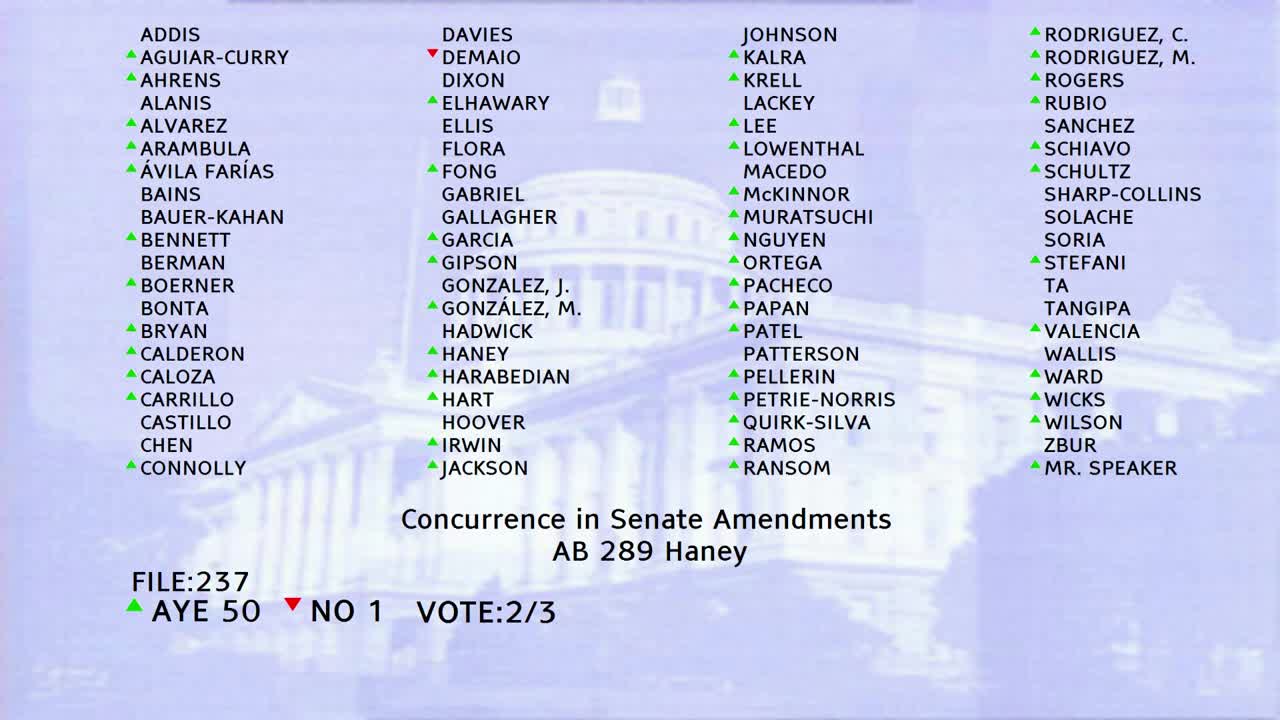
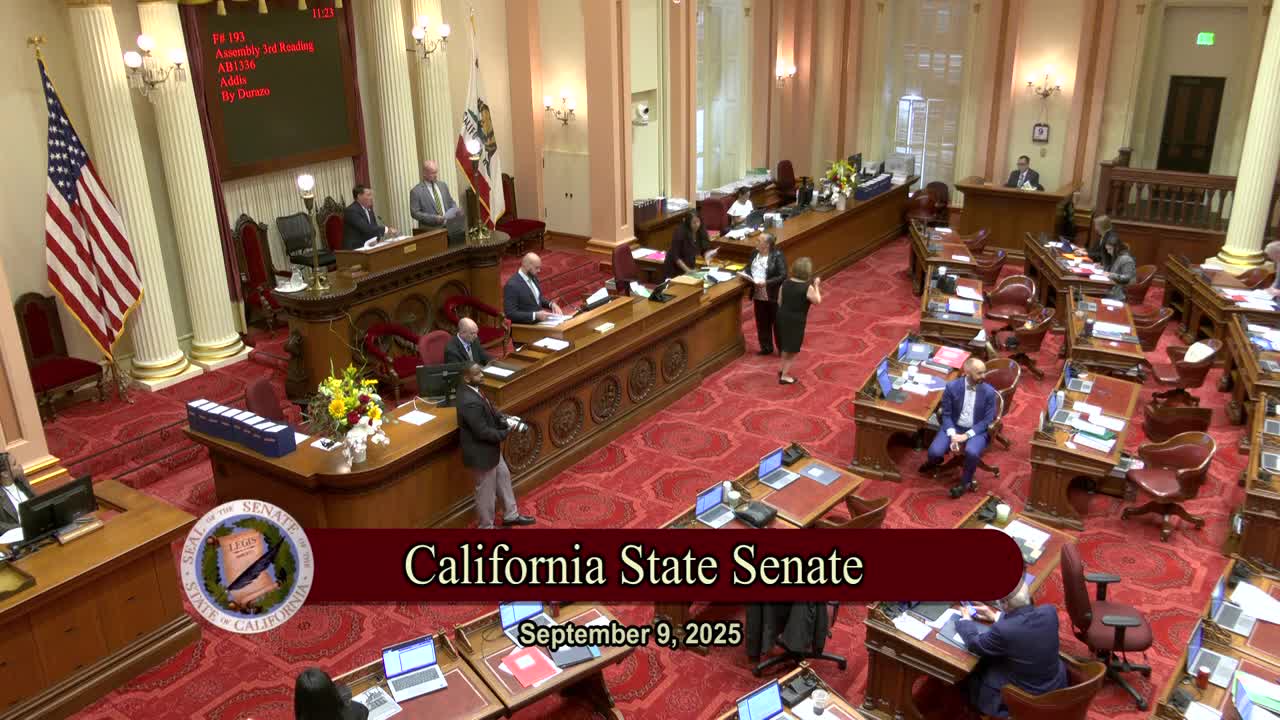
Bill Author

Bill Co-Author(s):