AB 1172: Adult day programs: administration of intranasal emergency antiseizure medications.
- Session Year: 2025-2026
- House: Assembly
- Latest Version Date: 2025-10-07
Current Status:
Passed
(2025-10-07: Chaptered by Secretary of State - Chapter 448, Statutes of 2025.)
Introduced
In Committee
Awaiting First Chamber Vote
Passed First Chamber
In Committee
Awaiting Second Chamber Vote
Passed Second Chamber
Enacted
Existing law, the California Community Care Facilities Act, provides for the licensing and regulation of community care facilities by the State Department of Social Services, including adult day programs and residential facilities. A violation of provisions relating to these facilities is a misdemeanor.
This bill would authorize a licensed facility or licensee, as defined, upon receipt of a request from a client, or the authorized representative of a client, who has been diagnosed with seizures, a seizure disorder, or epilepsy and who has been prescribed intranasal emergency antiseizure medication, to allow an administrator or authorized volunteer, as defined, to administer intranasal emergency antiseizure medication to the client during a seizure emergency. The bill would require the department, on or before January 1, 2028, to establish minimum standards for this training, as specified. The bill would prohibit intranasal emergency antiseizure medication from being administered to a client unless the licensee has a seizure action plan for the client that contains specified information, including, among other things, a signed written authorization verifying that a seizure experienced by the client may be responded to at the licensee by a nonmedical professional, including through the administration of emergency antiseizure medication, as specified. The bill would require licensees to maintain with the clients seizure action plan a description of how the licensee will coordinate care for a client in the absence of an administrator or authorized volunteer and what actions will be taken to ensure the continued safety of the client. The bill would require licensed facilities to provide a specified notice to all administrators and authorized volunteers that, among other things, informs them of their right to rescind an offer to volunteer at any time, as specified, and explains the liability protections and indemnification requirements described below. The bill would require any licensee that authorizes administrators or authorized volunteers to ensure that each administrator or authorized volunteer will be provided defense and indemnification for any and all civil liability, as specified. The bill would prohibit an administrator or authorized volunteer who administers intranasal emergency antiseizure medication, any person who provides training to an administrator or authorized volunteer, or any person who otherwise complies with the requirements of the above-described provisions, in good faith and not for compensation, from being subject to professional review, civil liability, or criminal prosecution for their actions or omissions, or the actions or omissions of a volunteer, as specified. By expanding the scope of an existing crime, this bill would impose a state-mandated local program.
The California Constitution requires the state to reimburse local agencies and school districts for certain costs mandated by the state. Statutory provisions establish procedures for making that reimbursement.
This bill would provide that no reimbursement is required by this act for a specified reason.
Existing law, the California Community Care Facilities Act, provides for the licensing and regulation of community care facilities by the State Department of Social Services, including adult day programs and residential facilities. A violation of provisions relating to these facilities is a misdemeanor.
This bill would authorize a licensed facility or licensee, as defined, upon receipt of a request from a client, or the authorized representative of a client, who has been diagnosed with seizures, a seizure disorder, or epilepsy and who has been prescribed intranasal emergency antiseizure medication, to allow an administrator or authorized volunteer, as defined, to administer intranasal emergency antiseizure medication to the client during a seizure emergency. The bill would require the department, on or before January 1, 2028, to establish minimum standards for this training, as specified. The bill would prohibit intranasal emergency antiseizure medication from being administered to a client unless the licensee has a seizure action plan for the client that contains specified information, including, among other things, a signed written authorization verifying that a seizure experienced by the client may be responded to at the licensee by a nonmedical professional, including through the administration of emergency antiseizure medication, as specified. The bill would require licensees to maintain with the clients seizure action plan a description of how the licensee will coordinate care for a client in the absence of an administrator or authorized volunteer and what actions will be taken to ensure the continued safety of the client. The bill would require licensed facilities to provide a specified notice to all administrators and authorized volunteers that, among other things, informs them of their right to rescind an offer to volunteer at any time, as specified, and explains the liability protections and indemnification requirements described below. The bill would require any licensee that authorizes administrators or authorized volunteers to ensure that each administrator or authorized volunteer will be provided defense and indemnification for any and all civil liability, as specified. The bill would prohibit an administrator or authorized volunteer who administers intranasal emergency antiseizure medication, any person who provides training to an administrator or authorized volunteer, or any person who otherwise complies with the requirements of the above-described provisions, in good faith and not for compensation, from being subject to professional review, civil liability, or criminal prosecution for their actions or omissions, or the actions or omissions of a volunteer, as specified. By expanding the scope of an existing crime, this bill would impose a state-mandated local program.
The California Constitution requires the state to reimburse local agencies and school districts for certain costs mandated by the state. Statutory provisions establish procedures for making that reimbursement.
This bill would provide that no reimbursement is required by this act for a specified reason.
Existing law, the California Community Care Facilities Act, provides for the licensing and regulation of community care facilities by the State Department of Social Services, including adult day programs and residential facilities. A violation of provisions relating to these facilities is a misdemeanor.
This bill would authorize a licensed facility or licensee, as defined, upon receipt of a request from a client, or the authorized representative of a client, who has been diagnosed with seizures, a seizure disorder, or epilepsy and who has been prescribed intranasal emergency antiseizure medication, to allow an administrator or authorized volunteer, as defined, to administer intranasal emergency antiseizure medication to the client during a seizure emergency. The bill would require the department, on or before January 1, 2028, to establish minimum standards for this training, as specified. The bill would prohibit intranasal emergency antiseizure medication from being administered to a client unless the licensee has a seizure action plan for the client that contains specified information, including, among other things, a signed written authorization verifying that a seizure experienced by the client may be responded to at the licensee by a nonmedical professional, including through the administration of emergency antiseizure medication, as specified. The bill would require licensees to maintain with the clients seizure action plan a description of how the licensee will coordinate care for a client in the absence of an administrator or authorized volunteer who is able to administer the emergency antiseizure medication. and what actions will be taken to ensure the continued safety of the client. The bill would require licensed facilities to provide a specified notice to all administrators and authorized volunteers that, among other things, informs them of their right to rescind an offer to volunteer at any time, as specified, and explains the liability protections and indemnification requirements described below. The bill would require any licensee that authorizes administrators or authorized volunteers to ensure that each administrator or authorized volunteer will be provided defense and indemnification for any and all civil liability, as specified. The bill would prohibit an administrator or authorized volunteer who administers intranasal emergency antiseizure medication, any person who provides training to an administrator or authorized volunteer, or any person who otherwise complies with the requirements of the above-described provisions, in good faith and not for compensation, from being subject to professional review, civil liability, or criminal prosecution for their actions or omissions, or the actions or omissions of a volunteer, as specified. By expanding the scope of an existing crime, this bill would impose a state-mandated local program.
The California Constitution requires the state to reimburse local agencies and school districts for certain costs mandated by the state. Statutory provisions establish procedures for making that reimbursement.
This bill would provide that no reimbursement is required by this act for a specified reason.
Existing law, the California Community Care Facilities Act, provides for the licensing and regulation of community care facilities by the State Department of Social Services, including adult day programs and residential facilities. A violation of provisions relating to these facilities is a misdemeanor.
This bill would authorize a licensed facility, facility or licensee, as defined, upon receipt of a request from an individual, a client, or the authorized representative of an individual, a client, who has been diagnosed with seizures, a seizure disorder, or epilepsy and who has been prescribed inhalable intranasal emergency antiseizure medication, to authorize any allow an administrator or authorized volunteer, as defined, to administer inhalable intranasal emergency antiseizure medication to the individual client during a seizure emergency. The bill would require the department, on or before January 1, 2027, 2028, to establish minimum standards for this training, as specified. The bill would prohibit inhalable intranasal emergency antiseizure medication from being administered to an individual a client unless the licensed facility licensee has a seizure action plan for the individual client that contains specified information, including, among other things, a signed written authorization verifying that a seizure experienced by the individual client may be responded to at the licensed facility licensee by a nonmedical professional, including through the administration of emergency antiseizure medication, as specified. The bill would require licensees to maintain with the clients seizure action plan a description of how the licensee will coordinate care for a client in the absence of an administrator or authorized volunteer who is able to administer the emergency antiseizure medication. The bill would require licensed facilities to provide a specified notice to all administrators and authorized volunteers that, among other things, informs them of their right to rescind an offer to volunteer at any time, as specified, and explains the liability protections and indemnification requirements described below. The bill would require any licensed facility licensee that authorizes administrators or authorized volunteers to ensure that each administrator or authorized volunteer will be provided defense and indemnification for any and all civil liability, as specified. The bill would prohibit a an administrator or authorized volunteer who administers inhalable intranasal emergency antiseizure medication, any person who provides training to a an administrator or authorized volunteer, or any person who otherwise complies with the requirements of the above-described provisions, in good faith and not for compensation, from being subject to professional review, civil liability, or criminal prosecution for their actions or omissions, or the actions or omissions of a volunteer, as specified. By expanding the scope of an existing crime, this bill would impose a state-mandated local program.
The California Constitution requires the state to reimburse local agencies and school districts for certain costs mandated by the state. Statutory provisions establish procedures for making that reimbursement.
This bill would provide that no reimbursement is required by this act for a specified reason.
Existing law, the California Community Care Facilities Act, provides for the licensing and regulation of community care facilities by the State Department of Social Services, including adult day programs and residential facilities. A violation of provisions relating to these facilities is a misdemeanor.
This bill would authorize a licensed facility, as defined, upon receipt of a request from an individual, or the authorized representative of an individual, who has been diagnosed with seizures, a seizure disorder, or epilepsy and who has been prescribed inhalable emergency antiseizure medication, to authorize any volunteer, as defined, to administer inhalable emergency antiseizure medication to the individual during a seizure emergency. The bill would require the department, on or before January 1, 2027, to establish minimum standards for this training, as specified. The bill would prohibit inhalable emergency antiseizure medication from being administered to an individual unless the licensed facility has a seizure action plan for the individual that contains specified information, including, among other things, a signed written authorization verifying that a seizure experienced by the individual may be responded to at the licensed facility by a nonmedical professional, including through the administration of emergency antiseizure medication, as specified. The bill would require licensed facilities to provide a specified notice to all volunteers that, among other things, informs them of their right to rescind an offer to volunteer at any time, as specified, and explains the liability protections and indemnification requirements described below. The bill would require any licensed facility that authorizes volunteers to ensure that each volunteer will be provided defense and indemnification for any and all civil liability, as specified. The bill would prohibit a volunteer who administers inhalable emergency antiseizure medication, any person who provides training to a volunteer, or any person who otherwise complies with the requirements of the above-described provisions, in good faith and not for compensation, from being subject to professional review, civil liability, or criminal prosecution for their actions or omissions, as specified. By expanding the scope of an existing crime, this bill would impose a state-mandated local program.
The California Constitution requires the state to reimburse local agencies and school districts for certain costs mandated by the state. Statutory provisions establish procedures for making that reimbursement.
This bill would provide that no reimbursement is required by this act for a specified reason.
Existing law, the California Community Care Facilities Act, provides for the licensing and regulation of community care facilities by the State Department of Social Services, including adult day programs and residential facilities. A violation of provisions relating to these facilities is a misdemeanor.
This bill would authorize a licensed facility, as defined, upon receipt of a request from an individual, or the authorized representative of an individual, who has been diagnosed with seizures, a seizure disorder, or epilepsy and who has been prescribed inhalable emergency antiseizure medication, to designate one or more volunteers to receive training on recognizing and responding to seizures, including by administering inhalable emergency antiseizure medication. authorize any volunteer, as defined, to administer inhalable emergency antiseizure medication to the individual during a seizure emergency. The bill would require the department, on or before January 1, 2027, to establish minimum standards for this training, as specified. The bill would prohibit inhalable emergency antiseizure medication from being administered to an individual unless the licensed facility has a seizure action plan for the individual that contains specified information, including, among other things, a signed written authorization for the medication to be administered to the individual at the licensed facility. verifying that a seizure experienced by the individual may be responded to at the licensed facility by a nonmedical professional, including through the administration of emergency antiseizure medication, as specified. The bill would require licensed facilities to provide a specified notice to all volunteers that that, among other things, informs them of their right to rescind an offer to volunteer at any time, including after receiving training, without penalty or retaliation. as specified, and explains the liability protections and indemnification requirements described below. The bill would require any licensed facility that designates authorizes volunteers to ensure that each volunteer will be provided defense and indemnification for any and all civil liability, as specified. The bill would prohibit a trained volunteer who administers inhalable emergency antiseizure medication in compliance the above-described provisions medication, any person who provides training to a volunteer, or any person who otherwise complies with the requirements of the above-described provisions, in good faith and not for compensation compensation, from being subject to professional review, civil liability, or criminal prosecution for their actions or omissions, as specified. By expanding the scope of an existing crime, this bill would impose a state-mandated local program.
The California Constitution requires the state to reimburse local agencies and school districts for certain costs mandated by the state. Statutory provisions establish procedures for making that reimbursement.
This bill would provide that no reimbursement is required by this act for a specified reason.
Existing law, the California Community Care Facilities Act, provides for the licensing and regulation of community care facilities by the State Department of Social Services, including adult day programs and residential facilities. A violation of provisions relating to these facilities is a misdemeanor.
This bill would authorize a licensed facility, as defined, upon receipt of a request from an individual, or the authorized representative of a developmentally disabled individual an individual, who has been diagnosed with seizures, a seizure disorder, or epilepsy and who has been prescribed inhalable emergency antiseizure medication, to designate one or more volunteers to receive training on recognizing and responding to seizures, including by administering inhalable emergency antiseizure medication. The bill would require the department department, on or before January 1, 2027, to establish minimum standards for this training, as specified. The bill would prohibit inhalable emergency antiseizure medication from being administered to an individual unless the licensed facility has a seizure action plan for the individual that contains specified information, including, among other things, written authorization for the medication to be administered to the individual at the licensed facility. The bill would require licensed facilities to provide a specified notice to all volunteers that informs them of their right to rescind an offer to volunteer at any time, including after receiving training, without penalty or retaliation. The bill would require any licensed facility that designates volunteers to ensure that each volunteer will be provided defense and indemnification for any and all civil liability, as specified. The bill would prohibit a trained volunteer who administers inhalable emergency antiseizure medication in compliance the above-described provisions in good faith and not for compensation from being subject to professional review, civil liability, or criminal prosecution for their actions or omissions, as specified. By expanding the scope of an existing crime, this bill would impose a state-mandated local program.
The California Constitution requires the state to reimburse local agencies and school districts for certain costs mandated by the state. Statutory provisions establish procedures for making that reimbursement.
This bill would provide that no reimbursement is required by this act for a specified reason.
Existing law, the California Community Care Facilities Act, provides for the licensing and regulation of community care facilities by the State Department of Social Services, including adult day programs and residential facilities. A violation of provisions relating to these facilities is a misdemeanor.
This bill would authorize a licensed facility, as defined, upon receipt of a request from the authorized representative of a developmentally disabled individual who has been diagnosed with seizures, a seizure disorder, or epilepsy and who has been prescribed inhalable emergency antiseizure medication, to designate one or more volunteers to receive training on recognizing and responding to seizures, including by administering inhalable emergency antiseizure medication. The bill would require the department to establish minimum standards for this training, as specified. The bill would prohibit inhalable emergency antiseizure medication from being administered to an individual unless the licensed facility has a seizure action plan for the individual that contains specified information, including, among other things, written authorization for the medication to be administered to the individual at the licensed facility. The bill would require licensed facilities to provide a specified notice to all volunteers that informs them of their right to rescind an offer to volunteer at any time, including after receiving training, without penalty or retaliation. The bill would require any licensed facility that designates volunteers to ensure that each volunteer will be provided defense and indemnification for any and all civil liability, as specified. The bill would prohibit a trained volunteer who administers inhalable emergency antiseizure medication in compliance the above-described provisions in good faith and not for compensation from being subject to professional review, civil liability, or criminal prosecution for their actions or omissions, as specified. By expanding the scope of an existing crime, this bill would impose a state-mandated local program.
The California Constitution requires the state to reimburse local agencies and school districts for certain costs mandated by the state. Statutory provisions establish procedures for making that reimbursement.
This bill would provide that no reimbursement is required by this act for a specified reason.
(a)This article shall be known, and may be cited, as the Seizure Emergency Response Act.
(b)For purposes of this article, the following definitions shall apply:
(1)Administrator has the same meaning as defined in Sections 80001 and 82001 of Title 22 of the California Code of Regulations, as applicable to the licensed facility type.
(2)Authorized representative has the same meaning as defined in Sections 80001 and 82001 of Title 22 of the California Code of Regulations, as applicable to the licensed facility type.
(3)Authorized volunteer means an employee of a licensee who has volunteered to administer intranasal emergency antiseizure medication, has been authorized by the licensee pursuant to Section 1528.1, and has received the training described in Section 1528.2.
(4)Health Care Provider means a health care professional licensed pursuant to Division 2 (commencing with Section 500) of the Business and Professions Code, including, but not limited to, physicians and surgeons, physician assistants, nurses, and nurse practitioners operating within their scope of practice.
(5)Licensed facility or licensee means either of the following:
(A)An adult residential facility, as defined in of Section 1502.
(B)An adult day program, as defined in Section 1502.
(6)Seizure action plan means a written, individualized health plan developed by the client or their authorized representative in consultation with a health care provider that is designed to prepare for, and respond to, the health care needs of a client diagnosed with seizures, a seizure disorder, or epilepsy who has been prescribed intranasal emergency antiseizure medication.
1528.1.(a)If a client diagnosed with seizures, a seizure disorder, or epilepsy has been prescribed intranasal emergency antiseizure medication by their health care provider, a licensee may, upon receipt of a request from the client or clients authorized representative, allow an administrator or authorized volunteer to administer intranasal emergency antiseizure medication to the client during a seizure emergency.
(b)(1)An administrator or authorized volunteer may administer intranasal emergency antiseizure medication in accordance with this article to a client diagnosed with seizures, a seizure disorder, or epilepsy if the client is suffering from a seizure, as outlined in the clients seizure action plan.
(2)An administrator or authorized volunteer shall not administer intranasal emergency antiseizure medication unless they have received the training described in Section 1528.2.
(3)Intranasal emergency antiseizure medication shall not be administered to a client unless the licensee has a seizure action plan for the client pursuant to Section 1528.3.
(c)An administrator or authorized volunteer may rescind their offer to administer intranasal emergency antiseizure medication at any time, including after receiving training, without penalty or retaliation.
(d)A licensee shall adopt policies to implement this article that, among other things, ensure that any administration of intranasal emergency antiseizure medication pursuant to this article complies with the conditions specified in a clients seizure action plan.
1528.2.(a)On or before January 1, 2028, the State Department of Social Services shall, in consultation with organizations and providers with expertise in epilepsy, administering emergency antiseizure medication, and administering medication in a school environment, including, but not limited to, the Epilepsy Foundation, Epilepsy Foundations in California, and the California Medical Association, adopt minimum training standards for recognizing and responding to seizures, including administering intranasal emergency antiseizure medication, and identify appropriate entities to provide training. These standards may align with the training requirements described in Article 4.6 (commencing with Section 49468) of Chapter 9 of Part 27 of Division 4 of Title 2 of the Education Code when appropriate to the setting, age, and ability of clients and participants described in this article.
(b)The training standards adopted pursuant to this section shall include all of the following:
(1)Recognition of the signs and symptoms of seizures and the appropriate steps to be taken to respond to those symptoms.
(2)Administering, or assisting with the self-administration of, an intranasal emergency antiseizure medication.
(3)Basic emergency follow up procedures.
(4)Written materials covering the information required under this subdivision.
(c)Licensees and regional centers shall retain, for reference, the written materials prepared pursuant to this section in a readily available manner in a central administrative location.
(d)(1)Training shall be provided to administrators and authorized volunteers at no cost to the administrator or authorized volunteer and during their regular working hours.
(2)Documentation of training for each administrator and authorized volunteer shall be retained in accordance with the requirements of Section 80066 of Title 22 of the California Code of Regulations for adult residential facilities and Section 82066 of Title 22 of the California Code of Regulations for adult day programs.
(e)Licensees shall provide a notice to administrators and authorized volunteers that informs them of their right to rescind an offer to volunteer at any time, including after receiving training, without penalty or retaliation. The notice shall include an explanation of the liability protections and indemnification requirements described in Section 1528.4 and state that there will be no retaliation against them for rescinding their offer to volunteer.
(f)If there are no administrators or authorized volunteers at the licensed facility able to administer intranasal emergency antiseizure medication, the facility shall notify the requesting client, the clients authorized representative, or, if applicable, the clients regional center service coordinator, to coordinate care for the client.
1528.3.(a)Before administering intranasal emergency antiseizure medication prescribed to treat seizures in a client diagnosed with seizures, a seizure disorder, or epilepsy, the licensee shall be in receipt of a seizure action plan approved by the client or the clients authorized representative that includes all of the following:
(1)A written authorization signed by the client, or if applicable, the clients authorized representative, verifying that a seizure experienced by the client may be responded to at the licensed facility by a nonmedical professional who has received training pursuant to Section 1528.2, including through the administration of emergency antiseizure medication prescribed to the client. The authorization shall be effective for the calendar year in which it is granted and shall be renewed each calendar year, unless needed sooner.
(2)A copy of a written statement from the clients health care provider that includes all of the following information:
(A)The clients name.
(B)The name and purpose of the medication.
(C)The prescribed dosage.
(D)The method of administration.
(E)The frequency with which the medication may be administered.
(F)Detailed seizure symptoms, including frequency, type, or length of seizures, that identify when the administration of an intranasal emergency antiseizure medication becomes necessary.
(G)The circumstances under which the medication may be administered.
(H)Any potential adverse responses by the client and recommended mitigation actions, including when to call emergency services, including the emergency 911 telephone number.
(I)Protocols for observing and caring for the client after a seizure and after the administration of intranasal emergency antiseizure medication, including, but not limited to, both of the following:
(i)Whether the client should rest in a specific area or return to regular activities.
(ii)The length of time the client should be under direct observation.
(3)Clear instructions on how and where the intranasal emergency antiseizure medication should be stored at the licensed facility.
(b)The administrator or their designee shall document and maintain a copy of the clients seizure action plan in compliance with all applicable state and federal privacy laws.
(c)The licensee shall maintain with the clients seizure action plan a description of how the licensee will coordinate care for the client in the absence of an administrator or authorized volunteer and what actions will be taken to ensure the continued safety of the client.
(d)The licensee shall maintain the clients seizure action plan and the description required by subdivision (c) in accordance with the requirements of Section 80070 of Title 22 of the California Code of Regulations for adult residential facilities and Section 82070 of Title 22 of the California Code of Regulations for adult day programs.
(e)If an administrator or authorized volunteer administers intranasal emergency antiseizure medication pursuant to this article, the administrator or their designee shall maintain a record of each dose administered in a manner consistent with the documentation of medications provided to a client for self-administration in accordance with Title 22 of the California Code of Regulations.
(f)Intranasal emergency antiseizure medication prescribed for the client shall be provided to the licensee with the label affixed by the dispensing pharmacy intact.
1528.4.(a)Any licensee that allows administrators or authorized volunteers to administer intranasal emergency antiseizure medication pursuant to this article shall ensure that each administrator or authorized volunteer will be provided defense and indemnification for any and all civil liability, in accordance with, but not limited to, the provisions of Division 3.6 (commencing with Section 810) of Title 1 of the Government Code. This information shall be reduced to writing, provided to the administrator or authorized volunteer, and retained in the administrator or authorized volunteers personnel file.
(b)(1)Notwithstanding any other law, except as provided in paragraph (2), an administrator or a volunteer who administers intranasal emergency antiseizure medication in compliance with this article, any person who provides training to an administrator or authorized volunteer pursuant to this article, or any person who otherwise complies with the requirements of this article, in good faith and not for compensation, shall not be subject to professional review, civil liability, or criminal prosecution for their actions or omissions, or the actions or omissions of a volunteer.
(2)The protections specified in paragraph (1) and subdivision (a) shall not affect any of the following:
(A)A persons liability for an act or omission that constitutes gross negligence or willful or wanton misconduct.
(B)A persons culpability for an act that constitutes a crime.
(C)The ability of a licensing board to take disciplinary action against a licensed healthcare professional for an act not specifically authorized by this article.
(D)The application of Section 1799.102.
(3)An administrator or authorized volunteer who volunteers to administer intranasal emergency antiseizure medication pursuant to this article shall not be deemed to be providing intranasal emergency medical care for compensation, notwithstanding the fact that the administrator or authorized volunteer is a paid staff member of the facility.
SEC. 2.No reimbursement is required by this act pursuant to Section 6 of Article XIIIB of the California Constitution because the only costs that may be incurred by a local agency or school district will be incurred because this act creates a new crime or infraction, eliminates a crime or infraction, or changes the penalty for a crime or infraction, within the meaning of Section 17556 of the Government Code, or changes the definition of a crime within the meaning of Section 6 of Article XIIIB of the California Constitution.
(a)This article shall be known, and may be cited, as the Seizure Emergency Response Act.
(b)For purposes of this article, the following definitions shall apply:
(1)Administrator has the same meaning as defined in Sections 80001 and 82001 of Title 22 of the California Code of Regulations, as applicable to the licensed facility type.
(2)Authorized representative has the same meaning as defined in Sections 80001 and 82001 of Title 22 of the California Code of Regulations, as applicable to the licensed facility type.
(3)Authorized volunteer means an employee of a licensee who has volunteered to administer intranasal emergency antiseizure medication, has been authorized by the licensee pursuant to Section 1528.1, and has received the training described in Section 1528.2.
(4)Health Care Provider means a health care professional licensed pursuant to Division 2 (commencing with Section 500) of the Business and Professions Code, including, but not limited to, physicians and surgeons, physician assistants, nurses, and nurse practitioners operating within their scope of practice.
(5)Licensed facility or licensee means either of the following:
(A)An adult residential facility, as defined in of Section 1502.
(B)An adult day program, as defined in Section 1502.
(6)Seizure action plan means a written, individualized health plan developed by the client or their authorized representative in consultation with a health care provider that is designed to prepare for, and respond to, the health care needs of a client diagnosed with seizures, a seizure disorder, or epilepsy who has been prescribed intranasal emergency antiseizure medication.
1528.1.(a)If a client diagnosed with seizures, a seizure disorder, or epilepsy has been prescribed intranasal emergency antiseizure medication by their health care provider, a licensee may, upon receipt of a request from the client or clients authorized representative, allow an administrator or authorized volunteer to administer intranasal emergency antiseizure medication to the client during a seizure emergency.
(b)(1)An administrator or authorized volunteer may administer intranasal emergency antiseizure medication in accordance with this article to a client diagnosed with seizures, a seizure disorder, or epilepsy if the client is suffering from a seizure, as outlined in the clients seizure action plan.
(2)An administrator or authorized volunteer shall not administer intranasal emergency antiseizure medication unless they have received the training described in Section 1528.2.
(3)Intranasal emergency antiseizure medication shall not be administered to a client unless the licensee has a seizure action plan for the client pursuant to Section 1528.3.
(c)An administrator or authorized volunteer may rescind their offer to administer intranasal emergency antiseizure medication at any time, including after receiving training, without penalty or retaliation.
(d)A licensee shall adopt policies to implement this article that, among other things, ensure that any administration of intranasal emergency antiseizure medication pursuant to this article complies with the conditions specified in a clients seizure action plan.
1528.2.(a)On or before January 1, 2028, the State Department of Social Services shall, in consultation with organizations and providers with expertise in epilepsy, administering emergency antiseizure medication, and administering medication in a school environment, including, but not limited to, the Epilepsy Foundation, Epilepsy Foundations in California, and the California Medical Association, adopt minimum training standards for recognizing and responding to seizures, including administering intranasal emergency antiseizure medication, and identify appropriate entities to provide training. These standards may align with the training requirements described in Article 4.6 (commencing with Section 49468) of Chapter 9 of Part 27 of Division 4 of Title 2 of the Education Code when appropriate to the setting, age, and ability of clients and participants described in this article.
(b)The training standards adopted pursuant to this section shall include all of the following:
(1)Recognition of the signs and symptoms of seizures and the appropriate steps to be taken to respond to those symptoms.
(2)Administering, or assisting with the self-administration of, an intranasal emergency antiseizure medication.
(3)Basic emergency follow up procedures.
(4)Written materials covering the information required under this subdivision.
(c)Licensees and regional centers shall retain, for reference, the written materials prepared pursuant to this section in a readily available manner in a central administrative location.
(d)(1)Training shall be provided to administrators and authorized volunteers at no cost to the administrator or authorized volunteer and during their regular working hours.
(2)Documentation of training for each administrator and authorized volunteer shall be retained in accordance with the requirements of Section 80066 of Title 22 of the California Code of Regulations for adult residential facilities and Section 82066 of Title 22 of the California Code of Regulations for adult day programs.
(e)Licensees shall provide a notice to administrators and authorized volunteers that informs them of their right to rescind an offer to volunteer at any time, including after receiving training, without penalty or retaliation. The notice shall include an explanation of the liability protections and indemnification requirements described in Section 1528.4 and state that there will be no retaliation against them for rescinding their offer to volunteer.
(f)If there are no administrators or authorized volunteers at the licensed facility able to administer intranasal emergency antiseizure medication, the facility shall notify the requesting client, the clients authorized representative, or, if applicable, the clients regional center service coordinator, to coordinate care for the client.
1528.3.(a)Before administering intranasal emergency antiseizure medication prescribed to treat seizures in a client diagnosed with seizures, a seizure disorder, or epilepsy, the licensee shall be in receipt of a seizure action plan approved by the client or the clients authorized representative that includes all of the following:
(1)A written authorization signed by the client, or if applicable, the clients authorized representative, verifying that a seizure experienced by the client may be responded to at the licensed facility by a nonmedical professional who has received training pursuant to Section 1528.2, including through the administration of emergency antiseizure medication prescribed to the client. The authorization shall be effective for the calendar year in which it is granted and shall be renewed each calendar year, unless needed sooner.
(2)A copy of a written statement from the clients health care provider that includes all of the following information:
(A)The clients name.
(B)The name and purpose of the medication.
(C)The prescribed dosage.
(D)The method of administration.
(E)The frequency with which the medication may be administered.
(F)Detailed seizure symptoms, including frequency, type, or length of seizures, that identify when the administration of an intranasal emergency antiseizure medication becomes necessary.
(G)The circumstances under which the medication may be administered.
(H)Any potential adverse responses by the client and recommended mitigation actions, including when to call emergency services, including the emergency 911 telephone number.
(I)Protocols for observing and caring for the client after a seizure and after the administration of intranasal emergency antiseizure medication, including, but not limited to, both of the following:
(i)Whether the client should rest in a specific area or return to regular activities.
(ii)The length of time the client should be under direct observation.
(3)Clear instructions on how and where the intranasal emergency antiseizure medication should be stored at the licensed facility.
(b)The administrator or their designee shall document and maintain a copy of the clients seizure action plan in compliance with all applicable state and federal privacy laws.
(c)The licensee shall maintain with the clients seizure action plan a description of how the licensee will coordinate care for the client in the absence of an administrator or authorized volunteer and what actions will be taken to ensure the continued safety of the client.
(d)The licensee shall maintain the clients seizure action plan and the description required by subdivision (c) in accordance with the requirements of Section 80070 of Title 22 of the California Code of Regulations for adult residential facilities and Section 82070 of Title 22 of the California Code of Regulations for adult day programs.
(e)If an administrator or authorized volunteer administers intranasal emergency antiseizure medication pursuant to this article, the administrator or their designee shall maintain a record of each dose administered in a manner consistent with the documentation of medications provided to a client for self-administration in accordance with Title 22 of the California Code of Regulations.
(f)Intranasal emergency antiseizure medication prescribed for the client shall be provided to the licensee with the label affixed by the dispensing pharmacy intact.
1528.4.(a)Any licensee that allows administrators or authorized volunteers to administer intranasal emergency antiseizure medication pursuant to this article shall ensure that each administrator or authorized volunteer will be provided defense and indemnification for any and all civil liability, in accordance with, but not limited to, the provisions of Division 3.6 (commencing with Section 810) of Title 1 of the Government Code. This information shall be reduced to writing, provided to the administrator or authorized volunteer, and retained in the administrator or authorized volunteers personnel file.
(b)(1)Notwithstanding any other law, except as provided in paragraph (2), an administrator or a volunteer who administers intranasal emergency antiseizure medication in compliance with this article, any person who provides training to an administrator or authorized volunteer pursuant to this article, or any person who otherwise complies with the requirements of this article, in good faith and not for compensation, shall not be subject to professional review, civil liability, or criminal prosecution for their actions or omissions, or the actions or omissions of a volunteer.
(2)The protections specified in paragraph (1) and subdivision (a) shall not affect any of the following:
(A)A persons liability for an act or omission that constitutes gross negligence or willful or wanton misconduct.
(B)A persons culpability for an act that constitutes a crime.
(C)The ability of a licensing board to take disciplinary action against a licensed healthcare professional for an act not specifically authorized by this article.
(D)The application of Section 1799.102.
(3)An administrator or authorized volunteer who volunteers to administer intranasal emergency antiseizure medication pursuant to this article shall not be deemed to be providing intranasal emergency medical care for compensation, notwithstanding the fact that the administrator or authorized volunteer is a paid staff member of the facility.
SEC. 2.No reimbursement is required by this act pursuant to Section 6 of Article XIIIB of the California Constitution because the only costs that may be incurred by a local agency or school district will be incurred because this act creates a new crime or infraction, eliminates a crime or infraction, or changes the penalty for a crime or infraction, within the meaning of Section 17556 of the Government Code, or changes the definition of a crime within the meaning of Section 6 of Article XIIIB of the California Constitution.
(a)This article shall be known, and may be cited, as the Seizure Emergency Response Act.
(b)For purposes of this article, the following definitions shall apply:
(1)Administrator has the same meaning as defined in Section Sections 80001 and 82001 of Title 22 of the California Code of Regulations. Regulations, as applicable to the licensed facility type.
(2)Authorized representative has the same meaning as defined in Section Sections 80001 and 82001 of Title 22 of the California Code of Regulations. Regulations, as applicable to the licensed facility type.
(3)Authorized volunteer means an employee of a licensee who has volunteered to administer intranasal emergency antiseizure medication, has been authorized by the licensee pursuant to Section 1528.1, and has received the training described in Section 1528.2.
(4)Health Care Provider means a health care professional licensed pursuant to Division 2 (commencing with Section 500) of the Business and Professions Code, including, but not limited to, physicians and surgeons, physician assistants, nurses, and nurse practitioners operating within their scope of practice.
(5)Licensed facility or licensee means either of the following:
(A)An adult residential facility, as defined in of Section 1502.
(B)An adult day program, as defined in Section 1502.
(6)Seizure action plan means a written, individualized health plan developed by the client or their authorized representative in consultation with a health care provider that is designed to prepare for, and respond to, the health care needs of a client diagnosed with seizures, a seizure disorder, or epilepsy who has been prescribed intranasal emergency antiseizure medication.
1528.1.(a)If a client diagnosed with seizures, a seizure disorder, or epilepsy has been prescribed intranasal emergency antiseizure medication by their health care provider, a licensee may, upon receipt of a request from the client or clients authorized representative, allow an administrator or authorized volunteer to administer intranasal emergency antiseizure medication to the client during a seizure emergency.
(b)(1)An administrator or authorized volunteer may administer intranasal emergency antiseizure medication in accordance with this article to a client diagnosed with seizures, a seizure disorder, or epilepsy if the client is suffering from a seizure. seizure, as outlined in the clients seizure action plan.
(2)An administrator or authorized volunteer shall not administer intranasal emergency antiseizure medication unless they have received the training described in Section 1528.2.
(3)Intranasal emergency antiseizure medication shall not be administered to a client unless the licensee has a seizure action plan for the client pursuant to Section 1528.3.
(c)An administrator or authorized volunteer may rescind their offer to administer intranasal emergency antiseizure medication at any time, including after receiving training, without penalty or retaliation.
(d)A licensee shall adopt policies to implement this article that, among other things, ensure that any administration of intranasal emergency antiseizure medication pursuant to this article complies with the conditions specified in a clients seizure action plan.
1528.2.(a)On or before January 1, 2028, the State Department of Social Services shall, in consultation with organizations and providers with expertise in epilepsy, administering emergency antiseizure medication, and administering medication in a school environment, including, but not limited to, the Epilepsy Foundation, Epilepsy Foundations in California, and the California Medical Association, adopt minimum training standards for recognizing and responding to seizures, including administering intranasal emergency antiseizure medication, and identify appropriate entities to provide training. These standards may align with the training requirements described in Article 4.6 (commencing with Section 49468) of Chapter 9 of Part 27 of Division 4 of Title 2 of the Education Code when appropriate to the setting, age, and ability of clients and participants described in this article.
(b)The training standards adopted pursuant to this section shall include all of the following:
(1)Recognition of the signs and symptoms of seizures and the appropriate steps to be taken to respond to those symptoms.
(2)Administering, or assisting with the self-administration of, an intranasal emergency antiseizure medication.
(3)Basic emergency follow up procedures.
(4)Written materials covering the information required under this subdivision.
(c)Licensees and regional centers shall retain, for reference, the written materials prepared pursuant to this section in a readily available manner in a central administrative location.
(d)(1)Training shall be provided to administrators and authorized volunteers by a regional center or a licensee at no cost to the administrator or authorized volunteer and during their regular working hours.
(2)Documentation of training for each administrator and authorized volunteer shall be retained in accordance with the requirements of Section 80066 of Title 22 of the California Code of Regulations for adult residential facilities and Section 82066 of Title 22 of the California Code of Regulations for adult day programs.
(e)Licensees shall provide a notice to administrators and authorized volunteers that informs them of their right to rescind an offer to volunteer at any time, including after receiving training, without penalty or retaliation. The notice shall include an explanation of the liability protections and indemnification requirements described in Section 1528.4 and state that there will be no retaliation against them for rescinding their offer to volunteer.
(f)If there are no administrators or authorized volunteers at the licensed facility able to administer intranasal emergency antiseizure medication, the facility shall notify the requesting client, the clients authorized representative, or, if applicable, the clients regional center service coordinator, to coordinate care for the client.
1528.3.(a)Before administering intranasal emergency antiseizure medication prescribed to treat seizures in a client diagnosed with seizures, a seizure disorder, or epilepsy, the licensee shall be in receipt of a seizure action plan approved by the client or the clients authorized representative that includes all of the following:
(1)A written authorization signed by the client, or if applicable, the clients authorized representative, verifying that a seizure experienced by the client may be responded to at the licensed facility by a nonmedical professional who has received training pursuant to Section 1528.2, including through the administration of emergency antiseizure medication prescribed to the client. The authorization shall be effective for the calendar year in which it is granted and shall be renewed each calendar year, unless needed sooner.
(2)A copy of a written statement from the clients health care provider that includes all of the following information:
(A)The clients name.
(B)The name and purpose of the medication.
(C)The prescribed dosage.
(D)The method of administration.
(E)The frequency with which the medication may be administered.
(F)Detailed seizure symptoms, including frequency, type, or length of seizures, that identify when the administration of an intranasal emergency antiseizure medication becomes necessary.
(G)The circumstances under which the medication may be administered.
(H)Any potential adverse responses by the client and recommended mitigation actions, including when to call emergency services, including the emergency 911 telephone number.
(I)Protocols for observing and caring for the client after a seizure and after the administration of intranasal emergency antiseizure medication, including, but not limited to, both of the following:
(i)Whether the client should rest in a specific area or return to regular activities.
(ii)The length of time the client should be under direct observation.
(3)Clear instructions on how and where the intranasal emergency antiseizure medication should be stored at the licensee. licensed facility.
(b)The administrator or their designee shall document and maintain a copy of the clients seizure action plan in compliance with all applicable state and federal privacy laws.
(c)The licensee shall maintain with the clients seizure action plan a description of how the licensee will coordinate care for the client in the absence of an administrator or authorized volunteer who is able to administer intranasal emergency antiseizure medication. and what actions will be taken to ensure the continued safety of the client.
(d)The licensee shall maintain the clients seizure action plan and the description required by subdivision (c) in a manner consistent with the client record requirements for their facility type pursuant to Title 22 of the California Code of Regulations. accordance with the requirements of Section 80070 of Title 22 of the California Code of Regulations for adult residential facilities and Section 82070 of Title 22 of the California Code of Regulations for adult day programs.
(e)If an administrator or authorized volunteer administers intranasal emergency antiseizure medication pursuant to this article, the administrator or their designee shall maintain a record of each dose administered in a manner consistent with the documentation of medications provided to a client for self-administration in accordance with Title 22 of the California Code of Regulations.
(f)Intranasal emergency antiseizure medication prescribed for the client shall be provided to the licensee with the label affixed by the dispensing pharmacy intact.
1528.4.(a)Any licensee that allows administrators or authorized volunteers to administer intranasal emergency antiseizure medication pursuant to this article shall ensure that each administrator or authorized volunteer will be provided defense and indemnification for any and all civil liability, in accordance with, but not limited to, the provisions of Division 3.6 (commencing with Section 810) of Title 1 of the Government Code. This information shall be reduced to writing, provided to the administrator or authorized volunteer, and retained in the administrator or authorized volunteers personnel file.
(b)(1)Notwithstanding any other law, except as provided in paragraph (2), an administrator or a volunteer who administers intranasal emergency antiseizure medication in compliance with this article, any person who provides training to an administrator or authorized volunteer pursuant to this article, or any person who otherwise complies with the requirements of this article, in good faith and not for compensation, shall not be subject to professional review, civil liability, or criminal prosecution for their actions or omission, omissions, or the actions or omission omissions of a volunteer.
(2)The protections specified in paragraph (1) and subdivision (a) shall not affect any of the following:
(A)A persons liability for an act or omission that constitutes gross negligence or willful or wanton misconduct.
(B)A persons culpability for an act that constitutes a crime.
(C)The ability of a licensing board to take disciplinary action against a licensed healthcare professional for an act not specifically authorized by this article.
(D)The application of Section 1799.102.
(3)An administrator or authorized volunteer who volunteers to administer intranasal emergency antiseizure medication pursuant to this article shall not be deemed to be providing intranasal emergency medical care for compensation, notwithstanding the fact that the administrator or authorized volunteer is a paid staff member of the facility.
SEC. 2.No reimbursement is required by this act pursuant to Section 6 of Article XIIIB of the California Constitution because the only costs that may be incurred by a local agency or school district will be incurred because this act creates a new crime or infraction, eliminates a crime or infraction, or changes the penalty for a crime or infraction, within the meaning of Section 17556 of the Government Code, or changes the definition of a crime within the meaning of Section 6 of Article XIIIB of the California Constitution.
(a)This article shall be known, and may be cited, as the Seizure Emergency Response Act.
(b)For purposes of this article, the following definitions shall apply:
(1)Licensed facility means an adult day program or an adult residential facility, as defined in Section 1502.(1)Administrator has the same meaning as defined in Section 80001 of Title 22 of the California Code of Regulations.
(2)Authorized representative has the same meaning as defined in Section 80001 of Title 22 of the California Code of Regulations.
(3)Authorized volunteer means an employee of a licensee who has volunteered to administer intranasal emergency antiseizure medication, has been authorized by the licensee pursuant to Section 1528.1, and has received the training described in Section 1528.2.
(4)Health Care Provider means a health care professional licensed pursuant to Division 2 (commencing with Section 500) of the Business and Professions Code, including, but not limited to, physicians and surgeons, physician assistants, nurses, and nurse practitioners operating within their scope of practice.
(5)Licensed facility or licensee means either of the following:
(A)An adult residential facility, as defined in of Section 1502.
(B)An adult day program, as defined in Section 1502.
(2)(6)Seizure action plan means a written, individualized health plan developed by the client or their authorized representative in consultation with a health care provider that is designed to prepare for, and respond to, the health care needs of an individual a client diagnosed with seizures, a seizure disorder, or epilepsy who has been prescribed inhalable intranasal emergency antiseizure medication.
(3)Volunteer means an employee of a licensed facility who has volunteered to administer inhalable emergency antiseizure medication, has been authorized by the facility pursuant to Section 1528.1, and has received the training described in Section 1528.2.1528.1.(a)If an individual a client diagnosed with seizures, a seizure disorder, or epilepsy has been prescribed inhalable intranasal emergency antiseizure medication by their health care provider, the individuals licensed facility a licensee may, upon receipt of a request from the individual client or individuals clients authorized representative, authorize any allow an administrator or authorized volunteer to administer inhalable intranasal emergency antiseizure medication to the individual client during a seizure emergency.
(b)(1)A An administrator or authorized volunteer may administer inhalable intranasal emergency antiseizure medication in accordance with this article to an individual a client diagnosed with seizures, a seizure disorder, or epilepsy if the individual client is suffering from a seizure.
(2)A An administrator or authorized volunteer shall not administer inhalable intranasal emergency antiseizure medication unless they have received the training described in Section 1528.2.
(3)Inhalable Intranasal emergency antiseizure medication shall not be administered to an individual a client unless the licensed facility licensee has a seizure action plan for the individual client pursuant to Section 1528.3.
(c)A An administrator or authorized volunteer may rescind their offer to administer inhalable intranasal emergency antiseizure medication at any time, including after receiving training, without penalty or retaliation.
(d)A licensed facility licensee shall adopt policies to implement this article that, among other things, ensure that any administration of inhalable intranasal emergency antiseizure medication pursuant to this article complies with the conditions specified in an individuals a clients seizure action plan.
1528.2.(a)On or before January 1, 2027, 2028, the State Department of Social Services shall, in consultation with organizations and providers with expertise in epilepsy, administering emergency antiseizure medication, and administering medication in a school environment, including, but not limited to, the Epilepsy Foundation, Epilepsy Foundations in California, and the California Medical Association, adopt minimum training standards for recognizing and responding to seizures, including administering inhalable intranasal emergency antiseizure medication. medication, and identify appropriate entities to provide training. These standards may align with the training requirements described in Article 4.6 (commencing with Section 49468) of Chapter 9 of Part 27 of Division 4 of Title 2 of the Education Code when appropriate to the setting, age, and ability of residents clients and participants described in this article.
(b)The training standards adopted pursuant to this section shall include all of the following:
(1)Recognition of the signs and symptoms of seizures and the appropriate steps to be taken to respond to those symptoms.
(2)Administering, or assisting with the self-administration of, an inhalable intranasal emergency antiseizure medication.
(3)Basic emergency follow up procedures.
(4)Written materials covering the information required under this subdivision.
(c)The training developed pursuant to this section shall be consistent with the requirements for medication administration specified in Title 22 of the California Code of Regulations.(d)Licensed facilities shall(c)Licensees and regional centers shall retain, for reference, the written materials prepared pursuant to this section in a manner consistent with state law, including Section 56730 of Title 17 of the California Code of Regulations. a readily available manner in a central administrative location.
(e)(d)Training shall be provided to administrators and authorized volunteers by a regional center or a licensee at no cost to the administrator or authorized volunteer and during the volunteers their regular working hours.
(f)Licensed facilities(e)Licensees shall provide a notice to administrators and authorized volunteers that informs them of their right to rescind an offer to volunteer at any time, including after receiving training, without penalty or retaliation. The notice shall include an explanation of the liability protections and indemnification requirements described in Section 1528.4 and state that there will be no retaliation against any employee them for rescinding their offer to volunteer.
(g)(f)If there are no administrators or authorized volunteers at the licensed facility able to administer inhalable intranasal emergency antiseizure medication, the facility shall notify the requesting individual, client, the individuals clients authorized representative, or their or, if applicable, the clients regional center service coordinator. coordinator, to coordinate care for the client.
1528.3.(a)Before administering inhalable intranasal emergency antiseizure medication prescribed to treat seizures in an individual a client diagnosed with seizures, a seizure disorder, or epilepsy, a licensed facility shall develop the licensee shall be in receipt of a seizure action plan approved by the individual or the individuals client or the clients authorized representative that includes all of the following:
(1)A written authorization signed by the individual or the individuals authorized representative client, or if applicable, the clients authorized representative, verifying that a seizure experienced by the individual client may be responded to at the licensed facility by a nonmedical professional who has received training pursuant to Section 1528.2, including through the administration of emergency antiseizure medication prescribed to the individual. client. The authorization shall be effective for the calendar year in which it is granted and shall be renewed each calendar year, unless needed sooner.
(2)A copy of a written statement from the individuals clients health care provider that includes all of the following information:
(A)The individuals clients name.
(B)The name and purpose of the medication.
(C)The prescribed dosage.
(D)The method of administration.
(E)The frequency with which the medication may be administered.
(F)Detailed seizure symptoms, including frequency, type, or length of seizures, that identify when the administration of an inhalable intranasal emergency antiseizure medication becomes necessary.
(G)The circumstances under which the medication may be administered.
(H)Any potential adverse responses by the individual client and recommended mitigation actions, including when to call emergency services, including the emergency 911 telephone number.
(I)Protocols for observing and caring for the individual client after a seizure and after the administration of inhalable intranasal emergency antiseizure medication, including, but not limited to, both of the following:
(i)Whether the individual client should rest in a specific area or return to regular activities.
(ii)The length of time the individual client should be under direct observation.
(3)Clear instructions on how and where the inhalable intranasal emergency antiseizure medication should be stored at the licensed facility. licensee.
(b)The facility administrator or their designee shall document and maintain a copy of the individuals clients seizure action plan in compliance with all applicable state and federal privacy laws.
(c)The licensee shall maintain with the clients seizure action plan a description of how the licensee will coordinate care for the client in the absence of an administrator or authorized volunteer who is able to administer intranasal emergency antiseizure medication.
(d)The licensee shall maintain the clients seizure action plan and the description required by subdivision (c) in a manner consistent with the client record requirements for their facility type pursuant to Title 22 of the California Code of Regulations.
(c)(e)If a an administrator or authorized volunteer administers inhalable intranasal emergency antiseizure medication pursuant to this article, the administrator or their designee shall document the administration of the medication maintain a record of each dose administered in accordance with Title 22 of the California Code of Regulations.
(d)Inhalable(f)Intranasal emergency antiseizure medication prescribed for the individual client shall be provided to the licensed facility licensee with the label affixed by the dispensing pharmacy intact.
1528.4.(a)Any licensed facility licensee that authorizes allows administrators or authorized volunteers to administer intranasal emergency antiseizure medication pursuant to Section 1528.1 this article shall ensure that each employee who volunteers to administer inhalable emergency antiseizure medication pursuant to this article administrator or authorized volunteer will be provided defense and indemnification for any and all civil liability, in accordance with, but not limited to, the provisions of Division 3.6 (commencing with Section 810) of Title 1 of the Government Code. This information shall be reduced to writing, provided to the administrator or authorized volunteer, and retained in the administrator or authorized volunteers personnel file.
(b)(1)Notwithstanding any other law, except as provided in paragraph (2), a volunteer who administers inhalable intranasal emergency antiseizure medication in compliance with this article, any person who provides training to a an administrator or authorized volunteer pursuant to this article, or any person who otherwise complies with the requirements of this article, in good faith and not for compensation, shall not be subject to professional review, civil liability, or criminal prosecution for their actions or omissions. omission, or the actions or omission of a volunteer.
(2)The protections specified in paragraph (1) and subdivision (a) shall not affect any of the following:
(A)A persons liability for an act or omission that constitutes gross negligence or willful or wanton misconduct.
(B)A persons culpability for an act that constitutes a crime.
(C)The ability of a licensing board to take disciplinary action against a licensed healthcare professional for an act not specifically authorized by this article.
(D)The application of Section 1799.102.
(3)An employee of a licensed facility administrator or authorized volunteer who volunteers to administer inhalable intranasal emergency antiseizure medication pursuant to this article shall not be deemed to be providing inhalable intranasal emergency medical care for compensation, notwithstanding the fact that the employee administrator or authorized volunteer is a paid staff member of the facility.
SEC. 2.No reimbursement is required by this act pursuant to Section 6 of Article XIIIB of the California Constitution because the only costs that may be incurred by a local agency or school district will be incurred because this act creates a new crime or infraction, eliminates a crime or infraction, or changes the penalty for a crime or infraction, within the meaning of Section 17556 of the Government Code, or changes the definition of a crime within the meaning of Section 6 of Article XIIIB of the California Constitution.
(a)This article shall be known, and may be cited, as the Seizure Emergency Response Act.
(b)For purposes of this article, the following definitions shall apply:
(1)Licensed facility means an adult day program or an adult residential facility, as defined in Section 1502.
(2)Seizure action plan means a written, individualized health plan designed to prepare for, and respond to, the health care needs of an individual diagnosed with seizures, a seizure disorder, or epilepsy who has been prescribed inhalable emergency antiseizure medication.
(3)Volunteer means an employee of a licensed facility who has volunteered to administer inhalable emergency antiseizure medication, has been authorized by the facility pursuant to Section 1528.1, and has received the training described in Section 1528.2.
1528.1.(a)If an individual diagnosed with seizures, a seizure disorder, or epilepsy has been prescribed inhalable emergency antiseizure medication by their health care provider, the individuals licensed facility may, upon receipt of a request from the individual or individuals authorized representative, authorize any volunteer to administer inhalable emergency antiseizure medication to the individual during a seizure emergency.
(b)(1)A volunteer may administer inhalable emergency antiseizure medication in accordance with this article to an individual diagnosed with seizures, a seizure disorder, or epilepsy if the individual is suffering from a seizure.
(2)A volunteer shall not administer inhalable emergency antiseizure medication unless they have received the training described in Section 1528.2.
(3)Inhalable emergency antiseizure medication shall not be administered to an individual unless the licensed facility has a seizure action plan for the individual pursuant to Section 1528.3.
(c)A volunteer may rescind their offer to administer inhalable emergency antiseizure medication at any time, including after receiving training, without penalty or retaliation.
(d)A licensed facility shall adopt policies to implement this article that, among other things, ensure that any administration of inhalable emergency antiseizure medication pursuant to this article complies with the conditions specified in an individuals seizure action plan.
1528.2.(a)On or before January 1, 2027, the State Department of Social Services shall, in consultation with organizations and providers with expertise in epilepsy, administering emergency anti-seizure antiseizure medication, and administering medication in a school environment, including, but not limited to, the Epilepsy Foundation, Epilepsy Foundations in California, and the California Medical Association, adopt minimum training standards for recognizing and responding to seizures, including administering inhalable emergency antiseizure medication. These standards may align with the training requirements described in Article 4.6 (commencing with Section 49468) of Chapter 9 of Part 27 of Division 4 of Title 2 of the Education Code when appropriate to the setting, age, and ability of residents and participants described in this article.
(b)The training standards adopted pursuant to this section shall include all of the following:
(1)Recognition of the signs and symptoms of seizures and the appropriate steps to be taken to respond to those symptoms.
(2)Administering, or assisting with the self-administration of, an inhalable emergency antiseizure medication.
(3)Basic emergency follow up procedures.
(4)Written materials covering the information required under this subdivision.
(c)The training developed pursuant to this section shall be consistent with the requirements for medication administration specified in Title 22 of the California Code of Regulations.
(d)Licensed facilities shall retain, for reference, the written materials prepared pursuant to this section in a manner consistent with state law, including Section 56730 of Title 17 of the California Code of Regulations.
(e)Training shall be provided to volunteers at no cost to the volunteer and during the volunteers regular working hours.
(f)Licensed facilities shall provide a notice to volunteers that informs them of their right to rescind an offer to volunteer at any time, including after receiving training, without penalty or retaliation. The notice shall include an explanation of the liability protections and indemnification requirements described in Section 1528.4 and state that there will be no retaliation against any employee for rescinding their offer to volunteer.
(g)If there are no volunteers at the licensed facility to administer inhalable emergency antiseizure medication, the facility shall notify the requesting individual, the individuals authorized representative, or their regional center service coordinator.
1528.3.(a)Before administering inhalable emergency antiseizure medication prescribed to treat seizures in an individual diagnosed with seizures, a seizure disorder, or epilepsy, a licensed facility shall develop a seizure action plan approved by the individual or the individuals authorized representative that includes all of the following:
(1)A written authorization signed by the individual or the individuals authorized representative verifying that a seizure experienced by the individual may be responded to at the licensed facility by a nonmedical professional who has received training pursuant to Section 1528.2, including through the administration of emergency antiseizure medication prescribed to the individual. The authorization shall be effective for the calendar year in which it is granted and shall be renewed each calendar year, unless needed sooner.
(2)A copy of a written statement from the individuals health care provider that includes all of the following information:
(A)The individuals name.
(B)The name and purpose of the medication.
(C)The prescribed dosage.
(D)The method of administration.
(E)The frequency with which the medication may be administered.
(F)Detailed seizure symptoms, including frequency, type, or length of seizures, that identify when the administration of an inhalable emergency antiseizure medication becomes necessary.
(G)The circumstances under which the medication may be administered.
(H)Any potential adverse responses by the individual and recommended mitigation actions, including when to call emergency services, including the emergency 911 telephone number.
(I)Protocols for observing and caring for the individual after a seizure and after the administration of inhalable emergency antiseizure medication, including, but not limited to, both of the following:
(i)Whether the individual should rest in a specific area or return to regular activities.
(ii)The length of time the individual should be under direct observation.
(3)Clear instructions on how and where the inhalable emergency antiseizure medication should be stored at the licensed facility.
(b)The facility administrator or their designee shall document and maintain a copy of the individuals seizure action plan in compliance with all applicable state and federal privacy laws.
(c)If a volunteer administers inhalable emergency antiseizure medication pursuant to this article, the administrator or their designee shall document the administration of the medication in accordance with Title 22 of the California Code of Regulations.
(d)Inhalable emergency antiseizure medication prescribed for the individual shall be provided to the licensed facility with the label affixed by the dispensing pharmacy intact.
1528.4.(a)Any licensed facility that authorizes volunteers pursuant to Section 1528.1 shall ensure that each employee who volunteers to administer inhalable emergency antiseizure medication pursuant to this article will be provided defense and indemnification for any and all civil liability, in accordance with, but not limited to, the provisions of Division 3.6 (commencing with Section 810) of Title 1 of the Government Code. This information shall be reduced to writing, provided to the volunteer, and retained in the volunteers personnel file.
(b)(1)Notwithstanding any other law, except as provided in paragraph (2), a volunteer who administers inhalable emergency antiseizure medication in compliance with this article, any person who provides training to a volunteer pursuant to this article, or any person who otherwise complies with the requirements of this article, in good faith and not for compensation, shall not be subject to professional review, civil liability, or criminal prosecution for their actions or omissions.
(2)The protection protections specified in paragraph (1) and subdivision (a) shall not affect any of the following:
(A)A persons liability for an act or omission that constitutes gross negligence or willful or wanton misconduct.
(B)A persons culpability for an act that constitutes a crime.
(C)The ability of a licensing board to take disciplinary action against a licensed healthcare professional for an act not specifically authorized by this article.
(D)The application of Section 1799.102 to any person who renders medical or nonmedical care at the scene of an emergency in good faith and not for compensation, regardless of their training and licensure. 1799.102.
(3)An employee of a licensed facility who volunteers to administer inhalable emergency antiseizure medication pursuant to this article shall not be deemed to be providing inhalable emergency medical care for compensation, notwithstanding the fact that the employee is a paid staff member of the facility.
SEC. 2.No reimbursement is required by this act pursuant to Section 6 of Article XIIIB of the California Constitution because the only costs that may be incurred by a local agency or school district will be incurred because this act creates a new crime or infraction, eliminates a crime or infraction, or changes the penalty for a crime or infraction, within the meaning of Section 17556 of the Government Code, or changes the definition of a crime within the meaning of Section 6 of Article XIIIB of the California Constitution.
(a)This article shall be known, and may be cited, as the Seizure Emergency Response Act.
(b)For purposes of this article, the following definitions shall apply:
(1)Licensed facility means an adult day program or an adult residential facility, as defined in Section 1502.
(2)Seizure action plan means a written, individualized health plan designed to prepare for, and respond to, the health care needs of an individual diagnosed with seizures, a seizure disorder, or epilepsy who has been prescribed inhalable emergency antiseizure medication.
(3)Volunteer means an employee of a licensed facility who has volunteered to administer inhalable emergency antiseizure medication, has been designated authorized by the facility pursuant to Section 1528.1, and has received the training described in Section 1528.2.
1528.1.(a)If an individual diagnosed with seizures, a seizure disorder, or epilepsy has been prescribed inhalable emergency antiseizure medication by their health care provider, the individuals licensed facility may, upon receipt of a request from the individual or individuals authorized representative, designate one or more volunteers to receive the training described in Section 1528.2 and authorize any volunteer to administer inhalable emergency antiseizure medication to an the individual during a seizure inhalable emergency.
(b)(1)A volunteer who is designated pursuant to subdivision (a) and who has received training as described in Section 1528.2 may administer inhalable emergency antiseizure medication in accordance with this article to an individual diagnosed with seizures, a seizure disorder, or epilepsy if the individual is suffering from a seizure.
(2)A volunteer shall not administer inhalable emergency antiseizure medication unless they have received the training described in Section 1528.2.
(3)Inhalable emergency antiseizure medication shall not be administered to an individual unless the licensed facility has a seizure action plan for the individual pursuant to Section 1528.3.
(c)A volunteer may rescind their offer to administer inhalable emergency antiseizure medication at any time, including after receiving training, without penalty or retaliation.
(d)A licensed facility shall adopt policies to implement this article that, among other things, ensure that any administration of inhalable emergency antiseizure medication pursuant to this article complies with the conditions specified in an individuals seizure action plan.
1528.2.(a)On or before January 1, 2027, the State Department of Social Services shall, in consultation with organizations and providers with expertise in epilepsy, administering emergency anti-seizure medication, and administering medication in a school environment, including, but not limited to, the Epilepsy Foundation, Epilepsy Foundations in California, and the California Medical Association, adopt minimum training standards for recognizing and responding to seizures, including administering inhalable emergency antiseizure medication. These standards may align with the training requirements described in Article 4.6 (commencing with Section 49468) of Chapter 9 of Part 27 of Division 4 of Title 2 of the Education Code when appropriate to the setting, age, and ability of residents and participants described in this article.
(b)The training standards adopted pursuant to this section shall include all of the following:
(1)Recognition of the signs and symptoms of seizures and the appropriate steps to be taken to respond to those symptoms.
(2)Administering, or assisting with the self-administration of, an inhalable emergency antiseizure medication.
(3)Basic emergency follow up procedures.
(4)Written materials covering the information required under this subdivision.
(c)The training developed pursuant to this section shall be consistent with the requirements for medication administration specified in Title 22 of the California Code of Regulations.
(d)Licensed facilities shall retain, for reference, the written materials prepared pursuant to this section. section in a manner consistent with state law, including Section 56730 of Title 17 of the California Code of Regulations.
(e)Training shall be provided to volunteers at no cost to the volunteer and during the volunteers regular working hours.
(f)Licensed facilities shall provide a notice to volunteers that informs them of their right to rescind an offer to volunteer at any time, including after receiving training, without penalty or retaliation. The notice shall include an explanation of the liability protections and indemnification requirements described in Section 1528.4 and state there that there will be no retaliation against any employee for rescinding their offer to volunteer.
(g)If there are no volunteers at the licensed facility to administer inhalable emergency antiseizure medication, the facility shall notify the requesting individual, the individuals authorized representative, or their regional center service coordinator.
1528.3.(a)Before administering inhalable emergency antiseizure medication prescribed to treat seizures in an individual diagnosed with seizures, a seizure disorder, or epilepsy, a licensed facility shall develop a seizure action plan approved by the individual or the individuals authorized representative that includes all of the following:
(1)Written authorization for the inhalable emergency antiseizure medication to be administered to the individual at the licensed facility. A written authorization signed by the individual or the individuals authorized representative verifying that a seizure experienced by the individual may be responded to at the licensed facility by a nonmedical professional who has received training pursuant to Section 1528.2, including through the administration of emergency antiseizure medication prescribed to the individual. The authorization shall be effective for the calendar year in which it is granted and shall be renewed each calendar year, unless needed sooner.
(2)A copy of a written statement from the individuals health care provider that includes all of the following information:
(A)The individuals name.
(B)The name and purpose of the medication.
(C)The prescribed dosage.
(D)The method of administration.
(E)The frequency with which the medication may be administered.
(F)Detailed seizure symptoms, including frequency, type, or length of seizures, that identify when the administration of an inhalable emergency antiseizure medication becomes necessary.
(G)The circumstances under which the medication may be administered.
(H)Any potential adverse responses by the individual and recommended mitigation actions, including when to call emergency services, including the emergency 911 telephone number.
(I)A protocol Protocols for observing and caring for the individual after a seizure, seizure and after the administration of inhalable emergency antiseizure medication, including, but not limited to, either both of the following:
(i)Whether the individual should rest in a specific area or return to regular activities.
(ii)The length of time the individual should be under direct observation.
(3)Clear instructions on how and where the inhalable emergency antiseizure medication should be stored at the licensed facility.
(4)A signed authorization by the individual or the individuals authorized representative verifying that a seizure experienced by the individual may be responded to by a nonmedical professional who has received training pursuant to Section 1528.2, including the administration of emergency antiseizure medication prescribed to the individual.(b)The facility administrator or their designee shall document and maintain a copy of the individuals seizure action plan in compliance with all applicable state and federal privacy laws.
(c)If a volunteer administers inhalable emergency antiseizure medication pursuant to this article, the administrator or their designee shall document the administration of the medication in accordance with Title 22 of the California Code of Regulations.
(d)Inhalable emergency antiseizure medication prescribed for the individual shall be provided to the licensed facility with the label affixed by the dispensing pharmacy intact.
1528.4.(a)Any licensed facility that designates authorizes volunteers pursuant to Section 1528.1 shall ensure that each employee who volunteers to administer inhalable emergency antiseizure medication pursuant to this article will be provided defense and indemnification for any and all civil liability, in accordance with, but not limited to, the provisions of Division 3.6 (commencing with Section 810) of Title 1 of the Government Code. This information shall be reduced to writing, provided to the volunteer, and retained in the volunteers personnel file.
(b)(1)Notwithstanding any other law, except as provided in paragraph (2), a volunteer trained as required by this article who administers inhalable emergency antiseizure medication in compliance with this article article, any person who provides training to a volunteer pursuant to this article, or any person who otherwise complies with the requirements of this article, in good faith and not for compensation compensation, shall not be subject to professional review, civil liability, or criminal prosecution for their actions or omissions.
(2)The protection specified in subdivision (a) shall not affect any of the following:
(A)A persons liability for an act or omission that constitutes gross negligence or willful or wanton misconduct.
(B)A persons culpability for an act that constitutes a crime and is not specifically authorized by this article. crime.
(C)The ability of a licensing board to take disciplinary action against a licensed healthcare professional for an act not specifically authorized by this article.
(D)The application of Section 1799.102 to any person who renders medical or nonmedical care at the scene of an emergency in good faith and not for compensation, regardless of their training and licensure.
(3)Any An employee of a licensed facility who volunteers to administer inhalable emergency antiseizure medication pursuant to this article is not shall not be deemed to be providing inhalable emergency medical care for compensation, notwithstanding the fact that the employee is a paid staff member of the facility.
SEC. 2.No reimbursement is required by this act pursuant to Section 6 of Article XIIIB of the California Constitution because the only costs that may be incurred by a local agency or school district will be incurred because this act creates a new crime or infraction, eliminates a crime or infraction, or changes the penalty for a crime or infraction, within the meaning of Section 17556 of the Government Code, or changes the definition of a crime within the meaning of Section 6 of Article XIIIB of the California Constitution.
(a)This article shall be known, and may be cited, as the Seizure Emergency Response Act.
(b)For purposes of this article, the following definitions shall apply:
(1)Licensed facility means an adult day program or an adult residential facility, as defined in Section 1502, that is licensed under this chapter and serves adults with developmental disabilities, as defined in Section 4512 of the Welfare and Institutions Code. 1502.
(2)Seizure action plan means a written, individualized health plan designed to prepare for, and respond to, the health care needs of a developmentally disabled an individual diagnosed with seizures, a seizure disorder, or epilepsy who has been prescribed inhalable emergency antiseizure medication.
(3)Volunteer means an employee of a licensed facility who has volunteered to administer inhalable emergency antiseizure medication, has been designated by the facility pursuant to Section 1528.1, and has received the training described in Section 1528.2.
1528.1.(a)If a developmentally disabled an individual diagnosed with seizures, a seizure disorder, or epilepsy has been prescribed inhalable emergency antiseizure medication by their health care provider, the individuals licensed facility may, upon receipt of a request from the individual or individuals authorized representative, designate one or more volunteers to receive the training described in Section 1528.2 and administer inhalable emergency antiseizure medication to an individual during a seizure inhalable emergency.
(b)(1)A volunteer who is designated pursuant to subdivision (a) and who has received training as described in Section 1528.2 may administer inhalable emergency antiseizure medication in accordance with this article to an individual diagnosed with seizures, a seizure disorder, or epilepsy if the individual is suffering from a seizure.
(2)A volunteer shall not administer inhalable emergency antiseizure medication unless they have received the training described in Section 1528.2.
(3)Inhalable emergency antiseizure medication shall not be administered to an individual unless the licensed facility has a seizure action plan for the individual pursuant to Section 1528.3.
(c)A volunteer may rescind their offer to administer inhalable emergency antiseizure medication at any time, including after receiving training, without penalty or retaliation.
(d)A licensed facility shall ensure that any administration of inhalable emergency antiseizure medication pursuant to this article complies with the conditions specified in an individuals seizure action plan.
1528.2.(a)The On or before January 1, 2027, the State Department of Social Services shall shall, in consultation with organizations and providers with expertise in epilepsy, administering emergency anti-seizure medication, and administering medication in a school environment, including, but not limited to, the Epilepsy Foundation, Epilepsy Foundations in California, and the California Medical Association, adopt minimum training standards for recognizing and responding to seizures, including administering inhalable emergency antiseizure medication. These standards shall may align with the training requirements described in Article 4.6 (commencing with Section 49468) of Chapter 9 of Part 27 of Division 4 of Title 2 of the Education Code. Code when appropriate to the setting, age, and ability of residents and participants described in this article.
(b)The training standards adopted pursuant to this section shall include all of the following:
(1)Recognition of the signs and symptoms of seizures and the appropriate steps to be taken to respond to those symptoms.
(2)Administering, or assisting with the self-administration of, an inhalable emergency antiseizure medication.
(3)Basic emergency follow up procedures.
(4)Written materials covering the information required under this subdivision.
(b)(c)The training developed pursuant to this section shall be consistent with the requirements for medication administration specified in Title 22 of the California Code of Regulations.
(c)(d)Licensed facilities shall retain, for reference, the written materials prepared pursuant to this section.
(d)(e)Training shall be provided to volunteers at no cost to the volunteer and during the volunteers regular working hours.
(e)(f)Licensed facilities shall provide a notice to volunteers that informs them of their right to rescind an offer to volunteer at any time, including after receiving training, without penalty or retaliation. The notice shall state there that there will be no retaliation against any employee for rescinding their offer to volunteer.
(f)(g)If there are no volunteers at the licensed facility to administer inhalable emergency antiseizure medication, the facility shall notify the requesting individuals individual, the individuals authorized representative, or their regional center service coordinator.
1528.3.(a)Before administering inhalable emergency antiseizure medication prescribed to treat seizures in an individual diagnosed with seizures, a seizure disorder, or epilepsy, a licensed facility shall develop a seizure action plan approved by the individual or the individuals authorized representative that includes all of the following:
(1)Written authorization for the inhalable emergency antiseizure medication to be administered to the individual at the licensed facility. The authorization shall be effective for the calendar year in which it is granted and shall be renewed each calendar year, unless needed sooner.
(2)A copy of a written statement from the individuals health care provider that includes all of the following information:
(A)The individuals name.
(B)The name and purpose of the medication.
(C)The prescribed dosage.
(D)The method of administration.
(E)The frequency with which the medication may be administered.
(F)Detailed seizure symptoms, including frequency, type, or length of seizures, that identify when the administration of an inhalable emergency antiseizure medication becomes necessary.
(G)The circumstances under which the medication may be administered.
(H)Any potential adverse responses by the individual and recommended mitigation actions, including when to call emergency services, including the emergency 911 telephone number.
(I)A protocol for observing the individual after a seizure, including, but not limited to, either of the following:
(i)Whether the individual should rest in a specific area or return to regular activities.
(ii)The length of time the individual should be under direct observation.
(3)Clear instructions on how and where the inhalable emergency antiseizure medication should be stored at the licensed facility.
(4)A signed authorization by the individual or the individuals authorized representative verifying that a seizure experienced by the individual may be responded to by a nonmedical professional who has received training pursuant to Section 1528.2, including the administration of emergency antiseizure medication prescribed to the individual.
(b)The facility administrator or their designee shall document and maintain a copy of the individuals seizure action plan in compliance with all applicable state and federal privacy laws.
(c)If a volunteer administers inhalable emergency antiseizure medication pursuant to this article, the administrator or their designee shall document the administration of the medication in accordance with Title 22 of the California Code of Regulations.
(d)Inhalable emergency antiseizure medication prescribed for the individual shall be provided to the licensed facility with the label affixed by the dispensing pharmacy intact.
1528.4.(a)Any licensed facility that designates volunteers pursuant to Section 1528.1 shall ensure that each employee who volunteers to administer inhalable emergency antiseizure medication pursuant to this article will be provided defense and indemnification for any and all civil liability, in accordance with, but not limited to, the provisions of Division 3.6 (commencing with Section 810) of Title 1 of the Government Code. This information shall be reduced to writing, provided to the volunteer, and retained in the volunteers personnel file.
(b)(1)Notwithstanding any other law, except as provided in paragraph (2), a volunteer trained as required by this article who administers inhalable emergency antiseizure medication in compliance with this article in good faith and not for compensation shall not be subject to professional review, civil liability, or criminal prosecution for their actions or omissions.
(2)The protection specified in subdivision (a) shall not affect any of the following:
(A)A persons liability for an act or omission that constitutes gross negligence or willful or wanton misconduct.
(B)A persons culpability for an act that constitutes a crime and is not specifically authorized by this article.
(C)The ability of a licensing board to take disciplinary action against a licensed healthcare professional for an act not specifically authorized by this article.
(3)Any employee of a licensed facility who volunteers to administer inhalable emergency antiseizure medication pursuant to this article is not providing inhalable emergency medical care for compensation, notwithstanding the fact that the employee is a paid staff member of the facility.
SEC. 2.No reimbursement is required by this act pursuant to Section 6 of Article XIIIB of the California Constitution because the only costs that may be incurred by a local agency or school district will be incurred because this act creates a new crime or infraction, eliminates a crime or infraction, or changes the penalty for a crime or infraction, within the meaning of Section 17556 of the Government Code, or changes the definition of a crime within the meaning of Section 6 of Article XIIIB of the California Constitution.
(a)This article shall be known, and may be cited, as the Seizure Emergency Response Act.
(b)For purposes of this article, the following definitions shall apply:
(1)Licensed facility means an adult day program or an adult residential facility, as defined in Section 1502, that is licensed under this chapter and serves adults with developmental disabilities, as defined in Section 4512 of the Welfare and Institutions Code.
(2)Seizure action plan means a written, individualized health plan designed to prepare for, and respond to, the health care needs of a developmentally disabled individual diagnosed with seizures, a seizure disorder, or epilepsy who has been prescribed inhalable emergency antiseizure medication.
(3)Volunteer means an employee of a licensed facility who has volunteered to administer inhalable emergency antiseizure medication, has been designated by the facility pursuant to Section 1528.1, and has received the training described in Section 1528.2.
1528.1.(a)If a developmentally disabled individual diagnosed with seizures, a seizure disorder, or epilepsy has been prescribed inhalable emergency antiseizure medication by their health care provider, the individuals licensed facility may, upon receipt of a request from the individuals authorized representative, designate one or more volunteers to receive the training described in Section 1528.2 and administer inhalable emergency antiseizure medication to an individual during a seizure inhalable emergency.
(b)(1)A volunteer who is designated pursuant to subdivision (a) and who has received training as described in Section 1528.2 may administer inhalable emergency antiseizure medication in accordance with this article to an individual diagnosed with seizures, a seizure disorder, or epilepsy if the individual is suffering from a seizure.
(2)A volunteer shall not administer inhalable emergency antiseizure medication unless they have received the training described in Section 1528.2.
(3)Inhalable emergency antiseizure medication shall not be administered to an individual unless the licensed facility has a seizure action plan for the individual pursuant to Section 1528.3.
(c)A volunteer may rescind their offer to administer inhalable emergency antiseizure medication at any time, including after receiving training, without penalty or retaliation.
(d)A licensed facility shall ensure that any administration of inhalable emergency antiseizure medication pursuant to this article complies with the conditions specified in an individuals seizure action plan.
1528.2.(a)The State Department of Social Services shall adopt minimum training standards for recognizing and responding to seizures, including administering inhalable emergency antiseizure medication. These standards shall align with the training requirements described in Article 4.6 (commencing with Section 49468) of Chapter 9 of Part 27 of Division 4 of Title 2 of the Education Code.
(b)The training developed pursuant to this section shall be consistent with the requirements for medication administration specified in Title 22 of the California Code of Regulations.
(c)Licensed facilities shall retain, for reference, the written materials prepared pursuant to this section.
(d)Training shall be provided to volunteers at no cost to the volunteer and during the volunteers regular working hours.
(e)Licensed facilities shall provide a notice to volunteers that informs them of their right to rescind an offer to volunteer at any time, including after receiving training, without penalty or retaliation. The notice shall state there that there will be no retaliation against any employee for rescinding their offer to volunteer.
(f)If there are no volunteers at the licensed facility to administer inhalable emergency antiseizure medication, the facility shall notify the requesting individuals regional center service coordinator.
1528.3.(a)Before administering inhalable emergency antiseizure medication prescribed to treat seizures in an individual diagnosed with seizures, a seizure disorder, or epilepsy, a licensed facility shall develop a seizure action plan that includes all of the following:
(1)Written authorization for the inhalable emergency antiseizure medication to be administered to the individual at the licensed facility. The authorization shall be effective for the calendar year in which it is granted and shall be renewed each calendar year, unless needed sooner.
(2)A copy of a written statement from the individuals health care provider that includes all of the following information:
(A)The individuals name.
(B)The name and purpose of the medication.
(C)The prescribed dosage.
(D)The method of administration.
(E)The frequency with which the medication may be administered.
(F)Detailed seizure symptoms, including frequency, type, or length of seizures, that identify when the administration of an inhalable emergency antiseizure medication becomes necessary.
(G)The circumstances under which the medication may be administered.
(H)Any potential adverse responses by the individual and recommended mitigation actions, including when to call emergency services, including the emergency 911 telephone number.
(I)A protocol for observing the individual after a seizure, including, but not limited to, either of the following:
(i)Whether the individual should rest in a specific area or return to regular activities.
(ii)The length of time the individual should be under direct observation.
(3)Clear instructions on how and where the inhalable emergency antiseizure medication should be stored at the licensed facility.
(b)The facility administrator or their designee shall document and maintain a copy of the individuals seizure action plan in compliance with all applicable state and federal privacy laws.
(c)If a volunteer administers inhalable emergency antiseizure medication pursuant to this article, the administrator or their designee shall document the administration of the medication in accordance with Title 22 of the California Code of Regulations.
(d)Inhalable emergency antiseizure medication prescribed for the individual shall be provided to the licensed facility with the label affixed by the dispensing pharmacy intact.
1528.4.(a)Any licensed facility that designates volunteers pursuant to Section 1528.1 shall ensure that each employee who volunteers to administer inhalable emergency antiseizure medication pursuant to this article will be provided defense and indemnification for any and all civil liability, in accordance with, but not limited to, the provisions of Division 3.6 (commencing with Section 810) of Title 1 of the Government Code. This information shall be reduced to writing, provided to the volunteer, and retained in the volunteers personnel file.
(b)(1)Notwithstanding any other law, except as provided in paragraph (2), a volunteer trained as required by this article who administers inhalable emergency antiseizure medication in compliance with this article in good faith and not for compensation shall not be subject to professional review, civil liability, or criminal prosecution for their actions or omissions.
(2)The protection specified in subdivision (a) shall not affect any of the following:
(A)A persons liability for an act or omission that constitutes gross negligence or willful or wanton misconduct.
(B)A persons culpability for an act that constitutes a crime and is not specifically authorized by this article.
(C)The ability of a licensing board to take disciplinary action against a licensed healthcare professional for an act not specifically authorized by this article.
(3)Any employee of a licensed facility who volunteers to administer inhalable emergency antiseizure medication pursuant to this article is not providing inhalable emergency medical care for compensation, notwithstanding the fact that the employee is a paid staff member of the facility.
SEC. 2.No reimbursement is required by this act pursuant to Section 6 of Article XIIIB of the California Constitution because the only costs that may be incurred by a local agency or school district will be incurred because this act creates a new crime or infraction, eliminates a crime or infraction, or changes the penalty for a crime or infraction, within the meaning of Section 17556 of the Government Code, or changes the definition of a crime within the meaning of Section 6 of Article XIIIB of the California Constitution.
|
Date
|
Status
|
|---|---|
| Oct 7, 2025 | Chaptered by Secretary of State - Chapter 448, Statutes of 2025. |
| Oct 7, 2025 | Approved by the Governor. |
| Sep 23, 2025 | Enrolled and presented to the Governor at 4 p.m. |
| Sep 11, 2025 | Senate amendments concurred in. To Engrossing and Enrolling. (Ayes 80. Noes 0. Page 3306.). |
| Sep 10, 2025 | In Assembly. Concurrence in Senate amendments pending. |
| Sep 10, 2025 | Read third time. Passed. Ordered to the Assembly. (Ayes 40. Noes 0. Page 2824.). |
| Sep 8, 2025 | Read second time. Ordered to third reading. |
| Sep 5, 2025 | Read third time and amended. Ordered to second reading. |
| Sep 4, 2025 | Read second time. Ordered to third reading. |
| Sep 3, 2025 | Read third time and amended. Ordered to second reading. |
| Sep 3, 2025 | Ordered to third reading. |
| Sep 3, 2025 | From special consent calendar. |
| Sep 2, 2025 | Ordered to special consent calendar. |
| Aug 29, 2025 | Read second time. Ordered to third reading. |
| Aug 29, 2025 | From committee: Do pass. (Ayes 7. Noes 0.) (August 29). |
| Aug 18, 2025 | In committee: Referred to suspense file. |
| Jul 17, 2025 | Read second time and amended. Re-referred to Com. on APPR. |
| Jul 16, 2025 | From committee: Amend, and do pass as amended and re-refer to Com. on APPR. with recommendation: To Consent Calendar. (Ayes 13. Noes 0.) (July 15). |
| Jul 1, 2025 | From committee: Do pass and re-refer to Com. on JUD. with recommendation: To Consent Calendar. (Ayes 5. Noes 0.) (June 30). Re-referred to Com. on JUD. |
| Jun 18, 2025 | Referred to Coms. on HUMAN S. and JUD. |
| Jun 5, 2025 | In Senate. Read first time. To Com. on RLS. for assignment. |
| Jun 4, 2025 | Read third time. Passed. Ordered to the Senate. (Ayes 79. Noes 0. Page 2059.) |
| May 27, 2025 | Read second time. Ordered to third reading. |
| May 23, 2025 | From committee: Do pass. (Ayes 14. Noes 0.) (May 23). |
| Apr 30, 2025 | In committee: Set, first hearing. Referred to suspense file. |
| Apr 24, 2025 | Re-referred to Com. on APPR. |
| Apr 23, 2025 | Read second time and amended. |
| Apr 22, 2025 | From committee: Amend, and do pass as amended and re-refer to Com. on APPR. with recommendation: To Consent Calendar. (Ayes 12. Noes 0.) (April 22). |
| Apr 21, 2025 | Re-referred to Com. on JUD. |
| Apr 10, 2025 | Read second time and amended. |
| Apr 9, 2025 | From committee: Amend, and do pass as amended and re-refer to Com. on JUD. (Ayes 6. Noes 0.) (April 8). |
| Mar 13, 2025 | Referred to Coms. on HUM. S. and JUD. |
| Feb 24, 2025 | Read first time. |
| Feb 22, 2025 | From printer. May be heard in committee March 24. |
| Feb 21, 2025 | Introduced. To print. |
|
Date
|
Description
|
Location
|
Votes
|
|
|---|---|---|---|---|
| Sep 11, 2025 | AB 1172 Nguyen Concurrence in Senate Amendments | Assembly Floor |
Passed |
|
| Sep 10, 2025 | Assembly 3rd Reading AB1172 Nguyen et al. By Grayson | Senate Floor |
Passed |
|
| Aug 29, 2025 | Do pass | Senate Standing Committee on Appropriations |
Passed |
|
| Aug 18, 2025 | Placed on suspense file | Senate Standing Committee on Appropriations |
Passed |
|
| Jul 15, 2025 | Do pass as amended, but first amend, and re-refer to the Committee on [Appropriations] with the recommendation: To Consent Calendar | Senate Standing Committee on Judiciary |
Passed |
|
| Jun 30, 2025 | Do pass, but first be re-referred to the Committee on [Judiciary] with the recommendation: To Consent Calendar | Senate Standing Committee on Human Services |
Passed |
|
| Jun 4, 2025 | AB 1172 Nguyen Assembly Third Reading | Assembly Floor |
Passed |
|
| May 23, 2025 | Do pass. | Assembly Standing Committee on Appropriations |
Passed |
|
| Apr 22, 2025 | Do pass as amended, and be re-referred to the Committee on [Appropriations] with recommendation: To Consent Calendar | Assembly Standing Committee on Judiciary |
Passed |
|
| Apr 8, 2025 | Do pass as amended and be re-referred to the Committee on [Judiciary] | Assembly Standing Committee on Human Services |
Passed |
This list shows positions taken on this bill by organizations on the date displayed, which is linked to the original source.
Positions by individuals are not included.
|
Organization
|
Position
|
Date
|
|---|---|---|
| Association Of Regional Center Agencies | ** Support | |
| Autism Business Association | ** Support | |
| Biocom California | ** Support | |
| California Collaborative for Long-Term Services and Supports | ** Support | |
| California Disability Services Association | ** Support | |
| Easterseals Northern California | ** Support | |
| Epilepsy Foundation Los Angeles | ** Support | |
| Epilepsy Foundation of America | ** Support | |
| Epilepsy Foundation of Northern California | ** Support | |
| Epilepsy Foundation of San Diego County | ** Support | |
| Retired Public Employees Association | ** Support | |
| Scdd | ** Support | |
| The Arc and United Cerebral Palsy California Collaboration | ** Support |
CONCURRENCE IN SENATE AMENDMENTS
CSA1 Bill Id:AB 1172
Author:(Nguyen)
As Amended Ver:September 5, 2025
Majority vote
SUMMARY
Permits a licensed adult day program or adult residential facility (ARF), upon receipt of a request, to authorize any employee volunteer to administer intranasal emergency antiseizure medication to an individual diagnosed with seizures or epilepsy during a seizure emergency and requires California Department of Social Services (CDSS) to adopt minimum training standards for recognizing; requires a licensed facility to provide notice to employee volunteers on their right to rescind an offer to volunteer at any time, and requires a licensed facility to develop a seizure action plan for each individual diagnosed with seizures or epilepsy.
Senate Amendments
- Modify the following definitions:
- "Licensed facility" means an adult day program or an ARF.
- "Seizure action plan" means a written, individualized health plan designed to prepare for, and respond to, the health care needs of an individual diagnosed with seizures, a seizure disorder, or epilepsy who has been prescribed inhalable emergency antiseizure medication.
- Add the following definitions:
- "Administrator" means the licensee, or the adult designated by the licensee to act in his/her behalf in the overall management of the facility.
- "Authorized representative" means any person or entity authorized by law to act on behalf of any client. Such person or entity may include but not be limited to a minor's parent, a legal guardian, a conservator or a public placement agency.
- "Health Care Provider" means a health care professional licensed pursuant to Division 2 of the Business and Professions Code, including, but not limited to, physicians and surgeons, physician assistants, nurses, and nurse practitioners operating within their scope of practice.
- Strike reference to inhalable, and instead replaces it with intranasal.
- Extend the year CDSS must adopt training standards from 2027 to 2028, and requires CDSS to identify appropriate entities to provide training.
- Require regional centers in addition to licensees to retain, for reference, the written materials prepared pursuant to this section, in a readily available manner, in a central administrative location.
- Require licensees to maintain with the client's seizure action plan a description of how the licensee will coordinate care for the client in the absence of an administrator or authorized volunteer and what actions will be taken to ensure the continued safety of the client.
- Require documentation of training for each administrator and authorized volunteer in accordance with existing California Code of Regulations for adult residential facilities.
- Require a licensee to maintain the client's seizure action plan and the description in accordance with existing California Code of Regulations for adult residential facilities
- Remove a provision that specifies protections would be not affect "any person who renders medical or nonmedical care at the scene of an emergency in good faith and not for compensation, regardless of their training and licensure."
COMMENTS
Background: Epilepsy and the Intellectual/Developmentally Disabled Community are Highly Correlated. In California, epilepsy alone can be considered a developmental disability when it persists past 18 years of age and it impedes activities of daily living (ADLs). Additionally, epilepsy is also often a comorbidity for individuals with autism spectrum disorder (ASD) or cerebral palsy.
Seizures are more common in individuals with ASD than in the general population. In the general population, less than 1% of individuals 17 years of age and younger develop clinical seizures. By comparison, in children 13 years of age and older with ASD, 26% were diagnosed with epilepsy. (Viscidi E.W. et. al, 2013) Similarly, the Epilepsy Foundation reports, "About 25% to 35% of all children with cerebral palsy have epilepsy." There is not a conclusion on the precise correlation, but researchers generally believe it is linked to similar neurological abnormalities. Given the higher risk statistical chance that some with an Intellectual or Developmental Disability (I/DD), it does warrant the discussion: Should non-medical caretakers be trained and responsible to administer epileptic medication during an emergency?
Adult Day Programs and Adult Residential Facilities. CDSS is responsible for licensing and oversight of community care facilities that provide care to older adults as well as adults with disabilities. These programs do not and cannot provide medical services without additional licensing.
Adult day programs often assist working caregivers to balance the needs of work and caregiving responsibilities as well as respite for full-time family caregivers. These programs are designed to help people stay mentally and physically active while reducing their isolation, improving their health, and preventing the decline of their abilities. These programs may serve persons who are between 18 and 59 years of age or those who are 60 years of age or older under specified requirements. These clients may have a mental, physical, or developmental disability.
Sometimes called board and care homes, ARFs are residential facilities that offer 24-hour nonmedical care and supervision for persons in need of personal services, supervision, or assistance essential for sustaining the ADLs or for the protection of the individual. ARFs may serve persons who are between 18 and 59 years of age or those who are 60 years of age or older under specified requirements. These clients may have a mental, physical, or developmental disability.
ARFs are for people who are unable to live by themselves but who do not need 24-hour nursing care. They are considered non-medical facilities and are not required to have nurses, certified nursing assistants, or doctors on staff. Facilities usually centrally store and distribute medications for residents to self-administer.
Epileptic Drugs for Emergency Use. Emergency rescue medications for epilepsy can stop a seizure crisis near immediately. These medications are fast-acting with their effects wearing off within hours. Because taking an oral medication is often not possible during a seizure, emergency management of seizures is available in forms that can be injected into a muscle, administered intravenously, used as a nasal spray, or administered rectally. Often these varied approaches are tailored to the individual's needs. For example, someone who experiences cluster seizures is recommended to take benzodiazepine; however, Nasal Valtoco, Nayzilam, and rectal diazepam gel are FDA-approved rescue medications. (Jafarpour S. et. al, 2018)
This bill only allows for the use of intranasal medications. A staff volunteer would not be permitted to administer intramuscularly, intravenously, or rectally.
According to the Author
"Community Care Licensed day programs and Adult Residential Facilities provide essential care for individuals who have developmental disabilities. Despite providing care to a population which is 20 times more likely to suffer from epilepsy than the general population, Community Care Licensed day program and Adult Residential Facility staff are prohibited by current regulations from administering emergency inhalable anti-seizure medication. As a result individuals experiencing seizures must either wait for emergency medical personnel or be transported to a hospital, leading to prolonged seizures and unnecessary hospitalizations.
"[This bill] addresses this issue by establishing a framework to enable trained, voluntary staff within Community Care Licensed day programs and Adult Residential Facilities to administer emergency inhalable anti-seizure medication. This bill prevents delays in treatment, lowering the risk of serious medical outcomes and helping the developmentally disabled remain in stable care settings."
Arguments in Support
According to the Association of Regional Center Agencies, the sponsor of the bill, seizures pose a significant medical risk for individuals with developmental disabilities. Many of these individuals depend on emergency antiseizure medication to manage prolonged seizures, which helps prevent life-threatening complications. This bill proposes allowing trained and voluntary staff in Community Care Licensed (CCL) day programs and Adult Residential Facilities (ARFs) to administer inhalable emergency antiseizure medication. This change would enable immediate medical intervention, reducing the risk of preventable health issues. By doing so, it prevents delays in treatment, lowers the likelihood of serious medical outcomes, and helps individuals maintain stability in their care settings.
Arguments in Opposition
No opposition on file.
FISCAL COMMENTS
According to the Senate Appropriations Committee on August 15, 2025: unknown ongoing General Fund costs, likely hundreds of thousands, for the California Department of Social Services (CDSS) for state administration.
VOTES:
ASM HUMAN SERVICES: 6-0-0
YES: Lee, Castillo, Calderon, Elhawary, Jackson, Celeste Rodriguez
ASM JUDICIARY: 12-0-0
YES: Kalra, Dixon, Bauer-Kahan, Bryan, Connolly, Harabedian, Macedo, Pacheco, Lee, Sanchez, Stefani, Zbur
ASM APPROPRIATIONS: 14-0-1
YES: Wicks, Arambula, Calderon, Caloza, Dixon, Elhawary, Fong, Mark González, Hart, Pacheco, Pellerin, Solache, Ta, Tangipa
ABS, ABST OR NV: Sanchez
ASSEMBLY FLOOR: 79-0-0
YES: Addis, Aguiar-Curry, Ahrens, Alanis, Alvarez, Arambula, Ávila Farías, Bains, Bauer-Kahan, Bennett, Berman, Boerner, Bonta, Bryan, Calderon, Caloza, Carrillo, Castillo, Chen, Connolly, Davies, DeMaio, Dixon, Elhawary, Ellis, Flora, Fong, Gabriel, Gallagher, Garcia, Gipson, Jeff Gonzalez, Mark González, Hadwick, Haney, Harabedian, Hart, Hoover, Irwin, Jackson, Kalra, Krell, Lackey, Lee, Lowenthal, Macedo, McKinnor, Muratsuchi, Nguyen, Ortega, Pacheco, Papan, Patel, Patterson, Pellerin, Petrie-Norris, Quirk-Silva, Ramos, Ransom, Celeste Rodriguez, Michelle Rodriguez, Rogers, Blanca Rubio, Sanchez, Schiavo, Schultz, Sharp-Collins, Solache, Soria, Stefani, Ta, Tangipa, Valencia, Wallis, Ward, Wicks, Wilson, Zbur, Rivas
UPDATED
VERSION: September 5, 2025
CONSULTANT: Alexandria Smith / HUM. S. / (916) 319-2089 FN: 0001814
SENATE RULES COMMITTEE Office of Senate Floor Analyses (916) 651-1520 Fax: (916) 327-4478 | AB 1172 |
THIRD READING
Bill No: AB 1172
Author: Nguyen (D), et al.
Amended: 9/5/25 in Senate
Vote: 21
SENATE HUMAN SERVICES COMMITTEE: 5-0, 6/30/25
AYES: Arreguín, Ochoa Bogh, Becker, Limón, Pérez
SENATE JUDICIARY COMMITTEE: 13-0, 7/15/25
AYES: Umberg, Niello, Allen, Arreguín, Ashby, Caballero, Durazo, Laird, Stern, Valladares, Wahab, Weber Pierson, Wiener
SENATE APPROPRIATIONS COMMITTEE: 7-0, 8/29/25
AYES: Caballero, Seyarto, Cabaldon, Dahle, Grayson, Richardson, Wahab
ASSEMBLY FLOOR: 79-0, 6/4/25 - See last page for vote
SUBJECT: Adult day programs: administration of intranasal emergency antiseizure medications
SOURCE: Association of Regional Center Agencies
DIGEST:
This bill allows a licensed adult day program or adult residential facility (ARF), upon receipt of a request, to authorize an administrator or authorized employee volunteer to administer intranasal emergency antiseizure medication to a client diagnosed with seizures or epilepsy during a seizure emergency. This bill requires the California Department of Social Services (CDSS) to adopt minimum training standards for recognizing and responding to seizures and require an administrator or authorized volunteer to receive training. This bill requires a licensed facility to provide notice to administrators or authorized volunteers on their right to rescind an offer to volunteer at any time, and require a licensed facility to develop a seizure action plan for each client diagnosed with seizures or epilepsy.
Senate Floor Amendments of 9/5/25 add specificity to requirements for licensees and add references to regulations sections pertaining to adult day programs.
Senate Floor Amendments of 9/3/25 further specify/define requirements of licensees, administrators and authorized volunteers, regional centers, and CDSS.
ANALYSIS:
Existing law:
- Establishes the California Community Care Facilities Act. Requires the California Department of Social Services (CDSS) to administer and license community care facilities providing nonmedical services, including adult day programs and residential facilities, among others. (Health and Safety Code (HSC) 1500 et seq.)
- Defines “adult day program” as any community-based facility or program that provides care to persons 18 years of age or older in need of personal services, supervision, or assistance essential for sustaining the activities of daily living or for the protection of these individuals on less than a 24-hour basis. (HSC 1502(a)(2))
- Defines “residential facility” as any family home, group care facility, or similar facility determined by CDSS, for 24-hour nonmedical care of persons in need of personal services, supervision, or assistance essential for sustaining the activities of daily living or for the protection of the individual. (HSC 1502(a)(1))
- Defines ARF as any facility of any capacity that provides 24-hour-a-day nonmedical care and supervision to the following:
- Persons 18 years of age through 59 years of age; and
- Persons 60 years of age and older, under specified requirements. (22 California Code of Regulations (CCR) 80001(a)(5))
- Requires community care facility licensees to ensure that each client receives first aid and other needed medical or dental services. Requires assistance for clients as needed with self-administration of prescription and nonprescription medications.
- Provides that, in ARFs, facility staff who receive training may assist clients with metered-dose inhalers and dry powder inhalers if facility staff have received training from a licensed professional, as specified, and the licensed professional reviews staff performance, as deemed necessary, but at least once per year. (22 CCR 80075)
- Defines “developmental disability” to mean a disability that originates before an individual attains 18 years of age, continues, or can be expected to continue, indefinitely, and constitutes a substantial disability for that individual. As defined by the Director of the Department of Developmental Services, in consultation with the Superintendent of Public Instruction, provides that this term shall include intellectual disability, cerebral palsy, epilepsy, and autism. Provides that this term shall also include disabling conditions found to be closely related to intellectual disability or to require treatment similar to that required for individuals with an intellectual disability, but shall not include other handicapping conditions that are solely physical in nature. (Welfare and Institutions Code (WIC) 4512(a))
- Provides that no person who in good faith, and not for compensation, renders emergency medical or nonmedical care at the scene of an emergency shall be liable for any civil damages resulting from any act or omission. (HSC 1799.102)
- Establishes the Seizure Safe Schools Act. Provides that, if a pupil diagnosed with seizures, a seizure disorder, or epilepsy has been prescribed an emergency antiseizure medication by the pupil’s health care provider, the pupil’s local educational agency may, upon receipt of a request from the pupil’s parent or guardian, designate one or more volunteers at the pupil’s school to receive initial and annual refresher training, based on specified standards, regarding the emergency use of antiseizure medication from the school nurse or other qualified person designated by an authorizing physician and surgeon. (Education Code 49468 et seq.)
This bill:
- Defines the following terms, for purposes of this bill:
- “Administrator” means the licensee, or the adult designated by the licensee to act in their behalf in the overall management of the facility or day program.
- “Authorized representative” means any person or entity authorized by law to act on behalf of any client. For ARFs such person or entity may include but not be limited to a minor’s parent, a legal guardian, a conservator or a public placement agency. For adult day programs such person or entity may include, but not be limited to, a conservator.
- “Authorized volunteer” means an employee of a licensee who has volunteered to administer intranasal emergency antiseizure medication, has been authorized by the licensee, and has received training.
- “Health Care Provider” means a licensed health care professional, including, but not limited to, physicians and surgeons, physician assistants, nurses, and nurse practitioners operating within their scope of practice.
- “Licensed facility” or “licensee” means an ARF or adult day program.
- “Seizure action plan” means a written, individualized health plan developed by the client or their authorized representative in consultation with a health care provider that is designed to prepare for, and respond to, the health care needs of a client diagnosed with seizures, a seizure disorder, or epilepsy who has been prescribed intranasal emergency antiseizure medication.
- Authorizes a licensee, upon receipt of a request from a client diagnosed with seizures, a seizure disorder, or epilepsy who has been prescribed intranasal emergency antiseizure medication by their health care provider, or the client’s authorized representative, to allow an administrator or authorized volunteer to administer intranasal emergency antiseizure medication to the client during a seizure emergency.
- Provides that an administrator or authorized volunteer may administer intranasal emergency antiseizure medication to a client diagnosed with seizures, a seizure disorder, or epilepsy if the client is suffering from a seizure, as outlined in the client’s seizure action plan. Prohibits an administrator or authorized volunteer volunteer from administering intranasal emergency antiseizure medication unless they have received training. Prohibits intranasal emergency antiseizure medication from being administered to a client unless the licensee has a seizure action plan for the client.
- Allows an administrator or authorized volunteer to rescind their offer to administer intranasal emergency antiseizure medication at any time, including after receiving training, without penalty or retaliation.
- Requires a licensee to adopt policies to implement this bill that, among other things, ensure that any administration of intranasal emergency antiseizure medication complies with the conditions specified in an client’s seizure action plan.
- Requires CDSS, on or before January 1, 2028, in consultation with organizations and providers with expertise in epilepsy or emergency antiseizure medication, as specified, to adopt minimum training standards for recognizing and responding to seizures, including administering intranasal emergency antiseizure medication, and identify appropriate entities to provide training. Specifies these standards may align with training requirements in the Seizure Safe Schools Act when appropriate to the setting, age, and ability of residents and participants.
- Requires the adopted training standards to include all of the following:
- Recognition of the signs and symptoms of seizures and the appropriate steps to be taken to respond to those symptoms.
- Administering, or assisting with the self-administration of, an intranasal emergency antiseizure medication.
- Basic emergency follow up procedures.
- Written materials covering specified information.
- Requires licensees and regional centers to retain, for reference, written materials prepared pursuant to the provisions of this bill in a readily available manner in a central administrative location.
- Requires training to be provided to administrators and authorized volunteers at no cost to the volunteer and during their regular working hours. Requires documentation of training for each administrator and authorized volunteer to be retained in accordance with the requirements in Title 22 regulations.
- Requires licensees to provide a notice to administrators and authorized volunteers that informs them of their right to rescind an offer to volunteer at any time, including after receiving training, without penalty or retaliation. Requires the notice to include an explanation of the liability protections and indemnification requirements and state that there will be no retaliation against them for rescinding their offer to volunteer.
- Requires a facility, if there are no administrators or authorized volunteers at the licensed facility able to administer intranasal emergency antiseizure medication, to notify the requesting client, the client’s authorized representative, or their regional center service coordinator, to coordinate care for the client.
- Requires a licensed facility to be in receipt of a seizure action plan approved by the client or their authorized representative before administering intranasal emergency antiseizure medication prescribed to treat seizures. Requires the seizure action plan to include all of the following:
- A written authorization signed by the client or their authorized representative verifying that a seizure experienced by the client may be responded to at the licensed facility by a nonmedical professional who has received training, including through the administration of emergency antiseizure medication prescribed to the client. Provides that the authorization shall be effective for the calendar year in which it is granted and shall be renewed each calendar year, unless needed sooner.
- A copy of a written statement from the client’s health care provider that includes all of the following information:
- The client’s name.
- The name and purpose of the medication.
- The prescribed dosage.
- The method of administration.
- The frequency with which the medication may be administered.
- Detailed seizure symptoms, including frequency, type, or length of seizures, that identify when the administration of an intranasal emergency antiseizure medication becomes necessary.
- The circumstances under which the medication may be administered.
- Any potential adverse responses by the client and recommended mitigation actions, including when to call emergency services, including the emergency 911 telephone number.
- Protocols for observing and caring for the client after a seizure and after the administration of intranasal emergency antiseizure medication.
- Clear instructions on how and where the intranasal emergency antiseizure medication should be stored at the licensed facility.
- Requires the facility administrator or their designee to document and maintain a copy of the client’s seizure action plan in compliance with all applicable state and federal privacy laws.
- Requires the licensee to maintain with the client’s seizure action plan a description of how the licensee will coordinate care for the client in the absence of an administrator or authorized volunteer and what actions will be taken to ensure the continued safety of the client. Requires the licensee to maintain the client’s seizure action plan and the description to coordinate care in a manner consistent with client record requirements for their facility type pursuant to Title 22 regulations.
- Requires the facility administrator or their designee, if an administrator or authorized volunteer administers intranasal emergency antiseizure medication pursuant to this act, to maintain a record of each dose administered in a manner consistent with the documentation of medications provided to a client for self-administration in accordance with Title 22 regulations.
- Requires intranasal emergency antiseizure medication prescribed for the client to be provided to the licensee with the label affixed by the dispensing pharmacy intact.
- Requires any licensee that allows administrators or authorized volunteers to ensure that each administrator or authorized volunteer will be provided defense and indemnification for any and all civil liability, as specified. Requires this information to be reduced to writing, provided to the administrator or authorized volunteer, and retained in their personnel file.
- Prohibits an administrator or authorized volunteer who administers intranasal emergency antiseizure medication in compliance with this act, any person who provides training to a volunteer pursuant to this act, or any person who otherwise complies with the requirements of this act, in good faith and not for compensation, from being subject to professional review, civil liability, or criminal prosecution for their actions or omissions, or the actions or omissions of a volunteer.
- This protection shall not affect any of the following:
- A person’s liability for an act or omission that constitutes gross negligence or willful or wanton misconduct.
- A person’s culpability for an act that constitutes a crime.
- The ability of a licensing board to take disciplinary action against a licensed healthcare professional for an act not specifically authorized by this article.
- The prohibition of liability for any civil damages to any person who renders medical or nonmedical care at the scene of an emergency in good faith and not for compensation, regardless of their training and licensure.
- Provides that an administrator or authorized volunteer who volunteers to administer intranasal emergency antiseizure medication pursuant to this act shall not be deemed to be providing intranasal emergency antiseizure medication for compensation, notwithstanding the fact that the administrator or authorized volunteer is a paid staff member of the facility.
Background
Purpose of the Bill. According to the author, “Community Care Licensed day programs and Adult Residential Facilities provide essential care for individuals who have developmental disabilities. Despite providing care to a community which is 20 times more likely to suffer from epilepsy than the general population, Community Care Licensed day program and Adult Residential Facility staff are prohibited, by current regulations, from administering emergency intranasal antiseizure medication. As a result individuals experiencing seizures must either wait for emergency medical personnel or be transported to a hospital, leading to prolonged seizures and unnecessary hospitalizations. AB 1172 addresses this issue by establishing a framework to enable trained, voluntary staff within Community Care Licensed day programs and Adult Residential Facilities to administer emergency intranasal antiseizure medication. This bill prevents delays in treatment, lowering the risk of serious medical outcomes and helping the developmentally disabled remain in stable care settings.”
Adult Day Programs and Adult Residential Facilities. This bill defines a “licensed facility” or “licensee” as an adult day program or an ARF. Adult day programs provide assistance with personal care, activities of daily living, and/or supervision for participants age 18 and over. Services vary, but may include therapeutic activities such as art; social work; meals; physical, occupational, and speech therapy; self-help and self-advocacy skill development; behavior management; and social skills development. Adult day programs are available for older adults and individuals with intellectual and developmental disabilities. According to CDSS, as of July 1, 2024, there were 943 licensed adult day care programs in California with a capacity to serve 58,530 residents.
ARFs are generally considered facilities that provide residentially-based care for adults ages 18 through 59 who are unable to provide for their own daily needs. ARFs typically provide residential care for adults with mental health needs or developmental disabilities that prevent them from living at home safely on their own. According to CDSS, as of July 1, 2024, there were 5,895 licensed ARFs in California with a capacity to serve 39,201 residents.
This bill would apply to adult day programs and ARFs, which are only permitted to provide nonmedical care and supervision. Under Title 22 regulations, care and supervision may include assisting an individual with taking medication. Facility staff who have received training from a licensed professional may assist clients with metered-dose inhalers if certain requirements are met, but they are prohibited from administering injections. This bill would authorize a trained administrator or authorized employee volunteer to administer intranasal (inhalable) medication, which current law and regulations do not address.
Seizure Disorders and Epilepsy. Seizures are sudden surges of abnormal and excessive electrical activity in the brain which can cause involuntary changes in body movement or function, sensation, behavior or awareness. Epilepsy, sometimes called seizure disorder, is a neurological disease that causes recurring, unprovoked seizures. It is important to note that anyone can experience a seizure, and not all seizures are the result of epilepsy. There are different types of seizures, different types of epilepsy syndromes, and different types of antiseizure treatments.
According to the Epilepsy Foundation, one in 26 people will develop epilepsy during their lifetime, and epilepsy can occur alongside other health conditions of the brain, including cerebral palsy, intellectual disability, autism, Alzheimer’s disease, traumatic brain injury, and stroke. Epilepsy is often a comorbidity for individuals with autism spectrum disorder or cerebral palsy. An epilepsy diagnosis on its own, without a developmental disability diagnosis, is a qualifying condition for regional center services if the condition originated prior to age 18, is expected to be lifelong, and constitutes a substantial disability for the individual.
Emergency Antiseizure Medications. According to a 2024 review by the American Epilepsy Society, more than 30 antiseizure medications are available for prescription in the United States. Administration of emergency antiseizure medications may be oral, sublingual (held under the tongue), buccal (held in the mouth), rectal, or intranasal (nasal spray). This bill refers to intranasal emergency antiseizure medication, which are also called nasal rescue medicines. Current nasal rescue medicines approved by the FDA include diazepam and midazolam. According to the Epilepsy Foundation, “Most commonly, [diazepam] will be administered by a family or care partner. However, a person can give the nasal spray to themselves if they are not having a seizure at the time.” This bill would permit an adult day services or an ARF to authorize an administrator or authorized employee volunteer who receives training to administer intranasal emergency antiseizure medication to a client diagnosed with seizures or epilepsy if that person is suffering from a seizure.
Seizure Safe School Act. SB 161 (Huff, Chapter 560, Statutes of 2011) authorized local educational agencies to train nonmedical school employee volunteers to administer emergency antiseizure medication to students with epilepsy. Schools electing to participate were required to develop a school plan including identification of staff to be trained, pupils who may require antiseizure medication, authorization from the parent, and written instructions from the pupil’s healthcare provider. SB 161 also authorized, but did not require, schools to prepare an individualized health plan or seizure action plan to prepare for the child’s health care needs in school. The California Department of Education was required to develop guidelines for the training and supervision of employee volunteers. The bill contained significant protections for employee volunteers to avoid coercion by school administrators, as well as protections from civil liability. The provisions of SB 161 expired in 2017 without being renewed. AB 1810 (Levine, Chapter 906, Statutes of 2022), the Seizure Safe Schools Act, reinstated the authority for trained nonmedical school employee volunteers to administer antiseizure medication.
This bill was developed based on the language in the Seizure Safe Schools Act. However, a key difference between this bill and AB 1810 is that this bill applies specifically to intranasal medications, whereas AB 1810 does not explicitly limit the drug formulation type of emergency antiseizure medications that may be administered to students. The bills also require involvement from different stakeholders.
Related/Prior Legislation
AB 2317 (Stephanie Nguyen, Chapter 563, Statutes of 2024) required CDSS, in consultation with the Emergency Medical Services Authority and Department of Education, on or before July 1, 2027, to establish an anaphylactic policy with guidelines and procedures recommended for child care personnel to prevent a child from suffering from anaphylaxis. This bill authorized, starting January 1, 2028, a child care facility to implement the anaphylactic policy, and required, starting January 1, 2026, specified staff to receive training that includes instruction on the prevention and treatment of anaphylaxis.
AB 1810 (Levine, Chapter 906, Statutes of 2022) authorized a trained employee volunteer at a school or local educational agency to administer emergency antiseizure medication to a pupil upon the request of the parent, required the development of state standards for the training, and required the parent to provide specified information to the local educational agencies, including a seizure action plan.
SB 161 (Huff, Chapter 560, Statutes of 2011) authorized local educational agencies, county offices of education, or charter schools to participate in a program to train non-medical school employee volunteers to administer emergency antiseizure medication to students with epilepsy. The provisions of this bill sunset in 2017.
Comments
Current community care facility regulations require medications to be self-administered. However, when a person is experiencing a seizure, they are unable to self-administer medication, meaning clients with seizure and epilepsy diagnoses who rely on intranasal antiseizure medication cannot access services in these facilities. This bill seeks to address this issue by allowing administrators or authorized employee volunteers to administer intranasal emergency antiseizure medications if the employee receives training and the facility has an individualized seizure action plan for the client. This bill is similar to education statute, which allows employee volunteers to administer emergency antiseizure medication to students if the employee receives training and the local educational agency has an individualized seizure action plan for the student.
[Note: See the Senate Human Services Committee and Senate Judiciary Committee analyses for additional background on this bill.]
FISCAL EFFECT: Appropriation: No Fiscal Com.: Yes Local: Yes
According to the Senate Appropriations Committee, “Unknown ongoing General Fund costs, likely hundreds of thousands, for the California Department of Social Services (CDSS) for state administration.”
SUPPORT: (Verified 9/5/25)
Association of Regional Center Agencies (Source)
Biocom California
California Disability Services Association
Easterseals Northern California
Epilepsy Foundation Los Angeles
Epilepsy Foundation of America
Epilepsy Foundation of Northern California
Epilepsy Foundation of San Diego County
SCDD
OPPOSITION: (Verified 9/5/25)
None received
ASSEMBLY FLOOR: 79-0, 6/4/25
AYES: Addis, Aguiar-Curry, Ahrens, Alanis, Alvarez, Arambula, Ávila Farías, Bains, Bauer-Kahan, Bennett, Berman, Boerner, Bonta, Bryan, Calderon, Caloza, Carrillo, Castillo, Chen, Connolly, Davies, DeMaio, Dixon, Elhawary, Ellis, Flora, Fong, Gabriel, Gallagher, Garcia, Gipson, Jeff Gonzalez, Mark González, Hadwick, Haney, Harabedian, Hart, Hoover, Irwin, Jackson, Kalra, Krell, Lackey, Lee, Lowenthal, Macedo, McKinnor, Muratsuchi, Nguyen, Ortega, Pacheco, Papan, Patel, Patterson, Pellerin, Petrie-Norris, Quirk-Silva, Ramos, Ransom, Celeste Rodriguez, Michelle Rodriguez, Rogers, Blanca Rubio, Sanchez, Schiavo, Schultz, Sharp-Collins, Solache, Soria, Stefani, Ta, Tangipa, Valencia, Wallis, Ward, Wicks, Wilson, Zbur, Rivas
Prepared by: Diana Dominguez / HUMAN S. / (916) 651-1524
9/8/25 21:38:00
**** END ****
SENATE RULES COMMITTEE Office of Senate Floor Analyses (916) 651-1520 Fax: (916) 327-4478 | AB 1172 |
THIRD READING
Bill No: AB 1172
Author: Nguyen (D), et al.
Amended: 7/17/25 in Senate
Vote: 21
SENATE HUMAN SERVICES COMMITTEE: 5-0, 6/30/25
AYES: Arreguín, Ochoa Bogh, Becker, Limón, Pérez
SENATE JUDICIARY COMMITTEE: 13-0, 7/15/25
AYES: Umberg, Niello, Allen, Arreguín, Ashby, Caballero, Durazo, Laird, Stern, Valladares, Wahab, Weber Pierson, Wiener
SENATE APPROPRIATIONS COMMITTEE: 7-0, 8/29/25
AYES: Caballero, Seyarto, Cabaldon, Dahle, Grayson, Richardson, Wahab
ASSEMBLY FLOOR: 79-0, 6/4/25 - See last page for vote
SUBJECT: Adult day programs: administration of inhalable emergency antiseizure medications
SOURCE: Association of Regional Center Agencies
DIGEST:
This bill (1) allows a licensed adult day program or adult residential facility (ARF), upon receipt of a request, to authorize any employee volunteer to administer inhalable emergency antiseizure medication to an individual diagnosed with seizures or epilepsy during a seizure emergency. (2) Requires the California Department of Social Services (CDSS) to adopt minimum training standards for recognizing and responding to seizures and require an employee volunteer to receive training. (3) Requires a licensed facility to provide notice to employee volunteers on their right to rescind an offer to volunteer at any time, and require a licensed facility to develop a seizure action plan for each individual diagnosed with seizures or epilepsy.
ANALYSIS:
Existing Law:
- Establishes the California Community Care Facilities Act. Requires the California Department of Social Services (CDSS) to administer and license community care facilities providing nonmedical services, including adult day programs and residential facilities, among others. (Health and Safety Code (HSC) section 1500 et seq.)
- Defines “adult day program” as any community-based facility or program that provides care to persons 18 years of age or older in need of personal services, supervision, or assistance essential for sustaining the activities of daily living or for the protection of these individuals on less than a 24-hour basis. (HSC section 1502(a)(2))
- Defines “residential facility” as any family home, group care facility, or similar facility determined by CDSS, for 24-hour nonmedical care of persons in need of personal services, supervision, or assistance essential for sustaining the activities of daily living or for the protection of the individual. (HSC section 1502(a)(1))
- Defines ARF as any facility of any capacity that provides 24-hour-a-day nonmedical care and supervision to the following:
- Persons 18 years of age through 59 years of age; and
- Persons 60 years of age and older, under specified requirements. (22 California Code of Regulations (CCR) section 80001(a)(5))
- Requires community care facility licensees to ensure that each client receives first aid and other needed medical or dental services. Requires assistance for clients as needed with self-administration of prescription and nonprescription medications.
- Provides that, in ARFs, facility staff who receive training may assist clients with metered-dose inhalers and dry powder inhalers if facility staff have received training from a licensed professional, as specified, and the licensed professional reviews staff performance, as deemed necessary, but at least once per year. (22 CCR section 80075)
- Defines “developmental disability” to mean a disability that originates before an individual attains 18 years of age, continues, or can be expected to continue, indefinitely, and constitutes a substantial disability for that individual. As defined by the Director of the Department of Developmental Services, in consultation with the Superintendent of Public Instruction, provides that this term shall include intellectual disability, cerebral palsy, epilepsy, and autism. Provides that this term shall also include disabling conditions found to be closely related to intellectual disability or to require treatment similar to that required for individuals with an intellectual disability, but shall not include other handicapping conditions that are solely physical in nature. (Welfare and Institutions Code (WIC) section 4512(a))
- Provides that no person who in good faith, and not for compensation, renders emergency medical or nonmedical care at the scene of an emergency shall be liable for any civil damages resulting from any act or omission. (HSC section 1799.102)
- Establishes the Seizure Safe Schools Act. Provides that, if a pupil diagnosed with seizures, a seizure disorder, or epilepsy has been prescribed an emergency antiseizure medication by the pupil’s health care provider, the pupil’s local educational agency may, upon receipt of a request from the pupil’s parent or guardian, designate one or more volunteers at the pupil’s school to receive initial and annual refresher training, based on specified standards, regarding the emergency use of antiseizure medication from the school nurse or other qualified person designated by an authorizing physician and surgeon. (Education Code section 49468 et seq.)
This bill:
- Defines the following terms, for purposes of this bill:
- “Licensed facility” means an adult day program or an ARF.
- “Seizure action plan” means a written, individualized health plan designed to prepare for, and respond to, the health care needs of an individual diagnosed with seizures, a seizure disorder, or epilepsy who has been prescribed inhalable emergency antiseizure medication.
- “Volunteer” means an employee of a licensed facility who has volunteered to administer inhalable emergency antiseizure medication, has been authorized by the facility and has received training.
- Authorizes a facility, upon receipt of a request from an individual diagnosed with seizures, a seizure disorder, or epilepsy who has been prescribed inhalable emergency antiseizure medication by their health care provider, or the individual’s authorized representative, to authorize any volunteer to administer inhalable emergency antiseizure medication to the individual during a seizure emergency.
- Provides that a volunteer may administer inhalable emergency antiseizure medication to an individual diagnosed with seizures, a seizure disorder, or epilepsy if the individual is suffering from a seizure. Prohibits a volunteer from administering inhalable emergency antiseizure medication unless they have received training. Prohibits inhalable emergency antiseizure medication from being administered to an individual unless the licensed facility has a seizure action plan for the individual.
- Allows a volunteer to rescind their offer to administer inhalable emergency antiseizure medication at any time, including after receiving training, without penalty or retaliation.
- Requires a licensed facility to adopt policies to implement this bill that, among other things, ensure that any administration of inhalable emergency antiseizure medication complies with the conditions specified in an individual’s seizure action plan.
- Requires CDSS, on or before January 1, 2027, in consultation with organizations and providers with expertise in epilepsy or emergency antiseizure medication, as specified, to adopt minimum training standards for recognizing and responding to seizures, including administering inhalable emergency antiseizure medication. Specifies these standards may align with training requirements in the Seizure Safe Schools Act when appropriate to the setting, age, and ability of residents and participants.
- Requires the adopted training standards to include all of the following:
- Recognition of the signs and symptoms of seizures and the appropriate steps to be taken to respond to those symptoms.
- Administering, or assisting with the self-administration of, an inhalable emergency antiseizure medication.
- Basic emergency follow up procedures.
- Written materials covering specified information.
- Requires the training to be consistent with the requirements for medication administration in Title 22 regulations.
- Requires licensed facilities to retain, for reference, written materials in a manner consistent with state law and regulations.
- Requires training to be provided to volunteers at no cost to the volunteer and during the volunteer’s regular working hours.
- Requires licensed facilities to provide a notice to volunteers that informs them of their right to rescind an offer to volunteer at any time, including after receiving training, without penalty or retaliation. Requires the notice to include an explanation of the liability protections and indemnification requirements and state that there will be no retaliation against any employee for rescinding their offer to volunteer.
- Requires a facility, if there are no volunteers at the licensed facility to administer inhalable emergency antiseizure medication, to notify the requesting individual, the individual’s authorized representative, or their regional center service coordinator.
- Requires a licensed facility to develop a seizure action plan approved by the individual or their authorized representative before administering inhalable emergency antiseizure medication prescribed to treat seizures. Requires the seizure action plan to include all of the following:
- A written authorization signed by the individual or their authorized representative verifying that a seizure experienced by the individual may be responded to at the licensed facility by a nonmedical professional who has received training, including through the administration of emergency antiseizure medication prescribed to the individual. Provides that the authorization shall be effective for the calendar year in which it is granted and shall be renewed each calendar year, unless needed sooner.
- A copy of a written statement from the individual’s health care provider that includes all of the following information:
- The individual’s name.
- The name and purpose of the medication.
- The prescribed dosage.
- The method of administration.
- The frequency with which the medication may be administered.
- Detailed seizure symptoms, including frequency, type, or length of seizures, that identify when the administration of an inhalable emergency antiseizure medication becomes necessary.
- The circumstances under which the medication may be administered.
- Any potential adverse responses by the individual and recommended mitigation actions, including when to call emergency services, including the emergency 911 telephone number.
- Protocols for observing and caring for the individual after a seizure and after the administration of inhalable emergency antiseizure medication.
- Clear instructions on how and where the inhalable emergency antiseizure medication should be stored at the licensed facility.
- Requires the facility administrator or their designee to document and maintain a copy of the individual’s seizure action plan in compliance with all applicable state and federal privacy laws.
- Requires the facility administrator or their designee to document the administration of medication, in accordance with Title 22 regulations, if a volunteer administers inhalable emergency antiseizure medication pursuant to this act.
- Requires inhalable emergency antiseizure medication prescribed for the individual to be provided to the licensed facility with the label affixed by the dispensing pharmacy intact.
- Requires any licensed facility that authorizes volunteers to ensure that each employee who volunteers to administer inhalable emergency antiseizure medication will be provided defense and indemnification for any and all civil liability, as specified. Requires this information to be reduced to writing, provided to the volunteer, and retained in the volunteer’s personnel file.
- Prohibits a volunteer who administers inhalable emergency antiseizure medication in compliance with this act, any person who provides training to a volunteer pursuant to this act, or any person who otherwise complies with the requirements of this act, in good faith and not for compensation, from being subject to professional review, civil liability, or criminal prosecution for their actions or omissions.
- This protection shall not affect any of the following:
- A person’s liability for an act or omission that constitutes gross negligence or willful or wanton misconduct.
- A person’s culpability for an act that constitutes a crime.
- The ability of a licensing board to take disciplinary action against a licensed healthcare professional for an act not specifically authorized by this article.
- The prohibition of liability for any civil damages to any person who renders medical or nonmedical care at the scene of an emergency in good faith and not for compensation, regardless of their training and licensure.
- Provides that an employee of a licensed facility who volunteers to administer inhalable emergency antiseizure medication pursuant to this act shall not be deemed to be providing inhalable emergency antiseizure medication for compensation, notwithstanding the fact that the employee is a paid staff member of the facility.
Background
Purpose of this Bill. According to the author, “Community Care Licensed day programs and Adult Residential Facilities provide essential care for individuals who have developmental disabilities. Despite providing care to a community which is 20 times more likely to suffer from epilepsy than the general population, Community Care Licensed day program and Adult Residential Facility staff are prohibited, by current regulations, from administering emergency inhalable antiseizure medication. As a result individuals experiencing seizures must either wait for emergency medical personnel or be transported to a hospital, leading to prolonged seizures and unnecessary hospitalizations. AB 1172 addresses this issue by establishing a framework to enable trained, voluntary staff within Community Care Licensed day programs and Adult Residential Facilities to administer emergency inhalable antiseizure medication. This bill prevents delays in treatment, lowering the risk of serious medical outcomes and helping the developmentally disabled remain in stable care settings.”
Adult Day Programs and Adult Residential Facilities. This bill defines a “licensed facility” as an adult day program or an ARF. Adult day programs provide assistance with personal care, activities of daily living, and/or supervision for participants age 18 and over. Services vary, but may include therapeutic activities such as art; social work; meals; physical, occupational, and speech therapy; self-help and self-advocacy skill development; behavior management; and social skills development. Adult day programs are available for older adults and individuals with intellectual and developmental disabilities. According to CDSS, as of July 1, 2024, there were 943 licensed adult day care programs in California with a capacity to serve 58,530 residents.
ARFs are generally considered facilities that provide residentially-based care for adults ages 18 through 59 who are unable to provide for their own daily needs. ARFs typically provide residential care for adults with mental health needs or developmental disabilities that prevent them from living at home safely on their own. According to CDSS, as of July 1, 2024, there were 5,895 licensed ARFs in California with a capacity to serve 39,201 residents.
This bill would apply to adult day programs and ARFs, which are only permitted to provide nonmedical care and supervision. Under Title 22 regulations, care and supervision may include assisting an individual with taking medication. Facility staff who have received training from a licensed professional may assist clients with metered-dose inhalers if certain requirements are met, but they are prohibited from administering injections. This bill would authorize a trained employee volunteer to administer inhalable medication, which current law and regulations do not address.
Seizure Disorders and Epilepsy. Seizures are sudden surges of abnormal and excessive electrical activity in the brain which can cause involuntary changes in body movement or function, sensation, behavior or awareness. Epilepsy, sometimes called seizure disorder, is a neurological disease that causes recurring, unprovoked seizures. It is important to note that anyone can experience a seizure, and not all seizures are the result of epilepsy. There are different types of seizures, different types of epilepsy syndromes, and different types of antiseizure treatments.
According to the Epilepsy Foundation, one in 26 people will develop epilepsy during their lifetime, and epilepsy can occur alongside other health conditions of the brain, including cerebral palsy, intellectual disability, autism, Alzheimer’s disease, traumatic brain injury, and stroke. Epilepsy is often a comorbidity for individuals with autism spectrum disorder or cerebral palsy. An epilepsy diagnosis on its own, without a developmental disability diagnosis, is a qualifying condition for regional center services if the condition originated prior to age 18, is expected to be lifelong, and constitutes a substantial disability for the individual.
Emergency Antiseizure Medications. According to a 2024 review by the American Epilepsy Society, more than 30 antiseizure medications are available for prescription in the United States. Administration of emergency antiseizure medications may be oral, sublingual (held under the tongue), buccal (held in the mouth), rectal, or intranasal (nasal spray). This bill refers to inhalable emergency antiseizure medication, which are also called nasal rescue medicines. Current nasal rescue medicines approved by the FDA include diazepam and midazolam. According to the Epilepsy Foundation, “Most commonly, [diazepam] will be administered by a family or care partner. However, a person can give the nasal spray to themselves if they are not having a seizure at the time.” This bill would permit an adult day services or an ARF to authorize an employee volunteer who receives training to administer inhalable emergency antiseizure medication to an individual diagnosed with seizures or epilepsy if that person is suffering from a seizure.
Seizure Safe School Act. SB 161 (Huff, Chapter 560, Statutes of 2011) authorized local educational agencies to train nonmedical school employee volunteers to administer emergency antiseizure medication to students with epilepsy. Schools electing to participate were required to develop a school plan including identification of staff to be trained, pupils who may require antiseizure medication, authorization from the parent, and written instructions from the pupil’s healthcare provider. SB 161 also authorized, but did not require, schools to prepare an individualized health plan or seizure action plan to prepare for the child’s health care needs in school. The California Department of Education was required to develop guidelines for the training and supervision of employee volunteers. The bill contained significant protections for employee volunteers to avoid coercion by school administrators, as well as protections from civil liability. The provisions of SB 161 expired in 2017 without being renewed. AB 1810 (Levine, Chapter 906, Statutes of 2022), the Seizure Safe Schools Act, reinstated the authority for trained nonmedical school employee volunteers to administer antiseizure medication.
This bill was developed based on the language in the Seizure Safe Schools Act. However, a key difference between this bill and AB 1810 is that this bill applies specifically to inhalable medications, whereas AB 1810 does not explicitly limit the drug formulation type of emergency antiseizure medications that may be administered to students. The bills also require involvement from different stakeholders.
Related/Prior Legislation
AB 2317 (Stephanie Nguyen, Chapter 563, Statutes of 2024) required CDSS, in consultation with the Emergency Medical Services Authority and Department of Education, on or before July 1, 2027, to establish an anaphylactic policy with guidelines and procedures recommended for child care personnel to prevent a child from suffering from anaphylaxis. This bill authorized, starting January 1, 2028, a child care facility to implement the anaphylactic policy, and required, starting January 1, 2026, specified staff to receive training that includes instruction on the prevention and treatment of anaphylaxis.
AB 1810 (Levine, Chapter 906, Statutes of 2022) authorized a trained employee volunteer at a school or local educational agency to administer emergency antiseizure medication to a pupil upon the request of the parent, required the development of state standards for the training, and required the parent to provide specified information to the local educational agencies, including a seizure action plan.
SB 161 (Huff, Chapter 560, Statutes of 2011) authorized local educational agencies, county offices of education, or charter schools to participate in a program to train non-medical school employee volunteers to administer emergency antiseizure medication to students with epilepsy. The provisions of this bill sunset in 2017.
Comments
Current community care facility regulations require medications to be self-administered. However, when a person is experiencing a seizure, they are unable to self-administer medication, meaning individuals with seizure and epilepsy diagnoses cannot access services in these facilities. This bill seeks to address this issue by allowing employee volunteers to administer inhalable emergency antiseizure medications if the employee receives training and the facility has an individualized seizure action plan for the individual. This bill is similar to education statute, which allows employee volunteers to administer emergency antiseizure medication to students if the employee receives training and the local educational agency has an individualized seizure action plan for the student.
[Note: See the Senate Human Services Committee and Senate Judiciary Committee analyses for additional background on this bill.]
FISCAL EFFECT: Appropriation: No Fiscal Com.: Yes Local: Yes
According to the Senate Appropriations Committee, “Unknown ongoing General Fund costs, likely hundreds of thousands, for the California Department of Social Services (CDSS) for state administration.”
SUPPORT: (Verified 8/29/25)
Association of Regional Center Agencies (Sponsor)
Biocom California
California Disability Services Association
Easterseals Northern California
Epilepsy Foundation Los Angeles
Epilepsy Foundation of America
Epilepsy Foundation of Northern California
Epilepsy Foundation of San Diego County
Scdd
OPPOSITION: (Verified 8/29/25)
None received
ASSEMBLY FLOOR: 79-0, 6/4/25
AYES: Addis, Aguiar-Curry, Ahrens, Alanis, Alvarez, Arambula, Ávila Farías, Bains, Bauer-Kahan, Bennett, Berman, Boerner, Bonta, Bryan, Calderon, Caloza, Carrillo, Castillo, Chen, Connolly, Davies, DeMaio, Dixon, Elhawary, Ellis, Flora, Fong, Gabriel, Gallagher, Garcia, Gipson, Jeff Gonzalez, Mark González, Hadwick, Haney, Harabedian, Hart, Hoover, Irwin, Jackson, Kalra, Krell, Lackey, Lee, Lowenthal, Macedo, McKinnor, Muratsuchi, Nguyen, Ortega, Pacheco, Papan, Patel, Patterson, Pellerin, Petrie-Norris, Quirk-Silva, Ramos, Ransom, Celeste Rodriguez, Michelle Rodriguez, Rogers, Blanca Rubio, Sanchez, Schiavo, Schultz, Sharp-Collins, Solache, Soria, Stefani, Ta, Tangipa, Valencia, Wallis, Ward, Wicks, Wilson, Zbur, Rivas
Prepared by: Diana Dominguez / HUMAN S. / (916) 651-1524
9/2/25 9:27:25
**** END ****
SENATE COMMITTEE ON
Senator Anna Caballero, Chair
2025 - 2026 Regular Session
AB 1172 (Nguyen) - Adult day programs: administration of inhalable emergency antiseizure medications
Version: | Policy Vote: |
Urgency: | Mandate: |
Hearing Date: | Consultant: |
Bill Summary:
AB 1172 would allow a licensed adult day program or adult residential facility, upon receipt of a request from an individual diagnosed with seizures or epilepsy, to authorize any employee volunteer to administer inhalable emergency antiseizure medication to the individual during a seizure emergency.
Fiscal Impact:
Unknown ongoing General Fund costs, likely hundreds of thousands, for the California Department of Social Services (CDSS) for state administration.
Background:
The CDSS licenses adult day programs and adult residential facilities. Adult day programs provide assistance with personal care, activities of daily living, and/or supervision for participants, on a less than 24-hour basis. Services vary, but may include therapeutic activities such as art; social work; meals; physical, occupational, and speech therapy; self-help and self-advocacy skill development; behavior management; and social skills development. Adult day programs are available for older adults and individuals with intellectual and developmental disabilities. Adult residential facilities are generally considered facilities that provide 24-hour residentially-based care for adults who are unable to provide for their own daily needs. Adult residential facilities typically provide residential care for adults with mental health needs or developmental disabilities that prevent them from living at home safely on their own. Adult day programs and adult residential facilities may only provide nonmedical care and supervision.
Proposed Law:
Specific provisions of the bill would:
- Provide that if an individual diagnosed with seizures, a seizure disorder, or epilepsy has been prescribed inhalable emergency antiseizure medication by their health care provider, the individual’s licensed facility (adult day program or adult residential facility) may, upon receipt of a request from the individual or individual’s authorized representative, authorize any volunteer to administer inhalable emergency antiseizure medication to the individual during a seizure emergency, as specified.
- Require the CDSS, in consultation with organizations and providers with expertise in epilepsy, administering emergency antiseizure medication, and administering medication in a school environment, including, but not limited to, the Epilepsy Foundation, Epilepsy Foundations in California, and the California Medical Association, to adopt minimum training standards for recognizing and responding to seizures, including administering inhalable emergency antiseizure medication.
- Require that, before administering inhalable emergency antiseizure medication prescribed to treat seizures in an individual diagnosed with seizures, a seizure disorder, or epilepsy, a licensed adult day program or a licensed adult residential facility must develop a seizure action plan approved by the individual or the individual’s authorized representative, as specified.
- Require that any licensed adult day program or a licensed adult residential facility that authorizes volunteers must ensure that each employee who volunteers to administer inhalable emergency antiseizure medication will be provided defense and indemnification for any and all civil liability, as specified.
- Provide that a volunteer who administers inhalable emergency antiseizure medication, any person who provides training to a volunteer, or any person who otherwise complies with the requirements of the bill’s provisions, in good faith and not for compensation, is not subject to professional review, civil liability, or criminal prosecution for their actions or omissions, as specified.
-- END --
1172SENATE JUDICIARY COMMITTEE
Senator Thomas Umberg, Chair
2025-2026 Regular Session
Bill No: AB 1172 (Author:Nguyen)
Version: April 23, 2025
Hearing Date: July 15, 2025
Fiscal: Yes
Urgency: No
Consultant: CK
SUBJECT
Adult day programs: administration of inhalable emergency antiseizure medications
DIGEST
This bill authorizes individuals with developmental disabilities to receive inhalable emergency antiseizure medication (antiseizure medication) by creating a training pathway for employees of licensed facilities that choose to volunteer to administer the medication. This bill provides qualified immunity to volunteers who so administer the medication.
EXECUTIVE SUMMARY
In 2022, AB 1810 (Levine, Ch. 906, Stats. 2022) authorized a local educational agency (LEA), upon receipt of a request from the parent or guardian of a pupil diagnosed with seizures, a seizure disorder, or epilepsy to designate volunteers at the school to receive training regarding the emergency use of anti-seizure medication. School nurses or, if none, a trained volunteer, are authorized to administer emergency anti-seizure medication to a diagnosed pupil if the pupil is suffering from a seizure. LEAs must provide written assurance that each trained employee who volunteers will be provided defense and indemnification for any and all civil liability. A trained person who, in good faith and not for compensation, administers emergency anti-seizure medication in compliance with AB 1810 to a pupil who appears to be experiencing a seizure is shielded from professional review and is provided qualified immunity for attendant civil and criminal claims.
This bill extends nearly identical qualified immunity to a volunteer at a licensed facility that administers antiseizure medication at the facility and those providing relevant training. This bill is sponsored by the Association of Regional Center Agencies. It is supported by the California State Council on Developmental Disabilities. No timely opposition has been received by the Committee. It passed out of the Senate Human Services Committee on a vote of 5 to 0.
PROPOSED CHANGES TO THE LAW
Existing law:
- Provides that every person is responsible, not only for the result of their willful acts, but also for an injury occasioned to another by the person’s want of ordinary care or skill in the management of their property or person, except so far as the latter has, willfully or by want of ordinary care, brought the injury upon themselves. (Civ. Code § 1714(a).)
- Provides that no person who, in good faith, and not for compensation, renders emergency medical or nonmedical care at the scene of an emergency shall be liable for any civil damages resulting from any act or omission. The scene of an emergency shall not include emergency departments and other places where medical care is usually offered. This applies only to medical, law enforcement, and emergency personnel, as specified. (Health & Saf. Code § 1799.102(a).)
- Extends to all other persons not covered by the above who are rendering medical or nonmedical care or other assistance in such situations immunity from civil damages resulting from any act or omission other than acts or omissions constituting gross negligence or willful or wanton misconduct. (Health & Saf. Code § 1799.102(b).)
- Establishes the Seizure Safe Schools Act, whereby a trained person who administers emergency anti-seizure medication or other prescribed medication, as provided and in good faith and not for compensation, on a school site to a pupil diagnosed with seizures, a seizure disorder, or epilepsy who appears to be experiencing a seizure shall not be subject to professional review, be liable in a civil action, or be subject to criminal prosecution for the person’s acts or omissions in administering the emergency anti-seizure medication. Such immunity does not extend to an act or omission that constitutes gross negligence or willful or wanton misconduct and does not affect the ability of a licensing board to take disciplinary action against a licensed health care professional for an act not specifically authorized. (Educ. Code § 49468 et seq.)
- Defines “adult day program” as any community-based facility or program that provides care to persons 18 years of age or older in need of personal services, supervision, or assistance essential for sustaining the activities of daily living or for the protection of these individuals on less than a 24-hour basis. “Residential facility” means any family home, group care facility, or similar facility as determined, for 24-hour nonmedical care of persons in need of personal services, supervision, or assistance essential for sustaining the activities of daily living or for the protection of the individual. (Health & Saf. Code § 1502(a).)
This bill:
- Establishes the Seizure Emergency Response Act.
- Defines “licensed facility” as an adult day program or an adult residential facility, as defined in Section 1502 of the Health and Safety Code.
- Authorizes a licensed facility, upon request from an individual diagnosed with seizures, a seizure disorder, or epilepsy that has been prescribed antiseizure medication by their health care provider, to authorize any volunteer to administer that medication to the individual during a seizure emergency.
- Authorizes a volunteer to administer antiseizure medication to an individual diagnosed with seizures, a seizure disorder, or epilepsy if the individual is suffering from a seizure. However, the volunteer must have received specified training and the facility must have a seizure action plan in place. The facility must develop a seizure action plan approved by the individual or the individual’s authorized representative that includes specified elements.
- Requires a licensed facility to adopt policies to implement these provisions that, among other things, ensure that any administration of antiseizure medication pursuant hereto complies with the conditions specified in an individual’s seizure action plan.
- Requires the State Department of Social Services to adopt minimum training standards for recognizing and responding to seizures, including administering antiseizure medication, as provided. These standards may align with the training requirements described in the Seizure Safe Schools Act.
- Requires licensed facilities to provide a notice to volunteers that informs them of their right to rescind an offer to volunteer at any time and includes an explanation of their liability protections and indemnification requirements.
- Provides that any licensed facility that authorizes volunteers shall ensure that each employee who volunteers to administer antiseizure medication will be provided defense and indemnification for any and all civil liability, as provided.
- Provides, notwithstanding any other law, a volunteer who administers inhalable emergency antiseizure medication in compliance herewith, any person who provides training to a volunteer, or any person who otherwise complies with the requirements hereof, in good faith and not for compensation, shall not be subject to professional review, civil liability, or criminal prosecution for their actions or omissions.
- Provides that the above protections do not affect any of the following:
- A person’s liability for an act or omission that constitutes gross negligence or willful or wanton misconduct.
- A person’s culpability for an act that constitutes a crime.
- The ability of a licensing board to take disciplinary action against a licensed healthcare professional for an act not specifically authorized hereby.
- The application of Section 1799.102 to any person who renders medical or nonmedical care at the scene of an emergency in good faith and not for compensation, regardless of their training and licensure.[1]
- Clarifies that an employee of a licensed facility who volunteers to administer antiseizure medication pursuant to this article shall not be deemed to be providing inhalable emergency medical care for compensation, notwithstanding the fact that the employee is a paid staff member of the facility.
COMMENTS
- Civil liability and immunity
As a general rule, California law provides that persons are responsible, not only for the result of their willful acts, but also for an injury occasioned to another by their want of ordinary care or skill in the management of their property or person, except so far as the latter has, willfully or by want of ordinary care, brought the injury upon themselves. (Civ. Code § 1714(a).) Liability has the primary effect of ensuring that some measure of recourse exists for those persons injured by the negligent or willful acts of others; the risk of that liability has the primary effect of ensuring parties act reasonably to avoid harm to those to whom they owe a duty.
Conversely, immunity from liability disincentivizes careful planning and acting on the part of individuals and entities. When one enjoys immunity from civil liability, they are relieved of the responsibility to act with due regard and an appropriate level of care in the conduct of their activities. Immunity provisions are also disfavored because they, by their nature, preclude parties from recovering when they are injured, and force injured parties to absorb losses for which they are not responsible. Liability acts not only to allow a victim to be made whole, but to encourage appropriate compliance with legal requirements.
Although immunity provisions are rarely preferable, the Legislature has, in limited scenarios, approved measured immunity from liability (as opposed to blanket immunities) to promote other policy goals that could benefit the public. Immunities are generally afforded when needed to ensure the willingness of individuals to continue taking on certain roles that may involve some risk and to incentivize certain conduct, such as the provision of life-saving or other critical services. Examples include protections for use of CPR (Civ. Code § 1714.2); use of an automated external defibrillator (Civ. Code § 1714.21); providing emergency care at the scene of an emergency (Health & Saf. Code §§ 1799.102, 1799.106); and performing emergency rescue services (Health & Saf. Code § 1799.107). However, as indicated above, rarely is immunity absolute, and these immunities generally do not cover grossly negligent conduct or intentional misconduct.
- Emergency care for epilepsy and seizure disorders
According to the Mayo Clinic:
Epilepsy — also known as a seizure disorder — is a brain condition that causes recurring seizures. There are many types of epilepsy. In some people, the cause can be identified. In others, the cause is not known.
Epilepsy is common. It's estimated that 1.2% of people in the United States have active epilepsy, according to the Centers for Disease Control and Prevention. Epilepsy affects people of all genders, races, ethnic backgrounds and ages.
Seizure symptoms can vary widely. Some people may lose awareness during a seizure while others don't. Some people stare blankly for a few seconds during a seizure. Others may repeatedly twitch their arms or legs, movements known as convulsions.
Having a single seizure doesn't mean you have epilepsy. Epilepsy is diagnosed if you've had at least two unprovoked seizures at least 24 hours apart. Unprovoked seizures don't have a clear cause.
Treatment with medicines or sometimes surgery can control seizures for most people with epilepsy. Some people require lifelong treatment. For others, seizures go away. Some children with epilepsy may outgrow the condition with age.[2]
The CDC reports that about one in ten people may have a seizure in their lifetime, but that most seizures usually do not require emergency medical attention.[3] This bill addresses situations when they do.
Building off of recent laws, this bill provides similar qualified immunity to an employee of a licensed facility who has volunteered to administer antiseizure medication, has been authorized by the facility to do so, and has received the required training, as specified. The bill also provides such immunity to those providing training to the volunteer. Again, this immunity does not extend to acts or omissions constituting gross negligence or willful or wanton misconduct.
The relevant licensed facility is required to provide defense and indemnification for any and all civil liability of volunteers acting in accordance with this bill’s provisions.
It should be noted that the existing Good Samaritan statute already provides a level of qualified immunity in such situations and the bill specifically provides that nothing therein affects that application of it. The language of this section is a bit ambiguous so, for clarity, the author has agreed to an amendment simply indicating that the application of Section 1799.102 is not affected by the liability provisions established in the bill.
According to the author:
Community Care Licensed day programs and Adult Residential Facilities provide essential care for individuals who have developmental disabilities. Despite providing care to a community which is 20 times more likely to suffer from epilepsy than the general population, Community Care Licensed day program and Adult Residential Facility staff are prohibited, by current regulations, from administering emergency inhalable anti-seizure medication. As a result individuals experiencing seizures must either wait for emergency medical personnel or be transported to a hospital, leading to prolonged seizures and unnecessary hospitalizations.
AB 1172 addresses this issue by establishing a framework to enable trained, voluntary staff within Community Care Licensed day programs and Adult Residential Facilities to administer emergency inhalable anti-seizure medication. This bill prevents delays in treatment, lowering the risk of serious medical outcomes and helping the developmentally disabled remain in stable care settings.
The Association of Regional Center Agencies, the sponsor of the bill, writes:
Seizures pose a significant medical risk for individuals with developmental disabilities. Many of these individuals depend on emergency antiseizure medication to manage prolonged seizures, which helps prevent life-threatening complications. This bill proposes allowing trained and voluntary staff in Community Care Licensed (CCL) day programs and Adult Residential Facilities (ARFs) to administer inhalable emergency antiseizure medication. This change would enable immediate medical intervention, reducing the risk of preventable health issues. By doing so, it prevents delays in treatment, lowers the likelihood of serious medical outcomes, and helps individuals maintain stability in their care settings.
The California State Council on Developmental Disabilities writes in support:
Current state rules prohibit staff in CCL day programs and ARFs from administering emergency anti-seizure medication. Instead, individuals experiencing seizures must wait for emergency medical personnel or be transported to a hospital. This delay can lead to prolonged seizures, severe health complications, preventable hospitalizations, and forced placement in more restrictive care settings, such as institutionalization.
AB 1172 would establish a training program and create procedure to allow staff in these facilities to volunteer to administer emergency anti-seizure medication, providing immediate medical intervention and reducing preventable health risks. Importantly, AB 1172 will allow individuals with developmental disabilities to remain in care environments of their choice, promoting independence and self-determination.
SUPPORT
Association of Regional Center Agencies (sponsor)
California Collaborative for Long-term Services and Supports
California Disability Services Association
California State Council on Developmental Disabilities
Epilepsy Foundation Los Angeles
Epilepsy Foundation of America
Epilepsy Foundation of Northern California
Epilepsy Foundation of San Diego County
OPPOSITION
None received
RELATED LEGISLATION
Pending Legislation:
SB 466 (Caballero, 2025) provides total immunity from liability to a public water system in a civil case brought by non-governmental entities or individuals harmed by the water system’s acts or failure to act related to hexavalent chromium in drinking water during specified time periods. SB 466 is currently in the Assembly Judiciary Committee.
AB 369 (Michelle Rodriguez, 2025) provides qualified immunity to those administering, in good faith, anti-seizure rescue medication at the scene of an emergency, as provided
AB 369 is currently in the enrollment process.
Prior Legislation:
SB 234 (Portantino, Ch. 596, Stats. 2023) requires public schools, institutions of higher education, stadiums, concert venues, and amusement parks to maintain unexpired doses of naloxone hydrochloride or another opioid antagonist on its premises and provides qualified immunity to those administering such opioid antagonists and to medical professionals for prescribing it.
AB 1166 (Bains, Ch. 97, Stats. 2023) extended qualified immunity to a person who, in good faith, and not for compensation, renders emergency treatment at the scene of an opioid overdose or suspected opioid overdose by administering an opioid antagonist.
AB 1810 (Levine, Ch. 906, Stats. 2022) See Executive Summary.
AB 635 (Ammiano, Ch. 707, Stats. 2013) afforded qualified immunity from civil liability, criminal prosecution, or professional review to licensed health care providers who issue prescriptions or standing orders, as specified; and immunity from civil action or criminal prosecution, or professional review, to any persons who possess or distribute naloxone pursuant to a prescription or standing order, or acting with reasonable care in administering naloxone, as specified.
PRIOR VOTES:
Senate Human Services Committee (Ayes 5, Noes 0)
Assembly Floor (Ayes 79, Noes 0)
Assembly Appropriations Committee (Ayes 14, Noes 0)
Assembly Judiciary Committee (Ayes 12, Noes 0)
Assembly Human Services Committee (Ayes 6, Noes 0)
**************
The current cross-reference within the bill only applies these caveats to the indemnity provisions and not the immunity provision. The author has agreed to an amendment to apply it to both. ↑
Epilepsy: Overview (October 14, 2023) Mayo Clinic, https://www.mayoclinic.org/diseases-conditions/epilepsy/symptoms-causes/syc-20350093. All internet citations are current as of July 4, 2025. ↑
First Aid for Seizures (May 15, 2024) CDC, https://www.cdc.gov/epilepsy/first-aid-for-seizures/index.html. ↑
SENATE COMMITTEE ON HUMAN SERVICES
Senator Arreguín, Chair
2025 - 2026 Regular
Bill No: | AB 1172 | ||
Author: | Nguyen | ||
Version: | April 23, 2025 | Hearing Date: | June 30, 2025 |
Urgency: | No | Fiscal: | Yes |
Consultant: | Diana Dominguez | ||
Subject: Adult day programs: administration of inhalable emergency antiseizure medications
SUMMARY
This bill would allow a licensed adult day program or adult residential facility (ARF), upon receipt of a request, to authorize any employee volunteer to administer inhalable emergency antiseizure medication to an individual diagnosed with seizures or epilepsy during a seizure emergency. This bill would require the California Department of Social Services (CDSS) to adopt minimum training standards for recognizing and responding to seizures and require an employee volunteer to receive training. This bill would require a licensed facility to provide notice to employee volunteers on their right to rescind an offer to volunteer at any time, and require a licensed facility to develop a seizure action plan for each individual diagnosed with seizures or epilepsy.
ABSTRACT
Existing Law:
- Establishes the California Community Care Facilities Act. Requires the California Department of Social Services (CDSS) to administer and license community care facilities providing nonmedical services, including adult day programs and residential facilities, among others. (Health and Safety Code (HSC) 1500 et seq.)
- Defines “adult day program” as any community-based facility or program that provides care to persons 18 years of age or older in need of personal services, supervision, or assistance essential for sustaining the activities of daily living or for the protection of these individuals on less than a 24-hour basis. (HSC 1502(a)(2))
- Defines “residential facility” as any family home, group care facility, or similar facility determined by CDSS, for 24-hour nonmedical care of persons in need of personal services, supervision, or assistance essential for sustaining the activities of daily living or for the protection of the individual. (HSC 1502(a)(1))
- Defines ARF as any facility of any capacity that provides 24-hour-a-day nonmedical care and supervision to the following:
- Persons 18 years of age through 59 years of age; and
- Persons 60 years of age and older, under specified requirements. (22 CCR 80001(a)(5))
- Requires community care facility licensees to ensure that each client receives first aid and other needed medical or dental services. Requires assistance for clients as needed with self-administration of prescription and nonprescription medications.
- Provides that, in ARFs, facility staff who receive training may assist clients with metered-dose inhalers and dry powder inhalers if facility staff have received training from a licensed professional, as specified, and the licensed professional reviews staff performance, as deemed necessary, but at least once per year. (22 CCR 80075)
- Defines “developmental disability” to mean a disability that originates before an individual attains 18 years of age, continues, or can be expected to continue, indefinitely, and constitutes a substantial disability for that individual. As defined by the Director of the Department of Developmental Services, in consultation with the Superintendent of Public Instruction, provides that this term shall include intellectual disability, cerebral palsy, epilepsy, and autism. Provides that this term shall also include disabling conditions found to be closely related to intellectual disability or to require treatment similar to that required for individuals with an intellectual disability, but shall not include other handicapping conditions that are solely physical in nature. (Welfare and Institutions Code (WIC) 4512(a))
- Provides that no person who in good faith, and not for compensation, renders emergency medical or nonmedical care at the scene of an emergency shall be liable for any civil damages resulting from any act or omission. (HSC 1799.102)
- Establishes the Seizure Safe Schools Act. Provides that, if a pupil diagnosed with seizures, a seizure disorder, or epilepsy has been prescribed an emergency antiseizure medication by the pupil’s health care provider, the pupil’s local educational agency may, upon receipt of a request from the pupil’s parent or guardian, designate one or more volunteers at the pupil’s school to receive initial and annual refresher training, based on specified standards, regarding the emergency use of antiseizure medication from the school nurse or other qualified person designated by an authorizing physician and surgeon. (Education Code 49468 et seq.)
This Bill:
- Defines the following terms, for purposes of this bill:
- “Licensed facility” means an adult day program or an ARF.
- “Seizure action plan” means a written, individualized health plan designed to prepare for, and respond to, the health care needs of an individual diagnosed with seizures, a seizure disorder, or epilepsy who has been prescribed inhalable emergency antiseizure medication.
- “Volunteer” means an employee of a licensed facility who has volunteered to administer inhalable emergency antiseizure medication, has been authorized by the facility and has received training.
- Authorizes a facility, upon receipt of a request from an individual diagnosed with seizures, a seizure disorder, or epilepsy who has been prescribed inhalable emergency antiseizure medication by their health care provider, or the individual’s authorized representative, to authorize any volunteer to administer inhalable emergency antiseizure medication to the individual during a seizure emergency.
- Provides that a volunteer may administer inhalable emergency antiseizure medication to an individual diagnosed with seizures, a seizure disorder, or epilepsy if the individual is suffering from a seizure. Prohibits a volunteer from administering inhalable emergency antiseizure medication unless they have received training. Prohibits inhalable emergency antiseizure medication from being administered to an individual unless the licensed facility has a seizure action plan for the individual.
- Allows a volunteer to rescind their offer to administer inhalable emergency antiseizure medication at any time, including after receiving training, without penalty or retaliation.
- Requires a licensed facility to adopt policies to implement this bill that, among other things, ensure that any administration of inhalable emergency antiseizure medication complies with the conditions specified in an individual’s seizure action plan.
- Requires CDSS, on or before January 1, 2027, in consultation with organizations and providers with expertise in epilepsy or emergency antiseizure medication, as specified, to adopt minimum training standards for recognizing and responding to seizures, including administering inhalable emergency antiseizure medication. Specifies these standards may align with training requirements in the Seizure Safe Schools Act when appropriate to the setting, age, and ability of residents and participants.
- Requires the adopted training standards to include all of the following:
- Recognition of the signs and symptoms of seizures and the appropriate steps to be taken to respond to those symptoms.
- Administering, or assisting with the self-administration of, an inhalable emergency antiseizure medication.
- Basic emergency follow up procedures.
- Written materials covering specified information.
- Requires the training to be consistent with the requirements for medication administration in Title 22 regulations.
- Requires licensed facilities to retain, for reference, written materials in a manner consistent with state law and regulations.
- Requires training to be provided to volunteers at no cost to the volunteer and during the volunteer’s regular working hours.
- Requires licensed facilities to provide a notice to volunteers that informs them of their right to rescind an offer to volunteer at any time, including after receiving training, without penalty or retaliation. Requires the notice to include an explanation of the liability protections and indemnification requirements and state that there will be no retaliation against any employee for rescinding their offer to volunteer.
- Requires a facility, if there are no volunteers at the licensed facility to administer inhalable emergency antiseizure medication, to notify the requesting individual, the individual’s authorized representative, or their regional center service coordinator.
- Requires a licensed facility to develop a seizure action plan approved by the individual or their authorized representative before administering inhalable emergency antiseizure medication prescribed to treat seizures. Requires the seizure action plan to include all of the following:
- A written authorization signed by the individual or their authorized representative verifying that a seizure experienced by the individual may be responded to at the licensed facility by a nonmedical professional who has received training, including through the administration of emergency antiseizure medication prescribed to the individual. Provides that the authorization shall be effective for the calendar year in which it is granted and shall be renewed each calendar year, unless needed sooner.
- A copy of a written statement from the individual’s health care provider that includes all of the following information:
- The individual’s name.
- The name and purpose of the medication.
- The prescribed dosage.
- The method of administration.
- The frequency with which the medication may be administered.
- Detailed seizure symptoms, including frequency, type, or length of seizures, that identify when the administration of an inhalable emergency antiseizure medication becomes necessary.
- The circumstances under which the medication may be administered.
- Any potential adverse responses by the individual and recommended mitigation actions, including when to call emergency services, including the emergency 911 telephone number.
- Protocols for observing and caring for the individual after a seizure and after the administration of inhalable emergency antiseizure medication, including, but not limited to, both of the following:
- Whether the individual should rest in a specific area or return to regular activities.
- The length of time the individual should be under direct observation.
- Clear instructions on how and where the inhalable emergency antiseizure medication should be stored at the licensed facility.
- Requires the facility administrator or their designee to document and maintain a copy of the individual’s seizure action plan in compliance with all applicable state and federal privacy laws.
- Requires the facility administrator or their designee to document the administration of medication, in accordance with Title 22 regulations, if a volunteer administers inhalable emergency antiseizure medication pursuant to this act.
- Requires inhalable emergency antiseizure medication prescribed for the individual to be provided to the licensed facility with the label affixed by the dispensing pharmacy intact.
- Requires any licensed facility that authorizes volunteers to ensure that each employee who volunteers to administer inhalable emergency antiseizure medication will be provided defense and indemnification for any and all civil liability, as specified. Requires this information to be reduced to writing, provided to the volunteer, and retained in the volunteer’s personnel file.
- Prohibits a volunteer who administers inhalable emergency antiseizure medication in compliance with this act, any person who provides training to a volunteer pursuant to this act, or any person who otherwise complies with the requirements of this act, in good faith and not for compensation, from being subject to professional review, civil liability, or criminal prosecution for their actions or omissions.
- This protection shall not affect any of the following:
- A person’s liability for an act or omission that constitutes gross negligence or willful or wanton misconduct.
- A person’s culpability for an act that constitutes a crime.
- The ability of a licensing board to take disciplinary action against a licensed healthcare professional for an act not specifically authorized by this article.
- The prohibition of liability for any civil damages to any person who renders medical or nonmedical care at the scene of an emergency in good faith and not for compensation, regardless of their training and licensure.
- Provides that an employee of a licensed facility who volunteers to administer inhalable emergency antiseizure medication pursuant to this act shall not be deemed to be providing inhalable emergency antiseizure medication for compensation, notwithstanding the fact that the employee is a paid staff member of the facility.
- This protection shall not affect any of the following:
- Provides that no reimbursement is required by this act pursuant to Section 6 of Article XIII B of the California Constitution.
FISCAL IMPACT
According to the Assembly Appropriations Committee, “CDSS estimates ongoing General Fund (GF) costs, likely approximately $200,000 for one staff position to coordinate the workgroup and to provide ongoing coordination to ensure training standards are maintained to reflect current requirements.
“CDSS will additionally incur one-time GF costs of an unknown amount, potentially in the low-hundreds of thousands of dollars, for additional staff to develop the training standards and make necessary updates to regulations, forms, inspection tools, provider information notices, regional office memorandum, and other policies and procedures. CDSS indicates these costs are difficult to estimate because the training is specific to medical-related care which is outside the normal purview of CDSS activities. In addition, CDSS notes it does not have established relationships with some of the listed organizations it must consult.”
BACKGROUND AND DISCUSSION
Purpose of the Bill:
According to the author, “Community Care Licensed day programs and Adult Residential Facilities provide essential care for individuals who have developmental disabilities. Despite providing care to a community which is 20 times more likely to suffer from epilepsy than the general population, Community Care Licensed day program and Adult Residential Facility staff are prohibited, by current regulations, from administering emergency inhalable antiseizure medication. As a result individuals experiencing seizures must either wait for emergency medical personnel or be transported to a hospital, leading to prolonged seizures and unnecessary hospitalizations. AB 1172 addresses this issue by establishing a framework to enable trained, voluntary staff within Community Care Licensed day programs and Adult Residential Facilities to administer emergency inhalable antiseizure medication. This bill prevents delays in treatment, lowering the risk of serious medical outcomes and helping the developmentally disabled remain in stable care settings.”
Adult Day Programs and Adult Residential Facilities
This bill defines a “licensed facility” as an adult day program or an ARF. Adult day programs provide assistance with personal care, activities of daily living, and/or supervision for participants age 18 and over. Services vary, but may include therapeutic activities such as art; social work; meals; physical, occupational, and speech therapy; self-help and self-advocacy skill development; behavior management; and social skills development[1],[2]. Adult day programs are available for older adults and individuals with intellectual and developmental disabilities. According to CDSS, as of July 1, 2024, there were 943 licensed adult day care programs in California with a capacity to serve 58,530 residents[3].
ARFs are generally considered facilities that provide residentially-based care for adults ages 18 through 59 who are unable to provide for their own daily needs. ARFs typically provide residential care for adults with mental health needs or developmental disabilities that prevent them from living at home safely on their own. According to CDSS, as of July 1, 2024, there were 5,895 licensed ARFs in California with a capacity to serve 39,201 residents[4].
This bill would apply to adult day programs and ARFs, which are only permitted to provide nonmedical care and supervision. Under Title 22 regulations, care and supervision may include assisting an individual with taking medication. Facility staff who have received training from a licensed professional may assist clients with metered-dose inhalers if certain requirements are met, but they are prohibited from administering injections. This bill would authorize a trained employee volunteer to administer inhalable medication, which current law and regulations do not address.
Seizure Disorders and Epilepsy
Seizures are sudden surges of abnormal and excessive electrical activity in the brain which can cause involuntary changes in body movement or function, sensation, behavior or awareness. Epilepsy, sometimes called seizure disorder, is a neurological disease that causes recurring, unprovoked seizures. It is important to note that anyone can experience a seizure, and not all seizures are the result of epilepsy. There are different types of seizures, different types of epilepsy syndromes, and different types of antiseizure treatments.
According to the Epilepsy Foundation, one in 26 people will develop epilepsy during their lifetime, and epilepsy can occur alongside other health conditions of the brain, including cerebral palsy, intellectual disability, autism, Alzheimer’s disease, traumatic brain injury, and stroke[5]. Epilepsy is often a comorbidity for individuals with autism spectrum disorder or cerebral palsy. An epilepsy diagnosis on its own, without a developmental disability diagnosis, is a qualifying condition for regional center services if the condition originated prior to age 18, is expected to be lifelong, and constitutes a substantial disability for the individual.
Emergency Antiseizure Medications
According to a 2024 review by the American Epilepsy Society[6], more than 30 antiseizure medications are available for prescription in the United States. Administration of emergency antiseizure medications may be oral, sublingual (held under the tongue), buccal (held in the mouth), rectal, or intranasal (nasal spray). This bill refers to inhalable emergency antiseizure medication, which are also called nasal rescue medicines. Current nasal rescue medicines approved by the FDA include diazepam and midazolam. According to the Epilepsy Foundation, “Most commonly, [diazepam] will be administered by a family or care partner. However, a person can give the nasal spray to themselves if they are not having a seizure at the time.”[7] This bill would permit an adult day services or an ARF to authorize an employee volunteer who receives training to administer inhalable emergency antiseizure medication to an individual diagnosed with seizures or epilepsy if that person is suffering from a seizure.
Seizure Safe School Act
SB 161 (Huff, Chapter 560, Statutes of 2011) authorized local educational agencies to train nonmedical school employee volunteers to administer emergency antiseizure medication to students with epilepsy. Schools electing to participate were required to develop a school plan including identification of staff to be trained, pupils who may require antiseizure medication, authorization from the parent, and written instructions from the pupil’s healthcare provider. SB 161 also authorized, but did not require, schools to prepare an individualized health plan or seizure action plan to prepare for the child’s health care needs in school. The California Department of Education was required to develop guidelines for the training and supervision of employee volunteers. The bill contained significant protections for employee volunteers to avoid coercion by school administrators, as well as protections from civil liability. The provisions of SB 161 expired in 2017 without being renewed. AB 1810 (Levine, Chapter 906, Statutes of 2022), the Seizure Safe Schools Act, reinstated the authority for trained nonmedical school employee volunteers to administer antiseizure medication.
This bill was developed based on the language in the Seizure Safe Schools Act. However, a key difference between this bill and AB 1810 is that this bill applies specifically to inhalable medications, whereas AB 1810 does not explicitly limit the drug formulation type of emergency antiseizure medications that may be administered to students. The bills also require involvement from different stakeholders.
Related/Prior Legislation:
AB 2317 (Stephanie Nguyen, Chapter 563, Statutes of 2024) required CDSS, in consultation with the Emergency Medical Services Authority and Department of Education, on or before July 1, 2027, to establish an anaphylactic policy with guidelines and procedures recommended for child care personnel to prevent a child from suffering from anaphylaxis. This bill authorized, starting January 1, 2028, a child care facility to implement the anaphylactic policy, and required, starting January 1, 2026, specified staff to receive training that includes instruction on the prevention and treatment of anaphylaxis.
AB 1810 (Levine, Chapter 906, Statutes of 2022) authorized a trained employee volunteer at a school or local educational agency to administer emergency antiseizure medication to a pupil upon the request of the parent, required the development of state standards for the training, and required the parent to provide specified information to the local educational agencies, including a seizure action plan.
SB 161 (Huff, Chapter 560, Statutes of 2011) authorized local educational agencies, county offices of education, or charter schools to participate in a program to train non-medical school employee volunteers to administer emergency antiseizure medication to students with epilepsy. The provisions of this bill sunset in 2017.
COMMENTS
Current community care facility regulations require medications to be self-administered. However, when a person is experiencing a seizure, they are unable to self-administer medication, meaning individuals with seizure and epilepsy diagnoses cannot access services in these facilities. This bill seeks to address this issue by allowing employee volunteers to administer inhalable emergency antiseizure medications if the employee receives training and the facility has an individualized seizure action plan for the individual. This bill is similar to education statute, which allows employee volunteers to administer emergency antiseizure medication to students if the employee receives training and the local educational agency has an individualized seizure action plan for the student. This bill would require CDSS to develop the training and for the training to be held at no cost to employee volunteers. The author may wish to consider specifying the entity or entities that would be required to provide and/or pay for the training required under this bill.
Double Referral: This bill has been double referred. Should this bill pass out of this Committee, it will be referred to the Senate Committee on the Judiciary.
PRIOR VOTES
Assembly Floor: | 79 - 0 |
Assembly Appropriations Committee: | 14 - 0 |
Assembly Human Services Committee: | 6 - 0 |
POSITIONS
Support:
Association of Regional Center Agencies (Sponsor)
SCDD
Oppose:
None
-- END --
https://aging.ca.gov/Care_Options/Adult_Day_Services_Programs/ ↑
https://www.dds.ca.gov/general/eligibility/support-services/day-program/ ↑
https://view.officeapps.live.com/op/view.aspx?src=https%3A%2F%2Fwww.cdss.ca.gov%2FPortals%2F9%2FCC LD%2Fgeneral-statistics-about-licensed-facilities.xlsx&wdOrigin=BROWSELINK ↑
Ibid. ↑
https://www.epilepsy.com/what-is-epilepsy/statistics ↑
https://www.aesnet.org/docs/default-source/pdfs-clinical/42981132_aes_summary_of_antiseizure_medications_ available_in_the_united_states_4th_edition_april_2024.pdf?sfvrsn=65016203_1 ↑
https://www.epilepsy.com/tools-resources/seizure-medication-list/diazepam-nasal-spray ↑
ASSEMBLY THIRD READING
ATR Bill Id:AB 1172
Author:(Nguyen)
As Amended Ver:April 23, 2025
Majority vote
SUMMARY
Permits individuals with developmental disabilities to receive emergency seizure medication by creating a training pathway for employees of licensed facilities that choose to volunteer to administer the medication.
Major Provisions
- Allows a licensed facility to authorize any volunteer to administer inhalable emergency antiseizure medication to an individual during a seizure emergency, upon request from the individual or the representative of the individual diagnosed with seizures, seizure disorder, or epilepsy, who has been prescribed inhalable emergency antiseizure medication by their health care provider.
- Requires, by January 1, 2027, the California Department of Social Services (CDSS), in consultation with organizations and providers with expertise in epilepsy, administering emergency anti-seizure medication, and administering medication in a school environment, to adopt minimum training standards for recognizing and responding to seizures, including administering inhalable emergency antiseizure medication, that align with training requirements in existing law, as specified.
- Requires a licensed facility to develop a seizure action plan approved by the individual or the individual's authorized representative before administering inhalable emergency antiseizure medication. The action plan must include specified elements, including, among other items, a signed authorization by the individual or the individual's authorized representative.
- Provides a volunteer, or any person who provides training to a volunteer, who administers inhalable emergency antiseizure medication in compliance with this article, in good faith and not for compensation, immunity from professional
COMMENTS
Background: Epilepsy and the Intellectual/Developmentally Disabled Community are Highly Correlated. In California, epilepsy alone can be considered a developmental disability when it persists past 18 years of age and it impedes activities of daily living (ADLs). Additionally, epilepsy is also often a comorbidity for individuals with autism spectrum disorder (ASD) or cerebral palsy.
Seizures are more common in individuals with ASD than in the general population. In the general population, less than 1% of individuals 17 years of age and younger develop clinical seizures. By comparison, in children 13 years of age and older with ASD, 26% were diagnosed with epilepsy. (Viscidi E.W. et. al, 2013) Similarly, the Epilepsy Foundation reports, "About 25% to 35% of all children with cerebral palsy have epilepsy." There is not a conclusion on the precise correlation, but researchers generally believe it is linked to similar neurological abnormalities. Given the higher risk statistical chance that some with an Intellectual or Developmental Disability (I/DD), it does warrant the discussion: Should non-medical caretakers be trained and responsible to administer epileptic medication during an emergency?
Adult Day Programs and Adult Residential Facilities. CDSS is responsible for licensing and oversight of community care facilities that provide care to older adults as well as adults with disabilities. These programs do not and cannot provide medical services without additional licensing.
Adult day programs often assist working caregivers to balance the needs of work and caregiving responsibilities as well as respite for full-time family caregivers. These programs are designed to help people stay mentally and physically active while reducing their isolation, improving their health, and preventing the decline of their abilities. These programs may serve persons who are between 18 and 59 years of age or those who are 60 years of age or older under specified requirements. These clients may have a mental, physical, or developmental disability.
Sometimes called board and care homes, adult residential facility (ARFs) are residential facilities that offer 24-hour nonmedical care and supervision for persons in need of personal services, supervision, or assistance essential for sustaining the ADLs or for the protection of the individual. ARFs may serve persons who are between 18 and 59 years of age or those who are 60 years of age or older under specified requirements. These clients may have a mental, physical, or developmental disability.
ARFs are for people who are unable to live by themselves but who do not need 24-hour nursing care. They are considered non-medical facilities and are not required to have nurses, certified nursing assistants, or doctors on staff. Facilities usually centrally store and distribute medications for residents to self-administer.
Epileptic Drugs for Emergency Use. Emergency rescue medications for epilepsy can stop a seizure crisis near immediately. These medications are fast-acting with their effects wearing off within hours. Because taking an oral medication is often not possible during a seizure, emergency management of seizures is available in forms that can be injected into a muscle, administered intravenously, used as a nasal spray, or administered rectally. Often these varied approaches are tailored to the individual's needs. For example, someone who experiences cluster seizures is recommended to take benzodiazepine; however, Nasal Valtoco, Nayzilam, and rectal diazepam gel are FDA-approved rescue medications. (Jafarpour S. et. al, 2018)
This bill only allows for the use of inhalable medications. A staff volunteer would not be permitted to administer intramuscularly, intravenously, or rectally.
According to the Author
"Community Care Licensed day programs and Adult Residential Facilities provide essential care for individuals who have developmental disabilities. Despite providing care to a population which is 20 times more likely to suffer from epilepsy than the general population, Community Care Licensed day program and Adult Residential Facility staff are prohibited by current regulations from administering emergency inhalable anti-seizure medication. As a result individuals experiencing seizures must either wait for emergency medical personnel or be transported to a hospital, leading to prolonged seizures and unnecessary hospitalizations.
"[This bill] addresses this issue by establishing a framework to enable trained, voluntary staff within Community Care Licensed day programs and Adult Residential Facilities to administer emergency inhalable anti-seizure medication. This bill prevents delays in treatment, lowering the risk of serious medical outcomes and helping the developmentally disabled remain in stable care settings."
Arguments in Support
According to the Sponsors, Association of Regional Center Agencies, "Seizures pose a significant medical risk for individuals with developmental disabilities. Many of these individuals depend on emergency antiseizure medication to manage prolonged seizures, which helps prevent life-threatening complications. This bill proposes allowing trained and voluntary staff in Community Care Licensed (CCL) day programs and Adult Residential Facilities (ARFs) to administer inhalable emergency antiseizure medication. This change would enable immediate medical intervention, reducing the risk of preventable health issues. By doing so, it prevents delays in treatment, lowers the likelihood of serious medical outcomes, and helps individuals maintain stability in their care settings."
Arguments in Opposition
None on file.
FISCAL COMMENTS
According to the Assembly Appropriations Committee on April 30, 2025, CDSS estimates ongoing General Fund (GF) costs, likely approximately $200,000 for one staff position to coordinate the workgroup and to provide ongoing coordination to ensure training standards are maintained to reflect current requirements.
CDSS will additionally incur one-time GF costs of an unknown amount, potentially in the low-hundreds of thousands of dollars, for additional staff to develop the training standards and make necessary updates to regulations, forms, inspection tools, provider information notices, regional office memorandum, and other policies and procedures. CDSS indicates these costs are difficult to estimate because the training is specific to medical-related care which is outside the normal purview of CDSS activities. In addition, CDSS notes it does not have established relationships with some of the listed organizations it must consult.
VOTES
ASM HUMAN SERVICES: 6-0-0
YES: Lee, Castillo, Calderon, Elhawary, Jackson, Celeste Rodriguez
ASM JUDICIARY: 12-0-0
YES: Kalra, Dixon, Bauer-Kahan, Bryan, Connolly, Harabedian, Macedo, Pacheco, Lee, Sanchez, Stefani, Zbur
ASM APPROPRIATIONS: 14-0-1
YES: Wicks, Arambula, Calderon, Caloza, Dixon, Elhawary, Fong, Mark González, Hart, Pacheco, Pellerin, Solache, Ta, Tangipa
ABS, ABST OR NV: Sanchez
UPDATED
VERSION: April 23, 2025
CONSULTANT: Alexandria Smith / HUM. S. / (916) 319-2089 FN: 0000831
Date of Hearing: April 30, 2025
ASSEMBLY COMMITTEE ON APPROPRIATIONS
Buffy Wicks, Chair
ABPCA Bill Id:AB 1172
Author:(Nguyen) – As Amended Ver:April 23, 2025
Policy Committee: | Human Services | Vote: | 6 - 0 |
Judiciary | 12 – 0 | ||
|
|
Urgency: No State Mandated Local Program: Yes Reimbursable: No
SUMMARY:
This bill requires the California Department of Social Services (CDSS) to establish minimum training standards for an employee of an adult day program or adult residential facility who is willing to administer inhalable emergency antiseizure medication and provides volunteers and trainers with immunity from civil liability, professional review, and criminal prosecution.
Major provisions include:
- Allows a licensed facility to authorize any volunteer to administer inhalable emergency antiseizure medication to an individual during a seizure emergency, upon request from the individual or the representative of the individual diagnosed with seizures, seizure disorder, or epilepsy, who has been prescribed inhalable emergency antiseizure medication by their health care provider.
- Requires, by January 1, 2027, the California Department of Social Services (CDSS), in consultation with organizations and providers with expertise in epilepsy, administering emergency anti-seizure medication, and administering medication in a school environment, to adopt minimum training standards for recognizing and responding to seizures, including administering inhalable emergency antiseizure medication, that align with training requirements in existing law, as specified.
- Requires a licensed facility to develop a seizure action plan approved by the individual or the individual’s authorized representative before administering inhalable emergency antiseizure medication. The action plan must include specified elements, including, among other items, a signed authorization by the individual or the individual’s authorized representative.
- Provides a volunteer, or any person who provides training to a volunteer, who administers inhalable emergency antiseizure medication in compliance with this article, in good faith and not for compensation, immunity from professional review, civil liability, or criminal prosecution for their actions or omissions.
FISCAL EFFECT:
CDSS estimates ongoing General Fund (GF) costs, likely approximately $200,000 for one staff position to coordinate the workgroup and to provide ongoing coordination to ensure training standards are maintained to reflect current requirements.
CDSS will additionally incur one-time GF costs of an unknown amount, potentially in the low-hundreds of thousands of dollars, for additional staff to develop the training standards and make necessary updates to regulations, forms, inspection tools, provider information notices, regional office memorandum, and other policies and procedures. CDSS indicates these costs are difficult to estimate because the training is specific to medical-related care which is outside the normal purview of CDSS activities. In addition, CDSS notes it does not have established relationships with some of the listed organizations it must consult.
COMMENTS:
- Purpose. This bill is sponsored by the Association of Regional Center Agencies (ARCA). According to the author:
Community Care Licensed day programs and Adult Residential Facilities provide essential care for individuals who have developmental disabilities. Despite providing care to a population which is 20 times more likely to suffer from epilepsy than the general population, [program and facility] staff are prohibited by current regulations from administering emergency inhalable anti-seizure medication. As a result individuals experiencing seizures must either wait for emergency medical personnel or be transported to a hospital, leading to prolonged seizures and unnecessary hospitalizations.
[This bill] addresses this issue by establishing a framework to enable trained, voluntary staff to administer emergency inhalable anti-seizure medication.
- Background. Epilepsy. In the United States, an estimated 3.4 million people, including 470,000 children, have been diagnosed with epilepsy, a neurological disorder involving recurrent unprovoked seizures, according to the CDC. In California, epilepsy may be considered a developmental disability when it persists past 18 years of age and it impedes activities of daily living. Additionally, epilepsy is also often a comorbidity for individuals with autism spectrum disorder (ASD) or cerebral palsy. Seizures are more common in individuals with ASD than in the general population.
Adult Day Programs and Adult Residential Facilities. CDSS is responsible for licensing and oversight of community care facilities that provide care to older adults as well as adults with disabilities. Existing law prohibits these programs from providing medical services without additional licensing. Both adult day programs and adult residential facilities serve persons who are 18 to 59 years of age or those who are 60 years of age or older under specified requirements. These clients may have a mental, physical, or developmental disability.
Precedent. AB 1810 (Levine), Chapter. 906, Statutes of 2022, provides immunity to school personnel who administer anti-seizure medication at a school site or school-related activity. The reasoning was that while school nurses are trained to administer medication, school nurses may not be onsite or available when a seizure occurs. Although school personnel were previously allowed to administer medication at the direction of a medical provider with the consent of a parent or guardian, and some school districts offered training in the administration of anti-seizure medication to students with epilepsy, AB 1810 formalized and standardized that practice so that all school districts would participate. AB 1810 also provided additional liability protections so school personnel who administer prescribed anti-seizure medication as allowed under the bill would be immune from civil liability, criminal liability, and professional review, in virtually all cases.
This bill seeks to provide similar training and immunity to employees of adult day programs and adult residential facilities who volunteer to administer antiseizure medication.
The "Good Samaritan" Law. According the Assembly Judiciary Committee analysis:
California's Good Samaritan Law grants qualified immunity to any person who renders medical or non-medical aid in an emergency, so long as that person acts in good faith and not for compensation, and so long as that person's conduct is not grossly negligent or does not constitute willful or wanton misconduct. Like AB 1810 and other past bills that have provided immunity to a Good Samaritan, the immunity provided by this bill is not technically or legally necessary.
This bill, also like AB 1810, goes beyond the scope of “the Good Samaritan Law” and seeks to incentivize an “entire system of Good Samaritans,” by training persons who are likely to be at the scene of a medical emergency and are willing to provide care in case of a medical emergency, while protecting them from civil liability, professional review, or criminal prosecution.
- Related Legislation. AB 369 (M. Rodriguez), of this legislative session, clarifies that a person who administers anti-seizure medications at the scene of any medical emergency (regardless of where it occurs) is not subject to civil liability, professional review, or criminal liability for any injuries caused by them doing so, as long as they act in good faith and not for compensation. AB 369 is pending on the Assembly Floor.
Analysis Prepared by: Jennifer Swenson / APPR. / (916) 319-2081
Date of Hearing: April 22, 2025
ASSEMBLY COMMITTEE ON JUDICIARY
Ash Kalra, Chair
ABPCA Bill Id:AB 1172
Author:Nguyen – As Amended Ver:April 10, 2025
PROPOSED CONSENT (As Proposed to be Amended)
SUBJECT: Adult day programs: administration of inhalable emergency antiseizure medications
KEY ISSUE: in order to encourage the use of anti-seizure rescue medication in adult day programs, should a program be established to train volunteer employees of adult day programs who are willing to administer the medication; and should trainers and volunteers be immune from civil liability, professional review, and criminal prosecution for Volunteering?
SYNOPSIS
Under common law tort rules, a person who voluntarily comes to the aid of another person suffering a medical emergency is immune from liability for injuries and even death, so long as that person acts in a reasonably prudent manner under the circumstances. In 2009, California adopted a so-called "Good Samaritan" statute. In recent years, this Committee has heard, and the Legislature has enacted, bills providing express immunity from liability for lay people (as well as off-duty professionals) who voluntarily render specific types of medical aid in an emergency, such as administering cardiopulmonary resuscitation (CPR), applying an AED, or giving an opioid antidote, among other voluntary actions.
This bill, sponsored by the Association of Regional Center Agencies (ARCA), seeks to both make more volunteers available to administer anti-seizure medication in adult day programs by establishing a training program, and incentivize volunteers to participate by providing them with specified benefits, including immunity, for doing so. The bill is consistent with past legislation in that it ensures that participation is voluntary and “not for compensation,” even when a rescuer is paid for other services. Like prior legislation regarding the administration of anti-seizure medication in schools, the bill goes beyond the scope of basic Good Samaritan laws. The bill sets forth a framework for its immunity benefits – protection from civil liability, professional review, and criminal prosecution; as well as defense and indemnification – to apply: 1) a training program developed by the California Department of Social Services (CDSS); 2) consent from the disabled individual with a seizure disorder; and 3) consent from the employee volunteer.
As proposed to be amended, the bill clarifies that it does not override the general Good Samaritan statute. The amendments also clarify that a volunteer trainer, like a volunteer rescuer, has immunity. The amendments, which make a number of minor technical changes to improve the clarity and readability of the bill, are incorporated into the SUMMARY, below, and explained in the analysis. The bill is supported by a number of organizations and agencies that advocate for the rights of the disabled and patients with epilepsy and has no opposition on file.
SUMMARY: Seeks to encourage the use of anti-seizure rescue medication in adult day programs by establishing a program to train volunteer employees of adult day programs who are willing to administer the medication and provide the volunteers and trainers with immunity from civil liability, professional review, and criminal prosecution for doing so. Specifically, this bill:
- Provides that the article enacted by the bill shall be known, and may be cited, as the Seizure Emergency Response Act.
- Defines the following terms for purposes of the bill:
- “Licensed facility” means an adult day program or an adult residential facility, as defined in Health and Safety Code Section 1502.
- “Seizure action plan” means a written, individualized health plan designed to prepare for, and respond to, the health care needs of an individual diagnosed with seizures, a seizure disorder, or epilepsy who has been prescribed inhalable emergency antiseizure medication.
- “Volunteer” means an employee of a licensed facility who has volunteered to administer inhalable emergency antiseizure medication, has been designated by the facility pursuant to Section 1528.1, and has received the training described in Section 1528.2.
- Provides that if a developmentally disabled individual diagnosed with seizures, a seizure disorder, or epilepsy has been prescribed inhalable emergency antiseizure medication by their health care provider, the individual’s licensed facility may, upon receipt of a request from the individual’s authorized representative, authorize any volunteer to administer inhalable emergency antiseizure medication to the individual during a seizure emergency.
- Clarifies that a volunteer may administer inhalable emergency antiseizure medication in accordance with the bill to an individual diagnosed with seizures, a seizure disorder, or epilepsy if the individual is suffering from a seizure.
- Provides that a volunteer shall not administer inhalable emergency antiseizure medication unless they have received the training described in the bill.
- Provides that inhalable emergency antiseizure medication shall not be administered to an individual unless the licensed facility has a seizure action plan for the individual pursuant to Section 1528.3.
- Allows a volunteer to rescind their offer to administer inhalable emergency antiseizure medication at any time, including after receiving training, without penalty or retaliation.
- Requires a licensed facility to adopt policies to implement this article that, among other things, ensure that any administration of inhalable emergency antiseizure medication pursuant to this article complies with the conditions specified in an individual’s seizure action plan.
- Requires, on or before January 1, 2027, the California Department of Social Services (CDSS), in consultation with organizations and providers with expertise in epilepsy, administering emergency anti-seizure medication, and administering medication in a school environment, including, but not limited to, the Epilepsy Foundation, Epilepsy Foundations in California, and the California Medical Association, to adopt minimum training standards for recognizing and responding to seizures, including administering inhalable emergency antiseizure medication; and provides that these standards may align with the training requirements described in Article 4.6 (commencing with Section 49468) of Chapter 9 of Part 27 of Division 4 of Title 2 of the Education Code when appropriate to the setting, age, and ability of residents and participants described in this article.
- Specifies that the training standards shall include all of the following:
- Recognition of the signs and symptoms of seizures and the appropriate steps to be taken to respond to those symptoms.
- Administering, or assisting with the self-administration of, an inhalable emergency antiseizure medication.
- Basic emergency follow up procedures.
- Written materials covering the information required under this subdivision.
- Requires that the training developed pursuant to this section shall be consistent with the requirements for medication administration specified in existing law.
- Requires licensed facilities to retain, for reference, the written materials prepared pursuant to this section as required by existing law.
- Specifies that training shall be provided to volunteers at no cost to the volunteer and during the volunteer’s regular working hours.
- Requires licensed facilities to provide a notice to volunteers that informs them of their right to rescind an offer to volunteer at any time, including after receiving training, without penalty or retaliation. The notice must explain the scope of the immunity from liability described in the bill and the facility’s responsibility to indemnify the volunteer, and state that there will be no retaliation against any employee for rescinding their offer to volunteer.
- Provides that if there are no volunteers at the licensed facility to administer inhalable emergency antiseizure medication, the facility shall notify the requesting individual, the individual’s authorized representative, or their regional center service coordinator.
- Requires that before administering inhalable emergency antiseizure medication prescribed to treat seizures in an individual diagnosed with seizures, a seizure disorder, or epilepsy, a licensed facility shall develop a seizure action plan approved by the individual or the individual’s authorized representative that includes all of the following:
- Written authorization from the individual or the individual’s authorized representative for the inhalable emergency antiseizure medication to be administered to the individual at the licensed facility. The authorization shall be effective for the calendar year in which it is granted and shall be renewed each calendar year, unless needed sooner.
- A copy of a written statement from the individual’s health care provider that includes all of the following information:
- The individual’s name.
- The name and purpose of the medication.
- The prescribed dosage.
- The method of administration.
- The frequency with which the medication may be administered.
- Detailed seizure symptoms, including frequency, type, or length of seizures, that identify when the administration of an inhalable emergency antiseizure medication becomes necessary.
- The circumstances under which the medication may be administered.
- Any potential adverse responses by the individual and recommended mitigation actions, including when to call emergency services, including the emergency 911 telephone number.
- Protocols for observing and caring for the individual after a seizure and after administration of inhalable emergency antiseizure medication, including but not limited to, both of the following:
- Whether the individual should rest in a specific area or return to regular activities.
- The length of time the individual should be under direct observation.
- Clear instructions on how and where the inhalable emergency antiseizure medication should be stored at the licensed facility.
- Requires the facility administrator or their designee to document and maintain a copy of the individual’s seizure action plan in compliance with all applicable state and federal privacy laws.
- Requires, if a volunteer administers inhalable emergency antiseizure medication pursuant to the bill, the administrator or their designee shall document the administration of the medication in accordance with existing law.
- Requires inhalable emergency antiseizure medication prescribed for the individual to be provided to the licensed facility with the label affixed by the dispensing pharmacy intact.
- Requires that any licensed facility that designates volunteers shall ensure that each employee who volunteers to administer inhalable emergency antiseizure medication pursuant to this article will be provided defense and indemnification for any and all civil liability, in accordance with existing law. This information shall be reduced to writing, provided to the volunteer, and retained in the volunteer’s personnel file.
- Provides that notwithstanding any other law, except as provided in 20), a volunteer who administers inhalable emergency antiseizure medication in compliance with this article, and any person who provides training to a volunteer, or any person who otherwise complies with the requirements of this article, in good faith and not for compensation, shall not be subject to professional review, civil liability, or criminal prosecution for their actions or omissions.
- Clarifies that the protection specified in 19) shall not affect any of the following:
- A person’s liability for an act or omission that constitutes gross negligence or willful or wanton misconduct.
- A person’s culpability for an act that constitutes a crime.
- The ability of a licensing board to take disciplinary action against a licensed healthcare professional for an act not specifically authorized by this article.
- The application of Section 1799.102 of the Health and Safety Code to any person who renders medical or nonmedical care at the scene of an emergency in good faith and not for compensation, regardless of their training and licensure.
- Clarifies that any employee of a licensed facility who volunteers to administer inhalable emergency antiseizure medication pursuant to this article shall not be deemed to be providing inhalable emergency medical care for compensation, notwithstanding the fact that the employee is a paid staff member of the facility.
EXISTING LAW:
- Provides that, “everyone is responsible, not only for the result of his or her willful acts, but also for an injury occasioned to another by his or her want of ordinary care or skill in the management of his or her property or person, except so far as the latter has, willfully or by want of ordinary care, brought the injury upon himself or herself.” (Civil Code Section 1714 (a).)
- Provides that a “Good Samaritan” who in good faith, and not for compensation, renders medical or nonmedical care at the scene of an emergency shall not be liable for any civil damages resulting from any act or omission other than an act or omission constituting gross negligence or willful or wanton misconduct. (Civil Code Section 1799.102.)
- Provides that any person who, in good faith and not for compensation, renders emergency care or treatment by the use of an AED at the scene of an emergency is not liable for any civil damages resulting from any acts or omissions in rendering the emergency care, except in the case of gross negligence or willful or wanton misconduct of the person who renders emergency care or treatment by the use of an AED. (Civil Code Section 1714.21.)
- Provides that any person who has voluntarily completed a training course who administers an epinephrine auto-injector, in good faith and not for compensation, to another person who appears to be experiencing anaphylaxis at the scene of an emergency situation is not liable for any civil damages resulting from his or her acts or omissions in administering the epinephrine auto-injector, if that person has complied with the requirements and standards governing how that auto-injector is obtained and stored, and with the express or implied consent of the person, to treat anaphylaxis. (Civil Code Section 1714.23 (b)(1).)
- Provides that notwithstanding any other law, a person who is trained and who administers emergency anti-seizure medication or medication prescribed for seizure disorder symptoms, in good faith and not for compensation, to a pupil diagnosed with seizures, a seizure disorder, or epilepsy who appears to be experiencing a seizure shall not be subject to professional review, be liable in a civil action, or be subject to criminal prosecution for the person’s acts or omissions in administering the emergency anti-seizure medication; but that this provision does not affect a person’s liability for an act or omission that constitutes gross negligence or willful or wanton misconduct. (Education Code Section 49468.5 (b).)
- Defines “developmental disability” as a disability that originates before an individual attains 18 years of age, continues, or can be expected to continue, indefinitely, and constitutes a substantial disability for that individual. (Welfare and Institutions Code Section 4512.)
- Establishes the California Community Care Facilities Act and requires the California Department of Social Services (CDSS) to administer and license community care facilities providing nonmedical services, including residential facilities and adult day programs, among others. (Health and Safety Code Section 1500 et seq.)
- Defines an “adult day program” as any community-based facility or program that provides care to persons 18 years of age or older in need of personal services, supervision, or assistance essential for sustaining the ADLs or for the protection of these individuals on less than a 24-hour basis. (Health and Safety Code Section 1502 (a)(2).)
FISCAL EFFECT: As currently in print this bill is keyed fiscal.
COMMENTS: This bill seeks to encourage the use of anti-seizure rescue medication in adult day programs by establishing a program to train volunteers (employees of adult day programs who wish to participate) to administer anti-seizure medication and provide them with immunity from civil liability, professional review, and criminal prosecution for doing so. According to the author:
Community Care Licensed day programs and Adult Residential Facilities provide essential care for individuals who have developmental disabilities. Despite providing care to a community which is 20 times more likely to suffer from epilepsy than the general population, Community Care Licensed day program and Adult Residential Facility staff are prohibited, by current regulations, from administering emergency inhalable anti-seizure medication. As a result individuals experiencing seizures must either wait for emergency medical personnel or be transported to a hospital, leading to prolonged seizures and unnecessary hospitalizations.
AB 1172 addresses this issue by establishing a framework to enable trained, voluntary staff within Community Care Licensed day programs and Adult Residential Facilities to administer emergency inhalable anti-seizure medication. This bill prevents delays in treatment, lowering the risk of serious medical outcomes and helping the developmentally disabled remain in stable care settings.
The "Good Samaritan" Law. Under common law tort rules, a person who voluntarily comes to the aid of another person suffering a medical emergency is immune from liability for injuries and even death, so long as that person acts in a reasonably prudent manner under the circumstances. In addition, in 2009, California adopted a so-called "Good Samaritan" statute. (The term refers to the parable in the Gospel of Luke about the "lowly" Samaritan who came to the aid of a stranger left for dead while supposedly more upstanding citizens ignored the cries of the dying man.) California's Good Samaritan statute (Health & Safety Code (HSC) Section 1799.102) grants qualified immunity to any person who renders medical or non-medical aid in an emergency, so long as that person acts in good faith and not for compensation, and so long as that person's conduct is not grossly negligent or does not constitute willful or wanton misconduct.
In recent years, this Committee has heard, and the Legislature has enacted, bills providing express immunity from liability for lay people (as well as off-duty professionals) who voluntarily render medical aid in a specific emergency situation, such as administering cardiopulmonary resuscitation (CPR), applying an AED, or giving an opioid antidote, among other voluntary actions. These provisions are not necessary given that any of these methods of administering medical care at the scene of an emergency would certainly qualify as rendering medical aid in an emergency by a Good Samaritan, regardless of the mechanism or medication; and regardless of whether a statute specifically recognizes that particular mechanism or medication.
Prevalence of Epilepsy in the United States and among the Developmentally Disabled Community. In the United States, an estimated 3,400,000 people – of which 470,000 are children – have been diagnosed with epilepsy, a neurological disorder involving recurrent unprovoked seizures, according to the CDC. Epilepsy is the fourth most common neurological disorder in the nation; and one in 26 people will develop epilepsy during their lifetime. According to the Epilepsy Foundation, “There are approximately 59,800 children living with epilepsy and seizures in California.” The Foundation also points out that seizures are unpredictable in terms of when and where they occur:
Our organization knows that seizures are unpredictable and can occur at any time—including during school hours. While school nurses are trained to recognize and respond to seizures, a nurse may not always be on site at school or available when one occurs. It is crucial that other school employees have the opportunity to be trained properly to recognize and, if necessary, to respond to a seizure and help the child.”
Aside from those who have the disorder, many lives are affected by epilepsy. Seizures can occur at any time and in any place. Thus, in 2022, the Legislature approved and the Governor signed legislation to provide immunity to school personnel who administer anti-seizure medication at a school site or school-related activity pursuant to AB 1810 (Levine), Chap. 906, Stats. 2022. The reasoning was that while school nurses are trained to administer medication, school nurses may not be onsite or available when a seizure occurs and when administration of anti-seizure medication is therefore necessary. Although school personnel were previously allowed to administer medication at the direction of a medical provider with the consent of a parent or guardian, and some school districts at least offered training in the administration of anti-seizure medication to students with epilepsy, AB 1810 formalized and standardized that practice so that all school districts would participate. AB 1810 also provided additional (but arguably duplicative) liability protections to school personnel—so school personnel who administer prescribed anti-seizure medication as allowed under the bill would be immune from civil liability, criminal liability, and professional review, in virtually all cases.
In California, epilepsy can be considered a developmental disability when it persists past 18 years of age and it impedes activities of daily living. Additionally, epilepsy is also often a comorbidity for individuals with autism spectrum disorder (ASD) or cerebral palsy. Seizures are more common in individuals with ASD than in the general population. In the general population, less than 1% of individuals 17 years of age and younger develop clinical seizures. By comparison, in children 13 years of age and older with ASD, 26% were diagnosed with epilepsy. (Viscidi E.W. et. al, 2013) Similarly, the Epilepsy Foundation reports, “About 25% to 35% of all children with cerebral palsy have epilepsy.” Given the correlation between epilepsy and developmental disabilities, it makes sense for staff of adult day programs to be familiar with the administration of anti-seizure medications and either be able to administer the medication themselves, or be able to find someone who is able to administer the medication in case of an emergency.
This bill, sponsored by Association of Regional Center Agencies (ARCA), seeks to have more volunteers available to administer anti-seizure medication in adult day programs by establishing a training program, and offering specified legal benefits to volunteers who do so. The bill was recently approved by the Assembly Committee on Human Services by a unanimous vote.
Like AB 1810 and other past bills that have provided immunity to a Good Samaritan, the immunity provided by this bill is not technically or legally necessary. As detailed above, HSC Section 1799.102 protects from civil liability any person who renders medical or non-medical aid in an emergency, so long as that person acts in good faith and not for compensation, and so long as that person's conduct is not grossly negligent or does not constitute willful or wanton misconduct. The administration of anti-seizure medication constitutes the administration of medical aid, so HSC Section 1799.102 provides immunity from civil liability to anyone who administers it (whether trained to do so, or not) in the event of a medical emergency.
Nevertheless, the author and sponsor argue that it would be helpful to clarify the law in order to encourage the administration of anti-seizure rescue medication by volunteers in adult day programs. This bill, like AB 1810, goes beyond the scope of basic Good Samaritan laws and seeks to incentivize an entire system of Good Samaritans, by training persons who are likely to be at the scene of a medical emergency and are willing to provide care in case of a medical emergency. The bill sets forth a framework for its immunity benefits – protection from civil liability, professional review, and criminal prosecution – to apply.
- A training program developed by CDSS.
The bill requires, on or before January 1, 2027, the CDSS, in consultation with organizations and providers with expertise in epilepsy, administering emergency anti-seizure medication, and administering medication in a school environment, including, but not limited to, the Epilepsy Foundation, Epilepsy Foundations in California, and the California Medical Association, to adopt minimum training standards for recognizing and responding to seizures, including administering inhalable emergency antiseizure medication. The bill requires that training be provided to volunteers at no cost to the volunteer and during the volunteer’s regular working hours.
- Consent from the disabled individual diagnosed with a seizure disorder, including epilepsy.
The bill provides that if a developmentally disabled individual diagnosed with seizures, a seizure disorder, or epilepsy has been prescribed inhalable emergency antiseizure medication by their health care provider, the individual’s licensed facility may, upon receipt of a request from the individual’s authorized representative, authorize any volunteer to administer inhalable emergency antiseizure medication to the individual during a seizure emergency.
The individual’s consent is part of a “seizure action plan” approved by the individual or the individual’s authorized representative that must include a number of specified details, including the following:
- Written authorization from an individual’s authorized representative for the inhalable emergency antiseizure medication to be administered to the individual at the licensed facility. The authorization shall be effective for the calendar year in which it is granted and shall be renewed each calendar year, unless needed sooner.
- A copy of a written statement from the individual’s health care provider that includes personalized information about the individual and their medical needs, such as the name of the medication prescribed to them, dosage information; a description of their seizure history; their potential adverse reactions.
- A signed authorization by the individual or the individual’s authorized representative verifying that a seizure experienced by the individual may be responded to by a nonmedical professional who has received training, including on the administration of emergency antiseizure medication prescribed to the individual.
- Consent from the employee volunteer.
The bill defines “volunteer” as an employee of a licensed facility who has volunteered to administer inhalable emergency antiseizure medication, has been designated by the facility, and has received the training described in the bill.
A volunteer may rescind their agreement at any time. Each facility is required to provide a notice to volunteers informing them of their right to rescind an offer to volunteer at any time, including after receiving training, without penalty or retaliation. The notice is also required to explain the scope of the immunity from liability described in the bill and the facility’s responsibility to indemnify the volunteer, and to state that there will be no retaliation against any employee for rescinding their offer to volunteer.
In the event that a volunteer provides medical care and is later sued on the basis of injuries caused by their acts or omissions, the licensed facility is obligated to provide the volunteer with defense and indemnification for any and all civil liability, in accordance with an employer’s responsibilities under existing law. Information about the employee’s right to defense and indemnification must be reduced to writing, provided to the volunteer, and retained in the volunteer’s personnel file.
Immunity from any civil liability for the employee volunteer. Consistent with AB 1810, the bill in print clarifies that a volunteer employee who administers anti-seizure medication is immune from any civil liability or criminal prosecution for any of their actions or omissions.
(b)(1) Notwithstanding any other law, except [in cases of gross negligence, etc.], a volunteer trained as required by this article who administers inhalable emergency antiseizure medication in compliance with this article in good faith and not for compensation, shall not be subject to professional review, civil liability, or criminal prosecution for their actions or omissions.
However, unlike the standard Good Samaritan law in HSC 1799.102, the bill in print makes immunity conditioned upon the volunteer being trained. Given that the bill also provides that, “A volunteer shall not administer inhalable emergency antiseizure medication unless they have received the training described in [the bill],” the bill in print could be interpreted as overriding HSC 1799.102, which would allow an untrained employee (or even an untrained bystander) to administer anti-seizure medication in case of an emergency. Also, the bill in print does not provide express immunity to a person who volunteers to provide training to those willing to administer anti-seizure medication.
This bill is similar to another bill recently approved by the Committee that seeks to incentivize the administration of anti-seizure medication. The Committee recently approved AB 369 (M. Rodriguez), which clarifies that a person who administers anti-seizure medications at the scene of any medical emergency (regardless of where it occurs – and presumably not just on the premises of an adult day program) is not subject to civil liability, professional review, or criminal liability for any injuries caused by them doing so, as long as they act in good faith and not for compensation (and are not grossly negligent, etc.). That bill, like this one, is not necessary, given the protection for a Good Samaritan under existing law, but the author believes it may provide additional assurance to persons considering whether to offer aid in case of an emergency that they will not be subject to legal consequences for doing so.
As explained above, this bill goes well beyond AB 369, and seeks to incentivize an entire system to train volunteer employees within adult day programs to administer anti-seizure medications in case of an emergency and to provide immunity to volunteers who do so. Therefore, the two bills are compatible: with AB 369 being more general and this bill being more specific.
Author’s amendments. The author proposes amendments to make clear that the bill’s requirement for employee volunteers to be trained does not override the general Good Samaritan statute in HSC 1799.102. As proposed to be amended, notwithstanding the bill’s training requirements, the bill clarifies that in the case of an emergency, an untrained rescuer (who is not an employee, or who is an employee who is not a “volunteer” as defined by the bill, for example) could provide medical or non-medical care at the scene of an emergency without fear of civil liability, so long as they act in conformity with the general Good Samaritan law. The amendments also clarify that a volunteer trainer, like a volunteer rescuer, has immunity. Finally, the amendments make a number of minor technical changes to clarify meaning and improve readability of the bill. The amendments to Sections 1528.1 – 1528.4 are as follows:
1528.1. (a) If a developmentally disabled individual diagnosed with seizures, a seizure disorder, or epilepsy has been prescribed inhalable emergency antiseizure medication by their health care provider, the individual’s licensed facility may, upon receipt of a request from the individual’s authorized representative, designate one or more volunteers to receive the training described in Section 1528.2 and authorize any volunteer to administer inhalable emergency antiseizure medication to an the individual during a seizure inhalable emergency.
(b) (1) A volunteer who is designated pursuant to subdivision (a) and who has received training as described in Section 1528.2 may administer inhalable emergency antiseizure medication in accordance with this article to an individual diagnosed with seizures, a seizure disorder, or epilepsy if the individual is suffering from a seizure.
(2) A volunteer shall not administer inhalable emergency antiseizure medication unless they have received the training described in Section 1528.2.
(3) Inhalable emergency antiseizure medication shall not be administered to an individual unless the licensed facility has a seizure action plan for the individual pursuant to Section 1528.3.
(c) A volunteer may rescind their offer to administer inhalable emergency antiseizure medication at any time, including after receiving training, without penalty or retaliation.
(d) A licensed facility shall adopt policies to implement this article that, among other things, ensure that any administration of inhalable emergency antiseizure medication pursuant to this article complies with the conditions specified in an individual’s seizure action plan.
1528.2. (a) On or before January 1, 2027, the State Department of Social Services shall, in consultation with organizations and providers with expertise in epilepsy, administering emergency anti-seizure medication, and administering medication in a school environment, including, but not limited to, the Epilepsy Foundation, Epilepsy Foundations in California, and the California Medical Association, adopt minimum training standards for recognizing and responding to seizures, including administering inhalable emergency antiseizure medication. These standards may align with the training requirements described in Article 4.6 (commencing with Section 49468) of Chapter 9 of Part 27 of Division 4 of Title 2 of the Education Code when appropriate to the setting, age, and ability of residents and participants described in this article.
(b) The training standards adopted pursuant to this section shall include all of the following:
(1) Recognition of the signs and symptoms of seizures and the appropriate steps to be taken to respond to those symptoms.
(2) Administering, or assisting with the self-administration of, an inhalable emergency antiseizure medication.
(3) Basic emergency follow up procedures.
(4) Written materials covering the information required under this subdivision.
(c) The training developed pursuant to this section shall be consistent with the requirements for medication administration specified in Title 22 of the California Code of Regulations.
(d) Licensed facilities shall retain, for reference, the written materials prepared pursuant to this section in a manner consistent with state law, including Section 56730 of Title 17 of the California Code of Regulations.
(e) Training shall be provided to volunteers at no cost to the volunteer and during the volunteer’s regular working hours.
(f) Licensed facilities shall provide a notice to volunteers that informs them of their right to rescind an offer to volunteer at any time, including after receiving training, without penalty or retaliation. The notice shall include an explanation of the liability protections described in Section 1528.4 and state there that there will be no retaliation against any employee for rescinding their offer to volunteer.
(g) If there are no volunteers at the licensed facility to administer inhalable emergency antiseizure medication, the facility shall notify the requesting individual, the individual’s authorized representative, or their regional center service coordinator.
1528.3. (a) Before administering inhalable emergency antiseizure medication prescribed to treat seizures in an individual diagnosed with seizures, a seizure disorder, or epilepsy, a licensed facility shall develop a seizure action plan approved by the individual or the individual’s authorized representative that includes all of the following:
(1) Written authorization for the inhalable emergency antiseizure medication to be administered to the individual at the licensed facility. A written authorization signed by the individual or the individual’s authorized representative verifying that a seizure experienced by the individual may be responded to at the licensed facility by a nonmedical professional who has received training pursuant to Section 1528.2, including through the administration of emergency antiseizure medication prescribed to the individual. The authorization shall be effective for the calendar year in which it is granted and shall be renewed each calendar year, unless needed sooner.
(2) A copy of a written statement from the individual’s health care provider that includes all of the following information:
(A) The individual’s name.
(B) The name and purpose of the medication.
(C) The prescribed dosage.
(D) The method of administration.
(E) The frequency with which the medication may be administered.
(F) Detailed seizure symptoms, including frequency, type, or length of seizures, that identify when the administration of an inhalable emergency antiseizure medication becomes necessary.
(G) The circumstances under which the medication may be administered.
(H) Any potential adverse responses by the individual and recommended mitigation actions, including when to call emergency services, including the emergency 911 telephone number.
(I) A protocol Protocols for observing and caring for the individual after a seizure and after the administration of inhalable emergency antiseizure medication, including, but not limited to, either both of the following:
(i) Whether the individual should rest in a specific area or return to regular activities.
(ii) The length of time the individual should be under direct observation.
(3) Clear instructions on how and where the inhalable emergency antiseizure medication should be stored at the licensed facility.
(4) A signed authorization by the individual or the individual’s authorized representative verifying that a seizure experienced by the individual may be responded to by a nonmedical professional who has received training pursuant to Section 1528.2, including the administration of emergency antiseizure medication prescribed to the individual.
(b) The facility administrator or their designee shall document and maintain a copy of the individual’s seizure action plan in compliance with all applicable state and federal privacy laws.
(c) If a volunteer administers inhalable emergency antiseizure medication pursuant to this article, the administrator or their designee shall document the administration of the medication in accordance with Title 22 of the California Code of Regulations.
(d) Inhalable emergency antiseizure medication prescribed for the individual shall be provided to the licensed facility with the label affixed by the dispensing pharmacy intact.
1528.4. (a) Any licensed facility that designates volunteers pursuant to Section 1528.1 shall ensure that each employee who volunteers to administer inhalable emergency antiseizure medication pursuant to this article will be provided defense and indemnification for any and all civil liability, in accordance with, but not limited to, the provisions of Division 3.6 (commencing with Section 810) of Title 1 of the Government Code. This information shall be reduced to writing, provided to the volunteer, and retained in the volunteer’s personnel file.
(b) (1) Notwithstanding any other law, except as provided in paragraph (2), a volunteer trained as required by this article who administers inhalable emergency antiseizure medication in compliance with this article, any person who provides training to a volunteer, or any person who otherwise complies with the requirements of this article, in good faith and not for compensation, shall not be subject to professional review, civil liability, or criminal prosecution for their actions or omissions.
(2) The protection specified in subdivision (a) shall not affect any of the following:
(A) A person’s liability for an act or omission that constitutes gross negligence or willful or wanton misconduct.
(B) A person’s culpability for an act that constitutes a crime and is not specifically authorized by this article.
(C) The ability of a licensing board to take disciplinary action against a licensed healthcare professional for an act not specifically authorized by this article.
(D) The application of Section 1799.102 of the Health and Safety Code to any person who renders medical or nonmedical care at the scene of an emergency in good faith and not for compensation, regardless of their training and licensure.
(3) Any An employee of a licensed facility who volunteers to administer inhalable emergency antiseizure medication pursuant to this article is not providing inhalable emergency medical care for compensation, notwithstanding the fact that the employee is a paid staff member of the facility.
ARGUMENTS IN SUPPORT: Sponsor Association of Regional Center Agencies writes the following to explain the need for, and importance of, the bill:
Seizures pose a significant medical risk for individuals with developmental disabilities. Many of these individuals depend on emergency antiseizure medication to manage prolonged seizures, which helps prevent life-threatening complications. This bill proposes allowing trained and voluntary staff in Community Care Licensed (CCL) day programs and Adult Residential Facilities (ARFs) to administer inhalable emergency antiseizure medication. This change would enable immediate medical intervention, reducing the risk of preventable health issues. By doing so, it prevents delays in treatment, lowers the likelihood of serious medical outcomes, and helps individuals maintain stability in their care settings.
It is part of a long history of changes, refinements, and reforms that have both directly and indirectly impacted our service system. This legislation will improve the lives of people with developmental disabilities and, by benefiting them, will also strengthen our overall service system.
The California State Council on Developmental Disabilities (SCDD) adds:
AB 1172 aligns with SCDD’s mission and ensures persons with developmental disabilities who require special medical care are provided the necessary health supports in environments of their choosing, so they may lead equally quality lives as their peers without disabilities.
REGISTERED SUPPORT / OPPOSITION:
Support
Association of Regional Center Agencies (sponsor)
Autism Business Association
Biocom California
California State Council on Developmental Disabilities (SCDD)
Epilepsy Foundation Los Angeles
Epilepsy Foundation of America
Epilepsy Foundation of Northern California
Epilepsy Foundation of San Diego County
Retired Public Employees Association
The Arc and United Cerebral Palsy California Collaboration
Opposition
None on file
Analysis Prepared by: Alison Merrilees / JUD. / (916) 319-2334
Date of Hearing: April 8, 2025
ASSEMBLY COMMITTEE ON HUMAN SERVICES
Alex Lee, Chair
ABPCA Bill Id:AB 1172 (
Author:Nguyen) – As Introduced Ver:February 21, 2025
SUBJECT: Adult day programs: administration of inhalable emergency antiseizure medications
SUMMARY: Permits individuals with developmental disabilities to receive emergency seizure medication by creating a training pathway for employees of licensed facilities that choose to volunteer. Specifically, this bill:
- Permits a licensed facility to designate one or more volunteers to receive training as described in 2) below, to administer inhalable emergency antiseizure medication to an individual during a seizure inhalable emergency, upon request from the representative of an individual with a developmental disability diagnosed with seizures, seizure disorder, or epilepsy, who has been prescribed inhalable emergency antiseizure medication by their health care provider.
- Requires the California Department of Social Services (CDSS) to adopt minimum training standards for recognizing and responding to seizures that align with existing training requirements as described below in existing law.
- Requires licensed facilities:
- To retain written materials developed in 2) above.
- Provide volunteers a notice informing them that they may rescind their offer to volunteer at any time without penalty or retaliation.
- To inform the individual’s regional center if there are no volunteers to administer inhalable emergency antiseizure medication.
- Requires a licensed facility to develop a seizure action plan before administering inhalable emergency antiseizure medication prescribed to treat seizures in an individual diagnosed with seizures, a seizure disorder, or epilepsy. The action plan must include:
- Written authorization for the inhalable emergency antiseizure medication to be administered to the individual at the licensed facility. The authorization shall be effective for the calendar year in which it is granted and shall be renewed each calendar year unless needed sooner;
- A copy of a written statement from the individual’s health care provider that includes all of the following information:
- The individual’s name;
- The name and purpose of the medication;
- The prescribed dosage;
- The method of administration;
- The frequency with which the medication may be administered;
- Detailed seizure symptoms, including frequency, type, or length of seizures, that identify when the administration of an inhalable emergency antiseizure medication becomes necessary;
- The circumstances under which the medication may be administered;
- Any potential adverse responses by the individual and recommended mitigation actions, including when to call emergency services, including the emergency 911 telephone number; and,
- A protocol for observing the individual after a seizure, including, but not limited to, either of the following:
- Whether the individual should rest in a specific area or return to regular activities; or,
- The length of time the individual should be under direct observation; and,
- Whether the individual should rest in a specific area or return to regular activities; or,
- Clear instructions on how and where the inhalable emergency antiseizure medication should be stored at the licensed facility.
- Requires an administrator to document the administration of the medication if a volunteer administers inhalable emergency antiseizure medication in accordance with Title 22 of the California Code of Regulations (CCR).
- Requires the inhalable emergency antiseizure medication prescribed for the individual provided to the licensed facility with the label affixed by the dispensing pharmacy intact.
- Provides that volunteers are provided defense and indemnification for any and all civil liability.
- Specifies that notwithstanding any other law, but subject to 9) below, a trained person who administers anti-seizure medication, in good faith and not for compensation, to a pupil who appears to be experiencing a seizure in compliance with the requirements of the bill will not be subject to professional review, be liable in a civil action, or be subject to criminal prosecution for the person’s acts or omissions in administering the anti-seizure medication.
- Specifies that 8) above, does not affect any of the following:
- A person’s liability for an act or omission that constitutes gross negligence or willful or wanton misconduct.
- A person’s culpability for an act that constitutes a crime and is not specifically authorized by this bill.
- The ability of a licensing board to take disciplinary action against a licensed healthcare professional for an act not specifically authorized by this article.
- Specifies that any employee of a licensed facility who volunteers to administer inhalable emergency antiseizure medication as permitted by this bill is not providing inhalable emergency medical care for compensation, notwithstanding the fact that the employee is a paid staff member of the facility.
EXISTING LAW:
- Establishes the Seizure Safe Schools Act and authorizes schools to designate and train persons to provide anti-seizure medication in an emergency involving a pupil diagnosed with a seizure disorder while granting qualified immunity. (Education Code [EDC] § 49468)
- Defines “developmental disability” as a disability that originates before an individual attains 18 years of age, continues, or can be expected to continue, indefinitely, and constitutes a substantial disability for that individual. Further, as defined by the Director of the Department of Developmental Services, in consultation with the Superintendent of Public Instruction, this term shall include intellectual disability (ID), cerebral palsy, epilepsy, and autism. A developmental disability also includes disabling conditions found to be closely related to ID or to require treatment similar to that required for individuals with an ID, but does not include other handicapping conditions that are solely physical in nature. (Welfare and Institutions Code [WIC] § 4512)
- Establishes the California Community Care Facilities Act and requires CDSS to administer and license community care facilities providing nonmedical services, including residential facilites and adult day programs, among others. (Health and Safety Code [HSC] §1500 et seq.)
- Defines a “residential facility” as any family home, group care facility, or similar facility determined by CDSS, for 24-hour nonmedical care of persons in need of personal services, supervision, or assistance essential for sustaining the activities of daily living (ADLs) or for the protection of the individual. (HSC § 1502(a)(1))
- Defines an “adult day program” as any community-based facility or program that provides care to persons 18 years of age or older in need of personal services, supervision, or assistance essential for sustaining the ADLs or for the protection of these individuals on less than a 24-hour basis. (HSC §1502(a)(2))
- Provides civil liability protections for those who in good faith, and not for compensation, renders emergency medical or nonmedical care at the scene of an emergency. (HSC § 1799.102)
- Prohibits an employer from adopting or enforcing a policy prohibiting an employee from voluntarily providing emergency medical services, including, but not limited to, cardiopulmonary resuscitation, in response to a medical emergency, except to adopt a policy 1) authorizing employees trained in emergency services to provide those services when the trained professional is not immediately available, or 2) when a patient has expressed do not resuscitate order, a Physician Orders for Life Sustaining Treatment form, an advance health care directive, or a legally recognized health care decisionmaker. (HSC § 1799.103)
- Defines “adult residential facility” (ARF) to mean any facility of any capacity that provides 24-hour-a-day nonmedical care and supervision to persons 18 years of age through 59 years of age. (22 CCR § 80001(a)(5))
- Requires licensed community care facilities to ensure that each client receives first aid and other needed medical or dental services, including arrangement for and/or provision of transportation to the nearest available services. Further, requires clients to be assisted with self-administration of medication. (22 CCR § 80075 )
FISCAL EFFECT: Unknown, this bill has not been analyzed by a fiscal committee.
COMMENTS: This analysis only discusses policy issues germane to the jurisdiction of the Assembly Committee on Human Services.
Background: Epilepsy and the Intellectual/Developmentally Disabled Community are Highly Correlated. In California, epilepsy alone can be considered a developmental disability when it persists past 18 years of age and it impedes ADLs. Additionally, epilepsy is also often a comorbidity for individuals with autism spectrum disorder (ASD) or cerebral palsy.
Seizures are more common in individuals with ASD than in the general population. In the general population, less than 1% of individuals 17 years of age and younger develop clinical seizures. By comparison, in children 13 years of age and older with ASD, 26% were diagnosed with epilepsy. (Viscidi E.W. et. al, 2013) Similarly, the Epilepsy Foundation reports, “About 25% to 35% of all children with cerebral palsy have epilepsy.” There is not a conclusion on the precise correlation, but researchers generally believe it is linked to similar neurological abnormalities. Given the higher risk statistical chance that some with an Intellectual or Developmental Disability (I/DD), it does warrant the discussion: Should non-medical caretakers be trained and responsible to administer epileptic medication during an emergency?
Adult Day Programs and Adult Residential Facilities. CDSS is responsible for licensing and oversight of community care facilities that provide care to older adults as well as adults with disabilities. These programs do not and cannot provide medical services without additional licensing.
Adult day programs often assist working caregivers to balance the needs of work and caregiving responsibilities as well as respite for full-time family caregivers. These programs are designed to help people stay mentally and physically active while reducing their isolation, improving their health, and preventing the decline of their abilities. These programs may serve persons who are between 18 and 59 years of age or those who are 60 years of age or older under specified requirements. These clients may have a mental, physical, or developmental disability.
Sometimes called board and care homes, ARFs are residential facilities that offer 24-hour nonmedical care and supervision for persons in need of personal services, supervision, or assistance essential for sustaining the ADLs or for the protection of the individual. ARFs may serve persons who are between 18 and 59 years of age or those who are 60 years of age or older under specified requirements. These clients may have a mental, physical, or developmental disability.
ARFs are for people who are unable to live by themselves but who do not need 24-hour nursing care. They are considered non-medical facilities and are not required to have nurses, certified nursing assistants, or doctors on staff. Facilities usually centrally store and distribute medications for residents to self-administer.
Epileptic Drugs for Emergency Use. Emergency rescue medications for epilepsy can stop a seizure crisis near immediately. These medications are fast-acting with their effects wearing off within hours. Because taking an oral medication is often not possible during a seizure, emergency management of seizures is available in forms that can be injected into a muscle, administered intravenously, used as a nasal spray, or administered rectally. Often these varied approaches are tailored to the individual's needs. For example, someone who experiences cluster seizures is recommended to take benzodiazepine; however, Nasal Valtoco, Nayzilam, and rectal diazepam gel are FDA-approved rescue medications. (Jafarpour S. et. al, 2018)
This bill only allows for the use of inhalable medications. A staff volunteer would not be permitted to administer intramuscularly, intravenously, or rectally.
Author’s Statement: According to the Author, “Community Care Licensed day programs and Adult Residential Facilities provide essential care for individuals who have developmental disabilities. Despite providing care to a population which is 20 times more likely to suffer from epilepsy than the general population, Community Care Licensed day program and Adult Residential Facility staff are prohibited by current regulations from administering emergency inhalable anti-seizure medication. As a result individuals experiencing seizures must either wait for emergency medical personnel or be transported to a hospital, leading to prolonged seizures and unnecessary hospitalizations.
“[This bill] addresses this issue by establishing a framework to enable trained, voluntary staff within Community Care Licensed day programs and Adult Residential Facilities to administer emergency inhalable anti-seizure medication. This bill prevents delays in treatment, lowering the risk of serious medical outcomes and helping the developmentally disabled remain in stable care settings.”
Policy Considerations: This bill only provides for individuals with I/DD to receive emergency antiseizure medication in adult day programs and residential facilities. However, both license types serve a broader population.
Should this bill move forward, the Author may wish to include all individuals in these facilities.
This bill attempts to replicate procedures put in place by a previous bill that pertains only to the education system, which services a population of mostly abled-bodied children. The populations in adult day programs and residential facilities are different, and the procedures decided upon for school children may not always be analogous.
Should this bill move forward, the Author may wish to further expand on the requirements for the procedures that CDSS would be required to adopt.
This bill allows non-medical persons to administer medication, but does not require notice to caretakers or individuals themselves.
Should this bill move forward, the Author may wish to require written notification and acknowledgement from caregivers of who will be administering the medication.
Proposed Committee Amendments: The Committee proposes amendments to address policy considerations stated above to do the following:
- HSC 1528. (1) “Licensed facility” means an adult day program or an adult residential facility, as defined in Section 1502
, that is licensed under this chapter and serves adults with developmental disabilities, as defined in Section 4512 of the Welfare and Institutions Code. - HSC 1528.1 (a) The State Department of Social Services, on or before January 1, 2027, in consultation with, organizations and providers with expertise in epilepsy and administering emergency anti-seizure medication and administering medication in a school environment, including, but not limited to, the Epilepsy Foundation, Epilepsy Foundations in California, and the California Medical Association, shall adopt minimum training standards for recognizing and responding to seizures, including administering inhalable emergency antiseizure medication.
These standards shall align with the training requirements described in Article 4.6 (commencing with Section 49468) of Chapter 9 of Part 27 of Division 4 of Title 2 of the Education Code.
These standards may align with the training requirements described in Article 4.6 (commencing with Section 49468) of Chapter 9 of Part 27 of Division 4 of Title 2 of the Education Code when appropriate to the setting, age, and ability of residents and participants pursuant to this section.
(b) Training established pursuant to this subdivision shall include all of the following:
(1) Recognition of the signs and symptoms of seizures and the appropriate steps to be taken to respond to those symptoms.
(2) Administration, or assisting with the self-administration of, an inhalable emergency antiseizure medication.
(3) Basic emergency followup procedures.
(4) Written materials covering the information required under this subdivision.
(b) (c) The training developed pursuant to this section shall be consistent with the requirements for medication administration specified in Title 22 of the California Code of Regulations.
(c) Licensed facilities shall retain, for reference, the written materials prepared pursuant to this section.
(d) Training shall be provided to volunteers at no cost to the volunteer and during the volunteer’s regular working hours.
(e) Licensed facilities shall provide a notice to volunteers that informs them of their right to rescind an offer to volunteer at any time, including after receiving training, without penalty or retaliation. The notice shall state there that there will be no retaliation against any employee for rescinding their offer to volunteer.
(f) If there are no volunteers at the licensed facility to administer inhalable emergency antiseizure medication, the facility shall notify the requesting individual’s regional center service coordinator.
- HSC 1528.3. (a) Before administering inhalable emergency antiseizure medication prescribed to treat seizures in an individual diagnosed with seizures, a seizure disorder, or epilepsy, a licensed facility shall develop, and approved by the individual or their legal guardian, a seizure action plan that includes all of the following:
(1) Written authorization for the inhalable emergency antiseizure medication to be administered to the individual at the licensed facility. The authorization shall be effective for the calendar year in which it is granted and shall be renewed each calendar year, unless needed sooner.
(2) A copy of a written statement from the individual’s health care provider that includes all of the following information:
(A) The individual’s name.
(B) The name and purpose of the medication.
(C) The prescribed dosage.
(D) The method of administration.
(E) The frequency with which the medication may be administered.
(F) Detailed seizure symptoms, including frequency, type, or length of seizures, that identify when the administration of an inhalable emergency antiseizure medication becomes necessary.
(G) The circumstances under which the medication may be administered.
(H) Any potential adverse responses by the individual and recommended mitigation actions, including when to call emergency services, including the emergency 911 telephone number.
(I) A protocol for observing the individual after a seizure, including, but not limited to, either of the following:
(i) Whether the individual should rest in a specific area or return to regular activities.
(ii) The length of time the individual should be under direct observation.
(3) Clear instructions on how and where the inhalable emergency antiseizure medication should be stored at the licensed facility.
(b) The facility administrator or their designee shall document and maintain a copy of the individual’s seizure action plan in compliance with all applicable state and federal privacy laws.
(c) If a volunteer administers inhalable emergency antiseizure medication pursuant to this article, the administrator or their designee shall document the administration of the medication in accordance with Title 22 of the California Code of Regulations.
(d) Inhalable emergency antiseizure medication prescribed for the individual shall be provided to the licensed facility with the label affixed by the dispensing pharmacy intact.
(4) A signed notice verifying that an individual’s seizure may be responded to, including with the administration of emergency anti-seizure medication prescribed to the individual, by a nonmedical professional who has received training.
Double referral: Should this bill pass out of this committee, it will be referred to the Assembly Committee on Judiciary.
RELATED AND PRIOR LEGISLATION:
AB 1810 (Levine) Chapter 906, Statutes of 2022, authorized a trained employee volunteer to administer emergency anti-seizure medication to a pupil upon the request of the parent, required the development of state standards for the training, and required the parent to provide specified information to the local educational agencies, including a seizure action plan.
REGISTERED SUPPORT / OPPOSITION:
Support
Association of Regional Center Agencies (Sponsor)
Epilepsy Foundation Los Angeles
Epilepsy Foundation of America
Epilepsy Foundation of Northern California
Epilepsy Foundation of San Diego County
The Arc and United Cerebral Palsy California Collaboration
Opposition
None on file.
Analysis Prepared by: Alexandria Smith / HUM. S. / (916) 319-2089
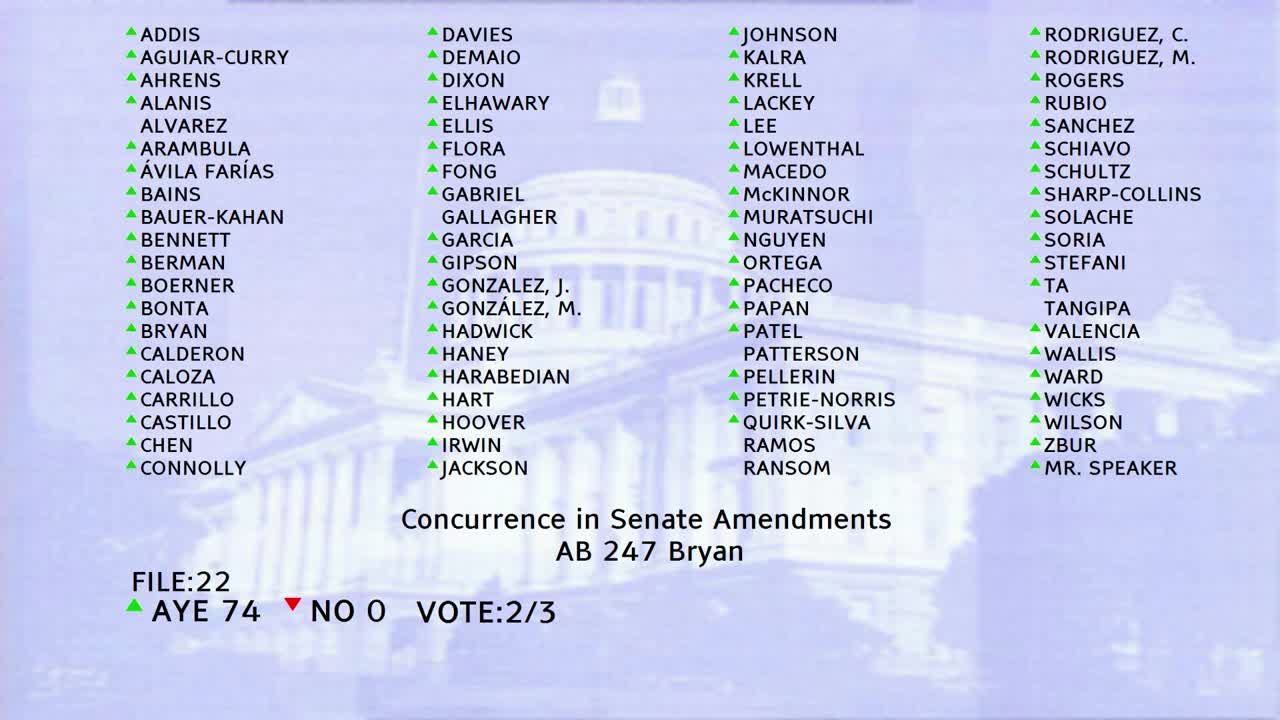
Bill Author