AB 1224: Teacher credentialing: substitute teachers: days of service.
- Session Year: 2025-2026
- House: Assembly
- Latest Version Date: 2025-09-12
Current Status:
Failed
(2026-01-22: Consideration of Governor's veto stricken from file.)
Introduced
In Committee
Awaiting First Chamber Vote
Passed First Chamber
In Committee
Awaiting Second Chamber Vote
Passed Second Chamber
Enacted
Existing law requires the Commission on Teacher Credentialing to establish standards and procedures for the issuance and renewal of credentials, certificates, and permits. Existing regulations prohibit a holder of an emergency substitute teaching permit from substitute teaching during the school year for any one teacher (1) for more than 30 days for a holder of an emergency 30-day substitute permit or an emergency substitute teaching permit for prospective teachers or (2) for more than 60 days for a holder of a career emergency substitute permit. Existing law authorizes a person holding a valid credential authorizing substitute teaching to serve as a substitute for the appropriately credentialed special education teacher for not more than 20 cumulative school days for each special education teacher absent during each school year, except as otherwise provided. Existing law, notwithstanding those provisions or any other law, temporarily authorized, until July 1, 2024, any holder of a credential or permit issued by the commission that authorizes the holder to substitute teach in a general, special, or career technical education assignment to serve in a substitute teaching assignment aligned with their authorization, including for staff vacancies, for up to 60 cumulative days for any one assignment.
Existing law authorizes the commission to waive provisions governing the preparation or licensing of educators in certain situations. If a suitable fully prepared teacher is not available to the school district, existing law requires the school district to make reasonable efforts to recruit first a candidate who is qualified to participate and enrolls in an approved internship program in the region of the school district and then a candidate who is scheduled to complete the preliminary credential requirements within 6 months. Existing regulations authorize a local employing agency to request a teaching permit for statutory leave when a teacher of record is unable to provide services due to a statutory leave and certain requirements are met.
This bill, until January 1, 2029, and notwithstanding any other law, would reestablish the above-described 60-cumulative day authorization for any one assignment in a school district, county office of education, or charter school, if the local educational agency has entered into a collective bargaining agreement with the employee organization that includes a specific process for the assignment of substitute teachers or, before using the authorization, the local educational agency that has not entered into a collective bargaining agreement with the employee organization that includes a specific process for the assignment of substitute teachers has adhered to specified requirements related to whether the substitute will serve in a position in which the teacher on record is currently on statutory leave or the assignment is for a vacant position, as provided. The bill would require a school district or charter school, before assigning a substitute teacher pursuant to these provisions for more than 20 cumulative days in a special education assignment or 30 cumulative days in any one assignment, to either (1) obtain approval from the governing board or body at a regularly scheduled public meeting if the assignment is foreseeable or (2), if the assignment is not foreseeable due to urgent circumstances, provide specified information related to the assignment to the governing board or body as an informational item at the next regularly scheduled public meeting of the governing board or body, as provided. If a local educational agency assigns a substitute teacher pursuant to these provisions and the substitute teacher does not have a preliminary or professional clear credential, the bill would require the local educational agency, concurrently within 30 days of the assignment, to provide the substitute teacher with, among other things, access to professional development opportunities. The bill would require each county superintendent of schools, on a quarterly basis, to report to the respective county board of education the total number of substitute teachers employed by the county superintendent of schools who served during the prior quarter for more than 20 cumulative days in a special education assignment or 30 cumulative days in any one assignment, as provided. If a local educational agency makes an assignment where a substitute teacher teaches for more than 20 cumulative days in a special education assignment or 30 cumulative days in any one assignment, the bill would require the local educational agency, commencing with data from the 202627 school year, to annually report specified information to the Commission on Teacher Credentialing related to those assignments.
Existing law requires the Commission on Teacher Credentialing to establish standards and procedures for the issuance and renewal of credentials, certificates, and permits. Existing regulations prohibit a holder of an emergency substitute teaching permit from substitute teaching during the school year for any one teacher (1) for more than 30 days for a holder of an emergency 30-day substitute permit or an emergency substitute teaching permit for prospective teachers or (2) for more than 60 days for a holder of a career emergency substitute permit. Existing law authorizes a person holding a valid credential authorizing substitute teaching to serve as a substitute for the appropriately credentialed special education teacher for not more than 20 cumulative school days for each special education teacher absent during each school year, except as otherwise provided. Existing law, notwithstanding those provisions or any other law, temporarily authorized, until July 1, 2024, any holder of a credential or permit issued by the commission that authorizes the holder to substitute teach in a general, special, or career technical education assignment to serve in a substitute teaching assignment aligned with their authorization, including for staff vacancies, for up to 60 cumulative days for any one assignment.
Existing law authorizes the commission to waive provisions governing the preparation or licensing of educators in certain situations. If a suitable fully prepared teacher is not available to the school district, existing law requires the school district is required to make reasonable efforts to recruit first a candidate who is qualified to participate and enrolls in an approved internship program in the region of the school district and then a candidate who is scheduled to complete the preliminary credential requirements within 6 months. Existing regulations authorize a local employing agency to request a teaching permit for statutory leave when a teacher of record is unable to provide services due to a statutory leave and certain requirements are met.
This bill, until January 1, 2029, and notwithstanding any other law, would reestablish the above-described 60-cumulative day authorization for any one assignment in a school district, county office of education, or charter school, if the local educational agency has entered into a collective bargaining agreement with the employee organization that includes a specific process for the assignment of substitute teachers or, before using the authorization, the local educational agency that has not entered into a collective bargaining agreement with the employee organization that includes a specific process for the assignment of substitute teachers has adhered to specified requirements related to whether the substitute will serve in a position in which the teacher on record is currently on statutory leave or the assignment is for a vacant position, as provided. The bill would require a school district or charter school, before assigning a substitute teacher pursuant to these provisions for more than 20 cumulative days in a special education assignment or 30 cumulative days in any one assignment, to either (1) obtain approval from the governing board or body at a regularly scheduled public meeting if the assignment is foreseeable or (2), if the assignment is not foreseeable due to urgent circumstances, provide specified information related to the assignment to the governing board or body as an informational item at the next regularly scheduled public meeting of the governing board or body, as provided. If a local educational agency assigns a substitute teacher pursuant to these provisions and the substitute teacher does not have a preliminary or professional clear credential, the bill would require the local educational agency, concurrently within 30 days of the assignment, to provide the substitute teacher with, among other things, access to professional development opportunities. The bill would require each county superintendent of schools, on a quarterly basis, to report to the respective county board of education the total number of substitute teachers employed by the county superintendent of schools who served during the prior quarter for more than 20 cumulative days in a special education assignment or 30 cumulative days in any one assignment, as provided. If a local educational agency makes an assignment where a substitute teacher teaches for more than 20 cumulative days in a special education assignment or 30 cumulative days in any one assignment, the bill would require the local educational agency, commencing with data from the 202627 school year, to annually report specified information to the Commission on Teacher Credentialing related to those assignments.
Existing law requires the Commission on Teacher Credentialing to establish standards and procedures for the issuance and renewal of credentials, certificates, and permits. Existing regulations prohibit a holder of an emergency substitute teaching permit from substitute teaching during the school year for any one teacher (1) for more than 30 days for a holder of an emergency 30-day substitute permit or an emergency substitute teaching permit for prospective teachers or (2) for more than 60 days for a holder of a career emergency substitute permit. Existing law authorizes a person holding a valid credential authorizing substitute teaching to serve as a substitute for the appropriately credentialed special education teacher for not more than 20 cumulative school days for each special education teacher absent during each school year, except as otherwise provided. Existing law, notwithstanding those provisions or any other law, temporarily authorized, until July 1, 2024, any holder of a credential or permit issued by the commission that authorizes the holder to substitute teach in a general, special, or career technical education assignment to serve in a substitute teaching assignment aligned with their authorization, including for staff vacancies, for up to 60 cumulative days for any one assignment.
Existing law authorizes the commission to waive provisions governing the preparation or licensing of educators in certain situations. If a suitable fully prepared teacher is not available to the school district, the school district is required to make reasonable efforts to recruit first a candidate who is qualified to participate and enrolls in an approved internship program in the region of the school district and then a candidate who is scheduled to complete the preliminary credential requirements within 6 months. Existing regulations authorize a local employing agency to request a teaching permit for statutory leave when a teacher of record is unable to provide services due to a statutory leave and certain requirements are met.
This bill, until January 1, 2029, and notwithstanding any other law, would indefinitely reestablish the above-described 60-cumulative day authorization for any one assignment, if, assignment in a school district, county office of education, or charter school, if the local educational agency has entered into a collective bargaining agreement with the employee organization that includes a specific process for the assignment of substitute teachers or, before using the authorization, the local educational agency that has not entered into a collective bargaining agreement with the employee organization that includes a specific process for the assignment of substitute teachers has both (1) employed all available and suitable substitute teachers who hold a teaching permit for statutory leave, as provided, if adhered to specified requirements related to whether the substitute will serve in a position in which the teacher on record is currently on statutory leave and (2) made reasonable efforts to recruit an individual in the order specified above. or the assignment is for a vacant position, as provided. The bill would require a school district or charter school, before assigning a substitute teacher pursuant to these provisions for more than 20 cumulative days in a special education assignment or 30 cumulative days in any one assignment, to either (1) obtain approval from the governing board or body at a regularly scheduled public meeting if the assignment is foreseeable or (2), if the assignment is not foreseeable due to urgent circumstances, provide specified information related to the assignment to the governing board or body as an informational item at the next regularly scheduled public meeting of the governing board or body, as provided. The bill would require each county superintendent of schools, on a quarterly basis, to report to the respective county board of education the total number of substitute teachers employed by the county superintendent of schools who served during the prior quarter for more than 20 cumulative days in a special education assignment or 30 cumulative days in any one assignment, as provided. If a local educational agency makes an assignment where a substitute teacher teaches for more than 20 cumulative days in a special education assignment or 30 cumulative days in any one assignment, the bill would require the local educational agency, commencing with data from the 202627 school year, to annually report specified information to the Commission on Teacher Credentialing related to those assignments.
Existing law requires the Commission on Teacher Credentialing to establish standards and procedures for the issuance and renewal of credentials, certificates, and permits. Existing regulations prohibit a holder of an emergency substitute teaching permit from substitute teaching during the school year for any one teacher (1) for more than 30 days for a holder of an emergency 30-day substitute permit or an emergency substitute teaching permit for prospective teachers or (2) for more than 60 days for a holder of a career emergency substitute permit. Existing law authorizes a person holding a valid credential authorizing substitute teaching to serve as a substitute for the appropriately credentialed special education teacher for not more than 20 cumulative school days for each special education teacher absent during each school year, except as otherwise provided. Existing law, notwithstanding those provisions or any other law, temporarily authorized, until July 1, 2024, any holder of a credential or permit issued by the commission that authorizes the holder to substitute teach in a general, special, or career technical education assignment to serve in a substitute teaching assignment aligned with their authorization, including for staff vacancies, for up to 60 cumulative days for any one assignment.
Existing law authorizes the commission to waive provisions governing the preparation or licensing of educators in certain situations. If a suitable fully prepared teacher is not available to the school district, the school district is required to make reasonable efforts to recruit first a candidate who is qualified to participate and enrolls in an approved internship program in the region of the school district and then a candidate who is scheduled to complete the preliminary credential requirements within 6 months. Existing regulations authorize a local employing agency to request a teaching permit for statutory leave when a teacher of record is unable to provide services due to a statutory leave and certain requirements are met.
This bill, notwithstanding any other law, would indefinitely reestablish the above-described 60-cumulative day authorization for any one assignment, if, the local educational agency has entered into a collective bargaining agreement with the employee organization that includes a specific process for the assignment of substitute teachers or, before using the authorization, the local educational agency that has not entered into a collective bargaining agreement with the employee organization that includes a specific process for the assignment of substitute teachers has both (1) employed all available and suitable substitute teachers who hold a teaching permit for statutory leave, as provided, if the substitute will serve in a position in which the teacher on record is currently on statutory leave and (2) made reasonable efforts to recruit an individual in the order specified above.
This bill would declare that it is to take effect immediately as an urgency statute.Existing law requires the Commission on Teacher Credentialing to establish standards and procedures for the issuance and renewal of credentials, certificates, and permits. Existing regulations prohibit a holder of an emergency substitute teaching permit from substitute teaching during the school year for any one teacher (1) for more than 30 days for a holder of an emergency 30-day substitute permit or an emergency substitute teaching permit for prospective teachers or (2) for more than 60 days for a holder of a career emergency substitute permit. Existing law authorizes a person holding a valid credential authorizing substitute teaching to serve as a substitute for the appropriately credentialed special education teacher for not more than 20 cumulative school days for each special education teacher absent during each school year, except as otherwise provided. Existing law, notwithstanding those provisions or any other law, temporarily authorized, until July 1, 2024, any holder of a credential or permit issued by the commission that authorizes the holder to substitute teach in a general, special, or career technical education assignment to serve in a substitute teaching assignment aligned with their authorization, including for staff vacancies, for up to 60 cumulative days for any one assignment.
Existing law authorizes the commission to waive provisions governing the preparation or licensing of educators in certain situations. If a suitable fully prepared teacher is not available to the school district, the school district is required to make reasonable efforts to recruit first a candidate who is qualified to participate and enrolls in an approved internship program in the region of the school district and then a candidate who is scheduled to complete the preliminary credential requirements within 6 months. Existing regulations authorize a local employing agency to request a teaching permit for statutory leave when a teacher of record is unable to provide services due to a statutory leave and certain requirements are met.
This bill, notwithstanding any other law, would indefinitely reestablish the above-described 60-cumulative day authorization for any one assignment. assignment, if, before using the authorization, the local educational agency has both (1) employed all available and suitable substitute teachers who hold a teaching permit for statutory leave, as provided, if the substitute will serve in a position in which the teacher on record is currently on statutory leave and (2) made reasonable efforts to recruit an individual in the order specified above.
This bill would declare that it is to take effect immediately as an urgency statute.
Existing law requires the Commission on Teacher Credentialing to establish standards and procedures for the issuance and renewal of credentials, certificates, and permits. Existing regulations prohibit a holder of an emergency substitute teaching permit from substitute teaching during the school year for any one teacher (1) for more than 30 days for a holder of an emergency 30-day substitute permit or an emergency substitute teaching permit for prospective teachers or (2) for more than 60 days for a holder of a career emergency substitute permit. Existing law authorizes a person holding a valid credential authorizing substitute teaching to serve as a substitute for the appropriately credentialed special education teacher for not more than 20 cumulative school days for each special education teacher absent during each school year, except as otherwise provided. Existing law, notwithstanding those provisions or any other law, temporarily authorized, until July 1, 2024, any holder of a credential or permit issued by the commission that authorizes the holder to substitute teach in a general, special, or career technical education assignment to serve in a substitute teaching assignment aligned with their authorization, including for staff vacancies, for up to 60 cumulative days for any one assignment.
This bill, notwithstanding any other law, would indefinitely reestablish the above-described 60-cumulative day authorization for any one assignment.
This bill would declare that it is to take effect immediately as an urgency statute.
The Legislature finds and declares all of the following:
(a)Californias public education system continues to experience teacher shortages, particularly in high-need subject areas and schools serving low-income pupils, English learners, and pupils with disabilities.
(b)(1)In recent years, the state has sustained the number of pathways available to help local educational agencies fill classrooms when fully credentialed teachers are not available, including, but not limited to, the short-term staff permit, provisional internship permit, teaching permit for statutory leave, emergency career substitute permit, and internship programs.
(2)These pathways generally require evidence of recruitment efforts, governing board approval, and some form of professional preparation, support, or training which reflects Californias longstanding commitment to ensuring that flexibility in staffing is accompanied by safeguards for instructional quality.
(c)The Legislature affirms that the long-term solution to staffing shortages must be a sustained commitment to fully credentialed, appropriately assigned teachers in every classroom.
(d)It is the intent of the Legislature that the flexibility provided by this act that allows substitute teachers to serve up to 60 cumulative days per assignment be used only as a stopgap in rare circumstances where a higher quality option is not viable or not immediately available.
(e)It is further the intent of the Legislature that this temporary policy be accompanied by a focused effort from the Commission on Teacher Credentialing to review its regulations to determine whether existing substitute permit options, such as the teaching permit for statutory leave and the emergency career substitute permit, could be made more flexible, accessible, or responsive to local educational agency needs, while maintaining appropriate safeguards for instructional quality and equity. The Legislature affirms that the commission already has the authority under existing law to make any regulatory changes deemed appropriate as a result of this review.
(f)This act is not intended to replace or diminish Californias commitment to educator quality, but to provide limited, time-bound flexibility while the state strengthens and modernizes the substitute permitting framework.
SEC. 2.Section 44303 is added to the Education Code, immediately following Section 44302, to read:44303.(a)Notwithstanding any other law, if a local educational agency complies with subdivision (b) or has entered into a collective bargaining agreement with the employee organization that includes a specific process for the assignment of substitute teachers, any holder of a credential or permit issued by the Commission on Teacher Credentialing that authorizes the holder to substitute teach in a general, special, or career technical education assignment may serve in a substitute teaching assignment aligned with their authorization, including for staff vacancies, for up to 60 cumulative days for any one assignment in the local educational agency.
(b)Before using the authorization pursuant to subdivision (a), a local educational agency that has not entered into a collective bargaining agreement with the employee organization that includes a specific process for the assignment of substitute teachers shall do either or both of the following, as applicable:
(1)If the substitute will serve in a position in which the teacher on record is currently on statutory leave, employ all available and suitable substitute teachers who hold a teaching permit for statutory leave, as described in Section 80022 of Title 5 of the California Code of Regulations.
(2)For assignments in vacant positions, or where the use of a teaching permit for statutory leave is not allowed under existing law, make reasonable efforts to recruit an individual for the assignment pursuant to Section 44225.7.
(c)Before assigning a substitute teacher pursuant to the authority provided in this section for more than 20 cumulative days in a special education assignment or 30 cumulative days in any one assignment, a school district or charter school shall do either of the following, as applicable:
(1)If the assignment is foreseeable, obtain approval from the governing board or body at a regularly scheduled public meeting. The item shall include the schoolsite and assignment details, the anticipated duration, and a statement that the assignment is being made under the authority of this section.
(2)If the assignment is unforeseeable due to urgent circumstances, the school district or charter school shall provide the information described in paragraph (1) as an informational item at the next regularly scheduled public meeting of the governing board or body. This informational item shall also include a brief explanation of the unforeseen circumstances that prevented advance approval pursuant to paragraph (1).
(d)Each county superintendent of schools shall, on a quarterly basis, report to the respective county board of education at a regularly scheduled meeting held in accordance with public notification requirements the total number of substitute teachers employed by the county superintendent of schools who served during the prior quarter for more than 20 cumulative days in a special education assignment or 30 cumulative days in any one assignment pursuant to this section.
(e)(1)If a local educational agency assigns a substitute teacher pursuant to the authority provided in this section and the substitute teacher does not have a preliminary or professional clear credential, the local educational agency shall, concurrently within 30 days of the assignment, provide all of the following to the substitute teacher:
(A)Access to professional development opportunities.
(B)An orientation training that includes, but is not limited to, classroom management, academic instructional strategies, and pupil and staff safety protocols.
(C)Mentoring opportunities, including, but not limited to, a partnership with an experienced teacher or school administrator.
(2)Local educational agencies may use existing trainings to satisfy the requirements of paragraph (1).
(f)(1)Local educational agencies shall, commencing with data from the 202627 school year, annually report to the Commission on Teacher Credentialing the number of assignments where a substitute teacher served for more than 20 cumulative days in a special education assignment or 30 cumulative days in any one assignment through the California Statewide Assignment Accountability System.
(2)Reporting pursuant to paragraph (1) shall include a separate identification of placements where a substitute served due to a vacant teaching position where no teacher of record exists or due to a teacher leave where a teacher of record exists but is absent.
(g)(1)This section does not constitute a change in existing law which provides that emergency credentialed substitute teachers serving in assignments beyond their authorized period or substitute teachers serving in vacant teaching positions are not considered properly assigned as described in Sections 33126, 35186, and 44258.9.
(2)This section does not amend the definition of a vacant teacher position pursuant to Section 33126 or a teacher vacancy pursuant to Section 35186.
(h)This section does not amend the requirements of a short-term staff permit, provisional internship permit, or teaching permit for statutory leave, as described in Sections 80021, 80021.1, and 80022, respectively, of Article 2 of Chapter 1 of Division 8 of Title 5 of the California Code of Regulations.
(i)For purposes of this section, local educational agency means a school district, county office of education, or charter school.
(j)This section shall remain in effect only until January 1, 2029, and as of that date is repealed.
The Legislature finds and declares all of the following:
(a)Californias public education system continues to experience teacher shortages, particularly in high-need subject areas and schools serving low-income pupils, English learners, and pupils with disabilities.
(b)(1)In recent years, the state has sustained the number of pathways available to help local educational agencies fill classrooms when fully credentialed teachers are not available, including, but not limited to, the short-term staff permit, provisional internship permit, teaching permit for statutory leave, emergency career substitute permit, and internship programs.
(2)These pathways generally require evidence of recruitment efforts, governing board approval, and some form of professional preparation, support, or training which reflects Californias longstanding commitment to ensuring that flexibility in staffing is accompanied by safeguards for instructional quality.
(c)The Legislature affirms that the long-term solution to staffing shortages must be a sustained commitment to fully credentialed, appropriately assigned teachers in every classroom.
(d)It is the intent of the Legislature that the flexibility provided by this act that allows substitute teachers to serve up to 60 cumulative days per assignment be used only as a stopgap in rare circumstances where a higher quality option is not viable or not immediately available.
(e)It is further the intent of the Legislature that this temporary policy be accompanied by a focused effort from the Commission on Teacher Credentialing to review its regulations to determine whether existing substitute permit options, such as the teaching permit for statutory leave and the emergency career substitute permit, could be made more flexible, accessible, or responsive to local educational agency needs, while maintaining appropriate safeguards for instructional quality and equity. The Legislature affirms that the commission already has the authority under existing law to make any regulatory changes deemed appropriate as a result of this review.
(f)This act is not intended to replace or diminish Californias commitment to educator quality, but to provide limited, time-bound flexibility while the state strengthens and modernizes the substitute permitting framework.
SEC. 2.Section 44303 is added to the Education Code, immediately following Section 44302, to read:44303.(a)Notwithstanding any other law, if a local educational agency complies with subdivision (b) or has entered into a collective bargaining agreement with the employee organization that includes a specific process for the assignment of substitute teachers, any holder of a credential or permit issued by the Commission on Teacher Credentialing that authorizes the holder to substitute teach in a general, special, or career technical education assignment may serve in a substitute teaching assignment aligned with their authorization, including for staff vacancies, for up to 60 cumulative days for any one assignment in the local educational agency.
(b)Before using the authorization pursuant to subdivision (a), a local educational agency that has not entered into a collective bargaining agreement with the employee organization that includes a specific process for the assignment of substitute teachers shall do either or both of the following, as applicable:
(1)If the substitute will serve in a position in which the teacher on record is currently on statutory leave, employ all available and suitable substitute teachers who hold a teaching permit for statutory leave, as described in Section 80022 of Title 5 of the California Code of Regulations.
(2)For assignments in vacant positions, or where the use of a teaching permit for statutory leave is not allowed under existing law, make reasonable efforts to recruit an individual for the assignment pursuant to Section 44225.7.
(c)Before assigning a substitute teacher pursuant to the authority provided in this section for more than 20 cumulative days in a special education assignment or 30 cumulative days in any one assignment, a school district or charter school shall do either of the following, as applicable:
(1)If the assignment is foreseeable, obtain approval from the governing board or body at a regularly scheduled public meeting. The item shall include the schoolsite and assignment details, the anticipated duration, and a statement that the assignment is being made under the authority of this section.
(2)If the assignment is unforeseeable due to urgent circumstances, the school district or charter school shall provide the information described in paragraph (1) as an informational item at the next regularly scheduled public meeting of the governing board or body. This informational item shall also include a brief explanation of the unforeseen circumstances that prevented advance approval pursuant to paragraph (1).
(d)Each county superintendent of schools shall, on a quarterly basis, report to the respective county board of education at a regularly scheduled meeting held in accordance with public notification requirements the total number of substitute teachers employed by the county superintendent of schools who served during the prior quarter for more than 20 cumulative days in a special education assignment or 30 cumulative days in any one assignment pursuant to this section.
(e)(1)If a local educational agency assigns a substitute teacher pursuant to the authority provided in this section and the substitute teacher does not have a preliminary or professional clear credential, the local educational agency shall, concurrently within 30 days of the assignment, provide all of the following to the substitute teacher:
(A)Access to professional development opportunities.
(B)An orientation training that includes, but is not limited to, classroom management, academic instructional strategies, and pupil and staff safety protocols.
(C)Mentoring opportunities, including, but not limited to, a partnership with an experienced teacher or school administrator.
(2)Local educational agencies may use existing trainings to satisfy the requirements of paragraph (1).
(e)(f)(1)Local educational agencies shall, commencing with data from the 202627 school year, annually report to the Commission on Teacher Credentialing the number of assignments where a substitute teacher served for more than 20 cumulative days in a special education assignment or 30 cumulative days in any one assignment through the California Statewide Assignment Accountability System.
(2)Reporting pursuant to paragraph (1) shall include a separate identification of placements where a substitute served due to a vacant teaching position where no teacher of record exists or due to a teacher leave where a teacher of record exists but is absent.
(f)This section does not exempt a local educational agency from compliance with Section 44258.9 or from assignment monitoring and reporting requirements related to misassignments or vacancies.(g)(1)This section does not constitute a change in existing law which provides that emergency credentialed substitute teachers serving in assignments beyond their authorized period or substitute teachers serving in vacant teaching positions are not considered properly assigned as described in Sections 33126, 35186, and 44258.9.
(2)This section does not amend the definition of a vacant teacher position pursuant to Section 33126 or a teacher vacancy pursuant to Section 35186.
(g)(h)This section does not amend the requirements of a short-term staff permit, provisional internship permit, or teaching permit for statutory leave, as described in Sections 80021, 80021.1, and 80022, respectively, of Article 2 of Chapter 1 of Division 8 of Title 5 of the California Code of Regulations.
(h)(i)For purposes of this section, local educational agency means a school district, county office of education, or charter school.
(i)(j)This section shall remain in effect only until January 1, 2029, and as of that date is repealed.
The Legislature finds and declares all of the following:
(a)Californias public education system continues to experience teacher shortages, particularly in high-need subject areas and schools serving low-income pupils, English learners, and pupils with disabilities.
(b)(1)In recent years, the state has sustained the number of pathways available to help local educational agencies fill classrooms when fully credentialed teachers are not available, including, but not limited to, the short-term staff permit, provisional internship permit, teaching permit for statutory leave, emergency career substitute permit, and internship programs.
(2)These pathways generally require evidence of recruitment efforts, governing board approval, and some form of professional preparation, support, or training which reflects Californias longstanding commitment to ensuring that flexibility in staffing is accompanied by safeguards for instructional quality.
(c)The Legislature affirms that the long-term solution to staffing shortages must be a sustained commitment to fully credentialed, appropriately assigned teachers in every classroom.
(d)It is the intent of the Legislature that the flexibility provided by this act that allows substitute teachers to serve up to 60 cumulative days per assignment be used only as a stopgap in rare circumstances where a higher quality option is not viable or not immediately available.
(e)It is further the intent of the Legislature that this temporary policy be accompanied by a focused effort from the Commission on Teacher Credentialing to review its regulations to determine whether existing substitute permit options, such as the teaching permit for statutory leave and the emergency career substitute permit, could be made more flexible, accessible, or responsive to local educational agency needs, while maintaining appropriate safeguards for instructional quality and equity. The Legislature affirms that the commission already has the authority under existing law to make any regulatory changes deemed appropriate as a result of this review.
(f)This act is not intended to replace or diminish Californias commitment to educator quality, but to provide limited, time-bound flexibility while the state strengthens and modernizes the substitute permitting framework.
SECTION 1.SEC. 2.Section 44303 is added to the Education Code, immediately following Section 44302, to read:44303.(a)Notwithstanding any other law, if a local educational agency complies with subdivision (b) or has entered into a collective bargaining agreement with the employee organization that includes a specific process for the assignment of substitute teachers, any holder of a credential or permit issued by the Commission on Teacher Credentialing that authorizes the holder to substitute teach in a general, special, or career technical education assignment may serve in a substitute teaching assignment aligned with their authorization, including for staff vacancies, for up to 60 cumulative days for any one assignment in the local educational agency.
(b)Before using the authorization pursuant to subdivision (a), a local educational agency that has not entered into a collective bargaining agreement with the employee organization that includes a specified specific process for the assignment of substitute teachers shall do both either or both of the following: following, as applicable:
(1)Employ If the substitute will serve in a position in which the teacher on record is currently on statutory leave, employ all available and suitable substitute teachers who hold a teaching permit for statutory leave, as described in Section 80022 of Title 5 of the California Code of Regulations, if the substitute will serve in a position in which the teacher on record is currently on statutory leave. Regulations.
(2)Made For assignments in vacant positions, or where the use of a teaching permit for statutory leave is not allowed under existing law, make reasonable efforts to recruit an individual for the assignment pursuant to Section 44225.7.
(c)Before assigning a substitute teacher pursuant to the authority provided in this section for more than 20 cumulative days in a special education assignment or 30 cumulative days in any one assignment, a school district or charter school shall do either of the following, as applicable:
(1)If the assignment is foreseeable, obtain approval from the governing board or body at a regularly scheduled public meeting. The item shall include the schoolsite and assignment details, the anticipated duration, and a statement that the assignment is being made under the authority of this section.
(2)If the assignment is unforeseeable due to urgent circumstances, the school district or charter school shall provide the information described in paragraph (1) as an informational item at the next regularly scheduled public meeting of the governing board or body. This informational item shall also include a brief explanation of the unforeseen circumstances that prevented advance approval pursuant to paragraph (1).
(d)Each county superintendent of schools shall, on a quarterly basis, report to the respective county board of education at a regularly scheduled meeting held in accordance with public notification requirements the total number of substitute teachers employed by the county superintendent of schools who served during the prior quarter for more than 20 cumulative days in a special education assignment or 30 cumulative days in any one assignment pursuant to this section.
(e)(1)Local educational agencies shall, commencing with data from the 202627 school year, annually report to the Commission on Teacher Credentialing the number of assignments where a substitute teacher served for more than 20 cumulative days in a special education assignment or 30 cumulative days in any one assignment through the California Statewide Assignment Accountability System.
(2)Reporting pursuant to paragraph (1) shall include a separate identification of placements where a substitute served due to a vacant teaching position where no teacher of record exists or due to a teacher leave where a teacher of record exists but is absent.
(f)This section does not exempt a local educational agency from compliance with Section 44258.9 or from assignment monitoring and reporting requirements related to misassignments or vacancies.
(g)This section does not amend the requirements of a short-term staff permit, provisional internship permit, or teaching permit for statutory leave, as described in Sections 80021, 80021.1, and 80022, respectively, of Article 2 of Chapter 1 of Division 8 of Title 5 of the California Code of Regulations.
(h)For purposes of this section, local educational agency means a school district, county office of education, or charter school.
(i)This section shall remain in effect only until January 1, 2029, and as of that date is repealed.
(a)Notwithstanding any other law, if a local educational agency complies with subdivision (b), (b) or has entered into a collective bargaining agreement with the employee organization that includes a specific process for the assignment of substitute teachers, any holder of a credential or permit issued by the Commission on Teacher Credentialing that authorizes the holder to substitute teach in a general, special, or career technical education assignment may serve in a substitute teaching assignment aligned with their authorization, including for staff vacancies, for up to 60 cumulative days for any one assignment in the local educational agency.
(b)Before using the authorization pursuant to subdivision (a), a local educational agency that has not entered into a collective bargaining agreement with the employee organization that includes a specified process for the assignment of substitute teachers shall do both of the following:
(1)Employ all available and suitable substitute teachers who hold a teaching permit for statutory leave, as described in Section 80022 of Title 5 of the California Code of Regulations, if the substitute will serve in a position in which the teacher on record is currently on statutory leave.
(2)Made reasonable efforts to recruit an individual for the assignment pursuant to Section 44225.7.
SEC. 2.This act is an urgency statute necessary for the immediate preservation of the public peace, health, or safety within the meaning of Article IV of the California Constitution and shall go into immediate effect. The facts constituting the necessity are:In order to address the limited supply of substitute teachers and staffing in nearly all parts of the state, it is necessary for this act to take effect immediately.(a)Notwithstanding any other law, if a local educational agency complies with subdivision (b), any holder of a credential or permit issued by the Commission on Teacher Credentialing that authorizes the holder to substitute teach in a general, special, or career technical education assignment may serve in a substitute teaching assignment aligned with their authorization, including for staff vacancies, for up to 60 cumulative days for any one assignment. Nothing in this section shall preclude a local educational agency from following the hiring provisions outlined in Section 44225.7. assignment in the local educational agency.
(b)Before using the authorization pursuant to subdivision (a), a local educational agency shall do both of the following:
(1)Employ all available and suitable substitute teachers who hold a teaching permit for statutory leave, as described in Section 80022 of Title 5 of the California Code of Regulations, if the substitute will serve in a position in which the teacher on record is currently on statutory leave.
(2)Made reasonable efforts to recruit an individual for the assignment pursuant to Section 44225.7.
SEC. 2.This act is an urgency statute necessary for the immediate preservation of the public peace, health, or safety within the meaning of Article IV of the California Constitution and shall go into immediate effect. The facts constituting the necessity are:
In order to address the limited supply of substitute teachers and staffing in nearly all parts of the state, it is necessary for this act to take effect immediately.
Notwithstanding any other law, any holder of a credential or permit issued by the Commission on Teacher Credentialing that authorizes the holder to substitute teach in a general, special, or career technical education assignment may serve in a substitute teaching assignment aligned with their authorization, including for staff vacancies, for up to 60 cumulative days for any one assignment. Nothing in this section shall preclude a local educational agency from following the hiring provisions outlined in Section 44225.7.
SEC. 2.This act is an urgency statute necessary for the immediate preservation of the public peace, health, or safety within the meaning of Article IV of the California Constitution and shall go into immediate effect. The facts constituting the necessity are:
In order to address the limited supply of substitute teachers and staffing in nearly all parts of the state, it is necessary for this act to take effect immediately.
|
Date
|
Status
|
|---|---|
| Jan 22, 2026 | Consideration of Governor's veto stricken from file. |
| Oct 6, 2025 | Consideration of Governor's veto pending. |
| Oct 6, 2025 | Vetoed by Governor. |
| Sep 22, 2025 | Enrolled and presented to the Governor at 3 p.m. |
| Sep 10, 2025 | Senate amendments concurred in. To Engrossing and Enrolling. (Ayes 75. Noes 0. Page 3250.). |
| Sep 9, 2025 | In Assembly. Concurrence in Senate amendments pending. |
| Sep 9, 2025 | Read third time. Passed. Ordered to the Assembly. (Ayes 38. Noes 1. Page 2670.). |
| Sep 8, 2025 | Read second time. Ordered to third reading. |
| Sep 4, 2025 | Read third time and amended. Ordered to second reading. |
| Aug 29, 2025 | Read second time. Ordered to third reading. |
| Aug 29, 2025 | From committee: Do pass. (Ayes 7. Noes 0.) (August 29). |
| Aug 18, 2025 | In committee: Referred to suspense file. |
| Jul 10, 2025 | Read second time and amended. Re-referred to Com. on APPR. |
| Jul 9, 2025 | From committee: Amend, and do pass as amended and re-refer to Com. on APPR. (Ayes 7. Noes 0.) (July 2). |
| Jun 5, 2025 | In committee: Set, first hearing. Hearing canceled at the request of author. |
| May 14, 2025 | Referred to Com. on ED. |
| May 6, 2025 | In Senate. Read first time. To Com. on RLS. for assignment. |
| May 5, 2025 | Read third time. Passed. Ordered to the Senate. (Ayes 77. Noes 0. Page 1420.) |
| May 1, 2025 | Read third time and amended. Ordered to third reading. (Page 1399.) |
| May 1, 2025 | Read third time and amended. Ordered to third reading. |
| Apr 10, 2025 | Read second time. Ordered to third reading. |
| Apr 9, 2025 | From committee: Do pass. (Ayes 14. Noes 0.) (April 9). |
| Mar 27, 2025 | From committee: Do pass and re-refer to Com. on APPR. (Ayes 9. Noes 0.) (March 26). Re-referred to Com. on APPR. |
| Mar 18, 2025 | Re-referred to Com. on ED. |
| Mar 17, 2025 | From committee chair, with author's amendments: Amend, and re-refer to Com. on ED. Read second time and amended. |
| Mar 10, 2025 | Referred to Com. on ED. |
| Feb 24, 2025 | Read first time. |
| Feb 22, 2025 | From printer. May be heard in committee March 24. |
| Feb 21, 2025 | Introduced. To print. |
|
Date
|
Description
|
Location
|
Votes
|
|
|---|---|---|---|---|
| Sep 10, 2025 | AB 1224 Valencia Concurrence in Senate Amendments | Assembly Floor |
Passed |
|
| Sep 9, 2025 | Assembly 3rd Reading AB1224 Valencia et al. By Limón | Senate Floor |
Passed |
|
| Aug 29, 2025 | Do pass | Senate Standing Committee on Appropriations |
Passed |
|
| Aug 18, 2025 | Placed on suspense file | Senate Standing Committee on Appropriations |
Passed |
|
| Jul 2, 2025 | Do pass as amended, but first amend, and re-refer to the Committee on [Appropriations] | Senate Standing Committee on Education |
Passed |
|
| May 5, 2025 | AB 1224 Valencia Assembly Third Reading | Assembly Floor |
Passed |
|
| Apr 9, 2025 | Do pass. | Assembly Standing Committee on Appropriations |
Passed |
|
| Mar 26, 2025 | Do pass and be re-referred to the Committee on [Appropriations] | Assembly Standing Committee on Education |
Passed |
This list shows positions taken on this bill by organizations on the date displayed, which is linked to the original source.
Positions by individuals are not included.
|
Organization
|
Position
|
Date
|
|---|---|---|
| Alameda County Office Of Education | ** Support | |
| Alameda Unified School District | ** Support | |
| Association Of California School Administrators | ** Support | |
| Berkeley Unified School District | ** Support | |
| California Association Of School Business Officials | ** Support | |
| California Association Of Suburban School Districts | ** Support | |
| California Charter Schools Association | ** Support | |
| California Commission On Teacher Credentialing | ** Against | |
| California County Superintendents | ** Support | |
| California School Boards Association | ** Support | |
| California State PTA | ** Support | |
| California Teachers Association | ** Against | |
| Castro Valley Unified School District | ** Support | |
| Central Valley Education Coalition | ** Support | |
| Clovis Unified School District | ** Support | |
| Coalition for Adequate Funding for Special Education | ** Support | |
| Contra Costa County Office of Education | ** Support | |
| Corona-Norco Unified School District | ** Support | |
| Disability Rights California | ** Against | |
| Disability Rights Education and Defense Fund | ** Against | |
| Dublin Unified School District | ** Support | |
| Eden Area Regional Occupational Program | ** Support | |
| Eden Area ROP | ** Support | |
| Fremont Unified School District | ** Support | |
| Kern County Superintendent Of Schools | ** Support | |
| Los Angeles County Office Of Education | ** Support | |
| Los Angeles Unified School District | ** Support | |
| New Haven Unified School District | ** Support | |
| New Haven USD | ** Support | |
| Oakland Unified School District | ** Support | |
| Office of the Riverside County Superintendent of Schools | ** Support | |
| Orange County Board Of Education | ** Support | |
| Orange County Department Of Education | ** Support | |
| Orange County District Superintendents Organization | ** Support | |
| Pleasanton Unified School District | ** Support | |
| Public Advocates | ** Against | |
| Riverside County Public K-12 School District Superintendents | ** Support | |
| San Bernardino County District Advocates for Better Schools | ** Support | |
| San Diego Unified School District | ** Support | |
| San Francisco Unified School District | ** Support | |
| San Joaquin County Office Of Education | ** Support | |
| San Juan Unified School District | ** Support | |
| Santa Clara County Office Of Education | ** Support | |
| School Employers Association Of California | ** Support | |
| SELPA Administrators of California | ** Support | |
| Small School Districts Association | ** Support | |
| Sunol Glen Unified School District | ** Support | |
| United Administrators of Southern California | ** Support | |
| Vallejo City Unified School District | ** Support |
GOVERNOR'S VETO
GV Bill Id:AB 1224
Author:(Valencia)
As Enrolled Ver:September 12, 2025
2/3 vote
SUMMARY
Allows local educational agencies (LEAs) to assign a permitted or credentialed substitute teacher to the same classroom for up to 60 cumulative days, rather than the current 30-day limit, under specific conditions; establishes requirements for governing board notice and reporting when substitutes serve beyond 30 days (or 20 days for special education assignments); and sunsets on January 1, 2029.
Senate Amendments
- Requires that, before assigning a substitute teacher for more than 20 cumulative days in a special education assignment or 30 cumulative days in any one assignment, a school district or charter school do either of the following, as applicable:
- If the assignment is foreseeable, obtain approval from the governing board or body at a regularly scheduled public meeting. Requires that the board agenda item include the schoolsite and assignment details, the anticipated duration, and a statement that the assignment is being made under the authority of this section, or
- If the assignment is unforeseeable due to urgent circumstances, provide the information above as an informational item at the next regularly scheduled public meeting of the governing board or body, including a brief explanation of the unforeseen circumstances.
- Requires each county superintendent of schools to, on a quarterly basis, report to the respective county board of education at a regularly scheduled meeting the total number of substitute teachers employed by the county superintendent of schools who served during the prior quarter for more than 20 cumulative days in a special education assignment or 30 cumulative days in any one assignment.
- Requires that, if an LEA assigns a substitute teacher pursuant to this measure and the substitute teacher does not have a preliminary or professional clear credential, the local educational agency, concurrently within 30 days of the assignment, provide all of the following to the substitute teacher:
- Access to professional development opportunities;
- An orientation training that includes, but is not limited to, classroom management, academic instructional strategies, and pupil and staff safety protocols; and
- Mentoring opportunities, including, but not limited to, a partnership with an experienced teacher or school administrator.
- Requires LEAs, commencing with data from the 2026–27 school year, to annually report to the Commission on Teacher Credentialing (CTC) the number of assignments where a substitute teacher served for more than 20 cumulative days in a special education assignment or 30 cumulative days in any one assignment through the California Statewide Assignment Accountability System. Requires that this include identification of placements where a substitute served due to a vacant teaching position where no teacher of record exists or due to a teacher leave where a teacher of record exists but is absent.
- States that this does not exempt an LEA from compliance with assignment monitoring and reporting requirements related to misassignments or vacancies.
- States that, for purposes of these provisions, LEA means a school district, county office of education (COE), or charter school.
- Sunsets these provisions on January 1, 2029.
Governor's Veto Message
Through January l, 2029, this bill increases the time substitute teachers can serve in general education or special education classrooms to up to 60 days, doubling or tripling current caps.
Research demonstrates that substitute teachers tend to serve classrooms with a disproportionate number of students with disabilities, English learners, and students from low-income families. While this bill requires local educational agencies to offer mentorship, training, and support to substitute teachers, it does not mandate their participation in these programs. As such, this bill would allow individuals to serve our highest-need students for as much as a third of a school year without minimally required training or mentorship.
I recognize the author's goal of providing more continuity in challenging staffing situations. As such, I encourage the Commission on Teacher Credentialing to utilize its existing authority to engage stakeholders and expeditiously reexamine and amend its short-term staffing pathways to support continuity of instruction, and to address the minimum levels of preparation and support required.
Alternatively, the author could introduce legislation that addresses the lack of required training and support for long-term substitute teachers.
COMMENTS
Requirements for holding a substitute teacher permit. The current requirements to earn a substitute teacher permit include:
- Official transcripts showing the conferral of a baccalaureate or higher degree from a regionally accredited college or university;
- Basic skills requirement;
- Completed application and a completed Live Scan receipt; and
- Application processing fees.
Teaching Permit for Statutory Leave (TPSL). In 2016, the Commission developed the Teaching Permit for Statutory Leave (TPSL) to address the teacher shortage. The TPSL allows an employing agency to fill a position where the teacher of record is unable to teach due to a statutory leave (medical or otherwise) with a temporary teacher of record for the duration of the leave. Depending on the individual's qualifications, a TPSL may be issued with one or more authorizations in the areas of Multiple Subject, Single Subject, and Education Specialist. The permit is renewable upon verification from the employing agency that specific requirements have been completed. TPSL is limited to statutory leave and not for many different types of staffing needs, such as paid admin leave, investigation leave, or vacancy.
Number of TPSLs Issued. There was a steady decline in TPSL issuances between 2018-19 and 2021-22. In 2020-21, there were 805 TPSLs issued; the following year, only 474 TPSLs were issued. Conversely, in those same years, emergency permits increased almost proportionately.
Teacher workforce shortage. According to a new report by the Learning Policy Institute (LPI), California is facing persistent teacher shortages, and the number of teacher preparation completers in California has dropped dramatically over the last two decades. The current number of teachers prepared in traditional teacher preparation programs is now only half the rate at the state's peak in 2004. The report also found that the number of substandard credentials and permits tripled between 2013 and 2023, making up more than half of all new California teaching credentials issued in 2023. Hiring teachers who are not fully credentialed perpetuates shortages since these teachers are more likely to leave their positions and need to be replaced year after year, leaving districts with vacancies. Employers are competing against each other for a very limited pool of highly qualified candidates.
Teacher shortages increase the demand for substitute teachers. Teacher shortages have increased the need and demand for substitute teachers. New strategies for substitute recruitment and retention are rapidly changing. According to a report and survey conducted by EdWeek Research Center, The Substitute Teacher Gap: Recruitment and Retention Challenges in the Age of Covid-19, short-term substitute teaching positions have been difficult to fill because of low wages, lack of benefits, and a requirement to hold a bachelor's degree. This report found that, on average, about 250,000 positions are left to be filled daily with substitute teachers, with only 54% of total absences covered by substitute teachers filling in the vacancies. The report also found that 71% of administrators and school board members predict the demand for substitute teachers will increase in the next five years. The report interviewed a California school board member who stated, "Many of those people that we do recruit to become substitutes end up getting hired as fulltime teachers, which is great; however, then we lose them on the substitute teacher roles."
According to the Author
"AB 1224 seeks to provide better continuity for students by allowing substitute teachers to remain in the classroom for up to 60 days. The increased flexibility will reduce classroom instability and learning disruptions that affect students with disabilities the most. With greater stability in the classroom, students are able to establish rapport with their substitute teacher, leading to better educational outcomes. While in recent years the Legislature has made efforts to strengthen the teacher workforce, the persistent shortages exacerbate the demand for substitute teachers. In the face of an unprecedented educational workforce shortage, every tool should be utilized to help provide the best educational outcomes for California's students."
Arguments in Support
The Kern County Superintendent of Schools states, "AB 1224 (Valencia) would extend the allowable duration for the substitute teaching assignments from 30 to 60 days is a practical solution that will help mitigate disruptions for students and staff. By allowing substitutes to remain in the same classroom for a longer period, the bill ensures greater continuity in instruction, which is essential for maintaining the flow of curriculum and supporting student achievement. This continuity is particularly important for students with disabilities who historically are the lowest performing academic group. This vulnerable population deserves continuity and predictable relationships with the staff in their classrooms."
Arguments in Opposition
Public Advocates states, "While we recognize the ongoing challenges schools face with staffing shortages, extending substitute teaching assignments from 30 to 60 days indefinitely does not solve the problem and, instead, exacerbates ongoing concerns for student learning and state teacher quality:
Reduced Teaching Quality: Substitute teachers are not required to possess specialized subject matter knowledge or pedagogical training comparable to credentialed teachers. They are only required to have a baccalaureate degree in any field, with no requirement for competence in the particular subject they are teaching or any training in how to teach (e.g., lesson planning, grading, differentiated learning styles, classroom management, basic legal obligations, etc.)
Potential Exploitation of Loopholes: This expansion of substitute teaching time will likely be used as a loophole allowing districts to fill positions with less-qualified, lower-paid substitutes, rather than investing in and ensuring permanent, fully-credentialed staff are prioritized for assignment.
Harmful Impact on Most Vulnerable Students: Research has consistently shown that students of color and low-income students are more likely to be taught by novice teachers who have less preparation."
FISCAL COMMENTS
According to the Senate Appropriations Committee:
- The CTC estimates General Fund costs of $129,000 in the first year and $127,000 each year thereafter until January 1, 2029. These costs would be used to support one position to update the California Statewide Assignment Accountability System to allow for the reporting of specified substitute teacher assignments, provide technical support to reporting local educational agencies (LEAs), and assist in the creation and maintenance of reporting data.
- There could be minor costs for school districts to verify that alternative substitute teacher options do not exist, make "reasonable efforts" to recruit a fully prepared teacher for the assignment, and comply with the bill's reporting requirements. However, the bill's authorization is permissive and does not appear to create a reimbursable state mandate.
VOTES
ASM EDUCATION: 9-0-0
YES: Muratsuchi, Hoover, Addis, Alvarez, Bonta, Castillo, Garcia, Lowenthal, Patel
ASM APPROPRIATIONS: 14-0-1
YES: Wicks, Sanchez, Arambula, Calderon, Caloza, Dixon, Elhawary, Fong, Mark González, Hadwick, Hart, Pacheco, Solache, Ta
ABS, ABST OR NV: Pellerin
ASSEMBLY FLOOR: 77-0-2
YES: Addis, Aguiar-Curry, Ahrens, Alanis, Alvarez, Arambula, Ávila Farías, Bauer-Kahan, Bennett, Berman, Boerner, Bonta, Bryan, Calderon, Caloza, Carrillo, Castillo, Chen, Connolly, Davies, DeMaio, Dixon, Elhawary, Flora, Fong, Gabriel, Gallagher, Garcia, Gipson, Jeff Gonzalez, Mark González, Hadwick, Haney, Harabedian, Hart, Hoover, Irwin, Jackson, Kalra, Krell, Lackey, Lee, Lowenthal, Macedo, McKinnor, Muratsuchi, Nguyen, Ortega, Pacheco, Papan, Patel, Patterson, Pellerin, Petrie-Norris, Quirk-Silva, Ramos, Ransom, Celeste Rodriguez, Michelle Rodriguez, Rogers, Blanca Rubio, Sanchez, Schiavo, Schultz, Sharp-Collins, Solache, Soria, Stefani, Ta, Tangipa, Valencia, Wallis, Ward, Wicks, Wilson, Zbur, Rivas
ABS, ABST OR NV: Bains, Ellis
SENATE FLOOR: 38-1-1
YES: Allen, Alvarado-Gil, Archuleta, Arreguín, Ashby, Becker, Blakespear, Cabaldon, Caballero, Cervantes, Choi, Cortese, Dahle, Durazo, Gonzalez, Grayson, Grove, Hurtado, Jones, Laird, Limón, McGuire, McNerney, Niello, Ochoa Bogh, Padilla, Pérez, Reyes, Richardson, Rubio, Seyarto, Stern, Strickland, Umberg, Valladares, Wahab, Weber Pierson, Wiener
NO: Smallwood-Cuevas
ABS, ABST OR NV: Menjivar
ASSEMBLY FLOOR: 75-0-5
YES: Addis, Aguiar-Curry, Ahrens, Alanis, Alvarez, Arambula, Ávila Farías, Bains, Bauer-Kahan, Bennett, Berman, Boerner, Bonta, Bryan, Calderon, Caloza, Carrillo, Castillo, Chen, Connolly, Davies, DeMaio, Dixon, Elhawary, Ellis, Flora, Fong, Gabriel, Gallagher, Garcia, Gipson, Jeff Gonzalez, Mark González, Hadwick, Haney, Harabedian, Hart, Hoover, Irwin, Jackson, Johnson, Kalra, Krell, Lackey, Lowenthal, Macedo, McKinnor, Nguyen, Pacheco, Papan, Patel, Patterson, Pellerin, Petrie-Norris, Quirk-Silva, Ramos, Ransom, Celeste Rodriguez, Michelle Rodriguez, Rogers, Blanca Rubio, Sanchez, Schiavo, Schultz, Sharp-Collins, Solache, Soria, Stefani, Ta, Valencia, Wallis, Ward, Wicks, Wilson, Rivas
ABS, ABST OR NV: Lee, Muratsuchi, Ortega, Tangipa, Zbur
UPDATED
VERSION: September 12, 2025
CONSULTANT: Chelsea Kelley / ED. / (916) 319-2087 FN: 0002157
CONCURRENCE IN SENATE AMENDMENTS
CSA1 Bill Id:AB 1224
Author:(Valencia)
As Amended Ver:September 4, 2025
Majority vote
SUMMARY
Allows local educational agencies (LEAs) to assign a permitted or credentialed substitute teacher to the same classroom for up to 60 cumulative days, rather than the current 30-day limit, under specific conditions; establishes requirements for governing board notice and reporting when substitutes serve beyond 30 days (or 20 days for special education assignments); and sunsets on January 1, 2029.
Senate Amendments
- Requires that, before assigning a substitute teacher for more than 20 cumulative days in a special education assignment or 30 cumulative days in any one assignment, a school district or charter school do either of the following, as applicable:
- If the assignment is foreseeable, obtain approval from the governing board or body at a regularly scheduled public meeting. Requires that the board agenda item include the schoolsite and assignment details, the anticipated duration, and a statement that the assignment is being made under the authority of this section, or
- If the assignment is unforeseeable due to urgent circumstances, provide the information above as an informational item at the next regularly scheduled public meeting of the governing board or body, including a brief explanation of the unforeseen circumstances.
- Requires each county superintendent of schools to, on a quarterly basis, report to the respective county board of education at a regularly scheduled meeting the total number of substitute teachers employed by the county superintendent of schools who served during the prior quarter for more than 20 cumulative days in a special education assignment or 30 cumulative days in any one assignment.
- Requires that, if an LEA assigns a substitute teacher pursuant to this measure and the substitute teacher does not have a preliminary or professional clear credential, the local educational agency, concurrently within 30 days of the assignment, provide all of the following to the substitute teacher:
- Access to professional development opportunities;
- An orientation training that includes, but is not limited to, classroom management, academic instructional strategies, and pupil and staff safety protocols; and
- Mentoring opportunities, including, but not limited to, a partnership with an experienced teacher or school administrator.
- Requires LEAs, commencing with data from the 2026–27 school year, to annually report to the Commission on Teacher Credentialing (CTC) the number of assignments where a substitute teacher served for more than 20 cumulative days in a special education assignment or 30 cumulative days in any one assignment through the California Statewide Assignment Accountability System. Requires that this include identification of placements where a substitute served due to a vacant teaching position where no teacher of record exists or due to a teacher leave where a teacher of record exists but is absent.
- States that this does not exempt an LEA from compliance with assignment monitoring and reporting requirements related to misassignments or vacancies.
- States that, for purposes of these provisions, LEA means a school district, county office of education (COE), or charter school.
- Sunsets these provisions on January 1, 2029.
COMMENTS
Requirements for holding a substitute teacher permit. The current requirements to earn a substitute teacher permit include:
- Official transcripts showing the conferral of a baccalaureate or higher degree from a regionally accredited college or university;
- Basic skills requirement;
- Completed application and a completed Live Scan receipt; and
- Application processing fees.
Teaching Permit for Statutory Leave (TPSL). In 2016, the Commission developed the Teaching Permit for Statutory Leave (TPSL) to address the teacher shortage. The TPSL allows an employing agency to fill a position where the teacher of record is unable to teach due to a statutory leave (medical or otherwise) with a temporary teacher of record for the duration of the leave. Depending on the individual's qualifications, a TPSL may be issued with one or more authorizations in the areas of Multiple Subject, Single Subject, and Education Specialist. The permit is renewable upon verification from the employing agency that specific requirements have been completed. TPSL is limited to statutory leave and not for many different types of staffing needs, such as paid admin leave, investigation leave, or vacancy.
Number of TPSLs Issued. There was a steady decline in TPSL issuances between 2018-19 and 2021-22. In 2020-21, there were 805 TPSLs issued; the following year, only 474 TPSLs were issued. Conversely, in those same years, emergency permits increased almost proportionately.
Teacher workforce shortage. According to a new report by the Learning Policy Institute (LPI), California is facing persistent teacher shortages, and the number of teacher preparation completers in California has dropped dramatically over the last two decades. The current number of teachers prepared in traditional teacher preparation programs is now only half the rate at the state's peak in 2004. The report also found that the number of substandard credentials and permits tripled between 2013 and 2023, making up more than half of all new California teaching credentials issued in 2023. Hiring teachers who are not fully credentialed perpetuates shortages since these teachers are more likely to leave their positions and need to be replaced year after year, leaving districts with vacancies. Employers are competing against each other for a very limited pool of highly qualified candidates.
Teacher shortages increase the demand for substitute teachers. Teacher shortages have increased the need and demand for substitute teachers. New strategies for substitute recruitment and retention are rapidly changing. According to a report and survey conducted by EdWeek Research Center, The Substitute Teacher Gap: Recruitment and Retention Challenges in the Age of Covid-19, short-term substitute teaching positions have been difficult to fill because of low wages, lack of benefits, and a requirement to hold a bachelor's degree. This report found that, on average, about 250,000 positions are left to be filled daily with substitute teachers, with only 54% of total absences covered by substitute teachers filling in the vacancies. The report also found that 71% of administrators and school board members predict the demand for substitute teachers will increase in the next five years. The report interviewed a California school board member who stated, "Many of those people that we do recruit to become substitutes end up getting hired as fulltime teachers, which is great; however, then we lose them on the substitute teacher roles."
According to the Author
"AB 1224 seeks to provide better continuity for students by allowing substitute teachers to remain in the classroom for up to 60 days. The increased flexibility will reduce classroom instability and learning disruptions that affect students with disabilities the most. With greater stability in the classroom, students are able to establish rapport with their substitute teacher, leading to better educational outcomes. While in recent years the Legislature has made efforts to strengthen the teacher workforce, the persistent shortages exacerbate the demand for substitute teachers. In the face of an unprecedented educational workforce shortage, every tool should be utilized to help provide the best educational outcomes for California's students."
Arguments in Support
The Kern County Superintendent of Schools states, "AB 1224 (Valencia) would extend the allowable duration for the substitute teaching assignments from 30 to 60 days is a practical solution that will help mitigate disruptions for students and staff. By allowing substitutes to remain in the same classroom for a longer period, the bill ensures greater continuity in instruction, which is essential for maintaining the flow of curriculum and supporting student achievement. This continuity is particularly important for students with disabilities who historically are the lowest performing academic group. This vulnerable population deserves continuity and predictable relationships with the staff in their classrooms."
Arguments in Opposition
Public Advocates states, "While we recognize the ongoing challenges schools face with staffing shortages, extending substitute teaching assignments from 30 to 60 days indefinitely does not solve the problem and, instead, exacerbates ongoing concerns for student learning and state teacher quality:
Reduced Teaching Quality: Substitute teachers are not required to possess specialized subject matter knowledge or pedagogical training comparable to credentialed teachers. They are only required to have a baccalaureate degree in any field, with no requirement for competence in the particular subject they are teaching or any training in how to teach (e.g., lesson planning, grading, differentiated learning styles, classroom management, basic legal obligations, etc.)
Potential Exploitation of Loopholes: This expansion of substitute teaching time will likely be used as a loophole allowing districts to fill positions with less-qualified, lower-paid substitutes, rather than investing in and ensuring permanent, fully-credentialed staff are prioritized for assignment.
Harmful Impact on Most Vulnerable Students: Research has consistently shown that students of color and low-income students are more likely to be taught by novice teachers who have less preparation."
FISCAL COMMENTS
According to the Senate Appropriations Committee:
- The CTC estimates General Fund costs of $129,000 in the first year and $127,000 each year thereafter until January 1, 2029. These costs would be used to support one position to update the California Statewide Assignment Accountability System to allow for the reporting of specified substitute teacher assignments, provide technical support to reporting local educational agencies (LEAs), and assist in the creation and maintenance of reporting data.
- There could be minor costs for school districts to verify that alternative substitute teacher options do not exist, make "reasonable efforts" to recruit a fully prepared teacher for the assignment, and comply with the bill's reporting requirements. However, the bill's authorization is permissive and does not appear to create a reimbursable state mandate.
VOTES:
ASM EDUCATION: 9-0-0
YES: Muratsuchi, Hoover, Addis, Alvarez, Bonta, Castillo, Garcia, Lowenthal, Patel
ASM APPROPRIATIONS: 14-0-1
YES: Wicks, Sanchez, Arambula, Calderon, Caloza, Dixon, Elhawary, Fong, Mark González, Hadwick, Hart, Pacheco, Solache, Ta
ABS, ABST OR NV: Pellerin
ASSEMBLY FLOOR: 77-0-2
YES: Addis, Aguiar-Curry, Ahrens, Alanis, Alvarez, Arambula, Ávila Farías, Bauer-Kahan, Bennett, Berman, Boerner, Bonta, Bryan, Calderon, Caloza, Carrillo, Castillo, Chen, Connolly, Davies, DeMaio, Dixon, Elhawary, Flora, Fong, Gabriel, Gallagher, Garcia, Gipson, Jeff Gonzalez, Mark González, Hadwick, Haney, Harabedian, Hart, Hoover, Irwin, Jackson, Kalra, Krell, Lackey, Lee, Lowenthal, Macedo, McKinnor, Muratsuchi, Nguyen, Ortega, Pacheco, Papan, Patel, Patterson, Pellerin, Petrie-Norris, Quirk-Silva, Ramos, Ransom, Celeste Rodriguez, Michelle Rodriguez, Rogers, Blanca Rubio, Sanchez, Schiavo, Schultz, Sharp-Collins, Solache, Soria, Stefani, Ta, Tangipa, Valencia, Wallis, Ward, Wicks, Wilson, Zbur, Rivas
ABS, ABST OR NV: Bains, Ellis
UPDATED
VERSION: September 4, 2025
CONSULTANT: Chelsea Kelley / ED. / (916) 319-2087 FN: 0001940
SENATE RULES COMMITTEE Office of Senate Floor Analyses (916) 651-1520 Fax: (916) 327-4478 | AB 1224 |
THIRD READING
Bill No: AB 1224
Author: Valencia (D), et al.
Amended: 9/4/25 in Senate
Vote: 21
SENATE EDUCATION COMMITTEE: 7-0, 7/2/25
AYES: Pérez, Ochoa Bogh, Cabaldon, Choi, Cortese, Gonzalez, Laird
SENATE APPROPRIATIONS COMMITTEE: 7-0, 8/29/25
AYES: Caballero, Seyarto, Cabaldon, Dahle, Grayson, Richardson, Wahab
ASSEMBLY FLOOR: 77-0, 5/5/25 - See last page for vote
SUBJECT: Teacher credentialing: substitute teachers: days of service
SOURCE: Association of California School Administrators
California Association of School Business Officials
California County Superintendents
California School Boards Association
DIGEST:
This bill allows local educational agencies (LEAs) to assign a permitted or credentialed substitute teacher to the same classroom for up to 60 cumulative days, rather than the current 30-day limit, under specific conditions. It establishes basic requirements for board notice and reporting when substitutes serve beyond 30 days (or 20 days in special education), and sunsets on January 1, 2029.
Senate Floor amendments of 9/4/25 require LEAs to provide additional support to substitute teachers who do not hold a preliminary or clear credential. Specifically, within 30 days of assignment, the LEA must provide access to professional development, an orientation training covering classroom management, instructional strategies, and safety protocols, and mentoring opportunities such as a partnership with an experienced teacher or administrator.
ANALYSIS:
Existing law:
- Establishes the Emergency 30-Day Substitute Teaching Permit, allowing holders to substitute for no more than 30 days per assignment (20 days for special education).
- Allows holders of Emergency Career Substitute Permits to serve for up to 60 days per assignment.
- Temporarily authorized (until July 1, 2024) any credentialed substitute to serve up to 60 cumulative days in one assignment due to pandemic-related teacher shortages.
- Allows districts to request waivers from the Commission on Teacher Credentialing (CTC) for credentialing requirements in special circumstances.
- Establishes the Teaching Permit for Statutory Leave (TPSL), allowing temporary assignments covering statutory leaves (medical, parental, military) with required training and support.
This bill:
- Makes legislative findings and declarations acknowledging the state’s ongoing teacher shortages, particularly in high-need subjects and underserved student populations; affirms that California has a longstanding policy of linking teacher flexibility to instructional safeguards; and states that this bill is intended as a time-limited stopgap measure while the CTC considers updates to the substitute permit system.
- Authorizes any credentialed or permitted substitute teacher whose document allows service in general, special, or career technical education to serve up to 60 cumulative days in a single assignment, provided the assignment is aligned with their authorization.
- Requires LEAs without a collective bargaining agreement addressing substitute teacher assignments to do one or both of the following before exercising the above flexibility: first, use all available and suitable holders of a TPSL for leave-based assignments; and second, for vacant positions or where TPSL is not allowed, make reasonable efforts to recruit a qualified individual pursuant to existing law.
- Requires school districts and charter schools to obtain governing board approval in a public meeting before assigning a substitute for more than 30 cumulative days in any one assignment, or more than 20 cumulative days in a special education assignment, unless urgent unforeseeable circumstances arise, in which case the assignment information must be presented as an informational item at the next board meeting.
- Requires county superintendents of schools to report quarterly to the county board of education the number of substitute teachers who served more than 20 days in a special education assignment or more than 30 days in any one assignment.
- Requires LEAs, if they assign a substitute teacher who does not have a preliminary or professional clear credential, to concurrently within 30 days of the assignment, provide all of the following to the substitute teacher access to professional development opportunities, an orientation training, and mentoring opportunities, as specified.
- Requires LEAs to annually report to the CTC, beginning with data from the 2026–27 school year, the number of assignments in which a substitute served beyond the 20- and 30-day thresholds, including whether the substitute filled a vacancy or covered a teacher on leave.
- Clarifies that this bill does not alter existing requirements for assignment monitoring, does not exempt LEAs from compliance with Section 44258.9, and does not amend the requirements of existing substitute-related permits such as the TPSL, short-term staff permit, or provisional internship permit.
- Sunsets its provisions on January 1, 2029.
Comments
- Need for this bill. According to the author, “AB 1224 seeks to provide better continuity for students by allowing substitute teachers to remain in the classroom for up to 60 days. The increased flexibility will reduce classroom instability and learning disruptions that affect students with disabilities the most. With greater stability in the classroom, students are able to establish rapport with their substitute teacher, leading to better educational outcomes. While in recent years the Legislature has made efforts to strengthen the teacher workforce, the persistent shortages exacerbate the demand for substitute teachers. In the face of an unprecedented educational workforce shortage, every tool should be utilized to help provide the best educational outcomes for California’s students.”
- Shortage Conditions Are Real—but the Root Problems Persist. California’s educator shortage is not hypothetical. The state has seen steep declines in teacher preparation program enrollment and an overreliance on emergency or alternative credentialing. According to the Learning Policy Institute, credentialed teacher preparation completions in California have dropped by more than 50% since 2004, and substandard credentials now comprise over half of all new teaching authorizations.
However, data from the CTC suggests this is not simply a supply problem. Over 150,000 individuals currently hold valid substitute teaching permits but are not working in classrooms, and another 10,000 permits were issued in the past year alone. While some of these permit holders may have retired, left the workforce, or opted out for personal reasons, the data suggest that recruitment, support, and compensation—not raw numbers—may be the driving factors behind classroom shortages.
This bill may alleviate symptoms, but without broader structural action, it risks becoming a policy crutch. The danger is that it relieves pressure to fix the systemic conditions that make teaching and substitute teaching unattractive—even to those already credentialed.
- Instructional Quality and Equity Are at the Core. Research consistently shows that teacher quality—not just presence—is the most significant school-based factor affecting student achievement. As Linda Darling-Hammond and others have found, teacher preparation and pedagogical skills are especially critical for supporting the learning of students with disabilities, English learners, and low-income students.
Substitute teachers holding only emergency permits typically lack this preparation. Without safeguards like training, mentoring, or structured instructional support, extending their placements may offer superficial continuity while undermining deeper learning. As Public Advocates and CTA have pointed out, this creates particular concern for students who most need expert, consistent instruction.
- The State Invests Hundreds of Millions on Teacher Recruitment and Retention. To be evaluated fairly, this bill should be viewed within the broader context of the state’s sustained and substantial investments in addressing California’s teacher shortage. This bill offers stopgap flexibility—but it does so alongside a range of programs that reflect the state’s long-term commitment to strengthening the educator pipeline.
Major state-funded initiatives include:
- Golden State Teacher Grant Program ($101 million ongoing): Provides up to $20,000 in scholarships to teacher preparation candidates who commit to teaching in priority schools for four years. This program is designed to attract and retain teachers in high-need subject areas and communities.
- Paid Student Teaching Stipends ($25 million one-time in 2023–24): Offers financial support to student teachers completing required clinical practice, a known barrier to credential completion for many candidates, particularly those from underrepresented backgrounds.
- Teacher Residency Grants ($250 million one-time since 2021): Funds intensive, year-long residencies that pair candidates with mentor teachers in high-need districts. These programs have been linked to stronger preparation and retention outcomes.
- National Board Certification Incentives ($10 million ongoing): Supports experienced teachers pursuing advanced certification, with incentives shown to improve instructional quality and promote teacher retention.
- “Grow Your Own” Teacher Pipeline Programs (approximately $20 million to date): Help LEAs build sustainable local pipelines by supporting paraeducators, classified staff, and students as they move into credential programs—often returning to serve the same communities.
These investments reflect a long-term commitment to raising instructional quality and equity. This bill must be understood as a limited tool—one that relieves short-term pressure without undermining long-term goals.
- This Bill Adds a Tool—But What About the Tools They Already Have? If this bill is intended to give districts one more option to address staffing shortages, it’s worth asking: how does it relate to the tools districts already have? And if those existing tools are underutilized or perceived as burdensome, should the policy response be to lower standards—or to streamline and support high-quality options?
Today, LEAs already have multiple structured pathways for staffing classrooms when fully credentialed teachers are not available:
- Short-Term Staff Permits (STSPs) and Provisional Intern Permits (PIPs), for candidates who are nearly credentialed and committed to completing requirements.
- Variable Term Waivers, which require governing board approval and documented evidence of unsuccessful recruitment.
- Teaching Permits for Statutory Leave (TPSLs), which authorize longer-term substitute placements when the teacher of record is on statutory leave—and require that the substitute receive support, mentoring, and basic training in pedagogy, special education, and classroom management.
- Emergency Career Substitute Permits, which authorize extended substitute assignments for individuals with prior substitute experience and district sponsorship.
- Internship programs, often supported by state grants, that place teacher candidates in classrooms under supervision while they complete credentialing coursework.
These pathways involve documentation, recruitment, and training—requirements grounded in the principle that flexibility should not come at the expense of instructional quality.
FISCAL EFFECT: Appropriation: No Fiscal Com.: Yes Local: No
According to the Senate Appropriations Committee:
- The CTC estimates General Fund costs of $129,000 in the first year and $127,000 each year thereafter until January 1, 2029. These costs would be used to support one position to update the California Statewide Assignment Accountability System to allow for the reporting of specified substitute teacher assignments, provide technical support to reporting local educational agencies (LEAs), and assist in the creation and maintenance of reporting data.
- There could be minor costs for school districts to verify that alternative substitute teacher options do not exist, make “reasonable efforts” to recruit a fully prepared teacher for the assignment, and comply with the bill’s reporting requirements. However, the bill’s authorization is permissive and does not appear to create a reimbursable state mandate.
SUPPORT: (Verified 9/4/25)
Association of California School Administrators (co-source)
California Association of School Business Officials (co-source)
California County Superintendents (co-source)
California School Boards Association (co-source)
Alameda County Office of Education
Alameda Unified School District
Berkeley Unified School District
California Association of Suburban School Districts
California Charter Schools Association
California State PTA
Castro Valley Unified School District
Central Valley Education Coalition
Clovis Unified School District
Coalition for Adequate Funding for Special Education
Contra Costa County Office of Education
Corona-Norco Unified School District
Dublin Unified School District
Eden Area Regional Occupational Program
Eden Area ROP
Fremont Unified School District
Los Angeles County Office of Education
Los Angeles Unified School District
New Haven Unified School District
Oakland Unified School District
Office of the Riverside County Superintendent of Schools
Orange County Board of Education
Orange County Department of Education
Orange County District Superintendents Organization
Pleasanton Unified School District
Riverside County Public K-12 School District Superintendents
San Bernardino County District Advocates for Better Schools
San Diego Unified School District
San Francisco Unified School District
San Joaquin County Office of Education
Santa Clara County Office of Education
School Employers Association of California
SELPA Administrators of California
Small School Districts Association
Sunol Glen Unified School District
United Administrators of Southern California
Vallejo City Unified School District
OPPOSITION: (Verified 9/4/25)
California Commission on Teacher Credentialing
California Teachers Association
Disability Rights California
Disability Rights Education and Defense Fund
Public Advocates
ASSEMBLY FLOOR: 77-0, 5/5/25
AYES: Addis, Aguiar-Curry, Ahrens, Alanis, Alvarez, Arambula, Ávila Farías, Bauer-Kahan, Bennett, Berman, Boerner, Bonta, Bryan, Calderon, Caloza, Carrillo, Castillo, Chen, Connolly, Davies, DeMaio, Dixon, Elhawary, Flora, Fong, Gabriel, Gallagher, Garcia, Gipson, Jeff Gonzalez, Mark González, Hadwick, Haney, Harabedian, Hart, Hoover, Irwin, Jackson, Kalra, Krell, Lackey, Lee, Lowenthal, Macedo, McKinnor, Muratsuchi, Nguyen, Ortega, Pacheco, Papan, Patel, Patterson, Pellerin, Petrie-Norris, Quirk-Silva, Ramos, Ransom, Celeste Rodriguez, Michelle Rodriguez, Rogers, Blanca Rubio, Sanchez, Schiavo, Schultz, Sharp-Collins, Solache, Soria, Stefani, Ta, Tangipa, Valencia, Wallis, Ward, Wicks, Wilson, Zbur, Rivas
NO VOTE RECORDED: Bains, Ellis
Prepared by: Ian Johnson / ED. / (916) 651-4105
9/8/25 21:38:039/8/25 21:38:03
**** END ****
SENATE RULES COMMITTEE Office of Senate Floor Analyses (916) 651-1520 Fax: (916) 327-4478 | AB 1224 |
THIRD READING
Bill No: AB 1224
Author: Valencia (D), et al.
Amended: 7/10/25 in Senate
Vote: 21
SENATE EDUCATION COMMITTEE: 7-0, 7/2/25
AYES: Pérez, Ochoa Bogh, Cabaldon, Choi, Cortese, Gonzalez, Laird
SENATE APPROPRIATIONS COMMITTEE: 7-0, 8/29/25
AYES: Caballero, Seyarto, Cabaldon, Dahle, Grayson, Richardson, Wahab
ASSEMBLY FLOOR: 77-0, 5/5/25 - See last page for vote
SUBJECT: Teacher credentialing: substitute teachers: days of service
SOURCE: Association of California School Administrators
California Association of School Business Officials
California County Superintendents
California School Boards Association
DIGEST:
This bill allows local educational agencies (LEAs) to assign a permitted or credentialed substitute teacher to the same classroom for up to 60 cumulative days, rather than the current 30-day limit, under specific conditions. It establishes basic requirements for board notice and reporting when substitutes serve beyond 30 days (or 20 days in special education), and sunsets on January 1, 2029.
ANALYSIS:
Existing law:
- Establishes the Emergency 30-Day Substitute Teaching Permit, allowing holders to substitute for no more than 30 days per assignment (20 days for special education).
- Allows holders of Emergency Career Substitute Permits to serve for up to 60 days per assignment.
- Temporarily authorized (until July 1, 2024) any credentialed substitute to serve up to 60 cumulative days in one assignment due to pandemic-related teacher shortages.
- Allows districts to request waivers from the Commission on teacher Credentialing (CTC) for credentialing requirements in special circumstances.
- Establishes the Teaching Permit for Statutory Leave (TPSL), allowing temporary assignments covering statutory leaves (medical, parental, military) with required training and support.
This bill:
- Makes legislative findings and declarations acknowledging the state’s ongoing teacher shortages, particularly in high-need subjects and underserved student populations; affirms that California has a longstanding policy of linking teacher flexibility to instructional safeguards; and states that this bill is intended as a time-limited stopgap measure while the CTC considers updates to the substitute permit system.
- Authorizes any credentialed or permitted substitute teacher whose document allows service in general, special, or career technical education to serve up to 60 cumulative days in a single assignment, provided the assignment is aligned with their authorization.
- Requires LEAs without a collective bargaining agreement addressing substitute teacher assignments to do one or both of the following before exercising the above flexibility: first, use all available and suitable holders of a TPSL for leave-based assignments; and second, for vacant positions or where TPSL is not allowed, make reasonable efforts to recruit a qualified individual pursuant to existing law.
- Requires school districts and charter schools to obtain governing board approval in a public meeting before assigning a substitute for more than 30 cumulative days in any one assignment, or more than 20 cumulative days in a special education assignment, unless urgent unforeseeable circumstances arise, in which case the assignment information must be presented as an informational item at the next board meeting.
- Requires county superintendents of schools to report quarterly to the county board of education the number of substitute teachers who served more than 20 days in a special education assignment or more than 30 days in any one assignment.
- Requires LEAs to annually report to the CTC, beginning with data from the 2026–27 school year, the number of assignments in which a substitute served beyond the 20- and 30-day thresholds, including whether the substitute filled a vacancy or covered a teacher on leave.
- Clarifies that this bill does not alter existing requirements for assignment monitoring, does not exempt LEAs from compliance with Section 44258.9, and does not amend the requirements of existing substitute-related permits such as the TPSL, short-term staff permit, or provisional internship permit.
- Sunsets its provisions on January 1, 2029.
Comments
- Need for this bill. According to the author, “AB 1224 seeks to provide better continuity for students by allowing substitute teachers to remain in the classroom for up to 60 days. The increased flexibility will reduce classroom instability and learning disruptions that affect students with disabilities the most. With greater stability in the classroom, students are able to establish rapport with their substitute teacher, leading to better educational outcomes. While in recent years the Legislature has made efforts to strengthen the teacher workforce, the persistent shortages exacerbate the demand for substitute teachers. In the face of an unprecedented educational workforce shortage, every tool should be utilized to help provide the best educational outcomes for California’s students.”
- Shortage Conditions Are Real—but the Root Problems Persist. California’s educator shortage is not hypothetical. The state has seen steep declines in teacher preparation program enrollment and an overreliance on emergency or alternative credentialing. According to the Learning Policy Institute, credentialed teacher preparation completions in California have dropped by more than 50% since 2004, and substandard credentials now comprise over half of all new teaching authorizations.
However, data from the CTC suggests this is not simply a supply problem. Over 150,000 individuals currently hold valid substitute teaching permits but are not working in classrooms, and another 10,000 permits were issued in the past year alone. While some of these permit holders may have retired, left the workforce, or opted out for personal reasons, the data suggest that recruitment, support, and compensation—not raw numbers—may be the driving factors behind classroom shortages.
This bill may alleviate symptoms, but without broader structural action, it risks becoming a policy crutch. The danger is that it relieves pressure to fix the systemic conditions that make teaching and substitute teaching unattractive—even to those already credentialed.
- Instructional Quality and Equity Are at the Core. Research consistently shows that teacher quality—not just presence—is the most significant school-based factor affecting student achievement. As Linda Darling-Hammond and others have found, teacher preparation and pedagogical skills are especially critical for supporting the learning of students with disabilities, English learners, and low-income students.
Substitute teachers holding only emergency permits typically lack this preparation. Without safeguards like training, mentoring, or structured instructional support, extending their placements may offer superficial continuity while undermining deeper learning. As Public Advocates and CTA have pointed out, this creates particular concern for students who most need expert, consistent instruction.
- The State Invests Hundreds of Millions on Teacher Recruitment and Retention. To be evaluated fairly, this bill should be viewed within the broader context of the state’s sustained and substantial investments in addressing California’s teacher shortage. This bill offers stopgap flexibility—but it does so alongside a range of programs that reflect the state’s long-term commitment to strengthening the educator pipeline.
Major state-funded initiatives include:
- Golden State Teacher Grant Program ($101 million ongoing): Provides up to $20,000 in scholarships to teacher preparation cadidates who commit to teaching in priority schools for four years. This program is designed to attract and retain teachers in high-need subject areas and communities.
- Paid Student Teaching Stipends ($25 million one-time in 2023–24): Offers financial support to student teachers completing required clinical practice, a known barrier to credential completion for many candidates, particularly those from underrepresented backgrounds.
- Teacher Residency Grants ($250 million one-time since 2021): Funds intensive, year-long residencies that pair candidates with mentor teachers in high-need districts. These programs have been linked to stronger preparation and retention outcomes.
- National Board Certification Incentives ($10 million ongoing): Supports experienced teachers pursuing advanced certification, with incentives shown to improve instructional quality and promote teacher retention.
- “Grow Your Own” Teacher Pipeline Programs (approximately $20 million to date): Help LEAs build sustainable local pipelines by supporting paraeducators, classified staff, and students as they move into credential programs—often returning to serve the same communities.
These investments reflect a long-term commitment to raising instructional quality and equity. This bill must be understood as a limited tool—one that relieves short-term pressure without undermining long-term goals.
- This Bill Adds a Tool—But What About the Tools They Already Have? If this bill is intended to give districts one more option to address staffing shortages, it’s worth asking: how does it relate to the tools districts already have? And if those existing tools are underutilized or perceived as burdensome, should the policy response be to lower standards—or to streamline and support high-quality options?
Today, LEAs already have multiple structured pathways for staffing classrooms when fully credentialed teachers are not available:
- Short-Term Staff Permits (STSPs) and Provisional Intern Permits (PIPs), for candidates who are nearly credentialed and committed to completing requirements.
- Variable Term Waivers, which require governing board approval and documented evidence of unsuccessful recruitment.
- Teaching Permits for Statutory Leave (TPSLs), which authorize longer-term substitute placements when the teacher of record is on statutory leave—and require that the substitute receive support, mentoring, and basic training in pedagogy, special education, and classroom management.
- Emergency Career Substitute Permits, which authorize extended substitute assignments for individuals with prior substitute experience and district sponsorship.
- Internship programs, often supported by state grants, that place teacher candidates in classrooms under supervision while they complete credentialing coursework.
These pathways involve documentation, recruitment, and training—requirements grounded in the principle that flexibility should not come at the expense of instructional quality.
FISCAL EFFECT: Appropriation: No Fiscal Com.: Yes Local: No
According to the Senate Appropriations Committee:
- The CTC estimates General Fund costs of $129,000 in the first year and $127,000 each year thereafter until January 1, 2029. These costs would be used to support one position to update the California Statewide Assignment Accountability System to allow for the reporting of specified substitute teacher assignments, provide technical support to reporting local educational agencies (LEAs), and assist in the creation and maintenance of reporting data.
- There could be minor costs for school districts to verify that alternative substitute teacher options do not exist, make “reasonable efforts” to recruit a fully prepared teacher for the assignment, and comply with the bill’s reporting requirements. However, the bill’s authorization is permissive and does not appear to create a reimbursable state mandate.
SUPPORT: (Verified 8/28/25)
Association of California School Administrators (Co-Source)
California Association of School Business Officials (Co-Source)
California County Superintendents (Co-Source)
California School Boards Association (Co-Source)
Alameda County Office of Education
Alameda Unified School District
Berkeley Unified School District
California Association of Suburban School Districts
California Charter Schools Association
California State PTA
Castro Valley Unified School District
Central Valley Education Coalition
Clovis Unified School District
Coalition for Adequate Funding for Special Education
Contra Costa County Office of Education
Corona-norco Unified School District
Dublin Unified School District
Eden Area Regional Occupational Program
Eden Area ROP
Fremont Unified School District
Los Angeles County Office of Education
Los Angeles Unified School District
New Haven Unified School District
Oakland Unified School District
Office of the Riverside County Superintendent of Schools
Orange County Board of Education
Orange County Department of Education
Orange County District Superintendents Organization
Pleasanton Unified School District
Riverside County Public K-12 School District Superintendents
San Bernardino County District Advocates for Better Schools
San Diego Unified School District
San Francisco Unified School District
San Joaquin County Office of Education
Santa Clara County Office of Education
School Employers Association of California
SELPA Administrators of California
Small School Districts Association
Sunol Glen Unified School District
United Administrators of Southern California
Vallejo City Unified School District
OPPOSITION: (Verified 8/28/25)
California Teachers Association
Disability Rights California
Disability Rights Education and Defense Fund
Public Advocates
ASSEMBLY FLOOR: 77-0, 5/5/25
AYES: Addis, Aguiar-Curry, Ahrens, Alanis, Alvarez, Arambula, Ávila Farías, Bauer-Kahan, Bennett, Berman, Boerner, Bonta, Bryan, Calderon, Caloza, Carrillo, Castillo, Chen, Connolly, Davies, DeMaio, Dixon, Elhawary, Flora, Fong, Gabriel, Gallagher, Garcia, Gipson, Jeff Gonzalez, Mark González, Hadwick, Haney, Harabedian, Hart, Hoover, Irwin, Jackson, Kalra, Krell, Lackey, Lee, Lowenthal, Macedo, McKinnor, Muratsuchi, Nguyen, Ortega, Pacheco, Papan, Patel, Patterson, Pellerin, Petrie-Norris, Quirk-Silva, Ramos, Ransom, Celeste Rodriguez, Michelle Rodriguez, Rogers, Blanca Rubio, Sanchez, Schiavo, Schultz, Sharp-Collins, Solache, Soria, Stefani, Ta, Tangipa, Valencia, Wallis, Ward, Wicks, Wilson, Zbur, Rivas
NO VOTE RECORDED: Bains, Ellis
Prepared by: Ian Johnson / ED. / (916) 651-4105
8/30/25 16:05:16
**** END ****
SENATE COMMITTEE ON APPROPRIATIONS
Senator Anna Caballero, Chair
2025 - 2026 Regular Session
AB 1224 (Valencia) - Teacher credentialing: substitute teachers: days of service
Version: July 10, 2025 | Policy Vote: ED. 7 - 0 |
Urgency: No | Mandate: No |
Hearing Date: August 18, 2025 | Consultant: Lenin Del Castillo |
Bill Summary:
This bill, until January 1, 2029, authorizes substitute teachers holding any credential or permit issued by the Commission on Teacher Credentialing (CTC) to serve in a substitute teaching assignment aligned with their authorization for up to 60 cumulative days for any one assignment, provided certain recruitment conditions are met.
Fiscal Impact:
- The CTC estimates General Fund costs of $129,000 in the first year and $127,000 each year thereafter until January 1, 2029. These costs would be used to support one position to update the California Statewide Assignment Accountability System to allow for the reporting of specified substitute teacher assignments, provide technical support to reporting local educational agencies (LEAs), and assist in the creation and maintenance of reporting data.
- There could be minor costs for school districts to verify that alternative substitute teacher options do not exist, make “reasonable efforts” to recruit a fully prepared teacher for the assignment, and comply with the bill’s reporting requirements. However, the bill’s authorization is permissive and does not appear to create a reimbursable state mandate.
Background:
Existing law establishes the Emergency 30-Day Substitute Teaching Permit, allowing holders to substitute for no more than 30 days per assignment (20 days for special education).
Existing law allows holders of Emergency Career Substitute Permits to serve for up to 60 days per assignment. The law temporarily authorized (until July 1, 2024) any credentialed substitute to serve up to 60 cumulative days in one assignment due to pandemic-related teacher shortages.
Existing law allows districts to request waivers from the CTC for credentialing requirements in special circumstances. It also establishes the Teaching Permit for Statutory Leave (TPSL), allowing temporary assignments covering statutory leaves (medical, parental, military) with required training and support.
Proposed Law:
This bill, until January 1, 2029, would authorize a holder of a substitute teaching permit or credential issued by the CTC to serve as a substitute teacher in a general, special education, or career technical education assignment aligned with their permit or credential authorization, including for staff vacancies, for up to 60 cumulative days for any one assignment. The LEA shall do either or both of the following:
- Employ all available and suitable substitute teachers who hold a teaching permit for statutory leave if substituting for teachers on statutory leave.
- Make reasonable efforts to recruit a fully credentialed teacher for assignments in vacant positions or where the use of a teaching permit for statutory leave is not allowed under existing law.
This bill requires school districts and charter schools to seek governing board approval for assignments exceeding 20 days (for special education) or 30 days, or, in cases of urgent need, as specified, present an informational report at the next regular board meeting. The bill also establishes a requirement for COEs to provide quarterly informational reports to county boards, recognizing their different governance structure.
This bill provides that it does not affect existing permit requirements, as specified, and also requires LEAs to report usage of the authority via the California Statewide Assignment Accountability System.
The bill’s provisions would sunset on January 1, 2029.
Staff Comments:
During the COVID-19 pandemic, the Legislature temporarily authorized substitute teachers to serve in a single assignment for up to 60 cumulative days which exceeds the usual cap of 30 days or 20 days for special education classrooms. This bill proposes to reauthorize that emergency authorization. According to the author, “AB 1224 seeks to provide better continuity for students by allowing substitute teachers to remain in the classroom for up to 60 days. The increased flexibility will reduce classroom instability and learning disruptions that affect students with disabilities the most. With greater stability in the classroom, students are able to establish rapport with their substitute teacher, leading to better educational outcomes. While in recent years the Legislature has made efforts to strengthen the teacher workforce, the persistent shortages exacerbate the demand for substitute teachers. In the face of an unprecedented educational workforce shortage, every tool should be utilized to help provide the best educational outcomes for California’s students.”
-- END --
ASSEMBLY THIRD READING
ATR Bill Id:AB 1224
Author:(Valencia)
As Amended Ver:May 1, 2025
Majority vote
SUMMARY
Authorizes substitute teachers to serve in a teaching assignment up to 60 days.
Major Provisions
- Authorizes a holder of a credential or permit issued by the Commission on Teacher Credentialing (CTC) that authorizes the holder to substitute teach in a general, special, or career technical education assignment to serve in a substitute teaching assignment aligned with their authorization, including for staff vacancies, for up to 60 cumulative days for any one assignment in the following instances:
- The LEA has employed all available substitute teachers who hold a teaching permit for statutory leave and made reasonable efforts to recruit a fully prepared teacher for the assignment; or
- The LEA has entered into a collective bargaining agreement with the employee organization that includes a specified process for the assignment of substitute teachers.
- States that this bill is an urgency in order to address the limited supply of substitute teachers and staffing in nearly all parts of the state, and it is necessary for this act to take effect immediately.
COMMENTS
What does this bill do? This bill extends the existing authorization for a substitute teacher to teach in one classroom for up to 60 days. The state provided this same authorization during the COVID-19 pandemic, and those provisions sunset on July 1, 2024.
Requirements for holding a substitute teacher permit. The current requirements to earn a substitute teacher permit include:
- Official transcripts showing the conferral of a baccalaureate or higher degree from a regionally accredited college or university;
- Basic skills requirement;
- Completed application and a completed Live Scan receipt; and
- Application processing fees.
Teaching Permit for Statutory Leave (TPSL). In 2016, the Commission developed the Teaching Permit for Statutory Leave (TPSL) to address the teacher shortage. The TPSL allows an employing agency to fill a position where the teacher of record is unable to teach due to a statutory leave (medical or otherwise) with a temporary teacher of record for the duration of the leave. Depending on the individual’s qualifications, a TPSL may be issued with one or more authorizations in the areas of Multiple Subject, Single Subject, and Education Specialist. The permit is renewable upon verification from the employing agency that specific requirements have been completed. TPSL is limited to statutory leave and not for many different types of staffing needs, such as paid admin leave, investigation leave, or vacancy.
Number of TPSLs Issued. There was a steady decline in TPSL issuances between 2018-19 and 2021-22. In 2020-21, there were 805 TPSLs issued; the following year, only 474 TPSLs were issued. Conversely, in those same years, emergency permits increased almost proportionately.
Teacher workforce shortage. According to a new report by the Learning Policy Institute (LPI), California is facing persistent teacher shortages, and the number of teacher preparation completers in California has dropped dramatically over the last two decades. The current number of teachers prepared in traditional teacher preparation programs is now only half the rate at the state’s peak in 2004. The report also found that the number of substandard credentials and permits tripled between 2013 and 2023, making up more than half of all new California teaching credentials issued in 2023. Hiring teachers who are not fully credentialed perpetuates shortages since these teachers are more likely to leave their positions and need to be replaced year after year, leaving districts with vacancies. Employers are competing against each other for a very limited pool of highly qualified candidates.
Teacher shortages increase the demand for substitute teachers. Teacher shortages have increased the need and demand for substitute teachers. New strategies for substitute recruitment and retention are rapidly changing. According to a report and survey conducted by EdWeek Research Center, The Substitute Teacher Gap: Recruitment and Retention Challenges in the Age of Covid-19, short-term substitute teaching positions have been difficult to fill because of low wages, lack of benefits, and a requirement to hold a bachelor's degree. This report found that, on average, about 250,000 positions are left to be filled daily with substitute teachers, with only 54% of total absences covered by substitute teachers filling in the vacancies. The report also found that 71% of administrators and school board members predict the demand for substitute teachers will increase in the next five years. The report interviewed a California school board member who stated, "Many of those people that we do recruit to become substitutes end up getting hired as fulltime teachers, which is great; however, then we lose them on the substitute teacher roles."
According to the Author
According to the author, "AB 1224 seeks to provide better continuity for students by allowing substitute teachers to remain in the classroom for up to 60 days. The increased flexibility will reduce classroom instability and learning disruptions that affect students with disabilities the most. With greater stability in the classroom, students are able to establish rapport with their substitute teacher, leading to better educational outcomes. While in recent years the Legislature has made efforts to strengthen the teacher workforce, the persistent shortages exacerbate the demand for substitute teachers. In the face of an unprecedented educational workforce shortage, every tool should be utilized to help provide the best educational outcomes for California's students."
Arguments in Support
The Kern County Superintendent of Schools states, "AB 1224 (Valencia) would extend the allowable duration for the substitute teaching assignments from 30 to 60 days is a practical solution that will help mitigate disruptions for students and staff. By allowing substitutes to remain in the same classroom for a longer period, the bill ensures greater continuity in instruction, which is essential for maintaining the flow of curriculum and supporting student achievement. This continuity is particularly important for students with disabilities who historically are the lowest performing academic group. This vulnerable population deserves continuity and predictable relationships with the staff in their classrooms."
Arguments in Opposition
Public Advocates states, "While we recognize the ongoing challenges schools face with staffing shortages, extending substitute teaching assignments from 30 to 60 days indefinitely does not solve the problem and, instead, exacerbates ongoing concerns for student learning and state teacher quality:
Reduced Teaching Quality: Substitute teachers are not required to possess specialized subject matter knowledge or pedagogical training comparable to credentialed teachers. They are only required to have a baccalaureate degree in any field, with no requirement for competence in the particular subject they are teaching or any training in how to teach (e.g., lesson planning, grading, differentiated learning styles, classroom management, basic legal obligations, etc.)
Potential Exploitation of Loopholes: This expansion of substitute teaching time will likely be used as a loophole allowing districts to fill positions with less-qualified, lower-paid substitutes, rather than investing in and ensuring permanent, fully-credentialed staff are prioritized for assignment.
Harmful Impact on Most Vulnerable Students: Research has consistently shown that students of color and low-income students are more likely to be taught by novice teachers who have less preparation."
FISCAL COMMENTS
According to the Assembly Appropriations Committee, "Ongoing Proposition 98 costs of a likely minor amount for LEAs to verify that alternative substitute teacher options do not exist and to make "reasonable efforts" to recruit a fully prepared teacher for the assignment. No costs to the CTC to implement."
VOTES
ASM EDUCATION: 9-0-0
YES: Muratsuchi, Hoover, Addis, Alvarez, Bonta, Castillo, Garcia, Lowenthal, Patel
ASM APPROPRIATIONS: 14-0-1
YES: Wicks, Sanchez, Arambula, Calderon, Caloza, Dixon, Elhawary, Fong, Mark González, Hadwick, Hart, Pacheco, Solache, Ta
ABS, ABST OR NV: Pellerin
UPDATED
VERSION: May 1, 2025
CONSULTANT: Chelsea Kelley / ED. / (916) 319-2087 FN: 0000328
ASSEMBLY THIRD READING
ATR Bill Id:AB 1224
Author:(Valencia)
As Amended Ver:March 17, 2025
2/3 vote. Urgency
SUMMARY
Authorizes substitute teachers to serve in a teaching assignment up to 60 days.
Major Provisions
- Authorizes any holder of a credential or permit issued by the Commission on Teacher Credentialing (CTC) that authorizes the holder to substitute teach in a general, special, or career technical education assignment to serve in a substitute teaching assignment aligned with their authorization, including for staff vacancies, for up to 60 cumulative days for any one assignment.
- Requires, prior to utilizing this authorization, a local educational agency (LEA) to:
- Employ all available and suitable substitute teachers who hold a Teaching Permit for Statutory Leave if the substitute will serve in a position in which the teacher on record is currently on statutory leave; and
- Make reasonable efforts to recruit a fully prepared teacher for the assignment.
- States that this bill is an urgency in order to address the limited supply of substitute teachers and staffing in nearly all parts of the state, and it is necessary for this act to take effect immediately.
COMMENTS
What does this bill do? This bill extends the existing authorization for a substitute teacher to teach in one classroom for up to 60 days. The state provided this same authorization during the COVID-19 pandemic, and those provisions sunset on July 1, 2024.
Requirements for holding a substitute teacher permit. The current requirements to earn a substitute teacher permit include:
- Official transcripts showing the conferral of a baccalaureate or higher degree from a regionally accredited college or university;
- Basic skills requirement;
- Completed application and a completed Live Scan receipt; and
- Application processing fees.
California data on issuance of substitute permits. The graph below shows the number of new 30-day substitute teaching permits issued. The number of substitute teaching permits issued has increased significantly since 2020-21.

(Source: CTC)
Teaching Permit for Statutory Leave (TPSL). In 2016, the Commission developed the Teaching Permit for Statutory Leave (TPSL) to address the teacher shortage. The TPSL allows an employing agency to fill a position where the teacher of record is unable to teach due to a statutory leave (medical or otherwise) with a temporary teacher of record for the duration of the leave. Depending on the individual's qualifications, a TPSL may be issued with one or more authorizations in the areas of Multiple Subject, Single Subject, and Education Specialist. The permit is renewable upon verification from the employing agency that specific requirements have been completed. TPSL is limited to statutory leave and not for many different types of staffing needs, such as paid admin leave, investigation leave, or vacancy.
Number of TPSLs Issued. There was a steady decline in TPSL issuances between 2018-19 and 2021-22. In 2020-21, there were 805 TPSLs issued; the following year, only 474 TPSLs were issued. Conversely, in those same years, emergency permits increased almost proportionately.

(Source: CTC)
Teacher workforce shortage. According to a new report by the Learning Policy Institute (LPI), California is facing persistent teacher shortages, and the number of teacher preparation completers in California has dropped dramatically over the last two decades. The current number of teachers prepared in traditional teacher preparation programs is now only half the rate at the state's peak in 2004. The report also found that the number of substandard credentials and permits tripled between 2013 and 2023, making up more than half of all new California teaching credentials issued in 2023. Hiring teachers who are not fully credentialed perpetuates shortages since these teachers are more likely to leave their positions and need to be replaced year after year, leaving districts with vacancies. Employers are competing against each other for a very limited pool of highly qualified candidates.
Teacher shortages increase the demand for substitute teachers. Teacher shortages have increased the need and demand for substitute teachers. New strategies for substitute recruitment and retention are rapidly changing. According to a report and survey conducted by EdWeek Research Center, The Substitute Teacher Gap: Recruitment and Retention Challenges in the Age of Covid-19, short-term substitute teaching positions have been difficult to fill because of low wages, lack of benefits, and a requirement to hold a bachelor's degree. This report found that, on average, about 250,000 positions are left to be filled daily with substitute teachers, with only 54% of total absences covered by substitute teachers filling in the vacancies. The report also found that 71% of administrators and school board members predict the demand for substitute teachers will increase in the next five years. The report interviewed a California school board member who stated, "Many of those people that we do recruit to become substitutes end up getting hired as fulltime teachers, which is great; however, then we lose them on the substitute teacher roles."
Substitute teacher compensation. According to the Bureau of Labor Statistics, the mean annual wage for a short-term substitute teacher in the U.S. as of 2020 was $36,090. The Education Commission of the States reports that providing competitive compensation can help states
According to the Author
According to the author, "AB 1224 seeks to provide better continuity for students by allowing substitute teachers to remain in the classroom for up to 60 days. The increased flexibility will reduce classroom instability and learning disruptions that affect students with disabilities the most. With greater stability in the classroom, students are able to establish rapport with their substitute teacher, leading to better educational outcomes. While in recent years the Legislature has made efforts to strengthen the teacher workforce, the persistent shortages exacerbate the demand for substitute teachers. In the face of an unprecedented educational workforce shortage, every tool should be utilized to help provide the best educational outcomes for California's students."
Arguments in Support
The Kern County Superintendent of Schools states, "AB 1224 (Valencia) would extend the allowable duration for the substitute teaching assignments from 30 to 60 days is a practical solution that will help mitigate disruptions for students and staff. By allowing substitutes to remain in the same classroom for a longer period, the bill ensures greater continuity in instruction, which is essential for maintaining the flow of curriculum and supporting student achievement. This continuity is particularly important for students with disabilities who historically are the lowest performing academic group. This vulnerable population deserves continuity and predictable relationships with the staff in their classrooms."
Arguments in Opposition
Public Advocates states, "While we recognize the ongoing challenges schools face with staffing shortages, extending substitute teaching assignments from 30 to 60 days indefinitely does not solve the problem and, instead, exacerbates ongoing concerns for student learning and state teacher quality:
Reduced Teaching Quality: Substitute teachers are not required to possess specialized subject matter knowledge or pedagogical training comparable to credentialed teachers. They are only required to have a baccalaureate degree in any field, with no requirement for competence in the particular subject they are teaching or any training in how to teach (e.g., lesson planning, grading, differentiated learning styles, classroom management, basic legal obligations, etc.)
Potential Exploitation of Loopholes: This expansion of substitute teaching time will likely be used as a loophole allowing districts to fill positions with less-qualified, lower-paid substitutes, rather than investing in and ensuring permanent, fully-credentialed staff are prioritized for assignment.
Harmful Impact on Most Vulnerable Students: Research has consistently shown that students of color and low-income students are more likely to be taught by novice teachers who have less preparation."
FISCAL COMMENTS
According to the Assembly Appropriations Committee, "Ongoing Proposition 98 costs of a likely minor amount for LEAs to verify that alternative substitute teacher options do not exist and to make "reasonable efforts" to recruit a fully prepared teacher for the assignment. No costs to the CTC to implement."
VOTES
ASM EDUCATION: 9-0-0
YES: Muratsuchi, Hoover, Addis, Alvarez, Bonta, Castillo, Garcia, Lowenthal, Patel
ASM APPROPRIATIONS: 14-0-1
YES: Wicks, Sanchez, Arambula, Calderon, Caloza, Dixon, Elhawary, Fong, Mark González, Hadwick, Hart, Pacheco, Solache, Ta
ABS, ABST OR NV: Pellerin
UPDATED
VERSION: March 17, 2025
CONSULTANT: Chelsea Kelley / ED. / (916) 319-2087 FN: 0000233
Date of Hearing: April 9, 2025
ASSEMBLY COMMITTEE ON APPROPRIATIONS
Buffy Wicks, Chair
ABPCA Bill Id:AB 1224
Author:(Valencia) – As Amended Ver:March 17, 2025
Policy Committee: | Education | Vote: | 9 - 0 |
|
| ||
|
|
Urgency: Yes State Mandated Local Program: No Reimbursable: No
SUMMARY:
This bill authorizes a substitute teacher to serve in a teaching assignment up to 60 days in a local educational agency (LEA) if specified conditions are met by the LEA.
Specifically, this bill allows any holder of a credential or permit issued by the Commission on Teacher Credentialing (CTC) that authorizes the holder to substitute teach in a general, special, or career technical education assignment to serve in a substitute teaching assignment for up to 60 cumulative days for any one assignment. Before using this authorization, an LEA must a) employ all available and suitable substitute teachers who hold a Teaching Permit for Statutory Leave if the substitute will serve in a position in which the teacher on record is currently on statutory leave, and b) make reasonable efforts to recruit a fully prepared teacher for the assignment. Lastly, the bill takes effect immediately as an urgency statute.
FISCAL EFFECT:
Ongoing Proposition 98 costs of a likely minor amount for LEAs to verify that alternative substitute teacher options do not exist and to make “reasonable efforts” to recruit a fully prepared teacher for the assignment.
No costs to the CTC to implement.
COMMENTS:
- Purpose. According to the author:
AB 1224 seeks to provide better continuity for students by allowing substitute teachers to remain in the classroom for up to 60 days. The increased flexibility will reduce classroom instability and learning disruptions that affect students with disabilities the most. With greater stability in the classroom, students are able to establish rapport with their substitute teacher, leading to better educational outcomes. While in recent years the Legislature has made efforts to strengthen the teacher workforce, the persistent shortages exacerbate the demand for substitute teachers. In the face of an unprecedented educational workforce shortage, every tool should be utilized to help provide the best educational outcomes for California’s students.
- Background. Current law establishes the Emergency 30-Day Substitute Teaching Permit at the CTC. The permit authorizes the holder to serve as a substitute teacher for up to 30 days for any one teacher during the school year. The permit is valid for one year. To earn the permit, an individual must, (a) provide official transcripts showing the conferral of a baccalaureate or higher degree from a regionally accredited college or university; (b) fulfill a basic skills proficiency requirement; (c) complete an application and provide a Live Scan receipt; and (d) pay application processing fees.
In 2016, the CTC developed the Teaching Permit for Statutory Leave (TPSL) to address the teacher shortage. The TPSL allows an employing agency to fill a position where the teacher of record is unable to teach due to a statutory leave (medical or otherwise) with a temporary teacher of record for the duration of the leave. Depending on the individual’s qualifications, a TPSL may be issued with one or more authorizations in the areas of Multiple Subject, Single Subject, and Education Specialist. The permit is renewable upon verification from the employing agency that specific requirements have been completed. TPSL is limited to statutory leave and not for many different types of staffing needs, such as paid admin leave, investigation leave, or vacancy.
This bill, among other things, requires an LEA to make reasonable efforts to recruit a fully prepared teacher to cover for the teacher of record before the LEA may allow an substitute teacher may serve in a substitute teaching assignment for up to 60 cumulative days in that assignment. However, the bill does not define what constitutes a reasonable effort by the LEA.
Analysis Prepared by: Aaron Heredia / APPR. / (916) 319-2081
Date of Hearing: March 26, 2025
ASSEMBLY COMMITTEE ON EDUCATION
Al Muratsuchi, Chair
ABPCA Bill Id:AB 1224 (
Author:Valencia) – As Amended Ver:March 17, 2025
SUBJECT: Teacher credentialing: substitute teachers: days of service
SUMMARY: Authorizes substitute teachers to serve in a teaching assignment up to 60 days. Specifically, this bill:
- Authorizes any holder of a credential or permit issued by the Commission on Teacher Credentialing (CTC) that authorizes the holder to substitute teach in a general, special, or career technical education assignment to serve in a substitute teaching assignment aligned with their authorization, including for staff vacancies, for up to 60 cumulative days for any one assignment.
- Requires, prior to utilizing this authorization, a local educational agency (LEA) to:
- Employ all available and suitable substitute teachers who hold a Teaching Permit for Statutory Leave if the substitute will serve in a position in which the teacher on record is currently on statutory leave; and
- Make reasonable efforts to recruit a fully prepared teacher for the assignment.
- States that this bill is an urgency in order to address the limited supply of substitute teachers and staffing in nearly all parts of the state, and it is necessary for this act to take effect immediately.
EXISTING LAW:
- Establishes the Emergency 30-Day Substitute Teaching Permit, which authorizes the holder to serve as a day-to-day substitute teacher in any classroom, including preschool, kindergarten, and grades 1-12 inclusive, or in classes organized primarily for adults. The holder may serve as a substitute for no more than 30 days for any one teacher during the school year, except in a special education classroom, where the holder may serve for no more than 20 days for any one teacher during the school year. This permit is valid for one year and is renewable. Applicants must hold a baccalaureate or higher degree from a regionally accredited college or university and pass the basic skills requirement and a fingerprint clearance. (Education Code (EC) 44300 and Title 5, California Code of Regulations (CCR), Section 80025)
- Authorizes holders of 30-day emergency substitute teaching permits to serve as substitutes for credentialed special education teachers for not more than 20 cumulative days for each special education teacher absent during the school year. Upon application by the district or county office of education (COE), the Superintendent of Public Instruction (SPI) may approve an extension of 20 schooldays. (EC 56061)
- Authorizes an Emergency Career Substitute Teaching Permit holder to serve as a substitute in any classroom; preschool, kindergarten, and grades 1-12, inclusive; or in classes organized primarily for adults. Prohibits the holder from serving as a substitute for more than 60 days for any one teacher during the school year. Restricts the permit to the schools operated by the employing agency that requests the permit. States that the permit is valid for no less than one year and expires one calendar year from the first day of the month immediately following the date of issuance. (CCR Title 5, 80025.1)
- Authorizes the CTC to approve a school district request for the assignment of an individual if the district has certified by an annual resolution of the governing board that it has made reasonable efforts to recruit a fully prepared teacher for the assignment. States that if a suitable individual who meets the priorities is not available to the school district, the district, as a last resort, may request approval for the assignment of a person who does not meet that criteria. (EC 44225.7)
FISCAL EFFECT: Unknown
COMMENTS:
Need for the bill. According to the author, “AB 1224 seeks to provide better continuity for students by allowing substitute teachers to remain in the classroom for up to 60 days. The increased flexibility will reduce classroom instability and learning disruptions that affect students with disabilities the most. With greater stability in the classroom, students are able to establish rapport with their substitute teacher, leading to better educational outcomes. While in recent years the Legislature has made efforts to strengthen the teacher workforce, the persistent shortages exacerbate the demand for substitute teachers. In the face of an unprecedented educational workforce shortage, every tool should be utilized to help provide the best educational outcomes for California’s students.”
What does this bill do? This bill extends the existing authorization for a substitute teacher to teach in one classroom for up to 60 days. The state provided this same authorization during the COVID-19 pandemic, and those provisions sunset on July 1, 2024.
Requirements for holding a substitute teacher permit. The current requirements to earn a substitute teacher permit include:
- Official transcripts showing the conferral of a baccalaureate or higher degree from a regionally accredited college or university;
- Basic skills requirement;
- Completed application and a completed Live Scan receipt; and
- Application processing fees.
California data on issuance of substitute permits. The graph below shows the number of new 30-day substitute teaching permits issued. The number of substitute teaching permits issued has increased significantly since 2020-21.

(Source: CTC)
Teaching Permit for Statutory Leave (TPSL). In 2016, the Commission developed the Teaching Permit for Statutory Leave (TPSL) to address the teacher shortage. The TPSL allows an employing agency to fill a position where the teacher of record is unable to teach due to a statutory leave (medical or otherwise) with a temporary teacher of record for the duration of the leave. Depending on the individual’s qualifications, a TPSL may be issued with one or more authorizations in the areas of Multiple Subject, Single Subject, and Education Specialist. The permit is renewable upon verification from the employing agency that specific requirements have been completed. TPSL is limited to statutory leave and not for many different types of staffing needs, such as paid admin leave, investigation leave, or vacancy.
Number of TPSLs Issued. There was a steady decline in TPSL issuances between 2018-19 and 2021-22. In 2020-21, there were 805 TPSLs issued; the following year, only 474 TPSLs were issued. Conversely, in those same years, emergency permits increased almost proportionately.
(Source: CTC)
Teacher workforce shortage. According to a new report by the Learning Policy Institute (LPI), California is facing persistent teacher shortages, and the number of teacher preparation completers in California has dropped dramatically over the last two decades. The current number of teachers prepared in traditional teacher preparation programs is now only half the rate at the state’s peak in 2004. The report also found that the number of substandard credentials and permits tripled between 2013 and 2023, making up more than half of all new California teaching credentials issued in 2023. Hiring teachers who are not fully credentialed perpetuates shortages since these teachers are more likely to leave their positions and need to be replaced year after year, leaving districts with vacancies. Employers are competing against each other for a very limited pool of highly qualified candidates.
Teacher shortages increase the demand for substitute teachers. Teacher shortages have increased the need and demand for substitute teachers. New strategies for substitute recruitment and retention are rapidly changing. According to a report and survey conducted by EdWeek Research Center, The Substitute Teacher Gap: Recruitment and Retention Challenges in the Age of Covid-19, short-term substitute teaching positions have been difficult to fill because of low wages, lack of benefits, and a requirement to hold a bachelor’s degree. This report found that, on average, about 250,000 positions are left to be filled daily with substitute teachers, with only 54% of total absences covered by substitute teachers filling in the vacancies. The report also found that 71% of administrators and school board members predict the demand for substitute teachers will increase in the next five years. The report interviewed a California school board member who stated, “Many of those people that we do recruit to become substitutes end up getting hired as fulltime teachers, which is great; however, then we lose them on the substitute teacher roles.”
Substitute teacher compensation. According to the Bureau of Labor Statistics, the mean annual wage for a short-term substitute teacher in the U.S. as of 2020 was $36,090. The Education Commission of the States reports that providing competitive compensation can help states improve the substitute teacher pool by attracting more candidates. In an EdWeek Research Center survey, 65% of school members and administrators said a pay increase would improve the quality of substitute teaching in their districts. Respondents said that, on average, a minimum 26% pay increase would increase the quality of the substitute; however, only 19% of respondents said their substitute teacher rates increased.
Behind higher pay, professional development is the factor second most likely to improve substitute teaching. According to the EdWeek Research Survey, 44% of school board members and administrators say they provide no professional development to substitute teachers. Only 11% of respondents offered training on classroom management. As the demand for substitute teachers increases with teacher absences, the need for training may become even more urgent. Some school districts nationwide are creating new programs for substitute teachers that incorporate and emphasize professional development. One example of such a program is the Central Falls Teaching Fellowship in Central Falls, Rhode Island. The program requires the fellows to commit to a year-long substitute teaching assignment within a single entity in return for daily pay. Professional development includes four days of training prior to the start of the school year and monthly activities. The fellowship program reports that 70-80% of the fellows complete the program’s year-long commitment and provide the school district with a reliable source of substitute teachers.
Recruitment and retention. According to the EdWeek Research Survey, close to half of respondents, 47%, said their district does not make any effort to recruit or retain substitute teachers. According to a 2022 report by Education Finance and Policy, More Than Shortages: The Unequal Distribution of Substitute Teaching, disadvantaged schools had lower substitute coverage rates. Higher-needs schools are more likely to expect non-covered teacher absences than other schools. The study also found that:
- Substitute teachers consistently preferred one subset of schools while avoiding another subset. The least-preferred schools were middle schools with significantly lower average achievement, a higher concentration of Black and Hispanic students, and higher suspension rates.
- The number of times a school was identified as a most- or least-preferred school accounted for a large share (40% to 50%) of the cross-school variation in substitute coverage rates.
- Lastly, substitute teachers often cited student behavior as an important factor in determining certain schools as least preferable, but mentioned a wide range of factors that can make a school desirable, such as colleagues and familiarity with a school.
Substitute teacher requirements in other states. Due to the acute need to increase the substitute teacher pool, some states have changed the academic requirements needed to earn a substitute teaching permit. For example, Missouri and Oregon temporarily removed their requirement for a bachelor’s degree to serve as a substitute teacher during the pandemic.
Arguments in support. The Kern County Superintendent of Schools states, “AB 1224 (Valencia) would extend the allowable duration for the substitute teaching assignments from 30 to 60 days is a practical solution that will help mitigate disruptions for students and staff. By allowing substitutes to remain in the same classroom for a longer period, the bill ensures greater continuity in instruction, which is essential for maintaining the flow of curriculum and supporting student achievement. This continuity is particularly important for students with disabilities who historically are the lowest performing academic group. This vulnerable population deserves continuity and predictable relationships with the staff in their classrooms.”
Arguments in opposition. Public Advocates states, “While we recognize the ongoing challenges schools face with staffing shortages, extending substitute teaching assignments from 30 to 60 days indefinitely does not solve the problem and, instead, exacerbates ongoing concerns for student learning and state teacher quality:
Reduced Teaching Quality: Substitute teachers are not required to possess specialized subject matter knowledge or pedagogical training comparable to credentialed teachers. They are only required to have a baccalaureate degree in any field, with no requirement for competence in the particular subject they are teaching or any training in how to teach (e.g., lesson planning, grading, differentiated learning styles, classroom management, basic legal obligations, etc.)
Potential Exploitation of Loopholes: This expansion of substitute teaching time will likely be used as a loophole allowing districts to fill positions with less-qualified, lower-paid substitutes, rather than investing in and ensuring permanent, fully-credentialed staff are prioritized for assignment.
Harmful Impact on Most Vulnerable Students: Research has consistently shown that students of color and low-income students are more likely to be taught by novice teachers who have less preparation.”
Related legislation. AB 1433 (Fong) of the 2023-24 Session, in its introduced form, would have authorized substitute teachers to serve in a teaching assignment up to 60 days during the 2023-24 school year. This bill was substantially amended to a different topic within education.
SB 141 (Committee on Budget), Chapter 194, Statutes of 2023, authorizes, until July 1, 2024, a substitute to teach in a general, special, or career technical education assignment for up to 60 cumulative days for any one assignment; and states that nothing shall preclude a LEA from following the hiring provisions outlined in Section 44225.7 of the Education Code.
AB 181 (Committee on Budget), Chapter 52, Statutes of 2022, authorizes, until July 1, 2023, a substitute to teach in a general, special, or career technical education assignment for up to 60 cumulative days for any one assignment; and states that nothing shall preclude a LEA from following the hiring provisions outlined in Section 44225.7 of the Education Code.
SB 1397 (Borgeas), Chapter 335, Statutes of 2022 waives until July 1, 2024, the basic skills proficiency requirement for the issuance of an emergency 30-day substitute teaching permit.
AB 1895 (E. Garcia) of the 2021-22 Session would have established the Substitute Teacher Support Grant Program under the administration of the CDE and appropriates $100 million to provide one-time competitive grants to LEAs to develop and implement new or expand existing, locally identified solutions that address local substitute teacher shortages or needs for professional development for substitute teachers. This bill was held in the Assembly Appropriations Committee.
AB 1893 (Cunningham) of the 2021-22 Session would have required, until July 1, 2024, the CTC to waive the basic skills proficiency requirement for the issuance of an emergency 30-day substitute teaching permit. This bill was vetoed by the Governor with the following message:
While I agree with the aim of the proposal, this bill inadvertently overrides an unrelated provision of the final 2022-23 budget agreement contained in Assembly Bill 210, which amended the same code section. This bill seeks, until July 1, 2024, to allow the Commission on Teacher Credentialing to waive the basic skills proficiency requirement for purposes of issuing an Emergency 30-Day Substitute Teaching Permit. I welcome another policy vehicle for this proposal that avoids this technical issue.
AB 1876 (Seyarto), Chapter 113, Statutes of 2022, requires the CTC, when issuing an initial emergency career substitute teaching permit, to accept employment verification for the previous consecutive three year period from one or more California school districts participating in a consortium in determining the accumulated work days per year.
AB 1119 (Eduardo Garcia) of the 2019-20 Session would have required the CTC to establish a Teacher and Substitute Shortage Workgroup to identify steps that can be taken to improve both the substitute pool and the qualified teacher workforce in small school districts, defined as a school district with fewer than 2,501 units of average daily attendance. This bill was held in the Assembly Appropriations Committee.
AB 3149 (Limon) of the 2017-18 Session would have required the CTC, through a stakeholder process, to determine whether there is a need to provide a person who holds an Emergency 30-Day Substitute Teaching Permit, who is otherwise qualified to receive a Teaching Permit for Statutory Leave, expanded pathways for meeting the requirements of the Teaching Permit for Statutory Leave, and to make regulatory changes as necessary, on or before July 1, 2019. This bill was held on the Senate Floor.
REGISTERED SUPPORT / OPPOSITION:
Support
Alameda County Office of Education
Alameda Unified School District
Association of California School Administrators
Berkeley Unified School District
California Association of School Business Officials (CASBO)
California Association of Suburban School Districts
California Charter Schools Association
California County Superintendents
California School Boards Association
Castro Valley Unified School District
Coalition for Adequate Funding for Special Education
Dublin Unified School District
Eden Area Regional Occupational Program
Eden Area Rop
Fremont Unified School District
Kern County Superintendent of Schools Office
Los Angeles Unified School District
New Haven Usd
Office of The Riverside County Superintendent of Schools
Orange County Department of Education
Orange County District Superintendents Organization
Pleasanton Unified School District
Riverside County Public K-12 School District Superintendents
San Bernardino County District Advocates for Better Schools (SANDABS)
San Diego Unified School District
San Joaquin County Office of Education
San Juan Unified School District
Sunol Glen Unified School District
Opposition
Public Advocates
Analysis Prepared by: Chelsea Kelley / ED. / (916) 319-2087
Discussed in Hearing
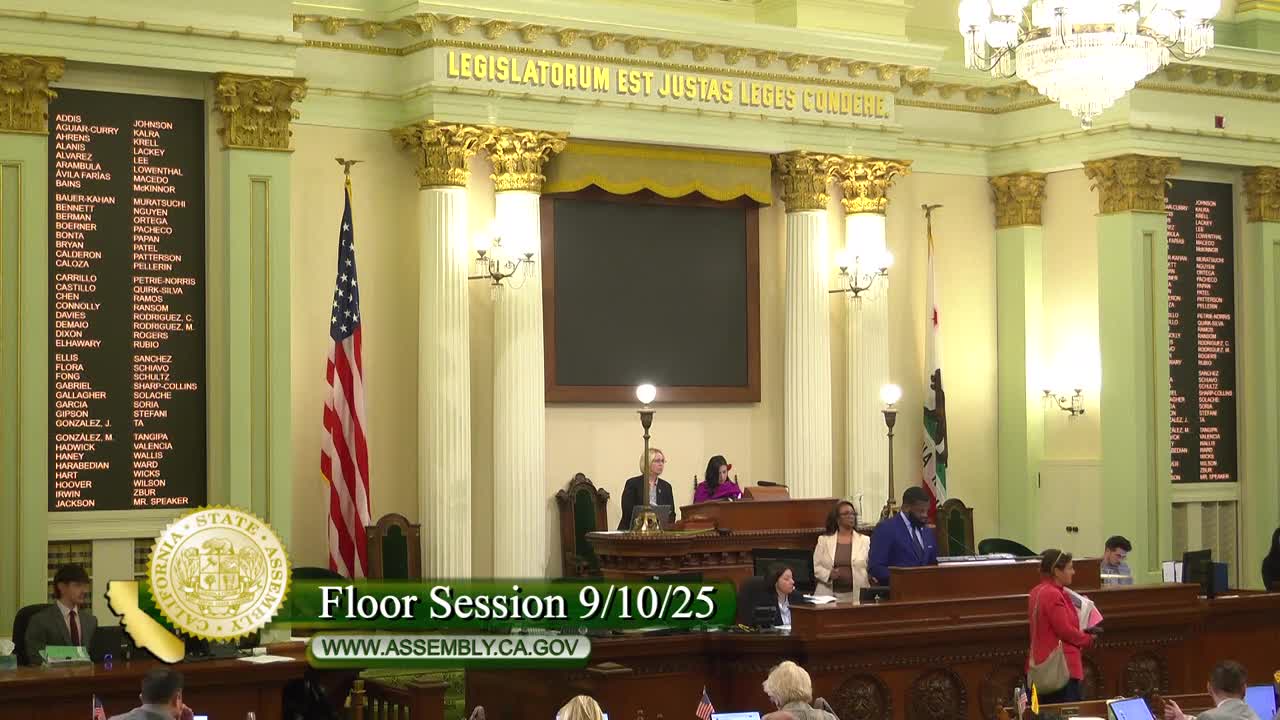 2MIN
Assembly Floor
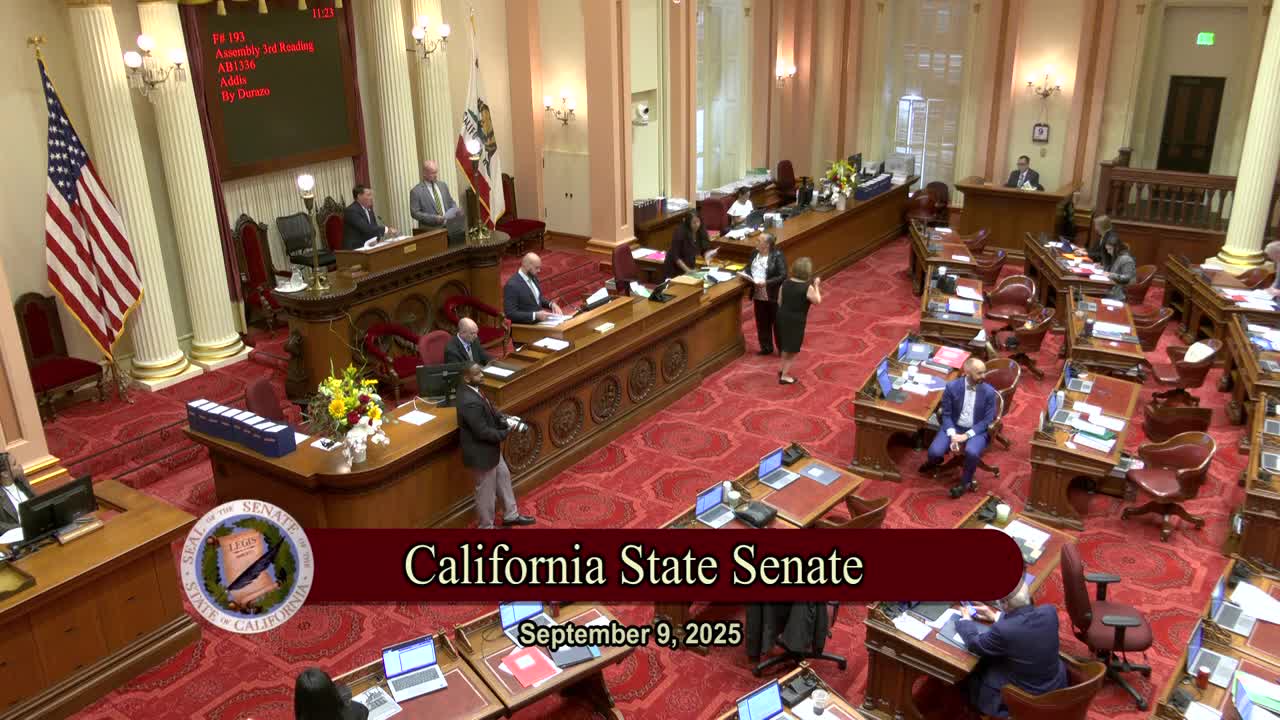 1MIN
Senate Floor
 1MIN
Senate Standing Committee on Appropriations
 32MIN
Senate Standing Committee on Education
 1MIN
Assembly Floor
 25MIN
Assembly Standing Committee on Education
Bill Author