AB 1303: Communications: lifeline telephone service program.
- Session Year: 2025-2026
- House: Assembly
- Latest Version Date: 2025-10-06
Current Status:
Passed
(2025-10-06: Chaptered by Secretary of State - Chapter 347, Statutes of 2025.)
Introduced
In Committee
Awaiting First Chamber Vote
Passed First Chamber
In Committee
Awaiting Second Chamber Vote
Passed Second Chamber
Enacted
Existing law vests the Public Utilities Commission with regulatory authority over public utilities, including telephone corporations. The Moore Universal Telephone Service Act establishes the Universal Lifeline Telephone Service program in order to provide low-income households with access to affordable basic residential telephone service. Existing law requires the commission to accept applications for lifeline telephone service according to procedures specified by the commission.
This bill would prohibit the commission, its staff, the lifeline programs third-party administrator, and lifeline service providers, and their contractors, agents, successors, or assignees, from sharing, disclosing, or otherwise making accessible any information provided by an applicant or subscriber to the lifeline program, or a subprogram or pilot program of the lifeline program, to any agency of a local government, a state government, or the federal government, or to an immigration authority, as defined, without a court-ordered subpoena or valid judicial warrant, except as specified. The bill would authorize the commission, its staff, the lifeline programs third-party administrator, and lifeline service providers, and the providers agents, successors, or assignees, to request, but would prohibit those entities from requiring, applicants and subscribers to provide social security numbers to apply to, or participate in, the lifeline program.
Existing law prohibits a telephone or telegraph corporation from making certain categories of personal information available to any other person or corporation without first obtaining the residential subscribers consent in writing. Existing law exempts information provided to a law enforcement agency in response to lawful process from that prohibition.
This bill would define lawful process, for that purpose, to mean an action taken pursuant to a court-ordered subpoena or judicial warrant.
Under existing law, a violation of the Public Utilities Act or any order, decision, rule, direction, demand, or requirement of the commission is a crime.
Because certain provisions of this bill would be part of the act and therefore a violation of the bills requirements, or a violation of a commission action implementing its requirements, would be a crime, the bill would impose a state-mandated local program.
The California Constitution requires the state to reimburse local agencies and school districts for certain costs mandated by the state. Statutory provisions establish procedures for making that reimbursement.
This bill would provide that no reimbursement is required by this act for a specified reason.
Existing law vests the Public Utilities Commission with regulatory authority over public utilities, including telephone corporations. The Moore Universal Telephone Service Act establishes the Universal Lifeline Telephone Service program in order to provide low-income households with access to affordable basic residential telephone service. Existing law requires the commission to accept applications for lifeline telephone service according to procedures specified by the commission.
This bill would prohibit the commission, the commissions its staff, the lifeline programs third-party administrator, and lifeline service providers, and their contractors, agents, successors, or assignees, from sharing, disclosing, or otherwise making accessible any information provided by an applicant or subscriber to the lifeline program, or a subprogram or pilot program of the lifeline program, to any agency of a local government, a state government, or the federal government, or to an immigration authority, as defined, without a court-ordered subpoena or judicial warrant, except as specified. The bill would authorize the commission, the commissions its staff, the lifeline programs third-party administrator, and lifeline service providers, and the providers agents, successors, or assignees, to request, but would prohibit those entities from requiring, applicants and subscribers to provide social security numbers to apply to, or participate in, the lifeline program.
Existing law prohibits a telephone or telegraph corporation from making certain categories of personal information available to any other person or corporation without first obtaining the residential subscribers consent in writing. Existing law exempts information provided to a law enforcement agency in response to lawful process from that prohibition.
This bill would define lawful process, for that purpose, to mean an action taken pursuant to a court-ordered subpoena or judicial warrant.
Under existing law, a violation of the Public Utilities Act or any order, decision, rule, direction, demand, or requirement of the commission is a crime.
Because certain provisions of this bill would be part of the act and therefore a violation of the bills requirements, or a violation of a commission action implementing its requirements, would be a crime, the bill would impose a state-mandated local program.
The California Constitution requires the state to reimburse local agencies and school districts for certain costs mandated by the state. Statutory provisions establish procedures for making that reimbursement.
This bill would provide that no reimbursement is required by this act for a specified reason.
Existing law vests the Public Utilities Commission with regulatory authority over public utilities, including telephone corporations. The Moore Universal Telephone Service Act establishes the Universal Lifeline Telephone Service program in order to provide low-income households with access to affordable basic residential telephone service. Existing law requires the commission to accept applications for lifeline telephone service according to procedures specified by the commission.
This bill would prohibit the commission, the commissions staff, the lifeline programs third-party administrator, and lifeline service providers, and their contractors, agents, successors, or assignees, from sharing, disclosing, or otherwise making accessible any information provided by an applicant or subscriber to the lifeline program, or a subprogram or pilot program of the lifeline program, to any agency of a local government, a state government, or the federal government, or to an immigration authority, as defined, without a court-ordered subpoena or judicial warrant. warrant, except as specified. The bill would authorize the commission, the commissions staff, the lifeline programs third-party administrator, and lifeline service providers, and the providers agents, successors, or assignees, to request, but would prohibit those entities from requiring, applicants and subscribers to provide social security numbers to apply to, or participate in, the lifeline program.
Existing law prohibits a telephone or telegraph corporation from making certain categories of personal information available to any other person or corporation without first obtaining the residential subscribers consent in writing. Existing law exempts information provided to a law enforcement agency in response to lawful process from that prohibition.
This bill would define lawful process, for that purpose, to mean an action taken pursuant to a court-ordered subpoena or judicial warrant.
Under existing law, a violation of the Public Utilities Act or any order, decision, rule, direction, demand, or requirement of the commission is a crime.
Because the certain provisions of this bill would be a part of the act and therefore a violation of the bills requirements, or a violation of a commission action implementing its requirements, would be a crime, the bill would impose a state-mandated local program.
The California Constitution requires the state to reimburse local agencies and school districts for certain costs mandated by the state. Statutory provisions establish procedures for making that reimbursement.
This bill would provide that no reimbursement is required by this act for a specified reason.
Existing law vests the Public Utilities Commission with regulatory authority over public utilities, including telephone corporations. The Moore Universal Telephone Service Act establishes the Universal Lifeline Telephone Service program in order to provide low-income households with access to affordable basic residential telephone service. Existing law requires the commission to accept applications for lifeline telephone service according to procedures specified by the commission.
This bill would prohibit the commission, the commissions staff, the lifeline programs third-party administrator, and lifeline service providers, and their contractors, agents, successors, or assignees, from sharing, disclosing, or otherwise making accessible any information provided by an applicant or subscriber to the lifeline program, or a subprogram or pilot program of the lifeline program, to any agency of a local government, a state government, or the federal government, or to an immigration authority, as defined, without a court-ordered subpoena or judicial warrant from a judge of a court of the state, as specified. warrant. The bill would authorize the commission, the commissions staff, the lifeline programs third-party administrator, and lifeline service providers, and the providers agents, successors, or assignees, to request, but would prohibit those entities from requiring, applicants and subscribers to provide social security numbers to apply to, or participate in, the lifeline program.
Under existing law, a violation of the Public Utilities Act or any order, decision, rule, direction, demand, or requirement of the commission is a crime.
Because the provisions of this bill would be a part of the act and therefore a violation of the bills requirements, or a violation of a commission action implementing its requirements, would be a crime, the bill would impose a state-mandated local program.
The California Constitution requires the state to reimburse local agencies and school districts for certain costs mandated by the state. Statutory provisions establish procedures for making that reimbursement.
This bill would provide that no reimbursement is required by this act for a specified reason.
Existing law vests the Public Utilities Commission with regulatory authority over public utilities, including telephone corporations. The Moore Universal Telephone Service Act establishes the Universal Lifeline Telephone Service program in order to provide low-income households with access to affordable basic residential telephone service. Existing law requires the commission to accept applications for lifeline telephone service according to procedures specified by the commission.
This bill would prohibit applications, records, and data, as defined, concerning an individual, made or kept by the commission, the commissions staff, the lifeline programs third-party administrator, and lifeline service providers, and providers their contractors, agents, successors, or assignees, for purposes of the individual application for, or participation in, the lifeline program, assignees, from sharing, disclosing, or otherwise making accessible any information provided by an applicant or subscriber to the lifeline program, or a subprogram or pilot program within of the lifeline program, from being shared, disclosed, or otherwise made available to any agency of a local government, a state government, or the federal government, or to an immigration authority, as defined, without a court-ordered subpoena or judicial warrant from a judge of a court of the state, as specified. The bill would authorize the commission, the commissions staff, the lifeline programs third-party administrator, and lifeline service providers, and the providers agents, successors, or assignees, to request, but would prohibit those entities from requiring, applicants and subscribers to provide social security numbers to apply for, to, or participate in, the lifeline program.
Under existing law, a violation of the Public Utilities Act or any order, decision, rule, direction, demand, or requirement of the commission is a crime.
Because the provisions of this bill would be a part of the act and therefore a violation of the bills requirements, or a violation of a commission action implementing its requirements, would be a crime, the bill would impose a state-mandated local program.
The California Constitution requires the state to reimburse local agencies and school districts for certain costs mandated by the state. Statutory provisions establish procedures for making that reimbursement.
This bill would provide that no reimbursement is required by this act for a specified reason.
Existing law vests the Public Utilities Commission with regulatory authority over public utilities, including telephone corporations. The Moore Universal Telephone Service Act establishes the Universal Lifeline Telephone Service program in order to provide low-income households with access to affordable basic residential telephone service. Existing law requires the commission to accept applications for lifeline telephone service according to procedures specified by the commission.
This bill would prohibit applications, records, and data, as defined, concerning an individual, made or kept by the commission, the commissions staff, the lifeline programs third-party administrator, and lifeline service providers, and providers agents, successors, or assignees, for purposes of the individual application for, or participation in, the lifeline program, or a subprogram or pilot program within the lifeline program, from being shared, disclosed, or otherwise made available to an immigration authority, as defined, without a court-ordered subpoena or judicial warrant from a judge of a court of the state, as specified. The bill would authorize the commission, the commissions staff, the lifeline programs third-party administrator, and lifeline service providers, and the providers agents, successors, or assignees, to request, but would prohibit those entities from requiring, applicants and subscribers to provide social security numbers to apply for, or participate in, the lifeline program.
Under existing law, a violation of the Public Utilities Act or any order, decision, rule, direction, demand, or requirement of the commission is a crime.
Because the provisions of this bill would be a part of the act and therefore a violation of the bills requirements, or a violation of a commission action implementing its requirements, would be a crime, the bill would impose a state-mandated local program.
The California Constitution requires the state to reimburse local agencies and school districts for certain costs mandated by the state. Statutory provisions establish procedures for making that reimbursement.
This bill would provide that no reimbursement is required by this act for a specified reason.
Existing law vests the Public Utilities Commission with regulatory authority over public utilities, including telephone corporations. Existing law requires entities offering the services of telephone prepaid debit cards that are not certificated by the commission to provide telephone service to register with the commission, as specified. Existing law prohibits those entities that have failed to register, or that are denied registration, from offering telephone prepaid debit cards, and subjects those entities that have failed to register, or that are denied registration, that offer telephone prepaid debit cards to fines or other sanctions, as specified.This bill would make nonsubstantive changes to that prohibition.Existing law vests the Public Utilities Commission with regulatory authority over public utilities, including telephone corporations. Existing law requires entities offering the services of telephone prepaid debit cards that are not certificated by the commission to provide telephone service to register with the commission, as specified. Existing law prohibits those entities that have failed to register, or that are denied registration, from offering telephone prepaid debit cards, and subjects those entities that have failed to register, or that are denied registration, that offer telephone prepaid debit cards to fines or other sanctions, as specified.
This bill would make nonsubstantive changes to that prohibition.
(a)The commission, its staff, the lifeline programs third-party administrator, and lifeline service providers, and their contractors, agents, successors, or assignees, shall not share, disclose, or otherwise make accessible any information provided by an applicant or subscriber to the lifeline program, or a subprogram or pilot program of the lifeline program, to any agency of a local government, a state government, or the federal government, or to any immigration authority without a court-ordered subpoena or valid judicial warrant.
(b)This section does not prohibit the furnishing of applications, records, and data to other public agencies to the extent required for verifying an applicants or subscribers eligibility for lifeline service.
(c)This section does not prohibit the commission, its staff, the lifeline programs third-party administrator, or lifeline service providers from using aggregated subscriber or applicant data for analysis, reporting, or program management if the aggregated subscriber or applicant data cannot be used to determine the identities of the persons to whom the data pertains, alone or in combination with other data.
(d)The commission, its staff, the lifeline programs third-party administrator, and lifeline service providers, and the providers agents, successors, or assignees, may request, but may not require, applicants and subscribers to provide social security numbers, in whole or in part, to apply to, or participate in, the lifeline program.
(e)To the extent Section 1621 of Title 8 of the United States Code applies to this article, the Legislature finds and declares that this article is a state law that may provide assistance and services for individuals not lawfully present in the United States within the meaning of subsection (d) of Section 1621 of Title 8 of the United States Code.
(f)For purposes of this section, both of the following definitions apply:
(1)Immigration authority means any federal, state, or local officer, employee, or person performing immigration enforcement functions.
(2)Immigration enforcement includes any and all efforts to investigate, enforce, or assist in the investigation or enforcement of any federal civil immigration law, and also includes any and all efforts to investigate, enforce, or assist in the investigation or enforcement of any federal criminal immigration law that penalizes a persons presence in, entry, or reentry to, or employment in, the United States.
SEC. 2.Section 2891 of the Public Utilities Code is amended to read:2891.(a)A telephone or telegraph corporation shall not make available to any other person or corporation, without first obtaining the residential subscribers consent, in writing, any of the following information:
(1)The subscribers personal calling patterns, including any listing of the telephone or other access numbers called by the subscriber, but excluding the identification to the person called of the person calling and the telephone number from which the call was placed, subject to the restrictions in Section 2893, and also excluding billing information concerning the person calling that federal law or regulation requires a telephone corporation to provide to the person called.
(2)The residential subscribers credit or other personal financial information, except when the corporation is ordered by the commission to provide this information to any electrical, gas, heat, telephone, telegraph, or water corporation, or centralized credit check system, for the purpose of determining the creditworthiness of new utility subscribers.
(3)The services that the residential subscriber purchases from the corporation or from independent suppliers of information services who use the corporations telephone or telegraph line to provide service to the residential subscriber.
(4)Demographic information about individual residential subscribers, or aggregate information from which individual identities and characteristics have not been removed.
(b)Any residential subscriber who gives their written consent for the release of one or more of the categories of personal information specified in subdivision (a) shall be informed by the telephone or telegraph corporation regarding the identity of each person or corporation to whom the information has been released, upon written request. The corporation shall notify every residential subscriber of the provisions of this subdivision whenever consent is requested pursuant to this subdivision.
(c)Any residential subscriber who has, pursuant to subdivision (b), given written consent for the release of one or more of the categories of personal information specified in subdivision (a) may rescind this consent upon submission of a written notice to the telephone or telegraph corporation. The corporation shall cease to make available any personal information about the subscriber, within 30 days following receipt of the notice given pursuant to this subdivision.
(d)This section does not apply to any of the following:
(1)Information provided by residential subscribers for inclusion in the corporations directory of subscribers.
(2)Information customarily provided by the corporation through directory assistance services.
(3)Postal ZIP Code information.
(4)Information provided under supervision of the commission to a collection agency by the telephone corporation exclusively for the collection of unpaid debts.
(5)Information provided to an emergency service agency responding to a 911 telephone call or any other call communicating an imminent threat to life or property.
(6)Information provided to a law enforcement agency in response to lawful process.
(7)Information that is required by the commission pursuant to its jurisdiction and control over telephone and telegraph corporations.
(8)Information transmitted between telephone or telegraph corporations pursuant to the furnishing of telephone service between or within service areas.
(9)Information required to be provided by the corporation pursuant to rules and orders of the commission or the Federal Communications Commission regarding the provision over telephone lines by parties other than the telephone and telegraph corporations of telephone or information services.
(10)The name and address of the lifeline customers of a telephone corporation provided by that telephone corporation to a public utility for the sole purpose of low-income ratepayer assistance outreach efforts. The telephone corporation receiving the information request pursuant to this paragraph may charge the requesting utility for the cost of the search and release of the requested information.
(11)Information provided in response to a request pursuant to subdivision (a) of Section 530.8 of the Penal Code.
(e)Every violation of this section is grounds for a civil suit by the aggrieved residential subscriber against the telephone or telegraph corporation and its employees responsible for the violation.
(f)For purposes of this section, both of the following definitions apply:
(1)Access number means a telex, teletex, facsimile, computer modem, or any other code that is used by a residential subscriber of a telephone or telegraph corporation to direct a communication to another subscriber of the same or another telephone or telegraph corporation.
(2)Lawful process means an action taken pursuant to a court-ordered subpoena or judicial warrant.
SEC. 3.No reimbursement is required by this act pursuant to Section 6 of Article XIIIB of the California Constitution because the only costs that may be incurred by a local agency or school district will be incurred because this act creates a new crime or infraction, eliminates a crime or infraction, or changes the penalty for a crime or infraction, within the meaning of Section 17556 of the Government Code, or changes the definition of a crime within the meaning of Section 6 of Article XIIIB of the California Constitution.
(a)The commission, its staff, the lifeline programs third-party administrator, and lifeline service providers, and their contractors, agents, successors, or assignees, shall not share, disclose, or otherwise make accessible any information provided by an applicant or subscriber to the lifeline program, or a subprogram or pilot program of the lifeline program, to any agency of a local government, a state government, or the federal government, or to any immigration authority without a court-ordered subpoena or valid judicial warrant.
(b)This section does not prohibit the furnishing of applications, records, and data to other public agencies to the extent required for verifying an applicants or subscribers eligibility for lifeline service.
(c)This section does not prohibit the commission, its staff, the lifeline programs third-party administrator, or lifeline service providers from using aggregated subscriber or applicant data for analysis, reporting, or program management if the aggregated subscriber or applicant data cannot be used to determine the identities of the persons to whom the data pertains, alone or in combination with other data.
(d)The commission, its staff, the lifeline programs third-party administrator, and lifeline service providers, and the providers agents, successors, or assignees, may request, but shall may not require, applicants and subscribers to provide social security numbers, in whole or in part, to apply to, or participate in, the lifeline program.
(e)To the extent Section 1621 of Title 8 of the United States Code applies to this article, the Legislature finds and declares that this article is a state law that may provide assistance and services for individuals not lawfully present in the United States within the meaning of subsection (d) of Section 1621 of Title 8 of the United States Code.
(f)For purposes of this section, both of the following definitions apply:
(1)Immigration authority means any federal, state, or local officer, employee, or person performing immigration enforcement functions.
(2)Immigration enforcement includes any and all efforts to investigate, enforce, or assist in the investigation or enforcement of any federal civil immigration law, and also includes any and all efforts to investigate, enforce, or assist in the investigation or enforcement of any federal criminal immigration law that penalizes a persons presence in, entry, or reentry to, or employment in, the United States.
SEC. 2.Section 2891 of the Public Utilities Code is amended to read:2891.(a)A telephone or telegraph corporation shall not make available to any other person or corporation, without first obtaining the residential subscribers consent, in writing, any of the following information:
(1)The subscribers personal calling patterns, including any listing of the telephone or other access numbers called by the subscriber, but excluding the identification to the person called of the person calling and the telephone number from which the call was placed, subject to the restrictions in Section 2893, and also excluding billing information concerning the person calling that federal law or regulation requires a telephone corporation to provide to the person called.
(2)The residential subscribers credit or other personal financial information, except when the corporation is ordered by the commission to provide this information to any electrical, gas, heat, telephone, telegraph, or water corporation, or centralized credit check system, for the purpose of determining the creditworthiness of new utility subscribers.
(3)The services that the residential subscriber purchases from the corporation or from independent suppliers of information services who use the corporations telephone or telegraph line to provide service to the residential subscriber.
(4)Demographic information about individual residential subscribers, or aggregate information from which individual identities and characteristics have not been removed.
(b)Any residential subscriber who gives their written consent for the release of one or more of the categories of personal information specified in subdivision (a) shall be informed by the telephone or telegraph corporation regarding the identity of each person or corporation to whom the information has been released, upon written request. The corporation shall notify every residential subscriber of the provisions of this subdivision whenever consent is requested pursuant to this subdivision.
(c)Any residential subscriber who has, pursuant to subdivision (b), given written consent for the release of one or more of the categories of personal information specified in subdivision (a) may rescind this consent upon submission of a written notice to the telephone or telegraph corporation. The corporation shall cease to make available any personal information about the subscriber, within 30 days following receipt of the notice given pursuant to this subdivision.
(d)This section does not apply to any of the following:
(1)Information provided by residential subscribers for inclusion in the corporations directory of subscribers.
(2)Information customarily provided by the corporation through directory assistance services.
(3)Postal ZIP Code information.
(4)Information provided under supervision of the commission to a collection agency by the telephone corporation exclusively for the collection of unpaid debts.
(5)Information provided to an emergency service agency responding to a 911 telephone call or any other call communicating an imminent threat to life or property.
(6)Information provided to a law enforcement agency in response to lawful process.
(7)Information that is required by the commission pursuant to its jurisdiction and control over telephone and telegraph corporations.
(8)Information transmitted between telephone or telegraph corporations pursuant to the furnishing of telephone service between or within service areas.
(9)Information required to be provided by the corporation pursuant to rules and orders of the commission or the Federal Communications Commission regarding the provision over telephone lines by parties other than the telephone and telegraph corporations of telephone or information services.
(10)The name and address of the lifeline customers of a telephone corporation provided by that telephone corporation to a public utility for the sole purpose of low-income ratepayer assistance outreach efforts. The telephone corporation receiving the information request pursuant to this paragraph may charge the requesting utility for the cost of the search and release of the requested information.
(11)Information provided in response to a request pursuant to subdivision (a) of Section 530.8 of the Penal Code.
(e)Every violation of this section is grounds for a civil suit by the aggrieved residential subscriber against the telephone or telegraph corporation and its employees responsible for the violation.
(f)For purposes of this section, both of the following definitions apply:
(1)Access number means a telex, teletex, facsimile, computer modem, or any other code that is used by a residential subscriber of a telephone or telegraph corporation to direct a communication to another subscriber of the same or another telephone or telegraph corporation.
(2)Lawful process means an action taken pursuant to a court-ordered subpoena or judicial warrant.
SEC. 3.No reimbursement is required by this act pursuant to Section 6 of Article XIIIB of the California Constitution because the only costs that may be incurred by a local agency or school district will be incurred because this act creates a new crime or infraction, eliminates a crime or infraction, or changes the penalty for a crime or infraction, within the meaning of Section 17556 of the Government Code, or changes the definition of a crime within the meaning of Section 6 of Article XIIIB of the California Constitution.
(a)The commission, its staff, the lifeline programs third-party administrator, and lifeline service providers, and their contractors, agents, successors, or assignees, shall not share, disclose, or otherwise make accessible any information provided by an applicant or subscriber to the lifeline program, or a subprogram or pilot program of the lifeline program, to any agency of a local government, a state government, or the federal government, or to any immigration authority, as defined in Section 7284.4 of the Government Code, authority without a court-ordered subpoena or valid judicial warrant.
(b)This section does not prohibit the furnishing of applications, records, and data to other public agencies to the extent required for verifying an applicants or subscribers eligibility for lifeline service.
(c)This section does not prohibit the commission, its staff, the lifeline programs third-party administrator, or lifeline service providers from using aggregated subscriber or applicant data for analysis, reporting, or program management if the aggregated subscriber or applicant data cannot be used to determine the identities of the persons to whom the data pertains, alone or in combination with other data.
(d)The commission, its staff, the lifeline programs third-party administrator, and lifeline service providers, and the providers agents, successors, or assignees, may request, but shall not require, applicants and subscribers to provide social security numbers, in whole or in part, to apply to, or participate in, the lifeline program.
(e)To the extent Section 1621 of Title 8 of the United States Code applies to this article, the Legislature finds and declares that this article is a state law that may provide assistance and services for people without social security numbers individuals not lawfully present in the United States within the meaning of subsection (d) of Section 1621 of Title 8 of the United States Code.
(f)For purposes of this section, both of the following definitions apply:
(1)Immigration authority means any federal, state, or local officer, employee, or person performing immigration enforcement functions.
(2)Immigration enforcement includes any and all efforts to investigate, enforce, or assist in the investigation or enforcement of any federal civil immigration law, and also includes any and all efforts to investigate, enforce, or assist in the investigation or enforcement of any federal criminal immigration law that penalizes a persons presence in, entry, or reentry to, or employment in, the United States.
SEC. 2.Section 2891 of the Public Utilities Code is amended to read:2891.(a)A telephone or telegraph corporation shall not make available to any other person or corporation, without first obtaining the residential subscribers consent, in writing, any of the following information:
(1)The subscribers personal calling patterns, including any listing of the telephone or other access numbers called by the subscriber, but excluding the identification to the person called of the person calling and the telephone number from which the call was placed, subject to the restrictions in Section 2893, and also excluding billing information concerning the person calling that federal law or regulation requires a telephone corporation to provide to the person called.
(2)The residential subscribers credit or other personal financial information, except when the corporation is ordered by the commission to provide this information to any electrical, gas, heat, telephone, telegraph, or water corporation, or centralized credit check system, for the purpose of determining the creditworthiness of new utility subscribers.
(3)The services that the residential subscriber purchases from the corporation or from independent suppliers of information services who use the corporations telephone or telegraph line to provide service to the residential subscriber.
(4)Demographic information about individual residential subscribers, or aggregate information from which individual identities and characteristics have not been removed.
(b)Any residential subscriber who gives their written consent for the release of one or more of the categories of personal information specified in subdivision (a) shall be informed by the telephone or telegraph corporation regarding the identity of each person or corporation to whom the information has been released, upon written request. The corporation shall notify every residential subscriber of the provisions of this subdivision whenever consent is requested pursuant to this subdivision.
(c)Any residential subscriber who has, pursuant to subdivision (b), given written consent for the release of one or more of the categories of personal information specified in subdivision (a) may rescind this consent upon submission of a written notice to the telephone or telegraph corporation. The corporation shall cease to make available any personal information about the subscriber, within 30 days following receipt of the notice given pursuant to this subdivision.
(d)This section does not apply to any of the following:
(1)Information provided by residential subscribers for inclusion in the corporations directory of subscribers.
(2)Information customarily provided by the corporation through directory assistance services.
(3)Postal ZIP Code information.
(4)Information provided under supervision of the commission to a collection agency by the telephone corporation exclusively for the collection of unpaid debts.
(5)Information provided to an emergency service agency responding to a 911 telephone call or any other call communicating an imminent threat to life or property.
(6)Information provided to a law enforcement agency in response to lawful process.
(7)Information that is required by the commission pursuant to its jurisdiction and control over telephone and telegraph corporations.
(8)Information transmitted between telephone or telegraph corporations pursuant to the furnishing of telephone service between or within service areas.
(9)Information required to be provided by the corporation pursuant to rules and orders of the commission or the Federal Communications Commission regarding the provision over telephone lines by parties other than the telephone and telegraph corporations of telephone or information services.
(10)The name and address of the lifeline customers of a telephone corporation provided by that telephone corporation to a public utility for the sole purpose of low-income ratepayer assistance outreach efforts. The telephone corporation receiving the information request pursuant to this paragraph may charge the requesting utility for the cost of the search and release of the requested information.
(11)Information provided in response to a request pursuant to subdivision (a) of Section 530.8 of the Penal Code.
(e)Every violation of this section is grounds for a civil suit by the aggrieved residential subscriber against the telephone or telegraph corporation and its employees responsible for the violation.
(f)For purposes of this section, both of the following definitions apply:
(1)Access number means a telex, teletex, facsimile, computer modem, or any other code that is used by a residential subscriber of a telephone or telegraph corporation to direct a communication to another subscriber of the same or another telephone or telegraph corporation.
(2)Lawful process means an action taken pursuant to a court-ordered subpoena or judicial warrant.
SEC. 3.No reimbursement is required by this act pursuant to Section 6 of Article XIIIB of the California Constitution because the only costs that may be incurred by a local agency or school district will be incurred because this act creates a new crime or infraction, eliminates a crime or infraction, or changes the penalty for a crime or infraction, within the meaning of Section 17556 of the Government Code, or changes the definition of a crime within the meaning of Section 6 of Article XIIIB of the California Constitution.
(a)The commission, the commissions its staff, the lifeline programs third-party administrator, and lifeline service providers, and their contractors, agents, successors, or assignees, shall not share, disclose, or otherwise make accessible any information provided by an applicant or subscriber to the lifeline program, or a subprogram or pilot program of the lifeline program, to any agency of a local government, a state government, or the federal government, or to any immigration authority, as defined in Section 7284.4 of the Government Code, without a court-ordered subpoena or judicial warrant.
(b)This section does not prohibit the furnishing of applications, records, and data to other public agencies to the extent required for verifying an applicants or subscribers eligibility for lifeline service.
(c)This section does not prohibit the commission, commission its staff, the lifeline programs third-party administrator, or lifeline service providers from using aggregated subscriber or applicant data for analysis, reporting, or program management if the aggregated subscriber or applicant data cannot be used to determine the identities of the persons to whom the data pertains, alone or in combination with other data.
(d)The commission, the commissions its staff, the lifeline programs third-party administrator, and lifeline service providers, and the providers agents, successors, or assignees, may request, but shall not require, applicants and subscribers to provide social security numbers, in whole or in part, to apply to, or participate in, the lifeline program.
(e)To the extent Section 1621 of Title 8 of the United States Code applies to this article, the Legislature finds and declares that this article is a state law that may provide assistance and services for people without social security numbers within the meaning of subsection (d) of Section 1621 of Title 8 of the United States Code.
SEC. 2.Section 2891 of the Public Utilities Code is amended to read:2891.(a)A telephone or telegraph corporation shall not make available to any other person or corporation, without first obtaining the residential subscribers consent, in writing, any of the following information:
(1)The subscribers personal calling patterns, including any listing of the telephone or other access numbers called by the subscriber, but excluding the identification to the person called of the person calling and the telephone number from which the call was placed, subject to the restrictions in Section 2893, and also excluding billing information concerning the person calling that federal law or regulation requires a telephone corporation to provide to the person called.
(2)The residential subscribers credit or other personal financial information, except when the corporation is ordered by the commission to provide this information to any electrical, gas, heat, telephone, telegraph, or water corporation, or centralized credit check system, for the purpose of determining the creditworthiness of new utility subscribers.
(3)The services that the residential subscriber purchases from the corporation or from independent suppliers of information services who use the corporations telephone or telegraph line to provide service to the residential subscriber.
(4)Demographic information about individual residential subscribers, or aggregate information from which individual identities and characteristics have not been removed.
(b)Any residential subscriber who gives their written consent for the release of one or more of the categories of personal information specified in subdivision (a) shall be informed by the telephone or telegraph corporation regarding the identity of each person or corporation to whom the information has been released, upon written request. The corporation shall notify every residential subscriber of the provisions of this subdivision whenever consent is requested pursuant to this subdivision.
(c)Any residential subscriber who has, pursuant to subdivision (b), given written consent for the release of one or more of the categories of personal information specified in subdivision (a) may rescind this consent upon submission of a written notice to the telephone or telegraph corporation. The corporation shall cease to make available any personal information about the subscriber, within 30 days following receipt of the notice given pursuant to this subdivision.
(d)This section does not apply to any of the following:
(1)Information provided by residential subscribers for inclusion in the corporations directory of subscribers.
(2)Information customarily provided by the corporation through directory assistance services.
(3)Postal ZIP Code information.
(4)Information provided under supervision of the commission to a collection agency by the telephone corporation exclusively for the collection of unpaid debts.
(5)Information provided to an emergency service agency responding to a 911 telephone call or any other call communicating an imminent threat to life or property.
(6)Information provided to a law enforcement agency in response to lawful process.
(7)Information that is required by the commission pursuant to its jurisdiction and control over telephone and telegraph corporations.
(8)Information transmitted between telephone or telegraph corporations pursuant to the furnishing of telephone service between or within service areas.
(9)Information required to be provided by the corporation pursuant to rules and orders of the commission or the Federal Communications Commission regarding the provision over telephone lines by parties other than the telephone and telegraph corporations of telephone or information services.
(10)The name and address of the lifeline customers of a telephone corporation provided by that telephone corporation to a public utility for the sole purpose of low-income ratepayer assistance outreach efforts. The telephone corporation receiving the information request pursuant to this paragraph may charge the requesting utility for the cost of the search and release of the requested information.
(11)Information provided in response to a request pursuant to subdivision (a) of Section 530.8 of the Penal Code.
(e)Every violation of this section is grounds for a civil suit by the aggrieved residential subscriber against the telephone or telegraph corporation and its employees responsible for the violation.
(f)For purposes of this section, both of the following definitions apply:
(1)Access number means a telex, teletex, facsimile, computer modem, or any other code that is used by a residential subscriber of a telephone or telegraph corporation to direct a communication to another subscriber of the same or another telephone or telegraph corporation.
(2)Lawful process means an action taken pursuant to a court-ordered subpoena or judicial warrant.
SEC. 3.No reimbursement is required by this act pursuant to Section 6 of Article XIIIB of the California Constitution because the only costs that may be incurred by a local agency or school district will be incurred because this act creates a new crime or infraction, eliminates a crime or infraction, or changes the penalty for a crime or infraction, within the meaning of Section 17556 of the Government Code, or changes the definition of a crime within the meaning of Section 6 of Article XIIIB of the California Constitution.
(a)The commission, the commissions staff, the lifeline programs third-party administrator, and lifeline service providers, and their contractors, agents, successors, or assignees, shall not share, disclose, or otherwise make accessible any information provided by an applicant or subscriber to the lifeline program, or a subprogram or pilot program of the lifeline program, to any agency of a local government, a state government, or the federal government, or to any immigration authority, as defined in Section 7284.4 of the Government Code, without a court-ordered subpoena or judicial warrant.
(b)This section does not prohibit the furnishing of applications, records, and data to other public agencies to the extent required for verifying an applicants or subscribers eligibility for lifeline service.
(c)This section does not prohibit the commission, commission staff, the lifeline programs third-party administrator, or lifeline service providers from using aggregated subscriber or applicant data for analysis, reporting, or program management if the aggregated subscriber or applicant data cannot not be used to determine the identities of the persons to whom the data pertains, alone or in combination with other data.
(d)The commission, the commissions staff, the lifeline programs third-party administrator, and lifeline service providers, and the providers agents, successors, or assignees, may request, but shall not require, applicants and subscribers to provide social security numbers, in whole or in part, to apply to, or participate in, the lifeline program.
(e)To the extent Section 1621 of Title 8 of the United States Code applies to this article, the Legislature finds and declares that this article is a state law that may provide assistance and services for people without social security numbers within the meaning of subsection (d) of Section 1621 of Title 8 of the United States Code.
SEC. 2.Section 2891 of the Public Utilities Code is amended to read:2891.(a)No A telephone or telegraph corporation shall not make available to any other person or corporation, without first obtaining the residential subscribers consent, in writing, any of the following information:
(1)The subscribers personal calling patterns, including any listing of the telephone or other access numbers called by the subscriber, but excluding the identification to the person called of the person calling and the telephone number from which the call was placed, subject to the restrictions in Section 2893, and also excluding billing information concerning the person calling which that federal law or regulation requires a telephone corporation to provide to the person called.
(2)The residential subscribers credit or other personal financial information, except when the corporation is ordered by the commission to provide this information to any electrical, gas, heat, telephone, telegraph, or water corporation, or centralized credit check system, for the purpose of determining the creditworthiness of new utility subscribers.
(3)The services which that the residential subscriber purchases from the corporation or from independent suppliers of information services who use the corporations telephone or telegraph line to provide service to the residential subscriber.
(4)Demographic information about individual residential subscribers, or aggregate information from which individual identities and characteristics have not been removed.
(b)Any residential subscriber who gives his or her their written consent for the release of one or more of the categories of personal information specified in subdivision (a) shall be informed by the telephone or telegraph corporation regarding the identity of each person or corporation to whom the information has been released, upon written request. The corporation shall notify every residential subscriber of the provisions of this subdivision whenever consent is requested pursuant to this subdivision.
(c)Any residential subscriber who has, pursuant to subdivision (b), given written consent for the release of one or more of the categories of personal information specified in subdivision (a) may rescind this consent upon submission of a written notice to the telephone or telegraph corporation. The corporation shall cease to make available any personal information about the subscriber, within 30 days following receipt of the notice given pursuant to this subdivision.
(d)This section does not apply to any of the following:
(1)Information provided by residential subscribers for inclusion in the corporations directory of subscribers.
(2)Information customarily provided by the corporation through directory assistance services.
(3)Postal ZIP Code information.
(4)Information provided under supervision of the commission to a collection agency by the telephone corporation exclusively for the collection of unpaid debts.
(5)Information provided to an emergency service agency responding to a 911 telephone call or any other call communicating an imminent threat to life or property.
(6)Information provided to a law enforcement agency in response to lawful process.
(7)Information which that is required by the commission pursuant to its jurisdiction and control over telephone and telegraph corporations.
(8)Information transmitted between telephone or telegraph corporations pursuant to the furnishing of telephone service between or within service areas.
(9)Information required to be provided by the corporation pursuant to rules and orders of the commission or the Federal Communications Commission regarding the provision over telephone lines by parties other than the telephone and telegraph corporations of telephone or information services.
(10)The name and address of the lifeline customers of a telephone corporation provided by that telephone corporation to a public utility for the sole purpose of low-income ratepayer assistance outreach efforts. The telephone corporation receiving the information request pursuant to this paragraph may charge the requesting utility for the cost of the search and release of the requested information.
(11)Information provided in response to a request pursuant to subdivision (a) of Section 530.8 of the Penal Code.
(e)Every violation is a of this section is grounds for a civil suit by the aggrieved residential subscriber against the telephone or telegraph corporation and its employees responsible for the violation.
(f)For purposes of this section, access both of the following definitions apply:
(1)Access number means a telex, teletex, facsimile, computer modem, or any other code which that is used by a residential subscriber of a telephone or telegraph corporation to direct a communication to another subscriber of the same or another telephone or telegraph corporation.
(2)Lawful process means an action taken pursuant to a court-ordered subpoena or judicial warrant.
SEC. 2.SEC. 3.No reimbursement is required by this act pursuant to Section 6 of Article XIIIB of the California Constitution because the only costs that may be incurred by a local agency or school district will be incurred because this act creates a new crime or infraction, eliminates a crime or infraction, or changes the penalty for a crime or infraction, within the meaning of Section 17556 of the Government Code, or changes the definition of a crime within the meaning of Section 6 of Article XIIIB of the California Constitution.
(a)The commission, the commissions staff, the lifeline programs third-party administrator, and lifeline service providers, and their contractors, agents, successors, or assignees, shall not share, disclose, or otherwise make accessible any information provided by an applicant or subscriber to the lifeline program, or a subprogram or pilot program of the lifeline program, to any agency of a local government, a state government, or the federal government, or to any immigration authority, as defined in Section 7284.4 of the Government Code, without a court-ordered subpoena or judicial warrant from a judge of a court of the state. warrant.
(b)This section does not prohibit the furnishing of applications, records, and data to other public agencies to the extent required for verifying an applicants or subscribers eligibility for lifeline. lifeline service.
(c)This section does not prohibit the commission, commission staff, the lifeline programs third-party administrator, or lifeline service providers from using aggregated subscriber or applicant data for analysis, reporting, or program management if the aggregated subscriber or applicant data could cannot not be used to determine the identities of the persons to whom the data pertains, alone, alone or in combination with other data.
(d)The commission, the commissions staff, the lifeline programs third-party administrator, and lifeline service providers, and the providers agents, successors, or assignees, may request, but shall not require, applicants and subscribers to provide social security numbers, in whole or in part, to apply to, or participate in, the lifeline program.
(e)To the extent Section 1621 of Title 8 of the United States Code applies to this article, the Legislature finds and declares that this article is a state law that may provide assistance and services for people without social security numbers within the meaning of subsection (d) of Section 1621 of Title 8 of the United States Code.
SEC. 2.No reimbursement is required by this act pursuant to Section 6 of Article XIIIB of the California Constitution because the only costs that may be incurred by a local agency or school district will be incurred because this act creates a new crime or infraction, eliminates a crime or infraction, or changes the penalty for a crime or infraction, within the meaning of Section 17556 of the Government Code, or changes the definition of a crime within the meaning of Section 6 of Article XIIIB of the California Constitution.
(a)The commission, the commissions staff, the lifeline programs third-party administrator, and lifeline service providers, and the providers their contractors, agents, successors, or assignees, for purposes of the individuals application for, or participation in, the lifeline program, assignees, shall not share, disclose, or otherwise make accessible any information provided by an applicant or subscriber to the lifeline program, or a subprogram or pilot program within of the lifeline program, shall not be shared, disclosed, or otherwise made accessible to any agency of a local government, a state government, or the federal government, or to any immigration authority, as defined in Section 7284.4 of the Government Code, without a court-ordered subpoena or judicial warrant from a judge of a court of the state.
(c)(b)This section does not prohibit the furnishing of applications, records, and data to other public agencies to the extent required to verify the individuals for verifying an applicants or subscribers eligibility for the lifeline program. lifeline.
(c)This section does not prohibit the commission, commission staff, the lifeline programs third-party administrator, or lifeline service providers from using aggregated subscriber or applicant data for analysis, reporting, or program management if the aggregated subscriber or applicant data could not be used to determine the identities of the persons to whom the data pertains, alone, or in combination with other data.
(d)The commission, the commissions staff, the lifeline programs third-party administrator, and lifeline service providers, and the providers agents, successors, or assignees, may request, but shall not require, an individual applicants and subscribers to provide a social security number to apply for, numbers, in whole or in part, to apply to, or participate in, the lifeline program.
(e)To the extent Section 1621 of Title 8 of the United States Code applies to this article, the Legislature finds and declares that this article is a state law that affirmatively provides that an individual may provide assistance and services for people without a social security number is eligible, if the individual meets the eligibility requirements, for the services under this article, social security numbers within the meaning of subsection (d) of Section 1621 of Title 8 of the United States Code.
SEC. 2.No reimbursement is required by this act pursuant to Section 6 of Article XIIIB of the California Constitution because the only costs that may be incurred by a local agency or school district will be incurred because this act creates a new crime or infraction, eliminates a crime or infraction, or changes the penalty for a crime or infraction, within the meaning of Section 17556 of the Government Code, or changes the definition of a crime within the meaning of Section 6 of Article XIIIB of the California Constitution.
REVISIONS: HeadingLine 2.(a)For purposes of this section, applications, records, and data includes, but is not limited to, all of the following information about the individual:
(1)Name.
(2)Date of birth.
(3)Service usage, including, but not limited to, call records.
(4)Location at any time.
(5)Address.
(6)Account number.
(7)Telephone number.
(8)A document or government-issued identification that the individual provides to demonstrate their identity or eligibility for the lifeline program.
(b)Except as otherwise provided in this section and in addition to all other applicable privacy laws, all applications, records, and data concerning an individual, made or kept by the commission, the commissions staff, the lifeline programs third-party administrator, and lifeline service providers, and the providers agents, successors, or assignees, for purposes of the individuals application for, or participation in, the lifeline program, or a subprogram or pilot program within the lifeline program, shall not be shared, disclosed, or otherwise made accessible to any immigration authority, as defined in Section 7284.4 of the Government Code, without a court-ordered subpoena or judicial warrant from a judge of a court of the state.
(c)This section does not prohibit the furnishing of applications, records, and data to other public agencies to the extent required to verify the individuals eligibility for the lifeline program.
(d)The commission, the commissions staff, the lifeline programs third-party administrator, and lifeline service providers, and the providers agents, successors, or assignees, may request, but shall not require, an individual to provide a social security number to apply for, or participate in, the lifeline program.
(e)To the extent Section 1621 of Title 8 of the United States Code applies to this article, the Legislature finds and declares that this article is a state law that affirmatively provides that an individual without a social security number is eligible, if the individual meets the eligibility requirements, for the services under this article, within the meaning of subsection (d) of Section 1621 of Title 8 of the United States Code.
SEC. 2.No reimbursement is required by this act pursuant to Section 6 of Article XIIIB of the California Constitution because the only costs that may be incurred by a local agency or school district will be incurred because this act creates a new crime or infraction, eliminates a crime or infraction, or changes the penalty for a crime or infraction, within the meaning of Section 17556 of the Government Code, or changes the definition of a crime within the meaning of Section 6 of Article XIIIB of the California Constitution.
SECTION 1.Section 886 of the Public Utilities Code is amended to read:886.Entities that are required to register, but have failed to register, or entities that are denied registration by the commission, shall not offer the services of telephone prepaid debit cards. Entities that are required to register, but have failed to register, and entities denied registration that offer telephone prepaid debit cards shall be subject to fines or other sanctions that may be ordered by the commission.Entities that are required to register, but have failed to do so, register, or entities that are denied registration by the commission, shall not offer the services of telephone prepaid debit cards. Entities that are required to register, but have failed to do so, register, and entities denied registration that offer telephone prepaid debit cards shall be subject to fines or other sanctions that may be ordered by the commission.
|
Date
|
Status
|
|---|---|
| Oct 6, 2025 | Chaptered by Secretary of State - Chapter 347, Statutes of 2025. |
| Oct 6, 2025 | Approved by the Governor. |
| Sep 16, 2025 | Enrolled and presented to the Governor at 2 p.m. |
| Sep 9, 2025 | Senate amendments concurred in. To Engrossing and Enrolling. (Ayes 61. Noes 14. Page 3120.). |
| Sep 8, 2025 | In Assembly. Concurrence in Senate amendments pending. |
| Sep 8, 2025 | Read third time. Passed. Ordered to the Assembly. (Ayes 29. Noes 9. Page 2626.). |
| Sep 4, 2025 | Read second time. Ordered to third reading. |
| Sep 3, 2025 | Read third time and amended. Ordered to second reading. |
| Aug 26, 2025 | Read second time. Ordered to third reading. |
| Aug 25, 2025 | From committee: Be ordered to second reading pursuant to Senate Rule 28.8. |
| Aug 13, 2025 | In committee: Hearing postponed by committee. |
| Jul 10, 2025 | Read second time and amended. Re-referred to Com. on APPR. |
| Jul 9, 2025 | From committee: Amend, and do pass as amended and re-refer to Com. on APPR. (Ayes 11. Noes 1.) (July 8). |
| Jun 26, 2025 | From committee chair, with author's amendments: Amend, and re-refer to committee. Read second time, amended, and re-referred to Com. on JUD. |
| Jun 24, 2025 | Read second time and amended. Re-referred to Com. on JUD. |
| Jun 23, 2025 | From committee: Amend, and do pass as amended and re-refer to Com. on JUD. (Ayes 11. Noes 1.) (June 17). |
| May 28, 2025 | Referred to Coms. on E., U & C. and JUD. |
| May 20, 2025 | In Senate. Read first time. To Com. on RLS. for assignment. |
| May 19, 2025 | Read third time. Passed. Ordered to the Senate. (Ayes 61. Noes 12. Page 1609.) |
| May 15, 2025 | Read second time. Ordered to third reading. |
| May 14, 2025 | From committee: Do pass. (Ayes 11. Noes 4.) (May 14). |
| May 5, 2025 | Re-referred to Com. on APPR. |
| May 1, 2025 | Read second time and amended. |
| Apr 30, 2025 | From committee: Amend, and do pass as amended and re-refer to Com. on APPR. (Ayes 8. Noes 3.) (April 29). |
| Apr 9, 2025 | From committee: Do pass and re-refer to Com. on JUD. (Ayes 8. Noes 2.) (April 9). Re-referred to Com. on JUD. |
| Apr 9, 2025 | Coauthors revised. |
| Apr 2, 2025 | Re-referred to Com. on C. & C. |
| Apr 1, 2025 | From committee chair, with author's amendments: Amend, and re-refer to Com. on C. & C. Read second time and amended. |
| Mar 25, 2025 | Re-referred to Com. on C. & C. |
| Mar 24, 2025 | Referred to Coms. on C. & C. and JUD. |
| Mar 24, 2025 | From committee chair, with author's amendments: Amend, and re-refer to Com. on C. & C. Read second time and amended. |
| Feb 24, 2025 | Read first time. |
| Feb 22, 2025 | From printer. May be heard in committee March 24. |
| Feb 21, 2025 | Introduced. To print. |
|
Date
|
Description
|
Location
|
Votes
|
|
|---|---|---|---|---|
| Sep 9, 2025 | AB 1303 Valencia Concurrence in Senate Amendments | Assembly Floor |
Passed |
|
| Sep 8, 2025 | Assembly 3rd Reading AB1303 Valencia et al. By Gonzalez | Senate Floor |
Passed |
|
| Jul 8, 2025 | Do pass as amended, but first amend, and re-refer to the Committee on [Appropriations] | Senate Standing Committee on Judiciary |
Passed |
|
| Jun 17, 2025 | Do pass as amended, but first amend, and re-refer to the Committee on [Judiciary] | Senate Standing Committee on Energy, Utilities and Communications |
Passed |
|
| May 19, 2025 | AB 1303 Valencia Assembly Third Reading | Assembly Floor |
Passed |
|
| May 14, 2025 | Do pass. | Assembly Standing Committee on Appropriations |
Passed |
|
| Apr 29, 2025 | Do pass as amended and be re-referred to the Committee on [Appropriations] | Assembly Standing Committee on Judiciary |
Passed |
|
| Apr 9, 2025 | Do pass and be re-referred to the Committee on [Judiciary] | Assembly Standing Committee on Communications and Conveyance |
Passed |
This list shows positions taken on this bill by organizations on the date displayed, which is linked to the original source.
Positions by individuals are not included.
|
Organization
|
Position
|
Date
|
|---|---|---|
| Access Humboldt | ** Support | |
| California Democratic Party Rural Caucus | ** Support | |
| California Latino Legislative Caucus | ** Support | |
| Central American Resource Center of California | ** Support | |
| Communications Workers of America, District 9 | ** Support | |
| East LA Community Corporation | ** Support | |
| Eastmont Community Center | ** Support | |
| Electronic Frontier Foundation | ** Support | |
| Latino Legislative Caucus | ** Support | |
| Media Alliance | ** Support | |
| Mediajustice | ** Support | |
| Neighborhood Legal Services of Los Angeles County | ** Support | |
| NextGen California | ** Support | |
| Oakland Privacy | ** Support | |
| The Greenlining Institute | ** Support | |
| Utility Reform Network | ** Support |
CONCURRENCE IN SENATE AMENDMENTS
CSA1 Bill Id:AB 1303
Author:(Valencia)
As Amended Ver:September 3, 2025
Majority vote
SUMMARY
This bill would prohibit the California Public Utilities Commission (CPUC), and associated specified entities, from sharing information provided by an applicant or subscriber of the California Lifeline (Lifeline) program with other government entities without a court-ordered subpoena or valid judicial warrant.
Senate Amendments
- Specify that an immigration authority must have a valid judicial warrant.
- Establish definitions for the terms "immigration authority" and "immigration enforcement".
- Clarify that the Lifeline program is a state law under specified federal statutes.
COMMENTS
- California Lifeline Program Overview. The Lifeline program provides affordable wireline and wireless phone service to approximately 1.7 million low-income customers. In September 1983, the California Legislature enacted the Moore Universal Telephone Service Act (Moore Act) to ensure availability of affordable “basic local telephone service” to all qualifying low-income households. The CPUC administers the program in accordance with the Moore Act and the Federal Communications Commission’s (FCC) Federal Lifeline program regulations.
Applicants may qualify for Lifeline in two ways: (1) through enrollment in an eligible public-assistance program (program-based eligibility), or (2) meeting an income threshold (income-based eligibility). In 2005, the CPUC transferred the enrollment and eligibility verification functions from the participating telephone corporations to a Third-Party Administrator (TPA). Under the CPUC’s oversight and supervision, the TPA handles the application, enrollment, and renewal processes, and determines if an applicant is eligible to enroll in California Lifeline. Through the TPA, California typically administers over 7.1 million annual eligibility determinations for both the federal and state subsidies.
- Regulatory and Legal History of SSNs and the Lifeline Program. For years following the establishment of the Lifeline program neither the federal or state government required a SSN for an applicant to receive the program benefit. This changed in 2012 when the Federal Communications Commission (FCC), which establishes the rules governing the federal portion of Lifeline program, began to require carriers to collect the last four digits of a subscribers SSN. In order to maximize the amount of federal support available to California subscribers the California Public Utilities Commission (CPUC) also began to collect SSN information around the same time.
In 2014, following a regulatory process to consider more comprehensive updates to the Lifeline program the CPUC decided to implement a revised California Lifeline program funded solely by state funds which would not require a SSN to determine eligibility. Nearly a decade later, consumer-advocates claim and independent reporting demonstrates that the California Public Utilities Commission has not implemented that decision. While the CPUC's 2014 decision did authorize Californians without an SSN to participate in California Lifeline, the CPUC acknowledges that it deferred implementation details for that decision. Most recently, in July 2024 the CPUC issued a proposed decision that would establish a process for Californians without an SSN to enroll in California Lifeline. This bill is aimed to provide explicit authorization to adopt that decision, by clarifying that the CPUC may not require a SSN for determine eligibility for the Lifeline program.
- Privacy Concerns for Applicants and Subscribers without an SSN. Although existing law limits the ability of the CPUC and associated entities to disclose personal information that could identify an individual Lifeline subscriber or applicant, there are potential loopholes. For example, federal authorities have used administrative subpoenas, not court-ordered subpoenas, in the past to obtain sensitive information. By requiring a court-ordered subpoena or judicial warrant from a judge before Lifeline subscriber and applicant information can be shared, this bill aims to address any loophole that may be utilized in existing law. As a result, Californians without a SSN that seek to utilize the California Lifeline program would be better protected against unrelated actions by other government entities.
According to the Author
"AB 1303 will help increase participation for eligible undocumented Californians, and ensures they can access essential communication services without fear of unnecessary government overreach. This bill reinforces our commitment to protecting the privacy of residents who rely on the Lifeline Program."
Arguments in Support
According to the Utility Reform Network (TURN), it is possible that immigration enforcement agencies, such as U.S. Immigration and Customs Enforcement (ICE), will attempt to obtain information about Lifeline applicants and subscribers from the CPUC, its contractors, or participating service providers, indiscriminately and without justification, while seeking out individuals they believe may be undocumented. Therefore, this bill is aim to protect against that possibility while protecting the privacy of existing and future participants in the program.
Arguments in Opposition
None on file.
FISCAL COMMENTS
Both the Assembly and Senate Appropriations committees estimate minor and absorbable costs.
VOTES:
ASM COMMUNICATIONS AND CONVEYANCE: 8-2-0
YES: Boerner, Ahrens, Bonta, Caloza, Garcia, Lowenthal, Rogers, Blanca Rubio
NO: Hoover, Castillo
ASM JUDICIARY: 8-3-1
YES: Kalra, Bryan, Connolly, Harabedian, Pacheco, Papan, Stefani, Zbur
NO: Dixon, Macedo, Sanchez
ABS, ABST OR NV: Bauer-Kahan
ASM APPROPRIATIONS: 11-4-0
YES: Wicks, Arambula, Calderon, Caloza, Elhawary, Fong, Mark González, Hart, Pacheco, Pellerin, Solache
NO: Sanchez, Dixon, Ta, Tangipa
ASSEMBLY FLOOR: 61-12-6
YES: Addis, Aguiar-Curry, Ahrens, Alanis, Alvarez, Arambula, Ávila Farías, Bains, Bauer‑Kahan, Bennett, Berman, Boerner, Bonta, Bryan, Calderon, Caloza, Carrillo, Connolly, Elhawary, Fong, Gabriel, Garcia, Gipson, Mark González, Haney, Harabedian, Hart, Irwin, Jackson, Kalra, Krell, Lee, Lowenthal, McKinnor, Muratsuchi, Nguyen, Ortega, Pacheco, Patel, Pellerin, Petrie-Norris, Quirk-Silva, Ramos, Ransom, Celeste Rodriguez, Michelle Rodriguez, Rogers, Blanca Rubio, Schiavo, Schultz, Sharp-Collins, Solache, Soria, Stefani, Valencia, Wallis, Ward, Wicks, Wilson, Zbur, Rivas
NO: Castillo, Davies, DeMaio, Ellis, Gallagher, Hadwick, Hoover, Macedo, Patterson, Sanchez, Ta, Tangipa
ABS, ABST OR NV: Chen, Dixon, Flora, Jeff Gonzalez, Lackey, Papan
UPDATED
VERSION: September 3, 2025
CONSULTANT: Emilio Perez / C. & C. / (916) 319-2637 FN: 0001916
SENATE RULES COMMITTEE Office of Senate Floor Analyses (916) 651-1520 Fax: (916) 327-4478 | AB 1303 |
THIRD READING
Bill No: AB 1303
Author: Valencia (D), et al.
Amended: 9/3/25 in Senate
Vote: 21
SENATE ENERGY, U. & C. COMMITTEE: 11-1, 6/17/25
AYES: Becker, Allen, Archuleta, Arreguín, Caballero, Hurtado, Limón, McNerney, Rubio, Stern, Wahab
NOES: Strickland
NO VOTE RECORDED: Ochoa Bogh, Ashby, Dahle, Gonzalez, Grove
SENATE JUDICIARY COMMITTEE: 11-1, 7/8/25
AYES: Umberg, Allen, Arreguín, Ashby, Caballero, Durazo, Laird, Stern, Wahab, Weber Pierson, Wiener
NOES: Niello
NO VOTE RECORDED: Valladares
SENATE APPROPRIATIONS COMMITTEE: Senate Rule 28.8
ASSEMBLY FLOOR: 61-12, 5/19/25 - See last page for vote
SUBJECT: Communications: lifeline telephone service program
SOURCE: The Utility Reform Network
DIGEST:
This bill prohibits entities involved in the administration of the California Lifeline Program from sharing applicant or subscriber information to government agencies or immigration authorities without a court-ordered subpoena or judicial warrant. This bill clarifies that this prohibition extends to any applicant or subscriber information collected for a Lifeline subprogram or pilot program.
Senate Floor Amendments of 9/3/25 clarify that the CPUC may not require Lifeline participants to provide a social security number (SSN) in order to participate in the program.
ANALYSIS:
Existing law:
- Establishes the following Universal Service Funds at the California Public Utilities Commission (CPUC) to support the state’s universal telecommunications service goals:
- California High Cost Fund – A.
- California High Cost Fund – B.
- The Universal Lifeline Telephone Service Trust Administrative Committee Fund.
- Deaf and Disabled Telecommunications Program.
- California Teleconnect Fund.
- California Advanced Services Fund. (Public Utilities Code §270)
- Requires the CPUC to designate a class of Lifeline service necessary to meet minimum communications needs and set rates and eligibility criteria for that service. Existing law establishes requirements for setting Lifeline telephone rates. (Public Utilities Code §§873, 874, 877, 879)
- Permits only one Lifeline subscription per household and defines a household as any group of individuals, including the subscriber, who are living together at the same address and as one economic unit. A household may include related and unrelated persons. If an adult has no, or minimal, income and lives with someone who provides financial support to that adult, both persons shall be part of the same household. A child under 18 years of age and living with a parent or guardian shall be part of the same household as the parent or guardian. Existing law allows multiple Lifeline subscriptions at the same address if those subscribers are not part of the same household. (Public Utilities Code §878)
- Prohibits telephone corporations from disclosing certain customer data without obtaining a customer’s express consent. Existing law specifies certain exemptions from this prohibition, including, but not limited to, information provided to a law enforcement agency in response to lawful process and information provided to an emergency services agency responding a 911 call or any other call regarding an imminent threat to life or property. (Public Utilities Code §2891)
- Prohibits electrical and gas corporations from sharing customer electrical or gas consumption data with any immigration authority without a court-ordered subpoena or judicial warrant. (Public Utilities Code §8380)
This bill:
- Prohibits the following entities from sharing, disclosing or making accessible any information provided by an applicant or subscriber to the Lifeline program without a court ordered subpoena or judicial warrant:
- The CPUC.
- The Third-Party Administrator (TPA) for the California Lifeline Program.
- Lifeline service providers.
- Contractors, agents, successors, or assignees.
- Specifies that this bill’s prohibition on customer information sharing extends to information collected for a Lifeline subprogram or pilot program.
- Clarifies that this bill does not prohibit the CPUC, service providers and the TPA from using aggregated subscriber or applicant data for program administration as long as the aggregated data cannot be used to identify subscribers or applicants.
- Specifies that the CPUC, service providers, and the TPA may not require applicants and subscribers to provide their social security numbers (SSNs) in order to apply to or participate in the Lifeline program.
- Clarifies that telephone corporations may not share certain customer information with law enforcement without a court-ordered subpoena or judicial warrant.
- Makes legislative findings and declarations that Lifeline is a program for which the state can provide assistance to individuals who are not lawfully present in the United States in the event that federal law prohibiting the provision of public assistance to non-citizens also applies to Lifeline benefits.
Background
The Lifeline programs: federal and state. Prior to the 1984 break-up of the Bell telephone system, long-distance services helped subsidize local telephone costs. Following AT&T’s divestment of the Bell Operating Companies, long-distance and local telephone services were separated. The Reagan Federal Communications Commission (FCC) established the Lifeline program to address concerns about the affordability of local telephone service for after this separation.
Lifeline is one of several universal service programs addressing the affordability of communications services. California Lifeline subscribers can participate in both the federal Lifeline program and a California Lifeline program. The federal Lifeline program is regulated by the FCC, and the state Lifeline program is regulated by the CPUC. Both programs are funded through surcharges on telephone bills. The CPUC generally administers the federal and state Lifeline programs together to maximize participants’ discounts and streamline eligibility determinations.
Why does the Lifeline program currently require SSNs? Starting in 2012, the FCC adopted a series of orders aimed at modernizing and reforming the federal Lifeline program. These orders encouraged the growth of broadband in the Lifeline program and set eligibility verification requirements to address allegations of waste, fraud, and abuse of the federal Lifeline subsidy. As part of its implementation of these orders, the FCC implemented the National Verifier, which cross-references data from Lifeline applicants and participants to prevent duplicative and fraudulent enrollments. Federal regulations (47 Code of Federal Regulations §54.404) establish requirements for verifying Lifeline subscribers’ eligibility for the federal subsidy. Under existing law, federal lifeline subsidies are only provided for subscribers for which certain information has been submitted to the National Verifier, including the last four digits of the subscriber’s SSN or tribal identification number (in circumstances when the tribal participant lacks a SSN). Under existing federal rules, a state may use an enrollment system other than the national verifier if the state submits a specific certification to the FCC indicating that the state has developed a comprehensive system that is at least as robust the National Verifier. The FCC maintains discretion to approve or deny a state’s certification to use an alternative Lifeline verification system. As of 2020, the FCC required all participants to use the National Verifier unless the participant is from a state for which the FCC has approved a certified alternative to the National Verifier. The FCC has approved these certifications for only three states: California, Oregon and Texas. While both Oregon and Texas process verifications using systems wholly separate from the National Verifier, California uses the National Verifier for participants that receive the federal subsidy for standalone broadband service.
Bill’s protections for Lifeline subscriber data appear to narrowly focus on federal requests for data and the use of administrative warrants. The CPUC has broad authority to set rules for the Lifeline program under existing law. To the extent that the CPUC believes that the entities engaged in the administration of the Lifeline program cannot refuse a federal request for subscriber information or decline to respond to an administrative warrant, this bill may provide the CPUC with greater authority to limit disclosure of Lifeline subscribers’ data under those circumstances. However, it is not clear that this bill’s prohibition on information sharing would sufficiently limit federal agencies’ ability to target undocumented individuals or ultimately access information from telecommunications providers. Additional legislation would likely be necessary to more fully limit the extent to which telecommunications subscriber information is protected from disclosure, including disclosure by governmental agencies.
Existing federal and state law establishes restrictions on telecommunications providers’ ability to share consumers’ personal information without first containing those consumers’ consent. Under existing law, telephone corporations generally cannot share a customer’s calling, financial, service, or demographic information except in certain circumstances, including “…to a law enforcement agency in response to lawful process.” This bill clarifies that “lawful process” means pursuant to a court-ordered subpoena or judicial warrant. However, this limitation applies only to telephone corporations. For more expansive protections, Californians generally rely on an overlapping series of rules in state and federal law. However, even these restrictions have not prevented federal agencies from exploiting consumers’ utility data. Increasingly, federal Immigration and Customs Enforcement (ICE) is accessing consumers’ information and seeking to detain individuals without warrants or via the use of “administrative warrants,” which are not issued by a judge and may not be sufficient to authorize entry into private property without consent or probable cause. ICE has also gained access to many private databases in order to obtain consumer information that may be used to target and detain individuals. This bill’s narrow focus on limiting access to Lifeline data via administrative warrants may provide some protections; however, it does not address ICE’s increasing use of private-sector databases, such as those operated by credit reporting agencies, which are outside the scope of the Lifeline program.
Bill is not the first attempt to address the use of SSNs in the Lifeline program. Following the FCC’s adoption of the 2012 regulations requiring SSNs for Lifeline enrollment and re-certification, the CPUC received input from stakeholders indicating that the use of SSNs would negatively impact enrollment of otherwise eligible low-income Californians. In 2014, the CPUC adopted a decision (D.14-01-036) modifying Lifeline program rules. As part of this decision, the CPUC required its Communications Division to cease requiring the use of SSNs for participation in the state Lifeline program. The decision also directed CPUC staff to continue efforts to obtain a waiver from the FCC that would allow the CPUC to verify a federal Lifeline participant’s eligibility without the use of SSNs. The CPUC filed request for this waiver in 2015. In 2016, the FCC declined to provide this waiver, stating that it no longer wished to provide exemptions to Lifeline program rules on a state-by-state basis. Between 2016 and 2023, the FCC did not adopt any broader rules to allow states to cease using SSNs, and the CPUC did not take any steps to implement its 2014 decision.
In 2023, the CPUC received multiple requests from the Neighborhood Legal Services of Los Angeles requesting immediate implementation of the CPUC’s orders in D.14-01-036 to extend California Lifeline eligibility without requiring a SSN. In July 2024, the CPUC published an Assigned Commissioner Proposed Decision ordering the creation of an application process that enabled enrollment in the California Lifeline program without the use of a SSN. The Proposed Decision also required the California Lifeline Fund to make-up for any federal subsidies lost by participants who enroll in Lifeline without a SSN. While the CPUC received comments on this proposed decision, it has not yet adopted the Assigned Commissioner’s Proposed Decision.
Bill’s Relationship to federal immigration law. This bill contains legislative declarations about this bill’s relationship to a provision of federal immigration law (Title 8 U.S.C. §1621). Congress approved this section of federal law as part of the Debt Collection Improvement Act of 1996. While the federal act primarily addressed collections of delinquent debt owed to the federal government, it also included clauses restricting state and local governments’ ability to provide benefits for undocumented residents. The law states that a restricted state or local benefit includes the following:
“…any retirement, welfare, health, disability, public or assisted housing, postsecondary education, food assistance, unemployment benefit, or any other similar benefit for which payments or assistance are provided to an individual, household, or family eligibility unit by an agency of a State or local government or by appropriated funds of a State or local government.”
This section of federal law allows states to provide these benefits to otherwise eligible undocumented residents only through enacting a state statute that affirms the eligibility of undocumented individuals for that assistance. While this bill provides the affirmation required under federal law, it is not clear that this section of federal immigration law is applicable to the California Lifeline program. Unlike many public assistance programs, the Lifeline program does not provide payments or assistance directly to an individual. Instead, the program provides subsidies to participating telecommunications providers, which enables those providers to offer services at lower rates. While the California Lifeline budget is subject to annual legislative appropriation, the program is not funded through state taxpayer funds. California’s Lifeline program is funded through ratepayer moneys, which are collected outside the state budget process. Additionally, many low-income Californians that are not undocumented may choose, if given the option, to cease using their SSNs for Lifeline subscriptions and enrollment solely based on concerns about identity theft and privacy. Moreover, the California Lifeline program is a wholly state-created program that pre-dates the Debt Collection Improvement Act of 1996.
With or without you: bill may increase reliance on state ratepayer monies in lieu of federal funds. While California can establish rules for the California Lifeline program that differ from the federal Lifeline program, California may not be able to change federal eligibility requirements set by the FCC for the federal Lifeline subsidy. Since 2012, the FCC has required Lifeline applicants to submit SSNs to obtain the federal subsidy. The CPUC’s 2014 final decision and 2024 proposed decision regarding the use of SSNs in Lifeline acknowledged that obtaining the federal subsidy without a SSN is likely infeasible. As a result, these decisions proposed using ongoing Lifeline ratepayer revenue collections to make up for the loss in federal subsidy moneys. Currently, federal Lifeline subsidies contribute between $100 million and $150 million annually to Lifeline services for California subscribers. To the extent that this bill enables a larger number of Californians to enroll in and renew participation in Lifeline without SSNs, this bill may increase the state’s reliance on state-level ratepayer revenues to cover any lost federal subsidies.
Related/Prior Legislation
SB 716 (Durazo) of 2025, requires the CPUC to include broadband internet as a class of Lifeline service eligible for the state Lifeline subsidy. The bill would also cap the surcharge funding the state Lifeline program at the highest rate adopted by the CPUC over the past four years. The bill is currently pending in the Assembly.
AB 1840 (Arambula) of 2024, would have prohibited the Home Purchase Assistance Fund from denying eligibility for applicants on the basis of their immigration status. The bill contained a provision regarding the Debt Collection Improvement Act of 1996 that was similar to the one in this bill. The bill was vetoed.
AB 2788 (Gloria, Chapter 188, Statutes of 2020) prohibited electrical and gas corporations from sharing customer data with immigration authorities without a court-ordered subpoena or judicial warrant.
AB 523 (Irwin) of 2019, would have prohibited wireless telephone providers and their affiliates from disclosing customer cell site location without obtaining a customer’s express consent except in circumstances needed for the operation of the 911 system and in response to particularized court-ordered warrant. The bill died on the Senate Inactive File.
FISCAL EFFECT: Appropriation: No Fiscal Com.: Yes Local: Yes
SUPPORT: (Verified 9/3/25)
The Utility Reform Network (Source)
Access Humboldt
California Democratic Party Rural Caucus
California Latino Legislative Caucus
Central American Resource Center of California
Communications Workers of America, District 9
East LA Community Corporation
Eastmont Community Center
Electronic Frontier Foundation
Latino Legislative Caucus
Media Alliance
MediaJustice
NextGen California
Neighborhood Legal Services of Los Angeles County
Oakland Privacy
The Greenlining Institute
OPPOSITION: (Verified 9/3/25)
None received
ARGUMENTS IN SUPPORT: According to the author:
AB 1303 will help increase participation for eligible undocumented Californians, and ensures they can access essential communication services without fear of unnecessary government overreach. This bill reinforces our commitment to protecting the privacy of residents who rely on the Lifeline Program.
ASSEMBLY FLOOR: 61-12, 5/19/25
AYES: Addis, Aguiar-Curry, Ahrens, Alanis, Alvarez, Arambula, Ávila Farías, Bains, Bauer-Kahan, Bennett, Berman, Boerner, Bonta, Bryan, Calderon, Caloza, Carrillo, Connolly, Elhawary, Fong, Gabriel, Garcia, Gipson, Mark González, Haney, Harabedian, Hart, Irwin, Jackson, Kalra, Krell, Lee, Lowenthal, McKinnor, Muratsuchi, Nguyen, Ortega, Pacheco, Patel, Pellerin, Petrie-Norris, Quirk-Silva, Ramos, Ransom, Celeste Rodriguez, Michelle Rodriguez, Rogers, Blanca Rubio, Schiavo, Schultz, Sharp-Collins, Solache, Soria, Stefani, Valencia, Wallis, Ward, Wicks, Wilson, Zbur, Rivas
NOES: Castillo, Davies, DeMaio, Ellis, Gallagher, Hadwick, Hoover, Macedo, Patterson, Sanchez, Ta, Tangipa
NO VOTE RECORDED: Chen, Dixon, Flora, Jeff Gonzalez, Lackey, Papan
Prepared by: Sarah Smith / E., U. & C. / (916) 651-4107
9/6/25 10:36:38
**** END ****
SENATE RULES COMMITTEE Office of Senate Floor Analyses (916) 651-1520 Fax: (916) 327-4478 | AB 1303 |
THIRD READING
Bill No: AB 1303
Author: Valencia (D), et al.
Amended: 7/10/25 in Senate
Vote: 21
SENATE ENERGY, U. & C. COMMITTEE: 11-1, 6/17/25
AYES: Becker, Allen, Archuleta, Arreguín, Caballero, Hurtado, Limón, McNerney, Rubio, Stern, Wahab
NOES: Strickland
NO VOTE RECORDED: Ochoa Bogh, Ashby, Dahle, Gonzalez, Grove
SENATE JUDICIARY COMMITTEE: 11-1, 7/8/25
AYES: Umberg, Allen, Arreguín, Ashby, Caballero, Durazo, Laird, Stern, Wahab, Weber Pierson, Wiener
NOES: Niello
NO VOTE RECORDED: Valladares
SENATE APPROPRIATIONS COMMITTEE: Senate Rule 28.8
ASSEMBLY FLOOR: 61-12, 5/19/25 - See last page for vote
SUBJECT: Communications: lifeline telephone service program
SOURCE: The Utility Reform Network
DIGEST:
This bill prohibits entities involved in the administration of the California Lifeline Program from sharing applicant or subscriber information to government agencies or immigration authorities without a court-ordered subpoena or judicial warrant. This bill clarifies that this prohibition extends to any applicant or subscriber information collected for a Lifeline subprogram or pilot program.
ANALYSIS:
Existing law:
- Establishes the following Universal Service Funds at the California Public Utilities Commission (CPUC) to support the state’s universal telecommunications service goals:
- California High Cost Fund – A.
- California High Cost Fund – B.
- The Universal Lifeline Telephone Service Trust Administrative Committee Fund.
- Deaf and Disabled Telecommunications Program.
- California Teleconnect Fund.
- California Advanced Services Fund. (Public Utilities Code §270)
- Requires the CPUC to designate a class of Lifeline service necessary to meet minimum communications needs and set rates and eligibility criteria for that service. Existing law establishes requirements for setting Lifeline telephone rates. (Public Utilities Code §§873, 874, 877, 879)
- Permits only one Lifeline subscription per household and defines a household as any group of individuals, including the subscriber, who are living together at the same address and as one economic unit. A household may include related and unrelated persons. If an adult has no, or minimal, income and lives with someone who provides financial support to that adult, both persons shall be part of the same household. A child under 18 years of age and living with a parent or guardian shall be part of the same household as the parent or guardian. Existing law allows multiple Lifeline subscriptions at the same address if those subscribers are not part of the same household. (Public Utilities Code §878)
- Prohibits telephone corporations from disclosing certain customer data without obtaining a customer’s express consent. Existing law specifies certain exemptions from this prohibition, including, but not limited to, information provided to a law enforcement agency in response to lawful process and information provided to an emergency services agency responding a 911 call or any other call regarding an imminent threat to life or property. (Public Utilities Code §2891)
- Prohibits electrical and gas corporations from sharing customer electrical or gas consumption data with any immigration authority without a court-ordered subpoena or judicial warrant. (Public Utilities Code §8380)
This bill:
- Prohibits the following entities from sharing, disclosing or making accessible any information provided by an applicant or subscriber to the Lifeline program without a court ordered subpoena or judicial warrant:
- The CPUC.
- The Third-Party Administrator (TPA) for the California Lifeline Program.
- Lifeline service providers.
- Contractors, agents, successors, or assignees.
- Specifies that this bill’s prohibition on customer information sharing extends to information collected for a Lifeline subprogram or pilot program.
- Clarifies that this bill does not prohibit the CPUC, service providers and the TPA from using aggregated subscriber or applicant data for program administration as long as the aggregated data cannot be used to identify subscribers or applicants.
- Prohibits the CPUC, service providers, and the TPA from requiring applicants and subscribers to provide their social security numbers (SSNs) in order to apply to or participate in the Lifeline program.
- Clarifies that telephone corporations may not share certain customer information with law enforcement without a court-ordered subpoena or judicial warrant.
- Makes legislative findings and declarations that Lifeline is a program for which the state can provide assistance to individuals who are not lawfully present in the United States in the event that federal law prohibiting the provision of public assistance to non-citizens also applies to Lifeline benefits.
Background
The Lifeline programs: federal and state. Prior to the 1984 break-up of the Bell telephone system, long-distance services helped subsidize local telephone costs. Following AT&T’s divestment of the Bell Operating Companies, long-distance and local telephone services were separated. The Reagan Federal Communications Commission (FCC) established the Lifeline program to address concerns about the affordability of local telephone service for after this separation.
Lifeline is one of several universal service programs addressing the affordability of communications services. California Lifeline subscribers can participate in both the federal Lifeline program and a California Lifeline program. The federal Lifeline program is regulated by the FCC, and the state Lifeline program is regulated by the CPUC. Both programs are funded through surcharges on telephone bills. The CPUC generally administers the federal and state Lifeline programs together to maximize participants’ discounts and streamline eligibility determinations.
Why does the Lifeline program currently require SSNs? Starting in 2012, the FCC adopted a series of orders aimed at modernizing and reforming the federal Lifeline program. These orders encouraged the growth of broadband in the Lifeline program and set eligibility verification requirements to address allegations of waste, fraud, and abuse of the federal Lifeline subsidy. As part of its implementation of these orders, the FCC implemented the National Verifier, which cross-references data from Lifeline applicants and participants to prevent duplicative and fraudulent enrollments. Federal regulations (47 Code of Federal Regulations §54.404) establish requirements for verifying Lifeline subscribers’ eligibility for the federal subsidy. Under existing law, federal lifeline subsidies are only provided for subscribers for which certain information has been submitted to the National Verifier, including the last four digits of the subscriber’s SSN or tribal identification number (in circumstances when the tribal participant lacks a SSN). Under existing federal rules, a state may use an enrollment system other than the national verifier if the state submits a specific certification to the FCC indicating that the state has developed a comprehensive system that is at least as robust the National Verifier. The FCC maintains discretion to approve or deny a state’s certification to use an alternative Lifeline verification system. As of 2020, the FCC required all participants to use the National Verifier unless the participant is from a state for which the FCC has approved a certified alternative to the National Verifier. The FCC has approved these certifications for only three states: California, Oregon and Texas. While both Oregon and Texas process verifications using systems wholly separate from the National Verifier, California uses the National Verifier for participants that receive the federal subsidy for standalone broadband service.
Bill’s protections for Lifeline subscriber data appear to narrowly focus on federal requests for data and the use of administrative warrants. The CPUC has broad authority to set rules for the Lifeline program under existing law. To the extent that the CPUC believes that the entities engaged in the administration of the Lifeline program cannot refuse a federal request for subscriber information or decline to respond to an administrative warrant, this bill may provide the CPUC with greater authority to limit disclosure of Lifeline subscribers’ data under those circumstances. However, it is not clear that this bill’s prohibition on information sharing would sufficiently limit federal agencies’ ability to target undocumented individuals or ultimately access information from telecommunications providers. Additional legislation would likely be necessary to more fully limit the extent to which telecommunications subscriber information is protected from disclosure, including disclosure by governmental agencies.
Existing federal and state law establishes restrictions on telecommunications providers’ ability to share consumers’ personal information without first containing those consumers’ consent. Under existing law, telephone corporations generally cannot share a customer’s calling, financial, service, or demographic information except in certain circumstances, including “…to a law enforcement agency in response to lawful process.” This bill clarifies that “lawful process” means pursuant to a court-ordered subpoena or judicial warrant. However, this limitation applies only to telephone corporations. For more expansive protections, Californians generally rely on an overlapping series of rules in state and federal law. However, even these restrictions have not prevented federal agencies from exploiting consumers’ utility data. Increasingly, federal Immigration and Customs Enforcement (ICE) is accessing consumers’ information and seeking to detain individuals without warrants or via the use of “administrative warrants,” which are not issued by a judge and may not be sufficient to authorize entry into private property without consent or probable cause. ICE has also gained access to many private databases in order to obtain consumer information that may be used to target and detain individuals. This bill’s narrow focus on limiting access to Lifeline data via administrative warrants may provide some protections; however, it does not address ICE’s increasing use of private-sector databases, such as those operated by credit reporting agencies, which are outside the scope of the Lifeline program.
Bill is not the first attempt to address the use of SSNs in the Lifeline program. Following the FCC’s adoption of the 2012 regulations requiring SSNs for Lifeline enrollment and re-certification, the CPUC received input from stakeholders indicating that the use of SSNs would negatively impact enrollment of otherwise eligible low-income Californians. In 2014, the CPUC adopted a decision (D.14-01-036) modifying Lifeline program rules. As part of this decision, the CPUC required its Communications Division to cease requiring the use of SSNs for participation in the state Lifeline program. The decision also directed CPUC staff to continue efforts to obtain a waiver from the FCC that would allow the CPUC to verify a federal Lifeline participant’s eligibility without the use of SSNs. The CPUC filed request for this waiver in 2015. In 2016, the FCC declined to provide this waiver, stating that it no longer wished to provide exemptions to Lifeline program rules on a state-by-state basis. Between 2016 and 2023, the FCC did not adopt any broader rules to allow states to cease using SSNs, and the CPUC did not take any steps to implement its 2014 decision.
In 2023, the CPUC received multiple requests from the Neighborhood Legal Services of Los Angeles requesting immediate implementation of the CPUC’s orders in D.14-01-036 to extend California Lifeline eligibility without requiring a SSN. In July 2024, the CPUC published an Assigned Commissioner Proposed Decision ordering the creation of an application process that enabled enrollment in the California Lifeline program without the use of a SSN. The Proposed Decision also required the California Lifeline Fund to make-up for any federal subsidies lost by participants who enroll in Lifeline without a SSN. While the CPUC received comments on this proposed decision, it has not yet adopted the Assigned Commissioner’s Proposed Decision.
Bill’s Relationship to federal immigration law. This bill contains legislative declarations about this bill’s relationship to a provision of federal immigration law (Title 8 U.S.C. §1621). Congress approved this section of federal law as part of the Debt Collection Improvement Act of 1996. While the federal act primarily addressed collections of delinquent debt owed to the federal government, it also included clauses restricting state and local governments’ ability to provide benefits for undocumented residents. The law states that a restricted state or local benefit includes the following:
“…any retirement, welfare, health, disability, public or assisted housing, postsecondary education, food assistance, unemployment benefit, or any other similar benefit for which payments or assistance are provided to an individual, household, or family eligibility unit by an agency of a State or local government or by appropriated funds of a State or local government.”
This section of federal law allows states to provide these benefits to otherwise eligible undocumented residents only through enacting a state statute that affirms the eligibility of undocumented individuals for that assistance. While this bill provides the affirmation required under federal law, it is not clear that this section of federal immigration law is applicable to the California Lifeline program. Unlike many public assistance programs, the Lifeline program does not provide payments or assistance directly to an individual. Instead, the program provides subsidies to participating telecommunications providers, which enables those providers to offer services at lower rates. While the California Lifeline budget is subject to annual legislative appropriation, the program is not funded through state taxpayer funds. California’s Lifeline program is funded through ratepayer moneys, which are collected outside the state budget process. Additionally, many low-income Californians that are not undocumented may choose, if given the option, to cease using their SSNs for Lifeline subscriptions and enrollment solely based on concerns about identity theft and privacy. Moreover, the California Lifeline program is a wholly state-created program that pre-dates the Debt Collection Improvement Act of 1996.
With or without you: bill may increase reliance on state ratepayer monies in lieu of federal funds. This bill prohibits the CPUC from requiring Lifeline subscribers and applicants to provide SSNs to gain or obtain a Lifeline subsidy. While California can establish rules for the California Lifeline program that differ from the federal Lifeline program, California may not be able to change federal eligibility requirements set by the FCC for the federal Lifeline subsidy. Since 2012, the FCC has required Lifeline applicants to submit SSNs to obtain the federal subsidy. Implementing this bill may necessarily require the CPUC to relinquish a greater amount of federal Lifeline subsidies, including subsidies for standalone broadband service.
The CPUC’s 2014 final decision and 2024 proposed decision regarding the use of SSNs in Lifeline acknowledged that obtaining the federal subsidy without a SSN is likely infeasible. As a result, these decisions proposed using ongoing Lifeline ratepayer revenue collections to make up for the loss in federal subsidy moneys. Currently, federal Lifeline subsidies contribute between $100 million and $150 million annually to Lifeline services for California subscribers. To the extent that this bill enables a larger number of Californians to enroll in and renew participation in Lifeline without SSNs, this bill may increase the state’s reliance on state-level ratepayer revenues to cover any lost federal subsidies.
Related/Prior Legislation
SB 716 (Durazo) of 2025, requires the CPUC to include broadband internet as a class of Lifeline service eligible for the state Lifeline subsidy. The bill would establish requirements for internet service providers (ISPs) participating in Lifeline and require each participating ISP to offer at least one plan through Lifeline that provides internet access at speeds of at least 100 megabits per second (Mbps) downstream and 20 Mbps upstream for no more than $30 per month, per subscriber. The bill is currently pending in the Assembly.
AB 1840 (Arambula) of 2024, would have prohibited the Home Purchase Assistance Fund from denying eligibility for applicants on the basis of their immigration status. The bill contained a provision regarding the Debt Collection Improvement Act of 1996 that was similar to the one in this bill. The bill was vetoed.
AB 2788 (Gloria, Chapter 188, Statutes of 2020) prohibited electrical and gas corporations from sharing customer data with immigration authorities without a court-ordered subpoena or judicial warrant.
AB 523 (Irwin) of 2019, would have prohibited wireless telephone providers and their affiliates from disclosing customer cell site location without obtaining a customer’s express consent except in circumstances needed for the operation of the 911 system and in response to particularized court-ordered warrant. The bill died on the Senate Inactive File.
FISCAL EFFECT: Appropriation: No Fiscal Com.: Yes Local: Yes
SUPPORT: (Verified 9/2/25)
The Utility Reform Network (Source)
Access Humboldt
California Democratic Party Rural Caucus
California Latino Legislative Caucus
Central American Resource Center of California
Communications Workers of America, District 9
East LA Community Corporation
Eastmont Community Center
Electronic Frontier Foundation
Latino Legislative Caucus
Media Alliance
MediaJustice
NextGen California
Neighborhood Legal Services of Los Angeles County
Oakland Privacy
The Greenlining Institute
OPPOSITION: (Verified 9/2/25)
None received
ARGUMENTS IN SUPPORT: According to the author:
AB 1303 will help increase participation for eligible undocumented Californians, and ensures they can access essential communication services without fear of unnecessary government overreach. This bill reinforces our commitment to protecting the privacy of residents who rely on the Lifeline Program.
ASSEMBLY FLOOR: 61-12, 5/19/25
AYES: Addis, Aguiar-Curry, Ahrens, Alanis, Alvarez, Arambula, Ávila Farías, Bains, Bauer-Kahan, Bennett, Berman, Boerner, Bonta, Bryan, Calderon, Caloza, Carrillo, Connolly, Elhawary, Fong, Gabriel, Garcia, Gipson, Mark González, Haney, Harabedian, Hart, Irwin, Jackson, Kalra, Krell, Lee, Lowenthal, McKinnor, Muratsuchi, Nguyen, Ortega, Pacheco, Patel, Pellerin, Petrie-Norris, Quirk-Silva, Ramos, Ransom, Celeste Rodriguez, Michelle Rodriguez, Rogers, Blanca Rubio, Schiavo, Schultz, Sharp-Collins, Solache, Soria, Stefani, Valencia, Wallis, Ward, Wicks, Wilson, Zbur, Rivas
NOES: Castillo, Davies, DeMaio, Ellis, Gallagher, Hadwick, Hoover, Macedo, Patterson, Sanchez, Ta, Tangipa
NO VOTE RECORDED: Chen, Dixon, Flora, Jeff Gonzalez, Lackey, Papan
Prepared by: Sarah Smith / E., U. & C. / (916) 651-4107
9/2/25 10:26:32
**** END ****
SENATE RULES COMMITTEE Office of Senate Floor Analyses (916) 651-1520 Fax: (916) 327-4478 | AB 1303 |
THIRD READING
Bill No: AB 1303
Author: Valencia (D), et al.
Amended: 7/10/25 in Senate
Vote: 21
SENATE ENERGY, U. & C. COMMITTEE: 11-1, 6/17/25
AYES: Becker, Allen, Archuleta, Arreguín, Caballero, Hurtado, Limón, McNerney, Rubio, Stern, Wahab
NOES: Strickland
NO VOTE RECORDED: Ochoa Bogh, Ashby, Dahle, Gonzalez, Grove
SENATE JUDICIARY COMMITTEE: 11-1, 7/8/25
AYES: Umberg, Allen, Arreguín, Ashby, Caballero, Durazo, Laird, Stern, Wahab, Weber Pierson, Wiener
NOES: Niello
NO VOTE RECORDED: Valladares
SENATE APPROPRIATIONS COMMITTEE: Senate Rule 28.8
ASSEMBLY FLOOR: 61-12, 5/19/25 - See last page for vote
SUBJECT: Communications: lifeline telephone service program
SOURCE: The Utility Reform Network
DIGEST:
This bill prohibits entities involved in the administration of the California Lifeline Program from sharing applicant or subscriber information to government agencies or immigration authorities without a court-ordered subpoena or judicial warrant. This bill clarifies that this prohibition extends to any applicant or subscriber information collected for a Lifeline subprogram or pilot program.
ANALYSIS:
Existing law:
- Establishes the following Universal Service Funds at the California Public Utilities Commission (CPUC) to support the state’s universal telecommunications service goals:
- California High Cost Fund – A.
- California High Cost Fund – B.
- The Universal Lifeline Telephone Service Trust Administrative Committee Fund.
- Deaf and Disabled Telecommunications Program.
- California Teleconnect Fund.
- California Advanced Services Fund. (Public Utilities Code §270)
- Requires the CPUC to designate a class of Lifeline service necessary to meet minimum communications needs and set rates and eligibility criteria for that service. Existing law establishes requirements for setting Lifeline telephone rates. (Public Utilities Code §§873, 874, 877, 879)
- Permits only one Lifeline subscription per household and defines a household as any group of individuals, including the subscriber, who are living together at the same address and as one economic unit. A household may include related and unrelated persons. If an adult has no, or minimal, income and lives with someone who provides financial support to that adult, both persons shall be part of the same household. A child under 18 years of age and living with a parent or guardian shall be part of the same household as the parent or guardian. Existing law allows multiple Lifeline subscriptions at the same address if those subscribers are not part of the same household. (Public Utilities Code §878)
- Prohibits telephone corporations from disclosing certain customer data without obtaining a customer’s express consent. Existing law specifies certain exemptions from this prohibition, including, but not limited to, information provided to a law enforcement agency in response to lawful process and information provided to an emergency services agency responding a 911 call or any other call regarding an imminent threat to life or property. (Public Utilities Code §2891)
- Prohibits electrical and gas corporations from sharing customer electrical or gas consumption data with any immigration authority without a court-ordered subpoena or judicial warrant. (Public Utilities Code §8380)
This bill:
- Prohibits the following entities from sharing, disclosing or making accessible any information provided by an applicant or subscriber to the Lifeline program without a court ordered subpoena or judicial warrant:
- The CPUC.
- The Third-Party Administrator (TPA) for the California Lifeline Program.
- Lifeline service providers.
- Contractors, agents, successors, or assignees.
- Specifies that this bill’s prohibition on customer information sharing extends to information collected for a Lifeline subprogram or pilot program.
- Clarifies that this bill does not prohibit the CPUC, service providers and the TPA from using aggregated subscriber or applicant data for program administration as long as the aggregated data cannot be used to identify subscribers or applicants.
- Prohibits the CPUC, service providers, and the TPA from requiring applicants and subscribers to provide their social security numbers (SSNs) in order to apply to or participate in the Lifeline program.
- Clarifies that telephone corporations may not share certain customer information with law enforcement without a court-ordered subpoena or judicial warrant.
- Makes legislative findings and declarations that Lifeline is a program for which the state can provide assistance to individuals who are not lawfully present in the United States in the event that federal law prohibiting the provision of public assistance to non-citizens also applies to Lifeline benefits.
Background
The Lifeline programs: federal and state. Prior to the 1984 break-up of the Bell telephone system, long-distance services helped subsidize local telephone costs. Following AT&T’s divestment of the Bell Operating Companies, long-distance and local telephone services were separated. The Reagan Federal Communications Commission (FCC) established the Lifeline program to address concerns about the affordability of local telephone service for after this separation.
Lifeline is one of several universal service programs addressing the affordability of communications services. California Lifeline subscribers can participate in both the federal Lifeline program and a California Lifeline program. The federal Lifeline program is regulated by the FCC, and the state Lifeline program is regulated by the CPUC. Both programs are funded through surcharges on telephone bills. The CPUC generally administers the federal and state Lifeline programs together to maximize participants’ discounts and streamline eligibility determinations.
Why does the Lifeline program currently require SSNs? Starting in 2012, the FCC adopted a series of orders aimed at modernizing and reforming the federal Lifeline program. These orders encouraged the growth of broadband in the Lifeline program and set eligibility verification requirements to address allegations of waste, fraud, and abuse of the federal Lifeline subsidy. As part of its implementation of these orders, the FCC implemented the National Verifier, which cross-references data from Lifeline applicants and participants to prevent duplicative and fraudulent enrollments. Federal regulations (47 Code of Federal Regulations §54.404) establish requirements for verifying Lifeline subscribers’ eligibility for the federal subsidy. Under existing law, federal lifeline subsidies are only provided for subscribers for which certain information has been submitted to the National Verifier, including the last four digits of the subscriber’s SSN or tribal identification number (in circumstances when the tribal participant lacks a SSN). Under existing federal rules, a state may use an enrollment system other than the national verifier if the state submits a specific certification to the FCC indicating that the state has developed a comprehensive system that is at least as robust the National Verifier. The FCC maintains discretion to approve or deny a state’s certification to use an alternative Lifeline verification system. As of 2020, the FCC required all participants to use the National Verifier unless the participant is from a state for which the FCC has approved a certified alternative to the National Verifier. The FCC has approved these certifications for only three states: California, Oregon and Texas. While both Oregon and Texas process verifications using systems wholly separate from the National Verifier, California uses the National Verifier for participants that receive the federal subsidy for standalone broadband service.
Bill’s protections for Lifeline subscriber data appear to narrowly focus on federal requests for data and the use of administrative warrants. The CPUC has broad authority to set rules for the Lifeline program under existing law. To the extent that the CPUC believes that the entities engaged in the administration of the Lifeline program cannot refuse a federal request for subscriber information or decline to respond to an administrative warrant, this bill may provide the CPUC with greater authority to limit disclosure of Lifeline subscribers’ data under those circumstances. However, it is not clear that this bill’s prohibition on information sharing would sufficiently limit federal agencies’ ability to target undocumented individuals or ultimately access information from telecommunications providers. Additional legislation would likely be necessary to more fully limit the extent to which telecommunications subscriber information is protected from disclosure, including disclosure by governmental agencies.
Existing federal and state law establishes restrictions on telecommunications providers’ ability to share consumers’ personal information without first containing those consumers’ consent. Under existing law, telephone corporations generally cannot share a customer’s calling, financial, service, or demographic information except in certain circumstances, including “…to a law enforcement agency in response to lawful process.” This bill clarifies that “lawful process” means pursuant to a court-ordered subpoena or judicial warrant. However, this limitation applies only to telephone corporations. For more expansive protections, Californians generally rely on an overlapping series of rules in state and federal law. However, even these restrictions have not prevented federal agencies from exploiting consumers’ utility data. Increasingly, federal Immigration and Customs Enforcement (ICE) is accessing consumers’ information and seeking to detain individuals without warrants or via the use of “administrative warrants,” which are not issued by a judge and may not be sufficient to authorize entry into private property without consent or probable cause. ICE has also gained access to many private databases in order to obtain consumer information that may be used to target and detain individuals. This bill’s narrow focus on limiting access to Lifeline data via administrative warrants may provide some protections; however, it does not address ICE’s increasing use of private-sector databases, such as those operated by credit reporting agencies, which are outside the scope of the Lifeline program.
Bill is not the first attempt to address the use of SSNs in the Lifeline program. Following the FCC’s adoption of the 2012 regulations requiring SSNs for Lifeline enrollment and re-certification, the CPUC received input from stakeholders indicating that the use of SSNs would negatively impact enrollment of otherwise eligible low-income Californians. In 2014, the CPUC adopted a decision (D.14-01-036) modifying Lifeline program rules. As part of this decision, the CPUC required its Communications Division to cease requiring the use of SSNs for participation in the state Lifeline program. The decision also directed CPUC staff to continue efforts to obtain a waiver from the FCC that would allow the CPUC to verify a federal Lifeline participant’s eligibility without the use of SSNs. The CPUC filed request for this waiver in 2015. In 2016, the FCC declined to provide this waiver, stating that it no longer wished to provide exemptions to Lifeline program rules on a state-by-state basis. Between 2016 and 2023, the FCC did not adopt any broader rules to allow states to cease using SSNs, and the CPUC did not take any steps to implement its 2014 decision.
In 2023, the CPUC received multiple requests from the Neighborhood Legal Services of Los Angeles requesting immediate implementation of the CPUC’s orders in D.14-01-036 to extend California Lifeline eligibility without requiring a SSN. In July 2024, the CPUC published an Assigned Commissioner Proposed Decision ordering the creation of an application process that enabled enrollment in the California Lifeline program without the use of a SSN. The Proposed Decision also required the California Lifeline Fund to make-up for any federal subsidies lost by participants who enroll in Lifeline without a SSN. While the CPUC received comments on this proposed decision, it has not yet adopted the Assigned Commissioner’s Proposed Decision.
Bill’s Relationship to federal immigration law. This bill contains legislative declarations about this bill’s relationship to a provision of federal immigration law (Title 8 U.S.C. §1621). Congress approved this section of federal law as part of the Debt Collection Improvement Act of 1996. While the federal act primarily addressed collections of delinquent debt owed to the federal government, it also included clauses restricting state and local governments’ ability to provide benefits for undocumented residents. The law states that a restricted state or local benefit includes the following:
“…any retirement, welfare, health, disability, public or assisted housing, postsecondary education, food assistance, unemployment benefit, or any other similar benefit for which payments or assistance are provided to an individual, household, or family eligibility unit by an agency of a State or local government or by appropriated funds of a State or local government.”
This section of federal law allows states to provide these benefits to otherwise eligible undocumented residents only through enacting a state statute that affirms the eligibility of undocumented individuals for that assistance. While this bill provides the affirmation required under federal law, it is not clear that this section of federal immigration law is applicable to the California Lifeline program. Unlike many public assistance programs, the Lifeline program does not provide payments or assistance directly to an individual. Instead, the program provides subsidies to participating telecommunications providers, which enables those providers to offer services at lower rates. While the California Lifeline budget is subject to annual legislative appropriation, the program is not funded through state taxpayer funds. California’s Lifeline program is funded through ratepayer moneys, which are collected outside the state budget process. Additionally, many low-income Californians that are not undocumented may choose, if given the option, to cease using their SSNs for Lifeline subscriptions and enrollment solely based on concerns about identity theft and privacy. Moreover, the California Lifeline program is a wholly state-created program that pre-dates the Debt Collection Improvement Act of 1996.
With or without you: bill may increase reliance on state ratepayer monies in lieu of federal funds. This bill prohibits the CPUC from requiring Lifeline subscribers and applicants to provide SSNs to gain or obtain a Lifeline subsidy. While California can establish rules for the California Lifeline program that differ from the federal Lifeline program, California may not be able to change federal eligibility requirements set by the FCC for the federal Lifeline subsidy. Since 2012, the FCC has required Lifeline applicants to submit SSNs to obtain the federal subsidy. Implementing this bill may necessarily require the CPUC to relinquish a greater amount of federal Lifeline subsidies, including subsidies for standalone broadband service.
The CPUC’s 2014 final decision and 2024 proposed decision regarding the use of SSNs in Lifeline acknowledged that obtaining the federal subsidy without a SSN is likely infeasible. As a result, these decisions proposed using ongoing Lifeline ratepayer revenue collections to make up for the loss in federal subsidy moneys. Currently, federal Lifeline subsidies contribute between $100 million and $150 million annually to Lifeline services for California subscribers. To the extent that this bill enables a larger number of Californians to enroll in and renew participation in Lifeline without SSNs, this bill may increase the state’s reliance on state-level ratepayer revenues to cover any lost federal subsidies.
Related/Prior Legislation
SB 716 (Durazo) of 2025, requires the CPUC to include broadband internet as a class of Lifeline service eligible for the state Lifeline subsidy. The bill would establish requirements for internet service providers (ISPs) participating in Lifeline and require each participating ISP to offer at least one plan through Lifeline that provides internet access at speeds of at least 100 megabits per second (Mbps) downstream and 20 Mbps upstream for no more than $30 per month, per subscriber. The bill is currently pending in the Assembly.
AB 1840 (Arambula) of 2024, would have prohibited the Home Purchase Assistance Fund from denying eligibility for applicants on the basis of their immigration status. The bill contained a provision regarding the Debt Collection Improvement Act of 1996 that was similar to the one in this bill. The bill was vetoed.
AB 2788 (Gloria, Chapter 188, Statutes of 2020) prohibited electrical and gas corporations from sharing customer data with immigration authorities without a court-ordered subpoena or judicial warrant.
AB 523 (Irwin) of 2019, would have prohibited wireless telephone providers and their affiliates from disclosing customer cell site location without obtaining a customer’s express consent except in circumstances needed for the operation of the 911 system and in response to particularized court-ordered warrant. The bill died on the Senate Inactive File.
FISCAL EFFECT: Appropriation: No Fiscal Com.: Yes Local: Yes
SUPPORT: (Verified 8/25/25)
The Utility Reform Network (Source)
Access Humboldt
California Democratic Party Rural Caucus
California Latino Legislative Caucus
Central American Resource Center of California
Communications Workers of America, District 9
East LA Community Corporation
Eastmont Community Center
Electronic Frontier Foundation
Media Alliance
MediaJustice
NextGen California
Neighborhood Legal Services of Los Angeles County
Oakland Privacy
The Greenlining Institute
OPPOSITION: (Verified 8/25/25)
None received
ARGUMENTS IN SUPPORT: According to the author:
AB 1303 will help increase participation for eligible undocumented Californians, and ensures they can access essential communication services without fear of unnecessary government overreach. This bill reinforces our commitment to protecting the privacy of residents who rely on the Lifeline Program.
ASSEMBLY FLOOR: 61-12, 5/19/25
AYES: Addis, Aguiar-Curry, Ahrens, Alanis, Alvarez, Arambula, Ávila Farías, Bains, Bauer-Kahan, Bennett, Berman, Boerner, Bonta, Bryan, Calderon, Caloza, Carrillo, Connolly, Elhawary, Fong, Gabriel, Garcia, Gipson, Mark González, Haney, Harabedian, Hart, Irwin, Jackson, Kalra, Krell, Lee, Lowenthal, McKinnor, Muratsuchi, Nguyen, Ortega, Pacheco, Patel, Pellerin, Petrie-Norris, Quirk-Silva, Ramos, Ransom, Celeste Rodriguez, Michelle Rodriguez, Rogers, Blanca Rubio, Schiavo, Schultz, Sharp-Collins, Solache, Soria, Stefani, Valencia, Wallis, Ward, Wicks, Wilson, Zbur, Rivas
NOES: Castillo, Davies, DeMaio, Ellis, Gallagher, Hadwick, Hoover, Macedo, Patterson, Sanchez, Ta, Tangipa
NO VOTE RECORDED: Chen, Dixon, Flora, Jeff Gonzalez, Lackey, Papan
Prepared by: Sarah Smith / E., U. & C. / (916) 651-4107
8/26/25 16:22:46
**** END ****
SENATE COMMITTEE ON ENERGY, UTILITIES AND COMMUNICATIONS
Senator Josh Becker, Chair
2025 - 2026 Regular
Bill No: Hearing Date: 6/17/2025
Author: | |||
Version: | Amended | ||
Urgency: | Fiscal: | ||
Consultant: | |||
SUBJECT:
DIGEST: This bill prohibits entities involved in the administration of the California Lifeline Program from sharing applicant or subscriber information to government agencies or immigration authorities without a court-ordered subpoena or judicial warrant. This bill clarifies that this prohibition extends to any applicant or subscriber information collected for a Lifeline subprogram or pilot program.
ANALYSIS:
Existing law:
- Establishes the following Universal Service Funds at the California Public Utilities Commission (CPUC) to support the state’s universal telecommunications service goals:
- California High Cost Fund – A
- California High Cost Fund – B
- The Universal Lifeline Telephone Service Trust Administrative Committee Fund
- Deaf and Disabled Telecommunications Program
- California Teleconnect Fund
- California Advanced Services Fund (Public Utilities Code §270)
- Requires the CPUC to designate a class of Lifeline service necessary to meet minimum communications needs and set rates and eligibility criteria for that service. Existing law establishes requirements for setting Lifeline telephone rates. (Public Utilities Code §§873, 874, 877, 879)
- Existing law permits only one Lifeline subscription per household and defines a household as any group of individuals, including the subscriber, who are living together at the same address and as one economic unit. A household may include related and unrelated persons. If an adult has no, or minimal, income and lives with someone who provides financial support to that adult, both persons shall be part of the same household. A child under 18 years of age and living with a parent or guardian shall be part of the same household as the parent or guardian. Existing law allows multiple Lifeline subscriptions at the same address if those subscribers are not part of the same household. (Public Utilities Code §878)
- Prohibits telephone corporations from disclosing certain customer data without obtaining a customer’s express consent. Existing law specifies certain exemptions from this prohibition, including, but not limited to, information provided to a law enforcement agency in response to lawful process and information provided to an emergency services agency responding a 911 call or any other call regarding an imminent threat to life or property. (Public Utilities Code §2891)
- Prohibits electrical and gas corporations from sharing customer electrical or gas consumption data with any immigration authority without a court-ordered subpoena or judicial warrant. (Public Utilities Code §8380)
This bill:
- Prohibits the following entities from sharing, disclosing or making accessible any information provided by an applicant or subscriber to the Lifeline program without a court ordered subpoena or judicial warrant:
- The CPUC.
- The Third-Party Administrator (TPA) for the California Lifeline Program.
- Lifeline service providers.
- Contractors, agents, successors, or assignees.
- Specifies that this bill’s prohibition on customer information sharing extends to information collected for a Lifeline subprogram or pilot program.
- Clarifies that this bill does not prohibit the CPUC, service providers and the TPA from using aggregated subscriber or applicant data for program administration as long as the aggregated data cannot be used to identify subscribers or applicants.
- Prohibits the CPUC, service providers, and the TPA from requiring applicants and subscribers to provide their social security numbers (SSNs) in order to apply to or participate in the Lifeline program.
- Makes legislative findings and declarations that Lifeline is a program for which the state can provide assistance to individuals without SSNs in the event that federal law prohibiting the provision of public assistance to non-citizens also applies to Lifeline benefits.
Background
The Lifeline programs: federal and state. Prior to the 1984 break-up of the Bell telephone system, long-distance services helped subsidize local telephone costs. Following AT&T’s divestment of the Bell Operating Companies, long-distance and local telephone services were separated. The Reagan Federal Communications Commission (FCC) established the Lifeline program to address concerns about the affordability of local telephone service for after this separation.
Lifeline is one of several universal service programs addressing the affordability of communications services. California Lifeline subscribers can participate in both the federal Lifeline program and a California Lifeline program. The federal Lifeline program is regulated by the FCC, and the state Lifeline program is regulated by the CPUC. Both programs are funded through surcharges on telephone bills.
The CPUC generally administers the federal and state Lifeline programs together to maximize participants’ discounts and streamline eligibility determinations. When California Lifeline and the federal Lifeline subsidies are aligned, participants can receive a $28 per month deduction in the cost of their service (with deeper deductions for tribal participants). While the CPUC seeks to align these programs as much as possible, the federal and state programs are separately established in law and include several key differences. The table below shows several of these key differences:
Federal Lifeline | California Lifeline | |
Subsidy Amount | Up to $9.25 | $19 |
Income Eligibility | 135% of the Federal Poverty Level (FPL) | 150% of the FPL |
Regulatory Agency | FCC | CPUC |
Why does the Lifeline program currently require SSNs? Starting in 2012, the FCC adopted a series of orders aimed at modernizing and reforming the federal Lifeline program. These orders encouraged the growth of broadband in the Lifeline program and set eligibility verification requirements to address allegations of waste, fraud, and abuse of the federal Lifeline subsidy. As part of its implementation of these orders, the FCC implemented the National Verifier, which cross-references data from Lifeline applicants and participants to prevent duplicative and fraudulent enrollments. Federal regulations (47 CFR §54.404) establish requirements for verifying Lifeline subscribers’ eligibility for the federal subsidy. Under existing law, federal lifeline subsidies are only provided for subscribers for which certain information has been submitted to the National Verifier, including the last four digits of the subscriber’s SSN or tribal identification number (in circumstances when the tribal participant lacks a SSN). Under existing federal rules, a state may use an enrollment system other than the national verifier if the state submits a specific certification to the FCC indicating that the state has developed a comprehensive system that is at least as robust the National Verifier. The FCC maintains discretion to approve or deny a state’s certification to use an alternative Lifeline verification system. As of 2020, the FCC required all participants to use the National Verifier unless the participant is from a state for which the FCC has approved a certified alternative to the National Verifier. The FCC has approved these certifications for only three states: California, Oregon and Texas. While both Oregon and Texas process verifications using systems wholly separate from the National Verifier, California uses the National Verifier for participants that receive the federal subsidy for standalone broadband service.
Bill’s customer information protections are more narrow than those for the electric and natural gas utilities. This bill prohibits various parties involved in the administration of the Lifeline program from sharing, disclosing or making accessible any information provided by an applicant or subscriber to the Lifeline program without a court ordered subpoena or judicial warrant. This bill’s narrow limitation on sharing of customer information for Lifeline subscriptions may increase some consumers’ confidence in participating in Lifeline; however, it is unlikely to fully protect even those households that enroll in Lifeline. A Lifeline subscription applies to only one communications line per household. As a result, households enrolled in Lifeline may still have their information shared with government agencies and immigration officials for other telecommunications lines, to the extent allowed under existing law. Additionally, those Californians who are not enrolled in Lifeline would not experience similar protections.
This bill’s prohibition is similar to a limitation on customer information sharing established by AB 2788 (Gloria, Chapter 188, Statutes of 2020) for electrical and gas corporations. While AB 2788 prohibited customer information sharing by the entire investor-owned gas and electrical utility sector, this bill narrowly prohibits customer information sharing by those parties involved in the administration of the California Lifeline program. By narrowly prohibiting the Lifeline program from sharing customer information with government and immigration agencies without a subpoena or judicial warrant, this bill may narrowly provide enhanced privacy protections for information used for a Lifeline application or subscription.
Bill’s protections against Lifeline subscriber data appear to narrowly focus on federal requests for data and the use of administrative warrants. The CPUC has broad authority to set rules for the Lifeline program under existing law. To the extent that the CPUC believes that the entities engaged in the administration of the Lifeline program cannot refuse a federal request for subscriber information or decline to respond to an administrative warrant, this bill may provide the CPUC with greater authority to limit disclosure of Lifeline subscribers’ data under those circumstances. However, it is not clear that this bill’s prohibition on information sharing would sufficiently limit federal agencies’ ability to target undocumented individuals or ultimately access information from telecommunications providers. Additional legislation would likely be necessary to more fully limit the extent to which telecommunications subscriber information is protected from disclosure, including disclosure by governmental agencies.
Existing federal and state law establishes restrictions on telecommunications providers’ ability to share consumers’ personal information without first containing those consumers’ consent. Under existing law, telephone corporations generally cannot share a customer’s calling, financial, service, or demographic information except in certain circumstances, including “…to a law enforcement agency in response to lawful process.” Existing public utilities code does not clarify the extent to which “lawful process” extends to departmental warrants. Additionally, its restrictions apply only to telephone corporations. For more expansive protections, Californians generally rely on an overlapping series of rules in state and federal law. However, even these restrictions have not prevented federal agencies from exploiting consumers’ utility data. Increasingly, federal Immigration and Customs Enforcement (ICE) is accessing consumers’ information and seeking to detain individuals without warrants or via the use of “administrative warrants,” which are not issued by a judge and may not be sufficient to authorize entry into private property without consent or probable cause.
In 2021, reports emerged that ICE was using a Thompson Reuters database known as Consolidated Lead Evaluation and Reporting (CLEAR) to target certain individuals for immigration enforcement. This database includes a variety of consumer data, including information from more than 80 electric, gas, water, and telecommunications companies. CLEAR obtained this utility data through Equifax, which manages the National Consumer Telecom and Utilities Exchange (NCTUE) database. After reports of ICE’s usage of this database became public, NCTUE utility members directed Equifax to cease stop selling its data to CLEAR. ICE’s use of these databases shows that even in circumstances where the utility does not directly share information with a government or agency, these bodies can still use third-party entities like credit agency databases to obtain consumers’ personal information.
Bill is not the first attempt to address the use of SSNs in the Lifeline program. Following the FCC’s adoption of the 2012 regulations requiring SSNs for Lifeline enrollment and re-certification, the CPUC received input from stakeholders indicating that the use of SSNs would negatively impact enrollment of otherwise eligible low-income Californians. In 2014, the CPUC adopted a decision (D.14-01-036) modifying Lifeline program rules. As part of this decision, the CPUC required its Communications Division to cease requiring the use of SSNs for participation in the state Lifeline program. The decision also directed CPUC staff to continue efforts to obtain a waiver from the FCC that would allow the CPUC to verify a federal Lifeline participant’s eligibility without the use of SSNs. The CPUC filed request for this waiver in 2015. In 2016, the FCC declined to provide this waiver, stating that it no longer wished to provide exemptions to Lifeline program rules on a state-by-state basis. Between 2016 and 2023, the FCC did not adopt any broader rules to allow states to cease using SSNs, and the CPUC did not take any steps to implement its 2014 decision.
In 2023, the CPUC received multiple requests from the Neighborhood Legal Services of Los Angeles requesting immediate implementation of the CPUC’s orders in D.14-01-036 to extend California Lifeline eligibility without requiring a SSN. In July 2024, the CPUC published an Assigned Commissioner Proposed Decision ordering the creation of an application process that enabled enrollment in the California Lifeline program without the use of a SSN. The Proposed Decision also required the California Lifeline Fund to make-up for any federal subsidies lost by participants who enroll in Lifeline without a SSN. While the CPUC received comments on this proposed decision, it has not yet adopted the Assigned Commissioner’s Proposed Decision.
Bill’s Relationship to federal immigration law. This bill contains legislative declarations about the bill’s relationship to a provision of federal immigration law (Title 8 U.S.C. §1621). Congress approved this section of federal law as part of the Debt Collection Improvement Act of 1996. While the federal act primarily addressed collections of delinquent debt owed to the federal government, it also included clauses restricting state and local governments’ ability to provide benefits for undocumented residents. The law states that a restricted state or local benefit includes the following:
“…any retirement, welfare, health, disability, public or assisted housing, postsecondary education, food assistance, unemployment benefit, or any other similar benefit for which payments or assistance are provided to an individual, household, or family eligibility unit by an agency of a State or local government or by appropriated funds of a State or local government.”
This section of federal law allows states to provide these benefits to otherwise eligible undocumented residents only through enacting a state statute that affirms the eligibility of undocumented individuals for that assistance. While this bill provides the affirmation required under federal law, it is not clear that this section of federal immigration law is applicable to the California Lifeline program. Unlike many public assistance programs, the Lifeline program does not provide payments or assistance directly to an individual. Instead, the program provides subsidies to participating telecommunications providers, which enables those providers to offer services at lower rates. While the California Lifeline budget is subject to annual legislative appropriation, the program is not funded through state taxpayer funds. California’s Lifeline program is funded through ratepayer moneys, which are collected outside the state budget process. Additionally, many low-income Californians that are not undocumented may choose, if given the option, to cease using their SSNs for Lifeline subscriptions and enrollment solely based on concerns about identity theft and privacy. Moreover, the California Lifeline program is a wholly state-created program that pre-dates the Debt Collection Improvement Act of 1996.
With or without you: bill may increase reliance on state ratepayer monies in lieu of federal funds. This bill prohibits the CPUC from requiring Lifeline subscribers and applicants to provide SSNs to gain or obtain a Lifeline subsidy. While California can establish rules for the California Lifeline program that differ from the federal Lifeline program, California may not be able to change federal eligibility requirements set by the FCC for the federal Lifeline subsidy. Since 2012, the FCC has required Lifeline applicants to submit SSNs to obtain the federal subsidy. Implementing this bill may necessarily require the CPUC to relinquish a greater amount of federal Lifeline subsidies, including subsidies for standalone broadband service.
The CPUC’s 2014 final decision and 2024 proposed decision regarding the use of SSNs in Lifeline acknowledged that obtaining the federal subsidy without a SSN is likely infeasible. As a result, these decisions proposed using ongoing Lifeline ratepayer revenue collections to make up for the loss in federal subsidy monies. Currently, federal Lifeline subsidies contribute between $100 million and $150 million annually to Lifeline services for California subscribers. To the extent that this bill enables a larger number of Californians to enroll in and renew participation in Lifeline without SSNs, this bill may increase the state’s reliance on state-level ratepayer revenues to cover any lost federal subsidies.
Need for amendments. As currently written, this bill’s prohibitions on data sharing for the Lifeline program may be inconsistent with provisions of Public Utilities Code that allows telephone corporations to share consumer information with law enforcement agencies as part of lawful process. To the extent that the author and committee wish to more fully align existing state law regarding telephone corporations’ use of customer data with this bill’s prohibition on data sharing, the author and committee may wish to amend this bill to clarify the definition of “lawful process” for the purpose of existing limitations on telephone corporations ability to share customer data with law enforcement and immigration officials to specify that “lawful process” means a court-ordered subpoena or judicial warrant.
Dual Referral. Should this bill be approved by this committee, it will be re-referred to the Senate Judiciary Committee.
Prior/Related Legislation
SB 716 (Durazo) of 2025, requires the CPUC to include broadband internet as a class of Lifeline service eligible for the state Lifeline subsidy. The bill would establish requirements for internet service providers (ISPs) participating in Lifeline and require each participating ISP to offer at least one plan through Lifeline that provides internet access at speeds of at least 100 megabits per second (Mbps) downstream and 20 Mbps upstream for no more than $30 per month, per subscriber. The bill is currently pending in the Assembly.
AB 1840 (Arambula) of 2024, would have prohibited the Home Purchase Assistance Fund from denying eligibility for applicants on the basis of their immigration status. The bill contained a provision regarding the Debt Collection Improvement Act of 1996 that was similar to the one in this bill. The bill was vetoed.
AB 1588 (Wilson) of 2024, would have required the CPUC to establish an expedited process by which an existing regulated telephone service provider that offers broadband services or has an affiliate that offers broadband services can become an eligible telecommunications carrier for the purposes of providing Lifeline services. The bill was held in the Senate Appropriations Committee.
SB 394 (Hueso, Chapter 765, Statutes of 2021) modified the definition of a “household” for the purposes of the Lifeline program to conform California’s definition to the definition adopted by the FCC for the federal Lifeline program.
AB 2788 (Gloria, Chapter 188, Statutes of 2020) prohibited electrical and gas corporations from sharing customer data with immigration authorities without a court-ordered subpoena or judicial warrant.
AB 523 (Irwin) of 2019, would have prohibited wireless telephone providers and their affiliates from disclosing customer cell site location without obtaining a customer’s express consent except in circumstances needed for the operation of the 911 system and in response to particularized court-ordered warrant. The bill died on the Senate Inactive File.
FISCAL EFFECT: Appropriation: Fiscal Com.: Local:
SUPPORT:
The Utility Reform Network (Sponsor)
California Latino Legislative Caucus
Media Alliance
Oakland Privacy
OPPOSITION:
None received
ARGUMENTS IN SUPPORT: According to the author:
AB 1303 will help increase participation for eligible undocumented Californians, and ensures they can access essential communication services without fear of unnecessary government overreach. This bill reinforces our commitment to protecting the privacy of residents who rely on the Lifeline Program
-- END --
ASSEMBLY THIRD READING
ATR Bill Id:AB 1303
Author:(Valencia)
As Amended Ver:May 1, 2025
Majority vote
SUMMARY
This bill would prohibit the California Public Utilities Commission (CPUC), and associated specified entities, from sharing information provided by an applicant or subscriber of the California Lifeline (Lifeline) program with other government entities without a court-ordered subpoena or judicial warrant.
Major Provisions
- Clarifies that this bill does not prohibit data sharing between public agencies for eligibility or verification purposes.
- Prohibits the CPUC from requiring applicants and subscribers to provide a social security number to participate in the Lifeline program.
COMMENTS
- California Lifeline Program Overview. The Lifeline program provides affordable wireline and wireless phone service to approximately 1.4 million low-income customers. In September 1983, the California Legislature enacted the Moore Universal Telephone Service Act (Moore Act) to ensure availability of affordable "basic local telephone service" to all qualifying low-income households. The CPUC administers the program in accordance with the Moore Act and the Federal Communications Commission's (FCC) Federal Lifeline program regulations.
Applicants may qualify for Lifeline in two ways: a) through enrollment in an eligible public-assistance program (program-based eligibility), or b) meeting an income threshold (income-based eligibility). In 2005, the CPUC transferred the enrollment and eligibility verification functions from the participating telephone corporations to a Third-Party Administrator (TPA). Under the CPUC's oversight and supervision, the TPA handles the application, enrollment, and renewal processes, and determines if an applicant is eligible to enroll in California Lifeline. Through the TPA, California typically administers over 7.1 million annual eligibility determinations for both the federal and state subsidies.
- Regulatory and Legal History of SSNs and the Lifeline Program. For years following the establishment of the Lifeline program neither the federal or state government required a SSN for an applicant to receive the program benefit. This changed in 2012 when the Federal Communications Commission (FCC), which establishes the rules governing the federal portion of Lifeline program, began to require carriers to collect the last four digits of a subscribers SSN. In order to maximize the amount of federal support available to California subscribers the California Public Utilities Commission (CPUC) also began to collect SSN information around the same time.
In 2014, following a regulatory process to consider more comprehensive updates to the Lifeline program the CPUC decided to implement a revised California Lifeline program funded solely by state funds which would not require a SSN to determine eligibility. Nearly a decade later, consumer-advocates claim and independent reporting demonstrates that the California Public Utilities Commission has not implemented that decision. While the CPUC's 2014 decision did authorize Californians without an SSN to participate in California Lifeline, the CPUC acknowledges that it deferred implementation details for that decision. Most recently, in July 2024 the CPUC issued a proposed decision that would establish a process for Californians without an SSN to enroll in California Lifeline. This bill is aimed to provide explicit authorization to adopt that decision, by clarifying that the CPUC may not require a SSN for determine eligibility for the Lifeline program.
- Privacy Concerns for Applicants and Subscribers without an SSN. Although existing law limits the ability of the CPUC and associated entities to disclose personal information that could identify an individual Lifeline subscriber or applicant, there are potential loopholes. For example, federal authorities have used administrative subpoenas, not court-ordered subpoenas, in the past to obtain sensitive information. By requiring a court-ordered subpoena or judicial warrant from a judge before Lifeline subscriber and applicant information can be shared, this bill aims to address any loophole that may be utilized in existing law. As a result, Californians without a SSN that seek to utilize the California Lifeline program would be better protected against unrelated actions by other government entities.
According to the Author
"AB 1303 will help increase participation for eligible undocumented Californians, and ensures they can access essential communication services without fear of unnecessary government overreach. This bill reinforces our commitment to protecting the privacy of residents who rely on the Lifeline Program."
Arguments in Support
According to the Utility Reform Network (TURN), it is possible that immigration enforcement agencies, such as U.S. Immigration and Customs Enforcement (ICE), will attempt to obtain information about Lifeline applicants and subscribers from the CPUC, its contractors, or participating service providers, indiscriminately and without justification, while seeking out individuals they believe may be undocumented. Therefore, this bill is aim to protect against that possibility while protecting the privacy of existing and future participants in the program.
Arguments in Opposition
None on file.
FISCAL COMMENTS
According to the Assembly Appropriations Committee analysis, this bill will create no cost for the CPUC because it is aligned with current practice.
VOTES
ASM COMMUNICATIONS AND CONVEYANCE: 8-2-0
YES: Boerner, Ahrens, Bonta, Caloza, Garcia, Lowenthal, Rogers, Blanca Rubio
NO: Hoover, Castillo
ASM JUDICIARY: 8-3-1
YES: Kalra, Bryan, Connolly, Harabedian, Pacheco, Papan, Stefani, Zbur
NO: Dixon, Macedo, Sanchez
ABS, ABST OR NV: Bauer-Kahan
ASM APPROPRIATIONS: 11-4-0
YES: Wicks, Arambula, Calderon, Caloza, Elhawary, Fong, Mark González, Hart, Pacheco, Pellerin, Solache
NO: Sanchez, Dixon, Ta, Tangipa
UPDATED
VERSION: May 1, 2025
CONSULTANT: Emilio Perez / C. & C. / (916) 319-2637 FN: 0000428
Date of Hearing: May 14, 2025
ASSEMBLY COMMITTEE ON APPROPRIATIONS
Buffy Wicks, Chair
ABPCA Bill Id:AB 1303
Author:(Valencia) – As Amended Ver:May 1, 2025
Policy Committee: | Communications and Conveyance | Vote: | 8 - 2 |
Judiciary | 8 - 3 | ||
|
|
Urgency: No State Mandated Local Program: Yes Reimbursable: No
SUMMARY:
This bill prohibits any of the following—the California Public Utility Commission (CPUC) and its staff, the lifeline program’s third-party administrator and lifeline service providers and the providers’ contractors, agents, successors, or assignees—from sharing, disclosing or otherwise making accessible any information provided by an applicant or subscriber to the lifeline program, or a subprogram or pilot program of the lifeline program, to any of the following without a court-ordered subpoena or judicial warrant: an agency of a local government, a state government, the federal government or any immigration authority.
The bill authorizes the CPUC and its staff, the lifeline program’s third-party administrator and lifeline service providers, and the providers’ agents, successors or assignees, to request, but not require, applicants and subscribers to provide social security numbers (SSNs), in whole or in part, to apply to, or participate in, the lifeline program.
FISCAL EFFECT:
According to the CPUC, the bill will create no cost for the CPUC, because:
The core protections in AB 1303 align with current practice…the CPUC does not disclose LifeLine subscriber data to other government agencies absent lawful authority, nor does it mandate SSNs for participation in the program…The bill codifies existing practice and reinforces participant privacy.
COMMENTS:
State law directs the CPUC to administer a program to ensure all Californians have access to affordable basic telephone service. The CPUC fulfills this obligation through the Lifeline program, through which a qualifying customer may receive a subsidy of up to $19.00 monthly for a service line, which may provide standalone wireline service, standalone wireless service or bundled broadband and voice services. A qualifying customer may “stack” this California Lifeline subsidy with a federal Lifeline subsidy of $9.25, for a total subsidy of $28.25.
Historically, an applicant for a federal or state Lifeline subsidy had to provide a SSN. The author and bill sponsor (The Utility Reform Network, or “TURN”) claim the CPUC, in 2014, committed to not requiring a Lifeline applicant to submit a SSN, but that the CPUC has not lived up to that commitment. According to TURN:
For the first couple decades of its existence, the California LifeLine program did not require SSNs. In 2012, the Federal Communications Commission (FCC) began to require applicants and subscribers to the federal LifeLine program provide SSNs. The California LifeLine program subsequently followed suit. In 2014, the CPUC changed course after finding that the FCC’s requirement for SSNs deterred the participation of otherwise eligible applicants who did not have a valid SSN.
The CPUC decided that because the California LifeLine program already had tools to adequately check for duplicate enrollment and verify an applicant's eligibility, it should reopen the program to people without SSNs.
However, the CPUC has yet to take formal steps to implement this decision. The Public Utilities Code is currently silent on whether California LifeLine applicants or subscribers must provide an SSN.
In the intervening years, households who are eligible for California LifeLine have not had access to the program and the phone service it provides because of this lack of clarification.
In contrast, the CPUC tells the committee:
The CPUC does not disclose LifeLine subscriber data to other government agencies absent lawful authority, nor does it mandate SSNs for participation in the program….The CPUC and its LifeLine Administrator currently follow strict privacy protocols and do not share subscriber information with any outside government entities, including immigration authorities, unless required by law. The Administrator may request the last four digits of an SSN, but provision of that information is not required for enrollment.
Nonetheless, the author asserts this bill “will help increase participation for eligible undocumented Californians, and ensures they can access essential communication services without fear of unnecessary government overreach.”
Analysis Prepared by: Jay Dickenson / APPR. / (916) 319-2081
Date of Hearing: April 29, 2025
ASSEMBLY COMMITTEE ON JUDICIARY
Ash Kalra, Chair
ABPCA Bill Id:AB 1303
Author:(Valencia) – As Amended Ver:April 1, 2025
As Proposed to be Amended
SUBJECT: Communications: lifeline telephone service program
KEY ISSUE: should the california public utilities commission (cPUC) and the Universal Lifeline Telephone Service program be prohibited from sharing, disclosing, or otherwise making accessible any information to any agency of a local government, a state government, or the federal government, or to an immigration authority?
SYNOPSIS
The Universal Lifeline Telephone Service (Lifeline) program, administered by the California Public Utilities Commission (CPUC), provides affordable wireline and wireless phone service to low-income customers. Under program-based eligibility, households may qualify for the California Lifeline discounts if they provide supporting documentation that at least one household member is enrolled in one or more eligible public-assistance programs such as Medicaid/Medi-Cal, Supplemental Security Income, CalFresh, etc. California typically administers over 7.1 million annual eligibility determinations for both the federal and state subsidies. Advocates fear that the Trump Administration may seek information from the CPUC about Lifeline participants, including their social security numbers, and use it for immigration enforcement purposes.
The bill, sponsored by The Utility Reform Network (TURN), would prohibit the CPUC, CPUC staff, the lifeline program’s third-party administrator, lifeline service providers and associated entities from disclosing or otherwise making accessible any information provided by an applicant or subscriber to the Lifeline program to any agency of a local government, a state government, or the federal government, or to any immigration authority without a court-ordered subpoena or judicial warrant.
The bill in print includes language that prohibits disclosure of the information without a “court-ordered subpoena or judicial warrant from a judge of a court of the state” which could run afoul of the constitutional requirement for states to give full faith and credit to laws and judicial orders of other states. The author has agreed to amend the bill to address that concern. The amendments are incorporated into the SUMMARY, below, and explained in the analysis. The bill is supported by several organizations advocating for privacy and economic equality and has no opposition on file.
SUMMARY: Prohibits the California Public Utilities Commission (CPUC) and the Universal Lifeline Telephone Service program from sharing, disclosing, or otherwise making accessible any information to any agency of a local government, a state government, or the federal government, or to an immigration authority absent a court-issued subpoena or judicial warrant. Specifically, this bill:
- Prohibits the CPUC, the CPUC staff, the lifeline program’s third-party administrator, lifeline service providers and associated entities from disclosing or otherwise making accessible any information provided by an applicant or subscriber to the lifeline program to any agency of a local government, a state government, or the federal government, or to any immigration authority, as defined in Section 7284.4 of the Government Code, without a court-issued subpoena or judicial warrant.
- Provides that this section does not prohibit the furnishing of applications, records, and data to other public agencies to the extent required for verifying an applicant’s or subscriber’s eligibility for lifeline.
- Provides that the CPUC, the lifeline program’s third-party administrator, lifeline service providers, and associated entities may request, but shall not require, a social security number to apply to or participate in the lifeline program.
- Specifies that to the extent that federal law limiting the eligibility of undocumented immigrants for federal public benefits in Section 1621 of Title 8 of the United States Code may apply to this article, the Legislature finds and declares that this article is a state law that may provide assistance and services for people without social security numbers consistent with federal law.
EXISTING LAW:
- Establishes the Moore Universal Telephone Service Act, or the California lifeline program. (Public Utilities Code Section 871 et seq.)
- Authorizes the CPUC to annually designate a class of lifeline service necessary to meet minimum communications needs, and to develop eligibility criteria for that service. (Public Utilities Code Section 873.)
- Requires the CPUC to establish a modified recertification process that minimizes barriers to lifeline subscriber recertification and reduces burden and cost of recertification of the lifeline program, including through utilizing the lifeline program’s third-party administrator, as specified. (Public Utilities Code Section 878.6.)
- Provides that an electrical corporation or gas corporation shall not share, disclose, or otherwise make accessible to any third party a customer’s electrical or gas consumption data, except as specified or upon the consent of the customer. (Public Utilities Code Section 8380 (b)(1).)
- Provides that a local publicly owned electric utility shall not share, disclose, or otherwise make accessible to any immigration authority, as defined in Section 7284.4 of the Government Code, a customer’s electrical consumption data without a court-ordered subpoena or judicial warrant. (Public Utilities Code Section 8381 (e).)
- Provides that a common carrier shall not share, disclose, or otherwise make accessible to any immigration authority, any information shared or received pursuant to any provision of this chapter without a court-ordered subpoena or judicial warrant. (Civil Code Section 2215 (g).)
- Provides that full faith and credit must be given in each state to the public acts, records, and judicial proceedings of every other state, and that the United States Congress may by general laws prescribe the manner in which such acts, records and proceedings must be proved, and the effect thereof. (U.S. Const. art. IV, sec. 1.)
- Provides that records and judicial proceedings of any court of any such state, territory or possession, or copies thereof, must be proved or admitted in other courts within the United States and its territories and possessions by the attestation of the clerk and seal of the court annexed, if a seal exists, together with a certificate of a judge of the court that the said attestation is in proper form, and that such acts, records and judicial proceedings or copies thereof, so authenticated, have the same full faith and credit in every court within the United States and its territories and possessions as they have by law or usage in the courts of such State, territory or possession from which they are taken. (28 U.S.C. Section 1738.)
FISCAL EFFECT: As currently in print this bill is keyed fiscal.
COMMENTS: This bill prohibits the California Public Utilities Commission (CPUC) and the Universal Lifeline Telephone Service (Lifeline) program from sharing, disclosing, or otherwise making accessible any information to any agency of a local government, a state government, or the federal government, or to an immigration authority, absent a court-issued subpoena or judicial warrant. By doing so, it will both protect the privacy of Californians and encourage participation in Lifeline. According to the author:
AB 1303 will help increase participation for eligible undocumented Californians, and ensures they can access essential communication services without fear of unnecessary government overreach. This bill reinforces our commitment to protecting the privacy of residents who rely on the Lifeline Program.
California Lifeline Program. According to an analysis of the Assembly Committee on Communications and Conveyance, the Lifeline program provides affordable wireline and wireless phone service to approximately 1.4 million low-income customers. In September 1983, the California Legislature enacted the Moore Universal Telephone Service Act (Moore Act) to ensure availability of affordable “basic local telephone service” to all qualifying low-income households. The CPUC administers the program in accordance with the Moore Act and the Federal Communications Commission’s (FCC) Federal Lifeline program regulations.
Applicants may qualify for Lifeline in two ways: (1) through enrollment in an eligible public-assistance program (program-based eligibility), or (2) meeting an income threshold (income-based eligibility). Under program-based eligibility, households may qualify for the California Lifeline discounts if they provide supporting documentation that at least one household member is enrolled in one or more eligible public-assistance programs such as Medicaid/Medi-Cal, Supplemental Security Income, CalFresh, etc. Under income-based eligibility, a household may qualify for California Lifeline if the household’s total annual gross income is at or less than approximately 150% of the Federal Poverty Level. In 2005, the CPUC transferred the enrollment and eligibility verification functions from the participating telephone corporations to a Third-Party Administrator (TPA). Under the CPUC’s oversight and supervision, the TPA handles the application, enrollment, and renewal processes, and determines if an applicant is eligible to enroll in California Lifeline. Through the TPA, California typically administers over 7.1 million annual eligibility determinations for both the federal and state subsidies.
Connection between the Lifeline program and immigration enforcement? According to information provided by the author and sponsor, years ago, the CPUC committed to updating the California LifeLine program application so that it would not require an applicant to submit a social security number (SSN). However this change has not been implemented, despite years of advocacy from groups. Additionally, the Trump Administration has publicly threatened to deport undocumented individuals, so Californians without a SSN are hesitant to share their personal information with public agencies out of fear that their information will be used to hurt or displace them. This fear is causing undocumented Californians to miss a critical program that would help reduce their monthly telecommunications and internet costs.
The bill, sponsored by The Utility Reform Network (TURN), would prohibit the CPUC, CPUC staff, the lifeline program’s third-party administrator, lifeline service providers and associated entities from disclosing or otherwise making accessible any information provided by an applicant or subscriber to the Lifeline program to any agency of a local government, a state government, or the federal government, or to any immigration authority, as defined in Section 7284.4 of the Government Code, without a court-issued subpoena or judicial warrant.
The bill in print prohibits disclosure of any information provided by an applicant or subscriber to the Lifeline program to any agency of a local government, a state government, or the federal government, or to any immigration authority, as defined in Section 7284.4 of the Government Code, without a “court-ordered subpoena or judicial warrant from a judge of a court of the state.” This language implies that the information cannot be provided in response to any subpoena or judicial warrant from another state, even when the subpoena or warrant has been validly issued.
The bill does not prohibit the furnishing of applications, records, and data to other public agencies to the extent required for verifying an applicant’s or subscriber’s eligibility for lifeline, but provides that the CPUC, the lifeline program’s third-party administrator, lifeline service providers, and associated entities may request, but shall not require, a social security number to apply to or participate in the lifeline program. Finally, the bill specifies that to the extent that federal law limiting the eligibility of undocumented immigrants for federal public benefits in Section 1621 of Title 8 of the United States Code may apply to this article, the Legislature finds and declares that this article is a state law that may provide assistance and services for people without social security numbers consistent with federal law.
Author’s amendments. The United States Constitution requires that “full faith and credit must be given in each state to the public acts, records, and judicial proceedings of every other state, and that the United States Congress may by general laws prescribe the manner in which such acts, records and proceedings must be proved, and the effect thereof.” (U.S. Const. art. IV, sec. 1.) By refusing to recognize the laws, regulatory body rulings, and judgments of another state, this bill potentially implicates the Full Faith and Credit Clause. Several legal scholars have suggested that the Full Faith and Credit Clause was originally intended to ensure that statutes, records, and judgments from one state merely be accepted as evidence in the proceedings of another state as to the proof of their existence, especially in light of how the phrase was used in English common law. (Whitten, Full Faith and Credit for Dummies (2005) 38 Creighton L. Rev. 465.) The federal courts have provided some latitude to states when considering legal and judicial actions of other states, the general rule is that out of state records are subject to recognition, but not clear enforcement; and judicial proceedings generally are required to be enforced. (Redpath, Between Judgment and Law: Full Faith and Credit, Public Policy, and State Records (2013) 62 Emory L.J. 639.) A state that banned enforcement of any subpoena or judicial warrant from another state, even when the subpoena or warrant has been validly issued would most certainly violated the full faith and credit clause. To address this issue, the author proposes the following minor, but important, amendment.
On Page 3, at line 20, strike out “from a judge of a court of the state.”
ARGUMENTS IN SUPPORT: Sponsor TURN writes:
AB 1303 puts into statute the implementation of the CPUC’s 2014 decision to go forward by preventing California LifeLine from requiring Social Security Numbers, especially since the numbers are not relevant to operations of the program.
At the same time, AB 1303 protects access to subsidy money from the federal LifeLine program. California LifeLine subscribers who choose to provide SSNs may also be eligible for the federal LifeLine program and its subsidy. By not prohibiting the California LifeLine program from asking for SSNs, applicants can still include them with their application and receive the federal subsidy, which continues to require SSNs.9 Enrolling households in the federal program, when they are eligible for it, reduces costs for the California LifeLine program.
REGISTERED SUPPORT / OPPOSITION:
Support
The Utility Reform Network (TURN) (sponsor)
Access Humboldt
Electronic Frontier Foundation
Media Alliance
Mediajustice
The Greenlining Institute
Opposition
None on file
Analysis Prepared by: Alison Merrilees / JUD. / (916) 319-2334
Date of Hearing: April 9, 2025
ASSEMBLY COMMITTEE ON COMMUNICATIONS AND CONVEYANCE
Tasha Boerner, Chair
ABPCA Bill Id:AB 1303 (
Author:Valencia) – As Amended Ver:April 1, 2025
SUBJECT: Communications: lifeline telephone service program
SUMMARY: This bill would prohibit the California Public Utilities Commission (CPUC) and associated specified entities from sharing information provided by an applicant or subscriber of the California Lifeline (Lifeline) program to other government entities without a court-ordered subpoena or judicial warrant. Additionally, this bill would prohibit the CPUC from requiring applicants and subscribers to provide a social security number to participate in the Lifeline program.
Specifically, this bill:
- Prohibits the CPUC, the CPUC staff, the lifeline program’s third-party administrator, lifeline service providers and associated entities from disclosing or otherwise making accessible any information provided by an applicant or subscriber to the lifeline program to any agency of a local government, a state government, or the federal government, or to any immigration authority, as defined in Section 7284.4 of the Government Code, without a court-ordered subpoena or judicial warrant from a judge of a court of the state.
- Provides that this section does not prohibit the furnishing of applications, records, and data to other public agencies to the extent required for verifying an applicant’s or subscriber’s eligibility for lifeline.
- Provides that the CPUC, the lifeline program’s third-party administrator, lifeline service providers, and associated entities may request, but shall not require, a social security number to apply to or participate in the lifeline program.
- Specifies that to the extent federal may apply to this article, the Legislature finds and declares that this article is a state law that may provide assistance and services for people without social security numbers consistent with federal law.
EXISTING LAW:
- Establishes the Moore Universal Telephone Service Act, or the California lifeline program. (Public Utilities Code § 871 et. seq.)
- Authorizes the CPUC to annually designate a class of lifeline service necessary to meet minimum communications needs, and to develop eligibility criteria for that service. (Public Utilities Code § 873).
- Requires the CPUC to establish a modified recertification process that minimizes barriers to lifeline subscriber recertification and reduces burden and cost of recertification of the lifeline program, including through utilizing the lifeline program’s third-party administrator, as specified. (Public Utilities Code § 878.6)
- Authorizes that a State may provide an alien who is not lawfully present in the United States is eligible for any State or local public benefit for which such alien would otherwise be ineligible under subsection federal law only through the enactment of a State law (8 U.S. Code § 1621)
FISCAL EFFECT: Unknown.
COMMENTS:
- Intent of this bill. The intent of this bill, according to the author, is to address two issues with the Lifeline program. First, this bill is intended to address barriers for participation in the Lifeline program by otherwise eligible undocumented Californians, or others without a social security number (SSN). This change could help drive enrollment in the program, which has dwindled over the years. Secondly, in order to protect the integrity and privacy of applicants, this bill would prohibit the CPUC and associated entities from sharing applicant and subscriber information without legal authorization. According to the author: "AB 1303 will help increase participation for eligible undocumented Californians, and ensures they can access essential communication services without fear of unnecessary government overreach. This bill reinforces our commitment to protecting the privacy of residents who rely on the Lifeline Program.”
- California Lifeline Program Overview. The Lifeline program provides affordable wireline and wireless phone service to approximately 1.4 million low-income customers. In September 1983, the California Legislature enacted the Moore Universal Telephone Service Act (Moore Act) to ensure availability of affordable “basic local telephone service” to all qualifying low-income households. The CPUC administers the program in accordance with the Moore Act and the Federal Communications Commission’s (FCC) Federal Lifeline program regulations.
Applicants may qualify for Lifeline in two ways: (1) through enrollment in an eligible public-assistance program (program-based eligibility), or (2) meeting an income threshold (income-based eligibility). Under program-based eligibility, households may qualify for the California Lifeline discounts if they provide supporting documentation that at least one household member is enrolled in one or more eligible public-assistance programs such as Medicaid/Medi-Cal, Supplemental Security Income, CalFresh, etc. Under income-based eligibility, a household may qualify for California Lifeline if the household’s total annual gross income is at or less than approximately 150% of the Federal Poverty Level. In 2005, the CPUC transferred the enrollment and eligibility verification functions from the participating telephone corporations to a Third-Party Administrator (TPA). Under the CPUC’s oversight and supervision, the TPA handles the application, enrollment, and renewal processes, and determines if an applicant is eligible to enroll in California Lifeline. Through the TPA, California typically administers over 7.1 million annual eligibility determinations for both the federal and state subsidies.
In total, an eligible applicant or subscriber of the Lifeline program can receive up to $28.25 per month in subsidies applied to their telecommunications service. A portion of that funding (up to $19 dollars) comes from the California Lifeline program, and a portion of the money (up to $9.25) comes from the federal component of the program. As applicants are approved for enrollment, the CPUC and the TPA work to ensure each subscriber maximizes both the state and federal benefit. In some instance when an applicant has not qualified for the federal portion of the funding, the CPUC has decided through its regulatory decisions to make up the difference of reduced federal support by backfilling the federal portion with state funding.
- Regulatory and Legal History of SSNs and the Lifeline Program. For years following the establishment of the program neither the federal or state Lifeline programs required a SSN for an applicant to receive the program benefit. This changed in 2012 when the Federal Communications Commission (FCC), which establishes the rules governing the federal portion of Lifeline program, began to require carriers to collect the last four digits of a subscribers SSN[1]. The stated purpose of the change was to reduce instances of waste, fraud, and abuse by more accurately verifying applicant’s identities and eligibility. In order to maximize the amount of federal support available to California subscribers and also to reduce instances of waste, fraud, and abuse, the California Public Utilities Commission (CPUC) also began to collect SSN information around the same time.
However, in 2014, following a regulatory process to consider more comprehensive updates to the Lifeline program the CPUC decided to implement a revised California Lifeline program funded solely by state funds which would not require a SSN to determine eligibility[2]. This change was intended to reduce barriers to participation for Californians without a SSN, some of whom may be undocumented immigrants. Nearly a decade later, consumer-advocates claim and independent reporting[3] demonstrates that the California Public Utilities Commission has not implemented that decision. While the CPUC’s 2014 decision did authorize Californians without an SSN to participate in California Lifeline, the CPUC acknowledges that it deferred implementation details for that decision. Most recently, in July 2024 the CPUC issues a proposed decision that would establish a process for Californians without an SSN to enroll in California Lifeline. However, once again the CPUC has failed to act on the proposed decisions.
While no representatives from the CPUC have discussed this bill with the committee directly, there is speculation that there may be legal barriers for the CPUC to consider taking further action on the proposed decision. In particular, a provision of the 1996 federal welfare reform legislation states that “alien who is not lawfully present in the United States” is eligible for state benefits only when explicitly authorized by a state law. This bill is aimed to provide that explicit authorization, by clarifying that the CPUC may not require a SSN for determine eligibility for the Lifeline program.
- Privacy Concerns for Applicants and Subscribers without an SSN. Although existing law limits the ability of the CPUC and associated entities to disclose personal information that could identify an individual Lifeline subscriber or applicant, there are potential loopholes. For example, federal authorities have used administrative subpoenas, not court-ordered subpoenas, in the past to obtain sensitive information. According to the Utility Reform Network (TURN), it is possible that immigration enforcement agencies, such as U.S. Immigration and Customs Enforcement (ICE), will attempt to obtain information about Lifeline applicants and subscribers from the CPUC, its contractors, or participating service providers, indiscriminately and without justification, while seeking out individuals they believe may be undocumented. Further, there is evidence that ICE has previously requested—and received—customer and user data from utilities and major technology firms, which ICE uses for immigration enforcement[4]. By requiring a court-ordered subpoena or judicial warrant from a judge before Lifeline subscriber and applicant information can be shared, this bill aims to address any loophole that may be utilized in existing law. As a result, Californians without a SSN that seek to utilize the California Lifeline program would be better protected against unrelated actions by other government entities.
- Similar/related legislation.
- AB 2788 (Gloria, 2020). The bill requires immigration authorities to obtain a court-ordered subpoena or judicial warrant to gain access to a customer's electrical and gas consumption data.
REGISTERED SUPPORT / OPPOSITION:
Support
The Utility Reform Network (TURN)
Opposition
None on file
Analysis Prepared by: Emilio Perez / C. & C. / (916) 319-2637
Federal Communications Commission. FCC-12-11-1A. Report and Order: Lifeline and Link Up Reform and Modernization. https://docs.fcc.gov/public/attachments/FCC-12-11A1.pdf ↑
California Public Utilities Commission. Decision 14-01-0356. Decision Adopting Revisions to Modernize and Expand the California Lifeline Program. ↑
Reyes-Velarde,A. February 10, 2024. “10 years after promise, California still hasn’t included undocumented immigrants in cell phone subsidies”. CalMatters. https://calmatters.org/california-divide/2024/02/undocumented-immigrants-cellphone-subsidies/ ↑
NBC San Diego, Newsom Signs Todd Gloria Bill to Limit ICE's Use of Customer Utility Data, https://www.nbcsandiego.com/news/local/newsom-signs-todd-gloria-bill-to-limit-ices-use-of-customer-utility-data/2414101/; Johana Bhuiyan, The Guardian, Revealed: the contentious tool US immigration uses to get your data from tech firms, https://www.theguardian.com/us-news/2023/may/25/us-immigration-surveillance-google-twitter-meta-personal-data. ↑
Discussed in Hearing
 1MIN
Assembly Floor
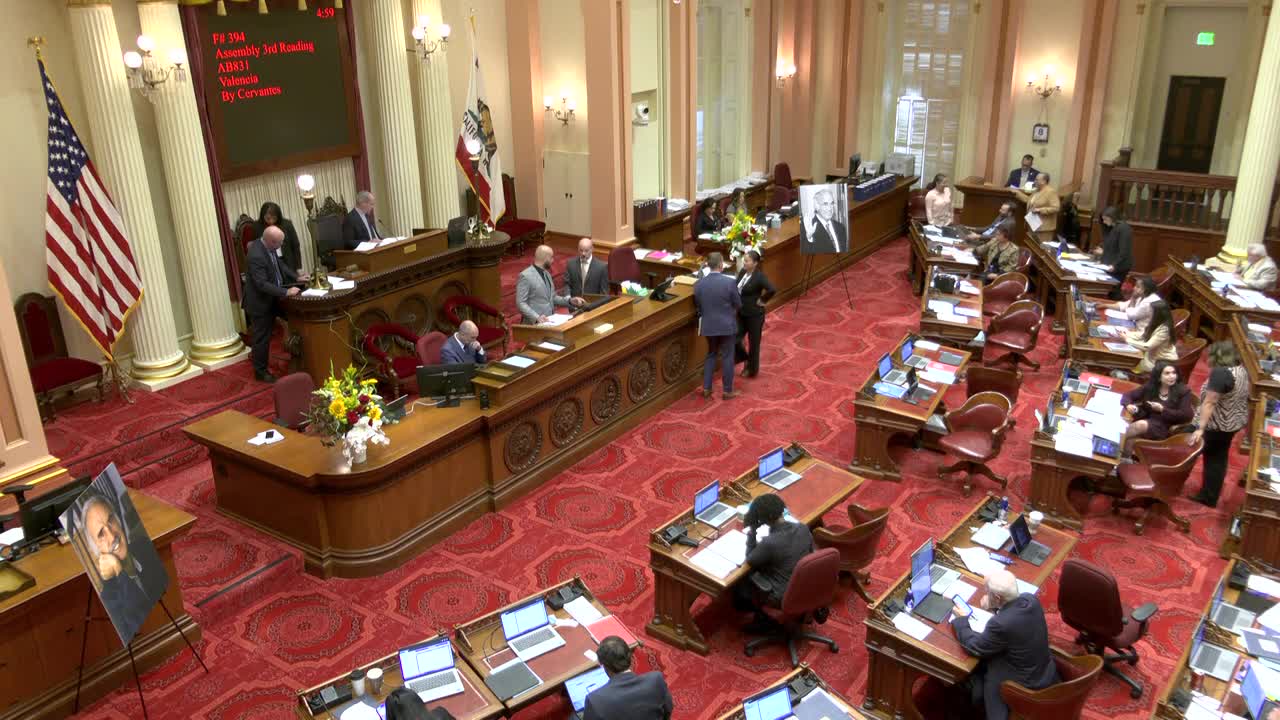 2MIN
Senate Floor
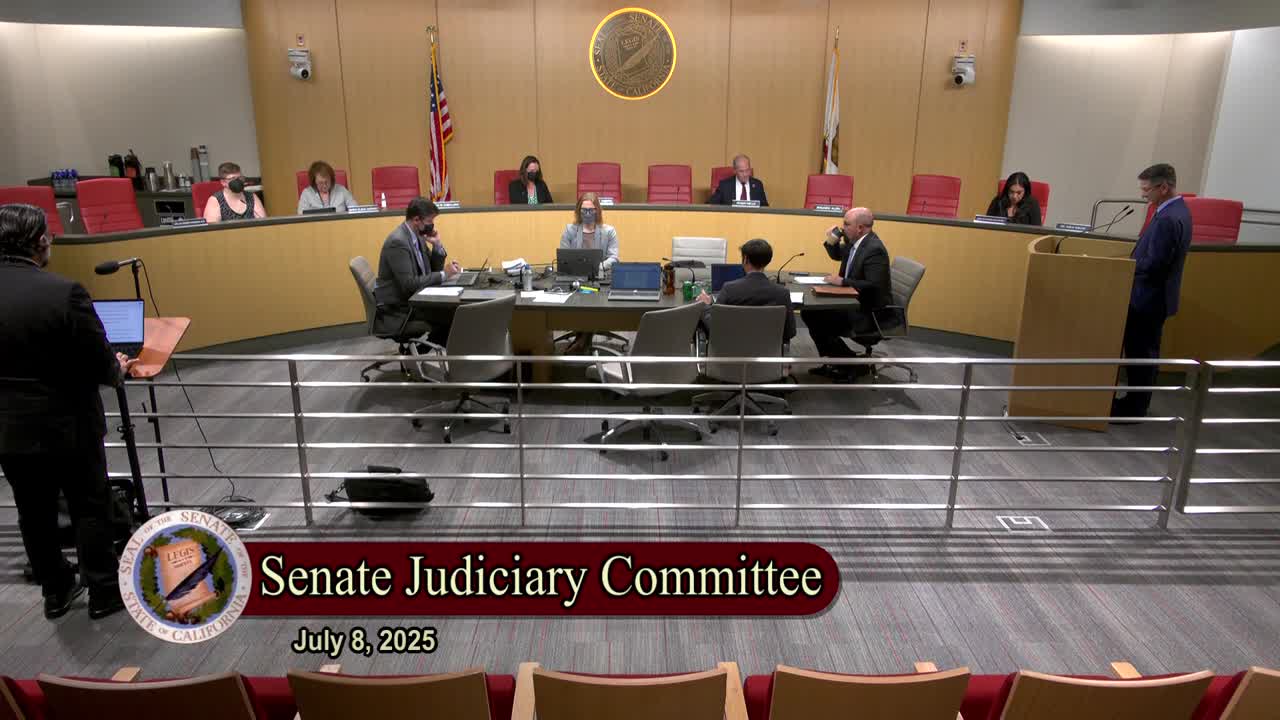 6MIN
Senate Standing Committee on Judiciary
 17MIN
Senate Standing Committee on Energy, Utilities and Communications
 1MIN
Assembly Floor
 1MIN
Assembly Standing Committee on Appropriations
 4MIN
Assembly Standing Committee on Judiciary
 8MIN
Assembly Standing Committee on Communications and Conveyance
Bill Author

Bill Co-Author(s):