AB 1324: CalWORKs.
- Session Year: 2025-2026
- House: Assembly
- Latest Version Date: 2025-09-15
Current Status:
Failed
(2026-01-22: Consideration of Governor's veto stricken from file.)
Introduced
In Committee
Awaiting First Chamber Vote
Passed First Chamber
In Committee
Awaiting Second Chamber Vote
Passed Second Chamber
Enacted
What does this bill do?
The bill expands CalWORKs by treating a child as deprived of parental support for unemployment regardless of how many hours the parent works, so families who meet income limits can qualify. It requires CalWORKs aid to be paid and a striking or locked-out parent or caregiver’s needs to be counted when allowed by federal law. It also adds self-employment as a work activity, directs a state study on CalWORKs expansion, and tightens subsidized employment rules so counties prioritize placements with employers that have labor agreements or community benefits and avoid replacing public employees or hiring employers with recent serious safety or labor violations.
The summary is provided by generative AI which can make mistakes. For original language, please view the details in the table below.
Existing federal law, the Personal Responsibility and Work Opportunity Reconciliation Act of 1996, replaced the federal Aid to Families with Dependent Children (AFDC) program with the federal Temporary Assistance to Needy Families (TANF) block grant program. Existing federal law provides for allocation of federal funds through the federal TANF block grant program to eligible states. Existing law establishes the California Work Opportunity and Responsibility to Kids (CalWORKs) program, under which, through a combination of state and county funds and federal funds received through the TANF program, each county provides cash assistance and other benefits to qualified low-income families.
Existing law requires aid to be granted to a family with a related child under 18 years of age who has been deprived of parental support or care due to the unemployment, continued absence, death, incapacity, or incarceration of a parent. Existing law considers a child to be deprived of parental support or care due to unemployment of the childs parent or parents when the parent has worked less than 100 hours in the preceding 4 weeks and meets specified requirements related to the federal AFDC program.
This bill would, operative on July 1, 2026, or on a later date as specified, for purposes of determining a childs deprivation of parental support or care due to the unemployment of their parent, delete the requirements that a parent work less than 100 hours in the preceding 4 weeks and meet the federal AFDC program requirements. The bill would instead disregard the number of hours that the childs parent works, provided the family does not exceed the applicable gross or net income limits and is otherwise eligible for assistance. To the extent that the bill would expand eligibility for the CalWORKs program, thereby imposing a higher level of service on counties, the bill would impose a state-mandated local program.
Existing law prohibits the payment of CalWORKs aid to an assistance unit if a caretaker relative is, on the last day of the month, participating in a strike, unless the strike is necessitated by an imminent health and safety hazard or abnormally dangerous working conditions at the place of employment, or a lockout. Under existing law, if an individual other than a caretaker relative is participating in a strike, subject to the exceptions and their limitations, that individuals needs are not included in determining the amount of aid payable to the assistance unit for the month.
This bill would, operative on July 1, 2026, or on a later date as specified, instead require the payment of CalWORKs aid to an assistance unit if a parent or caretaker relative is participating in a strike or lockout, to the extent permitted by federal law. In the case of participation in a strike by a parent, caretaker relative, or other individual, the bill would instead require that the persons needs be included in determining the amount, to the extent permitted by federal law. To the extent that the bill would expand eligibility for the CalWORKs program, the bill would impose a state-mandated local program.
The bill would require the State Department of Social Services to conduct a CalWORKs expansion feasibility study, to include recommendations within the report, and to submit the report to legislative human services committees on or before January 1, 2028.
Under the CalWORKs program, certain recipients are required to participate in welfare-to-work activities, which may include, among others, unsubsidized employment, subsidized private or public sector employment, and self-employment. Existing law, operative on July 1, 2026, or on a later date as specified, does not expressly include self-employment within the list of work activities under those provisions.
This bill would specify self-employment within the above-described list of work activities. To the extent that this would expand CalWORKs eligibility or increase the duties of counties in the administration of the CalWORKs program, the bill would impose a state-mandated local program.
Existing law requires the department to develop an allocation methodology to distribute additional funding for expanded subsidized employment programs for CalWORKs recipients. Existing law requires the department, in consultation with the County Welfare Directors Association of California, to determine the amount or proportion of funding allocated that may be utilized for operational costs, as specified.
This bill would also include feedback from representatives from labor unions and public benefit advocates for purposes of the above-described determination.
Existing law requires a county that accepts funding from this allocation to, among other things, submit to the department a plan regarding how it intends to utilize the allocated funding and to prioritize subsidized employment placements that offer opportunities for participants to obtain skills and experiences in their fields of interest.
This bill would require a participating county to include in its plan, with regard to prioritized subsidized employment, placements with employers that have a joint labor-management letter of support, a signed community benefits agreement, a project labor agreement, or a labor peace agreement. The bill would require the plan to include how the county intends to prevent subsidized employment placements that supplant work that a public employee would have otherwise been hired to do, and to prevent placement with employers that have a history of a bad safety record, or resolved or pending litigation, violations, citations, fines, or penalties relating to any state or federal environmental or labor laws within the last 10 years.
Existing law continuously appropriates moneys from the General Fund to defray a portion of county costs under the CalWORKs program.
This bill would instead provide that the continuous appropriation would not be made for purposes of implementing the above provisions.
The California Constitution requires the state to reimburse local agencies and school districts for certain costs mandated by the state. Statutory provisions establish procedures for making that reimbursement.
This bill would provide that, if the Commission on State Mandates determines that the bill contains costs mandated by the state, reimbursement for those costs shall be made pursuant to the statutory provisions noted above.
Existing federal law, the Personal Responsibility and Work Opportunity Reconciliation Act of 1996, replaced the federal Aid to Families with Dependent Children (AFDC) program with the federal Temporary Assistance to Needy Families (TANF) block grant program. Existing federal law provides for allocation of federal funds through the federal TANF block grant program to eligible states. Existing law establishes the California Work Opportunity and Responsibility to Kids (CalWORKs) program, under which, through a combination of state and county funds and federal funds received through the TANF program, each county provides cash assistance and other benefits to qualified low-income families.
Existing law requires aid to be granted to a family with a related child under 18 years of age who has been deprived of parental support or care due to the unemployment, continued absence, death, incapacity, or incarceration of a parent. Existing law considers a child to be deprived of parental support or care due to unemployment of the childs parent or parents when the parent has worked less than 100 hours in the preceding 4 weeks and meets specified requirements related to the federal AFDC program.
This bill would, operative on July 1, 2026, or on a later date as specified, for purposes of determining a childs deprivation of parental support or care due to the unemployment of their parent, delete the requirements that a parent work less than 100 hours in the preceding 4 weeks and meet the federal AFDC program requirements. The bill would instead disregard the number of hours that the childs parent works, provided the family does not exceed the applicable gross or net income limits and is otherwise eligible for assistance. To the extent that the bill would expand eligibility for the CalWORKs program, thereby imposing a higher level of service on counties, the bill would impose a state-mandated local program.
Existing law prohibits the payment of CalWORKs aid to an assistance unit if a caretaker relative is, on the last day of the month, participating in a strike, unless the strike is necessitated by an imminent health and safety hazard or abnormally dangerous working conditions at the place of employment, or a lockout. Under existing law, if an individual other than a caretaker relative is participating in a strike, subject to the exceptions and their limitations, that individuals needs are not included in determining the amount of aid payable to the assistance unit for the month.
This bill would would, operative on July 1, 2026, or on a later date as specified, instead require the payment of CalWORKs aid to an assistance unit if a parent or caretaker relative is participating in a strike or lockout, to the extent permitted by federal law. In the case of participation in a strike by an individual other than a caretaker relative, a parent, caretaker relative, or other individual, the bill would instead require that the individuals persons needs be included in determining the amount, to the extent permitted by federal law. To the extent that the bill would expand eligibility for the CalWORKs program, the bill would impose a state-mandated local program.
The bill would require the State Department of Social Services to conduct a CalWORKs expansion feasibility study, to include recommendations within the report, and to submit the report to legislative human services committees on or before January 1, 2028.
Under the CalWORKs program, certain recipients are required to participate in welfare-to-work activities, which may include, among others, unsubsidized employment, subsidized private or public sector employment, and self-employment. Existing law, operative on July 1, 2026, or on a later date as specified, does not expressly include self-employment within the list of work activities under those provisions.
This bill would specify that the hours of self-employment are to be computed based on the number of hours that the participant engaged in self-employment activity, regardless of the income earned by the participant. By increasing self-employment within the above-described list of work activities. To the extent that this would expand CalWORKs eligibility or increase the duties of counties in the administration of the CalWORKs program, the bill would impose a state-mandated local program.
Existing law requires the department to develop an allocation methodology to distribute additional funding for expanded subsidized employment programs for CalWORKs recipients. Existing law requires the department, in consultation with the County Welfare Directors Association of California, to determine the amount or proportion of funding allocated that may be utilized for operational costs, as specified.
This bill would also include representatives from labor unions within the above-described consultation. feedback from representatives from labor unions and public benefit advocates for purposes of the above-described determination.
Existing law requires a county that accepts funding from this allocation to, among other things, submit to the department a plan regarding how it intends to utilize the allocated funding and to prioritize subsidized employment placements that offer opportunities for participants to obtain skills and experiences in their fields of interest.
This bill would require a participating county to include in its plan, with regard to prioritized subsidized employment, placements with employers that have a joint labor-management letter of support, a signed community benefits agreement, a project labor agreement, or a labor peace agreement. The bill would require the plan to include how the county intends to prevent subsidized employment placements that supplant work that a public employee would have otherwise been hired to do, and to prevent placement with employers that have a history of a bad safety record, or resolved or pending litigation, violations, citations, fines, or penalties relating to any state or federal environmental or labor laws within the last 10 years.
Existing law also requires the department to include specified information for the prior fiscal year regarding the implementation in the CalWORKs Annual Summary to the extent that the data are available and reportable, including the number of CalWORKs participants who participated in subsidized employment for at least 3 months, by county, and a complete list of participating employers, by county.This bill would require the department to include in the CalWORKs Annual Summary, to the extent that the data are available and reportable, the name of each employer with greater than 11 employees that provided subsidized employment and the total amount of the subsidized portion of wages provided to CalWORKs participants working for that employer.By increasing the duties on counties in administering the CalWORKs program, this bill would impose a state-mandated local program.Existing law continuously appropriates moneys from the General Fund to defray a portion of county costs under the CalWORKs program.
This bill would instead provide that the continuous appropriation would not be made for purposes of implementing the above provisions.
The California Constitution requires the state to reimburse local agencies and school districts for certain costs mandated by the state. Statutory provisions establish procedures for making that reimbursement.
This bill would provide that, if the Commission on State Mandates determines that the bill contains costs mandated by the state, reimbursement for those costs shall be made pursuant to the statutory provisions noted above.
Existing federal law, the Personal Responsibility and Work Opportunity Reconciliation Act of 1996, replaced the federal Aid to Families with Dependent Children (AFDC) program with the federal Temporary Assistance to Needy Families (TANF) block grant program. Existing federal law provides for allocation of federal funds through the federal TANF block grant program to eligible states. Existing law establishes the California Work Opportunity and Responsibility to Kids (CalWORKs) program, under which, through a combination of state and county funds and federal funds received through the TANF program, each county provides cash assistance and other benefits to qualified low-income families. Under existing law, certain types of payments received by recipients of aid under the CalWORKs program, including income from a college work-study program, as specified, are exempt from consideration as income for purposes of determining eligibility and aid amount.
This bill would additionally exempt as income an in-kind gift or income that has been paid to a noncustodial parent. By expanding the scope of eligibility for CalWORKs, the bill would impose a state-mandated local program.Existing law requires aid to be granted to a family with a related child under 18 years of age who has been deprived of parental support or care due to the unemployment, continued absence, death, incapacity, or incarceration of a parent. Existing law considers a child to be deprived of parental support or care due to unemployment of the childs parent or parents when the parent has worked less than 100 hours in the preceding 4 weeks and meets specified requirements related to the federal AFDC program.
This bill would, for purposes of determining a childs deprivation of parental support or care due to the unemployment of their parent, delete the requirements that a parent work less than 100 hours in the preceding 4 weeks and meet the federal AFDC program requirements. The bill would instead disregard the number of hours that the childs parent works, provided the family does not exceed the applicable gross or net income limits and is otherwise eligible for assistance. To the extent that the bill would expand eligibility for the CalWORKs program, thereby imposing a higher level of service on counties, the bill would impose a state-mandated local program.
Existing law prohibits the payment of CalWORKs aid to an assistance unit if a caretaker relative is, on the last day of the month, participating in a strike, unless the strike is necessitated by an imminent health and safety hazard or abnormally dangerous working conditions at the place of employment, or a lockout. Under existing law, if an individual other than a caretaker relative is participating in a strike, subject to the exceptions and their limitations, that individuals needs are not included in determining the amount of aid payable to the assistance unit for the month.
This bill would instead require the payment of CalWORKs aid to an assistance unit if a caretaker relative is participating in a strike or lockout, to the extent permitted by federal law. In the case of participation in a strike by an individual other than a caretaker relative, the bill would instead require that the individuals needs be included in determining the amount, to the extent permitted by federal law. To the extent that the bill would expand eligibility for the CalWORKs program, the bill would impose a state-mandated local program.
The bill would require the State Department of Social Services to conduct a CalWORKs expansion feasibility study, to include recommendations within the report, and to submit the report to legislative human services committees on or before January 1, 2027. 2028.
Under the CalWORKs program, certain recipients are required to participate in welfare-to-work activities, which may include, among others, unsubsidized employment, subsidized private or public sector employment, and self-employment.
This bill would specify that the hours of self-employment are to be computed based on the number of hours that the participant engaged in self-employment activity, regardless of the income earned by the participant. By increasing the duties of counties in the administration of the CalWORKs program, the bill would impose a state-mandated local program.
Existing law requires the department to develop an allocation methodology to distribute additional funding for expanded subsidized employment programs for CalWORKs recipients. Existing law requires the department, in consultation with the County Welfare Directors Association of California, to determine the amount or proportion of funding allocated that may be utilized for operational costs, as specified.
This bill would also include representatives from labor unions and public benefit advocates within the above-described consultation.
Existing law requires a county that accepts funding from this allocation to, among other things, submit to the department a plan regarding how it intends to utilize the allocated funding and to prioritize subsidized employment placements that offer opportunities for participants to obtain skills and experiences in their fields of interest.
This bill would require a participating county to include in its plan, with regard to prioritized subsidized employment, placements with employers that have a joint labor-management letter of support, a signed community benefits agreement, a project labor agreement, or a labor peace agreement. The bill would require the plan to include how the county intends to prevent subsidized employment placements that supplant work that a public employee would have otherwise been hired to do, and to prevent placement with employers that have a history of a bad safety record, or resolved or pending litigation, violations, citations, fines, or penalties relating to any state or federal environmental or labor laws within the last 10 years.
Existing law also requires the department to include specified information for the prior fiscal year regarding the implementation in the CalWORKs Annual Summary to the extent that the data are available and reportable, including the number of CalWORKs participants who participated in subsidized employment for at least 3 months, by county, and a complete list of participating employers, by county.
This bill would require the department to include in the CalWORKs Annual Summary, to the extent that the data are available and reportable, the names of employers where jobs were subsidized and the total amount of the subsidized portion of wages provided to CalWORKs participants working for that employer. the name of each employer with greater than 11 employees that provided subsidized employment and the total amount of the subsidized portion of wages provided to CalWORKs participants working for that employer.
By increasing the duties on counties in administering the CalWORKs program, this bill would impose a state-mandated local program.
Existing law continuously appropriates moneys from the General Fund to defray a portion of county costs under the CalWORKs program.
This bill would instead provide that the continuous appropriation would not be made for purposes of implementing the above provisions.
The California Constitution requires the state to reimburse local agencies and school districts for certain costs mandated by the state. Statutory provisions establish procedures for making that reimbursement.
This bill would provide that, if the Commission on State Mandates determines that the bill contains costs mandated by the state, reimbursement for those costs shall be made pursuant to the statutory provisions noted above.
Existing federal law, the Personal Responsibility and Work Opportunity Reconciliation Act of 1996, replaced the federal Aid to Families with Dependent Children (AFDC) program with the federal Temporary Assistance to Needy Families (TANF) block grant program. Existing federal law provides for allocation of federal funds through the federal TANF block grant program to eligible states. Existing law establishes the California Work Opportunity and Responsibility to Kids (CalWORKs) program, under which, through a combination of state and county funds and federal funds received through the TANF program, each county provides cash assistance and other benefits to qualified low-income families. Under existing law, certain types of payments received by recipients of aid under the CalWORKs program, including income from a college work-study program, as specified, are exempt from consideration as income for purposes of determining eligibility and aid amount.
This bill would additionally exempt as income an in-kind gift that is treated as exempt income in the CalFresh program, or income that has been paid to a noncustodial parent and is treated as exempt income in the CalFresh program. parent. By expanding the scope of eligibility for CalWORKs, the bill would impose a state-mandated local program.
Existing law requires aid to be granted to a family with a related child under 18 years of age who has been deprived of parental support or care due to the unemployment, continued absence, death, incapacity, or incarceration of a parent. Existing law considers a child to be deprived of parental support or care due to unemployment of the childs parent or parents when the parent has worked less than 100 hours in the preceding 4 weeks and meets specified requirements related to the federal AFDC program.
The billThis bill would, for purposes of determining a childs deprivation of parental support or care due to the unemployment of their parent, delete the requirements that a parent work less than 100 hours in the preceding 4 weeks and meet the federal AFDC program requirements, and requirements. The bill would instead disregard the number of hours that the childs parent works works, provided the family does not exceed the applicable gross or net income limits and is otherwise eligible for assistance. To the extent that the bill would expand eligibility for the CalWORKs program, thereby imposing a higher level of service on counties, the bill would impose a state-mandated local program.
Existing law prohibits the payment of assistance CalWORKs aid to an assistance unit if a caretaker relative is participating in a strike, except as specified. is, on the last day of the month, participating in a strike, unless the strike is necessitated by an imminent health and safety hazard or abnormally dangerous working conditions at the place of employment, or a lockout. Under existing law, if an individual other than a caretaker relative is participating in a strike, subject to the exceptions and their limitations, that individuals needs are not included in determining the amount of aid payable to the assistance unit for the month.
The bill would limit the application of that prohibition to when the prohibition is required by federal law, regulation, or guidance. To the extent this bill imposes additional duties on counties, the bill would impose a state-mandated local program.This bill would instead require the payment of CalWORKs aid to an assistance unit if a caretaker relative is participating in a strike or lockout, to the extent permitted by federal law. In the case of participation in a strike by an individual other than a caretaker relative, the bill would instead require that the individuals needs be included in determining the amount, to the extent permitted by federal law. To the extent that the bill would expand eligibility for the CalWORKs program, the bill would impose a state-mandated local program.
The bill would require the department to conduct a feasibility study regarding expanding CalWORKs, including recommendations. The bill would require the department to report to the Legislature and relevant committees on or before ____. State Department of Social Services to conduct a CalWORKs expansion feasibility study, to include recommendations within the report, and to submit the report to legislative human services committees on or before January 1, 2027.
Under the CalWORKs program, certain recipients are required to participate in welfare-to-work activities, which may include, among others, unsubsidized employment, subsidized private or public sector employment, subsidized public sector employment, and self-employment.
The billThis bill would specify that the hours of self-employment are to be computed based on the number of hours that the participant engaged in self-employment activity, regardless of the income earned by the participant. By increasing the duties of counties in the administration of the CalWORKs program, the bill would impose a state-mandated local program.
Existing law requires the State Department of Social Services, in consultation with the County Welfare Directors Association of California, department to develop an allocation methodology to distribute additional funding for expanded subsidized employment programs for CalWORKs recipients, as specified, and requires recipients. Existing law requires the department, in consultation with the County Welfare Directors Association of California, to determine the amount or proportion of funding allocated that may be utilized for operational costs, as specified.
This bill would also include representatives from labor unions and public benefit advocates within the above-described consultation.
Existing law requires a county that accepts funding from this allocation to, among other things, submit to the department a plan regarding how it intends to utilize the allocated funding, including prioritizing funding and to prioritize subsidized employment placement placements that offer opportunities for participants to obtain skills and experiences in their fields of interest. Existing
This bill would require a participating county to include in its plan, with regard to prioritized subsidized employment, placements with employers that have a joint labor-management letter of support, a signed community benefits agreement, a project labor agreement, or a labor peace agreement. The bill would require the plan to include how the county intends to prevent subsidized employment placements that supplant work that a public employee would have otherwise been hired to do, and to prevent placement with employers that have a history of a bad safety record, or resolved or pending litigation, violations, citations, fines, or penalties relating to any state or federal environmental or labor laws within the last 10 years.
Existing law also requires the department to include specified information for the prior fiscal year regarding the implementation in the CalWORKs Annual Summary to the extent the data is that the data are available and reportable, including the number of CalWORKs participants who participated in subsidized employment for at least 3 months, by county, and a complete list of participating employers, by county.
The billThis bill would require the department to consult with representatives from labor unions, public benefits advocates, and individuals with lived experience in addition to the County Welfare Directors Association of California in developing an allocation methodology to distribute additional funding for expanded employment for CalWORKs recipients. The bill would require a participating county to include in its plan submitted to the department how the county intends to carry out prioritizing subsidized employment placement with employers that have a joint labor-management letter of support, a signed community benefits agreement, a project labor agreement, or a labor peace agreement, and that offer opportunities for participants to obtain skills and experiences in their fields of interest. The bill would require the plan to include how the county intends to prevent subsidized employment placements that supplant work that a public employee would have otherwise been hired to do, and prevent placement with employers that have a history of a bad safety record, or resolved or pending litigation, violations, citations, fines, or penalties relating to any state or federal environmental or labor laws within the last 10 years. The bill would require the department to include in the CalWORKs Annual Summary, to the extent data is that the data are available and reportable, the names of employers where jobs were subsidized and the total amount of the subsidized portion of wages provided to CalWORKs participants working for that employer. By
By increasing the duties on counties in administering the CalWORKs program, this bill would impose a state-mandated local program.
Existing law continuously appropriates moneys from the General Fund to defray a portion of county costs under the CalWORKs program.
This bill would instead provide that the continuous appropriation would not be made for purposes of implementing the above provisions.
The California Constitution requires the state to reimburse local agencies and school districts for certain costs mandated by the state. Statutory provisions establish procedures for making that reimbursement.
This bill would provide that, if the Commission on State Mandates determines that the bill contains costs mandated by the state, reimbursement for those costs shall be made pursuant to the statutory provisions noted above.
Existing federal law, the Personal Responsibility and Work Opportunity Reconciliation Act of 1996, replaced the federal Aid to Families with Dependent Children (AFDC) program with the federal Temporary Assistance to Needy Families (TANF) block grant program. Existing federal law provides for allocation of federal funds through the federal TANF block grant program to eligible states. Existing law establishes the California Work Opportunity and Responsibility to Kids (CalWORKs) program, under which, through a combination of state and county funds and federal funds received through the TANF program, each county provides cash assistance and other benefits to qualified low-income families. Under existing law, certain types of payments received by recipients of aid under the CalWORKs program, including income from a college work-study program, as specified, are exempt from consideration as income for purposes of determining eligibility and aid amount.
This bill would additionally exempt as income an in-kind gift that is treated as exempt income in the CalFresh program, or income that has been paid to a noncustodial parent and is treated as exempt income in the CalFresh program. By expanding the scope of eligibility for CalWORKs, the bill would impose a state-mandated local program.
Existing law requires aid to be granted to a family with a related child under 18 years of age who has been deprived of parental support or care due to the unemployment, continued absence, death, incapacity, or incarceration of a parent. Existing law considers a child to be deprived of parental support or care due to unemployment of the childs parent or parents when the parent has worked less than 100 hours in the preceding 4 weeks and meets specified requirements related to the federal AFDC program.
The bill would, for purposes of determining a childs deprivation of parental support or care due to the unemployment of their parent, delete the requirements that a parent work less than 100 hours in the preceding 4 weeks and meet the federal AFDC program requirements, and would instead disregard the number of hours that the childs parent works provided the family does not exceed the applicable gross or net income limits and is otherwise eligible for assistance. To the extent that the bill would expand eligibility for the CalWORKs program, thereby imposing a higher level of service on counties, the bill would impose a state-mandated local program.
Existing law prohibits the payment of assistance to an assistance unit if a caretaker relative is participating in a strike, except as specified.
The bill would limit the application of that prohibition to when the prohibition is required by federal law, regulation, or guidance. To the extent this bill imposes additional duties on counties, the bill would impose a state-mandated local program.
The bill would require the department to conduct a feasibility study regarding expanding CalWORKs, including recommendations. The bill would require the department to report to the Legislature and relevant committees on or before ____.
Under the CalWORKs program, certain recipients are required to participate in welfare-to-work activities, which may include, among others, unsubsidized employment, subsidized private sector employment, subsidized public sector employment, and self-employment.
The bill would specify the hours of self-employment are to be computed based on the number of hours the participant engaged in self-employment activity, regardless of the income earned by the participant. By increasing the duties of counties in the administration of the CalWORKs program, the bill would impose a state-mandated local program.
Existing law requires the State Department of Social Services, in consultation with the County Welfare Directors Association of California, to develop an allocation methodology to distribute additional funding for expanded subsidized employment programs for CalWORKs recipients, as specified, and requires a county that accepts funding from this allocation to, among other things, submit to the department a plan regarding how it intends to utilize the allocated funding, including prioritizing subsidized employment placement that offer opportunities for participants to obtain skills and experiences in their fields of interest. Existing law also requires the department to include specified information for the prior fiscal year regarding the implementation in the CalWORKs Annual Summary to the extent the data is available and reportable, including the number of CalWORKs participants who participated in subsidized employment for at least 3 months, by county, and a complete list of participating employers, by county.
The bill would require the department to consult with representatives from labor unions, public benefits advocates, and individuals with lived experience in addition to the County Welfare Directors Association of California in developing an allocation methodology to distribute additional funding for expanded employment for CalWORKs recipients. The bill would require a participating county to include in its plan submitted to the department how the county intends to carry out prioritizing subsidized employment placement with employers that have a joint labor-management letter of support, a signed community benefits agreement, a project labor agreement, or a labor peace agreement, and that offer opportunities for participants to obtain skills and experiences in their fields of interest. The bill would require the plan to include how the county intends to prevent subsidized employment placements that supplant work that a public employee would have otherwise been hired to do, and prevent placement with employers that have a history of a bad safety record, or resolved or pending litigation, violations, citations, fines, or penalties relating to any state or federal environmental or labor laws within the last 10 years. The bill would require the department to include in the CalWORKs Annual Summary, to the extent data is available and reportable, the names of employers where jobs were subsidized and the total amount of the subsidized portion of wages provided to CalWORKs participants working for that employer. By increasing the duties on counties in administering the CalWORKs program, this bill would impose a state-mandated local program.
Existing law continuously appropriates moneys from the General Fund to defray a portion of county costs under the CalWORKs program.
This bill would instead provide that the continuous appropriation would not be made for purposes of implementing the above provisions.
The California Constitution requires the state to reimburse local agencies and school districts for certain costs mandated by the state. Statutory provisions establish procedures for making that reimbursement.
This bill would provide that, if the Commission on State Mandates determines that the bill contains costs mandated by the state, reimbursement for those costs shall be made pursuant to the statutory provisions noted above.
For the purposes of this chapter, the following shall apply:
(a)Unemployed parent means a natural or adoptive parent with whom the child is living.
(b)A child for whom a parent is applying for assistance under this chapter shall be considered to be deprived of parental support or care due to the unemployment of their parent or parents when the parent has worked less than 100 hours in the preceding four weeks and meets the requirements concerning an unemployed parent in effect on August 21, 1996, as set forth in Section 233.100 of Title 45 of the Code of Federal Regulations except for the provisions of subparagraph (i) to (v), inclusive, of paragraph (3) of subsection (a) of that section.
(c)A family receiving aid under this chapter with a child who is considered to be deprived of parental support or care due to unemployment may continue to receive assistance regardless of the number of hours their parent works provided the family does not exceed the applicable gross or net income limits and is otherwise eligible for assistance.
(d)This section shall become inoperative on July 1, 2026, or the date the department notifies the Legislature that the Statewide Automated Welfare System can perform the necessary automation to implement Section 11201, as added by the act that added this subdivision, whichever date is later.
SEC. 2.Section 11201 is added to the Welfare and Institutions Code, to read:11201.For the purposes of this chapter, the following shall apply:
(a)Unemployed parent means a natural or adoptive parent with whom the child is living.
(b)A child for whom a parent is applying for assistance under this chapter shall be considered to be deprived of parental support or care due to the unemployment of their parent or parents regardless of the number of hours that the childs parent works, provided the family does not exceed the applicable gross or net income limits and is otherwise eligible for assistance.
(c)This section shall become operative on July 1, 2026, or the date the department notifies the Legislature that the Statewide Automated Welfare System can perform the necessary automation to implement this section, whichever date is later.
SEC. 3.Section 11250.4 of the Welfare and Institutions Code is amended to read:11250.4.(a)Aid under this chapter shall not be payable to an assistance unit if a caretaker relative is, on the last day of the month, participating in a strike, unless the strike is necessitated by an imminent health and safety hazard or abnormally dangerous working conditions at the place of employment as determined by the Division of Occupational Safety and Health, or a lockout as defined in Section 1132.8 of the Labor Code. For the purposes of this section, a strike necessitated by an imminent health and safety hazard or abnormally dangerous working condition shall last only so long as necessitated by the imminent hazard or abnormally dangerous working condition. If an individual other than a caretaker relative is participating in a strike, as defined in this section, on the last day of the month, subject to the exceptions and their limitations set forth in this section, that individuals needs shall not be included in determining the amount of aid payable to the assistance unit for the month during which the individual is participating in the strike on the last day of that month.
(b)This section shall become inoperative on July 1, 2026, or the date the department notifies the Legislature that the Statewide Automated Welfare System can perform the necessary automation to implement Section 11250.4, as added by the act that added this subdivision, whichever date is later.
SEC. 4.Section 11250.4 is added to the Welfare and Institutions Code, to read:11250.4.(a)To the extent permitted by federal law, aid under this chapter shall be payable to an assistance unit if a parent or caretaker relative is, on the last day of the month, participating in a strike, or a lockout as defined in Section 1132.8 of the Labor Code.
(b)To the extent permitted by federal law, if a parent, caretaker relative, or an individual other than a parent or caretaker relative, is participating in a strike on the last day of the month, that persons needs shall be included in determining the amount of aid payable to the assistance unit for the month during which the person is participating in the strike on the last day of that month.
(c)This section shall become operative on July 1, 2026, or the date the department notifies the Legislature that the Statewide Automated Welfare System can perform the necessary automation to implement this section, whichever date is later.
SEC. 5.Section 11267 is added to the Welfare and Institutions Code, to read:11267.(a)The State Department of Social Services shall conduct a CalWORKs expansion feasibility study, including estimated costs and identified necessary statutory changes for expansion. The department shall consult with the County Welfare Directors Association of California as needed. The department shall include recommendations within the report of the study and shall submit the report to the Assembly Committee on Human Services and the Senate Committee on Human Services on or before January 1, 2028.
(b)A report to be submitted to the Legislature pursuant to subdivision (a) shall be submitted in compliance with Section 9795 of the Government Code.
(c)Notwithstanding Section 10231.5 of the Government Code, this section shall remain in effect until January 1, 2031, and as of that date is repealed.
SEC. 6.Section 11322.6 of the Welfare and Institutions Code, as added by Section 11 of Chapter 79 of the Statutes of 2025, is amended to read:11322.6.(a)The welfare-to-work plan developed pursuant to this article shall provide for welfare-to-work activities. Welfare-to-work activities may include, but are not limited to, any of the following:
(1)Educational activities, which may include, but are not limited to, all of the following:
(A)Postsecondary education leading to a degree or certificate, which may be attended in person or online.
(B)Obtaining a high school diploma.
(C)Technical training and vocational education and training, including, but not limited to, college and community college education, adult education, regional occupational centers, and regional occupational programs.
(D)Career-specific education.
(E)Job skills training.
(F)Adult basic education, which shall include reading, writing, arithmetic, high school proficiency, or a general educational development certificate of instruction, and English as a second language. Participants under this subparagraph shall be referred to appropriate service providers that include, but are not limited to, educational programs operated by school districts or county offices of education that have contracted with the Superintendent of Public Instruction to provide services to participants pursuant to Section 33117.5 of the Education Code.
(2)Work activities, which may include, but are not limited to, those set forth in Section 261.30 of Title 45 of the Code of Federal Regulations, and any of the following:
(A)Unsubsidized employment.
(B)Subsidized private or public sector employment.
(C)Work experience, which means public or private sector work that shall help provide basic job skills, enhance existing job skills in a position related to the participants experience, or provide a needed community service that will lead to employment. Unpaid work experience shall be limited to 12 months, unless the county welfare department and the recipient agree to extend this period by an amendment to the welfare-to-work plan. The county welfare department shall review the work experience assignment as appropriate and make revisions as necessary to ensure that it continues to be consistent with the participants plan and effective in preparing the participant to attain employment.
(D)On-the-job training.
(E)(i)Grant-based on-the-job training, which means public or private sector employment or on-the-job training in which the recipients cash grant, or a portion thereof, or the aid grant savings resulting from employment, or both, is diverted to the employer as a wage subsidy to partially or wholly offset the payment of wages to the participant, so long as the total amount diverted does not exceed the familys maximum aid payment.
(ii)A county shall not assign a participant to grant-based on-the-job training unless and until the participant has voluntarily agreed to participate in grant-based on-the-job training by executing a voluntary agreement form, which shall be developed by the department. The agreement shall include, but not be limited to, information on the following:
(I)How job termination or another event will not result in loss of the recipients grant funds, pursuant to department regulations.
(II)(ia)How to obtain the federal Earned Income Tax Credit (EITC), including the Advance EITC, and increased CalFresh benefits, which may become available due to increased earned income.
(ib)This subparagraph shall only become operative when and to the extent that the department determines that it reflects current federal law and Internal Revenue Service regulations.
(III)How these financial supports should increase the participants current income and how increasing earned income should increase the recipients future social security income.
(iii)Grant-based on-the-job training shall include community service positions pursuant to Section 11322.9.
(iv)Any portion of a wage from employment that is funded by the diversion of a recipients cash grant, or the grant savings from employment pursuant to this subdivision, or both, shall not be exempt under Section 11451.5 from the calculation of the income of the family for purposes of subdivision (a) of Section 11450.
(F)Self-employment.
(G)Supported work or transitional employment, which means forms of grant-based on-the-job training in which the recipients cash grant, or a portion thereof, or the aid grant savings from employment, is diverted to an intermediary service provider, to partially or wholly offset the payment of wages to the participant.
(3)Barrier removal services, when available, which may include, but not be limited to, all of the following:
(A)Mental health services, as described in Section 11325.7; substance abuse treatment services, as described in Section 11325.8; CalWORKs Home Visiting Program services, as described in Article 3.4 (commencing with Section 11330.6); and domestic violence services, as described in Article 7.5 (commencing with Section 11495).
(B)Financial literacy classes and coaching.
(C)Activities that develop and enhance workplace skills, including, but not limited to, career-specific training programs, English language learning, literacy and mathematics skill courses, or credential programs.
(D)Working with childrens health and school professionals, parenting classes, education-related appointments for the participant or their dependents, child welfare or child welfare-related activities, and any other activities to help ensure child well-being and family unity.
(E)Activities that build foundations for employment, including, but not limited to, housing search efforts.
(F)Activities related to legal issues or housing stability, including, but not limited to, court appearances, housing searches and tenant rights and obligation classes, homeless support programs, and shelter participation requirements.
(b)The department shall have the discretion to identify additional plan activities that improve employment opportunities and family well-being.
(c)Notwithstanding the rulemaking provisions of the Administrative Procedure Act (Chapter 3.5 (commencing with Section 11340) of Part 1 of Division 3 of Title 2 of the Government Code), the department may implement, interpret, or make specific this section by means of all-county letters or similar written instructions from the department until regulations are adopted. These all-county letters or similar instructions shall have the same force and effect as regulations until the adoption of regulations.
(d)This section shall become operative on July 1, 2026, or, if automation is necessary, the later of July 1, 2026, or when the department notifies the Legislature that the Statewide Automated Welfare System can perform the necessary automation to implement this section.
SEC. 7.Section 11322.64 of the Welfare and Institutions Code is amended to read:11322.64.(a)(1)The department, in consultation with the County Welfare Directors Association of California, shall develop an allocation methodology to distribute additional funding for expanded subsidized employment programs for CalWORKs recipients, or individuals described in Section 11320.15 who have exceeded the time limits specified in subdivision (a) of Section 11454.
(2)Funds allocated pursuant to this section may be utilized to cover all expenditures related to the operational costs of the expanded subsidized employment program, including the cost of overseeing the program, developing work sites, and providing training to participants, as well as wage and nonwage costs.
(3)The department, in consultation with the County Welfare Directors Association of California and upon receiving feedback from representatives from labor unions and public benefit advocates, shall determine the amount or proportion of funding allocated pursuant to this section that may be utilized for operational costs, consistent with the number of employment slots anticipated to be created and the funding provided.
(b)Funds allocated for expanded subsidized employment shall be in addition to, and independent of, the county allocations made pursuant to Section 15204.2.
(c)(1)A county that accepts additional funding for expanded subsidized employment in accordance with this section shall continue to expend no less than the aggregate amount of funding received by the county pursuant to Section 15204.2 that the county expended on subsidized employment in the 201213 fiscal year pursuant to Section 11322.63, as that section read on June 30, 2016.
(2)This subdivision shall not apply for any fiscal year in which the total CalWORKs caseload is projected by the department to increase by more than 5 percent of the total actual CalWORKs caseload in the 201213 fiscal year.
(d)(1)Each participating county shall submit to the department, at least once every two years, a plan or an amendment to an existing plan that specifies how the county intends to carry out all of the following:
(A)Utilize the funds allocated pursuant to this section.
(B)Prioritize subsidized employment placements with employers that have a joint labor-management letter of support, a signed community benefits agreement, a project labor agreement, or a labor peace agreement, and that offer opportunities for participants to obtain skills and experiences in their fields of interest.
(C)Prevent subsidized employment placements that supplant work that a public employee would have otherwise been hired to do.
(D)Prevent placement with employers that have a history of a bad safety record, or resolved or pending litigation, violations, citations, fines, or penalties relating to any state or federal environmental or labor laws within the last 10 years.
(2)If a county has no changes to an existing plan or amendment to report to the department pursuant to paragraph (1), the county shall submit a confirmation of no change to the department.
(3)Participating counties shall submit the plans described in paragraph (1) beginning January 1, 2025, or four months after the department issues guidance on how to implement this subdivision, whichever is later.
(e)(1)Participation in subsidized employment pursuant to this section shall be limited to a maximum of six months for each participant.
(2)Notwithstanding paragraph (1), a county may extend participation beyond the 6-month limitation described in paragraph (1) for up to an additional 3 months at a time, to a maximum of no more than 12 total months. Extensions may be granted pursuant to this paragraph if the county determines that the additional time will increase the likelihood of either of the following:
(A)The participant obtaining unsubsidized employment with the participating employer.
(B)The participant obtaining specific skills and experiences relevant for unsubsidized employment in a particular field.
(f)A county may continue to provide subsidized employment funded under this section to individuals who become ineligible for CalWORKs benefits in accordance with Section 11323.25.
(g)A county may use existing funds provided under this section to provide employment services for noncustodial parents of children receiving benefits under the CalWORKs program.
(h)Upon application for CalWORKs assistance after a participants subsidized employment ends, if an assistance unit is otherwise eligible within three calendar months of the date that subsidized employment ended, the income exemption requirements contained in Section 11451.5 and the work requirements contained in subdivision (c) of Section 11201 shall apply. If aid is restored after the expiration of that three-month period, the income exemption requirements contained in Section 11450.12 and the work requirements contained in subdivision (b) of Section 11201 shall apply.
(i)Beginning April 1, 2025, the department shall include all of the following information for the prior fiscal year regarding the implementation of this section in the CalWORKs Annual Summary to the extent that the data are available and reportable:
(1)The number of CalWORKs participants who participated in subsidized employment for at least three months, by county, and a complete list of participating employers, by county.
(2)The number of CalWORKs participants described in paragraph (1) who obtained unsubsidized employment in the quarter following the end of the subsidy, by county, based on wage data and supplemental records available to the Employment Development Department.
(3)The average earnings of the CalWORKs participants described in paragraph (1) in the quarter prior to their participation in the program, to the extent that the data are available. The data required by this paragraph shall be broken down by county and by industry sector. The industry sector data shall also be further broken down by county.
(4)The average earnings of the CalWORKs participants described in paragraph (1) in the quarter following the end of the subsidy, to the extent that the data are available. The data required by this paragraph shall be broken down by county and by industry sector. The industry sector data shall also be further broken down by county.
(j)Notwithstanding the rulemaking provisions of the Administrative Procedure Act (Chapter 3.5 (commencing with Section 11340) of Part 1 of Division 3 of Title 2 of the Government Code), the department may implement, interpret, or make specific the changes made by the act that added this subdivision through all-county letters without taking regulatory action.
SEC. 8.No appropriation pursuant to Section 15200 of the Welfare and Institutions Code shall be made for purposes of implementing this act.
SEC. 9.If the Commission on State Mandates determines that this act contains costs mandated by the state, reimbursement to local agencies and school districts for those costs shall be made pursuant to Part 7 (commencing with Section 17500) of Division 4 of Title 2 of the Government Code.
For the purposes of this chapter, the following shall apply:
(a)Unemployed parent means a natural or adoptive parent with whom the child is living.
(b)A child for whom a parent is applying for assistance under this chapter shall be considered to be deprived of parental support or care due to the unemployment of his or her their parent or parents when the parent has worked less than 100 hours in the preceding four weeks and meets the requirements concerning an unemployed parent in effect on August 21, 1996, as set forth in Section 233.100 of Title 45 of the Code of Federal Regulations except for the provisions of subparagraph (i) to (v), inclusive, of paragraph (3) of subsection (a) of that section.
(c)A family receiving aid under this chapter with a child who is considered to be deprived of parental support or care due to unemployment may continue to receive assistance regardless of the number of hours his or her their parent works provided the family does not exceed the applicable gross or net income limits and is otherwise eligible for assistance.
(d)This section shall become inoperative on July 1, 2026, or the date the department notifies the Legislature that the Statewide Automated Welfare System can perform the necessary automation to implement Section 11201, as added by the act that added this subdivision, whichever date is later.
SEC. 2.Section 11201 is added to the Welfare and Institutions Code, to read:11201.For the purposes of this chapter, the following shall apply:
(a)Unemployed parent means a natural or adoptive parent with whom the child is living.
(b)A child for whom a parent is applying for assistance under this chapter shall be considered to be deprived of parental support or care due to the unemployment of their parent or parents regardless of the number of hours that the childs parent works, provided the family does not exceed the applicable gross or net income limits and is otherwise eligible for assistance.
(c)This section shall become operative on July 1, 2026, or the date the department notifies the Legislature that the Statewide Automated Welfare System can perform the necessary automation to implement this section, whichever date is later.
SEC. 3.Section 11250.4 of the Welfare and Institutions Code is amended to read:11250.4.(a)Aid under this chapter shall not be payable to an assistance unit if a caretaker relative is, on the last day of the month, participating in a strike, unless the strike is necessitated by an imminent health and safety hazard or abnormally dangerous working conditions at the place of employment as determined by the Division of Occupational Safety and Health, or a lockout as defined in Section 1132.8 of the Labor Code. For the purposes of this section, a strike necessitated by an imminent health and safety hazard or abnormally dangerous working condition shall last only so long as necessitated by the imminent hazard or abnormally dangerous working condition. If an individual other than a caretaker relative is participating in a strike, as defined in this section, on the last day of the month, subject to the exceptions and their limitations set forth in this section, that individuals needs shall not be included in determining the amount of aid payable to the assistance unit for the month during which the individual is participating in the strike on the last day of that month.
(b)This section shall become inoperative on July 1, 2026, or the date the department notifies the Legislature that the Statewide Automated Welfare System can perform the necessary automation to implement Section 11250.4, as added by the act that added this subdivision, whichever date is later.
SEC. 4.Section 11250.4 is added to the Welfare and Institutions Code, to read:11250.4.(a)To the extent permitted by federal law, aid under this chapter shall be payable to an assistance unit if a parent or caretaker relative is, on the last day of the month, participating in a strike, or a lockout as defined in Section 1132.8 of the Labor Code.
(b)To the extent permitted by federal law, if a parent, caretaker relative, or an individual other than a parent or caretaker relative, is participating in a strike on the last day of the month, that persons needs shall be included in determining the amount of aid payable to the assistance unit for the month during which the person is participating in the strike on the last day of that month.
(c)This section shall become operative on July 1, 2026, or the date the department notifies the Legislature that the Statewide Automated Welfare System can perform the necessary automation to implement this section, whichever date is later.
SEC. 3.SEC. 5.Section 11267 is added to the Welfare and Institutions Code, to read:11267.(a)The State Department of Social Services shall conduct a CalWORKs expansion feasibility study, including estimated costs and identified necessary statutory changes for expansion. The department shall consult with the County Welfare Directors Association of California as needed. The department shall include recommendations within the report of the study and shall submit the report to the Assembly Committee on Human Services and the Senate Committee on Human Services on or before January 1, 2028.
(b)A report to be submitted to the Legislature pursuant to subdivision (a) shall be submitted in compliance with Section 9795 of the Government Code.
(c)Notwithstanding Section 10231.5 of the Government Code, this section shall remain in effect until January 1, 2031, and as of that date is repealed.
SEC. 4.Section 11322.6 of the Welfare and Institutions Code, as amended by Section 10 of Chapter 79 of the Statutes of 2025, is amended to read:11322.6.The welfare-to-work plan developed by the county welfare department and the participant pursuant to this article shall provide for welfare-to-work activities. Welfare-to-work activities may include, but are not limited to, any of the following:(a)Unsubsidized employment.(b)Subsidized private sector employment.(c)Subsidized public sector employment.(d)Work experience, which means public or private sector work that shall help provide basic job skills, enhance existing job skills in a position related to the participants experience, or provide a needed community service that will lead to employment. Unpaid work experience shall be limited to 12 months, unless the county welfare department and the recipient agree to extend this period by an amendment to the welfare-to-work plan. The county welfare department shall review the work experience assignment as appropriate and make revisions as necessary to ensure that it continues to be consistent with the participants plan and effective in preparing the participant to attain employment.(e)On-the-job training.(f)(1)Grant-based on-the-job training, which means public or private sector employment or on-the-job training in which the recipients cash grant, or a portion thereof, or the aid grant savings resulting from employment, or both, is diverted to the employer as a wage subsidy to partially or wholly offset the payment of wages to the participant, so long as the total amount diverted does not exceed the familys maximum aid payment.(2)A county shall not assign a participant to grant-based on-the-job training unless and until the participant has voluntarily agreed to participate in grant-based on-the-job training by executing a voluntary agreement form, which shall be developed by the department. The agreement shall include, but not be limited to, information on the following:(A)How job termination or another event will not result in loss of the recipients grant funds, pursuant to department regulations.(B)(i)How to obtain the federal Earned Income Tax Credit (EITC), including the Advance EITC, and increased CalFresh benefits, which may become available due to increased earned income.(ii)This subparagraph shall only become operative when and to the extent that the department determines that it reflects current federal law and Internal Revenue Service regulations.(C)How these financial supports should increase the participants current income and how increasing earned income should increase the recipients future social security income.(3)Grant-based on-the-job training shall include community service positions pursuant to Section 11322.9.(4)Any portion of a wage from employment that is funded by the diversion of a recipients cash grant, or the grant savings from employment pursuant to this subdivision, or both, shall not be exempt under Section 11451.5 from the calculation of the income of the family for purposes of subdivision (a) of Section 11450.(g)Supported work or transitional employment, which means forms of grant-based on-the-job training in which the recipients cash grant, or a portion thereof, or the aid grant savings from employment, is diverted to an intermediary service provider, to partially or wholly offset the payment of wages to the participant.(h)Work study.(i)Self-employment. For purposes of this section, the hours of self-employment shall be computed based on the number of hours that the participant engaged in self-employment activity, regardless of the income earned by the participant.(j)Community service.(k)Adult basic education, which shall include reading, writing, arithmetic, high school proficiency, or general educational development certificate of instruction, and English as a second language. Participants under this subdivision shall be referred to appropriate service providers that include, but are not limited to, educational programs operated by school districts or county offices of education that have contracted with the Superintendent of Public Instruction to provide services to participants pursuant to Section 33117.5 of the Education Code.(l)Job skills training directly related to employment.(m)Vocational education and training, including, but not limited to, college and community college education, adult education, regional occupational centers, and regional occupational programs.(n)Job search and job readiness assistance, which means providing the recipient with training to learn job seeking and interviewing skills, to understand employer expectations, and learn skills designed to enhance an individuals capacity to move toward self-sufficiency, including financial management education.(o)Education directly related to employment.(p)Satisfactory progress in secondary school or in a course of study leading to a certificate of general educational development, in the case of a recipient who has not completed secondary school or received such a certificate.(q)Mental health, substance abuse, and domestic violence services, described in Sections 11325.7 and 11325.8, and Article 7.5 (commencing with Section 11495), that are necessary to obtain and retain employment.(r)Other activities necessary to assist an individual in obtaining unsubsidized employment.Assignment to an educational activity identified in subdivisions (k), (m), (o), and (p) is limited to those situations in which the education is needed to become employed.(s)This section shall become inoperative on July 1, 2026, or, if automation is necessary, the later of July 1, 2026, or when the department notifies the Legislature that the Statewide Automated Welfare System can perform the necessary automation to implement this section, as added by the act that added this subdivision, and, as of January 1 of the following year, is repealed.SEC. 5.SEC. 6.Section 11322.6 of the Welfare and Institutions Code, as added by Section 11 of Chapter 79 of the Statutes of 2025, is amended to read:11322.6.(a)The welfare-to-work plan developed pursuant to this article shall provide for welfare-to-work activities. Welfare-to-work activities may include, but are not limited to, any of the following:
(1)Educational activities, which may include, but are not limited to, all of the following:
(A)Postsecondary education leading to a degree or certificate, which may be attended in person or online.
(B)Obtaining a high school diploma.
(C)Technical training and vocational education and training, including, but not limited to, college and community college education, adult education, regional occupational centers, and regional occupational programs.
(D)Career-specific education.
(E)Job skills training.
(F)Adult basic education, which shall include reading, writing, arithmetic, high school proficiency, or a general educational development certificate of instruction, and English as a second language. Participants under this subparagraph shall be referred to appropriate service providers that include, but are not limited to, educational programs operated by school districts or county offices of education that have contracted with the Superintendent of Public Instruction to provide services to participants pursuant to Section 33117.5 of the Education Code.
(2)Work activities, which may include, but are not limited to, those set forth in Section 261.30 of Title 45 of the Code of Federal Regulations, and any of the following:
(A)Unsubsidized employment.
(B)Subsidized private or public sector employment.
(C)Work experience, which means public or private sector work that shall help provide basic job skills, enhance existing job skills in a position related to the participants experience, or provide a needed community service that will lead to employment. Unpaid work experience shall be limited to 12 months, unless the county welfare department and the recipient agree to extend this period by an amendment to the welfare-to-work plan. The county welfare department shall review the work experience assignment as appropriate and make revisions as necessary to ensure that it continues to be consistent with the participants plan and effective in preparing the participant to attain employment.
(D)On-the-job training.
(E)(i)Grant-based on-the-job training, which means public or private sector employment or on-the-job training in which the recipients cash grant, or a portion thereof, or the aid grant savings resulting from employment, or both, is diverted to the employer as a wage subsidy to partially or wholly offset the payment of wages to the participant, so long as the total amount diverted does not exceed the familys maximum aid payment.
(ii)A county shall not assign a participant to grant-based on-the-job training unless and until the participant has voluntarily agreed to participate in grant-based on-the-job training by executing a voluntary agreement form, which shall be developed by the department. The agreement shall include, but not be limited to, information on the following:
(I)How job termination or another event will not result in loss of the recipients grant funds, pursuant to department regulations.
(II)(ia)How to obtain the federal Earned Income Tax Credit (EITC), including the Advance EITC, and increased CalFresh benefits, which may become available due to increased earned income.
(ib)This subparagraph shall only become operative when and to the extent that the department determines that it reflects current federal law and Internal Revenue Service regulations.
(III)How these financial supports should increase the participants current income and how increasing earned income should increase the recipients future social security income.
(iii)Grant-based on-the-job training shall include community service positions pursuant to Section 11322.9.
(iv)Any portion of a wage from employment that is funded by the diversion of a recipients cash grant, or the grant savings from employment pursuant to this subdivision, or both, shall not be exempt under Section 11451.5 from the calculation of the income of the family for purposes of subdivision (a) of Section 11450.
(F)Self-employment. For purposes of this section, the hours of self-employment shall be computed based on the number of hours that the participant engaged in self-employment activity, regardless of the income earned by the participant.
(G)Supported work or transitional employment, which means forms of grant-based on-the-job training in which the recipients cash grant, or a portion thereof, or the aid grant savings from employment, is diverted to an intermediary service provider, to partially or wholly offset the payment of wages to the participant.
(3)Barrier removal services, when available, which may include, but not be limited to, all of the following:
(A)Mental health services, as described in Section 11325.7; substance abuse treatment services, as described in Section 11325.8; CalWORKs Home Visiting Program services, as described in Article 3.4 (commencing with Section 11330.6); and domestic violence services, as described in Article 7.5 (commencing with Section 11495).
(B)Financial literacy classes and coaching.
(C)Activities that develop and enhance workplace skills, including, but not limited to, career-specific training programs, English language learning, literacy and mathematics skill courses, or credential programs.
(D)Working with childrens health and school professionals, parenting classes, education-related appointments for the participant or their dependents, child welfare or child welfare-related activities, and any other activities to help ensure child well-being and family unity.
(E)Activities that build foundations for employment, including, but not limited to, housing search efforts.
(F)Activities related to legal issues or housing stability, including, but not limited to, court appearances, housing searches and tenant rights and obligation classes, homeless support programs, and shelter participation requirements.
(b)The department shall have the discretion to identify additional plan activities that improve employment opportunities and family well-being.
(c)Notwithstanding the rulemaking provisions of the Administrative Procedure Act (Chapter 3.5 (commencing with Section 11340) of Part 1 of Division 3 of Title 2 of the Government Code), the department may implement, interpret, or make specific this section by means of all-county letters or similar written instructions from the department until regulations are adopted. These all-county letters or similar instructions shall have the same force and effect as regulations until the adoption of regulations.
(d)This section shall become operative on July 1, 2026, or, if automation is necessary, the later of July 1, 2026, or when the department notifies the Legislature that the Statewide Automated Welfare System can perform the necessary automation to implement this section.
SEC. 6.SEC. 7.Section 11322.64 of the Welfare and Institutions Code is amended to read:11322.64.(a)(1)The department, in consultation with the County Welfare Directors Association of California, shall develop an allocation methodology to distribute additional funding for expanded subsidized employment programs for CalWORKs recipients, or individuals described in Section 11320.15 who have exceeded the time limits specified in subdivision (a) of Section 11454.
(2)Funds allocated pursuant to this section may be utilized to cover all expenditures related to the operational costs of the expanded subsidized employment program, including the cost of overseeing the program, developing work sites, and providing training to participants, as well as wage and nonwage costs.
(3)The department, in consultation with representatives from labor unions and the County Welfare Directors Association of California, the County Welfare Directors Association of California and upon receiving feedback from representatives from labor unions and public benefit advocates, shall determine the amount or proportion of funding allocated pursuant to this section that may be utilized for operational costs, consistent with the number of employment slots anticipated to be created and the funding provided.
(b)Funds allocated for expanded subsidized employment shall be in addition to, and independent of, the county allocations made pursuant to Section 15204.2.
(c)(1)A county that accepts additional funding for expanded subsidized employment in accordance with this section shall continue to expend no less than the aggregate amount of funding received by the county pursuant to Section 15204.2 that the county expended on subsidized employment in the 201213 fiscal year pursuant to Section 11322.63, as that section read on June 30, 2016.
(2)This subdivision shall not apply for any fiscal year in which the total CalWORKs caseload is projected by the department to increase by more than 5 percent of the total actual CalWORKs caseload in the 201213 fiscal year.
(d)(1)Each participating county shall submit to the department, at least once every two years, a plan or an amendment to an existing plan that specifies how the county intends to carry out all of the following:
(A)Utilize the funds allocated pursuant to this section.
(B)Prioritize subsidized employment placements with employers that have a joint labor-management letter of support, a signed community benefits agreement, a project labor agreement, or a labor peace agreement, and that offer opportunities for participants to obtain skills and experiences in their fields of interest.
(C)Prevent subsidized employment placements that supplant work that a public employee would have otherwise been hired to do.
(D)Prevent placement with employers that have a history of a bad safety record, or resolved or pending litigation, violations, citations, fines, or penalties relating to any state or federal environmental or labor laws within the last 10 years.
(2)If a county has no changes to an existing plan or amendment to report to the department pursuant to paragraph (1), the county shall submit a confirmation of no change to the department.
(3)Participating counties shall submit the plans described in paragraph (1) beginning January 1, 2025, or four months after the department issues guidance on how to implement this subdivision, whichever is later.
(e)(1)Participation in subsidized employment pursuant to this section shall be limited to a maximum of six months for each participant.
(2)Notwithstanding paragraph (1), a county may extend participation beyond the 6-month limitation described in paragraph (1) for up to an additional 3 months at a time, to a maximum of no more than 12 total months. Extensions may be granted pursuant to this paragraph if the county determines that the additional time will increase the likelihood of either of the following:
(A)The participant obtaining unsubsidized employment with the participating employer.
(B)The participant obtaining specific skills and experiences relevant for unsubsidized employment in a particular field.
(f)A county may continue to provide subsidized employment funded under this section to individuals who become ineligible for CalWORKs benefits in accordance with Section 11323.25.
(g)A county may use existing funds provided under this section to provide employment services for noncustodial parents of children receiving benefits under the CalWORKs program.
(h)Upon application for CalWORKs assistance after a participants subsidized employment ends, if an assistance unit is otherwise eligible within three calendar months of the date that subsidized employment ended, the income exemption requirements contained in Section 11451.5 and the work requirements contained in subdivision (c) of Section 11201 shall apply. If aid is restored after the expiration of that three-month period, the income exemption requirements contained in Section 11450.12 and the work requirements contained in subdivision (b) of Section 11201 shall apply.
(i)Beginning April 1, 2025, the department shall include all of the following information for the prior fiscal year regarding the implementation of this section in the CalWORKs Annual Summary to the extent that the data are available and reportable:
(1)The number of CalWORKs participants who participated in subsidized employment for at least three months, by county, and a complete list of participating employers, by county.
(2)The number of CalWORKs participants described in paragraph (1) who obtained unsubsidized employment in the quarter following the end of the subsidy, by county, based on wage data and supplemental records available to the Employment Development Department.
(3)The average earnings of the CalWORKs participants described in paragraph (1) in the quarter prior to their participation in the program, to the extent that the data are available. The data required by this paragraph shall be broken down by county and by industry sector. The industry sector data shall also be further broken down by county.
(4)The average earnings of the CalWORKs participants described in paragraph (1) in the quarter following the end of the subsidy, to the extent that the data are available. The data required by this paragraph shall be broken down by county and by industry sector. The industry sector data shall also be further broken down by county.
(5)The name of each employer with greater than 11 employees that provided subsidized employment and the total amount of the subsidized portion of wages provided to CalWORKs participants working for that employer.(j)Notwithstanding the rulemaking provisions of the Administrative Procedure Act (Chapter 3.5 (commencing with Section 11340) of Part 1 of Division 3 of Title 2 of the Government Code), the department may implement, interpret, or make specific the changes made by the act that added this subdivision through all-county letters without taking regulatory action.
SEC. 7.SEC. 8.No appropriation pursuant to Section 15200 of the Welfare and Institutions Code shall be made for purposes of implementing this act.
SEC. 8.SEC. 9.If the Commission on State Mandates determines that this act contains costs mandated by the state, reimbursement to local agencies and school districts for those costs shall be made pursuant to Part 7 (commencing with Section 17500) of Division 4 of Title 2 of the Government Code.
For the purposes of this chapter, the following shall apply:
(a)Unemployed parent means a natural or adoptive parent with whom the child is living.
(b)A child for whom a parent is applying for assistance under this chapter shall be considered to be deprived of parental support or care due to the unemployment of their parent or parents regardless of the number of hours that the childs parent works, provided the family does not exceed the applicable gross or net income limits and is otherwise eligible for assistance.
SEC. 3.SEC. 2.Section 11250.4 of the Welfare and Institutions Code is amended to read:11250.4.(a)To the extent permitted by federal law, aid under this chapter shall be payable to an assistance unit if a caretaker relative is, on the last day of the month, participating in a strike, or a lockout as defined in Section 1132.8 of the Labor Code.
(b)To the extent permitted by federal law, if an individual other than a caretaker relative is participating in a strike on the last day of the month, that individuals needs shall be included in determining the amount of aid payable to the assistance unit for the month during which the individual is participating in the strike on the last day of that month.
SEC. 4.SEC. 3.Section 11267 is added to the Welfare and Institutions Code, to read:11267.(a)The State Department of Social Services shall conduct a CalWORKs expansion feasibility study, including estimated costs and identified necessary statutory changes for expansion. The department shall consult with the County Welfare Directors Association of California as needed. The department shall include recommendations within the report of the study and shall submit the report to the Assembly Committee on Human Services and the Senate Committee on Human Services on or before January 1, 2027. 2028.
(b)A report to be submitted to the Legislature pursuant to subdivision (a) shall be submitted in compliance with Section 9795 of the Government Code.
(c)Notwithstanding Section 10231.5 of the Government Code, this section shall remain in effect until January 1, 2031, and as of that date is repealed.
SEC. 5.Section 11322.6 of the Welfare and Institutions Code is amended to read:11322.6.The welfare-to-work plan developed by the county welfare department and the participant pursuant to this article shall provide for welfare-to-work activities. Welfare-to-work activities may include, but are not limited to, any of the following:(a)Unsubsidized employment.(b)Subsidized private sector employment.(c)Subsidized public sector employment.(d)Work experience, which means public or private sector work that shall help provide basic job skills, enhance existing job skills in a position related to the participants experience, or provide a needed community service that will lead to employment. Unpaid work experience shall be limited to 12 months, unless the county welfare department and the recipient agree to extend this period by an amendment to the welfare-to-work plan. The county welfare department shall review the work experience assignment as appropriate and make revisions as necessary to ensure that it continues to be consistent with the participants plan and effective in preparing the participant to attain employment.(e)On-the-job training.(f)(1)Grant-based on-the-job training, which means public or private sector employment or on-the-job training in which the recipients cash grant, or a portion thereof, or the aid grant savings resulting from employment, or both, is diverted to the employer as a wage subsidy to partially or wholly offset the payment of wages to the participant, so long as the total amount diverted does not exceed the familys maximum aid payment.(2)A county shall not assign a participant to grant-based on-the-job training unless and until the participant has voluntarily agreed to participate in grant-based on-the-job training by executing a voluntary agreement form, which shall be developed by the department. The agreement shall include, but not be limited to, information on the following:(A)How job termination or another event will not result in loss of the recipients grant funds, pursuant to department regulations.(B)(i)How to obtain the federal Earned Income Tax Credit (EITC), including the Advance EITC, and increased CalFresh benefits, which may become available due to increased earned income.(ii)This subparagraph shall only become operative when and to the extent that the department determines that it reflects current federal law and Internal Revenue Service regulations.(C)How these financial supports should increase the participants current income and how increasing earned income should increase the recipients future social security income.(3)Grant-based on-the-job training shall include community service positions pursuant to Section 11322.9.(4)Any portion of a wage from employment that is funded by the diversion of a recipients cash grant, or the grant savings from employment pursuant to this subdivision, or both, shall not be exempt under Section 11451.5 from the calculation of the income of the family for purposes of subdivision (a) of Section 11450.(g)Supported work or transitional employment, which means forms of grant-based on-the-job training in which the recipients cash grant, or a portion thereof, or the aid grant savings from employment, is diverted to an intermediary service provider, to partially or wholly offset the payment of wages to the participant.(h)Workstudy.(i)Self-employment. For purposes of this section, the hours of self-employment shall be computed based on the number of hours that the participant engaged in self-employment activity, regardless of the income earned by the participant.(j)Community service.(k)Adult basic education, which shall include reading, writing, arithmetic, high school proficiency, or general educational development certificate of instruction, and English as a second language. Participants under this subdivision shall be referred to appropriate service providers that include, but are not limited to, educational programs operated by school districts or county offices of education that have contracted with the Superintendent of Public Instruction to provide services to participants pursuant to Section 33117.5 of the Education Code.(l)Job skills training directly related to employment.(m)Vocational education and training, including, but not limited to, college and community college education, adult education, regional occupational centers, and regional occupational programs.(n)Job search and job readiness assistance, which means providing the recipient with training to learn job seeking and interviewing skills, to understand employer expectations, and learn skills designed to enhance an individuals capacity to move toward self-sufficiency, including financial management education.(o)Education directly related to employment.(p)Satisfactory progress in secondary school or in a course of study leading to a certificate of general educational development, in the case of a recipient who has not completed secondary school or received such a certificate.(q)Mental health, substance abuse, and domestic violence services, described in Sections 11325.7 and 11325.8, and Article 7.5 (commencing with Section 11495), that are necessary to obtain and retain employment.(r)Other activities necessary to assist an individual in obtaining unsubsidized employment.Assignment to an educational activity identified in subdivisions (k), (m), (o), and (p) is limited to those situations in which the education is needed to become employed.SEC. 4.Section 11322.6 of the Welfare and Institutions Code, as amended by Section 10 of Chapter 79 of the Statutes of 2025, is amended to read:11322.6.The welfare-to-work plan developed by the county welfare department and the participant pursuant to this article shall provide for welfare-to-work activities. Welfare-to-work activities may include, but are not limited to, any of the following:
(a)Unsubsidized employment.
(b)Subsidized private sector employment.
(c)Subsidized public sector employment.
(d)Work experience, which means public or private sector work that shall help provide basic job skills, enhance existing job skills in a position related to the participants experience, or provide a needed community service that will lead to employment. Unpaid work experience shall be limited to 12 months, unless the county welfare department and the recipient agree to extend this period by an amendment to the welfare-to-work plan. The county welfare department shall review the work experience assignment as appropriate and make revisions as necessary to ensure that it continues to be consistent with the participants plan and effective in preparing the participant to attain employment.
(e)On-the-job training.
(f)(1)Grant-based on-the-job training, which means public or private sector employment or on-the-job training in which the recipients cash grant, or a portion thereof, or the aid grant savings resulting from employment, or both, is diverted to the employer as a wage subsidy to partially or wholly offset the payment of wages to the participant, so long as the total amount diverted does not exceed the familys maximum aid payment.
(2)A county shall not assign a participant to grant-based on-the-job training unless and until the participant has voluntarily agreed to participate in grant-based on-the-job training by executing a voluntary agreement form, which shall be developed by the department. The agreement shall include, but not be limited to, information on the following:
(A)How job termination or another event will not result in loss of the recipients grant funds, pursuant to department regulations.
(B)(i)How to obtain the federal Earned Income Tax Credit (EITC), including the Advance EITC, and increased CalFresh benefits, which may become available due to increased earned income.
(ii)This subparagraph shall only become operative when and to the extent that the department determines that it reflects current federal law and Internal Revenue Service regulations.
(C)How these financial supports should increase the participants current income and how increasing earned income should increase the recipients future social security income.
(3)Grant-based on-the-job training shall include community service positions pursuant to Section 11322.9.
(4)Any portion of a wage from employment that is funded by the diversion of a recipients cash grant, or the grant savings from employment pursuant to this subdivision, or both, shall not be exempt under Section 11451.5 from the calculation of the income of the family for purposes of subdivision (a) of Section 11450.
(g)Supported work or transitional employment, which means forms of grant-based on-the-job training in which the recipients cash grant, or a portion thereof, or the aid grant savings from employment, is diverted to an intermediary service provider, to partially or wholly offset the payment of wages to the participant.
(h)Work study.
(i)Self-employment. For purposes of this section, the hours of self-employment shall be computed based on the number of hours that the participant engaged in self-employment activity, regardless of the income earned by the participant.
(j)Community service.
(k)Adult basic education, which shall include reading, writing, arithmetic, high school proficiency, or general educational development certificate of instruction, and English as a second language. Participants under this subdivision shall be referred to appropriate service providers that include, but are not limited to, educational programs operated by school districts or county offices of education that have contracted with the Superintendent of Public Instruction to provide services to participants pursuant to Section 33117.5 of the Education Code.
(l)Job skills training directly related to employment.
(m)Vocational education and training, including, but not limited to, college and community college education, adult education, regional occupational centers, and regional occupational programs.
(n)Job search and job readiness assistance, which means providing the recipient with training to learn job seeking and interviewing skills, to understand employer expectations, and learn skills designed to enhance an individuals capacity to move toward self-sufficiency, including financial management education.
(o)Education directly related to employment.
(p)Satisfactory progress in secondary school or in a course of study leading to a certificate of general educational development, in the case of a recipient who has not completed secondary school or received such a certificate.
(q)Mental health, substance abuse, and domestic violence services, described in Sections 11325.7 and 11325.8, and Article 7.5 (commencing with Section 11495), that are necessary to obtain and retain employment.
(r)Other activities necessary to assist an individual in obtaining unsubsidized employment.
Assignment to an educational activity identified in subdivisions (k), (m), (o), and (p) is limited to those situations in which the education is needed to become employed.
(s)This section shall become inoperative on July 1, 2026, or, if automation is necessary, the later of July 1, 2026, or when the department notifies the Legislature that the Statewide Automated Welfare System can perform the necessary automation to implement this section, as added by the act that added this subdivision, and, as of January 1 of the following year, is repealed.
SEC. 5.Section 11322.6 of the Welfare and Institutions Code, as added by Section 11 of Chapter 79 of the Statutes of 2025, is amended to read:11322.6.(a)The welfare-to-work plan developed pursuant to this article shall provide for welfare-to-work activities. Welfare-to-work activities may include, but are not limited to, any of the following:
(1)Educational activities, which may include, but are not limited to, all of the following:
(A)Postsecondary education leading to a degree or certificate, which may be attended in person or online.
(B)Obtaining a high school diploma.
(C)Technical training and vocational education and training, including, but not limited to, college and community college education, adult education, regional occupational centers, and regional occupational programs.
(D)Career-specific education.
(E)Job skills training.
(F)Adult basic education, which shall include reading, writing, arithmetic, high school proficiency, or a general educational development certificate of instruction, and English as a second language. Participants under this subparagraph shall be referred to appropriate service providers that include, but are not limited to, educational programs operated by school districts or county offices of education that have contracted with the Superintendent of Public Instruction to provide services to participants pursuant to Section 33117.5 of the Education Code.
(2)Work activities, which may include, but are not limited to, those set forth in Section 261.30 of Title 45 of the Code of Federal Regulations, and any of the following:
(A)Unsubsidized employment.
(B)Subsidized private or public sector employment.
(C)Work experience, which means public or private sector work that shall help provide basic job skills, enhance existing job skills in a position related to the participants experience, or provide a needed community service that will lead to employment. Unpaid work experience shall be limited to 12 months, unless the county welfare department and the recipient agree to extend this period by an amendment to the welfare-to-work plan. The county welfare department shall review the work experience assignment as appropriate and make revisions as necessary to ensure that it continues to be consistent with the participants plan and effective in preparing the participant to attain employment.
(D)On-the-job training.
(E)(i)Grant-based on-the-job training, which means public or private sector employment or on-the-job training in which the recipients cash grant, or a portion thereof, or the aid grant savings resulting from employment, or both, is diverted to the employer as a wage subsidy to partially or wholly offset the payment of wages to the participant, so long as the total amount diverted does not exceed the familys maximum aid payment.
(ii)A county shall not assign a participant to grant-based on-the-job training unless and until the participant has voluntarily agreed to participate in grant-based on-the-job training by executing a voluntary agreement form, which shall be developed by the department. The agreement shall include, but not be limited to, information on the following:
(I)How job termination or another event will not result in loss of the recipients grant funds, pursuant to department regulations.
(II)(ia)How to obtain the federal Earned Income Tax Credit (EITC), including the Advance EITC, and increased CalFresh benefits, which may become available due to increased earned income.
(ib)This subparagraph shall only become operative when and to the extent that the department determines that it reflects current federal law and Internal Revenue Service regulations.
(III)How these financial supports should increase the participants current income and how increasing earned income should increase the recipients future social security income.
(iii)Grant-based on-the-job training shall include community service positions pursuant to Section 11322.9.
(iv)Any portion of a wage from employment that is funded by the diversion of a recipients cash grant, or the grant savings from employment pursuant to this subdivision, or both, shall not be exempt under Section 11451.5 from the calculation of the income of the family for purposes of subdivision (a) of Section 11450.
(F)Self-employment. For purposes of this section, the hours of self-employment shall be computed based on the number of hours that the participant engaged in self-employment activity, regardless of the income earned by the participant.
(F)(G)Supported work or transitional employment, which means forms of grant-based on-the-job training in which the recipients cash grant, or a portion thereof, or the aid grant savings from employment, is diverted to an intermediary service provider, to partially or wholly offset the payment of wages to the participant.
(3)Barrier removal services, when available, which may include, but not be limited to, all of the following:
(A)Mental health services, as described in Section 11325.7; substance abuse treatment services, as described in Section 11325.8; CalWORKs Home Visiting Program services, as described in Article 3.4 (commencing with Section 11330.6); and domestic violence services, as described in Article 7.5 (commencing with Section 11495).
(B)Financial literacy classes and coaching.
(C)Activities that develop and enhance workplace skills, including, but not limited to, career-specific training programs, English language learning, literacy and mathematics skill courses, or credential programs.
(D)Working with childrens health and school professionals, parenting classes, education-related appointments for the participant or their dependents, child welfare or child welfare-related activities, and any other activities to help ensure child well-being and family unity.
(E)Activities that build foundations for employment, including, but not limited to, housing search efforts.
(F)Activities related to legal issues or housing stability, including, but not limited to, court appearances, housing searches and tenant rights and obligation classes, homeless support programs, and shelter participation requirements.
(b)The department shall have the discretion to identify additional plan activities that improve employment opportunities and family well-being.
(c)Notwithstanding the rulemaking provisions of the Administrative Procedure Act (Chapter 3.5 (commencing with Section 11340) of Part 1 of Division 3 of Title 2 of the Government Code), the department may implement, interpret, or make specific this section by means of all-county letters or similar written instructions from the department until regulations are adopted. These all-county letters or similar instructions shall have the same force and effect as regulations until the adoption of regulations.
(d)This section shall become operative on July 1, 2026, or, if automation is necessary, the later of July 1, 2026, or when the department notifies the Legislature that the Statewide Automated Welfare System can perform the necessary automation to implement this section.
SEC. 6.Section 11322.64 of the Welfare and Institutions Code is amended to read:11322.64.(a)(1)The department, in consultation with the County Welfare Directors Association of California, shall develop an allocation methodology to distribute additional funding for expanded subsidized employment programs for CalWORKs recipients, or individuals described in Section 11320.15 who have exceeded the time limits specified in subdivision (a) of Section 11454.
(2)Funds allocated pursuant to this section may be utilized to cover all expenditures related to the operational costs of the expanded subsidized employment program, including the cost of overseeing the program, developing work sites, and providing training to participants, as well as wage and nonwage costs.
(3)The department, in consultation with representatives from labor unions, public benefit advocates, unions and the County Welfare Directors Association of California, shall determine the amount or proportion of funding allocated pursuant to this section that may be utilized for operational costs, consistent with the number of employment slots anticipated to be created and the funding provided.
(b)Funds allocated for expanded subsidized employment shall be in addition to, and independent of, the county allocations made pursuant to Section 15204.2.
(c)(1)A county that accepts additional funding for expanded subsidized employment in accordance with this section shall continue to expend no less than the aggregate amount of funding received by the county pursuant to Section 15204.2 that the county expended on subsidized employment in the 201213 fiscal year pursuant to Section 11322.63, as that section read on June 30, 2016.
(2)This subdivision shall not apply for any fiscal year in which the total CalWORKs caseload is projected by the department to increase by more than 5 percent of the total actual CalWORKs caseload in the 201213 fiscal year.
(d)(1)Each participating county shall submit to the department, at least once every two years, a plan or an amendment to an existing plan that specifies how the county intends to carry out all of the following:
(A)Utilize the funds allocated pursuant to this section.
(B)Prioritize subsidized employment placements with employers that have a joint labor-management letter of support, a signed community benefits agreement, a project labor agreement, or a labor peace agreement, and that offer opportunities for participants to obtain skills and experiences in their fields of interest.
(C)Prevent subsidized employment placements that supplant work that a public employee would have otherwise been hired to do.
(D)Prevent placement with employers that have a history of a bad safety record, or resolved or pending litigation, violations, citations, fines, or penalties relating to any state or federal environmental or labor laws within the last 10 years.
(2)If a county has no changes to an existing plan or amendment to report to the department pursuant to paragraph (1), the county shall submit a confirmation of no change to the department.
(3)Participating counties shall submit the plans described in paragraph (1) beginning January 1, 2025, or four months after the department issues guidance on how to implement this subdivision, whichever is later.
(e)(1)Participation in subsidized employment pursuant to this section shall be limited to a maximum of six months for each participant.
(2)Notwithstanding paragraph (1), a county may extend participation beyond the 6-month limitation described in paragraph (1) for up to an additional 3 months at a time, to a maximum of no more than 12 total months. Extensions may be granted pursuant to this paragraph if the county determines that the additional time will increase the likelihood of either of the following:
(A)The participant obtaining unsubsidized employment with the participating employer.
(B)The participant obtaining specific skills and experiences relevant for unsubsidized employment in a particular field.
(f)A county may continue to provide subsidized employment funded under this section to individuals who become ineligible for CalWORKs benefits in accordance with Section 11323.25.
(g)A county may use existing funds provided under this section to provide employment services for noncustodial parents of children receiving benefits under the CalWORKs program.
(h)Upon application for CalWORKs assistance after a participants subsidized employment ends, if an assistance unit is otherwise eligible within three calendar months of the date that subsidized employment ended, the income exemption requirements contained in Section 11451.5 and the work requirements contained in subdivision (c) of Section 11201 shall apply. If aid is restored after the expiration of that three-month period, the income exemption requirements contained in Section 11450.12 and the work requirements contained in subdivision (b) of Section 11201 shall apply.
(i)Beginning April 1, 2025, the department shall include all of the following information for the prior fiscal year regarding the implementation of this section in the CalWORKs Annual Summary to the extent that the data are available and reportable:
(1)The number of CalWORKs participants who participated in subsidized employment for at least three months, by county, and a complete list of participating employers, by county.
(2)The number of CalWORKs participants described in paragraph (1) who obtained unsubsidized employment in the quarter following the end of the subsidy, by county, based on wage data and supplemental records available to the Employment Development Department.
(3)The average earnings of the CalWORKs participants described in paragraph (1) in the quarter prior to their participation in the program, to the extent that the data are available. The data required by this paragraph shall be broken down by county and by industry sector. The industry sector data shall also be further broken down by county.
(4)The average earnings of the CalWORKs participants described in paragraph (1) in the quarter following the end of the subsidy, to the extent that the data are available. The data required by this paragraph shall be broken down by county and by industry sector. The industry sector data shall also be further broken down by county.
(5)The names of employers where jobs were subsidized and the total amount of the subsidized portion of wages provided to CalWORKs participants working for that employer.(5)The name of each employer with greater than 11 employees that provided subsidized employment and the total amount of the subsidized portion of wages provided to CalWORKs participants working for that employer.
(j)Notwithstanding the rulemaking provisions of the Administrative Procedure Act (Chapter 3.5 (commencing with Section 11340) of Part 1 of Division 3 of Title 2 of the Government Code), the department may implement, interpret, or make specific the changes made by the act that added this subdivision through all-county letters without taking regulatory action.
SEC. 7.No appropriation pursuant to Section 15200 of the Welfare and Institutions Code shall be made for purposes of implementing this act.
SEC. 8.If the Commission on State Mandates determines that this act contains costs mandated by the state, reimbursement to local agencies and school districts for those costs shall be made pursuant to Part 7 (commencing with Section 17500) of Division 4 of Title 2 of the Government Code.
(a)Notwithstanding Section 11008, all lump-sum income received by an applicant or recipient shall be regarded as income in the month received, except nonrecurring lump-sum social insurance payments, which shall include social security income, railroad retirement benefits, veterans benefits, workers compensation, and disability insurance.
(b)Except as otherwise provided in this part, for purposes of this chapter and Chapter 2 (commencing with Section 11200), income shall be deemed to be the same as applied under the Aid to Families with Dependent Children program on August 21, 1996, except that the following are exempt from consideration as income:
(1)Income that is received too infrequently to be reasonably anticipated.
(2)Income from a college work-study program under Title IV of the federal Higher Education Act or Article 18 (commencing with Section 69950) of Chapter 2 of Part 42 of Division 5 of Title 3 of the Education Code or college work-study program, as established in the annual Budget Act, for individuals receiving aid under Chapter 2 (commencing with Section 11200).
(3)(A)Except as provided for in subparagraph (B), an award or scholarship provided by a public or private entity to or on behalf of a dependent child based on the childs academic or extracurricular achievement or participation in a scholastic, educational, or extracurricular competition.
(4)An in-kind gift that is treated as exempt income in the CalFresh program.(5)Income that has been paid to a noncustodial parent and is treated as exempt income in the CalFresh program.(B)For purposes of Chapter 2 (commencing with Section 11200), an award or scholarship provided by a public or private entity to or on behalf of a dependent child.
(4)An in-kind gift.
(5)Income that has been paid to a noncustodial parent.
(c)(1)For purposes of Chapter 2 (commencing with Section 11200), any income or stipend paid by the United States Census Bureau, a governmental entity, or a nonprofit organization for temporary work related to the decennial census shall not be considered income.
(2)Paragraph (1) shall be retroactive and shall apply to any income or stipend paid by the United States Census Bureau, a governmental entity, or a nonprofit organization for temporary work related to the most recent decennial census.
(3)Notwithstanding the rulemaking provisions of the Administrative Procedure Act (Chapter 3.5 (commencing with Section 11340) of Part 1 of Division 3 of Title 2 of the Government Code), the department may implement, interpret, or make specific this subdivision by means of all-county letters or similar instructions from the department until regulations are adopted. These all-county letters or similar written instructions shall have the same force and effect as regulations until the adoption of regulations.
(d)(1)Any federal pandemic unemployment compensation, as described under Subchapter 2 (commencing with Section 9021) of Chapter 116 of Title 15 of the United States Code, is exempt from consideration as income and resources for the purposes of determining initial and continued eligibility and grant amount for the CalWORKs program.
(2)The exemption described under paragraph (1) shall remain in effect so long as federal pandemic unemployment compensation is exempt as income for purposes of establishing eligibility for the CalFresh program (Chapter 10 (commencing with Section 18900) of Part 6), pursuant to the federal Consolidated Appropriations Act of 2021 or any other law.
(e)(1)Notwithstanding any other law, for the purposes of this chapter and Chapter 2 (commencing with Section 11200), guaranteed income payments shall be exempt from consideration as income and resources.
(2)Notwithstanding the rulemaking provisions of the Administrative Procedure Act (Chapter 3.5 (commencing with Section 11340) of Part 1 of Division 3 of Title 2 of the Government Code), the department may implement, interpret, or make specific this subdivision through all-county letters or similar instructions that shall have the same force and effect as regulations until regulations are adopted.
(f)For purposes of this chapter and Chapter 2 (commencing with Section 11200), any funds deposited and investment returns accrued in a HOPE trust account established pursuant to Chapter 16.1 (commencing with Section 18997.5) of Part 6 shall be exempt from consideration as income and resources pursuant to Section 18997.56.
(g)This section shall become operative on July 1, 2025, or on the date that the department notifies the Legislature of either of the following, whichever is later:
(1)The Statewide Automated Welfare System can perform the necessary automation to implement this section.
(2)The California Automated Response and Engagement System (CARES) can perform the necessary automation to implement this section.
SEC. 3.SEC. 2.Section 11201 of the Welfare and Institutions Code is amended to read:11201.For the purposes of this chapter, the following shall apply:
(a)Unemployed parent means a natural or adoptive parent with whom the child is living.
(b)A child for whom a parent is applying for assistance under this chapter shall be considered to be deprived of parental support or care due to the unemployment of their parent or parents regardless of the number of hours that the childs parent works, provided the family does not exceed the applicable gross or net income limits and is otherwise eligible for assistance.
SEC. 4.SEC. 3.Section 11250.4 of the Welfare and Institutions Code is amended to read:11250.4.(a)Aid To the extent permitted by federal law, aid under this chapter shall not be payable to an assistance unit if a caretaker relative is, on the last day of the month, participating in a strike, unless the strike is necessitated by an imminent health and safety hazard or abnormally dangerous working conditions at the place of employment as determined by the Division of Occupational Safety and Health, or a lockout as defined in Section 1132.8 of the Labor Code. For the purposes of this section, a strike necessitated by an imminent health and safety hazard or abnormally dangerous working condition shall last only so long as necessitated by the imminent hazard or abnormally dangerous working condition. If
(b)To the extent permitted by federal law, if an individual other than a caretaker relative is participating in a strike, as defined in this section, strike on the last day of the month, subject to the exceptions and their limitations set forth in this section, that individuals needs shall not be included in determining the amount of aid payable to the assistance unit for the month during which the individual is participating in the strike on the last day of that month.
(b)This section shall only apply when required by federal law, regulation, or guidance.SEC. 5.SEC. 4.Section 11267 is added to the Welfare and Institutions Code, to read:11267.(a)The State Department of Social Services shall conduct a feasibility study regarding expanding CalWORKs. The report shall include recommendations and be reported to the Legislature and relevant committees on or before ____. CalWORKs expansion feasibility study, including estimated costs and identified necessary statutory changes for expansion. The department shall consult with the County Welfare Directors Association of California as needed. The department shall include recommendations within the report of the study and shall submit the report to the Assembly Committee on Human Services and the Senate Committee on Human Services on or before January 1, 2027.
(b)A report to be submitted to the Legislature pursuant to subdivision (a) shall be submitted in compliance with Section 9795 of the Government Code.
(c)Notwithstanding Section 10231.5 of the Government Code, this section shall remain in effect until January 1, ____, 2031, and as of that date is repealed.
SEC. 6.SEC. 5.Section 11322.6 of the Welfare and Institutions Code is amended to read:11322.6.The welfare-to-work plan developed by the county welfare department and the participant pursuant to this article shall provide for welfare-to-work activities. Welfare-to-work activities may include, but are not limited to, any of the following:
(a)Unsubsidized employment.
(b)Subsidized private sector employment.
(c)Subsidized public sector employment.
(d)Work experience, which means public or private sector work that shall help provide basic job skills, enhance existing job skills in a position related to the participants experience, or provide a needed community service that will lead to employment. Unpaid work experience shall be limited to 12 months, unless the county welfare department and the recipient agree to extend this period by an amendment to the welfare-to-work plan. The county welfare department shall review the work experience assignment as appropriate and make revisions as necessary to ensure that it continues to be consistent with the participants plan and effective in preparing the participant to attain employment.
(e)On-the-job training.
(f)(1)Grant-based on-the-job training, which means public or private sector employment or on-the-job training in which the recipients cash grant, or a portion thereof, or the aid grant savings resulting from employment, or both, is diverted to the employer as a wage subsidy to partially or wholly offset the payment of wages to the participant, so long as the total amount diverted does not exceed the familys maximum aid payment.
(2)A county shall not assign a participant to grant-based on-the-job training unless and until the participant has voluntarily agreed to participate in grant-based on-the-job training by executing a voluntary agreement form, which shall be developed by the department. The agreement shall include, but not be limited to, information on the following:
(A)How job termination or another event will not result in loss of the recipients grant funds, pursuant to department regulations.
(B)(i)How to obtain the federal Earned Income Tax Credit (EITC), including the Advance EITC, and increased CalFresh benefits, which may become available due to increased earned income.
(ii)This subparagraph shall only become operative when and to the extent that the department determines that it reflects current federal law and Internal Revenue Service regulations.
(C)How these financial supports should increase the participants current income and how increasing earned income should increase the recipients future social security income.
(3)Grant-based on-the-job training shall include community service positions pursuant to Section 11322.9.
(4)Any portion of a wage from employment that is funded by the diversion of a recipients cash grant, or the grant savings from employment pursuant to this subdivision, or both, shall not be exempt under Section 11451.5 from the calculation of the income of the family for purposes of subdivision (a) of Section 11450.
(g)Supported work or transitional employment, which means forms of grant-based on-the-job training in which the recipients cash grant, or a portion thereof, or the aid grant savings from employment, is diverted to an intermediary service provider, to partially or wholly offset the payment of wages to the participant.
(h)Workstudy.
(i)Self-employment. For purposes of this section, the hours of self-employment shall be computed based on the number of hours that the participant engaged in self-employment activity, regardless of the income earned by the participant.
(j)Community service.
(k)Adult basic education, which shall include reading, writing, arithmetic, high school proficiency, or general educational development certificate of instruction, and English as a second language. Participants under this subdivision shall be referred to appropriate service providers that include, but are not limited to, educational programs operated by school districts or county offices of education that have contracted with the Superintendent of Public Instruction to provide services to participants pursuant to Section 33117.5 of the Education Code.
(l)Job skills training directly related to employment.
(m)Vocational education and training, including, but not limited to, college and community college education, adult education, regional occupational centers, and regional occupational programs.
(n)Job search and job readiness assistance, which means providing the recipient with training to learn job seeking and interviewing skills, to understand employer expectations, and learn skills designed to enhance an individuals capacity to move toward self-sufficiency, including financial management education.
(o)Education directly related to employment.
(p)Satisfactory progress in secondary school or in a course of study leading to a certificate of general educational development, in the case of a recipient who has not completed secondary school or received such a certificate.
(q)Mental health, substance abuse, and domestic violence services, described in Sections 11325.7 and 11325.8, and Article 7.5 (commencing with Section 11495), that are necessary to obtain and retain employment.
(r)Other activities necessary to assist an individual in obtaining unsubsidized employment.
Assignment to an educational activity identified in subdivisions (k), (m), (o), and (p) is limited to those situations in which the education is needed to become employed.
SEC. 7.SEC. 6.Section 11322.64 of the Welfare and Institutions Code is amended to read:11322.64.(a)(1)The department, in consultation with the County Welfare Directors Association of California, shall develop an allocation methodology to distribute additional funding for expanded subsidized employment programs for CalWORKs recipients, or individuals described in Section 11320.15 who have exceeded the time limits specified in subdivision (a) of Section 11454.
(2)Funds allocated pursuant to this section may be utilized to cover all expenditures related to the operational costs of the expanded subsidized employment program, including the cost of overseeing the program, developing work sites, and providing training to participants, as well as wage and nonwage costs.
(3)The department, in consultation with representatives from labor unions, public benefit advocates, individuals with lived experience, and the County Welfare Directors Association of California, shall determine the amount or proportion of funding allocated pursuant to this section that may be utilized for operational costs, consistent with the number of employment slots anticipated to be created and the funding provided.
(b)Funds allocated for expanded subsidized employment shall be in addition to, and independent of, the county allocations made pursuant to Section 15204.2.
(c)(1)A county that accepts additional funding for expanded subsidized employment in accordance with this section shall continue to expend no less than the aggregate amount of funding received by the county pursuant to Section 15204.2 that the county expended on subsidized employment in the 201213 fiscal year pursuant to Section 11322.63, as that section read on June 30, 2016.
(2)This subdivision shall not apply for any fiscal year in which the total CalWORKs caseload is projected by the department to increase by more than 5 percent of the total actual CalWORKs caseload in the 201213 fiscal year.
(d)(1)Each participating county shall submit to the department, at least once every two years, a plan or an amendment to an existing plan that specifies how the county intends to carry out all of the following:
(A)Utilize the funds allocated pursuant to this section.
(B)Prioritize subsidized employment placements with employers that have a joint labor-management letter of support, a signed community benefits agreement, a project labor agreement, or a labor peace agreement, and that offer opportunities for participants to obtain skills and experiences in their fields of interest.
(C)Prevent subsidized employment placements that supplant work that a public employee would have otherwise been hired to do.
(D)Prevent placement with employers that have a history of a bad safety record, or resolved or pending litigation, violations, citations, fines, or penalties relating to any state or federal environmental or labor laws within the last 10 years.
(2)If a county has no changes to an existing plan or amendment to report to the department pursuant to paragraph (1), the county shall submit a confirmation of no change to the department.
(3)Participating counties shall submit the plans described in paragraph (1) beginning January 1, 2025, or four months after the department issues guidance on how to implement this subdivision, whichever is later.
(e)(1)Participation in subsidized employment pursuant to this section shall be limited to a maximum of six months for each participant.
(2)Notwithstanding paragraph (1), a county may extend participation beyond the six-month 6-month limitation described in paragraph (1) for up to an additional three 3 months at a time, to a maximum of no more than 12 total months. Extensions may be granted pursuant to this paragraph if the county determines that the additional time will increase the likelihood of either of the following:
(A)The participant obtaining unsubsidized employment with the participating employer.
(B)The participant obtaining specific skills and experiences relevant for unsubsidized employment in a particular field.
(f)A county may continue to provide subsidized employment funded under this section to individuals who become ineligible for CalWORKs benefits in accordance with Section 11323.25.
(g)A county may use existing funds provided under this section to provide employment services for noncustodial parents of children receiving benefits under the CalWORKs program.
(h)Upon application for CalWORKs assistance after a participants subsidized employment ends, if an assistance unit is otherwise eligible within three calendar months of the date that subsidized employment ended, the income exemption requirements contained in Section 11451.5 and the work requirements contained in subdivision (c) of Section 11201 shall apply. If aid is restored after the expiration of that three-month period, the income exemption requirements contained in Section 11450.12 and the work requirements contained in subdivision (b) of Section 11201 shall apply.
(i)Beginning April 1, 2025, the department shall include all of the following information for the prior fiscal year regarding the implementation of this section in the CalWORKs Annual Summary to the extent the data is that the data are available and reportable:
(1)The number of CalWORKs participants who participated in subsidized employment for at least three months, by county, and a complete list of participating employers, by county.
(2)The number of CalWORKs participants described in paragraph (1) who obtained unsubsidized employment in the quarter following the end of the subsidy, by county, based on wage data and supplemental records available to the Employment Development Department.
(3)The average earnings of the CalWORKs participants described in paragraph (1) in the quarter prior to their participation in the program, to the extent the data is that the data are available. The data required by this paragraph shall be broken down by county and by industry sector. The industry sector data shall also be further broken down by county.
(4)The average earnings of the CalWORKs participants described in paragraph (1) in the quarter following the end of the subsidy, to the extent the data is that the data are available. The data required by this paragraph shall be broken down by county and by industry sector. The industry sector data shall also be further broken down by county.
(5)The names of employers where jobs were subsidized and the total amount of the subsidized portion of wages provided to CalWORKs participants working for that employer.
(j)Notwithstanding the rulemaking provisions of the Administrative Procedure Act (Chapter 3.5 (commencing with Section 11340) of Part 1 of Division 3 of Title 2 of the Government Code), the department may implement, interpret, or make specific the changes made by the act that added this subdivision through all-county letters without taking regulatory action.
SEC. 8.SEC. 7.No appropriation pursuant to Section 15200 of the Welfare and Institutions Code shall be made for purposes of implementing this act.
SEC. 9.SEC. 8.If the Commission on State Mandates determines that this act contains costs mandated by the state, reimbursement to local agencies and school districts for those costs shall be made pursuant to Part 7 (commencing with Section 17500) of Division 4 of Title 2 of the Government Code.
CORRECTIONS: HeadingLine 1. DigestLine 1. REVISIONS: HeadingLine 1.(a)Notwithstanding Section 11008, all lump-sum income received by an applicant or recipient shall be regarded as income in the month received, except nonrecurring lump-sum social insurance payments, which shall include social security income, railroad retirement benefits, veterans benefits, workers compensation, and disability insurance.
(b)Except as otherwise provided in this part, for purposes of this chapter and Chapter 2 (commencing with Section 11200), income shall be deemed to be the same as applied under the Aid to Families with Dependent Children program on August 21, 1996, except that the following are exempt from consideration as income:
(1)Income that is received too infrequently to be reasonably anticipated, as exempted in federal Supplemental Nutrition Assistance Program (SNAP) regulations. anticipated.
(2)Income from a college work-study program under Title IV of the federal Higher Education Act or Article 18 (commencing with Section 69950) of Chapter 2 of Part 42 of Division 5 of Title 3 of the Education Code or college work-study program, as established in the annual Budget Act, for individuals receiving aid under Chapter 2 (commencing with Section 11200).
(3)(A)Except as provided for in subparagraph (B), an award or scholarship provided by a public or private entity to or on behalf of a dependent child based on the childs academic or extracurricular achievement or participation in a scholastic, educational, or extracurricular competition.
(4)An in-kind gift that is treated as exempt income in the CalFresh program.
(5)Income that has been paid to a noncustodial parent and is treated as exempt income in the CalFresh program.
(B)For purposes of Chapter 2 (commencing with Section 11200), an award or scholarship provided by a public or private entity to or on behalf of a dependent child.
(c)(1)For purposes of Chapter 2 (commencing with Section 11200), any income or stipend paid by the United States Census Bureau, a governmental entity, or a nonprofit organization for temporary work related to the decennial census shall not be considered income.
(2)Paragraph (1) shall be retroactive and shall apply to any income or stipend paid by the United States Census Bureau, a governmental entity, or a nonprofit organization for temporary work related to the most recent decennial census.
(3)Notwithstanding the rulemaking provisions of the Administrative Procedure Act (Chapter 3.5 (commencing with Section 11340) of Part 1 of Division 3 of Title 2 of the Government Code), the department may implement, interpret, or make specific this subdivision by means of all-county letters or similar instructions from the department until regulations are adopted. These all-county letters or similar written instructions shall have the same force and effect as regulations until the adoption of regulations.
(d)(1)Any federal pandemic unemployment compensation, as described under Subchapter 2 (commencing with Section 9021) of Chapter 116 of Title 15 of the United States Code, is exempt from consideration as income and resources for the purposes of determining initial and continued eligibility and grant amount for the CalWORKs program.
(2)The exemption described under paragraph (1) shall remain in effect so long as federal pandemic unemployment compensation is exempt as income for purposes of establishing eligibility for the CalFresh program (Chapter 10 (commencing with Section 18900) of Part 6), pursuant to the federal Consolidated Appropriations Act of 2021 or any other law.
(e)(1)Notwithstanding any other law, for the purposes of this chapter and Chapter 2 (commencing with Section 11200), guaranteed income payments shall be exempt from consideration as income and resources.
(2)Notwithstanding the rulemaking provisions of the Administrative Procedure Act (Chapter 3.5 (commencing with Section 11340) of Part 1 of Division 3 of Title 2 of the Government Code), the department may implement, interpret, or make specific this subdivision through all-county letters or similar instructions that shall have the same force and effect as regulations until regulations are adopted.
(f)This section shall become inoperative on July 1, 2025, or on the date that the department notifies the Legislature of either of the following, whichever is later, and as of January 1 of the following year, is repealed:
(1)The Statewide Automated Welfare System can perform the necessary automation to implement Section 11157, as added by the act that added this subdivision.
(2)The California Automated Response and Engagement System (CARES) can perform the necessary automation to implement Section 11157, as added by the act that added this subdivision.
SEC. 2.Section 11157 of the Welfare and Institutions Code, as added by Section 6 of Chapter 1010 of the Statutes of 2024, is amended to read:11157.(a)Notwithstanding Section 11008, all lump-sum income received by an applicant or recipient shall be regarded as income in the month received, except nonrecurring lump-sum social insurance payments, which shall include social security income, railroad retirement benefits, veterans benefits, workers compensation, and disability insurance.
(b)Except as otherwise provided in this part, for purposes of this chapter and Chapter 2 (commencing with Section 11200), income shall be deemed to be the same as applied under the Aid to Families with Dependent Children program on August 21, 1996, except that the following are exempt from consideration as income:
(1)Income that is received too infrequently to be reasonably anticipated, as exempted in federal Supplemental Nutrition Assistance Program (SNAP) regulations. anticipated.
(2)Income from a college work-study program under Title IV of the federal Higher Education Act or Article 18 (commencing with Section 69950) of Chapter 2 of Part 42 of Division 5 of Title 3 of the Education Code or college work-study program, as established in the annual Budget Act, for individuals receiving aid under Chapter 2 (commencing with Section 11200).
(3)(A)Except as provided for in subparagraph (B), an award or scholarship provided by a public or private entity to or on behalf of a dependent child based on the childs academic or extracurricular achievement or participation in a scholastic, educational, or extracurricular competition.
(4)An in-kind gift that is treated as exempt income in the CalFresh program.
(5)Income that has been paid to a noncustodial parent and is treated as exempt income in the CalFresh program.
(B)For purposes of Chapter 2 (commencing with Section 11200), an award or scholarship provided by a public or private entity to or on behalf of a dependent child.
(c)(1)For purposes of Chapter 2 (commencing with Section 11200), any income or stipend paid by the United States Census Bureau, a governmental entity, or a nonprofit organization for temporary work related to the decennial census shall not be considered income.
(2)Paragraph (1) shall be retroactive and shall apply to any income or stipend paid by the United States Census Bureau, a governmental entity, or a nonprofit organization for temporary work related to the most recent decennial census.
(3)Notwithstanding the rulemaking provisions of the Administrative Procedure Act (Chapter 3.5 (commencing with Section 11340) of Part 1 of Division 3 of Title 2 of the Government Code), the department may implement, interpret, or make specific this subdivision by means of all-county letters or similar instructions from the department until regulations are adopted. These all-county letters or similar written instructions shall have the same force and effect as regulations until the adoption of regulations.
(d)(1)Any federal pandemic unemployment compensation, as described under Subchapter 2 (commencing with Section 9021) of Chapter 116 of Title 15 of the United States Code, is exempt from consideration as income and resources for the purposes of determining initial and continued eligibility and grant amount for the CalWORKs program.
(2)The exemption described under paragraph (1) shall remain in effect so long as federal pandemic unemployment compensation is exempt as income for purposes of establishing eligibility for the CalFresh program (Chapter 10 (commencing with Section 18900) of Part 6), pursuant to the federal Consolidated Appropriations Act of 2021 or any other law.
(e)(1)Notwithstanding any other law, for the purposes of this chapter and Chapter 2 (commencing with Section 11200), guaranteed income payments shall be exempt from consideration as income and resources.
(2)Notwithstanding the rulemaking provisions of the Administrative Procedure Act (Chapter 3.5 (commencing with Section 11340) of Part 1 of Division 3 of Title 2 of the Government Code), the department may implement, interpret, or make specific this subdivision through all-county letters or similar instructions that shall have the same force and effect as regulations until regulations are adopted.
(f)For purposes of this chapter and Chapter 2 (commencing with Section 11200), any funds deposited and investment returns accrued in a HOPE trust account established pursuant to Chapter 16.1 (commencing with Section 18997.5) of Part 6 shall be exempt from consideration as income and resources pursuant to Section 18997.56.
(g)This section shall become operative on July 1, 2025, or on the date that the department notifies the Legislature of either of the following, whichever is later:
(1)The Statewide Automated Welfare System can perform the necessary automation to implement this section.
(2)The California Automated Response and Engagement System (CARES) can perform the necessary automation to implement this section.
SEC. 3.Section 11201 of the Welfare and Institutions Code is amended to read:11201.For the purposes of this chapter, the following shall apply:
(a)Unemployed parent means a natural or adoptive parent with whom the child is living.
(b)A child for whom a parent is applying for assistance under this chapter shall be considered to be deprived of parental support or care due to the unemployment of his or her their parent or parents when the parent has worked less than 100 hours in the preceding four weeks and meets the requirements concerning an unemployed parent in effect on August 21, 1996, as set forth in Section 233.100 of Title 45 of the Code of Federal Regulations except for the provisions of subparagraph (i) to (v), inclusive, of paragraph (3) of subsection (a) of that section. regardless of the number of hours that the childs parent works, provided the family does not exceed the applicable gross or net income limits and is otherwise eligible for assistance.
(c)A family receiving aid under this chapter with a child who is considered to be deprived of parental support or care due to unemployment may continue to receive assistance regardless of the number of hours his or her parent works provided the family does not exceed the applicable gross or net income limits and is otherwise eligible for assistance.SEC. 4.Section 11250.4 of the Welfare and Institutions Code is amended to read:11250.4.(a)Aid under this chapter shall not be payable to an assistance unit if a caretaker relative is, on the last day of the month, participating in a strike, unless the strike is necessitated by an imminent health and safety hazard or abnormally dangerous working conditions at the place of employment as determined by the Division of Occupational Safety and Health, or a lockout as defined in Section 1132.8 of the Labor Code. For the purposes of this section, a strike necessitated by an imminent health and safety hazard or abnormally dangerous working condition shall last only so long as necessitated by the imminent hazard or abnormally dangerous working condition. If an individual other than a caretaker relative is participating in a strike, as defined in this section, on the last day of the month, subject to the exceptions and their limitations set forth in this section, that individuals needs shall not be included in determining the amount of aid payable to the assistance unit for the month during which the individual is participating in the strike on the last day of that month.
(b)This section shall only apply when required by federal law, regulation, or guidance.
SEC. 5.Section 11267 is added to the Welfare and Institutions Code, to read:11267.(a)The State Department of Social Services shall conduct a feasibility study regarding expanding CalWORKs. The report shall include recommendations and be reported to the Legislature and relevant committees on or before ____.
(b)A report to be submitted to the Legislature pursuant to subdivision (a) shall be submitted in compliance with Section 9795 of the Government Code.
(c)Notwithstanding Section 10231.5 of the Government Code, this section shall remain in effect until January 1, ____, and as of that date is repealed.
SEC. 6.Section 11322.6 of the Welfare and Institutions Code is amended to read:11322.6.The welfare-to-work plan developed by the county welfare department and the participant pursuant to this article shall provide for welfare-to-work activities. Welfare-to-work activities may include, but are not limited to, any of the following:
(a)Unsubsidized employment.
(b)Subsidized private sector employment.
(c)Subsidized public sector employment.
(d)Work experience, which means public or private sector work that shall help provide basic job skills, enhance existing job skills in a position related to the participants experience, or provide a needed community service that will lead to employment. Unpaid work experience shall be limited to 12 months, unless the county welfare department and the recipient agree to extend this period by an amendment to the welfare-to-work plan. The county welfare department shall review the work experience assignment as appropriate and make revisions as necessary to ensure that it continues to be consistent with the participants plan and effective in preparing the participant to attain employment.
(e)On-the-job training.
(f)(1)Grant-based on-the-job training, which means public or private sector employment or on-the-job training in which the recipients cash grant, or a portion thereof, or the aid grant savings resulting from employment, or both, is diverted to the employer as a wage subsidy to partially or wholly offset the payment of wages to the participant, so long as the total amount diverted does not exceed the familys maximum aid payment.
(2)A county shall not assign a participant to grant-based on-the-job training unless and until the participant has voluntarily agreed to participate in grant-based on-the-job training by executing a voluntary agreement form, which shall be developed by the department. The agreement shall include, but not be limited to, information on the following:
(A)How job termination or another event will not result in loss of the recipients grant funds, pursuant to department regulations.
(B)(i)How to obtain the federal Earned Income Tax Credit (EITC), including the Advance EITC, and increased CalFresh benefits, which may become available due to increased earned income.
(ii)This subparagraph shall only become operative when and to the extent that the department determines that it reflects current federal law and Internal Revenue Service regulations.
(C)How these financial supports should increase the participants current income and how increasing earned income should increase the recipients future social security income.
(3)Grant-based on-the-job training shall include community service positions pursuant to Section 11322.9.
(4)Any portion of a wage from employment that is funded by the diversion of a recipients cash grant, or the grant savings from employment pursuant to this subdivision, or both, shall not be exempt under Section 11451.5 from the calculation of the income of the family for purposes of subdivision (a) of Section 11450.
(g)Supported work or transitional employment, which means forms of grant-based on-the-job training in which the recipients cash grant, or a portion thereof, or the aid grant savings from employment, is diverted to an intermediary service provider, to partially or wholly offset the payment of wages to the participant.
(h)Workstudy.
(i)Self-employment. For purposes of this section, the hours of self-employment shall be computed based on the number of hours the participant engaged in self-employment activity, regardless of the income earned by the participant.
(j)Community service.
(k)Adult basic education, which shall include reading, writing, arithmetic, high school proficiency, or general educational development certificate of instruction, and English as a second language. Participants under this subdivision shall be referred to appropriate service providers that include, but are not limited to, educational programs operated by school districts or county offices of education that have contracted with the Superintendent of Public Instruction to provide services to participants pursuant to Section 33117.5 of the Education Code.
(l)Job skills training directly related to employment.
(m)Vocational education and training, including, but not limited to, college and community college education, adult education, regional occupational centers, and regional occupational programs.
(n)Job search and job readiness assistance, which means providing the recipient with training to learn job seeking and interviewing skills, to understand employer expectations, and learn skills designed to enhance an individuals capacity to move toward self-sufficiency, including financial management education.
(o)Education directly related to employment.
(p)Satisfactory progress in secondary school or in a course of study leading to a certificate of general educational development, in the case of a recipient who has not completed secondary school or received such a certificate.
(q)Mental health, substance abuse, and domestic violence services, described in Sections 11325.7 and 11325.8, and Article 7.5 (commencing with Section 11495), that are necessary to obtain and retain employment.
(r)Other activities necessary to assist an individual in obtaining unsubsidized employment.
Assignment to an educational activity identified in subdivisions (k), (m), (o), and (p) is limited to those situations in which the education is needed to become employed.
SEC. 7.Section 11322.64 of the Welfare and Institutions Code is amended to read:11322.64.(a)(1)The department, in consultation with the County Welfare Directors Association of California, shall develop an allocation methodology to distribute additional funding for expanded subsidized employment programs for CalWORKs recipients, or individuals described in Section 11320.15 who have exceeded the time limits specified in subdivision (a) of Section 11454.
(2)Funds allocated pursuant to this section may be utilized to cover all expenditures related to the operational costs of the expanded subsidized employment program, including the cost of overseeing the program, developing work sites, and providing training to participants, as well as wage and nonwage costs.
(3)The department, in consultation with representatives from labor unions, public benefit advocates, individuals with lived experience, and the County Welfare Directors Association of California, shall determine the amount or proportion of funding allocated pursuant to this section that may be utilized for operational costs, consistent with the number of employment slots anticipated to be created and the funding provided.
(b)Funds allocated for expanded subsidized employment shall be in addition to, and independent of, the county allocations made pursuant to Section 15204.2.
(c)(1)A county that accepts additional funding for expanded subsidized employment in accordance with this section shall continue to expend no less than the aggregate amount of funding received by the county pursuant to Section 15204.2 that the county expended on subsidized employment in the 201213 fiscal year pursuant to Section 11322.63, as that section read on June 30, 2016.
(2)This subdivision shall not apply for any fiscal year in which the total CalWORKs caseload is projected by the department to increase by more than 5 percent of the total actual CalWORKs caseload in the 201213 fiscal year.
(d)(1)Each participating county shall submit to the department, at least once every two years, a plan or an amendment to an existing plan that specifies how the county intends to carry out all of the following:
(A)Utilize the funds allocated pursuant to this section.
(B)Prioritize subsidized employment placements with employers that have a joint labor-management letter of support, a signed community benefits agreement, a project labor agreement, or a labor peace agreement, and that offer opportunities for participants to obtain skills and experiences in their fields of interest.
(C)Prevent subsidized employment placements that supplant work that a public employee would have otherwise been hired to do.
(D)Prevent placement with employers that have a history of a bad safety record, or resolved or pending litigation, violations, citations, fines, or penalties relating to any state or federal environmental or labor laws within the last 10 years.
(2)If a county has no changes to an existing plan or amendment to report to the department pursuant to paragraph (1), the county shall submit a confirmation of no change to the department.
(3)Participating counties shall submit the plans described in paragraph (1) beginning January 1, 2025, or four months after the department issues guidance on how to implement this subdivision, whichever is later.
(e)(1)Participation in subsidized employment pursuant to this section shall be limited to a maximum of six months for each participant.
(2)Notwithstanding paragraph (1), a county may extend participation beyond the six-month limitation described in paragraph (1) for up to an additional three months at a time, to a maximum of no more than 12 total months. Extensions may be granted pursuant to this paragraph if the county determines that the additional time will increase the likelihood of either of the following:
(A)The participant obtaining unsubsidized employment with the participating employer.
(B)The participant obtaining specific skills and experiences relevant for unsubsidized employment in a particular field.
(f)A county may continue to provide subsidized employment funded under this section to individuals who become ineligible for CalWORKs benefits in accordance with Section 11323.25.
(g)A county may use existing funds provided under this section to provide employment services for noncustodial parents of children receiving benefits under the CalWORKs program.
(h)Upon application for CalWORKs assistance after a participants subsidized employment ends, if an assistance unit is otherwise eligible within three calendar months of the date that subsidized employment ended, the income exemption requirements contained in Section 11451.5 and the work requirements contained in subdivision (c) of Section 11201 shall apply. If aid is restored after the expiration of that three-month period, the income exemption requirements contained in Section 11450.12 and the work requirements contained in subdivision (b) of Section 11201 shall apply.
(i)Beginning April 1, 2025, the department shall include all of the following information for the prior fiscal year regarding the implementation of this section in the CalWORKs Annual Summary to the extent the data is available and reportable:
(1)The number of CalWORKs participants who participated in subsidized employment for at least three months, by county, and a complete list of participating employers, by county.
(2)The number of CalWORKs participants described in paragraph (1) who obtained unsubsidized employment in the quarter following the end of the subsidy, by county, based on wage data and supplemental records available to the Employment Development Department.
(3)The average earnings of the CalWORKs participants described in paragraph (1) in the quarter prior to their participation in the program, to the extent the data is available. The data required by this paragraph shall be broken down by county and by industry sector. The industry sector data shall also be further broken down by county.
(4)The average earnings of the CalWORKs participants described in paragraph (1) in the quarter following the end of the subsidy, to the extent the data is available. The data required by this paragraph shall be broken down by county and by industry sector. The industry sector data shall also be further broken down by county.
(5)The names of employers where jobs were subsidized and the total amount of the subsidized portion of wages provided to CalWORKs participants working for that employer.
(j)Notwithstanding the rulemaking provisions of the Administrative Procedure Act (Chapter 3.5 (commencing with Section 11340) of Part 1 of Division 3 of Title 2 of the Government Code), the department may implement, interpret, or make specific the changes made by the act that added this subdivision through all-county letters without taking regulatory action.
SEC. 8.No appropriation pursuant to Section 15200 of the Welfare and Institutions Code shall be made for purposes of implementing this act.
SEC. 9.If the Commission on State Mandates determines that this act contains costs mandated by the state, reimbursement to local agencies and school districts for those costs shall be made pursuant to Part 7 (commencing with Section 17500) of Division 4 of Title 2 of the Government Code.
|
Date
|
Status
|
|---|---|
| Jan 22, 2026 | Consideration of Governor's veto stricken from file. |
| Oct 6, 2025 | Consideration of Governor's veto pending. |
| Oct 6, 2025 | Vetoed by Governor. |
| Sep 23, 2025 | Enrolled and presented to the Governor at 4 p.m. |
| Sep 11, 2025 | Senate amendments concurred in. To Engrossing and Enrolling. (Ayes 60. Noes 15. Page 3308.). |
| Sep 10, 2025 | In Assembly. Concurrence in Senate amendments pending. |
| Sep 10, 2025 | Read third time. Passed. Ordered to the Assembly. (Ayes 30. Noes 10. Page 2799.). |
| Sep 8, 2025 | Read second time. Ordered to third reading. |
| Sep 5, 2025 | Read third time and amended. Ordered to second reading. |
| Sep 2, 2025 | Read second time. Ordered to third reading. |
| Aug 29, 2025 | Read second time and amended. Ordered returned to second reading. |
| Aug 29, 2025 | From committee: Amend, and do pass as amended. (Ayes 5. Noes 2.) (August 29). |
| Aug 18, 2025 | In committee: Referred to suspense file. |
| Jul 8, 2025 | From committee: Do pass and re-refer to Com. on APPR. (Ayes 4. Noes 1.) (July 7). Re-referred to Com. on APPR. |
| Jun 18, 2025 | Referred to Com. on HUMAN S. |
| Jun 4, 2025 | In Senate. Read first time. To Com. on RLS. for assignment. |
| Jun 3, 2025 | Read third time. Passed. Ordered to the Senate. (Ayes 60. Noes 14. Page 1993.) |
| May 27, 2025 | Read second time. Ordered to third reading. |
| May 23, 2025 | From committee: Do pass. (Ayes 11. Noes 2.) (May 23). |
| May 21, 2025 | Joint Rule 62(a), file notice suspended. (Page 1627.) |
| May 21, 2025 | In committee: Set, first hearing. Referred to APPR. suspense file. |
| May 14, 2025 | In committee: Hearing postponed by committee. |
| May 1, 2025 | Measure version as amended on April 24 corrected. |
| Apr 30, 2025 | From committee: Do pass and re-refer to Com. on APPR. (Ayes 5. Noes 2.) (April 29). Re-referred to Com. on APPR. |
| Apr 30, 2025 | Coauthors revised. |
| Apr 28, 2025 | Re-referred to Com. on HUM. S. |
| Apr 24, 2025 | From committee chair, with author's amendments: Amend, and re-refer to Com. on HUM. S. Read second time and amended. |
| Mar 13, 2025 | Referred to Com. on HUM. S. |
| Feb 24, 2025 | Read first time. |
| Feb 22, 2025 | From printer. May be heard in committee March 24. |
| Feb 21, 2025 | Introduced. To print. |
|
Date
|
Description
|
Location
|
Votes
|
|
|---|---|---|---|---|
| Sep 11, 2025 | AB 1324 Sharp-Collins Concurrence in Senate Amendments | Assembly Floor |
Passed |
|
| Sep 10, 2025 | Assembly 3rd Reading AB1324 Sharp-Collins et al. By Limón | Senate Floor |
Passed |
|
| Aug 29, 2025 | Do pass as amended | Senate Standing Committee on Appropriations |
Passed |
|
| Aug 18, 2025 | Placed on suspense file | Senate Standing Committee on Appropriations |
Passed |
|
| Jul 7, 2025 | Do pass, but first be re-referred to the Committee on [Appropriations] | Senate Standing Committee on Human Services |
Passed |
|
| Jun 3, 2025 | AB 1324 Sharp-Collins Assembly Third Reading | Assembly Floor |
Passed |
|
| May 23, 2025 | Do pass. | Assembly Standing Committee on Appropriations |
Passed |
|
| Apr 29, 2025 | Do pass and be re-referred to the Committee on [Appropriations] | Assembly Standing Committee on Human Services |
Passed |
This list shows positions taken on this bill by organizations on the date displayed, which is linked to the original source.
Positions by individuals are not included.
|
Organization
|
Position
|
Date
|
|---|---|---|
| Alliance for Children's Rights | ** Support | |
| Alliance San Diego | ** Support | |
| California Alliance For Retired Americans | ** Support | |
| California Association Of Nonprofits | ** Support | |
| Coalition of California Welfare Rights Organizations | ** Support | |
| Grace Institute - End Child Poverty in Ca | ** Support | |
| Info Line Of San Diego Dba 211 San Diego | ** Support | |
| SEIU California | ** Support | |
| western center on law & poverty | ** Support |
GOVERNOR'S VETO
GV Bill Id:AB 1324
Author:(Sharp-Collins and Lee)
As Enrolled Ver:September 15, 2025
2/3 vote
SUMMARY
Requires the California Department of Social Services (CDSS) to conduct a feasibility study on expanding the California Work Opportunity and Responsibility to Kids (CalWORKs) program; updates various eligibility requirements for CalWORKs; and, prioritizes specified employers to participate in CalWORKs' employment services placements.
Senate Amendments:
- Make the feasibility study due 2028 instead of 2027.
- Delay automation and implementation to July 1, 2026, or the date the department notifies the Legislature that the Statewide Automated Welfare System can perform the necessary automation to implement, whichever date is later.
- Remove the requirement that the names of employers where jobs were subsidized and the total amount of the subsidized portion of wages provided to CalWORKs participants working for that employer be included in the CalWORKs Annual Summary.
- Make conforming changes to align with SB 119 (Committee on Budget and Fiscal Review) Chapter 79, Statutes of 2025.
Governor's Veto Message
This bill would expand eligibility for the California Work Opportunity and Responsibility to Kids (CalWORKs) program; require the California Department of Social Services (CDSS), in collaboration with key stakeholders, to determine the Expanded Subsidized Employment (ESE) funding allocation; and require CDSS to conduct a CalWORKs expansion feasibility study by January 1, 2028.
While I support the author's goal of expanding eligibility for working families in poverty, this bill creates significant, ongoing cost pressures not accounted for in the 2025 Budget Act. In partnership with the Legislature this year, my Administration has enacted a balanced budget that recognizes the challenging fiscal landscape our state faces while maintaining our commitment to working families and our most vulnerable communities. With significant fiscal pressures and the federal government's hostile economic policies, it is vital that we remain disciplined when considering bills with significant fiscal implications that are not included in the budget, such as this measure.
COMMENTS
Background: CalWORKs is the state's primary cash assistance program. More specifically, CalWORKs implements the federal TANF program, which is a federal flexible block grant with the objective of providing income and support to families with children. CalWORKs provides eligible low-income families with cash grants and supportive services aimed at helping them to secure education, training, and employment. Among others, the supportive services include mental health counseling, substance use disorder treatment, or domestic violence services; job skills training; attendance in a secondary school or in a course leading to a certificate of general educational development.
Unless deemed exempt or otherwise not required to participate per CalWORKs rules, parents are required to develop and participate in a welfare-to-work (WTW) plan. CalWORKs-approved WTW activities can include public or private sector subsidized or unsubsidized employment; on-the-job training; community service; secondary school, adult basic education and vocational education and training when the education is needed for the recipient to become employed; specific mental health, substance use disorders, or domestic violence services if they are necessary to obtain or retain employment; and a number of other activities necessary to assist a recipient in obtaining unsubsidized employment.
As of October 2024, the maximum monthly grant for a family of three on CalWORKs (one parent and two children), if the family has no other income and lives in a high cost-of-living county, is $1,039. In 2024-25, the Administration estimates the average CalWORKs grant amount to be $1,001 per month across all family sizes and income levels.
This bill exclude in kind gifts and income from noncustodial parents from calculating benefit amount.
CalWORKs Welfare-to-Work Requirement. Unless deemed exempt, an adult in a one-parent assistance unit is required to participate in WTW activities for an average of 30 hours per week or, in the case of someone who is pregnant or parenting a child under six year of age, an average of 20 hours per week, monthly. In a two-parent assistance unit, one or both adults must participate in WTW activities for a combined average of 35 hours per week. WTW activities include participation in subsidized and unsubsidized employment, community service, adult basic education, community college, job skills, training, mental health counseling, substance use disorder treatment, domestic abuse services, or other activities necessary to assist recipients in obtaining employment. If a CalWORKs recipient who is not exempt from participation does not meet the WTW requirements, the recipient may be sanctioned, and that recipient's portion of the family's grant may be subtracted from the amount provided to the family.
As part of WTW, CalWORKs recipients may utilize subsidized employment opportunities. This allows recipients to gain meaningful experience to put on their resumes, or even be hired on formally after the subsidization ends. Participating employers receive labor at no cost to them.
This bill would require counties to prioritize placement with employers that have a joint labor-management letter of support, a signed community benefits agreement, a project labor agreement, or a labor peace agreement, and that offer opportunities for participants to obtain skills and experiences in their fields of interest.
Equity Implications: Of the families receiving CalWORKs assistance, 84% are single-parent households with average monthly earnings of $1,496, while 16% are two-parent households with average monthly earnings of $1,618. The average family size is 2.6, with the average number of children in each family being two. 90% of program participants identify as female, 59.9% identify as Hispanic, 18.1% identify as White (Non-Hispanic), 16.7% identify as Black (Non-Hispanic), 3% identify as Asian (Non-Hispanic), and 2.3% identify as other.
This program is the state's primary cash aid safety net program and helps over 350,000 families and 650,000 children each year. According to the California Budget and Policy Center, "children experiencing poverty are more likely to face poverty in adulthood, impacting their overall well-being. When family incomes fall short of meeting basic needs, children may struggle to concentrate in school, face increased health risks in crowded living conditions, and endure heightened stress levels, negatively affecting their immune system and neurological development."
This bill seeks to expand eligibility by adding exemptions that count toward eligibility calculation as well as requiring a feasibility study to expand CalWORKs. By expanding eligibility, this bill may further help lift families out of poverty.
According to the Author
"[This bill] makes common sense updates to expand eligibility for CalWORKs for low-income Californians not currently covered. Whether someone is self-employed, working over 100 hours, or striking, no hard-working Californians who otherwise meet the income eligibility should be excluded from the life-saving, supportive services of CalWORKs."
Arguments in Support
According to California Association of Nonprofits, "[This bill] establishes fair, transparent criteria and a consistent state process to prevent politically motivated efforts to silence or punish nonprofits based on their work or the communities they serve."
Arguments in Opposition
No opposition on file.
FISCAL COMMENTS
According to the Senate Appropriations Committee on August 29, 2025:
- Unknown ongoing General Fund costs for additional benefits provided.
- Unknown General Fund costs for automation.
- No fiscal impact to the California Department of Social Services (CDSS) for state operations.
- Unknown costs to counties for administration. Cost to counties would be potentially reimbursable by the state, subject to a determination by the Commission on State Mandates.
VOTES
ASM HUMAN SERVICES: 5-2-0
YES: Lee, Calderon, Elhawary, Jackson, Celeste Rodriguez
NO: Castillo, Tangipa
ASM APPROPRIATIONS: 11-2-2
YES: Wicks, Arambula, Calderon, Caloza, Elhawary, Fong, Mark González, Hart, Pacheco, Pellerin, Solache
NO: Dixon, Tangipa
ABS, ABST OR NV: Sanchez, Ta
ASSEMBLY FLOOR: 60-14-5
YES: Addis, Aguiar-Curry, Ahrens, Alvarez, Arambula, Ávila Farías, Bains, Bauer-Kahan, Bennett, Berman, Boerner, Bonta, Bryan, Calderon, Caloza, Carrillo, Connolly, Elhawary, Fong, Gabriel, Garcia, Gipson, Mark González, Haney, Harabedian, Hart, Irwin, Jackson, Kalra, Krell, Lee, Lowenthal, McKinnor, Muratsuchi, Nguyen, Ortega, Pacheco, Papan, Patel, Pellerin, Petrie-Norris, Quirk-Silva, Ramos, Ransom, Celeste Rodriguez, Michelle Rodriguez, Rogers, Blanca Rubio, Schiavo, Schultz, Sharp-Collins, Solache, Soria, Stefani, Valencia, Ward, Wicks, Wilson, Zbur, Rivas
NO: Davies, DeMaio, Dixon, Ellis, Flora, Gallagher, Jeff Gonzalez, Hadwick, Hoover, Macedo, Patterson, Sanchez, Tangipa, Wallis
ABS, ABST OR NV: Alanis, Castillo, Chen, Lackey, Ta
SENATE FLOOR: 30-10-0
YES: Allen, Archuleta, Arreguín, Ashby, Becker, Blakespear, Cabaldon, Caballero, Cervantes, Cortese, Durazo, Gonzalez, Grayson, Hurtado, Laird, Limón, McGuire, McNerney, Menjivar, Padilla, Pérez, Reyes, Richardson, Rubio, Smallwood-Cuevas, Stern, Umberg, Wahab, Weber Pierson, Wiener
NO: Alvarado-Gil, Choi, Dahle, Grove, Jones, Niello, Ochoa Bogh, Seyarto, Strickland, Valladares
ASSEMBLY FLOOR: 60-15-5
YES: Addis, Aguiar-Curry, Ahrens, Alvarez, Arambula, Ávila Farías, Bains, Bauer-Kahan, Bennett, Berman, Boerner, Bonta, Bryan, Calderon, Caloza, Carrillo, Connolly, Elhawary, Fong, Gabriel, Garcia, Gipson, Mark González, Haney, Harabedian, Hart, Irwin, Jackson, Kalra, Krell, Lee, Lowenthal, McKinnor, Muratsuchi, Nguyen, Ortega, Pacheco, Papan, Patel, Pellerin, Petrie-Norris, Quirk-Silva, Ramos, Ransom, Celeste Rodriguez, Michelle Rodriguez, Rogers, Blanca Rubio, Schiavo, Schultz, Sharp-Collins, Solache, Soria, Stefani, Valencia, Ward, Wicks, Wilson, Zbur, Rivas
NO: Castillo, Davies, DeMaio, Dixon, Ellis, Gallagher, Jeff Gonzalez, Hadwick, Hoover, Johnson, Macedo, Patterson, Sanchez, Tangipa, Wallis
ABS, ABST OR NV: Alanis, Chen, Flora, Lackey, Ta
UPDATED
VERSION: September 15, 2025
CONSULTANT: Alexandria Smith / HUM. S. / (916) 319-2089 FN: 0002147
CONCURRENCE IN SENATE AMENDMENTS
CSA1 Bill Id:AB 1324
Author:(Sharp-Collins and Lee)
As Amended Ver:September 5, 2025
Majority vote
SUMMARY
Requires the California Department of Social Services (CDSS) to conduct a feasibility study on expanding the California Work Opportunity and Responsibility to Kids (CalWORKs) program; updates various eligibility requirements for CalWORKs; and, prioritizes specified employers to participate in CalWORKs' employment services placements.
Senate Amendments
- Make the feasibility study due 2028 instead of 2027.
- Delay automation and implementation to July 1, 2026, or the date the department notifies the Legislature that the Statewide Automated Welfare System can perform the necessary automation to implement, whichever date is later.
- Remove the requirement that the names of employers where jobs were subsidized and the total amount of the subsidized portion of wages provided to CalWORKs participants working for that employer be included in the CalWORKs Annual Summary.
- Make conforming changes to align with SB 119 (Committee on Budget and Fiscal Review) Chapter 79, Statutes of 2025.
COMMENTS
Background: CalWORKs is the state's primary cash assistance program. More specifically, CalWORKs implements the federal TANF program, which is a federal flexible block grant with the objective of providing income and support to families with children. CalWORKs provides eligible low-income families with cash grants and supportive services aimed at helping them to secure education, training, and employment. Among others, the supportive services include mental health counseling, substance use disorder treatment, or domestic violence services; job skills training; attendance in a secondary school or in a course leading to a certificate of general educational development.
Unless deemed exempt or otherwise not required to participate per CalWORKs rules, parents are required to develop and participate in a welfare-to-work (WTW) plan. CalWORKs-approved WTW activities can include public or private sector subsidized or unsubsidized employment; on-the-job training; community service; secondary school, adult basic education and vocational education and training when the education is needed for the recipient to become employed; specific mental health, substance use disorders, or domestic violence services if they are necessary to obtain or retain employment; and a number of other activities necessary to assist a recipient in obtaining unsubsidized employment.
As of October 2024, the maximum monthly grant for a family of three on CalWORKs (one parent and two children), if the family has no other income and lives in a high cost-of-living county, is $1,039. In 2024-25, the Administration estimates the average CalWORKs grant amount to be $1,001 per month across all family sizes and income levels.
This bill exclude in kind gifts and income from noncustodial parents from calculating benefit amount.
CalWORKs Welfare-to-Work Requirement. Unless deemed exempt, an adult in a one-parent assistance unit is required to participate in WTW activities for an average of 30 hours per week or, in the case of someone who is pregnant or parenting a child under six year of age, an average of 20 hours per week, monthly. In a two-parent assistance unit, one or both adults must participate in WTW activities for a combined average of 35 hours per week. WTW activities include participation in subsidized and unsubsidized employment, community service, adult basic education, community college, job skills, training, mental health counseling, substance use disorder treatment, domestic abuse services, or other activities necessary to assist recipients in obtaining employment. If a CalWORKs recipient who is not exempt from participation does not meet the WTW requirements, the recipient may be sanctioned, and that recipient's portion of the family's grant may be subtracted from the amount provided to the family.
As part of WTW, CalWORKs recipients may utilize subsidized employment opportunities. This allows recipients to gain meaningful experience to put on their resumes, or even be hired on formally after the subsidization ends. Participating employers receive labor at no cost to them.
This bill would require counties to prioritize placement with employers that have a joint labor-management letter of support, a signed community benefits agreement, a project labor agreement, or a labor peace agreement, and that offer opportunities for participants to obtain skills and experiences in their fields of interest.
Equity Implications: Of the families receiving CalWORKs assistance, 84% are single-parent households with average monthly earnings of $1,496, while 16% are two-parent households with average monthly earnings of $1,618. The average family size is 2.6, with the average number of children in each family being two. 90% of program participants identify as female, 59.9% identify as Hispanic, 18.1% identify as White (Non-Hispanic), 16.7% identify as Black (Non-Hispanic), 3% identify as Asian (Non-Hispanic), and 2.3% identify as other.
This program is the state's primary cash aid safety net program and helps over 350,000 families and 650,000 children each year. According to the California Budget and Policy Center, "children experiencing poverty are more likely to face poverty in adulthood, impacting their overall well-being. When family incomes fall short of meeting basic needs, children may struggle to concentrate in school, face increased health risks in crowded living conditions, and endure heightened stress levels, negatively affecting their immune system and neurological development."
This bill seeks to expand eligibility by adding exemptions that count toward eligibility calculation as well as requiring a feasibility study to expand CalWORKs. By expanding eligibility, this bill may further help lift families out of poverty.
According to the Author
"[This bill] makes common sense updates to expand eligibility for CalWORKs for low-income Californians not currently covered. Whether someone is self-employed, working over 100 hours, or striking, no hard-working Californians who otherwise meet the income eligibility should be excluded from the life-saving, supportive services of CalWORKs."
Arguments in Support
According to California Association of Nonprofits, "[This bill] establishes fair, transparent criteria and a consistent state process to prevent politically motivated efforts to silence or punish nonprofits based on their work or the communities they serve."
Arguments in Opposition
No opposition on file.
FISCAL COMMENTS
According to the Senate Appropriations Committee on August 29, 2025:
- Unknown ongoing General Fund costs for additional benefits provided.
- Unknown General Fund costs for automation.
- No fiscal impact to the California Department of Social Services (CDSS) for state operations.
- Unknown costs to counties for administration. Cost to counties would be potentially reimbursable by the state, subject to a determination by the Commission on State Mandates.
VOTES:
ASM HUMAN SERVICES: 5-2-0
YES: Lee, Calderon, Elhawary, Jackson, Celeste Rodriguez
NO: Castillo, Tangipa
ASM APPROPRIATIONS: 11-2-2
YES: Wicks, Arambula, Calderon, Caloza, Elhawary, Fong, Mark González, Hart, Pacheco, Pellerin, Solache
NO: Dixon, Tangipa
ABS, ABST OR NV: Sanchez, Ta
ASSEMBLY FLOOR: 60-14-5
YES: Addis, Aguiar-Curry, Ahrens, Alvarez, Arambula, Ávila Farías, Bains, Bauer-Kahan, Bennett, Berman, Boerner, Bonta, Bryan, Calderon, Caloza, Carrillo, Connolly, Elhawary, Fong, Gabriel, Garcia, Gipson, Mark González, Haney, Harabedian, Hart, Irwin, Jackson, Kalra, Krell, Lee, Lowenthal, McKinnor, Muratsuchi, Nguyen, Ortega, Pacheco, Papan, Patel, Pellerin, Petrie‑Norris, Quirk-Silva, Ramos, Ransom, Celeste Rodriguez, Michelle Rodriguez, Rogers, Blanca Rubio, Schiavo, Schultz, Sharp-Collins, Solache, Soria, Stefani, Valencia, Ward, Wicks, Wilson, Zbur, Rivas
NO: Davies, DeMaio, Dixon, Ellis, Flora, Gallagher, Jeff Gonzalez, Hadwick, Hoover, Macedo, Patterson, Sanchez, Tangipa, Wallis
ABS, ABST OR NV: Alanis, Castillo, Chen, Lackey, Ta
UPDATED
VERSION: September 5, 2025
CONSULTANT: Alexandria Smith / HUM. S. / (916) 319-2089 FN: 0001912
SENATE RULES COMMITTEE Office of Senate Floor Analyses (916) 651-1520 Fax: (916) 327-4478 | AB 1324 |
THIRD READING
Bill No: AB 1324
Author: Sharp-Collins (D) and Lee (D), et al.
Amended: 9/5/25 in Senate
Vote: 21
SENATE HUMAN SERVICES COMMITTEE: 4-1, 7/7/25
AYES: Arreguín, Becker, Durazo, Limón
NOES: Ochoa Bogh
SENATE APPROPRIATIONS COMMITTEE: 5-2, 8/29/25
AYES: Caballero, Cabaldon, Grayson, Richardson, Wahab
NOES: Seyarto, Dahle
ASSEMBLY FLOOR: 60-14, 6/3/25 - See last page for vote
SUBJECT: CalWORKs
SOURCE: Author
DIGEST:
This bill makes several changes to the California Work Opportunity and Responsibility to Kids (CalWORKs) program including deleting the rule that families with unemployed parents who work over 100 hours a month are ineligible for CalWORKs assistance. This bill also makes changes to the extended subsidized employment program.
Senate Floor Amendments of 9/5/25 implement technical assistance.
ANALYSIS:
Existing law:
- Establishes the federal Temporary Assistance for Needy Families (TANF) program, which permits states to implement the program under a state plan. (42 United States Code (USC) 601 et seq.)
- Permits TANF financial assistance to any child that has been deprived of parental support or care by reason of the fact that his or her parent who is the principal earner is employed less than 100 hours a month; or exceeds that standard for a particular month if his or her work is intermittent and the excess is of a temporary nature as evidenced by the fact that he or she was under the 100-hour standard for two prior months and is expected to be under the standard during the next month. (45 Code of Federal Regulations Section 233.100)
- Establishes the CalWORKs program to provide cash assistance and other social services for low-income families through the federal TANF program. Under CalWORKs, each county provides assistance through a combination of state, county, and federal TANF funds. (Welfare and Institutions Code (WIC) Section 11200 et seq.)
- Establishes income, asset, and real property limits used to determine eligibility for the CalWORKs program and grant amounts based on family size and county of residence. (WIC Section 11150-11160, 11450 et seq.)
- Requires all individuals 16 years of age or older, unless they are otherwise exempt, to participate in welfare-to-work activities as a condition of eligibility for CalWORKs. (WIC Section 11320.3, 11322.6)
- Establishes asset limits to determine eligibility for CalWORKs aid. Prohibits a CalWORKs applicant or recipient from receiving aid if they have countable resources over $10,000, or more than $15,000 if one member of the household is age 60 or older or has a disability, or if they have a vehicle valued over $25,000. Requires asset limits to be increased every year based on the California Necessities Index. (WIC Section 11155)
- Establishes that a child is considered deprived of parental support for the purposes of receiving CalWORKs benefits due to the unemployment of their parent or parents when a parent has worked less than 100 hours in the preceding four weeks, and meets specified federal definitions of an unemployed parent. (WIC Section 11201(b))
- Establishes that a family receiving CalWORKs benefits with a child who is considered to be deprived of parental support due to unemployment may continue to receive assistance regardless of the number of hours their parent works, provided the family does not exceed the applicable gross or net income limits and is otherwise eligible for assistance. (WIC Section 11201(c))
- Requires the California Department of Social Services (CDSS) to, in consultation with the County Welfare Directors Association of California, develop an allocation methodology to distribute additional funding for expanded subsidized employment programs for CalWORKs recipients. Funds allocated may be utilized to cover all expenditures related to the operational costs of the expanded subsidized employment program, including the cost of overseeing the program, developing work sites, and providing training to participants, as well as wage and nonwage costs. (WIC Section11322.64)
- “Lockout” means any refusal by an employer to permit any group of five or more employees to work as a result of a dispute with such employees affecting wages, hours or other terms or conditions of employment of such employees. (Labor Code Section 1132.8)
This bill:
- Prohibits, on July 1, 2026 or the date the department notifies the Legislature that the Statewide Automated Welfare System can perform the necessary automation, whichever is later, the requirement that a parent must not work more than 100 hours in the preceding four weeks in order to qualify for CalWORKs benefits.
- Removes any limits on hours worked and allows parents to qualify as long as the family does not exceed the applicable gross or net income limits and is otherwise eligible for assistance, operative on July 1, 2026 or the date the department notifies the Legislature that the Statewide Automated Welfare System can perform the necessary automation, whichever is later.
- Makes inoperative, on July 1, 2026 or the date the department notifies the Legislature that the Statewide Automated Welfare System can perform the necessary automation, whichever is later, the prohibition of aid to an assistance unit if a caretaker relative is participating in a strike on the last day of the month unless it is necessitated by an imminent health and safety hazard or abnormally dangerous working conditions at the place of employment as determined by the Division of Occupational Safety and Health, as specified.
- Allows a family to continue receiving CalWORKs payments if a caretaker relative is, on the last day of the month, participating in a strike, or a lockout as defined in state law, and that persons needs shall be included when determining the amount of aid payable, to extent permitted by federal law operative on July 1, 2026 or the date the department notifies the Legislature that the Statewide Automated Welfare System can perform the necessary automation, whichever is later.
- Requires CDSS to conduct a CalWORKs expansion feasibility study, which must include estimated costs and identifies necessary statutory changes for expansion. Requires CDSS to consult with the County Welfare Directors Association of California as needed. Requires CDSS to include recommendations within the report of the study and submit the report to the Assembly Committee on Human Services and the Senate Committee on Human Services on or before January 1, 2028.
- Requires CDSS to receive feedback from representatives of labor unions and public benefit advocates before meetings between CDSS and the County Welfare Directors Association of California to determine the amount of funding allocated for operational costs from the additional funding for expanded subsidized employment programs for CalWORKs recipients, consistent with the number of employment slots anticipated to be created and the funding provided.
- Requires each county, in its biennial plan on expanded subsidized employment submitted to CDSS, also include how it intends to:
- Prioritize subsidized employment placements with employers that have a joint labor-management letter of support, a signed community benefits agreement, a project labor agreement, or a labor peace agreement.
- Prevent subsidized employment placements that supplant work that a public employee would have otherwise been hired to do.
- Prevent placement with employers that have a history of a bad safety record, resolved or pending litigation, violations, citations, fines, or penalties relating to any state or federal environmental or labor laws within the last 10 years.
- Prohibits any appropriation to be made to implement this bill.
Comments
According to the author, “AB 1324 modernizes and expands access to California’s vital CalWORKs program by extending eligibility to self-employed individuals, workers exceeding 100 hours per month, and those participating in labor strikes. These changes reflect the realities of today’s workforce and remove outdated barriers that prevent struggling families—especially those led by Latina and Black mothers—from receiving critical support. By ensuring that CalWORKs prioritizes job opportunities that offer long-term stability and career growth, this bill strengthens the program’s ability to lift families out of poverty. AB 1324 also directs a feasibility study to explore further expansions and address inequities in access, reinforcing our commitment to building a more inclusive and effective safety net for all Californians.”
CalWORKs. As the California’s version of the federal TANF program, CalWORKs is the state’s largest anti-poverty program. CalWORKs provides temporary cash assistance aimed at moving children out of poverty and helping qualified low-income families meet their basic needs, such as rent, clothing, utility bills, food, and other items needed to ensure children are cared for at home and safely remain with their families. In addition to cash assistance, adult CalWORKs recipients are provided education, employment, and training services designed to help remove barriers to work and promote self-sufficiency. These services are typically outlined in a welfare-to-work plan. CDSS is the designated state agency responsible for program supervision at the state level, and counties are responsible for administering the program at the local level.
Eligibility for CalWORKs is based on family size, income level, and region. Families must show economic hardship through income and asset tests and participation in the program is also time limited. Adults are only allowed to use CalWORKs for 60 months in their lifetime. Children of adults who receive cash aid can continue to receive benefits until they are 18 years old in California.
Welfare-to-Work. Adults are who participate in CalWORKs are also required to participate in welfare- to- work activities, unless exempted, which includes: employment, education, job skills training, and/or vocational education, work study on college campuses, on-the-job training, community service, and job retention services, or activities to address or remove barriers like mental health, substance use disorder, and domestic abuse. Eligible families can also receive supportive services like child care, transportation, ancillary expenses, mental health services, substance abuse services, and personal counseling.
CalWORKs Income and Asset Limits. In order to be eligible for CalWORKs, families must meet income and asset tests, both of which require specified calculations that take into account many factors, including earned income, disability-based unearned income, and other unearned income. Eligibility standards require that a family’s countable income must be less than the “Minimum Basic Standard of Adequate Care,” which varies based on family size and where the family resides (some areas in California are designated high cost of living areas). As of October 1, 2024, a family of four living in Los Angeles County must earn less than $1,579 in countable monthly income in order to be eligible for CalWORKs benefits. Under current law, certain types of income are considered exempt in the CalWORKs program, which means they are not counted when calculating a person’s program eligibility for the program and cash benefit amount they receive. Examples include, income that is received too infrequently to be reasonably anticipated or income from college work-study programs. This bill adds in-kind gifts and income that has been paid to a non-custodial parent to the list of income sources that are exempt from consideration as income for the purposes of CalWORKs.
CalWORKs Deprivation Standard. The state’s deprivation standards were originally enacted to comply with federal Aid to Families with Dependent Children (AFDC) rules, which required two-parent families to take additional steps to prove deprivation in order to receive aid. The AFDC statute was replaced in 1996 with the TANF program, which emphasized work preparation in conjunction with receipt of the grant. One of the four core purposes of the TANF program is to encourage the formation and maintenance of two-parent families.
The deprivation test means that in order to qualify for CalWORKs, a child in the family must be “deprived of parental support or care” due to the death, physical or mental incapacity, or incarceration of a parent, the unemployment of a parent or parents, or the continued absence of a parent, as defined. Consequently, the only way a two-parent household can meet the deprivation test is if the principal wage earner is unemployed, which is defined as working less than 100 hours in a month, regardless of their income. The 100-hour work limit is a remnant of the prior AFDC law, which was based on the assumption that an average of 25 hours per week would put a family above the threshold to receive cash benefits.
Many states have modified or removed special requirements for two-parent units, but California remains one of a few states that has the 100-hour limit in statute. The elimination of this rule would allow county eligibility workers to evaluate applications based only on income limits and allow more families to receive benefits that would otherwise qualify. An evaluation of the Minnesota Family Investment Program found that when “the 100-hour and work history rules were removed, two-parent families were allowed to retain more of their earnings”[1]. Studies of the program have also found that rules like the 100-hour rule discourage employment rather than incentivize it. This bill would remove 100-hour standard for purposes of determining if a family meets the deprivation standard.
Expanded Subsidized Employment Program. The expanded subsidized employment program includes all subsidized employment in the CalWORKs program, outside of the general employment services funding included in the CalWORKs single allocation. The program is optional for counties and allows them to subsidize wages of CalWORKs recipients, usually for six months, and counts toward welfare-to-work hours. Participants may be placed with a private, non-profit, or public agency with the goal of building skills that lead to higher wages and long-term employment. The program has shown to be successful in increasing earnings, with 2019-20 program data showing the median quarterly income among a group of expanded subsidized employment participants began at $2,630 and ended at $5,348 post-expanded subsidized employment participation. This bill makes a number of changes to the expanded subsidized employment program meant to improve job placements including prioritizing subsidized employment placements that with employers that have a joint labor-management letter of support and increased data collection on placements.
Related/Prior Legislation
SB 996 (Kamlager, 2022) would have repealed the consideration of an individual’s or family’s assets as a condition of eligibility for CalWORKs and repealed the 100-hour standard described above for purposes of determining a child’s deprivation of parental support or care due to the unemployment of their parent. The bill was held in the Assembly Appropriations Committee.
SB 80 (Committee on Budget and Fiscal Review, Chapter 27, Statutes of 2019) increased asset limits for CalWORKs to $10,000, or $15,000 for families that include a member who is 60 years of age or older or who has a disability.
AB 371 (Mullin, 2015) would have removed the deprivation standard for purposes of determining eligibility for CalWORKs, and would have instead required that aid be granted to a family if the family meets applicable eligibility requirements, without regard to the absence or employment status of the parent, among other changes to CalWORKs requirements. The bill was vetoed.
AB 1502 (Mullin, 2014) would have removed the deprivation standard for purposes of determining eligibility for CalWORKs, and would have instead required that aid be granted to a family if the family meets applicable eligibility requirements, without regard to the absence or employment status of the parent, among other changes to CalWORKs requirements. The bill was held in the Senate Appropriations Committee.
FISCAL EFFECT: Appropriation: No Fiscal Com.: Yes Local: Yes
According to the Senate Appropriations Committee, there are unknown ongoing General Fund costs for additional benefits provided; unknown General Fund costs for automation. There is no fiscal impact to the California Department of Social Services (CDSS) for state operations. There are unknown costs to counties for administration. Cost to counties would be potentially reimbursable by the state, subject to a determination by the Commission on State Mandates.
SUPPORT: (Verified 9/5/25)
Alliance for Children's Rights
Alliance San Diego
California Alliance for Retired Americans
Coalition of California Welfare Rights Organizations
Seiu California
OPPOSITION: (Verified 9/5/25)
None received
ASSEMBLY FLOOR: 60-14, 6/3/25
AYES: Addis, Aguiar-Curry, Ahrens, Alvarez, Arambula, Ávila Farías, Bains, Bauer-Kahan, Bennett, Berman, Boerner, Bonta, Bryan, Calderon, Caloza, Carrillo, Connolly, Elhawary, Fong, Gabriel, Garcia, Gipson, Mark González, Haney, Harabedian, Hart, Irwin, Jackson, Kalra, Krell, Lee, Lowenthal, McKinnor, Muratsuchi, Nguyen, Ortega, Pacheco, Papan, Patel, Pellerin, Petrie-Norris, Quirk-Silva, Ramos, Ransom, Celeste Rodriguez, Michelle Rodriguez, Rogers, Blanca Rubio, Schiavo, Schultz, Sharp-Collins, Solache, Soria, Stefani, Valencia, Ward, Wicks, Wilson, Zbur, Rivas
NOES: Davies, DeMaio, Dixon, Ellis, Flora, Gallagher, Jeff Gonzalez, Hadwick, Hoover, Macedo, Patterson, Sanchez, Tangipa, Wallis
NO VOTE RECORDED: Alanis, Castillo, Chen, Lackey, Ta
Prepared by: Naima Ford Antal / HUMAN S. / (916) 651-1524
9/8/25 21:40:14
Paula Roberts and Mark Greenberg. Marriage and the TANF Rules: A Discussion Paper. Center for Law and Social Policy. February 1, 2005 ↑
SENATE RULES COMMITTEE Office of Senate Floor Analyses (916) 651-1520 Fax: (916) 327-4478 | AB 1324 |
THIRD READING
Bill No: AB 1324
Author: Sharp-Collins (D) and Lee (D), et al.
Amended: 8/29/25 in Senate
Vote: 21
SENATE HUMAN SERVICES COMMITTEE: 4-1, 7/7/25
AYES: Arreguín, Becker, Durazo, Limón
NOES: Ochoa Bogh
SENATE APPROPRIATIONS COMMITTEE: 5-2, 8/29/25
AYES: Caballero, Cabaldon, Grayson, Richardson, Wahab
NOES: Seyarto, Dahle
ASSEMBLY FLOOR: 60-14, 6/3/25 - See last page for vote
SUBJECT: CalWORKs
SOURCE: Author
DIGEST:
This bill makes several changes to the California Work Opportunity and Responsibility to Kids (CalWORKs) program including deleting the rule that families with unemployed parents who work over 100 hours a month are ineligible for CalWORKs assistance. This bill also makes changes to the extended subsidized employment program.
ANALYSIS:
Existing Law:
- Establishes the federal Temporary Assistance for Needy Families (TANF) program, which permits states to implement the program under a state plan. (42 United States Code (USC) 601 et seq.)
- Permits TANF financial assistance to any child that has been deprived of parental support or care by reason of the fact that his or her parent who is the principal earner is employed less than 100 hours a month; or exceeds that standard for a particular month if his or her work is intermittent and the excess is of a temporary nature as evidenced by the fact that he or she was under the 100-hour standard for two prior months and is expected to be under the standard during the next month. (45 CFR 233.100)
- Establishes the CalWORKs program to provide cash assistance and other social services for low-income families through the federal TANF program. Under CalWORKs, each county provides assistance through a combination of state, county, and federal TANF funds. (Welfare and Institutions Code (WIC) 11200 et seq.)
- Establishes income, asset, and real property limits used to determine eligibility for the CalWORKs program and grant amounts based on family size and county of residence. (WIC 11150-11160, 11450 et seq.)
- Requires all individuals 16 years of age or older, unless they are otherwise exempt, to participate in welfare-to-work activities as a condition of eligibility for CalWORKs. (WIC 11320.3, 11322.6)
- Establishes asset limits to determine eligibility for CalWORKs aid. Prohibits a CalWORKs applicant or recipient from receiving aid if they have countable resources over $10,000, or more than $15,000 if one member of the household is age 60 or older or has a disability, or if they have a vehicle valued over $25,000. Requires asset limits to be increased every year based on the California Necessities Index. (WIC 11155)
- Establishes that a child is considered deprived of parental support for the purposes of receiving CalWORKs benefits due to the unemployment of their parent or parents when a parent has worked less than 100 hours in the preceding four weeks, and meets specified federal definitions of an unemployed parent. (WIC 11201(b))
- Establishes that a family receiving CalWORKs benefits with a child who is considered to be deprived of parental support due to unemployment may continue to receive assistance regardless of the number of hours their parent works, provided the family does not exceed the applicable gross or net income limits and is otherwise eligible for assistance. (WIC 11201(c))
- Requires CDSS to, in consultation with the County Welfare Directors Association of California, develop an allocation methodology to distribute additional funding for expanded subsidized employment programs for CalWORKs recipients. Funds allocated may be utilized to cover all expenditures related to the operational costs of the expanded subsidized employment program, including the cost of overseeing the program, developing work sites, and providing training to participants, as well as wage and nonwage costs. (WIC 11322.64)
- “Lockout” means any refusal by an employer to permit any group of five or more employees to work as a result of a dispute with such employees affecting wages, hours or other terms or conditions of employment of such employees. (Labor Code 1132.8)
This bill:
- Deletes the requirement that a parent must not work more than 100 hours in the preceding four weeks in order to qualify for CalWORKs benefits. Instead removes any limits on hours worked and allows parents to qualify as long as the family does not exceed the applicable gross or net income limits and is otherwise eligible for assistance.
- Deletes the provision that allows a family receiving aid under this chapter with a child who is considered to be deprived of parental support due to unemployment to continue to receive assistance regardless of the number of hours their parent works, provided the family does not exceed income limits and is otherwise eligible for assistance because of the change made in the above provision..
- Allows a family to continue receiving CalWORKs payments if a caretaker relative is, on the last day of the month, participating in a strike, or a lockout as defined in state law, to extent permitted by federal law.
- Requires CDSS to conduct a CalWORKs expansion feasibility study, which must include estimated costs and identifies necessary statutory changes for expansion. Requires CDSS to consult with the County Welfare Directors Association of California as needed. Requires CDSS to include recommendations within the report of the study and submit the report to the Assembly Committee on Human Services and the Senate Committee on Human Services on or before January 1, 2028.
- Redefines “self-employment” within the list of permissible welfare-to-work activities to clarify that the hours of self-employment must be computed based on the number of hours that the participant engaged in self-employment activity, regardless of the income earned by the participant.
- Requires representatives from labor unions to participate in meetings between CDSS and the County Welfare Directors Association of California to determine the amount of funding allocated for operational costs from the additional funding for expanded subsidized employment programs for CalWORKs recipients, consistent with the number of employment slots anticipated to be created and the funding provided.
- Requires each county, in its biennial plan on expanded subsidized employment submitted to CDSS, also include how it intends to:
- Prioritize subsidized employment placements with employers that have a joint labor-management letter of support, a signed community benefits agreement, a project labor agreement, or a labor peace agreement.
- Prevent subsidized employment placements that supplant work that a public employee would have otherwise been hired to do.
- Prevent placement with employers that have a history of a bad safety record, resolved or pending litigation, violations, citations, fines, or penalties relating to any state or federal environmental or labor laws within the last 10 years.
- Requires, in addition to the data CDSS is currently required to provide in the CalWORKs Annual Summary, to include the names of employers, with greater than 11 employees, where jobs were subsidized and the total amount of the subsidized portion of wages provided to CalWORKs participants working for that employer.
- Prohibits any appropriation to be made to implement this bill.
Comments
According to the author, “AB 1324 modernizes and expands access to California’s vital CalWORKs program by extending eligibility to self-employed individuals, workers exceeding 100 hours per month, and those participating in labor strikes. These changes reflect the realities of today’s workforce and remove outdated barriers that prevent struggling families—especially those led by Latina and Black mothers—from receiving critical support. By ensuring that CalWORKs prioritizes job opportunities that offer long-term stability and career growth, this bill strengthens the program’s ability to lift families out of poverty. AB 1324 also directs a feasibility study to explore further expansions and address inequities in access, reinforcing our commitment to building a more inclusive and effective safety net for all Californians.”
CalWORKs. As the California’s version of the federal TANF program, CalWORKs is the state’s largest anti-poverty program. CalWORKs provides temporary cash assistance aimed at moving children out of poverty and helping qualified low-income families meet their basic needs, such as rent, clothing, utility bills, food, and other items needed to ensure children are cared for at home and safely remain with their families. In addition to cash assistance, adult CalWORKs recipients are provided education, employment, and training services designed to help remove barriers to work and promote self-sufficiency. These services are typically outlined in a welfare-to-work plan. CDSS is the designated state agency responsible for program supervision at the state level, and counties are responsible for administering the program at the local level.
Eligibility for CalWORKs is based on family size, income level, and region. Families must show economic hardship through income and asset tests and participation in the program is also time limited. Adults are only allowed to use CalWORKs for 60 months in their lifetime. Children of adults who receive cash aid can continue to receive benefits until they are 18 years old in California.
Welfare-to-Work. Adults are who participate in CalWORKs are also required to participate in welfare- to- work activities, unless exempted, which includes: employment, education, job skills training, and/or vocational education, work study on college campuses, on-the-job training, community service, and job retention services, or activities to address or remove barriers like mental health, substance use disorder, and domestic abuse. Eligible families can also receive supportive services like child care, transportation, ancillary expenses, mental health services, substance abuse services, and personal counseling.
CalWORKs Income and Asset Limits. In order to be eligible for CalWORKs, families must meet income and asset tests, both of which require specified calculations that take into account many factors, including earned income, disability-based unearned income, and other unearned income. Eligibility standards require that a family’s countable income must be less than the “Minimum Basic Standard of Adequate Care,” which varies based on family size and where the family resides (some areas in California are designated high cost of living areas). As of October 1, 2024, a family of four living in Los Angeles County must earn less than $1,579 in countable monthly income in order to be eligible for CalWORKs benefits. Under current law, certain types of income are considered exempt in the CalWORKs program, which means they are not counted when calculating a person’s program eligibility for the program and cash benefit amount they receive. Examples include, income that is received too infrequently to be reasonably anticipated or income from college work-study programs. This bill adds in-kind gifts and income that has been paid to a non-custodial parent to the list of income sources that are exempt from consideration as income for the purposes of CalWORKs.
CalWORKs Deprivation Standard. The state’s deprivation standards were originally enacted to comply with federal Aid to Families with Dependent Children (AFDC) rules, which required two-parent families to take additional steps to prove deprivation in order to receive aid. The AFDC statute was replaced in 1996 with the TANF program, which emphasized work preparation in conjunction with receipt of the grant. One of the four core purposes of the TANF program is to encourage the formation and maintenance of two-parent families.
The deprivation test means that in order to qualify for CalWORKs, a child in the family must be “deprived of parental support or care” due to the death, physical or mental incapacity, or incarceration of a parent, the unemployment of a parent or parents, or the continued absence of a parent, as defined. Consequently, the only way a two-parent household can meet the deprivation test is if the principal wage earner is unemployed, which is defined as working less than 100 hours in a month, regardless of their income. The 100-hour work limit is a remnant of the prior AFDC law, which was based on the assumption that an average of 25 hours per week would put a family above the threshold to receive cash benefits.
Many states have modified or removed special requirements for two-parent units, but California remains one of a few states that has the 100-hour limit in statute. The elimination of this rule would allow county eligibility workers to evaluate applications based only on income limits and allow more families to receive benefits that would otherwise qualify. An evaluation of the Minnesota Family Investment Program found that when “the 100-hour and work history rules were removed, two-parent families were allowed to retain more of their earnings”[1]. Studies of the program have also found that rules like the 100-hour rule discourage employment rather than incentivize it. This bill would remove 100-hour standard for purposes of determining if a family meets the deprivation standard.
Expanded Subsidized Employment Program. The expanded subsidized employment program includes all subsidized employment in the CalWORKs program, outside of the general employment services funding included in the CalWORKs single allocation. The program is optional for counties and allows them to subsidize wages of CalWORKs recipients, usually for six months, and counts toward welfare-to-work hours. Participants may be placed with a private, non-profit, or public agency with the goal of building skills that lead to higher wages and long-term employment. The program has shown to be successful in increasing earnings, with 2019-20 program data showing the median quarterly income among a group of expanded subsidized employment participants began at $2,630 and ended at $5,348 post-expanded subsidized employment participation. This bill makes a number of changes to the expanded subsidized employment program meant to improve job placements including prioritizing subsidized employment placements that with employers that have a joint labor-management letter of support and increased data collection on placements.
Related/Prior Legislation
SB 996 (Kamlager, 2022) would have repealed the consideration of an individual’s or family’s assets as a condition of eligibility for CalWORKs and repealed the 100-hour standard described above for purposes of determining a child’s deprivation of parental support or care due to the unemployment of their parent. SB 996 was held in the Assembly Appropriations Committee.
SB 80 (Committee on Budget and Fiscal Review, Chapter 27, Statutes of 2019) increased asset limits for CalWORKs to $10,000, or $15,000 for families that include a member who is 60 years of age or older or who has a disability.
AB 371 (Mullin, 2015) would have removed the deprivation standard for purposes of determining eligibility for CalWORKs, and would have instead required that aid be granted to a family if the family meets applicable eligibility requirements, without regard to the absence or employment status of the parent, among other changes to CalWORKs requirements. AB 371 was vetoed.
AB 1502 (Mullin, 2014) would have removed the deprivation standard for purposes of determining eligibility for CalWORKs, and would have instead required that aid be granted to a family if the family meets applicable eligibility requirements, without regard to the absence or employment status of the parent, among other changes to CalWORKs requirements. AB 1502 was held in the Senate Appropriations Committee.
FISCAL EFFECT: Appropriation: No Fiscal Com.: Yes Local: Yes
According to the Senate Appropriations Committee, there are unknown ongoing General Fund costs for additional benefits provided; unknown General Fund costs for automation. There is no fiscal impact to the California Department of Social Services (CDSS) for state operations. There are unknown costs to counties for administration. Cost to counties would be potentially reimbursable by the state, subject to a determination by the Commission on State Mandates.
SUPPORT: (Verified 8/29/25)
Alliance for Children's Rights
Alliance San Diego
California Alliance for Retired Americans
Seiu Califonia
OPPOSITION: (Verified 8/29/25)
None received
ASSEMBLY FLOOR: 60-14, 6/3/25
AYES: Addis, Aguiar-Curry, Ahrens, Alvarez, Arambula, Ávila Farías, Bains, Bauer-Kahan, Bennett, Berman, Boerner, Bonta, Bryan, Calderon, Caloza, Carrillo, Connolly, Elhawary, Fong, Gabriel, Garcia, Gipson, Mark González, Haney, Harabedian, Hart, Irwin, Jackson, Kalra, Krell, Lee, Lowenthal, McKinnor, Muratsuchi, Nguyen, Ortega, Pacheco, Papan, Patel, Pellerin, Petrie-Norris, Quirk-Silva, Ramos, Ransom, Celeste Rodriguez, Michelle Rodriguez, Rogers, Blanca Rubio, Schiavo, Schultz, Sharp-Collins, Solache, Soria, Stefani, Valencia, Ward, Wicks, Wilson, Zbur, Rivas
NOES: Davies, DeMaio, Dixon, Ellis, Flora, Gallagher, Jeff Gonzalez, Hadwick, Hoover, Macedo, Patterson, Sanchez, Tangipa, Wallis
NO VOTE RECORDED: Alanis, Castillo, Chen, Lackey, Ta
Prepared by: Naima Ford Antal / HUMAN S. / (916) 651-1524
9/2/25 18:19:16
**** END ****
Paula Roberts and Mark Greenberg. Marriage and the TANF Rules: A Discussion Paper. Center for Law and Social Policy. February 1, 2005 ↑
SENATE COMMITTEE ON APPROPRIATIONS
Senator Anna Caballero, Chair
2025 - 2026 Regular Session
AB 1324 (Sharp-Collins) - CalWORKs
Version: April 24, 2025 | Policy Vote: HUMAN S. 4 - 1 |
Urgency: No | Mandate: Yes |
Hearing Date: August 29, 2025 | Consultant: Agnes Lee |
Bill Summary:
AB 1324 would make several changes to eligibility rules for the California Work Opportunity and Responsibility to Kids (CalWORKs) program.
*********** ANALYSIS ADDENDUM – SUSPENSE FILE ***********
The following information is revised to reflect amendments
adopted by the committee on August 29, 2025
Fiscal Impact:
- Unknown ongoing General Fund costs for additional benefits provided.
- Unknown General Fund costs for automation.
- No fiscal impact to the California Department of Social Services (CDSS) for state operations.
- Unknown costs to counties for administration. Cost to counties would be potentially reimbursable by the state, subject to a determination by the Commission on State Mandates.
Committee Amendments:
Delete income exemptions; delay by one year, the due date for the expansion feasibility study report; specify how self-employment hours are computed for purposes of welfare-to-work activities; and make other clarifying changes.
-- END --
SENATE COMMITTEE ON APPROPRIATIONS
Senator Anna Caballero, Chair
2025 - 2026 Regular Session
AB 1324 (Sharp-Collins) - CalWORKs
Version: April 24, 2025 | Policy Vote: HUMAN S. 4 - 1 |
Urgency: No | Mandate: Yes |
Hearing Date: August 18, 2025 | Consultant: Agnes Lee |
Bill Summary:
AB 1324 would make several changes to eligibility rules for the California Work Opportunity and Responsibility to Kids (CalWORKs) program.
Fiscal Impact:
- The California Department of Social Services (CDSS) estimates the following:
- General Fund costs of $21.6 million in the first year and $43.1 million ongoing thereafter for additional benefits provided. These amounts include automation costs of $1.8 million in the first year and $512,000 ongoing thereafter.
- No fiscal impact to state operations.
- Unknown costs to counties for administration. Cost to counties would be potentially reimbursable by the state, subject to a determination by the Commission on State Mandates.
Background:
The CalWORKs program provides temporary cash assistance aimed at moving children out of poverty and helping qualified low-income families meet their basic needs such as rent, clothing, utility bills, food, and other items needed to ensure children are cared for at home and safely remain with their families. In addition to cash assistance, adult CalWORKs recipients participate in welfare-to-work activities and are provided education and employment and training services designed to help remove barriers to work and promote self-sufficiency. CalWORKs is funded through a combination of state and county funds and federal funds received through the federal Temporary Assistance for Needy Families (TANF) program.
Income Eligibility. Current law exempts the following from consideration as income for purposes of determining eligibility and aid amount under the CalWORKs program, as specified:
- Income that is received too infrequently to be reasonably anticipated, as exempted in federal Supplemental Nutrition Assistance Program regulations;
- Income from college work-study programs;
- An award or scholarship provided by a public or private entity to or on behalf of a dependent child;
- Income or stipends paid by the U.S. Census Bureau, a governmental entity, or a non-profit organization for temporary work related to the decennial census;
- Federal pandemic unemployment compensation, as specified;
- Guaranteed income payments;
- Funds deposited and investment returns accrued in a California Hope, Opportunity, Perseverance, and Empowerment (HOPE) trust account.
CalWORKs Deprivation Rule. The deprivation rule means that in order to qualify for CalWORKs, a child in the family must be “deprived of parental support or care” due to the death, physical or mental incapacity, unemployment, or the continued absence of a parent. Current state law considers a child to be deprived of parental support or care due to unemployment of the child’s parent or parents when the parent has worked less than 100 hours in the preceding four weeks and meets specified federal requirements.
Participation in Strikes. Current law prohibits CalWORKs aid to an assistance unit if a caretaker relative is, on the last day of the month, participating in a strike, unless the strike is necessitated by an imminent health and safety hazard or abnormally dangerous working conditions at the place of employment, as specified. If an individual other than a caretaker relative is participating in a strike, on the last day of the month, that individual’s needs are not included in determining the amount of aid payable to the assistance unit for the month during which the individual is participating in the strike on the last day of that month.
Expanded Subsidized Employment Program. Adults who participate in CalWORKs are also required to participate in welfare-to-work activities, unless exempted, which includes: employment, education, job skills training, and/or vocational education, work study on college campuses, on-the-job training, community service, and job retention services, or activities to address or remove barriers like mental health, substance use disorder, and domestic abuse. The Expanded Subsidized Employment program is an optional program for counties and allows them to subsidize wages of CalWORKs recipients, usually for six months, and count toward welfare-to-work hours. Current law requires each participating county in the Expanded Subsidized Employment program to submit to the CDSS, at least once every two years, a plan or an amendment to an existing plan that specifies how the county intends to carry out specified activities.
Proposed Law:
Specific provisions of the bill would:
- Exempt the following from being considered income for purposes of CalWORKs eligibility and aid amounts:
- An in-kind gift.
- Income that has been paid to a noncustodial parent.
- Delete the existing CalWORKs deprivation standard for unemployment, and instead require that a child is considered to be deprived of parental support or care due to the unemployment of their parent or parents regardless of the number of hours that the child’s parent works, provided the family does not exceed the applicable gross or net income limits and is otherwise eligible for assistance.
- Delete, to the extent permitted by federal law, the prohibitions on CalWORKs aid paid to an assistance unit if a caretaker relative or non-caretaker relative is participating in a strike.
- Require CDSS to conduct a CalWORKs expansion feasibility study, including estimated costs and identified necessary statutory changes for expansion; and require CDSS to submit the report to the Assembly Committee on Human Services and the Senate Committee on Human Services on or before January 1, 2027.
- Specify that for purposes of allowable welfare-to-work activities, the hours of self-employment must be computed based on the number of hours that the participant engaged in self-employment activity, regardless of the income earned by the participant.
- Add components to the existing required county plan for counties participating in the Expanded Subsidized Employment program and require CDSS to include additional information regarding the program in its CalWORKs Annual Summary, as specified.
Related Legislation: SB 119 (Committee on Budget and Fiscal Review, Chapter 79, Statutes of 2025) includes, among other provisions, changes to requirements for welfare-to-work activities.
-- END --
ASSEMBLY THIRD READING
ATR Bill Id:AB 1324
Author:(Sharp-Collins and Lee)
As Amended Ver:April 24, 2025
Majority vote
SUMMARY
Requires the California Department of Social Services (CDSS) to conduct a feasibility study on expanding the California Work Opportunity and Responsibility to Kids (CalWORKs) program; updates various eligibility requirements for CalWORKs; and, prioritizes specified employers to participate in CalWORKs' employment services placements.
Major Provisions
- Expands exempt income from consideration for eligibility for CalWORKs by exempting:
- In-kind gifts;
- Income paid to the noncustodial parent; and,
- All income that is received too infrequently to be reasonably anticipated.
- Authorizes a parent to work any number of hours and still qualify for CalWORKs provided the family does not exceed the applicable gross or net income limits and is otherwise eligible for assistance.
- Removes the prohibition of allowing aid to an assistance unit if a caretaker relative is participating in a strike or lockout, and instead requires the payment of CalWORKs aid to an assistance unit if a caretaker relative is participating in a strike or lockout, to the extent permitted by federal law.
- Removes the prohibition of including an individual participating in a strike in determining aid amount, and instead requires, in the case of participation in a strike by an individual other than a caretaker relative, that the individual's needs be included in determining the amount, to the extent permitted by federal law.
- Requires CDSS to conduct a feasibility study on expanding CalWORKs, including estimated costs and identified necessary statutory changes for expansion. Requires CDSS to consult with the County Welfare Directors Association (CWDA) as needed. Requires the report to be submitted to the Assembly Committee on Human Services and the Senate Committee on Human Services on or before January 1, 2027. Sunsets this provision on January 1, 2031.
- Clarifies that for welfare-to-work (WTW), self-employment shall be computed based on the number of hours the participant engaged in self-employment activity, regardless of the income earned by the participant.
- Adds labor unions and public benefit advocates, in addition to CDSS and CWDA to determine the amount or proportion of funding allocated pursuant to this section that may be utilized for operational costs, consistent with the number of employment slots anticipated to be created and the funding provided.
- Requires counties to add to their existing subsidized employment services plan:
- Prioritize subsidized employment placements with employers that have a joint labor-management letter of support, a signed community benefits agreement, a project labor agreement, or a labor peace agreement, and that offer opportunities for participants to obtain skills and experiences in their fields of interest;
- Prevent subsidized employment placements that supplant work that a public employee would have otherwise been hired to do; and,
- Prevent placement with employers that have a history of a bad safety record, or resolved or pending litigation, violations, citations, fines, or penalties relating to any state or federal environmental or labor laws within the last 10 years.
- Adds to the CalWORKs Annual Summary that CDSS must include the names of employers where jobs were subsidized and the total amount of the subsidized portion of wages provided to CalWORKs participants working for that employer.
COMMENTS
Background: CalWORKs is the state's primary cash assistance program. More specifically, CalWORKs implements the federal TANF program, which is a federal flexible block grant with the objective of providing income and support to families with children. CalWORKs provides eligible low-income families with cash grants and supportive services aimed at helping them to secure education, training, and employment. Among others, the supportive services include mental health counseling, substance use disorder treatment, or domestic violence services; job skills training; attendance in a secondary school or in a course leading to a certificate of general educational development.
Unless deemed exempt or otherwise not required to participate per CalWORKs rules, parents are required to develop and participate in a WTW plan. CalWORKs-approved WTW activities can include public or private sector subsidized or unsubsidized employment; on-the-job training; community service; secondary school, adult basic education and vocational education and training when the education is needed for the recipient to become employed; specific mental health, substance use disorders, or domestic violence services if they are necessary to obtain or retain employment; and a number of other activities necessary to assist a recipient in obtaining unsubsidized employment.
As of October 2024, the maximum monthly grant for a family of three on CalWORKs (one parent and two children), if the family has no other income and lives in a high cost-of-living county, is $1,039. In 2024-25, the Administration estimates the average CalWORKs grant amount to be $1,001 per month across all family sizes and income levels.
This bill exclude in kind gifts and income from noncustodial parents from calculating benefit amount.
CalWORKs Welfare-to-Work Requirement. Unless deemed exempt, an adult in a one-parent assistance unit is required to participate in WTW activities for an average of 30 hours per week or, in the case of someone who is pregnant or parenting a child under six year of age, an average of 20 hours per week, monthly. In a two-parent assistance unit, one or both adults must participate in WTW activities for a combined average of 35 hours per week. WTW activities include participation in subsidized and unsubsidized employment, community service, adult basic education, community college, job skills, training, mental health counseling, substance use disorder treatment, domestic abuse services, or other activities necessary to assist recipients in obtaining employment. If a CalWORKs recipient who is not exempt from participation does not meet the WTW requirements, the recipient may be sanctioned, and that recipient’s portion of the family's grant may be subtracted from the amount provided to the family.
As part of WTW, CalWORKs recipients may utilize subsidized employment opportunities. This allows recipients to gain meaningful experience to put on their resumes, or even be hired on formally after the subsidization ends. Participating employers receive labor at no cost to them.
This bill would require counties to prioritize placement with employers that have a joint labor-management letter of support, a signed community benefits agreement, a project labor agreement, or a labor peace agreement, and that offer opportunities for participants to obtain skills and experiences in their fields of interest.
Equity Implications: Of the families receiving CalWORKs assistance, 84% are single-parent households with average monthly earnings of $1,496, while 16% are two-parent households with average monthly earnings of $1,618. The average family size is 2.6, with the average number of children in each family being two. 90% of program participants identify as female, 59.9% identify as Hispanic, 18.1% identify as White (Non-Hispanic), 16.7% identify as Black (Non-Hispanic), 3% identify as Asian (Non-Hispanic), and 2.3% identify as other.
This program is the state's primary cash aid safety net program and helps over 350,000 families and 650,000 children each year. According to the California Budget and Policy Center, "children experiencing poverty are more likely to face poverty in adulthood, impacting their overall well-being. When family incomes fall short of meeting basic needs, children may struggle to concentrate in school, face increased health risks in crowded living conditions, and endure heightened stress levels, negatively affecting their immune system and neurological development."
This bill seeks to expand eligibility by adding exemptions that count toward eligibility calculation as well as requiring a feasibility study to expand CalWORKs. By expanding eligibility, this bill may further help lift families out of poverty.
According to the Author
"[This bill] makes common sense updates to expand eligibility for CalWORKs for low-income Californians not currently covered. Whether someone is self-employed, working over 100 hours, or striking, no hard-working Californians who otherwise meet the income eligibility should be excluded from the life-saving, supportive services of CalWORKs."
Arguments in Support
Supporters and sponsors argue that this bill will improve the CalWORKs program by better serving the families and better serving its purpose of helping low-income families to achieve financial security through work.
Arguments in Opposition
None on file.
FISCAL COMMENTS
According to the Assembly Appropriations Committee on May 21, 2025:
- CDSS estimates the following costs:
- Ongoing GF costs for additional benefits due to increased eligibility resulting from the elimination of the 100-hour rule, labor strike provisions, and other changes. The amount of these costs is unknown, but potentially significant, and will depend on the impacted caseload.
- One-time General Fund (GF) automation costs of approximately $1.8 million for system updates to remove the 100-hour rule and exempt additional income types, among other changes.
- Minor and absorbable costs to conduct the CalWORKs expansion study.
- Administrative costs to county social workers for increased workload due to expanded eligibility are unknown, but potentially reimbursable by the state, subject to a determination by the Commission on State Mandates.
VOTES
ASM HUMAN SERVICES: 5-2-0
YES: Lee, Calderon, Elhawary, Jackson, Celeste Rodriguez
NO: Castillo, Tangipa
ASM APPROPRIATIONS: 11-2-2
YES: Wicks, Arambula, Calderon, Caloza, Elhawary, Fong, Mark González, Hart, Pacheco, Pellerin, Solache
NO: Dixon, Tangipa
ABS, ABST OR NV: Sanchez, Ta
UPDATED
VERSION: April 24, 2025
CONSULTANT: Alexandria Smith / HUM. S. / (916) 319-2089 FN: 0000837
Date of Hearing: May 21, 2025
ASSEMBLY COMMITTEE ON APPROPRIATIONS
Buffy Wicks, Chair
ABPCA Bill Id:AB 1324
Author:(Sharp-Collins) – As Amended Ver:April 24, 2025
Policy Committee: | Human Services | Vote: | 5 - 2 |
|
| ||
|
|
Urgency: No State Mandated Local Program: Yes Reimbursable: Yes
SUMMARY:
This bill revises various eligibility requirements for the California Work Opportunity and Responsibility to Kids (CalWORKs) and requires the California Department of Social Services (CDSS) to conduct a feasibility study on expanding the CalWORKs program.
Specifically, this bill:
- Exempts in-kind gifts and income paid to a noncustodial parent from consideration as income when determining eligibility for CalWORKs. Modifies the exemption for all income received too infrequently to be reasonably anticipated to no longer be tied to federal Supplemental Nutrition Assistance Program (SNAP) regulations.
- Deletes the “100-hour rule” and instead authorizes a parent to work any number of hours and still qualify for CalWORKs provided the family does not exceed the applicable gross or net income limits and is otherwise eligible for assistance.
- Deletes the prohibition of allowing aid to an assistance unit if a caretaker relative is participating in a strike or lockout, and instead requires the payment of CalWORKs aid to an assistance unit if a caretaker relative is participating in a strike or lockout, to the extent permitted by federal law.
- Deletes the prohibition of including an individual participating in a strike in determining aid amount, and instead requires, in the case of participation in a strike by an individual other than a caretaker relative, that the individual’s needs be included in determining the amount, to the extent permitted by federal law.
- Requires CDSS to conduct a feasibility study on expanding CalWORKs, including estimated costs and identified necessary statutory changes for expansion. Requires CDSS to consult with the County Welfare Directors Association (CWDA) as needed. Requires the report be submitted to the Assembly Committee on Human Services and the Senate Committee on Human Services by January 1, 2027. Sunsets this provision on January 1, 2031.
- Clarifies, for purposes of welfare-to-work (WTW), self-employment is computed based on the number of hours the participant engaged in self-employment activity, regardless of the income earned by the participant.
- Requires CDSS to also consult with labor union representatives and public benefit advocates, in addition to CWDA, to determine the amount or proportion of funding allocated pursuant to this section that may be utilized for operational costs, as specified.
- Requires counties to add to elements to existing subsidized employment services plan, including how a county intends to prioritize subsidized employment placements with employers that have a joint labor-management letter of support, a signed community benefits agreement, a project labor agreement, or a labor peace agreement, and that offer opportunities for participants to obtain skills and experiences in their fields of interest as specified.
- Requires CDSS to also include in its CalWORKs Annual Summary the names of employers where jobs were subsidized and the total amount of the subsidized portion of wages provided to CalWORKs participants working for that employer, to the extent data are available.
FISCAL EFFECT:
- CDSS estimates the following costs:
- Ongoing GF costs for additional benefits due to increased eligibility resulting from the elimination of the 100-hour rule, labor strike provisions, and other changes. The amount of these costs is unknown, but potentially significant, and will depend on the impacted caseload.
- One-time General Fund (GF) automation costs of approximately $1.8 million for system updates to remove the 100-hour rule and exempt additional income types, among other changes.
- Minor and absorbable costs to conduct the CalWORKs expansion study.
- Administrative costs to county social workers for increased workload due to expanded eligibility are unknown, but potentially reimbursable by the state, subject to a determination by the Commission on State Mandates.
COMMENTS:
- Purpose. According to the author:
[This bill] makes common sense updates to expand eligibility for CalWORKs for low-income Californians not currently covered. Whether someone is self-employed, working over 100 hours, or striking, no hard-working Californians who otherwise meet the income eligibility should be excluded from the life-saving, supportive services of CalWORKs.
- Background. CalWORKs Eligibility. CalWORKs, the state’s largest anti-poverty program, provides temporary cash assistance and supportive services aimed at moving children out of poverty and helping qualified low-income families meet their basic needs, such as rent, clothing, utility bills, food and other items needed to ensure children are cared for at home and safely remain with their families.
Existing law, among other eligibility criteria, requires CalWORKs aid to be granted to a family with a child under 18 years of age who has been “deprived of parental support or care due to the unemployment, continued absence, death, incapacity, or incarceration of a parent.” Existing law considers a child to be deprived of parental support or care due to the unemployment of the child’s parent or parents when the parent has worked less than 100 hours in the preceding four weeks.
Existing law prohibits the payment of CalWORKs aid to a family if a caretaker relative is participating in a strike, as specified. If an individual other than a caretaker relative is participating in a strike that individual’s needs are not included in determining the amount of aid paid to the family for the month.
This bill removes the ban on aid for families where parents have worked more than 100 hours in the preceding four weeks, when a caretaker relative is participating in a strike, and when a caretaker relative is self-employed and has failed to earn minimum wage.
WTW Subsidized Employment. Existing law generally requires a recipient of CalWORKs to participate in WTW activities as a condition of eligibility. Existing law requires the recipient and the county welfare department to enter into a written WTW plan that includes the activities and services that will move the individual into employment. CalWORKs-approved WTW activities may include, among other things, subsidized public or private sector employment, unsubsidized employment, self-employment, and on-the-job training.
Existing law requires CDSS to develop an allocation methodology to distribute funding for expanded subsidized employment programs for CalWORKs recipients, and to determine, in consultation with CWDA, the amount or proportion of funding allocated that may be used for operational costs, as specified. A county that accepts funding from this allocation must submit to CDSS a plan regarding how it intends to use the funding and to prioritize subsidized employment placements that offer opportunities for participants to obtain skills and experiences in their fields of interest.
This bill requires CDSS to also consult with labor union representatives and others in determining the amount of funding allocation for subsidized employment programs. The bill also requires a participating county to prioritize subsidized employment placements with employers that have specified labor agreements.
Analysis Prepared by: Jennifer Swenson / APPR. / (916) 319-2081
Date of Hearing: April 29, 2025
ASSEMBLY COMMITTEE ON HUMAN SERVICES
Alex Lee, Chair
ABPCA Bill Id:AB 1324 (
Author:Sharp-Collins) – As Amended Ver:April 24, 2025
SUBJECT: CalWORKs
SUMMARY: Requires the California Department of Social Services (CDSS) to conduct a feasibility study on expanding the California Work Opportunity and Responsibility to Kids (CalWORKs) program; updates various eligibility requirements for CalWORKs; and, prioritizes specified employers to participate in CalWORKs’ employment services placements. Specifically, this bill:
- Expands exempt income from consideration for eligibility for CalWORKs by exempting:
- In-kind gifts;
- Income paid to the noncustodial parent; and,
- All income that is received too infrequently to be reasonably anticipated.
- Authorizes a parent to work any number of hours and still qualify for CalWORKs provided the family does not exceed the applicable gross or net income limits and is otherwise eligible for assistance.
- Removes the prohibition of allowing aid to an assistance unit if a caretaker relative is participating in a strike or lockout, and instead requires the payment of CalWORKs aid to an assistance unit if a caretaker relative is participating in a strike or lockout, to the extent permitted by federal law.
- Removes the prohibition of including an individual participating in a strike in determining aid amount, and instead requires, in the case of participation in a strike by an individual other than a caretaker relative, that the individual’s needs be included in determining the amount, to the extent permitted by federal law.
- Requires CDSS to conduct a feasibility study on expanding CalWORKs, including estimated costs and identified necessary statutory changes for expansion. Requires CDSS to consult with the County Welfare Directors Association (CWDA) as needed. Requires the report to be submitted to the Assembly Committee on Human Services and the Senate Committee on Human Services on or before January 1, 2027. Sunsets this provision on January 1, 2031.
- Clarifies that for welfare-to-work (WTW), self-employment shall be computed based on the number of hours the participant engaged in self-employment activity, regardless of the income earned by the participant.
- Adds labor unions and public benefit advocates, in addition to CDSS and CWDA to determine the amount or proportion of funding allocated pursuant to this section that may be utilized for operational costs, consistent with the number of employment slots anticipated to be created and the funding provided.
- Requires counties to add to their existing subsidized employment services plan:
- Prioritize subsidized employment placements with employers that have a joint labor-management letter of support, a signed community benefits agreement, a project labor agreement, or a labor peace agreement, and that offer opportunities for participants to obtain skills and experiences in their fields of interest;
- Prevent subsidized employment placements that supplant work that a public employee would have otherwise been hired to do; and,
- Prevent placement with employers that have a history of a bad safety record, or resolved or pending litigation, violations, citations, fines, or penalties relating to any state or federal environmental or labor laws within the last 10 years.
- Adds to the CalWORKs Annual Summary that CDSS must include the names of employers where jobs were subsidized and the total amount of the subsidized portion of wages provided to CalWORKs participants working for that employer.
EXISTING LAW:
State law:
- Establishes in state law the CalWORKs program to provide cash assistance and other social services for low-income families through Temporary Assistance for Needy Families (TANF). Under CalWORKs, each county provides assistance through a combination of state, county and federal TANF funds. (Welfare and Institutions Code Section [WIC] § 11200 et seq.)
- Establishes income, asset, and real property limits used to determine eligibility for the CalWORKs program, and CalWORKs grant amounts, based on family size and county of residence. (WIC §§ 11150-11160, 11450 et seq.)
- Exempts the following from consideration as income for purposes of public social services, including CalWORKs programs, as specified:
- Income that is received too infrequently to be reasonably anticipated, as exempted in federal Supplemental Nutrition Assistance Program regulations;
- Income from college work-study programs;
- An award or scholarship provided by a public or private entity to or on behalf of a dependent child;
- Income or stipend paid by the United States (U.S.) Census Bureau, a governmental entity, or a nonprofit organization for temporary work related to the decennial census; and,
- Any federal pandemic unemployment compensation, as long as the federal pandemic unemployment compensation is exempt as income for purposes of establishing eligibility for the CalFresh program. (WIC § 11157(b-d))
- Requires all individuals over 16 years of age, unless they are otherwise exempt, to participate in WTW activities as a condition of eligibility for CalWORKs. (WIC § 11320.3)
Federal law:
- Establishes the federal TANF program, which provides block grants to states to develop and implement their own state WTW programs designed to provide cash assistance and other supports and services to low-income families (42 United States Code § 601 et seq.)
FISCAL EFFECT: Unknown, this bill has not been analyzed by a fiscal committee.
COMMENTS:
Background: CalWORKs is the state’s primary cash assistance program. More specifically, CalWORKs implements the federal TANF program, which is a federal flexible block grant with the objective of providing income and support to families with children. CalWORKs provides eligible low-income families with cash grants and supportive services aimed at helping them to secure education, training, and employment. Among others, the supportive services include mental health counseling, substance use disorder treatment, or domestic violence services; job skills training; attendance in a secondary school or in a course leading to a certificate of general educational development.
Unless deemed exempt or otherwise not required to participate per CalWORKs rules, parents are required to develop and participate in a WTW plan. CalWORKs-approved WTW activities can include public or private sector subsidized or unsubsidized employment; on-the-job training; community service; secondary school, adult basic education and vocational education and training when the education is needed for the recipient to become employed; specific mental health, substance use disorders, or domestic violence services if they are necessary to obtain or retain employment; and a number of other activities necessary to assist a recipient in obtaining unsubsidized employment.
As of October 2024, the maximum monthly grant for a family of three on CalWORKs (one parent and two children), if the family has no other income and lives in a high cost-of-living county, is $1,039. In 2024-25, the Administration estimates the average CalWORKs grant amount to be $1,001 per month across all family sizes and income levels.
This bill exclude in kind gifts and income from noncustodial parents from calculating benefit amount.
CalWORKs Welfare-to-Work Requirement. Unless deemed exempt, an adult in a one-parent assistance unit is required to participate in WTW activities for an average of 30 hours per week or, in the case of someone who is pregnant or parenting a child under six year of age, an average of 20 hours per week, monthly. In a two-parent assistance unit, one or both adults must participate in WTW activities for a combined average of 35 hours per week. WTW activities include participation in subsidized and unsubsidized employment, community service, adult basic education, community college, job skills, training, mental health counseling, substance use disorder treatment, domestic abuse services, or other activities necessary to assist recipients in obtaining employment. If a CalWORKs recipient who is not exempt from participation does not meet the WTW requirements, the recipient may be sanctioned, and that recipient’s portion of the family’s grant may be subtracted from the amount provided to the family.
As part of WTW, CalWORKs recipients may utilize subsidized employment opportunities. This allows recipients to gain meaningful experience to put on their resumes, or even be hired on formally after the subsidization ends. Participating employers receive labor at no cost to them.
This bill would require counties to prioritize placement with employers that have a joint labor-management letter of support, a signed community benefits agreement, a project labor agreement, or a labor peace agreement, and that offer opportunities for participants to obtain skills and experiences in their fields of interest
Author’s Statement: According to the Author, “[This bill] makes common sense updates to expand eligibility for CalWorks for low-income Californians not currently covered. Whether someone is self-employed, working over 100 hours, or striking, no hard-working Californians who otherwise meet the income eligibility should be excluded from the life-saving, supportive services of CalWorks.”
Equity Implications: Of the families receiving CalWORKs assistance, 84% are single-parent households with average monthly earnings of $1,496, while 16% are two-parent households with average monthly earnings of $1,618. The average family size is 2.6, with the average number of children in each family being two. 90% of program participants identify as female, 59.9% identify as Hispanic, 18.1% identify as White (Non-Hispanic), 16.7% identify as Black (Non-Hispanic), 3% identify as Asian (Non-Hispanic), and 2.3% identify as other.
This program is the state’s primary cash aid safety net program and helps over 350,000 families and 650,000 children each year. According to the California Budget and Policy Center, “children experiencing poverty are more likely to face poverty in adulthood, impacting their overall well-being. When family incomes fall short of meeting basic needs, children may struggle to concentrate in school, face increased health risks in crowded living conditions, and endure heightened stress levels, negatively affecting their immune system and neurological development.”
This bill seeks to expand eligibility by adding exemptions that count toward eligibility calculation as well as requiring a feasibility study to expand CalWORKs. By expanding eligibility, this bill may further help lift families out of poverty.
RELATED AND PRIOR LEGISLATION:
AB 1074 (Patel) of the current session, makes updates to the CalWORKs Reunification Program, which allows CalWORKs families who have children placed into foster care to receive monthly cash assistance for up to six months while active reunification efforts are ongoing, by clarifying that families can receive aid as if the child or children are still living with their parents. AB 1074 is pending before the Assembly Committee on Appropriations.
SB 65 (Skinner), Chapter 449, Statutes of 2021, established the California Momnibus Act, which, amongst other things, eliminates the mandatory requirement to work or participate in WTW for pregnant persons, and makes participation voluntary for all pregnant people, regardless of whether the individual meets prior exemption requirements.
AB 1004 (Calderon), Chapter 99, Statutes of 2021, deleted requirements that, in order to be exempt from being considered income under the CalWORKs program, income or stipends related to the decennial census must be earned on the year of, or year prior to, a census, so that all such income or stipends may be exempted, regardless of when it is earned, and made those changes effective immediately.
AB 79 (Committee on Budget), Chapter 11, Statutes of 2020, among other things, authorized a 60-month CalWORKs lifetime time limit and eliminated the 24-month time clock for certain WTW activities, effective May 1, 2022, or when CDSS notifies the Legislature that all necessary automation changes are complete.
AB 1542 (Ducheny), Chapter 270, Statutes of 1997, implemented the CalWORKs program, California’s version of the federal TANF program.
REGISTERED SUPPORT / OPPOSITION:
Support
California State Council of Service Employees International Union (SEIU California) (Co-Sponsor)
Coalition of California Welfare Rights Organizations (Co-Sponsor)
Grace Institute - End Child Poverty in CA (Co-Sponsor)
Western Center on Law & Poverty (Co-Sponsor)
Info Line of San Diego dba 211 San Diego
Opposition
None on file.
Analysis Prepared by: Alexandria Smith / HUM. S. / (916) 319-2089
Discussed in Hearing
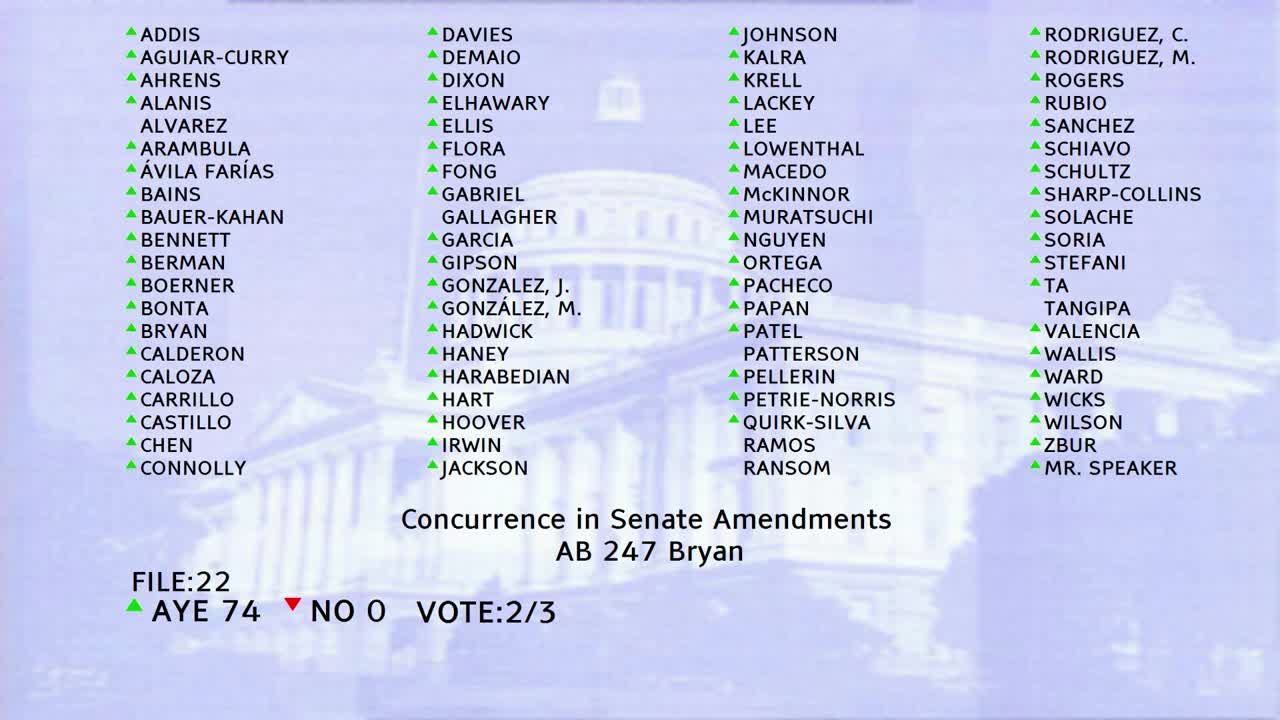 1MIN
Assembly Floor
 1MIN
Senate Floor
 1MIN
Senate Standing Committee on Appropriations
 8MIN
Senate Standing Committee on Human Services
 2MIN
Assembly Floor
 10MIN
Assembly Standing Committee on Human Services


Bill Co-Author(s):