AB 1356: Alcohol and other drug programs.
- Session Year: 2025-2026
- House: Assembly
- Latest Version Date: 2025-10-01
Current Status:
Passed
(2025-10-01: Chaptered by Secretary of State - Chapter 189, Statutes of 2025.)
Introduced
In Committee
Awaiting First Chamber Vote
Passed First Chamber
In Committee
Awaiting Second Chamber Vote
Passed Second Chamber
Enacted
Under existing law, the State Department of Health Care Services is responsible for administering prevention, treatment, and recovery services for alcohol and drug abuse. Existing law also provides for the certification and regulation of adult alcoholism or drug abuse recovery and treatment programs by the department and authorizes the department to enforce those provisions. Existing law requires the departments death investigation policy to be designed to ensure that a residents death is addressed and investigated by the department in a timely manner, and requires specified procedures if a death occurs in a licensed facility, including requiring a written report related to the death that includes a description of the followup action that is planned to prevent a future death. Existing law requires that report to be submitted to the department within 7 calendar days of the event or incident.
This bill, Johns Law, would additionally require a facility to submit to the department, within 30 days of the initial incident, any relevant information that was not known at the time of the initial incident. If the department identifies any violations of specified licensing provisions during its investigation of a residents death, the bill would require the department to issue a written notice of deficiency to the facility. The bill would authorize the department to implement, interpret, or make specific these provisions through the use of all-county letters, provider bulletins, or similar instructions without taking any further regulatory action.
Under existing law, the State Department of Health Care Services is responsible for administering prevention, treatment, and recovery services for alcohol and drug abuse. Existing law also provides for the certification and regulation of adult alcoholism or drug abuse recovery and treatment programs by the department and authorizes the department to enforce those provisions. Existing law requires the departments death investigation policy to be designed to ensure that a residents death is addressed and investigated by the department in a timely manner, and requires specified procedures if a death occurs in a licensed facility, including requiring a written report related to the death that includes a description of the followup action that is planned to prevent a future death. Existing law requires that report to be submitted to the department within 7 calendar days of the event or incident.
This bill, Johns Law, would additionally require a facility to submit to the department, within 30 days of the initial incident, any relevant information that was not known at the time of the initial incident. If the department identifies any violations of specified licensing provisions during its investigation of a residents death, the bill would require the department to issue a written notice of deficiency. deficiency to the facility. The bill would authorize the department to implement, interpret, or make specific these provisions through the use of all-county letters, provider bulletins, or similar instructions without taking any further regulatory action.
Under existing law, the State Department of Health Care Services is responsible for administering prevention, treatment, and recovery services for alcohol and drug abuse. Existing law also provides for the certification and regulation of adult alcoholism or drug abuse recovery and treatment programs by the department and authorizes the department to enforce those provisions. Existing law requires the departments death investigation policy to be designed to ensure that a residents death is addressed and investigated by the department in a timely manner, and requires specified procedures if a death occurs in a licensed facility, including requiring a written report related to the death that includes a description of the followup action that is planned to prevent a future death. Existing law requires that report to be submitted to the department within 7 calendar days of the event or incident.
This bill, Johns Law, would additionally require a facility to submit, within 60 submit to the department, within 30 days of the initial incident, any relevant information that was not known at the time of the initial incident or that was known but was not provided to the department in the initial report. The bill would require, if the department identifies any deficiencies in a facilitys response to a residents death in the course of the departments investigation into the death of a resident in a licensed facility, the facility to submit to the department any followup actions that the facility took within 60 days of any communication from the department regarding the deficiencies. incident. If the department identifies any violations of specified licensing provisions during its investigation of a residents death, the bill would require the department to issue a written notice of deficiency. The bill would authorize the department to implement, interpret, or make specific these provisions through the use of all-county letters, provider bulletins, or similar instructions without taking any further regulatory action.
Under existing law, the State Department of Health Care Services is responsible for administering prevention, treatment, and recovery services for alcohol and drug abuse. Existing law also provides for the certification and regulation of adult alcoholism or drug abuse recovery and treatment programs by the department and authorizes the department to enforce those provisions. Existing law requires the departments death investigation policy to be designed to ensure that a residents death is addressed and investigated by the department in a timely manner, and requires specified procedures if a death occurs in a licensed facility, including requiring a written report related to the death that includes a description of the followup action that is planned to prevent a future death. Existing law requires that report to be submitted to the department within 7 calendar days of the event or incident.
This bill bill, Johns Law, would additionally require a facility to submit, within 60 days of the initial incident, any relevant information that was not known at the time of the initial incident or that was known but was not provided to the department in the initial report. The bill would require, if the department identifies any deficiencies in a facilitys response to a residents death in the course of the departments investigation into the death of a resident in a licensed facility, the facility to submit to the department any followup actions that the facility took within 60 days of any communication from the department regarding the deficiencies.
Under existing law, the State Department of Health Care Services is responsible for administering prevention, treatment, and recovery services for alcohol and drug abuse. Existing law also provides for the certification and regulation of adult alcoholism or drug abuse recovery and treatment programs by the department and authorizes the department to enforce those provisions. Existing law requires the departments death investigation policy to be designed to ensure that a residents death is addressed and investigated by the department in a timely manner, and requires specified procedures if a death occurs in a licensed facility, including requiring a written report related to the death that includes a description of the followup action that is planned to prevent a future death. Existing law requires that report to be submitted to the department within 7 calendar days of the event or incident.
This bill would additionally require a facility to submit a report submit, within 60 days of the initial incident that describes the followup action plan that was implemented and provides incident, any relevant information that was not known at the time of the initial incident or that was known but was not provided to the department in the initial report. The bill would require, if the department identifies any deficiencies in a facilitys response to a residents death in the course of the departments investigation into the death of a resident in a licensed facility, the facility to submit to the department any followup actions that the facility took within 60 days of any communication from the department regarding the deficiencies.
Under existing law, the State Department of Health Care Services is responsible for administering prevention, treatment, and recovery services for alcohol and drug abuse. Existing law also provides for the certification and regulation of adult alcoholism or drug abuse recovery and treatment programs by the department and authorizes the department to enforce those provisions. Existing law requires the departments death investigation policy to be designed to ensure that a residents death is addressed and investigated by the department in a timely manner, and requires specified procedures if a death occurs in a licensed facility, including requiring a written report related to the death that includes a description of the followup action that is planned to prevent a future death. Existing law requires that report to be submitted to the department within 7 calendar days of the event or incident.
This bill would additionally require a facility to submit a report within 60 days of the initial incident that describes the followup action plan that was implemented and provides any relevant information that was not known at the time of the initial incident or that was known but was not provided to the department in the initial report.
This act shall be known, and may be cited, as Johns Law.
SEC. 2.Section 11830.01 of the Health and Safety Code is amended to read:11830.01.(a)The departments death investigation policy shall be designed to ensure that a residents death is addressed and investigated by the department in a timely manner.
(b)The telephonic and written reports of resident deaths occurring in a licensed facility that are required to be reported to the department shall include, but not be limited to, a description of the event or incident, including the time, location, and nature of the event or incident, a list of immediate actions that were taken, including persons contacted, and a description of the followup action that is planned, including, but not limited to, steps taken to prevent a future death.
(c)A telephonic report required under subdivision (b), which includes the event or incident and all information required under subdivision (b) that is known at the time of the report, shall be submitted to the department within one working day of the event or incident.
(d)A written report required under subdivision (b), which includes all information required under subdivision (b), shall be submitted to the department within seven calendar days of the event or incident.
(e)A licensed facility shall submit to the department, within 30 days of the initial incident, any relevant information that was not known at the time of the initial incident.
(f)If the department identifies any violations of Chapter 7.5 (commencing with Section 11834.01) or any regulations adopted thereunder during its investigation of a residents death, the department shall issue a written notice of deficiency to the facility. In the notice of deficiency, the department shall specify instructions to address any violations, including, but not limited to, the timeframe to respond to deficiencies.
(g)Notwithstanding Chapter 3.5 (commencing with Section 11340) of Part 1 of Division 3 of Title 2 of the Government Code, the department may implement, interpret, or make specific this section through the use of all-county letters, provider bulletins, or similar instructions without taking any further regulatory action.
This act shall be known, and may be cited, as Johns Law.
SEC. 2.Section 11830.01 of the Health and Safety Code is amended to read:11830.01.(a)The departments death investigation policy shall be designed to ensure that a residents death is addressed and investigated by the department in a timely manner.
(b)The telephonic and written reports of resident deaths occurring in a licensed facility that are required to be reported to the department shall include, but not be limited to, a description of the event or incident, including the time, location, and nature of the event or incident, a list of immediate actions that were taken, including persons contacted, and a description of the followup action that is planned, including, but not limited to, steps taken to prevent a future death.
(c)A telephonic report required under subdivision (b), which includes the event or incident and all information required under subdivision (b) that is known at the time of the report, shall be submitted to the department within one working day of the event or incident.
(d)A written report required under subdivision (b), which includes all information required under subdivision (b), shall be submitted to the department within seven calendar days of the event or incident.
(e)A licensed facility shall submit to the department, within 30 days of the initial incident, any relevant information that was not known at the time of the initial incident.
(f)If the department identifies any violations of Chapter 7.5 (commencing with Section 11834.01) or any regulations adopted thereunder during its investigation of a residents death, the department shall issue a written notice of deficiency. The deficiency to the facility. In the notice of deficiency, the department shall specify instructions in the notice of deficiency, to address any violations, including, but not limited to, the timeframe to respond to deficiencies.
(g)Notwithstanding Chapter 3.5 (commencing with Section 11340) of Part 1 of Division 3 of Title 2 of the Government Code, the department may implement, interpret, or make specific this section through the use of all-county letters, provider bulletins, or similar instructions without taking any further regulatory action.
This act shall be known, and may be cited, as Johns Law.
SEC. 2.Section 11830.01 of the Health and Safety Code is amended to read:11830.01.(a)The departments death investigation policy shall be designed to ensure that a residents death is addressed and investigated by the department in a timely manner.
(b)The telephonic and written reports of resident deaths occurring in a licensed facility that are required to be reported to the department shall include, but not be limited to, a description of the event or incident, including the time, location, and nature of the event or incident, a list of immediate actions that were taken, including persons contacted, and a description of the followup action that is planned, including, but not limited to, steps taken to prevent a future death.
(c)A telephonic report required under subdivision (b), which includes the event or incident and all information required under subdivision (b) that is known at the time of the report, shall be submitted to the department within one working day of the event or incident.
(d)A written report required under subdivision (b), which includes all information required under subdivision (b), shall be submitted to the department within seven calendar days of the event or incident.
(e)A licensed facility shall submit, within 60 submit to the department, within 30 days of the initial incident, any relevant information that was not known at the time of the initial incident or that was known but was not provided to the department in the initial report. incident.
(f)If the department identifies any deficiencies in a facilitys response to a residents death in the course of the departments investigation into the death of a resident in a licensed facility, the facility shall submit to the department, within 60 days of receiving any communication from the department regarding any deficiencies, any followup actions that the facility took in response to the communications from the department.(f)If the department identifies any violations of Chapter 7.5 (commencing with Section 11834.01) or any regulations adopted thereunder during its investigation of a residents death, the department shall issue a written notice of deficiency. The department shall specify instructions in the notice of deficiency, including, but not limited to, the timeframe to respond to deficiencies.
(g)Notwithstanding Chapter 3.5 (commencing with Section 11340) of Part 1 of Division 3 of Title 2 of the Government Code, the department may implement, interpret, or make specific this section through the use of all-county letters, provider bulletins, or similar instructions without taking any further regulatory action.
This act shall be known, and may be cited, as Johns Law.
SECTION 1.SEC. 2.Section 11830.01 of the Health and Safety Code is amended to read:11830.01.(a)The departments death investigation policy shall be designed to ensure that a residents death is addressed and investigated by the department in a timely manner.
(b)The telephonic and written reports of resident deaths occurring in a licensed facility that are required to be reported to the department shall include, but not be limited to, a description of the event or incident, including the time, location, and nature of the event or incident, a list of immediate actions that were taken, including persons contacted, and a description of the followup action that is planned, including, but not limited to, steps taken to prevent a future death.
(c)A telephonic report required under subdivision (b), which includes the event or incident and all information required under subdivision (b) that is known at the time of the report, shall be submitted to the department within one working day of the event or incident.
(d)A written report required under subdivision (b), which includes all information required under subdivision (b), shall be submitted to the department within seven calendar days of the event or incident.
(e)A licensed facility shall submit, within 60 days of the initial incident, any relevant information that was not known at the time of the initial incident or that was known but was not provided to the department in the initial report.
(f)If the department identifies any deficiencies in a facilitys response to a residents death in the course of the departments investigation into the death of a resident in a licensed facility, the facility shall submit to the department, within 60 days of receiving any communication from the department regarding any deficiencies, any followup actions that the facility took in response to the communications from the department.
(a)The departments death investigation policy shall be designed to ensure that a residents death is addressed and investigated by the department in a timely manner.
(b)The telephonic and written reports of resident deaths occurring in a licensed facility that are required to be reported to the department shall include, but not be limited to, a description of the event or incident, including the time, location, and nature of the event or incident, a list of immediate actions that were taken, including persons contacted, and a description of the followup action that is planned, including, but not limited to, steps taken to prevent a future death.
(c)A telephonic report required under subdivision (b), which includes the event or incident and all information required under subdivision (b) that is known at the time of the report, shall be submitted to the department within one working day of the event or incident.
(d)A written report required under subdivision (b), which includes all information required under subdivision (b), shall be submitted to the department within seven calendar days of the event or incident.
(e)A licensed facility shall submit a report submit, within 60 days of the initial incident that describes the followup action plan that was implemented and provides incident, any relevant information that was not known at the time of the initial incident or that was known but was not provided to the department in the initial report.
(f)If the department identifies any deficiencies in a facilitys response to a residents death in the course of the departments investigation into the death of a resident in a licensed facility, the facility shall submit to the department, within 60 days of receiving any communication from the department regarding any deficiencies, any followup actions that the facility took in response to the communications from the department.
(a)The departments death investigation policy shall be designed to ensure that a residents death is addressed and investigated by the department in a timely manner.
(b)The telephonic and written reports of resident deaths occurring in a licensed facility that are required to be reported to the department shall include, but not be limited to, a description of the event or incident, including the time, location, and nature of the event or incident, a list of immediate actions that were taken, including persons contacted, and a description of the followup action that is planned, including, but not limited to, steps taken to prevent a future death.
(c)A telephonic report required under subdivision (b), which includes the event or incident and all information required under subdivision (b) that is known at the time of the report, shall be submitted to the department within one working day of the event or incident.
(d)A written report required under subdivision (b), which includes all information required under subdivision (b), shall be submitted to the department within seven calendar days of the event or incident.
(e)A licensed facility shall submit a report within 60 days of the initial incident that describes the followup action plan that was implemented and provides any relevant information that was not known at the time of the initial incident or that was known but was not provided to the department in the initial report.
|
Date
|
Status
|
|---|---|
| Oct 1, 2025 | Chaptered by Secretary of State - Chapter 189, Statutes of 2025. |
| Oct 1, 2025 | Approved by the Governor. |
| Sep 24, 2025 | Enrolled and presented to the Governor at 3 p.m. |
| Sep 13, 2025 | Senate amendments concurred in. To Engrossing and Enrolling. (Ayes 74. Noes 0. Page 3500.). |
| Sep 13, 2025 | Joint Rules 61(a)(14) and 51(a)(4) suspended. (Ayes 59. Noes 20. Page 3413.) |
| Sep 12, 2025 | In Assembly. Concurrence in Senate amendments pending. |
| Sep 11, 2025 | Read third time. Passed. Ordered to the Assembly. (Ayes 40. Noes 0. Page 2931.). |
| Sep 9, 2025 | Ordered to special consent calendar. |
| Sep 2, 2025 | Read second time. Ordered to third reading. |
| Aug 29, 2025 | Read second time and amended. Ordered returned to second reading. |
| Aug 29, 2025 | From committee: Amend, and do pass as amended. (Ayes 7. Noes 0.) (August 29). |
| Jul 14, 2025 | In committee: Referred to APPR. suspense file. |
| Jul 9, 2025 | From committee chair, with author's amendments: Amend, and re-refer to committee. Read second time, amended, and re-referred to Com. on APPR. |
| Jun 26, 2025 | From committee: Do pass and re-refer to Com. on APPR. with recommendation: To Consent Calendar. (Ayes 11. Noes 0.) (June 25). Re-referred to Com. on APPR. |
| Jun 17, 2025 | From committee chair, with author's amendments: Amend, and re-refer to committee. Read second time, amended, and re-referred to Com. on HEALTH. |
| Jun 11, 2025 | Referred to Com. on HEALTH. |
| May 29, 2025 | In Senate. Read first time. To Com. on RLS. for assignment. |
| May 29, 2025 | Read third time. Passed. Ordered to the Senate. (Ayes 70. Noes 0. Page 1772.) |
| May 22, 2025 | Read second time. Ordered to third reading. |
| May 21, 2025 | From committee: Do pass. (Ayes 15. Noes 0.) (May 21). |
| May 14, 2025 | In committee: Hearing postponed by committee. |
| Apr 28, 2025 | Re-referred to Com. on APPR. |
| Apr 24, 2025 | Read second time and amended. |
| Apr 23, 2025 | From committee: Amend, and do pass as amended and re-refer to Com. on APPR. (Ayes 16. Noes 0.) (April 22). |
| Mar 13, 2025 | Referred to Com. on HEALTH. |
| Feb 24, 2025 | Read first time. |
| Feb 22, 2025 | From printer. May be heard in committee March 24. |
| Feb 21, 2025 | Introduced. To print. |
|
Date
|
Description
|
Location
|
Votes
|
|
|---|---|---|---|---|
| Sep 13, 2025 | AB 1356 Dixon Concurrence in Senate Amendments | Assembly Floor |
Passed |
|
| Sep 11, 2025 | Special Consent AB1356 Dixon By Jones | Senate Floor |
Passed |
|
| Aug 29, 2025 | Do pass as amended | Senate Standing Committee on Appropriations |
Passed |
|
| Jul 14, 2025 | Placed on suspense file | Senate Standing Committee on Appropriations |
Passed |
|
| Jun 25, 2025 | Do pass, but first be re-referred to the Committee on [Appropriations] with the recommendation: To Consent Calendar | Senate Standing Committee on Health |
Passed |
|
| May 29, 2025 | AB 1356 Dixon Assembly Third Reading | Assembly Floor |
Passed |
|
| May 21, 2025 | Do pass. | Assembly Standing Committee on Appropriations |
Passed |
|
| Apr 22, 2025 | Do pass as amended and be re-referred to the Committee on [Appropriations] | Assembly Standing Committee on Health |
Passed |
This list shows positions taken on this bill by organizations on the date displayed, which is linked to the original source.
Positions by individuals are not included.
|
Organization
|
Position
|
Date
|
|---|---|---|
| Advocates for Responsible Treatment | ** Support | |
| Capo Cares | ** Support | |
| One individual | ** Support | |
| Orange County | ** Support |
CONCURRENCE IN SENATE AMENDMENTS
CSA1 Bill Id:AB 1356
Author:(Dixon)
As Amended Ver:August 29, 2025
Majority vote
SUMMARY
Requires a licensed alcohol or other drug (AOD) recovery or treatment facility (RTF) to submit to the Department of Health Care Services (DHCS), within 30 days of an incident involving the death of a resident, any relevant information that was not previously provided to DHCS in the initial report, and requires DHCS to issue a deficiency if it identifies any violations of specified licensing provisions during its investigation of a resident's death.
Senate Amendments
- Add "John's Law" as the title of this bill.
- Require a facility to submit any relevant information to DHCS within 30 days rather than 60 and require DHCS to issue a deficiency if it identifies any violations of specified licensing provisions during its investigation of a resident's death and to specify instructions to address any violations.
- Clarify requirements related to the written notice of deficiency.
- Authorize DHCS to implement, interpret, or make specific these provisions through the use of all-county letters, provider bulletins, or similar instructions without taking any further regulatory action.
COMMENTS
Prevalence of Substance Use Disorders (SUD) in California. A 2024 publication from Health Management Associates and the California Health Care Foundation, titled "Substance Use Disorder in California — a Focused Landscape Analysis" reported that approximately 9% of Californians ages 12 years and older met the criteria for SUD in 2022. According to the report, the prevalence of SUD among individuals 12 years of age and older increased to 8.8% in 2022 from 8.1% in 2015. While the health care system is moving toward acknowledging SUD as a chronic illness, only 6% of Americans and 10% of Californians ages 12 and older with an SUD received treatment for their condition in 2021. More than 19,335 Californians ages 12 years and older died from the effects of alcohol from 2020 to 2021, and the total annual number of alcohol-related deaths increased by approximately 18% in the state from 2020 to 2021. Overdose deaths from both opioids and psychostimulants (such as amphetamines), are soaring. This issue, compounded by the increased availability of fentanyl, has resulted in a 10-fold increase in fentanyl related deaths between 2015 and 2019. According to the California Department of Public Health's Overdose Prevention Initiative, 7,847 opioid-related overdose deaths occurred in California in 2023. In the first two quarters of 2024, 2,975 opioid-related overdose deaths were recorded in California.
Alcohol and Drug Treatment Facility Licensing and Certification. DHCS has sole authority to license RTFs in the state. Licensure is required when at least one of the following services is provided: detoxification; group sessions; individual sessions; educational sessions; or, alcoholism or other drug abuse recovery or treatment planning. Additionally, facilities may be subject to other types of permits, clearances, business taxes, or local fees that may be required by the cities or counties in which the facilities are located.
As part of their licensing function, DHCS conducts reviews of RTF operations every two years, or as necessary. DHCS's Substance Use Disorder Compliance Division checks for compliance with statute and regulations to ensure the health and safety of RTF residents and investigates all complaints related to RTFs, including deaths, complaints against staff, and allegations of operating without a license. DHCS has the authority to suspend or revoke a license for conduct in the operation of an RTF that is inimical to the health, morals, welfare, or safety of either an individual in, or receiving services from, the facility or to the people of the State of California.
AB 118 (Committee on Budget), Chapter 42, Statutes of 2023, requires other non-residential, outpatient alcohol or other drug programs to be certified by DHCS. Certification is required when at least one of the following is provided: outpatient treatment services; recovery services; detoxification; or, medications for addiction treatment. DHCS does not license alcohol and drug recovery residences with six or fewer beds that don't provide licensable services.
State Audit. In October 2024, the State Auditor released a report assessing the licensing of residential RTFs by DHCS. Key findings from the audit include:
- Southern California contains a greater concentration of treatment facilities serving six or fewer residents (small facilities) than other parts of the state. However, state law allows facilities to be located near each other and have the same legal owners.
- DHCS consistently reviewed the 26 license applications that were assessed, and the application process is generally the same for all facilities. However, of the 26 compliance inspections of operating facilities that were reviewed, DHCS conducted only half of them on time.
- DHCS also took longer than its target of 30 to 60 days to investigate complaints against treatment facilities. For instance, it took more than a year to complete 22 of the 60 investigations reviewed in the audit. Additionally, DHCS did not always follow up on unlicensed facilities that it found were unlawfully advertising or providing services. SB 35 and SB 329 in Related Legislation below respond to this issue.
Based on these findings, the audit makes several operational recommendations to DHCS, including the following:
- Provide management with information about the timeliness of compliance inspections and implement processes for notifying responsible staff of upcoming compliance inspections;
- Implement guidelines that specify the length of time analysts should take to complete key steps in the investigation process; and,
- Develop and implement a follow-up procedure when it has substantiated allegations of an unlicensed facility providing services.
In response to the audit, DHCS has made several operational changes. According to the State Auditor's website, DHCS will create and implement new protocols and processes as well as schedule and conduct the appropriate trainings to ensure supervisors are closely tracking the programs in need of inspections within their two-year windows. DHCS will also begin using a new digital platform to complete onsite inspection reports, which will aid DHCS in sending providers reports more quickly, thereby improving the rate at which assignments are completed. Also, in August 2024, DHCS revised its Complaints Operations Manual to clarify the requirement for case assignment within 10 days and updated the complaint intake process.
DHCS Complaint Process. According to DHCS, the Licensing and Certification Division (LCD) oversees and conducts complaint investigations against California's AOD recovery and treatment programs. This includes general allegations against a program, allegations of unlicensed or uncertified activity, and client deaths that occur at licensed facilities. LCD also investigates allegations of misconduct by registered or certified AOD counselors that work at licensed AOD programs.
Upon receiving a complaint via phone, email, fax, mail, or online, DHCS establishes whether the complaint is within its jurisdiction. If DHCS receives a complaint that does not fall under its jurisdiction, it sends a letter to the complainant informing them that it does not investigate that type of complaint. If the complaint is under DHCS jurisdiction, it is logged, assigned a complaint number, and a high, medium or low-level designation. Receipt of a complaint is acknowledged through written communication with the complainant. Upon opening a complaint, complainants are asked if they would like a Public Records Act (PRA) request opened on their behalf. If they have the request opened, they would receive a copy of the report via email through the PRA process; only then would the complainant be notified with the outcome of their complaint.
Once assigned, an analyst will contact the program in question, review documents and records relevant to the complaint, and, if necessary, conduct an on-site visit to gather evidence, inspect facilities, and conduct interviews. An investigative report is issued, outlining whether an allegation was substantiated, and if any additional findings were discovered throughout the course of the investigation. If any deficiencies are identified and substantiated, programs may be subject to a Notice of Deficiency, requiring a Corrective Action Plan or Verification of Correction and civil penalties for failure to respond timely to a Notice of Deficiency.
Deficiencies can result in DHCS action to suspend or revoke a program's licensure. If no deficiencies are found, the complaint report would be issued with allegations marked as "not substantiated," and no additional deficiencies would be indicated on the report.
According to the Author
This bill will require a facility which offers a drug and alcohol program to provide a subsequent report to DHCS within 60 days of the death a resident at the facility with updated information on the events surrounding the resident's death and on the facilities follow-up action plan to prevent future incidents occurring. This bill provides a practical solution to strengthen the DHCS's death investigation policy, provide DHCS with the necessary information to properly regulate and oversee facilities which offer drug and alcohol programs, and improve the safety of those residents within the facilities who are receiving treatment.
Arguments in Support
Orange County supports this bill stating it is a commonsense solution to strengthen the DHCS's death investigation policy, provide DHCS with the necessary information to properly regulate and oversee facilities which offer drug and alcohol programs, and improve the safety of those residents within the facilities who are receiving treatment.
Capo Cares also supports this bill stating that it treats deaths at licensed facilities with the seriousness they warrant. Capo Cares says the public should be able to expect that any deaths are thoroughly investigated, that causes are determined, and that where neglect or abuse is apparent, steps are taken to ensure that harmful facilities are closed and that safeguards are put in place to prevent further harm or even more deaths.
Arguments in Opposition
None.
FISCAL COMMENTS
According to the Senate Appropriations Committee, no fiscal impact to DHCS.
VOTES:
ASM HEALTH: 16-0-0
YES: Bonta, Chen, Addis, Aguiar-Curry, Rogers, Carrillo, Flora, Mark González, Krell, Patel, Patterson, Celeste Rodriguez, Sanchez, Schiavo, Sharp-Collins, Stefani
ASM APPROPRIATIONS: 15-0-0
YES: Wicks, Sanchez, Arambula, Calderon, Caloza, Dixon, Elhawary, Fong, Mark González, Hart, Pacheco, Pellerin, Solache, Ta, Tangipa
ASSEMBLY FLOOR: 70-0-9
YES: Addis, Aguiar-Curry, Ahrens, Alanis, Arambula, Ávila Farías, Bains, Bauer-Kahan, Bennett, Berman, Boerner, Bonta, Calderon, Caloza, Carrillo, Castillo, Connolly, Davies, DeMaio, Dixon, Elhawary, Ellis, Flora, Fong, Gabriel, Gallagher, Garcia, Gipson, Jeff Gonzalez, Mark González, Hadwick, Haney, Harabedian, Hart, Hoover, Irwin, Jackson, Kalra, Krell, Lackey, Lowenthal, Macedo, McKinnor, Muratsuchi, Ortega, Pacheco, Papan, Patel, Patterson, Pellerin, Petrie-Norris, Quirk-Silva, Ramos, Ransom, Celeste Rodriguez, Michelle Rodriguez, Rogers, Blanca Rubio, Sanchez, Schiavo, Schultz, Sharp-Collins, Stefani, Ta, Valencia, Wallis, Wicks, Wilson, Zbur, Rivas
ABS, ABST OR NV: Alvarez, Bryan, Chen, Lee, Nguyen, Solache, Soria, Tangipa, Ward
UPDATED
VERSION: August 29, 2025
CONSULTANT: Logan Hess / HEALTH / (916) 319-2097 FN: 0001833
SENATE RULES COMMITTEE Office of Senate Floor Analyses (916) 651-1520 Fax: (916) 327-4478 | AB 1356 |
THIRD READING
Bill No: AB 1356
Author: Dixon (R)
Amended: 8/29/25 in Senate
Vote: 21
SENATE HEALTH COMMITTEE: 11-0, 6/25/25
AYES: Menjivar, Valladares, Durazo, Gonzalez, Grove, Limón, Padilla, Richardson, Rubio, Weber Pierson, Wiener
SENATE APPROPRIATIONS COMMITTEE: 7-0, 8/29/25
AYES: Caballero, Seyarto, Cabaldon, Dahle, Grayson, Richardson, Wahab
ASSEMBLY FLOOR: 70-0, 5/29/25 - See last page for vote
SUBJECT: Alcohol and other drug programs
SOURCE: Author
DIGEST:
This bill requires licensed adult alcohol or other drug recovery or treatment facilities to submit to the Department of Health Care Services (DHCS), relevant information about a resident’s death.
ANALYSIS:
Existing law:
- Grants sole authority in the state to DHCS to license adult residential alcohol or other drug recovery or treatment facilities (RTFs). [Health & Safety Code (HSC) §11834.01]
- Requires DHCS’s death investigation policy to be designed to ensure that a RTF resident’s death is addressed and investigated in a timely manner, including timeframes for submitting to DHCS telephonic and written reports containing all specified relevant information concerning the incident. [HSC §11830.01]
This bill requires a RTF to submit to DHCS, within 30 days of a resident's death, as well as of receiving a notice of any deficiencies DHCS identifies in the course of its investigation into the death, any relevant information that was not known at the time of the initial incident.
Comments
According to the author of this bill:
This bill requires a RTF to provide a subsequent report to DHCS within 60 days of a resident’s death at the facility, with updated information on the events surrounding the resident’s death and on the facility’s follow-up action plan to prevent future incidents occurring, if DHCS identifies any deficiencies in the response to a death. This bill provides a practical solution to strengthen DHCS’s death investigation policy, provides the necessary information to properly regulate and oversee RTFs, and improve the safety of residents receiving treatment within those facilities.
Background
RTFs. Licensure is required when at least one of the following services is provided: detoxification; group sessions; individual sessions; educational sessions; or, alcoholism or other drug abuse recovery or treatment planning. As part of their licensing function, DHCS conducts reviews of RTFs every two years, or as necessary. DHCS’s Substance Use Disorder (SUD) Compliance Division checks for compliance with statutes and regulations to ensure the health and safety of RTF residents and investigates all complaints related to RTFs, including deaths, complaints against staff, and allegations of operating without a license. DHCS has the authority to suspend or revoke a license for conduct in the operation of an RTF that is contrary to the health, morals, welfare, or safety of either the RTF residents or to the people of the State of California.
DHCS death investigations. According to a October 2024 California State Auditor (CSA) report titled Drug and Alcohol Treatment Facilities (or “RTF report”), complaints about the roughly 1,000 licensed RTFs to DHCS may arise from various sources, including RTF residents, neighbors, staff members, or government agencies. According to internal guidelines, DHCS prioritizes death investigations over investigations into all other types of complaints. When DHCS initially receives complaints, they are logged, assigned a complaint number, and designated as a high-, medium-, or low-level priority. The RTF report stated DHCS aims to assign death investigations to a staff member on the day it receives the report. In the course of a death investigation, DHCS directs its staff to perform a complete review of the facility where the death occurred to determine whether the resident’s death was related to deficiencies in the RTF’s operation. As an example, a “Class A” deficiency is any presenting an imminent danger to a resident of the RTF, which DHCS considers to mean the more likely consequence is a resident’s death; physical injury that would render a part of the body functionally useless or temporarily or permanently reduced in capacity; or, inhibit any function of the body to such a degree as to shorten life or to reduce physical or mental capacity. If any deficiencies are identified and substantiated, RTFs may be subject to a corrective action plan or verification of correction, as well as civil penalties for failure to respond timely to a Notice of Deficiency. Deficiencies can also result in action to suspend or revoke the RTF’s license.
DHCS’s current death investigation processes were implemented by AB 2374 (Mansoor, Chapter 815, Statutes of 2014), which requires a RTF resident’s death to be addressed and investigated in a timely manner, including timeframes for submitting to DHCS telephonic and written reports. The impetus for AB 2374 were two reports issued by the then Senate Office of Oversight and Outcomes (SOOO):
- Rogue Rehabs: State Failed to Police Drug and Alcohol Homes, with Deadly Results. Issued September 2012, SOOO identified a pattern over the previous decade of the Department of Alcohol and Drug Programs (ADP, which was absorbed by DHCS in July 2013) failing to identify potentially dangerous problems and, when it did, neglecting to follow up and assure that the problems were corrected. This report cited several incidents where ADP’s enforcement and investigation activities following resident deaths at RTFs were inconsistent. At one facility where four patient deaths occurred over a span of two and a half years, SOOO reported that ADP was slow to respond. One death was only investigated a year and a half after the fact, upon ADP learning of another death in the same facility. By the time ADP suspended the facility’s license, the home had been foreclosed. At other facilities, SOOO reported that patients who needed medical care were admitted to an RTF with the expectation they would receive medical care and ended up dying at the RTF. The report states that ADP indicated it was being more aggressive in halting practices that could lead to injury or death, and was revoking and suspending licenses more frequently. ADP also stated it had implemented new policies intended to focus limited resources on cases that pose the greatest risk to the public. The report recommended that ADP’s improved death investigation policy be used as a template for statutory death investigation requirements, if the policy was found to be effective.
- Suspect Treatment: State’s lack of scrutiny allows unscreened sex offenders and unethical counselors to treat addicts. Issued May 2013, SOOO reported that for three decades the state and the SUD treatment industry had been unable to agree on a framework to give the state authority to credential counselors. The report concluded that California’s public-private hybrid system precluded criminal background checks and left gaps that could be exploited by counselors who move between seven counselor certifying organizations that register and certify them. While the report acknowledged that many counselors draw from their own struggles with SUD to excel at jobs with not much pay, some come to the profession with serious criminal backgrounds, which the report stated raises questions about their fitness to treat clients, who are often at the most vulnerable time of their lives.
While deaths may occur at DHCS-licensed RTFs, current day media reporting about deaths at “drug treatment facilities” often conflate RTFs with sober living homes/recovery residences (SLH/RRs), which are not required to be licensed by DHCS because they are not authorized to provide treatment services and merely are cooperative living arrangements for those who choose to live with others who are in recovery from a substance use disorder. However, many SLH/RRs have often been found to be unlawfully providing treatment services, or advertise as a RTF without being properly licensed, in which case DHCS has authority to take action against these entities.
FISCAL EFFECT: Appropriation: No Fiscal Com.: Yes Local: No
According to the Senate Appropriations Committee:
Unknown ongoing General Fund costs, potentially in the tens of thousands to low hundreds of thousands, for the DHCS for state administration.
SUPPORT: (Verified 8/29/25)
Advocated for Responsible Treatment
Capo Cares
County of Orange
One individual
OPPOSITION: (Verified 8/29/25)
None received
ARGUMENTS IN SUPPORT: Supporters of this bill state that DHCS’s death investigation policy requires that a resident’s death is addressed and investigated promptly, including a written report from the facility within seven days of the incident that includes a description of the follow-up action that is planned to prevent a future death. However, there is no statutory requirement for these facilities to provide any subsequent reports in the aftermath of the incident. Therefore, this bill requires a subsequent report to be submitted to DHCS within 60 days of the initial incident that describes the follow-up action plan.
ASSEMBLY FLOOR: 70-0, 5/29/25
AYES: Addis, Aguiar-Curry, Ahrens, Alanis, Arambula, Ávila Farías, Bains, Bauer-Kahan, Bennett, Berman, Boerner, Bonta, Calderon, Caloza, Carrillo, Castillo, Connolly, Davies, DeMaio, Dixon, Elhawary, Ellis, Flora, Fong, Gabriel, Gallagher, Garcia, Gipson, Jeff Gonzalez, Mark González, Hadwick, Haney, Harabedian, Hart, Hoover, Irwin, Jackson, Kalra, Krell, Lackey, Lowenthal, Macedo, McKinnor, Muratsuchi, Ortega, Pacheco, Papan, Patel, Patterson, Pellerin, Petrie-Norris, Quirk-Silva, Ramos, Ransom, Celeste Rodriguez, Michelle Rodriguez, Rogers, Blanca Rubio, Sanchez, Schiavo, Schultz, Sharp-Collins, Stefani, Ta, Valencia, Wallis, Wicks, Wilson, Zbur, Rivas
NO VOTE RECORDED: Alvarez, Bryan, Chen, Lee, Nguyen, Solache, Soria, Tangipa, Ward
Prepared by: Reyes Diaz / HEALTH / (916) 651-4111
9/2/25 18:19:21
**** END ****
SENATE COMMITTEE ON APPROPRIATIONS
Senator Anna Caballero, Chair
2025 - 2026 Regular Session
AB 1356 (Dixon) - Alcohol and other drug programs
Version: July 9, 2025 | Policy Vote: HEALTH 11 - 0 |
Urgency: No | Mandate: No |
Hearing Date: August 29, 2025 | Consultant: Agnes Lee |
Bill Summary:
AB 1356 would require licensed adult residential alcohol or other drug recovery or treatment facilities to submit additional information to the Department of Health Care Services (DHCS) in the event of a resident’s death, as specified.
*********** ANALYSIS ADDENDUM – SUSPENSE FILE ***********
The following information is revised to reflect amendments
adopted by the committee on August 29, 2025
Fiscal Impact:
No fiscal impact to DHCS.
Author Amendments:
Clarify requirements related to the written notice of deficiency.
-- END --
SENATE COMMITTEE ON
Senator Anna Caballero, Chair
2025 - 2026 Regular Session
AB 1356 (Dixon) - Alcohol and other drug programs
Version: | Policy Vote: |
Urgency: | Mandate: |
Hearing Date: | Consultant: |
Bill Summary:
AB 1356 would require licensed adult residential alcohol or other drug recovery or treatment facilities to submit additional information to the Department of Health Care Services (DHCS) in the event of a resident’s death, as specified.
Fiscal Impact:
Unknown ongoing General Fund costs, potentially in the tens of thousands to low hundreds of thousands, for the DHCS for state administration.
Background:
Adult residential alcohol or other drug recovery or treatment facilities (RTFs) provide residential nonmedical services to adults who are recovering from problems related to alcohol, drug, or alcohol and drug misuse or addiction, and who need alcohol, drug, or alcohol and drug recovery treatment or detoxification services. Current law grants sole authority to DHCS to license RTFs and authorizes the department to initiate a license suspension or revocation for licensing violations.
Current law requires the telephonic and written reports of resident deaths occurring in a licensed RTF that are required to be reported to DHCS must include, but not be limited to, a description of the event or incident, including the time, location, and nature of the event or incident, a list of immediate actions that were taken, including persons contacted, and a description of the follow-up action that is planned, including, but not limited to, steps taken to prevent a future death. The required telephonic report must be submitted to DHCS within one working day of the event or incident and the required written report must be submitted to DHCS within seven calendar days of the event or incident.
Proposed Law:
Specific provisions of the bill would:
- Require a licensed RTF to submit to DHCS, within 30 days of the initial incident, any relevant information that was not known at the time of the initial incident.
- Require that if DHCS identifies violations during its investigation of a resident’s death, the DHCS must issue a written notice of deficiency; and require DHCS to specify instructions in the notice of deficiency, including, but not limited to, the timeframe to respond to deficiencies.
-- END --
SENATE COMMITTEE ON HEALTH
Senator Caroline Menjivar, Chair
BILL NO: AB 1356
AUTHOR: | Dixon | ||
VERSION: | June 17, 2025 | ||
HEARING DATE: | June 25, 2025 | ||
CONSULTANT: | Reyes Diaz | ||
SUBJECT: Alcohol and other drug programs
SUMMARY:
Requires licensed adult alcohol or other drug recovery or treatment facilities to submit to the Department of Health Care Services (DHCS), relevant information about a resident’s death and any actions it took if DHCS identifies any deficiencies in the course of its investigation into the death.
Existing law:
- Grants sole authority in the state to DHCS to license adult residential alcohol or other drug recovery or treatment facilities (RTFs). [HSC §11834.01]
- Requires DHCS’s death investigation policy to be designed to ensure that a RTF resident’s death is addressed and investigated in a timely manner, including timeframes for submitting to DHCS telephonic and written reports containing all specified relevant information concerning the incident. [HSC §11830.01]
This bill: Requires a RTF to submit to DHCS, within 60 days of a resident's death, as well as of receiving a notice of any deficiencies DHCS identifies in the course of its investigation into the death, the following:
- Any relevant information that was not known at the time of the initial incident or that was known but was not provided to DHCS in the initial report; and
- Any follow-up actions the RTF took in response to the communications from DHCS.
FISCAL EFFECT:
According to the Assembly Appropriations Committee, this bill results in negligible state costs.
PRIOR VOTES:
Assembly Floor: | 76 - 0 |
Assembly Appropriations Committee: | 15 - 0 |
Assembly Health Committee: | 16 - 0 |
COMMENTS:
- Author’s statement. According to the author, this bill requires a RTF to provide a subsequent report to DHCS within 60 days of a resident’s death at the facility, with updated information on the events surrounding the resident’s death and on the facility’s follow-up action plan to prevent future incidents occurring, if DHCS identifies any deficiencies in the response to a death. This bill provides a practical solution to strengthen DHCS’s death investigation policy, provides the necessary information to properly regulate and oversee RTFs, and improve the safety of residents receiving treatment within those facilities.
- RTFs. Licensure is required when at least one of the following services is provided: detoxification; group sessions; individual sessions; educational sessions; or, alcoholism or other drug abuse recovery or treatment planning. As part of their licensing function, DHCS conducts reviews of RTFs every two years, or as necessary. DHCS’s Substance Use Disorder (SUD) Compliance Division checks for compliance with statutes and regulations to ensure the health and safety of RTF residents and investigates all complaints related to RTFs, including deaths, complaints against staff, and allegations of operating without a license. DHCS has the authority to suspend or revoke a license for conduct in the operation of an RTF that is contrary to the health, morals, welfare, or safety of either the RTF residents or to the people of the State of California.
- DHCS death investigations. According to a October 2024 California State Auditor (CSA) report titled Drug and Alcohol Treatment Facilities (or “RTF report”), complaints about the roughly 1,000 licensed RTFs to DHCS may arise from various sources, including RTF residents, neighbors, staff members, or government agencies. According to internal guidelines, DHCS prioritizes death investigations over investigations into all other types of complaints. When DHCS initially receives complaints, they are logged, assigned a complaint number, and designated as a high-, medium-, or low-level priority. The RTF report stated DHCS aims to assign death investigations to a staff member on the day it receives the report. In the course of a death investigation, DHCS directs its staff to perform a complete review of the facility where the death occurred to determine whether the resident’s death was related to deficiencies in the RTF’s operation. As an example, a “Class A” deficiency is any presenting an imminent danger to a resident of the RTF, which DHCS considers to mean the more likely consequence is a resident’s death; physical injury that would render a part of the body functionally useless or temporarily or permanently reduced in capacity; or, inhibit any function of the body to such a degree as to shorten life or to reduce physical or mental capacity. If any deficiencies are identified and substantiated, RTFs may be subject to a corrective action plan or verification of correction, as well as civil penalties for failure to respond timely to a Notice of Deficiency. Deficiencies can also result in action to suspend or revoke the RTF’s license.
DHCS’s current death investigation processes were implemented by AB 2374 (Mansoor, Chapter 815, Statutes of 2014), which requires a RTF resident’s death to be addressed and investigated in a timely manner, including timeframes for submitting to DHCS telephonic and written reports. The impetus for AB 2374 were two reports issued by the then Senate Office of Oversight and Outcomes (SOOO):
- Rogue Rehabs: State Failed to Police Drug and Alcohol Homes, with Deadly Results. Issued September 2012, SOOO identified a pattern over the previous decade of the Department of Alcohol and Drug Programs (ADP, which was absorbed by DHCS in July 2013) failing to identify potentially dangerous problems and, when it did, neglecting to follow up and assure that the problems were corrected. This report cited several incidents where ADP’s enforcement and investigation activities following resident deaths at RTFs were inconsistent. At one facility where four patient deaths occurred over a span of two and a half years, SOOO reported that ADP was slow to respond. One death was only investigated a year and a half after the fact, upon ADP learning of another death in the same facility. By the time ADP suspended the facility’s license, the home had been foreclosed. At other facilities, SOOO reported that patients who needed medical care were admitted to an RTF with the expectation they would receive medical care and ended up dying at the RTF. The report states that ADP indicated it was being more aggressive in halting practices that could lead to injury or death, and was revoking and suspending licenses more frequently. ADP also stated it had implemented new policies intended to focus limited resources on cases that pose the greatest risk to the public. The report recommended that ADP’s improved death investigation policy be used as a template for statutory death investigation requirements, if the policy was found to be effective.
- Suspect Treatment: State’s lack of scrutiny allows unscreened sex offenders and unethical counselors to treat addicts. Issued May 2013, SOOO reported that for three decades the state and the SUD treatment industry had been unable to agree on a framework to give the state authority to credential counselors. The report concluded that California’s public-private hybrid system precluded criminal background checks and left gaps that could be exploited by counselors who move between seven counselor certifying organizations that register and certify them. While the report acknowledged that many counselors draw from their own struggles with SUD to excel at jobs with not much pay, some come to the profession with serious criminal backgrounds, which the report stated raises questions about their fitness to treat clients, who are often at the most vulnerable time of their lives.
While deaths may occur at DHCS-licensed RTFs, current day media reporting about deaths at “drug treatment facilities” often conflate RTFs with sober living homes/recovery residences (SLH/RRs), which are not required to be licensed by DHCS because they are not authorized to provide treatment services and merely are cooperative living arrangements for those who choose to live with others who are in recovery from a substance use disorder. However, many SLH/RRs have often been found to be unlawfully providing treatment services, or advertise as a RTF without being properly licensed, in which case DHCS has authority to take action against these entities.
- Related legislation. SB 329 (Blakespear, Umberg) requires DHCS to meet specified timeframes for assigning complaints against, and completing investigations for, RTFs. SB 329 is set for hearing on June 24, 2025, in the Assembly Health Committee.
- Prior legislation. AB 2374 (Mansoor, Chapter 815, Statutes of 2014) implemented DHCS’s death investigation policy requiring a RTF resident’s death be addressed and investigated in a timely manner, including timeframes for submitting to DHCS telephonic and written reports.
AB 40 (Mansoor of 2013) would have required RTFs to report deaths and other unusual events to ADP and would have required licensees that provide medical detoxification services to provide those services under the supervision of a medical doctor. AB 40 was held on the Assembly Appropriations Committee suspense file.
- Support. Supporters of this bill state that DHCS’s death investigation policy requires that a resident’s death is addressed and investigated promptly, including a written report from the facility within seven days of the incident that includes a description of the follow-up action that is planned to prevent a future death. However, there is no statutory requirement for these facilities to provide any subsequent reports in the aftermath of the incident. Therefore, this bill requires a subsequent report to be submitted to DHCS within 60 days of the initial incident that describes the follow-up action plan.
SUPPORT AND OPPOSITION:
Support: Advocated for Responsible Treatment
Capo Cares
County of Orange
One individual
Oppose: None received
-- END --
ASSEMBLY THIRD READING
ATR Bill Id:AB 1356
Author:(Dixon)
As Amended Ver:April 24, 2025
Majority vote
SUMMARY
Requires a licensed alcohol or other drug (AOD) recovery or treatment facility (RTF) to submit to the Department of Health Care Services (DHCS), within 60 days of an incident involving the death of a resident, any relevant information that was not previously provided to DHCS in the initial report, and to submit, within 60 days of being notified of any deficiencies identified by DHCS in the RTF's response to the incident, any follow up actions the RTF implemented.
Major Provisions
COMMENTS
Prevalence of Substance Use Disorders (SUD) in California. A 2024 publication from Health Management Associates and the California Health Care Foundation, titled "Substance Use Disorder in California — a Focused Landscape Analysis" reported that approximately 9% of Californians ages 12 years and older met the criteria for SUD in 2022. According to the report, the prevalence of SUD among individuals 12 years of age and older increased to 8.8% in 2022 from 8.1% in 2015. While the health care system is moving toward acknowledging SUD as a chronic illness, only 6% of Americans and 10% of Californians ages 12 and older with an SUD received treatment for their condition in 2021. More than 19,335 Californians ages 12 years and older died from the effects of alcohol from 2020 to 2021, and the total annual number of alcohol-related deaths increased by approximately 18% in the state from 2020 to 2021. Overdose deaths from both opioids and psychostimulants (such as amphetamines), are soaring. This issue, compounded by the increased availability of fentanyl, has resulted in a 10-fold increase in fentanyl related deaths between 2015 and 2019. According to the California Department of Public Health's Overdose Prevention Initiative, 7,847 opioid-related overdose deaths occurred in California in 2023. In the first two quarters of 2024, 2,975 opioid-related overdose deaths were recorded in California.
Alcohol and Drug Treatment Facility Licensing and Certification. DHCS has sole authority to license RTFs in the state. Licensure is required when at least one of the following services is provided: detoxification; group sessions; individual sessions; educational sessions; or, alcoholism or other drug abuse recovery or treatment planning. Additionally, facilities may be subject to other types of permits, clearances, business taxes, or local fees that may be required by the cities or counties in which the facilities are located.
As part of their licensing function, DHCS conducts reviews of RTF operations every two years, or as necessary. DHCS's Substance Use Disorder Compliance Division checks for compliance with statute and regulations to ensure the health and safety of RTF residents and investigates all complaints related to RTFs, including deaths, complaints against staff, and allegations of operating without a license. DHCS has the authority to suspend or revoke a license for conduct in the operation of an RTF that is inimical to the health, morals, welfare, or safety of either an individual in, or receiving services from, the facility or to the people of the State of California.
AB 118 (Committee on Budget), Chapter 42, Statutes of 2023, requires other non-residential, outpatient alcohol or other drug programs to be certified by DHCS. Certification is required when at least one of the following is provided: outpatient treatment services; recovery services; detoxification; or, medications for addiction treatment. DHCS does not license alcohol and drug recovery residences with six or fewer beds that don’t provide licensable services.
State Audit. In October 2024, the State Auditor released a report assessing the licensing of residential RTFs by DHCS. Key findings from the audit include:
- Southern California contains a greater concentration of treatment facilities serving six or fewer residents (small facilities) than other parts of the state. However, state law allows facilities to be located near each other and have the same legal owners.
- DHCS consistently reviewed the 26 license applications that were assessed, and the application process is generally the same for all facilities. However, of the 26 compliance inspections of operating facilities that were reviewed, DHCS conducted only half of them on time.
- DHCS also took longer than its target of 30 to 60 days to investigate complaints against treatment facilities. For instance, it took more than a year to complete 22 of the 60 investigations reviewed in the audit. Additionally, DHCS did not always follow up on unlicensed facilities that it found were unlawfully advertising or providing services. SB 35 and SB 329 in Related Legislation below respond to this issue.
Based on these findings, the audit makes several operational recommendations to DHCS, including the following:
- Provide management with information about the timeliness of compliance inspections and implement processes for notifying responsible staff of upcoming compliance inspections;
- Implement guidelines that specify the length of time analysts should take to complete key steps in the investigation process; and,
- Develop and implement a follow-up procedure when it has substantiated allegations of an unlicensed facility providing services.
In response to the audit, DHCS has made several operational changes. According to the State Auditor's website, DHCS will create and implement new protocols and processes as well as schedule and conduct the appropriate trainings to ensure supervisors are closely tracking the programs in need of inspections within their two-year windows. DHCS will also begin using a new digital platform to complete onsite inspection reports, which will aid DHCS in sending providers reports more quickly, thereby improving the rate at which assignments are completed. Also, in August 2024, DHCS revised its Complaints Operations Manual to clarify the requirement for case assignment within 10 days and updated the complaint intake process.
DHCS Complaint Process. According to DHCS, the Licensing and Certification Division (LCD) oversees and conducts complaint investigations against California's AOD recovery and treatment programs. This includes general allegations against a program, allegations of unlicensed or uncertified activity, and client deaths that occur at licensed facilities. LCD also investigates allegations of misconduct by registered or certified AOD counselors that work at licensed AOD programs.
Upon receiving a complaint via phone, email, fax, mail, or online, DHCS establishes whether the complaint is within its jurisdiction. If DHCS receives a complaint that does not fall under its jurisdiction, it sends a letter to the complainant informing them that it does not investigate that type of complaint. If the complaint is under DHCS jurisdiction, it is logged, assigned a complaint number, and a high, medium or low-level designation. Receipt of a complaint is acknowledged through written communication with the complainant. Upon opening a complaint, complainants are asked if they would like a Public Records Act (PRA) request opened on their behalf. If they have the request opened, they would receive a copy of the report via email through the PRA process; only then would the complainant be notified with the outcome of their complaint.
Once assigned, an analyst will contact the program in question, review documents and records relevant to the complaint, and, if necessary, conduct an on-site visit to gather evidence, inspect facilities, and conduct interviews. An investigative report is issued, outlining whether an allegation was substantiated, and if any additional findings were discovered throughout the course of the investigation. If any deficiencies are identified and substantiated, programs may be subject to a Notice of Deficiency, requiring a Corrective Action Plan or Verification of Correction and civil penalties for failure to respond timely to a Notice of Deficiency.
Deficiencies can result in DHCS action to suspend or revoke a program's licensure. If no deficiencies are found, the complaint report would be issued with allegations marked as "not substantiated," and no additional deficiencies would be indicated on the report.
According to the Author
This bill will require a facility which offers a drug and alcohol program to provide a subsequent report to DHCS within 60 days of the death a resident at the facility with updated information on the events surrounding the resident's death and on the facilities follow-up action plan to prevent future incidents occurring. This bill provides a practical solution to strengthen the DHCS's death investigation policy, provide DHCS with the necessary information to properly regulate and oversee facilities which offer drug and alcohol programs, and improve the safety of those residents within the facilities who are receiving treatment.
Arguments in Support
Orange County supports this bill stating it is a commonsense solution to strengthen the DHCS's death investigation policy, provide DHCS with the necessary information to properly regulate and oversee facilities which offer drug and alcohol programs, and improve the safety of those residents within the facilities who are receiving treatment.
Capo Cares also supports this bill stating that it treats deaths at licensed facilities with the seriousness they warrant. Capo Cares says the public should be able to expect that any deaths are thoroughly investigated, that causes are determined, and that where neglect or abuse is apparent, steps are taken to ensure that harmful facilities are closed and that safeguards are put in place to prevent further harm or even more deaths.
Arguments in Opposition
None
FISCAL COMMENTS
According to the Assembly Appropriations Committee, negligible state costs.
VOTES
ASM HEALTH: 16-0-0
YES: Bonta, Chen, Addis, Aguiar-Curry, Rogers, Carrillo, Flora, Mark González, Krell, Patel, Patterson, Celeste Rodriguez, Sanchez, Schiavo, Sharp-Collins, Stefani
ASM APPROPRIATIONS: 15-0-0
YES: Wicks, Sanchez, Arambula, Calderon, Caloza, Dixon, Elhawary, Fong, Mark González, Hart, Pacheco, Pellerin, Solache, Ta, Tangipa
UPDATED
VERSION: April 24, 2025
CONSULTANT: Logan Hess / HEALTH / (916) 319-2097 FN: 0000478
Date of Hearing: May 21, 2025
ASSEMBLY COMMITTEE ON APPROPRIATIONS
Buffy Wicks, Chair
ABPCA Bill Id:AB 1356
Author:(Dixon) – As Amended Ver:April 24, 2025
Policy Committee: | Health | Vote: | 16 - 0 |
|
| ||
|
|
Urgency: No State Mandated Local Program: No Reimbursable: No
SUMMARY:
This bill requires a licensed alcohol or other drug (AOD) recovery or treatment facility (RTF) to submit to the Department of Health Care Services (DHCS), within 60 days of an incident involving the death of a resident, a report that describes any follow up actions the RTF implemented in response to deficiencies identified by DHCS. The bill requires the report provide any relevant information that was not previously provided to DHCS in the initial report.
FISCAL EFFECT:
Negligible state costs.
COMMENTS:
- Purpose. According to the author, this bill provides a practical solution to strengthen DHCS’s death investigation policy, provide DHCS with the necessary information to properly regulate and oversee facilities that offer drug and alcohol programs, and improve the safety of residents receiving treatment in those facilities.
- Background. RTF Licensing. DHCS has sole authority to license RTFs in the state. An RTF that provides any of the following services must be licensed by DHCS: detoxification, group sessions, individual sessions, educational sessions, or alcoholism or other drug abuse recovery or treatment planning. Facilities may also be subject to other types of permits, clearances, business taxes, or local fees required by the cities or counties in which the facilities are located.
RTF Investigations. The DHCS Licensing and Certification Division (LCD) oversees and conducts complaint investigations against California's AOD recovery and treatment programs. Complaints may include general allegations against a program, allegations of unlicensed or uncertified activity, and client deaths at licensed facilities. LCD also investigates allegations of misconduct by registered or certified AOD counselors that work at licensed AOD programs.
Once a complaint is assigned, an analyst will contact the program in question, review documents and records relevant to the complaint, and, if necessary, conduct an on-site visit to gather evidence, inspect facilities, and conduct interviews. DHCS issues an investigative report outlining whether an allegation was substantiated, and any additional findings discovered through the investigation. If DHCS identifies and substantiate any deficiencies, programs may be subject to a Notice of Deficiency, requiring a Corrective Action Plan or Verification of Correction and civil penalties for failure to respond timely to a Notice of Deficiency. Deficiencies may result in DHCS action to suspend or revoke a program’s licensure.
- Related Legislation.
- AB 424 (Davies) requires DHCS to provide notice of receipt within 10 days to a person filing a complaint against a licensed AOD recovery or treatment facility, or a complaint that a facility is unlawfully operating without a license. The bill also requires DHCS to notify the person whether the facility was in violation of relevant laws or regulations, and when the complaint has been closed. AB 424 is pending in this committee.
- SB 329 (Blakespear) requires DHCS to assign a complaint under its jurisdiction regarding an RTF to an analyst for investigation within 10 days of receiving the complaint and to complete an investigation within 60 days of assigning the complaint, and notify the complainant if DHCS is unable to complete the investigation within 60 days. SB 329 is pending in the Senate Appropriations Committee.
Analysis Prepared by: Allegra Kim / APPR. / (916) 319-2081
Date of Hearing: April 22, 2025
ASSEMBLY COMMITTEE ON HEALTH
Mia Bonta, Chair
ABPCA Bill Id:AB 1356
Author:(Dixon) – As Introduced Ver:February 21, 2025
SUBJECT: Alcohol and other drug programs.
SUMMARY: Requires a licensed alcohol or other drug (AOD) recovery or treatment facility (RTF) to submit a report to the State Department of Health Care Services (DHCS) within 60 days of an incident involving the death of a resident that describes the follow up action plan that was implemented and provides any relevant information that was not known at the time of the initial incident or that was known but was not provided to DHCS in the initial report.
EXISTING LAW:
- Requires DHCS’ RTF death investigation policy to be designed to ensure that a resident’s death is addressed and investigated in a timely manner. Requires a licensed RTF to report to DHCS, at a minimum, the following: the time, location, and nature of the event or incident; a list of immediate actions that were taken, including persons contacted; and a description of the follow up action that is planned, including, but not limited to, steps taken to prevent a future death. [Health and Safety Code (HSC) § 11830.01]
- Specifies that a telephonic report, containing the event or incident and all the information in 1) above that is known at the time, must be submitted within one working day of the incident. Specifies that a written report containing this information must be submitted within seven calendar days of the incident. [HSC § 11830.01(c)-(d)]
- Establishes DHCS as the sole licensing authority for RTFs. Permits new licenses to be issued for a period of two years and requires DHCS to conduct onsite program visits for compliance at least once during the two-year licensing period. [HSC § 11834.01]
- Defines RTF to mean a premises, place, or building that provides residential nonmedical services to adults who are recovering from problems related to alcohol, drug, or alcohol and drug misuse or addiction, and who need alcohol, drug, or alcohol and drug recovery, treatment, or detoxification services. [HSC § 11834.02]
FISCAL EFFECT: Unknown. This bill has not yet been analyzed by a fiscal committee.
COMMENTS:
- PURPOSE OF THIS BILL. According to the author, this bill will require a facility which offers a drug and alcohol program to provide a subsequent report to DHCS within 60 days of the death a resident at the facility with updated information on the events surrounding the resident’s death and on the facilities follow-up action plan to prevent future incidents occurring. The author states that this bill provides a practical solution to strengthen the DHCS’s death investigation policy, provide DHCS with the necessary information to properly regulate and oversee facilities which offer drug and alcohol programs, and improve the safety of those residents within the facilities who are receiving treatment.
- BACKGROUND.
- Prevalence of Substance Use Disorders (SUD) in California. A 2024 publication from Health Management Associates and the California Health Care Foundation, titled “Substance Use Disorder in California — a Focused Landscape Analysis” reported that approximately 9% of Californians ages 12 years and older met the criteria for SUD in 2022. According to the report, the prevalence of SUD among individuals 12 years of age and older increased to 8.8% in 2022 from 8.1% in 2015. While the health care system is moving toward acknowledging SUD as a chronic illness, only 6% of Americans and 10% of Californians ages 12 and older with an SUD received treatment for their condition in 2021. More than 19,335 Californians ages 12 years and older died from the effects of alcohol from 2020 to 2021, and the total annual number of alcohol-related deaths increased by approximately 18% in the state from 2020 to 2021.Overdose deaths from both opioids and psychostimulants (such as amphetamines), are soaring. This issue, compounded by the increased availability of fentanyl, has resulted in a 10-fold increase in fentanyl related deaths between 2015 and 2019. According to the California Department of Public Health’s Overdose Prevention Initiative, 7,847 opioid-related overdose deaths occurred in California in 2023. In the first two quarters of 2024, 2,975 opioid-related overdose deaths were recorded in California.
- Alcohol and Drug Treatment Facility Licensing and Certification. DHCS has sole authority to license RTFs in the state. Licensure is required when at least one of the following services is provided: detoxification; group sessions; individual sessions; educational sessions; or, alcoholism or other drug abuse recovery or treatment planning. Additionally, facilities may be subject to other types of permits, clearances, business taxes, or local fees that may be required by the cities or counties in which the facilities are located.
As part of their licensing function, DHCS conducts reviews of RTF operations every two years, or as necessary. DHCS's Substance Use Disorder Compliance Division checks for compliance with statute and regulations to ensure the health and safety of RTF residents and investigates all complaints related to RTFs, including deaths, complaints against staff, and allegations of operating without a license. DHCS has the authority to suspend or revoke a license for conduct in the operation of an RTF that is inimical to the health, morals, welfare, or safety of either an individual in, or receiving services from, the facility or to the people of the State of California.
AB 118 (Committee on Budget), Chapter 42, Statutes of 2023, requires other non-residential, outpatient alcohol or other drug programs to be certified by DHCS. Certification is required when at least one of the following is provided: outpatient treatment services; recovery services; detoxification; or, medications for addiction treatment. DHCS does not license alcohol and drug recovery residences with six or fewer beds that don’t provide licensable services.
- State Audit. In October 2024, the State Auditor released a report assessing the licensing of residential RTFs by DHCS. Key findings from the audit include:
- Southern California contains a greater concentration of treatment facilities serving six or fewer residents (small facilities) than other parts of the state. However, state law allows facilities to be located near each other and have the same legal owners.
- DHCS consistently reviewed the 26 license applications that were assessed, and the application process is generally the same for all facilities. However, of the 26 compliance inspections of operating facilities that were reviewed, DHCS conducted only half of them on time.
- DHCS also took longer than its target of 30 to 60 days to investigate complaints against treatment facilities. For instance, it took more than a year to complete 22 of the 60 investigations reviewed in the audit. Additionally, DHCS did not always follow up on unlicensed facilities that it found were unlawfully advertising or providing services. SB 35 and SB 329 in Related Legislation below respond to this issue.
- State Audit. In October 2024, the State Auditor released a report assessing the licensing of residential RTFs by DHCS. Key findings from the audit include:
Based on these findings, the audit makes several operational recommendations to DHCS, including the following:
- Provide management with information about the timeliness of compliance inspections and implement processes for notifying responsible staff of upcoming compliance inspections;
- Implement guidelines that specify the length of time analysts should take to complete key steps in the investigation process; and,
- Develop and implement a follow-up procedure when it has substantiated allegations of an unlicensed facility providing services.
In response to the audit, DHCS has made several operational changes. According to the State Auditor’s website, DHCS will create and implement new protocols and processes as well as schedule and conduct the appropriate trainings to ensure supervisors are closely tracking the programs in need of inspections within their two-year windows. DHCS will also begin using a new digital platform to complete onsite inspection reports, which will aid DHCS in sending providers reports more quickly, thereby improving the rate at which assignments are completed. Also, in August 2024, DHCS revised its Complaints Operations Manual to clarify the requirement for case assignment within 10 days and updated the complaint intake process.
- DHCS Complaint Process. According to DHCS, the Licensing and Certification Division (LCD) oversees and conducts complaint investigations against California's AOD recovery and treatment programs. This includes general allegations against a program, allegations of unlicensed or uncertified activity, and client deaths that occur at licensed facilities. LCD also investigates allegations of misconduct by registered or certified AOD counselors that work at licensed AOD programs.
Upon receiving a complaint via phone, email, fax, mail, or online, DHCS establishes whether the complaint is within its jurisdiction. If DHCS receives a complaint that does not fall under its jurisdiction, it sends a letter to the complainant informing them that it does not investigate that type of complaint. If the complaint is under DHCS jurisdiction. it is logged, assigned a complaint number, and a high, medium or low-level designation. Receipt of a complaint is acknowledged through written communication with the complainant. Upon opening a complaint, complainants are asked if they would like a Public Records Act (PRA) request opened on their behalf. If they have the request opened, they would receive a copy of the report via email through the PRA process; only then would the complainant be notified with the outcome of their complaint.
Once assigned, an analyst will contact the program in question, review documents and records relevant to the complaint, and, if necessary, conduct an on-site visit to gather evidence, inspect facilities, and conduct interviews. An investigative report is issued, outlining whether an allegation was substantiated, and if any additional findings were discovered throughout the course of the investigation. If any deficiencies are identified and substantiated, programs may be subject to a Notice of Deficiency, requiring a Corrective Action Plan or Verification of Correction and civil penalties for failure to respond timely to a Notice of Deficiency.
Deficiencies can result in DHCS action to suspend or revoke a program’s licensure. If no deficiencies are found, the complaint report would be issued with allegations marked as “not substantiated,” and no additional deficiencies would be indicated on the report.
- SUPPORT. Orange County supports this bill stating it is a commonsense solution to strengthen the DHCS’s death investigation policy, provide DHCS with the necessary information to properly regulate and oversee facilities which offer drug and alcohol programs, and improve the safety of those residents within the facilities who are receiving treatment.
Capo Cares also supports this bill stating that it treats deaths at licensed facilities with the seriousness they warrant. Capo Cares says the public should be able to expect that any deaths are thoroughly investigated, that causes are determined, and that where neglect or abuse is apparent, steps are taken to ensure that harmful facilities are closed and that safeguards are put in place to prevent further harm or even more deaths.
- RELATED LEGISLATION.
- AB 424 (Davies) would require DHCS to provide, within 10 days of the receipt of a complaint from a member of the public against an RTF, or a complaint alleging that a facility is unlawfully operating without a license, notice to the person filing the complaint that the it has been received and to provide them notice that the complaint has been closed and whether DHCS found the facility to be in violation. AB 424 is pending in the Assembly Health Committee.
- SB 35 (Umberg) would require DHCS to initiate an investigation into unlicensed operation of an RTF within 10 days of receiving the allegation and complete the investigation within 60 days of initiating the investigation. Requires an employee or agent to provide the notice within 10 days of submitting their findings to DHCS and to conduct a follow up site visit to determine whether the facility has ceased providing services. Authorizes these provisions to be enforced by the city attorney of a city in which the facility is located, or by the county counsel or the county behavioral health agency if the facility is located in the unincorporated area of the county, if DHCS fails to initiate or conclude the investigation in accordance with these time limits. SB 35 is pending in the Senate Health Committee.
- SB 43 (Umberg) would require all programs certified and all facilities licensed, no later than July 15, 2026, and annually each July 15 thereafter, to submit to the department a report of all money transfers between the program or facility and a recovery residence during the previous fiscal year. SB 43 is pending in the Senate Health Committee.
- SB 329 (Blakespear) would require DHCS to assign a complaint under its jurisdiction regarding an RTF to an analyst for investigation within 10 days of receiving the complaint and to complete an investigation within 60 days of assigning the complaint, unless specified circumstances exist, and notify the complainant if the investigation is not able to be completed within 60 days. SB 329 is pending in the Senate Appropriations Committee.
- PREVIOUS LEGISLATION.
- AB 2081 (Davies), Chapter 376, Statutes of 2024, requires entities licensed or certified by DHCS to include on their websites and intake paperwork a disclosure stating an individual may check DHCS’s website to confirm any actions taken against the entity.
- AB 381 (Davies), Chapter 437, Statutes of 2021, requires licensed RTFs to have at least two unexpired doses of naloxone on site and to have one staff member on premises that is trained to administer.
- AB 1158 (Petrie Norris), Chapter 443, Statutes of 2021, requires an RTF licensed by DHCS serving more than six residents to maintain specified insurance coverages, including commercial general liability insurance and employer’s liability insurance. Requires a licensee serving six or fewer residents to maintain general liability insurance coverage. Requires any government entity that contracts with privately owned recovery residence or RTF serving more than six residents to require the contractors to, at all times, maintain specific insurance coverage.
- SB 992 (Hernández), Chapter 784, Statutes of 2018, requires programs licensed or certified by DHCS to disclose business relationships with recovery residences, prohibits RTFs from denying admission solely on the basis of an individual having a medication for assisted treatment prescription, and requires RTFs to develop relapse plans.
- COMMITTEE AMENDMENTS. Given that there may be no additional need for specific follow up if there is no deficiency found in the facility’s plan and response to an incident involving a death, the committee may wish to amend this bill to require the follow up requirement within 60 days of a completed investigation rather than the incident itself, and require the submission of follow up actions contingent upon the finding of a deficiency by DHCS.
REGISTERED SUPPORT / OPPOSITION:
Support
Capo Cares
County of Orange
Opposition
None on file
Analysis Prepared by: Logan Hess / HEALTH / (916) 319-2097
Discussed in Hearing
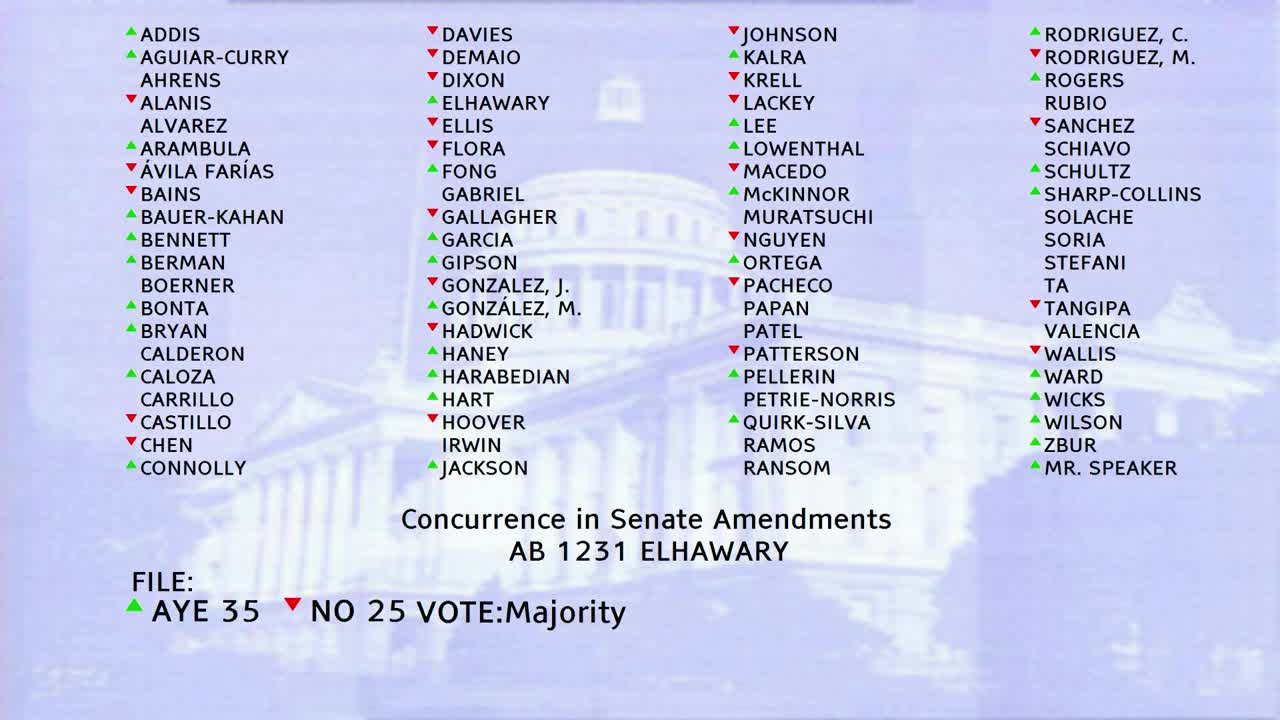 1MIN
Assembly Floor
 2MIN
Assembly Floor
 7MIN
Assembly Standing Committee on Health
Bill Author

Bill Co-Author(s):