AB 1362: Foreign labor contractor registration: agricultural workers.
- Session Year: 2025-2026
- House: Assembly
- Latest Version Date: 2025-10-01
Current Status:
Passed
(2025-10-01: Chaptered by Secretary of State - Chapter 190, Statutes of 2025.)
Introduced
In Committee
Awaiting First Chamber Vote
Passed First Chamber
In Committee
Awaiting Second Chamber Vote
Passed Second Chamber
Enacted
(1)Existing law establishes the Department of Industrial Relations within the Labor and Workforce Development Agency and sets forth the functions of the department, which include, among others, fostering, promoting, and developing the welfare of the wage earners of California and improving their working conditions. Existing law establishes within the department the Division of Labor Standards Enforcement, headed by the Labor Commissioner, for the purposes of enforcing labor laws.
Existing law requires the Labor Commissioner to enforce and administer a program to register and supervise foreign labor contractors who perform foreign labor contracting activities to recruit or solicit foreign workers. Existing law defines foreign workers for purposes of these provisions to mean any person seeking employment who is not a United States citizen or permanent resident but who is authorized by the federal government to work in the United States, including a person who engages in temporary nonagricultural labor, as specified. Existing law requires foreign labor contractors to register under the program, as prescribed. Existing law requires an applicant for registration as a foreign labor contractor to execute a written application in a form prescribed by the commissioner, as specified, that includes, among other things, the names and addresses of all persons financially interested in the proposed operation as a foreign labor contractor, as provided. Existing law imposes specific requirements on foreign labor contractors relating to recruitment or solicitation for employment and relating to work contracts. Existing law authorizes the commissioner to adopt regulations or policies and procedures to implement these provisions. Existing law authorizes the commissioner, or a person aggrieved by a violation of these provisions, to bring certain actions against the violator, including an action for injunctive relief, as provided. A violation of these provisions is a crime.
Existing law makes these provisions applicable only to nonagricultural workers, and exempts persons licensed as farm labor contractors, specified persons exempt from farm labor contractor licensing requirements, and employers of agricultural workers.
This bill would, beginning July 1, 2027, expand the above-described provisions to agricultural workers under the federal H-2A visa program. The bill would make related conforming changes and findings and declarations. The bill would additionally require, beginning July 1, 2027, the above-described application to contain a listing of each federal visa program under which the person will be performing foreign labor contracting activities. The bill would authorize the commissioner to enforce the above-described foreign labor contractor registration provisions through specified procedures, including the issuance of a citation or filing of a civil action against a person who violates those provisions.
(2)Existing law requires farm labor contractors to be licensed by the commissioner and to comply with specified employment laws applicable to farm labor contractors. Existing law prohibits the commissioner from issuing to any person, or renewing, a license to act as a farm labor contractor unless certain conditions are satisfied, including a requirement that the person has executed a written application in a form prescribed by the commissioner as a foreign labor contractor, as prescribed.
This bill would require, beginning July 1, 2027, a person who is licensed or acting as a farm labor contractor and who performs foreign labor contracting activities to register with the commissioner as a foreign labor contractor, as prescribed. The bill would authorize the commissioner to eliminate duplicative application information requirements for information previously obtained from the farm labor contractors license application, as specified. By expanding the application of the foreign labor contractor registration provisions, the bill would expand an existing crime, thereby imposing a state-mandated local program.
This bill would require the Department of Industrial Relations to submit to the Legislature, by January 1, 2028, a study on how to extend foreign labor contractor registration requirements to certain foreign labor contractors, as specified.
(3)The California Constitution requires the state to reimburse local agencies and school districts for certain costs mandated by the state. Statutory provisions establish procedures for making that reimbursement.
This bill would provide that no reimbursement is required by this act for a specified reason.
(1)Existing law establishes the Department of Industrial Relations within the Labor and Workforce Development Agency and sets forth the functions of the department, which include, among others, fostering, promoting, and developing the welfare of the wage earners of California and improving their working conditions. Existing law establishes within the department the Division of Labor Standards Enforcement, headed by the Labor Commissioner, for the purposes of enforcing labor laws.
Existing law requires the Labor Commissioner to enforce and administer a program to register and supervise foreign labor contractors who perform foreign labor contracting activities to recruit or solicit foreign workers. Existing law defines foreign workers for purposes of these provisions to mean any person seeking employment who is not a United States citizen or permanent resident but who is authorized by the federal government to work in the United States, including a person who engages in temporary nonagricultural labor, as specified. Existing law requires foreign labor contractors to register under the program, as prescribed, and prescribed. Existing law requires an applicant for registration as a foreign labor contractor to execute a written application in a form prescribed by the commissioner, as specified, that includes, among other things, the names and addresses of all persons financially interested in the proposed operation as a foreign labor contractor, as provided. Existing law imposes specific requirements on foreign labor contractors relating to recruitment or solicitation for employment and relating to work contracts. Existing law authorizes the commissioner to adopt regulations or policies and procedures to implement these provisions. Existing law authorizes the commissioner, or a person aggrieved by a violation of these provisions, to bring certain actions against the violator, including an action for injunctive relief, as provided. A violation of these provisions is a crime.
Existing law makes these provisions applicable only to nonagricultural workers, and exempts persons licensed as farm labor contractors, specified persons exempt from farm labor contractor licensing requirements, and employers of agricultural workers.
This bill would delete those limitations. would, beginning July 1, 2027, expand the above-described provisions to agricultural workers under the federal H-2A visa program. The bill would make related conforming changes and findings and declarations. By expanding the application of the foreign labor contractor registration provisions, the bill would expand an existing crime, thereby imposing a state-mandated local program. The bill would additionally require, beginning July 1, 2027, the above-described application to contain a listing of each federal visa program under which the person will be performing foreign labor contracting activities. The bill would authorize the commissioner to enforce the above-described foreign labor contractor registration provisions through specified procedures, including the issuance of a citation or filing of a civil action against a person who violates those provisions.
(2)Existing law requires farm labor contractors to be licensed by the commissioner and to comply with specified employment laws applicable to farm labor contractors. Existing law prohibits the commissioner from issuing to any person, or renewing, a license to act as a farm labor contractor unless certain conditions are satisfied, including a requirement that the person has executed a written application in a form prescribed by the commissioner as a foreign labor contractor, as prescribed.
This bill would require, beginning July 1, 2027, a person who is licensed or acting as a farm labor contractor and who performs foreign labor contracting activities to register with the commissioner as a foreign labor contractor, as prescribed. The bill would authorize the commissioner to eliminate duplicative application information requirements for information previously obtained from the farm labor contractors license application, as specified. By expanding the application of the foreign labor contractor registration provisions, the bill would expand an existing crime, thereby imposing a state-mandated local program.
This bill would require the Department of Industrial Relations to submit to the Legislature, by January 1, 2028, a study on how to extend foreign labor contractor registration requirements to certain foreign labor contractors, as specified.
The(3)The California Constitution requires the state to reimburse local agencies and school districts for certain costs mandated by the state. Statutory provisions establish procedures for making that reimbursement.
This bill would provide that no reimbursement is required by this act for a specified reason.
Existing law requires the Labor Commissioner to enforce and administer a program to register and supervise foreign labor contractors who perform foreign labor contracting activities to recruit or solicit foreign workers. Existing law requires foreign labor contractors to register under the program, as prescribed, and imposes specific requirements relating to recruitment or solicitation for employment and relating to work contracts. Existing law authorizes the commissioner to adopt regulations or policies and procedures to implement these provisions. A violation of these provisions is a crime.
Existing law makes these provisions applicable only to nonagricultural workers, and exempts persons licensed as farm labor contractors, specified persons exempt from farm labor contractor licensing requirements, and employers of agricultural workers.
This bill would delete those limitations. The bill would make related findings and declarations. By expanding the application of the foreign labor contractor registration provisions, the bill would expand an existing crime, thereby imposing a state-mandated local program.
The California Constitution requires the state to reimburse local agencies and school districts for certain costs mandated by the state. Statutory provisions establish procedures for making that reimbursement.
This bill would provide that no reimbursement is required by this act for a specified reason.
The Legislature finds and declares all of the following:
(a)It is well documented that foreign labor recruiters charge illegal and exorbitant recruitment fees and misrepresent the terms and conditions of work and visas to foreign workers seeking to work in California on temporary visas legally. These fraudulent activities lead to human trafficking and labor exploitation, harming both workers and ethical businesses.
(b)In 2014, the Legislature passed Senate Bill 477, authored by Senator Darrell Steinberg, to protect the 130,000 foreign workers on temporary work visas who came to California annually. However, due to a drafting error, only 3 percent of Californias temporary foreign workers currently receive the comprehensive protection intended by Senate Bill 477. Since 2014, the number of foreign workers coming legally to California on temporary work visas has increased by almost 169 percent, resulting in 345,000 temporary workers entering California annually who remain unprotected.
(c)The goals of Senate Bill 477, as enacted, were to expand the regulation of foreign labor recruiters by:
(1)Creating a universal standard prohibiting recruitment fees for all workers coming to California.
(2)Requiring the registration of foreign labor recruiters (FLRs) for recruitment activities conducted outside of the United States.
(3)Mandating California employers to use registered FLRs.
(4)Ensuring comprehensive disclosure of working terms and conditions to foreign workers through written contracts during the recruitment process.
(5)Imposing bonds and penalties for noncompliance with the laws requirements.
(d)Although the Legislature intended to protect all visa holders through Senate Bill 477, implementation of the law has left foreign workers unprotected, including visa holders on A-3, B-1, H-1B, H-1C, H-2A, H-2B, L-1, O-1, P-3, and TN temporary work visas. Senate Bill 477 intended to protect these workers from fraudulent foreign labor contracting activity, defined as recruiting or soliciting for compensation a foreign worker residing outside of the United States. Senate Bill 477 focused on activities at the time of recruitment and does not apply to employers who directly recruit their own foreign workers or workers already inside the United States.
(e)From 2014 to 2024, the National Human Trafficking Hotline has documented that the H-2A visa, used to bring foreign workers for seasonal agriculture work, has been involved in the most reports for human trafficking cases among temporary visa holders. H-2A visa holders constitute approximately 14 percent of the foreign workers who come annually to California on temporary work visas. Current law, including Californias farm labor contractor requirements, does not protect these workers and other visa holders from illegal activities at the time of recruitment in their home country, which was the intent of Senate Bill 477.
SEC. 2.Section 9998 of the Business and Professions Code is repealed.SEC. 3.Section 9998 is added to the Business and Professions Code, to read:9998.This chapter shall apply only to the following:
(a)Nonagricultural workers under the federal H-2B visa program established pursuant to Section 101(a)(15)(H)(ii)(b) of the federal Immigration and Nationality Act (8 U.S.C. Sec. 1101(a)(15)(H)(ii)(b)).
(b)On and after July 1, 2027, agricultural workers under the federal H-2A visa program established pursuant to Section 101(a)(15)(H)(ii)(a) of the federal Immigration and Nationality Act (8 U.S.C. Sec. 1101(a)(15)(H)(ii)(a)).
SEC. 4.Section 9998.1 of the Business and Professions Code is amended to read:9998.1.The following definitions are applicable to this chapter:
(a)Person includes any natural person, company, firm, partnership or joint venture, association, corporation, limited liability company, or sole proprietorship.
(b) Foreign labor contracting activity means recruiting or soliciting for compensation a foreign worker who resides outside of the United States in furtherance of that workers employment in California, including when that activity occurs wholly outside the United States. Foreign labor contracting activity does not include the services of an employer, or employee of an employer, if those services are provided directly to foreign workers solely to find workers for the employers own use.
(c)Foreign worker means any person seeking employment who is not a United States citizen or permanent resident but who is authorized by the federal government to work in the United States, including a person who engages in temporary nonagricultural labor pursuant to Section 101(a)(15)(H)(ii)(b) of the federal Immigration and Nationality Act (8 U.S.C. Sec. 1101(a)(15)(H)(ii)(b)). Foreign worker shall also include any worker described in Section 9998.
(d)Foreign labor contractor means any person who performs foreign labor contracting activity, including any person who performs foreign labor contracting activity wholly outside the United States, except that the term does not include any entity of federal, state, or local government. Foreign labor contractor does not include a person licensed by the Labor Commissioner as a talent agency under Chapter 4 (commencing with Section 1700) of Part 6 of Division 2 of the Labor Code, or a person who obtained and maintains full written designation from the United States Department of State under Part 62 of Title 22 of the Code of Federal Regulations.
SEC. 5.Section 9998.1.5 of the Business and Professions Code is amended to read:9998.1.5.(a)(1)On and after July 1, 2016, a person acting as a foreign labor contractor shall register with the Labor Commissioner in accordance with the terms and procedures for registration established by the commissioner by January 1, 2016.
(2)On and after July 1, 2027, a person who is licensed or acting as a farm labor contractor pursuant to Chapter 3 (commencing with Section 1682) of Part 6 of Division 2 of the Labor Code and who performs foreign labor contracting activities shall register with the Labor Commissioner pursuant to the terms and procedures for registration described in paragraph (1).
(3)In registering a person already licensed as a farm labor contractor pursuant to Chapter 3 (commencing with Section 1682) of Part 6 of Division 2 of the Labor Code as a foreign labor contractor pursuant to paragraph (2), the Labor Commissioner has discretion, to the extent feasible for the efficient administration of the program, to eliminate duplicative application information requirements for information previously obtained from the farm labor contractors license application if both of the following conditions are met:
(A)The applicant provides their farm labor contractor license number.
(B)The applicant attests that there are no changes to the information previously provided to the Labor Commissioner.
(4)The commissioner shall post on its internet website the names and contact information for all registered foreign labor contractors and a list of the names and contact information for any foreign labor contractors denied renewal or registration.
(b)The Labor Commissioner may not register a person to act as a foreign labor contractor, and may not renew a registration, until all of the following conditions are satisfied:
(1)The person has executed a written application in a form prescribed by the commissioner, subscribed and sworn to by the person, and containing all of the following:
(A)A statement by the person of all facts required by the commissioner concerning the applicants character, competency, responsibility, and the manner and means by which the person proposes to conduct operations as a foreign labor contractor if registered.
(B)The names and addresses of all persons, except bona fide employees on stated salaries, financially interested, either as partners, associates, or profit sharers, in the proposed operation as a foreign labor contractor, together with the amount of their respective interests.
(C)A declaration consenting to the designation by a court or the commissioner as an agent available to accept service of summons in any action against the registrant, if the registrant has left the jurisdiction in which the action is commenced or otherwise has become unavailable to accept service.
(D)On and after July 1, 2027, a listing of each federal visa program under which the person will be performing foreign labor contractor activities.
(2)The commissioner, after investigation, is satisfied as to the character, competency, and responsibility of the person.
(3)(A)The person has deposited with the commissioner a surety bond in an amount based on the size of the persons annual gross receipts from operations as a foreign labor contractor, as follows:
(i)For gross receipts up to five hundred thousand dollars ($500,000), a fifty-thousand-dollar ($50,000) bond.
(ii)For gross receipts of five hundred thousand dollars ($500,000) to two million dollars ($2,000,000), a one-hundred-thousand-dollar ($100,000) bond.
(iii)For gross receipts greater than two million dollars ($2,000,000), a one-hundred-fifty-thousand-dollar ($150,000) bond.
(B)If the foreign labor contractor has been the subject of a final judgment in a year in an amount equal to that of the bond required, that contractor shall be required to deposit an additional bond within 60 days. The bond shall be payable to the people of the State of California and shall be conditioned on the foreign labor contractor complying with all the terms and provisions of this chapter and paying all damages occasioned to any person by failure to do so, or by any violation of this chapter, or false statements or misrepresentations made in the registration process. The bond shall also be payable for interest on wages and for any damages arising from violation of applicable orders of the Industrial Welfare Commission, and for any other monetary relief awarded to a foreign worker as a result of a violation of law by the foreign labor contractor.
(4)The person has paid to the commissioner a registration fee and a filing fee in a total amount the commissioner determines is sufficient to support the ongoing costs of the program.
(c)The commissioner may not register a person as a foreign labor contractor, if the person was found by a court, the Secretary of Labor, or the commissioner to have violated any of the following provisions:
(1)The federal Trafficking Victims Protection Act of 2000 (Division A, Public Law 106-386), as amended.
(2)Sections 1682 to 1699, inclusive, of the Labor Code.
(3)Section 236.1 of the Penal Code.
(4)An applicable guest worker program.
SEC. 6.Section 9998.8 of the Business and Professions Code is amended to read:9998.8.(a)A person who violates this chapter or who causes or induces another to violate this chapter is guilty of a misdemeanor punishable by a fine of not more than one thousand dollars ($1,000), or imprisonment in the county jail for not more than six months, or both. A person shall not be liable under this subdivision for any act or omission by a foreign labor contractor engaged by the person if the foreign labor contractor was registered with the Labor Commissioner pursuant to Section 9998.1.5 no later than the first day of engagement.
(b)A person who violates any provision of this chapter shall be subject to a civil penalty of no less than one thousand dollars ($1,000) and no more than twenty-five thousand dollars ($25,000) per violation, in addition to any other civil remedies available to the Labor Commissioner or an aggrieved person.
(c)The commissioner or a person aggrieved by a violation of this chapter may do all of the following:
(1)Bring an action for injunctive relief against a person who violates this chapter and, upon prevailing, recover costs and reasonable attorneys fees.
(2)Bring an action for damages, against a person who violates this chapter to recover the greater of all of the aggrieved persons actual damages or five hundred dollars ($500) per employee per violation for an initial violation, and one thousand dollars ($1,000) per employee for each subsequent violation, and, upon prevailing in an action brought pursuant to this section, recover costs and reasonable attorneys fees.
(3)Enforce the liability on the bonds required under Section 9998.1.5.
(d)The Labor Commissioner may enforce the requirements of this chapter through the procedures set forth in Sections 98.3, 98.7, 98.74, and 1197.1 of the Labor Code, including the issuance of a citation or filing of a civil action against a person who violates the requirements of this chapter.
(e)A person shall not be jointly and severally liable for any act or omission by a foreign labor contractor engaged by the person if the foreign labor contractor was registered with the Labor Commissioner pursuant to Section 9998.1.5 no later than the first day of engagement.
(f)Nothing in this section shall be construed to preempt or alter any other rights or remedies, including any causes of action, available under any other federal or state law.
SEC. 7.Section 9998.10 of the Business and Professions Code is amended to read:9998.10.The Labor Commissioner and the deputies and representatives authorized by the commissioner in writing may take assignments of actions on the bonds required under Section 9998.1.5 by aggrieved persons and may prosecute the actions on behalf of persons who, in the judgment of the commissioner, are financially unable to employ counsel, in the same manner that claims are prosecuted under Section 98.3 of the Labor Code.
SEC. 8.Section 9998.12 is added to the Business and Professions Code, to read:9998.12.(a)The Department of Industrial Relations shall submit to the Legislature, by January 1, 2028, and in compliance with Section 9795 of the Government Code, a study on how to extend foreign labor contractor registration requirements to those foreign labor contractors recruiting or soliciting workers authorized to work in the United States under visa programs not described in either subdivision (a) or (b) of Section 9998. This study shall, at a minimum, include all of the following:
(1)An overview of the federal visa programs not covered by this chapters foreign labor contractor registration program.
(2)An analysis of the demographics of foreign workers in California authorized to work through the federal visa programs described in paragraph (1).
(3)A discussion of any additional steps the Labor Commissioner would need to take to ensure all foreign labor contractors are required to register pursuant to this chapter.
(4)A discussion of operational needs, including access to data, fee increases to cover costs, and enforcement options already available pursuant to subdivisions (c) and (d) of Section 9998.8.
(5)Recommendations of options to expand this chapters foreign labor contractor registration program that considers the following:
(A)Risks to workers authorized to work in the United States through the visa programs described in paragraph (1).
(B)Costs and staffing needs to expand the registration process required for foreign labor contractors under this chapter.
(C)Enforcement costs and options, including those authorized by subdivisions (c) and (d) of Section 9998.8.
(D)The operational constraints described in paragraph (4).
(b)The Department of Industrial Relations may contract with a third party to conduct the study described in subdivision (a).
(c)Pursuant to Section 10231.5 of the Government Code, this section is repealed on January 1, 2029.
SEC. 9.No reimbursement is required by this act pursuant to Section 6 of Article XIIIB of the California Constitution because the only costs that may be incurred by a local agency or school district will be incurred because this act creates a new crime or infraction, eliminates a crime or infraction, or changes the penalty for a crime or infraction, within the meaning of Section 17556 of the Government Code, or changes the definition of a crime within the meaning of Section 6 of Article XIIIB of the California Constitution.
The Legislature finds and declares all of the following:
(a)It is well documented that foreign labor recruiters charge illegal and exorbitant recruitment fees and misrepresent the terms and conditions of work and visas to foreign workers seeking to work in California on temporary visas legally. These fraudulent activities lead to human trafficking and labor exploitation, harming both workers and ethical businesses.
(b)In 2014, the Legislature passed Senate Bill 477, authored by Senator Darrell Steinberg, to protect the 130,000 foreign workers on temporary work visas who came to California annually. However, due to a drafting error, only 3 percent of Californias temporary foreign workers currently receive the comprehensive protection intended by Senate Bill 477. Since 2014, the number of foreign workers coming legally to California on temporary work visas has increased by almost 169 percent, resulting in 345,000 temporary workers entering California annually who remain unprotected.
(c)The goals of Senate Bill 477, as enacted, were to expand the regulation of foreign labor recruiters by:
(1)Creating a universal standard prohibiting recruitment fees for all workers coming to California.
(2)Requiring the registration of foreign labor recruiters (FLRs) for recruitment activities conducted outside of the United States.
(3)Mandating California employers to use registered FLRs.
(4)Ensuring comprehensive disclosure of working terms and conditions to foreign workers through written contracts during the recruitment process.
(5)Imposing bonds and penalties for noncompliance with the laws requirements.
(d)Although the Legislature intended to protect all visa holders through Senate Bill 477, implementation of the law has left foreign workers unprotected, including visa holders on A-3, B-1, H-1B, H-1C, H-2A, H-2B, L-1, O-1, P-3, and TN temporary work visas. Senate Bill 477 intended to protect these workers from fraudulent foreign labor contracting activity, defined as recruiting or soliciting for compensation a foreign worker residing outside of the United States. Senate Bill 477 focused on activities at the time of recruitment and does not apply to employers who directly recruit their own foreign workers or workers already inside the United States.
(e)From 2014 to 2024, the National Human Trafficking Hotline has documented that the H-2A visa, used to bring foreign workers for seasonal agriculture work, has been been involved in the most reports for human trafficking cases among temporary visa holders. H-2A visa holders constitute approximately 14 percent of the foreign workers who come annually to California on temporary work visas. Current law, including Californias farm labor contractor requirements, does not protect these workers and other visa holders from illegal activities at the time of recruitment in their home country, which was the intent of Senate Bill 477.
SEC. 2.Section 9998 of the Business and Professions Code is repealed.SEC. 3.Section 9998 is added to the Business and Professions Code, to read:9998.This chapter shall apply only to the following:
(a)Nonagricultural workers under the federal H-2B visa program established pursuant to Section 101(a)(15)(H)(ii)(b) of the federal Immigration and Nationality Act (8 U.S.C. Sec. 1101(a)(15)(H)(ii)(b)).
(b)On and after July 1, 2027, agricultural workers under the federal H-2A visa program established pursuant to Section 101(a)(15)(H)(ii)(a) of the federal Immigration and Nationality Act (8 U.S.C. Sec. 1101(a)(15)(H)(ii)(a)).
SEC. 4.Section 9998.1 of the Business and Professions Code is amended to read:9998.1.The following definitions are applicable to this chapter:
(a)Person includes any natural person, company, firm, partnership or joint venture, association, corporation, limited liability company, or sole proprietorship.
(b) Foreign labor contracting activity means recruiting or soliciting for compensation a foreign worker who resides outside of the United States in furtherance of that workers employment in California, including when that activity occurs wholly outside the United States. Foreign labor contracting activity does not include the services of an employer, or employee of an employer, if those services are provided directly to foreign workers solely to find workers for the employers own use.
(c)Foreign worker means any person seeking employment who is not a United States citizen or permanent resident but who is authorized by the federal government to work in the United States, including a person who engages in temporary nonagricultural labor pursuant to Section 101(a)(15)(H)(ii)(b) of the federal Immigration and Nationality Act (8 U.S.C. Sec. 1101(a)(15)(H)(ii)(b)). Foreign worker shall also include any worker described in Section 9998.
(d)Foreign labor contractor means any person who performs foreign labor contracting activity, including any person who performs foreign labor contracting activity wholly outside the United States, except that the term does not include any entity of federal, state, or local government. Foreign labor contractor does not include a person licensed by the Labor Commissioner as a talent agency under Chapter 4 (commencing with Section 1700) of Part 6 of Division 2 of the Labor Code, or a person who obtained and maintains full written designation from the United States Department of State under Part 62 of Title 22 of the Code of Federal Regulations.
SEC. 5.Section 9998.1.5 of the Business and Professions Code is amended to read:9998.1.5.(a)(1)On and after July 1, 2016, a person acting as a foreign labor contractor shall register with the Labor Commissioner in accordance with the terms and procedures for registration established by the commissioner by January 1, 2016. On and after August 1, 2016, the commissioner shall post on its Internet Web site the names and contact information for all registered foreign labor contractors and a list of the names and contact information for any foreign labor contractors denied renewal or registration.
(2)On and after July 1, 2027, a person who is licensed or acting as a farm labor contractor pursuant to Chapter 3 (commencing with Section 1682) of Part 6 of Division 2 of the Labor Code and who performs foreign labor contracting activities shall register with the Labor Commissioner pursuant to the terms and procedures for registration described in paragraph (1).
(3)In registering a person already licensed as a farm labor contractor pursuant to Chapter 3 (commencing with Section 1682) of Part 6 of Division 2 of the Labor Code as a foreign labor contractor pursuant to paragraph (2), the Labor Commissioner has discretion, to the extent feasible for the efficient administration of the program, to eliminate duplicative application information requirements for information previously obtained from the farm labor contractors license application if both of the following conditions are met:
(A)The applicant provides their farm labor contractor license number.
(B)The applicant attests that there are no changes to the information previously provided to the Labor Commissioner.
(4)The commissioner shall post on its internet website the names and contact information for all registered foreign labor contractors and a list of the names and contact information for any foreign labor contractors denied renewal or registration.
(b)The Labor Commissioner may not register a person to act as a foreign labor contractor, and may not renew a registration, until all of the following conditions are satisfied:
(1)The person has executed a written application in a form prescribed by the commissioner, subscribed and sworn to by the person, and containing all of the following:
(A)A statement by the person of all facts required by the commissioner concerning the applicants character, competency, responsibility, and the manner and means by which the person proposes to conduct operations as a foreign labor contractor if registered.
(B)The names and addresses of all persons, except bona fide employees on stated salaries, financially interested, either as partners, associates, or profit sharers, in the proposed operation as a foreign labor contractor, together with the amount of their respective interests.
(C)A declaration consenting to the designation by a court or the commissioner as an agent available to accept service of summons in any action against the registrant, if the registrant has left the jurisdiction in which the action is commenced or otherwise has become unavailable to accept service.
(D)On and after July 1, 2027, a listing of each federal visa program under which the person will be performing foreign labor contractor activities.
(2)The commissioner, after investigation, is satisfied as to the character, competency, and responsibility of the person.
(3)(A)The person has deposited with the commissioner a surety bond in an amount based on the size of the persons annual gross receipts from operations as a foreign labor contractor, as follows:
(i)For gross receipts up to five hundred thousand dollars ($500,000), a fifty-thousand-dollar ($50,000) bond.
(ii)For gross receipts of five hundred thousand dollars ($500,000) to two million dollars ($2,000,000), a one-hundred-thousand-dollar ($100,000) bond.
(iii)For gross receipts greater than two million dollars ($2,000,000), a one-hundred-fifty-thousand-dollar ($150,000) bond.
(B)If the foreign labor contractor has been the subject of a final judgment in a year in an amount equal to that of the bond required, that contractor shall be required to deposit an additional bond within 60 days. The bond shall be payable to the people of the State of California and shall be conditioned on the foreign labor contractor complying with all the terms and provisions of this chapter and paying all damages occasioned to any person by failure to do so, or by any violation of this chapter, or false statements or misrepresentations made in the registration process. The bond shall also be payable for interest on wages and for any damages arising from violation of applicable orders of the Industrial Welfare Commission, and for any other monetary relief awarded to a foreign worker as a result of a violation of law by the foreign labor contractor.
(4)The person has paid to the commissioner a registration fee and a filing fee in a total amount the commissioner determines is sufficient to support the ongoing costs of the program.
(c)The commissioner may not register a person as a foreign labor contractor, if the person was found by a court, the Secretary of Labor, or the commissioner to have violated any of the following provisions:
(1)The federal Trafficking Victims Protection Act of 2000 (Division A, Public Law 106-386), as amended.
(2)Sections 1682 to 1699, inclusive, of the Labor Code.
(3)Section 236.1 of the Penal Code.
(4)An applicable guest worker program.
SEC. 6.Section 9998.8 of the Business and Professions Code is amended to read:9998.8.(a)A person who violates this chapter or who causes or induces another to violate this chapter is guilty of a misdemeanor punishable by a fine of not more than one thousand dollars ($1,000), or imprisonment in the county jail for not more than six months, or both. A person shall not be liable under this subdivision for any act or omission by a foreign labor contractor engaged by the person if the foreign labor contractor was registered with the Labor Commissioner pursuant to Section 9998.1.5 no later than the first day of engagement.
(b)A person who violates any provision of this chapter shall be subject to a civil penalty of no less than one thousand dollars ($1,000) and no more than twenty-five thousand dollars ($25,000) per violation, in addition to any other civil remedies available to the Labor Commissioner or an aggrieved person.
(c)The commissioner or a person aggrieved by a violation of this chapter may do all of the following:
(1)Bring an action for injunctive relief against a person who violates this chapter and, upon prevailing, recover costs and reasonable attorneys fees.
(2)Bring an action for damages, against a person who violates this chapter to recover the greater of all of his or her the aggrieved persons actual damages or five hundred dollars ($500) per employee per violation for an initial violation, and one thousand dollars ($1,000) per employee for each subsequent violation, and, upon prevailing in an action brought pursuant to this section, recover costs and reasonable attorneys fees.
(3)Enforce the liability on the bonds required under Section 9998.1.5.
(d)The Labor Commissioner may enforce the requirements of this chapter through the procedures set forth in Sections 98.3, 98.7, 98.74, and 1197.1 of the Labor Code, including the issuance of a citation or filing of a civil action against a person who violates the requirements of this chapter.
(d)(e)A person shall not be jointly and severally liable for any act or omission by a foreign labor contractor engaged by the person if the foreign labor contractor was registered with the Labor Commissioner pursuant to Section 9998.1.5 no later than the first day of engagement.
(e)(f)Nothing in this section shall be construed to preempt or alter any other rights or remedies, including any causes of action, available under any other federal or state law.
SEC. 7.Section 9998.10 of the Business and Professions Code is amended to read:9998.10.The Labor Commissioner and the deputies and representatives authorized by the commissioner in writing may take assignments of actions on the bonds required under Section 9998.1.5 by aggrieved persons and may prosecute the actions on behalf of persons who, in the judgment of the commissioner, are financially unable to employ counsel, in the same manner that claims are prosecuted under Section 98 98.3 of the Labor Code.
SEC. 8.Section 9998.12 is added to the Business and Professions Code, to read:9998.12.(a)The Department of Industrial Relations shall submit to the Legislature, by January 1, 2028, and in compliance with Section 9795 of the Government Code, a study on how to extend foreign labor contractor registration requirements to those foreign labor contractors recruiting or soliciting workers authorized to work in the United States under visa programs not described in either subdivision (a) or (b) of Section 9998. This study shall, at a minimum, include all of the following:
(1)An overview of the federal visa programs not covered by this chapters foreign labor contractor registration program.
(2)An analysis of the demographics of foreign workers in California authorized to work through the federal visa programs described in paragraph (1).
(3)A discussion of any additional steps the Labor Commissioner would need to take to ensure all foreign labor contractors are required to register pursuant to this chapter.
(4)A discussion of operational needs, including access to data, fee increases to cover costs, and enforcement options already available pursuant to subdivisions (c) and (d) of Section 9998.8.
(5)Recommendations of options to expand this chapters foreign labor contractor registration program that considers the following:
(A)Risks to workers authorized to work in the United States through the visa programs described in paragraph (1).
(B)Costs and staffing needs to expand the registration process required for foreign labor contractors under this chapter.
(C)Enforcement costs and options, including those authorized by subdivisions (c) and (d) of Section 9998.8.
(D)The operational constraints described in paragraph (4).
(b)The Department of Industrial Relations may contract with a third party to conduct the study described in subdivision (a).
(c)Pursuant to Section 10231.5 of the Government Code, this section is repealed on January 1, 2029.
SEC. 3.SEC. 9.No reimbursement is required by this act pursuant to Section 6 of Article XIIIB of the California Constitution because the only costs that may be incurred by a local agency or school district will be incurred because this act creates a new crime or infraction, eliminates a crime or infraction, or changes the penalty for a crime or infraction, within the meaning of Section 17556 of the Government Code, or changes the definition of a crime within the meaning of Section 6 of Article XIIIB of the California Constitution.
The Legislature finds and declares all of the following:
(a)It is well documented that foreign labor recruiters charge illegal and exorbitant recruitment fees and misrepresent the terms and conditions of work and visas to foreign workers seeking to work in California on temporary visas legally. These fraudulent activities lead to human trafficking and labor exploitation, harming both workers and ethical businesses.
(b)In 2014, the Legislature passed Senate Bill 477, authored by Senator Darrell Steinberg, to protect the 130,000 foreign workers on temporary work visas who came to California annually. However, due to a drafting error, only 3 percent of Californias temporary foreign workers currently receive the comprehensive protection intended by Senate Bill 477. Since 2014, the number of foreign workers coming legally to California on temporary work visas has increased by almost 169 percent, resulting in 345,000 temporary workers entering California annually who remain unprotected.
(c)The goals of Senate Bill 477, as enacted, were to expand the regulation of foreign labor recruiters by:
(1)Creating a universal standard prohibiting recruitment fees for all workers coming to California.
(2)Requiring the registration of foreign labor recruiters (FLRs) for recruitment activities conducted outside of the United States.
(3)Mandating California employers to use registered FLRs.
(4)Ensuring comprehensive disclosure of working terms and conditions to foreign workers through written contracts during the recruitment process.
(5)Imposing bonds and penalties for noncompliance with the laws requirements.
(d)Although the Legislature intended to protect all visa holders through Senate Bill 477, implementation of the law has left foreign workers unprotected, including visa holders on A-3, B-1, H-1B, H-1C, H-2A, H-2B, L-1, O-1, P-3, and TN temporary work visas. Senate Bill 477 intended to protect these workers from fraudulent foreign labor contracting activity, defined as recruiting or soliciting for compensation a foreign worker residing outside of the United States. Senate Bill 477 focused on activities at the time of recruitment and does not apply to employers who directly recruit their own foreign workers or workers already inside the United States.
(e)From 2014 to 2024, the National Human Trafficking Hotline has documented that the H-2A visa, used to bring foreign workers for seasonal agriculture work, has been been involved in the most reports for human trafficking cases among temporary visa holders. H-2A visa holders constitute approximately 14 percent of the foreign workers who come annually to California on temporary work visas. Current law, including Californias farm labor contractor requirements, does not protect these workers and other visa holders from illegal activities at the time of recruitment in their home country, which was the intent of Senate Bill 477.
SEC. 2.Section 9998 of the Business and Professions Code is repealed.9998.This chapter shall apply only to nonagricultural workers as defined by Section 1101(a)(15)(H)(ii)(b) of Title 8 of the federal Immigration and Nationality Act. It shall not apply to any person duly licensed as a farm labor contractor as that term is defined in Section 1682 of the Labor Code nor shall it apply to any person exempt from the licensing requirement in Section 1682.5 of the Labor Code or to any employer employing agricultural workers as defined by Section 1101(a)(15)(H)(ii)(a) of Title 8 of the federal Immigration and Nationality Act.SEC. 3.No reimbursement is required by this act pursuant to Section 6 of Article XIIIB of the California Constitution because the only costs that may be incurred by a local agency or school district will be incurred because this act creates a new crime or infraction, eliminates a crime or infraction, or changes the penalty for a crime or infraction, within the meaning of Section 17556 of the Government Code, or changes the definition of a crime within the meaning of Section 6 of Article XIIIB of the California Constitution.
REVISIONS: HeadingLines 2, 3.|
Date
|
Status
|
|---|---|
| Oct 1, 2025 | Chaptered by Secretary of State - Chapter 190, Statutes of 2025. |
| Oct 1, 2025 | Approved by the Governor. |
| Sep 23, 2025 | Enrolled and presented to the Governor at 4 p.m. |
| Sep 11, 2025 | Senate amendments concurred in. To Engrossing and Enrolling. (Ayes 59. Noes 16. Page 3310.). |
| Sep 10, 2025 | In Assembly. Concurrence in Senate amendments pending. |
| Sep 10, 2025 | Read third time. Passed. Ordered to the Assembly. (Ayes 30. Noes 8. Page 2814.). |
| Sep 8, 2025 | Read second time. Ordered to third reading. |
| Sep 5, 2025 | Read third time and amended. Ordered to second reading. |
| Aug 29, 2025 | Read second time. Ordered to third reading. |
| Aug 29, 2025 | From committee: Do pass. (Ayes 5. Noes 2.) (August 29). |
| Aug 18, 2025 | In committee: Referred to suspense file. |
| Jul 9, 2025 | From committee: Do pass and re-refer to Com. on APPR. (Ayes 11. Noes 1.) (July 8). Re-referred to Com. on APPR. |
| Jun 18, 2025 | From committee: Do pass and re-refer to Com. on JUD. (Ayes 4. Noes 1.) (June 18). Re-referred to Com. on JUD. |
| Jun 11, 2025 | Referred to Coms. on L., P.E. & R. and JUD. |
| Jun 3, 2025 | In Senate. Read first time. To Com. on RLS. for assignment. |
| Jun 2, 2025 | Read third time. Passed. Ordered to the Senate. (Ayes 57. Noes 12. Page 1888.) |
| May 27, 2025 | Read second time. Ordered to third reading. |
| May 23, 2025 | From committee: Do pass. (Ayes 11. Noes 2.) (May 23). |
| May 23, 2025 | Coauthors revised. |
| May 7, 2025 | In committee: Set, first hearing. Referred to APPR. suspense file. |
| Apr 24, 2025 | From committee: Do pass and re-refer to Com. on APPR. (Ayes 5. Noes 0.) (April 23). Re-referred to Com. on APPR. |
| Mar 17, 2025 | Referred to Com. on L. & E. |
| Feb 24, 2025 | Read first time. |
| Feb 22, 2025 | From printer. May be heard in committee March 24. |
| Feb 21, 2025 | Introduced. To print. |
|
Date
|
Description
|
Location
|
Votes
|
|
|---|---|---|---|---|
| Sep 11, 2025 | AB 1362 Kalra Concurrence in Senate Amendments | Assembly Floor |
Passed |
|
| Sep 10, 2025 | Assembly 3rd Reading AB1362 Kalra et al. By Laird | Senate Floor |
Passed |
|
| Aug 29, 2025 | Do pass | Senate Standing Committee on Appropriations |
Passed |
|
| Aug 18, 2025 | Placed on suspense file | Senate Standing Committee on Appropriations |
Passed |
|
| Jul 8, 2025 | Do pass, but first be re-referred to the Committee on [Appropriations] | Senate Standing Committee on Judiciary |
Passed |
|
| Jun 18, 2025 | Do pass, but first be re-referred to the Committee on [Judiciary] | Senate Standing Committee on Labor, Public Employment and Retirement |
Passed |
|
| Jun 2, 2025 | AB 1362 Kalra Assembly Third Reading | Assembly Floor |
Passed |
|
| May 23, 2025 | Do pass. | Assembly Standing Committee on Appropriations |
Passed |
|
| Apr 23, 2025 | Do pass and be re-referred to the Committee on [Appropriations] | Assembly Standing Committee on Labor and Employment |
Passed |
This list shows positions taken on this bill by organizations on the date displayed, which is linked to the original source.
Positions by individuals are not included.
|
Organization
|
Position
|
Date
|
|---|---|---|
| Ambassador (RET.) Cindy Dyer | ** Support | |
| Ambassador (RET.) John Cotton Richmond | ** Support | |
| Ambassador (RET.) Luis C.debaca | ** Support | |
| Ambassador (RET.) Mark P. Lagon | ** Support | |
| Ambassador (RET.) Nancy Ely-raphel | ** Support | |
| Ambassador (RET.) Susan P. Coppedge | ** Support | |
| American Apparel & Footwear Association | ** Support | |
| Asian Americans Advancing Justice Southern California | ** Support | |
| Attorney General Rob Bonta | ** Support | |
| Bet Tzedek Legal Services | ** Support | |
| California Association Of Winegrape Growers | ** Against | |
| California Chamber Of Commerce | ** Against | |
| California Farm Bureau | ** Against | |
| California Federation of Labor Unions, Afl-cio | ** Support | |
| California Food and Farming Network | ** Support | |
| California Rural Legal Assistance | ** Support | |
| California Rural Legal Assistance Foundation, Inc. | ** Support | |
| California State Council of Service Employees International Union | ** Support | |
| Center for Human Rights and Constitutional Law | ** Support | |
| Central California Environmental Justice Network | ** Support | |
| Central Coast Alliance United for a Sustainable Economy | ** Support | |
| Central Valley Justice Coalition | ** Support | |
| centro binacional para el desarrollo indigena oaxaqueno | ** Support | |
| Centro De Los Derechos Del Migrante | ** Support | |
| Cierto | ** Support | |
| Coalition to Abolish Slavery and Trafficking | ** Support | |
| Community Legal Services in East Palo Alto | ** Support | |
| Economic Policy Institute | ** Support | |
| Farm2people | ** Support | |
| Farmworker Justice | ** Support | |
| Former Mayor Steinberg | ** Support | |
| Freedom United | ** Support | |
| Hadassah | ** Support | |
| JCC/Federation of San Luis Obispo | ** Support | |
| JCRC Bay Area | ** Support | |
| Jewish Community Federation and Endowment Fund | ** Support | |
| Jewish Council for Public Affairs | ** Support | |
| Jewish Democratic Club of Marin | ** Support | |
| Jewish Family & Children's Service of Long Beach and Orange County | ** Support | |
| Jewish Family and Children's Services of San Francisco, the Peninsula, Marin and Sonoma Counties | ** Support | |
| Jewish Family Service of San Diego | ** Support | |
| Jewish Family Service of the Desert | ** Support | |
| Jewish Family Services of Silicon Valley | ** Support | |
| Jewish Federation of The Greater San Gabriel and Pomona Valleys | ** Support | |
| Jewish Free Loan Association | ** Support | |
| Jewish Long Beach | ** Support | |
| Jewish Public Affairs Committee | ** Support | |
| Justice At Last | ** Support | |
| Justice In Motion | ** Support | |
| JVS SoCal | ** Support | |
| La Raza Centro Legal | ** Support | |
| Los Angeles County Democratic Party | ** Support | |
| Mixteco/Indígena Community Organizing Project | ** Support | |
| National Domestic Workers Alliance | ** Support | |
| Nisei Farmers League | ** Against | |
| Pesticide Action Network | ** Support | |
| Pilipino Workers Center of Southern California | ** Support | |
| Praeveni U.S., INC. | ** Support | |
| San Francisco Safehouse | ** Support | |
| Sierra Harvest | ** Support | |
| Sister Warriors Freedom Coalition | ** Support | |
| South Asian Network | ** Support | |
| Teamsters California | ** Support | |
| The Coalition for Humane and Immigrant Rights (CHIRLA) | ** Support | |
| The Santa Clara County Wage Theft Coalition | ** Support | |
| The Sunita Jain Anti-Trafficking Initiative | ** Support | |
| The Women's Employment Rights Clinic | ** Support | |
| United Food And Commercial Workers Western States Council | ** Support | |
| Verité | ** Support | |
| Worksafe | ** Support |
CONCURRENCE IN SENATE AMENDMENTS
CSA1 Bill Id:AB 1362
Author:(Kalra)
As Amended Ver:September 05, 2025
Majority vote
SUMMARY
Applies, on and after July 1, 2027, the foreign labor contractor registration requirements to farm labor contractors of agricultural workers under the federal H-2A visa program. Requires the Department of Industrial Relations (DIR) to submit to the Legislature, by January 1, 2028, a study on how to extend foreign labor contractor registration requirements to those foreign labor contractors recruiting or soliciting workers authorized to work in the United States under visa programs not covered by the bill or existing law.
Senate Amendments
- Make clarifying changes.
- Apply, on and after July 1, 2027, the foreign labor contractor registration requirements to farm labor contractors of agricultural workers under the federal H-2A visa program.
- Revise provisions in existing law covering the registration of foreign labor contractors to provide the following:
- Require, on and after July 1, 2027, a person who is licensed or acting as a farm labor contractor and who performs foreign labor contracting activities to register with the LC pursuant to the terms and procedures for registration established by the LC by January 1, 2016.
- State, that in registering a person already licensed as a farm labor contractor, the LC has discretion, to the extent feasible for the efficient administration of the program, to eliminate duplicative application information requirements for information previously obtained from the farm labor contractor's license application if both of the following conditions are met:
- The applicant provides their farm labor contractor license number.
- The applicant attests that there are no changes to the information previously provided to the LC.
- Require the LC to post on its internet website the names and contact information for all registered foreign labor contractors and a list of the names and contact information for any foreign labor contractors denied renewal or registration.
- Require the LC to not register or renew the registration of a foreign labor contractor without a listing of each federal visa program under which the person will be performing foreign labor contractor activities, on and after July 1, 2027.
- Clarify that the LC may enforce the foreign labor contractor registration requirements by procedures set forth in Labor Code Sections 98.3, 98.7, 98.74, and 1197.1, including by the issuance of a citation or the filing of a civil action against a person who commits a violation.
- Require the DIR to submit to the Legislature, by January 1, 2028, a study on how to extend foreign labor contractor registration requirements to those foreign labor contractors recruiting or soliciting workers authorized to work in the United States under visa programs not described in 2) nor covered by existing law. This study shall, at a minimum, include all of the following:
- An overview of the federal visa programs not covered by this chapter's foreign labor contractor registration program.
- An analysis of the demographics of foreign workers in California authorized to work through the federal visa programs described in a) above.
- A discussion of any additional steps the LC would need to take to ensure all foreign labor contractors are required to register pursuant to this chapter.
- A discussion of operational needs, including access to data, fee increases to cover costs, and enforcement options already available, as specified.
- Recommendations of options to expand this chapter's foreign labor contractor registration program that considers the following:
- Risks to workers authorized to work in the United States through the visa programs described in a) above.
- Costs and staffing needs to expand the registration process required for foreign labor contractors under this chapter.
- Enforcement costs and options, as specified.
- The operational constraints described in 5) d) above.
- Authorize the DIR to contract with a third party to conduct the study.
- Repeal the provisions regarding the study on January 1, 2029.
COMMENTS
While H-2B workers gained important protections related to the foreign labor recruitment process over ten years ago, some 345,000 immigrant workers were left out.[1] H-2A workers make up a significant portion of these workers and are highly susceptible to exploitation and abuse both at the time of recruitment and when they begin work. A 2020 study by the Centro De Los Derechos Del Migrante found that many workers are subject to economic coercion when they are recruited. The majority of surveyed H-2A workers reported that they started their employment in debt and forty-three percent reported that the salary they received was less than what they were promised.[2] Over sixty percent had to take out a loan just to come to the United States.[3]
Federal labor law covering H-2A workers has done little to protect this vulnerable workforce. The Federal Department of Labor's Wage and Hour Division which enforces the law establishing the H-2A guest worker program is woefully understaffed and underfunded. In 2019, for example, the Division had just under 1,500 employees, including 780 investigators, and a budget of $229 million to investigate 10.2 million U.S. establishments with 148 million employees.[4] Reports have shown that farm labor contractors are indeed the biggest violators of federal labor standards for farm workers in California.[5]
According to the Author
According to the author, "For too long, the vast majority of temporary foreign workers have remained unprotected and subject to the documented abuses of unscrupulous foreign labor recruiters. AB 1362 will close a harmful loophole by requiring all foreign labor recruiters to register with the Labor Commissioner, not just those who recruit workers through the H-2B visa category. This will ensure all temporary immigrant workers, such as domestic workers, agricultural workers, and nurses, are protected against wage theft, human trafficking, and other labor violations."
Arguments in Support
The Sunita Jain Anti-Trafficking Initiative, Freedom United, Justice at Last, The Santa Clara County Wage Theft Coalition, The Coalition for Humane and Immigrant Rights (CHIRLA, Bet Tzedek Legal Services and Farmworker Justice), sponsors of the bill, state, "The Agriculture Community and business communities' assertions that the protections under AB 1362 for H-2A workers are duplicative or unnecessary are deeply flawed. Farm Labor Contractors have consistently been documented as some of the worst offenders in cases of wage theft and worker abuse across California. AB 1362 is specifically designed to protect workers at the critical point of recruitment, where they face the highest risk of exploitation. It is essential to note that the provisions governing Farm Labor Contractors and the unique protections outlined in AB 1362 for Foreign Labor Recruiters are distinct and complementary, with no overlap.
Farm Labor Contractors involved in the recruitment of foreign H-2A workers must be required to register under AB 1362. This ensures consistent and uniform protections for all temporary visa workers entering California. Furthermore, the fact that the National Human Trafficking Hotline reports H-2A workers as the largest category of abuse cases underscores the pervasive exploitation by Foreign Labor Recruiters and the glaring inadequacies in the enforcement of current laws regarding H-2A workers.
Without these critical protections, such exploitation will undoubtedly persist. AB 1362 is a necessary and timely measure to uphold workers' rights and reaffirm California's leadership in combating labor trafficking and abuse."
Arguments in Opposition
A coalition of employer organizations, including the California Farm Bureau, is opposed and states "Under the present federal regulations employers must, among other requirements, demonstrate the need to hire an H-2A visa holder, pay the highest of the Adverse Effect Wage Rate (AEWR), the prevailing wage determined by a prevailing wage survey, or the applicable statutory minimum wage, guarantee work hours, and provide housing at no cost to the worker. H-2A employees must also receive a copy of their work contract in a language that they understand.
In addition, California also has a unique FLC licensing program that is managed and enforced by the California Labor Commissioner's Office and already covers farm labor contractors and, in fact, served as a model for the creation of SB 477. This program was specifically referenced as a model in the Assembly Committee on Judiciary analysis for SB 477, "currently California law requires licensing of farm labor contractors only. This has curtailed human trafficking-related abuses…" As a result, expanding the California foreign labor contracting regulation to cover agricultural workers – who are already covered federally and are already covered by a program that preceded and inspired the foreign labor contracting regulation – makes little sense."
FISCAL COMMENTS
According to the Senate Appropriations Committee:
- The Department of Industrial Relations (DIR) indicates that, absent an approved fee increase, at a minimum it would incur first-year costs of $2.5 million, and $1.4 million annually thereafter, to implement and maintain the Foreign Labor Contractor Registration Program under the bill. To the extent that the regulated community is larger than DIR's estimate, resulting costs could be higher.
- The bill would result in an expansion of the Labor Commissioner's (LC's) foreign labor contractor registration requirement to apply to more contractors, a violation of which is punishable as a misdemeanor and subject to a civil penalty and other civil remedies through the courts. Consequently, this bill would result in potentially significant cost pressures; the magnitude is unknown (Trial Court Trust Fund (TCTF)). The specific number of new actions that could be filed under the bill also is unknown; however, it generally costs about $10,500 to operate a courtroom for an eight-hour day. Courts are not funded on the basis of workload, and increased pressure on TCTF may create a need for increased funding for courts from the General Fund. The enacted 2025-26 budget includes $38 million in ongoing support from the General Fund to continue to backfill TCTF for revenue declines.
VOTES:
ASM LABOR AND EMPLOYMENT: 5-0-2
YES: Ortega, Elhawary, Kalra, Lee, Ward
ABS, ABST OR NV: Flora, Chen
ASM APPROPRIATIONS: 11-2-2
YES: Wicks, Arambula, Calderon, Caloza, Elhawary, Fong, Mark González, Hart, Pacheco, Pellerin, Solache
NO: Dixon, Tangipa
ABS, ABST OR NV: Sanchez, Ta
ASSEMBLY FLOOR: 57-12-10
YES: Addis, Aguiar-Curry, Ahrens, Alvarez, Arambula, Ávila Farías, Bauer-Kahan, Bennett, Berman, Boerner, Bonta, Bryan, Calderon, Caloza, Carrillo, Connolly, Elhawary, Fong, Gabriel, Garcia, Gipson, Mark González, Haney, Harabedian, Hart, Irwin, Jackson, Kalra, Krell, Lee, Lowenthal, McKinnor, Muratsuchi, Nguyen, Ortega, Pacheco, Papan, Patel, Pellerin, Petrie-Norris, Quirk-Silva, Ramos, Ransom, Celeste Rodriguez, Michelle Rodriguez, Rogers, Blanca Rubio, Schiavo, Schultz, Sharp-Collins, Solache, Stefani, Valencia, Ward, Wicks, Zbur, Rivas
NO: Alanis, Castillo, DeMaio, Dixon, Ellis, Gallagher, Jeff Gonzalez, Hadwick, Hoover, Patterson, Sanchez, Wallis
ABS, ABST OR NV: Bains, Chen, Davies, Flora, Lackey, Macedo, Soria, Ta, Tangipa, Wilson
UPDATED
VERSION: September 05, 2025
CONSULTANT: Megan Lane / L. & E. / (916) 319-2091 FN: 0001905
Department of Homeland Security periodically outlines the number of Nonimmigrants Residing in the United States – recent reports for 2016 and 2019 can be found at https://ohss.dhs.gov/sites/default/files/2023-12/Nonimmigrant_Population%2520Estimates_2016_0.pdf and https://ohss.dhs.gov/sites/default/files/2023-12/ni_population_estimates_fiscal_years_2017_-_2019v2.pdf. ↑
"Ripe for Reform: Abuses of Agricultural Workers in the H-2A Visa Program," Centro De Los Derechos Del Migrante, Inc., p. 5 (updated in 2020 to reflect the COVID-19 pandemic). ↑
Id. at 7. ↑
Daniel Costa, Philip Martin, and Zachariah Rutledge, Federal labor standards enforcement in agriculture: Data reveal the biggest violators and raise new questions about how to improve and target efforts to protect farmworkers Dec.15, 2020. Available at https://epi.org/213135. ↑
Ibid. ↑
SENATE RULES COMMITTEE Office of Senate Floor Analyses (916) 651-1520 Fax: (916) 327-4478 | AB 1362 |
THIRD READING
Bill No: AB 1362
Author: Kalra (D), et al.
Amended: 9/5/25
Vote: 21
SENATE LABOR, PUB. EMP. & RET. COMMITTEE: 4-1, 6/18/25
AYES: Smallwood-Cuevas, Cortese, Durazo, Laird
NOES: Strickland
SENATE JUDICIARY COMMITTEE: 11-1, 7/8/25
AYES: Umberg, Allen, Arreguín, Ashby, Caballero, Durazo, Laird, Stern, Wahab, Weber Pierson, Wiener
NOES: Niello
NO VOTE RECORDED: Valladares
SENATE APPROPRIATIONS COMMITTEE: 5-2, 8/29/25
AYES: Caballero, Cabaldon, Grayson, Richardson, Wahab
NOES: Seyarto, Dahle
ASSEMBLY FLOOR: 57-12, 6/2/25 - See last page for vote
SUBJECT: Foreign labor contractor registration: agricultural workers
SOURCE: Coalition for Humane Immigrant Rights
Farmworker Justice, Freedom United
Justice At Last
Pilipino Workers Center of Southern California
Santa Clara Wage Theft Coalition
Sunita Jain Anti-Trafficking Initiative
DIGEST:
This bill extends the foreign labor contractor registration requirements and oversight under the Labor Commissioner to all agricultural workers under the H-2A visa program, as specified, and requires Department of Industrial Relations (DIR) to conduct a study on how to expand the existing law to other temporary work visas.
Senate Floor Amendments of 9/5/25 (1) narrows the bill to H-2A visas beginning on July 1, 2027, (2) allows the Labor Commissioner enforce these requirements, as specified, (3) requires DIR to conduct a study on how to expand the existing law to other temporary work visa categories, as specified, and (4) makes technical, conforming changes, and adds co-authors.
ANALYSIS:
Existing law:
- Establishes within DIR, various entities including the Division of Labor Standards Enforcement (DLSE) under the direction of the Labor Commissioner, and empowers the Labor Commissioner with ensuring a just day’s pay in every workplace and promotes economic justice through robust enforcement of labor laws. (Labor Code §79-107)
- Requires, on and after July 1, 2016, a person acting as a foreign labor contractor to register with the Labor Commissioner, as specified. (Business and Professions Code §9998.1.5)
- Requires the Labor Commissioner, by August 1, 2016, to post on its internet website the name and contact information for all registered foreign labor contractors and a list of the names and contact information for any foreign labor contractors denied renewal or registration. (Business and Professions Code §9998.1.5)
- Prohibits the Labor Commissioner from registering a person to act as a foreign labor contractor, or renewing a registration, until specified conditions are met, including a written application, a surety bond, and a registration fee. (Business and Professions Code §9998.1.5)
- Requires persons who know or should know that they are using a foreign labor contractor to procure foreign workers to disclose specified information to the Labor Commissioner. (Business and Professions Code §9998.2)
- Requires a foreign labor contractor to disclose specified information in writing to each foreign worker, in that worker's primary language, at the time of the foreign worker’s recruitment. The information, among other things, must include a form specified by the Labor Commissioner that informs workers about their rights, including a notice that workers cannot be forced to pay processing, placement, transportation, or legal fees, which, by law, are the responsibility of the foreign labor contractor. The statement must also inform workers of their contractual rights and protections afforded to them under the federal Trafficking Victims Protection Act of 2000. (Business and Professions Code §9998.2.5)
- Prohibits a foreign labor contractor from engaging in certain activities, including making false or misleading claims about the terms and conditions of work, recruiting minors, intimidating or in any manner discriminating against a foreign worker or a member of the workers' family in retaliation for the foreign worker's exercising a legal right under the foreign labor contractor law, or promising workers that they will be offered an opportunity for citizenship or legal permanent residence in the United States. (Business and Professions Code §9998.3-9998.7)
- Subjects any person who violates these provisions to civil penalties and civil actions for damages or injunctive relief. (Business and Professions Code §9998.8)
- Defines, for purposes of the foreign labor contractor registration program, the following terms:
- “Person” as any natural person, company, firm, partnership or joint venture, association, corporation, limited liability company, or sole proprietorship. (Business and Professions Code §9998.1(a))
- “Foreign labor contracting activity” to mean recruiting or soliciting for compensation a foreign worker who resides outside of the United States in furtherance of that worker’s employment in California, including when that activity occurs wholly outside the United States. (Business and Professions Code §9998.1(b))
- Specifies that “foreign labor contracting activity” does not include the services of an employer, or employee of an employer, if those services are provided directly to foreign workers solely to find workers for the employer’s own use.
- “Foreign worker” as any person seeking employment who is not a United States citizen or permanent resident but who is authorized by the federal government to work in the United States, including a person who engages in temporary nonagricultural labor pursuant to Section 101(a)(15)(H)(ii)(b) of the federal Immigration and Nationality Act (8 U.S.C. Sec. 1101(a)(15)(H)(ii)(b)). (Business and Professions Code §9998.1(c))
- “Foreign labor contractor” as any person who performs foreign labor contracting activity, including any person who performs foreign labor contracting activity wholly outside the United States, except that the term does not include any entity of federal, state, or local government. (Business and Professions Code §9998.1(d))
- “Foreign labor contractor” does not include a person licensed by the Labor Commissioner as a talent agency under Chapter 4 (commencing with Section 1700) of Part 6 of Division 2 of the Labor Code, or a person who obtained and maintains full written designation from the United States Department of State under Part 62 of Title 22 of the Code of Federal Regulations.
- Specifies that the provisions regulating foreign labor contractors only apply to “nonagricultural workers,” as defined by Section 1101(a)(15)(H)(ii)(b) of Title 8 of the federal Immigration and Nationality Act. (Business and Professions Code §9998)
- Further specifies that the provisions regulating foreign labor contractors does not apply to:
- Any person duly licensed as a “farm labor contractor,” as any person who, for a fee, employs workers to render personal services in connection with the production of any farm products to, for, or under the direction of a third person, or who recruits, solicits, supplies, or hires workers on behalf of an employer engaged in the growing or producing of farm products, and who, for a fee, provides in connection therewith one or more of the following services: furnishes board, lodging, or transportation for those workers; supervises, times, checks, counts, weighs, or otherwise directs or measures their work; or disburses wage payments to these persons,
- Any person exempt from the licensing requirement in Section 1682.5 of the Labor Code, or
- Any employer employing agricultural workers, as defined by Section 1101(a)(15)(H)(ii)(a) of Title 8 of the federal Immigration and Nationality Act. (Business and Professions Code §9998)
- Requires the Labor Commissioner to issue a license to any person acting as a farm labor contractor, as specified, and establishes civil penalties for any person who violates these provisions. (Labor Code §1683)
- Prohibits the Labor Commissioner from issuing a license to a person to act as a farm labor contractor, or renewing that license, until specified conditions are met, including a written application, a surety bond, and a license fee, as specified. (Labor Code §1683-1699)
- Permits the Labor Commissioner to revoke, suspend, or refuse to renew a license if the farm labor contractor fails to comply with specified state or federal laws, or has been found by a court or administrative agency to have committed sexual harassment of an employee. (Labor Code §1690)
- Requires every licensed farm labor contractor to, among other things, make specified disclosures to employers and workers, maintain specified records, promptly pay all moneys owed to workers, conspicuously post information related to workers' rights, provide mandated training, including sexual harassment prevention training for all supervisors and farm workers, and comply with all federal law requirements, including the Migrant and Seasonal Agricultural Workers Protection Act. (Labor Code §1695-1696)
- Establishes, under the federal Migrant and Seasonal Agricultural Worker Protection Act (MSPA), employment standards for migrant and seasonal farmworkers related to wages, housing, transportation, disclosures and recordkeeping. The MSPA also requires farm labor contractors to register with the U.S. Department of Labor. (29 U.S.C. Sections 1801, et seq.; 29 C.F.R. Part 500.)
- Authorizes, under the federal Immigration and Naturalization Act, the lawful admission of temporary foreign workers who have no intention of abandoning their country of origin or becoming citizens or legal permanent residents in the United States. Distinguishes between foreign temporary workers (H-2A workers) who perform agricultural labor or services of a temporary or seasonal nature, and foreign temporary workers who perform nonagricultural labor or services (H-2B workers) of a temporary or seasonal nature. (8 U.S.C. 1101 (a) (15) (H) (i)-(ii).)
This bill:
- Beginning July 1, 2027, expands the foreign labor contractor registration program requirements to agricultural workers under the federal H2-A visa program.
- Beginning July 1, 2027, requires a person who is licensed or acting as a farm labor contractor, as defined, and who performs foreign labor contracting activities to register with the Labor Commissioner, as specified.
- Specifies that the Labor Commissioner, in registering a person already licensed as a farm labor contractor, as defined, has discretion, to the extent feasible for the efficient administration of the program, to eliminate duplicative application information requirements for information previously obtained under the farm labor contractor’s license if the applicant provides the farm labor contractor license number and attests that there are no changes in the information previously provided to the Labor Commissioner.
- Requires a person who is registering to act as a foreign labor contractor to include in their written application, beginning in July 1, 2027, a listing of each federal visa program under which the person will be performing foreign labor contractor activities.
- Allows the Labor Commissioner to enforce these requirements, as specified.
- Requires DIR to submit to the Legislature, by January 1, 2028, as specified, a study of how to extend foreign labor contractor registration requirements to those foreign labor contractors recruiting or soliciting workers authorized to work in the United States under visa programs not included in this bill. That study, at a minimum, must include all of the following:
- An overview of federal visa programs not covered by the foreign labor contractor registration program.
- An analysis of the demographics of foreign workers in California authorized to work through federal visa programs, as specified.
- A discussion on any additional steps the Labor Commissioner would need to take to ensure all foreign labor contractors are required to register under the foreign labor contractor registration program.
- A discussion of operational needs, including access to data, fee increases to cover costs, and enforcement options, as specified.
- Recommendations of options to expand the foreign labor contractor registration program that considers the following:
- Risks to workers authorized to work in the United States through the visa programs, as specified.
- Costs and staffing needs to expand the registration process required for foreign labor contractors under the foreign labor contractor registration program.
- Enforcement costs and options, as specified.
- Operational constraints, as specified.
- Allows DIR to contract with a third party to conduct the study.
- Repeals this study requirement on January 1, 2029, pursuant to Section 10231.5 of the Government Code.
- Makes a series of related and conforming changes.
- Makes a series of legislative findings and declarations related to foreign labor recruiters.
Background
Foreign Labor Visas. While employers in the United States may recruit foreign nationals to work in the country with the protection of specific visas granted by the federal government on a temporary or permanent basis, the individuals must first obtain authorization to work in the U.S. A nonimmigrant visa provides temporary status and work authorization and immigrant visas grant permanent residency status.
Most employment-based nonimmigrant visas require employer sponsorship where the employer files for a specific visa with the U.S. Citizenship and Immigration Services (USCIS) on behalf of the prospective employee. Some circumstances also require U.S. Department of Labor (DOL) approval to demonstrate that the foreign national will not displace U.S. workers. Below are some of the most common visa classifications under which a foreign national may temporarily work or train in the U.S:
- H-1B: Specialty occupations in fields requiring highly specialized knowledge, specified fashion models, or certain services of an exceptional nature, as specified.
- H-2A: Temporary agricultural workers.
- H-2B: Temporary nonagricultural workers performing other services or labor.
- H-3: Trainees or special education exchange visitors.
- I: Representatives of foreign media.
- L-1A: Intra-company transferees (executives, managers).
- L-1B: Intra-company transferees (employees with specialized knowledge).
- O-1: Individuals with extraordinary ability or achievement in the sciences, arts, education, business, or athletics.
- P-3: Foreign nationals who perform, teach, or coach a program that is culturally unique.
- R-1: Temporary religious workers.
According to the Economic Policy Institute, California is the state with the largest number of migrant workers, with at least 300,000 nonimmigrants who were “temporary workers” in a list of visa programs included by U.S. Department of Homeland Security (DHS) in 2019.
Foreign Labor Contractors and the Legislative History on this Bill. California’s foreign labor contractor laws were enacted in 1988 to regulate individuals – i.e. foreign labor contractors – who, for compensation, recruited or solicited persons abroad to work as temporary migrant workers in the U.S.
Recruitment abuses are well-documented and temporary migrant workers often find themselves facing abuse before arriving in the U.S. by having to pay exorbitant and illegal fees to labor recruiters to secure employment in the U.S. In 2013, SB 516 (Steinberg) was introduced to make several changes to foreign labor contractor laws aimed at strengthening the law and provide more protections to foreign workers. SB 516 was vetoed but later reintroduced and signed into law the next year with SB 477 (Steinberg, Chapter 711, Statutes of 2014).
Among other things, SB 477 required foreign labor contractors to register with the Labor Commissioner, which included payment of a licensing fee and the posting of a surety bond. Foreign labor contractors were also required to make certain disclosures to workers and employers about their rights and responsibilities and the law imposed penalties on any employer who used an unregistered foreign labor contractor. SB 477 also expanded the remedies available to foreign workers aggrieved by a violation of the law, and extended the prohibition against retaliation to include acts of retaliation against a worker's family members.
SB 477 expressly exempted two categories of foreign workers: foreign workers recruited by talent agencies, because talent agencies were already licensed and subject to protective regulations, and holders of J-1 visas that authorize persons participating in an educational or cultural program to work while they are in the United States. The changes enacted with SB 477 were to various codes within Chapter 21.5 of the Business and Professions Code including Section 9998.1, which amended the definitions of “foreign labor contractor,” “foreign labor contracting activity,” and “foreign worker” as noted under existing law above.
The changes made to the foreign labor contractor provisions under SB 477, however, did not amend section 9998, which limited the chapter’s applicability to only “nonagricultural workers” as defined by Section 1101(a)(15)(H)(ii)(b) of Title 8 of the federal Immigration and Nationality Act, which are H-2B visas. The chapter also expressly stated that it did not apply to a "farm labor contractor" or to any employer of H-2A agricultural workers.
This bill would include agricultural H-2A visa workers to the foreign labor contractor registration program requirements. The bill also requires DIR to conduct a study with recommendations of how to extend foreign labor contractor registration to these recruiting or soliciting workers in the U.S. under visa programs not included in this bill.
Foreign Labor Contractors vs. Farm Labor Contractors. Although this bill would ensure that the foreign labor contractor registration program requirements cover agricultural H2-A visa holders, opponents argue that “H-2A visas were simply not intended to be covered by the program because of the lack of necessity to do so because the H-2A visa program is already regulated by a restrictive application and enforcement program at the federal level and California has a specific farm labor contractor (FLC) licensing program that is managed by the California Labor Commissioner’s Office.”
While both foreign labor contractor and farm labor contractor provisions contain registration and bonding requirements with the Labor Commissioner, the laws appear to regulate two different steps in the process of engaging in foreign labor. Specifically, the foreign labor contractor statute contains provisions that are focused on the recruitment activities to bring foreign workers to the country, whereas the farm labor contractor provisions address processes and protections for workers once they are working in the country.
[NOTE: See the Senate Labor, Public Employment and Retirement Committee analysis for detailed background of this bill.]
Related/Prior Legislation
AB 364 (Rodriguez, 2022, Vetoed) was identical to this bill, but did not include findings and declarations. The bill was vetoed by Governor Newsom.
AB 1913 (Kalra, 2018) was identical to AB 364. The bill failed passage on the Assembly floor.
SB 477 (Steinberg, Chapter 711, Statutes of 2014) established a registration and oversight process for foreign labor contractors with the Labor Commissioner, including enumerated protections for temporary foreign workers who are recruited to work in California.
SB 516 (Steinberg, 2013, Vetoed) was nearly identical to SB 477, but it specified a contractor registration fee of $500. The bill was vetoed by Governor Brown.
FISCAL EFFECT: Appropriation: No Fiscal Com.: Yes Local: Yes
According to the Senate Appropriations Committee:
- The Department of Industrial Relations (DIR) indicates that, absent an approved fee increase, at a minimum it would incur first-year costs of $2.5 million, and $1.4 million annually thereafter, to implement and maintain the Foreign Labor Contractor Registration Program under the bill. To the extent that the regulated community is larger than DIR’s estimate, resulting costs could be higher.
- The bill would result in an expansion of the Labor Commissioner’s (LC’s) foreign labor contractor registration requirement to apply to more contractors, a violation of which is punishable as a misdemeanor and subject to a civil penalty and other civil remedies through the courts. Consequently, this bill would result in potentially significant cost pressures; the magnitude is unknown (Trial Court Trust Fund (TCTF)). The specific number of new actions that could be filed under the bill also is unknown; however, it generally costs about $10,500 to operate a courtroom for an eight-hour day. Courts are not funded on the basis of workload, and increased pressure on TCTF may create a need for increased funding for courts from the General Fund. The enacted 2025-26 budget includes $38 million in ongoing support from the General Fund to continue to backfill TCTF for revenue declines.
[NOTE: The Senate Appropriations Committee analysis reflects the bill as amended on February 21, 2025 and not the most recent bill language, as amended on 9/5/25.]
SUPPORT: (Verified 9/5/25)
Coalition for Humane Immigrant Rights (Co-Source)
Farmworker Justice (Co-Source)
Freedom United (Co-Source)
Justice At Last (Co-Source)
Pilipino Workers Center of Southern California (Co-Source)
Santa Clara Wage Theft Coalition (Co-Source)
Sunita Jain Anti-Trafficking Initiative (Co-Source)
Attorney General Rob Bonta
Ambassador (RET.) Cindy Dyer
Ambassador (RET.) John Cotton Richmond
Ambassador (RET.) Luis C.debaca
Ambassador (RET.) Mark P. Lagon
Ambassador (RET.) Nancy Ely-raphel
Ambassador (RET.) Susan P. Coppedge
American Apparel & Footwear Association
Asian Americans Advancing Justice Southern California
Bet Tzedek
Bet Tzedek Legal Services
California Federation of Labor Unions, Afl-cio
California Food and Farming Network
California Rural Legal Assistance
California Rural Legal Assistance Foundation, INC.
California State Council of Service Employees International Union
Center for Human Rights and Constitutional Law
Central California Environmental Justic Network
Central Coast Alliance United for a Sustainable Economy
Central Valley Justice Coalition
Centro Binacional Para El Desarrollo Indigena Oaxaqueño
Centro De Los Derechos Del Migrante
Cierto
Coalition to Abolish Slavery and Trafficking
Community Legal Services in East Palo Alto
Economic Policy Institute
Farm2people
Former Mayor Steinberg
Hadassah
Jcc/Federation of San Luis Obispo
Jcrc Bay Area
Jewish Community Federation and Endowment Fund
Jewish Council for Public Affairs
Jewish Democratic Club of Marin
Jewish Family & Children's Service of Long Beach and Orange County
Jewish Family and Children's Services of San Francisco, the Peninsula, Marin and Sonoma Counties
Jewish Family Service of San Diego
Jewish Family Service of the Desert
Jewish Family Services of Silicon Valley
Jewish Federation of the Greater San Gabriel and Pomona Valleys
Jewish Free Loan Association
Jewish Long Beach
Jewish Public Affairs Committee
Justice in Motion
Jvs Socal
LA Raza Centro Legal
Los Angeles County Democratic Party
Mixteco/indígena Community Organizing Project
National Domestic Workers Alliance
Pesticide Action Network
Praeveni U.S. INC.
San Francisco Safehouse
Sierra Harvest
Sister Warriors Freedom Coalition
South Asian Network
Teamsters California
The Women's Employment Rights Clinic
United Food and Commercial Workers - Western States Council
Verité
Worksafe
OPPOSITION: (Verified 9/5/25)
California Association of Winegrape Growers
California Chamber of Commerce
California Farm Bureau
Nisei Farmers League
ARGUMENTS IN SUPPORT: According to the sponsors, the Sunita Jain Anti-Trafficking Initiative, Pilipino Workers Center of Southern California, Santa Clara Wage Theft Coalition, Coalition for Humane Immigrant Rights (CHIRLA), Farmworker Justice, Freedom United, and Justice At Last:
“The temporary visa program creates a specific vulnerability to trafficking. Based on false promises made by fraudulent foreign labor recruiters (FRLs), workers often take on exorbitant debt to pay for a legal visa to come to California and then, due to false promises and coercion, are trafficked into exploitative situations. AB 1362 provides a vital framework for addressing this systemic exploitation and ensuring California remains a leader in combating human trafficking.
The Agriculture Community and business communities' assertions that the protections under AB 1362 for H-2A workers are duplicative or unnecessary are deeply flawed. Farm Labor Contractors have consistently been documented as some of the worst offenders in cases of wage theft and worker abuse across California. AB 1362 is specifically designed to protect workers at the critical point of recruitment, where they face the highest risk of exploitation. It is essential to note that the provisions governing Farm Labor Contractors and the unique protections outlined in AB 1362 for Foreign Labor Recruiters are distinct and complementary, with no overlap.
Farm Labor Contractors involved in the recruitment of foreign H-2A workers must be required to register under AB 1362. This ensures consistent and uniform protections for all temporary visa workers entering California. Furthermore, the fact that the National Human Trafficking Hotline reports H-2A workers as the largest category of abuse cases underscores the pervasive exploitation by Foreign Labor Recruiters and the glaring inadequacies in the enforcement of current laws regarding H-2A workers.
Without these critical protections, such exploitation will undoubtedly persist. AB 1362 is a necessary and timely measure to uphold workers' rights and reaffirm California's leadership in combating labor trafficking and abuse.”
ARGUMENTS IN OPPOSITION: According to the opposition, including the California Association of Winegrape Growers, California Chamber of Commerce, California Farm Bureau, and Nisei Farmers League:
“This bill unnecessarily expands the provisions of California’s foreign labor contracting regulations to include agricultural workers under the H-2A visa program. The H-2A visa program was NOT overlooked during the discussion and negotiations of SB 477 (Steinberg) in 2014 which created the foreign labor contracting registration program. H-2A visas were simply not intended to be covered by the program because of the lack of necessity to do so because the H-2A visa program is already regulated by a restrictive application and enforcement program at the federal level and California has a specific farm labor contractor (FLC) licensing program that is managed by the California Labor Commissioner’s Office.
Under the present federal regulations employers must, among other requirements, demonstrate the need to hire an H-2A visa holder, pay the highest of the Adverse Effect Wage Rate (AEWR), the prevailing wage determined by a prevailing wage survey, or the applicable statutory minimum wage, guarantee work hours, and provide housing at no cost to the worker. H-2A employees must also receive a copy of their work contract in a language that they understand.
In addition, California also has a unique FLC licensing program that is managed and enforced by the California Labor Commissioner’s Office and already covers farm labor contractors and, in fact, served as a model for the creation of SB 477. This program was specifically referenced as a model in the Assembly Committee on Judiciary analysis for SB 477, ‘currently California law requires licensing of farm labor contractors only. This has curtailed human trafficking-related abuses…’ As a result, expanding the California foreign labor contracting regulation to cover agricultural workers – who are already covered federally and are already covered by a program that preceded and inspired the foreign labor contracting regulation – makes little sense.”
ASSEMBLY FLOOR: 57-12, 6/2/25
AYES: Addis, Aguiar-Curry, Ahrens, Alvarez, Arambula, Ávila Farías, Bauer-Kahan, Bennett, Berman, Boerner, Bonta, Bryan, Calderon, Caloza, Carrillo, Connolly, Elhawary, Fong, Gabriel, Garcia, Gipson, Mark González, Haney, Harabedian, Hart, Irwin, Jackson, Kalra, Krell, Lee, Lowenthal, McKinnor, Muratsuchi, Nguyen, Ortega, Pacheco, Papan, Patel, Pellerin, Petrie-Norris, Quirk-Silva, Ramos, Ransom, Celeste Rodriguez, Michelle Rodriguez, Rogers, Blanca Rubio, Schiavo, Schultz, Sharp-Collins, Solache, Stefani, Valencia, Ward, Wicks, Zbur, Rivas
NOES: Alanis, Castillo, DeMaio, Dixon, Ellis, Gallagher, Jeff Gonzalez, Hadwick, Hoover, Patterson, Sanchez, Wallis
NO VOTE RECORDED: Bains, Chen, Davies, Flora, Lackey, Macedo, Soria, Ta, Tangipa, Wilson
Prepared by: Jazmin Marroquin / L., P.E. & R. / (916) 651-1556
9/8/25 21:40:16
**** END ****
SENATE RULES COMMITTEE Office of Senate Floor Analyses (916) 651-1520 Fax: (916) 327-4478 | AB 1362 |
THIRD READING
Bill No: AB 1362
Author: Kalra (D), et al.
Introduced: 2/21/25
Vote: 21
SENATE LABOR, PUB. EMP. & RET. COMMITTEE: 4-1, 6/18/25
AYES: Smallwood-Cuevas, Cortese, Durazo, Laird
NOES: Strickland
SENATE JUDICIARY COMMITTEE: 11-1, 7/8/25
AYES: Umberg, Allen, Arreguín, Ashby, Caballero, Durazo, Laird, Stern, Wahab, Weber Pierson, Wiener
NOES: Niello
NO VOTE RECORDED: Valladares
SENATE APPROPRIATIONS COMMITTEE: 5-2, 8/29/25
AYES: Caballero, Cabaldon, Grayson, Richardson, Wahab
NOES: Seyarto, Dahle
ASSEMBLY FLOOR: 57-12, 6/2/25 - See last page for vote
SUBJECT: Foreign labor contractor registration: agricultural workers
SOURCE: Coalition for Humane Immigrant Rights (CHIRLA), Farmworker Justice, Freedom United, Justice At Last, Pilipino Workers Center of Southern California, Santa Clara Wage Theft Coalition, and Sunita Jain Anti-Trafficking Initiative
DIGEST:
This bill extends the foreign labor contractor registration requirements and oversight under the Labor Commissioner to all foreign labor contractors, including all foreign labor visas and farm labor contractors, as defined.
ANALYSIS:
Existing law:
- Establishes within the Department of Industrial Relations (DIR), various entities including the Division of Labor Standards Enforcement (DLSE) under the direction of the Labor Commissioner, and empowers the Labor Commissioner with ensuring a just day’s pay in every workplace and promotes economic justice through robust enforcement of labor laws. (Labor Code §79-107)
- Requires, on and after July 1, 2016, a person acting as a foreign labor contractor to register with the Labor Commissioner, as specified. (Business and Professions Code §9998.1.5)
- Requires the Labor Commissioner, by August 1, 2016, to post on its internet website the name and contact information for all registered foreign labor contractors and a list of the names and contact information for any foreign labor contractors denied renewal or registration. (Business and Professions Code §9998.1.5)
- Prohibits the Labor Commissioner from registering a person to act as a foreign labor contractor, or renewing a registration, until specified conditions are met, including a written application, a surety bond, and a registration fee. (Business and Professions Code §9998.1.5)
- Requires persons who know or should know that they are using a foreign labor contractor to procure foreign workers to disclose specified information to the Labor Commissioner. (Business and Professions Code §9998.2)
- Requires a foreign labor contractor to disclose specified information in writing to each foreign worker, in that worker's primary language, at the time of the foreign worker’s recruitment. The information, among other things, must include a form specified by the Labor Commissioner that informs workers about their rights, including a notice that workers cannot be forced to pay processing, placement, transportation, or legal fees, which, by law, are the responsibility of the foreign labor contractor. The statement must also inform workers of their contractual rights and protections afforded to them under the federal Trafficking Victims Protection Act of 2000. (Business and Professions Code §9998.2.5)
- Prohibits a foreign labor contractor from engaging in certain activities, including making false or misleading claims about the terms and conditions of work, recruiting minors, intimidating or in any manner discriminating against a foreign worker or a member of the workers' family in retaliation for the foreign worker's exercising a legal right under the foreign labor contractor law, or promising workers that they will be offered an opportunity for citizenship or legal permanent residence in the United States. (Business and Professions Code §9998.3-9998.7)
- Subjects any person who violates these provisions to civil penalties and civil actions for damages or injunctive relief. (Business and Professions Code §9998.8)
- Defines, for purposes of the foreign labor contractor registration program, the following terms:
- “Person” as any natural person, company, firm, partnership or joint venture, association, corporation, limited liability company, or sole proprietorship. (Business and Professions Code §9998.1(a))
- “Foreign labor contracting activity” to mean recruiting or soliciting for compensation a foreign worker who resides outside of the United States in furtherance of that worker’s employment in California, including when that activity occurs wholly outside the United States. (Business and Professions Code §9998.1(b))
- Specifies that “foreign labor contracting activity” does not include the services of an employer, or employee of an employer, if those services are provided directly to foreign workers solely to find workers for the employer’s own use.
- “Foreign worker” as any person seeking employment who is not a United States citizen or permanent resident but who is authorized by the federal government to work in the United States, including a person who engages in temporary nonagricultural labor pursuant to Section 101(a)(15)(H)(ii)(b) of the federal Immigration and Nationality Act (8 United States Code (U.S.C.) Sec. 1101(a)(15)(H)(ii)(b)). (Business and Professions Code §9998.1(c))
- “Foreign labor contractor” as any person who performs foreign labor contracting activity, including any person who performs foreign labor contracting activity wholly outside the United States, except that the term does not include any entity of federal, state, or local government. (Business and Professions Code §9998.1(d))
- “Foreign labor contractor” does not include a person licensed by the Labor Commissioner as a talent agency under Chapter 4 (commencing with Section 1700) of Part 6 of Division 2 of the Labor Code, or a person who obtained and maintains full written designation from the United States Department of State under Part 62 of Title 22 of the Code of Federal Regulations.
- Specifies that the provisions regulating foreign labor contractors only apply to “nonagricultural workers,” as defined by Section 1101(a)(15)(H)(ii)(b) of Title 8 of the federal Immigration and Nationality Act. (Business and Professions Code §9998)
- Further specifies that the provisions regulating foreign labor contractors does not apply to:
- Any person duly licensed as a “farm labor contractor,” as any person who, for a fee, employs workers to render personal services in connection with the production of any farm products to, for, or under the direction of a third person, or who recruits, solicits, supplies, or hires workers on behalf of an employer engaged in the growing or producing of farm products, and who, for a fee, provides in connection therewith one or more of the following services: furnishes board, lodging, or transportation for those workers; supervises, times, checks, counts, weighs, or otherwise directs or measures their work; or disburses wage payments to these persons,
- Any person exempt from the licensing requirement in Section 1682.5 of the Labor Code, or
- Any employer employing agricultural workers, as defined by Section 1101(a)(15)(H)(ii)(a) of Title 8 of the federal Immigration and Nationality Act.
(Business and Professions Code §9998)
- Requires the Labor Commissioner to issue a license to any person acting as a farm labor contractor, as specified, and establishes civil penalties for any person who violates these provisions. (Labor Code §1683)
- Prohibits the Labor Commissioner from issuing a license to a person to act as a farm labor contractor, or renewing that license, until specified conditions are met, including a written application, a surety bond, and a license fee, as specified. (Labor Code §1683-1699)
- Permits the Labor Commissioner to revoke, suspend, or refuse to renew a license if the farm labor contractor fails to comply with specified state or federal laws, or has been found by a court or administrative agency to have committed sexual harassment of an employee. (Labor Code §1690)
- Requires every licensed farm labor contractor to, among other things, make specified disclosures to employers and workers, maintain specified records, promptly pay all moneys owed to workers, conspicuously post information related to workers' rights, provide mandated training, including sexual harassment prevention training for all supervisors and farm workers, and comply with all federal law requirements, including the Migrant and Seasonal Agricultural Workers Protection Act. (Labor Code §1695-1696)
- Establishes, under the federal Migrant and Seasonal Agricultural Worker Protection Act (MSPA), employment standards for migrant and seasonal farmworkers related to wages, housing, transportation, disclosures and recordkeeping. The MSPA also requires farm labor contractors to register with the U.S. Department of Labor. (29 U.S.C. Sections 1801, et seq.; 29 C.F.R. Part 500.)
- Authorizes, under the federal Immigration and Naturalization Act, the lawful admission of temporary foreign workers who have no intention of abandoning their country of origin or becoming citizens or legal permanent residents in the United States. Distinguishes between foreign temporary workers (H-2A workers) who perform agricultural labor or services of a temporary or seasonal nature, and foreign temporary workers who perform nonagricultural labor or services (H-2B workers) of a temporary or seasonal nature. (8 U.S.C. 1101 (a) (15) (H) (i)-(ii).)
This bill:
- Repeals the provision specifically applying the foreign labor contractor registration requirements and oversight of the Labor Commission to only “nonagricultural workers” as defined.
- Repeals the provision excluding any licensed farm labor contractors, any person currently exempt from the farm labor licensing requirement, and any employer employing agricultural workers, as defined in the federal Immigration and Nationality Act, from the foreign labor contractor registration requirements and oversight of the Labor Commissioner.
- Makes a series of legislative findings and declarations related to foreign labor recruiters.
Background
Foreign Labor Visas. While employers in the United States may recruit foreign nationals to work in the country with the protection of specific visas granted by the federal government on a temporary or permanent basis, the individuals must first obtain authorization to work in the U.S. A nonimmigrant visa provides temporary status and work authorization and immigrant visas grant permanent residency status.
Most employment-based nonimmigrant visas require employer sponsorship where the employer files for a specific visa with the U.S. Citizenship and Immigration Services (USCIS) on behalf of the prospective employee. Some circumstances also require U.S. Department of Labor (DOL) approval to demonstrate that the foreign national will not displace U.S. workers. Below are some of the most common visa classifications under which a foreign national may temporarily work or train in the U.S:
- H-1B: Specialty occupations in fields requiring highly specialized knowledge, specified fashion models, or certain services of an exceptional nature, as specified.
- H-2A: Temporary agricultural workers.
- H-2B: Temporary nonagricultural workers performing other services or labor.
- H-3: Trainees or special education exchange visitors.
- I: Representatives of foreign media.
- L-1A: Intra-company transferees (executives, managers).
- L-1B: Intra-company transferees (employees with specialized knowledge).
- O-1: Individuals with extraordinary ability or achievement in the sciences, arts, education, business, or athletics.
- P-3: Foreign nationals who perform, teach, or coach a program that is culturally unique.
- R-1: Temporary religious workers.
According to the Economic Policy Institute, California is the state with the largest number of migrant workers, with at least 300,000 nonimmigrants who were “temporary workers” in a list of visa programs included by U.S. Department of Homeland Security (DHS) in 2019.
Foreign Labor Contractors and the Legislative History on this Bill. California’s foreign labor contractor laws were enacted in 1988 to regulate individuals – i.e. foreign labor contractors – who, for compensation, recruited or solicited persons abroad to work as temporary migrant workers in the U.S.
Recruitment abuses are well-documented and temporary migrant workers often find themselves facing abuse before arriving in the U.S. by having to pay exorbitant and illegal fees to labor recruiters to secure employment in the U.S. In 2013, SB 516 (Steinberg) was introduced to make several changes to foreign labor contractor laws aimed at strengthening the law and provide more protections to foreign workers. SB 516 was vetoed but later reintroduced and signed into law the next year with SB 477 (Steinberg, Chapter 711, Statutes of 2014).
Among other things, SB 477 required foreign labor contractors to register with the Labor Commissioner, which included payment of a licensing fee and the posting of a surety bond. Foreign labor contractors were also required to make certain disclosures to workers and employers about their rights and responsibilities and the law imposed penalties on any employer who used an unregistered foreign labor contractor. SB 477 also expanded the remedies available to foreign workers aggrieved by a violation of the law, and extended the prohibition against retaliation to include acts of retaliation against a worker's family members.
SB 477 expressly exempted two categories of foreign workers: foreign workers recruited by talent agencies, because talent agencies were already licensed and subject to protective regulations, and holders of J-1 visas that authorize persons participating in an educational or cultural program to work while they are in the United States. The changes enacted with SB 477 were to various codes within Chapter 21.5 of the Business and Professions Code including Section 9998.1, which amended the definitions of “foreign labor contractor,” “foreign labor contracting activity,” and “foreign worker” as noted under existing law above.
The changes made to the foreign labor contractor provisions under SB 477, however, did not amend section 9998, which limited the chapter’s applicability to only “nonagricultural workers” as defined by Section 1101(a)(15)(H)(ii)(b) of Title 8 of the federal Immigration and Nationality Act, which are H-2B visas. The chapter also expressly stated that it did not apply to a "farm labor contractor" or to any employer of H-2A agricultural workers.
This bill, AB 1362, would repeal Section 9998 from the Business and Professions Code to the foreign labor contractor requirements, deleting the limitations noted above and applying foreign labor contractor provisions to all visa categories, except those explicitly exempted, and to farm labor contractors engaging in foreign labor contracting.
Foreign Labor Contractors vs. Farm Labor Contractors. Although this bill would ensure that foreign labor contractor requirements cover all foreign visa categories, opponents argue that “H-2A visas were simply not intended to be covered by the program because of the lack of necessity to do so because the H-2A visa program is already regulated by a restrictive application and enforcement program at the federal level and California has a specific farm labor contractor (FLC) licensing program that is managed by the California Labor Commissioner’s Office.”
While both foreign labor contractor and farm labor contractor provisions contain registration and bonding requirements with the Labor Commissioner, the laws appear to regulate two different steps in the process of engaging in foreign labor. Specifically, the foreign labor contractor statute contains provisions that are focused on the recruitment activities to bring foreign workers to the country, whereas the farm labor contractor provisions address processes and protections for workers once they are working in the country.
As the 2022 Senate Judiciary Committee analysis on AB 364 (Rodriguez, 2022), which is essentially identical to this bill, points out: “It is true that California law requires farm labor contractors to register with the Labor Commissioner, pay fees, and post a surety bond (Lab. Code § 1682 et seq.) Up to that point, the requirement of the existing farm labor contractor laws do match quite closely with what this bill asks of foreign labor contractors. Thus, to the degree that farm labor contractors are also engaging in the recruitment of H2-A workers abroad, these components of the two programs are at least arguably duplicative.
The rest of the requirements that this bill would impose on foreign labor contractors, however, diverge distinctly from what existing law demands of farm labor contractors. As detailed earlier in this analysis, the Foreign Labor Contractor Law addresses what happens during the recruitment process (prohibiting, for example, the charging of recruitment fees and falsely holding out the prospect of permanent immigration into the United States). The farm labor contractor law, by contrast, largely addresses what happens once the workers have already taken the job and are in California.
Among other things, the farm labor contractor law requires the farm labor contractor to register with the county agricultural commission, ensure that the workers are adequately covered by workers’ compensation coverage, obtain training in the prevention of sexual harassment, assure that workers are paid appropriately, and maintain safe and healthy working conditions. (Labor Code § 1682 et seq.) None of these provisions relates to what happens when the farmworker is still living abroad and weighing the decision whether or not to accept a job in California.
Thus, [the sponsors of this bill] seem to be correct in its conclusion that: “[t]he simple fact is that no provisions in California law currently address the vulnerability of migrant workers coming to California at the point of recruitment.”
For the same reason, even the bonding requirements that both the farm labor contractor law and the foreign labor contractor law contain are not as duplicative as they might at first appear. They insure against harms from that would emerge from abusive behavior at different stages of the process. As a result, though a California farm labor contractor who also recruits foreign workers from abroad could, under this bill, be required to put up two separate surety bonds with the Labor Commissioner, one bond would cover against harms resulting from unlawful behavior in the recruitment process, while the other bond would cover against harms arising during the work itself.”
Related/Prior Legislation
AB 364 (Rodriguez, 2022, Vetoed) was identical to this bill, but did not include findings and declarations. This bill was vetoed by Governor Newsom.
AB 1913 (Kalra, 2018) was identical to AB 364. This bill failed passage on the Assembly floor.
SB 477 (Steinberg, Chapter 711, Statutes of 2014) established a registration and oversight process for foreign labor contractors with the Labor Commissioner, including enumerated protections for temporary foreign workers who are recruited to work in California.
SB 516 (Steinberg, 2013, Vetoed) was nearly identical to SB 477, but it specified a contractor registration fee of $500. This bill was vetoed by Governor Brown.
FISCAL EFFECT: Appropriation: No Fiscal Com.: Yes Local: Yes
According to the Senate Appropriations Committee:
- The Department of Industrial Relations (DIR) indicates that, absent an approved fee increase, at a minimum it would incur first-year costs of $2.5 million, and $1.4 million annually thereafter, to implement and maintain the Foreign Labor Contractor Registration Program under the bill. To the extent that the regulated community is larger than DIR’s estimate, resulting costs could be higher.
- The bill would result in an expansion of the Labor Commissioner’s (LC’s) foreign labor contractor registration requirement to apply to more contractors, a violation of which is punishable as a misdemeanor and subject to a civil penalty and other civil remedies through the courts. Consequently, this bill would result in potentially significant cost pressures; the magnitude is unknown (Trial Court Trust Fund (TCTF)). The specific number of new actions that could be filed under the bill also is unknown; however, it generally costs about $10,500 to operate a courtroom for an eight-hour day. Courts are not funded on the basis of workload, and increased pressure on TCTF may create a need for increased funding for courts from the General Fund. The enacted 2025-26 budget includes $38 million in ongoing support from the General Fund to continue to backfill TCTF for revenue declines.
SUPPORT: (Verified 8/29/25)
Coalition for Humane Immigrant Rights (Co-Source)
Farmworker Justice (Co-Source)
Freedom United (Co-Source)
Justice At Last (Co-Source)
Pilipino Workers Center of Southern California (Co-Source)
Santa Clara Wage Theft Coalition (Co-Source)
Sunita Jain Anti-Trafficking Initiative (Co-Source)
Attorney General Rob Bonta
Ambassador (RET.) Cindy Dyer
Ambassador (RET.) John Cotton Richmond
Ambassador (RET.) Luis C.debaca
Ambassador (RET.) Mark P. Lagon
Ambassador (RET.) Nancy Ely-raphel
Ambassador (RET.) Susan P. Coppedge
American Apparel & Footwear Association
Asian Americans Advancing Justice Southern California
Bet Tzedek
Bet Tzedek Legal Services
California Federation of Labor Unions, Afl-cio
California Food and Farming Network
California Rural Legal Assistance
California Rural Legal Assistance Foundation, INC.
California State Council of Service Employees International Union
Center for Human Rights and Constitutional Law
Central California Environmental Justic Network
Central Coast Alliance United for a Sustainable Economy
Central Valley Justice Coalition
Centro Binacional Para El Desarrollo Indigena Oaxaqueño
Centro De Los Derechos Del Migrante
Cierto
Coalition to Abolish Slavery and Trafficking
Community Legal Services in East Palo Alto
Economic Policy Institute
Farm2people
Former Mayor Steinberg
Hadassah
Jcc/Federation of San Luis Obispo
Jcrc Bay Area
Jewish Community Federation and Endowment Fund
Jewish Council for Public Affairs
Jewish Democratic Club of Marin
Jewish Family & Children's Service of Long Beach and Orange County
Jewish Family and Children's Services of San Francisco, the Peninsula, Marin and Sonoma Counties
Jewish Family Service of San Diego
Jewish Family Service of the Desert
Jewish Family Services of Silicon Valley
Jewish Federation of the Greater San Gabriel and Pomona Valleys
Jewish Free Loan Association
Jewish Long Beach
Jewish Public Affairs Committee
Justice in Motion
Jvs Socal
LA Raza Centro Legal
Los Angeles County Democratic Party
Mixteco/indígena Community Organizing Project
National Domestic Workers Alliance
Pesticide Action Network
Praeveni U.S. INC.
San Francisco Safehouse
Sierra Harvest
Sister Warriors Freedom Coalition
South Asian Network
Teamsters California
The Women's Employment Rights Clinic
United Food and Commercial Workers - Western States Council
Verité
Worksafe
OPPOSITION: (Verified 8/29/25)
California Association of Winegrape Growers
California Chamber of Commerce
California Farm Bureau
Nisei Farmers League
ARGUMENTS IN SUPPORT: According to the sponsors, the Sunita Jain Anti-Trafficking Initiative, Pilipino Workers Center of Southern California, Santa Clara Wage Theft Coalition, Coalition for Humane Immigrant Rights (CHIRLA), Farmworker Justice, Freedom United, and Justice At Last:
“The temporary visa program creates a specific vulnerability to trafficking. Based on false promises made by fraudulent foreign labor recruiters (FRLs), workers often take on exorbitant debt to pay for a legal visa to come to California and then, due to false promises and coercion, are trafficked into exploitative situations. AB 1362 provides a vital framework for addressing this systemic exploitation and ensuring California remains a leader in combating human trafficking.
The Agriculture Community and business communities' assertions that the protections under AB 1362 for H-2A workers are duplicative or unnecessary are deeply flawed. Farm Labor Contractors have consistently been documented as some of the worst offenders in cases of wage theft and worker abuse across California. AB 1362 is specifically designed to protect workers at the critical point of recruitment, where they face the highest risk of exploitation. It is essential to note that the provisions governing Farm Labor Contractors and the unique protections outlined in AB 1362 for Foreign Labor Recruiters are distinct and complementary, with no overlap.
Farm Labor Contractors involved in the recruitment of foreign H-2A workers must be required to register under AB 1362. This ensures consistent and uniform protections for all temporary visa workers entering California. Furthermore, the fact that the National Human Trafficking Hotline reports H-2A workers as the largest category of abuse cases underscores the pervasive exploitation by Foreign Labor Recruiters and the glaring inadequacies in the enforcement of current laws regarding H-2A workers.
Without these critical protections, such exploitation will undoubtedly persist. AB 1362 is a necessary and timely measure to uphold workers' rights and reaffirm California's leadership in combating labor trafficking and abuse.”
ARGUMENTS IN OPPOSITION: According to the opposition, including the California Association of Winegrape Growers, California Chamber of Commerce, California Farm Bureau, and Nisei Farmers League:
“This bill unnecessarily expands the provisions of California’s foreign labor contracting regulations to include agricultural workers under the H-2A visa program. The H-2A visa program was NOT overlooked during the discussion and negotiations of SB 477 (Steinberg) in 2014 which created the foreign labor contracting registration program. H-2A visas were simply not intended to be covered by the program because of the lack of necessity to do so because the H-2A visa program is already regulated by a restrictive application and enforcement program at the federal level and California has a specific farm labor contractor (FLC) licensing program that is managed by the California Labor Commissioner’s Office.
Under the present federal regulations employers must, among other requirements, demonstrate the need to hire an H-2A visa holder, pay the highest of the Adverse Effect Wage Rate (AEWR), the prevailing wage determined by a prevailing wage survey, or the applicable statutory minimum wage, guarantee work hours, and provide housing at no cost to the worker. H-2A employees must also receive a copy of their work contract in a language that they understand.
In addition, California also has a unique FLC licensing program that is managed and enforced by the California Labor Commissioner’s Office and already covers farm labor contractors and, in fact, served as a model for the creation of SB 477. This program was specifically referenced as a model in the Assembly Committee on Judiciary analysis for SB 477, ‘currently California law requires licensing of farm labor contractors only. This has curtailed human trafficking-related abuses…’ As a result, expanding the California foreign labor contracting regulation to cover agricultural workers – who are already covered federally and are already covered by a program that preceded and inspired the foreign labor contracting regulation – makes little sense.”
ASSEMBLY FLOOR: 57-12, 6/2/25
AYES: Addis, Aguiar-Curry, Ahrens, Alvarez, Arambula, Ávila Farías, Bauer-Kahan, Bennett, Berman, Boerner, Bonta, Bryan, Calderon, Caloza, Carrillo, Connolly, Elhawary, Fong, Gabriel, Garcia, Gipson, Mark González, Haney, Harabedian, Hart, Irwin, Jackson, Kalra, Krell, Lee, Lowenthal, McKinnor, Muratsuchi, Nguyen, Ortega, Pacheco, Papan, Patel, Pellerin, Petrie-Norris, Quirk-Silva, Ramos, Ransom, Celeste Rodriguez, Michelle Rodriguez, Rogers, Blanca Rubio, Schiavo, Schultz, Sharp-Collins, Solache, Stefani, Valencia, Ward, Wicks, Zbur, Rivas
NOES: Alanis, Castillo, DeMaio, Dixon, Ellis, Gallagher, Jeff Gonzalez, Hadwick, Hoover, Patterson, Sanchez, Wallis
NO VOTE RECORDED: Bains, Chen, Davies, Flora, Lackey, Macedo, Soria, Ta, Tangipa, Wilson
Prepared by: Jazmin Marroquin / L., P.E. & R. / (916) 651-1556
8/30/25 17:32:28
**** END ****
SENATE COMMITTEE ON APPROPRIATIONS
Senator Anna Caballero, Chair
2025 - 2026 Regular Session
AB 1362 (Kalra) - Foreign labor contractor registration: agricultural workers
Version: February 21, 2025 | Policy Vote: L., P.E. & R. 4 - 1, JUD. 11 - 1 |
Urgency: No | Mandate: Yes |
Hearing Date: August 18, 2025 | Consultant: Robert Ingenito |
Bill Summary:
AB 1362 would require most foreign labor contractors, including, but not limited to, those recruiting farmworkers abroad, to register with the Labor Commissioner, pay a fee, post a bond, and adhere to certain standards designed to prevent exploitation.
Fiscal Impact:
- The Department of Industrial Relations (DIR) indicates that, absent an approved fee increase, at a minimum it would incur first-year costs of $2.5 million, and $1.4 million annually thereafter, to implement and maintain the Foreign Labor Contractor Registration Program under the bill. To the extent that the regulated community is larger than DIR’s estimate, resulting costs could be higher.
- The bill would result in an expansion of the Labor Commissioner’s (LC’s) foreign labor contractor registration requirement to apply to more contractors, a violation of which is punishable as a misdemeanor and subject to a civil penalty and other civil remedies through the courts. Consequently, this bill would result in potentially significant cost pressures; the magnitude is unknown (Trial Court Trust Fund (TCTF)). The specific number of new actions that could be filed under the bill also is unknown; however, it generally costs about $10,500 to operate a courtroom for an eight-hour day. Courts are not funded on the basis of workload, and increased pressure on TCTF may create a need for increased funding for courts from the General Fund. The enacted 2025-26 budget includes $38 million in ongoing support from the General Fund to continue to backfill TCTF for revenue declines.
Background:
There are a number of circumstances under which employers may recruit foreign nationals to work in the United States with the protection of specific visas granted by the federal government on either a temporary or permanent basis. Foreign nationals who are not citizens, permanent residents or refugees/sales must first obtain authorization to work in the United States pursuant to nonimmigrant or immigrant visas. Nonimmigrant visas confer temporary status and work authorization; immigrant visas grant permanent residency status.
Most employment-based nonimmigrant visas require employer sponsorship where the employer files for a specific visa with the U.S. Citizenship and Immigration Services (USCIS) on behalf of the prospective employee. In some circumstances, U.S. Department of Labor (DOL) approval is also required to demonstrate that the foreign national will not displace U.S. workers. The following are some of the most common visa classifications under which a foreign national may temporarily work or train in the United Sates: (1) H-1B–Specialty occupations in fields requiring highly specialized knowledge, specified fashion models, or certain services of an exceptional nature, as specified, (2) H-2A–Temporary agricultural workers, (3) H-2B–Temporary nonagricultural workers performing other services or labor, (4) H-3–Trainees or special education exchange visitors, (5) I–Representatives of foreign media, (6) L-1A–Intra-company transferees (executives, managers), (7) L-1B–Intra-company transferees (employees with specialized knowledge), (8) O-1–Individuals with extraordinary ability or achievement in the sciences, arts, education, business, or athletics, (9) P-3–Foreign nationals who perform, teach, or coach a program that is culturally unique, and (10) R-1– Temporary religious workers.
Available data indicate that California annually receives roughly 20 percent of the total number of temporary migrant workers employed in the United States with nonimmigrant visas. The level in 2016 was over 200,000 individuals, a number that has grown steadily over time. There are now close to 600,000 workers nationwide in the H-1B visa program, one that is utilized by many California employers. The H-2A visa program has tripled in size from 80,000 in 2008 to over 257,000 in 2019, and California recently became one of the top five destination states.
California’s foreign labor contractor laws were enacted in 1988 to regulate individuals who, for compensation, recruit or solicit persons abroad to work as temporary guest workers in the United States. Prior to 2014, these provisions included minimal requirements on anyone operating as a "foreign labor contractor" in the State. In 2013, SB 516 (Steinberg) was introduced to make several changes designed to provide more protections to foreign workers. That bill was vetoed but reintroduced the following year and enacted as SB 477 (Steinberg, 2014). Among other things, SB 477 (1) requires foreign labor contractors to register with the LC, which includes payment of a licensing fee and the posting of a surety bond, (2) requires foreign labor contractors to make certain disclosures to workers and employers, (3) imposes penalties on any employer who used an unregistered foreign labor contractor, (4) expands the remedies available to foreign workers aggrieved by a violation of the law, and (5) extends the prohibition against retaliation to include acts of retaliation against a worker's family members.
Thus, SB 477 established a registration program for foreign labor contractors who recruit and solicit foreign workers residing in other countries to perform temporary and seasonal work. Foreign labor contractors must register with the LC, pay a license fee and surety bond, and make certain disclosures to workers and employers. The bill provided that the program applies only to non-agricultural H-2B visa holders and does not apply to an employer of H-2A agricultural workers or a contractor licensed by the LC as a Farm Labor Contractor. This bill would repeal that limiting language, thus expanding the program to cover a contractor of foreign farmworkers.
Proposed Law:
This bill would, in addition to making specified findings and declarations, extend the foreign labor contractor provisions in existing law to all contractors of foreign labor, including farm labor contractors who contract for foreign labor, by deleting a provision that expressly limits the law’s application to “nonagricultural” workers and that expressly exempts farm labor contractors.
Related Legislation:
- AB 364 (Rodriguez, 2021) would have required foreign labor contractors (except those explicitly exempted), including those recruiting farmworkers abroad, to register with the California Labor Commissioner and follow existing requirements for other foreign labor contractors, including paying a fee, posting a bond, and adhering to certain standards designed to prevent exploitation. The bill was vetoed by Governor Gavin Newsom.
- AB 1913 (Kalra, 2018) was nearly identical to AB 364, and failed passage on the Assembly Floor.
- SB 477 (Steinberg, Chapter 711, Statutes of 2014) established a comprehensive registration and oversight process for foreign labor contractors, including enumerated protections for temporary foreign workers who are recruited to work in California.
- SB 516 (Steinberg, 2013) was substantially similar to SB 477 but specified a lower contractor registration fee. The bill was vetoed by Governor Brown.
Staff Comments:
Any local government costs resulting from the mandate in this measure are not state-reimbursable because the mandate only involves the definition of a crime or the penalty for conviction of a crime.
-- END --
SENATE COMMITTEE ON LABOR, PUBLIC EMPLOYMENT AND RETIREMENT
Senator Lola Smallwood-Cuevas, Chair
2025 - 2026 Regular
Bill No: AB 1362 Hearing Date: June 18, 2025
Author: | Kalra | ||
Version: | February 21, 2025 | ||
Urgency: | No | Fiscal: | Yes |
Consultant: | Jazmin Marroquin | ||
SUBJECT: Foreign labor contractor registration: agricultural workers
KEY ISSUE
This bill extends the foreign labor contractor registration requirements and oversight under the Labor Commissioner to all foreign labor contractors, including all foreign labor visas and farm labor contractors, as defined.
ANALYSIS
Existing law:
- Establishes within the Department of Industrial Relations (DIR), various entities including the Division of Labor Standards Enforcement (DLSE) under the direction of the Labor Commissioner, and empowers the Labor Commissioner with ensuring a just day’s pay in every workplace and promotes economic justice through robust enforcement of labor laws. (Labor Code §79-107)
- Requires, on and after July 1, 2016, a person acting as a foreign labor contractor to register with the Labor Commissioner, as specified. (Business and Professions Code §9998.1.5)
- Requires the Labor Commissioner, by August 1, 2016, to post on its internet website the name and contact information for all registered foreign labor contractors and a list of the names and contact information for any foreign labor contractors denied renewal or registration. (Business and Professions Code §9998.1.5)
- Prohibits the Labor Commissioner from registering a person to act as a foreign labor contractor, or renewing a registration, until specified conditions are met, including a written application, a surety bond, and a registration fee. (Business and Professions Code §9998.1.5)
- Requires persons who know or should know that they are using a foreign labor contractor to procure foreign workers to disclose specified information to the Labor Commissioner. (Business and Professions Code §9998.2)
- Requires a foreign labor contractor to disclose specified information in writing to each foreign worker, in that worker's primary language, at the time of the foreign worker’s recruitment. The information, among other things, must include a form specified by the Labor Commissioner that informs workers about their rights, including a notice that workers cannot be forced to pay processing, placement, transportation, or legal fees, which, by law, are the responsibility of the foreign labor contractor. The statement must also inform workers of their contractual rights and protections afforded to them under the federal Trafficking Victims Protection Act of 2000. (Business and Professions Code §9998.2.5)
- Prohibits a foreign labor contractor from engaging in certain activities, including making false or misleading claims about the terms and conditions of work, recruiting minors, intimidating or in any manner discriminating against a foreign worker or a member of the workers' family in retaliation for the foreign worker's exercising a legal right under the foreign labor contractor law, or promising workers that they will be offered an opportunity for citizenship or legal permanent residence in the United States. (Business and Professions Code §9998.3-9998.7)
- Subjects any person who violates these provisions to civil penalties and civil actions for damages or injunctive relief. (Business and Professions Code §9998.8)
- Defines, for purposes of the foreign labor contractor registration program, the following terms:
- “Person” as any natural person, company, firm, partnership or joint venture, association, corporation, limited liability company, or sole proprietorship. (Business and Professions Code §9998.1(a))
- “Foreign labor contracting activity” to mean recruiting or soliciting for compensation a foreign worker who resides outside of the United States in furtherance of that worker’s employment in California, including when that activity occurs wholly outside the United States. (Business and Professions Code §9998.1(b))
- Specifies that “foreign labor contracting activity” does not include the services of an employer, or employee of an employer, if those services are provided directly to foreign workers solely to find workers for the employer’s own use.
- “Foreign worker” as any person seeking employment who is not a United States citizen or permanent resident but who is authorized by the federal government to work in the United States, including a person who engages in temporary nonagricultural labor pursuant to Section 101(a)(15)(H)(ii)(b) of the federal Immigration and Nationality Act (8 U.S.C. Sec. 1101(a)(15)(H)(ii)(b)). (Business and Professions Code §9998.1(c))
- “Foreign labor contractor” as any person who performs foreign labor contracting activity, including any person who performs foreign labor contracting activity wholly outside the United States, except that the term does not include any entity of federal, state, or local government. (Business and Professions Code §9998.1(d))
- “Foreign labor contractor” does not include a person licensed by the Labor Commissioner as a talent agency under Chapter 4 (commencing with Section 1700) of Part 6 of Division 2 of the Labor Code, or a person who obtained and maintains full written designation from the United States Department of State under Part 62 of Title 22 of the Code of Federal Regulations.
- Specifies that the provisions regulating foreign labor contractors only apply to “nonagricultural workers,” as defined by Section 1101(a)(15)(H)(ii)(b) of Title 8 of the federal Immigration and Nationality Act. (Business and Professions Code §9998)
- Further specifies that the provisions regulating foreign labor contractors does not apply to:
- Any person duly licensed as a “farm labor contractor,” as any person who, for a fee, employs workers to render personal services in connection with the production of any farm products to, for, or under the direction of a third person, or who recruits, solicits, supplies, or hires workers on behalf of an employer engaged in the growing or producing of farm products, and who, for a fee, provides in connection therewith one or more of the following services: furnishes board, lodging, or transportation for those workers; supervises, times, checks, counts, weighs, or otherwise directs or measures their work; or disburses wage payments to these persons,
- Any person exempt from the licensing requirement in Section 1682.5 of the Labor Code, or
- Any employer employing agricultural workers, as defined by Section 1101(a)(15)(H)(ii)(a) of Title 8 of the federal Immigration and Nationality Act.
(Business and Professions Code §9998)
- Requires the Labor Commissioner to issue a license to any person acting as a farm labor contractor, as specified, and establishes civil penalties for any person who violates these provisions. (Labor Code §1683)
- Prohibits the Labor Commissioner from issuing a license to a person to act as a farm labor contractor, or renewing that license, until specified conditions are met, including a written application, a surety bond, and a license fee, as specified. (Labor Code §1683-1699)
- Permits the Labor Commissioner to revoke, suspend, or refuse to renew a license if the farm labor contractor fails to comply with specified state or federal laws, or has been found by a court or administrative agency to have committed sexual harassment of an employee. (Labor Code §1690)
- Requires every licensed farm labor contractor to, among other things, make specified disclosures to employers and workers, maintain specified records, promptly pay all moneys owed to workers, conspicuously post information related to workers' rights, provide mandated training, including sexual harassment prevention training for all supervisors and farm workers, and comply with all federal law requirements, including the Migrant and Seasonal Agricultural Workers Protection Act. (Labor Code §1695-1696)
- Establishes, under the federal Migrant and Seasonal Agricultural Worker Protection Act (MSPA), employment standards for migrant and seasonal farmworkers related to wages, housing, transportation, disclosures and recordkeeping. The MSPA also requires farm labor contractors to register with the U.S. Department of Labor. (29 U.S.C. Sections 1801, et seq.; 29 C.F.R. Part 500.)
- Authorizes, under the federal Immigration and Naturalization Act, the lawful admission of temporary foreign workers who have no intention of abandoning their country of origin or becoming citizens or legal permanent residents in the United States. Distinguishes between foreign temporary workers (H-2A workers) who perform agricultural labor or services of a temporary or seasonal nature, and foreign temporary workers who perform nonagricultural labor or services (H-2B workers) of a temporary or seasonal nature. (8 U.S.C. 1101 (a) (15) (H) (i)-(ii).)
This bill:
- Repeals the provision specifically applying the foreign labor contractor registration requirements and oversight of the Labor Commission to only “nonagricultural workers” as defined.
- Repeals the provision excluding any licensed farm labor contractors, any person currently exempt from the farm labor licensing requirement, and any employer employing agricultural workers, as defined in the federal Immigration and Nationality Act, from the foreign labor contractor registration requirements and oversight of the Labor Commissioner.
- Makes a series of legislative findings and declarations related to foreign labor recruiters.
COMMENTS
1. Background:
Foreign Labor Visas
While employers in the United States may recruit foreign nationals to work in the country with the protection of specific visas granted by the federal government on a temporary or permanent basis, the individuals must first obtain authorization to work in the U.S. A nonimmigrant visa provides temporary status and work authorization and immigrant visas grant permanent residency status.
Most employment-based nonimmigrant visas require employer sponsorship where the employer files for a specific visa with the U.S. Citizenship and Immigration Services (USCIS) on behalf of the prospective employee. Some circumstances also require U.S. Department of Labor (DOL) approval to demonstrate that the foreign national will not displace U.S. workers. Below are some of the most common visa classifications under which a foreign national may temporarily work or train in the U.S:
- H-1B: Specialty occupations in fields requiring highly specialized knowledge, specified fashion models, or certain services of an exceptional nature, as specified.
- H-2A: Temporary agricultural workers.
- H-2B: Temporary nonagricultural workers performing other services or labor.
- H-3: Trainees or special education exchange visitors.
- I: Representatives of foreign media.
- L-1A: Intra-company transferees (executives, managers).
- L-1B: Intra-company transferees (employees with specialized knowledge).
- O-1: Individuals with extraordinary ability or achievement in the sciences, arts, education, business, or athletics.
- P-3: Foreign nationals who perform, teach, or coach a program that is culturally unique.
- R-1: Temporary religious workers.
According to the Economic Policy Institute, California is the state with the largest number of migrant workers, with at least 300,000 nonimmigrants who were “temporary workers” in a list of visa programs included by U.S. Department of Homeland Security (DHS) in 2019.
Foreign Labor Contractors and the Legislative History on this Bill
California’s foreign labor contractor laws were enacted in 1988 to regulate individuals – ie foreign labor contractors – who, for compensation, recruited or solicited persons abroad to work as temporary migrant workers in the U.S.
Recruitment abuses are well-documented and temporary migrant workers often find themselves facing abuse before arriving in the U.S. by having to pay exorbitant and illegal fees to labor recruiters to secure employment in the U.S. In 2013, SB 516 (Steinberg) was introduced to make several changes to foreign labor contractor laws aimed at strengthening the law and provide more protections to foreign workers. SB 516 was vetoed but later reintroduced and signed into law the next year with SB 477 (Steinberg, Chapter 711).
Among other things, SB 477 required foreign labor contractors to register with the Labor Commissioner, which included payment of a licensing fee and the posting of a surety bond. Foreign labor contractors were also required to make certain disclosures to workers and employers about their rights and responsibilities and the law imposed penalties on any employer who used an unregistered foreign labor contractor. SB 477 also expanded the remedies available to foreign workers aggrieved by a violation of the law, and extended the prohibition against retaliation to include acts of retaliation against a worker's family members.
SB 477 expressly exempted two categories of foreign workers: foreign workers recruited by talent agencies, because talent agencies were already licensed and subject to protective regulations, and holders of J-1 visas that authorize persons participating in an educational or cultural program to work while they are in the United States. The changes enacted with SB 477 were to various codes within Chapter 21.5 of the Business and Professions Code including Section 9998.1, which amended the definitions of “foreign labor contractor,” “foreign labor contracting activity,” and “foreign worker” as noted under existing law above.
The changes made to the foreign labor contractor provisions under SB 477, however, did not amend section 9998, which limited the chapter’s applicability to only “nonagricultural workers” as defined by Section 1101(a)(15)(H)(ii)(b) of Title 8 of the federal Immigration and Nationality Act, which are H-2B visas. The chapter also expressly stated that it did not apply to a "farm labor contractor" or to any employer of H-2A agricultural workers.
This bill, AB 1362, would repeal Section 9998 from the Business and Professions Code to the foreign labor contractor requirements, deleting the limitations noted above and applying foreign labor contractor provisions to all visa categories, except those explicitly exempted, and to farm labor contractors engaging in foreign labor contracting.
Foreign Labor Contractors vs. Farm Labor Contractors
Although this bill would ensure that foreign labor contractor requirements cover all foreign visa categories, opponents argues that “H-2A visas were simply not intended to be covered by the program because of the lack of necessity to do so because the H-2A visa program is already regulated by a restrictive application and enforcement program at the federal level and California has a specific farm labor contractor (FLC) licensing program that is managed by the California Labor Commissioner’s Office.”
While both foreign labor contractor and farm labor contractor provisions contain registration and bonding requirements with the Labor Commissioner, the laws appear to regulate two different steps in the process of engaging in foreign labor. Specifically, the foreign labor contractor statute contains provisions that are focused on the recruitment activities to bring foreign workers to the country, whereas the farm labor contractor provisions address processes and protections for workers once they are working in the country.
As the 2022 Senate Judiciary Committee analysis on AB 364 (Rodriguez, 2022), which is essentially identical to this bill, points out: “It is true that California law requires farm labor contractors to register with the Labor Commissioner, pay fees, and post a surety bond (Lab. Code § 1682 et seq.) Up to that point, the requirement of the existing farm labor contractor laws do match quite closely with what this bill asks of foreign labor contractors. Thus, to the degree that farm labor contractors are also engaging in the recruitment of H2-A workers abroad, these components of the two programs are at least arguably duplicative.
The rest of the requirements that this bill would impose on foreign labor contractors, however, diverge distinctly from what existing law demands of farm labor contractors. As detailed earlier in this analysis, the Foreign Labor Contractor Law addresses what happens during the recruitment process (prohibiting, for example, the charging of recruitment fees and falsely holding out the prospect of permanent immigration into the United States). The farm labor contractor law, by contrast, largely addresses what happens once the workers have already taken the job and are in California.
Among other things, the farm labor contractor law requires the farm labor contractor to register with the county agricultural commission, ensure that the workers are adequately covered by workers’ compensation coverage, obtain training in the prevention of sexual harassment, assure that workers are paid appropriately, and maintain safe and healthy working conditions. (Labor Code § 1682 et seq.) None of these provisions relates to what happens when the farmworker is still living abroad and weighing the decision whether or not to accept a job in California.
Thus, [the sponsors of the bill] seems to be correct in its conclusion that: “[t]he simple fact is that no provisions in California law currently address the vulnerability of migrant workers coming to California at the point of recruitment.”
For the same reason, even the bonding requirements that both the farm labor contractor law and the foreign labor contractor law contain are not as duplicative as they might at first appear. They insure against harms from that would emerge from abusive behavior at different stages of the process. As a result, though a California farm labor contractor who also recruits foreign workers from abroad could, under this bill, be required to put up two separate surety bonds with the Labor Commissioner, one bond would cover against harms resulting from unlawful behavior in the recruitment process, while the other bond would cover against harms arising during the work itself.”
2. Need for this bill?
According to the author:
“Roughly 350,000 immigrants come to California annually on temporary work visas. These workers are commonly recruited for seasonal or temporary work in the United States through Foreign Labor Recruiters (FLRs). However, FLRs have been able to employ fraudulent and illegal tactics to recruit workers for decades because there has been no uniform Federal mechanism to prevent and hold FLRs accountable for their unlawful tactics.
In 2014, California passed SB 477 (Steinberg) to address this lack of regulation of FLRs by requiring them to register with the Labor Commissioner, requiring employers to hire registered FLRs, and, most importantly, providing protections and remedies for the foreign workers solicited and recruited to work temporarily in California. SB 477 also prohibited FLRs from charging workers recruiting fees, specified fair contractual terms in the recruiting and employment process, provided legal remedies for workers harmed by violations of the law by both FLRs and employers, outlawed retaliation against workers exercising their rights under the law, and imposed a bonding requirement on FLRs to provide funds to cover violations.
These requirements should cover all foreign labor recruiters who recruit workers under all visa categories with only two exceptions: J-1 visas and talent agency recruiters (who are already governed under a more restrictive licensing program). Unfortunately, SB 477 has been interpreted as being limited solely to FLRs recruiting workers under H-2B visas, leaving many temporary and seasonal workers vulnerable to exploitation.
Human traffickers have exploited this loophole by operating outside of specified but unintended limitations. Such practices have especially harmed vulnerable temporary agricultural workers (H-2A visa holders) who make up the temporary visa category with the most documented instances of human trafficking. Labor and sex trafficking continue to be a pervasive issue in the solicitation and hiring of foreign workers under all visa categories. In limiting the scope of SB 477 to FLRs recruiting under the H-2B visa, the remaining 345,000 temporary foreign workers coming to California annually are left without essential protections from human trafficking and abuse.
It is also important to distinguish FLRs from the existing Farm Labor Contractor registration. On top of FLRs recruiting across all visa categories, not just H-2A visas, these two entities operate at different points in the recruitment process. FLRs operate outside the U.S., recruiting workers in their home countries before they reach their employers—this stage of recruitment is largely unregulated, leading to wage theft, debt bondage, and human trafficking. While Farm Labor Contractors are regulated as employers within the U.S. — they hire and manage workers once they arrive in the U.S.
AB 1362 closes the SB 477 loophole by making it clear that all foreign labor recruiters are covered with only two exceptions: J-1 visas and talent agency recruiters. Specifically, this bill would strike Section 9998 of the Business and Professions Code, which inadvertently narrowed SB 477’s scope.
As a result, the bill would make it so that FLRs recruiting workers under all visa categories, including but not limited to A-3, B-1, H-1B, H-1C, H-2A, H-2B, L-1, O-1, 1, P-3, and TN visas are covered. By covering all foreign labor recruiters, AB 1362 will ensure that immigrant workers such as domestic workers, agricultural workers, and nurses are protected against wage theft, human trafficking, and other labor violations.”
3. Proponent Arguments:
According to the sponsors, the Sunita Jain Anti-Trafficking Initiative, Pilipino Workers Center of Southern California, Santa Clara Wage Theft Coalition, Coalition for Humane Immigrant Rights (CHIRLA), Farmworker Justice, Freedom United, and Justice At Last:
“The temporary visa program creates a specific vulnerability to trafficking. Based on false promises made by fraudulent foreign labor recruiters (FRLs), workers often take on exorbitant debt to pay for a legal visa to come to California and then, due to false promises and coercion, are trafficked into exploitative situations. AB 1362 provides a vital framework for addressing this systemic exploitation and ensuring California remains a leader in combating human trafficking.
The Agriculture Community and business communities' assertions that the protections under AB 1362 for H-2A workers are duplicative or unnecessary are deeply flawed. Farm Labor Contractors have consistently been documented as some of the worst offenders in cases of wage theft and worker abuse across California. AB 1362 is specifically designed to protect workers at the critical point of recruitment, where they face the highest risk of exploitation. It is essential to note that the provisions governing Farm Labor Contractors and the unique protections outlined in AB 1362 for Foreign Labor Recruiters are distinct and complementary, with no overlap.
Farm Labor Contractors involved in the recruitment of foreign H-2A workers must be required to register under AB 1362. This ensures consistent and uniform protections for all temporary visa workers entering California. Furthermore, the fact that the National Human Trafficking Hotline reports H-2A workers as the largest category of abuse cases underscores the pervasive exploitation by Foreign Labor Recruiters and the glaring inadequacies in the enforcement of current laws regarding H-2A workers.
Without these critical protections, such exploitation will undoubtedly persist. AB 1362 is a necessary and timely measure to uphold workers' rights and reaffirm California's leadership in combating labor trafficking and abuse.”
4. Opponent Arguments:
According to the opposition, including the California Association of Winegrape Growers, California Chamber of Commerce, California Farm Bureau, and Nisei Farmers League:
“This bill unnecessarily expands the provisions of California’s foreign labor contracting regulations to include agricultural workers under the H-2A visa program. The H-2A visa program was NOT overlooked during the discussion and negotiations of SB 477 (Steinberg) in 2014 which created the foreign labor contracting registration program. H-2A visas were simply not intended to be covered by the program because of the lack of necessity to do so because the H-2A visa program is already regulated by a restrictive application and enforcement program at the federal level and California has a specific farm labor contractor (FLC) licensing program that is managed by the California Labor Commissioner’s Office.
Under the present federal regulations employers must, among other requirements, demonstrate the need to hire an H-2A visa holder, pay the highest of the Adverse Effect Wage Rate (AEWR), the prevailing wage determined by a prevailing wage survey, or the applicable statutory minimum wage, guarantee work hours, and provide housing at no cost to the worker. H-2A employees must also receive a copy of their work contract in a language that they understand.
In addition, California also has a unique FLC licensing program that is managed and enforced by the California Labor Commissioner’s Office and already covers farm labor contractors and, in fact, served as a model for the creation of SB 477. This program was specifically referenced as a model in the Assembly Committee on Judiciary analysis for SB 477, ‘currently California law requires licensing of farm labor contractors only. This has curtailed human trafficking-related abuses…’ As a result, expanding the California foreign labor contracting regulation to cover agricultural workers – who are already covered federally and are already covered by a program that preceded and inspired the foreign labor contracting regulation – makes little sense.”
5. Double Referral:
This bill has been double referred, and should it pass our committee today, will be sent to Senate Judiciary for a hearing.
6. Prior Legislation:
AB 364 (Rodriguez, 2022, Vetoed) was identical to this bill, but did not include findings and declarations. This bill was vetoed by Governor Newsom. In his veto message, the Governor stated:
“This bill requires all foreign labor contractors to meet the same requirements as nonagricultural labor contractors, including to register with the California Labor Commissioner, pay a fee, and post a bond.
Many foreign labor contractors are already regulated through federal and state agencies and this bill would create a redundant process for many of the contractors covered by this bill. For example, California already has its own program requiring farm labor contractors to be licensed by the Labor Commissioner's Office.
Additionally, while supportive of a broader purpose to protect foreign laborers from human trafficking and other abuses, this bill creates uncertainty by bringing within the scope of foreign labor contractor regulation visa programs that would not normally be considered worker visa programs, such as intracompany transfers of foreign workers to the U.S.”
AB 1913 (Kalra, 2018) was identical to AB 364. This bill failed passage on the Assembly floor.
SB 477 (Steinberg, Chapter 711, Statutes of 2014) established a registration and oversight process for foreign labor contractors with the Labor Commissioner, including enumerated protections for temporary foreign workers who are recruited to work in California.
SB 516 (Steinberg, 2013, Vetoed) was nearly identical to SB 477, but it specified a contractor registration fee of $500. This bill was vetoed by Governor Brown.
SUPPORT
Coalition for Humane Immigrant Rights (CHIRLA) (Co-sponsor)
Farmworker Justice (Co-sponsor)
Freedom United (Co-sponsor)
Justice At Last (Co-sponsor)
Pilipino Workers Center (Co-sponsor)
Santa Clara County Wage Theft Coalition (Co-sponsor)
Sunita Jain Anti-trafficking Initiative (Co-sponsor)
American Apparel & Footwear Association
Asian Americans Advancing Justice Southern California
Bet Tzedek
Bet Tzedek Legal Services
California Federation of Labor Unions
California Rural Legal Assistance
California State Council of Service Employees International Union (SEIU California)
Center for Human Rights and Constitutional Law
Central Valley Justice Coalition
Centro Binacional Para El Desarrollo Indigena Oaxaqueño
Centro De Los Derechos Del Migrante
Coalition to Abolish Slavery and Trafficking
Economic Policy Institute
Former Mayor Steinberg
Justice in Motion
Los Angeles County Democratic Party
National Domestic Workers Alliance
Praeveni U.S. INC.
San Francisco Safehouse
Sister Warriors Freedom Coalition
South Asian Network
The Women's Employment Rights Clinic (WERC) At Ggu
UFCW- Western States Council
Verité
Worksafe
OPPOSITION
California Association of Winegrape Growers
California Chamber of Commerce
California Farm Bureau
Nisei Farmers League
-- END --
ASSEMBLY THIRD READING
ATR Bill Id:AB 1362
Author:(Kalra)
As Introduced Ver:February 21, 2025
Majority vote
SUMMARY
Repeals the provision excluding duly licensed farm labor contractors, any other person currently exempt from the farm labor licensing requirement, and any employer employing agricultural workers as defined in the federal Immigration and Nationality Act, from the foreign labor contractor registration requirement and oversight of the Labor Commissioner (LC).
Major Provisions
See the above summary.
COMMENTS
While H-2B workers gained important protections related to the foreign labor recruitment process over ten years ago, some 345,000 immigrant workers were left out.[1] H-2A workers make up a significant portion of these workers and are highly susceptible to exploitation and abuse both at the time of recruitment and when they begin work. A 2020 study by the Centro De Los Derechos Del Migrante found that many workers are subject to economic coercion when they are recruited. The majority of surveyed H-2A workers reported that they started their employment in debt and forty-three percent reported that the salary they received was less than what they were promised.[2] Over sixty percent had to take out a loan just to come to the United States.[3]
Federal labor law covering H-2A workers has done little to protect this vulnerable workforce. The Federal Department of Labor's Wage and Hour Division which enforces the law establishing the H-2A guest worker program is woefully understaffed and underfunded. In 2019, for example, the Division had just under 1,500 employees, including 780 investigators, and a budget of $229 million to investigate 10.2 million U.S. establishments with 148 million employees.[4] Reports have shown that farm labor contractors are indeed the biggest violators of federal labor standards for farm workers in California.[5]
According to the Author
According to the author, "For too long, the vast majority of temporary foreign workers have remained unprotected and subject to the documented abuses of unscrupulous foreign labor recruiters. AB 1362 will close a harmful loophole by requiring all foreign labor recruiters to register with the Labor Commissioner, not just those who recruit workers through the H-2B visa category. This will ensure all temporary immigrant workers, such as domestic workers, agricultural workers, and nurses, are protected against wage theft, human trafficking, and other labor violations."
Arguments in Support
The Sunita Jain Anti-Trafficking Initiative, Freedom United, Justice at Last, The Santa Clara County Wage Theft Coalition, The Coalition for Humane and Immigrant Rights (CHIRLA, Bet Tzedek Legal Services and Farmworker Justice), sponsors of the bill, state, "The Agriculture Community and business communities' assertions that the protections under AB 1362 for H-2A workers are duplicative or unnecessary are deeply flawed. Farm Labor Contractors have consistently been documented as some of the worst offenders in cases of wage theft and worker abuse across California. AB 1362 is specifically designed to protect workers at the critical point of recruitment, where they face the highest risk of exploitation. It is essential to note that the provisions governing Farm Labor Contractors and the unique protections outlined in AB 1362 for Foreign Labor Recruiters are distinct and complementary, with no overlap.
Farm Labor Contractors involved in the recruitment of foreign H-2A workers must be required to register under AB 1362. This ensures consistent and uniform protections for all temporary visa workers entering California. Furthermore, the fact that the National Human Trafficking Hotline reports H-2A workers as the largest category of abuse cases underscores the pervasive exploitation by Foreign Labor Recruiters and the glaring inadequacies in the enforcement of current laws regarding H-2A workers.
Without these critical protections, such exploitation will undoubtedly persist. AB 1362 is a necessary and timely measure to uphold workers' rights and reaffirm California's leadership in combating labor trafficking and abuse."
Arguments in Opposition
A coalition of employer organizations, including the California Farm Bureau, is opposed and states "Under the present federal regulations employers must, among other requirements, demonstrate the need to hire an H-2A visa holder, pay the highest of the Adverse Effect Wage Rate (AEWR), the prevailing wage determined by a prevailing wage survey, or the applicable statutory minimum wage, guarantee work hours, and provide housing at no cost to the worker. H-2A employees must also receive a copy of their work contract in a language that they understand.
In addition, California also has a unique FLC licensing program that is managed and enforced by the California Labor Commissioner's Office and already covers farm labor contractors and, in fact, served as a model for the creation of SB 477. This program was specifically referenced as a model in the Assembly Committee on Judiciary analysis for SB 477, "currently California law requires licensing of farm labor contractors only. This has curtailed human trafficking-related abuses…" As a result, expanding the California foreign labor contracting regulation to cover agricultural workers – who are already covered federally and are already covered by a program that preceded and inspired the foreign labor contracting regulation – makes little sense."
FISCAL COMMENTS
According to the Assembly Appropriations Committee:
- Ongoing costs of an unknown amount, likely in the mid-hundreds of thousands of dollars, to the LC to administer an expanded foreign labor contractor program (Labor Enforcement and Compliance Fund). The magnitude of costs depends on the number of additional contractors subject to the program.
- Annual cost pressures (General Fund (GF) or Trial Court Trust Fund) of an unknown amount, potentially up to $150,000, to the courts in additional workload. This bill expands the LC's foreign labor contractor registration requirement to apply to more contractors, a violation of which is punishable as a misdemeanor and subject to a civil penalty and other civil remedies through the courts. It is unclear how many actions may be filed statewide, but the estimated workload cost of one hour of court time is $1,000. Although courts are not funded on the basis of workload, increased pressure on staff and the TCTF may create a need for increased court funding from the GF to perform existing duties. The Budget Act of 2024 included $37.3 million ongoing GF to backfill declining TCTF revenue.
VOTES
ASM LABOR AND EMPLOYMENT: 5-0-2
YES: Ortega, Elhawary, Kalra, Lee, Ward
ABS, ABST OR NV: Flora, Chen
ASM APPROPRIATIONS: 11-2-2
YES: Wicks, Arambula, Calderon, Caloza, Elhawary, Fong, Mark González, Hart, Pacheco, Pellerin, Solache
NO: Dixon, Tangipa
ABS, ABST OR NV: Sanchez, Ta
UPDATED
VERSION: February 21, 2025
CONSULTANT: Megan Lane / L. & E. / (916) 319-2091 FN: 0000780
Department of Homeland Security periodically outlines the number of Nonimmigrants Residing in the United States – recent reports for 2016 and 2019 can be found at https://ohss.dhs.gov/sites/default/files/2023-12/Nonimmigrant_Population%2520Estimates_2016_0.pdf and https://ohss.dhs.gov/sites/default/files/2023-12/ni_population_estimates_fiscal_years_2017_-_2019v2.pdf. ↑
"Ripe for Reform: Abuses of Agricultural Workers in the H-2A Visa Program," Centro De Los Derechos Del Migrante, Inc., p. 5 (updated in 2020 to reflect the COVID-19 pandemic). ↑
Id. at 7. ↑
Daniel Costa, Philip Martin, and Zachariah Rutledge, Federal labor standards enforcement in agriculture: Data reveal the biggest violators and raise new questions about how to improve and target efforts to protect farmworkers Dec.15, 2020. Available at https://epi.org/213135. ↑
Ibid. ↑
Date of Hearing: May 7, 2025
ASSEMBLY COMMITTEE ON APPROPRIATIONS
Buffy Wicks, Chair
ABPCA Bill Id:AB 1362
Author:(Kalra) – As Introduced Ver:February 21, 2025
Policy Committee: | Labor and Employment | Vote: | 5 - 0 |
|
| ||
|
|
Urgency: No State Mandated Local Program: Yes Reimbursable: No
SUMMARY:
This bill expands the Labor Commissioner’s (LC’s) foreign labor contractor registration program to include foreign agricultural labor contractors.
Specifically, this bill repeals existing law that provides the LC’s foreign labor contractor registration program applies only to H-2B visa non-agricultural workers and prohibits program application to a licensed farm labor contractor or an H-2A agricultural employer.
This bill also makes the following finding and declaration:
In 2014, the Legislature passed Senate Bill 477, authored by Senator Darrell Steinberg, to protect the 130,000 foreign workers on temporary work visas who came to California annually. However, due to a drafting error, only 3 percent of California’s temporary foreign workers currently receive the comprehensive protection intended by Senate Bill 477.
FISCAL EFFECT:
- Ongoing costs of an unknown amount, likely in the mid-hundreds of thousands of dollars, to the LC to administer an expanded foreign labor contractor program (Labor Enforcement and Compliance Fund). The magnitude of costs depends on the number of additional contractors subject to the program.
- Annual cost pressures (General Fund (GF) or Trial Court Trust Fund) of an unknown amount, potentially up to $150,000, to the courts in additional workload. This bill expands the LC’s foreign labor contractor registration requirement to apply to more contractors, a violation of which is punishable as a misdemeanor and subject to a civil penalty and other civil remedies through the courts. It is unclear how many actions may be filed statewide, but the estimated workload cost of one hour of court time is $1,000. Although courts are not funded on the basis of workload, increased pressure on staff and the TCTF may create a need for increased court funding from the GF to perform existing duties. The Budget Act of 2024 included $37.3 million ongoing GF to backfill declining TCTF revenue.
COMMENTS:
- Purpose. According to the author:
For too long, the vast majority of temporary foreign workers have remained unprotected and subject to the documented abuses of unscrupulous foreign labor recruiters. AB 1362 will close a harmful loophole by requiring all foreign labor recruiters to register with the [LC], not just those who recruit workers through the H-2B visa category. This will ensure all temporary immigrant workers, such as domestic workers, agricultural workers, and nurses, are protected against wage theft, human trafficking, and other labor violations.
- Background.
H2-A Visa. The H-2A temporary agricultural workers program helps American farmers who anticipate a lack of available domestic workers. The program brings foreign workers to the U.S. to perform temporary or seasonal agricultural work, such as planting, cultivating, or harvesting.
Intent of the Foreign Labor Contractor Law. SB 477 (Steinberg), Chapter 711, Statutes of 2014, established a registration program for foreign labor contractors who recruit and solicit foreign workers residing in other countries to perform temporary and seasonal work. Foreign labor contractors must register with the LC, pay a license fee and surety bond, and make certain disclosures to workers and employers. SB 477 provided that the program applies only to non-agricultural H-2B visa holders and does not apply to an employer of H-2A agricultural workers or a contractor licensed by the LC as a Farm Labor Contractor (FLC). This bill repeals that limiting language, thus expanding the program to cover a contractor of foreign farmworkers.
- Support and Opposition. This bill is sponsored by the Sunita Jain Anti-Trafficking Initiative, Freedom United, Justice at Last, Santa Clara County Wage Theft Coalition, Coalition for Humane and Immigrant Rights, Bet Tzedek Legal Services, and Farmworker Justice, which argue, “the fact that the National Human Trafficking Hotline reports H-2A workers as the largest category of abuse cases underscores the pervasive exploitation by Foreign Labor Recruiters and the glaring inadequacies in the enforcement of current laws regarding H-2A workers.”
This bill is opposed by a coalition of business groups led by the California Farm Bureau, which argues:
H-2A visas were simply not intended to be covered by the program because of the lack of necessity to do so because the H-2A visa program is already regulated by a restrictive application and enforcement program at the federal level and California has a specific [FLC] licensing program that is managed by the [LC].
- Prior Legislation. AB 364 (Rodriguez), of the 2021-22 Legislative Session, was identical to this bill, except AB 364 did not include this bill’s findings and declarations. AB 364 was vetoed by Governor Newsom, who stated:
Many foreign labor contractors are already regulated through federal and state agencies and this bill would create a redundant process for many of the contractors covered by this bill. For example, California already has its own program requiring farm labor contractors to be licensed by the [LC].
Additionally, while supportive of a broader purpose to protect foreign laborers from human trafficking and other abuses, this bill creates uncertainty by bringing within the scope of foreign labor contractor regulation visa programs that would not normally be considered worker visa programs, such as intracompany transfers of foreign workers to the U.S.
AB 1913 (Kalra), of the 2017-18 Legislative Session, was identical to AB 364. AB 1913 failed passage on the Assembly Floor.
Analysis Prepared by: Irene Ho / APPR. / (916) 319-2081
Date of Hearing: April 23, 2025
ASSEMBLY COMMITTEE ON LABOR AND EMPLOYMENT
Liz Ortega, Chair
ABPCA Bill Id:AB 1362 (
Author:Kalra) – As Introduced Ver:February 21, 2025
SUBJECT: Foreign labor contractor registration: agricultural workers
SUMMARY: Repeals the provision excluding duly licensed farm labor contractors, any other person currently exempt from the farm labor licensing requirement, and any employer employing agricultural workers as defined in the federal Immigration and Nationality Act, from the foreign labor contractor registration requirement and oversight of the Labor Commissioner (LC).
EXISTING LAW:
- Exempts from regulation of foreign labor contractors those who recruit agricultural workers. B&P Code §9998.
- Defines foreign labor contracting activity as recruiting or soliciting a foreign worker who resides outside the United States for paid employment in California. B&P Code §9998.1(b).
- Defines foreign worker as any person seeking employment who is not a U.S. citizen or permanent resident but who is authorized by the federal government to work in the United States. B&P Code §9998.1(c).
- Defines foreign labor contractor as any person who performs foreign labor contracting activity, including activity performed wholly outside the U.S., except government entities, a person licensed as a talent agency, and a person maintaining written designation under federal law as a participant in a work-and study-based exchange visitor program. B&P Code §9998.1(d).
- Directs the LC to oversee and enforce a program regulating foreign labor contractor activities. B&P Code §9998.1.5.
- Obligates a foreign labor contractor to register with the LC and disclose information relating to its recruitment or solicitation of workers, as specified. B&P Code §9998.1.5(b)(1).
- Requires a foreign labor contractor to provide a signed work contract, including all terms and conditions of employment, to the worker as well as information about his or her rights under state and federal anti-trafficking laws. B&P Code §9998.2.5.
- Prohibits retaliation against a foreign worker or a member of his or her family for the exercise of any right under these provisions. B&P Code §9998.6.
- Provides a right to enforcement by the LC or an aggrieved party, and if appropriate, injunctive and monetary remedies, as specified. B&P Code §9998.8.
FISCAL EFFECT: Unknown
COMMENTS: While H-2B workers gained important protections related to the foreign labor recruitment process over ten years ago, some 345,000 immigrant workers were left out.[1] H-2A workers make up a significant portion of these workers and are highly susceptible to exploitation and abuse both at the time of recruitment and when they begin work. A 2020 study by the Centro De Los Derechos Del Migrante found that many workers are subject to economic coercion when they are recruited. The majority of surveyed H-2A workers reported that they started their employment in debt and forty-three percent reported that the salary they received was less than what they were promised.[2] Over sixty percent had to take out a loan just to come to the United States.[3]
Federal labor law covering H-2A workers has done little to protect this vulnerable workforce. The Federal Department of Labor’s Wage and Hour Division which enforces the law establishing the H-2A guest worker program is woefully understaffed and underfunded. In 2019, for example, the Division had just under 1,500 employees, including 780 investigators, and a budget of $229 million to investigate 10.2 million U.S. establishments with 148 million employees.[4] Reports have shown that farm labor contractors are indeed the biggest violators of federal labor standards for farm workers in California.[5]
According to the author, “For too long, the vast majority of temporary foreign workers have remained unprotected and subject to the documented abuses of unscrupulous foreign labor recruiters. AB 1362 will close a harmful loophole by requiring all foreign labor recruiters to register with the Labor Commissioner, not just those who recruit workers through the H-2B visa category. This will ensure all temporary immigrant workers, such as domestic workers, agricultural workers, and nurses, are protected against wage theft, human trafficking, and other labor violations.”
The author believes that the bill will maximize benefits for underserved and marginalized communities because “many of the workers exploited and trafficked by these unscrupulous foreign labor contractors come from communities of color.”
Arguments in Support
The Sunita Jain Anti-Trafficking Initiative, Freedom United, Justice at Last, The Santa Clara County Wage Theft Coalition, The Coalition for Humane and Immigrant Rights (CHIRLA, Bet Tzedek Legal Services and Farmworker Justice), sponsors of the bill, state, “The Agriculture Community and business communities' assertions that the protections under AB 1362 for H-2A workers are duplicative or unnecessary are deeply flawed. Farm Labor Contractors have consistently been documented as some of the worst offenders in cases of wage theft and worker abuse across California. AB 1362 is specifically designed to protect workers at the critical point of recruitment, where they face the highest risk of exploitation. It is essential to note that the provisions governing Farm Labor Contractors and the unique protections outlined in AB 1362 for Foreign Labor Recruiters are distinct and complementary, with no overlap.
Farm Labor Contractors involved in the recruitment of foreign H-2A workers must be required to register under AB 1362. This ensures consistent and uniform protections for all temporary visa workers entering California. Furthermore, the fact that the National Human Trafficking Hotline reports H-2A workers as the largest category of abuse cases underscores the pervasive exploitation by Foreign Labor Recruiters and the glaring inadequacies in the enforcement of current laws regarding H-2A workers.
Without these critical protections, such exploitation will undoubtedly persist. AB 1362 is a necessary and timely measure to uphold workers' rights and reaffirm California's leadership in combating labor trafficking and abuse.”
Arguments in Opposition
A coalition of employer organizations, including the California Farm Bureau, is opposed and states “Under the present federal regulations employers must, among other requirements, demonstrate the need to hire an H-2A visa holder, pay the highest of the Adverse Effect Wage Rate (AEWR), the prevailing wage determined by a prevailing wage survey, or the applicable statutory minimum wage, guarantee work hours, and provide housing at no cost to the worker. H-2A employees must also receive a copy of their work contract in a language that they understand.
In addition, California also has a unique FLC licensing program that is managed and enforced by the California Labor Commissioner’s Office and already covers farm labor contractors and, in fact, served as a model for the creation of SB 477. This program was specifically referenced as a model in the Assembly Committee on Judiciary analysis for SB 477, “currently California law requires licensing of farm labor contractors only. This has curtailed human trafficking-related abuses…” As a result, expanding the California foreign labor contracting regulation to cover agricultural workers – who are already covered federally and are already covered by a program that preceded and inspired the foreign labor contracting regulation – makes little sense.”
Prior Legislation
AB 364 (Rodriguez) of 2022 was identical to this bill and was vetoed by Governor Newsom.
AB 1913 (Kalra) of 2018 was identical to this bill and died on the Assembly Floor.
SB 477 (Steinberg) Chapter 711, Statutes of 2014 required, among other things, on and after July 1, 2016, a foreign labor contractor to register with the LC and imposed certain conditions for registration, including payment of specified fees. It also required the LC to enforce and administer the registration and supervision of foreign labor contractors.
REGISTERED SUPPORT / OPPOSITION:
Support
Bet Tzedek Legal Services (Co-Sponsor)
Coalition for Humane and Immigrant Rights (Co-Sponsor)
Farmworker Justice (Co-Sponsor)
Freedom United (Co-Sponsor)
Justice at Last (Co-Sponsor)
Pilipino Workers Center (Co-Sponsor)
Santa Clara County Wage Theft Coalition (Co-Sponsor)
Sunita Jain Anti-Trafficking Initiative (Co-Sponsor)
American Apparel & Footwear Association
Asian Americans Advancing Justice Southern California
California Rural Legal Assistance
California State Council of Service Employees International Union (SEIU California)
Center for Human Rights and Constitutional Law
Central Valley Justice Coalition
Centro Binacional Para El Desarrollo Indigena Oaxaqueño
Centro De Los Derechos Del Migrante
Coalition to Abolish Slavery and Trafficking
Economic Policy Institute
Former Mayor Steinberg
Justice At Last
Justice in Motion
National Domestic Workers Alliance
Praeveni U.S. Inc.
San Francisco Safehouse
Sister Warriors Freedom Coalition
South Asian Network
The Women's Employment Rights Clinic (WERC) At Ggu
Verité
Worksafe
Oppose
California Association of Winegrape Growers
California Chamber of Commerce
California Farm Bureau Federation
Nisei Farmers League
Analysis Prepared by: Megan Lane/ L. & E. /
Department of Homeland Security periodically outlines the number of Nonimmigrants Residing in the United States – recent reports for 2016 and 2019 can be found at https://ohss.dhs.gov/sites/default/files/2023-12/Nonimmigrant_Population%2520Estimates_2016_0.pdf and https://ohss.dhs.gov/sites/default/files/2023-12/ni_population_estimates_fiscal_years_2017_-_2019v2.pdf. ↑
“Ripe for Reform: Abuses of Agricultural Workers in the H-2A Visa Program,” Centro De Los Derechos Del Migrante, Inc., p. 5 (updated in 2020 to reflect the COVID-19 pandemic). ↑
Id. at 7. ↑
Daniel Costa, Philip Martin, and Zachariah Rutledge, Federal labor standards enforcement in agriculture: Data reveal the biggest violators and raise new questions about how to improve and target efforts to protect farmworkers Dec.15, 2020. Available at https://epi.org/213135. ↑
Ibid. ↑
Discussed in Hearing
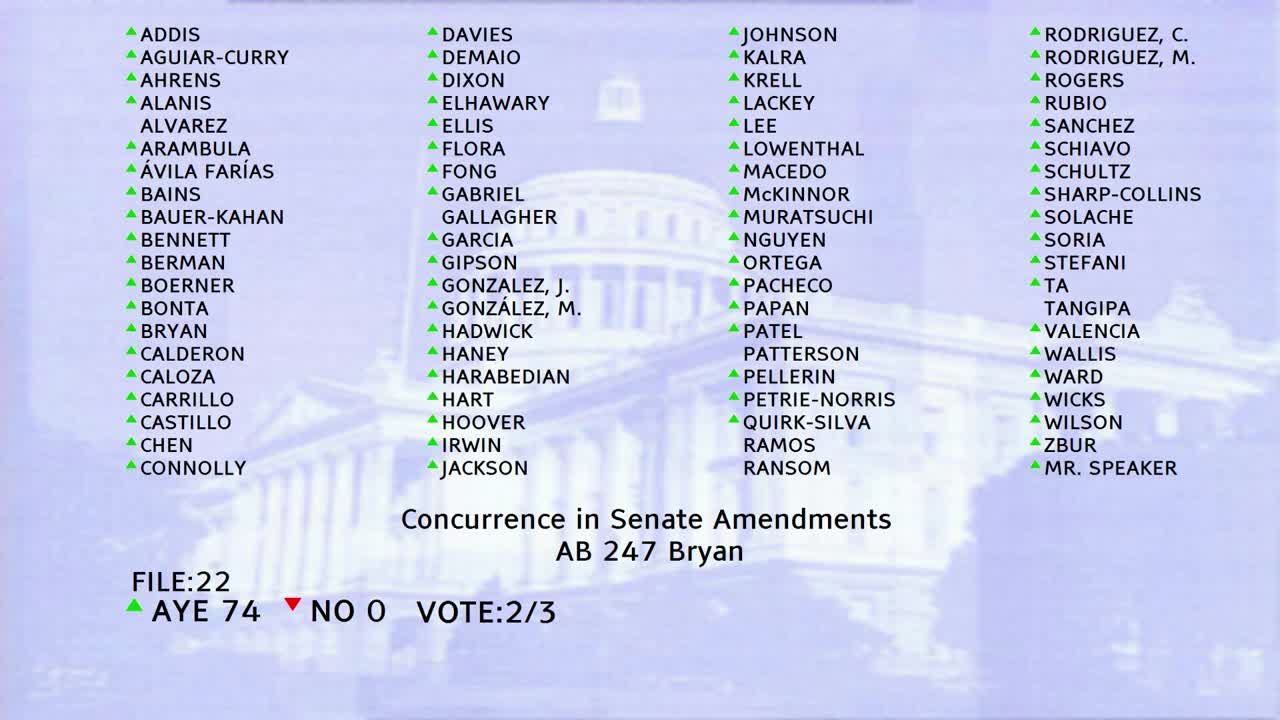 1MIN
Assembly Floor
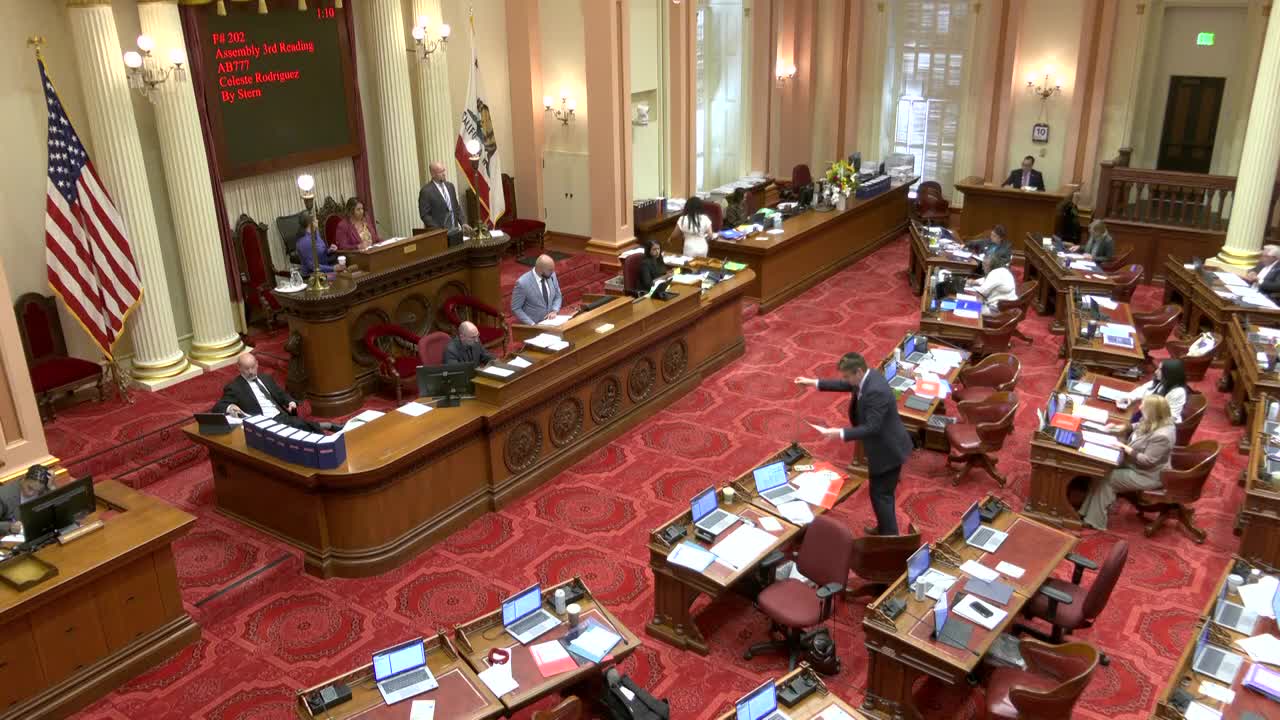 2MIN
Senate Floor
 1MIN
Senate Standing Committee on Appropriations
 15MIN
Senate Standing Committee on Judiciary
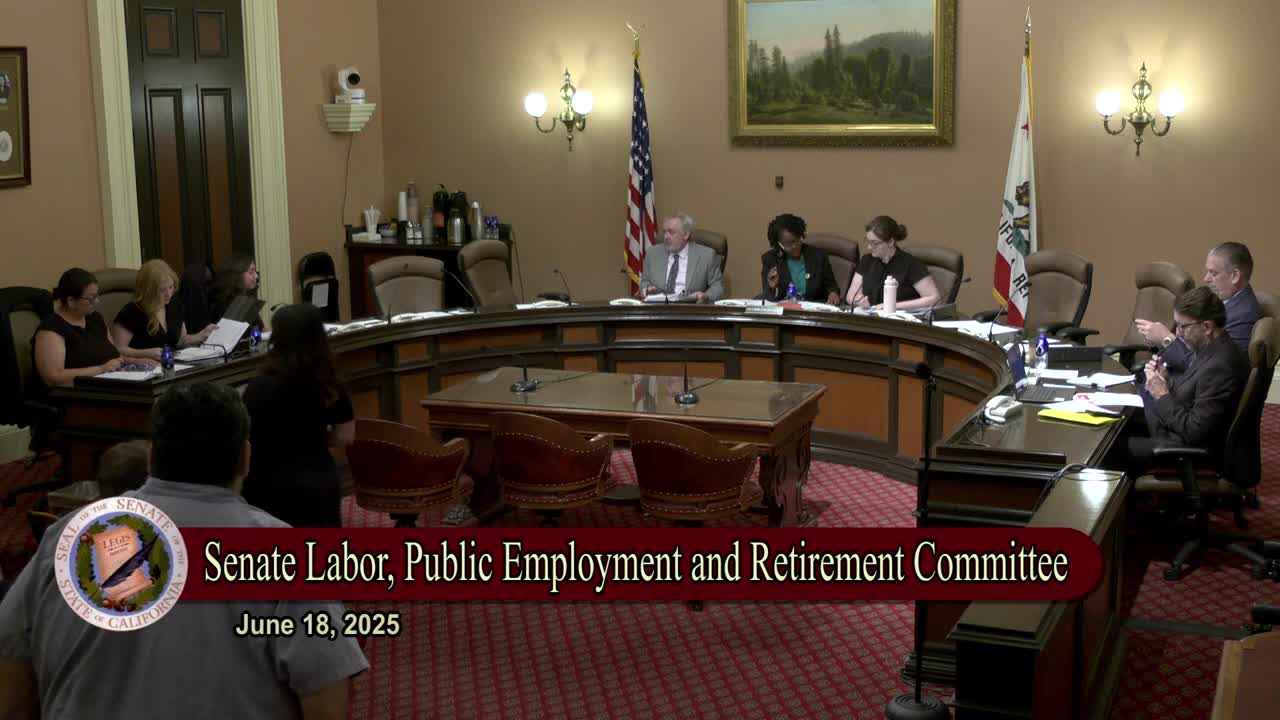 9MIN
Senate Standing Committee on Labor, Public Employment and Retirement
 2MIN
Assembly Floor
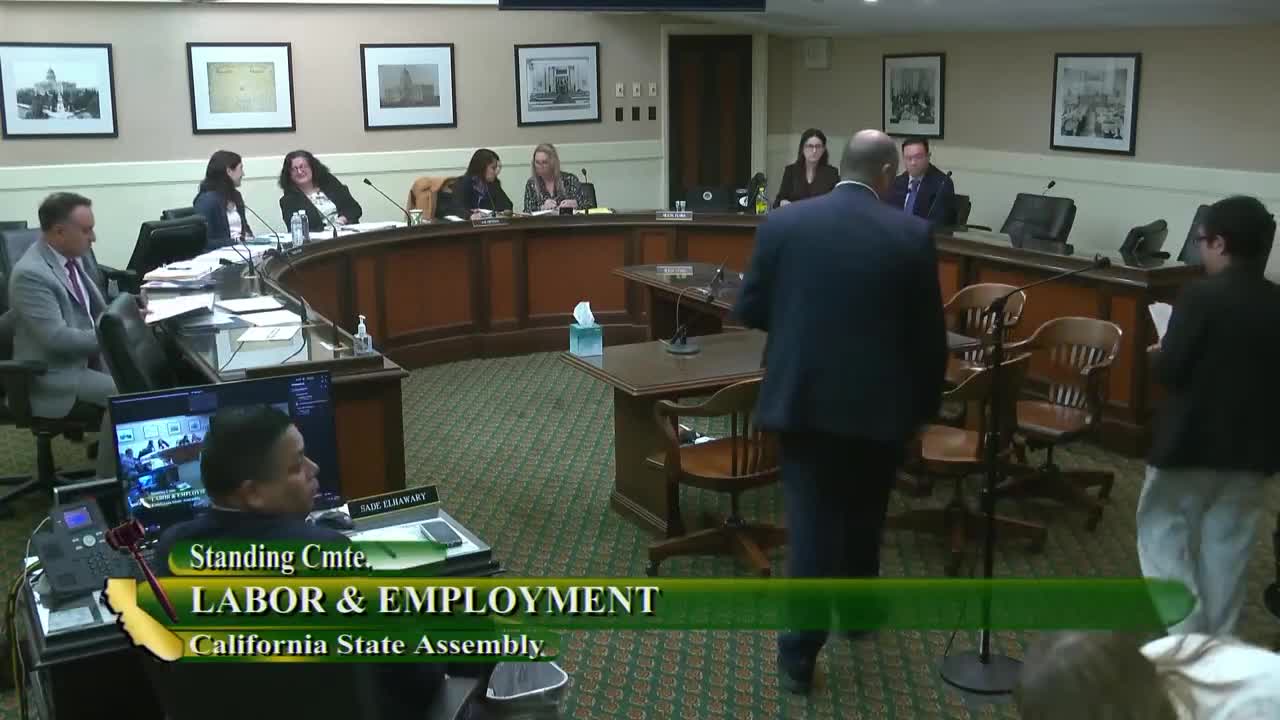 8MIN
Assembly Standing Committee on Labor and Employment
Bill Author

Bill Co-Author(s):