AB 1370: State Legislature: nondisclosure agreements.
- Session Year: 2025-2026
- House: Assembly
- Latest Version Date: 2025-10-01
Current Status:
Passed
(2025-10-01: Chaptered by Secretary of State - Chapter 191, Statutes of 2025.)
Introduced
In Committee
Awaiting First Chamber Vote
Passed First Chamber
In Committee
Awaiting Second Chamber Vote
Passed Second Chamber
Enacted
Existing law, the legislative code of ethics, prohibits Members of the Legislature and legislative employees from having financial conflicts of interest and engaging in activities that are in substantial conflict with their official duties.
This bill would prohibit Members of the Legislature from entering into, or requesting that another party enter into, a nondisclosure agreement relating to the drafting, negotiation, or discussion of proposed legislation. The bill would also make any nondisclosure agreement relating to the drafting, negotiation, or discussion of proposed legislation entered into after the effective date of this bill void and unenforceable. The bill would provide an exception for nondisclosure agreements, or portions thereof, that prevent only the disclosure of trade secrets, financial information, or proprietary information, as specified. A violation of the legislative code of ethics is punishable as a crime, as specified. By creating a new crime under the act, this bill would impose a state-mandated local program.
The California Constitution requires the state to reimburse local agencies and school districts for certain costs mandated by the state. Statutory provisions establish procedures for making that reimbursement.
This bill would provide that no reimbursement is required by this act for a specified reason.
Existing law, the legislative code of ethics, prohibits Members of the Legislature and legislative employees from having financial conflicts of interest and engaging in activities that are in substantial conflict with their official duties.
This bill would prohibit Members of the Legislature from entering into, or requesting that another party enter into, a nondisclosure agreement relating to the drafting, negotiation, or discussion of proposed legislation. The bill would also make any nondisclosure agreement relating to the drafting, negotiation, or discussion of proposed legislation entered into after the effective date of this bill void and unenforceable. The bill would provide an exception for nondisclosure agreements, or portions thereof, that prevent only the disclosure of trade secrets, financial information, or proprietary information, as specified. A violation of the Political Reform Act of 1974 legislative code of ethics is punishable as a misdemeanor. crime, as specified. By creating a new crime under the act, this bill would impose a state-mandated local program.
The California Constitution requires the state to reimburse local agencies and school districts for certain costs mandated by the state. Statutory provisions establish procedures for making that reimbursement.
This bill would provide that no reimbursement is required by this act for a specified reason.
The Political Reform Act of 1974, an initiative measure, provides that the Legislature may amend the act to further the acts purposes upon a 2/3 vote of each house of the Legislature and compliance with specified procedural requirements.This bill would declare that it furthers the purposes of the act.The Political Reform Act of 1974 establishes requirements and conditions for public officials, including Members of the Legislature, with respect to the conduct of election campaigns, conflicts of interest, ethics, and other political activities.
This bill would prohibit Members of the Legislature from entering into, or requesting that another party enter into, a nondisclosure agreement relating to the drafting, negotiation, or discussion of proposed legislation. The bill would also make any nondisclosure agreement relating to the drafting, negotiation, or discussion of proposed legislation entered into after the effective date of this bill void and unenforceable. The bill would provide an exception for nondisclosure agreements, or portions thereof, that prevent only the disclosure of trade secrets, financial information, or proprietary information, as specified. A violation of the Political Reform Act of 1974 is punishable as a misdemeanor. By creating a new crime under the act, this bill would impose a state-mandated local program.
The California Constitution requires the state to reimburse local agencies and school districts for certain costs mandated by the state. Statutory provisions establish procedures for making that reimbursement.
This bill would provide that no reimbursement is required by this act for a specified reason.
The Political Reform Act of 1974, an initiative measure, provides that the Legislature may amend the act to further the acts purposes upon a 2/3 vote of each house of the Legislature and compliance with specified procedural requirements.
This bill would declare that it furthers the purposes of the act.
The Legislature finds and declares all of the following:
(a)Nondisclosure agreements serve an important role, especially in litigation involving two or more private parties. However, their use during negotiations for proposed legislation in the State of California prevents Members of the Legislature from providing adequate transparency when conducting the peoples business.
(b)Nondisclosure agreements are appropriate to use when attempting to protect trade secrets or the financial or proprietary information of a private party. However, this information is rarely required for discussions regarding proposed legislation.
(c)Existing law prohibits including certain provisions within settlement agreements or agreements related to an employees separation from employment that prevent the disclosure of information related to workplace misconduct, sexual harassment, or sexual assault, and thus the conduct of perpetrators in these instances is not shielded from disclosure.
SEC. 2.Section 8923 is added to the Government Code, to read:8923.(a)Except as provided in paragraph (1) of subdivision (c), a Member of the Legislature acting in their official capacity shall not enter into, or request that another individual enter into, a nondisclosure agreement relating to the drafting, negotiation, or discussion of proposed legislation.
(b)Except as provided in paragraph (2) of subdivision (c), any nondisclosure agreement relating to the drafting, negotiation, or discussion of proposed legislation entered into or requested by a Member of the Legislature after the effective date of this section shall be void and unenforceable.
(c)(1)This section does not prohibit a Member of the Legislature from entering into or requesting a nondisclosure agreement that prevents only the disclosure of trade secrets, financial information, or proprietary information.
(2)This section does not make void and unenforceable a nondisclosure agreement, or portion of a nondisclosure agreement, that prevents only the disclosure of trade secrets, financial information, or proprietary information.
(3)Notwithstanding Section 8924, this section applies only to a Member of the Legislature acting in their official capacity.
(d)For purposes of this section, the following terms have the following meanings:
(1)Discussion means direct or indirect communications engaged in by individuals for the purpose of reaching a decision regarding proposed legislation.
(2)Drafting means developing language for proposed legislation to be considered by the Legislature.
(3)Negotiation means any form of direct or indirect communication whereby individuals who have opposing interests discuss the form of any proposed legislation that may resolve a dispute involving those interests.
SEC. 3.No reimbursement is required by this act pursuant to Section 6 of Article XIIIB of the California Constitution because the only costs that may be incurred by a local agency or school district will be incurred because this act creates a new crime or infraction, eliminates a crime or infraction, or changes the penalty for a crime or infraction, within the meaning of Section 17556 of the Government Code, or changes the definition of a crime within the meaning of Section 6 of Article XIIIB of the California Constitution.
The Legislature finds and declares all of the following:
(a)Nondisclosure agreements serve an important role, especially in litigation involving two or more private parties. However, their use during negotiations for proposed legislation in the State of California prevents Members of the Legislature from providing adequate transparency when conducting the peoples business.
(b)Nondisclosure agreements are appropriate to use when attempting to protect trade secrets or the financial or proprietary information of a private party. However, such this information is rarely required for discussions regarding proposed legislation.
(c)Existing law prohibits including certain provisions within settlement agreements or agreements related to an employees separation from employment that prevent the disclosure of information related to workplace misconduct, sexual harassment, or sexual assault, and thus the conduct of perpetrators in these instances is not shielded from disclosure.
SEC. 2.Section 8923 is added to the Government Code, to read:8923.(a)Except as provided in paragraph (1) of subdivision (c), a Member of the Legislature acting in their official capacity shall not enter into, or request that another individual enter into, a nondisclosure agreement relating to the drafting, negotiation, or discussion of proposed legislation.
(b)Except as provided in paragraph (2) of subdivision (c), any nondisclosure agreement relating to the drafting, negotiation, or discussion of proposed legislation entered into or requested by a Member of the Legislature after the effective date of this section shall be void and unenforceable.
(c)(1)This section does not prohibit a Member of the Legislature from entering into or requesting a nondisclosure agreement that prevents only the disclosure of trade secrets, financial information, or proprietary information.
(2)This section does not make void and unenforceable a nondisclosure agreement, or portion of a nondisclosure agreement, that prevents only the disclosure of trade secrets, financial information, or proprietary information.
(3)Notwithstanding Section 8924, this section applies only to a Member of the Legislature acting in their official capacity.
(d)For purposes of this section, the following terms have the following meanings:
(1)Discussion means direct or indirect communications engaged in by individuals for the purpose of reaching a decision regarding proposed legislation.
(2)Drafting means developing language for proposed legislation to be considered by the Legislature.
(3)Negotiation means any form of direct or indirect communication whereby individuals who have opposing interests discuss the form of any proposed legislation that may resolve a dispute involving those interests.
SEC. 3.No reimbursement is required by this act pursuant to Section 6 of Article XIIIB of the California Constitution because the only costs that may be incurred by a local agency or school district will be incurred because this act creates a new crime or infraction, eliminates a crime or infraction, or changes the penalty for a crime or infraction, within the meaning of Section 17556 of the Government Code, or changes the definition of a crime within the meaning of Section 6 of Article XIIIB of the California Constitution.
The Legislature finds and declares all of the following:
(a)Nondisclosure agreements serve an important role, especially in litigation involving two or more private parties. However, their use during negotiations for proposed legislation in the State of California prevents Members of the Legislature from providing adequate transparency when conducting the peoples business.
(b)Nondisclosure agreements are appropriate to use when attempting to protect trade secrets or the financial or proprietary information of a private party. However, such information is rarely required for discussions regarding proposed legislation.
(c)Existing law prohibits including certain provisions within settlement agreements or agreements related to an employees separation from employment that prevent the disclosure of information related to workplace misconduct, sexual harassment, or sexual assault, and thus the conduct of perpetrators in these instances is not shielded from disclosure.
SEC. 2.Chapter 7.5 (commencing with Section 87600) is added to Title 9 of the Government Code, to read:7.5.Members of the Legislature: Nondisclosure Agreements87600.(a)Except as provided in paragraph (1) of subdivision (c), a Member of the Legislature acting in their official capacity shall not enter into, or request that another individual enter into, a nondisclosure agreement relating to the drafting, negotiation, or discussion of proposed legislation.(b)Except as provided in paragraph (2) of subdivision (c), any nondisclosure agreement relating to the drafting, negotiation, or discussion of proposed legislation entered into or requested by a Member of the Legislature after the effective date of this section shall be void and unenforceable.(c)(1)This section does not prohibit a Member of the Legislature from entering into or requesting a nondisclosure agreement that relates to the drafting, negotiation, or discussion of proposed legislation and that prevents only the disclosure of trade secrets, financial information, or proprietary information.(2)This section does not make void and unenforceable a nondisclosure agreement, or portion of a nondisclosure agreement, that relates to the drafting, negotiation, or discussion of proposed legislation and that prevents only the disclosure of trade secrets, financial information, or proprietary information.(d)For purposes of this section, the following terms have the following meanings:(1)Discussion means direct or indirect communications engaged in by individuals for the purpose of reaching a decision regarding proposed legislation.(2)Drafting means developing language for proposed legislation to be considered by the Legislature.(3)Negotiation means any form of direct or indirect communication whereby individuals who have opposing interests discuss the form of any proposed legislation that may resolve a dispute involving those interests.SEC. 2.Section 8923 is added to the Government Code, to read:8923.(a)Except as provided in paragraph (1) of subdivision (c), a Member of the Legislature acting in their official capacity shall not enter into, or request that another individual enter into, a nondisclosure agreement relating to the drafting, negotiation, or discussion of proposed legislation.
(b)Except as provided in paragraph (2) of subdivision (c), any nondisclosure agreement relating to the drafting, negotiation, or discussion of proposed legislation entered into or requested by a Member of the Legislature after the effective date of this section shall be void and unenforceable.
(c)(1)This section does not prohibit a Member of the Legislature from entering into or requesting a nondisclosure agreement that prevents only the disclosure of trade secrets, financial information, or proprietary information.
(2)This section does not make void and unenforceable a nondisclosure agreement, or portion of a nondisclosure agreement, that prevents only the disclosure of trade secrets, financial information, or proprietary information.
(3)Notwithstanding Section 8924, this section applies only to a Member of the Legislature acting in their official capacity.
(d)For purposes of this section, the following terms have the following meanings:
(1)Discussion means direct or indirect communications engaged in by individuals for the purpose of reaching a decision regarding proposed legislation.
(2)Drafting means developing language for proposed legislation to be considered by the Legislature.
(3)Negotiation means any form of direct or indirect communication whereby individuals who have opposing interests discuss the form of any proposed legislation that may resolve a dispute involving those interests.
SEC. 3.No reimbursement is required by this act pursuant to Section 6 of Article XIIIB of the California Constitution because the only costs that may be incurred by a local agency or school district will be incurred because this act creates a new crime or infraction, eliminates a crime or infraction, or changes the penalty for a crime or infraction, within the meaning of Section 17556 of the Government Code, or changes the definition of a crime within the meaning of Section 6 of Article XIIIB of the California Constitution.
SEC. 4.The Legislature finds and declares that this bill furthers the purposes of the Political Reform Act of 1974 within the meaning of subdivision (a) of Section 81012 of the Government Code, and further finds and declares that Members of the Legislature should serve the needs and respond to the wishes of all citizens equally when conducting the peoples business, and thus proposed legislation should be drafted, negotiated, and discussed with full transparency.The Legislature finds and declares all of the following:
(a)Nondisclosure agreements serve an important role, especially in litigation involving two or more private parties. However, their use during negotiations for proposed legislation in the State of California prevents Members of the Legislature from providing adequate transparency when conducting the peoples business.
(b)Nondisclosure agreements are appropriate to use when attempting to protect trade secrets or the financial or proprietary information of a private party. However, such information is rarely required for discussions regarding proposed legislation.
(c)Existing law prohibits including certain provisions within settlement agreements or agreements related to an employees separation from employment that prevent the disclosure of information related to workplace misconduct, sexual harassment, or sexual assault, and thus the conduct of perpetrators in these instances is not shielded from disclosure.
SEC. 2.Chapter 7.5 (commencing with Section 87600) is added to Title 9 of the Government Code, to read:7.5.Members of the Legislature: Nondisclosure Agreements87600.(a)Except as provided in paragraph (1) of subdivision (c), a Member of the Legislature acting in their official capacity shall not enter into, or request that another individual enter into, a nondisclosure agreement relating to the drafting, negotiation, or discussion of proposed legislation.
(b)Except as provided in paragraph (2) of subdivision (c), any nondisclosure agreement relating to the drafting, negotiation, or discussion of proposed legislation entered into or requested by a Member of the Legislature after the effective date of this section shall be void and unenforceable.
(c)(1)This section does not prohibit a Member of the Legislature from entering into or requesting a nondisclosure agreement that relates to the drafting, negotiation, or discussion of proposed legislation and that prevents only the disclosure of trade secrets, financial information, or proprietary information.
(2)This section does not make void and unenforceable a nondisclosure agreement, or portion of a nondisclosure agreement, that relates to the drafting, negotiation, or discussion of proposed legislation and that prevents only the disclosure of trade secrets, financial information, or proprietary information.
(d)For purposes of this section, the following terms have the following meanings:
(1)Discussion means direct or indirect communications engaged in by individuals for the purpose of reaching a decision regarding proposed legislation.
(2)Drafting means developing language for proposed legislation to be considered by the Legislature.
(3)Negotiation means any form of direct or indirect communication whereby individuals who have opposing interests discuss the form of any proposed legislation that may resolve a dispute involving those interests.
SEC. 3.No reimbursement is required by this act pursuant to Section 6 of Article XIIIB of the California Constitution because the only costs that may be incurred by a local agency or school district will be incurred because this act creates a new crime or infraction, eliminates a crime or infraction, or changes the penalty for a crime or infraction, within the meaning of Section 17556 of the Government Code, or changes the definition of a crime within the meaning of Section 6 of Article XIIIB of the California Constitution.
SEC. 4.The Legislature finds and declares that this bill furthers the purposes of the Political Reform Act of 1974 within the meaning of subdivision (a) of Section 81012 of the Government Code, and further finds and declares that Members of the Legislature should serve the needs and respond to the wishes of all citizens equally when conducting the peoples business, and thus proposed legislation should be drafted, negotiated, and discussed with full transparency.
|
Date
|
Status
|
|---|---|
| Oct 1, 2025 | Chaptered by Secretary of State - Chapter 191, Statutes of 2025. |
| Oct 1, 2025 | Approved by the Governor. |
| Sep 22, 2025 | Enrolled and presented to the Governor at 3 p.m. |
| Sep 10, 2025 | Senate amendments concurred in. To Engrossing and Enrolling. (Ayes 79. Noes 0. Page 3178.). |
| Sep 4, 2025 | In Assembly. Concurrence in Senate amendments pending. |
| Sep 4, 2025 | Read third time. Passed. Ordered to the Assembly. (Ayes 39. Noes 0. Page 2508.). |
| Sep 3, 2025 | Ordered to third reading. |
| Sep 3, 2025 | From special consent calendar. |
| Sep 2, 2025 | Ordered to special consent calendar. |
| Aug 29, 2025 | Read second time. Ordered to third reading. |
| Aug 29, 2025 | From committee: Do pass. (Ayes 7. Noes 0.) (August 29). |
| Aug 18, 2025 | In committee: Referred to suspense file. |
| Jul 15, 2025 | From committee: Do pass and re-refer to Com. on APPR. with recommendation: To Consent Calendar. (Ayes 5. Noes 0.) (July 15). Re-referred to Com. on APPR. |
| Jul 2, 2025 | From committee: Do pass and re-refer to Com. on E. & C.A. with recommendation: To Consent Calendar. (Ayes 13. Noes 0.) (July 1). Re-referred to Com. on E. & C.A. |
| Jun 23, 2025 | From committee chair, with author's amendments: Amend, and re-refer to committee. Read second time, amended, and re-referred to Com. on JUD. |
| Jun 18, 2025 | Referred to Coms. on JUD. and E. & C.A. |
| May 23, 2025 | In Senate. Read first time. To Com. on RLS. for assignment. |
| May 23, 2025 | Read third time. Passed. Ordered to the Senate. (Ayes 71. Noes 0. Page 1665.) |
| May 15, 2025 | Read second time. Ordered to Consent Calendar. |
| May 14, 2025 | From committee: Do pass. To Consent Calendar. (Ayes 15. Noes 0.) (May 14). |
| Apr 22, 2025 | From committee: Do pass and re-refer to Com. on APPR. with recommendation: To Consent Calendar. (Ayes 12. Noes 0.) (April 22). Re-referred to Com. on APPR. |
| Apr 21, 2025 | Re-referred to Com. on JUD. |
| Apr 10, 2025 | Read second time and amended. |
| Apr 9, 2025 | From committee: Amend, and do pass as amended and re-refer to Com. on JUD. (Ayes 7. Noes 0.) (April 9). |
| Mar 28, 2025 | Referred to Coms. on ELECTIONS and JUD. |
| Feb 24, 2025 | Read first time. |
| Feb 22, 2025 | From printer. May be heard in committee March 24. |
| Feb 21, 2025 | Introduced. To print. |
|
Date
|
Description
|
Location
|
Votes
|
|
|---|---|---|---|---|
| Sep 10, 2025 | AB 1370 Patterson Concurrence in Senate Amendments | Assembly Floor |
Passed |
|
| Sep 4, 2025 | Assembly 3rd Reading AB1370 Patterson et al. By Ochoa Bogh | Senate Floor |
Passed |
|
| Aug 29, 2025 | Do pass | Senate Standing Committee on Appropriations |
Passed |
|
| Aug 18, 2025 | Placed on suspense file | Senate Standing Committee on Appropriations |
Passed |
|
| Jul 15, 2025 | Do pass, but first be re-referred to the Committee on [Appropriations] with the recommendation: To Consent Calendar | Senate Standing Committee on Elections and Constitutional Amendments |
Passed |
|
| Jul 1, 2025 | Do pass, but first be re-referred to the Committee on [Elections and Constitutional Amendments] with the recommendation: To Consent Calendar | Senate Standing Committee on Judiciary |
Passed |
|
| May 23, 2025 | AB 1370 Patterson Consent Calendar Second Day Regular Session | Assembly Floor |
Passed |
|
| May 14, 2025 | Do pass. To Consent Calendar. | Assembly Standing Committee on Appropriations |
Passed |
|
| Apr 22, 2025 | Do pass and be re-referred to the Committee on [Appropriations] with recommendation: To Consent Calendar | Assembly Standing Committee on Judiciary |
Passed |
|
| Apr 9, 2025 | Do pass as amended and be re-referred to the Committee on [Judiciary] | Assembly Standing Committee on Elections |
Passed |
This list shows positions taken on this bill by organizations on the date displayed, which is linked to the original source.
Positions by individuals are not included.
|
Organization
|
Position
|
Date
|
|---|---|---|
| California Alliance of Family Owned Businesses | ** Support | |
| Oakland Privacy | ** Support |
CONCURRENCE IN SENATE AMENDMENTS
CSA1 Bill Id:AB 1370
Author:(Patterson)
As Amended Ver:June 23, 2025
Majority vote
SUMMARY
Prohibits a Member of the Legislature from entering into or requesting a nondisclosure agreement (NDA) in connection with negotiations over legislation, as specified.
Senate Amendments
Add co-authors.
COMMENTS
An NDA is a provision in a contract that binds the parties to secrecy regarding information specified in the contract. NDAs generally prohibit parties from disclosing the specified information to people who are not parties to the NDA, and often provide for the damages that will be imposed if a party shares information in violation of the NDA. NDAs commonly are used to protect sensitive and confidential information, including trade secrets and business negotiations.
Three years ago, the Legislature approved and Governor Newsom signed AB 257 (Holden), Chapter 246, Statutes of 2022, which proposed to establish a Fast Food Council within the Department of Industrial Relations. In 2023, certain proponents and opponents of AB 257 entered into negotiations over potential changes to AB 257. Those negotiations led to an agreement which was codified in AB 1228 (Holden), Chapter 262, Statutes of 2023.
The issue of the use of NDAs in legislative negotiations garnered increased attention last year after the Sacramento-area television station KCRA, citing sources close to the AB 257 negotiations, reported that private parties involved in the AB 1228 negotiations were asked to sign an NDA to protect the confidentiality of the negotiations. Assembly Elections Committee staff is not aware of any reporting that suggests that any public officials, including Legislators, legislative staff, the Governor, or staff to the Governor, signed an NDA in connection with negotiations over AB 1228, requested that anybody else sign an NDA in connection with those negotiations, or otherwise were bound by an NDA when involved in legislative negotiations.
While the author argues that it is important for transparency to prohibit Legislators from entering into NDAs related to the discussion of proposed legislation, or requesting that other parties do so, it is unclear how common such NDAs are under existing law. The author provided one example of a press report in which a former member of the Legislature stated that he signed a confidentiality agreement in connection with negotiations over potential legislative alternatives to a ballot measure. Assembly Elections Committee staff is unaware of any other reports of Legislators entering into an NDA in connection with legislative negotiations, or asking anyone else to do so.
The legislative process is designed to provide a public forum in which legislation can be considered, Legislators can ask questions and propose amendments, and the public can provide comment. Even if someone involved in legislative negotiations entered into an NDA as part of those negotiations, the NDA would not bypass the public legislative process, nor would it limit the questions that Members of the Legislature can ask of people involved in the negotiations and of people who would be affected by the proposed legislation. As is always the case, if a Legislator does not receive satisfactory answers in response to questions, that Legislator may take that into consideration when deciding how to vote—or whether to vote—on the proposed legislation.
According to the Author
"People can only have faith in a government to the extent that they trust it. When elected officials sign non-disclosure agreements (NDAs), it not only creates a barricade to information that should be publicly available, it creates a level of distrust in the foundations of our democracy. This bill offers a simple, common-sense solution: it prevents legislators from signing NDAs pertaining to legislative matters, but permits safeguarding protected information such as trade secrets. AB 1370 provides necessary transparency for the public when it comes to decisions that impact legislation and the expenditures of tax dollars."
Arguments in Support
In support of this bill, Oakland Privacy writes, "By its very nature, the legislative process is intended to be an open airing of issues and concerns to arrive at the best possible policy approach. And how legislative bodies and their members engage in that process is the material evidence that voters use to decide if they wish to return those members to office. When that process is invisible or obscured, there is a significant democracy deficit that harms both parties and the integrity of government…[A]s a matter of public policy, non-disclosure agreements outside of a very narrow window relating to specific proprietary business information, have no place in the legislative process. We acknowledge that negotiations, especially on controversial issues and under time pressure, can be difficult to hammer out in the bright light of an audience, but it is exactly that spotlight that ensures that stakeholders are heard and issues are aired out."
Arguments in Opposition
None received.
FISCAL COMMENTS
According to the Senate Appropriations Committee:
- Unknown, potentially significant costs to the state funded trial court system (Trial Court Trust Fund, General Fund) to adjudicate the new crime created by this bill. Defendants are constitutionally guaranteed certain rights during criminal proceedings, including the right to a jury trial and the right to counsel (at public expense if the defendants are unable to afford the costs of representation). Increasing penalties leads to lengthier and more complex court proceedings with attendant workload and resource costs to the court. The fiscal impact of this bill to the courts will depend on many unknowns, including the numbers of people charged with an offense and the factors unique to each case. An eight-hour court day costs approximately $10,500 in staff in workload. This is a conservative estimate, based on the hourly rate of court personnel including at minimum the judge, clerk, bailiff, court reporter, jury administrator, administrative staff, and jury per-diems. If court days exceed 10, costs to the trial courts could reach hundreds of thousands of dollars. While the courts are not funded on a workload basis, an increase in workload could result in delayed court services and would put pressure on the General Fund to fund additional staff and resources and to increase the amount appropriated to backfill for trial court operations.
- Unknown, potentially significant costs (local funds, General Fund) to the counties to incarcerate people for the crime created by this bill. The average annual cost to incarcerate one person in county jail varies by county, but likely ranges from $70,000 to $90,000 per year. For example, in 2021, Los Angeles County budgeted $1.3 billion for jail spending, including $89,580 per incarcerated person. Actual incarceration costs to counties will depend on the number of convictions and the length of each sentence. Generally, county incarceration costs are not reimbursable state mandates pursuant to Proposition 30 (2012).
- Unknown, potentially significant costs (General Fund) to the Department of Corrections and Rehabilitation (CDCR) to incarcerate people for the felony expanded by this bill. The Legislative Analyst's Office estimates the average annual cost to incarcerate one person in state prison is $133,000. If even just one person is sentenced to state prison for one year under this bill, it will add significant costs pressures to CDCR.
VOTES:
ASM ELECTIONS: 7-0-0
YES: Pellerin, Macedo, Bennett, Berman, Solache, Stefani, Tangipa
ASM JUDICIARY: 12-0-0
YES: Kalra, Dixon, Bauer-Kahan, Bryan, Connolly, Harabedian, Macedo, Pacheco, Lee, Sanchez, Stefani, Zbur
ASM APPROPRIATIONS: 15-0-0
YES: Wicks, Sanchez, Arambula, Calderon, Caloza, Dixon, Elhawary, Fong, Mark González, Hart, Pacheco, Pellerin, Solache, Ta, Tangipa
ASSEMBLY FLOOR: 71-0-8
YES: Addis, Aguiar-Curry, Ahrens, Alanis, Alvarez, Arambula, Ávila Farías, Bains, Bauer-Kahan, Bennett, Berman, Boerner, Bonta, Calderon, Caloza, Carrillo, Castillo, Connolly, Davies, DeMaio, Dixon, Elhawary, Flora, Fong, Gabriel, Gallagher, Garcia, Gipson, Jeff Gonzalez, Mark González, Hadwick, Haney, Harabedian, Hart, Hoover, Irwin, Jackson, Kalra, Krell, Lackey, Lee, Lowenthal, Macedo, McKinnor, Muratsuchi, Ortega, Pacheco, Papan, Patel, Patterson, Pellerin, Petrie-Norris, Quirk-Silva, Ramos, Ransom, Celeste Rodriguez, Michelle Rodriguez, Rogers, Blanca Rubio, Schiavo, Solache, Soria, Stefani, Ta, Tangipa, Valencia, Wallis, Ward, Wilson, Zbur, Rivas
ABS, ABST OR NV: Bryan, Chen, Ellis, Nguyen, Sanchez, Schultz, Sharp-Collins, Wicks
UPDATED
VERSION: June 23, 2025
CONSULTANT: Ethan Jones / ELECTIONS / (916) 319-2094 FN: 0001494
SENATE RULES COMMITTEE Office of Senate Floor Analyses (916) 651-1520 Fax: (916) 327-4478 | AB 1370 |
THIRD READING
Bill No: AB 1370
Author: Patterson (R), et al.
Amended: 6/23/25 in Senate
Vote: 21
SENATE JUDICIARY COMMITTEE: 13-0, 7/1/25
AYES: Umberg, Niello, Allen, Arreguín, Ashby, Caballero, Durazo, Laird, Stern, Valladares, Wahab, Weber Pierson, Wiener
SENATE ELECTIONS & C.A. COMMITTEE: 5-0, 7/15/25
AYES: Cervantes, Choi, Allen, Limón, Umberg
SENATE APPROPRIATIONS COMMITTEE: 7-0, 8/29/25
AYES: Caballero, Seyarto, Cabaldon, Dahle, Grayson, Richardson, Wahab
ASSEMBLY FLOOR: 71-0, 5/23/25 (Consent) - See last page for vote
SUBJECT: State Legislature: nondisclosure agreements
SOURCE: Author
DIGEST:
This bill prohibits members of the Legislature, acting in their official capacity from entering into, or requesting that another individual enter into, a nondisclosure agreement relating to the drafting, negotiation, or discussion of proposed legislation, as specified, and provides that any such nondisclosure agreement entered into or requested by a member of the Legislature, after the effective date of this legislation shall be void an unenforceable, as specified.
ANALYSIS:
Existing law:
- Provides that a member of the Legislature, state elective or appointive officer, or judge or justice shall not, while serving as such, have any interest, financial or otherwise, direct or indirect, or engage in any business or transaction or professional activity, or incur any obligation of any nature, that is in substantial conflict with the proper discharge of their duties in the public interest and of their responsibilities as prescribed in the laws of this state. (Government (Gov.) Code § 8920 (a).)
- Provides that an employee of either house of the Legislature shall not, during the time they are so employed, commit any act or engage in any activity prohibited by Article 2, sections 8920 through 8926 of the Government Code. Provides that the provisions of Article 2 and Article 3 (commencing with Section 8940) that are applicable to a member of the Legislature are also applicable to any employee of either house of the Legislature. (Gov. Code § 8924 (a).)
- Provides that the people have the right of access to information concerning the conduct of the people’s business and, therefore, the writings of public officials and agencies shall be open to public scrutiny. Specifies that any law or rule that limits the public right of access shall be adopted with findings demonstrating the interest protected by the limitation. (California Constitution, art. I, § 3.)
- Provides that, in enacting the California Public Records Act, the Legislature, mindful of the right of individuals to privacy, finds and declares that access to information concerning the conduct of the people’s business is a fundamental and necessary right of every person in this state. (Gov. Code § 7921.000.)
This bill:
- Makes findings and declarations about nondisclosure agreements.
- Provides that a member of the Legislature acting in their official capacity shall not enter into, or request that another individual enter into, a nondisclosure agreement relating to the drafting, negotiation, or discussion of proposed legislation, except as specified.
- Provides that any nondisclosure agreement relating to the drafting, negotiation, or discussion of proposed legislation entered into or requested by a member of the Legislature after the effective date of this bill shall be void and unenforceable, except as specified.
- Provides that members of the Legislature are not prohibited from entering into or requesting a nondisclosure agreement that prevents only the disclosure of trade secrets, financial information, or proprietary information.
- Provides that nondisclosure agreements or portions of nondisclosure agreements that prevent only the disclosure of trade secrets, financial information, or proprietary information are not void and unenforceable.
- Provides that the provisions of this bill only apply to members of the Legislature acting in their official capacity.
- Defines “discussion” as direct or indirect communications engaged in by individuals for the purpose of reaching a decision regarding proposed Legislation.
- Defines “drafting” as developing language for proposed legislation to be considered by the Legislature.
- Defines “negotiation” as any form of direct or indirect communication whereby individuals who have opposing interests discuss the form of any proposed legislation that may resolve a dispute involving those interests.
- Places this bill’s provisions within Article 2 of the Government Code and thus would make the provisions of the bill that are applicable to a member of the legislature also applicable to any employee of either house of the Legislature. However, the bill makes it clear that the provisions of the bill only apply to members of the Legislature.
Comments
According to the author:
People can only have faith in a government to the extent that they trust it. When elected officials sign non-disclosure agreements (NDAs), it not only creates a barricade to information that should be publicly available, it creates a level of distrust in the foundations of our democracy. This bill offers a simple, common-sense solution: it prevents legislators from signing NDAs pertaining to legislative matters, but permits safeguarding protected information such as trade secrets. AB 1370 provides necessary transparency for the public when it comes to decisions that impact legislation and the expenditures of tax dollars.
A nondisclosure agreement (NDA) is a provision in a contract that binds the parties to secrecy regarding information specified in the contract. NDAs typically specify that damages will be imposed if a party violates the NDA.
In early 2024, reports surfaced that negotiators of two bills were asked to sign nondisclosure agreements.[1] Although there is no evidence that this actually occurred and counsel is unaware of any instance in which a legislator or staff of the Legislature has requested anyone sign a nondisclosure agreement related to Legislation, the author brings this legislation forward to prohibit the practice.
AB 1370 prohibits members of the Legislature, acting in their official capacity, from entering into, or requesting that another individual enter into, a nondisclosure agreement relating to the drafting, negotiation, or discussion of proposed Legislation, as specified, and provides that any such nondisclosure agreement entered into or requested by a member of the legislature, after the effective date of this legislation shall be void and unenforceable, as specified. Instead of amending the Political Reform Act of 1974, AB 1370 places this bill’s provisions within Article 2 of the Government Code. Current Government code section 8924 (a) operates together with this bill to make the provisions of the bill that are applicable to a member of the Legislature also applicable to any employee of either house of the Legislature. However, this bill specifies that the provisions of the bill only apply to the members of the Legislature and not staff.
Oakland Privacy writes the following in support of the bill:
[ . . . ] In much of the advocacy work that we do, governmental transparency is a crucial ingredient. It is simply not possible to protect privacy rights if the activities of governmental bodies are shielded from public scrutiny. So while we may be accidental open government acolytes, we have seen first-hand the importance of rigorous governmental transparency. Non-disclosure agreements have played a significant role in several of our concerns, perhaps most famously in the non-disclosure agreements that concealed the use of cell site simulators or stingrays from the public and the courts for more than a decade.
[ . . . ] By its very nature, the legislative process is intended to be an open airing of issues and concerns to arrive at the best possible policy approach. And how legislative bodies and their members engage in that process is the material evidence that voters use to decide if they wish to return those members to office. When that process is invisible or obscured, there is a significant democracy deficit that harms both parties and the integrity of government.
We want to be clear that in choosing to support this bill, we are not opining on various politically-motivated charges and countercharges whose veracity we do not know, nor are we stating that there is or isn’t evidence that members of the Legislature have or haven’t signed, or caused to be signed, non-disclosure agreements on legislative matters.
It is simply that as a matter of public policy, non-disclosure agreements outside of a very narrow window relating to specific proprietary business information, have no place in the legislative process. We acknowledge that negotiations, especially on controversial issues and under time pressure, can be difficult to hammer out in the bright light of an audience, but it is exactly that spotlight that ensures that stakeholders are heard and issues are aired out. The legislative process is not a back room deal.
FISCAL EFFECT: Appropriation: No Fiscal Com.: Yes Local: Yes
According to the Senate Appropriations Committee the fiscal effect is as follows:
- Unknown, potentially significant costs to the state funded trial court system (Trial Court Trust Fund, General Fund) to adjudicate the new crime created by this bill. Defendants are constitutionally guaranteed certain rights during criminal proceedings, including the right to a jury trial and the right to counsel (at public expense if the defendants are unable to afford the costs of representation). Increasing penalties leads to lengthier and more complex court proceedings with attendant workload and resource costs to the court. The fiscal impact of this bill to the courts will depend on many unknowns, including the numbers of people charged with an offense and the factors unique to each case. An eight-hour court day costs approximately $10,500 in staff in workload. This is a conservative estimate, based on the hourly rate of court personnel including at minimum the judge, clerk, bailiff, court reporter, jury administrator, administrative staff, and jury per-diems. If court days exceed 10, costs to the trial courts could reach hundreds of thousands of dollars. While the courts are not funded on a workload basis, an increase in workload could result in delayed court services and would put pressure on the General Fund to fund additional staff and resources and to increase the amount appropriated to backfill for trial court operations.
- Unknown, potentially significant costs (local funds, General Fund) to the counties to incarcerate people for the crime created by this bill. The average annual cost to incarcerate one person in county jail varies by county, but likely ranges from $70,000 to $90,000 per year. For example, in 2021, Los Angeles County budgeted $1.3 billion for jail spending, including $89,580 per incarcerated person. Actual incarceration costs to counties will depend on the number of convictions and the length of each sentence. Generally, county incarceration costs are not reimbursable state mandates pursuant to Proposition 30 (2012).
- Unknown, potentially significant costs (General Fund) to the Department of Corrections and Rehabilitation (CDCR) to incarcerate people for the felony expanded by this bill. The Legislative Analyst’s Office (LAO) estimates the average annual cost to incarcerate one person in state prison is $133,000. If even if just one person is sentenced to state prison for one year under this bill, it will add significant costs pressures to CDCR.
SUPPORT: (Verified 8/29/25)
California Alliance of Family Owned Businesses
Oakland Privacy
OPPOSITION: (Verified 8/29/25)
None received
ASSEMBLY FLOOR: 71-0, 5/23/25
AYES: Addis, Aguiar-Curry, Ahrens, Alanis, Alvarez, Arambula, Ávila Farías, Bains, Bauer-Kahan, Bennett, Berman, Boerner, Bonta, Calderon, Caloza, Carrillo, Castillo, Connolly, Davies, DeMaio, Dixon, Elhawary, Flora, Fong, Gabriel, Gallagher, Garcia, Gipson, Jeff Gonzalez, Mark González, Hadwick, Haney, Harabedian, Hart, Hoover, Irwin, Jackson, Kalra, Krell, Lackey, Lee, Lowenthal, Macedo, McKinnor, Muratsuchi, Ortega, Pacheco, Papan, Patel, Patterson, Pellerin, Petrie-Norris, Quirk-Silva, Ramos, Ransom, Celeste Rodriguez, Michelle Rodriguez, Rogers, Blanca Rubio, Schiavo, Solache, Soria, Stefani, Ta, Tangipa, Valencia, Wallis, Ward, Wilson, Zbur, Rivas
NO VOTE RECORDED: Bryan, Chen, Ellis, Nguyen, Sanchez, Schultz, Sharp-Collins, Wicks
Prepared by: Margie Estrada / JUD. / (916) 651-4113
8/30/25 17:34:15
**** END ****
Zavala, Ashley, Non-disclosure agreements were used in negotiations of California's landmark fast food worker law (March 7, 2024), available at: https://www.kcra.com/article/california-fast-food-law-panera-newsom-nda/60117858 [as of Aug 29, 2025]. ↑
SENATE COMMITTEE ON APPROPRIATIONS
Senator Anna Caballero, Chair
2025 - 2026 Regular Session
AB 1370 (Patterson) - State Legislature: nondisclosure agreements
Version: June 23, 2025 | Policy Vote: JUD. 13 - 0, E. & C.A. 5 - 0 |
Urgency: No | Mandate: Yes |
Hearing Date: August 18, 2025 | Consultant: Liah Burnley |
Bill Summary:
AB 1370 prohibits Members of the Legislature from entering into nondisclosure agreements relating to proposed legislation, as specified.
Fiscal Impact:
- Unknown, potentially significant costs to the state funded trial court system (Trial Court Trust Fund, General Fund) to adjudicate the new crime created by this bill. Defendants are constitutionally guaranteed certain rights during criminal proceedings, including the right to a jury trial and the right to counsel (at public expense if the defendants are unable to afford the costs of representation). Increasing penalties leads to lengthier and more complex court proceedings with attendant workload and resource costs to the court. The fiscal impact of this bill to the courts will depend on many unknowns, including the numbers of people charged with an offense and the factors unique to each case. An eight-hour court day costs approximately $10,500 in staff in workload. This is a conservative estimate, based on the hourly rate of court personnel including at minimum the judge, clerk, bailiff, court reporter, jury administrator, administrative staff, and jury per-diems. If court days exceed 10, costs to the trial courts could reach hundreds of thousands of dollars. While the courts are not funded on a workload basis, an increase in workload could result in delayed court services and would put pressure on the General Fund to fund additional staff and resources and to increase the amount appropriated to backfill for trial court operations.
- Unknown, potentially significant costs (local funds, General Fund) to the counties to incarcerate people for the crime created by this bill. The average annual cost to incarcerate one person in county jail varies by county, but likely ranges from $70,000 to $90,000 per year. For example, in 2021, Los Angeles County budgeted $1.3 billion for jail spending, including $89,580 per incarcerated person. Actual incarceration costs to counties will depend on the number of convictions and the length of each sentence. Generally, county incarceration costs are not reimbursable state mandates pursuant to Proposition 30 (2012).
- Unknown, potentially significant costs (General Fund) to the Department of Corrections and Rehabilitation (CDCR) to incarcerate people for the felony expanded by this bill. The Legislative Analyst’s Office (LAO) estimates the average annual cost to incarcerate one person in state prison is $133,000. If even if just one person is sentenced to state prison for one year under this bill, it will add significant costs pressures to CDCR.
Background:
The Legislative Code of Ethics sets forth rules to govern those who govern. Both the California Constitution and the Government Code contain provisions intended to ensure ethical behavior and prevent conflicts of interest of legislators and their staff. Under Government Code section 8926, every person who knowingly and willfully violates any provision of the Code of Ethics is guilty of a misdemeanor. Every person who conspires to violate the Code of Ethics is guilty of a felony.
Proposed Law:
- Adds a provision to the Code of Ethics that would prohibit any Member of the Legislature acting in their official capacity from entering into, or requesting that another individual enter into, a nondisclosure agreement relating to the drafting, negotiation, or discussion of proposed legislation.
- Provides that any nondisclosure agreement relating to the drafting, negotiation, or discussion of proposed legislation entered into or requested by a Member of the Legislature after the effective date of this section shall be void and unenforceable.
- Allows a Member of the Legislature to enter into or request a nondisclosure agreement that prevents only the disclosure of trade secrets, financial information, or proprietary information.
- Defines all of the following:
- “Discussion” as direct or indirect communications engaged in by individuals for the purpose of reaching a decision regarding proposed legislation;
- “Drafting” as developing language for proposed legislation to be considered by the Legislature; and,
- “Negotiation” as any form of direct or indirect communication whereby individuals who have opposing interests discuss the form of any proposed legislation that may resolve a dispute involving those interests.
-- END --
SENATE COMMITTEE ON
ELECTIONS AND CONSTITUTIONAL AMENDMENTS
Senator Sabrina Cervantes, Chair
2025 - 2026 Regular
Bill No: AB Hearing Date: 7/15/25
Author: | |||
Version: | 6/23/25 | ||
Urgency: | No | Fiscal: | Yes |
Consultant: | Carrie Cornwell | ||
Subject: State Legislature: nondisclosure agreements.
DIGEST
This bill prohibits a Member of the California Legislature from entering into, or requesting another individual to enter into, a nondisclosure agreement (NDA) related to the drafting, negotiation, or discussion of proposed legislation.
ANALYSIS
Existing law:
- Provides in the California Constitution that the people have the right of access to information concerning the conduct of the people’s business and, therefore, the writings of public officials and agencies shall be open to public scrutiny.
- Establishes a Legislative Code of Ethics, which regulates the conduct of Members and employees of the Legislature, including prohibiting a Member or employee of the Legislature, while serving as such, from having any interest, financial or otherwise, engaging in any business or transaction or professional activity, or incurring any obligation of any nature, that is in substantial conflict with the proper discharge of the person’s duties in the public interest and the person’s responsibilities under state law.
- Provides that a person who knowingly and willfully violates any provision of the Legislative Code of Ethics is guilty of a misdemeanor, and every person who conspires to violate it is guilty of a felony.
This bill:
- Prohibits a Member of the Legislature from entering into, or asking another person to enter into, an NDA relating to the drafting, negotiation, or discussion of proposed legislation, except an NDA that prevents only the disclosure of trade secrets (confidential processes and practices of a business), financial information, or proprietary information.
- Adds this prohibition to the Legislative Code of Ethics.
- Makes any NDA that violates 1) of this bill above unenforceable.
- Excludes legislative staff from this prohibition.
- Defines:
- “Discussion” as direct or indirect communications engaged in by individuals for the purpose of reaching a decision regarding proposed legislation.
- “Drafting” as developing language for proposed legislation.
- “Negotiation” as any form of direct or indirect communication whereby those with opposing interests discuss the form of proposed legislation to resolve their dispute.
COMMENTS
- Author’s Statement. People can only have faith in a government to the extent that they trust it. When elected officials sign NDAs, it not only creates a barricade to information that should be publicly available, it creates a level of distrust in the foundations of our democracy. This bill offers a simple, common-sense solution: it prevents legislators from signing NDAs pertaining to legislative matters, but permits safeguarding protected information such as trade secrets. This bill provides necessary transparency for the public when it comes to decisions that impact legislation and the expenditures of tax dollars.
- What’s an NDA? An NDA is a legal contract between two or more parties intended to protect confidential information. It restricts who can access this information and what they can do with it. NDAs can cover a wide range of confidential information, including trade secrets, business plans, legal settlements, customer lists, etc. NDAs create a confidential relationship between the parties. NDAs can be mutual, where both parties are restricted from sharing information, or unilateral, where only one party is bound by the confidentiality clause.
- Rumored Use of NDAs. AB 257 (Holden), Chapter 246, Statutes of 2022, proposed to establish a Fast Food Council within the Department of Industrial Relations. After its passage, opponents of AB 257 qualified a referendum against the bill, which suspended the operation of AB 257 until California voters could vote on whether to affirm or reject the law. This was expected to occur on the November 2024 ballot.
In 2023, proponents and opponents of AB 257 entered into negotiations over potential changes to the measure. Those negotiations led to an agreement under which changes would be made to AB 257 that were contingent upon the proponents withdrawing their referendum by January 1, 2024. The negotiated changes to AB 257 were codified in AB 1228 (Holden), Chapter 262, Statutes of 2023. The Secretary of State announced on December 29, 2023, that the proponents had withdrawn the referendum.
In 2024, news reports, citing sources close to the AB 1228 negotiations, stated that unspecified parties involved in these negotiations were asked to sign an NDA to protect the confidentiality of the negotiations. The news coverage, however, provided no reason to believe that any public official, including Legislators, legislative staff, the Governor, or staff to the Governor, signed an NDA in connection with negotiations; nor does it appear that any public official requested anyone to sign an NDA in connection with those negotiations or to otherwise be bound by an NDA when involved in legislative negotiations. Nevertheless, concerns that such an agreement could have been made and could have included Members of the Legislature apparently motivated this bill.
RELATED/PRIOR LEGISLATION
AB 2654 (Vince Fong) of 2024 would have prohibited lobbyists, specified public officials, and specified employees from entering into NDAs related to negotiations about legislation. The bill failed passage on a vote of 2 - 1 in the Assembly Committee on Elections.
PRIOR ACTION
Senate Judiciary Committee: | 13 - 0 |
Assembly Floor: | 71 - 0 |
Assembly Appropriations Committee: | |
Assembly Judiciary Committee: | 12 - 0 |
Assembly Elections Committee: |
|
POSITIONS
Sponsor: Author
Support: California Alliance of Family Owned Businesses
Oakland Privacy
Oppose: None received
-- END --
Senator Thomas Umberg, Chair
2025-2026 Regular Session
Bill No: AB 1370 (Author:Patterson)
Version: June 23, 2025
Hearing Date: July 1, 2025
Fiscal: Yes
Urgency: No
Consultant: ME
SUBJECT
State Legislature: nondisclosure agreements
DIGEST
This bill prohibits members of the Legislature, acting in their official capacity from entering into, or requesting that another individual enter into, a nondisclosure agreement relating to the drafting, negotiation, or discussion of proposed legislation, as specified, and provides that any such nondisclosure agreement entered into or requested by a member of the Legislature, after the effective date of this legislation shall be void an unenforceable, as specified.
EXECUTIVE SUMMARY
In early 2024, reports surfaced that negotiators of two bills were asked to sign nondisclosure agreements.[1] Although there is no evidence that this actually occurred and counsel is unaware of any instance in which a legislator or staff of the Legislature has requested anyone sign a nondisclosure agreement related to Legislation, the author brings this legislation forward to prohibit the practice.
This bill prohibits members of the Legislature, acting in their official capacity from entering into, or requesting that another individual enter into, a nondisclosure agreement relating to the drafting, negotiation, or discussion of proposed legislation, as specified, and provides that any such nondisclosure agreement entered into or requested by a member of the Legislature, after the effective date of this legislation shall be void and unenforceable, as specified.
This bill is author sponsored and supported by Oakland Privacy. It has no known opposition. If AB 1370 passes this Committee it will then be heard in the Senate Committee on Elections and Constitutional Amendments.
PROPOSED CHANGES TO THE LAW
Existing law:
- Provides that a member of the Legislature, state elective or appointive officer, or judge or justice shall not, while serving as such, have any interest, financial or otherwise, direct or indirect, or engage in any business or transaction or professional activity, or incur any obligation of any nature, that is in substantial conflict with the proper discharge of their duties in the public interest and of their responsibilities as prescribed in the laws of this state. (Gov. Code § 8920 (a).)
- Provides that an employee of either house of the Legislature shall not, during the time they are so employed, commit any act or engage in any activity prohibited by Article 2, sections 8920 through 8926 of the Government Code. Provides that the provisions of Article 2 and Article 3 (commencing with Section 8940) that are applicable to a member of the Legislature are also applicable to any employee of either house of the Legislature. (Gov. Code § 8924 (a).)
- Provides that the people have the right of access to information concerning the conduct of the people’s business and, therefore, the writings of public officials and agencies shall be open to public scrutiny. Specifies that any law or rule that limits the public right of access shall be adopted with findings demonstrating the interest protected by the limitation. (California Constitution, art. I, § 3.)
- Provides that, in enacting the California Public Records Act, the Legislature, mindful of the right of individuals to privacy, finds and declares that access to information concerning the conduct of the people’s business is a fundamental and necessary right of every person in this state. (Gov. Code § 7921.000.)
This bill:
- Makes findings and declarations about nondisclosure agreements.
- Provides that a member of the Legislature acting in their official capacity shall not enter into, or request that another individual enter into, a nondisclosure agreement relating to the drafting, negotiation, or discussion of proposed legislation, except as specified.
- Provides that any nondisclosure agreement relating to the drafting, negotiation, or discussion of proposed legislation entered into or requested by a member of the Legislature after the effective date of this bill shall be void and unenforceable, except as specified.
- Provides that members of the Legislature are not prohibited from entering into or requesting a nondisclosure agreement that prevents only the disclosure of trade secrets, financial information, or proprietary information.
- Provides that nondisclosure agreements or portions of nondisclosure agreements that prevent only the disclosure of trade secrets, financial information, or proprietary information are not void and unenforceable.
- Provides that the provisions of this bill only apply to members of the Legislature acting in their official capacity.
- Defines “discussion” as direct or indirect communications engaged in by individuals for the purpose of reaching a decision regarding proposed Legislation.
- Defines “drafting” as developing language for proposed legislation to be considered by the Legislature.
- Defines “negotiation” as any form of direct or indirect communication whereby individuals who have opposing interests discuss the form of any proposed legislation that may resolve a dispute involving those interests.
- Places this bill’s provisions within Article 2 of the Government Code and thus would make the provisions of the bill that are applicable to a member of the legislature also applicable to any employee of either house of the Legislature. However, the bill makes it clear that the provisions of the bill only apply to members of the Legislature.
COMMENTS
- Stated need for the bill
According to the author:
People can only have faith in a government to the extent that they trust it. When elected officials sign non-disclosure agreements (NDAs), it not only creates a barricade to information that should be publicly available, it creates a level of distrust in the foundations of our democracy. This bill offers a simple, common-sense solution: it prevents legislators from signing NDAs pertaining to legislative matters, but permits safeguarding protected information such as trade secrets. AB 1370 provides necessary transparency for the public when it comes to decisions that impact legislation and the expenditures of tax dollars.
2. Genesis of this bill
A nondisclosure agreement (NDA) is a provision in a contract that binds the parties to secrecy regarding information specified in the contract. NDAs typically specify that damages will be imposed if a party violates the NDA.
The Assembly Judiciary Committee analysis for AB 1370 explains the genesis for this bill. According to the analysis:
The issue of the use of NDAs in legislative negotiations garnered increased attention last year after the Sacramento-area television station KCRA, citing sources close to the AB 257 negotiations, reported that unspecified parties involved in the AB 1228 negotiations were asked to sign an NDA to protect the confidentiality of the negotiations. KCRA indicated in its report that it had not seen a copy of the NDA, and that the terms of the NDA were not disclosed. KCRA additionally quoted the Governor’s office as saying that the Governor did not sign an NDA in connection with the negotiations, and did not direct anyone to sign an NDA. (Zavala, Ashley, Non-disclosure agreements were used in negotiations of California's landmark fast food worker law (March 7, 2024), available at https://www.kcra.com/article/california-fast-food-law-panera-newsom-nda/60117858.)
Other media sources subsequently covered the story, including the Associated Press (AP), which reported that the alleged NDA “covered some of the private parties involved, including labor unions representing restaurant workers and the industry group for restaurants.” The AP reported that the NDA did not include the Governor or any other public officials. (Beam, Adam, Confidentiality pact deepens mystery of how bakery clause got into California minimum wage law (March 11, 2024), available at https://www.local10.com/news/national/2024/03/11/confidentiality-pact-deepens-mystery-of-how-bakery-clause-got-into-california-minimum-wage-law/.)
Based upon the new coverage, there is no reason to believe that any public officials, including Legislators, legislative staff, the Governor, or staff to the Governor, signed an NDA in connection with negotiations relating to AB 257/AB 1228; nor does it appear that any such public officials requested anyone to sign an NDA in connection with those negotiations, or otherwise to be bound by an NDA when involved in legislative negotiations.
In response to the allegations of the use of NDAs, AB 2654 (Fong, 2024) was introduced. That bill would have prohibited lobbyists and certain public officials and employees, as specified, from entering into, or requesting that another party enter into, a nondisclosure agreement relating to the drafting, negotiation, discussion, or creation of legislation. AB 2654 would also have made any nondisclosure agreement relating to the drafting, negotiation, discussion, or creation of legislation entered into after the effective date of the bill void and unenforceable. Because the bill would have amended the Political Reform Act of 1974, the violation of the provisions of the bill would have been punishable as a misdemeanor. AB 2654 failed passage in the Assembly Elections Committee.
AB 1370 was introduced this year to prohibit members of the Legislature, acting in their official capacity, from entering into, or requesting that another individual enter into, a nondisclosure agreement relating to the drafting, negotiation, or discussion of proposed Legislation, as specified, and provides that any such nondisclosure agreement entered into or requested by a member of the legislature, after the effective date of this legislation shall be void and unenforceable, as specified. Instead of amending the Political Reform Act of 1974, AB 1370 places this bill’s provisions within Article 2 of the Government Code. Current Government code section 8924 (a) operates together with this bill to make the provisions of the bill that are applicable to a member of the Legislature also applicable to any employee of either house of the Legislature. However, this bill specifies that the provisions of the bill only apply to the members of the Legislature and not staff.
3. Support
Oakland Privacy writes the following in support of the bill:
[ . . . ] In much of the advocacy work that we do, governmental transparency is a crucial ingredient. It is simply not possible to protect privacy rights if the activities of governmental bodies are shielded from public scrutiny. So while we may be accidental open government acolytes, we have seen first-hand the importance of rigorous governmental transparency. Non-disclosure agreements have played a significant role in several of our concerns, perhaps most famously in the non-disclosure agreements that concealed the use of cell site simulators or stingrays from the public and the courts for more than a decade.
[ . . . ] By its very nature, the legislative process is intended to be an open airing of issues and concerns to arrive at the best possible policy approach. And how legislative bodies and their members engage in that process is the material evidence that voters use to decide if they wish to return those members to office. When that process is invisible or obscured, there is a significant democracy deficit that harms both parties and the integrity of government.
We want to be clear that in choosing to support this bill, we are not opining on various politically-motivated charges and countercharges whose veracity we do not know, nor are we stating that there is or isn’t evidence that members of the Legislature have or haven’t signed, or caused to be signed, non-disclosure agreements on legislative matters.
It is simply that as a matter of public policy, non-disclosure agreements outside of a very narrow window relating to specific proprietary business information, have no place in the legislative process. We acknowledge that negotiations, especially on controversial issues and under time pressure, can be difficult to hammer out in the bright light of an audience, but it is exactly that spotlight that ensures that stakeholders are heard and issues are aired out. The legislative process is not a back room deal.
AB 1370 adds this prohibition explicitly to the Legislative Code of Ethics in the Government Code, filling out language that currently prohibits members from “engaging in activities that are in substantial conflict with their official duties” to clearly identify that a non-disclosure agreement about legislative proposals is in substantial conflict with the official duties of an elected member of the Legislature.
SUPPORT
Oakland Privacy
OPPOSITION
None known
RELATED LEGISLATION
Pending Legislation: None known.
Prior Legislation: AB 2654 (Fong, 2024) would have prohibited lobbyists and certain public officials and employees, as specified, from entering into, or requesting that another party enter into, a nondisclosure agreement relating to the drafting, negotiation, discussion, or creation of legislation. The bill would also have made any nondisclosure agreement relating to the drafting, negotiation, discussion, or creation of legislation entered into after the effective date of the bill void and unenforceable. Because the bill would have amended the Political Reform Act of 1974, the violation of the provisions of the bill would have been punishable as a misdemeanor. AB 2654 failed passage in the Assembly Elections Committee.
PRIOR VOTES:
Assembly Floor (Ayes 71, Noes 0)
Assembly Appropriations Committee (Ayes 15, Noes 0)
Assembly Judiciary Committee (Ayes 12, Noes 0)
Assembly Elections Committee (Ayes 7, Noes 0)
**************
Zavala, Ashley, Non-disclosure agreements were used in negotiations of California's landmark fast food worker law (March 7, 2024), available at: https://www.kcra.com/article/california-fast-food-law-panera-newsom-nda/60117858 [as of June 21, 2025]. ↑
Date of Hearing: May 14, 2025
ASSEMBLY COMMITTEE ON APPROPRIATIONS
Buffy Wicks, Chair
ABPCA Bill Id:AB 1370
Author:(Patterson) – As Amended Ver:April 10, 2025
Policy Committee: | Elections | Vote: | 7 - 0 |
Judiciary | 12 - 0 | ||
|
|
Urgency: No State Mandated Local Program: Yes Reimbursable: No
SUMMARY:
This bill prohibits a legislator acting in their official capacity from entering into, or requesting another party enter into, a non-disclosure agreement (NDA) relating to the drafting, negotiation, or discussion of proposed legislation.
Specifically, this bill:
- Adds the NDA prohibition to the legislative code of ethics. A knowing and willful violation of the code may be punishable as a misdemeanor and conspiracy to violate the code may be punishable as a felony.
- Makes such an NDA entered into after the effective date of this bill void and unenforceable.
- Allows, as an exception to the prohibition, an NDA that would prevent the disclosure of trade secrets, financial information, or proprietary information.
FISCAL EFFECT:
By expanding the scope of an existing misdemeanor or felony, this bill may result in additional individuals tried and convicted for the misdemeanor or felony, resulting in potential cost pressures to the courts in increased workload and potential incarceration costs to the counties and the state. However, since a relatively miniscule number of individuals (120 state legislators) may be prosecuted for this crime, any subsequent costs are not likely to be significant.
COMMENTS:
- Purpose. According to the author:
When elected officials sign [NDAs], it not only creates a barricade to information that should be publicly available, it creates a level of distrust in the foundations of our democracy. This bill offers a simple, common-sense solution: it prevents legislators from singing NDAs pertaining to legislative matters, but permits safeguarding protected information such as trade secrets.
- Background. NDAs. An NDA is a provision in a contract that binds the parties to secrecy regarding information specified in the contract. In 2024, multiple media outlets reported that private entities involved in negotiations about pending legislation were asked to sign NDAs that prohibited them from disclosing any information about the negotiations. However, it was not reported that any public officials, including legislators, legislative staff, the Governor, or administration staff, signed an NDA in connection with those negotiations.
Legislative Code of Ethics. The legislative code of ethics prohibits legislators and legislative employees from having financial conflicts of interest and engaging in activities that are in substantial conflict with official duties. This bill additionally prohibits, under the legislative code of ethics, a legislator acting in their official capacity from entering into an NDA relating to the drafting, negotiation, or discussion of proposed legislation. As noted in the Assembly Judiciary Committee’s analysis of this bill, “Other elected and appointed officials – who are not subject to such robust regulations and restrictions on their activities – arguably should be subject to the prohibition proposed by this bill, just as legislators are.”
- Prior Legislation. AB 2654 (Vince Fong), of the 2023-24 Legislative Session, would have amended the Political Reform Act to prohibit lobbyists and certain public officials and employees from entering into an NDA relating to drafting legislation. AB 2654 failed passage in the Assembly Elections Committee.
Analysis Prepared by: Irene Ho / APPR. / (916) 319-2081
Date of Hearing: April 22, 2025
ASSEMBLY COMMITTEE ON JUDICIARY
Ash Kalra, Chair
ABPCA Bill Id:AB 1370
Author:(Patterson) – As Amended Ver:April 10, 2025
PROPOSED CONSENT
SUBJECT: State Legislature: nondisclosure agreements
KEY ISSUE: SHOULD THE LAW PROHIBIT A MEMBER OF THE LEGISLATURE WHO IS ACTING IN THEIR OFFICIAL CAPACITY FROM ENTERING INTO, OR REQUESTING THAT ANOTHER INDIVIDUAL ENTER INTO, A NONDISCLOSURE AGREEMENT RELATING TO THE DRAFTING, NEGOTIATION, OR DISCUSSION OF PROPOSED LEGISLATION; AND SHOULD IT MAKE ALL AGREEMENTS MADE IN VIOLATION OF THIS PROHIBITION VOID AND UNENFORCEABLE, EXCEPT AS SPECIFIED?
SYNOPSIS
A non-disclosure agreement, or NDA, is a provision in a contract that binds the parties to secrecy regarding information specified in the contract. NDAs generally prohibit parties from disclosing the specified information to anyone who is not a party to the NDA and often provide for the damages that will be imposed if a party shares information in violation of the NDA. In the past several years, the Legislature has considered several measures designed to limit or prohibit settlement agreements that prevent plaintiffs and complainants from disclosing information about alleged wrongdoing. Secrecy agreements and NDAs, even when they serve the interests of the parties involved, raise important public policy questions when they conceal particularly egregious behavior, illegal activity, or an ongoing threat to public safety (such as secrecy about repeat offenders, dangerous products, or environmental hazards).
Last year, multiple media outlets reported that private parties involved in negotiations about pending legislation were asked to sign NDAs that prohibited them from disclosing any information about the negotiations. There is no reason to believe that any public officials, including Legislators, legislative staff, the Governor, or staff to the Governor, signed an NDA in connection with negotiations relating to that legislation. Nevertheless, the specter that such an agreement could have been made and included Members of the Legislature, apparently motivated this bill to prevent Members from entering into such agreements in the future. Arguably, these agreements would violate public policy and would contravene the normal open legislative process and should be prohibited, void, and unenforceable as against public policy, just as NDAs that shield information relating to other topics of public interest from public disclosure are prohibited by current law.
This author-sponsored bill seeks to do just that. It would prohibit a Member of the Legislature who is acting in their official capacity from entering into, or requesting that another individual enter into, a nondisclosure agreement relating to the drafting, negotiation, or discussion of proposed legislation. It makes any nondisclosure agreement relating to the drafting, negotiation, or discussion of proposed legislation entered into or requested by a Member of the Legislature after the effective date of the bill void and unenforceable. Recently unanimously approved by the Assembly Committee on Elections by a vote of 7-0, the bill has no support or opposition on file.
SUMMARY: Prohibits a Member of the Legislature who is acting in their official capacity from entering into, or requesting that another individual enter into, a nondisclosure agreement relating to the drafting, negotiation, or discussion of proposed legislation and makes such agreements void and unenforceable, except as specified. Specifically, this bill:
- Prohibits a Member of the Legislature who is acting in their official capacity from entering into, or requesting that another individual enter into, a nondisclosure agreement relating to the drafting, negotiation, or discussion of proposed legislation.
- Provides that any nondisclosure agreement relating to the drafting, negotiation, or discussion of proposed legislation entered into or requested by a Member of the Legislature after the effective date of this section shall be void and unenforceable.
- Provides that 1) does not prohibit a Member of the Legislature from entering into or requesting a nondisclosure agreement that prevents only the disclosure of trade secrets, financial information, or proprietary information.
- Provides that 2) does not make void and unenforceable a nondisclosure agreement, or portion of a nondisclosure agreement, that prevents only the disclosure of trade secrets, financial information, or proprietary information.
- Clarifies that 1) and 2) apply only to a Member of the Legislature acting in their official capacity.
- Defines the following terms to have the following meanings:
- “Discussion” means direct or indirect communications engaged in by individuals for the purpose of reaching a decision regarding proposed legislation.
- “Drafting” means developing language for proposed legislation to be considered by the Legislature.
- “Negotiation” means any form of direct or indirect communication whereby individuals who have opposing interests discuss the form of any proposed legislation that may resolve a dispute involving those interests.
7) Provides that the Legislature finds and declares all of the following:
- Nondisclosure agreements serve an important role, especially in litigation involving two or more private parties. However, their use during negotiations for proposed legislation in the State of California prevents Members of the Legislature from providing adequate transparency when conducting the people’s business.
- Nondisclosure agreements are appropriate to use when attempting to protect trade secrets or the financial or proprietary information of a private party. However, such information is rarely required for discussions regarding proposed legislation.
- Existing law prohibits including certain provisions within settlement agreements or agreements related to an employee’s separation from employment that prevent the disclosure of information related to workplace misconduct, sexual harassment, or sexual assault, and thus the conduct of perpetrators in these instances is not shielded from disclosure.
EXISTING LAW:
- Provides that the people have the right of access to information concerning the conduct of the people’s business and, therefore, the writings of public officials and agencies shall be open to public scrutiny. Specifies that any law or rule that limits the public right of access shall be adopted with findings demonstrating the interest protected by the limitation. (California Constitution, art. I, Section 3.)
- Provides that, in enacting the California Public Records Act (CPRA), the Legislature, mindful of the right of individuals to privacy, finds and declares that access to information concerning the conduct of the people’s business is a fundamental and necessary right of every person in this state. (Government Code Section 7921.000. All further statutory references are to this code, unless otherwise indicated.)
- Establishes a Legislative Code of Ethics, which regulates the conduct of Members and employees of the Legislature, including all of the following:
- Prohibits a Member or employee of the Legislature, while serving as such, from having any interest, financial or otherwise, engaging in any business or transaction or professional activity, or incurring any obligation of any nature, that is in substantial conflict with the proper discharge of the person’s duties in the public interest and the person’s responsibilities under state law.
- Prohibits a Member or employee of the Legislature from doing any of the following:
- Accepting other employment that impairs the person’s independence of judgment in their official duties or that requires or induces the person to disclose confidential information, as specified.
- Willfully and knowingly disclosing confidential information to another person for pecuniary gain, or using confidential information for pecuniary gain, as specified.
- Accepting or agreeing to accept any thing of monetary value in consideration of appearing before or taking any other action on behalf of another person before a state board or agency, as specified.
- Receiving or agreeing to receive any compensation, reward, or gift from any source except the State of California for any service, advice, assistance or other matter related to the legislative process, except as specified.
- Participate in the passage or defeat of legislation in which the person has a personal interest, except as specified. (Sections 8920-8926.)
- Prohibits a Member or employee of the Legislature, while serving as such, from having any interest, financial or otherwise, engaging in any business or transaction or professional activity, or incurring any obligation of any nature, that is in substantial conflict with the proper discharge of the person’s duties in the public interest and the person’s responsibilities under state law.
- Provides that a person who knowingly and willfully violates any provision of the Legislative Code of Ethics is guilty of a misdemeanor, and every person who conspires to violate it is guilty of a felony. (Section 8926.)
FISCAL EFFECT: As currently in print this bill is keyed fiscal.
COMMENTS: This bill seeks to prohibit, or at least severely limit, Members of the Legislature from entering into nondisclosure agreements (NDAs) relating to the drafting, negotiation, or discussion of proposed legislation. According to the author:
People can only have faith in a government to the extent that they trust it. When elected officials sign non-disclosure agreements (NDAs), it not only creates a barricade to information that should be publicly available, it creates a level of distrust in the foundations of our democracy. This bill offers a simple, common-sense solution: it prevents legislators from signing NDAs pertaining to legislative matters, but permits safeguarding protected information such as trade secrets. AB 1370 provides necessary transparency for the public when it comes to decisions that impact legislation and the expenditures of tax dollars
NDAs, “secret settlements,” and recent legislative efforts to limit the use of secrecy agreements. An NDA is a provision in a contract that binds the parties to secrecy regarding information specified in the contract. NDAs generally prohibit parties from disclosing the specified information to anyone who is not a party to the NDA and often provide for the damages that will be imposed if a party shares information in violation of the NDA. NDAs commonly are used to protect sensitive and confidential information, including trade secrets, proprietary information, and negotiation tactics, as well as potentially embarrassing information that is, or could be, the subject of a civil lawsuit.
In the past several years, the Legislature has considered several measures designed to limit or prohibit settlement agreements that prevent plaintiffs and complainants from disclosing information about alleged wrongdoing. Many of these measures followed a wave of high-profile cases of sexual harassment, in 2017, and the rise of the #MeToo movement. In addition to exposing the scope and extent of sexual assault and sexual harassment, reporting revealed that many cases had been settled with the use of “confidentiality” provisions that prohibited the victims from ever disclosing information about the facts underlying their case. While such agreements sometimes gave victims a higher settlement, they also concealed unlawful conduct that posed an ongoing danger to other potential victims. Notably, many of the most high profile cases of sexual assault and sexual harassment involved repeat offenders, including Harvey Weinstein, a prominent film producer, and Larry Nassar, the doctor who abused scores of members of the U.S. gymnastics team. Largely in response to these revelations, SB 820 (Leyva, Chap. 953, Stats. 2018) prohibited any provision in a settlement agreement that prevents disclosure of factual information related to a cause of action alleging sexual abuse, sexual harassment, or any workplace harassment or discrimination based on sex. (In order to protect victims from further harm, however, SB 820 did not prevent a provision prohibiting disclosure of information that could identify the victim, if the victim sought such a provision).
Likewise, SB 331 (Leyva, Chap. 638, Stats. 2021) prohibited NDAs to settle employment and housing-related legal claims involving unlawful harassment, discrimination, or related retaliation of any kind, with limited exceptions when requested by the complainant. Existing law prohibits an NDA within a settlement agreement of a civil action if the action is based upon an act that could be prosecuted as a felony sexual assault, child abuse (including childhood sexual abuse), or elder abuse because of the threat that secrecy would pose to particularly vulnerable groups, including sexual assault survivors, children, and the elderly. (See e.g. Code of Civil Procedure Section 1002.) Thus, secrecy agreements and NDAs, even when they serve the interests of the parties involved, raise important public policy questions when they conceal particularly egregious behavior, illegal activity, or an ongoing threat to public safety (such as secrecy about repeat offenders, dangerous products, or environmental hazards).
The rumored use of NDAs in legislative negotiations. Three years ago, the Legislature approved and Governor Newsom signed AB 257 (Holden), Chapter 246, Statutes of 2022, which proposed to establish a Fast Food Council within the Department of Industrial Relations for the purpose of establishing sector-wide minimum standards on wages, working hours, and other working conditions related to the health, safety, and welfare of fast food restaurant workers, among other provisions. After passage of AB 257, opponents of the law launched a referendum against the bill, and subsequently gathered a sufficient number of valid signatures of California voters to qualify that referendum for the ballot. The qualification of the referendum had the effect of suspending the operation of AB 257 until California voters could vote on whether to affirm or reject AB 257. At the time the AB 257 referendum qualified for the ballot, it was expected that the referendum would appear on the ballot for voters’ consideration at the November 5, 2024, statewide general election.
In 2023, proponents and opponents of AB 257 entered into negotiations over potential changes to AB 257. Those negotiations led to an agreement under which changes would be made to AB 257 that were contingent upon the withdrawal of the AB 257 referendum from the ballot by its proponents by January 1, 2024. The negotiated changes to AB 257 were codified in AB 1228 (Holden), Chapter 262, Statutes of 2023. The Secretary of State announced on December 29, 2023, that the proponents of the AB 257 referendum had withdrawn it from the ballot.
The issue of the use of NDAs in legislative negotiations garnered increased attention last year after the Sacramento-area television station KCRA, citing sources close to the AB 257 negotiations, reported that unspecified parties involved in the AB 1228 negotiations were asked to sign an NDA to protect the confidentiality of the negotiations. KCRA indicated in its report that it had not seen a copy of the NDA, and that the terms of the NDA were not disclosed. KCRA additionally quoted the Governor’s office as saying that the Governor did not sign an NDA in connection with the negotiations, and did not direct anyone to sign an NDA. (Zavala, Ashley, Non-disclosure agreements were used in negotiations of California's landmark fast food worker law (March 7, 2024), available at https://www.kcra.com/article/california-fast-food-law-panera-newsom-nda/60117858.)
Other media sources subsequently covered the story, including the Associated Press (AP), which reported that the alleged NDA “covered some of the private parties involved, including labor unions representing restaurant workers and the industry group for restaurants.” The AP reported that the NDA did not include the Governor or any other public officials. (Beam, Adam, Confidentiality pact deepens mystery of how bakery clause got into California minimum wage law (March 11, 2024), available at https://www.local10.com/news/national/2024/03/11/confidentiality-pact-deepens-mystery-of-how-bakery-clause-got-into-california-minimum-wage-law/.)
Based upon the new coverage, there is no reason to believe that any public officials, including Legislators, legislative staff, the Governor, or staff to the Governor, signed an NDA in connection with negotiations relating to AB 257/AB 1228; nor does it appear that any such public officials requested anyone to sign an NDA in connection with those negotiations, or otherwise to be bound by an NDA when involved in legislative negotiations. Nevertheless, the specter that such an agreement could have been made and could have included Members of the Legislature apparently motivated this bill to prevent Members from entering into such agreements in the future. Arguably, such agreements would violate public policy and would contravene the normal open legislative process and should be prohibited, void, and unenforceable as against public policy, just as other NDAs that shield information relating to other topics of public interest from public disclosure are prohibited by current law.
This bill, sponsored by the author, seeks to do just that. It would prohibit a Member of the Legislature who is acting in their official capacity from entering into, or requesting that another individual enter into, a nondisclosure agreement relating to the drafting, negotiation, or discussion of proposed legislation. It makes any nondisclosure agreement relating to the drafting, negotiation, or discussion of proposed legislation entered into or requested by a Member of the Legislature after the effective date of the bill void and unenforceable.
The bill clarifies that it does not (1) prohibit a Member of the Legislature from entering into or requesting a nondisclosure agreement that prevents only the disclosure of trade secrets, financial information, or proprietary information; or (2) make void and unenforceable a nondisclosure agreement, or portion of a nondisclosure agreement, that prevents only the disclosure of trade secrets, financial information, or proprietary information. Finally, to acknowledge that a Member of the Legislature may have a legitimate reason for entering an NDA in relation to their private non-legislative life, the bill clarifies that it applies only to a Member of the Legislature acting in their official capacity (although, given the bill’s requirement that the terms of a prohibited NDA must relate to the drafting, negotiation, or discussion of proposed legislation, it is unclear how or why a Member could do so in a rule that was private, rather than legislative).
By its terms, the bill does not apply to elected and appointed officials other than Members of the Legislature. It is not entirely clear why that is the case. Clearly, in the example of the reported NDA regarding negotiations to exempt on-site bakeries from the provisions of AB 257 that prompted this bill, it would have been just as problematic for the Governor to have signed an NDA as it would have been for legislators to do so. And arguably other elected and appointed officials have fewer ethical restrictions on their official conduct than lawmakers have. Activities of Members of the Legislature are specifically regulated elsewhere in the Government Code, through the Legislative Code of Ethics. Violations of the Legislative Code of Ethics are misdemeanors; and a conspiracy to violate the Code of Ethics is a felony. Other elected and appointed officials – who are not subject to such robust regulations and restrictions on their activities – arguably should be subject to the prohibition proposed by this bill, just as legislators are.
REGISTERED SUPPORT / OPPOSITION:
Support
None on file
Opposition
None on file
Analysis Prepared by: Alison Merrilees / JUD. / (916) 319-2334
Date of Hearing: April 9, 2025
ASSEMBLY COMMITTEE ON ELECTIONS
Gail Pellerin, Chair
ABPCA Bill Id:AB 1370 (
Author:Patterson) – As Introduced Ver:February 21, 2025
SUBJECT: Political Reform Act of 1974: nondisclosure agreements.
SUMMARY: Prohibits a Member of the Legislature from entering into or requesting a nondisclosure agreement (NDA) in connection with negotiations over legislation, as specified. Specifically, this bill:
- Prohibits a Member of the Legislature, while acting in their official capacity, from entering into, or requesting that another individual enter into, an NDA relating to the drafting, negotiation, or discussion of proposed legislation. Makes void and unenforceable any NDA relating to the drafting, negotiation, or discussion of proposed legislation entered into or requested by a Member of the Legislature after the effective date of this bill.
- Provides that the provisions of this bill do not prohibit a Member of the Legislature from entering into or requesting an NDA that relates to the drafting, negotiation, or discussion of proposed legislation, nor does it make void and unenforceable such an NDA or a portion of an NDA, if the NDA or the relevant portion prevents only the disclosure of trade secrets, financial information, or proprietary information.
- Defines the following terms for the purpose of this bill:
- “Discussion” to mean direct or indirect communications engaged in by individuals for the purpose of reaching a decision regarding proposed legislation.
- “Drafting” to mean developing language for proposed legislation to be considered by the Legislature.
- “Negotiation” to mean any form of direct or indirect communication whereby individuals who have opposing interests discuss the form of any proposed legislation that may resolve a dispute involving those interests.
- “Discussion” to mean direct or indirect communications engaged in by individuals for the purpose of reaching a decision regarding proposed legislation.
- Makes various findings and declarations.
EXISTING LAW:
- Provides that the people have the right of access to information concerning the conduct of the people’s business, and, therefore, the meetings of public bodies and the writings of public officials and agencies shall be open to public scrutiny. Provides that this provision does not repeal, nullify, supersede, or modify protections for the confidentiality of proceedings and records of the Legislature, the Members of the Legislature, and its employees, committees, and caucuses, as provided by a specified provision of the California Constitution, state law, or legislative rules adopted in furtherance of those provisions. (California Constitution, Article I, §3(b))
- Requires legislative records, except as specified, to be open to inspection by any person pursuant to the Legislative Open Records Act (LORA). (Government Code §§9070-9080)
- Creates the Fair Political Practices Commission (FPPC), and makes it responsible for the impartial, effective administration and implementation of the Political Reform Act (PRA). (Government Code §§83100, 83111)
- Provides that the people enacted the PRA to accomplish the following purposes:
- Receipts and expenditures in election campaigns should be fully and truthfully disclosed in order that the voters may be fully informed and improper practices may be inhibited.
- The activities of lobbyists should be regulated and their finances disclosed in order that improper influences will not be directed at public officials.
- Assets and income of public officials which may be materially affected by their official actions should be disclosed and in appropriate circumstances the officials should be disqualified from acting in order that conflicts of interest may be avoided.
- The state ballot pamphlet should be converted into a useful document so that voters will not be entirely dependent on paid advertising for information regarding state measures.
- Laws and practices unfairly favoring incumbents should be abolished in order that elections may be conducted more fairly.
- Adequate enforcement mechanisms should be provided to public officials and private citizens in order that this title will be vigorously enforced. (Government Code §81002)
- Receipts and expenditures in election campaigns should be fully and truthfully disclosed in order that the voters may be fully informed and improper practices may be inhibited.
- Permits the PRA to be amended or repealed only through one of the following procedures:
- Amendments to the PRA that further its purposes may be enacted by statute that is passed by a two-thirds vote in each house and signed by the Governor, if the bill in its final form has been delivered to the FPPC for distribution, as specified; or,
- The PRA may be amended or repealed by a statute that becomes effective only when approved by the electors. (Government Code §81012)
- Establishes a Legislative Code of Ethics, which regulates the conduct of Members and employees of the Legislature, including all of the following:
- Prohibits a Member or employee of the Legislature, while serving as such, from having any interest, financial or otherwise, engaging in any business or transaction or professional activity, or incurring any obligation of any nature, that is in substantial conflict with the proper discharge of the person’s duties in the public interest and the person’s responsibilities under state law.
- Prohibits a Member or employee of the Legislature from doing any of the following:
- Accepting other employment that impairs the person’s independence of judgment in their official duties or that requires or induces the person to disclose confidential information, as specified.
- Willfully and knowingly disclosing confidential information to another person for pecuniary gain, or using confidential information for pecuniary gain, as specified.
- Accepting or agreeing to accept any thing of monetary value in consideration of appearing before or taking any other action on behalf of another person before a state board or agency, as specified.
- Receiving or agreeing to receive any compensation, reward, or gift from any source except the State of California for any service, advice, assistance or other matter related to the legislative process, except as specified.
- Participate in the passage or defeat of legislation in which the person has a personal interest, except as specified. (Government Code §§8920-8926)
- Prohibits a Member or employee of the Legislature, while serving as such, from having any interest, financial or otherwise, engaging in any business or transaction or professional activity, or incurring any obligation of any nature, that is in substantial conflict with the proper discharge of the person’s duties in the public interest and the person’s responsibilities under state law.
- Provides that a person who knowingly and willfully violates any provision of the Legislative Code of Ethics is guilty of a misdemeanor, and every person who conspires to violate it is guilty of a felony. (Government Code §8926)
FISCAL EFFECT: Unknown. State-mandated local program; contains reimbursement direction.
COMMENTS:
- Purpose of the Bill: According to the author:
People can only have faith in a government to the extent that they trust it. When elected officials sign non-disclosure agreements (NDAs), it not only creates a barricade to information that should be publicly available, it creates a level of distrust in the foundations of our democracy. This bill offers a simple, common-sense solution: it prevents legislators from signing NDAs pertaining to legislative matters, but permits safeguarding protected information such as trade secrets. AB 1370 provides necessary transparency for the public when it comes to decisions that impact legislation and the expenditures of tax dollars.
- Overview of Nondisclosure Agreements: An NDA is a provision in a contract that binds the parties to secrecy regarding information specified in the contract. NDAs generally prohibit parties from disclosing the specified information to people who are not parties to the NDA, and often provide for the damages that will be imposed if a party shares information in violation of the NDA. NDAs commonly are used to protect sensitive and confidential information, including trade secrets and business negotiations.
- Background on Nondisclosure Agreements in Legislative Negotiations: Three years ago, the Legislature approved and Governor Newsom signed AB 257 (Holden), Chapter 246, Statutes of 2022, which proposed to establish a Fast Food Council within the Department of Industrial Relations for the purpose of establishing sector-wide minimum standards on wages, working hours, and other working conditions related to the health, safety, and welfare of fast food restaurant workers, among other provisions. After passage of AB 257, opponents of the law launched a referendum against the bill, and subsequently gathered a sufficient number of valid signatures of California voters to qualify that referendum for the ballot. The qualification of the referendum had the effect of suspending the operation of AB 257 until California voters could vote on whether to affirm or reject AB 257. At the time the AB 257 referendum qualified for the ballot, it was expected that the referendum would appear on the ballot for voters’ consideration at the November 5, 2024, statewide general election.
In 2023, certain proponents and opponents of AB 257 entered into negotiations over potential changes to AB 257. Those negotiations led to an agreement under which changes would be made to AB 257 that were contingent upon the withdrawal of the AB 257 referendum by its proponents by January 1, 2024. The negotiated changes to AB 257 were codified in AB 1228 (Holden), Chapter 262, Statutes of 2023, and the Secretary of State announced on December 29, 2023, that the proponents had withdrawn the AB 257 referendum.
The issue of the use of NDAs in legislative negotiations garnered increased attention last year after the Sacramento-area television station KCRA, citing sources close to the AB 257 negotiations, reported that private parties involved in the AB 1228 negotiations were asked to sign an NDA to protect the confidentiality of the negotiations. KCRA indicated in its report that it had not seen a copy of the NDA, and that the terms of the NDA were not disclosed. KCRA additionally quoted the Governor’s office as saying that the Governor did not sign an NDA in connection with the negotiations, and did not direct anyone to sign an NDA.[1]
Other media sources subsequently corroborated the report from KCRA, including the Associated Press (AP), which reported that the NDA “covered some of the private parties involved, including labor unions representing restaurant workers and the industry group for restaurants.” The AP reported that the NDA did not include the Governor or any other public officials.[2] Committee staff is not aware of any reporting that suggests that any public officials, including Legislators, legislative staff, the Governor, or staff to the Governor, signed an NDA in connection with negotiations over AB 1228, requested that anybody else sign an NDA in connection with those negotiations, or otherwise were bound by an NDA when involved in legislative negotiations.
Last year, this committee considered AB 2654 (Vince Fong) of 2024, which would have prohibited lobbyists and specified public officials and employees from entering into an NDA related to negotiations about legislation. AB 2654 failed passage in this committee by a 2-1 vote (5 votes were required for passage). This bill, however, is considerably narrower than AB 2654. Unlike AB 2654, this bill would not prohibit private parties from entering into NDAs in connection with negotiations over legislation, as long as those NDAs were not entered into at the request of a Member of the Legislature. Additionally, unlike AB 2654, this bill would not restrict NDAs related to negotiations over legislation if those NDAs restrict only the disclosure of trade secrets, financial information, or proprietary information. - Public Transparency and the Legislative Process: While the author argues that it is important for transparency to prohibit Legislators from entering into NDAs related to the discussion of proposed legislation, or requesting that other parties do so, it is unclear how common such NDAs are under existing law. The author has provided one example of a press report in which a former member of the Legislature stated that he signed a confidentiality agreement in connection with negotiations over potential legislative alternatives to a ballot measure.[3] Committee staff is unaware of any other reports of Legislators entering into an NDA in connection with legislative negotiations, or asking anyone else to do so. (The author additionally provided news articles that discuss Members of the Legislature who entered into an NDA in connection with the project to build a new State Capitol Annex, but nothing in those articles indicate that the NDA was related to negotiations over legislation. Instead, based on the reporting, it appears that NDA was intended to protect the competitive bidding process, and to protect against public disclosure about potentially-sensitive security information related to the new Annex. As a result, it does not appear that this bill would have applied to that NDA.)
The legislative process is designed to provide a public forum in which legislation can be considered, Legislators can ask questions and propose amendments, and the public can provide comment. Even if someone involved in legislative negotiations entered into an NDA as part of those negotiations, the NDA would not bypass the public legislative process, nor would it limit the questions that Members of the Legislature can ask of people involved in the negotiations and of people who would be affected by the proposed legislation. As is always the case, if a Legislator does not receive satisfactory answers in response to questions, that Legislator may take that into consideration when deciding how to vote—or whether to vote—on the proposed legislation.
- FPPC Enforcement, the Political Reform Act of 1974, and Proposed Amendments: California voters passed an initiative, Proposition 9, in 1974 that created the FPPC and codified significant restrictions and prohibitions on candidates, officeholders, and lobbyists. That initiative is commonly known as the PRA. Amendments to the PRA that are not submitted to the voters, such as those contained in this bill, must further the purposes of the initiative and require a two-thirds vote of both houses of the Legislature.
Proposition 9 included provisions that stated the purposes of the voters in enacting the PRA. In short, those purposes were regulating campaign finance, lobbying, conflicts of interest, the state ballot pamphlet, and laws that favor incumbents, and providing adequate enforcement mechanisms for those regulations.
As currently in print, this bill proposes to add the restrictions related to NDAs into the PRA; accordingly, those restrictions would be enforced by the FPPC. It is unclear, however, whether the restrictions proposed by this bill fit within the scope of the PRA, and with the enumerated purposes of the voters in enacting the PRA. While similar legislation from last session that sought to regulate NDAs related to legislative negotiations (described in more detail above) would have regulated the conduct of lobbyists, this bill does not. As such, it is unclear whether the amendments proposed by this bill would “further the purposes” of the PRA – a requirement for any bill that proposes to amend the PRA without being submitted to the voters for their consideration. Furthermore, requiring the FPPC to enforce the provisions of this bill could require the FPPC to investigate internal deliberations of the Legislature, which potentially raises separation of powers issues.
The legislative activities of Members of the Legislature already are regulated elsewhere in the Government Code through the Legislative Code of Ethics. Violations of the Legislative Code of Ethics are misdemeanors, and a conspiracy to violate the Code of Ethics is a felony. Committee staff recommends that this bill be amended to remove the restrictions on NDAs from the PRA, and instead to codify those requirements in the Legislative Code of Ethics.
- Double-Referral: This bill is double-referred to the Assembly Judiciary Committee.
REGISTERED SUPPORT / OPPOSITION:
Support
None on file.
Opposition
None on file.
Analysis Prepared by: Ethan Jones / ELECTIONS / (916) 319-2094
https://www.kcra.com/article/california-fast-food-law-panera-newsom-nda/60117858, last visited April 1, 2025. ↑
https://www.local10.com/news/national/2024/03/11/confidentiality-pact-deepens-mystery-of-how-bakery-clause-got-into-california-minimum-wage-law/; last visited April 1, 2025. ↑
https://www.kcra.com/article/former-california-lawmaker-nda-negotiations-state-law/60688369, last visited April 1, 2025. ↑
Discussed in Hearing
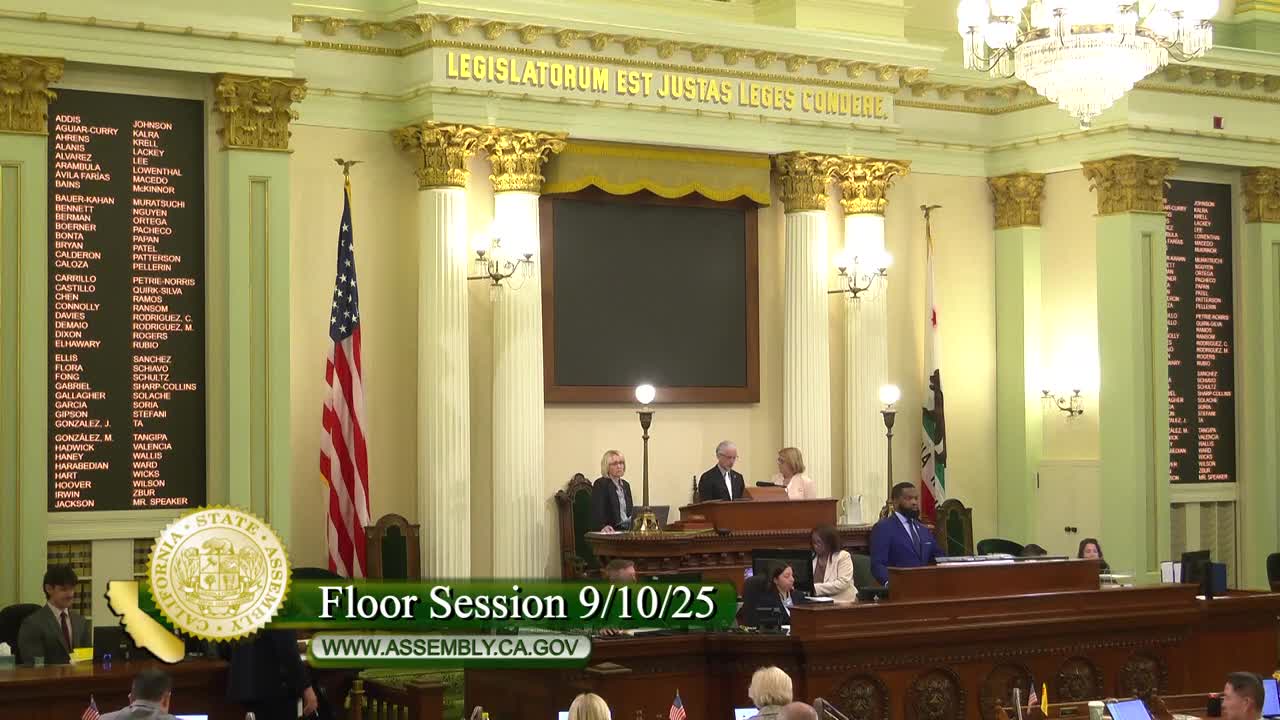 5MIN
Assembly Floor
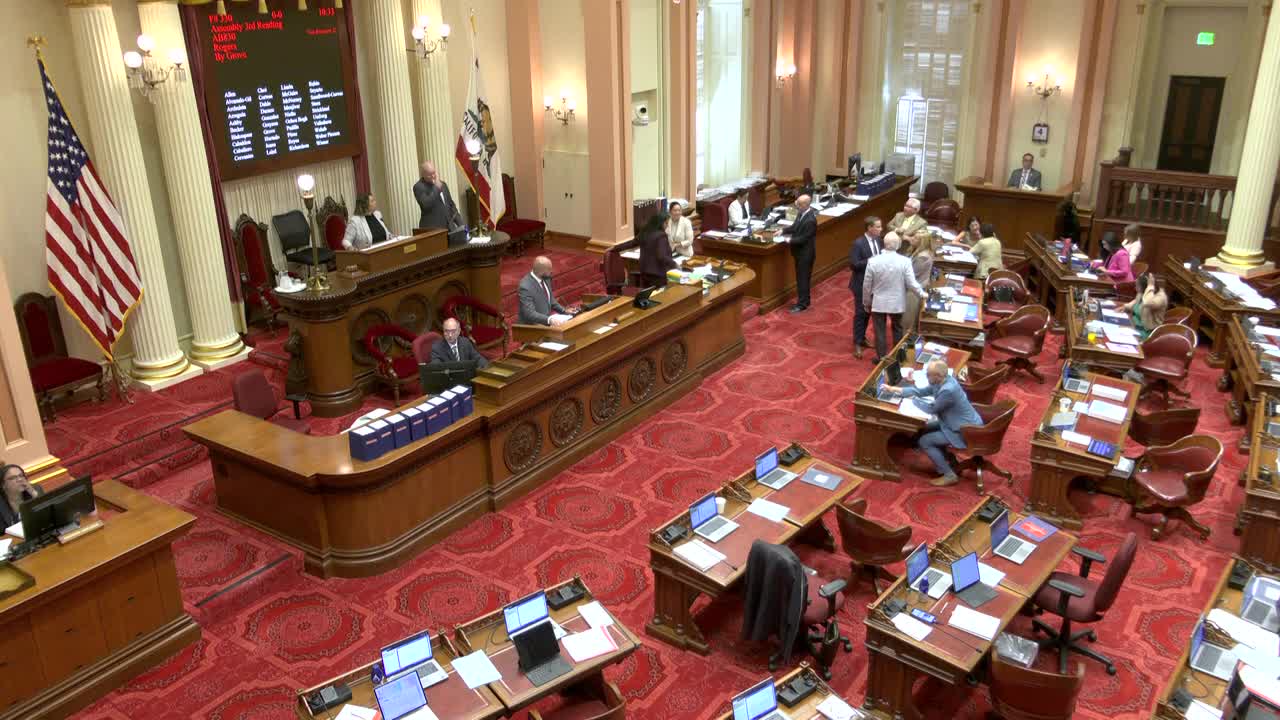 3MIN
Senate Floor
 5MIN
Assembly Standing Committee on Elections
Bill Author