AB 1373: Water quality: state certification.
- Session Year: 2025-2026
- House: Assembly
- Latest Version Date: 2025-09-16
Current Status:
Failed
(2026-01-22: Consideration of Governor's veto stricken from file.)
Introduced
In Committee
Awaiting First Chamber Vote
Passed First Chamber
In Committee
Awaiting Second Chamber Vote
Passed Second Chamber
Enacted
Under existing law, the State Water Resources Control Board and the California regional water quality control boards prescribe waste discharge requirements in accordance with the Federal Water Pollution Control Act and the Porter-Cologne Water Quality Control Act. Under federal law, any applicant seeking a federal license or permit for an activity that may result in any discharge into the navigable waters of the United States is required to first seek a state water quality certification, as specified. The Porter-Cologne Water Quality Control Act authorizes the state board to certify or provide a statement to a federal agency, as required pursuant to federal law, that there is reasonable assurance that an activity of any person subject to the jurisdiction of the state board will not reduce water quality below applicable standards. The federal act provides that if a state fails or refuses to act on a request for this certification within a reasonable period of time, which shall not exceed one year after receipt of the request, then the state certification requirements are waived with respect to the federal application.
This bill would require the state board, if requested by the applicant within 14 days of an initial draft certification being issued, to hold a public hearing at least 21 days before taking action on an application for certification for a license to operate a hydroelectric facility, as provided. The bill would, if a public hearing is requested on the draft certification, prohibit the authority to issue a certification for a license to operate a hydroelectric facility from being delegated. The bill would authorize the state board to include in its fee schedule for hydroelectric facility applicants an amount up to the reasonable costs incurred by the state board in implementing these provisions.
Under existing law, the State Water Resources Control Board and the California regional water quality control boards prescribe waste discharge requirements in accordance with the Federal Water Pollution Control Act and the Porter-Cologne Water Quality Control Act. Under federal law, any applicant seeking a federal license or permit for an activity that may result in any discharge into the navigable waters of the United States is required to first seek a state water quality certification, as specified. The Porter-Cologne Water Quality Control Act authorizes the state board to certify or provide a statement to a federal agency, as required pursuant to federal law, that there is reasonable assurance that an activity of any person subject to the jurisdiction of the state board will not reduce water quality below applicable standards. The federal act provides that if a state fails or refuses to act on a request for this certification within a reasonable period of time, which shall not exceed one year after receipt of the request, then the state certification requirements are waived with respect to the federal application.
This bill would require the state board, if requested by the applicant within 14 days of an initial draft certification being issued, to hold a public hearing at least 21 days before taking action on an application for certification for a license to operate a hydroelectric facility. facility, as provided. The bill would, if a public hearing is requested on the draft certification, prohibit the authority to issue a certification for a license to operate a hydroelectric facility from being delegated. The bill would authorize the state board to include in its fee schedule for hydroelectric facility applicants an amount up to the reasonable costs incurred by the state board in implementing these provisions.
Under existing law, the State Water Resources Control Board and the California regional water quality control boards prescribe waste discharge requirements in accordance with the Federal Water Pollution Control Act and the Porter-Cologne Water Quality Control Act. Under federal law, any applicant seeking a federal license or permit for an activity that may result in any discharge into the navigable waters of the United States is required to first seek a state water quality certification, as specified. The Porter-Cologne Water Quality Control Act authorizes the state board to certify or provide a statement to a federal agency, as required pursuant to federal law, that there is reasonable assurance that an activity of any person subject to the jurisdiction of the state board will not reduce water quality below applicable standards. The federal act provides that if a state fails or refuses to act on a request for this certification within a reasonable period of time, which shall not exceed one year after receipt of the request, then the state certification requirements are waived with respect to the federal application.
This bill would require the state board board, if requested by the applicant within 14 days of an initial draft certification being issued, to hold a public hearing at least 21 days before taking action on an application for certification for a license to operate a hydroelectric facility. The bill would would, if a public hearing is requested on the draft certification, prohibit the authority to issue a certification for a license to operate a hydroelectric facility from being delegated. The bill would authorize the state board to include in its fee schedule for hydroelectric facility applicants an amount up to the reasonable costs incurred by the state board in implementing these provisions.
Under existing law, the State Water Resources Control Board and the California regional water quality control boards prescribe waste discharge requirements in accordance with the Federal Water Pollution Control Act and the Porter-Cologne Water Quality Control Act. Under federal law, any applicant seeking a federal license or permit for an activity that may result in any discharge into the navigable waters of the United States is required to first seek a state water quality certification, as specified. The Porter-Cologne Water Quality Control Act authorizes the state board to certify or provide a statement to a federal agency, as required pursuant to federal law, that there is reasonable assurance that an activity of any person subject to the jurisdiction of the state board will not reduce water quality below applicable standards. The federal act provides that if a state fails or refuses to act on a request for this certification within a reasonable period of time, which shall not exceed one year after receipt of the request, then the state certification requirements are waived with respect to the federal application.
This bill would require the state board to hold a public hearing at least 21 days before taking action on an application for a certificate or statement. certification for a license to operate a hydroelectric facility. The bill would prohibit the authority to issue a certification for a license to operate a hydroelectric facility from being delegated.
Under existing law, the State Water Resources Control Board and the California regional water quality control boards prescribe waste discharge requirements in accordance with the Federal Water Pollution Control Act and the Porter-Cologne Water Quality Control Act. Under federal law, any applicant seeking a federal license or permit for an activity that may result in any discharge into the navigable waters of the United States is required to first seek a state water quality certification, as specified. The Porter-Cologne Water Quality Control Act authorizes the state board to certify or provide a statement to a federal agency, as required pursuant to federal law, that there is reasonable assurance that an activity of any person subject to the jurisdiction of the state board will not reduce water quality below applicable standards. The federal act provides that if a state fails or refuses to act on a request for this certification within a reasonable period of time, which shall not exceed one year after receipt of the request, then the state certification requirements are waived with respect to the federal application.
This bill would require the state board to hold a public hearing at least 21 days before taking action on an application for a certificate or statement. The bill would prohibit the authority to issue a certification for a license to operate a hydroelectric facility from being delegated.
Existing law declares that the protection of the public interest in the development of the water resources of the state is of vital concern to the people of the state and that the state shall determine in what way the water of the state, both surface and underground, should be developed for the greatest public benefit.This bill would express the intent of the Legislature to enact future legislation that would improve water delivery systems.Existing law declares that the protection of the public interest in the development of the water resources of the state is of vital concern to the people of the state and that the state shall determine in what way the water of the state, both surface and underground, should be developed for the greatest public benefit.
This bill would express the intent of the Legislature to enact future legislation that would improve water delivery systems.
(a)The state board is designated as the state water pollution control agency for all purposes stated in the Federal Water Pollution Control Act (33 U.S.C. Sec. 1251 et seq.) and any other existing or subsequently enacted federal water quality control law.
(b)(1)The state board is authorized to give any certificate or statement required by any federal agency pursuant to the Federal Water Pollution Control Act or any other federal water quality control law that there is reasonable assurance that an activity of any person subject to the jurisdiction of the state board will comply with applicable requirements of that federal law or any other appropriate requirements of state law.
(2)(A)For a license to operate a hydroelectric facility, if requested by the applicant within 14 days of an initial draft certification being issued, the state board shall hold a public hearing at least 21 days before acting on the application for certification. If a public hearing is requested on the draft certification, the authority to issue that certification for a license to operate a hydroelectric facility shall not be delegated. The public hearing may be conducted as part of a regularly scheduled state board meeting, provided that the hearing is specifically noticed and allows for public comment on the certification application.
(B)The state board may include in its fee schedule for hydroelectric facility applicants, pursuant to Section 13160.1, an amount not to exceed the reasonable costs incurred by the state board in holding a public hearing or issuing a certification for a license to operate a hydroelectric facility when the authority to issue that certification could not be delegated, pursuant to subparagraph (A).
(3)The state board may issue the certificate or statement under paragraph (1) before completion of the environmental review required under Division 13 (commencing with Section 21000) of the Public Resources Code if the state board determines that waiting until completion of that environmental review to issue the certificate or statement poses a substantial risk of waiver of the state boards certification authority under the Federal Water Pollution Control Act or any other federal water quality control law. To the extent authorized by federal law, the state board shall reserve authority to reopen and, after public notice, an opportunity for comment, and, when appropriate, an opportunity for a hearing, revise the certificate or statement as appropriate to incorporate feasible measures to avoid or reduce significant environmental impacts or to make any necessary findings based on the information provided in the environmental document prepared for the project.
(c)The state board is authorized to exercise any powers delegated to the state and carry out any program a state is authorized to administer under the Federal Water Pollution Control Act (33 U.S.C. Sec. 1251 et seq.) and any amendments to that act.
(a)The state board is designated as the state water pollution control agency for all purposes stated in the Federal Water Pollution Control Act (33 U.S.C. Sec. 1251 et seq.) and any other existing or subsequently enacted federal water quality control law.
(b)(1)The state board is authorized to give any certificate or statement required by any federal agency pursuant to the Federal Water Pollution Control Act or any other federal water quality control law that there is reasonable assurance that an activity of any person subject to the jurisdiction of the state board will comply with applicable requirements of that federal law or any other appropriate requirements of state law.
(2)(A)For a license to operate a hydroelectric facility, if requested by the applicant within 14 days of an initial draft certification being issued, the state board shall hold a public hearing at least 21 days before acting on the application for certification. If a public hearing is requested on the draft certification, the authority to issue that certification for a license to operate a hydroelectric facility shall not be delegated. The public hearing may be conducted as part of a regularly scheduled state board meeting, provided that the hearing is specifically noticed and allows for public comment on the certification application.
(B)The state board may include in its fee schedule for hydroelectric facility applicants, pursuant to Section 13160.1, an amount not to exceed the reasonable costs incurred by the state board in holding a public hearing or issuing a certification for a licence license to operate a hydroelectric facility when the authority to issue that certification could not be delegated, pursuant to subparagraph (A).
(3)The state board may issue the certificate or statement under paragraph (1) before completion of the environmental review required under Division 13 (commencing with Section 21000) of the Public Resources Code if the state board determines that waiting until completion of that environmental review to issue the certificate or statement poses a substantial risk of waiver of the state boards certification authority under the Federal Water Pollution Control Act or any other federal water quality control law. To the extent authorized by federal law, the state board shall reserve authority to reopen and, after public notice, an opportunity for comment, and, when appropriate, an opportunity for a hearing, revise the certificate or statement as appropriate to incorporate feasible measures to avoid or reduce significant environmental impacts or to make any necessary findings based on the information provided in the environmental document prepared for the project.
(c)The state board is authorized to exercise any powers delegated to the state and carry out any program a state is authorized to administer under the Federal Water Pollution Control Act (33 U.S.C. Sec. 1251 et seq.) and any amendments to that act.
(a)The state board is designated as the state water pollution control agency for all purposes stated in the Federal Water Pollution Control Act (33 U.S.C. Sec. 1251 et seq.) and any other existing or subsequently enacted federal water quality control law.
(b)(1)The state board is authorized to give any certificate or statement required by any federal agency pursuant to the Federal Water Pollution Control Act or any other federal water quality control law that there is reasonable assurance that an activity of any person subject to the jurisdiction of the state board will comply with applicable requirements of that federal law or any other appropriate requirements of state law. For
(2)(A)For a license to operate a hydroelectric facility, if requested by the applicant within 14 days of an initial draft certification being issued, the state board shall hold a public hearing at least 21 days before acting on the application for certification. The If a public hearing is requested on the draft certification, the authority to issue a that certification for a license to operate a hydroelectric facility shall not be delegated.
(B)The state board may include in its fee schedule for hydroelectric facility applicants, pursuant to Section 13160.1, an amount not to exceed the reasonable costs incurred by the state board in holding a public hearing or issuing a certification for a licence to operate a hydroelectric facility when the authority to issue that certification could not be delegated, pursuant to subparagraph (A).
(2)(3)The state board may issue the certificate or statement under paragraph (1) before completion of the environmental review required under Division 13 (commencing with Section 21000) of the Public Resources Code if the state board determines that waiting until completion of that environmental review to issue the certificate or statement poses a substantial risk of waiver of the state boards certification authority under the Federal Water Pollution Control Act or any other federal water quality control law. To the extent authorized by federal law, the state board shall reserve authority to reopen and, after public notice, an opportunity for comment, and, when appropriate, an opportunity for a hearing, revise the certificate or statement as appropriate to incorporate feasible measures to avoid or reduce significant environmental impacts or to make any necessary findings based on the information provided in the environmental document prepared for the project.
(c)The state board is authorized to exercise any powers delegated to the state and carry out any program a state is authorized to administer under the Federal Water Pollution Control Act (33 U.S.C. Sec. 1251 et seq.) and any amendments to that act.
(a)The state board is designated as the state water pollution control agency for all purposes stated in the Federal Water Pollution Control Act (33 U.S.C. Sec. 1251 et seq.) and any other existing or subsequently enacted federal water quality control law.
(b)(1)After holding a public hearing at least 21 days before taking action on an application for a certificate or statement, the The state board is authorized to give any certificate or statement required by any federal agency pursuant to the Federal Water Pollution Control Act or any other federal water quality control law that there is reasonable assurance that an activity of any person subject to the jurisdiction of the state board will comply with applicable requirements of that federal law or any other appropriate requirements of state law. For a license to operate a hydroelectric facility, the state board shall hold a public hearing at least 21 days before acting on the application for certification. The authority to issue a certification for a license to operate a hydroelectric facility shall not be delegated.
(2)The state board may issue the certificate or statement under paragraph (1) before completion of the environmental review required under Division 13 (commencing with Section 21000) of the Public Resources Code if the state board determines that waiting until completion of that environmental review to issue the certificate or statement poses a substantial risk of waiver of the state boards certification authority under the Federal Water Pollution Control Act or any other federal water quality control law. To the extent authorized by federal law, the state board shall reserve authority to reopen and, after public notice, an opportunity for comment, and, when appropriate, an opportunity for a hearing, revise the certificate or statement as appropriate to incorporate feasible measures to avoid or reduce significant environmental impacts or to make any necessary findings based on the information provided in the environmental document prepared for the project.
(c)The state board is authorized to exercise any powers delegated to the state and carry out any program a state is authorized to administer under the Federal Water Pollution Control Act (33 U.S.C. Sec. 1251 et seq.) and any amendments to that act.
(a)The state board is designated as the state water pollution control agency for all purposes stated in the Federal Water Pollution Control Act (33 U.S.C. Sec. 1251 et seq.) and any other existing or subsequently enacted federal water quality control law.
(b)(1)The After holding a public hearing at least 21 days before taking action on an application for a certificate or statement, the state board is authorized to give any certificate or statement required by any federal agency pursuant to the Federal Water Pollution Control Act or any other federal water quality control law that there is reasonable assurance that an activity of any person subject to the jurisdiction of the state board will comply with applicable requirements of that federal law or any other appropriate requirements of state law. The authority to issue a certification for a license to operate a hydroelectric facility shall not be delegated.
(2)The state board may issue the certificate or statement under paragraph (1) before completion of the environmental review required under Division 13 (commencing with Section 21000) of the Public Resources Code if the state board determines that waiting until completion of that environmental review to issue the certificate or statement poses a substantial risk of waiver of the state boards certification authority under the Federal Water Pollution Control Act or any other federal water quality control law. To the extent authorized by federal law, the state board shall reserve authority to reopen and, after public notice, an opportunity for comment, and, when appropriate, an opportunity for a hearing, revise the certificate or statement as appropriate to incorporate feasible measures to avoid or reduce significant environmental impacts or to make any necessary findings based on the information provided in the environmental document prepared for the project.
(c)The state board is authorized to exercise any powers delegated to the state and carry out any program a state is authorized to administer under the Federal Water Pollution Control Act (33 U.S.C. Sec. 1251 et seq.) and any amendments to that act.
SECTION 1.It is the intent of the Legislature to enact future legislation that would improve water delivery systems.It is the intent of the Legislature to enact future legislation that would improve water delivery systems.
|
Date
|
Status
|
|---|---|
| Jan 22, 2026 | Consideration of Governor's veto stricken from file. |
| Oct 11, 2025 | Consideration of Governor's veto pending. |
| Oct 11, 2025 | Vetoed by Governor. |
| Sep 24, 2025 | Enrolled and presented to the Governor at 3 p.m. |
| Sep 12, 2025 | Senate amendments concurred in. To Engrossing and Enrolling. (Ayes 73. Noes 0. Page 3421.). |
| Sep 12, 2025 | In Assembly. Concurrence in Senate amendments pending. |
| Sep 11, 2025 | Read third time. Passed. Ordered to the Assembly. (Ayes 40. Noes 0. Page 2931.). |
| Sep 9, 2025 | Ordered to special consent calendar. |
| Sep 2, 2025 | Read second time. Ordered to third reading. |
| Aug 29, 2025 | Read second time and amended. Ordered returned to second reading. |
| Aug 29, 2025 | From committee: Amend, and do pass as amended. (Ayes 7. Noes 0.) (August 29). |
| Aug 18, 2025 | In committee: Referred to suspense file. |
| Jul 16, 2025 | From committee: Do pass and re-refer to Com. on APPR. with recommendation: To Consent Calendar. (Ayes 8. Noes 0.) (July 16). Re-referred to Com. on APPR. |
| Jun 18, 2025 | Referred to Com. on E.Q. |
| Jun 4, 2025 | In Senate. Read first time. To Com. on RLS. for assignment. |
| Jun 3, 2025 | Read third time. Passed. Ordered to the Senate. (Ayes 74. Noes 0. Page 2017.) |
| May 27, 2025 | Read second time. Ordered to third reading. |
| May 23, 2025 | Read second time and amended. Ordered returned to second reading. |
| May 23, 2025 | From committee: Amend, and do pass as amended. (Ayes 11. Noes 0.) (May 23). |
| May 23, 2025 | Assembly Rule 63 suspended. (Ayes 51. Noes 16. Page 1644.) |
| May 14, 2025 | In committee: Set, first hearing. Referred to APPR. suspense file. |
| Apr 30, 2025 | From committee: Do pass and re-refer to Com. on APPR. (Ayes 7. Noes 0.) (April 29). Re-referred to Com. on APPR. |
| Apr 9, 2025 | Re-referred to Com. on E.S & T.M. |
| Apr 8, 2025 | From committee chair, with author's amendments: Amend, and re-refer to Com. on E.S & T.M. Read second time and amended. |
| Mar 25, 2025 | Re-referred to Com. on E.S & T.M. |
| Mar 24, 2025 | Referred to Com. on E.S & T.M. |
| Mar 24, 2025 | From committee chair, with author's amendments: Amend, and re-refer to Com. on E.S & T.M. Read second time and amended. |
| Feb 24, 2025 | Read first time. |
| Feb 22, 2025 | From printer. May be heard in committee March 24. |
| Feb 21, 2025 | Introduced. To print. |
|
Date
|
Description
|
Location
|
Votes
|
|
|---|---|---|---|---|
| Sep 12, 2025 | AB 1373 Soria Concurrence in Senate Amendments | Assembly Floor |
Passed |
|
| Sep 11, 2025 | Special Consent AB1373 Soria By Caballero | Senate Floor |
Passed |
|
| Aug 29, 2025 | Do pass as amended | Senate Standing Committee on Appropriations |
Passed |
|
| Aug 18, 2025 | Placed on suspense file | Senate Standing Committee on Appropriations |
Passed |
|
| Jul 16, 2025 | Do pass, but first be re-referred to the Committee on [Appropriations] with the recommendation: To Consent Calendar | Senate Standing Committee on Environmental Quality |
Passed |
|
| Jun 3, 2025 | AB 1373 Soria Assembly Third Reading | Assembly Floor |
Passed |
|
| May 23, 2025 | Do pass as amended. | Assembly Standing Committee on Appropriations |
Passed |
|
| Apr 29, 2025 | Do pass and be re-referred to the Committee on [Appropriations] | Assembly Standing Committee on Environmental Safety and Toxic Materials |
Passed |
This list shows positions taken on this bill by organizations on the date displayed, which is linked to the original source.
Positions by individuals are not included.
|
Organization
|
Position
|
Date
|
|---|---|---|
| Association Of California Water Agencies | ** Support | |
| California Municipal Utilities Association | ** Support | |
| Modesto Irrigation District | ** Support | |
| Sierra Club California | ** Against | |
| Turlock Irrigation District | ** Support | |
| Valley Ag Water Coalition | ** Support |
GOVERNOR'S VETO
GV Bill Id:AB 1373
Author:(Soria)
As Enrolled Ver:September 16, 2025
2/3 vote
SUMMARY
Requires the State Water Resources Control Board (State Water Board), before acting on an application for certification under the federal Clean Water Act (CWA) for a license to operate a hydroelectric facility, and if requested by the applicant within 14 days of an initial draft certification being issued, to hold a public hearing at least 21 days before taking action on the certification.
Senate Amendments:
Authorize the State Water Board to conduct the public hearing required by this bill to be part of a regularly scheduled State Water Board meeting.
Governor's Veto Message
This bill would require the State Water Resources Control Board (Board) to hold a public hearing at least 21 days prior to acting on an application for a water quality certification for a license to operate a hydroelectric facility.
While well-intentioned, this bill is unnecessary. The Board's certification process already includes opportunities for input by members of the public and Board members, including a mechanism for Board members to reconsider decisions initially delegated to staff. I am, however, directing the Board to work with the relevant stakeholders to explore ways to make this process more efficient, consistent with the intent of this bill.
COMMENTS
Federal CWA: The Federal Water Pollution Control Act of 1948 was the first major United States (U.S.) law to address water pollution. The law was amended in 1972, and became commonly known as the CWA. The federal CWA establishes the basic structure for regulating discharges of pollutants into the waters of the U.S. and regulating quality standards for surface waters. Under the CWA, the U.S. Environmental Protection Agency has implemented pollution control programs, including setting wastewater standards for industrial facilities, and water quality standards for contaminants in surface waters. The CWA made it unlawful to discharge any pollutant from a point source into navigable waters without a permit. Industrial, municipal, and other facilities must obtain a permit under the National Pollutant Discharge Elimination System under the CWA in order to discharge into surface water.
According to section 401 of the CWA, any entity applying for a federal license or permit to conduct any activity that may result in a discharge of pollutants into federal waters must obtain a water quality certification from the state in which the activity is to occur. For example, performing an activity that requires the dredging or filling of rivers, streams, or wetlands (dredge and fill projects) requires a water quality certification. Typical dredge and fill projects include building bridges, widening roadways, and stabilizing roadway slopes and embankments. When the state issues a water quality certification for a project, it is certifying that the project will comply with state and federal water quality laws and regulations. Once the state issues its certification, it is up to the applicable federal entity to decide whether to issue a federal license or permit allowing the project to proceed. The federal government cannot, however, issue a license or permit that requires a water quality certification until the state where the activity will occur has done so or the state has waived its right to certify.
401 water quality certification and waste discharge requirements: The 401 water quality certification program is responsible for regulating discharges of dredged or fill material to waters of the state. The State Water Board and the Regional Water Quality Control Boards (Regional Water Boards) regulate these discharges under section 401 of the CWA and under California's Porter-Cologne Water Quality Control Act (Porter-Cologne). CWA section 401 water quality certifications are issued to applicants for a federal license or permit for activities that may result in a discharge into waters of the U.S., including but not limited to, the discharge of dredged or fill material. Waste discharge requirements under Porter-Cologne are issued for discharges of dredged or fill material to waters of the state.
Procedures for discharges of dredged or fill material to waters of the state: In 2019, the State Water Board adopted the State Wetland Definition and Procedures for Discharges of Dredged or Fill Material to Waters of the State (Procedures). These Procedures cover the 401 certification process by the State Water Board. The State Water Board adopted the Procedures, which became effective May 28, 2020, to address several important issues. First, there was a need to strengthen protection of waters of the state that were no longer protected under the CWA due to U.S. Supreme Court decisions, since the State Water Boards and Regional Water Boards historically relied on CWA protections during dredged or fill discharge permitting practices. Second, there was inconsistency across the Water Boards in requirements for discharges of dredged or fill material into waters of the state, including wetlands. Third, there was no single accepted definition of wetlands at the state level, and the Water Boards historically had different requirements and levels of analysis regarding issuance of dredge or fill permits. Finally, regulations have historically not been adequate to prevent losses in the quantity and quality of wetlands in California, where there have been especially profound historical losses of wetlands. As part of the Procedures, the Executive Director or Executive Officer of the State Water Board, or their designee, has the authority to issue the 401 certification.
This bill: This bill would prohibit the State Water Board from delegating the authority to issue a certification under the CWA for a license to operate a hydroelectric facility to the Executive Officer of the State Water Board.
Public notice for waste discharges: Section 13167.5 of the Water Code requires that draft waste discharge requirements be made available to the public for a 30-day comment and review period before the draft discharge requirement is considered for adoption by the State Water Board. The California Code of Regulations, Title 23, section 3858, requires public notice of an application for a 401 water quality certification for at least 21 days before taking action on the application, unless the public notice requirement has been adequately satisfied by the applicant or federal agency.
Hydroelectric facilities: Hydroelectric facilities smaller than 30 megawatts (MW) of generation capacity are considered small. Utilities such as Southern California Edison, Pacific Gas and Electric, and the Sacramento Municipal Utility District operate small hydroelectric facilities. Large hydroelectric projects are those larger than 30 MW of generation capacity. The U.S. Bureau of Reclamation and the state's Department of Water Resources operate large hydroelectric plants in California such as Folsom Dam, Oroville Dam, and Shasta Dam. California's hydroelectric generation plants are mostly in the eastern mountain ranges. The state also imports its hydroelectric-generated electricity from the Pacific Northwest and the Southwest. There are at least 40 hydroelectric facilities in the state (includes both small and large hydro).
This bill: AB 1373 requires the State Water Board to hold a public hearing on a proposed certification under the CWA for a hydroelectric facility, if requested by the hydroelectric facility. The bill also prohibits the State Water Board from delegating the decision to issue the certification for a hydroelectric facility under the CWA to the Executive Officer, if a public hearing is requested by the hydroelectric facility. Additionally, AB 1373 authorizes the State Water Board to include in its fee schedule for hydroelectric facility applicants an amount not to exceed the reasonable costs incurred by the State Water Board in holding a public hearing or issuing a certification for a hydroelectric facility pursuant to the provisions of this bill. The author and proponents of the bill contend that hydroelectric facilities, including their proposed certifications under the CWA, are very complex, and therefore these certifications should be decided on by the State Water Board at a public hearing.
According to the Author
"The [State Water Board] has the responsibility to issue a Water Quality Certification under section 401 of the federal Clean Water Act. These certifications, which commonly last decades, contain mandatory conditions for their associated federal license or permit, meaning facility operators must accept whatever is approved by the [State Water Board] without modification or risk forfeiting their license to operate. The conditions included in 401 Water Quality Certificates have the potential to significantly impact the social, economic, and environmental conditions of the communities served by these projects and should not be made behind closed-doors and without the opportunity for the [State Water Board] to weigh-in. AB 1373 would require a more public process and give all those involved the opportunity to be heard."
Arguments in Support
According to the Turlock Irrigation District (TID),
"Over the last few decades, the State Water Board has delegated many of its authorities to staff, removing the option for members of the public to voice their concern on matters of significance to their communities. While we can appreciate the need to expedite certain administrative actions to streamline workload, not every action should be treated the same. One such area of delegated authority is the issuance of water quality certificates under Section 401 of the Clean Water Act. These certificates are essential to the operations of hydroelectric facilities that provide other essential benefits to many disadvantaged communities across the state.
TID is the majority owner and operator of the Don Pedro Project, a 203MW carbon-free resource, on the Tuolumne River. The Don Pedro Project is the economic backbone of our region, providing flood control protection, reliable carbon free energy, municipal drinking water, irrigation water, and environmental flows.
The Don Pedro Project is a Federal Energy Regulatory Commission (FERC) jurisdictional facility. As part of FERCs licensing process to operate a hydroelectric facility (for facilities under its jurisdiction), the State Water Board has the responsibility to issue a Water Quality Certification under Section 401 of the federal Clean Water Act. State certification conditions become mandatory conditions of any federal license or permit for the project, meaning whatever is approved by the State Water Board must be accepted without modification or the final license to operate, or continue to operate, will not be issued by FERC.
Requiring an open forum would allow the communities that rely on these projects to provide meaningful comments to the State Water Board on potential impacts or consequences. Additionally, decisions as significant as these should be made by the State Water Board, rather than being delegated to staff."
Arguments in Opposition
According to Sierra Club California,
"With the effective loss of federal natural resources agencies during this current Administration, water quality certification conditions are the only counterbalance to the FERC/licensee side of the high-stakes game. This Administration is expected to walk back the certification regulations created by the Biden Administration.
Blocking delegation or imposing a public hearing before the already heavily over-scheduled State Water Resources Control Board creates unnecessary impediments in a time limited process. Delegation helps make the process more efficient and allows the State Water Board to meet their deadlines- while a three week notice on a public hearing imposes unnecessary delays. The Board already has a public comment period for draft water quality certifications so a public hearing is unnecessary and creates more work for the State Water Board."
FISCAL COMMENTS
According to the Assembly Appropriations Committee, enactment of this bill could cost the State Water Board an unknown and variable amount to hold public hearings before taking action on 401 certifications for hydroelectric facilities. Actual costs will depend on the number of applicants who request a public hearing every year. The bill authorizes the State Water Board to recover any reasonable costs it incurs in holding a public hearing or issuing a certification for a license to operate a hydroelectric facility when the authority to issue that certification cannot be delegated, as provided.
VOTES
ASM ENVIRONMENTAL SAFETY AND TOXIC MATERIALS: 7-0-0
YES: Connolly, Ellis, Bauer-Kahan, Castillo, Lee, McKinnor, Papan
ASM APPROPRIATIONS: 11-0-4
YES: Wicks, Arambula, Calderon, Caloza, Elhawary, Fong, Mark González, Hart, Pacheco, Pellerin, Solache
ABS, ABST OR NV: Sanchez, Dixon, Ta, Tangipa
ASSEMBLY FLOOR: 74-0-5
YES: Addis, Aguiar-Curry, Ahrens, Alanis, Alvarez, Arambula, Ávila Farías, Bains, Bauer-Kahan, Bennett, Berman, Boerner, Bonta, Bryan, Calderon, Caloza, Carrillo, Castillo, Chen, Connolly, Davies, Dixon, Elhawary, Ellis, Flora, Fong, Gabriel, Gallagher, Garcia, Gipson, Jeff Gonzalez, Mark González, Haney, Harabedian, Hart, Hoover, Irwin, Jackson, Kalra, Krell, Lackey, Lee, Lowenthal, Macedo, Nguyen, Ortega, Pacheco, Papan, Patel, Patterson, Pellerin, Petrie-Norris, Quirk-Silva, Ramos, Ransom, Celeste Rodriguez, Michelle Rodriguez, Rogers, Blanca Rubio, Schiavo, Schultz, Sharp-Collins, Solache, Soria, Stefani, Ta, Tangipa, Valencia, Wallis, Ward, Wicks, Wilson, Zbur, Rivas
ABS, ABST OR NV: DeMaio, Hadwick, McKinnor, Muratsuchi, Sanchez
SENATE FLOOR: 40-0-0
YES: Allen, Alvarado-Gil, Archuleta, Arreguín, Ashby, Becker, Blakespear, Cabaldon, Caballero, Cervantes, Choi, Cortese, Dahle, Durazo, Gonzalez, Grayson, Grove, Hurtado, Jones, Laird, Limón, McGuire, McNerney, Menjivar, Niello, Ochoa Bogh, Padilla, Pérez, Reyes, Richardson, Rubio, Seyarto, Smallwood-Cuevas, Stern, Strickland, Umberg, Valladares, Wahab, Weber Pierson, Wiener
ASSEMBLY FLOOR: 73-0-7
YES: Addis, Aguiar-Curry, Ahrens, Alanis, Alvarez, Arambula, Ávila Farías, Bains, Bauer-Kahan, Bennett, Berman, Boerner, Bonta, Bryan, Calderon, Caloza, Carrillo, Castillo, Chen, Connolly, Davies, Dixon, Elhawary, Ellis, Fong, Gallagher, Garcia, Gipson, Jeff Gonzalez, Mark González, Hadwick, Haney, Harabedian, Hart, Hoover, Irwin, Jackson, Johnson, Kalra, Krell, Lee, Lowenthal, Macedo, McKinnor, Nguyen, Ortega, Pacheco, Papan, Patel, Patterson, Pellerin, Petrie-Norris, Quirk-Silva, Ramos, Ransom, Celeste Rodriguez, Michelle Rodriguez, Rogers, Blanca Rubio, Schiavo, Schultz, Sharp-Collins, Solache, Soria, Stefani, Ta, Tangipa, Valencia, Wallis, Ward, Wicks, Wilson, Rivas
ABS, ABST OR NV: DeMaio, Flora, Gabriel, Lackey, Muratsuchi, Sanchez, Zbur
UPDATED
VERSION: September 16, 2025
CONSULTANT: Josh Tooker / E.S. & T.M. / (916) 319-3965 FN: 0002190
CONCURRENCE IN SENATE AMENDMENTS
CSA1 Bill Id:AB 1373
Author:(Soria)
As Amended Ver:August 29, 2025
Majority vote
SUMMARY
Requires the State Water Resources Control Board (State Water Board), before acting on an application for certification under the federal Clean Water Act (CWA) for a license to operate a hydroelectric facility, and if requested by the applicant within 14 days of an initial draft certification being issued, to hold a public hearing at least 21 days before taking action on the certification.
Senate Amendments
1) Authorize the State Water Board to conduct the public hearing required by this bill to be part of a regularly scheduled State Water Board meeting.
COMMENTS
Federal CWA: The Federal Water Pollution Control Act of 1948 was the first major United States (U.S.) law to address water pollution. The law was amended in 1972, and became commonly known as the CWA. The federal CWA establishes the basic structure for regulating discharges of pollutants into the waters of the U.S. and regulating quality standards for surface waters. Under the CWA, the U.S. Environmental Protection Agency has implemented pollution control programs, including setting wastewater standards for industrial facilities, and water quality standards for contaminants in surface waters. The CWA made it unlawful to discharge any pollutant from a point source into navigable waters without a permit. Industrial, municipal, and other facilities must obtain a permit under the National Pollutant Discharge Elimination System under the CWA in order to discharge into surface water.
According to section 401 of the CWA, any entity applying for a federal license or permit to conduct any activity that may result in a discharge of pollutants into federal waters must obtain a water quality certification from the state in which the activity is to occur. For example, performing an activity that requires the dredging or filling of rivers, streams, or wetlands (dredge and fill projects) requires a water quality certification. Typical dredge and fill projects include building bridges, widening roadways, and stabilizing roadway slopes and embankments. When the state issues a water quality certification for a project, it is certifying that the project will comply with state and federal water quality laws and regulations. Once the state issues its certification, it is up to the applicable federal entity to decide whether to issue a federal license or permit allowing the project to proceed. The federal government cannot, however, issue a license or permit that requires a water quality certification until the state where the activity will occur has done so or the state has waived its right to certify.
401 water quality certification and waste discharge requirements: The 401 water quality certification program is responsible for regulating discharges of dredged or fill material to waters of the state. The State Water Board and the Regional Water Quality Control Boards (Regional Water Boards) regulate these discharges under section 401 of the CWA and under California's Porter-Cologne Water Quality Control Act (Porter-Cologne). CWA section 401 water quality certifications are issued to applicants for a federal license or permit for activities that may result in a discharge into waters of the U.S., including but not limited to, the discharge of dredged or fill material. Waste discharge requirements under Porter-Cologne are issued for discharges of dredged or fill material to waters of the state.
Procedures for discharges of dredged or fill material to waters of the state: In 2019, the State Water Board adopted the State Wetland Definition and Procedures for Discharges of Dredged or Fill Material to Waters of the State (Procedures). These Procedures cover the 401 certification process by the State Water Board. The State Water Board adopted the Procedures, which became effective May 28, 2020, to address several important issues. First, there was a need to strengthen protection of waters of the state that were no longer protected under the CWA due to U.S. Supreme Court decisions, since the State Water Boards and Regional Water Boards historically relied on CWA protections during dredged or fill discharge permitting practices. Second, there was inconsistency across the Water Boards in requirements for discharges of dredged or fill material into waters of the state, including wetlands. Third, there was no single accepted definition of wetlands at the state level, and the Water Boards historically had different requirements and levels of analysis regarding issuance of dredge or fill permits. Finally, regulations have historically not been adequate to prevent losses in the quantity and quality of wetlands in California, where there have been especially profound historical losses of wetlands. As part of the Procedures, the Executive Director or Executive Officer of the State Water Board, or their designee, has the authority to issue the 401 certification.
This bill: This bill would prohibit the State Water Board from delegating the authority to issue a certification under the CWA for a license to operate a hydroelectric facility to the Executive Officer of the State Water Board.
Public notice for waste discharges: Section 13167.5 of the Water Code requires that draft waste discharge requirements be made available to the public for a 30-day comment and review period before the draft discharge requirement is considered for adoption by the State Water Board. The California Code of Regulations, Title 23, section 3858, requires public notice of an application for a 401 water quality certification for at least 21 days before taking action on the application, unless the public notice requirement has been adequately satisfied by the applicant or federal agency.
Hydroelectric facilities: Hydroelectric facilities smaller than 30 megawatts (MW) of generation capacity are considered small. Utilities such as Southern California Edison, Pacific Gas and Electric, and the Sacramento Municipal Utility District operate small hydroelectric facilities. Large hydroelectric projects are those larger than 30 MW of generation capacity. The U.S. Bureau of Reclamation and the state's Department of Water Resources operate large hydroelectric plants in California such as Folsom Dam, Oroville Dam, and Shasta Dam. California's hydroelectric generation plants are mostly in the eastern mountain ranges. The state also imports its hydroelectric-generated electricity from the Pacific Northwest and the Southwest. There are at least 40 hydroelectric facilities in the state (includes both small and large hydro).
This bill: AB 1373 requires the State Water Board to hold a public hearing on a proposed certification under the CWA for a hydroelectric facility, if requested by the hydroelectric facility. The bill also prohibits the State Water Board from delegating the decision to issue the certification for a hydroelectric facility under the CWA to the Executive Officer, if a public hearing is requested by the hydroelectric facility. Additionally, AB 1373 authorizes the State Water Board to include in its fee schedule for hydroelectric facility applicants an amount not to exceed the reasonable costs incurred by the State Water Board in holding a public hearing or issuing a certification for a hydroelectric facility pursuant to the provisions of this bill. The author and proponents of the bill contend that hydroelectric facilities, including their proposed certifications under the CWA, are very complex, and therefore these certifications should be decided on by the State Water Board at a public hearing.
According to the Author
"The [State Water Board] has the responsibility to issue a Water Quality Certification under section 401 of the federal Clean Water Act. These certifications, which commonly last decades, contain mandatory conditions for their associated federal license or permit, meaning facility operators must accept whatever is approved by the [State Water Board] without modification or risk forfeiting their license to operate. The conditions included in 401 Water Quality Certificates have the potential to significantly impact the social, economic, and environmental conditions of the communities served by these projects and should not be made behind closed-doors and without the opportunity for the [State Water Board] to weigh-in. AB 1373 would require a more public process and give all those involved the opportunity to be heard."
Arguments in Support
According to the Turlock Irrigation District (TID),
"Over the last few decades, the State Water Board has delegated many of its authorities to staff, removing the option for members of the public to voice their concern on matters of significance to their communities. While we can appreciate the need to expedite certain administrative actions to streamline workload, not every action should be treated the same. One such area of delegated authority is the issuance of water quality certificates under Section 401 of the Clean Water Act. These certificates are essential to the operations of hydroelectric facilities that provide other essential benefits to many disadvantaged communities across the state.
TID is the majority owner and operator of the Don Pedro Project, a 203MW carbon-free resource, on the Tuolumne River. The Don Pedro Project is the economic backbone of our region, providing flood control protection, reliable carbon free energy, municipal drinking water, irrigation water, and environmental flows.
The Don Pedro Project is a Federal Energy Regulatory Commission (FERC) jurisdictional facility. As part of FERCs licensing process to operate a hydroelectric facility (for facilities under its jurisdiction), the State Water Board has the responsibility to issue a Water Quality Certification under Section 401 of the federal Clean Water Act. State certification conditions become mandatory conditions of any federal license or permit for the project, meaning whatever is approved by the State Water Board must be accepted without modification or the final license to operate, or continue to operate, will not be issued by FERC.
Requiring an open forum would allow the communities that rely on these projects to provide meaningful comments to the State Water Board on potential impacts or consequences. Additionally, decisions as significant as these should be made by the State Water Board, rather than being delegated to staff."
Arguments in Opposition
According to Sierra Club California,
"With the effective loss of federal natural resources agencies during this current Administration, water quality certification conditions are the only counterbalance to the FERC/licensee side of the high-stakes game. This Administration is expected to walk back the certification regulations created by the Biden Administration.
Blocking delegation or imposing a public hearing before the already heavily over-scheduled State Water Resources Control Board creates unnecessary impediments in a time limited process. Delegation helps make the process more efficient and allows the State Water Board to meet their deadlines- while a three week notice on a public hearing imposes unnecessary delays. The Board already has a public comment period for draft water quality certifications so a public hearing is unnecessary and creates more work for the State Water Board."
FISCAL COMMENTS
According to the Assembly Appropriations Committee, enactment of this bill could cost the State Water Board an unknown and variable amount to hold public hearings before taking action on 401 certifications for hydroelectric facilities. Actual costs will depend on the number of applicants who request a public hearing every year. The bill authorizes the State Water Board to recover any reasonable costs it incurs in holding a public hearing or issuing a certification for a license to operate a hydroelectric facility when the authority to issue that certification cannot be delegated, as provided.
VOTES:
ASM ENVIRONMENTAL SAFETY AND TOXIC MATERIALS: 7-0-0
YES: Connolly, Ellis, Bauer-Kahan, Castillo, Lee, McKinnor, Papan
ASM APPROPRIATIONS: 11-0-4
YES: Wicks, Arambula, Calderon, Caloza, Elhawary, Fong, Mark González, Hart, Pacheco, Pellerin, Solache
ABS, ABST OR NV: Sanchez, Dixon, Ta, Tangipa
ASSEMBLY FLOOR: 74-0-5
YES: Addis, Aguiar-Curry, Ahrens, Alanis, Alvarez, Arambula, Ávila Farías, Bains, Bauer-Kahan, Bennett, Berman, Boerner, Bonta, Bryan, Calderon, Caloza, Carrillo, Castillo, Chen, Connolly, Davies, Dixon, Elhawary, Ellis, Flora, Fong, Gabriel, Gallagher, Garcia, Gipson, Jeff Gonzalez, Mark González, Haney, Harabedian, Hart, Hoover, Irwin, Jackson, Kalra, Krell, Lackey, Lee, Lowenthal, Macedo, Nguyen, Ortega, Pacheco, Papan, Patel, Patterson, Pellerin, Petrie-Norris, Quirk-Silva, Ramos, Ransom, Celeste Rodriguez, Michelle Rodriguez, Rogers, Blanca Rubio, Schiavo, Schultz, Sharp-Collins, Solache, Soria, Stefani, Ta, Tangipa, Valencia, Wallis, Ward, Wicks, Wilson, Zbur, Rivas
ABS, ABST OR NV: DeMaio, Hadwick, McKinnor, Muratsuchi, Sanchez
UPDATED
VERSION: August 29, 2025
CONSULTANT: Josh Tooker / E.S. & T.M. / (916) 319-3965 FN: 0001761
SENATE RULES COMMITTEE Office of Senate Floor Analyses (916) 651-1520 Fax: (916) 327-4478 | AB 1373 |
THIRD READING
Bill No: AB 1373
Author: Soria (D)
Amended: 8/29/25 in Senate
Vote: 21
SENATE ENVIRONMENTAL QUALITY COMMITTEE: 8-0, 7/16/25
AYES: Blakespear, Valladares, Dahle, Gonzalez, Hurtado, Menjivar, Padilla, Pérez
SENATE APPROPRIATIONS COMMITTEE: 7-0, 8/29/25
AYES: Caballero, Seyarto, Cabaldon, Dahle, Grayson, Richardson, Wahab
ASSEMBLY FLOOR: 74-0, 6/3/25 - See last page for vote
SUBJECT: Water quality: state certification
SOURCE: Author
DIGEST:
This bill requires the State Water Resources Control Board (State Water Board) to hold a public hearing before acting on an application for certification for a license to operate a hydroelectric facility.
ANALYSIS:
Existing federal law establishes the Clean Water Act (CWA) to regulate discharges of pollutants into the waters of the United States and to regulate quality standards for surface waters. (33 United States Code (U.S.C.) §1251 et seq.)
Existing state law:
- Establishes the Porter-Cologne Water Quality Control Act (Porter-Cologne), which prohibits the discharge of pollutants to surface waters unless the discharger obtains a permit from the State Water Board. (Water Code (WC) § 13000 et seq.)
- Designates the State Water Board as the water pollution control agency for all purposes stated in the federal CWA. Authorizes the State Water Board to give any certificate or statement required by any federal agency pursuant to the CWA. (WC § 13160)
- Authorizes the State Water Board to establish a reasonable fee schedule to cover the costs incurred by the State Water Board and the Regional Water Quality Control Boards (Regional Water Boards) in connection with any certificate that is required or authorized by any federal law with respect to the effect of any existing or proposed facility, project, or construction work upon the quality of waters of the state, including certificates requested by applicants for a federal permit or license pursuant to Section 401 of the Federal Water Pollution Control Act. (WC § 13160.1.)
- Requires draft waste discharge requirements (WDR) be made available to the public for a 30-day comment and review period before the draft WDR is considered for adoption by the State Water Board. (WC § 13167.5)
- Requires public notice of an application, pursuant to Section 401 of the CWA, for at least 21 days before taking action on the application, unless the public notice requirement has been adequately satisfied by the applicant or federal agency. (California Code of Regulations, Title 23, § 3858)
This bill:
- Requires the State Water Board to hold a public hearing at least 21 days before acting on an application for certification for a license to operate a hydroelectric facility, if requested by the applicant within 14 days of the issuance of an initial draft certification.
- Allows the public hearing to be conducted as part of a regularly scheduled state board meeting if it is specifically noticed and allows for public comment on the certification application.
- Prohibits the authority to issue certification for a license to operate a hydroelectric facility from being delegated if a public hearing is requested.
- Authorizes the State Water Board to include reasonable costs incurred in holding a public hearing or issuing certification in its fee schedule, if the authority to issue the certification could not be delegated.
Background
- Federal Clean Water Act. The Federal Water Pollution Control Act of 1948 was the first major U.S. law to address water pollution. The law was amended in 1972, and became commonly known as the Clean Water Act (CWA). The federal CWA establishes the basic structure for regulating discharges of pollutants into the waters of the United States and regulating quality standards for surface waters. Under the CWA, the U.S. Environmental Protection Agency (U.S. EPA) has implemented pollution control programs, including setting wastewater standards for industrial facilities, as well as setting water quality standards for all contaminants in surface waters. The CWA made it unlawful to discharge any pollutant from a point source into navigable waters without a permit. Industrial, municipal, and other facilities must obtain a permit under the National Pollutant Discharge Elimination System in order to discharge into surface water.
- 401 water quality certification. According to Section 401 of the CWA, any entity applying for a federal license or permit to conduct any activity that may result in a discharge of pollutants into federal waters must obtain a water quality certification from the state in which the activity is to occur. For example, performing an activity that requires the dredging or filling of rivers, streams, or wetlands (dredge and fill projects) requires a water quality certification. Typical dredge and fill projects include building bridges, widening roadways, and stabilizing roadway slopes and embankments. When the State issues a water quality certification for a project, it is certifying that the project will comply with state and federal water quality laws and regulations. Once the State issues its certification, it is up to the applicable federal entity to decide whether to issue a federal license or permit allowing the project to proceed. The federal government cannot, however, issue a license or permit that requires a water quality certification until the state where the activity will occur has done so or the state has waived its right to certify.
The type of permit/certification required depends whether the projects are impacting federal waters or waters of the state. CWA section 401 water quality certifications are issued to applicants for a federal license or permit for activities that may result in a discharge into waters of the United States. Waste discharge requirements under Porter-Cologne are issued for discharges of dredged or fill material to waters of the state. Hydroelectric facilities require these permits in order to operate.
- Discharges of dredged or fill materials to waters of the state. In 2019, the State Water Board adopted the State Wetland Definition and Procedures for Discharges of Dredged or Fill Material to Waters of the State (Procedures). These Procedures cover the 401 certification process by the State Water Board. The State Water Board adopted the Procedures, which became effective May 28, 2020, to address several important issues.
First, there was a need to strengthen protection of waters of the state that were no longer protected under the Clean Water Act due to U.S. Supreme Court decisions, since the Water Boards historically relied on Clean Water Act protections during dredged or fill discharge permitting practices.
Second, there was inconsistency across the Water Boards in requirements for discharges of dredged or fill material into waters of the state, including wetlands.
Third, there was no single accepted definition of wetlands at the state level, and the Water Boards historically had different requirements and levels of analysis regarding issuance of dredge or fill permits.
Finally, regulations have historically not been adequate to prevent losses in the quantity and quality of wetlands in California, where there have been especially profound historical losses of wetlands.
As part of the Procedures, the Executive Director or Executive Officer, or their designee, has the authority to issue the 401 certification. This bill prohibits the State Water Board from delegating the authority to issue a certification for a license to operate a hydroelectric facility to the Executive Director or Officer because the implications of issuing certifications for these facilities can be significant.
- Hydroelectric facilities in California. There are approximately 40 hydroelectric facilities in the state. Hydroelectric facilities that have less than 30 megawatts (MW) of generation capacity are considered small. Utilities such as Southern California Edison, Pacific Gas and Electric, and the Sacramento Municipal Utility District operate small hydroelectric facilities. Large hydroelectric projects are facilities that have more than 30 MW of generation capacity. The United States Bureau of Reclamation and the state’s Department of Water Resources operate large hydroelectric plants in California such as Folsom Dam, Oroville Dam, and Shasta Dam. In California, hydroelectric facilities include:
- Dams (or pondage) facilities raise the water level of a stream or river to an elevation necessary to create a sufficient elevation difference. Dams can be constructed of earth, concrete, steel, or a combination of such materials. Dams may create secondary benefits such as flood control, recreation opportunities, and water storage;
- Run-of-river, or water diversion, facilities divert water from a natural channel to a course with a turbine and usually return the water to the channel downstream of the turbine; and,
- Pumped storage facilities pump water during off-peak demand periods from a reservoir at a lower elevation for storage in a reservoir at a higher elevation. Electricity is generated during peak demand periods by releasing the pumped water from the higher reservoir so it flows downhill through the hydraulic turbine(s) connected to generators. During the off-peak pumping cycle, the pumped storage facility consumes electricity.
Hydroelectric facilities present renewable energy and economic opportunities for communities proximal to natural environments that can support their operations. While existing hydroelectric facilities bring many benefits, there can be negative impacts to the surrounding communities if not addressed responsibly. These facilities can have biological and hydrological implications, as natural flow patterns and water levels may be disrupted, fish populations could decline, and the surrounding ecosystem could be impacted. This could also lead to impacts on community water supplies and the quality of drinking water, with fluctuating patterns in sediment transport. Certifications must also evolve with community needs, as some communities undergoing certification renewal with hydroelectric facilities have lost access to infrastructure.
This bill ensures that there is a mechanism for community engagement through public hearings and that there is consideration of these factors in the decisions for renewed certifications for hydroelectric facilities.
Comments
- Purpose of this bill. According to the author, “The State Water Resources Control Board has the responsibility to issue a Water Quality Certification under Section 401 of the federal Clean Water Act. These certifications, which commonly last decades, contain mandatory conditions for their associated federal license or permit, meaning facility operators must accept whatever is approved by the SWRCB without modification or risk forfeiting their license to operate. The conditions included in 401 Water Quality Certificates have the potential to significantly impact the social, economic, and environmental conditions of the communities served by these projects and should not be made behind closed-doors when a dispute over their terms arise. AB 1373 would require a more public process, including a hearing and vote, when requested by an applicant and give those involved the opportunity to be heard.”
- Considering community impacts. Permitting and operating a hydroelectric facility can have significant implications for the surrounding community. There has to be a consideration for the ecological environment, water quality, water supply, and surrounding infrastructure when operating these facilities. Licenses for hydroelectric facilities can last for up to 50 years, so the impacts a community may face, positive and negative, from these facilities could be long lasting. Such decisions could benefit from community engagement in the form of a public hearing, as this bill proposes. The bill also prohibits the State Water Board from delegating the authority to issue the certification if a public hearing is requested, so that the Board members are able to weigh in on these significant decisions.
- Imposing more process. By prohibiting the State Water Board from delegating the authority to issue certifications for some hydroelectric facilities, this bill does create more work for the State Water Board. The authority can be typically delegated to staff to share the workload in issuing certifications and permits, streamlining the process and leading to faster decisions. It might be worth the wait in this case, as some decisions regarding hydroelectric facilities weigh heavily on certain communities.
Amendments were made in the Assembly to ensure that public hearings and delegation restrictions are only in place when an applicant for a certification requests them, as this decision-making process may not be necessary for all hydroelectric facilities. This will ensure that the State Water Board is not overburdened and intends to prevent delay. Furthermore, there are 125 actively licensed facilities in the state with certifications that last for decades (~20-50 years), so the frequency of new applications will be relatively low. For the purpose of protecting the communities in which these hydroelectric facilities are sited, imposing more process by ensuring there is public engagement will be meaningful.
FISCAL EFFECT: Appropriation: No Fiscal Com.: Yes Local: No
Unknown ongoing costs (Water Rights Fund) for the State Water Board to prepare for and hold hearings for hydroelectric project water quality certifications.
SUPPORT: (Verified 8/29/25)
Association of California Water Agencies
Turlock Irrigation District
Valley Ag Water Coalition
OPPOSITION: (Verified 8/29/25)
None received
ASSEMBLY FLOOR: 74-0, 6/3/25
AYES: Addis, Aguiar-Curry, Ahrens, Alanis, Alvarez, Arambula, Ávila Farías, Bains, Bauer-Kahan, Bennett, Berman, Boerner, Bonta, Bryan, Calderon, Caloza, Carrillo, Castillo, Chen, Connolly, Davies, Dixon, Elhawary, Ellis, Flora, Fong, Gabriel, Gallagher, Garcia, Gipson, Jeff Gonzalez, Mark González, Haney, Harabedian, Hart, Hoover, Irwin, Jackson, Kalra, Krell, Lackey, Lee, Lowenthal, Macedo, Nguyen, Ortega, Pacheco, Papan, Patel, Patterson, Pellerin, Petrie-Norris, Quirk-Silva, Ramos, Ransom, Celeste Rodriguez, Michelle Rodriguez, Rogers, Blanca Rubio, Schiavo, Schultz, Sharp-Collins, Solache, Soria, Stefani, Ta, Tangipa, Valencia, Wallis, Ward, Wicks, Wilson, Zbur, Rivas
NO VOTE RECORDED: DeMaio, Hadwick, McKinnor, Muratsuchi, Sanchez
Prepared by: Taylor McKie / E.Q. / (916) 651-4108
9/2/25 18:22:31
**** END ****
SENATE COMMITTEE ON
Senator Anna Caballero, Chair
2025 - 2026 Regular Session
AB 1373 (Soria) - Water quality: state certification
Version: | Policy Vote: |
Urgency: | Mandate: |
Hearing Date: | Consultant: |
Bill Summary:
This bill would require the State Water Resources Control Board (State Water Board) to hold a public hearing before acting on an application for certification for a license to operate a hydroelectric facility.
*********** ANALYSIS ADDENDUM – SUSPENSE FILE ***********
The following information is revised to reflect amendments
adopted by the committee on August 29, 2025
Fiscal Impact:
- Unknown ongoing costs (Water Rights Fund) for the State Water Board to prepare for and hold hearings for hydroelectric project water quality certifications.
Author Amendments:
These amendments would clarify that the required hearing may be part of regularly scheduled meetings, as provided. Specifically, these amendments specify that the public hearing may be conducted as part of a regularly scheduled State Water Board meeting, provided that the hearing is specifically noticed and allows for public comment on the certification application.
-- END --
SENATE COMMITTEE ON
Senator Anna Caballero, Chair
2025 - 2026 Regular Session
AB 1373 (Soria) - Water quality: state certification
Version: | Policy Vote: |
Urgency: | Mandate: |
Hearing Date: | Consultant: |
Bill Summary:
This bill would require the State Water Resources Control Board (State Water Board) to hold a public hearing before acting on an application for certification for a license to operate a hydroelectric facility
Fiscal Impact:
- The State Water Board estimates ongoing costs of between $2.5 and $5.5 million annually (Water Rights Fund) to prepare for and hold hearings for hydroelectric project water quality certifications. The State Water Board states it would need to be prepared to conduct approximately 7 to 15 potentially multi-day hearings for new, renewed, and amended hydroelectric facility licenses per year due to this bill’s requirements. According to the State Water Board, due to ambiguity regarding the nature of the public hearings, it may be required to create a new program that is walled off from other certification program staff in order to conduct the hearings.
Background:
There are approximately 40 hydroelectric facilities in the state. Hydroelectric facilities that have less than 30 megawatts (MW) of generation capacity are considered small. Utilities such as Southern California Edison, Pacific Gas and Electric, and the Sacramento Municipal Utility District operate small hydroelectric facilities. Large hydroelectric projects are facilities that have more than 30 MW of generation capacity. The United States Bureau of Reclamation and the state’s Department of Water Resources operate large hydroelectric plants in California such as Folsom Dam, Oroville Dam, and Shasta Dam. In California, hydroelectric facilities include:
- Dams (or pondage) facilities raise the water level of a stream or river to an elevation necessary to create a sufficient elevation difference. Dams can be constructed of earth, concrete, steel, or a combination of such materials. Dams may create secondary benefits such as flood control, recreation opportunities, and water storage;
- Run-of-river, or water diversion, facilities divert water from a natural channel to a course with a turbine and usually return the water to the channel downstream of the turbine; and,
- Pumped storage facilities pump water during off-peak demand periods from a reservoir at a lower elevation for storage in a reservoir at a higher elevation. Electricity is generated during peak demand periods by releasing the pumped water from the higher reservoir so it flows downhill through the hydraulic turbine(s) connected to generators. During the off-peak pumping cycle, the pumped storage facility consumes electricity.
Hydroelectric facilities present renewable energy and economic opportunities for communities proximal to natural environments that can support their operations. While existing hydroelectric facilities bring many benefits, there can be negative impacts to the surrounding communities if not addressed responsibly. These facilities can have biological and hydrological implications, as natural flow patterns and water levels may be disrupted, fish populations could decline, and the surrounding ecosystem could be impacted. This could also lead to impacts on community water supplies and the quality of drinking water, with fluctuating patterns in sediment transport. Certifications must also evolve with community needs, as some communities undergoing certification renewal with hydroelectric facilities have lost access to infrastructure.
This bill seeks to ensure that there is a mechanism for community engagement through public hearings and that there is consideration of these factors in the decisions for renewed certifications for hydroelectric facilities.
Proposed Law:
This bill would:
- Requires the State Water Board to hold a public hearing at least 21 days before acting on an application for certification for a license to operate a hydroelectric facility, if requested by the applicant within 14 days of the issuance of an initial draft certification.
- Prohibits the authority to issue certification for a license to operate a hydroelectric facility from being delegated if a public hearing is requested.
- Authorizes the State Water Board to include reasonable costs incurred in holding a public hearing or issuing certification in its fee schedule, if the authority to issue the certification could not be delegated.
Related Legislation:
AB 2605 (Villapudua, 2022) would have added requirements on the State Water Board when reviewing an application for water quality certification. This bill was held in the Assembly Environmental Safety and Toxic Materials Committee.
AB 1376 (Gray, 2021) would have prohibited the State Water Board from issuing a certificate or statement under federal water quality control laws until there is a 60-day public comment and review period for the certificate or statement; and, after that review period a majority of the members of the State Water Board vote on the certificate or statement. This bill was held in the Assembly Environmental Safety and Toxic Materials Committee.
-- END --
SENATE COMMITTEE ON ENVIRONMENTAL QUALITY
Senator Blakespear, Chair
2025 - 2026 Regular
Bill No: AB 1373
Author: | Soria | ||
Version: | 5/23/2025 | Hearing Date: | 7/16/2025 |
Urgency: | No | Fiscal: | Yes |
Consultant: | Taylor McKie | ||
SUBJECT: Water quality: state certification
DIGEST: This bill requires the State Water Resources Control Board (State Water Board) to hold a public hearing before acting on an application for certification for a license to operate a hydroelectric facility.
ANALYSIS:
Existing federal law:
- Establishes the Clean Water Act (CWA) to regulate discharges of pollutants into the waters of the United States and to regulate quality standards for surface waters. (33 United States Code (U.S.C.) §1251 et seq.)
Existing state law:
- Establishes the Porter-Cologne Water Quality Control Act (Porter-Cologne), which prohibits the discharge of pollutants to surface waters unless the discharger obtains a permit from the State Water Board. (Water Code (WC) § 13000 et seq.)
- Designates the State Water Board as the water pollution control agency for all purposes stated in the federal CWA. Authorizes the State Water Board to give any certificate or statement required by any federal agency pursuant to the CWA. (WC § 13160)
- Authorizes the State Water Board to establish a reasonable fee schedule to cover the costs incurred by the State Water Board and the Regional Water Quality Control Boards (Regional Water Boards) in connection with any certificate that is required or authorized by any federal law with respect to the effect of any existing or proposed facility, project, or construction work upon the quality of waters of the state, including certificates requested by applicants for a federal permit or license pursuant to Section 401 of the Federal Water Pollution Control Act. (WC § 13160.1.)
- Requires draft waste discharge requirements (WDR) be made available to the public for a 30-day comment and review period before the draft WDR is considered for adoption by the State Water Board. (WC § 13167.5)
- Requires public notice of an application, pursuant to Section 401 of the CWA, for at least 21 days before taking action on the application, unless the public notice requirement has been adequately satisfied by the applicant or federal agency. (California Code of Regulations, Title 23, § 3858)
This bill:
- Requires the State Water Board to hold a public hearing at least 21 days before acting on an application for certification for a license to operate a hydroelectric facility, if requested by the applicant within 14 days of the issuance of an initial draft certification.
- Prohibits the authority to issue certification for a license to operate a hydroelectric facility from being delegated if a public hearing is requested.
- Authorizes the State Water Board to include reasonable costs incurred in holding a public hearing or issuing certification in its fee schedule, if the authority to issue the certification could not be delegated.
Background
- Federal Clean Water Act. The Federal Water Pollution Control Act of 1948 was the first major U.S. law to address water pollution. The law was amended in 1972, and became commonly known as the Clean Water Act (CWA). The federal CWA establishes the basic structure for regulating discharges of pollutants into the waters of the United States and regulating quality standards for surface waters. Under the CWA, the U.S. Environmental Protection Agency (U.S. EPA) has implemented pollution control programs, including setting wastewater standards for industrial facilities, as well as setting water quality standards for all contaminants in surface waters. The CWA made it unlawful to discharge any pollutant from a point source into navigable waters without a permit. Industrial, municipal, and other facilities must obtain a permit under the National Pollutant Discharge Elimination System in order to discharge into surface water.
- 401 water quality certification. According to Section 401 of the CWA, any entity applying for a federal license or permit to conduct any activity that may result in a discharge of pollutants into federal waters must obtain a water quality certification from the state in which the activity is to occur. For example, performing an activity that requires the dredging or filling of rivers, streams, or wetlands (dredge and fill projects) requires a water quality certification. Typical dredge and fill projects include building bridges, widening roadways, and stabilizing roadway slopes and embankments. When the State issues a water quality certification for a project, it is certifying that the project will comply with state and federal water quality laws and regulations. Once the State issues its certification, it is up to the applicable federal entity to decide whether to issue a federal license or permit allowing the project to proceed. The federal government cannot, however, issue a license or permit that requires a water quality certification until the state where the activity will occur has done so or the state has waived its right to certify.
The type of permit/certification required depends whether the projects are impacting federal waters or waters of the state. CWA section 401 water quality certifications are issued to applicants for a federal license or permit for activities that may result in a discharge into waters of the United States. Waste discharge requirements under Porter-Cologne are issued for discharges of dredged or fill material to waters of the state. Hydroelectric facilities require these permits in order to operate.
- Discharges of dredged or fill materials to waters of the state. In 2019, the State Water Board adopted the State Wetland Definition and Procedures for Discharges of Dredged or Fill Material to Waters of the State (Procedures). These Procedures cover the 401 certification process by the State Water Board. The State Water Board adopted the Procedures, which became effective May 28, 2020, to address several important issues.
First, there was a need to strengthen protection of waters of the state that were no longer protected under the Clean Water Act due to U.S. Supreme Court decisions, since the Water Boards historically relied on Clean Water Act protections during dredged or fill discharge permitting practices.
Second, there was inconsistency across the Water Boards in requirements for discharges of dredged or fill material into waters of the state, including wetlands.
Third, there was no single accepted definition of wetlands at the state level, and the Water Boards historically had different requirements and levels of analysis regarding issuance of dredge or fill permits.
Finally, regulations have historically not been adequate to prevent losses in the quantity and quality of wetlands in California, where there have been especially profound historical losses of wetlands.
As part of the Procedures, the Executive Director or Executive Officer, or their designee, has the authority to issue the 401 certification. This bill prohibits the State Water Board from delegating the authority to issue a certification for a license to operate a hydroelectric facility to the Executive Director or Officer because the implications of issuing certifications for these facilities can be significant.
- Hydroelectric facilities in California. There are approximately 40 hydroelectric facilities in the state. Hydroelectric facilities that have less than 30 megawatts (MW) of generation capacity are considered small. Utilities such as Southern California Edison, Pacific Gas and Electric, and the Sacramento Municipal Utility District operate small hydroelectric facilities. Large hydroelectric projects are facilities that have more than 30 MW of generation capacity. The United States Bureau of Reclamation and the state’s Department of Water Resources operate large hydroelectric plants in California such as Folsom Dam, Oroville Dam, and Shasta Dam. In California, hydroelectric facilities include:
- Dams (or pondage) facilities raise the water level of a stream or river to an elevation necessary to create a sufficient elevation difference. Dams can be constructed of earth, concrete, steel, or a combination of such materials. Dams may create secondary benefits such as flood control, recreation opportunities, and water storage;
- Run-of-river, or water diversion, facilities divert water from a natural channel to a course with a turbine and usually return the water to the channel downstream of the turbine; and,
- Pumped storage facilities pump water during off-peak demand periods from a reservoir at a lower elevation for storage in a reservoir at a higher elevation. Electricity is generated during peak demand periods by releasing the pumped water from the higher reservoir so it flows downhill through the hydraulic turbine(s) connected to generators. During the off-peak pumping cycle, the pumped storage facility consumes electricity.
Hydroelectric facilities present renewable energy and economic opportunities for communities proximal to natural environments that can support their operations. While existing hydroelectric facilities bring many benefits, there can be negative impacts to the surrounding communities if not addressed responsibly. These facilities can have biological and hydrological implications, as natural flow patterns and water levels may be disrupted, fish populations could decline, and the surrounding ecosystem could be impacted. This could also lead to impacts on community water supplies and the quality of drinking water, with fluctuating patterns in sediment transport. Certifications must also evolve with community needs, as some communities undergoing certification renewal with hydroelectric facilities have lost access to infrastructure.
This bill ensures that there is a mechanism for community engagement through public hearings and that there is consideration of these factors in the decisions for renewed certifications for hydroelectric facilities.
Comments
- Purpose of Bill. According to the author, “The State Water Resources Control Board has the responsibility to issue a Water Quality Certification under Section 401 of the federal Clean Water Act. These certifications, which commonly last decades, contain mandatory conditions for their associated federal license or permit, meaning facility operators must accept whatever is approved by the SWRCB without modification or risk forfeiting their license to operate. The conditions included in 401 Water Quality Certificates have the potential to significantly impact the social, economic, and environmental conditions of the communities served by these projects and should not be made behind closed-doors when a dispute over their terms arise. AB 1373 would require a more public process, including a hearing and vote, when requested by an applicant and give those involved the opportunity to be heard.”
- Considering community impacts. Permitting and operating a hydroelectric facility can have significant implications for the surrounding community. There has to be a consideration for the ecological environment, water quality, water supply, and surrounding infrastructure when operating these facilities. Licenses for hydroelectric facilities can last for up to 50 years, so the impacts a community may face, positive and negative, from these facilities could be long lasting. Such decisions could benefit from community engagement in the form of a public hearing, as this bill proposes. The bill also prohibits the State Water Board from delegating the authority to issue the certification if a public hearing is requested, so that the Board members are able to weigh in on these significant decisions.
- Imposing more process. By prohibiting the State Water Board from delegating the authority to issue certifications for some hydroelectric facilities, this bill does create more work for the State Water Board. The authority can be typically delegated to staff to share the workload in issuing certifications and permits, streamlining the process and leading to faster decisions. It might be worth the wait in this case, as some decisions regarding hydroelectric facilities weigh heavily on certain communities.
Amendments were made in the Assembly to ensure that public hearings and delegation restrictions are only in place when an applicant for a certification requests them, as this decision-making process may not be necessary for all hydroelectric facilities. This amendment will ensure that the State Water Board is not overburdened and intends to prevent delay. Furthermore, there are 125 actively licensed facilities in the state with certifications that last for decades (~20-50 years), so the frequency of new applications will be relatively low. For the purpose of protecting the communities in which these hydroelectric facilities are sited, imposing more process by ensuring there is public engagement will be meaningful.
Related/Prior Legislation
AB 2605 (Villapudua, 2022) would have added requirements on the State Water Board when reviewing an application for water quality certification. This bill was held in the Assembly Environmental Safety and Toxic Materials Committee.
AB 1376 (Gray, 2021) would have prohibited the State Water Board from issuing a certificate or statement under federal water quality control laws until there is a 60-day public comment and review period for the certificate or statement; and, after that review period a majority of the members of the State Water Board vote on the certificate or statement. This bill was held in the Assembly Environmental Safety and Toxic Materials Committee.
SOURCE:
Author
SUPPORT:
Association of California Water Agencies (ACWA)
Valley Ag Water Coalition
OPPOSITION:
None received
-- END --
ASSEMBLY THIRD READING
ATR Bill Id:AB 1373
Author:(Soria)
As Amended Ver:May 23, 2025
Majority vote
SUMMARY
Requires the State Water Resources Control Board (State Water Board), before acting on an application for certification under the federal Clean Water Act (CWA) for a license to operate a hydroelectric facility and if requested by the applicant within 14 days of an initial draft certification being issued, to hold a public hearing at least 21 days before taking action on the certification.
Major Provisions
1) Prohibits the State Water Board, if a public hearing is requested on the draft certification, from delegating the authority to issue a certification under the CWA for a license to operate a hydroelectric facility to the Executive Officer of the State Water Board.
2) Authorizes the State Water Board to include in its fee schedule for hydroelectric facility applicants an amount not to exceed the reasonable costs incurred by the State Water Board in holding a public hearing or issuing a certification for a hydroelectric facility pursuant to the provisions of this bill.
COMMENTS
Federal Clean Water Act (CWA): The Federal Water Pollution Control Act of 1948 was the first major United States (U.S.) law to address water pollution. The law was amended in 1972, and became commonly known as the Clean Water Act (CWA). The federal CWA establishes the basic structure for regulating discharges of pollutants into the waters of the U.S. and regulating quality standards for surface waters. Under the CWA, the U.S. Environmental Protection Agency has implemented pollution control programs, including setting wastewater standards for industrial facilities, and water quality standards for contaminants in surface waters. The CWA made it unlawful to discharge any pollutant from a point source into navigable waters without a permit. Industrial, municipal, and other facilities must obtain a permit under the National Pollutant Discharge Elimination System under the CWA in order to discharge into surface water.
According to section 401 of the CWA, any entity applying for a federal license or permit to conduct any activity that may result in a discharge of pollutants into federal waters must obtain a water quality certification from the state in which the activity is to occur. For example, performing an activity that requires the dredging or filling of rivers, streams, or wetlands (dredge and fill projects) requires a water quality certification. Typical dredge and fill projects include building bridges, widening roadways, and stabilizing roadway slopes and embankments. When the state issues a water quality certification for a project, it is certifying that the project will comply with state and federal water quality laws and regulations. Once the state issues its certification, it is up to the applicable federal entity to decide whether to issue a federal license or permit allowing the project to proceed. The federal government cannot, however, issue a license or permit that requires a water quality certification until the state where the activity will occur has done so or the state has waived its right to certify.
401 water quality certification and waste discharge requirements: The 401 water quality certification program is responsible for regulating discharges of dredged or fill material to waters of the state. The State Water Board and the regional water quality control boards (regional water boards) regulate these discharges under section 401 of the CWA and under California's Porter-Cologne Water Quality Control Act (Porter-Cologne). CWA section 401 water quality certifications are issued to applicants for a federal license or permit for activities that may result in a discharge into waters of the U.S., including but not limited to, the discharge of dredged or fill material. Waste discharge requirements under Porter-Cologne are issued for discharges of dredged or fill material to waters of the state.
Procedures for discharges of dredged or fill material to waters of the state: In 2019 the State Water Board adopted the State Wetland Definition and Procedures for Discharges of Dredged or Fill Material to Waters of the State (Procedures). These Procedures cover the 401 certification process by the State Water Board. The State Water Board adopted the Procedures, which became effective May 28, 2020, to address several important issues. First, there was a need to strengthen protection of waters of the state that were no longer protected under the CWA due to U.S. Supreme Court decisions, since the Water Boards (State and regional) historically relied on CWA protections during dredged or fill discharge permitting practices. Second, there was inconsistency across the Water Boards in requirements for discharges of dredged or fill material into waters of the state, including wetlands. Third, there was no single accepted definition of wetlands at the state level, and the Water Boards historically had different requirements and levels of analysis regarding issuance of dredge or fill permits. Finally, regulations have historically not been adequate to prevent losses in the quantity and quality of wetlands in California, where there have been especially profound historical losses of wetlands. As part of the Procedures, the Executive Director or Executive Officer of the State Water Board, or their designee, has the authority to issue the 401 certification.
This bill: This bill would prohibit the State Water Board from delegating the authority to issue a certification under the CWA for a license to operate a hydroelectric facility to the Executive Officer of the State Water Board.
Public notice for waste discharges: Water Code section 13167.5 requires draft waste discharge requirements be made available to the public for a 30-day comment and review period before the draft discharge requirement is considered for adoption by the State Water Board. The California Code of Regulations, Title 23, section 3858, requires public notice of an application for a 401 water quality certification for at least 21 days before taking action on the application, unless the public notice requirement has been adequately satisfied by the applicant or federal agency.
Hydroelectric facilities: Hydroelectric (hydro) facilities smaller than 30 megawatts (MW) of generation capacity are considered small hydro. Utilities such as Southern California Edison, Pacific Gas and Electric, and the Sacramento Municipal Utility District operate small hydro facilities. Large hydro projects are those larger than 30 MW of generation capacity. The U.S. Bureau of Reclamation and the state's Department of Water Resources operate large hydro plants in California such as Folsom Dam, Oroville Dam, and Shasta Dam. California's hydro generation plants are mostly in the eastern mountain ranges. The state also imports its hydro-generated electricity from the Pacific Northwest and the Southwest. There are at least 40 hydroelectric facilities in the state (includes both small and large hydro).
This bill: AB 1373 requires the State Water Board to hold a public hearing on a proposed certification under the CWA for a hydroelectric facility, if requested by the hydroelectric facility. The bill also prohibits the State Water Board from delegating the decision to issue the certification for a hydroelectric facility under the CWA to the Executive Officer, if a public hearing is requested by the hydroelectric facility. Additionally, AB 1373 Authorizes the State Water Board to include in its fee schedule for hydroelectric facility applicants an amount not to exceed the reasonable costs incurred by the State Water Board in holding a public hearing or issuing a certification for a hydroelectric facility pursuant to the provisions of this bill. The author and proponents of the bill contend that hydroelectric facilities, including their proposed certifications under the CWA, are very complex, and therefore these certifications should be decided on by the State Water Board at a public hearing.
According to the Author
"The [State Water Board] has the responsibility to issue a Water Quality Certification under section 401 of the federal Clean Water Act. These certifications, which commonly last decades, contain mandatory conditions for their associated federal license or permit, meaning facility operators must accept whatever is approved by the [State Water Board] without modification or risk forfeiting their license to operate. The conditions included in 401 Water Quality Certificates have the potential to significantly impact the social, economic, and environmental conditions of the communities served by these projects and should not be made behind closed-doors and without the opportunity for the [State Water Board] to weigh-in. AB 1373 would require a more public process and give all those involved the opportunity to be heard."
Arguments in Support
According to the Turlock Irrigation District (TID),
"Over the last few decades, the State Water Board has delegated many of its authorities to staff, removing the option for members of the public to voice their concern on matters of significance to their communities. While we can appreciate the need to expedite certain administrative actions to streamline workload, not every action should be treated the same. One such area of delegated authority is the issuance of water quality certificates under Section 401 of the Clean Water Act. These certificates are essential to the operations of hydroelectric facilities that provide other essential benefits to many disadvantaged communities across the state.
TID is the majority owner and operator of the Don Pedro Project, a 203MW carbon-free resource, on the Tuolumne River. The Don Pedro Project is the economic backbone of our region, providing flood control protection, reliable carbon free energy, municipal drinking water, irrigation water, and environmental flows.
The Don Pedro Project is a Federal Energy Regulatory Commission (FERC) jurisdictional facility. As part of FERCs licensing process to operate a hydroelectric facility (for facilities under its jurisdiction), the State Water Board has the responsibility to issue a Water Quality Certification under Section 401 of the federal Clean Water Act. State certification conditions become mandatory conditions of any federal license or permit for the project, meaning whatever is approved by the State Water Board must be accepted without modification or the final license to operate, or continue to operate, will not be issued by FERC.
Requiring an open forum would allow the communities that rely on these projects to provide meaningful comments to the State Water Board on potential impacts or consequences. Additionally, decisions as significant as these should be made by the State Water Board, rather than being delegated to staff."
Arguments in Opposition
According to Sierra Club California,
"With the effective loss of federal natural resources agencies during this current Administration, water quality certification conditions are the only counterbalance to the FERC/licensee side of the high-stakes game. This Administration is expected to walk back the certification regulations created by the Biden Administration.
Blocking delegation or imposing a public hearing before the already heavily over-scheduled State Water Resources Control Board creates unnecessary impediments in a time limited process. Delegation helps make the process more efficient and allows the State Water Board to meet their deadlines- while a 3 week notice on a public hearing imposes unnecessary delays. The Board already has a public comment period for draft water quality certifications so a public hearing is unnecessary and creates more work for the State Water Board."
FISCAL COMMENTS
According to the Assembly Appropriations Committee,
Ongoing annual costs of an unknown and variable amount (Water Rights Fund) for the State Water Board to hold public hearings before taking action on 401 certifications for hydroelectric facilities, as provided. Actual costs will depend on the number of applicants who request a public hearing every year. The bill authorizes the State Water Board to recover any reasonable costs its incurs in holding a public hearing or issuing a certification for a license to operate a hydroelectric facility when the authority to issue that certification cannot be delegated, as provided.
The State Water Board notes there are approximately 145 hydroelectric projects in the state with each of their licenses lasting between 30 to 50 years. The expiration dates of these licenses are not spread out evenly, so some years the board sees higher volumes of applications for relicensing. License amendments, the number of which is unpredictable from year to year, are becoming more common for dam repairs, flow changes, or monitoring and adaptive management modifications. For a previous version of the bill, the State Water Board noted it cost estimates are driven, in part, by the fact that the board operates on tight deadlines to act on water quality certifications and failure to do so risks the board waiving its water quality protection authority for a project for – in some cases – multiple decades. The committee notes it is not clear what type of public hearing is required by this bill. While informal hearings typically involve fewer procedural requirements and lower costs, formal adjudicative hearings are more expensive and are run like trials, with witnesses and cross-examination. If formal hearings are required under the bill, State Water Board staff would potentially need to create entirely new and potentially redundant, soiled teams, where staff will not be allowed to communicate outside of their groups. This may include separate management and legal counsel.
VOTES
ASM ENVIRONMENTAL SAFETY AND TOXIC MATERIALS: 7-0-0
YES: Connolly, Ellis, Bauer-Kahan, Castillo, Lee, McKinnor, Papan
ASM APPROPRIATIONS: 11-0-4
YES: Wicks, Arambula, Calderon, Caloza, Elhawary, Fong, Mark González, Hart, Pacheco, Pellerin, Solache
ABS, ABST OR NV: Sanchez, Dixon, Ta, Tangipa
UPDATED
VERSION: May 23, 2025
CONSULTANT: Josh Tooker / E.S. & T.M. / (916) 319-3965 FN: 0000723
Date of Hearing: May 14, 2025
ASSEMBLY COMMITTEE ON APPROPRIATIONS
Buffy Wicks, Chair
ABPCA Bill Id:AB 1373
Author:(Soria) – As Amended Ver:April 8, 2025
Policy Committee: | Environmental Safety and Toxic Materials | Vote: | 7 - 0 |
|
| ||
|
|
Urgency: No State Mandated Local Program: No Reimbursable: No
SUMMARY:
This bill requires the State Water Resources Control Board (State Water Board), before acting on an application for certification under the federal Clean Water Act (CWA) for a license to operate a hydroelectric facility, to hold a public hearing at least 21 days before taking action. In addition, the bill prohibits the State Water Board from delegating the authority to issue a certification under the CWA for a license to operate a hydroelectric facility to the Executive Officer of the State Water Board.
FISCAL EFFECT:
Ongoing annual costs of an unknown but significant amount, likely in the hundreds of thousands to low millions of dollars, for the State Water Board to hold public hearings before taking action on “401 certifications” for hydroelectric facilities.
For its part, the State Water Board estimates ongoing annual costs ranging from $2.5 million to $5.5 million (Water Rights Fund) to prepare for and hold hearings for hydroelectric project water quality certifications. The State Water Board anticipates conducting approximately 7 to 15 potentially multiday hearings for new, renewed, and amended hydroelectric facility licenses per year.
The State Water Board notes there are approximately 145 hydroelectric projects in the state with each of their licenses lasting between 30 to 50 years. The expiration dates of these licenses are not spread out evenly, so some years the board sees higher volumes of applications for relicensing. License amendments, the number of which is unpredictable from year to year, are becoming more common for dam repairs, flow changes, or monitoring and adaptive management modifications. The State Water Board’s cost estimates are driven, in part, by the fact that the board operates on tight deadlines to act on water quality certifications and failure to do so risks the board waiving its water quality protection authority for a project for – in some cases – multiple decades.
The committee notes it is not clear what type of public hearing is required by this bill. While informal hearings typically involve fewer procedural requirements and lower costs, formal adjudicative hearings are more expensive and are run like trials, with witnesses and cross-examination. If formal hearings are required under the bill, State Water Board staff would potentially need to create entirely new and potentially redundant, siloed teams, where staff will not be allowed to communicate outside of their groups. This may include separate management and legal counsel.
The State Water Board collects an annual fee from any entity enrolled in or permitted by a water quality certification and has an active discharge or post-discharge monitoring requirements. The board is allowed to collect a fee to recover its costs associated with the issuance, administration, review, monitoring, and enforcement of the certification. It is not clear to the committee if the board is able to increase these fees to cover any added costs it may incur to comply with the requirements of this bill.
COMMENTS:
1) Purpose. According to the author:
The conditions included in 401 Water Quality Certificates have the potential to significantly impact the social, economic, and environmental conditions of the communities served by these projects and should not be made behind closed-doors and without the opportunity for the [State Water Board] to weigh-in. AB 1373 would require a more public process and give all those involved the opportunity to be heard.
2) Background. Section 401 of the CWA requires any person applying for a federal permit or license for an activity that may result in a discharge of pollutants into waters of the United States to obtain a state water quality certification that the activity complies with all applicable water quality standards, limitations, and restrictions. No license or permit may be issued by a federal agency until certification required by section 401 has been granted. A hydroelectric facility must obtain a Federal Energy Regulatory Commission (FERC) license to operate and is subject to section 401 of the CWA.
Turlock Irrigation District (TID), which is the majority owner and operator of the Don Pedro Hydroelectric Project located on the Tuolumne River in western Tuolumne County, contends state 401 certification conditions become mandatory conditions of any federal license or permit for the project, “meaning whatever is approved by the [State Water Board] must be accepted without modification or the final license to operate, or continue to operate, will not be issued by FERC.” TID argues that “requiring an open forum would allow the communities that rely on these projects to provide meaningful comments to the [State Water Board] on potential impacts or consequences.” Additionally, “decisions as significant as these should be made by the [State Water Board], rather than being delegated to staff.”
This bill requires the State Water Board to hold a public hearing on a proposed certification under the CWA for a hydroelectric facility. The bill also prohibits the State Water Board from delegating the decision to issue the 401 certification for a hydroelectric facility to the Executive Officer of the board. While general permits that allow applicants to enroll under a permit for coverage (such as a Construction General Permit) come before the State Water Board for adoption, individual permits such as the certification for hydropower projects do not typically come to the board for a vote unless and until an interested party (including the applicant) files a petition for reconsideration of the original decision. If petitioned, the action can be revisited and acted on by the full board. The State Water Board notes this approach allows the majority of certifications to be issued timely at the delegated level, with the option of reconsideration by the full board when the applicant or another party contends the original decision needs to be revisited.
Writing in opposition, Sierra Club California argues that “blocking delegation or imposing a public hearing before the already heavily over-scheduled State Water Resources Control Board creates unnecessary impediments in a time limited process.” Sierra Club contends “delegation helps make the process more efficient and allows the State Water Board to meet their deadlines- while a 3 week notice on a public hearing imposes unnecessary delays.” Finally, the organization argues that the State Water Board already has a public comment period for draft water quality certifications, “so a public hearing is unnecessary and creates more work for the State Water Board.”
Analysis Prepared by: Nikita Koraddi / APPR. / (916) 319-2081
Date of Hearing: April 29, 2025
ASSEMBLY COMMITTEE ON ENVIRONMENTAL SAFETY AND TOXIC MATERIALS
Damon Connolly, Chair
ABPCA Bill Id:AB 1373 (
Author:Soria) – As Amended Ver:April 8, 2025
SUBJECT: Water quality: state certification
SUMMARY: Requires the State Water Resources Control Board (State Water Board), before acting on an application for certification under the federal Clean Water Act (CWA) for a license to operate a hydroelectric facility, to hold a public hearing at least 21 days before taking action. Prohibits the State Water Board from delegating the authority to issue a certification under the CWA for a license to operate a hydroelectric facility to the Executive Officer of the State Water Board. Specifically, this bill:
EXISTING LAW:
1) Establishes the CWA to regulate discharges of pollutants into the waters of the United States and to regulate quality standards for surface waters. (33 United States Code (U.S.C.) §1251 et seq.)
3) Establishes the Porter-Cologne Water Quality Control Act (Porter-Cologne), which prohibits the discharge of pollutants to surface waters unless the discharger obtains a permit from the State Water Board. (Water Code ((WC)) § 13000 et seq.)
3) Designates the State Water Board as the water pollution control agency for all purposes stated in the federal CWA. Authorizes the State Water Board to give any certificate or statement required by any federal agency pursuant to the CWA. (WC § 13160)
4) Authorizes the State Water Board to establish a reasonable fee schedule to cover the costs incurred by the State Water Board and the Regional Water Quality Control Boards (Regional Water Boards)in connection with any certificate that is required or authorized by any federal law with respect to the effect of any existing or proposed facility, project, or construction work upon the quality of waters of the state, including certificates requested by applicants for a federal permit or license pursuant to Section 401 of the Federal Water Pollution Control Act. (WC § 13160.1.)
5) Requires draft waste discharge requirements (WDR) be made available to the public for a 30-day comment and review period before the draft WDR is considered for adoption by the State Water Board. (WC § 13167.5)
6) Requires public notice of an application for a 401 water quality certification, under the CWA, for at least 21 days before taking action on the application, unless the public notice requirement has been adequately satisfied by the applicant or federal agency. (California Code of Regulations, title 23, § 3858)
FISCAL EFFECT: Unknown.
COMMENTS:
Need for the bill: According to the author, "The [State Water Board] has the responsibility to issue a Water Quality Certification under Section 401 of the federal Clean Water Act. These certifications, which commonly last decades, contain mandatory conditions for their associated federal license or permit, meaning facility operators must accept whatever is approved by the [State Water Board] without modification or risk forfeiting their license to operate. The conditions included in 401 Water Quality Certificates have the potential to significantly impact the social, economic, and environmental conditions of the communities served by these projects and should not be made behind closed-doors and without the opportunity for the [State Water Board] to weigh-in. AB 1373 would require a more public process and give all those involved the opportunity to be heard."
Federal Clean Water Act (CWA): The Federal Water Pollution Control Act of 1948 was the first major U.S. law to address water pollution. The law was amended in 1972, and became commonly known as the Clean Water Act (CWA). The federal CWA establishes the basic structure for regulating discharges of pollutants into the waters of the United States and regulating quality standards for surface waters. Under the CWA, the US EPA has implemented pollution control programs, including setting wastewater standards for industrial facilities, as well as setting water quality standards for all contaminants in surface waters. The CWA made it unlawful to discharge any pollutant from a point source into navigable waters without a permit. Industrial, municipal, and other facilities must obtain a permit under the National Pollutant Discharge Elimination System in order to discharge into surface water.
According to Section 401 of the CWA, any entity applying for a federal license or permit to conduct any activity that may result in a discharge of pollutants into federal waters must obtain a water quality certification from the state in which the activity is to occur. For example, performing an activity that requires the dredging or filling of rivers, streams, or wetlands (dredge and fill projects) requires a water quality certification. Typical dredge and fill projects include building bridges, widening roadways, and stabilizing roadway slopes and embankments. When the State issues a water quality certification for a project, it is certifying that the project will comply with state and federal water quality laws and regulations. Once the State issues its certification, it is up to the applicable federal entity to decide whether to issue a federal license or permit allowing the project to proceed. The federal government cannot, however, issue a license or permit that requires a water quality certification until the state where the activity will occur has done so or the state has waived its right to certify.
401 water quality certification and waste discharge requirements: The 401 water quality certification program is responsible for regulating discharges of dredged or fill material to waters of the state. The State Water Board and the Regional Water Boards regulate these discharges under section 401 of the CWA and under Porter-Cologne. CWA section 401 water quality certifications are issued to applicants for a federal license or permit for activities that may result in a discharge into waters of the United States (U.S.), including but not limited to, the discharge of dredged or fill material. Waste discharge requirements under Porter-Cologne are issued for discharges of dredged or fill material to waters of the state.
Procedures for discharges of dredged or fill material to waters of the state: In 2019 the State Water Board adopted the State Wetland Definition and Procedures for Discharges of Dredged or Fill Material to Waters of the State (Procedures). These procedures cover the 401 certification process by the State Water Board. The State Water Board adopted the Procedures, which became effective May 28, 2020, to address several important issues. First, there was a need to strengthen protection of waters of the state that were no longer protected under the Clean Water Act due to U.S. Supreme Court decisions, since the Water Boards historically relied on Clean Water Act protections during dredged or fill discharge permitting practices. Second, there was inconsistency across the Water Boards in requirements for discharges of dredged or fill material into waters of the state, including wetlands. Third, there was no single accepted definition of wetlands at the state level, and the Water Boards historically had different requirements and levels of analysis regarding issuance of dredge or fill permits. Finally, regulations have historically not been adequate to prevent losses in the quantity and quality of wetlands in California, where there have been especially profound historical losses of wetlands. As part of the Procedures, the Executive Director or Executive Officer, or their designee, has the authority to issue the 401 certification.
This bill would prohibit the State Water Board from delegating the authority to issue a certification under the CWA for a license to operate a hydroelectric facility to the Executive Officer of the State Water Board.
Public notice for waste discharges: Water Code section 13167.5 requires draft waste discharge requirements be made available to the public for a 30-day comment and review period before the draft Order is considered for Board adoption. The California Code of Regulations, title 23, section 3858 requires public notice of an application for a 401 water quality certification for at least 21 days before taking action on the application, unless the public notice requirement has been adequately satisfied by the applicant or federal agency.
Hydroelectric facilities: Hydroelectric (hydro) facilities smaller than 30 megawatts (MW) of generation capacity are considered small hydro. Utilities such as Southern California Edison, Pacific Gas and Electric, and the Sacramento Municipal Utility District operate small hydro facilities. Large hydro projects are those larger than 30 MW of generation capacity. The United States Bureau of Reclamation and the state's Department of Water Resources operate large hydro plants in California such as Folsom Dam, Oroville Dam, and Shasta Dam. California’s hydro generation plants are mostly in the eastern mountain ranges. The state also imports its hydro-generated electricity from the Pacific Northwest and the Southwest. There are approximately 40 hydroelectric facilities in the state (includes both small and large hydro). In California hydroelectric facilities include:
1) Dams (or pondage) facilities raise the water level of a stream or river to an elevation necessary to create a sufficient elevation difference. Dams can be constructed of earth, concrete, steel, or a combination of such materials. Dams may create secondary benefits such as flood control, recreation opportunities, and water storage;
2) Run-of-river, or water diversion, facilities divert water from a natural channel to a course with a turbine and usually return the water to the channel downstream of the turbine; and,
3) Pumped storage facilities pump water during off-peak demand periods from a reservoir at a lower elevation for storage in a reservoir at a higher elevation. Electricity is generated during peak demand periods by releasing the pumped water from the higher reservoir so it flows downhill through the hydraulic turbine(s) connected to generators. During the off-peak pumping cycle, the pumped storage facility consumes electricity.
This bill: AB 1373 requires the State Water Board to hold a public hearing on a proposed certification under the CWA for a hydroelectric facility. The bill also prohibits the State Water Board from delegating the decision to issue the certification, for a hydroelectric facility, under the CWA to the Executive Officer. The author and proponents of the bill contend that hydroelectric facilities, including their proposed certifications under the CWA, are very complex, and therefore these certifications should be decided on by the State Water Board at a public hearing. While the State Water Board may receive thousands of certifications under the 401 process, AB 1373 only deals with certifications for hydroelectric facilities.
Arguments in Support: According to the Turlock Irrigation District (TID),
"Over the last few decades, the SWRCB has delegated many of its authorities to staff, removing the option for members of the public to voice their concern on matters of significance to their communities. While we can appreciate the need to expedite certain administrative actions to streamline workload, not every action should be treated the same. One such area of delegated authority is the issuance of water quality certificates under Section 401 of the Clean Water Act. These certificates are essential to the operations of hydroelectric facilities that provide other essential benefits to many disadvantaged communities across the state.
TID is the majority owner and operator of the Don Pedro Project, a 203MW carbon-free resource, on the Tuolumne River. The Don Pedro Project is the economic backbone of our region, providing flood control protection, reliable carbon free energy, municipal drinking water, irrigation water, and environmental flows.
The Don Pedro Project is a Federal Energy Regulatory Commission (FERC) jurisdictional facility. As part of FERCs licensing process to operate a hydroelectric facility (for facilities under its jurisdiction), the SWRCB has the responsibility to issue a Water Quality Certification under Section 401 of the federal Clean Water Act. State certification conditions become mandatory conditions of any federal license or permit for the project, meaning whatever is approved by the SWRCB must be accepted without modification or the final license to operate, or continue to operate, will not be issued by FERC.
Requiring an open forum would allow the communities that rely on these projects to provide meaningful comments to the SWRCB on potential impacts or consequences. Additionally, decisions as significant as these should be made by the SWRCB Board, rather than being delegated to staff."
Arguments in Opposition:
None on file.
Related Legislation:
1) AB 2605 (Villapudua, 2022). Would have added requirements on the State Water Board when reviewing an application for water quality certification. This bill was held in the Assembly Environmental Safety and Toxic Materials Committee.
2) AB 1376 (Gray, 2021). Would have prohibited the State Water Board from issuing a certificate or statement under federal water quality control laws until there is a 60-day public comment and review period for the certificate or statement; and, after that review period a majority of the members of the State Water Board vote on the certificate or statement. This bill was held in the Assembly Environmental Safety and Toxic Materials Committee.
REGISTERED SUPPORT / OPPOSITION:
Support
Association of California Water Agencies
California Municipal Utilities Association
Modesto Irrigation District
Turlock Irrigation District
Valley Ag Water Coalition
Opposition
None on file.
Analysis Prepared by: Josh Tooker / E.S. & T.M. / (916) 319-3965
Discussed in Hearing
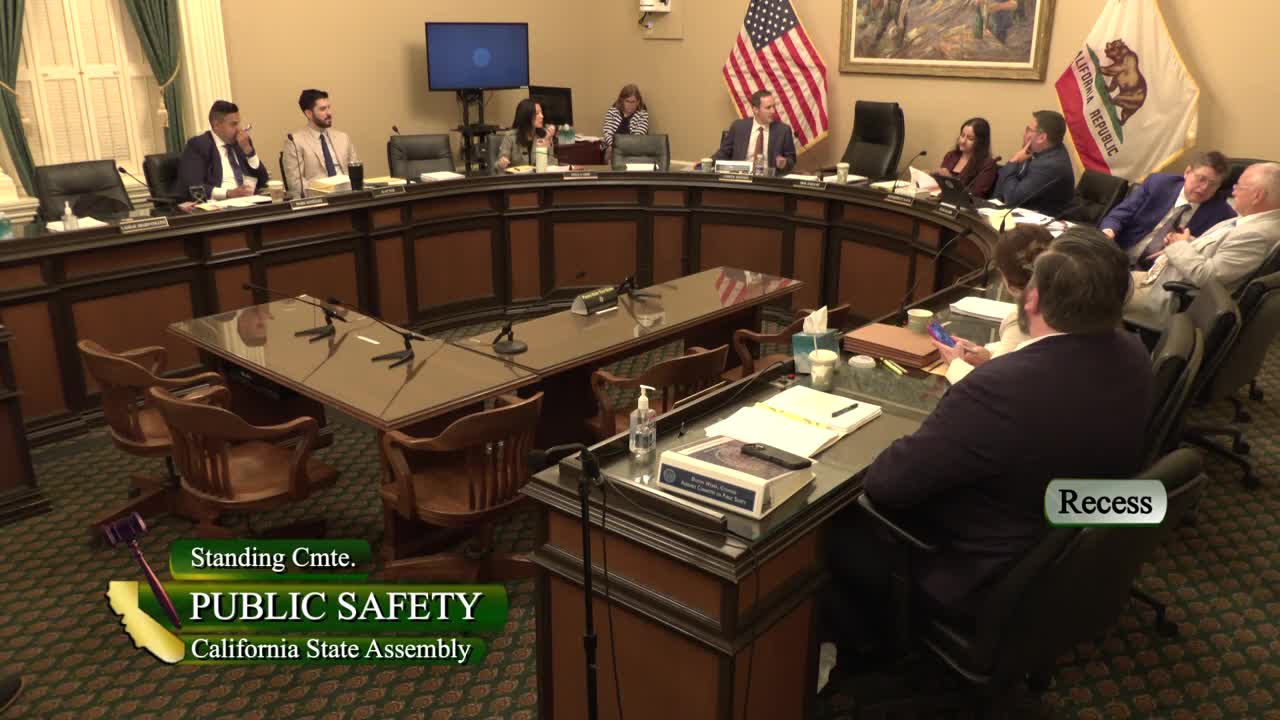 13MIN
Assembly Standing Committee on Public Safety
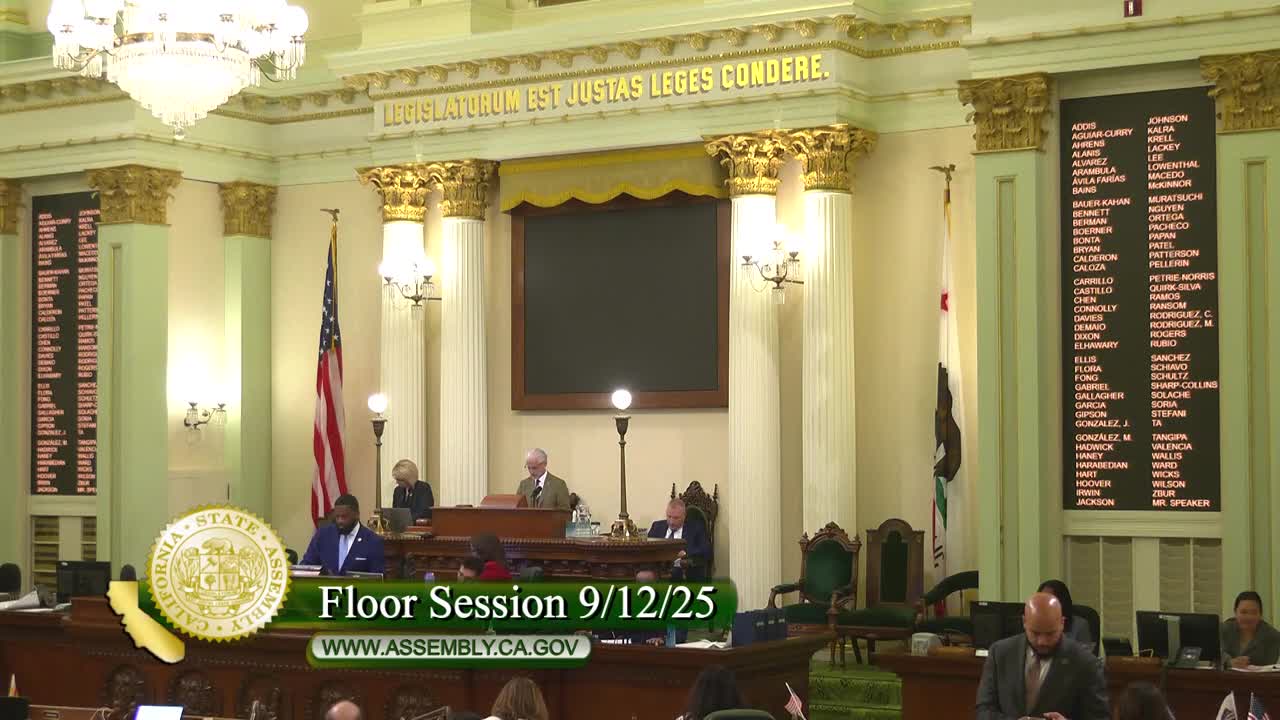 1MIN
Assembly Floor
 2MIN
Assembly Floor
 10MIN
Assembly Standing Committee on Environmental Safety and Toxic Materials
Bill Author
Bill Co-Author(s):