AB 1389: Tribal gaming: compact ratification.
- Session Year: 2025-2026
- House: Assembly
- Latest Version Date: 2026-05-26
Current Status:
Passed
(2026-05-26: Chaptered by Secretary of State - Chapter 9, Statutes of 2026.)
Introduced
In Committee
Awaiting First Chamber Vote
Passed First Chamber
In Committee
Awaiting Second Chamber Vote
Passed Second Chamber
Enacted
What does this bill do?
This bill ratifies the second amendment to the tribal‑state gaming compact between California and the Yurok Tribe, extending the compact’s term. It also says that signing that amendment or amended compact, certain intergovernmental agreements tied to it with cities, counties, or state agencies, and the on‑reservation impacts of complying with the compact are not “projects” under the California Environmental Quality Act (CEQA) and therefore are not subject to CEQA review.
The summary is provided by generative AI which can make mistakes. For original language, please view the details in the table below.
Existing federal law, the Indian Gaming Regulatory Act of 1988, provides for the negotiation and execution of tribal-state gaming compacts for the purpose of authorizing certain types of gaming on Indian lands within a state. The California Constitution authorizes the Governor to negotiate and conclude those compacts, subject to ratification by the Legislature. Existing law expressly ratifies a number of tribal-state gaming compacts, and amendments to tribal-state gaming compacts, between the State of California and specified Indian tribes.
The California Environmental Quality Act (CEQA) requires a lead agency to prepare, or cause to be prepared, and certify the completion of, an environmental impact report on a project, as defined, that it proposes to carry out or approve that may have a significant effect on the environment, as defined, or to adopt a negative declaration if it finds that the project will not have that effect.
This bill would ratify the second amendment to the tribal-state gaming compact entered into between the State of California and the Yurok Tribe of the Yurok Reservation, California, executed on December 18, 2025, to extend the terms of the tribal-state gaming compact. The bill would provide that, in deference to tribal sovereignty, certain actions related to this amended compact are not projects for the purposes of CEQA.
This bill would declare that it is to take effect immediately as an urgency statute.
Existing law authorizes a thoroughbred racing association or fair to distribute the audiovisual signal and accept wagers on the results of out-of-state thoroughbred races conducted in the United States during the calendar period the association or fair is conducting a race meeting, including days on which there is no live racing being conducted by the association or fair, without the consent of the organization that represents horsemen and horsewomen participating in the race meeting and without regard to the amount of purses. Existing law prohibits the total number of thoroughbred races imported by associations or fairs on a statewide basis under these provisions from exceeding 75 races per day on days when live thoroughbred or fair racing is being conducted in the state, with the exception of prescribed races.This bill would exempt from the 75 imported race per day limitation, races imported that are part of the race card of the New York Stakes.Existing law authorizes a thoroughbred racing association or fair to distribute the audiovisual signal and accept wagers on the results of out-of-state thoroughbred races conducted in the United States during the calendar period the association or fair is conducting a race meeting, including days on which there is no live racing being conducted by the association or fair, without the consent of the organization that represents horsemen and horsewomen participating in the race meeting and without regard to the amount of purses. Existing law prohibits the total number of thoroughbred races imported by associations or fairs on a statewide basis under these provisions from exceeding 75 races per day on days when live thoroughbred or fair racing is being conducted in the state, with the exception of prescribed races.
This bill would exempt from the 75 imported race per day limitation, races imported that are part of the race card of the New York Stakes.
(a)The second amendment to the tribal-state gaming compact between the State of California and the Yurok Tribe of the Yurok Reservation, California, executed on December 18, 2025, entered into in accordance with the federal Indian Gaming Regulatory Act of 1988 (18 U.S.C. Secs. 1166 to 1168, inclusive, and 25 U.S.C. Sec. 2701 et seq.) for the sole purpose of extending the terms of the tribal-state gaming compact, is hereby ratified.
(b)(1)In deference to tribal sovereignty, none of the following shall be deemed a project for purposes of the California Environmental Quality Act (Division 13 (commencing with Section 21000) of the Public Resources Code):
(A)The execution of an amendment to a tribal-state gaming compact ratified by this section.
(B)The execution of an amended tribal-state gaming compact ratified by this section.
(C)The execution of an intergovernmental agreement between a tribe and a county or city government negotiated pursuant to the express authority of, or as expressly referenced in, an amended tribal-state gaming compact ratified by this section.
(D)The execution of an intergovernmental agreement between a tribe and the Department of Transportation, or other state agency, negotiated pursuant to the express authority of, or as expressly referenced in, an amended tribal-state gaming compact ratified by this section.
(E)The on-reservation impacts of compliance with the terms of an amended tribal-state gaming compact ratified by this section.
(2)Except as expressly provided in this section, this subdivision does not exempt a city, county, or city and county, or the Department of Transportation, or any state agency or local jurisdiction, from the requirements of the California Environmental Quality Act.
SEC. 2.This act is an urgency statute necessary for the immediate preservation of the public peace, health, or safety within the meaning of Article IV of the California Constitution and shall go into immediate effect. The facts constituting the necessity are:
In order to enhance the economic development, stability, and self-sufficiency of the Yurok Tribe of the Yurok Reservation, California, and to protect the interests of this tribe and its members, the surrounding communities, and the California public at the earliest possible time, it is necessary that this act take effect immediately.
SECTION 1.Section 19596.2 of the Business and Professions Code is amended to read:19596.2.(a)Notwithstanding any other law and except as provided in Section 19596.4, a thoroughbred racing association or fair may distribute the audiovisual signal and accept wagers on the results of out-of-state thoroughbred races conducted in the United States during the calendar period the association or fair is conducting a race meeting, including days on which there is no live racing being conducted by the association or fair, without the consent of the organization that represents horsemen and horsewomen participating in the race meeting and without regard to the amount of purses. Further, the total number of thoroughbred races imported by associations or fairs on a statewide basis under this section shall not exceed 75 per day on days when live thoroughbred or fair racing is being conducted in the state. The limitation of 75 imported races per day does not apply to any of the following:(1)Races imported for wagering purposes pursuant to subdivision (c).(2)Races imported that are part of the race card of the Kentucky Derby, the Kentucky Oaks, the Preakness Stakes, the Belmont Stakes, the New York Stakes, the Jockey Club Gold Cup, the Travers Stakes, the Pegasus World Cup, the Arlington Million, the Breeders Cup World Championship, the Dubai World Cup, the Arkansas Derby, the Apple Blossom Handicap, the Blue Grass Stakes, the Whitney Stakes, or the Haskell Invitational.(3)Races imported into the northern zone when there is no live thoroughbred or fair racing being conducted in the northern zone.(4)Races imported into the combined central and southern zones when there is no live thoroughbred or fair racing being conducted in the combined central and southern zones.(b)Any thoroughbred association or fair accepting wagers pursuant to subdivision (a) shall conduct the wagering in accordance with the applicable provisions of Sections 19601, 19616, 19616.1, and 19616.2.(c)Except as provided in subdivision (d), a thoroughbred association or fair shall not accept wagers pursuant to this section on out-of-state races commencing after 7 p.m., Pacific standard time, without the consent of the harness or quarter horse racing association that is then conducting a live racing meeting in the County of Orange or the County of Sacramento.(d)When the total number of thoroughbred races imported by associations or fairs on a statewide basis under this section is between 51 and 75 on a day when live thoroughbred or fair racing is being conducted in the state, a thoroughbred association or fair shall not accept wagers pursuant to this section on out-of-state races commencing after 5 p.m., Pacific standard time, without the consent of the harness and quarter horse racing association that is then conducting a live racing meeting in the County of Orange or the County of Sacramento.(a)Notwithstanding any other law and except as provided in Section 19596.4, a thoroughbred racing association or fair may distribute the audiovisual signal and accept wagers on the results of out-of-state thoroughbred races conducted in the United States during the calendar period the association or fair is conducting a race meeting, including days on which there is no live racing being conducted by the association or fair, without the consent of the organization that represents horsemen and horsewomen participating in the race meeting and without regard to the amount of purses. Further, the total number of thoroughbred races imported by associations or fairs on a statewide basis under this section shall not exceed 75 per day on days when live thoroughbred or fair racing is being conducted in the state. The limitation of 75 imported races per day does not apply to any of the following:
(1)Races imported for wagering purposes pursuant to subdivision (c).
(2)Races imported that are part of the race card of the Kentucky Derby, the Kentucky Oaks, the Preakness Stakes, the Belmont Stakes, the New York Stakes, the Jockey Club Gold Cup, the Travers Stakes, the Pegasus World Cup, the Arlington Million, the Breeders Cup World Championship, the Dubai World Cup, the Arkansas Derby, the Apple Blossom Handicap, the Blue Grass Stakes, the Whitney Stakes, or the Haskell Invitational.
(3)Races imported into the northern zone when there is no live thoroughbred or fair racing being conducted in the northern zone.
(4)Races imported into the combined central and southern zones when there is no live thoroughbred or fair racing being conducted in the combined central and southern zones.
(b)Any thoroughbred association or fair accepting wagers pursuant to subdivision (a) shall conduct the wagering in accordance with the applicable provisions of Sections 19601, 19616, 19616.1, and 19616.2.
(c)Except as provided in subdivision (d), a thoroughbred association or fair shall not accept wagers pursuant to this section on out-of-state races commencing after 7 p.m., Pacific standard time, without the consent of the harness or quarter horse racing association that is then conducting a live racing meeting in the County of Orange or the County of Sacramento.
(d)When the total number of thoroughbred races imported by associations or fairs on a statewide basis under this section is between 51 and 75 on a day when live thoroughbred or fair racing is being conducted in the state, a thoroughbred association or fair shall not accept wagers pursuant to this section on out-of-state races commencing after 5 p.m., Pacific standard time, without the consent of the harness and quarter horse racing association that is then conducting a live racing meeting in the County of Orange or the County of Sacramento.
|
Date
|
Status
|
|---|---|
| May 26, 2026 | Chaptered by Secretary of State - Chapter 9, Statutes of 2026. |
| May 26, 2026 | Approved by the Governor. |
| May 13, 2026 | Enrolled and presented to the Governor at 11:30 a.m. |
| May 7, 2026 | Urgency clause adopted. Senate amendments concurred in. To Engrossing and Enrolling. (Ayes 69. Noes 0.). |
| May 7, 2026 | Urgency clause adopted. Senate amendments concurred in. To Engrossing and Enrolling. (Ayes 69. Noes 0. Page 4956.). |
| Apr 13, 2026 | In Assembly. Concurrence in Senate amendments pending. |
| Apr 13, 2026 | Read third time. Urgency clause adopted. Passed. Ordered to the Assembly. (Ayes 36. Noes 0.). |
| Apr 13, 2026 | Read third time. Urgency clause adopted. Passed. Ordered to the Assembly. (Ayes 36. Noes 0. Page 3836.). |
| Mar 26, 2026 | Read second time. Ordered to third reading. |
| Mar 25, 2026 | Withdrawn from committee. |
| Mar 25, 2026 | Read second time. Ordered to third reading. |
| Mar 25, 2026 | Re-referred to Com. on APPR. pursuant to Joint Rule 10.5. |
| Mar 25, 2026 | Ordered to second reading. |
| Mar 24, 2026 | Read third time and amended. Ordered to second reading. |
| Mar 2, 2026 | Read second time. Ordered to third reading. |
| Feb 26, 2026 | Ordered to second reading. |
| Feb 26, 2026 | From inactive file. |
| Sep 11, 2025 | Ordered to inactive file at the request of Senator Padilla. |
| Jul 10, 2025 | Ordered to third reading. |
| Jul 10, 2025 | From Consent Calendar. |
| Jul 9, 2025 | Read second time. Ordered to Consent Calendar. |
| Jul 8, 2025 | From committee: Do pass. To Consent Calendar. (Ayes 15. Noes 0.) (July 8). |
| May 7, 2025 | Referred to Com. on G.O. |
| Apr 10, 2025 | In Senate. Read first time. To Com. on RLS. for assignment. |
| Apr 10, 2025 | Read third time. Passed. Ordered to the Senate. (Ayes 67. Noes 0. Page 1120.) |
| Apr 7, 2025 | Read second time. Ordered to Consent Calendar. |
| Apr 3, 2025 | From committee: Do pass. To Consent Calendar. (Ayes 21. Noes 0.) (April 2). |
| Mar 13, 2025 | Referred to Com. on G.O. |
| Feb 24, 2025 | Read first time. |
| Feb 22, 2025 | From printer. May be heard in committee March 24. |
| Feb 21, 2025 | Introduced. To print. |
|
Date
|
Description
|
Location
|
Votes
|
|
|---|---|---|---|---|
| May 7, 2026 | AB 1389 Blanca Rubio Concurrence - Urgency Added | Assembly Floor |
Passed |
|
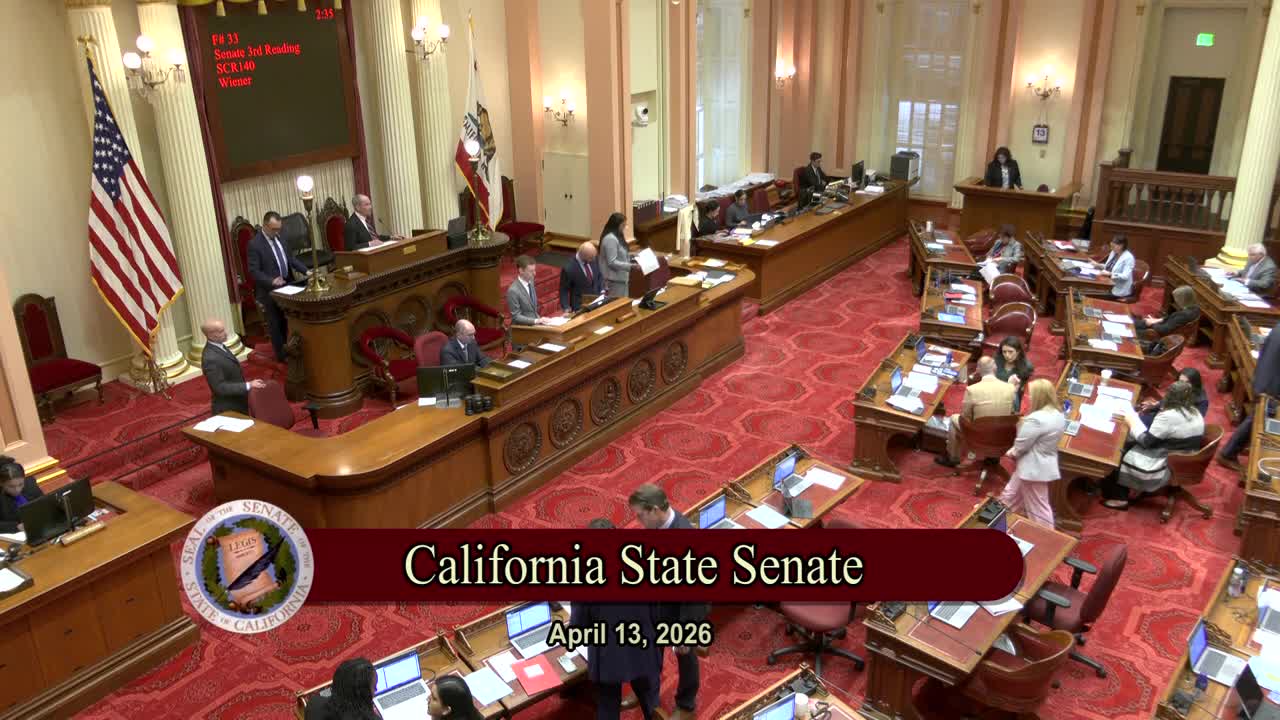
| Apr 13, 2026 | Assembly 3rd Reading AB1389 Blanca Rubio By Rubio Urgency Clause | Senate Floor |
Passed |
|
| Jul 8, 2025 | Do pass and be ordered to the Consent Calendar | Senate Standing Committee on Governmental Organization |
Passed |
|
| Apr 10, 2025 | AB 1389 Blanca Rubio Consent Calendar Second Day | Assembly Floor |
Passed |
|
| Apr 2, 2025 | Do pass. To Consent Calendar. | Assembly Standing Committee on Governmental Organization |
Passed |
This list shows positions taken on this bill by organizations on the date displayed, which is linked to the original source.
Positions by individuals are not included.
|
Organization
|
Position
|
Date
|
|---|---|---|
| California Tribal Business Alliance | ** Support |
CONCURRENCE IN SENATE AMENDMENTS
CSA1 Bill Id:AB 1389
Author:(Blanca Rubio)
As Amended Ver:March 24, 2026
2/3 vote. Urgency
SUMMARY
This bill would ratify the second amendment to the tribal-state gaming compact between the State of California and the Yurok Tribe of the Yurok Reservation, California, executed on December 18, 2025.
Senate Amendments
- Ratify the second amendment to the tribal-state gaming compact between the State of California and Yurok Tribe of the Yurok Reservation, California, executed on December 18, 2025.
- Add an urgency clause.
- Gut the Assembly approved version of the bill.
COMMENTS
Background.
The Second Amendment to the Tribal-State Gaming Compact "Amended Compact" between the State of California and the Yurok Tribe of the Yurok Reservation "Tribe" was executed on December 18, 2025. The Amended Compact extends the provisions of the Tribe's existing 2006 compact to December 31, 2026. All other provisions of the existing compact remain intact.
In 2006, the Tribe entered into a tribal-state compact (SB 106, Statutes of 2007) that authorized the tribe to operate one gaming facility and an additional one at an ancillary facility. The compact authorized the Tribe to operate no more than 99 gaming devices (slot machines) and prohibited anyone under the age of 21 from being present in any room.
Additionally, the 2006 compact contained other provisions relating to: exclusivity; licensing requirements and procedures for employees and gaming suppliers; testing and inspection of gaming devices; rules and regulations for the operation and management of the gaming facility; off-reservation environmental impacts; public and workplace health and safety; and labor provisions. In 2016 the Tribe and the State agreed to amend the 2006 compact's provisions pertaining to mandatory participation in the State workers' compensation program to align the Tribe's compact to more recently agreed upon compacts.
According to the Tribe's website, the Tribe is currently the largest Tribe in California, with more than 5,000 enrolled members. The Yurok Reservation is located in one of the most isolated regions of Northwest California, consisting of lands one mile on each side of the lower forty-four (44) miles of the Klamath River from just above the confluence of the Trinity River at Weitchpec to the mouth of the river as it flows into the Pacific Ocean. Reservation lands include parts of Humboldt and Del Norte Counties, two of the largest land-based counties in the state of California.
Following ratification of its 2006 tribal-state gaming compact, the Tribe opened the Redwood Hotel Casino in 2014 which consists of two separate entities, the Redwood Holiday Inn Express and the Redwood Casino. The Redwood Holiday Inn Express is a 60-room hotel complete with exercise room and pool. The Redwood Casino, located in Klamath, CA, currently hosts 99 Class III machines and includes the Abalone Bar and Grill.
To be effective, an amendment solely to extend the term of a compact requires ratification by the California Legislature, but it does not require approval by the Secretary pursuant to 25 Code of Federal Regulations section 293.5.
Indian Gaming Regulatory Act. In 1988, Congress enacted the Indian Gaming Regulatory Act (IGRA) to provide a statutory basis for the operation and regulation of gaming on Indian lands. IGRA provides that an Indian tribe may conduct gaming activity on Indian lands if the activity "is not specifically prohibited by federal law and is conducted within a State which does not prohibit such gaming activity."
IGRA distinguishes between three classes of gaming (Class I, Class II, and Class III) and provides for different forms of regulation for each class. Class I gaming includes "social games" for minor prizes or "traditional forms of Indian gaming." Class II gaming is defined to include bingo and card games that are explicitly authorized by the laws of the state, or that are not explicitly prohibited by the laws of the state and are played at any location in the State, so long as the card games are played in conformity with those laws and regulations. Class III gaming includes such things as slot machines, casino games, and banked card games such as blackjack and baccarat. Class III gaming may only be conducted under terms of a compact negotiated between an Indian tribe and a State.
IGRA was enacted against a legal background in which Indian tribes and individuals generally are exempt from state taxation within their own territory. IGRA provides that with the exception of assessments permitted under the statute, to defray the State's costs of regulating gaming activity, IGRA shall not be interpreted as conferring upon a State authority to impose any tax, fee, charge, or other assessment upon an Indian tribe to engage in Class III activity. Nor may a State refuse to enter into negotiations based on the lack of authority to impose such a tax, fee, charge, or other assessment.
When a tribe requests negotiations for a Class III compact, IGRA requires the State to negotiate with the Indian tribe in good faith. IGRA provides a comprehensive process to prevent an impasse in compact negotiations, which is triggered when a tribe files suit alleging that the State has refused to negotiate or has failed to negotiate in good faith.
Before 2000, the California Constitution prohibited Class III gaming. In 2000, California voters approved Proposition 1A, which had been proposed by the Governor and passed by the Legislature. Proposition 1A amended the California Constitution to permit the State to negotiate compacts with federally recognized Indian tribes for certain Class III gaming activities. Because non-Indian parties were still forbidden from operating gaming facilities, Proposition 1A granted Indian tribes a "constitutionally protected monopoly on most types of Class III games in California."
Compact Ratification. The Governor is the designated State officer responsible for negotiating and executing, on behalf of the State, tribal-state gaming compacts with federally recognized Indian tribes located within the State of California. Following completion of negotiations, the Governor shall submit a copy of any executed tribal-state compact to both houses of the Legislature for ratification and shall submit a copy of the executed compact to the Secretary of State. Tribal-state compacts cannot be presented to the Legislature for ratification until the tribe provides the Governor with written proof of the signatory's authority and formal ratification by the tribal governing body.
According to the Author
The Compact′s preamble notes, this amendment will not change, and is not intended by the Tribe and the State, to change any terms of the 2006 Compact, as modified by the First Amendment, except for extending the termination date. Once effective, this Compact shall be in full force and effect for state law purposes until December 31, 2026.
Arguments in Support
According to the California Tribal Business Alliance, "AB 1389 does not change the substantive terms of the compact. It simply preserves continuity under the existing framework through December 31, 2026, and the urgency clause appropriately ensures that ratification takes effect immediately to protect the Tribe's economic development, stability, and self-sufficiency at the earlies possible time."
Arguments in Opposition
None on file
FISCAL COMMENTS
Unknown
VOTES:
ASM GOVERNMENTAL ORGANIZATION: 21-0-1
YES: Blanca Rubio, Davies, Alvarez, Berman, Bryan, DeMaio, Dixon, Fong, Gabriel, Gipson, McKinnor, Nguyen, Pacheco, Ramos, Michelle Rodriguez, Sanchez, Solache, Soria, Ta, Valencia, Wallis
ABS, ABST OR NV: Carrillo
ASSEMBLY FLOOR: 67-0-12
YES: Addis, Aguiar-Curry, Ahrens, Alanis, Alvarez, Arambula, Ávila Farías, Bains, Bennett, Berman, Boerner, Bonta, Bryan, Caloza, Castillo, Connolly, Davies, DeMaio, Dixon, Elhawary, Ellis, Flora, Fong, Gabriel, Gipson, Jeff Gonzalez, Mark González, Hadwick, Haney, Harabedian, Hart, Irwin, Kalra, Krell, Lackey, Lee, Lowenthal, Macedo, McKinnor, Muratsuchi, Nguyen, Ortega, Pacheco, Patel, Patterson, Pellerin, Ramos, Ransom, Michelle Rodriguez, Rogers, Blanca Rubio, Sanchez, Schiavo, Schultz, Sharp-Collins, Solache, Soria, Stefani, Ta, Tangipa, Valencia, Wallis, Ward, Wicks, Wilson, Zbur, Rivas
ABS, ABST OR NV: Bauer-Kahan, Calderon, Carrillo, Chen, Gallagher, Garcia, Hoover, Jackson, Papan, Petrie-Norris, Quirk-Silva, Celeste Rodriguez
SENATE FLOOR: 36-0-4
YES: Allen, Archuleta, Arreguín, Ashby, Becker, Blakespear, Cabaldon, Caballero, Cervantes, Choi, Cortese, Dahle, Durazo, Gonzalez, Grayson, Grove, Hurtado, Jones, Limón, McNerney, Menjivar, Niello, Ochoa Bogh, Padilla, Pérez, Reyes, Richardson, Rubio, Seyarto, Smallwood-Cuevas, Stern, Strickland, Umberg, Wahab, Weber Pierson, Wiener
ABS, ABST OR NV: Alvarado-Gil, Laird, McGuire, Valladares
UPDATED
VERSION: March 24, 2026
CONSULTANT: Eric Johnson / G.O. / (916) 319-2531 FN: 0002356
SENATE RULES COMMITTEE Office of Senate Floor Analyses (916) 651-4171 | AB 1389 |
THIRD READING
Bill No: AB 1389
Author: Blanca Rubio (D)
Amended: 3/24/26 in Senate
Vote: 27- Urgency
PRIOR VOTES NOT RELEVANT
NOTE: On March 24, 2026, the Senate Governmental Organization Committee held an informational hearing on the second amendment to the tribal-state gaming compact between the State of California and the Yurok Tribe of the Yurok Reservation, California.
SUBJECT: Tribal gaming: compact ratification
SOURCE: Author
DIGEST:
This bill ratifies the second amendment to the Tribal-State Gaming Compact between the State of California and the Yurok Tribe of the Yurok Reservation, California, executed on December 18, 2025.
Senate Amendments of 3/24/26 ratify the second amendment to the tribal-state gaming compact between the State of California and the Yurok Tribe of the Yurok Reservation, California, executed on December 18, 2025 and add an urgency clause.
ANALYSIS:
Existing law:
- Provides, under the Indian Gaming Regulatory Act (IGRA), for the negotiation and conclusion of compacts between federally recognized Indian tribes and the State for the purpose of conducting Class III gaming activities on Indian lands within a State as a means of promoting tribal economic development, self-sufficiency, and strong tribal governments.
- Authorizes expressly a number of tribal-state gaming compacts between the State of California and specified Indian tribes.
- Authorizes the conduct of Class III gaming activities to the extent such activities are permitted by state law, a gaming compact has been concluded by a federally recognized tribe and the State, and the compact has been approved by the Secretary of the Interior.
- Limits the operation of Class III gaming activities to Indian lands acquired on or before October 17, 1988. Provides, for certain exceptions to conduct gaming activities on Indian lands acquired after October 17, 1988.
- Defines “Indian lands” to mean all lands within the limits of any Indian reservation, and any lands title to which is either held in trust by the United States for the benefit of any Indian tribe, or individual, or held by any Indian tribe or individual subject to restriction by the U.S. against alienation and over which an Indian tribe exercises governmental power.
- Requires the State to negotiate to conclude a compact in good faith with an Indian tribe having jurisdiction over the Indian lands upon which the Class III gaming activity is to be conducted. Provides the U.S. district courts with jurisdiction over any cause of action initiated by a tribal government alleging that the State failed to negotiate in good faith to conclude a compact. Prescribes the remedy, mediation supervised by the courts, if it is found that the State failed to negotiate in good faith to conclude a compact.
- Authorizes the Governor, under the California Constitution, to negotiate and conclude compacts, subject to ratification by the Legislature.
This bill:
- Ratifies second amendment to the tribal-state gaming compact between the State of California and Yurok Tribe of the Yurok Reservation, California, executed on December 18, 2025.
- Contains an urgency clause.
Background
Second Amendment to the Tribal-State Compact Between the State of California and the Yurok Tribe of the Yurok Reservation, California. The Second Amendment to the Tribal-State Gaming Compact “Amended Compact” between the State of California and the Yurok Tribe of the Yurok Reservation “Tribe” was executed on December 18, 2025. The Amended Compact extends the provisions of the Tribe’s existing 2006 compact to December 31, 2026. All other provisions of the existing compact remain intact.
In 2006, the Tribe entered into a tribal-state compact [SB 106 (Wiggins, Chapter 37, Statutes of 2007)] that authorized the tribe to operate one gaming facility and an additional one at an ancillary facility. The compact authorized the Tribe to operate no more than 99 gaming devices (slot machines) and prohibited anyone under the age of 21 from being present in any room.
Additionally, the 2006 compact contained other provisions relating to: exclusivity; licensing requirements and procedures for employees and gaming suppliers; testing and inspection of gaming devices; rules and regulations for the operation and management of the gaming facility; off-reservation environmental impacts; public and workplace health and safety; and labor provisions. In 2016 the Tribe and the State agreed to amend the 2006 compact’s provisions pertaining to mandatory participation in the State workers’ compensation program to align the Tribe’s compact to more recently agreed upon compacts.
According to the Tribe’s website, the Tribe is currently the largest Tribe in California, with more than 5,000 enrolled members. The Yurok Reservation is located in one of the most isolated regions of Northwest California, consisting of lands one mile on each side of the lower forty-four (44) miles of the Klamath River from just above the confluence of the Trinity River at Weitchpec to the mouth of the river as it flows into the Pacific Ocean. Reservation lands include parts of Humboldt and Del Norte Counties, two of the largest land-based counties in the state of California.
Following ratification of its 2006 tribal-state gaming compact, the Tribe opened the Redwood Hotel Casino in 2014 which consists of two separate entities, the Redwood Holiday Inn Express and the Redwood Casino. The Redwood Holiday Inn Express is a 60-room hotel complete with exercise room and pool. The Redwood Casino, located in Klamath, CA, currently hosts 99 Class III machines and includes the Abalone Bar and Grill.
To be effective, an amendment solely to extend the term of a compact requires ratification by the California Legislature, but it does not require approval by the Secretary pursuant to 25 Code of Federal Regulations section 293.5.
Indian Gaming Regulatory Act. In 1988, Congress enacted IGRA to provide a statutory basis for the operation and regulation of gaming on Indian lands. IGRA provides that an Indian tribe may conduct gaming activity on Indian lands if the activity “is not specifically prohibited by federal law and is conducted within a State which does not prohibit such gaming activity.”
IGRA distinguishes between three classes of gaming (Class I, Class II, and Class III) and provides for different forms of regulation for each class. Class I gaming includes “social games” for minor prizes or “traditional forms of Indian gaming.” Class II gaming is defined to include bingo and card games that are explicitly authorized by the laws of the state, or that are not explicitly prohibited by the laws of the state and are played at any location in the State, so long as the card games are played in conformity with those laws and regulations. Class III gaming includes such things as slot machines, casino games, and banked card games such as black jack and baccarat. Class III gaming may only be conducted under terms of a compact negotiated between an Indian tribe and a State.
IGRA was enacted against a legal background in which Indian tribes and individuals generally are exempt from state taxation within their own territory. IGRA provides that with the exception of assessments permitted under the statute, to defray the State’s costs of regulating gaming activity, IGRA shall not be interpreted as conferring upon a State authority to impose any tax, fee, charge, or other assessment upon an Indian tribe to engage in Class III activity. Nor may a State refuse to enter into negotiations based on the lack of authority to impose such a tax, fee, charge, or other assessment.
When a tribe requests negotiations for a Class III compact, IGRA requires the State to negotiate with the Indian tribe in good faith. IGRA provides a comprehensive process to prevent an impasse in compact negotiations, which is triggered when a tribe files suit alleging that the State has refused to negotiate or has failed to negotiate in good faith.
Before 2000, the California Constitution prohibited Class III gaming. In 2000, California voters approved Proposition 1A, which had been proposed by the Governor and passed by the Legislature. Proposition 1A amended the California Constitution to permit the State to negotiate compacts with federally recognized Indian tribes for certain Class III gaming activities. Because non-Indian parties were still forbidden from operating gaming facilities, Proposition 1A granted Indian tribes a “constitutionally protected monopoly on most types of Class III games in California.”
FISCAL EFFECT: Appropriation: No Fiscal Com.: Yes Local: No
SUPPORT: (Verified 3/24/26)
California Tribal Business Alliance
OPPOSITION: (Verified 3/24/26)
None received
ARGUMENTS IN SUPPORT: According to the California Tribal Business Alliance, “AB 1389 does not change the substantive terms of the compact. It simply preserves continuity under the existing framework through December 31, 2026, and the urgency clause appropriately ensures that ratification takes effect immediately to protect the Tribe’s economic development, stability, and self sufficiency at the earlies possible time.”
Prepared by: Brian Duke / G.O. / (916) 651-1530
3/26/26 13:49:05
**** END ****
SENATE RULES COMMITTEE Office of Senate Floor Analyses (916) 651-1520 Fax: (916) 327-4478 | AB 1389 |
THIRD READING
Bill No: AB 1389
Author: Blanca Rubio (D)
Introduced: 2/21/25
Vote: 21
SENATE GOVERNMENTAL ORG. COMMITTEE: 15-0, 7/8/25
AYES: Padilla, Valladares, Archuleta, Ashby, Blakespear, Cervantes, Dahle, Hurtado, Jones, Ochoa Bogh, Richardson, Rubio, Smallwood-Cuevas, Wahab, Weber Pierson
ASSEMBLY FLOOR: 67-0, 4/10/25 (Consent) - See last page for vote
SUBJECT: Horse racing: out-of-state thoroughbred races: New York Stakes
SOURCE: Author
DIGEST:
This bill adds the New York Stakes to the group of identified race meetings which are exempt from the current 75-race per day limit on imported races into California for the purposes of wagering.
ANALYSIS:
Existing law:
- Article IV, Section 19(b) of the Constitution of the State of California authorizes the Legislature to provide for the regulation of horse races and grants the California Horse Racing Board the authority to regulate the various forms of horse racing authorized in this state.
- Authorizes thoroughbred racing associations or fairs to distribute the audiovisual signal and accept wagers on the results of out-of-state and international thoroughbred races during the calendar period the association or fair is conducting live racing, including days on which there is no live racing being conducted by the association or fair.
- Limits the number of races that may be imported by associations and fairs to no more than 75 races-per-day on days when live thoroughbred or fair racing is being conducted in this state, with specified exceptions.
- Exempts from that 75 races-per-day limit any imported races that are part of the race card of the Kentucky Derby, the Kentucky Oaks, the Preakness Stakes, the Belmont Stakes, the Jockey Club Gold Cup, the Travers Stakes, the Pegasus World Cup, the Arlington Million, the Breeders’ Cup World Championship, the Dubai World Cup, the Arkansas Derby, the Apple Blossom Handicap, the Blue Grass Stakes, the Whitney Stakes, or the Haskell Invitational.
This bill adds the New York Stakes to the group of identified race meetings which are exempt from the current 75-race per day limit on imported races into California for the purposes of wagering.
Background
Author’s Statement. According to the author’s office, “this bill would exempt all races imported by a thoroughbred association or fair that are part of the race card of the overall New York Stakes day from the 75-race per day limit as defined in current law. The law has been amended over the years to allow the importation of certain prominent races outside of this cap for promotional and financial reasons.”
Further, “this bill will help increase the wagering handle on this specific day, which will result in higher purses, racetrack revenue, and breeders’ awards in California. Purses are critical to California’s racing industry because they provide revenue to horse owners for their racing operations. In addition, they provide revenue to breeders through an increase in the value of their breeding stock.”
Satellite Wagering. Satellite wagering via an off-track facility has been legal in California since the 1980s when California racetracks started to experience declining attendance and handle figures. The industry believed that making the product easier to access not only would expose and market horse racing to potential customers, but also would make it more convenient for the existing patrons to wager more often. However, while off-track-betting and simulcasting can open new revenue pathways, they often cannibalize traditional on-track income, putting tracks at further financial risk and potentially contributing to closures.
Simulcasting. Simulcasting is the process of transmitting the audio and video signal of a live racing performance from one facility to a satellite for re-transmission to other locations or venues where pari-mutuel wagering is permitted. Simulcasting provides racetracks with the opportunity to increase revenues by exporting their live racing content to as many wagering locations as possible, such as other racetracks, fair satellite facilities, and Indian casinos. Revenues increase because simulcasting provides racetracks that export their live content with additional customers in multiple locations who would not have otherwise been able to place wagers on the live racing event.
Distribution of Audiovisual Signals and Wagering. Thoroughbred racing associations and fairs in California can distribute the audiovisual signal and accept wagers on the results of out-of-state thoroughbred races during their own race meetings. This is allowed even on days when no live races are being held at their venues. There is a limit on the number of out-of-state races that can be imported into California for betting purposes. On days when there is live thoroughbred or fair racing happening in California, the total number of races imported from out-of-state must not exceed 75 races-per-day.
However, there are exceptions to this limit. Races that are part of specific major events like the Kentucky Derby, Breeder’s Cup, and other specified races can be imported without falling under the 75 race-per-day limit. Additional exceptions are made for importing races into certain geographical zones of California when no local live racing is occurring. Any wagering on these out-of-state races must comply with specific provisions of California’s Horse Racing Law that govern how betting should be conducted. Wagers on out-of-state races are not allowed after 7 p.m. Pacific Standard Time unless there is consent from the local harness or quarter horse racing associations conducting live racing in certain counties.
Racetrack Attendance. Prior to the COVID-19 Pandemic, and closure of non-essential businesses in California, the horse racing industry had already been experiencing a general decline in the number of people attending and wagering at live tracks in California. This has been occurring for more than three decades due to myriad factors including; increased competition from other forms of gaming, unwillingness of customers to travel a significant distance to racetracks, and the availability of off-track wagering.
Despite poor weather conditions and a sloppy racing surface, Churchill Downs reported that 147,406 people attended the 2025 Kentucky Derby. The all-sources betting handle on the Derby and the entire racing card reported records of $234.4 million and $349 million, respectively. NBC Sports reported an average of 17.7 million viewers across NBC and Peacock for their 25th Kentucky Derby broadcast, the largest television audience for the race since 1989. The declining attendance at live horse racing events in California has prompted racetracks to rely on revenues from in-state and out-of-state satellite wagering and account wagering.
Status of the Horse Racing Industry in California. The California horse racing industry's long-term health is threatened by a combination of factors, including competition from racing in other states, other forms of gaming within California, declining attendance, and the potential for higher return from development than operating revenues. As resources shrink, the industry is experiencing deficits in virtually every one of its revenue sources. Traditional take out, allocation and distribution formulas are no longer able to sustain ongoing operations.
As the value of racing operations decline, track ownership is struggling to maximize the necessary return on the investment and tempted by alternative uses of the property that yield higher returns. Consequently, the racing industry is suffering unprecedented instability and capital flight. Tens of thousands of industry jobs are in immediate jeopardy, along with breeding farms and precious open space in urban centers throughout California. Also at risk is a substantial amount of local and state revenue generated both directly and indirectly by the industry.
Further exacerbating the horse racing industries woes, the USA Today published an article in June of this year titled, “ICE raid on track workers sends shockwaves around racing, ‘puts horses at risk.’” In the article, USA Today reports that federal Immigration and Customs Enforcement agents raided the Delta Downs racetrack in Vinton, Louisiana on June 17. More than 80 backstretch workers were reportedly detained, which the article notes “should be a wake-up call for an industry that would simply not be able to function without a workforce of grooms and hotwalkers and stall cleaners who are, by some credible estimates, 75% immigrants. They come from places like Venezuela, Panama, Colombia and Mexico, working low-wage jobs but filling indispensable roles, caring round-the-clock for animals worth hundreds of thousands, even millions of dollars.”
Prominent trainer Dale Romans told reporters during a Kentucky Derby-week news conference set up to address the threat posed by a potential U.S. Immigration and Customs Enforcement raid at a racetrack, “if we couldn’t have an immigrant workforce on the backside, I don’t know how horse racing exists.”
The New York Stakes. The New York Stakes is a Grade I American thoroughbred horse race for fillies and mares aged four-years-old and older run over a distance of one and one-quarter miles on the turf and scheduled annually in early June at Belmont Park in Elmont, New York. Prior to 1962, the race was open to horses of either sex. For 1972 only, it was restricted to three-year-old fillies. Inaugurated in 1940 as the New York Handicap at Aqueduct Racetrack, it was moved to Belmont Park in 1961 but returned to Aqueduct in 1963, where it remained until 1975, when it was permanently shifted to Belmont Park. Since its inception, it has been contested at various distances on both dirt and turf.
The annual race headlines the day-before-Belmont Stakes card, which is the third and final leg of horse racing's Triple Crown. The current purse is $750,000. In 2022, Homerique won the New York Stakes, giving trainer Chad Brown his third victory in this prestigious race.
Related/Prior Legislation
SB 347 (Strickland, 2025) authorizes thoroughbred and Appaloosa horses to enter into quarter horse races at any distance, as specified; and, amends the conditions that a licensed quarter horse racing association can conduct thoroughbred racing as part of its racing program, as specified. This bill is pending in the Senate Governmental Organization Committee.
SB 844 (Rubio, 2025) increases the limit on the importation of out-of-state thoroughbred races by a California thoroughbred racing association or fair for pari-mutuel wagering from 75 to 80 races-per-day, as specified. This bill is pending in the Assembly Governmental Organization Committee.
AB 1526 (Committee on Governmental Organization, 2025) makes various technical and non-substantive changes to provisions of law related to horse racing. This bill is pending in on the Senate Floor.
AB 1946 (Alanis, Chapter 366, Statutes of 2024) added the Whitney Stakes to the group of races which are exempt from the existing imported race-per-day limitation.
AB 3261 (M. Fong, Chapter 439, Statutes of 2024) raised the previous limit on the importation of out-of-state thoroughbred races, for the purposes of accepting wagers on those races, from 50 to 75 out-of-state races-per-day; and, prohibited, when the total number of those races imported is between 51 and 75 races-per-day, a thoroughbred association or fair from accepting wagers on those races commencing after 5:00 p.m. without the consent of the harness or quarter horse racing association that is then conducting a live race meeting in the County of Orange or the County of Sacramento.
FISCAL EFFECT: Appropriation: No Fiscal Com.: No Local: No
SUPPORT: (Verified 7/8/25)
None received
OPPOSITION: (Verified 7/8/25)
None received
ASSEMBLY FLOOR: 67-0, 4/10/25
AYES: Addis, Aguiar-Curry, Ahrens, Alanis, Alvarez, Arambula, Ávila Farías, Bains, Bennett, Berman, Boerner, Bonta, Bryan, Caloza, Castillo, Connolly, Davies, DeMaio, Dixon, Elhawary, Ellis, Flora, Fong, Gabriel, Gipson, Jeff Gonzalez, Mark González, Hadwick, Haney, Harabedian, Hart, Irwin, Kalra, Krell, Lackey, Lee, Lowenthal, Macedo, McKinnor, Muratsuchi, Nguyen, Ortega, Pacheco, Patel, Patterson, Pellerin, Ramos, Ransom, Michelle Rodriguez, Rogers, Blanca Rubio, Sanchez, Schiavo, Schultz, Sharp-Collins, Solache, Soria, Stefani, Ta, Tangipa, Valencia, Wallis, Ward, Wicks, Wilson, Zbur, Rivas
NO VOTE RECORDED: Bauer-Kahan, Calderon, Carrillo, Chen, Gallagher, Garcia, Hoover, Jackson, Papan, Petrie-Norris, Quirk-Silva, Celeste Rodriguez
Prepared by: Brian Duke / G.O. / (916) 651-1530
7/10/25 15:52:55
**** END ****
Date of Hearing: April 2, 2025
ASSEMBLY COMMITTEE ON GOVERNMENTAL ORGANIZATION
Blanca Rubio, Chair
ABPCA Bill Id:AB 1389 (
Author:Blanca Rubio) – As Introduced Ver:February 21, 2025
SUBJECT: Horse racing: out-of-state thoroughbred races: New York Stakes
SUMMARY: This bill adds the New York Stakes to the group of races which are exempt from the 75-race per day limit on imported races in California by a thoroughbred or fair racing association in the state when operating a race meeting. Specifically, this bill:
1) Adds the “New York Stakes” to the group of stake races which are exempt from the 75-race per day limit on imported races in California.
2) Makes non-substantive technical changes.
EXISTING LAW:
- Article IV, Section 19(b) of the Constitution of the State of California provides that the Legislature may provide for the regulation of horse races and horse race meetings and wagering on the results.
- Grants the California Horse Racing Board (CHRB) the authority to regulate the various forms of horse racing authorized in this state.
- Authorizes thoroughbred racing associations or fairs to distribute the audiovisual signal and accept wagers on the results of out-of-state and international thoroughbred races during the calendar period the association or fair is conducting live racing, including days on which there is no live racing being conducted by the association or fair.
- Limits the number of races that may be imported by associations and fairs to no more than 75 races per day on days when live thoroughbred or fair racing is being conducted in this state, with specified exceptions.
- Exempts from that 75-race per day limit races imported races that are part of the race card of certain prominent races, including the Kentucky Derby, the Kentucky Oaks, the Preakness Stakes, the Belmont Stakes, the Jockey Club Gold Cup, the Travers Stakes, the Pegasus World Cup, the Arlington Million, the Breeders’ Cup World Championship, the Dubai World Cup, the Arkansas Derby, the Apple Blossom Handicap, the Blue Grass Stakes, the Whitney Stakes, or the Haskell Invitational.
FISCAL EFFECT: This bill is keyed non-fiscal by Legislative Counsel.
COMMENTS:
Purpose of the bill. According to the author’s office, “this bill would exempt all races imported by a thoroughbred association or fair that are part of the race card of the overall New York Stakes day from the 75-race per day limit as defined in current law. The law has been amended over the years to allow the importation of certain prominent races outside of this cap for promotional and financial reasons.”
The author further notes that this bill will help increase the wagering handle on this specific day, which will result in higher purses, racetrack revenue, and breeders’ awards in California. Purses are critical to California’s racing industry because they provide revenue to horse owners for their racing operations. In addition, they provide revenue to breeders through an increase in the value of their breeding stock.
Background.
Pari-mutuel wagering. Pari-mutuel wagering means, literally, a mutuel wager or "betting among ourselves". It is similar to a stock transaction. When you buy a $2.00 ticket on a horse, you are, in effect, buying one share of the horse's performance in the race. Pari-mutuel is a betting system in which all bets of a particular type are placed together in a pool, and payoff odds are calculated by sharing the pool among all winning bets. Pari-mutuel betting differs from fixed-odds betting in that the final payout is not determined until the pool is closed; in fixed-odds betting, the payout is agreed upon at the time the bet is placed.
Satellite wagering. Satellite wagering via off-track betting has been legal in California since the 1980s, when California racetracks were beginning to experience declining attendance and handle figures. The industry believed that making the product easier to access would not only expose and market horse racing to potential customers, but it would also make it more convenient for existing patrons to wager more often.
Simulcasting. Simulcasting is the process of transmitting the audio and video signal of a live racing performance from one facility to a satellite for re-transmission to other locations or venues where pari-mutuel wagering is permitted. Simulcasting provides racetracks with the opportunity to increase revenues by exporting their live racing content to as many wagering locations as possible. This includes other racetracks, fair satellite facilities, and Indian casinos. Revenues are increased because simulcasting provides racetracks that export their real-time content to additional customers in multiple locations who would not have otherwise been able to place wagers on the live racing event.
Advanced Deposit Wagering. In 2001, SB 471 (Hertzberg), Chapter 198, authorized a racing association or fair to accept bets via the telephone or Internet during the period that they are conducting a live race meet. ADW is a form of wagering that allows for bettors to deposit funds, in advance of a horse race, into an account in order to wager online or over the phone. These wagers are commingled into pools at the host track where the races are run, and within the pari-mutuel wagering system regulated by the CHRB. Over the past five years, ADW betting has dramatically increased, while at the same time wagering has declined at the traditional outlets (on-track and satellite wagering locations in the state).
Racetrack attendance. Over the past 30 years, the horse racing industry has witnessed a general decline in the number of people attending and wagering at live tracks in California because of several factors, including increased competition from other forms of gaming, the unwillingness of customers to travel a significant distance to racetracks, and the availability of off-track wagering. The declining attendance at live horse racing events has prompted racetracks to rely on revenues from in-state and out-of-state satellite wagering and account wagering.
Status of the horse racing industry in California. The California horse racing industry's long-term health is threatened by a combination of factors, including competition from racing in other states, other forms of gaming within California, declining attendance, and the potential for higher return from development than operating revenues. As resources shrink, the industry is experiencing deficits in virtually every one of its revenue sources. Traditional take out, allocation and distribution formulas are no longer able to sustain ongoing operations.
As the value of racing operations declines, track ownership is struggling to maximize the necessary return on the investment and tempted by alternative uses of the property that yield higher returns. Consequently, the racing industry is suffering unprecedented instability and capital flight. Tens of thousands of industry jobs are in immediate jeopardy, along with breeding farms and precious open space in urban centers throughout California. Also at risk is a substantial amount of local and state revenue generated both directly and indirectly by the industry.
The New York Stakes. The New York Stakes is a Grade I American thoroughbred horse race for fillies and mares aged four-years-old and older run over a distance of one and one-quarter miles on the turf and scheduled annually in early June at Belmont Park in Elmont, New York. Prior to 1962, the race was open to horses of either sex. For 1972 only, it was restricted to three-year-old fillies. Inaugurated in 1940 as the New York Handicap at Aqueduct Racetrack, it was moved to Belmont Park in 1961 but returned to Aqueduct in 1963, where it remained until 1975, when it was permanently shifted to Belmont Park. Since its inception, it has been contested at various distances on both dirt and turf.
The annual race headlines the day-before-Belmont Stakes card, which is the third and final leg of horse racing's Triple Crown. The current purse is $750,000. In 2022, Homerique won the New York Stakes, giving trainer Chad Brown his third victory in this prestigious race.
Related legislation. SB 844 (S. Rubio) of 2025. This bill would increase a current cap on the importation of out-of-state thoroughbred races by a thoroughbred association or fair, on days when live thoroughbred or fair racing is being conducted in the state from 75 to 80 races-per-day. (Senate Committee on Governmental Organization)
Prior legislation. AB 1946 (Alanis), Chapter 366, Statutes of 2024. Added the Whitney Stakes to the group of races which are exempt from the 75-race per day limit on imported races in California.
AB 3261 (M. Fong), Chapter 439, Statutes of 2024. Increased a prior cap on the importation of out-of-state thoroughbred races by a thoroughbred association or fair, on days when live thoroughbred or fair racing is being conducted in the state from 50 to 75 races-per-day.
AB 2969 (Governmental Organization), Chapter 503, Statutes of 2022. Added the Blue Grass Stakes to the group of out-of-state horseraces that are exempt from the 50-race per day limit on imported races in California and make clarifying changes to the backstretch personnel pension plan, as specified.
REGISTERED SUPPORT / OPPOSITION:
Support
None on file
Opposition
None on file
Analysis Prepared by: Eric Johnson / G.O. / (916) 319-2531
Discussed in Hearing
View Older Hearings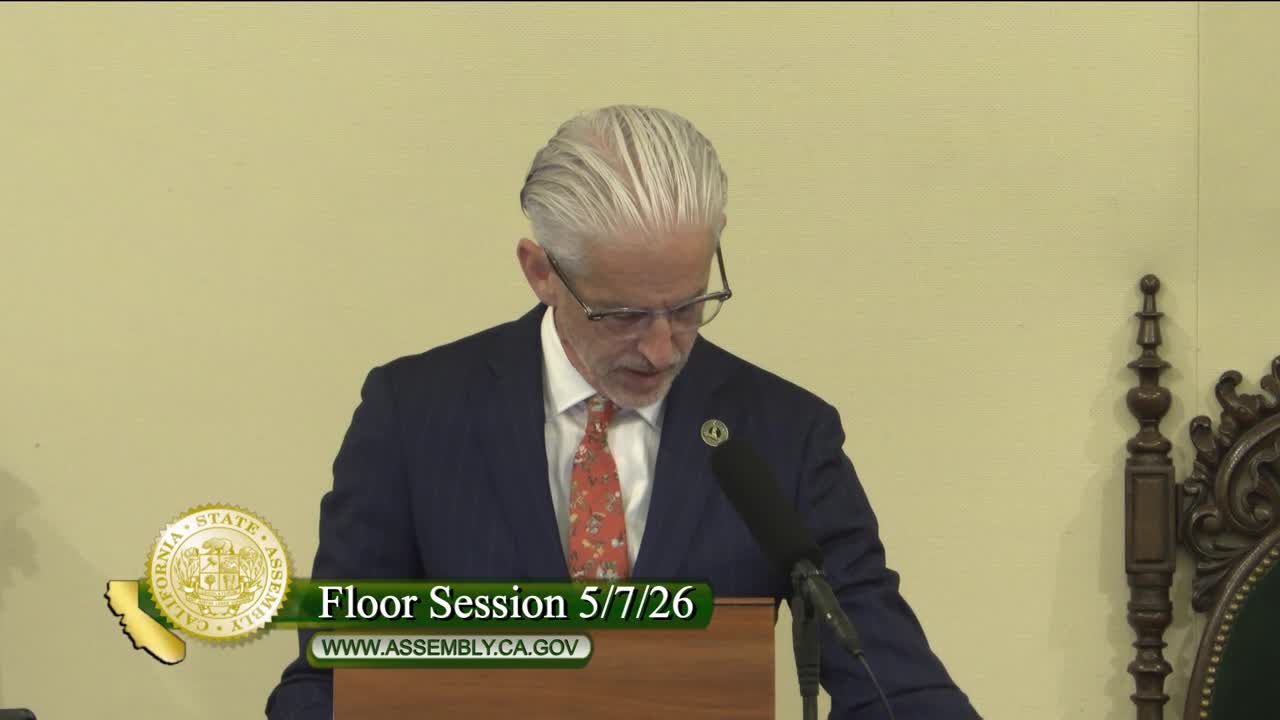
Bill Author

Bill Co-Author(s):